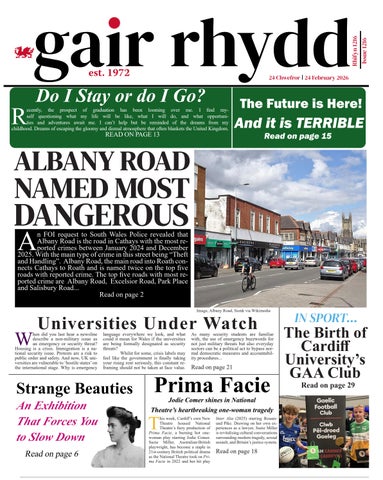
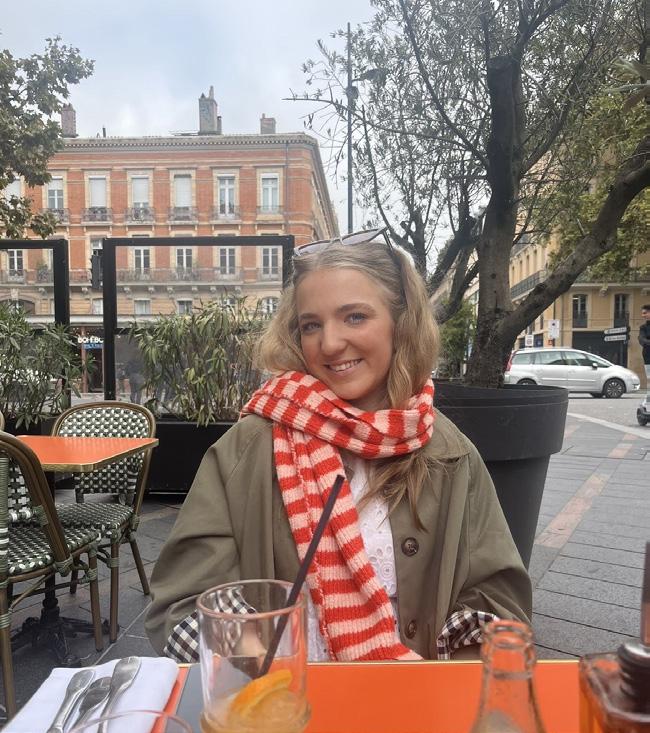
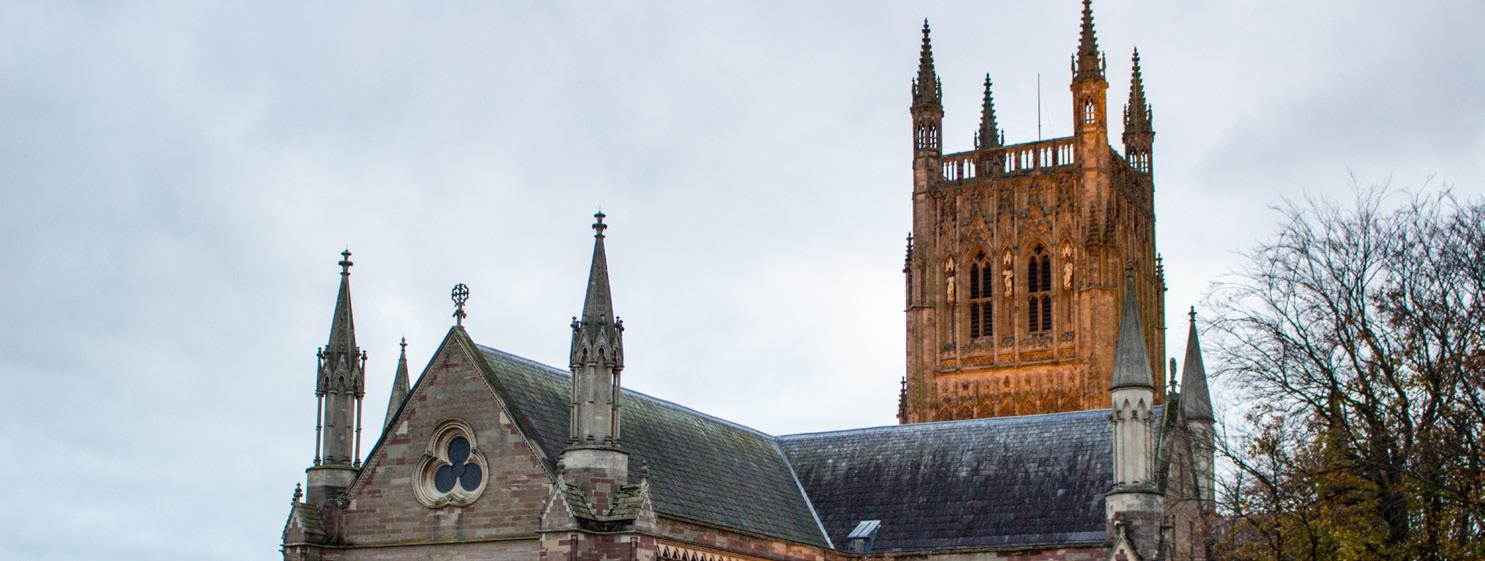
Recently, the prospect of graduation has been looming over me. I find myself questioning what my life will be like, what I will do, and what opportunities and adventures await me. I can’t help but be reminded of the dreams from my childhood. Dreams of escaping the gloomy and dismal atmosphere that often blankets the United Kingdom. READ ON PAGE 13
ALBANY ROAD NAMED MOST DANGEROUS
AnFOI request to South Wales Police revealed that Albany Road is the road in Cathays with the most reported crimes between January 2024 and December 2025. With the main type of crime in this street being “Theft and Handling”. Albany Road, the main road into Roath connects Cathays to Roath and is named twice on the top five roads with reported crime. The top five roads with most reported crime are Albany Road, Excelsior Road, Park Place and Salisbury Road...
Read on page 2
Image, Albany Road, Sionk via Wikimedia
Universities Under Watch
When did you last hear a newsline describe a non-military issue as an emergency or security threat? Housing is a crisis. Immigration is a national security issue. Protests are a risk to public order and safety. And now, UK universities are vulnerable to ‘hostile states’ on the international stage. Why is emergency
language everywhere we look, and what could it mean for Wales if the universities are being formally designated as security threats?
Whilst for some, crisis labels may feel like the government is finally taking your rising rent seriously, this constant reframing should not be taken at face value. As many security students are familiar with, the use of emergency buzzwords for not just military threats but also everyday sectors can be a political act to bypass normal democratic measures and accountability procedures...
Read on page 21
Strange Beauties An
Exhibition
That Forces You to Slow Down
Read on page 6
Prima Facie
Jodie Comer shines in National Theatre’s heartbreaking one-woman tragedy
This week, Cardiff’s own New Theatre housed National Theatre’s fiery production of Prima Facie, a burning hot onewoman play starring Jodie Comer. Suzie Miller, Australian-British playwright, has become a staple in 21st-century British political drama as the National Theatre took on Prima Facie in 2022 and her hit play
Inter Alia (2025) starring Rosamund Pike. Drawing on her own experiences as a lawyer, Suzie Miller is revitalising cultural conversations surrounding modern tragedy, sexual assault, and Britain’s justice system.
Read on page 18
on page 29
Newyddion
Crime in Cathays and Roath Albany Road Named Most Dangerous
Meghan O’Neil News Editor
Cathays and Roath are the two most common places for students in Cardiff to move to after finishing their first year of university. But how safe are these places to live?
Cathays is commonly known as one of the most crime-filled student neighbourhoods in the UK, with a recent study based on police crime data showing that 32.5 crimes occur per 100 people in Cathays. The Sun reported in August 2025 that Cathays was ‘The most crime-ridden university neighbourhood’ with first hand accounts from university students living in Cathays telling their first-hand experiences with crime. But how bad is Cathays for crime really?
In Cathays last year, according to South Wales Police there were 6,949 crimes reported with the most common type of crime in December 2025 being violence and sexual offences with 235 reports. Compared to the 2,251 crimes reported in Roath / Plasnewydd with the most common type of crime also being violence and sexual offences with 52 reports. However, crime in Cathays is decreasing having lowered 1.5% between 2024 and 2025.
An FOI request to South Wales Police revealed that Albany Road is the road in Cathays with the most reported crimes between January 2024 and December 2025. With the main type of crime in this street being “Theft and Handling”. Albany
Road, the main road into Roath connects Cathays to Roath and is named twice on the top five roads with reported crime. The top five roads with most reported crime are Albany Road, Excelsior Road, Park Place and Salisbury Road.
When asked what the most common types of crime occur in Cathays and Roath, South Wales Police responded with: Shoplifting, Public Order Offences, Violence without injury, Vehicle offences, Stalking & Harassment.
These statistics and facts can seem just like numbers but the crime happening in Cathays is directly impacting a lot of students in their day-to-day life. A female Cardiff University Student told Gair Rhydd about her experience of being harassed by a group of girls and later “attacked by one of them on her way home from a night out” on Salisbury Road. Another Cardiff University student, Leah Holland recounted her experience of having “two young lads attempting to mug me” after she was walking home from an evening out a couple of years ago. “I was walking past Misfits when two young boys in balaclavas asked me for the time... I quickly put my phone away and they grabbed my shoulder bag and attempted to drag me into the road... an uber stopped in front of me and didn’t stop to help just watched as I screamed and cried for help... I thought they had taken my bag, but it turned out they dropped it when I tried to fight back.” The police arrived around five minutes later and drove her home and offered to take a statement.
Students may be wondering what
are South Wales Police doing to help directly prevent further crimes and keep our student areas safe? The current strategies they are implementing include Designing Out Crime Officers (DOCOs) to work with architects, developers and local authority planners to build-in “proven prevention techniques at the planning stage to new buildings and major refurbishments”. More specific activities such as conducting Environmental Visual Assessments to help improve visibility and lighting in student areas to help prevent further crimes are taking place. As well as this, South Wales Police also advise students to use the HollieGuard app which is a safety app that updates your location every five seconds and acts as a “personal alarm, deterrent and
evidence gatherer”.
But is this enough? As a student in Cardiff hearing other student’s experiences and seeing the statistics, it makes one question whether enough is being done to protect the students. Students make up a large chunk of the population in Cardiff where Cardiff is home to four universities: Cardiff University, Cardiff Metropolitan University, University of South Wales and The Royal Welsh College of Music & Drama. With roughly 62,000 students across these four universities, the students make up 16% of Cardiff’s population and we deserve to feel safe in the city we chose to live in during this period of our lives. (Image, Sionk, via Wikimedia)
Varsity Tickets: ANOTHER YEAR OF DESPERATE RESELLING
Ella Simons Head of News
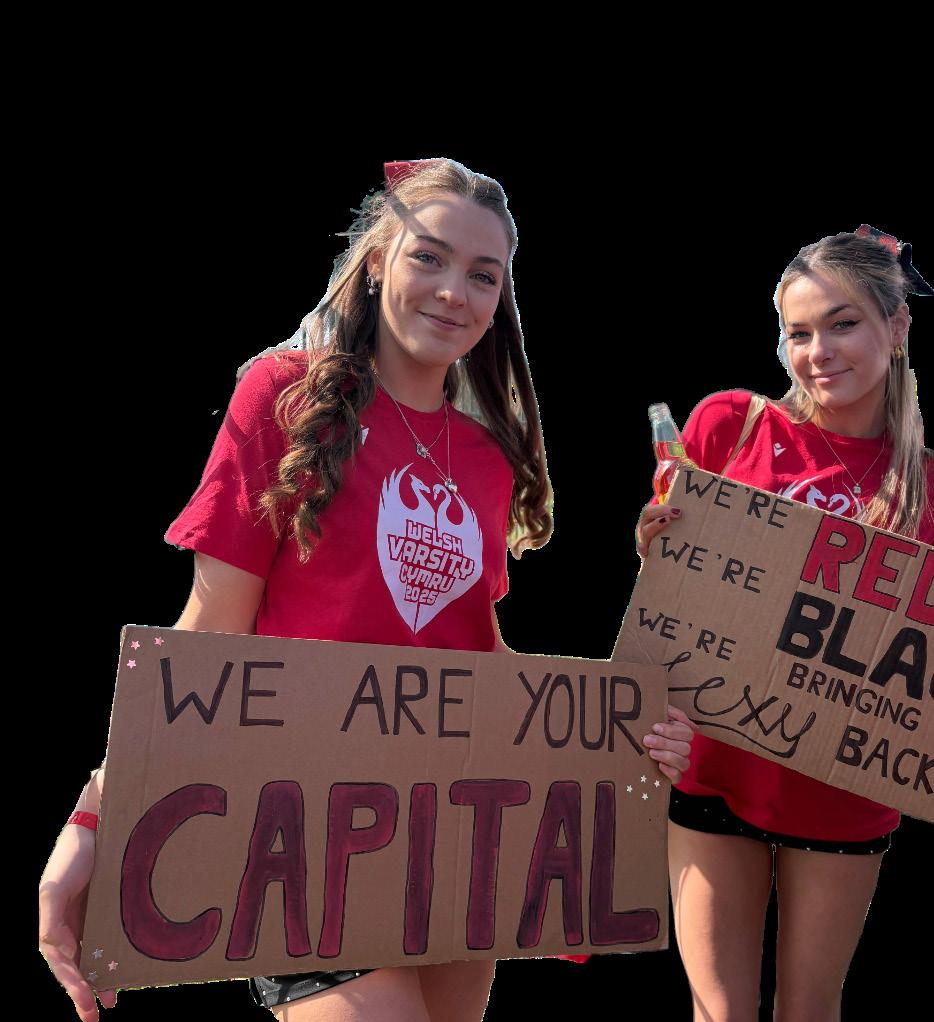
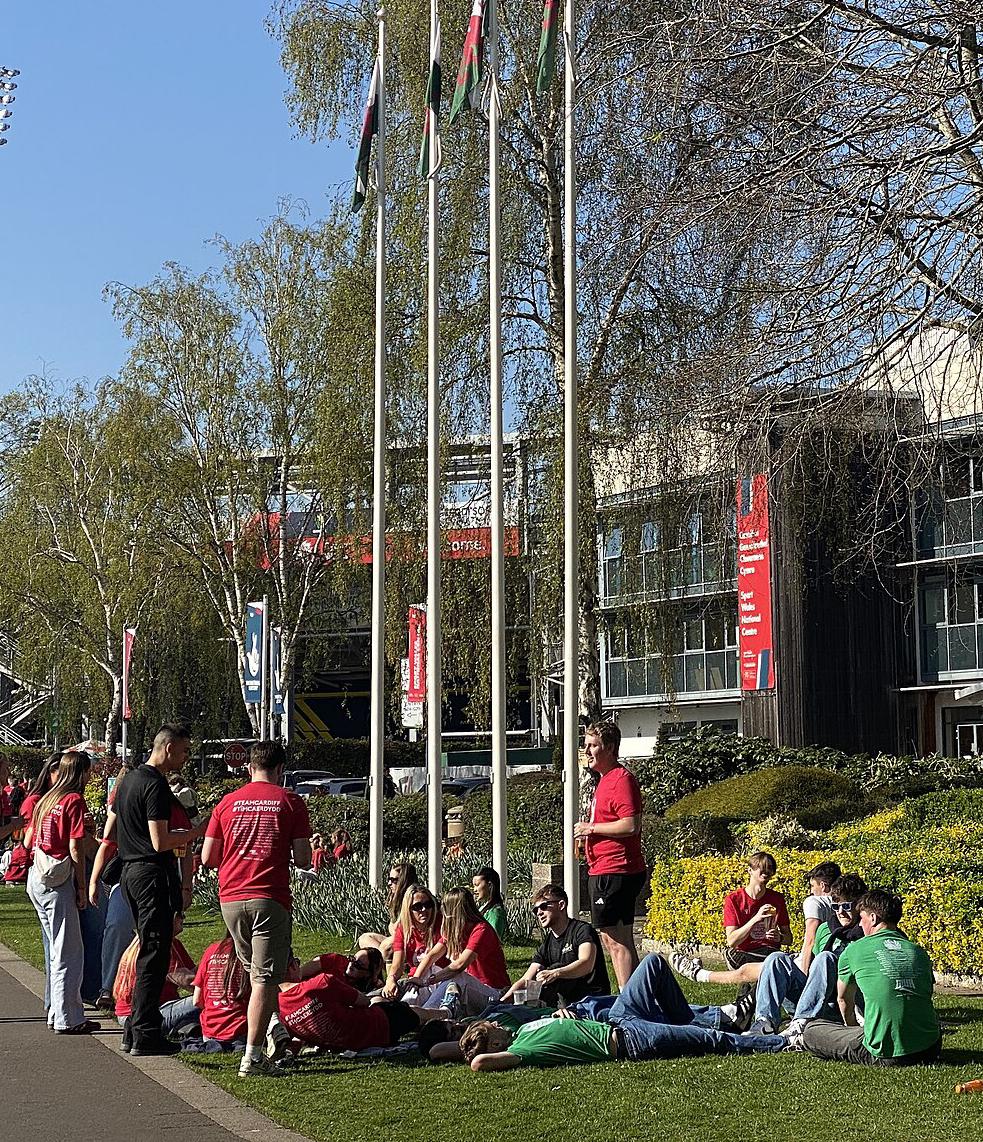
Each year Cardiff University students rush to secure tickets for the Welsh Varsity between Cardiff University and Swansea University. The competition will be held this year on Wednesday 22nd of April in Cardiff. The competition usually alternates between Swansea and Cardiff as hosts, but Cardiff Student Union made a statement on their website which stated that “Due to significant construction and redevelopment work currently taking place at Swansea’s sports facilities, Swansea University is unable to host the 2026 event.” This meant another year on home turf, as Cardiff hope to defend their title of Welsh Varsity Champions.
Surrounding the competition, the community and the chaos, is often disappointment with the ticketing system for students, whether this be getting tickets on the Cardiff Student Union website or by having to pay above the odds for resale tickets which are not legal to do in the eyes of the Student Union. Many will go missing out on Varsity this year and feel pressured to overpay to find a way into the coveted Welsh sporting event.
Last year, for the 2025 Welsh Varsity the tickets for an all day pass with no rugby access were £27 and a ticket with rugby was £34.50. This year, for the 2026 Welsh Varsity, tickets for an all day pass with no rugby are £27.50 and with rugby are £35. On top of this, YOLO varsity tickets (which
are sold separately) in 2025 were £7.50 and this year they will be £8. This demonstrates a 50p increase in all ticket prices for the Welsh Varsity.
These prices are unheard of in Cardiff. Overheard, a Cardiff University co munity page for students. On there, ticket prices are hiked up where students attempt to re-sell tickets and maximise their profits. Those last year who were putting posts out trying to sell their tickets had prices that had more than do bled face value. This is even worse for YOLO varsity tickets with people reselling tickets that were under £10 for over £50!
However, the University does not condone this method of reselling. Gair Rhydd’s head of news got in contact with the Students’ Union and asked what they felt they could do about this and their thoughts on the matter regarding disappointed students and the reselling of tickets. A Student’s Union spokesperson told Gair Rhydd that: “We know that Varsity is one of the biggest sporting moments in the student calendar, and demand for tickets this year has once again been incredibly high. Thousands of students attempted to secure tickets when they went on general sale, and all available tickets were sold within the hour. While we appreciate this means some students will be disappointed, capacity is set in line with safety and operational requirements to ensure the event runs safely for everyone attending. It’s great to see Varsity remain as popular as ever within the student body.”
The queuing system, which was launched last year, was brought back to manage demand. In previous years, high traffic caused the website to crash during sales. The queu ing system is designed to provide the fairest and most transparent way for students to access tickets, and we are pleased that there were no site issues during the release this year.”
We are aware of concerns around ticket resales. We strongly advise against students reselling or repurchasing tick ets between themselves. This carries risks and we make the potential is sues clear in our FAQs. Tickets purchased outside official chan nels may not be valid, and we cannot guarantee entry in those cases.”
Despite this, tickets for 2026 Welsh Varsity went on sale on Feb ruary 4th, there have already been 19 posts about selling or buy ing Varsity tickets, with offers already increasing to £40£50 for non-rugby tickets (as of Feb ruary 16th), with some posts having up to 20 comments trying for a place at the sporting event.
So, the issue is ongoing with almost half of these posts being uploaded on February 4th, the date the official sale was ran, with people posting that they feel
Bangor University’s Debate and Political Society BAN REFORM UK
Bangor University found themselves under fire as their ‘Debate & Political society’ ban Reform UK MP and campaigner, Sarah Pochin and Jack Anderton from attending a question-and-answer session at the university, claiming that they have “zero tolerance for any form of racism, transphobia or homophobia displayed by the members of Reform UK”.
When asked for a comment the university distanced themselves from the decision claiming the society was run by the student union and that they supported debate and conversation “across the political spectrum”. The University’s student union were also asked for a comment and claimed that the society remains “politically neutral and supports freedom of speech within the law”. When the society were asked to comment on the matter, they stood by their decision and encouraged other societies to follow suit.
The explanation by the student union shows how the decision is “in line with our values”, adding: “We stand by this decision as a committee. Their approach to the lives of others is antithetical to the values of welcoming and fair debate that our society has upheld for 177 years,” the society said. We are proud to be the first of the debating unions to take a stand against Reform UK. We strongly implore our fellow societies to join us in keeping hate out of our universities.”
Reform UK’s head of policy, Zia Yusuf threatened that a Reform government would consider stripping the £30m funding from the university. Shortly after the ban was announced Yusuf went to X and com-
Welsh Language Skills are Increasingly Linked to Graduate Employment in Wales
Welsh language skills now feature in more than four in ten job advertisements across Wales, according to Careers Wales, placing the language firmly within the lanscape of graduate employment for students planning to live and work in the country after university. Careers Wales reports that Welsh is listed as either essential or desirable in around 43 per cent of job postings nationwide, equating to more than 30,000 advertised roles. While the majority of jobs do not require Welsh, the figure highlights how frequently the language now appears in employment criteria, particularly in public-facing, publicly funded and community-based sectors. The data does not allow for direct comparison with previous years, as Careers Wales does not publish historical breakdowns of Welsh language requirements in job advertisements. However, it does demonstrate that Welsh already occupies a significant and visible position within the Welsh labour market, a shift that carries particular weight for students making long-term decisions about where to build their lives after graduation.
a similar imbalance. The 2021 Census recorded that 17.8 percent of people in Wales reported being able to speak Welsh, while later survey estimates suggest the figure may be higher. Welsh remains a minority language nationally, even as its institutional and professional presence continues to expand.
The growing role of Welsh in employment is rooted in historical context. For much of the nineteenth and twentieth centuries, Welsh was actively marginalised through education and governance, contributing to a long-term decline in everyday use. Practices such as the Welsh Not, which punished children for speaking Welsh in schools, reinforced the idea that the language lacked legitimacy beyond the home or cultural spaces.
Contemporary language policy is widely understood as a corrective to that history. The Welsh Government’s longterm strategy, ‘Cymraeg 2050’, aims to increase the number of Welsh speakers to one million by the middle of the century and to expand the use of Welsh in everyday and professional life. Higher education is identified as a key site for achieving this goal, both by supporting Welsh-speaking students and by encouraging new learners to acquire the language.
mented on the matter, explaining “Bangor receives £30m in state funding a year, much of which comes from Reform-voting taxpayers. I am sure they won’t mind losing every penny of that state funding under a Reform government.”
However, Welsh Reform UK candidate Francesca O’Brien has distanced herself from Yusuf’s comments explaining how Reform’s manifesto is yet to be released and therefore isn’t policy yet. But it has been suggested that Reform UK will hope to introduce a policy that will see universities face financial penalties and a possible withdrawal of funding, if freedom of speech is not respected.
When other MPs were asked on the matter, they all respected the society’s decision with Labour’s Calum Higgins comparing Yusuf’s comments to that of US President Donald Trump, adding that the behaviour is “in Trump’s footsteps and threatening a university over something he didn’t like”. With Plaid Cymru’s Nerys Evans expressing the potential discourse that this may cause under a Reform government, “if it’s freedom of speech, if it’s stuff to do with climate change, stuff to do with the Welsh language - if you don’t agree with Reform, your funding is going to be cut.”
It seems unlikely that all funding will be cut from Bangor University after Welsh Reform members have doubted the decision to cut funding. However, policies are expected to be announced in Reform’s upcoming manifesto that encourage free speech within university and across the education sector, with penalties in place for those that are perceived to not follow the expectations. (Image, Bangor University, Llywelyn2000, via Wikimedia)
One factor shaping those decisions is Wales’s longer-standing pattern of outward migration linked to employment opportunities. In written evidence submitted to the UK Parliament’s Welsh Affairs Committee in 2023, research examining the experiences of young people in rural Wales found that ‘around four in ten respondents expected to be living outside Wales within five years’, with employment prospects identified as a key reason for anticipating a move away. The evidence noted that many young people felt they would need to leave Wales to access suitable jobs or career progression, despite strong personal and cultural ties to the country.
Seen in this context, the growing visibility of Welsh language skills in employment can be understood not as a barrier, but as part of a broader effort to make Wales professionally viable for those who wish to stay, return, or move home after studying elsewhere. Embedding Welsh more firmly into working life has the potential to support both Welsh speakers and learners in building careers without having to leave the country.
This prominence in the labour market exists alongside a contrasting picture within higher education. Across Welsh universities, around 13 percent of students are recorded as fluent Welsh speakers, with the majority completing their degrees entirely through the medium of English. Welsh-medium study remains limited, meaning many students encounter Welsh language expectations for the first time only when entering the graduate job market.
This gap is not necessarily a reflection of student disengagement from Wales. Many students who come to Cardiff from elsewhere go on to form strong personal and professional ties to the city, seeing it as home and intending to stay long after their studies end. However, higher education data suggests that while students’ attachment to Wales often deepens over time, Welsh language acquisition does not always align with those intentions.
National population figures reflect
From this perspective, the growing presence of Welsh in graduate employment is often viewed as a positive development. It signals that Welsh is no longer confined to symbolic or cultural roles, but recognised as a living, working language. For Welsh-speaking students, this can translate into greater opportunity to use their language beyond the classroom. For students who do not currently speak Welsh but are committed to staying in Wales, it reframes language learning as a form of integration rather than a test of belonging.
Importantly, Welsh language requirements are rarely absolute. Where Welsh is listed in job advertisements, it is often described as ‘desirable’ rather than ‘essential’, and many employers offer support for learning the language once in post. Alongside this, adult learning provision has expanded significantly. Data from the National Centre for Learning Welsh shows that 18,805 learners completed Welsh language courses in 2023-24, the highest number on record, indicating growing demand among adults learning the language later in life.
For students who arrive in Wales without Welsh, the data points towards a practical reality rather than a closed door. Welsh is not an all-or-nothing requirement, but an increasingly valuable skill within the Welsh labour market. For those who are proud to call Cardiff home and see their futures here, learning Welsh can become part of investing in that place over time – not a prerequisite for staying, but a way of participating more fully in its working life. What remains less clear is whether universities are doing enough to align language provision with student aspiration. As increasing numbers of graduates plan to remain in Wales after completing their degrees, access to Welsh language learning becomes less about cultural encouragement and more about equitable preparation for life and work here. The data suggests that Welsh matters, not as a barrier, but as a shared opportunity that institutions, not just individuals, must help make accessible.
Kieran Miller Contributor
Olivia Griffin News Editor
Cardiff University Students’ High AI Usage
Alicia Tariq News Editor
In a 2023 report, the BBC found that students were using Chat GPT to write their essays and were receiving first class grades from it. A Freedom of Information request to Cardiff University revealed that there were 14,443 visits to ChatGPT website in January 2023, from the university’s own Wi-Fi. The university has plagiarism detection through the Turnitin system where a similarity report is produced, but most students seem to be getting away with it due to the increased usage of ChatGPT.
A student from the School of English, Languages and Philosophy told Gair Rhydd about her usage of AI in assignments: “ChatGPT has been really useful to me during my three years at Cardiff University. I’ve used it to help structure my essay or to generate essay plans that I could use to help with my formative assessment” she said. “I think it helps a lot when I’m
behind on researching theorists and scholars for an essay, especially the software perplexity which seems more reliable than ChatGPT as Perplexity provides URL to the generative content it gives me – which ChatGPT doesn’t provide”.
Cardiff University states it takes plagiarism and academic misconduct seriously, stating “We are aware of the potential impact of AI programmes, like ChatGPT, on our assessments and coursework. “Maintaining academic integrity is our main priority and we actively discourage any students from academic misconduct in its many forms”.
An ‘academic integrity’ module on Learning Central has also been implemented in recent years for ENCAP students to complete. It’s a requirement for all students to complete at the beginning of the autumn semester. The module helps teach students how to use generative AI carefully and to be responsible when submitting academic work. If students are found guilty of academic misconduct, they would have to go through a discipli-
nary that includes the following:
1. Consideration of the allegation/ concerns – if there is a concern about a student, an investigation will be made by the school’s academic misconduct coordinator.
2. University Academic Integrity Panel – student to submit evidence or a statement to the panel to determine if their allegation is true.
3. Cases that emerge Post-Award – If a complaint is received it will be reviewed by the student’s Head of school.
4. Request for Review – Students have the right to request a review of the decision under the University Review Procedure, and it must be received by Student Cases within 14 days of being sent the outcome.
From strict measures taken from Cardiff university, they have reported in January that they are working with staff in the ‘AI in Education Group’ to support staff in integrating AI in teaching. They’re planning to develop an ‘AI and
productivity in the workplace workshop’ which will be similar to what students had to complete with the Academic Integrity module. However, students have complained about academic staff using AI for teaching in platforms like BlackBoard and Mentimeter.
CUTV asked several students what they think of staff implementing AI in learning materials. One student had said “I feel like there’s a double standard because there’s a lot of checks on us using AI in any of our work.. it feels a bit hypocritical in a way”.
Another had said “It’s inherently just lazy and today we had a lecturer show us an AI-generated image because she said she couldn’t find an image and I found it within seconds”. The university declined allegations of staff using AI in course content at the time.Staff will be able to use it in materials after completing AI workshops and strategic planning with the AI Education Group.
HYGIENE HORROR, Gair Rhydd reveals the Cardiff Buisnesses putting our Stomachs at Risk
James Burns News Editor
Ever woke up after a regretful night out, with an uneasy feeling in the stomach after an equally regretful drunken food selection? Then perhaps you frequented one of the many food establishments in Cathays, that do not correctly display their unfavourable food hygiene rating.
It is a legal requirement in Wales to register with the Food Standards Agency, and that the business must display their food hygiene rating at or near the entrance that customers used. Unlike in neighbouring England, presenting your hygiene rating, good or bad, is a legal necessity throughout Wales. The Food Standards Agency gives a hygiene rating to businesses’ selling food a rating between zero and five. Since becoming a legality in Wales in 2013, businesses with a rating of five have increased by 24%. Yet a glance at the Food Standards Agency website reveals an interesting reality to the hygienic practices at play in many of our beloved Cathays food spots.
A tour of central Cathays takes us to Salisbury Road, a street lined with popular small restaurants and takeouts alike, is where this concerning problem becomes evident. Walk up and down Salisbury Road and you will see restaurants popular with students donning the familiar green sticker with their hygiene rating clearly on their entrance.
A notable food spot on Salisbury Road, and popular with students looking for a quick bite or some drunken indulgence, is Chicken Delight, which boasts a hygiene rating of just one. Yet, if you find yourself stumbling into the fried chicken restaurant, the required green sticker is absent. Even with an investigative eye, locating a food hygiene rating at Chicken Delight is an uncomfortable impossibility,
despite the Food Standards agency requiring that ‘stickers must be displayed where they can be easily read by customers before they enter the establishment when it is open for businesses’.
The Food Standards Agency states that a food hygiene of 1 means that major improvement is necessary. Ratings are provided by a local authority food safety officer and is determined by a combination of how food is hygienically handled, the physical condition of the business, and how the management maintains keeping food safe including processes and training.
The Food Standards Agency also states that when eating at businesses with a rating of 3 or above, customers can be confident that the food they are eating is safe and prepared in the correct manner. However, the problem arises when considering those with ratings below 3, where customers are twice as likely to get ill when eating at an establishment.
The unofficial main street of Cathays, Salisbury Road, also possesses a few other restaurants with poor ratings. The Curry Hut and Volcano Express hold a rating of two, as well as one of the most notable pubs in Cathays, Foundry Social, which also possess a rating of two.
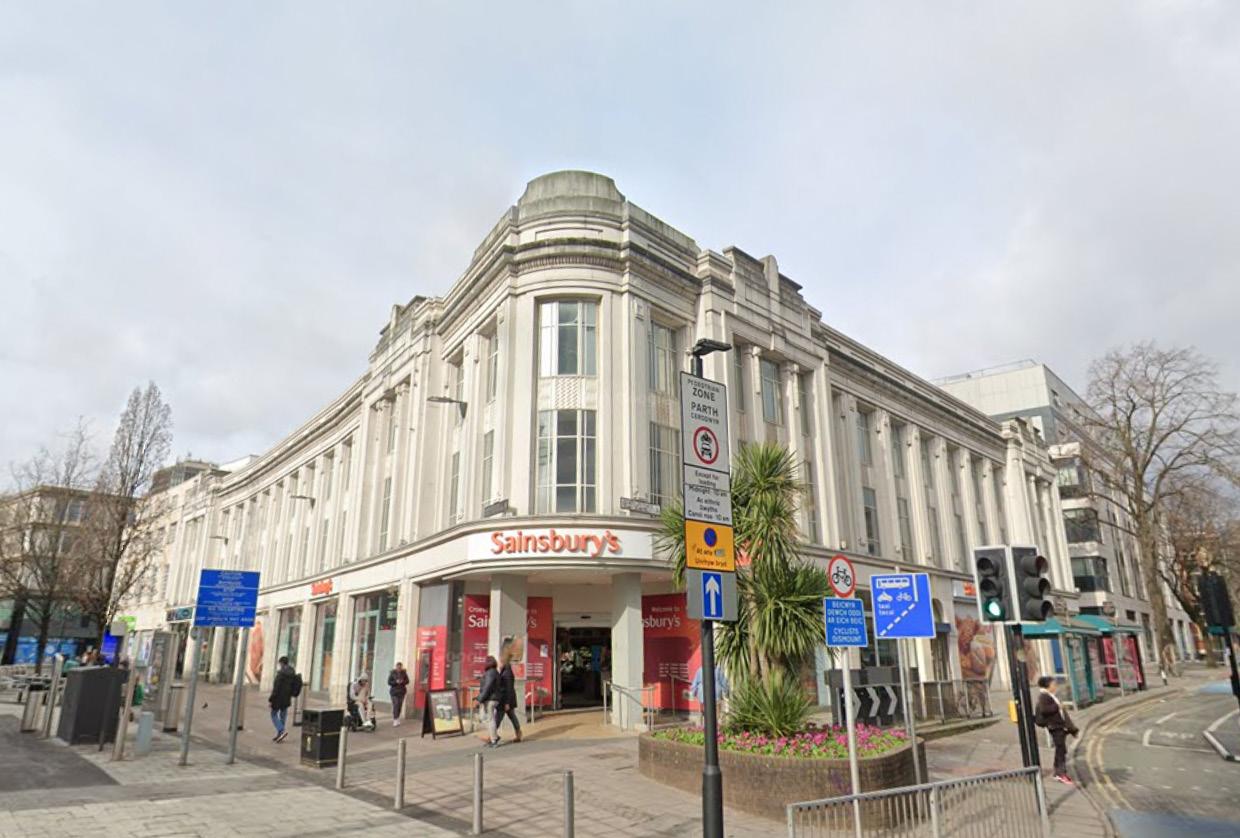
Officially, the boundaries of Cathays extend into the city centre, and Sainsbury’s on Queen Street boasts a shocking rating of zero. The supermarket even had to close for a period to address urgent hygienic issues. Peter Cole, a lead environmental health officer in food safety told the BBC that a zero rating reflects failures across the board.
“To get a zero, there would be things like cross-contamination between raw meat and ready-to-eat products, pest infestations, it really is the worst level of compliance, and they are very few and far between,” he said.
In a similar story to that of Chicken Delight, I found myself caught up in the hygiene consideration naturally, as I ate in
The Food Lab on Chippy Lane, confused by the lack of a hygiene rating on that notable green sticker, only to later find out it possessed a lacklustre rating of two.
The Cardiff Pizza Company on Crwys Road, a one, Rascal Burrito and NAMESTE along the same street also a one. Even the Secret Garden Café in Bute Park can boast just a rating of one in their recent hygiene inspections.
Perhaps it is those who choose not to present their hygiene ratings where customers feel most cheated. A fixed penalty of £200 is put in place for those who do not display the green sticker, which can be reduced to £150, if paid within 14 days. A continued failure to comply with the penalty can lead to prosecution in a Magistrates Court.
In a 2017 case at Cardiff Magistrates Court, a business with a rating of two was fined £5000 for failure to display
the rating sticker, with the restaurant owner proclaiming he was “trying to protect his business”.
Between 2023 and 2025 an ITV investigation showed that twenty-three premises in the Welsh capital, as well as 150 restaurants and takeaways across Wales failed to display their rating correctly.
Food hygiene ratings give students confidence to choose where they eat, but these moral and legal rights appear to be continuously damaged across Cathays and throughout Cardiff, when the sticker does not match reality, or is absent altogether.
IT’S TIME FOR YOU TO ACT!
Gair Rhydd Catches up with Time To Act
Gabi Hunt News Editor
Recently, I had the exciting opportunity to interview Emily Carr and Becca Rumsey, the two co-founders of Time to Act, a student-led campaign focused on supporting Cardiff students, and people within the wider community in relation to sexual misconduct, violence, and assault. We discussed their success in 2025, the impact of their recent virality, and their more hands-on plans for 2026; as well as how these two women came to found the campaign and the effects of doing so.
Starting by reflecting on the past, we discussed the highs and lows of 2025. The “Don’t be a Sh*tty Committee” movement generated a great deal of online attention for the campaign, especially at the University, as countless societies pledged to align with the values of Time to Act. However, Emily reflected that while “the virality was great, we do not want the impact of Time to Act to be in name only, but to make changes.” This movement saw a high level of commitment from students and an agreement that change needs to happen and student safety needs to be considered more. We also discussed their almost unanimous success at the AGM, once again proving that students want change on campus.
The discussion moved onto their efforts with the Student Union, and the work they have done together. Emily described how the Students’ Union President reached out to them, and how the collaboration has been “fantastic,” with the SU tackling issues “proactively,” especially regarding policy and consent talks, as well as transparency. 2025 saw an apology issued from the Student’s Union - one of the first ever from a students union regarding the topic of widespread sexual misconduct - with our SU undertaking far more collaborative work than many universities across the UK. This came hand-in-hand with other successes of 2025, such as the ‘Reclaim the Night’ movement, a focus on student safety on SU nights, and increased transparency, including more resources regarding protection and prevention. Outside of work with the university, they also spoke about their policy brief to Parliament regarding duty of care, as well as the movements focus on community projects outside of sexual violence, including using their platform to root themselves within out local community to have a positive impact more broadly.
Another matter was the controversially received implementation of consent and bystander training courses for students. We discussed how in order for these they need to be done right, at the beginning of the academic year - not midway through- and especially with first-year students. “Whilst what has been done so far is a good start, as it normalises the conversation and provides resources, this type of conversation needs to be done right.” This includes the training delivered in person, where students engage and learn from their peers. The recent work in the Politics department demonstrated this best: rather then a lecture on rape culture, students had an open and honest conversation regarding sexual health, respect, and consent with their peers.
The first topic Time to Act discussed in 2026 was the scheduling of a meeting with
the Vice-Chancellor and President of Cardiff University, Wendy Larner. This follows a long gap of more than two years since the previous meeting. When I asked why this was the case, I was told that since the virality of the BBC article published in 2023, the “pressure to meet with us has disappeared. University officials have presented an unwillingness to address the issue, and to help create meaningful change for the students they are supposed to support.” Becca and Emily agreed that they did not “envy Larner’s position” describing it as a “can of worms” the university is unwilling to deal with. However, with the historical issue of violence against students on SU nights, the lack of response creates a “bad message for victims.” The university “proves a complete and total disregard for the community at large,” and the lack of transparency is “alarming” as the university once again proves that issues are only a priority when it has financial consequences.”
2026 is a year full of potential for Time to Act. From plans for further collaboration with the Students’ Union to a joint fundraiser with the Red Cross and Rape Crisis (8th March at Fuel) the campaigns focus on helping students here at Cardiff continues. However, after the success of 2025 proved that students are not just ready for change, but actively want it, the focus has broadened to bigger things. Work with the University of Wales to replicate structures working here at Cardiff, collaboration with l cal community centres to introduce sexual education programs as well as a partnership with a national human rights group to push for further investigative reporting regarding Cardiff University’s statistics mean Time to Act is becoming firmly rooted within the city’s community.
Be that as it may, sexual violence is not an issue exclusive to Cardiff University, but one present across higher education as institutions too often appear to value financial interest above student welfare. This has led Time to Act to team up with similar campaigns at Durham and Edinburgh Universities in hopes other universities will follow, as well as to lobby the Welsh Government to implement duty of care for Universities to follow. They extend any other universities interest to reach out to help them organise their own advocacy groups. With legislation and policy a large focus of the upcoming year, including pushing for public data regarding sexual misconduct to be made public, and for honesty and transparency to become common practice, these determined women have an industrious task ahead of them.
To conclude the interview, I asked Becca and Emily what they want students to know about Time to Act and how they can show support. “We are flexible, able to roll with the punches, and committed to being advocates for our community, offering support for anyone who needs it, including absolute privacy for those who seek help. We are two people who never wanted to be in this position, but wish to be the support we ourselves needed during our undergraduate years, which is why our work is so important. We do not do this for online recognition, but to help those who need it. Our end goal is that Time to Act does not need to exist.”
Cardiff Airport and Welsh Government to Face Legal Challenges from Bristol Airport
Hannah David Contributor
Bristol Airport has alleged that subsidies worth £205m to be implemented over the span of a decade offered by the Welsh government to Cardiff Airport through the 2024 budget is unlawful at a tribunal held on February 10th. The lawsuit, which has been brought to the Competition Appeal Tribunal, have been challenged by Bristol Airport Limited in Bristol Airport v. Welsh Ministers as violating the Subsidy Control Act of 2022, on the grounds that it failed to evidence that Cardiff International Airport Limited was at risk of imminent bankruptcy without the subsidies, that proper procedure for considering the eventuality had not been followed, and that it has violated efforts through the act to prohibit subsidies for air routes. Cardiff Airport has rejected these allegations, defending the subsidies as part of an effort to allow the airport’s expansion and arguing that the funds for route development were necessary as part of standard practice within these deals.
Cardiff Airport is the sole airport currently operating commercial and cargo flights in Wales, and has been open for commercial flights since 1952, but has long had issues with declining use, peaking in 2007 and having languished below a million since 2020. Bristol Airport, meanwhile, is currently well above its 2019 figures, surpassing 10,000,000 passengers in 2025, with the airport’s brief to the Tribunal stating that more of its passengers come from South Wales than go to Cardiff Airport. Since 2013, Cardiff Airport has been directly managed by the Welsh government over its performance but has continued to decline since. Bristol Airport, meanwhile, is currently a private enterprise, and has been since a majority share was purchased from Bristol Council by FirstBus in 1997, with the largest number of shares held by Macquarie
Asset Management, an Australian banking and financial services group. With the high number of Welsh passengers, Bristol Airport has also argued that the subsidies pose a large and unequal threat to their passenger base, both in Cardiff’s offerings of flights and where the passengers fly from.
The subsidies, which were implemented under Eluned Morgan in 2024, were implemented with the intent that Cardiff Airport would use it for investments to upgrade services to deal with higher foot traffic and to reduce carbon emissions. As per Ken Skates, Secretary for Transport and Infrastructure, “there are planned investments in the Airport’s existing terminal building and other infrastructure to ensure it can accommodate more comfortably the higher number of passengers whilst also reducing the carbon footprint of its ground operations”. However, the official rationale behind its subsidy downplays this connection, describing the subsidies as being necessary to help advance the airport’s international profile, to tie it to nearby transport and water industries, and to help with encouraging the creation of new routes, a key area challenged by Bristol Airport Limited. Plaid Cymru were willing to back the spirit of a nationalised airport, with Peredur Owen Griffiths stating that “we, as a nation, deserve a national airport that we can be proud of” in a question to Eluned Morgan as per First Ministers’ Questions in October of 2025. The Welsh Liberal Democrats and Conservatives were both critical of the subsidy, and have both called for the privatisation of Cardiff International Airport. Sam Rowlands, Shadow Cabinet Secretary for Transport and Infrastructure and representative for the Welsh Conservatives, stated that “Labour and Plaid Cymru have already sunk more than £200 million of taxpayers’ money into this failing nationalised airport...even more public money will be wasted on legal costs”. At the time of reporting, nothing further has developed.
Police Attended The Student’s Union 110 Times
Last Year
Meghan O’Neil News Editor
Most, if not all, students at Cardiff University will have at some point been to the highly popular Student’s Union, whether it be to visit the fresher’s fair, have a Sunday Roast at The Taf or attend YOLO on a Wednesday night. The Student Union has created a safe place for students to have a night out, which is Y Plas, the multi-purpose venue for daytime social learning and nighttime entertainment.
However, between December 2024 and December 2025 the Police were called 110 times to the Student Union, which included 75 requests for the Safety Bus to attend to deal with any intoxicated, lone or vulnerable people. The Cardiff Safety Buses “patrol the city centre on Wednesday nights during academic semesters, and on Friday and Saturday nights year-round.”
The Safety buses are staffed by officers and volunteers that will help anyone that finds themselves in a vulnerable position and will take them to their homes or a place of safety.
Unsurprisingly Wednesday nights are the busiest night for the Safety Bus, resulting most likely from the huge numbers of students out for Wednesday night sports socials. The most
common reasons for police call outs to the SU are Violence, Theft and Anti-social behaviour, with there being 14 recorded incidents of violence. There have been six arrests made from December 2024 to December 2025 as the result of police call outs to the student union. The busiest months during 2025 for police call outs to the Student Union were February, March, September and October aligning with arguably the busier times in the student calendar, Freshers and Refreshers. When asked for a statement on this matter a Students’ Union spokesperson replied with “Cardiff Students’ Union is one of the busiest student venues in the UK, welcoming thousands of students through its doors every day and recording over 100,000 attendances at YOLO club nights alone across the year. The figures referenced represent a very small proportion of calls per activity and attendance.”
“We invest heavily in preventative measures, including paramedics during club nights, trained staff and door teams and ongoing campaigns promoting responsible drinking.” “Our priority is ensuring students can enjoy their university experience in a safe and well-managed environment.” If you ever are feeling vulnerable at night on a Wednesday, Friday or Saturday in city centre you can contact South Wales Police at this number 029 2022 2111 for the Safety Bus.
How Wales is Aiming to Tackle the Gender Health Gap
BEve Harris Spotlight Editor
y March, the Welsh government is set to roll out women’s health hubs across every health board in Wales, marking a start to their ten-year Women’s Health Plan. The strategy aims to improve healthcare for all women in Wales. The first pilot health hub opened earlier this month in Aberyswyth, led by GPs and nurses to provide more specialist services and community—based support. Key commitments were laid out last year, including £750,000 dedicated towards research into women’s health conditions. The 10-year plan, led by the Welsh Government, is now putting into action its promise, with a new focus on areas of women’s health which are often overlooked and under resourced. This includes menstrual health, endometrio-
sis, and adenomyosis, contraceptive and re productive care, preconception health, pelvic health, menopause, violence against women and girls and ageing and long-term conditions.
Supported by First Minister Eluned Morgan and Minister for Mental Health and Well being Sarah Murphy, the women’s health hubs form a central part of a wider plan to address and tackle the unfortunate gender health gap. Women continuously have their symptoms dismissed or underplayed. Hopefully, through providing dedi cated services, the hubs will help to deal with this issue, and ensure women feel empowered and sup ported in regards to their health and well-being.
As the hubs continue to open across Wales, hopefully women and girls will feel more supported in their healthcare. It marks a key step in removing the gender health gap and ensur ing equal and consistent support for all patients.
Strange Beauties: An Exhibition That Forces You to Slow Down
Ellie Evans Spotlight Editor
Born in Haverfordwest, the Welsh artist, Gwendolen “Gwen” Mary John (1876–1939) was a pioneer for women in art and remains a cornerstone of Welsh modernism. Celebrating her 150th birthday, Cardiff National Museum are hosting an exhibition ‘Gwen John: Strange Beauties’ showcasing “rarely seen works” all the way from Pembrokeshire to the USA. Beginning on the 7th of February and running up until June 28th, the exhibition reframes John’s legacy on her own terms as a serious artist. With tickets ranging from £10 to £16, you will need to book in advance to visit the “once-in-a generation” exhibition. Offering slow art in a fast-paced world, this exhibition acts as an antidote to our culture built on constructing spectacle in urgency. John utilises stillness as a form of resistance where the absence of spectacle becomes the statement. This exhibition forced me to slow down, simultaneously reminding me how unfamiliar stillness and solitude have become in the current art industry dominated by maximalism.
“They somehow still feels refreshingly relevant today”
Famous for her attentive interpretations of anonymous women, she refuses to shout or perform in her work, opting instead to invoke stillness through muted tones and subdued brushstrokes. Letting the paintings speak for themselves, they somehow still feel refreshingly relevant today as they relate to modern discourse surrounding female autonomy. Jeanne Foster, a model of John, revealed that when modelling for her, you could “feel the absorption of her personality”. John reflected her own experiences through her paintings, using them as a guide in discovering her own identity. Capturing this psychological intensity, her subjects do not perform for the gaze of the viewer; instead, they exist. Whether you are already an admirer of John or if you simply wish to expand your knowledge of art history, Strange Beauties is the perfect exhibition to dive into the Victorian period through the eyes of an extraordinary artist who “saw the world differently”. Regardless of your preference in art, you will undoubtedly leave Strange Beauties inspired to look closer and to slow down.
Defying Gravity in Aerial Fitness
Molly Spencer Spotlight Editor
The final stretch of the last semester has commenced. With the Refreshers’ Fair having been and gone, it is time for the final decisions of what societies you’d like to join. Over my three years at Cardiff, I have tried and tested many societies from Swimming, and Waterpolo to Broadway Dance and Ice Skating. Everyone says you make your best friends from sports societies and I have to say that is absolutely true. It was in Aerial Fitness that I developed a genuine sense of belonging.
“Aerial gave me a chance to keep fit and build muscle”
From meeting the committee at the Freshers’ Fair in my second year, I made the decision that I had to ‘give it a go’ so I found some friends to come with me and I absolutely fell in love. From building strength to learning new routines, it never fails to make friends and family to go ‘wow you must be really strong to be able to do that’. I doubt my mum will ever grow tired of finding the fresh bruises to poke and prod. Of course, it took her a while to overcome the thought of ‘her daughter, the pole dancer’, but now she shows off all my new accomplishments on Facebook on the regular as parents do. I grew up doing ballet, karate, swimming, and violin so it was quite a surprise when I suddenly announced that Pole Fitness was my next choice.
University life can be so hectic. Between lectures, assignments and trying to keep some form of a social life, Aerial gave me a chance to keep fit and build muscle without the horror of trying to combat weights in PureGym. I started as a total beginner, with no strength behind me just showing up on Wednesdays to have a go at a spin or a climb. Now I’ve competed as a beginner and grown to into a strong intermediate, whilst making new friends along the way. Just last week, my friends and I had the joy of watching our old videos as beginners, chuckling at our lack of pointed toes or uncoordination. Although we also felt proud of ourselves, at those smiles from when we managed to complete a beginners move for the first time and it helped us realise how far we have come from being silly little freshers. While we are all contemplating what we are doing at 10pm on a Monday evening, having our thighs shredded from holding on for dear life – there is such a joy and community when someone can complete a move for the first time after trying and trying to create a new combo.
“What started as a sport became the place I found belonging”
I hope to be able to compete this year at either Varsity and help us win once again, or within Welsh Capital Pole Competition which is hosted by Cardiff for all the surrounding universities. With the cheering and support that comes with competing and performing, I have never felt afraid of the stage although around 10 minutes beforehand you may hear me saying ‘why have I signed up for this’. After that adrenaline has kicked in though, you will see the biggest smile on your face at the success and bravery of performing. What started as a sport became the place I found belonging and I simply have to recommend a society to everyone to find their people.
Cardiff Arms Park is a budget friendly night out
Rachel Bedding Head of Spotlight
February brings a lot of positive changes: a (slightly) warmer climate, longer evenings, and the chance of less rain. But, if you’re Welsh, it also brings heart-break, swept in with the waves of green, blue and red from the Six Nations.
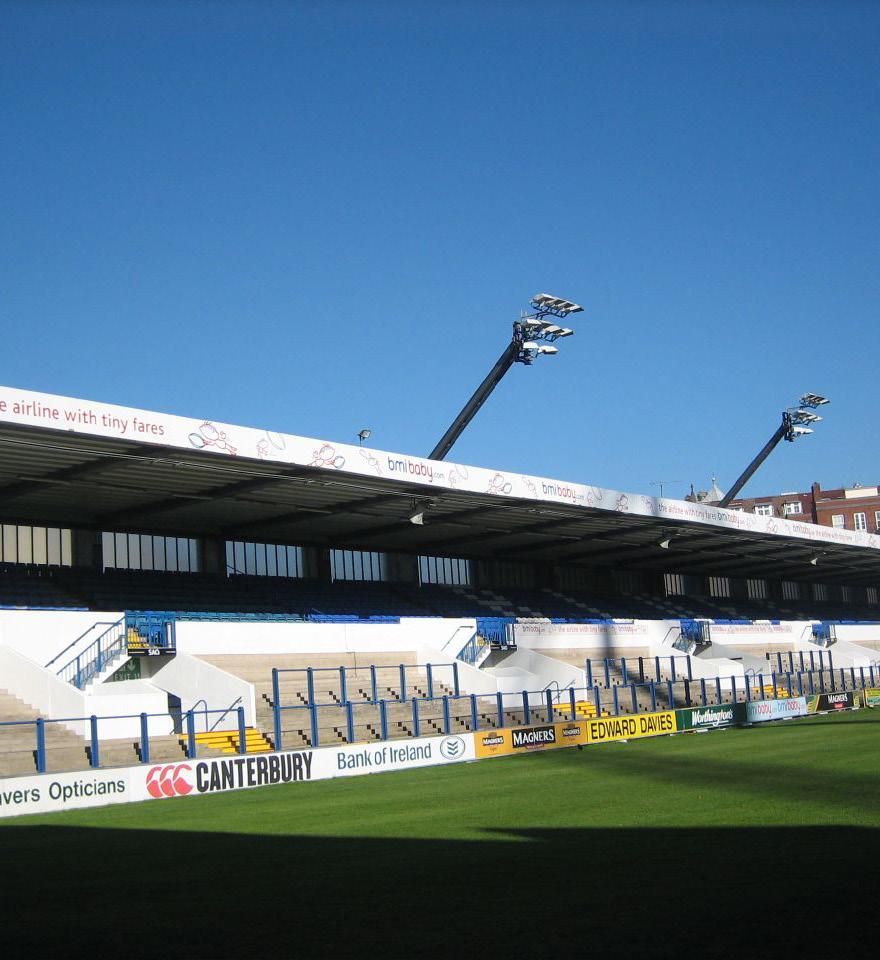
Watching an abysmal scoreline has become somewhat of an annual tradition at this point. If you’re waiting for the rebuild of Welsh rugby, then Cardiff Arms Park may be where you need to start looking for some hope in these dark times. With most of the seats filled out and Guinness generously flowing behind the stands, France vs Wales U20s match took place on a relatively mild Saturday evening, the crowd was buzzing with energy for the game ahead, but did the juniors deliver. Spurred on by the looming presence of the Principality setting the scene, the U20s set the scene with great plays and a love for the game, mirrored by the buzzing atmosphere in the stands—80,000 to 12,000 seems like a big jump, but in the thick of the crowd and their chanting, it’s all the same. The intimate nature of the stadium means that you can actually watch the game you’re paying for, instead of staring at the TV replays and imagining your living room and the same experience you could have had for none of the price tag.
Another bonus? Wales actually winning—at least, for most of the game. France turned it around in the last ten minutes for an impressive scoreline of 39–28, but as a lifelong Wales fan with the winter blues for the last few years, it was enough to light the beacon of hope that in a few years, it might come home.
Why I throw myself down rivers... And why you should too
Arielle Melamed Politics Editor
There’ll be times at gatherings back home where I will mention to acquaintances that I am a member of my university’s kayaking club. This statement will often elicit a series of mixed reactions. ‘Sounds dangerous!’ an elderly relative may exclaim, clutching their glass of wine in defense, just in case I might invite them to come along. Most of my friends remain supportive albeit bewildered. ‘I could never,’ someone might say in the pub, before adding hastily ‘but it sounds fun!’ almost as if they were trying to convince themselves. My own parents had their reservations when I announced it to them. As far as they were concerned, their clumsy, accident-prone child signing up to sit in a boat and throw herself down rivers was a unique recipe for disaster.
“Becoming a kayaker will have you doing crazy things”
Even I often wonder what exactly I’ve gotten myself into as I drag my waterlogged kayak up a riverbank on a cold rainy February day, teeth chattering, fingers freshly blistered, and limbs frozen up. I’ll peel my stubborn wetsuit off and admire what fresh bruise I’ve acquired this time. Was it an awkward capsize that did it? Or was it maybe a consequence of slipping and falling on my bum due to the dastardly combination of wet leaves, mud, and flimsy river shoes. I’ll curse myself as I manage to kayak bow-first into a rock, beaching myself and wriggling around helplessly like a turtle on its back. I’ll imagine how I could have better spent a Saturday morning as I fall on an eddy line and meet the ice-cold embrace of river water and watch mornfully as the more experienced chase my boat down.
So why do it? Why indulge?
Too often university may feel like you’re oscillating between two extremes. From the Orange VK-soaked nights where awful music, poor financial choices, and an unfortunate snog, will have you waking up spooning a Styrofoam box of greasy chips while nursing a hangover that’ll nail you to your bed for the next few days. That may not be your cup of tea. Alternatively, you can haul yourself out of your bed for that 9am, battle your way through the soggy streets of Cathays to sit in a lecture with lighting that will expose every pore on your face while the LinkedIn warrior next to you receives their eighth internship offer of the week.
Kayaking can offer respite from those choices, a third route. Once you get on that river, the world of university melts away. Your body and your mind are no longer disconnected, and suddenly the only real priority will be making it from point A to point B in an upright position (not an easy task).
Much like falling in love, becoming a kayaker will have you doing crazy things that past you wouldn’t even begin to fathom. Why do I religiously check water levels on my phone? Why am I watching a 10-minute YouTube video on how to spot holes on rivers? The intense debates in the pub about the merits of a half slice versus a full slice that used to bore you to death will suddenly become interesting. But it’ll be too late, and before you know it, you’ll find yourself on Facebook marketplace at 3am furiously haggling with 47-year-old Craig from Swansea over the price of a Werner paddle. So get on out there and kayak! Boost your ego with an impressive profile pic, stink up your toilets with the smell of wet neoprene (it never goes away), and terrify your overprotective parents with the prospect of you drowning (Mum, I promise I’ll be fine). Most importantly, since I must end with an awful cliche, create memories for life.
(Image, Cardiff Arms Park, Ihourahane, via Wikimedia Commons)
The Current Economy of Online Ticket Wars
AEve Yates Spotlight Editor
fter the recent battles to get Varsity and Harry Styles tickets, it has raised the question as to why it is now so hard to get tickets for anything, especially concerts. These most recent occasions have left me, and many others perplexed, peeved and drained from the process of trying to get tickets for any major event nowadays. Getting tickets for anything is not as simple as logging into a website and adding to basket.
“It now requires hours of your day to wait for something you might not get.”
Harry Styles recently announced his new tour, and despite only having released one song, fans were buzzing to get tickets. With him only performing in London, the whole of the UK was battling it out to get tickets. Fans could sign up for a presale code, however this did not guarantee tickets, meaning millions were joining queues from Monday through to Friday. The adding of more tour dates only added more stress, leaving fans more confused and scram-
once restricted view seats, the stage, and sponsored seats are taken away, it leaves a much smaller number of tickets for general sale than the capacity of a venue can normally hold. The BBC article explains the use of touts, with people using increased technology, such as bots, to bypass queues and have more devices online to bulk buy tickets. The increased use of AI and fake identity accounts make it increasingly difficult to spot the bulk buyers till it’s too late.
Once these touts have secured a bulk number of tickets,
“they can resell them on secondary websites for up to 50% increase in the original price,”
according to the BBC investigation. It appears that not only the ticket sales industry has boomed, but ticket reselling is becoming an industry of its own, with more people having access to AI and increased technology to make hundreds of pounds profit. The UK government hopes that banning the resale of tickets for an increased profit will reduce the demand for concerts, and this is already coming in to play with Ticketmaster stating practically zero profit can be made from reselling tickets through them. But unfortunately, this does not account for social media and unauthorised resale sites, where fans who are desperate to see artists will pay above the odds, and sometimes be scammed for it.
“Social media is its own playground for scammers to prey on hopeful fans.”
From what’s been established in my research, it appears the answer to increased ticket prices and battles for tickets is not a straightforward one. There appears to be many, many reasons why it is now so hard to get tickets for our favourite artists. Despite several artists, such as Coldplay and Taylor Swift, coming out and stating that they will not increase concert tickets alongside demand, the effort to get the tickets is still a challenge that has no clear solu-
Dathlu 150 mlynedd o Gymdeithas Bêl-droed Cymru
RDewi Williams Cyfrannwr
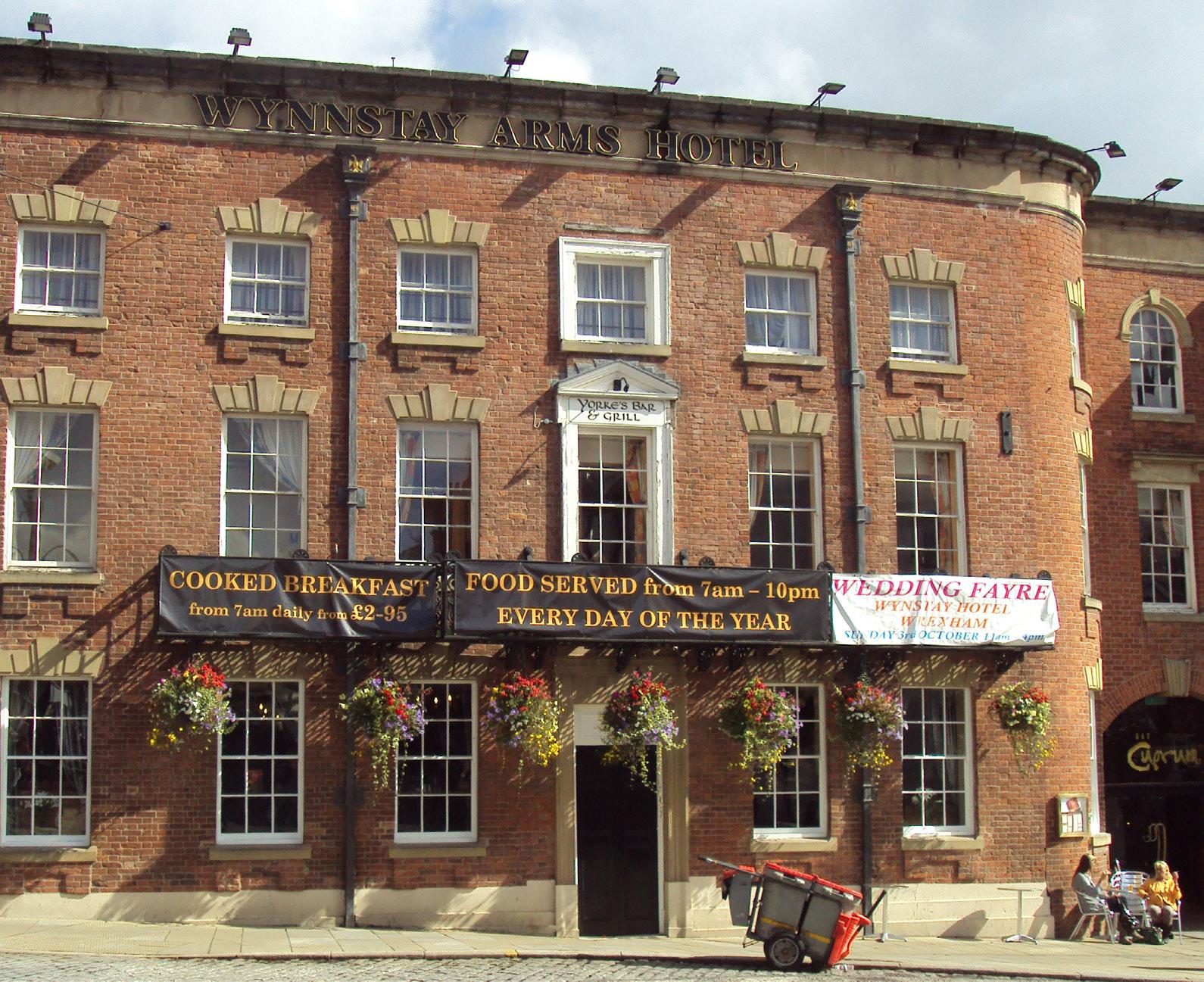
wy’n siŵr ein bod ni gyd wedi gweld y “trend” ar y cyfryngau cymdeithasol yn ddiweddar sy’n gweld lluniau ac atgofion o’r flwyddyn 2016 yn ail ymddangos ar ein ffrwd ddegawd yn ddiweddarach. Ond i rai, mae’r atgofion o’r flwyddyn hwnnw ychydig yn fwy arbennig na’r arfer, ac efallai nad oes neb wedi teimlo hyn gymaint â chefnogwyr pêl-droed Cymru. Yr haf hudolus hwnnw yn yr Ewros yn Ffrainc bron i 10 mlynedd yn ôl yw uchafbwynt hanes diweddar bêl-droed Cymru i lawer, gyda nifer o gefnogwyr ar draws y cyfryngau cymdeithasol yn dathlu’r eiliadau bythgofiadwy hynny unwaith yn rhagor. Ond i Gymdeithas Bêl-droed Cymru, mae 2026 yn flwyddyn lawer mwy arbennig i’w dathlu. 150 mlynedd yn ôl, ar yr 2il o Chwefror, 1876, cafodd Gymdeithas Bêl-droed Cymru ei ffurfio yng Ngwesty’r Wynnstay Arms yn Wrecsam. Fel trydedd gymdeithas bêl-droed hynaf y byd, chwaraeodd Cymru eu gêm gyntaf fis yn ddiweddarach yn erbyn yr Alban. Colli o 4-0 oedd hanes y diwrnod hwnnw, ond bum mlynedd yn ddiweddarach, ar y 26ain o Chwefror 1881, enillodd Cymru eu gêm ryngwladol gyntaf erioed gyda buddugoliaeth o 1–0 yn erbyn Lloegr. Ers y diwrnodau cynnar hynny, mae’r gêm wedi mynd o nerth i nerth yng Nghymru, gyda’r tîm cenedlaethol yn cyrraedd prif dwrnamaint rhyngwladol am y tro cyntaf yn 1958 wrth gystadlu yng Nghwpan y Byd y flwyddyn honno. Mae’r tîm cenedlaethol wedi cyrraedd tri phrif dwrnamaint rhyngwladol ers hynny, wrth gystadlu yn yr Ewros yn 2021, Cwpan y Byd 2022 a’r Ewros yn 2016. Roedd haf 2016 yn arbennig am nifer o
resymau, gyda’r hetiau bwced, dawnsio Joe Ledley a chiciau rhydd Gareth Bale yn rhoi lliw i’r atgofion melys. Am y tro cyntaf ers 1958, cafodd cefnogwyr Cymru gyfle i wylio’u tîm cenedlaethol yn cystadlu mewn prif dwrnamaint rhyngwladol, ac yn erbyn pob disgwyl, yn cyrraedd y rownd gynderfynol hefyd. Dan arweinyddiaeth oes euraidd o chwaraewyr Cymreig fel Gareth Bale, Aaron Ramsey, Ashley Williams a Joe Allen, enillodd Cymru’r grŵp ac yna curo Gwlad Belg o 3-1 yn rownd yr wyth olaf. Efallai uchafbwynt pêldroed yng Nghymru yn y 150 mlynedd diwethaf. Mae gêm y menywod hefyd wedi profi cyfnod o lwyddiant hanesyddol yn ddiweddar. Cafodd Uwch Gynghrair Menywod Cymru ei sefydlu yn 2009, cynghrair sydd nawr yn dwyn yr enw Adran Premier Genero, ac mae’r datblygiad hwn wedi arwain at lwyddiant rhyngwladol i dîm menywod Cymru, gan gyrraedd uchafbwynt wrth gystadlu yn yr Ewros y llynedd yn y Swistir. Tu hwnt i’r llwyfan rhyngwladol mae clybiau Cymru hefyd wedi profi llwyddiant dros y ganrif a hanner diwethaf, gyda Chaerdydd yn ennill cwpan yr FA ym 1927 ac Abertawe yn ennill Cwpan Cynghrair Lloegr yn 2013. Mae’r ddau dîm hefyd wedi treulio amser yn Uwch Gynghrair Lloegr, ac mae esgyniad dramatig Wrecsam i’r Bencampwriaeth yn codi’r cwestiwn a fydd clwb Cymreig arall yn gallu cyrraedd brig pyramid pêl-droed Lloegr unwaith eto cyn bo hir. Mae’r 150 blynedd diwethaf wedi bod yn rhai llewyrchus iawn i Gymdeithas pêl-droed Cymru felly, gyda’r llwyddiant mwyaf yn dod yn y degawd diwethaf. Ond, gyda thîm y dynion ar fin chwarae gemau ail-gyfle am le yng Nghwpan y Byd eleni a gêm y menywod yn mynd o nerth i nerth, efallai bod y gorau eto i ddod…
Taf-Od
Cyhoeddi Arweinydd Reform UK yng Nghymru
Betsan Griffiths Cyfrannwr
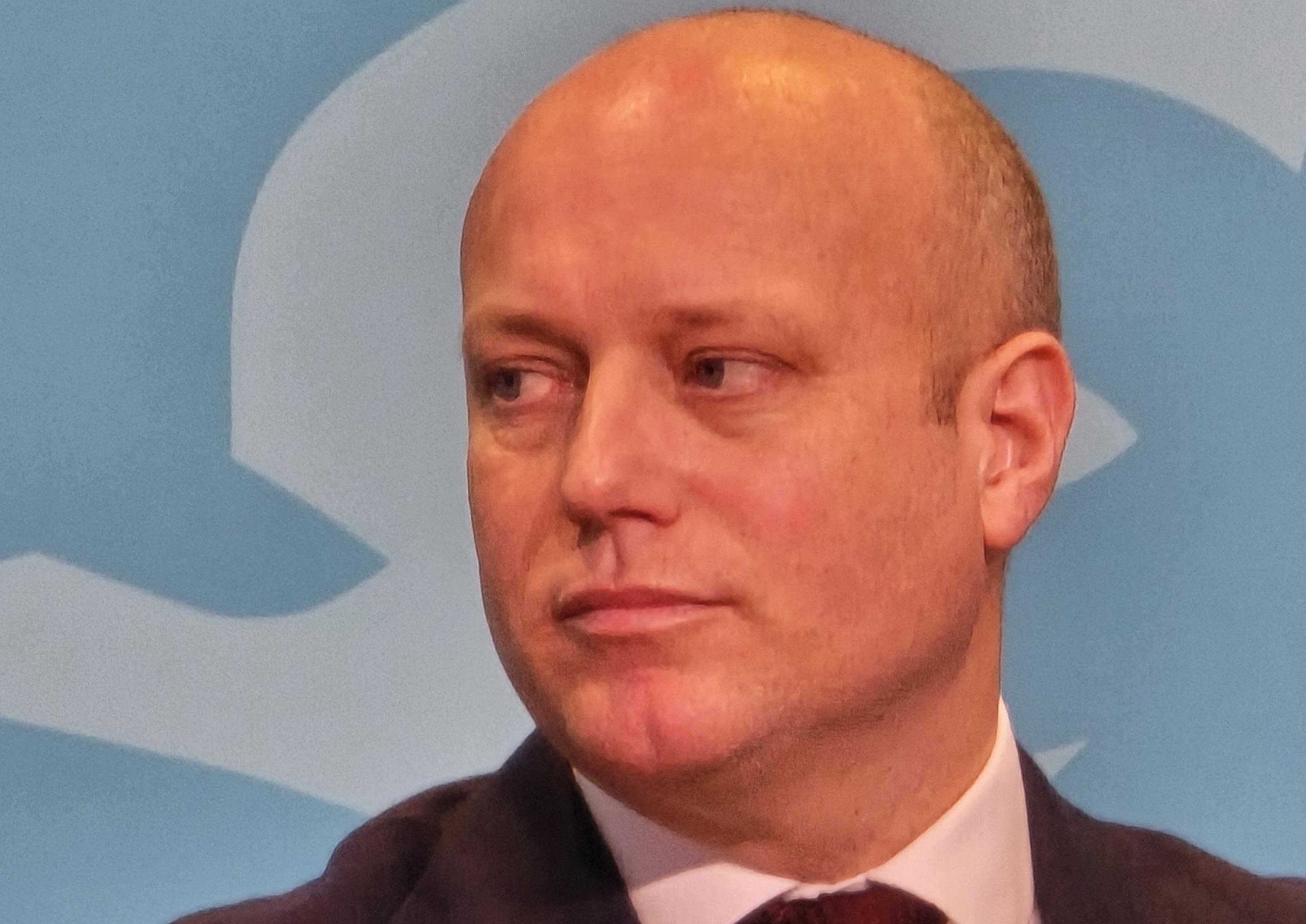
Oydag Etholiad y Senedd yn prysur agosáu, cyhoeddwyd mai Dan Thomas yw Arweinydd nesaf Reform UK yng Nghymru. Datganodd Nigel Farage y newyddion yn rali’r blaid yng Nghasnewydd ar y 5ed o Chwefror. Penodwyd arweinydd newydd i’r blaid yng Nghymru, ar ôl carcharu cyn-arweinydd Reform UK yng Nghymru am 10 mlynedd ar ôl iddo gyfaddef ei fod yn derbyn llwgrwobrwyon am wneud cyfweliadau ac areithiau o blaid Rwsia. Ganed Dan Thomas yng Nghoed Duon yng Nghaerffili, ond treuliodd ei yrfa fel arweinydd Ceidwadol i Gyngor Barnett yn Llundain rhwng 2019 a 2022. Eisoes mae Thomas wedi sefyll fel un o ymgeiswyr y Ceidwadwyr yn Etholiad 2021 yn Islwyn. Yn ôl ‘The Indpendent’, yn ystod y rali Reform UK datganodd Thomas ei fod yn credu fod Cymru wedi’i ‘dorri’, a bod Cymru angen safiad Reform, hwn byddai’r cyfle er mwyn ail-adeiladu Cymru. Ychwanegodd, ei fod yn angerddol ynglŷn â’r ‘mewnfudwyr afreolus’ ac y byddai’n cael gwared o derfyn cyflymder gyrru 20mya yng Nghymru, sydd eisoes yn rhan o bolisïau cadarn y blaid. Cymysg oedd y farn ynglŷn â phenodiad Thomas yn ystod y Rali, dywed yr ‘Independent’ fod pleidiau megis Llafur Cymru, Plaid Cymru a’r Democratiaid Rhyddfrydol yng Nghymru yn honni mai pyped yw Dan Thomas ar gyfer Nigel Farage, gan gwestiynu pa mor gredadwy yw Thomas ar gyfer Cymru. Dywedodd Thomas ei fod yn ‘wybodus iawn’ am wleidyddiaeth Cymru i’r BBC. Cred Farage fod y penderfyniad o benodi Dan Thomas fel arweinydd Reform UK yng Nghymru yn un doeth achos ei fod yn frodor o’r cymoedd. Ychwanegodd Farage fod gan Thomas brofiad busnes sylweddol a’i fod yn deall sut mae mynd ati i redeg cyllidebau mawr. Symudodd Dan Thomas o’r blaid Geidwadol Fehefin y llynedd i Reform UK, ynghyd a’i gyd ymgeiswyr MS James Evans a Laura Anne Jones. Cred Rhun ap Iorwerth mai Ceidwadwyr sydd ddim yn medru chwilio am gartref newydd yw Reform UK. Mae penodiad Thomas yn dod ar adeg dyngedfennol ar gyfer Reform UK yng Nghymru, gydag Etholiad y Senedd yn digwydd ym mis Mai. Yn ôl polau piniwn diweddar gan gynnwys More in Common a Sky News, disgwylir mai Reform UK fydd y blaid fwyaf yn y Senedd y flwyddyn nesaf gyda Reform UK yn cipio 31% o’r pleidleisiau, a Phlaid Cymru i ennill 24% o’r pleidleisiau. Er hynny mae polau piniwn YouGov yn gweld hi’n wahanol a disgwylir i Blaid Cymru cipio’r fwyaf o bleidleisiau gyda 14 pwynt yn fwy na Reform UK. Yn ôl Golwg, dywedodd Dan Thomas fod y pôl diweddaraf yn gadael pethau yn ‘gwbl agored ar gyfer yr etholiad’.
Arian Parod neu Gerdyn: Beth yw Barn
Myfyrwyr
ar Ddyfodol Arian Parod?
YEla Rhys Golygydd Taf-Od
n anaml iawn aiff diwrnod heibio ble na fyddwn wedi defnyddio rhyw fath o gyfrwng i dalu am eitemau neu wasanaeth. Ond, y cwestiwn mawr yw, a’i arian parod, cerdyn ffisegol neu gerdyn di-gyswllt y byddwch chi’n ei ddefnyddio?
Yn ôl ystadegau yn dilyn astudiaeth yn 2024 gan UK Finance Limited bu i werth 48.8 biliwn o daliadau gael eu gwneud yn y Deyrnas
Unedig yn 2024. Cerdyn debit ffisegol oedd y cyfrwng talu fwyaf cyffredin gan gyfateb i werth 26.1 biliwn, bron i hanner y taliadau. Fodd bynnag, yn o agos at hynny oedd y cardiau credyd neu debit di-gyswllt (contactless) wrth iddynt gael eu defnyddio i dalu am werth 18.9 biliwn o daliadau’r flwyddyn. Mae dau fyfyriwr o Brifysgol Met Caerdydd a Phrifysgol Caerwysg wedi datgan bod eu defnydd o arian parod wedi lleihau’n arw’n ddiweddar. Mae hyn yn cyd-fynd â chanfyddiadau UK Finance wnaeth gadarnhau mai dim ond gwerth 4.4. biliwn o daliadau oedd wedi’u
talu gydag arian parod oedd am y tro cyntaf erioed gyfwerth a llai na 10% o’r holl daliadau. Un myfyriwr sydd wedi mynegi’r lleihad yn ei ddefnydd o arian parod yw Osian French o Brifysgol Met Caerdydd. Yn siarad gyda Taf-Od ynglŷn â hyn dywedodd: “Fel myfyriwr, prin iawn dwi’n defnyddio arian parod erbyn hyn ac rwy’n talu gyda cerdyn bron pob tro. Yr unig dro dwi’n defnyddio arian parod ydi os byddaf yn ei dderbyn fel anrheg gan aelod o’r teulu.”
Bu i BBC News gynnal astudiaeth achos yn 2024 hefyd a chanfod bod 78% o oedolion rhwng 16-24 mlwydd oed wedi talu drwy gyfrwng di-gyswllt yn 2024. Mae cynnydd hefyd yn y grwpiau oedran hŷn sy’n troi at y cyfrwng hwn. Hynny ydi, 59% o oedolion rhwng 35 a 44 mlwydd oed ac 19% o’r sawl sy’n 65 mlwydd oed a throsodd. Adlewyrchodd Osian hyn hefyd wrth fynegi; “Mae talu gyda cerdyn yn llawer haws ac yn fwy cyfleus ac rwy’n credu y bydd y dyfodol yn gwbl seiliedig ar daliadau cerdyn neu di-gyswllt yn hytrach na gydag arian parod.”
“Mae meddwl am dalu gydag arian parod wedi dod yn estron i mi.”
Mae Tom Williams yn fyfyriwr ail flwyddyn ym Mhrifysgol Caerwysg a mynegodd
nid yn unig bod talu gyda cherdyn neu’n ddigyswllt yn haws ond hefyd bod annogaeth enfawr mewn busnesau yng Nghaerwysg i beidio talu gydag arian parod. Yn siarad gyda Taf-Od, dywedodd: “Mae’r defnydd o arian parod yn fy mywyd wedi lleihau llwyth dros y flwyddyn dwetha, a mae meddwl am dalu gydag arian parod wedi dod yn estron i mi. Does dim un siop na chaffi ar y campws yn derbyn arian parod gyda nifer o siopau hefyd yn awgrymu defnyddio cerdyn yn lle. Mae ApplePay jysd mor hawdd i’w ddefnyddio, tynnu ffôn mas ac wedyn tapio’r peiriant, tydi talu erioed wedi bod mor hawdd.”
A oes dyfodol i arian parod? Yn sicr, mae hi’n llawer haws arbed a chadw golwg ar faint yr ydym yn ei wario gydag arian parod. O bosibl hefyd, mae hi’n syniad cadw peth wrth gefn rhag ofn y bydd argyfwng ar y gorwel a dim modd cael mynediad at gardiau di-gyswllt. Felly, mae hi’n hynod annhebygol y gwnaiff y defnydd o arian parod ddiflannu’n gyfan gwbl. Ond, mae UK Finance eu hunain yn rhagweld erbyn 2034 y bydd 67% o daliadau’r DU yn cael eu talu gyda chardiau banc ac y bydd arian parod fel cyfrwng talu yn parhau i ddisgyn.
(Image, Dan Thomas, ShahNixon via Wikimedia)
Cynnwys gwleidyddol ar y cyfryngau cymdeithasol yn “dangos bod gwleidyddiaeth yn
Gwenno Davies Golygydd Taf-Od
Gydag etholiad Seneddol 2026 ar y gorwel, mae nifer o’r pleidiau gwleidyddol yng Nghymru wedi troi at ddefnyddio platfformau cymdeithasol i geisio cyrraedd pobl ifanc. Mae Reform UK, yn benodol, eisoes yn adnabyddus am lwyddiant eu cynnwys i ddenu cefnogwyr ar blatfformau fel TikTok ac Instagram.
Er hyn, dros y misoedd diwethaf, bu hefyd twf yn y cynnwys gwleidyddol di-duedd ar y cyfryngau cymdeithasol, gyda chyfrifon fel Hansh Dim Sbin a Senedd Explained yn blaenoriaethu esbonio’r sefyllfa wleidyddol yng Nghymru mewn ffordd mor syml, a hygyrch â phosib.
Hansh Dim Sbin
Mae cyfrif Hansh Dim Sbin wedi dechrau cyfres newydd ar TikTok ac Instagram yn cyfri’r dyddiau tan yr etholiad. Yn y gyfres, mae Caitlin Lovell yn ateb cwestiynau cyffredin am gyfrifoldebau’r Senedd, a’r etholiad sydd i ddod, wrth wneud tasgau dy-
ddiol fel gwisgo colur, a choginio wyau. Yn ôl
Caitlin, pwrpas cyflwyno’r wybodaeth mewn ffordd mor anffurfiol yw i “neud e mor apelgar â phosib.”
“O’n i’n trio neud i’r cynnwys ffitio mewn da’r stwff fi’n gweld ar feed fi, cynnwys sydd ddim yn gysylltiedig o gwbl â gwleidyddiaeth, a wedyn ffeindio ffordd o weu’r gwleidyddiaeth mewn i hwnna.”
Dywedodd Caitlin mai ei phrif flaenoriaeth yw “apelio at y bobl sydd ddim yn gwybod bod ’na etholiad” mewn ffordd sydd “ddim yn rhy patronising.”
“Fi rili ddim eisiau pregethu o gwbl, fi jyst yn trial addysgu pobl yn subtle, heb wthio fe i’w gwynebau nhw.”
“Hefyd, dwi’n dysgu ar yr un pryd. Mae ’na gymaint o bethau dwi ddim yn gwybod, a dwi’n dysgu wrth i fi fynd, felly fi’n teimlo fel fi jyst yn rhannu be fi’n dysgu. Os dwi’n dysgu un person am etholiad y senedd, fi ’di neud job fi.”
Senedd Explained
Mae cyfrif Senedd Explained hefyd yn cyflwyno gwybodaeth wleidyddol ar instagram
gallu bod at ddant pawb”
a tiktok, yn bennaf trwy ddefnyddio flogiau, memes, ac ‘explainers.’
Yn ôl Maddy Dhesi, sy’n rhedeg y cyfrif, “Gall newyddion am y senedd, a gwleidyddiaeth Gymraeg swnio’n eithaf exclusive, a bach yn sych. Ni’n trial mynd yn erbyn hwnna wrth gyflwyno’r cynnwys mewn ffordd mor ysgafn a syml â phosib.”
Dywedodd mai’r math o gynnwys sy’n denu’r mwyaf o sylw yw cynnwys sy’n ‘trendio,’ fel fideo yn rhagfynegi pa bleidiau fyddai cymeriadau o Gavin and Stacey yn pleidleisio drostynt yn etholiad y senedd. “Pan es i gynhadledd Plaid Cymru, daeth llawer o bobl ata i yn dweud ‘fi’n dy nabod di, fi wrth fy modd â’r gwaith, mae e mor, mor ddefnyddiol.’”
Mae Fflur James, myfyriwr Blwyddyn 3, yn credu ei bod hi’n bwysig buddsoddi mwy yn y math hwn o gynnwys, am mai “dyna’r ffordd hawsaf o neud gwleidyddiaeth yn fwy cyraeddadwy i gynulleidfa fwy.”
Mae arolwg ddiweddar yn awgrymu bod 42% o bobl rhwng 16 a 30 oed yn dibynnu ar y cyfryngau cymdeithasol am newyddion am wleidyddiaeth, a materion cymdeithasol eraill.
“Yn aml, mae gwleidyddiaeth yn cael ei weld fel rhywbeth elite, ond mae cynnwys ar y cyfryngau cymdeithasol yn dangos bod gwleidyddiaeth yn gallu bod at ddant pawb.”
Creda Fflur ei bod hi’n bwysig sicrhau fod gan bawb fynediad at wybodaeth wleidyddol ddibynadwy, yn enwedig yn yr oes sydd ohoni, gyda’r tirlun gwleidyddol yng Nghymru o bosib ar fin newid yn llwyr.
Etholiad Senedd Cymru 2026: Beth Mae Myfyrwyr yn Poeni Amdano?
Ifan Meredith Golygydd Taf-Od
Gyda llai na 80 niwrnod i fynd, mae etholiad Senedd 2026 yn mynd i fod yn wahanol wrth i Gymru bleidleisio ar y 7fed o Fai i ddewis 96 o aelodau Seneddol. Dyma etholiad lle fydd pleidleiswyr mor ifanc â 16 oed yn gallu pleidleisio am blaid mewn system gyfrannol newydd. Ond, beth sydd yn poeni myfyrwyr Caerdydd cyn yr etholiad eleni? Beth fydd y ffactorau y byddant yn eu hystyried?
Yn ôl Megan Williams sydd yn ei hail flwyddyn yn astudio Cymdeithaseg, mae hi’n pryderu am argaeledd swyddi i bobl ifanc a’r ffordd mae pobl ifanc yn cael eu trîn mewn swyddi contract sero-awr.
“Mae llawer o bobl ifanc mewn swyddi rhan-amser, dros dro neu ar gontractau ansicr. Er bod ganddynt waith, nid oes ganddynt y sicrwydd ariannol i gynllunio’n hyderus ar gyfer y dyfodol. Mae hyn yn gwneud rhentu neu brynu tŷ yn llawer anoddach, ac yn ei gwneud hi’n anodd arbed arian yn gyson. O ganlyniad, mae penderfyniadau mawr fel cynllunio teulu neu ymrwymo’n ariannol yn cael eu gweld fel rhwystr mawr.”
Yn enedigol o Orllewin Cymru, mae Megan am weld ei hun yn dychwelyd i sir Geredigion i fyw ond yn poeni am ddiffyg gwaith sefydlog mewn ardaloedd gwledig. Dywedodd fod yr “ymdeimlad o gymuned a pherthyn, a bod yn agos at deulu, yn rhywbeth sy’n anodd ei ailgreu mewn dinas.”
“Ond byddwn i’n poeni am y cyfleoedd gwaith. Os nad oes digon o swyddi sefydlog gyda chyflog da, mae’n anodd cyfiawnhau symud yn ôl — hyd yn oed os yw’r galon eisiau.”
Poena Sami Sullivan sydd yn ei flwyddyn gyntaf yn astudio Cymraeg a Newyddiaduraeth am gynlluniau addysg uwch megis benthyciadau myfyrwyr a chostau ffioedd prifysgol sydd “yn cadw mynd i fyny.”
Creda fod “gwleidyddiaeth a pholisïau yn cael eu colli ymysg yr holl ffocws ar gyfryn-
gau cymdeithasol. Mae gan bawb yr hawl i farn ond mae rhai yn cymryd hyn yn eithafol.”
“Etholiad y senedd ydyw - lleoliad sy’n rheoli Cymru, hoffwn weld gwleidyddion yn ffocysu ar weithredu yng Nghymru a chreu cynlluniau yn ymwneud â dyfodol yr iaith a diwylliant y Gymraeg tra hefyd yn ffocysu ar y broblem trafnidiaeth rhwng Caerfyrddin ac Aberystwyth.”
Gyda system newydd o bleidleisio ac etholaethau newydd, dyma bryder Elliw Straen o’r ail flwyddyn ym Mhrifysgol Caerdydd. Yn ôl hi, mae’n “poeni fod y rhannu etholaethau newydd am dan gynrynchioli ardaloedd sydd â etholaeth fawr fel fy un lleol i, Gwynedd Maldwyn, lle mae’r etholaeth yn ymestyn o Ben Llŷn i Loegr.
Mae’n poeni am y diffyg cynrychiolaeth gall y system newydd ei greu gan ychwanegu, “fydd pobl hefyd yn fwy hesitant i ethol os ydi’r ethloaethau yn fwy gan fod llai o gynrynchiolaeth leol.”
Byd amaethyddiaeth sydd yn cymryd sylw Endaf Owen, myfyriwr ail flwyddyn yng Nghaerdydd ac mae am weld newidiadau i bethau megis treth etifeddiaeth a gwarediad o syniadau i blannu 10% o dir ffermio gan goed a gorfodaeth i ddefnyddio disel gwyn mewn tractorau.
Er bod rhain wedi eu disodli bellach mae’n poeni mai “mater o amsar tan ma rhywun yn cal bright idea tebyg.” Ac yntau o Ynys Môn, mae cynlluniau Wylfa newydd wedi bod yn bwnc llosg ac yn ôl Endaf, “yn bersonol dwi’n meddwl bod o am ddod a lot o swyddi a cyfleoedd i bobl sir fon a rhywle i annelu am Swydd yn y dyfodol.”
Mae’r amser yn crebachu i wleidyddion i ennill pleidleisiau etholwyr Cymru a’r polau piniwn yn dangos bydd newid sylweddol i’r dirwedd wleidyddol yng Nghymru ar ôl y 7fed o Fai. Fodd bynnag, amser a ddengys os fodd y polau piniwn i’w gwireddu.
“Mae gan bawb yr hawl i farn ond mae rhai yn cymryd hyn yn eithafol.”
Prifysgol Caerdydd yn Cynnal Gŵyl
Gymreig am y Tro Cyntaf Erioed
Hannah Williams Pennaeth Taf-Od
Am y tro cyntaf erioed, mae Prifysgol Caerdydd yn lansio Gŵyl Gymreig - Embrace Your Welshness. Dros gyfnod o ddeg diwrnod bydd y Brifysgol yn dathlu popeth yn ymwneud â diwylliant Cymreig a’r iaith Gymraeg. Mewn datganiad, dywed Undeb Myfyrwyr Caerdydd mai bwriad yr ymgyrch “yw dathlu ein Cymreictod a’n gwahaniaethu oddi wrth
Undebau Myfyrwyr a Phrifysgolion tu allan i Gymru”. Yn ôl Cynwal ap Myrddin, Is-lywydd y Gymraeg yn Undeb y Myfyrwyr, “weithiau da ni [y Brifysgol a’r Undeb] ddim yn clodfori neu’n ymfalchïo yn ein Cymreictod digon. Gobaith hwn ydy fod o’n rhyw kickstart i ymgyrch fwy parhaus fydd yn digwydd yn fwy cyson”. Fel rhan o’r ymgyrch bydd amrywiaeth o weithgareddau yn cael eu cynnal i staff a myfyrwyr rhwng y 25ain o Chwefror a’r 6ed o Fawrth. Bydd rhain yn cynnwys twmpath dawnsio gwerin, noson gwis am Gymru a sesiynau blasu’r Gymraeg. Ond nid yn unig myfyrwyr Cymraeg sy’n cael eu targedu gan y dathliadau. Mynegodd Cynwal ei bryderon fod llawer o fyfyrwyr y Brifysgol ddim yn ymwybodol o ddiwylliant Cymreig a’r iaith Gymraeg, ond “drwy fwy o ymgyrchoedd fel’ma sy’n cwmpasu pawb, dim jyst myfyrwyr Cymraeg, gobeithio allwn ni newid hwnna”. Y noson fydd yn denu’r ganran fwyaf o fyfyrwyr yw’r noson glwb ‘Iolo’ yn Undeb y Myfyrwyr, yn hytrach na’r noson ‘Yolo’ arferol. Bydd caneuon gan artistiaid o Gymru ac ambell gân Gymraeg yn cael eu
chwarae drwy gydol y noson, a bydd llawer o gymdeithasau’r Brifysgol hefyd yn gwisgo fel eicons Cymreig. Eglurodd Cynwal, “Bwriad y noson ydy er mwyn trio neud yn siŵr bod ni’n gynhwysol i bawb a bod pawb wedyn oleiaf wedi profi rhywbeth i wneud efo’r wythnos”. Mae cyrraedd cynulleidfa eang a thynnu sylw at ddigwyddiadau’r ymgyrch yn hollbwysig, a bydd y cyfan yn cael ei ffrydio ar gyfryngau cymdeithasol Undeb y Myfyrwyr (@cardiffstudents). Eglurodd Cynwal, “bydd bob dim yn weledol i bawb sy’n dilyn Cardiff Students. Mi fyddan nhw’n gweld pobl yn dawnsio gwerin, mi fyddan nhw’n gweld pobl yn dysgu Cymraeg, yn gweld darnau o’r gyngerdd. Ma’ isio prif ffrydio bob dim a gwneud yn siŵr bod pobl yn sylweddoli dydy Cymru ddim yr un peth â Lloegr. Ma’ genno ni ein traddodiadau a’n diwylliant ein hunain.”
Yr Eisteddfod Ryng-gol Yng nghanol y dathliadau, bydd yr Eisteddfod Ryng-golegol yn cael ei chynnal yng Nghaerdydd ar y 27ain a’r 28ain o Chwefror. Mae disgwyl i tua 600 o fyfyrwyr o gymdeithasau Cymraeg prifysgolion Cymru a thu hwnt i ddod i’r Brifddinas i gystadlu mewn twrnamaint chwaraeon a chystadlaethau’r Eisteddfod. Dyma fydd y tro cyntaf i’r Eisteddfod Ryng-gol gael ei chynnal yn y Brifddinas ers 10 mlynedd, ac roedd hwn yn dipyn o sbardun ar gyfer cynnal yr Ŵyl Gymreig eleni. Dywedodd Cynwal, “O’n i’n meddwl os da ni isio neud o, hon oedd y flwyddyn achos ma ‘na buzz yn yr Undeb be’ bynnag. Ma’ staff yr Undeb
yn excited bod y ‘Steddfod yn dod yma. O’n i’n meddwl jyst neud o er mwyn dechra’ fo ffwrdd.” “Fy ngobaith i ydy bod hwn yn rhyw fath o waddol dwi’n ei adael i’r Undeb a bod o’n rhyw gytundeb answyddogol bod Is-lywydd y Gymraeg yn gweithio efo Deon y Gymraeg er mwyn gwneud yr wythnos yma’n beth blynyddol.”
Dyddiadau i’ch Dyddiadur:
Felly dewch yn llu i ddathlu ein hiaith a’n diwylliant! Dyma flas ar rai o ddigwyddiadau’r wythnos:
25 Chwefror – Brecwast UMCC; noson Iolo yn Undeb y Myfyrwyr
26 Chwefror – Cyngerdd Gŵyl Gymreig - Embrace Your Welshness
27-28 Chwefror – Eisteddfod Ryng-gol
1 Mawrth – Teithiau ‘Rho Gynnig arni’ Pen y Fan a Sain Ffagan
2 Mawrth – Coginio Pice ar y Maen gyda’r Gymdeithas Bobi; Clwb Coffi, Clonc a Darllen
3 Mawrth – Twmpath Dawnsio Gwerin yn Undeb y Myfyrwyr
5 Mawrth – Cwis y Taf am Gymru a’r Gymraeg
6 Mawrth – Darllediad S4C o Gêm Cymru yn erbyn Iwerddon
Am ragor o wybodaeth, cadwch lygad ar gyfryngau cymdeithasol @ umccaerdydd a @cardiffstudents.
Y Cymry yng Ngemau Olympaidd y Gaeaf
Kieran Miller Cyfrannwr
Gyda Gemau Olympaidd y Gaeaf newydd gael eu cynnal yn yr Eidal, mae cynrychiolaeth glir ac iach o Gymru wedi bod gydag athletwyr yn cystadlu’n bennaf mewn bobsleigh. Mae athletwyr Cymru wedi bod yn cystadlu dros Dîm Prydain Fawr ond hefyd dros genhedloedd eraill o bob cwr o’r byd. Gan ddechrau gyda pherfformwraig nodedig i Dîm Prydain Fawr, mae Adele Nicoll o’r Trallwng, sydd hefyd yn gyn-fyfyrwraig ym Mhrifysgol Metropolitan Caerdydd, yn cynrychioli Cymru a Thîm Prydain Fawr yn cystadlu mewn amrywiaeth drawiadol o gemau fel taflu’r ergyd, lle mae hi’n sefyll fel pencampwr Prydain dair gwaith. Mae hi hefyd wedi cystadlu mewn bobsleigh a thaflu disgen, gan ennill sawl twrnamaint yn y meysydd hynny. Cafodd y fenyw 29 oed ei henwi hefyd fel y fenyw Brydeinig gyntaf i gystadlu yng nghystadleuaeth y monobob, sef bobsleigh y bôn, ond yn lle grŵp un athletwr sydd. Ond bydd Nicoll hefyd yn bartner i Ashley Nelson yn y
ddeuawd bobsleigh i fenywod, bydd hi hefyd yn gwneud ei hymddangosiad cyntaf yn y Gemau Olympaidd eleni er gwaethaf teithio fel aelod wrth gefn yng Ngemau Olympaidd y Gaeaf Beijing 2022. Mae ei hamser fel arfer yn cael ei rannu rhwng bobsleigh ac athletau ac mae’n gobeithio gwneud enw iddi hi ei hun yng Ngemau Olympaidd y Gaeaf eleni. Hefyd yn cystadlu mewn bobsleigh mae Kya Placide, a aned yng Nghaerdydd, sydd yn ymddangos yn ei Gemau Olympaidd y Gaeaf cyntaf fel chwaraewr wrth gefn teithiol, er gwaethaf y ffaith mai dim ond yn 2023 y newidiodd i bobsleigh ar ôl cael ei pherswadio gan Adele Nicoll i newid a gwneud ei hymddangosiad cyntaf mewn bobsleigh yn Lillehammer ochr yn ochr ag Adele Nicoll yn fuan ar ôl camu i mewn i bobsleigh am y tro cyntaf wythnosau ynghynt. Ei chanlyniad gorau hyd yn hyn mewn bobsleigh oedd yng Nghwpan y Byd Lake Placid yn 2024 ble enillodd arian gyda Nicoll. Dechreuodd y fenyw 21 oed fel sbrintiwr ac mae wedi cynrychioli Cymru ym Mhencampwriaethau Dan Do Cymru yn 2023, gan ennill efydd yn y 60m. Gan symud allan o Dîm Prydain Fawr, mae Mica Moore wedi newid i gynrychioli Jamaica yng Ngemau’r gaeaf hwn.
Cyrhaeddodd Moore y safle gorau erioed mewn bobsleigh Olympaidd i ferched gyda Thîm Prydain Fawr yng Ngemau PyeongChang 2018 ond newidiodd i Jamaica sef man geni ei neiniau a’i theidiau. Mae Moore wedi disgrifio’r achlysur fel “anrhydedd aruthrol”. Dychwelodd y chwaraewr 32 oed o seibiant 3 blynedd yng Nghwpan Ewrop yn Lillehammer ar ôl gadael rhaglen chwaraeon gaeaf Prydain yn 2022 ar ôl gweld “ymddygiad niweidiol a sarhaus” yn ôl y sôn. Fodd bynnag, mae gan Moore lawer o gefnogwyr o Dîm Prydain Fawr a Jamaica sydd yn awyddus ac yn barod i weld sut mae eu hathletwr a’u cyn-athletwr yn perfformio. Cafodd Gemau Olympaidd y Gaeaf eu darlledu gan y BBC, gyda’r gemau wedi gorffen ddydd Sul yr 22ain o Chwefror. Roedd presenoldeb cyffrous o Gymru yng Ngemau eleni gyda gobaith o gynnydd mewn cyfranogiad o Gymru, beth bynnag, dyma’r amser i gefnogi ein hathletwyr Cymreig.
(Image, Adele Nicholl, 121a0012 via Wikimedia)
Miriam Southall Head of Opinion
Recently, the prospect of graduation has been looming over me. I find myself questioning what my life will be like, what I will do, and what opportunities and adventures await me. As I reflect on these thoughts, I can’t help but be reminded of the dreams from my childhood. Dreams of escaping the gloomy and dismal atmosphere that often blankets the United Kingdom. Dreams of California’s glorious and radiant sun hitting my face instead of rain and wind .Starting from this point, the argument for leaving the UK after graduation becomes not only emotional but also rational—rooted in economics, wellbeing, ambition, and the realities of a globalized world.
As I’ve been contemplating my childhood dream more and more, the reasons to leave the UK keep rising. Firstly and most obviously, there’s the weather. There’s a reason why we Brits always find a way to bring up the weather in conversation. It’s not simply a background topic but something that infuses our lives. Rather than just being about climate, an emotional atmosphere is created by the constant greyness looming over us. It’s not just about wanting a bit of sun, but rather a desire for a better life, improved mental well-being, and other long-term goals.
Clouds are the most defining weather pattern in the UK, creating a constant blanket of greyness that can hang over the skies for weeks on end. This persistent greyness often has many psychological consequences. To begin with, this grey blanket mutes and flattens the colours in the world. Rather than bright and contrasting colours lighting up outside, the world appears lifeless and dark, encouraging people to stay inside their homes. With people remaining indoors most of the day, socializing is reduced to phone calls and messages, thereby increasing the population’s screen time. In addition, fewer hobbies are pursued, making people less interested in self-improvement and enjoying fun activities. Serotonin levels also take a huge hit due to reduced exposure to natural sunlight. Serotonin is a chemical messenger essential for how the body and brain function. It helps support a healthy sleep schedule, regulates mood, and contributes to a healthy appetite and digestion, among many other elements necessary for our well-being. All this goes to show how the bad weather in
the UK can be detrimental to our overall health.
In addition to the weather, the job market is another important factor to consider. In the UK, the job market is not only competitive but also limited by industry saturation, geography, and immigration rules, which particularly impact international graduates who wish to stay. According to the UK Government’s Graduate Labour Market Statistics 2024, reports indicate slower wage growth and regional disparities in graduate outcomes. In summary, the UK market is shrinking. In contrast, the global market is growing at a pace that the UK cannot keep up with. The creative industry offers abundant job opportunities in locations like Los Angeles, Melbourne, and Vancouver, all of which have more funding and better infrastructure. Additionally, technology ecosystems are expanding rapidly in cities such as Seoul, Berlin, Toronto, and California. In Germany, Japan, and the Netherlands, engineering and manufacturing roles are increasingly available. Finally, countries are actively recruiting STEM graduates by offering relocation packages and fast-track visas. From this information is seems wise for students to seriously consider leaving UK if they want promising career opportunities. However, some may argue that graduates should stay in their country to help improve it out of a sense of patriotism. I contend that patriotism is not a sufficient reason to remain in the UK after graduation.
To begin with, this concept can become a trap for young people. Many graduates feel pressured to ‘stay loyal’ and ‘give back’ to their country, which can lead them to believe that leaving is a form of betrayal. However, why should they accept poor working conditions and limited prospects? Choosing to leave is simply a decision to pursue a better life, prioritizing one’s own needs over those of a country. Patriotism is an emotion, not a life plan. We are not guaranteed a fulfilling life and career simply by loving our country. Plus leaving is not abadnoing your roots and identy. You can still love and stay connected to British culture, one can contribute to the community and even return later. Patriotism isn’t about physical presence; it’s about love and appreciation.
Don’t feel as if you’re trapped here forever, and don’t think that leaving is an act of betrayal. Go out into the world and seek whatever is calling to you. It is evident that leaving the UK has many benefits and could be whats best for your overall well being.
Do I Stay or
do I go?
“Patriotism isn’t about physical presence; it’s about love and apreciation.”
With their less regulated socieities and warm climate, sout heast asia and Indonesia have grown as destinations for British expats
Bondi Beach Australia, British emigration to the country remains strong with over one million british nationals living there. (Image, above Vyacheslav Argenberg via Wikimedia)
We need to talk about Valentine’s Day
Ffion Perkins Opinion Editor
Roses, chocolates, cards, and candle-lit dinners. The familiar colours of red and pink hit the shelves again this year in time for Valentine’s Day. A holiday that is misery for single people, a cash grab for corporations, and an expensive night out for those in relationships. Alongside many other holidays celebrated across the calendar year, it is safe to say that Valentine’s Day has strayed from its divine origins. What was once an Ancient Roman festival celebrating health and fertility, has now transformed itself into spending as much money as possible, a night out in Central, and the same formatted Instagram story posted by forty-five different people - proclaiming their undying devotion to the ‘love of their life’.
The question must be asked. What is Valentine’s Day other than being guilt tripped into excessive shopping and having heteronormativity shoved down your throat? We all know love comes in many different ways, so why doesn’t our society reflect this when it comes to the Cupid centric holiday? Yes, we are a lot more progres-
sive than we used to be. But the range and quality of anything other than couples who are straight and white and cisgendered is dire, and often only there to tick a box. It’s exhausting how we only see one type of couple in our movies, adverts, and seasonal promotions - when our love is so much more unique and diverse.
Surely for some couples, after decades of celebrating their romance day in and day out for years, it just gets repetitive. After all, how many bouquets of flowers and boxes of chocolate does one person need on the same day every year? Most of the couples I know find joy in the little things. The acts of service, the ‘this reminded me of you’, and the always being there for one another regardless of the time of year. I’d argue this is absolutely more valuable than a teddy bear or a candle that puts money in some pathetic capitalist’s pocket.
Am I saying that we should up and abandon Valentine’s Day? No. It’s a tradition that has always existed and probably will forever. However, I do think it is absolutely more hassle than it’s worth, especially in comparison to other holidays. Celebrate your love loudly every day, not just when it counts. At least we get bank holidays for Easter and Christmas.
“It is absolutely more hassle than it’s worth”
Bad Bunny’s Super Bowl Performance Splits Opinions
Mischa Denney-Richards Contributor
The only thing more powerful than hate is love. That was the message sent out by Bad Bunny during the Superbowl halftime show, compared to the All-American Charlie Kirk tribute show. The US is a dystopian reality, mirroring the likes of The Hunger Games. Innocent people are ripped from their families and identities. Despite six deaths in ICE custody and two people fatally shot in 2026, the halftime show being sung in Spanish was a more pressing issue for Republicans.
The most streamed artist on Spotify in 2025, Bad Bunny, has altered history. His messages project family, love, fun, and inclusion. If anyone seems to find a problem with the sentence ‘the only thing more powerful than hate is love’, MAGA is calling to recruit you to ICE. The message is not inherently political. The message is human decency and unity. According to right-wing American journalist Megyn Kelly, for Bad Bunny to sing in Spanish, “is a middle finger to the rest of America.” By the way, Bad Bunny is from Puerto Rica, a self-governing territory of the USA.
Dspite a legal mandate in place for the full disclosure of the Epstein files, withholding them is giving middle finger up to all the victims of sexual assault. Releasing untrained immigration enforcers and allowing them to shoot innocent civilians dead is a middle finger to human rights. Renee Good, shot and killed by ICE. Alex Pretti, shot, and killed by ICE. Who is being held responsible? Ask the criminally convicted President of the United States of America, whose name appears in the Epstein files more than Harry Potter’s does in all of the Harry Potter books combined.
Donald Trump’s reaction to Bad Bunny’s performance was that it was a “slap in the face” to the country, and “absolutely terrible” performance. In fact, according to Mr Trump, it was an “affront to the Greatness of America.” ‘Together we are America’, printed on the side of an American football. That’s pretty easy to understand for all of us English speaking folks. So, what’s wrong with that? Never fear, Kid Rock has better, English, lyrics which you could have enjoyed at the All-American halftime show. They go, “young ladies, young ladies, I like ‘em underage, see / some say that’s statutory / but I say it’s mandatory.” A real lyrical genius.
Not to point out the obvious question, where is this greatness the right are convinced is embedded into America? ICE raids houses, rips a baby away from their mother whilst she breastfeeds, children are wearing bullet proof vests to school, a place where women’s reproductive rights are determined by men, where transgender rights are disappearing. Greatness? Greatness is when a 1950 ideology is preached, and praised? I don’t understand this definition of greatness.
Bad Bunny, Benito Antonio Martinez Ocasio, and his performance included a couple getting married, a couple getting engaged, people of all backgrounds dancing and celebrating life, diversity, inclusion, and America. The point of the alternative halftime show was to be political. To reenforce a ‘them versus us narrative’, to draw a clear line between particular morals and ethics. Households were divided as TikTok’s circulated showing half a family watching Bad Bunny, and the other half watching Kid Rock brag about paedophilia. Where’s the greatness in that?
(Image, above, Toglenn via wikimedia)
Barn
The future
Seven Standen Design Deputy
Has anyone else noticed we’re living in a dystopia? I’m not talking about the increasing trend of people falling in love with AI chatbots, although it’s easy to draw a parallel to the 2013 film Her. Talking about artificial intelligence in science fiction movies is surface level and reductive — I’m pretty sure AI creators want us to feel like we’re in an episode of Black Mirror (2011-). The reason I feel like 2026 is a dystopian society goes deeper than technological advancements.
This realisation first hit me when Google Pixel was advertising the new Magic Eraser tool. With one easy tap, you can remove entire people from your photos. It promises to remove ‘distractions’ from the background (though the commercials try to appeal to your emotions by suggesting you erase your exes). Although this seems harmless, altering or destroying photos is a way of erasing or rewriting history. In the classic 1984 (1949), Winston Smith is overcome when he discovers a photograph of men gathering at a time and place the regime claims to be impossible.
Winston’s job involves rewriting old newspapers for the Party to support propaganda, something we now do regularly. Editing a typo you made in a post is one thing
is here! And it is terrible
but in the digital world, it’s easy to completely change the statement you originally made. Despite worries about online footprints, information is slippery on social media. Not to mention, false information is circulated so widely it becomes accepted as fact. Yes, this has been worsened by AI hallucinations, but it was already happening with ‘fake news’, psyops, and bots.
“We’re all one step closer to citizens of the Capitol talking nonchalantly about children dying for our entertainment”
Speaking of 1984, we’ve got our own version of newspeak: Orwell’s fictionalised language which minimises vocabulary, removes nuance, and limits the freedom of expression. Obviously, slang and shorthand are a normal part of human culture. However, it has become normal to use algospeak (coined in 2021) words like ‘unalive’, ‘pdf’, or ‘pew pew’ as a form of self-censorship.
Originally, these terms were supposedly adopted to avoid posts being deleted or hidden by social media algorithms. But their normalisation detracts from the severity of the subject matter, such as using ‘unalive’ to talk
about a murder victim, and psychologically distances the user from it. Suddenly, we’re all one step closer to citizens of the Capitol talking nonchalantly about children dying for our entertainment because it seems unreal to us.
The Hunger Games (2008) is a dystopia which is commonly compared to the modern world. While capitalism and consumerism are valued highly, with everyone buying the latest foods and fashions, the number of people living in poverty continues to grow. It’s no secret Mr Beast, the biggest YouTuber in the world, rolls in millions from exploiting poverty porn and making people literally fight for money.
Recently, I can’t help but compare the Hunger Games to the Olympics. Athletes don’t fight to the death. However, we see the same desperation, people trying to appeal to the audience, risking their lives for entertainment, and extreme political propaganda. I don’t intend to diminish the lives lost in the Ukraine genocide by saying this, but Vladyslav Heraskevych being banned for commemorating the dead is something we see in The Hunger Games repeatedly.
In The Hunger Games: The Ballad of Songbirds & Snakes (2023), we see Reaper cover the dead bodies of the Tributes with the Panem flag. They are victims of the ongoing genocide. Immediately, the camera cuts away. Viewers know this is the corrupt state trying to clamp down on a rebel-
lion. So, why do we let the International Olympics Committee commit the same act of suppression? I could go on. I could remind you of Fahrenheit 451 (1953), where books were reduced to summaries (sound familiar?), then eradicated and replaced with 24/7 live television streams. The squip implanted in people’s brains in Be More Chill (2004) is eerily similar to an AI assistant. Meanwhile, the isolated existence of people living entirely online in Ready Player One (2011) is akin to our loneliness epidemic. It’s easy to point to these examples and hundreds of others as proof we live in a dystopia, but I think I’ve made my point.
Literature is Heading in a Bad Direction
Bethan Jones Opinion Editor
Yes, I’ll admit it, I’m a book snob. I turn my nose up at the latest Colleen Hoover. And whilst I may have enjoyed the tv show, if you tell me you’re reading the Heated Rivalry series, I most likely won’t take a book recommendation from you. That’s not to say I’m sat reading classics like Dostoyevsky’s Crime and Punishment. I merely enjoy something my mum may have read in book club, or a novel I got in my stocking last year.
I have always had a book in my hands, ever since I was young. Reading has always felt personal and constant. But there has been a noticeable trend recently that is changing our relationship with literature. Through social media, books have become mainstream - they are aestheticized and marketed based on their online identity - and the literary scene is now unrecognisable. There is sudden - ly a
gap in the market for fast-produced, easy-read novels that you would usually find in the back of The Works, but now sit by the front door of Waterstones or on the top list on goodreads.
Why this sudden change in reading culture? I believe part of it comes from the current turmoil of our political climate that has saturated our feeds, constantly being pumped into our brains. We are no longer passive observers of global events but are immersed in them, and people are looking for a way out – books have become a means of escapism. But this is a complete shift from what literature has always been – an intellectual vehicle to pursue knowledge, challenge narratives and enrich the mind.
We have distracted ourselves from the real reason for literature and instead, created and endless cycle for ourselves, stripping books down to digestible tropes which circulate social media and allow publishers to monetise trends rather than stories.
This dumbed-down literature is only discouraging other authors to write with nuance and subtlety, leaving little room for readers to be curious. People want that quick dopamine hit and then swiftly move onto the next novel, barely questioning or reflecting what they have read and instead, indulge in a frenzy as to who can read the most books in a month. Political discourse is thriving off of this simplification.
“I fear we are losing something essential”
Literature is a breeding ground for politics. By opening the page, you sign a contract to play in its own political playground. Every narrative is shaped by its power structures – whose perspective is centred? Whose suffering is justified? It is a space to test and question morals, not represent them, and your role as the reader is not to categorize a book into ‘right’ or ‘wrong’ but to interrogate it. Literature is a rarity, allowing us to step into another’s mind, the intimacy lets us test the waters as to who we typically deem the hero or the
villain. These lines blur more than we like to think.
This is a skill that we rarely get to exercise elsewhere, and it is crucial at this point in our ideological landscape. Polarisation is only deepening with an intense vilification of the ‘other’. We need literature to help us slow down and empathise with those from different cultures, histories and socio-economic backgrounds. It reminds us that people are not 2D individuals, but a series of contradicting complications that make up a human experience. And when divisions feel so entrenched, maybe now is a good time to pick up a book and really think about what is sitting between those pages.
I don’t turn my nose up at certain books because I believe reading should be exclusive, but I fear we are losing something essential. By reducing books to trends and tropes, we forget the quiet, uncomfortable artistry of thinking. Why are we then surprised when our understanding becomes just as shallow?
Image: Unsplash.
Does Bridgerton Promote Pornography?
Megan Warren Contributor
Wten Bridgerton arrived on Netflix in late 2020, it rapidly transformed from a glossy period experiment into a full-scale cultural phenomenon.
Audiences were drawn in by lavish costumes, orchestral covers of modern pop songs and a boldly colour-conscious approach to casting that reimagined Regency London. Just as quickly, however, a familiar backlash emerged.
Headlines and comment sections filled with accusations that the series was little more than pornography- proof, some argued, that streaming platforms were abandoning taste in favour of shock value.
It is a dramatic claim, but one that collapses under scrutiny. Pornography is created with a primary purpose: sexual arousal detached from narrative complexity.
Characters exist mainly as vehicles for explicit acts, and emotional development is secondary or absent. Bridgerton, whatever one thinks of its excesses, operates very differently. Its intimacy is woven into stories about power, repression, longing and rigid social expectation.
The sex scenes are not random interruptions; they function as narrative turning points. They reveal vulnerability, alter relationship dynamics and frequently complicate (rather than resolve) emotional conflicts.
You can reasonably argue that the show is indulgent or highly stylised. You can debate whether its pacing lingers too long on sensuality. But to reduce it to
“porn” ignores context entirely, and context is what separates erotic storytelling from explicit content designed purely for stimulation.
The accusation also exposes a striking double standard in how audiences evaluate television. Viewers embraced the graphic violence and sexual brutality of Game of Thrones, a series that routinely depicted assault, torture and incest while still being framed as serious prestige drama.
“Age ratings are visible, content warnings are explicit, and parental controls are widely available”
Euphoria features explicit nudity, drug abuse and deeply unsettling sexual encounters, yet it is widely discussed as raw social commentary.
Even romance adaptations such as Heated Rivalry contain more graphically described intimacy without provoking the same moral panic. The question, then, is not simply about explicitness; it is about whose stories are being told.
Part of the answer lies in perspective.
Bridgerton foregrounds female desire in a way mainstream television has historically avoided. Women are not passive objects of pursuit; they are curious, assertive and allowed to experience pleasure without punishment or narrative shame.
For decades, television proved far more comfortable depicting violence against women than depicting women enjoying sex. One is labelled gritty realism. The other, apparently, is indecent.
There is also a peculiarly British discomfort at play. Audiences will sit comfortably through a primetime crime drama filled
with psychological torment and graphic mur der. Yet mutual, enthusiastic intimacy, es pecially in a series marketed largely toward women, still provokes outrage framed as moral concern. The reaction reveals less about chang ing standards and more about lingering cultural anxieties surrounding pleasure and propriety.
Genre snobbery contributes as well. Romance has long been dismissed as frivolous, particularly when its core audience is female. Dark epics consumed by male viewers are grant ed intellectual prestige, while escapist romantic fantasy becomes evidence of cultural decline.
The hierarchy says more about bias than about artistic value. Emotional storytelling centred on love, desire and vulnerability is no less worthy of analysis than stories centred on war or suffering.
Streaming culture further complicates the debate. Viewers actively choose what they watch. Age ratings are visible, content warnings are explicit, and parental controls are widely available. To claim that a platform is “promot ing pornography” suggests audiences are pas sive recipients rather than adults capable of making informed decisions about entertainment.
None of this places Bridgerton beyond criticism. Conversations about consent, power dynamics and representation remain important, particularly in historical settings shaped by inequality. But critique requires nuance. Labelling a romantic drama as pornography simply because it
“Discomfort tells us far more about contemporary cultural attitudes”
heightened, emotionally sincere and visually extravagant, offering escapism during an era marked by uncertainty and cynicism. In a media landscape saturated with brutality, a series that treats pleasure as tender rather than dangerous can feel unexpectedly radical. If anything, the backlash reveals an enduring unease, not with explicit content itself, but with desire presented openly, joyfully and without apology. And perhaps that discomfort tells us far more about contemporary cultural attitudes than it does about the show that provoked it.
Should St. David’s Day be a Bank Holiday?
Daisy Davies Contributor
Ihave lost count of how many March 1st’s have passed by since I first heard calls to make it a bank holiday. Dydd Gŵyl Dewi, or St. David’s Day, is celebrated each year in every school in Wales, with songs, poetry, and dressing up in traditional Welsh clothing and rugby shirts (well, rugby shirts in the early 2010s, compared to the many Fishlocks and Bales now). Just 32% of Cardiff University students will have any ex perience of this, and the concern is that once you leave school, the celebration of Welsh cul ture ends. Of course, there’s Tafwyl, the Welsh music festival, or Eisteddfod Genedlaethol, but for Welsh learners, like me, or those who do not speak Welsh at all, it can be very daunting to attend. Just 9.18% of Cardiff University stu dents speak Welsh. A bank holiday on March 1st needs to be able to engage the other 91% too.
Despite both St. Andrew’s Day and St. Patrick’s Day being bank holidays in their re spective countries, I haven’t always thought St. David’s Day should be a bank holiday in Wales. The absence of Welsh culture year-round meant that if we didn’t celebrate St. David’s Day, we weren’t celebrating Welshness at all at school. I’m incredibly lucky to have been raised in a
understood.” To Mr. Crabb I say, how can we expect the people of North America to understand Wales if we are not actively encouraging the Cymry to understand Welsh culture and history? Furthermore, when he passionately asked, “do we really think that the cultural richness that St.David’s Day today would be the same if it was a day for children to remain at home?”, I remind him once more of weekends. The semantics of having a bank holiday are not the only factors to consider. Identity politics is dominating hostile online debate. Last summer we saw the St. George’s Cross appear across the UK. And yes, I use ‘UK’ and not ‘England’, because they too were plastered in Wales, from Cŵmbran to Conwy. The word Wales itself means foreigner, in contrast to ‘Cymry’, referring to the people of Wales, which means ‘fellow countrymen.’ The Welsh language makes this country more inclusive and welcoming when politics continues to marginalise anyone who could be considered ‘other.’ St. David’s Day and a celebration of Welsh culture and values will ensure that everyone who lives within these borders is part of the Cymry. This debate is about allowing everyone to feel welcome in their home; more than just singing songs and reciting poetry at primary school.
Images: Unsplash.
Barn
Why 2016 doesn’t feel like a Decade Ago
Helen Turnbull Opinion Editor
Over the past month, my timeline on Instagram and FYP on TikTok has been saturated with throwbacks to 2016. Kylie Jenner reclaimed her social media crown with her 2016 throwback post captioned: ‘you just had to be there’, alongside Shay Mitchell’s post captioned: ‘I heard 2026 is the new 2016 and I’m so okay with it’.
“There has been a universal distortion of the perception of time”
The year 2016 marked the peak of pop music with anthems from Rihanna, Justin Bieber and The Chainsmokers. Album drops felt more exciting than ever. Suicide Squad and La La Land ruled our screens, Kylie Jenner’s blue hair and Pokémon GO dominated phones – and if it wasn’t on the new iPhone SE or iPhone 7, were you even there? The year is now culturally mythologised. Wider events like the Rio de Janeiro Olympics, the Brexit referendum and Trump’s defeat of Clinton in the US elections define the year as infamous. However, why are so many
people taking to social media expressing how they can’t fathom that 2016 was 10 years ago? And why do we look back on this era so fondly?
For many readers, this year may have marked a ‘coming of age’. I’m 21 now, but in 2016 I was going to secondary school perfecting my Snapchat flower-crown selfie. This year was hugely influential to my childhood, simultaneously feeling like lifetime ago and like it was yesterday. Yet my distortion of time and reminiscence is not purely personal. Since the Covid pandemic, studies have shown that there has been a universal distortion of the perception of time, referred to as the ‘pandemic time-warp’. What started as a distortion of time during lockdowns, as days blended into one, has progressed into a lingering sense of feeling out of touch with time. If you are a student reading this, I’m very confident in saying that your education was disrupted at some point, whether it be around GCSE or A-Level periods. Just as life resumed and felt ‘normal’ again, the widespread public use of AI, since the release of ChatGPT in November 2022, contributes to the uncanny feeling that ‘nothing is real’.
The 2016 nostalgia isn’t just a social media trend, but symptomatic of a post- pandemic temporal disorientation. It represents an era before rupture; not perfect or politically calm, but conventional. Whilst social media trends may have
progressed from 2016, in some ways, it feels as if politics haven’t. We’re still hearing the Brexit headlines and experiencing the effects of the ‘Leave’ vote, even though the referendum was June 2016. Trump’s second election witnessed a win over Kamala Harris in November 2024, recalling his 2016 election win over Hillary Clinton. This almost feels recurrent. Of course, the world has changed profoundly in 10 years, but the echoes are difficult to ignore and reinforce the sense of temporal instability.
“It represents a longing for simpler times that feel familiar”
The 2016 revival, then, is not just a yearning for skinny jeans and aesthetic pictures of Starbucks coffee cups. It represents a longing for simpler times that feel familiar, untouched by Covid. It’s a desire for a clearer perception of time, where years don’t blend into one another. Whilst the cyclicality of politics is not unique to our time, it does add to this uncanny feeling as we remember 2016 and realise that this iconic year was a decade ago.
Are the SU elections really futile?
Advait Gangawanwale Contributor
At Cardiff University, student elections come and go each year with posters around campus, Instagram campaigns and a flood of manifesto promises. Yet many students still ask the same question: does any of this actually matter? When university decisions are ultimately made by senior management and governing boards, it is fair to wonder how much power elected student officers really have.
The answer to the impact of these elections depends on what we term as ‘impact’. If we expect these elections and elected student officers to have direct control on University’s financial and recruitment related decisions, then we are looking at a dead rubber.
“Students today will shape the politics, institutions and civic culture of tomorrow”
But if we define ‘impact’ of these elections as something influencing University’s decision-making, then it does have a credible and notable impact. When Cardiff students voted against renewing affiliation with the National Union of Students, they were not just making a symbolic statement. They were
deciding how their union would represent them nationally and where thousands of pounds in affiliation fees would go. That decision triggered a referendum process and forced wider debate about representation and accountability.
Similarly, when students protested and passed motions opposing university job cuts last year, they could not veto management decisions. But they did create public pressure, align with staff unions, and ensure that the issue was taken seriously. Although they could not make the university abide by their demands, Cardiff Social ist Student’s James Scott said that the campaign ing managed to reduce job cuts from 400 to 286.
But if we talk about the impact of these elections and the elected officers, it is important to note that the primary criticism of this exercise is that it does not truly represent a majority of the students. Critics argue that student elections often suffer from low turnout and engagement.
If only a small percentage of students vote, it diminishes the legitimacy of these elections.
An SU Elections Survey by NUS in 2025 shows that the average turnout was at just 17.4% in last year, which surprisingly was a percent more than the previous year. If the majority of the students do not elect their rep resentatives, it becomes easy for the univer sity’s decision makers to reject their demands.
And if you think this is a bad elec tion turnout, the numbers about key leadership
positions such as full-time officers make it worse with just 1 out of 10 students voting for it. A report by Adam Smith institute shows that just 3% of students vote in the elections that choose delegates who decide NUS policy and select its officers, with turnout often as low as 0.5%.
Now these numbers may be enough to dismiss the impact of student elections. But what it truly does is it gives something arguably just as important, a mandate. A passed motion or an elected officer provides legitimacy. It turns indi-
the mandate is large enough.
This is particularly relevant in places like Cardiff, where student votes have shaped debates around national representation and university policy. Even when management retains final authority, the existence of a mandate enables engagement. It compels responses, meetings, statements and,at the very least, acknowledgement. Beyond immediate policy outcomes, student elections also serve a deeper purpose. They instill democratic procedures
Images: Unsplash.
Adolygiadau
Heated Rivalry skates its way into our hearts
Seven Standen Design Deputy
Heated Rivalry became the unexpected smash hit of 2025, yet it has maintained an incredible level of success well into the new year. This month, the Canadian TV show surpassed 10.6 million viewers in the US alone. One in three viewers have rewatched the entire season, while one in ten have watched it five or more times. Everyone from the Ottawa Senators NHL team to the Canadian government is selling merch. But why has the six-episode hockey romance rocketed to extreme success overnight? More importantly, is it actually worth watching?
Heated in the bedroom: the role of sexuality
It’s likely you have heard of the show’s reputation as a “gay porn show”. Yes, the show is incredibly erotic. The initial bond between Shane Hollander (Hudson Williams) and Ilya Rozanov (Connor Storrie) is based on sexual attraction, then later blossoms into a tender romance. However, it isn’t exactly Fifty Shades of Grey. What we see is pretty vanilla gay sex.
I sense the aversion to HR’s sensuality is due to homophobia. While Bridgerton (2020 –) features more sex scenes, it isn’t dismissed as “pornographic”. And, despite full frontal nudity becoming commonplace on TV (The White Lotus, Euphoria), it doesn’t feature in the show. In fact, the overblown reaction to HR is likely its contrast to the average (sexless) queer romance we see on TV, such as Heartstopper (2022–2024) or Stranger Things (2016–2025). Gay sex scenes are labelled as “shocking” or “over the top”, while heterosexual equivalents are given a pass. Furthermore, the sex in HR is not gratuitous. It is crucial to the self-discovery, vulnerability, and intimacy explored in the show. The sex scenes tell us about the characters, their bond, and how they develop over time. It isn’t just “gay porn”.
Homosexuality, masculinity, and identity
While the gay romance and sex scenes might be what you’ve heard about, the main theme of the show is undoubtedly identity. In the hyper-masculine sport of ice hockey, Shane struggles to accept his homosexuality. There has never been an openly gay National Hockey League (NHL) player, which makes him feel excluded and pressured to hide.
In contrast, Ilya is comfortable in his bisexuality, but not used to love due to his troubled home life. His father is abusive, his brother uses him as a cash cow, and his mother lost her life to suicide. It isn’t difficult to link his toxic family with his status as a Russian athlete, desperate to escape the country he hates.
HR has been criticised for including a Russian protagonist in the show without condemning the genocide in Ukraine. While this is disappointing, HR is heavily critical of Russia, didn’t shoot in Russia, and did not hire Russian actors. It would’ve been difficult to adapt the source material (Rachel Reid’s 2019 book of the same name) without this aspect, as the Russian state looms as an unspoken threat throughout the story.
As well as identity, HR focuses on masculinity, at a time when toxic masculinity has never been so prominent in our culture. Despite being at the top of his field, Shane is ultimately an outsider, as both his sexuality and Japanese-Canadian status threaten his perceived masculinity. To compensate, he needs to overperform on the ice. The NHL has a huge problem with hazing, homophobia, and having to be “manly”, which HR holds a mirror up to. As the later books focus on bullying and sexual assault, it is likely this theme will be explored further.
It would be ridiculous to say love solves all their problems. As Williams pointed out, the season finale is a bittersweet ending rather than a happy one. But seeing the characters grow into better and more realised people over the course of six years is rewarding. At last, they are truly themselves, in private if not in public.
Heated Rivalry makes television history
The success of HR may seem like it came out of nowhere if you weren’t paying attention. In truth, Reid’s books had a significant fanbase, which creator Jacob Tierney was determined to stay loyal to. Interestingly, the majority of dialogue between the main characters is lifted directly from the eponymous book. Tierney and crew have done excellent work to flesh out the wider world around Shane and Ilya, making it feel like more than a backdrop for the story.
“We have been overdue an authentic and unapologetically queer romance story”
However, the show has attracted millions who were unfamiliar with the source material.
Firstly, this was a project of love, not profit, with Tierney trying to get HR off the ground for years. With a budget of $3.6m USD per episode—for scale, The Pitt (2025–) has $4 to $5m—this was not a Hollywood production. Robbie GK (Kip Grady) revealed he was sleeping on a deflated air mattress at a relative’s house while filming. Everyone involved in HR was invested purely in bringing the story to life and did not anticipate the show’s success at all.
Secondly, the use of unknown actors has to be acknowledged. Previously, Storrie had minor roles in movies while Williams, who graduated performing arts school in 2020, struggled to get his career off the ground. Both were working as waiters and they expected to continue after the show’s release. Needless to say, they give incredible and emotional performances, which wouldn’t have been as impactful if done by, say, Jacob Elordi. Storrie has been applauded, in particular, for learning Russian and maintaining a believable accent for the whole show. Meanwhile, Williams portrays the most accurate autistic character in years.
Thirdly, HR was not a “binge show”.
Instead, the episodes were released weekly, allowing the hype to build gradually and naturally. We know from Severance (2022–) and Succession (2018–2023) how valuable this distribution method can be. HBO said the success was due to “word of mouth”, and it’s no wonder it spread throughout online spaces quickly. We have been overdue an authentic and unapologetically queer romance story for years now and Tierney, who is gay himself, understood how to deliver what the LGBTQ+ community has been waiting for.
Is it worth watching?
Although I would advocate HR is for everyone, it hits differently if you know what it’s like to be in the closet. It is definitely a love letter to hockey, LGTBQ+ fans, and (particularly) those who fall into both camps. There’s even a small role played by the first transgender hockey player, Harrison Browne. But it’s also for anyone who feels like an outsider, especially if you feel it makes you impossible to love. Heated Rivalry is for people stuck on the bench, watching everybody else play.
Prima Facie: Jodie Comer shines in National Theatre’s heartbreaking one-woman tragedy
TRuby Collins Head of Review
his week, Cardiff’s own New Theatre housed National Theatre’s fiery production of Prima Facie, a burning hot one-woman play starring Jodie Comer.
Suzie Miller, Australian-British playwright, has become a staple in 21st-century British political drama as the National Theatre took on Prima Facie in 2022 and her hit play Inter Alia (2025) starring Rosamund Pike. Drawing on her own experiences as a lawyer, Suzie Miller is revitalising cultural conversations surrounding modern tragedy, sexual assault, and Britain’s justice system.
“She becomes the victim of her own tactical questioning and cross-analysis in court”
The problem of the play develops when Tessa, outstanding London defence barrister, is sexually assaulted herself. This trauma upends her belief in and defence of the British legal system, causing her to re-evaluate its ethics and efficacy as the play progresses. The first act of Prima Facie develops Tessa’s character as a selfstarter: shedding her working-class Liverpudlian origins and earning a Cambridge law degree, only to find herself surrounded by overconfident
public school colleagues who don’t quite—and don’t attempt to—understand her. Crucial in act one is the power trip experienced by Tessa as she wins in court. Blissfully ignoring her immoral defence of sexual predators and abusers, Tessa experiences euphoric highs in her assertion of her intellectual capabilities against other male lawyers and witnesses who doubt her. As an audience, we experience her comedown: one which destabilises her identity and personal morality.
As Tessa herself becomes subject to this system, Suzie Miller examines its legal processes—sexual assault forensic examinations, police interrogations and, worst of all, the trial. The painful irony of Tessa’s shift in position is not subtle—she becomes the victim of her own tactical questioning and cross-analysis in court. Prima Facie leaves audiences with a nostalgic yearn for youthful innocence: revoked from Tessa in her rape and from us in the play’s realism. Most poigant of all is the mirroring of Cambridge graduation success rates to sexual assault rates: “Look to your left. Look to your right. It’s one of us.”
Prima Facie, as a play, would easily fall flat without a passionate and mature female actor: a bill which Jodie Comer most certainly fits. She displays her craft with incredible vitality, performing dynamic sequences of dense, wordy storytelling with ease and clarity. Additionally, in a role which requires constant shifting of accents— not only mimicking other characters but mirroring Tessa’s shifting Liverpudlian dialect to her new accent of the legal elites—she perseveres. With almost two hours of constant dialogue, Prima Facie
is undoubtedly one of the most demanding theatre scripts of the 21st century. Jodie Comer steps into this role with emotional grit and prowess.
“A
must watch for student audiences interested in politics and modern institutional misogyny”
While Jodie acts alone on stage, shifting furniture and progressing the plot on her own, the National Theatre’s set design also contributes to the punch of this play. From powerful on-stage rainfall to neon lights, the most notable set in this production must be the legal skyscrapers—endless folders documenting court cases, each one representing another woman disappointed by their justice system. As the play comes to a close, each book which has sat unnoticed on the shelving is brightly lit, a potent symbol which wordlessly encapsulates the moral underpinning of Suzie Miller’s modern tragedy. Prima Facie is a must watch for student audiences interested in politics and modern institutional misogyny, and following the tour will be available to stream on National Theatre Home.
Images: (Top) Milan Records, (Right)
Emerald Fennell’s Wuthering Heights
Ryan Greenhall Contributor
One of the most talked about releases of early 2025, Wuthering Heights arrived in cinemas on the 13th of February, strategically just in time for Valentine’s Day, which is when my girlfriend and I went to see it. It is, without question, a divisive film. Still, I approached it with genuine curiosity. I’m not someone who dismisses a work before seeing it for myself. In many ways, this modernised adaptation surprised me with its ambition. I loved the lavish costuming, and the dreamlike production offered a visually striking interpretation of a novel that was already steeped in the supernatural.
“I
doubt this adaptation will stand the test of time”
The casting has been a major point of controversy, particularly the unfortunate decision to depart from Emily Brontë’s original descriptions of both protagonists—details that carried thematic weight in the book. I understand that criticism; however, I cannot deny the chemistry between Jacob Elordi as Heathcliff and Margot Robbie as Catherine. Their dynamic is magnetic and at times overwhelming, which feels entirely in keeping with the film’s intentions. Charli XCX’s soundtrack heightens this dark atmosphere exceptionally well; her music doesn’t just accompany the film, it shapes it, painting an emotional landscape around the characters’ obsession.
For those expecting a faithful adaptation, this is not that film. The film’s stylised quotation marks around the title act as a subtle warning: this is a retelling, not a recreation. Emerald Fennell focuses almost exclusively on the chaotic, toxic, and obsessive bond between Cathy and Heathcliff, stripping away much of the novel’s broader narrative structure. From a technical standpoint, the film is stunning: the cinematography is lush, and the camera work is expressive and bold. I can’t deny that it’s directed very well.
However, something is missing. By narrowing the story, the film inevitably loses the depth and complexity that make Brontë’s novel so enduring. Several characters and subplots are condensed or removed, and with them goes some of the richness that defines the original 1847 text. The film is thematically intense but not as layered as it could be.
The sexualisation, in my view, is a deliberate reflection of the discourse that surrounded the novel when it was first published. Brontë’s work was heavily criticised for its scandalous themes and emotional intensity, so the film’s choice to lean into eroticism seems designed to amplify those same unsettling feelings. In a way, the strong reactions from modern audiences mirror how readers of the time responded to the book’s rawness and moral ambiguity. Because of that, I doubt this adaptation will stand the test
No Other Choice is Sur-Realistic
Ellie Dixon Contributor
The idea of sitting down for two hours to watch a film about unemployment isn’t exactly the most exciting, but Park Chanwook’s No Other Choice will drag you into the job hunt of recently-fired paper mill manager Man-su (Lee Byung-hun) and keep you hooked throughout his increasingly unhinged attempts to quite literally kill the competition. Compared to Park’s previous projects, such as The Handmaiden (2016) or Oldboy (2003), No Other Choice takes on a more outright comedic tone, with physical comedy that borders on slapstick and hits each time. This success is largely owed to Lee Byung-hun, whose twenty-year friendship with Park—beginning with their collaboration in 2000’s Joint Security Area—shines in his performance. There is a sense of real chemistry between Lee’s physical performance and Park’s absurd ideas. Lee’s immersion and understanding of Man-su as a character makes it so that, when interviews quickly turn to murder, it doesn’t once feel as insane a jump as it should. Lee not only sells the absurdity of Man-su quite literally stumbling through killings, but—despite deranged choices such as trussing one victim up like a pig and feeding another raw meat—somehow endears us to him too.
This is because Man-su is not a supervillain. His murders are not at all calculated and he al-
“Man-su’s
plight is not dissimilar to any student or struggling graduate”
most fails a great number of times. Man-su’s appeal as a character lies in the fact that he is, at his core, a deeply pathetic man clinging to the last dregs of his dignity—his job—and driven to the most desperate of extremes in his attempts to preserve it. This is the mantra Man-su repeats to himself throughout the film and the killings: he has no other choice. Or does he? While Man-su momentarily submits to a retail job, he continues to insist
New Charli
XCX
that paper is his passion and refuses to give up his search. This is a trait shared by Man-su’s victims, his foils. In the film’s standout scene, where Cho Yong-pil’s song “Redpepper Dragonfly” drowns out a shouting match between Man-su and soonto-be victim Beom-mo (Lee Sung-min), Man-su tells Beom-mo that he should have listened to his wife’s sensible suggestions: stop obsessing over paper, sell the house if he needs money, and accept working retail to support his wife. The irony being that Man-su also refuses to listen to his own wife, refuses to sell his own house out of pride, and ditches his own retail job at the first opportunity.
The moment is a mirror held to Man-su’s face, but the music is too loud for the reality to be heard. Man-su’s plight is not dissimilar to any student or struggling graduate. When, like him,
“The job Man-su lost and fought to get back no longer exists”
you invest your whole life into a field, only to be thrown aside? What do you do then? What happens when your life’s work is reduced to fumbled interviews and job rejections? Most of us probably wouldn’t resort to murder, but Man-su’s determination to prove his worth in a scarily competitive job market is uncomfortably relatable.
And so is what happens to him in the end: Man-su gets the job... but not really. He gets a job, the sole overseer of a new AI-run factory. The final scene of the film is an impersonal montage of machinery. Man-su’s victory lap is a silent walk around an empty, dark factory. Contrast this to the start of the film, where Man-su revels in the papermaking process and talks avidly with his colleagues in shots that are bright and joyful. Simply put, the job Man-su lost and fought to get back no longer exists. It has been replaced by machinery - an uncomfortably real conclusion to a film which, as surreal as it seems on the surface, is a sobering reflection of the relationship between self-worth and employment in our own lives.
of time in the way the novel has, but I do think people will eventually look back on it with a certain appreciation for its boldness and ambition. Still, there is plenty to like. This film is far from awful. Its unapologetically sensual, fever-dreamlike quality will appeal to viewers who enjoy reinterpretations rather than strict adaptations. Those deeply attached to the novel may struggle with how far this version strays from its source, though that seems to be Fennell’s intention. Her catalogue has always been evocative: Saltburn and Promising Young Woman explored similar territory. The film invites debate. It wants to provoke, unsettle, and spark conversation, and I believe that dream quality will appeal to viewers who enjoy reinterpretations rather than strict adaptations. Is it groundbreaking? No. Is it worth seeing? Absolutely. Will I watch it again? Probably not, but I can’t deny that it was a fascinating and enjoyable experience.
Image: (Top) Wuthering Heights, Warner Bros. Pictures, MRC, LuckyChap Entertainment, and Lie Still., (Bottom) Unsplash.
album features Wales’ John Cale
Martha Doherty Contributor
In 2024, the ever-evolving Charli XCX rose into iconic, era-defining stardom with her album Brat. The party-girl, smoker, bright aesthetic took over the summer and our listening. Charli XCX’s recent album release Wuthering Heights acts as both a soundtrack to Emerald Fennel’s controversial screenplay as well as its own entity. With this new project, XCX clearly took a creative leap in the other direction. Charli stated that she craved a “move in a completely polar opposite direction”. The neon turned to grey, and though the colour may have seeped out of her visuals, it definitely did not leave her music. The entirety of the album is a massive creative turn from the iconic Brat Summer, and yet works so well.
The opening song “House”, released as the first single, features the Welsh artist John Cale from Garnant, Carmarthenshire. Listeners are immediately made aware that this album will not be the same as XCX’s previous work. The spokenword introduction mirrors the opening of the novel, when Cale narrates as Nelly and Lockwood did in Brontë’s original work. The creepy, eerie atmosphere is present throughout the album and is haunted by the feverish violin first introduced in “House”. This single saw 675,800 streams in its first day of release, and quickly became an internet meme, with hundreds of thousands of videos using the song having been made on TikTok. Many videos online have been made stating that listeners can no longer take the song seriously due to the humour surrounding it online. Despite the outside noise, “House” serves as an incredibly good gothic narrative, setting the tone for the rest of the album.
As the album continues, the strings are never left behind. The standout song, and where Charli’s range as a vocalist and lyricist shines, is in the song “Altar”. The lyrics state “I must only be one” repeatedly, and as the song continues the backing track slowly exits and leaves her voice alone. This reinforces the loneliness and dark features of the screenplay/novel.
Although Charli XCX’s source material for the album was Emerald Fenell’s script for the movie, the album is arguably a more faithful adaptation of Brontë’s work than Fenell’s. XCX captures the atmosphere of the moors, Cathy and Heathcliff’s doomed and destructive love, as well as its haunting, gothic features. This is seen specifically in “Dying for You” where rave-like beat meets droning strings. The lyrics “but then I kissed your lips and realised I was dying for you” could be XCX representing Heathcliff kissing Catherine in the books, and soon after follows her death. “Chains of love” also features the deep obsession Catherine and Heathcliff have for one another, and the song presents their co-dependent relationship well—they are stuck. Possibly the most obvious moment of inspiration from the screenplay/novel is found in “Seeing Things” as XCX writes “You’re a ghost now, maybe a reflection / In fact, I’m certain I just saw you in the window”. The song follows a sense of insanity presenting itself in the hyper and harsh strings. By the end of the song, Charli XCX’s voice is digitalised, further blurring the lines between reality and imagination.
Overall, the transition from Brat Summer to gothic winter worked incredibly well for Charli XCX, as the album serves as a well written, developed album with a deep connection to its source material. Many even consider Emerald Fennel’s adaptation to be a music video for Charli XCX’s album due to controversy surrounding the film. The final song, “Funny Mouth” adds flickers of hope, as the droning strings that had been haunting the album—as Catherine haunted Heathcliff—slowly weakens.
Adolygiadau
Bosco brings Italian luxury without the price tag
Ruby Collins Head of Review
The newest addition to Cardiff’s St Mary’s Street, Bosco pizzeria proves it can undercut competitors without neglect of quality. Founded by couple Miles and Charly Johnson, Bosco has developed from a small, indie restaurant on Whiteladies Road, Bristol to a name in South-West dining. Bosco can be found in Bristol (Whiteladies Road and Regent St), Bath, Cheltenham, and now, Cardiff.
Specialising in Neapolitan-style pizza, this restaurant has something for every stomach. Noteworthy are their Salsiccia (Fennel sausage and piquante peppers), Ventricina (hot honey and salami ventricina) and, for the simplistic eaters, their Margherita—the “Bosco”— provides taste at only £11.50. While pizzas are certainly their finest, the Tagliata di Manzo is ideal for those wanting something more unique. This 8-ounce flat-iron steak, served with rocket and Grana Padano is a deliciously fresh option.
Like most restaurants, their food arrives steaming from their oven, but a staple for Bosco design is their signature open kitchen, allowing diners to appreciate the menu’s options in real time, admiring the presentation, scents and effort in every dish.
This Cardiff Bosco certainly feels like the older, matured sister to their first locations. The restaurant spans two floors, the ground for regular daytime into evening dining and the first for private dining or events for up to fifty people. Working alongside Bristol design brand Own Luck, the interiors impressively lend to the eating experience; marble tables, intimate lighting and spacious, deep orange booths line the walls. Most notable in their renovation has to be their breathtaking red brick pizza oven, visible from all angles of the restaurant, and providing a focal point for its interior. Incorporated into their interiors is the founder’s emphasis on local, seasonal, and quality ingredients. With their pastas, sauces and oils hanging from the kitchen shelves alongside their salamis and meats
having their own shelf: no part of the pizza process is obscured from their customers.
At about £25 for wine and a pizza, Bosco will soon be a local hotspot, particularly for Cardiff’s student population, offering quality food and a luxurious dining experience while avoiding a hefty bill.
4am Kru at Cardiff Depot
Milly Arthur Contributor
4am Kru are a London duo celebrated for their ’90s-inspired jungle sound. They move effortlessly between the classic rave, festival scene, and modern production, carving out their place in the rising “nu-jungle” wave. When 4am Kru finally entered the stage, the crowd was ready to receive them. Their supporting acts worked tirelessly to build up the anticipation, with a sound that complemented the London-based performer’s respect for both jungle and drum and bass. Their infamous alarm clock logo buzzed across the screens, and strobe lights fell upon the crowd. Even in Cardiff’s rainy February, they somehow brought with them the excitement and nostalgia of music festivals in summer. Beyond music, their stage presence is unmatched, Stu and Howie catalyse a positive feedback loop, jumping around the stage and bringing new energy to the industrial and raw space of Cardiff Depot. If you stand near the front, you’ll be able to see the subbase being cre-
“The set felt dynamic and human, closer to a live show”
ated. SPD drum pads of a tyre-like texture are being hit, creating a snap which the whole crowd can feel. At a time where it sometimes feels like everybody is a DJ, this level of interactivity in performance feels refreshing. Combined with live mixing and layered stems, the set felt dynamic and human, closer to a live show than the more static DJ sets many have come to expect.
The crowd reflected the duo’s wide reach. Older ravers mixed easily with younger audiences, with plenty of space at the back (by the bar) for those less keen on dense crowds. Despite the project only emerging in 2020, the atmosphere felt welcoming rather than exclusive, with reactions that didn’t rely on deep knowledge of rave culture to be enjoyed.
The main drawback of the night was the later-than-expected start to the headline set, which meant a longer wait for those arriving with the cheaper last entry 23:30 tickets (rather than the anytime). That said, the extended build-up gave the evening a gradual sense of momentum, and many in the crowd used the time to settle into the space before the room filled out. Cardiff Depot’s layout helped maintain a relaxed atmosphere, with room near the bar and towards the back for those wanting a bit of breathing space while still staying connected to the energy of the performance. 4am Kru performed incredibly and are absolutely worth a see.
Send Help: A satisfying, shocking, blood-soaked horror-comedy classic
Isaak Hewitt Contributor
Send Help is Sam Raimi’s latest horrorcomedy flick, starring Rachel McAdams as Linda Liddle and Dylan O’Brien as her boss, Bradley Preston, where their disgruntled dynamic is tested as they are left stranded on a desert island following a plane crash. Some may recognise director Raimi from his efforts on the first three Evil Dead films, but Send Help proves he doesn’t need demons to create a compelling film. The monsters here are entirely human.
“This ordinary power dynamic is flipped completely”
The opening twenty minutes are, in contrast to the rest of the runtime, fairly simple. We are introduced to Linda, who, while certainly sweet, is socially outcast in her office due to her... colourful demeanour. As much as her interactions can be cringe-inducing, what is more challenging to watch is how her colleagues treat her, with this disrespect spearheaded by her boss, Bradley. Needlessly condescending and cruel, O’Brien does a great job establishing a figure so dastardly hateable yet still familiar and ordinary. He’s a figure that wouldn’t be at all out of place in the upper echelons of your average workplace: a man who thinks he’s God, lauding his power over everyone he can, particularly his female employees.
“The twists and turns help keep everything feeling fresh”
What makes Send Help so compelling is in how, following an excellently directed plane crash sequence—the sound design is extraordinary—this ordinary power dynamic is flipped completely. Bradley, who has not a lick of practical skills and who washes up with an injured leg, tries to recreate the workplace dynamic, but it’s Survivor-superfan Linda who holds all the cards. If you underestimated her on
account of her quirky demeanour, think again, as she turns herself into an icon up there with the smartest, most competent survival film leads, expertly adapting to the new surroundings.
Both actors are outstanding at embodying the shifting dynamics, and it’s both fascinating and totally hilarious to see how their relationship evolves alongside them. McAdams especially delivers one of her finest performances—with her Oscar-nominated turn in Spotlight (2015) among them—as such a dynamic character; someone who sometimes frustrates you but ultimately has to be rooted for, and her portrayal of her character’s drastic transformation is just incredible.
Character drama is not all that Send Help provides: brutal, blood-soaked thrills come aplenty, with violent life-or-death situations around every corner. Everything from the plane crash to the ocean to the wildlife to the food they eat, even each other, poses a threat to their ever-precarious fight to cling to life until rescue comes... if it comes. The constant tension of making it from one day to the next is underpinned by the very real possibility that help may never arrive.
“We have an early contender for one of the best endings of the year”
On top of gnarly, gory mayhem, the twists and turns help keep everything feeling fresh. Expect the unexpected going into Send Help, because director Raimi isn’t interested in a predictable, straightforward story. Many moments caught me completely off guard as the film went in a direction I never would’ve seen coming, with a few shockers coming in the second half that are bound to blow you away for all sorts of reasons.
All that wouldn’t mean much if the conclusion weren’t effective. Fortunately, we have an early contender for one of the best endings of the year. It’s subversive and satisfying and serves as a perfect way to cap off one of the best horror films in recent memory. If you’ve got a spare few hours, there are a few ways you can spend them this month, like going and seeing Send Help... just make sure you can handle all the blood, since this film is not for the faint of heart.
Image: Unsplash
Universities Under Watch: Emergency Politics and Welsh Power
Janey Gash Contributor
When did you last hear a newsline describe a non-military issue as an emergency or security threat? Housing is a crisis. Immigration is a national security issue. Protests are a risk to public order and safety. And now, UK universities are vulnerable to ‘hostile states’ on the international stage. Why is emergency language everywhere we look, and what could it mean for Wales if the universities are being formally designated as security threats?
Whilst for some, crisis labels may feel like the government is finally taking your rising rent seriously, this constant reframing should not be taken at face value. As many security students are familiar with, the use of emergency buzzwords for not just military threats but also everyday sectors can be a political act to bypass normal democratic measures and accountability procedures. It means the media has little to dig into, nor do opposition parties or independent experts have a legitimate standpoint to argue with an issue labelled a ‘threat to security’. Exceptional measures leap over real democratic debate.
A clear example of how an emergency accelerates power is the Coronavirus Act, passed in just three days and introducing hundreds of regulations without full MP debate. Whilst a global pandemic indeed warrants exceptional measures, the precedent is important: urgency replaces public deliberation and safeguards. Even those grounded in human rights law can be sidelined in the name of security. Just see how Farage cries crisis about immigration to justify leaving ECHR…
But just last week, the MI5 warned the UK Government that UK universities are now designated as prone to foreign interference from ‘hostile states’ (BBC). The point is that the policy will thus shift from an educational matter to national security… from places of learning, discussion and research to a vulnerability in defence infrastructure. By bringing emergency language into non-military, everyday politics, exceptional unchallengeable measures are invited to govern ordinary sectors. The shift has constitutional consequences, doubly so for Wales.
For the UK as a whole, this is one layer of democratic thinning. For Wales, it could remove many university-level educational decisions from its devolved powers. The partial Welsh devolution, which DOES include health and education, does not include defence, immigration or for-
eign policy. So if by the recent MI5 warning, universities are securitised... Welsh capacity is overridden, requiring compliance regardless of local opinions. This twofold mechanism is precisely what creates a double democratic deficit. First, emergency language reduces criticism and debate at the UK level. Second, Wales lacks the authority to contest the measures implemented in the name of national security. Decisions become both politically rushed and geographically distant.
We have seen this dynamic before, and it still affects our protests today for example. Despite widespread Kill the Bill protests in Wales, legislation was passed in 2022-23 to penalise participants and organisers of protests, justified in the name of public security and safety. Wales’ Minister for Social Justice argued repeatedly however that this bill infringed on areas within the Senedd’s legislative competency. Despite local opinion and Welsh opposition, the UK Government overrode it; public order and protest policing are ‘reserved matters,’ not requiring Welsh consent. Put simply, emergency and security framing doubly deflate Senedd powers.
So imagine this logic applied to universities; what would the implementation of security measures look like? It could be that measures in face of this will be implemented under the framework of national threat legislation, counter-espionage and foreign influence laws… another area effectively yielded to Westminster, as under this ‘crisis’ the lines between education and security are blurred. Decisions for Welsh universities about research partnerships, funding and students may sit within a defence framework, finding aspects of their governance indirectly shaped by Westminster. When universities are framed as security vulnerabilities, or as above when protest becomes public disorder, or when economics and housing become existentially threatened, emergency politics expands quietly into ordinary life. For the UK, this means thinner scrutiny, but for Wales, it means thinner scrutiny and decision-making distance.
The more policy areas that fall under security, the more frequently exceptional measures are justified, taking a double distance from Wales. Whether the answer lies in further devolution or not in the upcoming May elections, the question remains, is it really that favourable to have exceptional measures in all sectors of not just British everyday policy but Welsh too, where exceptionality is felt twice? This is something to watch for as political media increasingly securitises everything….
Reform Pick Dan Thomas for Wales
Daisy Davies Contributor
If, like me, you are in any way involved with Welsh politics, you’ve probably spent the last few weeks googling Dan Thomas. Reform’s new leader in Wales left everyone a little confused. The need to pick a candidate out of the spotlight and away from controversy certainly played a role in Thomas’ appointment, but the absence of controversy did not last.
For months there was speculation as to who the leader of Reform in Wales could be. Would it be Laura Anne Jones MS? First MS to defect to Reform las summer? Or James Evans MS; recently kicked out of the Conservatives for a mitting to being in talks to join Reform (his defection announced shortly before Thomas’ unveiling). The most recent, and most likely of the guesses would’ve been Jason O’Connell, a Torfaen councillor who fronted their latest party election broadcast and has spent the last few weeks on the media rounds. It was not to be for Mr. O’Connell. Instead, they picked Mr. Thomas, who hasn’t lived in Wales for almost thirty years, and, if reporting is to be believed, still does not live in Wales now. Nation Cymru revealed just days after his appointment that Mr. Thomas’ property is near Bath, not his native Blackwood. Alun Davies MS noted that the leader in the UKIP era, Neil Hamilton, also did not live in Wales. But not to worry, in gradually shifting west, the party would be on track to have a leader who lived in Wales by 2050. Under the new rules however, anyone who stands for the Senedd must live in Wales, so it can be expected that Mr. Thomas’ permanent relocation is imminent.
Just like his soon-to-be Welsh colleagues in the Senedd (if polls are correct), Mr. Thomas is a former Tory. Perhaps his appointment was because he’s been a member of Reform for slightly longer than Jones and Evans, defecting in June 2025, just a month before Ms. Jones. Did his party loyalty get him the top job?
Reform’s loss in Caerffili in October 2025 certainly impacted their campaign plans. It was expected that if Llŷr Powell won that by-election, he would be leader, because Ms. Jones’ defection did not mean she was guaranteed to ever be elected as a Reform candidate. In fact, because she is a regional Senedd member, she was elected as a Conservative, not individually, which
prompted her former colleague, Janet Finch-Saunders WMS, to call for her resignation. If Powell was able to prove he could beat Mr. Caerphilly himself, Lindsay Whittle, the job was his. But Mr. Caerphilly prevailed, paving the way for the polls we see today; an increasing Plaid Cymru lead and a deteriorating Reform. Analysis by Wales Governance Centre’s Dr. Jac Larner attributes this to fewer respondents answering, ‘don’t know’, when asked who they intend to vote for in May. Reform are the marmite of Welsh politics, you either love them or you hate them. The compromise for the D’Hondt system over Single Transferrable Vote will play into Reform’s hands; they are nobody’s second choice. They had to delay their leadership announcement for as long as possible, because regardless of who was chosen, everyone would have an opinion, not least the likes of Ms. Jones and Mr. Evans who were perhaps vying for this role themselves. Tough to follow the memorable Nathan Gill, who you will recall has recently been sent to prison for accepting Russian bribes while a Member of the European Parliament. Reform are still yet to announce any candidates. It can be expected that Ms. Jones, Mr. Evans and Mr. Thomas will be on the lists, perhaps Llŷr Powell will even make a comeback. Note that these candidates are concentrated in the south east, apart from Mr. Evans in Brychein og Tawe Nedd. It benefits Reform to not win overall in Wales; the main prize would be Downing Street. They could criticise the (expected) Plaid Cymru government whilst avoiding making any decisions themselves. Reform needed an unblemished candidate for leader. If Thomas’ only criticism was that he’s spent almost the last thirty years living in London, Reform would’ve taken that as a win. He has denied claims that he lives in Bath, clarifying that he has a ‘property portfolio.’ His attempts to clear his name seemingly made things worse, when he mentioned that he moved back to Wales in 2024. This meant that for a year the Barnet councillor lived in a different country to his constituents. Whatever way you look at it, Mr. Thomas still has questions to answer, and over the coming months we will see leaders’ debates, more election broadcasts, and certainly more social media output, from everyone.
Starmers Tough Week in Office
Oliver Dermody Politics Editor
It was a tough week for Kier Starmer, who in trying to put the Peter Mandelson affair behind him nearly ended up losing his own job to angry MPs who believe that it is time to change the head of the Labour party and inject new blood into the leadership to try to reverse their polling position.
Starmer has been facing criticism for his decision to appoint Peter Mandelson as UK ambassador to the US in the face of his links to Jeffery Epstein. Despite efforts to mitigate the damage, with the removal of Mandelson from the house of Lords and attempts to strip his title, many in the Labour party believe Starmer has made one mistake too many. Anwas Sarwar attempted to fire the starting pistol on a race for the PMs job, anticipating many other senior cabinet figures who are suspected of being unhappy with the direction of the Labour party to follow him. However following a late night monday meeting culminating in the forcing out of Starmer’s chief of staff, Morgan McSweeney, the PM seems to have saved his position, for now. Using McSweeney as a sacrificial lamb was a wise move, this will appease many in the Labour party who perceived McSweeney as orchestrating many of the big decisions that the Labour Party has gotten wrong in their time in government.
It will be interesting to see how No10 operates without McSweeney, a massive figure who has played a large role in propelling Starmer into power. Many other influential Labour figures may also be quietly anxious of the future, owing their political success to McSweeney. We may see a split in the Labour party, which week by week only seems to get more fragmented, more nervous, and more ready to tear itself apart. The traditional two stal warts of British politics, Labour and the Conservatives, seem to be slowly and persistently shooting themselves in the foot. Whilst Labour still holds a lead over the Greens in many polls, the continued scandal after scandal process will only narrow the gap between the parties. Whilst it may be too late for the conservatives to save themselves from being overtaken by its populist counterpiece, it is not too late for Labour. Only by stopping the continued leak of scandals will the bleeding be stemmed in the Party. Whilst the sacking of McSweeny may be a good start to achieve this, a complete overhaul of thought needs to take place within No10, and crucially, Starmer needs to demonstrate to his MPs that he is able to reverse the polls. The pres sure will only continue to build up against Starmer, who has vowed to continue to fight, but unless he can show to his Party members that he still has the power to achieve electoral victory, like he did with the general election, he will not survive the year.
Epstein, Politics, Power
TArielle Melamed Politics Editor
he revelations from the Epstein files have displayed that power ne works are not partisan - they’re structural. Recent congressional hearings saw Republicans and Democrats alike question official’s past ties with Epstein. In polarised politics, scandals such as the Epstein files are usually weaponised against the opposing party. However, in Epstein’s case his associations crossed party lines meaning neither the Democrats nor the Republicans could frame him solely as ‘the otherside’s scandal’. This not only blunted partisan attack incentives it also turned the issue into an institutional problem rather than a partisan one. Instead of this being a ‘right wing’ or ‘left wing’ issue the Epstein case shows us how elite culture and immunity from justice operates on access and reputation. Epstein’s proximity to powerful figures on both the left and the right increased his legitimacy, his philanthropy and academic ties also laundered his reputation. The 2008 Federal plea agreement, where Epstein entered into an NPA (Non prosecution agreement) after being investigated for sexually abusing underage girls, is a clear instance of the social insulation Epstein and his associates were afforded. Under the agreement Epstein served a mere 13 months in a county jail in Floria, receiving extensive work release privileges, immunity was also granted for potential co-conspirators. Besides its secretive nature and the leniency relative to the seriousness of the allegations the deal has also been widely criticised for being negotiated without notifying the victims. Ultimately Epstein’s bipartisan relationships did not make him untouchable, but they do demonstrate how elite networks that span party lines can reduce accountability and weaken institutional scrutiny. This social proximity to influential networks creates reputational and institutional hesitation to pursue allegations aggressive-
ly. Whilst the scale of Epstein’s network is almost unparalleled, his story is not unique. Powerful men have managed to get away with abuse for decades due to the systems which protect them. Harvey Weinstein, a domineering movie exective, who beyond Hollywood had exercised his influence as a prolific fundraiser for Democratic party candidates, including Barack Obama and Hilary Clinton, was eventually put behind bars after decades of abuse accusations. His behaviour had been an open secret in Hollywood and beyond, with many journalistic attempts to run the story being killed off. In April 2017 Bill O’ Reilly a host at Right wing outlet Fox News was forced to resign after it was uncovered that he paid 5 women millions of dollars in exchange for silence about his sexual harassment. Roger Ailes, former head of Fox News resigned in July 2016 after allegations against him emerged. The millions of documents recently (and chaotically) released by the US Department of Justice have left the world reading myriad e-mails and text messages that appear to show a range of elites eager to curry favour with Epstein. The dreadful cast includes, Donald Trump, Bill Clinton, Andrew Mountbatten-Windsor, Steve Bannon, Elon Musk, Bill Gates Richard Branson, Ehud Barak and more. Julie K. Brown from the Miami Herald put it the most astutely: Epstein’s politics don’t matter; sexual assault doesn’t discriminate based on political party. There were bad people on all sides here There was not one party or the other, and it kind of frustrates me sometimes when people try to make this into a Republican versus Democrat issue, because it had nothing to do withthat. It had to do with power and money and sex.’
Gwleidyddiaeth
Starmer Survives the Storm... But the Ship is Sinking
Oskar Hyams Politics Editor
Following a rebellion from the Scottish Labour leader, Starmer has survived his week from hell, but his government is on life support. Starmer has survived his Chief of Staff’s and Head of Communication’s resignations, an attempted coup by Scottish Labour leader Anas Sarwar and revelations regarding Madelson’s relationship with sex-offender Epstein. Despite this tsunami of problems, he has remained defiant, telling a meeting of voters on Monday, that he would “never walk away from the country I love”. Many of his opponents have drawn parallels from this statement to Theresa Mays defeated resignation speech. So, what has put pressure on for him to resign and has he got enough political capital to survive past the May elections?
The scene for this crisis turned coup was set by the political firestorm following Starmer’s a pointment of Lord Mandelson as the Ambassador to the US. This caused controversy, as it was unearthed that Mandelson not only stayed in contact with sex-offender Jeffery Epstein longer than he had told the No. 10 vetting team, but he also passed market sensitive government information to Epstein, during the Brown Government. This led to Starmer’s Chief of Staff (Morgan McSweeney) resigning and stating, “I take full responsibility”. This also led to the Met Police announcing they were launching enquiries into Mandelson over allegations of misconduct in public office.
The first sign that last week would be Starmer’s last as Prime Minister came when, following a rousing speech to the staff of No.10, his Chief of Communications (Tim Allen) promptly resigned. This came after just 5 months with Allen in the post and directly followed the resignation of M Sweeney on Sunday. Conservative leader Kemi Badenoch told broadcasters that this was “another sign that Starmer has lost control of his government.”. Many predicted the resignation of Starmer’s most senior civil servant (Cabinet Secretary Chris Wormald) to also follow but no one could have foreseen the dramatic beginning and failure of the attempted coup by the devolved Labour leaders. Following this resignation, the BBC announced both Welsh First Minister Eluned Morgan and Scottish Labour leader Anas Sarwar intended to call for Starmer to resign as PM, to save their chances in Mays devolved elections. However, despite Sarwar leading the attempted coup, with
a speech stating, “The distraction needs to end”, Morgan did not follow through with her expected call for the PM to resign. She instead offering a lukewarm statement of support for Starmer stating “the country needs stability” but criticising the governments ignorance towards the worries of the women and girls affected by Epstein and the Mandelson scandal. Morgan also called for the PM to deliver more for Wales to tackle the cost of living and to have a “Stronger commitment to devolution”.
Unfortunately for Sarwar, it appeared that Morgan had hung him out to dry. With the coup losing support, Starmer began decisively gathering both his Cabinet and the Parliamentary Labour Party (PLP), to shore up support and prevent a Macbeth style regicide. Firstly, he chaired Cabinet, where he received emphatic support, with Ministers emphasising the size of his mandate and even his heir apparent (Health Secretary Wes Streeting) stating that the PM had his “full support”. Starmer then moved to a meeting of the PLP who offered him a standing ovation and in return, the PM promised to change how Downing Street approached government. However, he did warn his rivals that “I have won every fight I have ever been in”. Starmer made good with his promise to the PLP immediately with the resignation of Chris Wormald as Cabinet Secretary on Wednesday. Despite this being a resignation, Wormald likely jumped before he was pushed.
However, Starmer’s leadership is far from safe. The Labour Party still faces its worst ever result in a Senedd election this May and many MPs are still choosing their preferred leadership candidate when (not if) Starmer resigns. Labour is currently predicted to lose 29% of their votes compared to 2021, which will leave them with only 10 seats in the Senedd after the election. This would be a devastating loss for Labour, making them the 3rd largest party in the Senedd for the first time and may push the party to look for a new leader before May, to combat the nationalist wave of support for Plaid Cymru and Reform UK. Some PLP MPs hope this leadership election will come sooner rather than later, with one Streeting supporter stating, “We need to act quickly” and that, “Wes has the numbers, but it will require a steeliness and a determination that most colleagues have not to date shown”.
With the coup defeated, Starmer’s government is still on life support and his latest Uturn on the delaying of local elections, shows further weakness for his administration. Both his time and his political capital are close to running out. Just like 5 Conservative PM’s before him,
Starmer’s leadership is exposing division and chaos within the governing party, and both voters patience and time before the May deadline is slipping away, though for many in Labour, it is far too late.
Will Polanski’s Economic Policy Hold Up?
Ines Patrick Contributor
Since the election of Zack Polanski as leader in September 2025, support for the Green Party has grown exponentially. An October 2025 poll showed that 25% of voters aged 18-49 felt that they would vote for the Green Party in the next general election, beating Labour (21%) and Reform (19%), and Green Party membership has increased by 80% since Polanski’s election. More recently, Coventry South MP Zarah Sultana, who founded socialist-focused Your Party alongside Jeremy Corbyn, endorsed Green Party candidate, Hannah Spencer, in the Gorton and Denton by-election. This is in spite of her prior criticisms of the Green’s ‘procapitalist’ policies. Sultana stated that Spencer was the strongest opponent to Labour and Reform in the absence of a Your Party candidate.
Published in October 2025, Polanski’s economic policy focuses heavily on social and environmental issues. Proposals include £40 billion annual investment into a ‘green economy’, an annual tax of 1% on assets over £10 million, reforms to Capital Gains Tax, and removal of the upper earnings cap on National Insurance. Polanski has stated that his aim is to tackle the ‘deep inequality’ in British society, taxing ‘unearned wealth’ (second homes, stocks and shares) in the same way that income is taxed. His belief is that these reforms could raise up to £25 billion per year. Crucially, his proposal focuses on taxing the wealthiest to correct disparity in the UK.
Polanski’s view that we should be prepared to bor-
row to invest has faced widespread criticism, considering that national debt is currently 95% of GDP. Many have drawn comparison to Modern Monetary Theory (MMT), which theorises that the government must effectively create money themselves, and use taxes to allow government spending and to mitigate inflation. Proponents of MMT believe that it is the best way to uphold supply and demand for currency and maintain employment, and that national debt is a non-issue. However, MMT has never been properly tested, and critics argue that it is overly simplistic, overlooking the larger class struggle. As Grace Blakeley argues, even if everyone accepted MMT overnight, the structure of society, and the way that money is spent, would not change. As a self-described populist, Polanski’s policy seems overly idealistic to many.
Furthermore, considering the ever-growing number of voters choosing Reform over the Conservative Party, Polanski’s economic policy may not be enough to bring these voters over to the left. Around 50% of voters cite the economy as one of their main concerns when choosing which party to vote for. Contrasting the ‘green economy’ proposed by the Green Party, as well as Polanski’s focus on ending the genocide in Palestine, Reform’s economic policy states the intention to scrap Net Zero to cut energy bills, and cap foreign aid at £1 billion. Reform’s policies are overall easier for voters to understand, with clearer actions set out to reach economic targets. Polanski’s green economy and willingness to borrow money is likely to be more difficult for voters to comprehend, and may sway them away from the Green Party. Additionally, in 2024,
Reform took £4.75 million in donations, largely from a handful of wealthy donors, with £100,000 coming from banker Roger Nagioff. These are the same people who would be taxed at higher rates under Polanski’s policy, and therefore are more likely to speak out against him, further pushing voters towards Reform.
As mentioned above, Polanski’s economic policy has also faced criticism from Your Party for being pro-capitalism. This could split the vote between Your Party, Labour, and the Green Party, at a time where Reform seems to be the biggest threat to left wing politics. A split vote could lend itself to a Reform win.
However, the Green Party seems to be offering hope to many left-wing voters, at a time where many are becoming disillusioned with Labour. As a leader, Polanski has clearly done something right, bringing Labour voters over to the Green party and offering them a real option. In the 2024 General Election, the Green party had 6.7% of votes, winning 5 seats. Now, just 38% of those who voted for Labour in 2024 would vote for them again, with 15% choosing the Green party instead, and 17% being unsure on who they would vote for in the future.
Overall, the Green Party under Polanski seems to be a more promising left-wing option than the current Labour government for many voters. Despite this, Polanski’s economic policy is in need of improvement before the next General Election to continue competing with Reform.
Nvidia’s Trillions and the Tech ‘Arms Race’
Hugo Keenan Politics Editor
Capitalising on the late-2025 AI boom, Nvidia became the first company in history to hit a $5 trillion valuation, a milestone that didn’t just shake Silicon Valley, but sent tremors through Washington and Beijing alike. As the company enters 2026, its increasing hegemony is no longer confined to markets or the tech sector. It now spills directly into geopolitics, where Nvidia sits firmly at the centre of a rapidly intensifying US–China technological arms race.
Casting an eye over Nvidia’s (brief) history, its rise has been dizzyingly fast. Nvidia took thirty years to reach a $1 trillion valuation in 2023, but only 29 months to multiply that figure fivefold, the catalyst being the global scramble for AI hardware, after OpenAI’s release of ChatGPT in 2022. Nvidia’s Graphic Processing Units (GPUs), originally built in the 1990s to make video games look smoother, turned out to be the perfect engines for training modern AI systems, making them gold dust in today’s world. As generative AI spreads across every industry imaginable, Nvidia’s chips are the essential infrastructure of the new digital economy.
As of late 2025, Nvidia controlled roughly 81% of the data-centre chip market by revenue. That level of dominance is rare in any industry, let alone one now viewed as strategically vital. Wall Street responded accordingly:
Nvidia’s stock, NVDA, soared past even the most optimistic forecasts, and analysts now expect the company to generate around $500 billion in revenue in 2026. Nvidia is no longer just a chipmaker, it is the backbone of the global AI industry, riding high on the back of the boom.
That scale of economic dominance has geopolitical consequences. As an American company, Nvidia is deeply intertwined with the US state, embedding itself in sectors Washington considers strategically essential. The company is pushing into robotics, quantum computing, and autonomous vehicles. To give examples, on one end of the scale it has partnered with Uber, on the other it’s working with the US Department of Energy on quantum supercomputers powered by its chips. Going forward, it plans to build $500 billion worth of AI infrastructure with American partners, a figure that signals just how closely its future is tied to US national strategy.
It’s clear therefore, that Nvidia has become one of America’s most valuable geopolitical assets; Trump’s favourite toy. Its technology is indispensable to global AI development, but its supply chain and intellectual property remain firmly under US jurisdiction, clasped firmly in the fist of Uncle Sam. That gives Washington enormous leverage, conversely placing China in a difficult position. China’s tech giants ByteDance, Alibaba, and Tencent have recently been given the green light by Beijing to purchase Nvidia’s chips to meet domestic AI needs. But buying American hardware in 2026 is anything but straightfor-
Moving Forward: Change to the Electoral System
Sophie Scott Politics Editor
Three years away from the next general election and some important democratic issues hang in the air yet to be disused or decided. Throw your mind back to May 2011 (if you have fond childhood memories for referendums), when voters across the United Kingdom were asked a constitutional question to determine whether they believed it was time for a change.
The referendum proposed replacing the long established First Past the Post system for electing Members of Parliament with the Alternative Vote. The result was decisive. Around 68 percent voted No, while 32 percent voted Yes, on a turnout of roughly 42 percent. Fifteen years on, it is worth asking what that moment tells us about the state of British democracy today. The referendum was a product of the 2010 hung parliament: after the general election produced no overall majority, the Conservative Party and the Liberal Democrats formed a coalition government. Electoral reform had long been a Liberal Democrat priority, and the referendum was written into the coalition agreement. It was not a vote on proportional representation, as some campaigners had hoped. It was a narrower proposal to introduce the Alternative Vote, under which voters rank candidates in order of preference. If no candidate wins over 50 percent of first preferences, the lowest placed candidate is eliminated and their votes are redistributed until someone passes the 50 percent threshold.
Supporters argued that AV would ensure MPs had broader support in their constituencies. Opponents claimed it was confusing, expensive and unlikely to deliver fairer outcomes. The No campaign proved more effective. It linked AV to cost at a time of austerity and portrayed it as a self interested project of political elites. The Yes campaign struggled to explain how the system worked and why it mattered to everyday voters. The defeat effectively shelved Westminster electoral reform for a generation.
Since 2011, British politics has undergone continuous strain: the 2014 Scottish independence referendum, the 2016 referendum on EU membership and successive turbulent general elections have tested the resilience of institutions. The 2016 vote to leave the European Union exposed sharp regional and generational divides. In 2019, the Conservative Party won a large parliamentary majority with 43.6 percent of the vote, securing 365 seats. Under First Past the Post, seat share can diverge significantly from vote share. Smaller parties with geographically concentrated support, such as the Scottish National Party, can perform strongly, while parties with evenly spread support, such as the Liberal Democrats, can struggle to translate votes into seats.
The 2024 general election continued this pattern of distortion in diffe ent ways. Labour secured a substantial Commons majority on a vote share that was historically modest for a landslide. Reform UK gained millions of votes but won only a handful of seats. The gap between national vote share and parliamentary representation has become a recurring feature rather than an anomaly. That fact alone has revived discussion of whether First Past the Post still reflects the political landscape of a fragmented, multi party system.
Looking back at 2011, it seems that the referendum closed a door without fully resolving the debate. British politics is more plural and more polarised than it was fifteen years ago. The rise of popularity for Reform, Labour and the conservatives facing a crash in popularity and National parties in the devolved assemblies both seeing an increase of backing changes the shape of the familiar Political landscape we are used to. Whether First Past The Post can continue to accommodate a fragmented electorate without deepening dissatisfaction is an open question. Reassessing the voting method does not require rejecting past decisions, it requires recognising that constitutional choices should evolve alongside the society they represent.
(Image, DS Pugh, via Wikimedia)
ward, especially for China. Under Trump’s trigger-happy tariff tactics, sales of advanced semiconductors to China are tightly controlled. Some chips, such as Nvidia’s H200, are allowed, but are firmly under strict national security reviews, a 25% tariff, and a requirement that 25% of revenue from those sales be paid to the US government. This clearly protectionist stance sends an explicit message: China can access the tools it needs, but only on America’s terms.
This dynamic reflects a broader reality: AI has become the ‘new arms race’, and Nvidia sits at the heart of it. The United States currently holds the advantage, thanks largely to Nvidia’s market dominance. China, meanwhile, must balance its need for cutting-edge hardware with the political optics of relying on American technology. The result is a tense, strategic dance between the world’s two largest economies, each aware that whoever leads in AI could legitimately shape global power for the coming decades.
As 2026 begins, Nvidia’s position is both triumphant and precarious. Its technological leadership and explosive growth has made it indispensable, but also a focal point of international competition and protectionist policy. The company’s rise shows how the boundary between corp rate success and geopolitical influence has blurred. Nvidia is no longer just a tech titan, it is a strategic asset in a world where trillions in market value translate directly into political consequence.
Gwleidyddiaeth
Convenience Over Courage: The Abandonment of Rojava
Reuben Badman Contributor
Rojava, the Kurdish homeland built on equality and democracy, is facing a troubling new chapter. After a decade of side-by-side fighting ISIS and the Kurdish oppressive Assad regime, the United States has abandoned the allies who expected to control their futures. Now the 4.5 million Rojava citizens face a future defined by uncertainty and military pressure provoked by Syria’s new government. Rojava refers to the autonomous, Kurdish-majority region of Syria, also known as the Democratic Autonomous Administration of North and East Syria (DAANES). In 2012, the Kurdish of Rojava, who endured maltreatment and discrimination for decades from the former prime minister, revolted, forcing Bashar al-Asaad to withdraw all his forces from the region. From this, local communities established an autonomous government which would later become DAANES. The multiethnic and religiously plural state has become synonymous for its secular governance, democratic structure, cooperative economy and advocacy for women’s rights. For the estimated 30 million Kurds spread across Turkey, Iran, Iraq and Syria all left without an official Kurdish state, Rojava represented an opportunity for selfdetermination, genuine acknowledgment and to act as a base for championing Kurdish rights and further acknowledgment. In January 2026, during a series of violent clashes between the Kurdish-led forces and the Syrian army, the United States delivered a deeply sad message. US Special Envoy for Syria, Tom Barrack, declared ‘the original purpose of the SDF as the primary anti-ISIS force on the ground has largely expired’. Former US Ambassador Henry Ensher was blunt ‘an independent existence for the Kurds is no longer part of US national security’. Instead, Washinton now backs Ahmed al-Sharaa Syria’s de facto president, former alQaeda leader and previous US $10million dollar bounty holder, whom Donald Trump has called ‘a strong leader’. On January 18th, 2026, a US-orchestrated ceasefire fund mentally altered Rojava’s fate. The agreement forces the Syrian Democratic Forces (DAANES de facto army) to withdraw from all frontline positions, join the Syrian army and government and to integrate their administrative bodies into the Syrian state. The deal will include transferring oil fields, gas, infrastructure and prisons holding ISIS detainees from Rojava control to Damascus hands. Kurdish forces have already withdrawn from al Hol camp, which houses thousands linked to ISIS, stripping the ca-
pacity to defend themselves from previous enemies. While the ceasefire includes the recognition of Kurdish cultural rights, these promises feel insincere when the very institutions that championed for women’s rights and democratic governance are dismantled. From mid-January the Syrian government has engaged in siege tactics, spread terror and pushed mass displacement. Amnesty International has warned that the ‘repeated rounds of fighting in Syria have had devastating impacts on civilians’. It appears that many Kurds across the region are increasingly upset by the US decision to prioritise al-Shaara’s government. This largely comes down to whether alSharaa can be trusted to respect regional differences. After Al wites civilians have been killed along Syria’s Mediterranean coast, there are raising fears about the new government’s willingness to protect minorities. For over a decade, Rojava stood as a unique political experiment. The region implemented gender quality through government and miliary structures. Its secular governance rejected both Bashar al-Assads authoritarianism and ISIS’s theocracy, building an economically cooperative and democracy-focused state. The fight for these values was won on the ground through sacrifice and ambition. The Syrian Democratic Forces fought alongside US forces, losing many men alongside their American allies. Now, Rojava sacrifice seems to mean little in Washingtons calculations. The abandonment of Rojava carries significance beyond Syria. It demonstrates that American alliances are temporary and manipulated for Donald Trump’s strategic gain. For Kurdish populations watching, the message is clear: aspiritions for selfdetermination are entirely subject to power calculations. The region that symbolised progressive governance and women’s liberation now faces absorption into a state led by someone with extremist roots. As former Ambassador Henry Ensher suggested, Washington sees Rojava’s best option as ‘full integration into a unified Syrian state’, erasing the autonomous structures built over the past decade. As Syrian government forces entire control and Washington pivots to support alSharaa, Rojava’s democratic autonomy appears finished. The question remains, what becomes of the millions who built their lives around these institutions and whether these promises for greater Kurdish autonomy are genuine or simply empty statements? For now, Rojava’s people face a future shaped by those who prioritise conven ence over courage. Their decade of democratic governance is being dismissed as merely a minor episode in Syria’s civil war, completley abandoned to accommodate Americas ever shifting Middle Eastern priorities.
Map of Kurdistan (1892)
The Internet: Authoritarian Control or Dissent
Az Kim Contributor
The internet brings myriads of unprecedented complications to politics, like the issue of political communication and risks of making politics less esoteric. This is further convoluted by the question of autocracy and whether the internet serves as a tool of control for growing authoritarian regimes, or if it threatens their survival.
Whether American President Donald Trump plans to devise and carry out an autocracy is topical in contemporary politics, on the front burner of public discourse. It is foremost imperative to note that there are undefined parameters on his administration’s true motive, and therefore — for the time being — the United States cannot be seen as a true authoritative regime, but as a form of emerging competitive authoritarianism.
I argue that the challenge of Donald Trump’s attempt at an authoritarian regime is not whether he can silence the internet and any opposing discourse, but if he can set and dominate the digital agenda. Narrative control remains paramount to the success of an authoritarian regime, as controlling the media is likened to controlling political reality. Hence, diluting dissent is crucial to move the public agenda in favor of his interests, requiring tactical and focused propaganda and disinformation campaigns. However, once an issue gains traction, any attempt at suppressing it can lead to the fragmentation of attention, and consequently, narrative instability — pulling blocks from a rashly built Jenga tower of media censorship and control.
Journalists traditionally act as gatekeepers of agendas, informing the flow of dissemination. Preinternet, this role of gatekeeping was a simpler process to disrupt, as there was a clear delineation of ‘producer’ and ‘consumer’. However, now with the multiplication of producers, e.g., citizen journalists on social media, it is practically impossible to silence adversarial views. Political communication no longer exists in a 1:1 ratio, where one person has one voice (via a ballot), and politics is no longer a race to dominate the agenda to gain the most ballot votes. Simply put, in the digital age, disseminating information is no longer enough to be the dominating voice.
Even so, one could contend that this means political stakeholders can utilize the same platforms we can to enact control over media narratives. To an extent, this is indeed evident through the current administration’s push to frame immigration as a national crisis. By constructing the ‘us vs. them’ narrative, Trump swayed MAGA voters to believe that “the protestors have gone too far.” Attempts to vilify civil disobedience have been undeniably intertwined with the internet, with social media being used as an immediate channel to the mass public. As many Americans learn about social movements through the internet, this is a seemingly effective platform to influence public opinion regarding anti-ICE protests — whether that is through making occasional violent protests seem like the majority, or framing protestors as ‘domestic terrorists.’
Concomitantly, though, the opposing community of citizens are able to move the agenda for their benefit as well. With the multiplication of producers, numerous bystander videos were able to show that Renee Good did not endanger any ICE officers’ lives and that she was murdered without rhyme and reason — undermining the legitimacy of the state’s narrative. This is a precipitated outcome of the decline of the 1:1 political communication ratio, in which citizen journalist accounts of this video went viral and were able to set the dominant agenda in the media. A catalyst for international scrutiny, citizen narratives exemplify how when attempts at propaganda circulate, they compete with observable reality. This observable reality is transmitted quickly from firsthand sources through the internet, providing credibility to citizen journalists.
Authoritarianism can only survive if power lies with the immediate leader, in this case, President Trump, and not within the people. Thus, while the internet does bring new avenues for a government to disseminate a certain agenda, the internet is not an esoteric forum: given that we will continue to have access to the internet and have the ability to act as producers, we will be given the platform to weaken official media and subsequent agendas. Reading the news may seem bleak and make us feel hopeless in the face of administrations like Donald Trump’s, but hope lies in our abilities to threaten the creation and survival of autocracies and autocrats.
The ‘Worcestershire Model’: A Fiscal Blueprint for a Reform Led Government?
Oskar Hyams Politics Editor
In May last year, Reform formed a minority administration on Worcestershire County Council (WCC) following a Conservative wipeout and a surge in support for Reform. However, the Deputy Leader of the Council (Cllr Wharton), described how the administrations first 9 months has been filled with “putting out financial fires” as they attempted to fill a £73 million shortfall. With council taxes rise, budget cuts and the introduction of DOGE to the Council, the ‘Worcestershire Model’ is yet to live up to Reform’s promises of low taxes but has begun to set out their plans to ‘end government waste’. This raises the question; will the Worcestershire approach of “financial prudence and financial discipline” be a blueprint for a Reform led national government or a cautionary tale for the national party of election promises vs financial reality? The centre piece of Reforms ‘Our Contract with You’ economic plans is to ‘make work pay’ 10 by offering tax cuts and relief. However, Deputy Leader of WCC Rob Wharton applied to the Labour Government for permission to increase Worcestershire’s council tax by up to 10%12 and he confirmed in January that the Administrations current plan is to increase tax by 5%13. While he is not alone in raising council taxes, as the Labour led Birmingham City Council raised council tax last year by 7.5%, Reform had campaigned in Worcestershire on a pledge of cutting taxes15 and some voters have taken to social media to describe the tax rises as “completely unacceptable” from a party that “promised low taxation”. Councillor Wharton stated that he “Absolutely understands” why some voters maybe angry at the contradiction in Reform policy and the Administrations taxes rises but stressed that “It is part of the firefighting to help move forward” and that “The Governent settlement expects us to raise taxes by 5%”20. In addition to these tax rises, to balance the books, Wharton also plans to cut Worcestershire’s Highways budget by £1.5 million21 and Worcestershire’s SEND budget by £3 million22. While he has reassured voters that these budget cuts will lead to “No deterioration in service”, one former highways chief called the highways cuts “Short-sighted” and Conservative Councillor Seb James described the SEND cuts as “bizarre”. These budget cuts and tax rises leave the question, if a £73 million shortfall was contradiction to the Worcestershire Administrations attempt at avoid going into administration by taking out said emergency loan and shows that
perhaps the ‘Worcestershire model’ is not entirely a fiscal blueprint for a Reform led government. The reality of fiscal firefighting has clearly shown a disparity between Reform’s rhetoric of a high-growth, lowtax future and Worcestershire’s tax rises and slashed services. If Worcestershire is the blueprint: voters should be prepared for a second round of austerity, until Mr Farage thinks tax cuts are more “realistic”. Reform’s fiscal ambitions could well rely on Starmer’s ability to fill the £22 billion black hole. enough for Reform to move away from their election promises, would a Reform led Treasury do the same to fill the £22 billion blackhole that Keir Starmer alleges the Tories left? Councillor Wharton states that he has seen a “shift” in Reforms fiscal policy on a national level away from immediate tax cuts, towards tax cuts being the aim of a Reform led Government but not an immediate action. Councillor Wharton is not wrong in this regard, with Farage himself stating that “substantial tax cuts” are not currently “realistic” and therefore, he would only work for “modest” changes to tax thresholds, if Reform won the next election. This certainly suggests that the ‘Worcestershire model’ and Whartons approach of “prudence” to balance the books, could well be a blueprint for Reforms first fiscal year in office, should they win the next election. However, one indication that the national party is not intending on totally following the ‘Worcestershire model’ is Farage’s views on bonds compared to Whartons application for £43 million in Exceptional Financial Support, on top of an extra £33 million they had already applied for32 (essentially an emergency loan to prevent councils going under) 33 from the Labour Government. In September of last year, Farage urged the Bank of England to halt its bond selling programme as he argued, it was forcing government debt costs up34. This low debt approach is in direct contradiction to the Worcestershire Administrations attempt at avoid going into administration by taking out said emergency loan and shows that perhaps the ‘Worcestershire model’ is not entirely a fiscal blueprint for a Reform led government. The reality of fiscal firefighting has clearly shown a disparity between Reform’s rhetoric of a high-growth, lowtax future and Worcestershire’s tax rises and slashed services. If Worcestershire is the blueprint: voters should be prepared for a second round of austerity, until Mr Farage thinks tax cuts are more “realistic”. Reform’s fiscal ambitions could well rely on Starmer’s ability to fill the £22 billion black hole.
UK Asylum, a ‘Problem’ of Our Own Making?
Anna Macklin Contributor
To claim asylum in the UK, you must first reach it. Yet under current law, arriving irregularly is a criminal offence. The British asylum debate is framed as a crisis of control, but the system itself may be producing the disorder it condemns. Applications in the year to September 2025 reached 89,509, with record highs of 110,000 earlier that summer. Since 2021, asylum claims have doubled, making it one of the most contested issues in British politics. Debate is sharply divided; some see it as a question of borders and sovereignty and others as a legal and moral obligation under international law. Under UK immigration rules, an individual must be outside their country of origin and unable to return due to persecution or a real risk of serious harm, including torture, unlawful killing, or inhumane treatment, to qualify for asylum in the UK. Pressure for legislative reform has grown as ministers argue the system is no longer sustainable. Last year, Home Secretary Shabana Mahmood unveiled plans under the banner “Restoring Order and Control,” a significant overhaul of the asylum system inspired by Danish hardline asylum policy. In Denmark, protection is typically temporary, residence permits are short-term and renewable, and authorities have the power to seize assets from applicants. The proposed UK reforms would follow a similar logic, two-anda-half-year renewable protection, settlement extended from five to twenty years, tighter family reunification rules and greater emphasis on removals. Together, the measures signal a shift toward deterrence and administrative control over long-term integration. Calls for tougher measures intensified after the UK was labelled a “destination of choice” within Europe. Asylum claims rose by 18 percent in 2024, even as applications across the European Union fell by 13 percent. Critics point to so called “pull factors,” arguing that comparatively generous support makes Britain more attractive. In December 2025, around 106,000 asylum seekers were receiving state-funded assistance, most housed in government accommodation. The cost has become a political flashpoint; in 2023, the use of hotels alone was estimated at £8 million per day. Public opinion reflects unease. Polling from the Migration Observatory suggests 52 percent of respondents want immigration reduced, while research from More in Common found strong support for capped and controlled routes. Nonetheless, the UK remains an attractive destination for many asylum seekers due to established migrant communities, familiarity with the English language, perceived respect for human rights, and political stability. Supporters for reform argue many applicants travel through multiple safe European states before reaching the UK, suggesting choices are shaped by danger and perceived advantages. Making asylum pressures partly a product of Britain’s relative attractive-
ness. While Britain’s appeal as a destination explains rising applications, the legal framework simultaneously restricts safe entry, creating a contradiction that exacerbates the very pressures policymakers seek to manage. Under domestic law, asylum claims can only be made from inside the UK, but safe and legal routes remain extremely limited. For many fleeing persecutions, no embassy processes humanitarian visas and no formal pathway exist to apply from abroad, leaving irregular arrival as the only option. As Olivia Field, Director of Policy and Advocacy at the British Red Cross, notes: “Safe routes are e sential if we truly want to stop people having to take dangerous journeys to the UK… But for many men, women and children, there are simply no safe routes open to them… Until we have this, we will continue to see people risk their lives in search of safety.” The result is a policy paradox: presence is required to claim asylum, yet the act of arrival is criminalised. Advocates of Danish-style deterrence argue that tougher conditions reduce incentives to come, citing Denmark’s falling applications as proof. But unless safe alternatives exist, the underlying tension in the system remains unresolved. Furthermore, the debate around accountability means asylum in the UK cannot be separated from Britain’s imperial and interventionist past. Many of those seeking-protection come from states shaped in part by colonial rule or later UK involvement. Since the early 1990s, most asylum seekers originate from countries that were under colonial rule until 30-60 years ago. Iraq, frequently among the top nationalities claiming asylum, was constructed under British mandate rule, and later destabilised following the 2003 invasion in which the UK participated. Afghanistan reflects a similar entanglement, with British involvement in post-2001 state building preceding renewed displacement after the government’s collapse in 2021. While responsibility for modern crises is shared and complex, Britain cannot entirely detach itself from the historical conditions that have contributed to today’s migration patterns. Overall, the central question is not solely whether asylum numbers are excessive, but whether legislative design is actively shaping the disorder it seeks to control. If individuals undertake dangerous journeys because no accessible mechanism exists to claim protection safely, instability at the border may reflect policy choice as much as migratory pressure. The current tightening of asylum rules echoes a Blair-era approach, pairing humanitarian rhetoric with restrictive administrative control. Under New Labour, commitments to protect genuine refugees coexisted with dispersal policies, welfare limitations, fast-track processing, expanded detention, and higher removal targets. Strategies aimed as much at political credibility as administrative efficiency.
Gwleidyddiaeth
CWhat Does Mr. Lai’s Sentencing Signal About China’s Approach to Hong Kong?
Ruby Lucas Contributor
onvicted in December, Hong Kong businessperson and entrepreneur Mr Lai has been accused of sedition and conspiracy to collude with foreign forces. The verdict was expected. It will come as no shock that Mr Lai is also a prominent figure in Hong Kong’s fight for democracy, a movement that had benefited massively from his continued support. It can be strongly suggested that this sentencing is politically motivated — China utilises its legal system as a weapon against those critical of the regime, charging dissidents with a host of terror related offences. The introduction of the Hong Kong National Security Law in 2020 criminalised all forms of protest, and hobbled Hong Kong’s once thriving pro democracy protests. The Protestors were resilient and had weathered several months of clashes with police that often turned violent; water cannons and tear gas often deployed at civilian demonstrators. But this law transformed the region in a matter of days, crushing autonomy, and with it, visible and collective opposition to Chinese rule. Official figures from 2023 point to the accumulated number of arrests as near 10,566, with over 3000 charged. Mr Lai’s twenty-year sentence, however, is the harshest punishment dished out to an activist so far. We can measure this against other high-profile cases, such as the fates of the Hong Kong 47. This group was composed of other key figures of the movement, with their sentences ranging from 2 to 10 years. So, what does this sentencing signal of China’s approach to Hong Kong? The extremity of this sentencing is significant and reflects a trend in Chinese state oppression which mirrors historical violence. We may consider that China is building
upon and perfecting strategies of suppression and censorship that have already been used on other civilian populations, includ ing China itself at one point. During the cultural revolution of the 1960’s and 70’s, Mao Zedong encouraged students to purge ‘bourgeois’ elements from Chinese culture which often culminated in mob violence. It is logical to draw parallels between the uni versity academics and students who were ritually humiliated in front of crowds of thousands, and the widely publicised sen tencing of Mr Lai within China and Hong Kong. Indeed, China’s press is beholden to governmental powers— a fate that has been pressed on to Hong Kong’s media. The re gion’s former big players of independent speech have been forced to close, includ ing the independent prodemocracy news paper Apple daily; a publication that Lai formerly owned. Hong Kong’s publications now follow approved state narratives, with the chief executive John Lee praising the severity of the sentence. ‘He has commit ted numerous heinous crimes, and his evil deeds were beyond measure.’ It is painfully ironic that Jimmy Lai, a man who recog nised the power of the media and used his financial success to aid the production of unrestricted journalism, has now been con stricted into a figure of hatred within gov ernment controlled media. This public pun ishment can only be intended as a warning to Hong Kong’s population. As aforemen tioned, only 3000 protestors were arrested, but hundreds of thousands have taken part in pro democracy protests since 2014. Con sidering a decent percentage of the popula tion found the courage to take to the streets against Chinese administration of the re gion — an amount so large that the arrests don’t even begin to touch the surface of individuals involved — suggests that anti CCP sentiment runs deep in Hong Kong’s collective consciousness. China recognises
this collective dissent and has used Lai’s extreme sentence to effectively warn ci
Greenland, Venezuela, Iran: Where Next?
Jake Hopper Contributor
On the 3rd of January, the United States carried out airstrikes across Venezuela, targeting the Capital city of Caracas. Shortly afterwards, U.S forces had been deployed into Venezuela for a short amount of time, capturing the President Nicolas Maduro. Swiftly after the operation, U.S President Donald Trump posted on truth social a picture of Nicolas Maduro on board the U.S.S Iwo Jima, on his way to New York to face trial. The U.S attorney general Pam Bondi stated Nicolas Maduro would face charges for his involvement of “narco-terrorism”. This operation was the largest U.S Military action in Latin America since the 1989 Panama Invasion. However U.S intervention has not stopped short of latin America, on June 22nd last year, the Trump Administration authorised precision strikes on Key Iranian Nuclear facilities in Fordo, Natanz and Isfahan, aiming to disarm Iran of its capability to produce Nuclear Weapons, of which the
Trump Administration hailed a “tremendous success”. However whilst these are all example of the willingness of the Trump Administration to engage in Military conflict with regimes that has always been seen as Hostile nations of the U.S, the Administration has turned its eyes to Countries that no one would have expected. Donald Trump has reiterated time and time again that he would like to own Greenland and that Military action was always on the table for the Commander in chief. From these threats, Denmark and various other European leaders including Emmanuel Macron and Kier Starwmer warned Trump against any action against Denmark.3 From these calls from allies, the Trump Administration discussed alternative ways to acquire the arctic territory, that being purchasing the autonomous territory and ruled out using military force. Even though the U.S has seemingly backed down from using force the Danish have remained alert and have increased its military presence on the arctic island, showcasing how Fragile the NATO alliance currently is. From this the
Trump Administration have been keen on the U.S northern neighbour becoming the “52nd State” and joining the U.S. However has been hit with hard opposition by the not only the Canadian Prime Minister Mark Carney but also the Canadian people. According to Polls done last year three quarters of Canadians dislike President Trump over his threats towards Canada and this number would have likely increased due to Trump’s Liberation day tariffs and economic aggression, which have drove prices up. Moving away from this, the Trump Administration, swiftly after abducting Venezuelan President Nicolos Maduro, implemented a oil blockade on Venezuela’s closest ally Cuba. The U.S has forced Venezuela to cease all Oil trade with Cuba, and labelled the Cuban government an “extraordinary threat” to national security. Furthermore the Trump Administration has warned that any country who tries to sell Oil to Cuba will be hit with Tariffs. The Cuban Government has slammed the decision by the U.S Government labelling it as “fascist, criminal and genocidal”, and stated his country
was “close to failing” and are drawing up rationing plans. From this state of chaos in Cuba, Mexico confirmed that they have sent 800 tons of logistical aid to Cuba. The Mexican President Claudia Sheinbaum said that her administration were exploring multiple diplomatic measure to allow the country to start sending oil to Cuba, however must stay in line, to avoid escalation from the Trump Administration. The U.S Government has reiterated its presence in the Western Hemisphere by reaffirming the Monroe Doctrine and adding a “Trump Corollary” to it. The Security Strategy identifies three threats, that being migration, drugs, crime. Any country that has been seen to go against U.S Interests in the region is seen as a hostile power, as we have seen with the Overthrow of Nicolas Maduro Regime.
United by Love, Driven by Gold: The Couples Competing in the 2026 Winter Olympics
MGracie Bradley Contributor
any will be at home watching the Winter Olympics together, and may get a little competitive with one another on who would be better at what sport - but what if you were to really pursue both your relationship and chasing that Olympic glory? Well, that is the reality for some couples in Milano Cortino throughout the month at the 2026 Winter Olympics, both competing and supporting each other into achieving sporting success. The 2026 Winter Olympics the other week and since then, many things have taken to sporting headlines. One of these things, especially with Valentine's Day having past, is the highlight of the many romantic couples who are currently competing in the Olympics. Although there are many, these seven are the most talked about this year!
Team USA’s Ice Dance pair, Madison Chock and Evan Bates, were married in 2024 after competing together for years. They met when they were paired together for the sport and both a friendship and partnership was soon to follow. The couple helped secure USA with a gold medal in the team event of figure skating. Of course, many factors off the ice would have led to this romantic relationship, but it must be true that after years of dedication, trust, and commitment together, figure skating had a significant part to
play.
Swedish and Finnish hockey players, Anna Kejllbin and Ronja Savolainen, could really be the real life Heated Rivalry in this Winter Olympics. The couple are currently engaged after dating for five years. They met while both competing in professional teams and developed a romantic relationship while on the ice. While united with love, they are separated by team, and it is a possibility that they may even play against each other.
Norway’s Kristen Skaslien and Magnus Nedregotten are competing in the mixed doubles curling. The couple won a bronze medal in the 2018 games and have since been known as a successful pair for Norway. In a match of mixed doubles curling, there is a lot of shouting orders, natural in a relationship, and perhaps a factor to their success in curling.
Canada’s Jocelyn Peterman and Brett Gallant are also competing in the mixed doubles curling, they married in 2022 and have also become parents since. The two are currently representing their country together and have had remarkable success so far in the tournament.
Hunter Powell and Kaysha Love are representing USA in the Bobsled. Both starting and meeting in college track and field, they transitioned into Bobsled together and have been competing in the sport ever since. The pair engaged last year and are both yet to compete.
USA’s ice hockey athlete Hilary Knight
and speed-skating athlete Brittany Bowe is another couple competing in this year’s Winter Olympics, but they represent the country in two different sports. The pair met at the 2022 Winter Olympics and went on to develop a romantic relationship whilst inbetween their own separate training and commitments.
Charlene Guignard and Marco Fabbri are representing Italy together in the ice dance. They have been partners on and off the ice for years and are known as a power couple. It is believed that their long-term relationship is also a crucial factor in how well they compete in their sport. They will be competing against the American couple to secure a gold.
Who said sport and love do not mix, because it most certainly does this year! With the majority meeting through their sport or the Olympics, and carrying long-term relationships and even rings, many may try and be successful together within a sport following this Olympics, or even singles may start a sport in the hopes of meeting their soulmate along the way, who knows? Good luck to all the athletes competing in the 2026 Winter Olympics, especially Team GB! United by Love, Driven by Gold: The Couples Competing in the 2026 Winter Olympics
How did the Home Nations perform?
Luke James Sport Editor
The Six Nations is certainly back at near its best. Possibly the most competitive it has been so far for the last couple of years (and a perfect time for this sentence to be jinxed.... again), France seems like clear hard chargers for a Grand Slam, yet everything could be turned on its head so easily. So much for England being favourites, their Calcutta Cup defeat should have come as no surprise. The only tragedy has been that Wales hasn’t been able to compete as well as the others. Italy have proved that their 26-year project is successful, tackling old boys’ cries for demotion to the Rugby Europe Championship. So, what can be taken so far with (at the time of writing) only two weeks of rugby played?
The Calcutta Cup is probably the best reference point for England’s worst, and Scotland’s best. The Matt Faegerson charge down of George Ford’s drop goal, leading to a fantastic Huw Jones score beneath the post, summed up the match best. England tried to revert to type, hard scrummaging, lineout set-piece, and power to overcome defence, but this failed. Only the scrum worked, which in itself can be seen as a point of pride. Their victory over the tormented, still developing Welsh side gave an air of false confidence. It felt like England wouldn’t expect that Scotland could kick it up a notch to face their oldest foe in the oldest fixture (like they do every time). Not only does the win give Gregor Townsend potentially a save from grace following the Italy loss but sets Scottish confidence for the rest of the tournament. The main issue, the scrum, could unsettle Scottish momentum. England and Italy both used dominance up front to great advantage to gain meterage. Although this is a worry, considering Ireland’s current woes,
the fixture may be advantage to the boys in blue. France may be steamrolling their way to a Grand Slam, however there are small inaccuracies still plaguing their game. Passes slightly off, or just simple defensive errors have put on unnecessary pressure at times, such as conceding late against Ireland when the game was well in their hands, but most signs show a clear upward trajectory. Where Galthié’s men shine is with frenetic broken play. Dupont, Bielle-Biarrey, Attissongbe, and Jalibert have either assisted or scored wonderous tries, as well as put in good defensive shows. Their battle with Italy will be interesting, and if the ball bounces in the Italian favour, they may pile on more pressure than they did in Dublin. Where they were unlucky not to get the bounce or pass, this may not repeat and suddenly we see a very, very dangerous and powerful Italian side. One can easily see them taking France head on, looking to scrum them backwards (thanks especially to Fischetti’s incredible work rate) and use that as a launchpad to bring in their fantastic backs to blast through French gaps. This is a rogue call, but I believe if there’s one side that upsets France, it’s Italy (please note: this prediction is going to backfire). Ireland and Wales are both behaving interestingly. Discipline is most definitely an issue, and defence is definitely being tested to the limits. Ireland’s scrum is stuck in reverse, with the front row having to put their smart gumshields in airplane mode thanks to the Italian efforts, sending their opposition sky-high, while Wales’s inexperience and lack of accuracy led to sloppy errors costing points. It feels like Steve Tandy has potential to uplift his side, but it will require a lot of work, and the political regional issues to be put on the backfoot. How does a player focus on the international game if they do not know if they’ll have a club at the end of the season? However, to me, the main issue is that under previous coaching, mainly Warren Gatland, there was too
little blooding of younger players, meaning that Wales is now bringing forward a young squad with new tactics to face well versed opposition. There is always plenty of time to recover and rebuild, however, but this Six Nations will remain messy. Ireland’s player shortage is costing them, but so is their knack of giving away penalties at the breakdown, a weak scrum, and their consistent selection of Sam Prendergast. Jack Crawley is a much more suitable 10 for the side, but even then, it seems the squad is too old to compete and plays cynically when things don’t go their way. The comeback against Italy was impressive, but at times it felt that Ireland’s golden era was slipping away quite quickly. The Six Nations is well underway and as enjoyable as ever,
France are most likely to win, and Scotland finally have a chance to finish second. But is this the story we will see written? I’m not so sure. England still have time to recover, and so do Italy. Every game counts just that bit more, and none is an absolute given. All we can do is hold our breaths, belt out our national anthems, and enjoy more incredible rugby.
The Aftermath of January’s Transfers
Kieran Miller Contributor
With the January transfer window coming to a close, many will feel excited with their club’s business, whilst some may feel underwhelmed with the lack of ambition. It's been a window of big moves, but certainly across the Premier League. The window has been one of fan-favourite departures and shock returns.
In the Premier League, Pep Guardiola’s Manchester City have been in the headlines throughout the window as they completed deals for both Antoine Semenyo and Marc Guehi. Semenyo had caught the eyes of many of the Premier League’s top clubs coming into this window with reported interest from multiple Premier League sides. But ultimately it was Guardiola’s side that convinced the Ghanian to move, Semenyo’s versatility across the frontline and recent form has made him an attractive asset for any club this season, with an agreed fee of £65m. After the signing of Semenyo, with what was regarded as an injury ‘crisis’ for the Citizens in defence, they sought after the services of Crystal Palace’s captain Marc Guehi. In a move considered to be around £20m, Guehi previously linked with Liverpool put pen to paper on a deal until June 2031.
At the other side of London, Tottenham Hotspur completed the signing of former Chelsea midfielder, Connor Gallagher from Atletico Madrid. With reported interest from Spurs and Aston Villa, it was Thomas Frank’s side who eventually completed the move for £35m. Gallagher left Chelsea in 2024 for Atletico Madrid and has described the move back to London as the “next step in my career at an amazing club”. The 25-year-old has since made his debut; Gallagher will be hoping that the move back to the
Premier League will help him impress Thomas Tuchel as he looks to feature in England’s squad this summer’s World Cup.
It’s been a busy window for Crystal Palace mostly due to the departure of Marc Guehi and the heavily rumoured departure of JeanPhillipe Mateta who is heavily linked with AC Milan, given Palace the room to strengthen in certain positions. Early in the window, Brennan Johnson agreed to move to South London from Tottenham for a fee around £35m to add that strength out wide. The move caused confusion amongst the Spurs fanbase as Johnson was a crucial part of Tottenham’s Europa League winning campaign last season finishing the campaign as their top scorer. With the departure of Mateta looking likely, the Eagles have turned to Wolves’ Jørgen Strand Larsen as his replacement after a £50m deal was agreed between the two clubs. Larsen is eager to push the move through and complete the switch to Palace, the Norwegian’s season in front of goal has been underwhelming with only 1 goal in 21 league games.
Tammy Abraham re-joined Aston Villa after 8 years away from the club for around £18m. Abraham last played for Villa in the 2018-19 season where his 25 goals helped the Villains secure promotion to the Premier League. The 28-year-old is expected to provide competition to Ollie Watkins but also provide an aerial threat. Since leaving Chelsea for Roma, Abraham hasn’t settled anywhere and left Besiktas for Villa to hopefully give himself a chance of featuring in England’s World Cup squad this summer. Another return hit the Midlands, with Aston Villa also bringing back former midfielder Douglas Luiz from Juventus on loan until the end of the season with an option to buy included. Luiz has been brought in to bolster Emery’s midfield options, with Boubacar Kamara and John McGinn sidelined for the next few months.
The Birth of Cardiff University’s GAA Club
Ciaran Maloney GAA Founder and President
February marks one year since the beginnings of the Cardiff University GAA team.
GAA is a collective term mainly used for the Irish sports of Gaelic football and Hurling. In February 2025 myself and a handful of others brought about the idea of setting up such a club at the university. An initial committee was formed along with approval of affiliation to the athletic union. A week later with the loan of balls and pitch from the local adult’s club, St Colmcille’s our first training session was arranged. With promising numbers at this we made it our goal to enter the upcoming central British university championships which were being held in Manchester in just three weeks. After rounding up 17 students we made the journey up, borrowing kits from the local club we played five games eventually going out to the home side in the cup semi-final out of ten teams there on the day, not bad for a club that did not exist a month prior.
Throughout the summer the committee worked hard pulling in four healthy sponsors in time for the new academic year, this allowed us to fund a men and ladies match kit as well as our own training equipment. In September we were present on both days of the fresher’s fair supported by goodie bags to give out from our new sponsor O’Neill’s pub. We were amazed by the interest and uptake from students on the day, many with no Irish connection at all. A week
later we hosted our first ‘give it a go’ session with 35 new students attending giving them the opportunity to trial both sports with positive feedback from the day.
With the men’s having promising numbers we entered the BUCS league for Gaelic football giving students the opportunity to play games every Saturday from October through to February. We played our first game against Nottingham university winning comfortably 2- 11 (17pts) to 1-04 (7pts). The league wrapped up on the 14th of this month placing 3rd overall, a huge achievement for our first year.
We also train a Ladies team, this year there was not enough numbers to enter the equivalent league however they have been entering tournaments with smaller squad requirements. In November, the girls travelled to Oxford to play in a 9s tournament managing to take the shield home after battling against a strong Cambridge and Warwickshire, a great stepping stone for their development. We hope to enter them into the league in the following academic year.
Our weekly socials have helped integrate both teams often carrying a fun theme, these encourage students who may not be interested in committing to training but still enjoy the social aspect. I hope this club can continue and grow for many years to come long after I have finished university as it has provided a great way for students from all over to come together.
Rosa Simkin Contributor
After 22 weeks of hard-fought football, Phase 1 of the Adran Premier has drawn to a close, and it has been anything but predictable. The league has delivered dominant performances, surprise packages, and a few shocking struggles along the way. After a 14game double round robin, the league now splits into two halves as the top four enter the Championship Conference, chasing glory and a place in the UEFA Women’s Champions League preliminary round, whilst the bottom four head to the Plate Conference, fighting to avoid relegation. With points from Phase 1 carrying over, every game in Phase 2 will feel like a cup final, and the stakes couldn’t be higher. At the top, Cardiff City Women remain the favourites, chasing their fourth consecutive title, while Wrexham Women and Swansea City Women are looking to close the gap. At the other end of the table, survival will be brutal. Nowhere is this clearer than for Pontypridd United Women, who enter Phase 2 without a point and facing a monumental task to stay in the Adran Premier. Cardiff City Eye Fourth Straight Title as Wrexham and Swansea Wait in the Wings If Phase 1 has told us anything, it’s that Cardiff City Women remain the benchmark of the league, topping the table by one point. The defending three-time champions have blended tactical discipline with individual quality, and their +40 goal difference demonstrates both attacking flair and defensive solidity. Laura Curnock’s 11 goals not only put her third in the race for the golden boot, but underline City’s quality in attack, with the side only failing to score in their opening day defeat to TNS. With points carrying over into Phase 2, their lead, however slim, gives them the psychological edge as they enter the Championship Conference. However, Wrexham Women sit just one point behind the reigning champions, having produced one of their most impressive Phase 1 campaigns in recent memory, and with two more opportunities to face off with City the story is far from written. The rivals first faced off in October, with a 1-1 draw at The Globe, a late penalty from Barry allowing City to equalise, after Katie Barker’s first half chip over their keeper. In the return fixture at Cardiff’s International Sports Campus, Fiona Barry was the hero again, as her stoppage time goal earned City a 2-1 win over the Red Dragons. Katie Barker leads the league in goals with 15, a sum that has kept Wrexham competitive even whilst the side has struggled to control possession. She will continue to be crucial in Phase 2, as Wrexham eye their first title. Swansea City Women, historical heavyweights with six league titles, tied for the most in the Adran Premier’s history, trail Wrexham by four points. Chloe Chivers and Aimee Deacon, with 12 and 10 goals respectively have spearheaded their attacking line, and Phase 1 showed the Swans’ capacity to both grind out and dominate results. The side inflicted the season’s biggest win in October, putting ten past struggling Pontypridd. Whilst their historic experience in title races could prove vital, they have failed to defeat either of their title rivals across home and away ties this season. The New Saints, sitting seven points behind Swansea in fourth, have experienced a solid, if less explosive campaign with a +12 goal difference. Whilst TNS consistently find themselves mid-table following the league phase, they are yet to win a title and Phase 2 provides them a chance to cement themselves as genuine top four contenders. However, they face a steeper climb to overcome the attacking firepower of Cardiff, Wrexham, and Swansea. The Plate Conference: A Relegation Dilemma The other side of the split offers a grimmer reality. Briton Ferry Llansawel top the Conference with 16 points, whilst Aberystwyth Town and Barry Town United follow closely behind, both on 13. Pontypridd United sit bottom of the division with no points and face an uphill battle to avoid relegation in a six-game Phase 2. Pontypridd’s struggles are stark,
promoted from the Adran South last season, they have yet to claim a point and with just 11 scored in 14 and a -60 goal difference, most would argue they have little to play for. The pressure at the bottom of the Adran Premier for Pontypridd is compounded by ambitious challengers waiting in the wings. The Adran North and South, the second-tier Welsh leagues contain several sides eager to make the step up. Currently Connah’s Quay Nomads top the North Division on 18 points, with Llanfair United and Flint Town United following on twelve. In the South Division, previously illustrious Cardiff Met top the proceedings with 21 points. However, Pure Swansea and Carmarthen Town are close behind on 18. Met have enjoyed historic success in Welsh football’s Premier Division, holding six titles, equal at the top with Swansea City. At the conclusion of the league campaign, the leader of each Division will face one and other, with the winner claiming promotion. For Pontypridd United, the coming weeks of competition aren’t only a test of endurance, but question whether they can withstand both the pressure within the league and the looming threat of ambitious newcomers.
Is There a Growing Gap?
For Welsh Women’s Football, 2025 marked a year of tremendous growth, as the Senior National Side qualified for their first major tournament, competing at the 2025 UEFA Women’s European Championships in Switzerland. Whilst results were underwhelming, and the side failed to win a game during the tournament, Rhian Wilkinson’s side rounded off the year with a 1-1 draw against the Korea Republic and 3-2 win against Switzerland in friendlies. However, domestically, concerns are rising. The 26-player squad for that final camp didn’t include a single player from the Welsh league, which is yet to become a professional set- up. Instead, 22 of the squad came from different divisions of the English domestic pyramid, with other players competing in the United States, Australia, and Sweden. Phase 1 of the Adran Premier also highlighted a stark reality, as the gap between the league’s top and bottom teams is widening. While Cardiff, Wrexham and Swansea consistently collected points in alignment with increasing investment and professionalisation, teams at the other end are struggling to keep up. A +40 goal difference for league leaders Cardiff City compared with a staggering -60 for Pontypridd United tells the story of a league where the gulf in quality can be glaring. Even teams like Barry Town United and Aberystwyth Town, who have steered well clear from the relegation spot, frequently found themselves on the back foot, consistently conceding goals against sides with sharper attacking instincts. Whilst the Championship Conference becomes increasingly competitive, the Plate Conference promises to be a brutal slog. For teams such as Pontypridd, who have been unable to adjust to the demands of top-flight football, the consequences of decreasing competitiveness loom. As the divide becomes harder to ignore, Phase 2 of the league will show whether dominance is entrenched, or whether resilience can still rewrite the script.