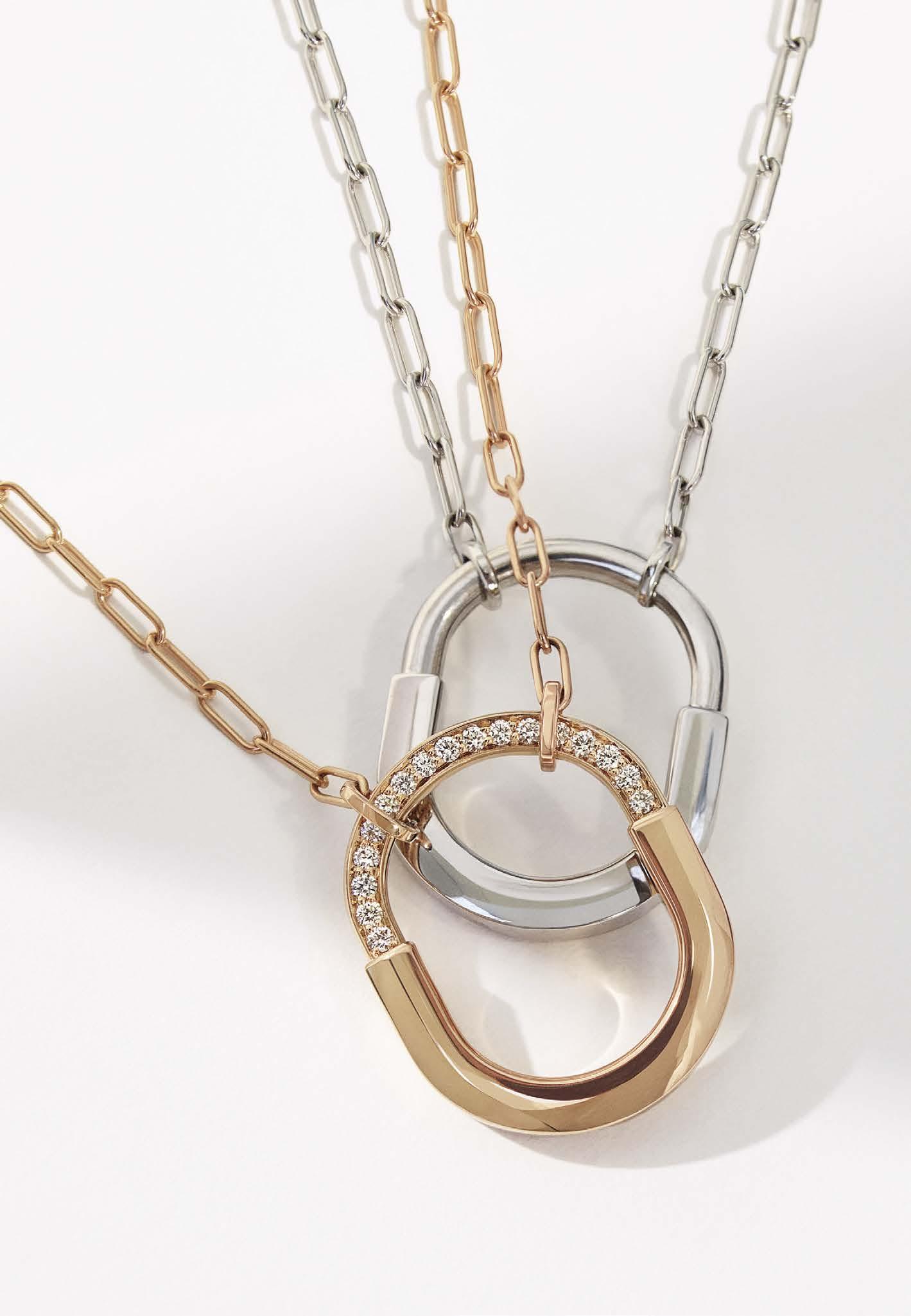

Le Mont aigne neck lace
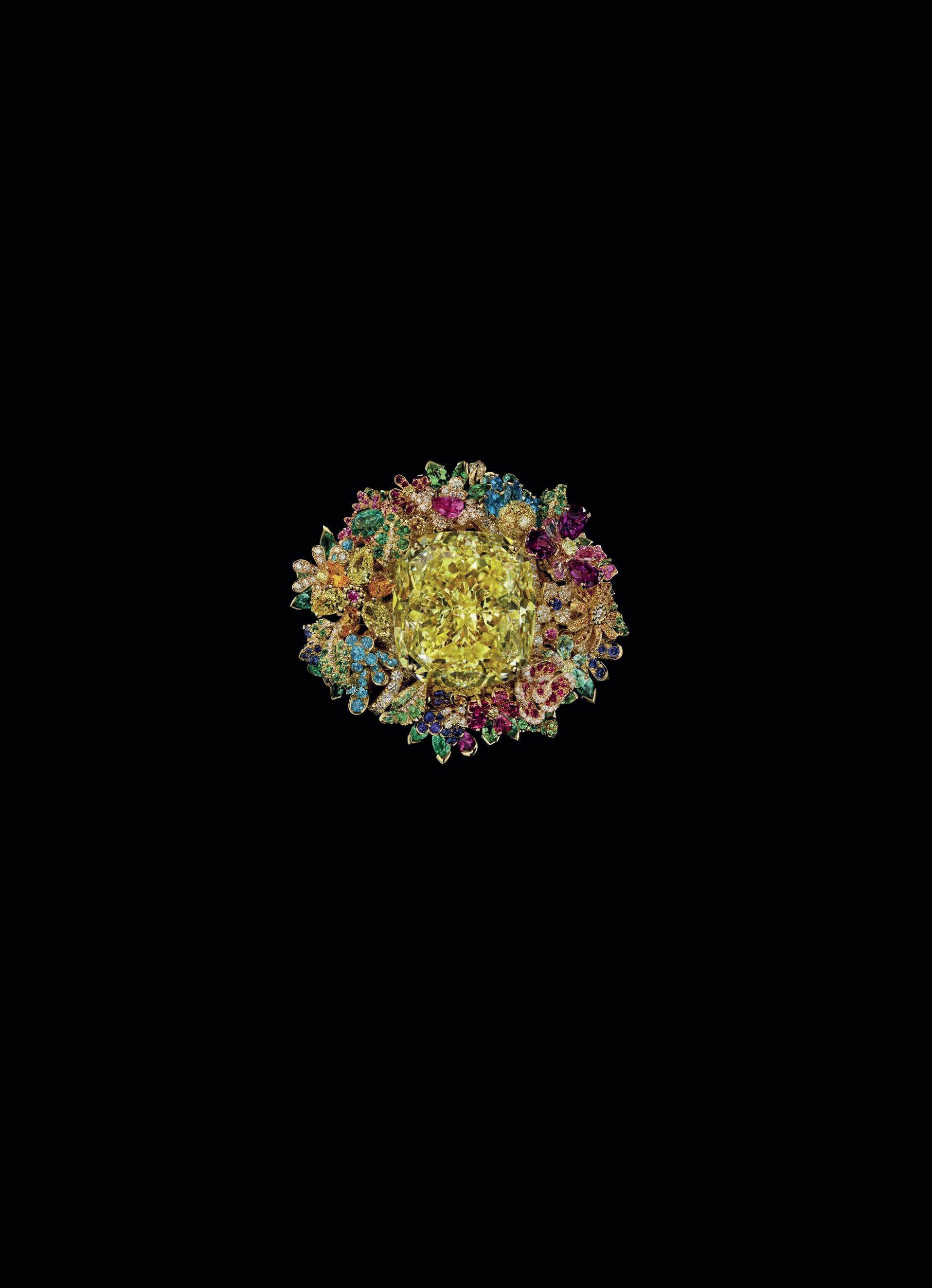 Le Mont aigne ring is set with an 88.8 8 ca rat ye llow diamond.
e begin this fall season highlighting artists whose work was revolutionary in both crystallizing the moment of its creation and carving out a space for something entirely new. Roy Lichtenstein emerged with his Pop iconography at a moment dominated by Abstract Expressionism. On the occasion of the centenary of his birth, we invited Irving Blum and Dorothy Lichtenstein to consider his impact and legacy, along with his humor, wit, and dedication to his practice.
During a nationwide economic recession that lasted through the 1990s, Japanese society was dominated by emotional isolation. Against this backdrop, the paintings of Tetsuya Ishida, made over the course of a focused ten-year period, morphed his highly charged psychological landscapes with a sense of cultural disillusionment amid rapid technological advance. The largest presentation ever of Ishida’s paintings will appear in New York this fall. Curator Cecilia Alemani revisits this crucial period in late-twentieth-century Japan and contrasts it with our current moment, finding the artist’s dystopian vision more relevant than ever.
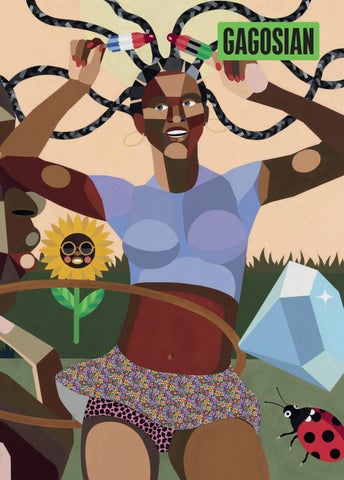
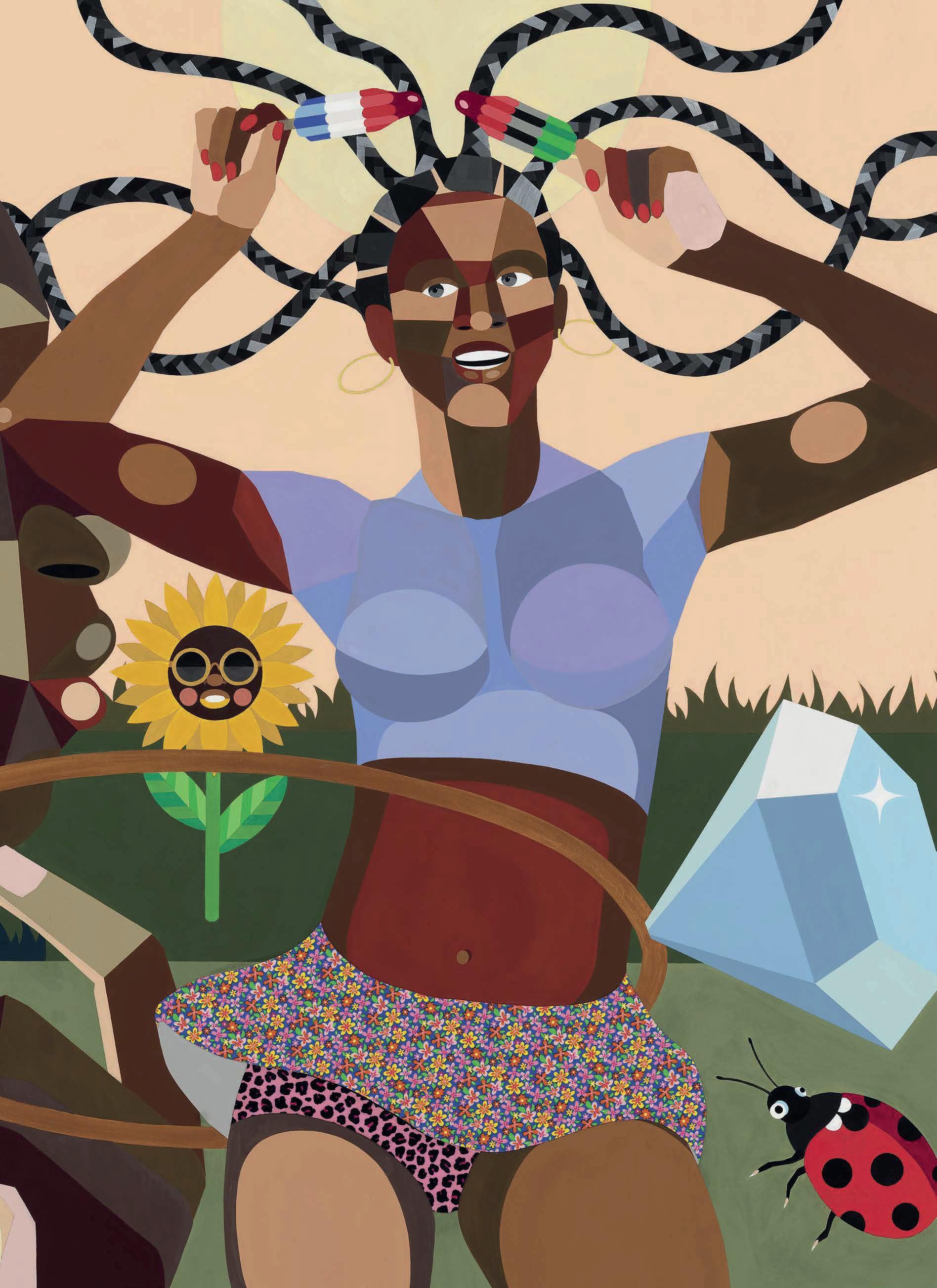
We have new work from painters Derrick Adams—whose Everything and a Ring (2023) graces our cover—and Jennifer Guidi, whose latest body of work, recently exhibited at Château La Coste, Provence, was inspired by the mountains of the region. Taking off from the paintings of Anna Weyant, John Elderfield explores the historical roots of the still life and the influence of trompe l’oeil techniques on the genre.
In the world of cinema, we hear from the director Alice Rohrwacher following the premiere of her new film La Chimera at the Cannes Film Festival in the spring. And Fiona Duncan honors the overlooked 1982 classic Personal Best , the directorial debut of the screenwriter Robert Towne. For our Game Changer series, William Breeze pays homage to the filmmaker Kenneth Anger, whose work blazed new paths in the medium.
The issue presents an exciting variety of conversations between artists and creators: Sofia Coppola visits the studio of Sara Cwynar, Helen Marden and Kiki Smith discuss their distinctly different approaches to color and their admiration for each other’s work, and Sally Mann and Edmund de Waal explore their shared affinity for poetry, metamorphosis, and the fragment, as well as their approach to a joint exhibition of their latest work.
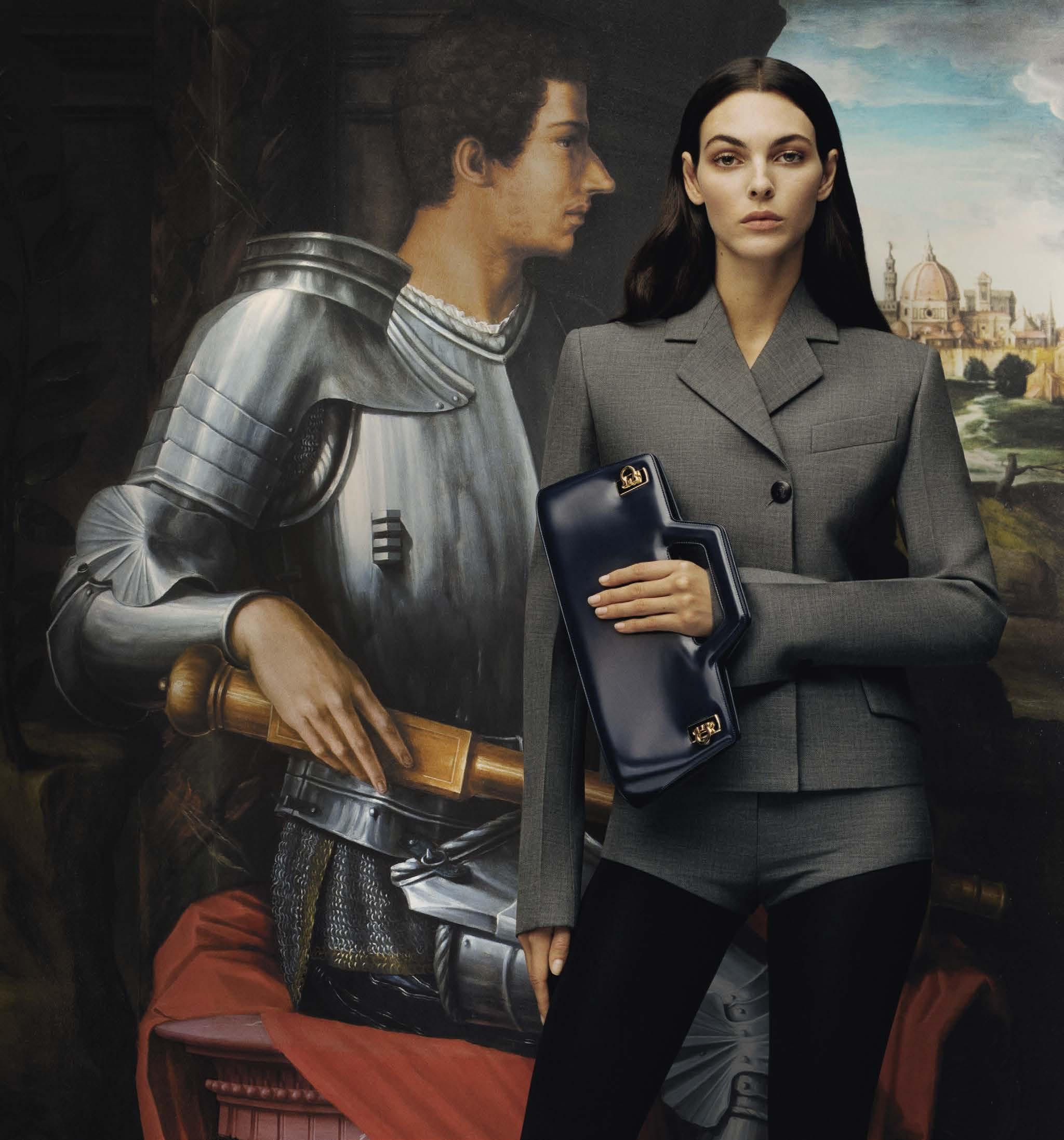
For our fashion series, Derek Blasberg caught up with Anthony Vaccarello in Los Angeles to discuss Saint Laurent Productions, a division of the fashion house that debuted its first film, by Pedro Almodóvar, at this year’s Cannes Film Festival and plans future projects with artist Cai Guo-Qiang and filmmaker David Cronenberg. In our Screen Time series, Ashley Overbeek explores how the worlds of fashion, jewelry, and art can work digitally to create new opportunities for environmental sustainability.
Alison McDonald, Editor-in-chief
W
Lichtenstein Remembered
This year marks the centenary of Roy Lichtenstein’s birth. To honor the legacy and impact of his work, Dorothy Lichtenstein and Irving Blum met at his studio in Southampton, New York, to discuss key milestones from his career and the lasting radicality of his art.
58
Fashion and Art, Part 15: Anthony Vaccarello
Derek Blasberg caught up with Anthony Vaccarello in Los Angeles to discuss Saint Laurent Productions, which debuted with a new film by Pedro Almodóvar at this year’s Cannes Film Festival, as well as projects with artist Cai Guo-Qiang and filmmaker David Cronenberg.
64
Tetsuya Ishida: My Weak Self, My Pitiful Self, My Anxious Self
Cecilia Alemani contextualizes Tetsuya Ishida’s paintings against the background of a fraught era in Japan’s history and investigates the work’s enduring relevance in our own time.
72 Sara Cwynar by Sofia Coppola
In June, filmmaker Sofia Coppola visited the Brooklyn studio of artist Sara Cwynar to see her newest works and to take photographs. After their meeting, Coppola engaged Cwynar in a series of questions by email, covering her techniques, aspirations, and inspirations.
76
Seductive Imitation: On Anna Weyant’s Still Lifes
Catalyzed by Anna Weyant’s still lifes, John Elderfield explores the genre and its relationship with trompe l’oeil techniques, tracking its formal development and evolving critical reception.
84
Hans Ulrich Obrist’s Questionnaire: Kim Hyesoon
The seventh installment of the series.
86 M+
M+, Hong Kong, Asia’s largest museum of modern and contemporary art, opened to the public a year and a half ago in a building designed by the Swiss architects Herzog & de Meuron. Vicky Richardson, Head of Architecture and Heinz Curator at the Royal Academy of Arts, London, visited as the city opened to international visitors after three years of isolation.
92
In Conversation: Helen Marden and Kiki Smith
Ahead of her exhibition of new paintings in Athens this fall, Helen Marden met with longtime friend Kiki Smith at her home in the West Village to discuss the bravery of color and the power of intuition.
98
Building a Legacy: National Portrait Gallery
For this installment of our Building a Legacy series, Nicholas Cullinan, the director of London’s National Portrait Gallery, speaks with author and curator Allie Biswas.
102
Come As You Are: Derrick Adams
Jewels Dodson visits artist Derrick Adams at his New York studio as he prepares for an exhibition of new paintings in Los Angeles in the fall of 2023.
110
anohni: My Back Was a Bridge for You to Cross
British-born, New York–based artist anohni speaks with author Michael Cuby about the genesis of her new album.
114
The Road Opens: In Conversation with Okwui Okpokwasili
Multidisciplinary artist Okwui Okpokwasili’s new work adaku, part 1: the road opens is a continuation of her efforts to bring West African forms of dance, poetry, song, and theater into a contemporary framework. Catching up with Okpokwasili after the work’s premiere in Los Angeles this past spring, Rennie McDougall traces adaku ’s artistic lineages ahead of the New York debut in the fall.
120 Jennifer Guidi: Mountain Range
Invited to exhibit at Château La Coste in Provence, Jennifer Guidi created a new body of work that engaged with the cantilevered architecture of the gallery building, designed by Richard Rogers, and with the artistic heritage of the region. Amie Corry reports on the evolution of the exhibition and on its place within Guidi’s larger practice.
126 to light, and then return—Edmund de Waal and Sally Mann
Edmund de Waal and Sally Mann discuss their shared love of poetry, fragments, and metamorphosis.
132
Tombs of Beauty
Mike Stinavage talks to director Alice Rohrwacher about La Chimera , which premiered at Cannes in the spring.
138 Grace to Be Born, and Live as Variously as Possible
Poet and photographer Gerard Malanga talks with Raymond Foye about his latest poems, revealing their place in his long career.
146
Harumi Klossowska de Rola
Artist and designer Harumi Klossowska de Rola meets with Olivier Gabet, director of the
decorative arts department at the Musée du Louvre, Paris.
150
Screen Time
Ashley Overbeek surveys Web3-powered approaches to environmentally conscious creation in fashion, art, and jewelry.
156
A Vera Tatum Novel by Leonora McCrae by
The third installment of a short story by Percival Everett.
170
Axel Salto: Playing with Fire
On the occasion of the forthcoming exhibition Playing with Fire: Edmund de Waal and Axel Salto, Edmund de Waal composed a series of reflections on the Danish ceramicist Axel Salto and his own practice.
176
Modern Women
curated by aware aware: Archives of Women Artists, Research and Exhibitions is devoted to increasing awareness about women-identifying artists of the nineteenth and twentieth centuries. This Paris-based international nonprofit has selected a number of works to be presented in the exhibition Modern Women , at Frieze Masters, London, in October. Here, art historians from aware highlight four of the works that will be on view.
182
Personal Best
Fiona Duncan tracks the development and reception of Robert Towne’s 1982 film Personal Best
202
Game Changer: Kenneth Anger
William Breeze pays homage to his friend the filmmaker and author Kenneth Anger (1927–2023), reflecting on his revolutionary work in color, Magick, and spirituality.
48
FALL 2023
TABLE OF CONTENTS
Front cover: Derrick Adams, Everything and a Ring, 2023 (detail), acrylic and fabric collage on wood panel, 60 × 60 inches (152.4 × 152.4 cm) © Derrick Adams. Photo: Rob McKeever
T WEED DE CHANEL COLLECTION




CHANEL . COM
TRANSFORMABLE TWEED ROYAL NECKLACE IN 18K YELLOW GOLD, 18K WHITE GOLD, DIAMONDS AND RUBIES. 10 .17-CARAT PEAR-CUT DFL T YPE IIA DIAMOND AND 37 OVAL -CUT RUBIES.


HIGH JEWELR Y







ANOK — ANTWERP, 04.2023 PHOTOGRAPHED AT RIVERSIDE TOWER WWW.MAISON-ALAIA COM

LE NOUVEAU ROUGE À LÈVRE S



Editor-in-chief
Alison McDonald
Managing Editor
Wyatt Allgeier
Editor, Online and Print
Gillian Jakab
Text Editor
David Frankel
Executive Editor
Derek Blasberg
Digital and Video Production Assistant
Alanis Santiago-Rodriguez
Design Director
Paul Neale
Design
Alexander Ecob Graphic Thought Facility
Website Wolfram Wiedner Studio
Gagosian Quarterly, Fall 2023
Cover
Derrick Adams
Founder Larry Gagosian
Publisher Jorge Garcia
Published by Gagosian Media
Associate Publisher, Lifestyle
Priya Nat
For Advertising and Sponsorship Inquiries Advertising@gagosian.com
Distribution David Renard
Distributed by Magazine Heaven
Distribution Manager
Alexandra Samaras
Prepress DL Imaging
Printed by Pureprint Group
Contributors
Cecilia Alemani
anohni
Eléonore Besse
Allie Biswas
Derek Blasberg
Irving Blum
William Breeze
Zélie Chabert
Sofia Coppola
Amie Corry
Michael Cuby
Nicholas Cullinan
Sara Cwynar
Edmund de Waal
Jewels Dodson
Fiona Duncan
John Elderfield
Percival Everett
Raymond Foye
Olivier Gabet
Kim Hyesoon
Harumi Klossowska de Rola
Dorothy Lichtenstein
Gerard Malanga
Sally Mann
Helen Marden
Rennie McDougall
Camille Morineau
Hans Ulrich Obrist
Ashley Overbeek
Vicky Richardson
Kiki Smith
Mike Stinavage
Matylda Taszycka
Anthony Vaccarello
Thanks
Karrie Adamany
Derrick Adams
Natalie Allen
Richard Alwyn Fisher
Poppy Andrews
Lisa Antonecchia
Julia Arena
Frank Avila-Goldman
Priya Bhatnagar
Michael Cary
Serena Cattaneo Adorno
Vittoria Ciaraldi
Duncan Cock Foster
Georgina Cohen
Manuela Danescu
Noah Dillon
Tyler Drosdeck
Andrew Fabricant
Elsa Favreau
Paatela Fraga
Mark Francis
Hallie Freer
Garrette Furo
Julien Garcia-Toudic
Brett Garde
Clara Gargano
Lauren Gioia
Darlina Goldak
Paige Grewenig
Leta Grzan
Jennifer Guidi
Camille Haus
Jeff Henrikson
Jerson Hondall
Delphine Huisinga
Sarah Jones
Shiori Kawasaki
Léa Khayata
GiGi Kisgen
Jennifer Knox White
Sabyrzhan Madi
Lauren Mahony
Mirabelle Marden
Kelly McDaniel Quinn
Rob McKeever
Deborah McLeod
Adele Minardi
Mary Mitsch
Olivia Mull
Okwui Okpokwasili
Kathy Paciello
Stefan Ratibor
Helen Redmond
Alice Rohrwacher
Antwaun Sargent
Clementine Sherman
Diallo Simon-Ponte
Nick Simunovic
Micol Spinazzi
Putri Tan
Harry Thorne
Lisa Turvey
Timothée Viale
Anna Weyant
Benedict Winkler
Mimi Yiu
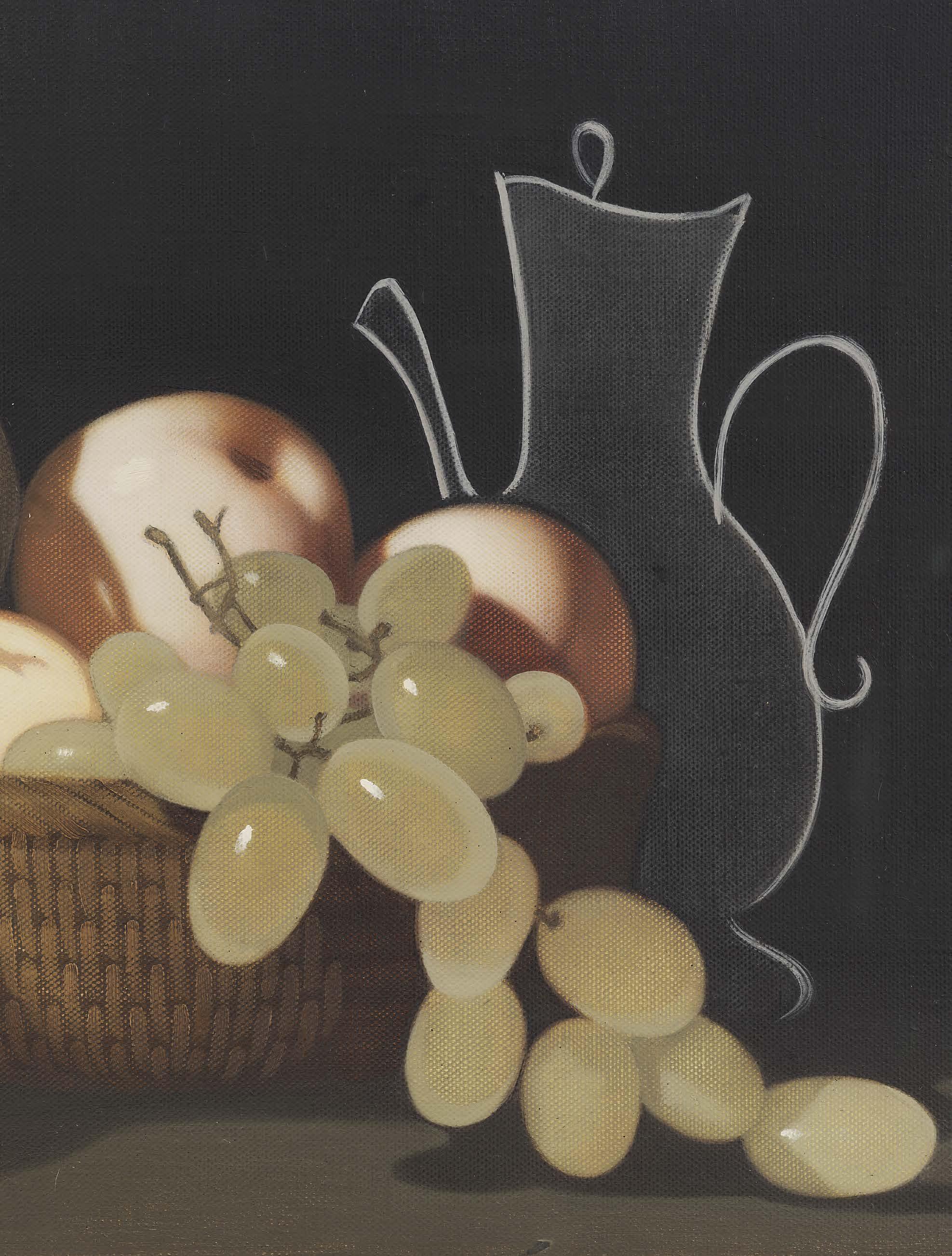
Anna Weyant, Still Life with Fruit and Vase, 2023 (detail), oil on linen, 20 × 24 ¼ inches (50.8 × 61.4 cm) © Anna Weyant
CONTRIBUTORS
Vicky Richardson
Vicky Richardson is Head of Architecture and Drue Heinz Curator at the Royal Academy of Arts, London. She is cocurator of the exhibition Herzog & de Meuron (July 14—October 15, 2023) at the Royal Academy.
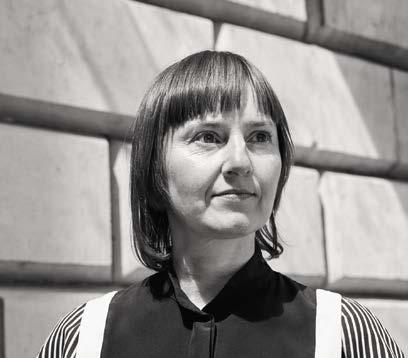
Dorothy Lichtenstein
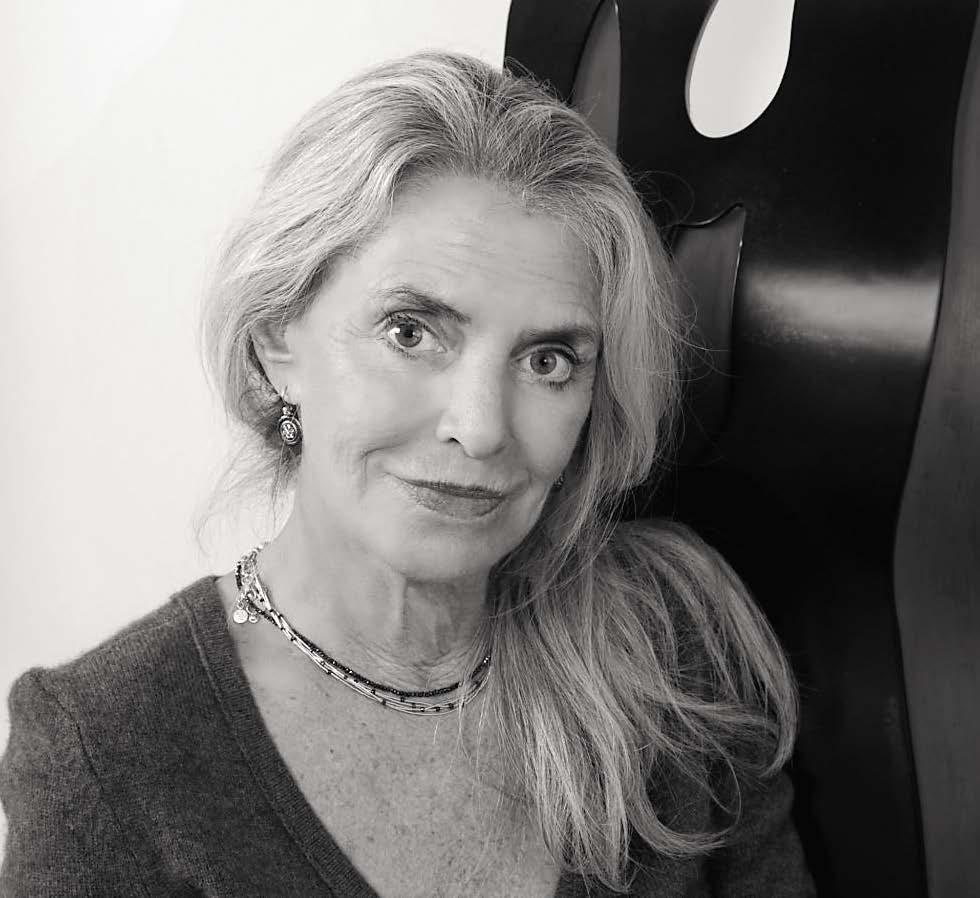
Dorothy Lichtenstein is president of the Roy Lichtenstein Foundation, which is dedicated to the encouragement of a broad understanding of the art of Roy Lichtenstein and the artists of his time, and was established after the artist’s death in 1997. After studying art history at Arcadia University (formerly Beaver College), she became director of the pioneering Bianchini Gallery in New York, organizing exhibitions and projects dealing with emerging Pop art, and with William Copley edited and published portfolios of artists’ works for the Letter Edged in Black Press. She is a recipient of the Chevalier de l’Ordre des Arts and des Lettres from the French government.
Irving Blum
Irving Blum joined Ferus Gallery, the LA hub for avant-garde artistic activity, as codirector with Walter Hopps in 1957. His visionary direction at Ferus brought together East and West Coast luminaries for the first time. When Ferus closed in 1966, he operated the Irving Blum Gallery until his return to New York City in 1972, when he started Blum Helman Gallery.
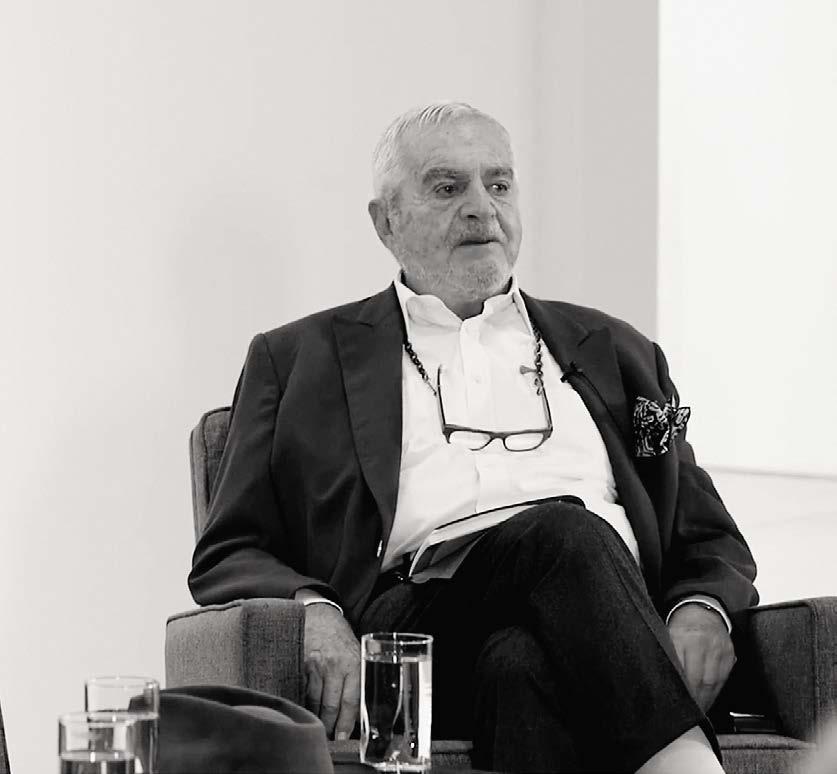
Amie Corry
Amie Corry is a London-based writer and editor. She was senior editor of Other Criteria Books from 2014 to 2020 and is director of publications for the artist Do Ho Suh. Corry contributes to the Times Literary Supplement , Burlington Contemporary, and other publications, and in 2013 she coproduced a pioneering audit on gender equality in the London art sector.
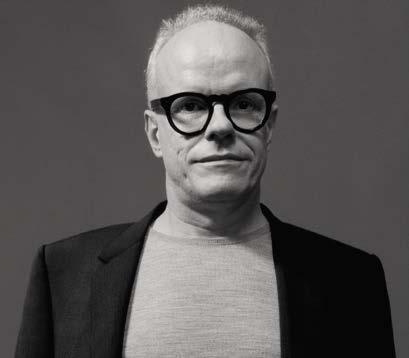
Hans Ulrich Obrist
Hans Ulrich Obrist is the artistic director of the Serpentine Galleries, London. He was previously curator at the Musée d’Art Moderne de la Ville de Paris. Since his first show, World Soup (The Kitchen Show), in St. Gallen, Switzerland, in 1991, he has curated more than 300 exhibitions. Photo: Tyler Mitchell
32
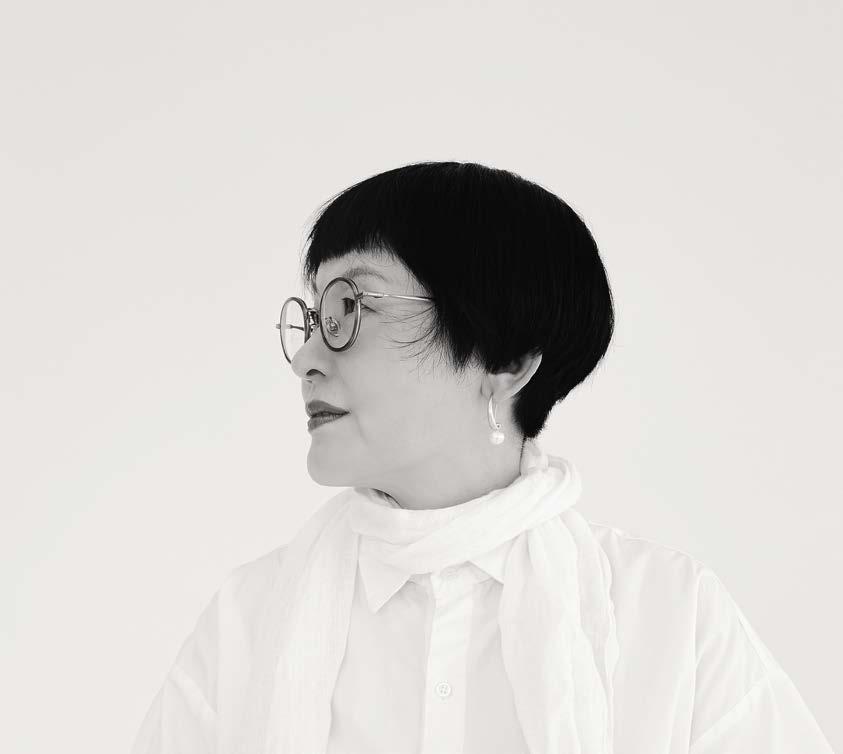
Kim Hyesoon
Kim Hyesoon has published fourteen poetry collections: From Another Star (1981), Father’s Scarecrow (1985), The Hell of a Certain Star (1988), Our Negative Picture (1991), My Upanishad, Seoul (1994), Poor Love Machine (1997), To the Calendar Factory Supervisor (2000), A Glass of Red Mirror (2004), Your First (2008), Sorrowtoothpaste, Mirrorcream (2011), Blossom, Pig (2016), The Autobiography of Death (2016), Phantom Pain of Wings (2019), and After Earth Dies, Who Will Moon Orbit? (2022). Her anthologies have been translated into many languages and she has received multiple literary prizes.
Helen Marden
Helen Marden was born in 1941 in Pittsburgh and lives and works in New York and Marrakesh, Morocco. Her group exhibitions include Who Chooses Who, at the New Museum of Contemporary Art, New York (1994); Selections Summer ’96 , at the Drawing Center, New York (1996); and Couples Discourse (2006) and Uncanny Congruences (2013), at the Palmer Museum of Art, Pennsylvania State University, University Park. She participated in the Whitney Biennial, New York, in 1995, and the Last Brucennial, Bruce High Quality Foundation, New York, in 2014.
Nicholas Cullinan
Nicholas Cullinan took up his position as the Director of the National Portrait Gallery, London, in the spring of 2015, following his role as Curator of Modern and Contemporary Art at the Metropolitan Museum of Art, New York.

Allie Biswas
Allie Biswas is a writer and editor based in London. In 2021 she coedited The Soul of a Nation Reader: Writings by and about Black American Artists, 1960–1980. Forthcoming publications include Hiroshi Sugimoto: Time Machine (Hayward Gallery Books), to which she contributed an essay on the photographer’s Opticks series, and Vitamin Txt: Words in Contemporary Art (Phaidon).
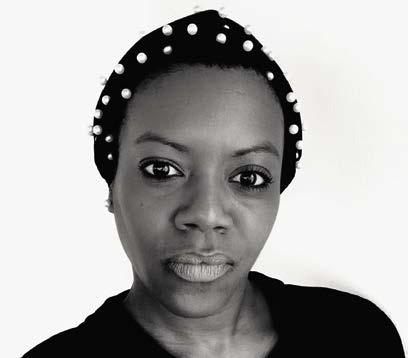
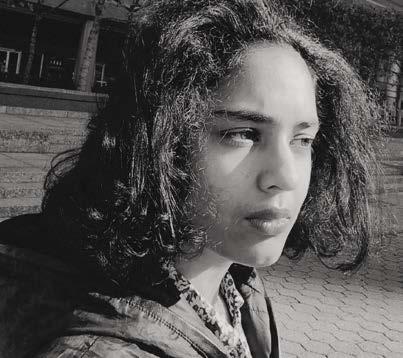
Kiki Smith
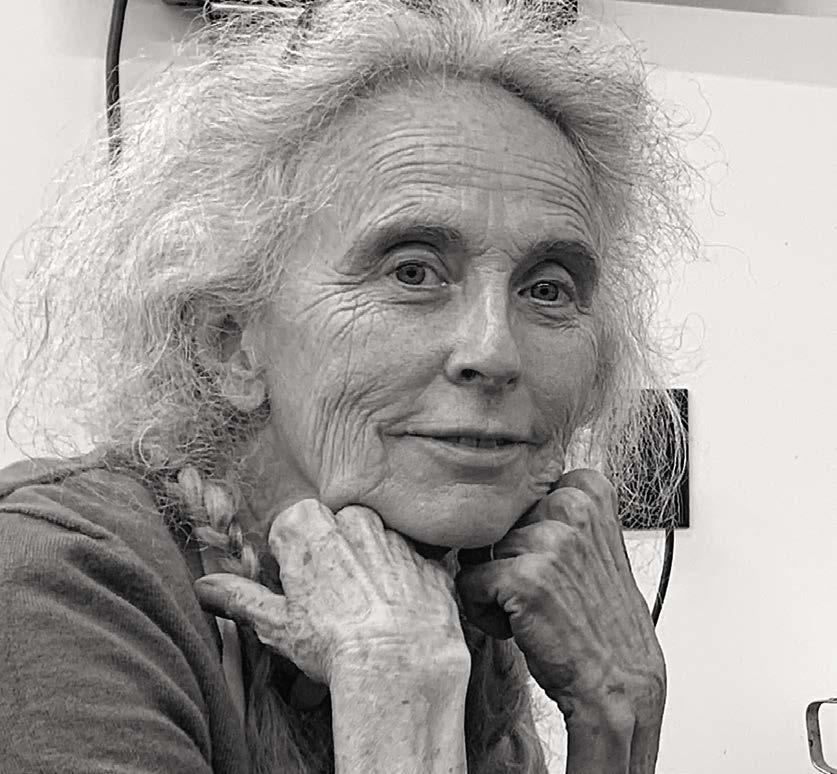
Kiki Smith has been known since the 1980s for her multidisciplinary art exploring embodiment and the natural world. She uses a broad variety of materials to continuously expand and evolve a body of work that includes sculpture, printmaking, photography, drawing, and textiles. Smith has been the subject of many solo exhibitions worldwide, including over twenty-five museum exhibitions. Her work has appeared in five Venice Biennales, including the 2017 edition. She is a member of the American Academy of Arts and Letters and the American Academy of Arts and Sciences, and in 2017 the Royal Academy of Arts, London, made her an Honorary Royal Academician. In 2006, Smith was recognized by Time as one of the “Time 100: The People Who Shape Our World.”
Photo: Chelsea Culpepper
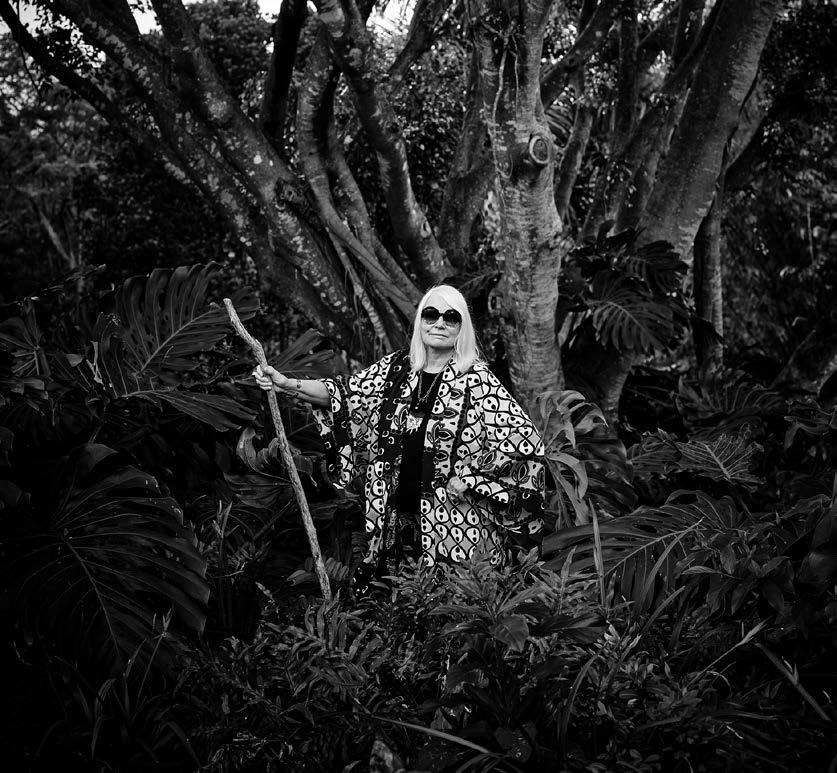
Jewels Dodson
Jewels Dodson is an arts and culture writer and producer. She started her career writing and editing for streetculture magazines throughout New York City. Her work can be found in Juxtapoz , Artnews , Artsy, The Cut , and the New York Times . Most recently she launched The Shortest of My Tall Thoughts , a micropod in which she examines cultural theories and trends.
33
Photo: Douglas Friedman












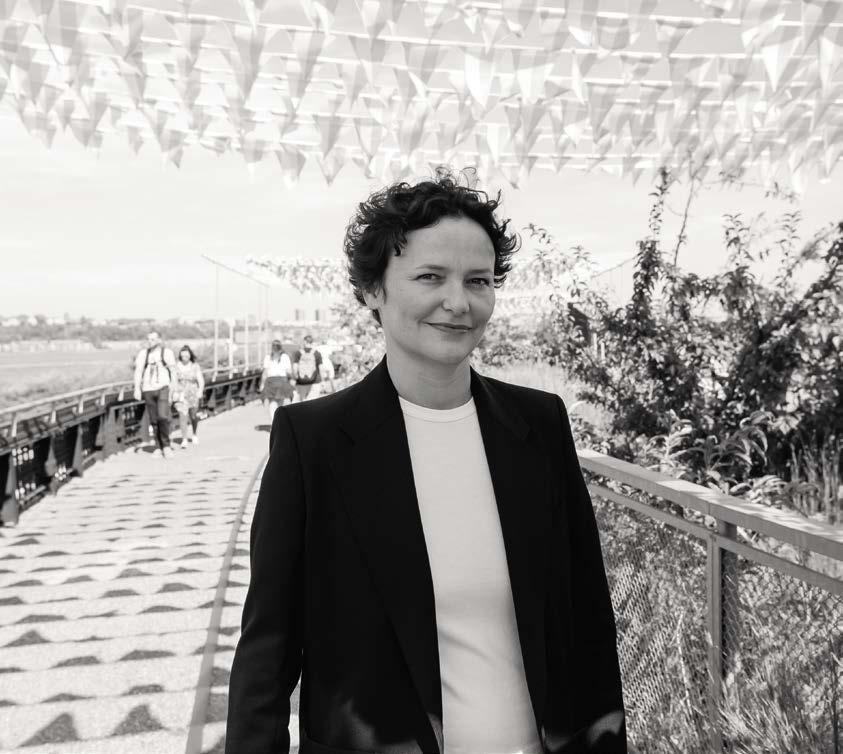
Cecilia Alemani
Cecilia Alemani is an Italian curator based in New York. Since 2011, she has been the Donald R. Mullen, Jr. Director & Chief Curator of High Line Art, the public-art program presented by the High Line, New York. In 2022, she curated The Milk of Dreams at the 59th Venice Biennale; in 2018, Alemani served as Artistic Director of the inaugural edition of Art Basel Cities: Buenos Aires; and in 2017, she curated the Italian Pavilion at the Venice Biennale. Over the past ten years, Alemani has developed an expertise in commissioning and producing ambitious artworks for public and unusual spaces. Photo: Liz Ligon, courtesy The High Line
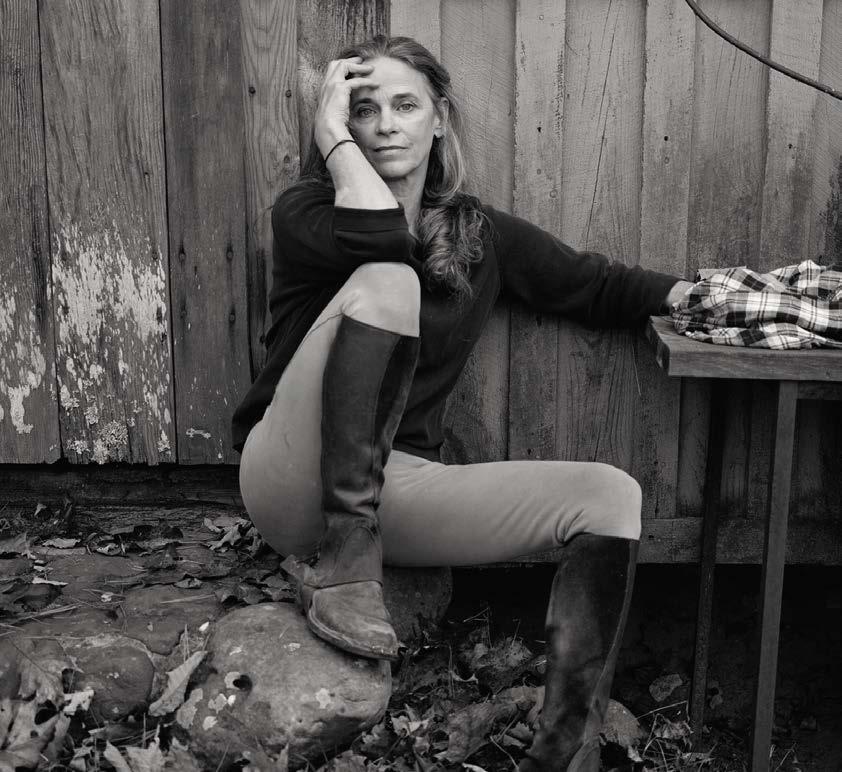
Sally Mann
Sally Mann is an American photographer and writer. Her work is held in many notable collections, including the National Gallery of Art, Washington, DC; the Metropolitan Museum of Art, New York; the Victoria & Albert Museum, London; and the Moderna Museet, Stockholm. Mann’s Hold Still: A Memoir with Photographs (Little, Brown, 2015) was named a finalist for the 2015 National Book Awards and in 2016 won the Andrew Carnegie Medal for Excellence in Nonfiction. She was inducted into the American Academy of Arts and Sciences in 2022 and is a Prix Pictet laureate. Photo: Annie Leibovitz
anohni
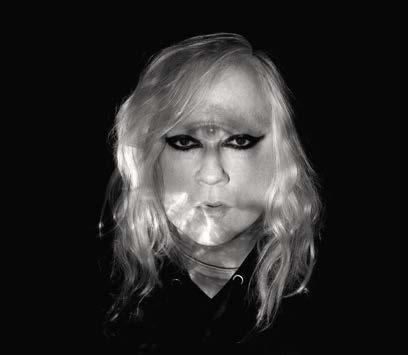
anohni is a British-born, New York–based musician and artist. In 1998, anohni began collaborating with musicians and presenting concerts as Antony and the Johnsons in New York. Her new album My Back Was a Bridge for You to Cross was released under the band name anohni and the Johnsons earlier this year. Photo: anohni with Nomi Ruiz © Rebis Music 2022
Michael Cuby
Michael Cuby is a writer, editor, and critic based in Brooklyn. He has served as the editor-at-large for Condé Nast’s LGBTQ+ vertical them since 2017. He also works as a freelance entertainment reporter and his work has appeared in Vogue , GQ , Nylon , Highsnobiety, and Vulture
Edmund de Waal
A potter since childhood and an acclaimed writer, Edmund de Waal is best known as an artist for his largescale installations of porcelain vessels, which are informed by his passion for architecture, space, and sound.
William Breeze
William Breeze, also called Hymenaeus Beta as world head of the Ordo Templi Orientis, is an American writer and publisher on Magick and philosophy.

36
Percival Everett
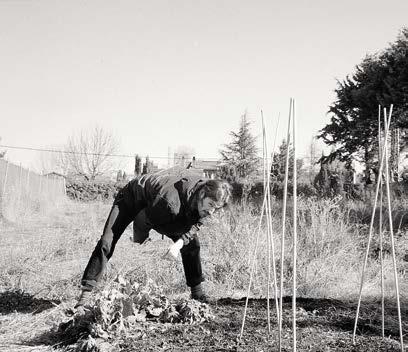
Percival Everett is the author of twenty-two novels and four collections of stories. His novels include The Trees (2021), Telephone (2020), So Much Blue (2017), and Erasure (2001). He has received awards from the Guggenheim Foundation and Creative Capital. He lives in Los Angeles, where he is distinguished professor of English at the University of Southern California.
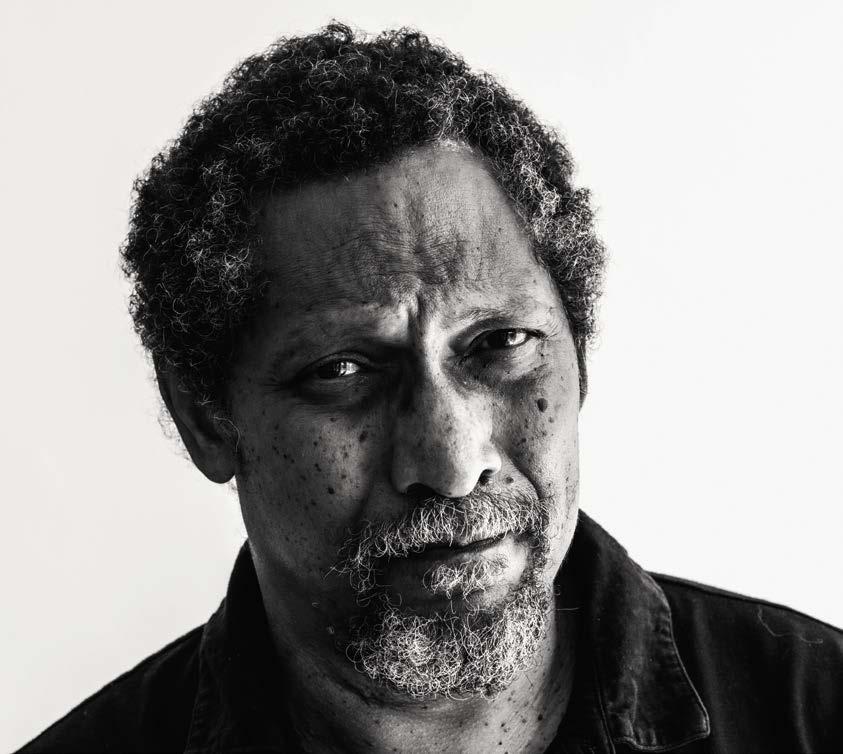
Fiona Duncan
Fiona Duncan is a Canadian-American author and organizer and the founder of the social literary practice Hard to Read. Duncan’s debut novel, Exquisite Mariposa (Soft Skull Press), won a 2020 Lambda Award. She is currently developing a narrative biography and critical study of the transdisciplinary American artist Pippa Garner.
Sofia Coppola

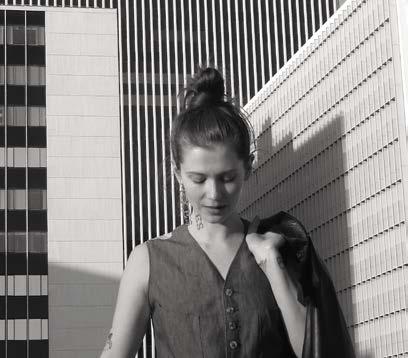
Sofia Coppola’s eighth film, Priscilla , starring Cailee Spaeny and Jacob Elordi and based on Priscilla Beaulieu Presley’s memoir Elvis and Me (1985), is set to screen at this year’s Venice and New York film festivals. Coppola’s films include The Virgin Suicides (1999); Lost in Translation (2003), for which she won an Academy Award for Best Screenplay; Marie Antoinette (2006); Somewhere (2010); The Bling Ring (2013); The Beguiled (2017), for which Coppola made history as only the second woman to win the bestdirector prize at the Cannes Film Festival; and On the Rocks (2020). In addition to her film career, Coppola directed a production of Verdi’s opera La Traviata at the Teatro dell’Opera, Rome, with costumes by Valentino Garavani and production design by Nathan Crowley.
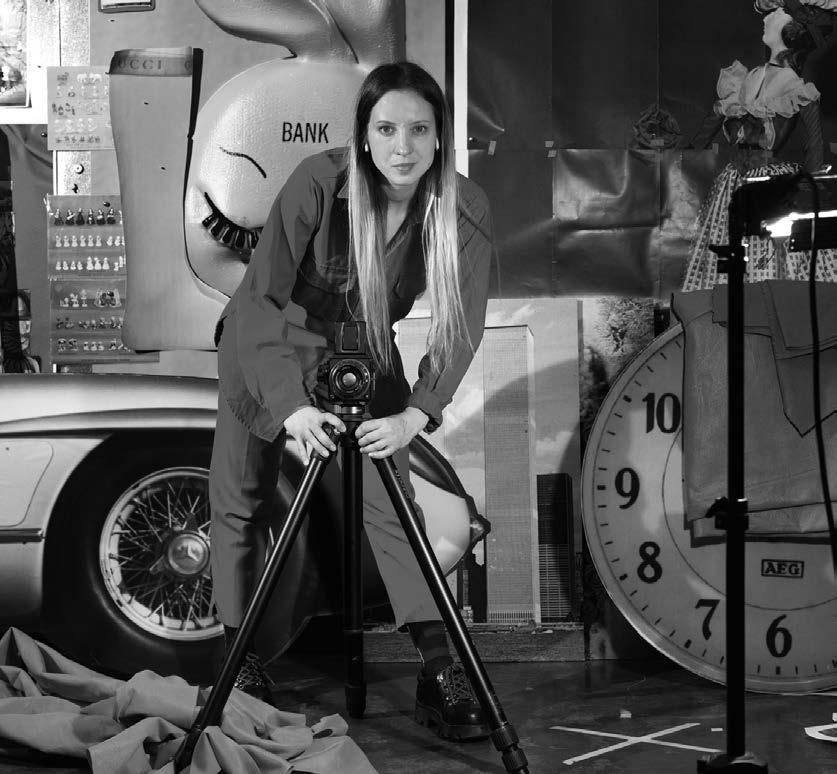
Sara Cwynar
Sara Cwynar is interested in the way that images accumulate, endure, and change in value over time. Her conceptual photographs and films involve constant archiving and re-presentation of collected visual materials, layering diverse imagery with references to art theory. The works intricately recall advertisements, retail catalogues, and old art history textbooks. Her visual assemblages meditate on how vernacular images shape collective world views, and how those ideals can change through time and contextual manipulation.
Rennie McDougall
Rennie McDougall is a writer based in Brooklyn. His work has appeared in the Brooklyn Rail , frieze.com, Guernica , T Magazine , the Village Voice , and other publications. He received an Anthony Burgess Prize for Arts Journalism in 2018. His first book will be published by Abrams Press in 2025.

Mike Stinavage
Mike Stinavage is a writer and waste specialist from Michigan. During his political science masters program at CUNY Graduate Center, he was awarded Fulbright and Martin Kriesberg fellowships to research the politics of waste in Northern Spain. He currently coordinates a European project on biowaste policy and writes fiction in Pamplona, Spain.
38
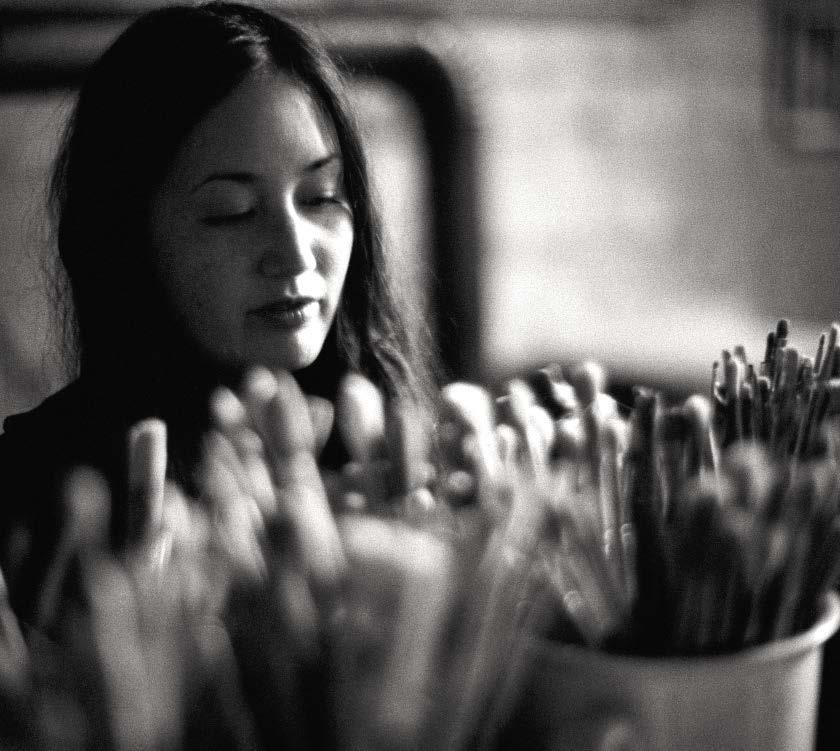
Harumi Klossowska de Rola
From her childhood in the Villa Medici, Rome, to a chalet in Rossinière, nested among the forests and mountains of Switzerland, Harumi Klossowska de Rola grew up in an extraordinary artistic universe. It was through these ageless places, with their poetic atmospheres brimming with aesthetic creations, that Harumi discerned the mysterious power of true masterpieces: timelessness.
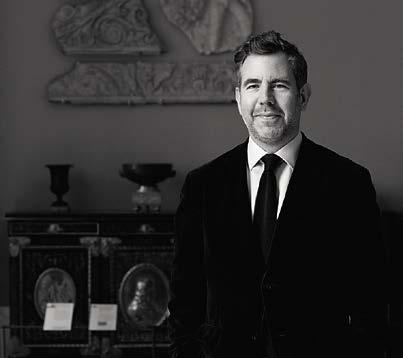
Olivier Gabet
Olivier Gabet is general curator of heritage and director of the Département des Objets d’art of the Musée du Louvre, Paris, a post he took in September 2022. After starting his career as a curator at the Musée d’Art Moderne de la Ville de Paris (2002–04), he joined the Musée d’Orsay (2005–07) as a curator.
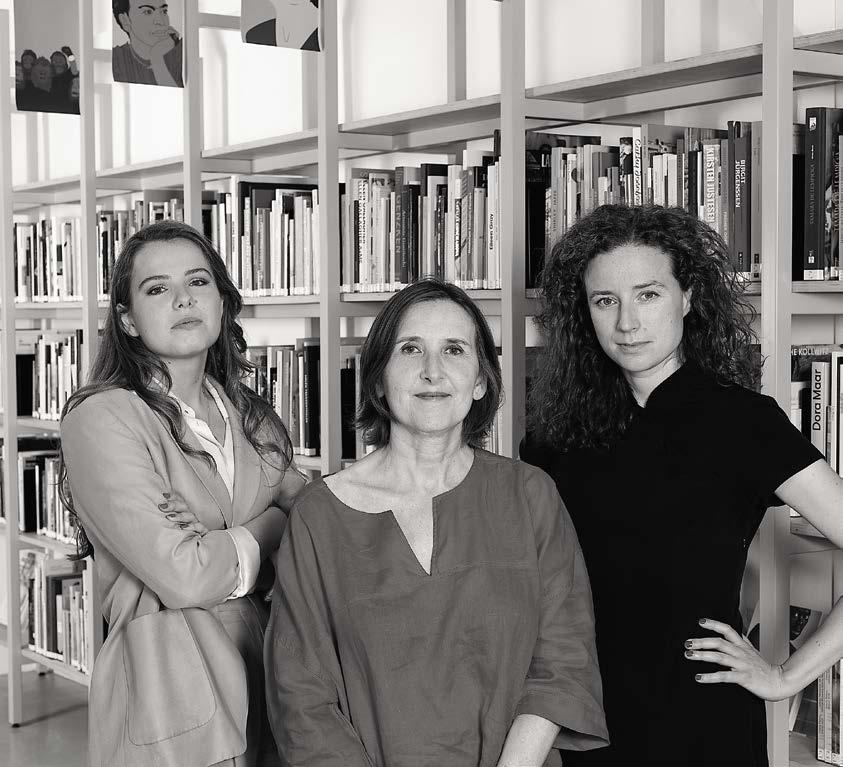
AWARE
aware: Archives of Women Artists, Research and Exhibitions, cofounded in 2014 by Camille Morineau, is a French nonprofit dedicated to the production and dissemination of information about women artists from the nineteenth and twentieth centuries. Operating through partnerships with museums, universities, and research centers, aware has an international outlook and organizes events—symposia, academic study days, prizes, fellowships, guided visits—aimed at making these artists visible. It runs a documentation center and a website: www.awarewomenartists.com. Photo, left to right: Eléonore Besse, Camille Morineau, and Matylda Taszycka © Margot Montigny
Gerard Malanga
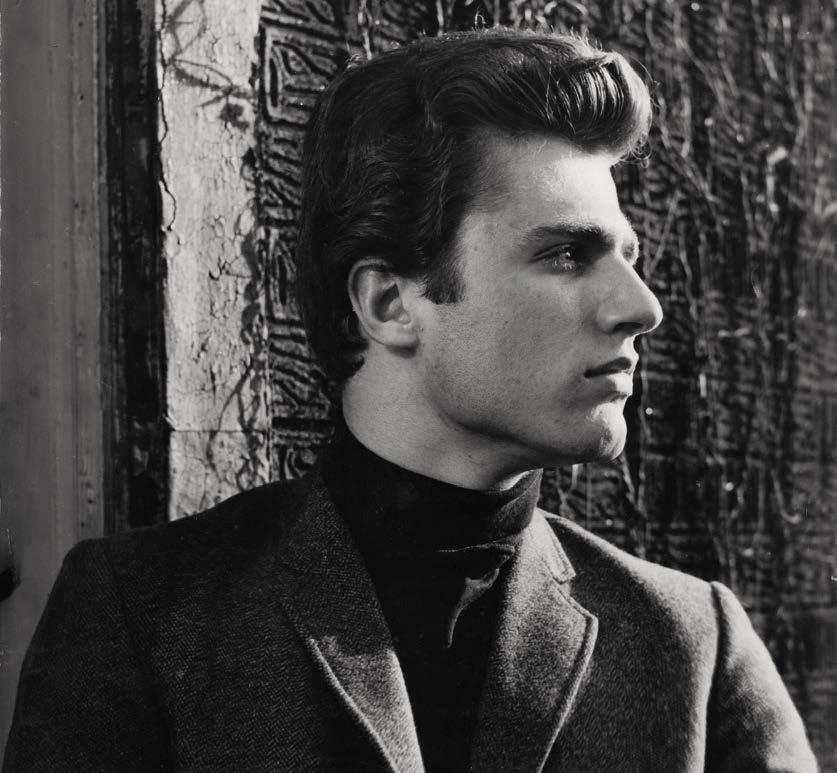
Gerard Malanga is the author of fourteen books of poetry, including his most recent, The New Mélancholia & Other Poems . A selection of writings on his movies, Gerard Malanga’s Secret Cinema , will be published in October. He is currently compiling a monograph of his photographs, Moments in Time . He lives in the shadow of the Catskills with his cat, Odie. Photo: William Wood
Zélie Chabert
Zélie Chabert is a research programs assistant at aware. A masters student in the geopolitics of art and culture at the Université Sorbonne Nouvelle, Paris, she studies the management of cultural projects and institutions. She supported Camille Morineau and aware staff Eléonore Besse and Matylda Taszycka, the curators of the Modern Women section within Frieze Masters, London.
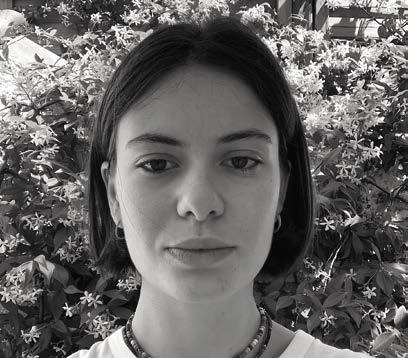
Raymond Foye
Raymond Foye is a writer, publisher, and curator based in New York City. In 2020 he received an American Book Award from the Before Columbus Foundation for his editing of The Collected Poems of Bob Kaufman for City Lights. He is presently editing The Collected Poems of Rene Ricard . He is a consulting editor with the Brooklyn Rail Photo: Amy Grantham
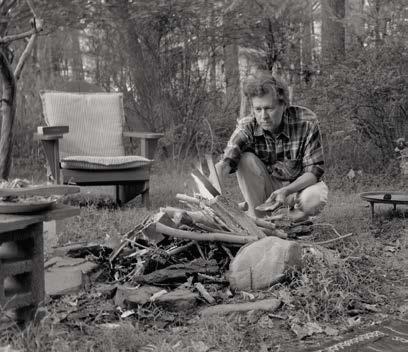
40
IN SEASON
Art at Home Howard Hodgkin: Red Sky in the Morning Rug
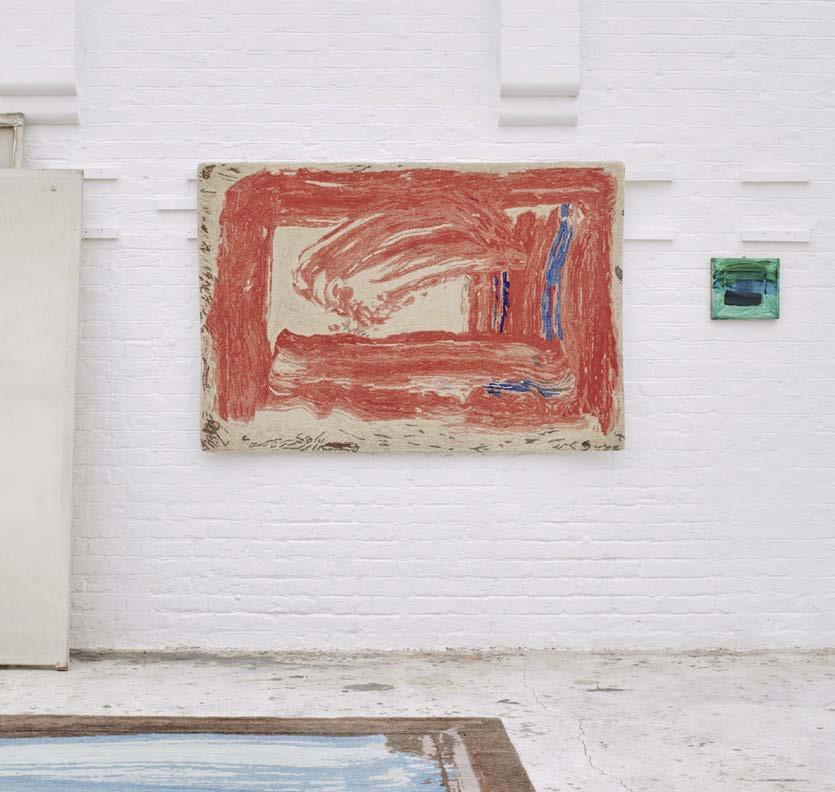
This limited-edition hand-tufted rug, based on Howard Hodgkin’s Red Sky in the Morning (2016), translates the vivid colors and virtuosic gestures of the renowned British artist’s painting into Ghazni wool. Fabricated by a skilled artisan who uses a tufting gun to replicate Hodgkin’s abstract design, the rug is produced by the London-based company Christopher Farr in collaboration with the Howard Hodgkin Estate.
Art Book Nancy Rubins: Fluid Force
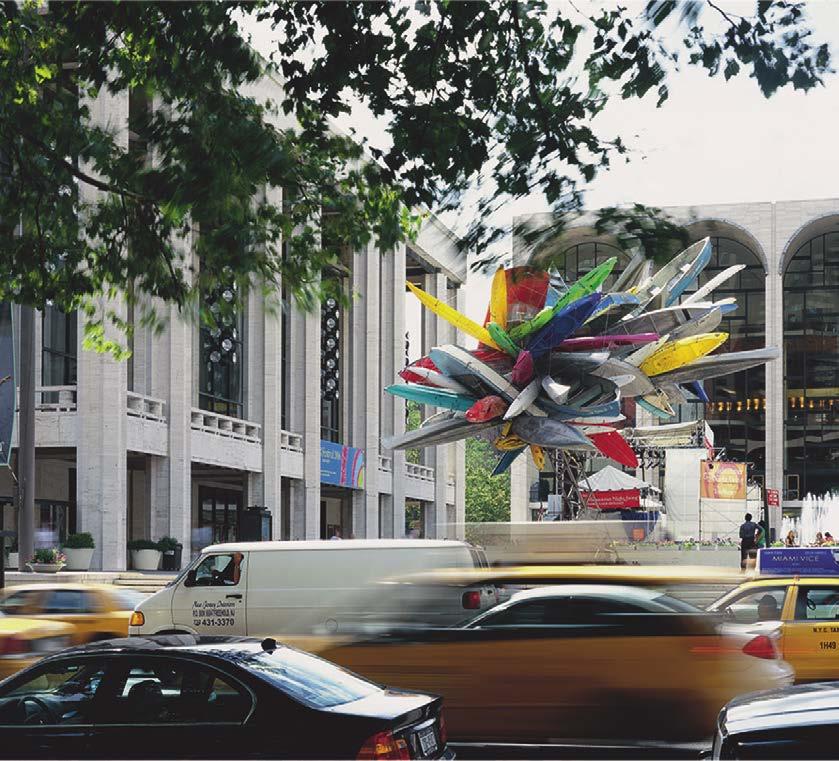
Fluid Force provides a comprehensive overview of Nancy Rubins’s sculptures and drawings. Published by Steidl, this volume invites viewers to engage with Rubins’s investigations of materiality—from her early explorations of wood and clay to her two-dimensional photocollages, graphite sculptural drawings, and monumental sculptures made of found industrial objects. Fluid Force includes new texts by Eric Shiner and Phong H. Bui.
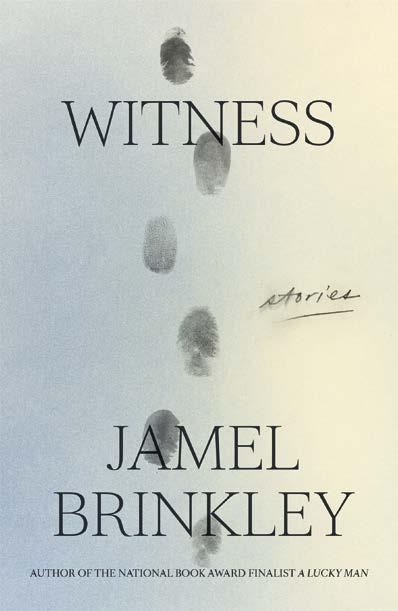
Fiction Witness: Stories by Jamel Brinkley
Following up on his widely praised book of short stories A Lucky Man (2018), author Jamel Brinkley’s new book Witness (2023) investigates in crystalline prose questions of ethics, action, and what it means to bear witness. All ten stories in the publication are set in New York City, capturing scenes from lives both varied and interconnected.
42
Gagosian Quarterly presents a selection of new releases and events coming this fall.
Left: Nancy Rubins, Big Pleasure Point , 2006, installation view, Lincoln Center, New York © Nancy Rubins. Photo: Erich Koyama
Right: Cover of Jamel Brinkley, Witness: Stories (Farrar, Straus and Giroux, 2023)
Above: Howard Hodgkin: Red Sky in the Morning Rug, 2023, wool, 47 ¼ × 70 ¾ inches (120 × 180 cm), produced by Christopher Farr, edition of 150
Jewelry Rachel Feinstein × Ippolita: Fan Castle Ring
On the occasion of a commission by the Jewish Museum, New York, Rachel Feinstein produced four different rings with Ippolita. One of these, Fan Castle Ring , is a minimalist variation on the Jewish Museum commission, Marriage Ring (2023). Handmade in New York of 18-karat gold, its three components are pinned together at the bridge and fan out slightly, creating a three-dimensional image of a Judaic temple.
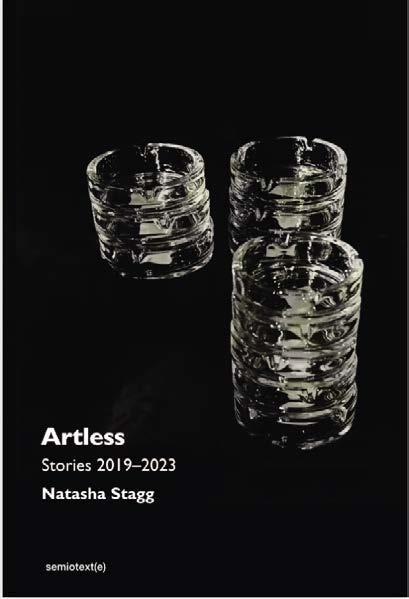
Essays Artless: Stories 2019–2023 by Natasha Stagg
For those familiar with Natasha Stagg’s previous books—Surveys (2016) and Sleeveless (2019)—this new release from Semiotext(e), a compendium of fiction and nonfiction, will be a welcome return to her signature blend of incisive critique, humor, and uncanny clarity in the face of a turbulent present.
Left: Rachel Feinstein × Ippolita: Fan Castle Ring , 2023, 18k gold, height: 1 ½ inches (3.7 cm), edition of 50

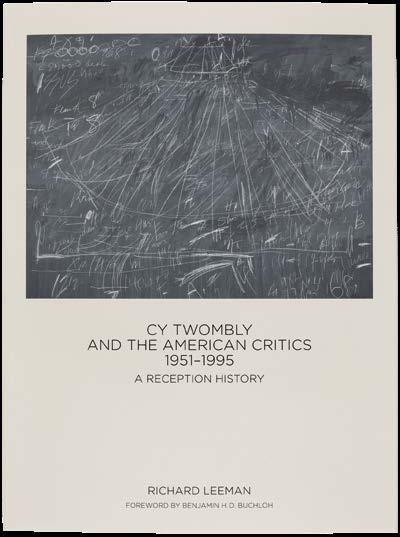
Right: Cover of Richard Leeman, Cy Twombly and the American Critics , 1951–1995: A Reception History (Gagosian and Fondazione Nicola Del Roscio, 2023)
Bottom left: Cover of Natasha Stagg, Artless: Stories 2019–2023 (Semiotext(e), 2023)
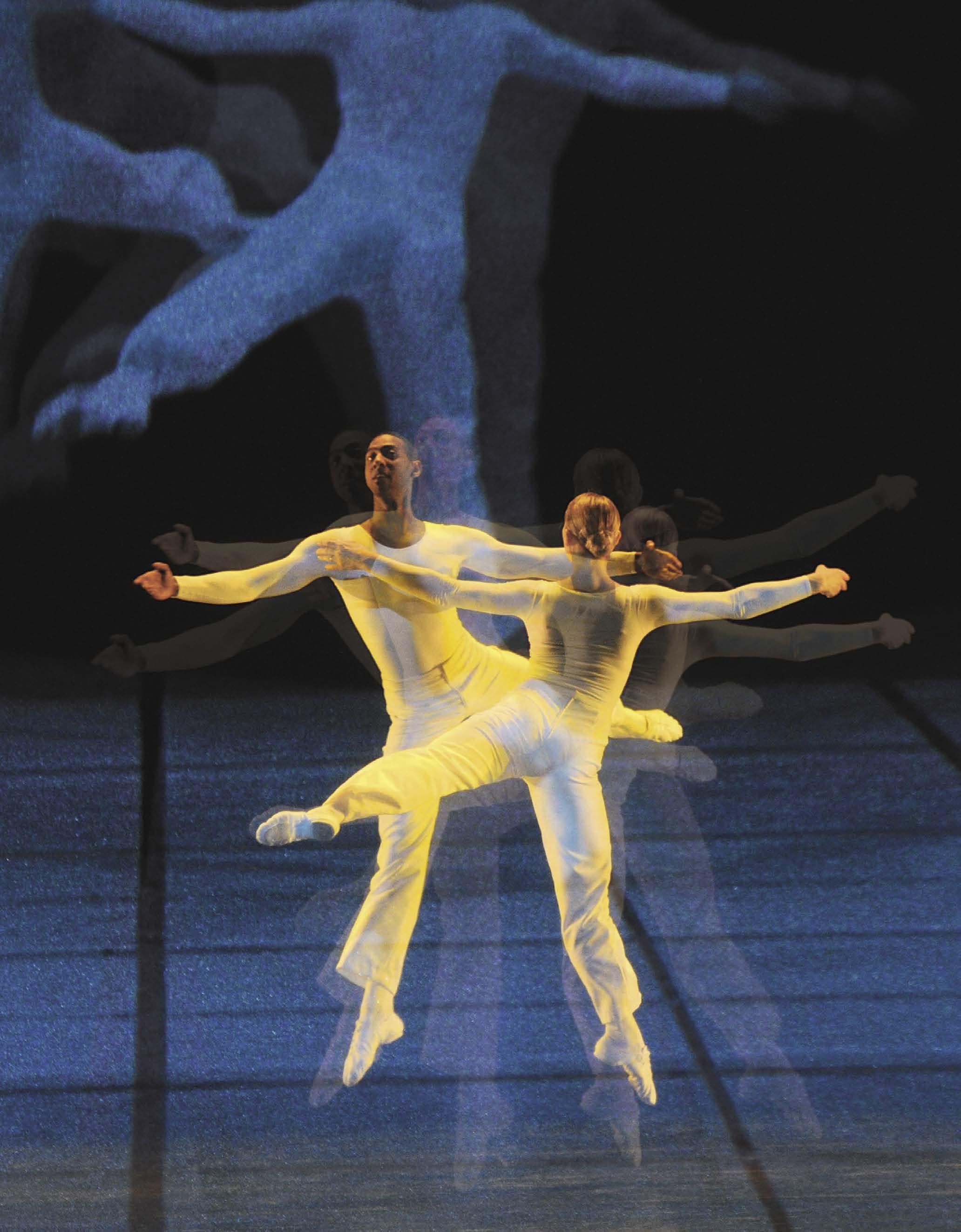
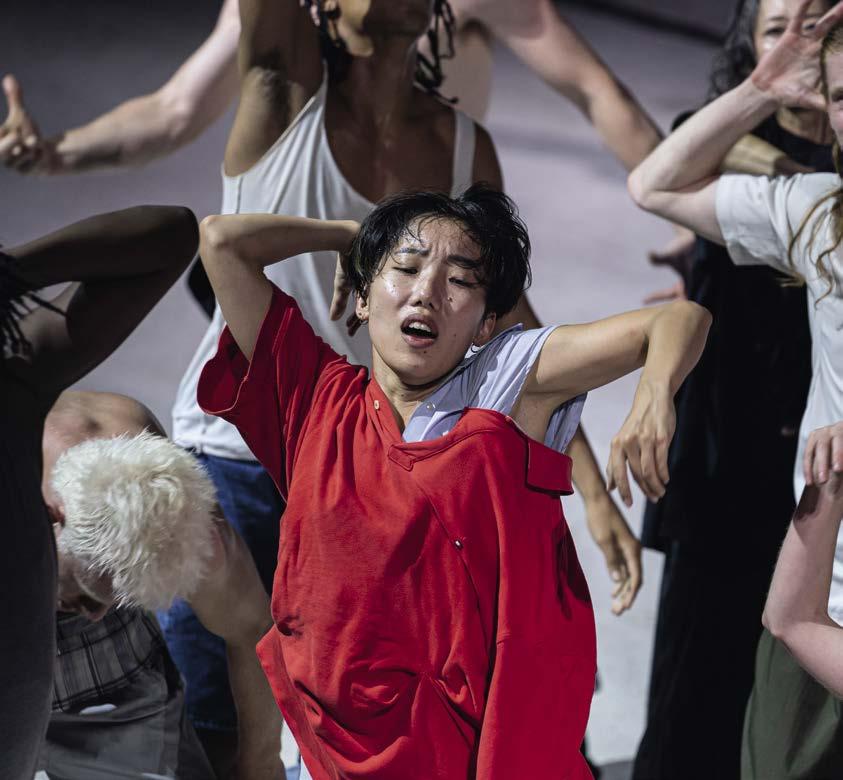
Bottom right: Room with a View (2020), choreographed by (LA)HORDE with the Ballet national de Marseille. Photo: © Thomas Amouroux, courtesy Van Cleef & Arpels
Critical Engagement Cy Twombly and the American Critics, 1951–1995: A Reception Histor y
This in-depth study by Richard Leeman, professor of art history at the Université Bordeaux Montaigne, Pessac, France, analyzes the reception of Cy Twombly’s work by American critics from the artist’s first exhibition in 1951 through 1994–95, the year of his comprehensive retrospective at the Museum of Modern Art, New York.
Dance Festival
Dance Reflections: by Van Cleef & Arpels
Since 2020, the jewelry company Van Cleef & Arpels has been supporting the world of dance through its Dance Reflections initiative, directed by Serge Laurent. From October 19 to November 3, the Dance Reflections festival will bring legendary and new choreography to institutions across New York. From Lucinda Childs’s celebrated Dance (1979) to new works from Gisèle Vienne, Dorothée Munyaneza, Dimitri Chamblas, the collective (LA)HORDE, and more, the program promises an energizing look at the present state of performance.
44
Biography
Wifedom: Mrs. Orwell’s Invisible Life by Anna Funder

Anna Funder’s previous books, Stasiland (2003) and All That I Am (2011), explored twentieth-century German history through nonfiction and fiction, respectively. Her latest takes the reader across Europe, from the Spanish Civil War to World War II in London, through the letters of Eileen O’Shaughnessy, the writer and first wife of George Orwell.
Art Book
Jim Shaw: Thinking the Unthinkable
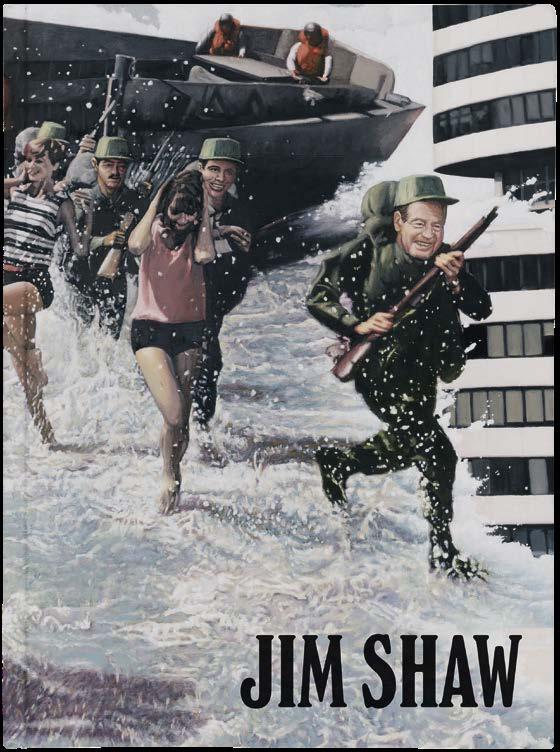
This book was published on the occasion of Jim Shaw: Thinking the Unthinkable at Gagosian, Beverly Hills, the artist’s first solo exhibition with the gallery. It featured new paintings and sculpture in which imagery of Hollywood stars and Cold War–era politicians collides with mythology, symbols of psychedelic transformation, and the threat of atomic bombs. The exhibition’s title suggests the impossibility of comprehending one’s own consciousness while also referring to Herman Kahn’s 1962 book about nuclear war.
Print Edition
Ed Ruscha: Dead End 3
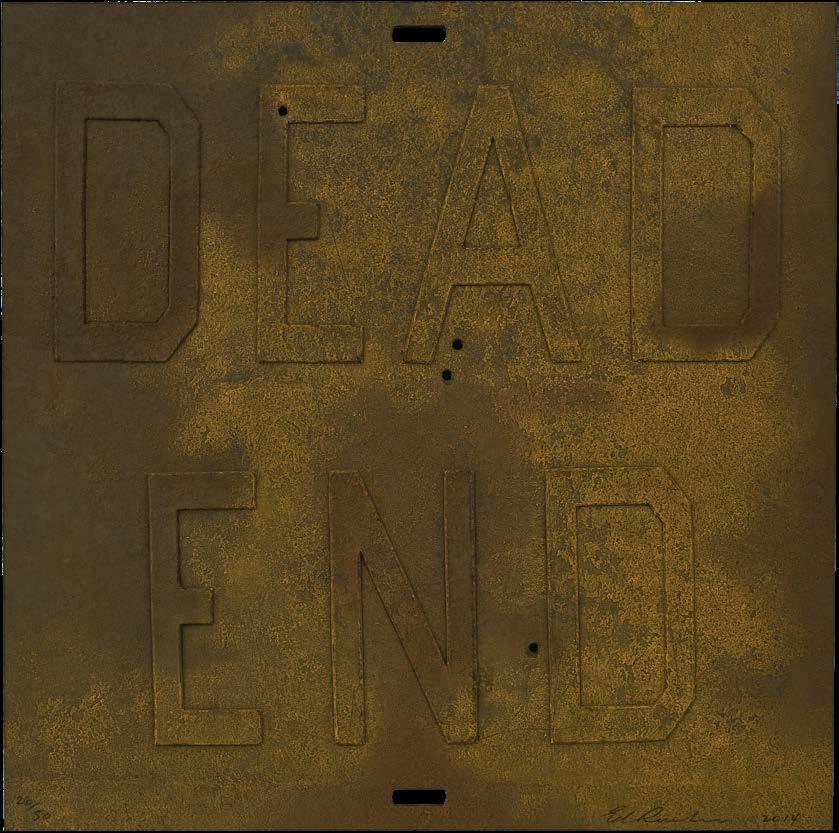
Ed Ruscha’s survey ED RUSCHA / NOW THEN opens at the Museum of Modern Art, New York, on September 10. Derived from a maquette of an aluminum “Dead End” notice that Ruscha painted for his desert property near Joshua Tree National Park in California, this print belongs to one of three editions from the artist’s Rusty Signs series.
In Translation January by Sara Gallardo
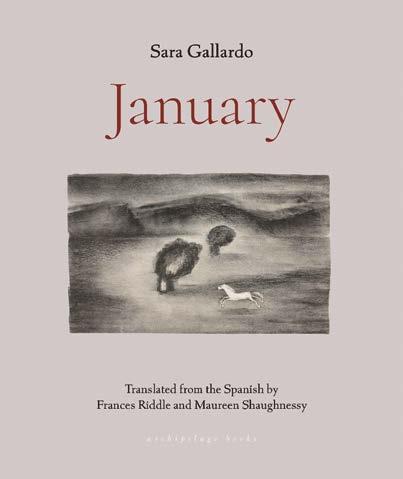
In 1958, when Sara Gallardo shared January with the world, it was the first Argentine novel to depict the topics of rape, pregnancy, and abortion in a feminist manner: from the perspective of the survivor. Today, Archipelago Books’ English edition, translated by Frances Riddle and Maureen Shaughnessy, will once again resonate with readers in our current turmoil around reproductive rights.
46
Left: Cover of Anna Funder, Wifedom: Mrs. Orwell’s Invisible Life (Knopf, 2023)
Right: Ed Ruscha, Dead End 3, 2014, Mixografia print on handmade paper, 24 × 24 inches (61 × 61 cm), edition 26/50 + 10 AP
Bottom left: Cover of Jim Shaw: Thinking the Unthinkable (Gagosian, 2023)
Bottom right: Cover of Sara Gallardo, January, trans. Frances Riddle and Maureen Shaughnessy (Archipelago Books, 2023)
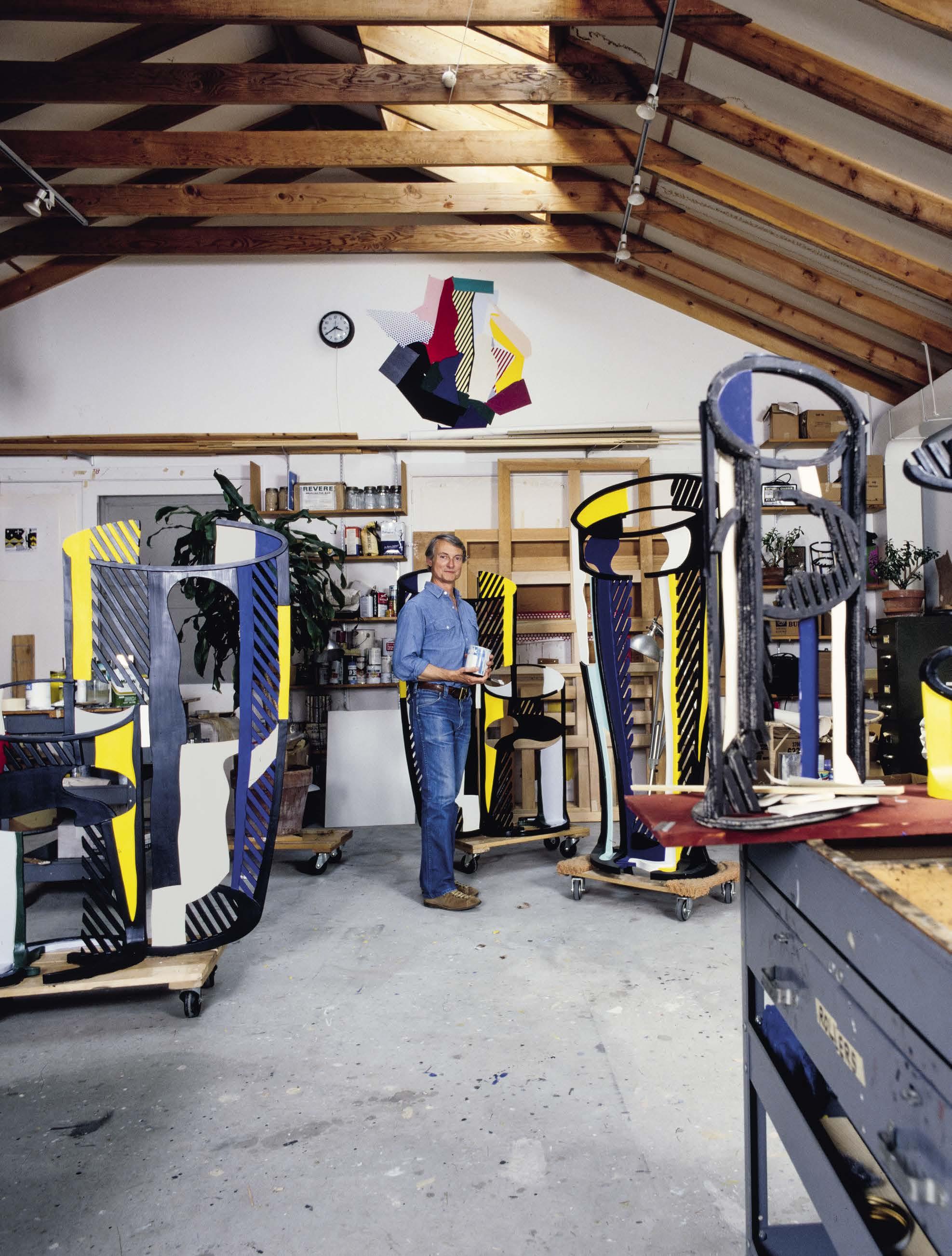
This year marks the centenary of Roy Lichtenstein’s birth. To honor the legacy and impact of the late artist’s work, Dorothy Lichtenstein and Irving Blum met at Lichtenstein’s studio in Southampton, New York, to discuss key milestones from his career, the exhibition of his work in New York this fall, and the lasting radicality of his paintings and sculptures.
Previous
DOROTHY LICHTENSTEIN Irving, I think you met Roy before I did.
IRVING BLUM I think I did. I had a little gallery called Ferus in Los Angeles. I had come to the city from New York and the Ferus Gallery had started a couple of months before I arrived. Ed Kienholz and Walter Hopps—
DL What a combination.
IB What a combination. I paid attention to the gallery for a while until finally I approached Walter and said I’d like to do something. And he said, “You’re right on time. Kienholz, my partner, wants to go back to the studio to make art, and he might be interested in selling his share of the gallery.” So I arranged to have a drink with Kienholz, to ask if he might be interested in selling his share. He said, “Absolutely.” I asked what sort of money we were talking about. He said, “$500” [laughter ]. I said, “I can do that.” And that was it, Walter and I became partners for $500.
DL That was a lot of money in 1957.
IB In the beginning we were hanging on by a thread, but somehow we got it to work.
DL Did you show Abstract Expressionists in the late 1950s?
IB Yes, absolutely. That’s what artists were painting—Robert Irwin, Billy Al Bengston, Craig Kauffman were all making Abstract Expressionist
paintings. Gradually there was a shift into another style, which was really fun to see.
Before I got to LA, in 1957, I lived in New York. I worked for Knoll, the furniture company, on 57th Street and Madison Avenue. Virtually all the galleries in New York were in that neighborhood, so I could see exhibitions during my lunch hour and visit Eleanor Ward at the Stable Gallery, André Emmerich, and most of all Leo Castelli, who was just getting started.
DL I think the Leo Castelli Gallery started around that time, and I think they represented some Abstract Expressionists also. There are photos of Leo at the beach in East Hampton with Willem de Kooning, Lee Krasner, and others.
IB Leo was so available, really civilized and agreeable. This was at a time when you could easily visit any gallery, and many times the dealer would come out from behind a counter and talk to you about the artist. That doesn’t exist today, but then it was extraordinary.
DL Everything was different. Museums were different—going into a museum was like entering a sacred space.
IB No question.
DL Recently I was trying to remember when you and I first met—you visited Roy in his studio every time you came to New York, and you more or less
50
I felt like this artwork was a bull in a china shop or otherwise a rude invader into the polite world of art. It carried within itself a message of threat, disgust, and uneasiness and was a downright risky piece of creation. Soon after seeing the work for the first time, I realized the importance it had to my outlook.
—Ed Ruscha
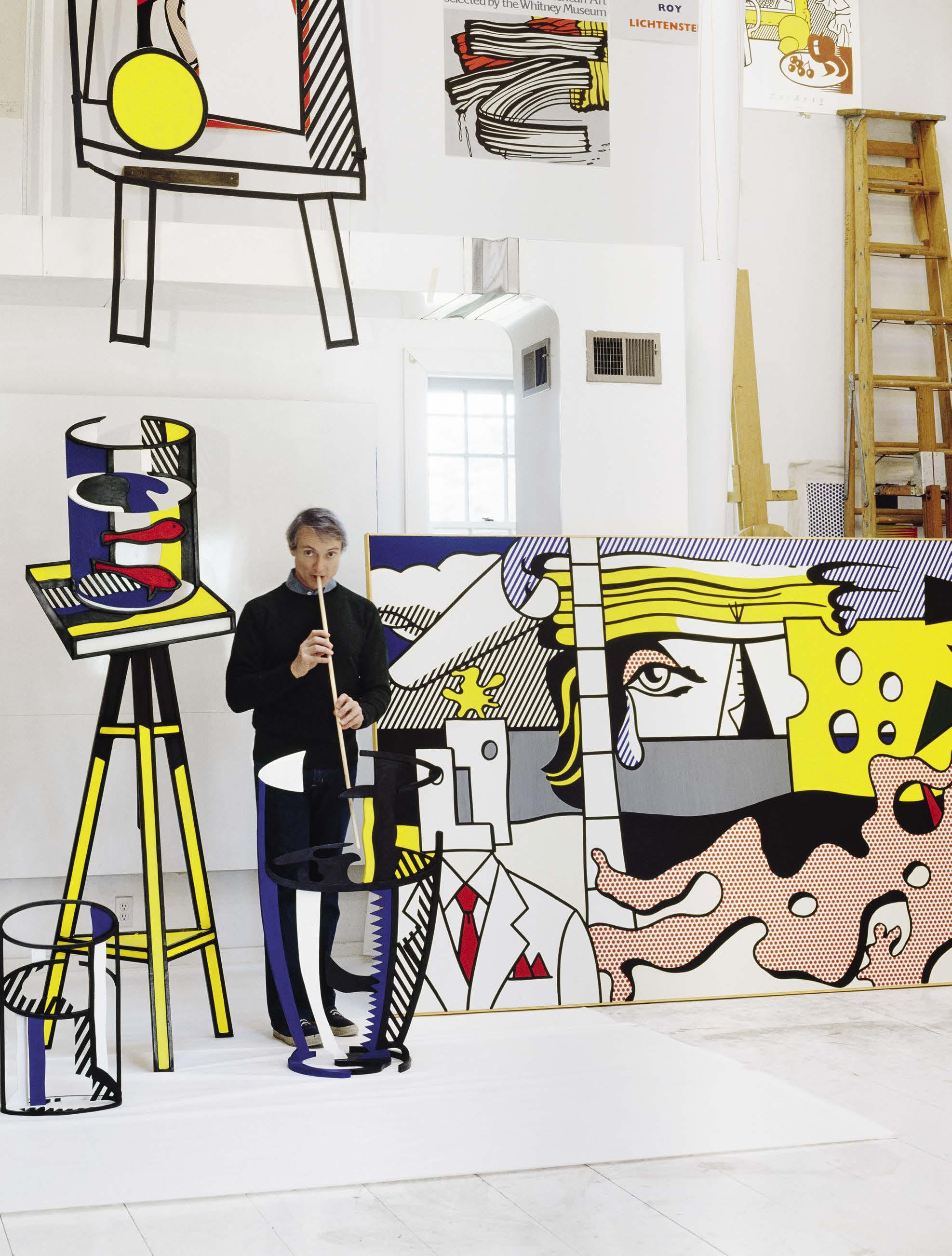
Previous spread, left: Roy Lichtenstein in his studio, Southampton, New York, c. 1980. Photo: Hans Namuth © 1991 Hans Namuth Estate, courtesy Center for Creative Photography, University of Arizona
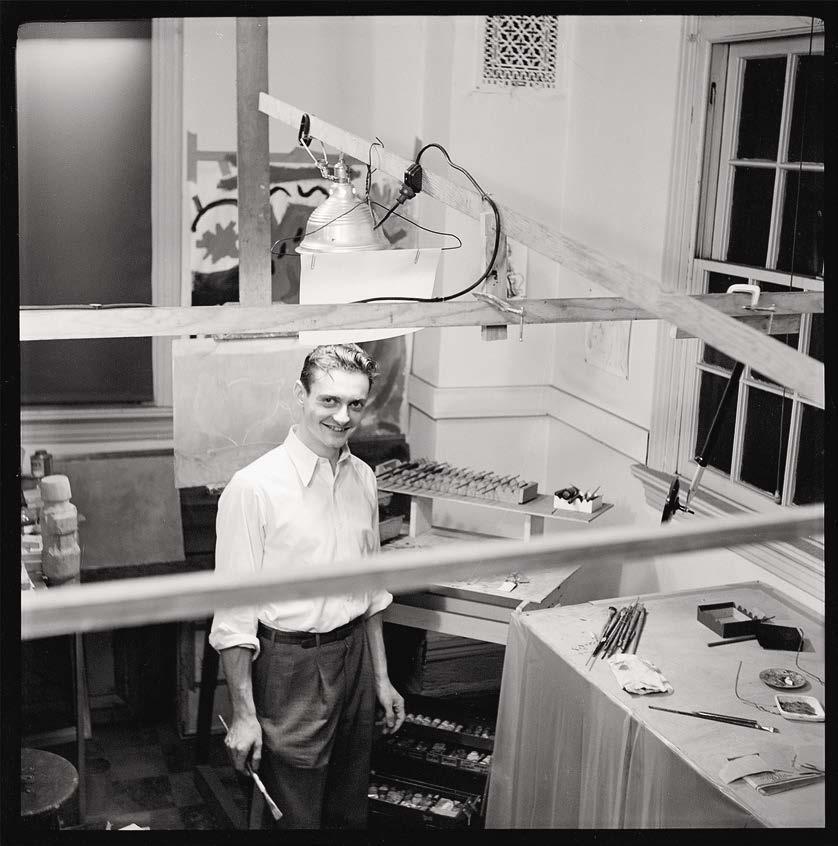
spread, right: Roy Lichtenstein in his studio, Columbus, Ohio, 1949. Photo: photographer unknown, courtesy Roy Lichtenstein Foundation Archives
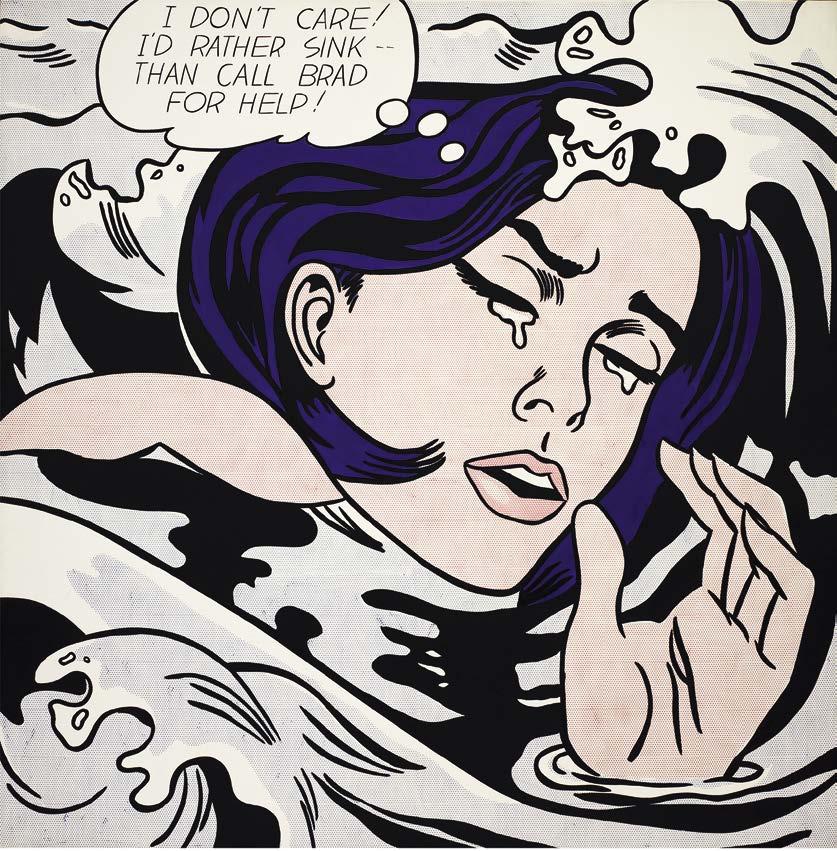
This page, left: Roy Lichtenstein, Drowning Girl , 1963, acrylic, oil, and graphite pencil on canvas, 67 5⁄8 × 66 ¾ inches (171.8 × 169.5 cm), The Museum of Modern Art, New York, Philip Johnson Fund (by exchange) and gift of Mr. and Mrs. Bagley Wright. Digital image © The Museum of Modern Art/ Licensed by SCALA/Art Resource, New York
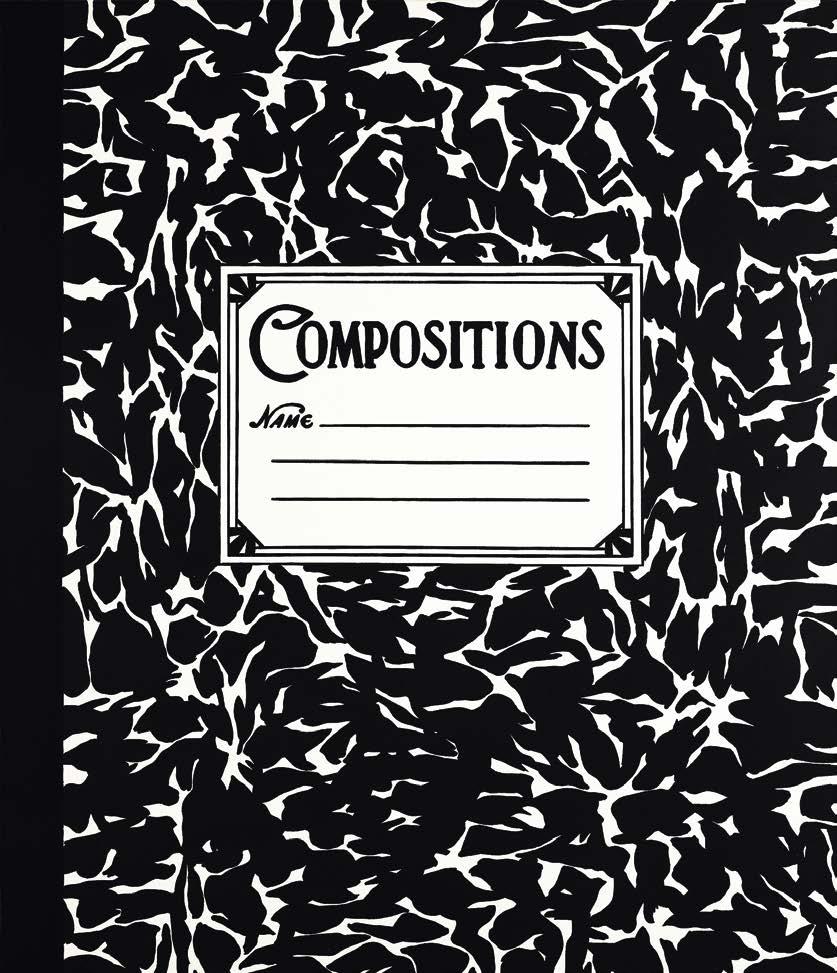
This page, right: Roy Lichtenstein, Compositions III , 1965, acrylic and graphite pencil on canvas, 56 1⁄8 × 48 1⁄8 inches (142.5 × 122 cm), Collection of Mr. and Mrs. Irving Blum. Photo: courtesy Estate of Roy Lichtenstein
bought something from almost every series he created.
IB In 1963 I went to see Leo—I had already organized to do a show of Roy’s—and he was putting together several paintings to ship to me in California. So I stood in the back room looking at the works and thinking about how extraordinary they were. I saw the edge of a painting that interested me, so I had Ivan Karp pull it out, and it was Drowning Girl [1963]. Leo was sending it to me for the exhibition and I said, “I want to buy that painting for myself.” Leo said, “Fine,” and it was done.
Later, after I returned to LA, the paintings came and I got a phone call from Leo, who said, “Ah, bad news. Virginia Wright”—an important client of mine and of Leo’s from Seattle—“came in as these paintings were getting packed up. She saw Drowning Girl and burst into tears. She had to have it.” So I said, “I’m bursting into tears here” [laughter ]. She was a very, very special client, so she got the work, but I was heartbroken. I’m still heartbroken.
DL Leo probably felt indebted to you forever; he always liked you, and he tended to be generous to other art dealers.
IB He was willing to share.
DL Roy’s relationship with Leo gave him confidence. When he first returned to New York, he started teaching at Douglass College, part of
Rutgers University in New Jersey. Allan Kaprow was also teaching there, and Allan told him to go to Castelli Gallery. Roy was making black-and-white paintings as well as some cartoons at the time. So he went to 4 East 77th Street and as he was going up the steps, Ivan Karp, who was an amazing character there, was saying goodbye to some collectors.
Ivan just took a painting from Roy and said, “Let me see that,” looked at it, and then turned around and said, “This is the next great art.”
IB Whoa.
DL And I mean Roy was [ laughs ] a little bit puzzled—
IB I bet he was quite content [laughs ].
DL But then he had to leave the paintings there for Leo to look at. Still, Roy always felt that a certain amount of success had emerged from luck, from being there—
IB The right place at the right time.
DL That was important. If he’d been making the same paintings outside of New York, the likelihood of being seen. . . . There’s an encouragement that builds just because—
IB Yeah, if you’re lucky, you get seen. And Roy was lucky.
DL Around that same time, there was an art scene growing in Los Angeles, and by the mid1970s Larry Gagosian had emerged as a dealer.
51
His work encourages me to look for the simplest, most direct expression of how I see an object, and to keep paring it back. And to follow my instinct in terms of being drawn to a subject, even if I don’t know why. I think of his art as being very generous: by collapsing high and low, he allows everything in. The breadth of an artist’s vision is a measure of the breadth of their love of the world.
—Adam McEwen
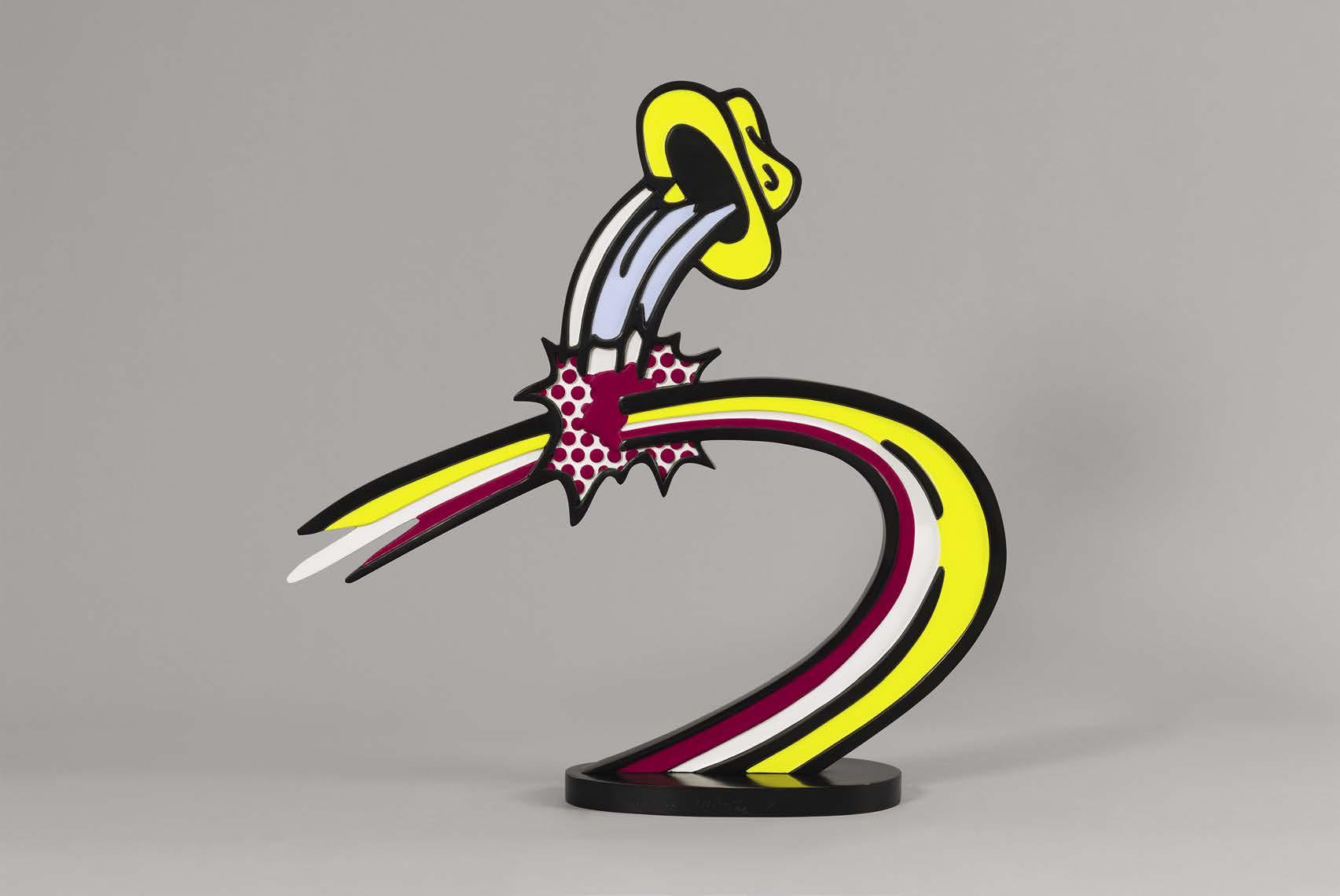
Roy Lichtenstein, Coup de Chapeau I , 1996, painted and patinated bronze, 26 ½ × 26 5⁄8 × 7 ½ inches (67.3 × 67.6 × 19.1 cm), edition 0/6, private collection. Photo: Rob McKeever
IB He began as a print dealer, and because of that, people didn’t pay a lot of attention to him in those early years. Mistakenly [laughs ]. His success is really self-made, though he owes a great debt to Leo as well. He was very observant of what Leo was doing, and he stayed close to Leo.
DL Yes. Leo liked him. And I remember being in Los Angeles with Roy for the first [Jean-Michel] Basquiat show in 1983—somehow we were invited to go there and it was packed out. I mean, it was almost like a cartoon itself. Music was going, the walls were shaking in and out [laughs ]. It was a scene. You were there that night too. And a few years later, Larry opened a gallery on 23rd Street in New York. And then he did a group show—I think Roy had some work included.
IB And the rest is history.
DL Yes [laughter ]. Roy used to go to Los Angeles to work on prints at Gemini [G.E.L.]. We went back at least every two years. Roy loved going to LA. There was this notion that if you could make your way as an artist in New York, then you could make it anywhere. After World War II, New York had become the center of the art world.
IB No question.
DL Although LA, San Francisco, and Chicago had good art scenes.
IB But nothing compared to New York.
DL Some people from the middle of the country
came to New York, and others went out to LA—Ed Ruscha and David Hockney gravitated to LA. Is New York still the place one has to be?
IB I think yes in many ways, but less so. No question. Oh, I want to talk about how, in 1964, I went to Leo’s gallery and hanging on the wall was a painting Roy made of a composition book. I immediately thought it was a great. Throughout grade school I had carried a composition book—
DL Those black-and-white composition books.
IB Black and white. Anyway, I just stood there dumbstruck by the originality and brilliance of this painting. So I called Roy—he was in his studio—and told him that the painting was a masterpiece and I wanted to buy it. Roy said “Irving, it sold two weeks ago to Ileana Sonnabend.”
DL Yes [laughs ].
IB I couldn’t believe it. So Roy paused, I paused, we both paused. Finally I said to Roy, “I’ve got it. I must have that painting. I’m going to marry Ileana.” Well, he laughed. We hung up. And three months later in California I got a crate, and when I opened it I found a new version of Composition with a note from Roy—
DL You still have it hanging on your wall.
IB Yes, I still have it hanging. The note from Roy said, “Dear Irving, not necessary to marry Ileana. Best, Roy” [laughter ].
DL I love that painting—it’s a play on Jackson
52
I am not sure enough time has passed to “define Lichtenstein’s legacy.” At the moment, though, I think Roy’s personalized forms of figuration have given younger artists permission to invent their own responses to the visible world; that his use of new and experimental materials has done the same; and that the diversity of his art within an evolving but defined set of boundaries is a model for artists: that this evolution permits one manifestation of life/art connections to be instructive to subsequent generations.
—Ruth Fine
Roy Lichtenstein drinking from Glass II (1976) in his studio, Southampton, New York, 1978. Photo: Horst P. Horst, published in “Roy Lichtenstein,” Architectural Digest , July/August 1978. Horst P. Horst, Architectural Digest © Condé Nast
Pollock, the idea of a composition, and it’s a notebook. I love the ambiguity that art can contain on different levels that one can think about.
IB Yes, it’s an artwork and a notebook. It’s got the whole package [laughter ].
DL And there are other paintings that I love, like the golf ball.
IB Wonderful painting.
DL Though the early cartoons, especially if they include female characters, seem to be more coveted, those early black-and-white paintings are among the breakthrough works. I think an artist’s breakthrough moment always remains significant.
IB No question.
DL I mean, when someone hits with something—
IB Yeah, and it works—
DL Yes, it’s just sort of perfect the way it is. Everything is measured against those.
IB Well, it belongs to history. Yeah. Remember the jewelry paintings?
DL Yes.
IB He didn’t do very many.
DL He didn’t. And he made a brooch for me. It had double-edged tape or something so that I could stick it on. But yes, those black-and-white works—
IB Yeah, they’re wonderful. Andy Warhol did black-and-white paintings as well. Andy and Roy were kind of—they were chasing each other.
DL They did a bit in the early days, I suppose.
IB Andy was passionate in ways you couldn’t understand. In 1962 I gave Andy his first show ever. We showed the thirty-two Campbell’s Soup Cans [1962]. I’d sold four or five, at $100 apiece, but living with them in the gallery was an intense experience for me, so I called Andy and said that I wanted to keep them together. He said fine, and we worked out a discounted price, but he didn’t care as much as I’d thought he would.
DL No, but he probably said, “That’s so great, Irving wanted them all, he’s going to keep them together.”
IB God, you must have been there, Dorothy [laughter ]. That’s exactly right. So I bought back the few I’d sold. It was actually quite hard, especially getting one back from Dennis Hopper. Oooh, I had to fight, but I did it. I kept them intact for twenty years, and now they’re at the Museum of Modern Art in New York.
DL Which is great. One time Roy tried making a serial painting series. One was Portrait of Ivan Karp, the other was Mr. Bellamy [both 1961].
IB He should have gone forward with that.
DL It could have been great. But after he did the second one—and they were small, too—he got bored. Andy really figured out how to do it with silk screen, which was—
54
He could really build a picture. They’re built like atoms; they’re ironclad. He had all these devices, like looking at the painting in a mirror, looking at it in black and white. He subjected it to heavy analysis to make sure the composition was absolutely airtight.
—David Salle
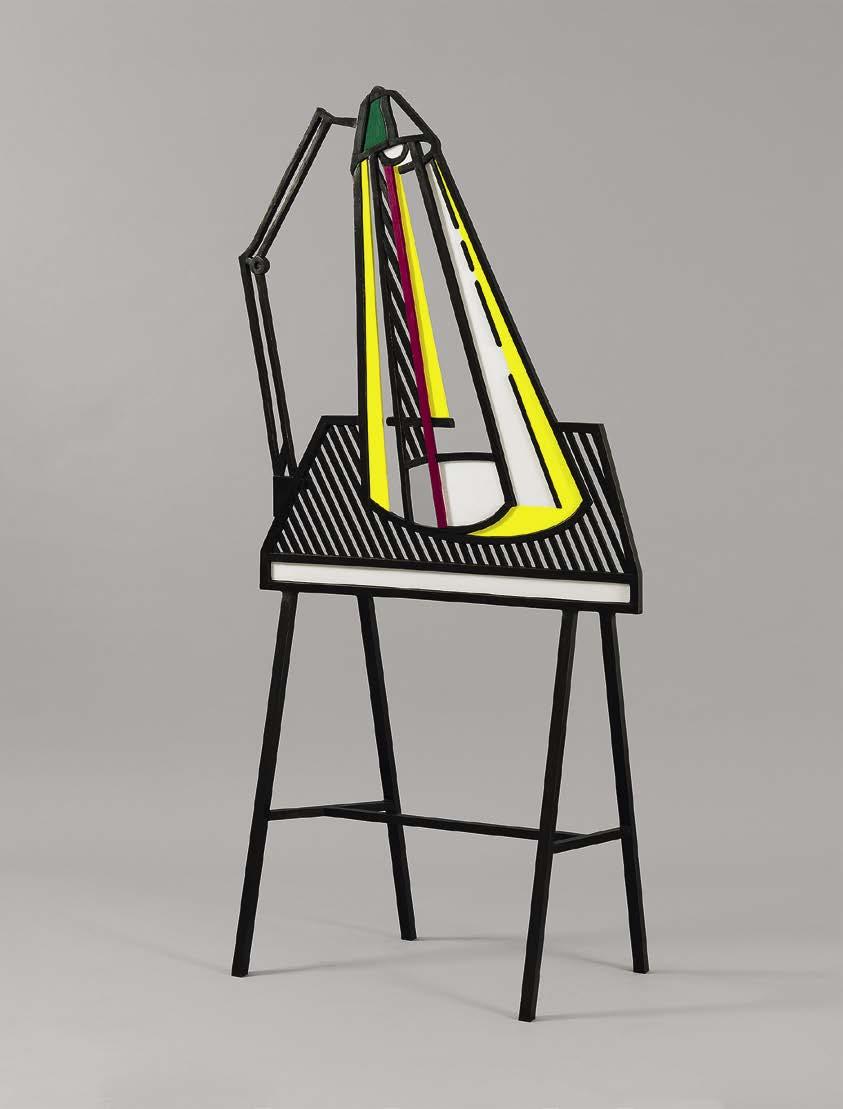
This page, left: Roy Lichtenstein, Lamp on Table, 1977, painted and patinated bronze, 74 × 34 ¾ × 18 inches (188 × 88.3 × 45.7 cm), edition 3/3, private collection.
Photo: Rob McKeever
This page, right: Roy Lichtenstein, Galatea , 1989, painted and patinated bronze, 89 × 32 × 19 inches (226.1 × 81.3 × 48.3 cm), edition 1/6, private collection. Photo: Rob McKeever
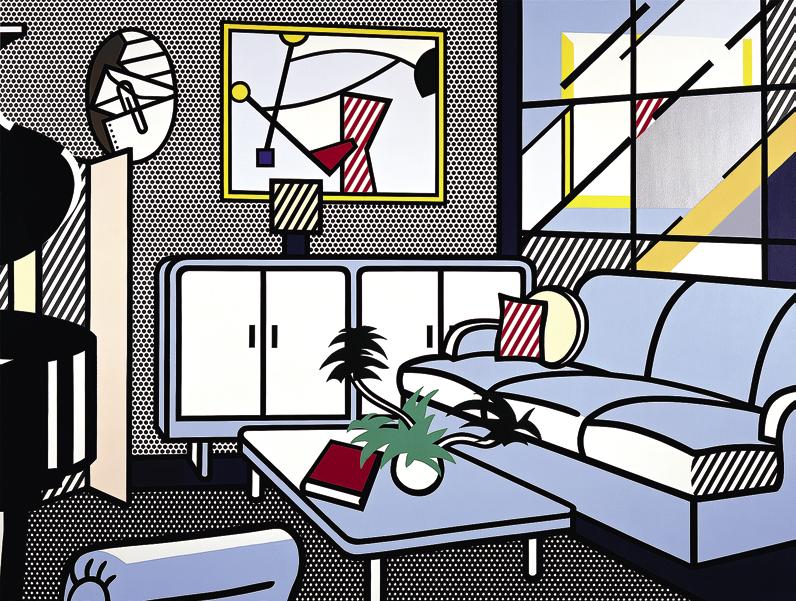
Opposite, left: Roy Lichtenstein, Interior with Mobile Painting, 1992, acrylic, oil, and graphite pencil on canvas, 108 × 144 inches (274.3 × 365.8 cm), private collection.
Photo: courtesy Estate of Roy Lichtenstein
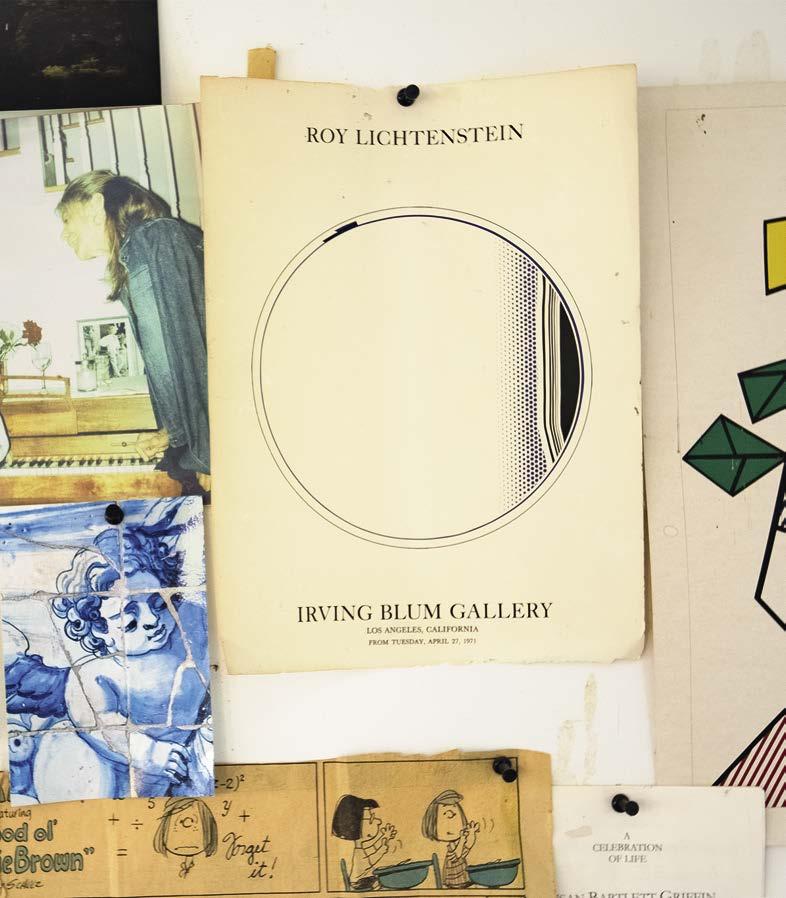
Opposite, right: Wall in Roy Lichtenstein’s studio, Southampton, New York, 2023. Photo: Pushpin Films
IB Not a massive effort.
DL Exactly. He didn’t have to paint every dot. That was before Roy could afford a perforated dot paper made to order, you know, so he was simulating the dots by hand, or he had a big piece of metal that he used to have to clamp onto the painting.
IB Well, his technique was incomparable.
DL He had to use oil for the dots because it was spreadable in a way that acrylic wasn’t. He could roll it onto the perforated metal screen—
IB Right, and get the density—
DL Some would roll on, and then there was some hand touch-up to the dots. But it was cumbersome, really. And once he was able to have paper made with cutouts that you could just put a light coat of spray paint on and cut in any shape you wanted—
IB Whoa. He figured it out.
DL Yeah. There was a lot of handwork but he was always trying to get them to look more machine made. Was your first show of Roy’s work greeted enthusiastically? Dennis bought a painting.
IB Yeah, he bought a painting. Yes and no, Dorothy. You know, people could hardly believe what they were looking at. Back then, there was no such thing as the Pop star. It hadn’t really evolved yet.
DL It was brand new then. Even when I go into a museum today and see one of Roy’s paintings with a lot of other things hanging around it, Roy’s work
still looks very fresh.
IB Oh yeah. I agree.
DL And the sculptures too, they have a kind of whimsy.
IB I think they’re wonderful.
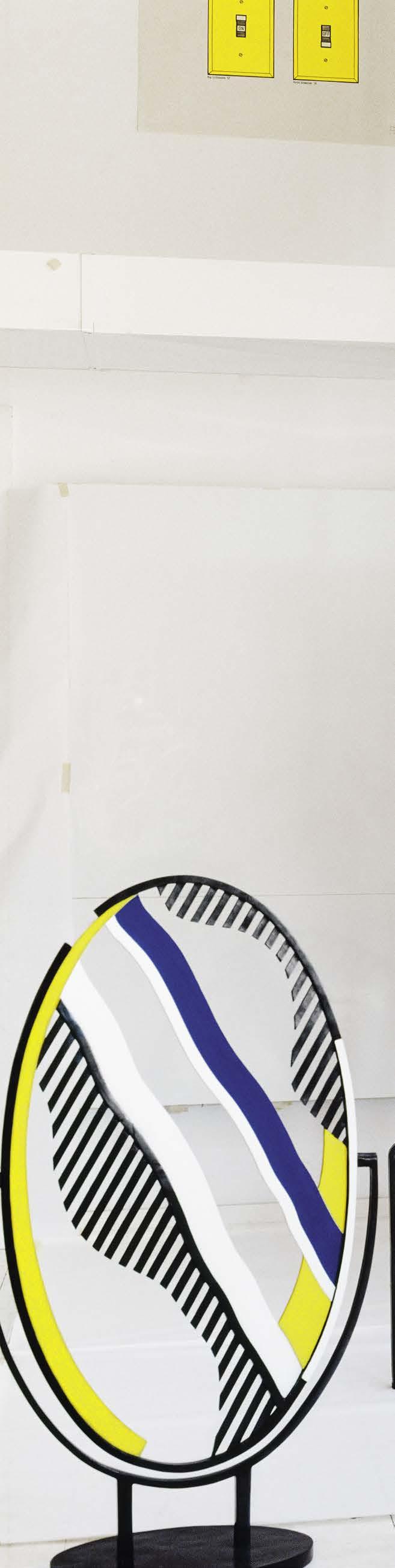
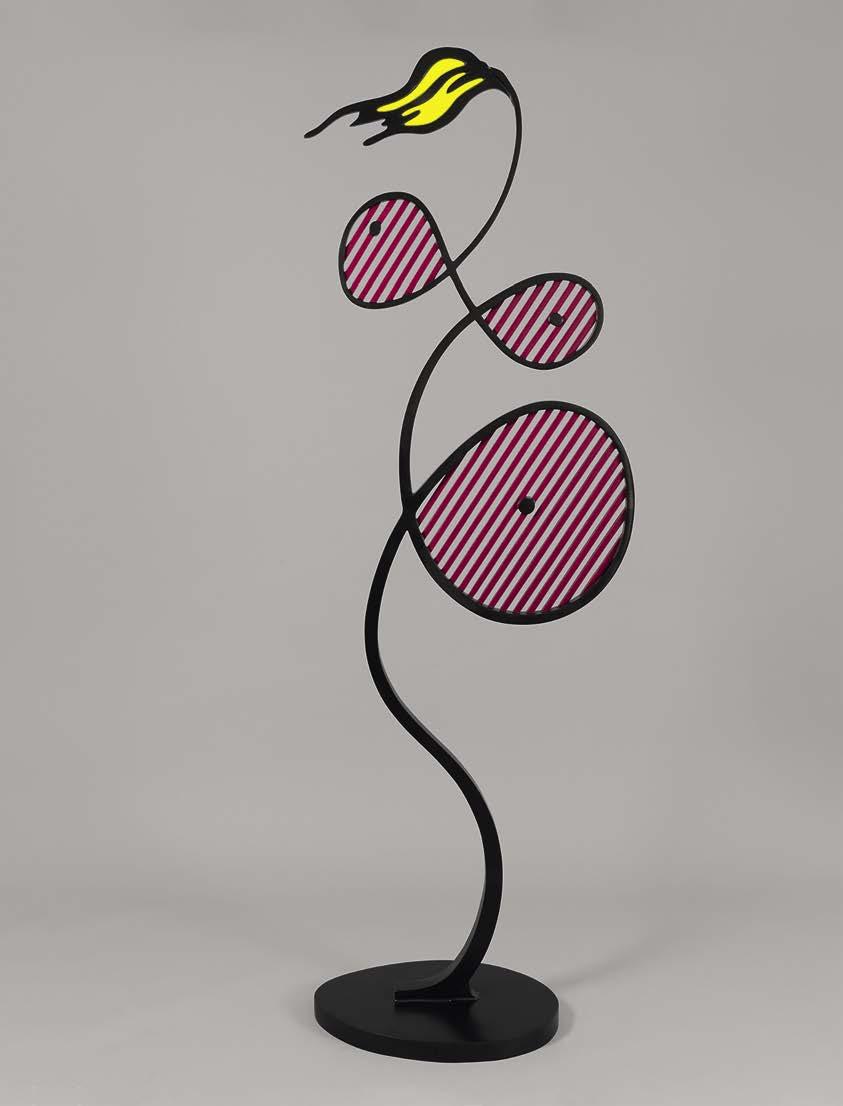
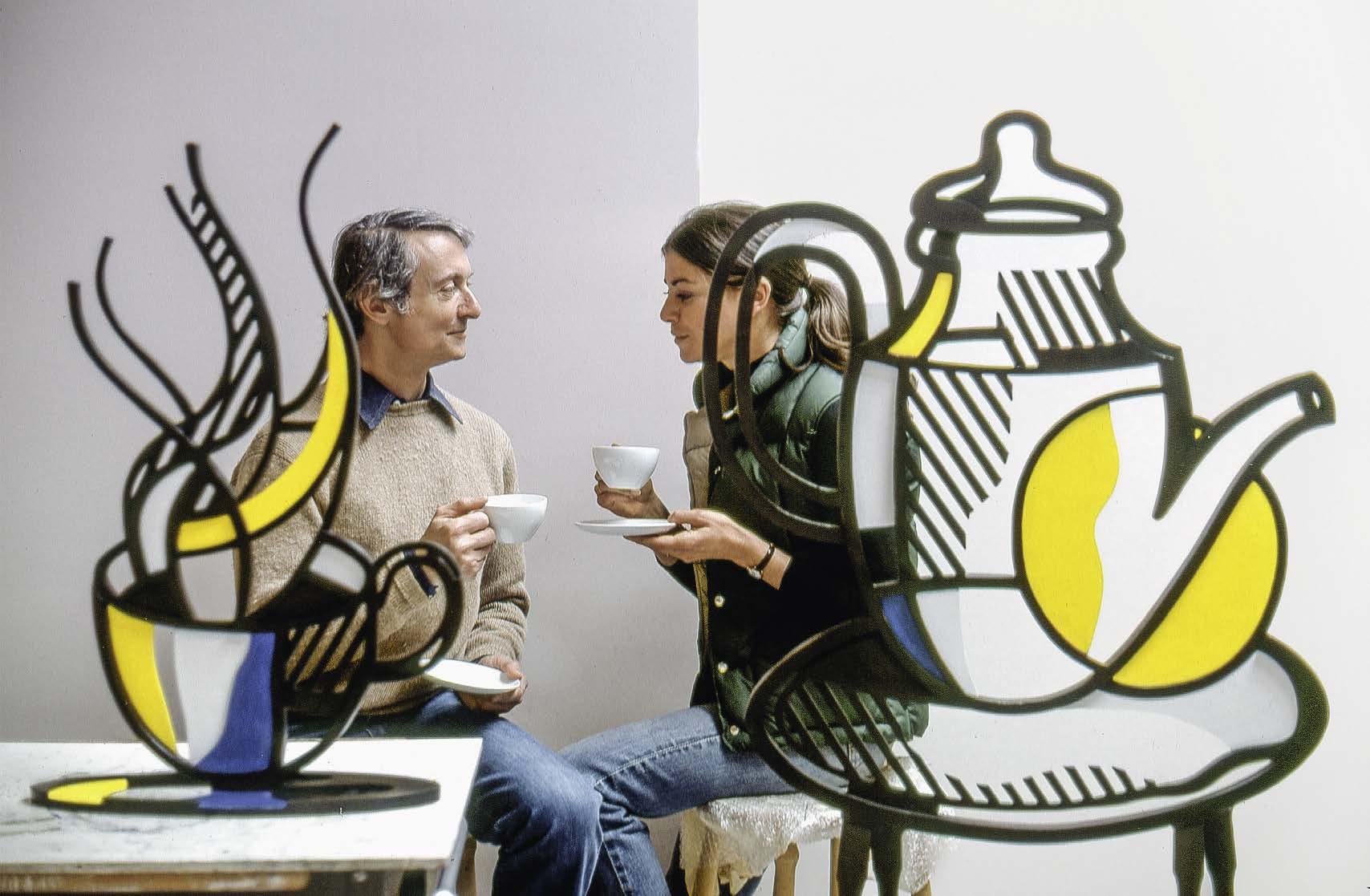
DL I really love them. People don’t necessarily think of Roy as a sculptor, but he always made sculpture. I think he liked to portray ephemeral things in a concrete way—like the smoke from a coffee cup or the rays from a lamp or the transparency of water in a glass. He was as serious about sculpture as he was about painting. Sometimes he’d put something in a painting and then decide it would make a better sculpture. Or he’d paint one of his sculptures into an interior painting.
IB Roy’s interior paintings are masterpieces. They’re among his greatest works, no question. But they’re big and difficult to transport. One day some great museum will do a big exhibition of the interior paintings and they’ll be a revelation.
DL When we were preparing for this show in New York, it seemed essential that you would curate it.
IB Well, I was close to Roy for many years.
DL Yes. In a way, you were the dealer he was closest to and most relaxed around. And you still have an amazing sense of humor.
55
I would define Roy Lichtenstein’s legacy as—it feels like it’s just beginning.
—Hank Willis Thomas
IB As you know, I adored him. And continue to adore him. He was a great, great artist and I was privileged to be close to him, really privileged.
DL Well, he certainly enjoyed it when you’d come out to visit. We had lots of fun.
IB Yeah. And I’d always try to leave with a painting [laughter ].
DL Well, that was another thing Roy liked. He could always count on you.
IB He was always curious to know what was going on in LA. I’d embroider stories and he’d be entertained. And just think of everything you’ve been part of, Dorothy.
DL Oh yeah.
IB You met Roy when you were working at Bianchini Gallery [in New York], right? You had that grocery store show.
DL Yes, that was the great American Supermarket show in 1964. I met Roy because we thought that, instead of doing a poster, we could get Andy, Roy, and other artists to create an image for a shopping bag. I met Roy when he came in to sign the shopping bags.
IB Incredible. And the rest is history. It astonishes me. You were right there, up close, watching as it evolved.
DL It was wonderful. This is the year Roy would have turned 100. Just amazing.
I think I first saw his work about 1961 or 1962. For me it’s the sculptures that are the most original and interesting. I remember Ken Tyler having a steaming cup of coffee—that is, a sculpture of a steaming cup of coffee—that I thought was an amazing work. I thought about sculpture and if someone had suggested making a sculpture of it, what would you do? I do not know how much his painting has influenced me, but I’m sure his legacy as a sculptor will be secure.
—David Hockney
56
This page: Roy and Dorothy Lichtenstein with Cup and Saucer I (c. 1976) and Teapot on Stand (1977) in Lichtenstein’s studio, Southampton, New York, 1978.
Photo: photographer unknown, courtesy Roy Lichtenstein Foundation Archives
Opposite: Dorothy Lichtenstein and Irving Blum in Lichtenstein’s studio, Southampton, New York, 2023. Photo: Pushpin Films
Artwork © Estate of Roy Lichtenstein
IB What an incredible career.
DL Well, you know, he was modest. He was reticent.
IB Reticent but available at the same time.
DL He was a really good listener, and he wasn’t reticent in his painting.
IB Not at all. He taught for many years and that made him really approachable. He was easy to be with.
DL Yes. And he really knew art history—growing up in New York, he had spent a lot of time at the Metropolitan Museum of Art, the Museum of Modern Art, and so on. And he took courses at the Art Students League when he was in high school, before he went off to college. I think when he realized that he could actually earn a living as an artist, that was kind of astonishing—thrilling. I remember the first time something sold for more than a few hundred dollars—this check came in the mail and he said, “We’re thousandaires” [laughter ].
IB Well, you know the story I love to tell about Roy. He worked all the time. On one visit, I came to spend a weekend with you and Roy. We had dinner and then Roy and I had a little talk. You’d gone to bed. When I woke up in the morning, Roy was at the breakfast table with a couple of drawings he could only have done the previous evening.
DL Oh, because of this conversation.
IB Yeah. And I thought, “It never ends.”
DL The thing that really interested me was that he never put the last coat of paint on moments before a show. He always finished those works probably a month ahead, and he’d be making sketches for his next series, thinking about what it was going to be, what size the canvas was going to be. Sometimes he’d even fill the sketches in with colored pencils. People love those little colored drawings—they can be tiny little things. And then he had that funky camera: he’d come into the studio at night, turn all the lights out, and project the image so that he could roughly trace it. Then he’d make adjustments. His work was always process oriented. I mean, there are a few pieces of sculpture that were made with tongue depressors, BandAids, and tape.
IB Of course, anything that worked.
DL This new show is called Lichtenstein Remembered
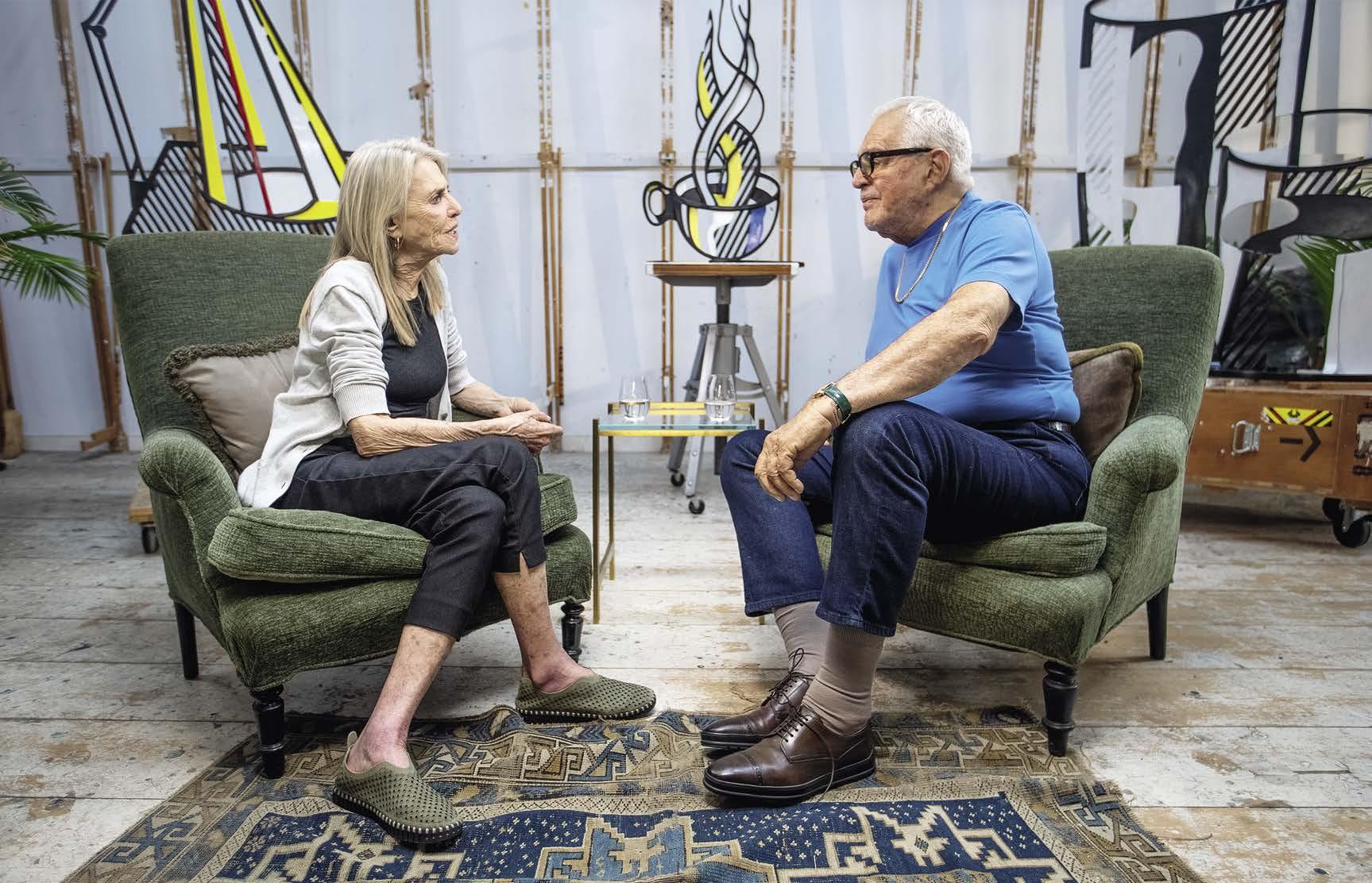
IB How do you think Roy should be remembered? For me, there’s absolutely no question that he should be remembered as the great artist that he was.
DL Yeah. I mean, I think he was an inventor. I think he’ll be remembered because he invented something.
IB No question.
57
It is indeed the case that certain things come to an end with the passing of an artist. Many Pop artists, too, have descended into obscurity. Lichtenstein, however, is still very contemporary, and many people here still paint dots.
—Georg Baselitz
FASHION AND ART PART 15: ANTHONY VACCARELLO
Anthony Vaccarello has served as creative director for Saint Laurent since 2016. Over the past seven years, in addition to overseeing the womenswear and menswear collections, he has spearheaded an ambitious program of collaborations with figures from the worlds of film, music, art, and beyond. Derek Blasberg caught up with Vaccarello in Los Angeles to discuss Saint Laurent Productions, which debuted with a new film by Pedro Almodóvar at this year’s Cannes Film Festival, as well as forthcoming projects with artist Cai Guo-Qiang and filmmaker David Cronenberg.
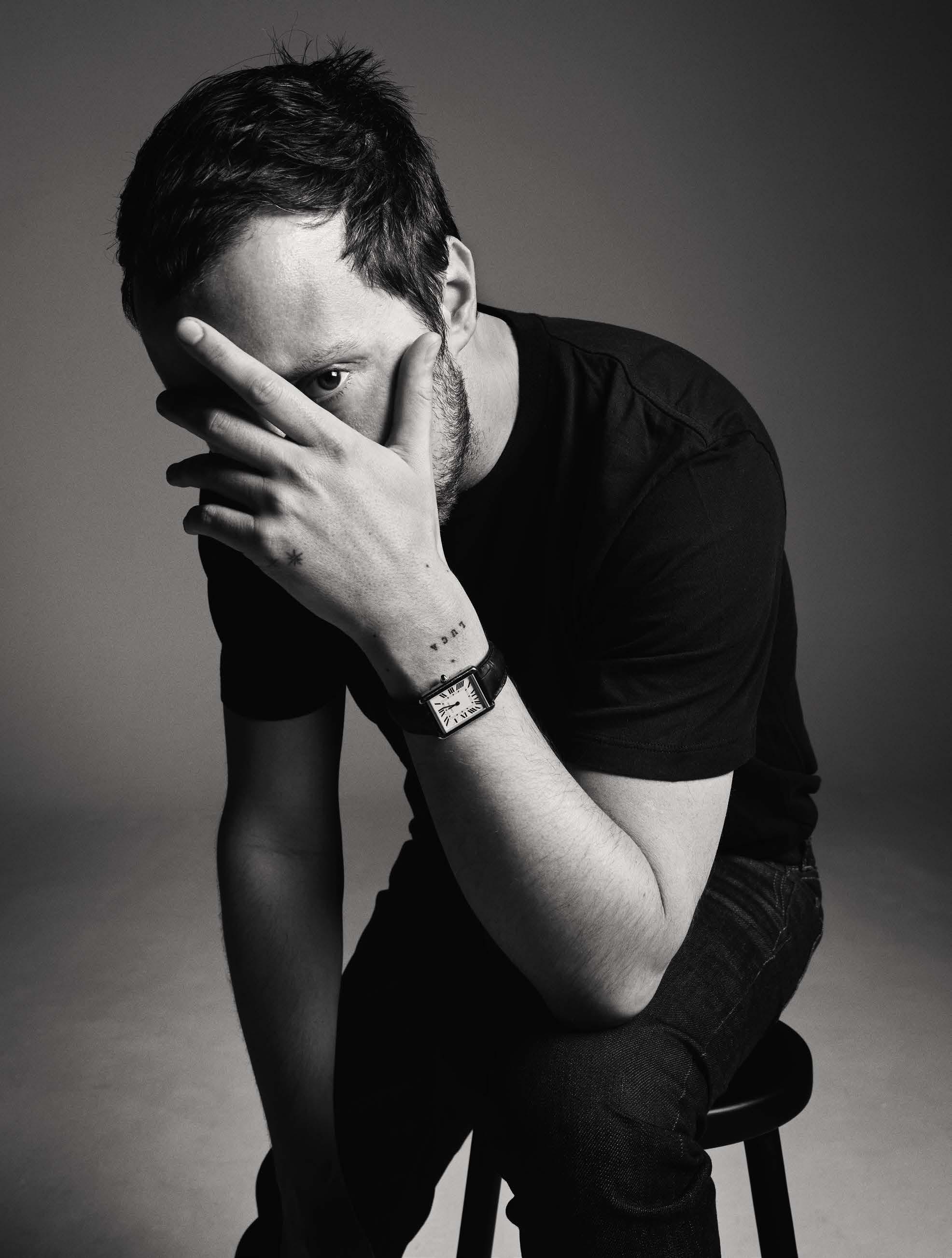
DEREK BLASBERG : Bonjour, Anthony! Where am I finding you today?
ANTHONY VACCARELLO : I’m in LA, enjoying my last few days here. The weather is beautiful.
DB: It seems like you’ve been spending more time in LA.
AV: My husband and I had an amazing time here when my son was born, and we try to repeat it once a year. When we’re here, it’s only the three of us. No connection to friends, limited work, because we really want to concentrate on [our son] Luca. Luckily, that timing often coincides with when it’s cold in Paris [laughter].
DB: As you know, I want to talk to you about the connection between contemporary art and what you do at Saint Laurent. So let’s start at the beginning. Do you remember the first time you went to an art museum or had an art experience?
AV: I was born and raised in Brussels, and as a child I remember being with my parents at the Musée d’Art Moderne. It’s incredibly beautiful because it’s full of these Belgian artists, like Paul Delvaux and René Magritte. But my strongest early art memory was seeing a painting by Francis Bacon. It was one of his popes, and it was like I’d never seen the pope painted before. It was shocking. Let’s say I knew my parents were trying to open my mind and we’d go once a week, or maybe once a month, to a museum, and I liked it when we went there.
DB: In one of the first interviews we ever did together, which was probably fifteen years ago, we talked about our childhood obsession with Gianni Versace.
AV: I was drawn to all those designers who loved designing for a woman’s body, like Versace, and Azzedine Alaïa too, but yes, especially Versace. Maybe because of the glamorous things he was surrounded by, including those Pop artists I was so attracted to as a kid. I felt he brought everything into the same universe: fashion, music, cinema. And he was the only one back then mixing all that.
DB: Versace didn’t hide his art references. Remember when he used Andy Warhol’s silk screens of Marilyn Monroe on dresses and blouses?
AV: Yes, he did those Marilyn catsuits, but that was just one thing. I don’t like the idea of using art as a first degree, like taking a piece and doing a dress with that. What I liked with Versace was that it was more a relationship with that world, and the party he created with those people. I think art and fashion are good together, but I don’t like it when it’s too commercial. I think it’s killing
the artists and the art, in a way, when you try to incorporate art in design.
DB: In every one of these interviews, we ask the subject: do you think fashion can be art? Can a designer be an artist?
AV: I love fashion, but I think perhaps we’re too productive for it to be considered an art. I think we can be artists, or some can be artists, but I don’t know if a piece of art has the same value when it’s unique, and when you don’t have a lot of reproduction. Fashion is maybe too real to be considered an art form. For me, it’s like fashion is part of the art zone, but it’s not art with a capital A.
DB: You’re saying that a designer is more focused on productivity than an artist. So maybe the process is similar—you both mine your memories and inspirations—but your productivity is different?
AV: The value is different. We have maybe the same way of thinking about a story, a woman, or an attitude, but in the end we make something too real to be considered art.
DB: What’s your design process?
AV: It depends. Usually I need to have a story in my head, like a fantasy about a woman or a boy. I need to think about what they’ll do, where they’ll go. It’s often inspired by film more than music or art, I have to say. I have a problem when someone says that fashion is inspired by . . . a print? A textile? Because when you’re inspired by a print, it’s always something less good, you know? With a painting, it’s so unique and beautiful when you get inspired by something like that.
DB: Has your design process changed since our first interview fifteen years ago?
AV: No, it’s pretty much the same. It’s pretty much as painful and complicated as always, ha! To be honest, it can be difficult to do something new and surprising every six months. But for me, the trick is to always have the same DNA in every story but not make people feel bored with what you do.
DB: Are you really ever worried that you’re boring?
AV: In fashion, I sometimes have this feeling that we’re here to entertain only a few stupid people. But I guess that’s part of the game.
DB: Are there any artists you’re currently inspired by? Who are you looking at
60
Previous spread: Anthony Vaccarello, 2022. Photo: © Gray Sorrenti
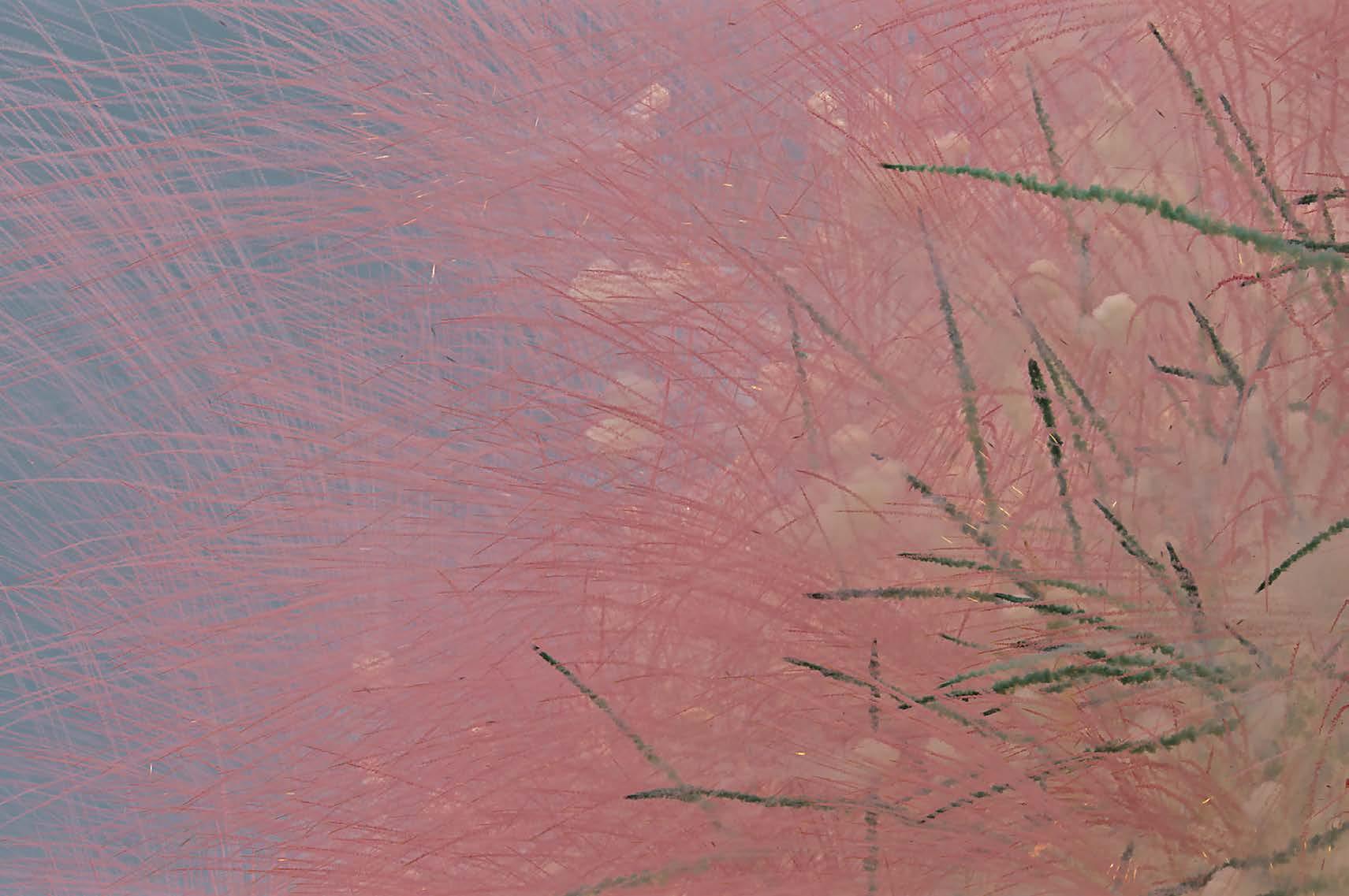
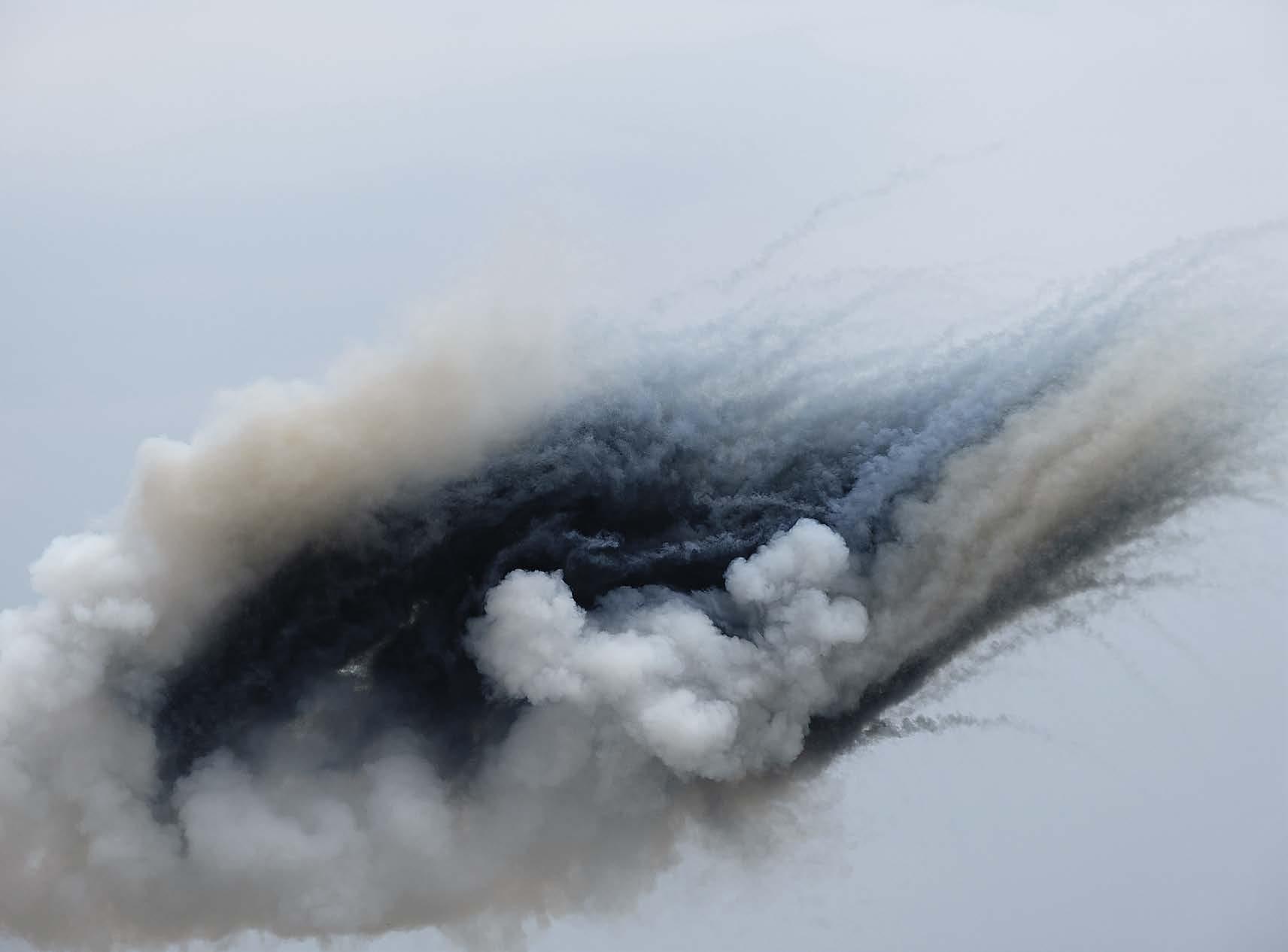
This page: Cai Guo-Qiang, When the Sky Blooms with Sakura , 2023, Yotsukura Beach, Iwaki City, Japan, commissioned by Saint Laurent by Anthony Vaccarello and organized by the Executive Committee
in the contemporary art world?
AV: The first person who comes to mind is the artist I saw at the Pinault Collection when it opened in Paris. I can’t remember his name but he had a whole gallery and there was a basketball net with a chandelier—
DB: David Hammons?
AV: Yes, that was my favorite thing in the whole museum. Monsieur [François] Pinault told me that it was the first time he’d done a show like that in Paris. It was interesting to see something like that.
DB: There’s a history at the House of Saint Laurent of the designer being inspired by artists. The biggest example that comes to mind is when he made that [Piet] Mondrian dress. What’s it like to work within a legacy like Yves Saint Laurent’s? Do you go and look at those dresses?
AV: Those are not my favorite things that Saint Laurent did, the Mondrian, the [Pablo] Picasso. For me, Saint Laurent is more about the style, about the feeling. He was a revolution in fashion! When he took those paintings and made them into dresses, for me it was not the best thing.
DB: So what’s your favorite Saint Laurent era?
AV: His beginning in the 1960s was pretty amazing.
DB: That era is still sexy, too.
AV: And it’s super modern. But I have to say I’m really touched by his 1990s work too, when fashion started to change with Helmut Lang, all those designers, and he was still focused on the familiar silhouette of the woman he designed back in the day. I’m very touched and emotional when I see
that era. It was very different and contradictory of what was happening in the fashion scene. I like thinking I’m starting a collection from that point of view. Like when he left Saint Laurent—I’d like to continue his work since then.
61
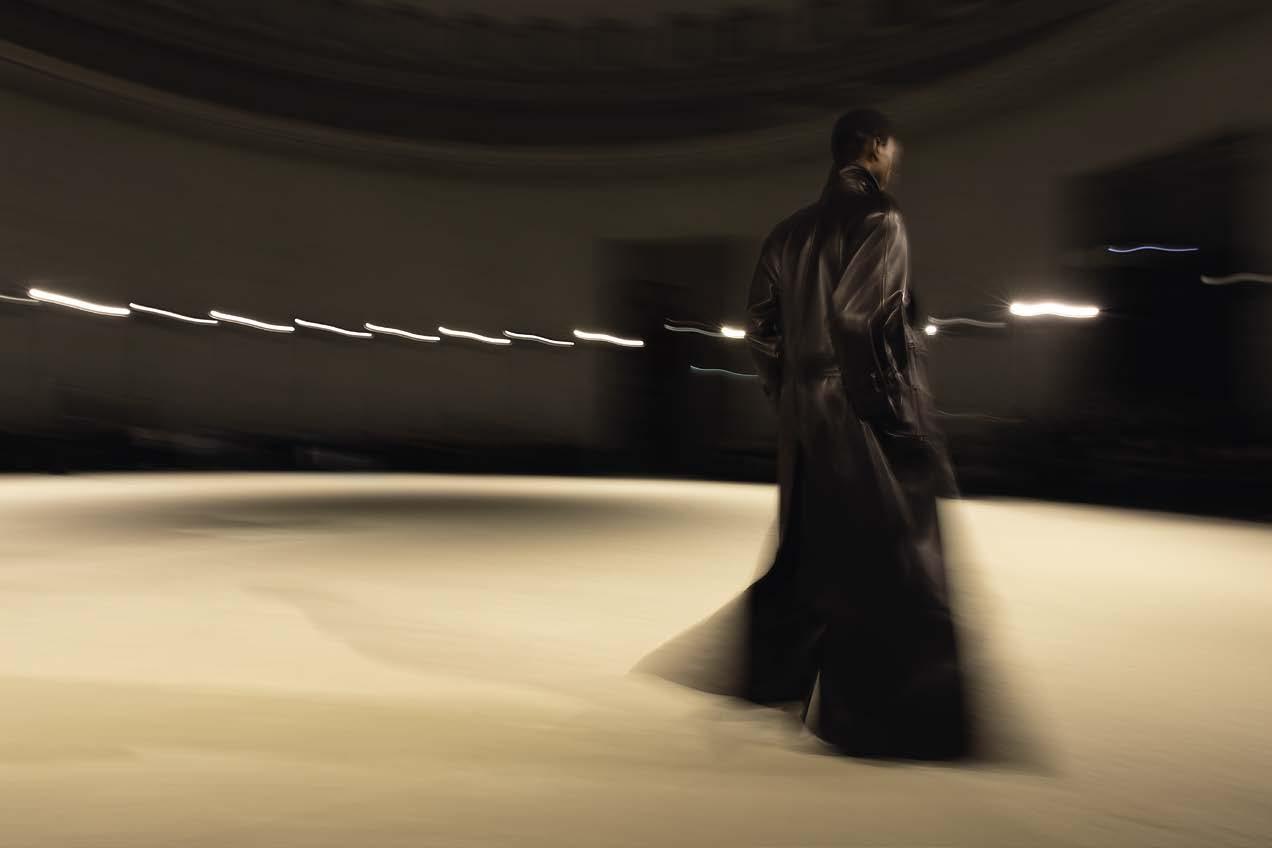
Above: Saint Laurent Men’s Winter 2023 Collection, Bourse de Commerce, Paris
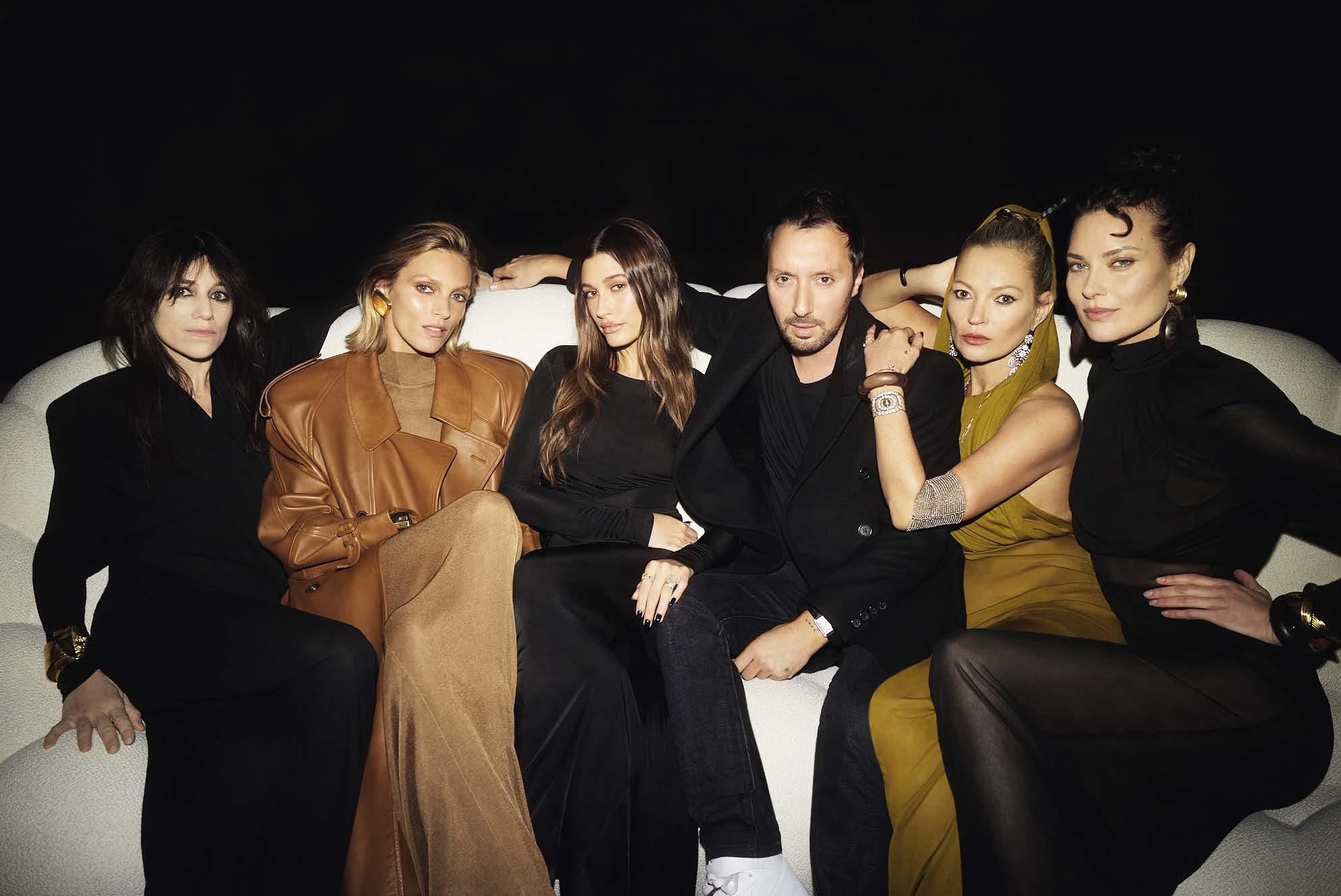
Below: Charlotte Gainsbourg, Anja Rubik, Hailey Bieber, Anthony Vaccarello, Kate Moss, and Shalom Harlow at the WSJ Magazine 2022 Innovator Awards, New York. Photo: © Saskia Lawaks
DB: You think you’re picking up where he left off ?
AV: Well, yes. Saint Laurent was very inspired in the 1960s and 1970s —I mean, he invented everything! Now everyone is copying that. So I really want to continue the legacy of the brand, starting where he stopped.
DB: Let’s switch gears and talk about Cai Guo-Qiang, an artist who works with fireworks and gunpowder and is collaborating with Saint Laurent. When did you become familiar with his work?
AV: I saw an installation called Sky Ladder [2015], which was not supposed to be public but I saw some video on Instagram. I loved the fact that the fireworks were set off during the day and it didn’t feel cheesy. It wasn’t like a Fourth of July party. It was so poetic and so beautiful that it reminded me of that film Zabriskie Point [1970], by Michelangelo Antonioni. At the end there’s an explosion of clothes—you see all these clothes in the sky, falling in slow motion. It’s one of my favorite films. I started to see the world like that.
DB: In 2013 I saw a piece by Cai Guo-Qiang called One Night Stand, where he invited real couples to have sex on a boat in the middle of the Seine, and every time they climaxed he would press a button and a firework would go off.
AV: I never saw that. I would have loved to see that!
DB: It was quite erotic because you couldn’t see the couples clearly. They were opaque and only seen in silhouette.
AV: I want to see a video!
DB: Will any of the work, or any of the collaboration from that piece, result in products for sale?
AV: No. I hate that.
DB: Ha!
AV: I do, I hate it when a brand uses the name of an artist to sell bags or wallets or things like that. It’s the worst thing you can do for artists. The purpose of our collaboration is putting our names together and making something happen, just for the artist to express themselves and to be able to have a platform. There is no commercial purpose behind that.
DB: That sounds so exotic. I thought everything has a commercial purpose now.
AV: Of course, I’m lucky to have the support and the resources to do something like that. I know that in other situations, to work with an artist like this I’d have to put his face on a bag or something.
DB: The finances at Saint Laurent look great. You have a fantastic CEO, Francesca Bellettini. Are you aware of the business side of your work?
AV: It’s a good thing that it’s growing, because I don’t have to think about it. I do what I feel moves me. And I think it’s growing naturally because I’m
doing things without thinking too much about the commercial side. But I should also say that I’m not crazy. I may do this with an artist, but then I’m also meeting with the design and merchandising teams to focus on creating real clothes. I think that’s what people like. What you see on the runway in images is what you get in the store.
DB: You don’t always see the clothes from the runway in a store. Often, there’s a runway collection and then a commercial collection.
AV: It’s not so different at Saint Laurent. On purpose.
DB: The Saint Laurent universe is growing, including with films. How did the idea of Saint Laurent Productions come to pass, and what are some of its goals?
AV: It happened naturally. A few years ago I started doing these things with a réalisateur. We did something with Bret Easton Ellis and then Gaspar Noé. It was always small projects and I loved it. But I’d get a bit frustrated when they were over because I’d want to do bigger and bigger things.

DB: No more commercials, you wanted to do movies?
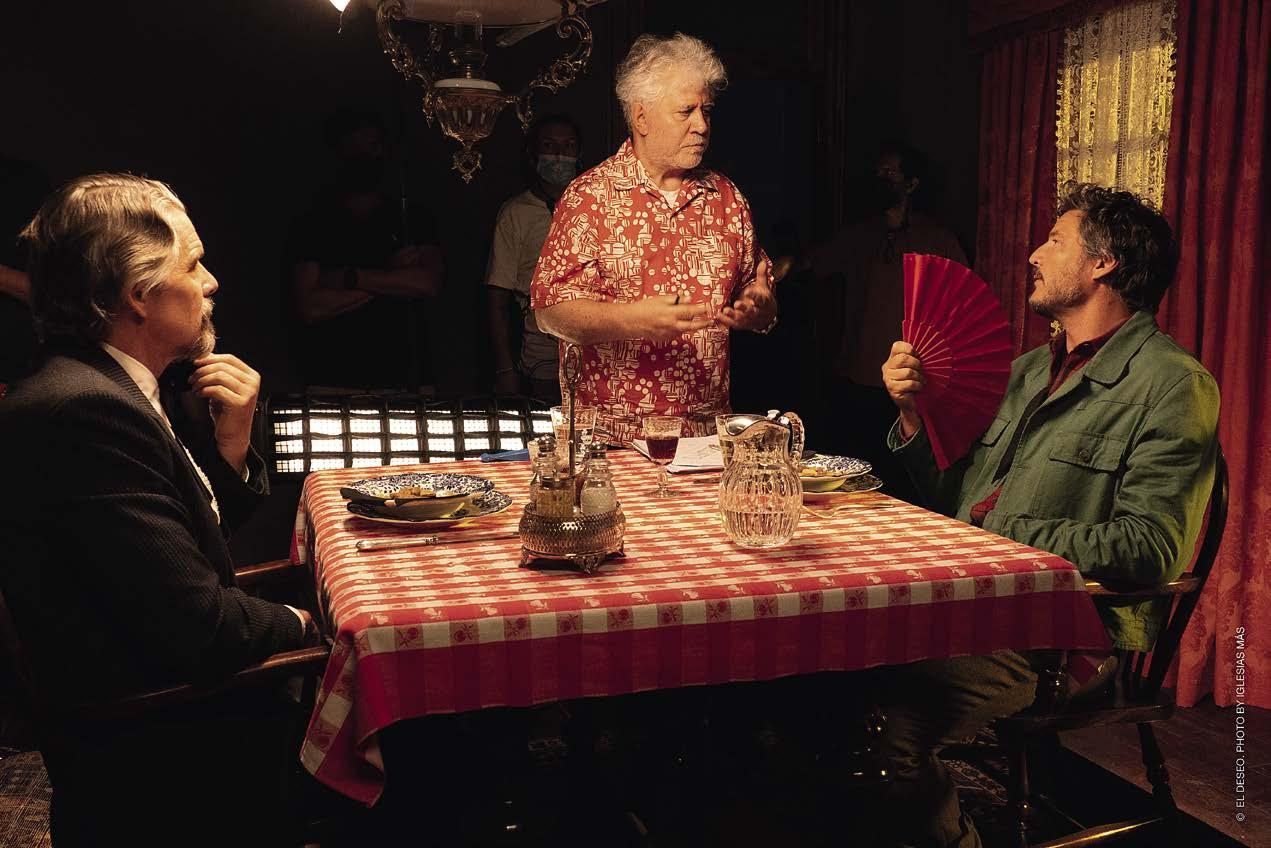
AV: Going to the Cannes Film Festival’s midnight screening of a Gaspar Noé film starring Charlotte Gainsbourg and Béatrice Dalle was one of my all-time favorite moments at Saint Laurent. It was three years ago. Being on the steps with Gaspar, Charlotte, and Béatrice, I felt that I wanted to explore that world and do more things with those geniuses. Now I’m working with those réalisateurs who make me who I am today— Pedro Almodóvar, we did some things with Jean-Luc Godard that we’re going to present soon also, and we’re producing the next David Cronenberg. So for me it’s more like, a selfish child is now able to meet and work with people I admired in the 1990s.
62
Below: On the set of Strange Way of Life (2023), written and directed by Pedro Almodóvar, produced by Saint Laurent Productions. Photo: Iglesias Más, © El Deseo
Above: Pedro Almodóvar and Anthony Vaccarello, 2023. Photo: Nico Bustos
DB: Why was that such a big moment for you? Because you felt like it was something beyond a show or a collection?
AV: To be honest, I don’t know. When I was a kid, I always had the fantasy about that midnight presentation because it reminded me of Abel Ferrara’s Blackout [1997], or Gaspar Noé’s Irréversible [2002], those kind of sexy, dangerous films. Being on those steps with those very dark persons, very—yeah, very dangerous people, I feel very . . .
DB: Subversive? Sexy? Glamorous?
AV: All of it. I mean, I’m such a fan of Pedro’s, and he was linked to Gianni Versace. It’s part of that hysterical family of the 1990s, you know? I think everything I do has a resonance or link to my youth.
DB: What’s your favorite part about these kinds of collaborations?
AV: It’s not even about making a costume, because in the end, I don’t care about doing the costumes. It’s a joy to create something for these characters to express their intention. Yes, it’s intention more than clothes.
DB: The logical next question is, Do you want to be a director one day? Maybe you want to be an actor one day?
AV: An actor? No way. That’s for sure. But a director? I don’t know. I’d like to but I need to have a good idea. I don’t want to do something just to do something random. I want to be good. I want to take time to really think about it.
DB: In many ways, what you do is already being a director. It’s a different type of performance, but it’s definitely a creative expression.
AV: True.
DB: And I love going to your mini-movies, these incredible fashion shows every six months.
AV: Thank you for saying that. That’s how I conceive those collections. For me, it’s like showing emotion, not clothes, to people who come to see the collection. Also, I know that people like you see so many shows and you want to feel like you’ve seen something more than just clothes at the end. When I do that, for me, music, scenography, casting the models—I think you have to do all of that so that when you leave one of my shows you feel like you saw a full story.
DB: Last question, Anthony. Many people have told me that they’re inspired
by your gang, this group that you’ve put together for Saint Laurent. Kate Moss, Charlotte Gainsbourg, Anja Rubik—there’s a Vaccarello posse.
AV: I’m happy to hear this question!
DB: I haven’t even asked it yet!
AV: I know! But, at the beginning, I’d always refuse to invite the types of celebrities or influencers who people would tell me would get a lot of traction but who didn’t have a real understanding of what I was doing.
DB: You mean creators? TikTokers?
AV: For years, I remember people—and I mean people I work with too!— would be surprised that I invited people to my shows who had no Instagram account. But I don’t care! I think of it like building a family, with people that I’m friends with and that I really know. It’s not a fake relationship, it’s people I’m always happy to have around and thrilled to see at my show. It’s almost like a family moment, like Christmas or Thanksgiving, when you’re happy to see like your old auntie or your uncle or a cousin. For me, it’s important because it’s part of the brand and building the brand.
DB: Entourages are not new to the house of Saint Laurent!
AV: Exactly! It’s like what Yves Saint Laurent did in the past; he was really associated with Paloma Picasso, Inès de la Fressange, Betty Catroux, all of the amazing artists in his era. That’s what I tried to build and I’m happy that now people see that and recognize that it was part of the plan.
DB: So this brings me to the question I wanted to ask: how do you get to be part of the Vaccarello family? Like is there an application process, or—
AV: No! It’s actually very simple. You just have to be cool and talented.
DB: So I’m out?
AV: Ha! Not yet. Maybe.
Photos: courtesy Saint Laurent
63
Below: Cai Guo-Qiang, When the Sky Blooms with Sakura , 2023, Yotsukura Beach, Iwaki City, Japan. Commissioned by Saint Laurent by Anthony Vaccarello and organized by the Executive Committee
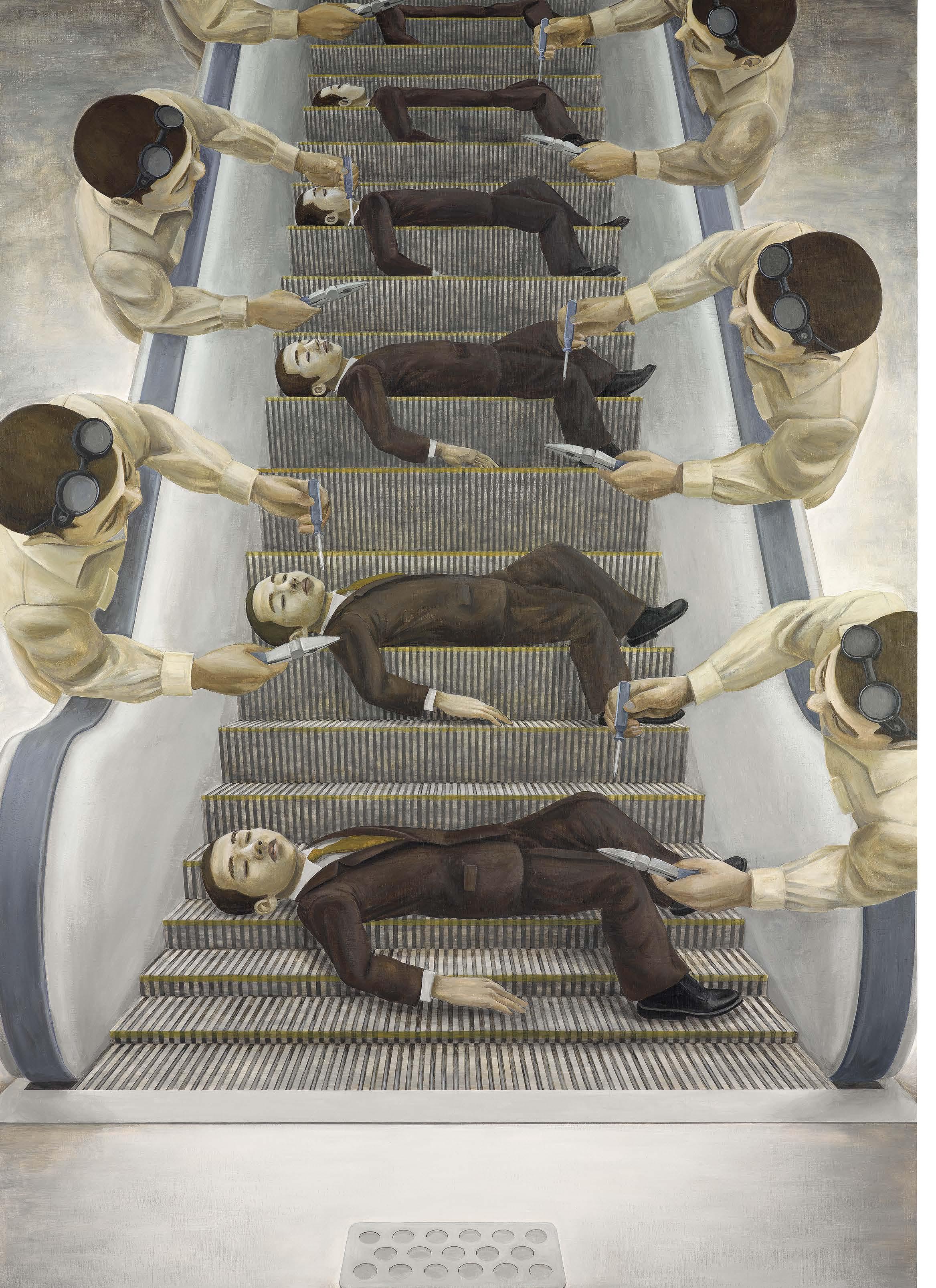
The largest exhibition of the Japanese artist Tetsuya Ishida’s work ever mounted in the United States will open at Gagosian, New York, in September 2023. Curated by Cecilia Alemani, the show tracks the full scope of Ishida’s career. In this excerpt from Alemani’s essay in the exhibition catalogue, she contextualizes Ishida’s paintings against the background of a fraught era in Japan’s history and investigates the work’s enduring relevance in our own time.
Japan: The Lost Decade
Over the course of a ten-year career cut short by his premature death in 2005, Tetsuya Ishida made over two hundred paintings that perfectly capture, in his iconic, fantastic, Surrealist style, the anxieties and trauma that he shared with countless young Japanese people who reached adulthood in the 1990s, during the country’s “Lost Decade.” In 1991, Japan’s bubble economy burst, ending a period of rapid economic growth that had begun after World War II and was characterized by cooperation among manufacturers, suppliers, distributors, and banks; good
relations between business and government; the promise of lifetime employment in big corporations; and highly unionized blue-collar factories. Ishida started painting in 1995, at the height of the economic stagnation, when Japan was also shaken by major traumatic events such as the Kobe earthquake in January 1995, which killed more than 6,000 people; the sarin-gas attacks in Tokyo’s subway system by members of the Aum Shinrikyo cult two months later, in which thirteen people died and more than 5,800 were injured; and the beheading of two children by a fourteen-year-old at Tainohata Elementary School in Kobe in 1997. But he also grew up witnessing the unthinkable advancement of technology, with the launch of Windows 95, which contributed to the widespread popularization of computers; cellular phones and new gaming consoles flooding the market; and computer-controlled robots being introduced to the manufacturing process, replacing assembly-line workers.
Ishida’s eerie portraits of young men condense the drama and isolation that defined the Lost Decade, when unemployment rates almost tripled and temporary employment rose to 21.8 percent in 1999 (from 10 percent in 1980). 1 Those who came of age during this period are described as the “Lost Generation.” Many young adults were unable to find full-time jobs and had to turn to temporary and lowpaid roles, or did not work at all. A different affective constellation emerged: “a sense of displacement, ungroundedness, and loneliness that gets captured in what circulate[d] as a slogan of the times—‘without a place to call home’ (ibasho ga nai ).”2 During this time, also referred to as the “Employment Ice Age,” Ishida decided to become a painter, and he
permeated his compositions with the existential distress of his generation. He was an introverted young man who supported himself by working part-time as a laborer in a print shop or as a night security guard. His entire income went toward art supplies.
In the 1990s, multitudes of young people in Japan withdrew from society, becoming recluses known as hikikomori 3 These were unemployed young individuals, mostly male, who isolated themselves from social relationships, often not leaving their bedrooms and fully depending on their parents. 4 In many of Ishida’s compositions, socially withdrawn young men are depicted in interior spaces, frequently accompanied by nascent technologies such as computers and cell phones—which, with access to the World Wide Web, provided a way to maintain a view onto the outside world while remaining shielded by anonymity.
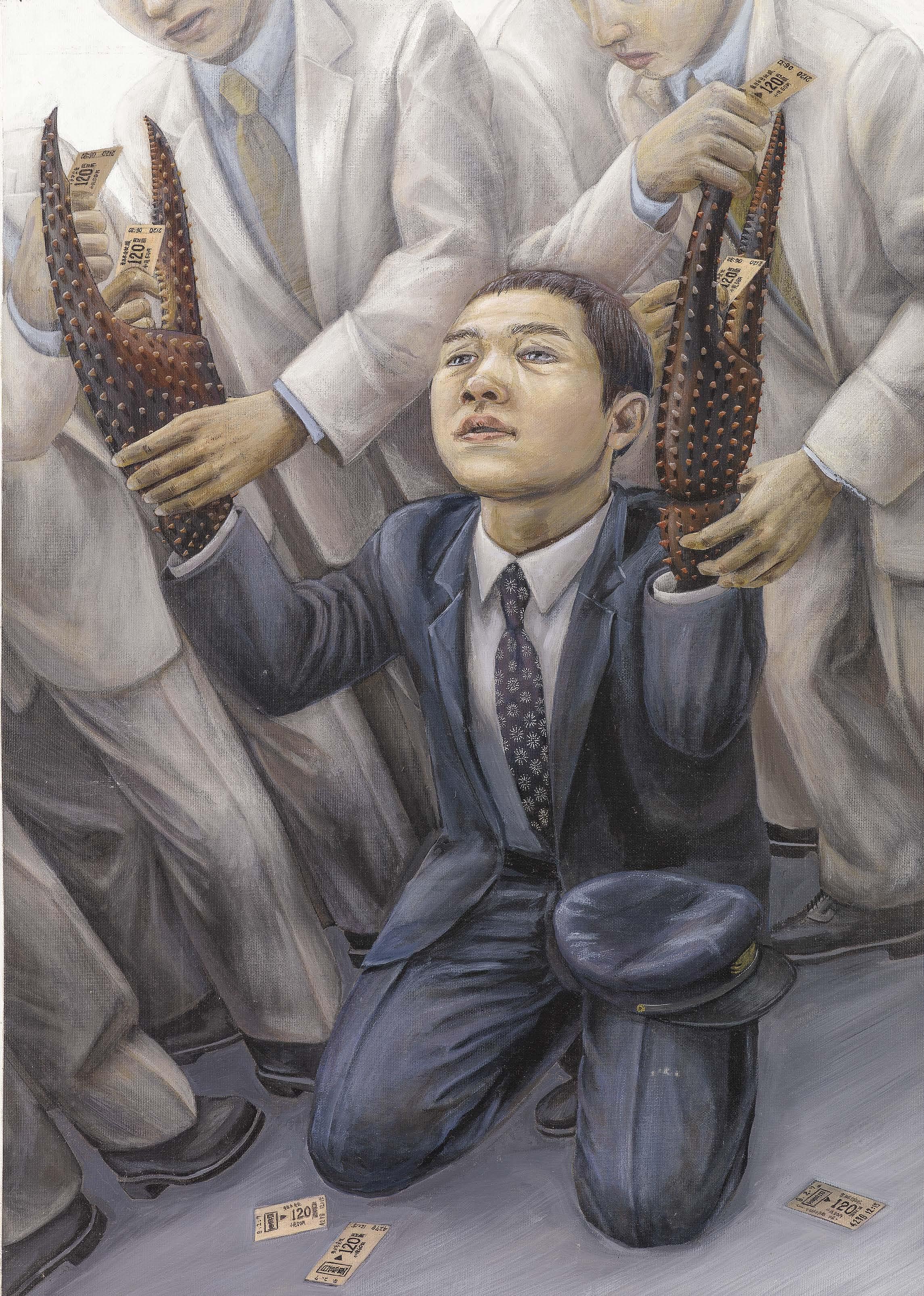
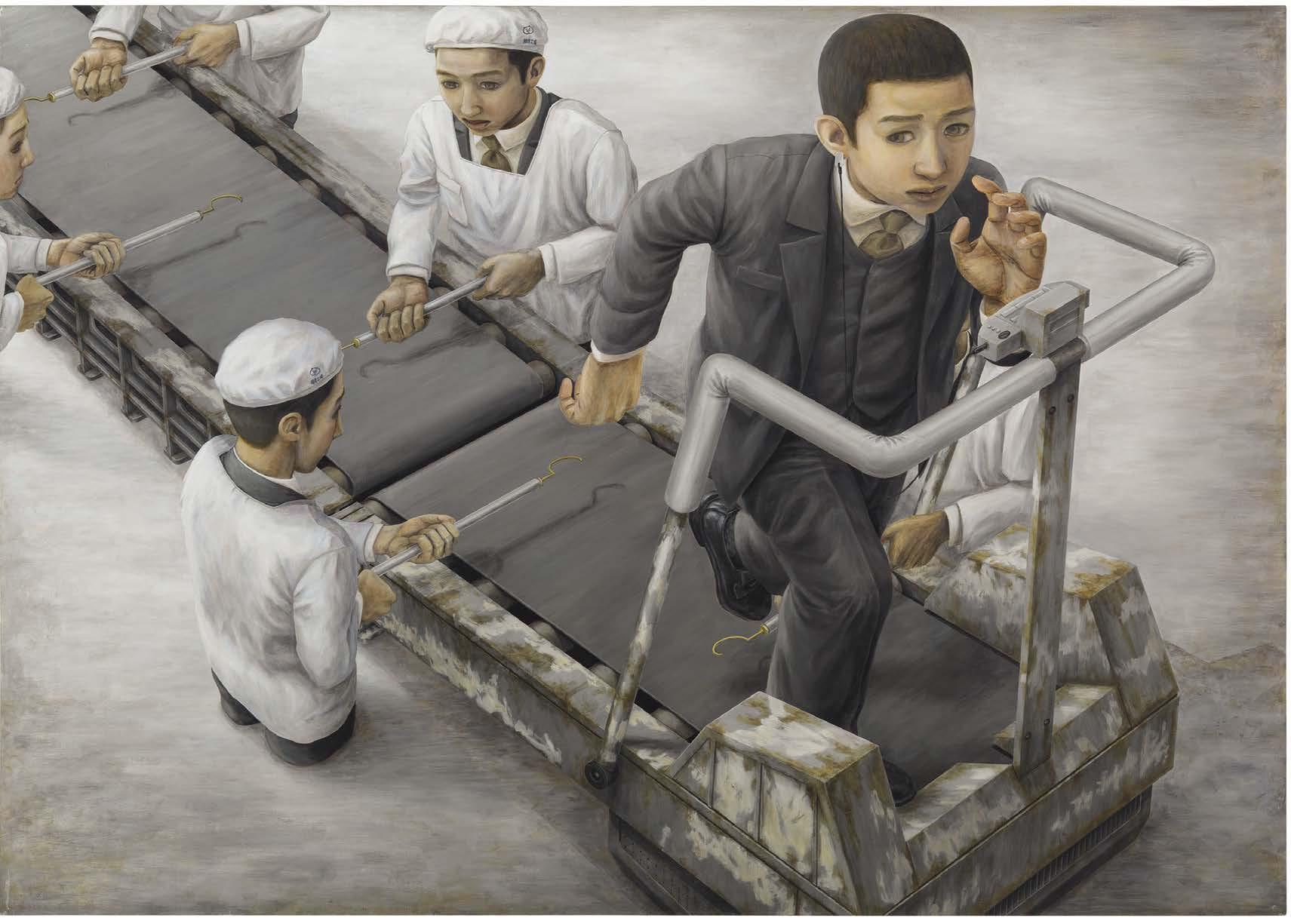
As Japanese companies tried to restructure during the recession, workers who managed to be employed often had to work an exhausting seventy or more hours per week, under a great deal of pressure. The expressionless, short-haired individuals wearing suits and ties that appear frequently in Ishida’s early works represent the sararimen (salarymen), white-collar male office workers who worked like robots for very long hours, identifying with the corporate collectivity to the point of losing their own subjectivity. In Ishida’s paintings, they are repeatedly portrayed in assembly lines as though they are the products they are making, never smiling, all with the same lost gaze, on the verge of automation. They assemble things, they eat their lunch, they are interviewed, they shop. Anonymous in appearance, they conduct all these quotidian activities with the
67
passivity of pure work alienation. They embody a sense of estrangement and rupture that was so common in Japan after the economic bubble burst and that often culminated in karoushi , sudden death by overwork, or karoujisatsu , death by suicide due to overwork, both of which became devastating social issues in the late 1980s and peaked in the 1990s.5 Early paintings by Ishida capture the post-productive, post-labor landscape that emerged during that decade and the alienating and isolating effects of Japan’s regulated society, torn between overwork and the numbness of daily life, collectivity and isolation. They depict both the psychological wounds experienced by many and the artist’s own struggles with anxiety, emptiness, and a precarious livelihood.
Early Life and Lucky Dragon
Ishida was born in the city of Yaizu, in Shizuoka Prefecture, in 1973, the youngest of four children from a middle-class family. His father, a tax accountant who served as a member of the municipal assembly of Yaizu for more than ten years, did not spend a lot of time at home, but he talked about the social situation and difficult realities at dinner with his family. Ishida’s mother worked for Shizuoka’s prefectural government, which, for a woman, was quite rare at the time. As a boy, Ishida was meticulous and well prepared. His brothers would make fun of him, saying, “You’ve done everything and now you have nothing to do but sleep.”6 From a very young age, Ishida demonstrated a propensity for art.
In 1981, when Ishida was eight years old, he read a book, Hey White Boat ( Hey Masshirobune ,) about the fishing boat Daigo Fukuryu Maru (Lucky Dragon no. 5). In early 1954, the Lucky Dragon had left the
port of Yaizu for an ocean voyage, and on March 1 was caught in the nuclear cloud generated by the hydrogen-bomb test named Castle Bravo, conducted by the United States at Bikini Atoll in the Marshall Islands. Despite being outside the official danger zone, the boat was heavily contaminated by the fallout. The twenty-three crew members on board all developed severe and long-lasting symptoms of radiation poisoning, which led to the death of one, radio operator Aikichi Kuboyama. This dramatic event resonated internationally. Moved by the injustice of the accident, American painter Ben Shahn was outspoken in advocating against nuclear testing and armament. In early 1958, a series of prints by Shahn was published in Harper’s Magazine to accompany a report on the incident by the American nuclear physicist Dr. Ralph E. Lapp, and in the years that followed he made a series of works on the subject in which he merged his style with motifs from Japanese artistic traditions. These works are a vivid testament to the nuclear anxieties that defined the Cold War period. In 1996, Ishida visited an exhibition in Tokyo, Lucky Dragon: Projection on a Hill , a show of Shahn’s illustrations and paintings dedicated to the fishing boat. The visit would greatly influence his future career.
In the same year that he read Hey White Boat , Ishida submitted an essay to a contest held in Yaizu. Its title, “Mr. White Boat” (“Masshirofuneken ”), referred to the Lucky Dragon , and in it he wrote, “From there, the entire body became sick and suffered. The nuclear testing caused hair to fall out and blood loss. They were in pain and could not get up to go to work. It’s really a tragedy. Why would humans use H-bombs to kill each other?”7
Opening spread: Testsuya Ishida, Gripe, 1996 (detail), acrylic on board, 23 3⁄8 × 16 5 ⁄8 inches (59.4 × 42 cm), collection of Nick Taylor. Photo: Martin Wong
Previous spread, left: Testsuya Ishida, Conveyor-Belt People, 1996, acrylic on panel, 57 3 8 × 40 5⁄8 inches (145.6 × 103 cm), private collection. Photo: Martin Wong
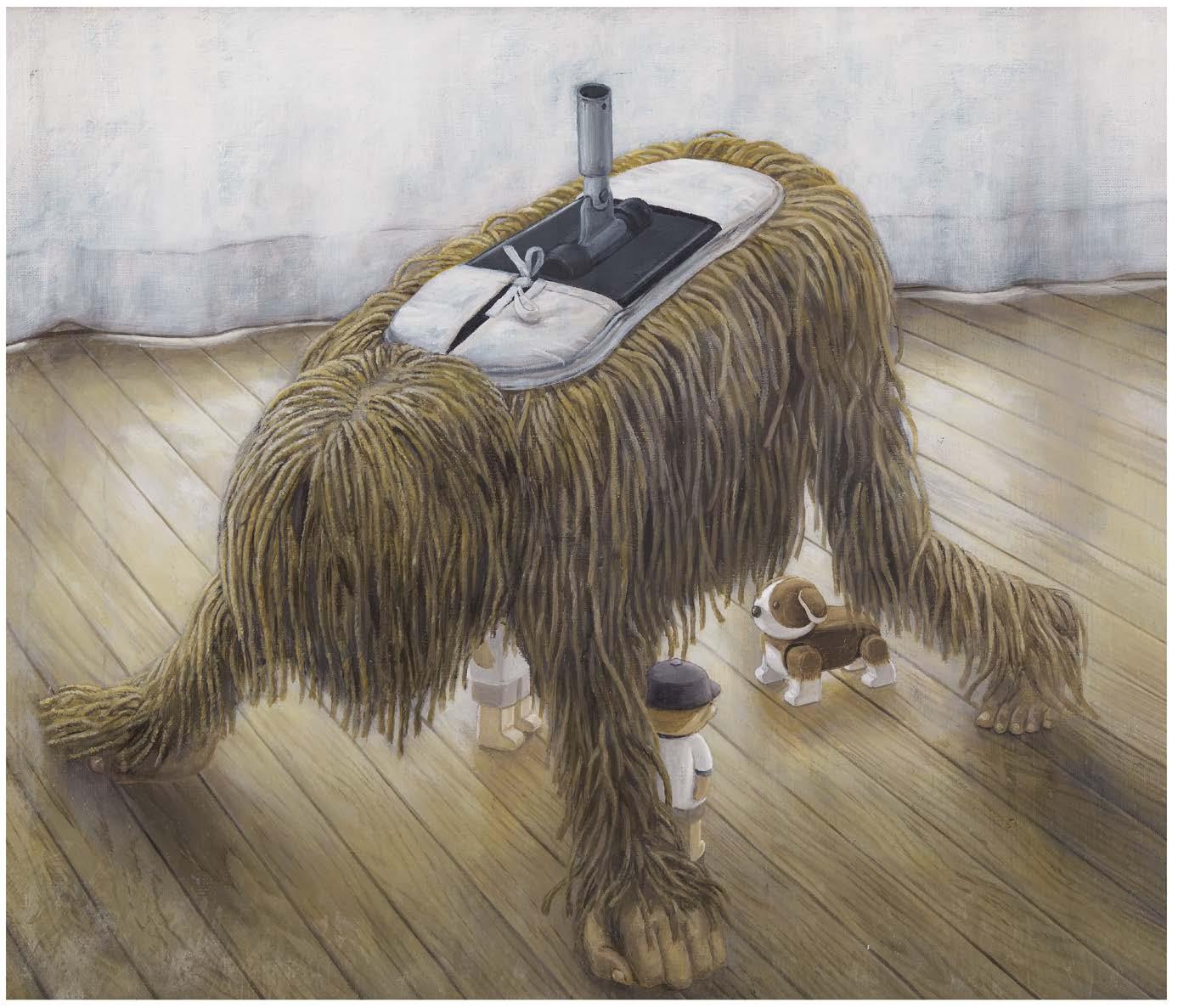
Previous spread, right: Tetsuya Ishida, Exercise Equipment , 1997, acrylic on board, 40 5⁄8 × 57 3 8 inches (103 × 145.6 cm), private collection.
Photo: Martin Wong
This page: Tetsuya Ishida, Tremor, 2002, acrylic on canvas, 18 × 20 7 8 inches (45.5 × 53 cm), collection of Nick Taylor. Photo: Rob McKeever
Opposite:
Tetsuya Ishida, Untitled , 1998, acrylic on board, in 2 parts, overall: 81 1 ⁄8 × 57 3⁄8 inches (206 × 145.6 cm), private collection.
Photo: Martin Wong
Following spread, left: Tetsuya Ishida, Untitled , 2002, acrylic on canvas mounted on board, 23 3⁄8 × 16 5⁄8 inches (59.4 × 42 cm), private collection.
Photo: © 2023 Kyuryudo Art Publishing Co., Ltd.
Following spread, right: Tetsuya Ishida, Offspring, 1999, acrylic on board, in 4 parts, overall: 81 1 ⁄8 × 114 5⁄8 inches (206 × 291.2 cm), collection of Nick Taylor. Photo: Rob McKeever
Artwork © Tetsuya Ishida Estate
A Kind of Social Surrealism
From a young age, Ishida was very active in school and demonstrated a profound interest in portraying the injustices that surrounded him. When he was eleven years old, he designed his class flag and, in a contest held by the Shizuoka District Legal Affairs Bureau, received first prize for an illustration, Stop Bullying Weaklings! (1984). This could be seen as the beginning of his deep interest in a socially engaged approach to art. He later wrote in his diary, “I wanted to be like Ben Shahn. Looking back, I may have won first prize for the human rights poster because it was in the style of Ben Shahn.”8
From the early stages of his career, Ishida’s style fused the art-historical genealogies of realism and Surrealism. If realism emerged during the industrialization of the nineteenth century and aimed at depicting the harsh reality of that time, Surrealism, which developed between the two world wars, amid the rapid mechanization of the early twentieth century, fed the imagination and the unconscious an antidote to a world lost to reason and alienation. Ishida leveraged the acute observational skills associated with realism to bear witness to the existential and societal crises brought about by Japan’s Lost Decade, while simultaneously incorporating Surrealism’s use of metamorphosis, the uncanny, and the fantastic, assuming that reality is far more absurd and bizarre than its depiction.
Ishida’s blending of realism with Surrealism to depict human vulnerability, estrangement, and claustrophobia has fewer affinities with the work of his contemporaries than with that of a group of postwar Japanese artists working in realism who, by the end of the 1950s, had started to use a surreal approach: the Seisakusha Kondankai (Creators’
68
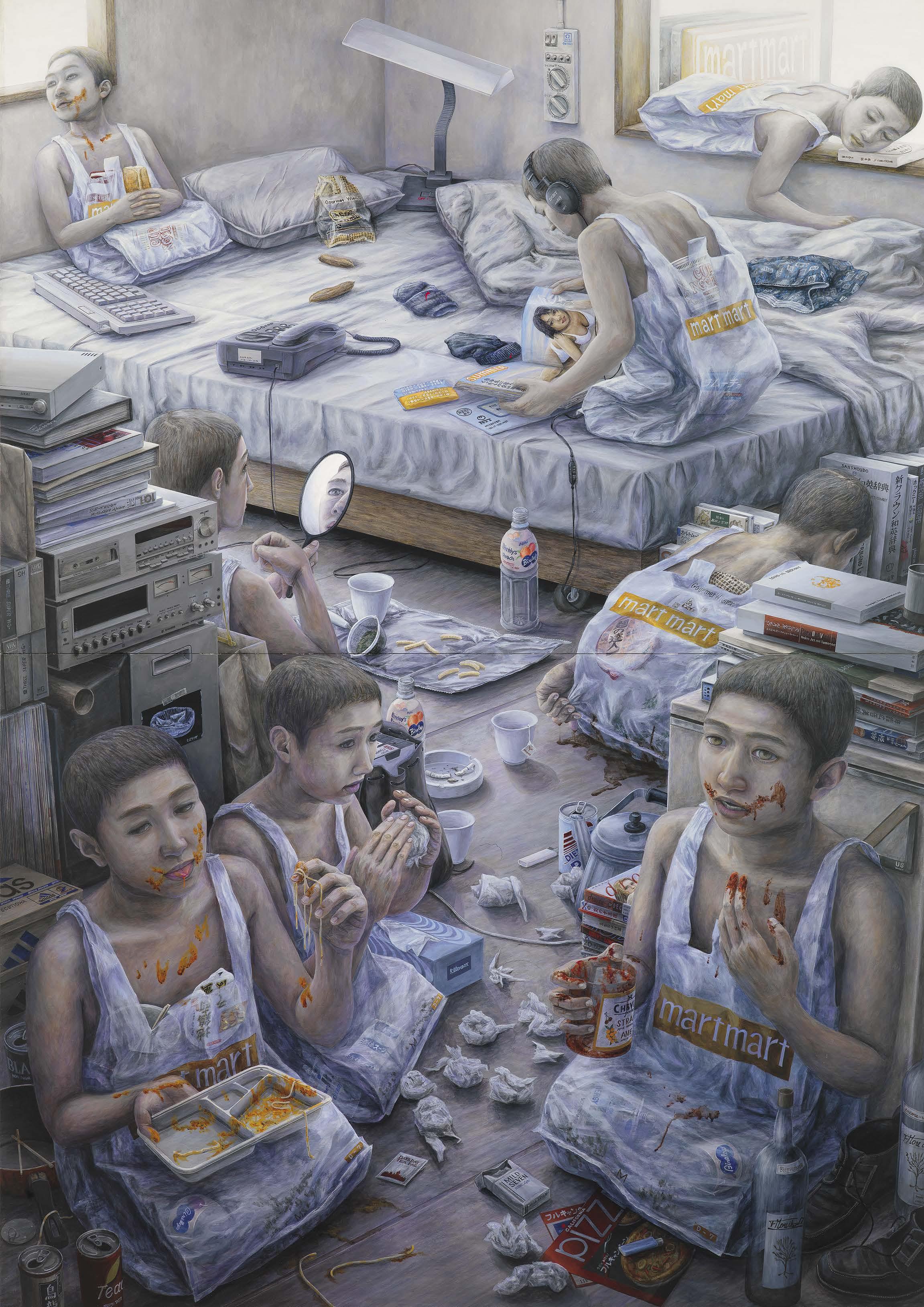
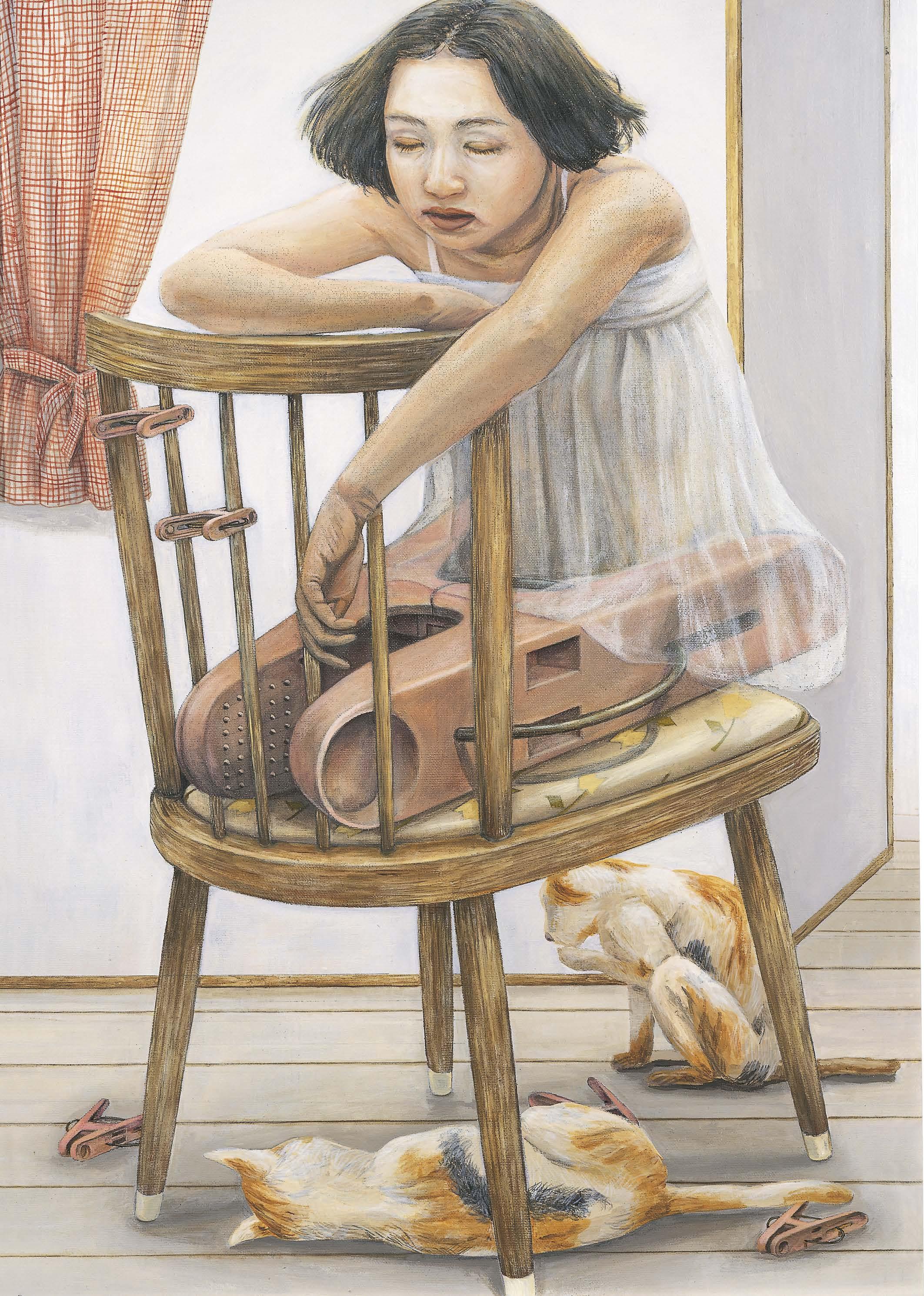
discussion group), whose members were Tatsuo Ikeda, Shigeo Ishii, and On Kawara. Each of these artists, in his own way, imagined a new kind of realism far from the strictures of the Socialist Realism that was encouraged and supported by the Japanese Communist Party, opening up instead to Surrealism, through which they could process the atrocity of the contemporary world—for instance, the aftermath of World War II and nuclear proliferation—by embracing the imagination.9 Of works by Kawarak, Ishida admired the early Bathroom series (1953–54), black-and-white works depicting dismembered and mutating bodies in gloomy, tiled bathrooms, rendered through a distorted perspective—perhaps a nod and reaction to Tokyo’s Socialist Realist painters. Ikeda, too, created surreal scenes in delicate drawings that represent transfigured bodies immersed in organic shapes and swirling backgrounds as an ode to pacifist political ideals. As part of his Anti-Atomic Bomb series (1954), Ikeda also made works about the Lucky Dragon tragedy, one of which shows a grotesque and toxic catch of fish that is almost anthropomorphic. Works by NeoDada artists such as Tetsumi Kudo and Shusaku
Arakawa shared the same suffocating air of death and postapocalyptic alienation.
Realism, Surrealism, and social critique were certainly approaches that intrigued Ishida more than what surrounded him in mass culture and contemporary art in Japan, which could be characterized by the kawaii (cute) aesthetic, as well as a refusal to engage with the grim social situation.
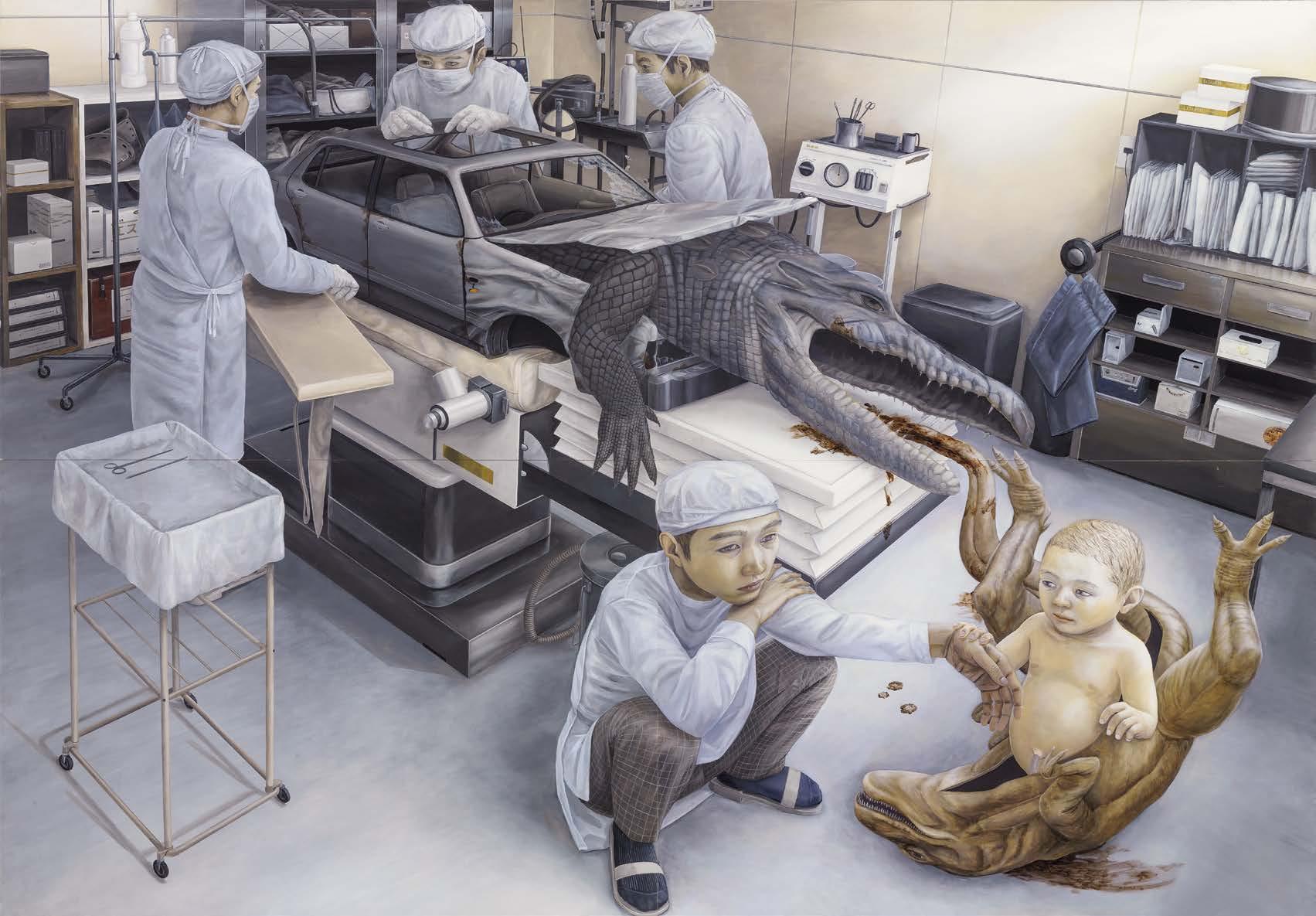
Japanese artists in the 1990s were mostly seduced by kawaiimono (cute things), as well as by manga and anime, as seen in the Neo-Pop and Superflat tendencies of the likes of Takashi Murakami, Yayoi
Kusama, and Yoshimoto Nara. Unlike many of his colleagues or more established artists active at the same time, Ishida described with systematic attention the everyday life around him and the existential condition of many of his peers. His was a lonely voice as he dedicated his life to painting in a realistic manner coupled with a fantastical approach. In a 2000 notebook entry, he wrote, “I believe that my self-portrait paintings have the function of letting the viewer look around at the contemporary world, society, and values.”10
Today, Ishida’s work speaks acutely to the new habits spread by the outbreak of the covid -19 pandemic and its enforced seclusion, as well as to the growing loneliness that it brought and—in the words of philosopher Byung-Chul Han—the society of tiredness and fatigue wrought by the rise of digital technological developments in neoliberal capitalism, which have transformed the disciplinary society into an achievement society, exacerbating our sense of overload and burnout. Ishida’s absurdist universe—filled with exhausted, apathetic, numb, gloomy, and depressed individuals—is not unlike the burnout society that Han describes, which arises from the contradiction between the desire for freedom and the pressure to conform to social norms and expectations, as well as the imperative to perform, produce, and achieve.
Ishida’s art calls for a greater emphasis on community and human connection, and for a revaluation of our values and priorities as a society. Though his career was cut short by a tragic incident when he was only thirty-one, Ishida’s legacy endures, his works inspiring us to reflect on the challenges we face and to seek meaning and connection in a world that often feels absurd and alienating. Through an
impressively extended production concentrated in only ten years, Ishida not only captured the youth of his era, but also anticipated many of the anxieties and the preoccupations that are defining young generations globally. Ishida felt compelled to continue painting “people at the mercy of the contradictory nature of Japan’s social systems for as long as they exist.”11 His restless dream that art could highlight the social contradictions of our time resonates today more than ever.
1. See Koji Morioka, “Causes and Consequences of the Japanese Depression of the 1990s,” International Journal of Political Economy 29, no. 1 (1999), 21.
2. Anne Allison, “Ordinary Refugees: Social Precarity and Soul in 21st Century Japan,” Anthropological Quarterly 85, no. 2 (2012), 351.
3. A term coined in the 1990s, from the verb hiki (“to withdraw”) and komori (“to be inside”).
4. In 2000, estimates of the number of hikikomori in Japan ranged from 50,000 to 1 million. See Tim Larimer, “Natural-Born Killers?,” Time , August 28, 2000. Available online at https://content.time. com/time/subscriber/article/0,33009,997801,00.html (accessed June 21, 2023).
5. By 1998, the number of suicides in Japan due to overwork, financial difficulties, or unemployment had exceeded 30,000 annually. See Allison, “Ordinary Refugees,” 346.
6. See “Tetsuya Ishida’s Chronology,” in Tetsuya Ishida: SelfPortrait of Other, exh. guide (Chicago: Wrightwood 659, 2019), 3.
7. Ishida, quoted in Yuzo Ueda, “The Life and Times of Tetsuya Ishida: Confession and Spirit,” in Tetsuya Ishida (Hong Kong: Gagosian Gallery, 2014), 65.
8. Ishida, quoted in Masato Horikiri, “Tetsuya Ishida and His Times,” in Tetsuya Ishida—Complete , 4th ed. (Tokyo: Kyuryudo, 2021), 11. One of Ishida’s very early drawings, Parking Lot Drama (1994), shares a style similar to Shahn’s.
9. See Doryun Chong, “Tokyo 1955–1970: A New Avant-Garde,” in Chong, Tokyo 1955–1970: A New Avant-Garde , exh. cat. (New York: Museum of Modern Art, 2012), 37–38.
10. Ishida, notebook entry, 2000, quoted in Horikiri, “Tetsuya Ishida and His Times,” 13.
11. Ishida, in a clip from an archival TV Tokyo television interview included in an episode of the television program Kirin Art Gallery: Grand Masters of Art (Bi No Kyojintachi ) broadcast on TV Tokyo on April 26, 2008.
71
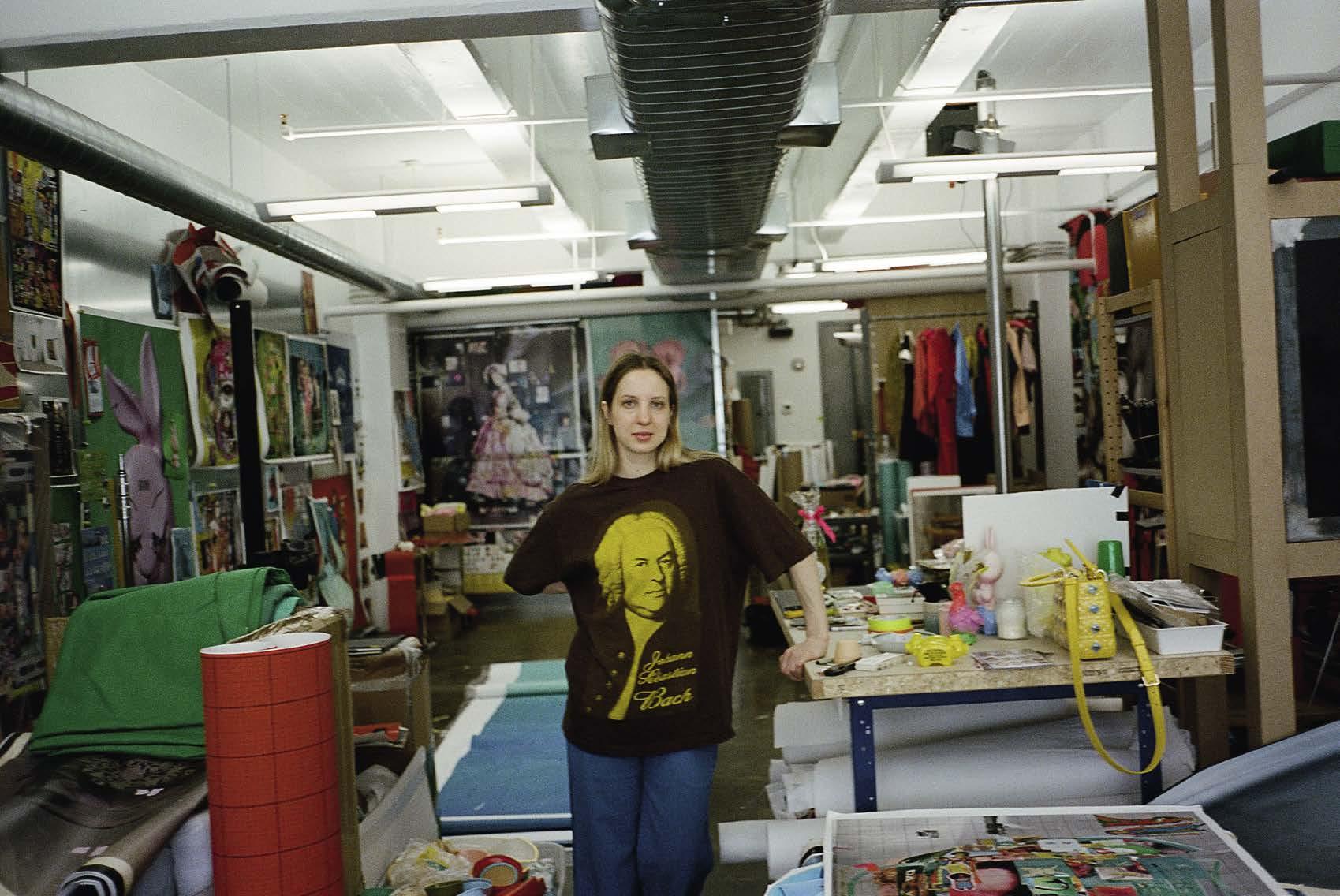
72
Sara Cwyner in her studio, New York, 2023. Photo: Sofia Coppola
In June, filmmaker Sofia Coppola visited the Brooklyn studio of artist Sara Cwynar to see her newest works and to take photographs. After their meeting, Coppola engaged Cwynar in a series of questions by email, covering her techniques, aspirations, and inspirations.
SOFIA COPPOLA When did you start making art?
SARA CWYNAR When I was about twenty. I was studying English literature and had dropped out of school. But it took me years to call myself an artist; it seemed like this sacred realm that it would be presumptuous to consider myself a part of. My way into art was through design. I worked as a designer for the New York Times for a number of years and made my own work at 5 am before work and every night after. I think that
as an athlete you get addicted to focusing all of your energies on one goal, like a competition, and letting everything else fall away. In a way, it’s a really simple way to live. When I’m finishing a show, I feel like there’s a similar clarifying effect. I find it comforting, even though there’s often a lot of stress involved.
SCO How did you start making the layers of collage with glass? Where did that come from?
design is in some ways more relevant to real life than a lot of art—our experience is now processed through the heavily designed, aestheticized filters of our virtual, appbased worlds, so I’m glad I have this background. A big thread in my work is thinking about how design and advertising work, how desire gets stirred up, and how things that are heavily designed or the most in fashion are the ones that fade into obsolescence the most quickly. I love collecting and reworking those kinds of things.
To really answer these questions, around the third year of having an office job I decided I needed to be an artist as a profession, or at least to try! I thought that at least I could see if I could make it work, and if I didn’t have my full brain to myself for a bit, I would always regret it.
SCO As a kid, what were you making and was it related to what you’re doing now?
SCW As a kid I was a competitive teenage figure skater with a laser focus. It took me a long time to realize, but that’s actually so relevant to what I do now. To be an artist you have to be kind of obsessive, maybe a little (or a lot!) narcissistic, willing to push yourself to extremes, obsessed with a goal that might seem insurmountable when you start—like how finishing a video feels to me when I begin. It’s like being a teenager who actually thinks she’s going to make it to the Olympics for figure skating. And just like anyone else, I don’t want to fail, but I’m also not paralyzed by the possibility of failure because of my early experiences with it as a skater: if you jump, you can’t land on your feet every time, there’ll always be times when you fall. I think this is important for art, because often you’re so in the middle of it, and it makes absolutely no sense from where you are, and you just have to trust that it will come together. Also,
SCW I was watching all these Disney animation videos, and that’s a process they used in early Disney animations to create perspective and a feeling of space: different elements of a scene—the trees, the sky, Bambi—would be placed on different layers of glass and moved to create a more realistic sense of depth. I was also trying to think at the time about making photographs that need to be photographs, that use the lens and the sense of depth that only a photograph gives, and that knead together different objects in ways that actually wouldn’t make sense if you tried to paint them but are acceptable to your eyes because they have this index in the real world. I was using the glass to bring things very close to the lens and very far away, and to try to confuse the scale of familiar objects. The more I got into it, the more elaborate those constructions became. My film Glass Life[2021] is shot on many layers of glass with a camera that moves over them.
SCO Who are your favorite artists or heroes?
SCW I love Agnès Varda, Steve McQueen, Jean-Luc Godard, anyone who can kind of weave something more structural, or something that acknowledges the medium and the technology of film and photography, with a narrative or personal element into a work. That’s what I try to do in my own work. I also love beauty, and play, maybe Godard and Varda do this more than McQueen. None of these artists sacrifice the look and investment in the image in order to make something more “serious” or to make a political point; the beauty is part of the politics, or part of how very serious content is delivered and absorbed, and why it needs to be a film and not an essay. That’s really important to me.
SCO What’s the best advice you’ve gotten, or do you have a favorite quote, or something someone told you, that sticks in your mind? I always love what Ed Ruscha said about art: that it should be “Huh? Wow.” Instead of “Wow, huh?” That’s always stayed in my mind.
SCW Haha, I love that quote. There are two things I think about a lot, though I can’t remember who said either of them to me! First is that you can always tell when an artwork starts with an idea and is organized around that idea, no matter how far from it you get. And second is that you have to actually be making something for it to sort itself out, no matter how tempting it is to sit and think around a piece for days or weeks before doing the actual work of trying to make it. These two
73
statements kind of contradict each other, and I think, at least for me, they guide me in making work that has two totally different sides. It’s research based, but I also let intuition take over. I like to make structures that can hold in a kind of chaotic, messy working process in the studio. Right now I’m trying to think about the second statement, because I’m actually stuck in a deep research hole but I know it’s just an elaborate and sometimes punishing form of procrastination! There’s this huge gap between thinking of an idea and seeing how it begins to actually work in the studio. It often has to be completely changed or thrown out, and I can be really tempted to just stay in that comfortable first zone where it’s just an idea that always seems like it’s going to work out.
SCO Do you think about your audience, who you’re making it for? Or not? If you do, does that change each time?
SCW I think of my audience in different ways every time. Sometimes they seem like this benign, generous group of viewers out there, and I’m hoping to make things that will be pleasurable for them to watch or see, and I feel like I’ve got it. And sometimes I can only think about the most cynical, unresponsive reactions an audience might have. Both can be generative mindsets. Especially being online, where every bit of minutia is picked apart, it can be easy to imagine a judgmental audience. At some point I just try to stop thinking about it. I’m always surprised by how much things change in meaning once they go out into the world. A big goal of mine is to take heady and political ideas about the way images work, and about the latent power dynamics in images and the media, and to rework them into photographs and films that are beautiful and accessible. Hence my obsession with Varda, or Godard, who I think did this in their own times.
SCO Do you know what it’s about going into it, or do you notice or figure it out later?
SCW A combo. I’m always trying to force myself to know what it’s about first, but I work a lot from intuition and things change so dramatically. Often I look back on things and don’t understand exactly what happened, or it almost feels like someone else made it.
SCO What do you hope to achieve in your work?
SCW That’s a very hard question. I mostly want to make our time more clear to us, and to make
like this pressing, evil thing that I wanted to talk about in an accessible way. (I mean specifically, the way Google and other tech companies are watching and monetizing everything we do, and we have no space to live outside of a constant presence and participation. I was very moved by Shoshana Zuboff’s 700-page book TheAgeofSurveillanceCapitalism[2018].) But I also wanted to work through my own archive, and to somehow organize it all, get some perspective on it, and do this personal, very detail-oriented work in the studio alone for over a year, which is how making the film was. I was thinking about the Internet as a giant archive, and about how my own collection was a piece of that, and what it would look like if it was organized around the idiosyncracies of one person’s mind.
A lot of the time I’m trying to connect larger political or historical ideas to individual pictures or designed objects, to show the world in a weirder way. I guess that’s the goal of most artists.
SCO What’s your favorite and least favorite part of making your work?
SCW Hands down my least favorite part is actually taking pictures! I like thinking about them, I love moving the things around that will be in them, I love planning them, I love editing them, I hate shooting them. I always feel like there’s something I’m missing, or something that could have been better. And I’m often running up and down a ladder to shoot things on the floor. Oddly, I’ve discovered that I like it a bit better if I do it in the middle of the night, so now I shoot a lot of my photos at 2 am SCO What’s your ideal day?
documents that will speak to how it felt to be in this time after it’s over, if the documents still exist. I also have more selfish goals, like just quieting my own need to make and organize these things. Otherwise I have different goals with different works. In my last film, GlassLife , for example, I was feeling really invested in the idea of surveillance capitalism, which felt
SCW Probably just being in the studio. And it would also involve walking around New York City. Followed by a beer.
SCO Do you have a favorite museum or favorite place where you’ve seen art?
SCW The Calouste Gulbenkian Museum in Lisbon, Portugal. The displays are so beautiful, they’re artworks in themselves. I also love the New York Public Library Picture Collection, which feels like a museum to me. And all the museums in New York, particularly the Met and MoMA. I think you just have a special relationship with the ones you go to all the time, where you can see how the spaces change for each artist.
74
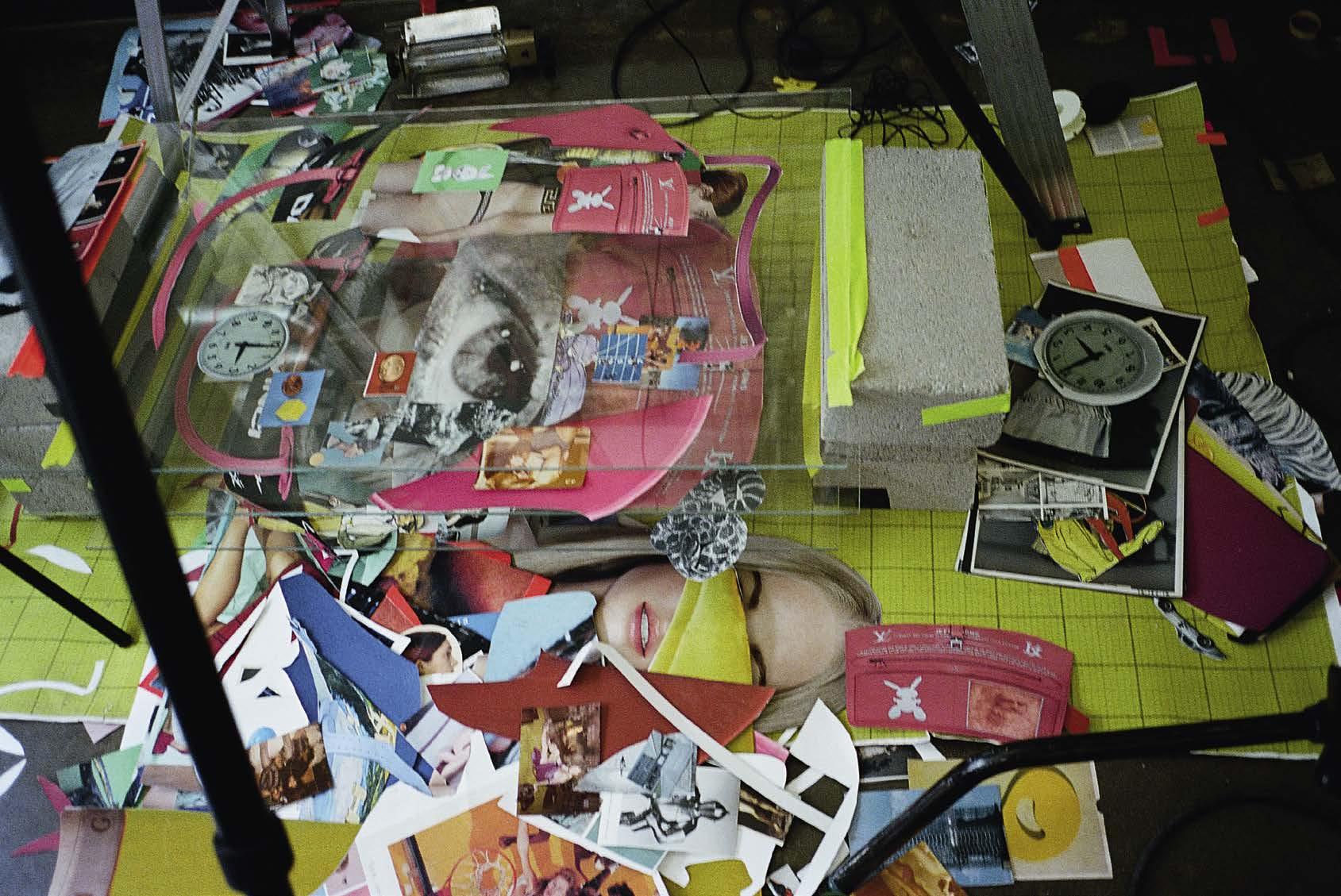
75
Sara Cwynar’s studio, New York, 2023. Photo: Sofia Coppola
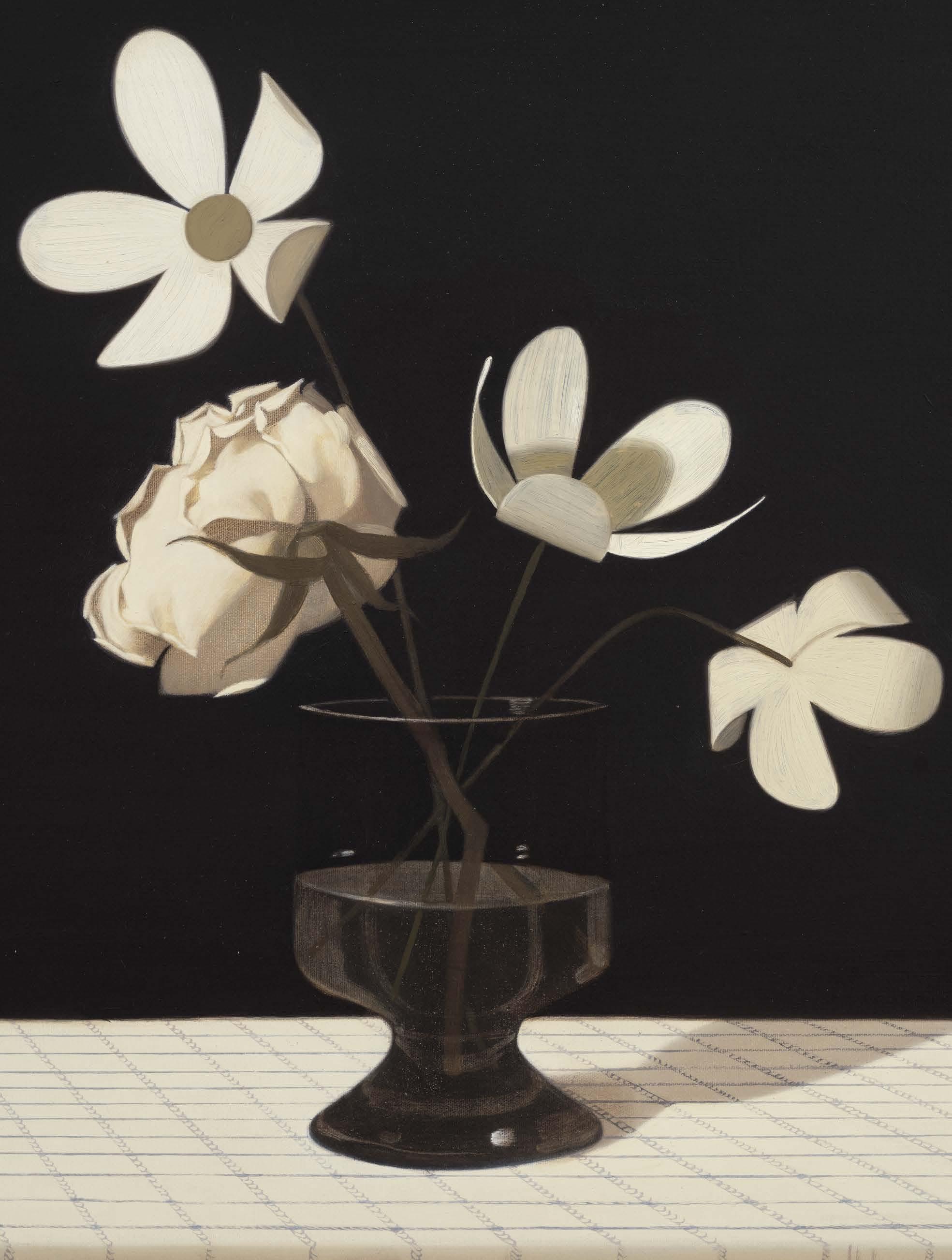
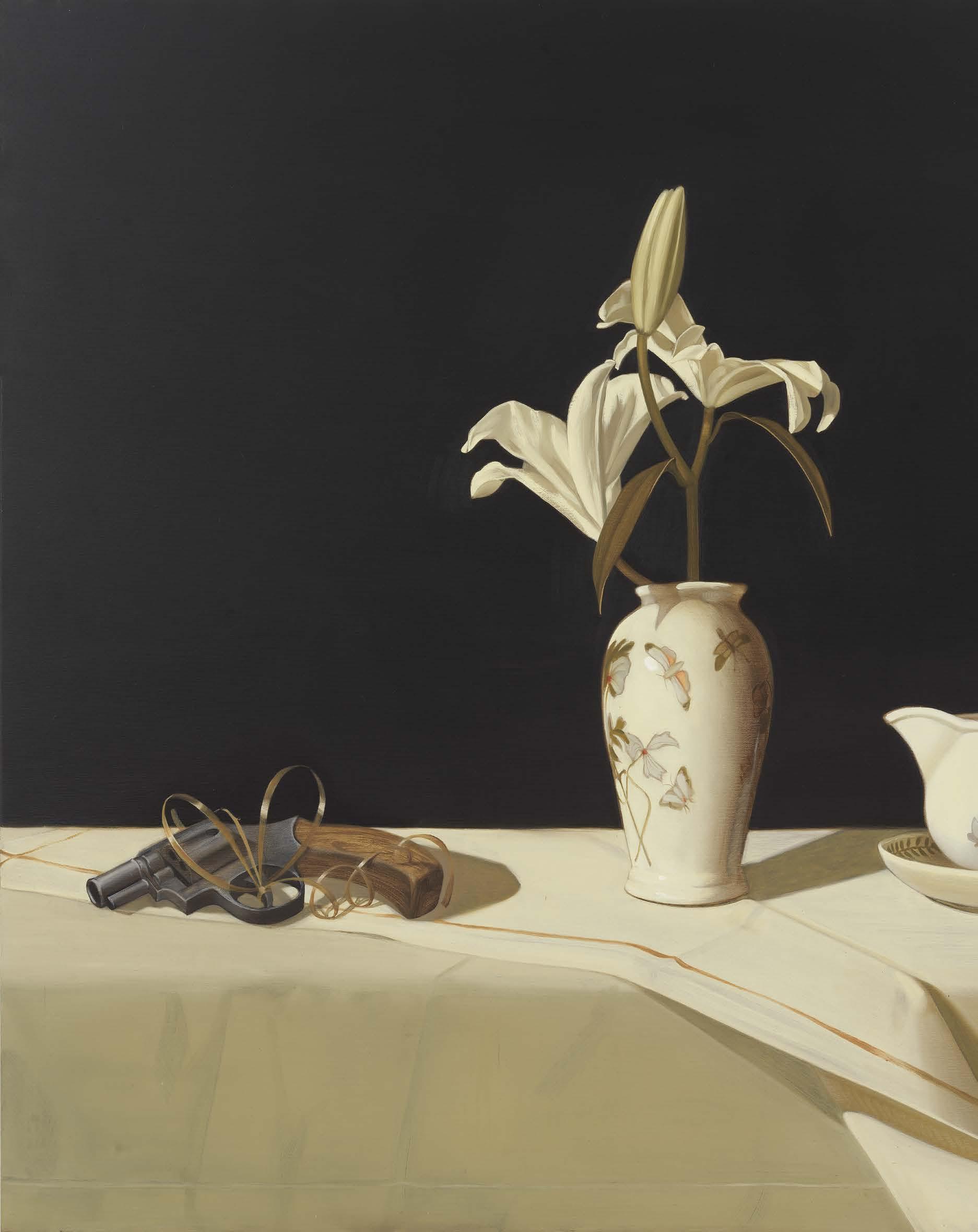
78
Before Chardin and Cézanne tipped the scales, still life painting was widely understood to be inferior to figure painting. The critical discussion of Anna Weyant’s recent Gagosian exhibition revives that old understanding, having far less to say about the still lifes than about the figures—reasonably so, I suppose, because the figure paintings are larger, more dramatic, and speak more explicitly to an awareness of popular culture. Nonetheless, there is good reason to pay attention to the still lifes: they especially reveal the stylistic sources of Weyant’s work in what the great nineteenth-century critic John Ruskin called works of “imitation,” namely, smoothly painted, highly illusionistic canvases of volumetric forms where “the eye says a thing is round, and the finger says it is flat.”1
The seventeenth century was particularly rich in such works of imitation. Among them were trompe l’oeil paintings specifically designed to deceive the eye into mistaking artistic fiction for objective fact, a device that became especially popular in nineteenth-century America. 2 And by a fascinating coincidence, Weyant’s exhibition was on view in New York when the city’s Metropolitan Museum of Art opened its exhibition Cubism and the Trompe l’Oeil Tradition , which juxtaposed such historical works with examples of Cubist compositions from early in the twentieth century.3 I shall come to the latter exhibition presently, but first want to say something about Weyant’s still lifes and their relationship to her figure paintings.
The Uncanniness of the Ordinary
A recent interview with Weyant was titled “Welcome to the Dollhouse,” and the association of the young women she has painted with dolls is so prominent in her art that it has gained a great deal of attention. 4 Little mentioned is the dollhouse itself. Writing on the subject of the miniature versus the gigantic, the literary critic Susan Stewart has written of dollhouses as “the most consummate of miniatures,” representing in small scale the “articulation of the tension between inner and outer spheres, of exteriority and interiority,” in houses for human habitation. 5 An artist’s studio may be said to do the same, especially since it is the principal place where the exterior world gets transformed into the interior world of works of art. And, if the studio contains a doll to paint from—if the studio becomes a kind of dollhouse—the relationship of exteriority and interiority is matched by that of the animate and the inanimate.
In a different but analogous way, that animate/inanimate relationship is also invoked by still lifes painted in artists’ studios. If the setup for such a work comprises perishable items, it will sooner or later earn the French
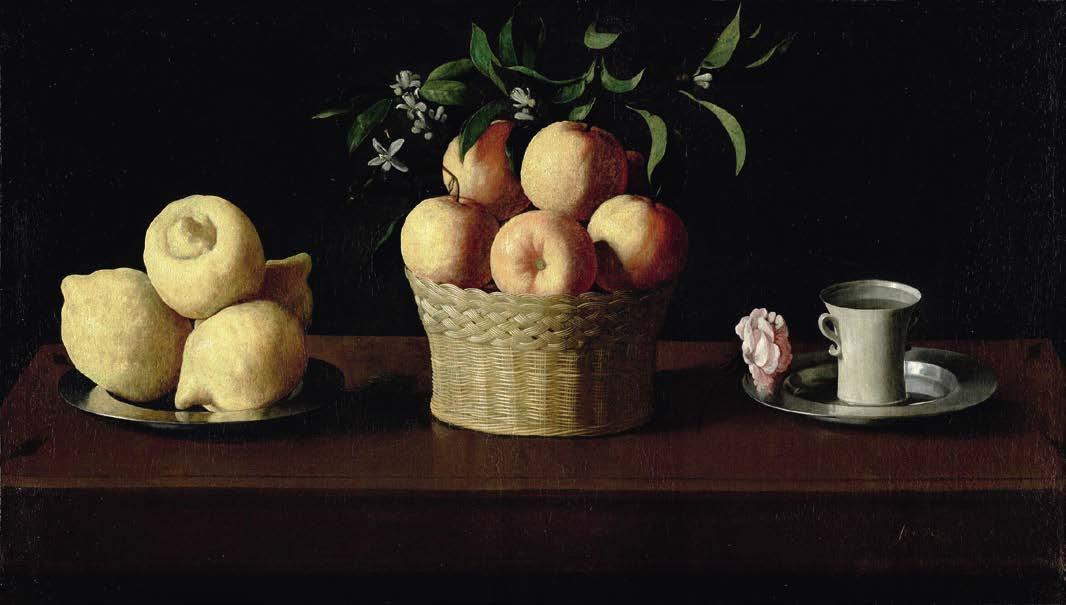

79
Catalyzed by Anna Weyant’s still lifes, John Elderfield explores the genre and its relationship with trompe l’oeil techniques, tracking its formal development, as well as the evolving critical receptions it has elicited.
name for a still life, nature morte (dead nature). As Stewart has observed, “the world of objects is always a kind of ‘dead among us.’” Among objects, she adds, a doll “ensures the continuation, in miniature, of the world of life ‘on the other side.’”6 But more broadly, as another critic, Michael Riffaterre, writes, “Any statement of motionlessness will generate a statement of motion. The more natural and permanent the movelessness, the more striking the mobilization, and the more suggestive of fantasy.”7
As these and many other writers have explained, this works in two ways. Put simply, the theme of the still life is arrested life—the idea or feeling that nothing changes, that the instant will remain as it is described, that this particular configuration of consumer or consumable objects will define the values of the artist. At the same time, objects brought into the studio, often to join those kept inside, will speak of their sources and their associations outside of the studio, and hence of themes, dreams, even secrets, of which the artist may or may not be conscious. In this dual aspect, the still life joins the contrasting modes of exteriority and interiority to a contrast of the inanimate and an imagined animation. The art historian Meyer Schapiro’s 1968 essay “The Apples of Cézanne: An Essay on the Meaning of Still-Life” is a classic study of how inanimate objects can open
onto a mobile world of fantasy. 8 As Michel Foucault had put it a few years earlier, “That the world of things can open itself to reveal a secret life—indeed, to reveal a set of actions and hence a narrativity and history outside the given field of perception—is a constant daydream that the miniature presents.”9 Or nightmare, perhaps. Weyant’s painting of a lily juxtaposed with a revolver bound in a gold ribbon does seem funereal.
An essay, at once dense and beautiful, by the philosopher Stanley Cavell, “The Uncanniness of the Ordinary,” speaks of “the ordinariness of human life, and human life’s avoidance of the ordinary”—but not by seeking the extraordinary: “The aspects of things that are most important for us,” Cavell quotes from Ludwig Wittgenstein, “are hidden because of their simplicity and [ordinariness, everydayness].” Some of these aspects are missed because they are obvious. Nonetheless, “the angel of the odd” floats over the ordinary, and may reveal, when noticed, what Cavell calls “the surrealism of the habitual.”10 Those of Weyant’s still lifes that do not juxtapose objects to shape a strongly narrative message, as the lily-and-revolver painting does, but simply offer ordinary objects—whether solely or with understated, or unstated, associations— may be said to engage that form of surrealism. But
a slippery slope leads from these paintings to those that defamiliarize objects momentarily by showing them inverted or from other unexpected views, or in incomprehensible or provocative close-ups that engage the surrealism of the unordinary. This is more familiar to us from Surrealism itself, with the advantages and disadvantages that familiarity affords. 11
It may not be thought unexpected that Weyant has ventured into the genre of trompe l’oeil painting, depicting objects as if pinned in place on a canvas or panel—or, perhaps, lying as if in a tray. “Trompe l’oeil,” one thoughtful critic, M. L. d’Otrange Mastai, has observed, “is not merely a certain kind of still life painting; it should in fact ‘out-still’ the stillest of still lifes. Ideally, it should be posed, immovable, with no turbulence and no excess of any kind.”12 However, when the eye is fooled into thinking that a represented object in such a painting is the thing itself, that object will, in fact, seem potentially movable. The pleasure comes when the viewer recognizes that it is a representation, and therefore eternally im movable—the surprise of a picture changing identity, as anthropomorphic landscapes do, such as those of the sixteenth-century painter Giuseppe Arcimboldo. Also, this kind of play turns uncertainty into a game. In Ruskin’s discussion of “imitation,” he observed that “gentle surprise . . . can be excited in no more distinct manner than by the evidence that a thing is not what it appears to be.”13
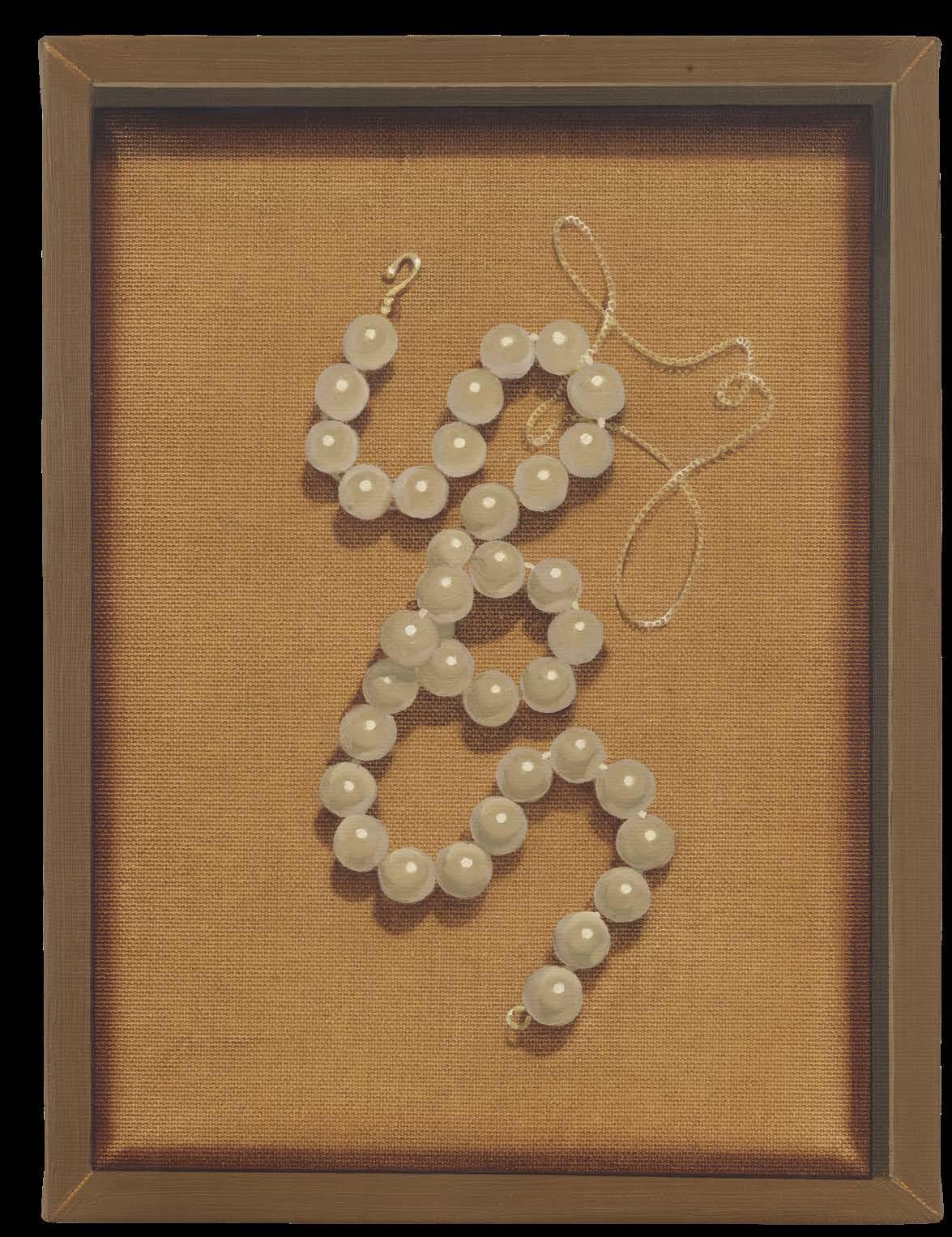
Trompe l’Oeil
Writing in Artforum on the Met’s exhibition Cubism and the Trompe l’Oeil Tradition , art historian David Joselit complained of its curators’ justification for placing Cubism in the context of that tradition: “A self-referential art that calls attention to its own artifice, trompe l’oeil, like Cubism, involves the viewer in perceptual and psychological games that complicate definitions of reality and artifice.”14 Joselit objected to this claim of likeness, arguing that while the self-referentiality of Cubism lies in its combination of different, contradictory visual languages in a single work of art, continuing to perplex us, that of trompe l’oeil lies in its use of a single, highly mimetic language to represent what may fool us—but just for a moment—to think it is not a work of art but something real.
So far, so good. However, the use of trompe l’oeil details within Cubist paintings associates them with famous early instances of trompe l’oeil. Looking at a picture representing a bee on a painted flower, the Greek philosopher Philostratos raised the question: has a real bee been fooled by a painted flower, or have we spectators taken a painted bee for a real one? Legend has it that a painting of grapes by Zeuxis did attract birds, and that a painting by Giotto included a fly that viewers would try to swat away. Similarly, an abstracted still life by Georges Braque famously contains an illusionistic nail; there are both painted and actual wooden veneers in his and Pablo Picasso’s paintings, and so on. These clearly form exceptions to Joselit’s claim that “if the viewer of a trompe l’oeil painting enjoys being at once deceived and not deceived, the spectator of Cubist paintings must suffer the discomfort of not knowing and not mastering what is on view.”15 It might have been better to say that the spectator of Cubist paintings is offered both the enjoyment and the discomfort.
Joselit associates the discomfort with the wider modernist project, making it the product of “one of
80
the foundational tendencies of modernism” and part of “modern art’s enduring disruptive tendency.”16 At this point we may reasonably ask: has this tendency endured because we find it comforting to be discomforted? Weyant’s still lifes are, of course, very far from Cubist ones; but those that do not adopt a trompe l’oeil format—the majority of them—also offer the spectator discomfort as well as enjoyment. “The angel of the odd” floats over them. Joselit concludes his discussion of the Met’s exhibition with the suggestion that one reason why the curators take trompe l’oeil as a historical forebear may be that “in 2022 we are mired in toxic politics of trompe l’oeil . . . taking pleasure in being deceived while knowing better all along.”17 While we do not know how many of the politically deceived know better, we do know that technological deception is widely embraced. Weyant’s paintings allude to it by ironically adopting the look of glossy, expensive-product advertising—ironically, because that smooth high-gloss finish also associates them with the highly mimetic art of the past, including trompe l’oeil painting. Moreover, an art of imitation is the best vehicle for deception, and therefore for duplicitous seduction.
, Volumetric Projections and Happy Places
In 2018, art historian Anna Daly published a fascinating account of how Clement Greenberg’s opposition of “kitsch”—illustrational art designed to appeal to undiscriminating taste—to “avant-garde” art prompted discussions that bear more than a passing resemblance to the critical reception of trompe l’oeil painting in the nineteenth century. Owing to this association, she argued, highly illusionistic works came to be disdained as not the kind of thing that serious modernist artists produced. 18
Greenberg had written in 1939, “Self-evidently, all kitsch is academic; and conversely, all that’s academic is kitsch.”19 He did not say what “academic” meant, but we must assume that he was thinking of the collapse of great illusionistic painting in France in the mid-nineteenth century into the pallid art of the Salons, and of its replacement by the materialist art of Gustave Courbet and the avant-garde artists who followed him. Such artists, he claimed, “derive
their chief inspiration from the medium they work in.” Therefore, “avant-garde culture is the imitation of imitating”; that is to say, is built on the material processes of preceding works of art, and therefore requires effort and experience from its audience.
In contrast, the kitsch artist, like the exhibitor in the Salons, “can paint so realistically that identifications are self-evident immediately and without any effort on the part of the spectator. . . . even the bird that pecked at the fruit in Zeuxis’ picture could applaud.”20
Nonetheless, while Greenberg depreciated the valuation of paintings according to their “success in realistic imitation,” he was silent on the subject of the smooth surfaces necessary to that success. 21 And writing a decade later on the subject of Willem de Kooning’s first solo show, in 1948, he admired the thin, smoothly spread paint that “identifies the physical picture plane with an emphasis other painters achieve only by clotted pigment,” and concluded that the artist’s “insistence on a smooth, thin surface is a concomitant of his desire for purity, for art that makes demands only on the optical imagination.”22 We may think it odd that he applauded a method of painting associated with hyperrealist kitsch. What he was arguing for, however, was emphasis on “the physical picture plane” without the use of “clotted pigment” that would appeal to the sense of touch rather than to the optical imagination.
By an intriguing coincidence, Sigmund Freud’s Three Essays on the Theory of Sexuality (1905) was published in English translation almost simultaneously with Greenberg’s de Kooning review, and speaks of “seeing—an activity that is ultimately derived from touching.”23 But Freud was a man of the eye and the hand; Greenberg was a man of the eye, and had difficulty with painting “when the eye says a thing is round, and the finger says it is flat.” He wanted both the eye and the finger to say that it was flat.
It is important to note, though, that Ruskin’s aphorism belonged to a broader discussion than the topic of trompe l’oeil. Writing “whenever the work is seen to resemble something which we know it is not, we receive what I call an idea of imitation,” he went on,
Now two things are requisite to our complete and most pleasurable perception of this; first, that the resemblance be so perfect as to amount to a deception; secondly, that there must be some means of proving at the same moment that it is a deception. The most perfect ideas and pleasures of imitation are, therefore, when one sense is contradicted by another, both bearing as positive evidence on the subject as each is capable of alone; as when the eye says a thing is round, and the finger says it is flat; they are, therefore, never felt in so high a degree as in painting, where appearance of projection, roughness, hair, velvet, etc. are given with a smooth surface, or in waxwork, where the first evidence of the senses is perceptually contradicted by their experience. 24
In Ruskin’s view, a smooth surface was critical to “imitation” precisely because the volumetric projection and tactility of a subject cannot be simulated in material paint. He was writing in 1843; Chardin had already proved him wrong, and Cézanne among others soon would also. Nonetheless, the increasing materiality of modernist paintings did correspond to the decreasing presence of the imitation of volumetric projection and tactility in many such paintings—and especially of volume: an artist
Opening spread: Anna Weyant, It Must Have Been Love, 2022 (detail), oil on canvas, 30 × 60 ¼ inches (76.2 × 153 cm)
© Anna Weyant. Photo: Rob McKeever
Previous spread, left: Anna Weyant, Lily, 2021, oil on canvas, 48 × 60 inches (121.9 × 152.4 cm)
© Anna Weyant. Photo: Rob McKeever
Previous spread, right: Francisco de Zurbarán, Still Life with Lemons, Oranges and a Rose, 1633, oil on canvas, 24 ½ × 43 1⁄8 inches (62.2 × 109.5 cm), The Norton Simon Foundation.
Photo: © The Norton Simon Foundation
This spread, opposite: Anna Weyant, Pearls , 2021, oil on canvas, 12 × 9 1⁄8 inches (30.5 × 23.2 cm) © Anna Weyant. Photo: Rob McKeever
This page, left: William Michael Harnett, Still Life—Violin and Music, 1888, oil on canvas, 40 × 30 inches (101.6 × 76.2 cm), The Metropolitan Museum of Art, New York, Catherine Lorillard Wolfe Collection, Wolfe Fund, 1963
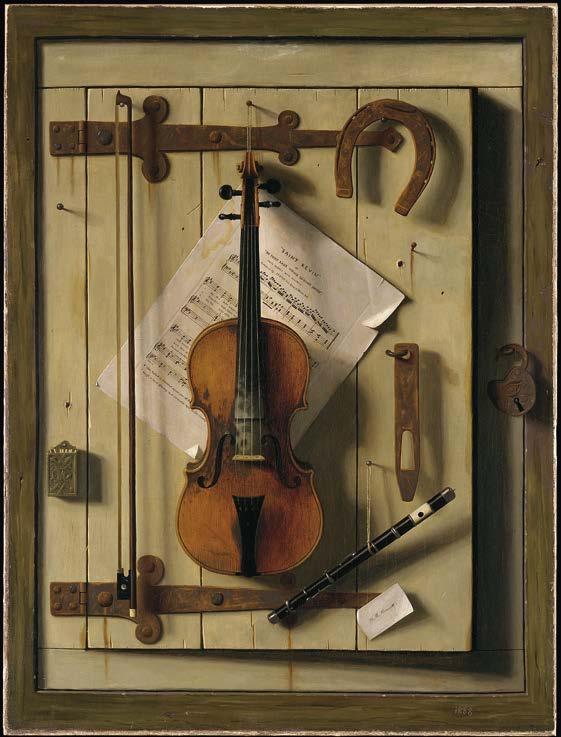
This page, above: Georges Braque, Violin et palette, 1909, oil on canvas, 36 1 8 × 16 7⁄8 inches (91.7 × 42.8 cm), Solomon R. Guggenheim Museum, New York © 2023 Artists Rights Society (ARS), New York/ ADAGP, Paris. Photo: The Solomon R. Guggenheim Foundation/Art Resource, New York
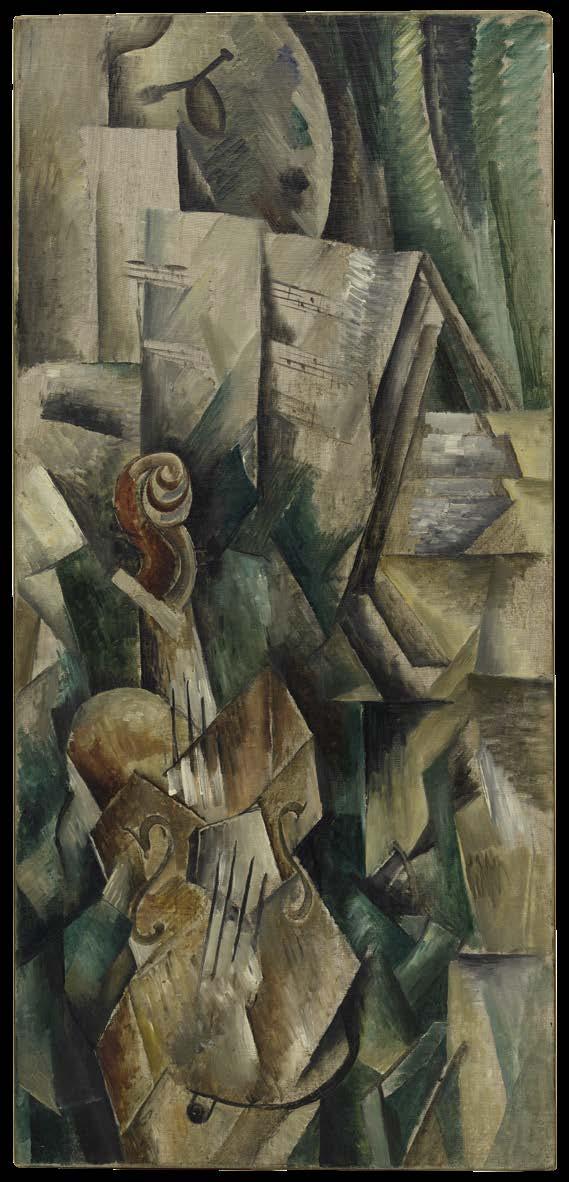
Following page: Anna Weyant, She Drives Me Crazy, 2022, oil on canvas, 30 ¼ × 60 ¼ inches (76.8 × 153 cm) © Anna Weyant.
Photo: Rob McKeever
81
may readily imitate the tactility of a subject on a tactile surface, but will find it far more difficult to imitate volumetric projection there. Hence Greenberg’s continued harping on the importance of flatness in avant-garde painting. 25
Escaping the routinely illustrational aspect of nineteenth-century Salon painting, modernism shucked off the illusion of volume to the extent that there were of course counterreactions; too many to discuss here. But any new art of explicit imitation has had some heavy lifting to do to escape association with the Salon. The so-called Photorealism of the early 1970s was commonly treated as a subgenre, and while postmodernism is more forgiving than its predecessor, highly illusionistic works are still viewed with suspicion in some quarters. Although categorical judgments have no place in responsible criticism, some of the grumbling about Weyant’s paintings appears to have come from enemies of “imitation,” associating it with kitsch and the art of the Salons rather than with the avant-garde. Conversely, admirers of her paintings have noticed that the strangeness of their content is made all the greater because it lurks beneath a “perfect” smooth surface—indeed, that its particular strangeness would be compromised if it were thought to be the attribute of a material surface rather than of an act of “imitation.” Moreover, as Ruskin would agree, her paintings could hardly provide the appearance of volumetric projection to the extent that they do except by use of a smooth surface.
In this respect, Weyant’s still lifes draw inspiration from compositions that set a group of objects on a shelf or ledge, the great period and place of their use being seventeenth-century Spain—in both bodegones , paintings packed with comestible objects, and the simple, spare compositions of painters including Francisco de Zurburán and Juan Sánchez Cotán. At first sight, these latter artists’ still lifes seem as immovable as any trompe l’oeil; and yet, to use Cavell’s apothegm again, “the angel of the odd” floats over them. It would be anachronistic to say that they reveal what Cavell calls “the surrealism of the habitual.” Rather, they have a superrealism that takes simple objects out of the realm of the habitual. Set in bright light against intense dark backgrounds,
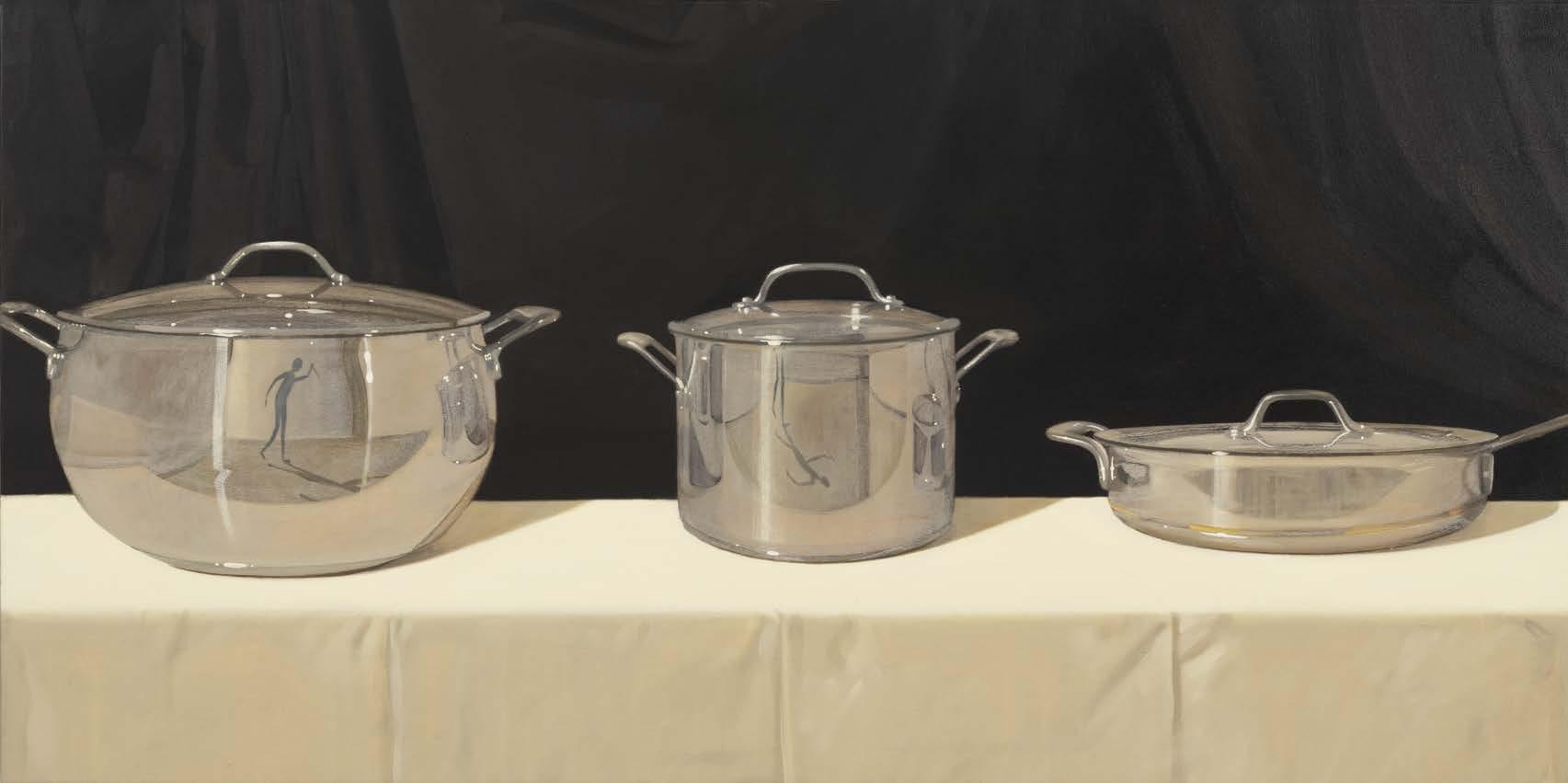
they seem at once solid and dematerialized: as Mastai observes, “The magnificently delineated forms, chosen in accordance with a mysterious unearthly logic . . . at once fail and transcend the purpose of still life.”26 They have often been compared to offerings set on an altar, especially when they comprise a trio of objects or groups of objects.
This is a familiar type of composition for Weyant, except that hers upturn the meanings of the prototypes: the great Spanish still lifes, set immovably in place in a permanent silence, connote ritual; hers, temporarily frozen in time in their domestic settings, connote mystery. Something strange, even disturbing, appears about to happen—or perhaps something merely mischievous, for her paintings extract amusement from what in other hands might be thought threatening: a ten-ton weight about to fall, party balloons entwined with a string of sausages, glasses breaking in a toast. Beneath what presents itself as innocent, youthful pranks lurks the macabre: indeed one still life does show, reflected in a silver pot, the frozen silhouette of a killer in the kitchen. Yet Weyant calls her still lifes her “happy place,” reassuring us that her art of seductive imitation is an art of make-believe. 27
University Press, 1993), 61–63. She adds, “being a house within a house, the dollhouse . . . also represents the tension between two modes of interiority.” I concentrate on this subject in my essay “Uncanny Beauty: Thoughts after Seeing Paintings by Anna Weyant,” in the monograph Anna Weyant , forthcoming from Gagosian in the fall of 2023.
6. Stewart, On Longing , 57.
7. Michael Riffaterre, Semiotics of Poetry (Bloomington: Indiana University Press, 1978), 69. Quoted here from Stewart, On Longing , 180 n43.
8. Meyer Schapiro, “The Apples of Cézanne. An Essay on the Meaning of Still-life,” Artnews Annual 34 (1968): 34–53.
9. Michel Foucault, Raymond Roussel (Paris: Gallimard, 1963), 81. Quoted here from Stewart, On Longing , 54.
10. Stanley Cavell, “The Uncanniness of the Ordinary,” in Cavell, In Quest of the Ordinary: Lines of Skepticism and Romanticism (Chicago and London: University of Chicago Press, 1988), 154, 164, 166.
11. See, for example, the photographs illustrated in Peter Galassi, In the Studio: Photographs (New York: Gagosian Gallery, 2015), 102–3.
12. Mastai, Illusion in Art , 156.
13. Ruskin, “Of Ideas of Imitation,” 11.
14. Emily Braun and Elizabeth Cowling, quoted in David Joselit, “A Counterfeit Illusion,” Artforum 61, no. 5 (January 2023): 37.
15. Joselit, in ibid.
16. Ibid., 38.
17. Ibid.
18. Anna Daly, “Cheap Trick: Trompe l’oeil , photography and kitsch as economies of ‘the real’ in the discourses of modernity,” emaj online journal of art , no. 10 (2017–18). Available online at https:// emajartjournal.files.wordpress.com/2018/09/anna-daly_cheap -trick_emaj10.pdf (accessed July 13, 2023).
19. Clement Greenberg, “Avant-Garde and Kitsch,” Partisan Review, Fall 1939, repr. in Greenberg, The Collected Essays and Criticism , vol. 1, Perceptions and Judgments, 1939–44, ed. John O’Brian (Chicago and London; University of Chicago Press, 1986), 12.
20. Ibid., 6–7, 17–18.
21. Ibid., 17.
1.
Ideas of Imitation,” in Modern Painters 1, chapter IV, 1843; quoted here from Modern Painters by John Ruskin , ed. David Barrie (New York: Alfred A. Knopf, 1987), 11.
2. For a perceptive account see M. L. d’Otrange Mastai, Illusion in Art: Trompe l’Oeil: A History of Pictorial Illusionism (New York: Abaris Books, 1975). See also William Kloss and E. Jane Connell, More Than Meets the Eye: The Art of Trompe l’Oeil , exh. cat. (Columbus, Ohio: Columbus Museum of Art, 1985), and Sybille Ebert-Schifferer, “Trompe l’Oeil: The Underestimated Trick,” in Ebert-Schifferer, Deceptions and Illusions: Five Centuries of Trompe l’Oeil Painting , exh. cat. (Washington, DC: National Gallery of Art, 2002), 17–37.
3. See Emily Braun and Elizabeth Cowling, Cubism and the Trompe l’Oeil Tradition , exh. cat. (New York: The Metropolitan Museum of Art, 2022), a catalogue with excellent discussions of both of its subjects.
4. See Sasha Bogojev, “Anna Weyant: Welcome to the Dollhouse. Interview and portrait by Sasha Bogojev,” Juxtapoz Art & Culture , July 13, 2020. Available online at https://www.juxtapoz.com/news /magazine/features/anna-weyant-welcomes-us-to-the-dollhouse/ (accessed May 28, 2023).
5. Susan Stewart, On Longing: Narratives of the Miniature, the Gigantic, the Souvenir, the Collection (Durham, NC: Duke
22. Clement Greenberg, “Review of an Exhibition of Willem de Kooning,” The Nation , April 24, 1948, repr. in Greenberg, The Collected Essays and Criticism , vol. 2, Arrogant Purpose, 1945–1949, ed. O’Brian (Chicago and London: University of Chicago Press, 1986), 229.
23. Sigmund Freud, Three Essays on the Theory of Sexuality, 1905, Eng. trans. James Strachey (London: Imago, 1949), quoted here from The Standard Edition of the Complete Psychological Works of Sigmund Freud , vol. 7, 1901–1905 (London: Hogarth Press, 1953, repr. New York: Vintage, 2001), 156. Discussed in Didier Anzieu, The Skin Ego, trans. Naomi Segal (London and New York: Routledge, 2018), 153.
24. Ruskin, “Of Ideas of Imitation,” 11.
25. See, most explicitly, Greenberg’s “Modernist Painting,” in Forum Lectures , 1960, repr. in Greenberg, The Collected Essays and Criticism , vol. 4, Modernism with a Vengeance, 1957–1969, ed. O’Brian (Chicago and London: University of Chicago Press, 1993), 85–94.
26. Mastai, Illusion in Art , 168.
27. Weyant, quoted in Stephanie Sporn, “Anna Weyant’s Botticelliesque Paintings Are Taking the Art Market by Storm,” Harper’s Bazaar, November 4, 2022. Available online at https://www .harpersbazaar.com/culture/features/a41867684/anna-weyants -boticelli-esque-paintings-are-taking-the-art-market-by-storm/ (accessed July 14, 2023).
82
John Ruskin, “Of
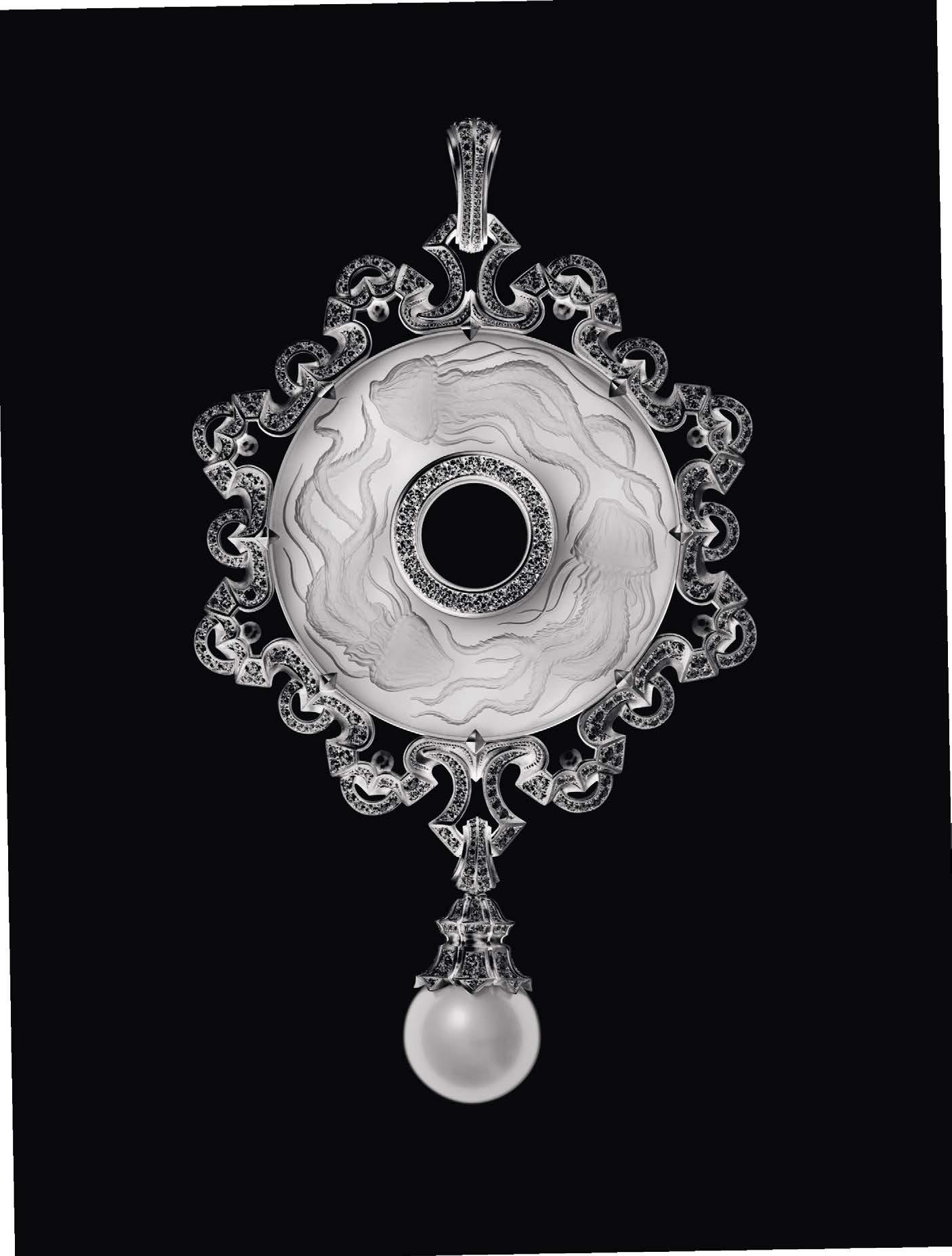
. christophegraber.com .
Photo Mathias Zuppig er Zurich Artw ork Karin Schiesser Zurich
Hans Ulrich Obrist’s Questionnaire
Kim Hyesoon
84
In this ongoing series, curator has devised a set of thirty-seven questions that invite artists, authors, musicians, and other visionaries to address key elements of their lives and creative practices. Respondents select from the larger questionnaire, replying in as many or as few words as they desire. For the third installment of 2023, we are honored to present the poet .
6. What is your unrealized project?
5. What is your most recent work?
A: Find my mom’s smell on a map of my country, smell my country.
14. Do you write poems?
A: I don’t write poetry. I do poetry.
A: Create my own periodic table of the elements.
19. What have you forgotten?
A: My milk teeeeeeeeeeeeeeeeee eeeeeeeeeeeeeeeeeeeeeeeeee eeeeeeeeeeeeeeeeeeeeeeeeee eeeeth.
32. What is your favorite book?
A: Always changing, but right now it’s The Hour of the Star by Clarice Lispector, where the main character is named Macabéa, which means Don’t die.
23. What is time?
A: The desert, the rhythmic entity that pushes me into annihilation. The pain of infinite sequences.
30. What is the first entry in your catalogue raisonné?
A: The scene of my dad dying. My mom yelled at my dad in his coffin, What the fuck is this, then me yelling, What the fuck is this to my mom in her coffin.
40. Why is there something rather than nothing?
A: Why is there something rather than nothing?
35. What is your favorite movie?
A: Alexander Sokurov, Whispering Pages. This movie is a book.
37. Is the mirror broken?
A: The mirror isn’t broken yet. When the mirror is broken, there is no me, there is no you, there is no world. But when I write poetry, I enter a room without a mirror.
85
Hans Ulrich Obrist Kim Hyesoon
In March 2023, just a few weeks after lifting its mask-wearing and social-distancing restrictions, Hong Kong welcomed overseas journalists, gallerists, and art collectors for Art Week and the longawaited official opening of M+. This “museum and more” was first proposed by the Hong Kong government in 2006 as part of the creation of the West Kowloon Cultural District, but in the intervening years the significance of the project has grown along with shifts in the political landscape.
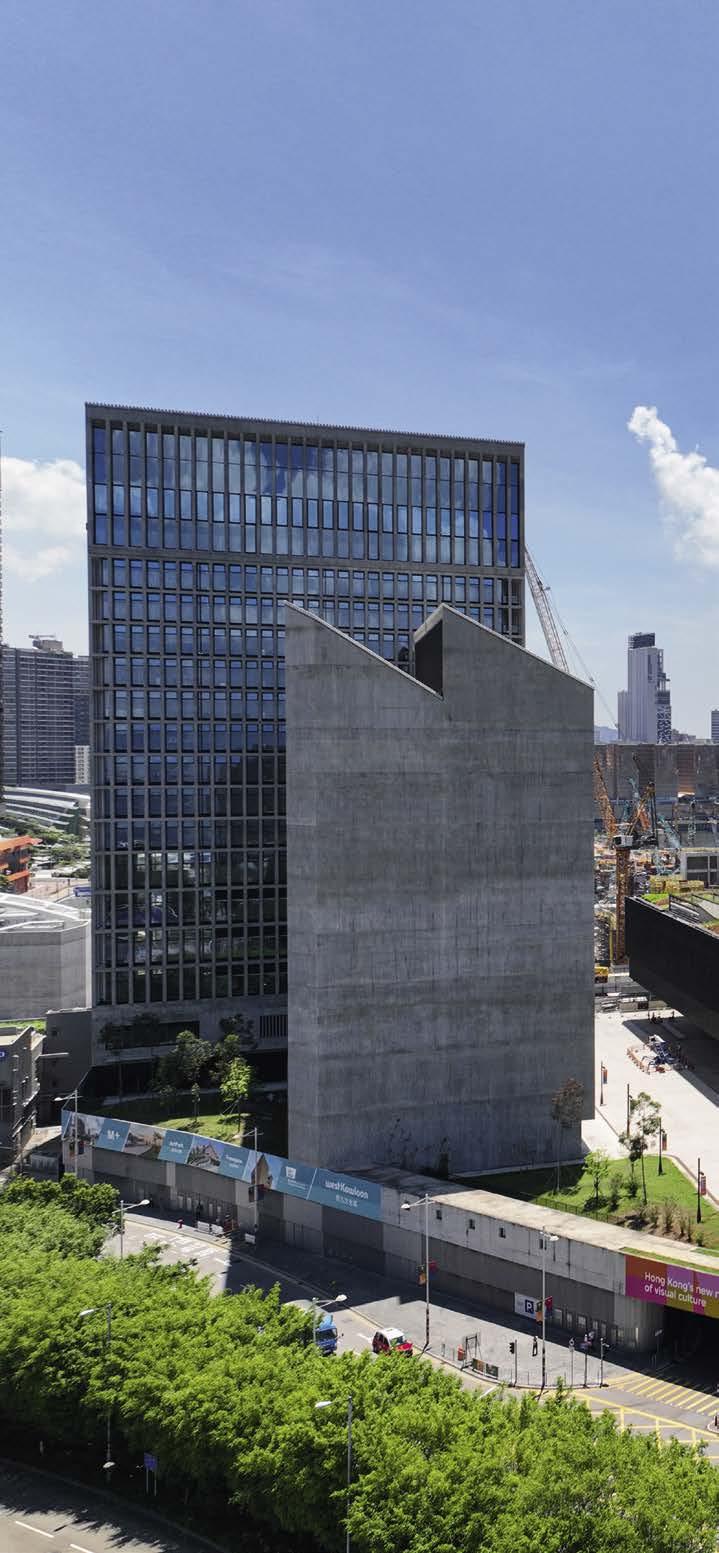
Among the thousands of Art Week visitors who descended from airplanes at Chek Lap Kok were the architects of M+, the Swiss architectural firm Herzog & de Meuron, whose founders had yet to see the completed building even though the project had been on their digital drawing boards since 2012. Herzog & de Meuron, which designed M+ in partnership with TFP Farrells and Arup, has a remarkable record of creating art spaces that have changed
the relationship between architecture and the public. Over the past four decades it has completed about 200 cultural buildings around the world; its rate of production increased significantly after the opening of Tate Modern, London, in 2000, a project that transformed the city along with the firm’s global reputation. M+ is similarly set to mark a turning point in Hong Kong’s status, in this case as a cultural hub and a bridge between East and West.
Located in the West Kowloon Cultural District— forty hectares of reclaimed land on Victoria Harbour—M+ is gargantuan in its vital statistics. The 65,000-square-meter building has three cinemas, a research center, and a learning hub, as well as the shops and restaurants that one would expect of a contemporary art museum. Interestingly, though, the ticketed exhibition spaces are mostly arranged on one floor and cover “only” 17,000 square meters of the overall space. This is still large when compared to Tate Modern, which has around half the overall floor area and approximately 9,000 square meters of exhibition space. But if numbers are anything to go by, the notable contribution of M+ is its freely accessible public space, which includes a tripleheight atrium, a harborside amphitheater called the “Grand Stair,” and a basement gallery for installations called the “Found Space.”
The building’s generous contribution to civic life is perhaps most evident in the giant LED screen on the south façade, where specially commissioned digital artworks are visible to millions of people from the central districts of Hong Kong. Since the screen (an integral element of the building) was designed just two years after Hong Kong’s democracy protests of 2010, which were sparked by electoral reforms, the importance of civic space must have been at the forefront of the architects’ minds. Construction on the project began in 2015, soon after the Umbrella Revolution or Occupy Movement protests led by students and involving 100,000 Hong Kongers. It is impossible to ignore this recent history when considering the design of M+, and to reflect on whether it would have been commissioned in this form in the political context of the city today.
But M+ also indicates a key global shift in the design of art museums, whose central purpose is no longer to provide dedicated galleries for the display of conventional artworks. The political and strategic importance of the museum as “an
86
M+, Hong Kong.
Photo: Joe Wong, courtesy M+, Hong Kong
M+, Hong Kong, Asia’s largest museum of modern and contemporary art, opened to the public a year and a half ago in a building designed by the Swiss architects Herzog & de Meuron. Vicky Richardson, Head of Architecture and Heinz Curator at the Royal Academy of Arts, London, visited as the city opened to international visitors after three years of isolation.
international architectural icon” (as stated in the M+ press release) is more explicit, and was acknowledged by architect Pierre de Meuron in a March press conference: “This is a museum for China, Asia, and the whole world. We aimed to create an identity for Hong Kong and to root the building in the cityscape.”
What does rootedness mean in a city that has changed its political and cultural identity rapidly over the past decade, and where the future still seems so unpredictable? Apart from the building’s sense of openness and civic generosity, the answer for Herzog & de Meuron lay in the most pragmatic of found conditions: the location of an underground railway tunnel that slices across the site. This mundane feature of the urban landscape stood out in the competition design brief, which stated that the site was a tabula rasa and invited architects to express themselves in the creation of an icon. A note in the
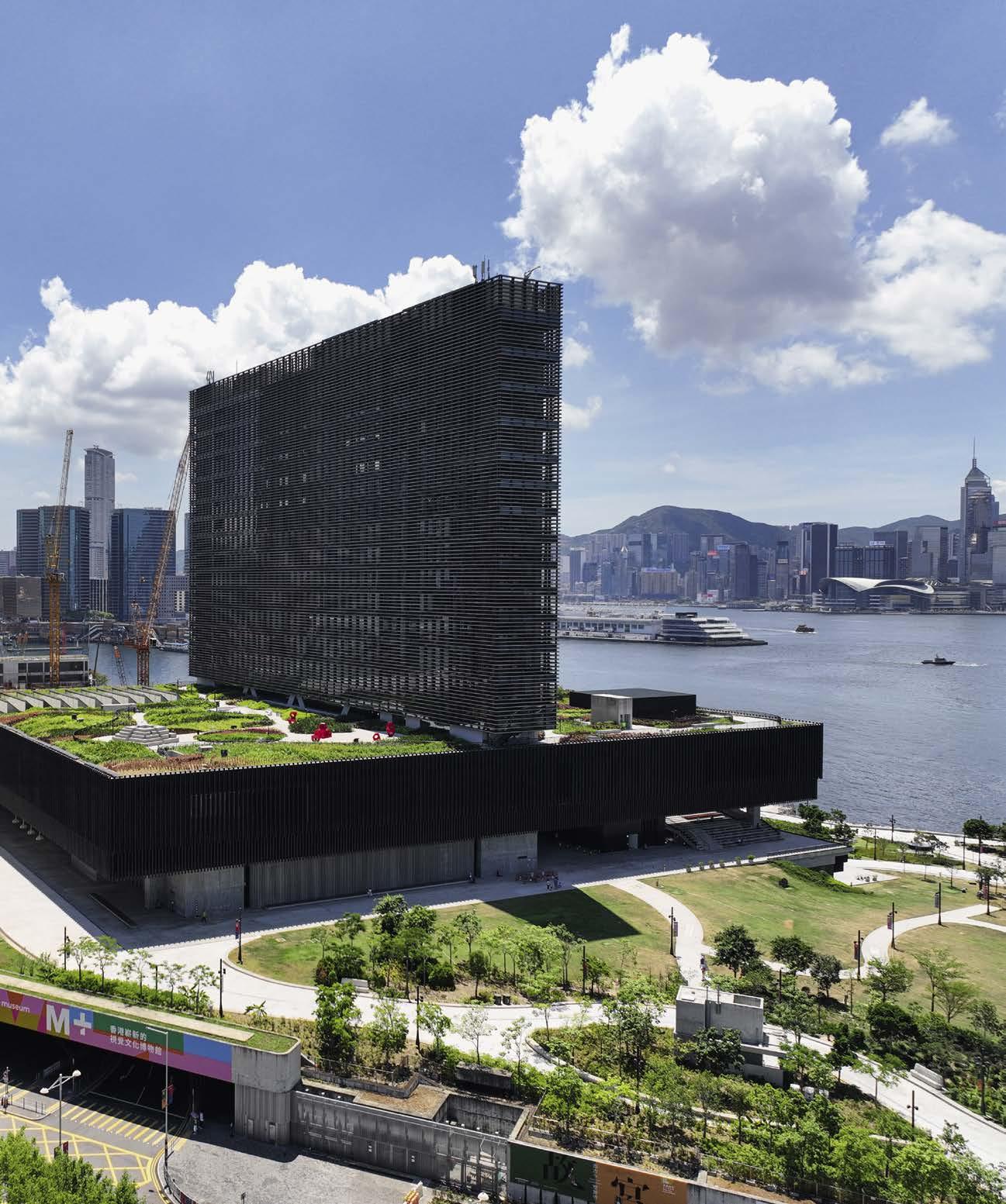
87
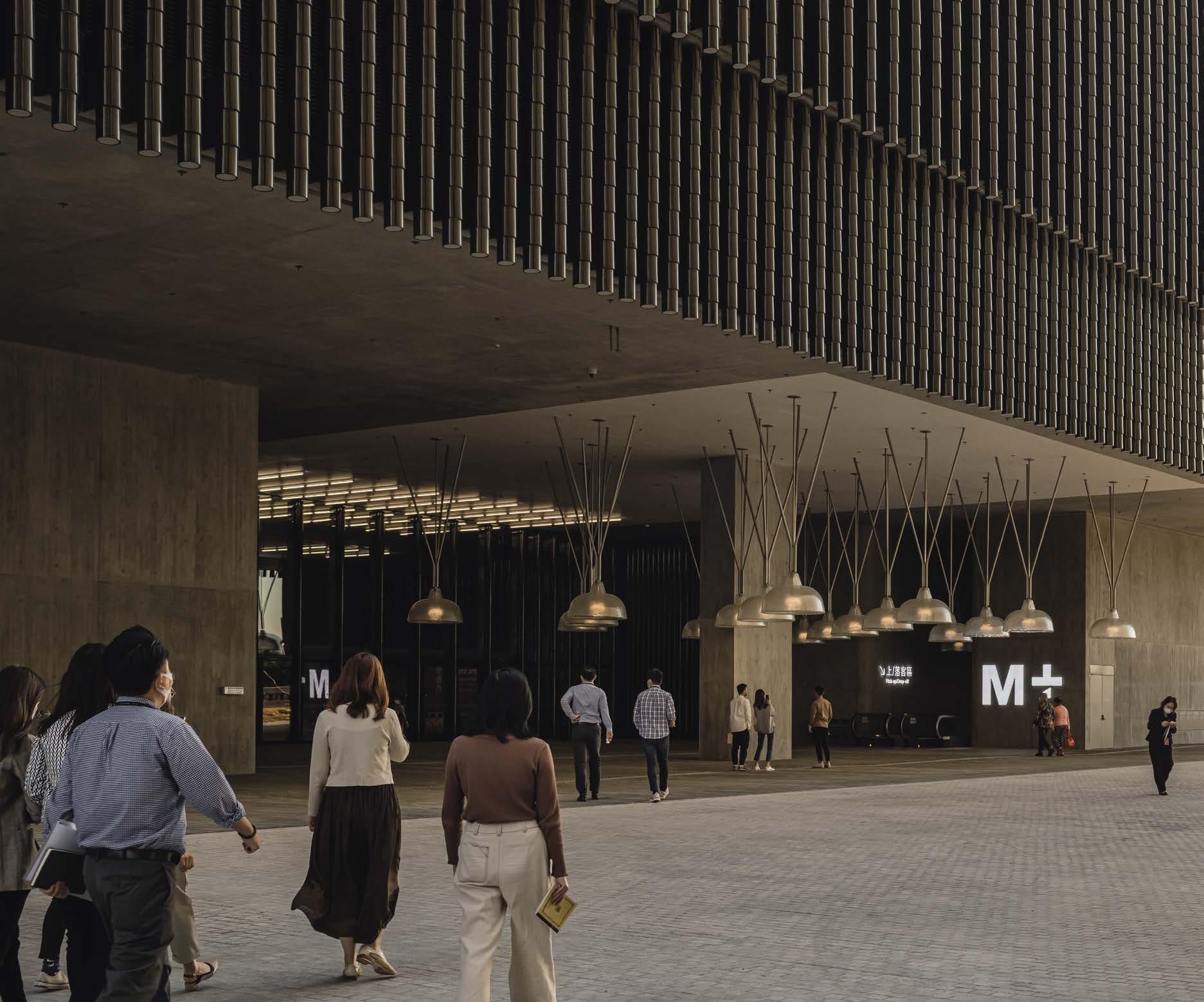
88
This page: Entrance of M+, Hong Kong. Photo: © Kevin Mak, courtesy Herzog & de Meuron
Opposite: The Atrium, 2F, M+, Hong Kong. Photo: © Kevin Mak, courtesy Herzog & de Meuron
small print stated that the only restriction was to avoid a tunnel carrying the Airport Express train beneath the site. This fact, of course, caught the interest of the architects as they looked for clues and references that might embed the design in the city.
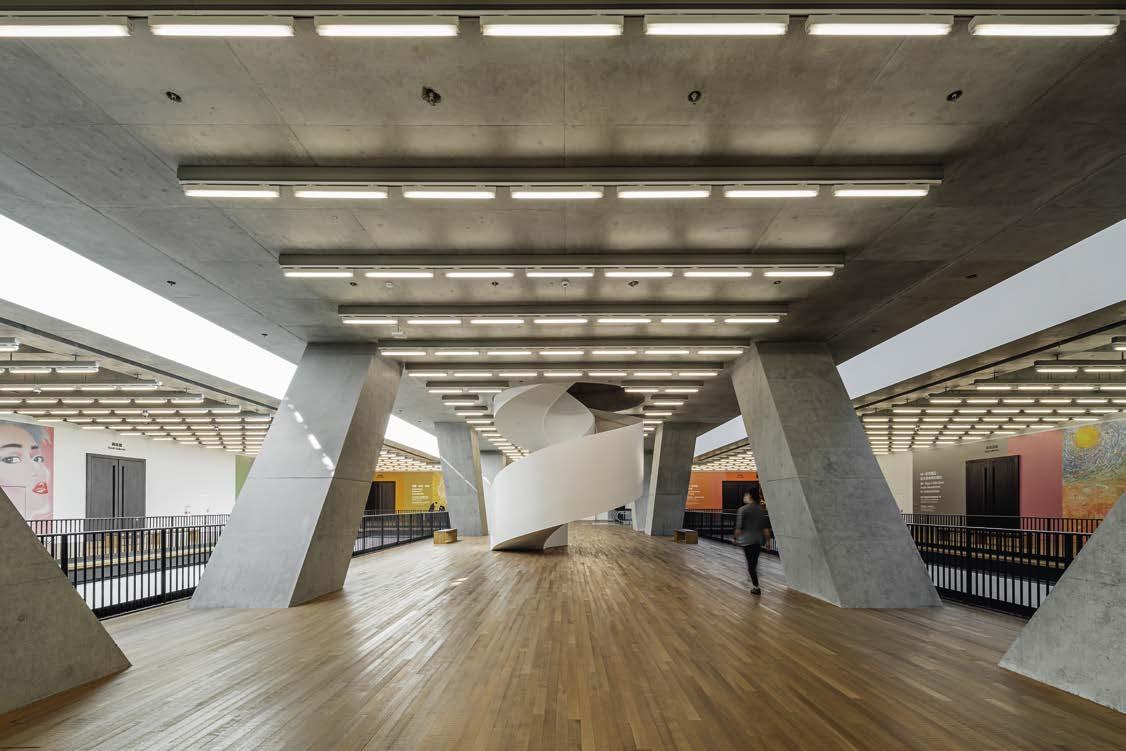
“The tunnel was like a dead body in the ground,” says Jacques Herzog of this found element. An expression of the vitality and speed of Hong Kong, it was “too seductive not to be used.”1 The Airport Express tunnel became a defining feature of the building, a diagonal form tearing across an otherwise orthogonal structure. Encased in concrete, the tunnel is revealed in the basement of the museum, the Found Space, and has become a platform or podium for the display of large-scale artworks. At the time of my visit, Yayoi Kusama’s Death of Nerves (2022) was on display there—a commissioned sculpture made from red, yellow, pink, and blue strands of textiles suspended through three stories of the building, and accompanying the largest retrospective of Kusama’s work held outside Japan.
Industrial spaces often make good public buildings and good spaces for art. Yet M+ is a new building designed to look like reclaimed infrastructure. For Herzog & de Meuron, what appears to be the accidental intervention of the railway tunnel, disrupting the order of the design, is part of embedding the new art museum in Hong Kong, so that, as Herzog put it, “the museum literally emerges from the city’s underground.” The apparent chaos that the tunnel imposes on the building is suggestive of a role for the museum in upsetting the cultural order of the city.
Aboveground, though, and from the outside, the plan and configuration of the architectural volumes are more predictable and orderly. The building takes the form of a simple diagram, which, after the fact, has been translated beautifully into a logo and exhibition map developed respectively by the British graphic-design firm North and the Dutch designer Thonik. The British design firm Cartlidge Levene was responsible for wayfinding and signage. In simple terms, the building consists of a slim vertical tower of private spaces that bisects horizontal slabs of public spaces. The visitor enters directly from the public waterfront promenade that surrounds the museum, crossing a continuous pavement of concrete planks cast with the grain of the timber formwork. The private functions of the
museum, including offices, a members’ lounge, and research center, are housed in a twelve-meter-wide tower with a façade of concrete louvers.
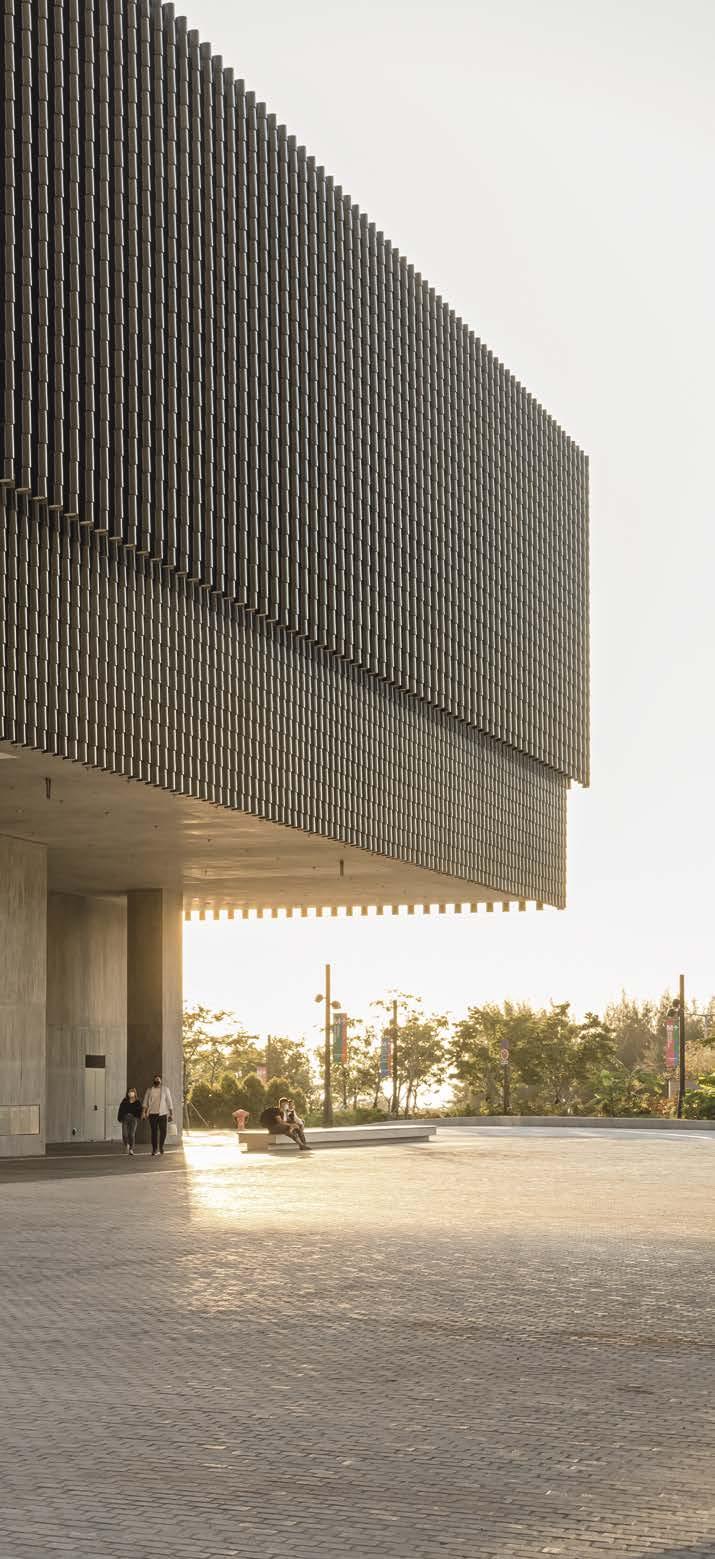
The highly legible plan and rigorous logic of the layout are another feature of M+’s openness to the public. Galleries and public facilities are layered horizontally, close to the ground and easily accessible via wide staircases and escalators. The gallery floor is topped by an expansive roof terrace, which offers spectacular views across the harbor and a playscape inspired by Isamu Noguchi. An artist of Japanese origin who was born in the United States in 1904, Noguchi is symbolic of the museum’s desire to bring together East and West, and to express sculpture as a “vital force in everyday life,” to paraphrase the artist. 2 The playscape comprises sculptural forms that visitors can climb on, sit on, and explore, providing a level of interactivity between art and landscape that hasn’t previously existed in Hong Kong.
On the ground level, the building’s materials and fittings accentuate the impression that the atrium is a continuation of the public realm of the street: unadorned steel railings line the edges of wide concrete walkways. When explored through its walkways, platforms, and staircases, M+ is as dynamic as a slice of urban infrastructure. But despite its tough, enigmatic exterior, the museum fabric is highly crafted and tactile. Upon closer inspection, the giant screen on the south façade, which boasts 5,664 LED tubes, is composed of louvers, each one covered with dark-green-glazed terra-cotta components that reflect light and change color to create a textured surface. It is claimed that the extensive use of terra-cotta provides a localized environmental solution, protecting the building from the corrosive effects of heat, humidity, and wind.
On the upper gallery floor, the material palette softens, with wooden floors and furniture designed by the architects and made of bamboo to recall informal structures found in Hong Kong. Galleries are arranged in four main sections leading from a central hall. Each retains a connection to the outside through large windows that allow the visitor to maintain a sense of direction and orientation within the complex arrangement of rooms.
Despite the youth of M+, the institution already has an impressive collection of interdisciplinary works, gathered under the leadership of chief
89
curator Doryun Chong. The M+ Sigg Collection of 1,510 works of contemporary Chinese art is complemented by a collection of 6,709 paintings, sculptures, films, and designed objects. There is also an archive of ninety fonds, with over 51,444 documents that are constantly being added to. The focus is on works by Asian artists, but where relevant there are works by Western artists and architects, including the Archigram archive from the United Kingdom, with its resonant focus on visionary ideas for cities.
Chong’s background as a curator who trained in the United States, working at New York’s Museum of Modern Art and at the Walker Art Center in Minneapolis, informed his approach to acquisitions. “As I was building the collection and the team,” he told me, “I realized that we couldn’t build a twentyfirst-century collection without building a twentiethcentury collection—you can’t ignore legacy. So we looked back to establish the foundations for contemporary Asian art, adding works to the Western canon rather than challenging it.” Chong believes, though, that M+ has gone farther than MoMA in connecting the disciplines within the collection. “MoMA’s departments became ossified and they had to make efforts to break down the silos. I was hyperaware that we shouldn’t departmentalize.”
One of the results of Chong’s commitment to interdisciplinarity is that the semipermanent exhibitions of art and design flow into each other while maintaining distinct atmospheres. This journey around and between the galleries is expertly handled, so that the visitor can see the connections among different fields. There are clear links, for example, between the use of calligraphy in Japanese abstraction and the works of graphic design in the semipermanent exhibition Things, Spaces, Interactions . In the Asian context, with rapid economic growth and urban development still leading to material improvements in people’s lives, the hierarchy of practice between art, design, and architecture is less entrenched.
For Ikko Yokoyama, M+’s lead curator of design and architecture, the new institution brought the first opportunity for a museum to look in detail at trans-Asian design culture. “While Western museums are worried about filling in the gaps of their collections,” she says, “we’re extending and augmenting the canonical story by showing the connections to Asia. We’re not trying to make a comprehensive
survey like the V&A museum in London, but to tell stories about people’s lives through design products.”
Unlike many museums whose storage is moved off-site for lack of space, M+ has a dedicated tower for storing works not on view, located adjacent to the museum in a modest-looking concrete block— the Conservation and Storage Facility, which stands alongside a sixteen-story building housing the head office of the West Kowloon Cultural District, both designed by Herzog & de Meuron as part of the campus.
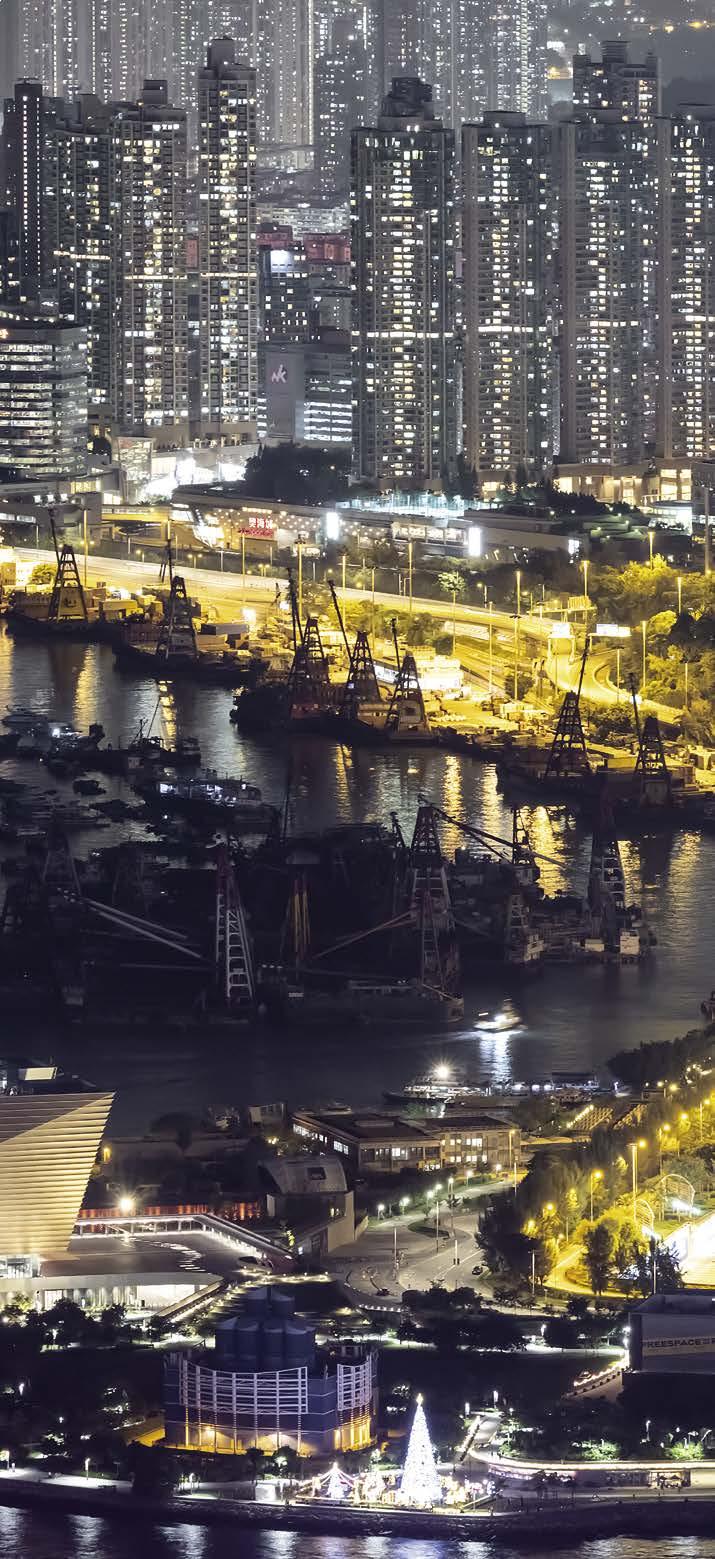
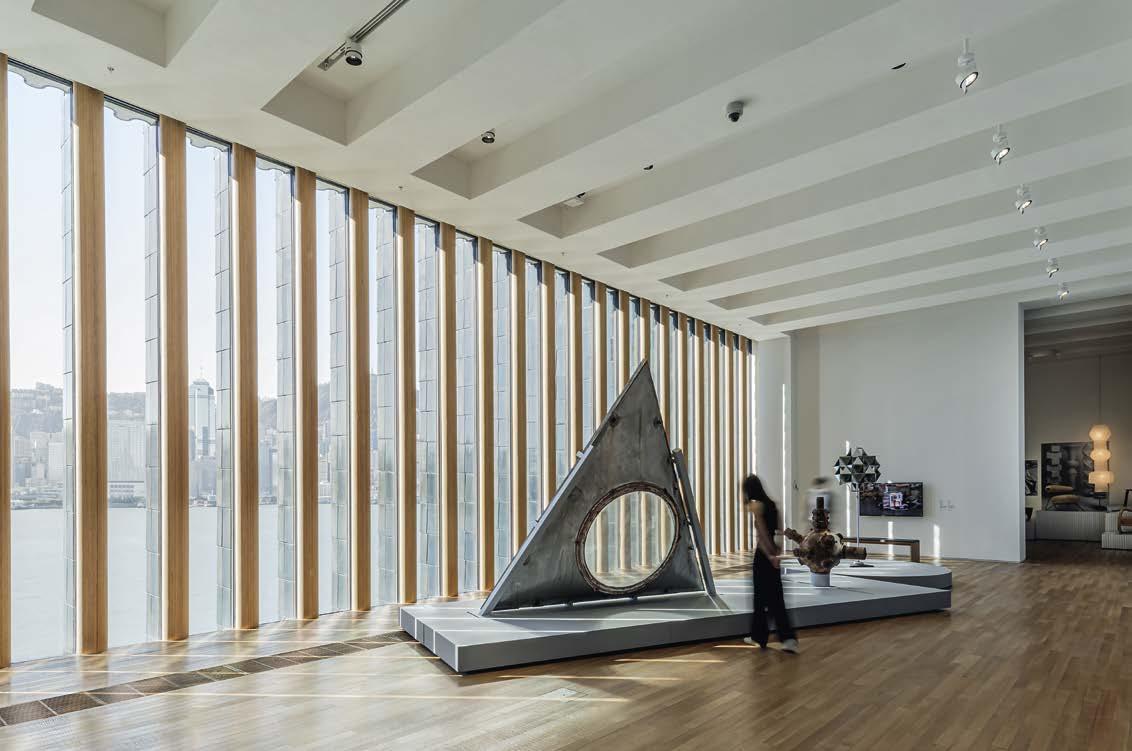
M+ opened in November 2021, when the covid19 travel ban was in force—a mixed blessing for the museum. Cultural tourism is the fastest-growing sector of the Hong Kong economy, and the West Kowloon Cultural District expects to receive 40 percent of its visitors from overseas. But the absence of tourists became an opportunity for M+ to forge a relationship with locals, and in its first eighteen months, nearly 3 million Hong Kongers registered to visit it. Herzog & de Meuron’s aspiration for architecture to be a stage set for people, which they proposed at Tate Modern, has been taken to a new level.
M+ embraces normalcy in the architecture of the city. Its unassuming exterior appearance suggests that a visit to a contemporary-art museum might be as everyday as going to a shopping mall or office block. Indeed, from the outside, at first glance, the tower and slab of the building appear to be from the same family as an international style office block, its rectangular blocks giving little away about the nature of the world within. Even the defining external feature of M+, the digital screen, connects to associations of commerce rather than of culture. But in this city, which is struggling hard to throw off the label “cultural desert,” the links and references to business architecture are a way of saying that art is part of the everyday: M+ belongs in Hong Kong; it is not an imposition from outside but a part of the city’s culture.
90
1. Jacques Herzog, in the Prada Frames symposium “Materials in Flux,” organized by M+, Hong Kong, March 21 and 22, 2023. Available online at https://www.prada.com/ww/en/pradasphere /events/2023/prada-frames-hong-kong.html (accessed June 23, 2023).
2. Isamu Noguchi, in the brochure for an exhibition at the Marie Harriman Gallery, New York, 1935.

91
Opposite: Installation view, Things, Spaces, Interactions , M+, Hong Kong, November 12, 2021– . Photo: © Kevin Mak, courtesy Herzog & de Meuron
This page: M+, Hong Kong. Photo: Iwan Baan © Herzog & de Meuron
IN CONVERSATION
HELEN MARDEN & KIKI SMITH
Ahead of her exhibition in Athens this fall, Helen Marden met with longtime friend Kiki Smith at her home in the West Village to discuss the bravery of color and the power of intuition.
KIKI SMITH Being in your house now, Helen, I have a memory of the first time I came here, but I have no idea why I was invited for anything at all [laughter ]. HELEN MARDEN We were having, maybe, a Christmas party?
KS It wasn’t Christmas. I don’t know what it was. It was a long time ago.
HM I remember you were here right after 9/11—I had had my sixtieth birthday party planned and we just decided to do it anyway because I thought people needed somewhere to go and hug each other.
KS Yes, that was a complete lifesaver. I remember that every 9/11, how incredibly important that was. It seemed so frivolous, and at the same time, it was so stabilizing to be in real community.
The odd detail I remember was being in the kitchen and above the kitchen you had this fuchsia, bright fuchsia, like Day-Glo pink, dripping down above the stove. It was so radical. And I just went, This is a different brain. When I was young, a friend of my sister’s had an apartment, I think in the Chelsea Hotel or something, she’d spray-painted the walls, and I was so shocked—my reaction made me realize how conservative I was. You know, like, What’s the landlord going to say? Are you going to get in trouble? And I thought, Oh, Kiki, you’re so square. In a sense, when I saw that pink in your kitchen, I had the same feeling of shock. I thought, This is a radical position.
HM Yes, we used to have that pink! I painted it with watercolor and I just kept doing it till it dripped down over the stove. Now it’s been painted green, but we had that pink forever.
KS I thought, That’s a special person to investigate now. It was captivating: you’re looking at something that somebody made, and it has some sense to it, but it’s not one that you can discern. And your paintings are like that too. Do you say to yourself, I’m going to use these colors today? Or. . . I mean, you have to make preparations for mixing all that stuff, but do you really plan it out?
HM Do you know what I do? I sit on the sofa, and I have some color in my mind, and then I sit there too long, and then I jump up and I run over and I stir the resin. And then I pour that color in and jump again and run over, and there it goes.
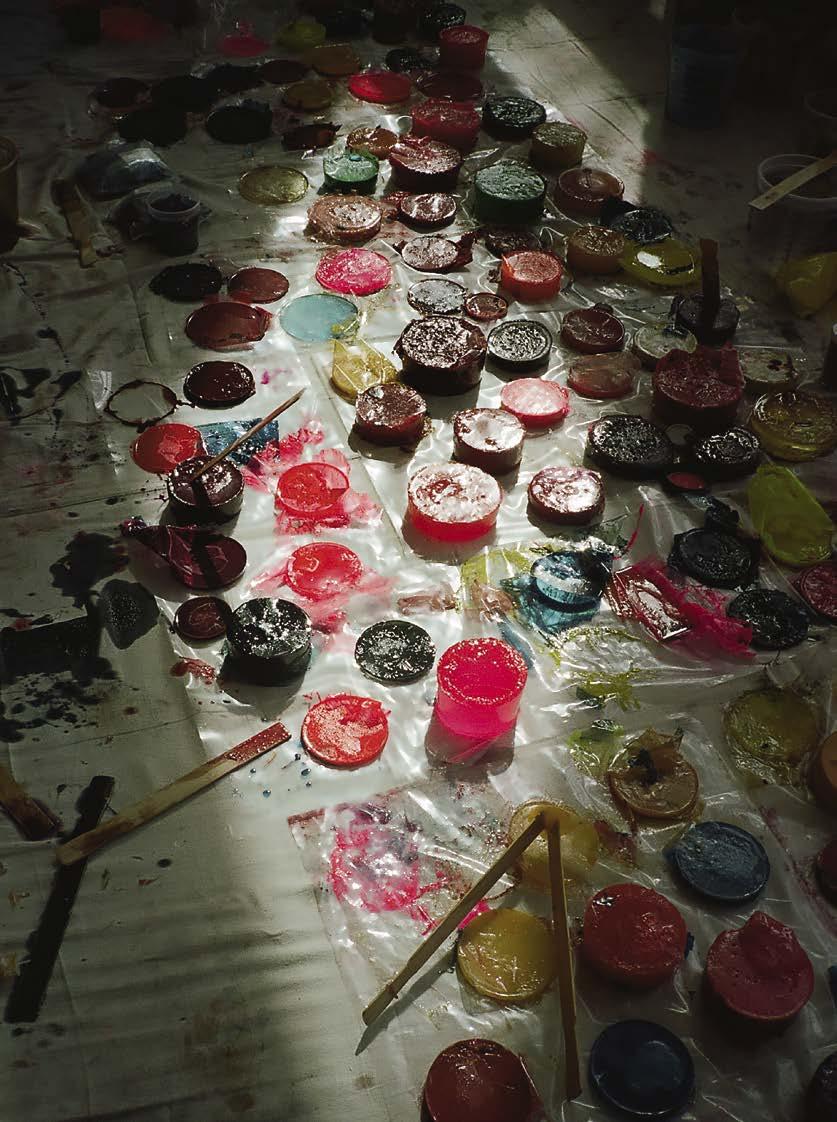
KS That’s like an intuitive dance—very much time based in the now.
HM I never thought about it that way. Martha Diamond once told me she always did a mock-up before creating her work and I thought, How strange, I could never do that. I could never sustain my interest to first make one thing and then have to make it again, when in the end it looks like the first thing. No, that’s not how I am, obviously.
KS I noticed, looking at the works that will be in your upcoming Athens exhibition, that there are darker colors.
HM Well, it’s been a—it’s been a lot of darkness here. Maybe that’s why. But while these colors were coming to me, I was thinking, Oh, that’s new. That’s cool.
I also recently had ten or thirteen circular canvases made because I thought it would be a fun
92
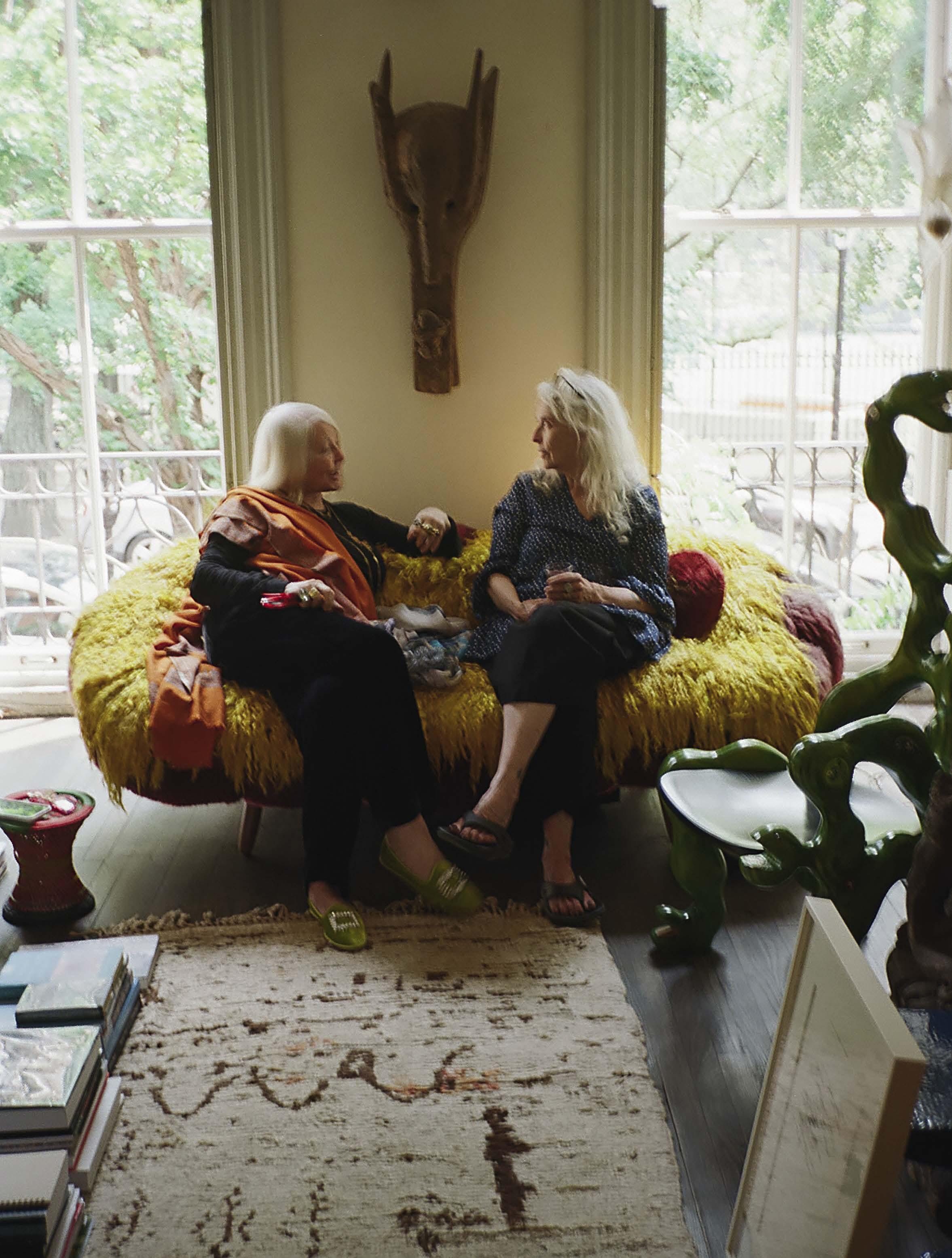
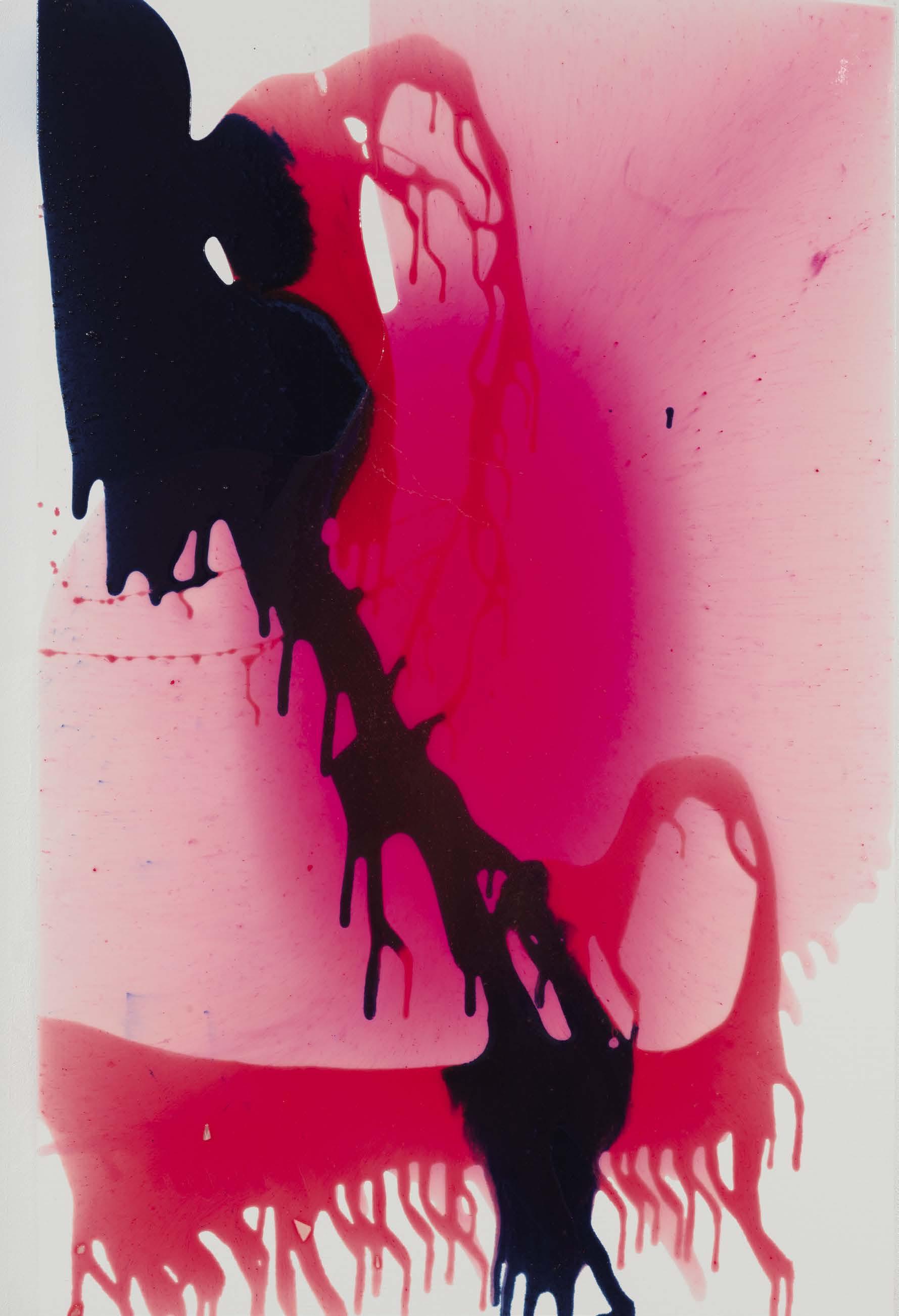
shape to try, so I put resin and stuck feathers on them. Then I ran in and found a bottle of ink and just poured it on while the resin was wet. I couldn’t get the color that I wanted to use—I couldn’t get the bottle top off—so I ran back and got this one.
KS That’s a good color, like sanguine.
HM Then I thought of Icarus—
KS Is that where the feathers come in?
HM Yes, and I’m also just generally inspired by the natural world—like you, too, with your depictions of animals. I’ve included seashells because they’ve been a presence all my life; I remember collecting them with my mom. And I guess they mean a certain strength, but also they’re fragile.
KS They’re also luminescent, like your paintings. If you look at the little bottles, the shells, they have this shine—
HM Do you think that’s cheating?
KS No [laughter ]. I don’t think you can cheat.
HM Well now I can say Kiki told me it wasn’t cheating.
KS I don’t believe in cheating.
HM Oh, good.
KS I collect shells too. I collect shells and rocks. I went to Ireland once when I was sixteen and I asked my mother, What should I bring home, and she said, Just bring me a rock. Back then we didn’t have much so we valued natural objects we could just find.
HM My mother would collect all kinds of rocks from walking around. So I grew up with halls of rocks.
KS Yeah, we had shelves of rocks and crystals. My mother was deep into crystals and rocks. I have rocks that she had from before I was born. And when I met my husband, I took my assistant and we went into my bedroom and I said, We have to hide all of these rocks [laughter ]. I said, This guy’s going to think I’m a total crazy person. And we hid them in the radiators.
HM And did he find them and then he knew you were crazy?
KS No, I think he’d already figured out that I was crazy.
Before that, another time I had about eighteen birds living in my bedroom. And somebody said, You know, Kiki, if you want to be in a relationship, you have to make concessions. And I was like, What do you mean? [laughter ]
HM Years ago I had bats living in my loft with big banana plants and things so the bats could hang on them. People pointed out to me that maybe someone didn’t really want to come back to your place and find bats [laughter ].
KS But honestly, I think nature is in and all around us. If you look out the window here, you’re practically in a jungle, you know? Everything we do is in relationship to nature. It’s the most powerful thing there is.
HM How did you begin creating animals in your work, like your wolf? Where did that come from?
KS I was invited to MassArt [Massachusetts College of Art and Design, Boston] in 1994. And I went to the Peabody Museum and made drawings, and then I made life-size etchings from them. Basically since then, all the animals I’m making originated from the drawings I made in ’94. It’s like having a repertory theater or something like that, you can kind of pull them out.
HM I like that.
KS Do you feel like you have that with color at all?
HM Well, yeah, I do—
KS Like a palette you return to.
HM I think after the darkness, I went right back to using the magentas and everything—my repertoire. I was in my studio looking at those dark works, thinking, I don’t know where that came from [laughs ]. Like
Opening spread, left: Helen Marden’s studio, Tivoli, New York. Photo: Mirabelle Marden
Opening spread, right: Helen Marden and Kiki Smith, New York, 2023.
Photo: Mirabelle Marden
Opposite: Helen Marden, Night Song, 2022 (detail), resin, powdered pigment, and glass on linen, 50 × 32 inches (127 × 81.3 cm).
Photo: Rob McKeever
Right, from top to bottom: Helen Marden, Sanuk , 2023, resin, pigment, sea glass, and feathers on linen, 19 × 22 inches (48.3 × 55.9 cm). Photo: Rob McKeever
Helen Marden, Sanuk II , 2023, resin, pigment, and feathers on linen, 20 × 22 inches (50.8 × 55.9 cm).
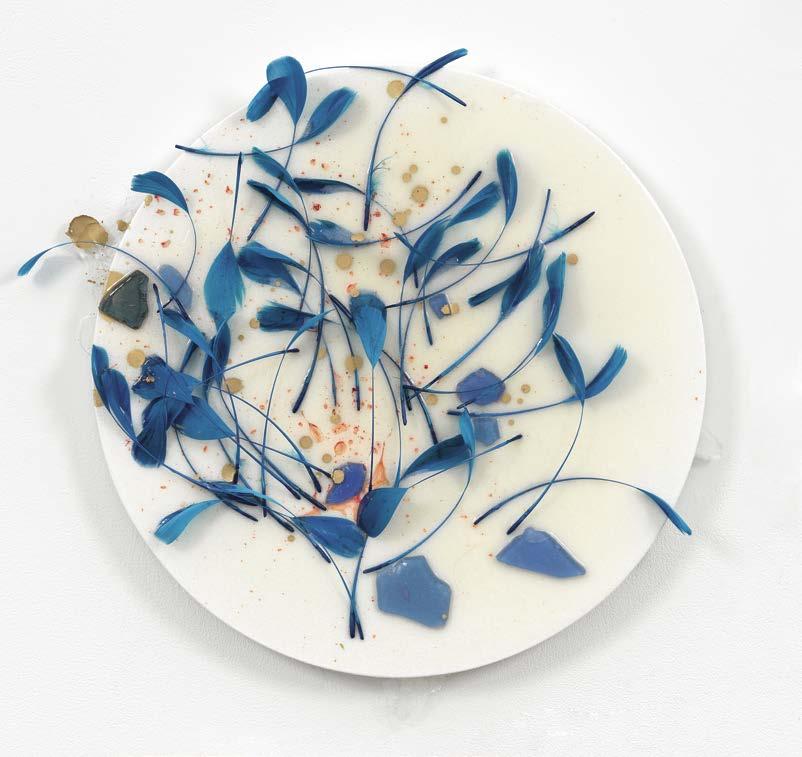
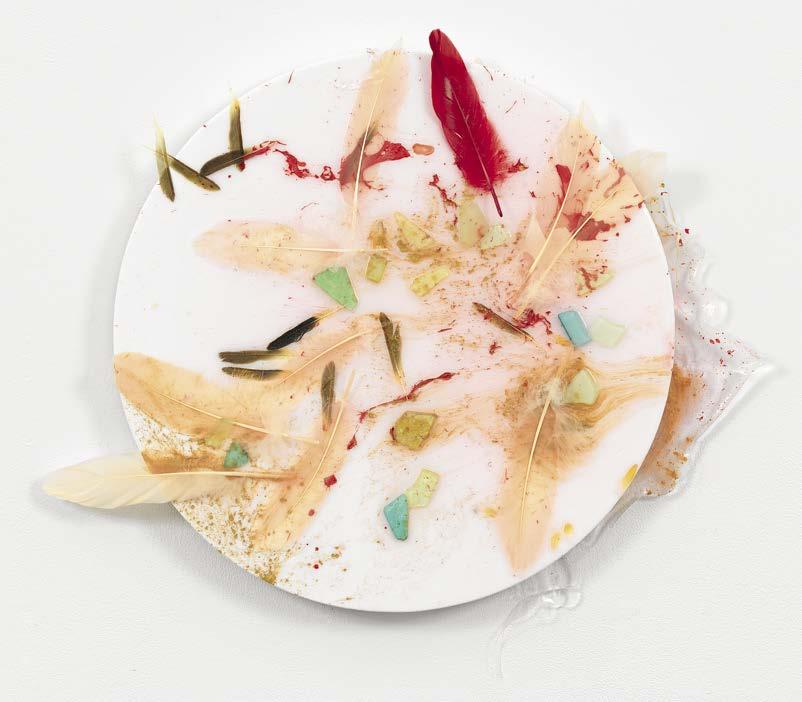
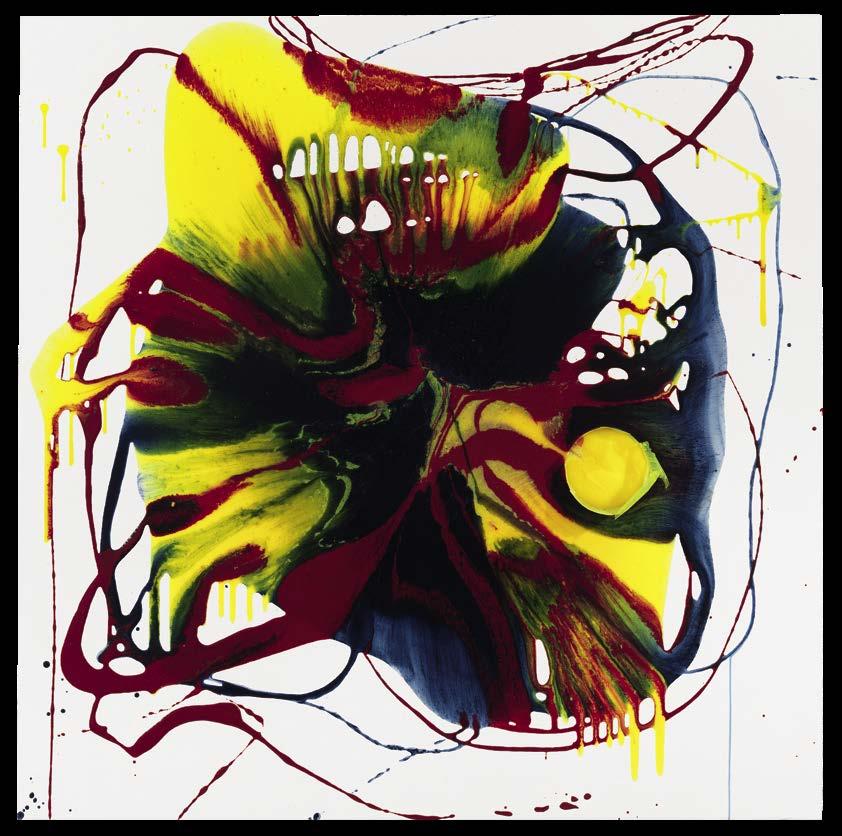
Photo: Rob McKeever
Helen Marden, Montserrat , 2022, resin and powdered pigment on linen, 50 × 50 inches (127 × 127 cm).
Photo: Rob McKeever
95
I said, things were difficult and that dark just came out. I didn’t think it through first; I don’t know if you’ve noticed, I’m not an intellectual.
KS But it’s not that—it’s not about not being intellectual. It’s that when you have access intuitively to things, it’s because you actually have synthesized them and you know them and you can access them without cognitive effort. One of the nice things about being an artist is you don’t have to use language. You know, language can be a great gift—
HM But it can be a big hindrance. One of my favorite quotes by Robert Rauschenberg is “We all know by now we’re serious. We don’t have to act like it” [laughter ]. I agree, Kiki, and with many artists we know, there’s a certain depth of knowledge. They don’t have to go over their work and explain to themselves and the public, This is this and that.
KS And also, someone like you, Helen, has seen a tremendous amount of the world, having spent time in Morocco, Greece, and many other places. And so, by being and seeing, you can utilize your experiences in your work. I’m a reluctant traveler, a complete homebody, but when I’m somewhere new it often expands my repertoire.
HM You had that great show at the Slaughterhouse in Hydra[, Greece]. And there were all those tables, you invited everyone for dinner. It was so lovely. When was that?
KS Right before the pandemic, the summer before. That was a very nice experience. I like that—if you get to go make something for someplace special, it’s not just, I don’t know, interchangeable with every other place in the world.
HM I have a vivid memory of being in Hydra with you. My daughter Mirabelle took pictures of us in the water—
KS Yes! And you had a red bathing suit. I was really impressed by that. See, you’re always impressing and encouraging me with color [laughs ].
When I was young, I made things in color and then I stopped because I felt it was too personal. It felt too vulnerable. Because someone could come and say, Why did you use that color over that color? And I thought that’s a little scarier than I can handle in life, to be asked questions like that [laughter ]. And I really used practically no color for about twenty, thirty years, and then I started using color in more of a factual way: you know, this is the color of blood and this is the representation of the nervous system. So your work to me is so liberating and radical because you know intuitively what you’re doing and you’re just moving. I thought, I can use color, nothing bad is going to happen to me [laughter ].
HM The color witch won’t come and get you [laughter ]. But in all seriousness, there’s a big prejudice against color, and especially against women artists using color. It’s like a big sign of their not being good enough or smart enough. I don’t know if it’s just American; I guess it’s European too.
KS Well, Europeans are—they don’t know that many women, so it’s not a problem [laughs ].
HM Yeah. I look at all those Aboriginal painters in Australia and I just love the color and the dots, and you know what they’re wearing, it’s all color.
KS It’s really true that women have been trivialized for using color. Many of the female painters from the twentieth century were marginalized because color was and is considered frivolous. Likely because it’s attached to nature.
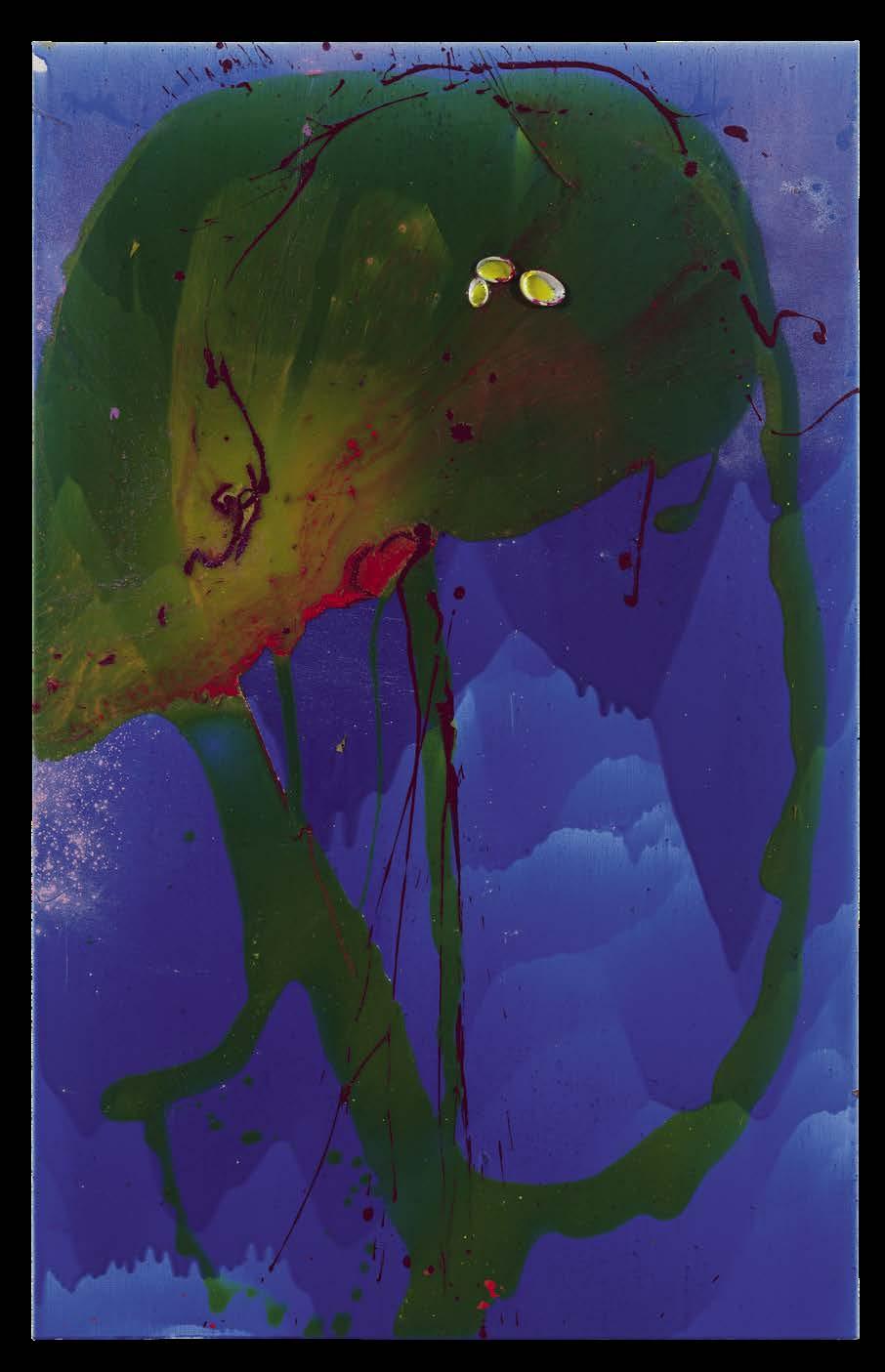
HM Nature is women.
KS Yeah. Well, it’s the same thing. You know, look at those peonies and stuff. Pure frivolity [laughter ].
HM Here we are, frivoling away [laughter ]. Frivol, frivol, frivol.
96
Below: Helen Marden, Hydra Viper, 2020, resin, powdered pigment, twigs, and shells on linen, 50 × 32 inches (127 × 81.3 cm). Photo: Rob McKeever
Artwork © 2023 Helen Marden/Artists Rights Society (ARS), New York
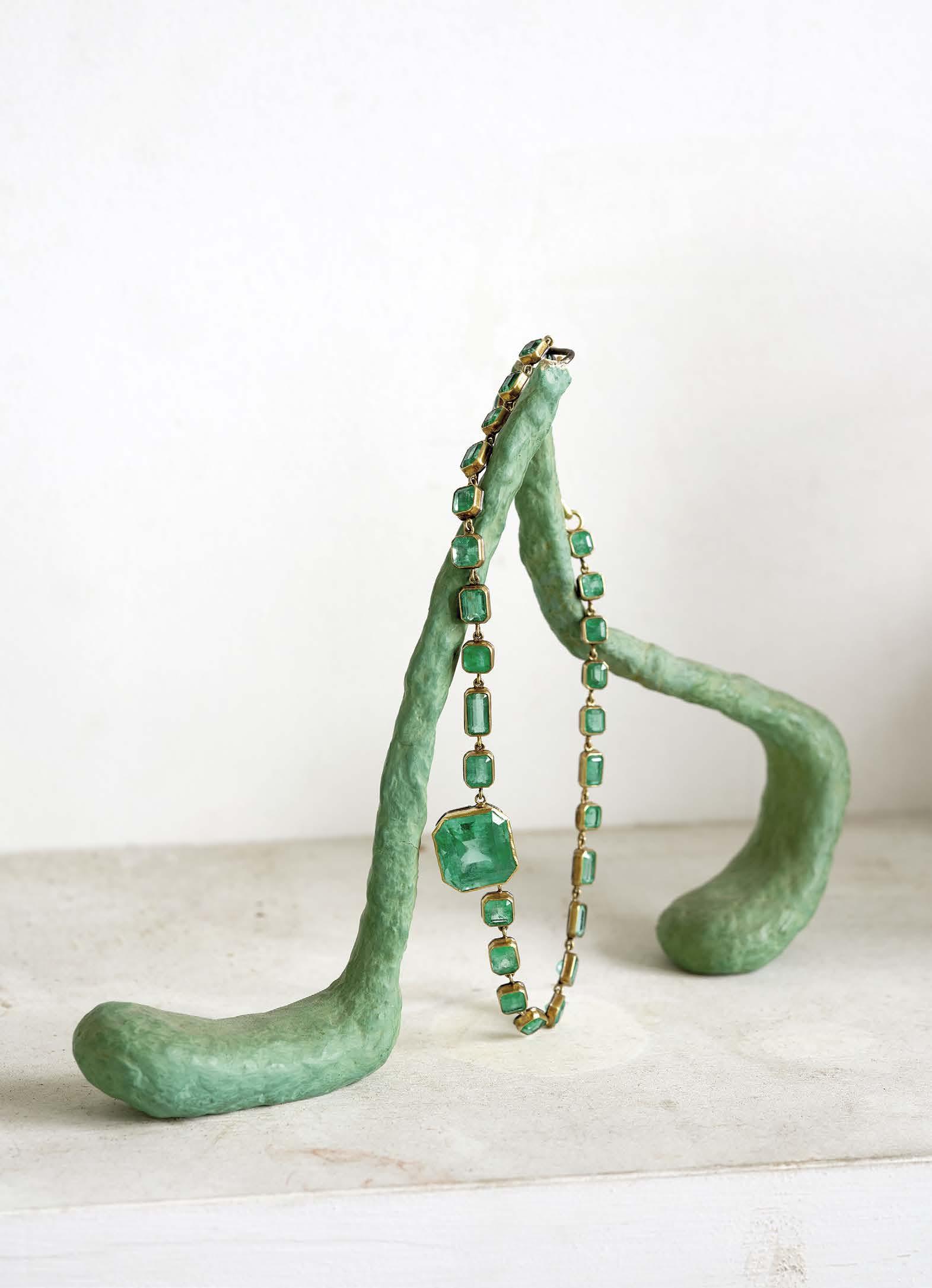
Building a Legacy: National Portrait Gallery
This ongoing series features conversations with experts in the field of artists’ estates and legacy stewardship who offer insights that might prove useful to artists, their staff, foundations and estates, scholars, and others. For this installment, Nicholas Cullinan, the director of London’s National Portrait Gallery, meets with author and curator Allie Biswas to discuss the institution’s history, its recent three-year renovation, and what it means to prepare an art institution for future audiences and artists.
ALLIE BISWAS In order to discuss how the National Portrait Gallery seeks to protect its institutional legacy, it’s first necessary to understand what the gallery represents. Could you talk about the institution’s founding and what it was intended to stand for?
NICHOLAS CULLINAN When we were founded, in 1856, we were the first portrait gallery in the world. Now there are other portrait galleries, in Edinburgh, in Washington DC, in Canberra, and some other quasi–portrait galleries as well. But they’re still quite few and far between.
The discussions around the founding of the National Portrait Gallery in the 1850s included people like Thomas Carlyle, the eminent but also controversial historian, and lots of politicians—it was discussed in the Houses of Parliament. Discussions focused on why having a portrait gallery was necessary and what it could do. It was a bit in opposition to how other countries documented their history. Instead of the grand historical paintings that you see in Versailles, which talk about French history, the Gallery could be a tapestry of individuals and lives; that was more British, somehow. The other idea was that it would give people, ordinary people, examples to emulate of people who had done remarkable things. I think there’s something quite noble, and potentially also quite patriarchal, about some of those founding principles.
Our transformational Inspiring People project is a complete rethinking of the Gallery. As part of the project, we went back through the Gallery’s history, back through the archive. Even the new logo we have, this interlocking NPG, has its roots in a sketch we found in the archive, from 1893, drawn by
the Gallery’s first director, Sir George Scharf. In a way, it’s the perfect visual metaphor for what we’ve done, which is to make the NPG feel more relevant, more engaging, and in some ways more contemporary, by really thinking through its role historically.
In some ways, our role remains unchanged: we are a gallery that tells the story of British history through individuals and different lives, thinking about identity and achievement and, of course, about portraiture as a medium. But in other ways, although the role remains the same, our span has changed a lot, because Britain of course is changing in terms of its populations and discussions, and we need to move with that.
AB When you joined the organization, eight years ago now, did you come into the role understanding that a major overhaul of the building and/ or the collection was going to be required?
NC There was an idea in the job pack about a transformation project. At that point it was undefined, and was only just beginning to be discussed. For example, we have a great learning department that leads amazing programs with many different groups, including both children and adult learners, but our one dark, basement studio was not fit for the purpose. So there was the idea of creating a new learning center. There was also the idea of making the building work properly again, because, for example, the lifts didn’t go down to the ground floor anymore. There were practical problems. Then also, some of our galleries hadn’t been looked at for thirty years, so it made sense to rethink the collection. I was brought in to shape, lead, and deliver the project, so that’s what I’ve been doing for the last eight years.
AB How did you separate the refurbishment of the spaces from a rehang of the collection? Do you think of these things as separate or are they intrinsically connected?
NC The Gallery’s redevelopment project is really holistic. That’s what was needed, because for the first forty years after the founding, we had quite an itinerant existence—we moved around, operating from different locations. Then our current building was purpose-built for us in 1896, by Ewan Christian. Since then, there have been major additions, including the Duveen Wing in 1933 and the Ondaatje Wing in 2000.
What that’s meant is that the Gallery has felt, over the decades, maybe a bit disjointed. Even aesthetically: you would go to the nineteenth-century galleries and they would be radically different from the contemporary galleries. It was exciting to take a step back and consider the whole. Looking at the entire building and the entire collection meant reinterpreting these things, as well as considering our branding, our logo, our digital presence, and thinking about what we’re acquiring and how we want to grow the collection. It was also about reflecting on the culture of working here. It was about changing everything together, in unison, which is really an amazing thing to be able to do, to take this much-loved Victorian national institution and bring it ever more into the present, hopefully making it fit for the next twenty, twenty-five years.
AB As a curator who’s worked at the Tate, the Metropolitan Museum of Art in New York, and now the National Portrait Gallery, how do you feel about collection rehangs generally, regardless of whether the building is changing?
98
NC They’re separate work streams, but the building project, which involves thinking about architecture, light, and space, of course overlaps very clearly with the rehang. Before this, the building and the collection were often at odds with each other. There was a tendency, for example, to close all the windows in the building; it felt very dark and a bit claustrophobic. We’ve restored the building to how it was originally intended. Our refurbishment has allowed the building to look the way it did back in 1896. This project was about making the collection fit with the building.
That said, of course a rehang is also an intellectual exercise because it’s not just about how you hang something physically, it’s about the interpretation, the intellectual framework. So that’s been a whole other huge project.
AB Let’s talk about the criteria for that. What was the starting point when you first started discussions around it?
NC We started the project eight years ago, and it’s changed over those years, as you would expect. But it began with basic principles: everyone was aware that a rehang was necessary, and that rewriting the labels was necessary, because they were just quite outdated, even in terms of the information they were providing. The language and tone felt like a textbook. This wasn’t just us deciding on a whim to do these things; the whole project was based on visitor research—we would talk to our visitors about what they loved about the Gallery and what they thought worked less well. And equally we would talk to people who didn’t come to the Gallery, or never had, and find out why that was.
AB How long did that audience-research process take?
NC It’s ongoing; we always do it. But we did a big audience-research exercise in the runup to the project and those things were identified very clearly. Going back to the rehang, when I started, the first discussions were founding principles. For example, do we stick with chronology or do we go for an achronological, thematic hang? On balance, we thought that chronology was important for a museum of history that attracts a variety of people, including schoolchildren and people from outside the UK who are coming to try to understand where they are and the culture of the country they’re in.
That said, of course, there are galleries that cut across chronology by looking at certain mediums— miniatures or silhouettes or print culture or life and death masks. There, we deliberately have a span that cuts across different times. And we’ve done some contemporary interventions in the historical galleries, with works by Elizabeth Peyton, for example.
AB Have you commissioned any new works?
NC Yes. We’re unique in our commissioning; I think we’re the only museum in the UK that actually commissions for the collection. Of course we also acquire, and we’ve acquired incredible things recently, like Joshua Reynolds’s Portrait of Mai [c. 1776]. That’s a game changer for us—it’s probably the most important painting we have now. For it not just to go on display here but actually to enter a museum collection for the first time in its history, so that now everyone can see it, is so wonderful.
When we reopen in June, there will be more than sixty works that won’t have been seen before,
and they range from commissions like Toyin Ojih Odutola’s portrait of Zadie Smith, and Steve McQueen’s portrait of Nick Serota, to acquisitions that we’ve made, especially with the Chanel Culture Fund, that have focused on women artists and sitters. We’ve acquired important works, such as self-portraits by Celia Paul and Everlyn Nicodemus—the first painted self-portrait by a Black female artist to enter the collection. Also, Michael Armitage’s beautiful tapestry of key workers from 2020—I mean, I could go on. An amazing Gainsborough of the ballet dancer Gaetano Vestris [c. 1780–81] that we were given. When people come in, there’ll be a lot of new things to see, but we’ve also brought things out that have been in the collection but we haven’t shown before. We’ve done a huge research exercise going through our archives. We have a collection of 250,000 photographs, and photography has come much more to the fore of our new displays, from the Victorian era to now. People will be in for some surprises.
AB What’s the institution’s history of commissioning portraits?
NC It’s relatively recent. When we were established, there were various rules, and one of them was that no one could enter the NPG’s collection as the subject of a portrait until they’d been dead for ten years (unless they were the reigning monarch or their spouse). In the 1960s, one of my predecessors, Sir Roy Strong, began, with the trustees, to question some of these rules. For example, photography hadn’t been collected, acquired, or exhibited until then, and Strong changed that, leading to amazing things like a Cecil Beaton exhibition we did in the late 1960s, a huge blockbuster. After that,
99
we abolished the ten-year rule, and that meant the trustees began to commission living sitters. The trustees decide the sitter, and then we—I and the curatorial team—decide on the artist who should undertake it, which is fun. When I was interviewed for the job, almost nine years ago now, the trustees asked me, If you could commission a portrait of any sitter by any artist, what would it be, and my answer was Malala Yousafzai by Shirin Neshat. I thought of Malala as someone who’s now based in the UK but is a figure of world significance, and thought we shouldn’t just find a British figurative artist, it could be wider. We have Holbein and Van Dyck; they weren’t born in the UK, but they lived and worked here. So we chose Shirin and made it happen. Now it’s one of our bestknown works.
AB In terms of the actual building work, the architectural firm you’ve been working with is Jamie Fobert’s. I’m interested to hear about the process of selecting an architect.
NC The first few years, 2015 until about 2018, were focused on shaping the project, raising the money, and then we were ready to appoint an architect. We had pretty much every major architect you can think of apply. We had an incredible short list and were delighted to appoint Jamie in 2018.
AB What were your criteria when you were looking at these architects—what were you looking for?
NC Someone who would understand the building and how to work with it, while also being able to evolve it. It was also important to find someone who would know how to moderate a conversation between each of its different epochs. We didn’t want someone to just come in and slap their aesthetic, or ego, on the building. It was time to have someone very clearly shape the building and add their signature to it, but to do that by moderating a conversation so that the building itself would feel much more cohesive. And Jamie has been brilliant at that.
AB The ultimate reason for any type of refurbishment on this scale is that you’re thinking about your audiences. That’s ultimately what creates a legacy for an institution. How are you going to gauge the success of this project? And is there more to come in terms of the refurbishment?
NC This is being done to get the Gallery in the best shape for hopefully twenty or thirty years. So its success will lie in how much it raises the profile of the Gallery, makes the building a more pleasurable and beautiful place to spend time in, and how much people enjoy it and hopefully keep coming back. I wouldn’t say that the headlines, the reviews the first week, are the marker of it. Obviously that’s something that you keep an eye on, but it’s not the final word. We’re not doing this for a newspaper cycle.
To the second point, we’re already working on the next phase. We just bought this former ticket booth opposite the Gallery and we’re working on plans for that, which will take a couple of years. We’ll have to raise the money, appoint an architect. There’s a big underground space where we can program things that we can’t do now. We have beautiful galleries, but they’re quite circumscribed in a way. So for the first time, we’ll be able to consider installations, film and video, immersive art, and we’ll rebuild the educational pavilion as well. We’re also finishing a ten-year plan for the Gallery, taking it to 2033, because I don’t want us to peak this year, or this summer.
AB The building was closed for three years—how do you keep a brand visible when you do something like that?
NC The decision to close was very carefully made, but it was the right decision in that it safeguarded the collection. We don’t have a big building with wings that you can isolate, so it would have been quite risky to be doing building work with the portraits still on display. Looking after the collection was the top priority.
It also meant that the project took a year less to complete and cost a million pounds less. If this had been a four-year project with only bits of the galleries open and lots of dust, it would have been a nightmare. We talked to everyone who had done big transformations and they said, If you can close, close, because if you don’t, you’ll close halfway through anyway.
So then we thought, Be bold, close the Gallery in London, get it done as quickly as possible and in the most effective way, and then use that unprecedented chance to show the collection more widely around the UK and internationally than ever before. And that’s exactly what we’ve done. We did many amazing exhibitions around the UK, including a major Tudor exhibition in Bath and Liverpool—things we’ll never be able to lend again in terms of quality and quantity. Great projects like Coming Home , where we lent portraits back to the places their sitters were from, which has had an amazing response, and Hold Still during the pandemic—that was the competition where, with our patron, the princess of Wales, we encouraged people to send photographs documenting their experience of lockdown. We did it as a digital exhibition—I think it’s had 7 million page views now—and then we did it as a nationwide exhibition of billboards and posters on bus stops, and 5 million people saw it. No physical exhibition gets those numbers; that project reached millions of people who museums normally don’t reach, and made people feel engaged and involved in a way they wouldn’t normally.
And then we’ve been able to engage people with a major international series of tours and exhibitions; I think it’s four or five continents that we’ve been around. We just thought, St. Martin’s Place is a building site, forget about it. Let’s be bold and
let’s share the collection much more widely than we ever could again.
AB Do you think that kind of work will continue, despite the building reopening, now that you’ve understood how successful it can be?
NC Definitely. We’re really passionate about our national program and working in partnership. For example, Reynolds’s Portrait of Mai will start to go around the country after he’s been here for a while.
AB The NPG is a national institution that receives both public and private funding. How did conversations start relating to sponsors for the transformation project?
NC This was going to be by far the biggest project the Gallery had undertaken and the most amount of money the Gallery had tried to raise. I just hit the ground running, already starting to fundraise. We actually overfundraised; we exceeded by about £10 million.
AB Is that quite rare?
NC I think so. Not only did we overfundraise, the project ran on time and on budget, which is unusual. In Britain, one of the major funders that you need to get on board for this type of project is the National Lottery Heritage Fund. They accepted our first application and generously gave us £9.4 million. Other trusts and foundations followed, as did donors. Donors support what you’re doing but they don’t dictate things. They might say, Well, I want to support the learning center—Mildred and Simon Palley wanted to focus on this—but they don’t dictate what you do with the funds.
Then when Portrait of Mai came around—I mean, the biggest acquisition we’d ever made before this was the Van Dyck self-portrait [c. 1640], which was £10 million. And that was a lot. But times that by five; £50 million was a huge amount, and more than the whole building project cost.
So those two things total almost £100 million. It’s a lot.
AB Did you receive support from government?
NC The government gives you grants in aid for your running costs, but they vary year by year and depend on what you’re doing. Our grant in aid used to be 29 percent, so we had to raise the other 71 percent. They did support some elements of the capital campaign—they invested in critical infrastructure works and supported us with running costs that took place during the redevelopment.
AB Let’s finish with the opening program, exhibitions of Paul McCartney and Yevonde. What was the thinking around that?
NC Yevonde was a pioneer of color photography and we had a great collection of her work already. Then two years ago we acquired her entire photographic archive of negatives and began a big research project, funded by the Chanel Culture Fund, to archive, document, and print them.
Then in the summer of 2020 Paul McCartney got in touch and said that he’d been going through his archives and had found all of these photographs that he’d taken of the early days of the Beatles. He remembered that he used to take photos, but he thought they’d gone. He said, Would you like to have a look and maybe they could form a nice little display. What we worked with Paul to select were 250 unseen images. The world had never seen any of them. And they are incredible. I mean, just seeing the Beatles backstage on The Ed Sullivan Show before they step out and change the world. . . . It’s really moving to see some of those images and how tender and how intimate they are. So both exhibitions—Yevonde: Life and Colour and Paul McCartney Photographs 1963–64: Eyes of the Storm —are filled with new discoveries.
100
We thought, be bold, close the Gallery in London, get it done as quickly as possible and in the most effective way, and then use that unprecedented chance to show the collection more widely around the UK and internationally than ever before. And that’s exactly what we’ve done.
— Nicholas Cullinan
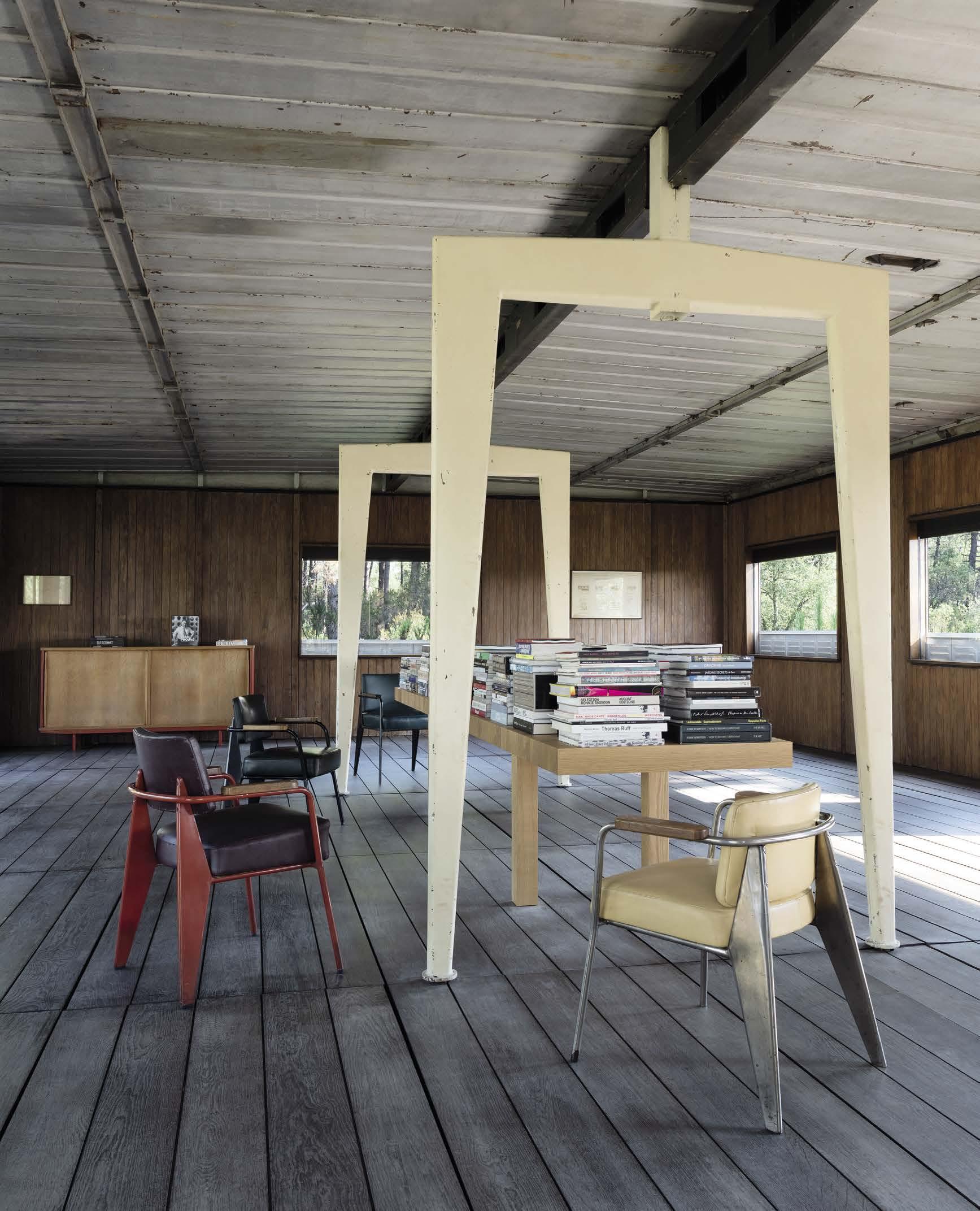
Come As You Are Derrick Adams
Jewels Dodson visited artist Derrick Adams at his New York studio as he prepared for an exhibition of new paintings in Los Angeles in the fall of 2023. She reports on these works and on Adams’s embrace of joy, humor, and contradiction.
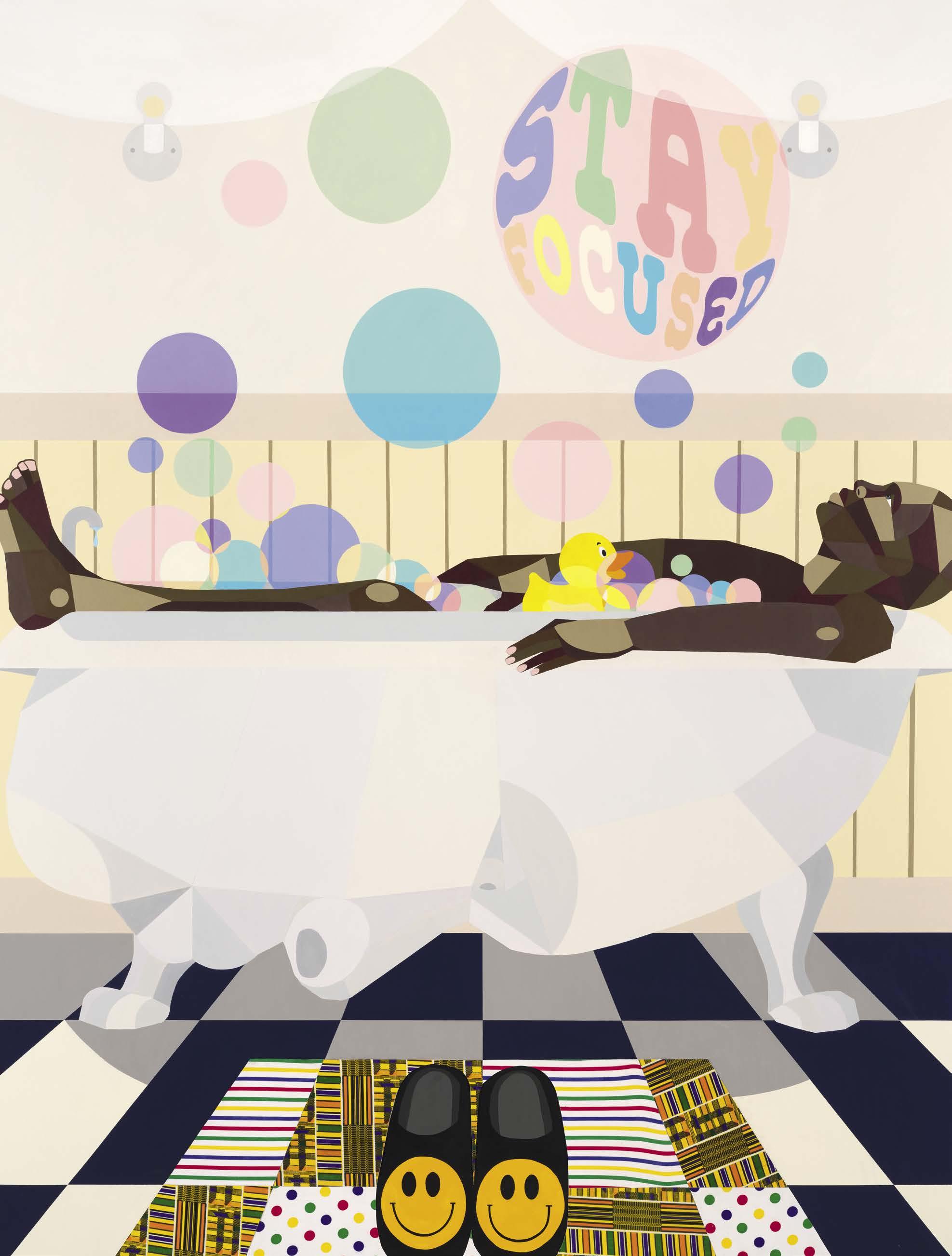
A young Black man lies in a white porcelain clawfoot tub, enveloped in colorful soapsuds. His languid leg hangs over the tub’s curled edge and his head hangs heavy as he soaks away the day’s stress. He is in a state in which we rarely get to see Black men, unsheathed and vulnerable. Though all the current talk of “soft life” is directed at women, softness looks good on this guy. A pastel thought bubble floats above his head: “Stay focused,” not only a reminder but perhaps a prayer to hold steadfast to his dreams—ambitions that could easily be decimated in the minefield that is Black manhood in America. Deep in the sanctity of his solitude, his humanity permeates.
Happy Place (2023) is a work in Derrick Adams’s new exhibition Come As You Are, on view at Gagosian, Beverly Hills, from September 14 to October 28, 2023. The show contains new works of substantial scale, each embedded with Adams’s codified themes of joy, inclusion, and quiet rebellion. The title Come As You Are derives from an adage in the Black church, which appears to be accepting of those on the margins but is laden with exclusionary fine print. “When I hear that phrase I always think ‘inclusivity’ and very particular personas being
welcomed. People with unique personas and characters. Like when people are extra, I think about those people coming. These paintings are really about those kinds of characters,” Adams explains.
In Put Your Foot In It (2023) a crème brûlée–complected woman, her scantily clad upper body covered by a collard-green leaf, the rest of her body replaced with a chicken thigh, lies on a platter. The platter is held up by another female subject, whose black jacket and white cuff allude to being waitstaff. “Yes, she’s serving,” Adams says with a childlike chuckle. “Black people will see this and know this a conversation for them.” In this series, Adams doubles down on humor. “It’s like Black people making fun of themselves in an empowering manner,” he continues, “It’s not self-deprecating, it’s really more about being able to understand yourself in a multidimensional way. Do Black people get to enjoy that without feeling like the butt of the joke?” Adams ponders aloud. His imagination is in full throttle; the imagery is wonderfully whimsical. “This is more about my ability to look at myself in Black culture in a way that could be humorous,” he expounds.
Come As You Are takes us structurally and
Previous spread: Derrick Adams, Happy Place, 2023 (detail), acrylic and fabric collage on wood panel, 95 × 72 inches (241.3 × 182.9 cm)
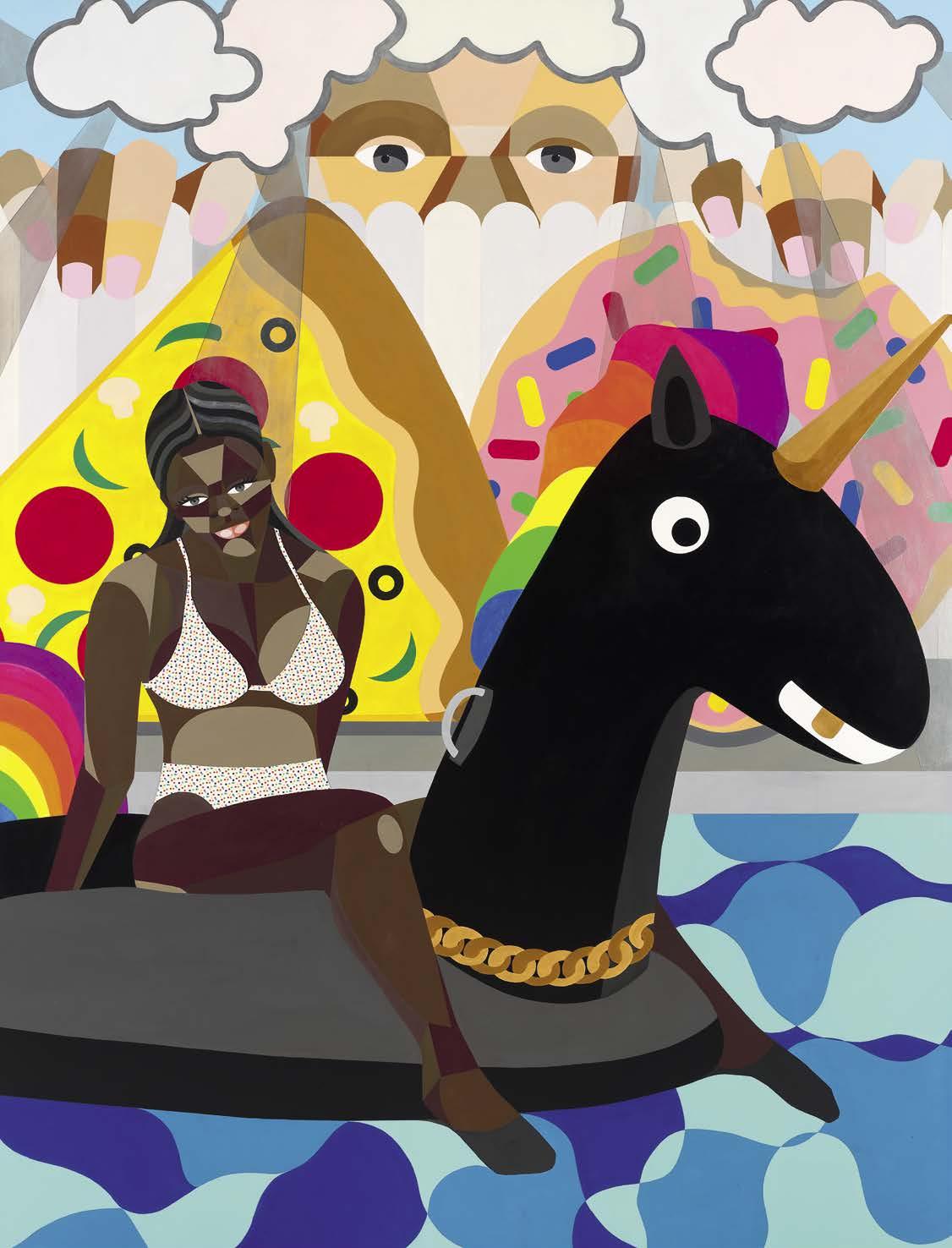
This page: Derrick Adams, A Moment , 2023, acrylic and fabric collage on wood panel, 95 × 72 inches (241.3 × 182.9 cm)
Opposite, left: Derrick Adams, The Believers I , 2023, acrylic and fabric collage on wood panel, 60 × 60 inches (152.4 × 152.4 cm)
Opposite, right: Derrick Adams, The Believers II , 2023, acrylic and fabric collage on wood panel, 60 × 60 inches (152.4 × 152.4 cm)
104
psychologically higher into the Adamsphere. He establishes more layers in the work, growing more complex in space, compositional structure, and color use, including his creation of melanated skin tones—his take on Black skin is as dynamic as the fraught history that created it.
Psychologically the entire series is laden with masterful use of cultural iconography, pop-culture colloquialisms, and clever double entendres. In Be the Table (2023), two fierce female figures face each other wearing winged masquerade masks— one sports a bird, the other a butterfly. Centered between the two subjects is another female figure who appears as a floating head on a table, the rest of her body being out of view. “For our yearly family costume parties everyone would dress up, and one year my aunt came as a table. I decided to paint her for the show,” Adams says. It’s a cunning and campy play on the notion of having a seat at the table: “Be the table and you won’t need a seat,” he says. We both cackle at the witticism. In the Adamsphere, inclusion is a verb, and he makes space for everything Black people are and everything they can be.
Adams has long been making space for folks in the margins. While this Baltimore native pursued a BFA at New York’s Pratt Institute in the early ’90s, he also began working at the clothing label Phat Farm, where he got an intimate look at urban style and consumer culture. Both are still embedded in his lexicon. Later, under his stewardship, the Chelsea gallery Rush Philanthropic Arts Foundation became a hub for New York’s Black art community. At the time, Rush was one of the rare spaces in New York to see Black art. Early exhibitions included Simone Leigh, Lyle Ashton Harris, and Xenobia Bailey. Within the art world, Adams is known to be a champion of emerging artists. Wangechi Mutu, Nathaniel Mary Quinn, and Deana Lawson all caught his attention and won his support early in their careers.
A core tenet of Adams’s painting is centering the Black figure, which he does more intently than ever in his latest body of work. He eliminates the white
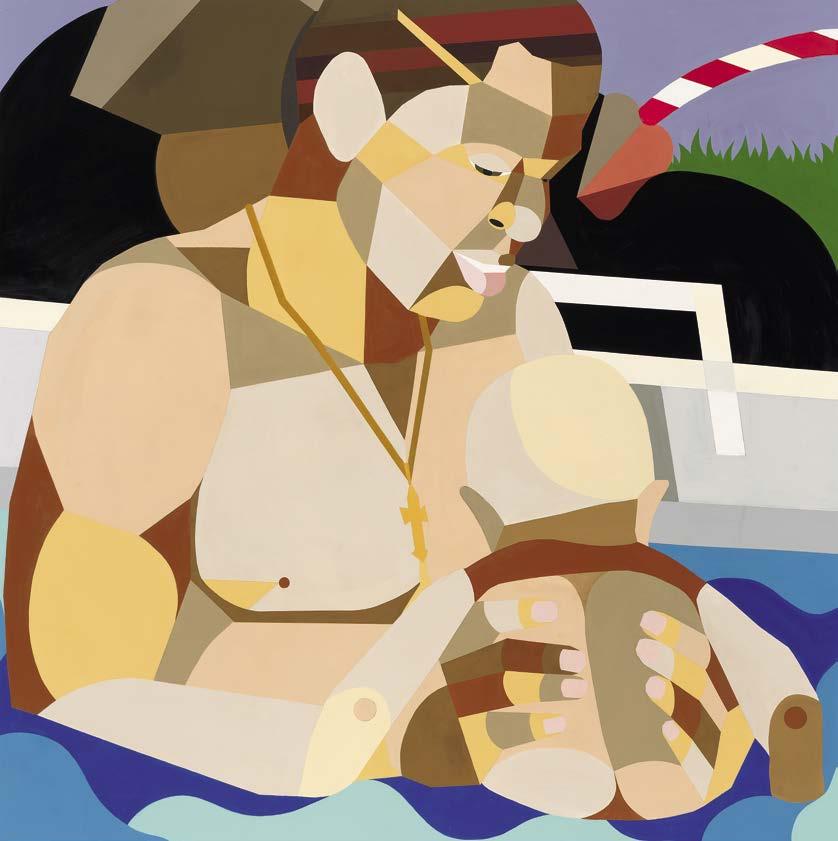
gaze with Morrisonian fervor, putting Black subjects at the forefront and building a world around them—a steep contrast to most Black people’s reality, which often requires contouring themselves to fit into a white space. Adams centers Black figures in order to empower them enough to explore new mental, emotional, and spiritual frontiers.
In extricating Black subjects from the white gaze, Adams releases them from expectations of being politically representative, allowing them to exist instead in a fantastical utopian universe of his design. “Knowing that the content is already embedded in the subject is liberating me to really have fun painting the figure and painting the world around the figure,” he says. “Now that they’re centered, the possibilities are endless.” In creating these scenes, he gives onlookers license to break from the small spaces they’ve been assigned to, to be who they’ve always wanted to be, to be who they really are.
Adams challenges the larger narratives imposed on Black figures, and inevitably on Black artists, while still working with figuration. When Black artists such as Ed Clark, Norman Lewis, and Howardena Pindell made abstract work, brilliant but seemingly apolitical amid racial turmoil, they didn’t align with the Black culture of the time, and came under fire. Making work through an apparently raceless, genderless lens was deemed frivolous and flippant. To make work freely without a descriptor is a privilege afforded mostly to white male artists. Over time it became defiant to not “represent,” but instead to direct attention to more poignant ideas and issues addressed. Adams, like his predecessors, isn’t perpetuating the stories commonly attached to Black figures. What stance is more powerful than making work rooted in humanity about and for people who were once considered property?
While taking the MFA program at Columbia University, Adams became interested in the multiplicity of Blackness. He didn’t feel bound to a particular narrative; inspired by senior artists including Clark and David Hammons, Adams’s view of Blackness
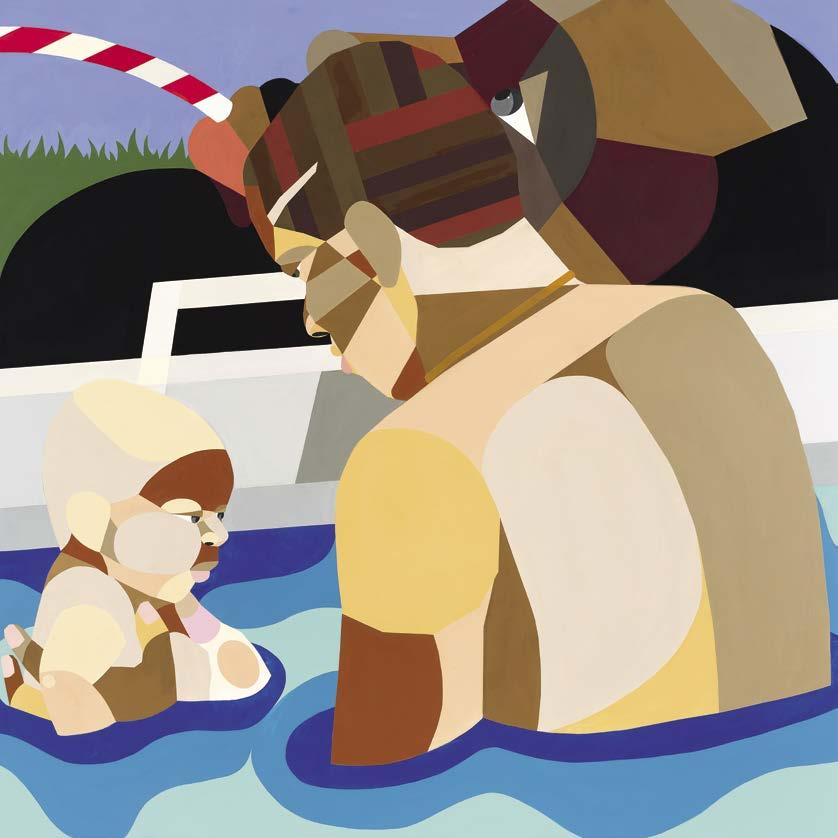
105
In creating these scenes, he gives onlookers license to break from the small spaces they’ve been assigned to, to be who they’ve always wanted to be, to be who they really are.
expanded. “I thought it was open. I thought you could make whatever you want,“ he continues, “They created that space of Black artists working in this centered way. People were just not ready for it. It took a while for people to understand the freedom of Black artists understanding themselves as being centered.” His style was challenged by his professors: “You’re not pushing against anything, there’s no tension,” was the feedback he received from two art-world juggernauts, whose work is often characterized as provocative. “I remember one instructor telling me I was suffering from Black middle-class denial,” Adams recalls.
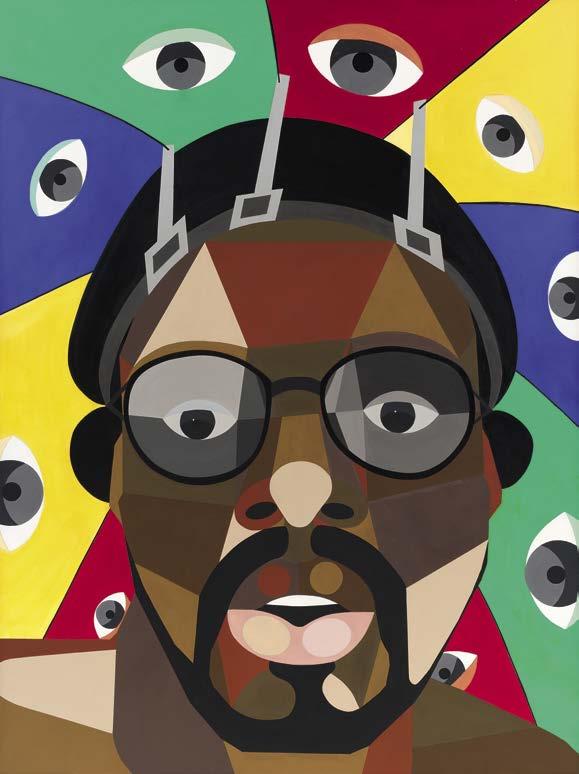
“Because they were radicals, responding to my work so negatively, I thought it was radical. If it wasn’t so radical, [they] wouldn’t be making this big a deal. It was triggering, it was doing something,” Adams concluded. He decided to forge ahead presenting vast versions of Blackness, versions including lace-front wigs, leisurely summer days, family gatherings, joy, and vulnerability. In his discovery of the nuances of Blackness, Adams puts value and worth on all types of Black experiences. He creates truly inclusive worlds where the table is grand and there are seats for an abundance of perspectives, experiences, and identities. Adams doesn’t fall prey to the respectability politics that so often come with the validation of Blackness; for him, fitting into a white scheme is not a prerequisite to being valued. In the Adamsphere the distinctive elements of Blackness are beloved.
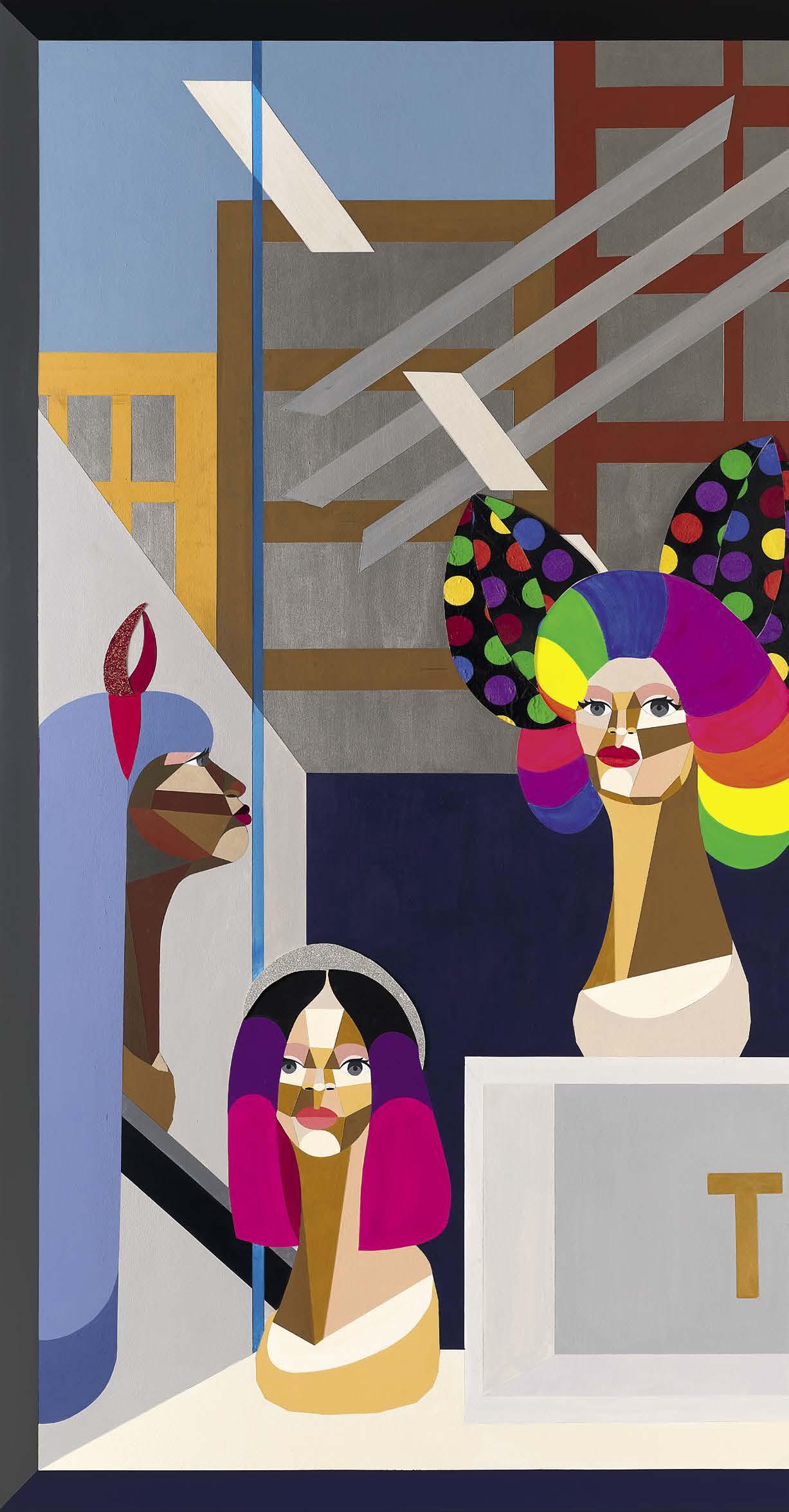
106
Above: Derrick Adams, All Eyes on Me, 2023, acrylic on wood panel, 48 × 36 inches (121.9 × 91.4 cm)
Right: Derrick Adams, Lookie Loos , 2023, acrylic and fabric collage on wood panel, 72 × 85 inches (182. 9 × 215.9 cm)
Artwork © Derrick Adams Studio
Photos: New Document
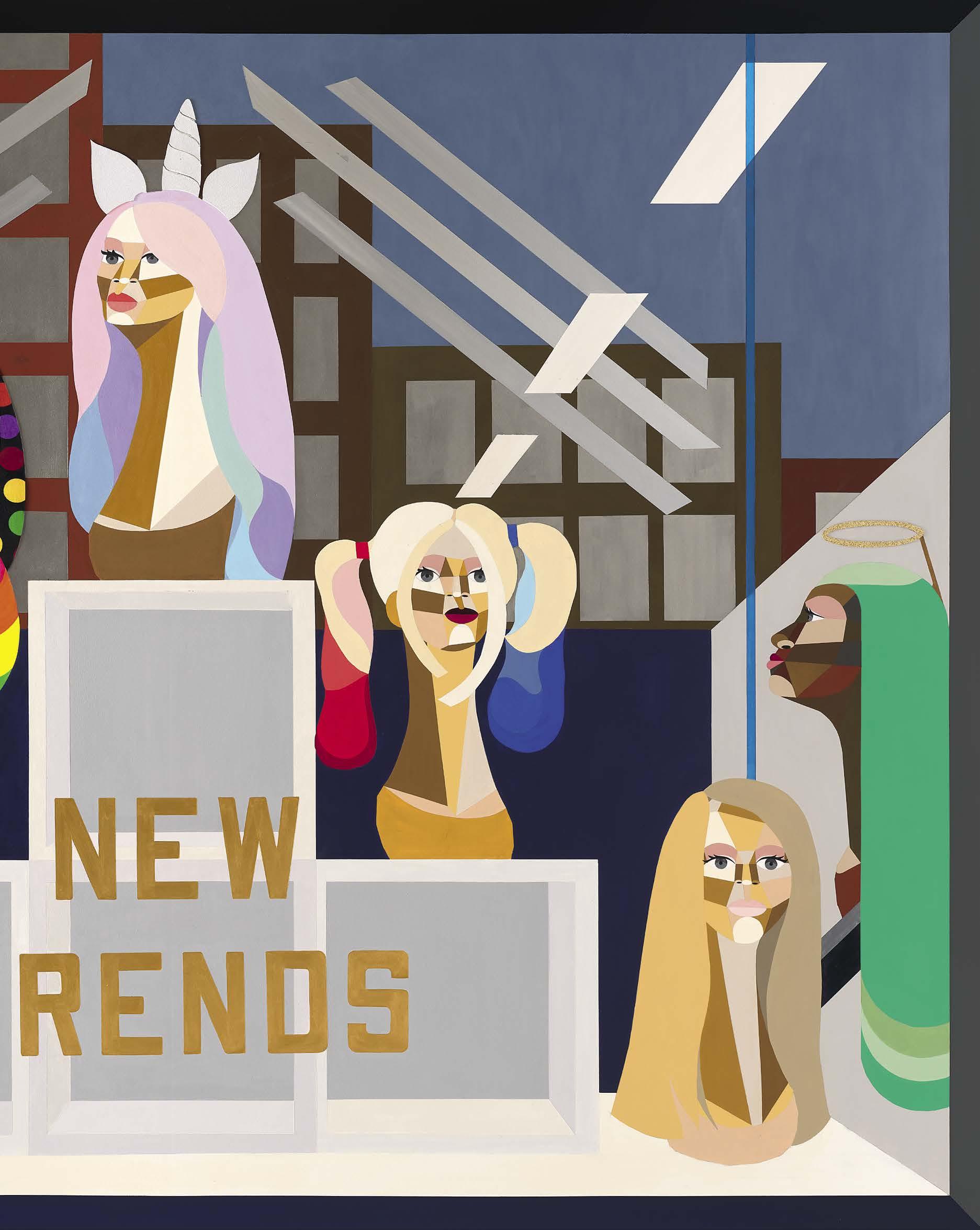
107
MICHAEL CUBY It’s been about seven years since you last released new music. What have you been up to in the meantime?
ANOHNI After Hopelessness [2016], I really poured myself into visual work. I did a series of exhibitions in Denmark, Germany, and New York. I did a play called She Who Saw Beautiful Things at the Kitchen. I wasn’t really sure if I was going to do another album after Hopelessness , so I had a fallow period on the music front. I just wanted to let things fall away and see what remained, see what emerged.
But one day I decided to call someone I work with in London and ask if they knew a producer who could help me make a soul record. They brought me to Jimmy Hogarth, and the work emerged very intuitively because we had a really great connection. I honestly hadn’t done much music with anyone for several years, but it came to pass that we made this record.
MC Did you start thinking you wouldn’t make another album while recording Hopelessness ? Or was it that after it was done, you were like, I feel like I’ve said all I need to say in this medium?
A It’s what you just said, the second thing. For a period, I couldn’t really see a path forward that was tenable or acceptable to me in continuing to make music. I wanted to address myself in a different way, with a different set of expectations, because I’d been on a cycle with public music-making. I mean, I don’t really consider the first twelve years of my adulthood making music—from the time I started performing at the Pyramid all the way up to being a backing singer for Lou Reed in my early thirties—as very public, as I was still a sort of unknown quantity. My life was still my own in a different way. But over a period of about ten or fifteen years, I had a very privileged and incredibly rare experience as a performer—well, “performer” isn’t really the right word, but as someone standing in front of thousands of other people, trying to hold space. In our language, a “performer” suggests something like an act. But the work I was doing really wasn’t an act; it’s always been a kind of centering , a kind of holding space for. But it’s work I wasn’t really groomed to do. So I had to figure out what was going on, because it was unprecedented for a person from my demographic to be in that situation. I was learning as I was going, but the situation was always transforming.
Then, when we got to Hopelessness , it was such a big leap, an attempt to sort of weaponize everything I’d accumulated to try to speak as clearly as I could about what I was
anohni my back was a bridge for you to cross
seeing. I was trying to give people a sung soundtrack to the thoughts they were having. To hear someone sing a truth back to you can be a source of great relief. Like, I’m horrified by my complicity as a participant in a society that’s burning and razing Earth to the ground —this is a stress position for me. But it’s hard to articulate the extremity of that stress position, so I think I got a little bit electrocuted by the Hopelessness project, to be honest. I went from all this pastoral music into this really vivid, direct phase. I was saying the same things I’ve always been saying, but imbuing them with a lot more complicated energy than I typically brought to the table as a singer. People had grown to really trust my voice as a source of solace, so it was disarming for people to hear me singing more confrontationally. It was superempowering for me, but after that, I had to take a breather.
Then the whole world happened: Trump happened and all those things. Hopelessness came during the Obama administration, and I really do believe that album was only possible to make because it was the Obama administration. As much as it was biting the hand that fed it, it was also a by-product of a better moment. MC I also saw Hopelessness that way. Electing Obama into office was this moment that should have been incredibly hopeful, like we’d instituted real change. And yet we saw so many things stay the same. Whereas, when Trump was in office, there was this expectation that nothing would be right.
A On the one hand, there was such a profound sense of disappointment, and yet, Obama also upheld an idea about a collective social contract.
It was a government that allowed critique. It was a regime that allowed for freedom of speech, to some extent. Whereas the next iteration of government became so volatile and scary. Now we’re back in the Biden thing, but you sort of see it’s held together with tiny threads. Everything feels so tenuous—it’s reaching back to a social contract that’s already been shattered. Now it’s become this terrifying gun-wielding dystopia. Like, this whole thing that’s happening in Florida where health-insurance providers are now allowed to rescind healthcare and deny coverage to people based on their sexual orientation—that’s so prewar Holland. Medical care is a human right, so if there can be a witch hunt around whether a gay person can go to the doctor, then we’re really in a terrifying new phase of what we call America. Maybe it’s not a new phase, but it’s not the America we’ve seen for many decades.
MC It’s definitely a regression.
110
British-born, New York–based artist anohni returned with her sixth studio album, My Back Was a Bridge for You to Cross, this past summer. Here she speaks with Michael Cuby about the genesis of the project and the value of life.
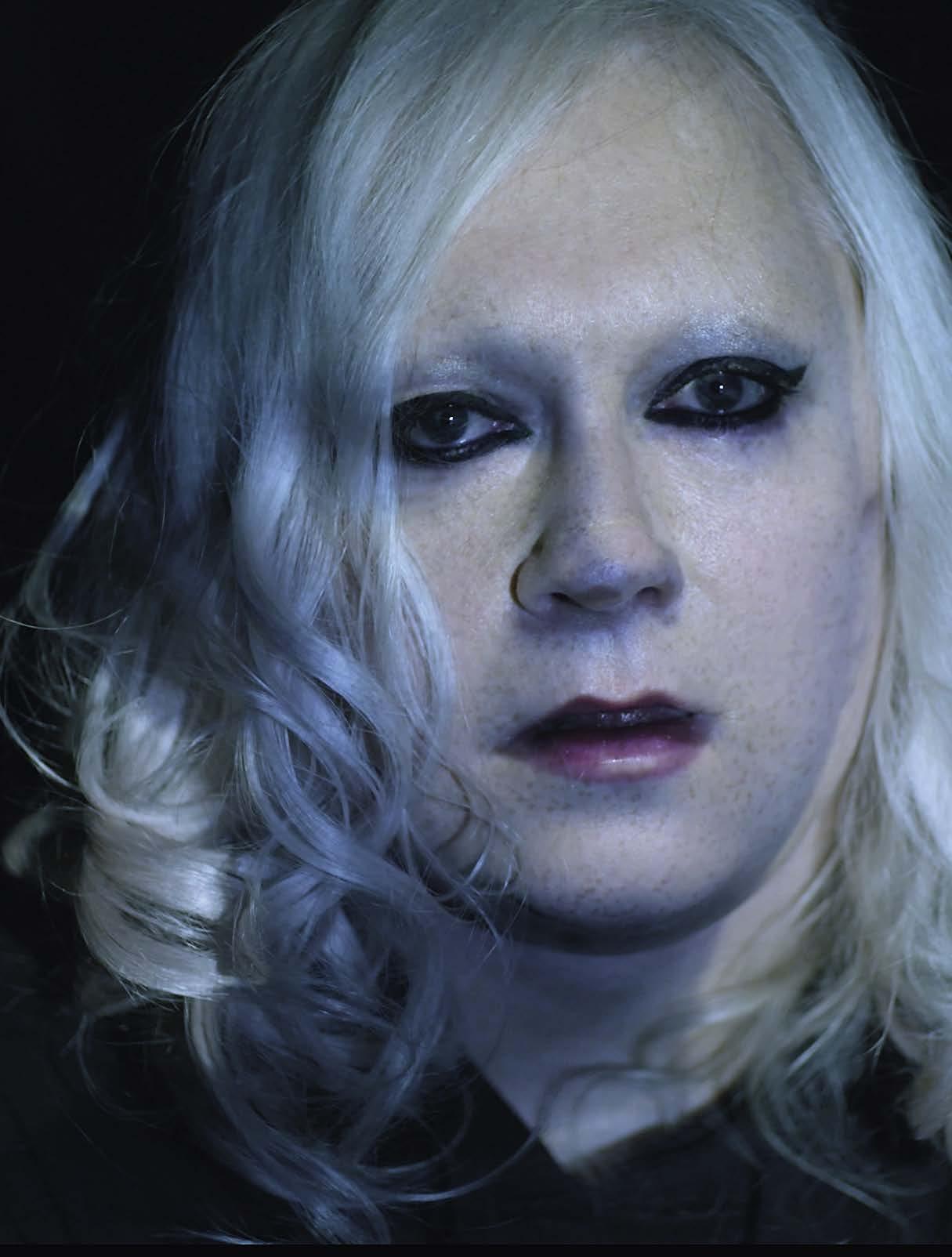
A First, the pulling of women’s reproductive rights, and now this increasingly brutal bullying and torturing of gay people. There’s really no end in sight. They set their eyes on two things, and it’s all this weird smokescreen to keep everyone preoccupied while Rome burns and they pillage the stocks. It’s so calculated. They don’t give a shit about women and abortion and gay people and trans people. The only reason they’re resurrecting this is to say, “Hey! Look over there,” so that the other branches of the government and of these corporations can continue to raid the storehouse.
MC The recording process for My Back Was a Bridge for You to Cross started with your decision to make a soul album. What was it about that genre?
A I’d say that 80 percent of the music I’ve ever listened to was soul or soul derived. The earliest music I listened to in the UK as a child was the early new wave of Boy George, Alison Moyet, Annie Lennox. I learned to sing from other white English people who were singing in a tradition of soul music that had been imported from the United States. There was just this boom of [Black American] singers who completely transformed people’s understanding of how they could express themselves. These brilliant singers modeled a technology of resilience and ecstatic response in the face of profound lived adversity. It expressed a vivid experience of living that was completely shocking to Europeans in that moment. I think that’s why the young people, especially, grabbed it like a life raft and started to copy it in an effort to experience a more full-throttled sense of self-expression. So there I was, a ten-year-old, listening to Boy George, a white Irish London queen, twenty years old, singing “Do You Really Want to Hurt Me?” I was sitting by the radio, crying, but not understanding the lineage of that musical technology.
Then I moved to America a few years later and started to understand these deeper lines. I started to listen to Billie Holiday, Ella Fitzgerald, Nat King Cole, Ray Charles, Louis Armstrong, Nina Simone, Donny Hathaway, and Otis Redding. The technology that all the singers I learned to sing from [used], that’s where it came from. It didn’t come from anywhere else.
So part of my wanting to make a “blue-eyed soul” recording was because I wanted to talk about this. I wanted to sit with it, honor it, and be clear about it—the boon of it, the gift of it, the lifesaving property within it. It’s a modeling of a kind of resilience that, moving forward, the world needs exponentially in order
Be brave. Know your graciousness. See each other. Be present. Reach further than you might imagine you can. Take a risk, but also take care of yourself.
– anohni
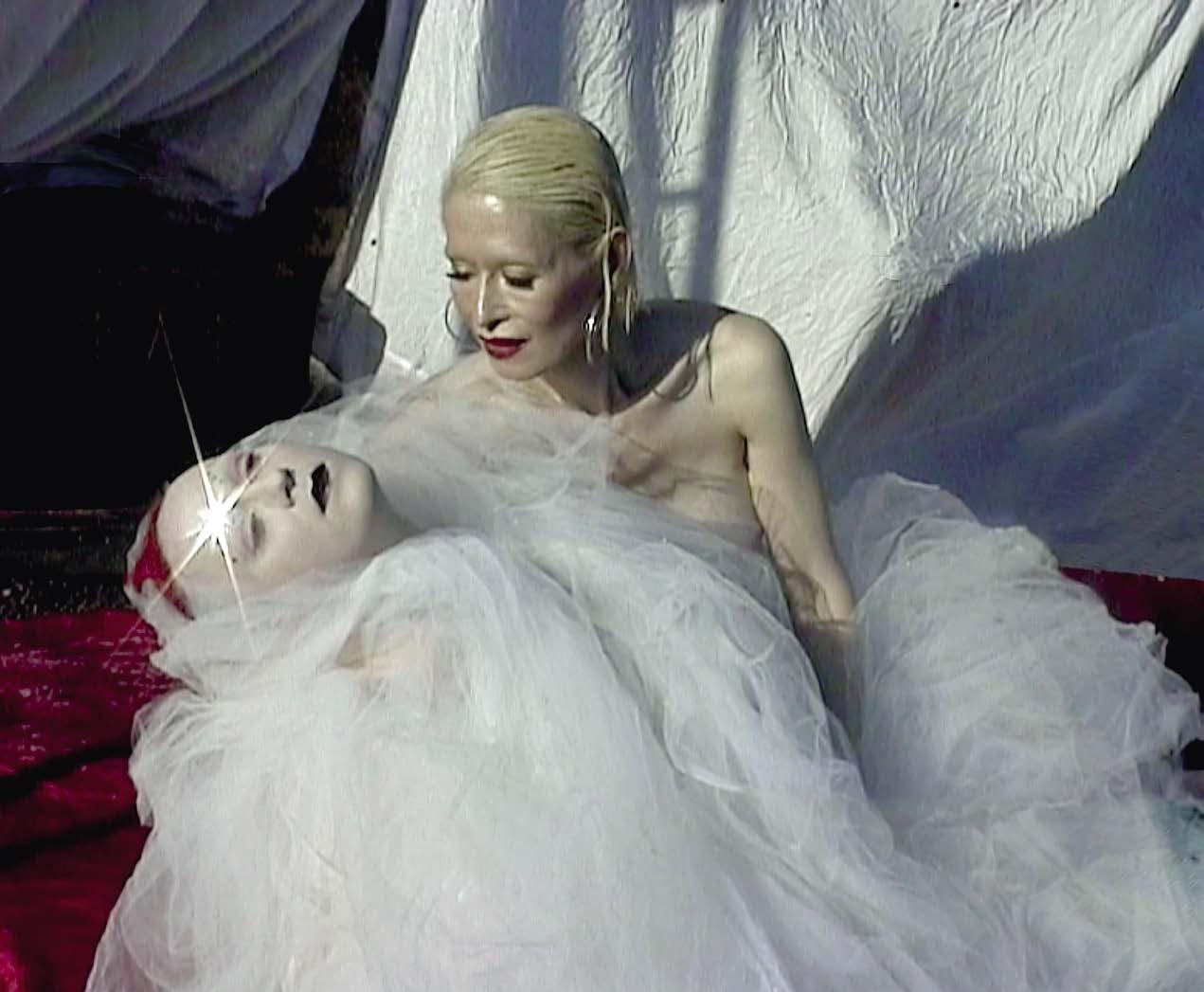
to hold space for the truth about what’s going on around us. It’s a lot easier to just fall back into cycles of denial and blame and despair, into more infantilized ways of seeing the world. But what’s being asked of us now is profound and very adult. Fortified resilience is a very adult form, and it’s something that’s really elusive to most of us because what’s being asked of us now is so unprecedented. So if we’re going to imagine that there’s a future other than the one everyone’s expecting, what will it require of us collectively? People have flipped in ten years from a denial about ecocollapse to a cancered resignation to its inevitability. That’s been astonishing to watch. It happened so quickly.
MC Where do you see your work existing within that movement of change?
A I see it as a progression for me personally. In Hopelessness I was going full-on into a conversation about my own complicity. It was a brutal address. But I also learned from artists, writers, and thinkers I admire that actually there’s going to have to be an element of tenderness in that self-address if I expect to be able to hold that space and continue to be an effective agent for change. There’s going to have to be an element of self-forgiveness, a mercy with which I hold this history of brutality and my complicity in it. Otherwise I’m just going to collapse into despair, denial, and blame. So it’s
a strategy, but it’s an earnestly presented one.
This record is very direct and plainspeaking. I’m giving everything I have, trying to be present and useful in the conversation moving forward. I’m trying to hold space for the best thoughts that I’ve heard. Also, to support people. That’s the thing I learned from Hopelessness . I thought I was waging a war, but actually the people who found that record the most useful were people who already thought those thoughts but wanted to hear them sung back to them with some of the same emotion they were feeling. So I realized, I’m singing for the team. I’m singing to support people already out there in their fields doing this work. I’m a singer, so that’s my currency. That’s how I’m best employed. That’s the thing I can give that will carry the furthest.
MC The album cover is this beautiful portrait of Marsha P. Johnson, who I know you have a deep connection to. How does her memory speak through your work?
A I didn’t know Marsha. I was just an admirer. I was directed to admire her by my elders from my community in the Village. Older queens told me that she was the one, that she was “Jesus as a girl,” that she was somehow sacred, that she was a living bodhisattva. People called her the “Saint of Christopher Street” while she was alive—it’s not a posthumous mythology. Everyone knew she was particularly good. Most of the queens
112
really loved her, and as a kid arriving in New York in the early ’90s, I was told that she was someone precious. I did get up the nerve to approach her and say I love her one time, but I didn’t know her. So her persistence in my work is just my love for her presence, really. The values that she espoused were deeply moving to me. There was something about Americanness that she seemed to embody; she seemed, to me, to be the most American of all.
My generation was kind of lost at sea. But I, for some reason, attached myself to this dream. Honestly, I took shelter within it. It was a safe place for me. The work I was doing around environmental stuff emerged from that. We used to call [ourselves] “New Criteria for Hope in the Midst of Apocalypse,” and our cast was this super trans, underground, punk women group doing these plays about nuclear-waste disposal. People didn’t know what on Earth they were looking at. There was Page Reynolds, dressed as a giant dolphin, in a Plexiglass box, singing my song “River of Sorrow,” and then bashing her head against the window and blood squirting out. Then she dies, and that’s the end of the world.
I was grappling as a young person with how to create a mythology that seemed to hold space for what was really happening. Now, everyone will tell you the world’s about to end, but in the mid-’90s you were considered a harpy or a Cassandra if you even said it, even though the writing was all over the wall and already had been for, like, twenty-five, thirty, forty years. Marvin Gaye was singing about it in 1971. Buffy Sainte-Marie, Nina Simone, they’d been singing about it for decades. It was so clear already for artists or people who were feeling , for anyone open to porousness. I think the name of this album is also about this ancestry. It’s like, everything I have on my back, I learned from seeing before me. I don’t really believe in originality. Everything I’m carrying, everything that I’m giving, I learned from someone else.
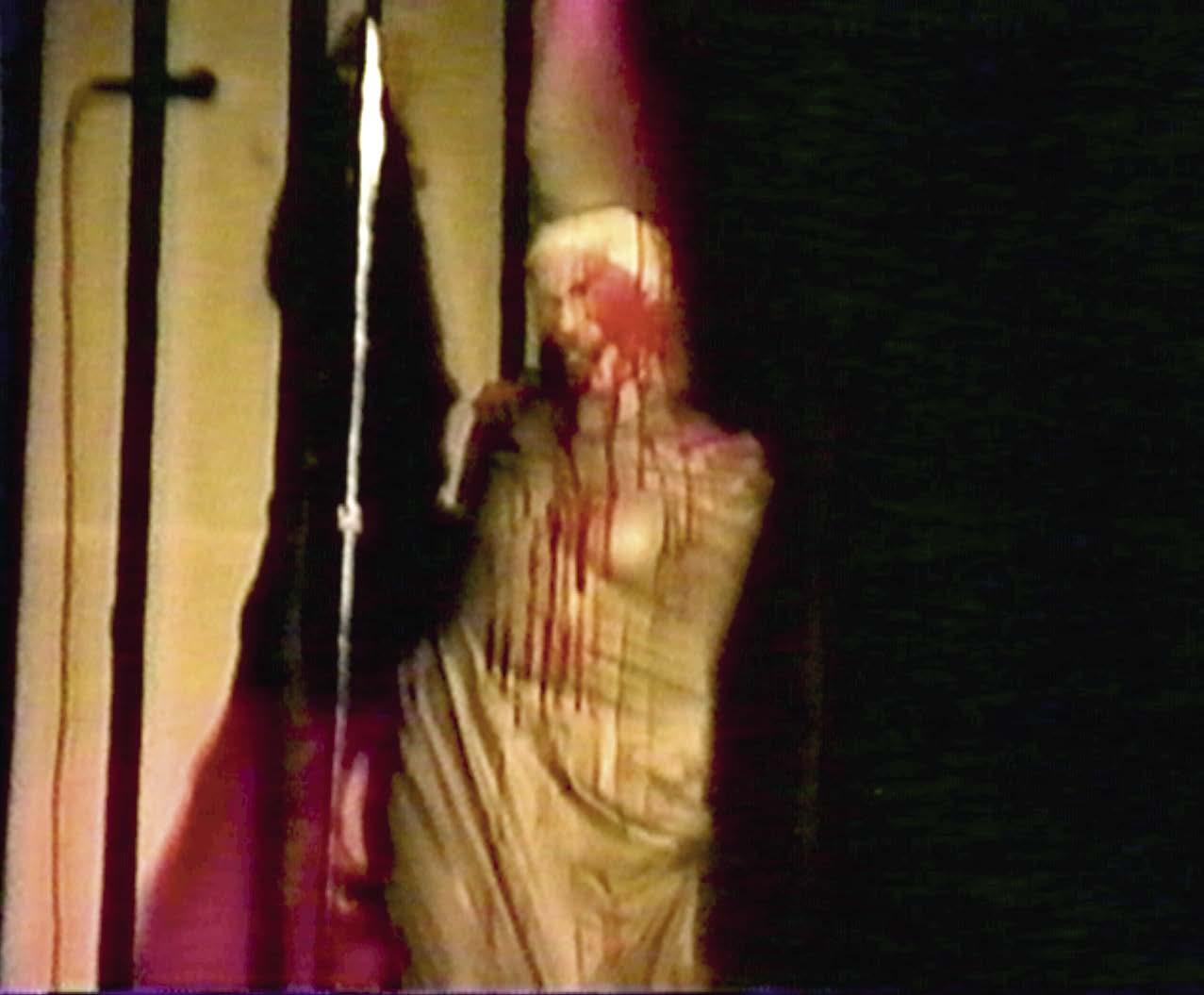
MC You’ve mentioned how you have to be careful with the “emotional pathways” that you create, particularly in this era of fake news. Knowing how much of your process is intuitive, I’m curious how you curate your message. Do you find yourself naturally saying the things you want to communicate? Are there things that get left on the cutting room floor?
A One of my main skills is editing. More than anything, I’m an editor. It’s like being a photographer: you take 100 pictures, but there’s one that tells the story you want to tell. I tend to throw myself at the wall, see
what comes out, and then choose the things I think are useful. At different points in my life, I’ve made better or worse choices.
I’m so profoundly influenced by this basic idea I heard in my early twenties called the Iroquois Law of Seven Generations, which is the idea that you can’t introduce a technology or an idea into your community that you can’t promise will have a beneficial impact on a child in seven generations’ time. That’s an innately sustainable idea about a time-based process of really assessing what’s in our collective best interest. That system, which is innately Indigenous, seems almost foreign to every structure that we employ in our societies today— and that’s been so necessary in order to make us more compliant as consumers. Look at AI now. They’re not even pretending that they don’t think it’s dangerous. The guys who are building it are scared shitless of it; they’re begging for a six-month moratorium on employing it commercially. It’s madness. But everyone’s just blindly walking like a sleeping ghost into this unknown cloud of gas. And I have a lot of theories about why we’re doing that. It’s a loathing of life and femaleness, of everything that reflects femaleness: intuition, emotion, instinct, gut reaction. The scientists are even saying, “My gut reaction is that this is dangerous.” But rational thought prevails: This is an empirical process. This is a forensic process. This isn’t a regulatory issue
because pure science and development of technologies must march inexorably forward . There’s no vetting.
As a transgender person, I feel a keen sense of obligation to utilize the agency that I’ve been graciously afforded to speak as plainly as I can, because we’ve so rarely been afforded an opportunity to participate in the general thoroughfare of conversation about how we’re moving as a society. I think I’m one of the first maybe thirty transgender people who’s even been given a platform to talk within these American and European cultures. Of course, they’re clamping down on that now. They don’t want me to talk about a bigger picture. They want to reduce it and nail me down into a demographic conversation. But the truth is that the conversation I’m having isn’t really a demographic one as much as it is an infrastructural one. I’ve been really leaning on this idea of structural activism.
MC Knowing that you use music as your own form of activism, what do you hope this album inspires listeners to do?
A Be brave. Know your graciousness. See each other. Be present. Reach further than you might imagine you can. Take a risk, but also take care of yourself. Be prepared for cataclysm. Know that life on life’s terms can be brutal, but that doesn’t undermine or diminish the value of life.
113
Previous spread: ANOHNI, self-portrait , 2023.
Photo: ANOHNI with Nomi Ruiz
Opposite: Still from The Johnsons, Williamsburg (1997);
pictured: ANOHNI and Julia. Video still: © Rebis Music
Above: Page Reynolds as “The Last Dolphin” in MIRACLE NOW, PS122, New York, 1996. Video still: © Rebis Music
THE ROAD OPENS
Multidisciplinary artist Okwui Okpokwasili’s new work adaku, part 1: the road opens is a continuation of her efforts to bring West African forms of dance, poetry, song, and theater into a contemporary framework. Catching up with Okpokwasili after the work’s premiere in Los Angeles this past spring, Rennie McDougall traces adaku ’s artistic lineages ahead of its New York debut in the fall.
IN CONVERSATION WITH OKWUI OKPOKWASILI
When the audience entered LA’s redcat theater for the opening night of Okwui Okpokwasili’s adaku, part 1: the road opens , Okpokwasili and her collaborators were already at work. In close formation, the seven performers stomped to a consistent rhythm, treaded strongly in the earth, chanting together about ancestry, lineage, movement, and a gateway. The collective—a “coven of witches,” as Okpokwasili later described them— moved steadily along a circular path marked on the stage. They continued this marking of space for some time without relenting their rhythm, maintaining a pulse, driving the work forward. From this engine emerged three characters: a matriarch leader extolling the importance of family lineage and futurity; an artist whose enigmatic carvings revealed unwanted truths to the community; and the matriarch’s daughter, a protegée of the artist’s. The story that unfolded over the sixty-minute performance centered on the interpretation of the artist’s work and its implications for the culture, its revelations about history and trauma, whether people can bear to face those truths, and a final devastation inflicted on the community. But the engine was always driving onward, supporting the characters’ warring motivations. The circling chorus, responding to calls from the actors in unison, continued to carve out the circle, to “open the road.”
What is this road? A road to where? Between what—life and death? Past and future? History and imagination? Reality and dream? Like the artist with her carvings, Okpokwasili suggests it all and leaves it to the observer to see what they see. “I’m not a historian,” she told me the day after the performance. “I’m just reaching back to see forward.”
But that was not where our conversation started. It began with the HBO show Succession , the final episode of which was about to premiere, and the irredeemability of America’s wealthiest class. It moved on to her admiration for Harriet Walter’s performance as Caroline Collingwood; then to Americans’ reverence for British accents, and to the complicated deference to British monarchy; to Olivia Colman playing Queen Elizabeth II in Netflix’s The Crown , listening to horse-racing statistics through an earpiece to keep her expressive face placid; to Meghan Markle, and how anyone could feign surprise when learning that the royal institution harbored racist sentiments; to Tim Scott, the Black Republican senator from South Carolina, and his denial that Black people still face oppression in America; and finally to the
114
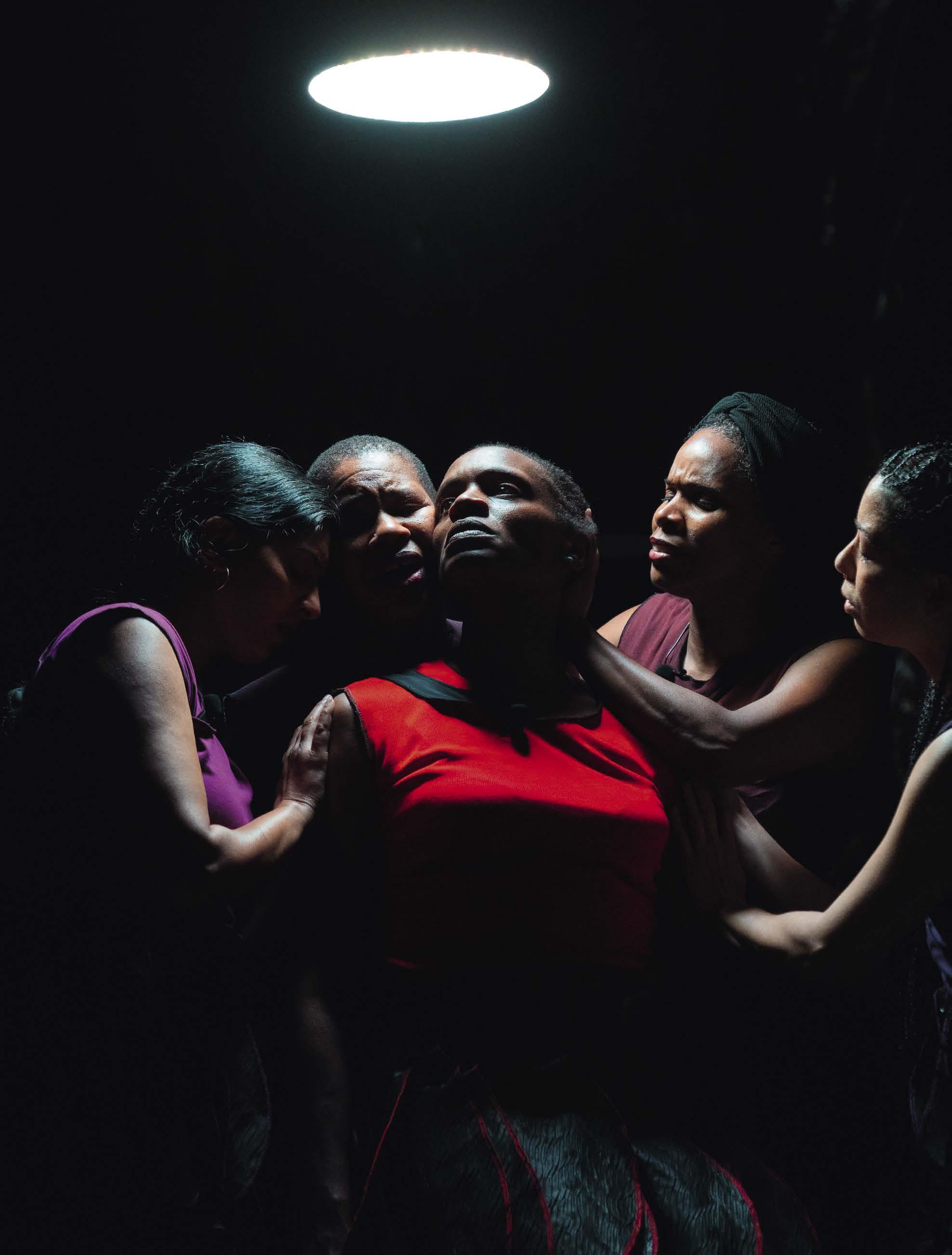
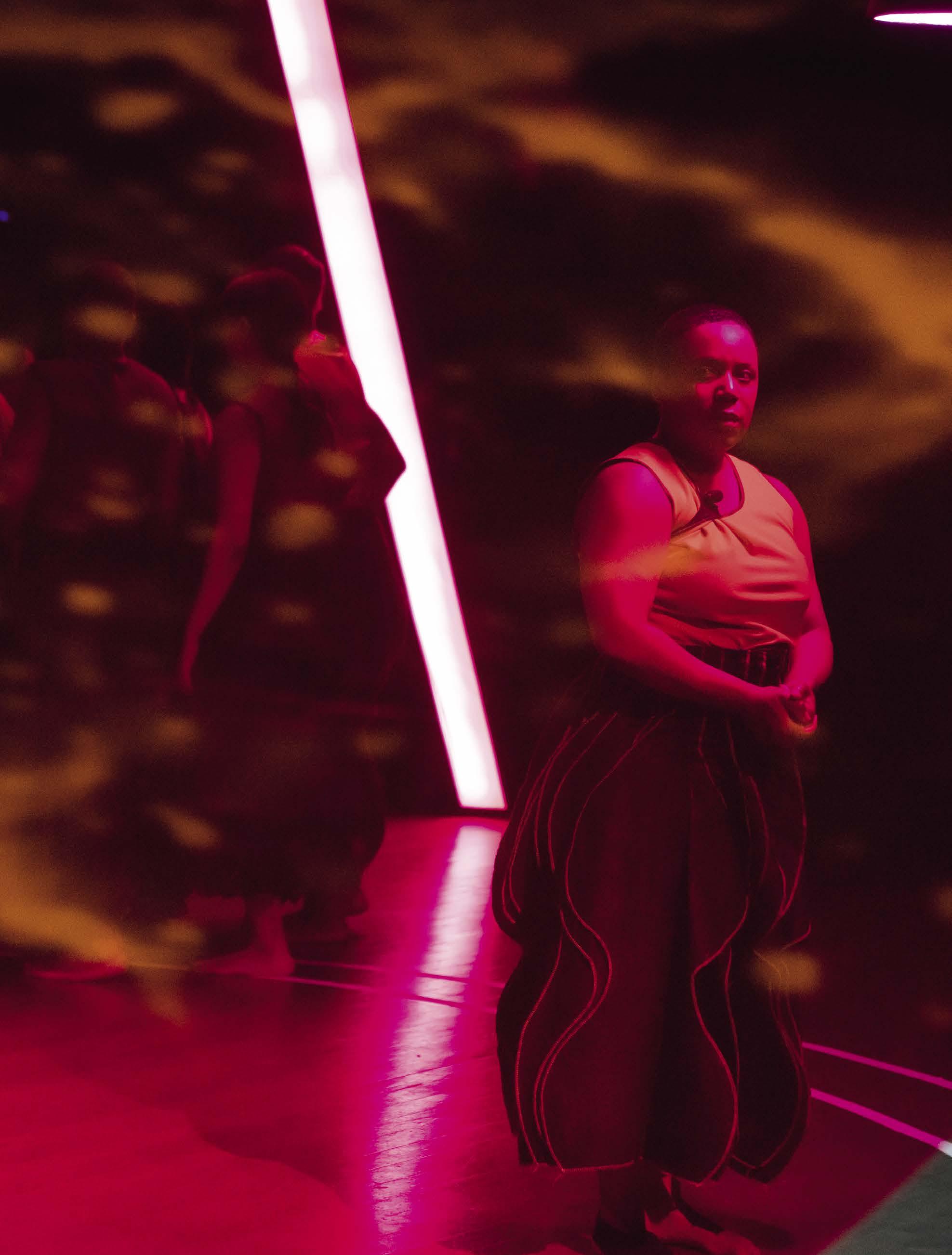
Opening
idea of the narrative pillars that dominate history, and how the powers that be fight to keep such pillars erect. “What I love about the younger generations is how slippery they are,” Okpokwasili said. “That’s the only way we’re going to get it. We gotta really undo all of the things that anchor us to some sense of self that is immutable.”
Opposite:
The world Okpokwasili has conjured in adaku, part 1 is slippery—about truth, about form, about time. “I’m really concerned with narratives and with recovering narratives,” Okpokwasili said, “but I also don’t feel any kind of fealty to a truth.”
The language and values of the culture Okpokwasili has invented gesture toward something ancient. Okpokwasili relates to this reaching back into history both factually and imaginatively. Her research into precolonial Nigerian cultures provided her with freeing alternatives to the colonial narratives she’d absorbed as a child. “I felt like I was only understanding [African history] in the context of colonialism and missions and religion,” she said. “I’ve always thought, ‘What’s before that?’” The first text that expanded her knowledge of precolonial Nigerian history was Chinua Achebe’s novel Things Fall Apart (1958). “That’s a kind of foundational text for me,” she said. “It opened up that sense of there was a ‘before’ before.”
adaku, part 1 draws from Okpokwasili’s continued research into those precolonial histories, which are so often erased or obscured by colonial assumptions. “Especially in southern Nigeria, [home of] the Igbo people,” she said. “The British called that area kind of chaotic and feminine—feminine because there was no titular head that they could go to and establish power through the means of indirect rule.” The social and political governing systems that colonists could not or would not acknowledge opened up possibilities for Okpokwasili as she imagined her own collective, one that could connect to both past and future. “It was so important for me to understand how complex and heterogeneous these communities were, or the fact that a woman could become a son and then marry a wife and have children in her name.”
While the work reaches back to a precolonial past, the stage design, by Peter Born (who also directed and composed the sound design), evokes futurity. A large disc of orange plexiglass hung from the ceiling, with projected onto it a video of a turbulent ocean. The orange disc appeared like a giant fireball, a sun or planet. Vast sheets of Mylar draped the stage’s backdrop and at one point were pulled forward by the cast, the silvery fabric cresting and rustling like a metallic wave. These elements dislodged the world of adaku from any fixed relationship to historical time and place. Okpokwasili is invested in creating a new time, one where her coven can imagine and create their own liberation from history.
“What does that mean, to make a journey from one place to another, and what does it take to open up some memory?,” Okpokwasili asked. “I’m a believer just in the power of duration. You do it, you do it, and you’re not going to be the same as when you started.” One can see that between these six performers something transformative takes place. There is a sense of ownership of their own role, and through that ownership each performer carries and supports the entire performance. This is a quality that Okpokwasili intentionally cultivates. “I want to bring other people—who are authors and artists with
their own practices—to bring them into the space and bring that particular quality that comes from people who author their own work or have their own practices to ask questions or make space for exploration,” she said. On this point, though, about decentralizing an author and favoring collective creation, Okpokwasili wavered. She ultimately wants to claim responsibility for the story she is telling—to be the work’s author. “Maybe I have to just realize that I’m not the person that I imagined myself to be and I should just be the person I am, which is somebody who does want to make certain narratives,” she said.
Okpokwasili has drawn from her own personal stories in earlier works; her experiences growing up in the Bronx as the daughter of Nigerian parents laid the groundwork for her solo show Bronx Gothic (2015). In adaku, part 1, the relationship to personal storytelling becomes more ambiguous. The characters are entirely of Okpokwasili’s invention: a community of unspecified West African origin in an unspecified time. Rather than drawing from any specific personal narrative, however, it is her intimately personal relationship to the act of creation itself— the questions of artmaking, history, and cultural memory—that compels adaku, part 1. Although Okpokwasili plays the role of the matriarch, she connects deeply with the character of the artist, whose vision startles, frightens, and even delivers devastation to those who see it. “I’m kind of on her side,” she said.
To me, the word “interdisciplinary” feels inadequate in describing Okpokwasili’s theater. She does combine performance modes—song, theater, call-and-response, design, dance (although she avoids that particular word: “I’m doing everything to avoid calling it dance”)—but there is no sense that she viewed these different disciplines separately from one another before bringing them together. As much as adaku evokes Nigerian griot storytelling traditions, it also conjures Greek tragedy, an obsession of Okpokwasili’s. “It’s almost old fashioned,” she said of the impulse in theater to want to tell the audience a story. That storytelling impulse sits alongside an older impulse to make, to craft, to generate—the act of making art a kind of engine that activates live in front of an audience to create a vibrational exchange, one that perhaps resonates more gutturally than the beats of a narrative. It is elemental theater, where song and dance and storytelling mutually support each other, all birthed from the same impulse that Okpokwasili describes as the work’s conception: the pulse, the vibration.
“We’re always trying to, in some way—and I’ll give Peter credit for this—the two of us are always trying to sculpt a gestural language from feeling,” she said. “We’re always trying to figure out: how do we make a whole world?” And how does one make a world? Okpokwasili reaches back to see forward, as far back as the beginning of the universe. “Some people say the universe began with a fucking vibration,” she said. “We’re trying to make a world. A universe. It’s not a big thing. It’s just a small thing. It’s a tiny, tiny idea.” Elemental as its origins may be, Okpokwasili’s universe, her alternative to the fixity of history, is a means to opening up new imaginative futures. “This is in the service of this particular world of women, femme folks, queer folks,” she said. “There’s an elemental thing we’re doing together and making. It’s some kind of elemental labor that we are charged with.”
117
spread: Okwui Okpokwasili, adaku, part 1: the road opens , 2023, performance, Institute of Contemporary Art, Boston, 2023. Pictured: Samita Sinha, mayfield brooks, Okwui Okpokwasili, McKenzie Frye, and Stacy Lynn Smith.
Okwui Okpokwasili, adaku, part 1: the road opens , 2023, performance, Institute of Contemporary Art, Boston, 2023. Pictured: Audrey Hailes.
Photos: Lauren Miller




rtops, floo r plans, specifications design or ar t are proposed only an d th e Deve lope r rese rves th e right to modi fy revise or withdraw any or al l of th e same in it s sole disc retio n. No specific vi ew is guaran te ed Pursuant to li ce ns e ag re ements Deve lope r also ha s a right to us e th e trade names, marks, an d logo s of : (1) Th e Re la te d Group; an d (2) Two Ro ad s Deve


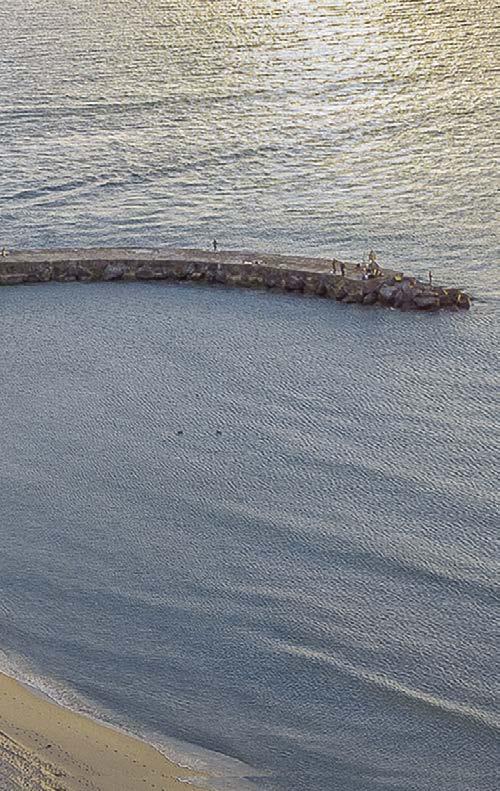

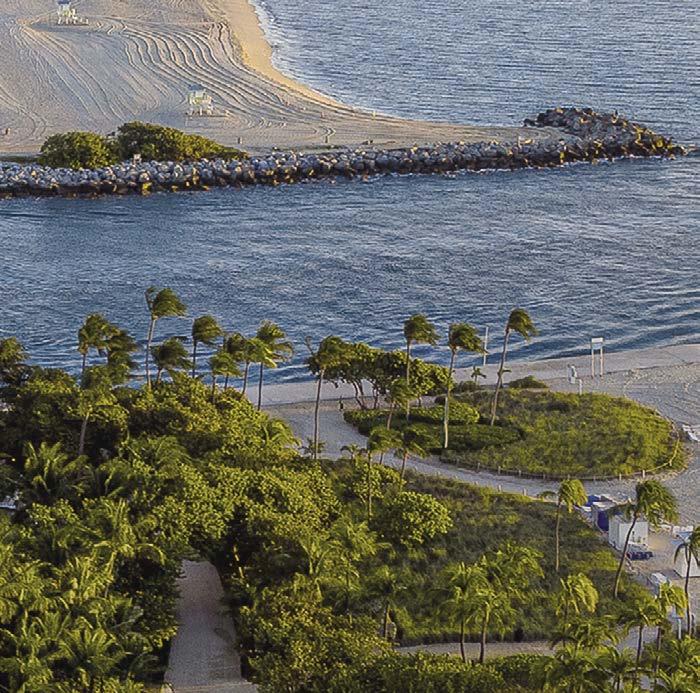
OR AL REPRESENTATI ON S CANN OT BE RELIED UPON AS CO RREC TLY STATIN G TH E REPRESENTATI ON S OF TH E DE VELO PER. FO R CO RREC T REPRESENTATI O NS , MAKE REFERENCE TO THIS BROCHURE AND TO TH E DOCUM ENTS REQUIRED BY SECTIO N 718.503, FLORIDA STATUTES , TO BE FURNISHED BY A DE VELO PER TO A BUYER OR LE SSEE RIVAGE BAL HARBOUR CO NDOMINIU M (the “Condominiu m” ) is deve lope d by Ca rl to n Te rrace Owner LLC (“Deve loper” ) an d th is of fe ring is m ade only by th e Deve loper’s Prospe ct us fo r th e Co n dominium Consul t th e Deve l oper’s Prospe ct us fo r th e proposed b udget te rm s, co nditi ons specificati ons fe es an d Unit dime nsions Sketches re nderings or photographs depi ctin g li fe st yl e, amenities fo od se rv ices hostin g se rv ices finishes designs, ma te rial s, furnishings, fi xt ures appliances ca binetry soff its, lighting co un te
lopment, e ac h of whic h is a li ce nsor Th e Deve lope r is not in co rporated in lo ca te d in no r a resi dent of New Yo rk This is not in te nded to be an of fe r to sell, or solici ta ti on of an of fe r to bu y, condominiu m unit s in New Yo rk or to resident s of New Yo rk or of any othe r jurisdic ti on where prohibited by la w. 2023 © Carl to n Te rrace Owner LLC, with al l rights rese rved TH E CO MPLETE OFFERING TERMS ARE IN A CPS- 12 APPLIC ATIO N AVAIL ABLE FROM TH E O FFERO R. FILE NO. CP2 3-0 060 Fu ture residences loca ted at: 10245 Co llins Avenue, Bal Harbour, FL 3315 4
JENNIFER GUIDI: MOUNTAIN RANGE
In A Week on the Concord and Merrimack Rivers (1849), Henry David Thoreau observed that scenery ceases to become sublime when “the imagination is no longer encouraged to exaggerate it.”1 I’m reminded of Thoreau’s words on viewing Jennifer Guidi’s latest paintings, spectacular mountainscapes in a more representational mode than this American artist’s work of the last decade. Traversing a delicate line between the sublime and the abstract, here Guidi teases at the possibilities of landscape painting, providing space for the viewer while communicating something of the world’s expansive mysteriousness. Recently the subject of a solo exhibition, Mountain Range , at Château La Coste, these paintings are, first and foremost, as the artist explains from her LA studio, “interior landscapes,” landscapes of the mind. 2
The new body of work features Guidi’s signature technique of mixing sand with pigment, oil, and acrylic to create rich, textured surfaces. Then, in a now well-documented process, she uses a dowel to gouge regularly spaced incisions in the sand in mandala-like patterns. In the La Coste work, Guidi generally reserves this technique for sections of sky, while her mountainous landmasses surge unevenly from the surface, bolstered by additional mineral matter—rocks and pebbles. It seems to me that these developments further the complicated push and pull between concealment and revelation, addition and negation, effected by the sand paintings. What remains consistent is Guidi’s interest in painting as an ardent ode to the power of color and humankind’s ability to harness it.
The undulating, vine-covered region of Provence is famed for the suffused light that mesmerized the likes of Pierre Bonnard and Henri Matisse, both important influences on Guidi. This scenery
provides a very literal backdrop to the exhibition via the mediation of La Coste’s Richard Rogers Gallery. This pavilion, the late British architect’s final building, comprises a heavy orthogonal rectangle of concrete and orange-painted structural steel, which cantilevers dramatically out from a Luberon hillside. It is a radical proposition, a feat of engineering that both disrupts and pays homage to its surround. The marriage with Guidi’s vivid, almost prototypical landscapes proves fascinating.
Within the pavilion, Guidi’s canvases, all horizontals as befits their subject matter, not only hung on the walls but in the case of one pair were suspended from the ceiling to carve up the space, riffing on the modularity of modernism. “I like how art and architecture can come together to create a particular experience,” Guidi notes, explaining how the intervention in Provence took shape in her Los Angeles studio: “We designed a hanging system so the paintings are presented back-to-back. I’m very excited by it. I really do have to feel inspired by architecture. Richard Rogers’s building feels suspended in the mountain and then I’m suspending my mountain paintings in the center of the room.”
To Paddy McKillen, the man responsible for transforming Château La Coste from seventeenth-century Provençal vineyard to world-class art and architecture destination, featuring the work of Louise Bourgeois, Tadao Ando, Alexander Calder, and others, the connection was immediately obvious. McKillen describes being struck by one particular work on his first visit to Guidi’s studio: “It had a beautiful vivid pink that reminded me of Richard, who loved strong colors and who often wore bold pinks, blues, greens, and orange, like we see at the pavilion at La Coste. The painting itself was stunning and the link with Richard struck a chord.”3
Guidi was interested in the way objects interact with space from a young age: she remembers obsessively switching the furniture around in her childhood bedroom to achieve the right configuration. Recently, she has been curating, a form of arrangement in itself—a virtual exhibition at Massimo De Carlo Vspace in 2020 featured work by Lucy Bull, Wyatt Kahn, Ugo Rondinone, Brooklin Aboubakar Soumahoro, and Guidi herself—as well as playing around with the environments in which she exhibits her painting and sculpture. In Gemini , her solo show at Gagosian on West 24th Street, Manhattan, in 2020, a vast triangular opening bifurcated a wall between two galleries. A disc-shaped yellow sand painting was suspended from the apex of the triangle, which provided a dramatic sightline through to a pair of serpentine forms flanking another disc (a three-part painting titled To Protect and Hold You Up, 2019) on the farther wall. The pyramidal passage transformed the space into something like a solar temple, recalling the unrealized ambitions of the early modern Swedish artist and mystic Hilma af Klint, a key figure for Guidi, to present her abstract paintings within a specifically designed spiritual space.
Architecture also plays an overlooked role in the formal development of Guidi’s practice. Before her move to abstraction over a decade ago, she made photorealist paintings based on photographs she took in and around LA. Her architectural photography features colorful housing blocks, their shutters and brickwork creating exquisite shadow patterns in the languid California sun. It reveals a deep engagement with the interplay of light and weight as they are affected by the structural environment, and a foundational interest in concrete, a primary ingredient of which, of course, is sand.
120
Invited to exhibit at Château La Coste in Provence, Jennifer Guidi created a new body of work that engaged with the cantilevered architecture of the gallery building, designed by Richard Rogers, and with the artistic heritage of the region. Amie Corry reports on the evolution of the exhibition and on its place within Guidi’s larger practice.
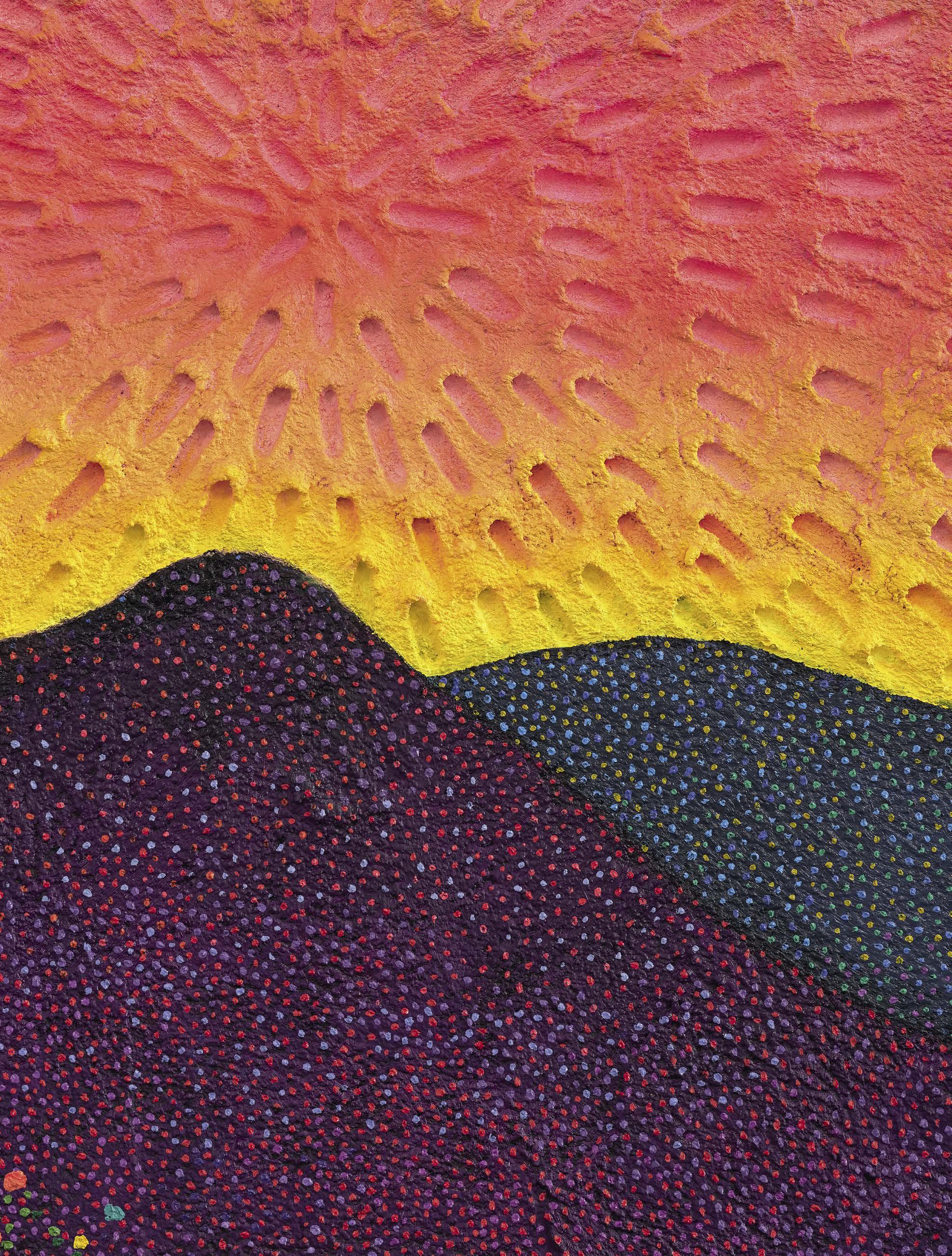
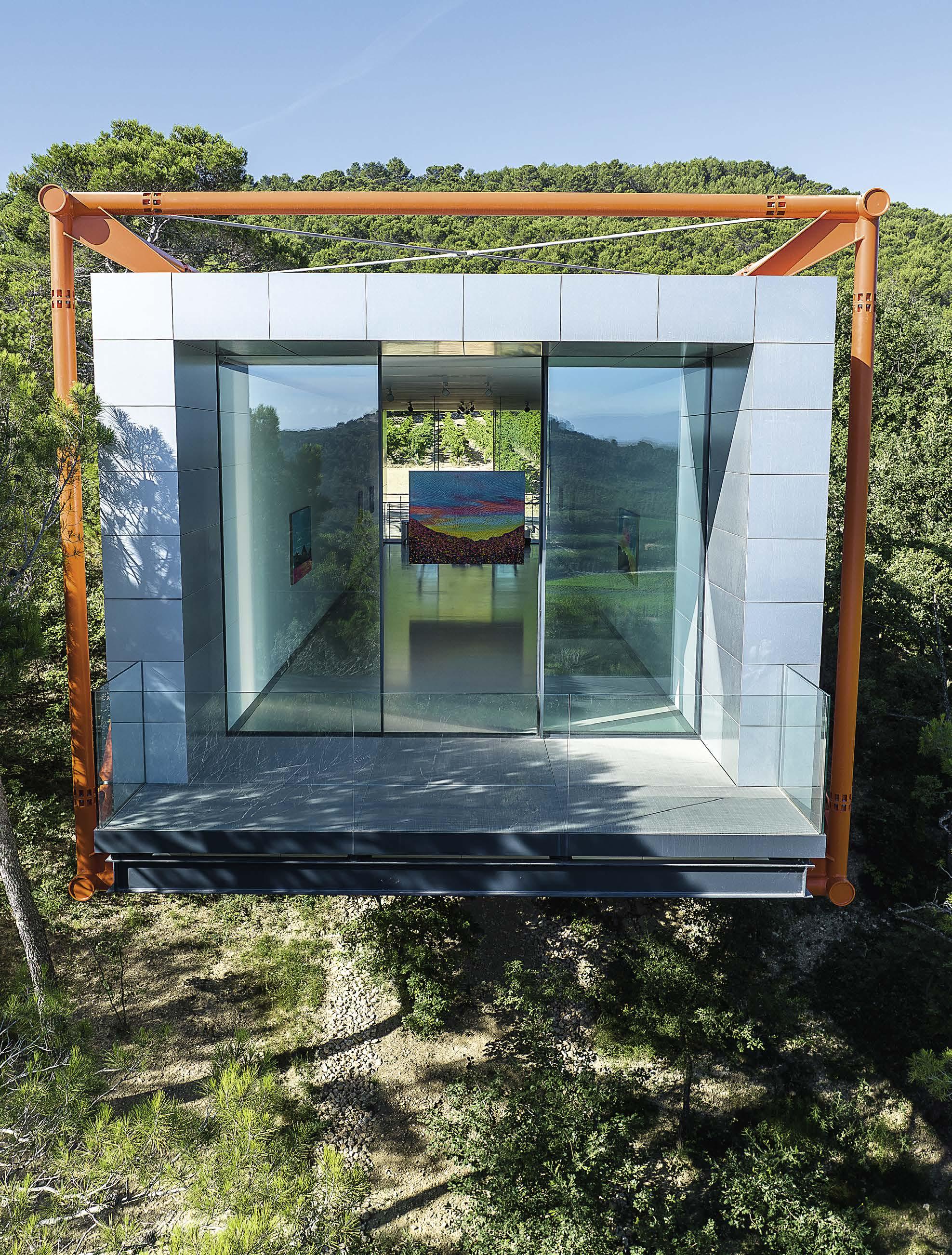
Previous spread: Jennifer Guidi, Hawk Soars Skyward (Painted Natural Sand, Yellow-Orange-Pink Sky, Green, Purple and Black Mountains, Red, Blue, Purple, Turquoise, Yellow, Orange, Lavender and Green, Black Ground), 2023 (detail), sand, acrylic, and oil on linen, 27 × 34 inches (68.6 × 86.4 cm). Photo:
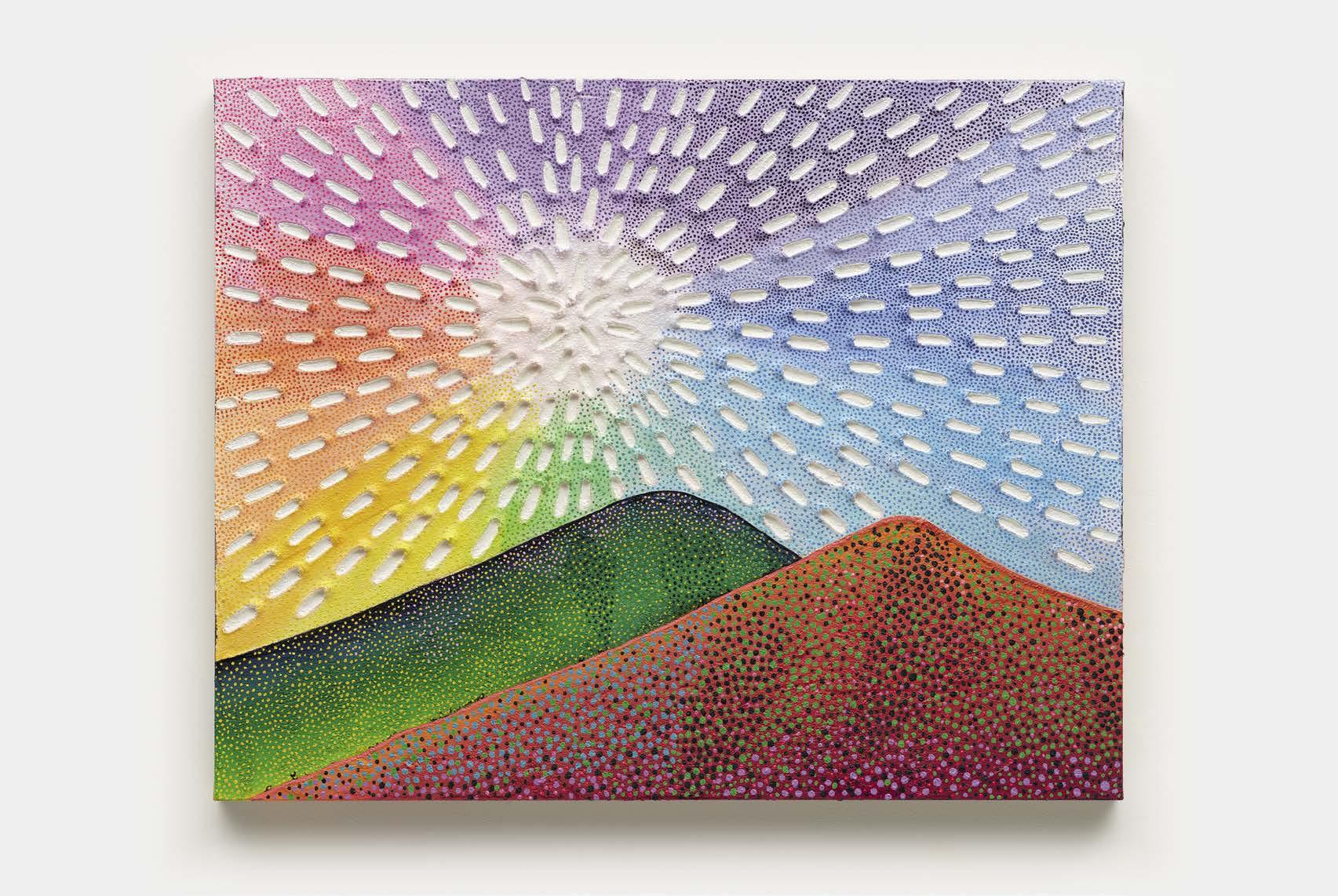
Brica Wilcox
Opposite: Installation view, Jennifer Guidi: Mountain Range, Château La Coste, Le PuySainte-Réparade, France, June 20–September 3, 2023. Photo: Frédéric Desimoni
This page: Jennifer Guidi, We Live in a World of Wonders (Painted Natural Sand, Rainbow Gradient Sky, White, Green, Orange and Black Mountains, Yellow, Black, Turquoise, Pink, Mint Green, Green and Purple, Black Ground), 2023, sand, acrylic, and oil on linen, 27 × 34 inches (68.6 × 86.4 cm).
Following spread, left: Installation view with Jennifer Guidi, Mystical Conversations with a Dragon (Painted Natural Sand, Sunset Sky, Purple and Black Mountain with Colored Sand, Black Ground) (2023). Photo: Frédéric Desimoni
Following spread, right: Jennifer Guidi, Dreams Stretched Along the Roof of the World (Painted Natural Sand, Sunset Sky, Multicolored Mountain, Black Ground), 2023 (detail), sand, acrylic, oil, and rocks on linen, 74 × 92 inches (188 × 233.7 cm). Photo: Brica Wilcox.
Guidi’s photorealist work preceded a revelatory trip she took to Morocco in 2012. There, she became absorbed with the patterns of stitches she found on the backs of traditional Berber rugs and, again, began photographing them. This led to the conception of her Field Paintings —neutral-toned canvases bearing rows of small white marks—which debuted in 2014. “Even though I loved color and form and shape and all those things that make up representational painting,” she tells me, “I wanted to clear that out, empty that out, so there was a very purposeful thought in taking color away and working with white, black, and beige.”
The notion of “emptying out” relates to the integral role that meditation plays in Guidi’s practice, which involves durational repetitive motion, almost a physical chanting. The early Field Paintings were also in conversation with the work of abstract artists such as Agnes Martin, whose meticulous grids and lines foreshadowed the advent of a more industrially minded Minimalism.
I suggest to Guidi that Minimalism’s interest in removing the decision-making elements involved in an art practice feels, in some respects, contradictory to her impulse to generate pattern and movement. The Field Paintings , for example, are not quite blankets of solid monochrome but contain squares and rectangles in different shades. “Yes, I think that’s right,” she concedes. “In terms of my internal journey, there was more going on than just an emptying out.”
Guidi was drawn to sand, which she continues to experiment with in the new paintings, for both its material and its symbolic properties: “Seeing sand used as a material in the work of painters like Braque, Picasso and Kandinsky always intrigued me,” she explains. “It connects to the idea of paint
as a pigment, a powder, but from the earth. There’s an affinity there, but then sand has a more granular consistency.” To begin with, she mixed sand into oil paint to create a rough-textured surface. Further experimentation coincided with her move toward abstraction: “I was painting these repetitive dots and I was at the beach one day and I found myself thinking: ‘How can it just be sand?’ When you draw in the sand at the beach, it’s such a particular feeling, but I also wanted to capture the texture and the surface. I was thinking, ‘How can I make this a painting and not have to rely on anything else?’” The particularity of that feeling is relatable in ways that separate it from the mystique of pigment, turps, and canvas. Guidi notes, “Not everyone knows what it’s like to work with paint, but for the most part, everyone’s gone to the beach, everyone knows how sand feels against the skin.” Ultimately, it is sand’s ability to succumb to the pressure of touch and weight, its extraordinary heaviness as well as its granular delicacy, that make it such an apposite material in Guidi’s hands.
For years, Guidi has been photographing the mountains and skies, as well as the buildings, of California. These images form a vibrant library of source material for the paintings at La Coste. The landscapes are not direct portraits but rather, to return to Thoreau, vessels that encourage mental exaggeration. There is something playful about Guidi’s engagement with the landscape genre and she exhibits little interest in decentering human presence. The green hillside in the taxonomically titled Miracles of Nature (Painted Natural Sand, Blue-Pink-Purple Sky, Multicolored Mountain, Black Ground) (2023) is dotted with hot pink, orange and lilac, aqua and cerulean blues. This teeming mass populated with color speaks of sunbeams hitting
123
Photo: Brica Wilcox
Artwork © Jennifer Guidi
windows, cars, and buildings, as well as of coral reefs and jostling species of flora. It addresses our relationship with nature, how we intervene, capture, and respond to it. While the painting’s obvious ancestry is Neo-Impressionism and the techniques formulated by Georges Seurat, Guidi’s landscapes feel very much of the contemporary moment. That said, for inspiration she still returns to Bonnard, Paul Cézanne, Vincent van Gogh—artists bound to the region in which the Mountain Range paintings have found temporary home. McKillen recognizes this too: “The works themselves are mesmerizing and uplifting; so appropriate in a gallery that overlooks the rolling hills of the Luberon, not far from the St.-Victoire of Paul Cézanne.”
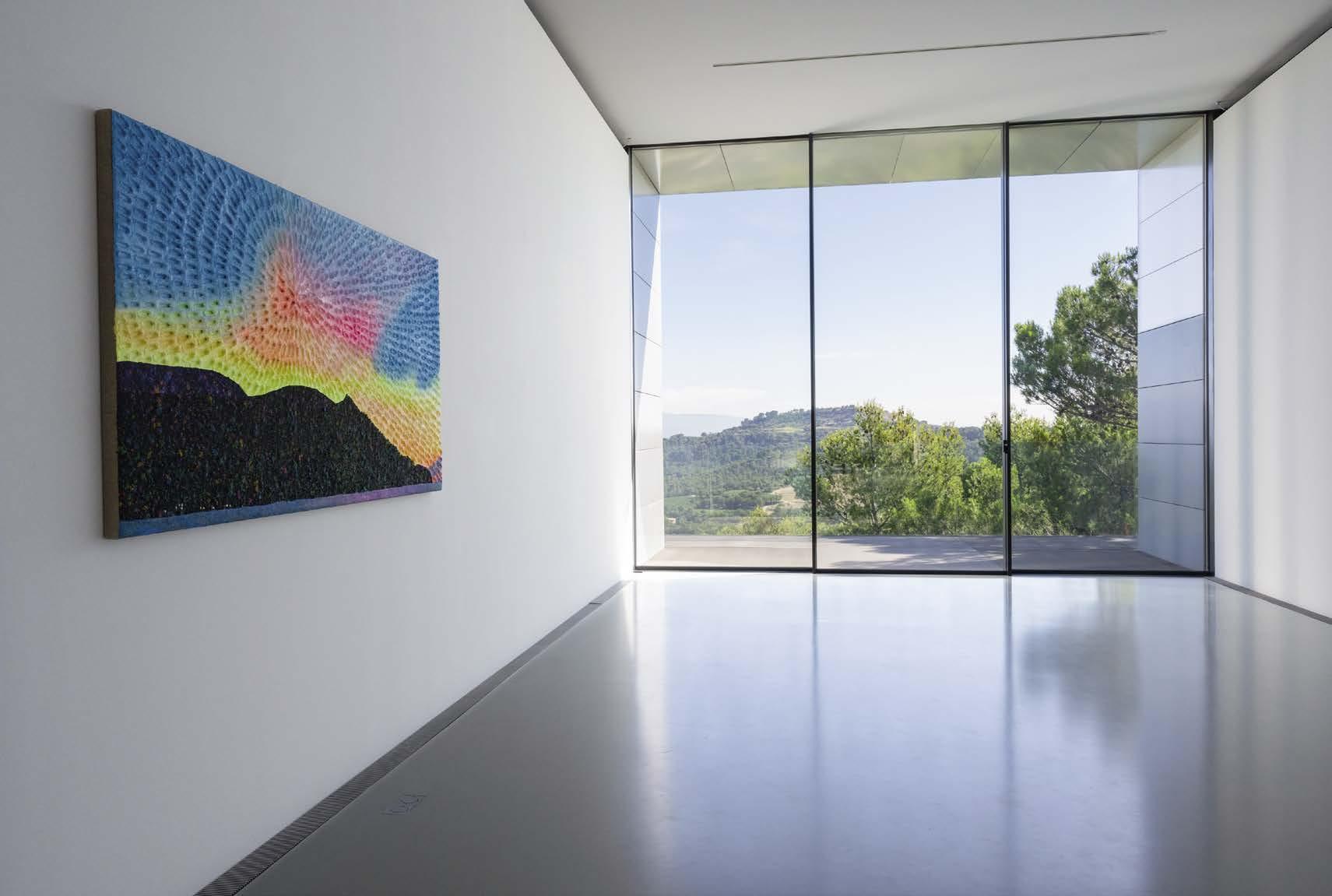
Much is made of Guidi’s interest in color theory, and faced with her giant canvases demarcated by horizontal fields of color representing mountain and sky, it is admittedly easy to think of Michel Eugène Chevreul’s 1839 principle of “simultaneous contrasts,” which posits that when the eye apprehends a color it automatically produces an afterimage of its complementary hue. 4 But at heart, Guidi’s decisions are instinctive, governed by mood and moment, by the world as perceived from the perspective of the body rather than an objective formula or system. I ask what governs the location of the central point from which the gouges of sand emanate: “Once I trowel on the sand and I try and find that spot, it’s just what feels right. It’s not measured or calculated,” she affirms. “The center point on the mountain paintings is already established because that is where the sun or moon would be; but in the other mandala paintings it’s always to the left for the most part. My initial intention was that if you were a viewer looking into a mirror, that central point would reflect your heart center.”
Guidi thinks seriously about the viewer’s experience and about how art might intercede in an overstimulated world. Color remains her central vehicle: “I think we pay attention to it,” she says. “Color is something that can stop people from doing what they’re doing in that moment.” I ask whether her fiery mountainscapes include a note of warning about the places we’re heading toward. Guidi ponders this. “Maybe it’s not a warning,” she says, “but it’s a way of communicating the need to slow down, to look, which I think people do when they really take notice of something, to experience something outside of themselves, or outside of their phones, even if they’re going to take a picture of it!”
I’m reminded of the words of one of Bonnard’s key models, the gallerist Dina Vierny, who described the painter encouraging her to move freely around a space while he worked as opposed to sitting still. “He wanted me to walk all the time.” Vierny recalled in a 2005 interview. “Why? He never said. I didn’t push, because every artist has his own rhythm, and no one else can step into that rhythm. His rhythm was color.”5 Vierny’s comment suggests an artist thinking beyond a fixed viewpoint toward something elemental.
Guidi’s Mountain Range paintings have a very particular rhythm, one that flits and darts as the eye hooks onto an aperture, a rocky outcrop, or a shift in tone while absorbing the whole. “When you’re in front of them, there’s an optical illusion or you can feel the vibration,” she remarks. “That’s something I like to experience and I feel like if it’s having that effect on me, it’ll be doing it for someone else.” All of this reinforces the sense that Guidi is an artist of instinct and impulse. Her sand paintings are fed by feeling rather than a desire to record. Her titles— As I Look into You I Begin to See Myself (2019), for
example—also speak to this. Indeed, there is a lot more storytelling going on than might immediately appear: colors peek intermittently from the gouges of sand, hinting at hidden layers of paint; many of the works bear underpainting—symbols, marks, gestures—that are entirely covered by the sand-andpaint mixture. 6 There is an elasticity to the reading of these paintings that speaks of movement, connection, and impermanence (unsurprising given Guidi’s interest in Tibetan sand mandalas).
As such, I’m interested to hear how she feels about the paintings in their finished, static state; the making process is so intrinsic to this work, worn so literally on its surface. “Well, being in the painting is very different from stepping back when it’s finished, yes. Sometimes I step back and think ‘I love this’ and then there’s times where it doesn’t work and I’ll put it over on a different wall and try and figure out what it is it needs.” Ultimately, though, Guidi says she does not struggle to detach herself from the making. “It’s the power of looking,” she says.
1. Henry David Thoreau, A Week on the Concord and Merrimack Rivers , 1849. Available online at www.gutenberg.org/cache/ epub/4232/pg4232-images.html (accessed June 15, 2023).
2. All quotations of the artist taken from conversations with her in May 2023.
3. All quotations of Paddy McKillen taken from an email conversation with him in May 2023.
4. See Michel Eugène Chevreul, Principle of Harmony and Contrast of Colors and Their Application to the Arts , 1839 (Eng. trans. Charles Martel, London: Longman, Brown, Green and Longmans, 1855).
5. Dina Vierny, quoted in Barry Schwabsky, “Pierre Bonnard: His Rhythm was Colour,” Tate Etc. no. 45 (Spring 2019). Available online at https://www.tate.org.uk/tate-etc/issue-45-spring-2019/ pierre-bonnard-his-rhythm-was-colour-barry-schwabsky (accessed June 15, 2023).
6. In 2019, Guidi exhibited a series of drawings in the David Kordansky Gallery booth at the FIAC art fair, Paris, based on Ancient Egyptian iconography. She describes this work as “satisfying” because, although she sketches continually, “it’s rare for me to sit down and make a finished drawing.”
124
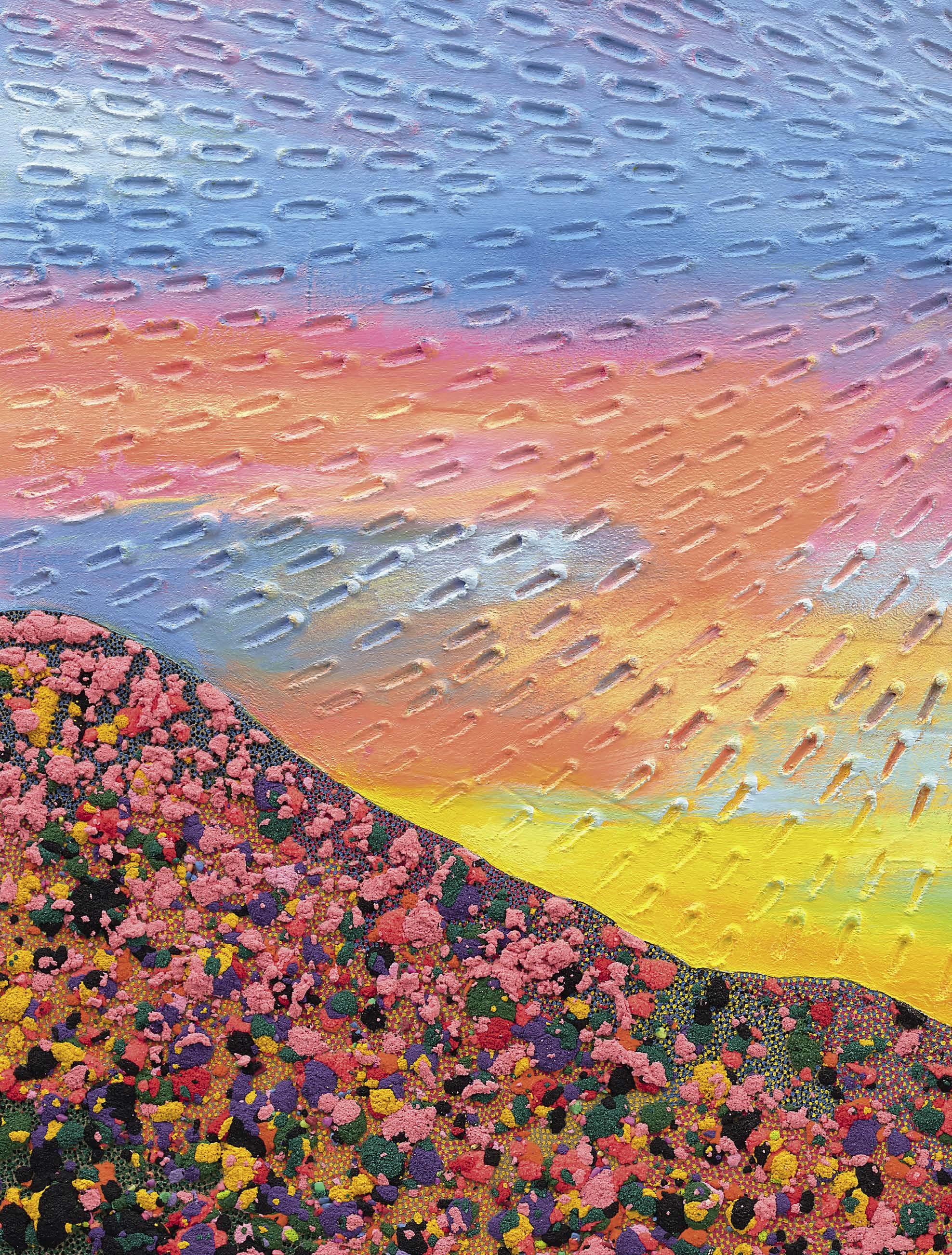
TO LIGHT, AND THEN RETURN—
This fall, artists and friends Edmund de Waal and Sally Mann will exhibit new works together in New York. Inspired by their shared love of poetry, fragments,
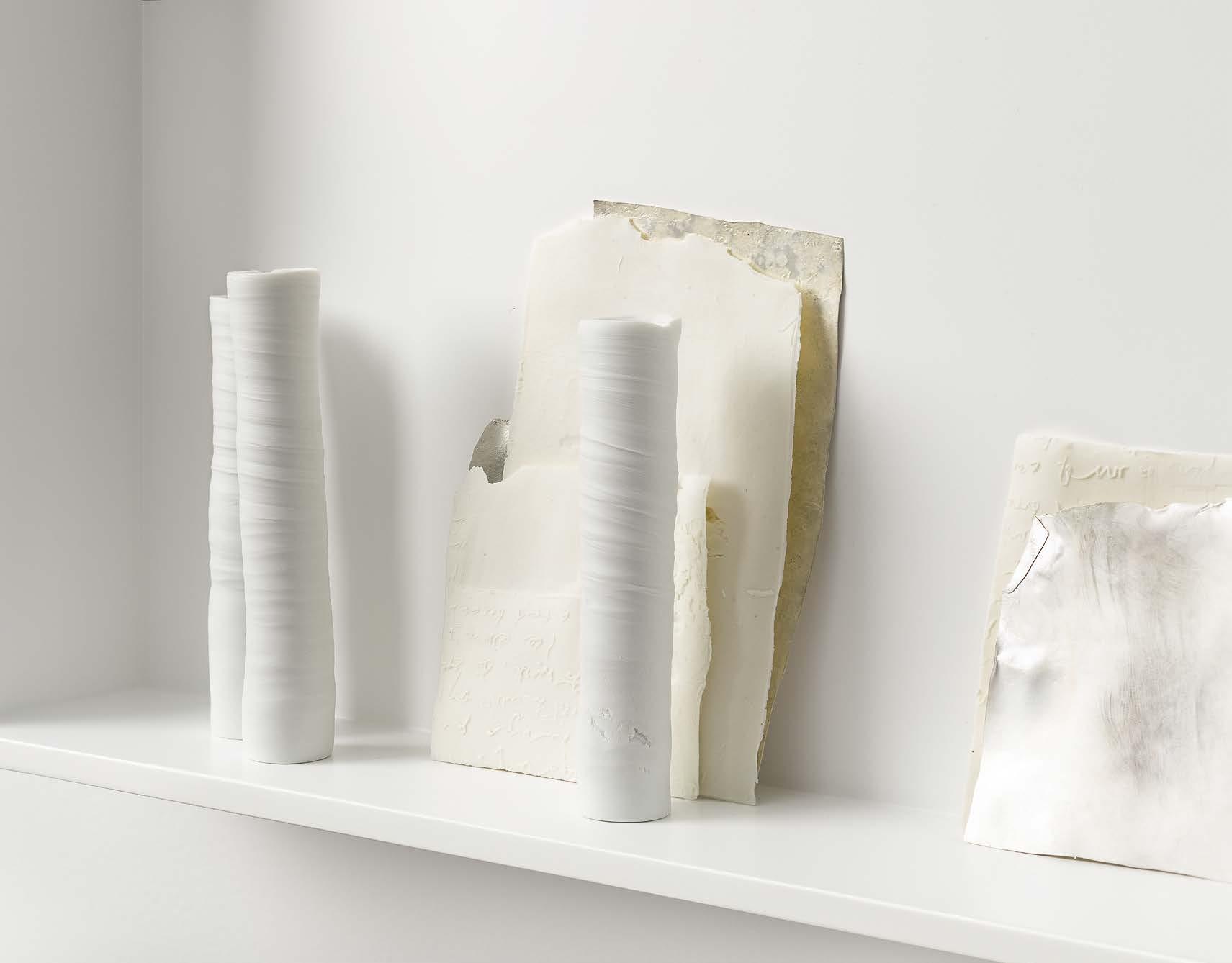
SALLY MANN W. G. Sebald was talking about a picture of a young boy, and he said that the great tragedy of photography was that the boy had no idea what life held for him, the inevitable tragedies and sadnesses. It reminded me of that scene recounted by Herodotus where Xerxes is gazing down at his troops before him, this sea of men headed to battle, and he starts to cry. It’s the exact same thing. You realize that’s what photography does so well: it’s an elegiac art, a memento mori—always filled with pathos.
EDMUND DE WAAL I love that. We have to talk elegy. And it’s interesting how central Sebald is to so many of us.
SM Honestly, he isn’t so central to me, I’m not that fluent in his work, but that quote stuck with me, especially in light of Sebald’s own ignorance of what was imminently to befall him—just like the boy.
EDW So many places to start. Do you know that wonderful remark of Walter Benjamin’s: “I came into the world under the sign of Saturn—the star of the slowest revolution, the planet of detours and delays”? I kept thinking about our own work as being an art of detours and delays. I thought that was beautiful: the endless postponement of things [laughs ].
SM It has taken us a rather long time to get here [laughs ].
EDW Not just this show, but the temporal thing. We’re endlessly moving around subjects, returning to them, and then iteratively starting again on them. I was so conscious that, in your studios a few months ago, I felt that it was full of beautiful, beautiful detours.
SM But they’re always circling around the same impediment [laughs ]. It’s just like Elizabeth Strout says: we all have one story to tell, and we tell it a thousand different ways.
EDW Perhaps one of the stories is the thing that you started off with, elegy, which is such a difficult place to begin any conversation. Or indeed end any conversation.
SM Your work has always struck me as having a sort of . . . maybe memorial isn’t quite the right word, but we’ll leave it at that: a memorial quality.
EDW I’ll take memorial [laughs ]. It’s interesting, with elegy, that people tend to push it back to the ancients, to the beginnings of poetry.
SM Well, you think of it as spoken.
EDW Yes, it’s spoken over, or sung over, so it has that feeling. But it seems to me that elegy is actually really difficult.
SM What are the components, do you suppose? Grace?
EDW Grace is interesting. Can you have an untidy, unfinished, sort of fissile elegy?
SM You certainly can’t have facile elegy.
126
EDMUND DE WAAL & SALLY MANN
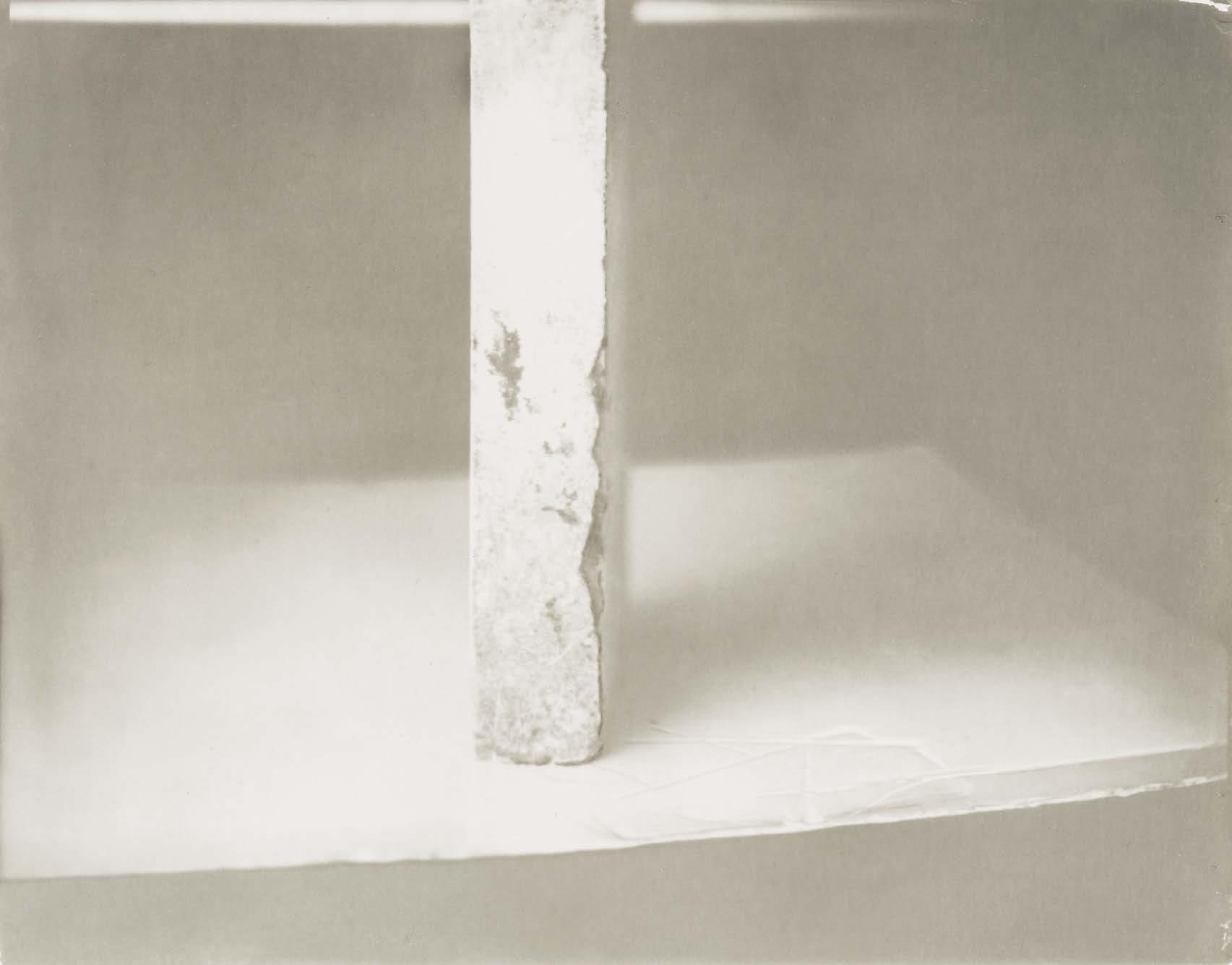
EDW You can’t have facile elegy [laughs ]. No, but grace is interesting. How can you have something that’s really, really beautiful and affecting, and deeply true to the person or the situation you’re being elegiac about, and have it not become too perfect?
SM Doesn’t it have to include a message from the past, in a way? Because it clearly isn’t speaking for the future if it’s an elegy, right? Doesn’t it by definition have to be an ending, a summation? Where’s Google [laughs ]? Where’s our dictionary?
EDW Isn’t it about holding something that really matters to you. . . .
SM Holding it in your heart.
EDW In your heart, and making it completely alive again in the moment. Having it revivified, reinvigorated, reconnected.
SM One of the first things that I wrote to you was that we share this interest in materiality and
alchemy, the way our materials are living, protean, sometimes capricious. Like clay, silver, and collodion—collodion especially is strange, with its little almost human frisson. It’s very finicky and transitory, and, just like clay I guess, it depends on the tension of the edges.
EDW That process of the collodion, which I find fascinating, is profoundly about materiality and time and alchemy. You talk, somewhere in one of your essays, about screwing things up, about things going wrong, which seems to me absolutely the heart of alchemy: not ultimately being able to control a process.
SM Or, in your case, what you do so beautifully: you can mend it.
EDW We can mend it. But ultimately, at the heart of it, there’s some sort of metamorphosis, something that isn’t controllable.
SM For both of us. It’s utterly mysterious to me,
even now, my craft. Yours is, of course, completely mysterious as well.
EDW Well, we have two opacities sitting next to each other. But there’s something shared about being obsessional about that return to that moment of transformation, in the darkroom and the kiln.
SM Obsessional because we look for that moment of ecstasy, you know? And it can be . . . I mean, hell, I’ve been ecstatic over utter failure. And that’s a good thing, because there’s plenty of it [laughs ].
EDW How early did you put down the idea of the perfect image? It took me a long time to stop trying to make a perfect pot.
SM How long? Do you mean decades, or years?
EDW About the first twenty-five years, I think. A couple of decades.
SM Yeah, me too. I wanted the perfect print—and I still do. There are images that still require the perfect print, but there are images that just invite
127
and metamorphosis, the works included will form a dialogue between their respective practices. Here they meet to speak about the origins and developments of the project.
failure. How do you know when a project is finished? That’s the most common question, but how do you?
EDW Well, W. H. Auden says that a poem is never finished, it’s only abandoned. And abandonment is really important. You have to make space for the next body of work. You have to simply let it go.
SM Do you make a sharp break, or does it segue into the next? Does one lead inexorably to another, or do you put it behind you and say, Enough of this?
EDW I don’t know how it works. And the older I get, the less I know about how it works.
SM For me there’s always the little siren song to create. Making and writing require the same degree of intensity and passion, but they’re so different. Writing wears me out. It’s exhausting. Whereas taking a good picture can in the moment be so exhilarating and exciting. You can’t wait to see what the next one’s going to look like and you can’t wait to get back in the studio. I can wait to get to the computer to write. It’s so hard to find the words. Although when you do, you do have that moment of epiphany and relief where you say, Yeah, I’ve just written a great paragraph. But different. Entirely different.
EDW But you’re writing now?
SM I’m about to [laughs ]. You know how that is, don’t you?
EDW “About to” is a wonderful space to inhabit [laughs ].
SM What was that great quote I’d just read when I saw you in Virginia? This young guy turns to a veteran novelist and crows, “I’ve just written a book.” And the novelist turns wearily to him and says back, “I haven’t either” [laughs ].
EDW You know, having seen you at home, in the woods, with that turn of the river and the landscape, that particular landscape, and having spent some time with you in your studios, I got a very, very powerful sense of what place really means to you.
SM Oh yes, it’s crucial. And what does it mean to you?
EDW Well, though I have no place that means so much to me, I think there are people who are completely deracinated and there are people who know what it’s like to love a place. And I think I’m the latter—I know what it’s like to love a place.
I suppose that you either have an impulse to dig or you don’t. So many of the journeys I’ve had have either been into bits of Europe on complicated family journeys, or into bits of the history of porcelain and the complexity of all that. But all those different places bring me back to an absolute imperative: to
make something again or write something again.
SM We claim our overlapping space, I think, our joint space, in this show. I’m so excited about this new work that you’re making.
EDW What’s so interesting for me is that—it’s a decade, isn’t it, that it’s taken us?
SM Damn near.
EDW And that’s quite a lot of reading and looking and conversations together in complicated places, and quite a lot of challenge as well, which has been really extraordinary. It’s not straightforward. It’s very much a self-generated thing, this idea of being in a space together and showing work.
SM Did I ever tell you how I hadn’t heard of you until Cy [Twombly] picked up your book—I remember exactly where I was standing in his house—and he handed it to me and said, “You and this guy have a lot in common.” “This guy.” I read the book and said, “You know, that’s true, this guy and I, we do have a lot in common.” That was a good moment. It was one of those auspicious times where you remember exactly what the sun coming through the window looked like.
EDW Well, I’m happy about that.
SM He loved your work.
EDW It’s funny, isn’t it? Because we did a conversation, you and I, together in New York, at the Frick Collection, in 2019. There was an audience, and
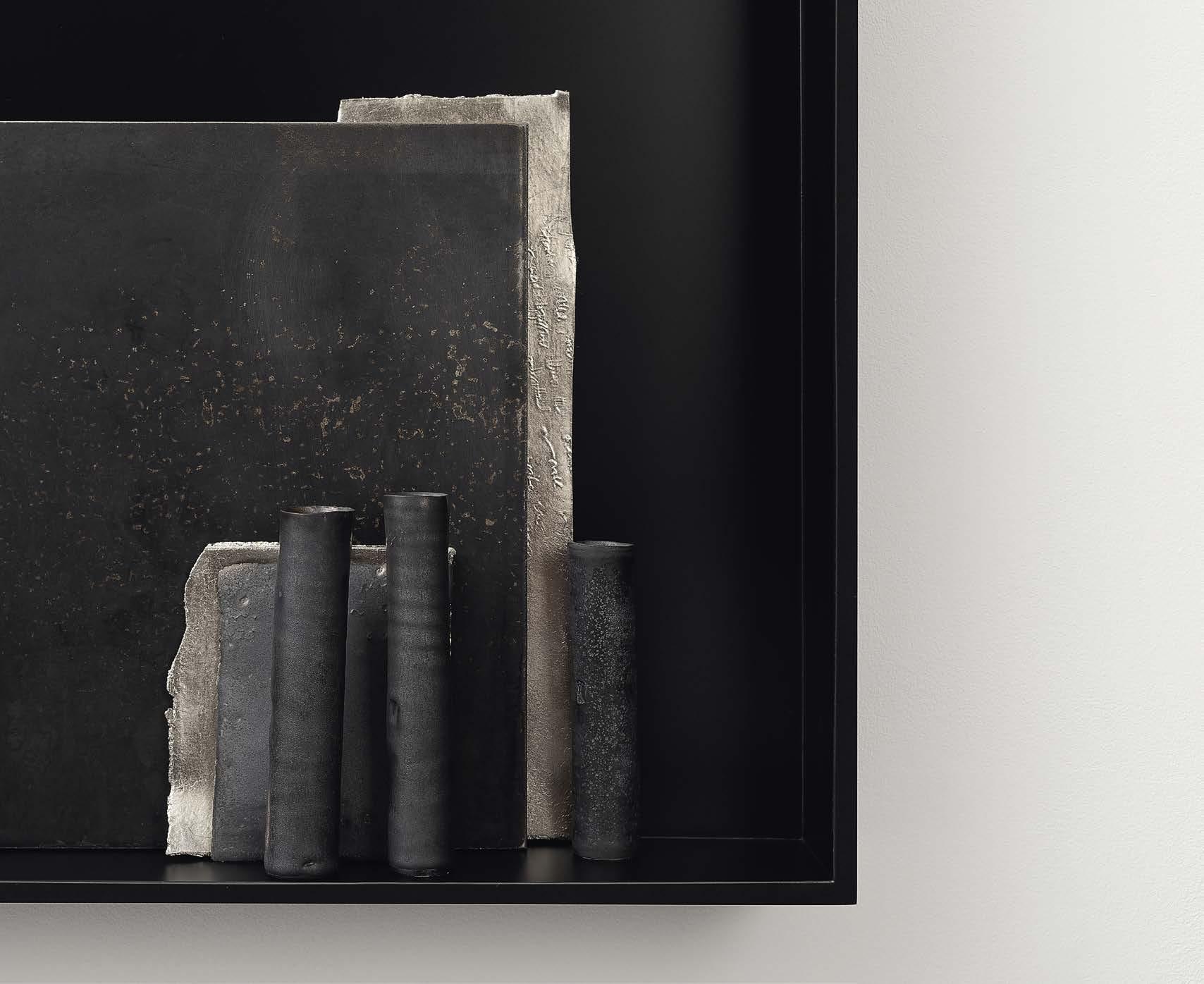
128
Previous spread, left: Edmund de Waal, untitled (an exchange of territory, or world), 2023 (detail), porcelain, silver, aluminum, and glass, 15 × 19 ¾ × 4 inches (38 × 50 × 10 cm)
Previous spread, right: Sally Mann, Platinum, Stone #10, 2022, platinum/ palladium, 8 × 10 inches (20.3 × 25.4 cm) ©
Opposite:
it was the Frick, but in that hour together there was very much a sense that the world had completely disappeared. We were just thinking aloud and unpicking ideas and lines of thought. And you know, that’s sort of what’s going on in this show: unpicking different lines of thought.
SM Teasing out strands of commonality.
EDW Some strands weaving together and some completely passionate shared bits of poetry behind the whole thing. And there are these cadences between our work, which are really beautiful.
SM Mixed metaphors, here. We’ve got cadences, we’ve got threads, we’ve got strands. . . .
EDW I know, it’s terrible. I mean, it needs editing, doesn’t it?
SM Block that metaphor [laughs ].
EDW But there’s something absolutely at the heart: the elegy, the presence of memory within the work, which is completely unfashionable. It’s got nothing to do with any contemporary kind of stuff.
SM I think we both share the belief that objects carry memories, and that’s been so important in the work that I’ve done responding to your work, and vice versa. These are things that have heft and weight, emotional weight. When I chose what to photograph in collodion for our collaboration, it was all nineteenth-century stuff that was hauled out of barns or sheds or old workshops. But it had
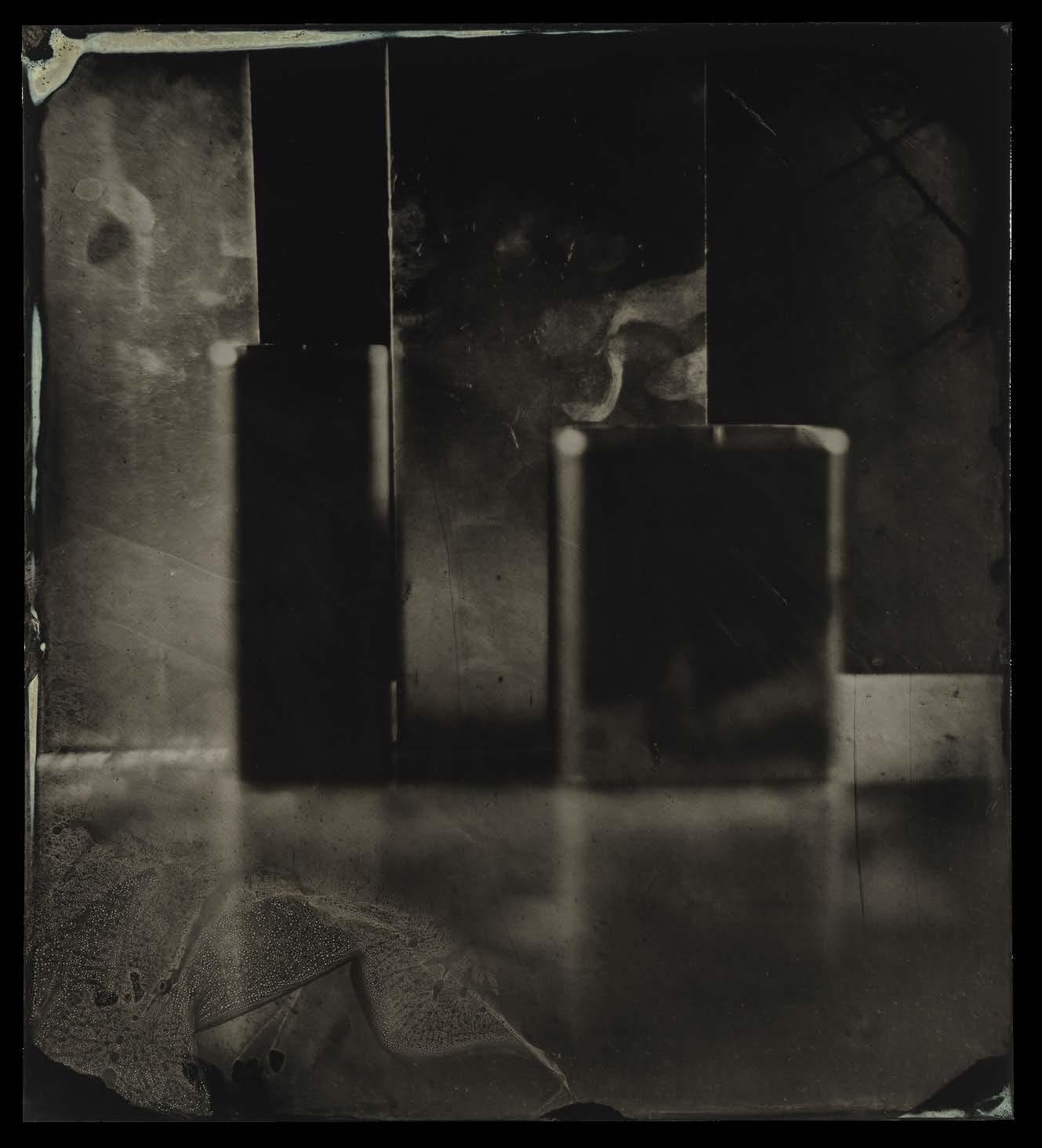
all been used, it had been held or passed down by human hands for generations, like a plowshare or a forged piece of steel from a blacksmith shop. All those things have resonance. They have stories.
EDW There was a moment when I came to see you in the fall, and we went up to the neighboring farm where the owners had died, and the whole of the field around the house was filled with all their possessions, laid out. Every single agricultural implement was there, and the carpets and the household goods and the books and every single piece of crockery.
SM And the Bibles.
EDW And then another field was full of the cars of those who had come from all over to bid. And the guy standing on top of the truck—
SM This great auctioneer.
EDW The auctioneer, and several generations of a family’s life.
SM More than several.
EDW Many, many, many.
SM Since the early 1800s.
EDW I remember writing something in The Hare with Amber Eyes [2010] about this moment when all these family things that hold all of these memories become stuff. The moment of their separation from a family and a place, this sort of diaspora of objects. We saw people taking things away from the field,
but there was still some sort of resonance left in these objects.
SM Even within the dispersion of them. This is of course something you’ve explored in great detail in your work.
EDW After seeing this extraordinary farm sale, we walk into your studio and there are all these objects that over several decades you’ve been photographing again and again and again. It’s extraordinary because, of course, it’s not dispersion. It’s bringing them back together again in this powerful alchemical moment.
SM Right, exactly.
EDW And that’s how I write books.
SM Melding disparate things into one personal unit.
EDW You couldn’t have choreographed that day more crazily, more perfectly.
SM That day was so amazing [laughs ]. I’m taking pictures in that house now because it’s just such a powerful place, haunted by—how coincidental—the souls of the local potter and his family.
EDW How you talk about that, the presence of loss, how you talk about it as a real thing, not just as a kind of aesthetic moment but as a real elegy, a real holding of the past and bringing it forward into the present, seems to me very much at the heart of what you do.
129
© Edmund de Waal. Photo: Alzbeta Jaresova
Sally Mann
Edmund de Waal, salt, axe, stars (for O.M.), II , 2023 (detail), porcelain, Cor-Ten steel, platinum, aluminum, and glass, 27 ½ × 20 ¼ × 4 inches (70 × 51.4 × 10 cm)
© Edmund de Waal. Photo: Alzbeta Jaresova
This page: Sally Mann, Tintype, Still Life #35, 2019, unique collodion wet-plate positive on anodized aluminum with sandarac varnish, 15 × 13 ½ inches (38.1 × 34.4 cm)
© Sally Mann
The Plac e You’ ve Ci rc le d the Globe to Find
Li ve on the world’s most pr ivate isla nd Estate-s ty le home s on Fisher Island ’s pr is ti ne shoreline, steps from the Spa Internaz ionale, racquet club, and aw ard-wi nning golf course. The Residences’ unprecedented amenit ie s and white-glove serv ic e set a new standa rd , wi th fi ve -star dining , re sort-s ty le po ol s, and a wa terf ront lounge . It ’s the pinnacle of coas ta l li vi ng , minutes from Mi ami bu t a world aw ay


OR AL R EPRESENTATIONS C ANNOT BE R ELIED UPON A S CO RR EC TLY STATIN G REPR ESEN TATI ONS OF T HE D EV ELOPER FO R CO RRECT R EPRESENTATIONS MAKE R EFER EN CE TO THIS B RO CHUR E AN D TH E DO CU MENTS REQUIR ED BY SEC TI ON 718.503 FLO RIDA S TATUTES, TO B E FURNISHED BY A D EV ELOPER TO A B UY ER O R L ESSEE. T H E COMPLETE O FFERIN G T ER MS A R E IN A CPS -12 A PPLI CATIO N AVAIL ABL E FRO M T H E O FFEROR FIL E N O. CP23- 000 6 Six Fisher Island Condominium (the “Condominiu m”) is markete d as The Residences Six Fisher Island an d is developed by PR H Parc el 7 Ow ner, LLC (“ Develo per”), which use s th e marks of The Related G ro up, BH G ro up, an d of Fisher Island unde r licens e ag re ements. The D eveloper s not in corp or ated in, loc ated in, n or a resident of New Yo rk This s not intended to be an offer to sell, or s olicitatio n of a n of fe r to b uy a condominium unit to reside nt s of N ew York o r to residents of any othe r jurisdic tion were prohibited by law. Co nsult th e Prospectus of Develo pe r to u nderstan d th e amenities, p ro pose d budg et, te rms, conditio ns, sp ecific ations , fe es Unit dim ensions, site plans, a nd to lear n what is in cluded with pu rchase a nd by payment of reg ular c ondo minium a ssessments 202 2 © PR H Parcel 7 O w ner, L LC , with all r ight s reser ve d.
THREE– TO EIGHT–BEDROOM RESIDENCES FROM 3,800 – 15,570 SQUARE FEET SCHEDULE A PRIVATE PREVIEW: 6-FISHERISLAND.COM +1 (305) 423-7550
TOMBS OF
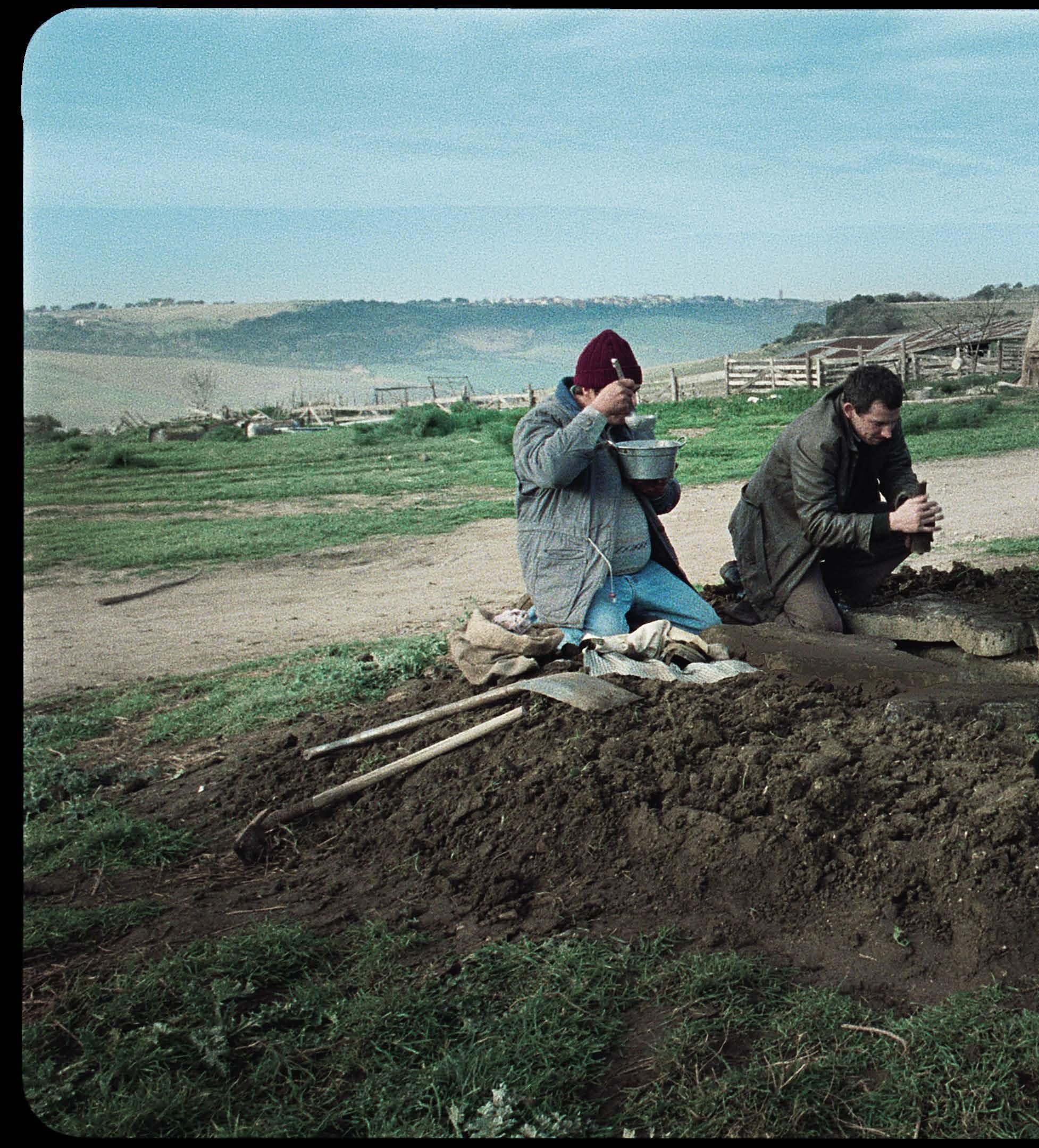
BEAUTY
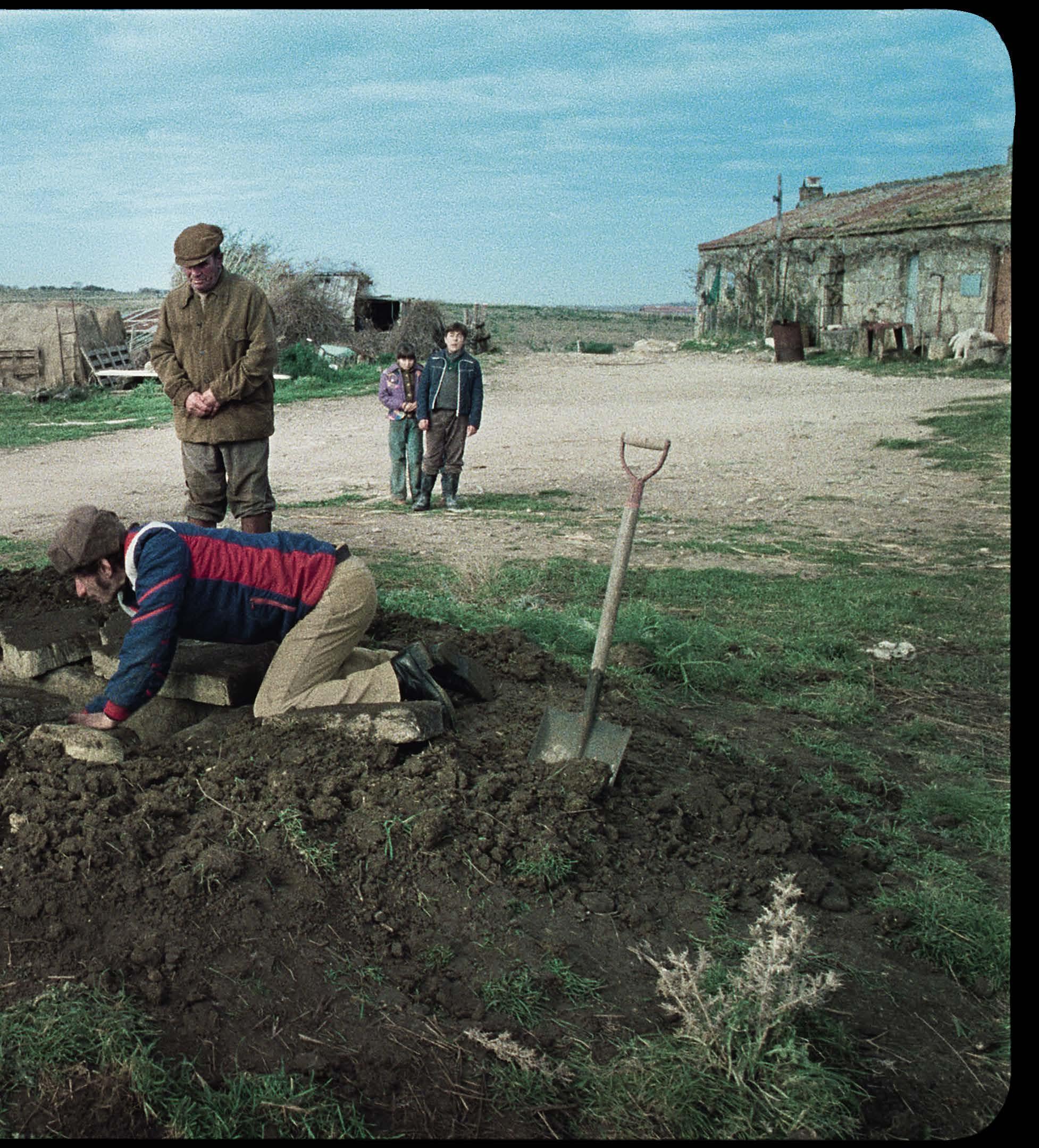
Mike Stinavage talks to director Alice Rohrwacher about La Chimera, which premiered at Cannes in the spring.
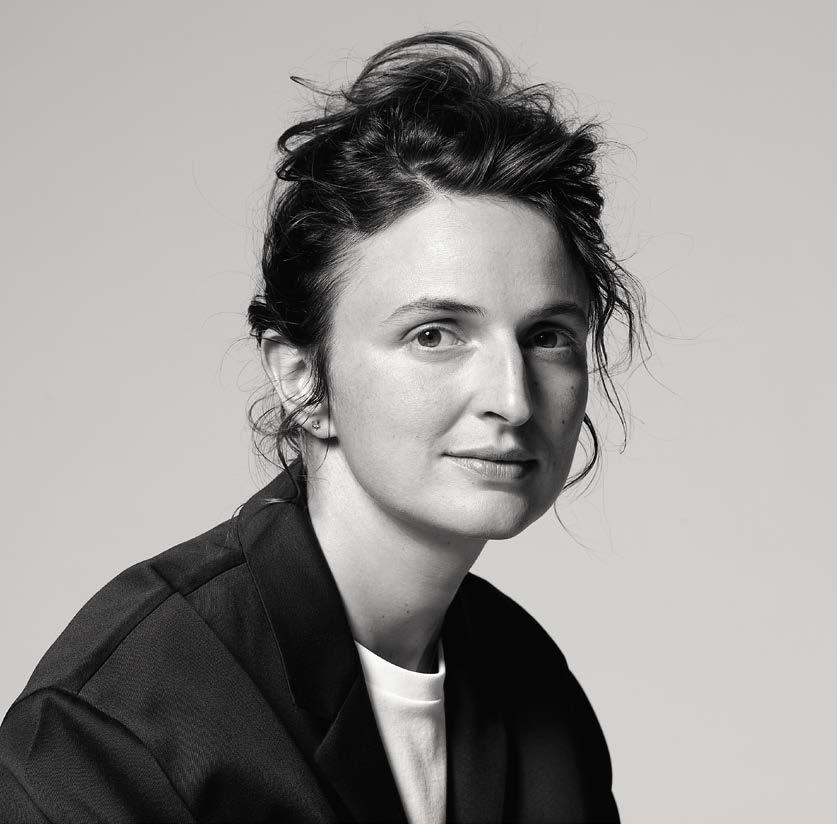
When the young sisters and their beekeeper father walk up the stream to a grotto, a kind of amphitheater formed from a flow of white rock, there, standing in front of a film crew, is what looks like an Etruscan goddess in white. Between takes of an announcement for an artisanal-goods competition, this woman—played by Monica Bellucci—addresses the children, long white hair draping down from a towering headdress. She hands them a flyer, inviting them to take part in the competition.
The Wonders (2014) was the enchanting first film in a triptych written and directed by Alice Rohrwacher. In 2018, Happy as Lazzaro, equally as enchanting if not more so, followed. This year the triptych reaches its third and final film, La Chimera
On a Saturday-morning video call, Rohrwacher speaks congenially. The walls and space behind her are white and unassuming, and overhead are ceilings of exposed timber—she is presumably on the top floor of her home. She’s quick to smile. From the outset of the conversation, Rohrwacher speaks in a mixture of Italian and English, the gaps between her English and my Italian filled by artist and impromptu interpreter Clara Gargano.
It’s been a big year for Rohrwacher
and her collaborators. A few big years, in fact. In 2021, alongside codirectors Francesco Munzi and Pietro Marcello, Rohrwacher presented Futura , an interview-based documentary that asks young Italians from disparate regions and backgrounds to contemplate the future. Earlier this year, Rohrwacher’s short Le Pupille (The pupils) took her to the United States when it was nominated for an Oscar. And in May, La Chimera premiered at the Cannes Film Festival and competed, as the triptych’s first two films had in their time, for the Palme d’Or. With Catholicism, the lesserknown Italy of the Etruscans, and rural life as the triptych’s recurring muses, Rohrwacher poses a central question: what should be done with the past? In each film she directs this question to the local area where the three Italian regions of Umbria, Tuscany, and Lazio meet.
It’s a part of Italy that I really love because it’s not clear where it’s going. It’s not yet eaten by the tourism, but at the same time it is in danger because of course there are a lot of tourists. Here there is also a big attempt by agro-industry to acquire this land and devastate it. This region is very fragile but very beautiful. It has the potential to evolve in
other ways as well, not only based on the consumption of the land or the culture.
Rohrwacher calls this border region home.
The area once held Etruscan relics and artifacts below the surface. Now, they are much harder to come by.
La Chimera is Rohrwacher’s tribute to archaeology, which, given the film’s grave-robbing and site-destroying protagonists, may not be readily apparent. During the 1980s and ’90s, men went after the ancient artifacts buried in this region with shovels, pickaxes, and any other tool necessary.
I was little, and I was . . . very scared of them. Almost every man looked for treasure. There was a treasure-hunt fever. I was very impressed because they did it against the law, against the sun law, the law of the living; but also against the night law, the law of the dead and of the past. I was very impressed because I always wondered how they found the authority to do it, to open ancient tombs that for 3,000 years nobody had opened. And suddenly they were saying, “Ok, I’ll open it.” They brought everything to America, to Switzerland, to everywhere. It was the first generation that felt profoundly separated from its own past. And so I was interested in this aspect: to tell the story of a group of new men who are different, who are detached from their past.
At the center of La Chimera is Arthur, a foreign—non-Italian—and romantic man who is part of the gang but unsatisfied by the exhumed plunder alone. The film balances the gravity
134
Previous spread: Still from La Chimera (2023), directed by Alice Rohrwacher. Photo: courtesy Festival de Cannes
This spread, left: Alice Rohrwacher. Photo: © Brigitte Lacombe This spread, right: Still from The Wonders (2014), directed by Alice Rohrwacher. Photo: courtesy Oscilloscope Laboratories
of romance and tragedy with the burlesque and the ironic.
I tried to keep these elements together which, in my opinion, are always very difficult to keep together. It is easier to abandon yourself entirely to the tragicromantic vein or to make a film that is truly a comedy. Instead, I tried to keep these two aspects together, a bit like saying, “I really believe that they are part of the contradiction of existence: being able to have an ironic look but still being able to draw a lesson from the tragedy.”
Rohrwacher’s films are as down to earth as they are oneiric. The contradiction therein is delicately spun in a way that gives her storytelling a texture of its own. At times the triptych is surreal, with time lapses and sudden junctures, yet it remains free of special effects. With the simplest of tools and an entirely clever mind,
Rohrwacher excites the imagination. And as much as the triptych is based in place, and at a safe distance from globalized mass culture, it has a universal underpinning.
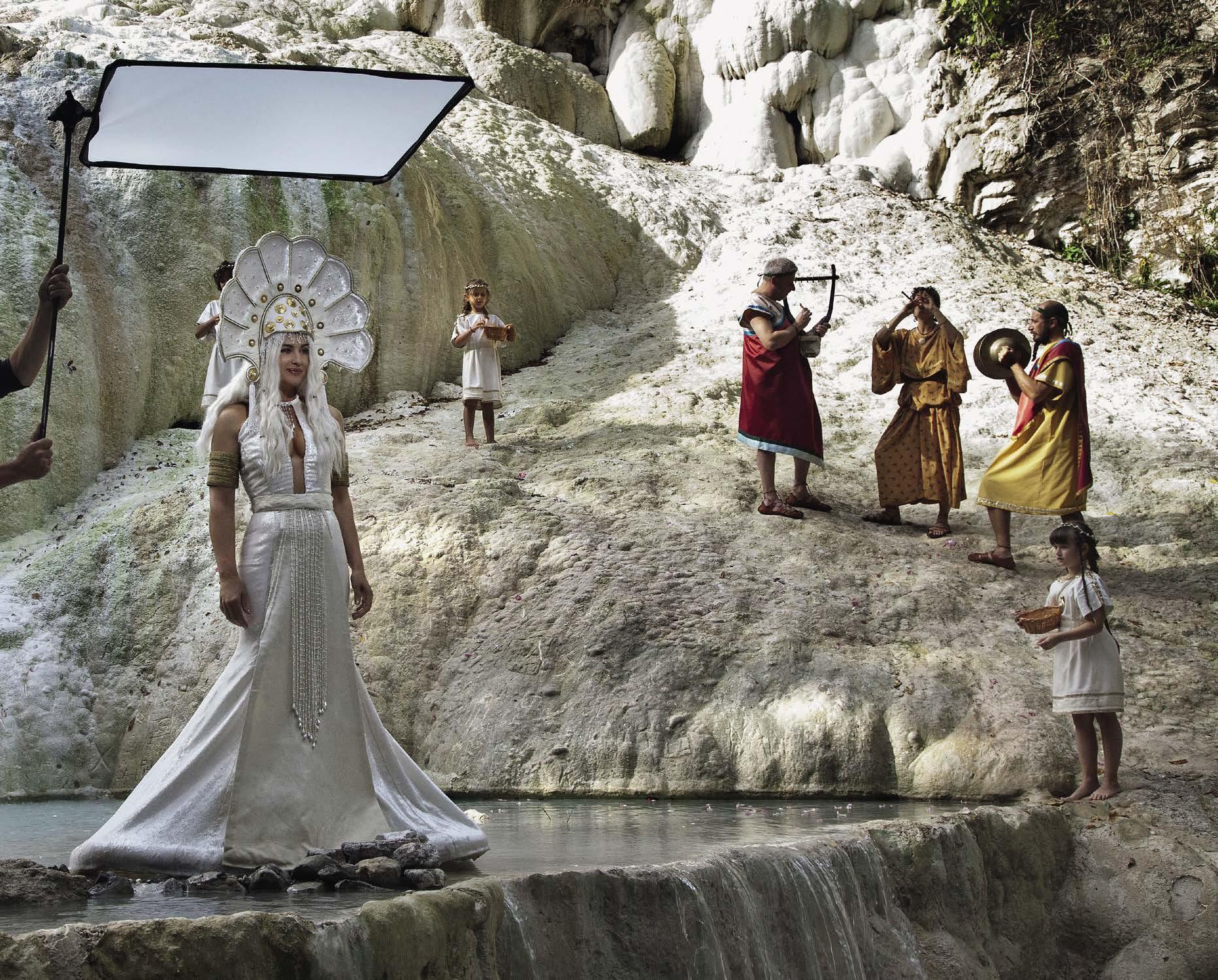
When I ask Rohrwacher about her artistic inspirations and reference points, she states her love of museums and contemporary art. Then she pauses.
What am I looking for in contemporary art? Now it is very difficult to tell what is beautiful and what is not beautiful. For example, when I did La Chimera , it was very clear that the treasures hidden under the earth were beautiful things. It’s very different from the time we are living in now. There is no longer a common sense of beauty. And so, what is art for me? It’s a view, an eye, a point of view on reality from a perspective that I couldn’t imagine. The art of the past was a magnet for the eye. For me contemporary art is the
135
“FILMS NOW ALWAYS TRY TO DRAW THE VIEWER INSIDE; INSTEAD, I LIKE TO KEEP THE VIEWER OUTSIDE TO CONTEMPLATE THE WORLD.”
–Alice Rohrwacher
opposite; it is one eye that looks at the world. I can’t say one artist in particular. The sense of collectivity is more important for me. For example, I like one artist maybe because I saw the work of another artist, and their things go together.
Rohrwacher, too, abides by this sense of collectivity. She speaks fondly of her collaborators, including her sister, actress Alba Rohrwacher, and cinematographer, Hélène Louvart, both of whom have worked on each film of the triptych. Of Louvart, whom Rohrwacher adores like a sister, she says,
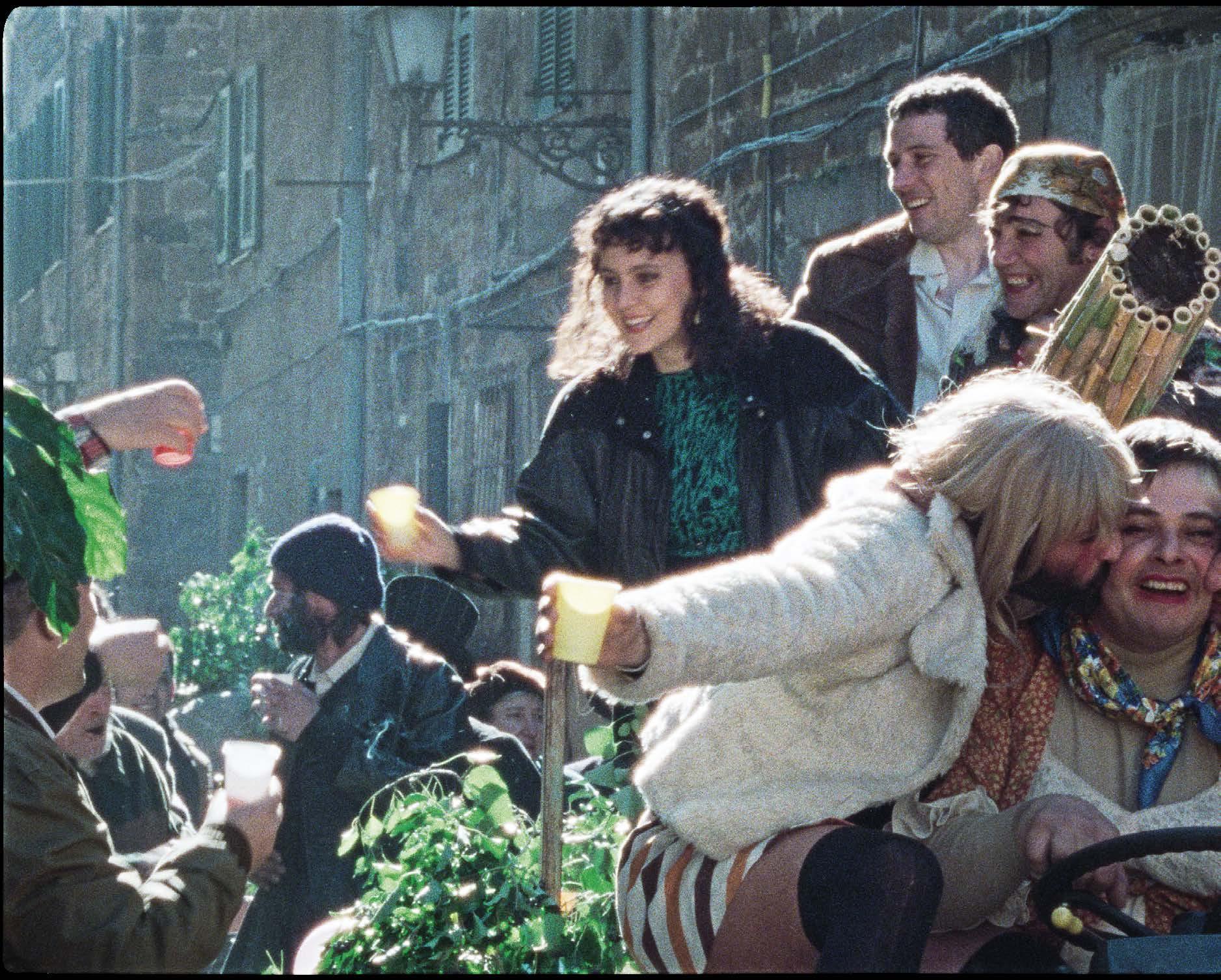
We met really by chance. I asked her to make my first movie after seeing her work, but I couldn’t imagine how deep and beautiful it would be to continue working with the same person, to make an evolution together.
Louvart plays a role in Rohrwacher’s work not only as cinematographer but throughout the filmmaking process. The two women don’t use a shot or frame list. Together in rehearsals and on set, they make decisions about colors, textures, and images. “We analyze the movie and though we don’t know how we will film that scene, we know the feeling of the scene.” Perhaps scheduling the overwhelmingly natural and spellbinding scenes runs the risk of pulling the blood from their veins.
La Chimera , like The Wonders and Happy as Lazzaro , has an iceberg effect. Preproduction and postproduction aside, there is the sensation that what is seen onscreen is only a slice of a much larger story taking place. Here, too, is the sense that the characters existed before camera crews arrived, and that they continue to exist after the final take. When I offer this thought to Rohrwacher, she smiles.
136
“THIS IS SOMETHING VERY IMPORTANT TO ME. TO BUILD A WORLD AND THEN FILM A PART OF IT. WITH THIS, THE WORLD IS ALWAYS BIGGER THAN WHAT WE SEE.”
–Alice Rohrwacher
We always knew that these people were alive. They are living without us. The movie tells a little bit of them, but they are living people. This is something very important to me: to build a world and then film a part of it. With this, the world is always bigger than what we see.
To make [ Happy as Lazzaro ], we had many animals on the farm. We raised many animals, for example many pigs that are never seen in the film and were not expected to be seen. But I always told the production team that there couldn’t be a farm of that era that didn’t have pigs. And so the idea that there were still these animals that you had to feed every day, you had to take care of every day, and it was the protagonists themselves who did it even if you couldn’t see them.
The triptych, Rohrwacher offers as an afterthought, may be three layers of the same story, even if visually and textually the films are very different. Is she, the world builder, excluded from her created world?
I have a double feeling. On one hand, I always feel part of this world because I helped to build it with my collaborators, but I always feel outside. I really love to make movies where you don’t need to identify with the characters.
In [ La Chimera ] in particular, every time we risk identifying too much with the character, I tried to completely change the perspective and therefore create an ironic gaze, because changing perspective also means having an irony about the situation. Seeing the earth from the moon changes our approach to the earth.
In this way Rohrwacher delicately repositions her viewers, confounding them as more witnesses than watchers. At times the films have the ethnographic eye of a documentary.
I try to make films that you can see in front of you. They are not around you, in order to still have a distance of vision, which is perhaps something not very contemporary. Films now always try to draw the viewer inside; instead, I like to keep the viewer outside to contemplate the world, to put not only identification but also contemplation among the various feelings.
Nor does Rohrwacher’s rural storytelling abide by contemporary or commercial trends.
Movies tell us about necessity. The movies of the ’50s and ’60s by the big masters were mostly in the cities because everybody knew about nature and the work being done in the countryside. Then we cut our relationship with the countryside. We idealize the countryside, or we eat the countryside, but it’s a mysterious place that we don’t know anymore. I think there are many directors of my generation who understand this necessity to tell stories about the world that feeds us, the world that makes our food.
In recent years, however, rural storytelling has been brought to the screen in more European films, among them Carla Simón’s Alcarràs (2022) and Rodrigo Sorogoyen’s As Bestas (The Beasts , 2022), which focuses on rural tensions in Galicia and swept the Premios Goya, Spain’s Oscars. The rural costumbrismo of
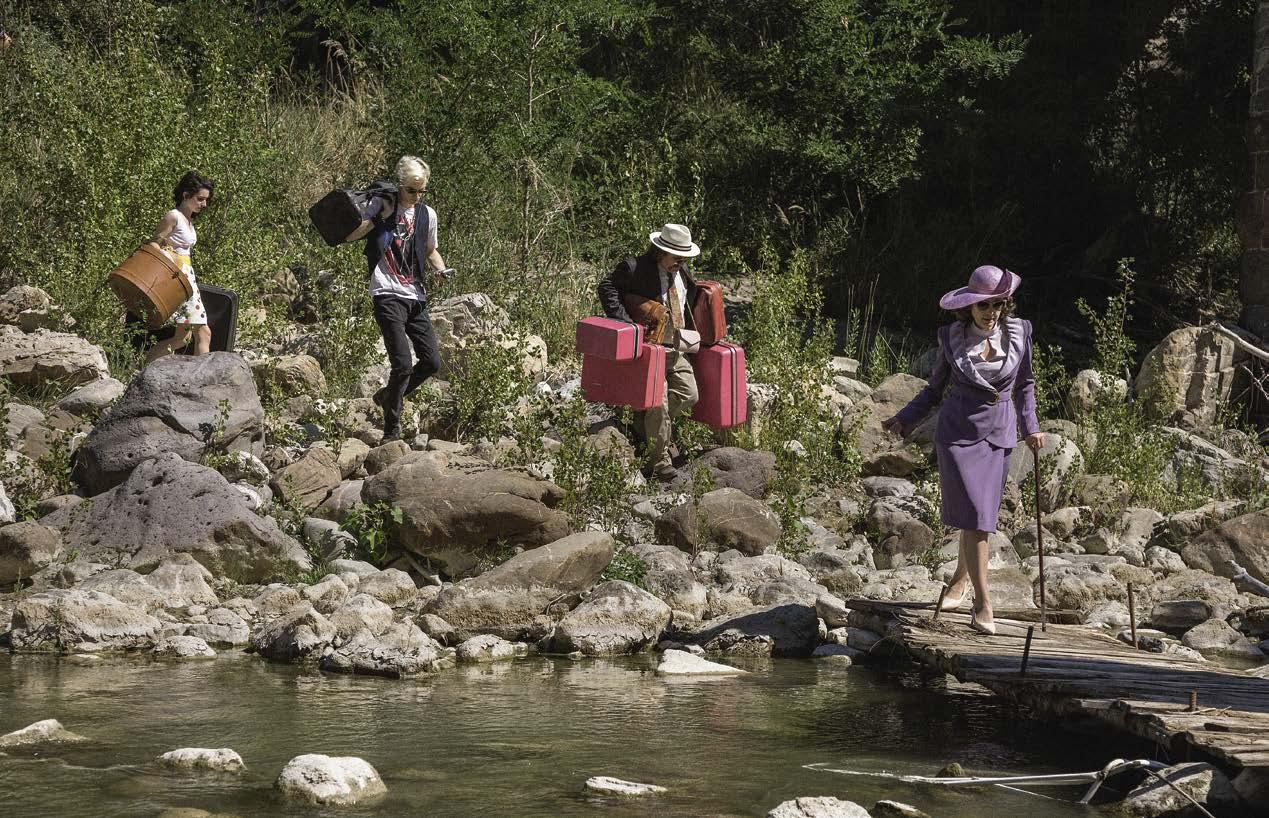
Southern Europe’s cinematic past provides fertile ground for a new look at rural life that incorporates the deluge of contemporary challenges and changes.
With the added wild card of suburbia and the robust culture therein muddying the water between urban and rural life in the United States, it’s difficult to locate a parallel or comparable undercurrent in this country. Though films such as Ang Lee’s Brokeback Mountain (2005), Benh Zeitlin’s Beasts of the Southern Wild (2012), Martin McDonagh’s Three Billboards outside Ebbing, Missouri (2017), Debra Granik’s Leave No Trace (2018), and Chloé Zhao’s Nomadland (2020) are set in the countryside, their treatment and valuation of rural life differ from their European counterparts. Laura Ingalls Wilder being long gone, contemporary American stories set in the countryside have less to do with working the land and more to do with escapism or surviving in the margins of dog-eat-dog capitalism.
Rohrwacher’s nuanced, compassionate, and profoundly imaginative stories from the places detached from urban life offer, in turn, a novelty:
When I make a movie, it’s the same feeling as a beekeeper. As you know, the beekeeper is the one who works with these beautiful animals and loves this incredible animal that makes honey. They are wonderful animals, but you will never feel part of it. They will never let you enter completely. They are not animals that look at you. You look at them, but they don’t look back at you.
137
Below: Still from La Chimera (2023), directed by Alice Rohrwacher. Photo: courtesy Festival de Cannes
Right: Still from Happy as Lazzaro (2018), directed by Alice Rohrwacher. Photo: © Tempesta
GRACE TO BE BORN,
up a camera. I grew up in the Bronx and my parents wanted to keep me off the streets after school let out at 3 o’clock, so they enrolled me in an art class at the local YWCA. In the art room was a bookcase with this book. Every time I went to class, I took the book off the shelf and went into a corner to look at it. Basically, at the end of the school year I charmed the teacher into giving me the book.
GERARD MALANGA If I had to pinpoint where my artistic life began, it was a photo book called Metropolis: An American City in Photographs , by Agnes Rogers and Frederick Lewis Allen, published in 1934 by Harper & Brothers. When I look back at this book I realize that in my adolescence, technically I was training my eye for the future, although I didn’t know it at the time. I realize now that I was involved with photography before I ever thought of picking
RAYMOND FOYE The book is thematically organized around how a city functions during a twenty-fourhour cycle.
GM Yeah, so that was interesting. Tugboats, clipper ships, beggars, children’s games, subway shots, tenement life. The photographs, by Edward M. Weyer, are in beautiful black and white.
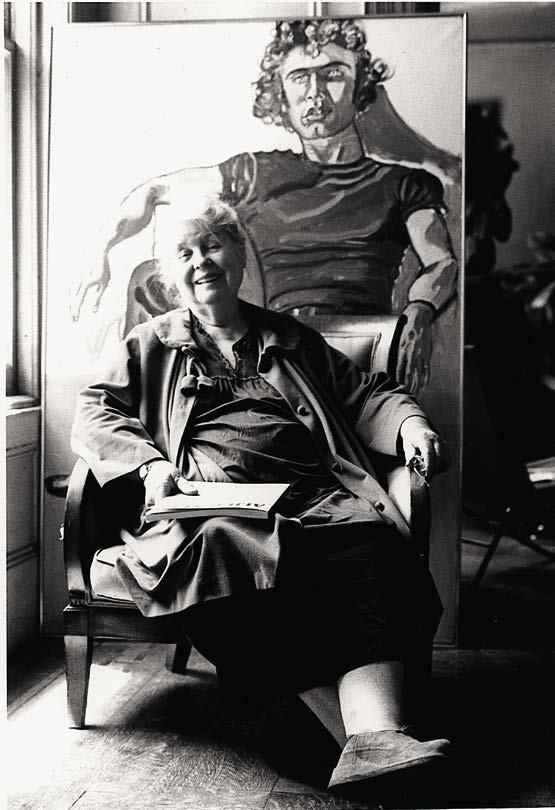
RF In what ways was the Bronx different from Manhattan?
GM Well, physically it was different because it’s
AND LIVE
the only one of the five boroughs that’s part of the mainland. The Bronx was farmland and woodland in a lot of places when I was growing up. It was also the last borough to be settled, so it was a very young borough in that sense. Our house was two blocks from Edgar Allan Poe’s cottage. My primary school was PS 46 Edgar Allan Poe. As a kid, I had a choice of six movie theaters in my neighborhood and I would go twice a week. It was a great diversion. My favorite theater, the Valentine, showed re-releases or else foreign films with subtitles, a real educational experience.
RF What was high school like for you?
GM I went to the School of Industrial Art, today the High School of Art and Design. When it started, back in the 1930s, it was a WPA school, a vocational school. I majored in advertising and graphic design. My classmates were Calvin Klein, Antonio Lopez, and the Kuchar brothers, who were studying film. We were all in the same class. It was a terrific school. Calvin Klein was doing costume design, Antonio was doing fashion illustration—a field he would revolutionize. When Antonio showed me his portfolio, my jaw dropped. I thought, Wow, you’re going places! He was quite amazing. I was always clothes conscious, even before high school. When I was young, my mother always used to dress me up with a tie and a clean shirt. We were all Bronx guys, we all lived within about two miles of each other in the north Bronx, two subway stops from the end of the line.
Antonio Lopez had a great collection of 45 rpm’s that he would bring to school, and we used to dance to them in the cafeteria during lunchtime. We would have a ball. Chuck Berry, Fats Domino, that sort of thing. Antonio also had mambos and cha-chas, which he taught me how to do. And in connection with that, one day I ran into an old girlfriend on the street, Judy Klein. She was on her
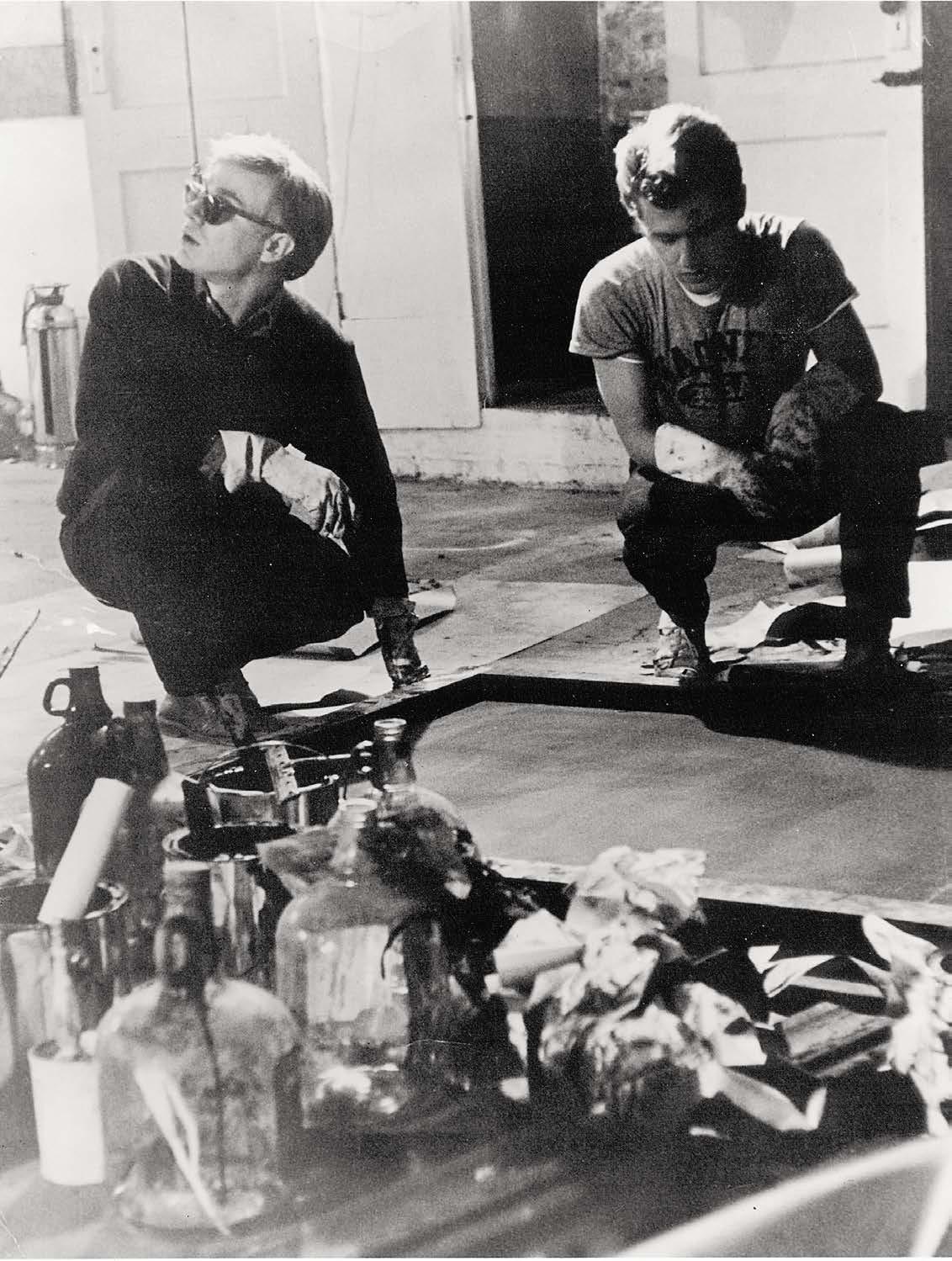
138
Poet and photographer Gerard Malanga speaks with Raymond Foye about his latest poems, revealing their place in his long career.
way to the TV studio where they were shooting Alan Freed’s show. She said, You like to dance, come on with me. I knew about Alan Freed—more than anyone, he was responsible for introducing rock ’n’ roll to America—but I didn’t know he had a TV show. Judy brought me to the DuMont TV studio on East 68th Street and I became a regular on the show until the very end. We were dancing to records but we did have live rock ’n’ roll visitors like Tina Turner, Chubby Checker, Bobby Freeman—he was a favorite of mine. These acts lip-synced to the records. There’s a picture of me in the December 7, 1959, issue of Life . They covered the last day of Freed’s show—he was put off the air because of a payola scandal. I have a crew flattop and I’m talking
to my date. We wore our own clothes to the show because we were always picking up the latest styles on the street. We shopped for shoes at McCreedy & Schreiber, and in midtown Manhattan there were some really nice clothing shops for young people. RF Was there a point when you had to decide what you wanted to be? A writer, an artist, a designer?
GM By the end of my last year of high school, I had already decided that I was going to be a poet. That was because of the poet Daisy Aldan, my English teacher. She was remarkable—we were reading incredible stuff in class, material that probably wasn’t being taught in any other high school English class in New York, or even in the university
This spread, clockwise from top left: Gerard Malanga, Alice Neel with her portrait of Gerard Malanga , 1976
Gerard Malanga, Gerard in a self-portrait visiting his dad Jerry in Holly Hill, Florida, 1972
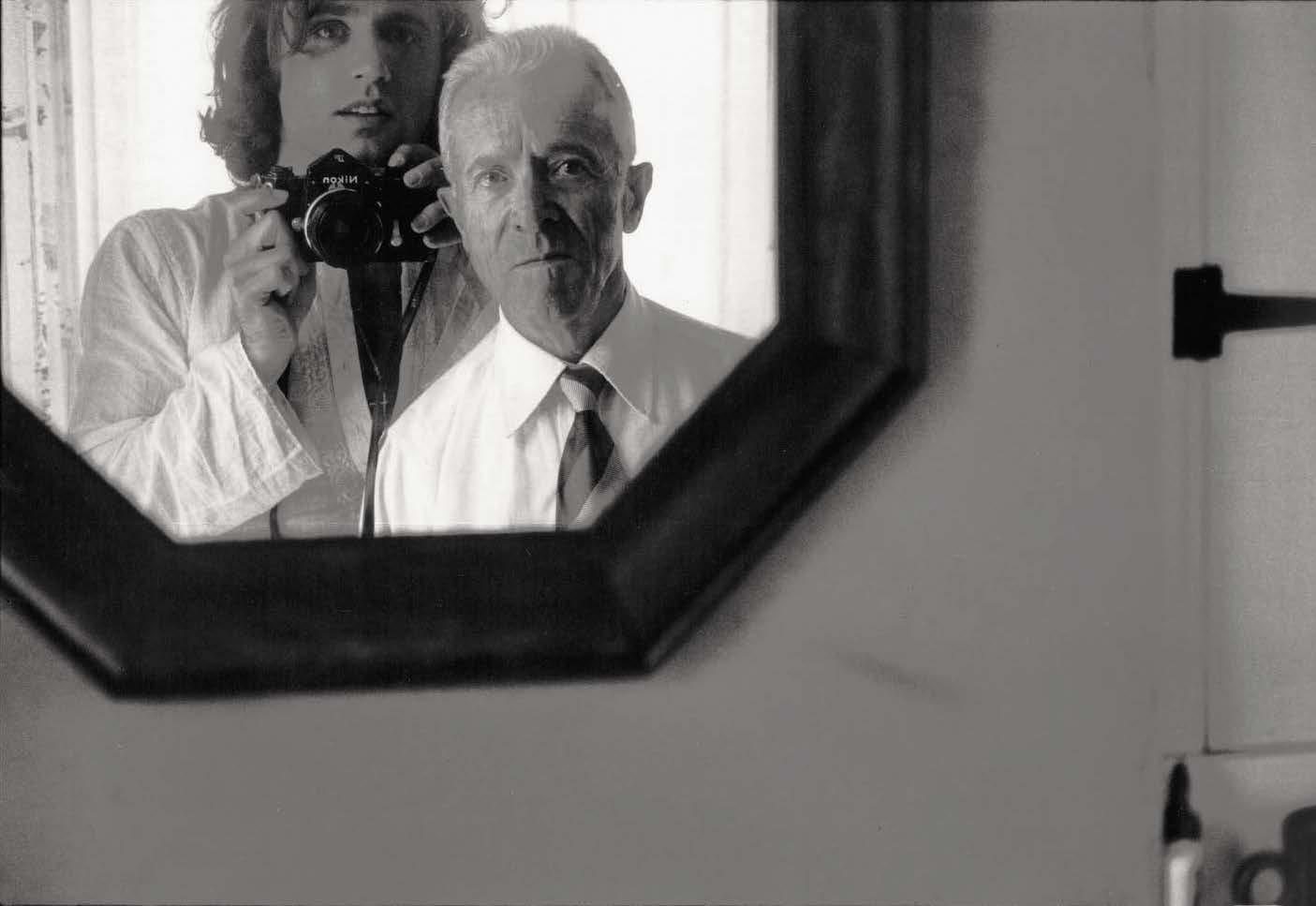
Gerard Malanga, Brice Marden in his loft on the lower Bowery, New York, 1977
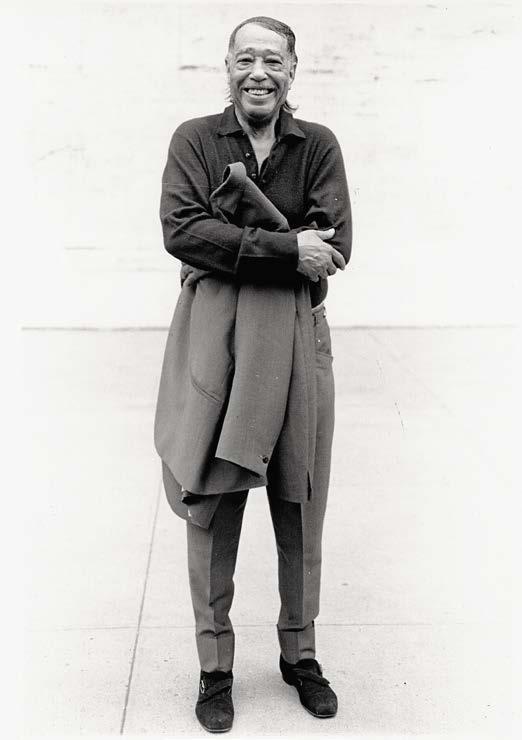
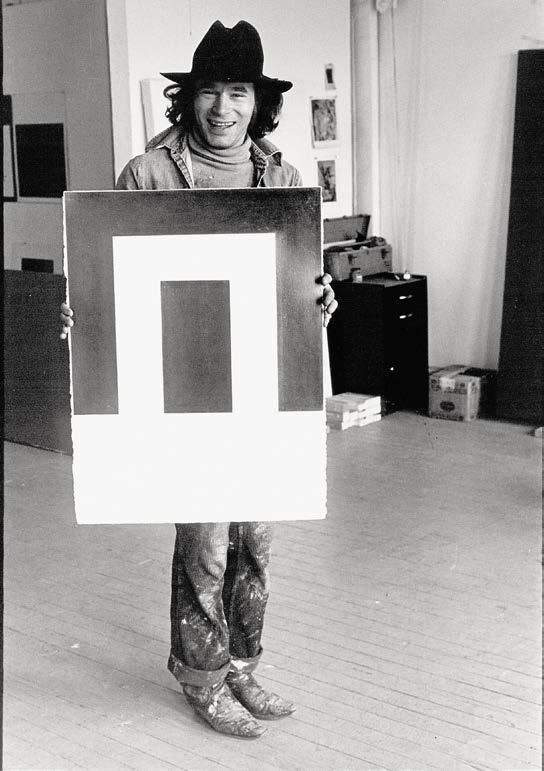
Gerard Malanga,
Gerard Malanga,
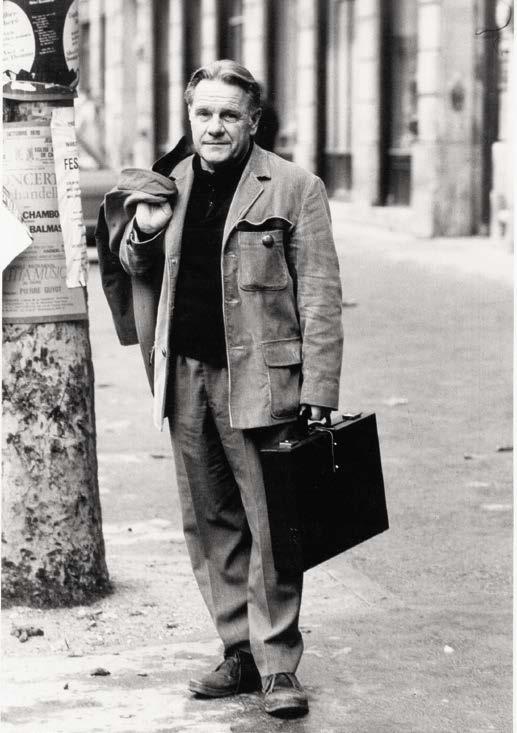
system. I was reading Wallace Fowlie’s books on Surrealism. She brought poets to class to read their work, like Jack Hirschman, who was a Bronx guy, and Kenward Elmslie, Ruth Landshoff-Yorck. Daisy even brought Anaïs Nin to class to read her work, she was a close friend. That never happened in any other high school in the city, I’m sure. During the last year of high school, I started going to poetry readings, just to hear how poetry is read. I thought it was very glamorous, taking the subway into Manhattan to hear somebody read poetry.
RF What was her magazine called?
GM Folder. She published three or four issues. It was a portfolio of separate sheets of poetry and art. And then when I was a senior in high school she
AS VARIOUSLY AS POSSIBLE
139
Duke Ellington at the end of his performance for the Summer Interns of Mademoiselle mag at Lincoln Center, New York , 1971
After café au lait at the Flore with Lawrence Durrell, Paris , 1970
Andy Warhol & Gerard Malanga just finished silkscreening a painting at the Factory & now it’s clean-up time, New York, 1964. Photo: Lorenz Gude, courtesy Gerard Malanga
brought out an anthology, A New Folder, that collected all of the earlier material.
RF Who were your favorite poets back then? Who were you modeling your work on?
GM There were two models. The first was Frank O’Hara, whose work seemed very new and very accessible. Then John Ashbery, a little bit later, when The Tennis Court Oath [1962] came out. That was my bible. I used to carry that book with me, it was incredible. It was very romantic in a way, also very dreamlike because of all the disconnects between words and images. It just seemed mesmerizing. Kenward Elmslie also made a big impression on me when he came to class as a guest of Daisy Aldan’s. I decided to interview him for the school newspaper, naively thinking he was a Beat poet, so he must have gotten a big laugh out of the questions I was sending him. He invited me to a party he was giving at his house. This was April 30, 1960. It was called the Big Loyalty Day party and his house was decorated with red-white-and-blue Uncle Sam dolls, all kinds of Americana. It was like going to a Hollywood party: everybody was
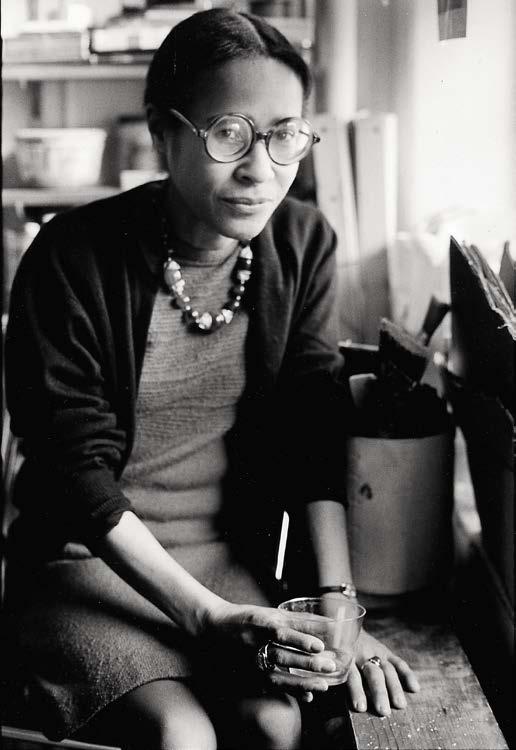
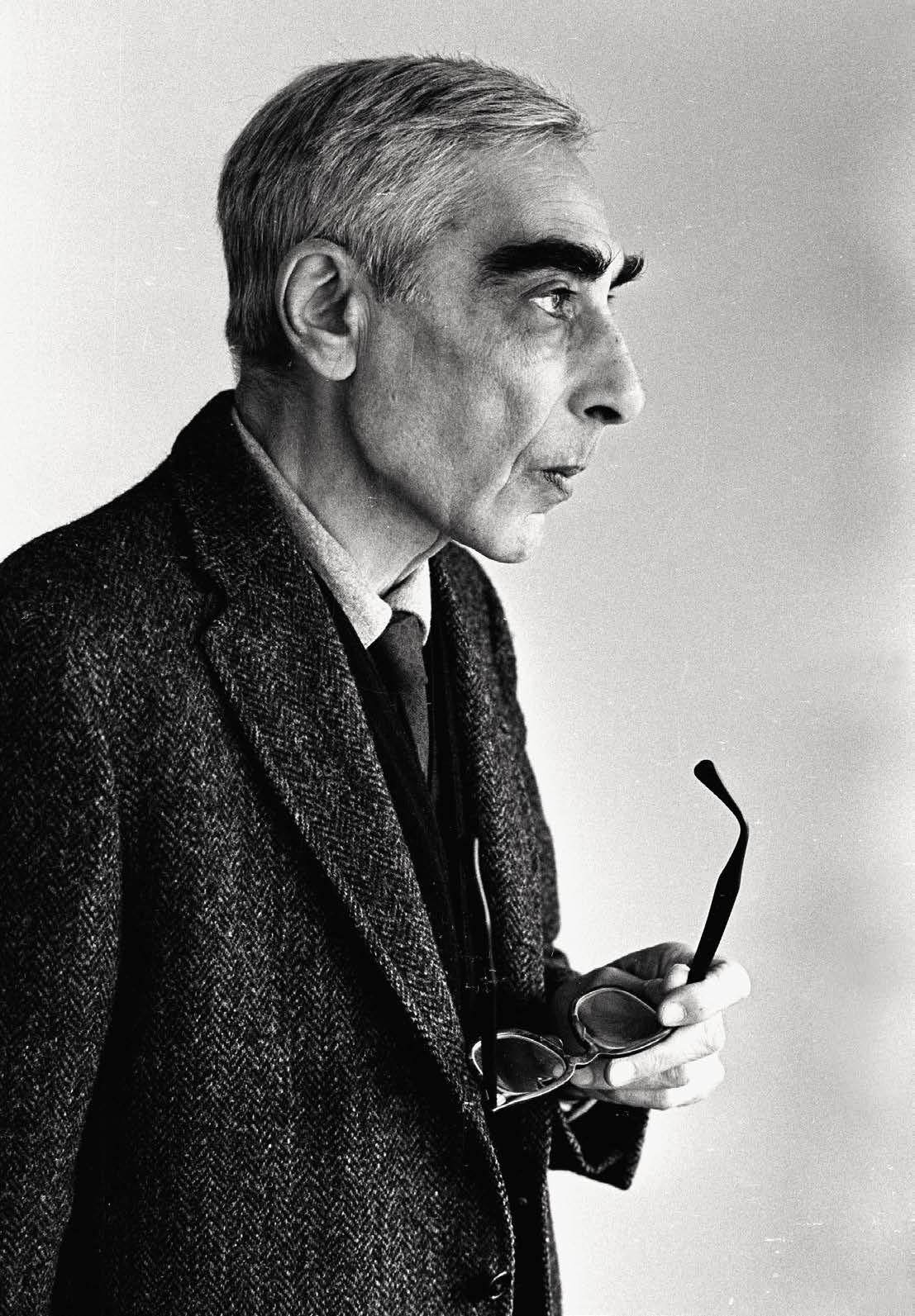
there, the painters, the poets. It was an unbelievable experience. That’s where I first met both Willard Maas and Frank O’Hara, who walked in with Bill Berkson. Bill was the only person I really knew at the party, so I went up to say hello and introduce myself and he snubbed me. Later we became friends, but it was awful.
RF He snubbed you because you were a nobody at the party?
GM Oh, absolutely. We were the two youngest people at the party so maybe he didn’t want to acknowledge me for that reason, I don’t know. Then Daisy walked in and said, What are you doing here?! I mean, I’m her student, I’m going to see her in class the next day, you know?
RF So this was 1960. I’m curious, at what point did you get a sense that the ’50s were over and the ’60s had begun? When did you feel the decade shift? Because these things don’t always change exactly on the year.
GM I think it had to do with the music. It had something to do with when the Beatles and the Rolling Stones arrived. The feeling of the music,
it just kind of liberated you. There was a certain excitement, a certain wildness, a certain rebellion that came with rock ’n’ roll. It was a new kind of music that you couldn’t put your finger on. You just went along with the rhythm.
RF Miriam Sanders once told me that she and Ed were at home in their apartment on Saint Mark’s Place and Allen Ginsberg rang the doorbell and came rushing upstairs very excited. He had a copy of TV Guide and on the cover was a picture of the Beatles. This was in February 1964. And he said, “Look, this is the new thing. The beatniks are out, it’s rock ’n’ roll now. This is what we have to follow.”
GM Well, Allen was certainly on the beat. I went with Andy [Warhol] and Isabel Eberstadt to the first New York performance of the Rolling Stones, October 24, 1964. They were performing at a huge movie palace called the Academy of Music, which was on 14th Street. We were in a limousine slowly pulling up to the venue and we began to get completely mobbed, because I had longish hair and was wearing a pinstripe suit. One of Andy’s collectors at the time had given me three of his old suits that didn’t fit him anymore. These kids were knocking on the window of the car, and I said, “Isabel, what’s going on here?” I didn’t catch on to the situation, but Isabel said, “Oh, they’re trying to get your attention. They think you’re one of the Rolling Stones.”
RF You were in a limousine because of Andy?
GM No, Isabel. She was writing a story on Andy but it never got published. We finally got into the auditorium and the Stones came out. They were dressed like they had just fallen out of bed. They were spitting on the stage with such attitude, and the fans were racing to the front of the stage and getting thrown back into the crowd by the guards. It was just an amazing, phenomenal experience. Sheer pandemonium. Incredible.
RF And what was Andy’s reaction to it all?
GM He was being very quiet about the whole thing. A month later Andy and I went to the Brooklyn Fox Theatre for Murray the K’s holiday show to see Dionne Warwick. We went backstage to meet her.
RF What did you do after graduating high school?
GM In the summer of 1960 I got a job with a very successful fabric designer named Leon Hecht. Leon had been in the 1953 graduating class of the School
140
of Industrial Art and then went to Black Mountain College. He was a former student of Daisy Aldan’s and she put us in touch because she knew I needed a summer job. I learned to silk-screen from Leon’s textile chemist, Charles Singer. We used to silkscreen thirty yards of prestretched fabric that was then cut up to make neckties for a company called Rooster. The workshop was on the top floor of a tall building on Broadway and East 3rd Street. That skill came in handy later on. In the fall I went to the University of Cincinnati for a year and flunked out.
RF You didn’t take to university life?
GM I was pretty much a bohemian at Cincinnati, which was a very conservative university, so I was isolated. One good thing was that I made friends with Richard Eberhart, who was the visiting poet in the spring semester. It was a wonderful experience. And Daisy wrote to Eberhart to say, Look out for Gerard because we want to keep him, we don’t want him to get in any trouble.
RF Was he a good poet, Eberhart?
GM Yes, he was a good poet. His poem “The Groundhog” [1934] was highly anthologized at that time; it was a very, very popular poem. I kept the
friendship going after I came back to New York, and I photographed him on the rooftop of the Chelsea Hotel when he was staying there in 1975. By then he was teaching at Dartmouth.
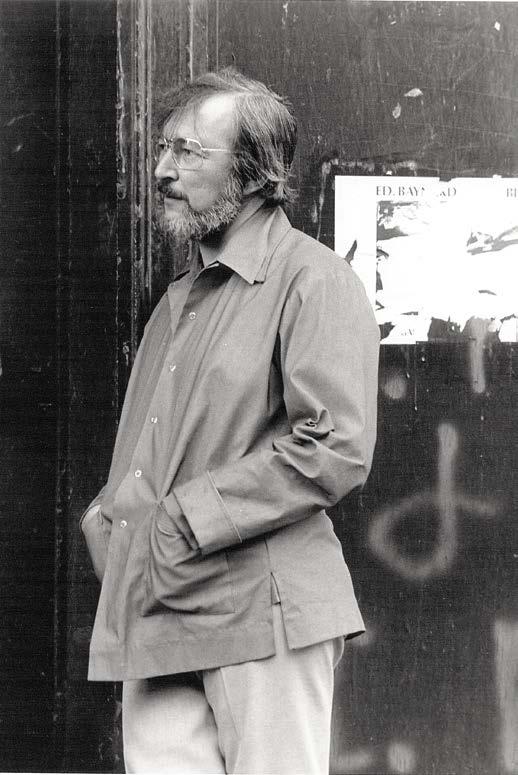
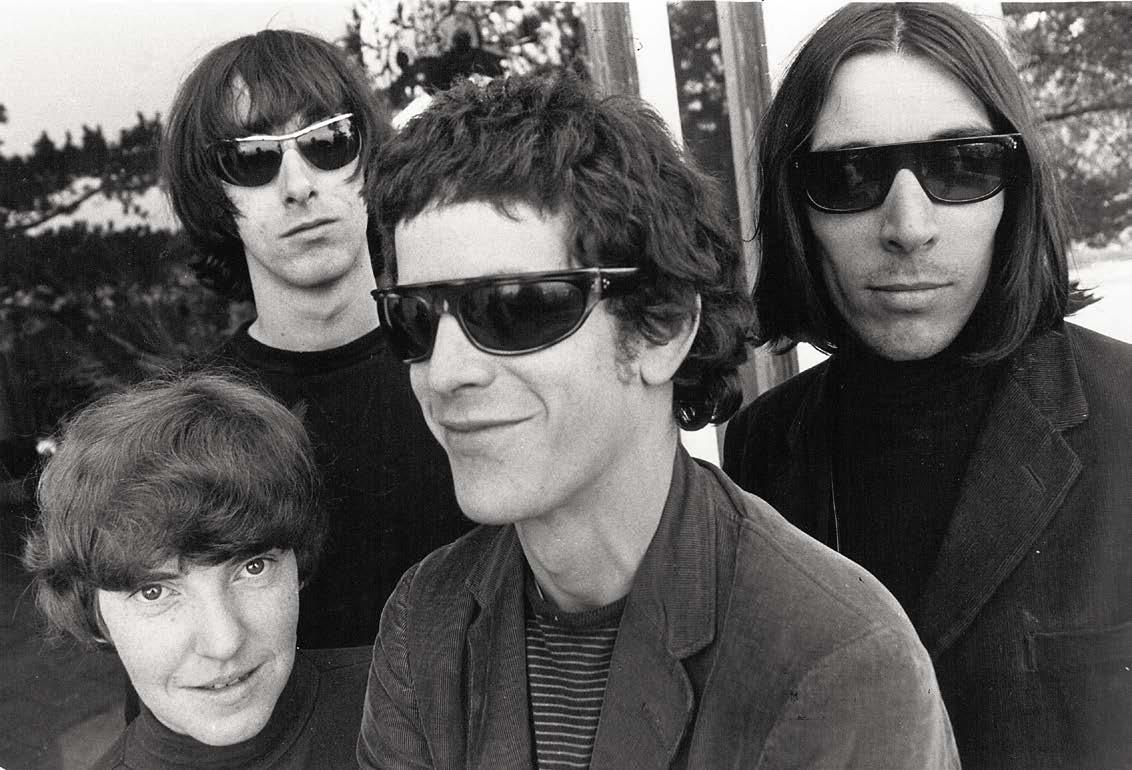
RF Then you went to Wagner College?
GM When I came back to New York in 1961, Willard Maas arranged for me to go to Wagner College, a small college on Staten Island where he taught English. Willard’s wife was the filmmaker Marie Menken. I’d gotten to know them both by that time. They were famous for their battles and drunken parties. Edward Albee taught at Wagner College in those days, and it was pretty clear that he based the lead characters in Who’s Afraid of Virginia Woolf? [1962] on Marie and Willard.
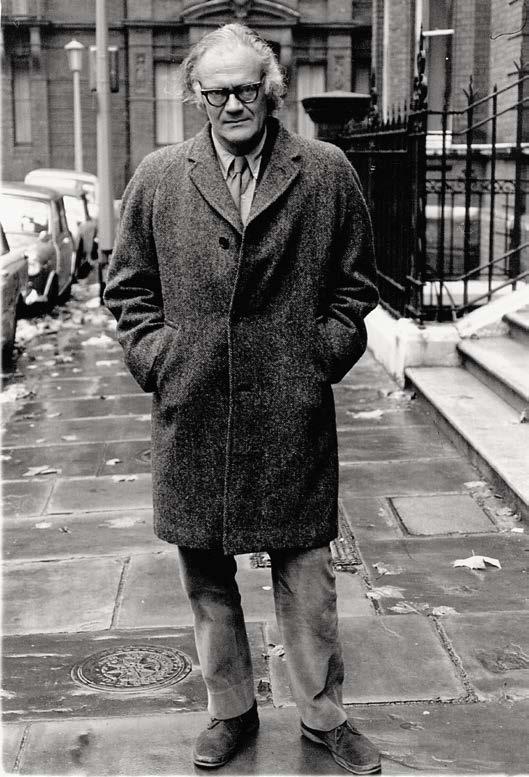
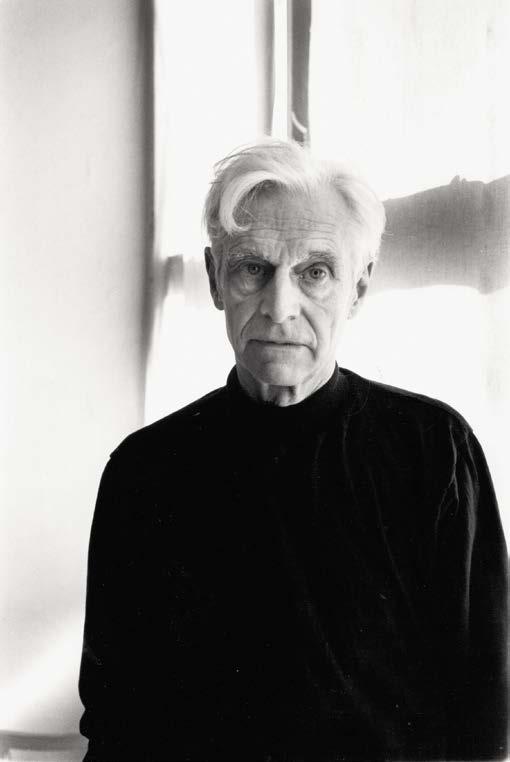
RF So you transferred in?
GM Well, because I’d flunked all my freshman courses, I would have had to take them all over again. A deal was worked out where I got what was called “an anonymous fellowship to advance my creative abilities.” Years later I found out, or I kind of guessed, who the anonymous donor was: Kenward Elmslie. So in the summer of 1962 I enrolled in Robert Lowell’s class in the writer’s conference at Wagner. Lowell was a big deal, and a remarkable teacher. He’d already been awarded the Pulitzer Prize. I was actually given the first Gotham Book Mart poetry prize, which was awarded to me by Robert Lowell, based on that summer workshop.
RF Were you living at home again?
GM Yeah, I was living in the Bronx, so I was commuting to Wagner three days a week to get to a 9 o’clock class. I’d have to catch the D train at 6:30 in the morning, change trains downtown to get to South Ferry, take the ferry to Staten Island, and then two bus rides to get to Grymes Hill. That was easily two hours. Then back home at night.
RF How long did that last?
GM Not long. I dropped out in my sophomore year. I couldn’t keep up the schedule, and besides, I’d already met Andy. Three days a week I would go from school to the Factory, where I worked five days a week. I just could not keep that schedule going, it was one or the other: Am I going to go to school or am I going to work for Andy? I decided on working with Andy and I dropped out of college. Willard was very upset about this.
RF How did you meet Andy?
141
This spread, clockwise from top left:
Gerard Malanga, Dorothy Dean visiting Jean Sein , 1977
Gerard Malanga, A rare smiling shot of Lou Reed with members of the Velvet Underground at the Castle, the Hollywood Hills, Los Angeles , 1966
Gerard Malanga, Jasper Johns’s favorite foto of himself in SoHo, New York , 1971
Gerard Malanga, After lunch with Robert Lowell in Mayfair, London , 1970
Gerard Malanga, Visiting Edwin Denby at his loft in Chelsea, New York , 1971
Gerard Malanga, After lunch with poet, Louis Zukofsky at his home in Port Jefferson, New York , 1975
GM Through Charles Henri Ford, who knew that Andy was looking for a silk-screen assistant. RF Henry Geldzahler once told me that Andy asked him to bring him to Rauschenberg’s studio, so he could see how Bob used silk screen.
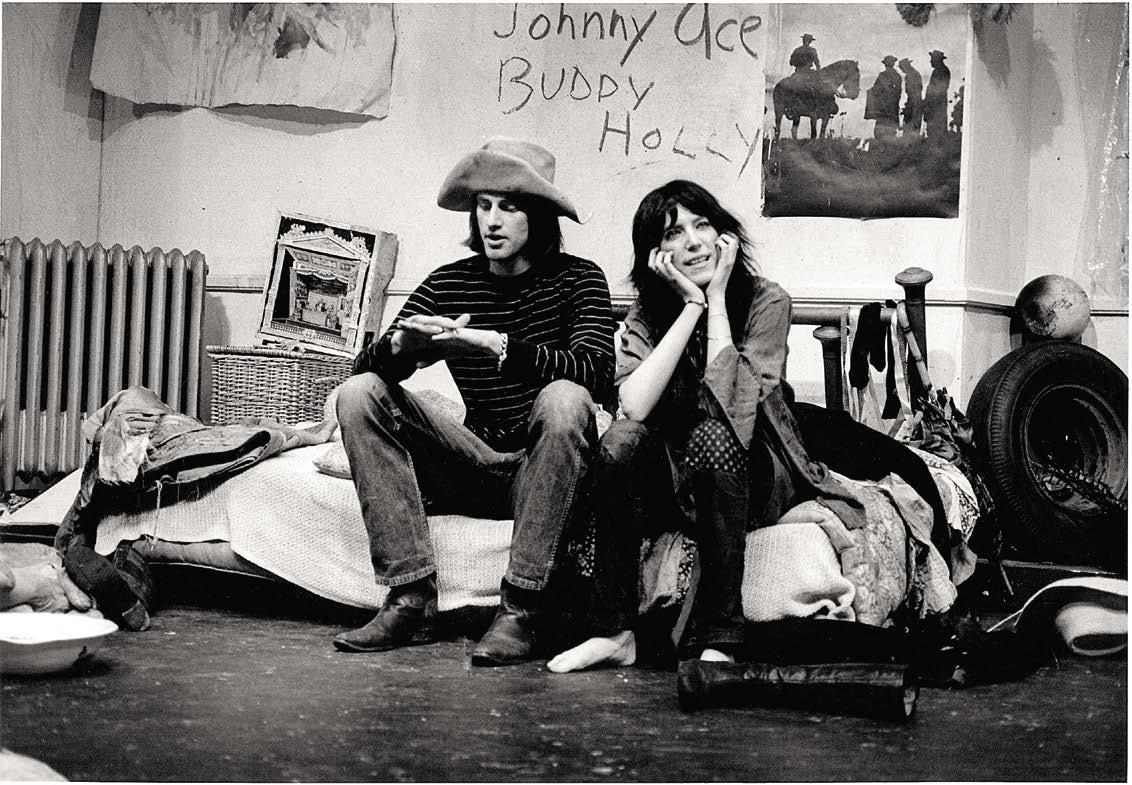
GM Yes, but to wind the clock back even further, there was a guy named Richard Miller, who was Daisy Aldan’s ex-husband. He and his boyfriend had a greeting card company called the Tiber Press, and Andy was actually in dialogue with both those guys about silk-screening because they were silk-screening certain sheets for Daisy’s Folder
RF Did you have to go for an interview with Andy?
GM No, I was available and that was it.
RF What was your impression of Andy that first day?
GM Andy looked like somebody from planet Mars. He was a guy with sunglasses and silver hair. Strange looking. He asked me to come to work
the next day. I said, I have to clean out my desk at school, I’ll come the following day. The first thing we did was a silver Liz painting. Andy showed me how he liked to have certain things done with the printing. This was well before the Factory, it was an old firehouse Andy rented from the city for $100 a month.
RF Were you keeping a diary at this point?
GM Back then I only kept a diary off and on for about a year and a half. I couldn’t live my life and keep a diary at the same time. I just didn’t take to it in the end. It’s hard to keep one going; you have to be religious about it.
RF There’s so much to discuss about this period, but there are two things I specifically wanted to ask you about. One is how the Velvet Underground got involved at the Factory, and the other is, Where you were when Andy was shot?
GM Well, I was introduced to the Velvet Underground by the filmmaker Barbara Rubin, who took me to see them at the Cafe Bizarre in Greenwich Village. It was a small club, no stage, everything on one level. There were a lot of teenagers there. The Velvets started to play and Barbara urged me to get up and dance because everyone was sitting there not moving. By chance I happened to have that leather whip with me, which I’d bought at a store called Sammy’s Whips and Umbrellas on the Upper West Side. They sold umbrellas and whips, a strange combination. I didn’t buy it to whip anyone with, I just bought it as a fashion accessory. Anyway, I got up to dance, and eventually I was using the whip, and suddenly all the other teenagers in the audience got up and started to dance, which the band was very happy about. We thought the Velvets were great, and a few days later we came back with Andy to see them again. Andy loved them and he offered them the use of the Factory to rehearse, which was a wonderful thing to do.
RF What do you remember about the shooting?
GM I wasn’t still working for Andy at that point, 1968, but I happened to be going to the Factory that day because Andy was giving me a check for $50 to have a flyer made up for my first movie program at the Film-Makers’ Cinematheque, when it was down on Wooster Street. I could have run into Valerie [Solanas] in the elevator because I arrived just after he was shot. He was still on the floor and
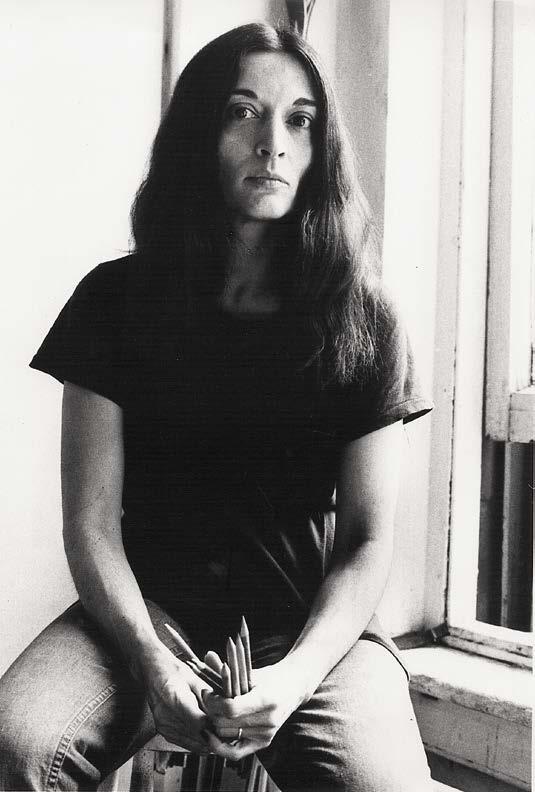
Billy [Name] had Andy’s head in his lap. I think he was half conscious; he was in a lot of pain.
RF That must have been horrifying.
GM It was pandemonium. People were running back and forth. I saw Paul Morrissey and the first thing I said was, I’m going to go get Andy’s mother, where’s the hospital? He said, Take a taxi, and gave me some money. I didn’t take a taxi because it would have taken too long to get up to Andy’s house. I took the subway to 86th Street. Julia [Warhola] had a curtain on the front-door window so she could see who was outside. She recognized me and opened the door. At just that moment the phone rang. I said, Let me get that. I ran up the stairs and it was a friend of Julia’s from Brooklyn who’d already heard on the radio that Andy had been shot. I said to the woman, I’m here to take Julia to the hospital, everything’s OK, thank you for calling, goodbye. It took Julia about fifteen minutes to get ready—she was dressing for winter when it was summer outside. We took a taxi downtown and I told her that Andy had injured himself in the stomach, but everything was OK. By the time Julia and I got to Columbia Hospital on 19th Street and Third Avenue, it looked like a gallery opening, you know? I grabbed one of the doctors
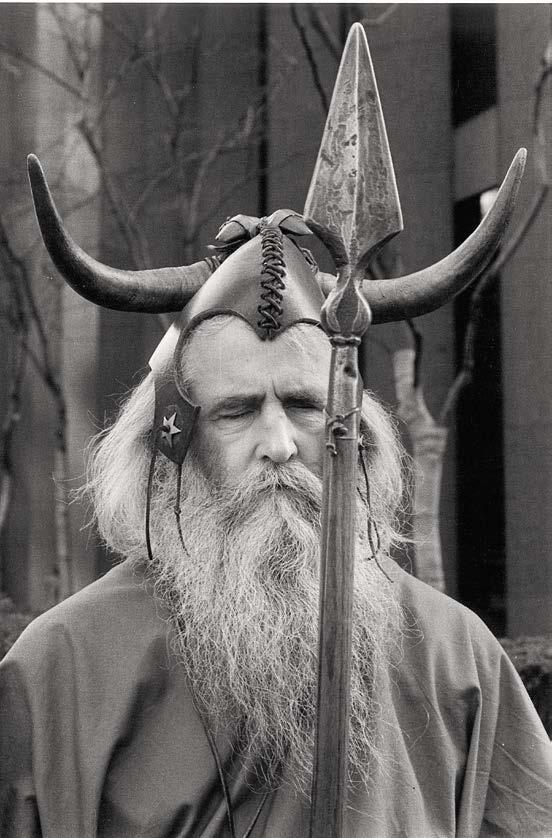
Gerard
Gerard
Gerard
Gerard
142
This spread, clockwise from top left: Gerard Malanga, Sam Shepard & Patti Smith in the inaugural performance of their play, Cowboy Mouth, New York , 1971
Malanga, Marisol in her studio in Tribeca, New York , 1975
Malanga, Anne Waldman in a backyard somewhere in Greenwich Village, New York , 1970
Malanga, Patti Smith at the 68th Street station waiting for a train to take us to South Ferry for a boat ride around Manhattan on the Circle Line, summer 1971
Malanga, A moment with Moondog outside the CBS bldg, New York , 1971
Photos: © Gerard Malanga
and introduced myself and told him who Julia was, and they ushered her into another room. And that was the last I saw of her.
Later in the summer of 1968, as Andy recovered, I did some work for him, typing up diaries, mostly from tape recordings. Then he needed help again with silk screens. So I came back to the Factory for a while. I left for the last time around December 1970.
RF The 1970s were a productive period for you writing poetry, but how did you earn a living?
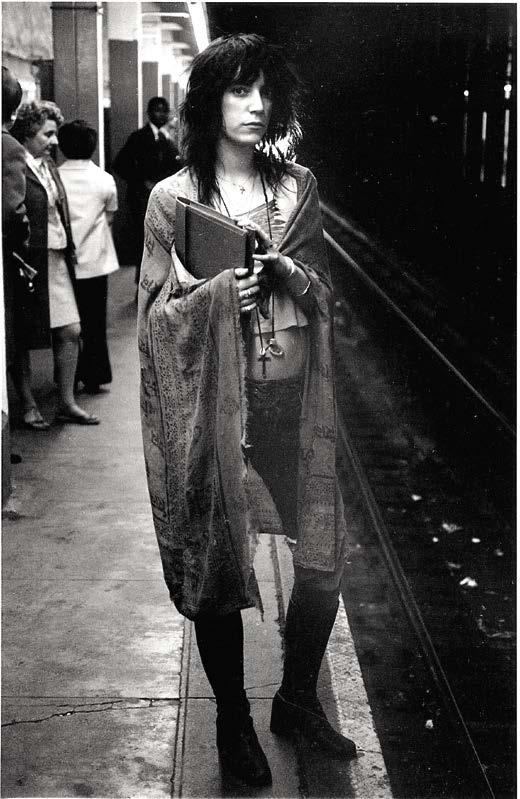
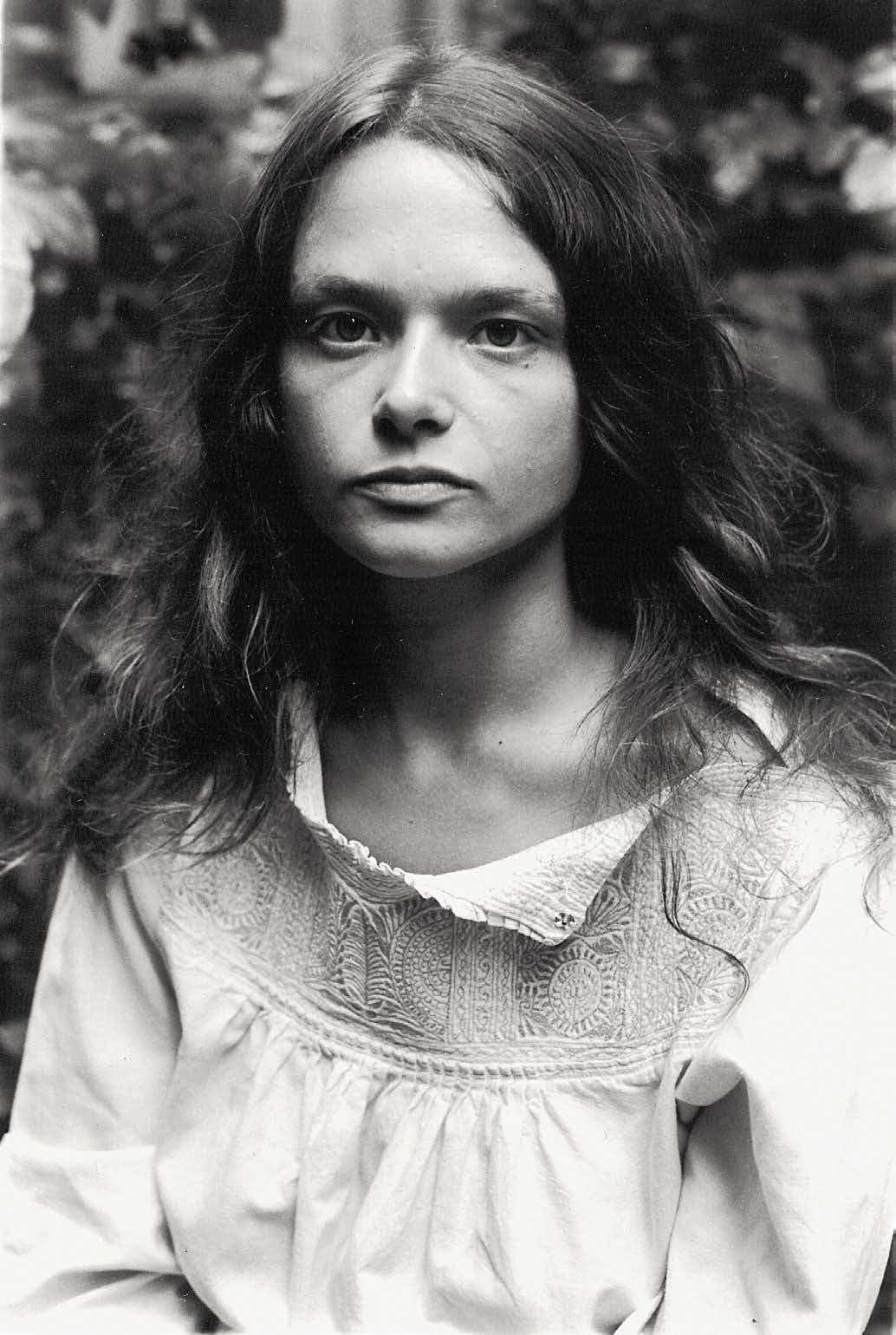
GM Actually, the 1970s was when I began to take my photography seriously, and for much of the decade I made a living from it. In many ways it started with my portrait of the poet Charles Olson. The Paris Review was trying to do an interview with him and he wasn’t responding. I sent him a message, and he replied with a telegram: “Come Immediately!” I went up to Gloucester and interviewed him and photographed him. I really owe a lot to George Plimpton at the Paris Review for having faith in me to do the job. Not only did it turn out to be a very good interview but it pretty much launched my photo career.
RF I’ve been through your archives at the Beinecke Library at Yale, and you saved an enormous amount of material by Rene Ricard. Poems and letters and ephemera. It seems you were really devoted to him.
GM I was. He lived with me for many years during the 1970s and I saved everything of his I could. That material became the basis for his first book, 1979–1980 [1979]. I was hired by the Dia Art Foundation to oversee a series of poetry publications. That was the idea of Philippa de Menil [Fariha Fatima al-Jerrahi]. Heiner Friedrich was more interested in the art and Philippa was interested in poetry. She commissioned me to assemble an edition of Angus MacLise’s work—Angus was one of the original members of the Velvet Underground and he lived for many years in Kathmandu, where he had a bookstore and publishing house called Bardo Matrix Press. I also planned to publish John Wieners. Rene’s book was brilliant but unfortunately his behavior was so onerous that Dia canceled the rest of the series. Our friendship didn’t survive that publication either.
RF You seem to have really come into your own as a poet in recent years, especially with
these touching portrait or memoir-type poems written to departed friends. How did that series come about?
GM That’s a good question. I’m trying to pinpoint a date. Let me give you a scenario: I went to Milan in 2004. I remember the date because I bought a newspaper and went to a café and read the obituary of Richard Avedon, who was terribly important to me. Then I was looking at my datebook, getting ready to go back to New York, and suddenly I saw that the next six months of my life were more or less completely blank. I mean, for the first time in my life I had nothing to do! And I’d always promised myself that I was going to read Marcel Proust’s In Search of Lost Time [1909–22] in its entirety. When I got back to New York I started reading the books, all seven volumes. This was bedside reading, not sitting in the living room. It took me six months and two weeks to read the entire work—and it’s a real page-turner. It was at that point, although I wasn’t really conscious of it at the time, that my poetry started changing. I saw my life retrospectively—I saw myself being taken on a journey where certain things seemed so improbable, not even permissible, and I started writing with this awareness,
doing things in my work that I felt I could never get away with.
RF Such as?
GM Well, talking to the person that you’re writing about as if he or she were alive. That’s what I’m doing in the poems you mention: I’m basically channeling that person into my life, through poetry, in the way that Proust had done, to a certain extent. I’m not writing about the person, I’m writing to them, as if they were there in the room with me.
RF The one constant throughout your life is poetry. I get the feeling you see poetry as a calling?
GM Yes, and I’ve always believed in my guardian angel. For example, when I signed up for English class for the fall of 1959 in my senior year, I didn’t know who I was going to get for a teacher. I could have gotten any one of five English teachers, and I just happened to land in Daisy Aldan’s class. But what if I hadn’t? My life could have been something entirely different from what we’re talking about now, because I wasn’t writing poetry when I entered Daisy’s class, and within a couple of weeks I began writing poetry and I never stopped. If I weren’t a poet, I don’t know who I would be otherwise.
143
HARUMI KLOSSOWSKA DE ROLA
Artist and designer Harumi Klossowska de Rola gained recognition for her jewelry; she has since expanded her practice into sculpture and unique decorative objects. Here she meets with Olivier Gabet, director of the decorative arts department at the Musée du Louvre, Paris, to discuss the centrality of the natural world in her approach to artmaking and the evolution of her practice and engagement with materials.
OLIVIER GABET Harumi, could you describe your journey? What led you to art, besides the obvious family spirit?
HARUMI KLOSSOWSKA DE ROLA My journey started by designing jewelry. I started young with drawings, watercolors, and sketches, but over the years I grew interested in translating my drawings into the actual objects, the jewels. So I went into materials and textures, mixing them by listening to them. I really focused my energy on that space where a drawing becomes an object, so I took sculpting classes with a sculptor. That process not only helped me in jewelry but slowly started to lead me into what I really enjoy, which is the physical, the manual, the technical. The sculpting in my studio, whether it’s in wax, plasticine, plaster, wood, or alabaster, and the technical translation at the foundry, have taken over the drawings for quite a while now.
I’ve been surrounded by art since I was born. I was privileged to grow up in Rome, at the Villa Medici; the building structure and the architecture of the gardens probably had a fundamental influence on me. I remember spending time in the gardens, searching for treasures such as small wooden sticks, stones, leaves, old pieces of mosaic glass. Their shapes or colors had to be intriguing enough for me to collect them. I built collections.
Later we moved to Switzerland, to a small village in the mountains. It was a completely new world to me to be surrounded by forests, water, mountains, snow and ice, and wild animals. I also spent a lot of time at a relative’s house by Lake Geneva, where they had this very intriguing wiry furniture that I loved; I learned later it was Diego Giacometti’s.
OG Looking at your work, especially over the layers of time, what often strikes me is how the critics and commentators have talked about its connection with the animal, the vegetal, et cetera. That’s obviously in the work, but what always impresses me, including in your recent exhibition, is that there’s something that transcends those literal motifs in a way that’s much more meaningful. There is a sensuality as it relates to objects. That is, when we’re faced with works of art that are alive, there’s a sensuality there that doesn’t necessarily relate in that pure sense to the body, or eroticism, but to the material. And if I understand correctly, for you it’s not necessarily about being a work of art because it’s a work of art; it’s more that it’s a work of art because it’s an object, because it can be touched, it’s material, and it’s a technique.
HKDR That’s exactly it. It’s about the physicality of things—to manually make them with my own hands, and to give them a specific texture. But I should add that what I love the most about sculpture is that I’m not the only one involved in the making. I’m part of a process, which may be originated by me but depends just as much, if not more, on the know-how of the craftsmen at the foundry that makes my pieces. More than anything else, I value that conversation with the people who work on the mold, the wax, the metal chasing, and the final touch of the patina. Is it perhaps the true creative act?
For the sculpture to truly exist, for its sensuality and spirit to come fully alive, it requires a certain space. A physical space but also a mental one. That subtle balance between the visble and the invisible, between fullness and emptiness, is also very important to me.
OG And what I find refreshing, in the sense that it’s truly an art form, a personal vision that’s yours alone, is that if you put different works by Harumi
146

in one room, they’ll echo off each other. It’s true, there’s a spirit there. But at the same time, all these pieces are very different, from your screens, which express something unique, to the sculptures—I mean, those huge ibex stags, they’re extraordinary, but they’re also quite far removed from some of the panthers, which are almost like benches, and even farther from the jewelry you donated to the Musée des Arts Décoratifs a few years ago. I get the impression that there are multiple Harumis in one, that you’re able to bring together these fairly different worlds by way of the nature of the works in which you express yourself. Is that a conscious choice? Or is it just part of the artistic process and you don’t think about it?
HKDR I never thought about it, and to be honest I’m not sure. But obviously I’m not in the same operating mode when I’m working on a screen or drawing as when I’m working on a sculpture. Drawing is a solitary act for me, it requires concentration and no distractions. It takes a while for me to get into it. It’s like an edge, and once I find it, I need to keep going, as it’s easy to lose that state of mind. Whereas with sculpture, I can go in and out, even if the surrounding is noisy, busy. The soul, the spirit, of the animals or the plants emerges slowly, almost on its own. Somewhere deep within me I’m trying to connect my soul, the world, and the spirit of animals and plants to find the space where those three can live together. We’re part of the animal world, but I think we’re moving farther and farther away from that connection. And maybe it’s out of a desire to reconnect with how it was for ourselves, for ancient native civilizations, for animists in a living world that is one.
OG Each work is at once at the confluence of a practice and each practice is different. And at the same time, it’s also in a context. Do you work equally well in different spaces? Do you work during your travels? Do you work in one dedicated space that’s your workspace? Because when you speak, in listening to you, in reading your words, you get a sense of a sort of porosity toward the world. You were talking before about animism, but it seems that there’s also a side to you that’s celestial and terrestrial at the same time. You let that in as well, you’re awake to all that. Is there a particular place where that awakening happens? Or are you more of a Baudelairean flaneuse, who wanders around always on the lookout for things?
HKDR I don’t travel much, but I do enjoy going for walks. My studio is the center of my world, where I live surrounded by mountains, trees, water, and wild animals too. It’s my everyday life. And then I have my own animals that come and go in my studio.
OG The word “animal” has always been ambiguous in art history, because on the one hand it has the merit of clarity, but at the same time, it’s reductive, and sometimes I’d even say it suggests a certain superficiality, a “virtuosic” aspect, let’s call it—the virtuosity of realism in representation. And that’s what really struck me in your last exhibition; you’re not at all in a natural history museum, you’re in something transcendent, something deeply poetic, something a little bit unsettling. But that’s what we want from artists, to unsettle us. It’s that abrupt thinness of the central body, like a comma between the front and the back, while the proportions are the proportions of the animal—that’s very powerful. What’s your artistic genealogy?
HKDR Several impactful travels awakened my sensibilities: Luxor, Kyoto, Kenya, California, New Mexico, Saint Petersburg, Guilin, and Argentina
left a deep impression on me. The objects that have interested me the most are “primitive” or autochthonous. I have friends who are avid collectors of African art. Others have artifacts from Papua New Guinea, Egypt . . . sometimes with a combination of artworks by the Giacomettis, the Lalannes, Giorgio Morandi as well. When it comes to colors and patina, an important inspiration is Balthus, especially the walls of the castle of Montecalvello and of course the Villa Medici.
OG Following up on that, what’s your literary genealogy? What are the texts, the artworks, the civilizations, that are fundamental for you? Your work clearly doesn’t exist in a vacuum.
HKDR First and foremost, the mythologies, Egyptian, Greek, and Roman. I’ve read Ovid’s Metamorphoses many times. There are also important books about animals, especially by Melanie Challenger [ How to Be Animal , 2021] and Barry Lopez [Of Wolves and Men , 1978]. Lopez’s book tells a story that I love: the Indigenous peoples of North America have noticed that the gaze between wolves and their prey is decisive; they call it the “conversation of death.” If the prey is ready to die, the hunt will begin; if not, the wolves will not engage. In most of my objects the eyes are empty. I want them to convey all the possibilities through an invisible gaze. Apart from that, my thoughts
Previous spread:
Harumi Klossowska de Rola, Tree with bird , 2022 (detail; work in progress for private stairwell), bronze, 227 ½ × 74 ¾ × 74 ¾ inches (578 × 190 × 190 cm)
This page:
Harumi Klossowska de Rola, Wood Pile / Misty Swamp, 2022 (detail), sipo wood, platin, palladium, gold leaf, and oil paint, 88 ½ × 97 5⁄8 × ¾ inches (225 × 248 × 2 cm)
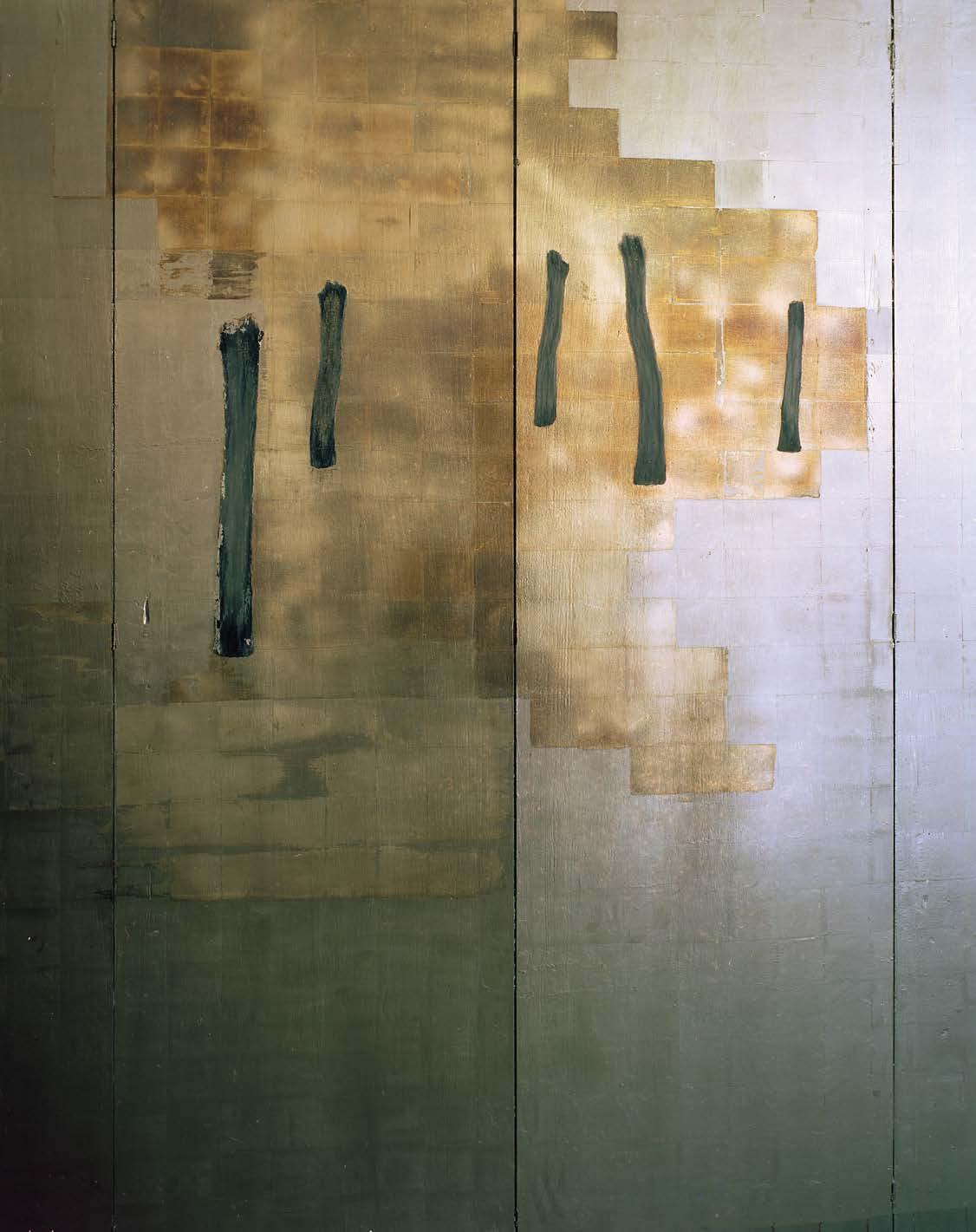
Opposite:
Harumi Klossowska de Rola, Moquwaio, 2022, bronze, 69 5⁄8 × 13 ¾ × 30 ¼ inches (177 × 35 × 77 cm), edition 1/3 + 1AP
Artwork © Harumi Klossowska de Rola
Photos: © Adrien Dirand, courtesy the artist
Translation: from the French by Eriksen Translations
148
often circle around texts by Kawai Kanjiro¯ and Ananda Coomaraswamy.
OG What I also found very striking the first time I saw your work, and now that I’m seeing it progress, is your attention to words, to titles—that relationship to the word, the precious word, the rare word.
HKDR Of course. Language is the source of most things for us humans, but I only retain history, science, and poetry.
OG What’s your view on the contemporary art world today?
HKDR Listen, it depends. I struggle a little bit with contemporary art. The hand versus the idea is a strange formulation to me; they go together. But that’s really a personal matter. For me the intellectual idea and the practical craftmanship have to be aligned, because without one you don’t have the other. There’s a depth to working with molten metal, like lava flowing from a volcano; there’s an inherent depth in the natural world and in the intellectual world. The communion of the three is timeless and it’s what I’m seeking. One finds it sometimes in contemporary art. I really like, for example, Georg Baselitz, Giuseppe Penone, Peter Doig, Kawai Kanjiro¯, Peter Lane, and JeanMarie Appriou.
OG We’re all products of our time, obviously, but today your work is looked at very closely because we’re in a time when there’s suddenly a great resurgence in painting and sculpture, after years when it was more about video, installation, photography, and so on. There’s also a renewed attention to artistic craft. There’s one area you excel in that’s perhaps less known (because people talk a lot about sculpture), and that’s your screens, which I feel always create a more peaceful world, and at the same time there’s often a powerful iconography that forms a bit of a contrast with that peaceful two-dimensional world. Can you tell us a bit about that?
HKDR The screens are fundamentally about simplicity. With one of my latest screens, I wanted to keep it as simple as possible to try to evoke a photograph I saw of three or four pillars standing in the water, in the mist; it looked like calligraphy and as a child I had to take calligraphy lessons, every Sunday I had to do my Japanese calligraphy. On my first trip to Japan, when I was eleven, I went to Kyoto. That left a significant impression on me, and a few years ago I went back with my son, who was seven years old at the time. I revisited the gardens and saw different temples again. The fusumas—sliding doors painted with gold or silver leaf, and their effect in a room, the light they bring to a room—made a deep impression on me. It was just the feeling of that golden color. How does that come out? How does it live in a space?
OG What’s always struck me about Japan is that the artistic practices are just as important as the philosophy of art. There’s an absence of hierarchy: a calligrapher is just as important as a ceramic artist or potter, who’s just as important as an architect, who’s just as important as a lacquerer, who’s just as important as a musician or a poet. That obviously goes completely against long-held views in the West, which are fairly restrictive. Do you think that heritage is comforting to you in this way? Because being a museum guy specializing in this area, I’m always a bit dismayed to see that we’re still struggling and still fighting to make people understand that this philosophy of art is fundamental.
HKDR It’s true—in Japan, once you’re at the master level in a particular craft, such as bonsai or ceramics, there’s no hierarchy between masters.
But what’s interesting is that on the other hand, Japan is a very, very hierarchical country. Within each field, there’s a clear hierarchy based on skills. Something I really had a hard time with was being told I was no good and so on, it’s not easy to take. But if you want to be excellent at something, in order to learn you need to be humble.
OG You earlier mentioned Giacometti and the Lalannes. Having studied and written on the art of the Lalannes, shockingly, I’ve never made the connection between their work and yours—this idea of wear, of passing time. But I find that when we talk about patina, it’s patina in the sense of the patina of time. Looking at your objects, I don’t get the impression of something current or totally contemporary, because there’s that sense of the passage of time.
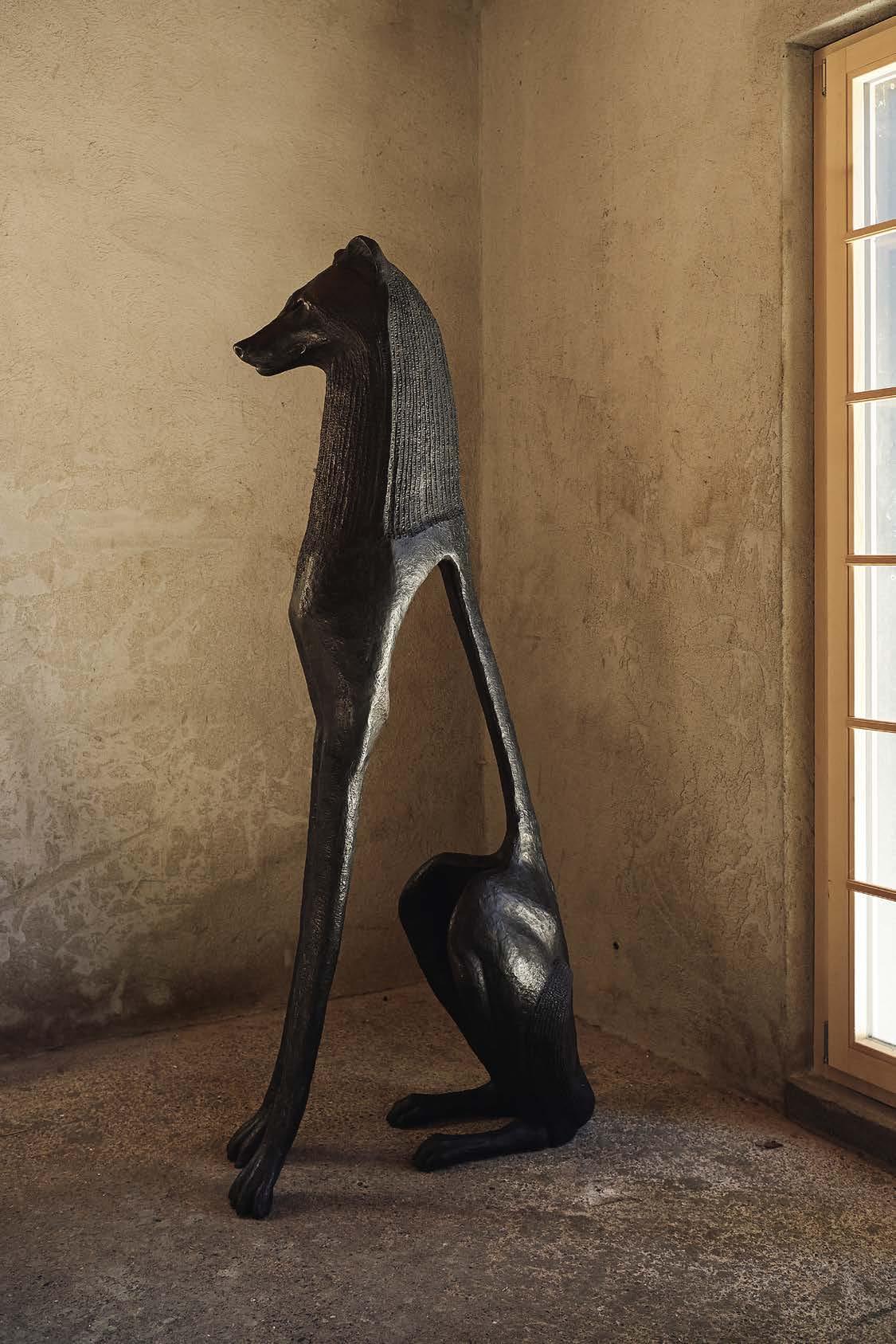
HKDR This sense of the passage of time holds great significance for me, particularly through the materials I work with. Bronze embodies timelessness.
I made a table with bog oak, an ancient oak that dates back more than 2,000 years. The wood has naturally turned black over time, and even if you carve it, it’s completely black inside. I combined it with bronze to make water lilies, frogs, and dragonflies. I’ve always enjoyed the combinations of materials. The deep black of the bog oak, a touch of warmth with the bronze, and a sprinkling of gold, not too much, just to bring out that warmth, the contrast of the two—that’s probably not “new,” but “new” is not my material.
OG What challenges would you like to take on in terms of new art forms to explore, new techniques, new kinds of objects, perhaps other sources of inspiration you’d like to pursue and explore in the coming years?
HKDR There’s plenty I have left to learn. I aspire to deepen my knowledge in patinas, metal repoussé, new materials to combine with bronze. Because bronze will stay.
149
SCREEN TIME
HOW THE CREATIVE SECTOR IS USING BLOCKCHAIN
TECHNOLOGY TO CRAFT A MORE SUSTAINABLE WORLD
BY A SHLEY O VERB EEK
150
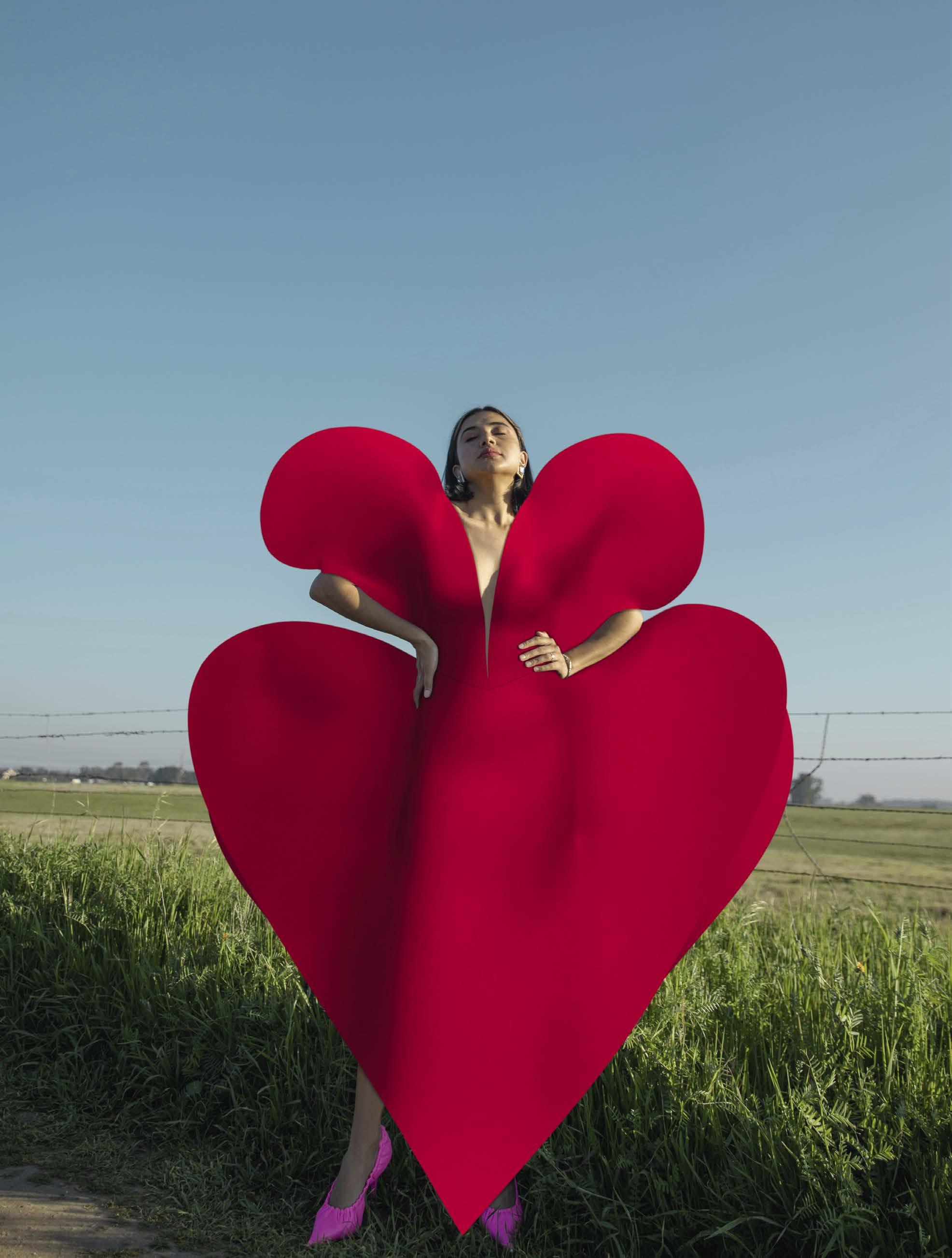
ASHLEY OVERBEEK SURVEYS
WEB3-POWERED APPROACHES TO ENVIRONMENTALLY CONSCIOUS CREATION IN FASHION, ART, AND JEWELRY.

In the late-aughts film Confessions of a Shopaholic , there’s this scene where Isla Fisher’s armoire is yanked open, causing it to disgorge an avalanche of crumpled clothes from seemingly endless depths. A deluge of textiles disembogues, burying Fisher’s roommate to the point of near asphyxiation. On some level the sequence is meant to elicit disgust: it’s a nauseating amount of designer clothing reduced to an unidentifiable amalgamation of “stuff.” And while the clip is farce, it still illustrates something core to a contemporary problem: the cost of using environmental resources to satisfy our consumption wants.
The United Nations Framework Convention on Climate Change (UNFCCC) reports that the fashion industry is responsible for 2 to 4 percent of all greenhouse-gas emissions globally. That’s roughly the same as, perhaps more than, the emissions of Australia and Mexico combined. And the art industry, while a smaller energy-consumer than fashion, still emits about 18 million tons of carbon dioxide (CO2) annually, approximately equal to the CO2 output of Denmark.
Ideas, concepts, and designs may be carbon neutral, but their physical manifestations are not.
The creative industries are targeting their environmental footprint in various ways. More than 300 art galleries, including Gagosian, have joined the Gallery Climate Coalition, whose aim is to reduce the sector’s CO2 emissions by at least 50 percent in the next seven years. And in the luxury-apparel sector, over ninety brands and companies, including Chanel, LVMH, and Hermès, have signed the United Nations Fashion Industry Charter for Climate Action, which pursues a goal of net-zero greenhouse-gas emissions by 2050.
Hard tech, in the form of more efficient machines, has been a large enabler in the effort to reduce manufacturing and transport emissions. But some creators are turning to digital solutions, including blockchain technology, as a paradigm-shifting approach to sustainability. I spoke to three leaders in fashion, art, and jewelry who are focused on using the blockchain and digital tools of Web3 to drive longterm sustainability and innovation in their respective industries.
The digital marketplace dressx challenges a fundamental retail assumption, asking the question, Does fashion have to be physical? Immaterial fashion might initially seem hard to imagine, but a growing swath of people are already spending time dressing digital or online personas—through posting on Instagram, using TikTok filters, or representing themselves through an avatar in a metaverse. I met with dressx Chief Sustainability Officer Olga Chernysheva, who first emphasized that dressx is “not against physical clothes. Absolutely not. We just say that for some use cases, you can switch to digital fashion.” Chernysheva argues that traditional fashion operates in a different niche from digital fashion, where a capsule wardrobe can be elevated with digital garments that allow customers to play around easily with sartorial trends.
At dressx, digital clothing and accessories can be fitted onto a customer’s photo using image-editing software. This “Metalook” process is semiautomated, meaning that supporting each digital purchase is a dressx “tailor” who ensures that the digital garment fits perfectly (dressx can tailor a garment to any size). There are also augmented reality (AR) “filters” that overlay garments onto customers using their phone cameras and move as the wearer moves. dressx sells NFT garments that give their owners certain privileges,
152
Previous spread: LUV dress, digital garment designed by Ilona Song.
Photo: courtesy dressx
Below: Immortality dress, digital garment designed by Alejandro Delgado.
Photo: courtesy dressx
including the ability to create Metalooks and use AR filters. In the case of NFTs designed by the Beyoncéapproved label Dundas, holders were able to style their avatars using Dundas digital gowns in the popular metaverse Decentraland.
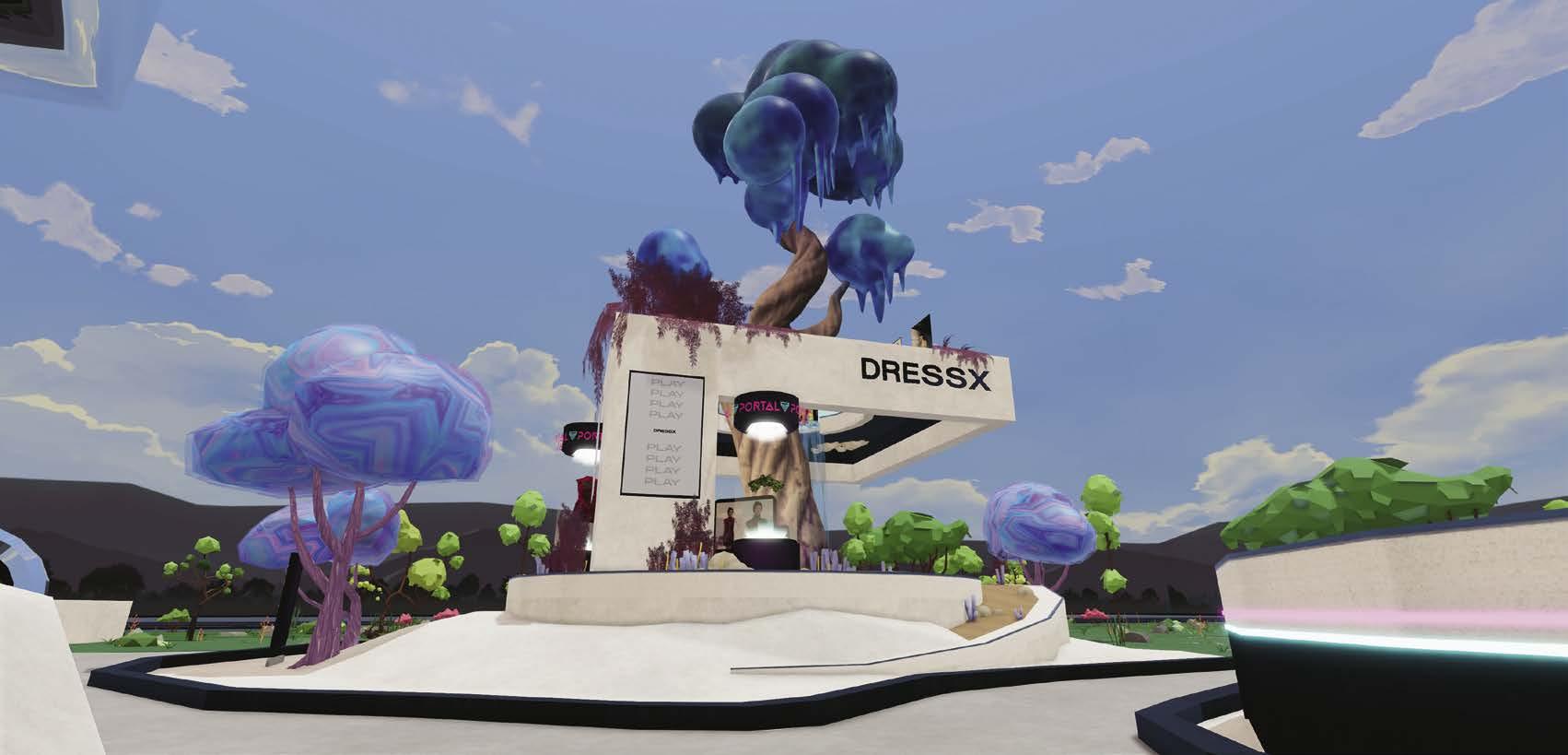
For dressx, a core tenet of digital fashion is its relative sustainability. “One of the reasons we started dressx,” Chernysheva tells me, “was to help to reduce physical production of the items, because in the fashion industry we know that there is a big issue with overproduction.” Forgoing a physical garment for a digital one helps avoid the carbon emissions associated with the physical supply chain—weaving the textiles, dyeing them, and manufacturing garments out of them, along with all the transporting and packaging. “The production of digital garments emits 97 percent less carbon footprint in comparison to the production of the physical garments,” states Chernysheva.
credit trading platform that aims, it says, to “increase transparency and integrity in the carbon markets.”
When I speak to people about blockchain technology and sustainability, one of the most common responses I hear is, Doesn’t the blockchain use the same amount of energy as country X? (I give the variable X here because the country cited tends to change from person to person.) This association has to do with the type of consensus mechanism a blockchain network chooses to use—in other words, the process by which it verifies transactions. Bitcoin, for example, uses the energy-intensive “proof-of-work” mechanism, which requires heavy computational power for verification; its annual electricity use does indeed exceed that of many countries. Ethereum, on the other hand, the most popular network for NFTs, has switched over from “proof of work” to a method called “proof of stake,” which has reduced its carbon emissions by
The impact of digital fashion on the environment is small but still measurable, so dressx has designed a methodology to account for it. “Every digital garment is created using the computer,” Chernysheva begins, and not just any computer: design software requires heavy processing power, so the best analogy would be the energy usage of a gaming computer. “And this is the energy use which I translate into the carbon-footprint emission. I asked every designer who works with dressx how much time they spent to create each garment. So based on that and their location, I can calculate the carbon footprint of the creation of the garment, including the final rendering of the items.” Based on the use case of the digital garment, Chernysheva calculates the respective carbon emissions for the purchase transaction, the “tailoring,” and the digital transfer of the finished product. Adding up all of these steps gives her the garment’s final carbon footprint. dressx works to counter these carbon emissions by purchasing offsets via Flowcarbon, a blockchain-enabled carbon-
99.992 percent, according to an independent study published by the Crypto Carbon Ratings Institute. In absolute terms, Ethereum reports that its current energy consumption is one-eighth of Airbnb’s and one-tenth of PayPal’s.
For dressx, sustainability isn’t defined purely in terms of carbon emissions. “Sustainability is also cultural preservation and it’s also about the ethical part of the fashion industry,” says Chernysheva. After Russia invaded Ukraine in 2022, dressx’s founders, both of them Ukrainian, launched the “fashion for peace” NFT collection on the site. The collection comprised clothing and accessories adorned with Ukrainian symbols, with all proceeds going directly to support Ukrainian charities.
dressx stresses the importance of amplifying the work of women in the global fashion space, featuring designers from a wide range of countries: Ukraine, Ghana, Japan, the United Kingdom, South Korea, India. One such designer is Viktoria Modesta, who
153
dressx store in the Decentraland metaverse. Photo: courtesy dressx
calls herself a “bionic pop artist and futurist” and who partnered with dressx to create “virtual twin,” an art installation at the Crystal Bridges Museum of American Art, Arkansas, with an AR digital fashion “try-on” filter available free to visitors. “For us,” Chernysheva tells me, “it’s not only about the environment but about all angles of sustainability.”
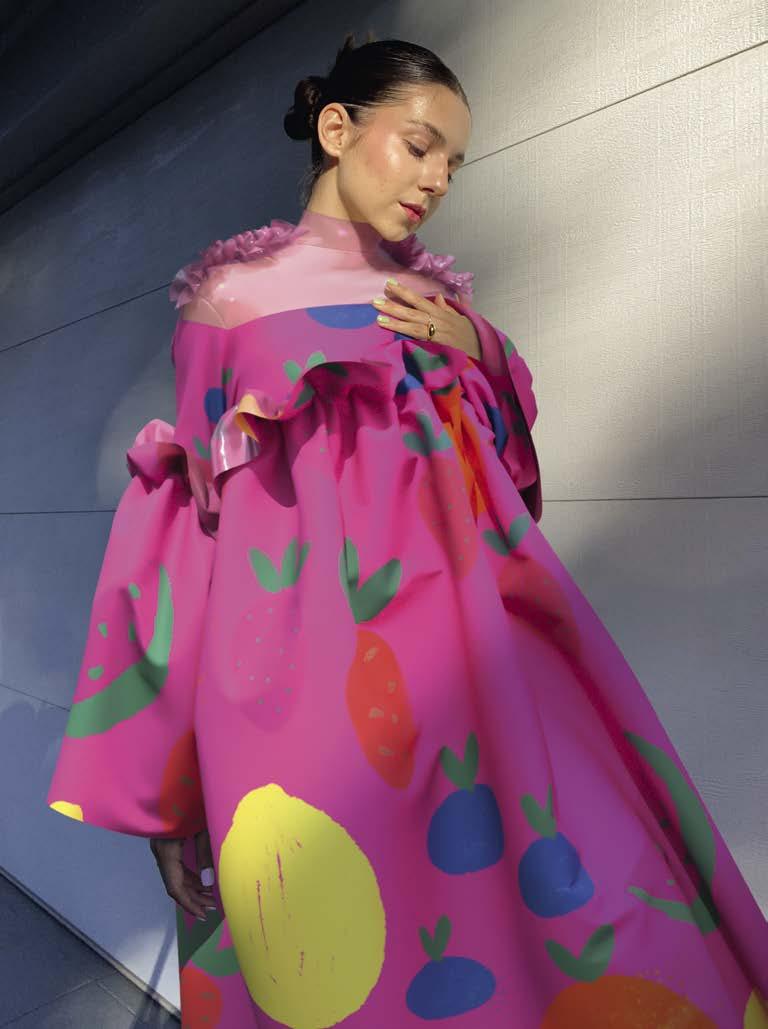
When discussing dressx’s target demographic, Chernysheva cites a Barclays Bank study that found that 9 percent of consumers in the United Kingdom buy clothes that they only wear once. And a May 2022 BCG consumer survey reports that one in five digital users aged eighteen to twenty-five already buy apparel specifically to create digital content. “So we know that there is a category of people which we’ll call the content creators and they need to change clothes on a regular basis just to show something new for their community, to appear in new looks for their community,” she says. “We tell them, Instead of going to the shop and buying new clothes, go to digital fashion. Get the digital clothes which will help you to reduce the environmental impact.”
as Farfetch are also testing the waters of digital fashion for marketing campaigns. Recently, dressx worked on a purely digital advertising campaign for American Eagle. For the two-week campaign, which used both Metalooks and AR filters, American Eagle reduced their carbon consumption by 481 tons and their water usage by 86 million gallons versus a traditional campaign that would require producing and shipping samples to content creators and running in-person photo shoots. The real environmental boon of digital goods might be related to their scalability. Chernysheva observes, “In digital fashion you create the design once and each time you dress someone in it, you don’t need to re-create the design. So when you dress one, it’s better to dress a thousand people. And if you can spread the carbon footprint of the design creation across a thousand people. . . . ” Chernysheva alludes to the reduction in the per-unit carbon cost of design with each incremental sale. “With physical garments, if you want to dress a thousand people, you have to create a thousand physical items. So with scale there is an even better and bigger impact with digital fashion. And you create just one size that you can adapt to the physics of each person.” Chernysheva looks to a future with far less unnecessary resource use in fashion: “We can decrease the production for the content. We can decrease the production for the samples. And we can decrease the overproduction and overconsumption.”
As dressx champions sustainable innovation in the digital fashion space, sisu, a Web3 sustainabilityfocused art organization, focuses on channeling digital currency into IRL (In Real Life) impact. sisu’s mission is to prove that Web3 technology can serve as a catalyst to generate tangible climate impact, in part by creating new funding mechanisms to advance climate solutions for vulnerable communities. The organization fundraises for earth restoration work through multimedia projects including crypto art collections, public art installations, and global immersive experiences.
Digital fashion still has a way to go in public perception: in a recent survey conducted by dressx, just 13 percent of respondents reported that they had started purchasing fewer physical garments after starting to buy digital fashion. But Chernysheva points out that some customers are warming up to digital fashion: between 2020 and 2022, according to a survey targeted only at those who had already purchased digital garments, there was a 10 percent increase in agreement with the statement “Digital garments can replace the need to buy the physical one.” In the meantime, brands and marketplaces such
sisu’s founder, the Colombia-born and United States–raised artist Angela Del Sol Varela, began in early 2021 with an idea called NFTree—a project whose goal was to use the sale of NFTs to fund reforestation projects. Varela recalls, “When I was in the rainforest of La Sierra Nevada in Colombia on a tree-planting trip, I realized these communities that are facing a climate battle—a battle to protect the ever shrinking biodiversity—needed more than a donation to plant a tree. In the traditional philanthropy space, the funding never reaches these communities, nor are they invited to participate in the process of project creation. They needed more sustained support and for their stories to be told. So I thought using crypto could solve for that. Since I understand firsthand the pain points of these communities and also geek out superhard on things tech, I wanted to create a bridge between Web3 and community-based climate support. There, stuck in a torrential downpour feeling quite lost and lonely, I came up with sisu.”
sisu’s genesis project—a term often used in the cr ypto community to represent an inaugural NFT collection—is a set of 111 NFT amulets (each with a corresponding physical amulet produced by an artisan
154
in Peru) designed by the artist Vega. Half of project sales go toward a bee-conservation project in Colombia led by a young Indigenous apiarist and his family of thirteen; a quarter goes to Vega; and the remaining quarter goes to sisu operations. Varela continues, “Our goal is to help families and communities generate income and promote the conservation of water, forests, and biodiversity in the region. This project seeks to recover meliponiculture”—the breeding of stingless bees, crucial in pollination—“as part of the ancestral knowledge of the Indigenous communities of the Sierra Nevada de Santa Marta in Colombia, a place that’s thought to be the heart of the earth.” So far the project has raised over 32 ETH, equivalent to about $60,000 as of June 2023. Most amulet collectors are first-time NFT buyers, with one as young as thirteen years old. Varela tells me, “I think there’s something wonderful about people both wearing this amulet on their necks and keeping them in their [crypto] wallets. The best is when people send me photos of people wearing their sisu amulets.”
For Varela, human connectivity is core to sustainability. sisu focuses on bringing Indigenous communities—often the stewards of areas high in biodiversity—to the forefront of conservation decisionmaking through copartnerships. The organization hosts a variety of multimedia events with an emphasis on supporting communities and partners focused on protecting the planet. “By highlighting the stories and experiences of our partners, who are the true climate heroes,” Varela adds, “we aim to inspire and educate others while building meaningful connections between different stakeholders.”
During the major Latin American art fair Zona Maco in Mexico City in 2023, sisu hosted an event called “Ancient Future”—a nod to the ancestral knowledge that often underpins sustainable innovation—at Parque
Quetzalcóatl. Spanning this biophilic park—designed by architect Javier Senosiain, who was inspired here by the Catalan architect Antoni Gaudí—the event brought together members of the art and Web3 community to connect and discuss ways to use crypto art to further the climate-action agenda.
At another art fair, this time Art Basel Miami Beach and the broader Miami Art Week in 2022, sisu partnered with SaveArtSpace, a nonprofit that transforms public advertising space, such as billboards, into public art. Together they produced an installation that revolved around the “Ancient Future” theme and aimed at spotlighting artists, both conventional and crypto, who address environmental issues; Dustin Yellin, Afrocentric Keyy (Kiarra Elliott), Hermes Berrío, and Rob Woodcox were among those included. Going forward, Varela mentions that sisu is interested in exploring a form of token-gated ticketing (allowing specific NFT holders priority access) for some of sisu’s upcoming events and initiatives as a way of continuing to engage with the organization’s crypto-native audience.
Tech-enabled creativity is an exciting frontier with near limitless potential. As Marie-Ann Wachtmeister, founder of the sustainability-focused jewelry brand Courbet, tells me, “What is great is that all the research being done right now will actually make things move at an exponential speed when it comes to innovations, both at the service of the environment and also at the service of creativity.” The company’s CO Genesis project allows collectors of their NFT “diamond seed” to redeem the token for a physical, lab-grown diamond created by sequestering carbon from the atmosphere using renewable energy. Through a partnership with Aether Diamonds, CO2 is collected from the atmosphere and separated into its constituents: one carbon molecule and two oxygen molecules. The carbon is used to create the diamond (diamonds, after all, are just solid blocks of crystallized carbon) and the oxygen is released back into the atmosphere.
Courbet’s diamond-seed NFT is part of an ongoing project designed to engage with a crypto-native customer base while testing the technical boundaries of sustainable-jewelry creation. Wachtmeister observes, “There are a lot of things going on in the field of diamond growth, both to reduce the CO2 impact but also to allow for new amazing ways of mesmerizing the clients.”
Indeed, perhaps the most exciting innovations in the creative fields of fashion, art, and jewelry are those that allow us to be better environmental stewards. “The only thing that is nonfungible in our world is nature,” states sisu’s Varela, recontextualizing a term used in the Web3 space to describe NFTs, or nonfungible tokens. “We have grown accustomed to thinking that everything can be bought or replaced. People think that because we plant some trees here and there we can make up for not protecting existing ecosystems; they are wrong. These ecosystems are complex and have taken thousands of years to be the majestic, intelligent systems that they are today. So yes, nature is nonfungible. The ecosystem that we aim to protect, and the communities taking care of them, are rare and unique.”

155
Opposite: Fruit dress, digital garment designed by Ksenia Lazarenko. Photo: courtesy dressx
Above: Vega, sisu Seed 88 , 2021, NFT. Photo: courtesy sisu
A VERA TATUM NOVEL
PERCIVAL EVERETT
LEONORA McCRAE
As predicted, the snow started just after noon. By two o’clock it was a full-on blizzard just like before. Everyone was hunkered down in the cafeteria. Harv had taken to calling roll every three or so hours. Andy had apparently decided he needed to give Vera some space. He was busy helping the staff in the kitchen. Whether he was cooking, cleaning, or repairing appliances, Vera didn’t know. There were books and playing cards but no one wanted music. The falling snow seemed to stop time.
Melissa came and settled in a chair across the table from Vera. “I didn’t know you were in here,” she said.
“Everyone’s in here,” Vera said.
“Yes, but you weren’t before. Where’s Andy?”
“I don’t know where he is.” Vera looked at Melissa’s dry moccasins. “How are your toes?”
“They hurt. I can walk. I limp.”
“Nothing wrong with a limp,” Vera said.
“Do you know when we’re getting out of here?” Melissa asked.
“I know what you know.”
“So, just how are you?” Melissa asked.
“What do you mean?” Vera said.
“You know?”
Vera stared at her for a second. “Andy? What? That’s what you’re thinking about at a time like this?”
“I need to think about something other than what’s going on.”
Vera nodded, understanding. The woman had a point. “Sorry. He’s a nice young man.”
“I bet he’s worried about his brother.”
Vera nodded, but she really hadn’t seen that much concern. She thought perhaps it was a guy thing or a brother thing. “I feel so bad about Paula.”
“It wasn’t your fault. It wasn’t anyone’s fault,” Melissa said. “I should have known better than to go out there without proper shoes.”
“None of us were really thinking,” Vera said. “We just wanted to help. It’s hard sitting around doing nothing.”
“I’ve never been so scared in my life,” Melissa said.
Vera looked out the window.
“Andy seems very confident,” Melissa said and then fell silent.
“What?” Vera asked.
“You know what.”
“He’s half my age.”
“So?” Melissa looked around the room. “If I have to play one more hand of gin rummy I’m going to scream.”
Vera smiled. “I don’t know how to play cards.”
“So, did he sleep on the sofa and you took the bed? Details. I can tell you I wouldn’t mind that sort of attention.”
“What is this? High school?”
“Sorry.”
“I’m going to grab some coffee.” Vera left Melissa and walked over to the coffeepot near where Beverly and Harv were sitting.
“How you holding up?” Harv asked.
“Been better,” Vera said.
“I heard that,” Beverly said.
“Anything else?” Vera asked.
Harv pointed to the antique walkie-talkie. “That thing there is a piece of shit. I keep expecting it to ring or buzz or something. I wish they’d dropped us a nine-dollar phone instead, to plug into the wall.”
“I see you’ve made friends with Andy,” Beverly said.
Vera blushed a little.
“He’s special,” Beverly said.
“Very special,” Harv said.
“How long have you known him?”
“Forever, a long time,” Beverly said.
“How did you meet him?”
“That was so long ago,” Harv said. “I don’t think I can remember. Do you remember, Beverly?”
“Before he was in the Marines?” Vera asked.
“Yes,” Beverly said quickly.
“I don’t mean to pry, but I was wondering: are you two together?” Vera asked. “It seems like you are, but I don’t like to make assumptions.”
“We’ve been together for quite a while now, but we’re not together the way you mean it,” Harv said.
Vera noticed that Harv’s hand was shaking, not like he was frightened but like he was ill. “Are you okay?” she asked.
“I’m fine,” he said.
“Did you meet Andy or Opie first?”
The couple answered simultaneously but differently. Beverly said “Opie.”
“Oh, you’re right,” Harv said. “Age.”
“And probably stress,” Vera said.
“Do you think?” Beverly joked.
“Do you know where Andy is?” Vera asked.
“He’s been making periodic sweeps of the grounds,” Harv said. “I told him not to but he said it makes him feel safer.”
Vera nodded. She wanted more than anything to walk over to her cabin and be alone, really alone. She could see her door. Everyone could see it. But as she had learned, one second of looking away and everything could change. She was simply too afraid to be there by herself. And she was also, she had to admit, trepidatious about being there with Andy. She wondered if he would even consider another night in there with her.
She spent the better part of the afternoon watching the insane snowstorm and reading poetry she didn’t like or understand. She found, however, that reading the poems was far more rewarding than conversing with the surviving poets.
At dinner, Vera sat with the kitchen staff. There were three women and two men and they mainly talked about their children. Like so many New Mexicans, they shifted back and forth from Spanish to English without apparent logic. Vera enjoyed the music of it and understood most of it.
“How is dinner?” The voice came from behind her. It was Andy. Surprised, she turned around. “Good. Join us.”
“I ate in the kitchen,” he said. “Snow stopped.”
“I saw.”
“Ready to turn in?” he asked.
Vera looked at his eyes. Her fear went away. “Yes,” she said. They found their coats and went out the back door.
There was about a foot of snow on the ground, but it was that dry, light snow that Vera was used to. They kicked through it around the building to Vera’s cabin, stomping before entering. They took off their boots just inside. Vera was surprised to find the cabin warm, comfortably warm.
“I built the fire a while ago,” Andy said.
“Sweet,” she said, though she was slightly disturbed to know that he had been in her space without her, uninvited. “That was smart. So you knew I’d agree to come back here with you.”
“I was hoping,” he said. “If you’d said no, then the fire would simply have died out.” He smiled at her. “The way some things die out.”
“Like I said, smart. I’ll make some tea.”
“I’ll sleep on the sofa tonight,” Andy said.
“Okay.”
157 26
“I didn’t think I could stand to sleep in the cafeteria with everyone,” he said. “I didn’t think you’d want to either.”
“You were right,” Vera said.
“I was also afraid to sleep in my cabin alone,” he said.
Vera put the kettle on. “How do you think they’re going to get us off this damn mountain?”
“I guess they’ll bring up a crew and put up a makeshift bridge. That’s a guess. I don’t really know.”
“I sure hope Opie is okay.”
“He’s always okay. That’s a trait of his.” Andy sat on the sofa and looked out at the snow.
“How did you come to get this job?”
Andy shrugged. “Saw an ad. Called Harv. Here we are.”
“Just out of the blue?”
“Yep.”
Vera dropped the bags in the mugs. “Who’s taking the first watch? Or should I say, who’s going to attempt to sleep first?”
“You sleep. I’ll watch,” he said.
“Okay.” She carried the tea to the table. “I think I’ll skip the shower tonight. You understand.”
Andy nodded.
“You know, I really didn’t mean to rush things. I didn’t want to,” he said. “It’s just that . . . ”
“Let’s just have our tea.” She took a sip. “I don’t even know your last name. That’s crazy.”
“It would be funny if it was Griffith, wouldn’t it? It’s Kedi.”
“What kind of name is that?”
“My grandfather was Turkish. That grandmother was Irish. My mother’s mother was German and I don’t know about that grandfather. I’m just a mutt.”
“Aren’t we all.” Vera put more hot water in their cups. “You know, we should talk about last night.”
“Really?”
“I don’t want you to get the wrong idea,” she said. “I mean, I enjoyed it. I think I enjoyed it.”
“Wow, what guy doesn’t like to hear that?”
“That’s not what I mean. But that’s why I freaked out this morning. I guess I was so tired I fell asleep.”
Andy laughed softly. “Keeps getting better.”
“Come on, help me here.”
“I know, Vera. We were both extremely exhausted. And damn scared. Fear does crazy things to people. Fear is very powerful. Maybe the most powerful emotion we have. Do you agree with that?”
Vera nodded. “Anyway, I just wanted you to know that it wasn’t you. You’ve been great. I just got scared. Of everything.”
“Makes sense,” Andy said. “So I’m on the sofa, you’re on the bed. Once we’re off this damn mountain we’ll figure out what we’re doing. Or what we can do. Deal?”
“Deal.” 27
Vera had no plans for falling asleep. She sat at the little kitchen table. But she felt so terribly tired. Her head kept dropping and coming back. She was so sleepy, so incredibly sleepy. Andy might have actually helped her over to the bed, but she didn’t know, couldn’t be sure of anything. She knew she was falling into a deep, deep sleep, something maybe more than sleep, but she couldn’t stop.
Vera awoke to screaming, such loud screaming, many voices screaming. She sprang up from the bed, shaking. Her door was wide open and the freezing air was rushing in. Outside she could see the beams of many flashlights and still heard the screaming. She paused to slide into her boots and then she ran through the open door and joined the others. No snow fell.
“I saw it,” Tad Gibson said. “It was so fast, so big.”
A human body lay on the ground, looking like it was moving because of the shaking flashlights. But it wasn’t moving, not at all. Vera saw immediately that it was the body of Melissa Begay.
She gasped and turned away. She turned away, right into the arms of Andy. She was startled to find him.
Vera turned to look again at Melissa. She was covered with blood, her head nearly severed. People ran back into the cafeteria.
“Why was she out here?” someone asked.
Tad Gibson was shaking uncontrollably. Again he said, “I saw it. I saw it. The way it moved.”
“What did you see?” Harv asked.
“It sprang on her. I was at the window. It sprang, like a wolf or something. Maybe from up in the tree.”
“From above here?” Andy asked.
Tad shook his head. “I don’t know. Melissa was just standing there. I
wondered why she was out there. It looked like she was talking. Oh my God.”
“Go get some coffee,” Beverly said. “Get some rest.”
“Andy, go with him,” Harv said.
Vera watched Andy help Tad into the cafeteria. “What now?” she asked Harv and Beverly.
“She shouldn’t have been out here,” Beverly said. “Why was she out here? This is so stupid.”
“Everybody stays in the cafeteria. Everybody,” Harv said. “Everybody stays in the damn cafeteria. You too, Vera.”
“Harv,” Vera said, “may I talk to you?”
“What?”
“When the screaming started, I jumped up and my door was wide open and Andy wasn’t with me.”
“What are you saying?”
“I don’t know,” she said. “It felt like he wasn’t in the cabin with me.”
“He probably just ran out before you got up.”
Vera recalled how cold the room was. “I don’t think so.” And she had had to pause to get on her boots. Could she have been in so deep a sleep?
“I’ll ask him to stay put like the rest of us. It seems you were right. There’s some kind of animal out there.” He looked at the sky through the trees. “It’s almost morning. That’s good.”
“What are we going to do about Melissa?” Vera asked.
“I’ll cover her. The police should be here soon. They’ll want at least one body left where it fell.”
Vera nodded.
Back in the cafeteria people huddled together, cried, cowered, either stared out the windows or looked away from them. Harv called the roll
158
a vera tatum novel by leonora mccrae by percival everett
again. He stopped midway because no one was listening.
Tad Gibson was describing over and over the creature he had seen. There seemed to be more detail with each telling, but nothing became clearer.
Melissa. For some reason Vera felt responsible for Melissa’s death as well. She knew it was irrational, even untrue, but that was what she felt.
She spotted Andy across the room. He was telling a couple of women that everything was going to be fine, that he would be in the cafeteria with them.
Vera sat against the wall, far from the bank of windows, but looked through them. Morning broke.
Before the muffins were put out, there was a sheriff’s helicopter above the yard. Harv had the walkie-talkie and was standing beside the covered body of Melissa. Two deputies were lowered by ropes and then the big machine was gone. Vera had never been so happy to see guns. Harv talked to the police and they nodded in that emotionless way in which people with guns often nod. Harv told them more and Vera moved closer. She stood between Beverly and Andy and listened.
The deputy who seemed to be in charge spoke into his radio. “Sheriff, this is Garcia up at that Kachina place. We’re going to need some more men up here. No, I mean pronto. We got us a bunch of dead people up here. They did not die of natural causes. We’ve got a scene, scenes, to process. Maybe an animal. Not clear. These folks are scared. Yes, sir. I’ll tell them. Yes, sir. Out.”
The other deputy kneeled beside Melissa and peeked under the tarp and let it quickly back down.
“So?” Harv said.
“Sheriff is going to send some more deputies. They’re trying to get an emergency bridge up here through the snow. They have a Cat plowing the road before the truck. Slow going.”
“How long?” Beverly asked.
“It will go pretty quick once they get here. Three, four hours to deploy the bridge. But getting here, that’s a different situation. The road is a real mess. I ain’t going to lie to you people.”
“Let’s get inside,” Harv said.
Given the size of the monster in her imagination, Vera didn’t like the fact that the deputies were such small men. Neither was over five eight and they were slight of build. But they did have pistols.
Everyone got situated and quiet. Harv stood up to the mic. “People, these are deputies Garcia and Bradley. They tell me that a bridge is on the way up here now.”
There was quiet cheering.
Harv turned to the deputies. “Deputy Garcia.”
“Everybody, I know you’ve had a difficult time, that you’re scared, but we’re here to protect you. We also have to start our investigation. Since the bridge isn’t here yet, it won’t slow down you getting home.”
“How long before the bridge gets here?” someone asked.
“I don’t know, ma’am. Once it’s here, they’ll call us.” Harv gave a sheet of paper to Garcia. The deputy looked at it. “Deputy Bradley and I are going to interview all of you. A thru K line up over here and wait for me. L through W over by the windows and wait for Deputy Bradley to call you.”
Bradley watched as Garcia tore the page down the middle.
“You’re not just going to leave Melissa out in the yard, are you?” Vera said.
“We have to process the scene. Take photographs, blood samples, and the like. I’m sorry about your friend.”
“But she’s lying out there,” Vera said.
“What would you have me do, ma’am?” Garcia asked.
Vera got a hold of herself.
“Is more snow coming?” Fiona asked.
“No ma’am. It’s not in the forecast.”
Bradley walked over to a table by the windows.
“Okay, let’s get started,” Garcia said.
“Please be cooperative,” Harv said.
People didn’t line up, but sat wherever they wanted and waited to hear their names.
Hours went by.
“Where’s the bridge?” Vera heard Tad Gibson ask Deputy Bradley.
“Closer,” Bradley said.
Participant after participant gave their statements. The helicopter returned at noon, depositing another two deputies and the sheriff himself. He was a tall man. Instead of the ball cap worn by the deputies, he wore a cowboy hat, but it gave him an air of authority. His name was Robert Montoya. He listened to his deputies before talking to anyone else. They stood in the yard next to the body of Melissa Begay. When Harv tried to approach, Montoya stopped him with a raised palm and continued to listen to his men.
Satisfied, he signaled with an open hand for Harv to come closer. Vera was not far away. “Looks like you’ve got a mess here,” he said. “Dead people usually equal a mess. How many?”
“Seven.”
“That’s a lot of dead people. A big, big mess.” He looked at the crowd of people. “I’d like to speak to Mr. Gibson.”
“Tad,” Harv called.
Tad Gibson stepped forward.
“Please tell me exactly what you saw, Mr. Gibson. Where were you standing? Start with that.”
“I was standing in the cafeteria, looking out the window.”
“Which window?”
“That one.”
“Come on inside and show me,” Montoya said. He followed Gibson into the building. Harv, Beverly, and Andy followed. Vera trailed.
Inside, Gibson started his story again. “I was standing here and I was looking out because I saw someone. We were all supposed to be in here, so I was curious. She was standing near that white SUV. I thought she was talking to somebody.”
“Why did you think that? Could you see somebody else?”
Gibson shook his head. “It just looked like she was talking. I think she nodded. I think she smiled. And then—”
Montoya was patient. He waited. Vera was impressed by that.
“And then, then she was in the air,” Gibson said.
“In the air? How high?”
Gibson nodded. “High. Over the car.”
159
28
a
vera tatum novel by leonora mccrae by percival everett
“Any idea how she got up in the air?”
“Then I saw it. It was so fast. It was a blur.”
“How big was it?”
“Big.”
“Big as me?”
“Jesus, I don’t know. Just real big. It sort of looked like a skinny bear, hell, I don’t know.”
Montoya took a deep breath.
“And then, just like that, she was on the ground. Someone came up behind me and screamed.”
Montoya looked at the notes Garcia had given him. “Laura Ackerman? Can I get Laura Ackerman over here?”
Beverly called Laura over.
“Ok, Miss Ackerman,” Montoya said, “tell me what you saw.”
“I saw Melissa lying in the snow.”
“Did you see how she got there?”
Ackerman shook her head. “She was just on the ground. I knew she was dead.” The woman started to cry.
“How did you know she was dead?”
“Her head was at such a strange angle.”
“Okay, you can go sit down.”
“When is the bridge getting here?” Harv asked.
Montoya looked at Harv, very businesslike and with sympathy. “Even if that bridge is set up right now, ain’t nobody going no place until I get some kind of picture of what’s gone on here.”
“These people are scared,” Harv said.
“I bet. I don’t blame them. They ought to be scared. Now take me to where the first person died.”
“That would be Tori Lockwood,” Harv said. “This way.”
Vera was no longer able to hang close to the sheriff and Harv and listen in. She sat not far from Tad Gibson by the window. He stared out at Melissa. Vera went and got some coffee and carried it to him.
“Thank you,” he said. He looked at her.
“Vera,” she said.
“Tad.”
“I know.”
“I should have gone out there,” he said. “As soon as I saw someone outside, I should have gone out there.”
Vera was about to tell him that there was nothing he could have done, but she didn’t. She just sat quietly.
“Did you know her?” Tad asked.
“We talked,” Vera said. She didn’t say that they had been together in the woods when Paula was lost. “Did the animal, that thing, you saw look like a mountain lion?”
Gibson shook his head. “To tell the truth, I thought she was you at first. Because you weren’t in here with the rest of us.”
Vera nodded. Now she felt guilty. Perhaps he would have run and maybe scared the thing away if he hadn’t thought for a second that it was her, Vera. But then he’d probably also be dead.
“This is the worst thing I’ve ever been through,” he said.
“All of us,” Vera said.
“I thought it was Jerry, I have to admit. I feel bad about that.” Then, as if he needed to find some control somewhere, he said, “You okay?”
“Yes, I’m okay,” Vera answered his ridiculous question.
“Why’d you ask if it looked like a mountain lion?” Gibson asked.
“Just wondering what kind of animal can do this.”
“One big cougar, that’s all I’ve got to say. What I saw was so fast and large.” He was trembling.
Vera looked over at Dishti nine and saw the sheriff and the deputies exiting. The men looked dazed. Even Montoya appeared shaken, his face almost white. Seeing him like that upset Vera. She watched as the men followed Harv toward the edge of the camp, toward the cabin where the bodies, the parts of bodies, were stored.
A muffin and a cup of coffee later, Sheriff Montoya was back in the cafeteria. “I’d like to speak to Miss Tatum,” he said to Harv.
Harv looked over at Vera. Vera walked over.
“Hello, Miss Tatum.”
“Vera,” she said.
“Okay, Vera. You told my deputy you were with Paula Stone when she disappeared. And Melissa Begay was with you also.”
“Yes. And Fiona, I don’t know her last name, she was with us.”
“I have that in my notes. Can you tell me what happened? Fiona’s last name is Archer.”
Vera told them how they had gone out looking for Winnie, about how it was snowing so hard, about how Paula was there and then she wasn’t. Then she told him about the sound, the low growl.
Montoya listened.
“I suppose I could have been imagining it. I can’t remember but I think the others heard it.”
“I’ll ask Miss Archer,” he said. “It’s a terrible thing.”
“Yes.”
“And last night. Where were you when Melissa Begay was killed?”
“I was in my cabin,” Vera said.
“While everyone else was here in the cafeteria?”
“Yes.”
“Why weren’t you in here?”
“I was with Andy.”
Montoya nodded. “You and Andy, you’re together?”
Vera didn’t know quite how to answer. “We’re friends.”
“You met here?”
She realized that he already knew the answer to that question. It made her nervous. “Yes.”
“Tell me about last night.”
“I heard screaming and I jumped out of bed and ran outside.”
“In your pajamas?”
“I was dressed. I was asleep in my clothes. My boots were by the door.”
“And Mr. Kedi?”
“He was awake keeping watch. He ran out before me.”
“You saw him run out?”
“No, but the door was open.”
Montoya nodded. “Fiona Archer was with you on the trail.”
“Yes,” Vera said.
Montoya looked over at Harv. “Fiona Archer.”
Vera nodded. “What could do this?”
“I don’t know, Vera.” Montoya looked at his boots. “I don’t know.” Then he collected himself. “But we’re going to find out.”
“I’m glad you’re here.”
“We’ll get you home soon.”
“Right out of central casting.” It was Andy. He had come to her from the kitchen side and startled her.
“What?”
“The sheriff,” he said. “He’s like a TV sheriff, don’t you think?”
“Seems good at his job,” Vera said.
“That’s what I mean. He’s the sheriff. The other guys are deputies. They all look their parts.”
Vera agreed. “Where have you been?”
160
a
vera tatum novel by leonora mccrae by percival everett
“Helping Harv show the bodies. And worrying.”
“How did you get out of the cabin so fast?” she asked, surprising herself.
“You didn’t get up right away. In fact I walked over to you. I wanted to kiss your forehead but you were out cold. Dead to the world. Sorry, that was a really poor choice of words.”
“Did you ask the sheriff about your brother?”
“That’s why I’m worrying. He doesn’t know anything about Opie. It looks like he didn’t make it down there.”
“You don’t think,” Vera said.
“I don’t know what to think. But the sheriff said I could try to hike down and look for him. He said the crew might run into him on their way up.”
“He should have been down there a long time ago,” Vera said. “Oh, Andy, I’m so sorry.”
“I’m going to go gear up and head down now.” He looked over at Montoya. “He’s here now. I don’t care what he says. You’ll be okay, right?”
“What about you? That thing is out there.”
“Apparently it likes women,” he said.
“And maybe your brother. I’ll be fine. We’ll get together and have a drink to celebrate our survival once we’re in Santa Fe.”
Vera saw Harv staring at Andy. When Andy looked up, Harv looked away.
“I’ll see you when all of this is over,” Andy said.
“Sheriff Montoya isn’t just going to let you leave.”
“It was his idea.”
Vera learned from Tad Gibson that Sheriff Montoya had sent his deputies out in teams of two to look for trail signs of an animal and other evidence.
“By evidence you mean body parts,” Vera said, blankly.
“I guess,” Gibson said. “Where is your boyfriend?”
Vera didn’t have the energy to take offense or offer a correction. “He went looking for his brother.”
“With no gun? Macho man.”
“It’s getting dark,” Vera said.
“I wish it wouldn’t.”
Vera looked at the clear sky. “At least it’s not snowing.”
“So I guess you’re sleeping with us tonight, so to speak.”
Montoya came out of the cafeteria, talking on his radio. Harv and Beverly followed him close. “The bridge is here,” the sheriff said flatly. They’re going to try to get it erected over tonight but they can’t make any promises. Then I can get some trackers over here. Some hunters.”
Gunshots rang out. Montoya jumped. He turned to Harv. “Keep everybody here. Call roll. Everybody. Staff, everybody. Got it?”
“Got it,” Harv said.
Vera wanted to follow Montoya up the trail, but she had listened to him. Harv urged her into the cafeteria. He called the roll as instructed. There was no one missing. Vera was glued to the window, watching out. The yard was so desolate, so still. About thirty minutes later, in the indistinct dusk, Vera could see someone she believed to be Montoya. He dragged a man by his jacket across the snow.
“Jesus!” Vera shouted. “Harv!”
She ran to the door and out just ahead of Harv and Tad Gibson. Gibson was saying over and over, “Oh my God. Oh my God.”
“Shut up,” Vera said.
It was Deputy Bradley that Montoya had dragged. “Get him inside,” the sheriff said. He turned to face the trail.
Bradley was blood soaked, though Vera could see no place on his body where he was injured. He was in shock or in so much pain that he was unresponsive, but he was not unconscious.
Montoya got on his radio. “How far away are you? Well get back to the compound pronto. Keep your eyes open. Dixon, reach base and get some medics up here. It’s an emergency.”
“What do you want me to do?” Harv asked.
“Keep everybody inside.” He reached down and pulled a small pistol
from a holster on his ankle. He handed it to Harv. “Just keep it.”
“Okay,” Harv said.
“I’ve got to go back for Garcia,” Montoya said.
“Not by yourself,” Vera said. She took the .38 revolver from the deputy’s hand.
“No,” Montoya said.
“I know how to shoot,” she said.
Montoya wasn’t going to waste time arguing with her. “Keep up,” he said. Some steps up the trail, he said, “Please don’t shoot the sheriff.”
“Did you see it?”
“I saw Bradley and the blood. He’s got a deep slash in his back.”
“Did you see your other man?” Vera asked.
“No.”
Vera was working hard to keep up with the sheriff. The pistol felt surprisingly heavy. She didn’t know where to point it as she ran. It was darker now. The light from Montoya’s flashlight bounced crazily on the trail and trees in front of them. She really hoped she wouldn’t shoot the sheriff.
“Stop,” Vera said. “Stop. Listen.” That low growl sounded somewhere off in the trees. “That’s the sound. Do you hear it?”
Montoya didn’t say anything, but she knew he was nodding.
“That’s what I heard,” she said.
“Garcia!” Montoya called out. “Goddamnit! Garcia!” He swept the ground ahead with the flashlight beam. “There.”
He had found some blood in the snow. “This could be Garcia’s or Bradley’s. I have no idea.” He moved the light again. “Fuck,” he said.
Vera could see it was a boot, a boot sticking out of the brush. They ran to it. It was only a boot. The sheriff reached down and picked it up. The weight of it caused him to look at Vera and then into the boot. He put the light on it. Vera saw it, too. There was a foot still inside it.
Vera felt as if she had screamed, but she didn’t know even that. She held the pistol up and pointed it into the forest. “Let’s go back,” she said.
But Montoya was using his light to search the area. “A lot of blood,” he said. “A fucking lot of blood.”
“Let’s go back, please.”
Montoya looked at the boot in his hand. He raked the trees with his light. “Okay, let’s head back. Lower the gun. Vera, right?”
“Yes.”
“Point the gun down. For all we know one of my deputies might come
161
29
a
vera tatum novel by leonora mccrae by percival everett
running up the trail. Okay?”
Vera let the pistol drop by her side.
“Good,” he said.
“Let’s go check on Bradley.”
The lights of the cafeteria looked so far away. Montoya moved in a way that kept Vera behind him all the while moving forward. The booted foot was under his arm and his pistol was held out in front of him, aimed where his flashlight beam pointed. Vera could hear her own breathing in the cold night. She thought she sounded as if she was having a bad asthma attack, but she had never suffered from asthma. The sheriff tossed the boot onto the ground by a tree and urged Vera the last thirty yards to the building. The deputies rushed out to meet them.
“Where’s Garcia?” one of them asked.
“I don’t know,” Montoya said. He looked to Harv. “How many doors does this place have?”
“This front one and the back kitchen door.”
“Aguilera, go back there and lock that door. Grab a chair and sit in front of it and stay awake.”
“Sheriff?”
“Stay awake. Okay, son?”
“Yes sir.”
Montoya turned to Vera. “Are you all right?”
Vera nodded.
“Duncan, you sit right here and watch this door. Stay alert.”
“Okay,” the deputy said. He was scared.
“Where’s Bradley?”
“He’s over by the heat,” Beverly said. “He doesn’t look good.”
“Has he said anything?”
“Nothing.”
Vera followed Montoya over to Bradley. Beverly was right. The man looked near death. He was lying on his side, his head on a rolled-up coat, his wound stuffed with a blood-soaked tablecloth, his face drained of color. He was barely conscious. Paola and another woman from the kitchen staff had taken charge of caring for him. Fiona Archer was sitting on the floor next to him.
“The wound on his back is really deep,” Paola said. “It’s on his back, so I don’t know how all this blood got on his front.”
“It’s not his blood,” Montoya said.
“What’s happened?” Harv asked.
“Is everyone here?” Montoya asked.
“Everyone, “ Harv said.
The sheriff’s radio beeped. “Yes?” he said into the device. “Good. Call me when it’s done.” He spoke to everyone around him: “The bridge will be done soon. And we’ll get these people out of here.”
That message got around the room and there was a buzz of relief and approval.
Duncan called to the sheriff, “Hey, boss?” “Yeah?”
“If I see something?”
The sheriff looked at Harv again. “Everybody is in here?” “Yes.”
Then to Duncan, “Shoot it.”
“Andy’s out there,” Vera said. She looked at Harv.
Vera walked close to him.
On his radio, Montoya said, “Tell that crew I want that bridge up ASAP. And I want Foote and his dogs up here. Find him.”
Harv seemed to hesitate. “She’s right.”
“Andy the handyman?”
“He went to look for his brother,” Vera said. “He told me you gave him permission.”
“He did, did he?”
“Duncan, relay that. Look before you shoot. We’ve got somebody out there.” He sighed. “That makes things messy.”
Montoya looked at Vera, reached down, and took Bradley’s pistol from her hand. “I’ll say this, you’ve got a lot of guts, ma’am. Let’s see if you can hang on to them. Don’t be so macho.”
“I wasn’t thinking,” Vera said.
Montoya smiled at her. “Thank you.” He looked out the window, then to Harv and Beverly. “I want to hear about this Andy and, what’s the brother’s name?”
“Opie,” Beverly said.
“Andy and Opie? Are you kidding me?”
They walked to the far side of the room and Vera could no longer hear them. She looked down at Fiona. “Has he said anything at all?”
Fiona shook her head. She leaned back against the wall and closed her eyes. Vera looked around at everyone in the cafeteria. They were all so tired. Perhaps too tired now to be as afraid as they ought to be.
Montoya returned to his injured deputy’s side and took Fiona’s place on the floor. Vera was touched by the way the man sat there with his hand on the head of his friend. He again spoke into his radio, telling the people at the soon-to-be bridge that he wanted the paramedics right away.
The lights went off. People screamed. Flashlights came on.
“The generator,” Vera said.
“It was fueled today,” Harv said.
“Where is it?” Montoya asked.
“I know where it is,” Vera said.
The sheriff looked at her. “Okay. My shadow.”
“I’ll show you,” Harv said.
“You keep the folks in here calm. Come on, Vera.”
Vera led the way. She was glued to Montoya’s elbow. “It went out the other night, too. That was the night Lisa was killed. I think. Everything is a blur now.”
“I’m sure.”
“That’s it.”
The sheriff looked at the big machine.
Vera grabbed his hand and pointed the light at the control box. She lifted the cover and flipped the switch. The machine thumped and came to life.
“Is this all it took to turn this back on last time?” he asked. “Yes.”
“And you did it?”
“No. Andy did it,” she said.
“So he was with you when the lights went off last time.”
Vera thought. “Well, no, I was in the main office. I was in the little
162
30
a vera tatum novel by leonora mccrae by percival everett
room with Jerry. Jerry’s body. Andy had gone to get a tarp.”
Montoya scanned the area with his light. “Okay, let’s get back inside. So, this Andy, you said you’re not with him.”
“That’s right.”
They went back to the cafeteria. Montoya called out as they ap -
proached, “Don’t shoot me, deputy.”
“I’ll try,” the deputy said.
Inside, the sheriff had Harv call roll again. All present. Except for Bradley. He had died.
Vera was head down on a table, not quite asleep, when she heard a vehicle crunching on the gravel in the yard. Everyone awoke and cheered. They had made it through another night. The sheriff instructed them to remain inside while he went out into the dark. More policemen were the first to arrive. He pointed and stationed them around the grounds. Paramedics were right behind them. They ran in and were directed to Bradley. They knelt beside him and went to work as if he were still alive. Paola was sitting on the floor some feet away, praying.
The sky showed that the world was still spinning. Things slowly came into view. Montoya ordered a bus to take everyone down the mountain but was told that it was going to be slow going. The snow and the big truck that had delivered the bridge had left the already rough road in a bad way.
A fat man with a long beard arrived with a truck full of barking dogs, all kinds of hounds, large and small.
“Foote,” Montoya greeted him. “Thank you for coming.”
“I didn’t think I was going to make it on that road,” Foote said.
“I want you to go up that trail with four of my men.” The sheriff pointed.
“What are we looking for?” Foote asked.
“Anything. Anybody. Any parts of anybody.”
“What?”
“It’s a mess up here, Foote.”
“Okay.”
Montoya pointed to some deputies and sent them with Foote and the dogs. He sent another around to the south trail.
“Harv!” the sheriff called out.
“Sheriff?”
“Let’s talk about Andy and his brother.” They stepped away and Vera was left in the cafeteria with the others. They all sat and stood around like people at an airport terminal. Somehow word had spread that Andy was of interest to the sheriff. Where was Andy? What had happened to Opie?
The paramedics had begun taking blood-pressure readings and temperatures of the participants and staff. Some really didn’t look well at all. That was understandable. Vera sat at the window, looking out, wondering if there were things she’d missed, things she should have seen, heard. She wondered if she should mention the cat dreams to anyone, then decided that all of that would just make her sound crazy. But then she probably was, she thought.
The medical examiner came and officially pronounced Deputy Bradley dead. He was then taken away by Sheriff Montoya to examine and catalogue body parts. It was all so gruesome. Vera couldn’t get the image of the foot in the boot out of her head. The idea that she had met the person who belonged to the foot scared her. Then she remembered that she had seen a head. The weight of all of it came down on her and she started to cry. A paramedic came to her and asked if she was okay.
“Are you fucking kidding me?” Vera said. “No, I’m not okay. I’ve seen a head with no body. Been chased through the woods by some monster.” She wanted to add that she might have had sex with that monster, but she didn’t. In fact, she couldn’t believe that she was thinking that.
“Breathe,” the man said.
That was good advice, she thought, so she tried it.
There was lots of coming and going of deputies and men with rifles. Though Vera didn’t see anything, she learned from Montoya that the rest of Deputy Garcia had been found. They sat on a bench just outside the cafeteria.
“The dogs found him,” the sheriff said. “You went with me to look for him so I thought you should know.”
“He’s dead?”
“Well, yeah.”
“Anything else?” she asked.
“We found a bloody skirt. A hand. Maybe a woman’s hand.”
Vera appreciated the fact that he was being straight with her. Or perhaps he wasn’t. Perhaps this was the sugar-coated version.
“If there is an animal out there, we can’t find any sign,” he said.
“What about Andy and Opie?”
“Can’t find them either.”
“You think the creature got them?”
Montoya smiled weakly. “The creature. I can’t believe you just said that and it’s not a joke. No, I don’t know if the creature got them. I do know that a person couldn’t have done what I’ve seen to these people. The medical examiner said that Garcia’s foot looked like it was ripped clean off. Not sliced off, not sawed off, not chewed, but ripped off. What could do that?”
“I don’t know.”
“There was something strange about Andy,” she said.
“Tell me.”
“I think he drugged me.”
“Why do you think that, Vera?”
“I just slept so strangely. I had these dreams.”
“Dreams?”
“I just felt like I didn’t know what was going on.”
“Did he take advantage of you?” Montoya asked.
“I don’t know,” she said. “I don’t know.”
“The bus will be here very soon and we’ll get all you folks down off this blasted mountain.”
“My car is right there.”
“We’ll get the cars down to all of you. We’re going to put you all in the middle school gym for a while. There’s a lot to process.”
“I can imagine.”
“Which one is yours?” he asked.
Vera pointed.
“Nice.”
163
31
a vera tatum novel by leonora mccrae by percival everett
“My husband bought it.”
“What’s he do?”
“He died six years ago.”
“Spouses will do that.” Montoya responded to a beep on his radio. The bus had arrived.
“So down we go,” Vera said.
“I’m surprised he actually got the thing up here.”
“Think he can get it down?” Vera asked.
“I guess we’ll see.”
He spoke into his radio. “Duncan, bring them back.”
“You’re giving up?” Vera asked.
The sheriff looked at the sky. “It’ll be getting dark in a few hours. I don’t want my people out there in those woods.”
Vera nodded.
“This Andy,” Montoya said. “You say there was something strange
about him. Did you notice anything different about the way he interacted with Harv and Beverly?”
“Why do you ask?”
“Just asking.”
“I don’t know. Maybe I’m being paranoid, but yes, there’s something there. I noticed the way they would look at him and each other when he was around.”
“Like how?”
Vera shrugged. “Just something. What did you notice?”
Montoya didn’t hesitate. He looked Vera in the eye. “They’re scared to death of him.”
“And Opie?” Vera asked.
“I don’t know. Probably.”
The bus rolled in.
There was a lot of complaining about not being allowed to collect belongings, but no one was complaining about getting on the bus and getting out of there. The driver was the same man who had driven the bus to town the first night, so Vera had some faith in his ability. By the time everyone was loaded on, it was near dusk. A sturdy deputy sat directly behind the driver and Vera sat in the front row just opposite him. She didn’t want to talk to anyone. Paola and the kitchen staff sat right behind her. A tow truck with a flashing light led them out and a sheriff’s 4×4 followed behind. No one on the bus talked. A few people were fast asleep as soon as the door closed.
The bridge looked like an enormous kids’ Erector set construction. The driver obviously did not have complete faith in it, as he stopped and actually crossed himself at the precipice. There was a lot of squeaking and creaking, shaking and some screaming, as the bus inched across, but the bridge held. Vera could see the stirred-up road through the windshield as they made it to the other side. It was a muddy, deep-rutted mess. But the driver knew what he was doing.
Darkness fell before they had reached even the county road and the going became slower still. The flashing light of the leading tow truck made the trees into strange scarecrows. The rocking of the bus was hardly rhythmic and occasionally jarring, but most of the passengers were asleep or at least had retreated behind closed eyes. Vera watched the lights sweep the forest and the road in front of them. She looked across at the deputy. He hadn’t talked to her and she hadn’t looked to strike up a conversation. He was asleep now, head back, mouth open. His boots were caked with mud.
Finally they reached the county road. It was wider and without the deep ruts, but it offered some washboards. It was nine by the time they reached the highway. The tow truck pulled off to the side and let the bus pass. Vera looked back to see that the sheriff’s rig had stopped too. The sudden smooth road momentarily awakened some and the bus buzzed with chatter. The deputy remained asleep.
Ahead, a person stood on the shoulder and waved to the bus. Vera could see that it was Andy. Or Opie. Her heart jumped. The driver slowed the bus.
“No,” Vera said. “Don’t stop.”
“What? There’s room,” the driver said.
“No! Don’t stop!”
The deputy stirred.
The driver sped past the man. Vera saw the familiar face as they rolled by.
“That was Andy,” someone on the bus called out.
“Yes, it was,” from another.
“What is it?” the deputy asked.
“We passed somebody,” the driver said.
The deputy looked back through the bus at the darkness. “There’s no turning around,” he said. “Keep going.”
“It was Andy,” someone called to the deputy.
“Yeah,” from someone else. “And we just left him there.”
The deputy tried to reach Montoya on his radio but had no success. He radioed headquarters. “Please tell the sheriff to be advised that a man was spotted on the highway.” He looked ahead at the side of the road. “Possibly mile marker twenty-eight. People on the bus said it might be someone named Andy.”
“Why didn’t you let me stop for him?” the driver asked.
“I didn’t think the sheriff would want us to stop.”
“It’s cold out there,” the driver said.
The deputy looked at Vera’s face, perhaps saw her fear. “She’s right,” he said. “A patrol will pick him up.”
There was a sound on the roof of the bus.
“What was that?” the driver asked.
Several more thumps got everyone going, looking up, screaming. Many stood and moved to the center of the bus. The vehicle rocked. More screams. The deputy instinctively put his hand on his pistol. “What the hell?” he said.
It was as if rocks were falling on the roof, but there was no hillside. Something pounded on the bus.
“Deputy?” Vera said.
“I don’t know.”
The bus shook again and Vera looked back to see something come down through the ceiling, breaking through the metal and plastic as if they were cardboard. It looked like an arm, but that was a confusing thought. There appeared to be a knife at the end of it, she thought, but then she could see it was a claw. Claws. The deputy yelled for everyone to get down. The clawed end of the arm reached out, slashing Tad Gibson’s shoulder so that he spun and fell from his seat to the floor. The depu-
164
32
a vera tatum novel by leonora mccrae by percival everett
ty pulled his pistol and fired into the ceiling, once, three times. More screaming. The reports of the gun made Vera’s ears ring and she could barely see because of the flashes. There was a sound like a roar, almost like a motor starting, but not mechanical. Something high-pitched, animal, not human. The bus swerved, fishtailed wildly, but the driver managed to keep the big vehicle on the road. The noise and the movement on the roof were gone. The ride leveled out and became smooth again. Some on the bus were crying.
“Are you fucking kidding me,” Tad Gibson said, holding his injured arm close to his body. “What the fuck was that?!”
“Let me see that arm,” the deputy said. “It’s not too deep.”
“The hell it isn’t!” Gibson shouted.
The deputy got on his radio. “Dispatch, get a message to Sheriff Mon-
toya now! Tell him the bus was attacked by something. Yes, attacked. We’ve got a man that’s been hurt pretty bad.”
The deputy looked at the bus full of people. “Have the paramedics meet us at the middle school gym.”
Vera walked to the center of the bus and looked up through the hole that had been made by the arm of whatever it was. The metal of the bus’s exterior had been pushed inward. Hair or fur and blood had been left on the jagged edges.
“What the fuck was that?” the deputy said, softly, as if to himself. “What the fuck was that.”
“Should I stop?” the driver asked.
“Hell no!” the deputy shouted. “Get us to town.”
The deputy had been wrong about the severity of Tad Gibson’s wound. When the paramedics saw him at the middle school they decided he needed to go to the hospital. In fact he had lost enough blood that he was considerably weakened and not fully lucid.
Fiona Archer’s breathing would not slow down. She found Vera and sat beside her on a cot. “What was that?” she asked.
“I’ve never seen anything like it,” Vera said.
“It ripped through the bus, right through the metal,” Fiona said, as if narrating the events to herself would make them make sense. “It was on top of the bus and reached right through the roof.”
“I saw.”
“What could do that? A man couldn’t do that. A man couldn’t do something like that, could he?”
They found cots arranged in rows on the gymnasium floor. It looked like a scene of refugees from a hurricane. People spoke less than Vera imagined they might. The big room was quiet. They mostly sat around staring at their feet.
Vera lay back on the cot she had chosen. It was green. She was surprised to find herself nodding off. Soon she was in a deep, dreamless sleep.
When Vera awoke, she found Sheriff Montoya sitting on the cot next to her. She sat up and rubbed her eyes.
“That must have been something to see,” he said.
Vera nodded.
“Is Tad all right?”
“Mr. Gibson is okay. Now that he’s had some time to reflect, he’s pretty shaken up.” The sheriff looked past Vera and across the room. “Would you like some coffee?”
Vera looked behind her and saw a table set up with coffee and pastries. “I’ll get some tea later.”
“I need you to tell me everything you saw last night.”
Vera nodded, was silent for a few seconds while she collected herself. “I was sitting in the front of the bus across from your deputy. He had his eyes closed.” Vera didn’t want to say that the man had been asleep. “There was somebody standing on the side of the road. The driver started to slow down and it looked like Andy. Or Opie. I had no idea which one, but I told the driver to keep going. Not to stop.”
“Why did you tell him that?”
“I don’t know. I got scared.”
“Of Andy?”
“Yes.”
“Why?”
“I’m not sure.”
“So he kept driving, passed the man. Then what happened?”
“And then there was something on the roof.”
“How much did the driver slow down?”
“Not much.”
Montoya nodded for her to go on.
“There was something on the roof. It was making the whole bus shake. Everybody was screaming. A lot of people turned on overhead reading lights. And then it tore through the roof and the ceiling and started reaching around. That’s when Tad got hurt. The deputy shot his gun through the ceiling. And then it was gone. At least it was quiet.”
“You okay?”
“What do you think it was?” Vera asked. “It was a like an arm, but it had claws. I think it had claws. Maybe it was a knife. It was all happening so fast. Did your men find anything up there?”
“I think we found your friend Paula.”
She looked at him.
“Dead.”
Vera sighed. She said, more to herself than to him, in a sort of shamed way, “She wasn’t a friend.” She sat up, collected herself. “I’m sorry about your men.”
“Garcia has six kids. Had.”
“Do you believe in monsters, sheriff?” Vera asked.
“I do now, Vera.”
Vera looked across the room at a crew wiping down the tables, chairs, and door handles. “There’s something else going on,” she said.
“There’s a virus. It’s called Corona Nineteen.”
“What?”
“Apparently it’s really dangerous. They’re telling us to wash our hands a lot and to stay away from each other. It’s really bad in New York.”
“Oh no.”
“Ironically, you were probably in the safest place in the country up there. In some places, like New York and Los Angeles, they’re telling people to stay home and not go out.”
“Wow.” Vera shook her head. “This is really serious?”
“I’m afraid so.”
165
33
a
vera tatum novel by leonora mccrae by percival everett
“It’s all over the news,” Fiona Archer said. “There’s a news crew outside right now.” She was drinking a Diet Coke from the can. Yes, it had all been awful, terrifying, but as Vera looked around the room she saw something else brewing, the kind of titillation that comes with being a part of something. Something. Truth was, Vera didn’t want to be there. She didn’t want to belong to the Survivors of Kachina. She would not be interviewed. She had decided that.
Then they learned that the news crew was not allowed inside because there was fear of infection. The virus was out there somewhere.
They were all moved to the old Rio Grande Motor Inn near the airport. News cameras and reporters were waiting there, but at a distance. They asked questions only of those who paused to take them. Police and deputies patrolled the halls and the parking lot in pairs.
Still, Vera had to tell her version of what had happened on the mountain and on the bus four or five more times. To a sheriff’s deputy for an official typed statement. To the state police. To the district attorney. There was even a uniformed man from the Air Force who everyone claimed had come over from Roswell. The Air Force man wore a surgical mask. “They say the masks won’t stop the virus,” he said, “but I don’t believe them.”
The evening television news reported that there were no cases of the virus in New Mexico. The president was on television telling everyone that it was simply a bad flu, that it would be gone in a couple of days. Vera knew immediately that the virus was something to fear. The president lied about everything. Why would he tell the truth now?
After one night in the motel, their cars started showing up in the parking lot. Vera was told that deputies and volunteers had been bussed up to drive the vehicles back down. Her keys were delivered to her by Deputy Duncan.
“So when can I leave?” she asked, standing in the doorway of her room. “I need to check on my horses.”
“Anytime you like,” Duncan said. “The sheriff asked me to tell you to be careful.”
“Thank you, deputy.”
“Ma’am?”
Vera was pleased to discover that the pass was clear and not thick with traffic, as it sometimes was. She enjoyed the view of the Rio Grande on her right and felt some tension leave her. She stopped at the viewpoint just before the road straightened and fell down onto the Taos Plateau. She could never quite believe the beauty of the plateau from that height, the sight of the Rio Grande Gorge coursing through it like a jagged seam. She sat on the hood of her car and let the engine’s heat warm her. She couldn’t see it from where she was, but when she was on the other side of Taos she would be able to look up and see the sunlight bouncing off the metal roof of her barn halfway up her mountain. Others lived on the mountain and she had no problem with them calling it their mountain, but she did think of it as hers. She felt her breathing settling into a more familiar rhythm, not yet normal but better.
As she rolled into Taos, she realized that she had not had a proper meal in many days. For some reason, right at that moment, she also won-
“Yes?”
“Did you see the thing?”
“No,” she said. “I’m sorry.”
“I ain’t never seen anything like what I saw on that mountain.”
Vera said nothing, listened.
“I don’t see how any of you are still standing.”
Vera knew it was no feat of strength, emotional or otherwise, that had any one of them “still standing,” as he put it. She looked at the very young man. “You’re still standing. That’s all we can do, isn’t it?”
Duncan looked back into the parking lot. “I like your Bronco.”
“Thanks, me too.”
“Your belongings are in your bag. I just tossed them in without looking. I didn’t fold nothing.”
Vera couldn’t tell whether he was offering an apology or assurance that he had not spent some time with her unmentionables.
“Thank you, deputy.”
The young man turned and walked away toward the office. Vera planned to leave right away. She had no desire to say goodbye or even acknowledge anyone who had been up there with her. It was still early morning and if she left now she would be back at her place well before noon.
Then she thought of Harv and Beverly. Where were they? Then she recalled that they had not been on the bus. She thought for a second that she might have liked to say something to Paola, but she had no idea where she was.
She stepped back into her room. She opened her bag to take a look. As reported, things had been haphazardly thrown in, but that was fine. She was unsure why she was even looking.
She had taken a long shower the night before and now she exchanged her dirty clothes for clean ones. She put on sneakers and walked out to her car. She tossed her bag and boots into the back and fell in behind the wheel. She made a point of not looking back at the two-leveled wall of doors of the motel. She turned the key, wondered whether the starter was going to be fussy again. The engine turned over and she breathed, perhaps for the first time since she had arrived at Kachina. She put the Bronco in gear, released the clutch, and rolled out of there.
dered if she would be attending a funeral for Lisa. She realized that she had known nothing about the woman’s life, her family, her loved ones. So it was a sullen, confused Vera who sat to eat at what had been her favorite restaurant in Taos, Ernesto’s.
Ernesto was a woman. Her name was actually Theresa-Maria, but she thought a man’s name would lure more tourists. Perhaps she was correct, Vera thought: her place was always crowded while Zelda’s on the other side of the Plaza was not. This might have been explained by the fact that Zelda was a terrible cook, but no one wanted to come out and say that.
Theresa-Maria came out to Vera’s table to say hello. “What are you doing down here?” she asked.
“Just driving home from Santa Fe.”
“Santa Fe—did you hear about what went on down there? Some crazy killed a bunch of people.”
166
34
a vera tatum novel by leonora mccrae by percival everett
“I read about it in the paper,” Vera lied.
“I saw it on the television. They say he shot seven people. Too many guns in this country.”
Vera wondered if they were talking about the same atrocity.
“A bunch of poets getting shot up like that. It’s crazy out there. That’s why I never leave Taos. You should never leave Taos neither.”
“I’m sure you’re right, Theresa-Maria.”
“And now there’s the virus,” the little woman said. “I don’t believe it. You know they’re closing all of the restaurants in New York City. Can you imagine that?”
“I can’t.”
“All of them. Anyway, the president said it will be gone in a few weeks.”
Vera nodded.
“Are you okay?” Theresa-Maria asked.
“Just tired.”
“Have a sopapilla with honey. That will fix you up.”
Vera stopped at the Smith’s grocery market for supplies. It was a chain store that she didn’t much like, but she could always get in and out faster than at the natural-foods store where she often shopped. She drove out of Taos and through Arroyo Hondo and up the six miles of dirt road to her place in record time, she thought. No snow remained on the roads, though the muddy spots had dried bumpy.
The dogs were running to the car before she could park. She got out and fairly ignored them as her husband had suggested so many years back. She went to the back and grabbed her bag, set it on the ground. The dogs calmed down and then she greeted them. Even now she wanted to make a fuss over them as she saw them, but they always behaved better when she followed the routine. Routine was key. She would fall back into her routine and life would return to normal.
“Hey!” It was Miguel. He was coming up from the pasture.
“It’s good to see you,” she said.
“It’s better to see you,” Miguel said. “I saw the news about what happened. Was that where you were?”
“I’m afraid so,” she said. “But I’m all right.”
“Thank God.” He crossed himself. “I was down there fixing the trough. Your horses are the most destructive creatures I have ever met. But they didn’t break the water. A bear did it.”
“No.”
“I saw him. Big dude. Real big. I didn’t get a really good look. Broke into your garbage can first night, so I strapped the lid to the handles. He didn’t like that, so he folded up the sides of the lid. I crisscrossed the straps, so he threw it down the hill and crashed it open. So now it’s
strapped and tied to the tree. He’s a big one.”
“Black bear?”
“I mean, that’s what we have down here, right? But he was really big. So I’m not sure. Scared the hell out of the horses.”
“Okay.”
“Be on the lookout. Maybe you still have a hungry bear around here.”
Vera nodded.
“So who killed who?” Miguel asked.
“I didn’t see anything,” she said. “It happened on the other side of the camp.”
She knew that Miguel knew she was lying, but he was never one to press or pry.
“Are you okay, Vera?”
“Yes, Miguel. Any problems here? Other than the bear.”
“Just the bear.”
“Well, they’ve been here before,” Vera said. “They always move on.”
Miguel reached for Vera’s bag.
“I’ve got that,” she said. “How’s your mother?”
“She’s fine, thank you. Ninety-three next week.”
“Wow. Good genes.”
“With luck maybe I will live so long,” Miguel said.
“You and me both.”
“If the virus doesn’t get us.”
“It’s like a science fiction movie,” Vera said. “New York sounds horrible.”
“Let’s hope it stays there and doesn’t come here. All I know is they’re telling us to wash everything. For me, I think that’s always a good idea.”
Vera seldom turned on the heat in her house, but she did as she walked in. She wanted to be comfortable and relaxed as soon as possible. Miguel had set a fire to be lit in the stove; she was thankful. Her ranch hand often thought of little things like that. Because she had no cell service at her house she still used a landline and still had an old-fashioned answering machine. There were messages.
The first was from the horse vet. He would come to give shots a week later than scheduled. The second was from Marvin the woodman. He would be delivering a cord of piñon and pecan wood and wanted to know if it should go in the usual place. The third was from Sheriff Montoya.
“Mrs. Tatum, Vera, I was hoping to speak to you before you left Santa Fe. If you could give me a call, I would appreciate it.” He left a number before signing off.
Vera did not call back right away and she wasn’t sure why. She went to the kitchen and made a cup of tea. She sat and looked out at the horses in the pasture.
After a longish walk with the dogs, Vera went to visit with the horses. She ripped out some of the bright green alfalfa that grew along the outside of the pasture and fed it to them. When Vera had first arrived there had been a resident pony that was famous for escaping the pasture and eating all the super rich grass he could eat. The result was that he foundered and had disgusting-looking curled-up hooves that he could barely walk on. He was a sad sight, but no one had the heart to put him
down. Finally his feet were unfixable and so painful for him that he couldn’t walk to more grass, and Vera made the decision to kill him. It was a powerful object lesson, she thought.
Vera didn’t have to wait long for the sheriff to make his way to the phone. She could hear the bustle of the office and thought it sounded old-fashioned.
“Vera?”
167
35
a vera tatum novel by leonora mccrae by percival everett
“Sheriff.”
“I was hoping to talk to you one more time.”
“I just had to get out of there,” Vera said.
“Of course, I understand. I would, too. I’m not complaining. But there are some other things now.”
“Like what?”
“Did you ever see Andy with his brother?”
Vera thought back. “No.”
“Apparently neither did anyone else,” the sheriff said.
“What are you saying?”
“We can’t find any record of an Andy or an Opie. Not even a person with that last name.”
“Kedi,” Vera said. “Andy told me his last name was Kedi. He said it’s Turkish.”
“He told a few other people that, too. But there’s no Andy, Andrew, Opie Kedi or anything like that anywhere. No work documents, no police records, no military records. Nothing at all.”
“Harv and Beverly must know them. They hired them.”
Montoya was silent for a few seconds. “Well, you see, that’s just the thing. Harvey Tallis and Beverly Kirby were found dead in their motel rooms this afternoon.”
Vera’s heart stopped. “What?”
“A housekeeper found them early this afternoon.”
“Like the others?” Vera asked.
“Poisoned.”
“I can’t believe that.”
“Maybe suicide. We won’t know until the toxicology reports come back.”
“I can’t believe that.”
“I know. It’s crazy.”
“Why’d you ask if I’d ever seen Opie and Andy together?” Vera was shaking. She had to put down her mug of tea.
“Fingerprints seem to suggest that there’s only one person.”
“They’re identical twins.”
“Forensics tells me that even identical twins don’t have the same prints. So either it’s one person or one of them never touched anything.”
“But what does this mean?”
“I wish I could tell you. Vera, can you think of anything at all that you
remember about Andy or Opie? Anything strange, different. Did they tell you where they were from, where they lived. Anything.”
Vera said nothing.
“Vera?”
“Andy said he was in the Marines.”
“He wasn’t.”
“There’s something I should tell you. It’s not about either of them, but there was something. It started the first night.” She stopped.
“Go on,” Montoya said.
“I had weird dreams, that’s all.”
“Tell me.”
“I felt like there was a big cat in my room.” She came right out with it.
Montoya was silent.
“See, you think I’m crazy.”
“I don’t. Go on.”
“I felt like a cougar or some other kind of animal, but I think it was a cat, passed through my body.”
“How did you know it was a cat?”
“I don’t know. It felt like a cat. Listen, I shouldn’t have mentioned this. Forget I said anything.”
“Vera, wild things went on up on that mountain. Things I never imagined. I’ve got a medical examiner down here who keeps referring to the meat puzzles on his tables. All of this is strange.”
“I’m going to go now,” she said.
“Okay, Vera. If you think of anything else you want to tell me, call. You have my number.”
“Okay, sheriff.”
“Roberto. But they call me Robbie.”
“All right, Robbie.”
That night Vera was pleased to bathe in her own shower, with her own familiar shampoos and conditioners and soaps. She brushed her teeth and lay in bed with a novel that she had started long ago, but put away. It turned out to be slightly spooky so she put it down. She fell asleep quickly.
She awoke with a start either having felt a cat or believing that she had felt a cat. What was the difference, she wondered.
Part III of IV
168
a vera tatum novel by leonora mccrae by percival everett
MCCRAE A VERA
Text ©
Percival Everett
BY PERCIVAL EVERETT BY LEONORA
NOVELTATUM
169
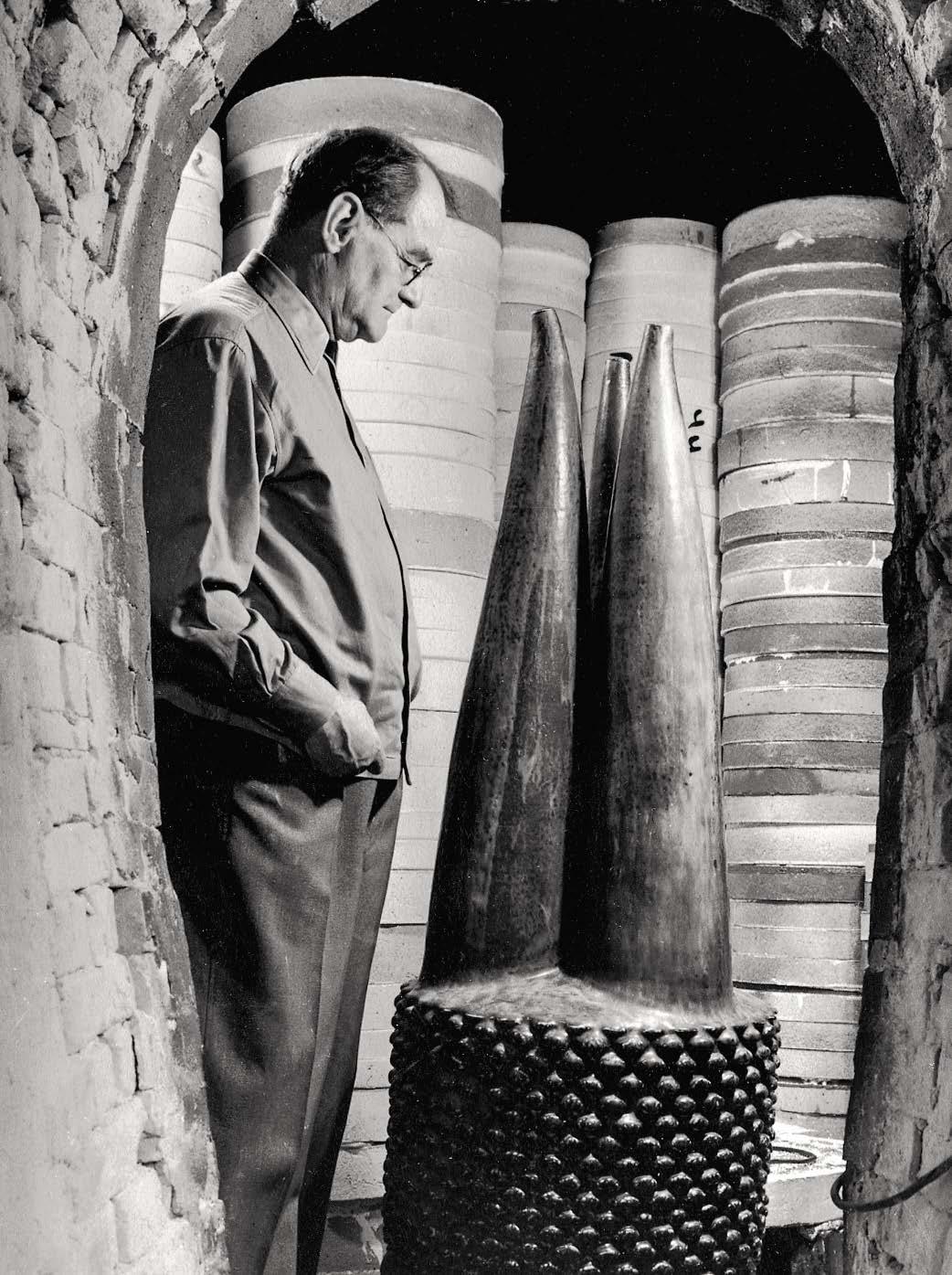
AXEL SALTO EDMUND DE WAAL
PLAYING WITH FIRE
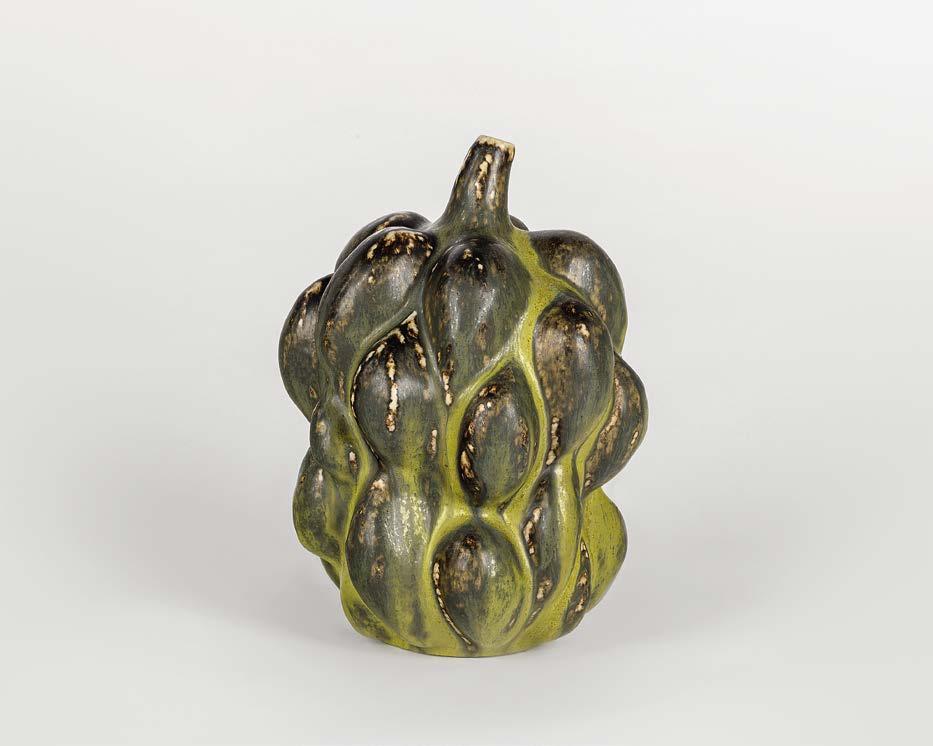
Nature repeats herself, or almost does: repeat, repeat, repeat, revise, revise, revise.
—Elizabeth Bishop, “North Haven,” 1978
Looking closely at the photograph I realize that you must be tall. I know that slightly apologetic hunch, the way of accommodating objects on tables, a sketch pad, someone else smaller than you. You are in the kiln surrounded by the stacked saggers with that big slightly sinister pot, Kraftens Kerne , standing on the ground in front of you. It reaches your chest and it seems to be looking back at you. We will get back to the subject of totems. Stay with me.
If we are going to get on I need to know how you pace the world. Your stride. So much of your work takes the form of a journey. You write a book for children about the adventures of Kusai, who travels from his home on the beach, through low forest, high forest, across a river, toward a mountain, encountering magic animals until he finally returns home with parrot feathers for his mother’s hat. It’s a little dodgy in its colonial emphasis but the journeying itself is heartfelt. Your ballet is a quest too. There is one stoneware vessel that you created in 1936 which is a walk up to a hill town in France. It is summer and it is dusty. There are scuffles, a tail of a lizard over stones. The track winds through olive groves and orchards and the occasional rows of bean poles. Up and up. The cypresses. And up.
And the town is folded into itself, one house into another, one window, a lintel, a doorstep, the bell tower, a square that leads in three directions, steps. Everything is repeated, plural. And so the movements of this journeying up and round the hillside are a kind of stretching and pausing. A looking round.
“In the South of France we often walked from Cagnes to La Gaude. The road led up across a very hilly, sunlit mountain with forests, canyons, terraced olive plantations, roads, houses and paths, and I have attempted to put the memory of this lovely walk into a substance that not only reproduces but is itself the hard, sunburnt mountain. This is as close as you can get to your subject,” you write. 1
And then, because you should never waste a good idea, you take that feeling of a walk through a landscape and keep drawing it, inverting the hillside, doubling one hill on top of another, spinning it on its head, giving it a pedestal, taking that away. The path comes and goes, sometimes a line of intent, sometimes a proper road to the summit. I realize that you walk with your sketch pad in your hand. The “flight and perching of a bird” is how John Dewey described the being-in-the-moment and reflection-on-the-moment. In the Axel Salto archives in the museum there are thousands of drawings, returns, repeats, revisions. Your hands don’t stay still.
We are going to get on.
(I like your name.
Axel and Salto balance)
On the occasion of the forthcoming exhibition Playing with Fire: Edmund de Waal and Axel Salto, Edmund de Waal composed a series of reflections on the Danish ceramicist Axel Salto and his own practice. The presentation opens at clay Museum of Ceramic Art Denmark, Middelfart, on October 8, 2023, and will travel on to Kunstsilo, Kristiansand, Norway, in 2024, and the Hepworth Wakefield, England, in 2025. We present an excerpt of de Waal’s text; the complete essay will appear in a richly illustrated publication, published by Forlaget Press this September.
I crack the kiln. There is a black jar near the arch at the top of the kiln, eighteen inches inside, half hidden behind a flotilla of small bowls. This black is my current favorite glaze, dense, river-stone dense, slightly metallic. I can see that the flame has worked up across the side, so that there is a run, a fluxing, that you cannot control and hope to see. The jar looks beautiful in the shadows.
I’m wearing my heavy red heat-proof gauntlets but I manage to burn my wrist on the kiln-shelf as I reach in to lift it out. It is the wrong weight. The glaze has run off the jar—I leave jagged porcelain on the shelf and bring out a jar with no base.
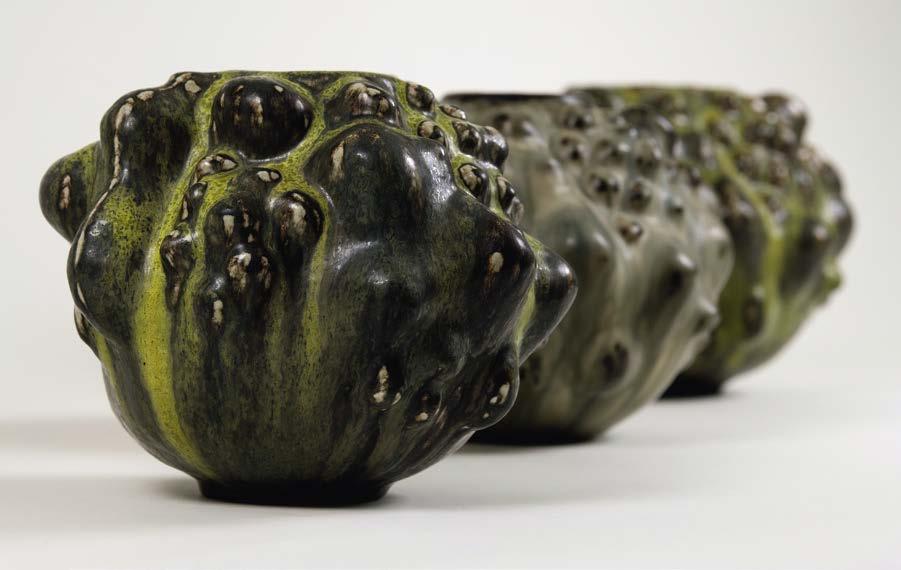
Two of the seven bowls have glaze that has run in the same way. They are plucked
For a few hours after you take porcelain out it sings. It settles into the world with high-pitched ticks. I tally this firing. One extraordinary bowl, donum dei . Three pots for the hammer.
iv
This is our territory.
You write in an early text in 1930 about the end of a firing, the wait for the pyrometric cones to bend that tell you how much heat-work has happened:
If the 1280 degree cone is down and the 1300 degree cone begins to wobble, it is time to stop firing and close the kiln, which then cools for a couple of days. Then comes the long-awaited moment, the romance of the ceramicist, as the stoneware is taken out, scorching, creaking underneath the cooling glaze. The excitement, joy and disappointment of that moment is worth two months of preparation: right there are a hundred ceramic pieces. 2
We have to start somewhere so let’s start at the mouth of the kiln.
Let’s start.
More broken pots. More pots to break. It is Tuesday and early and no one else is in the studio, except the dog who has taken herself to her bed and is snoring already. My kiln is still too hot to be comfortable to reach into and extract the new blackglazed jars I’ve made. The temperature gauge of the vast green gas kiln shows 120 degrees but that doesn’t mean much as the thick kiln shelves and the pots themselves will be much hotter. You don’t open kilns, you crack them. This holds good even if it is several tons of steel, a heavy hinged door.
I am going to steal “creaking” off you: I like that. Pots creak as they cool, as they change from one state to another, leave behind their infinite potentiality and cool into this particular thing in front of you. And then you continue and reflect that a piece of porcelain is either successful or not; it only matters whether or not the vessel is crooked, if the material has a beautiful whiteness, if the decoration stands out nicely and clearly, that is, if the piece is technically good. When it comes to stoneware, a flaw or coincidence can be transformed into something beautiful and maybe point to new directions which will lead to new results. Thus the crackling that was initially a mistake contained possibilities for new ornamentation and effects in the material.3
And I can’t allow you to be so pedestrian about porcelain—my beloved material—but I think it reflects all those conventions about porcelain as perfection, non-crookedness, niceness, clarity, the technics in order. I wish you could read my book on this, the danger of obsession with whiteness, but I’m not sure we have the time. And here we are at the kiln mouth—the place for vocalizing—and you are unpacking the new vessels and examining them and are so absolutely right about flaw and coincidence, that generative spark which takes you off and away toward a denser mottled glaze (the fur of
172
i
ii
iii
Previous spread, left: Axel Salto looking at the sculpture The Core of Power in the kiln, 1956. Collection: CLAY/Royal Copenhagen. Photo: Aage Strüwing
Previous spread, right: Axel Salto, Vase, 1946, solfatara glaze, The Tangen Collection/Kunstsilo. Photo: Even Askildsen/ Kunstsilo
Above: Axel Salto, various vases from the CLAY/Royal Copenhagen Collection/Veistrup Collection. Photo: Peter Leth-Larsen
Opposite: Axel Salto, The Road to Grasse, 1936, stoneware with Sung glaze, CLAY/Royal Copenhagen Collection. Photo: Ole Akhøj
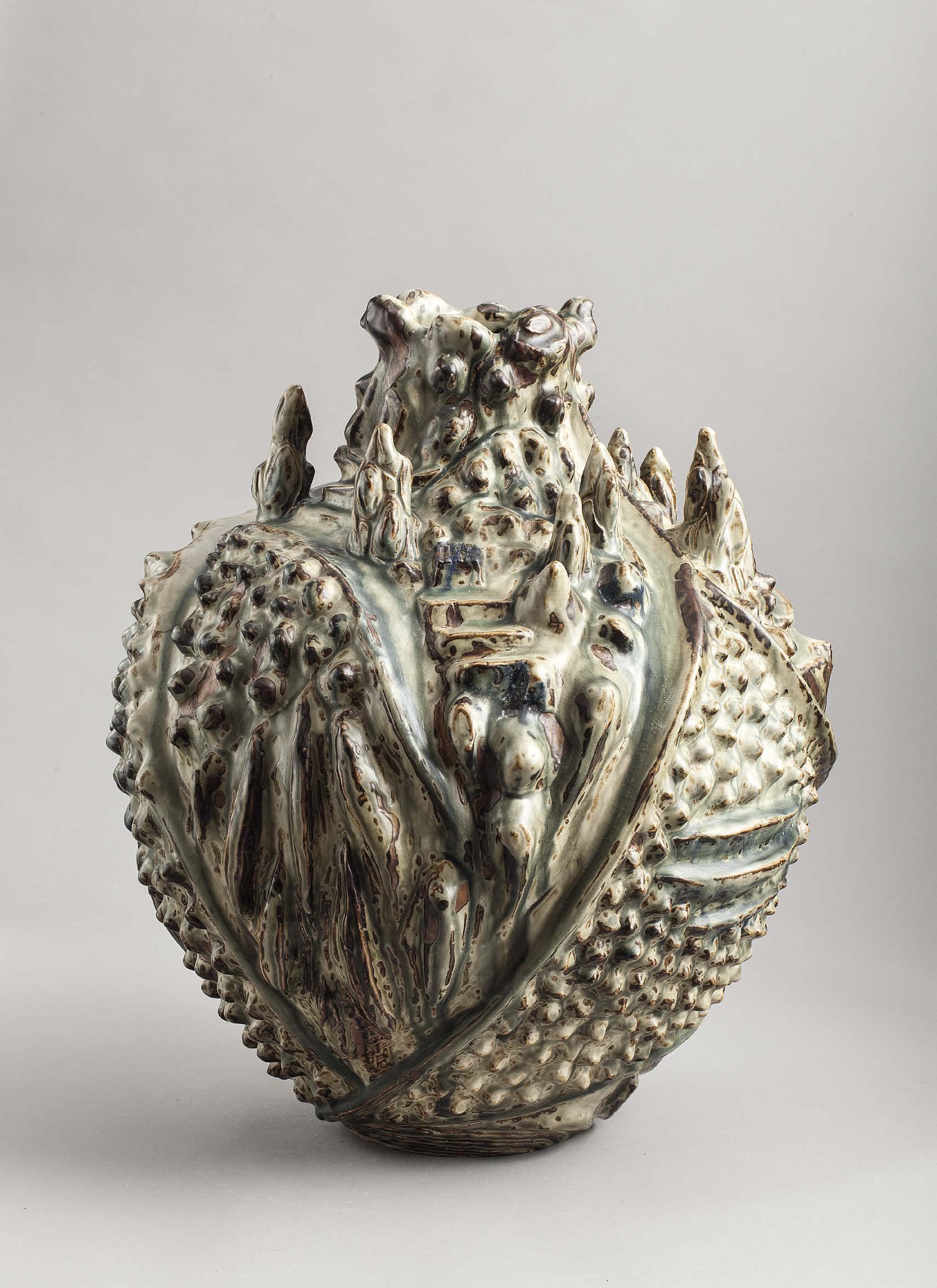
173
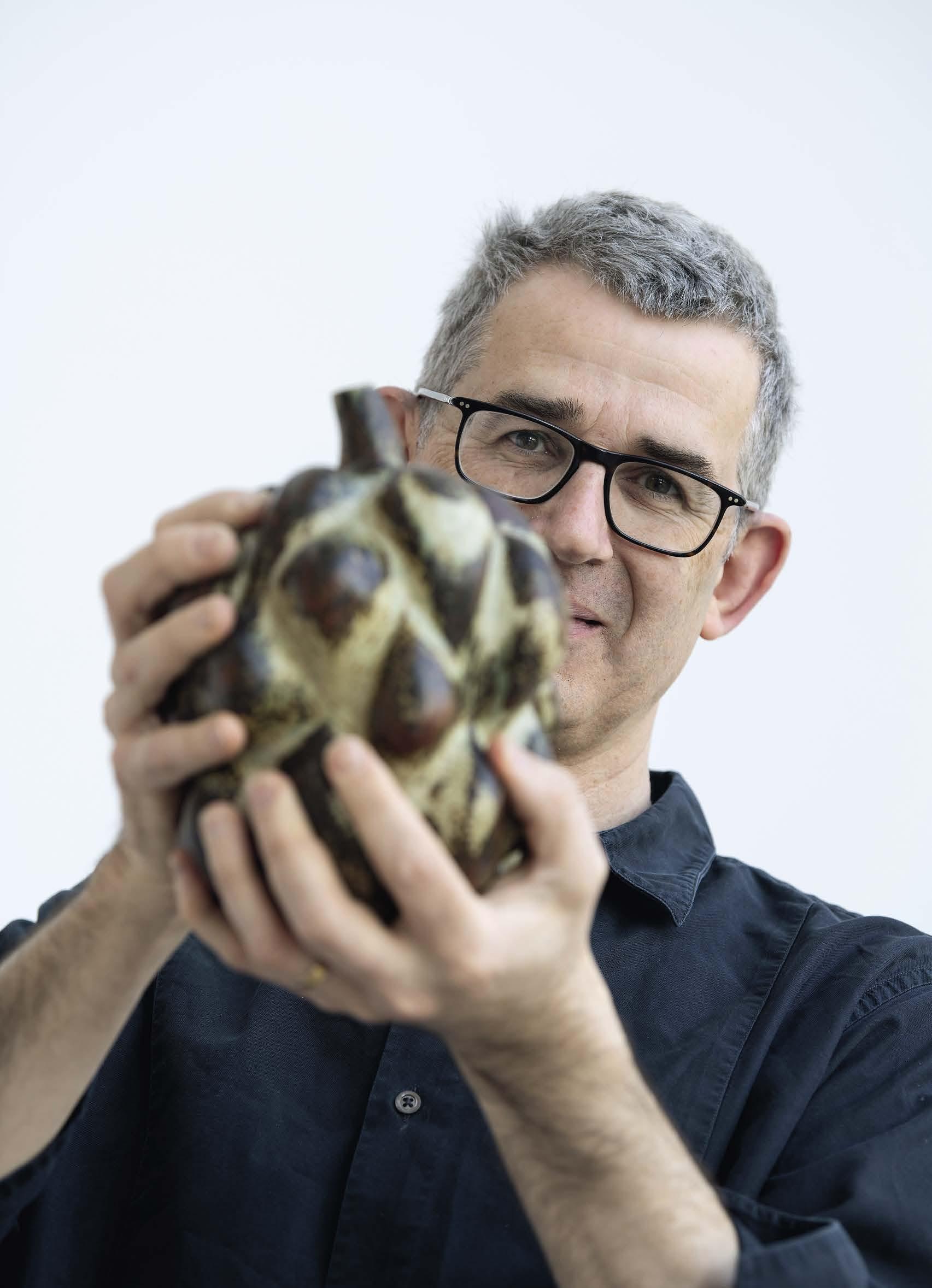
174
a faun, a weathered rock, the broken colors of a seashell), toward the infolding and unfolding of a form.
All kinds of things can go wrong in a kiln.
I built my first kiln in Herefordshire in the lee of an old yew tree next to a damp barn. I had finished an apprenticeship and spent a summer working with silent potters in Japan. I had bought the kiln bricks from a Herefordshire potter who had gone bust. I had also bought his wheels, his wareboards, an oak table for wedging clay, buckets and sieves, brushes, rock-hard bags of terracotta clay, jars of oxides, kiln shelves. I counted out £1,000 and he looked relieved.
My first kiln looked like a very small chapel. I used a plan from Michael Cardew’s Pioneer Pottery (1969), a bible of self-reliance, full of tips on how to prospect for raw materials. The kiln was five feet long and four feet wide and I could crouch inside to load my stoneware casseroles, lidded soupbowls, teapots, tea bowls, jugs and mugs onto the shelves. The arch above my head was a bit wobbly. My chimney wasn’t particularly straight. I had to brick up the front each time I fired and little orange flames would find the gaps and lick.
Kilns work on the principle of directing heat evenly around all the pots stacked on their heavy kiln shelves, and then out of the chimney. Kilns shouldn’t leak, they should contain heat. I built mine so poorly that I found myself awake at three in the morning trying to coax the temperature higher, caulking the gaps between bricks, altering the dampers to see if I could get more pull of air through the kiln, praying.
Gaps in the kiln also meant that it cooled unevenly and damp Herefordshire air would sneak in. And the pots would dunt . They would crack. Sometimes you would discover this when you unbricked the kiln. Sometimes days afterward you would pick up a pot and tap it and it would sound dull, and as you ran your hands over it you would find the lattice work of fine cracks, and another batch was unsellable, unusable.
I tally forty-two firings over two and a half years at the Cwm Pottery, Rowlestone, Herefordshire. Twelve total failures. Twenty mostly wrong. Ten firings with enough green celadon, oatmeal and black tenmoku glazed pots to sell in the Herefordshire Guild of Craftsmen shop near the cathedral, or pack in newspaper and hawk round my friends in London. Hundreds and hundreds of pots dunted. Dozens chucked over the hedge into the stream below the workshop. I broke several thousand.
Today, a Tuesday thirty-five years later, I pick up a hammer and reduce three pots to shards, fragments.
I think of your ‘excitement, joy and disappointment’. And I know you knew how to break things up, how to start again with fragments.
brændende Nu , the burning now? You thought about photography, thought about the recording of transformation, and then wrote about this now, drew it, made it happen.
There is a glorious image you made in 1935:
I am working on a painting that depicts a tray with cups falling to the ground. The painting is a depiction of the burning now, the tense and uneasy but yet strangely enchanted second it takes, from the moment when the cups start to slide until they are shattered against the ground. The falling, turning cups stop in the air for a moment like a bush that grows from the bottom cup that has already burst, but whose shards still stand in the air during the reaction of the moment of the blasting. 4
I love this.
Here is time standing still, the world, the body, the breath slowed to a breath-turn. There is nothing you can do to catch this cascade of cups as they fall. Your experience of this moment is both caught in the knowledge of what is happening and has happened, the slippage and the sound of break-
itself, a continuous present of active, dynamic movements, judgements and decisions. It doesn’t feel in the past, and it feels wrong to force it into one just to obey a critical orthodoxy. . . . the act of reimagining it by picking it up is an act of remaking.5
Breaking, dropping, falling cups are an act of remaking too.
And breaking can be such fun. In 1943 you publish Tryk selv dine Billeder, “Print your own images,” a book for children. It is an emphatically, gloriously funny exhortation to keep going. Repetition is the only rule, you write. Could there be anything more liberating?
I have your book in front of me as I write to you. It is big and orange and handsome with an impish-looking acrobat with a top hat in one hand holding another person in midair by the head, limbs dangling. Look at me, they are saying, join in. This is a manual for mucking about.
It involves stamps. Not postage stamps, but the kind you might have used in kindergarten, pressed into ink and then emphatically stamped onto colored paper. It opens with a forest of trees and then three pages of your text. And then here is a green page with all the elements you will need. You are given some limbs for a person and some parts of a horse, four faces, a top hat and a cane, a bowl and a dish, the trunk of a palm tree, some foliage, some broken shapes and a thick black line. And a mustache. A glorious, bad-sort-in-silent-movies mustache.
And so here is a horse and here is a rider. And you are off, galloping, cantering, falling off, falling under, legs akimbo, forward, backward, breathless.
And here are four acrobats. One (highly mustached) is juggling balls. One is balancing objects precariously. Another is standing on their head and holding an ungainly tree high above them. And one sinister gentleman is balanced on the crown of their top hat, two spiky legs waving other hats high above him. Thump go the stamps down onto the page. More juggling balls. More legs. More hats. More is good.
And then here is the kitchen.
It starts in an orderly way. A shelf at the top of the page with fifteen cups. Two shelves mirror each other with bowls. Two shelves with stacks of bowls. A line of seven elegant vases—stamp, stamp, stamp.
Let us slow down here. We are by the kiln, we don’t have to rush.
Indeed there are so many moments here to slow down and consider that I want to still our conversation.
I think of the photographer Eadweard Muybridge, those percussive stillings of a horse galloping, a man running. If these moments become gradually shorter can we find that exact frame of time when the vessel tilted in the kiln, the molten glaze gave up its hold on the clay body and spread? Can we go back further and further and find det
age. And it runs backward—“Earlier and earlier, the unraised hand calm/The apple unbitten in the palm,” as Philip Larkin wrote in his poem about a shied apple core missing the wastepaper basket.
Because the broken cups blossom back into the unbroken cups. The burning moment defies the banality of a present or a past tense or a future tense. Transformation is fissile. Objects hold their transformative, burning-now in trust. If you can change you can change again. The smashed cups talk to the clay in the potter’s hand.
I remember writing about a Chinese bowl from the twelfth century:
The bowl was made in Jingdezhen, thrown then moulded with a flower in a deep well, unglazed rim, green-grey with a slightly pooled glaze, some issues as the dealers would say, chips, marks, scuffs. It happens in the present tense and it is,
And then down it comes. Bowls in midair and dishes clattering everywhere and the vases near the bottom of the page and the walking sticks are involved somehow and the air is full of things breaking apart, fragmenting, becoming shards. You see it. You hear it. You feel it.
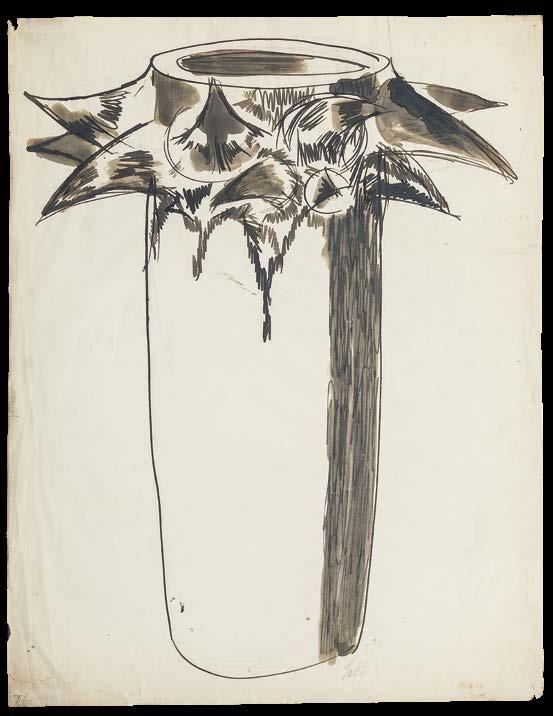
One thing becoming something else, becoming other. A burning, breaking, glorious, noisy, now Imagine being given this as a child. Imagine this license. You know what you are doing when you say more is more , when you say again , when you say now.
The final page is a deer and it is a falling man, one on top of another, one becoming another, “double nature”: “You are in the world of stamps, in wonderland, it is you who decides everything.”6
1. Axel Salto, ”Epilog til en Stentøjsproduktion 1929–1937,” Samleren. Tidsskrift for Keramik, Porcelæn og Glas , January 1934, 5.
2. Salto, Salto’s Keramik (Copenhagen: Det Berlingske Bogtrykkeri, 1930),
3. Ibid.
4. Salto, Det brændende Nu (Copenhagen: Grafisk Cirkel, 1938), 8.
5. Edmund de Waal, The White Road (London: Chatto & Windus, 2016), 4–5.
6. Salto, Tryk selv dine Billeder (Copenhagen: Fischers Forlag, 1943)
175
v
vi
10.
Opposite: Edmund de Waal with Salto vase. Photo: Peter LethLarsen
This page: Axel Salto’s undated sketch for a vase in sprouting style from the CLAY/Royal Copenhagen Collection. Photo: Ole Akhøj Artworks © Axel Salto/VISDA
Modern
The latest Art Basel report revealed, once again, that the representation of female artists in the art market “remains persistently lower than their male counterparts.”1 This echoes the 2022 Burns Halperin report, which showed that between 2008 and 2020, art by women artists made up just 11 percent of American museum acquisitions.2 Though 2022 saw historic strides for women artists, notably in Cecilia Alemani’s exhibition The Milk of Dreams at the Venice Biennale, women artists still largely make up the invisible part of the iceberg. This lack of visibility is a complex issue, reaching far back into the past, with the erasure of women artists from art history, and into the present day, where women are in the majority in art schools but systematically find fewer opportunities, less institutional recognition, and less remuneration than their male counterparts. As bell hooks, Adrian Piper, Harmony Hammond, Renate Lorenz, and many others have shown, in the past and now,
women artists of color and artist members of the LGBTQI+ community are faced with even greater obstacles.3 Art by Black American women artists, for example, made up 0.5 percent of American museum acquisitions in 2008–20 and just 0.1 percent of worldwide auction sales in 2008–22.4
aware: Archives of Women Artists, Research and Exhibitions is a nonprofit founded in 2014 to be a force for change. Devoted to increasing public awareness of woman-identifying artists of the nineteenth and twentieth centuries, aware is based in Paris but works internationally. Its free, bilingual (French/English) website now features over a thousand biographies of women artists from across the globe, art-market “stars” catalogued and cross-referenced side by side with lesser-known artists, all placed within their historical context. This reveals the specificity of each artist’s practice, dismantling the myth of the existence of “feminine art” or “women’s art.” Rather
than attempting to expand the canon, nonhierarchical cataloguing and a global outlook allow aware to chip away at art-historical norms. The organization’s other initiatives range from podcasts and cartoons to partnerships with international museums, such as the Centre Pompidou and the Musée d’Orsay in Paris, the Hammer Museum in Los Angeles, and the Rijksmuseum in Amsterdam. Simultaneously building on past research while opening new avenues for scholarship, aware is a tool for curators and researchers, collectors and gallerists, as well as for the wider public.
When aware organized the Spotlight section of London’s Frieze Masters show in 2022, its curatorial thinking was consistent with its nonhierarchical approach: lesser-known series by recognized artists such as Leonor Fini were presented in dialogue with work by Sister Gertrude Morgan and Vivian Springford. aware’s 2023 Modern Women exhibition, an entirely new section of Frieze
Curated by
176
Women
Masters, goes a step further, demonstrating Griselda Pollock’s refutation of the idea that “there were no women modernists” and reconsidering what we mean by modern art.5 The section spans 1880 to 1980, a century that begins with the first wave of feminism in Europe and the United States and covers the 1970s, integrating second-wave feminism and the beginnings of feminist art. Modern Women takes its name from a groundbreaking book published in 2010 by New York’s Museum of Modern Art, and has its base in Lucy R. Lippard’s idea that “feminism’s greatest contribution to the future of art has probably been precisely its lack of contribution to modernism.”6 It breaks with the idea of modernism as a single, linear, and progressive narrative by revealing, on the contrary, the diversity of “modern” practices in echo of diverse political contexts and struggles, as well as searches for singular forms of expression. Modern Women builds on landmark feminist exhibitions such as
L’altra metà dell’avanguardia 1910–1940, at the Palazzo Reale, Milan, in 1980; elles@ centrepompidou, at the Centre Pompidou, Paris, 2009–11; and We Wanted a Revolution: Black Radical Women, 1965–85, at the Brooklyn Museum in 2017. Our aim is to present modernit ies from the perspective of l’altra metà, reframing the modern by addressing a century of creation through multiple points of view, and encompassing a broad range of medums: painting, sculpture, textile, computer art, and photography. The works range from the nonpolitical to the overtly activist. The section progresses by interweaving different narratives, dialogues, and echoes, from figurative to abstract to feminist. It demonstrates simultaneous modern perspectives, highlighting the singularity of each artist’s production while encouraging deeper readings.
The four artists and works on the following pages are among those to be presented in Modern Women at Frieze
Masters in October. In the spirit of aware’s website, each artist’s “portrait” has been written by a different art historian from the nonprofit’s team.
— Eléonore Besse, Camille Morineau, Matylda Taszycka
awarewomenartists.com
1. Dr. Clare McAndrew, The Art Market 2023: A Report by Art Basel and UBS (Basel: Art Basel; Zurich: UBS, 2023). Available online at https://www.ubs.com/global/en/our-firm/art/collecting/art-market -survey/download-report-2023.html?campID=NL-ANY-GLOBAL -ENG-ANY-ANY-ANY (accessed July 12, 2023).
2. Julia Halperin and Charlotte Burns, “Introducing the 2022 Burns Halperin Report,” artnet news , December 13, 2022. Available online at https://news.artnet.com/art-world/letter-from-the-editorsintroducing-the-2022-burns-halperin-report-2227445 (accessed July 12, 2023).
3. See bell hooks, Art on My Mind: Visual Politics (New York: New Press, 1995); Adrian Piper, “The Triple Negation of Colored Women Artists,” 1990, in Hilary Robinson, ed., Feminism-Art-Theory: An Anthology, 1968–2000 (Malden, MA: Wiley, 2001), 57–67; Harmony Hammond, Lesbian Art in America : A Contemporary History (New York: Rizzoli, 2010); and Renate Lorenz, Queer Art: A Freak Theory (New York: Columbia University Press, 2018).
4. Halperin and Burns, “Introducing the 2022 Burns Halperin Report.”
5. Griselda Pollock, “The Missing Future: MoMA and Modern Women,” in Cornelia Butler and Alexandra Schwartz, eds., Modern Women: Women at The Museum of Modern Art (New York: Museum of Modern Art, 2010), 28–55.
6. Lucy R. Lippard, “Sweeping Exchanges: The Contribution of Feminism to the Art of the 1970s,” Art Journal, Fall/Winter 1980, 362.
AWARE
177 by
Ethel Walker
Decoration: Evening (1936)
“I am going to be painted, stark naked, by a woman called Ethel Walker who says I am the image of Lilith,” wrote Virginia Woolf in her diary in the early 1930s.1 Walker would already have been in her seventies at the time, but got on well with the Bloomsbury group (whose members she invited to parties, according to Woolf’s diaries), sharing their nonconformist attitude; the lesbian Walker dressed in masculine “severe tailored costumes with shirt and tie and felt hat.”2
Walker’s art tells a tale of two halves. Her many landscapes, still lifes, and portraits of friends and acquaintances—notably the artist Barbara Hepworth—were entirely the expected subject matter for women artists at the time, and it was thanks to these works, realized in an English Impressionist style, that she gained membership to the New English Art Club in 1900, becoming the first woman to do so. She represented Britain at the Venice Biennale four times, in 1922, 1924, 1928, and 1930, and was made an associate of the Royal Academy, London, in 1940. More unusual for the time, and most striking, are her monumental paintings of female nudes. Although she was particular about her models and how they looked when they sat for her—insisting they wear no makeup, especially no “filthy” lipstick—her nudes do not seem to represent people she knew.3 Rather, they stand for abstract ideas, such as the soul ( Zone of Love, c. 1930–32), or for symbolic qualities, such as “Ecstasy” or “Aspiration,” that Walker would note down on the back of her drawings.
Around 1910, Walker began a long series of “decorations” featuring nude female figures set in golden-age scenes. Decoration: Evening is characteristic of this series, showing women who appear to be living in the kind of Sapphic community that lesbian artists and literati such as Nathalie Clifford Barney attempted to re-create in 1920s Paris. Evening features four nudes, two of them taking relatively naturalistic poses, two represented in a way reminiscent of ancient Greek sculpture, a feeling heightened by the classical triangular composition. Their idealized bodies glow in the soft dusk light, rendered by a desiring female gaze that nonetheless presents each woman as an individual with distinct physical features. The central figure in particular is represented with a poignant interiority—a far cry from a purely eroticized female nude.
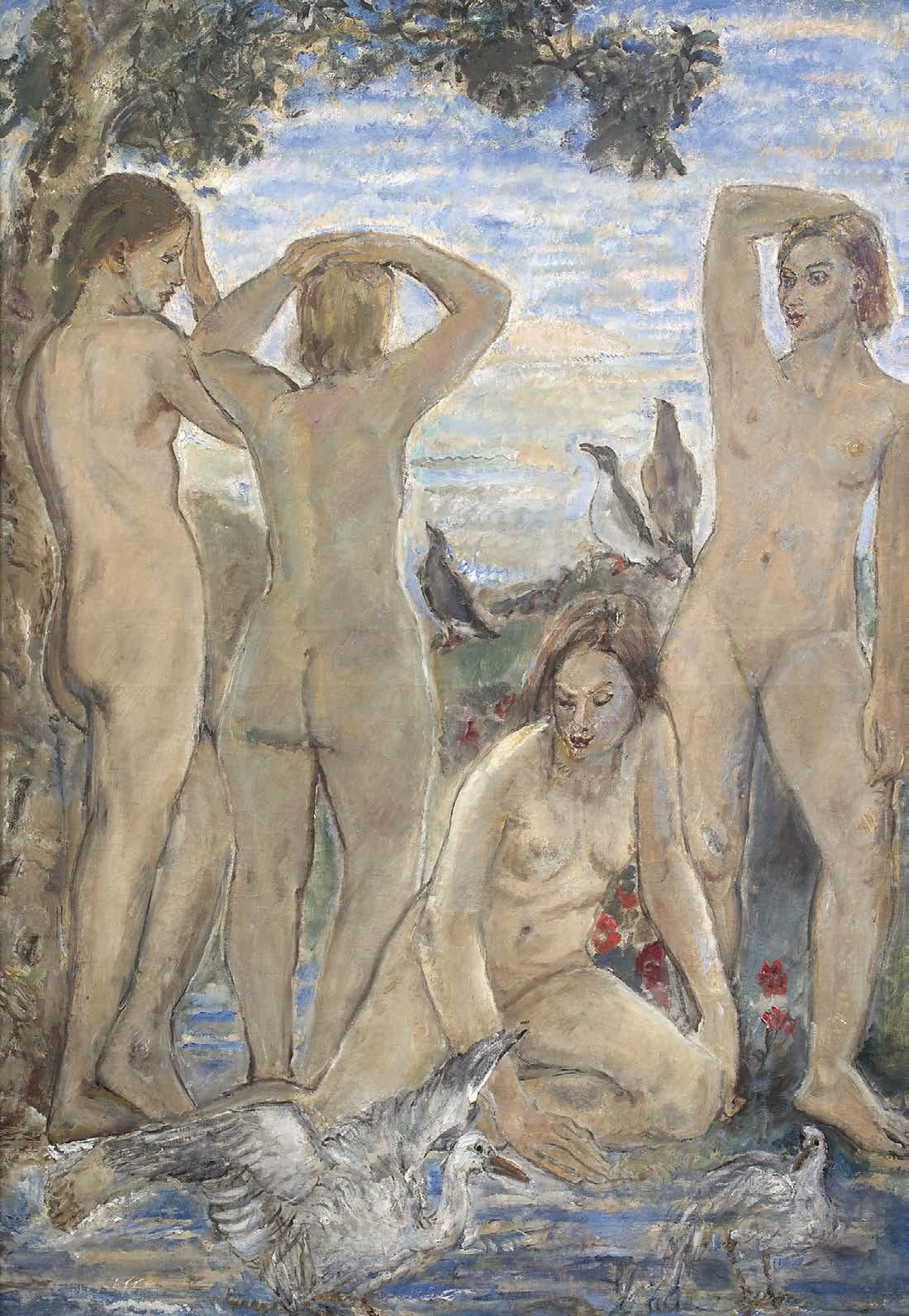 —Eléonore Besse
178
Ethel Walker, Decoration: Evening, 1936, oil on canvas, 74 × 50 inches (188 × 127 cm). Photo: courtesy Piano Nobile, London
Tarsila do Amaral
Paisagem com ponte (Landscape with Bridge, 1931)

“I invent everything in my painting. And I stylize whatever it was that I saw or felt,” said Tarsila do Amaral in an interview of 1972.4 She asserted this power of invention and reinvention as early as the 1920s through her involvement in Brazil’s Pau-Brasil and Antropofagia movements, of which Paisagem com ponte is an expression. Pau-Brasil— meaning “brazilwood,” the country’s national tree—revalorized Brazil’s native culture, invoked here by the lush colors of the local vegetation (palm trees, banana trees, agaves) and by the façades of pink, green, and blue houses, not to mention the gradations of blue of the sky, mountains, and lake. These nuances operate as a leitmotif in do Amaral’s Pau-Brasil series and appear in her work from 1924, when she spent a period in the Brazilian state of Minas Gerais, where her sensibility was influenced by popular Brazilian motifs and subjects. Following the Semana de Arte Moderna (Week of modern art), a festival of modern art, literature, and music in São Paulo in 1922, she turned from portraiture to concentrating fully on Brazilian landscapes, of which Paisagem com ponte is an example.
Do Amaral drew her modernist pictorial vocabulary from the avant-garde of Paris (where she lived from 1920 to 1922), notably Fernand Léger and Robert Delaunay. But she reinvented the language, as the ambivalence of Paisagem com ponte attests, with its tension between nature and culture. The two animals in the painting, with their chestnut color and elongated forms and curves, recall do Amaral’s pivotal Abaporú (1928; “Cannibal,” in the Tupi-Guarani language), and both works invoke the Brazilian aesthetic concept of antropofagia (anthropophagy), laid out by Oswald de Andrade, then do Amaral’s husband, in the Manifesto Antropófago of 1928. The concept of anthropophagy—in do Amaral’s and de Andrade’s thinking, the capacity of Brazilian art to absorb and digest external influences so as to invent its own language—translates into the irruption of the bridge in the painting. It occupies the foreground, and its industrial gray and black colors sharply contrast with the rustic landscape. It suggests a gateway that could represent the link both between the countryside and the modern city, where urbanization and industrialization were continuously accelerating, and between the two countries from which do Amaral drew inspiration, Brazil and France.
—Zélie Chabert
179
Tarsila do Amaral, Paisagem com ponte (Landscape with Bridge), 1931, oil on canvas, 15 ½ × 18 1⁄8 inches (39.5 × 46 cm) © Tarsila do Amaral.
Photo: Sergio Guerini, courtesy Almeida & Dale Galeria de Arte
Faith Ringgold
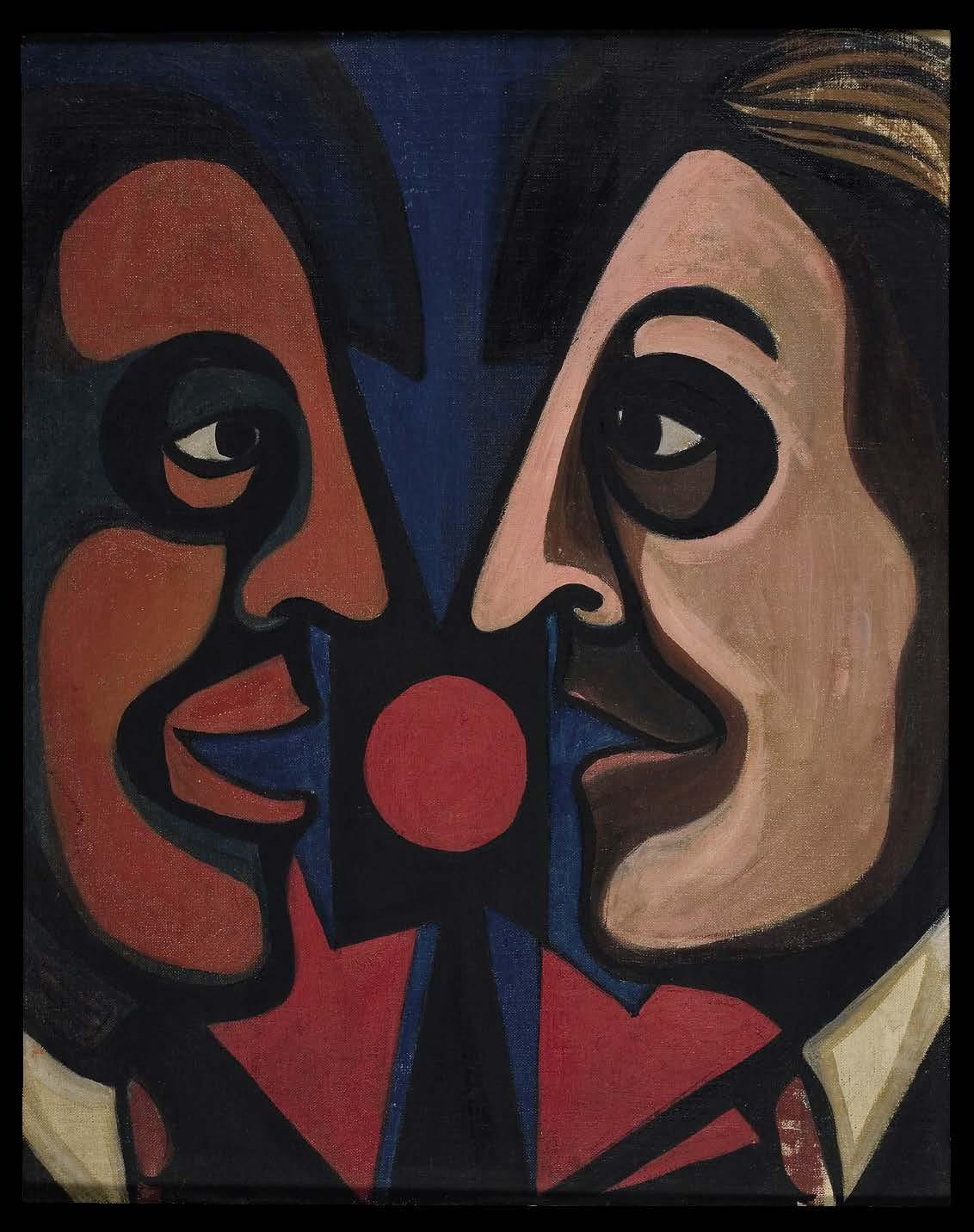
Two Guys Talking (1964)
The US Civil Rights Act of 1964 prohibited all types of discrimination based on race, color, and national origin. It was against this backdrop that Faith Ringgold found her artistic voice. An African American artist who was born in 1930 in New York, the epicenter of modern art in the second half of the twentieth century, Ringgold was the daughter of a Harlem fashion designer. As a child she was immersed in the worlds of culture and art, growing up in the wake of the Harlem Renaissance, a movement that fostered a sense of racial identity and pride among African Americans in New York and beyond.
Ringgold’s work is part of the movement that continued the cultural fight for the civil rights of African Americans but it also promotes the interests of another distinct minority, that of African American women. A turning point in her artistic career occurred when she was rejected for membership in the Spiral collective (1963–65), a group of African American artists, led by Romare Bearden, that included just one woman, Emma Amos. These dual focuses of activism are particularly evident in Ringgold’s American People Series (1963–67), which built on her Early Works (1960s), the series that includes Two Guys Talking. This painting shows two male heads in profile, outlined in black; they are engaged in conversation. The title is open to multiple interpretations. Is this a conversation between individuals of different skin colors, a negotiation of some kind, or an outright confrontation? A routine encounter or a vociferous political debate? Does the masklike quality of the faces reveal a social dimension? The artist speaks to her use of a dark palette: “I work from the blacks and browns and grays that cover my skin and hair. My vision of myself necessarily extends to [the] colors of everything else in the world.”5 But if Ringgold is representing the Black community, where is the place and voice of women in this picture?
This conundrum seems to be addressed in Ringgold’s The French Collection Part 2: #11, Le Café des Artistes (1994), a painting with accompanying text that acts as a statement linking the conditions of African Americans and women. Standing amid a throng of artists including Henri de Toulouse-Lautrec, Maurice Utrillo, Paul Gauguin, Vincent van Gogh, Loïs Mailou Jones, Meta Vaux Warrick Fuller, Jacob Lawrence, Elizabeth Catlett, and Ringgold, Willia Marie Simone—a fictional character from the French Collection series— proclaims her Colored Women’s Manifesto of Art and Politics, “What is very old has become new. And what was black has become white. ‘We wear the mask’ . . . Modern art is not yours or mine. It is ours.”
—Zélie Chabert
180
Faith Ringgold, Two Guys Talking, 1964, oil on canvas glued to Masonite, 20 × 16 inches (50.8 × 40.6 cm) © 2023 Faith Ringgold/ Artists Rights Society (ARS), New York, courtesy ACA Galleries, New York
Vera Molnár
Interruptions (1968)
A graduate of Budapest’s Hungarian University of Fine Arts, Vera Molnár moved to Paris in 1947, fascinated by Cubism and drawn to the city that she viewed as the epicenter of the artistic avant-garde. There she met Sonia Delaunay (“the goddess of abstract art,” in Molnár’s words), who encouraged the younger woman to pursue her studies.6 She also collaborated with other artists of her generation, including François Molnár, whom she later married, and members of the artist’s group the Centre de recherche d’art visuel (crav, later renamed the Groupe de recherche d’art visuel, or grav), participating in their explorations of collective artistic creation.
Molnár’s visual vocabulary is closely related to geometric abstraction but her experimental approach involves trial and error, exploring scientific methodologies while at the same time calling their assumptions into question. She believes that this approach reveals the inconsistencies and random elements that occur within planned, rational systems, “forcing a questioning of the uncertainty that governs our entire life, our thoughts, memory, everything.”7 For the French critic Anne Tronche, her work entails “judgments about the vulnerability of the right angle.”8 With this idea in mind, Molnár’s art may be considered from a humanistic perspective.
Following preliminary experiments with an “imaginary machine”—making drawings by hand but basing them on computer programs—Molnár introduced the computer directly into her creative process. She delegated the execution of her artworks to these machines, thereby reinforcing her commitment to producing works in series. She did not entirely abandon the principle of randomness, however, and deliberately injected “1 percent of disorder” into the systems that she created. In 1968–69, she began the series Interruptions, a group of drawings whose structure is based on a grid pattern. The square surface of the support is covered with a fine web of identical rectilinear strokes to which the artist gives different orientations. Molnár accentuated this dynamic effect by including, or rather subtracting, empty spaces—“interruptions”—that introduce spontaneous elements into the composition.
The art historian Rosalind Krauss sees the grid as an archetypal form of “modern artistic production,” and Molnár’s work can be interpreted as an irreverent homage to the geometric abstractionists of modernism, particularly Piet Mondrian and Kazimir Malevich.9 She refers to them explicitly in some series, including an ensemble based on the letter “M.” Here, empty spaces evoke both eradication and the potential for a new beginning for an artist who describes herself as “a Conceptualist who likes to execute, who likes to see the work getting done.”10
—Matylda Taszycka
Vera Molnár, Interruptions , 1968, ink on paper, 13 × 13 ¾ inches (33 × 35 cm) © the artist and Vintage Galeria, Budapest
Texts by Zélie Chabert and Matylda Taszycka, translated from the French by Molly Stevens
1. Virginia Woolf, The Sickle Side of the Moon: The Letters of Virginia Woolf, ed. Nigel Nicolson and Joanne Trautmann (London: Hogarth Press, 1979), 5:174.
2. Emmanuel Cooper, The Sexual Perspective: Homosexuality and Art in the Last 100 Years in the West (London and New York: Routledge and Kegan Paul, 1986), 108.
3. See Lilian Browse, Introduction to Distinguished British Paintings 1875–1950: An Accent on Ethel Walker (London: Roland, Browse & Delbanco, 1974).
4. Tarsila do Amaral, in Leo Gilson Ribeiro, “Entrevista Tarsila do Amaral,” Veja 181 (February 23, 1972): 3–6.
5. Faith Ringgold, quoted in Mary Walker, “Artist-Lecturer Cites Women as Thrown Out with the Riot,” Daily Reveille , October 5, 1973.
6. Vera Molnár, in Vincent Baby, Interview with Vera Molnár (Paris: aware, 2022), 39.
7. Ibid., 42.
8. Tronche, quoted in ibid.
9. Rosalind Krauss, “Grids,” October 9 (Summer 1979): 50.
10. Molnár, in Baby, Interview with Vera Molnár, 54.
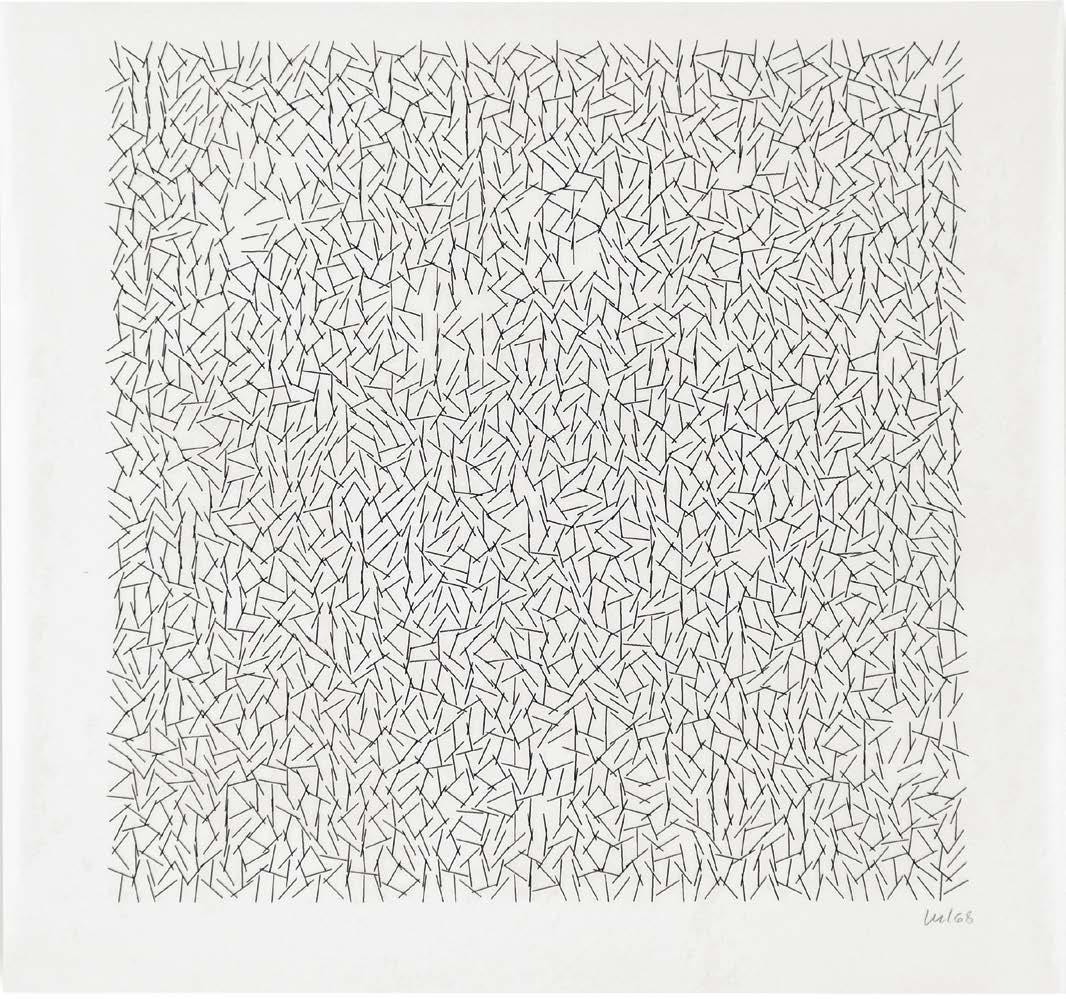
181
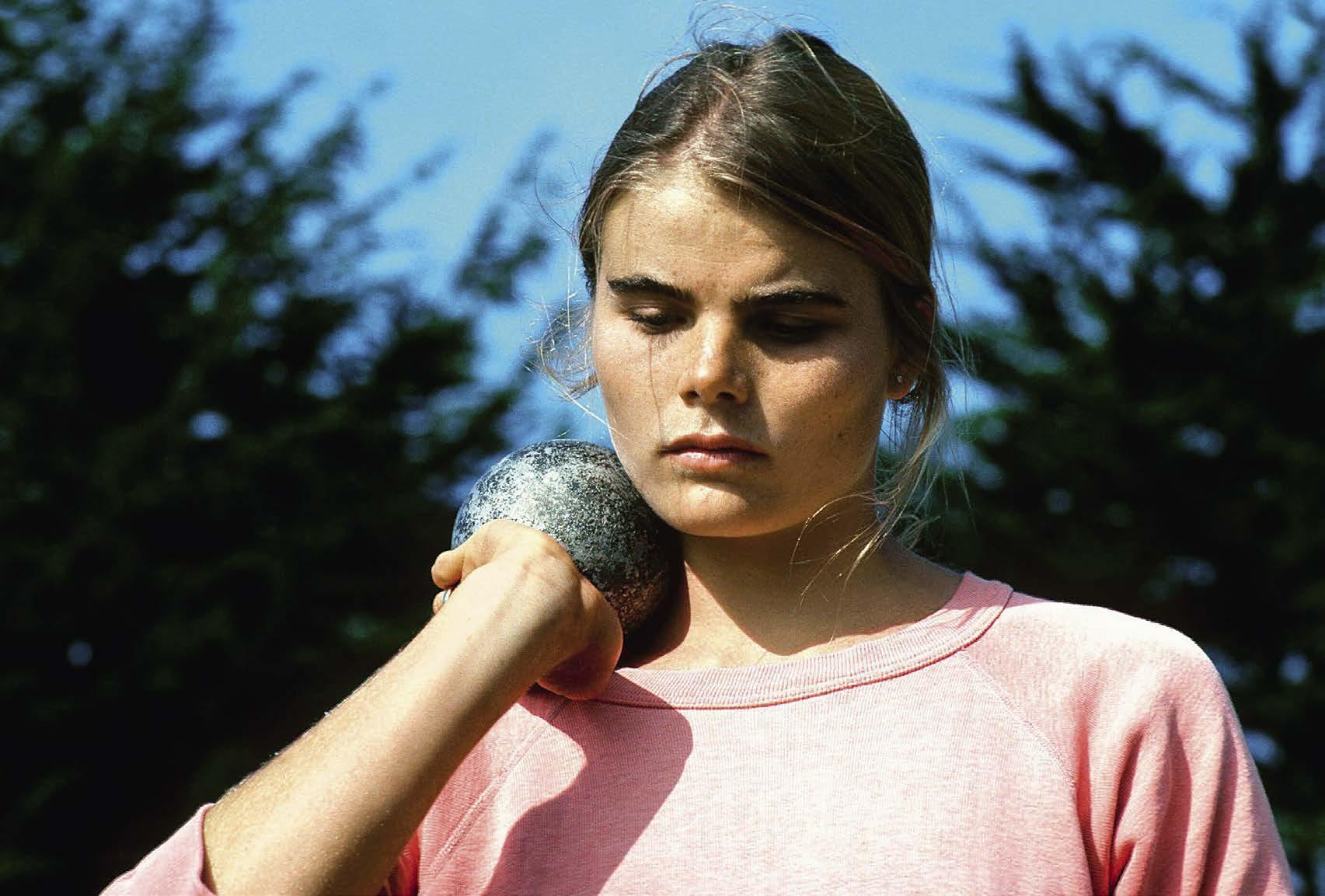
182
In the April 1982 issue of Playboy , Robert Towne, the Academy Award–winning screenwriter of Chinatown (1974), likened being a writer to being a woman, “because women tend to have more power and more acumen than they’re generally credited with,” he said. “The same with a screenwriter. Everybody concedes you’re important, but the political leverage has never been consonant with the contribution. I’ve always felt that about women.”
Towne was being interviewed about his directorial debut, Personal Best , a movie that would be declared a flop, earning just over a third of its total $16 million budget at the box office. “Personal Best opened in 1982 and immediately disappeared,” wrote Peter Biskind in his often referenced account of the New Hollywood wave of ’70s American cinema, Easy Riders, Raging Bulls: How the Sex-Drugs-and-Rock ’n’ Roll Generation Saved Hollywood (1998). Mimicking European cinema, New Hollywood was auteur driven; it turned directors into stars. Towne was one of the movement’s few big-name writers, having worked on many lucrative pictures: as a script doctor on Bonnie and Clyde (1967) and The Godfather (1972), and as the author of The Last Detail (1973), Shampoo (1975), and, of course, Chinatown , still considered one of the greatest screenplays of all time. But the first film Towne directed, which he also wrote and produced, was dismissed as a failure in Biskind’s narrative, as it would be in most literature on this moment in film history. And save for references in a handful of queer-cinema anthologies, Personal Best did almost disappear.
In his original screenplay for Chinatown , Towne had his female lead—the Faye Dunaway character, Evelyn Mulwray—kill her father, Noah Cross, a corrupt business tycoon and landowner who had raped and impregnated her at fifteen. Director Roman Polanski, whose pregnant wife, Sharon Tate, had been murdered by members of the Manson Family a few years prior, demanded a rewrite: Evelyn’s shot would miss; she would drive off and be shot in the head by police instead. And Cross would get away with everything: both his latest capitalist scheme—an environmental rape—and his history of incestual rape. In the film, Evelyn’s face is shown blown open, no longer able to speak the truth she’d hidden from her daughter/sister, whom
we last see screaming under the grasp of her father/ grandfather, the richest man in Los Angeles, played by Hollywood patriarch John Huston, in whose monstrously large hands the girl is carried away. In New Hollywood, directors had more clout than writers and Polanski’s unforgettable, cynical finale won out, canonizing Chinatown as a gritty tragedy rather than assigning it to the fantasy genre of the rape revenge film. Was this when Towne learned that writers are like women? Silenced in the end. If Towne wanted his words honored, he realized he had to direct them himself. His first intention was to make a movie about a boy raised by apes but he couldn’t finish writing it. A studied procrastinator, he became distracted by a new idea. A first draft materialized fast.
Personal Best is the story of two female athletes: Chris Cahill, a half–Native American hurdler who chokes in competition, and Tory Skinner, a more experienced pentathlete who takes note of Cahill’s raw talent and overall allure. Skinner is the one to first kiss Cahill. Before she does so, she says, “I’m very scared right now,” but Cahill is receptive and within the first twenty minutes of the two-hour film we get the first and only love scene between them— one of Personal Best ’s many reversals of the usual order of things. Cahill and Skinner will continue to, in the latter’s words, “fuck sometimes,” but we don’t see that. What we’re shown is Skinner’s devotion to Cahill and Cahill’s stated need for this love and mentorship. Skinner believes that Cahill could be great, an Olympian like her, if only Cahill could trust her gifts and get on with it.
Personal Best was rumored to have been inspired by a news story about a male coach who had an affair with one of his female athletes. Although Towne never confirmed this, as a director he behaved much like his coach character, Terry Tingloff (played by a sinewy Scott Glenn), even going so far as to initiate consecutive affairs with the actors who played Skinner and Cahill: Patrice Donnelly and Mariel Hemingway.
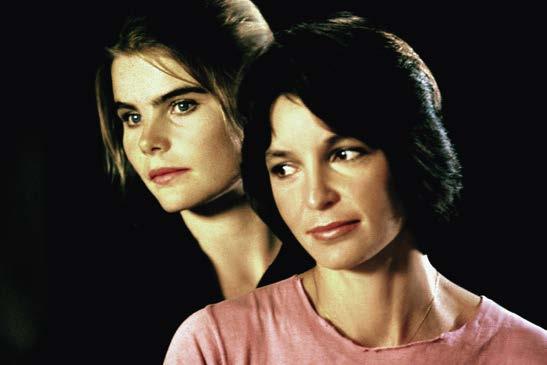
When Towne cast Hemingway, in 1979, Woody Allen’s Manhattan was still in theaters. In that film, Hemingway played Allen’s girlfriend, seventeen to his forty-two. In real life, she was sixteen and a virgin who didn’t understand much of the script’s sexual innuendo. Like Brooke Shields, Hemingway looked prematurely adult. Both actors were famous by preadolescence for playing, respectively, a rape victim (Hemingway in Lipstick , 1976) and a sex worker (Shields in Pretty Baby , 1978), and both grew to be tall, grazing either side of six feet; with bushy eyebrows and brawny jaws, they were doppelgänger juveniles. Eighteen when she petitioned for the role of Cahill, Hemingway trained for twelve months on and off (a span broken by an actors’ strike) to play a convincing athlete alongside Donnelly and the rest of the cast, most of whom were top real-life athletes—in fact Donnelly was a former Olympian. Hemingway learned to hurdle and race. She trained everything but her signature voice, which remained childish and was likened by journalists to that of Mickey Mouse.
“I’m sorry, Daddy,” are the first words we hear Hemingway squeak in Personal Best . It’s 1976 and
she, or rather Cahill, has just lost another race. Trained by her white father, whose coaching techniques include guilt, shame, and belittlement, Cahill has learned to falter under pressure. When the guns marking “go” are fired, she literally flops, falling far behind her competitors, even falling on her face. Personal Best is about personal development: how does one become the best version of oneself in a given sport (or art)? What motivates excellence?
The patriarchal paradigm is depicted as a dead end in Towne’s film. A father who coaches his kin to reaffirm his own excellence produces an athlete whose failures can be read as an unconscious rebellion against him. (Towne admittedly had daddy issues.) Skinner rescues and mentors the younger athlete, eventually convincing her own coach, Tingloff, to train Cahill as well. Suggestive dialogue and eye contact give the impression that there’s a history of intimacy between Skinner and her coach; clocked by Cahill, this unspoken erotic tension will contribute to her growth. The viewer is left to project whether there’s jealousy involved or whether Cahill simply wants to belong with Skinner, Tingloff, and/or the intimacy they share, which may be what Cahill desires: an intimacy with track and field. That’s not her only motivator, though: in addition to this ambiguously articulated mimetic desire, Cahill gets maternal reassurance, sexual confidence, and objectively good training from Skinner. And from the extended team of exceptional women she trains
183
Opposite: Still from Personal Best (1982), directed by Robert Towne; pictured: Mariel Hemingway.
Photo: Maximum Film/Alamy Stock Photo
This page: Still from Personal Best (1982), directed by Robert Towne; pictured: Mariel Hemingway and Patrice Donnelly. Photo: Allstar Picture Library Limited/ Alamy Stock Photo
alongside—collectively, the true stars of the film— she receives peer-to-peer encouragement, girl-gang belonging.
Cahill also endures, in an act of fate or chance, a knee injury that breaks both her and Skinner’s hearts. This comes through a Shakespearean misunderstanding akin to the misplaced letters in Romeo and Juliet and King Lear. But unlike those tragedies, Personal Best doesn’t make its heroines die ignorant of the tragic irony that led them to their demise; one of them is merely injured, and, with access to quality physical therapy, rehabilitates, stronger and wiser than ever, and right in time for the 1980 Olympics qualifying match. There she settles the score with her “manipulating sadistic creep” of a coach by sacrificing, in a stunning final race, her lead so that Skinner, by that point her ex, can win the event and place in the top three overall alongside her. That’s when dramatic irony really drops: in the film as in real life, the United States boycotted the 1980 Olympics, which were in Moscow, to protest the ongoing Soviet-Afghan war. No Americans competed that year. As an announcer in the film broadcasts, “They’re all dressed up”— cut to three athletes sweating in tank tops—“with nowhere to go.”
Towne’s gift, when he was allowed to exercise it, was scripting melodramas that reveal themselves in a rewatch. Embedded in historical contexts, his sequences of cause and effect are lifelike, with monumental changes accruing through obscure little gestures and twists such that it’s only in retrospect that you can piece together something of what happened; the immediate action is so immersive that were it not filmed by a multicamera setup—or, as in life, by one’s unconscious, and by other people, and revealed through talk—you might never get to know the brilliant logic of life. Many reviewers of Personal Best missed its understated moments. Overwhelmed by lesbianism, which is far from the main action of the film, the press were titillated to distraction—or were trying to sell their publications with sex. Men described steam room scenes. Feminists did as well, flagging “the male gaze.” Gays debated whether the film was gay enough; it’s
calmly bisexual in a way that only Gen Z may be as a cohort ready for, though they’ll need a trigger warning for the racist and homophobic jokes that serve as the film’s set dressing.
A majority of reviewers miscommunicated the plot, asserting that Personal Best was about two lovers competing with each other in a zero-sum game. Track and field can be considered as such—there is only one gold medal for each event—but the film undoes the importance of this. What Personal Best’s characters are competing against is competition itself, and how meaning can be found beyond its strict limits. Coach Tingloff suggests that sport is a history of violence: “Look around you,” he says at the Olympic qualifying match. “Now imagine how many bodies you all buried to get here. The games—javelin, discus, shot—weapons, war, hate. You’re here because you want to kick asses and kill anybody who gets in your way.” But Personal Best rebuts him: love wins. (Love between women; love between equals, male, female, or other; love of the game; love of change.) And it communicates this without resorting to cliché, as the New Yorker film critic Pauline Kael noted: “most of the story is told non-verbally, and character is revealed in movement. This is perhaps the first directing debut by a writer that buries motivation and minimizes the importance of words.”
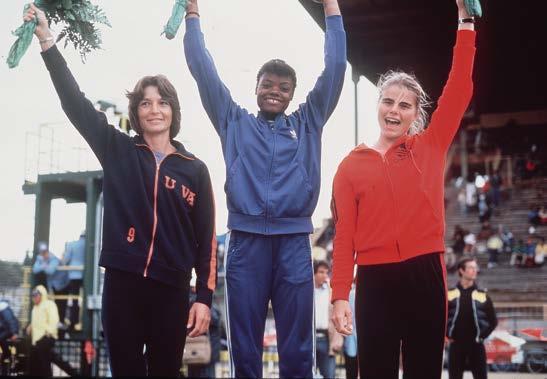
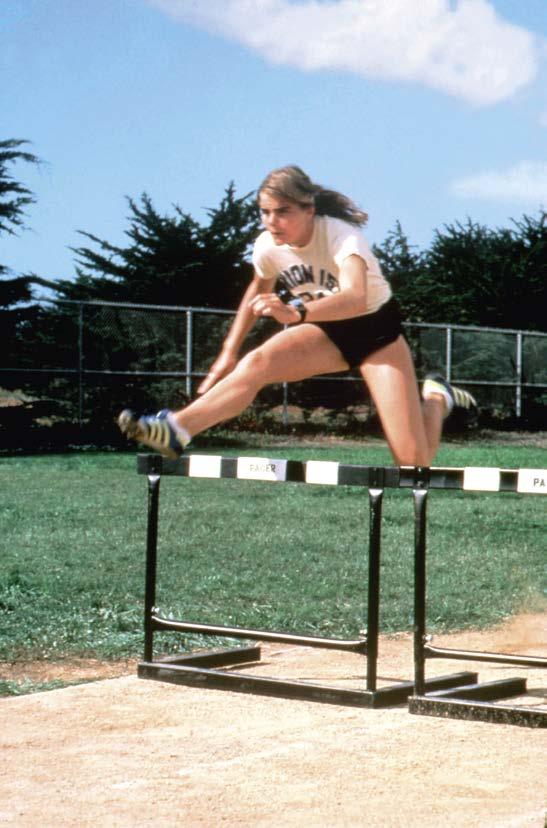
When asked about my favorite films, I always mention Personal Best first. I do so because I love it and because my love for it reveals a great deal about me, including how I’m a sucker for an underdog; almost no one has heard of this movie. In a conversation with Alissa Bennett, a contemporary historian known for her rereadings of notoriously misunderstood women, Patrik Sandberg suggested that “a big part of fandom is the feeling that you understand someone better than everyone else does.” And, I would add, you feel understood by them in turn. There are few characters I’ve felt more synchronous with than Chris Cahill, who was raised, as I was, by intense parents who disciplined me in a historically masculine family tradition—thinking and writing, rather than track and field—that I fitfully struggled with until I found women to learn alongside and compare myself to, women who ultimately inspired me to strive within my own personal style and values. I’ve also been a Tory Skinner: a martyr in love with a younger mentee who used me for her own self-actualization before leaving me, as Cahill will, for a boy she could tower over. How did Towne know these secrets of ambitious girl world?
Towne himself has suggested that his inferiority complex as a writer in an industry dominated by directors, actors, and producers led him to identify with women, making possible his directorial debut, with its multiple truthful, strong female characters. In the same 1982 Playboy interview, though, he also claimed that directing is, at its best, also “a woman’s game,” comparable to . . . making love with a woman? “You permit an actor to act the way you permit a woman to come,” he explained. “You don’t make it a big deal, do you? You allow. You create a very passive climate to allow it. I think directing is a woman’s game, a curiously passive process. You sit there as you watch the actors and you feel, then
you tell yourself what you feel and then you tell the actors. You watch and encourage. I find it, ideally, more maternal than paternal. Make me come, make me feel good. Am I going to be in love with you after this?”
A generous read of that convoluted statement is that Towne is a trans-femme lesbian service top. (Indeed, when I asked a close friend—ten years my junior, nonbinary, and queer—to watch Personal Best, they replied afterward that it seemed “T4T low key.”) A less fun interpretation is that Towne held contradictory self-serving identifications: a talented writer, an originator, the one who first delivers usable material (in an industry where that role, perhaps because of its necessity—or its perceived passivity—is grossly diminished), who also suffered from chronic illness (which his male peers suggested came from neurosis), he was clearly capable of radical empathy; his characters speak to this. But he was also a grown man with daddy issues surrounded by cocky men like his actor, director, and producer friends Warren Beatty, Jack Nicholson, and Robert Evans. As soon as Towne stepped into a like role, he started behaving like the despicable men of Hollywood: berating and bedding actresses half his age, abusing cocaine and his wife, failing to communicate with his crew, then blaming them.
184
Screaming often. He protracted the film’s production, running the budget way up. He pissed off his producers; sued, he countersued. He almost lost the picture. And he contributed to its failure: not only was Personal Best too expensive for a niche narrative—it never earned its keep, and thus was relegated, in the minds of Hollywood’s reigning men, to the “flop” pile, where it would “disappear” from critical regard—the film also awkwardly straddled decades and audiences.
Initiated in 1979 and set between 1976 and 1980 but not released until 1982, Personal Best was neither glossy nor high octane enough for the movie mainstream from the ’80s on, nor was it violently patriarchal enough for Old Hollywood, New Hollywood, or Hollywood to this day. Ambiguous, character driven, casual about sex (or trying to be, as best as Americans can manage), and cerebral (again by American standards), with that murky ’70s grain, Personal Best is most like a New Hollywood picture—except that the most successful films of that movement tended to be (like Easy Rider, Chinatown , Taxi Driver, The Godfather, and Apocalypse Now) as macho as Mariel Hemingway’s grandfather, Ernest, sought to be. (Without talking to Towne or Hemingway, it’s impossible to say much other than that it’s notable that a man who felt feminized as a writer cast an actress descended from the butchest writer in twentieth-century American history.) During the film’s press push, much was made of Personal Best ’s erotics. Case in point: Mariel Hemingway on the cover of Playboy, in the same April 1982 issue as Towne’s interview. Her nude double-page spread—she’s doing the splits—is accompanied by a short profile in which she’s quoted sparingly. Towne’s Q&A is four times as long. Sex can sell but the sex in Personal Best was too sweet to top the box office. Cahill is like a Hayao Miyazaki heroine, an innocent on a journey of becoming, with her innocence extending to a bisexuality that is never abject, violent, victimized, or shame ridden, as Hollywood relies on, with regards to femmes, to capitalize on attention.
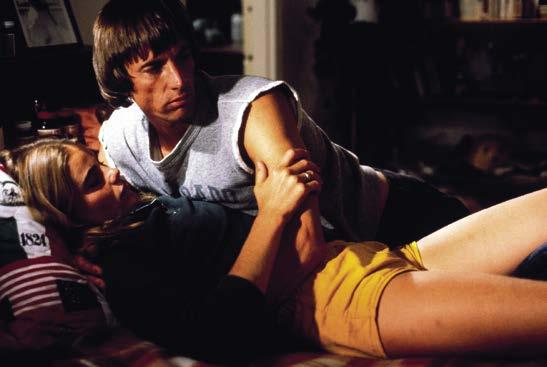
Movies are collective endeavors. That’s what Towne learned in trying to become an auteur.
“I had final cut and I was the writer and, out of necessity, became the producer and director,” he said of Personal Best to the editors of Projections 6: Film-makers on Film-making (1996), and “that moment when you theoretically have control is the moment when you realize that you have no control. Anything can happen.” Of course a good writer wouldn’t claim authority over a process as lively as movie-making; only those insensitive to human social dynamics would. Towne worked with five editors, two costume designers, and three cinematographers, using Leni Riefenstahl’s Olympia (1938), on the 1936 Olympics in Berlin, as a reference, to capture performers Mariel Hemingway; Patrice Donnelly, once ranked the fourth-best hurdler in the world; pro wrestler Emily Dole; high jumper Pam Spencer; Jane Frederick, a world-record-setting heptathlete; and Jodi Anderson, a long jumper and pentathlete who was poised to crush the Olympics in 1980, the year in which she set multiple lifetime “personal bests”—that is, her highest scores and fastest times in a given event. After Towne had gone gaga seeing real-life female athletes work out at the UCLA gym, they inspired him to script Personal Best ; and as a cast, they steal the show. It is their movie as much as it is his, a movie made by Anderson’s gap-tooth grin and muscle definition (she should’ve had more lines); by Donnelly’s graceful stag leaps; by the group’s camaraderie; and by two parallel breath-filled races, one shot on a sandy hill from a downward angle so the athletes appear to be running up to nowhere, the other round and round a track during the qualifying match for the canceled Olympics.
To root for an underdog is to measure greatness on a curve where adversity is a big part of the equation. One person’s flop is another’s feat. Rather than needing something to be a mainstream windfall, you’re in awe that it got made at all. By my metrics, Personal Best is one of the most important films in Hollywood history, being the first and last to depict the dynamics it does. And because it serves as a meta narrative for its own creation and how Hollywood functions.
Robert Towne is to Personal Best what Coach Tingloff is to his trainees: the male pseudo-authority and the saboteur whose simultaneous elevation and degradation of the women under his charge, his identifying with them and lusting after them, precipitates his own irrelevance. The last time we see Tingloff it’s via Cahill’s gaze. She’s about to mount the winner’s podium and gives him a dead stare. His projected insecurities as a man coaching women (female athletes, he notes, are less important than their male counterparts) risked ruining Skinner’s and Cahill’s relationship, just as, I’m sure, Towne’s lurid, Stanley Kubrick–meets–Peter Bogdanovich control tactics to get “the best” out of his actresses weren’t healthy for anyone involved. Tingloff is shady and Towne knows it. He puts him in black aviator sunglasses when Cahill walks away from him to her podium.
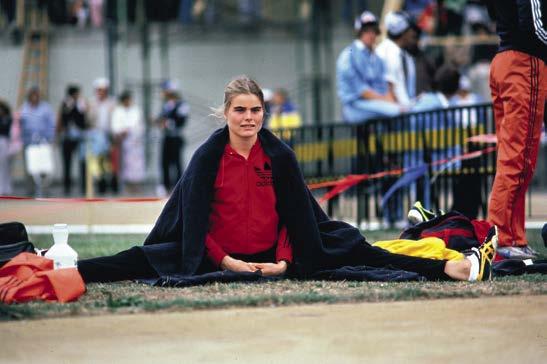
Personal Best put Towne in the Hollywood doghouse. After its financial failure, he would struggle to recover power in an industry that privileges profit over art, men over women, and spectacle over story. The working conditions for writers of
caliber would only get worse, as is evidenced by the 2023 Writers Guild of America strike, ongoing as I write. The inequitable deals that Towne complained about forty years ago seem like pipe dreams compared with the pittance that screenwriters are protesting now, and that’s saying nothing of what it’s like for poets, novelists, journalists, and essayists whose best shot at a substantial paycheck is to have their material adapted for the screen. Writers are treated like women have been: with our essential labor tantamount to a volunteer position, at once invisible in a superficial culture and naturalized (anyone can do this, right? we do it because we love it, right? ), writers are rarely invested in and celebrated for their own sake these days; we are used rather to support others—to prop up visual artists’ worth and supply the skeletons upon which flimsy films are laid. Towne admired novelists back in the twentieth century, when many did. He settled for screenwriting, and yet, when it was time to rise above that station—by directing—he turned the social ladder he was climbing into a snake. One wonders if his downslide was not deliberate, similar to Cahill’s foundering when her father coached her. Did Towne martyr himself? Was Personal Best his rebellion against greed, inanity, and male supremacy? In his film’s end, the women win a place in the Olympics, but the games are canceled; Towne made a masterpiece that was destined to flop at the box office. As if he knew the rigged game he was playing, the moral of his movie is that winning is fleeting and the best you can ever do, as Cahill’s boyfriend—a young, retired, former gold-medal winner—tells her, “is whip your own ass.”
185
This spread, left to right: Still from Personal Best (1982), directed by Robert Towne; pictured: Patrice Donnelly, Jodi Anderson, and Mariel Hemingway. Photo: United Archives GmbH/ Alamy Stock
Photo
Still from Personal Best (1982), directed by Robert Towne; pictured: Mariel Hemingway.
Photo: Moviestore Collection Ltd/ Alamy Stock Photo
Still from Personal Best (1982), directed by Robert Towne; pictured: Mariel Hemingway and Scott Glenn. Photo: Entertainment Pictures/Alamy Stock Photo Still from Personal Best (1982), directed by Robert Towne; pictured: Mariel Hemingway. Photo: Entertainment Pictures/ Alamy Stock Photo
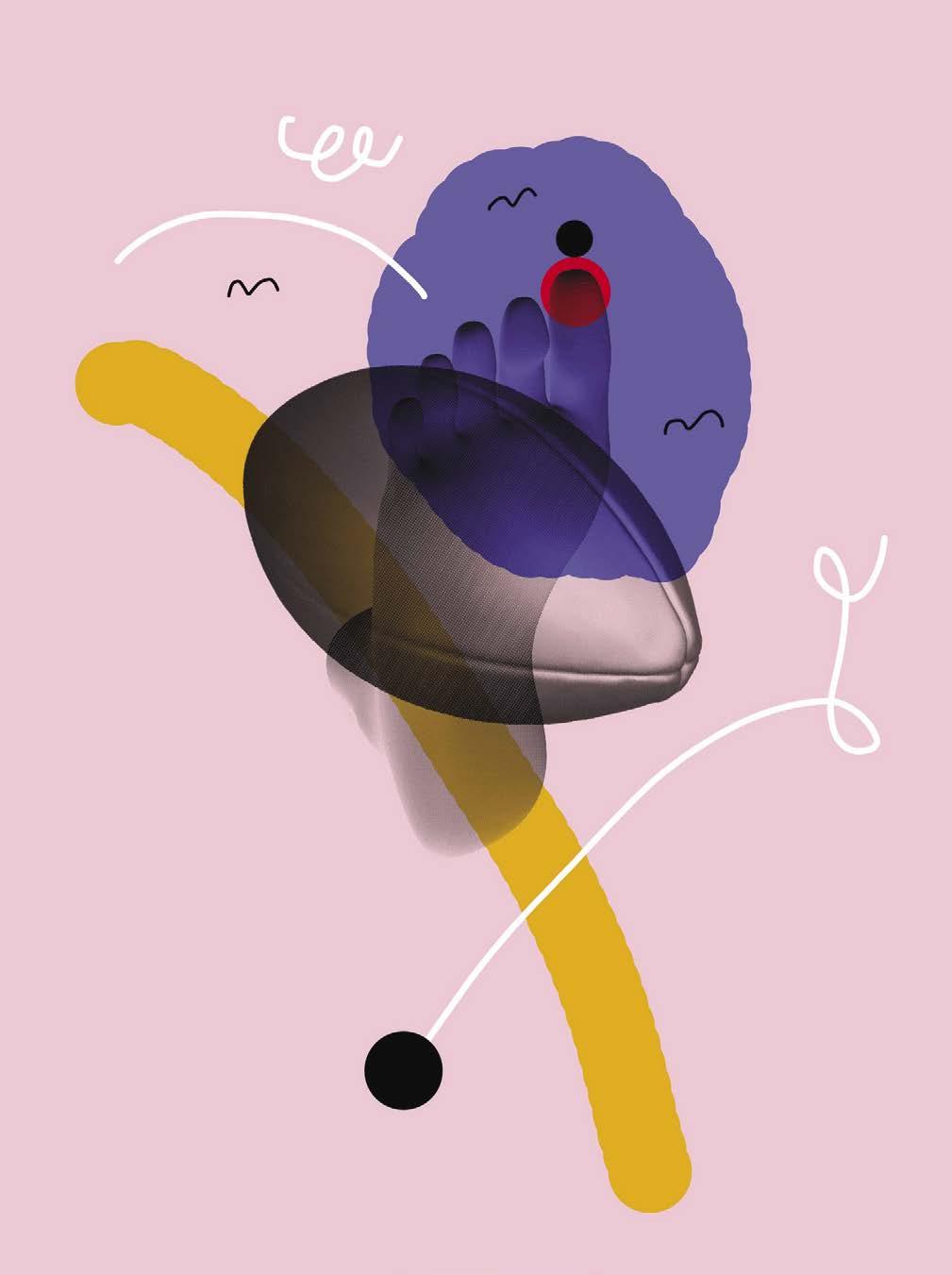




Special thanks to the New York Road Runners for providing images from the 2022 and 2023 'Gridiron 4M .'










































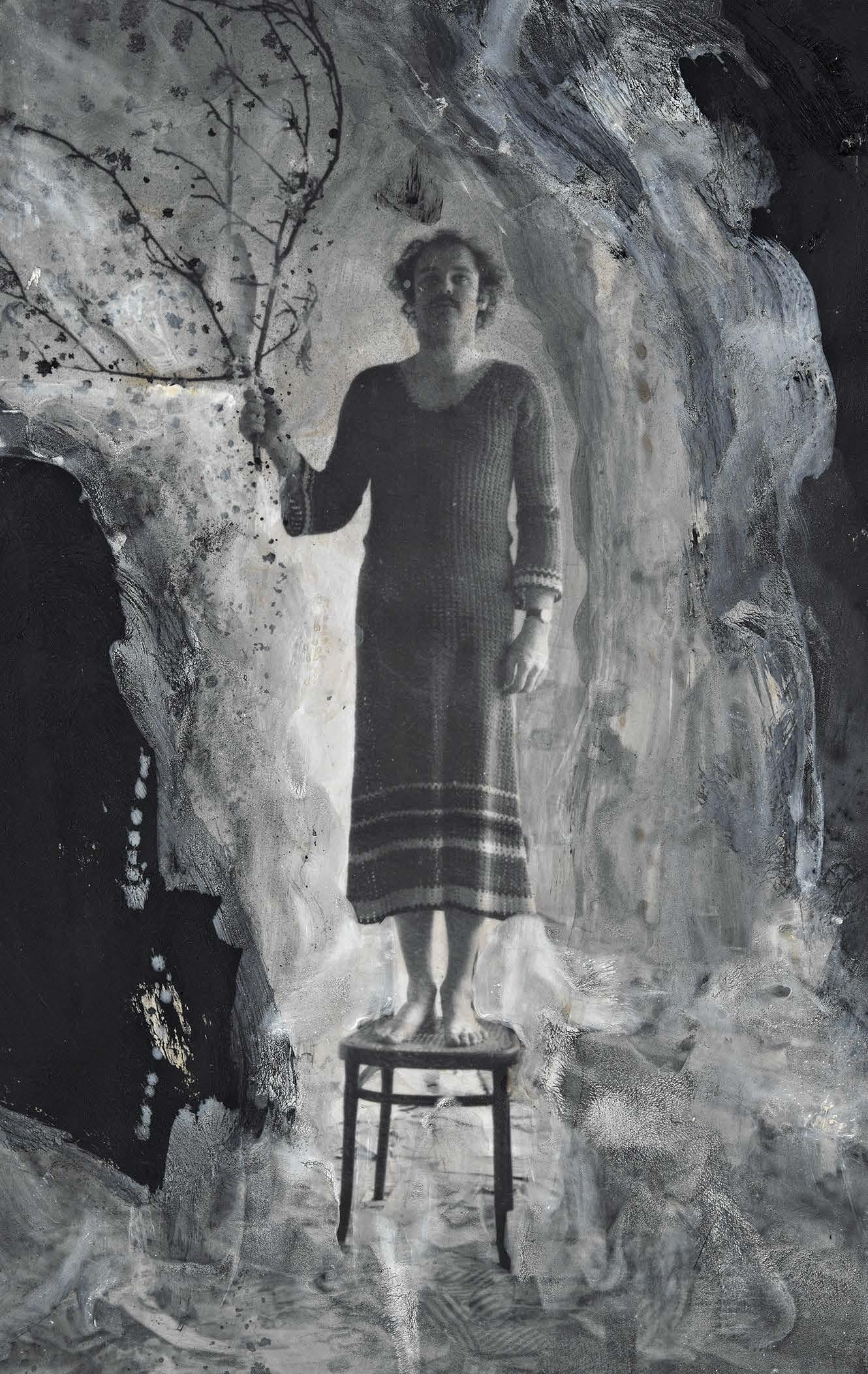

RACHEL WHITEREAD
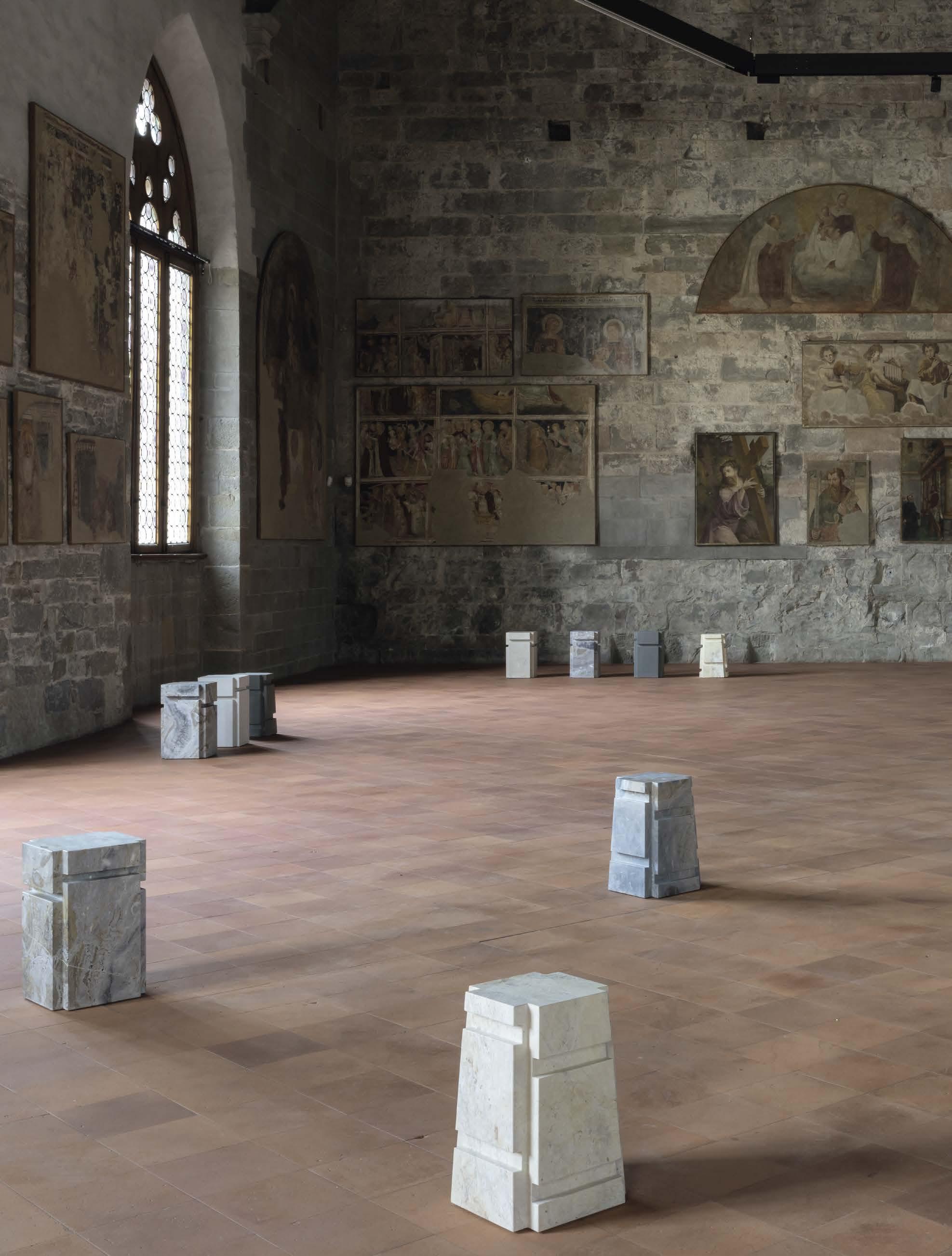
Animals Were Sold , Galleria d’Arte Moderna e Contemporanea
Bergamo, Italy, June 23–October 29, 2023.
Installation view, Rachel Whiteread:…And the
di
Artwork © Rachel Whiteread.
Photo: Lorenzo Palmieri
AND THE ANIMALS WERE SOLD
Through October 29, 2023
GAMeC / Palazzo della Ragione, Bergamo – Italy
www.gamec.it
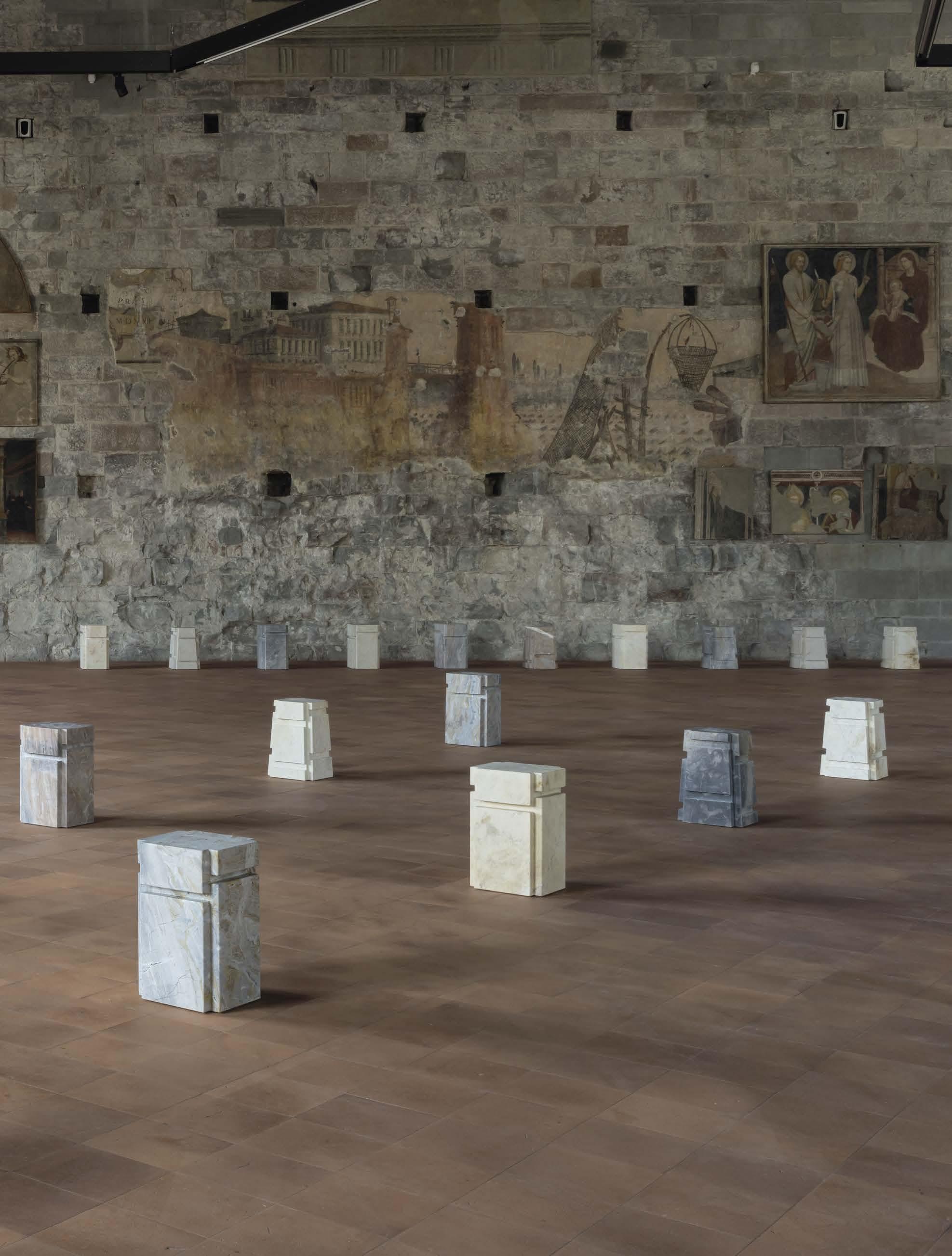
. . .
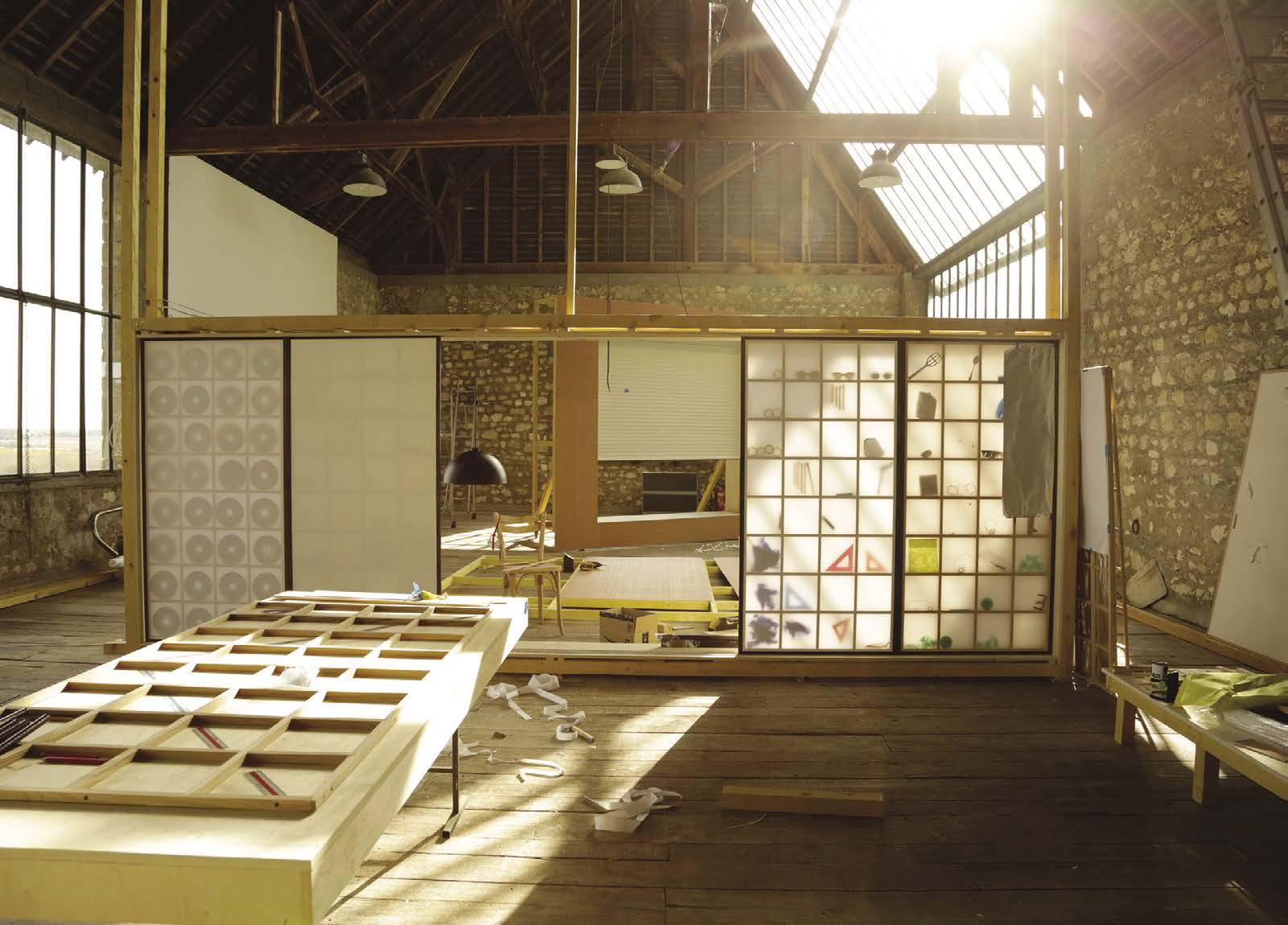
ATELIER CALD ER
ANNOUNCES 2023 ARTISTS IN RESIDENCE

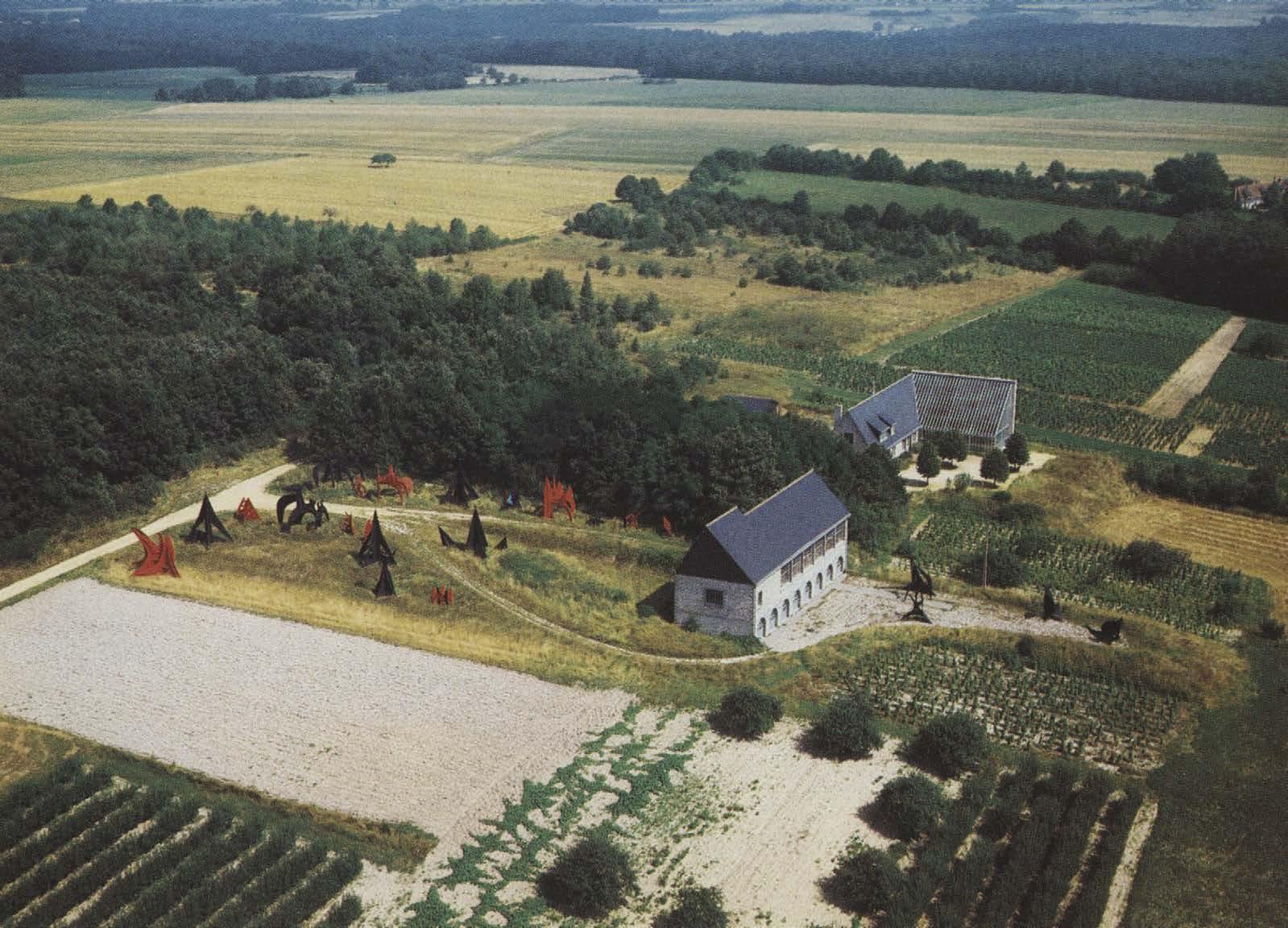
GAGOSIAN ART ADVISORY
Laura Paulson – Director and Principal lpaulson@gagosianartadvisory.com 917.755.9233
Alexandra Duch – Senior Director of Business Development aduch@gagosianartadvisory.com 917.783.8605
Michael Walker – Director mwalker@gagosianartadvisory.com +44 782.729.7223
Curatorial Advice Appraisals and Valuations Insurance, Estate Tax, Charitable Donation
Collection Management Short and Long-Term Strategic Planning Collection Database Management
Global Art Market Access Galleries, Auction, Art Fairs, Private Sale Negotiation Expertise
Contact Information
Bernard Lagrange – Director blagrange@gagosianartadvisory.com 609.751.8303
Nicole Fromer – Account Manager nfromer@gagosianartadvisory.com 917.756.7518
Molly Rindfuss – Registrar mrindfuss@gagosianartadvisory.com 347.703.6977
Mary Phelps – Senior Director mphelps@gagosianartadvisory.com 917.636.8126
Jenny Mittica – Director jmittica@gagosianartadvisory.com 917.853.4459
Florence Poynor – Appraisal Coordinator fpoynor@gagosianartadvisory.com 929.343.6824
GAGOSIAN BUILDING LIBRARIES
Douglas Flamm, Gagosian’s rare book specialist, has established an advisory service for clients aiming to curate their private libraries, whether they are building a reference collection from the ground up—for a new home, perhaps—or enhancing an archive they have already established. Douglas conducts individualized consultations, working to produce and acquire bespoke lists of titles. Anyone interested in books and libraries as still-unmatched repositories of knowledge and tools for in-depth research will appreciate this service.
About Douglas Flamm
A twenty-five-year veteran of the field—and Gagosian’s inhouse rare books expert since 2016— Douglas has significant experience in developing and maintaining library collections. He boasts unparalleled know-how in sourcing scarce and important publications, from catalogues raisonnés and museum exhibition catalogues to monographs and artist’s books, including rare and out-of-print titles as well as newer releases. Focusing on a broad range of twentieth- and twentyfirst-century artists and movements—from Picasso through Abstract Expressionism, Pop art, and Minimalism, to the full spectrum of contemporary practices—Douglas can also locate modern design and architecture books on such subjects as Art Deco, the Bauhaus, and Modernism.
Please contact Douglas Flamm for more information at dflamm@gagosian.com or +1 212 744 2313.
Family room designed by Nicole Hollis, featuring library curated by Douglas Flamm. Artwork: Doug Aitken, I’ll be right back. . . Aperture Series , 2019 © Doug Aitken. Photo: Douglas Friedman/Trunk Archive
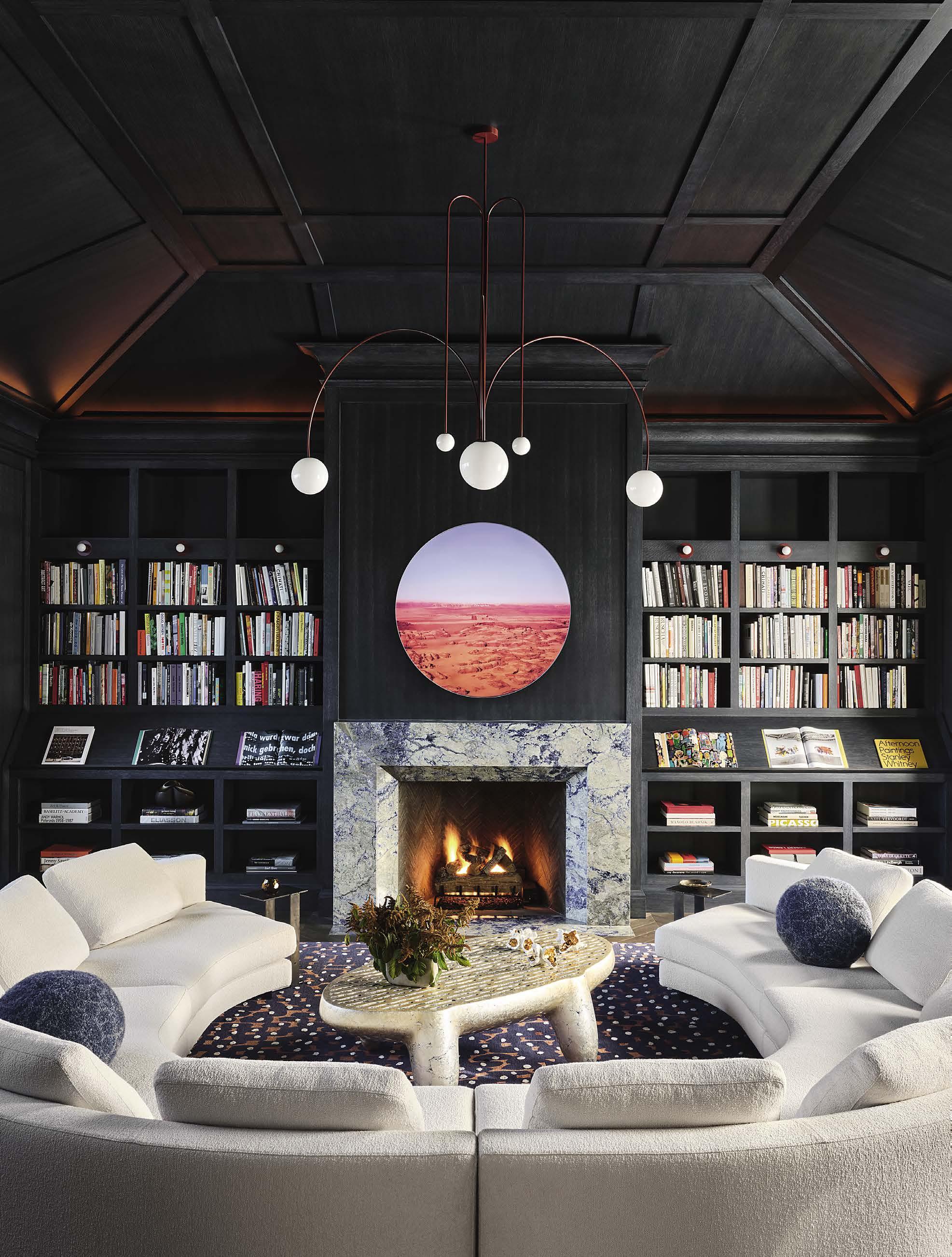
Lunch Monday–Friday 12–2:30pm
Dinner Monday–Saturday 5.30–10pm
976 Madison Avenue, New York T. 212 906 7141
reservation@kappomasanyc.com
GAME CHANGER: KENNETH ANGER
William Breeze pays homage to his friend the filmmaker and author Kenneth Anger, reflecting on his revolutionary work in color, Magick, and spirituality.
Weave a circle round him thrice, And close your eyes with holy dread For he on honey-dew hath fed, And drunk the milk of Paradise.
—Samuel Taylor Coleridge, “Kubla Khan: Or, A Vision in a Dream,” 1797
In Memoriam Dr. Kenneth Anger (1927–2023), Frater Focus XI° O.T.O.
The teenager in his bedroom who changes the world: such was his debut with Fireworks , which first screened publicly in 1947. It was the ultimate home movie, shot during a home-alone episode while the parents were away, probably over Christmas 1946, when he was still nineteen.
Part of his genius was his ability to bridge liminality, to cross the border of waking and sleep, and to capture the vast interiority of our inner psychic spaces—and to do so on black-and-white 16mm in his parents’ living room.
Kenneth led, by preference, a monastic existence. He never had a long-term partner, describing himself as a “lone wolf,” although he had his obsessions, some of whom were cast as his “Lucifer.” He did sometimes live with friends, notably with Marjorie Cameron in Silver Lake, Los Angeles, with Anton LaVey at his “Black House” in San Francisco, and with Samson De Brier in Los Angeles at the Barton Avenue bungalow where Inauguration of the Pleasure Dome (1954) had been filmed. Inauguration took its title from Coleridge’s “Kubla Khan,” which describes an initiate of the mysteries, someone who had gone there and back again. His works covered the great triumvirate of our times: sex (Fireworks), drugs (Inauguration of the Pleasure Dome), and rock ’n’ roll (Scorpio Rising , 1963).
He liked children to a degree; he was my daughter’s godfather. He read voraciously, especially early sci-fi and fantasy, and the Symbolists and Decadents. He collected Rudolph Valentino artifacts and, when he had the space, maintained a shrine. If he had his own place, he favored strong, very intense colors, sometimes in high gloss. While he had a refrigerator, it contained nothing but film stock. He barely slept, suffering from a treatment-resistant form of insomnia. He was terrible with money. When he had some, as he occasionally did, he bought things with little thought of the price, often for others (his generosity was legendary), and soon found himself broke again. When he could, all through the ’50s and ’60s into his more threadbare ’70s, he dressed well, buying his clothes mainly in France. While he seemingly knew everyone, he was anything but a snob, accepting his friends, limitations and all, with good humor. He was subversive—he felt strongly that there was a great deal in this world in need of immediate subversion—but wasn’t tiresomely militant about it.
In England he befriended Gerald J. Yorke, a friend and colleague of Aleister Crowley’s who had amassed a major archive of Crowley’s papers. It was Yorke who supervised his education in Magick, giving him a solid grounding in its literature and a wealth of unpublished material on Crowley’s religious system, Thelema (Greek for “will”). Crowley founded Thelema after receiving its foundation text, The Book of the Law, through direct-voice dictation from a preterhuman intelligence in Cairo in 1904. Its central tenet is that the cultivation of the True Will, through the application of Crowley’s system of Magick, can unlock innate genius. Crowley and the teachers he trained through his twin organizations, the A. .A. . and the Ordo Templi Orientis (O.T.O.),
taught and initiated artists as diverse as the painters Cameron, Xul Solar, and Ithell Colquhoun, the writers Mary Butts, Fernando Pessoa, and Malcolm Lowry, and the filmmakers Harry Smith and Kenneth Anger, all of whom left evidence of their immersion in Thelemic doctrines and practices, which are an interpretive key to their work. Anger was the most overt in acknowledging Crowley’s influence. Thelema teaches that a new age of the child has dawned to supersede the matriarchal and patriarchal ages of the past, and that humanity is now evolving from separated sexes to embody both sexes in every person. 1 Anger identified the sometimes aberrant birth-pangs of this new age in youth countercultures. In a revealing 1966 San Francisco Chronicle profile, he explained that “his interest in the extremist groups is that of an intelligence agent for Thelema rather than as a sociologist. It’s ‘keeping up with the enemy.’” He added that “In all such groups there’s something operating. I call it tribal sorcery, tribal magic, on a very simple level. Its appeal to people is basically irrational.”2 In an even more revealing 1967 New York Times profile he remarked that “his fascination with magic or fantasy ‘at the point where it meets reality’ is what led him to study American cults” like those that had formed around motorcycles (Scorpio Rising ) and drag racing (Kustom Kar Kommandos , 1965).3
In his Magick in Theory and Practice (1929), Crowley defined Magick as “the Science and Art of causing Change to occur in conformity with Will.”4 In competent hands, he believed, a well-designed ritual can release spiritual impulses that trigger changes on the “inner planes” that underlie reality and affect the future. This is the very definition of a game changer. Anger repeatedly showed his acute awareness of this principle in his work, whose titles themselves indicate his ritual intent: Inauguration of the Pleasure Dome , say, or Invocation of My Demon Brother, or Lucifer Rising
Anger was a master colorist in film, learning a sophisticated color theory from a book called 777 (1909), edited anonymously by Crowley, which published the secret Golden Dawn society’s color scales for the first time. One of its innovations was to distinguish between reflective and transmitted (i.e., transparent) colors, a crucial distinction for a filmmaker who worked, as Anger did, with careful costume and set coloration and Ektachrome photography and processing. The “Sacred Mushroom Edition” of Inauguration was printed by Kenneth himself on A through E rolls in gorgeous color with sophisticated superimposition. He was a master photographer when he did the shooting himself, but his ability to control a cameraman was even more impressive. What was game-changing about Anger’s films was their encoded spiritual messages urging Crowley’s message of Thelema: “Do what thou wilt shall be the whole of the Law.” “Love is the law, love under will.” “Every man and every woman is a star.” The films carried this message not, usually, in too didactic a way, but in their dynamic and the feelings they induced, appealing to what is individual and rebellious in their viewers. Thelema does not convert, but it can inspire. Innumerable gay cinemagoers must have left their local theater or college screening room feeling empowered, celebrated, and validated—no small thing fifty years ago.
202
1. The Master Therion [Aleister Crowley], Magick in Theory and Practice (Paris and London, 1929 [1930]), chap. 5.
2. Kenneth Anger, quoted in John L. Wasserman, “Witchcraft by Anger,” San Francisco Chronicle , September 30, 1966.
3. Elenore Lester, “From Underground: Kenneth Anger Rising,” New York Times , February 19, 1967.
4. Master Therion, Magick in Theory and Practice , Introduction.
Opposite: Gerard Malanga, Kenneth Anger climbing over the Soldiers & Sailors Monument in Riverside Park, NYC, 1975 © Gerard Malanga
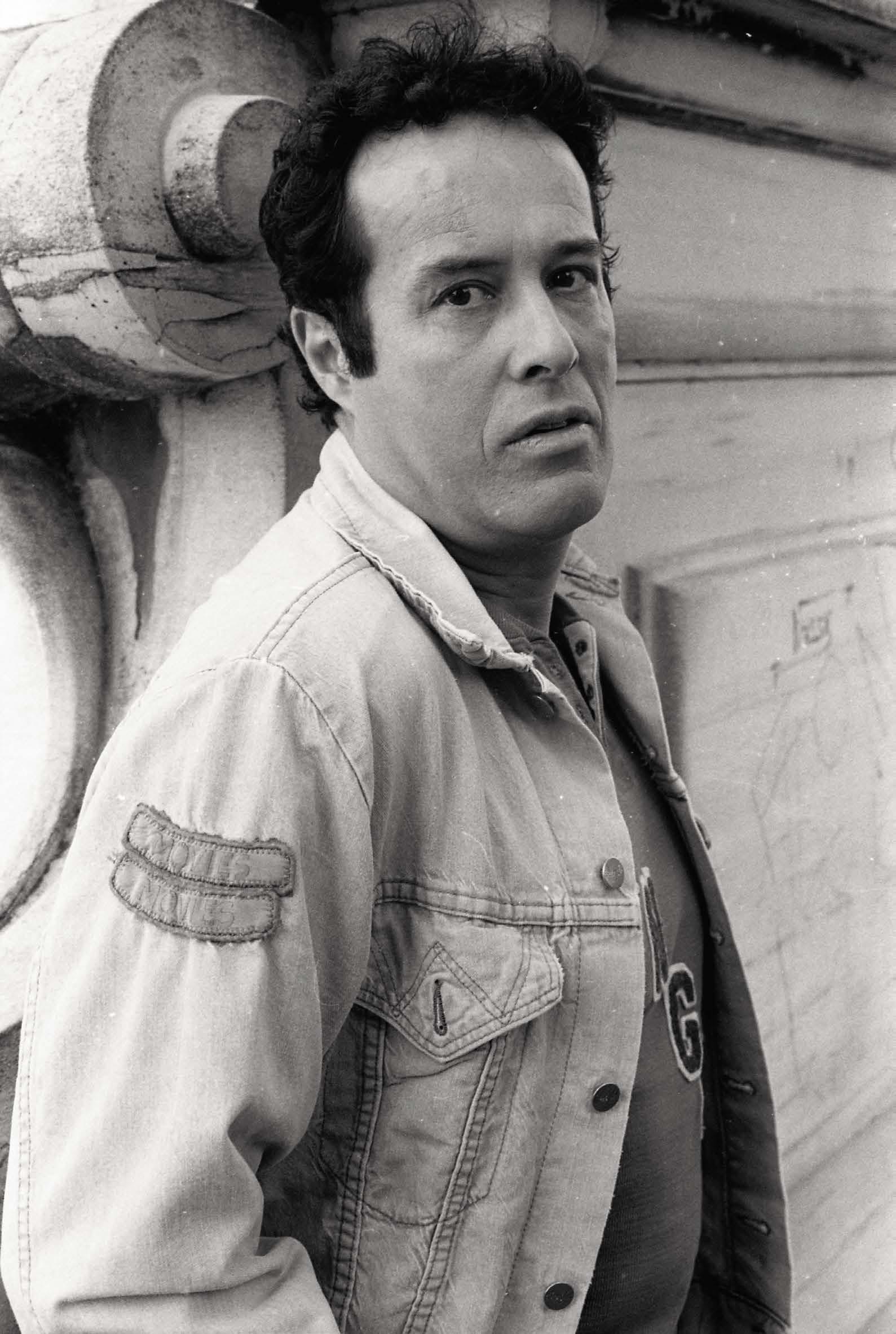
203