



Asus ProArt Series
Dyson HushJet Mini Cool Fan
Epson EB-L690SE
HONOR Pad X8b
Infinix NOTE 60 Pro
LG AeroBooster Pet
Logitech G PRO X2 SUPERSTRIKE
nubia NEO 5 Series
OPPO A6 Pro POCO M8s 5G






Words by Gabriel Pe
Asus ProArt Series
Dyson HushJet Mini Cool Fan
Epson EB-L690SE
HONOR Pad X8b
Infinix NOTE 60 Pro
LG AeroBooster Pet
Logitech G PRO X2 SUPERSTRIKE
nubia NEO 5 Series
OPPO A6 Pro POCO M8s 5G
Words by Gabriel Pe
The Philippines is facing one of its most significant energy challenges in recent years. Ongoing geopolitical tensions in the Middle East have disrupted global oil supply chains, driving fuel prices higher. As motorists and commuters feel the immediate impact, the effects ripple across the broader economy, with rising logistics costs pushing up the prices of everyday goods.
As the situation deepens, it has become clear that the country’s current energy system is not sustainable. This challenge has exposed a fundamental weakness: a heavy reliance on imported oil. The Philippines imports more than 90% of its crude oil, with over 60% of it used by the transportation sector. In electricity generation, coal continues
to account for a large share of the mix, with much of it still imported.
Taken together, a significant portion of the country’s energy supply depends on external sources, leaving it highly vulnerable to global disruptions.
The Need for an Alternative
It is becoming increasingly clear that to avoid future disruptions, the country must develop alternative energy sources.
The transport sector’s dependence on diesel and gasoline already has a clear pathway forward in electrification. By reducing reliance on fossil fuels, electrification redirects fuel use toward more critical sectors, such as logistics.
One of the most immediate
opportunities lies in mass transit. The country’s transport system relies heavily on vehicles powered by internal combustion engines, including jeepneys, buses, tricycles, taxis, and transport network vehicles. Transitioning these to electric platforms would significantly reduce fuel demand. In the same way, the gradual shift of private vehicles to electric alternatives can help lower overall consumption.
One of the most common concerns surrounding electrification is that increased demand could overload the country’s power grid. Seasonal yellow and red alert warnings, particularly during peak months, reinforce this perception.

The reality, however, is more complex. These alerts typically indicate that the electricity supply is running low, often due to outages in power plants rather than a fundamental limitation of the grid itself. While this remains a valid concern, steps are being taken to improve grid flexibility.
The government, through the Department of Energy, has begun developing frameworks to better manage energy resources and more efficiently integrate multiple power sources. This includes identifying which sources can be tapped at specific times, such as solar during the day, wind when available, and conventional plants when needed.
At the same time, capacity expansion is underway. In 2025 alone, 956MW of new power generation capacity was added to the grid, with the majority coming from renewable sources.
One of the most important global shifts is the transition toward renewable energy. Energy systems are moving away from coal and oil toward cleaner sources such as solar, hydro, wind, and biomass.
In the Philippines, the government has set a target to source 35% of the country’s power generation mix from renewable energy. Most upcoming power generation projects are aligned with this goal, with several renewable energy and storage facilities scheduled for integration into the grid.
While many new plants are solar, hydro, wind, and biomass are also
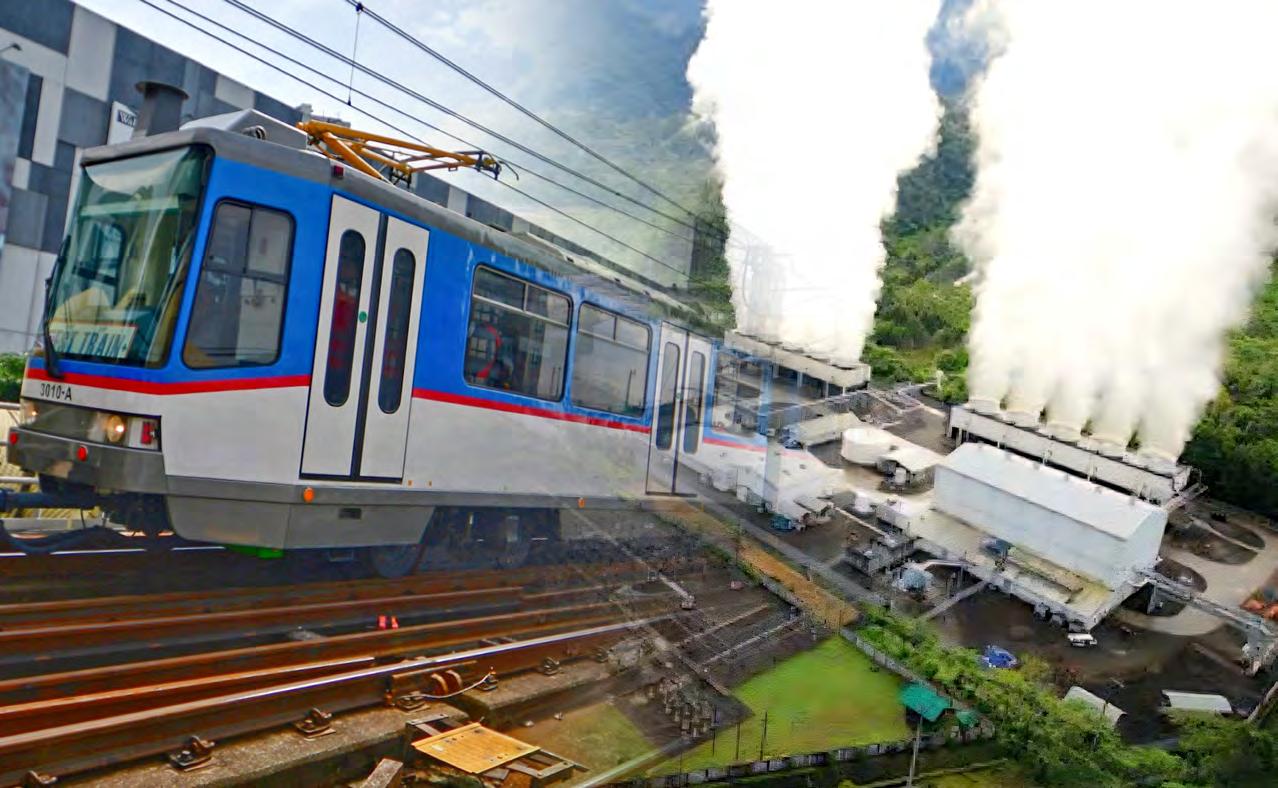
part of the pipeline. Geothermal energy remains a key part of the country’s energy mix. The Philippines ranks among the top producers globally, generating approximately 1,900MW and supplying around 12% to 14% of electricity demand. However, expansion is constrained by high upfront costs, exploration risks, complex development requirements, and limited incentives.
Can Nuclear Make a Comeback? Another potential energy source under consideration is nuclear power.
The Philippines was once poised to adopt nuclear energy through the Bataan Nuclear Power Plant in the 1980s. However, global safety concerns at the time, along with issues related to governance and infrastructure, led to the project being halted.
Today, there is renewed interest in nuclear energy. New developments include smaller-scale technologies such as microreactors, which are designed to produce tens of megawatts of power while requiring less space compared to traditional

nuclear plants. Their smaller size makes them potentially suitable for the Philippines’ archipelagic geography.
The government is studying this option. The Philippine National Nuclear Energy Safety Act established the Philippine Atomic Energy Regulatory Authority, which will oversee the development of regulations for nuclear power.
However, challenges remain. Microreactors may require more enriched fuel, increasing upfront costs. There are also concerns around waste management, governance, and longterm viability. Globally, some smallscale nuclear projects have faced cost overruns and operational challenges.
Regardless of which energy solution is pursued in the near future, one thing is clear: many of the technologies needed for this transition are already viable and continuing to mature.
Doubts and concerns will continue to influence public perception and policy direction. At the same time, the need to act is becoming increasingly urgent.
Energy is not only about power generation. It is about resilience, economic stability, and long-term sustainability.
The decisions made today will shape whether the Philippines remains vulnerable to external shocks or moves toward a more secure and independent energy future.
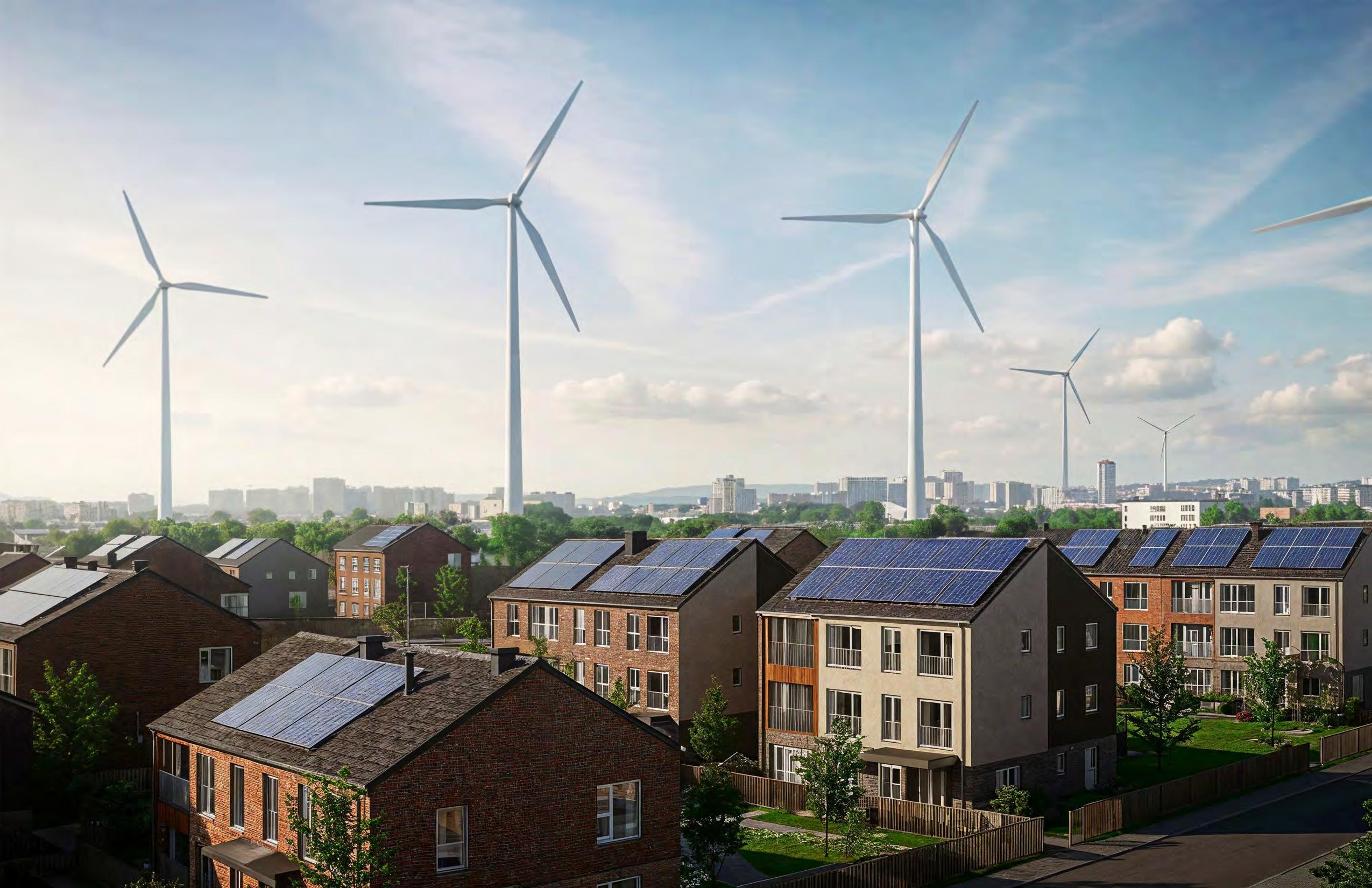
The Philippines has the sunlight to lead in solar energy. The real challenge is making it accessible to all
Words by Aljhelyn Piador
The Philippines sits under a flood of sunlight every day, yet still pays one of the highest electricity bills in Southeast Asia. With 4.5 to 5.5 peak sun hours daily, the country is among the most naturally solar-rich environments in the world, where rooftops could realistically serve as power generators rather than passive structures.
At the same time, solar installation costs have dropped significantly, now ranging from PHP55 to PHP75 per watt. Combined with rising electricity rates, this shift is making solar energy an increasingly practical option for long-term savings.
So the question is no longer whether solar energy works. It already does. The question is why it still feels like a privilege.

The Philippines is geographically well-positioned for solar energy generation. The country receives an average of 4.5 to 5.5 peak sun hours per day, with annual solar irradiation ranging from 1,643 to 2,008kWh/m², depending on location. These conditions place it among countries with strong inherent solar potential.
At the same time, the country’s climate presents a significant challenge due to frequent typhoons. With approximately 10 tropical cyclones making landfall annually, solar infrastructure must be engineered to be resilient. Modern installations use reinforced mounting systems and aluminum frames anchored deeply into the ground, enabling them to withstand wind speeds of up to 300kph, exceeding even the destructive force of Typhoon Haiyan.
This dual reality of high solar potential and environmental risk defines the structural context of solar deployment in the Philippines.

One of the strongest drivers of residential solar adoption is the high cost of electricity. The Philippines consistently records some of the highest electricity rates in Southeast Asia, largely due to reliance on imported fossil fuels and transmission inefficiencies.
Against this backdrop, solar energy becomes increasingly economically attractive. Installation costs have declined significantly, falling to approximately PHP55 to PHP75 per watt in 2026, making residential systems more accessible to middle-income households.
A properly sized 5kW solar system can generate around 550 to 650kWh per month, translating to estimated savings of PHP6,600 to PHP7,800 monthly, depending on consumption patterns and grid rates. Under these conditions, the typical payback period ranges from four to seven years. After that, households benefit from decades of low-cost electricity, as modern solar panels often carry performance warranties of up to 25 years.

Residential solar systems generally consist of photovoltaic panels, inverters, and optional battery storage. Two primary configurations exist: on-grid systems, which remain connected to the electricity grid, and off-grid systems, which operate independently.
On-grid systems are more common in urban and suburban households due to their lower cost and compatibility with netmetering programs. Battery storage, while still relatively expensive, is increasingly being used to address intermittent supply and grid instability.
The integration of solar into household energy use marks a shift from passive consumption to active energy management, where households become partial producers rather than purely consumers.

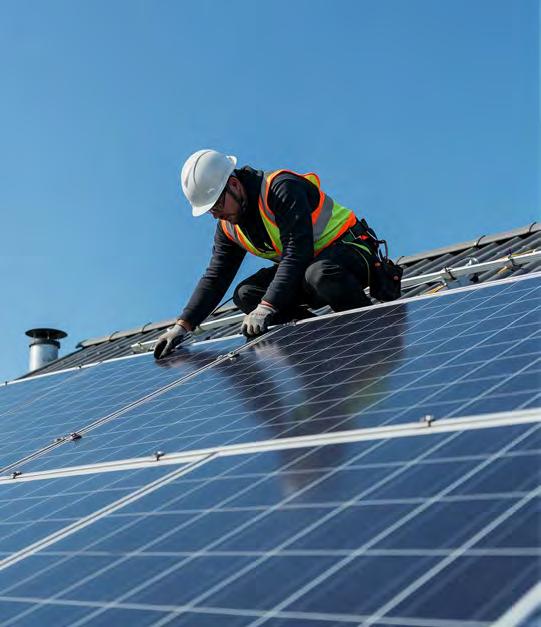
The development of solar energy in the Philippines is anchored in the Renewable Energy Act of 2008. Early growth was driven by the Feed-In Tariff, which provided the financial certainty needed for utility-scale projects to move forward.
Today, the focus has shifted to the net-metering program, which has become the primary driver of residential adoption. By allowing households to trade surplus electricity for grid credits, and with the 2026 expansion of capacity caps to 1MW, the policy framework is moving toward a more decentralized and consumer-led energy market.
At the national level, the government has set a target of increasing the share of renewable energy in the energy mix to 35% by 2030, positioning solar as a key component of the country’s longterm energy strategy.

Despite favorable conditions, solar adoption in the Philippines remains concentrated among middle- and upper-income households. These groups
As the industry matures, new frameworks are emerging to address these gaps.
Solar subscription models are gaining traction, allowing landlords to install systems without requiring upfront costs. This approach treats solar as a service rather than a capital investment, enabling tenants to benefit from lower electricity costs.
are better able to absorb upfront installation costs and have greater access to financing options.
In contrast, lower-income households face significant barriers, including limited capital, lack of access to credit, and housing conditions that may not
support rooftop installations. Rental housing and informal settlements further constrain access.
As a result, solar adoption reflects not only technological feasibility but also existing economic inequalities.

At the same time, energy pooling and community solar models are beginning to expand access. These allow residents of high-density developments to subscribe to shared solar capacity and receive bill credits without needing individual rooftop installations.
These approaches draw on global precedents, including virtual net metering in the United States, shared rooftop systems in Australia, and energy communities in the European Union.
However, challenges remain. While the government has introduced
faster approval processes for solar permits, implementation is still uneven across regions. Administrative delays continue to affect the release of financial benefits for host communities.
Grid limitations also present constraints. In some areas, weak infrastructure leads to curtailment, where solar power is generated but cannot be fully transmitted.
The policy tools are in place, but the infrastructure needed to make solar widely accessible is still evolving.
The significance of solar extends beyond residential rooftops. More than 50 million Filipinos live in island or isolated grid systems, many of which rely heavily on diesel generators.
These systems are costly, with electricity prices ranging from PHP10.60 to PHP117.75 per kWh, and are often less efficient and less stable.
In these contexts, solar systems combined with battery storage present a more efficient alternative. Studies indicate that solar-based microgrids can be up to 60% cheaper than diesel-based systems, with long-term savings of 17% to 29%.
This positions solar not only as a household solution, but as a broader infrastructure strategy.

The Philippines is also seeing the development of large-scale solar infrastructure.
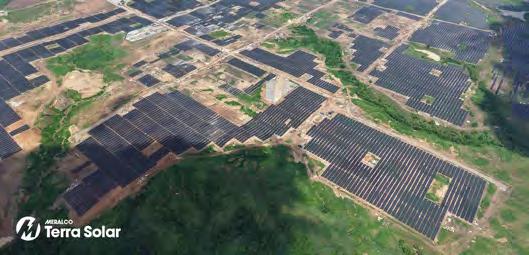
The Meralco Terra Solar Project is planned as a 3,500MW facility paired with a 4,500MWh battery storage system, positioning it among the largest solarplus-storage developments globally.

The Laguna Lake Floating Solar Project is expected to generate around 1,300MW across a 1,000-hectare site, while Cebu’s Malubog Floating Solar Farm marks the country’s first utility-scale floating solar installation.
These developments signal a transition from early adoption to large-scale integration.

The Philippines has one of the strongest natural environments for solar energy generation. Combined with high electricity costs and declining installation prices, the case for adoption is increasingly strong.
However, access remains uneven. The expansion of solar energy is shaped not only by technology, but also by factors such as income, financing, housing conditions, and policy execution.
As a result, the benefits of the transition are not evenly distributed. Households that can afford the upfront investment gain long-term savings and partial independence from the grid. Others remain dependent on a system defined by high and often unstable costs.
Ultimately, solar energy in the Philippines is no longer limited by potential. The challenge is ensuring that access becomes more inclusive.
Story

How distributed energy and smarter grids are reshaping where electricity comes from and what that means for how we live next
Words by Phia Manuell Layoso

For many years, power followed a predictable path. It was generated in large facilities located far from homes and cities, then delivered through transmission lines that stretched across regions. While the system was efficient enough to support industrialization and urbanization, it also depended heavily on centralized infrastructure.
In recent years, that arrangement has begun to change.
Energy is no longer defined only by where it is produced. It is increasingly shaped by where it can be integrated. Instead of relying on a single source, electricity is now being generated, stored, and managed across multiple locations, from buildings and transport systems to digital networks that help balance supply and demand.
This is what the shift toward distributed energy looks like in practice. Power is moving beyond the power plant.
In the past, electricity systems relied heavily on centralized generation. Large coal, gas, and nuclear facilities produced power at scale, sending it outward through national grids to support cities and industries. These plants made modern economies possible, but they also created systems that depended on distance, stable fuel supplies, and uninterrupted transmission networks.
With growing demand for electricity and rising awareness of climate issues, countries began exploring alternatives that could make energy systems more flexible and resilient. In addition to developing large-scale power plants, planners
also began focusing on smaller installations that provide electricity locally.
This shift does not mean that conventional generators will be phased out. Instead, it changes their role within a broader network, allowing multiple sources of power to operate simultaneously.
The result is a quieter but significant transformation in how electricity moves through modern life.
No technology represents this shift more clearly than solar energy.
While conventional plants require specific locations for operations

and fuel supply, solar systems can operate wherever sunlight is available. Large solar installations supply power at scale, while rooftop panels allow individual buildings to generate electricity during the day.
As a result, the geography of electricity generation is changing. Energy is no longer confined to industrial zones, but is increasingly integrated into the spaces where people live and work.
Electricity networks were originally designed to deliver power in a single direction, from generation sites to end users.
Today, that is changing.
Smart grids make electricity networks more flexible and responsive. Instead of simply delivering power, they help manage where energy comes from and where it is needed most. This is especially important as electricity is now generated from multiple sources, including solar, wind, and other renewables, across different locations.
Because of this shift, the grid is no longer just a network of power lines. It is becoming a system that helps balance, guide, and support the flow of energy in everyday life.
One of the more interesting developments in today’s energy transition is how everyday infrastructure is beginning to generate electricity.
Engineers are exploring ways to integrate energy systems into roads,
pavements, buildings, and transport spaces. Solar-ready materials and technologies that generate power from movement show that the environments people move through every day can also serve as energy sources.
This reflects a broader shift. Instead of producing electricity only in large power plants, energy is becoming part of the spaces where people live, work, and travel.
These developments point to a clear direction. Energy production is no longer limited to distant power stations. It is increasingly taking place across multiple layers of modern infrastructure.
Solar panels on rooftops are turning homes and buildings into small-scale energy producers. At the same time, smart grids are coordinating multiple energy sources to improve efficiency and reliability.

Together, these changes reflect a broader shift. Power is becoming embedded in the spaces, systems, and technologies that people interact with every day.
The Next Energy
The transition taking place today is defined not by a single technology, but by a broader shift in how energy systems are designed.
In the past, electricity was generated primarily by large centralized facilities. Today, multiple energy sources are connected through networks that distribute power across different locations.
Electricity no longer comes from a single source. It is increasingly produced wherever conditions allow.
This shift is shaping how cities are designed and how people interact with energy, making electricity more closely tied to the spaces where daily life happens.
Creator Laptops
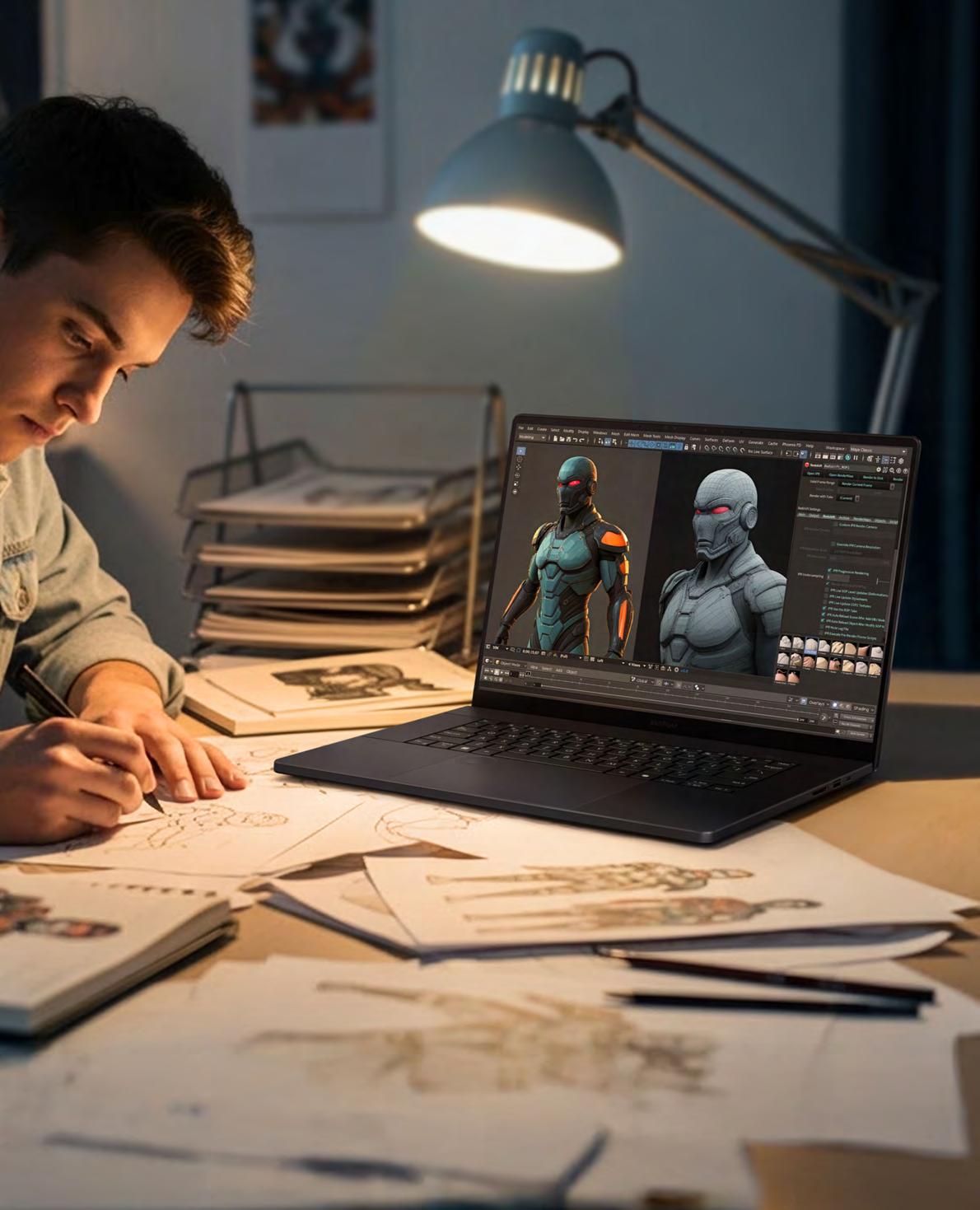
ASUS brings its ProArt lineup back to the Philippines with three creatorfocused machines designed to support modern workflows, from high-end studio production to field capture and AI-powered mobile creation. Headlining the range are the ProArt P16, the limited ProArt GoPro Edition, and the compact ProArt PX13. Each integrates AI-assisted tools, highperformance hardware, and creatorcentric features aimed at streamlining the path from capture to final output.
ProArt P16 (H7606) — PHP289,995
Built for demanding studio work, the ProArt P16 delivers the highest level of performance in the lineup. It runs on an AMD Ryzen AI 9 HX370 processor with a 50 TOPS NPU, paired with up to 64GB LPDDR5X memory and a 2TB PCIe 4.0 SSD, enabling smooth handling of complex 4K and 8K video projects with support for 10-bit 4:2:2 workflows. Its ASUS Lumina Pro OLED

display offers 100% DCI-P3 coverage, Pantone validation, and Delta E < 1 accuracy, with up to 1,600nits peak brightness, Dolby Vision, and VESA DisplayHDR 1000 certification. A 120Hz refresh rate and 0.2ms response time ensure fluid playback, while a vapor chamber cooling system maintains sustained performance. AI tools powered by the NPU support tasks such as transcription, scene detection, and automated sequencing, reinforcing its role as a full production machine.

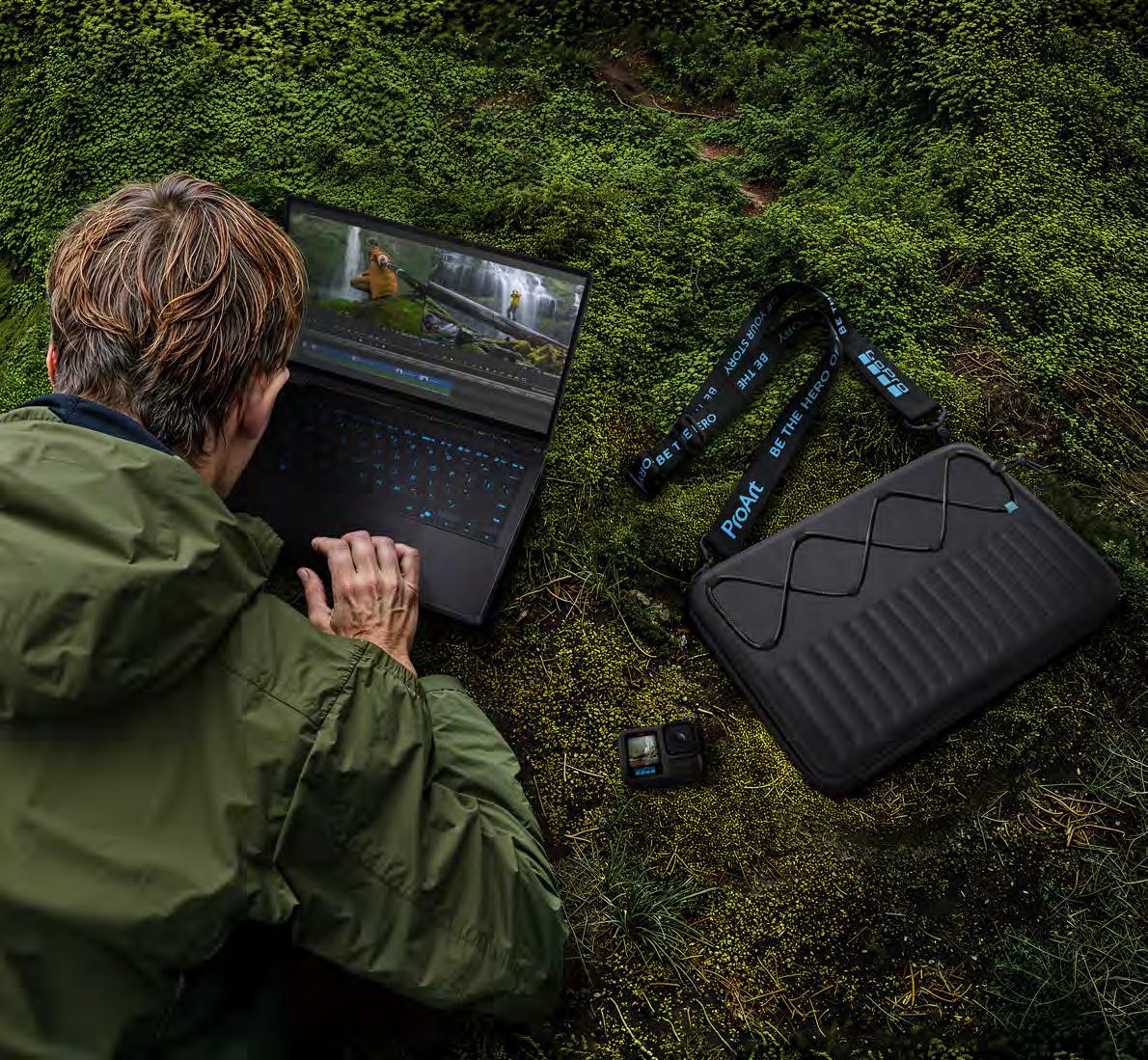
ProArt GoPro Edition (PX13) — PHP209,995
Designed for creators who shoot and edit in dynamic environments, the ProArt GoPro Edition combines portability with workflow integration. Its 360-degree hinge enables laptop, tent, stand, and tablet modes, adapting to different production scenarios. At its core is StoryCube, the first Windows app with integrated GoPro 360 video support, enabling AI-powered sorting, tagging, and cloud sync of footage. A dedicated GoPro hotkey provides instant access to GoPro Player, reducing friction between capture and editing. The device is finished in a rugged Black Metal design and comes with a protective sleeve, while its packaging doubles as a customizable storage case for cameras and accessories, extending its utility for fieldwork and travel.
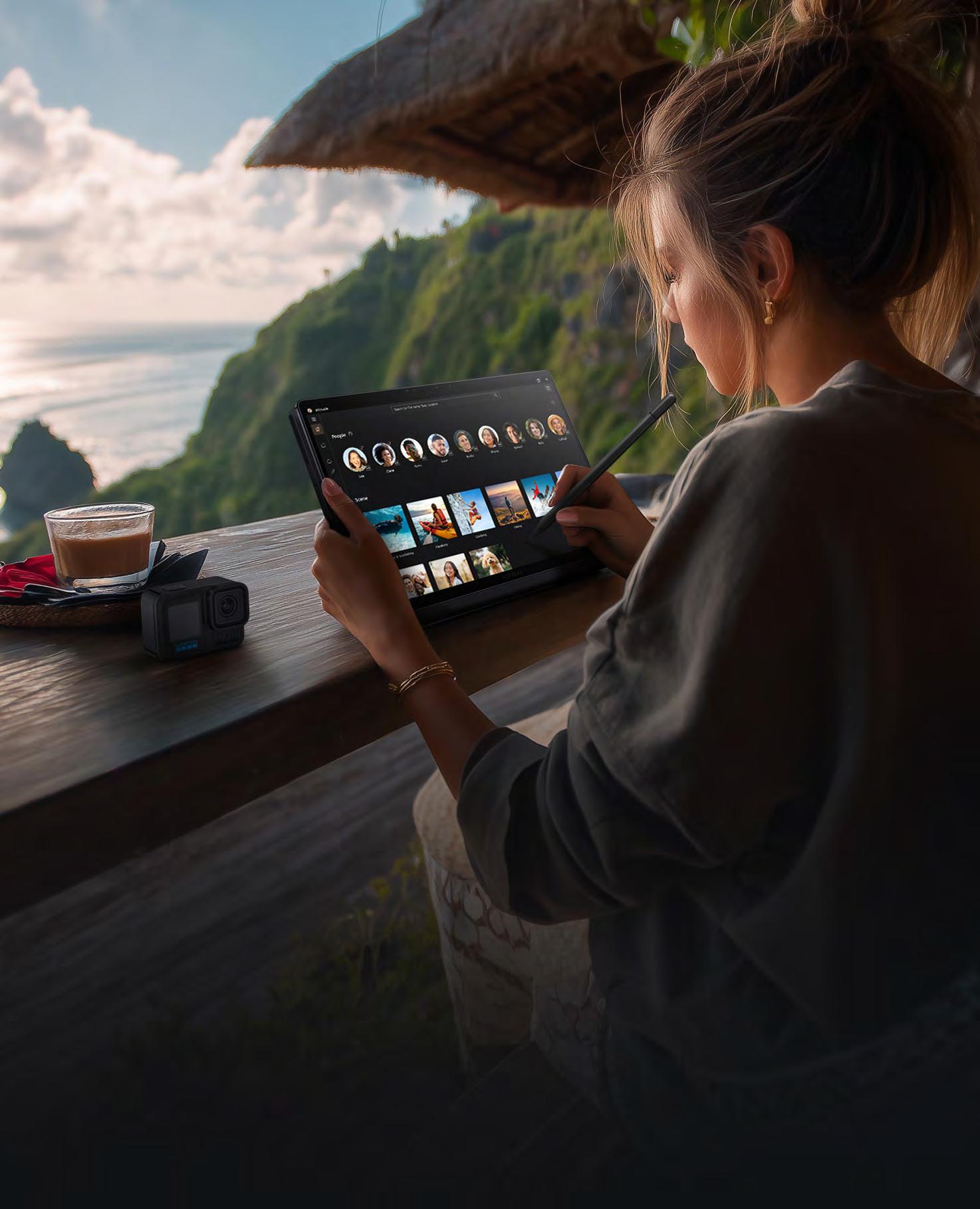
ProArt PX13 (HN7306) — PHP164,995
Compact and versatile, the ProArt PX13 is a 13.3-inch convertible built for creators on the move. Powered by an AMD Ryzen AI Max+ 395 processor with a 50 TOPS NPU, a 16-core CPU, and up to 32GB unified memory, it delivers responsive performance for AI-assisted workflows and can run optimized large language models locally. Its 3K ASUS Lumina OLED touchscreen provides accurate color and a 16:10 workspace, while stylus support enables more natural input for sketching and note-taking.
Weighing just 1.39kg, the device features a 360-degree hinge for flexible use across multiple modes and is supported by quiet ambient cooling operating below 25dB, making it suitable for focused work in any environment.
Available at ASUS Concept Stores nationwide, the 2026 ProArt series includes bundled access to Adobe Creative Cloud, CapCut, Microsoft Office, and ASUS service support. Across the lineup, creators also benefit from ASUS-exclusive tools such as StoryCube for AI-powered media organization, MuseTree for concept development, and the customizable ASUS DialPad that enables faster, more intuitive control in editing and design workflows.
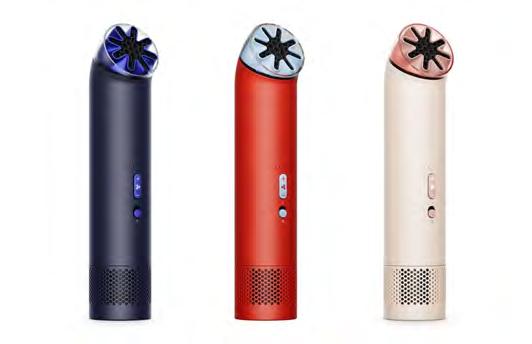
COMPACT and distinctly designed, the Dyson HushJet Mini Cool Fan brings the brand’s signature bladeless airflow technology into a more portable, personal form factor. Built for desktops, bedside tables, or small personal spaces, it delivers steady airflow with minimal noise.
The cylindrical design integrates Dyson’s air multiplier technology, drawing in air from the base and amplifying it through the top ring for a smooth, uninterrupted stream. Without exposed blades, airflow remains consistent and safer for close-range use, while also making the unit easier to clean.
Controls are kept simple and tactile, with onboard buttons for adjusting fan speed and power. The compact footprint allows it to fit easily into tight spaces, while still providing enough output for personal cooling during work or rest.
Noise management is a key focus, with the HushJet system engineered to reduce turbulence and deliver quieter operation compared to conventional fans. This makes it
suitable for environments where low noise is important, such as home offices or bedrooms.
As part of Dyson’s lineup of air solutions, the HushJet Mini Cool Fan offers a more accessible entry point into bladeless cooling, balancing design, portability, and everyday usability.




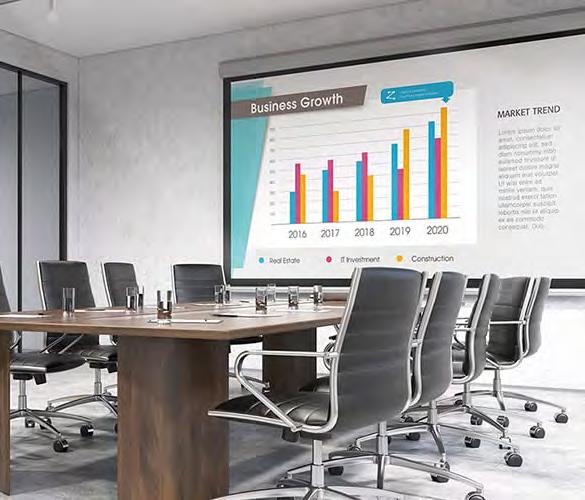
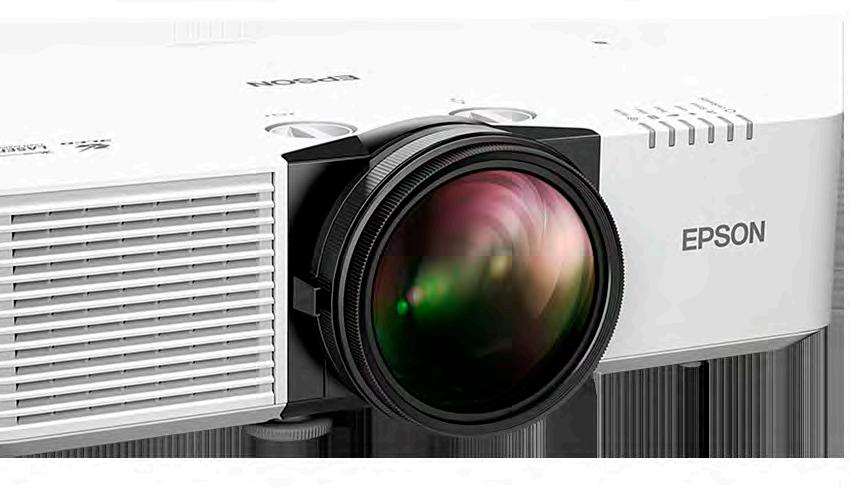
DESIGNED for large venues and high-impact presentations, the Epson EB-L690SE Short-Throw 3LCD Laser Projector brings professional-grade projection to the evolving demands of the MICE sector. As conferences, exhibitions, and corporate events become more visually driven, the need for bright, clear, and scalable display solutions continues to grow— and this model delivers precisely that.
Built on Epson’s 3LCD technology with 4K enhancement, the EB-L690SE produces vibrant colors and sharp detail across expansive screen sizes. Its high brightness output ensures that presentations remain clear even in well-lit environments such as hotel ballrooms and convention halls, where dimming lights is not always practical.
A defining feature is its short-throw capability, allowing it to project images up to approximately 500 inches from a relatively short distance. This makes it particularly suited for venues with spatial constraints, enabling largeformat visuals without requiring significant throw distance. The setup also minimizes shadows and glare, giving presenters more freedom to move naturally without obstructing the display.
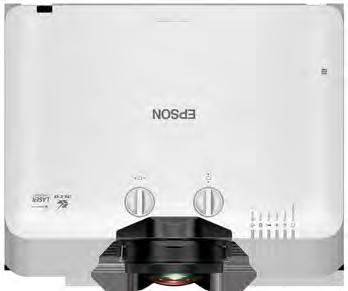
Flexibility is further supported by a range of placement options and builtin connectivity, allowing seamless integration with modern presentation systems. Whether for keynote sessions, panel discussions, or product showcases, the projector adapts to different event formats with minimal technical friction.
The EB-L690SE reflects Epson’s longstanding expertise in projection technology, developed across education, corporate, and event environments where clarity and reliability are critical. With its combination of brightness, scalability, and installation versatility, it positions itself as a dependable solution for venues aiming to deliver polished and engaging visual experiences.


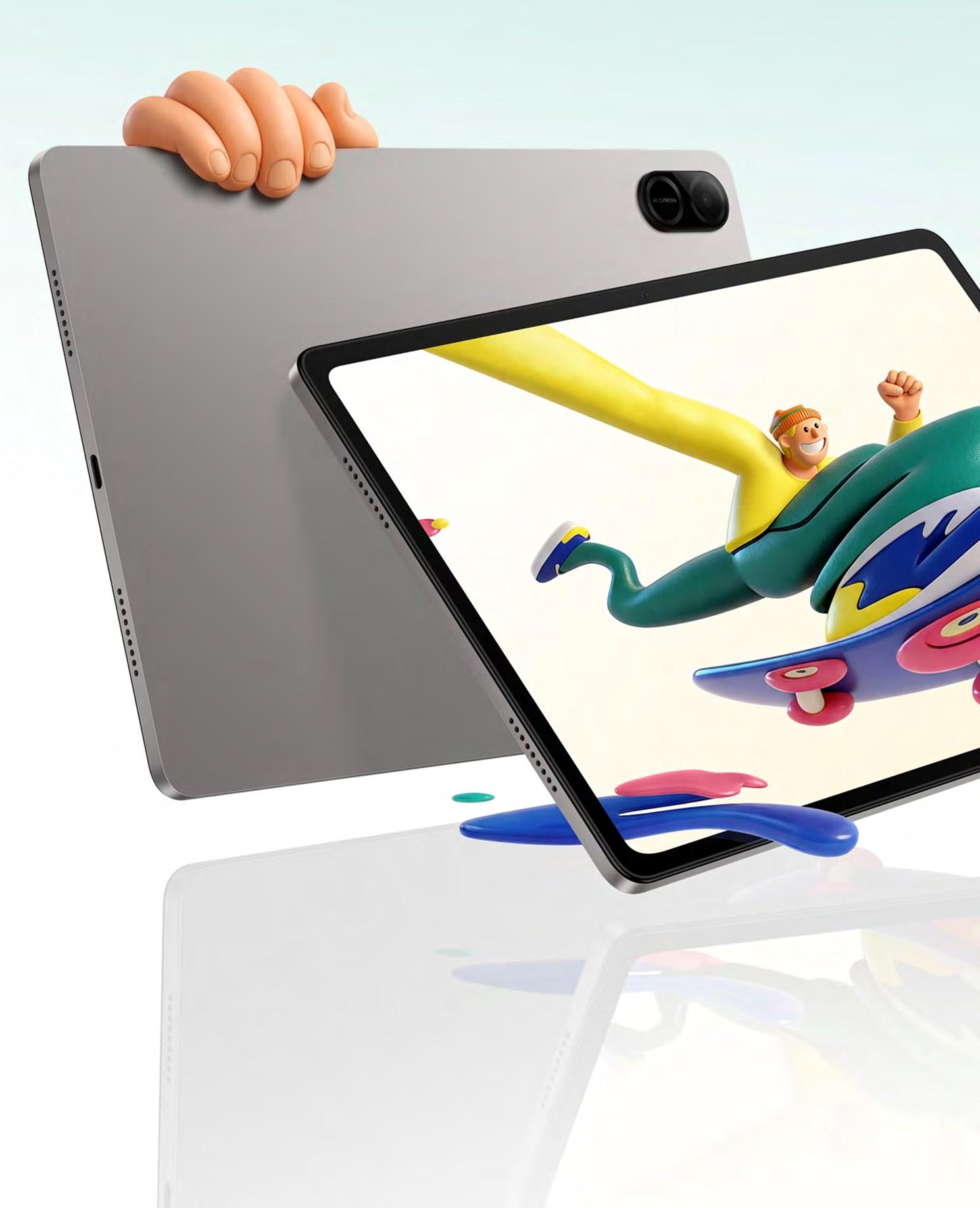

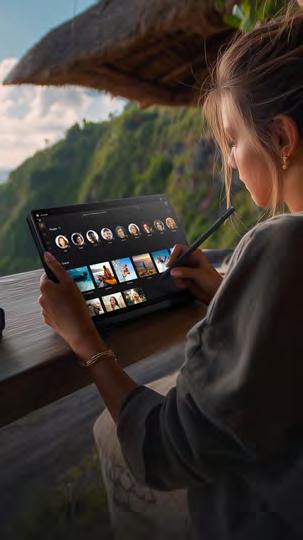
THE HONOR Pad X8b enters the market as a practical, well-rounded tablet designed for everyday use, balancing performance, durability, and portability. Positioned as an accessible option for first-time tablet users, students, and families, it builds on the previous generation with meaningful upgrades in display, battery life, and overall build quality.
Up front is an 11-inch Eye Comfort FullView display with a 1920 x 1200 resolution and a 90Hz refresh rate. The panel delivers smooth scrolling and responsive visuals, whether for streaming, browsing, or light gaming. The slim bezels contribute to an 84% screen-to-body ratio, giving the tablet a more immersive viewing experience.
Under the hood, the device runs

battery, capable of supporting extended use, including up to 21 hours of online video playback. This makes it a dependable companion for both work and entertainment throughout the day.
The HONOR Pad X8b also emphasizes durability. Its metal body maintains a slim 7.25mm profile while weighing just 499g, making it easy to carry without feeling fragile. Structural improvements enhance resistance to drops and pressure, with certifications from Switzerland’s SGS confirming its reinforced build.
Audio is handled by a quad-speaker setup tuned with HONOR Sound technology and Hi-Res Audio certification, delivering clear and well-balanced output. Voice enhancement features further improve dialogue clarity, particularly useful for video content and online
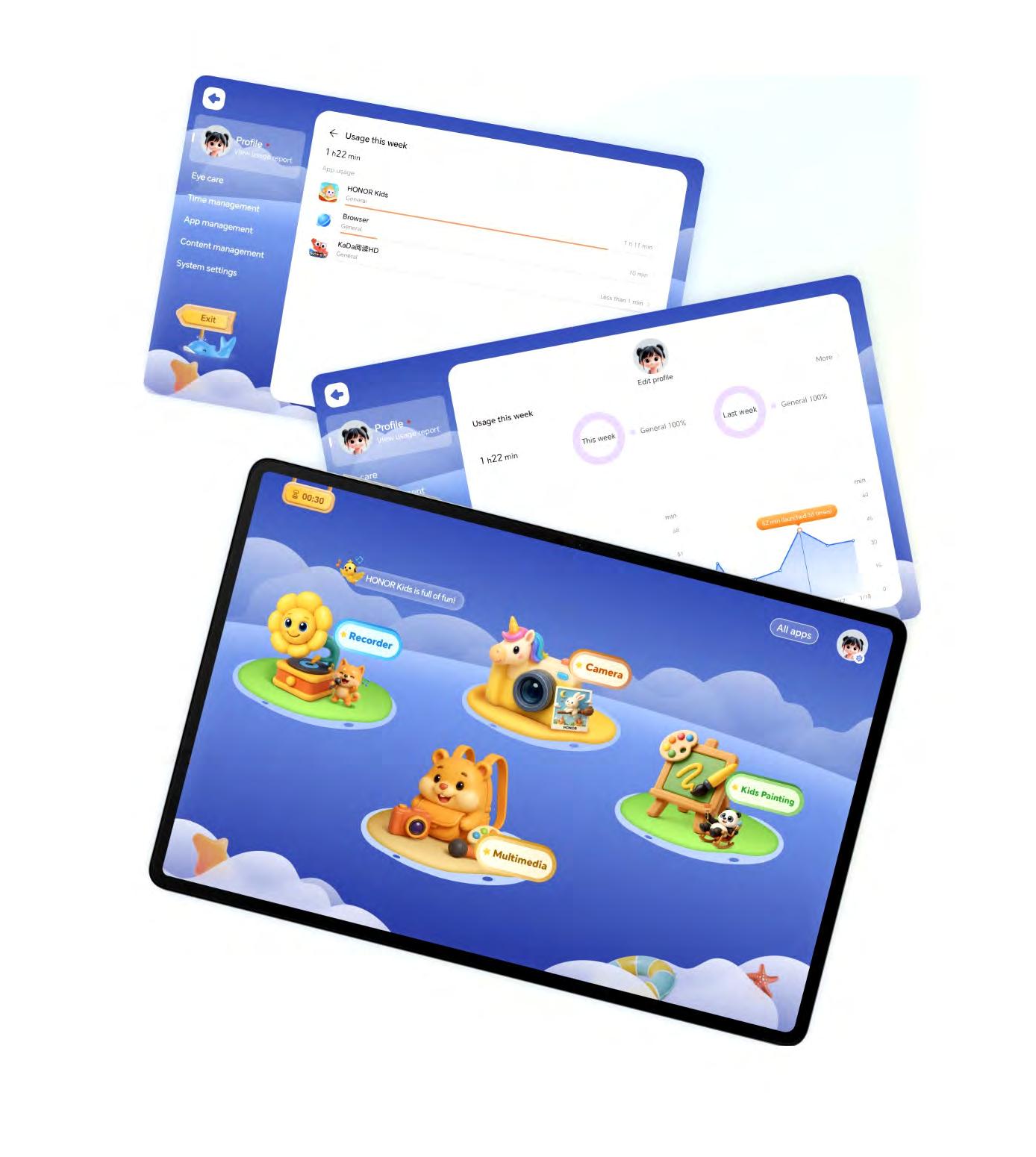
For families, the tablet includes HONOR Kids, a dedicated space that allows parents to manage screen time, control app access, and monitor usage. Eye care features such as blue light filtering and posture reminders help encourage healthier viewing habits for younger users.
Running on MagicOS 10.0, the tablet supports multitasking features like split-screen and multi-window modes, allowing users to run multiple apps simultaneously and switch between tasks more efficiently.
Available in Space Grey, it is bundled with a free stylus, making it a compelling entry-level tablet with a strong mix of features and everyday

THE INFINIX NOTE 60 Pro pushes the brand further into the premium midrange with a strong focus on performance, display innovation, and everyday usability. Positioned as a step up within the NOTE series, it combines a new Snapdragon platform with distinctive design elements and a feature set that leans toward immersive entertainment and intelligent functionality.
At its core is the Snapdragon 7s Gen 4 Mobile Platform, delivering significantly improved CPU and GPU performance over the previous generation. Paired with Infinix’s proprietary performance engine, the device handles multitasking and high-frame-rate gaming with ease, supporting up to 120FPS gameplay in titles such as Mobile Legends and Honor of Kings. Thermal stability is maintained by a 3D IceCore vaporchamber cooling system, which helps sustain performance during extended sessions.
One of its standout features is the Active Matrix Display on the rear, a unique LED interface that remains hidden until activated. It surfaces notifications, animations, and interactive elements such as mini-games, while allowing customization through patterns, emojis, and signatures, adding a layer of personality to the device.
The front is dominated by a 6.9-inch 1.5K Ultra HDR display with a 144Hz refresh rate and up to 4,500nits peak brightness, ensuring clear visibility and smooth
visuals in various lighting conditions. Protected by Corning Gorilla Glass 7i, the display also integrates motion sickness prevention technology for more comfortable extended viewing. Audio is handled by a stereo system tuned with SOUND BY JBL, completing the device’s multimedia focus.
For imaging, the NOTE 60 Pro features a 50MP OIS Night Master Camera with an ultrawide lens, supported by an Ultra HDR pipeline that enhances detail across highlights and shadows. Features such as 2x lossless portrait zoom, 4K ultra-steady video, and AI-powered editing tools provide flexibility for both casual and creative use.
The device is housed in a high-strength aluminum alloy frame with a refined
finish and IP64 resistance against dust and splashes. It also introduces practical additions such as a customizable OneTap Button and an integrated health monitoring system capable of tracking heart rate, blood oxygen, and HRV.
Powering the experience is a 6500mAh battery designed for allday use, supported by 90W wired and 30W wireless charging. Infinix also incorporates an active battery healing system aimed at extending long-term battery health and durability.
Running on XOS 16 with long-term update support, the NOTE 60 Pro delivers a well-rounded package that combines performance, design innovation, and everyday practicality in a competitive price segment.





DESIGNED for modern homes where comfort and air quality go hand in hand, the LG AeroBooster Pet combines multi-directional purification and smart automation in a single, compact system.
Built around a 360° purification design, the unit draws in and circulates air from multiple directions, helping maintain consistent air quality across spaces of up to 52.8 square meters. It is equipped with a HEPA Aero V Filter that captures fine particles, supported by Dual Air Flow and Clean Booster functions that improve air movement throughout the room.
For added convenience, the AeroBooster Pet features an AI+ Mode that automatically adjusts its operation in response to real-time conditions. This not only simplifies day-to-day use but also improves energy efficiency, with LG reporting over 49 percent reductions in power consumption during operation. The inclusion of UV Nano technology adds another layer to the purification process, enhancing overall air care performance.
Tailored for pet-friendly households, the system helps manage common indoor concerns, including airborne pet dander, hair, and everyday odors. Its filtration and circulation system work together to create a fresher indoor environment, making shared spaces more comfortable for both owners and their pets.
As part of LG Electronics’ growing AirCare lineup, the AeroBooster Pet expands the brand’s portfolio of home solutions focused on cleaner indoor environments. With its blend of coverage, automation, and targeted filtration, it positions itself as a practical option for households looking to improve everyday air quality.
BUILT for competitive play where milliseconds matter, the Logitech G PRO X2 SUPERSTRIKE introduces a new approach to click performance, combining speed, precision, and user control in a lightweight wireless design.
At the core of the mouse is its patentpending SUPERSTRIKE technology, which redefines how clicks are activated. By reducing the travel distance required to register a click, the system minimizes latency and delivers faster response times, with internal testing showing improvements of up to 30 milliseconds. This is paired with the Haptic Inductive Trigger System (HITS), which replaces traditional mechanical switches and provides real-time tactile feedback the moment a click signal is sent. PHP11,945

Developed in collaboration with professional teams such as G2 Esports, Natus Vincere, and Bilibili Gaming, the PRO X2 is tuned for high-level competitive environments. It features 10 selectable actuation levels, allowing users to adjust click sensitivity to match their playstyle or specific in-game requirements through Logitech G HUB.
Performance is further reinforced by Logitech G’s LIGHTSPEED wireless technology, delivering up to an 8kHz report rate for fast and stable input. The mouse is powered by the HERO 2 sensor, offering up to 44,000DPI sensitivity, 888IPS tracking speed, and over 88G acceleration, ensuring accurate and consistent tracking without smoothing or filtering.
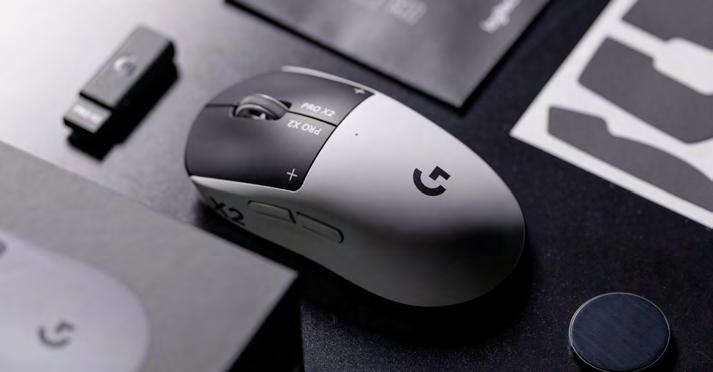
Despite its advanced internals, the PRO X2 maintains a lightweight 61-gram build, based on the design of the SUPERLIGHT 2, making it suitable for extended gaming sessions. Battery life reaches up to 90 hours on a single charge, supporting uninterrupted gameplay.
With its focus on responsiveness and customization, the PRO X2 SUPERSTRIKE positions itself as a serious tool for players who demand precise control and consistent performance in competitive settings.


BUILT with a clear focus on gaming performance, the nubia NEO 5 Series brings high-refresh displays, active cooling, and control-focused features into a more accessible price range. Designed with input from REDMAGIC Lab, the lineup integrates hardware and software typically seen in higher-end gaming devices, but packaged for a wider audience.
Across the series, displays offer refresh rates of up to 144Hz, delivering smoother visuals and more responsive gameplay. This is supported by advanced cooling systems, including vapor chamber cooling and, on select models, a built-in cooling fan to maintain stable performance during extended sessions. Gaming shoulder triggers add another layer of control, enabling faster, more precise inputs in competitive scenarios.
Battery capacity is equally geared toward endurance, with configurations reaching up to 6210mAh and fast
charging support, helping users stay in-game longer. On the software side, nubia integrates AI-driven tools such as Game Space and the Demi AI companion to optimize performance and assist users in real time.
The lineup is structured to cater to different levels of play. The NEO 5 5G serves as the entry point, delivering consistent performance for everyday gaming. The NEO 5 Pro 5G steps up with improved processing power and display quality, while the NEO 5 GT 5G focuses on sustained high performance with enhanced

cooling and responsiveness for more demanding titles.
While clearly built with gaming in mind, the series also extends its capabilities to everyday use, supporting multitasking, content consumption, and productivity with capable hardware and optimized software.
With its combination of performancedriven features and competitive pricing, the nubia NEO 5 Series positions itself as a practical option for users looking to step into mobile gaming without moving into flagship territory.

THE OPPO A6 PRO is designed to deliver a smoother, more stable everyday smartphone experience, with a focus on thermal efficiency, reliable performance, and a display that enhances daily use. Positioned within the A Series, it offers systemlevel optimizations and practical upgrades to keep performance consistent across gaming, streaming, and multitasking.
The device is available in both 5G and 4G variants to suit different user needs. The 5G model is powered by the MediaTek Dimensity 6300 platform, offering faster connectivity and improved responsiveness for online activities such as streaming and gaming. Meanwhile, the 4G version runs on the MediaTek Helio G100, delivering reliable performance for everyday tasks such as messaging, browsing, and productivity. Both variants benefit from OPPO’s systemlevel optimizations, ensuring smoother app transitions and consistent operation throughout the day.
A key highlight is OPPO’s SuperCool VC System, engineered to address
heat buildup during extended use. It features a 4,300 mm² vapor chamber, an expanded graphite layer, and an optimized internal layout to enhance heat dissipation. This helps reduce hotspots and maintain stable performance, particularly during longer gaming sessions, video calls, or continuous media consumption.
On the display side, the OPPO A6 Pro delivers a bright, smooth viewing experience designed for everyday comfort. It offers vivid colors, improved contrast, and a high refresh rate that enhances scrolling and navigation. Increased brightness also ensures better visibility outdoors, making it easier to read content or use apps under direct sunlight.
Bringing these elements together, the OPPO A6 Pro combines sustained cooling, capable processing power, and a refined display experience in a device built for reliability. Available in multiple configurations and colors, it presents a well-rounded option for users looking for a smartphone that stays responsive and comfortable to use throughout the day.


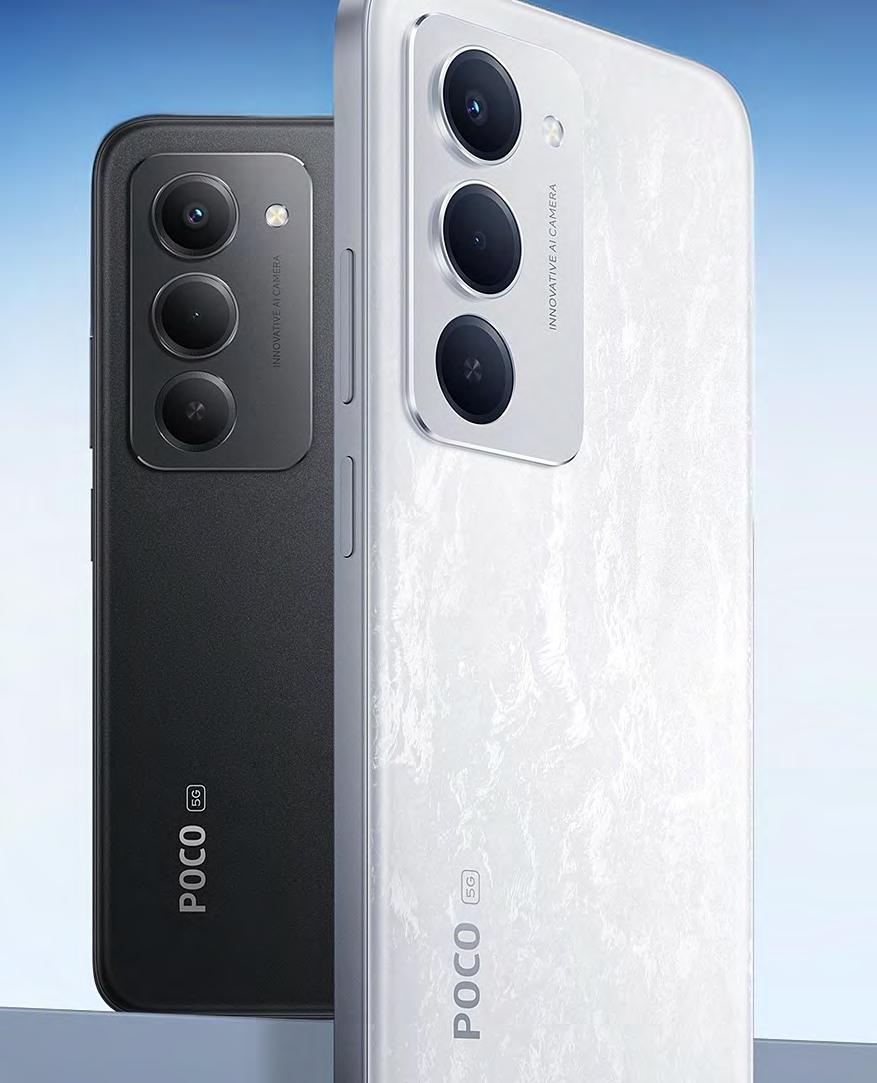
PHP11,999 (6GB+128GB)
PHP13,999 (8GB+256GB)
THE POCO M8S 5G steps up the brand’s entry-level lineup with a focus on battery endurance, display quality, and dependable everyday performance. Positioned as a step up from the C-series to the more capable M-series, it delivers a more refined experience for users who need longer battery life and smoother daily use.
At the center of the device is a massive 7,000mAh battery designed to last up to 2 days of use on a single charge. It supports 33W fast charging for quick top-ups and 18W reverse charging, allowing it to power other devices when needed. The battery is also engineered for longevity, retaining at least 80% capacity even after 1,600 charge cycles, making it a practical option for long-term use.
The phone features a 6.7-inch 1.5K display that enhances everyday viewing with sharper detail and a more immersive experience. Triple TÜV Rheinland eye-care certifications help reduce strain during extended use, while Wet Touch Technology 2.0 ensures responsive input even with damp or oily fingers.

Performance is handled by the Snapdragon 7s Gen 2 Mobile Platform, delivering smooth operation for multitasking, streaming, and gaming. With up to 16GB RAM via memory extension and support for expandable storage up to 2TB, the device offers flexibility for both performance and storage needs. Running on Xiaomi HyperOS, it also integrates smart features such as Google Gemini and Circle to Search for more intuitive interactions.
For photography, the POCO M8s 5G is equipped with a 50MP AI dual camera system capable of capturing
clear and vibrant images across different scenarios. AI-powered tools such as AI Erase and AI Sky allow users to enhance and customize their shots with minimal effort.
Additional features include a 200% volume boost for louder audio, a side-mounted fingerprint sensor for quick access, and IP64-rated dust and water resistance for added durability. With its balance of battery life, performance, and practical features, the POCO M8s 5G positions itself as a strong everyday smartphone for users stepping up within the segment.
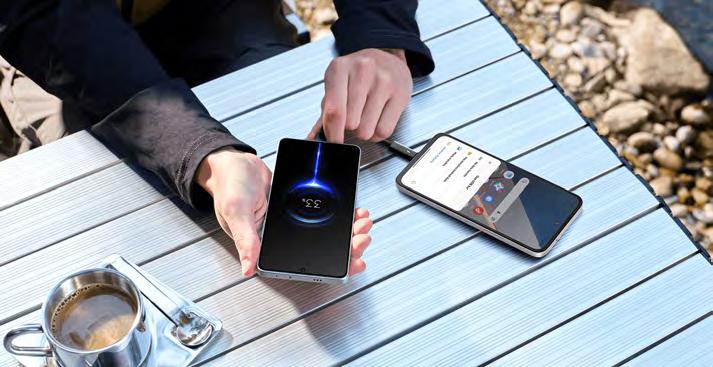
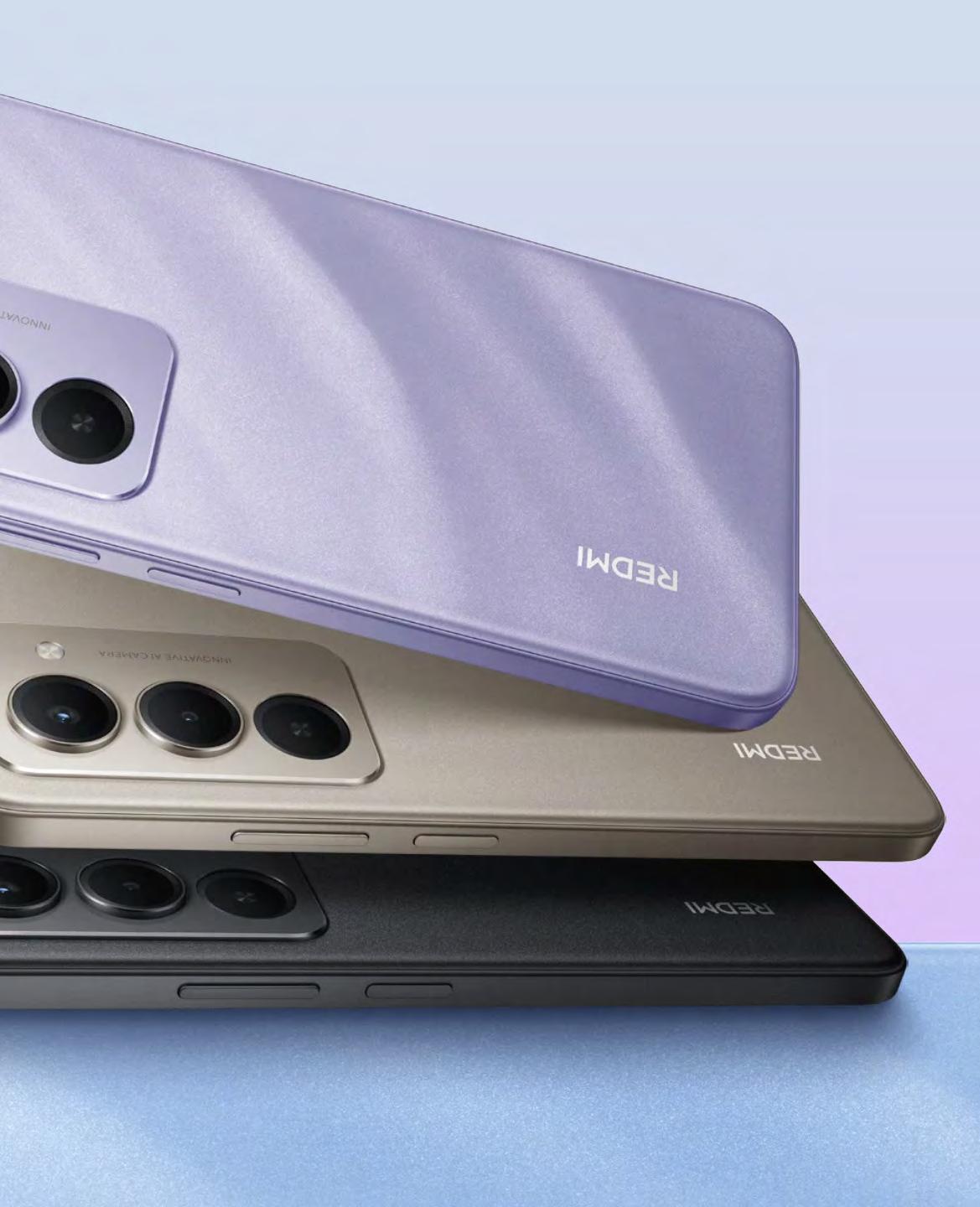
THE REDMI 15 makes a strong case for budget smartphones that do not feel compromised. Positioned as an entry-level device with upgraded essentials, it focuses on battery life, display quality, and everyday performance, offering a well-balanced package at an aggressive price point.
At its core is a 7000mAh siliconcarbon battery, one of the largest in its class, delivering up to 2.32 days of use on a single charge. It supports 33W fast charging for quick top-ups, along with 18W reverse charging, allowing the device to double as a power source for other gadgets when needed.
The phone features a 6.9-inch FHD+ display with a refresh rate of up to 144Hz, resulting in smoother scrolling and more fluid visuals for video and gaming. This is paired with a Qualcomm Snapdragon 685 processor and supported by up to 16GB of RAM via Memory Extension, ensuring stable performance across everyday apps and multitasking scenarios.
For imaging, the REDMI 15 is equipped with a 50MP AI dual camera system that performs reliably in various lighting conditions, with Auto Night Mode enhancing low-

light shots. While positioned as a budget device, it delivers capable results for casual photography and social media use.
Design and durability also receive attention, with an IP64 rating for resistance against dust and splashes, and a quad-curved body that improves grip and comfort in hand. The device runs on Xiaomi HyperOS 2, integrating AI-driven features, including Gemini AI, to support productivity and smarter interactions.
Available nationwide, the REDMI 15


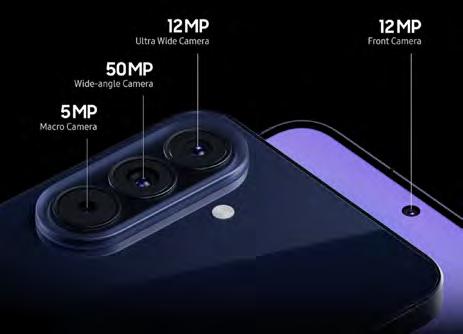
POSITIONED as the most advanced model in the lineup, the Samsung Galaxy A57 5G brings a stronger focus on AI-driven functionality, imaging, and long-term usability to the midrange segment.
Running on One UI 8.5, the device introduces Samsung’s “Awesome Intelligence,” a suite of AI tools designed to make everyday tasks more efficient. Voice Transcription converts recordings and calls into text, while AI Select enables quick on-screen actions such as extracting text or

generating content. Features like Google Circle to Search add another layer of convenience by allowing users to identify multiple elements within an image in a single step.
Photography is anchored by a 50MP main sensor, supported by ultra-wide and macro lenses for added versatility. Enhanced Nightography improves low-light performance, while upgraded image processing sharpens detail and reduces noise for more consistent results. Faster shutter speeds also help capture fleeting moments with better clarity, while AI-based scene optimization ensures balanced color and natural-looking skin tones.
The Galaxy A57 5G is built for smooth performance, with upgraded CPU, GPU, and NPU components supporting multitasking, streaming, and content creation. Its 6.7-inch Super AMOLED+ display with up to a 120Hz refresh rate and Vision Booster delivers clear, fluid visuals across different lighting conditions. A 5,000mAh battery powers the device, offering up to two days of use depending on usage patterns.
Durability is reinforced with an IP68 rating for water and dust resistance, while long-term reliability is supported by up to six generations of Android and One UI upgrades, along with six years of security updates. Security is handled through Samsung Knox Vault, providing hardware-level protection for sensitive data.
With its blend of AI tools, improved imaging, and extended software support, the Galaxy A57 5G presents itself as a well-rounded option for users looking for a capable, future-ready smartphone without stepping into flagship territory.

BUILT for the realities of outdoor use, the soundcore Boom 3i arrives as a rugged, water-ready speaker designed to handle everything from poolside lounging to full-on beach outings. Developed under Anker Innovations, the speaker leans into durability without compromising on sound performance.


At its core is a floatable design that keeps the speaker upright in water, allowing uninterrupted playback even while swimming. With an IP68 rating, it resists both water and dust, and can survive immersion of up to 1.5 meters for 30 minutes. The build is reinforced with a protective coating that delivers significantly higher resistance to saltwater exposure, alongside drop protection of up to one meter, making it suitable for harsher outdoor environments.
Audio output is anchored by a 40W woofer paired with a 10W tweeter and dual bass radiators, producing a sound profile that emphasizes clarity and low-end punch. The brand’s BassUp 2.0 technology enhances bass output by up to 3dB, resulting in a noticeably fuller sound. For wider coverage, TrueWireless Stereo support allows pairing of two units for a more immersive left-right stereo experience.
Beyond sound, the Boom 3i integrates a programmable LED light system that syncs with music, adding a visual layer to gatherings. Through
the companion app, users gain access to EQ customization, lighting control, and several utility features such as an emergency alarm, voice amplifier, and a “Buzz Clean” function that helps shake off dust and debris.
Battery life reaches up to 16 hours on a single charge, supporting extended use throughout the day. The speaker is available in Jungle Green, Deep Ocean Blue, and Adventurer Black, giving it a distinctly outdoor-ready aesthetic.
Positioned as a dependable companion for active use, the Boom 3i balances durability, portability, and performance in a package that is clearly tuned for the outdoors.

REVIEWED BY ALJHELYN PIADOR
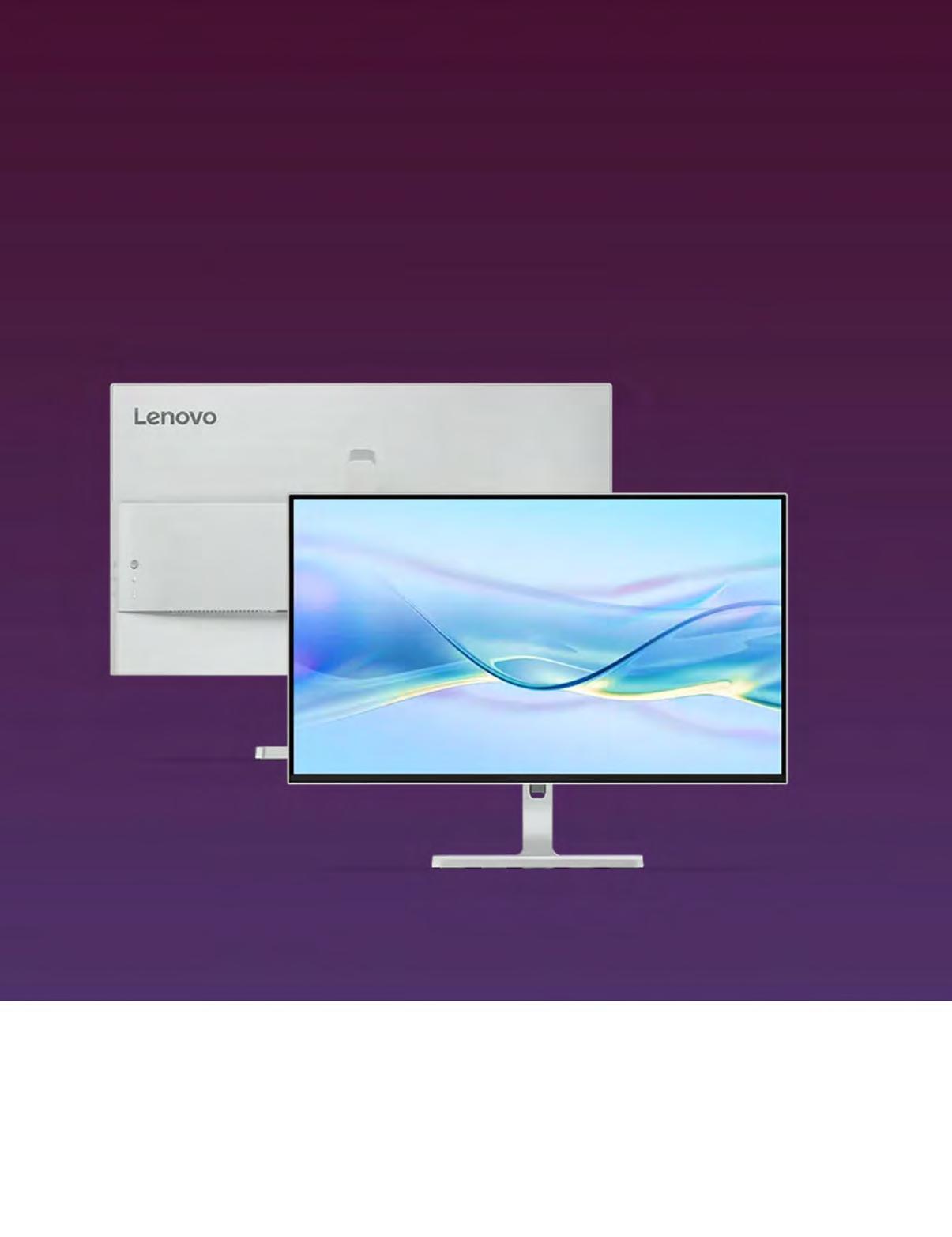

In an era where we breathe screens like it’s oxygen, the monitor has become part of how we work, think, and even unwind. And every now and then, a device comes along that doesn’t try too hard to feel “premium,” but instead focuses on being right for everyday life.
The Lenovo L27h-4A is one of those monitors that quietly entered my setup and slowly made me question a lot of things: Can one monitor actually simplify my entire workspace? Can USB-C really replace all the messy cables, adapters, and docks I’ve been dealing with? And more importantly, can something this straightforward actually feel this good to use every single day without costing as much as a high-end laptop? That’s where this monitor started to get interesting for me.
What I liked most about the Lenovo L27h-4A, honestly, was its design. The monitor’s minimalist and functional look fits perfectly into modern desk setups. It has a clean, borderless display that feels professional without being loud or flashy. Among its most practical touches are the built-in cable management holes, which help reduce clutter and keep everything looking organized.
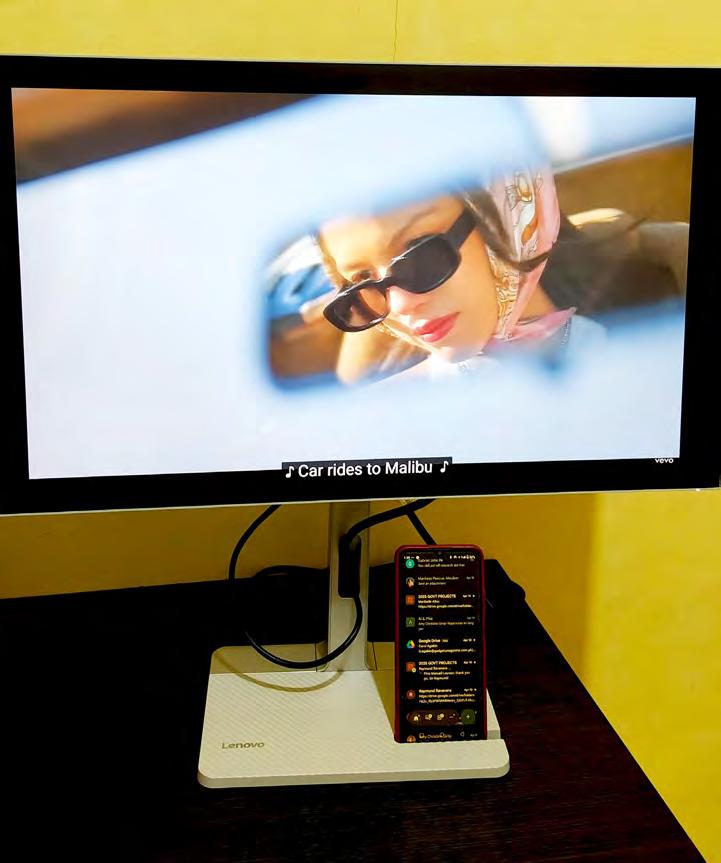
It also comes with a small integrated phone stand, which I didn’t expect to use as much as I do now. It’s surprisingly useful for multitasking, and even when I’m not using it, the monitor still looks intentional, not like something is missing.
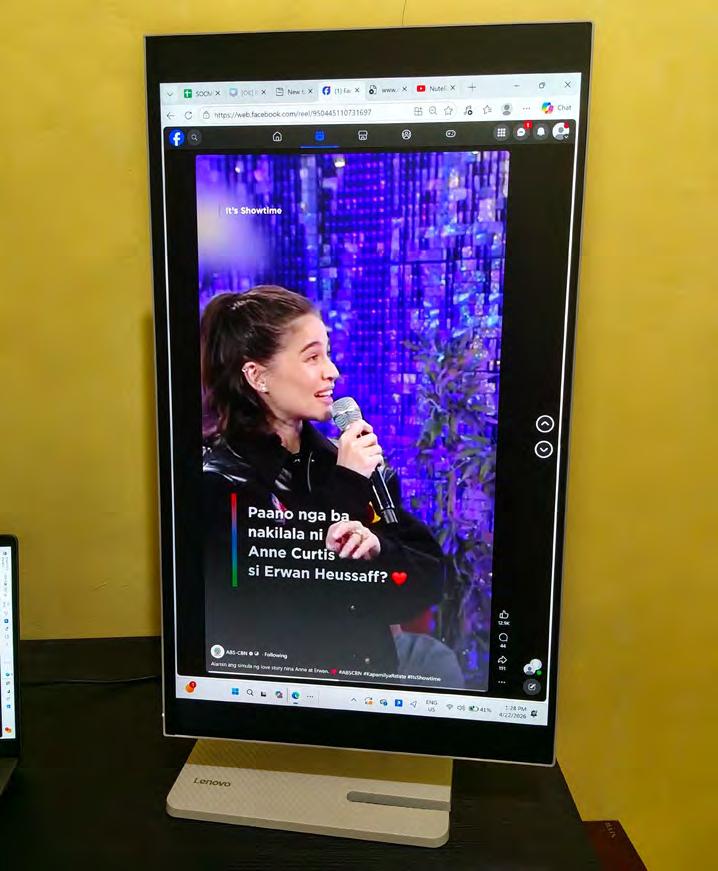
What stood out to me personally is how easy it is to adjust. As someone who’s not used to handling big appliances, I found it very beginner-friendly. I can raise it, lower it, tilt it, switch to portrait or landscape, and it still feels sturdy and not delicate or scary to move. Overall, the design feels very intentional. It’s simple, clean, and focused on everyday use rather than just aesthetics.





On the hardware side, the monitor features a 27-inch 2K (2560×1440) IPS display that delivers sharp and clear visuals for daily tasks. A standout feature is its USB-C one-cable solution that supports up to 75W power delivery, so it can charge your laptop while also handling display output and data transfer. A built-in 4-port USB hub simplifies the desk setup by reducing the need for extra dongles and cables.
Color-wise, it offers 99% sRGB and 90% DCI-P3 coverage, which gives it a decent level of vibrancy and accuracy for everyday use. Natural Low Blue Light technology helps reduce eye strain without making the colors look washed out, a feature I personally appreciate during long hours of screen time.
That said, while I found the display more than satisfactory, the colors were just average overall in real-world use. It’s not something I fully rely on for serious color-critical editing, so I still prefer
editing photos or videos on my laptop because it just feels more accurate for my workflow. Also, this is not an ultra-high refresh competitive-level display, so it’s not designed for fast-paced gaming or highperformance visual work.
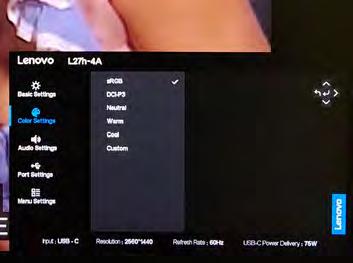
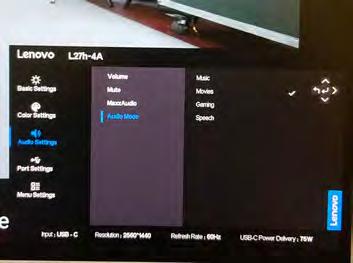
In real-world use, the Lenovo L27h-4A honestly feels like a meaningful upgrade for a work-from-home setup. The bigger screen and sharper resolution immediately reduce eye strain, especially during long hours of work or browsing. It’s one of those things you don’t fully appreciate at first, but over time, you realize how much more comfortable your daily screen time has become.
The built-in audio also surprised me. A lot of reviews I’ve seen mention that the speakers are pretty basic, and I understand where that comes from; they’re not studio-level or anything close to that. But in my experience, I wouldn’t completely downplay it. With the different sound modes, especially the movie mode, it actually becomes enjoyable for casual watching. It’s not about loudness or depth but more about convenience and balance. For watching films, YouTube, or background content, it genuinely holds up better than I expected from a monitor, and at times it even made me think I could
skip turning on a smart TV for simple viewing.
In fact, while using this device, I slowly realized I hadn’t turned on my TV in a while, since this monitor had taken a permanent spot on my desk. It naturally became my go-to screen for both work and casual viewing, which says a lot about how convenient it is.
The portrait mode is another feature I ended up using more than I thought. I’ve used it for scrolling TikTok, reading, and vertical content, and it just makes everything feel more natural and spaceefficient. It’s one of those small features that quietly improve the monitor’s flexibility in daily use.
Overall, it doesn’t feel like a “work-only” monitor. It adapts depending on what I’m
doing, which makes the experience feel more personal and less rigid. and comfort without going overboard in price.
In the Philippines, the price range is around PHP12,000 to PHP17,000, depending on where you buy it. For what it offers, the package feels very complete: a 27-inch 2K display, USB-C convenience with 75W power delivery, a built-in USB hub, decent color coverage, eye comfort features, built-in speakers, and flexible use for both productivity and entertainment. While it’s not competing with premium creative or gaming monitors, its value really comes from its practicality. For someone upgrading from a laptoponly setup, it feels like a very balanced investment that improves both workflow
The Lenovo L27h-4A is an everyday allrounder that quietly improves how your desk feels and how you work throughout the day. For me, it simplified my setup, reduced cable clutter, made long hours more comfortable, and blended work and entertainment in a way that feels natural. If you’re looking for something clean, practical, and genuinely easy to live with every day, this monitor delivers more than you’d expect at its price point.
Display: 27-inch IPS panel
Resolution: 2560 × 1440 (2K QHD)
Refresh Rate: Up to 100Hz
USB-C: Up to 75W power delivery (single-cable setup)
Color Coverage: 99% sRGB / 90%
DCI-P3
Ports: USB-C, HDMI, DisplayPort, USB hub
Ergonomics: Height, tilt, swivel, pivot (portrait mode)
Eye Care: Low Blue Light technology
Audio: Built-in stereo speakers
True one-cable setup (USB-C + charging)
Comfortable for daily use
Great productivity monitor
Built-in USB hub
Versatile, flexible stand
Eye comfort features
Colors are average overall
Not ideal for color-critical editing
Not for high-end gaming
REVIEWED BY GABRIEL JOHN PE
FOLDABLE SMARTPHONE
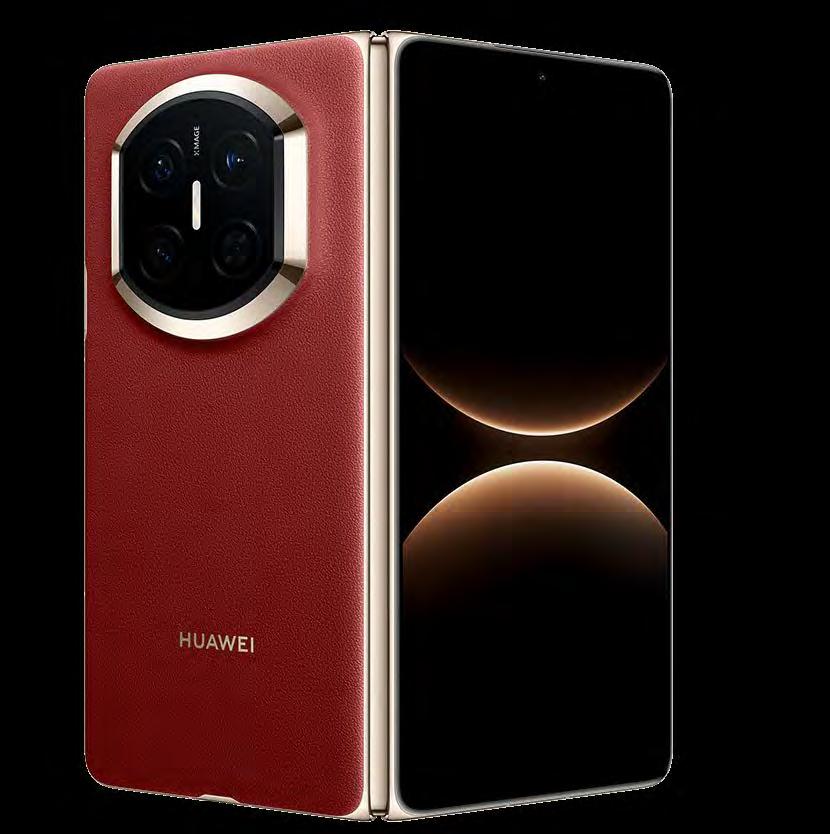
If there’s a brand that’s quietly ahead of the curve for foldables, it’s HUAWEI. Back in September 2024, they surprised the rest of the world with their first-ever tri-fold phone, the HUAWEI Mate XT Ultimate. It proved that the brand was doing something right with its foldables. While we won’t get the Mate XT Ultimate in the country, we do get the next best thing, the latest in the brand’s foldable line, the HUAWEI Mate X7. A culmination of the brand’s technology, it sits on the throne as the King of Foldables.

The HUAWEI Mate X7 exudes elegance from the moment you take it out of the box. You’ll be greeted by the 8.0-inch foldable display, and when you turn it around, you’ll see the vegan leather back and the 6.9-inch cover display. Our review unit came in Nebula Red, which I think pairs well with the metal frame.
When you get the device, you immediately notice what HUAWEI was going for in the Mate X7. Compared to some of its competitors, it’s not the thinnest, nor does it push design limits, but instead, you feel confident when you hold and unfold it. When I first held the device, I immediately knew it was no porcelain bowl I needed to handle with extreme care. It’s solid and nice to hold, whether folded or unfolded.
The cover display features an 8-megapixel f/2.4 selfie camera. The internal folded display has another 8-megapixel f/2.2 selfie camera. You can find the phone’s volume and power buttons on the right, with the power button also serving as a

fingerprint reader. You can see a speaker on top and another beneath. Also found beneath are the USB-C port and the dual-SIM tray. The phone also supports an additional SIM, but you are limited to two active SIMs at a time.
Both displays feature LTPO OLED screens with a 120 Hz refresh rate, HDR, and 1440 Hz PWM. The outer cover display has a resolution of 1080 x 2444, while the larger display has a higher resolution of 2416 x 2210. The front also has a peak brightness of 3000nits, while the inside display goes up to 2500nits.
On to the processor: the HUAWEI Mate X7 is powered by the Kirin 9030 Pro. On paper, it’s not on par with its Snapdragon counterpart, but in reality, you’ll barely notice the difference. Our review unit also comes with 16GB of RAM and 512 GB of storage.
Here are some benchmark numbers for those who want raw numbers:
• Antutu V11 – 159435
• Geekbench 6 – 837 Single Core, 4611 Multi-core
• 3Dmark Wild Life 7772 (46.54 fps)
• PCMark Work 3.0 9976
In terms of gaming, the Mate X7 can handle the most demanding games even on high settings. I was able to play

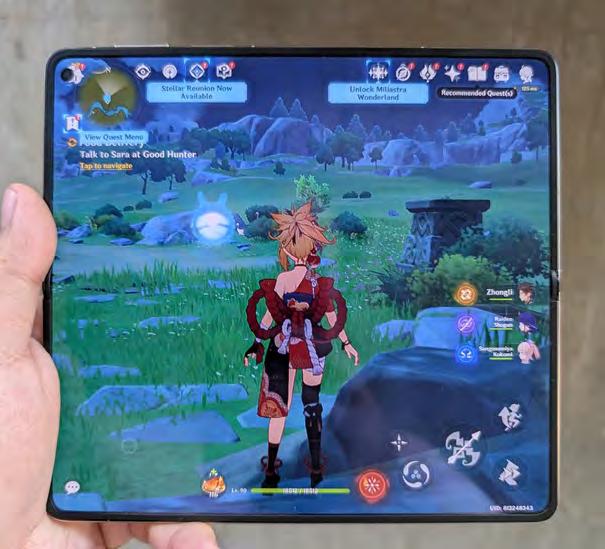
Genshin Impact at the highest settings at 30 fps, and at High settings at 60 fps. Lighter esports titles like Honor of Kings were a breeze with settings maxed out. The same goes for Teamfight Tactics, where everything ran smoothly. I knew that a phone with this caliber could handle most games; what surprised me was how it handled it. Even during heavy gaming sessions, the phone never got hot, whether it was folded or unfolded.
The HUAWEI Mate X7’s cameras are by far its best feature. I was honestly blown away by its capabilities. The Mate X7 features a quad-camera setup: a 50-megapixel main shooter (with 17.5 EV of dynamic range), a 50-megapixel


Telephoto Macro, a 40-megapixel Ultrawide, and finally the True-to-Colour sensor. The True-to-Color sensor is a color-spectrum sensor that enables the camera to capture a wider range of colors for a more natural-looking shot.
The Mate X7’s cameras produced some of the best pictures I’ve seen on a phone, not to mention on a foldable, where cameras are an afterthought. As for video, it can shoot great footage at up to 4K at 60fps. Videos were decent, social media-ready, though not stable shots were capped at 2.7k
Battery life is also pretty good for a foldable. The phone lasted me a whole

day. I was also able to get 15h 39 mins in PCMark Battery Life when the device was unfolded. When you do run out of juice, charging is fast with its 66W HUAWEI SuperCharge capability. I was able to charge the phone from 10-100% in about 48 minutes. It also has 0W Wireless HUAWEI SuperCharge, but I was unable to test this feature fully.
What makes the HUAWEI Mate X7 the king of foldables is its durability. HUAWEI has equipped the Mate X7 with 360-degree protection. The cover display features the second-generation Crystal Armor Kunlun Glass, while the inner screen has a Triple Layer Composite Structure for bend and impact resistance. The Mate X7


also features a new hinge system built to withstand impacts and drops. Lastly, the phone is rated IP58/IP59 for water and dust resistance, meaning it can withstand being submerged in up to 2m of water for up to 30 minutes.
On the software side, the Mate X7 is using HUAWEI’s EMUI 15 for our global unit. During my two weeks with the device, I’ve already had two updates come through, which was a good sign.
The HUAWEI Mate X7 was unexpectedly easy to use. Even though it natively lacks Google services, workarounds have finally improved to the point where you don’t notice them sometimes. I was able to easily download most of my work apps, and all it took was just another layer of user login. After setting up the device for the first time, I was able to check my email and watch YouTube within minutes.
While the software has improved significantly, glitches still occur. Just before finishing this review, the Drive app crashed a couple of times when I was uploading photos from my phone. There were also a few instances when the games had bugs. Certain apps were also forced to a certain orientation, without meaning you’ve got to rotate the Mate X7 in the middle of a task. These bugs are not a deal
breaker for me; in fact, they were quite rare.
I really enjoyed the HUAWEI Mate X7 as a media-centric device. The displays are sharp and vivid, and the speakers are good. It’s not the loudest, but it can fill a room. In terms of productivity, I like the split screen for multi-app workflows. You can technically open three windows at a time, but for me, it was already overkill for the work that I do on my phone.
I should also mention that there’s no 5G support locally for the HUAWEI Mate X7. It does have the feature, and you can use it in other countries, but we can’t use it in the Philippines.
The HUAWEI Mate X7 is now available in the Philippines for PHP119, 999. That’s a steep price compared to competitors, justified by its more durable build, elegant design, and class-leading cameras. Honestly, if you are a photographer who wants a foldable, you’ll definitely fall in love with this phone.
HUAWEI’s King of Foldables sits on top of its throne with its build quality and amazing cameras, but it also comes with a royal price.

Display: 6.49-inch 2444 × 1080
LTPO OLED with 2nd Gen Kunlun Glass (cover), 8-inch 2416 × 2210
LTPO OLED (unfolded), both 120 Hz refresh rate with 144 Hz PMW and HDR vivid
Dimensions: 156.8 × 73.8 × 9.5mm (folded) 156.8 × 144.2 × 4.5mm (unfolded) OS: EMUI 15
Processor: Kirin 9030 Pro Rear Cameras: 50 MP Ultra Lighting HDR Camera (F1.49~F4.0, RYYB,OIS), 40 MP Ultra-Wide Angle Camera (F2.2, RYYB), 50 MP Telephoto Macro Camera (F2.2, RYYB, OIS), True-to-Colour Camera
Front Camera: Folded: 8 MP Camera (F2.4 aperture); Unfolded:8 MP Camera (F2.2 aperture)
Battery: 5600 mAh with HUAWEI SuperCharge (66W), Wireless HUAWEI SuperCharge (50W), 7.5W reverse charging (wireless), 5W reverse charging (wired)
Connectivity: Wi-Fi 7, Bluetooth 6.0, NFC, Infrared RAM: 16GB, Storage: 512GB
Colors: Nebula Red, Black Weight: 236g
Others: IP58/IP59
Amazing Cameras
Solid Build Quality
Luxurious and Elegant Design
Software has occasional blips Lacks local 5G support
Expensive

he 2026 Manila International Auto Show (MIAS) did not just introduce new vehicles. It presented a clear snapshot of an industry in motion.
For years, electrification hovered at the edges of the Philippine automotive conversation, promising but often limited to early adopters or premium segments. At MIAS 2026, that narrative shifted. Electrified mobility is no longer confined to concept vehicles or flagship showcases. It is now embedded across lineups, integrated into mainstream offerings, and supported by a growing ecosystem that is beginning to make the transition practical for everyday drivers.

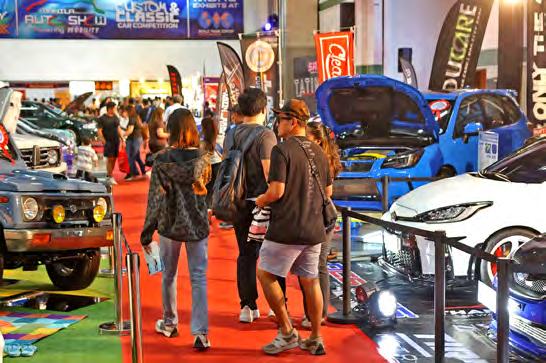
From compact urban EVs and plug-in hybrid sedans to large hybrid SUVs and luxury electric MPVs, the show floor revealed a market that is not simply experimenting, but actively building toward a more electrified future. What stood out was not just the number of vehicles, but the diversity of approaches, with each brand interpreting electrification through its own lens of performance, accessibility, design, and utility.

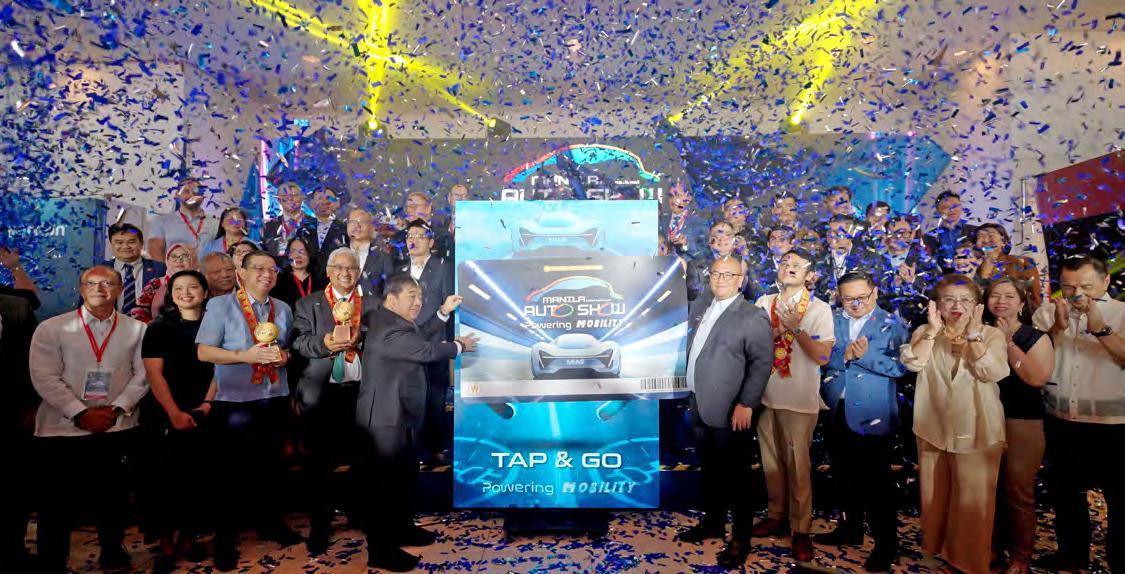
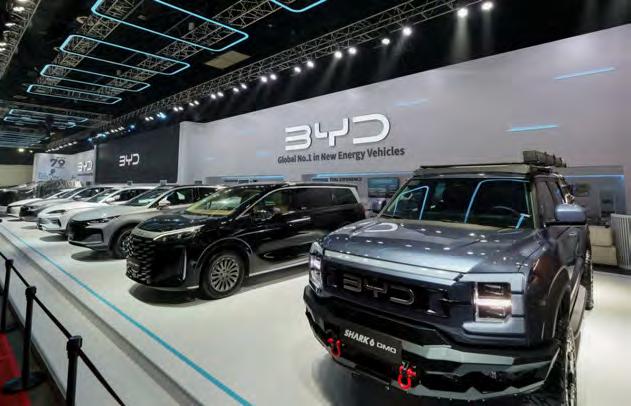
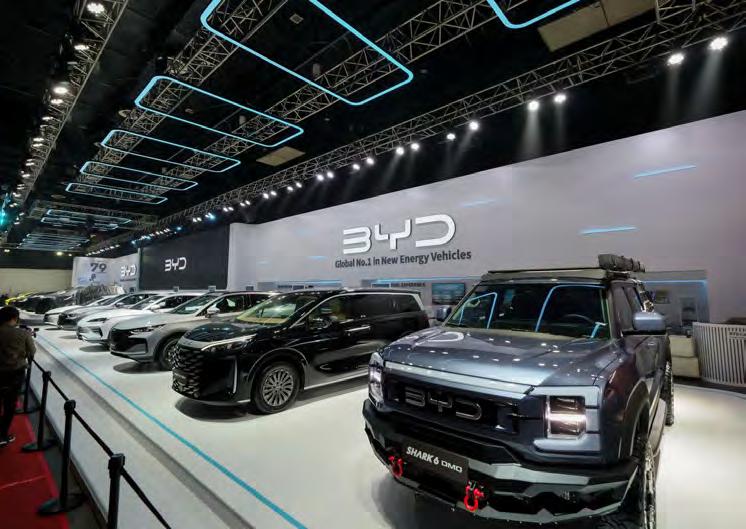
BYD’s presence at MIAS 2026 reflected both scale and strategic intent, presenting one of the most comprehensive electrified lineups at the show.
The brand’s exhibit was not just about product display, but was designed to demonstrate a complete ecosystem that combined vehicles, infrastructure, and real-world validation. Its lineup spans battery electric vehicles and plug-in hybrid models, covering a wide range of use cases from daily commuting to longdistance travel.
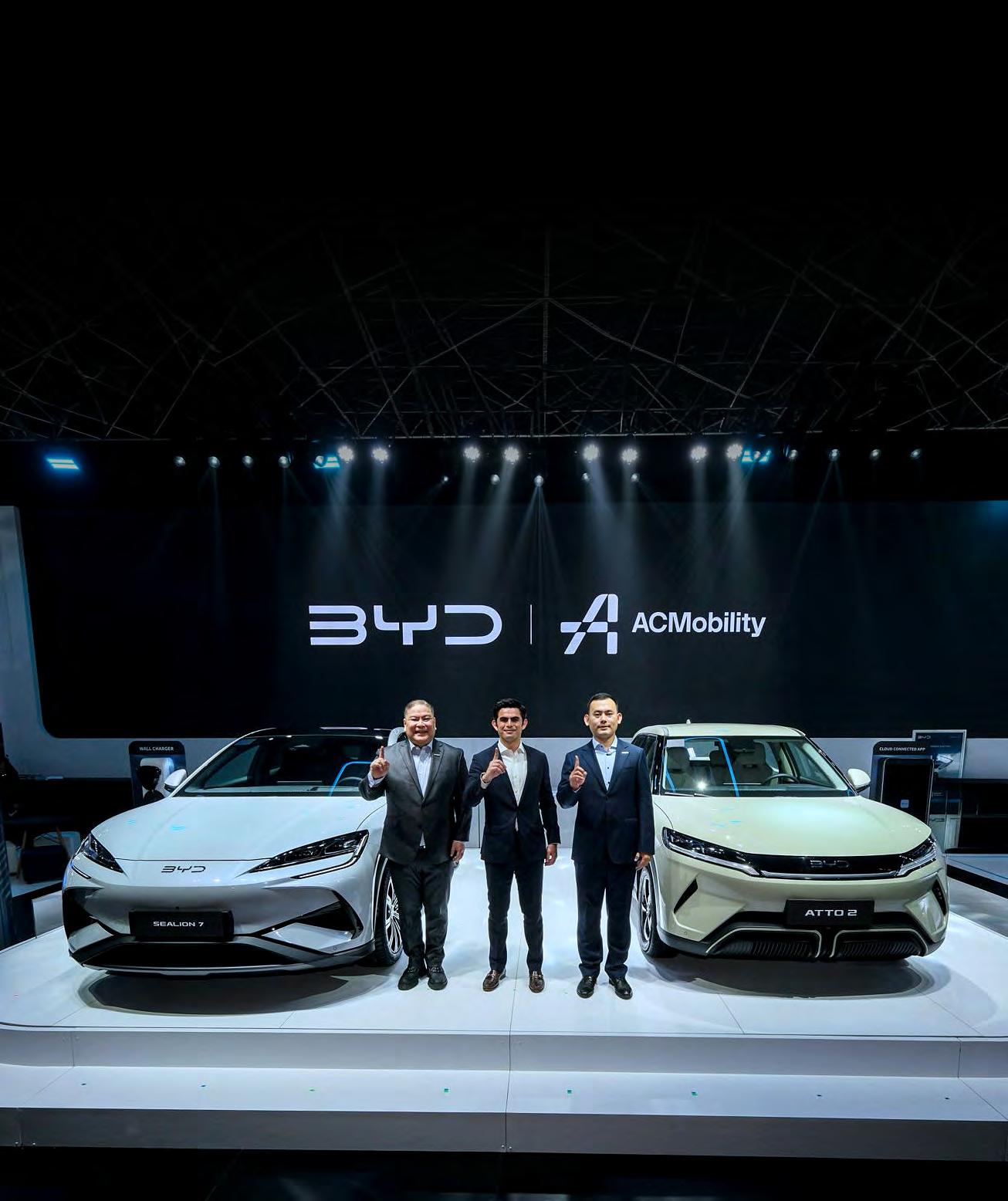
On the entry side, compact EVs such as the Seagull illustrate how electric mobility fits into dense urban environments. Moving up the range, models like the Atto 3 and Tang EV cater to families seeking more space and range. Meanwhile, BYD’s DM-i hybrid lineup, including the Seal 5 DM-i and Sealion 6 DM-i, serves as a bridge for drivers transitioning from traditional combustion engines. Two preview models drew particular attention during the show. The Atto 2 EV is positioned as a compact crossover that balances everyday usability with modern styling, making


it well-suited for city driving and small families. At the other end, the Sealion 7 pushes into the premium segment, combining an all-wheel-drive system with a refined, technology-focused cabin and advanced driver assistance features.
Beyond the vehicles, BYD reinforced its commitment to infrastructure. Supported by ACMobility, the brand highlighted a growing charging network now exceeding 160 locations nationwide. This is complemented by digital platforms and services designed to simplify EV ownership.
The brand also demonstrated realworld capability through its “Drive Electric. Love Pinas.” campaign, which saw a convoy of electrified vehicles travel across 102 cities nationwide. The journey, which earned two Guinness World Records, underscored the growing feasibility of long-distance EV travel in the Philippines.
“The brand’s exhibit was not just about product display, but was designed to demonstrate a complete ecosystem that combined vehicles, infrastructure, and real-world validation.”

Changan’s presence at MIAS 2026 emphasized intelligent, value-driven mobility, combining traditional powertrains with emerging electrified technologies.
At the center of its display was the AllNew Changan CS35 Max, a compact crossover that builds on a proven nameplate with significant upgrades. The exterior adopts a more assertive stance, with sharper lines and a longer wheelbase that improves cabin space. Under the hood, a 1.5L turbocharged engine delivers 180hp and 300Nm of torque, paired with a 7-speed wet dualclutch transmission.
Inside, the CS35 Max emphasizes comfort and connectivity. A 10.25-inch
infotainment system supports wireless Apple CarPlay and Android Auto, while higher variants add a 12.3-inch digital instrument cluster, wireless charging, and a premium Sony sound system. The cabin also benefits from improved ergonomics and higherquality materials.

The Changan Eado Plus strengthened the brand’s sedan lineup, offering a balance of efficiency, space, and modern design for everyday driving.
Electrification was represented by the Nevo Q05 PHEV, which delivers up to 115 kilometers of pure electric range and over 1,200 kilometers combined range, supported by intelligent energy management systems.
The Nevo Hunter K50 stood out as one of the more distinctive vehicles at the show. As a range-extended electric pickup capable of over 1,000 kilometers of total range, it bridges utility and electrification in a segment not typically associated with EVs.

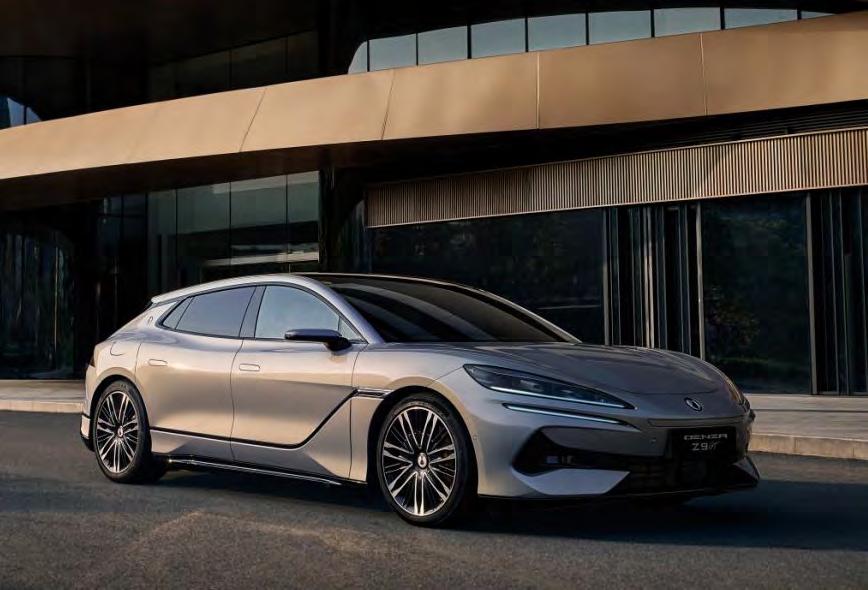
DENZA’s participation at MIAS 2026 highlighted the emergence of premium EVs as a distinct category.
The DENZA D9 anchored the lineup as a luxury MPV focused on comfort and refinement, offering a spacious cabin and a smooth, quiet ride suited for executive mobility.
In contrast, the DENZA Z9 GT introduced a more performanceoriented design, combining sleek styling with a dynamic driving character.
Looking ahead, the DENZA B5 and DENZA B8 provided a glimpse of the brand’s future direction. Both models utilize advanced hybrid-electric systems under DENZA’s Super DMO technology. The B5 pairs a 1.5-liter engine with dual motors, while the B8 steps up to a 2.0-liter configuration, delivering greater performance and capability. With ranges approaching
or exceeding 1,000 kilometers, these vehicles are designed for long-distance travel without compromise.
DENZA also emphasized an immersive booth experience, allowing

visitors to engage more closely with its technology and design philosophy. This reflects a broader shift in the EV space, where premium differentiation increasingly comes from experience as much as engineering.

GAC Philippines presented one of the most diverse electrified portfolios at MIAS 2026, spanning hybrid, plug-in hybrid, and fully electric models.
Leading the lineup was the GS8 HEV, a large hybrid SUV designed to deliver a balance of performance, efficiency, and comfort. Powered by a 2.0T engine paired with a hybrid system, it produces 140kW and 320Nm of torque. The E-CVT transmission ensures smooth power delivery, while an intelligent all-wheel-drive system enhances capability across different road conditions.


The GS8 HEV’s bold exterior design is matched by a spacious interior featuring a 2-3-2 seating layout, premium materials, and advanced infotainment systems, making it wellsuited for families.
The E8 HEV, previewed at the show, expands GAC’s hybrid offering into the MPV segment. It offers up to 1,200 kilometers of combined range and features such as ventilated and massage-enabled second-row seats.
The GN8 PHEV moves further into luxury territory, combining a plug-in hybrid powertrain with executive-level amenities and over 1,000 kilometers of range.
Fully electric models like the AION V and HYPTEC HT complete the lineup, with the latter standing out for its distinctive gullwing doors, long driving range, and ultra-fast charging capabilities.

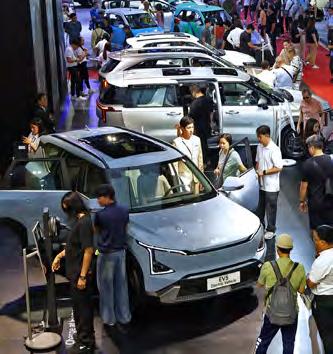
Kia’s introduction of the EV5 reflected a practical approach to electrification, focusing on usability and accessibility.
Positioned within the compact electric SUV segment, the EV5 is built on a dedicated EV platform that delivers 217PS and 31Nm of torque. It offers two battery configurations, with the

larger 88.1 kWh pack providing up to 550 kilometers of range, while the 64.2 kWh version delivers up to 400 kilometers.
The EV5’s design follows Kia’s “Opposites United” philosophy, combining clean lines with a distinctive lighting signature. Inside, dual 12.3-inch displays

anchor a modern, connected cabin, supported by wireless smartphone integration.
Practical features such as vehicle-toload capability and a well-appointed interior enhance everyday usability, while Kia Drive Wise ensures a high level of safety through advanced driver assistance systems.


MG’s showcase at MIAS 2026 reflected a strategy centered on accessibility, offering a wide range of electrified and conventional vehicles.
The MG G50 PHEV stood out as a practical MPV designed for families, delivering a combined range of up to 1,415 kilometers. Its spacious interior and efficient powertrain make it a strong option for longdistance travel.
The All-New MG5 Prestige refreshed the brand’s sedan offering, while the MG Cyberster introduced a more aspirational dimension as an all-electric roadster that highlights MG’s design and performance capabilities.
The brand’s Hybrid+ lineup, including the HS, ZS, and MG3, provides additional entry points into electrification, allowing buyers to transition at their own pace.

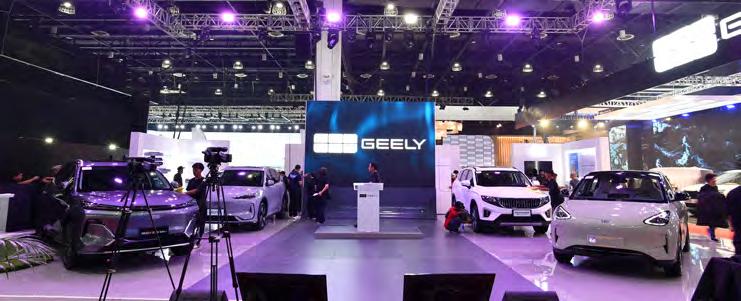
Geely’s EX2 highlighted how entry-level EVs are evolving through thoughtful engineering.
Unlike many competitors, the EX2 adopts a rear-wheel-drive layout paired with a multi-link independent rear suspension, improving handling and ride quality. Its 85 kW motor delivers 150 Nm of torque, supported by an efficient integrated drive system.
The 39.4kWh battery provides up to 325 kilometers of range, with fast-charging capability allowing a 30 to 80 percent charge in around 25 minutes.
Inside, the EX2 maximizes space through clever packaging, offering flexible storage solutions and a cabin that feels larger than its footprint suggests. Its focus on usability and efficiency positions it as a practical urban EV.

MIAS 2026 marked a shift from exploration to execution.
Electrification is no longer a distant goal. It is being built into the fabric of the industry, supported by infrastructure, technology, and a growing range of vehicles designed for real-world use.
For Filipino drivers, this means more options, fewer compromises, and a clearer path forward. For the industry, it signals a new phase defined not by possibility, but by progress.
This momentum was reflected not only on the show floor, but in the crowd it drew. MIAS 2026 recorded its highest attendance to date, with thousands of visitors filling the halls across all four days. The turnout signaled more than curiosity. It pointed to a market that is ready, engaged, and increasingly invested in the future of mobility.
And based on what the show revealed, that future is arriving faster than expected.
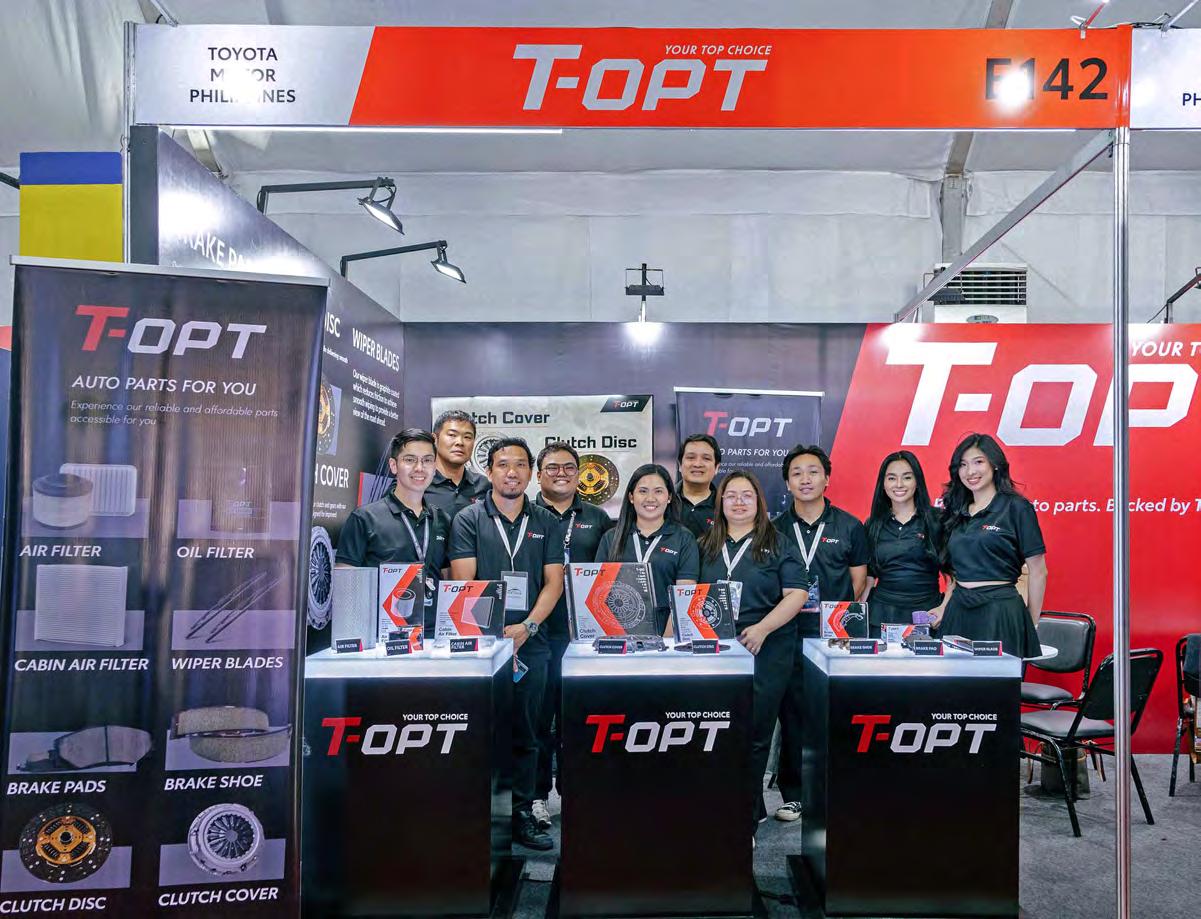
Toyota introduces a new aftermarket parts line that delivers reliable, more accessible options for out-of-warranty vehicles
TOYOTA MOTOR PHILIPPINES has introduced T-OPT, a regional aftermarket parts brand designed to support Toyota owners beyond the standard warranty period.
Positioned as a practical solution for maintaining older vehicles, T-OPT addresses a growing segment of Toyota owners looking for reliable yet more accessible alternatives to original parts without compromising on quality.
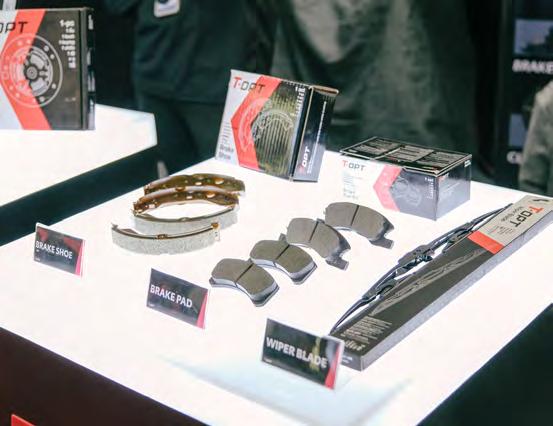
T-OPT is aimed at drivers who continue to rely on their vehicles well beyond the warranty cycle. In markets like the Philippines, where vehicles are often kept for many years, maintaining performance, safety, and comfort becomes a key concern.
The brand offers a balance between affordability and quality, backed by Toyota’s involvement in product development and supplier selection. This ensures that parts meet performance standards while remaining accessible to a wider range of customers.
The initial T-OPT lineup focuses on commonly replaced components, including oil and air filters, as well as wear-and-tear items such as wiper blades, brake pads and shoes, and clutch covers and discs.
These parts are designed to be compatible with some of Toyota’s most widely used models in the country, including the Toyota Vios, Toyota Wigo, Toyota Innova, Toyota Avanza, and Toyota Hiace.
By focusing on high-demand maintenance and replacement parts,

T-OPT is positioned to support everyday vehicle use, where regular servicing plays a critical role in reliability.
Beyond product availability, T-OPT’s rollout includes a growing distribution network to improve accessibility nationwide. Retail availability is supported through established service providers and distributors, helping ensure that parts can be sourced conveniently.
This approach aligns with Toyota’s broader focus on extending vehicle lifecycle support, particularly for pre-
owned and aging units that remain active on Philippine roads.
With the introduction of T-OPT, Toyota extends its role beyond vehicle sales into long-term support. By offering more accessible aftermarket parts backed by its expertise, the brand provides an additional layer of confidence for customers maintaining older vehicles.
For many drivers, mobility is not just about acquiring a car, but about keeping it running reliably over time. T-OPT addresses that need, reinforcing the idea that quality ownership should remain within reach, even beyond the warranty period.


MITSUBISHI MOTORS CORPORATION is preparing to expand its electrification efforts in the Philippines, with plans to produce a hybrid electric vehicle locally through Mitsubishi Motors Philippines Corporation.
The move is tied to the company’s intent to participate in the government’s Electric Vehicle Incentive Strategy (EVIS), a program designed to accelerate the adoption and local development of electrified vehicles.
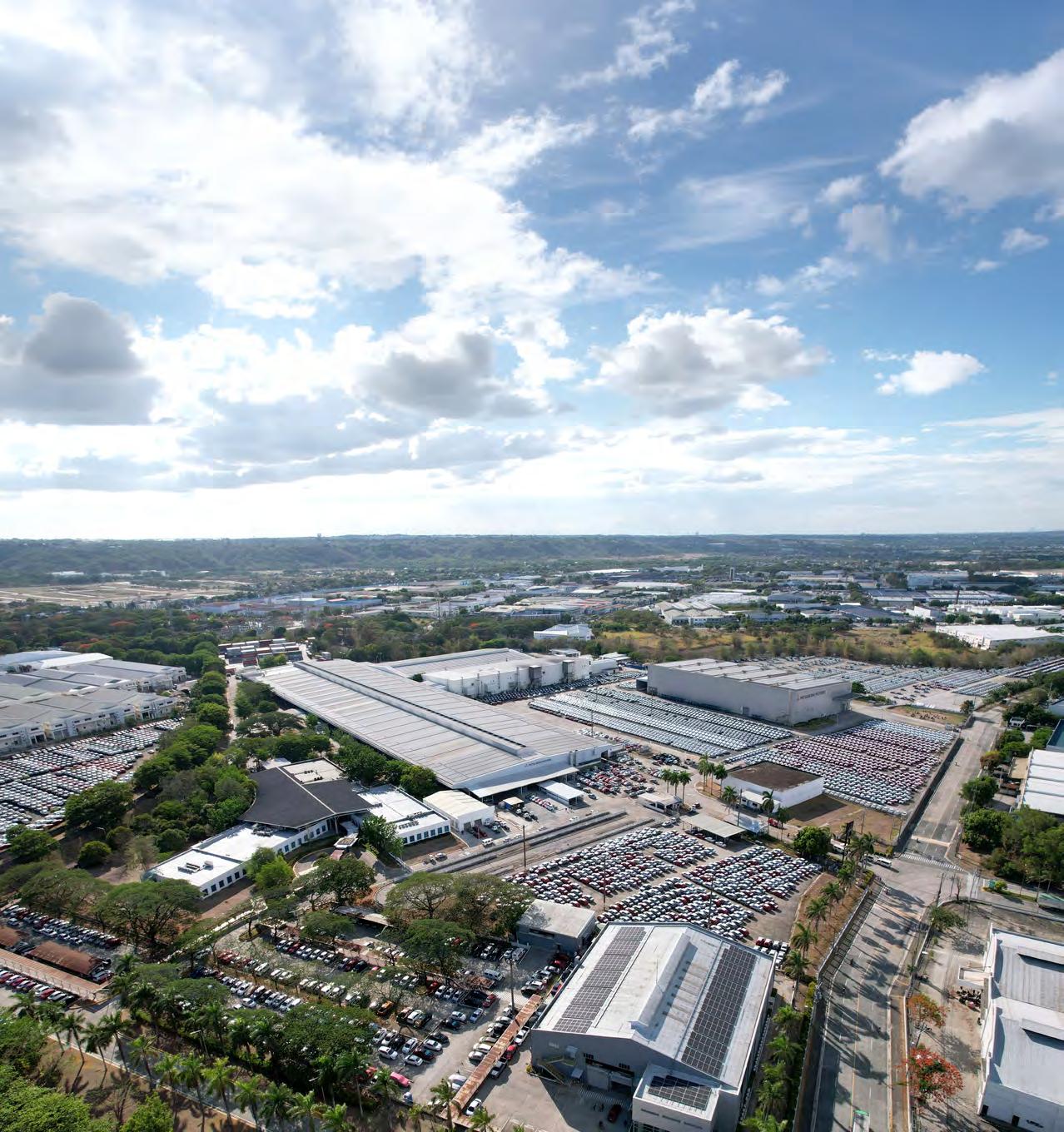
Subject to approval of its EVIS application, Mitsubishi plans to begin production of a new hybrid electric vehicle (HEV) model at its Santa Rosa, Laguna plant around the middle of 2028.
The facility serves as Mitsubishi’s primary manufacturing base in the country, with a production capacity of 50,000 units annually. It currently manufactures key models such as the
Mirage, Mirage G4, and L300, while supporting a broader lineup that includes the Xpander, Xpander Cross, Montero Sport, Triton, and Xforce in the local market.
Alongside the planned HEV production, Mitsubishi is preparing additional investments to upgrade its local operations. These include enhancements to manufacturing facilities to support the production of

electrified vehicles, as well as initiatives to strengthen the local supply chain.
The company notes that these developments are expected to contribute to job creation and support broader industrial growth in the region, reinforcing MMPC’s role as both a production hub and a key player in the local automotive industry.
The planned expansion was discussed during a meeting between Philippine President Ferdinand Marcos Jr. and Mitsubishi Motors CEO Takao Kato, where the company expressed its intention to support the country’s push toward vehicle electrification.
Kato emphasized the Philippines’ importance as a long-standing market for Mitsubishi, noting that the company aims to contribute to both electrification and economic development through its participation in EVIS.

The planned HEV production reflects Mitsubishi’s broader global direction, where electrified vehicles are expected to account for a growing share of its lineup. The company has set a target of achieving a fully electrified portfolio by 2035, buLocalilding on its experience
in hybrid and electric vehicle development.
For the Philippine market, local hybrid production marks a significant step, linking government policy, manufacturing investment, and evolving consumer demand into a single direction: a gradual but steady shift toward electrified mobility.
Makina Moto Expo 2026 brought together performance, culture, and innovation as motorcycle brands redefined the Filipino riding experience
MAKINA MOTO EXPO 2026 was more than a showcase of motorcycles. It was a reflection of how riding continues to evolve in the Philippines, not just as a mode of transport, but as a lifestyle shaped by performance, identity, and community.

Held at the SMX Convention Center from April 10 to 12, the expo’s milestone 10th edition gathered riders, enthusiasts, industry players, and content creators under one roof. Across the show floor, brands presented not only their latest machines, but also their vision of what modern motorcycling looks like. From accessible adventure bikes and high-performance sport machines to lifestyle-driven scooters and premium small-displacement models, the event highlighted the diversity of today’s riding landscape.
What emerged clearly was a shift in how motorcycles are positioned. They are no longer just practical solutions to mobility challenges. They are tools for exploration, expressions of personal style, and platforms for community.
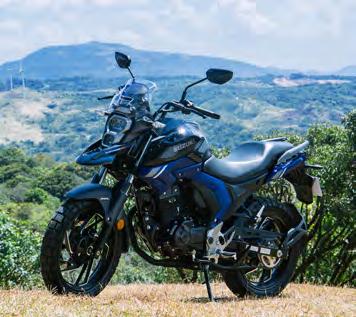

Suzuki’s presence at Makina Moto Expo 2026 centered on a clear message: motorcycles must be built for real-world riding.
Anchored on the theme “Suzuki Supercharged: Power in Motion,” the brand introduced its Real Man Series, headlined by the DR160 and V-STROM 160, both designed to bring adventure capability within reach of more Filipino riders.
The V-STROM 160 draws from the legacy of Suzuki’s larger V-STROM models, translating that DNA into a compact, approachable platform. Powered by a 162cc engine delivering 10.5kW and 14.5Nm of torque, it balances everyday usability with long-distance comfort. Dual-channel ABS, front and rear disc brakes, LED lighting, and a full-color LCD display enhance both safety and rider experience. With a fuel efficiency rating of up to 50km/L and a potential range of around 650 kilometers per tank, it is built for extended journeys without constant refueling.
The DR160, meanwhile, takes its cues from Suzuki’s dual-sport heritage. Designed for both paved and unpaved roads, it features a rugged chassis, high ground clearance, and a 162cc engine producing 11kW and 14Nm of torque. Its lightweight build and singlechannel ABS provide confidence across varying terrain, while LED lighting and fuel injection technology ensure reliability and efficiency.
Suzuki’s booth experience reinforced this positioning. From test ride opportunities to rider engagement sessions featuring well-known moto personalities, the brand emphasized not just product capability, but the lived experience of riding. The message was clear. These motorcycles are not just built to be seen, but to be used.

Honda Philippines used Makina Moto Expo 2026 to highlight its breadth of innovation, spanning electric mobility, performance machines, and adventureready models.
Leading the showcase was the Honda WN7, marking the brand’s entry into full-size electric motorcycles for urban use. Delivering 18kW rated output and up to 50kW peak power, along with 100Nm of torque, the WN7 offers strong acceleration and smooth power delivery suited for city riding. With a range of up to 144.1 kilometers and fastcharging capability that allows a 20 to 80 percent charge in just 30 minutes, it presents a practical alternative for daily commuting.
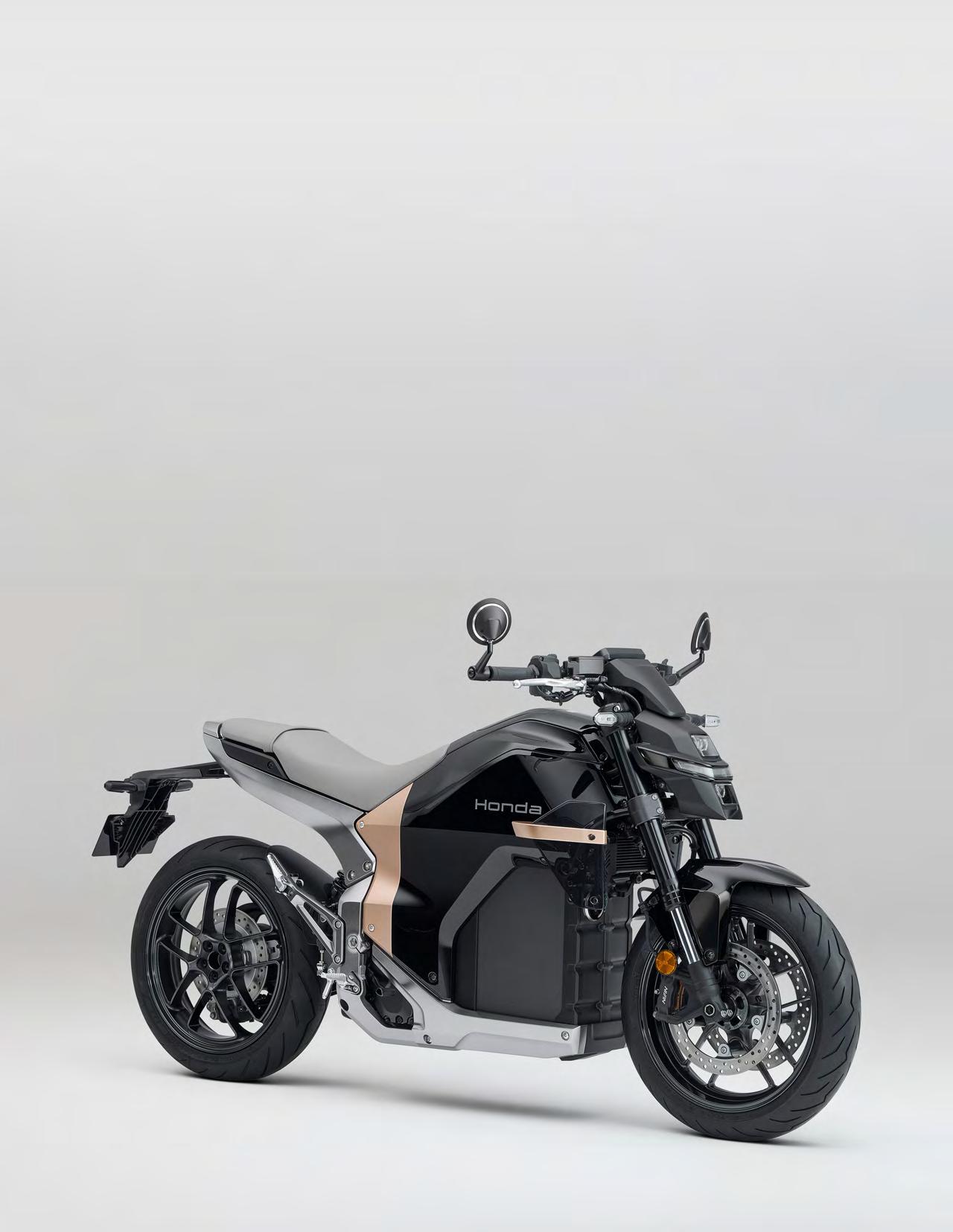
On the performance side, the CB650R drew attention with its inline-four engine and refined riding dynamics. Its E-Clutch system allows riders to shift without using the clutch lever, enhancing convenience while maintaining engagement. A 5-inch TFT display with Honda RoadSync connectivity integrates navigation, communication, and entertainment into the riding experience.
The NX500 expanded Honda’s adventure lineup, offering a lightweight, versatile platform capable of handling both urban roads and more challenging terrain. With its upright riding position, E-Clutch system, and connectivity features, it is designed for riders who want flexibility in where and how they ride.
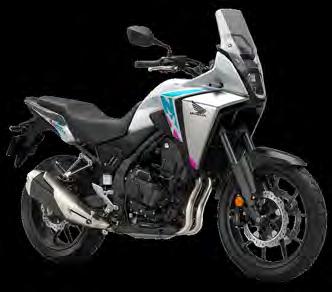
Supporting these launches was a premium lineup that included the Africa Twin, Goldwing, Rebel 1100, and Fireblade SP. Together, they underscored Honda’s ability to cater to a wide spectrum of riders, from commuters to enthusiasts seeking performance and long-distance capability.

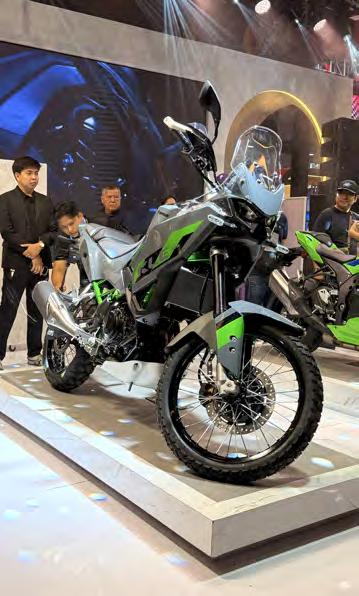
Kawasaki’s presence at the expo stood apart through its deliberate and designdriven approach.
Under the concept “The Art of Power,” the brand presented its motorcycles in a minimalist, gallery-inspired space that encouraged visitors to engage with each model beyond specifications. The focus was on form, precision, and the balance between engineering and design.
The Ninja ZX-10R represented the brand’s track-focused performance, with aggressive styling and race-derived engineering that continues to define Kawasaki’s superbike identity. It stood as a reminder of the brand’s deep roots in motorsport.
The Z1100 brought a commanding street presence, combining muscular design with strong performance, while the KLE500 SE highlighted Kawasaki’s

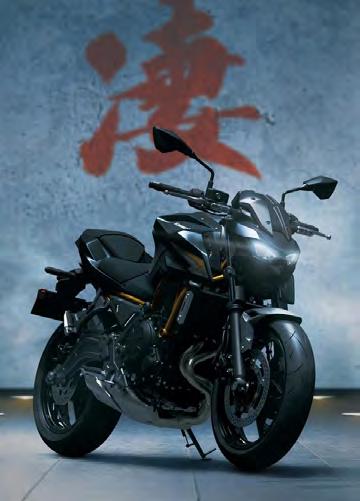
capability in adventure riding, offering versatility across both paved and unpaved roads.
Additional models such as the Ninja 650, Z650RS, and Brute Force 450 expanded the lineup, each catering to different riding preferences and lifestyles. Together, they demonstrated Kawasaki’s ability to deliver a cohesive range of motorcycles while maintaining a clear design philosophy.
By presenting its lineup in this curated format, Kawasaki shifted the conversation from pure performance metrics to a deeper appreciation of craftsmanship and intent.
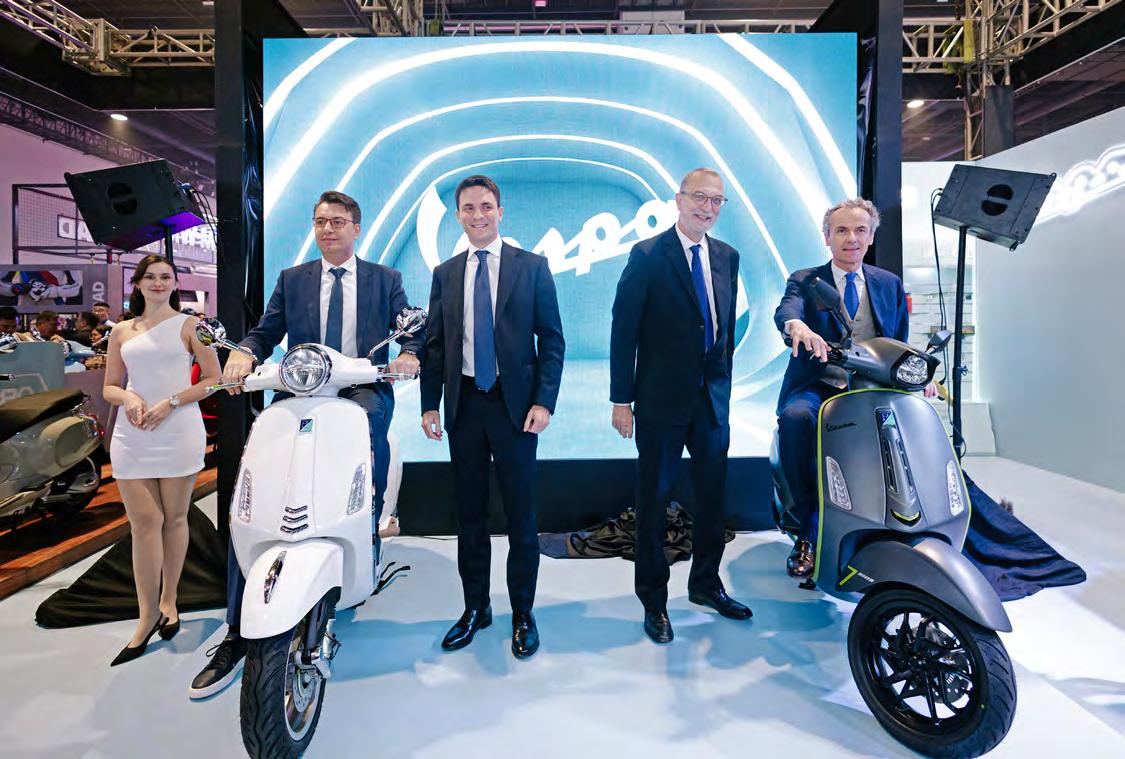
Vespa approached Makina Moto Expo 2026 from a lifestyle perspective, emphasizing design, heritage, and identity.
The debut of the Vespa Primavera 180cc and Vespa Sprint 180cc collections marked the arrival of a new generation of scooters that blend classic Italian styling with modern performance.
The Primavera 180cc retains Vespa’s signature silhouette, enhanced by refined details such as redesigned rims and an updated instrument panel. Its design emphasizes elegance and continuity, appealing to riders who value timeless aesthetics.
The Sprint 180cc, in contrast, introduces a more dynamic edge. With sharper
lines and a sportier stance, it offers a modern interpretation of Vespa’s design language. Higher variants feature a high-definition digital dashboard that integrates technology seamlessly into the classic form.
Both models are powered by an enhanced 180cc engine that delivers smooth and responsive performance. Features such as keyless start and ABS braking enhance convenience and safety, ensuring that the riding experience matches the brand’s premium positioning.
Vespa’s presence reinforced its role as more than just a motorcycle brand. It remains a cultural symbol, offering a riding experience that reflects individuality and refined taste.


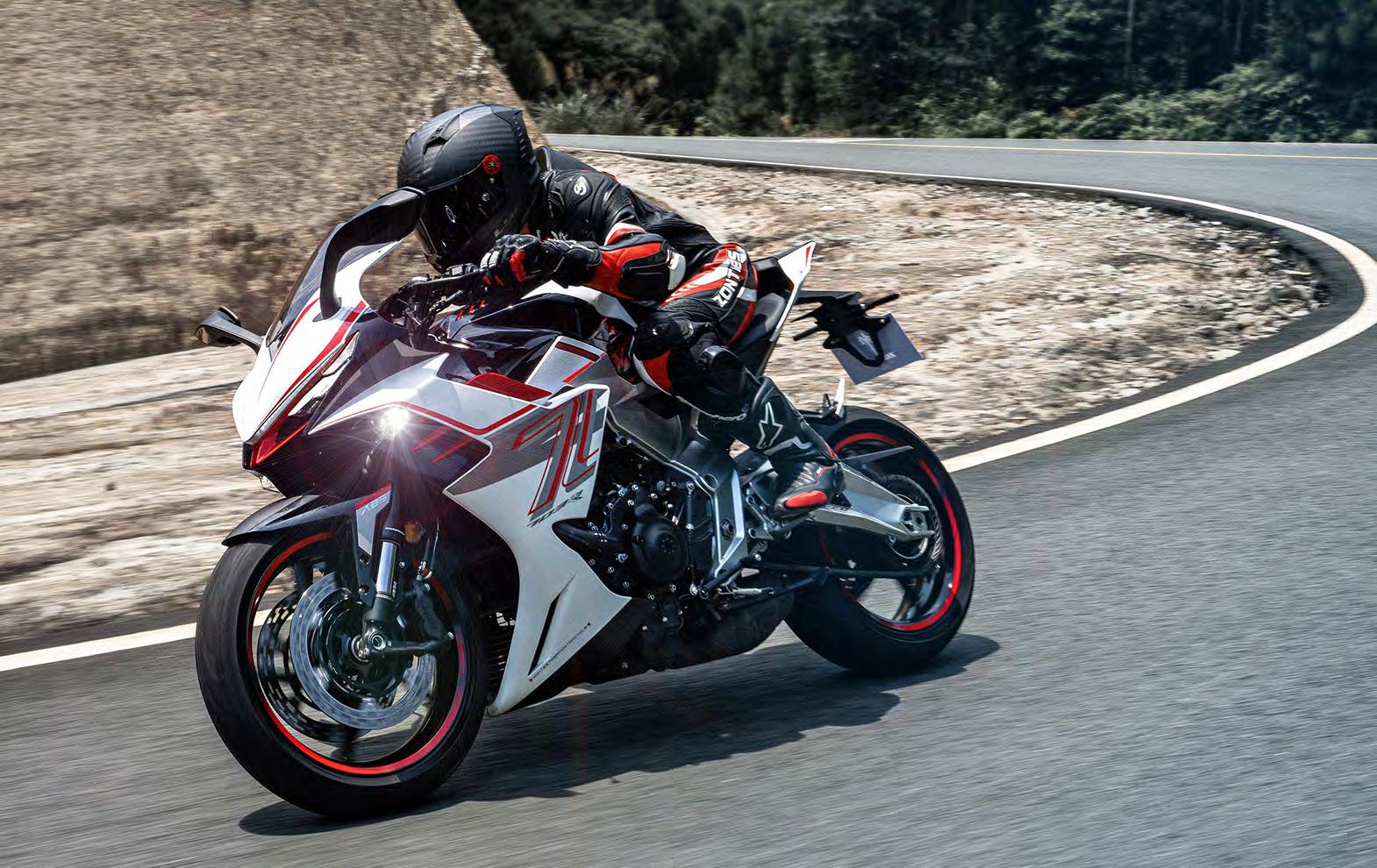
Bristol Motorcycles Philippines showcased Zontes’ expanding lineup with two distinct models that highlight performance and innovation at different ends of the spectrum.
The Zontes 150X, positioned as “The New Urban Champion,” brings highspecification features to the 150cc segment. Powered by a 150cc liquid-cooled engine producing 17.7hp and 15Nm of torque, it offers responsive performance for city riding. Its lightweight aluminum chassis, weighing just 108kg, enhances maneuverability, making it ideal for navigating urban traffic.
The model stands out with its advanced technology, including a full-color TFT display with smartphone connectivity, a keyless control system, and dual-channel ABS. Practicality is also a highlight, with a large under-seat compartment capable of storing two full-face helmets, eliminating the need for additional storage accessories.
At the performance end, the Zontes 703RR, introduced as “The New King,”
pushes into the middleweight supersport category. Its 699cc inline three-cylinder engine produces 95hp and 75Nm of torque, delivering strong acceleration and a top speed exceeding 250km/h.
The 703RR is equipped with premium components such as Brembo braking systems, Marzocchi suspension, Michelin tires, and advanced electronics including traction control, quickshifter, and tire pressure monitoring. Its aerodynamic design, featuring integrated winglets and a ram air intake system, enhances both performance and stability.
Together, these models reflect Zontes’ strategy of combining advanced engineering with competitive pricing, offering riders a compelling alternative in both entry-level and performance segments.
Makina Moto Expo 2026 captured the evolving identity of motorcycling in the Philippines.
Across brands and segments, one theme remained consistent. Motorcycles are no longer defined solely by their function. They are tools for exploration, expressions of individuality, and platforms for connection. Whether through adventureready models, high-performance machines, or lifestyle-driven scooters, each brand presented its own vision of what it means to ride today.
On its 10th anniversary, the expo also reflected the growth of the local riding community. From a niche gathering to a major industry platform, Makina Moto Expo has become a space where innovation meets culture and where brands connect directly with the people who ride.
As the event concluded, it left behind more than just new model launches. It reinforced a culture that continues to expand, driven by passion, technology, and a shared love for the road.
And if this year’s showcase is any indication, the future of motorcycling in the Philippines is not just about where you go, but how you choose to ride.

From multi-day off-road endurance to competitive racing, Yamaha defines its direction through real-world performance and a relentless drive to go further
YAMAHA MOTOR PHILIPPINES continues to strengthen its performancedriven identity across two distinct platforms—adventure riding and competitive racing. Through its participation in the FJ Moto Mountaincross Rally 2026 and the launch of its “Defy Limits” movement, the brand brings together endurance, speed, and engineering under a unified philosophy: performance proven beyond the ordinary.
At the FJ Moto Mountaincross Rally held from March 26 to 29, Yamaha put its machines and riders to the test across extreme terrain in one of the country’s most demanding multi-day off-road events. Beginning and ending at the Cagayan de Oro Convention Center, the rally pushed participants through steep climbs, technical sections, and unpredictable conditions that demanded skill, strategy, and stamina.

At the center of Yamaha’s campaign was the Yamaha Ténéré 700, a flagship adventure machine engineered for long-distance capability and extreme terrain performance. Designed to endure changing conditions while maintaining control and reliability, it delivered the balance of power, agility, and durability required for true adventure riding.

Supporting this was the Yamaha WR450F, reinforcing Yamaha’s off-road DNA and the depth of its Sport Machines category.
Representing the brand was the Yamaha Adventure Team, composed of Edrie Ocampo, Iñigo Rafael Pimentel, Marc Soong, Marc Abeno, and John Hayson Sanchez. With strong backgrounds in
off-road, enduro, and cross-country rally competitions, the team embodied Yamaha’s commitment to precision, resilience, and control in real-world riding conditions.
Yamaha’s presence extended beyond competition through a complete support system designed to elevate the rider experience. A dedicated paddock area provided mechanical assistance, including suspension adjustments, tire pressure checks, and unit inspections, while a riders’ lounge offered rest space and essential support kits. This integrated setup reflected Yamaha’s philosophy that adventure is not only about reaching the destination, but about enabling every step of the journey.
While the Mountaincross Rally highlighted endurance, Yamaha’s “Defy Limits” movement defines its direction in racing. Rooted in Yamaha’s global racing DNA, the initiative represents an uncompromising push to go beyond expectations, challenge conventions, and push past every boundary.
For 2026, Yamaha Racing signals a stronger, more aggressive presence on both local and international platforms. With expanded participation in key championships and a broader presence across racing categories, the brand is bringing more machines to the grid,

developing more riders, and raising the level of competition across every class.
Each race becomes a proving ground where limits are tested and performance is constantly redefined. From underbone to big bike categories, Yamaha continues to engineer race-bred machines that thrive under pressure, delivering speed, precision, and consistency at the highest level.
This effort extends beyond the local circuit, with Yamaha carrying the Philippine flag into international competition. With a growing global footprint, the brand reinforces its role as one that competes without hesitation— relentless on every stage.



“From underbone to big bike categories, Yamaha continues to engineer racebred machines that thrive under pressure, delivering speed, precision, and consistency at the highest level.”
While distinct in execution, both platforms reflect the same philosophy. The Mountaincross Rally represents endurance, adaptability, and the ability to conquer real-world terrain. “Defy Limits” embodies speed, competition, and the relentless pursuit of performance.
Together, they define Yamaha’s broader direction—one that spans adventure and racing, but remains grounded in the same principles of precision, resilience, and continuous improvement.
Yamaha’s dual focus underscores how motorcycles are evolving beyond a single role. Riders today seek machines that deliver both capability and experience, whether navigating rugged trails or competing on the track.
By strengthening its presence across both endurance riding and racing, Yamaha positions itself across the full spectrum of performance. The result is a brand direction that goes beyond categories, defined instead by how far riders can go—and how consistently they can push beyond limits.

Manny Pacquiao partners with DigiPlus Interactive Corp. to bring his story into digital entertainment
collaboration that brings sports legacy into digital entertainment
A new era of proudly Filipino digital entertainment takes center stage as DigiPlus Interactive Corp. partners with boxing legend Manny Pacquiao to bring his inspiring story closer to fans through platforms such as BingoPlus. Known for his determination and remarkable journey on the global stage, Pacquiao now channels that same energy into a lineup of interactive experiences designed to engage audiences in a fresh way, this time beyond the boxing ring.
According to DigiPlus chairman Eusebio H. Tanco, the collaboration is anchored on a shared vision to create content that resonates with the Filipino spirit. He emphasized that the goal is to produce experiences that reflect what Filipinos are known for: perseverance, achievement, and compelling personal stories. Delivered through accessible digital platforms like BingoPlus,

which continue to expand locally inspired entertainment for nationwide audiences.
For Manny Pacquiao, this represents more than just another endorsement deal. His name will anchor a slate of digital offerings built around strong storytelling that celebrates his life and legacy as a true national sports icon.
As part of the collaboration, nine new titles inspired by Pacquiao’s journey and achievements are being introduced across DigiPlus platforms, including BingoPlus. Each draws from the qualities that have defined his career, such as discipline, courage, and perseverance.

Among the highlights are Super Ace Pacquiao and Boxing King Pacquiao. Both are designed to reflect the confidence and grit that propelled him to success in the ring, offering players an engaging and immersive experience.
Completing the roster are Pacquiao Fortune, Manny Punch, Pacman’s Bingo Boom, Pacman’s Color Game,

Together, these releases reflect DigiPlus’ commitment to developing entertainment anchored in stories that resonate with Filipino audiences.
Under DigiPlus’ direction, the approach goes beyond simply leveraging Pacquiao’s name for marketing. The focus is on creating titles that mirror the defining experiences that shaped Manny Pacquiao’s path as a sports icon.
Chairman Eusebio H. Tanco noted that today’s audiences look for authenticity and relevance in the content they consume. By integrating Pacquiao’s legacy into its platforms, DigiPlus aims to promote Filipino pride while offering something distinct to its audience.
Through this initiative, the company continues to explore ways of combining innovation with a strong sense of national identity for the benefit of its communities.



For Manny Pacquiao, the collaboration provides an opportunity to share his story through a different medium. He noted that the titles capture not only his achievements, but also the dedication and faith that have guided his journey.
He also reflected on the deeper significance of his role as ambassador, emphasizing that his involvement goes beyond entertainment. Pacquiao underscored the importance of trust, integrity, and the desire to create a positive impact. These values continue to guide his partnership with DigiPlus, especially as the company enhances its narrative-focused experiences across various platforms, including BingoPlus.
Beyond the new titles, DigiPlus also announced the launch of MannyPay, a feature designed to provide a smoother, cashless transaction experience and improve overall convenience.
MannyPay will become the latest addition to Traxion Pay-powered solutions, aimed at streamlining payments and enhancing accessibility for users.
The integration of a locally developed digital payment system shows DigiPlus’ commitment not only to user convenience but also to supporting homegrown innovation.
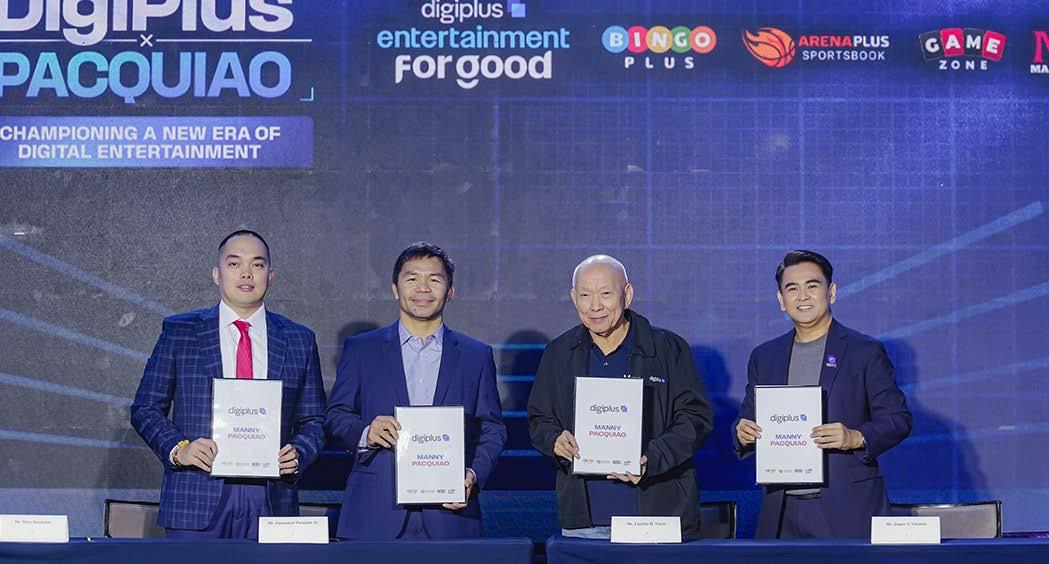
With Manny Pacquiao as the face of its newest ambassadorial campaign, DigiPlus signals the start of a broader collaboration, with more themed releases expected in the coming months.
Beyond entertainment, the partnership highlights DigiPlus’ recognition of individuals who embody perseverance and national pride. These qualities align closely with the company’s vision of delivering meaningful digital experiences.
By bringing Pacquiao into its portfolio, DigiPlus is not only expanding its digital offerings but also celebrating Filipino excellence while helping shape the future of the industry.
Players can explore the new Pacquiao-inspired titles by downloading BingoPlus, ArenaPlus, and GameZone, as DigiPlus Interactive Corp. continues to grow its lineup of proudly local digital entertainment experiences for Filipino players nationwide.

DEVELOPER
Pearl Abyss
PLATFORM
TPUBLISHER
Pearl Abyss
PC, PlayStation 5, Xbox Series X/S

he goalposts on how to make a truly great game are always shifting. Some say that graphics make the game (and sorry if you still think that way in 2026). Others focus on gameplay experience. Some might say the music is what makes the game great; others may think the story is what gets them playing. But what does Crimson Desert do that makes it different, and what does that mean in an era where everything is coalescing around AI and the studios’ insistence on profit over quality, often at the cost of the other aspects of gameplay?

You play as the Greymanes Kliff, Oongka, Yann, and Naira on the continent of Pywel. Their rivals, the Black Bears, attack the Greymanes, and it’s up to Kliff to reunite his comrades, rebuild their civilization, and confront the Black Bears once and for all. This action-adventure game has you traveling, solving puzzles, and fighting enemies in a hostile yet interesting open-world environment.


My first impression of Crimson Desert is that it tries to do a lot (and I mean that literally and figuratively). You can do the main quest, side quests, fight on horseback, explore, solve puzzles, cook, fish, hunt, and of course, fight. Cramming all of this into a game often requires you to pull everything off with precision—a delicate balance that only a few games have achieved successfully over the years. It tries its best to offer something to everyone, but falls short in doing so. One glaring omission is the lack of storage at launch (since added in a post-launch patch), which is a testament to modern gaming’s focus on profit over a finished (yet alone polished) product.



Some things I liked about the game were the graphics. Pearl Abyss wanted to make an AAA game, even if it suffered a bit due to my penchant for using the entire computer (turning everything up to ultra/max settings). Building your base and sending out allies to gather resources makes the game a bit less grindy, but the combat is often drawn-out and frustrating, which can turn off more impatient players. The story is also nothing to write home about, as well as the character development, and that can get rather mindnumbing as you spend hundreds of hours doing everything Pywel has to offer.







As expected with all games, Crimson Desert gets harder as you progress in it, but the difficulty ramp is practically vertical. Enemies come at you in ridiculously large packs that will test the skills of even the most skilled gamer. While I love challenges, these types of challenges, when I’ve already slogged through some serious flaws throughout the rest of the game, make this more frustrating than something to embrace. That doesn’t mean I think it’s a bad game, but rather that I would have preferred it delayed rather than released with serious flaws and other shortcomings one would expect in an action-adventure game.
The silver lining is that, despite all its flaws, Crimson Desert can be patched, but as the saying goes, first impressions count, and that, of course, graphics don’t make the game. But that is an argument for another time and place. It’s worth a play if you’re patient enough to wait for all the hotfixes or don’t care for a good story with your game, but otherwise, this is an ambitious project that sought to do everything other games already did better.

Roblox introduces age-based accounts and stronger parental controls for under-16 players
Roblox is introducing a more structured approach to online safety for younger users, rolling out two new age-based account types designed to better align content access, communication features, and parental controls with a child’s stage of development.
Set to launch in early June, the new system introduces Roblox Kids for ages 5 to 8 and Roblox Select for ages 9 to 15. The update signals a shift toward more age-adaptive experiences on the platform, particularly as concerns around online safety and digital wellbeing continue to grow.
A UNIFIED SAFETY FRAMEWORK
The update brings together multiple safeguards into a single system, including age verification, curated content access, communication defaults, and expanded parental controls.
This builds on Roblox’s earlier rollout of facial age checks for chat access, which has already seen significant adoption globally. For users aged 16 and above, the overall platform experience remains unchanged, while younger users will now operate within more defined guardrails.

ROBLOX KIDS : A CONTROLLED FIRST STEP ( AGES 5 – 8 )
Accounts for the youngest users will automatically be assigned to Roblox Kids, with access limited to a curated catalog of games rated Minimal or Mild in content maturity.
Communication is disabled by default, creating a closed environment focused on safe exploration. The interface will also feature a distinct visual design to clearly indicate the account type, helping reinforce awareness for both users and parents.
ACCOUNTS THAT EVOLVE OVER TIME
The system is designed to progress automatically as users grow. Children move from Roblox Kids to Roblox Select at age 9, and transition to standard accounts at age 16.
Users who have not completed an age check will face stricter limitations, including restricted game access and disabled communication, until verification is completed.
CONTINUOUS SCREENING FOR AGE - APPROPRIATE CONTENT
Roblox is also strengthening how games are evaluated for younger audiences. In addition to existing moderation tools such as AI asset scanning and user reporting, the platform is implementing a continuous selection process for games available to users under 16.
This includes developer verification requirements, realtime behavioral analysis based on older users, and stricter content classification. Games
ROBLOX SELECT : EXPANDING ACCESS WITH SAFEGUARDS ( AGES 9 – 15 )
For older children, Roblox Select accounts offer broader access while maintaining oversight. Users in this group can explore games rated up to Moderate, based on Roblox’s content classification system.
While communication settings remain consistent with existing defaults for this age group, curated content and visual indicators continue to guide the experience.
that include sensitive themes, social hangouts, or unstructured creative environments are excluded by default for younger accounts.
Later this year, Roblox plans to integrate the International Age Rating Coalition (IARC) framework, aligning its content ratings with globally recognized standards such as ESRB and PEGI.
This is expected to provide clearer, region-specific guidance for families navigating digital content.
Parental controls are also being expanded to provide more precise oversight. Parents can continue to manage content ratings, communication settings, screen time, and spending, while gaining additional tools under the new system.
These include the ability to block specific games, manage chat settings through age 15, and approve access to games that fall outside a child’s default account restrictions. The platform also maintains visibility into gameplay activity and social interactions, giving parents a clearer picture of how their children engage with Roblox.
SAFETY AS AN ONGOING SYSTEM
The update reflects a broader shift in how digital platforms approach younger audiences. Rather than relying on static rules, Roblox is building a system that adapts to a user’s age and behavior over time.
Industry observers note that combining age verification, creator accountability, and parental
oversight sets a higher bar for platform safety. For Roblox, the goal is to reduce uncertainty for parents while maintaining a space where creativity and social interaction can continue to thrive.
As the platform continues to evolve, these changes reinforce a central idea: safety is no longer a single feature, but an integrated system designed to grow alongside its users.
As banking habits move deeper into mobile and digital channels, Kaspersky warns that infostealers, phishing pages, and dark web marketplaces are reshaping the financial threat landscape.

More than one million online banking accounts were compromised by infostealers last year, according to Kaspersky, as financial cyberthreats continued to shift toward credential theft and data reuse. The cybersecurity company said attackers are moving away from traditional PC banking malware and increasingly relying on social engineering, stolen credentials, and dark web marketplaces to carry out financial fraud.
While traditional financial phishing remains a persistent threat, the targets are changing. In 2025, phishing pages that mimicked e-shops accounted for 48.5% of financial phishing detections, up 10.3% from 2024. Banks followed at 26.1%, down by 16.5%, while payment systems accounted for 25.5%, up 6.2%.
Kaspersky noted that the decline in bank-related phishing may indicate that financial institutions are becoming harder to impersonate, pushing fraudsters toward easier entry points such as online stores and payment platforms.
The report also found that attackers are adapting their campaigns to regional digital habits. In the Middle East, financial phishing was heavily concentrated on e-commerce at 85.8%, reflecting the use of online retail lures. In Africa, bank-related phishing led at 53.75%, while Latin America showed a more balanced distribution with e-commerce at 46.3% and bank targeting at 42.25%. In Asia-Pacific and Europe, attacks were spread more evenly across banks, online stores, and payment systems.


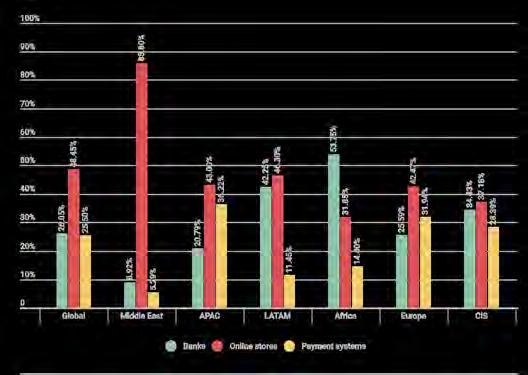
As users increasingly manage their finances through smartphones, traditional PC banking malware continued to decline in 2025. However, mobile banking threats moved in the opposite direction, with mobile banker attacks growing 1.5 times compared to the previous year.
Kaspersky also highlighted the growing role of infostealers in financial cybercrime. These malware tools harvest login credentials, cookies, bank card numbers, crypto wallet seed phrases, and autofill data from browsers and applications. The stolen information can then be used for account takeovers, direct banking fraud, or resale on the dark web.
In APAC, Kaspersky reported a 132% increase in infostealer detections on PCs from 2024 to 2025, fueling more credential-based attacks.
According to Kaspersky Digital Footprint Intelligence, over one million online banking accounts served by the world’s 100 largest banks were compromised by infostealers in 2025, with credentials for these accounts shared freely on the dark web. The countries with the highest median number of compromised accounts per bank were India, Spain, and Brazil.
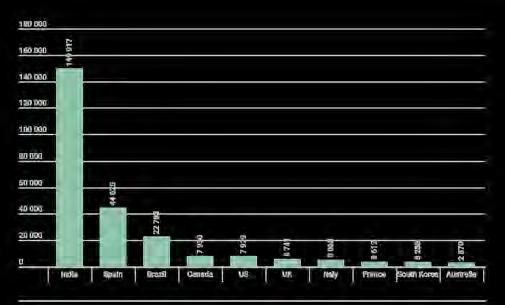

Payment cards remain another major risk. Kaspersky found that 74% of payment cards compromised by infostealer malware, published on dark web resources, and identified by its Digital Footprint Intelligence team in 2025 were still valid as of March 2026. This means attackers could still use card data stolen months or even years earlier.
“The dark web has become a central hub for financial cybercrime. Stolen credentials and bank cards that have been harvested by infostealers are aggregated, repackaged, and sold there, while phishing kits targeted at users of financial products are offered as ready-touse services,” said Polina Tretyak, Kaspersky Digital Footprint Intelligence analyst.
“This creates a self-sustaining ecosystem where data theft and fraud operations reinforce each other, making attacks scalable and easy to carry out by fraudsters with minimal experience. Breaking this cycle requires proactive threat intelligence on the part of organizations, and increased awareness and scrutiny from individual users,” she added.
To stay protected, Kaspersky advises individual users to enable multifactor authentication, create strong and unique passwords, and store them safely in a password manager. Users should also avoid clicking links from suspicious messages and carefully check web pages before entering login credentials or banking card details.
For businesses, Kaspersky recommends assessing the entire infrastructure, fixing vulnerabilities, and monitoring all attack vectors with rapid detection and response capabilities. The company also emphasized the importance of continuous dark web monitoring to help organizations track potential threats, exposed credentials, and threat actor activity before they can lead to larger incidents.
SM Malls make EV charging part of your everyday routine, so you can plug in while you shop, dine, or unwind
As more drivers shift to electric vehicles, everyday routines are starting to change. SM Supermalls, through SM Cares, is making that transition easier by rolling out over 160 EV charging stations across malls nationwide—turning a regular mall visit into a convenient charging stop.
PLUG IN, THEN GO ABOUT YOUR DAY
Charging your car no longer needs a separate trip. At SM malls, it can happen while you’re doing what you already planned—grabbing a meal, picking up groceries, or catching up with friends.
Instead of waiting around, you simply park, plug in, and carry on. By the time you’re done, your car is ready to go too.
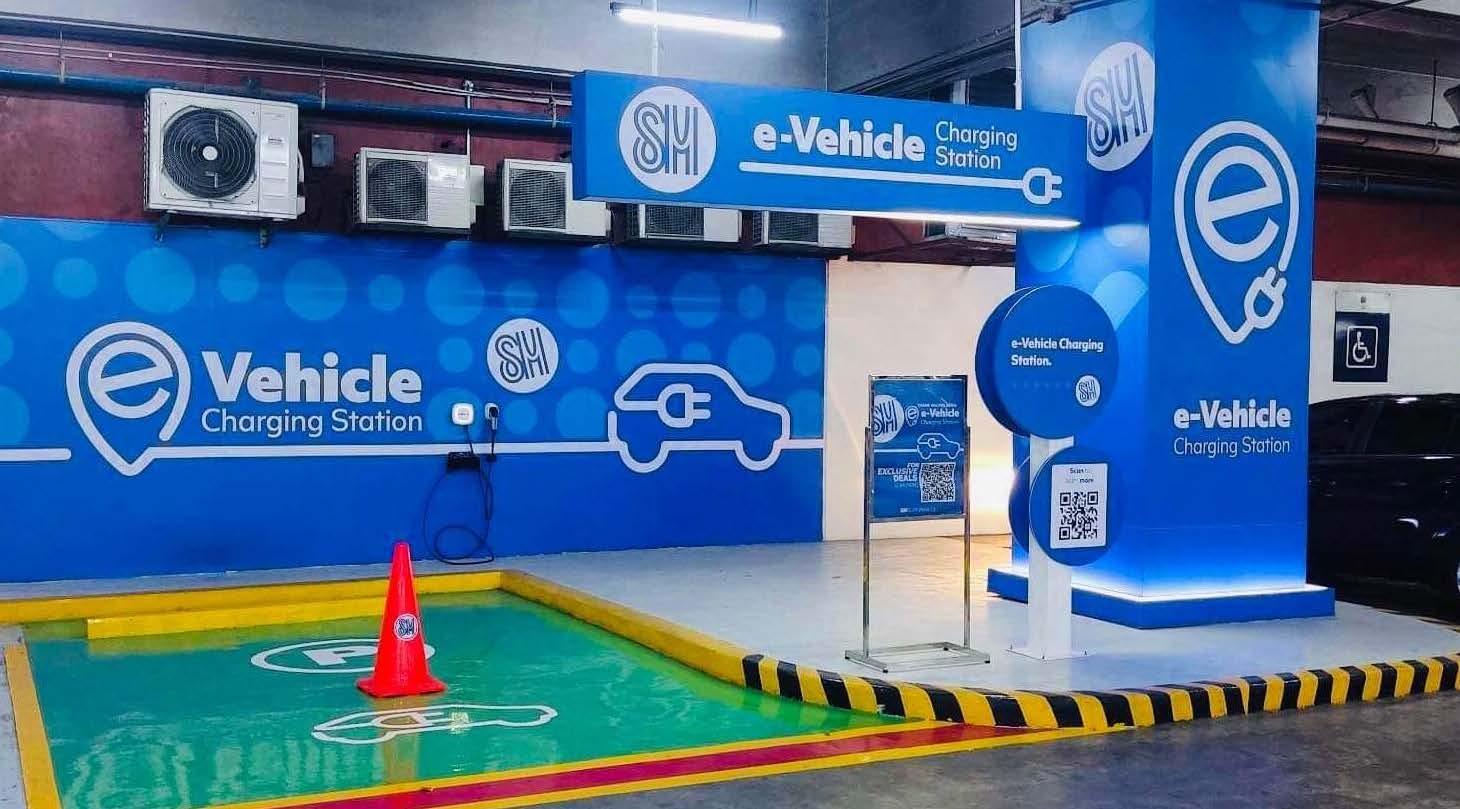
For many EV drivers, one of the biggest adjustments is figuring out when to charge. By placing stations in familiar, easy-to-access locations, SM makes that adjustment feel natural.
It’s less about planning your day around your vehicle and more about letting your vehicle fit into your day. Charging becomes part of your routine, not something you have to go out of your way for.
The addition of EV charging stations also reflects a bigger shift in how people think about mobility. With fuel prices fluctuating and sustainability becoming increasingly important, more drivers are considering electric vehicles as a practical alternative.
Having charging stations in places you already visit makes that choice easier to live with day to day.
Basically, this is about convenience. SM’s growing EV network shows how everyday spaces are evolving to match modern lifestyles.
You don’t have to think twice about where to charge. It’s already part of your stop.

EY GDS Philippines is helping build a skills-first talent pipeline by linking classroom learning with real-world exposure in AI, cybersecurity, data analytics, and enterprise platforms.
rtificial intelligence is accelerating this shift. As industries evolve, organizations are focusing not only on competing for talent, but also on developing it. For students and young professionals, this creates both opportunity and pressure: the opportunity to grow faster, and the expectation to be workforceready from the start.
Bridging this gap now takes more than traditional education. It requires clear pathways that connect academic learning with real-world application early in a student’s development.
EY Global Delivery Services (EY GDS) Philippines is responding by rethinking how talent is nurtured at its earliest stages.
Recognizing the growing need for AI, data analytics, cybersecurity, and programming skills, EY GDS is moving from role-based pathways to a skills-first model that places stronger emphasis on capability, practical exposure, and continuous learning.
A key part of this approach is direct collaboration with universities. By embedding enterprise tools, certifications, and hands-on learning into degree programs, EY GDS helps equip students with job-relevant skills before they enter the workforce.
This model moves learning beyond theory, helping students meaningfully contribute from the start, not just qualify for roles.
Central to this approach is early exposure to enterprise platforms such as ServiceNow, a digital workflow platform that helps organizations streamline operations across IT services, employee workflows, customer service, and risk management.
As a “Global Elite Partner,” the EY network integrates ServiceNow into its talent development strategy to mirror real-world business environments. Students gain hands-on experience in automation, digital workflows, and AI governance, while also learning how these tools connect technical knowledge with business needs.
To further support this vision, EY GDS launched the Academia Program,
designed to immerse students in real workflows and business environments. Programs such as the Accelerated Learning Program for ServiceNow (ALPS) offer a structured path for students to build skills before graduation, aligning their progress with industry opportunities.
“This immersion bridges the gap between theory and practice, showing how academic concepts apply in real client situations. Students build confidence, improve decision-making and enter the workforce prepared and effective from day one,” says Raymond Go, EY GDS Philippines consulting leader.
In collaboration with Cebu Institute of Technology–University (CIT-U), ALPS begins two years before graduation, giving students time and exposure to build both technical skills and professional maturity.
Beyond ServiceNow, EY GDS also reinforces its commitment through its Cybersecurity Academia Program and experienced bootcamps, also in collaboration with CIT-U. These initiatives equip students with foundational and advanced skills through hands-on, real-world training in areas such as cyber threat management, security operations, risk, and compliance.
Instead of focusing only on recruitment, EY GDS is building a sustainable talent pipeline that evolves with industry demands. Through early exposure to practical tools, industry frameworks, and guided learning experiences, students are better supported as they transition from classroom learning to professional roles.
Industry programs embedded in academic curricula can give students a significant edge. Early exposure to enterprise platforms and hands-on experience helps develop both technical skills and business understanding, particularly in fields such as Risk Consulting and Assurance.

“By aligning academic learning with real-world application, the organization is helping shape confident professionals who are technically equipped, adaptable, and prepared for continuous change.”
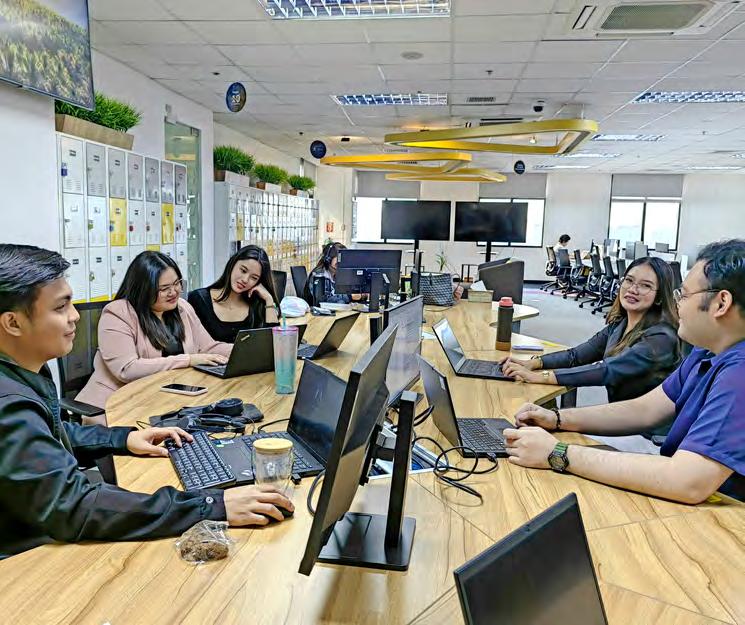
According to EY GDS Philippines assurance leader Karthik Bhaskaran, early exposure should include a structured approach to industry fundamentals, professional presence, teaming, and communication. This method helps foster a “questioning mindset,” a critical skill that sharpens professional skepticism, discipline, and integrity in the workplace.
Students also build digital fluency through tools such as Canvas, Financial Statement Tie-Out, and Copilot, giving them exposure to professional services environments and helping accelerate their readiness for client contexts.
Strengthening Industry-Academe Collaboration
Working with practitioners is equally important. This experience deepens students’ understanding of real work in assurance and consulting, while strengthening both competence and confidence.
“Our program really sets a standard for industry-academia synergy. In our first academic collaboration in the Philippines,
we’re able to give students access to industry platforms and progressive development tracks. Many graduates earn certifications and, in some cases, receive job offers before graduation. The program’s success has, in fact, expanded across Cebu, strengthening the region as a ServiceNow and Cybersecurity talent hub,” says Diana Dionisio, EY GDS Philippines talent attraction and acquisition leader.
From a hiring standpoint, this means candidates are more adaptable, workready, and able to contribute faster, reducing the learning curve for technical roles and teamwork.
For EY GDS, early career exposure is not an endpoint. It is the foundation of sustained capability. By aligning academic learning with real-world application, the organization is helping shape confident professionals who are technically equipped, adaptable, and prepared for continuous change.
As AI reshapes the future of work, this approach helps ensure that talent development remains both immediately relevant and resilient for the years ahead.

Canva is entering a new phase of its evolution, positioning itself not just as a design tool but as a central workspace for modern productivity. With the launch of Canva AI 2.0, the company signals a shift from creation to orchestration, where ideas, workflows, and outputs converge in a single, AI-powered environment.
Unveiled at the Canva Create event in Los Angeles, this latest update marks the platform’s most significant transformation since its 2013 debut. What began as a browser-based alternative to complex desktop design software has now expanded into a conversational, agent-driven system that supports users from ideation to execution.
For over a decade, Canva has simplified design through templates and drag-and-drop tools, lowering the barrier for individuals and teams to create visual content. Today, with more than 250 million monthly users, the platform is scaling that accessibility through AI.
Canva AI 2.0 introduces a new architecture that reframes the design process. Instead of starting from scratch or choosing a template, users can now describe what they want in natural language. The system generates structured, editable outputs while maintaining context throughout the creative process.
This shift moves Canva closer to becoming a unified workspace where design, communication, and execution happen seamlessly.
At the core of Canva AI 2.0 is a set of capabilities designed to make creation more intuitive and iterative.
Conversational Design allows users to generate layouts, campaigns, or documents from simple prompts or dictation. The AI remains engaged throughout the process, helping refine ideas rather than producing a single static output.
Agentic Orchestration coordinates multiple tools behind the scenes. A single prompt can trigger the creation of multi-format outputs, from campaign assets to presentations, all aligned with a defined goal.
Object-Based Intelligence enables precise edits without disrupting the entire design. Changes to specific elements such as text, images, or layout components are applied selectively, preserving the rest of the work.
Living Memory introduces persistent personalization. The system learns from user preferences, brand assets, and past projects, automatically applying style and structure to future outputs.
Together, these features position Canva AI as an active collaborator rather than a passive tool.
Beyond design, Canva AI 2.0 extends into everyday productivity. The platform integrates with commonly used tools such as Slack, Gmail, Google Drive, Notion, Zoom, and Google Calendar, allowing it to draw from real-time content and context.
This enables practical applications such as generating meeting summaries from transcripts, turning emails into sales materials, or
compiling newsletters based on team activity.
Automation also plays a central role. Tasks can be scheduled to run in the background, from generating weekly social media content to preparing daily briefing documents. The system effectively compresses hours of manual work into seconds.
Built-in web research further enhances this workflow, pulling structured insights directly into designs and documents, ready for editing and sharing.
Several new tools expand Canva’s scope beyond traditional design.
Brand Intelligence ensures outputs remain consistent with visual identity, automatically applying fonts, colors, and styles across projects.
Canva Code 2.0 enables users to create interactive, responsive experiences through simple prompts, with support for HTML importing and editing within Canva’s visual interface.
Sheets AI transforms spreadsheet creation by generating structured, data-filled tables based on user input, while Template Remix turns Canva’s existing library into an evolving source of inspiration that can be reshaped dynamically.
These additions reinforce Canva’s ambition to be a single destination for both creative and operational work.
multimodal foundation models tailored for design.
The company reports significant gains in efficiency, with its proprietary models delivering faster performance at lower cost compared to comparable systems. Advances in training infrastructure and reinforcement learning have also accelerated development cycles, reducing model deployment timelines from years to months.
This vertically integrated approach allows Canva to optimize for realworld use cases, balancing speed, quality, and editability.
Canva is also extending its reach through integrations with other AI platforms. Its collaboration with Anthropic brings Canva’s design capabilities into Claude, while compatibility with tools like ChatGPT allows users to import generated content directly into Canva for refinement and publication.
This interoperability reflects a broader strategy: positioning Canva as the final layer where ideas from multiple AI systems are structured, edited, and deployed.
Canva AI 2.0 began rolling out as a research preview starting April 16, initially available to the first one million users who access it via the homepage. Wider availability is expected to expand in the following weeks.
Powered by a Rapidly Evolving AI Stack
Behind these features is Canva’s frontier AI lab, where more than 100 researchers are developing
As AI continues to reshape how work is created and managed, Canva’s latest update signals a clear direction. The platform is no longer just simplifying design. It is redefining how individuals and teams move from idea to execution, all within a single, intelligent system.

Eurovision Song Contest Asia brings a global format to the region, opening a new platform for artists, audiences, and broadcasters— including the Philippines—to connect through original music.

The arrival of Eurovision Song Contest Asia marks a significant expansion of one of the world’s most enduring music formats. Long known for uniting countries through live performance and original songs, Eurovision is now establishing a regional stage that reflects Asia’s diversity, creativity, and rapidly evolving music landscape.
For the Philippines and other participating countries, the inaugural edition in 2026 is more than a debut. It is an opportunity to showcase national talent, engage new audiences, and take part in a shared cultural moment shaped by music.

Eurovision Song Contest Asia follows the core principles of the original competition. Each participating country is represented by one artist performing an original song, created specifically for the contest and not commercially released prior to eligibility cut-off dates. Tracks are limited to three minutes and performed live, maintaining the format’s emphasis on authenticity and performance.
The first edition is expected to feature at least ten countries across Asia, including the Philippines, South Korea, Vietnam, Malaysia, Cambodia, Laos, Bangladesh, Nepal, and Bhutan. Each broadcaster brings its own musical identity, resulting in a lineup that reflects the region’s wide range of genres, languages, and cultural influences.
Unlike some international competitions, the format will culminate in a single Grand Final, with no semi-finals. All participating countries perform on one stage, creating a concentrated, highimpact showcase of talent from across the region.
The winner of Eurovision Song Contest Asia will be determined through a combined voting system that balances public participation and professional evaluation.
Audiences can vote through an official digital platform, with provisions for both national and international voting. This allows fans across borders to support their favorite entries, reinforcing the contest’s regional and global reach.
Alongside audience votes, professional juries contribute to the final results, ensuring that musical quality, composition, and performance are equally recognized. This dual system has long been a defining feature of Eurovision, combining popularity with artistic credibility.
Fan engagement is further enhanced through ZOOP, the contest’s exclusive social platform partner. Designed to deepen interaction, it allows viewers to connect with artists, participate in communities, and engage with content beyond the live broadcast.
Participation in Eurovision Song Contest Asia begins at the national level. Each country’s official broadcaster is responsible for selecting its representative through its own process, which may include televised competitions, internal selections, or open calls.
For the Philippines, this means artists will need to go through the designated broadcaster, ABS-CBN Corporation, once details of the national selection process are announced.
While specific mechanics may vary by country, the general pathway remains consistent:
• Artists submit original material or audition through national selection channels
• Broadcasters evaluate entries based on performance, originality, and fit for the contest
• One representative is chosen to compete at the regional level
This structure ensures that each entry reflects its country’s creative identity while maintaining a consistent standard across the competition.
The inaugural Eurovision Song Contest Asia will culminate in its Grand Final on 14 November 2026, staged in Bangkok, where all participating countries will perform and compete for the title in a single live event.
The show will be broadcast across participating markets and made available to international audiences through digital platforms, allowing fans across the region and beyond to watch, vote, and engage in real time.
For nearly 70 years, Eurovision has been built on a simple but powerful idea: that music can connect people across borders. In Asia, that idea is being reinterpreted through a region known for its cultural depth and musical diversity.
Martin Green, director of the Eurovision Song Contest, described the expansion as a natural evolution. The goal is to build a version of Eurovision that reflects Asia’s voices and ambitions
the expansion as a natural evolution. The goal is to build a version of Eurovision that reflects Asia’s voices and ambitions while staying true to the spirit that has defined the contest for decades.
The Philippines’ participation highlights its strong musical heritage and the global appeal of Filipino artists. From powerful vocalists to genre-crossing performers, the country enters Eurovision Song Contest Asia with a track record of talent that resonates beyond its borders.
The involvement of AustrianFilipino artist JJ, winner of Eurovision Song Contest 2025, further underscores this connection, with his support helping build anticipation for the Asian edition.
Eurovision Song Contest Asia is designed as a long-term platform, with more countries expected to join in future editions. With participating markets representing hundreds of millions of viewers, it is positioned to become one of the region’s most talked-about entertainment events.
Beyond competition, it offers a new ecosystem for artists, broadcasters, and audiences—one that blends live performance, digital engagement, and cross-cultural exchange.
As it launches, Eurovision Song Contest Asia signals a shift in how global music formats evolve. It brings a familiar structure into a new context, where Asia’s stories, sounds, and identities take center stage—united, as always, by music.

Pag-IBIG Fund said it shall maintain its 3% annual interest rate for qualified socialized housing loans under the Expanded Pambansang Pabahay para sa Pilipino Program, keeping homeownership affordable at a time when the conflict in the Middle East continues to unsettle global oil markets and drive volatility in oil prices.
The move supports President Ferdinand R. Marcos Jr.’s direction to keep decent and affordable housing within reach of Filipino workers, especially those from the low and
moderate income sectors seeking to achieve homeownership.
“In keeping with the directive of President Ferdinand R. Marcos Jr., Pag-IBIG Fund shall maintain the 3% interest rate for qualified socialized housing loans under the Expanded 4PH so that more Filipino workers can continue to pursue homeownership even during a time of global uncertainty,” said Department of Human Settlements and Urban Development Secretary Jose Ramon P. Aliling, who chairs the Pag-IBIG Fund Board of Trustees. “By keeping
monthly amortizations low, we are helping more working families secure a home of their own while supporting sustained housing production and the jobs it generates, in step with broader national efforts to keep the economy stable.”
Under the program, first-time homebuyers, particularly those earning less than PHP47,856 per month in the National Capital Region and less than PHP34,686 outside NCR, may qualify for the subsidized 3% rate for the first five years of the loan term. All overseas Filipino

workers, regardless of income, may also qualify. Separately, under PagIBIG Fund’s Early Bird Promo, the first 30,000 qualified borrowers may enjoy the same 3% rate for the first 10 years of their housing loan, allowing them to save more and benefit from affordable and predictable monthly amortizations for a longer period.
The loan may be used to purchase socialized house-and-lot and condominium units priced at up to PHP950,000 and PHP1.8 million, respectively. It also provides up to PHP100,000 in additional financing for home improvements, such as utility connections and home fixtures, and carries a 100% loan-tovalue ratio, meaning no cash equity is required. At these terms, monthly amortization is about PHP4,005 for a house-and-lot unit worth up to PHP950,000 and about PHP7,589 for a condominium unit worth up to PHP1.8 million, amounts that are lower than the cost of monthly
rent. In addition, eligible borrowers may further benefit from additional subsidy provided by the national government, which may bring down the annual interest rate to as low as 1% and make monthly payments even lower.
Chief Executive Officer Marilene C. Acosta said maintaining the 3% rate reflects Pag-IBIG Fund’s strong fiscal standing and its continuing commitment to carry out President Marcos’ housing agenda in a way that keeps homeownership within reach of working Filipino families.
“We continue to heed the direction of President Marcos in helping uplift the lives of Filipino workers by keeping homeownership affordable for those who need it most,” Acosta said. “Our strong fiscal standing allows Pag-IBIG Fund to keep the subsidized 3% rate in place so more working Filipinos can continue pursuing homeownership under the Expanded 4PH.”
Acosta added that, beyond keeping loan rates low, Pag-IBIG Fund is also making it easier and less costly for members to look for a home through regional housing fairs that bring together quality housing units available for sale, partner developers, and Pag-IBIG
Fund financing support in one venue. Earlier this year, Pag-IBIG Fund launched its series of regional housing fairs through the Central Luzon Housing Fair. It is set to hold similar fairs in South Luzon, the Visayas, Mindanao, and the National Capital Region in the coming weeks. The Central Luzon fair gathered over 40 developers, financing institutions, and government agencies in one venue and provided on-site assistance for loan applications.
“Through these regional housing fairs, we are making it easier and less costly for members to find a home by bringing quality housing units available for sale, partner developers, and Pag-IBIG Fund financing together in one place,” Acosta said. “That is how Pag-IBIG Fund will continue providing more Filipino families with practical pathways to homeownership, turning affordable financing into real opportunities to own a home.”
Pag-IBIG Fund’s capacity to sustain this support is backed by its record housing loan performance in 2025, when it released PHP140.54 billion in housing loans benefiting 90,727 Filipino workers and their families, reflecting both the strength of its finances and its continued ability to help more members achieve homeownership.
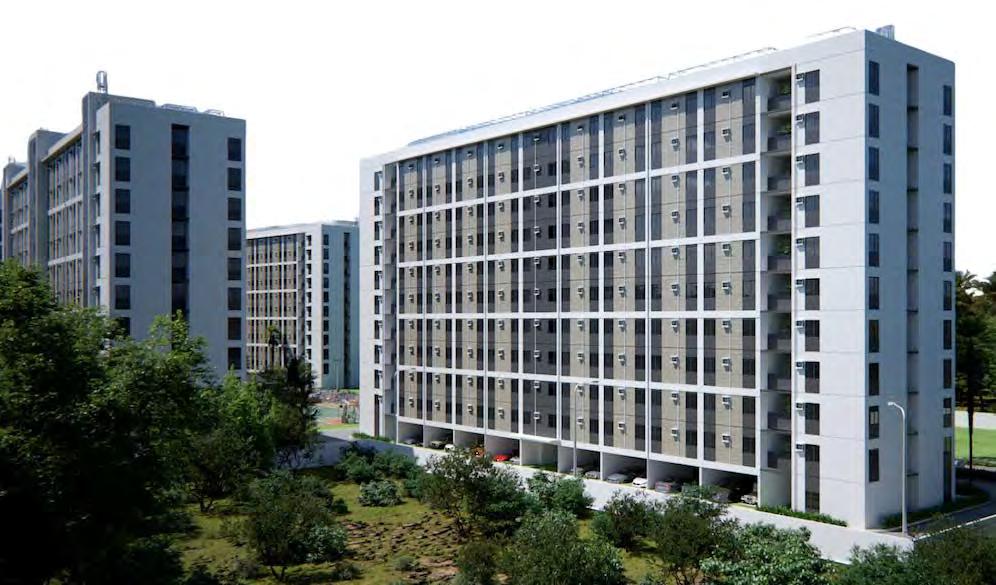

Honda Cars Philippines, Inc. (HCPI) has announced the appointment of its new president, Mr. Hidekazu Arai. He will replace Ms. Rie Miyake, who will assume a new post in Honda Motor Co., Ltd., effective April 1, 2026.
Mr. Arai brings nearly two decades of global leadership experience to the Philippines. Most recently, he served as Chief Administrator of
the Business Planning Department at Honda’s global headquarters in Japan, following significant tenures at American Honda Motor Co., Inc. and the Saitama Factory.
With a strong background in business planning, finance, and electrification strategy, Mr. Arai is uniquely positioned to lead HCPI’s next chapter. His leadership will focus on advancing
Honda’s commitment to sustainable mobility and strengthening the brand’s presence in the Philippine market through refined business practices that ensure superior product value and outstanding customer service.
Mr. Arai succeeds the outgoing leadership, carrying forward Honda’s mission of providing joy and mobility to Filipino customers.

The Philippine Space Agency (PhilSA) and the National Irrigation Administration (NIA) have signed a Memorandum of Understanding (MOU) to apply space technology in improving irrigation systems and water resource management across the Philippines.
The agreement, signed by PhilSA ad interim director general Gay Jane P. Perez and NIA administrator Eduardo Eddie G. Guillen, sets the stage for using satellite data and analytics to support the planning, development, and monitoring of irrigation systems,
and for the proactive, real-time management of water resources across the country. Under the partnership, the two agencies will collaborate on research, development, and utilization of satellite data, as well as training to strengthen technical capacity within NIA.
They will also develop space-enabled tools to support faster, data-driven decision-making in irrigation management. PhilSA’s programs will be tapped to enhance NIA’s capabilities and promote sustainable agriculture.
Following the signing of the MOU, PhilSA and NIA are set to further advance their collaboration through a Memorandum of Agreement (MOA), which will outline specific projects and the partnership’s implementation details.
The MOU will be in effect for three years, with an option for extension.
The collaboration highlights the growing role of space technology in addressing national priorities, particularly food security, water sustainability, and climate resilience.

Words by Jose Alvarez
As of this writing, the call for renewables should be stronger than ever. Gas prices have historically been volatile, which would make one think that the idea of cars that run on renewable energy should be more popular. While electric cars and hybrids are now more prevalent than before, there is still a considerable financial hurdle to clear before one can own one. My research took me to a car called the Sunraycer, which was supposed to bring renewable energy automobiles to the mainstream.
What was the Sunraycer, and why did the solar car fail to make it into the hands of everyday people like you and me?
General Motors (GM) requested its Australian division to participate in the World Solar Challenge, a race featuring only solar-powered cars. CEO Roger Smith was on board and funded a study to see if it could be built in 10 months, with completion by 1987. AeroVironment conducted the study and was also given the contract to build the car. The goal was not only to create a solar-powered car,

but also one with low weight and low wind resistance. The car only weighed 265 kg (585 lb) and had a low drag coefficient. The car also had a top speed of 109 kmph (about 68 mph). Hughes Aircraft manufactured and installed 8,800 solar cells on the Sunraycer. With the sun overhead, the car could generate around 1,500 kW of power. The engine was based on Magnequench permanent magnets, and the battery was composed of silver oxide.
The race only ran between 8 am and 5 pm, allowing the cars to drive during

peak sunlight hours. The Sunraycer even set a world record of 58km/h (36mph) from solar power alone. The car reportedly cost USD2 million to build (USD5,813,609.15 in 2026). The World Solar Challenge took place in November 1987, running from Darwin, Australia, to Adelaide, Australia, passing through the Australian outback. Veteran racer John Harvey, also from Australia, drove the Sunraycer, which won the World Solar Challenge. GM CEO Roger Smith personally went to Adelaide to congratulate the winning team. But was


this the beginning of a solar-powered car that everyone could use?
In 1988, the Sunraycer once again broke the solar-powered speed record, coming in at 121km/h (75mph) at Mesa, Arizona. This was in the midst of a tour in the United States. However, solar power took a different turn (pun intended). Solar power became better known for non-automobile uses, such as powering homes. This is especially useful in areas where the sun is prominent, such as the deserts of North America, Africa, and Western Asia.
While the solar car got much faster over time, topping out at around 120km/h (75mph) by 2011, there has yet to be a commercial car that runs on solar power alone. Some projects have emerged in the 2020s, but only the Lightyear 0 in the Netherlands reached the production stage. To this day, many cars use a mix of fossil fuels and electric power. The good news is that the sun will still be around for a long time, and that can hopefully encourage humanity to build a truly solar-powered car.







Handheld gaming PCs have gone from niche to borderline mainstream in a few short years. With more gamers craving portability that even the lightest gaming laptops can’t match, it’s no surprise that companies are scrambling ...more