hi ghl ghlights5


Hazel Grosell | Editor-in-Chief
Alyssa Dopico | Managing Editor
Melissa Gonzalez | Adviser
Olivia Simon | Copy Editor
Lily-Jade Lecoultre | Business Manager
Milegny Salas | Social Media Manager
Samantha Sears | Photo Editor
Arwen Law | Features
Hailey Martinez | News
Alicia Fajardo | Opinion
Natalia Quick | Sports
Ciara Burton | The Scene
Emilia Kohnstamm | Insight
Isabela Duarte | Online Editor
Stacy Urbina | Online Editor
Adriana Garcia
Angel Garcia
Anthony Flores
Brianna Osorio
Carolina Planes
Celia Sime Lanang
Elena Buda
Isabella Villela
Jade Meyer
Juan Chavez
Kenneth Lara
contributors
Cavaleon
Petsey Mezey

Lawrence Weiss
Maria Sandoval
Melina Morales
Mia Chacin-Vera
Rachel Velez
Rafaelle Fenot
Savannah Serpa
Siena Cernuda
Siena Van De Graaf
Sophie Aguilar
Valentino Alvarez
Vivian Romero
Nathaniel Woods
IN ACCESSING MORE CONTENT?
Scan the QR code to view a digital collection of old highlights issues.
We want to hear from you! Tell us your thoughts on a topic in highlights by sending an email titled “Letter to the Editor” to highlightscghs@gmail.com. We reserve the right to publish any letters sent.
2019, 2021, 2024

HHALFWAY THROUGH THIS issue’s drafting cycle, myAbuela passed away. While I can anticipated that editing roughly 30 pages of text after the death of a loved one would be hell, immersing myself in this magazine that I’ve loved working on for four years now was one of the things that grounded me amidst my grief.
In no way do I want this letter to come off as a pity partyinstead I want you to read this magazine and see more than just news reporting, but stories of resilience, togetherness and community. Despite the isolating nature of grief, it was nourishing – might I say Chicken Soup for the Soul (shoutout Insight) – to see stories so carefully crafted by my eager writers and editors. For anyone taking the time to read this letter before flipping through Issue 4’s beautiful pages, please understand this one point to take away: be stubborn about your passions.
Reading Issue 4, I recognized the same stubbornness for fully committing to your goals that myAbuela instilled in me, both in the efforts of my staff and the story topics alone. We feature student authors who balance their rigorous education with publishing entire books, administrators’unexpectedly quirky habits, Buddy Howell’s Sunday Services that make fitness more accessible, and a satirical on “slop bowls” that’s sure to make you laugh.
To my writers and editors: I hope you know how amazing it is that you can make something so vivid from nothing but an idea! To my readers, I hope you are similarly inspired by our stories this issue to stubbornly pursue what you love, what you want to accomplish and what simply brings you joy.

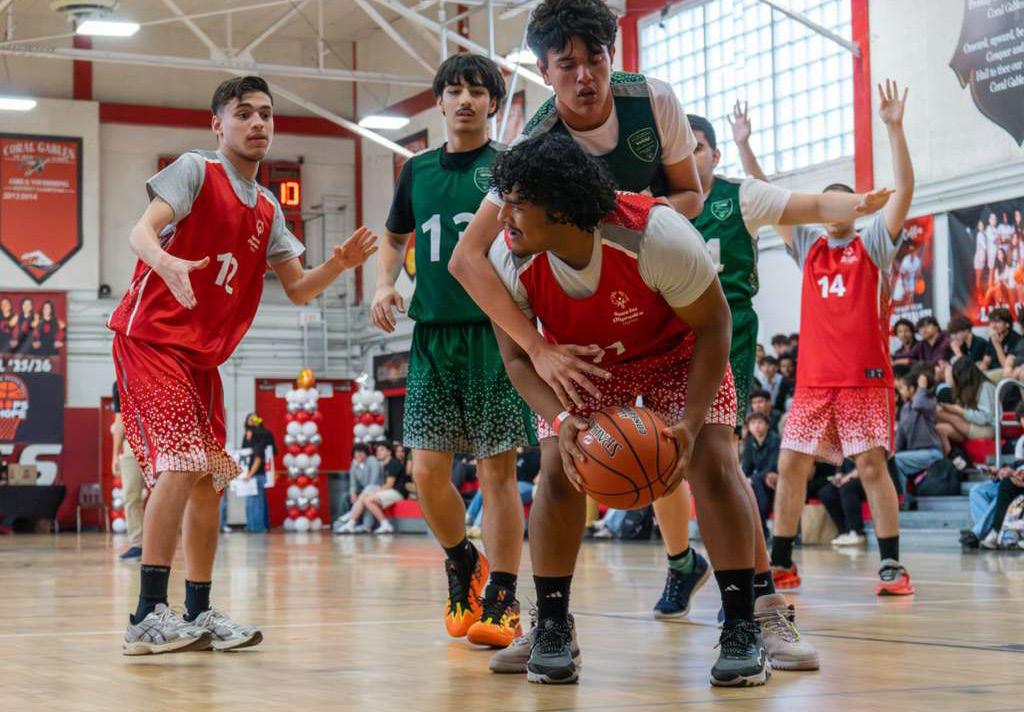
DEFENDING HOME COURT, Gables students won against Varela in the Hoops 4 Hope basketball game, 4843 on Thursday, Feb. 26.
BELTING ONSTAGE, senior Lucas
Aparicio delivers a powerful solo performance at the Cav Crash talent show on Thursday, Feb. 12.
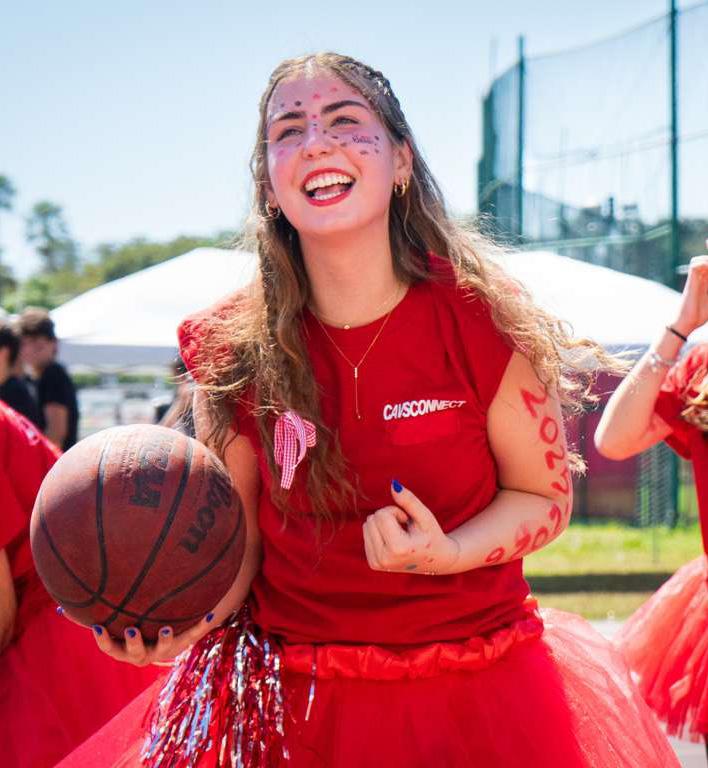
HER TEAM, Cavsconnect EIC and senior Marina Astorga cheers with publication spirit during the basketball relay at this year’s CAF&DM Field Day on Friday Feb. 20.

highlights is the official student-produced newsmagazine at Coral Gables Senior High School published and produced by highlights staff members. highlights has been established as a designated public forum for student journalists to educate and inform their readers on issues of concern to their audience and dissemination of news and ideas to the entire school community. As the producer of a scholastic publication, highlights subscribes to the responsibilities set forth by the National Scholastic Press Association Code of Ethics for scholastic journalists and advisers. According to Miami-Dade County Public School Policy, student media is not subject to prior review by administration or district personnel, and, as such, all content is determined by and reflects the views of the student staff members only. highlights welcomes reader feedback. All letters should be addressed to highlightscghs@gmail.com with the subject line “Letter to the Editor.” highlights reserves the right to publish any letter sent.
features
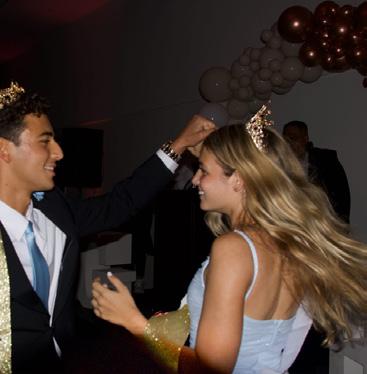
2 YEARS, 2 QUEENS
Current Homecoming Queen and Prom Queen alum recount engaging with student life.
The Trump Administration’s Compact for Academic Excellence poses changes to many college campuses.
14-15
AI use is increasingly debated as a simple innovation or a fundamental alteration of how work can be done.
20
Pickleball, tennis and badminton battle for the title of the most prominent racket and court sport.
23 the scene UNDER THE MOON
28 SOUP FOR THE SOUL
Inspired by the book series, highlights shares student success stories. sports
Explore a number of community events like yoga and drum circles hosted every full moon.
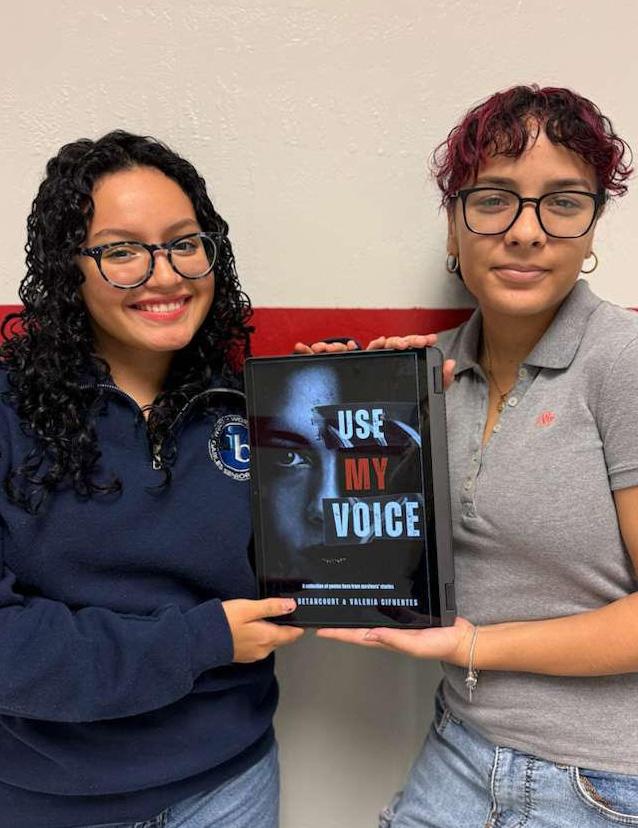
FRESHLY PUBLISHED, Valeria
Cifuentes and Ana Betancourt present their collaborative book, “Use My Voice.”
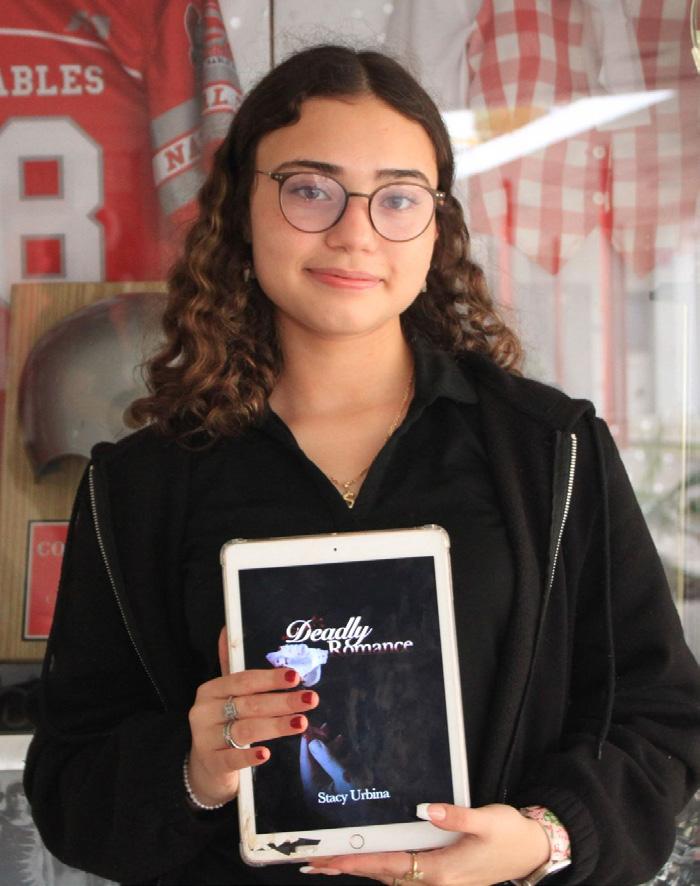
WITH A TRIUMPHANT SMILE, senior and debut author Stacy Urbina holds her published book, “Deadly Romance.”
NATALIA QUICK | SPORTS EDITOR
ELENA BUDA | STAFF WRITER
ABLES STUDENTS ARE stepping into the spotlight as the city’s latest generation of storytellers. Seniors Ana Betancourt, Stacy Urbina and Valeria Cifuentes represent a growing wave of local writers whose voices have developed under the guidance of teachers like Dennisse Silveira in Gables’ creative writing spaces. Through Miami’s network of literary events, including the Miami Book Fair, emerging authors find community, recognition and inspiration.
Students have many programs available to help foster their writing abilities, including the five award-winning publications at Gables. Catharsis, a literary magazine dedicated to creative writing and design, encourages students to explore selfexpression through writing. Programs such as Catharsis and the Creative Writing Club inspire students to nurture and develop their passion for writing. The club meets every month, and participants share their original work while interacting with mentors and other authors.
did write some poems here and there, but not with the quantity and quality I would have preferred.”
Betancourt co-authored a poetry book titled “Use My Voice” with Cifuentes, the managing editor of the school’s yearbook, Cavaleon, spreading critical awareness about domestic violence. Using the writing techniques and skills she honed as editor-in-chief of Catharsis, Betancourt was able to convey a message of acknowledgment and understanding for victims of domestic violence.
“During my writing process with Valeria, the poetry book definitely helped me open a new medium style of writing,” Betancourt said. “I found writing poems about topics like domestic violence, harassment or sexual violence — bringing awareness to those topics — brought me a sense of purpose to my poems.”
Stacy Urbina, 12 “ My advice for aspiring publishers would be to keep persisting on what the writer wants most; I wanted my work out there and got it done.
“The Creative Writing class and club give students a sense of community where they can share their writing, get feedback, grow as storytellers and just hangout,” Silveira said. “Students learn different forms of writing, such as fiction, poetry, plays and personal narratives. It also builds confidence through collaboration.”
Involvement with Catharsis served as a critical catalyst for Betancourt’s growth as a writer, providing the community and opportunity to formalize her passion.
“Before Catharsis, I was not very active in writing,” Betancourt said. “Yes, it is true I
Through her writing, Betancourt hopes readers recognize the gravity of this extremely relevant and far-too-common issue, encouraging others to self-publish as well.
Betancourt and Cifuentes began this poetry book as their International Baccalaureate Creativity, Activity, Service project; however, it became a much bigger artistic endeavor. They divided up the workload for the project, with Betancourt handling the logistical portion and Cifuentes designing the cover, thus preparing the book for publication.
While writing about this extremely heavy topic, the writers made sure to collect a vast amount of data, as well as actual stories from survivors of domestic violence.
IN
MIAMI, the Miami Book Fair showcases an extensive range of genres and publishers, serving as a major literary hub for aspiring writers.
Betancourt and Cifuentes are not the only Gables students channeling their creativity into authoring and publishing a book. Since the age of 12, Urbina, online editor for Gables’ highlights Newsmagazine, has been writing short novels and articles across diverse genres. With her published novel “Deadly Romance,” Urbina found a space to express her thoughts and emotions through storytelling.
“The stories I wrote gave me comfort and a visual experience,” Urbina said. “Writing has helped shape who I am. I have been able to speak out about my thoughts and emotions, and it has made me love the ability to storytell.”
Urbina’s journey as a writer was rooted in her love of watching movies. Her fascination with various film genres and books made writing seem like an appealing pursuit.
“Ever since elementary school, I have been writing my own fantasy stories,” Urbina said. “I would rip out the covers of composition notebooks and write a whole short story using those pages and drawing a DIY cover on the front.”
In 2022, during a period marked by the recovery from the COVID-19 pandemic, Urbina completed her story, starting her journey toward publishing. She dedicated months to contacting book publishers, seeking one who would recognize the merit of her work.
Urbina ultimately partnered with Dorrance
The highlights staff records what they overhear students talking about in the hallway.

Publishing, one of the biggest publishing companies in all of America, which offers full service along with support for young authors. Following months of hard work, dedication and significant financial investment, Urbina successfully finalized and published her novel, achieving one of her greatest literary goals at the age of 13.
“My advice for aspiring publishers would be to keep persisting on what the writer wants most; I wanted my work out there and got it done,” Urbina said.
Miami has also seen a rise in young authors, supported by institutions like Books & Books and the strong creative writing programs at the University of Miami and Florida International University, according to the Miami Herald. The Miami Book Fair, a major annual event hosted by Miami Dade College, attracts over 200,000 guests and more than 500 published authors.
“I’ve been working at the Miami Book Fair since I was fifteen,” Books & Books employee
“If there’s a will, there’s a way, and I don’t have the will.”
“FRQ stands for Frustration-Raising Questions.”
“Before you ask, yes I’m gonna eat it and no I don’t feel any shame.”
Olivia Karp said. “As a young person navigating the publishing and bookselling world, it’s important to learn from customers and authors alike; the greatest gift of a book fair is not the books themselves, but the reminder that ideas bring people together.”
Guided by teachers, school clubs and programs like Catharsis, Gables students are finding the confidence to share their stories.
Resonating with the city’s broader literary energy, these students demonstrate how emerging voices are actively shaping the future of Miami storytelling while keeping its creative spirit alive.
h
“My brain just logged out mid sentence.”
“Somebody has to be beating up the WiFi generator everyday.”
“I tried to make an omelet, but it turned into scrambled eggs with a tragic backstory.”
BRIANNA OSORIO | STAFF WRITER
MELINA MORALES | STAFF WRITER
SINCE 1951, PROM HAS BECOME a celebrated milestone, reflecting the spirit and camaraderie of the student body by providing students with a space to have fun with friends and celebrate their high school accomplishments. Through the decades, events like prom and homecoming remain central traditions in each new class of Cavaliers.
“Prom is a tradition right before you graduate,” Student Activities Director Ana Suarez said. “It’s a culminating event that you look forward to while you’re in school.”
School spirit abounds through the excitement in the hallways, stretching from the first prom queen, Phyllis “Petsy” Mezey, to the latest, senior Serafina Baraloto. The yearly homecoming and prom season have students rushing to buy clothes, shoes and accessories for the spectacular night that adds to their high school experience.
Prior to the homecoming event, Queen and King contestants spend time creating content through social media and passing out flyers that aim to persuade their classmates to vote for them.
“
The fact that I get to be part of this long-standing tradition makes me very flattered; I’m glad I get to bring tradition through my entire life. This is something that I can always look back on.
Serafina Baraloto, 12
Recently crowned homecoming queen, Baraloto finds joy in participating in school affairs, actively working to build a memorable high school experience at Gables.
“I am a very traditional person; when I think of high school I think of cheerleading and football,” Baraloto said “I chose a big public school because I love the idea of school spirit.”
Driven to make the most of her time at Gables, Baraloto goes after every opportunity that comes her way.
When it comes to trying new things, her personal mantra, “Why not?” serves as her inspiration to pursue things others might avoid. Since her freshman year, this drive has led to her joining the cheerleading team and serving as editor-in-chief of the school’s yearbook, Cavaleon.
Baraloto’s decision to run for her senior year was encouraged by her grandmother’s experience, who, in 1968, was homecoming queen at Collinsville High School in Illinois.
The announcement of her name as homecoming queen instantly overwhelmed her with emotion, barely able to believe that she had won such an honorary title.

RULING THE DANCE FLOOR, seniors
Serafina Baraloto and Rafael Hanono share their first dance as homecoming king and queen. Courtesy of Nathaniel Woods

In doing so, Baraloto created a lifelong memory. As someone deeply rooted in tradition, Baraloto could not wait to share this crowning achievement with the family who initially encouraged her to seize this opportunity.
“The fact that I get to be a part of this longstanding tradition makes me very flattered,” Baraloto said. “I’m glad I get to bring this tradition with me through my entire life. This is something that I can always look back to.”
As the first Gables prom queen in 1951, Mezey recalls her night with a mixture of pride, nostalgia and humor, painting a vivid picture of a simpler era where traditions were just beginning to form.
“All senior proms are special because of what they are,” Mezey said. “The senior prom — a celebration of your achievement of graduating from high school.”
With only a handful of venues in Coral Gables at the time, Mezey believes prom may have been at the UM Student Club. She reminisces on the late-night breakfasts at various homes, handmade formal wear and the elegance expected of the time.
While the evening may have lacked the extravagance of modern proms, the Class of ‘51 made up for it with an undeniable sense of camaraderie, since many students had been together since Gables Elementary. Beyond their social bond, the Class of ‘51 was academically elite, where they held one of the highest collegebound percentages in the state.
Regarding the election of prom queen, Mezey describes the selection process as a “total secret,” making her crowning a moment of genuine and pure shock.
“I was stunned to be chosen; it had never crossed my mind,” Mezey said. “I think the king was equally surprised as I was when we were crowned.”
A classmate who attended the prom, Virginia Holly Wood, shared similar memories of early Gables dances, explaining that most major events often took place in the school’s gymnasium. This location necessitated a unique
HISTORICALLY CITED, Gables’ first prom queen, Phyllis “Petsy” Mezey, and king, Lee Smith Jr., hold court during the annual prom at the UM Student Club.
measure to protect the polished wood floor of the basketball court: students were required to take off their shoes and dance in their “Bobby socks,” or ankle socks, to dance. This practice quickly led the students to name the gatherings as “Sock Hops.”
“We didn’t have limos driving us to prom,” Wood said. “We decorated everything ourselves, had before-parties in friends’ homes and had to be home by midnight, but we always had a lot of fun just being together.”
From corsages of simple gardenias to dresses sewn at home by her mother, Wood’s recollections reveal that the original prom was not focused on glamour or grand entrances, but on community, creativity and celebrating the end of a shared journey.
Spanning from the 1951 memories of Prom Queen Mezey to the present day, their collective memories capture the enduring spirit of a Gables tradition that has only grown richer with time.
Events like homecoming and prom enhance the school experience, providing opportunities for students to create memories filled with laughter and friendships.
Years later, students can look back and reminisce on the traditions they not only took part in, but ultimately made their own.
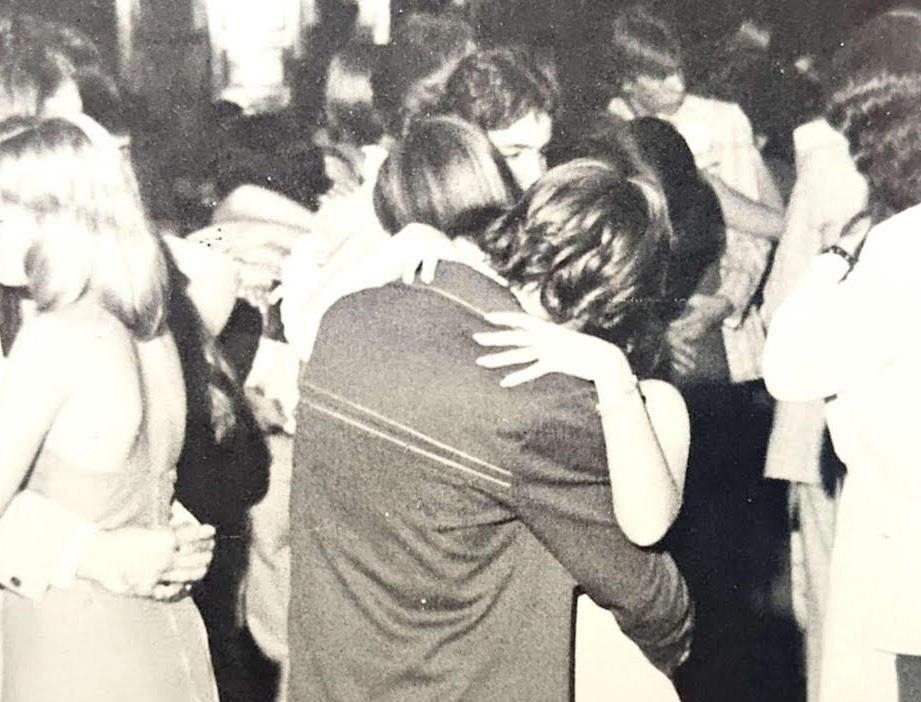
Offering a compelling window into the 1976 prom, this black-and-white photograph captures a moment largely untouched by the disco scene, with Gables continuing the prom king and queen tradition that year.
The image highlights a couple engaged in a slow dance, their closeness symbolizing the cherished moments of adolescence. The scene showcases the quiet contrast to the high-energy celebrations that would later become popular.
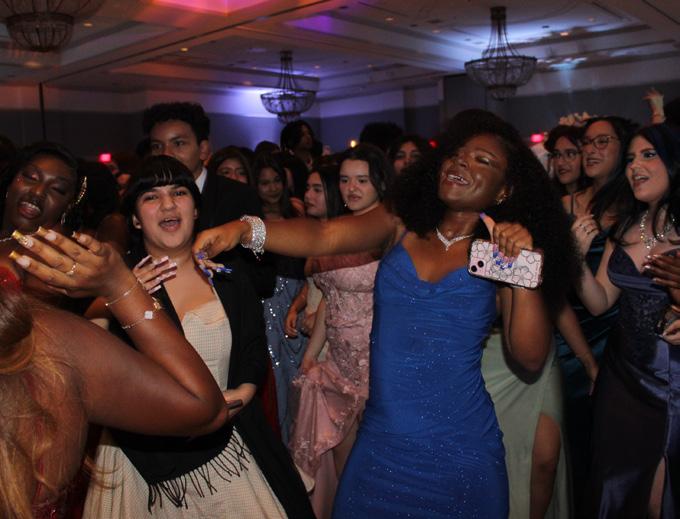
Held at the JW Marriot Hotel, the dance floor, bathed in magenta and amber light, was a place where students fully embraced the energy of their 2025 prom. Students had the opportunity to enjoy dinner, dance and participate in photo booths with friends.
Amid the glow of soft lighting, students are smiling and showcasing glittering jewelry and long nails, fully immersed in the celebration of their shared memories and high school achievements.




MILEGNY SALAS | SOCIAL MEDIA MANAGER
VALENTINO ALVAREZ | STAFF WRITER

LOVE TAYLOR SWIFT AND BAD Bunny, and it’s basically not so much about their music, but about what the meaning of their music is and the things that they stand for,” Student Activities Director Ana Suarez said. “Honestly, my daughter grew up with Taylor Swift, and I just tried to be the good mom. It wasn’t until ‘Reputation’ that the lyrics started sinking in — her story and the things she believes in, like women empowerment. It is more than me just liking her because my daughter likes her.”
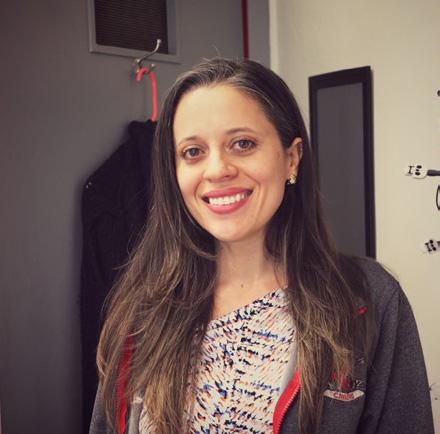
MY HABIT IS THAT I DON’T LIKE watching only one show at a time, and when I watch a TV show, it’s designated to one specific device,” Assistant Principal Dr. Jocelyn Figueroa said. “So I’m one of those people where working in a quiet room is not conducive to my productivity. Even if I’m doing something on my computer that’s work-related, I still have to have something on the TV playing. But whatever’s playing on that TV will never play on another TV.”
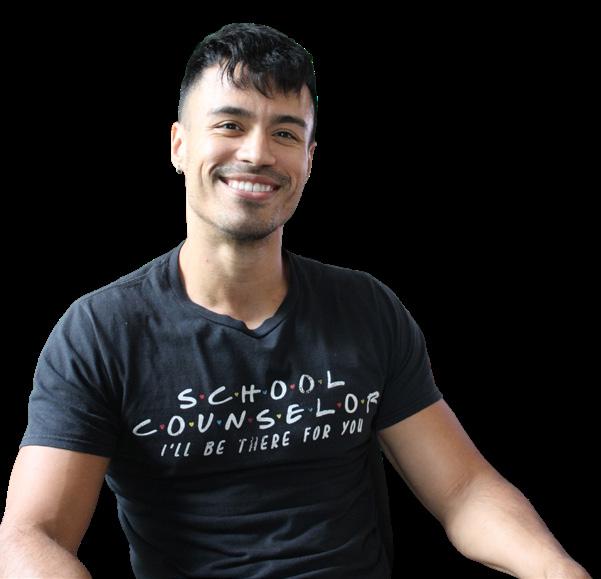
ICOLLECT DESIGNER HATS; they’re all funky and cool,” counselor Kevin Sepulveda said. “I bought one that I thought was cool online — next thing you know, I bought a second one, then there was a third one and then a fourth one. And I don’t even wear them. I just kind of collect them, and I’m making a wall display out of them; it has room for like 20 more hats. I didn’t even realize I was collecting them — I was just buying them.”
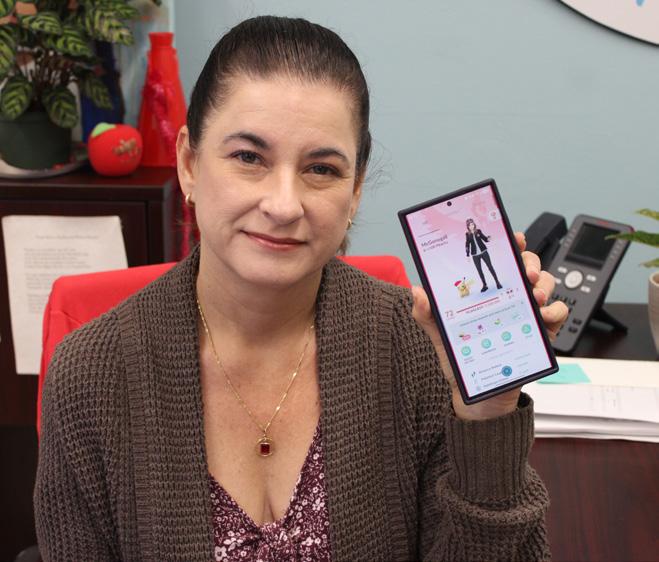
MY SONS GREW UP WITH Pokemon — they played the games, read the books and watched the shows, so they know all this stuff,” International Baccalaureate Coordinator Diana Van-Wyk said. “It’s all new to me, so I just find it interesting, especially figuring out the different ways to battle and know what the Pokemon do and which are the right Pokemon to use against other Pokemon.”

‘M CONSUMING MEDIA AT A simultaneous rate,” film teacher Gabriel Rodriguez said. “So currently I’m reading two novels, and I’m listening to two other audiobooks — I’ve got four other books in my queue of what I’m gonna read next. I get bored very easily, and I’m constantly looking for ways to keep myself entertained and engaged with whatever I can consume. I encourage my students to read certain books or movies. I think that more people should have this habit — it’s better than doomscrolling.”
1.2
million international students were hosted by U.S. colleges and universities during the 2024-25 academic year.
Source: Institute of International Education
Freeze tuition for up to five years and refund up to the first semester.
Lower university’s non-teaching allowance.
Mandate standardized testing scores for admissions.
Allow no more than 15% of the undergraduate student population to be part of the Student Visa Exchange Program.
Do not consider race and gender during the enrollment process.
COLLEGE ENTRY PROCEDURES may be altered through the Trump administration’s new Compact for Academic Excellence in Higher Education initiative, which targets tuition, administrative costs, race and gender in admissions, and standardized testing and international student enrollment. According to CBS, colleges are divided on whether they will sign the initiative — some believe it will influence campus free-speech rights, while others are not so sure.
80%
of four-year colleges are either test optional or will not consider SAT and ACT scores.
Source: Inside Higher Ed
The proposal was sent out to nine different colleges on Oct. 1, 2025, including the Massachusetts Institute of Technology, the University of Pennsylvania, the University of Virginia, Dartmouth, the University of Texas, Vanderbilt, the University of Southern California, the University of Alabama and Brown. According to National Law Review, all except Vanderbilt and UT rejected the compact, mainly because of how students will be affected. The compact is not mandatory for each college to accept, giving campuses the ability to choose what aligns most with their policies. However, additional colleges, such as Valley Forge Military College, New College Florida, Grand Canyon University and Southern Arkansas University, have shown interest in the proposal.
According to the Washington Examiner, the chief aim of these particular rules is to promote student equality throughout the student body and faculty, focusing on rewarding students for their achievements rather than their attributes.
A major part of the compact is freezing tuition for up to five years and refunding up to the first
semester. The financial pressure created by this freeze could potentially spur colleges to reduce lower income students’ institutional aid offers, according to Best Colleges.
“It helps keep college costs predictable, but could also lead to cuts in campus services if universities have less funding,” college assistance advisor Sofia Sanz said. “It also puts more weight on SAT and ACT scores, increases pressure to test and reduces the role of holistic review.”
Another aspect facing alterations is administrative costs, as the university’s nonteaching allowance will be lowered. Reductions in non-teaching staffing costs can affect the services students rely on. With fewer staff members, appointments and paperwork may slow down, affecting day-to-day campus operations.
The compact would also make standardized testing scores mandatory for admissions, removing test-optional policies. According to Crimson Education, more than 2,000 colleges have optional assessments for tests such as the SAT or ACT. Mandatory standardized testing will give each student a consistent way to test their academic skills in various ways, as stated by the Educational Testing Service. However, it raises concerns as, according to the Harvard Gazette, wealthier children are thirteen times more likely to score a 1300 or higher on the SAT than lower-income students.
“I would like to study in the art field, whether I decide to actually major in art or study some form of art like cosmetology or fashion,” senior Chyler Campbell said. “l have never been good with tests like the ACT or SAT, so if I were to apply to a school that would require a certain score, it would probably be harder for me to reach the score I would need to get in.”
Another academic requirement written into the compact is that no more than 15% of the undergraduate student population can be a part of the Student Visa Exchange Program, and no more than 5% from any one country. A Student Visa Exchange program is how foreign students
are allowed to study or work in host countries. To take part in the program, they undergo a process of applying to schools, completing forms, paying fees and being interviewed.
“The steps and all the processes to apply are all in English, and sometimes the advisor or counselors do not explain in Spanish,” foreign language teacher Jaquelin Chacon said. “[The students] search for help because it is complicated to understand all the steps and processes.”
“ The gender and sex restrictions will definitely affect the current changing society because many people will be uncomfortable using their biological gender for certain purposes.
Leonardo Pascual, 12
Many of the nine universities who received the compact are close to the aforementioned cap. For example, 11% of Brown University’s student body is international undergraduate students, according to the university. Likewise, MIT has 11.17% international students, according to College Factual. If the percentage of international students reaches the 15% cap in any signatory university, they must expel current students or reject incoming international applicants, as described in the compact.
According to the Washington Examiner, the
students speak up
compact states that universities relying heavily on the financial support of an international student body risks lessening the available spots for Americans and could spread Anti-Semetic or Anti-American beliefs that might lead to a national security threat.
Additionally, much stricter cultural requirements are predicted to have an impact; for instance, race and gender will not be considered during the enrollment process at signatory schools. Gender definitions are to be based on the identification of biological processes and reproductive functions, and race is not to give students advantages in scholarships and other social or financial circumstances under the compact.
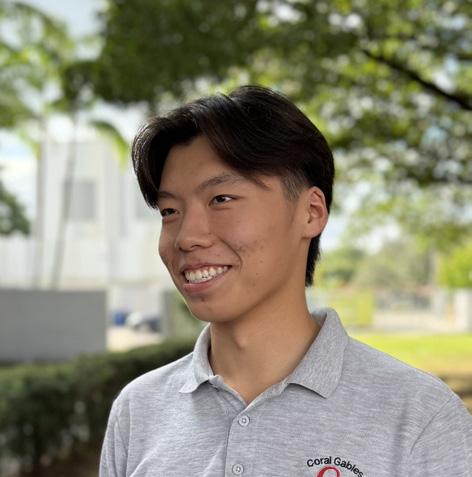
“The gender and sex restrictions will definitely affect the current changing society because many people will be uncomfortable using their biological gender for certain purposes,” senior Leonardo Pascual Quintana said. “I also think it is just unnecessary to put those restrictions.”
An overarching theme throughout the compact is the development and security of civil discourse in which no one side or ideocracy dominates. It also recognizes that freedom of speech is not absolute and that policies should punish discriminatory, threatening or harassing speech, as well as actions that jeopardize the rights of the university’s student body.
In an article published on their page, Dartmouth claims that they refuse to sign the document due to its risk of limiting the freedom and self-governance they have valued since the institution’s founding. The compact requires that signatories harshly impose their policies to protect the rights of the student body, and violation would abide serious punishment.
The compact’s future is inexplicit, as much of the document sent out to the nine universities is up to interpretation. Many colleges refused to sign the compact for fear of misuse, and several colleges that did sign are required to begin implementing the policies right away.

SOPHIE AGUILAR | STAFF WRITER
At the beginning of the school year, MiamiDade County Public Schools enrollment declined by over 13,000 students. According to CBS News, Superintendent Jose Dotres attributed the decline to lower birth rates, families leaving and fewer students entering the country. This leaves schools adjusting to the decrease in students, issues with academic performance and social engagement.
“With Miami being expensive, families moved to other states and other areas in Florida where the cost of living is not as high,’’ Principal Anthony Balboa said. “The birth rate has been declining over the past few years, especially in the past five years. This impacted students registered in Pre-K and Kindergarten.”
The University of Miami Health System recently opened one of the largest outpatient facilities in North Miami, a 363,000-square-foot open space for specialties such as cardiology, oncology and orthopedics. The facility will have 110 exam rooms, 10 operating rooms and 33 cancer treatment rooms, with the 60,000 remaining square feet being saved for future expansion. The facility was opened to increase the accessibility of UHealth locations.
“I think current patients in the Miami health locations may benefit from the changes being made by the expansion of healthcare, specifically the initiatives UMiami is taking to provide for the patients in UHealth,” Gables alumnus and UM freshman Jared Munoz said.
The Department of Special Education has experienced issues with budgeting and has had to cease work during the government shutdown. Many teachers have lost their jobs, and countless families are having trouble getting their children the educational help they need. According to CNN, the department has experienced a significant reduction of staff since the start of the second Trump administration, cutting nearly 50% of its workforce — over 1,300 people — last March. The budgeting issues could lead to service, staffing and support reductions.
“While basic operations tend to restart quickly, it can take weeks or even longer for agencies to fully recover,” Special Education teacher Silvia Yanes said. “Backlogs, delayed projects and staffing challenges don’t disappear overnight. Schools and districts that rely on federal guidance or funding may also feel the ripple effects for some time.” h h h
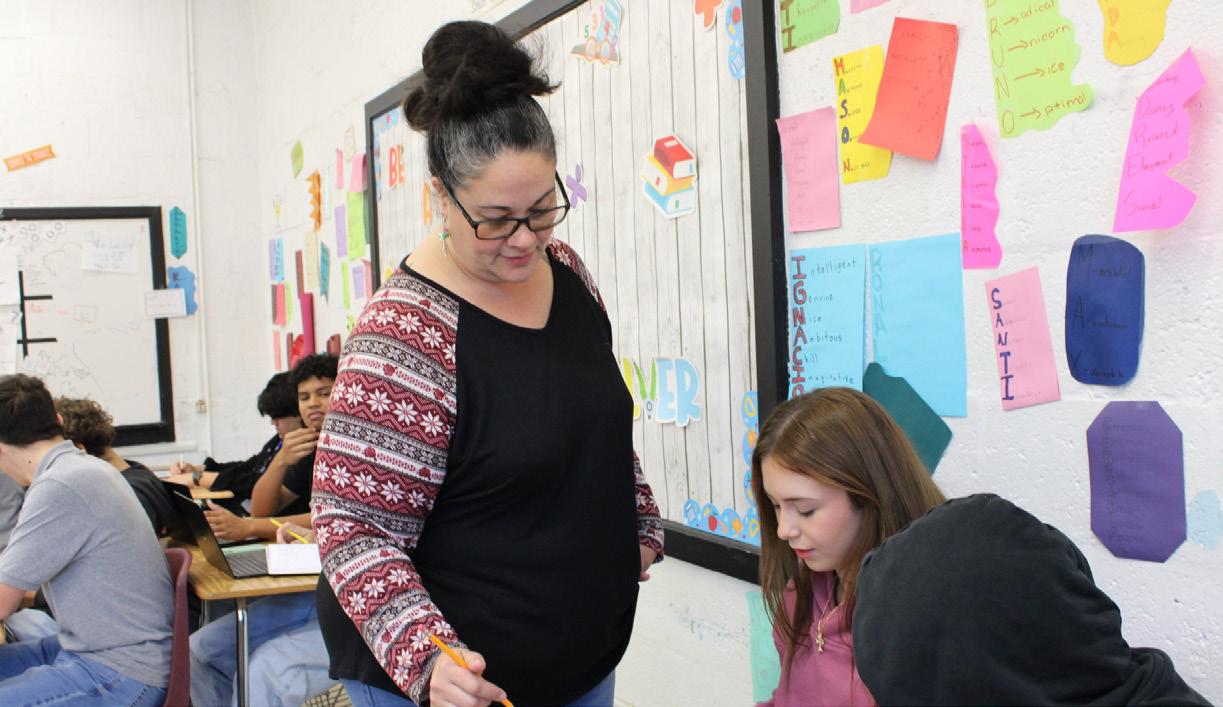
Congratulations to math teacher Rebeca Reinoso, Gables’ Teacher of the Year. This achievement not only recognizes her current contributions, but her future dedication to her role and students. Having achieved this distinction, Reinoso is placed in the running for the district and state titles. Teacher of the Year exists to recognize outstanding educators for their dedication, innovative teaching style and positive impact on students. While the program serves to support educators and their adaptability, it also highlights the importance of the profession—reminding faculty and students that teachers like Reinoso sustain education.




Despite the wide range of extracurriculars at Gables, many students see themselves excluded due to limited resources
Written by Online Editor Isabella Duarte.
S THE SCHOOL YEAR progresses, many students face real barriers to getting involved on campus, and the impact goes far beyond what is apparent. When students cannot access the activities that shape high school life, they miss the experiences that gain more meaning as they take on higher education and careers. Caring for siblings, household responsibilities or unreliable transportation directly prevent students from exploring their passions and committing to activities they care about.
Students with added responsibilities outside of school are oftentimes underrepresented in campus activities. These responsibilities do not just interfere with extracurricular attendance but also the development of important skills and opportunities.
According to the National Library of Medicine, students that engage in multiple and regular extracurriculars as sophomores tend to have better grades by their senior year and greater chances of pursuing higher education. When students cannot participate, they miss out on the growth that these activities typically foster.
“I get home half an hour later than my other peers because of home responsibilities,” senior Scarlett Estrada-Pedemonte said. “I
think colleges should try and ask more about that as well to really weigh out how students are using their 24 hours in a day.”
Even when students try to get involved, additional challenges remain. Barriers often extend beyond time and transportation; a lack of exposure or guidance can leave students feeling unprepared or lacking the confidence to join a club or sport.
In many cases, teams and organizations rely on fundraising to purchase essential equipment, uniforms or travel resources, helping to distribute costs more evenly and reduce the financial burden on individual students. By sharing these expenses across a larger group, fundraisers can make participation more accessible for students who might otherwise be unable to afford the required gear.
“Many students do not know what to expect when joining,” tennis coach Benjamin Groff said.“They might think just because they own a tennis racket they are a tennis player, and that isn’t true.”
As students begin preparing for life after high school, the consequence of limited access to extracurriculars becomes more pronounced. Colleges often value leadership, involvement and initiative in their admissions process, yet these qualities are frequently measured without full consideration of students’ varying circumstances.
“We did a car wash fundraiser, and with the help of the whole soccer team, we managed to get the money we need for hoodies and practice shirts for each player,” junior Melangie Santiago said.
Students balancing work or household responsibilities may appear less engaged despite demonstrating commitment and timemanagement skills in other areas.
In response to this gap, the Common Application includes an optional section where students can explain personal circumstances that affected their high school experience, and many colleges explicitly state that part-time jobs and family responsibilities are considered meaningful forms of involvement. While this does not eliminate inequities in access, it represents a step toward more contextual and equitable application assessment.
Although barriers to extracurricular involvement still exist, students, schools and colleges are beginning to acknowledge that participation does not look the same for everyone. Many students are finding alternative ways to build skills and community despite limited access to traditional activities. As colleges continue to place greater emphasis on lived experience, recognizing these realities allows students to be evaluated more fairly for their effort and commitment.
The costs of extracurricular activites, like uniforms and travel, cause 29% of lowincome students to avoid them completely.
Source: University of Michigan
Is Artificial Intelligence a tool designed to excel at performing specific system capable of reshaping how individuals approach and accomplish

RACHEL VELEZ | STAFF WRITER
S ARTIFICIAL intelligence use increases, students are becoming more familiar with the dystopian predictions of how it is supposed to change their future careers and reshape society. In reality, it plays a much smaller role in day-to-day life. The simplest way to understand this is through a basic metaphor: AI is a toaster. It performs tasks marginally faster than existing resources, ultimately selling consumers a product they do not really need to “change their lives.”
According to the College Board, 79 to 84% of students use AI to complete assignments faster. The technology has redefined normalcy, as students now just open a laptop, type a question to an AI chatbot and receive a response within seconds.
Convenience aside, AI has not changed how school works. Speeding up small tasks is a temporary solution. The lack of deeper thinking involved in these processes contributes to a school environment focused on completing assignments for grades rather than one where students expand the limits of their knowledge.
Even the best AI tools still get facts wrong, mix things up or leave out important details. The Massachusetts Institute of Technology’s Sloan School notes that AI often gives incomplete or inaccurate information, which forces students to double-check it anyway, taking up the precious minutes AI use was meant to save. Instead of functioning as a transformative, time-saving invention, its role stays limited to small, simple tasks — nothing that meaningfully changes how students work.
“AI is helpful for quick completion but fails when asked to follow specific learning processes,” junior Amaru Ospina said. “It delays the process of information intake, feeds you false information and gets you nothing but bad test results.”
Additionally, AI does not save significant time the way earlier household inventions did. When washing machines and dishwashers were introduced, they noticeably changed people’s daily routines and gave them far more free time. The time it eliminates from an assignment is small because it does not take over the
A recent survey found that 37% of workers using Microsoft’s AI assistant reported attending fewer meetings.
Source: NYCPAS.org
real thinking — students still have to verify accuracy, understand the material and complete the actual work themselves.
“[AI] just makes things faster,” junior Amanda Pinchasi said. “It does not give me more free time in any real way.”
Schools have not fundamentally changed because of AI. Most classes still look almost the same: similar lectures, similar types of assignments and the same due dates and expectations. Some teachers have experimented with AI, but usually in small
“If I wanted to watch real people be dumb, I’d just go to school.”
-Mia Chacin-Vera, Staff Writer
“I promise that’s not what I actually look like.“
-Emilia Kohnstamm, Insight Editor
ways — creating practice questions or drafting example responses — not in ways that alter the structure of the class or save teachers the time to revolutionize lesson plans. Even though AI use has become common, the core parts of school stay the same: students still write essays, take tests and follow the same routines. If AI disappeared tomorrow, the structure of school would stay intact, but many students would struggle at first simply because they have relied on AI for quick answers, not because the system itself changed.
“Students’ thoughts are coming from a computer, not their soul,” English teacher Margarite Depaola said. “AI reduces attention spans, creating a school environment focused on reduced lesson plans, kids not knowing how to retain knowledge and an entirely dysfunctional future generation.”
AI remains a tool students use when they need a quick boost, not something that rewrites how they learn or live. Until AI actually changes the structure of school or daily life, it stays what it is now: a digital toaster.
“ Does anyone remember their
grape wishes?”
-Isabella Villela, Staff Writer
specific menial tasks, or is it a multifaceted accomplish their goals?

VIVIAN ROMERO | STAFF WRITER
ITH THE ability to turn surfacelevel ideas into in-depth analyses in a matter of minutes, artificial intelligence combines the human thought process with inhuman velocity. AI has become embedded into the daily patterns of classrooms, proving to be efficient and continuing to evolve. This rapid expansion, according to New Horizons, has created a dependence on AI for drafting, planning, communicating and organizing work. Focusing on the two categories of innovations that are “toasters” and “dishwashers,” AI reflects the characteristics of the latter.
effectively in the classroom.
“I feel like the expectations of teachers have increased since AI became a commonly used tool because most of my classmates use it and set the bar high since AI rarely makes mistakes,” junior Gia Gonzalez said. “I think it kind of makes it harder for students that don’t use AI because they have to review their work more to meet these expectations.”
“
While toasters are merely enhancements of an already existing tool, designed to increase consumption and convenience in a small, surface-level way, dishwashers represent something deeper. Dishwashers do not just simplify a task; they reshape who performs it, how it gets done and what people can do with the time they regain.
Expectations of teachers have increased since AI became a commonly used tool, most of my classmates use it and set the bar higher since AI rarely makes mistakes.
As demand for new AI abilities grows, new professional roles continue to emerge. Forbes reports that globally, more than 10% of workers today hold jobs that did not exist in 2000, a statistic that echoes how new household technologies once reshaped mid-century labor markets. This rapid formation of positions signals that, while AI displaces some tasks, it amplifies economic opportunity in newly flourishing industries.
Gia Gonzalez, 11
Dishwashers freed women from hours of domestic labor, contributing to an expectation shift for women’s domestic responsibilities, enabling them to enter the workforce in larger numbers and integrate socially and politically; now, AI sparks similar shifts.
“Most of us are leaning towards AI because it’s accessible,” English teacher Cristina Quevedo said. “We assume that it has all the answers. It certainly has developed into a tool that is here to stay.”
AI does not simply “speed up” the drafting of an email or essay, it redistributes mental labor, shifts expectations, restructures entire industries and destabilizes long-held norms about authorship, creativity and productivity. Education has been particularly impacted, with changing performance expectations and even teachers informing students how to use AI
“Although I have noticed AI has severed human interaction in many ways, it has also been a bridge for people with disabilities to communicate more effectively,” senior Janice Herrera said. “For example, AI-powered tools like text-to-speech summarization and grammar correctors continue to help blind people and people with dyslexia.”
In the end, AI is far more than a convenient gadget or a clever assistant. It shifts culture, redistributes labor, alters expectations, reshapes economies and forces individuals to rethink human connections and what uniquely human skills truly are.
As society learns to navigate this transformation, recognition for where AI accelerates people’s abilities grows while human creativity, empathy and judgment remain irreplaceable and are given more time to thrive. AI is a dishwasher — an innovation that ultimately reshapes society far beyond its original intended purpose.
The term “toaster” characterizes a relatively simple, widely adopted invention that automates a narrow, routine task. These gadgets prioritize convenience and consistency, conserving small amounts of effort. of all tasks in clerical, writing, scheduling and dualprocessing roles are being offloaded to AI.
Source: McKinsey 40%
A “dishwasher” invention is a substantial domestic appliance that automates a time-consuming chore, for instance washing dishes. These inventions help reshape social and economic structures by significantly reducing manual labor and enabling lifestyle changes. of U.S. businesses used AI in 2024.
Source: Business Trends and Outlook Survey 78%
As fast food has evolved to accommodate the corporate pulse, bowls of so-called slop food have
grown in popularity

ADRIANA GARCIA | STAFF WRITER
LAYERED ON a bed of undercooked, skimpy mystery meat of the slop-consumer’s choice, wilting vegetables to compensate for lackluster nutrition and aggressive inclusions of a notso-special sauce, the traditional slop bowl is composed. Popularized by Chipotle and later adopted by other chains such as Cava and Just Salad, slop bowls provide the unique convenience that comes from scarfing down a quick bowl of processed gruel in between classes or meetings.
The main culprit behind the slop food trend is its corporate appeal, a perfect fit for students already conditioned to shovel in calories at industrial speed between backto-back classes. In Miami, students seeking sustenance around the city are confronted with overpriced bowls of miscellaneous mush, each priced as if quinoa were a precious metal.
“Considering everything in the Coral Gables area is so expensive, it’s cheaper to get a bowl from somewhere like Chipotle where you will get a lot of food that tastes good — even if it’s disgusting to look at sometimes,” senior Christian Tomas said.
In a city with such a vibrant, diverse culture, the invasive hustle environment pushes desk-friendly homogeneous slop in place of venturing out of the food court to sample local cuisine after school. Slop food bowls only serve to sacrifice the city’s culinary and cultural identity to the gods of corporate greed.
“Even though bowl places are cheap and convenient, there is nothing special about the
Mentions of bowl-style meals on menus at various American restaurants have increased by 6.5% in the last year.
Source: restaurantbusiness.com
food they serve necessarily,” senior Loreana Rayo said. “It is usually just an easy lunch for students and young professionals.”
As flocks of fitness-minded influencers migrate down to Miami annually, they tend to lead the pack in promoting the slop trend as part of their crusade of healthy food via social
media propaganda. They litter Instagram with stories and TikTok with “healthy mukbangs,” which students dutifully watch during class despite swearing they are researching macros.
“Part of the reason that bowl places are so popular is because they are so easily accessible now that they are everywhere — it’s easy to find one nearby after school or the gym,” senior Santiago Paguaga said.
Near the University of Miami, a Pura Vida can be found on campus, with a whopping four additional locations in a three mile radius. Gables students who frequent the Richter Library are familiar with the popularity of gruel on campus because of visits to the college campus staple, Halal Shack, in their journey for sustenance.
Similarly, Brickell recently saw the opening of South Florida’s first Cava. Cava has maturing the slop-food genre out of just Mexican-American cuisine by introducing “Mediterranean” flavors, which became a trendy alternative. The truth is that Cava presents the illusion of choice inherent to slop bowls, ultimately feeding into the uniformity invading Miami.
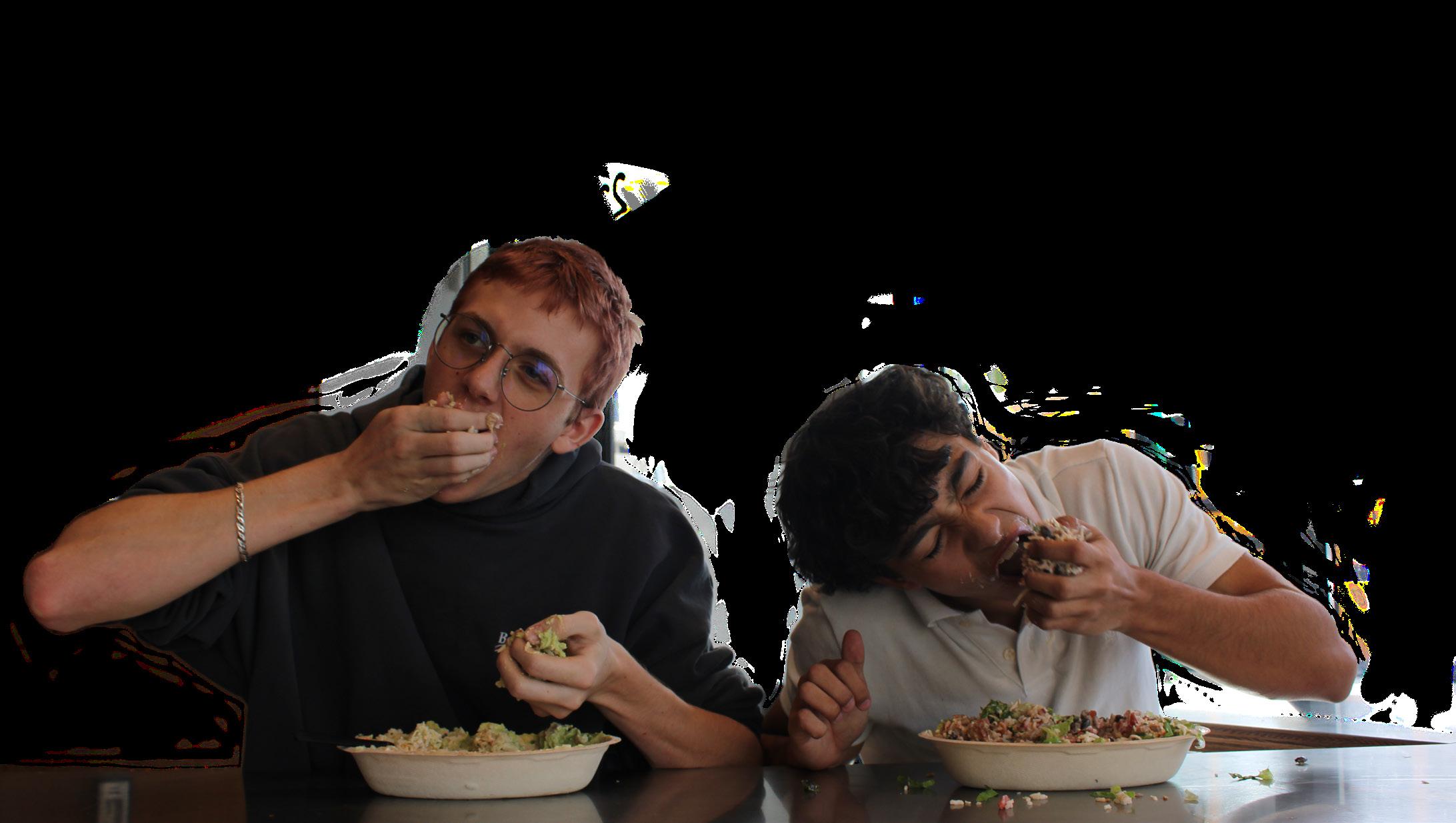
As the slop spreads, the mania over these bowls will continue to flood Miami’s culinary sphere, engulfing all who consume them.
these flavorless feasts of stale rice and ethically questionable protein are devoured by seniors Rowan Christensen and Christian Tomas before a study session.
Is the “dumb phone” phenomenon actually aiding students?

SAMANTHA SEARS | PHOTO
MID THE stresses of high school and the constant stream of assignments, it can seem appealing to buy a product claiming to boost productivity. This societal focus on efficiency reflects a broader pendulum swing toward health and wellness, but the most effective solutions are often cheaper and more accessible than the overpriced gadgets currently sweeping the market.
One trending solution is the Light Phone, a pared-down device designed to limit distractions. It features only the barest essentials: a phone, calendar, music, notes, directions, alarm and a camera. Priced at $699, it promises a break from social media and excessive screen time.While appealing, the reality is that it is far too costly to support a lifestyle change for such a large population. A single overpriced product could never hope to fully address this problem.
“A downside I think I’d see is that social media teaches us things we never knew we needed to know,” freshman Kassie Alvarez said. “Other people’s advice could help us, so if we don’t have that, we might be more clueless.”
Some students even go further, removing phones altogether. Studies, such as one from Kaspersky Labs, suggest this can increase productivity by up to 26%. For many, transforming a smartphone into a minimalist device is a more sustainable solution than
EDITOR
buying a new product.
“I’ve tried making my phone more basic, and it really did make me feel less distracted and more productive,” sophomore Ella Levin said. “The only downside is that it can be harder to keep up with people sometimes.”
At the root of this issue is dopamine, the brain’s “feel-good” chemical, which drives the cycle of satisfaction and motivation. According to Healthdirect and the New Leaf Recovery Project, this neurotransmitter plays a major role in addiction. While devices like the Light Phone are marketed as tools to “boost productivity,” they do little to address the underlying problem of dopamine-driven distraction.
“A possible negative of living outside of the media is FOMO and constant detachment from your surroundings,” senior Maykol Triana said. “Everyone lives on social media now, and I feel like you can glance at someone’s life more than just a conversation can now.”
Ultimately, boosting productivity is less about buying the latest gadget and more about making intentional choices with the tools students already have. Whether through setting limits on apps, deleting distractions or temporarily stepping away from devices entirely, students can regain focus and manage their time effectively. While trends like the Light Phone highlight the desire for simplicity, true productivity comes from understanding habits, controlling impulses and creating routines that work for each individual. In the end, it is not the device that changes behavior, but the individual student’s choices.
Alicia Fajardo | Opinion Editor
The Freedom Tower is one of Miami’s most recognizable landmarks. Built in 1925, it was originally the headquarters of The Miami News, one of the city’s leading newspapers at the time. Designed by the architects Schultze and Weaver, the tower reflects the Mediterranean Revival style, popular in Miami during the early 20th century. Even then, it stood out on the skyline of a rapidly growing city.
After The Miami News moved out in 1957, the building went through a quieter period. Its most famous chapter began in 1962, when it became the central reception center for Cuban refugees arriving in the U.S. For more than a decade, thousands of families received medical checkups, legal guidance and other essential services at the tower. This work helped lay the foundation for Miami’s large Cuban community and shaped the city’s cultural identity.
After government operations ended, the building was preserved for its historical importance. It was added to the National Register of Historic Places in 1979 and became a National Historic Landmark in 2008.
Today, the Freedom Tower stands not only as an architectural icon but also a reminder of Miami’s history as a place of new beginnings for people from around the world.
It is a building that tells the story of the city itself: from early growth to international connections, from newspaper headlines to refugee arrivals, the Freedom Tower has been part of nearly every chapter in modern Miami’s history.


Recently, senior Prudence Truchot has officially committed to play Division I soccer at Long Island University. She credits her decision to the LIU coach, who provided great insight into the program’s initiative. With the appeal of the New York location, Truchot plans on majoring in Business and minoring in Sports Management.
Looking forward to the D1 challenge, Truchot recognizes the demand for growth in the technical, tactical and physical aspects of the
game when transitioning from Gables to LIU. Concerning her time at Gables, Truchot emphasizes that balancing her commitment to athletics and academics was made possible by her teachers.
“The advice I’d give aspiring soccer players at Gables is to really just make the most of your high school season,” Truchot said. “I know it’s hard if you do club soccer as well to balance it, but the social aspect can really take you a long way with people you meet, especially if you are an underclassmen.”
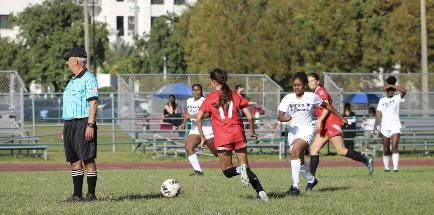
SCORING GOALS, the Lady Cavaliers varsity soccer team faced off against Miami Edison Senior High School on Nov. 17, 2025.


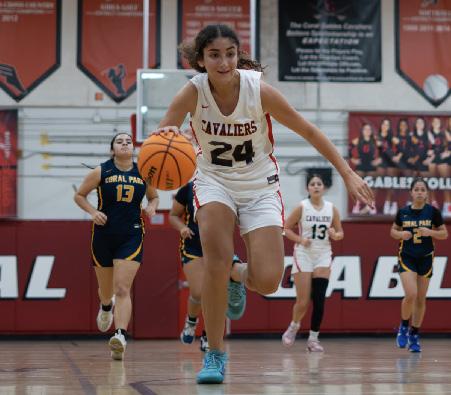
Sport: Girls Varsity Basketball Accomplishments: She was accepted to Princeton for Chemistry with a full ride. As a sophomore, she achieved District Runner-Up for track and field. In her junior year, she was the Second Top Scorer for District basketball and District Winner for track and field.
March 20
Boys Volleyball vs True North
March 21
JV Baseball vs South Dade
March 31
Softball vs Coral Park
March 31
Flag Football vs Southridge
Due to its location, the War Memorial Youth Center gym has become a popular fitness spot for Gables students
ANGEL GARCIA | STAFF WRITER
Center’s gym has evolved into a popular hangout location for many Gables students due to its convenient distance from the school. Attending the gym has become a daily routine for many students who wish to participate in exercise after the bell rings at 2:20 p.m. Whether they are lifting, stretching or running — alone or with their friends — Cavaliers are in the gym daily, turning it into an unofficial student hub for both group and solo workouts.
The gym’s hours are conveniently between 6 a.m. to 10 p.m on Monday through Friday. It has become a reliable place for athletes and non-athletes alike to stay active, improve their fitness and build healthy habits. Introducing weightlifting early to teens can create healthy life habits later on in life, so this easy access is extremely advantageous. According to the Journal of Physical Activity and Health, 45% of teenagers who participate in weightlifting are likely to maintain regular exercise habits in their 20s and 30s.
“I like using the gym because there’s a wide variety of weights, it’s equipment is very easy to use and the staff is very nice, which makes me want to return,” senior David Borges said.
Not many students have the opportunity to travel very far to reach a gym. This distance becomes a major obstacle for those wanting to train, especially because the cost associated with driving or calling for transportation is quite expensive for the average high school student.
Another factor that stands in the way of easy access to fitness spaces is cost. A study from the Aspen Institute reveals, for teens whose families make less than $25,000 a year, participation in healthy activity fell to 26.6% in 2021 from 34.1% in 2013. For students whose household earns between $25,000 to $50,000 in yearly income, engagement from gym participation fell from 38.1% to 35.7% over that same period.
Fortunately, the Gables gym provides an opportunity for many who cannot afford such expensive gym memberships; the average membership for guests in the youth center is $5 for those under 18, $9 for those over 18 and $16 for fitness memberships. Transportation
will also not pose a problem, as it is a walking distance from the school, making it a reliable place for many Gables students.
Students have access to multiple forms of transportation when getting to the gym, such as buses, walking, driving trolleys and carpooling. The close distance and opportunities of this gym are unique to Gables, as not many schools are located in such close proximity—less than a mile away—to such an affordable gym.
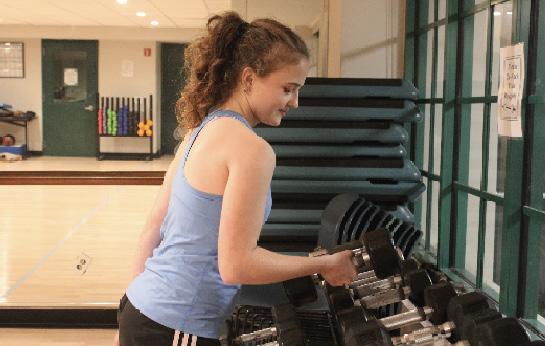
‘’The gym has been such an easy way for me to train consistently,” sophomore Agustina Gonzalez said. “I usually go walking to go to the gym because the distance to my house is very close, making it easier for me to go back and forth.”
Moreover, meeting up with friends at the gym to talk and workout can turn exercising into a social activity. The gym supplies a space to not only benefit one’s health, but also build stronger friendships among students.
The gym is a place where many students meet new people, exchange workout tips
CULTIVATING STRENGTH, senior Kate Kuryla lifts weights after school at the War Memorial Youth Center Gym. h
with other peers and feel connected to the supportive community that the Gables gym is.
“Me and my friends usually go to the Coral Gables Gym to workout and to talk amongst ourselves,” junior Aaron Levy said. “This makes our friendship with each other stronger.”
Putting good use to the easy-access fitness facilities can improve physical wellbeing while building friendships. All of these helpful choices make the War Memorial Youth Center a hub for students to bond with their peers as they form a tight-knit community of young fitness enthusiasts.

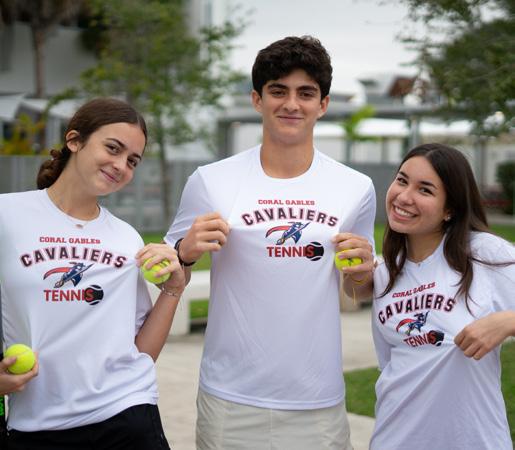
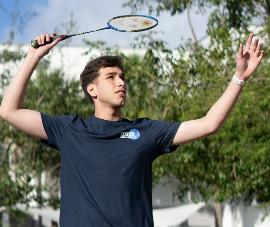
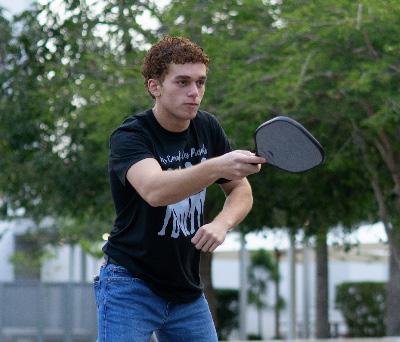
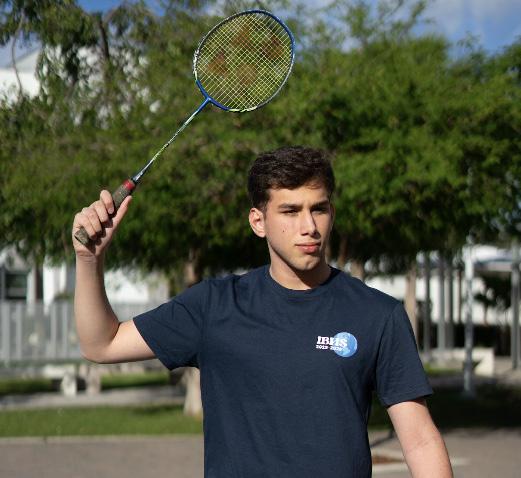
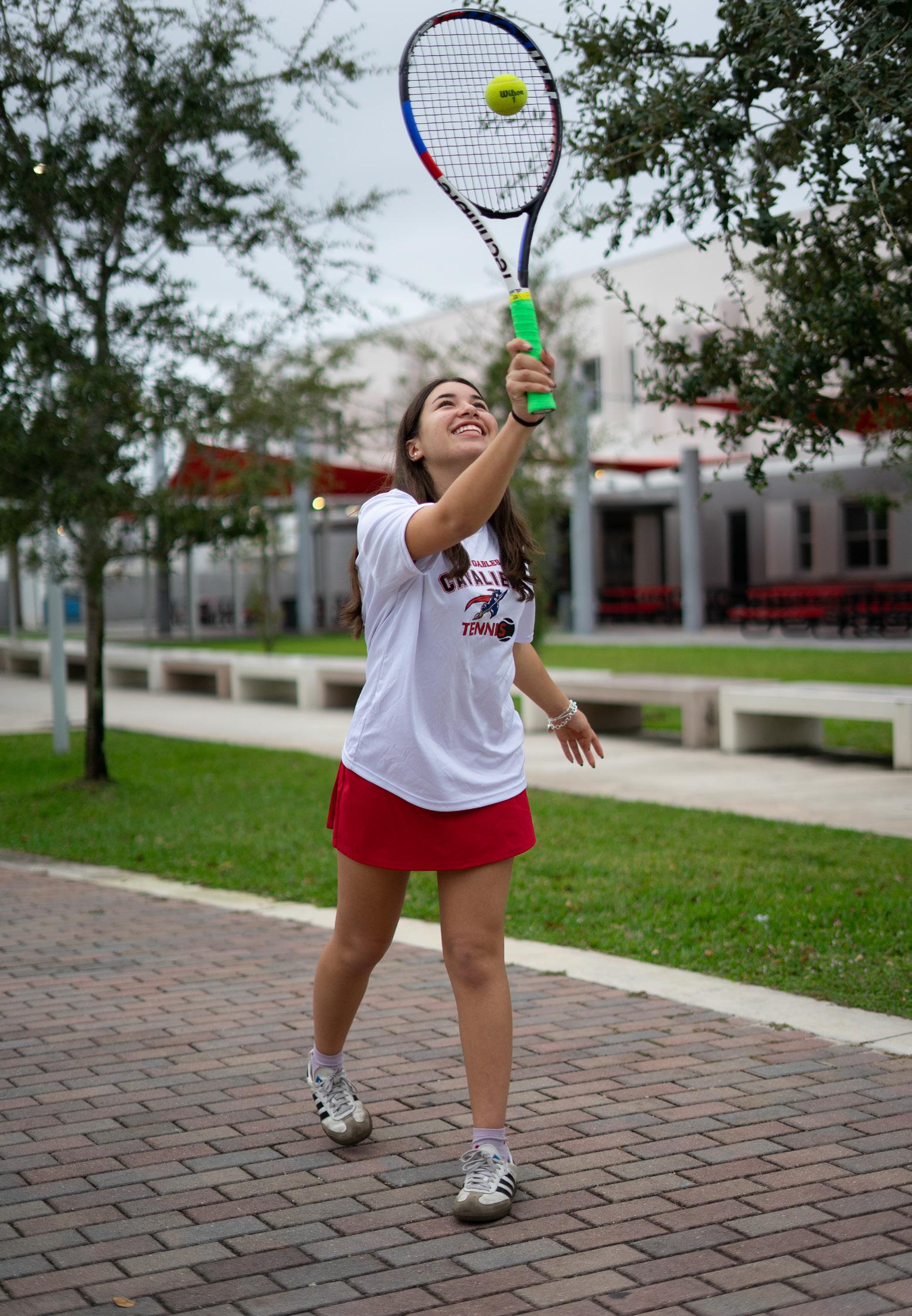
One court, three sports and zero room for compromise. When pickleball, badminton and tennis collide, who wins the battle?
sport, the Gables tennis team is lacking monetary funding to buy uniforms and equipment.
“We have a serious funding problem,” sophomore Audrey
You are on the court by yourself for up to three hours. It demands a high mental strength to keep fighting in the match. Paula Mejia, 11 “
Schwart said. “As a result, our players have to arrange transportation for themselves to each game and even pay for their
own tennis rackets.”
Due to tennis’ moderately steep learning curve, players usually spend more time chasing missed balls than sustaining matches.
In addition, quality rackets are significantly more expensive than pickleball and badminton paddles and require ongoing maintenance, like re-stringing.
Given this, some facilities are deciding to switch gears, demolishing tennis courts in favor of building new pickleball courts, much to the dismay of tennis enthusiasts.
“I’m not a big fan of giving up good tennis courts for a child’s game like pickleball,” tennis coach Benjamin Groff said.
According to the United States Tennis Association, over 10% of tennis courts in the U.S. have been converted to pickleball courts, and more are being repurposed each day.

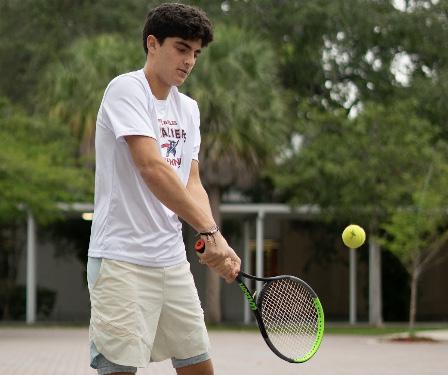
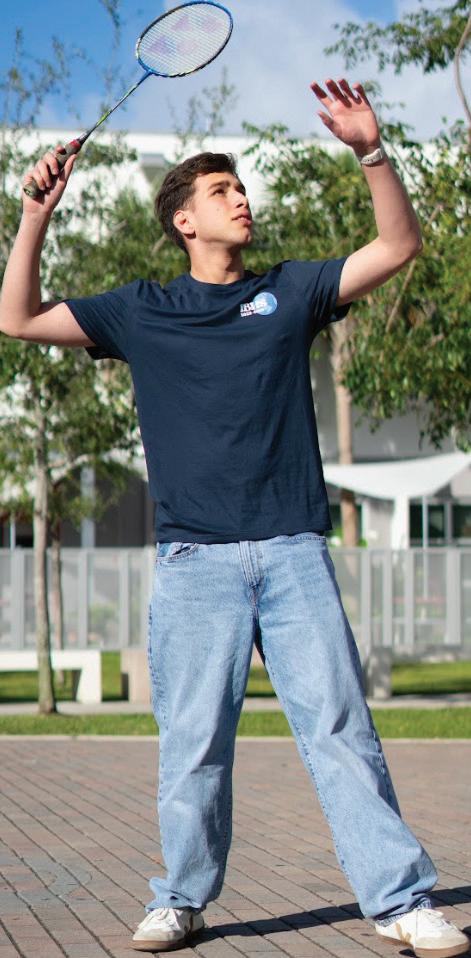
Badminton is the fastest and most agility-based sport of the three. Instead of a ball, players hit a shuttlecock, a highdrag projectile composed of a rounded base with a crown of feathers behind it. The distinct design makes the shuttlecock aerodynamically stable, ensuring it flies nose-first while the feathers create air resistance. As a result, it moves extremely quickly at first but slows down almost immediately.
This makes the game all about quick reactions, sharp movements and precise aim. The badminton court is 44 by 20 feet — the same size as a pickleball court. However, badminton
During the 2020 pandemic, pickleball saw a surge in popularity across the U.S. This was driven by the sport’s highly social nature, gentle learning curve and wlow physical demands, making it the perfect sport for older adults without much time for training. According to the Association of Pickleball Professionals, the average age of a pickleball player in the U.S. is 34.8 years old.
Pickleball uses a hollow, plastic ball with holes over its surface. The ball’s unique construction causes it to have significant air drag, falling
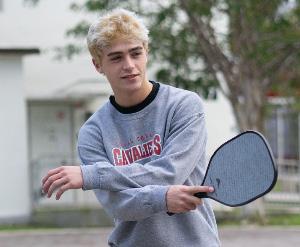
requires far more jumping, lunging and rapid footwork. Even though badminton is extremely popular in many other countries, it still does not get much attention in the U.S. Many schools and gyms treat it more like a casual activity instead of a competitive sport.
“I think it’s disappointing that badminton isn’t as relevant as it should be here in the United States, but in some parts of the world like Asian India, for example, it definitely is,” senior Aidan Remedios said.
Because of this lack of recognition, the Gables badminton team often struggles to get time, space or funding.
quickly due to its limited speed. The light plastic ball’s slower overall speed creates a more leisurely and beginner-friendly experience that compels people of any age demographic to participate.
“The plastic ball rewards placement and control more than power,” pickleball club member Cooper Piedra said. “That levels the playing field and lets people with very different athletic backgrounds compete.”
Because this sport is a slower-paced one, a compact 44 by 20 feet court is used. The reduced area significantly limits the amount of running required, making the sport accessible. This efficiency, mixed with the sport’s approachability, is why it has boomed in popularity in Florida, with over 1,230 new locations being constructed, according to CBS News.
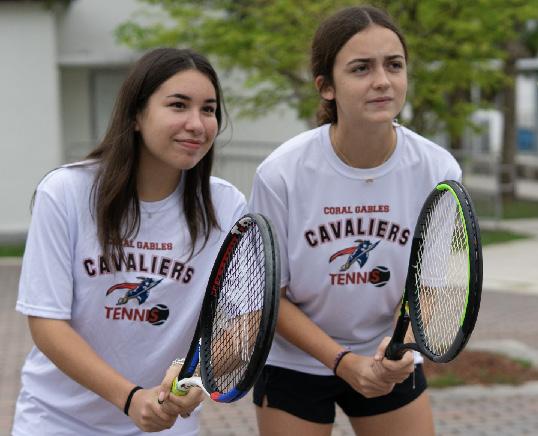
They usually have to share gyms with basketball or volleyball, and players often feel overlooked. Still, players and coaches feel that badminton deserves more respect because of how difficult the athletic and skill-based sport really is.
“In badminton, you have to have a lot of wrist strength, and it’s also just the whole body,” junior Darek Rodriguez said. “You really put your whole body into hitting the birdie.”
Despite these hurdles, the Gables badminton team remains driven by the demanding nature of the sport and a shared desire to prove its competitive worth.
However, this growth has sparked a competition for space, specifically in Gables. A brand-new pickleball club has opened this year, giving students an opportunity to pick up the growing sport within a supportive community.
“Pickleball’s vibe is very friendly and chill,” pickleball club president Erick Del Valle said. “We try to have as much fun as possible while doing our best to teach and give advice.”
This surge in interest has transformed pickleball from a niche pastime into a cultural phenomenon. By lowering barriers to entry, the sport has successfully bridged the gap between generations. As new clubs open up in Gables, pickleball is proving to be a permanent staple
MARIA SANDOVAL | STAFF WRITER
GREGORY “BUDDY” HOWELL, A well-known football player and Miami native, attended Gables as a part of the Class of 2014. Through his high school experience, Howell played for both the Gables football and track and field teams. Although he took part in both, football remained his passion and main focus.
During Howell’s football career, he was able to meet many individuals of different backgrounds. Even while undrafted, he worked on self-improvement and social connection.
As a result, the Houston Texans drafted him in and he began officially playing in the NFL. Along his journey, he also joined the British Columbia Lions in Canadian Football and the Los Angeles Rams in the NFL. While a part of the Rams, Howell won a Super Bowl game, earning a Super Bowl ring due to his hard work and dedication.
Although recent records list Howell as a free agent, he remains focused on keeping a
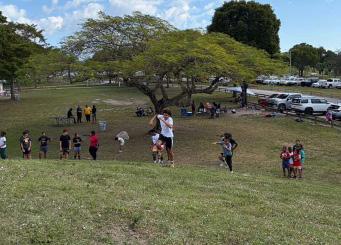
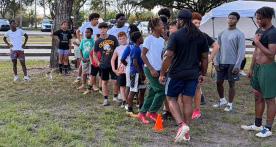
BUILDING ENDURANCE, participants in Howell’s Sunday Service train their speed in running using natural resources.
healthy and active lifestyle. Currently, he gives back to the Gables community by inspiring younger generations, visiting his native G.W. Carver Middle School and hosting training sessions with the Gables football team as a coach.
As Miami’s culture shifts toward health and wellness, local events that promote community engagement have been gaining traction and popularity. Recognizing the city’s growing love for fitness, Howell launched a free weekly community workout called “Sunday Service.”
Every Sunday at 10:30 a.m. in Tropical Park, Howell welcomes participants of all ages, fitness levels and backgrounds. His hope is that this access to fitness events will help people change their lifestyle for the better. Attending Sunday Service requires personal discipline and consistency, qualities Howell hopes to teach his audience.
“One of the kids that has been the most
consistent on attending Sunday Service stands out the most,” Howell said. “That is why I am crazy about Sunday Service. I know that, if you use it for your own benefit, improvement will be made. If I had this opportunity that I am trying to give these kids, I would be a different person than I am now; things would be very different.”
Howell aims to eventually train and create his own children’s team. Howell values consistency, believing that it is a very important factor in the path to success. Because of this, a main goal emphasized in Sunday Service is a dedication to the event, treating it as more than just an optional activity to participate in every once in a while.
“Having an active lifestyle helped me clear my mind in moments of stress, which ultimately helped me focus more effectively in my school,” freshman Leah Correiri said. “I believe keeping an active lifestyle can help others by releasing stress, which can help them in any stressful situation.”
The background Howell grew up in shaped his goals today, demonstrated by his commitment to bring people together. He always makes everyone feel included by teaching them with the effort, patience and balance. Howell pushes the kids who attend Sunday Service to their limits because he believes in each and every one of them.
“Participating in a community event like Sunday Service makes it enjoyable, since I am able to go against new people around our community and have a peek of what skills and abilities are out there,” junior Ny’Rell Lowe said. “Having the ability to train with people from different backgrounds and different training methods has also helped me improve my fitness and social skills.”
Howell’s Sunday Service attracts a variety of people with different interests, yet they can all come together under their shared pursuit of fitness and wellness.
h

THE
ARRIVAL OF MIAMI’S FULL moon does not just illuminate the night — it draws people together, transforming an ordinary evening into a shimmering silver celebration, ritual or moment shaped around the monthly lunar ascent.
At its fullest form, the moon symbolizes completion and revelation, often associated with emotional intensity and introspection.
This period invites contemplation, as the moonlight bathes the city in a soft glow, enhancing the sense of togetherness among its inhabitants.
Under this ardent glow, Miami’s nightlife extends beyond clubs. From Miami Beach’s captivating drum circle, where rhythms pulse through the salty air, to Casa Vinyasa’s tranquil rooftop yoga, community members unite in harmony with nature.
This lunar event inspires students and tourists alike to release worries, reflect on the
This yoga studio offers daily yoga sessions and hosts monthly full-moon gatherings for those seeking a calming activity under a beautiful sunset or a connection with the natural rhythms and cycles of the solar system.
Adding to this one-of-a-kind gathering is its peaceful location. Yoga instructors lead their monthly sessions on a rooftop located at 1430 Madruga Ave.
Hosted from around 7 to 8 p.m., this location allows for a perfect view of the Sun as it soundly sets, leaving room for the “powerfull” — pun intended — moon to take over the illumination of the sky.
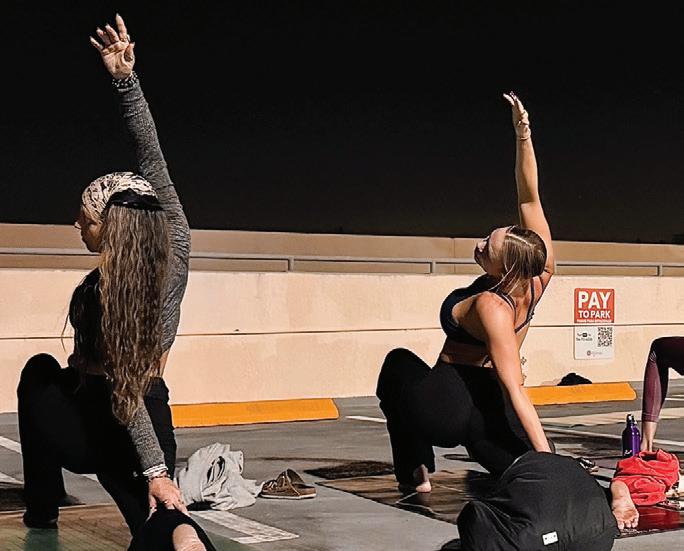
past or simply stand beneath the moon and feel smaller in the best possible way.
Each full moon becomes an enchanting opportunity, a reminder of the shared human experience, as everyone seeks connection beneath the vastness of the night sky.

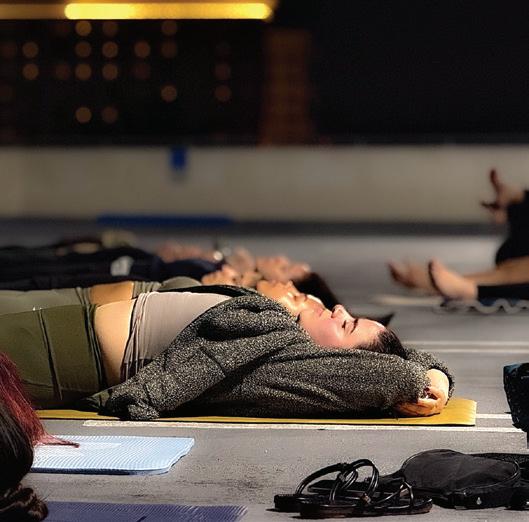
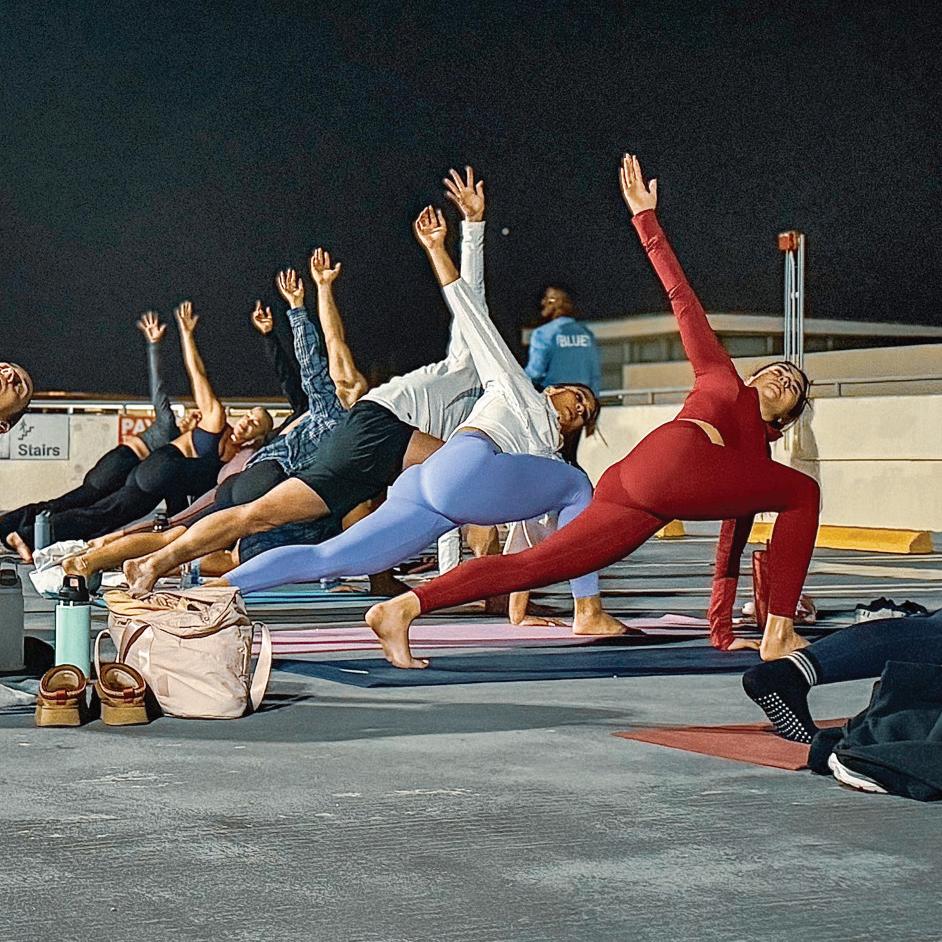
WASHING AWAY STRESS, Casa Vinyasa’s restorative yoga combined with Miami Drum Circle’s rhythmic beats allows participants to spiritually cleanse themselves with the full moon.
Casa Vinyasa, uses technqiues such as the Chakra sound baths, breathwork and intentional sequencing. These movements are used to represent the lunar cycle, release tensions and cool the body.
“I have practiced yoga for over 10 years,” Gables wellness sponsor and yoga instructor Elizabeth Kiely said. “I have been to many studios, and yet CV is where I always feel most comfortable in my practice.”
During these special events, Casa Vinyasa partners with nonprofit organizations to make attendance free, with donations welcome.

Some recent sponsors include Corazones de Servicio, which supports communities across the Dominican Republic; AIM Miami, nurturing youth through yoga and the Voice For Children Foundation.
According to the Casa Vinyasa website, the selected
nonprofits emphasize healing, community wellness and compassionate outreach.
This goodwill further highlights what each session represents and its contribution to the studio, reflecting the compassion behind the free, monthly, moon-centric events.
It allows people to simply attend, feel the breeze against their skin and release the buildup of emotion from the past days or weeks.
“I usually feel much lighter after a fullmoon event,” Kiely said. “I remember that my stresses are self imposed — they are in my mind.”
Whether looking to enjoy a relaxing and productive evening out with some friends or seeking a quiet location to practice under the luminous glow of the moon, this location will fit many people’s description of the perfect full-moon activity.
These Miami locations offer a full-moon lineup, blending the calmness of rooftop yoga with vibrant beachside drum circles


The Full Moon Drum Circle in Miami Beach enlivens the shoreline on moonlit nights, a vibrant gathering that embodies rhythm, warmth and the indomitable human spirit.
As the shoreline cools near 7901 Collins Ave. at 6 p.m. and twilight settles over the water, the beach begins to come alive, reaching its climax around midnight.
This gathering is completely open to the public; no tickets, no organizers and no rules beyond basic mutual respect.
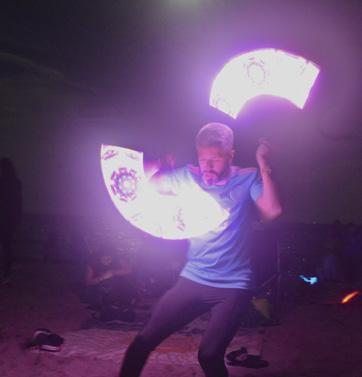
Participants arrive carrying all sorts of musical instruments — from djembes to congas, tambourines and flow toys that cast colorful streaks across the sand.
The air pulsates with energy just waiting to be claimed long before the drums begin.

ENJOYING VIBRANT BEATS, dancers sway along Miami’s beaches and radiant moonlight, dancing to the rhythms of djembes and congas during the Full Moon Drum Circle.
“I came for the music for the first time a couple of years back, but I stayed because of the atmosphere,” attendee Marina Torres said. “Even if you’re not dancing to the drums, you feel like you’re part of the rhythm. It pulls you in before you realize it.”
This circle is anything but curated; it builds organically from the center bonfire outward, with each new drummer, dancer and spectator adding another vibrant thread to this tapestry of sound and movement.

INHALING DEEPLY, yogis stretch during Casa Vinyasa’s Full Moon Activity; lunar yoga and intention-setting rituals help relieve the stress of the week.
The flames of the bonfire crackle in harmony with the sway of the dancers, warmly embracing the flowers surrounding it.
People blow seashells by the shore, practice yoga atop the lifeguard’s house and strangers settle beside one another in the sand as effortlessly as if they had arrived together.
“The music resounds all over your body, and just for an instant, you are one with the beat,” attendee Jordan Hale said. “There’s this sense that everyone showed up searching for release, and somehow we all find it together.”
Others choose stillness, sitting quietly as the vibrations roll over them like a soothing tide.
As midnight approaches, the circle reaches its peak — the mingling of firelight, moonlight and the collective human pulse creates a scene that feels both fleeting yet expansive, shaped entirely by the people who choose to embrace the rhythm.
For many Gables students and locals alike, moments like this echo a profound sense of unity found closer to home: a reminder that community is not built by obligation but by joyful presence.
Families, friends and new acquaintances bond over the shared experience, reminding us that in this chaotic world, simple connections can light the path to a deeper understanding of one another.
Each full moon brings fresh faces and returning souls, creating an ever-evolving tapestry of stories and experiences.
In this transformative space, everyone finds a moment of release, where the burdens of daily life fade under the enchanting glow of the moon, fostering a deep-rooted sense of belonging.





Who says romance needs to be fancy? One sundae and two spoons can make any date night sweeter


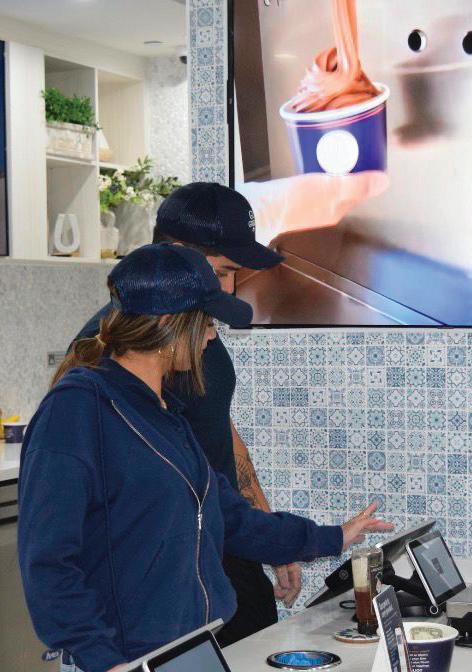

GO GREEK YOGURT OPENED at Miami Worldcenter last spring, followed by a location in Coconut Grove.
They offer a variety of flavors, including authentic yogurt from Greece, selling both regular and frozen yogurt options.
Their yogurt is not only healthy but also delicious, with flavors like plain tart, coconut, Greek honey, peanut butter, chocolate and Greek biscuit on the menu.
Promoting a Mediterranean-inspired lifestyle, toppings like granola, Greek honey and fresh fruit enhance the smooth, perfectly tart yogurt.
The yogurt is rich in protein and lower in sugar and calories than many desserts. Customizable bowls range from $13.99 to $33, depending on the weight of the yogurt.
Additionally, Greek-inspired smoothies, savory bowls and sweet treats are available.
“I love coming here because it’s the perfect balance between a sweet treat and a healthy
snack,” junior Daniella Steffen said.
The shop in Coconut Grove is located at 3000 Florida Ave., just 15 minutes from
“ I love coming here because its the perfect balance between a sweet treat and a healthy snack.
Daniella Steffen, 11
Gables.
Their hours on weekdays are from 10 a.m. to midnight, and on weekends they operate from 11 a.m. to midnight, sometimes extending

CRAVING OLD-FASHIONED ice cream? Whip ‘n Dip, located at 1407 Sunset Drive, uses fresh ingredients and classic recipes to create unforgettable scoops.
From 11 a.m. to 10:30 p.m., they offer soft-serve yogurt, homemade ice cream and cakes, transforming cones and sundaes into a delightful journey.
They embody the old-fashioned, ‘80s Miami Vice style. Whip ‘n Dip is more than a sweet treat; it is a shared experience filled with joy. While serving classics like chocolate, vanilla and strawberry, they also experiment with unique flavors like Nutter-O and Matcha Thai Tea.
“No other place changes flavors as often; it’s what makes it unique,” shop attendant Megan Brown said. “Everyone finds something they love.”
All items at Whip ‘n Dip are made inhouse, despite their constantly rotating flavors.
Founded in 1985 by George Giampetro
Design by Ciara Burton/highlights
to 1 a.m. on Fridays and Saturdays.
The shop partners with apps like Uber Eats and DoorDash for at-home ordering.
Their main goal is to make customers feel like they are in Greece, enjoying the cuisine in their city.
“It is nice to have our customers come in, relax, nourish their bodies and feel at home,” Go Greek co-owner and CEO Jonathan Patarkatsi said.
Additionally, Greek-inspired smoothies, savory bowls and sweet treats are available.
“I prefer coming to Go Greek with friends; it’s a nice spot for conversation, near a central market to enjoy other things,” junior Sebastian Reyes said.
The welcoming staff and cozy seatings create the perfect friendly environment that makes this a must-visit location with friends or for a solo trip. Go Greek is a place to sit down and take a break, enjoying a cup of froyo to make the day better.



Sr., his wife Nancy and their son George Giampetro Jr., Whip ‘n Dip is a family-run business. Nancy is often described as the
Megan Brown, shop attendant “ No other place changes favlors as oftern; its what makes it unqiue. Everyone finds something they love.
genius behind the scenes, elevating ice creammaking.
Each scoop embodies her commitment
and passion, creating vibrant flavors that range from smoked pistachio to mango. Their dedication shines through the hours of hard work, resulting in these unique flavors.
Whip ‘n Dip is known as a prime date location, so noticing visiting couples is part of the employees’ routine.
“After eight or nine, couples tend to show up,” Brown said. “The shop gains a lively buzz.”
The cozy, family-business feel makes it easy to relax.
“The shop is warm and cozy,” sophomore Sol Blaylock said. “It’s cute in an effortless, comforting way.”
A beloved Miami staple for nearly 40 years, Whip ‘n Dip remains a gathering place where customers can get a pick-me-up or see friendly faces.
Whip ‘n Dip is more than just a place to get ice cream; it is where first dates turn into memories, and everyone who visits feels like family at this local neighborhood staple.
h

BY: SIENA CERNUDA
Rooted in a celebration of resilience, the spirit of the campus finds its strength in meaningful moments and shared growth.
TODAY, NEGATIVE HEADLINES
dominate the media cycle. Political tension, economic instability, global conflict, academic competition, social comparison… it can seem neverending. News sites ramp up controversial titles to increase interaction.
In fact, the Nieman Reports found that each additional negative headline increased the click through rate on an article by 2.3%. For students and staff, this accumulation of cynicism has a real impact.
As they scroll before school, between classes, after homework, the weight builds up, often unconsciously crushing attitudes. Research supports what many already feel.
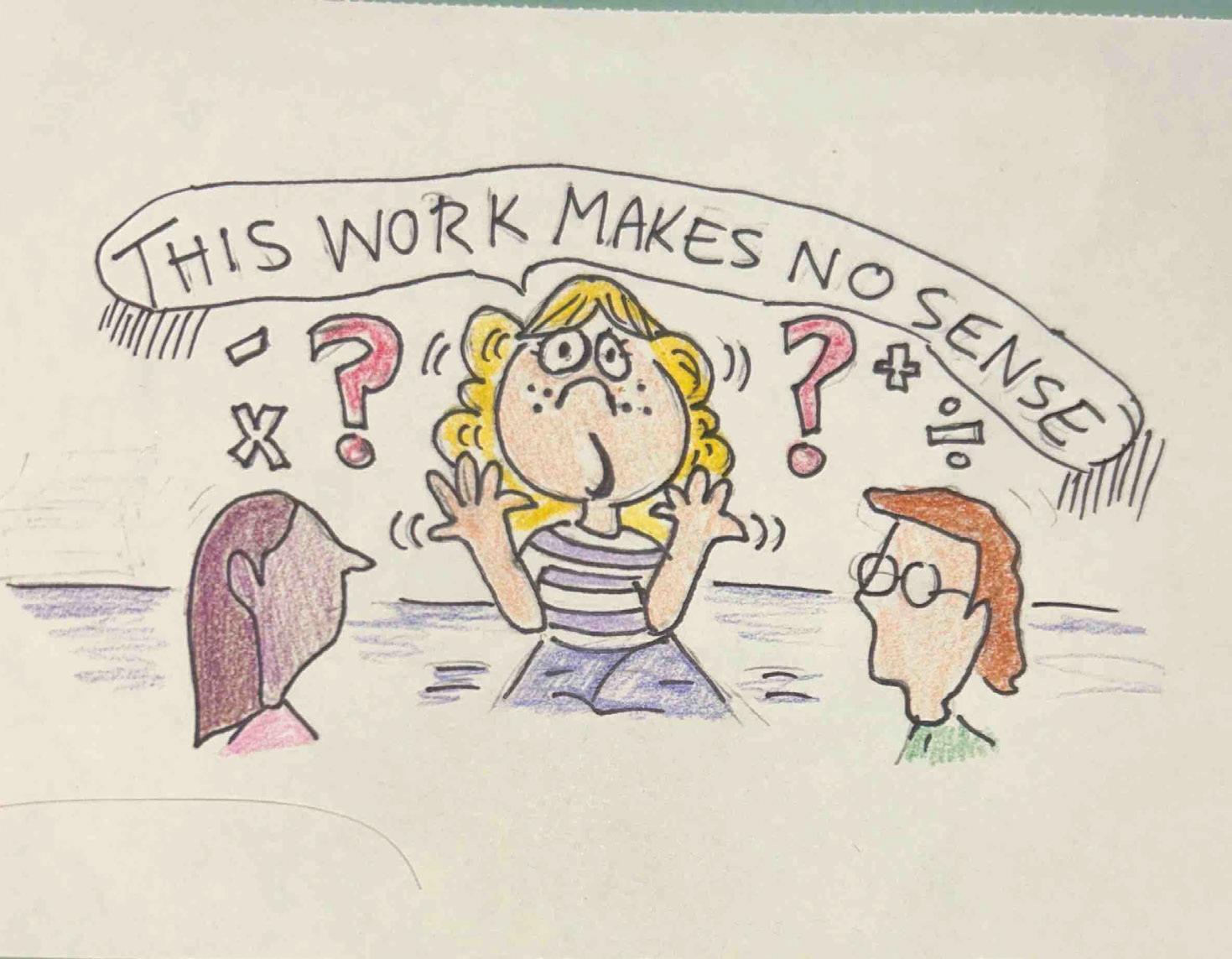
Research suggests that taking time to learn the skills to self-generate positive emotions can help us become healthier, more social, more resilient versions of ourselves.
National Institue of Health
The Mayo Clinic reports that repeated exposure or distressing news can heighten stress responses and increase anxiety drastically.
At the same time, expectations continue to rise. College admissions grow more competitive. Advanced programs expand. Performance feels increasingly public. For many of us, the pressure is constant and cumulative.
Meanwhile, research from the University
of Southampton suggests that exposure to positive news stories can improve motivation and strengthen emotional resilience. The stories people consume influence how capable they feel in their own lives. That contrast matters.
While we cannot control the global headlines, we can choose what we amplify within our own community.
highlights wanted to create something intentional, grounded in real-life voices rather than abstract figures and sometimes flat-out, fictional optimism.
The “Chicken Soup for the Soul” books, a successful series by Jack Canfield and Mark Victor Hansen, gained nationwide acclaim thanks to the way they re-centered everyday people navigating hardships and reaching resolutions rather than harping on the overpowering negatives.
They focused on personal resilience, small victories and moments of quiet growth. Those stories did not erase difficulty. They reminded readers that strength can exist alongside it. This issue follows that greatly praised model.
Instead of presenting a generalized portrait of campus life, we centered on the individual: students and teachers whose experiences reflect larger patterns within Gables. Not exaggerated stories, not polished into perfection, just honest accounts of stress, recovery, belonging and purpose.
Living with optimism is not about pretending everything is easy. It is about the value of the resilience and perseverance that it takes to continue moving through life.
Through the hard times and even the easier ones, tales of success can serve as reminders to all that when they feel scared, alone, overworked and dejected, they are not alone.












For junior Camille Chevalier, academic success this year has been less about perfection and more about balance. As an International Baccalaureate student, her schedule demands sustained focus, long study hours and constant preparation. The challenge, she explains, is not a single difficult class, but instead managing all of them at once while staying physically and mentally healthy.
“My biggest academic challenge this year has been balancing all my classes while staying healthy,” Chevalier said. “I feel that something that students always forget is that health is super important and it’s correlated to one’s academic performance. If, for example, you don’t get enough sleep one night, you won’t perform well on your test or quiz. This school year, I often forgot this important part.”
Her reflection highlights a reality many high-achieving students overlook. Sleep becomes negotiable. Meals become rushed or skipped. Rest feel entirely undeserved. Yet the consequences appear quickly: slower thinking, increased anxiety and diminished energy.

up getting a B, which completely surprised me.”
The disconnect between perception and outcome revealed something more important: stress can distort self-evaluation. In competitive academic environments, students often assume the worst before results even arrive.
Rather than internalizing those moments as failure, Chevalier has learned to rely on support systems. Her friends provide her reassurance during overwhelming weeks, and her service dog, Caramel, helps regulate stress during intense academic periods.




“Just start now,” Chevalier said. “Yes, it’s obviously overwhelming and stressful to feel behind with many deadlines and homework assignments due soon, but if you don’t start now, those assignments and deadlines will start to pile up, consequently making you more overwhelmed. But always remember that your health is incredibly important, no matter the situation!”


Her story reframes what academic strength looks like at Gables. It is not simply high grades or rigorous coursework. It is the ability to recalibrate, seek support and recognize that sustainability matters more than short bursts of exhaustion-driven productivity.
In an environment shaped by pressure, Chevalier’s experience serves as a reminder: endurance in academics depends on balance, not burnout.

Chevalier experienced this firsthand after completing a major IB Math Analysis and Interpretation practice exam based on past high-difficulty questions.


“This test was based on past exam questions with moderately high difficulty,” Chevalier said. “When I finished the test, I genuinely thought that I completely failed it, specifically on one question. However, I ended
“When school feels overwhelming, I stay hopeful through my friends,” Chevalier said. My friends are always there to support me whenever I need them, and they’re incredibly helpful. Additionally, my service dog, Caramel, soothes and calms me down in moments of stress or whenever I feel overwhelmed by deadlines, tests, homework assignments, etc. I think that it’s important for a student to find the right crowd of friends that will support them no matter what.”
Her advice to students who feel behind reflects practical resilience within the community.
Exceptional Student Education teacher Randy Rovira views success through long-term impact. His most meaningful moments occur when former students return to share where life has taken them.
“When I see my students succeed, even in small ways, I feel like I did something to help make them accomplish their goal in life,” Rovira said. “I feel like, wow, I did something to help him accomplish their goal in life.
And that’s what the goal for him is to be. I want them to be productive citizens — a community.”
His definition of accomplishments extends across multiple paths. Whether students pursue college, trades or steady employment, he values growth and independence.
“For me, my happiest moment is if I were

to see my student at Publix, either bagging or stocking shelves, bag boy, something like that makes me feel proud,” Rovira said.
Rovira emphasizes social development alongside academics. Courtesy and confidence are outcomes he actively reinforces.
“When I hear my students say ‘please’ and ‘thank you,’ or hold the door for someone, those are little moments where I’m like, yes — they’re learning,” Rovira said.
One experience that stood out occurred during a Special Olympics bowling tournament. A student coached another on how to approach something new. The result was a successful conversation and a genuine connection.
Teaching requires sustained emotional energy. Long weeks and shifting classroom
dynamics demand resilience from educators as well.
“If you don’t take care of yourself, you don’t do your job well,” Rovira said. Brief trips and short breaks help him reset. His perspective represents the steady presence teachers provide on campus. They guide instruction, monitor growth and support students through setbacks. Their work combines structure, patience and adaptability.
In a culture that often emphasizes visual achievements, Rovira’s focus remains grounded in daily progress and long-term development.


His story highlights the consistent effort behind student growth and the quiet commitment that sustains our school.
Design by Emilia Kohnstamm/










For junior Benjamin Florian, belonging at Gables developed gradually. He describes himself as initially introverted and hesitant to speak in unfamiliar groups. Finding a connection required intentional effort.
“What helped me find my place in Gables is that I allowed myself to talk to people because I am at first introverted when I first speak to people,” Florian said. “But once I have a conversation with a group of people, I start to get comfortable and be more talkative to others, so my first friend group helped me to find my place in Gables.”
Initiating conversations shifted his experience. His first friend group created stability, and involvement expanded his network.
“Joining the National Honor Society and being in badminton has deeply changed my experience with Coral Gables because I was mostly alone when joining, and slowly I started making friends in both NHS and badminton, and it has helped me be even more outgoing and allowed me to express myself with others,” Florian said.
Participation increased his confidence and sense of comfort. Instead of waiting for belonging to occur naturally, he placed himself in structured spaces where interactions were unavoidable. Friendships now serve as emotional reinforcement during stressful moments.
“When I’m stressed about an important test, one of my friends told me that I underestimate myself and that I got that test in the bag no matter what, and it helped me calm down and focus more on the test, and I passed,” Florian said.
He also notices the broader culture of small kindnesses on campus.
“I’m very grateful for each one of my friends.,” Florian said. “Seeing people help each other, even if it’s a stranger, shows me that people in Gables have a heart and that we are always here for each other.”
Design by Emilia Kohnstamm/highlights

His advice to students who feel disconnected reflects his own process.
“Finding a sense of belonging means being involved as much as possible, even if you think you shouldn’t do it, because at the end of the day, it will be worth it,” Florian said.





His story shows that social confidence often develops after action. Belonging forms through repetition, shared activities and gradual familiarity, and connection strengthens when students place themselves in spaces that encourage interaction.
Senior Yara Korse’s athletic journey illustrates how resilience develops under strain rather than success. During her sophomore year, what should have been a season of progress turned into one defined by injury.
“I sprained my ankles a couple of times during practice and races, and I messed up my back at the beginning of the season,” Korse said.
The injuries limited her practice time and affected her cross-country performance. For competitive runners, consistency is everything. Missing training sessions can feel like falling irreversibly behind. Instead of withdrawing, Korse redirected her focus.
“The injuries I experienced limited my time at practice and really impacted my times during cross country, and I had to focus a lot on physical therapy for my ankles,” Korse said.
Recovery became its own form of discipline. She committed to rehabilitation exercises and used the off-season strategically.
“I was really consistent with my physical therapy exercises, and during my off-season before track, I decided to train a lot with my friends to improve my speed,” Korse.
Positivity, she explains, was not passive optimism. It was an intentional mindset.
“I didn’t let my previous failures hold me back from what I knew I was capable of doing in the future. Being positive is


EmiliaKohnstamm/highlights“

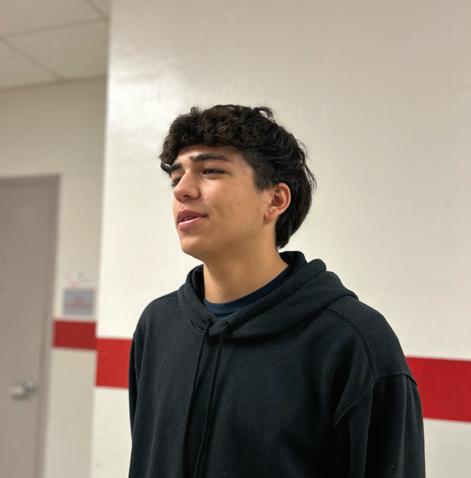







I’ve loved track workouts. I genuinely think community is the foundation for happiness and all the friends I’ve made throughout the years in track have shown me
Santiago Rodriguez, 11
“
EmiliaKohnstamm/highlights
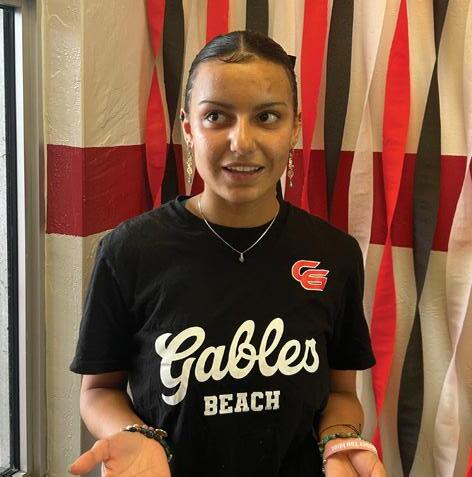
The color wars pep rally. The competitions were so exciting and the Gablettes and cheerleaders were incredible to watch.
Bella Saenz, 10
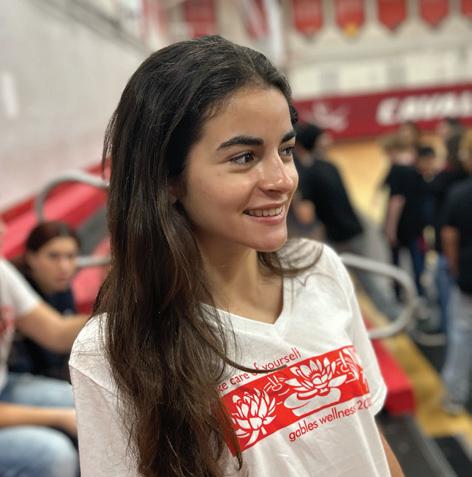
EmiliaKohnstamm/highlights“
Last year when we were taking the AP, I thought it was really nice how a bunch of upperclassmen were helping us study right before the test. It was super sweet.
Anna Henneberg , 10
what helped me believe in myself, which is extremely important when running,” Korse said.
Belief matters in endurance sports. Running requires mental persistence as much as physical strength. Without confidence, doubt compounds quickly.
In fact, a journal from Medicine and Science in Sports and Exercise showed that positive self-talk can increase endurance by up to 18%.
Korse emphasizes patience as
the defining trait of recovery.
“
“

“I think it’s really important to be patient and believe in yourself,” Korse said. “You have to understand you will always have time to improve and to take advantage of every opportunity you have once you are.”
Her story challenges the assumption that athletic growth is linear. Korse’s story brings forth a quieter metric of growth: the commitment to rebuild and continue.






Read our online stories at: https://www.cavsconnect. com/category/highlightssubmissions/ Look at our multimedia content on Instagram, Twitter and Facebook: @highlightscghs
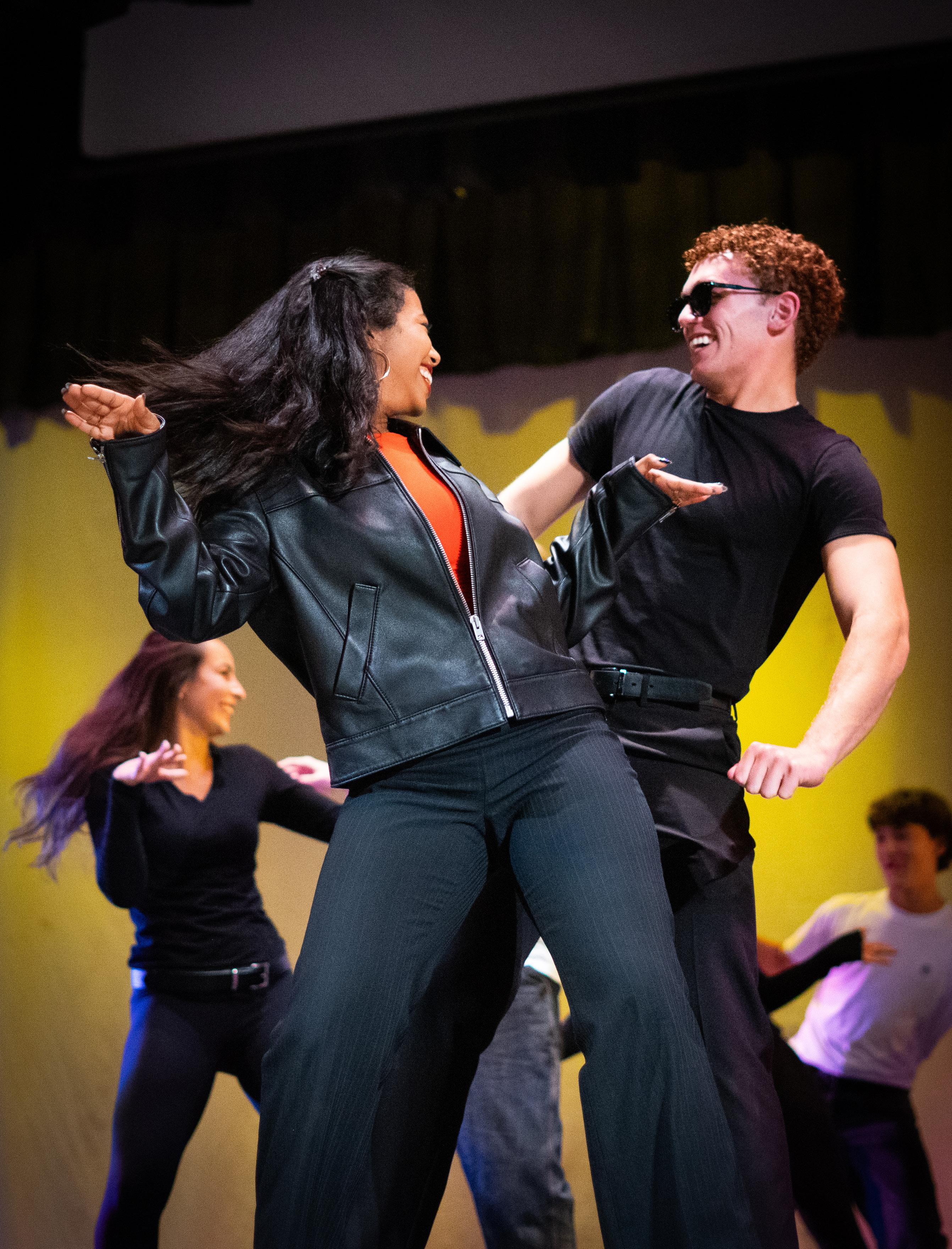
questions? Email us! highlightscghs@gmail.com
On Feb. 12, CavCrash took place. Students from varying grade levels including those pictured above, juniors Erick Del Valle and Gabriella Solomon. To end the night, the Class of 2027 won Cav Crash. Kenneth Lara/highlights