

Table of Contents
Letter from the President of GATE Page iv
By Natasha Ramsay-Jordan
Letter from the Editor-in-Chief of GATEways to Teacher Education Page v
By Forrest R. Parker III
Culturally Responsive Preparedness Across Career Stages: Implications Page 1 for Equity-Centered Teacher Induction in Georgia
By Danielle Sweetman Richoux
Cultivating AI-Ready Practices: The Interplay of Teacher Adaptation, Page 14 Professional Growth, and School Leadership Support
By Yin-Chan Liao, Masoumeh Rahimi, Lauren Margulieux, and Jennifer Darling-Aduana
Examining the Drivers and Barriers of Teachers' Technology Integration Page 35 Self-Efficacy: AComparative Study of the US and South Korea
By YoungHee Lee , Jackie Kim , Holim Song , & SunHong Hwang
Using Real-World Societal Issues to Support Prospective Elementary Page 57 Teachers’Use of Mathematical Modeling
By Kristy Litster
Embedding Special Education Content Across Early Childhood Methods Page 73 Courses: An Infusion Model for Inclusive Teacher Preparation
By Katherine B. Green and Jacqueline A. Towson
By Rob Sumowski
Announcements by Forrest R. Parker III
A Letter from the President of the Georgia Association of Teacher Educators (GATE)
Welcome to the Spring 2026 issue of the GATEways to Teacher Education journal, the official journal of the Georgia Association of Teacher Educators (GATE). As an affiliate of the national Association of Teacher Educators (ATE), GATE members work diligently to improve education for all of Georgia’s students and remain dedicated to the improvementof teacher education and preparation.
Recently, GATE held its 2026 annual conference on St. Simons Island at the beautiful Sea Palms Resort, where this year’s conference theme, GATE Strong: Shaping the Future of Education Together, was powerfully demonstrated. Each participant shared a different understanding of what it meant to be GATE Strong. Expectedly, education and educators are intertwined within society and, therefore, with societal issues. Given that inescapable link, through their presented work and in conversations with others, presenters shared diverse ways they are shaping the future of education.Together, each presenter echoed a message of what it means to educate and engage in active education and to do so collectively through current and future scholarship. GATE STRONG challenges us to accept that collectively we can cultivate a better society we all want to live in, and to bring forth a future we all want to see. Ensuring a democracy that we all want to participate in! GATE STRONG was a call to rise in commitment and action.
This current issue of GATEways aims to explore ways to expand our impact on the research and practice of teachers and teacher educators. Topics explored include: Examining the Drivers and Barriers of Teachers’Technology Integration SelfEfficacy: AComparative Study of the U.S. and South Korea; Embedding Special Education Content Across Early Childhood Methods Courses: An Infusion Model for Inclusive Teacher Preparation; Cultivating AI-Ready Practices: The Interplay of Teacher Adaptation, Professional Growth, and School Leadership Support; Culturally Responsive Preparedness Across Career Stages: Implications for Equity-Center Using Mixed-Reality to Train a Preservice Teacher in Behavior Management Skills for Students withASDed Teacher Induction in Georgia; and Using Real-World Societal Issues to Support Prospective Elementary Teachers’Use of Mathematical Modelling. The current issue also includes a copy of the conference’s keynote address. I encourage you to connect, collaborate, and share your own researchand innovative practices. Let’s work together submit your manuscript, join the conversation, and be an active part of GATEways' legacy. Your voice and contributions are needed as we shape the future of teacher education.
Best,
Dr. Natasha Ramsay Jordan President,
Georgia Association of Teacher Educators (GATE)
Message from the Editor-in-Chief of the GATEways to Teacher Education Journal
Dear Readers,
It is a pleasure to welcome you to this issue of GATEways to Teacher Education, the peer-reviewed journal of the Georgia Association of Teacher Educators. I remain gratefulfor the trust you place in this journal and for the thoughtful, practicecentered scholarship our authors and reviewers continue to contribute. Each issue remindsme that the strength of our field lies not only in what we study, but in how generously we share what we learn.
This issue reflects that shared commitment.You will find work that engages both the persistent questions and emerging possibilities in teacher education studies grounded in evidence, descriptions of innovative practice, and reflections that invite us to think more carefully about how we prepare and sustain educators. I hope these pieces serve not only as contributions to the literature, but as resources you carry into your classrooms, partnerships, and programs.
I am especially pleased to announce an important step forward for the journal. Over the past year, we have worked to establisha formalEditorial Board to support the continued growth and integrity of GATEways. This board is now being formed and will begin its official service with our next issue,Volume 35, Issue 2. The Editorial Board will play a vital role in shaping the direction of the journal supporting authors and reviewers, advising on special topics, and helping ensure that our processesremain both rigorous and responsive to the needs of
our field. I am deeply encouraged by the interestand willingness of colleagues across our P–20 community to serve in this capacity.
Alongside this development, we continue to refine our editorial practices with care and intention. We remain committed to clear expectations for authors, constructive and developmental feedback, and timely communication throughout the review process. These efforts are grounded in a simple aim: to make GATEways a place where strong ideas are not only evaluated, but meaningfully developed.
As always, we welcome submissions that advance the conversation in teacher education empirical research, program design, school-university partnerships, policy analysis, and practitioner scholarship rooted in evidence. Work that attends to diversity, equity, inclusion, and belonging; field-based learning; meaningful assessment; and the sustainability of the educator workforce remains especially vital.
This journal exists because of a communitywillingtoinvest in one another’s thinking. Thank you to our authors for entrusting us with your work, to our reviewers for their careful and generous critique,toVicki Pheil for her attentive copy editing, and to the leadership of GATE for their continued support of this shared endeavor.
GATEWAYS TO TEACHER EDUCATION
Thank you for reading, for contributing, and for helping shape what GATEways to Teacher Education can become.
Cheers, Forrest R. Parker III, Ph.D. Editor-in-Chief, GATEways to Teacher Education

Culturally Responsive Preparedness Across Career Stages: Implications for Equity-Centered Teacher
Induction in Georgia
Danielle Sweetman Richoux
State University of NewYork at New Paltz
Abstract
Teacher induction programs are widely positioned as mechanisms for supporting teacher development and improving instructional effectiveness. Within equitycentered teacher education discourse, induction programsare often conceptualized as critical sites for developing culturally responsive teaching practices necessary to address persistentopportunitygaps affecting historicallymarginalizedstudents. However, the extent to which induction programs meaningfullycultivate culturally responsive preparedness remains insufficiently examined, particularly within policy environments where equity-focused teacher preparation has become politically constrained. This quantitative study examined culturally responsive teaching preparednessamong novice and experienced teachers in two public school districts in Georgia using the Culturally Responsive Teaching Preparedness Scale (CRTPS). Results indicated no statistically significant differences in culturally responsive preparedness between novice and experienced teachers or between districts.
These findings raise critical questions regarding the capacity of
induction programs to function as mechanisms for equity-centered teacher development. Situated within the context of recent policy changes in Georgia that have eliminatedexplicitrecommendations related to culturally responsive pedagogy from teacher induction guidance, this study suggests that induction programs may function primarily as mechanisms of professional socialization into existing institutional norms rather than transformative spaces for equity-centered teacher development. While findings indicatemoderate to high levelsof perceived preparedness, the small sample size and reliance on self-reported data limit generalizability.
This study contributes to the literatureby providingempiricalinsight into culturally responsive preparedness within a policy context where such competencies are not explicitly required in induction programming. Implications for teacher educators, policymakers, and induction program design are discussed.
Keywords: culturally responsive teaching, teacher induction, teacher education, equity-centered preparation, teacher socialization
GATEWAYS TO TEACHER EDUCATION
Introduction
Persistent inequities in educational outcomes betweenstudents from historically marginalized racial and cultural communitiesand their White peers continue to shape the landscape of U.S. public education. National assessment data consistently demonstrate significant disparities in reading and mathematics achievement between Black and White students across grade levels (National Center for Education Statistics [NCES], 2024). These disparities have persisted across decades of reform and reflect inequities in educational opportunity rather than differences in student ability or effort (Gay, 2018; Ladson-Billings, 1995; Paris & Alim, 2017). Despite substantial federal and state investment in accountability measures and school improvement initiatives, the opportunity gap remains a defining and unresolved challenge withinAmerican education.
Educational researchers have long argued that disparitiesin academicoutcomes must be understood within historical, political, and structural contexts. The concept of the opportunity gap reframes achievement disparities as consequences of unequal access to resources, culturally affirming instruction, and systemic supports rather than individual deficits (Reardon & Galindo, 2009). Structural racism embedded within educationalinstitutionscontributes to inequities in access, expectations, and academic experiences for students of color (Merolla & Jackson, 2019; Milner, 2013). Addressing these disparities therefore requires systemic interventions that include not only resource allocation but also the preparation of teachers equipped to provide culturally sustaining instruction.
Teacher preparation programs represent a key mechanism for advancing educational equity by preparing teachers to implement culturally sustaining pedagogy. Research demonstrates that culturally responsive and sustaining instructional practices improve student engagement, academic achievement, and classroom belonging among students from racially and culturally diverse backgrounds (Gay, 2018; Ladson-Billings,1995; Paris & Alim, 2017). However, many novice teachers enter the profession without adequate preparation to implement culturally responsive practices effectively (Anderson & Stillman, 2013; Carver-Thomas, 2018; He & Cooper, 2009). These preparation gaps raise important questions about how teachers develop culturally responsive capacity as they transition into professional practice.
Teacher induction programs serve as a critical bridge between preservice preparation and professional practice. Designed to support novice teachers’ transition into the profession, induction programs are associated with improvements in teacher retention, instructional effectiveness, and professional growth (Ingersoll & Strong, 2011; Ronfeldt & McQueen, 2017). Induction programs play a central role in shaping instructional norms, pedagogical priorities, and professional expectations during teachers’early career development, particularly because many states, including Georgia, require completion of multi-year induction programs for permanent certification (Georgia Department of Education, 2024).
The capacity of induction programs to support culturally responsive teaching must be understood within broader policy contexts. The Georgia Department of Education Teacher Induction Guidance outlines core program components,
including mentoring, professional learning, and performance evaluation (Georgia Department of Education, 2024). However, culturally responsive pedagogy is not embedded as a required competency or structured professional learning domain. Instead, references to culturally responsive teaching appear only within optional reflective prompts. This structural positioningreflectsbroader policyshiftsthat have altered how equity-centered pedagogical frameworks are integrated into teacher preparation and professional development.
These policy conditions raise important questions about whether induction, as currently structured, meaningfullycontributestothe development of culturally responsive teaching capacity. Although induction research has demonstrated benefits for teacher retention and general instructional support, far less is known about its role in developingculturally responsive preparedness (Achinstein & Athanases, 2005; Ingersoll & Strong, 2011). Evidence suggests that culturally responsive teaching requires explicit preparation and sustained professional learning rather than emerging through experience alone (Abacioglu et al., 2019; Muñiz, 2019). Because induction functions as a form of organizational socialization that transmits institutional norms, the absence of structurally embedded equity-centered pedagogy may limit the development of culturally sustaining teaching practices (Barrett et al., 2009; Feiman-Nemser, 2001; Kearney, 2015).
This study examines culturally responsive teaching preparedness among novice and experienced teachers in two public school districts in Georgia. Using the Culturally Responsive Teaching Preparedness Scale (CRTPS) (Hsiao, 2015)
this studyinvestigates whether preparedness differs based on teaching experience or district context. By situating teacher preparednesswithin Georgia’s currentpolicy environment, this study provides timely empirical evidence regarding how state induction structures shape culturally responsive teaching preparedness and contributes to broader efforts to understand the role of teacher preparation systems in advancing, or constraining equity-centered educational practice.
This study addressed the following research questions:
1. Does culturally responsive teaching preparedness differ between novice and experienced teachers participating in induction programs?
2. Does culturally responsive teaching preparedness differ between teachers in different district contexts implementing state-mandated induction programs?
Theoretical Framework
Culturally sustaining pedagogy provides the central conceptual lens for examining teacher preparedness to teach diverse studentpopulations. This framework extends earlier scholarship on culturally relevant and culturally responsive teaching by positioning education as a site for sustaining students’cultural and linguistic practices rather than assimilating them into dominant cultural norms (Paris, 2012; Paris & Alim, 2017). Culturally responsive teaching emphasizes the use of students’ cultural knowledge, lived experiences, and community contexts as instructional assets, thereby supporting academic achievement, engagement, and belonging (Gay, 2018; Ladson-Billings, 1995). These pedagogical approaches challenge deficit-based models that attribute disparities to student
limitations and instead locate responsibility within educational systems to adapt instruction in ways that affirm and sustain student diversity.
Developing culturally sustaining teaching capacity requires more than the acquisition of instructional strategies; it involves cultivating professional dispositions, critical consciousness, and pedagogical decision-makinggroundedin an understanding of systemic inequities. Research demonstrates that culturally responsive teaching does not emerge automaticallythrough classroom experience but must be intentionally developed through structured preparation and sustained professionallearning(Anderson & Stillman, 2013; Carver-Thomas, 2018; He & Cooper, 2009). Teacher preparation systems therefore play a critical role in shaping whether educators develop the knowledge, skills, and dispositions necessary to implement culturally sustaining pedagogy effectively.
Teacher induction programs represent a particularly influential stage within this developmental process because they function not only as professional development but also as mechanisms of professional socialization. Induction supports novice teachers as they transition into full-time teaching roles and establishes instructional norms, expectations, and practices that often persist throughout their careers (Ingersoll & Strong, 2011). Through mentoring, professional learning, and performanceevaluation, induction programs communicate institutional priorities and reinforce particular conceptions of effective teaching. When induction explicitly integrates culturally responsive pedagogy, it can support the development of equitycentered instructionalpractice(Achinstein& Athanases, 2005; Feiman-Nemser, 2001).
However, when induction emphasizes procedural competence, classroom management, and compliance without explicit attention to culturally sustaining pedagogy, teachers may be socialized into maintaining existing instructional norms rather than developing culturally responsive practices.
Taken together, culturally sustaining pedagogy and professional socialization theory provide a framework for understandingculturallyresponsiveteaching preparedness as both an individual professional capacity and a product of institutional structures. This framework positions teacher preparedness not solely as a functionof individual experience but as an outcome shaped by the preparation and induction systems within which teachers develop. Examining culturally responsive preparedness within induction contexts therefore provides critical insight into how institutional structures support or constrain the development of equitycentered teaching practice. This conceptual framing guides the present study’s examination of culturally responsive teaching preparedness among novice and experienced teachers and provides a basis for interpreting differences, or the absence of differences, across career stages.
Methods
This study employed a quantitative, comparative research design to examine culturally responsive teaching preparedness among teachers participating in statemandated induction programs in Georgia. Specifically, the study investigated whether statistically significant differences in culturally responsive preparedness existed between novice and experienced teachers and between teachers in two public school districts implementing New Teacher
GATEWAYS TO TEACHER EDUCATION
Induction Programs(NTIP).Asurvey design allowed for standardized measurement of teachers’self-reported culturally responsive preparedness using a validated instrument. Independent samples t-tests were conducted to examine differences across teaching experience and district context.
Participants and Setting
Participants included 30 certified teachers employed in two public school districts in Georgia, both of which implemented induction programs aligned with Georgia Department of Education guidelines (Georgia Department of Education, 2024). Of the 30 participants, 15 were classifiedas novice teachers (0–3 years of experience) and 15 as experienced teachers(4+ years). Participants represented a range of grade levels (elementary, middle, and high school) and subject areas, although the majority were elementary educators. Demographic data related to race/ethnicity and gender were not collected, which is acknowledged as a limitation of the study. The sample included teachers across grade levels and subject areas and representedboth novice and experienced educators. Consistent with Georgia’s induction framework, novice teachers were defined as educators within their first three years of teaching. Experienced teachers were defined as educators who had completed the induction period and had more than three years of teaching experience.
Although the sample size was modest (N = 30), it provided initial insight into culturally responsive teaching preparedness within the participating districts.The implicationsof the sample size are discussed further in the Limitations section.
Instrumentation
Culturally responsive teaching preparedness was measured using the Culturally Responsive Teaching Preparedness Scale (CRTPS), a validated survey instrument designed to assess teachers’self-reported preparedness to implementculturallyresponsivepedagogical practices (Hsiao, 2015). The CRTPS aligns with foundational principles of culturally responsive and sustaining pedagogy and includes items measuring teacher beliefs, instructional practices, and responsiveness to students’cultural contexts.
Prior research has demonstrated acceptableinternal reliability of the CRTPS. In the present study, reliability analysis confirmed acceptable internal consistency across scale factors. The survey was administered electronically to participating teachers.
Data Collection Procedures
Following institutional review board approval and district authorization, teachers were invited to participate voluntarily in the study. Recruitment materials were distributed electronically, and participation was anonymous. Participants provided informed consent prior to completing the survey.
Data collection occurred during the academic year and involved a single administration of the CRTPS instrument. Participants also provided demographic information, including years of teaching experience and districtaffiliation, to support comparative analyses.
DataAnalysis
Data were analyzed using statistical software. Descriptive statistics were
calculated to summarize culturally responsive teaching preparedness scores across participants. Independent sample ttests were conducted to examine differences in preparedness between novice and experienced teachers and between teachers in the two districts. Prior to conducting inferential analyses, assumptions of normalityand homogeneityof variancewere assessed.All statistical tests used an alpha level of .05.
Results
This study examined whether culturally responsive teaching preparedness differed by district context and teaching experience. Preparedness was measured using the Culturally Responsive Teaching Preparedness Scale (CRTPS). Descriptive statistics and independent samples t-tests were used to examine group differences.
Descriptive Statistics
The sample included 30 teachers, with 15 participants from each district. CRTPS scores range from 0 to 100 with higher scores indicating greater perceived preparedness. Scores in this sample fall within the moderate to high range. The overall mean CRTPS score was 73.43 (SD = 7.21), indicating moderate to high levels of self-reported culturally responsive teaching preparedness.
Subscale scores indicated relatively high levelsof perceived preparedness across CRTPS domains, including Curriculum and Instruction (M = 4.00, SD = 0.91), Relationship and Expectation Establishment (M = 4.48, SD = 0.76), and Group Belonging and Formation (M = 4.73, SD = 0.64).
Mean CRTPS scores were similar across districts. Teachers in Columbia County reported a mean score of 73.60 (SD = 6.92), while teachers in Richmond County reported a mean score of 73.27 (SD = 7.96). Similarly, mean scores were comparable across experience levels, with novice teachers reporting a mean score of 72.00 (SD = 8.43) and experienced teachers reportinga meanscore of 74.53 (SD = 6.42).
Assumption Testing
Assumptions of normality were evaluated using Shapiro–Wilk test. Results indicated that CRTPS scores were normally distributed for both district groups (Columbia County: W = .95, p = .61; Richmond County: W = .97, p = .89) and both experience groups (Novice: W = .94, p = .48; Experienced: W = .95, p = .50). Examination of skewness, kurtosis, and histograms further supported approximate normality.
Differences in Preparedness by District
An independent samples t-test examined differences in CRTPS scores between teachers in Columbia County and Richmond County. Results indicated no statistically significant difference between districts, t(28) = 0.12, p = .90, Cohen’s d = 0.12.An independent samples t-test examined differences in CRTPS scores between teachers in Columbia County (M = 73.60, SD = 6.92) and Richmond County (M = 73.27, SD = 7.96).The mean difference was 0.33 points, with a two-tailed critical value of 95% confidence interval ranging from −5.25 to 5.92.
GATEWAYS TO TEACHER
Differences in Preparedness by Teaching Experience
An independent samples t-test examined differences in CRTPS scores between novice and experienced teachers. Results indicated no statistically significant difference between novice teachers (M = 72.00, SD = 8.43) and experienced teachers (M = 74.53, SD = 6.42), t(28) = −0.71, p = .48, Cohen’s d = 0.30. The mean difference was −2.53 points,with a a two-tailedcritical value of 95% confidence interval ranging from −3.91 to 8.97.
Summary of Results
No statistically significant differences were identified in culturally responsive teaching preparedness based on district context or teaching experience. Teachers across both districts and experience levelsreportedcomparablelevels of preparedness.
Discussion
This study examined culturally responsive teaching preparedness among teachers participating in state-mandated induction programs in Georgia and investigated whether preparedness differed based on district context or teaching experience. The findings indicated no statistically significant differences in culturally responsive preparedness between novice and experienced teachers or between teachers across the two participating districts. These findings provide important insight into how culturally responsive teaching capacity develops within teacher preparation and induction systems and suggest that preparedness may not increase automatically through professional experience or participation in induction alone.
One key findingwas the similarityin preparedness across experience levels. Although experienced teachers reported slightly higher mean CRTPS scores than novice teachers, this difference was not statistically significant. This finding challenges assumptions that culturally responsive teaching capacity develops naturally through experience. While teaching experience may increase exposure to diverse student populations, culturally sustaining pedagogy requires intentional developmentthroughstructured preparation, criticalreflection,andsustainedprofessional learning (Gay, 2018; Paris & Alim, 2017). Without explicit preparation and ongoing support, teachers may not systematically develop culturally responsive instructional practices, regardless of years of experience. This finding aligns with prior research demonstrating that culturally responsive teaching must be intentionally cultivated rather than assumed to emerge through classroom experience alone (Anderson & Stillman,2013; Carver-Thomas, 2018; He & Cooper, 2009).
These findings can be further understood through the lens of professional socialization theory, which positions induction as a process through which teachers internalize institutional norms and expectations. Induction programs play a central role in shaping early-career teacher beliefs, instructional practices, and professional identities (Ingersoll & Strong, 2011). When culturally sustaining pedagogy is not explicitly embedded within induction structures, teachers may be socialized into maintaining prevailing instructional practices rather than developing equitycentered approaches.As a result, culturally responsive preparedness may remain relatively stable across career stages rather than increasing through experience and professional learning. This interpretation
reinforces the importance of examining induction programs not only as support mechanisms but also as institutional structures that shape the development of professional practice.
The findings mustalso be interpreted within the broader policy context shaping teacher preparation in Georgia. The current Georgia Teacher Induction Guidance outlines general program requirements but does not identify culturally responsive pedagogy as a required competency or structured professional learning domain (Georgia Department of Education, 2024). In the absence of explicit structural requirements, the development of culturally sustainingteachingpractices may depend on individual mentors, districts, or teacher initiativerather than systematic preparation. This structural positioning may limit the extent to which induction programs function as mechanisms for advancing culturally sustaining pedagogy and highlights the importance of examining how policy environments shape teacher preparedness.
Although the modest sample size (N = 30) limits the generalizability of the findings and may reduce statistical power to detect small differences between groups, the consistency of preparedness scores across both district and experience comparisons provides important preliminary insight into culturally responsive preparedness within the studied context. Replication with larger and more diverse samples is necessary to strengthen understanding of how teacher preparation and induction structures influence culturally responsive teaching preparedness across policy environments and institutional contexts.
Despite these limitations, the findings contributeto ongoing conversations regarding the role of teacher preparation and
induction programs in supporting equitycentered teaching practice. The absence of significant differences across experience levels and districts suggests that culturally responsive teaching preparedness may not develop systematically when equitycentered pedagogy is not explicitly embedded within preparation and induction structures. These findings underscore the importance of viewing culturally responsive preparedness as an outcome shaped by institutional systems rather than individual experience alone. Strengthening culturally sustaining pedagogical preparation within teacher education and induction programs remains essential to advancing equitycentered educational practice
Limitations
Several limitations should be considered when interpreting the findings of this study.First,the modest samplesize (N = 30) limitsthe generalizabilityof the findings beyond the participating districts and reduces statistical power to detect small differences between groups.Although the sample provides valuable preliminary insight into culturally responsive teaching preparedness within the studied context, replication with larger and more diverse samples is necessary to strengthen understanding of preparedness across teacher populations and institutional settings.
Second, this study relied on selfreported survey data using the Culturally Responsive Teaching Preparedness Scale (CRTPS). Self-report measures capture teachers’perceptions of their preparedness but may not fully reflect instructional practice. Teachers’perceived preparedness may differ from observed classroom implementation. Future research incorporating classroom observations,
interviews, or mixed-method approaches would provide a more comprehensive understanding of culturally responsive teaching development and enactment.
Third, the study was conducted within two school districts operating under the same state induction policy framework. As a result, the findings reflect culturally responsive teaching preparedness within a specific institutional and policy context. Teacher preparationand induction structures vary across states and districts, and preparedness levels may differ in contexts where culturally sustaining pedagogy is more explicitly embedded within induction programming or professional learning requirements.
Fourth, variability in how teacher induction programs are implemented across school systems represents an additional limitation. Although both participating districts operated within the same state policy framework, Georgia’s Teacher Induction Guidance is not strictly mandated and allows for substantial local interpretation and supplementation.As a result, induction experiences may differ considerably across districts in terms of structure, content, and emphasis, including the extent to which culturally responsive pedagogy is addressed. Some districts may minimally align with state guidance, while others may extend beyond it through additional professional learning opportunities or localized priorities. This variabilityintroducespotentialinconsistency in the induction experiences represented in the sample and may influence teachers’ reported preparedness. Consequently, the findings should be interpreted with caution, as they may not fully capture the range of induction practices or their differential impact on culturally responsive teaching preparedness across contexts.
Finally, the policy context surrounding culturally responsive pedagogy continues to evolve. Recent revisions to Georgia’s Teacher Induction Guidance have alteredhow culturallyresponsiveteaching is positioned within state induction structures (Georgia Department of Education, 2024). Because teacher preparation policies and induction expectations change over time, preparedness levels may vary across policy environments. Replication of this study under currentand future policy conditions is necessary to examine how structural changes influence culturally responsive teaching preparedness.
Despite these limitations, this study provides important baseline insight into culturally responsive teaching preparedness within Georgia’s induction context and contributes to ongoing efforts to understand how teacher preparation and induction systems support, or constrain, the development of equity-centered teaching practice.
Implications for Teacher Educators
The findings of this study raise importantconcerns regardingthe capacity of teacher preparation and induction programs to systematicallysupportthe development of culturally sustaining teaching practices. The absence of statistically significant differencesin culturally responsive teaching preparedness between novice and experiencedteacherssuggests that culturally sustaining pedagogical capacity may not develop automatically through professional experience alone. Rather, these findings reinforce the importance of intentional, structured preparation, and sustained professional learning to support the development of culturally responsive teaching practices.
GATEWAYS TO TEACHER EDUCATION
Teacher educators play a critical role in ensuring that culturally sustaining pedagogy is positioned as a core professional competency rather than a supplemental component of teacher preparation. Preparation programs must move beyond introducing culturally responsive pedagogy at a conceptual level and instead embed culturally sustaining frameworksthroughout coursework, clinical experiences, and reflective practice. Providing sustained opportunities for preservice teachers to critically examine instructional decisions, curriculum design, and institutional norms is essential to developing pedagogicalpractices that affirm and sustain students’cultural and linguistic identities.
Findings from this study suggest that culturally responsive teaching preparedness remains relatively consistent across experience levels, indicating that such capacity may not develop automatically through professional experience alone. This underscores the importance of examining how teacher preparation and induction programs intentionally support the development of culturally sustaining pedagogy. The findings alsopoint to the role of teacherinductionprogramsas key sites of professional socialization, where instructional norms and early-career practices are shaped. Within the context of this study, the absence of statistically significant differences may suggest that when culturally sustaining pedagogy is not explicitly embedded within induction structures, teachers may be socialized into maintaining prevailing instructional approaches.As such, these findings highlightthe potentialvalue of incorporating structured mentoring, professional learning, and reflective opportunities focused on culturally sustaining pedagogy within induction programs. Supporting mentors in
facilitatingthis work may further strengthen opportunities for developing instructional practices that affirm student identity and promote equitable learning environments.
These implications are particularly salient within the current policy context in Georgia. Although the Georgia Teacher Induction Guidance outlines general program components, it does not identify culturallyresponsivepedagogy as a required professional competency (Georgia Department of Education, 2024). In the absence of explicit structural expectations, the development of culturally sustaining teaching practicesmay depend on individual initiativeratherthan systematic institutional support. Teacher educators and induction program leaders must therefore take intentional steps to ensure that culturally sustaining pedagogy remains central to teacher development, even when policy frameworks do not explicitly require it.
Strengthening alignment between preservice preparation and induction programs represents an additional opportunity to support culturally responsive teaching development.Partnerships between universities and school districts can help create continuity in pedagogical preparation across teacher development stages, ensuring that culturally sustaining practices introducedduring preservice preparation are reinforcedduring induction and early-career teaching.
Ultimately,thesefindings underscore the importance of understanding culturally responsive teaching preparedness as a structural outcome shaped by preparation and induction systems rather than an individual characteristic that develops independently over time.Advancing equitycentered teaching practice requires explicit institutional commitment, sustained
GATEWAYS
pedagogical preparation, and coordinated support across teacher development stages. Teacher educators, induction program leaders, and policymakers share responsibility for ensuring that culturally sustaining pedagogy is embedded within teacher preparationand induction structures.
Implications for Future Research
The findings of this study highlight several important directions for future research examining culturally responsive teaching preparedness within teacher preparation and induction contexts. Given the modest sample size (N = 30), replication with larger and more diverse samples is necessary to strengthen understanding of culturally responsive preparedness across teacher populations and institutional contexts. Studies involving multiple districts, geographic regions, and policy environments would provide greater statistical power and allow for more precise examination of how preparation pathways, induction structures, and policy frameworks influence culturally responsive teaching preparedness.
Future research would also benefit from employing mixed-method and longitudinal designs to more fully examine how culturally responsive teaching capacity develops over time.Although quantitative measuressuch as the CRTPS provide insight into teachers’perceived preparedness, they do not capture the full complexity of instructional practice or professional learning experiences. Qualitative approaches,including interviews, classroom observations, and mentor-teacher interactions, would provide deeper insight into how teacher preparation and induction programs support or constrain the development of culturally sustaining pedagogy.
Longitudinal research is particularly important for examining how culturally responsive preparedness evolves across career stages. Tracking teachers from preservicepreparationthroughinduction and into later stages of their careers would provide critical insight into when and how culturally sustaining pedagogical capacity develops. Such research could help identify key structural conditions that facilitate or hinder equity-centered teaching development and inform efforts to strengthenteacher preparation and induction systems.
Conclusion
Preparing teachers to effectively serve increasingly diverse student populations remains a central responsibility of teacher education. Culturally sustaining pedagogy provides a critical framework for advancing educational equity by equipping teachers to affirm and sustain students’ cultural and linguistic identities. Teacher preparationand induction programs serve as key institutional mechanisms through which this pedagogical capacity develops.
The findings of this study suggest that culturally responsive teaching preparednessmay not develop automatically through professional experience or participation in induction programs alone. Instead, preparedness appears to reflect the extent to which culturally sustaining pedagogy is intentionally embedded within teacher preparationand induction structures. When equity-centered pedagogical developmentis not explicitly integrated into these systems, induction programs may reinforce prevailing instructional norms rather than cultivate culturally sustaining teaching practices.
GATEWAYS TO TEACHER EDUCATION
These findings underscore the importance of understanding culturally responsive teaching preparedness as a structural outcome shaped by institutional systems rather than an individual characteristic that develops independently over time. Advancing equity-centered teaching practice requires explicit institutional commitment, sustained pedagogical preparation, and coordinated support across teacher development stages. Strengthening the integration of culturally sustaining pedagogy within teacher preparation and induction systems remains essential to preparing teachers to effectively serve diverse student populations and to advancing educational equity.
References
Abacioglu, C. S., Volman, M., & Fischer,A. H. (2019). Teachers’multicultural attitudes and perspective taking abilities as factors in culturally responsive teaching. Teaching and Teacher Education, 84, 27–37. https://doi.org/10.1016/j.tate.2019.04 .007
Achinstein, B., & Athanases, S. Z. (2005). Focusing new teachers on individual and low-performing students: The centralityof formative assessment in the mentor’s repertoire of practice. Teachers College Record, 107(12), 2475–2512. https://doi.org/10.1111/j.14679620.2005.00606.x
Anderson, L. M., & Stillman, J.A. (2013). Student teaching’s contribution to preservice teacher development: A review of research focused on the preparationof teachers for urban and high-needs contexts. Review of Educational Research, 83(1), 3–69.
https://doi.org/10.3102/00346543124 68619
Barrett, J., Solomon, P., Singer, J., & Portelli, J. (2009). The hidden curriculum of teacher induction. Journal of Teacher Education, 60(3), 292–305.
https://doi.org/10.1177/00224871093 36936
Carver-Thomas, D. (2018). Diversifying the teaching profession: How to recruit and retainteachers of color.Learning Policy Institute.
https://learningpolicyinstitute.org/pro duct/diversifying-teachingprofession-report
Feiman-Nemser, S. (2001). From preparation to practice: Designing a continuum to strengthen and sustain teaching. Teachers College Record, 103(6), 1013–1055.
https://doi.org/10.1111/01614681.00141
Gay, G. (2018). Culturally responsive teaching: Theory, research, and practice (3rd ed.). Teachers College Press.
Georgia Department of Education. (2024). Georgia teacher induction guidance.
GATEWAYS TO TEACHER EDUCATION
He, Y., & Cooper, J. E. (2009). The ABCs for preservice teacher cultural competency development. Teaching Education, 20(3), 305–322.
https://doi.org/10.1080/10476210902 943256
Hsiao, Y.-J. (2015). The culturally responsive teacher preparedness scale: An exploratory study. Contemporary Issues in Education Research, 8(4), 241–250. https://doi.org/10.19030/cier.v8i4.94
32
Ingersoll, R. M., & Strong, M. (2011). The impact of induction and mentoring programs for beginning teachers: A critical review of the research. Review of Educational Research, 81(2), 201–233.
https://doi.org/10.3102/00346543114 03323
Kearney, S. (2015). Reconceptualizing beginning teacher induction as organizational socialization: A situated learning model. Cogent Education, 2(1), 1028713. https://doi.org/10.1080/2331186X.20 15.1028713
Ladson-Billings,G. (1995). Toward a theory of culturally relevant pedagogy. American Educational Research Journal, 32(3), 465–491.
https://doi.org/10.3102/00028312032 003465
Merolla, D. M., & Jackson, O. (2019). Structural racism as the fundamental cause of educational disparities. Sociology of Education, 92(1), 1–19. https://doi.org/10.1177/00380407188 23913
Milner,H. R. (2013). Policyreforms and deprofessionalization of teaching. Educational Policy, 27(1), 87–113. https://doi.org/10.1177/08959048124 72723
Muñiz, J. (2019). Culturally responsive teaching: Areflection guide. New America. National Center for Education Statistics. (2024). The Nation’s Report Card: Reading and mathematics results. U.S. Departmentof Education,Instituteof Education Sciences. https://www.nationsreportcard.gov
Paris, D. (2012). Culturally sustaining pedagogy: Aneeded change in stance, terminology, and practice. Educational Researcher, 41(3), 93–97.
https://doi.org/10.3102/0013189X12 441244
Paris, D., & Alim, H. S. (2017). Culturally sustaining pedagogies: Teaching and learning for justice in a changing world. Teachers College Press.
Reardon, S. F., & Galindo, C. (2009). The Hispanic-White achievement gap in math and reading in elementary grades.American Educational Research Journal, 46(3), 853–891. https://doi.org/10.3102/00028312093 33184
Ronfeldt, M., & McQueen, K. (2017). Does new teacher inductionreallyimprove retention? Educational Evaluation and PolicyAnalysis, 39(3), 365–394. https://doi.org/10.3102/01623737176 99473
Cultivating AI-Ready Practices: The Interplay of TeacherAdaptation, Professional Growth,
and School Leadership
Support
Yin-Chan Liao, Masoumeh Rahimi, Lauren Margulieux, and Jennifer Darling-Aduana
Georgia State University
Abstract
The rapid advent of artificial intelligence (AI) technologies provides effective solutions and innovations in our society. Recognizing AI’s inevitable application across professions, school leaders must ensure that K-12 education supports teachers and students to be AI-literate. This study employed a qualitative case study approach to examine an AI-Ready pilot in a Georgia high school, focusing on teachers’ adaptationin practices, professional growth, and the role of school leadership. Results indicated that mission-aligned, supportive school leadership fostered a culture of growth and innovation, empowering teachers to successfully adopt a mindset shift to integrate AI ethics and concepts across disciplines. The results also suggest the need for ongoing leadershipsupport with customized teacher professional development opportunities for quality AI integration in the classroom. For other districts and schools considering AI initiatives, we recommend that leaders strategically support interdisciplinary teacher leadership and prioritize dedicated structuraltimefor planning,implementation, and peer collaboration to sustain evidencebased AI integration.
Introduction
The rapid rise of artificial intelligence (AI) technologies in our society across professions requires K-12 education to address not only technical skill development but also the social, cultural, and ethical aspects of AI implementations. In this study, we examined an AI-Ready pilot program implementation at the Garden County Public Schools (GCPS, pseudonym). AI-Ready means that students are prepared not only to use AI tools, but to understand how AI technologies work and how to ethically leverage them in problem-solving and creative endeavors. This study was grounded in the belief that meaningful adoption and integration of AI in K-12 education are shaped through participation in authentic learning contexts (Grover, 2024), which students carry forward to career-readiness and digital citizenship. Our study was designed to examine the pilot program’sinfluence on teacherdevelopment (which will be the primary focus of the current paper) and student learning and to identify the critical school and leadership practices for successful implementation. Moreover, this study offers evidence-based recommendations for other school- and district-level educational leaders who seek
to implement AI education and integration initiatives.
Recognizing the necessity of computational and AI literacy for all students (Kafai & Grover, 2025; Kafai & Proctor, 2022; Long & Magerki, 2020), the AI-Ready pilot program was developed to prepare future-ready students who are ethical and responsible users, developers, and decision-makers of AI in their future careers and civic life. In the program, AIreadiness was conceptualized in the development of teachers' and students' competencies that extend beyond the use of AI tools to include critical understanding, responsible decision-making, and identity formation as ethical and thoughtful creators with AI. The AI-Ready initiative in GCPS employed a tiered approach that ensures all students build foundational AI literacy, and those with a deeper interest can pursue rigorous technical content through advanced technology coursework, including an AI pathway. To guide implementation in schools, GCPS developed the AI Learning Framework, outlining competencies that apply across the entire curriculum, specifically including areas for (a) data science, (b) mathematical reasoning, (c) creative problem solving, (d) ethics, (e) applied experiences, and (f) programming.
The perspective of teacher professional development (PD) and school transformation provides an additional analytic layer in this study. Research on teacher PD highlights that effective and successful teacher development requires sustained, contextualized support, active engagement, and collaborative inquiry (Darling-Hammond et al., 2017; Mouza et al., 2022). The teacher leadership structures and professional learning communities in Superstar High School (pseudonym), where the study was conducted, align closely with
these effectivePD principles, demonstrating how teacher agency and leadership contribute to school innovation. All these perspectives underscore that AI initiatives and AI integration in K-12 schools require attention to systemic, cultural, and ethical factorsbeyond the technicalimplementation of AI tools.
Purpose of the Study
This paper examined an AI-Ready pilot program implementation at Superstar High School through three dimensions: (a) the role of school leadership and organizational supports in empowering teachers, (b) teachers’ integration of the AI Learning Framework into their instructional practice, and (c) the needs and challenges teachers faced in sustaining this innovation. Ultimately, the goal was to distill lessons and recommendations for other schools and districts seeking to prepare AI-literate educators and students. As teachers play a crucial role in translating the objectives of AI readiness into classroom practice, three research questions focusing on teacher development and support were created to guide our study:
1. How did the school-wide framework for AI readiness affect teachers’ integration of AI concepts into their teaching practices?
2. What are teachers’ needs and challenges withina school-wide programto develop AI literacyand integrateAI concepts and tools in their classrooms?
3. How did leadership practices and organizational investments support teachers' professional growth and AI integration?
GATEWAYS TO TEACHER EDUCATION
Literature Review
AI Literacy Definition and Framework
AI literacy has been conceptualized as a set of capabilities and attitudes that shape how individuals relate to AI, rather than as masteryof specific tools. Early work by Long and Magerko (2020) defines AI literacy as the competency to comprehend, critically evaluate, and collaborate with AI systems. This definition, while still popular and relevant, emerged in a pre-generative AI context, where AI was primarily encountered through fixed systems such as recommendation engines or automated decision tools. Within this framing, AI literacy emphasizes helping learners transition from passive consumption to informed and critical use of existing AI technologies, with a focus on transparency, limitations, and ethical implications.
More recent definitions reflect a broader and more active conception of what it means to be AI-literate in contemporary educational and societal contexts that explicitly include generative AI. The AI Literacy Framework (OECD, 2025), developed by TeachAI, defines AI literacy as “the technical knowledge, durable skills, and future-ready attitudes required to thrive in a world increasingly influenced by AI” (p.6). This framework expands AI literacy beyond understanding and evaluation to include the ability to “engage with, create using, manage, and design AI” systems and AI-mediated practices, while “critically assessing their benefits, risks, and ethical implications” (OECD, 2025, p.6).
To move fromabstract definitions of AI literacyto enactableeducationalpractice, researchers and practitioners have relied on curricular frameworks that organize the complexity of AI into teachable domains.
One of the earliest and most influential efforts is the Five Big Ideas in AI, developed by the AI4K12 Initiative in 2019 (Touretzky et al., 2019). This framework structures AI knowledge around five technical pillars of Perception, Representation and Reasoning, Learning, Natural Interaction, and Societal Impact. The primary goal of this framework is to demystifyAI by helpingstudents understand how intelligentsystemsare engineered, such as how data is collected through sensors or how algorithms detect patterns. While this technical grounding is essential for deep conceptual understanding, its emphasis on underlying mechanisms can present challenges for broad curricular adoption, particularly in contexts where teachers or students do not have a computing background (Long & Magerko, 2020). From Long and Magerko’s (2020) perspective, AI literacy emphasizes a functional understanding, which involves recognizing AI's capabilities and limitations, evaluating outputs, and considering ethical issues, without needing learners to master programming skills. This perspective reflects a growing concern with making AI literacy accessible to a wider population, particularly as AI tools and applications have beenutilizedin everyday activities and educational settings (Zhou et al., 2020; Ng et al., 2023).
In this study, Superstar High School implemented an AI Learning Framework, as part of the AI-Ready pilot, that integrated AI literacy across classrooms rather than offering it to a single class or a disciplinary learning pathway (e.g., STEM pathway). The framework was developed in partnership with industry, post-secondary, and K-12 education partners, both locally and nationally. The framework includes six interdisciplinary pillars, including Data Science, Mathematical Reasoning, Creative
Problem Solving, Ethics, Applied Experiences, and Programming. Each pillar targets a core area of AI-relevant competency. Data Science encompasses modeling, visualization, and data analysis; Mathematical Reasoning focuses on algebraic reasoning, probability, and statistics; Creative Problem Solving integrates design thinking and collaborative leadership; Ethics addresses principles of philosophy and the critical examination of bias in AI systems; Applied Experiences engages students with real-world AI applicationsand robotics; and Programming develops logical reasoning and coding skills that enable students to build and interact with intelligent systems. The goal was to support students’ AI literacy development and prepare them to be AI-Ready in their future professional careers. These six interdisciplinary pillars also serve as curricular entry points for teachers across subject areas. Teachers were encouraged to align existing lessons with relevant pillars (e.g., connecting discussions of bias to the Ethics pillar or data interpretation to the Data Science pillar), allowing students to encounter AI-related ideas regardless of the specific courses they took.
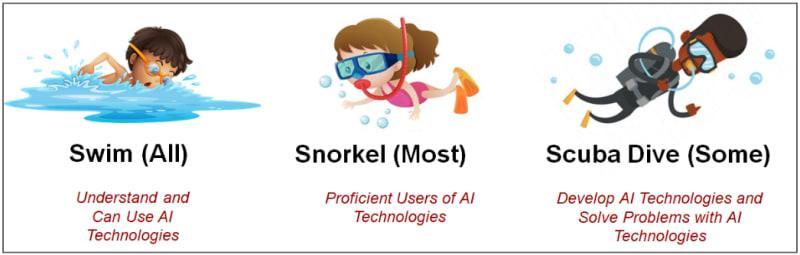
The framework also incorporated a tiered Swim, Snorkel, and Scuba model (see Figure 1), createdby the district to guide the depth of student engagement with AI concepts. At the Swim level, all students develop a foundational awareness of AI, such as understanding how recommendation algorithms work or how facial recognition systems are trained. At the Snorkel level, many students engage more deeply through applied projects,for example, using AI tools to analyze trends in climate data or evaluate sentiment in news articles. Learners at the Scuba level pursue technical specialization in areas like machine learning, Python programming, or building AI chatbots using
natural language processing.This model was supportedby a district-level guidance for AI use (https://www.gcpsk12.org/programsand-services/college-and-careerdevelopment/academies-and-careertechnical-and-agriculturaleducation/artificial-intelligence-andcomputer-science/guidance-for-humancentered-ai-use),whichforegroundedethical considerations and responsible decisionmaking alongside technical engagement, providing a shared context for how AI literacy was introduced across the school.
Figure 1
The Swim, Snorkel, and Scuba Model (Image from https://www.gcpsk12.org/programs-andservices/college-and-careerdevelopment/academies-and-careertechnical-and-agriculturaleducation/artificial-intelligence-andcomputer-science)
The AI Literacy Implementation Landscape
While many AI frameworks entail essentialknowledge andskills inAI literacy, the translationof them into actual classroom practice remains a significant challenge (Ng et al., 2023). The literature on educational change has suggested that successful implementation relies more on human factors shaping school culture than on the technologyitself particularlythe dynamics among teacher knowledge and agency, professional community, and leadership
support (Ertmer & Ottenbreit-Leftwich, 2010; Wenger, 1998; Leithwood & Jantzi, 2006).
Barriers to AI Integration
The integration of technology is often hampered by various challenges, which Ertmer(1999) classifies as first-order and second-order barriers. First-order barriersare external and structural,primarily involving limitations in access, institutional support, time, and PD. Integrating new or untested learning content (e.g., AI literacy) into existing curriculum requires substantial curricularspace,sustainedtraining,and time for instructional design. However, teachers frequently operate under accountability pressures that narrow instruction toward standardized-tested subjects and increase top-down control over classroom content (Au, 2007). Moreover, studies have found that limited instructional time and space are a major operationalbarrierin AI integration, as it usually requires a trial-and-error process to learn and design AI-based materials (Filiz et al., 2025). Similarly, Cariaga et al. (2025) emphasized that existing AI PD for teachers is often insufficient due to inflexible scheduling, which resultsin ineffective,outdatedteacher trainingthat is disconnected from classroom realities.Sometimes,evenwhen teachers are motivated to integrate AI to enhance students’ learning experiences, restrictive school policies can limit their access to AI technologies due to data privacy and safety concerns, leading to external barriers and teacher frustration. (Cariaga et al., 2025). Consequently, without adequate access, time, and support for AI integration, teachers are likely to revert to traditional practices to cope with curriculum demands, thereby negating the potential for meaningful technology integration (Ertmer & Ottenbreit-Leftwich, 2010; Hew & Brush, 2007; Ottenbreit-Leftwich et al., 2018).
While addressing these structural system issues is essential, second-order barriers, which are internal to the teacher, can pose significant obstacles to sustained implementation even in structurally supportivecontexts (Ertmer,1999; Ertmer& Ottenbreit-Leftwich, 2010; Hew & Brush, 2007). Ertmer and Ottenbreit-Leftwich (2010) argued that teachers’ self-efficacy beliefsabout one’s capabilityto succeed is a central determinant of whether classroom innovations are enacted, often outweighing teachers’ skills or access to resources. Recent empirical work on AI integration reinforces this pattern. In a survey of 200 educators, Roshan et al. (2024) found that while 40% of teachers were somewhat familiar with AI tools, only 5% reported high confidence in using them. They also identified that participation in AI-focused PD was significantly associated with higher confidence levels.With the rapid innovation and adoption of GenAI, recent research highlighted teachers' beliefs about the technology itself as a critical factor (Cheah et al., 2025; Cariaga et al., 2025). For instance, Cheah et al. (2025) identified "technology value beliefs" as the most frequently reported barrier to GenAI adoption. This barrier usually stems from skepticism regarding the tool's utility and ethics, withteachers questioningwhether the educational benefits of AI outweigh risks such as algorithmic bias and data privacy.
Teacher Professional Development for AI Integration
To mitigate these second-order barriers for AI integration, teacher PD must go beyond mere technicaltraining (e.g., how to use an AI tool). It requires a holistic approach to PD that integrates ethical,
pedagogical, and technological understanding within a particular context. Building on TPACK (Mishra & Koehler, 2006), Celik (2023) proposed Intelligent TPACK, which is specifically designed to address the unique requirements of integrating AI into education. Recognizing that AI tools function as intelligent agents capable of makingdecisions,this framework extends the traditional knowledge domains to include Ethical Knowledge as a critical new component. In this model, IntelligentTechnological Knowledge (Intelligent-TK) refers to the technical proficiency required to interact with AI systems, such as understanding their basic functions and technical capacities. Intelligent-Pedagogical Knowledge (Intelligent-PK) involves understanding AI's specific instructional affordances, such as using algorithms for personalized feedback or real-time student monitoring. The Intelligent TPACK framework suggests that technical and pedagogical skills should be integrated with the ability to ethically evaluate AI tools based on criteria such as fairness, accountability, transparency, and inclusiveness.This ensures that teachers can justify and assess the automated decisions that affect teaching and learning.
While the Intelligent TPACK framework creates a solid foundation regarding what teachers need to know, successful implementation requires shifting from episodic in-service training to sustained, contextualized, and customized PD (Gayed, 2025; Nabi et al., 2025). Incorporating Communities of Practice (CoP; Wenger, 1998) into teacher PD for AI integration and AI literacy development is one way to provide effective PD that is contextualized and effective for teachers. CoPs are defined as groups of people who share a concern or a passion for something they do and learn how to do it better as they
interact regularly. Unlike isolated, one-time workshops, CoPs provide a social environment where teachers can collaboratively establish practices for AI tools. Recent empirical work validates this approach in the context of AI. McIntosh (2024) reported on an international CoP of 500 educators that successfully utilized social learning to develop AI-integrated curriculum frameworks and co-create staff training materials.
Present Study
Despite the proliferation of AI literacyframeworksand the identification of adoption barriers, significant gaps remain in understanding how to operationalize AI literacy across an entire school system. While existingresearch has robustly defined what AI literacy is (OECD, 2025; Long & Magerko, 2020) and identified the reasons for its failure, there is a need for more empirical research on systemic, interdisciplinary models that successfully overcome these challenges. Specifically, the field needs more studies that examine how schools can move beyond isolated STEM courses to integrate AI and computing concepts into non-STEM curricula, such as humanities and arts, without requiring deep technical expertise from every teacher. Furthermore, while the need for sustained, contextualized, and customized PD is welldocumented, there is limited evidence detailing the specific organizational structures and leadership moves required to sustain such a culture.
This study addresses these gaps by presenting an empirical investigation of the AI-Ready pilot at Superstar High School. This school-wideinitiative is supported by a dedicated teacher leadership team, a structured approach aimed at enhancing internal capacity. Initially comprising one
veteran teacher from the AI pathway and one member from each of the four core subject areas in its inaugural year. The team has expanded to include over 10 teacher leaders within three years, representing approximately 12 to 13 educators from various disciplines,including core academic subjects, the arts, and the specialized AI pathway. This team was formed to bridge the divide between technical AI expertise and pedagogical content knowledge across different subjects. Unlike traditional department heads, these teacher leaders are compensated with stipends and provided dedicated planning time to research new tools, experiment with instructional strategies, and design PD for their peers. By cultivating this dual expertise disciplinary content combined with AI integration the leadership team serves as the primary mechanism for contextualizing AI literacy across the curriculum, which transitions from a top-down mandate to a peer-led model of innovation. By examining this implementation, this paper provides critical insights into how school-wide conceptual frameworks affect teacher practice and how strategicleadershipinvestmentscanmitigate common barriers to technology integration.
Methods
This study was conducted to examine the implementation of the AIReady pilot program at Superstar High School, the flagship AI-focused school in GCPS. GCPS is one of the largest school districts in the Southeastern United States. The Superstar cluster, including three elementary schools, one middle school, and Superstar High School, was designed as a model for AI integration with a mission to prepare AI-Ready students. The diverse student body in the Superstar cluster also reflects the district’s racial, linguistic, and socioeconomic diversity. A qualitative case
study approach (Yin, 2018) was employed to capture the authentic, context-rich perspectives of participants over the first three years of the program implementation.
Participants
A total of 16 teachers from across the curriculum at Superstar High School participated in this study, representing disciplines such as STEM, humanities, arts, special education,and world languages.This teacher cohort included diverseperspectives, ranging from members of the teacher leadership team, who acted as early adopters, to non-leadership teachers sharing their experiences with AI integration. In addition to teachers, the school principal contributed essential insights regarding the broader leadership vision, the systemic supports put in place, and the implementation challenges faced at the administrative level.
Data Collection
The primary data source was semistructured focus groups (Krueger & Casey, 2015) conducted in Spring 2025 using an empathy interview protocol. Three to five teachersparticipated in each of the six focus group sessions.Unlike traditional individual interviews, focus groups were intentionally employed to leverage group interaction as a data-generation mechanism, encouraging participants to build on one another's responses, surface shared experiences, and co-construct meaning around the AI-Ready pilot program. This approach yielded rich qualitative data reflecting the collective and individual dimensions of teachers' experiences with AI integration. During each session, teachers were prompted to discuss changes in their teaching practices due to the AI initiative, examples of AI concepts they had integrated, supports and
barriers they encountered, and their professional growth. The principal's interview, conducted individually, focused on the goals of the pilot, leadership actions taken, and reflections on what worked or needed improvement. Each focus group and interview session lasted approximately 30–45 minutes and was audio-recorded with consent.
Data Analysis
Interview recordings were transcribed and analyzed using thematic analysis (Braun & Clarke, 2019). The research team employed a hybrid coding approach. First, a deductive codebook was developed based on pre-defined topics of interestalignedwith the program’stheory of action – for example, codes such as “AI ethics,” “data literacy,” “teacher collaboration,” “leadership support,” and “challenges” were drawn from the AI Learning Framework and implementation plan. Second, inductive coding allowed new themes to emerge from the data (for instance, unexpected ideas like “AI as coteacher” or “growth mindset” surfaced from participant narratives). Each transcript was coded by at least two researchers, who then met to reconcile differences and refine the code definitions. Through iterative reviewing and clustering of codes, major themes were identified that correspond to the research questions. To enhance trustworthiness, preliminary findings were shared with the school principal and a district leader in a member-checking process. They affirmed that the findings resonated with their impressions; and no major contradictions were noted. The qualitative findings were also triangulated with a few quantitative metrics the school tracked (e.g., percentage of students in STEM pathways, participation in AI-related extracurriculars) to provide context,
although the core of the analysis remained the interview-derived themes.
Results
The findings highlightthe significant impact of the AI-Ready framework on teacher PD, instructional adaptation, and the resulting needs for sustained support. The thematic analysis of interview data revealed significant findings regarding the influence of leadership, the adoption of the AI Learning Framework, and the structural needs required for sustained pedagogical transformation.The results are organized by the primary research questions guiding this study.
RQ1: How did the school-wide framework for AI readiness affect teachers’ integration of AI concepts into their teaching practices?
Emphasizing AI Ethics and ProblemSolving Across Subjects
Across the curriculum, the most frequently and thoroughly integrated concepts were AI ethics and critical problem-solving skills. Nearly all teachers, regardless of subject, found ways to discuss responsible AI use and to push students’ analytical thinking when using AI tools. For instance, English and history teachers had students use AI chatbots to generate content or analyze texts, and then led discussions about the reliability and bias of the AI outputs prompting students to critically evaluate information and consider ethical issues like plagiarism or misinformation. A social studies teacher described regularly raising questions like “When we get an answer from an AI system, how do we know if we can trust it? What biases might be present?”
GATEWAYS TO TEACHER EDUCATION
In science classes, teachers linked AI to problem-solving by having students use AI for data analysis or simulations and then reflect on how AI might approach a scientific problem differently than a human. These approaches align with the “mindset shift” that many teachers underwent: rather than teaching entirely new content, they reframed existing lessons to explicitly highlight AI-related thinking. As one Language Arts teacher explained, “Initially, we were all like, ‘How do I incorporate mathematical reasoning into my English class?’But I realized it’s more of a mindset. Writing an essay can be like an equation very formulaic. It’s just a mindset shift, and a conversationwe have daily with students”. This illustrates how non-STEM teachers found analogies to AI concepts (like pattern recognitionor algorithmicreasoning) within their regular content, thereby aligning with the AI framework without always using computers or coding in class. Importantly, teachers noted that this approach helped students see AI not as a standalone topic but as “a whole way of thinking” applicable to various domains.
Depth and Variation in Integration
While ethics and general problemsolvingwere common touchpoints,the depth of AI integration varied widely among teachers and subjects. A subset of teachers oftenthose on the leadershipteam or in STEM fields demonstrated a high level of integration, bringing multiple AI concepts into their teaching in substantial ways. For example, a history teacher redesigned a unit to incorporate algorithmic thinking: students studied a historical event (the Civil War) by modeling it as a system of inputs and outputs, asking how changing certain “variables” might have altered the outcome. In doing so, the teacher helped students drawparallelsbetween codinglogic
and cause-and-effect in history. Another teacher from the math department described an interdisciplinary project where students applied data science principles in a humanitiescontext,analyzingstatisticaldata on economic conditionsduringthe Industrial Revolution to inform their understanding of a novel set in that era. These kinds of rich, cross-curricular integrations illustrate the potential of the AI framework to deepen learning: students not only learned AI concepts but also used them to gain new insights into traditional academic content. However, such examples were the exception rather than the norm.
Many teachers admitted their use of the AI framework remained surface-level or implicit. Several factors contributed to this. For one, teachers outside of STEM felt that certain technical concepts, like programming or robotics, were “not applicable” to their subject area or beyond their comfort zone. The study found that programming was the least addressed AI competency outside of dedicated computer science or engineering classes. As a world language teacher explained, “We’re not doing coding or working with robots in my class. However, when you learn another language, you’re doing pattern recognition and creating meaning from it… that skill prepares [students]for the future,even if it’s not coding a robot”. This reflects how some teachers replaced direct technical content with analogous cognitive skills (like pattern recognition) that fit their curriculum. Additionally,some teachers acknowledged a misconceptionin the early phase of the pilot that integrating AI had to involve “something big” or tech-heavy. They might have been integrating components of the framework (like data analysis in a language class through qualitative data) without explicitly labeling it as “AI learning,” leading students to not recognize it. Over
time, facultydiscussionsand training helped clarify that even low-tech approaches could fulfill the AI-Ready goals if done intentionally. Nonetheless, the variability suggests that while all teachers were on board with the idea of AI integration, not all felt equallyequipped or inclinedtopush into the more complex or technical realms of the framework. This variation is a critical finding: it points to the need for continued support to help more teachers move from superficial to deeper integration of AI concepts.
RQ2: What are teachers’ needs and challenges within a school-wide program to develop AI literacy and integrate AI concepts and tools in their classrooms?
Despite the generally positive outlook, teachers identified several challenges and unmet needs that must be addressed to sustain and expand the AIReady initiative.
Tensions with Existing Classroom Norms
Teachers also encountered challenges with existing classroom norms and infrastructure. Some students and teachers had to adjust their mindsets about classroom roles when AI was introduced. For instance,a few teachers initiallyworried that allowing AI tools (like chatbots or AIbased assistants) in class could undermine students’ original work or lead to cheating. Over time, many teachers came to see AI as a “co-teacher” or “thought partner” rather than a threat, using it to enhance differentiation and feedback. One teacher described this evolution in role as a move toward being a "facilitator of growth," noting, "I very seldom call myself a teacher... We are facilitators of growth.” Thus, the introductionof AI-based assistants
necessitated a shift in the perceived roles of both educator and student, moving away from a focus on "right answers" toward a focus on process. The teachers had to develop new classroom norms and ethical guidelines often in conversation with students about when AI could be used (e.g., brainstorming, getting feedback) and when it should be put aside (e.g., during assessments). As one educator explained to their class: “Listen, it is okay for you to use AI as a thought partner... but it's not okay for you to use it to replace something that you would have originally produced... shortcutting your work is not acceptable.” This dialogue was essential in building trust and ensuring students did not lose their individual agency.
In terms of infrastructure, despite being a specialized AI school and relatively well-equipped (all students had laptops, and there were specialized labs), there were issues like district-level content filters creating "red tape" that blocked essential platforms, or software updates lagged, causing frustration. One teacher recalled the initial frustration: "We had some tools that we really wanted to try. When we first opened, we couldn't get to them because theywere blocked. And then we had to work with the county."
A final challenge identified was ensuring equity for students who transferred into the school mid-pilot. These students often lacked the foundational AI knowledge provided by their middle school education and initially struggled to reconcile their expectations of an "AI school" with the reality of integrated critical thinking. One teacher observed this disconnect among transfer students:
I've had a lot of kids transfer in from other high schools... when they get here,
they're like “oh, we're not just, like on the computer all day”... “Where is the worst of ChatGPT?” [they ask]... Sometimes, they said, “We’re not doing AI,” and I'm like, “but you are!”
This pointed to a need for onboarding processes to help new students (and teachers new to the school) quickly grasp the AI framework and culture. Teachers saw it as part of their challenge to bring everyone up to speed without leaving any student feeling alienated by the specialized focus. In summary, the AIReady pilot’s success also illuminated what it will take to maintain momentum: continued professional learning, dedicated time, and adaptive strategies to align the innovation with everyday classroom realities.
The Need for Advanced, Contextualized PD
A dominant theme from teacher interviews was the need for more advanced and customized PD. By the second and third year of implementation, many teachers had surpassed the basics of the AI framework and were seeking deeper learning opportunities to enhance their practice. However, the external PD offerings available (such as general technologyintegration workshops or education conferences) were frequently described as "introductory" or redundant and did not match the expertise level of this school’s pioneering teachers. As one teacher put it, “We became the experts pretty quickly… now we need PD that treats us as if we were scientists or programmers, not just beginners.” Another teacher echoed by reflecting on their diminishing returns of external PD:
Even when I go to conferences and I'll sit in a session... I just stopped going
because I felt like I wasn't getting much because nothing that they were saying was anything we haven't been doing... [and] we were doing this like three years ago.
This sentiment highlights a distinct mismatch: traditional teacher training was lagging behind the needs of teachers on the cutting edge of AI in K-12. To bridge this gap, most teachers expressed a desire for ongoing, in-house support, such as having an “AI coach” or partnering with university experts, to provide on-demand guidance tailored to each teacher’s subject area. Particularly, there was a significant interest in seeing how AI concepts translated across different departments to help students make interdisciplinary connections. One teacher noted the value of observing peers to discover these links: “I need to go see the AI teacher in class, and I need to watch him for several days and be like, ‘oh, that's math... so I can make the connections.” These findings underscore that for pioneering schools, the next phase of development requires a move away from generalized resources toward embedded, expert-led, and subject-specific professional learning for their teachers.
Structural Time Constraints
Teachers consistently reported that the lack of time was a major barrier to deeper AI integration. Incorporating AI projects or interdisciplinary lessons often required significant planning, coordination with colleagues, and creation of new materials. With full teaching loads and standard curriculum pacing pressures (including preparing students for state tests, etc.), teachers struggled to find the bandwidth for this additional work during the regular school day. One teacher noted that while initialtrainingsessions introduced great ideas, “then you go back to teaching 5
classes a day and those ideas sit on the shelf because there’s no time to develop them.” The school’s strategy of providing paid summer days and occasional release time was helpful,but teachers feltit stillfell short of what was needed for transformative practice.They advocated for more structured collaboration time during the school year for example, periodic late-start days for students so teachers could meet across departments to design AI-integrated units. They also suggested that scheduling common planning periods for AI leadership team members to meet with other teachers could facilitate more just-in-time support. The desire for time is not merely a call for convenience; as teachers pointed out, deep integration (such as weaving data science into a history project) is “complex, interdisciplinary work” that cannot be improvised on the fly. Without systematic time to plan and reflect, teachers risk defaulting to simpler, isolated uses of AI (like a quick demo of an AI tool) rather than the comprehensive approach envisioned by the AI Learning Framework.
RQ3: How didleadershippractices and organizational investments support teachers' professional growth and AI integration?
Our data revealed that the successful implementation of a school-wide program was fundamentally underpinned by visionary leadership and strategic organizational structures. At Superstar High School, leadership functioned not only as a managerialentitybut as a catalyst for school cultural transformation, prioritizing a safe environment for teachers and human capital investment over simple AI uses in classrooms.
Leadership and the Culture of Empowerment
Mission-aligned, supportive leadership emerged as a cornerstone of the AI-Ready initiative’s success. The principal and administrative team cultivated a school culture characterized by trust, teacher agency, and a shared mission of innovation. Teachers universally reported that they felt encouraged to experiment with new ideas without fear of reprisal if those experiments failed. The principal explicitly promoted a “fail-forward” mindset, often telling staff: “We would rather you try and fail than not try at all. That way, everybody fails forward.” This message, consistently communicated, gave teachers psychological safety to pilot AI-related projects and take instructional risks. One teacher elaborated on the impact of this mindset from their principal in an interview:
Our administration was really clear that we know we're trying a new thing and we know sometimesit might not work and having that comfort was really important... If an administrator walks in my room and I'm having a day where literally nothing is working andthe computersare blowing up, I can just be like, “Today may not be the day. Could you give me a minute to solve this?” and feel that's not going to be viewed negatively.
Some teachers also contrasted this environment with previous schools they had worked in, where strict evaluation pressures or fear of making mistakes could discourage innovation.One veteran teacher reflected, “I feel like I’ve grown more in the last three years [at this school] than I did in the first 13,” attributing that growth to the empowering culture and leadership support. The messages we received from teacher interviews exemplify a broader sentiment:
many teachers felt professionally rejuvenated by being part of an AI-focused school, as the leadership’s vision gave their work a renewed sense of purpose.
Notably, teachers did not express the apprehension about AI that is reported in some contexts (such as fear of being replaced by AI or of students knowing more about technology). Instead, they felt “empowered” and had strong buy-in to the initiative’sgoals. This growth shift suggests that the leadership's commitment to innovation re-energized educators, moving them from traditional instructional roles toward becoming “facilitators of growth,” highlighting that the teachers collectively came to view AI integration not as a transient trend but as an essential evolution of teaching.
Strategic Organizational Investments
Leadership utilized strategic organizational investments to build internal capacity and dedicate time to AI integration efforts. The organizational investments that were highlighted included (a) establishing teacher leadership teams and (b) allocating compensated planning time.
Teacher Leadership Team. Our findings showed that a key strategy for the successful AI-Ready program implementation was the establishment of a compensated Teacher Leadership Team. This interdisciplinary team, expanded from one teacher to more than 10 teachers (from math, science, language arts, social studies, world language, and arts), was created to build internal expertise and lead peer support. Members of the team received stipends and dedicated time to develop AIrelated curriculum resources, design and facilitate PD for their colleagues, and serve
as mentors or “go-to” resource persons for AI integration ideas.
This structure ensured that the AI initiative was not siloed within a single department but was instead a distributed effort where teacher leaders "redelivered" expertise to their peers. For those on the leadershipteam, the investment in their own growth was reciprocal. One lead teacher noted in an interview:
The AI teacher leadership team... I think that changed it for all of us. Being offered the opportunity to join [the leadershipteam] was the biggest eye-opener because we have received additional training. That has also forced us to do more in our classes, because if we're going to be the voice for our department...we need to be able to educate them.
The teacher leadershipteam structure encourages teacher collaboration across disciplines.For example,a computerscience teacher might partner with an English teacher to co-design a project blending natural language processing with literature analysis.Such cross-pollinationhelpedbring AI concepts into non-STEM classes in creative ways.
Compensated Planning Time.
Another critical investment was providing compensated planning time for teachers to work on the AI curriculum and collaboration. The school utilized grant funding and district support to pay teachers for attending summer institutes and crossschool planning days focused on the AI Learning Framework. Unlike typical unpaid add-on PD, these structured times (often in the summer or during occasional release days) acknowledged teachers’ efforts and allowed them to concentrate on AI integration without the distraction of daily
teaching duties. The school principal underscored the importance of this investment, stating: “We’ve got to pay our teachers to come in and spend their time teaching other teachers, but we also have to pay them to come in and plan what they’re going to teach.”
Teachers identified this dedicated time as critical for moving past superficial tool usage toward deeper pedagogical integration. In interviews, teachers noted that the provision of paid collaborative time served as a powerful signal that the leadership was deeply invested in their professional autonomy and success. They felt the district and school were “putting their money where their mouth is” by investing in teacher learning as a primary institutional priority. This financial and temporal investment functioned as a significant motivator, encouraging staff to produce high-quality, AI-infused lessons that they otherwise felt they lacked the bandwidth to develop. One teacher articulated the necessity of this dedicated investment: “We are the ones who develop, make, and present all the [professional learning communities], and we only have so many hours in the day…It gets really difficult to ensure that we are pushing ourselves to have the right information.”
Overall, the combination of an empowering cultural ethos and strategic temporalsupports specifically the creation of teacher leadership roles and compensated planning blocks created a "fertile ground" for professionalgrowth inAI integration.By providing these resources, leadership functioned as an enabler rather than a topdown director, removing systemic obstacles and championing teachers as they navigated the complexities of supporting high quality teacher practices for preparing AI-Ready students.
Discussion
This study examined an AI-Ready pilot program implementation to support students’ computing and AI literacy development at Superstar High School in Georgia, USA. The findings revealed that successful AI integration extends beyond technology adoption to encompass systemic organizational transformation, strategic PD investments, and intentional pedagogical shifts.
Leadership as Foundational Infrastructure
Strategic Organizational Investments
The findings demonstrate that AI integration is fundamentally driven by instructional leadership rather than technology mandates alone. The principal's explicit "fail-forward" philosophy created psychological safety essential for experimentation, aligning with research identifying agility, risk tolerance, experimentation, and collaboration as criticalconditions for digital transformation at employee, leadership, and organizational levels (Avidov-Ungar & Arviv-Elyashiv, 2020). By authorizing failure as part of the learning process, leadership transformed potentialresistance into a culture of inquiry. These practices were enacted through concrete mechanisms,including stipends for teachers, dedicated planning time, and distributed leadership structures. For districts considering similar initiatives, compensating teachers for planning time, curriculum development, and PD opportunitiesrepresentsa criticalcomponent in organizational investments.
The teacher leadershipteam structure addresses the need for school leaders to create and maintain resources and
connectionsrequired in the digital age while inspiring implementation of shared visions (Scherer et al., 2021), distributingleadership across multiple content areas rather than concentrating AI expertise solely in administrativeor technologyspecialist roles. This distributed approach enabled crossdisciplinary collaboration, such as STEM teachers partnering with English teachers to co-design projectsblending naturallanguage processing with literature analysis, bringing AI concepts into non-STEM classes through meaningful pedagogical transformation.
Organizational Culture and Mission Alignment
The AI Learning Framework and AIReady pilot program functioned as a unifying missionthat gave teachers renewed professional purpose. One teacher's reflection on experiencing greater growth in three years at Superstar than in the preceding thirteen years of teaching exemplifieshow transformationalleadership impacts teacher motivation and commitment. The framework provided what teachers described as a "spark" a clear, future-focused goal that transcended routine instruction and allowed them to see their work through a new lens.
Leadership support extended beyond school culture to practical problem-solving. When infrastructure issues arose, such as AI translation tools being incompatible with school Wi-Fi, administrative intervention was immediate, reinforcing institutional commitment. This responsiveness reflects digital leadership's contribution to both short-term problem-solving and long-term strategic success (Scherer et al., 2021), demonstratinghow leaderstranslate abstract visions into concrete classroom realities. In this study, the principal acknowledged that educators are drawn to the profession
because they want to make a difference, and sometimes just need "a little nudge" to see their work differently, which reflects an understanding of intrinsic motivation as a driver of innovation adoption.
Addressing the Need for Advanced, Contextualized PD
The study revealed a "pioneer's dilemma": teachers' rapid growth outpaced available external PD support. By the second and third years of AI-Ready implementation, Superstar teachers, especially teacher leaders, described external PD as "introductory" and misaligned with their advanced AI integration needs. Our study results demonstrate that as teachers moved beyond surface-level tool adoption, they required sophisticated knowledge and innovative ideas of how AI concepts translate across content areas. Superstar teachers requested PD that would treat them as if they were “scientists or programmers," seeking conceptual understanding of computational thinkingand AI principlesthat would enable confident cross-disciplinary application. This finding reflects a broader gap in PD practices, where PD often focuses on technical skills (Celik et al., 2022) rather than the pedagogical integration of various dimensions of teacher AI competence, such as AI pedagogy, AI assessments, and AI ethics (Ng et al., 2023).
Moreover, the existing AI PD opportunities remain concentrated at foundational levels, leaving experienced teachers without pathways for continued growth. This finding advances the teacher PD literature in an important way. While prior PD studies have largely focused on supportingteachers to move from resistance or novice status toward initial adoption (Ertmer & Ottenbreit-Leftwich, 2010; Nabi
et al., 2025), relatively little focus has been given to what happens after early adopters outgrow the structures designed to support them. Our study revealed a distinct postadoption phase, when pioneering teachers require advanced,discipline-specificPDthat existing professional learning systems are not designed to support effectively. This finding extends Celik's (2023) Intelligent TPACK framework by demonstrating that its knowledge domains are not static competencies to be acquired once, but dynamic capacities that must deepen as AI tools and classroom contexts evolve. PD providers and school systemsmust therefore reconceptualize teachers’ professional learning trajectories in AI integration as ongoing and differentiated,ratherthanfrontloaded and uniform.
To bridge this gap in teacher PD, the findings strongly support three evidencebased approaches for advancing teacher AI competence to support AI-Ready students. First, AI integration coaches district-level specialists or university partners can provide discipline-specific, on-demand guidance tailored to individual teachers' content areas and expertise levels. This model addresses teachers' feelings of unpreparedness to navigate ethical complexities, particularly regarding student data protectionand algorithmictransparency (Celik et al., 2022), by providing just-intime support as implementation challenges arise. Second, research-practicepartnerships with local universities can leverage diverse expertise from partners (e.g., faculty, community leaders, teachers) while contributing to continuous improvement processes (Coburn & Penuel, 2016). Involving teachers in the design of AI integration and PD not only emphasizes teachers’ voices and needs but also supports the development of their understanding of AI while learning pedagogical concepts and
skills in their teaching contexts (Hutchins et al., 2025). Such partnerships also enhance teacher preparation programs by grounding pre-service training in authentic implementationcontexts,creating reciprocal benefits for K-12 schools and higher education institutions. Third, communities of practice provide structured environments where teachers collaboratively address authentic implementation challenges. Through interactions and discussions on their work in shared practice, teachers can collectively co-construct and reinforce their beliefs and visions and translate them into teaching practice with collegial support (Takahashi, 2011).
Structural Time for Implementation
Finally, the pervasive demand for time emerged as a non-negotiable infrastructure requirement. Even with a supportive culture, the structural realities of the school day curriculum pacing, testing pressures, and lack of non-instructional time limit the depth of integration. This finding aligns with a recent study by Filiz et al. (2025), which identified time as a primary operational barrier to AI adoption.
While the "mindset shift" allowed for some integration without massive time costs, the deeper, interdisciplinary projects envisioned by the "Scuba" level of the AI framework require significant design time. Creating structured opportunities for collaboration requires systemic solutions beyond occasional release days. Districts must implement restructured school schedules, such as periodic late-start days, protected common planning periods for interdisciplinary teams, and collaborative lesson study structures, to allow for the iterative refinement of AI-integrated instruction. Without structural changes, innovation risks remaining at the surface
level. School leaders must recognize that "time to play and try" and collaboration are not a luxury but a structuralnecessityfor the complex pedagogical design and implementation required by AI literacy development in schools.
Implications for Practice
The findings yield several actionable implications for educational leaders, PD providers, and researchers pursuing AI integrationinitiatives.For school and district leaders, strategic investment in compensated, interdisciplinary teacher leadership teams with dedicated planning time providesessentialinternal expertise for sustained innovation. This enables schools to build teacher capacity from within rather than relying on external PD opportunities. Moreover,creatinga systemictime structure that allows teachers to collaborate through communities of practice can help facilitate authentic and meaningful transformation in teaching pedagogies, thereby enhancing students’ learning experiences. Finally, school leaders need to ensure equitable access, participation, and experiences for all students, including STEM and non-STEM students, to be AI-Ready through targeted support for non-STEM teachers to deepen their AI integration practices. Therefore, professionallearningsystems mustevolve to address teachers’ developing expertise and needs. We recommend that AI PD for teachers should be developed to include all Intelligent TPACK dimensions, including technicalknowledge, pedagogicalstrategies, content-specific applications, and ethical considerations, in comprehensive PD experiences rather than treating these as separate skill sets (Celik, 2023).
Implications for Research
The study highlightscritical research needs. Documenting AI initiative implementation trajectories through longitudinal studies would illuminate stages of expertise development and identify key transition points requiring additional support. In addition, examining student learning outcomes across student demographics, academic pathways, and school contexts can help reveal whether AI integration exacerbates or ameliorates existingeducationalequity. To benefitother schools and districts, research on AI integration should expand on effective approaches for facilitatingnuancedAI ethics discussions that extend beyond academic integrity to provide evidence-based pedagogical strategies.
Conclusion
The AI-Ready pilot demonstrates promising outcomes in shifting teacher practice toward future-focused instruction. Teachers at Superstar High School are serving as co-designers of a new pedagogy, successfully adopting the AI Learning Framework to foster critical thinking, problem-solving, and AI ethics across disciplines.Whilechallenges relatedto time, advanced training, and uneven integration remain, the school's culture of innovation and commitmentprovidesa solid foundation for refining the initiative. Sustained investment in high-quality professional learning, structural time for collaboration, and strategic teacher leadership are critical components that must accompany AI integration efforts to ensure meaningful, equitable, and comprehensive pedagogical change across the K-12 spectrum.
GATEWAYS TO TEACHER EDUCATION
Acknowledgements
This work was supported by a grant from Google.org. The authors gratefully acknowledge the contributions of Sallie Holloway, Directorof Artificial Intelligence and Computer Science, and her team at the Gwinnett County Public Schools, whose facilitation of access and ongoing support throughout the research process were essentialtothe successfulcompletion of this work.
References
Au, W. (2007). High-stakes testing and curricular control: A qualitative metasynthesis. Educational Researcher, 36(5), 258–267. https://doi.org/10.3102/0013189X07 306523
Avidov-Ungar, O., & Arviv-Elyashiv, R. (2020). Teachers’ perceptions of educational reform: the schools’ readiness, supporting mechanisms and contributions of the reform. International Journal of Educational Management, 35(1), 173-187.
Braun, V., & Clarke, V. (2019). Reflecting on reflexive thematic analysis. Qualitative research in sport, exercise and health, 11(4), 589-597.
Cariaga, R., El Halaissi, M., Refugio, C., Dagunan, M. A., Sabidalas, M. A., Cariaga, V., ... & Gerodias, E. (2025). Local voices, global technologies: AI integration barriers in K–12 classrooms. International Journal of Interdisciplinary Viewpoints, 1(5), 672–680. https://doi.org/10.64612/ijiv.v1i5.45
Celik, I. (2023). Towards IntelligentTPACK: An examination of the relationship between teachers' professional knowledge and their ethical decision-making regarding the use of artificial intelligence in education. Computers and Education: Artificial Intelligence, 4, 100122.
Celik, I., Dindar, M., Muukkonen, H., & Järvelä, S. (2022). The promises and challenges of artificial intelligence for teachers: A systematic review of research. TechTrends, 66(4), 616630.
Cheah, Y. H., Lu, J., & Kim, J. (2025). Integrating generative artificial intelligence in K-12 education: Examining teachers’ preparedness, practices, and barriers. Computers and Education: Artificial Intelligence, 8, 100363. https://doi.org/10.1016/j.caeai.2025. 100363
Coburn C.E., Penuel W.R. (2016). Research-practice partnerships: Outcomes, dynamics, and open questions. Educational Researcher, 45 (1), 48–54.
Ertmer, P. A. (1999). Addressing first- and second-order barriers to change: Strategiesfor technology integration. Educational Technology Research and Development, 47(4), 47–61. https://doi.org/10.1007/BF02299597
GATEWAYS TO TEACHER EDUCATION
Ertmer, P. A., & Ottenbreit-Leftwich, A. T. (2010). Teacher technology change: How knowledge, confidence,beliefs, and culture intersect. Journal of Research on Technology in Education, 42(3), 255–284. https://doi.org/10.1080/15391523.20 10.10782551
Filiz, O., Kaya, M. H., & Adiguzel, T. (2025). Teachers and AI: Understanding the factors influencing AI integration in K-12 education. Education and Information Technologies, 1–37. https://doi.org/10.1007/s10639-02513463-2
Gayed, J. M. (2025). Educators’ perspective on artificial intelligence: equity, preparedness, and development. Cogent Education, 12(1), 2447169. https://doi.org/10.1080/2331186x.20 24.2447169
Grover, S. (2024, March). Teaching AI to K-12 learners: Lessons, issues, and guidance. In Proceedings of the 55th ACM Technical Symposium on Computer Science Education V. 1 (pp. 422-428).
Hew, K. F., & Brush, T. (2007). Integrating technology into K-12 teaching and learning: Current knowledge gaps and recommendations for future research. Educational Technology Researchand Development,55, 223–252. https://doi.org/10.1007/s11423006-9022-5
Hutchins, N. M., Zhang, S., Barrett, J. R., & Israel, M. (2025). Empowering educators in AI: Insights from codesigning an AI microcredentialwith and for K-12 educators. Proceedings of the AAAI Conference on Artificial Intelligence, 39(28), 29137-29144.
https://doi.org/10.1609/aaai.v39i28.3 5186
Kafai, Y., & Grover, S. (2025). Computational thinking in the age of artificial intelligence: Charting directions for learning sciences researchandpractice. In Proceedings of the 19th International Conference of the Learning Sciences (pp. 2530–2531). International Society of the Learning Sciences. https://doi.org/10.22318/icls2025.63 7872
Kafai, Y. B., & Proctor, C. (2022). A revaluation of computational thinking in K–12 education: Moving toward computational literacies. Educational Researcher, 51(2), 146–151.
https://doi.org/10.3102/0013189X21 10579
Krueger, R. A., & Casey, M. A. (2015). Focus groups: A practical guide for applied research (5th ed.). SAGE Publications.
Leithwood, K., & Jantzi, D. (2006). Transformational school leadership for large-scale reform: Effects on students, teachers, and their classroom practices. School Effectiveness and School Improvement, 17(2), 201-227.
GATEWAYS TO TEACHER EDUCATION
Long, D., & Magerko, B. (2020). What is AI literacy? Competencies and design considerations. In Proceedings of the 2020 CHI Conference on Human Factors in Computing Systems (pp. 1–16). Association for Computing Machinery.
https://doi.org/10.1145/3313831.337 6727
McIntosh, N. (2024). Bridging cultures, advancing AI: Insights from an international higher education community of practice. ASCILITE Publications, 117–118.
Mishra, P., & Koehler, M. J. (2006). Technological pedagogical content knowledge: A framework for teacher knowledge. Teachers College Record, 108(6), 1017–1054. https://doi.org/10.1111/j.14679620.2006.00684.x
Nabi, F., Vortia, W., & Shardey, E. (2025). Teacher readiness for AI and digital tools in K-12 classrooms: A review of professional development trends and gaps. International Journal For Multidisciplinary Research, 7(5), 17.
Ng, D. T. K., Lee, M., Tan, R. J. Y., Hu, X., Downie, J. S., & Chu, S. K. W. (2023). A review of AI teaching and learning from 2000 to 2020. Education and Information Technologies, 28(7), 8445–8501. https://doi.org/10.1007/s10639-02211491-w
OECD. (2025). Empoweringlearners for the age of AI: An AI literacy framework for primary and secondary education (Review draft). OECD. https://ailiteracyframework.org
Ottenbreit-Leftwich, A., Liao, J. Y. C., Sadik, O., & Ertmer, P. (2018). Evolution of teachers’ technology integration knowledge, beliefs, and practices: How can we support beginning teachers use of technology? Journal of Research on Technology in Education, 50(4), 282–304.
https://doi.org/10.1080/15391523.20 18.1487350
Roshan, S., Iqbal, S. Z., & Qing, Z. (2024). Teacher training and professional development for implementing AIbased educational tools. Journal of Asian Development Studies, 13(2), 1972–1987.
https://doi.org/10.62345/jads.2024.1 3.2.154
Takahashi, S. (2011). Co-constructing efficacy: A “communities of practice” perspective on teachers’ efficacy beliefs. Teaching and Teacher Education, 27(4), 732-741.
Touretzky, D., Gardner-McCune, C., Martin, F., & Seehorn, D. (2019). Envisioning AI for K-12: What should every child know about AI? Proceedings of the AAAI Conference on ArtificialIntelligence, 33(01), 9795–9799.
https://doi.org/10.1609/aaai.v33i01.3 3019795
Wenger, E. (1999). Communities of practice: Learning, meaning, and identity. Cambridge University Press.
Yin, R. K. (2018). Case study research and applications (Vol. 6). Thousand Oaks, CA: Sage.
GATEWAYS
Zhou, X., Van Brummelen, J., & Lin, P. (2020). Designing AI learning experiences for K-12: Emerging works, future opportunities and a design framework. arXiv. https://doi.org/10.48550/arXiv.2009. 10228
Examining the Drivers and Barriers of Teachers' Technology Integration SelfEfficacy:A Comparative Study of the US and South Korea
YoungHee Lee 1 , Jackie Kim
2 ,
Holim
Song 3, &
SunHong Hwang
4
1 DanKook University
2 Georgia Southern University
3 Texas Southern University in Houston
4 University of Houston in Houston
Abstract
This study compares technology integration self-efficacy among K-12 teachers in the United States and South Korea using survey data from 102 educators. As digital innovation reshapes education, teachers’ confidence in integrating technology has become essential for effective instruction.
Using t-tests andANOVA, the study examined differencesacross five domains of the Technology Integration Confidence Scale (TICS) and analyzed background variables such as gender, experience, and training frequency. Results show a significant gap. US teachers reported higher self-efficacy (M = 3.80, SD = 0.737) than South Korean teachers (M = 3.35, SD = 0.905). Demographic factors were not significantpredictors,but training frequency strongly affected confidence. US teachers attended an average of 5.24 trainingsessions annually, compared to 1.54 in Korea, and maintained higher confidence even with minimalrefreshertraining. Findings suggest structuralbarrierswithinKorea’s centralized
system and underscore the need for more frequent, hands-on professional development and stronger pre-service preparation.
Key Words: Technology Integration, Teacher Self-Efficacy, Comparative Education, Professional Development, Digital Competence.
Introduction
Technology, encompassing mobile devices, digital content, and the recent advancement of Generative AI, is driving a fundamental transformation in education. However, the mere presence of these tools does not guarantee educational innovation. The critical determinant for successful integration is the teacher’s technology integration self-efficacy, which refers to the professional belief in one’s capacity to use technology effectively in the classroom (Gomez et al., 2022). High self-efficacy is the primary predictor of whether a teacher will adopt new tools, engage students
creatively, and improve academic outcomes (Neugebauer et al., 2019).
Despite these clear benefits, a significantportionof the teaching workforce remains uncomfortable integrating these technologies. Research indicates that this hesitation is rarely due to a lack of interest, but is rather the result of complex barriers, including insufficient training, inadequate administrative support, and external pressures such as high-stakes assessments (Avci et al., 2020; Watkins, 2018). These obstacles create a disconnect between the potential of digital tools and their actual classroom application.
Because national education systems shape technology integration in profoundly different ways, comparing data from the United States and South Korea allows the research team to identify which factors are context-specific and which operate more universally. Acomparative analysis is therefore essential for disentangling the structural drivers and barriers that influence teachers’technology-integration selfefficacy in these two distinct educational environments. These two nations offer a unique comparative landscape. The United States (US) operates on a decentralized model with varied local budgets and assessment pressures, whereas South Korea maintains a highly centralized, governmentled policy environment (Shin, 2015). Current literature has not sufficiently addressed how these distinct governance models impact the frequency and nature of professionaltraining.It is vital to investigate whether the quantityof trainingsessions and the structure of initial teacher preparation programs in these nations directly correlate to self-efficacy levels (Yang, Tseng, & Lai, 2024; Williams, Christensen, McElroy, & Rutledge, 2023).
Furthermore, this study is necessary to determinewhether demographic variables such as gender, school level, and years of teaching experience interact differently with self-efficacy across the two cultural contexts. By isolating the genuine causes of technology integration, distinguishing between individual teacher characteristics and systemic national strategies, this research aims to provide policymakers with the evidence required to redesign teacher education and professional development for the digital age.
Purpose of the Study
Consequently, this study aims to investigate the self-efficacy of technology integrationamongKorean teachersand draw critical implications by comparing their perceptions with those of teachers in the United States a nation with a distinct, often decentralized approach to technology integration.
Research Questions
To achieve this comparativeaim,this study addresses the following research questions:
1. What is the comparative level of teacher efficacy in technology integration between teachers in South Korea and the United States?
2. How does the level of teacher efficacy in technology integration differ according to the personal background (such as gender, school level, and years of experience) of Korean andAmerican teachers?
Based on these questions, the study discusses the results to shed light on future policies and educational initiatives. The findings are intended to offer specific
guidance for enhancing teacher efficacy, particularly within the centralized educational context of South Korea.
Contextual Background: Global Shifts and National Strategies
The COVID-19 pandemic catalyzed global educational reform, emphasizing the role of technologyin uninterrupted learning. However, national responses differed significantly. In South Korea, the Ministry of Education (2023) announced the “Digitalbased Education Innovation” initiative, a centralized, top-down strategy prioritizing personalized education. Key measures include the introduction of “AI digital textbooks” by 2025 and mandatory teacher training to foster self-directed learning. Despite this aggressive push, Korean research has largely remained theoretical, focusing on frameworks like the TPACK (Technological Pedagogical and Content Knowledge) model rather than practical teacher self-efficacy (Shin, 2020; Jang, 2021). Conversely, the United States adopted a decentralized approach. Federal initiatives like ESSER (Elementary and Secondary School Emergency Relief) focused primarily on infrastructure and closing the digital divide, resulting in widespread1:1 computing(U.S. Department of Education, 2021). While the 2024 National Educational Technology Plan now advocates shifting from access to active pedagogical use (U.S. Department of Education, OET, 2024), specific implementation remains fragmented across local districts.
This divergence highlights a critical research gap. There is a paucity of studies benchmarking Korean teacher competency against international standards. Comparing South Korea’s uniform, policy-driven environment with the US’s varied, resource-
heavy landscape is essential. Such analysis explains how distinct training models and support structures influence teacher selfefficacy, allowing policymakers to move beyond infrastructure investment toward targeted professional development that enhances teacher confidence (Gomez et al., 2022; Siddiqui et al., 2023).
Theoretical Framework: Technology Integration Self-Efficacy
To understand why variables such as training and experience impact utilization, this study utilizes Bandura’s (2001) Social Cognitive Theory, specifically the construct of Technology Integration Self-Efficacy. Defined as a teacher’s belief in their capability to successfully use technology in the classroom (Yang et al., 2023; Gomez et al., 2022), this specific form of efficacy is distinct from simple computer literacy. While literacy refers to the technical skill to operate a device, self-efficacy refers to the confidence to apply that skill pedagogically to enhance student learning. This distinction is crucial because high levels of technical competencedo not automaticallytranslateto classroom integration. Teachers must possess not only the skill but also the resilience to navigate technical failures and the confidence to manage a digital classroom environment.
Research suggests that this form of efficacy acts as a powerful mediator between knowledge and behavior. Teachers with high technology self-efficacy are more likelyto view difficultiesas challenges to be mastered rather than threats to be avoided. They exhibit greaterpersistencewhen facing technical glitches and are more prone to experiment with innovative, studentcentered teaching methods rather than using technology merely for drill-and-practice activities (Ertmer & Ottenbreit-Leftwich,
2010). Conversely, teachers with low selfefficacy may avoid technology entirely or use it superficially, fearing a loss of classroom control.
According to Bandura (1997), this efficacy is developed through four specific sources. Mastery experiences, considered the most influential source, refer to the confidence gained from previous successful performance; in the context of this study, direct hands-on training that results in a successful lesson serves as a mastery experience. Vicarious experiences involve observing others succeed, such as preservice teachers increasing their confidence by observing successful modeling by peers or mentors (Wang et al., 2004). This is particularly relevant in school cultures that encourage peer observation. Finally, verbal persuasion andphysiologicalstates play less dominant but significant roles, where encouragement from colleagues and the reduction of anxiety regarding technology contribute to a teacher's belief in their capabilities(Tschannen-Moran&McMaster, 2009).Therefore,technologyself-efficacy is not merely a static trait but a dynamic attribute shaped by a teacher's environment, training, and policy context.
Literature Review
The Need for Comparative Analysis
While studies in South Korea (Shin, 2015; Baek et al., 2008) and elsewhere (Wong & Li, 2011) confirmthat government policy impacts technology adoption, there is a lack of research examining how these systemic factors interact with personal teacher characteristics (such as gender, experience, and school level) to shape selfefficacy. By applying Bandura’s framework to a comparative analysis of US and Korean teachers, this study seeks to identify the
specific drivers that most effectively enhance teachers’technology self-efficacy, whether these influences arisefrom systemic training or from individual background factors, across diverse educational settings.
Methods
Instrumentation
This study utilized the Technology Integration Confidence Scale (TICS) Version 3, developed by Gomez et al. (2022), to measure teachers' self-efficacy in technology integration. This instrument was selected for its alignment with the International Standards for Technology in Education (ISTE) Standards for Educators (2017), ensuring that the measured constructs reflect contemporary digital pedagogical requirements.TheTICS is a 25item questionnaire employing a 5-point Likert scale. Its psychometric properties have been rigorously established in prior research, demonstrating high internal consistency with a reported Cronbach’s Alpha of .977. For this comparative study, the researchers obtained explicit permission from the lead author, Dr Frank Gomez. To ensure cultural and linguistic accuracy for the South Korean sample, the English instrument underwent a translation and review process by the research team before administration.
The instrument assesses five distinct dimensions of technology integration selfefficacy. Technology Usage (7 items) measures the basic operation and utilization of digital tools. TechnologyApplication (5 items) focuses on applying tools to specific instructional tasks. Technology-infused Learning (5 items) assesses the deep integration of technology into the learning process. Technology Literacy and Digital Citizenship (4 items) examines the teacher's
ability to guide students in responsible digital behavior. Finally, Technologysupported Assessment (4 items) evaluates the use of technology for formative and summative student assessment.
Participants and Context
This study examined the technology self-efficacy of K-12 teachers through surveys conducted in both the United States and South Korea. The final sampleconsisted of 102 full-time educators, comprising 56 teachers from South Korea and 46 from the United States. In South Korea, participation was voluntary, with data collected via a randomly distributedonlinesurvey available to teachers nationwide, ensuring a broad geographic representation. Conversely, the United States sample was drawn from fulltime practitioners within a specific southeastern state.
Ethical clearance for this research was obtained from the Institutional Review Board (IRB) at the researcher’s home institution (Protocol H23348), which reviewed the study for participant rights and ethical compliance. The US data collection site represents a substantial educational system containing 2,307 public schools, employing 119,492 teachers, and serving a total student population of 1,686,318. According to 2024 data from the state’s Department of Education, the student body is ethnically diverse, comprising approximately 37.4% White, 36.5% Black, 17.1% Hispanic, and 4.5% Asian and other groups. This demographic context provides a distinct backdrop for the US portion of the comparative analysis. Conversely, the South Korean data collection site is situated in Gyeonggi Province, the nation’s largest and most populous educational region.As of 2024, Gyeonggi Province oversees more than 2,300 public primary and secondary
schools, employs approximately 90,000 teachers, and serves a student population exceeding 1.7 million. The province encompasses a mix of urban, suburban, and rapidly developing areas surrounding Seoul, which contributes to a diverse educational landscape despite South Korea’s overall demographic homogeneity. The majority of students identify as ethnically Korean, with increasing but still modest representation from multicultural and immigrant families. Teachers in Gyeonggi Province typically enter the profession through South Korea’s highly selectivenational teacher preparation and certification system and participate regularly in government-mandated professional development. This regional context provides a distinct backdrop for the South Korean portion of the comparative analysis,reflecting a centralized governance structure and a strong emphasis on policy alignment and technological readiness.
Participants were recruited through email invitations sent to students taught by the research team in both countries who were currently in teaching positions, and these individuals were asked to share the study invitation with other eligible teachers. Participationwas voluntary and anonymous. The survey was distributed via email throughcourses taught by the research team. The selected sites were chosen based on institutionalcollaboration, accessibility, and willingnessto participateratherthan random sampling; therefore, the sample should be interpreted as a convenience sample rather than a nationally representative population.
DataAnalysis
Data collection utilized an online questionnaire via Google Forms, distributed to educators in both South Korea and the United States. Statistical analysis was performedusing IBM SPSS Statistics 29. To
compare the overall levels of technology integration self-efficacy between the two nations, independent samples t-tests were employed. Furthermore,Analysis of Variance (ANOVA) was conducted to examine differences in self-efficacy levels within each country based on specific background variables and demographic factors. The results were subsequently summarized to derive implications for policy and practice.
Demographic Profile
The demographic composition of the participants revealed distinct characteristics between the two groups. Ethnically, the South Korean sample was homogenous (100% Asian), whereas the US sample was diverse: 54.3% White, 39.1% Black, 4.3% Asian, and 2.2% identifying as other ethnicities.Regardingteaching assignments, the largest proportion of Korean participants taught at the high school level (41.1%), whereas the majority of US participants were elementary school teachers (52.2%). Age distribution was consistent across borders, with the 26-35 age bracket representing the largest group in both South Korea (41.1%) and the US (39.1%). Gender distribution skewed female in both cohorts, though this was more pronounced in the US sample (89% female vs. 11% male) compared to the South Korean sample (68% female vs. 32% male). Finally, regarding educational attainment, a bachelor's degree was the most common qualification held by teachers in both nations.Adetailed breakdown of participant background information follows.
Demographic Information Between USA and Korea
Results
Teacher Efficacy Levels of Korean andAmerican Teachers in Technology Utilization
To address the firstresearchquestionregardingthe comparative level of teacher efficacy, an independent-samples t-test was conducted.As presented in Table 2 and Table 3, the analysis revealed a statisticallysignificant difference between the two groups (t(100) = 2.936, p < .0004). The results indicate that South Korean teachers reported significantly lower technology selfefficacy (M = 3.35, SD = 0.905) compared to their counterparts in the United States (M = 3.80, SD = 0.737). This findingreveals that US teachers,on average, possess greater confidenceacross all domains of technology integration.This disparityaligns with existing literature, which shows that the frequency and nature of professional development opportunities often more prevalent in the US context playa criticalrole in fostering technology adoption and efficacy (Tondeur et al., 2017).
Table 2
Overall U.S. and Korea Teachers’ Technology Integration Self-Efficacy Levels and Differences
Table 3
Overall Teachers’ Technology Integration Self-Efficacy Using t-Test for Independent Samples
Equal variances
Note: Levene’s Test for Equality of Variance and 95% Confidence Interval of the Difference
Domain-Specific Analysis of Teacher Efficacy
Further analysis examined the differences between South Korean and US teachers across the five specific domains of the TICS instrument (see Table 4). Consistently, US teachers reported higher levels of self-efficacy in every domain, with all differences reaching statistical significance(p< .05 and p < .01).The disparitywas substantial; most domains exhibited a mean difference of 0.4 points or greater. Notably, the largest divergence was observed in Domain 5 (Technology-supported Assessment), where the mean efficacy score for US teachers exceeded that of their Korean counterparts by more than 0.5 points.
Table 4
Levels and Differences of Five Domains in Technology Teacher Efficacy among Korean and U.S.
Note: ✻p< .05, ✻✻p< .0
Analysis of Efficacy by Background Factors: School Level
As presented in Table 5, the study examined differences in technology teacher efficacy between SouthKorean and US teachersacross varying school levels. Consistent with the overall findings, US teachers reportedhigher efficacy means across all three levels: elementary, middle, and high school. However, statistical significance varied by group. While US teachers consistentlyoutscoredtheir Korean counterparts,the difference reached statisticalsignificance(p < 0.05) specificallywithinthe middleschool cohort. The mean divergence was most pronounced at this level, indicating that American middle school teachers possess a notably higher confidence in technology integration compared to their Korean peers. This implies a potential gap in training or support resources for Korean middle school educators, which may impact the frequency and quality of technology-based educational activities in those classrooms.
Table 5
Levels and Differences in Teacher’s Technology Effectiveness among Korean and U.S. Teachers by School Level
Country
Korea (16) 3.780 0.918 0.322 0.750
Level of Instruction
Elementary
Middle School
High School
Other
Note. ✻p< .05, ✻✻p< .01
U.S. (24) 3.888 0.747
Korea (13) 3.237 0.847 2.723 0.013✻
U.S. (12) 3.976 0.470
Korea (23) 3.176 0.930 0.928 0.367
U.S. (9) 3.486 0.818
Korea (4) 2.958 0.163
U.S. (0)
Technology Teacher Efficacy Levels by Years of Teaching Experience
Table 6 presents the comparative analysis of technology teacher efficacy based on years of teaching experience. Consistent with the overall findings, US teachers demonstrated higher efficacy levels across all experience bands compared to their Korean counterparts. Notably, this disparityreached statistical significance (p < .05) specifically within the cohort of teachers with over 21 years of experience.
The data reveals a systemictrendrather thanisolatedvariances.The fact that US teachers consistently outscored their Korean peers across all experience levels and that the gap was most pronounced among the most veteranteachers indicatesthathigh self-efficacy in the US is not strictly a function of being a "digital native" or a recent graduate. Conversely, Korean teachers reported consistently lower levels irrespective of their tenure, indicating that teaching experience alone does not sufficiently bridge the national gap in technology confidence.
Table 6
Levels and Differences in Teacher’s Technology Effectiveness among Korean and U.S. Teachers by Years of Teaching Experience
Country Mean SD t p
Less than 5 years
6-10 years
Years of Teaching Experience
11-15 years
Korea (19) 3.230 0.797 1.147 0.265
U.S. (12) 3.610 0.954
Korea (9) 3.023 0.972 2.076 0.059
U.S. (17) 3.787 0.719
Korea (8) 3.682 1.013 0.620 0.549
U.S. (7) 3.935 0.513
16-20 years
Korea (7) 3.792 1.1460.469 0.651
U.S. (5) 3.567 0.462
21 and above Korea (13) 3.321 0.793 2.787
U.S. (5) 4.317 0.630
Note: ✻p< .05, ✻✻p< .01
Technology Teacher Efficacy Levels by Gender
The analysis of efficacy levels by gender revealed that US teachers consistently reported higher scores than their South Korean counterparts in both the male and female groups. However, statistical analysis indicated that this disparity was significant (p < .05, p < .01) specifically within the female teacher cohort. Given that female educators constituted the vast majority of participants in both samples, these gender-specific results largely reflect the overall trends observed in the aggregate data.
Table 7
Teacher’s Technology Efficacy Levels by Gender
(18)
(5)
Gender
p< .05,
p< .01
(38)
(41)
Differences in Training Experience and Teacher Efficacy Levels
Frequency of Technology-Enhanced Training and Its Impact
One of the most revealing findings from the background survey concerns the frequency of professionaldevelopment.The data indicatesa starkdisparity:Americanteachers participated in an average of 5.24 technology-enhanced training sessions per year, which is more than 3.5 times the rate of South Korean teachers, who averaged only 1.54 sessions. This gap is further highlighted when examining the frequency extremes. A significant portion of the US cohort (16 teachers) reported receiving training on a monthly basis, compared to only a single teacher in South Korea. Conversely, 14 Korean teachers reported receiving absolutely no technology training during the year, compared to only three teachers in the US.
These findings offer critical insight into the lower self-efficacy levels observed among Korean educators.Despite South Korea's centralizedapproach,driven by national mandates such as the 2023 Digital-basedEducationInnovationPlan, the actual delivery of professional learning opportunities appears less frequent than in the US’s decentralized system. The results support that the existence of national policy alone is insufficient to foster high levels of confidence; rather, it is the frequency of practical, ongoing training that appears to be the differentiator.
Consequently, to close the efficacy gap, education authorities in Korea must prioritize significantly increasing the availability and frequency of training for in-service teachers.
Table 8
Korean and U.S. Teachers’ Experience with Technology-Enhanced Training
Comparison of Teacher Efficacy Levels by Digital Training Frequency
When analyzing the differences in teacher efficacy based on the frequency of digital training,the disparitiesbetweenthe two nations were generally not statisticallysignificantacross most categories. However, a notable exception was found within the annual training cohort, where US teachers demonstrated a statistically significant higher level of efficacy compared to their Korean counterparts (p < .05). Note that statistical comparison was precluded in certain categories due to insufficient sample sizes (e.g., only one Korean teacher reported monthly training,and no US teachersreportedbi-monthlytraining); thus, robust comparison was feasible only for groups receiving quarterly training or less frequent sessions.
A critical insight emerges when interpreting the high efficacy of US teachers within the "annual training" group a cohort defined by relatively low engagement with professional development. The fact that US teachers maintain high efficacy even with infrequent refresher training provides evidence that their confidence may not be solely derived from current professional development. Instead, this resilience highlights the strength of initial teacher preparation programs. It implies that US teacher certification courses may be more effective at embedding digital literacy and confidence early on. This finding supports that to strengthen digital competencies in South Korea, policy efforts should not rely exclusively on in-service refresher training but must also robustly enhance digital literacy education within pre-service teacher education programs.
Table 9
Differences in teacher efficacy by level of digital training between the two countries
Number of Training 4 times per year Korea (3) 2.806 1.219
Note: ✻p< .05, ✻✻p< .01
U.S. (4) 3.646 0.492 2 times per year Korea (14) 3.952 0.559 - 0.633
U.S. (10) 3.740 0.949 1 time per year Korea (22) 3.129 0.967
U.S. (13) 3.815 0.512
(14)
(3) 2.542 0.732
Analysis of Teacher Efficacy Levels by Background Variables: Comparison by School Level within Countries
The study further analyzedwhether the school level (elementary, middle, or high school) significantly influenced technology teacher efficacy within each national group. As indicated in the data, no statistically significant differences were found among the different school levels in either South Korea or the United States. Specifically, among South Korean participants, elementary school teachers reported slightly higher levels of technology efficacy compared to their middle and high school colleagues, though this variance did not reach statistical significance. Similarly, within the United States cohort, middle school teachers demonstrated marginally higher efficacy levels than elementary and high school teachers, but this difference was also statistically insignificant. Consequently, the results reveal that within both nations, the grade level taught is not a determinative factor for a teacher's technology integration selfefficacy.
Table 10
Teacher’s Technology Efficacy by Grade Level
Note: ✻p< .05, ✻✻p< .01
Analysis of Teacher Efficacy by Teaching Experience within Countries
When examining technology teacher efficacy based on years of experience, no statistically significant differences were observed within either the South Korean or United States cohorts. Among SouthKorean teachers,those with 16-20 years of experience reported the highest efficacy (mean of 3.792), whereas those with 6-10 years reported the lowest (mean of 3.023). This finding challenges the common assumption that younger, potentially digital native teachers inherently possess higher technological confidence. Instead, the data indicates a trend where efficacy increases with experience up to the 20-year mark. This highlights a critical area for future research: determining why early-career teachers, who are expected to lead digital transformations, report lower confidence levels.
Similarly, United States teachers showed no significant variance based on tenure. Teachers with 11-15 years of experience demonstrated higher efficacy levels compared to the most veteran group (21+ years). These results indicate that digital efficacy is not strictly a function of age; rather, it appears to develop alongside general pedagogical mastery, where the accumulated confidence of mid-career teachers translates into greater comfort with technology integration.
Table 11
Teacher’s Technology Efficacy by Experience
Note: ✻p< .05, ✻✻p< .01
Analysis of Teacher Efficacy by Gender within Countries
When comparing technology teacher efficacy by gender within the South Korean and United States cohorts, no statistically significant differences were found in either nation. However, an examination of the mean scores reveals contrasting descriptive trends. In South Korea, male teachers reported higher efficacy levels compared to their female colleagues. Conversely, this pattern was reversed in the United States, where female teachers demonstrated higher efficacy than their male counterparts. While these internal differences did not reach statisticalsignificance,the overallcomparison indicates that Korean female teachers possess the
lowest relative levels of confidence among the surveyed groups. This distinct directional variance between the two nations highlights a potential cultural or systemic factor influencing how gender intersects with technology adoption.
Table 12
Levels and Differences in Technology Teacher Efficacy by Gender Among Teachers in Both Countries
Analysis of Teacher Efficacy by Training Frequency within Countries
In contrast to demographic variables such as gender or experience, the frequency of professionaldevelopmentemergedas a statisticallysignificantdifferentiator for teacher efficacy within both South Korea and the United States. Among South Korean teachers, a clear positive trajectorywas observed.Those participatinginmonthlytrainingreported the highest efficacy (M = 4.96), followed by those receiving training bimonthly (M = 4.21). The analysis confirmed that as the number of trainingsessions decreased,efficacylevelsdropped correspondingly,with these differences reaching high statistical significance (p < .05 and p < .01).
A similar pattern was evident in the United States (p < .05). Teachers receiving monthly training demonstrated the highest confidence (M = 4.09), whereas those receiving no training reported the lowest (M = 2.54). Collectively, these results indicate a strong direct relationship between the frequency of digital literacy interventions and teacher confidence. In both educational contexts, the highest levels of efficacy were associated with consistent, monthly training, highlighting the critical value of sustained professional development over sporadic sessions.
Table 13
Levels of technology teacher efficacy and differences in digital training experiences among teachers in two countries
Discussion
This study aimed to compare the technology integration self-efficacy of teachers in the United States and South Korea and to examine the influence of various background factors on these beliefs. The findings reveal significant disparities between the two nations, offering critical insights into how systemic structures, professional development, and cultural contexts shape teacher confidence. The most prominent finding is the statistically significant difference in overall technology self-efficacy, with US teachers consistently outperforming their South Korean counterparts across all five domains of the Technology Integration Confidence Scale (TICS). This disparityis particularlystriking given South Korea's reputation as a global leader in digital infrastructure and its recent aggressive policy push, such as the Digitalbased Education Innovation initiative (Ministry of Education, 2023).
This contradiction supports the notion that high-level policy mandates and infrastructure availability do not automatically translate into teacher confidence.As noted by Shin (2015), Korean teachers often perceive technology as an administrative burden or a top-down imposition rather than a pedagogical asset. In contrast, the US context, influenced by long-standing frameworks like the ISTE Standards,appears to have fostered a culture where technology is viewed as integral to professional practice. The particularly large gap in Technology-supportedAssessment (Domain 5) implies that while Korean teachers may be comfortable with basic usage, they lack the specific pedagogical confidence to use digital tools for complex student evaluation, a skill that requires deep instructional integration rather than mere technical literacy.
The study identified training frequency as the most potent driver of selfefficacy, overriding other demographic
variables. The stark contrast in training volume US teachers averaging 5.24 sessions annually compared to just 1.54 for Korean teachers provides a clear explanatorymechanism for the efficacy gap. This finding aligns with Bandura's (1997) Social Cognitive Theory, which posits that masteryexperiences are the strongest source of self-efficacy. US teachers, through frequent, recurring training, are afforded more opportunities to experiment, fail, and succeed with new tools, thereby building resilience. Conversely, the sporadic nature of training in Korea likely prevents teachers from reaching the tipping point of confidence required for seamless integration.
Furthermore, the significant relationship between training frequency and efficacy within the Korean sample itself (where monthly attendees scored highest) confirms that Korean teachers are not inherently resistant to technology; rather, they are under-supported. This validates previous researchby Liu et al.(2017), which argued that effective professional development must be sustained and collaborative rather than episodic and topdown.
Anuanced and unexpected finding emerged regarding the annual training cohort. US teachers who received minimal in-service training (once a year) still reported significantly higher efficacy than Korean teachers with similar training frequencies.This implies that the root of US teachers' confidence extends back to initial teacher preparation. It appears that US teacher education programs are more effective at embedding digital competencies before teachers enter the workforce. If US teachers graduate with a baseline digital resilience, they may require less frequent maintenance training to remain confident
compared to Korean teachers, whose preparation programs have historically focused more on theoretical content knowledge than practical digital application (Shin, 2020). This highlights a structural weakness in the Korean teacher education pipeline,where digitalliteracyis treated as a supplementary skill rather than a core competency.
Contrary to expectations, individual background factors such as gender, school level, and years of experience did not significantly predict self-efficacy within each country, nor did they account for the cross-national gap. For instance, the lack of a digital native advantage where younger teachers did not outperform experienced colleagues challenges ageist assumptions about technology adoption. In fact, experienced US teachers (21+ years) showed some of the highest efficacy levels, indicating that pedagogical maturity can enhance technology integration when supported by a consistent training culture.
The absence of significant gender or grade-level differences reinforces the conclusion that the observed disparities are systemicrather thanindividual. The efficacy gap is not a product of who the teachers are (age, gender, experience) but rather the environment in which they operate. The centralized, low-frequency training environment of Korea appears to suppress efficacy across the board, while the decentralized, high-frequency training environment of the US appears to lift it, regardless of teacher demographics.
Limitations of the Study
While this study offers valuable insights for policymakers, several limitations must be acknowledged.A primary concern is the instrumentation; the
study utilized the Technology Integration Confidence Scale (TICS), which is aligned with US-centric ISTE standards.As these standards are not as widely implemented in South Korea, US participants may have possessed a latent familiarity with the concepts measured, potentially inflating their efficacy scores relative to Korean teachers. This study relied on a self-report survey instrument to measure teachers’ technology integration self-efficacy. Selfreport measures are inherently limited because responses may be influenced by social desirability bias, recall bias, or individual differences in self-perception. Consequently, the results reflect perceived efficacy rather than objectively observed instructional practices. Future comparative research should utilizeinstrumentsvalidated for cross-culturalequityto mitigatethisbias. Additionally, the sample size was relatively small and geographically restricted. Expanding the participant pool to include diverse regions within both nations would provide more generalizable data and a more nuanced understanding of the national landscapes.
Conclusion and Implications
This study compared the perceptions of technology utilization and self-efficacy among elementary and secondary school teachers in South Korea and the United States. The findings reveal a significant disparity, as South Korean teachers reported consistently lower self-efficacy across all five domains of technology utilization compared to their US counterparts. Crucially, this gap was not attributable to demographic variables such as gender, age, or years of teaching experience. Instead, the results point to systemic differences in teacher preparation and professional
development, leading to several critical implications.
First, the consistently lower efficacy among Korean teachers across all demographiccategoriessuggests that current national policies have not yet succeeded in embedding a culture of digital pedagogy. While the Korean Ministry of Education (2023) has launched ambitious initiatives like the Digital-based Education Innovation, historical trends indicate that technology in Korea has often been viewed as an administrative tool for convenience rather than a pedagogical lever for student growth (Baek et al., 2008). This contrasts with the US context, where the early adoption of ISTE standards (2017) helped frame technology as an essential component of professional practice. Therefore, Korean policymakers must move beyond hardware provision to foster a fundamental shift in pedagogical beliefs, positioning digital literacy as a core professional competency rather than an optional add-on (Shin, 2015).
Second, the study identified a stark inequality in professional development opportunities. US teachers participated in technologytrainingmore than three times as frequently as Korean teachers (5.24 vs. 1.54 sessions annually). Given that training frequency was the only significant predictor of efficacy in both nations, this gap is a primarydriver of the observeddisparity.The centralized nature of Korean teacher education may be creating bottlenecks in training delivery, whereas the decentralized US model appears to offer more consistent access (Han et al., 2018). Consequently, South Korea must urgently expand the frequency and accessibility of practical, hands-on retraining programs to boost inservice teacher confidence (Brinkerhoff, 2006).
Finally, the finding that even US teachers with minimal annual training outperformed Korean teachers points to the critical role of pre-service education. This reveals that US teacher preparation programs are more effective at instilling a baseline of digital confidence before educators even enter the classroom. For South Korea to close this gap, intervention must occur earlier.Digital literacy education should be integrated robustly into preservice university curricula, ensuring that future teachers possess the necessary aptitudes and attitudes for technology integration from the outset of their careers
References
Avci, Z. Y., O’Dwyer, L. M., & Lawson, J. (2020). Designing effective professional development for technology integration in schools. Journal of Computer Assisted Learning, 36(2), 160–177. https://doi .org/10.1111/jcal.12394
Baek, Y. G., Jong, J., & Kim, B. (2008). What makes teachers use technology in the classroom? Exploring the factors affecting facilitation of technology with a Korean sample. Computers & Education, 50, 224–234. https://doi.org/10.1016/j.compedu.20 06.05.002
Bandura, A. (1997). Self-efficacy: The exercise of control. New York: Freeman.
Bandura, A. (2001). Social cognitive theory: An agentic perspective. Annual Review of Psychology, 52(1), 1-26. https://doi.org/10.1146/annurev.psyc h.52.1.1
Brinkerhoff, J. (2006). Effects of a longduration, professional development academy on technology skills, computer self-efficacy, and technology integration beliefs and practices. Journal of Research on Technology in Education, 39, 22–43. https://doi.org/10.1080/15391523.20 06.10782471
Ertmer, P. A., & Ottenbreit-Leftwich, A. T. (2010). Teacher technology change: How knowledge, confidence,beliefs, and culture intersect. Journal of Research on Technology in Education, 42(3), 255-284. https://doi.org/10.1080/15391523.20 10.10782551
Gomez, F. C., Trespalacios, J., Hsu, Y. C., & Yang, D. (2022). Exploring teachers’technologyintegrationselfefficacy through the 2017 ISTE Standards. TechTrends, 1-13. https://doi.org/10.1007/s11528-02100639-z
Han, I., Byun, S., & Shin, W. S. (2018). A comparative study of factors associated with technology-enabled learning between the United States and South Korea. Educational Technology Research and Development. https://doi.org/10.1007/s11423-0189612-z
International Society for Technology in Education (ISTE) (2017). ISTE Standards for educators. United States. Retrieved from https://iste.org/standards/educators
GATEWAYS TO TEACHER EDUCATION
Jang, B.S. (2021). Analysis of preservice teachers' perceptions of TPACK. Journal of Practical Engineering Education, 13(2), 293-300. https://doi.org/10.14702/JPEE.2021. 293
Liu, F., Ritzhaupt, A. D., Dawson, K., & Barron, A. E. (2017). Explaining technology integration in K-12 classrooms: A multilevel path analysis model. Educational Technology Research and Development, 65(4), 795–813. Mobile device middle-school classroom [Doctoral dissertation].
Ministryof Education. (2023). Digital-based Education Innovation Plan. Retrieved from https://www.moe.go.kr/search/front/ Search.jsp
Neugebauer, S. R., Hopkins, M., & Spillane, J. P. (2019). Social sources of teacher self-efficacy: The potency of teacher interactions and proximity to instruction. Teachers College Record, 121(4), 1-32. https://doi.org/10.1177/01614681191 2100405
Shin, W. S. (2015). Teachers’ use of technology and its influencing factors in Korean elementary schools. Technology, Pedagogy and Education, 24(4), 461–476. https://doi.org/10.1080/1475939X.20 14.915229
Shin, W.S. (2020). An analysis of teachers' technology content knowledge on robotics education. Korean Journal of Industrial Technology, 21(6), 196203.
https://doi.org/10.5762/KAIS.2020.2 1.6.196
Siddiqui, S., Arif, I., & Hinduja, P. (2023). Technostress: A catalyst to leave the teaching profession-A survey designed to measure technostress among teachers in Pakistan during COVID-19 pandemic. E-learning and Digital Media, 20(1), 53-79. https://doi.org/10.1177/20427530221 107506
Tondeur, J., Van Braak, J., Ertmer, P. A., & Ottenbreit-Leftwich, A. (2017).
Understanding the relationship between teachers’ pedagogical beliefs and technology use in education: A systematic review of qualitative evidence. Educational Technology Research and Development, 65(3), 555-575. https://doi.org/10.1007/s11423-0169481-2
Tschannen-Moran, M., & McMaster, P. (2009). Sources of self-efficacy: Four professional development formatsand their relationshipto selfefficacy and implementation of a new teaching strategy. Elementary School Journal, 110(2), 228-245. https://doi.org/10.1086/605771
U.S. Department of Education. (2021). American Rescue Plan Elementary and Secondary School Emergency Relief
https://oese.ed.gov/offices/americanrescue-plan/american-rescue-planelementary-and-secondary-schoolemergency-relief/
U.S. Department of Education, Office of Educational Technology. (2024). 2024 National Educational Technology Plan: A Call to Action for Closing the Digital Access, Design and Use Divides. Washington, DC: U.S. Department of Education.
Wang, L., Ertmer, P. A., & Newby, T.J. (2004). Increasing preservice teachers’ self-efficacy beliefs for technology integration. Journal of Research on Technology in Education, 36(3), 231.
https://doi.org/10.1080/15391523.20 04.10782414
Watkins, S. C. (2018). The digital edge: How Black and Latino youth navigate digital inequality. New York University Press.
Williams, M. K., Christensen, R., McElroy, D., & Rutledge, D. (2023). Teacher self-efficacy in technology integrationas a criticalcomponent in designing technology-infusedteacher preparationprograms. Contemporary Issues in Technology and Teacher Education, 23(1), 228-259.
Wong, E. M., & Li, S. C. (2011). Framing ICT implementation in a context of educational change: A structural equation modelling analysis. Australasian Journal of Educational Technology, 27(2), 361–379. https://doi.org/10.14742/ajet.975
Yang, Y. F., Tseng, C. C., & Lai, S.C. (2024). Enhancing teachers’ selfefficacy beliefs in AI-based technology integration into English speaking teaching through a professional development program. Teaching and Teacher Education, 144, 104582.
https://doi.org/10.1016/j.tate.2024.10 4582
Yang, Y. K. (2023). Effects of preservice early childhood teachers' digital competence and utilization on their technology self-efficacy. LearnerCentered Teacher Education Research, 23(18), 599-612.
https://doi.org/10.1007/s10639-02311724-6
Using Real-World Societal Issues to Support Prospective Elementary Teachers’ Use of Mathematical Modeling
Kristy Litster
Valdosta State University
Abstract
This action research explored modifications to a mathematical modeling of real-world societal issues assignment in an elementary mathematics methods course for 154 prospective elementary teachers (PTs) across a period of 3 years. Specifically, it looked at how changes in the assignment were associated with PTs’ choices in social issues and digital resources as well as how those choices may have encouraged or discouraged higher levels of integration and mathematical modeling for elementary students. Results suggest that modifications allowing for a broader range of mathematics topics, clearer visualization of integration levels, and deeper exploration of sociomathematical connections contributed to higher or more authenticlevels of integrated modeling for mathematical concepts and social issues.
Literature Review
Elementary mathematics education should embrace the everyday mathematics found in real-world experiences to include issues and events for the society they live in (Beard, 2021; Felton-Koesler et al., 2017; Kretz, 2023; Litsteret al.,2018; Xenofontos, 2020). Incorporating societal issues can
increase social awareness, meet diverse student needs, and promote effective learning opportunities (Williams & Roth, 2019; Xenofontos, 2021). This literature review will review different categories of societal issues, levels of mathematical modelingintegration,and digital sources for potential data to integrate mathematics and social issues.
Categories of Societal Issues
This study focuses on two specific categories of societal issues, social life experiences and social justice issues. According to Hammond (2021), social life experiences focus on celebrating diversity, creating positive social interactions across differences, and exposing students to multiple perspectives and other cultures. As students explore global exchanges of ideas, values, and traditions, they are more likely to build appreciation, respect, and empathy towards other cultures and perspectives within and across state and country lines (Zalli, 2024). Social life experiences incorporate students’ current lived community experiences to strengthen student identity as well as understanding other cultures’ lived experiences and perspectivestostrengthenunderstandingand global connections (McGovern et al., 2023).
GATEWAYS TO TEACHER EDUCATION
Social justice issues focus on raising critical consciousness about inequities in everyday social, environment, economic, and political situations, exposing socialpolitical contexts that students experience, and creating a lens to recognize and interrupt inequitable patterns and practices in society (Hammond, 2021). Social justice education is critical at the P-12 and university level to prepare a generation that is competent academically, culturally, and politically (Bhatnagar et al., 2024). Bhatnagar and associates (2024) note that critical reflections of both current and historical inequities such as housing, healthcare, and criminal justice are importantindeveloping these competencies. Other issues that help develop critical consciousnessinclude evaluating systems of power and engaging in conversationsaround political rhetoric or current events (McGovern et al., 2023). In his research, Blatti (2025) explains how justice should also extend towards the environment and sustainability, minimizing inequities in resources for future generations.
Research shows that social issues, especially social justice issues, are less likely to be used by prospective teachers (PTs) due to efficacy and confidence in adapting content to explore these issues (Silitonga et al., 2024). This action research explored ways one professor attempted to help their prospective elementary teachers improve efficacyand confidence in adapting math content to explore social life and justice issues through integrated modeling tasks.
Levels of Mathematical Modeling Integration
The interdisciplinary conjunction of mathematics and other knowledge can help students engage in effective learning
opportunities, meet the diverse needs of students, and engage in increased social awareness (Litsteret al., 2023b; Williams & Roth, 2019). There are different levels of integrationof mathematics and social issues (Litster et al., 2023b). At level 1, students focus only on mathematics for the sake of mathematics and apply skills without any social issue integration or explore social issues without any mathematics integration. Level 2 introducesthematicideas by relating mathematics to some type of social issue. For example, a teacher may show that cultural blankets use a pattern of geometric shapes, but the tasks the students engage with do not explore the culture nor the shapes within those blankets. Instead, students focus only on identifying patterns of shapes in non-contextualized problems. Level 3 explores relationships between mathematics and social issues and situates the relevance of mathematics. For example, a simplestory problem uses social situations to contextualize the mathematics. This situatesthe relevance of mathematics within the world, but does not usually explore the social issues themselves. While Levels 1-3 focus primarily on the mathematics, Level 4 has an equal exploration of the mathematics and the social issue by authentically modeling the social issues using mathematics to organise and answer questions. For example, a teacher may have students analyze data relating to a bullying survey given to all students at their school. As students compare the numbers within the data relating to gender, grade level, and severity of the bullying they use mathematics to model and explore the level of severity for bullying in their community and factors that may increase or decrease bullying.
The tasks teachers designand engage with are key to helping students make authentic societal connections through
mathematical modeling. There are different types and goals of mathematical modeling. This study adopts the perspective of realistic and socio-critical modeling, focusing on using modeling to solve reality-based problems and develop a critical understanding of the surrounding world (Bliss & Livertini,2016, Kaiser & Sriraman, 2006). Specifically, it focuses on two modeling goals: first, pedagogical goals, meaning ways teachers can structure mathematics tasks to support an understanding of central aspects of our world through mathematics; second, psychological goals, meaning ways mathematicsteacher educators can structure their courses and course assignments to enhance attitude or motivation of PTs towards teaching and learning mathematics using mathematical modeling of societal issues (Kaiser & Sriraman, 2006).
Digital Sources of Data for Societal and Mathematics Integration
Thanheiser and Sugimoto (2020) propose that PTs can and should be developing a joint understanding of both mathematical knowledge and social issues using real numbers and data sources in teacher preparation courses to support PTs’ use of authentic mathematical modeling tasks when they move into their own classrooms. Technology can be a great way to add in those real numbers and provide a verified data source to extend mathematical understanding to real-world and social contexts (Kolb, 2017; Zalli, 2024).
There are different types of social data that can be accessed using technology. Research methodologies show that quantitative data, which include numerical, measurable, or statistical data, can help test hypotheses and identify patterns while qualitative data, which includes non-
numerical, descriptive, or interpretive data help understanding experiences, meanings, or behaviors (Tashakkori & Teddlie, 2010). Examples of quantitative social data include statistics relating to life experiences such as sports, the weather, and retail prices. Examples of qualitative social data include blogs,websites,videos,or images relatingto current or historical events, cultures, and traditions. The Flint Water Crisis video explained in the Year 2 procedures of this study is one example of using a qualitative source to helpstudents understand the social issue.
Two additional ways K-12 students may illustrate their understanding of mathematics and social issues are through collaborativesites and practice sites (Litster et al., 2020/2023a; Pifarré & Kleine Staarman,2011). Collaborative sites such as wikis, Padlet, sharable documents through drives such as OneDrive or Google can help build a co-construction of knowledge through collaboration and dialogue (Pifarré & Kleine Staarman, 2011). K-5 students can use these types of sites to share social life experiencesor organize information relating to social justice issues. While practice sites such as digitalgames can help studentslearn a particular content area, they are constrained by the affordances of the game design (Litster et al., 2020). Additionally, research shows that the more exposure students have to digital games, especially male students, the more likely they are to ignore the educational aspects of the games and focus only on the gaming elements that allow them to achieve a perceived success (Litster et al., 2023a).
The historical gap in technology access based on socioeconomic status has decreased, partially due to many institutions going online duringthe Covid-19 Pandemic; however, not every teacher is trained in how
to appropriately use this technology to support student learning (Suriel & Litster, 2022; Suksawas & Yiemkuntitavorn, 2022; Zalli,2024). Thus, tracking how prospective teachers used technology to support the integration of math and social issues was important.
In summary, social issues are an important topic for PTs to integrate within their elementary courses to help K-5 students develop empathy and respect for their own culture and other cultures around the world. When social issues are integrated in mathematics,theycan support high levels of mathematical modeling for an authentic applicationof mathematicsinthe real world. This higher applicationhelps buildaccuracy, fluency, and flexibility of student learning for a deeper, more meaningful, and longer lasting understanding of the mathematics. Advances in technology have also increased accessibility of local, national, and internationaldata,making it easier than ever to access and explore a variety of social issues. However, PTs are less likely to integrate social issues within mathematics nor provide deeper modeling explorations without specific support due to low-self efficacy and confidence. A university math methods course is a great place to provide that support and build confidence.
Methods
The purpose of this study is to explore changes in PTs’ choices for topics, digital resources, and task design in a mathematical modeling of real-world societal issues assignment in an elementary mathematics methods course following research-based changes from the professor each year. Specifically, it asks: How are the design-based refinements over the course of three years associated with changes in PTs’ a) choice in social issue topics; b) choice in
digital resources; c) task design influencing level of intended mathematics modeling integrationfor K-5 elementary students (age 6-11).
Participants and Procedures
Participants were 154 undergraduate PTs enrolled in a senior mathematics methods teacher preparation course across three years: 39 in year one, 57 in year two, and 58 in year three. First, the professor introduced frameworks and the assignment criteriaas part of the course. For example, in year one, course instruction introduced a technology framework, explored various virtual manipulatives, explored idea of representing and modeling mathematics, introduced the idea of interdisciplinary and real-world connections, and assigned different areas of mathematics to PTs (e.g., operations,early number sense, geometry or measurement). Next, PTs in the course designed an activity that would elicit mathematical modeling from K-5 elementary students (ages 6-11). Each activity was tested by at least five peers in the course before being used in an elementaryclassroom.Finally,PTs reflected on the effectiveness of the activity. Frameworks and assignment criteria were adjusted each year as part of the action research process (see results for specific changes).
Data Collection and Analysis
An action research approach was used to organize and analyze data to answer the research questions by quantizing qualitative data and making sense of the results (Saldaña, 2015; Tashakkori & Teddlie, 2010). Action research uses a reflective approach to identify a problem, administer an intervention, collect and
analyze appropriate data, and make changes based upon the results.
Copies of PT initial connection drafts, final modeling task instructions and worksheets, samples of student work relatingto the task, and PT reflections about their experiences designing and implementing the tasks were collected. These were analyzed using a three-step process. First,the task instructions and work samples were analyzed using qualitative structuralcoding (Saldaña, 2015) to identify the social issue and type of digital resource used. Social issueswere then coded as either life, justice, or no connection based on categories from the literature review (e.g., Hammond, 2021). For tasks with no connection, initial connection drafts were visited to evaluate how the topic had changed fromconception to implementation.
Second, the tasks and samples of student work were analyzed qualitatively using process and magnitude coding to determine the level of integration used (Litster et al., 2023b; Saldaña, 2015): level one skills,applyingmathematicsskills only; level two theme, real-worldis used as theme for mathematics; level three relevance, the real-world situates relevance of mathematics; level four authentic, authentic application and modeling. The depth of exploration of the social issue and the way mathematics was used to explore the topic both contributed to determining the level of modeling integration. Approximately 15% of tasks were evaluated by the team of researchers who developed this rubric to refine and clarify coding differences for each level. Examples of social and justice connections at each integration level can be found in Figures 1-3 in the results, along with justifications for the coding. Tables were created to organize the frequency of
different levels of integration by digital resource and social connection.
Third, PT reflections were qualitatively coded using pattern and thematiccodingto identify PTs’ perceptions of societal issues, digital resources, and modeling of mathematics (Saldaña, 2015). Results from frequency tables and reflectionswere analyzed by the professorto identify potential areas of improvement and document changes to course assignment instructions and resources based on these results each year.
Findings
This section will follow the sequential process for the action research. Each year will start with an explanation of procedures, resources, and expectations for the modeling assignment. This will be followed by results relating to levels of integration, social connection types and topics, digital resources, and PT reflections. Finally, professor interpretations and implications for the following year will be shared.
Year One: Procedures, Resources, and Results
In year one, the course instructions introduced the idea of using real-world scenarios to engage students with how mathematics is used in the world around them. PTs explored the Triple E Framework (Kolb, 2017) for engaging, enhancing, or extendingstudent learningusingtechnology. They explored and compared how different choices in virtual manipulatives increased visibility of the mathematics or allowed for creativity. During a whole-class discussion, PTs generated real-world uses of mathematics. PTs were assigned a specific mathematics domain (number sense,
operations,algebra, geometry,measurement, or data) to increase the variety and type of tasks created and shared across the class. PTs were required to justify how their activity used technology to support the specific mathematics learning goal, justify how it used a real-life connection, and how students would representand model the realworld issue (Part One) before they could write out the student instructions and implement the task (Part Two). All PTs had Part One approved by the professor,
showing a potential connection, model, and digital resources. At least four peers tried out the task before the PT implemented it with students in their assigned K-5 field placement. Following implementation, PTs reflected on their experience designing, testing, and implementing the tasks (Part Three).
Table 1. Year 1 Integration by Digital Resources and Connection (N=39)
In looking at the year one data relating to PT final modeling task instructions, eight (20.51%) eliminated the connection they had previously described in the part one draft outlining their idea for the task. For example,one PT justifiedhow they would use multiplication for a family reunion activity in part one, while they wrote out instructions for finding fact familiesfor basic multiplicationanddivision facts. There was no mention of the topic of families beyond mathematical families in
the instructions. Another candidate justified how they would use the real-life connection of soccer to have students add and subtract scores, while their instructions focused on a digital game called “soccer math” in which students could shoot a goal if they get five questions correct. Neither the questions nor the instructions mentioned soccer, showing no connection between the math and a life topic. Table 2 shows the topics that were discussed in the task instructions by level of integration.
Table 2. Life Connection Topics by Level of Integration
Integration
Topics
(N=1)
PTs identified as only focusing on skills used their justified connection from part one to develop part two, but the connectionwas never shared with students in the instructions, focusing only on the mathematics. For example, the first instructions in Figure 1 below shows a time connection (a social life skill), but only focuses on the mathematics. The middle instructions in Figure 2 shows how a PT used the theme of detective work (a future social life job) to draw shapes and name their properties. The instructions on the right show how a PT related the relevance of counting to the number of candles on a birthday cake and the age of the birthday child.
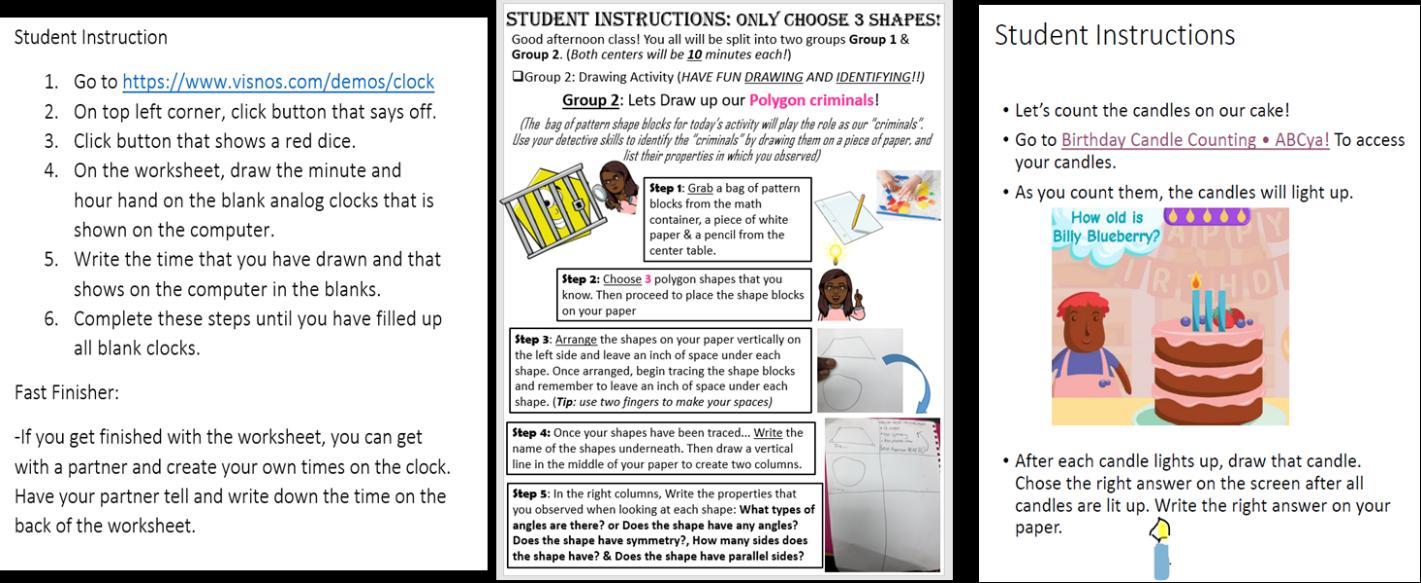
Figure 1. Examples of Skill, Theme, and Relevant Integration Levels
Only one PT had a task that showed an authentic level of integration. This candidate’s task was also the only one that used quantitative data. As seen in Figure 2, this candidate started with an open-ended situation relating to planning a movie day, which encouraged exploring elapsed time. They provided a link and printed schedule for real times and lengths of movies near students, and an open worksheet to log their plan.
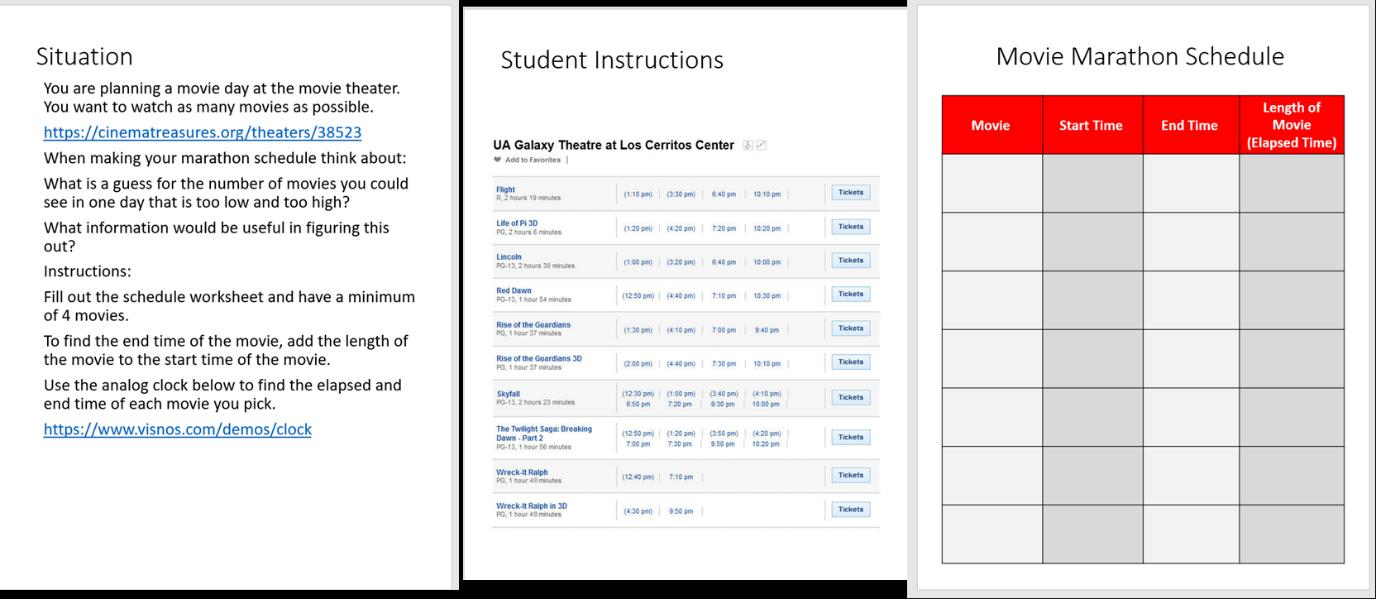
Figure 2. Example of Authentic Integration Level
Three themes emerge from PTs’ reflections (Part Three). First, PTs really liked the change of pace from traditional learning by engaging in tasks with a realworld connection.Those who eliminated the connection in their instructions often voiced regret in removing it when they saw how engaging the real-world connection was in their peers’ tasks. Second, non-numerical domains were harder to find a technology source that aligned with a real-world connection. Most PTs assigned domains such as geometry or measurement often noted this in their reflection. Third, some social connections that aligned to a specific domain were harder to align to the assigned grade level than others. Several PTs commented on how the mathematics in the raw data was either too hard or too easy for students in their grade level. For example, one PT reflected that they had justified cooking for their fraction activity, but when they actuallypulled up recipes there was not a large variety of unit fractions in the recipes. Instead, she changed the activity to just have pictures of different fruit and placed the unit fractions on the fruit.
After reviewing data relating to topics, modeling, digital resources, and PT reflections, the professor identified two interpretations from the findings that should impactrefinements to in-class activities and assignment instructions for year two. Features from year one that seemed to support modeling were the one PT who used quantitative data in their task. However, as there is only one data point, this should not be the only type of data allowed in year two. Based on this interpretation, refinements should be made to support PTs in finding and using quantitative data where appropriate.
Second, limited experience with modeling real-world social issues at a variety of grade levels may have impacted PTs abilityto scale the mathematics to align with their grade level and also to identify a single real-world social issue aligned with their mathematics domain. Based on this interpretation, refinements should be made to support PTs withmore examples of social issues and inherent mathematics within them, sample modeling tasks, and sample data scaling.
Year Two: Procedures, Resources, and Results
In order to support more real-world examples during year two, the course instructions included more in-depth explorations of real-world applications of mathematics for each mathematics domain. Interdisciplinary theory was introduced and PTs generated ideas for relationships between mathematics, the arts, science, social studies, and literacy in each mathematics domain. Social issues (Hammond, 2021) were alsointroducedwith specific teacher-provided examples of both justice and life connection mathematics tasks. For justice, PTs explored the Flint Water Crisis, exploring issues of sustainability for consumption of donated water bottles after the city of Flint’s water
source was contaminated. For life connection,PTs exploredthe price of gas for a self-designedroad tripusing Google maps, a gas-pricing-by-location website, and car website showing milesper gallonfor various vehicle models. In order to support more PTs using quantitative data, multiple websites with quantitative data were explored and PTs generated ideas to scale the data for different grade levels or mathematics objectives.
These changes in year two appear to have been at least partially associated with increasing the number of PTs who incorporated a real-world connection and higher levels of modeling integration modeling. Results from year two are found in Table 3 below.
As seen in Table 2, about a quarter of PTs (14 of 57) designed tasks with authentic connections.Most of these tasks containeda social justiceconnection utilizing quantitative data. Examples of social justice instructions at each level are found in Figure 3. The first example shows that while redlining is introduced, the actual math only uses this as a theme to identify lines and points in the shapes created by redlining. The second example shows the relevance of comparisonto compare the GDP of various countries,but only touches briefly on how this might affect life in the countries. The third example shows an authentic application of a social justice issue directly relevant to the third-grade students, as the data was collected from their school. Students are using it to justify the state of bullying and kindness in their school, and develop a plan based on the data. Other social justice topics, as seen in Table 4, focused on national issues of inequity relating to gender, race, and income as well as global environmental issues.
Table 3. Year 2 Integration by Digital Resources and Connection (N=57)
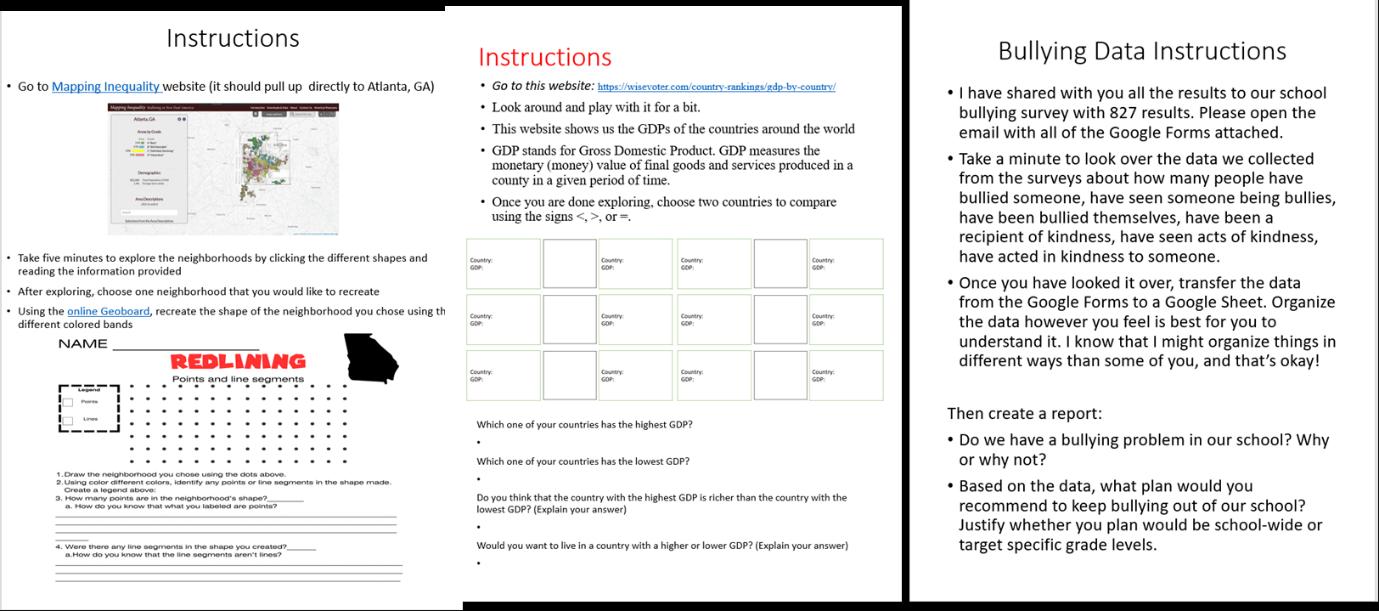
Figure 3. Examples of Social Justice Thematic, Relevant and Authentic Integration Levels
Table 4. Topics by Level of Integration and Connection
Integration Skill (N=) Theme (N=)
Relevant (N=)
Authentic (N=)
Life ConnectionTopics Exploring Money Animals City Features Cooking/Food Culture Money Plants Time Blankets Cooking Culture Fashion Shopping Nature Shopping Culture Road Trip Weather
Social Justice Topics
Redlining Suffrage Income Disparity Bullying Diversity Global Warming Income Disparity Pollution Populations Shelters
Two themes emerged from PTs’ reflections (Part Three) that aligned with themes one and three from year one. First, PTs and their students loved being exposed to those differentculturesas well as past and present justice issues. They also found that many of the activities address misconceptions they had about different
cultures or events. However, they did not always get as much time as they would like to fully explore both the social topic and the mathematics.
Second, PTs still reflected that certain mathematics domains were difficult to connect to a real-world situation, such as
geometry. PTs noted that the activities they tried out focusing on operations or comparisons were more likely to have a strong real-world connection. Other PTs noted that sometimes students ignored part of their task question that focused on the mathematics in situations where the mathematics connection seemed forced or did not fully align.
After reviewing data relating to topics, modeling, digital resources, and PT reflections, the professor identified two interpretations from the findings that should impactrefinements to in-class activities and assignmentinstructions for year three. First, PTs may need more support in conceptualizing what modeling in mathematics means. It was interesting to note that while all social justice topics were used with at least a thematic level of integration, social life topics were divided across all levels. PTs appeared to associate any exposure to social issues as authentically modeling them. Based on this interpretation, refinements should be made to help PTs understand different levels of modeling and when each may be used in a classroom.
Second, pre-assigning mathematics domains may have hindered PTs’ ability to find and make authentic connections
between the social issues and mathematics content. Based on this interpretation, refinements should be made to allow for more flexibility in PTs choice for sociomathematical connections.
Year Three: Procedures, Resources, and Results
In year three, the course instructions included information relating to specific purposes of integrationand shared examples of activities at each of the four levels. PTs evaluated the extent of the real-world connection for each integration level and how students were able to model their understanding of the real-world issues using mathematics. The assignment instruction dropped pre-assignedmathematics domains, in order to minimize forced topics. Instead the assignment asked PTs to develop a single question relating to a justice or life connection that could be answered using data from the technology or modeled using the technology. PTs were also required to create a sample mathematics model using the data to answer their question. In this way, the professor hoped to help PTs compare their model to the sample models explored in class. Results from year three are found in Tables 5 and 6 below.
Table 5. Year 3 Integration by Digital Resources and Connection (N=57)
Table 6. Topics by Level of Integration and Connection
Integration
Life Connection Topics
Animals
Food/Cooking
Flags/Culture
Holidays
Nature
Shopping Travel Money
Social Justice Topics
Food Insecurity
Population Inequities
Year Three changes appear to be associated with higher levels of integration and social connection, with every PT designing a task with at least a level two (Thematic) connection. While only about a quarter of PTs in year three designed a task where students authentically modeled a justiceor lifeconnectionusing mathematics, there were more PTs who had designed tasks with models at a relevant or authentic level for non-quantitative resources than the previous years.
Overall, reflections from year three repeated the theme of enjoyment found in years one and two. PTs appreciated knowing the informationwas real ratherthan made up
Blankets
Construction
Cooking/Food
Nature/Animals
Shopping Sports Time Zones
Weather
Commerce Inequities
Income Inequities
Budgets
Cooking Groceries
Languages Nutrition Travel
Scheduling
Organizing
Bullying
Clean Water Access
Graduation Equity
Holocaust
Poverty
by a textbook, and enjoyed learning something new in addition to the mathematics. An additional theme that emerged from about half the PTs was that they enjoyed seeing students think critically about different topics.
After reviewing data relating to topics, modeling, digital resources, and PT reflections, the professor identified two interpretations from the findings. First, having a focused question in year three and/or requiring PTs to create a model from their instructions may have supported these higher levels of modeling integration.
Second, allowing PTs to choose their own mathematicaldomain and topic also appears
to be associated with an increased variety of topics explored. Based on these interpretations, these refinements should continue to be used in future sociomathematical modeling assignments.
Conclusions and Recommendations
Results from the action research shows that changes to course assignments and resources were associated with increased levels of integration and authentic mathematical modeling for PTs. Based on these results, designing for authentic modeling mayrequire open-endedproblems, a deeper exploration or understanding of the inherent mathematics in social issues, using open-ended digital resources, and time to explore ideas.
Prospective teachers should start with an open-ended questionor problem that needs to be solved or explained and then create their own model to illustrate a potential answer. This aligns with many modeling research recommendations and definitions (e.g., Aguirre et al., 2024). Mathematics teacher educators who are considering having prospective teachers design a modeling task, or teachers who are designing a task for their own classroom, may want to have PTs considerthe question, “What do you want students to learn about or explore?” This can help guide the exploration to ensure focus on the relationship between mathematics and the social issue. Having PTs identify 2-3 potential models may also allow them to evaluate how open their modeling task is, though more researchis needed to see if this supports higher levels of modeling.
PTs benefit from a deep examination of the inherent mathematics already embedded within real world societal issues. The data from this study showed that social
justice connections may be more likely to model the issues for an authentic application of the mathematics while life connections may be more likely to situate the relevance. This alignswith researchshowing that social life issues build up respect or appreciation for relevant issueswhile socialjustice issues promote the critical examination inherent in authentic modeling tasks (Bhatnagar et al., 2024; McGovern et al., 2023; Zalli, 2024); However, as the data shows, social connections can be integrated at every level depending on how the PT organizes the task instructions. Mathematics educators may findthat takingtime toexplore and discuss a variety of issues and models can support PTs’ task design.
Mathematics teacher educators should encourage PTs to use open-ended resources, which allow for multiple interpretations rather than closed sites such as digital games that have a single point of reference and focused result or learning goal.Results from this studysupported other research that non-mathematical connections were limited or non-existent with digital games (Litster et al., 2020/2023a).
Mathematics educators should carefully consider how they structure time on the task so students do not get too distracted exploring the topic or skip importantaspectsof the task.This was noted as an important factor in several PTs’ reflectionsat the end of the project. Students may need more than one website or link to fully explore the topic or issue or need downloaded and consolidated data for a cleaner exploration of the data. Using questions and follow-up questions to ensure students are making connections between the mathematics and the social issue may also help reduce distractions.
GATEWAYS TO TEACHER EDUCATION
In conclusion, while there are limitations to this study such as the singleprofessor primary analysis and implementationof changes, thisstudy shows that prospective teachers can design tasks that support high levels of sociomathematical modeling. Engaging in these types of task-buildingexperiencesin teacher preparation courses may help increase their confidence in using these types of tasks in their future classrooms to support student cultural awareness and critical consciousness (Silitonga et al., 2024).
References
Aguirre, J. M., Turner, E. E., McVicar, E., McDuffie, A. R., Foote, M. Q., & Carll, E. (2024). Mathematizing the world: A routine to advance mathematizing in the elementary classroom. The Journal of Mathematical Behavior, 76, 101196.
https://doi.org/10.1016/j.jmathb.2024 .101196
Beard, E. (2021). Social justice mathematics: Supporting and encouraging teaching mathematics through a social justice lens. (Masters Thesis). Queen’s University, Kingston, ON, Canada.
Bhatnagar, R., Lloyd, R. A. M., Moore, L., & Hoffman, J. (2024). Divided by policy, united by resilience: Using transformative pedagogy to impact prospective teachers in all contexts. Education Policy Analysis Archives, 32(62).
https://doi.org/10.14507/epaa.32.843
0
Blatti, J. L. (2025). Action for Climate Empowerment through Art− Science, Community-Based Learning and Sustainability Outreach. Journal of Chemical Education, 102(11), 4747-4759.
Bliss, K. M., & Libertini, J. M. (2016). Using applications to motivate the learning of differential equations. In Advances in the Mathematical Sciences: Research from the 2015 Association for Women in Mathematics Symposium (pp. 359370). Springer International Publishing.
Felton-Koeslter,M. D., Simic-Muller, K., & Menéndez, J. M. (2017). Reflecting the world: A guide to incorporating equity in mathematics teacher education. Information Age Publishing.
Hammond, Z. (2021). Liberatory education: Integrating the science of learning and culturally responsive practice. American Educator, 45(2), 4.
Kaiser, G., & Sriraman, B. (2006). A global survey of international perspectives on modelling in mathematics education. ZDM-Mathematics Education, 38(3), 302-310.
Kolb, L. (2017). Learning first, technology second: The educator’s guide to designing authentic lessons. International Society for Technology in Education.
GATEWAYS TO TEACHER EDUCATION
Kretz, S. (2023). Education for good humans: Teaching early elementary school students about social justice. (Doctor of Philosophy thesis). University of California, Los Angeles, USA.
Litster, K., Reeder, R., Di Stefano, M., & MacDonald, B. L. (2018). Turn it around: Culturallyand Linguistically Responsive Teaching. Utah Mathematics Teacher, 11(FallWinter 2018-2019), 57-63.
Litster, K., Lommatsch, C. W., MoyerPackenham, P. S., Novak, J., Ashby, M. J., Roxburgh, A., & Bullock, P. (2020) The role of gender on the associations among children’s attitudes, mathematics knowledge, digital game use, perceptions of affordances, and achievement. International Journal of Science and MathematicsEducation,19(7), 14631483. DOI:10.1007/s10763-02010111-8
Litster, K., Lommatsch, C. W., & MoyerPackenham, P. S. (2023a). Finding, evaluating, and using digital math games to engage and enhance student learning. In R. E. Ferdig, R. Harshorne, E. Baumgartner,, R. Kaplan-Rakowski, & C. Mouze (Eds.)What PreK-12 Teachers Should Know about Educational Technology in 2023: A Research-toPractice Anthology (pp. 231-239). Association for the Advancement of Computing in Education (AACE).
Litster, K., Zambak, V. S., Watson, L. A., Woods, D. M., & King, M. (2023b). Exploring the purposes of interdisciplinary connections in preservice elementary teachers’ mathematics lessons. Kentucky Journal of Mathematics Teacher Educators, 1(2), 12-22.
McGovern, G., Pinetta, B. J., Montoro, J. M., Channey, J., Rosario-Ramos, E., & Rivas-Drake, D. (2023). Stretching towards social justice: A case study of transformative social and emotionallearning(SEL). Social and Emotional Learning: Research, Practice, and Policy, 2, 100018.
Pifarré, M., & Kleine Staarman, J. (2011). Wiki-supported collaborative learning in primary education: How a dialogic space is created for thinking together. Computer Supported Learning 6, 187–205. https://doi.org/10.1007/s11412-0119116-x
Saldaña, J. (2015). The coding manual for qualitative researchers. Thousand Oaks, CA: Sage.
Silitonga, B. N., Tamba, K. P., & Opit, G. (2024, November). Exploring Culturally Responsive Teaching in Online Learning Practices and Challenges among Pre-service Teachers. In Proceedings of the 7th International Conference on Learning Innovation and Quality Education (ICLIQE 2023) (Vol. 873, No. 25, pp. 10-2991). Springer Nature. https://doi.org/10.2991/9782-38476-301-6_4
GATEWAYS TO TEACHER EDUCATION
Suriel, R. L. & Litster, K. (2022). Exposing inequalities within teacher professional development and its impact on advancing equity, diversity,and social justice in STEM education. In Alberto J. Rodriguez and Regina L. Suriel (Eds.), Equity in STEM Education Research (pp. 105-124): Springer.
Suksawas, W., & Yiemkuntitavorn, S. (2022). Investigation of Teacher Support and Teacher Training during the COVID-19 Pandemic: Tools and Skills Moving the Classroom Forward. English Language Teaching, 15(1), 118-129.
Tashakkori, A., & Teddlie, C. (Eds.). (2010). Sage handbook of mixed methods in social & behavioral research (2nd ed.). Los Angeles, CA: Sage.
Thanheiser, E. & Sugimoto, A. (2020) Mathematics to understand and critique the world: Reconceiving mathematics in a mathematics content course for elementary school teachers, Investigations in Mathematics Learning, 12(3), 179193. DOI: 10.1080/19477503.2020.1768761
Xenofontos, C., Fraser, S., Priestley, A. & Priestley, M. (2021) Mathematics teachers and social justice: A systematic review of empirical studies, Oxford Review of Education, 47(2), 135-151, DOI: 10.1080/03054985.2020.18073
Zalli, E. (2024). Globalization and education:exploring the exchange of ideas, values, and traditions in promoting cultural understanding and global citizenship. InterdisciplinaryJournal of Research and Development, 11(1 S1), 55-55. Doi: 10.56345/ijrdv11n1s109
Embedding Special Education Content Across Early Childhood Methods Courses: An
Infusion Model for Inclusive Teacher Preparation
Katherine B. Green 1 and Jacqueline A. Towson 2
1 University of West Georgia
2 University of Central Florida
Abstract
As the number of students with disabilities included in general education classrooms increases, teacher preparation programs must equip early childhood educators with the skills necessaryfor inclusiveclassrooms. The purpose of this study was to evaluate an infusion model in which special education content was infused across early childhood methods courses within an undergraduate teacher preparation program at a large urban university in the southeastern United States. Thirty-nine early childhood teacher candidates completed pre- and posttests measuring beliefs, intended practices, and perceived skills related to inclusion. Independent-sample t-tests revealed significant pre-to-post differences on the GTBAP survey across all domains following participationin the infusion model. Findings suggest that embedding special education content across coursework, rather than relying on a single stand-alone course, may strengthen early childhood teacher candidates’readiness for inclusive classrooms. Implications for teacher
education program design, faculty collaboration, and implementation, as well as limitations, are discussed.
Introduction
Many general education teachers in 21st-century classrooms are responsible for teaching childrenwith disabilitiesfor at least part of the school day, as the majority of children with disabilities are taught in general education settings (National Center for Education Statistics, 2024). Moreover, the proportion of students with disabilities included in general education classrooms has steadily increased over time (National Center for Education Statistics, 2024).A common challenge among educators is that many feel underprepared to teach children with varyingabilities,particularlythosewith disabilities, upon graduating from their preservice programs (Fuchs et al., 2010; Stites et al., 2018). Further, teachers have reported being unclear about their role in inclusive practices (Stites et al., 2018). Thus, early childhood educators have requested practical, relevant preparation on inclusion
and guidance on teaching children with disabilities in the general education classroom (Chadwell et al., 2020; Lieber et al., 1998; Smith & Smith, 2000; Stites et al., 2018).
Teacher education programs have struggledfor many years to prepare teachers for inclusivesettings (Arnaiz-Sanchez et al., 2023; Forlin, 2010; Larios & Zetlin, 2023). Traditional education programs often lack adequate instructional strategies to help teacher candidates succeed in inclusive environments. (Allday et al., 2013; Harvey et al., 2010). Forlin (2010) mentioned several challenges for preparing teacher candidatesto teachin inclusivesettings.One challenge is that teacher education programs are often constrained by curricular requirements, reducing flexibility for programmatic expansion. If educational programs addcurriculafor the instruction of children with disabilities, this may result in the removal of required courses or the addition of new ones, neither of which may be feasible. Further, preparing teacher candidates for inclusion requires programs to focus on both theoretical and practical knowledge. Forlin noted that programs should not only focus on strategies and content knowledge for inclusivesettings,but also address teacher candidates’belief systems, values, ethical understandings, and moral principles related to inclusion. Alsarawi & Sukonthaman (2023) found teacher candidates’attitudes, knowledge, and self-efficacy regarding inclusive teaching practices are closely related and develop through intentional and targeted teacher preparationprograms.While Federal regulations require all educators to take one course on disabilities within the pre-service program, a one-off training or single class may not be enough to shift teacher candidates' preparedness and perceptions
regarding inclusion (Forlin, 2010; Stites et al., 2018).
Teacher Candidate Attitudes and Beliefs toward Inclusion
Exposure to inclusive instruction strategies alone is insufficient in the teacher preparation program. Not only must educators know how to teach children with disabilities, but they also benefit from information that helps shift attitudes and mindsets toward inclusive education (Vaz et al., 2015). Teacher candidates’attitudes toward inclusion are shaped during their preparation programs and may improve as candidates gain exposure to inclusive coursework and field experiences (Yu & Cho, 2022). With a curricular focus on inclusive education, teacher candidates’ attitudes toward inclusion can improve over the length of the program (Goddard & Evans, 2018; Ji-Ryun, 2011). Kim (2011) found that teacher candidates enrolled in combined or dual certification programs reported more positive attitudes toward inclusion, suggesting potential benefits of integrated preparation pathways. Thus, the type of certification the student seeks may influence their attitudes on inclusion. Notably, there was no significant difference in teacher candidates’attitudes regarding inclusion in either general education or the special education programs.
Teacher Preparation Infusion Interventions to Improve Teacher Preparedness
The literature clearly suggests a gap between educators’beliefs about inclusion and their preparedness to work in inclusive classrooms (Cameron & Cook, 2007; Cannon et al., 2012; Stites et al., 2018). In response to this gap, researchers have examined targeted intervention approaches
in teacher preparation programs to strengthenpreservice teachers’readiness for inclusive practice. For example, Cameron and Cook (2007) examined preservice teacher candidates’beliefs, practices, and skillsrelated to inclusionamong general and special education majors enrolled in an undergraduate infusion-based teacher preparation program. Participants included general education candidates pursuing early childhood, physical education, elementary, or secondary certification, and special education candidates pursuing mild/moderate or moderate/intensive certification. Using a modified version of the Teachers’Beliefs and Attitudes toward Planning for Mainstreamed Students survey (G-TBAP; Schumm et al.,1994), the authors found that while teacher candidates reported strong beliefs in support of inclusion, they felt less prepared to implement instructional adaptations for students with intellectual disabilitiesin general education classrooms.
In a study similar to Cameron and Cook (2007), Cannon and colleagues (2012) evaluated an infusion model for middle and secondary general education teacher candidates using the G-TBAPsurvey. The teacher candidates in Cannon and colleagues’study completed both an introduction to special education course and received a seriesof guest lectures during the middle and secondary general education preservice teacher practicum courses. Cannon and colleagues found significant differences between students who received the inclusion infusion and those who did not in teacher candidates' beliefs, intended practices, and skills related to inclusion.
However, gaps in preparedness for inclusive practice are not limited to preserviceteachers. Schumm and colleagues (1994) found persistent gaps in general education teachers’beliefs, practices, and
skillsrelated to inclusion, even among more experienced educators, using the Teachers’ Beliefs andAttitudes toward Planning for Mainstreamed Students (TBAP) instrument. Similarly,Wilson (2014) reported that while secondary teachers expressed generally positive attitudes toward inclusion on quantitative measures, qualitative findings revealed ongoing concerns, particularly related to limited school leadership support for inclusive practices. Together, these findings suggest thatinsufficientpreparation for inclusive teaching may persist beyond initial certification, underscoring the importance of addressing beliefs, practices, and skills early within teacher preparation programs.
While studies exist on infusion models inteacher preparationprograms with middle and high school teacher candidates, there is a paucity of research regarding the infusion of special education topics into preservice early childhood education programs. The purpose of the current study was to determine the effects of the infusion model on early childhood teacher candidates’attitudes and abilities to include children with disabilities in the early childhood classroom. The current study was designed to evaluate the effectiveness of a two-year infusion model used to prepare early childhood pre-service educators, enrolled at an urban public university in the southeast, to work with students with exceptionalities using the G-TBAPsurvey (Cannon et al., 2012). Three research questions were investigated for the current study: 1) How do the beliefs of early childhood teacher candidates change as a resultof a special education infusion model, 2) How do the intended practices of early childhood teacher candidates change as a resultof a special education infusion model, 3) How do the perceived current skills of early childhood teacher candidates change
GATEWAYS TO TEACHER EDUCATION
as a result of a special education infusion model?
Methods
Participants
The participants of the current study included 39 undergraduate early childhood education majors. Of the 39 participants, 36 (93%) identified as females, and three (7%) identified as males.All students enrolled in the classes agreed to participate in the study and signed their IRB consent forms.All participants received the intervention (i.e., the special education infusion model).
Setting
The study was conducted at a large, research-intensive urban university in the southeastern United States and spanned participants’junior and senior years in the early childhood education program. ParticipantsreceivedIRB consent forms and completed the pretest during their Introduction to Special Education course. The infusion model intervention was then implementedacrossselected sessions within their content-area methods courses, including science, social studies, language arts, and mathematics. All instructional sessions were delivered face-to-face.
Materials
All intervention materials were developed by the study's first author. Instructionwas deliveredface-to-face, using multiple modalities, including slide presentations, hands-on activities, video clips, and hard-copy instructional materials.
Dependent Variable
The dependent variable was a survey comprising 30 five-point Likert-scale
questions, administered as both pre- and post-assessment. The survey used in this study was the General Education Teachers’ Beliefs andAttitudes toward Planning for Mainstreamed Students (G-TBAP), an adaptation of the original TBAPinstrument developed by Schumm et al. (1994) and modified for preservice teachers by Cannon et al. (2012). The G-TBAPmeasures general education teacher candidates' self-perceived beliefs,intendedpractices,and current skills relatedto includingstudents with disabilities in generaleducationsettings.Each statement on the survey was addressed using a Likerttype scale for each statement (1=Strongly Disagree; 5=StronglyAgree).
Cannon and colleagues modified the original TBAPinstrument in two distinct ways to betteralignwith teacher preparation contexts: 1) the survey asked about the teacher candidates intended practices, rather than current practices (see Cameron & Cook, 2007); 2) each item was modified to read, “included students with special needs” rather than specific disabilities, as the students were learning about all disability categories, rather than only one or two.
The paper-and-pencil survey consisted of 30 questions and took approximately 15 minutes to administer and complete. Participants were read scripted directions prior to administration. The survey asked 10 questions about teacher candidates' current beliefs regarding having children with disabilities in their general education classrooms. The following 10 questions focused on intended practices, asking how teacher candidates will modify and differentiate curriculum and instruction for children with disabilities in their general education classroom. The final 10 questions focused on teacher candidates’current skills in differentiating and modifying curriculum
and instruction for children with disabilities in their general education classrooms.
Independent Variable
The independent variable was the infusion model: 20 instructional hours across seven special education topics, infused into the required traditional early childhood methods class sessions over three semesters. The researcher who provided the infusion topics (i.e., first author) was a university clinical instructor at the time of the study. The special education topics were infused into the methods courses of the required early childhood coursework: mathematics, literacy, social studies, and science methods. Each semester, the instructor co-planned with early childhood course instructors to determine which class sessions would incorporate topics into their syllabi. The characteristics of many disabilities were discussed alongside the following topics: 1) differentiating instruction, 2) accommodations and modifications, 3) inclusion, 4) co-teaching, 5) multi-tiered levels of support, 6) classroom management, and 7) curriculumbased measures.
Example Infusion Model Activities
Special education topics were selected for their relevance to specific early childhood methods courses, and co-teaching models were used whenever possible to support the integration of content. For example, characteristics of students with emotional disturbance were addressed within the classroommanagementcourse for early childhood majors. During this session, instructorsalternatedbetween team teaching and a one–teacher, one–assist model to illustrate inclusive behavior support strategies.
In the social studies methods course, the special education instructor infused instruction on accommodations and modificationsrelatedto vision impairments. The early childhood and special education instructorsco-taught a three-hour session on civil rights and the use of book clubs in the early childhood classroom.Access for individuals with disabilities as a civil right was emphasized, along with specific accommodations and modifications for children with vision and hearing impairments during book club activities.
Athird example occurred in the mathematics methods course, where differentiating instruction for students with learning disabilities was infused into a class session. The early childhood instructor of record and the special education instructor collaborated to design five math stations. The instructor of record facilitated one station; the special education instructor facilitated a second; and three stations were completed independently.At the conclusion of the session, teacher candidates practiced differentiating a math station activity for students with dyscalculia (see Table 1).
Procedure
All participants completed an Introduction to Special Education course during their first semester in the early childhood education program, the only required special education course. Within the first two weeks, a research assistant introduced the study’s purpose and procedures. The research assistant then asked the participantsto considersigningthe IRB consent form.All students signed the IRB consent form. Next, all participants received a hard copy of the pretest (e.g., GTBAP survey) during the same class session. The G-TBAP measured the self-perceived beliefs, attitudes, and abilities of general
education pre-service educators working with individuals with disabilities in an inclusive classroom (Cannon et al., 2012). The surveys were presented in hard copy (i.e., paper-and-pencil).
The intervention consisted of 20 hours of special education content infused into participants’required,face-to-face early childhood methods courses, including language arts, science, mathematics, and social studies. Special education instruction was delivered by the first author and embedded across seven topic areas over three semesters.Instructionaldeliveryvaried based on co-planning decisions between the special education instructor and the course instructor of record. At the end of the final semester, immediately before participants’ student teaching internships, all participants completed the G-TBAPsurvey as a postassessment.
Research Design / DataAnalysis
Independent t-tests were conducted to compare pre- to posttest results using SPSS for Windows, Version 30.0 (IBM, 2024).Analyses were conducted for each 10-item subscale (construct).
Results
To analyze the results of the current study, the researchers conducted independent-samples t-tests on the pre- and post-G-TBAPsurveys. The surveys were analyzed by section, with each section consistingof 10 items(3 sections total). The questions measured teacher candidates’ beliefs about including children with disabilities in the general education classroom (10 items), their intended practices for teaching students with disabilities in the general education classroom(10 items),and theircurrent skills
(10 items) for including children with disabilities in the general education classroom. Composite scores were calculated for each subsection.
Prior to conducting the analyses, the assumptions for the independent samples ttest were examined and met. The dependent variables (beliefs, intended practices, and perceived skills) were treated as continuous variables derived from composite Likertscale scores. Normality of the distributions were examined and considered acceptable given the sample sizes in each group. Homogeneity of variance was assessed using Levene’s test. The alpha level was set at .05. The results revealed significant differences between groups in each subsection (see Table 2 and Figure 1).
The first research question investigated how the beliefs of early childhood teacher candidates change as a resultof a special education infusion model. The participants answered 10 belief statements on the 5-point Likert-scale GTBAP survey, pre-intervention, and postintervention.An independent-samples t-test was conducted to compare pre- and posttest scores, with anAlpha level set at .05. The results indicated a significant increase in beliefs from pretest (M = 4.13, SD = 0.56) to the posttest (M = 4.6, SD = 0.37), t(76) = -4.35, p < .001, d = 0.98. The resultsof these analyses are presented in Table 2.
The second research question investigated how the intended practices of early childhood teacher candidates change as a result of a special education infusion model. The participants answered 10 questions about intendedpracticestatements on the 5-point Likert-scale G-TBAPsurvey pre-intervention and post-intervention.An independent-samplest-testwas conducted to compare the pretest and posttest, with an
Alpha level set at .05. The results revealed a significant increase from the pretest (M = 4.21, SD = 0.63) to the posttest M = 4.70, SD = 0.42 t(76) = -4.05, p < .001, d = 0.92. The results of these analyses are presented in Table 2.
The third research question investigatedhow the current perceived skills of Early Childhood teacher candidates change as a result of a special education infusion model. The participants answered 10 skill statements on the 5-point Likertscale G-TBAPsurvey, pre-intervention, and post-intervention.An independent-samples t-test was conducted to compare the pretest and posttest, with an Alpha level set at .05. The results revealed a significant increase from the pretest (M = 2.66, SD = 1.05) to the posttest M = 3.79, SD = 0.66 t(76) =5.68, p < .001, d = 1.29. The results of these analyses are presented in Table 2.
Discussion
The purpose of the current study was to determine the effects of a special education infusionmodel on early childhood teacher candidates’beliefs, intended practices, and current skills. The findings suggested that all areas significantly improved frompretest to posttest. Thus, it is possible that a targetedinterventionfor early childhood teacher candidates on inclusive practices for students with disabilities may improve their self-reported beliefs, intended practices, and current skills.
Research question one examined early childhood teacher candidates’beliefs about inclusion by analyzing pre- and postdata on the first 10 questions. On a Likert Scale of one being “strongly disagree” to five being “strongly agree,” participants reported a mean of 4.13 at the pretest and 4.6 at the conclusion of the intervention.
Thus, the teacher candidates showed a significant increase in their self-reported beliefs that materials, content, and pacing should be adapted for children with disabilities in general education inclusion classrooms.
Research question two examined the following 10 questions about “will” statements and their intended practices regarding the inclusion of children with disabilities. The teacher candidates selfreported a mean of 4.21 on the pretest and 4.73 on the posttest at the end of the intervention. This section had the highest pre- and post-scores. These results demonstrated that the teacher candidates plan to adapt course content and testing, adjust pacing, monitorprogress, and provide individualizedinstruction. It was interesting that the intended practices were rated slightly higher than the belief statements on both the pre- and posttests.Although the participants may not have as strong a belief in accommodatingstudentswith disabilities, they plan to provide appropriate instruction and practices in the future.
Research question three examined the final 10 questions on teacher candidates’ current skill level in including children with disabilitiesinthe early childhoodclassroom. Not surprisingly, this was the section on which the participantsscored lowest on both the pre- (2.66) and posttest (3.81). This area alsoshowed the most growth,indicatingthat the intervention was appropriate and effective. It is important to note, however, that research questions one and two may have had a ceiling effect, as the survey used a Likert-typescale witha maximumscore of five (strongly agree).
Teacher candidates need to be prepared to teach students of all abilities in the classroom, as the inclusion of students
with disabilities is increasing (National Center for Education Statistics, 2024). It has been noted that teacher candidatesin general education fields may have reservations about inclusion (Boling, 2007; Chadwell et al., 2020; McHatton & McCray, 2007). This could be due to the lack of training in teacher preparation programs, particularly programs that offer only one mandated course in inclusion and special education, with no infusion or follow-up content. Cameron and Cook (2007) emphasized that teacher preparation programs can mitigate these concerns by intentionally providing instruction in inclusive instructional strategiesthathelp teacher candidatesensure all students’access to the general education curriculum. The findings of the current study support this perspective.After participating in the infusion model, early childhood teacher candidates reported significantly stronger beliefs about inclusion, increased intended use of inclusive practices, and high self-reported skill levels for working with students with disabilities. These findings suggest that a multi-semester infusion model of exposing students to inclusive instructional strategies embedded in coursework may increase candidates’preparedness for inclusive teaching, as suggested by Cameron and Cook (2007) and Cannon and colleagues (2012).
The current study had limitations. The study was conducted at one university in the Southeast region. Thus, these results may not be generalizable. Additionally, participation in the study was voluntary, which could have introduced self-selection bias. There was no comparisongroup for the current study; therefore, the results may indicatea maturation effect. The researchers were unable to accurately match the 39 candidates’pretest to their posttest due to the confidentiality of the surveys; therefore,
while all pre-and posttest scores were entered into SPSS, the participants’data were unmatched, meaning we are unsure how each individual participant’s scores changed over the course of the intervention. Finally, the survey was a self-perception, self-report survey. Thus, there was no observationof the candidates to determine if their skill level in the field improved. Additionally, reliability and construct validity for the G-TBAPsurvey were not reestablished within the present study, which should be considered when interpreting the findings.
In future studies, it would be interestingto disaggregatethe survey data to determine which areas the undergraduates require additional skills. The instructors could then target future instruction toward those skill areas.Additionally, it would be compelling to compare the current study’s infusion model with other teacher candidate programs in a comparative group study. A focus group or interview would provide social validity and the teacher candidates' perspectives on how they felt about the infused course and how the instruction and delivery could be improved.
Implications for Teacher Education Programs
The findings of this study offer several implications for teacher education programs seeking to strengthen teacher candidates’preparation for inclusive practices. Notably, the infusion model was implemented without increasing credit-hour requirements by infusing special education content within existing methods courses. In addition to completing the required introduction to special education course, teacher candidates received sustained, integrated instruction in inclusive practices
throughout their final two years in the program.
Second, this model highlights the importance of intentional and modeled collaboration between general and special education faculty. Each infused lesson was co-planned and, in many cases, co-taught within the early childhood methods courses. This collaborative approach allowed teacher candidates to apply what they learned to authentic instructional assignments that reflected the realities of inclusive classrooms. Teacher education programs may consider adopting this interdisciplinary, collaborative approach as a part of intentional program design.
Finally,embeddingthe content in the methods courses provided teacher candidates with hands-on, practiceembedded opportunities to develop their skills and confidence in inclusive teaching. Having the special educator present as a coteacher created natural opportunities for dialogue, modeling, and guided practice related to differentiation, accommodations, and instructional adaptations.
In conclusion, participants achieved significant gains in all areas of their selfreported beliefs, intended practices, and current skill levels in educating and including children with disabilities within the general education classroom. Similar to Goddard and Evans (2018), teacher candidates' attitudes may be strengthened throughout their program as they receive specialized education information. The findings of the current study suggest that embedding special education content across coursework can strengthen early childhood educators’self-reportedbeliefs,instructional planning, and practical skills for including children with disabilities in the general education classroom.
References
Alsarawi,A., & Sukonthaman, R. (2023). Preservice teachers’attitudes, knowledge, and self-efficacy of inclusive teaching practices. International Journal of Disability, Development and Education, 70(5), 705-721.
Allday, R.A., Neilsen-Gatti, S., & Hudson, T. M. (2013). Preparation for inclusion in teacher education preservice curricula. Teacher Education and Special Education, 36(4), 298–311.
Arnaiz-Sánchez, P., De Haro-Rodríguez, R., Caballero, C. M., & MartínezAbellán, R. (2023). Barriers to educational inclusion in initial teacher training. Societies, 13(2), 31.
Boling, E. (2007). "Yeah, but I still don't want to deal with it.” Changes in a teacher candidate's conceptions of inclusion. Teaching Education, 18, 217–231.
Cameron, D. L., & Cook, B. G. (2007). Attitudes of pre-service teachers enrolled in an infusion preparation program regarding planning and accommodations for included students with mental retardation. Education and Training in Developmental Disabilities, 42, 353363.
GATEWAYS TO TEACHER EDUCATION
Cannon, J. E., Swoszowski, N. C., Gallagher, P., & Easterbrooks, S. R. (2012). AProgram Evaluation of an Inclusive Model for Training PreService General Education Teachers to Work with Students with Special Needs. Journal of the American Academy of Special Education Professionals, 34, 46.
Chadwell, M.R., Roberts,A. M., & Daro,A. M. (2020). Ready to teach all children?Unpacking early childhood educators’feelings of preparedness for working with children with disabilities. Early Education and Development, 31(1), 100–112.
Forlin, C. (2010). Teacher education reform for enhancing teachers’preparedness for inclusion. InternationalJournalof Inclusive Education, 14, 649–653.
Fuchs, D., Fuchs, L. S., & Stecker, P. M. (2010). The “blurring” of special education in a new continuum of general education placements and services. Exceptional Children, 76(3), 301–323.
Goddard, C., & Evans, D. (2018). Primary pre-service teachers’attitudes towards inclusion across the training years.Australian Journal of Teacher Education, 43, 122–142.
Harvey, M. W.,Yssel, N., Bauserman, A. D., & Merbler, J. B. (2010). Preservice teacher preparation for inclusion: An exploration of higher education teacher-training institutions. Remedial and Special Education, 31(1), 24–33.
IBM Corp. (2024). IBM SPSS Statistics for Windows, Version 30.0.Armonk, NY: IBM Corp.
Kim, J. R. (2011). Influence of teacher preparation programmes on preservice teachers’attitudes toward inclusion. International Journal of InclusiveEducation, 15(3), 355–377.
Larios, R. J., & Zetlin,A. (2023). Challenges to preparing teachers to instruct all students in inclusive classrooms. Teaching and Teacher Education, 121, 103945.
Lieber, J., Capell, K., Sandall, S. R., Wolfberg, P., Horn, E., & Beckman, P. (1998). Inclusive preschool programs: Teachers' beliefs and practices. Early Childhood Research Quarterly, 13(1), 87–105.
McHatton, P.A., & McCray, E. D. (2007). Inclination toward Inclusion: Perceptions of elementary and secondary education teacher candidates. Action in Teacher Education, 29, 25–32.
National Center for Education Statistics. (2024). Students with Disabilities. U.S. Department of Education, Institute of Education Sciences. Retrieved May 30, 2024, from https://nces.ed.gov/programs/coe/ind icator/cgg.
Schumm, J. S., Vaughn, S., Gordon, J., & Rothlein, L. (1994). General education teachers' beliefs, skills, and practices in planning for mainstreamed students with learning disabilities. Teacher Education and Special Education, 17(1), 22–37.
Smith, M. K., & Smith, K. E. (2000). “I believe in inclusion, but…”: Regular education early childhood teachers' perceptions of successful inclusion. Journal of Research in Childhood Education, 14(2), 161–180.
Stites, M. L., Rakes, C. R., Noggle,A. K., & Shah, S. (2018). Preservice teacher perceptions of preparedness to teach in inclusive settings as an indicator of teacher preparation program effectiveness. Discourse and Communication for Sustainable Education, 9(2), 21-39.
https://doi.org/10.2478/dcse-20180015
Vaz, S., Wilson, N., Falkmer, M., Sim,A., Scott, M., Cordier, R., & Falkmer, T. (2015). Factors associated with primary school teachers’attitudes towards the inclusion of students with disabilities. PLOS ONE, 10(8), e0137002.
Yu, S., & Cho, E. (2022). Preservice teachers’attitudes toward inclusion in early childhood classrooms: A review of the literature. Early Childhood Education Journal, 50(4), 687-698.
Table 1
Alignment of Early Childhood Methods Courses and Infused Special Education Topics
Course Infused Special Education Topic(s)
Classroom Management Characteristics of students with emotional or interfering behaviors: implications for behavior support and classroom management
Social Studies Methods Accommodationsand modifications related to vision impairments; access for individuals with disabilities as a civil right; inclusive instructional practices during book clubs, including supports for students with vision and hearing impairments
Mathematics Methods Differentiated instruction for students with learning disabilities; instructionaladaptations for students with dyscalculia using math stations
Language Arts
Methods Differentiation, accommodations, and instructional adaptations for students with disabilities embedded within literacy instruction
Science Methods Differentiation and inclusive instructional strategies to support students with disabilities during inquiry-based science activities
Note. Special education topics were infused into content-area methods courses based on instructional relevance and course objectives.
Table 2
Independent Samples t-Test Results Comparing Groups on Beliefs, Intended Practices, and Skills Variable
Figure 1
Mean Scores for Beliefs, Intended Practices, and Perceived Skills
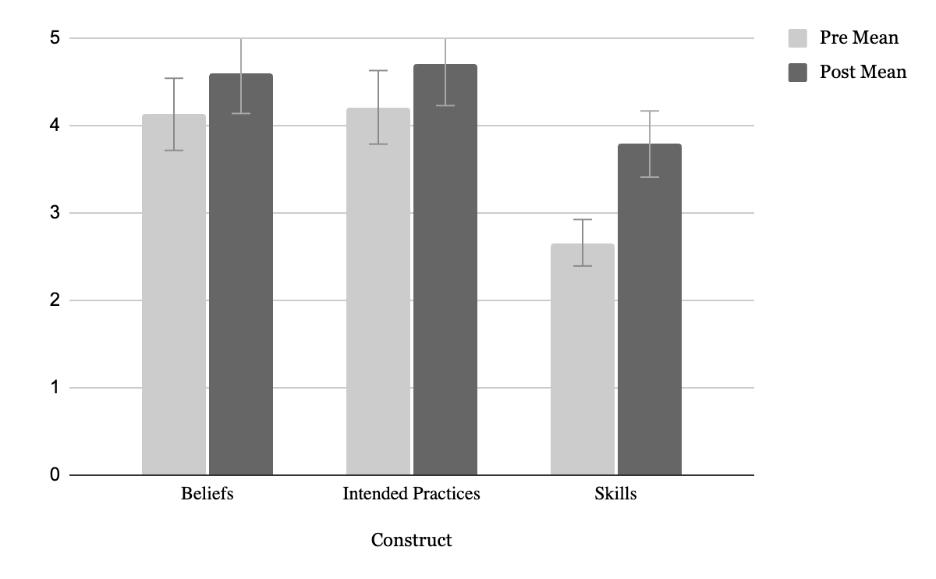
GATE 2026 Keynote Address Beyond Pedagogy: What Pre-Service Teachers May Need the Most
Rob Sumowski
February 19, 2026
Introduction
Drs. Ramsay-Jordan, Jackson, Parker, Good, and members of the Georgia Association of Teacher Educators, I am honored to have been invited to address the 2026 GATE Conference.
Thank you and Good Morning!
When people ask me what I do for a living and they learn I am a college professor, their first response is to ask me what I teach. When I answer that I am in the field of education, they sometimes look confused until I clarify, “I teach teachers how to teach.” They then typically offer condolences before noting how important my role is for the greater good of society.
But what reallydoes it mean to teach teachers? There is a lot of acreage in our field. Are we talking about disseminating facts? Sharing pedagogy? Writing lesson plans? Teaching content delivery?
An Inauspicious Beginning
I became a teacher in January 1990 in no smallpart thanks to the Grateful Dead. After finishing undergraduate degrees in music and psychology in June 1989, I quickly learned neither made me employable in any field other than those
generic professions whose job descriptions began with the phrase requires a four-year degree. So I took a job making sandwiches in a deli at the corner of Third and Cherry streets in downtown Macon. This is where I learned how folks who didn’t go to college lived. I learned a lot about life working in a kitchen.Every collegegraduate should be so fortunate as to gain the perspective of working in food service, on a landscape crew, under a house, or on a roof after graduation. It teaches humility. It teaches what my father called a hard day’s work.
At the time, I figured working in a kitchen was as good a job as any being that my mom had just cut me off in the funding department with rent due in two weeks. And being a musician, I could also continue to raise funds moonlighting on occasion with the Macon Symphony Orchestra. Between these two minimum-wagejobs deli worker and trained symphonic musician I was able to pay the rent.
That October, I was offered tickets to see the Grateful Dead play two nights in Charlotte. I wasn’t a Deadhead and didn’t really know many of their songs, but I was definitely up for a new experience, so I accepted the tickets. Now I had to figure out how to get away with missing a couple of days of work in a job I had just begun. Like any red-bloodedAmerican kid presented
with such a dilemma,I liedto my employers and told them I would be playing with the Macon Symphony in Charlotte. This excuse worked, and I got the days off.
Anyway, after two Dead shows and a weekend for the ages, I returned to work to learn that while I had been away, one of our customers asked the lady who worked the cash register where the kid who made her sandwich every day was. My coworker explained that I had a psychology degree from Mercer and was away playing with the symphony. The customer,who worked at the Board of Education, told her that my psych degree might make me eligible to teach kids with behavior disorders. She left her business card. I laughed, stuffed the card in the pocket of my apron, and went back to cutting up chickens. I called the customer the next day.
Afew weeks later, I was the 8th Grade self-contained Behavior Disorders teacher at Miller Middle School.
When I interviewed with the principal, who discovered we were both drummers, he pulled out a pair of drumsticks, and we played paradiddles togetheron the top of his desk.At the end of this rhythmic conversation, he told me I had gotten the job and could start as soon as my provisional certificate paperwork came through.
This obviously was a master class in how to hire quality teachers, right? The only problem was that I didn’t know jack about being a teacher.
As I was leaving the principal’s office the Friday before the Monday I was set to begin, I asked him if he might at least lend me some textbooks. He turned to the secretary, told her to get me a set of books,
and I went home and crammed 8th grade over the weekend. On a cold Monday morning in January 1990, I would open those books and start each academic subject on Page 1. Made sense to me.
As if one could not see this train wreck coming, my first day as a teacher was an epic disaster. On my caseload were 12 boys, most of whom were taller than me. They didn’t look like me, either. I was only five years older than my oldest student a 16-year-old 8th grader. These guys were some real characters. Five minutes into instruction the penis jokes started, and things went downhill from there.
I remember repeating over and over in my head, “These guys are jerks, but do not quit. Do. Not. Quit. Make it to lunch, then quit.” By lunch, I talked myself into staying the rest of the day. That’s when I would go up to the office to submit my resignation. I wasn’t even going to ask for a paycheck. I figured I’d donate that day’s work for the good of duty and humanity and move on with mylife. By the end of the day, I challenged myself to make it to the end of the week. By the end of the week, I had fallen in love with the kids and decided to finish out the year.
How did this happen? Because while talking to each kid one-on-one, I realized that beneath the tough guy facades (shields, really), there was something cool inside each kid. This kid liked Michael Jordan…I was born in Chicago, so I could relate to that.And this other kid was a heck of an artist.This dude liked Batman. Then this kid over here was witty and philosophical.As I began to see them as individuals, I realized that I had already begun to develop relationships with each.
There are plenty of takeaways from this experience: The most obvious is that I had no business being in a classroom. I was woefully unprepared. I was a special education teacher who didn’t yet know what an IEPwas. Knowing what I know now, I shake my head at how careless it was to put somebody like me in front of students real live breathing students and then close the door. God only knows how many ways that situation could have gone sideways.
The pre-service teachers we produce in teacher education preparation programs today are infinitelybetterpreparedtogo into the classroom than I ever was.
There is also a flip side to my story in that though I was not prepared formally in any way I somehow still was successful in the classroom despite that lack of formal preparation. And this was not because I was extraordinary by any means. I graduated with a 2.96 GPA, and some of my Cs might as well have arrived either with sympathy cards or in boxes wrapped with bows, because they clearly were gifts.
Let’s think about it: What might the success of someone with no formal teacher preparationtell us? Maybe there’smore than one way to become a good teacher. Maybe schools of education aren’t the only viable path. Perhaps at the end of the day all roads lead to Rome.
My Purpose Today
This morning, I have no desire to discuss traditional educator preparation pedagogy. As will be evident over the next couple of days, there are far greater minds than mine in this room who are capable of presenting best practices in delivering instruction. I’m not here to discuss the science of teachingstudents.Instead,I’d like
to discuss the art of reaching students. This is the other half of what we do or perhaps should be doing when we educate preservice teachers. I’m talking about the intangible role we faculty play in our students’lives.
In my view, the art of reaching students involves empowering pre-service teachers to impact their own students way beyond the delivery of instruction. I have come to believe that reaching kids is infinitely more important than the academic content we teach. Please don’t misunderstand me: I fully recognize and respect the essential value inherent in pedagogical research. My point is that there maybe a whole lot more to consider. For the next few minutes, I ask that you lay aside the mechanics of teaching and consider the possibilitythatthe most important things we faculty teach pre-service teachers may have nothing to do with academics, lesson delivery, curricula, or pedagogy.
Building and Nurturing Relationships
Think back to the teachers of your youth.Who impacted you and how? And did that impact have anything to do with academic content? Or did it have to do with the way that teacher made you feel as a human being?
Over the course of my 35 years in our field firstlearning to be a teacher, then observing teachers, supervising teachers, and eventually teaching them I have concluded that the best teachers are those who build relationships with other people. They see every kid as a human worthy of investing their time, and then they start building bridges to each one. They take the time to learn the interests, personalities, culture, and family dynamics of the kids they teach. This part must happen first if we
are ever to address the unique learningneeds of the kids sitting before us.
Building CommunityAmong the Class Nobody Wanted to Teach
The class I inherited during my firstyear teaching had already run off a teacher before I showed up in mid-January. I knew her name was Miss Collins only because the students told me 50 times that first morning that they wanted her to come back.At a certainpoint, I startedmuttering, “Yeah? Me too.”
In the years since, I have asked myselfhow I managed to build relationships among this tough group.
The truth is I just lucked out and it no doubt was beginner’s luck. Just dumb luck. I accidentallygot the littlethings right, starting with building trust. Because I didn’t know what I didn’t know about classroom management, I just tried stuff until I found solutions that worked.
One thing I knew for sure is that my students were the most misunderstood group of kids in the school. Yes, they had behavior disorders and trouble regulating their emotions at times, however they weren’t the sociopathsothers assumedthem to be. These were great kids that other teachers must not have taken the time to get to reallyknow.All they needed was an advocate. Heck, I could advocate. I actually got mad on their behalf when I saw other adults write them off as ineducable. I was their teacher, dammit, and an offense against them was an offense against me. I was 21, bullet-proof,and ready to stand up toanybody. That’s the moment it became us my students and me against the world.
If a kid was self-conscious about doing a math problem on the board in front of the class, I’d let him first do it for me at my desk until he got it right, then I’d send him to the board todemonstrateit publicly. I tried to avoid holding kids up to ridicule. I learned from TerryAlderman that if we teachers don’t allow a student to save face, he will save his own.
My kids’biggest fear was being outed as special ed students when leaving my trailerbetweenclasses. They didn’t want to be stigmatized. So we adjusted the time theyleft my classroomso that they wouldn’t run into their general ed peers. Problem averted.
My students had ants-in-your-pants levels of ADHD. So when lunchtime arrived and they needed to expend energy, I’d race my kids from our trailer across the parking lot and into the lunchroom in the main building, laughing together the whole way. My class could sprint, and other teachers finally quit yelling at them to slow down once they saw me leading the pack, just as guilty as the rest. I imagine there was some head-shakingamongmy new colleagues,but the important thing was my students had begun to trust me.
When my kids were stir-crazy and couldnot calm down on Friday afternoons, I found a way to use their nervous energy for my desired result, which was peace and quiet. So I created a quiet contest complete with a homemade professional wrestling World Heavyweight Champion of Quiet belt. What kid doesn’t want to hold the championship belt over his head every week? These kids would almost kill themselves trying to keep their lips zipped without gigglingfor the last hour of class on Fridays. It became their favorite activity of the week. The weekly winner received the
ice cream of their choice on me the following Monday. To date, it remains the best 50 cents I have ever spent. On anything.
We read together. We did math together.We watched science films together. We had heart-to-heart conversations about growing up in their neighborhoods. We even painted our classroom together because nobody cares if you paint the walls in a trailer.
I’d sit cross-legged on top of the desk with an open book, and we’d take turns reading aloud. If a kid reached a word he couldn’t pronounce, I’d ask, “Who wants to help him out?” and whoever said the word first received a bonus point for helping a friend in need. Without really knowing what we were doing, we createda culturewhere it was cool and rewarding to open doors for adults, get quiet when the intercom buzzed, and to say, “Yes, ma’am” and “Thank you” to the cafeteria workers who made our meals. People across the building began to realize that my kids could actually be charming.
One day, Miller cafeteria manager Mrs. Mary Twilley came to me and said gently, “Rob, I need to let you know that your tall kid has been sneaking into the side door of the kitchen to steal cinnamon rolls from the baking rack every morning.” I wasn’t a fan of stealing, so I set up my own sting operation. I busted him red-handed. When I took him aside afterward to ask him what in the world he was thinking, he looked at me with tears in his eyes and confided, “Mr. S, I wasn’t thinking. I was hungry. This is where I eat.” I tore the office referral in half. Of course, he was hungry. The real question should have been What was I thinking?
I sure blew that one, and I felt about six inches tall.All I had proven was how littleI had invested in getting to know about the home lives of my kids. Have I mentioned that our profession can humble a person? That opened yet another project for me to get to work trying to understand.You get the point.
Not every day in trailer Room 276 was grave. We shared far more joy than tears. In all candor, my kids were not the sole beneficiaries of this student-teacher relationship. I confess that on occasion I totallycapitalizedon our connection when it came time for teacher observations. I’d figure out which week the principal would be observing the teachers in the trailers, and I would tell my class about his visit in advance. I also took the liberty to adjust the reason for the principal’s pending visit. I told the class I was so proud of their progress that I had personally invited the principal to come see how smart my kids were. That’s when one student looked up at me and asked, “He really wants to come see us?” They weren’t used to being wanted. “Oh yeah,” I said. “I have been telling him I have the smartest class in the school, and I asked him to please come see y’all in action being smart. So if he walks in that door, you know what to do, fellas. Gentlemen, this is your moment to shine!”
Man, I wish I had saved those teacher evaluations.
As for me, my career progressed, I added degrees, became an assistant principal, a behavior specialist, and eventually moved into central office administration, where situations tended to have more gravity.
ASchool ShootingAverted
In 2004, I became the director of student safetyfor the school district, where I oversaw administrativeinvestigations, crisis management, Title IX, and allegations of employee and studentmisconductfor 25,000 students and 3800 employees. One morning in March 2010, my office received a call about a loaded handgun in an elementary school. Upon arrival, we learned that that morning an elementarystudent notified staff that one of his classmates had shown him a handgun first on the bus and later in the classroom. Acampus police officer found the loaded Glock in a third grader’s desk. We placed the school on lockdown, the weapon was secured, and the student was transported to the youth detention center.
This situation was resolved with little fanfare and never escalated into a national news story about another terrible tragedy. Why? Because a kid with a conscience who saw a gun sought out a trustedteacher.That trust didn’t just happen. Trust never just happens. In this case, the teacher had taken the time to establish a relationship with her student, which led him to trust her during a time of crisis. I sometimes imagine what could have happened had the relationship between that teacher and student not been a healthy one.
The Importance of Investment
How does this apply to what you and I do in higher education? I believe teacherstudent bonds are just as important at the college level as they are in the P-12 world. It’s all about investment and I am not referring to money or budgets. The type of investment I am talking about is infinitely more valuable than dollars.
Every moment that we consciously connect with another human being is an investment. When you stop a student in the
hallway or ask them to hang back after class because you noticed something was a little off, that’s an investment. You are sending a message that says you care.
When you and I invest our time and energy in these relationships, we really are saying, “I don’t know what is going on in your liferight now, but it matters to me. I’m here if you need me.” This is profoundly important at the college level.
The statistics detailing the levels of depression and anxiety among our college student population are both staggering and sobering. They tell us our students desperately need faculty who are willing to invest in them with time, energy, and maybe even a little wisdom.
Years in the Wilderness
I was a loser as an undergrad. I didn’t have any direction, and I had even less commitment. I was a first-generation college kidtakingclasses because somebody told me that’s what I was supposed to do. And I drank like a fish. In 1986, a professor named Mary Ann Drake tapped me on the shoulder as I was attemptingtoslide past her and out the door at the end of her developmental psychology class. She asked if I had a minute to hang back and talk. Uhoh.
Somewhat skulkingly, I followed her down the short hallway to her office, where she sat me down and asked me what was up. This lady had an inscribed, signed photo from B.F. Skinner hanging on the wall behind her desk.
When I assured her that all was quiet on the western front, she offered an amused smile and shook her head. She wasn’t havingit, andI wasn’t gettingoff that easily.
Dr. Drake said she had heard I’d been partying pretty hard lately and asked how she could help. I sheepishly admitted to some unhealthy habits and a less-than-stellar slate of personal choices. That’s when I noticed a gleam of understanding of connection in her eye as she told me sincerely and kindly that she cared and would be around if I ever needed to talk.
Nothing was resolved that day. But traipsingdown the front steps of Wiggs Hall, I felt like I had at least one ally who kind of understood what I was going through. She saw me as worthy of investment, and I felt it. Forty years later the past 36 of them sober I still hold this teacher dear to my heart, and every time we run into one another, I see the same amused smile and gleam in her eye that I saw that springday in 1986.
Implications
Mary Ann Drake made a difference.
Yet how often do we professors pause and take the time to do things like this with our own students? Or are we distracted by other duties? Department chairs and assessment directors may not want to hear this, but when placed next to the mental health of our students, how important really is a freaking research agenda? Aresearch agenda is a thing.Acurriculum is a thing. Pedagogy is a thing.Our students are human beings. There just might be a bigger picture here beyond the mechanics of instructional delivery.True human bonding simplycannot be measured by an assessment or a GACE exam… as if a number could even begin to measure a human being’s worth.
Do you see where I’m going with this? Even in higher education, exceptional teaching is about who we are: not what we
teach. It’s about the bonds we nurture with students.
And if this idea this concept is true,might our approaches to educating preservice teachers warrant reexamination? These are hard questions, but they are essential questions. How often do we pause to really teach pre-service teachers how to build and nurture authentic relationships with children? Is relationship-building even a substantive element of our teacher prep programs? Or do we instead obsess over high-impact practices, aligning content with standards, and assessment? Seriously, how important is creating the perfect lesson plan if what really mattersis building community and kinship with our students. We know that curricula come and go, but meaningful relationships between teachers and students can last a lifetime.
The Wisdom of Dr. John Lounsbury
When he was 92-years old, my colleague, mentor,friend, and middle school pioneer Dr. John Lounsbury may have said it best when he dropped into my class one day in 2016. He reflected, “I would rather have the best teacher teaching the worst curriculum than have the worst teacher teaching the best curriculum.”John thentold my roomful of student-teachers, “You are the only lesson the students will learn. What you value. How you behave. What you laugh at. We teach more by who we are than by what we teach.”
One Student’s Story
Shortly after leaving the real world of P-12 education for this alternate reality we call higher education, I found myself assigned to teach a Foundations course in special education dealing the principles of special ed law and the various disabilities
coveredby that law. You no doubt remember PL 94-142.
In this class sat a quiet, introverted student who barely spoke. She was painfully shy, never asked any questions, and struggled on tests. Other than my speaking brieflywith her one day after class when she seemed upset, there wasn’t a great deal of interaction between us.
I have a hundred weird rituals in my life. One is that if an old friend, family member, or student ever crosses my mind, I take it as a sign to reach out and check on them. I have learned to listen to the little voice in the back of my head because it’s usually there for a reason.
When I texted this former student a few years after graduation to touch base, she sent me a reply I never could have seen coming.
Her text message started with something like, “Dr. Sumowski, I remember you from the times I struggled in college.” Then she gave me an update on her life before closing with the words, “I will never forget the day you told me that I matter.You truly saved my life that day.”
It had never occurred to me that our brief encounter in passing after class could possibly have had any impact at all.Yet somehow it did.
And all I conveyed to her was, “You matter.”
Her text message struck me like a brick and simultaneously scared the daylights out of me. Even though our brief conversation after class seemed like such a little thing…I have come to realize that perhaps there reallyare no little things when
it comes to the impact of relationships when teaching.
Where Do We Go from Here?
So where does this leave us? Not unlike the over-exuberant parents of our Gen Z college students, maybe we all could benefit from boarding our own figurative helicopters to take a global view of our impact on pre-service teachers from the 5000 ft level. Perhaps it would remind us of a bigger picture here, a greater mission.
At 5000 feet, we might see more clearlythat lasting,impactfulteaching is not about the lessons we create, the curricula we design, the research we conduct, or the grades we assign, all of which one day will turn to dust. Instead, it is about the interpersonal relationships we create when we invest in our students.
Full Circle
I’d like to share a story that illustrates how one faculty/student relationship led to and ultimately dovetailed with a pretty special P-12 teacher/student relationship.
Amidst my lost journey through college, I had a few steady friends, one of whom was songwriter Leighton Moore, my roommate and musical duo partner during my senior year of undergrad. We shared some crazy adventures traveling and playing music that might best be discussed on another day.
After college, I moved toward a fledgling career teaching kids with disabilities while Leighton went off to study law before settling in Decatur.
Twenty years later and shortly after I joined the faculty at GCSU in 2011,
Leighton’s wife Martha gave birth to a baby girl named Judy.Amost outgoing and wondrous soul, Judy has cardiofaciocutaneous syndrome, a rare and incurable genetic disorder with an uncertain prognosis that affects less than a thousand people on the planet. Though her health can be fragile, Judy is a successful special education student in middle school, where she spreads sunshine throughout the lives of everyone she encounters.
During a routine phone call with Leighton two years ago, he toldme Judy had been progressing beautifully at Beacon Hill Middle School thanks to the influence of a transformative and gifted young special ed teacher named Mrs. Stroer, who had built a deeply meaningful connection with Judy.
Hearing this, I did a verbal doubletake and asked Leighton to repeat the teacher’s name. “Mrs. Stroer,” he said.
“Her first name wouldn’t happen to be Laura, would it?”
“Yeah, Laura Stroer. What, have you heard of her?”
Indeed, I had. Laura Varley Stroer was a 2019 graduate of my specialeducation cohort at GCSU.As her mentor leader, I had worked closely with her during every semester of her two-year journey to become a special ed teacher. Our cohort operated like a family.
I replied, “Dude, Laura’s one of mine.” Quite surprised, Leighton responded, “No way.”
Laura remains Judy’s teacher at Beacon Hill today. While she had been a heck of a student-teacher, Laura’s eventual
impact in the classroom hit closer to home than I ever expected. It was a full-circle moment one could not have scripted more perfectly. Perhaps sometimes we do get to see the real-world impact that results from the work we do at the college level.
Final Thoughts
In the final analysis, no teacher has a crystal ball. We cannot possibly know every challenge affecting the students standing before us.And as for our impact, the truth is we rarely know when we are having impact…or whether we are having any impact at all. Life is like that, isn’t it? And sometimes, we learn about some level of influence we may have had or a life we may have touched only years afterward.
As you and I move forward in this mission to prepare the next generation of teachers, may we never forget that the responsibilitywe teachers carry in our hands and communicatethroughour voices is truly profound. Our words and actions can have the impact of building people up…or breaking them in two. We can inspire students to climb to places they never thought attainable…or we can shatter them like glass.
As we reflect upon the theme of this year’s conference to “shape the future of educationtogether,”let us commit ourselves to doing everything we can to invest in our pre-serviceteacherslike never before.Let us first build and maintain meaningful relationshipswith our students. Then we can help them develop skillsets that will allow them to, in turn, nurture their own relationships with the students who find their way intotheir classroomsandinto their hearts. What could possibly matter more?
Welcome to GATE!
The Georgia Association of Teacher Educators (GATE) is proud to serve as the state affiliate of the nationalAssociation of Teacher Educators (ATE) and as a member of the Southeastern Regional Associationof Teacher Educators (SRATE). GATE is committedtothe advancement and improvement of teacher education across the state of Georgia.
ATE is the only national, individual membership educational association solely dedicated to teachereducation.Like ATE, GATE works diligentlytosupport excellenceinteacher preparation and professional development,fosteringa collaborative community of educators from Georgia’s public and private universities, colleges, and P–12 schools. Our members represent a broad spectrum of backgrounds and share a common commitment to enhancing teacher education through shared expertise and collaborative efforts.
To become a member, visit our website at: https://gaate1.org/
GATE 2027 Conference
February 18–19, 2027 | Sea Palms Resort, St. Simon’s Island
Mark your calendars! Join us for the GATE 2027 Conference a time to connect, collaborate, and grow. Stay tuned on our website and social media for updates, including proposal submission openings and the conference theme.
Announcement: Formation of the GATEways Editorial Board
GATEways to Teacher Educationis pleased to announce the formation of its inaugural Editorial Board, which will officially begin service with Volume 35, Issue 2. This important step marks a continued commitment to strengthening the quality, rigor, and reach of the journal as we serve the teacher education community across Georgia and beyond.
The Editorial Board brings together a distinguished group of scholars and educators whose expertise spans research, practice, and leadership in teacher education. We are honored to welcome the following members:
• Dr. Sanjuana Rodriguez – Kennesaw State University
• Dr. Gertrude Tinker Sachs – Georgia State University
• Dr. Don Livingston – LaGrange College
• Dr. Cliff Chestnutt – University of West Georgia
• Dr. Sharon Livingston – LaGrange College
• Dr. Karen Brown – Georgia State University
These individuals have been selected for their scholarly contributions, professional leadership, and deep commitmenttoadvancingteacher preparationand educationalresearch.As membersof the EditorialBoard, they will serve in an advisory capacity, support the peer review process, and help guide the strategic direction of the journal.
The establishment of this board reflects our ongoing efforts to build a strong, collaborative, and forward-thinking publication that supports both emerging and established scholars. We are grateful for their willingness to serve and look forward to the insight and expertise they will bring to GATEways.
Please join us in welcoming this outstanding group of colleagues to the GATEways Editorial Board.