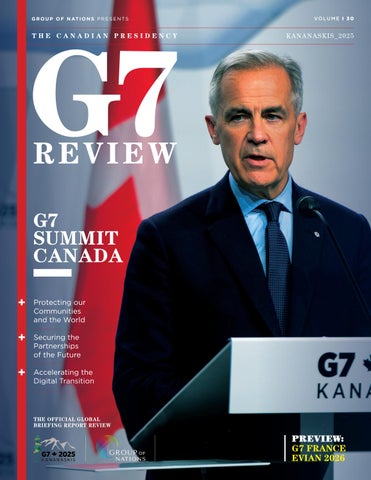
G7 SUMMIT CANADA
Protecting our Communities and the World
Securing the Partnerships of the Future
Accelerating the Digital Transition
THE OFFICIAL GLOBAL BRIEFING REPORT REVIEW


Protecting our Communities and the World
Securing the Partnerships of the Future
Accelerating the Digital Transition
THE OFFICIAL GLOBAL BRIEFING REPORT REVIEW
Chris Atkins Publisher, CEO & Founder
As we present this special G7 Canada issue, we are reminded of the critical importance of global dialogue, innovation, and principled leadership in addressing the challenges and opportunities of our time. The perspectives and policy recommendations featured here reflect the dedication of leading thinkers and decision-makers committed to advancing cooperation and progress on the world stage.
For the past 29 years, Group of Nations has proudly provided this platform,
publishing authoritative reports and insights for the world’s most significant summits. Our longstanding commitment and experience have established us as the leading publisher for G7, G20, B20, and other major international gatherings. We remain dedicated to offering a trusted forum for the exchange of ideas that drive international collaboration and meaningful change.
We are also honored to serve as the official publisher for the officially licensed publication of the US Semiquincentennial
celebrations, making 2026 a truly historic and special year for our organization and our partners. We extend our gratitude to our contributors, partners, and readers for their ongoing commitment to these shared values. Together, we look forward to shaping a future defined by vision, unity, and lasting impact.

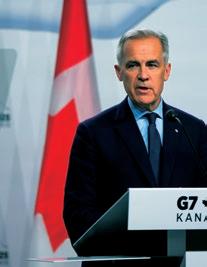








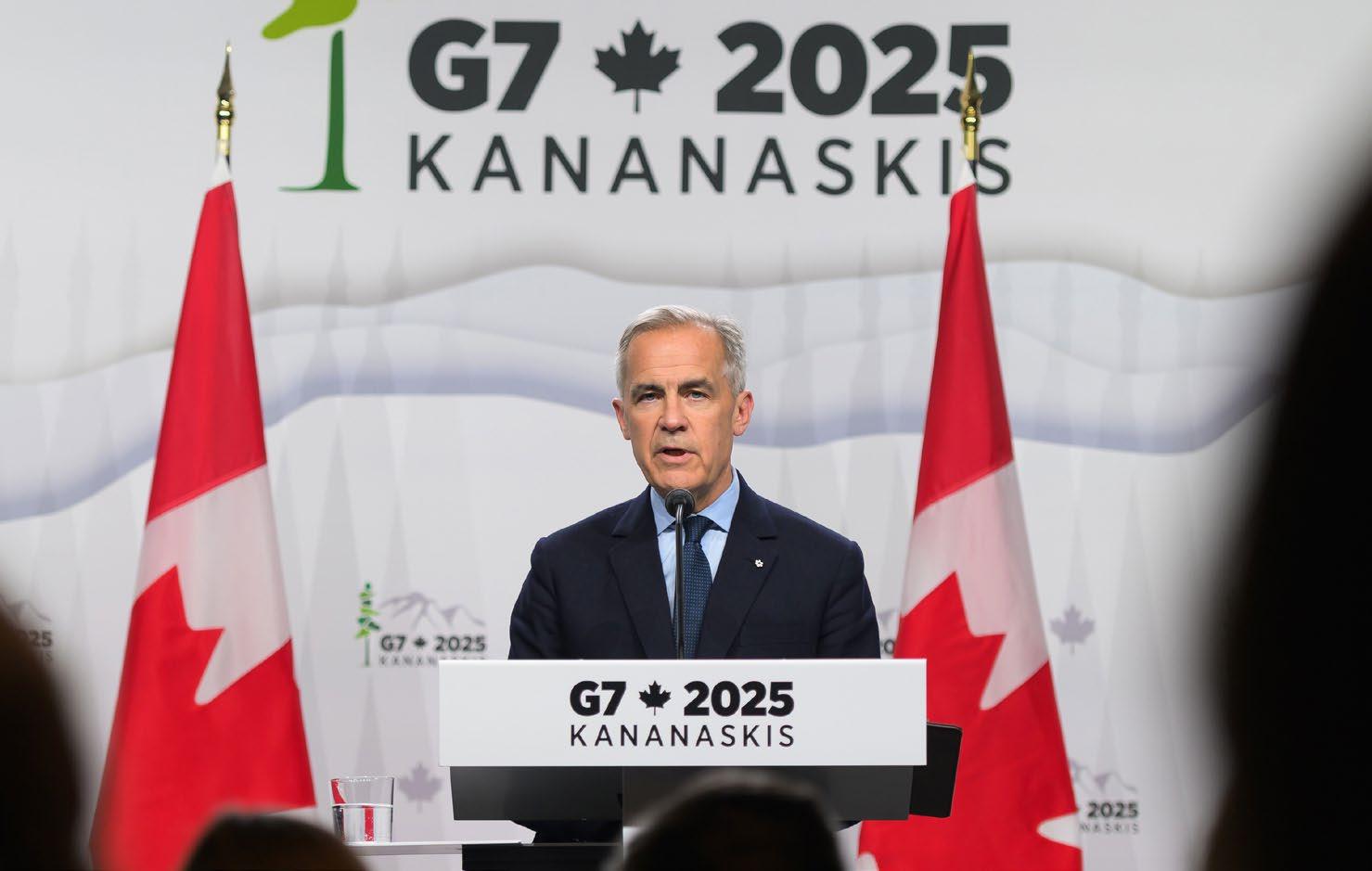
The Leaders of the Group of Seven (G7) gathered in Kananaskis, Alberta, from June 15-17, 2025, with the objective of building stronger economies by making communities safer and the world more secure, promoting energy security and accelerating the digital transition, as well as fostering partnerships of the future.
Five decades after its founding in 1975, the G7 continues to demonstrate its value as a platform for advanced economies to coordinate financial and economic policy, address issues of peace and security, and cooperate with international partners in response to global challenges.
G7 Leaders focused on economic developments. In a context of rising market volatility and shocks to international trade, as well as longer-term trends toward fragmentation and global imbalances, they discussed the need for greater economic and financial stability, technological innovation, and an open and predictable trading regime to drive investment and growth. They considered ways to collaborate on global trade to
boost productivity and grow their economies, emphasizing energy security and the digital transition. They acknowledged that both are underpinned by secure and responsible critical mineral supply chains and that more collaboration is required, within and beyond the G7. Leaders undertook to safeguard their economies from unfair non-market policies and practices that distort markets and drive overcapacity in ways that are harmful to workers and businesses. This includes de-risking through diversification and reduction of critical dependencies. Leaders welcomed the new Canada-led G7 initiative—the Critical Minerals Production Alliance—working with trusted international partners to guarantee supply for advanced manufacturing and defence.
G7 Leaders expressed support for President Trump’s efforts to achieve a just and lasting peace in Ukraine. They recognized that Ukraine has committed to an unconditional ceasefire, and they agreed that Russia must do the same.
G7 Leaders are resolute in exploring all options to maximize pressure on Russia, including financial sanctions. ➔
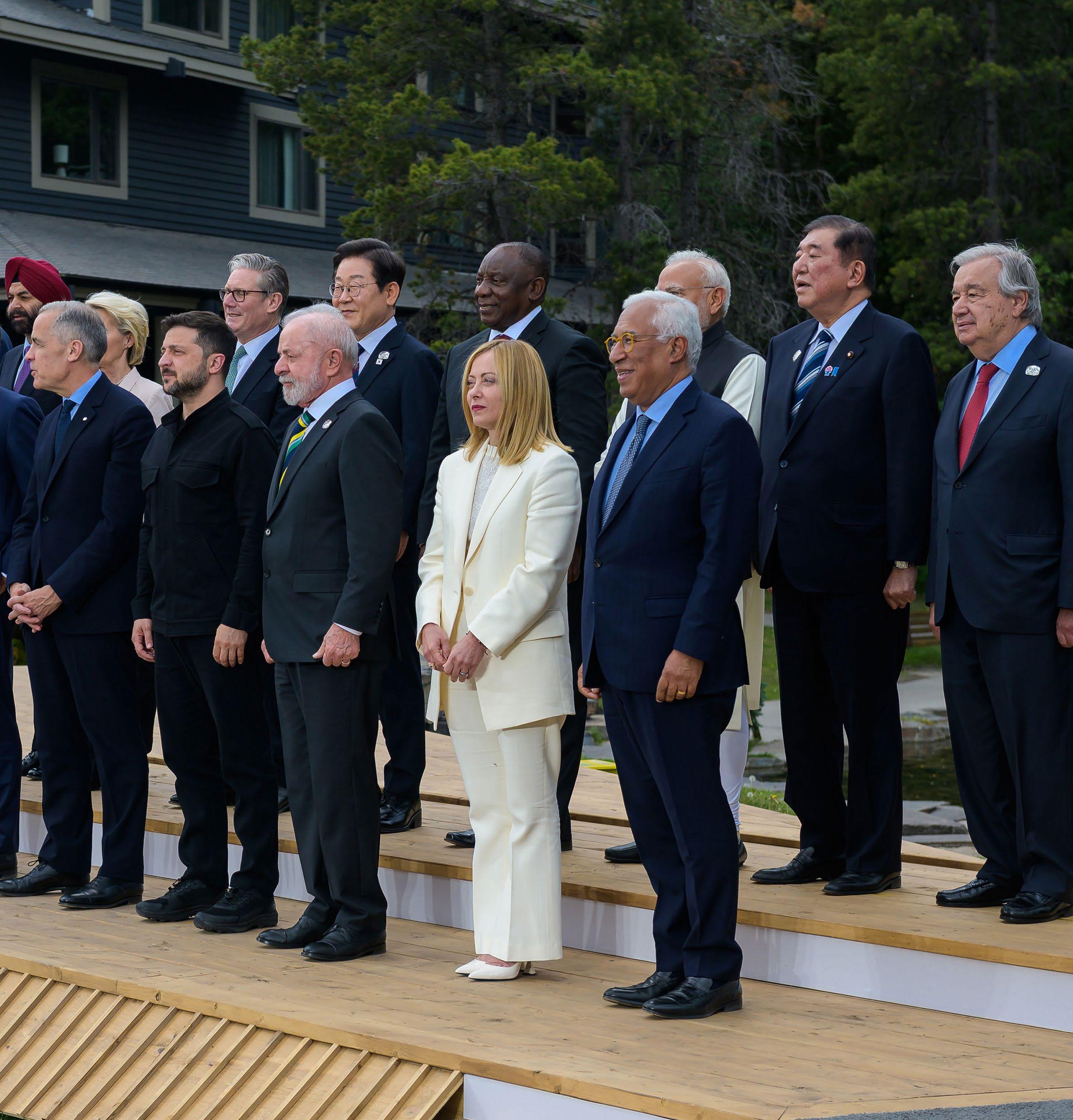
G7 LEADERS EXPRESSED SUPPORT FOR PRESIDENT TRUMP’S EFFORTS TO ACHIEVE A JUST AND LASTING PEACE IN UKRAINE. THEY RECOGNIZED THAT UKRAINE HAS COMMITTED TO AN UNCONDITIONAL CEASEFIRE, AND THEY AGREED THAT RUSSIA MUST DO THE SAME.
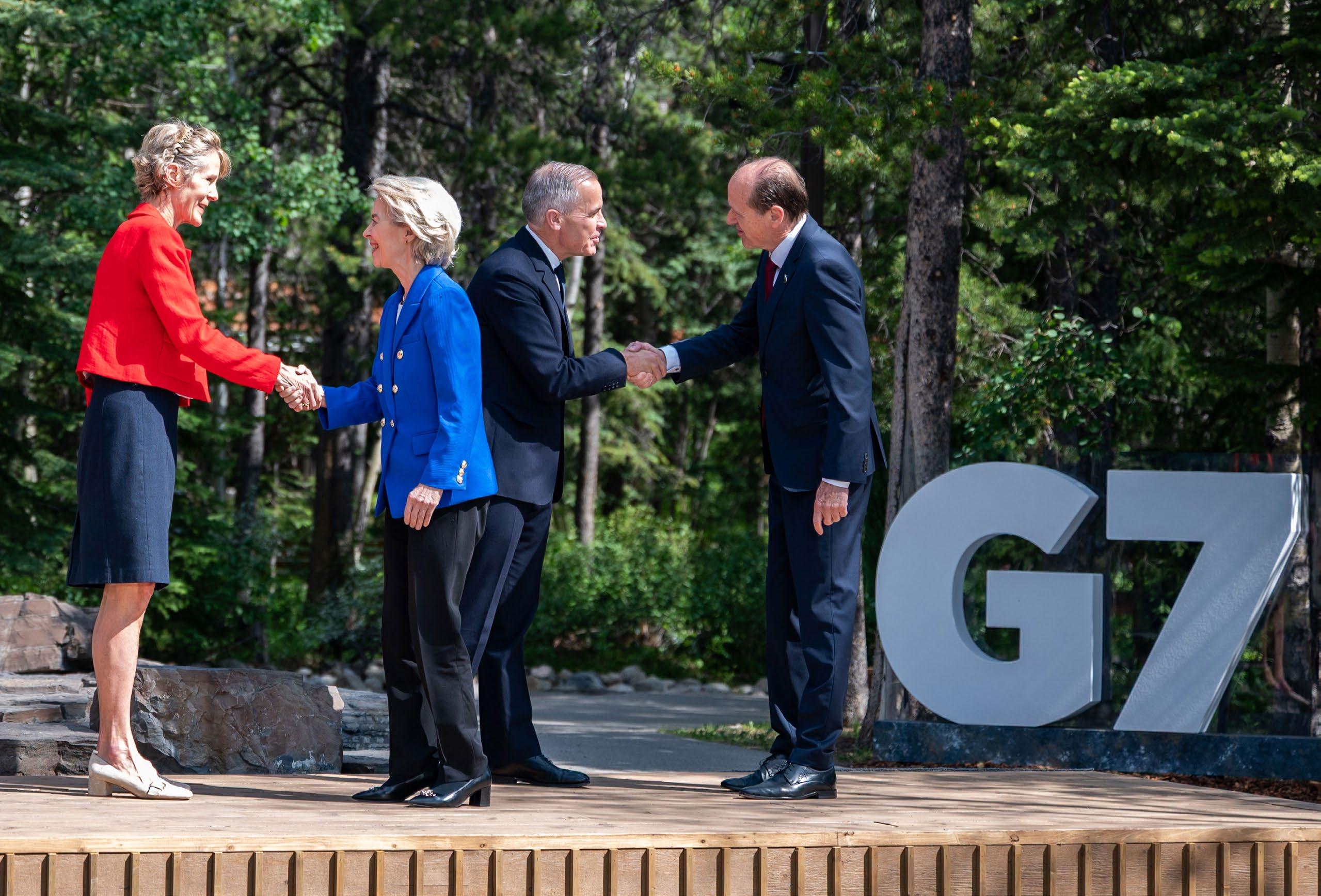
The G7 met with President of Ukraine, Volodymyr Zelenskyy, and Secretary General of the North Atlantic Treaty Organization, Mark Rutte to discuss their support for a strong and sovereign Ukraine, including budgetary defence and recovery and reconstruction support.
G7 Leaders reiterated their commitment to peace and stability in the Middle East. They exchanged on the evolving situation, following Hamas’s terrorist attacks against Israel on October 7, 2023, and the active conflict between Israel and Iran. Leaders discussed the importance of unhindered humanitarian aid to Gaza, the release of all hostages and an immediate and permanent ceasefire. Leaders also talked about the need for a negotiated political solution to the Israeli-Palestinian conflict that achieves lasting peace.
LEADERS HIGHLIGHTED THE IMPORTANCE OF A FREE, OPEN, PROSPEROUS AND SECURE INDO-PACIFIC, BASED ON THE RULE OF LAW, AND DISCUSSED GROWING ECONOMIC COOPERATION WITH THE REGION.
Leaders affirmed Israel’s right to defend itself, and were clear that Iran can never have a nuclear weapon. They underlined the importance of protecting civilians. They expressed their readiness to coordinate to safeguard the stability of international energy markets. They urged that the resolution of this crisis leads to a broader de-escalation of
hostilities in the Middle East, including a ceasefire in Gaza. G7 Leaders released a statement on recent developments between Israel and Iran.
Leaders highlighted the importance of a free, open, prosperous and secure Indo-Pacific, based on the rule of law, and discussed growing economic cooperation with the region. They stressed the importance of constructive and stable relations with China, while calling on China to refrain from market distortions and harmful overcapacity, tackle global challenges and promote international peace and security. Leaders discussed their ongoing serious concerns about China’s destabilizing activities in the East and South China Seas and the importance of maintaining peace and stability across the Taiwan Strait. They expressed
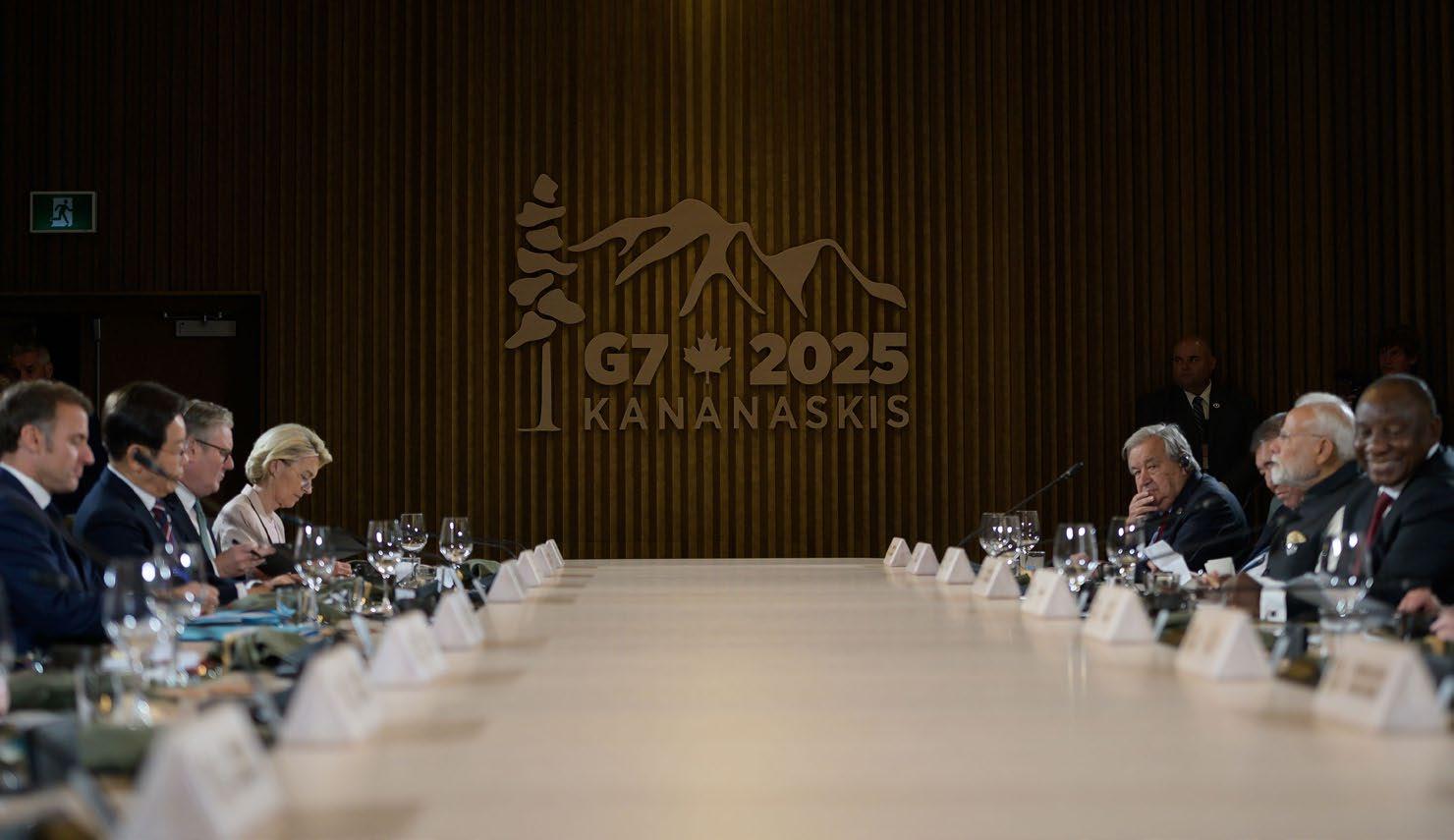
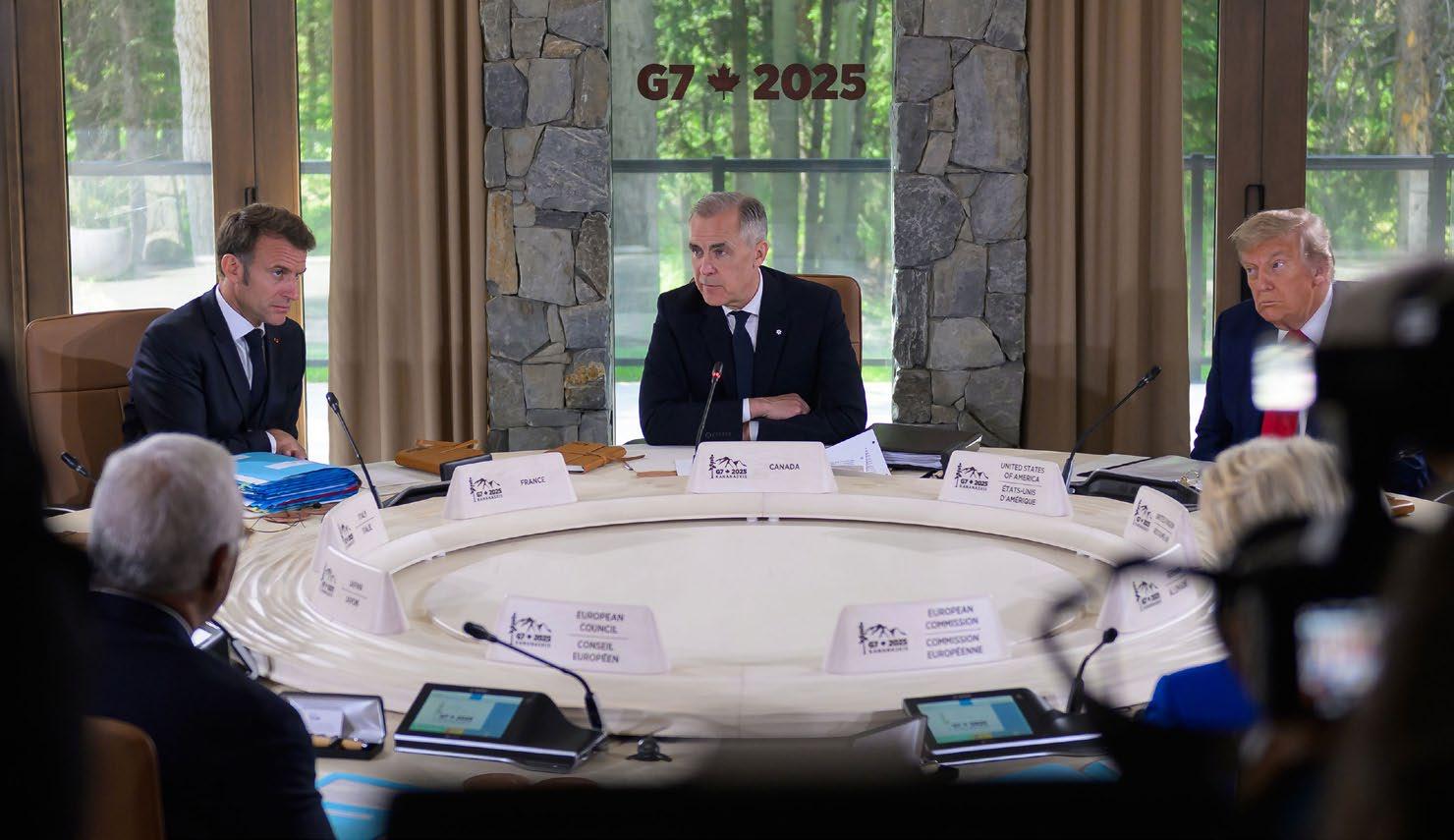
concern about DPRK’s nuclear weapons and ballistic missile programs and the need to jointly address DPRK cryptocurrency thefts fueling these programs. The need to resolve the abductions issue was also raised. Leaders acknowledged the links between crisis theatres in Ukraine, the Middle East and Indo-Pacific. Leaders discussed other instances of crisis and conflict, including in Africa and Haiti.
The G7 Leaders underscored their resolve to ensure the safety and security of communities. They condemned foreign interference, underlining the unacceptable threat of transnational repression to rights and freedoms, national security and state sovereignty. Leaders highlighted the importance of ongoing collaboration to promote
THEY DISCUSSED JUST ENERGY TRANSITIONS AS WELL AS SUSTAINABLE AND INNOVATIVE SOLUTIONS TO BOOST ENERGY ACCESS AND AFFORDABILITY, WHILE MITIGATING THE IMPACT ON CLIMATE AND THE ENVIRONMENT.
border security and counter migrant smuggling and illicit synthetic drug trafficking, noting recent successes. They stressed the need to work with countries of origin and transit countries. Leaders discussed the impacts of increasingly extreme weather events around the world. They highlighted the need for more international collaboration to

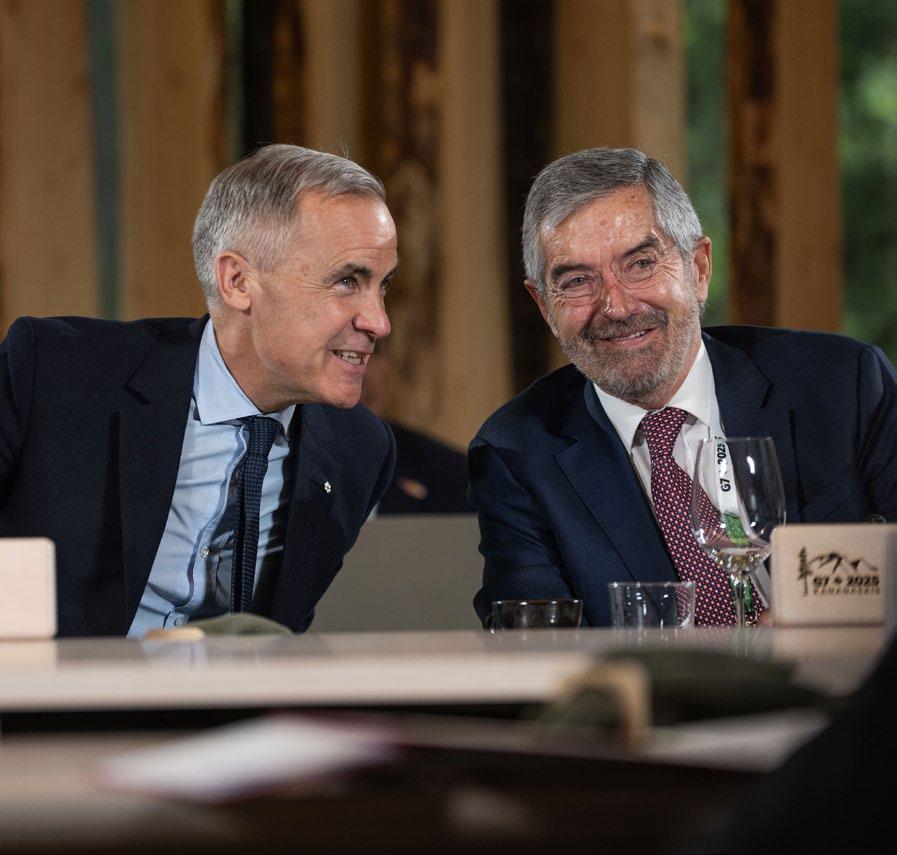
prevent, fight and respond to wildfires, which are destroying homes and ecosystems, and driving pollution and emissions.
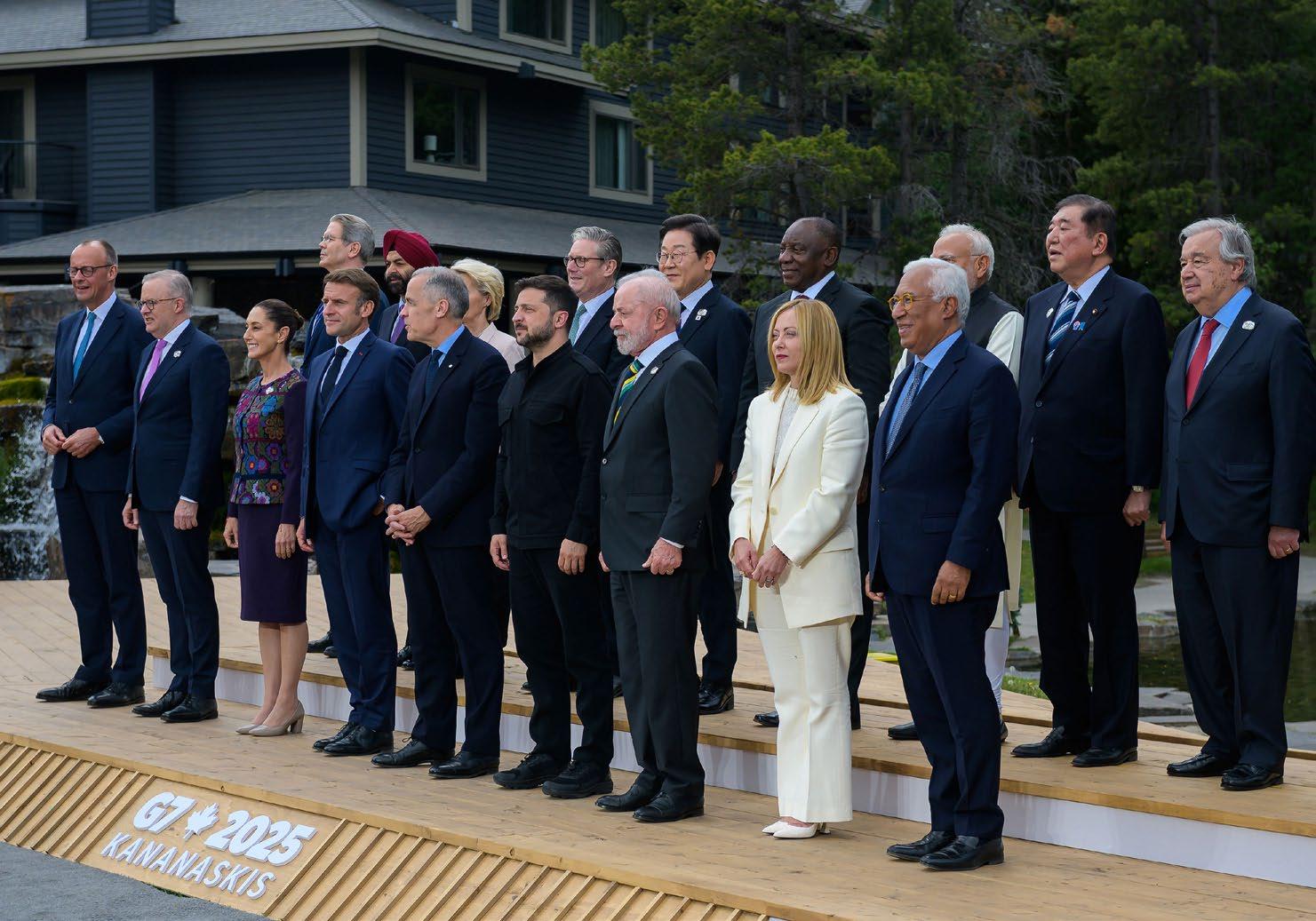
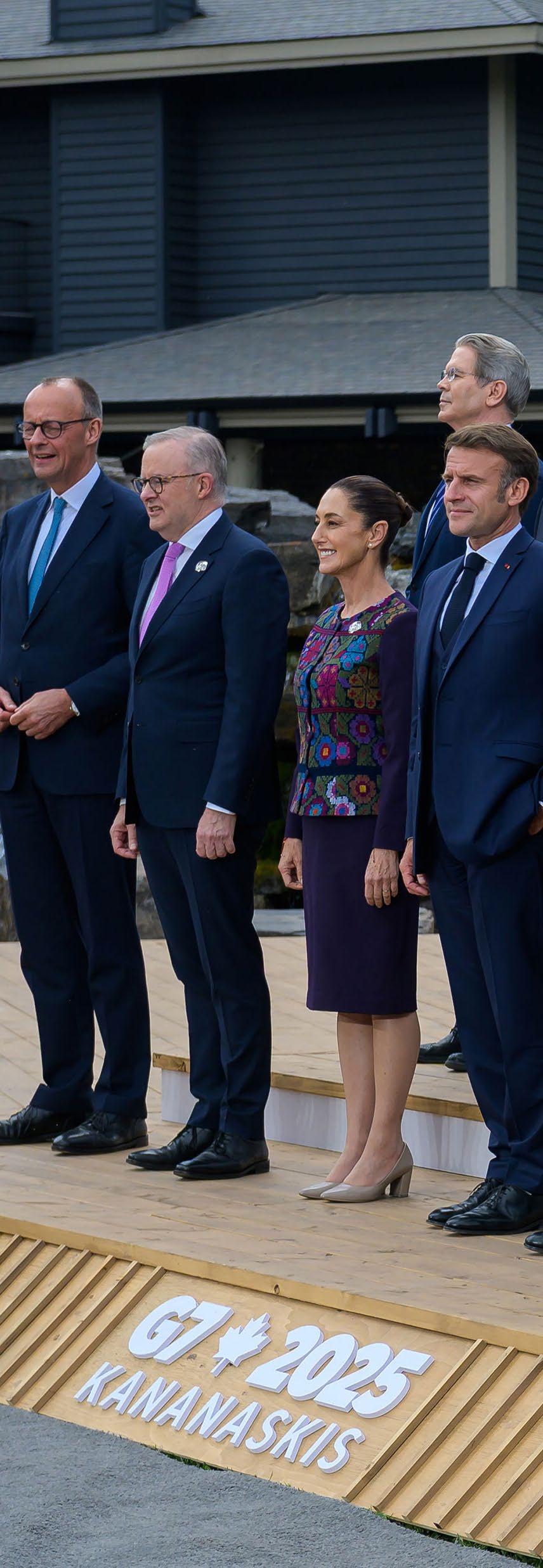
The G7 welcomed participation in the Summit by the President of South Africa, Matamela Cyril Ramaphosa, President of Brazil, Luiz Inácio Lula da Silva, President of Mexico, Claudia Sheinbaum, President of the Republic of Korea, Lee Jae-myung, Prime Minister of India, Narendra Modi, and Prime Minister of Australia, Anthony Albanese, as well as UN Secretary General, António Guterres, and President of the World Bank, Ajaypal Singh Banga. Together, they identified ways to collaborate on energy security in a changing world, with a focus on advancing technology and innovation, diversifying and strengthening critical ➔
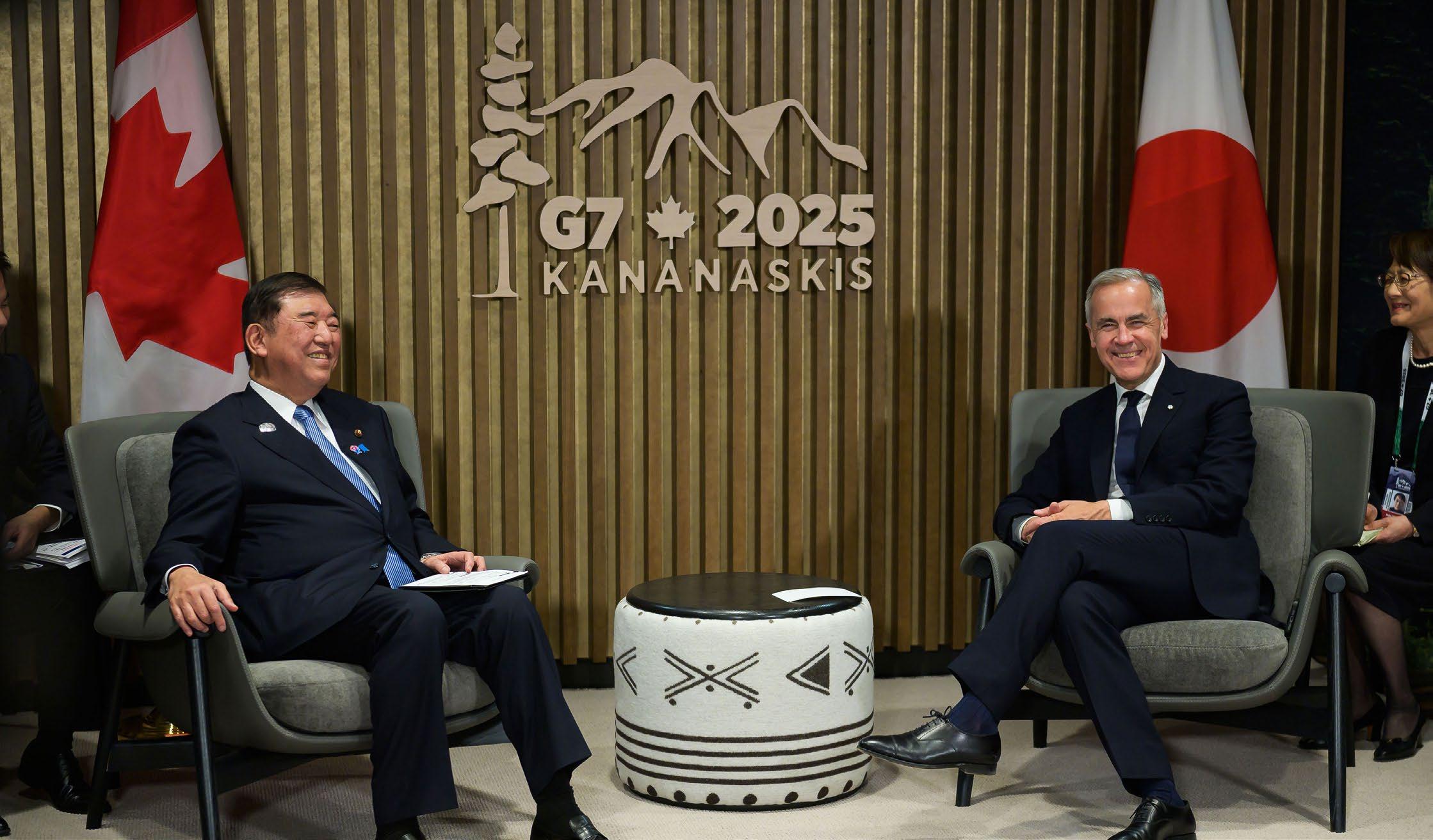
➔ mineral supply chains, building infrastructure, and mobilizing investment. They discussed just energy transitions as well as sustainable and innovative solutions to boost energy access and affordability, while mitigating the impact on climate and the environment. They talked about the consequences of growing conflicts for shared prosperity, including energy security, and the need to work towards a shared peace.
Leaders and guests had a productive discussion on the importance of building coalitions with reliable partners—existing and new—that include the private sector, development finance institutions and multilateral development banks, to drive inclusive economic growth and advance sustainable development. The upcoming United Nations’ Fourth International Conference on Financing for Development was raised as an opportunity to continue these discussions, including on private capital mobilization.
G7 Leaders agreed to collaborate with partners on concrete outcomes that deliver for everyone. To this end, they agreed to six joint statements. Their commitments included:
■ Securing high-standard critical mineral supply chains that power the economies of the future.
LEADERS AND GUESTS HAD A PRODUCTIVE DISCUSSION ON THE IMPORTANCE OF BUILDING COALITIONS WITH RELIABLE PARTNERS— EXISTING AND NEW—THAT INCLUDE THE PRIVATE SECTOR, DEVELOPMENT FINANCE INSTITUTIONS
AND MULTILATERAL DEVELOPMENT BANKS.
■ Mounting a multilateral effort to better prevent, fight and recover from wildfires, which are on the rise around the world.
■ Protecting the rights of everyone in society, and the fundamental principle of state sovereignty, by continuing to combat foreign interference, with a focus on transnational repression.
■ Countering migrant smuggling by dismantling transnational organized crime groups.
G7 Leaders welcomed the endorsement by many outreach partners of the Critical Minerals Action Plan and the Kananaskis Wildfire Charter.
■ Driving secure, responsible and trustworthy AI adoption across public and private sectors, powering AI now and into the future, and closing digital divides.
■ Boosting cooperation to unlock the full potential of quantum technology to grow economies, solve global challenges and keep communities secure.
Discussions at the Kananaskis Summit were informed by the recommendations of the G7 Gender Equality Advisory Council (GEAC), which stressed the social and economic benefits of gender equality, and of all G7 engagement groups. The G7 remains committed to working with domestic and international stakeholders and partners, including local governments, Indigenous Peoples, civil society, industry and international organizations, to advance shared priorities. The G7 will continue its work under Canada’s presidency throughout 2025, and looks forward to France’s leadership in 2026. ■
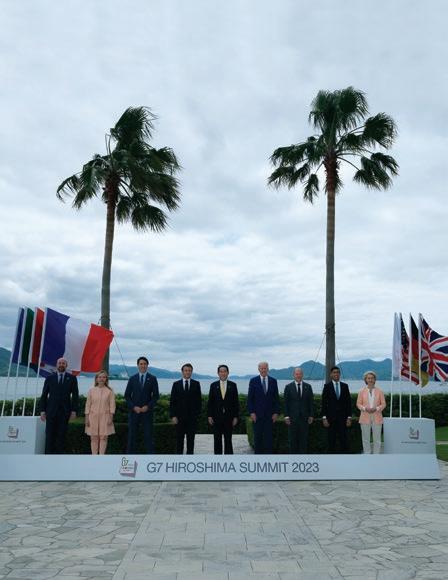


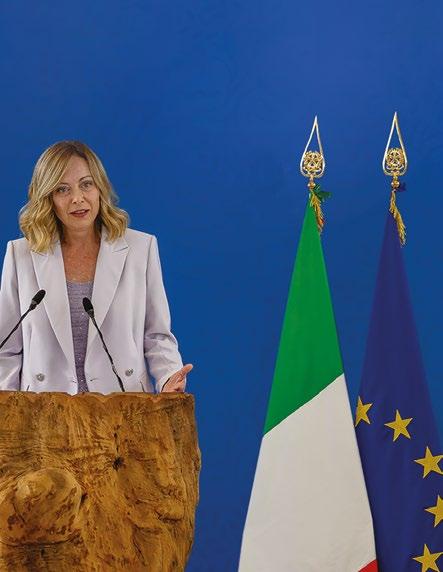







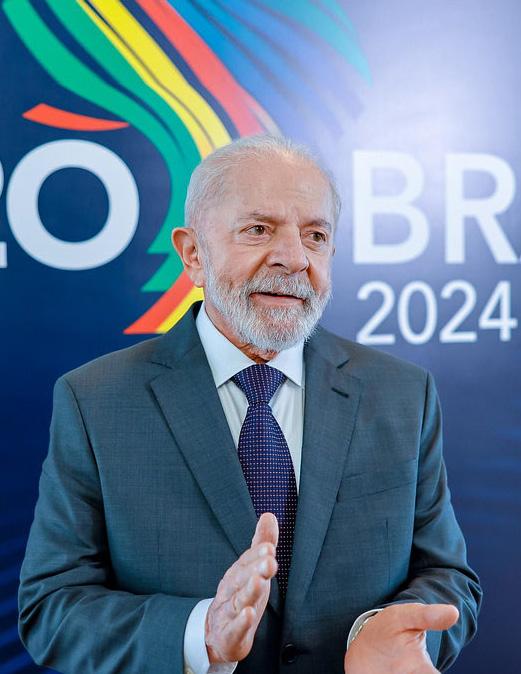
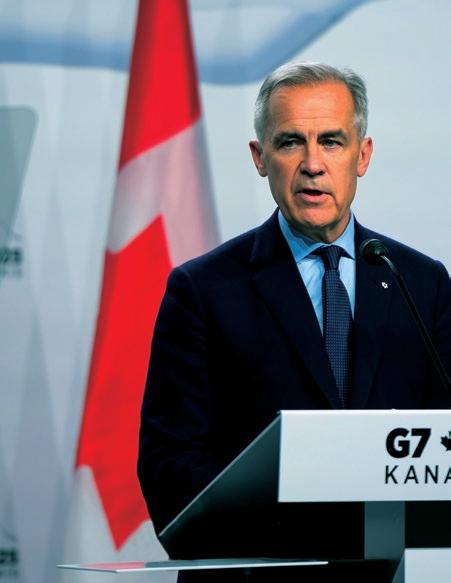

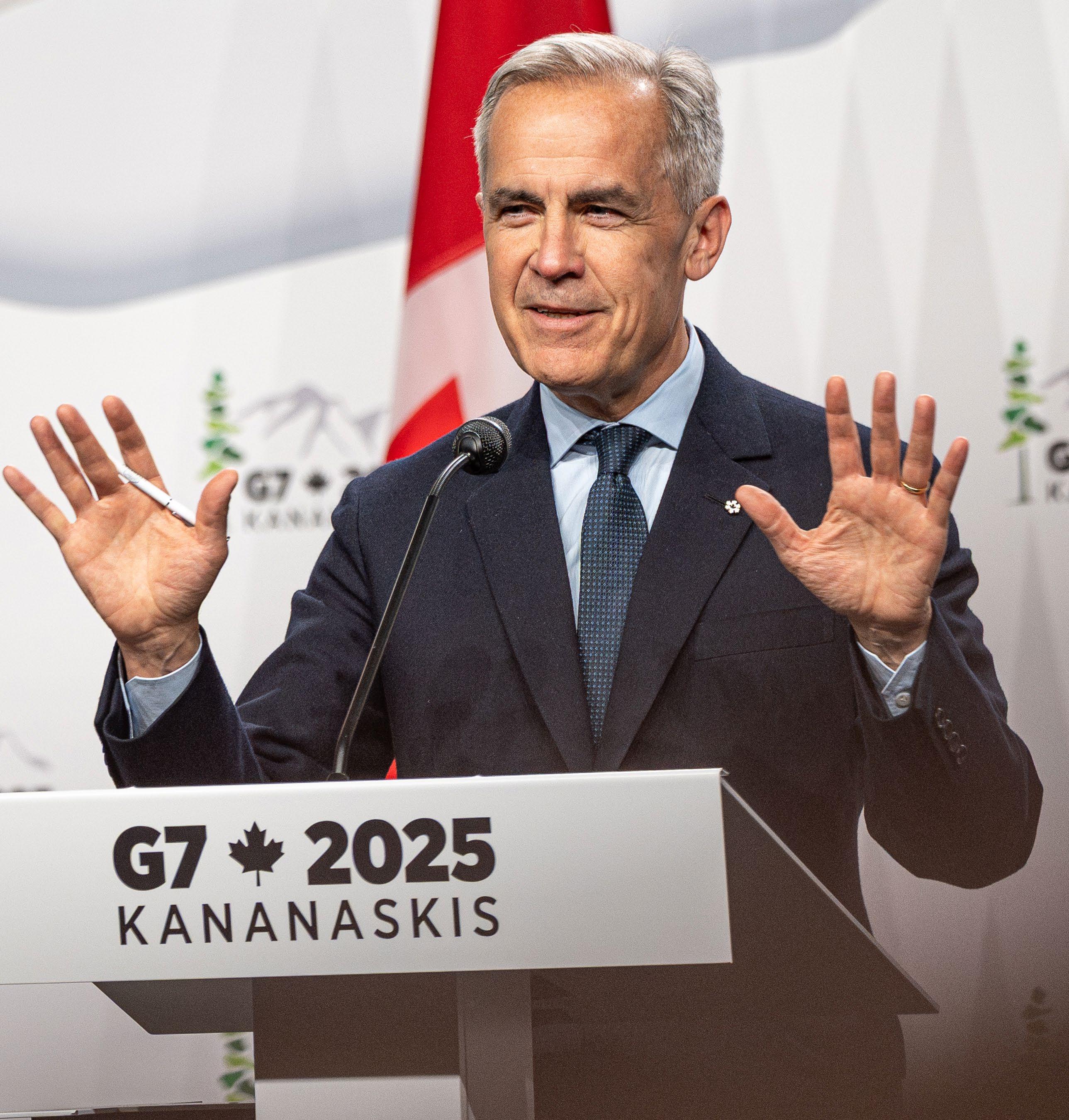
At the 2025 G7 Leaders’ Summit in Kananaskis, Alberta, Prime Minister Carney announced a suite of measures to promote economic growth and security, protect our communities, support Ukraine, and forge future partnerships.
Strengthening Partnerships for Financing Development and Shared Prosperity
PROJECT:
Innovative financing at multilateral development banks
FUNDING:
Up to $544 million (US$400 million) in portfolio guarantees to multilateral development banks.
This initiative will enable the InterAmerican Development Bank and the Caribbean Development Bank to provide up to US$1.6 billion in new financing to support development in emerging markets and developing countries in Latin America and the Caribbean region.
PROJECT: International Assistance Innovation Program
FUNDING:
$290 million over five years
This initiative will help mobilize additional private investments in
developing countries to advance the Sustainable Development Goals (SDGs). Launched under Canada’s 2018 G7 Presidency, this program enables private sector investments in developing countries to achieve the SDGs.
PROJECT: Private capital mobilization
FUNDING:
$101.3 million over five years. This initiative will help address major barriers to private sector investment in developing countries, including by accelerating infrastructure projects and fostering an enabling environment for investors. Canada will provide targeted support for technical assistance, project preparation, de-risking instruments, and risk-sharing tools, including through the Global Infrastructure Facility and other global platforms, such as SCALED –Scaling Capital for Sustainable Development.
PROJECT:
AI for Growth
FUNDING:
$174 million over three years
This initiative will boost adoption rates of artificial intelligence (AI) by small and medium-sized enterprises (SMEs) in Canada. Through targeted support,
Canada is helping SMEs identify AI use cases, addressing barriers to adoption in their business practices, and connecting firms with ready-made AI solutions. Continued investment in domestic adoption programs operated by the National AI Institutes and our Global Innovation Clusters will help convert AI research into commercial applications and grow the capacity of businesses to adopt these madein-Canada technologies.
PROJECT:
AI and Energy
FUNDING:
Up to $10 million over four years and an additional $145,000 over one year. Through a Call for Proposals on AI and Energy, Canada is committing up to $10 million to promote AI technologies and solutions that support energy innovations. Canada is also supporting the activities of the International Energy Agency (IEA) on AI and Energy, notably through $145,000 in funding for key projects, including the Agency’s launch of their Energy and AI Observatory and partnering with the IEA in the convening of government and industry discussions to inform outcomes for the meeting of G7 energy ministers this fall.
PROJECT: AI for Everyone
FUNDING:
$1.5 million over four years. This initiative will increase AI trust and adoption in developing countries to narrow digital divides. Canada’s International Development Research Centre will bolster the existing $16 million commitment to the AI for Development program to streamline the purchasing process for compute access from major providers, at negotiated preferential rates.
PROJECT:
Expanding Canada’s WildFireSat Mission
FUNDING:
$68.9 million over nine years
This initiative will expand the coverage of WildFireSat (WFS), Canada’s satellite mission that will monitor active wildfires in Canada on a daily basis. Through these new funds, WFS will collect data from all regions in the world where wildfires occur to share critical data and products with other countries that experience wildfires, including many in the Global South. In turn, this will provide them with near realtime information to track how hot a fire is, how it is changing, and where it is spreading, feeding into early warning systems and better decision-making for firefighting resource allocation. Funding will also support international working groups to improve co-ordination on the use of satellite data for wildfire management.
FUNDING:
Frontline Gear Support Program
FUNDING:
$20 million over five years
This initiative will enhance fire preparedness in Latin America by assessing countries’ wildfire equipment needs and then providing them with basic firefighting equipment they need before crises emerge. Sourced from Canadian manufacturers wherever possible, this initiative will involve working with partner countries to help them better manage their extreme wildfire seasons.
PROJECT:
Capacity Building and Knowledge Exchange and Global Indigenous Fire NETWORK FUNDING:
$13.5 million over three years
This initiative will support the work of the United Nations Food and Agriculture Organization’s Fire Management Hub, which aims to mitigate wildfire risks and protect ecosystems. It will support and accelerate the work of the Fire Management Hub toward achieving better interoperability amongst fire agencies around the world. In turn, this will enhance countries’ abilities to prepare or – and respond to – wildfires, allowing
for greater mutual assistance during times of crisis. It will establish an Indigenousled fire adaptation network to reinforce and share Indigenous knowledge among countries as a mechanism to prevent extreme wildfires and improve sustainable forest management and resilience.
PROJECT:
Integrated Fire Management and Restoration of Forests and Post-Fire Ecosystems in Colombia and Peru
FUNDING:
$12 million over three years
These initiatives aim to reduce the incidence and impact of wildfires on local populations, landscapes and forests through wildfire prevention and monitoring, promotion of sustainable agricultural practices, and forest and landscape rehabilitation and recovery. They will also advance the Forest and Climate Leaders’ Partnership Country
Packages in Colombia and Peru by supporting forest and ecosystem conservation and restoration.
PROJECT:
Post-Fire Forest and Landscape Restoration (FLARE)
FUNDING:
$6 million over five years
FLARE builds on RESTAURacción, a signature initiative of the Canada-led International Model Forest Network (IMFN). The IMFN stems from the 2019 G7 Leaders’ Summit commitment of co-ordinated investment in restoration and recovery of post-fire and degraded landscape ecosystems. Funding would support extending and expanding the RESTAURacción initiative to enhance restoration and recovery of terrestrial ecosystems and food systems following wildfires, while advancing women’s leadership in both Asia and Latin America.
CANADA DISBURSED THE FIRST TRANCHE OF ITS CONTRIBUTION, TOTALLING $2.5 BILLION, IN MARCH 2025. THE SECOND TRANCHE, TOTALLING $2.3 BILLION, WILL BE DISBURSED IMMINENTLY VIA THE INTERNATIONAL MONETARY FUND (IMF) ADMINISTERED ACCOUNT FOR UKRAINE.
PROJECT:
Innovation to secure global critical minerals supply chains
FUNDING:
$50.3 million over three years
This initiative will allow Canada to support domestic critical minerals research, development, and demonstrations to address technology and processing gaps. It will also enable increased international collaboration, including with G7+ partners. This will strengthen global critical minerals supply chains and level the playing field to better respond to deliberate market disruption.
PROJECT:
Resilient and Inclusive Supply-Chain Enhancement partnership
FUNDING:
$20 million over two years
This initiative will support developing countries in contributing to the critical minerals value chain, capturing a larger share of value added on their mineral production, and strengthening global supply chain diversification to accelerate the global energy and digital transition.
PROJECT:
Emerging markets capacity building
FUNDING:
$10 million over two years
This initiative will support developing countries in benefiting from the global energy and digital transition. Funds will be directed to the Intergovernmental Forum on Mining, Minerals, Metals, and Sustainable Development and will also
establish the Minerals Skills Network, a group of academic institutions offering training in emerging economies.
PROJECT:
Collaboration on quantum research, development, and commercialization
FUNDING:
$22.5 million over three years
This initiative will accelerate the development and commercialization of quantum technologies with likeminded partners, allowing for greater impact and promoting Canada’s flourishing technology sector.
PROJECT:
G7 Rapid Response Mechanism (RRM) Digital Transnational Repression
ACADEMY FUNDING:
$500,000 over two years
This initiative will build G7+ expertise in detecting and attributing digital transnational repression to shift the posture from defensive to proactive disruption. Through a two-year pilot project designed to strengthen the ability of democracies to detect, analyze, and respond to digital transnational repression, it will equip analysts from G7 RRM and like-minded partners with advanced technical training and detection tools. The Academy will be implemented by the Atlantic Council’s Digital Forensic Research Lab.
PROJECT:
Canada’s $5 billion contribution to Ukraine under the G7 Extraordinary Revenue Acceleration Loans mechanism
FUNDING:
$2.3 billion
Last year, at the G7 Summit in Apulia, Italy, Canada announced a $5 billion contribution toward the G7 Extraordinary Revenue Acceleration (ERA) Loans mechanism. Through this mechanism, the G7 is providing financing to Ukraine
that will be serviced and repaid by future flows of extraordinary revenues stemming from the immobilization of Russian sovereign assets held in the European Union and other jurisdictions. With contributions from G7 partners, the ERA Loans aim to make approximately US$50 billion in additional funding available to Ukraine. This funding will support Ukraine in the face of ongoing Russian aggression.
Canada disbursed the first tranche of its contribution, totalling $2.5 billion, in March 2025. The second tranche, totalling $2.3 billion, will be disbursed imminently via the International Monetary Fund (IMF) Administered Account for Ukraine. In Canada, Russian sovereign assets have been immobilized as required by the Special Economic Measures Act.
PROJECT: Military assistance to Ukraine
FUNDING:
$2 billion over one year
This year, Canada will continue to invest in critical capabilities that support Ukraine’s defence and security. This includes funding for armoured vehicles and ammunition supplies, small arms, drones, and enhanced bilateral cooperation. Funding will also support initiatives that strengthen Ukraine’s capabilities across a range of multilateral efforts.
PROJECT: Security-related support
PROJECT:
$57.4 million allocation
This allocation supports a range of defence and security initiatives, including $45 million for Drone Capability Coalitions as well as drone procurement and projects supporting Canadian Armed Forces operations. Following an announcement of $2.1 million in support to NATO’s Science for Peace and Security initiative, Natural Resources Canada will also receive $700,000 (E450,000) to advance a project improving operational energy efficiency in military operations. In addition, $11.7 million will be directed to bolster Ukraine’s cyber resilience via previously committed Anti-Crime Capacity Building Programme funding. ■
June 14–16, 2026: Évian-les-Bains
At the close of the 51st G7 Summit in Kananaskis, Canada, on June 17, 2025, French President Emmanuel Macron formally announced that France will host the 2026 G7 Summit in Évian-les-Bains from June 14–16, 2026. The choice of location and timing carries deep historical resonance and symbolic weight, positioning the summit at a literal and figurative high point in global diplomacy.
Set against the backdrop of the French Alps, Évian-les-Bains mirrors the dramatic mountain setting of Kananaskis in Canada’s Rocky Mountains, which first hosted the G7 in 2002. Leaders will gather at the historic Hôtel Royal, a venue previously used for the 2003 G8 Summit, nestled near a true physical summit overlooking Lake Geneva. The setting reinforces the sense that the 2026 meeting will be both reflective and consequential.
The Evian summit will take place 37 years after the landmark Paris Summit of July 14–16, 1989, a defining moment in world history when Soviet leader Mikhail Gorbachev sent what was effectively a letter of surrender on behalf of the Soviet bloc—marking the peaceful conclusion of the Cold War and a decisive victory for democratic governance. That legacy looms large as the G7 returns to France at another pivotal moment in global affairs.
A Gathering of Seasoned Leaders
Unlike many previous summits, Évian 2026 may see no first-time participants. Most G7 leaders attending will be
veterans of the forum, bringing continuity, experience, and established working relationships.
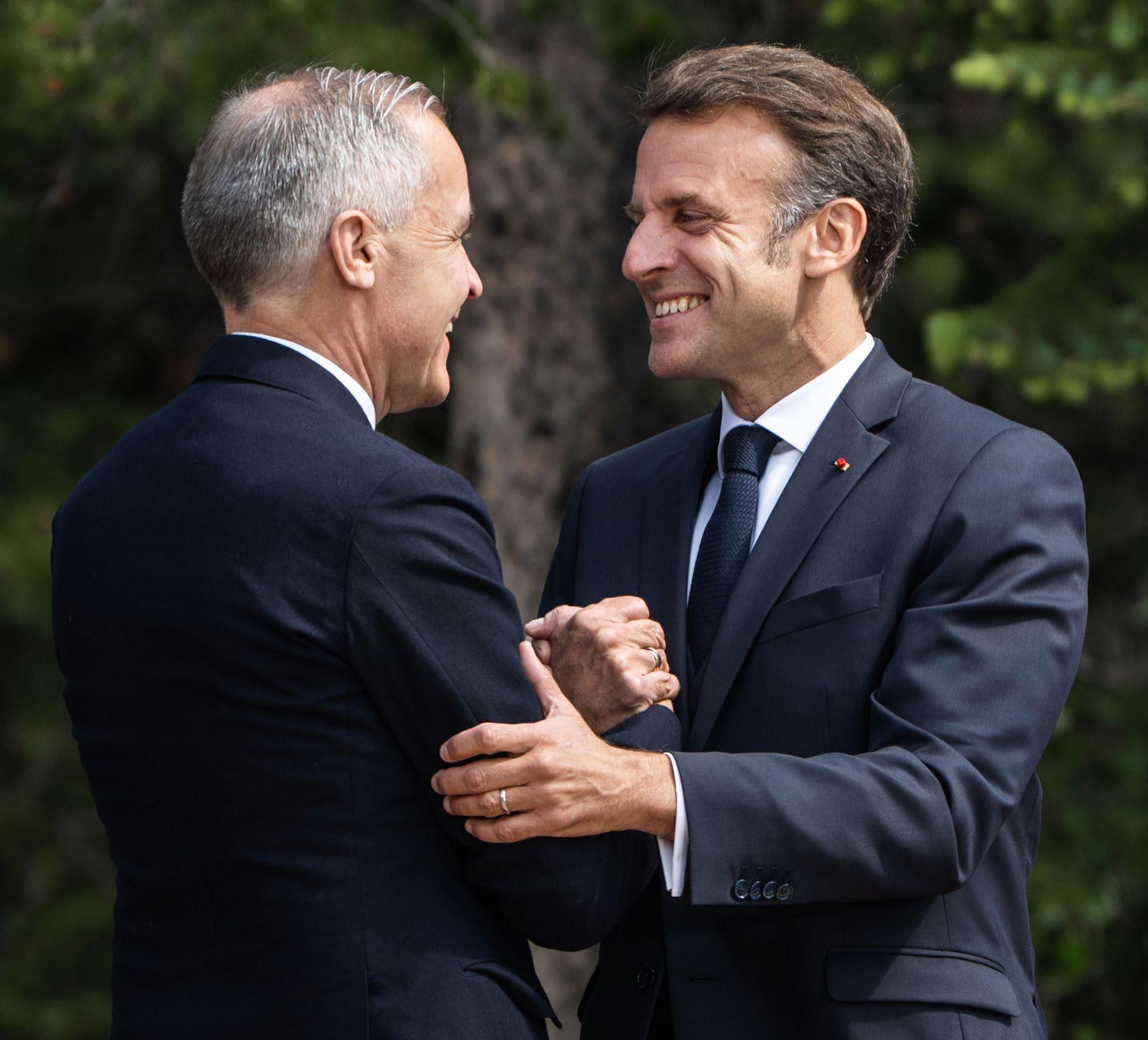
President Macron himself will be attending his tenth G7 Summit since taking office in 2017 and hosting for the second time, following the 2019 Biarritz Summit. He will once again welcome U.S. President Donald Trump, who will be attending his sixth summit and his second since returning to office in January 2025.
Other familiar faces are expected to include:
Ursula von der Leyen
President of the European Commission, attending her sixth summit
Giorgia Meloni
Prime Minister of Italy, attending her third since hosting the 2024 Apulia Summit
Mark Carney
Canada’s Prime Minister and host of the 2025 summit
Friedrich Merz
Germany’s Chancellor
António Costa, President of the European Council
Keir Starmer
UK Prime Minister and hostdesignate for 2027
Shigeru Ishiba
Prime Minister of Japan
With no newcomers expected, leaders will arrive with an established understanding of one another— particularly important in managing complex dynamics within this exclusive group.
Policy Priorities Taking Shape
While France will formally assume the G7 presidency at the start of 2026, and President Macron will finalize the agenda at that time, early signals suggest that the policy priorities at Evian will largely build on those set in Kananaskis.
1. Ukraine and European Security
At the top of the agenda will be continued efforts to halt Russia’s aggression against Ukraine. Discussions will focus on sustaining sanctions, maintaining military and financial support, and addressing the enormous cost of post-war reconstruction. Broader questions of economic security for Europe and the global system will also feature prominently.
2. China and Strategic Competition
Countering the expanding influence of China—across security, technology, trade, and democratic norms—will remain a central concern. The summit is also expected to address instability in the Middle East and the wider IndoPacific region.
3. Global Trade and Tariffs
Another major issue will be managing and attempting to contain President Trump’s ongoing tariff strategy, including a baseline 10% tariff affecting global trade. With the US-Canada-Mexico Agreement (USCMA) scheduled for renegotiation in 2026, trade tensions will be front and center, alongside efforts to diversify economic partnerships and counter non-market practices.
4. Economic Growth and Prosperity
With the IMF and OECD projecting

slowing—or even declining—growth across much of the G7 in 2026, leaders will prioritize strategies to restore economic momentum and resilience.
5. Economic Security and Supply Chains
Building on the G7 Critical Minerals Action Plan, Evian is expected to expand cooperation on supply-chain resilience and strengthen the collective defense industrial base of G7 nations.
6. Artificial Intelligence and Emerging Technologies
AI, quantum computing, and digital governance will feature prominently. France’s ambition to become a global AI leader may create new momentum for international cooperation on regulation, data ownership, and safeguards against misinformation and deepfakes—despite ongoing resistance from the United States.
7. Energy Security and Climate
Energy security will remain a crosscutting issue, tied to sanctions on Russia, the energy demands of AI infrastructure, and long-term sustainability. Climate change, though likely addressed more discreetly, will return to the agenda with renewed urgency—particularly around forest protection, heat waves, and ocean health.
8. Human Rights and Equality
Gender equality and human rights are expected to reappear in carefully calibrated language. While negotiators may avoid high-profile confrontations, France’s identity and Macron’s prior leadership on gender equality suggest Evian will go further than the 2025 summit in reaffirming these values.
The Summit Process: Style and Substance Preserving G7 unity—particularly with President Trump at the table—
will be the overriding process priority. Leaders are increasingly adapting to this reality, seeking pragmatic cooperation over public confrontation.
The Hôtel Royal’s secluded park setting will allow for secure, informal interactions among leaders, reinforcing the G7’s preference for candid dialogue.
Rather than lengthy communiqués, Macron is expected to repeat the Biarritz model: concise declarations from smaller groups on specific issues, paired with a brief overall summary personally drafted by the host.
Global Outreach and Macron’s Role
France is also likely to invite a broad group of guest countries and international organizations, continuing Macron’s emphasis on outreach. India, a close strategic partner of France, is almost certain to be among them, reflecting its growing role in global governance.
Much of the summit’s success will hinge on Macron’s personal experience. A former G7 sherpa, economy minister, and investment banker, he brings a rare blend of diplomatic, economic, and political expertise. His established relationships—with Trump, European leaders, and figures like Mark Carney— position him as a capable broker at a complex moment.
While much can change before leaders gather on the shores of Lake Geneva n June 2026, early indicators suggest that the Evian G7 Summit will be a consequential one—grounded in history, shaped by experience, and focused on navigating a rapidly shifting global order. As France prepares to host, the world will once again look to Évian-les-Bains as a place where leadership, legacy, and the future intersect. ■
Navigating Fragmentation through Collective Innovation
In May 2025, as Canada assumed the G7 presidency, the Think7 (T7)—a coalition of global policy experts and researchers— released a pivotal Communiqué. This document serves as a strategic blueprint for the world’s most advanced economies to confront a “triple threat” of global fragmentation: geopolitical instability, technological disruption, and the climate crisis.
The Communiqué moves beyond traditional policy discourse, positioning the G7 not merely as a stabilizer of the postwar order, but as a proactive innovator. It argues that the G7 must champion a rights-based, inclusive, and resilient multilateralism to prevent the erosion of democratic values in an increasingly polarized world.
The T7’s recommendations are organized into four urgent domains:
Transformative Technologies: Establishing democratic guardrails for AI and securing quantum supply chains. Digitalization: Harmonizing global data flows and ensuring “Data Free Flow with Trust.”
Sustainable Development: Bridging the “implementation gap” in climate finance and energy transitions. Peace & Security: Modernizing conflict prevention with AI-enabled early warning systems and stabilizing the Euro-Atlantic and Indo-Pacific axes.
A Global Order at a Crossroads
The year 2025 represents a critical inflection point. The international system, rooted in the principles of democracy and the rule of law, is facing its most significant challenge since 1945.
The T7 Canada Communiqué identifies three primary forces driving this instability:
Geopolitical Friction: Protracted conflicts (notably Russia’s aggression in Ukraine) and intensifying great-power rivalry between the U.S. and China have strained traditional alliances.
Technological Acceleration:
The rapid ascent of Artificial Intelligence and Quantum Computing is outstripping the ability of governments to regulate, threatening social cohesion and economic sovereignty.
The Climate-Debt Trap: Developing nations are increasingly caught between the need for green transitions and the crushing weight of climate-induced debt.
The T7 argues that the G7 occupies a unique position to act. It must fulfill a dual role:
The Stabilizer: Addressing immediate threats to maritime security, energy markets, and global health.
The Reformer: Innovating global governance to incorporate “Rules as Code” and new multilateral mechanisms that include middle powers and the G20.
A CALL TO ACTION
The Communiqué provides a roadmap for immediate and long-term policy shifts:
Governing the Frontier: AI & Quantum
The G7 must move from reactive regulation to proactive governance.
AI Knowledge Base: Pooling G7 analytical resources to monitor market consolidation and ensure competition.
Quantum Security: Creating a Quantum-Safe Transition Observatory to protect global communications from future cryptographic threats.
A Trusted Digital Economy
Digitalization must serve the public interest, not just private platforms.
Interoperability: Aligning technical standards for digital assets and crossborder payments.
Inclusion: Launching partnerships to ensure developing economies are not left behind in the shift to decentralized digital infrastructure.
Sustainability
The T7 demands a shift from rhetoric to measurable implementation.
Energy Integration: Tripling renewable capacity by 2030 and standardizing energy data protocols.
THE CHOICES MADE DURING THE 2025 CANADIAN PRESIDENCY WILL DETERMINE WHETHER THE GLOBAL COMMUNITY FRAGMENTS FURTHER OR FINDS A NEW PATH TOWARD COMMON PURPOSE.
Debt-for-Resilience Swaps: Working with the G20 to stabilize global debt, allowing vulnerable nations to invest in climate adaptation.
Reimagining Global Security Security in 2025 is inseparable rom technology and economics.
Ukraine Reconstruction: Creating a sustainable recovery fund leveraged by private sector expertise.
Autonomous Systems: Setting strict G7 standards for AI-enabled weapons to ensure compliance with international law.
The T7 Canada Communiqué is a clarion call for bold, principled leadership. Its success rests on the political will of G7 leaders to look beyond domestic interests and invest in a shared global future. While the path is fraught with political and resource constraints, the Communiqué provides the intellectual framework necessary to build a more resilient, equitable, and secure world order.
“The choices made during the 2025 Canadian Presidency will determine whether the global community fragments further or finds a new path toward common purpose.” ■
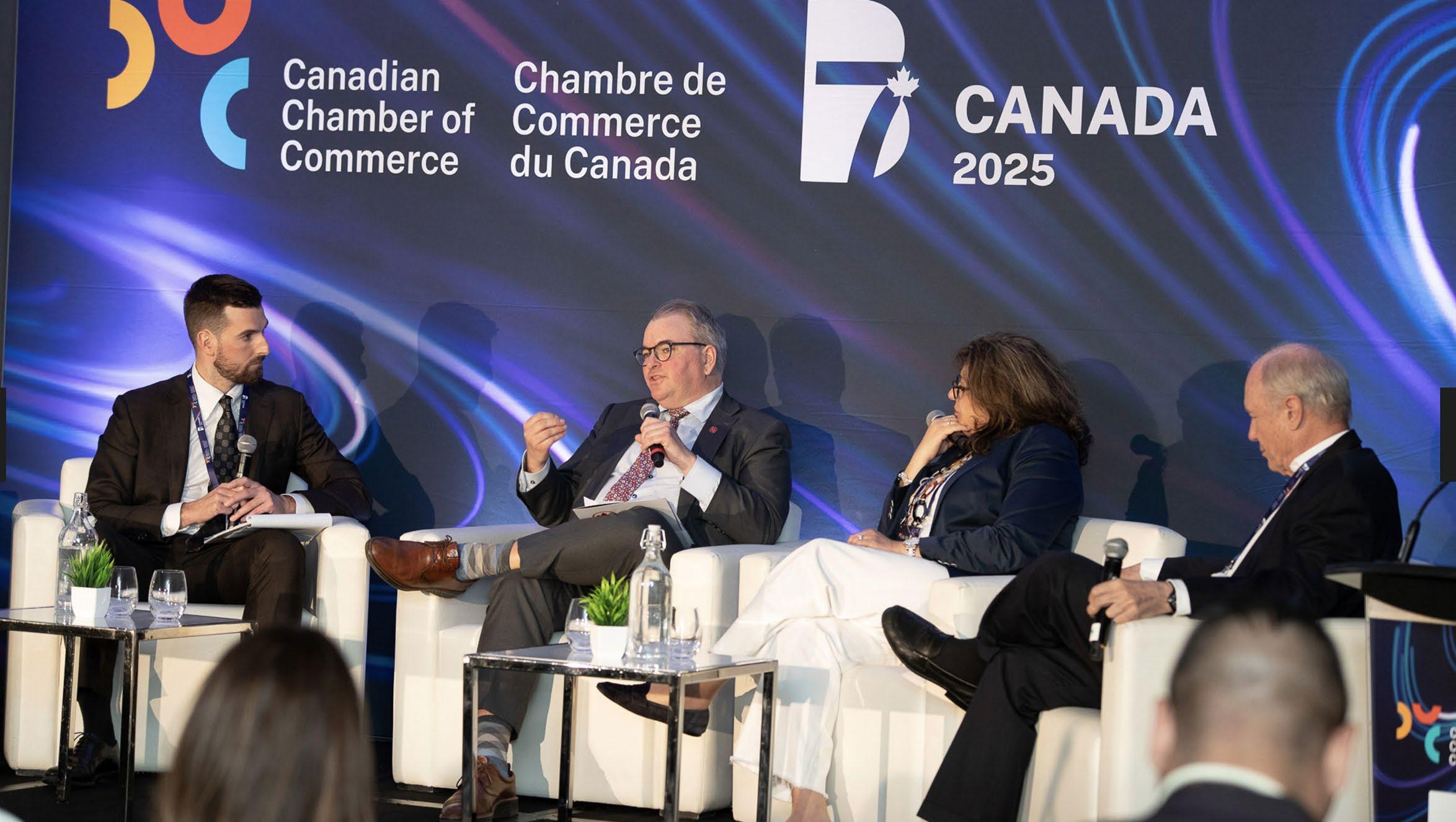
The G7 Chair’s statement reflects the B7’s overarching focus on economic security, highlighting key priorities that align closely with industry concerns.
Two major thematic G7 joint statements — the G7 Critical Minerals Action Plan and the G7 Leaders’ statement on AI for Prosperity — demonstrate clear uptake of recommendations outlined in the B7 Communiqué. The high degree of alignment between the G7 and B7
underscores the influence of the B7’s input and the growing recognition among G7 governments of the private sector’s role in strengthening economic resilience and competitiveness. The upcoming G7 ministerial meetings in fall 2025 present further opportunities to advance B7-aligned priorities.
G7 Critical Minerals Action Plan
The B7 Communiqué highlights critical minerals and materials as a unique opportunity for Canada’s G7 Presidency, recognizing their cross-cutting relevance and vital importance to both economic
and national security. The B7 Communiqué urges Canada to “advance a bold strategic vision for the development and supply of critical minerals — grounded in close coordination among the G7 and like-minded countries.” The G7 Critical Minerals Action Plan directly reflects this call to action and is aligned closely with the B7’s recommendations on critical minerals and materials. This table outlines the major commitments in the G7 Critical Minerals Action Plan that directly reflect recommendations made in the B7 Communiqué. ➔
Address investment barriers and support policy and regulatory reforms which improve the investment climate and empower entrepreneurs in low- and middle-income countries.
Develop a roadmap by the end of 2025 to promote standards-based markets, in collaboration with industry, resource producing nations, and Indigenous Peoples.
Support export credit agencies and development finance institutions in promoting private sector investment.
Work within the G7 and with partners beyond the G7 to coordinate responses to deliberate market disruption and diversify supply chains.
Encourage multilateral development banks and private sector lenders to leverage existing financing mechanisms to de-risk projects.
Intensify collaboration to fill innovation gaps in R&D, with a focus on processing, recycling, substitution, redesign, and circular economy.
Work with partner networks to showcase new technologies and production processes.
B7 Critical Minerals recommendation #8 (public and private investment in small mining companies within G7 and like-minded countries).
B7 Critical Minerals recommendation #9 (responsible extraction framework).
B7 Critical Minerals recommendation #11 (domestic funding mechanisms to incentivize investment).
B7 Critical Minerals recommendation #3 (G7 Critical Minerals Security Secretariat to enhance coordination).
B7 Critical Minerals recommendation #6 (incentives to derisk extraction and recycling).
B7 Critical Minerals recommendation #12 (promote public-private partnership for R&D focused on substitution and circular economy).
B7 Critical Minerals recommendation #13 (create a network of critical minerals centres of excellence).

THE B7
HIGHLIGHTS CRITICAL MINERALS AND MATERIALS AS A UNIQUE OPPORTUNITY FOR CANADA’S G7 PRESIDENCY, RECOGNIZING THEIR CROSSCUTTING RELEVANCE AND VITAL IMPORTANCE TO BOTH ECONOMIC AND NATIONAL SECURITY.
➔ The G7 Leaders’ Statement on AI for Prosperity signals a significant shift in the G7’s posture towards AI, emphasizing the strategic importance of responsible AI adoption as a driver of economic prosperity. The commitments outlined in the statement closely align with the B7’s recommendations, which call on G7 governments to prioritize the deployment of trustworthy digital and AI technologies to strengthen economic security and resilience.
As Canada and its G7 partners advance major new initiatives such as the G7 AI Adoption Roadmap, the business community is prepared to play an active role in shaping and delivering these efforts to ensure their effectiveness and impact.
This table outlines the major commitments in the G7 Leaders’ statement on AI for Prosperity that directly reflect recommendations made in the B7 Communiqué. ■
Accelerate public sector AI adoption through establishing s olutions labs, a G7 AI Network, exploring opportunities for strategic investment, and launching the G7 GovAI Challenge.
Launch the G7 AI Adoption Roadmap, which provides clear, actionable pathways for companies to adopt AI and scale their businesses.
Cooperate on innovative solutions to address energy challenges across our economies, including for AI and data centres. Additionally, cooperate on knowledge-building and sharing with trusted partners. Deliver a workplan on AI and energy by the end of 2025.
Support access to compute and digital infrastructure, including via tasking Ministers to explore strategic investments for accelerating public sector AI adoption.
Build resilient future workforces by preparing workers for AI-driven transitions.
Lead multi-stakeholder efforts with industry and standards-setting organizations to identify opportunities and challenges in deploying AI.
Reiterate the importance of operationalizing Data Free Flow with Trust (DFFT) through trustworthy, cross-border data flows, and affirm its value in enabling trusted AI development and use.
Develop concrete tools and initiatives for SMEs that grow business and consumer confidence and trust in AI adoption.
Publishing toolkits and other relevant resources to reduce barriers for SMEs, as well as connecting SMEs with experts across industries.
G7 GOVERNMENTS TO PRIORITIZE THE DEPLOYMENT OF TRUSTWORTHY DIGITAL AND AI TECHNOLOGIES TO STRENGTHEN ECONOMIC SECURITY AND RESILIENCE.
B7 AI recommendation #1 (increase usage of AI within the public sector in line with the G7 Toolkit for AI in the Public Sector).
B7 AI recommendation #2 (accelerate private sector adoption, particularly for SMEs via incentives, access to cloud infrastructure, and fostering collaboration).
B7 AI recommendation #5 (G7 toolkit on AI and energy to offer guidance to governments) and #6 (secure continuous availability of critical inputs and infrastructure for AI).
B7 AI recommendation #7 (develop publicly accessible compute infrastructure and highquality public datasets).
B7 AI recommendation #8 and #9 (expand AI-related education, workforce upskilling, and talent pipeline development).
B7 Digital Regulation recommendation #1 (collaborate with industry to advance shared AI standards and classifications among G7 and like-minded countries).
B7 Digital Regulation recommendation #3 (implement DFFT agreements among G7 members through the IAP).
B7 Digital Regulation recommendation #4 (promote digital trust by building upon initiatives like the G7 Compendium of Digital Government Services).
B7 Digital Regulation recommendation #1 (reduce barriers for SMEs by establishing industry-specific digital compliance hubs to share best practices).

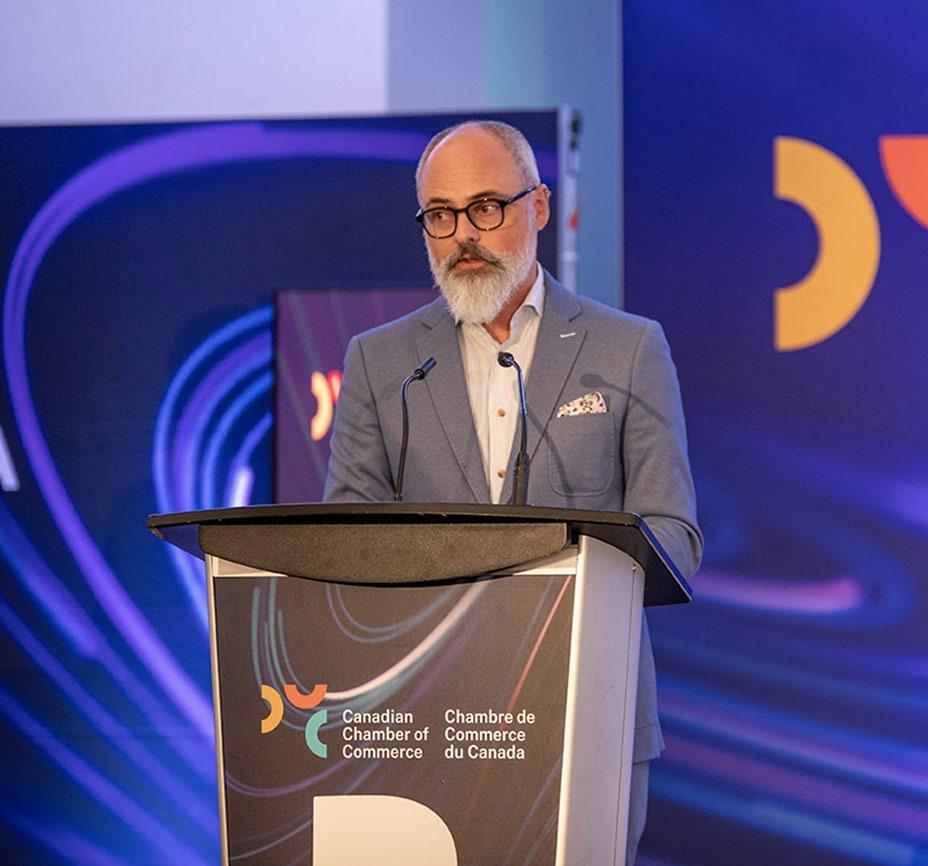
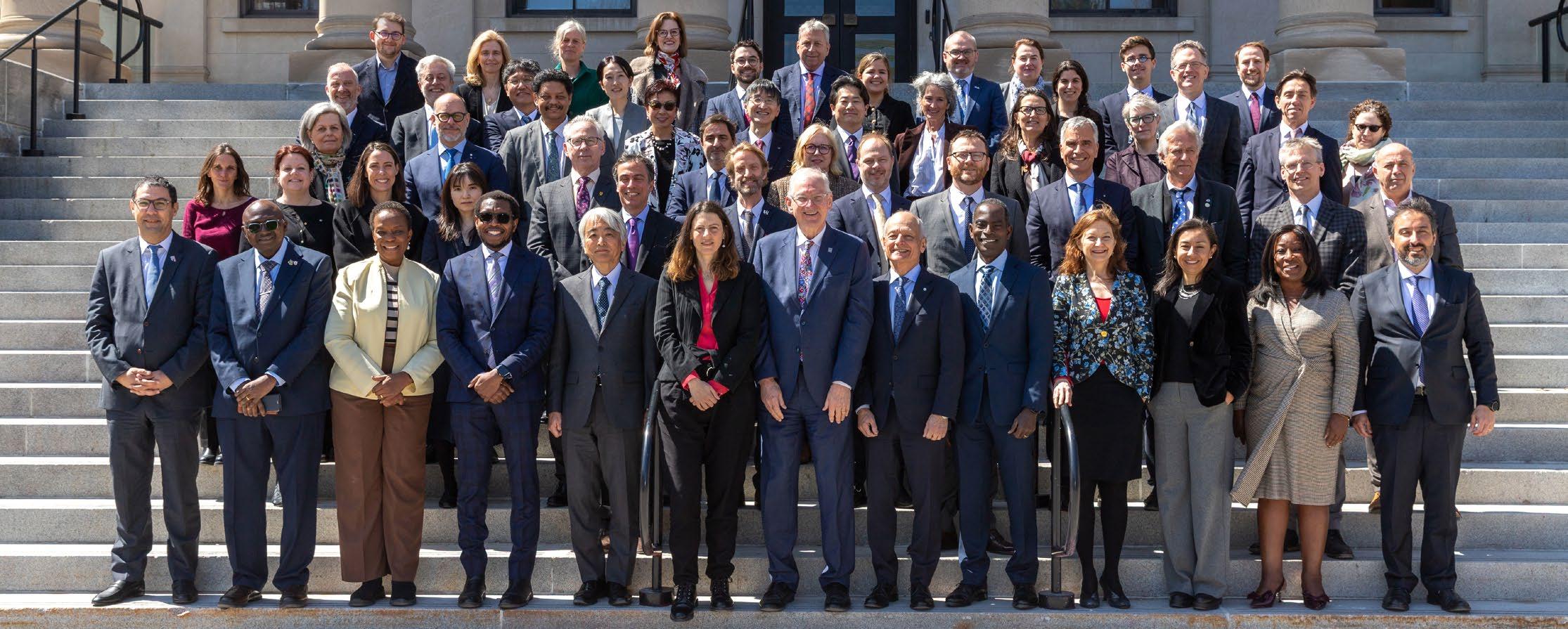
On April 22-23, leadership from 42 universities gathered at the University of Ottawa for the seventh annual U7+ Presidential Summit. Founded in 2019, the U7+ Alliance of World Universities is the first coalition of university presidents in dedicated to together identifying and committing to concrete actions that address critical global challenges. The Alliance seeks to raise the profile and impact of higher education institutions as both independent actors and government partners. Each year, in alignment with the G7’s priorities, the U7+ addresses timely topics such as climate change, peace and security, and access to education. Collectively and independently, its members have shaped government policy and have made impact as agents of change on their campuses and in their communities.
Countries across the G7 and beyond are facing a growing list of common challenges. The rapid advancement of artificial intelligence (AI) is outpacing the adoption of regulations to govern its development and use. AI has the potential to accelerate research and development, share information, and improve efficiencies in the workplace. Yet, experts are warning that if left unregulated, AI will continue to facilitate the spreading of misinformation and
lead to widespread job displacement. In addition, AI uses significant energy and water resources, worsening environmental challenges. Other key challenges facing the global community that are a focus for U7+ include the hastening of climate change, causing and exacerbating many of the world’s most life-threatening crises, such as food and water scarcity. And, while the G7 has been lauded as a gathering of leading democracies, there are increasing questions about whether there is a global erosion of democratic principles as well as of the ability to engage across difference.
At the 2025 Summit, leaders discussed challenges across four thematic sessions— Artificial Intelligence, Multilateral Engagement, Campus Dialogue, and Climate Change and Sustainability— each reinforcing the central premise that, as hubs for groundbreaking research, universities are critical contributors to solving global challenges. They graduate the next generation of leaders across all sectors of society, and foster the skills needed for new innovations as well as reasoned civic engagement.
Each year, the U7+ has deep engagement with the G7 host government regarding the Alliance’s annual communiqué, a call for partnership between universities and governments. In 2023, the communiqué was delivered to then Japanese Prime
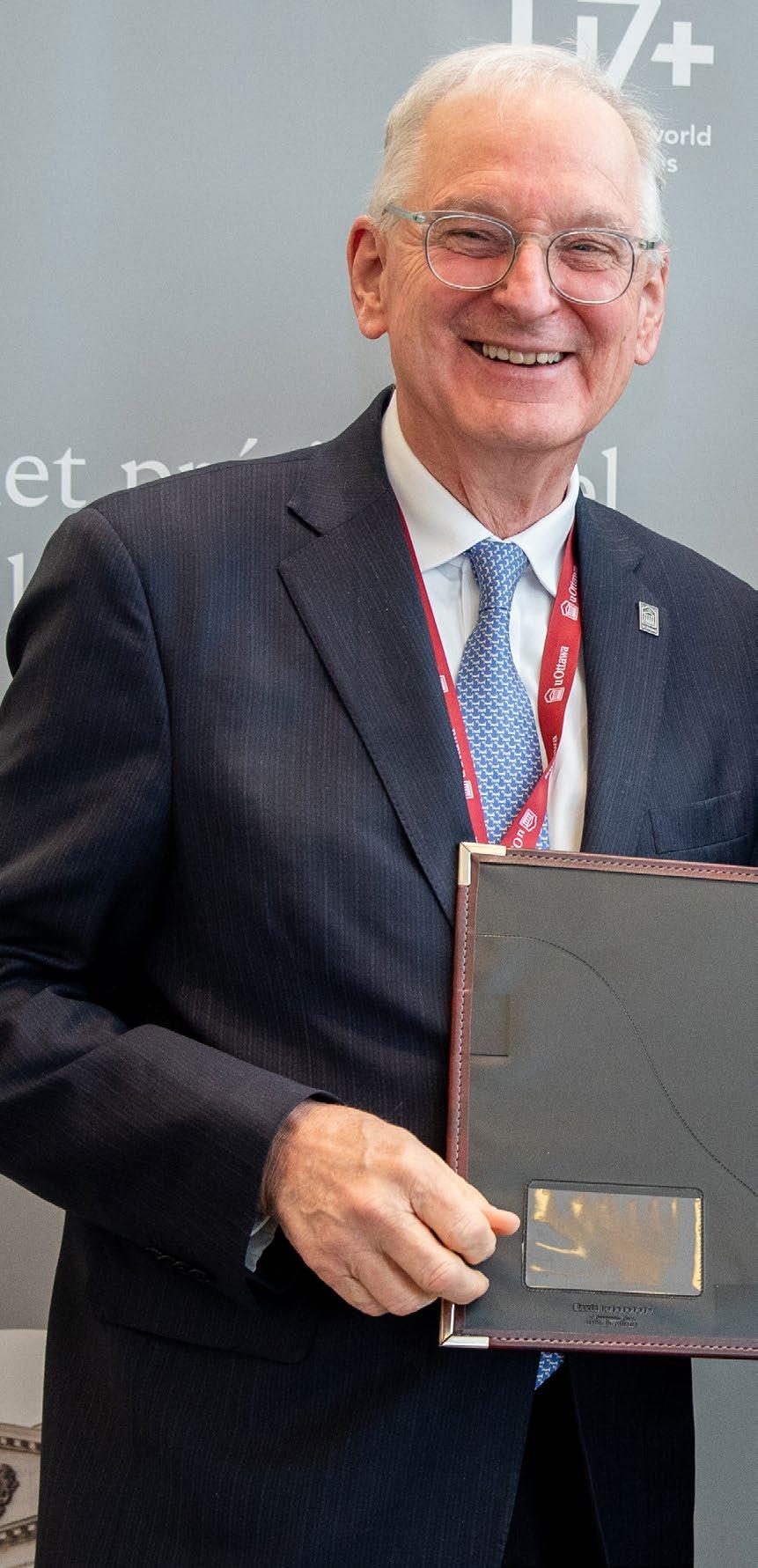
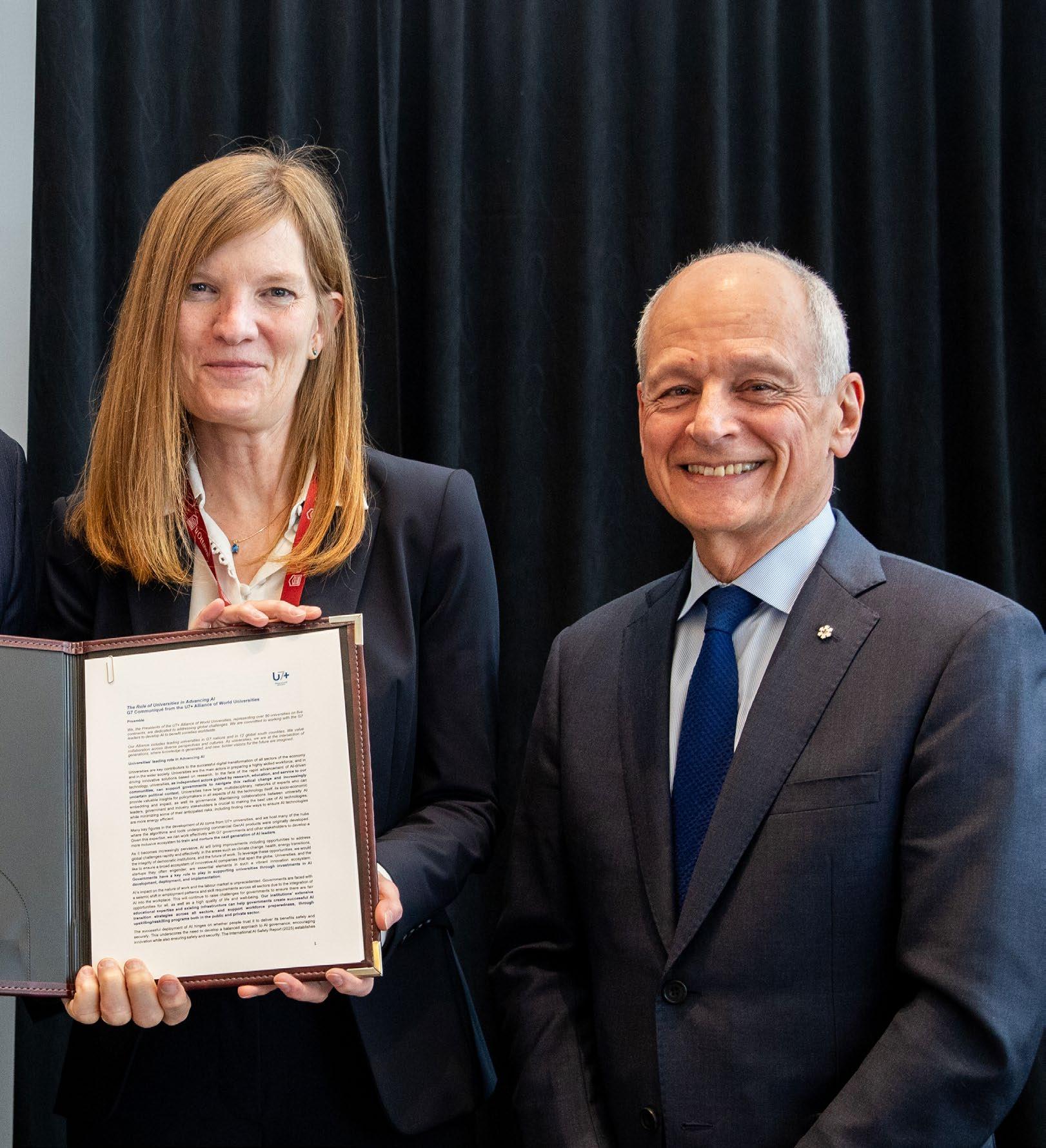
Minister Fumio Kishida, and in 2024 to the Italian Minister of University and Research, Anna Maria Bernini. This year, university leaders delivered their communiqué to the Canadian Government, the current holders of the G7 presidency, calling for action and partnership on the governance of AI. Entitled “The Role of Universities in Advancing AI”, the communiqué articulates a comprehensive rationale for why and how academic institutions can support governments in navigating the AI transition.
Cynthia Termorshuizen, Deputy Minister for the G7 Summit and Personal Representative of the Prime Minister (Sherpa) for the G7 and G20 Summits, formally accept the U7+ Communiqué on behalf of the Government of Canada. The communiqué emphasizes that universities can meaningful inform the development of responsible AI ecosystems, bridging technical innovation with societal values. Universities have been at the forefront of AI research, from the initial
development of AI, to advancing its beneficial applications, as well as, increasingly, raising awareness of its potential harms. Today, as governments are grappling with the technology’s rapid advancement into business and daily life, there is an increasing need for regulating its use. At this year’s summit, U7+ members highlighted the integral role of universities in establishing responsible AI frameworks.
AI is now being used daily in private life and business, as a tool for innovation, efficiency, curiosity. However, as it becomes more accessible and its uses broaden, there are increasing concerns regarding its impact on issues including privacy, security, the labour market, and the environment. Furthermore, the benefits of AI are unequally distributed, with many low and middle income nations at risk of being left behind. The multidisciplinary expertise found in universities, spanning law, philosophy, economics, and computer science, are essential for informing rounded policy. Their general
independence from market pressures allows them to pursue long-term research agendas and provide impartial advice to governments and industry.
The communiqué offered concrete recommendations to G7 and other governments. These included establishing an interdisciplinary AI governance consortium to advise on policy implementation and safety protocols; developing a trusted AI research and governance portal to support decision-making and increase transparency; and funding inclusive innovation through strengthened North–South collaboration, shared platforms, and novel technologies. These proposals reflect a broader vision: universities as trusted brokers, capable of bridging public and private sectors and advancing ethical, inclusive, and sustainable solutions to global challenges.
There are substantial environmental and financial costs of AI, which include energy consumption, carbon emissions, and infrastructure demands. Broader partnerships across academia and
AI,
industry are required and public investment is essential to ensuring sustainability and competitiveness. |Such partnerships offer mutual benefits to all. Universities must remain ambitious and maintain a long-term vision for AI research, including innovations in energyefficiency.
In addition to their technical contributions, universities are recognized for their role in shaping the future of work. The integration of AI into the workplace is reshaping employment patterns across sectors. The Summit addressed an expected shift in skill requirements and the need for workforce preparedness. The AI transition will create greater demand for lifelong learning programs, flexible education pathways, and coordination with employers to ensure that workers are equipped relevant skills. Higher Education can partner with governments in upskilling and reskilling the population, as well as developing tailored programs for public sector innovation, and advising on policy frameworks that protect democratic institutions and individual rights. The communiqué emphasizes that universities must update and upgrade training pathways for all students, not just those engaged in STEM (science, technology, engineering, and mathematics) programs, to sensitize them to new opportunities and risks. ➔
➔ Many U7+ members are from socalled “global south” countries outside of the G7, making U7+ a truly global alliance, with invaluable perspectives from unique local and national contexts. Disparities in access to AI training, research infrastructure, and skilled talent are contributing to unequal development outcomes. The communiqué calls for inclusive innovation, urging governments to invest in North–South academic partnerships, student exchanges, and capacitybuilding programs to address the global AI divide. These efforts aim to build a healthy AI ecosystem where novel technologies can combine to serve both local and global markets.
In addition to AI, the leaders also explored how universities need to continue to actively foster an environment on campus in which robust dialogue, academic curiosity, and civil engagement on difficult questions can thrive. This commitment to civil engagement and academic freedom is foundational to the university, but has been eroded over the past few years for a number of reasons. Members of U7+ have been sharing best practices on policies and initiatives that meaningfully strengthening a culture of civil discourse on campus, including the cultivation of dialogue amongst faculty, staff and students across different points of view and the discussion of challenging subjects.
THE COMMUNIQUÉ CALLS FOR INCLUSIVE INNOVATION, URGING GOVERNMENTS TO INVEST IN NORTH–SOUTH ACADEMIC
STUDENT EXCHANGES, AND CAPACITY-BUILDING PROGRAMS TO ADDRESS THE GLOBAL AI DIVIDE.
is increasingly integrated into curricula across all programs from the humanities to engineering. Members aspire to not only reduce their own carbon footprints but also serve as catalysts for broader societal transformation. The Alliance’s annual engagements at the United Nations Climate Change Conference (COP) has raised the profile of these efforts with key thought leaders, while offering lessons and inspiration to similar organizations.
Multilateral engagement has been a cornerstone of the U7+. In 2019, the Alliance was formed under the patronage of President Macron of France, who believed the G7 was failing to leverage one of their most readily available assets: universities. Since inception, climate action has been a priority for the U7+. Universities are aligning their climate strategies with national and international goals and collaborating with strategic partners to scale their impact. Over the years, U7+ members have regularly exchanged best practices across all facets of university operations – in research, teaching, infrastructure, and administrative procedures. From these lessons, member institutions have adopted sustainability policies, including carbon off-set programs. Sustainability
Finally, university presidents recognize that students are at the heart of the academic mission. Universities are uniquely positioned at the intersection of generations, where knowledge is transmitted and new visions for the future are imagined. Student-led initiatives exist throughout the Alliance’s work, and the voices of those students are integrated into the communiqué and government dialogue. They continually bring fresh ideas and challenge long-held conventions. Our youngest generations will be the most affected by AI and climate change, and they are thus one of the most important stakeholders. University contributions extend beyond the classroom and laboratory, influencing the frameworks through which societies understand and respond to challenges. As the world confronts these challenges, the insights and commitments of academic leadership offer a path for collaborative, valuesdriven progress. ■
universities’ unique civic and social responsibilities and address the world’s mo
We, the Leaders of the G7, recognize the potential of a human-centric approach to artificial intelligence (AI) to grow prosperity, benefit societies and address pressing global challenges. To realize this potential, we must better drive innovation and adoption of secure, responsible, and trustworthy AI that benefits people, mitigates negative externalities, and promotes our national security. We will power AI now and into the future. And we will work with emerging market and developing country partners to close digital divides, in line with the United Nations Global Digital Compact.
We must seize the potential of AI in our public sectors to drive efficiency and better serve our publics. We also recognize that small and mediumsized enterprises (SMEs), including microenterprises, are the backbone of our economies, driving growth and creating jobs. In 2024, we committed to work together to help SMEs adopt and develop new technologies, including AI, to accelerate broad-based growth. We also committed to fully leverage
the potential of AI to enable decent work while addressing challenges for our labour markets. We reiterate the importance of operationalizing Data Free Flow with Trust (DFFT) through trustworthy, cross-border data flows, and affirm its value in enabling trusted AI development and use. We recognized the transformative impact of AI for the cultural and creative sectors, including challenges to business models and job security, and opportunities to boost innovation.
We recognize that increased AI adoption will place growing pressure on our energy grids, produce negative externalities and have implications for energy security, resilience and affordability. At the same time, AI can be harnessed to promote energy innovation and bolster the resilience and reliability of our energy systems.
We hear the concerns of emerging market and developing country partners about the challenges they face in building resilient AI ecosystems, including the risks of disruption and exclusion from today’s technological revolution.
To fully realize the potential of AI for our publics and our partners, we commit to: Work together to
accelerate adoption of AI in the public sector to enhance the quality of public services for both citizens and businesses and increase government efficiency while respecting human rights and privacy, as well as promoting transparency, fairness, and accountability.
› To this end, Canada as G7 presidency is launching the G7 GovAI Grand Challenge and will host a series of “Rapid Solution Labs” to develop innovative and scalable solutions to the barriers we face in adopting AI in the public sector.
› We will leverage our existing government AI expertise to establish a G7 AI Network (GAIN) to advance the Grand Challenge; develop a roadmap to scale successful AI projects; and create a catalogue of open-source and shareable AI solutions for members. GAIN will collaborate to ensure that AI solutions in government have measurable and real benefits for our communities.
› We task relevant Ministers to explore strategic investments for accelerating public sector AI adoption in transformative ways, including for large language models and digital infrastructure.
Promote economic prosperity by supporting SMEs to adopt and develop AI that respects personal data and intellectual property rights, and strengthen their readiness, efficiency, productivity and competitiveness.
› We launch the G7 AI Adoption Roadmap, which provides clear, actionable pathways for companies to adopt AI and scale their businesses. Through this Roadmap, we commit to: sustain investments in AI adoption programs for SMEs, including supporting access to compute and digital infrastructure; publish a common blueprint for AI adoption by SMEs underpinned by proven use-cases from G7 economies; deepen our cooperation on talent exchange to integrate AI skills within businesses looking to scale; and develop tools that grow business and consumer confidence and trust in AI adoption including by leveraging the outcomes of the Hiroshima AI Process. ➔


We will collaborate with international partners, like the Global Partnership on AI, to advance this work.
› We will build resilient future workforces by preparing workers for AI-driven transitions. To do so, we will advance implementation of the 2024 G7 Action Plan for a humancentered adoption of safe, secure and trustworthy AI in the world of work, including by developing a voluntary compendium of best practices.
› We will drive economic growth, address talent shortages, and ensure equal opportunity, by encouraging girls, as well as members of communities left behind by globalization, to pursue science, technology, engineering, and mathematics (STEM) education and increasing women’s representation in the AI talent pool at all levels.
Meet the energy challenges of AI and harness its potential for advancements in energy efficiency and innovation.
› We will cooperate on innovative solutions to address energy challenges across our economies, including for AI and data centres, that support our respective national and international
commitments. We will also support innovation that improves the energy and resource efficiency of AI models and optimizes data centre operations. We will advance AI solutions to unlock energy innovation and breakthrough discoveries, including optimization of energy use, and adopt AI to help build secure, resilient, and affordable energy systems and supply chains. We will strive to identify solutions that mitigate negative externalities and generate benefits for people and preserve our natural resources. We will cooperate on knowledge-building and sharing with trusted international partners and promote AI skills and talent development in the energy sector.
› We task relevant Ministers to advance these commitments by delivering a workplan on AI and energy, before the end of this year, including working with international and industry partners to provide ongoing data analysis.
Expand mutually beneficial partnerships with emerging markets and developing country partners to increase access to AI for everyone.
› We will harness trusted and secure AI technology to promote growth and enable partners to tackle the unique challenges they face. To do this, we will leverage our combined expertise, resources and networks to bridge gaps in AI infrastructure and capacity, invest in locally led AI-enabled innovations, and voluntarily collaborate with local universities to share knowledge and access to AI on mutually agreed terms.
› We will deliver this by aligning our efforts through initiatives including AI for Development, AI Hub for Sustainable Development, Current AI, FAIR Forward, Hiroshima AI Process Friends Group, AI for Public Good, and others. Interested G7 members plan to strengthen the AI for Development Funders Collaborative.
We, the Leaders of the G7, recognize the promise of rapidly advancing artificial intelligence (AI) technologies to unlock competitiveness and deliver unprecedented prosperity for the firms, organizations and countries that integrate them into their business processes. We seek to further promote secure, responsible, and trustworthy AI that benefits people, mitigates negative externalities, and promotes our national security. We will do this through advanced AI research, worldclass commercial applications, and deep business and policy expertise. We plan to create the conditions for small and medium-sized enterprises (SMEs), including micro-enterprises—the engine of our economies— to access, understand, and adopt AI in ways that drive value and productivity. This roadmap outlines our shared vision and practical steps to help our SMEs move from uncertainty to opportunity—to shift from being AI-aware to being AI-powered. Building on the 2024 Italian Presidency’s report on Driving factors and challenges of AI Adoption and Development among companies, especially micro and small enterprises, we commit to:
We intend to double down on AI adoption efforts that connect research to practical applications, helping businesses—especially SMEs—integrate AI technologies that drive productivity, growth and competitiveness. We recognize the need to respect intellectual property rights in enabling these efforts. While we have already taken steps to promote AI adoption, scaling these efforts remains essential, including access to computing resources, expertise, and partnerships to move from AI experimentation to impact.
We intend to promote AI adoption programs that, in particular, focus on:
› Commercialization support for SMEs and startups, including access to advanced computing infrastructure connectivity and computing resources, facilitating effective use of open and closed source AI models, business mentorship, and targeted support to bridge the gap between academic breakthroughs and industry implementation in order to bring AI-enabled products and services to market;
› Cross-sector collaboration to facilitate adoption, connecting businesses with AI solutions providers, national AI research institutes, academia, innovation hubs, and clusters to accelerate deployment of AI across the economy;
› Practical use case development, including easy to implement and existing solutions, showcasing successful applications of AI across sectors and by SMEs to demonstrate return on investment and stimulate wider industry demand; and
› AI literacy and skills development, ensuring businesses—especially SMEs—have access to the tools and skilled workforce needed to adopt AI confidently and effectively.
We intend to deliver an AI Adoption Blueprint that equips governments and businesses with practical tools, evidence-based policy options, and real-world examples to accelerate SME AI integration. This will be a solutions-
ESSENTIAL, ESPECIALLY
focused resource, informed by expertdriven, collaborative research activities and workshops, in cooperation with the Organisation for Economic Cooperation and Development (OECD), and drawing on empirical G7 AI trends, adoption initiatives, and frontline SME experiences. The Blueprint will:
› Present actionable policy recommendations that governments can choose to implement to lower barriers and build enabling ecosystems for SME AI adoption; and
› Provide case studies of successful AI integration, offering concrete examples that businesses across sectors and countries can choose to replicate.
We intend to expand G7 crossborder talent exchanges to connect AI expertise with businesses—including SMEs—accelerating adoption and building a future-ready workforce.
We expect to encourage a focus in our initiatives that matches sectoral expertise with the AI competencies needed for impactful adoption. We look to further our cooperation on talent exchange to connect emerging AI research and commercialization expertise from across our world-class talent pool with real-world business needs. To do so, we plan to:
› Support AI-focused talent exchanges, including with students from G7 members, specifically targeting Al adoption projects, to bridge research with practical application, developing high-level expertise in critical areas; and,
› Connect SMEs with AI skilled workers so that they have access to AI capabilities and tools to enhance their operational efficiency and competitiveness.

We plan to build on progress achieved under the Japanese and Italian presidencies and leverage the outcomes of the Hiroshima AI Process (HAIP) to foster trust. As AI adoption accelerates, trust remains essential—especially for smaller firms deploying powerful technologies—to provide assurance to customers. We will now translate shared principles into concrete tools for SMEs, with the aim of enabling responsible AI deployment across all sectors and business sizes in a manner that fosters consumer trust and unlocks market opportunities. We will:
› Lead multi-stakeholder efforts to identify opportunities and challenges in deploying AI, aligned with the Hiroshima AI Process, in collaboration with SMEs, AI developers, international standards-setting organizations, and Global Partnership on AI members;
› Publish a toolkit to identify and explain relevant resources for AI deployers; and
› Raise awareness of the HAIP Code of Conduct Reporting Framework that the OECD is implementing. ■
June 17, 2025
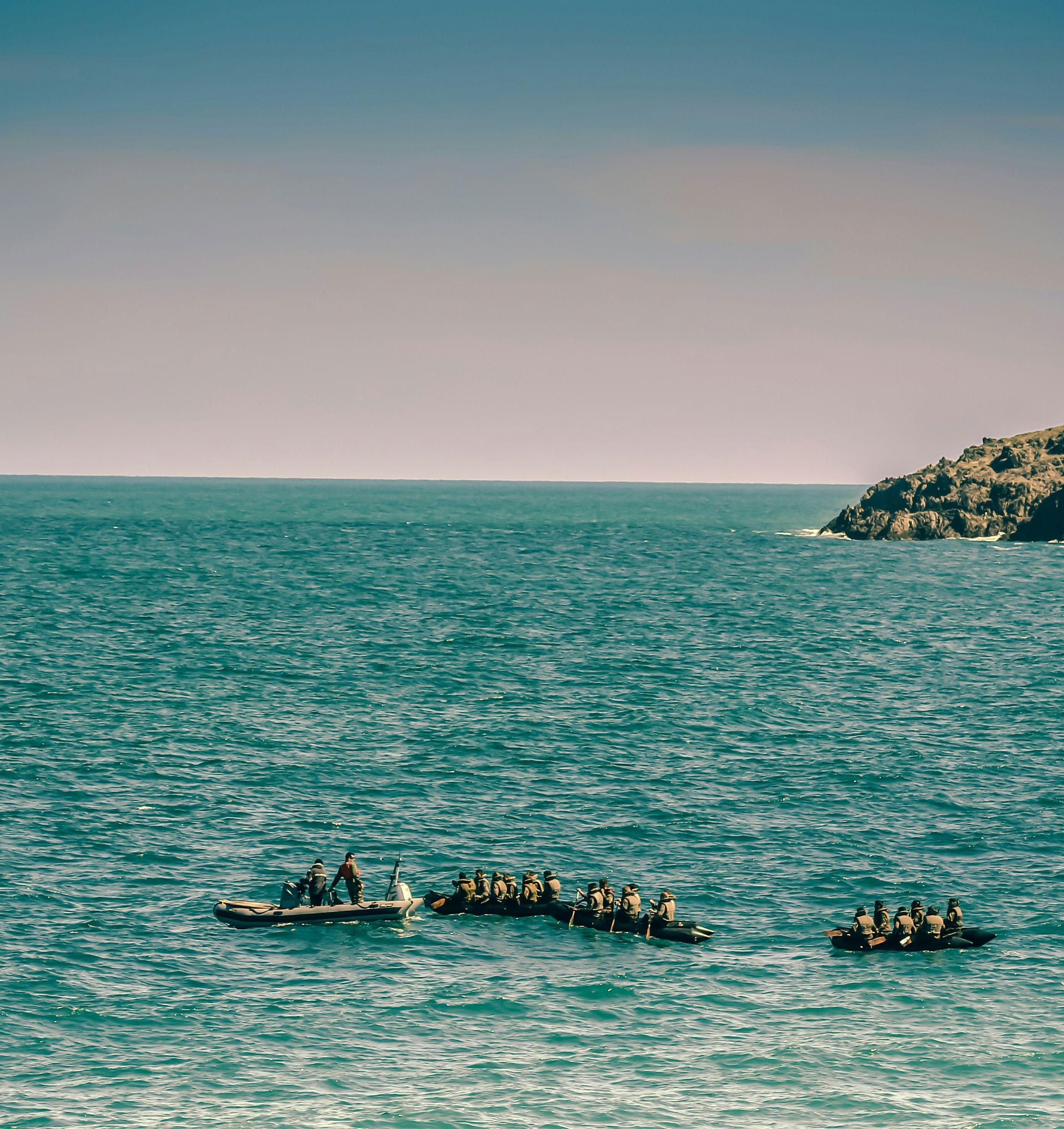

We, the Leaders of the G7, reaffirm our commitment to prevent and counter migrant smuggling
through the G7 Coalition to Prevent and Counter the Smuggling of Migrants and the 2024 G7 Action Plan to Prevent and Counter the Smuggling of Migrants. We are determined to enhance border management and enforcement and dismantle the transnational organized crime groups profiting from both migrant smuggling and human trafficking.
Migrant smuggling often has links to other serious criminal offences, including money laundering, corruption and trafficking in persons and drugs, that threaten the safety of our communities. It can expose vulnerable smuggled persons to grave and life-threatening risks, including physical abuse, sexual and gender-based violence, extortion, labour exploitation, and forced labour and criminality.
Through the G7 Coalition, we have made concrete progress on strengthening the operational and investigative capacities of our law enforcement agencies in the fight against migrant smuggling; and enhancing international cooperation between police, judicial, prosecution and border services.
We task our Interior and Security Ministers to double down on the following areas of the G7 Action Plan this year:
› Adopt a “follow the money” approach, exploring innovative solutions that leverage financial intelligence and information-sharing to identify criminal actors; use administrative or judicial processes to hold these
criminal actors accountable, seize their assets and strip them of their profits;
› Boost prevention with countries of origin and transit through strengthening border management capacities and by raising awareness of the risks;
› Collaborate with social media companies to agree on voluntary principles to prevent organized crime groups from exploiting online platforms to advertise, coordinate, and facilitate migrant smuggling operations;
› Engage with transport operators to prevent the facilitation of irregular migration, including the weaponization of migrants to undermine stability or as a hybrid warfare tactic.
We will explore, consistent with our legal systems, the potential use of sanctions to target criminals involved in migrant smuggling and human trafficking operations from countries where those activities emanate.
We will continue to leverage synergies with other global and regional initiatives aimed at fostering international cooperation.
We support the continuation of policies for legal migration that members assess to be in their respective national interests. As we work to prevent migrant smuggling and human trafficking, we remain committed to countering all forms of abuse and exploitation of migrants, ensuring protection of the most vulnerable, including refugees and forcibly displaced persons. In so doing, we will meet our respective international human rights commitments. ■
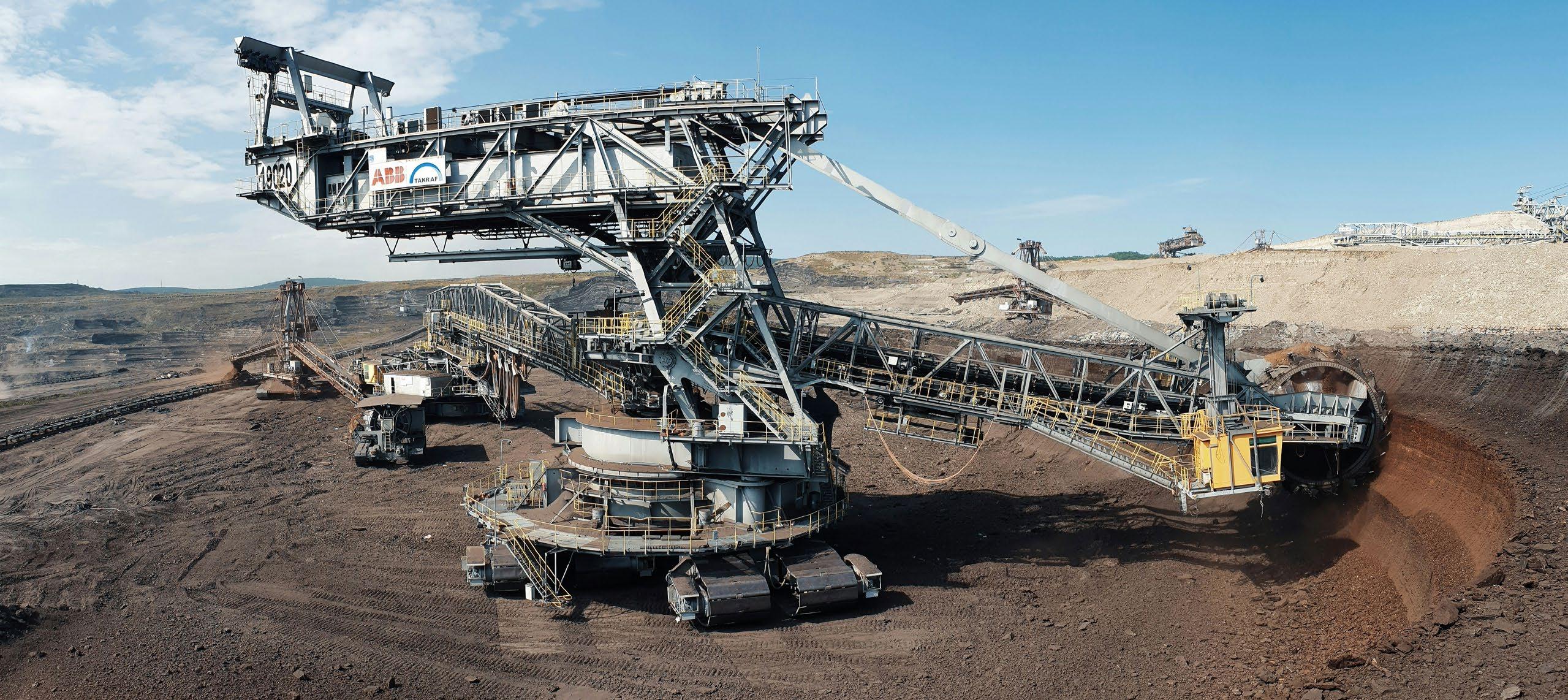
We, the Leaders of the G7, recognize that critical minerals are the building blocks of digital and energy secure economies of the future. We remain committed to transparency, diversification, security, sustainable mining practices, trustworthiness and reliability as essential principles for resilient critical minerals supply chains, and acknowledge the importance of traceability, trade, and decent work in contributing to our economic prosperity and that of our partners.
We have shared national and economic security interests, which depend on
access to resilient critical minerals supply chains governed by market principles. We recognize that non-market policies and practices in the critical minerals sector threaten our ability to acquire many critical minerals, including the rare earth elements needed for magnets, that are vital for industrial production. Recognizing this threat to our economies, as well as various other risks to the resilience of our critical minerals supply chains, we will work together and with partners beyond the G7 to swiftly protect our economic and national security. This will include anticipating critical minerals shortages, coordinating responses to deliberate market disruption, and diversifying
and onshoring, where possible, mining, processing, manufacturing, and recycling.
We are launching a G7 Critical Minerals Action Plan, building on the Five-Point Plan for Critical Minerals Security established during Japan’s G7 Presidency in 2023 and advanced by Italy in 2024. The Action Plan will focus on diversifying the responsible production and supply of critical minerals, encouraging investments in critical mineral projects and local value creation, and promoting innovation.
We are committed to action in the following areas:
Building standards-based markets
We recognize that critical minerals markets should reflect the real costs of responsible extraction, processing, and trade of critical minerals, while ensuring labour standards, local consultation, anti-bribery and corruption measures and addressing negative externalities, including pollution and land degradation.
We will develop a roadmap to promote standards-based markets for critical minerals, in collaboration with industry, international organizations, resource producing nations,
Indigenous Peoples, local communities, unions, and civil society. The roadmap will establish a set of criteria that constitute a minimum threshold for standards-based markets, strengthening traceability as a necessary measure. As part of these efforts, we will evaluate potential market impacts.
We task relevant ministers to produce this roadmap, setting out milestones to be met in fulfilling this commitment, before the end of the year.
Mobilizing capital and investing in partnerships
We recognize the need to work together to increase investment in responsible critical minerals projects within the G7 and around the world. Immediate and scaled investment is required to secure future supply chains and ensure promising mining and processing projects overcome barriers such as delays in permitting and approvals processes, market manipulation, and price volatility.
Critical minerals are an opportunity to build mutually beneficial partnerships and drive economic development, innovation and shared prosperity. We will continue to work with emerging market and developing

country partners to develop quality infrastructure, such as economic corridors. We will address investment barriers and support policy and regulatory reforms that improve the investment climate of our partners and empower entrepreneurs in low- and middle-income countries, including through the G20 Compact with Africa. Our approach will support local economic growth, build community trust, and reduce investment risks, creating the necessary conditions to attract responsible private capital.
We will continue to support the development of responsible critical minerals projects through direct partnerships with each other and by promoting private sector investment. We encourage our export credit agencies and development finance institutions (DFIs) to identify more opportunities for collaboration. We also welcome the work of the G7 DFIs to enhance coordination on critical minerals projects as an important step.
To build on this momentum, we encourage multilateral development banks, as well as private sector lenders, to make further capital available for investment in standards-based critical minerals projects, including through innovative financing. We also encourage them to leverage existing financing mechanisms to de-risk projects, maximize and mobilize private capital, and increase the resilience and security of global critical minerals supply chains.
We are committed to deepening our cooperation with mineral-rich emerging market and developing country partners. We will help build their capacity; foster local value creation; create opportunities for all; promote responsible mining practices; combat gender-based violence in the mining industry; support the improvement of artisanal mining; and diversify global critical minerals value chains.
In this spirit, to promote responsible mining-related activities in emerging mining nations, we welcome the G7 Finance Ministers commitment to strengthen the World Bank-led Resilient and Inclusive Supply Chain Enhancement (RISE) Partnership.
Interested G7 members will also support
CRITICAL MINERALS ARE AN OPPORTUNITY TO BUILD MUTUALLY BENEFICIAL PARTNERSHIPS AND DRIVE ECONOMIC DEVELOPMENT, INNOVATION AND SHARED PROSPERITY.
initiatives such as the Minerals Security Partnership and its MSP Forum, and the Intergovernmental Forum on Mining, Minerals, Metals and Sustainable Development.
Recalling our commitment to promote debt sustainability and transparency, we acknowledge the challenges faced by developing countries with mounting debt levels, including to finance infrastructure. We will promote debt sustainability through transparent and fair development finance, and we will support countries facing debt challenges including nearterm liquidity challenges. We call on all international providers of finance to do the same. This includes working within the G20 to improve the implementation of the Common Framework.
We have rich public and private innovation ecosystems with untapped potential to address strategic technology and processing gaps essential to bringing critical minerals to market.
We will intensify our collaboration to fill targeted innovation gaps in critical minerals research and development, with a focus on processing, licensing, recycling, substitution and redesign, and circular economy. We will work with partner organizations to showcase new technologies and production processes.
We look forward to the upcoming Conference on Critical Materials and Minerals, to be chaired by the United States in Chicago, in September 2025, in order to advance this work.
We welcome the endorsement of the G7 Critical Minerals Action Plan by the Leaders of Australia, India, and the Republic of Korea. ■
Gianluca Riccio, CFA
Chair
Finance Committee, Business at OECD
Co-Chair B20 Finance & Infrastructure, G20 South Africa
Deputy-Chair SB-COP Transformation Finance & Infrastructure, UN-COP30
ENABLING TRUSTED, EFFICIENT SUPPLY CHAIN FINANCE THROUGH OPEN-SOURCE PROTOCOL
Global trade is a driving force behind wealth creation and prosperity, connecting businesses worldwide in fruitful collaborations. However, the reliance on paper-based documentation hampers the efficiency of trade processes, with different data standards creating barriers to seamless digital integration.
In 1453, the Ottomans conquered Constantinople, gaining control of the Mediterranean Sea and the Silk Road. If Europeans wanted spices or silk, they would have to pay whatever price the Ottomans demanded. This forced Europeans to seek new trade routes, new frontiers, leading to Christopher Columbus’s discovery of the Americas and Vasco da Gama’s voyage around Africa to India. Economic power shifted from the Mediterranean to the Atlantic Ocean, leaving the Ottoman Empire in decline. Today, supply chain finance plays a pivotal role in balancing liquidity needs between buyers and sellers, but trade faces a new challenge globally with the increase in protectionist policies. New frontiers however are not anymore geographical, but rather digital in the form of efficiency: by optimising working capital throughout the value
chain, it bolsters financial flexibility and resilience, especially benefiting smaller suppliers by leveraging the credit strength of larger counterparts.
Tariffs and trade blockades have always been catalysts for innovation and change. The Ottoman Empire’s efforts to reshape commerce 600 years ago spurred exploration, Western colonization, the acquisition of gold, and industrialization, ultimately altering global trade routes and ushering in the modern era. Today’s evolving trade landscape is once again prompting governments and businesses to reconsider established pathways. In the current climate, marked by increasing tariffs and complex political dynamics, those who lead in developing digital solutions and fostering seamless, interoperable trade networks will be poised to set new, more inclusive standards for global commerce, shaping the way we do business globally for years to come.
Traditionally, finance mechanisms of global value chains (GVC), such as factoring, rely on paper or PDF-based commercial invoices, prone to fraud and inefficiencies. The challenge for firms to access financing is hindered by fragmented or unstable crossborder regulatory frameworks, which compounded by the lack of a universal digital protocol for data exchange, impede automation and real-time transparency in global supply chains. To address these challenges, a shift towards structured, authenticated, and interoperable data is imperative,
as well as a clear and interoperable regulatory framework is essential for firms to transition successfully.
For the “GVC Passport” — leveraging on the work started under the B20“Business at OECD” endeavor during the Saudi Arabian Presidency [B20-BIAC, 2020], a key priority is to provide firms with an authenticated, authoritative, verifiable financial fingerprint of a given entity, enabling it to operate within GVCs without the need to reproduce the same documentation on multiple occasions, nor to undergo duplicative verifications.
A “GVC Passport” would indeed allow a firm to be recognised as a legitimate business partner, compliant with the credit and financial regulations relevant to the GVC it operates in. Having verifiable credentials cryptographically encrypted and verified, would help ensure that firms comply with the rules, whilst potentially reducing regulatory burden through a single authentication process that can be verified throughout the GVC. Critically, the GVC Passport is not an additional protocol, but a system that consolidates and verifies existing certifications. By proving compliance once, only once,
through a single authentication, companies can avoid repetitive processes, strengthening overall compliance and minimizing administrative burdens across the entire value chain; with particular attention to avoid the exclusion of the small, poorly capitalized, participants. Also in this context, AI solutions might facilitate the deployment of GVC passports via the development of easy-to-use automated solutions.
Under the 2021 Italian Presidency, the B20 Italy made a concrete step forward showing how to apply the GVC Passport concept in the Trade Finance space [B20-BIAC-IOE, 2021]. Today in 2025, the Verifiable Trade Foundation (VTF) [www.verifiable.trade], put such 2021 recommendations into practice introducing a universal protocol incorporating security processes and verification of firms’ identity and data authenticity, which ensures data and digital documents exchanged between all participants are verifiable, secure, and private while retaining data sovereignty and remaining legally compliant. This transformative solution is the International Secure Trade Transfer Protocol (ISTTP), The ISTTP
leverages on open standards and verifiable credentials to facilitate a fully digital and tamper-evident trade documentation process, starting with invoices. Verifiable.Trade’s collaborative approach bridges silos, protects investments, promotes data fluidity, and ensures fair participation for all trading actors, regardless of size or location.
This protocol, the ISTTP, is designed to be a shared digital public good for global trade, whose purpose is to do for trade what HTTP and HTML did for web browsers: enable connectivity and ensure interoperability from the very beginning. Doing so, the VTF takes steps towards a fully digital and borderless trade environment, making the process more inclusive and efficient. It is shaping the first form of the GVC Passport, conceptualised by the B20-BIAC.
The World Trade Organization estimates that a significant portion of global trade, around 80-90%, depends on trade finance, which amounts to supporting approximately $20-$22.5 trillion of global trade annually. Despite this substantial volume, a trade finance gap exists with an annual estimate of $2.5 trillion, particularly affecting small and medium
enterprises (SMEs), as highlighted by the Asian Development Bank.
Verifiable Trade Foundation pioneers the development of an open-source protocol, ISTTP, aimed at transforming global trade through secure data exchange and digital identification of market participants. This shared digital foundation promotes transparency, interoperability, and trust, setting the stage for a more resilient and scalable global trading ecosystem.
Stability: Defragment and stabilize cross-border regulatory frameworks. Also ensuring data integrity and avoid any duplication by digitally mark financed invoices to prevent multiple financings, aiding regulators in harmonizing cross-border frameworks.
Agility: Allow for swiftly adapting existing supply chains and their underlying information architecture to new realities, like sudden changes in the tariff landscapes, sanction regimes or other supply chain disruptors
Productivity: Digitally sign all trade instruments to eliminate ambiguity over document provenance and free up resources in SMEs. Buyers digitally confirm receipt and acceptance of documents, forming a basis for finance.
Economic Growth: Inclusion of MSMEs, leading to the creation of more companies and jobs. Real-time data access and wider choice among financial service providers through TDG AOPI access.
Selected and Controlled Disclosure: Exchange only identifiers allowing authorized parties to access original documents, enabling faster data handling and reducing costs. vLEI Integration: Sign every document and especially structured data using “verifiable Legal Entity Identifier” (vLEI) for traceability and transparency in transactions.
Indeed, core to the ISTTP and so to the GVC Passport concept, is the use of standardised entity identification such as for example the Legal Entity Identifiers (LEI)1. The Global LEI System [www.gleif.org], a digital public infrastructure for globally interoperable organizational identity, connects national entity identification schemes and acts as an interoperability bridge that, through its decentralized trust architecture, enables discovery of businesses from any jurisdiction in the world. The LEI is a worldwide unique identifier (ISO 17442) and the vLEI (ISO 17442 Part 3) is the secure digital counterpart. Implementing strong encryption and consistent requirements globally is key to build trust in digital platforms, prevent cybercrime, and support initiatives like the Bali agenda2. Standardized global identifiers such as the LEI is recommended by the FSB as best practice for facilitating more transparent, more efficient and more secure cross-border payments; also contributing towards financial crime prevention, where criminals use a legitimate trade to disguise criminal
Ethiopia, holder of the world record for most trees planted in a day, is spearheading climate action to catalyze social and developmental transformations. This year, we restricted imports of gas and diesel cars for electric vehicles, boasting one of the greenest power grids globally. With history of exceeding ambitious commitments, Ethiopia actively fulfils the goals of the United Nations Framework Convention on Climate Change (UNFCCC), the Paris Climate Change Agreement, the Agenda for Sustainable Development, and Agenda 2063: The Africa We Want. We remain dedicated to sharing success stories about our green legacy with the world, emphasizing our ongoing commitment to progress.
The Green Legacy initiative, launched Prime Minister Abiy Ahmed in 2019, represents our resolute effort to combat deforestation, reverse land degradation, and promote reforestation and afforestation nationwide. Beyond its impact on climate change, this initiative has directly helped alleviate poverty, enhance food security, and bolster economic development. By mobilizing over 20 million Ethiopians, we’ve created green jobs in forestry and related industries that have further stimulated economic growth while empowering local communities to
INDEED, CORE TO THE ISTTP AND SO TO THE GVC PASSPORT
IS THE USE OF STANDARDISED ENTITY IDENTIFICATION SUCH AS FOR EXAMPLE THE LEGAL ENTITY IDENTIFIERS (LEI)1.
Efficient, transparent, and sustainable global trade is vital for peace, growth, and cooperation among nations. However, the lack of true interoperability forces repeated registration and interface building, or exclusion. Paper-based documentation and fragmented data systems hinder progress towards a more inclusive and eco-friendly trading environment.
become stewards of their natural resources.
With an expanded target of 6.5 billion new tree seedlings this year alone, this initiative transcends symbolism, serving as a tangible manifestation of Ethiopia’s dedication to mitigating climate change and safeguarding its natural heritage for future generations.
processes. The Global LEI System enables effective digital counterparty verification globally by providing this interoperability layer ensured with rigorous governance and high data quality, increasing transparency and traceability, hence enabling investors and/or counterparties to have certainty in terms of whom they are transacting with. This would not only reduce the risk of fraud markedly, but thanks to the traceability offered, it would be a significant contribution to anticorruption efforts and towards the “zero corruption” targets.
As a practical example, the Verifiable. Trade’s demo story follows Farah, a small business owner from Morocco, as she navigates the global market using ISTTP. Through this innovative protocol, Farah gains access to international buyers, secures financing, and scales her business, showcasing the tangible impact of digital trade transformation on individual livelihoods and global market participation.
One of the key objectives of the UN FCCC is to stabilize greenhouse gas concentrations in the atmosphere at a level that prevents dangerous humancaused interference with the climate system. With this initiative, we are actively contributing to this goal by sequestering carbon dioxide from the atmosphere and mitigating the effects of deforestation, which is a significant contributor to global greenhouse gas emissions.
The Verifiable.Trade Foundation’s commitment to developing an open, neutral, and inclusive technological base for global trade sets a new standard in digital trade innovation. By fostering collaboration, trust, and interoperability, ISTTP paves the way for a more sustainable, efficient, and accessible global trading system, benefiting all stakeholders.
is not without its challenges. Ensuring the long-term survival and growth of newly planted trees requires sustained commitment, adequate resources, and effective management strategies. Additionally, addressing the root causes of deforestation, such as agricultural expansion and unsustainable land use practices, remains a complex issue that necessitates comprehensive solutions involving multiple stakeholders.
As the international community gears up for the crucial COP24 meeting in Poland, Ethiopia’s green legacy stands as a testament to what can be achieved when nations prioritize environmental stewardship and climate resilience.
Importantly, the Verifiable.Trade doesn’t compete with trade platforms; it creates a reliable foundation for better, more secure, and fair functioning. Without a targeted and open design of trade digitization, few will dictate rules to the many. The VTF is pioneering by establishing a shared foundation supporting the global trade digital ecosystem. This enables companies worldwide to benefit from digitization and grow successfully. The foundation is an open-source, freely accessible protocol collaboratively developed, maintained, and promoted by the VTF, without intellectual property rights, copyright restrictions, or commercial or political interests. ■
However, it is also only a piece of the ongoing solution. I call on the global public and private sector to join us to identify, execute and expand efforts to mitigate and reverse climate change for those that are most vulnerable, and then eventually for the rest of the world.
Gianluca Riccio, CFA, currently serves Chair of the “Business at OECD” (BIAC) Finance Committee; Co-Chair of the B20 Finance & Infrastructure Taskforce, and Deputy-Chair of the Sustainable-Business COP30 for “Transition Finance & Investments”. In addition, Gianluca is also member of the Technical Committee for Financial Services to the ISO (TC68). Gianluca serves in the Advisory Boards of C2FO, USA.
Gianluca has over 25 years’ experience in the banking industry. His experience combines strategy, risk management, business, transformation, data & analytics, regulatory and capital needs. Over time his tenure has ranged from managing risk in different regions and economic environments including management of non-performing assets during turbulent economic periods, to successfully leading a broad range of end-to-end strategic transformation programmes.
He worked for UBS Investment Bank from 1997 to 2010 and for Lloyds Banking Group from 2010 to 2025, where he held a series of progressively senior leadership positions.
Furthermore, the Paris Climate Change Agreement, adopted in 2015, aims to limit global temperature rise to well below 2 degrees Celsius above pre-industrial levels, with efforts to limit the increase to 1.5 degrees Celsius. Ethiopia’s Green Legacy initiative aligns perfectly with the objectives of the Paris Agreement by enhancing carbon sinks through reforestation and afforestation activities, which are crucial in mitigating climate change and safeguarding vulnerable ecosystems.
Ethiopia’s Green Legacy initiative
In the face of unprecedented environmental challenges, Ethiopia’s Green Legacy reminds us that hope springs from action and that every tree planted today holds the promise of a greener, more sustainable tomorrow for generations to come. It is imperative that we rally behind Ethiopia’s visionary leadership and work together to build a more resilient and prosperous future for all. ■
1. In 2011, the G20 urged the Financial Stability Board (FSB) to recommend a global Legal Entity Identifier (LEI) and governance structure. This led to the Global LEI System, which now uniquely identifies legal entities in global financial transactions. The FSB encourages the use of LEIs for cross-border payment identification.
2. The International Monetary Fund (IMF) and the World Bank launched the Bali Fintech Agenda [IMF, 2018]: 12 policy factors aimed at supporting countries to harness benefits and opportunities in financial technology, while managing risks.
Today’s leaders and organizations are grappling with greater divisions and contradictions that present barriers to change and lasting impact. By bringing diverse stakeholders and ideas together, inspiring confidence, and working beyond traditional boundaries, APCO builds the un/common ground upon which progress is made.
What are you grappling with? Contact us and see how we can help your team at: apcoworldwide.com
In a world facing unprecedented global crises—from climate change to democratic erosion—Université Laval is positioning itself as a beacon of interdisciplinary innovation and international collaboration.Faced with many crises—in climate change, geopolitics, trade, democracy, etc.— our world needs to be understood and analyzed in its entirety. Today’s challenges know no boundaries. Neither geographical nor disciplinary. They require integrated responses, based on a comprehensive and nuanced understanding of international dynamics. That is why Université Laval is firmly committed to training a new generation of leaders capable of thinking about the world differently, to better transform it.
The crises we are experiencing today cannot be effectively addressed through isolated disciplinary prisms. The COVID-19 pandemic, immigration tensions, and widespread disinformation are all complex phenomena that require cross-analysis. All disciplines need to engage in dialogue to produce relevant diagnostics and sustainable solutions
For public policy makers, international organizations, and civil society actors, it has become crucial to be able to rely on experts capable of building bridges between various types of knowledge and anticipating the systemic effects of decisions made.
Université Laval is committed to this path. As the first French-language university in North America, our institution, located in Québec City, Canada, has made it its mission to work together to have a greater impact in a changing world. Our Internationalization Strategy, adopted in 2024, enables our academic
community to enrich its international experience and play its role on the global stage through collaboration, innovation, and shared responsibility.
■ Over 6,000 international students from 134 countries annually.
■ More than 150 bachelor’s and master’s programs with an international profile.
■ 50% of research publications involve international collaboration.
In research, we understand how critical collaboration with research teams in other countries is to advancing science. Over 50% of our researchers’ scholarly publications are produced in collaboration with at least one scientist from another country.Université Laval, a pioneer in Québec, in Canada, and in the French-speaking world, has created models of core research entities based on equitable and mutually beneficial relationships, in partnership with other research institutions around the world. We always keep the same goal in mind: to be the university that actively contributes to solving global challenges through collaboration between disciplines and research teams.
The Graduate School of International Studies
It is precisely this vision that drives the Graduate School of International Studies (ESEI) at Université Laval, the largest French-language school of international studies in Canada. Since its inception, ESEI has established itself as a model to follow, offering master’s and doctoral programs designed to develop critical, rigorous, and interdisciplinary thinking. These courses enable students to decipher international issues and address them in all their complexity.
ESEI also offers short programs and
courses that address specific needs, such as diplomacy, international trade, sustainable development, food security, etc. These flexible and practical formats enable working professionals and graduate students to hone their skills in specific areas while benefiting from high-level academic supervision.
Today, ESEI graduates work in government departments, international organizations, multinational companies, and academia. With a placement rate of 92%, the School demonstrates its ability to meet labour market needs while training people who are committed, critical, and open to the world.
The many skills developed at ESEI include interdisciplinary analysis, conflict resolution, intercultural communication, geostrategy, and risk management. These skills are essential for navigating an increasingly complex and uncertain international environment.
ESEI is also a community of nearly 70 researchers affiliated with some 10 research units. Their work covers a wide range of issues, including climate governance, international security, migration, armed conflict, the discoverability of digital content, and food security.
These research projects, rooted in real-world situations, foster dialogue with public policy makers and international organizations. They help inform public policy, anticipate crises, and propose innovative solutions. ESEI thus builds bridges between academia and decision-making bodies, promoting open, rigorous, and committed science.
The School is a true forum for discussion, hosting a network of resident experts and working with stationed diplomats. ESEI also stands out for the richness of its scientific

events. In January 2025, for example, Bob Rae, Canada’s ambassador to the UN, was the first guest speaker at the Brian Mulroney Lecture Series on our campus. He spoke to a packed audience about the limits of state sovereignty in the context of international collaboration.
ESEI students regularly participate in international simulation competitions (NATO, UN, Lex Climatica), which enable them to put their knowledge into practice in realistic and challenging contexts. The School is organizing a simulation of international climate negotiations this fall, just weeks before the next COP in Brazil. This will give students a unique glimpse behind the scenes of climate diplomacy.
These gatherings, conferences, and activities are all opportunities to confront ideas and initiate a dialogue on theoretical and practical knowledge.
A New Chapter: The Carrefour international Brian-Mulroney Université Laval, a key player in international studies, is embarking on a new chapter with the creation of the
“THIS IS THE CRITICAL ROLE OF UNIVERSITIES ON THE WORLD STAGE: WORKING TOGETHER TO PRODUCE RESEARCH DATA THAT WILL THEN INFORM DECISIONS.”
François Gélineau,
Université Laval
Carrefour international Brian-Mulroney. Thanks to this initiative, a new signature building will be erected on our campus, providing our community with a unique space for learning, research, and innovation, in close collaboration with government and non-government partners.
The inspiration for this Carrefour international comes from former Canadian Prime Minister Brian Mulroney, who firmly believed in the importance of international studies to better understand our world and take action. He dreamed of seeing Quebecers occupy key positions in international organizations and was able to rally many people to his vision.
■ Université Laval’s Brian-Mulroney fundraising campaign raised an impressive $87 million, reflecting strong community support for its global leadership in international studies and its commitment to shaping the future through education, diplomacy, and innovation. The success of this campaign demonstrates the community’s deep trust in the University, solidifying its position as a centre of excellence on global issues.
This new space will enable Université Laval to accommodate ESEI and host experts in international studies, diplomats, and scientists from around the world.
The Carrefour international will foster the development of committed leaders and preserve the legacy of the late Brian Mulroney, paying him a lasting tribute. It will act as a catalyst to strengthen the overall impact of ESEI and Université Laval. It will embody our desire to make internationalization not just a distant goal, but a concrete driver for social, economic, and environmental transformation. ➔
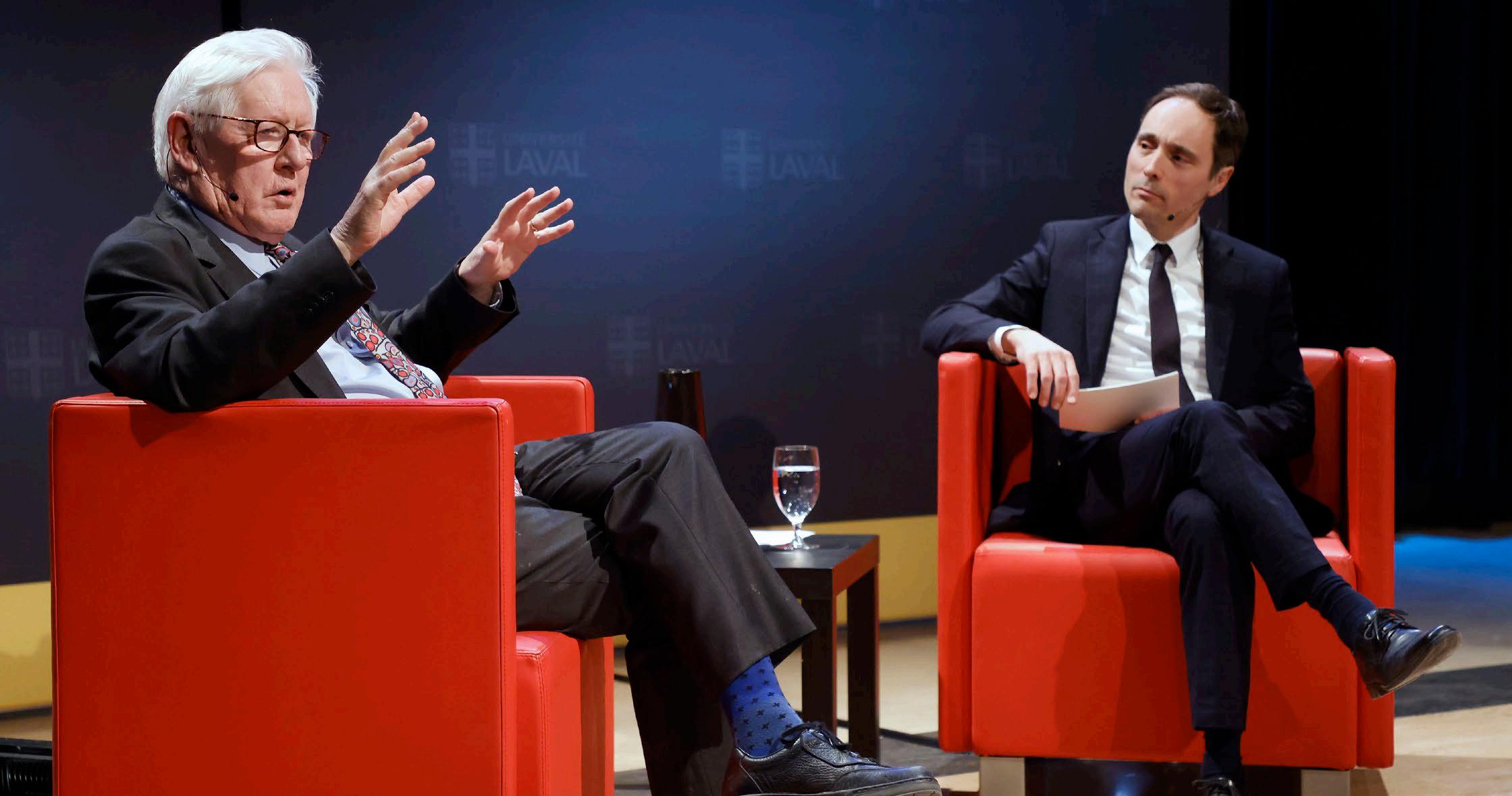
Fostering Global Dialogue
In a world that demands an understanding of networks and interdependencies, Université Laval embodies a way forward. Through its deliberate interdisciplinarity, its international foothold, and its dedication to training a new generation of experts, it contributes to building a more just, sustainable, and united world.
■ Université Laval maintains over 860 active partnership agreements with institutions across 80 countries, fostering global collaboration in research, education, and innovation as part of its commitment to being a high-impact university on the world stage.
We are constantly working to develop and strengthen these partnerships and encourage the development of international networks. Nurturing relationships with our partners around the world enables us to go further together.
In these times of polarization and geopolitical tensions, universities represent neutral ground, allowing for respectful public debate, enlightened by scientific rigour. Université Laval is committed to scientific diplomacy,
AT UNIVERSITÉ LAVAL, WE FIRMLY BELIEVE THAT INTERNATIONAL STUDIES AND RESEARCH ARE NOT AN OPTION, BUT A NECESSITY. A NECESSITY TO UNDERSTAND, ANTICIPATE, INNOVATE— AND ABOVE ALL, ACT.
an emerging field that enables us to influence major social debates outside the political arena.
For example, we have developed extensive expertise in northern research and are very active within the Arctic Council. This position enables us to encourage international collaboration between research teams and to dialogue with the governments of different countries, even as tensions over Arctic sovereignty persist.
This is the critical role of universities on the world stage: working together to produce research data that will then inform decisions. And advance science and spread knowledge for the benefit of our societies.
At Université Laval, we firmly believe that international studies and research
are not an option, but a necessity. A necessity to understand, anticipate, innovate—and above all, act.
Université Laval’s commitment to internationalization is not merely aspirational—it is a strategic imperative. By cultivating global partnerships, interdisciplinary research, and leadership development, the university stands as a model for how higher education can shape a more just, sustainable, and interconnected world. ■
François Gélineau is Vice Rector, International Affairs and Sustainable Development at Université Laval.
Université Laval: Located in the heart of Québec City—a UNESCO World Heritage site celebrated for its rich history and natural beauty—Université Laval is a thriving academic community of 65,000 students, faculty, and staff. Rooted in a northern identity shaped by the rhythms of the seasons and a spirit of resilience, the university has cultivated a deep commitment to sustainability. As the oldest francophone university in the Americas, Université Laval has emerged as a global leaderin climate action and sustainable development, driven by a collective vision to shape a more just and resilient future.
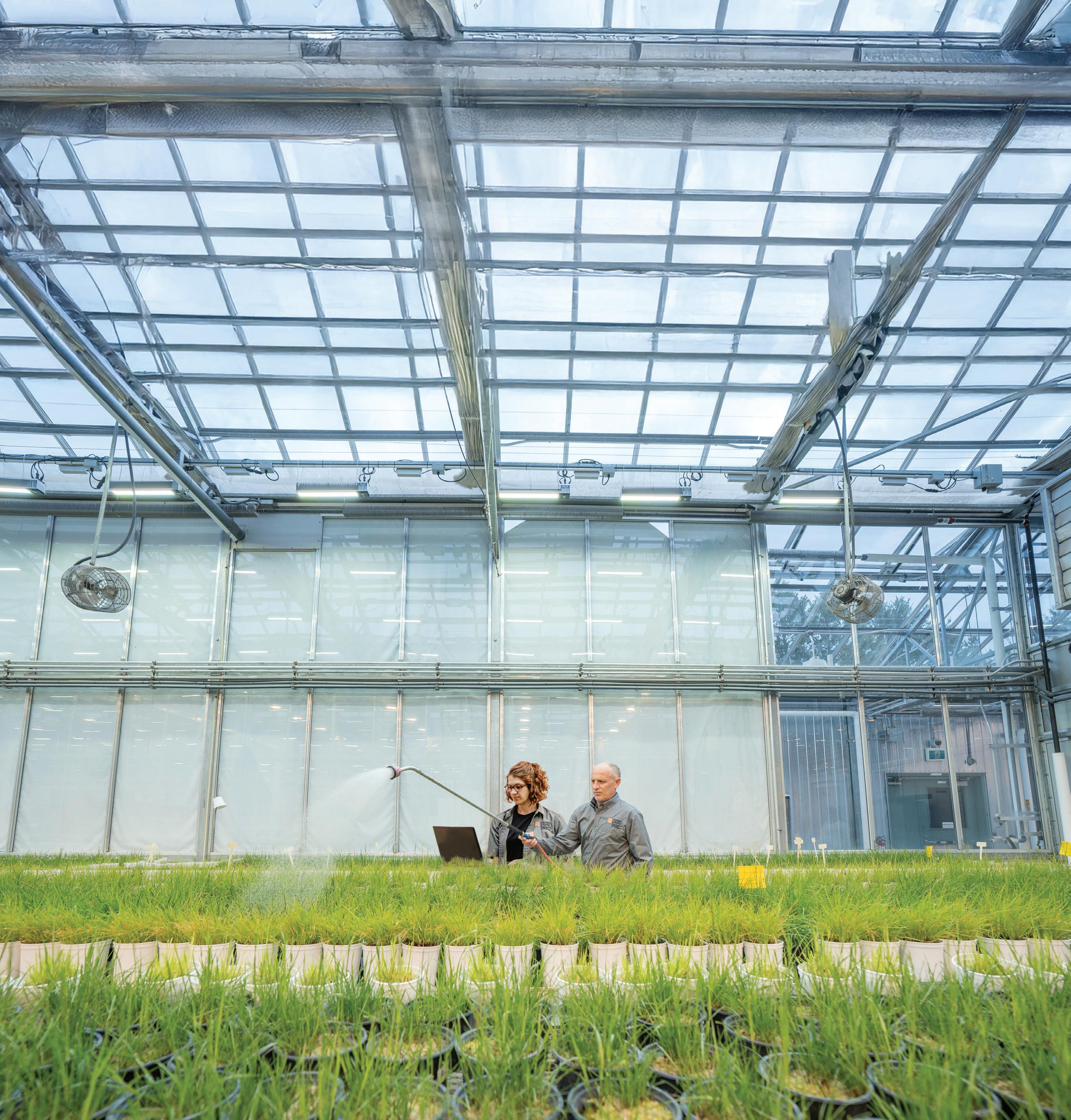
“One of the most effective ways to combat climate change is through education and the sharing of knowledge,” says Vice Rector Gélineau.
Recognizing this, Université Laval’s Sustainable Development Profile, available across numerous academic programs, equips students with the tools to address complex sustainability challenges aligned with the United Nations’ 17 Sustainable Development Goals (SDGs).
In 2023 alone, over 315 courses integrated SDG 13 (Climate Action), reaching more than 15,650 students.
The university also offers a unique interdisciplinary master’s program— Chantier d’avenir en action climatique (Climate Action Initiative for the Future)—designed to train future leaders capable of guiding organizations and communities through the climate transition.
Research for a Sustainable Future
Université Laval has taken the same approach in supporting research, creation, and innovation initiatives for the benefit of communities and the planet.
“Our vision revolves around three strategic priorities – fostering inclusive research that values a diversity of perspectives and disciplines; enabling connected, socially engaged research that leverages digital technologies; and promoting sustainable research aligned with the United Nations SDGs,” Gélineau said.
Between 2017 and 2021, faculty produced 492 publications related to SDG 13, according to Elsevier bibliometric data.
A cornerstone of this effort is the Institut Environnement, Développement et Société (EDS Institute), founded in 2004. This interdisciplinary hub fosters solution-oriented research, public
UNIVERSITIES PLAY A CRITICAL OLE IN INTERNATIONAL EFFORTS TO MITIGATE AND ADAPT TO THE EFFECTS OF CLIMATE CHANGE. WE HAVE A DUTY TO GUIDE THE TRANSFORMATION OF OUR SOCIETIES TOWARD LOW-CARBON, SUSTAINABLEDEVELOPMENT.
engagement, and lifelong learning. One of its flagship initiatives, the Mouvement des entreprises vertes (Green Business Movement), supports the ecological transition of businesses in the Québec City region, promoting sustainable practices and energy innovation.
Another standout initiative is Sentinel North, a cross-disciplinary research and training program coordinated by Université Laval. Over the past decade, it has united more than 200 researchers, 700 students, and 40 ministries and international partners from 20 countries. Its 90 research teams address critical issues such as permafrost thaw, Arctic biodiversity, and sustainable development in northern communities.
“Thanks to Sentinel North’s work, Université Laval has become a leader in understanding the rapidly changing northern environment and its impacts on ecosystems, human health, and infrastructure at the northern and global levels. This is of fundamental importance,” said Gélineau.
Université Laval also manages the Montmorency Forest, the world’s largest teaching and research forest. Spanning 397 square kilometers, it serves as a living laboratory for boreal ecosystem research and sustainable forest management. It is used for education, research, and public awareness. Researchers are collecting real-time data and experimenting with sustainable forest management practices.
Université Laval’s 2023–2028 strategic plan places climate action at the heart of its teaching, research, governance, and community engagement.
“Our approach to reducing carbon emissions, transitioning to renewable energy, and adapting to climate change is grounded in four key actions: measuring, reducing, offsetting, and adapting,” explains Gélineau.
Since 2015, the university has achieved carbon neutrality, with compensation, for its Scope 1 and 2 greenhouse gas emissions. It aims to reduce emissions by 70% from 2006 levels by 2030, in line with global efforts to limit warming to 1.5°C.
The university’s sustainable investment strategy is equally ambitious. It targets a 30% reduction in the carbon footprint of its equity portfolio by 2025 and 50% by 2030. This is achieved by limiting exposure to fossil fuel reserves and prioritizing investments aligned with the UN Principles for Responsible Investment.
Université Laval also plans to reduce its energy intensity by 20% by 2030 (compared to 2012–13 levels) and transition to 100% renewable energy by 2035.
“Our greatest success is the mobilization of our community— students, faculty, staff, and partners— around climate action,” says Gélineau.
The university fosters engagement through awareness campaigns, participatory workshops, and partnerships with external organizations. These initiatives are designed to meet real societal needs and create lasting impact.
A key element of this approach is the University’s ability to build strong partnerships with external organizations from all sectors of society. These climate initiatives must be based on real needs and have a genuine societal impact.
“This community engagement and partnership fosters a shared sense of responsibility and prepares our community members to be agents of change in their field, and beyond,” Gélineau said.
Université Laval’s efforts have earned it global recognition. Since 2022, it has ranked among the top 2% of universities in the Times Higher Education Impact Rankings. In 2023, it reached the prestigious STARS (Sustainability Tracking, Assessment and Rating System) Platinum rating, one of the
highest distinctions for sustainability in higher education.
The university also leads UniC, an international academic network for climate action. With over 1,700 students from 60+ countries, UniC fosters collaboration through workshops, events, and participation in global forums such as the Climate Week NYC.
Université Laval is an active participant in the UNFCCC COP process, sending student and faculty delegations to recent conferences including COP28 in Dubai and COP29 in Baku. These engagements reinforce its commitment to experiential learning and global climate leadership.
“As the climate crisis intensifies, the role of universities as agents of change has never been more critical,” says Gélineau. “Université Laval embraces this responsibility by embedding sustainability into every aspect of its mission.”
Over the past two decades, the university has transformed its vision into action—educating future leaders, advancing climate science, and building a more resilient and equitable world.
“We invite individuals and organizations everywhere to join us on this collective journey toward meaningful climate action.” ■
François Gélineau is Vice Rector, International Affairs and Sustainable Development at Université Laval.
Université Laval: Located in the heart of Québec City—a UNESCO World Heritage site celebrated for its rich history and natural beauty—Université Laval is a thriving academic community of 65,000 students, faculty, and staff. Rooted in a northern identity shaped by the rhythms of the seasons and a spirit of resilience, the university has cultivated a deep commitment to sustainability. As the oldest francophone university in the Americas, Université Laval has emerged as a global leaderin climate action and sustainable development, driven by a collective vision to shape a more just and resilient future.
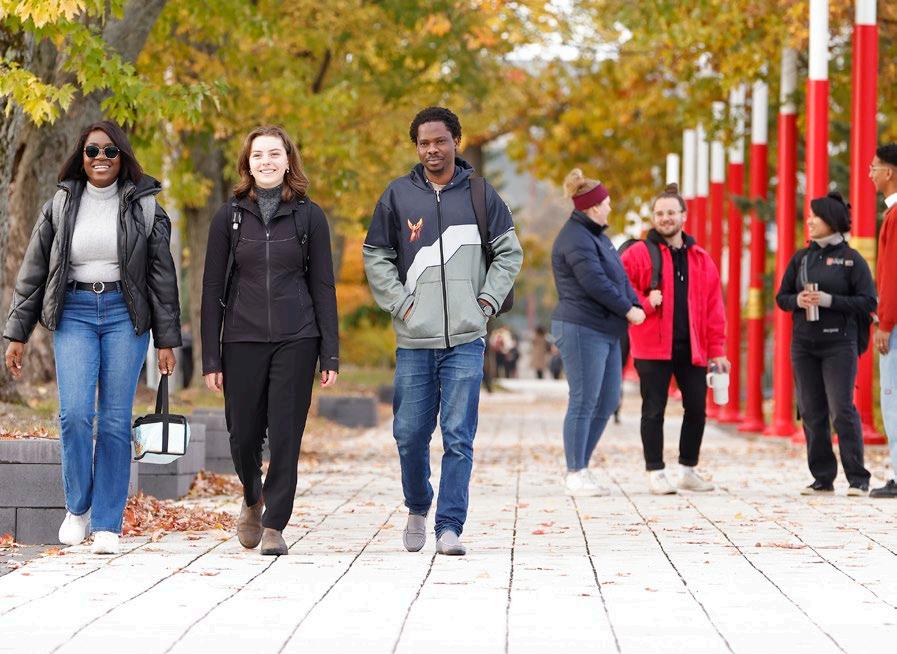
Simon Tribelhorn CEO, Liechtenstein Bankers Association (LBA)

The world of private banking is changing. The next generation is investing with a focus on sustainability, social impact, and technology. At the same time, geopolitical uncertainty demands that banks connect values across generations while carefully managing risks. Liechtenstein, with its stability and trustworthiness, offers innovative solutions for these new wealth strategies. More than ever, banks are called upon not just to preserve wealth, but to actively shape the future.
By 2045, around USD 84 trillion will be transferred to the next generation –the largest shift of wealth in history. But with this shift comes a new perspective: wealth is no longer viewed solely as a means of security or prosperity.
Increasingly, it is seen as a powerful tool to address global challenges such as climate change, inequality, and rising healthcare costs. Impact investing is a strong signal of this change. Once a niche, it is steadily becoming a core element of modern portfolio strategies, combining financial returns with environmental and social objectives.
The Gates Foundation, for example, has already mobilised more than USD 100 billion for philanthropic purposes and aims to double that by 2045. It is a striking example of how capital can generate returns while also driving meaningful change.
The world is being reshaped by rapid geopolitical shifts. Wars in Ukraine and the Middle East, escalating trade conflicts, and disrupted supply chains
are forcing companies to rethink their models and explore new markets. Production is relocating, sourcing is diversifying, and globalisation is taking on a new form.
In this context, interest in sustainable investment may appear to be fading. Yet the reality is the opposite: the urgency and relevance of such investments have never been greater. Beyond their moral dimension, they provide long-term economic resilience and societal value.
Private banking is undergoing a fundamental reorientation. As Peter F. Drucker famously said: “The greatest danger in times of turbulence is not the turbulence itself, but to act with yesterday’s logic.” Banks must therefore adapt proactively to today’s

BY
USD 84 TRILLION WILL BE TRANSFERRED TO THE NEXT GENERATION –THE LARGEST SHIFT OF WEALTH IN HISTORY.
geopolitical and economic upheavals. They can no longer afford to be seen solely as custodians of wealth. They must become creators of strategies that align financial returns with environmental responsibility and social value. The younger generation in particular demands personalised approaches that reflect their values –for instance, investments in renewable energy, circular economy, or social enterprises.
At the same time, uncertainty requires deeper global awareness. Advisors must actively manage risks through diversification and resilient market choices, while also unlocking opportunities in innovative sectors. Technology plays a key role here: artificial intelligence enables sharper market analysis, while blockchain enhances transparency and security. Together, these tools make private banking not only more complex but also more effective and future-ready.
Liechtenstein:
A Strong Partner in Uncertain Times Amid these global shifts, Liechtenstein positions itself as a reliable partner for long-term wealth management. The
principality combines political stability and a AAA rating with full market access to both the EU and Switzerland. Its banking sector blends long-standing tradition with forwardlooking innovation – Liechtenstein was the first country worldwide to enact a dedicated blockchain law. Sustainability and growth go hand in hand in its cross-generational approach to investment. In impact investing, Liechtenstein is a clear pioneer. Banks – notably LGT, the largest and internationally
recognised leader in sustainability and impact finance – develop tailored strategies that connect ecological and social goals with competitive returns. Cutting-edge tools such as AI further enhance efficiency, transparency, and trust.
With top standards in legal certainty, data protection, and compliance, Liechtenstein offers a unique ecosystem where banks are shaping the future with foresight, responsibility, and a clear goal: to unite performance with positive impact. ■
Simon Tribelhorn (born 4 July 1972) is the Director of the Liechtenstein Bankers Association. After his studies at the University of St. Gallen, he worked as a lawyer in the banking industry for six years, most recently for four years as a legal advisor in the legal and compliance department of a major Swiss bank. He has worked for the Liechtenstein Bankers Association since February 2006, initially as a lawyer and then as Deputy Director. In January 2010, he was appointed Director of the most important financial industry association in Liechtenstein.
Simon Tribelhorn, a Swiss citizen, is especially interested in the future viability of the financial centre. Sustainability in all areas is an essential factor in this regard. Maintaining the stability and competitiveness of the financial centre is one of the Director’s most important goals. He is convinced that an ongoing innovation process and early opportunity/risk management is just as indispensable as professional public relations work. He is also committed to the further development of sustainable investing in the Liechtenstein financial centre and beyond. In pursuit of this goal, the Bankers Association is also a co-initiator of the LIFE Climate Foundation Liechtenstein, which was established in 2009.
Simon Tribelhorn represents the Liechtenstein Bankers Association in various national and European bodies, including the European Banking Federation (EBF, www.ebffbe.eu), the European Parliamentary Financial Services Forum (EPFSF, www.epfsf.org), and the International Network of Financial Centres for Sustainability (FC4S, www.fc4s.org). As part of his function, Simon Tribelhorn conducts numerous background discussions with politicians, journalists, and business leaders both in Liechtenstein and abroad, providing information in person about developments in the Liechtenstein financial centre. At the same time, he works to ascertain the expectations and needs of his discussion partners with regard to Liechtenstein. These insights are taken into account in the considerations for the further development of the financial centre.
About Liechtenstein Bankers Association (LBA)
Established in 1969, the Liechtenstein Bankers Association is the domestic and international voice of the banks operating in and out of Liechtenstein. It is one of the country’s most significant associations and plays a key role in the successful development ofthe financial centre. Member interests are pursued in accordance with the principles of sustainability and credibility. As a member of the European Banking Federation (EBF), the European Payments Council (EPC) and the European Parliamentary Financial Services Forum (EPFSF), the Liechtenstein Bankers Association is a member of key committees at the European level and plays an active role in the European legislation process. Since 2017, the LBA has also been a member of the Public Affairs Council (PAC) with offices in Washington and Brussels.
Liechtenstein Bankers Association(LBA), Austrasse 46, FL-9490 Vaduz Ph: +423 230 13 23 I info@bankenverband.li I bankenverband.li

BA Woll is the founder and principal shareholder of Spera Impact AG, a Swiss-based company developing the world’s first full-stack, compliance-native infrastructure for nature-based and Article 6-aligned climate finance.
From his upbringing on the Norwegian coast to his leadership in global impact systems, BA’s life and work are guided by a single conviction. A vivid childhood memory—the sound of seagulls and waves against his family’s fishing boat—shapes his belief that fairness and environmental justice are inseparable.
“We must help nature do what only nature can do best — heal itself.”
Raised in a family of artisans and fishermen in northern Norway, near Trollfjorden, BA was influenced by his ancestors’ pursuit of justice and community rights. This legacy informs his view that climate finance must be rooted in justice.
After decades in entrepreneurship and technology, BA experienced a significant setback in 2019 when two ventures—emergency drone logistics and off-grid aquaculture—failed nearly simultaneously.
“Failure was clarifying,” he recalls. “It stripped me down to what mattered most: nature itself.”
The collapse became the catalyst for rebuilding with purpose.
While analysing aquaculture emissions, BA identified significant gaps in the existing carbon markets, particularly in terms of transparency and reliability. Existing systems allowed for billions to flow without adequate audit trails or logical compliance checks, often leading to manipulations and false reporting. These inefficiencies fueled the design of a more robust system that could provide the necessary accountability and verification that the carbon markets lacked. Thus, the concept for the Spera Impact Standard began to take shape, addressing these real-world challenges.
He is the founder and lead architect of the Spera Impact Standard v3.2 (SIS) — a governance and verification framework that verifies every tonne of CO2e, every hectare restored, and every community benefit with financial-grade verification and legal traceability. Today, the ecosystem comprises five integrated layers:
■ This ecosystem functions similarly to financial market infrastructure, with each component playing a distinct yet interconnected role to ensure reliability and efficiency.
■ EcoSpera zkMRV v5.2: Serving as the measurement and reporting unit, it provides privacy-preserving, zeroknowledge, satellite- and sensorbased data to report scientifically validated removals and reductions.
■ ECR Registry: Imagine this as the financial repository for the system,
anchoring Smart LoA and Corresponding Adjustment records in accordance with Article 6 of the Paris Agreement.
■ SperaNex Treasury: Operates as the system’s central financial manager, overseeing Smart ERPA contracts and Smart Bonds through transparent, DAO-governed finance.
■ DIPPS.io: Provides digital product passports for verified circular economy and ESG supply chain disclosure, integrating audited Scope 3 data.
■ Trace Greens: Acts as a user-facing financial dashboard, enabling fractional Smart Credits and public retirement tracking, and connecting individuals directly to verified ecosystem projects.
BA’s approach combines engineering logic with ethical clarity, prioritising integrity, equity, and systemic solutions. His first proof-of-concept, a 2,000-hectare mangrove restoration project in Kenya, reflects this ethos. The project aims to reduce approximately 5 million tCO2e over a 40-year monitoring period, as per the Spera Impact Standard v3.2 Permanence Protocol, and includes at least five SDG-aligned community initiatives verified through the SIS framework.
Operating from Norway, Spera Impact, headquartered in Switzerland, and with affiliated entities in Liechtenstein and Italy, travels extensively to oversee projects and partnerships across Africa, Asia, and Latin America.
He is the author of ‘Path of Legacy’ (2024) and ‘From the Fjord of Trolls to Carbon Integrity’ (2025), which present his philosophy of rebuilding trust in finance by aligning human values, technology, and ecology.
Spera Impact AG is governed by the Spera Impact DAO and the Titans of Change Council, ensuring transparency, equity, and accountability through a decentralised decisionmaking process. ■
“When the system is broken, don’t patch the cracks — build a better one. Don’t retrofit trust — encode it.”
BA Woll Founder, Spera Impact AG
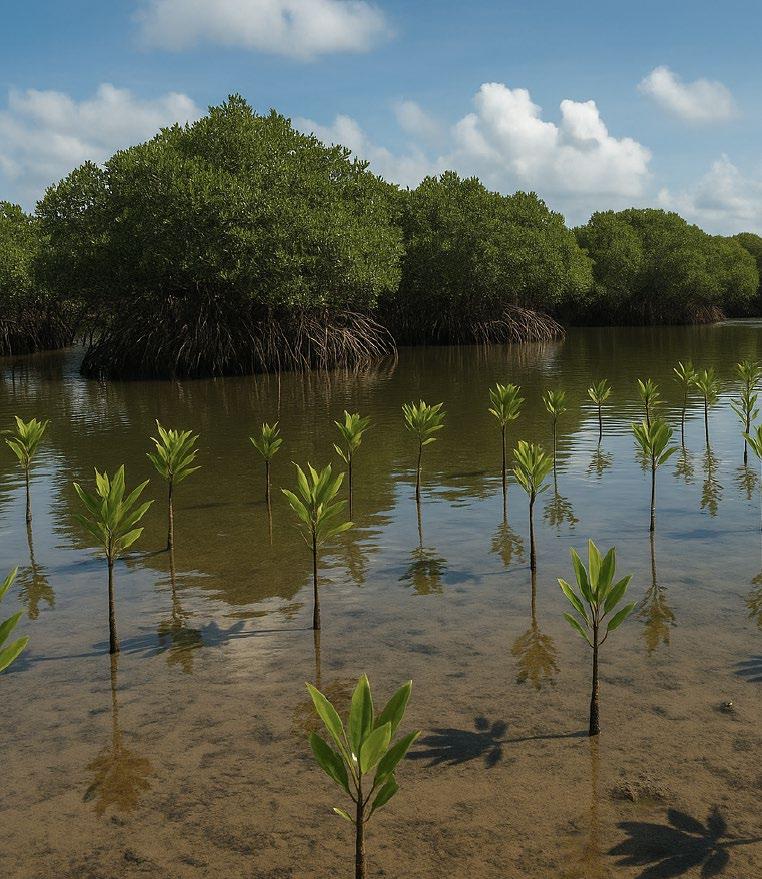
For years, the investment community has tiptoed around the term natural capital. Some dismiss it as jargon; others embrace it as the long-overdue recognition that nature itself is the foundation of all economies. But ask the wrong question — what is natural capital? — and you risk missing the point. The real question is how to value, govern, and finance it in an era of planetary risk and systemic transition. In the dusty ledgers of 20th-century forestry, value was measured almost exclusively in cubic metres of timber and discounted cash flows from harvest cycles. Forests were treated as industrial plantations — asset classes dressed in suits of pine and mahogany — and they were managed as such. That world is now crumbling. Climate change, biodiversity collapse, and shifting consumer expectations have compelled capital to reassess what a tree — and, more importantly, what a functioning ecosystem — truly represents.
The transition is nothing less than a paradigm shift: from a model of extraction to a model of regeneration, from commodification to stewardship. And this is where the Kijani Kenya Coastal Mangrove Restoration project comes in, serving as a case study for what the next era of climate finance must look like.
From Timberland to Natural-Capital Infrastructure
Along Kenya’s coast, the project is building ecological infrastructure with global significance. Mangroves serve as carbon sinks, protect against rising seas, support fisheries, and anchor biodiversity. They also hold cultural and spiritual importance for local communities.
The project’s Environmental Impact Assessment makes the case clearly: by embedding itself within the Spera Impact Standard v3.2 (SIS) — and operating under the
EcoSpera zkMRV v5.2 evidence protocol governed through the Environmental Credits Repository (ECR) and SperaNex Treasury — Kijani ensures that each planted sapling is not only a gesture of hope but a certified unit of measurable, permanent climate impact. Every Smart Credit™ is issued, verified, and immutably recorded in the ECR under a Smart Letter of Authorisation (Smart LoA™) and Corresponding Adjustment (CA) record, with safeguards against reversal and double counting.
This guarantees that investors, regulators, and communities alike can trust that what is being promised is actually delivered. This is where the vocabulary of finance collides with the science of ecology: Smart Credits™, Smart LoA™, CA records, blockchain registries, and DAO-governed integrity frameworks. The architecture may sound complex, but the purpose is simple — restore verified trust in a carbon market that opacity, exaggerated claims, and reputational scandals have shaken. Trust is not an afterthought; it is the foundation upon which capital will flow into regeneration rather than destruction.
Climate, Biodiversity, Community: A Triple Asset Viewing Kijani only as a carbon project overlooks its broader impact. The restoration delivers large-scale blue-carbon removals and significant co-benefits that warrant recognition and monetisation. For example, a three-year study by the Coastal Research Institute found a 20% increase in local fish stocks due to improved mangrove habitats, highlighting the project’s tangible benefits to biodiversity.
■ Biodiversity: Mangroves function as nurseries for countless marine species, from shrimp and crabs to fish that feed local communities and global markets. Restoration yields measurable gains in species richness, ecosystem integrity, and the health of surrounding coral reefs. Protecting biodiversity is no longer a moral luxury; it is an economic necessity tied to food security, tourism, and resilience. ➔
Kijani’s Natural Capital Impact
3.8 million tonnes over 40 years
Projected CO2 Removals
4,000 hectares of degraded mangroves Restoration Area
+28% improvement within the first decade
Species Richness Index
1,500 direct and indirect livelihoods Community Jobs Created
15% of credits reserved for risk mitigation
Buffer Pool Allocation
Conducted under SIS v3.2 with thirdparty validators
Annual Re-certification
Community Voices
“For us, the mangroves are more than trees. They are part of our culture, our fisheries, our protection against storms. By being included in the governance of this project, we feel ownership, not imposition.”
Local community leader, Coastal Kenya
“Through Kijani, we gained training, income, and the ability to pass knowledge to our children. It is climate action, but also social justice.”
Women’s cooperative member
■ Community Equity: Local governance, benefit-sharing, and Free, Prior and Informed Consent (FPIC) protocols ensure that restoration is not imposed but co-created. Jobs are generated, women and youth gain access to new livelihood opportunities, and knowledge from Indigenous custodians is integrated into monitoring and stewardship. Equity is built into the project’s DNA, not added as an afterthought. All FPIC and engagement evidence is recorded as Stakeholder Engagement Records (SER) under Appendix A21 of the SIS.
■ Resilience: Mangroves act as natural seawalls, protecting coastal settlements from storms, erosion, and rising tides. The insurance value, if properly quantified, alone would justify the investment. For the people of coastal Kenya, resilience is not merely an academic metric; it is a matter of survival. According to the latest projections, without restoration efforts, coastal erosion could cause millions of dollars in damage to infrastructure and displace thousands of residents over the next decade. In contrast, investing in mangrove restoration can fortify these communities against the impending threats at a fraction of the projected economic loss. Such a cost-benefit analysis makes a compelling case for resilience finance, encouraging immediate action.
These are not incidental benefits; they represent the portfolio of naturalcapital services that forests, especially mangroves, have always provided. The key difference now is the development of governance, methodologies, and markets to quantify, price, and finance these services rigorously.
This shift is not without controversy. Traditionalists view timberland as a straightforward asset class with established cash flows and risk models, and see the inclusion of biodiversity, carbon, and stewardship as diluting its financial clarity. However, as markets begin to value biodiversity, investors must consider the multidimensional value of natural assets. Framing this
transition in investor terms accelerates the necessary change in perspective.
But the market is moving. From Wall Street to Geneva, investors are experimenting with resilience bonds, biodiversity-linked credits, natural capital ETFs, and blended finance structures that merge public and private capital. The EU is codifying nature disclosures under its Green Deal, the UN is operationalising Article 6 under the Paris Agreement, and the Integrity Council for the Voluntary Carbon Market (ICVCM) is setting thresholds for credit quality. The OECD, ISO frameworks, and the Voluntary Carbon Market Integrity Initiative (VCMI) are converging toward SIS-compatible integrity metrics.
In this context, SIS v3.2 is emerging as one of the few standards capable of bridging compliance markets, voluntary offsets, and sovereign registries. Kijani, in this light, is not a niche project in East Africa; it is a prototype of the future — an exemplar of how forests can be valued as natural capital infrastructure, not just a timber stock.
The financial community must recognise that future cash flows will come not only from wood but from carbon, biodiversity, adaptation, and social equity. The multipliers are not speculative; they are measurable, verifiable, and investable.
The critical insight is this: Kijani is not just sequestering carbon; it is reconfiguring ownership of value. By anchoring governance in the Spera Impact DAO, ensuring transparent, decentralised oversight through its SEAL Nodes (Science, Ethics, Legal), by embedding community equity into benefit-sharing, and by aligning with international compliance mechanisms, the project asserts that natural capital is not merely to be measured, but to be democratically stewarded.
Ownership here is not just about land titles or project shares; it is about sovereignty over the ecological functions that underpin national economies. This is more than semantics. It signals a geopolitical shift: countries of the Global South positioning natural
capital as sovereign wealth, registered under Article 6 through ECR sovereign mirror nodes, to be managed with integrity, monetised responsibly, and defended against new forms of extraction.
The language of bonds, credits, and registries conceals a deeper political economy: who determines the value of nature, who reaps the rewards, and who bears the risks? If forests are considered a form of sovereign wealth, then their governance must reflect both national ownership and community participation. SIS v3.2 provides the framework for balancing these interests.
The Kijani Coastal Mangrove Restoration project is currently in the final approval stages under the Spera Impact Standard v3.2, verified through the EcoSpera zkMRV five-layer architecture and permanence monitoring under Protocol A22. Full certification is expected by late 2025, with financing windows opening on 1 November 2025. The first phase of large-scale planting is scheduled to commence in Q1 2026. As with any ambitious project, there are potential risks and contingencies to consider. Regulatory changes could impact the project’s timeline, while operational challenges may arise in logistics and local engagement. To mitigate these concerns, we have developed a comprehensive risk management plan that includes monitoring for compliance with evolving regulations and securing
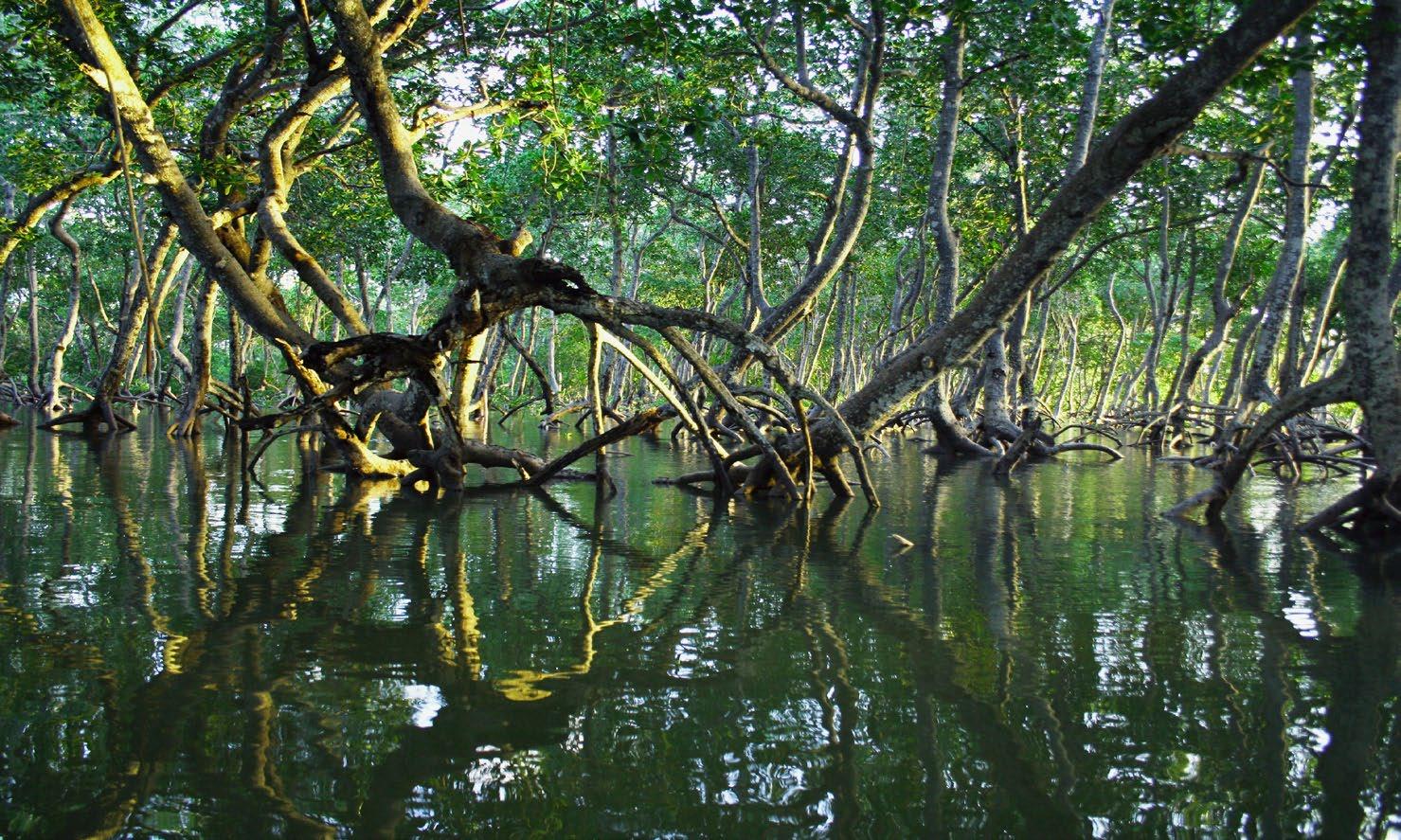
robust partnerships with local stakeholders to ensure smooth implementation.
This timeline demonstrates the project’s readiness to mobilize capital and begin implementation in accordance with SIS governance, monitoring, and Article 6 compliance.
The ForestLink article inquired about the concept of natural capital. The Kijani EIA answers: it is carbon, biodiversity, community resilience, and equity, tied together into a single investable infrastructure. It is both local and global, encompassing both ecological and financial aspects. It is an emerging asset class that requires rigour equal to that of sovereign
bonds and transparency greater than that of traditional equities.
The real risk is not overvaluing nature, but continuing to undervalue it—measuring trees solely as timber rather than as life-support systems, cultural anchors, and planetary safety nets.
Undervaluing natural capital creates incentives for destruction. Proper valuation enables the scaling of regenerative finance.
The lesson from coastal Kenya is clear: natural capital cannot be treated as an abstraction. In the SIS v3.2 era, it is a rigorous, transparent asset class essential to the net-zero transition.
The Kijani Project signals to markets, policymakers, and communities that the era of natural capital has begun. ■
BA Woll Founder, Spera Impact AG
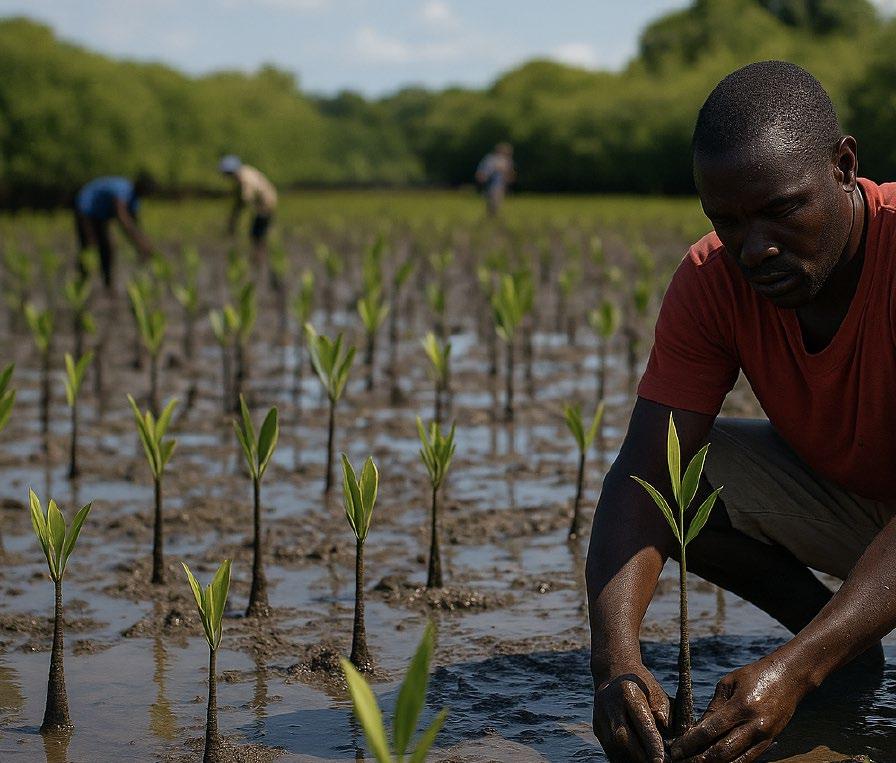
Aquiet revolution is reshaping climate finance. For decades, the global South has exported raw commodities—such as timber, minerals, and carbon offsets—while value and governance have remained in the hands of others. Now, through the Spera Impact Standard v3.2 (SIS), that paradigm is shifting.
SIS v3.2 enables countries to treat natural capital as sovereign wealth: measurable, auditable, and compliant with the Paris Agreement Article 6 framework. Each verified tonne of carbon, hectare of restoration, or biodiversity gain becomes a national asset registered through the Environmental Credits Repository (ECR)
Article 6 of the Paris Agreement allows Parties to cooperate in achieving their Nationally Determined Contributions (NDCs).
Until recently, that cooperation relied on voluntary offset markets and bilateral memoranda—systems that were opaque and often duplicative. SIS v3.2 embeds Article 6 logic directly into digital code. Each credit follows a verifiable path:
1. Evidence: Data captured through EcoSpera zkMRV v5.2 is hashed into a tamper-proof eco_hash root.
2. Legalisation: A Smart Letter of Authorisation (Smart LoA™) is issued by the host authority and recorded in the ECR, together with its Corresponding Adjustment (CA) metadata.
3. Financialisation: The verified unit is tokenised as a Smart Credit™ inside SperaNex, priced by the Adaptive Crediting Curve (ACC), and disclosed to investors.
4. Governance: Every action is audited by SEAL Nodes (Science, Ethics, Legal) and ratified through the Spera Impact DAO to prevent doublecounting and ensure public oversight.
The result is a continuous chain of custody linking physical evidence to
sovereign accounting, market value, and citizen visibility.
For host nations, the benefit is strategic autonomy. By maintaining their own ECR sovereign mirror nodes, governments can issue, track, and retire Smart Credits™ without relinquishing ownership of data or value.
This creates digital sovereignty for nature—a transparent system where climate performance strengthens both balance sheets and communities.
For investors, it provides something the voluntary market has rarely delivered: legal equivalence. Smart Credits carry Article 6 recognition and can be listed on regulated exchanges, integrated into ESG portfolios, or settled through SperaNex Treasury in accordance with MiCA Title II and OECD sustainable finance rules. As of now, these recognitions are fully established in jurisdictions including the EU and several Southeast Asian countries, with pending approvals in others. This detailed regulatory alignment enhances the investability of Smart Credits, providing assurances on compliance and credibility across multiple regions.
At the heart of this transformation is the Spera Impact DAO, where representation extends beyond ministries and financiers to include Indigenous groups, women’s cooperatives, and scientific institutions. Every proposal—whether approving a new methodology or ratifying an Article 6 bilateral—is recorded as an immutable DAO vote and timestamped proof.
This distributed governance replaces opacity with accountability, transforming compliance into civic participation.
It ensures that natural capital wealth is managed not only efficiently but also in an ethical manner.
Under the SIS framework, EcoSpera, ECR, and SperaNex function as interoperable layers of a single market infrastructure:
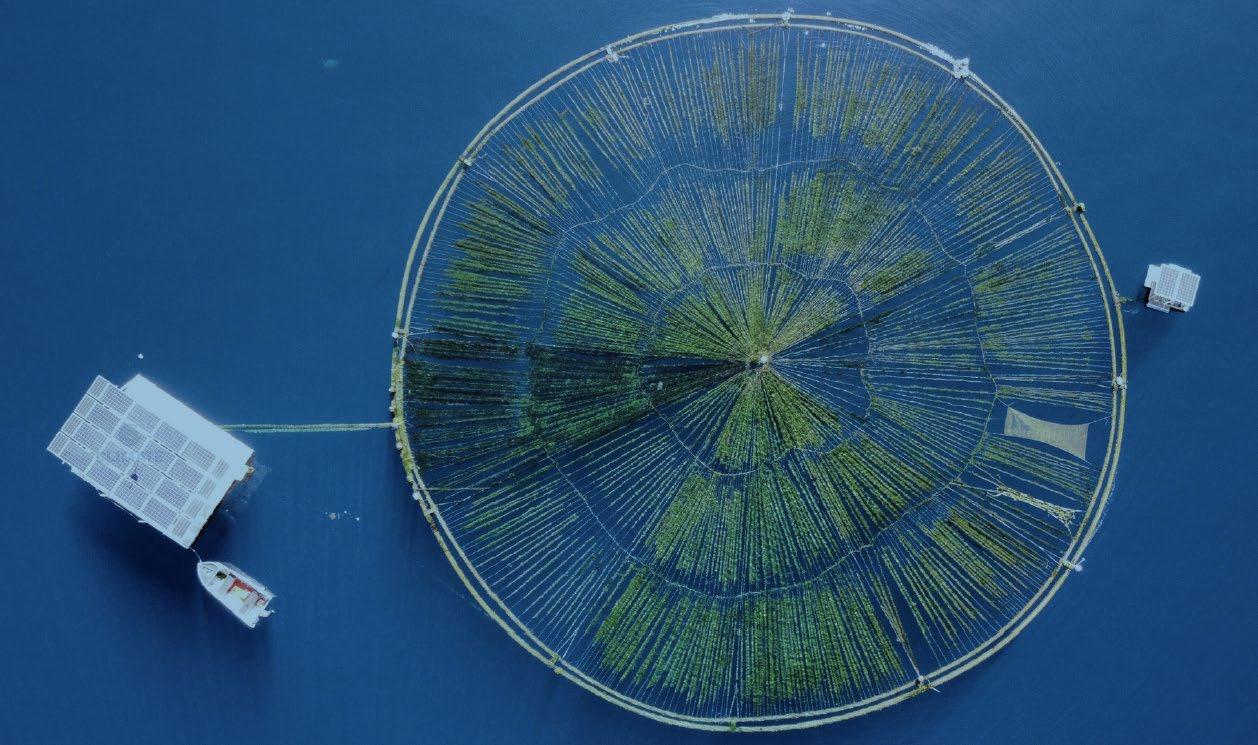

■ EcoSpera zkMRV v5.2: collects multi-source environmental data and produces zero-knowledge proofs of impact.
■ ECR Registry: anchors Smart LoA™ and CA records under national authority and international law.
■ SperaNex Treasury: settles verified credits and impact bonds through transparent, DAO-governed finance.
■ Trace Greens: provides fractional ownership and public retirement tracking for citizens.
Together they form the Tungsten Infrastructure, a compliance-native backbone where every climate transaction is traceable, auditable, and sovereign by design.
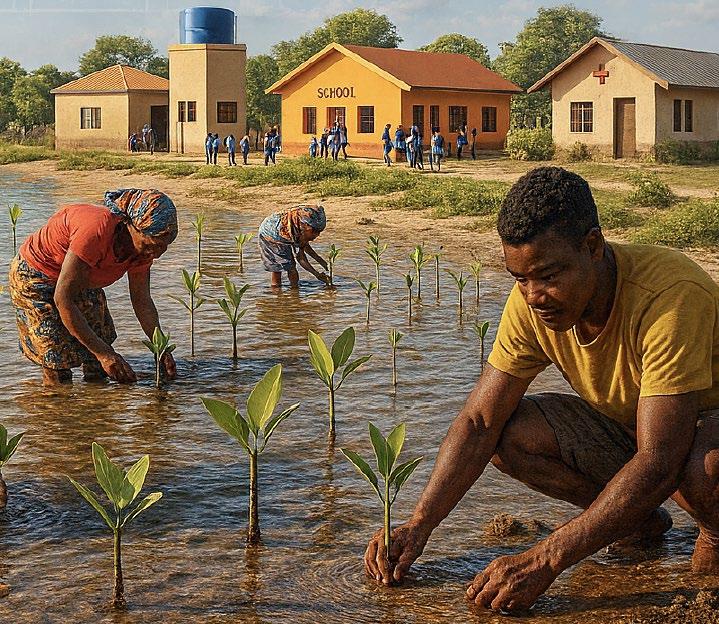
From Kenya to Panama, Indonesia to Zanzibar, nations are adopting the SIS architecture to convert ecological wealth into measurable prosperity.
Each deployment strengthens the same principles: transparency, equity, and lawful recognition of nature’s value.
This is the next phase of climate finance—a sovereign, Article 6-aligned economy in which countries no longer sell promises; they sell proof.
Integrity is the new currency. Sovereignty is the new collateral. Nature is the new infrastructure. ■
Chris Atkins: BA, as we gather here on the eve of yet another global climate summit, the air is thick with declarations and pledges. But let me begin with a simple question: why are we still talking about the credibility crisis in carbon markets? Recent studies indicate that over 60% of credits in the voluntary carbon market fail permanence tests, highlighting significant vulnerabilities and the ongoing challenges in credibility.
BAW: Because, Chris, credibility is the currency of transformation — and right now, it’s undervalued. We’ve built a multi-billion-dollar voluntary carbon market on good intentions but flimsy data. Article 6 of the Paris Agreement, if implemented with integrity, presents a historic opportunity to align capital with verified climate outcomes. But that requires trust, traceability, and technology. That’s where the Spera Impact Ecosystem comes in.
CA: Spera Impact, you say. Let’s unpack that. What makes this ecosystem more than just another sustainability app with pretty satellite maps?
BAW: Spera Impact is not an app; it’s an infrastructure — a full-stack, compliance-native ecosystem. It integrates blockchain-based registries, AI-driven monitoring, IoT sensors, and DAO governance through the Spera Impact DAO. It tracks every verified climate asset from seed to Smart Credit™ retirement. More importantly, it embeds equity, biodiversity, and resilience into the DNA of each project. It creates a digital audit trail aligned with the UNFCCC Enhanced Transparency Framework (ETF), making credits simultaneously valid for voluntary and compliance markets. It’s the only viable way forward for trustworthy climate finance.
CA: Let’s bring this into the realpolitik of Article 6.2 and 6.4 — those elusive clauses about cooperative mechanisms and international transfers. How does Spera Impact fit in?
BAW: Precisely by design. The architecture of Spera Impact is aligned with both Article 6 and the Enhanced Transparency Framework. It enables host countries to generate ITMOs (Internationally Transferred Mitigation Outcomes) that are credible, traceable, and fully auditable. Countries like Norway, Switzerland, Singapore, Saudi Arabia, the UAE, and Japan are seeking ITMOs that aren’t just emissions on paper but verified transformations on the ground. Spera Impact allows them to back projects with robust co-benefits and measurable social and ecological returns.
CA: Bold words. But how do you translate that into investmentgrade confidence?

BAW: Through Smart ERPAs — Emission Reduction Purchase Agreements embedded in the SperaNex Treasury. These are legally binding digital contracts that cover pre-agreed volumes, pricing, third-party verification, and transparent revenue sharing. Investors don’t just get credits — they get impact: jobs created, biodiversity restored, and communities strengthened.
Every transaction is recorded in the Environmental Credits Repository (ECR) with full KYC/KYB/AML compliance, making Smart Credits™ investmentbank-grade assets in a MiCA-ready environment.
CA: Give me a tangible example.
BAW: Mangrove restoration in Panama, Kenya, Madagascar, and Sri Lanka. We’re talking about hundreds of thousands of hectares integrating with seaweed cultivation and seagrass
SPERA IMPACT IS NOT AN APP; IT’S AN INFRASTRUCTURE — A FULL-STACK, COMPLIANCE-NATIVE ECOSYSTEM. IT INTEGRATES BLOCKCHAIN-BASED REGISTRIES, AI-DRIVEN MONITORING, IOT SENSORS, AND DAO GOVERNANCE THROUGH THE SPERA IMPACT DAO. IT TRACKS EVERY VERIFIED CLIMATE ASSET FROM SEED TO SMART CREDIT™ RETIREMENT. MORE IMPORTANTLY, IT EMBEDS EQUITY, BIODIVERSITY, AND RESILIENCE INTO THE DNA OF EACH PROJECT.
meadows — hundreds of millions of tonnes of CO₂e sequestered over forty years, verified through EcoSpera zkMRV v5.2 using satellite imaging and drone LiDAR.
But the carbon is just the headline. The real story is resilience, biodiversity, and livelihoods — revitalised fisheries, stabilised coastlines, and reduced climate migration.
CA: That’s quite the portfolio. Are there others?
BAW: Absolutely. Across Africa, we are scaling regenerative coffee farming through the Coffee for Forests initiative. Each cup of coffee is linked to fractional Smart Credits™ — backed by verified eco_hash proofs on XRPL-EVM. Even a 100-gram offset from a coffee packet is traceable, verifiable, and fractionalised.
In Kenya and Uganda, agroforestry projects with mahogany, moringa, and bamboo combine carbon sequestration with superfood supply chains and local enterprise development. In Northern Europe, urban cooling projects utilise green roofs and climate-smart parks to mitigate heat islands and enhance urban resilience.
CA: That brings us to governance. You mentioned a DAO. Doesn’t that sound a bit utopian for bilateral agreements between sovereigns?
BAW: Not if you understand what’s at stake. DAO governance isn’t ideology — it’s infrastructure for trust. Blockchain-based voting, grievance redress, and participatory MRV ensure that Indigenous Peoples, local communities, and investors have both visibility and voice.
It eliminates the opacity that has plagued climate finance for decades. Governments are more willing to co-invest when governance is transparent and disputes are resolved algorithmically, not politically. Through Savimbo Kapital, we even provide third-party attestation of all financial flows, ensuring full auditability.
CA: Let’s talk compliance. How does Spera Impact ensure alignment with major international standards?
BAW: We align fully with Article 6.2 and 6.4 of the Paris Agreement, but SIS v3.2 goes further. It builds upon:
■ The UNEA Nature-Based Solutions definition,
■ The UNDRR Climate Risk Management Toolkit, and
■ The CBD Kunming-Montreal Biodiversity Framework
SIS v3.2 includes plant-level verification, FPIC-based stakeholder engagement (A21), AI-driven adaptive MRV, and quantified co-benefit assessment. It meets or exceeds the benchmarks of REDD+, OxCarbon, VCMI, ICVCM, and SBTi.
CA: And what’s in it for donor countries?
BAW: Countries such as Norway can acquire ITMOs aligned with their NDCs. Switzerland can meet the 2030 targets without fear of double-counting. Both can report co-benefits across multiple SDGs — especially 5, 13, and 15. Beyond compliance, they gain something more enduring: credible climate diplomacy. Through Smart ERPA with SIS-certified projects, they meet ➔

➔ mitigation targets and fulfil biodiversity and development mandates. Imagine an ERPA that sequesters carbon, restores ecosystems, and empowers women’s cooperatives — all backed by AI, blockchain, and SIS governance.
CA: This is about more than just nature-based solutions, then?
BAW: It’s about nature-based economies. That’s the true frontier. Spera Impact makes nature investable but not extractive. Our model combines DAO-based cooperative governance, circular finance via SperaNex instruments, and climate-linked bonds. We are enabling nations in the Global South to leapfrog directly into verified green growth — converting ecological assets into lawful, transparent, sovereign capital.
CA: You mentioned SPIT — the Spera Impact Token. Is this a cryptocurrency?
SPERA IMPACT MAKES NATURE INVESTABLE BUT NOT EXTRACTIVE. OUR MODEL COMBINES DAOBASED COOPERATIVE GOVERNANCE, CIRCULAR FINANCE VIA SPERANEX INSTRUMENTS, AND CLIMATE-LINKED BONDS.
BAW: It’s a digital asset instrument, not a speculative token. Each SPIT is backed 1-to-1 by a ton of verified CO₂e reduction or removal registered in the ECR. It can be fractionalised for microtransactions, making climate action accessible to everyone — from institutional buyers to consumers purchasing a verified “green coffee.”
SPIT operates across XRPL-EVM and Solana for scalability and cost efficiency, ensuring interoperability with global financial systems.
CA: How do host countries benefit from these instruments?
BAW: Host countries receive climatealigned investment without surrendering sovereignty. Every SIScertified project is grounded in national priorities, such as reforestation, blue economy, regenerative agriculture, or urban resilience, and is integrated with National Adaptation Plans (NAPs)
and Nationally Determined Contributions (NDCs).
Through SIS v3.2, progress can be reported in real-time to the UNFCCC ETF, thereby strengthening negotiating positions and enhancing creditworthiness in global forums.
CA: What about the future?
What does this model look like in five years?
BAW: I see a distributed, DAOcoordinated network of Spera Impact ecosystems operating across continents, each delivering real-time data on carbon removal, biodiversity health, job creation, and risk reduction. To demonstrate our commitment and progress, we aim for 50% of ITMOs to be processed through the Spera Impact Standard by 2028. This milestone will offer investors and governments clear signals of our trajectory and achievements.
MY CALL TO ACTION: INTEGRATE SPERA IMPACT INTO NATIONAL ARTICLE 6 REGISTRIES—PRIORITISE SIS V3.2-CERTIFIED ECOSYSTEMS IN YOUR ERPA PORTFOLIOS. LAUNCH BLENDEDFINANCE VEHICLES THAT ACCELERATE ADOPTION.
Article 6 markets will evolve into trust-based ecosystems, where a mangrove credit from Madagascar is in equal quality and traceability to a forest credit from the Amazon or a coastal buffer in Norway.
Governments will invest not just in tonnes, but in outcomes: resilience, livelihoods, and peace.
CA: You make it sound almost poetic.
BAW: Chris, when climate finance works, it is poetry. It’s the alchemy of carbon, community, and capital — and Spera Impact is the verse that makes it rhyme.
CA: Let me bring us toward a close. What’s your message to G20 leaders, carbon-market regulators, and finance ministers reading this?
BAW: Article 6 is not just a clause — it’s a covenant. However, a covenant requires infrastructure to become a reality. Spera Impact provides that infrastructure: ready, scalable, auditable, and inclusive.
My call to action: integrate Spera Impact into national Article 6 registries —Prioritise SIS v3.2-certified ecosystems in your ERPA portfolios. Launch blendedfinance vehicles that accelerate adoption. Let’s turn pledges into progress — not just for carbon, but for people and the planet.
CA: And for those countries still waiting on the sidelines?
BAW: The sidelines are sinking. The future belongs to those who regenerate — with trust, justice, and precision.
CA: And with that, we’ll leave our readers with a choice: recycle old frameworks, or regenerate with new ones. BA, thank you.
BAW: The pleasure — and the responsibility — are ours. We all come from nature, and we all return to nature. ■
Editor’s Note:
This interview is part of the G20 Official Magazine’s Climate Finance Series. For more on Spera Impact AG and the Spera Impact Standard v3.2, visit www.speraimpact.foundation
BA Woll Founder, Spera Impact AG
As the world grapples with the urgent need to limit global warming to 1.5 °C, the demand for high-integrity, Article 6-ready carbon markets has never been greater. Despite the potential of nature-based solutions (NBS) to drive deep emission reductions, only about 6% of existing environmental credits are likely to meet the Core Carbon Principles (CCPs) set by the Integrity Council for the Voluntary Carbon Market (ICVCM) and the Voluntary Carbon Markets Integrity Initiative (VCMI).
This shortfall underscores a simple truth: integrity requires infrastructure. Investment must now focus on capacity, transparency, and traceability—the foundations of credible markets.
Carbon markets are one of the most effective tools for directing capital into verified mitigation and adaptation. Projects such as reforestation, regenerative agriculture, biochar production, hemp cultivation, and seaweed farming sequester carbon while delivering co-benefits in biodiversity, water quality, and improved livelihoods
However, for these efforts to scale, they require scientific verification (EcoSpera zkMRV v5.2), legal anchoring (ECR Registry), and financial transparency (SperaNex Treasury) the three-pillar architecture of the Spera Impact Standard v3.2 (SIS)
The gap between credible supply and soaring demand is widening. Most credits still fall short on additionality, permanence, and auditability
Emerging regulations such as the EU Corporate Sustainability Reporting Directive (CSRD) and its extension, the Corporate Sustainability Due Diligence Directive (CSRDDD), now require project -level audit trails, quantitative co-benefit data, and end-to-end traceability. This means climate finance can no longer rely on paper-based MRV. It needs automated, zero-knowledge verification—real-time data from satellites, drones, and sensors, cryptographically secured through the eco_hash protocol.

Strategic Investment in Capacity Building
To close the credibility gap, we need strategic investment in people, policy, and platforms. Philanthropic funding, multilateral development banks, and private capital must converge around four priorities:
1. Policy and Regulatory Frameworks: Align national carbon market laws with the Paris Article 6, UNFCCC ETF, and SIS v3.2 methodologies.
2. Institutional Strengthening & Governance: Build sovereign ECR mirror nodes and DAO-based oversight mechanisms to ensure consistency and prevent doublecounting.
3. Knowledge and Capacity Building: Train government agencies, verifiers, and community monitors in zkMRV, ethics (A21–A23), and digital compliance.
4. Project Implementation & Financing: Deploy Smart ERPAs and creditinsurance instruments to de-risk investment, coupled with long-term Smart Bond™ offtake agreements via SperaNex.
Ensuring Market Integrity Integrity is non-negotiable.
The Core Carbon Principles, VCMI Claims Code, and SIS v3.2 collectively define the new baseline for credibility, emphasising transparency, additionality, permanence, and the prevention of double-counting.
Verification now combines AI-assisted auditing, blockchain traceability, and independent oversight from SEAL Nodes. Each project generates an immutable eco_hash root, recorded in the Environmental Credits Repository, linking physical impact to legal proof and market value.
Reforestation remains the most visible NBS. Planting trees on degraded land restores carbon stocks, biodiversity, and community livelihoods. Flagship initiatives such as the Great Green Wall and Trillion Trees are models for large-scale replication under SIS governance. ➔
Regenerative Agriculture: encompassing cover cropping, no-till systems, and agroforestry—restores soils, increases biodiversity, and sequesters carbon, while enhancing water retention and food security.
(For inspiration, watch Kiss the Ground and Common Ground.)
Biochar Production turns organic waste into stable carbon storage while improving soil fertility.
Hemp Cultivation delivers rapid biomass growth and durable carbon capture. Seaweed Farming sequesters arbon, mitigates ocean acidification, and supports coastal livelihoods.
All these interventions are now verified through EcoSpera zkMRV, ensuring quantifiable results and long-term monitoring.
INVESTORS CAN EXPECT THE INTERNAL RATE OF RETURN (IRR) TO RANGE FROM 7% TO 12%, WHICH STRENGTHENS THE LINKAGE BETWEEN SUSTAINABILITY INITIATIVES AND FINANCIAL PERFORMANCE.
Financing the Transition:
Green & Blue Bonds
Green Bonds fund terrestrial restoration and renewable-energy projects. Issuance surpassed historical highs in 2024, signalling investors’ appetite for verifiable ESG impact.
Blue Bonds channel capital into marine and coastal ecosystems, including coral-reef recovery, sustainable fisheries, and mangrove protection. When combined with Smart Credits, these bonds form hybrid financial instruments that provide both returns and resilience. With the Spera Impact Standard v3.2, these Smart Bonds are designed not only to meet ethical investment goals but also to generate competitive returns.
Investors can expect the Internal Rate of Return (IRR) to range from 7% to 12%, which strengthens the linkage between sustainability initiatives and financial performance.
This IRR range is based on assumptions that include stable carbon credit pricing, consistent demand growth in green finance sectors, and effective risk mitigation through diversified project portfolios. Detailed models incorporate historical market data and projected trends in nature-based solutions, aligning with the sustainability strategies outlined in SIS v3.2.
Case Studies and Emerging Trends
■ Biochar Projects: Scalable sequestration with measurable soil-health gains.
GOVERNMENTS, MDBS, PHILANTHROPIES, AND PRIVATE INVESTORS MUST COLLABORATE TO SCALE SIS-CERTIFIED NATURE-BASED PROJECTS AND STRENGTHEN THE ECOSYSTEMS THAT VERIFY THEM.
■ Hemp-Based Credits: Fast-cycle carbon capture with industrial co-products.
■ Seaweed and Seagrass Initiatives: Blue-carbon assets integrating with mangrove buffers.
■ Pulsora x EcoAdvis Partnership: Leveraging the EcoSpera platform and 1.5-m satellite imagery for plant-level audit trails and full blockchain traceability.
These examples demonstrate that high-integrity verification and financial innovation can coexist and thrive.
To keep the 1.5 °C goal within reach, investment must flow toward compliance-grade, high-integrity carbon assets. Governments, MDBs, philanthropies, and private investors must collaborate to scale SIS-certified nature-based projects and strengthen the ecosystems that verify them.
By combining scientific precision, legal accountability, and financial transparency, we can unlock the full potential of natural capital and build markets worthy of public trust.
The world doesn’t suffer from a shortage of climate pledges—it suffers from a shortage of proof
With the Spera Impact Standard v3.2, proof is no longer a promise; it’s -the product.
Integrity creates confidence. Confidence attracts capital.
Capital funds regeneration.
The time to finance nature with trust and precision is now. Our actions today will resonate through generations to come, reinforcing our shared commitment to intergenerational stewardship. This isn’t just an investment in nature; it’san investment in a sustainable future. Join the movement at speraimpact.foundation
As a first step, download the SIS v3.2 summary sheet to explore how you can begin contributing to this transformative journey. ■
In the heart of every seed lies the potential for incredible growth. Just as the moringa seed holds the promise of nourishment and renewal, our platform lays the groundwork for a sustainable future.


With the world's first global standard for environmental credit, from plant to seed, we're not just planting seeds—we're nurturing the very foundation of environmental stewardship.
Join us in sowing the seeds of change, where every credit supports verified, tangible environmental regeneration. Together, we can cultivate a greener, more sustainable world. From the ground up, let's build a legacy of growth and resilience for generations to come.








The bloom of the moringa flower is a testament to what can be achieved when we commit to nurturing our environment. It symbolizes the flourishing beauty and tangible benefits that stem from our dedication to sustainability and regenerative practices.
Our platform is more than a bridge between intention and action; it's a catalyst for real-world change. Through our comprehensive audit trail, from seed to standard, we ensure that every environmental credit contributes to a healthier, more vibrant planet.
This is the power of transformation, visible in the vibrant petals of the moringa and felt through the positive impact of each credit. Embrace the beauty of making a difference. Together, we're not just growing flowers—we're cultivating a legacy of environmental regeneration and hope for future generations.

Read more: https://www.ecospera.com/join/



Our Mission
Birmingham Care Group serves a culturally diverse community living in areas of multiple deprivation. Our residents are disproportionately impacted by poverty, disadvantage, discrimination, health inequalities and poor life outcomes for young people. Through our community hub and café, we create a welcoming space for people to connect, improve their wellbeing and access essential services including our Family Wellbeing Club, Befriending Service and Food Pantry, which provides affordable, nutritious food, toiletries and essentials for everyday living.
We wrap holistic support around vulnerable residents to identify challenges
early, prevent crises and promote dignity, choice and empowerment.
Our Aims
1. Expand Our Food Pantry
• Demand continues to grow, particularly among families with young children.
• We currently support 400 members and have a waiting list of 117 families.
• Membership is £15 per year, allowing members to shop twice weekly, paying £5 for a basket valued at £35.
• We are the only food pantry in Birmingham providing culturally relevant foods (e.g. yam, plantain) for Caribbean, Muslim, Asian and Polish communities.
• Members retain independence and dignity by choosing their own provisions.
• We coach members to plan nutritious meals and share culturally relevant healthy recipes.
• Our pantry also supports our homeless outreach feeding people twice weekly.
Maintain and Expand
Our Community Café & Hub
Our registered warm and safe space enables social connection, support and community cohesion.
• Discounted Café Meals for Pantry Members:
- Meals use pantry ingredients.
- Non-members pay full cost, helping subsidise this service.
- 30,896 meals served last year.
• Family Wellbeing Services:
- Increasing from 3 to 5 days per week to address holiday hunger.
- Families enjoy fun activities, meals and social time, reducing isolation and building peer support.
- Qualified mentors provide confidential 1:1 support and signposting.
- 525 beneficiaries supported last year.
• Befriending Service:
- Provides emotional and practical support for isolated residents.
- Assists with food deliveries, GP appointments and referrals to housing and other services.
- 634 residents supported last year.
• New Social Prescribing Service:
- Addresses anxiety caused by difficulties accessing GP appointments.
- Helps reduce avoidable GP visits through early intervention and community-based support.
• Employability Support for Young People (18–30):
- Work experience, training and CV/interview guidance.
- Developing partnerships with local businesses for apprenticeships and job placements.
- 47 young people supported last year.

The Difference We Will Make
With your support, we will achieve measurable, lasting change:
600 families (1,200+ people)
600 families (1,000+ people)
ANNUAL IMPACT
Improved health through affordable nutritious food, saving £60 per week, alleviating poverty and debt.
Receive 1 healthy meal per day during holidays, saving £50 per week, improving children’s wellbeing.
650 residents Reduced isolation through befriending, improved confidence and access to support.
2500 people
Improved health and wellbeing through social prescribing and community activities.
1,560 homeless people Fed weekly through our outreach service.
200 young people Gain employability skills and work experience.
Why Partner With Us
Corporate partners have the opportunity to:
• Tackle food poverty and improve wellbeing across Birmingham’s most deprived areas.
• Demonstrate social responsibility and measurable community impact.
• Build staff engagement through volunteering and fundraising.
• Align your brand with a trusted, culturally inclusive local charity making a tangible difference.
With Your Support
Your contribution will help us:
• Expand the Food Pantry to reach 600 families.
• Provide 150 additional families with holiday wellbeing support.
• Support 960 residents through befriending.
• Launch a social prescribing service for 2,500 residents.
• Feed 2,500 homeless people annually.
• Equip 200 young people with employability skills and work experience.
On behalf of the Trustees and Staff of Birmingham Care Group, we thank you for taking the time to learn about our work. Together, we can transform lives, strengthen communities and build a healthier society for all.
Donations can be made via: birminghamcaregroup.org
Prepared by: Fiona Ramdeen, Founder & Chair
fiona@birminghamcaregroup.org www.birminghamcaregroup.org 01215239690 / 07748475834

Brunnbäck is a small Community with about 23,000 inhabitants located in the southeast of Avesta, a Municipality in Dalarna province in Sweden. Brunnbäck is a beautiful place up on the hill with forest and the big Lake Dalälven that stretches 541km.
In Year 1521, there was a historic battle between Sweden and Denmark ( War of Liberation 1521 - 1523 ) where Sweden won over Denmark. This was a massive victory for Sweden and Gustav Vasa. At Brunnbäck there is a big stone as the symbol for the 1521 victory, and the people can go there and read this historical memory on site.
Hence the name of this historic high Quality water from Brunnbäck and here our water is coming from. 16th May 2023 it has been 500 years since the historic battle was in Brunnbäck Sweden, this day 16th May the Swedish army hold a ceremony in Brunnbäck to the memories.
“Today’s Sweden was born at Brunnbäck.” Börje Forslund
The water is approved by the Swedish Livsmedelsverket , a Report issued by the Accredited Laboratory and Eurofins with a pH 7.8 with minimal salt and Flourid in the water. It is a high Quality mineral water one of the best in Sweden documented.
My name is Rickard Nilsson I’m 39 years old and I am the CEO & Founder
of Brunnbäck Sweden Natural Mineral Water AB. I was born and raised in Avesta and I live there now with my kids & girlfriend.
Future board member Krister Larsson has massive experience of filling machines over 25 years both in Sweden and abroad among very large companies , Me and my past away father Jimmy have know Krister for about 10 years and he is my close friend and my right hand, and he is the technical chief for my company.
I Founded Brunnbäck Sweden February 20th 2022. We are growing slowly but at a good pace. We are marketing a lot and we are been seen in DAZN streaming service with Brunnbäcks collaborations with Muay Thai For Life Gala , among many other collaborations. And we are showing us very much on every social media platform.
My vision is to start selling this Quality water worldwide, and I will also focus on helping vulnerable people who need water by donating at least 1 million
liters of water each year, that shows in the bottle.
Our water Factory will be 100 % powered by solar energy and batteries that I have about 20 years of experience of and working with today besides Brunnbäck. Our water will be transported and distributed to our customer by electric trucks or vehicles, home delivery maybe.
Its more than just a productit`s water with History & Purpose
If you read this article feel and think like me that you want to make a difference in this world, I am looking for the right investment partners to help me start building the Factory and sell this Quality water worldwide. All the permission is short as done. But I need the funds to start bulding this Factory. My work so far is prepere the site , the new 1521 bottle design , permission with the community , fillingmachines and transport , marketing on social media plattforms and live streams on DAZN ➔

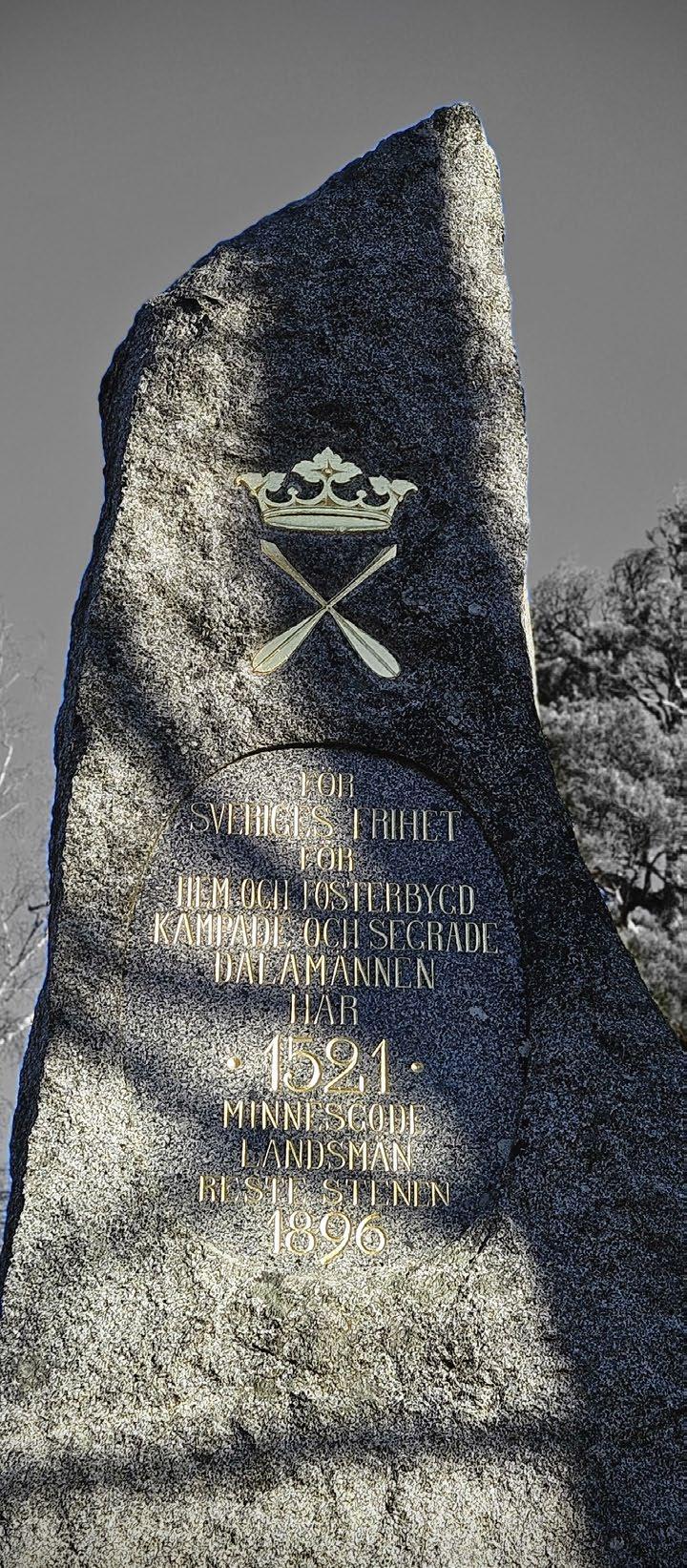
➔ in MMA galor with hugh views. I have so far put in around 68,000 Euro in cost with my own money.
I plan to launch the products to the market in 2027/2028, I want to invite my future investment partner to come to Sweden and Brunnbäck and I will show you the location and the plans. In 2024 I have signed NDA dokuments with 2 future investors that has showed a big interest in this.
So you are most Welcome if you are likeminded to me. I have this vision /plan since 2013 and is the right time to put Brunnbäck Sweden 1521 on the world map and help a better world.
Brunnbäck Sweden 1521 USP
Low of salt & Flourid
High Quality water pH 7,8
Historic water year 1521 - 1523
Water with a donating Purpose ■

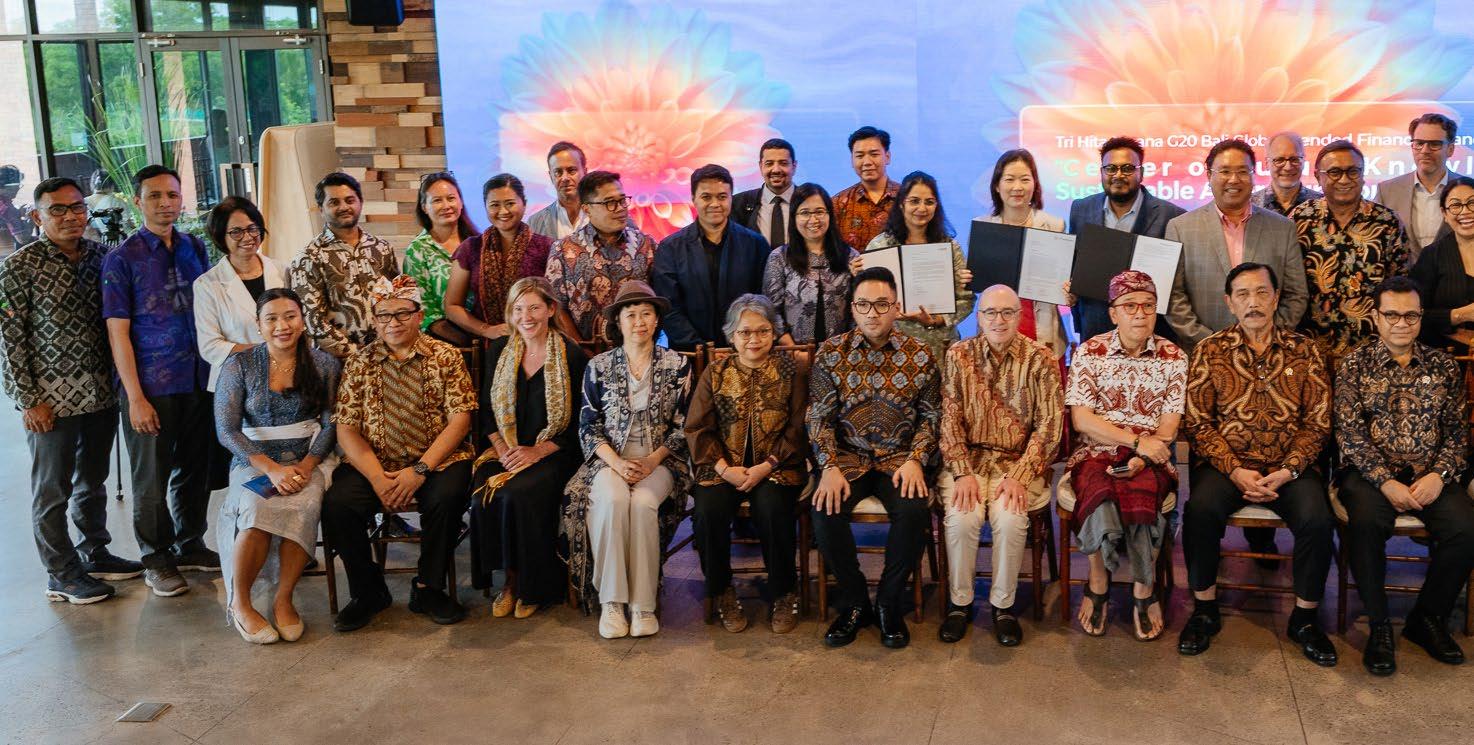
Artificial intelligence (AI) has become the defining force of the 21st century— reshaping economies, rewriting social contracts, and reimagining the boundaries of possibility. Yet as AI accelerates, so too does the risk of widening the global divide between nations that can harness this technology and those left without the compute power, data capacity, and clean energy required to participate.
At the Tri Hita Karana G20 Bali Global Blended Finance Alliance Dialogue on “Sustainable AI for Our Common
Future,” held on 23 October 2025, Indonesia and global partners delivered a clear message: AI must become a global public good—green, inclusive, ethical, and accessible to all nations.
Jointly hosted by the Tri Hita Karana Forum, the G20 Bali Global Blended Finance Alliance with knowledge partner United Nations Development Programme (UNDP) and Pegasus Capital Advisors, the high-level dialogue convened more than 130 leaders: government ministers, multilateral institutions, investors,
technology firms, academia, and civil society at the United in Diversity Bali Campus Kura Kura Bali SEZ—a fitting location given the Balinese Tri Hita Karana ethos of three harmonies between people, nature and the spiritual. Indonesia’s strong record in climate leadership and innovative financing provides a powerful foundation for shaping the next frontier of sustainable development: artificial intelligence.
As guardian of the world’s largest mangroves, vast peatlands, rich tropical ecosystems, and extensive coastlines, Indonesia has aligned environmental responsibility with economic ambition. Its pioneering use of blended finance— through SDG Indonesia One, the Just Energy Transition Partnership (JETP), blue and green sukuk, and blue-carbon mechanisms, including spearheading the G20 Bali Global Blended Finance Alliance—has positioned the country as a global model for mobilizing capital at scale. These strengths now place Indonesia at the forefront of a new strategic opportunity: championing sustainable, inclusive, and sovereign AI for ASEAN and the Global South, ensuring technology uplifts humanity. As guardian of the world’s largest mangroves, vast peatlands, rich tropical
ecosystems, and extensive coastlines, Indonesia has aligned environmental responsibility with economic ambition. Its pioneering use of blended finance— through SDG Indonesia One, the Just Energy Transition Partnership (JETP), blue and green sukuk, and blue-carbon mechanisms, including spearheading the G20 Bali Global Blended Finance Alliance—has positioned the country as a global model for mobilizing capital at scale. These strengths now place Indonesia at the forefront of a new strategic opportunity: championing sustainable, inclusive, and sovereign AI for ASEAN and the Global South, ensuring technology uplifts humanity.
Sovereign AI: A Strategic Imperative for Emerging Economies Indonesia views AI not just as technology but as a strategic national asset. It champions “sovereign AI,” where every nation can develop and manage its own AI systems rooted in local values and priorities, enabling fairness and equitable access to AI’s benefits.
Under President Prabowo’s Asta Cita vision, AI is placed at the center of national development—from food security and clean energy to education, health, and public services. Indonesia’s
AT THE TRI HITA KARANA G20 BALI GLOBAL BLENDED FINANCE ALLIANCE DIALOGUE ON “SUSTAINABLE AI FOR OUR COMMON FUTURE,” HELD ON 23 OCTOBER 2025, INDONESIA AND GLOBAL PARTNERS DELIVERED A CLEAR MESSAGE: AI MUST BECOME A GLOBAL PUBLIC GOOD—GREEN, INCLUSIVE, ETHICAL, AND ACCESSIBLE TO ALL NATIONS.
National AI Roadmap prioritizes a human-centric, ethical, responsible, and sustainable AI ecosystem, supported by a national AI task force, a stronger public–private partnerships, accelerated research and innovation, new funding models, and secure digital and data infrastructure. Together, these form the foundation of a trusted and inclusive AI future.
The global stakes are high: while AI’s transformative potential is immense, access to compute, high-quality data, and clean energy remains concentrated in a few wealthy regions. Without investment in digital and energy infrastructure, emerging economies risk exclusion from the century’s most consequential productivity revolution. Indonesia is responding decisively by positioning itself as an AI developer and leader, not merely a consumer.
It is building sovereign AI capabilities— from agricultural genome-sequencing initiatives to multilingual language models that reflect Indonesia’s 700+ local languages. A forthcoming “personal knowledge container” aims to rival global platforms while being more energy-efficient and decentralized.
Indonesia is also pioneering an AI-enabled ocean governance using special intelligence, predictive analytics and ecosystem valuation tools to advance its blue ocean economy. Its Blue Halo S initiative, a ‘protectionproduction’ sustainable fisheries scheme, spawns the national Desa Nelayan (Fisherman Village) modernization program by integrating logistic and supply chain data, digital literacy, and sustainable practices for the fishermen. ➔
➔ Indonesia’s plan to deploy 100 GW of solar across 80,000 Village Cooperatives is a major step toward rural AI readiness. Powering 5,600 villages within next decade with battery energy storage system, it delivers clean reliable electrification needed for digital services and broad access to AI benefits to boost rural productivity.
The country is also advancing Agrivoltaics (APV), a dual land-use system combining agriculture with solar power generation to boost land efficiency, strengthen food and energy security, and address climate change. APV offers farmers additional income from crops and access electricity, drives rural job creation, and models lowemission, climate-smart agriculture.
The INA SOIL AGRO platform integrates AI to improve agricultural data and decisions. Complementary efforts include Climate-Smart Agriculture SIMURP technologies, water-saving systems, drought-resistant crops, and soil testing kits to enhance productivity and optimize nutrient use.
Indonesia’s stable macroeconomic fundamentals of 5% growth, low inflation, falling poverty, combined with strong sovereign wealth funds, Danantara and Indonesia Investment Authority, will provide the financial backbone to accelerate this digital transformation. Education and digital skills sit at the heart of this vision, with
AI positioned as a democratizing force to expand opportunity rather than deepen inequality.
The UNESCO AI Readiness Assessment highlights Indonesia’s persistent digital gaps—from high internet costs and limited research funding to insufficient investment in affordable, secure infrastructure such as datacenters and cybersecurity. Throughout the dialogue, leaders emphasized the need for clean, resilient, and efficiently designed sovereign compute. Representatives from AWS, DCI Indonesia, Salesforce, Equinix, and CATL stressed that renewable energy, energy-efficient data centers, and battery-storage systems are essential to powering advanced AI. The message was clear: energy and compute must advance together.
The convergence of digital and energy needs has sparked a new model: “hypo-scalers”—small 1–5 MW data centers powered by local renewable energy, battery storage, and optimized for localized AI services. These facilities provide the “missing middle” of distributed, green compute for developing regions. Indonesia is well positioned for this approach as it pursues a distributed, collaborative data-center ecosystem, partnering with the private sector to build a resilient
“ARTIFICIAL INTELLIGENCE IS ABOUT HOW WE SHAPE THE FUTURE OF OUR ECONOMY AND HUMANITY, ENSURING THE INTELLIGENCE WE CREATE SERVES OUR PEOPLE AND OUR PLANET, NOT THE OTHER WAY AROUND.”
H.E. LUHUT B. PANDJAITAN
Chairman of National Economic Council, Republic of Indonesia/THK Forum Co-chair
network that includes edge facilities across the archipelago.
The dialogue emphasized a humancentered approach where AI complements, rather than replaces, human judgment. It introduced the Tri Hita Karana Awareness-Based Compass to guide innovation through four actions: integrating AI with cultural heritage, aligning technology with Tri Hita Karana values, fostering interdisciplinary dialogue, and ensuring innovation sustains life and harmony with nature.
Indonesia recognizes that the rapid rise of AI requires a nuanced government response to its dual nature: near-term risks of job displacement and long-term opportunities for new industries. Navigating this shift demands continuous learning and strong AI literacy. Policymakers must upskill today’s workforce and equip youth with creativity, critical reasoning, systems thinking, and ethical awareness. Ultimately, AI replaces only those who do not cultivate the human judgment needed to guide it.
The messages from Ministers and Vice Ministers—Purbaya Sadewa, Minister of Finance; Luhut B. Pandjaitan, Chairman,
National Economic Council; Nani Hendiarti, Deputy Minister for Food Affordability and Security, Coordinating Ministry of Food Affairs; Prof Stella Christie, Vice Minister of Higher Education, Science and Technology; Nezar Patria, Vice Minister of Communication and Digital Affairs— who participated were loud and clear: “If managed wisely, AI can become a force for inclusion, opportunity, and shared prosperity.”
Access to compute and clean energy is now as critical as access to electricity was a century ago. Yet building sustainable sovereign compute requires capital far beyond traditional grants or commercial loans. Financial leaders agreed that blended finance—using public and philanthropic capital to mobilize private investment—is the only pathway capable of delivering the needed scale and speed.
The Dialogue highlighted three major initiatives:
1. Alliance for Sustainable Inclusive Intelligence (ASIGN).
Proposed as a global platform to accelerate investment and local AI innovation for sustainability and inclusion, ASIGN is built on five pillars: AI readiness; governance and ethics; blended finance for sustainable infrastructure; ecosystem innovation for SMEs/MSMEs; and multi-stakeholder knowledge sharing. Its mission is to
position AI as a public good by expanding compute access, narrowing the digital divide, strengthening skills, and delivering climate, equity, and resilience outcomes across emerging economies.
2. Bali Climate and Health Resilience Hub.
Launched by the Geneva-based Health Innovation Exchange (HIEX) in the Kura Kura Bali SEZ, the Hub will become Southeast Asia’s first regional platform integrating early-warning systems, climate-adaptive health solutions, and cross-sector partnerships. It aims to ensure no community’s health or livelihood is left vulnerable amid escalating climate volatility. Key supporters include AWS, UNICEF, Bayer Foundation, Prudential Foundation, Partisia Blockchain, and Swasti Health Catalyst.
3.Joint Statement Toward Indonesia Emas 2045.
Led by the United in Diversity Foundation in collaboration with WRI Indonesia and Pegasus Capital Advisors, the statement reaffirms commitment to strengthening Bali’s renewable energy readiness and achieving Net Zero Emissions 2045. It calls for stronger project pipelines, concessional finance, leadership development through programs like HEAL, and knowledge sharing for just, locally led energy transitions.

The Bali Dialogue underscored a clear message: Sustainable AI must power sustainable development—and no nation or community should be left behind. ■
For more information, please visit: thkforum.org/SovereignAI
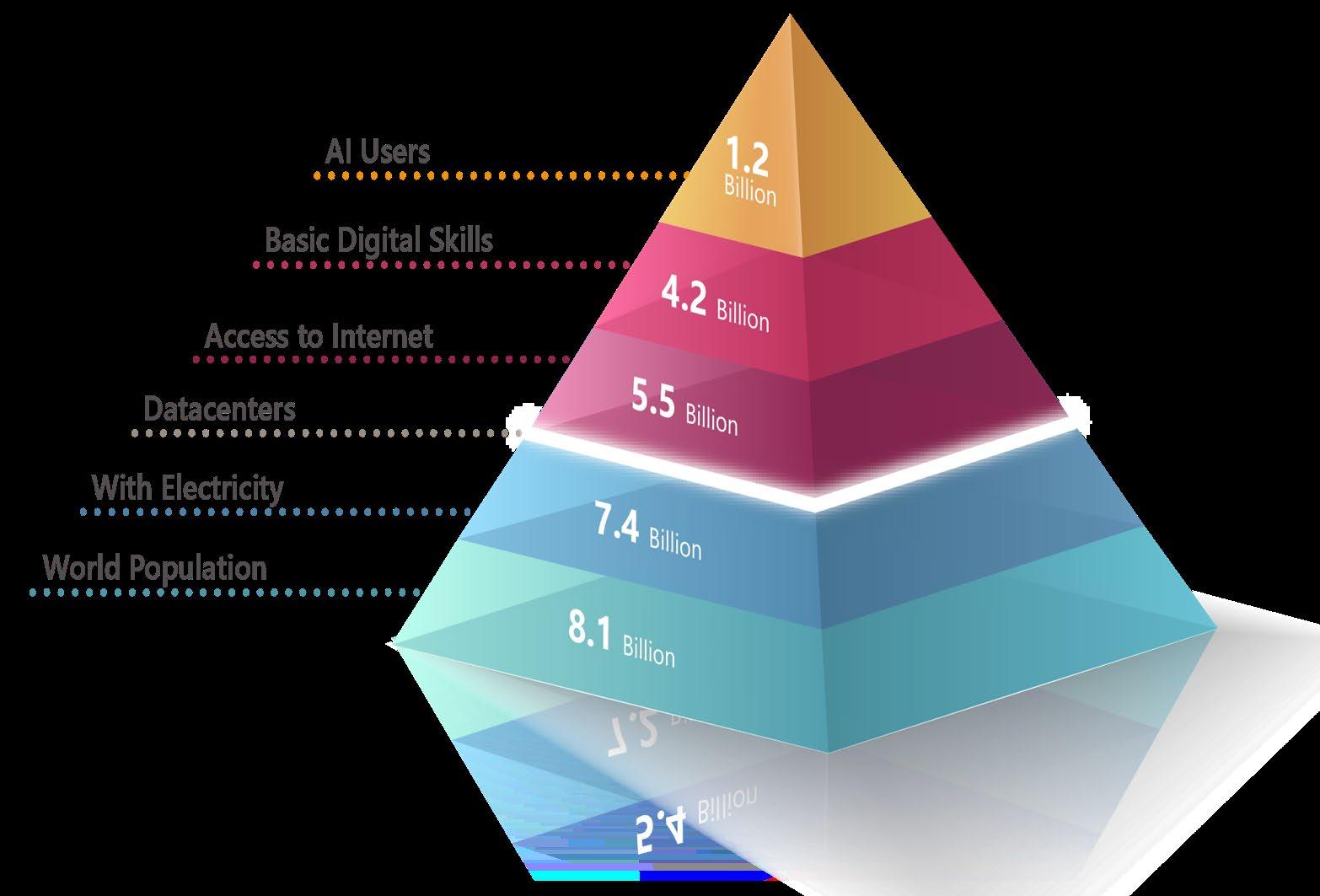
In October, global policymakers, investors, and innovators gathered in Bali for the Sustainable AI for Our Common Future Dialogue, hosted by the Government of Indonesia and convened by the Tri Hita Karana G20 Global Blended Finance Alliance (GBFA). The dialogue centred on the intersection of two major transformations: the rapid rise of Artificial Intelligence (AI) and the just energy transition.
Powering AI demands vast amounts of energy and water. Electricity consumption from data centres could reach nearly one trillion kilowatt hours by 2030—roughly equivalent to Japan’s total use (IEA, 2025)—while water requirements for cooling rival those of major cities (UK Government, 2025). Even before the age of AI, global energy
demand was expected to double by mid-century, driven largely by population growth in developing countries (IEA, 2025; UNFPA, 2024), where the cost of capital for a just transition is two to three times higher than in advanced economies (IEA, 2023).
Investments in AI infrastructure magnify the challenges developing countries face to keep pace with this new era. Private AI financing reached more than $250 billion last year, surpassing total annual climate finance flows to developing nations (Stanford University, 2025)
By 2028, spending on data centres and cloud infrastructure could near $3 trillion (Morgan Stanley, 2025), rising to $7 trillion by 2030 (McKinsey, 2025) —roughly equivalent to the annual
investment needed for the global clean energy transition (BloombergNEF, 2025).
Today, developing economies absorb just a fraction of AI infrastructure and venture capital investments (OECD, 2025), while only 32% of businesses in developing nations have adopted AI, compared with 85% in advanced economies (Mohieldin, 2025).
This widening AI divide comes as human development progress has fallen to its lowest point in 35 years (UNDP HDI, 2025)1 , and 1.2 billion young people prepare to enter a labour market that offers just 400 million jobs (World Bank, 2025)
The possibility that AI could further erode development is real, but so too are the opportunities to advance human-centred AI adoption. It is a matter of choices. Development depends less on what AI can do, and more on empowering people to make the most of technology (UNDP HDR, 2025). With targeted cooperation and public-private investments, the era of AI offers countries a chance to leapfrog traditional development stages by leveraging investments in compute to narrow the clean energy financing gap, boost skills, and build more resilient
and equitable societies, positively influencing up to 79 percent of the SDGs (Mohieldin, 2025).
A key outcome of the Bali Dialogue was the launch of the “Alliance for Sustainable Inclusive Intelligence (ASIGN) Global Blended Finance Roadmap”. The initiative aims to channel public, private, and philanthropic capital into infrastructure and human capabilities that will empower developing economies to thrive in the age of AI.
AI is already helping countries tackle climate challenges. UNDP is at the forefront of that effort. The UNDP SDG AI Lab, for example, is developing a Digital Social Vulnerability Index, a machine-learning and GIS tool that maps community resilience and identifies populations most exposed to climate shocks (UNDP SDG AI Lab, 2024).UNDP also supports governments in deploying AI to improve efficiency, productivity, and tax collection, while mobilizing investment for essential infrastructure—such as battery energy storage systems and cooling and energy-efficiency technologies— currently underrepresented in blended finance portfolios (Convergence, 2025). These innovations are not only foundational to sustainable AI deployment but also to achieving low-carbon, resilient growth.
Indonesia’s Golden Vision 2045 illustrates how strategic AI investments can accelerate national sustainable development. Its emphasis on “sovereign AI”—ensuring technology serves ethical and sustainable outcomes—aims for a triple win: decarbonization, digital inclusion, and economic diversification. By 2030, this approach could add USD$366 billion to Indonesia’s GDP, scaffolding an innovation economy that will boost skills needed to utilize AI for human benefit and hasten a clean energy transition. ➔
$2.9 Trillion of Global Capex on Data Centers by 2028
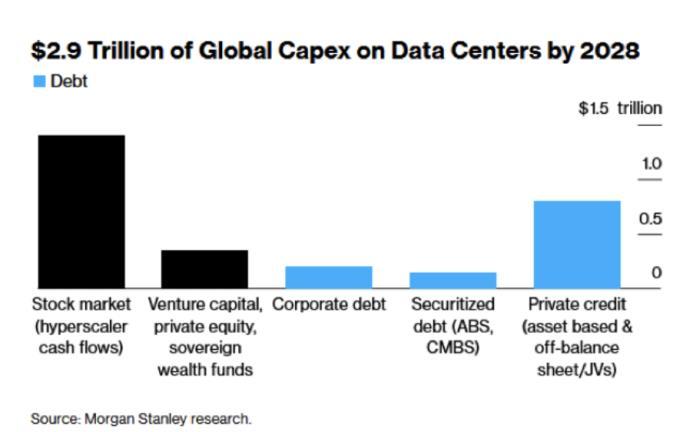
Source: Morgan Stanley research
1.
Energy Transition Investment has soared, But not far enough Global Energy transition and projected investment needs
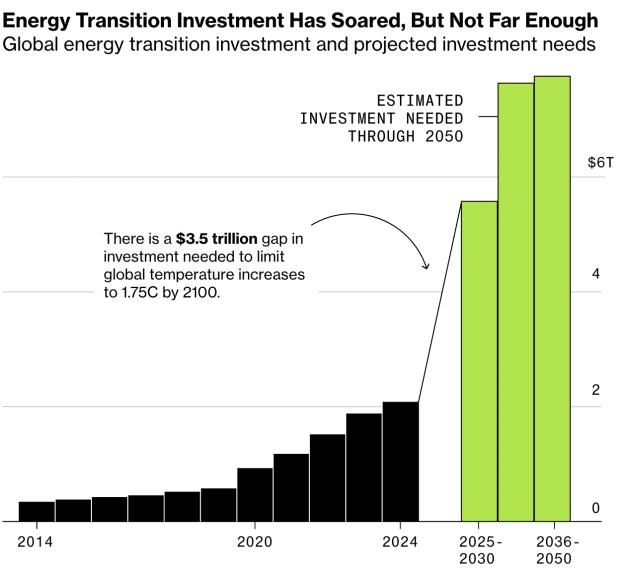
Source: BloombergNEF, 2025
➔ AI is poised to disrupt every sector of the economy—agriculture, health, education, and finance—on a scale comparable to the Industrial Revolution (UNDP HDR, 2025). Its acceleration carries profound implications for human development, labour markets, and environmental sustainability.
But as UNDP’s 2025 Human Development Report underscores, technology’s trajectory is not preordained. Whether AI deepens divides or drives shared prosperity depends on the choices we make today.
Unlocking AI’s development potential demands financial innovation that aligns profit with purpose. The ASIGN platform provides a unified mechanism for global leaders to steer this extraordinary wave of technological progress toward inclusive human development. As a founding ‘Knowledge Partner’ to the G20 Global Blended Finance Alliance (GBFA), UNDP is committed to advancing the ASIGN initiative, rooted in the Tri Hita Karana values of harmony between people, planet, and prosperity.

“SUCCESS WITH AI MUST BE MEASURED NOT JUST BY EFFICIENCY, BUT BY INCLUSION— BY HOW FAR IT EXPANDS OPPORTUNITIES FOR PEOPLE AND BUSINESSES… IF MANAGED WISELY, AI CAN BECOME A FORCE FOR INCLUSION, OPPORTUNITY, AND SHARED PROSPERITY.”
H.E. PURBAYA YUDHI SADEWA Ministry of Finance, Republic of Indonesia
Figure 1
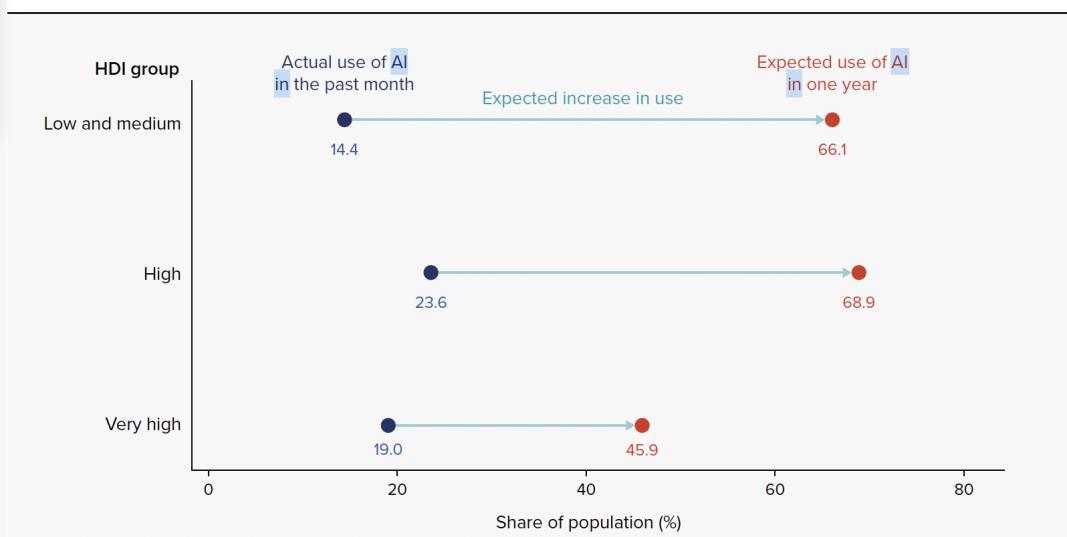
Source: UNDP HDR, 2025
Source: UNDP, Human Development Report, 2025: About two -thirds of survey respondents in low, medium and high Human Development Index (HDI) countries expect to use artificial intelligence in education, health and work within one year
In the Maldives and Timor-Leste, UNDP has deployed AI-enabled early warning systems and drone-based shoreline mapping to anticipate flooding and coastal erosion, strengthening community adaptation. In Africa, UNDP’s Climate Information and Early Warning Systems Programme is integrating AI forecasting to extend life-saving alerts to millions in the Sahel and Horn of Africa. Meanwhile, the UNDP–OCHA “Data Futures Platform” uses predictive analytics to anticipate climate-related displacement and food insecurity, helping governments act before crises escalate.
The UNDP SDG AI Lab is advancing this frontier even further. Based in Istanbul, the Lab has developed the Digital Social Vulnerability Index (DSVI) — a machine-learning and GIS tool that maps community resilience and identifies areas most exposed to climate shocks. It is now being applied in the Horn of Africa and other regions to inform targeted adaptation investments and strengthen local decision-making.
These efforts complement broader UN system initiatives such as Google’s Flood Hub, which provides early warnings across 80 countries, and Climate TRACE, which uses AI and satellite data to monitor emissions from 70,000 industrial sources worldwide. Together, they demonstrate how responsible AI can serve as a positive tipping point for climate action — mobilizing private capital, strengthening local innovation ecosystems, and improving resilience where it is most needed. ■
As Southeast Asia faces mounting climate shocks—from rising temperatures to frequent floods— the intersection between public and planetary health has never been more urgent. In response, Indonesia is positioning itself at the forefront of regional resilience through an ambitious initiative: the Bali Hub for Climate, Health, and Disaster Resilience, located within the Kura Kura Bali Special Economic Zone.
Launched under the stewardship of Geneva-based Health Innovation Exchange (HIEx), the Hub aims to be Southeast Asia’s first regional platform integrating early-warning systems, climate-adaptive health innovations,
and cross-sector partnerships. Its mission is to ensure that no community’s health or livelihood is left to chance in the face of accelerating climate volatility.
The Hub operates as both a living laboratory and a scaling platform where policymakers, technologists, and investors co-create practical solutions. It focuses on three urgent priorities: heat resilience, flood and disasterready health systems, and vectorborne disease control.
Using AI forecasting, real-time data, and locally tailored interventions, the Hub bridges the gap between early warning and rapid response. Heat maps guide city planners in designing cooler, greener public spaces with integrated well-being programs. Hospitals are
being climate-proofed with backup power, cooling, and telemedicine capacity, while strengthened WASH (water, sanitation, and hygiene) systems improve community resilience.
Drones deliver medicines to floodisolated villages, and AI models predict mosquito outbreaks, informing vaccine deployment and targeted prevention.
To scale solutions, the Hub’s enabling architecture promotes innovation, policy alignment, and capacity building. An Innovation Sandbox pilots frontier technologies—from biosensors to AI-driven alerts—through public–private trials. A Policy and Regulatory Advisory helps ministries align health–climate policies, open-data standards, and ethical AI frameworks. Community education programs include heat, hygiene, and dengue prevention curricula for schools and public campaigns. The Climate & Health
Data Cube integrates weather, epidemiological, urban, and healthservice data to strengthen early warning systems. Capacity-building initiatives include regional fellowships and certifications with leading universities to train the next generation of climate-health innovators.
The Hub also provides a coordination framework for ASEAN countries aligning health and climate adaptation strategies. A new inter-ministerial working group— spanning Indonesia’s ministries of health, environment, and disaster management—is developing shared governance protocols that uphold data sovereignty and ethical AI principles.
Building on its leadership in digital health innovation and subnational climate finance, Indonesia aims to make the Bali Hub a template for regional cooperation. ➔
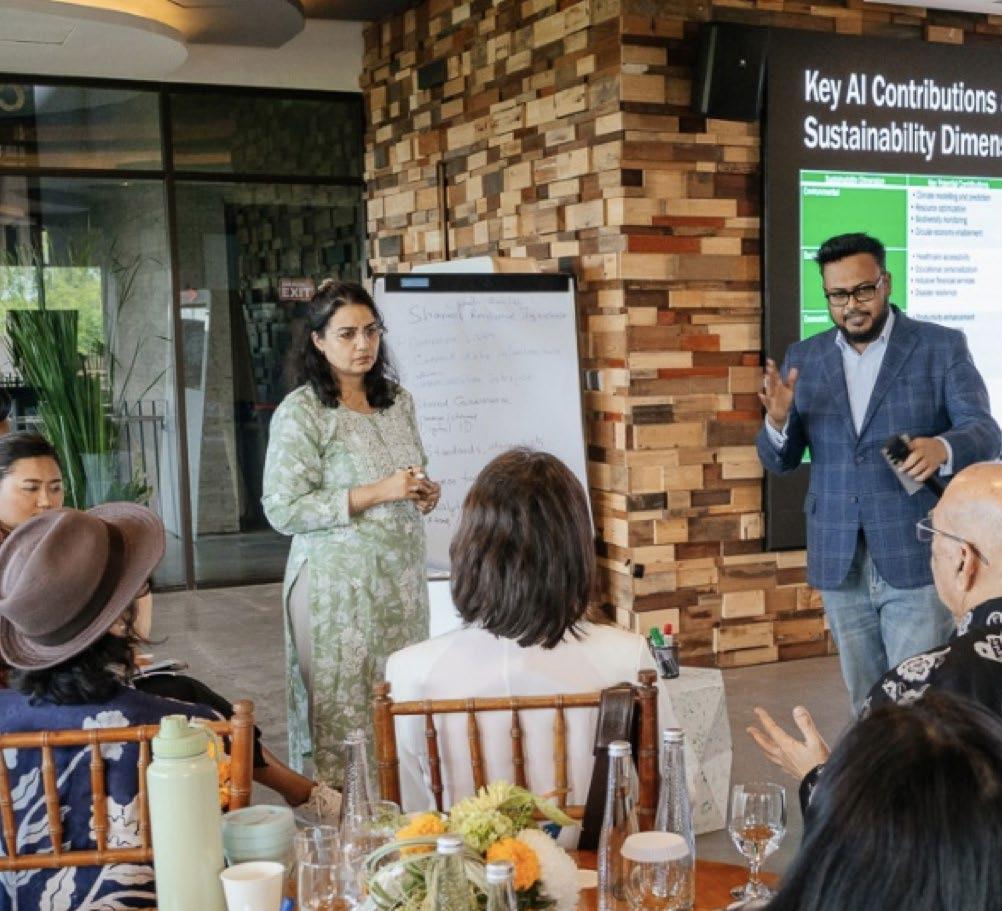
“LET US CONTINUE THIS JOURNEY TOGETHER — ALIGNING SCIENCE, EMPATHY, INNOVATION, AND INCLUSION SO HEALTH, TECHNOLOGY, AND HUMANITY MOVE FORWARD HAND IN HAND.”
DR. ERIC DANIEL TENDA
Board Member of National Committee of Artificial intelligence for Health, Ministry of Health, Republic of Indonesia, representing the Minister of Health. Tri Hita Karana G20 Bali GBFA
UNDP Dialogue on “Sustainable AI for Our Common Future”, 23 October, 2025
➔ The initiative reflects G7 and G20 calls for climate-smart, resilient growth, translating commitments under SDG 3 (Good Health and Well-Being) and SDG 13 (Climate Action) into real regional outcomes.
Within six months of its inception, the Bali Hub has mobilized USD 5 million in seed funding and brought together a diverse coalition of partners:
■ Amazon Web Services (AWS) is developing sovereign AI infrastructure for real-time analytics.
■ Partisia Blockchain is designing secure data-interoperability systems that protect national sovereignty.
■ Swasti Health Catalyst is building a real-time disease surveillance and response dashboard.
■ Bayer Foundation is launching a Women’s Empowerment Sandbox to scale female-led innovation and entrepreneurship.
■ UNICEF Innovate2Scale is coleading local innovation and youth participation platforms.
Together, these collaborations power the Hub’s “Climate-Health Cube” framework—linking science, policy, finance, and community action for impact.
By 2026, the Bali Hub aims to
establish Indonesia’s first Climate and Health Data Cube and a regional Climate and Health Early Warning and Response System (CHERe). Twenty-five pilot innovations on heat, flood, and disease resilience are slated for scaling across ASEAN, alongside the training of 1,000 frontline health workers and 200 city planners in climate-health risk management.
The initiative is targeting USD 50 million in blended finance through the G20 Global Blended Finance Alliance and the Resilient Cities Challenge, demonstrating how innovative financing can advance both health security and inclusive green growth.
To be showcased at the 2026 World Economic Forum in Davos, the Bali Hub positions Indonesia—and Bali in particular—as a global demonstration site for Climate-Health Living Labs. Beyond symbolism, it offers a pragmatic blueprint for integrating health, technology, and finance to safeguard lives, drive innovation, and foster shared prosperity in a warming world. ■
Bali is once again poised to lead Indonesia—and inspire the world. Long celebrated for its harmony between people, nature, and spirit, the island is now shaping a new legacy: becoming a subnational pioneer for renewable and clean energy readiness. Grounded in the Tri Hita Karana philosophy and aligned with the Nangun Sat Kerthi Loka Bali development vision, Bali’s commitment to achieving Net Zero Emissions by 2045 is more than an environmental goal; it is a blueprint for inclusive and climate-aligned development.
Recent momentum underscores the seriousness of this ambition that was announced in 2023. The June 2025 Tri Hita Karana G20 Blended Finance Forum sparked renewed collaboration across government, finance, and development partners. The release of the Bali NZE 2045 Electricity Roadmap soon after provided a strategic framework for decarbonizing the island’s power system.
By August, Bali Climate Week showcased unprecedented alignment among public institutions and civil society through Koalisi Bali Emisi Nol Bersih, reinforcing the island’s leadership in climate governance.
The launch of the Bali Climate Finance Platform (BCFP) during the Bali Climate Week marked a turning point. Authored in partnership between Bali Provincial Government and the non-state actors joined in Koalisi Bali Emisi Nol Bersih (Bali Net Zero Emission Coalition) led by WRI Indonesia, the platform demonstrates how blended finance can mobilize capital where it is most needed—at the subnational level. This architecture, developed in alignment with the national platform under PT Sarana Multi Infrastruktur, is essential for overcoming persistent barriers such as
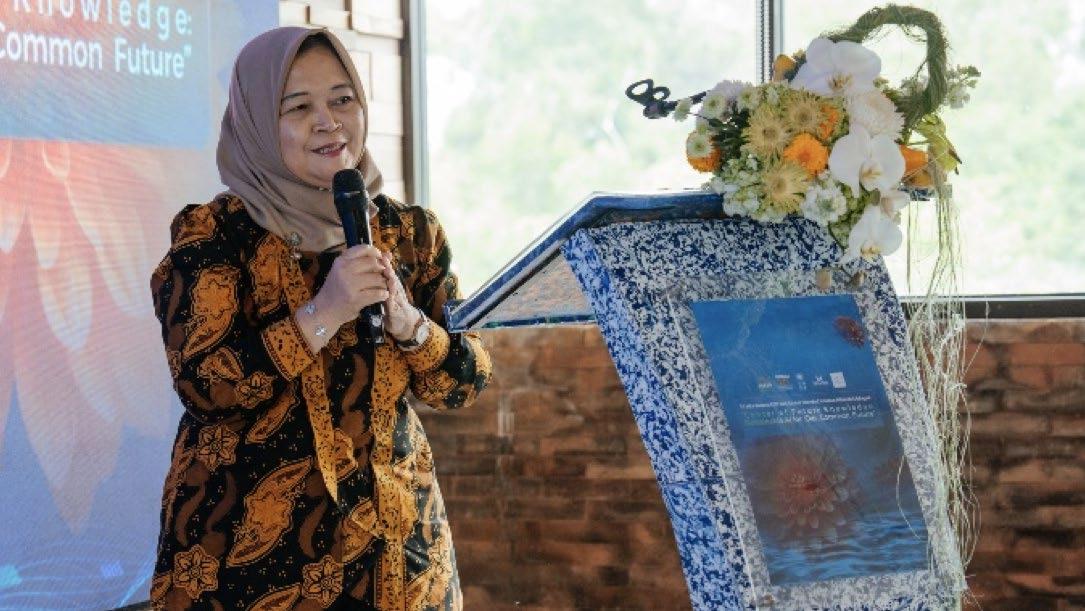
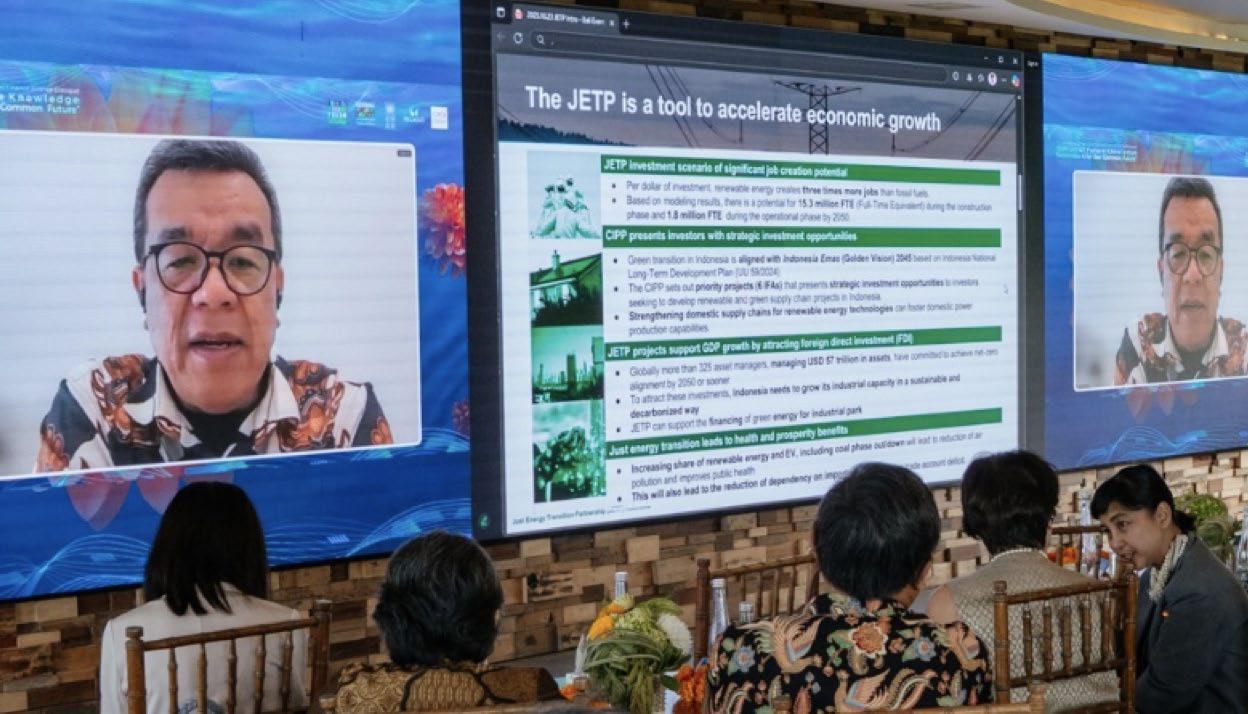
policy complexity, limited project preparation capacity, and gaps in concessional funding. Bali’s emerging ecosystem shows that technical readiness, financial innovation, and community leadership must advance together. On Oct 23rd, these commitments are reiterated in a joint statement of collaboration led by United In Diversity Foundation in collaboration with WRI Indonesia and Pegasus Capital Advisors as an integrated approach: advancing renewable readiness, strengthening project pipelines, building leadership capacity through the multistakeholder
alignment program HEAL (Happy Energy Action Leadership), and promoting knowledge exchange to support just, locally led transitions. As Indonesia enters an era shaped by sustainable AI and digital transformation, Bali offers a powerful model of how climate and technological futures can converge.
Bali’s journey is far from symbolic. It is a living prototype for Indonesia Emas 2045—the vision for Indonesia’s 100th years’ independence—and a call for global partners to help build a resilient, equitable, and renewablepowered future for all. ■
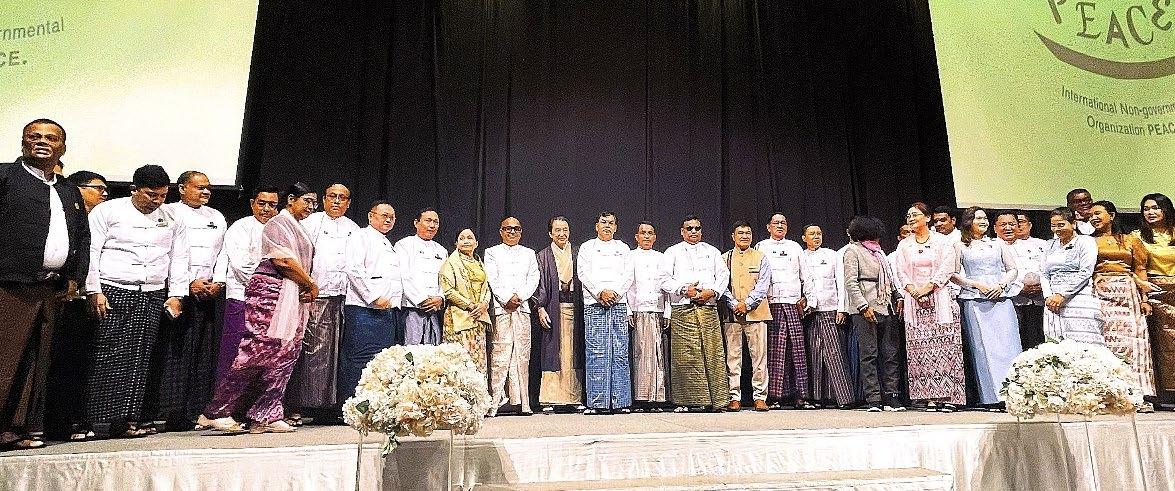
International Non-governmental Organization PEACE. (abbreviated as “ingo PEACE.”) marked a historic milestone on August 27, 2025, by independently hosting the Myanmar Human Rights Seminar 2025 (Universal Values of Humanity Seminar) in Yangon, Myanmar. This was the first human rights seminar ever held in the country since the adoption of the Universal Declaration of Human Rights at the 3rd United Nations General Assembly in Paris
on December 10, 1948, and it took place amid the challenging context of ongoing civil conflict. Notably, Burma (present-day Myanmar) was among the 48 nations that voted in favor of the Declaration 77 years ago, out of a total of 58 UN member states at the time—an historical fact that underscores the profound international significance of this event.
In the days leading up to the seminar, the organizers faced numerous challenges, including announcements of withdrawal by some planned co-host organizations, pressure on the hotel venue to cancel, and even a request to change the seminar’s title the day before the

event. Nevertheless, through the united efforts of ingo PEACE. headquarters and the ingo PEACE. Myanmar Administrative Officeworking under the mission of an independent civil organization, engaging in persistent dialogue and negotiation across sectors, and ultimately, with the understanding of the government - the seminar was safely and smoothly realized.
On the day of the event, approximately 300 participants attended, including distinguished representatives from the Center for Peace and Reconciliation (CPR), the Thamardi Foundation, the legal community, interfaith leaders, business executives, political

parties, and the media. Amidst high expectations for the future and an atmosphere of palpable tension, the seminar concluded with resounding applause, marking a truly historic step forward.
*At the time of adoption in 1948, the United Nations had 58 member countries (48 in favor, 8 abstentions, 2 absent).
Myanmar has long been deprived of forums for discussion on human rights and democratization due to international isolation and economic sanctions. This Human Rights Seminar was a historic achievement made possible by ingo PEACE. as a private organization, and was a tireless challenge by a private organization to bring the voices of citizens, which had been silenced during the civil war, back into the public sphere in the move towards democratization.
Amid repeated difficulties— including the withdrawal of partner organizations and mounting external pressures—ingo PEACE. remained steadfast in its commitment to uphold “human dignity and human rights as the foundational design principles for future society,” ultimately deciding to proceed independently. This event must be a historic achievement, as it provides a forum for free dialogue that could be realized because by a private INGO.
In the keynote speech, Hiroyuki Nakazawa, Chairperson of ingo PEACE., called for a redefinition of “human dignity” and “human rights” from a historical perspective.
From Myanmar, he made a powerful appeal to the world, saying, “Human dignity and human rights are not something that is given to us by others, but rather the very will to choose our future and survive.”
Reaffirming the spirit of the Universal Declaration of Human Rights adopted by the Third United Nations General Assembly on December 10, 1948, he redefined human rights as the inherent “power of life,” and peace as a condition in which “all forms of energy—food, education, healthcare, livelihood, culture—reach every life, leaving no ‘zero point of energy,’ and ensuring a world where the most vulnerable can live in safety and security.” He called for the creation of a new unit of values-based connections called the “Hope Alliance,” a new community that transcends national boundaries and is united on the basis of human rights, and advocated that building a
symbiotic economic model based on shared benefit (peace, human dignity and human rights, and global benefit) will lead to the true prosperity of civilization. Furthermore, he announced the establishment of a Peace Future Council with young people who lead future, emphasizing that experienced and thoughtful individuals must serve as gardeners and guardians, supporting the next generation as they learn to ask questions, find answers, and put them into practice. He emphasized that the future is not a covenant with the past, but a covenant with hope we must build together, and he declared our determination to nurture a new civilization for humanity.” ➔
➔ The speech ended with a powerful call: “Raise your hope, and make a covenant with the future! Hands Hope!”—to which the audience responded with prolonged applause.
This seminar was like a place of “a symphony”, where comments from diverse perspectives shone a light on a single value axis and resonated in a chain reaction.
Kaung Thet Htoo Zaw Legal Manager, ingo PEACE. While speaking on the basis of equality under the law, he spoke from the perspective of the legal profession about the fundamental rights of citizens under the Constitution of the Republic of the Union of Myanmar, including references to the current constitutional provisions. He also spoke about ingo PEACE.’s past efforts, human rights improvement
programs in prisons, and future efforts, emphasizing the need for awareness-raising through human rights textbooks.
Wunna Chairperson, Myanmar Interfaith Dialogue Organization
Positioning interfaith dialogue as the foundation for realizing human dignity and the universality of human rights, he called for building trust for social integration. He spoke about Myanmar’s philosophy of human rights and the lessons learned from its history of war, and expressed his determination that all organizations should join forces to ensure that free and safe democratization is implemented, transcending ethnic and religious differences and building a new peaceful nation based on dialogue.
Christopher Atkins President, Group of Nations
In the global policy framework, he emphasized that ingo PEACE.’s vision embodies the civilizational shift “from competition to co-creation”. He stated that the holding of this historic seminar is an event that will be widely known around the world and announced that this historic story will be featured in the official media coverage of the upcoming G-summit.
Khual Lian Kam
Former Founding Representative Director of ingo PEACE., current political leader
Reaffirmed that human rights are not given by others but are the will to live with dignity, stressing the importance to carry forward the principles of the Universal Declaration of Human Rights in 1948 Declaration.
Dr. Peter Ngun Za Cung
Representative Director, ingo PEACE. Described human rights as the “light” within each human life rather than the wording of the law. It is a precious thing that everyone carries within them. That light is the power of love that resides in the soul, and is none other than the fundamental power that gives us life. However, when division and hatred fill people’s hearts, that light becomes clouded and we lose sight of the light that dwells within each other. That is why, here today, we must once again renew our pledge: the future is not something that is given to us. It is something that we must build together”—he concluded the seminar.
These messages complemented each other, vividly portraying the entire seminar as a “collaborative space for jointly envisioning the future society.
This seminar marked a historic moment – the revival of a public forum on human rights long silenced under civil conflict. Many participants expressed pride in having attended “with courage.” Following the seminar, a long line of attendees waited to shake hands with the Chairperson, and media coverage extended for hours. These reactions have been widely recognized as a movement “supporting citizens’ hopes for genuine democratization,” drawing significant attention both domestically and internationally.
(After the Human Rights Seminar, held for three consecutive days from August 28th to 30th)
Building on the seminar, Peace Future Business Councils was held a three-day series from August 28–30, focusing on Myanmar’s reconstruction and future vision.
August 28 (Day 1):
• Agricultural, Biomass Energy, and Carbon Credit Council with 38 participants including agricultural policymakers and bank leaders.
August 29 (Day 2):
• “Future Vision Council” consisting of industry association presidents and key figures from the Chamber of Commerce. (About 40 participants, discussing coexistence economic models, the Peace Future Council, establishment of business companies, the Hope Alliance initiative, DID applications, and the creation of an information management industry.)
August 30 (Day 3):
• Council on Establishing Business Companies, with about 20 participants from CPR, business associations, and the core members of Chamber of Commerce.
These discussions directly advance the Hope Alliance Project, which is promoted by ingo PEACE.,
Global New Light of Myanmar (founded in 1964, Myanmar’s oldest English-language daily newspaper) https://www.gnlm.com.mm/myanmar-human-rights-seminar2025-held-by-ingopeace/?utm_source=chatgpt.com
contributing to concrete institutional and financial frameworks for reconstruction.
ingo PEACE. aims to further expand the “Hope Alliance” initiative — outlined in the Chairperson’s speech at the seminar —into the international community, while bringing together members to concretize reconstruction and development schemes centered on the Peace Future Council.
Going forward, ingo PEACE. will act as a bridge to collaborate with international humanitarian organizations and human rights organizations, expanding activities into education and local communities. Grounded in the cultivation of human rights and dedicated to the realization of social justice, ingo PEACE. will deepen global cooperation strategies and contribute to the sharing of universal values and the implementation of concrete initiatives. ■
Respected leaders of distinguished organizations, young representatives of students, and all honored guests assembled here today.
I am Hiroyuki Nakazawa, Chairperson of ingo PEACE., an international non-governmental organization headquartered in Japan. First and foremost, I wish to express my deepest gratitude and sincere respect to that we successfully hold this Universal Values of Humanity Seminar under the understanding from Interim Government of Myanmar.
In addition, through the dedicated efforts of all concerned, this opportunity has been created for us to speak together of human dignity, human rights, and hope for the future. As I stand here, I am deeply moved by the profound historical meaning of this gathering.
Today, I stand here in Myanmar — a land of hope — to bring you two questions and one proposal, addressed to the world.
The “questions” are these: “What, truly, are human dignity and human rights?”
“Why do nation-states exist in the first place?”
What do these concepts truly bring to our lives?
Without exception, each of us was suddenly born into this world, somewhere along the long journey of human history on this planet Earth, within the solar system. We were born into homes, communities, and societies; we nurtured relationships, learned, created, and sometimes clashed — arriving at this very moment.
As a matter of fact, we humans live less than a hundred years before returning to the earth.
Life and death cycle through generations, and the chain of life creates and inherits human history.
Throughout human history, we, as members of humanity living in different parts of this planet, have been drawn—primarily through the framework of nations—into wars led by rulers. Through these immense sufferings, endured as citizens, we have come to realize one essential truth, a universal value shared by all humankind: human rights.
And the proposal I have brought is this:
“Let us not bind ourselves to the past but dedicate our power and energy to the promise of the future and we should live our limited lives.” This is a proposal for a choice.
Hence, I call out:
“Raise your hope, and make a covenant with the future!”
We are living beings born into a world of continuous time, choosing each “now” as we live. Yet we humans, entangled in the karmic threads of the past that stretch back before we were
born, should overcome them — and at this very moment, we are being asked.
“What will you leave behind for the future?”
At times, we may have thought of “human dignity” and “human rights” as rights bestowed upon us by others.
But in truth, that is not the case.
Human dignity is not bestowed by systems or laws; it is a power, an energy, inherently present within each and every human being.
They are not something that can be taken away by someone. Even when disregarded or diminished, they remain unshaken within each of us, an indivisible and universal value.
On the other hand, if human dignity and human rights are viewed merely as legal constructions, they carry the danger of shifting according to the ruler’s legal interpretation or the depth of understanding.
That is why we must firmly reanchor “human dignity” in the root of human rights, and ensure that the will to protect that dignity is carried forward into the future.
In other words, what we are born with is not a “recognized right” that exists only when acknowledged by others, but rather the “Rights” - the “Power to be “ carried by every single life, however small. And this, is the “Power of Human life”.
And this power must never be left in isolation.
When the powers of individual life connect, resonate, and unite — the world changes greatly.
At the same time, we must also understand that in a society where
people coexist and prosper, the human rights and the rights exist only when we fulfill our duties towards the framework of society—toward the nation and the international community.
Human rights in society are supported by our own responsibility, not by releasing the boundless pursuit of individual desires.
In other words, human rights are not something to be won, seized, or granted by others. They are the power to point toward hope for the future. And the will to live and act upon that hope is human rights themselves — the very “power of life.”
Yes — we always have the freedom and the power to choose the future.
And yes — the time to reclaim them into our own hands is “NOW”.
Universal
Seventy-seven years ago, in the aftermath of the Second World War, the world rose from the ruins and adopted the Universal Declaration of Human Rights. It was on the night of December 10, 1948 — a Friday — during the Third United Nations General Assembly held in Paris. Of the 58 member countries, 48 voted in favor at that time. Let us pause to honor the wisdom of those leaders who left us this declaration — a testament of human intellect — and fulfilled their mission in life. Today, the number of UN member states has grown to 193 — more an triple.
Let us remember this too:
Burma — now Myanmar — was one of the 48 countries that voted in favor. Yes, your predecessors were part of that legacy.
And that means — the wisdom already resides within you!
U Thant, the UN Secretary-General from Myanmar and the first Asian to hold this prestigious position, said in
Nakazawa, ingo PEACE. Chairperson
his 1963 New Year’s address, amid Cold War tensions:
“The basic problem confronting the world today, as in the past, is the question of human dignity and human freedom.”
The Universal Declaration of Human Rights sets out the international standards that guarantee the human rights of all people as “fundamental values that should be shared by all humankind.”
Its first article reads: “All human beings are born free and equal in dignity and rights.”
In other words, (by the very fact of “being human”, every person equally bears inherent dignity). Yet “rights” bear fruit only when one fulfills responsibilities within society; they are not granted unconditionally.
Thus, in dignity, a king and a child stand equally alike, but in rights, they differ according to the weight of responsibility each must carry.
And we must not forget that “human rights” are built on the foundation of human dignity, and that they include, on the one hand, the equality that everyone should have, and, on the other hand, the responsibilities that we must fulfill as members of society, which are inseparable elements.
Then, we must ask: this fundamental value we call “human rights”, as defined in such a way— s it truly been embodied in our societies, seventy-seven years after the Universal Declaration of Human Rights?
Even if your answer is “no,” let us — here and now —listen not to the “voice of karma from the past” but to the “voice of wisdom inherited from humanity’s past?” ➔
➔ At the 35th President John F. Kennedy said at his inauguration: “Ask not what your country can do for you — ask what you can do for your country.”
We may hear it echoed in this way: “Ask not what the human rights can do for you — ask what you can do f or the human rights.”
Yes, it is an attempt that transcends national boundaries.
Even though we are born equal in dignity, yet there are countless “zero points” on this earth where people do not even have the energy they need to survive in such the situation of economic sanctions, conflicts, civil wars, climate disasters, unequal educational opportunities.
It is also true that in the restoration and rehabilitation of human rights, there are aspirations for human rights that only the people of an invaded country can understand. At the same time, however, there is also the anguish of the responsibility of nation-building that only the leaders of that country can understand.
In addition, in any country that is invaded, there are always people from within who sell out the country and gain a personal advantage.
I believe this applies to almost all colonization and indirect rule structures.
One result is that modern civilization is based on such a design philosophy, having built a world in which, as a result of struggle and competition, the eight richest people in the world own the same assets (approximately 48.6 trillion yen) as the poorest 3.675 billion people.
In fact, a report released by the international NGO Oxfam in 2023 stated that “the world’s 81 richest people own as much wealth as the bottom 50% of the world’s
population,” which is essentially the same social structure as the aforementioned report compiled by the same organization in 2017 that stated that “ 8 people’s = 3.6 billion people’s assets.”
That is why—from the land of Myanmar, where a new voice is rising once again—I call upon national leaders, the wealthy of the world, and all of us as citizens of the world who resonate with this cause: have the courage to stand with us, and declare your support for this historic redefinition of human rights.
To build the society of the future upon a new design philosophy.
Let me now offer a definition. I define peace as a condition where every form of energy—food, education, healthcare, daily life, and culture—flows to all living beings, and where no “zero point of energy” exists. In plain terms, it is a world in which the most vulnerable people among us can live with safety and security.
To aspire to “human rights” means to aim for a society filled with energy whose fundamental design concept is the dignity of life.
But the question is — who will build such a society together?
Not “Which country?” but “Who?”
And if we bring this question into our contemporary society — a world bound by advanced information networks — then “Who?” refers not to particular nation-states, but to each of us, as members resonating within the international community. It is, that I believe in truth, the solidarity of people who live in coexistence.
Let me share the story of the Renaissance.
The Renaissance (French for rebirth or revival), a turning point in human history that arose from the 14th to 16th centuries with the aim of “reviving the culture of ancient Greece and Rome,” did not begin
as an “official national policy.” Rather, it was a cultural movement driven by citizens with the strong will and support of certain kings and intellectuals.
Now, in the 21st century, the redefinition is simple: “Human rights must never be reduced to a tool for the economy. Rather, the economy must be used as a tool to achieve the fundamental aim of human rights — in other words, the Shared Benefit of Coexistence..
Therein lies the true prosperity of civilization.” It is in the re-editing of human history.
I believe it is no exaggeration to say that history to date, especially the 20th century, which has been called the “century of war,” has been built on the exploitation of the shared benefit (human rights, peace, and global interests).
For example, just as a state collects consumption taxes from the consumption activities of its citizens, or maintains weapons to defend its territory, I believe that nations could also, in accordance with their own principles, contribute a “planetary tax” to be used for protecting the Shared Benefit of Coexistence.
Yes, you may have already awared: The world must move beyond a model solely driven by private or national interests.
What is demanded now is a coexistence economy model, built upon the shared value of — the Shared Benefit of Coexistence.
In other words, peace — and human rights — are not mere “words.” They are about distribution.
The very essence lies in the structure of how the energies of life are shared.
I must now ask a question to the leaders of the world, to the stewards of the nation-state — the units by

which humanity organizes itself on this planet.
Are the economic sanctions imposed by powerful nations truly a means of justice?
What exactly is that cause based on?
Sanctions deprive the right to life and human rights not from the rulers of the sanctioning country, but from its most vulnerable people and citizens.
Medical care becomes unreachable. Education grinds to a halt. Infants die.
Article 30 of the Universal Declaration of Human Rights clearly states:
There is no “right” to take away rights.
Here lies a profound contradiction.
The reality that countries that have adopted the Universal Declaration of Human Rights are themselves perpetrating this structural violence is a clear example of double standards, and one can only call it a “violation of human rights.”
The nation, which originated as a geographical and regional grouping and to which each of us belongs, is a framework and device for whom, in the first place?
Local communities, which were the original model for nation states, were meant to protect and nurture human life activities. The lifestyles that sprouted from the cradle of these societies and were passed down were surely to be diverse cultures that flourished in their own way.
Today, however, the “state” has, in one of its aspects, come to bear the danger of becoming a vehicle—a strategic instrument—for rulers, whether individual or institutional. It can mobilize citizens, cut off information, and at times sow division, thereby transforming into a mechanism of control.
Max Weber famously said: “The state is a human community that (successfully) claims the monopoly of the legitimate use of physical force.”
Looking back through human history, these words also reflect the reality that nations have, at times, had no choice but to rise in resistance against external invasion in order to defend themselves.
Under such circumstances, those who hold different views must not press upon each other their own self-righteous justice. Rather, we must place the shared benefit of coexistence as a shared absolute value, and upon this foundation, seek mutual understanding and shared reflection.
Furthermore, the people must not be swallowed by information deliberately shaped from abroad. They must focus on one essential question: Who is speaking, and for whom is it spoken? And above all, they must face the truth of this very moment.
Therefore, we must now search for a new “definition of nation-building,” aimed at the future, together with those who will become its rightful architects.
ingo PEACE. calls for the joint creation of a new community that transcends national borders and stands upon the foundation of human rights—a unit of connection built on shared values, which we name the “Hope Alliance”.
Let us also nurture a new “Humanism Economy” (or “Hope Economy”), working with the world’s wisdoms, that runs parallel to capitalism and socialism — a circular economy and distribution model based on human rights.
What we envision is a “Coexistence Society OS” and a “Coexistence Economy Model.”
At the heart of this vision is (the Shared Benefit of Coexistence)”
— a new redefinition of “interest” itself, grounded in human rights, peace, and planetary well-being.
Humanity learns. We grow. At the core of learning is l
earning to ask the right questions. It all comes down to what questions you ask.
If the questions are wrong or outdated, the answers — and the world they shape — will also be distorted.
Regrettably, when we read between the lines of the world that has unfolded before us, a hidden question emerges: How can the wealthy become wealthier, and how can they control and manage humanity—the people, the citizens, the very lives of ordinary individuals— through the machinery of the economy, for their own enrichment?
And, from Myanmar, we also share a living history that should be examined.
This is the post-war image of a country, Japan.
As a nation that lost World War II, for 65 years now, Japan has suffered a “sovereignty vacuum” in which other countries’ military bases and privileges exist within its borders, under the asymmetric international contract known as the Japan-US Status of Forces Agreement.
This agreement still limits the human rights and autonomy of Japanese citizens, as seen in the lack of judicial jurisdiction over U.S. military crimes and unchecked environmental violations.
Although the UN Charter guarantees the sovereignty and equality of all nations, and the Universal Declaration of Human Rights guarantees the dignity and freedom of all people — in reality unfortunately, the human rights of a “defeated nation” are still restricted.
To ask about this structure is to confront the lingering shadows of colonialism and imperialism.
Human rights are never the possession of victors. Nor are they to be given by victors.
Human rights are the “right to exist as a human being” that everyone ➔

➔ has at birth, regardless of the country they are born in. The Universal Declaration of Human Rights recognizes this as a “common value of humankind”!
Therefore — in Myanmar, and anywhere on Earth — let us stand together against “double standards” and “the structures of silence”, and raise our voices toward the next future, demanding the restoration of sovereignty and dignity in their truest sense!
We shall establish the “Peace Future Council,” bringing together future generations as central participants, and learning from the wisdom of the world together to redefine peace and human rights.
Here, we will discuss future economic models, social systems based on coexistence, the vision of the nation, and redefinition of peace and human rights, and make recommendations to the world.
This initiative will nurture the connection of the younger generation with the world and foster their collaboration.
Why do we center young people?
The future is embodied in the youth themselves, and the questions of the future must be spoken by those who will carry it forward. Yet we must not forget this: we are not the ‘owners’ of the future, but merely its stewards, entrusted with it for a brief time.
Therefore, the responsibility for the immediate future rests squarely upon us—the adults of today.
It is we, the experienced and the thoughtful, who must serve as gardeners and guardians, helping the next generation to ask the right
questions, find the right answers, and act upon them.
There is a didactic story in Myanmar: “Unity of the Brothers”
(Nyi-Akko-Lei-U-Ye-In-A)
When the brothers were divided, they were easily defeated.
But when they stood united, no enemy could break their bond.
In this context, the “enemy” refers to the bondage of living in the present while being bound by the karma of the past.
This story echoes Japan’s story of “the three arrows”.
Yes—what the world needs now is “the power of unity”.
It is the power of unity among the youth who will lead the future, as “members of a coexistence-based society”.
And those of us, like myself, must not become the cause of division, but instead stand as gardeners and guardians —nurturing the unity of the young, here and now.
And I wish to raise my voice together with all friends gathered here—
Now is the time for everyone to ask yourselves this question:
Are we to live and die bound by covenants with the past that were unconsciously imposed upon us?
Or shall we redesign the future together, live within that promise and covenant, become seeds of goodness that sprout toward the future, and carry hope forward?
What the world needs now is “not imitators of the past”.
It is not another contest of power among rulers clinging to rights and resources.
What we need now is: “Architects of the Future.”
From this land of Myanmar, let us declare to the world: “True reconstruction begins with respect for the rights of every human being.”
Today, “the seeds of hope” are once again being sown in the soil of Myanmar.
I call this new solidarity of humankind to nurture together, the “Hope Alliance”.
Yes — we must begin the dialogue and action toward building the “Coexistence Society OS” and “Coexistence Economy Model,” founded upon the design principle of the Shared Benefit of Coexistence.
And let us name “this great journey” of hope for humanity, aiming for a great development in human history, the “Hope Alliance Project”, and from this land, expand the circle of solidarity to the world!
Like the Padauk — the national flower of Myanmar — let us raise the banner of hope and rise together!
*Padauk flower language: Hope, New beginning, Purity, Sincerity, Humility
And I believe that each participant in this seminar will become a seed of the future, nurturing the sprouts of a new civilization.
“The future is not something to be given. It is something to be built together.”
Let the rights of all humans not be relics of the past, but bridges to the world we choose to create together.
Let us take this step forward — together — for the future of humanity.
Toward a future in full bloom — toward the April of the Padauk flower.
Hands Hope!
Thank you for your kind attention.
Republic of the Union of Myanmar (Green Country) in Asia (Wide Area). Kayah State, Republic of the Union of Myanmar (yellow area)
On September 21, 2025, Ingo PEACE. has officially signed a Strategic Alliance Agreement with the Myanmar Christian Peace Support Central Committee (MCPSCC, whose chairman is the Roman Catholic Archbishop of Yangon and Cardinal), a religious organization being joined by multiple denominations and sects
of Myanmar Christian churches that promotes activities for the stability and harmony of local communities and the mitigation of conflict through a church network. As a first step in this collaboration, the two organizations are promoting the first joint peace project to return approximately 90,000 residents of Loikaw, the capital of Kayah State, who were forced to flee the city due to the civil war, to their hometowns. Furthermore, around 6,000 children resumed their education, supported by the provision of teaching materials and educational
supplies. This initiative is based on “prayer and dialogue,” and is a realistic attempt to bring together the religious community and civil society, transcending sects and denominations, in solidarity for the realization of social justice, and to regain the “freedom to choose our future.”
It heralds the birth of a new peace model for the international community.
On August 27, 2025, the organization independently hosted the Myanmar Human Rights Seminar 2025 (Universal Values of Humanity Seminar) in Yangon, the first human rights seminar organized solely by a private independent body in Myanmar. At this historic event, ingo PEACE. advocated that “human dignity and human rights must serve as the fundamental design principles of future society.” This joint peace project, born from solidarity inspired by the vison, represents a concrete civil society initiative in which religious communities and international NGOs collaborate to advance peace efforts, including a ceasefire agreement, with the aim of rebuilding civil society*.
*“Civil society” differs from states and other power structures and refers to a society of solidarity in which
citizens, such as local residents, religious communities, private organizations, and INGOs, engage with society of their own volition. As a member of this “civil society,” ingo PEACE. promotes peace through on-the-ground practice based on human dignity, rather than relying on intergovernmental diplomacy or the dynamics of power.
Information Delivered Directly from the Local/On-site
ingo PEACE. has established a local Myanmar management headquarters and is directly conducting operations together with our expatriate and local members. Amidst a confusing array of information, our organization reports on our activities based on local/ on-site information.
This project, in collaboration with religious organizations, promotes mutual understanding and implements activities that enable citizens to return to their hometowns. In a civil war situation, establishing mutual understanding not through military force or authority, but through cooperation between civil society and the religious community requires a series of dialogues that transcend the divisions that have arisen among people and unite them in peace efforts, and is not an easy process. Still, the project upheld the principle that “human rights are not something granted by others, but the will to choose the future.” As a result, under government agreement, safety was secured, and citizens divided by conflict were able to take a concrete step toward restoring their lives.
Through this first joint peace project, approximately 90,000 citizens of Loikaw, the capital of Kayah State, have begun to return to their hometowns. As Loikaw is the political, social and religious center of the state and it was the focus of much of the population movement at the start of the civil war, this city is one of the
first cities to be affected by the war. Today, the city is still in the process of reconstruction, with landmines and other dangers remaining. However, in this context, the fact that the return of citizens most affected by the civil war to their hometowns is progressing represents a tangible step forward for peace and can be seen as a sign of hope.
In particular, the light of education has been rekindled for approximately 6,000 children. In conjunction with this, efforts are being made to lay –the groundwork for post-conflict reconstruction and to create an environment that ensures learning for the future through the provision of educational support materials. ➔
➔ ingo PEACE. Myanmar Management Headquarters members donated educational materials in the state capital, Loikaw
This outcome demonstrates that religious organizations and civil society can work together to implement “structures of peace” within society. It is not limited to one region but stands as a universal model of solidarity to protect human dignity.

Going back five months to April 9, 2025, ingo PEACE. carried out an international operation under a temporary ceasefire agreement, evacuating children—innocent lives with no responsibility for the war— from conflict zones to protective facilities. At the time, disclosure of this activity was withheld to ensure their safety. Yet this “principled action” itself embodies the consistent activism in advancing social justice through non-violent, civilian-led initiatives.

ingo PEACE. and MCPSCC will steadily promote the return of citizens and the resumption of education beyond Kayah State step by step. Furthermore, we will deepen collaboration with international humanitarian organizations and human rights organizations, aiming to realize “social justice based on human dignity” through dialogue. It is also an effort to a new model of international cooperation in which the future is built not by nations or power, but by solidarity among citizens, religious communities, and the international community.
Based on the philosophy that “peace is a state in which the most vulnerable people can live in safety”, our organization will continue to act as a bridge between the religious community and citizens, transcending the logic of nations and power, and transcending sects and denominations.
What we strive to build is not a society where some win and others lose, but a coexistence society where all life can live in safety. This project is part of the “Hope Alliance” initiative, connecting empathy and action across borders. Humanity now stands at a civilizational turning point to share the benefits of coexistence.
In today’s world, diverse claims of “justice” exist. Yet justice that divides people or drives them into suffering cannot be called social justice. We believe that social justice resides in systems that protect the vulnerable and leave no one behind.
Therefore, rather than struggling over whose justice prevails, we will deepen solidarity on the common foundation of social justice. In a world where opinions are diverse, we believe that walking together with those who share the essence of this endeavor is the first step in building
the future. We will continue our efforts to create a new model of a symbiotic society where all life can live in peace.
The Myanmar Christian Peace Support Central Committee (MCPSCC) is a religious organization made up of major Christian groups in Myanmar. The five member organizations are the Myanmar Council of Churches (MCC), the Myanmar Catholic Bishops’ Conference (CBCM), the Myanmar Evangelical Christian Alliance (MECA), the Myanmar Christian Mission Cooperation Committee, and the Seventh-day Adventist Church, and they work together across a wide range of denominations and sects. Through nationwide church networks, MCPSCC promotes social stability, health and educational awareness, and disaster response, contributing to improved living conditions and reconstruction. In the situation of amid conflict and social unrest, MCPSCC plays an important role in protecting civilians and mediating dialogue, amplifying the voices of the people.
Internationally, MCPSCC works with networks such as the World Evangelical Alliance (WEA), World Council of Churches (WCC), UN agencies, and NGOs, and is recognized as a partner organization, supporting peace and stability across civil society beyond denominational lines. ■
In the face of sanctions and civil conflict, INGO PEACE. opens the first food supply route to isolated Chin State, sustaining local lives.
On Myanmar, October 21, 2025, ingo PEACE. has successfully opened a humanitarian food transport route to Hakha, the capital of Myanmar’s Chin State, one of the regions most affected by the ongoing conflict and heightened tension. Through
coordination with local religious organizations, ingo PEACE. delivered approximately 67,000 servings of staple rice (about 5 tons) along a route that had long been sealed off due to fighting and blockades. In an area where the transport of humanitarian supplies had been completely cut off, this marks the first instance in which an INGO secured an independent, safe route with the humanitarian understanding of the relevant authorities, thereby providing life-saving support and opening a path that had been
closed for years — a true lifeline for the people.
Transcending political divisions and ideological differences, ingo PEACE. has embodied its philosophy that “Peace is a state in which energy reaches every form of life” through concrete, on-the-ground actions that directly support the lives of people.
Located in the mountainous northwestern region of Myanmar, Chin State has endured severe food and medical shortages caused by prolonged civil war and economic sanctions. Major roads, communication lines, and power grids have been cut off, leaving communities in crisis.
Especially in the state capital, Hakha, the distribution of rice — the people’s staple food — had come to a complete halt, leaving local society in an urgent need of humanitarian assistance. For several years, the state had remained in isolation, unreachable even by international aid.
Among the most affected were impoverished families, the elderly, women, and children, who faced constant hunger. For them, “the day when rice returns to our tables” had become a desperate wish and symbol of hope.
Amid escalating tensions on the ground—marked by repeated reports of airstrikes, civilian casualties, and retaliatory clashes around local police stations—fear and uncertainty continue to grip the region. Yet, precisely under such circumstances, ingo PEACE. chose to take action to support lives in distress on the ground, driven by its unwavering commitment to realizing a society where every life can live in safety and dignity.
Under the coordination of Rev. Dr. Bishop Ca Kung, the Christian Church Supervisor of Chin State, the organization successfully transported approximately 67,000 servings of staple rice (about 5 tons) from Kalaymyo to Hakha, overcoming all blockades and completing distribution to more than 200 households safely and without incident.
Even
a small step forward —
taken together in solidarity — can open
closed paths.
This action, carried out even amid airstrikes on the day of transport, represents a practice of peace by safeguarding the “life-sustaining activities” of the people living there. It embodies in concrete action the “Definition of Peace” advocated by ingo PEACE.
At ingo PEACE., we define peace as follows:
“Peace is a state in which energy — in all its forms such as food, education, healthcare, livelihood, nd culture — reaches every living being, leaving no zero point of deprivation anywhere on Earth.”
Now,
a path — one that protects the dignity of life —
has been opened.
“From Within, Not from the Outside.”
Our solidarity is not bound by any political position. It is an act of conscience — to protect the lives of those in the most vulnerable
situations by “moving society from within the field.” This operation, focusing on delivering “food — he source of life,” was carried out carefully and collaboratively with the understanding of local partners and communities. ➔
“What brings true change to the world is opening our hearts and understanding one another through dialogue. In walking together with quiet compassion, we nurture the true hope that is built through our shared journey.”
Dr. Peter Ngun Za Cung, Representative Director, ingo PEACE.
“Nothing is achieved by asking whether something can or cannot be done. What matters is whether we choose to act, and to plan with care. No matter how closed the path may seem, as long as we do not close our hearts, a way will open. This rice is not merely food—it is hope itself.”
Hiroyuki Nakazawa, Chairperson, ingo PEACE.
Pathway Toward Peacebuilding (Ongoing Efforts by ingo PEACE.)
The organization has consistently engaged in on-site dialogue and field-based support initiatives.
Highlights of Our Journey Toward Peace:
Sept 1: First official international medical aid shipment in collaboration with the Myanmar Red Cross Society
Oct 27: Delivery of approximately 3,000 clothing items as humanitarian relief
Mar 29: Emergency food aid in earthquake-affected areas of Myanmar (10,000 households over two days)
Apr 9: PEACE. International Operation to conflict-affected zones
Apr 14: Interfaith Charity Event fostering unity across denominations Jun 24: Comprehensive Alliance Agreement signed with the Center for Peace and Reconciliation (CPR)
to promote sustainable peace and livelihood security
Aug 7: Human rights pro bono project launched with Thamardi Foundation
Aug 25: First-ever visit by a civilian organization to Myanmar correctional facilities, delivering hygiene and living supplies
Aug 27: Hosting Myanmar’s first independent “Human Rights Seminar”
Aug 28–30: “Peace and Future Business Council” for Myanmar reconstruction and future planning
Sept 21: Support for the repatriation of approximately 90,000 displaced residents to Loikaw, Kayah State (in collaboration with MCPSCC)
Oct 21: Opening of the humanitarian food transport route to Chin State
Local faith leaders and citizens cooperating with ingo PEACE. in the rice distribution efforts.
ingo PEACE., in collaboration with the legal community, religious institutions, and civil society, will continue to put into practice the principles of social justice under the law and coexistence through on-the-ground “actions to protect life.”
Guided by the belief that “no one should be left behind,” we will continue to build a steady flow of peace and hope across the world— transcending all boundaries of religion and ethnicity.
ingo PEACE. is an international non-governmental organization (INGO) committed to realizing a society where every life can live in safety and harmony. The organization aims to build a co-creative society that transcends competitive structures and fosters mutual sharing.
It pioneered the official international transport of humanitarian medical aid to Myanmar through the Myanmar Red Cross Society despite the country’s ongoing sanctions. Following the devastating earthquake in March 2025, ingo PEACE. provided emergency food assistance to 10,000 households within 72 hours of the disaster.
The organization also offers pro bono legal support in cases of human rights violations and became the first private INGO to officially visit correctional facilities in Myanmar, donating hygiene and daily necessities to improve detainees’ living conditions. On August 27, 2025, ingo PEACE. independently hosted Myanmar’s first-ever Human Rights Seminar as a non-governmental organization.
Furthermore, the organization advances strategic partnerships with key actors for peacebuilding, including the Center for Peace Realization (CPR), world-renowned historian Prof. Yuval Noah Harari, author of Sapiens: A Brief History of Humankind, the Thamardi Foundation, and the interdenominational church network Myanmar Christian Peace Support Central Committee (MCPSCC).
Looking ahead, ingo PEACE. will continue to collaborate with partner organizations that share its values of coexistence—expanding co-creation projects focused on energy, infrastructure development, technological research, health and sanitation, and cooperative reconstruction efforts. Through these initiatives, the organization strives to implement a new model of social harmony led by the private sector. ■

Welcome to your private island home where magic and memories go hand in hand. Rooted in honoring the Fijian way of life, creating a world community, and preserving the environment - on Turtle Island it’s easy to imagine the world the way it should be.
The Island is powered by solar energy, produce is locally grown, and the accommodations are hand-crafted by Fijian artisans.
With just 14 villas, acres of serene forests and 12 private beaches, Turtle Island serves as an idyllic sanctuary for travelers seeking connection, community, culture, and consciousness.