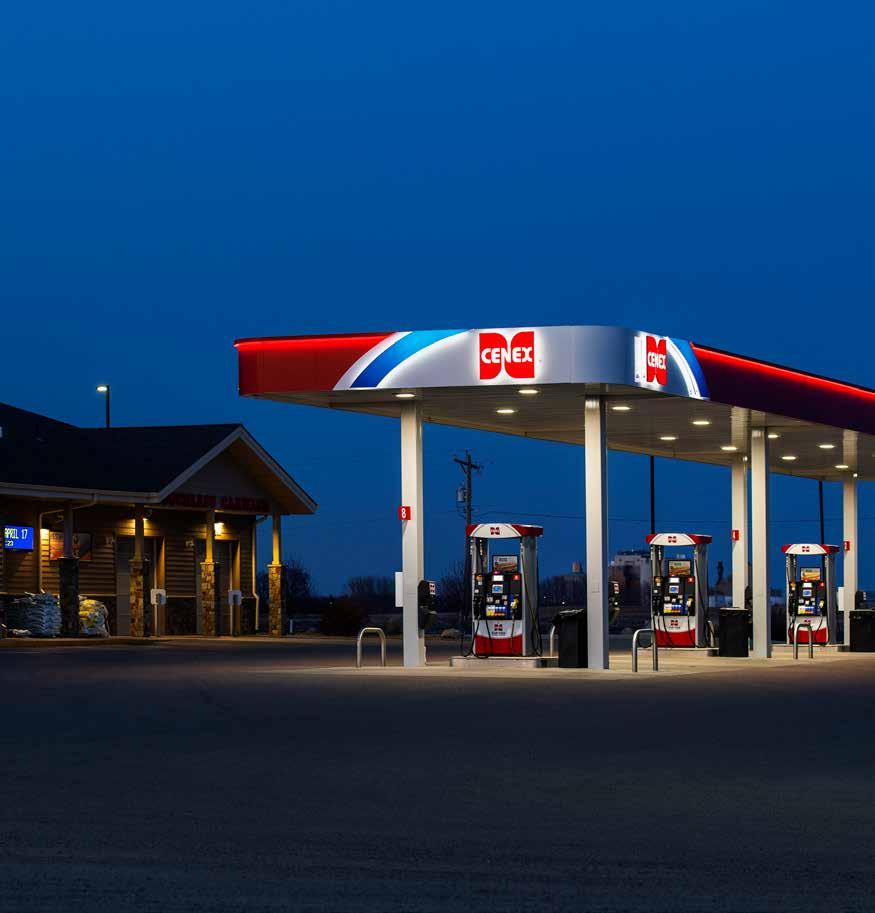
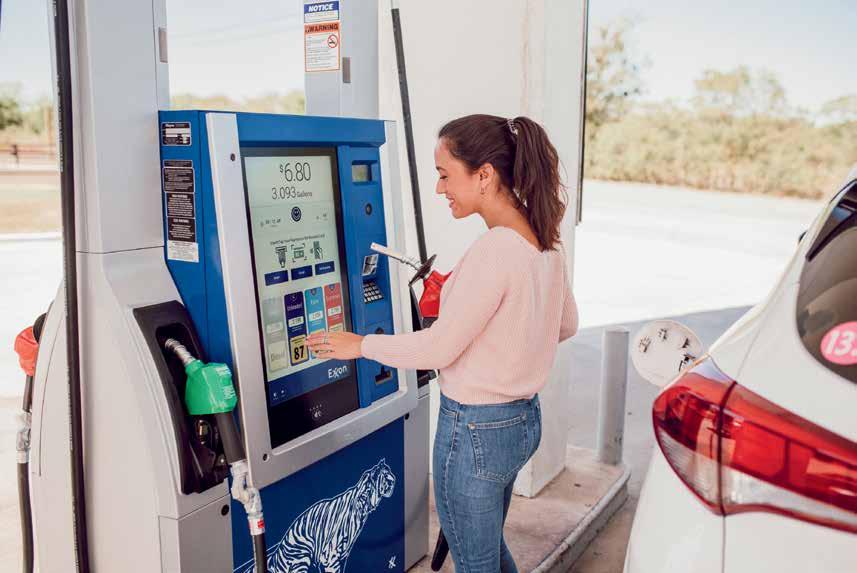
FUEL Buy Downs To Fight Motor Fuel Tax Increases Across Iowa
TAKING FUELIOWA ON THE ROAD pg. 4
ANNUAL FUEL GALLONS REPORTING pg. 8
FUELING THE CONVERSATION pg. 13
p (515) 224-7545
f (515) 224-0502 info@FUELIowa.com www.FUELIowa.com
This issue of the magazine highlights the strength of connection across Iowa’s fuel industry— from advocacy efforts at the Capitol to meaningful engagement in communities statewide. Gary and Jim take the office “On the Road” initiative, delivering record dividends while strengthening relationships with members face-to-face, and John shares a detailed breakdown of the Annual Fuel Gallons Report and key legislative developments impacting retailers.
Sarah brings the industry’s voice to life through real-world storytelling, including the impactful fuel buy-down events that turned policy into everyday experience for Iowans, as well as coverage of the UMCS Convention showcases leadership, innovation, and collaboration across the region, and a preview of summer events—like the Camp Courageous benefit and SUMMERFEST—underscores FUELIowa’s commitment to community, connection, and the future of the industry.
Together, We FUEL Iowa!
Gary
MESSAGE FROM THE CHAIR
Dear FUELIowa Members,
There are so many exciting things happening across our association and industry, and I continue to truly enjoy my time serving as your Chair. It’s been a rewarding opportunity to stay closely connected to the work we’re doing and, most importantly, to all of you who make this organization so strong.
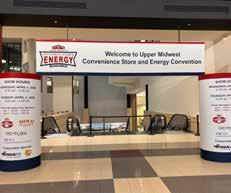
Recently, we gathered in St. Paul for the Upper Midwest Convenience Store & Energy Convention (UMCS), and it did not disappoint. We had a terrific board meeting, followed by a strong show floor filled with energy, valuable networking, and great entertainment. It’s always a highlight to connect with industry peers, partners, and friends in that setting, and this year was no exception.
I’ve also enjoyed seeing the FUELIowa team out on the road delivering record EMC dividend checks to members across the state. Getting out to visit businesses, say thank you in person, and hear directly from members is what makes this association special. Those visits reinforce the relationships that drive everything we do.
Meanwhile, the legislative session is in full swing, and our government affairs team is working hard to protect our industry from excessive taxation and burdensome policies. We’re also proud of the continued partnership with AFP, supporting fuel buy-down events hosted by our members—another great example of collaboration delivering real value.
Thank you for your continued engagement and support.
Together we FUELIowa
Nate
BOARD OF DIRECTORS
Chad Besch Director NEW Cooperative Algona | 515-295-2741
Don Burd Director Otter Creek Country Store Cedar Rapids | 319-533-1825
Brett Kimmes Director Kimmes Country Stores Carroll | 712-775-2202
Keith Olsen Director Olsen Fuel Supply Atlantic | 712-243-2340
Dave Reif Director Reif Oil Company Burlington | 319-750-5405
Scott Richardson Director Key Cooperative Roland | 515-291-0623
Inder Singh Director Brew Oil LLC Storm Lake | 712-299-0838
Cody Staab Director Casey’s General Stores Ankeny | 515-381-5815
Nate Stumpf Director HTP Energy Onalaska, WI | 608-779-6624
Kathy Gunlock Associate Director Core-Mark / Farner-Bocken Carroll | 531-777-6104
Cara Ingle Associate Director Unified Contracting Services Des Moines | 515-266-5700
Kyle May Associate Director Reynolds American Winston Salem, NC | 828-291-9049
EXECUTIVE COMMITTEE
Nate Lincoln Chair
Lincoln Farm & Home Service LLC Glenwood 712-527-4833
Jason Stauffer Vice Chair NEW CENTURY FS Ames, 515-370-3127
Dennis Jaeger Treasurer Molo Companies Dubuque 515-845-8359
Tessa Anderson Past Chair Rainbo Oil Dubuque 563- 526-1179
Ed Rogers Associate Director Midwest Petroleum Equipment Des Moines | 515-491-9891
$2.5
Million,
40 Stops, and a Whole Lot of Windshield Time: Taking FUELIowa on the Road
By Gary Koerner, CEO, FUELIowa
There are moments in this role that remind you exactly why associations matter—not in a boardroom or at an event, but standing in a member’s parking lot, shaking hands, and talking about their business.
This year delivered that moment again and again.
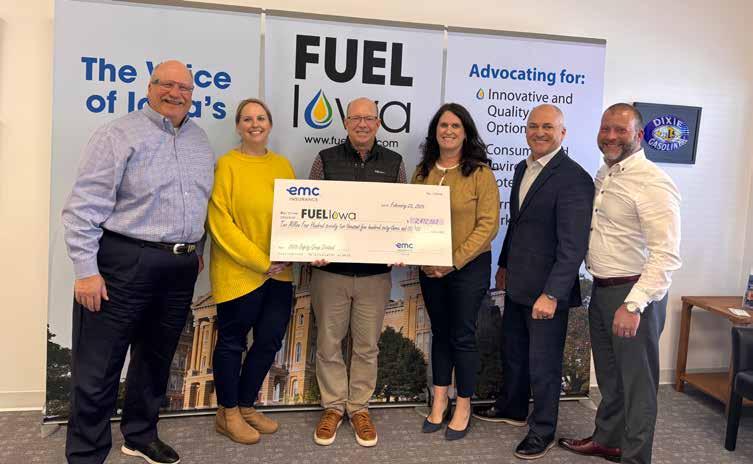
Yes, the FUELIowa Property & Casualty Insurance Program, in partnership with EMC Insurance, delivered another recordbreaking dividend—nearly $2.5 million—back to participating members. That’s a number we’re incredibly proud of.
But the real story this year is what happened beyond the check.
THE ROAD TRIP
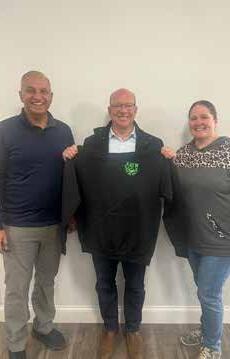
Last year, we tried something new—delivering dividend checks in person and visiting 25 member businesses across Iowa. It was one of the most rewarding things we’ve done.
So this year, we expanded it.
Forty stops. Across the state.
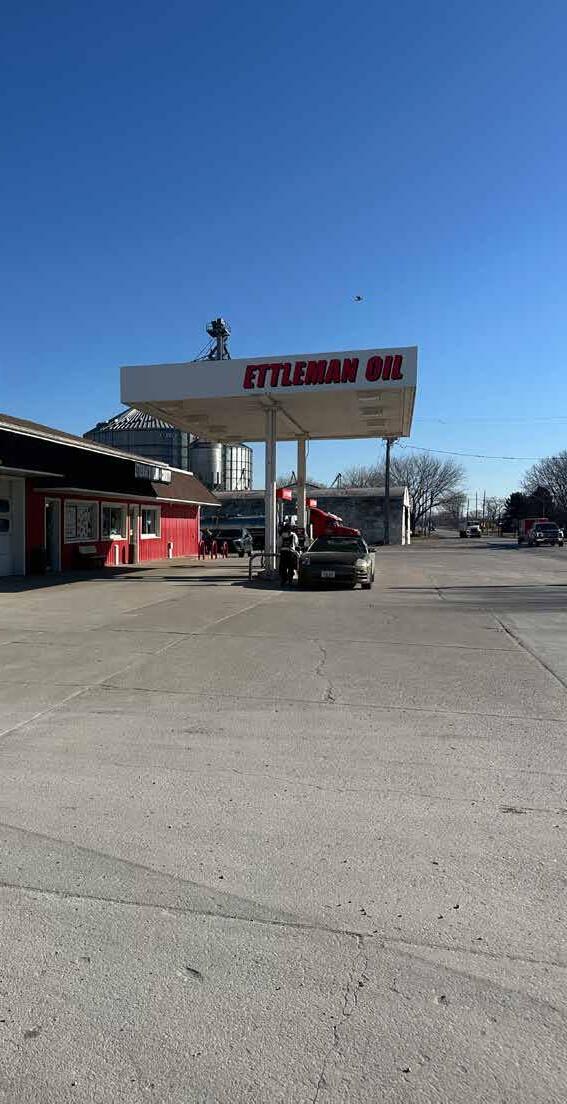
Jim Ewing and I divided the list and hit the road separately, covering as much ground as possible and connecting with more members. From small towns to larger markets, we met members where they are—at their businesses, in their communities.
This isn’t a one-time effort—it’s a tradition we plan to continue and build on each year.
Every stop reinforced something simple:
FUELIowa is strongest when we’re face-to-face with our members.
MORE THAN A CHECK
The dividend checks matter. They’re meaningful dollars returned to our members’ bottom line and a clear benefit of participating in a high-performing program.
But the visits themselves often mattered just as much.
At each stop, we talked about business challenges, our legislative priorities, and other programs offered by FUELIowa—such as HEALTHAlliance—to name a few.
In many cases, we finally put faces to names. In others, we met new team members and future leaders. Those conversations— real, unscripted, and grounded in day-to-day business—are what make this effort so valuable.
A STRONG PARTNERSHIP
Delivering results like this doesn’t happen without the right partner. We want to sincerely thank EMC Insurance for their long-standing partnership with FUELIowa. This program is built specifically for our members and continues to perform at a high level because of that alignment and shared commitment.
We’re proud of what we’ve accomplished together—and excited about what’s ahead.
THE ROLE OF INDEPENDENT AGENTS
We also want to recognize the independent agents across Iowa who serve our members every day.
They are essential to this program’s success—advising businesses, supporting their needs, and building trusted relationships.
FUELIowa members—thank you.
And to those not yet engaged, we encourage you to get involved and stay connected. There is real value in being part of what we’re building.'
IOWA, UP CLOSE
One of the best parts of this effort is simply getting out on the road.
You’re reminded quickly how beautiful Iowa is—town by town, mile by mile. And more importantly, you see firsthand the role our members play in their communities.
These businesses are the backbone of local economies, serving customers every day and adapting to constant change.
Being out there with them reinforces something we believe strongly:
We need to come to our members—not just ask them to come to us.
MEETING MEMBERS
WHERE THEY ARE
We know not everyone can attend events.
That’s why efforts like this road trip—and our Regional Roundtables—matter. They allow us to listen, share updates, and strengthen relationships in a more accessible way.
It makes us a better, more responsive association.
THANK YOU
To our members in the EMC program—thank you.
To our independent agents— thank you.
To EMC—thank you for your continued partnership.
And to every member who welcomed us into your business this year—thank you for your time and hospitality.
We’re proud of the nearly $2.5 million returned this year.
But we’re even more proud of the relationships behind it.
And we look forward to getting back on the road again soon.
Together, We FUEL Iowa!
ANNUAL FUEL GALLONS REPORTING AND RETAIL LICENSEE LIQUOR TRANSFER
By John Maynes, President, Government Affairs, FUELIowa
The 2026 Iowa Legislative Session has been nothing short of interesting. Over the last several years, a dramatic shift in how legislators operate has been undertaken. Routinely, lawmakers now file several hundred new bills (potential laws) in the opening days of session. Aside from the obvious question of whether we need hundreds of new laws in a given year, another theme emerging from recent sessions is that the front end of session is loaded with legislative self-aggrandizing and pet projects, while the waning days of session are filled with the meaningful policy items where Iowan’s seek reform.
This session appears to be no different with hot button issues like comprehensive property tax reform, eminent domain, and drinking water all yet to be addressed. Fortunately, we’ve reached the point in legislative session where the end is in sight. Lawmakers per diem is set to expire on April 21st, the expiration of the per diem serves a great motivator to get to work and ultimately head home. With a growing number of farmers now serving as lawmakers, the expiration of the per diem paired with the need to get home and tend to field work is the type of force only gravity can rival.
Although policy issues like raising taxes on fuels, tobacco, nicotine or vapor have yet to be decided, there have been a few industryrelated policy issues that have been finalized at this point in the 2026 Iowa Legislative Session. One policy issue that has navigated the process centers on Iowa’s annual Retailers Fuel Gallons Report. Over a decade ago, the legislature required the Iowa Department of Revenue to compile a report by April 1 annually, summarizing Iowa’s retail fuel sales from the prior calendar year.
As Iowa’s retail fuel industry has evolved, so has the need to modify the way Iowa’s annual Retail Fuel Gallons report is compiled. In 2022, included in Governor Reynolds E15 mandate was a provision imposing a $100 fine on any retailer failing to file their annual retail fuel gallons report.
The imposition of fines and penalties coincided with the Iowa Department of Revenue transitioning reporting to an online only platform. According to some, the rate and accuracy of reporting dropped off dramatically following the changes in 2022. The drop is likely tied to the migration toward online reporting.
Through conversations with members engaged in various segments of Iowa’s retail fuel industry, their biggest challenges associated with completing the report include notification, timing, online reporting, and distinguishing between retail sales made from brick-and-mortar locations and retail sales made from mobile fueling implements such as tankwagons and transports.
Fortunately, we believe the legislation passed this year reforming Iowa’s retail fuel gallons report addresses several of the issues highlighted by members. Additionally, FUELIowa was able to block an effort to increase fines associated with failure to file from $100 to $5,000 (that’s not a misprint).
Under Iowa’s new reporting requirements, the filing period for the report has been moved back from January 31 under previous rules and February 10 is now codified as the initial deadline for reporting. Retailers will be granted an extension to this deadline, if requested, prior to February 10. In the event an extension is needed, the reporting deadline is February 28. No extension is available beyond that date.
Additionally, FUELIowa was able to secure a statutory provision requiring the segregation of brickand-mortar retail gallons and mobile retail gallons sold from tankwagons
and transports. Through the process of creating rules to implement the new statutory provision segregating brick-and-mortar retail sales from tankwagon and transport sales, FUELIowa believes we can streamline the reporting process for the better while gaining a more accurate picture of industry trends by taking a more granular approach to tracking retail sales across varying segments of Iowa’s retail fuel industry.
So what’s the catch?
There’s always a catch. Moving forward, a retailer’s eligibility for the income tax credits retailers use to discount the price on targeted biofuels will be tied to the timely filing of Iowa’s annual Retailer Fuel Gallons Report. With Iowa’s E15 tax credit alone amounting to a $37 million general fund expenditure, a growing number of lawmakers felt this approach to be sound public policy. While slightly misguided in terms of where past breakdowns in reporting occurred, the timely filing of confidential fuel gallons reports by retailers is a small cost of doing business within Iowa’s $75 million biofuel tax credit program.
Changing topics, prior to the 2026 Iowa Legislative Session, FUELIowa’s volunteer retail committee identified liquor sales in convenience stores as an area for business improvement in Iowa. Under Iowa’s sate run liquor control program, Class E liquor licensees operating multiple locations under common ownership are not allowed to manage inventory nor meet consumer demands by transferring orders or inventory from store to store even if under common
ownership.
This session, FUELIowa proposed legislation to allow Class E licensees to transfer liquor among commonly owned stores. With Iowa’s liquor control program managed by the Iowa Alcohol and Beverage Division housed within the Iowa Department of Revenue, FUELIowa first shared the issue with the agency tasked with overseeing Class E licensees.
Generally, a state agency does not take a policy position on matters like this one proposed by FUELIowa. Instead, they provide guidance and feedback to lawmakers tasked with evaluating proposed legislation. Where FUELIowa was met with opposition in the legislative process was from our friends in the Wholesale Beer Distribution Industry.
In the end, the Iowa Wholesale Beer Distributors Association’s public facing arguments against the bill were successful in delaying our legislation. While arguments centered on bootlegging and tax evasion were successful in clouding the issue this year, we plan to be back with similar legislation year-after-year until we get this commonsense bill through the process.
In our effort to secure reform, several dozen FUELIowa members contacted their beer distributor directly asking for support of our liquor transfer legislation. Each member reported back a similar narrative summarizing their beer distributors ultimate support for the business-friendly legislation. After all, the ability to sell more liquor products in our convenience stores is likely to lead to an increase in beer sales as well. Unfortunately, one very prominent beer distributor
in the state appears to have sold their trade association on liquor transfer reform being the slippery slope which leads to the erosion of the monopoly they enjoy in the wholesale beer distribution space here in Iowa – something for FUELIowa members to consider during future conversations with your distributors and something we will definitely remember when our friends in the Wholesale Beer Distribution Industry are trying to secure control over emerging age sensitive products in the future.
Although our liquor transfer legislation was unsuccessful this year, our work with Iowa ABD brought about business improvement in another way. After reviewing licensing and sales data, Iowa ABD has agreed to lower the minimum purchase order for a Class E licensee down from $1,000 to $500. This new policy is set to take effect on July 1, 2026. We anticipate Iowa ABD to release additional information shortly after the conclusion of legislative session or early May. While allowing for the free transfer of liquor among commonly owned locations is the more direct route to alleviating inventory concerns and meeting consumer demand, we believe lowering the minimum order achieves the same goal, albeit through a slightly longer process.
More to come on Iowa’s 2026 Legislative Session as we wind down the last few weeks before adjournment. Stay tuned.
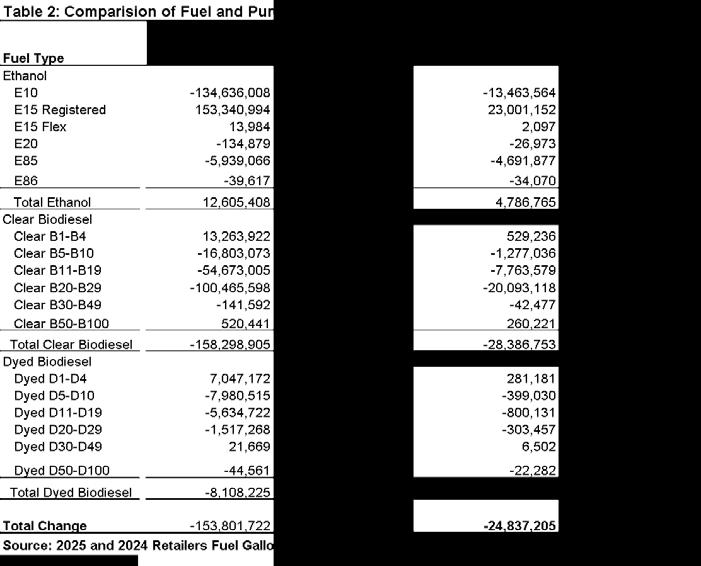
Table 1: Iowa Gasoline, Diesel, and Biofuel Sales for Calendar Year 2025
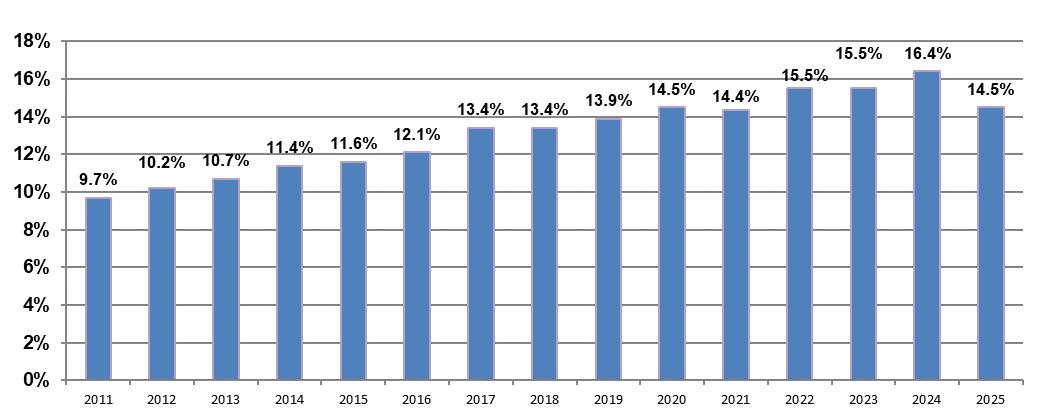
1. Statewide Biofuel Distribution Percentage, 2011-2025 Calendar Years
$1,000 - Nate Lincoln - Lincoln Farm & Home Service
$1,000 - John Maynes - FUELIowa
$1,000 - David & Matt Scheetz - The Depot Express
FRIEND ($500-$999)
$500 - Sarah Bowman
$500 - Doug Coziahr
CONTRIBUTOR ($0-$499)
$250 - Dennis Jaeger
$125 - John Meehan
$100 - Kathy Gunlock
$100 - Reo Menning
FUELING the Conversation
By Sarah Bowman Director, Communications & Events FUELIowa
How FUELIowa and AFP turned a statewide fuel tax debate into a real-world experience for Iowa drivers
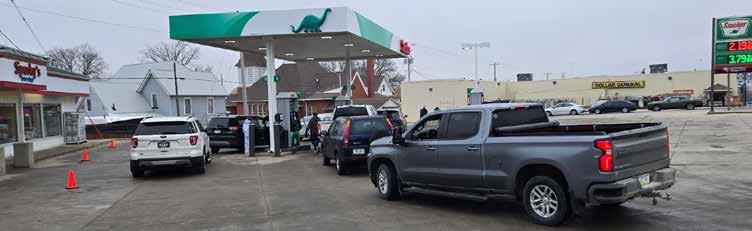
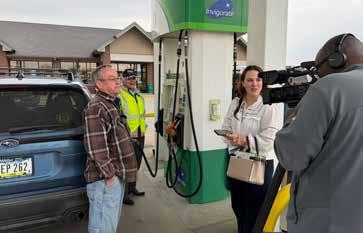
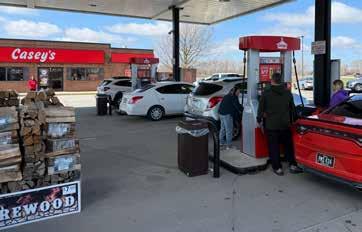
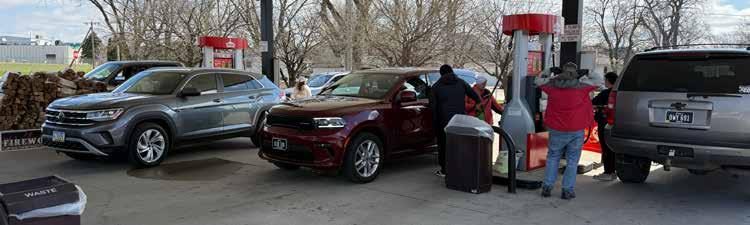
By the time the fuel buy down began in Mason City on April 10, the outcome was already clear.
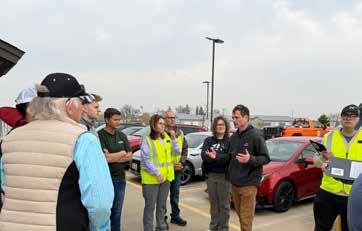
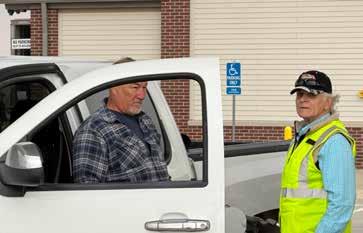
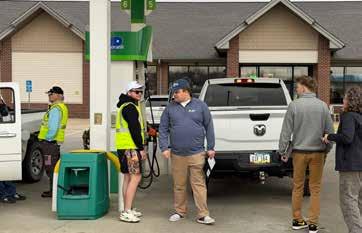
Cars had been lined up for nearly 40 minutes before the first discounted gallon was sold. Drivers waited patiently, some chatting from car windows, others watching the clock, all drawn by the same thing — the promise of relief at the pump.
But what unfolded that day — and at similar stops across Iowa — was about more than just saving a dollar on fuel.
It was about making a policy debate real.
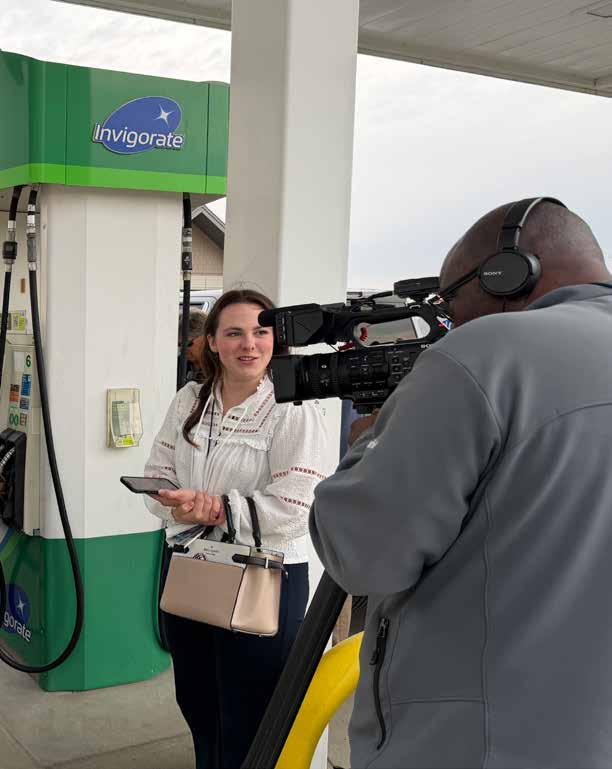
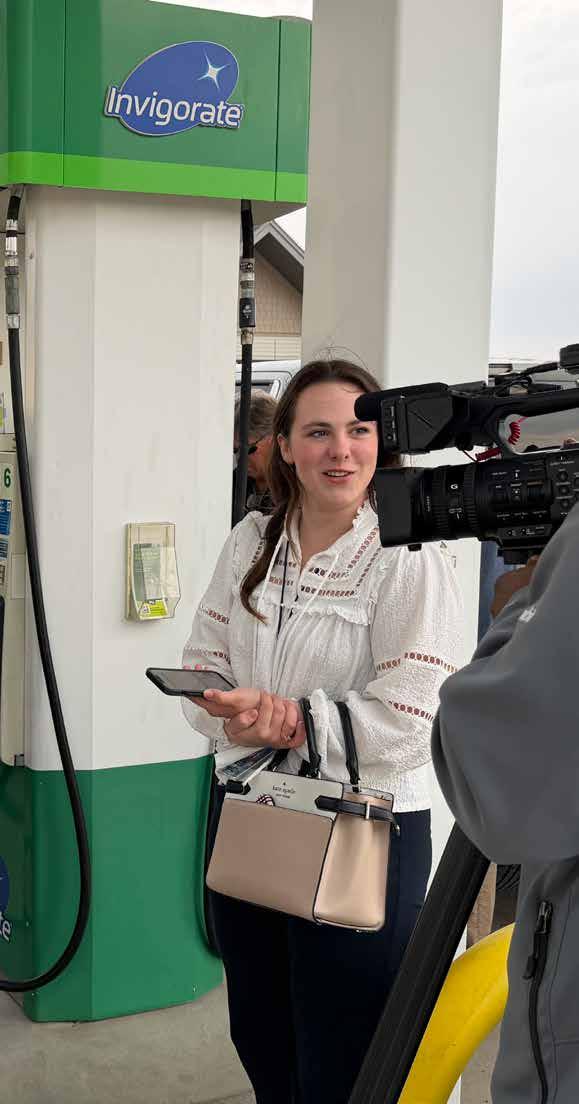
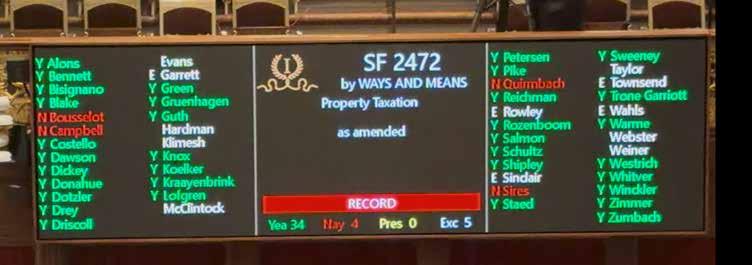
Across the state, F UELIowa and Americans for Prosperity (AFPIowa) have partnered to host a series of fuel buy down events designed to do two things at once: provide immediate financial relief to drivers and raise awareness about a fuel tax increase proposal already passed by the Iowa Senate.
At the center of that proposal is a provision to index Iowa’s motor fuel tax to inflation, a policy change that would allow fuel taxes to increase automatically over time. While the concept may sound technical, its impact is anything but — affecting commuters, families, farmers, and businesses every single day.
Rather than keep that conversation within the walls of the Statehouse, we chose a different approach.
We brought it directly to the pump, directly to “We the People”.
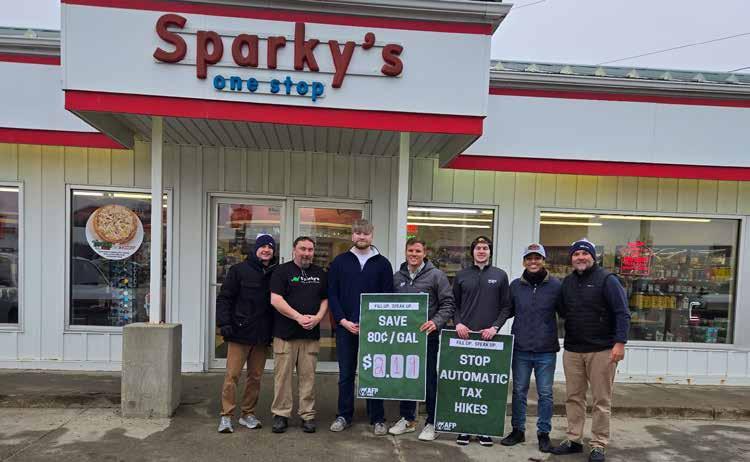
The effort began gaining traction in Guthrie Center, where drivers at Sparky’s One Stop received up to 80 cents off per gallon. What might have started as a simple discount quickly turned into something more meaningful. For many, it was the first time they could physically see — and feel — the difference even a small change in fuel prices can make.
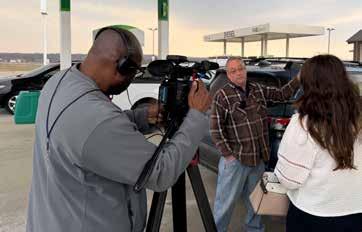
That same sense of awareness carried into Robins , where the event at Otter Creek Country Store drew strong attendance and regional attention. Drivers
didn’t just leave with savings; they left with questions — about what indexing the fuel tax means and how it could affect their household budgets in the years ahead.
In Iowa City, the campaign reached a broader audience, with a steady stream of vehicles taking advantage of $1 off per gallon at the Fast Break Phillips 66. The setting may have been different, but the takeaway was the same: fuel costs ripple through nearly every aspect of daily life, from commuting to the cost of goods on store shelves.
By the time the campaign reached Mason City, anticipation had clearly grown.
At Casey’s on 12th Street Northwest, drivers lined up well before the event began — a powerful visual of both demand and engagement. When the discount took effect, the line moved quickly, but the conversations lingered. There was appreciation for the immediate savings, but also a growing recognition of the bigger issue at hand.
Because while the price break lasted only a few hours, the policy discussion behind it is ongoing.
These events succeeded in doing something that policy discussions often struggle to accomplish: they connected legislation to lived experience. To Iowans.
Fuel taxes are not abstract numbers on a page. They show up in the cost to drive to work, transport goods, operate farms, and run businesses. And
when those taxes are tied to inflation, increases can happen quietly over time — without a single vote required after the initial decision.
By temporarily lowering prices, FUELIowa and AFP created a contrast — a moment for drivers to consider what relief feels like, and what could be lost.
Perhaps that’s why the events resonated so strongly.
They didn’t require a deep understanding of legislative language. They didn’t rely on lengthy explanations. Instead, they answered a simple question in the most direct way possible:
Will my representative I sent to Des Moines vote on my behalf? Will they take my pocketbook in mind when they vote?
For a few hours at a time, Iowa drivers got their answer — measured in dollars saved, lines formed, and conversations started.
As debate continues over the future of Iowa’s fuel tax, one thing is certain:
The conversation is no longer confined to the Capitol.
It’s happening at gas stations, in parking lots, and across communities statewide — wherever Iowans gather and wherever they feel the impact most directly.
Right at the pump. Together, we FUELIowa.
UMCS 2026 Drives Connection, Leadership, and Industry Progress
By Sarah Bowman Director, Communications & Events FUELIowa
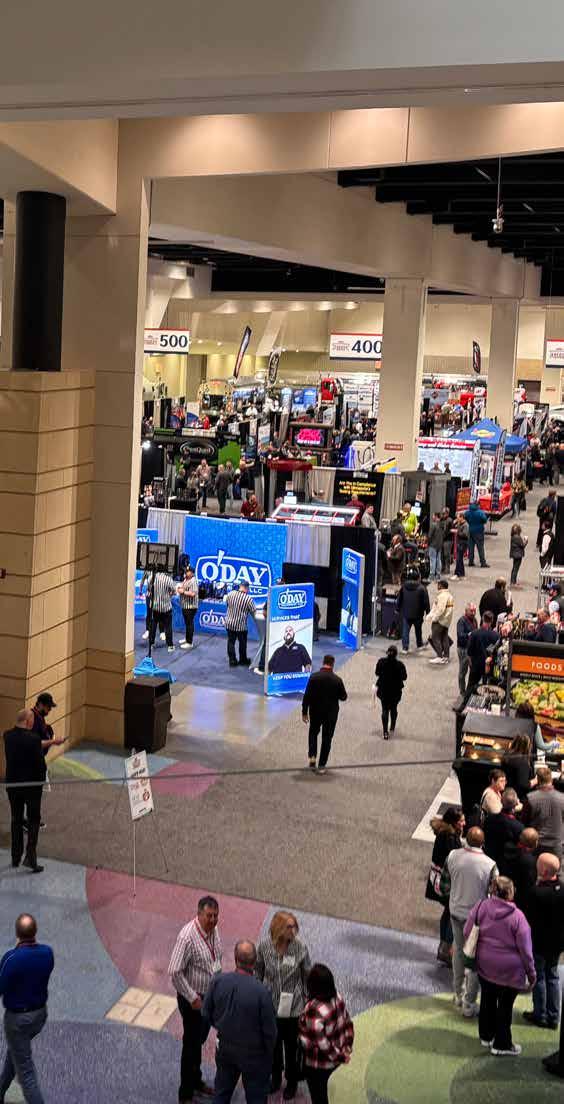
The 2026 Upper Midwest Convenience Store & Energy Convention (UMCS), hosted by FUELIowa and Fueling Minnesota, once again brought together the very best of the fuel and convenience industry for two dynamic days of collaboration, education, and inspiration. Held at the Saint Paul RiverCentre, this year’s convention expanded both in scope and impact—creating more opportunities for meaningful conversations, business growth, and forward-looking dialogue.
From the moment attendees arrived, it was clear that UMCS continues to be the premier gathering place for industry leaders across the Midwest. With a strong mix of retailers, fuel marketers, suppliers, and decisionmakers, the convention floor and meeting spaces were filled with energy, purpose, and a shared commitment to moving the industry forward.
Inspiration from the Main Stage
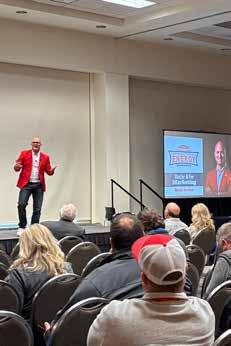
One of the defining elements of UMCS 2026 was its exceptional lineup of speakers, who delivered messages that resonated far beyond the convention walls.
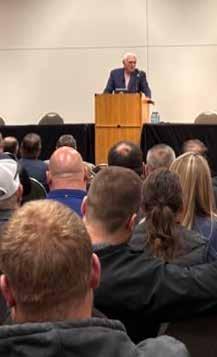
Lou Nanne, renowned for his leadership in professional sports and
business, delivered a keynote that scored a goal with attendees. Drawing from his decades of experience, Nanne emphasized the importance of adaptability, teamwork, and leading through change. His stories—rooted in high-stakes environments—translated seamlessly into lessons for today’s rapidly evolving energy and retail landscape.
“If it is to be, it’s up to me.”
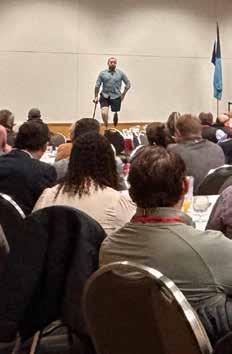
Equally powerful was the Prayer Breakfast keynote featuring John Kriesel, a decorated combat veteran, Purple Heart recipient, and survivor. Kriesel’s story of perseverance following life-altering injuries in Iraq was both humbling and deeply motivating. His message centered on resilience, faith, and perspective—reminding attendees of the strength found in overcoming adversity.
“Your circumstances don’t define you— your response does.”
Together, these speakers set the tone for a convention rooted not just in business, but in purpose and leadership.
Education That Moves the Industry Forward
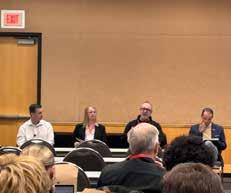
Beyond the keynote sessions, UMCS 2026 delivered a robust slate of educational programming designed to equip attendees with actionable insights. Sessions covered a wide range of topics, including legislative and regulatory updates, operational best practices, and emerging trends impacting fuel and convenience retail.
Attendees walked away with a clearer understanding of the challenges ahead—and the strategies needed to meet them. Whether navigating policy changes or identifying new revenue opportunities, these sessions reinforced UMCS as a critical resource for industry advancement.
A Show Floor Full
of Opportunity
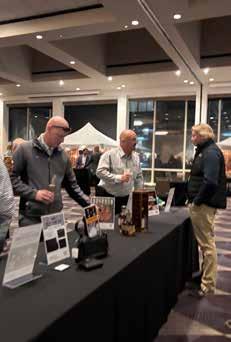
The UMCS show floor once again served as the centerpiece of the convention—bringing together a diverse group of exhibitors representing every corner of the industry.
From cutting-edge technology and petroleum equipment to innovative foodservice solutions and retail products, the exhibit hall offered something for every attendee. It wasn’t just about browsing—it was about building relationships, discovering new ideas, and finding partners who can help drive business forward.
With more than 1,200 industry professionals in attendance, the exhibit hall buzzed with activity throughout the event, reinforcing its role as a mustattend marketplace for innovation and connection.
Where ideas turn into action—and connections turn into partnerships.
Powered by Partnership Events like UMCS are only possible from the support of dedicated sponsors who believe in the strength and future of the industry. From keynote sponsorships to networking events and beyond, sponsors played a critical role in elevating every aspect of the convention experience. Their partnership reflects a shared commitment to innovation, education, and collaboration—values that were on full display throughout the event. Call Out: Thank you to the sponsors who make UMCS possible.
Events like UMCS are only possible from the support of dedicated sponsors who believe in the strength and future of the industry. From keynote sponsorships to networking events and beyond, sponsors played a critical role in elevating every aspect of the convention experience.
Their partnership reflects a shared commitment to innovation, education, and collaboration— values that were on full display throughout the event.
Thank you to the sponsors who make UMCS possible.
Looking Ahead
As UMCS 2026 came to a close, attendees left with more than just information—they left with renewed energy, stronger connections, and a clearer vision for the future.
The conversations sparked, the partnerships formed, and the ideas shared will continue to
shape the industry in the months ahead. UMCS remains more than an event—it is a catalyst for progress across the fuel and convenience landscape.
Mark your calendars now— UMCS returns April 27–28, 2027.
Powering Community, Celebrating Freedom
By Sarah Bowman Director, Communications & Events FUELIowa
FUELIowa’s Summer Events Fuel Impact, Connection, and a Patriotic Milestone
As summer approaches, the energy across Iowa’s fuel and convenience industry extends far beyond the pump. FUELIowa is once again bringing together members, partners, and communities through two highly anticipated events that blend purpose, connection, and celebration: the Benefit for Camp Courageous and the reimagined SUMMERFEST—this year proudly themed “Red, White, and Fuel” in honor of America’s 250th anniversary.
When Iowa’s fuel industry comes together, it fuels far more than tanks—it fuels impact.
Together, these events highlight what FUELIowa does best—uniting an industry while giving back to the communities it serves.
Fueling Hope on the Green: FUELIowa’s Benefit for Camp Courageous – 45th Anniversary of Partnership
On June 8, FUELIowa members and supporters will gather at Riverside Casino & Golf Resort for a day of camaraderie and purpose at the annual benefit for Camp Courageous.
This event combines the best of summer—golf, networking, and giving back—into one meaningful experience. Set on one of Iowa’s premier golf courses, participants will enjoy a day on the green while supporting a mission that changes lives across the state. Camp Courageous, located near Monticello, provides yearround recreational and respite care opportunities for individuals with disabilities. FUELIowa’s golf benefit plays a critical role in
ensuring these programs remain accessible to campers and their families.
A day on the course can create a lifetime of impact for
Camp Courageous campers.
The event offers more than just a round of golf—it’s an opportunity to connect with industry peers, strengthen relationships, and rally around a shared cause. From team play to sponsorship opportunities, every aspect of the day contributes to supporting Camp Courageous’ life-changing work.
And the impact is tangible. Funds raised help provide unforgettable experiences for thousands of campers each year—experiences that build confidence, independence, and joy.
Fueling hope starts with showing up— and giving back.
In an industry dedicated to keeping people moving, this event is about helping others move forward—with dignity, opportunity, and support. Celebrating 45 years of partnership – because TOGETHER, WE FUELIOWA.
Red, White, and FUEL:
SUMMERFEST in Okoboji
This August, FUELIowa heads back north to the iconic lakes region of Okoboji for SUMMERFEST 2026, taking place August 6–7. This year’s event carries special significance as it celebrates America’s 250th anniversary with a patriotic theme: “Red, White, and FUEL.”
JUNE
8, 2026
Riverside Casino & Golf Resort Riverside, IA
GOLF
Enjoy 18 holes at Riverside Golf Course, a premier golf facility in Riverside, Iowa. This is a 4-person scramble with shotgun start complete with pin prizes and a putting contest. Beverage carts will keep you cool all day.
DINNER
Meet up in the club house after the 18th hole to tell everyone about your great shots. We will have cocktails, a short program, prime rib dinner and dessert and prizes. Don’t forget to purchase your 2026 Camp Courageous / FUELIowa collectible car.
TRAVELING TROPHY
If you are up for some friendly competition and bragging rights, the traveling trophy is at stake. Who will win this year?!
Camp Courageous of Iowa is a year-round respite care and recreational facility for individuals of all ages with disabilities. The camp was established in 1972 with the first 211 campers attending in the summer of 1974. Today, Camp Courageous serves over 7,000 individuals with disabilities in a year-round program. Learn more about the Camp online at campcourageous.org.
ANNUAL GOLF BENEFIT & DINNER
Camp Courageous of Iowa
SCHEDULE OF EVENTS: Check fueliowa.com for schedule and time updates.
8:00 a.m. Registration Opens
9:00 a.m. Shot Gun Start (Lunch Provided)
3:00 p.m. Cocktails, Dinner & Reception
Discover Name on Card Signature Billing address if different from Primary Contact information. A fun filled day of golf for a great cause – Camp Courageous of Iowa. This year we will be at the Riverside Casino & Golf Resort for networking, cocktail reception, golf awards, and a prime rib dinner. SUBMIT REGISTRATION AND PAYMENT FUELIowa, 10430 New York Ave Ste F, Urbandale, IA 50322 or Fax (515) 224-0502. Questions? Contact Jim Ewing (515) 421-4596 or e-mail jim@fueliowa.com. Download a PDF registration form online at www.FUELIowa.com
OPPORTUNITIES
Red, White, and FUEL—celebrating 250 years of freedom and the industry that keeps America moving.
enjoy a classic summer day at Arnolds Park Amusement Park, one of Iowa’s most beloved destinations.
From golf to lakeside fun, SUMMERFEST offers the perfect balance of connection and celebration—set against the backdrop of one of Iowa’s premier summer locations.
Two days, one mission—celebrate, connect, and fuel the future.
SUMMERFEST has long been a favorite among members, blending business, networking, and relaxation in one unforgettable setting. This year’s expanded twoday experience offers something for everyone.
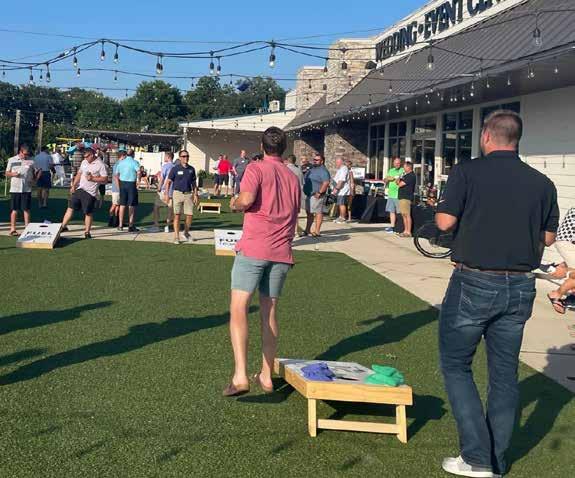
The event kicks off on August 6 with FUELIowa’s Annual Meeting, followed by a silent auction supporting PAC fundraising , and a lively bags tournament —bringing members together in a fun, competitive, and purpose-driven atmosphere.
Where business meets camaraderie— and a little friendly competition.
On August 7 , attendees can choose their own experience: hit the links at Brooks Golf Club or
Beyond the activities, “Red, White, and Fuel” is a tribute to the essential role Iowa’s fuel and convenience industry plays in powering American life. From transporting goods to serving communities, this industry is deeply woven into the fabric of the nation—and SUMMERFEST is a moment to celebrate that impact.
More Than Events—A Mission in Motion
While these two events may differ in format—one centered on charitable giving, the other on celebration—they are united by a common purpose: bringing people together to strengthen Iowa’s fuel and convenience industry and the communities it serves.
Strong communities are built when industries invest in people.
From advocacy at the State Capitol to hosting impactful events across the state, FUELIowa continues to be the voice and resource for its members. These gatherings reflect that mission—creating opportunities not just for business growth, but for meaningful
impact.
They are also a reminder that this industry is about more than fuel. It’s about people—families, neighbors, and communities that rely on the services and connections this industry provides every day.
Plan Your Summer with FUELIowa
FUELIowa encourages members
and partners to take part in these upcoming events and experience firsthand the connection, purpose, and energy they bring.
Your
summer calendar just found its most meaningful events.
Whether you’re teeing off for a cause at Riverside on June 8 or
heading to Okoboji for two days of connection and celebration in August, these events offer something for everyone— impact, energy, and a shared sense of purpose.
Because when Iowa’s fuel industry comes together, it does more than power vehicles—it powers communities, fuels relationships, and drives Iowa forward.
TOGETHER, WE FUELIOWA.
August 6-7, 2026
It all starts Thursday afternoon with a lake-side cocktail hour & dinner reception complete with open bar, steak or scallops dinner, comedian, silent auction & our annual bags tournament. Afterwards, enjoy Okoboji night-life. On Friday, enjoy 18 holes of golf with breakfast followed by shotgun start and beverage carts keeping you cool all day at Brooks Golf Club.
BAGS & COCKTAILS
What’s better than a game of bags? The obvious answer is, of course, two games of bags! We will kick-off our annual bags tournament with views of beautiful Lake Okoboji while enjoying cocktails, and conversation. New this year - a major prize for the winners! Let’s have some fun!
DINNER & RECEPTION
Mix and mingle on the shore at the beautiful Waterfront Event Center at Bridges Bay Resort. We will have open bar, steak or scallops dinner, and dessert as we watch the sunset over the lake. Enjoy the comedian, and after dinner, explore all that Okoboji has to offer.
GOLF
Day two, it is time to hit the links! Enjoy 18 holes at Brooks Country Club - Okoboji’s premier golf facility. This is a 4-person scramble with shotgun start complete with pin prizes and a putting contest. Lunch is provided and beverage carts will keep you cool all day. Meet up at the 19th hole to settle your bets and collect your prizes.
FAMILY FUN
Not a golfer? Take advantage of Bridges Bay Resort, Lake Okoboji or a day at Arnolds Amusement Park. Bridges Bay features a pool, waterpark, restaurants on the water and much more, perfect for a long weekend. Spouses and family can participate with you at events, take a cruise on the famous Queen II, or explore everything on their own while you network!
SUMMERFEST | August 6-7, 2026 | Okoboji
Our annual action packed summer event. Join us for a cocktail reception, comedian, dinner & silent auction with family and friends. Enjoy fun in the sun and a choice of golf or a day at Arnolds Park!
SCHEDULE OF EVENTS: Check fueliowa.com for schedule and time updates.
Billing address if different from Primary Contact information.
The Petroleum Revolution
Part 2 of 6
By Jim Ewing, Director, Membership & Business Services
Oil, Kerosene, and the Rise of an Industry (1859–1900)
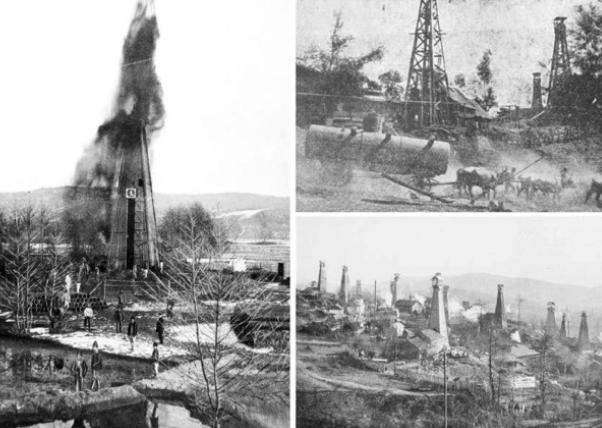
On August 27, 1859, Edwin Drake drilled the first successful commercial oil well in Titusville, Pennsylvania. What began as a modest experiment in western Pennsylvania quickly became the foundation of a new American industry — one that would redefine commerce, infrastructure, and daily life.
For today’s fuel marketers and energy providers, the Petroleum Revolution marks the birth of the systems we still operate: production, refining, transportation, storage, and distribution working together to deliver reliable energy at scale.
Lighting the Nation
The earliest demand for petroleum was not gasoline, but kerosene — a refined product used for lighting homes, businesses, and city streets. Before petroleum, illumination relied heavily on whale oil, an expensive and increasingly scarce commodity harvested through dangerous maritime expeditions.
Kerosene proved to be:
• More affordable
• More abundant
• Easier to transport and store
Within a generation, kerosene displaced whale oil and dramatically reduced the cost of lighting. Factories extended operating hours. Retail businesses stayed open later. Households gained safer and more consistent illumination.
Energy was becoming scalable. Building America’s First Energy Infrastructure
As production expanded in Pennsylvania and surrounding states, the real transformation occurred not just at the wellhead — but in logistics.
The late 19th century saw the rapid development of:
• Refineries capable of producing standardized products
• Pipelines that reduced reliance on wagon and barrel transport
• Rail networks that extended petroleum’s reach across state lines
• Storage terminals that stabilized supply
This was the birth of the modern energy supply chain.
Entrepreneurs quickly recognized that efficiency in transportation and refining would determine market success. Standard Oil pioneered vertical integration — coordinating production, refining, transportation, and marketing within a single organization. While its dominance sparked national debate, its operational model demonstrated the power of streamlined distribution and economies of scale.
Petroleum was no longer a speculative commodity. It was becoming an organized, infrastructure-driven industry.
Iowa and the Expanding Midwestern Market
While early production centered in Pennsylvania and Ohio, Midwestern states like Iowa rapidly became important consumer markets for refined products.
By the 1870s and 1880s, Iowa’s expanding rail network connected communities to national supply chains. Kerosene shipments moved westward by rail, supplying farms, towns, and growing commercial centers. General stores stocked lamp oil alongside dry goods. Bulk storage facilities and regional
distributors began serving rural territories.
Agriculture — the backbone of Iowa’s economy — depended increasingly on refined petroleum products for lighting, lubrication, and eventually heating. Though Iowa was not yet a producing state, it was becoming integrated into the national petroleum marketplace.
This pattern — out-of-state production supported by in-state distribution and marketing — remains familiar to fuel marketers today.
Standardization and Scale
One of petroleum’s greatest contributions to economic growth in the late 19th century was product standardization. Refined kerosene, packaged and transported in uniform containers, allowed wholesalers and retailers to offer consistent quality. Predictability built trust. Trust built markets.
The expansion of pipelines reduced transportation costs and minimized losses from spills and theft. Rail transportation extended reach into rural America. Storage terminals improved reliability and inventory control.
By the end of the century, petroleum had established a nationwide footprint supported by coordinated infrastructure and private investment.
America Enters the Oil Age
By 1900, the U nited States had become the world’s leading oil producer. What began as a replacement for whale oil had grown into a cornerstone of industrial growth and commercial development.
The Petroleum Revolution established core principles that continue to guide the energy industry:
• Infrastructure enables scale.
• Distribution efficiency shapes markets.
• Standardization builds consumer confidence.
• Private investment drives innovation.
For FUELIowa members, this history is not distant — it is foundational. The terminals, transport fleets, retail operations, and bulk plants serving Iowa communities today trace their
origins to the supply chain innovations of the late 19th century.
The first revolution was about lighting homes and building infrastructure.
The next would be about fueling mobility, mechanizing agriculture, and transforming how Americans moved goods and people.
And the industry that began in 1859 would be ready to power it.
SAVE THE DATE
FUELIowa SUMMERFEST Returns to Okoboji
August 6–7, 2026
Get ready to head back to the lake! FUELIowa SUMMERFEST is returning to beautiful Okoboji on August 6–7, 2026, and you won’t want to miss it. After a year away, we’re bringing our signature summer event back to Okoboji—complete with great networking, lakefront fun, and the relaxed atmosphere that makes SUMMERFEST a member favorite.
Mark your calendars now and start planning for two days of connection, conversation, and celebration with Iowa’s fuel and convenience industry leaders. Details on registration, lodging, and sponsorship opportunities will be announced soon—but for now, save the date and get ready for Okoboji 2026!
2026 FUELIOWA S P ONS O R S
DIAMOND
PLATINUM GOLD
SILVER
BRONZE
WANT BETTER HEALTH INSURANCE FOR LESS?
HEALTHAlliance offers industry leading health & wellness plans exclusively designed to meet the needs of fuel marketers, convenience stores, and associated businesses. With partners like Blue Cross & Blue Shield, Delta Dental & more, FUELIowa members enjoy the finest coverage at low rates due to the combined buying strength of our membership. The last 10 groups to join HEALTHAlliance averaged premium savings of 21%
INSIDE THE BELTWAY ENERGY MARKETERS
OF AMERICA
February 13
Inside the Beltway Update
The current partial government shutdown is confined to the Department of Homeland Security (DHS) after Congress let its funding lapse in a dispute over immigration enforcement conditions. Roughly 97 percent of the rest of the federal government has already been funded through the end of fiscal 2026, so other major departments remain fully open. Within DHS, most frontline personnel in components like TSA, Border Patrol, ICE, the Coast Guard, Secret Service, CBP ports of entry, and FEMA disaster response continue working as “essential,” but many are doing so without pay until a new funding bill passes. Nonessential administrative, training, planning, grant management, and modernization activities are curtailed or paused, which can slow services and create backlogs even though the most visible security and safety functions keep operating.
The Transportation Worker Identification Credential (TWIC) and the Hazardous Materials Endorsement (HME) background-check programs are self-funded and fee-based and therefore not impacted by government appropriations. Driver background checks will continue as
usual. Also, TWIC and HME enrollment centers remain open during normal hours of operation. The Coast Guard will continue to enforce the TWIC program and secure ports without interruption.
Lawmakers renewed efforts to mandate side underride guards on commercial motor vehicles. The Stop Underrides Act 2.0 (S.3775) is a legislative proposal aimed at mandating side underride guards on commercial motor vehicles and relaunching the DOT’s Advisory Committee on Underride Protections. Opponents, including EMA, argue the mandate is financially unfeasible, citing NHTSA data that suggests high costs for relatively few lives saved. Beyond the equipment mandate, the act seeks to improve road safety data by requiring new studies, correcting crash databases, and providing specialized training for law enforcement. The legislation is dead on arrival in the Senate as it’s unlikely that the bill would receive 60 votes to move forward.
Rep. Kevin Kiley (R-CA) is drafting a federal bill that would reduce highway funding by 8% for states with gas taxes exceeding 50 cents per gallon. The legislation specifically targets the five states with the highest rates, California, Illinois, Washington, Pennsylvania, and Indiana, as a penalty for what Kiley describes as overtaxing citizens to cover inefficient spending. This move follows intense Republican criticism of California’s efforts to study mileage-based fees as an alternative to declining gas tax revenue caused by the popularity
of electric vehicles. While the bill focuses on penalizing high-tax states, the inclusion of Republicanled Indiana could potentially cause friction within his own party.
The Trump administration has introduced a $12 billion economic aid package to support farmers struggling with high input costs, low crop prices, and trade volatility resulting from economic headwinds and recent tariff policies. Of this total, $11 billion is dedicated to row crop producers, specifically those growing commodities like corn, soybeans, and wheat, with payments scheduled to begin landing in bank accounts in late February. The remaining $1 billion is reserved for specialty crops such as fruits and vegetables, though Agriculture Secretary Brooke Rollins has indicated that these payments will be delayed, leaving those producers without a clear timeline for relief. The current allocation has sparked frustration among specialty crop growers, highlighting regional disparities. States like Texas and Iowa are projected to receive the highest payouts, while California will receive a disproportionately low amount due to its focus on specialty crops. Agricultural groups and lawmakers are already pushing for a second tranche of aid totaling between $15 billion and $17 billion. Senate Republicans are working on a supplemental bill that would include disaster aid, and House Democrats have proposed a larger counterproposal that also seeks to reverse recent changes to the SNAP program.
February 20
Inside the Beltway Update –With Congress in recess and negotiations around Department of Homeland Security at a standstill, day 7 of the current partial government shutdown is beginning to disrupt secondary operations like cyber assessments, grant processing, and law enforcement training. While Congress returns to Washington on February 23, the partial shutdown is expected to continue for at least another week. Instead, attention next week will focus on President Trump’s State of the Union address Tuesday night. The White House is leading "theoretical" offer exchanges with Congressional Democratic leadership. On February 23rd both the House and Senate are scheduled to return to Washington. This date marks the earliest likely window for a floor vote on any potential compromise.
The Trump administration’s Environmental Protection Agency (EPA) finalized the repeal of the 2009 "endangerment finding," a landmark determination that greenhouse gas emissions threaten human health and served as the legal foundation for federal climate regulations across the automotive, power, and energy sectors. While President Trump characterized the move as the nation's largest "deregulatory action" intended to save industries over $1 trillion in compliance costs, the decision has triggered warnings of a "patchwork" of conflicting statelevel regulations and imminent legal challenges. While many industries welcomed the repeal, large corporations like Ford and Honda, along with the American Petroleum Institute (API), expressed caution or neutrality, favoring a stable national standard over the regulatory
uncertainty and potential loss of federal preemption created by the repeal.
House Republicans are currently struggling to resolve a legislative impasse between biofuels supporters and oil interests through the Rural Domestic Energy Council, which was established to draft a proposal permitting year-round E15 fuel sales. Biofuels backers have issued warnings that they will oppose any deal containing provisions favored by midsize refiners, specifically demanding that lawmakers maintain a 450 million RIN cap for Small Refinery Exemptions (SREs) and delay certain regulatory changes until 2028. Meanwhile, independent refiners argue that the current discussion drafts favor large oil companies and could drive smaller domestic operations out of business by increasing compliance costs. The updated tweaked plan would limit exemptions on obligations for small refiners to 550 million RINs per year which is 100 RINs per year higher than the original proposal. Even if the House Council manages to strike a balance between these competing interests, the resulting legislation is expected to face intense opposition from oil-state Republicans in the Senate.
Inside the Beltway Update – February 27
Recently, Senator John Barrasso (RWY) and Representative Mike Carey (R-OH) introduced the "Pay Less at the Pump Act," a bipartisan effort to eliminate the Superfund tax on crude oil and imported petroleum products. This tax, which had lapsed previously, was revived in 2022 under the Inflation Reduction Act and extended through 2032. It was raised from 9.7 cents per barrel to 16.4 cents per barrel and
tied to inflation adjustments.
The legislation seeks to amend the Internal Revenue Code of 1986 by ending the Hazardous Substance Superfund financing rate, commonly referred to as the Superfund Tax. This levy applies to crude oil upon receipt at U.S. refineries and to imported petroleum products. Lawmakers estimate that repealing it would deliver approximately $10.5 billion in savings to taxpayers over the next decade, ultimately reducing costs for consumers nationwide.
Originally proposed in the 118th Congress, the bill would take effect immediately upon presidential approval, however, the chances of success are unlikely because the legislation would need seven democrats to garner 60 votes in the Senate.
Furthermore, President Trump’s February 24, 2026, State of the Union address leaned heavily into oil and natural gas policy, repeatedly framing domestic energy production as the foundation of economic growth, national security, and lower consumer costs, and reviving the familiar “drill, baby, drill” message as shorthand for expanding U.S. exploration, production, and infrastructure. The President touted strong domestic output levels and signaled continued support for policies aimed at reducing regulatory barriers, accelerating permitting, and encouraging additional drilling and pipeline development, arguing that increased supply is essential to keeping fuel and electricity prices affordable. He referenced Biden policies that were restrictive on
fossil fuels, emphasizing energy independence and export strength as strategic advantages.
While the address also touched on rising electricity demand from data centers and AI, the dominant energy theme was clear: expanding oil and gas production remains central to the administration’s economic and energy strategy, with implications for fuel markets, refinery supply, and long-term infrastructure investment that will be closely watched by independent energy marketers and fuel retailers.
March 6
Inside the Beltway Update
On March 3rd, the House Agriculture Committee held a markup of the “Farm, Food and National Security Act of 2026,” better known as the 2026 Farm Bill. Included in the base text are much-needed provisions that provide regulatory relief to hemp fiber and grain farmers, while also ensuring that THC testing opportunities are not limited to DEA laboratories. While there are no provisions related to cannabinoids, Reps. Jim Baird and Angie Craig have introduced an amendment to provide for a one-year extension of the hemp ban moratorium that currently expires on November 12, 2026. This extension would provide much-needed relief to U.S. farmers currently deciding whether to plant hemp crops this spring. The extension would also allow for much-needed time to consider and pass legislation to provide a robust regulatory framework to replace the impending ban. We do not expect a vote on this amendment – the committee’s chair has deemed it not to be germane to the Farm Bill. However, this will provide an excellent
opportunity for supporting Members of Congress to share their concern about the impending ban and the need for a regulatory solution.
Early in the week and following the U.S. military actions on Iran and subsequent retaliatory strikes in the Strait of Hormuz, the Trump administration is under intense pressure to combat spiking gasoline and oil prices. White House Chief of Staff Susie Wiles has directed advisors to develop immediate solutions, leading to the consideration of several options, including a gasoline tax holiday, loosening sanctions on Russian oil, and deploying the U.S. Navy to escort tankers. While the administration publicly dismisses reports of panic and emphasizes a "game plan" involving oil from Venezuela and shipping insurance, internal documents reveal a scramble to manage the economic ramifications as gas prices surpass levels seen under the previous administration.
Ultimately, the Trump administration has decided to issue a temporary 30-day waiver allowing Indian refiners to purchase sanctioned Russian oil currently stranded at sea. While Treasury Secretary Scott Bessent framed this as a limited measure to increase global supply without providing a significant long-term windfall for the Kremlin, the decision highlights the administration's struggle to manage the effects of foreign conflict on energy costs. Despite the potential for domestic political backlash regarding U.S. support for Ukraine, officials are prioritizing immediate relief as oil prices have surged $15 per barrel since hostilities began, though analysts caution that the
primary beneficiaries of this sanction’s relief may be international buyers in Europe, China, and India rather than American motorists.
Top Democratic and Republican senators have reopened bipartisan negotiations to overhaul federal energy permitting regulations. These talks, which had stalled in December due to the Trump administration's "stop-work" orders on offshore wind projects, were revived following recent administrative progress in approving certain solar and renewable energy projects. While Democratic leaders Sheldon Whitehouse and Martin Heinrich cautioned that further interference with existing permits would end the dialogue, Republican chairs Shelley Moore Capito and Mike Lee expressed optimism that a deal could address rising energy costs and unlock significant economic investment. However, industry groups remain wary as the upcoming election and potential shifts in congressional control present significant hurdles to passing comprehensive legislation.
March 13
Inside the Beltway Update
In response to a deepening global energy crisis triggered by the war in Iran and the closure of the Strait of Hormuz, the 32 member nations of the International Energy Agency (IEA) have agreed to a historic release of 400 million barrels of oil. This unprecedented collective action, which is more than double the amount released during the 2022 invasion of Ukraine, aims to stabilize markets after crude prices surged past $100 a barrel following U.S.-Israeli strikes and Iranian retaliatory attacks on energy infrastructure. While the
G7 nations, led by French President Emmanuel Macron, provided the primary momentum for the measure, concerns remain among some European officials regarding the longterm challenge of refilling reserves before winter if regional production and trade routes remain disrupted. Interior Secretary Doug Burgum stated that President Trump will make the final decision on U.S. participation.
The Trump administration has announced the release of 172 million barrels of crude oil from the Strategic Petroleum Reserve (SPR) as part of a historic 400-million-barrel global effort by the International Energy Agency to stabilize soaring oil prices. This intervention follows Iranian attacks on oil tankers in the Strait of Hormuz, which have driven crude prices to four-year highs amid the U.S. war with Iran. The drawdowns are scheduled to begin next week and last approximately 120 days, despite concerns regarding the SPR's current capacity (which is less than 59 percent full) and potential physical constraints on its maximum flow rate. While Energy Secretary Chris Wright criticized the previous administration for leaving the reserve "drained and damaged," he emphasized that the current action is a commitment to energy security and noted plans to replace the drawdown with 200 million barrels within the next year.
President Trump’s “energy dominance” team, led by Interior Secretary Doug Burgum and Energy Secretary Chris Wright, is currently facing significant criticism for its response to surging global oil prices following a U.S. attack on Iran. Despite claims that this team would usher in a "golden age" of American prosperity, critics and energy experts argue the administration underestimated the
conflict's impact on energy markets, which saw gasoline prices rise 60 cents a gallon in less than two weeks. High-profile communication errors, such as a deleted social media post erroneously claiming U.S. Navy escorts for tankers in the Strait of Hormuz, have contributed to historic market volatility and skepticism regarding the administration's strategy. While the Energy Department is releasing 172 million barrels from the Strategic Petroleum Reserve as part of a global effort to stabilize costs, Democratic lawmakers and industry analysts have characterized the team's leadership as a "PR shop" lacking a clear plan to secure vital shipping lanes. Despite reports of internal criticism regarding Burgum’s public appearances during the crisis, the White House maintains "full confidence" in the "Tiger Team," citing record-high domestic production and a long-term vision for global energy stability.
March 27
Inside the Beltway Update
On March 25, EPA Administrator Lee Zeldin announced emergency waivers to permit the temporary sale of E15 gasoline during the upcoming summer driving season. This decision is intended to bolster the domestic fuel supply and provide financial relief to consumers at the pump, especially as the conflict in Iran has triggered a spike in fertilizer prices and general energy market instability. The emergency waiver is scheduled to go into effect on May 1 and will initially remain in place through May 20, with the potential for further extensions. Additionally, the EPA is also removing federal impediments to selling E10 and
waiving enforcement of various state "boutique" fuel requirements. These actions establish a single common standard across the United States for gasoline containing 9 to 15 percent ethanol. Although President Trump has supported a deal for permanent year-round E15 sales, efforts to pass such legislation remain stalled in Congress. Furthermore, stakeholders are awaiting a final EPA ruling, expected by the end of March, that will set the required volumes of biofuels to be mixed into the national supply and determine how small refinery exemptions will be handled.
Yesterday EMA joined other cosigners in sending a letter to Senate Majority Leader John Thune (R-SD) Senate Minority Leader Chuck Schumer (DNY), House Speaker Mike Johnson (R-LA) and Minority Leader Hakeem Jefferies (D-NY) urging congress to reinstate the $1 per gallon Section 40A biodiesel blending tax credit of the Internal Revenue Code. Reinstating the biodiesel blenders credit will minimize the escalating rise in diesel prices.
Senate Minority Leader
Chuck Schumer recently introduced a fivepoint energy and climate change agenda at a League of Conservation Voters gala, outlining Democratic priorities should they regain the Senate majority in the upcoming midterm elections. The strategy seeks to expand the Democratic coalition by framing clean energy as a means to achieve lower electricity bills and job growth rather than focusing solely on environmental protection. This shift highlights a party-wide effort to emphasize affordability while attempting to gain the net four seats required to reclaim control of the chamber. The blueprint includes a return to Inflation Reduction Act
clean energy tax incentives that were rolled back by the Trump administration. Politically, the plan offers a partisan permitting concept intended to provide "legislative certainty" for clean energy projects, Schumer stated that permitting legislation “never must come at the expense of our obligation to protect local communities and safeguard the environment.” While Democrats have recently been less vocal about climate change to test its palatability with voters, this rollout demonstrates a willingness to engage the issue through the lens of economic benefit. To support this agenda, Senate Democrats have already begun forcing votes on resolutions aimed at undoing Republican-led rollbacks of clean energy tax policies.
Senate Republicans recently blocked a Democratic resolution aimed at overturning Trump administration guidance that restricts access to renewable energy tax credits for solar and wind companies. Democrats argued that this guidance, combined with the "One Big Beautiful Bill Act," has increased electricity prices and unfairly "strangles" renewable energy by tightening construction requirements and eliminating longstanding eligibility rules. Despite some past
Republican interest in easing the phase-out of these incentives, no GOP members joined the effort, maintaining a partisan deadlock where Republicans continue to protect administration actions from Democratic repeal attempts.
April 3
Inside the Beltway Update
The EPA announced on March
25, that it will issue temporary emergency fuel waivers under the Clean Air Act to create a single national gasoline pool containing 9–15% ethanol (E10–E15) at a uniform 10.0 psi Reid Vapor Pressure (RVP). These actions are intended to address fuel supply circumstances resulting from military operations in the Persian Gulf and reduced U.S. refining capacity. The waivers, which are effective May 1 for wholesale and June 1 for retail, will be issued in 20-day increments with the intention of renewing them through the end of the summer driving season on September 15. The 2026 emergency plan consists of four interlocking components designed to remove regulatory impediments to a uniform fuel pool. Specifically, the waivers lift summer restrictions on E15, effectively allowing it to be sold year-round at the 10.0 psi standard. They also temporarily reverse E10 opt-out decisions in seven Midwest states (IL, IA, MN, MO, NE, SD, and WI) and suspend federal low-volatility RVP requirements in non-attainment and boutique fuel areas, raising those standards to the common 10.0 psi level. Finally, the EPA has waived federal enforcement of statespecific boutique fuel requirements codified in State Implementation Plans (SIPs).
A significant compliance risk for marketers is that federal waivers do not automatically preempt state enforcement authority. While federal enforcement is suspended, states retain the legal right to enforce their own fuel standards independently. Consequently, marketers must confirm whether their specific state has issued its own waiver, announced enforcement discretion, or taken action regarding
ASTM D4814 specifications, which over 40 states have codified into law. States that adopt federal standards by reference may receive automatic relief, but those with independently codified boutique programs or unique RVP rules will likely require affirmative state-level action. For marketers choosing to offer E15, several downstream compliance obligations are triggered. These include notifying state Underground Storage Tank (UST) programs of the product change and ensuring that all UST system equipment is compatible with higher ethanol blends. Marketers must also update dispenser labeling with the federally required orange "E15" label and continue to comply with state fuel quality and consumer protection laws. Recommended immediate actions include contacting state regulatory agencies to confirm their enforcement posture and monitoring for the 20-day EPA renewal announcements to avoid gaps in coverage.
Meanwhile, a coalition of national and state energy organizations, including EMA, urged Congressional leadership to support the “Bolstering the Northeast Home Heating Oil Reserve Act” (H.R. 6933). This bipartisan legislation, introduced by Reps. Chris Pappas (D-NH) and Mike Lawler (R-NY), serves as an alternative to the Administration's proposal to eliminate the Northeast Home Heating Oil Reserve (NEHHOR). The coalition argues that the reserve is a vital safeguard against supply disruptions in a region that accounts for over 80 percent of the nation's residential heating oil consumption. Because the Northeast is geographically distant from major refining centers and relies on long-distance deliveries, even brief disruptions can have severe
consequences for residents and businesses.
The organizations emphasized that recent extreme winter weather and global market volatility, specifically ongoing conflict in the Persian Gulf, underscore the continued necessity of a reliable fuel supply. They argue that maintaining the NEHHOR is essential for regional and national energy security. Rather than closing the reserve for short-term budget savings, the coalition supports the bill's requirement for a 180-day strategic review. This review would evaluate the reserve's long-term role, its optimal capacity and location, and the resources needed to ensure its continued effectiveness. Furthermore, the coalition suggests that the Department of Energy should consider restoring the reserve to its original capacity of two million barrels, up from its current one million barrels. They point out that while residential heating oil use has declined, the transition to ultra-low sulfur distillate has expanded the reserve's potential applications, making a larger volume of fuel beneficial for extending relief during disruptions. The coalition concludes by affirming the readiness of these organizations to participate in the review process to protect the heating fuel delivery businesses and the consumers they serve.
In other news, the U.S. House Committee on Energy and Commerce has issued a subpoena to the California Air Resources Board (CARB) due to the agency's alleged refusal to provide documents for a congressional investigation. This probe focuses on California's Clean Air Act policies and reports that CARB continued to enforce EV mandates on auto manufacturers despite these mandates being nullified by bipartisan
Congressional Review Act (CRA) resolutions signed into law in June 2025. Committee Chairman Brett Guthrie (R- KY) stated that the subpoena was necessary because California’s lack of cooperation left the committee with "no choice" in order to obtain the requested records. While CARB has produced roughly 6,400 pages of material over the past seven months, the committee claims that many of these documents are duplicates or near-duplicates of previously provided information. Furthermore, CARB is accused of stalling or refusing to produce specific communications between itself and the California Governor's Office and the California Attorney General's office. Guthrie highlighted broader concerns regarding fossil fuel phase-outs, arguing that forcing a transition to electric vehicles could strain the electric grid, increase costs for Americans, and heighten reliance on entities tied to the Chinese Communist Party.
Finally, Speaker Mike Johnson and Senate Majority Leader John Thune have initiated a plan to end the Department of Homeland Security (DHS) shutdown by moving a funding bill that excludes Immigration and Customs Enforcement (ICE) and Customs and Border Protection (CBP). This strategy, influenced by a Truth Social post from Trump, aims to address the two border agencies separately through budget reconciliation. While the Senate is moving forward with the funding bill, House leadership faces internal resistance from rank-and-file members who oppose the measure, potentially delaying a final vote until mid-April. This legislative schedule is further pressured by an upcoming deadline
for FISA reauthorization and Trump’s demand that the final reconciliation package be on his desk by June 1. The proposed reconciliation bill represents a significant legislative gamble, seeking to lock in three years of funding for ICE and CBP at a cost of $45 billion to $75 billion. Republicans believe this move will bypass Democratic opposition and place the agencies on "autopilot" through 2029, even if the GOP loses control of Congress in the upcoming midterms. Beyond securing funds, the plan aims to strip away a decade of policy riders that impact these agencies. However, the process faces internal friction; while leadership and the White House prefer a narrow focus on border funding, many rank-andfile Republicans hope to expand the bill to include health care reform, election grants via the SAVE America Act, increased defense spending, or cuts to social safety-net programs.
April 10
Inside the Beltway Update
Senate appropriators, including Chair Susan Collins (R-ME) and Ranking Member Patty Murray (D-WA), are opposing the White House's latest attempt to eliminate the Low-Income Home Energy Assistance Program (LIHEAP), a Department of Health and Human Services initiative that helps low-income individuals pay for heating and electricity. Although the administration characterizes the program as "unnecessary" and primarily a benefit to utility companies, lawmakers emphasize its importance amid rising energy costs and increasing financial strain on Americans. Supporting this defense, recent data indicates that average overdue utility balances rose 32 percent between 2022 and 2025, and
more than 20 percent of Americans missed at least one utility payment in the past year.
Rep. Kevin Kiley (I-CA) has introduced federal legislation aimed at withholding federal transportation funding from states that maintain gas taxes exceeding 50 cents per gallon. This proposal specifically targets five states: California, Illinois, Washington, Pennsylvania, and Indiana, where gas taxes currently range from 54 to 66 cents per gallon. Rep. Kiley, a former Republican who recently became an independent, framed the bill as a measure to stop states like California, which has the nation’s highest gas tax at nearly 71 cents, from "overtaxing their residents". The introduction of this bill comes amid soaring national fuel prices linked to conflict in the Middle East, with California’s average gas price reaching $5.93 per gallon compared to a national average of $4.16. Under the proposed legislation, affected states would face an 8 percent reduction in funding from two major federal highway formula grant programs: the National Highway Performance Program and the Surface Transportation Block Grant Program. While the bill primarily impacts Democratic-led states, the inclusion of Republican-led Indiana may trigger pushback from conservative lawmakers.
Upcoming surface transportation legislation is considering the implementation of registration fees for electric and hybrid vehicles to help support the Highway Trust Fund. The proposed plan includes a $250 fee for electric cars and a $100 fee for hybrid cars, an idea previously championed by Rep. Graves (R-MO) during last year’s reconciliation process. While these fees are not expected to fully resolve the fund's looming insolvency,
they represent a step toward addressing its financial challenges. Simultaneously, the Federal Highway Administration has announced a significant investment of $407.7 million to repair 119 bridges in rural communities. This funding is distributed across 12 states, with Iowa, Maine, South Dakota, and West Virginia each receiving $65 million for these infrastructure repairs.
Main Street Competition Coalition Announces Major Expansion
This month, a coalition of trade associations, including EMA, and industry leaders announced the formal expansion of the Main Street Competition Coalition (MSCC) into a permanent 501(c)(4) advocacy organization. The cross-sector alliance is dedicated to restoring competitive fairness across the American economy by challenging the market power abuses squeezing Main Street.
The MSCC is the first businessbacked advocacy organization built specifically to take on market power through antitrust enforcement and to fight policies that entrench the dominance of incumbent corporations. From under-enforcement of the antitrust laws and regulatory capture at the agency level, to systemic barriers that block legal recourse, independent businesses have lacked the infrastructure to fight back against rising monopoly and oligopoly across the economy.
The MSCC changes that by serving as a permanent bridge between the small, mid-sized and even large businesses and agriculture producers experiencing these abuses, and the elected officials and enforcers positioned to address them.
Originally formed in 2021 to reinvigorate enforcement of the Robinson-Patman Act, the Coalition – a collection of business trade associations – has delivered concrete results over the past five years, most notably the renewal of RobinsonPatman Act enforcement at the FTC and building a growing bipartisan coalition of supportive policymakers on Capitol Hill and at the state level.
Now, with a formalized structure and expanded mission, the MSCC is positioned to confront the dominant conglomerates that stifle competition, inflate consumer prices, and threaten the survival of independent businesses and farmers anchoring communities across America.
April 17
Inside the Beltway Update
House Appropriations Chair Tom Cole has officially launched the fiscal 2027 funding process by releasing a markup schedule that aims to have all spending bills ready for floor action by late June. This ambitious timeline begins this week with the Military Construction-VA and Financial Services bills, following a budget request from President Trump that proposes a significant shift in federal priorities.
This week the chief House and Senate Appropriators defended the Low Income Home Energy Assistance Program (LIHEAP) in spite of the
administration’s renewed effort to have Congress eliminate the program. Earlier this week White House budget chief Russ Vought stated that LIHEAP is notoriously fraudulent, and that incarcerated and dead people should not receive funding – referencing findings from a 2010 Government Accountability Office (GAO) report.
House Appropriations Chair Tom Cole (R-Okla.) reported that he wouldn’t eliminate a “generally good program” and if there is fraud, we need to address that. Furthermore, Senate Appropriations Chair Susan Collins (R-Maine) said the program is worthwhile. In the most recent appropriations cycle for fiscal 2026, Congress did not follow through on this Trump administration’s request for fiscal 2026 funding either.
Energy Secretary Chris Wright and Interior Secretary Doug Burgum held a call with the CEOs of major U.S. oil and gas companies, including Exxon Mobil and Chevron, to urge them to increase drilling. This move is part of President Trump’s "energy dominance" agenda aimed at lowering high oil prices. While the White House describes these discussions as a regular occurrence, the specific call comes as the administration faces fuel shortages and price spikes driven by international conflict.
House Transportation Chair Sam Graves has scheduled an April 29 markup for a new five-year surface transportation reauthorization bill with a proposed topline between $500 billion and $550 billion. This funding level, which remains under negotiation with ranking member Rick Larsen who seeks higher spending, is intended to be more traditional than the 2021 infrastructure law by focusing
primarily on roads and bridges. A key component of the legislation is the inclusion of a registration fee for electric vehicles and likely hybrid cars, though Graves noted that the specific EV fee has been lowered from his previous $250 proposal. While the total figure is lower than the previous $1.2 trillion package, Graves aims for the bill to prioritize core infrastructure maintenance through a combination of authorizations and contract authority.
Below-Average Activity Forecast for 2026 Hurricane Season
Last week, Colorado State University (CSU) forecasted that the 2026 Atlantic basin hurricane season activity to be lower than normal. The CSU forecast is in line with AccuWeather’s expectations for the hurricane season, which was released last month. The Atlantic hurricane season runs from June 1 to November 30.
CSU expects six hurricanes with a 32 percent probability of a major hurricane making landfall somewhere on the U.S. coastline and 13 named storms during the season, while AccuWeather is calling for a near-to-belowaverage Atlantic hurricane season, with 11 to 16 named storms. CSU expects four to seven hurricanes and two to four major hurricanes and AccuWeather forecasters expect three to five direct impacts to the U.S. during the season.
The CSU forecasters noted that their outlook for the season comes
amid conflicting weather signals in the Atlantic. Waters in the western tropical Atlantic are currently warmer than normal, which would usually favor above-normal activity, however, waters in the eastern tropical and subtropical Atlantic are slightly cooler than normal. Those conditions usually favor below-normal activity.
The CSU forecast is not much different from what was seen during the 2025 Atlantic hurricane season, which produced 13 named storms, five hurricanes and four major hurricanes. Three of those hurricanes - Erin, Humberto and Melissa - were Category 5 storms.
Both groups will regularly update their forecasts as the hurricane season progresses and EMA will update you as needed.
EPA ISSUES UPDATE TO NATIONAL FUEL WAIVER
EPA issued a new letter yesterday to the nation’s governors, setting forth supplements to the fuel waiver announced by the Agency on March 25, 2026, under Clean Air Act section 211(c)(4)(C)(ii)(I). In the yesterday’s letter, EPA makes two regulatory clarifications and extends the federal waiver of state “boutique” fuel requirements by an additional 20 days, effective April 14, 2026.
The combined effect of these coordinated waivers is to permit the production and distribution of gasoline containing 9 to 15 percent ethanol at a single common Reid Vapor Pressure (RVP) standard of 10 psi nationwide — eliminating
the patchwork of differing state volatility requirements that would otherwise restrict fuel fungibility across distribution systems.
The two new clarifications address butane blending and CBOB redesignation. First, EPA is waiving limitations on butane blending applicable to Reformulated Blendstock for Oxygenate Blending (RBOB) under 40 C.F.R. § 1090.220(e), allowing butane to be blended into RBOB on the same terms currently permitted for Conventional Blendstock for Oxygenate Blending (CBOB).
Second, EPA is interpreting 40 C.F.R. § 1090.1010(b)(2)(iii) to permit distributors to redesignate CBOB as RBOB, thereby enabling fuel fungibility between conventional gasoline and RFG covered areas.
EPA continues to ground its action on the hostilities in the Middle East disrupting Strait of Hormuz tanker traffic, reduced U.S. refining capacity (down 490,000 bpd since January 2020), and refinery utilization already running at 90.8 percent — leaving minimal surge capacity. EPA stated its intent to renew the fuel waivers through September 15, 2026, or until the supply situation normalizes.
The Energy Marketers of America has been informed of known cyberattacks targeting Automatic tank gauging (ATGs) in Tennessee, and cyber criminals are targeting systems nationwide. One convenience store chain has had at least 15 tanks now hit by this cyberattack. Thus far, there are no reports of any physical impacts.
Automatic tank gauging (ATG) systems are commonly used for fuel inventory and leak detection systems at retail fueling facilities, truck stops, marinas, and emergency generator facilities. Many of these devices are accessed remotely by computer networks to schedule fuel deliveries and maintain environmental compliance records for underground storage tank (UST) operational inspections.
Early reports indicate there have been multiple successful attempts to use computer network connections to gain unauthorized access to ATGs at multiple retail fueling convenience stores throughout the country. The attacks have allowed unauthorized access to fuel tank and fuel sensor information, and, in some cases, such information has been deleted from the ATG system.
cybersecurity bulletins to address similar issues, which can be found at the links below:
The cyberattacks have also been documented on ATGs manufactured by other companies as well. In those instances, the targeted ATGs are not password-protected for remote network access. Each ATG should be equipped with site-specific network password protection (change the default password) and begin implementing network internet routers equipped with firewall protection.
The origin or purpose of the cyberattacks are currently unknown, but many suspect Iran is the instigator. To prevent unauthorized access to the local network and routers, tank owners should contact their local ATG service provider, which can add additional security measures to ensure your ATG system is adequately protected.
Recommended Immediate Actions
AUTOMATIC TANK GAUGES (ATGS)
The most common ATG system used is manufactured by the Veeder-Root Corporation. It appears that several successful attempts to modify the settings on these devices took place with sites equipped with Veeder-Root TLS-350 and TLS-450 Plus series consoles which were not programmed with network or password protection. Veeder-Root previously issued
Change the default password on every ATG console (Veeder-Root TLS350, TLS-450 Plus, and equivalents from other makers).
Deploy a dedicated firewall/router with the ATG on a segmented network (no direct internet exposure).
Contact your certified ATG service
provider immediately—they can implement the hardening measures
Veeder-Root recommends and verify compliance.
Store updated passwords securely inside or near the console (along with setup docs) for inspections.
Report incidents promptly via the CISA portal (https://www.cisa.gov/ report), email report@cisa.gov, or phone (888-282-0870). Out-of-band communication is best if the network may be compromised.
When submitting a report to CISA’s portal, here’s the typical information that’s helpful to include:
• Out-of-band method of communication (i.e., not via your potentially compromised IT network email) preferred for sharing any updates or sensitive information
• Date and time of detection
• Systems or networks affected
• Type of incident (such as ransomware, DDoS, intrusion)
• Indicators of Compromise (IOCs), like IPs, domains, or hashes
EMA and the Tennessee Fuel & Convenience Store Association (TFCA) are working with DOE Cybersecurity, Energy Services and Emergency Response (CESER) and DHS Cybersecurity and Infrastructure Security Agency (CISA) to coordinate mitigation efforts and communication.
Additionally, EMA, TFCA and the Departments of Homeland Security
(DHS) and Energy (DOE) urge members to use this opportunity to promote better cyber security in general. This incident is exploiting very basic cybersecurity deficiencies, and organizations that have this problem may also have vulnerabilities in other systems/ equipment.
EMA urges its members to take advantage of CISA’s no-cost services to shore up cyber deficiencies at No-Cost Cybersecurity Services & Tools | CISA.
Regulatory Alert EPA Finalizes RFS Rule
EPA finalized today its Renewable Fuel Standard (RFS) “Set 2” rule, establishing renewable fuel volume requirements for 2026 and 2027 at the highest levels in the program’s 20-year history. EPA also said it will reallocate 70% of the Renewable Volume Obligations (RVOs) for volumes subject to Small Refinery Exemptions (SREs). EMA has not yet analyzed the text of the actual final RFS rule; however, the following are key provisions from the agency’s press release.
Record-High Volume Requirements: The 2026 and 2027 RVO levels are the most ambitious in the history of the RFS program. To meet these volumes levels, EPA will require 26.81 billion Renewable Identification Numbers (RINs) of renewable fuel in 2026 and 27.01 billion RINs in 2027. The agency estimates that biodiesel and renewable diesel production will need to increase by more than 60
percent compared to 2025 levels. At the same time, EPA is maintaining the 15-billion-gallon conventional biofuel (ethanol) volume for both 2026 and 2027, providing continued certainty for corn growers and ethanol producers.
SRE Reallocation: EPA is finalizing a 70 percent partial reallocation of RVOs exempted under SREs for the 2023–2025 compliance years, applied to the 2026 and 2027 compliance periods. EPA said that its approach is intended to ensure that exempted gallons do not materially undermine the overall renewable fuel targets while maintaining a stable RINs market.
Foreign Feedstock Penalty (Effective 2028): Beginning in 2028, foreign fuels and feedstocks will receive only half the RINs value of domestically produced products, providing domestic biofuel producers a transition period while prioritizing American agricultural feedstocks. Combined with the increase in RVOs, EPA believes that U.S. dependence on foreign oil will be reduced by some 300,000 barrels per day over 2026 and 2027.
Electric Vehicle Carve-Out Eliminated:
The final rule removes “renewable electricity” from RFS compliance eligibility, reversing the Biden administration’s RFS framework that had allowed EV charging stations to generate RINs. EPA has determined this use was inconsistent with the Clean Air Act’s focus on liquid transportation fuels.
EMA will provide a more in-depth analysis of the final rule once the rule text is available.
CALENDAR OF EVENTS
JUNE 8, 2026
FUELIOWA’S BENEFIT FOR CAMP COURAGEOUS Riverside, Iowa