This issue opens with an overview from Sarah Bowman on how FUELIowa is setting its 2026 legislative agenda through our regional roundtables, followed by highlights from the 2026 Welcome Back Legislative Reception and Grassroots Dinner in Des Moines. Sarah also introduces our newest board members and officers. John Maynes examines the important role FUELIowa members play in collecting state taxes and how that responsibility connects directly to our priorities for the year ahead. Jim Ewing kicks off a six-part series commemorating America’s 250th anniversary and the role our industry has played throughout that history. Gary Koerner shares thoughts on taking the FUELIowa PAC to the next level. Lastly, Sarah provides a preview of UMCS in St. Paul, April 1–2. Our theme this year is “All-In” as we showcase great speakers, networking and our new, streamlined two-day schedule.
Together, We FUEL Iowa!
Gary
MESSAGE FROM THE CHAIR
Dear FUELIowa Members,
It is truly an honor to step into the role of Chair for FUELIowa. Having served as Vice Chair over the past year under the outstanding leadership of Tessa Anderson, I am grateful for the opportunity to continue building on the strong foundation that has been established and to help lead this organization into an exciting next chapter.
One of the greatest strengths of FUELIowa has always been its leadership — leaders who care deeply about this industry, who volunteer their time, and who are committed to doing what is best for our members and for Iowa. I am fortunate to be surrounded by an exceptional group of peers, and I am excited to get to work with a team that is truly clicking on all cylinders.
I am especially pleased to be working with a strong new Executive Committee. Jason Stauffer moves into the role of Vice Chair after serving as Treasurer, and Dennis Jaeger has been elected Treasurer. We are also excited to welcome Brett Kimmes to the Finance Committee, further strengthening our financial oversight and strategic planning.
At the same time, we extend our sincere thanks to Tessa Anderson, who now serves as Immediate Past Chair. Tessa’s leadership, vision, and dedication have helped position FUELIowa for continued success and I will work closely with her to continue the strong momentum. I would also like to personally thank Keith Olsen for his many years of service on the Executive Committee. Keith worked tirelessly helping guide important decisions and laying a strong foundation for the future of our association.
Looking ahead, I am energized by what’s to come — especially as we prepare for the 2026 legislative session. Working closely with our Board and our strong advocacy team, I am confident that FUELIowa will continue to be a respected and effective voice for our industry at the Iowa State Capitol.
The future is bright, and I look forward to serving you.
Together we FUELIowa
Nate
BOARD OF DIRECTORS
Chad Besch Director NEW Cooperative Algona | 515-295-2741
Don Burd Director Otter Creek Country Store Cedar Rapids | 319-533-1825
Brett Kimmes Director Kimmes Country Stores Carroll | 712-775-2202
Keith Olsen Director Olsen Fuel Supply Atlantic | 712-243-2340
Dave Reif Director Reif Oil Company Burlington | 319-750-5405
Scott Richardson Director Key Cooperative Roland | 515-291-0623
Inder Singh Director Brew Oil LLC Storm Lake | 712-299-0838
Cody Staab Director Casey’s General Stores Ankeny | 515-381-5815
Nate Stumpf Director HTP Energy Onalaska, WI | 608-779-6624
Kathy Gunlock Associate Director Core-Mark / Farner-Bocken Carroll | 531-777-6104
Cara Ingle Associate Director Unified Contracting Services Des Moines | 515-266-5700
Kyle May Associate Director Reynolds American Winston Salem, NC | 828-291-9049
EXECUTIVE COMMITTEE
Nate Lincoln Chair
Lincoln Farm & Home Service LLC Glenwood 712-527-4833
Jason Stauffer Vice Chair NEW CENTURY FS Ames, 515-370-3127
Dennis Jaeger Treasurer Molo Companies Dubuque 515-845-8359
Tessa Anderson Past Chair Rainbo Oil Dubuque 563- 526-1179
Ed Rogers Associate Director Midwest Petroleum Equipment Des Moines | 515-491-9891
FUELIowa Launches 2026 with Strong Leadership, Advocacy, and Member Engagement
By Sarah Bowman Director, Communications & Events FUELIowa
FUELIowa began 2026 with momentum, starting in the fall of 2025 with the Regional Roundtables in Council Bluffs, Carroll, Dubuque, and Riverside, bringing together fuel retailers and industry partners from across the state. These meetings provided a valuable forum to discuss legislative priorities, regulatory challenges, and emerging trends impacting Iowa’s fuel and convenience store industry. The roundtables also strengthened connections between members and leadership, ensuring local perspectives help shape FUELIowa’s advocacy and strategic efforts.
ADVOCACY IN ACTION
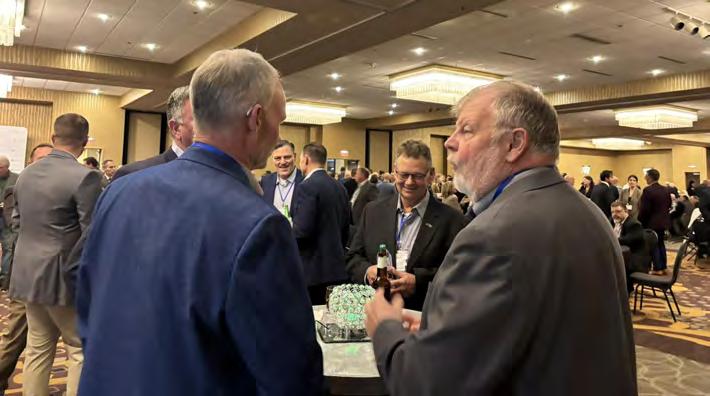
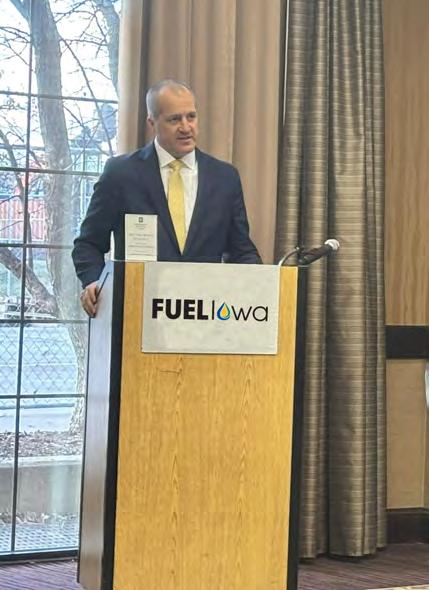
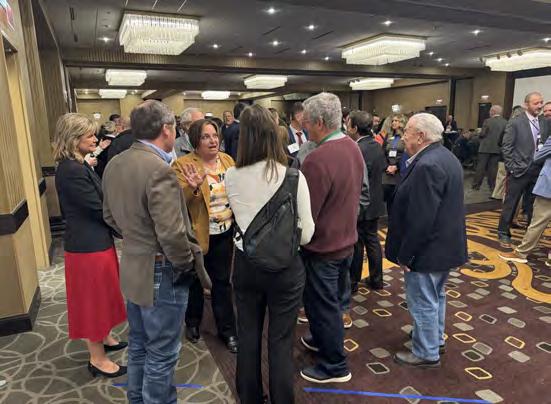
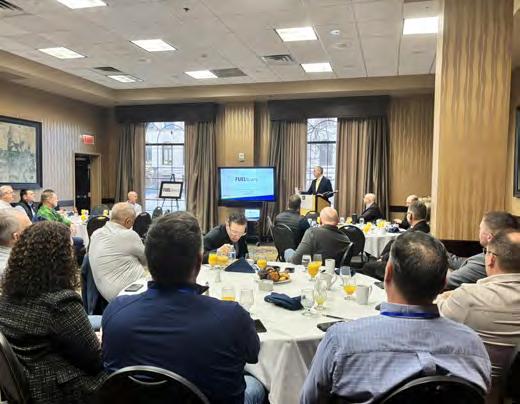
FUELIowa kicked off the legislative session by connecting members and lawmakers in meaningful, relationship-driven settings at our welcome back legislative reception on January 13th at the Embassy Suites, in downtown Des Moines. The event brought together FUELIowa members and
legislators from across the state in a relaxed, engaging setting to reconnect at the start of the legislative session. The reception provided an opportunity for meaningful conversations, relationship-building, and discussion of issues impacting Iowa’s fuel and convenience industries.
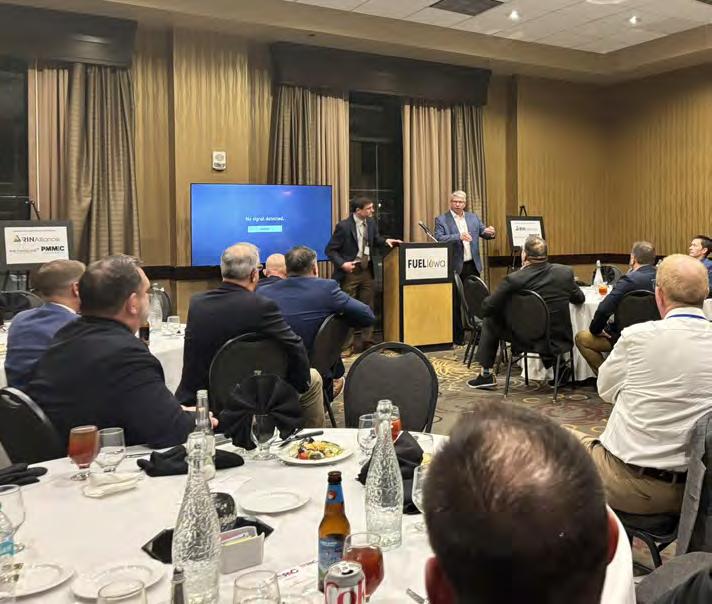
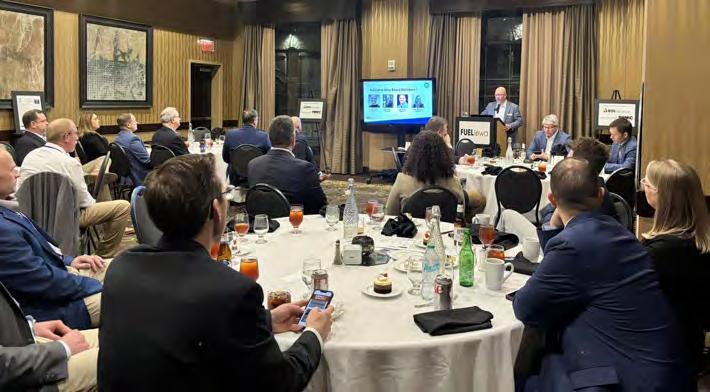
Later that evening, FUELIowa hosted its Grassroots Advocacy Dinner, reinforcing the association’s commitment to political engagement and effective advocacy. The event highlighted the importance of member involvement in the political process and the role of FUELIowa’s political action committee in advancing the industry’s priorities at the Statehouse. FUELIowa extended its sincere appreciation to its 2025 and 2026 PAC donors, whose continued support makes it possible to build strong relationships with policymakers and advocate effectively on behalf of the industry.
NEW VOICES AT THE TABLE
FUELIowa welcomed four new board members in 2026 at the January 14th Board Meeting in Des Moines, reflecting the diversity and strength of its statewide membership.
The board meeting marked the introduction of several new directors, reflecting the breadth and diversity of FUELIowa’s membership. New board members include Inder Singh of Brew Oil (Sioux City), Cody Staab of Casey’s General Stores
(Ankeny), Kathy Gunlock of CoreMark (Carroll), and Kyle May of Reynolds (Winston-Salem, North Carolina).
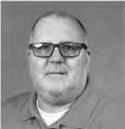
Inder Singh Brew Oil
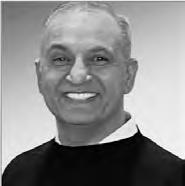
Cody Staab
Casey’s General Stores
Kathy Gunlock
Core-Mark
for 2026. Nate Lincoln of Lincoln Farm and Home (Glenwood) was elected Chair, with Jason Stauffer of New Century FS (Ames) named Vice Chair and Dennis Jaeger of Molo Petroleum (Dubuque) elected Treasurer. Tessa Anderson of Rainbo Oil (Dubuque) transitioned into the role of Immediate Past Chair, ensuring continuity and institutional knowledge during the leadership change.
The board also recognized Keith Olsen of Olsen Fuel Supply (Atlantic) for his dedicated service on the Executive Committee as he concluded his leadership term, and appointed Brett Kimmes of Kimmes Enterprises (Carroll) to the Finance Committee.
LEADERSHIP WITH CONTINUITY
Kyle May
Reynolds American
Each brings unique experience and perspective from across the fuel, convenience retail, and supplier sectors, strengthening the board’s ability to represent members statewide and beyond.
2026 OFFICERS ELECTED
FUELIowa’s board elected new leadership to guide the association through a critical year of advocacy and strategic planning.
Leadership transitions were a key focus of the January 14 meeting as the board elected its officers
Experienced leaders and new perspectives are working together to advance FUELIowa’s 2026 legislative and business priorities.
In his welcome remarks as Chair, Lincoln emphasized the importance of steady leadership, sound financial oversight, and thoughtful strategic planning. He highlighted the value of combining experienced leadership with fresh perspectives as FUELIowa advances its 2026 legislative priorities and business initiatives. Lincoln noted that the association remains committed to strengthening the fuel industry, supporting its members, and ensuring long-term sustainability in an evolving marketplace.
Immediate Past Chair Anderson reflected on the board’s continued focus on governance and forward-
looking strategy. She expressed pride in the work accomplished over the past year and confidence in the leadership team guiding FUELIowa into 2026, particularly as the association works to deliver actionable legislative strategies and practical business solutions
COLLABORATION DRIVES PROGRESS
In conjunction with the board meeting, FUELIowa hosted the RINAlliance Shareholder Meeting, providing members with updates on industry initiatives, regulatory developments, and cooperative efforts tied to renewable fuels and compliance strategies. The session reinforced the importance of collaboration as the industry continues to adapt to changing federal and state policies.
THANK YOU, PAC DONORS
Support from 2025 and 2026 PAC donors powers FUELIowa’s advocacy efforts and strengthens the industry’s voice at the Capitol. If you would like to be involved in the PAC, please email Jim Ewing at jim@ fueliowa.com. Our PAC Donors can be found on pages 12 and 13 of this magazine issue.
TOGETHER, WE FUELIOWA
With strong leadership, engaged members, and focused advocacy, FUELIowa enters 2026 positioned for long-term success.
Because Together, We FUELIowa.
The Power of our PAC Investing Together in the Future of Iowa’s Convenience Store Industry
By Gary Koerner, CEO, FUELIowa
One of the questions I am most often asked by members is simple, but incredibly important:
“How does FUELIowa make sure our industry has a real voice at the State Capitol?”
The answer is multi-layered — it includes professional advocacy, strong relationships, grassroots engagement, education, and credibility built over decades. But one of the most powerful tools in that toolbox is our FUELIowa PAC.
A political action committee is not about partisanship. It is about participation . It is about ensuring that the elected officials who make decisions affecting our businesses understand our industry, hear directly from us, and see the realworld impact of the policies they debate and pass. A strong PAC gives us a seat at the table — and just as importantly, it helps ensure that our voice is heard clearly, consistently, and credibly.
What Is a PAC?
A Political Action Committee (PAC) is a legally regulated organization that allows individuals to pool personal contributions to support candidates who understand and support the issues important to a particular industry or cause.
For FUELIowa, the PAC:
• Is funded by voluntary personal contributions (not dues)
• Supports state legislative candidates who ar e engaged with our industry
• Helps build r elationships and access so our voice is hear d
• Is strictly gover ned by state campaign finance laws
• Is focused on education, engagement, and advocacy —not partisanship
In short, the FUELIowa PAC is one of the most direct ways members can personally invest in ensuring our industry has a respected and effective presence at the Iowa State Capitol.
Keeping Dues Flat While Expanding Our Impact
O ver the past decade, FUELIowa has worked intentionally to be good stewards of your dollars. We are proud to say that we have kept membership dues flat for more than ten years, even as our industry has faced rising costs, increased regulatory pressure, and growing demands for advocacy and member services.
We have done this by tightly managing expenses and by developing non-dues revenue streams that help support the association’s mission — including sponsorships, events, and partnerships. This disciplined approach has allowed us to expand our advocacy efforts, professional staff, and programming without simply passing costs on to our members.
But there is one area where growth has not come from cost-cutting or operational efficiencies. It has come directly from you.
Thank You to Our PAC Supporters
Ten years ago, FUELIowa’s PAC raised approximately $20,000 per year. Thanks to the generosity and commitment of our members, today that number has grown to approximately $75,000 per year.
That growth did not happen by accident. It happened because many of you stepped up — writing personal checks, encouraging colleagues, and recognizing that a strong industry requires active investment in advocacy.
To those of you who have supported the PAC over the years: thank you . Your contributions have helped elevate FUELIowa’s standing at the Capitol, strengthened relationships with lawmakers, and ensured that when key issues arise, our calls are returned, our meetings are granted, and our perspective is respected.
Your generosity has made a real difference.
FUELIowa’s 2026 Legislative Priorities
As we head into the 2026 legislative session, FUELIowa is focused on five practical, business-driven policies that directly impact our members’ operations and profitability:
1. We firmly believe retailers should not be for ced to pay car d swipe fees on the taxes they collect on behalf of the state
2. We strongly oppose automatic fuel tax incr eases linked to inflation
3. We support real property tax r elief for Iowa businesses
4. We favor tax policy that moves people towar d r educed-harm tobacco products
5. We believe rural liquor r etailers should be able to manage their inventory ef ficiently by allowing them tomove pr oduct between their own locations
A strong PAC helps ensure these priorities are clearly communicated, understood, and advanced at the Capitol.
Building Momentum at the Statehouse
The growth of our PAC has coincided with — and supported — a broader investment by FUELIowa in advocacy, political education, and industry engagement.
Over the years, we have:
• Expanded our pr ofessional gover nment affairs team
• Str engthened our relationships with policymakers on both sides of the aisle
Together, these investments have created momentum. FUELIowa today is widely recognized as a credible, engaged, and constructive voice for Iowa’s liquid fuels and convenience store industry.
We are no longer simply reacting to legislation. We are helping shape it. We are no longer just showing up. We are being sought out for input. That is what a strong PAC helps make possible.
Lessons Learned from Fundraising Experts
Recently, I had the opportunity to be involved in a fundraising strategy discussion and learned from individuals who specialize in building successful fundraising programs, and several key takeaways immediately resonated with me as directly applicable to our PAC efforts.
1. Recognize Those Who Lead by Example
First, they emphasized the importance of recognizing and thanking those who give. People who step up early and consistently are not just donors — they are leaders. Their participation inspires others and sets a tone for the organization.
Going forward, we will be placing even greater emphasis on recognizing and thanking those who support the PAC. Leadership deserves acknowledgment, and gratitude builds momentum.
2. Identify Everyone Who Benefits
Second, they stressed the importance of clearly identifying everyone who stands to benefit from a strong effort and to engage with them all. In our case, that group is broad.
If you own, operate, supply, serve, or depend on Iowa’s convenience store and liquid fuels industry — you benefit from strong advocacy. Retailers, suppliers, wholesalers, jobbers, service providers, and partners all have a stake in a healthy, well-represented industry.
Our goal is to be more intentional about reaching out to everyone who benefits and helping them understand why the PAC matters to their business and their future.
3. Build a Passionate Committee
Third, successful fundraising depends on building a strong committee of passionate volunteers who are willing to personally reach out to others, make connections, and explain the importance of the cause.
This is not about mass emails or impersonal requests. It is about peer-to-peer conversations. It is about trusted leaders in our industry sharing why they believe in the PAC and why they choose to support it.
We will be working to establish a more robust FUELIowa PAC Committee — made up of engaged members who care deeply about the future of our industry and are willing to help grow our collective impact.
4. Show the Results
Finally, the experts emphasized the importance of clearly illustrating the results that donors help generate.
People want to know that their investment matters. They want to see how it translates into access, influence, and outcomes. Going forward, we will be more intentional about providing a front-row seat for PAC supporters — sharing insights, updates, and behind-the-scenes perspectives throughout the 2026 legislative session. Our board of directors is briefed at least weekly by our advocacy team. When you give to the PAC, you should have this opportunity as well.
As a PAC donor, you will have the opportunity to see how legislation is drafted, its impact, and the critical role our legislators play in shaping Iowa’s future. You will also build important relationships as a leader of this industry.
Our goal is for every PAC supporter to better understand how their personal investment helps strengthen our industry.
A Call to Get Involved
So, when you are contacted about serving on this PAC committee, I hope you will give it serious consideration as we will be seeking leaders in every legislative district in the state. And when a committee member reaches out to you about a PAC contribution, I hope you will consider making a personal investment in the future of our industry.
The strength of FUELIowa has always come from its members. Together, through smart investment, strong relationships, and shared commitment, we can continue to build an advocacy program that protects, promotes, and advances Iowa’s convenience store and motor fuels industry.
Together, we FUEL Iowa.
VISIONARY ($5,000+)
PAC CONTRIBUTIONS FINAL
$13,025 - Don Burd - Otter Creek Country Stores*
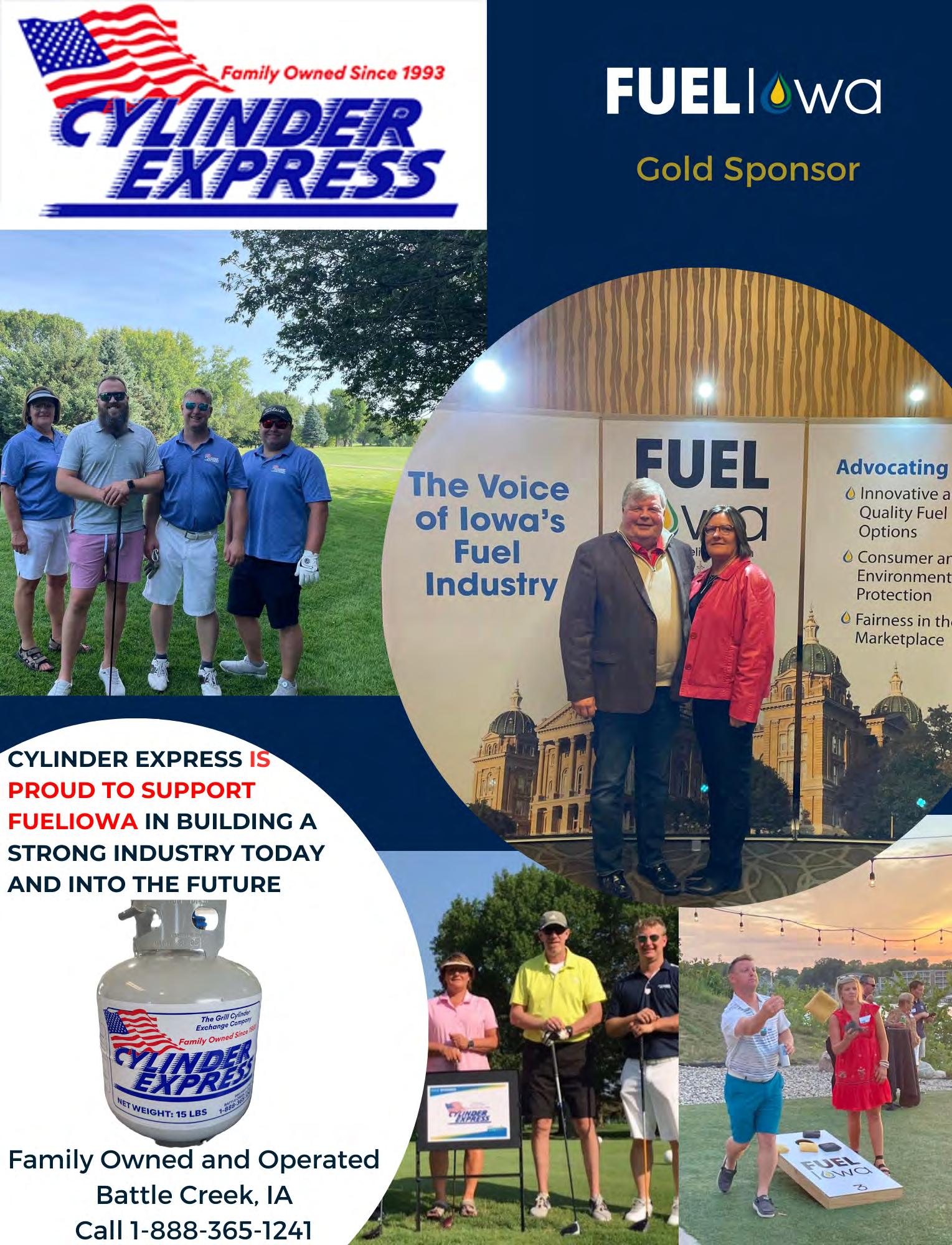
$10,000 - Bev & Henry Jessen - Cylinder Express*
$5,000 - Paul Fahey & Tessa Anderson - Rainbo Oil Company*
$5,000 - Larry Bentler - Jet Gas Company*
LEADER ($2,500-$4,999)
$4,500 - Todd Kanne - Community Oil Co*
$2,610 - Keith Olsen - Olsen Fuel Supply*
$2,535 - Dave & Cliff Reif - Reif Oil Company
$2,500 - Thomas, Jackson & Davis Flogel - Mulgrew Oil & Propane*
$2,500 - Jason McDermott - McDermott Oil*
$2,500 - Andrew Woodard - Elliott Oil Company*
PARTNER ($1,000-$2,449)
$2,250 - Jim Ewing - FUELIowa
$2,000 - Brett & Steve Kimmes - Kimmes Enterprises
$1,500 - Marc Beltrame - Beltrame Law Firm
$1,500 - Josh Gilroy - Grysson Oil
$1,500 - Gary Koerner - FUELIowa
$1,150 - John Maynes - FUELIowa
$1,000 - Steve & Toby Demmer- Demmer Oil
$1,000 - David & Matt Scheetz - The Depot Express
$1,000 - Brad Rudolf - Rudolf Insurance
$1,000 - Richard Weiner - Cartersville Elevator
FRIEND ($500-$999)
$900 - Doug Coziahr
$850 - Jason Stauffer
$800 - Nate Stumpf
$700 - Wade Fowler
CONTRIBUTOR ($0-$499)
$400 - Alex Bradley
$375 - Matt Smith
$350 - Sarah Bowman
$350 - Adrian Dickey
$325 - Dennis Jaeger
$275 - Mark Bratz
$250 - Scott Richardson
$225 - Tim Anding
$200 - Brian Pottebaum
$170 - Dan Justin
$150 - Nick Schlatter
$125 - Camille Willett
$120 - Troy Lindsey
$120 - Kyle May
$100 - Allen Boeckman
$100 - Kale Bulloch
$100 - Step Dilkes
$100 - Cody Grashorn
$100 - Alan Horst
$100 - Nate Lincoln
$100 - EJ Maruska
$100 - Bob Mast
$50 - Dean Onken
$20 - Mike Hildenbrand
$20 - Logan Huffman
VISIONARY ($5,000+)
PAC CONTRIBUTIONS
As of 2/3/26
$10,300 - Don Burd - Otter Creek Country Stores*
$5,000 - Tessa Anderson - Rainbo Oil Company*
$5,000 - Larry Bentler - Jet Gas Company*
LEADER ($2,500-$4,999)
$2,500 - Todd Kanne - Community Oil Co*
$2,500 - Thomas Flogel - Mulgrew Oil & Propane*
$2,500 - Brett Kimmes - Kimmes Enterprises
$2,500 - Jason McDermott - McDermott Oil*
$2,500 - Keith Olsen - Olsen Fuel Supply*
$2,500 - Andrew Woodard - Elliott Oil Company*
PARTNER ($1,000-$2,449)
$2,000 - Jennifer Likes - Harms Oil
$1,500 - Marc Beltrame - Beltrame Law Firm
$1,500 - Josh Gilroy - Grysson Oil
$1,500 - Gary Koerner - FUELIowa
$1,000 - Jim Ewing - FUELIowa
$1,000 - Brooke Lilley - Jet Gas Company*
$1,000 - Nate Lincoln - Lincoln Farm & Home Service
$1,000 - John Maynes - FUELIowa
$1,000 - David & Matt Scheetz - The Depot Express
FRIEND ($500-$999)
$500 - Sarah Bowman
$500 - Doug Coziahr
CONTRIBUTOR ($0-$499)
$250 - Dennis Jaeger
$125 - John Meehan
$100 - Kathy Gunlock
$100 - Reo Menning
AN UPDATE ON OUR HEALTHALLIANCE PARTNER
ASSURED PARTNERS AND GALLAGHER
By Gary Koerner CEO, FUELIowa
I want to share an important update regarding one of our valued partners in the HEALTHAlliance Benefit Plan (HABP).
Just recently, our long-time partner Assured Partners announced that it would be combining operations with Gallagher , one of the insurance industry’s leading brokerage and risk management firms. As a result, the team of benefits experts who manage HABP will now be operating under the Gallagher name. Some members may begin to see Gallagher referenced in future communications, emails, and materials related to your HEALTHAlliance coverage.
The most important message is this: your people and your service remain the same.
You will continue working with Mary Johnson and her trusted local service team — the same professionals who know our members, understand our industry, and have helped make HEALTHAlliance successful. Your day-to-day contacts, relationships, and service model are not changing.
What is changing is the depth of resources now available to our members. With Gallagher’s scale and national expertise, HABP participating employers will now have access to enhanced tools and support, including:
• A compr ehensive benefits benchmarking study
• Expanded educational webinars
• T imely and relevant compliance updates
• Additional analytics and carrier r esources
From FUELIowa’s perspective, this transition strengthens
HEALTHAlliance by combining local expertise with the capabilities of one of the world’s largest and most respected firms.
As always, we encourage members to explore HEALTHAlliance for their employee benefits needs.
The last 10 groups to join HEALTHAlliance experienced average premium savings of 21%, along with richer benefit plans for their employees. Today, more than 80 FUELIowa member companies trust HEALTHAlliance for their medical, dental, vision, and life insurance needs.
If you have questions or would like to know what HABP can do for your business, learn please contact Mary Johnson at 515-237-0121 or Mary_Johnson@ ajg.com.
Great service and deep expertise are just a phone call away.
Together, We FUEL Iowa!
Gary
FUELIowa Members
Role as Tax Collectors for the State
By John Maynes, President, Government Affairs, FUELIowa
FUELIowa members are more than just marketers and retailers of gasoline, diesel, and biofuels blends; they are vital partners in the state’s tax administration and collection system. Every time a motorist fills up at the pump or a marketer fills a commercial storage tank, the price displayed includes motor fuel excise tax that has already been collected by the supplier, paid by the marketer or retailer, and embedded into the sale price before the marketer or retailer ever sells a gallon to the consumer. Iowa levies a per-gallon excise tax on motor fuels that applies to gasoline, diesel, and various biofuels blends.
The excise tax is imposed at the wholesale or distributor level, meaning the fuel is taxed as it enters Iowa’s system at a terminal rack. An Iowa licensed supplier, importer, blender, or distributor is responsible for remitting those taxes to the Iowa Department of Revenue. Because this tax is paid upstream, retailers carry the float on the tax until they pass it through as a price term in the retail sale price. By paying the tax at the terminal rack, Iowa’s retail fuel industry provides a major cost-savings and efficiency to state government. The retailer then will collect any sales tax that might be applicable, such as on dyed diesel fuel use not subject to an exemption. Or alternatively, at a convenience store, on retail convenience items sold inside the store, and remit the sales tax collected monthly to the state.
Fuel marketers and fuel retailers, therefore, are collection agents for state government. In total, fuel marketers and fuel retailers remit over $650 million in motor fuel excise tax to the state for the right to carry those costs down the chain of sale until an equivalent value can be reimbursed through consumer purchases. As a result of Iowa’s tax administration system, Iowa fuel retailers and fuel marketers must staff accordingly, adopt internal compliance systems, license appropriately with the state, file timely monthly returns, and ensure accurate reporting of gallons sold across all fuel types. This compliance burden is significant and requires dedicated administrative resources and costs.
The collection of sales tax follows a different path in Iowa but presents challenges in terms of administrative resources and cost. Although not exclusive to fuel marketers and fuel retailers, sales tax in Iowa is collected and remitted by merchants. In total, Iowa merchants collect more than $4 billion in sales tax for state government which they in turn remit to the Iowa Department of Revenue.
Hidden Costs
In the opening days of Iowa’s 2026 legislative session, Senate Study Bill 3001 was introduced memorializing the Iowa Senate’s vision for property tax reform. Tucked inside the 104page Senate bill is an indexing proposal for Iowa’s motor fuel excise tax rates. In the House, House Study Bill 324 exempts excise and sales taxes from the computation of interchange fees charged on consumer purchases using credit and debit cards. The following article lays out the intersection of these two issues and why they are critical to fuel marketers and retailers.
When customers pay for motor fuel, which includes both the fuel cost and the embedded motor fuel excise tax, many customers choose to use credit cards or debit cards. In fact, 85% of all motor fuel purchases involve a credit or debit card. For that convenience, retailers must accept card payments and, in return, pay merchant fees to the card issuing bank. These fees consist of interchange fees set by card networks (like Visa, Mastercard, Discover, and American Express) and paid by the retailer’s acquiring bank to the card holder’s issuing bank.
Interchange fees are a percentage of the total transaction amount plus a small flat fee. Nationwide averages for credit card interchange are 2.35% of the total transaction value, depending on card type, whether the card is present, and other factors. Debit card interchange fees tend to be lower (and federally capped) but still represent a cost to retailers and marketers.
Here is the key issue for fuel marketers and fuel retailers: interchange fees are calculated on the full dollar amount of the transaction, including the portion of the price that consists of taxes collected on behalf of the state. That means if a motorist purchases fuel that includes $10 of state tax
in total, the interchange fee (2.35%) is charged on that tax component as well. Interchange is applied to sales tax and excise tax alike, even though the retailer never retains that money; they simply pass those funds through to the government.
This dynamic creates what all merchants describe as a hidden cost of tax collection: banks are profiting from a fuel marketer or fuel retailers’ tax collection service provided to state government. On motor fuel excise tax alone, Iowa fuel marketers and fuel retailers pay $15.3 million in interchange fees to card issuers on the state motor fuel excise tax portion of transactions. On sales tax, Iowa merchants pay approximately $88 million to card issuers for the exclusive right to charge and remit sales tax back to state government. Nationally, interchange fees are big business for card issuers. Last year, card issuers charged merchants nationally $187 billion in interchange fees on card transactions.
Unlike a voluntary service, card transaction acceptance is an expectation of modern commerce, customers increasingly demand it, and fuel retailers without card acceptance risk losing business to competitors. Fuel marketers and fuel retailers cannot pass through these interchange costs to customers due to competitive pricing pressures and restrictions on surcharging embedded in card issuer acceptance agreements. As a result, interchange costs cut into fuel retailers’ margins, creating a significant issue in an industry known for its razor thin net profit margins.
Iowa Senate Push to Index Motor Fuel Excise Tax Increases
Policymakers periodically consider adjustments to fuel excise taxes to address infrastructure funding needs. In Iowa, Senate Study Bill 3001 proposes a motor fuel tax increase by linking Iowa’s future motor fuel tax rates to
inflation using the Consumer Price Index (CPI). A quick review of state motor fuel tax rates shows nineteen of the twenty-five states with the highest motor fuel tax rates in the country with an inflationary index tied to their fuel excise tax rates.
Studies across many product categories show that higher cost leads to reduced consumption. This trend holds true for fuel taxes, showing that higher fuel taxes tend to reduce fuel consumption, albeit modestly in the short term. However, with a proposal tying fuel excise tax rate indexing to inflation during a time when state and federal governments are seeking to gain control of inflation, motor fuel excise tax rates will balloon quickly under the Iowa Senate proposal.
Escalating Interchange Costs with Higher Tax Base
If Iowa increases motor fuel excise tax rates across the board, the tax component embedded in every gallon sale increases. Even if fuel volumes shrink slightly, the dollar amount of excise tax charged per gallon goes up. Because card processing fees are charged as a percentage of the entire transaction amount, retailers will see interchange fees rise in tandem with any increase in the total motor fuel price, including the tax portion.
For example, if a gallon’s price before tax stays the same, but the excise tax is raised from $0.30 to $0.35 per gallon, then the transaction’s dollar amount goes up by a nickel
for every gallon sold. At a 2.35% average interchange rate, that additional $0.05 per gallon of excise tax translates into about $0.001 per gallon in additional card fees which, across roughly 2.2 billion gallons of taxable fuel sold, equates to an additional $2.2 million in interchange fees paid by fuel retailers and fuel marketers annually.
This effect also compounds for sales tax on retail items, such as convenience store purchases. A rise in sales tax increases the total transaction amount on eligible purchases, further driving interchange fees, placing upward pressure on the price of goods, and cutting into the profit margins of merchant.
Cost Burdens and Competition
Fuel marketers are squeezed on multiple fronts as it relates to motor fuel taxes and interchange rates. They must compete on fuel prices in a highly transparent market where consumers shop by the penny. Simultaneously, fuel marketers and fuel retailers must cover labor, rent, supply costs, compliance costs for tax reporting, and now the unwelcome reality of interchange fees on tax collections. For retailers, interchange fees serve as their second highest operating expense behind labor.
Since fuel sales net margin per gallon are often just pennies, these payment processing costs are significant. There is ongoing debate
nationally and in state legislatures about whether interchange fees should be assessed on the tax portion of transactions at all. States are considering laws to exempt sales taxes from interchange calculations, which could reduce merchant costs. In Iowa, FUELIowa is supporting House Study Bill 324 alongside the Iowa Grocers and other merchant focused groups.
Fuel marketers and fuel retailers in Iowa serve as indispensable partners in the collection of state motor fuel excise taxes and sales taxes. Their role ensures a steady, accurate, and timely stream of revenue for highways, secondary roads, and the state general fund. However, these businesses shoulder burdensome hidden costs in the form of credit card interchange fees on all transactions, including the tax portion they collect as agents of the government. Because these fees are calculated on the entire purchase amount, fuel marketers effectively subsidize the convenience of card payment acceptance for both consumers and the state, without direct reimbursement for that tax collection function.
As policymakers debate indexing increases to Iowa’s motor fuel excise tax rates, fuel marketers face the dual reality of reduced consumption and increasing interchange costs on the embedded taxes they remit. Understanding this interplay between tax policy, payment processing economics, and retail fuel market realities is essential for balanced legislative decision-making and for identifying reforms that might ease unnecessary burdens on Iowa’s fuel retailers while balancing the state’s fiscal needs.
FUELAmerica 250 Years of Liquid Fuels
Part 1 of 6
By Jim Ewing, Director, Membership & Business Services
From Whale Oil to Iowa Tractors: A Look at America’s 250Year Energy Journey
As America celebrates its 250th anniversary, a look back at the nation’s energy history shows how liquid fuels have powered the country from its earliest days to the modern era. From whale oil lamps in colonial homes to diesel engines in today’s farms, liquid fuels have played a key role in shaping communities, economies, and daily life.
For Iowa, the milestone carries special significance. The state’s agricultural roots, family farms, and the Iowa State Fair illustrate the role fuels have played in powering both progress and tradition. The
series “FUELAmerica: 250 Years of Liquid Fuels” explores six distinct eras in the nation’s energy history, beginning with the earliest sources of fuel—natural oils.
The Natural Oils Era (1700s–mid-
1800s)
Before petroleum became widespread, Americans relied on natural oils harvested from plants and animals. Whale oil was in high demand for lamps and candles, providing a reliable source of light in homes, shops, and public spaces. Tallow—rendered animal fat—was widely used in households, while higher-end spermaceti candles offered a cleaner and brighter burn.
These oils served more than just lighting purposes. Farmers and homesteaders, including those in early Iowa settlements, used natural oils for cooking, preserving food, and lubricating tools. In this period, energy was not just a convenience; it was essential for daily life.
Whaling and Trade
Whale oil originated primarily in New England ports such as Nantucket and New Bedford. From there, barrels of oil were distributed across the young nation, reaching frontier communities in the Midwest through river and wagon trade routes. Even in Iowa, far from the Atlantic coast, settlers depended on these imported fuels, supplementing them with local sources such as lard and seed oils.
Trade in natural oils illustrates the nation’s early reliance on imported and domestic resources. It also reflects a broader theme of American resourcefulness, as communities adapted available materials to meet everyday needs.
Iowa’s Role
While Iowa was largely frontier territory during the Natural Oils Era, settlers applied practical energy solutions to support homes, farms, and emerging towns. Lighting, cooking, and lubrication required careful management of resources. These early experiences with liquid fuels foreshadowed Iowa’s later role in adopting petroleumbased energy sources for agriculture and industry.
The Iowa State Fair, a longstanding symbol of the state’s agricultural and cultural heritage, underscores the connection between energy and progress. From the early steam-powered engines to modern farm machinery, fuel has always been integral to fair operations, agricultural displays, and the broader economy.
Significance
T he Natural Oils Era set the foundation for the nation’s energy development. It demonstrated the importance of accessible and reliable fuel, the ingenuity required to utilize local resources, and the connections between energy, industry, and daily life. Without these early practices, the transition to petroleum in the mid19th century would have been significantly slower.
This period also highlights the cultural and economic dimensions of energy use. From urban lamp-lit streets to rural homesteads in Iowa, liquid fuels supported work, safety, and social life, reflecting the broader American experience of innovation and adaptation.
Looking Ahead: The Petroleum Revolution Era
The next i nstallment, The Petroleum Revolution Era (mid-1800s–early 1900s) , will examine how the discovery and commercial production of crude oil transformed America. Petroleum introduced new fuels, like kerosene and later gasoline, that were cleaner, more efficient, and easier to transport than natural oils.
This era marked the beginning of large-scale energy distribution, the rise of refineries, and the establishment of the first gas stations. For Iowa, petroleum meant more than lighting and lubrication—it powered the mechanization of farms, boosted transportation networks, and supported industrial growth across the state.
As America moves further into the Industrial Age, petroleum laid the groundwork for the modern energy landscape. It fueled engines, factories, and progress, connecting local communities like Iowa farms to national and global markets. The story of petroleum is, in many ways, the story of how the nation took the lessons of the Natural Oils Era and scaled them to meet the demands of a growing, modernizing country.
UMCS 2026 Speakers Who Will Inspire, Educate,
and Entertain
By Sarah Bowman Director, Communications & Events FUELIowa
The Upper Midwest Convenience Store & Energy Convention (UMCS) — happening April 1–2, 2026 at the Saint Paul RiverCentre — isn’t just another industry event. It’s a two-day powerpacked experience designed to fuel your business with insights, strategy and community connection like never before.
This year’s speaker lineup blends thought-leadership, practical industry expertise and engaging entertainment . Whether you’re a seasoned operator or just starting out in the convenience store and energy world, UMCS 2026 has content that will make this a can’t-miss experience.
Keynote Speakers: Big Ideas to Drive Your Business Forward
UMCS 2026 features two headline keynote sessions — shaping the themes of strategy, growth, and opportunity in our industry:
Lou Nanne — Opening Day Keynote
Kicking off the convention on April 1 , Lou Nanne will deliver a keynote that inspires sharp thinking and big ideas to kickstart your UMCS experience. His session sets the tone for two days of learning and connection. Lou Nanne has one of the most solid careers of any American involved in the game of ice hockey. In addition to his All-Star player status with the Minnesota North Stars, he has been actively involved in the game as an administrator. Nanne served as the team’s General Manager from 1978–88, was a member of the International Committee for USA Hockey since 1988, and held various roles such as Vice President of the NHL Players Association, member of the NHL Board of Governors, and as a player, coach, GM, and president of the North Stars.
Nanne’s early hockey journey included playing junior hockey with Hall of Famers Phil and Tony Esposito. He then became a member of the University of Minnesota Golden Gophers hockey team from 1959–63 under Coach John Mariucci. In 1963, he earned All-American honors and was named the WCHA Most Valuable Player.
After graduating from the University of Minnesota, Nanne was drafted by the Chicago Blackhawks. However, following a contract dispute, he opted to play for the Rochester Mustangs of the USHL while pursuing business interests in the Twin Cities. His leadership was recognized when he served as captain of the U.S. Olympic Team in 1968, was general manager of the U.S. national team for the 1981, 1984, and 1987 Canada Cup tournaments, and continued his involvement at the 1994 World Championship.
After the 1968 Olympics, Nanne joined his hometown expansion North Stars where he emerged as the team’s first star. He had an 11-year NHL career with the North Stars, tallying 72 goals and 167 assists for 239 points. His role later evolved into one of the league’s knowledgeable GMs, running the team until 1990.
Throughout his career, Nanne received numerous awards and honors. He was named to the 50-Year WCHA All-Star team and awarded the Lester Patrick Award in 1989 for his outstanding service to hockey in the United States. He was inducted into the United States
Hockey Hall of Fame in 1998 and the International Ice Hockey Federation Hall of Fame in 2004. He also received Regional Emmy Sports Broadcast awards in 2009 and 2010 and was inducted into the Minnesota Sports Hall of Fame and received the Minnesota Sports and Events MN Champions Award in 2023.
On April 2, Steve Goreham takes the stage to deliver insights that bridge industry trends with real-world application — ideal for leaders looking to sharpen their competitive edge and make smarter business decisions this year. Steve Goreham is a speaker, an author, a researcher on energy and environmental issues, and an independent columnist. He speaks and writes about energy, industry, agriculture, the environment, sustainable development, economic trends, climate change, and corporate environmental policy. Steve is the Executive Director of the Climate Science Coalition of America and an advisor to The Heartland Institute.
Goreham has been speaking to business, industry, and educational organizations for more than a decade.
Steve Goreham — Day Two Keynote
He has appeared in the past to agriculture, engineering, equipment, manufacturing, materials, metals, oil and gas, transportation, and utility groups. He has spoken at events of the Alaska Resource Development Council, the American Association of Professional Landmen, the Colorado Oil and Gas Association, the Hand Tools Institute, the Idaho Consumer-Owned Utilities Association, the Indiana Municipal Electric Association, the Kansas Independent Oil & Gas Association, the National Propane Gas Association, the Petroleum Club of Ft. Worth, the Society of Independent Gasoline Marketers of America, the Summer NAPE Expo, and many other energy and industry groups.
Goreham is the author of four books on energy, climate change, sustainable development, and public policy, including his latest, Green Breakdown: The Coming Renewable Energy Failure. More than 100,000 copies of his books are now in print.
Steve is a frequent guest on television and radio. His TV appearances include Fox Business Channel, Joe Pags, Pat Robertson, Wilkow, the Joe Donlon Report, and Sky News Australia. His radio segments include Glenn Beck, Frank Beckmann, John Catsimatidis, Roe Conn, Bill Cunningham, Larry Elder, Sean Hannity, Lars Larson, Dennis Miller, George Noory, Janet Parshall, and Todd Starnes, as part of more than 400 radio show appearances.
These keynotes aren’t lectures — they’re designed to spark new thinking and leave you with ideas you can implement in your business right away.
Comedian John Heffron – Winner of
NBC’s Last Comic Standing
One of the unique highlights of UMCS 2026 is what happens after the show floor closes : an evening of dinner and laughter as a professional comedian performs following the second day’s sessions. The winner of the second season of NBC’s hit reality series "Last Comic Standing," comedian John Heffron has become a comic to watch and love. The Detroit funnyman, who Phyllis Diller referred to as "the cute one," won a talent contract with NBC as well as other great opportunities. When asked about his experience on the show, John said, "It’s a lot like high school … there are good and bad memories, in the end, I think I will only remember the good ones."
John started his comedy career as a student at Eastern Michigan University, skipping night classes to perform stand-up comedy. He got his first gig as an emcee at the Main Street Comedy Showcase on the University of Michigan campus. After making his way to graduation, John immediately began working in his field of choice. He started touring the college circuit, performing at more than 80 colleges a year. By that time, he was already a seasoned
comic with more than four years of experience. The college audience related to his type of humor, which talked about his days in college, the retro music that he and his classmates listened to and the Pop Rocks that he played with as a kid. This material made him a hit on college campuses, where he recorded his first comedy CD, "Kid With A Cape."
This isn’t just fun — it’s a chance to unwind, connect with peers, and recharge your energy so you’re ready for more networking and learning.
More Than Just Keynotes — Practical Sessions Too
Beyond keynotes and laughs, the UMCS speaker program includes industry-specific educational workshops and expert talks on topics like safety compliance, underground storage systems, legislative updates, and profit-driven operational strategies. These sessions are led by field experts and business leaders, and are designed to deliver immediately applicable tools and insights.
That means:
• Business owners can learn strategies to gr ow revenue.
• Operations teams can gain practical ways to impr ove efficiency.
• Industry veterans and newcomers alike walk away with actionable takeaways.
Why You Can’t Miss UMCS 2026
Here’s why UMCS 2026 is different from the rest:
• Top-tier keynote speakers of fering fresh perspectives for business success.
• A comedian on the agenda — because networking and education shouldn’t be all business all the time.
• Expert-led workshops that go beyond inspiration to practical application.
• Unmatched networking opportunities across hospitality nights, happy hours, and r eceptions.
• TWO Happy Hours because one wasn’t enough!
UMCS 2026 is more than a conference — it’s where industry insights, professional development, and community come together. Whether it’s in the educational sessions, over dinner, or while laughing with peers, you’ll leave with new ideas, new connections, and new momentum for your business.
SAVE THE DATE
FUELIowa SUMMERFEST Returns to Okoboji
August 6–7, 2026
Get ready to head back to the lake! FUELIowa SUMMERFEST is returning to beautiful Okoboji on August 6–7, 2026, and you won’t want to miss it. After a year away, we’re bringing our signature summer event back to Okoboji—complete with great networking, lakefront fun, and the relaxed atmosphere that makes SUMMERFEST a member favorite.
Mark your calendars now and start planning for two days of connection, conversation, and celebration with Iowa’s fuel and convenience industry leaders. Details on registration, lodging, and sponsorship opportunities will be announced soon—but for now, save the date and get ready for Okoboji 2026!
Customizable
Largest
Capacities
30-year
2026 FUELIOWA SP ONS ORS
DIAMOND
PLATINUM
SILVER
BRONZE
HEALTHAlliance offers industry leading health & wellness plans exclusively designed to meet the needs of fuel marketers, convenience stores, and associated businesses. With partners like Blue Cross & Blue Shield, Delta Dental & more, FUELIowa members enjoy the finest coverage at low rates due to the combined buying strength of our membership. The last 10 groups to join HEALTHAlliance averaged premium savings of 21%
When you join the Cenex® network, you become part of a community built on trust, reliability, and shared success. Our locally focused approach, combined with national brand strength, helps your store earn customer loyalty while benefiting from the resources of a leading energy brand.
PARTNER WITH US
cenex.com/dealer-branding-program
OWL Services is the premier provider of comprehensive services in construction, program management, compliance, security technology integration and fueling equipment sales and service, specializing in industries such as retail fueling, industrial operations, commercial fleets and electric vehicle (EV) charging across the United States, ensuring America’s mobility.
With a commitment to excellence and a broad spectrum of expertise, OWL delivers innovative solutions tailored to the unique needs of each sector, ensuring optimal performance, safety and efficiency for clients nationwide. With 40+ offices and distribution centers and 1,500+ skilled service technicians, we are available 24/7/365 for a simple break/fix or emergency.
INSIDE THE BELTWAY ENERGY MARKETERS
January 9
Inside the Beltway Update
With the start of the new year Congress will begin work on a packed legislative schedule. To avoid a partial government shutdown by the January 30, deadline, Congress must pass funding legislation for the remaining nine of the twelve annual appropriations bills that were not finalized in late 2025. Apart from appropriations, leadership staff indicate the following issues are most likely to be on the House agenda during the first quarter of the year: Farm Bill (potential movement late in Q1), Permitting reform (timing and scope remain under discussion) and joint employer legislation. At the House GOP retreat earlier this week, the Speaker emphasized to members that these priorities and others will anchor the conference’s early-year agenda. Looking ahead to the GOP Member Retreat at Trump Doral on March 9, leadership is expected to begin pressing members on timing, sequencing, and strategic tradeoffs for the remainder of 2026. Leadership also flagged that House attendance will remain a meaningful constraint through at least April. With vacancies and inconsistent attendance, there may be periods where House Republicans do not have a reliable
technical majority on the floor, complicating vote timing, and legislative execution.
Importantly, leadership discussions around a potential second reconciliation effort are intensifying. While no formal decision has been made, senior leadership staff emphasized that if Congress legislates meaningfully in 2026, reconciliation is increasingly viewed as the most viable vehicle. Leadership is beginning internal “pre-huddles” to scope what a reconciliation 2.0 package could include and the Speaker’s office and Majority Leader’s office are expected to run point, in coordination with the Budget Committee. Leadership is still finalizing the broader 2026 agenda, but the central strategic question— whether to pursue reconciliation—will shape nearly all major legislative pathways this year. At the same time, Republicans are increasingly focused on “affordability” as a defining issue heading into the 2026 midterms and are actively seeking policy proposals that align with that message.
The proposed American Franchise Act (AFA) (H.R.5267) introduced in the House has had companion legislation introduced in the Senate by Senators Marshall (R-KS) and King (I-ME). The “American Franchise Act”(AFA), bipartisan legislation introduced by Representatives Kevin Hern (R-OK) and Don Davis (D-NC) would amend the National Labor Relations Act to only allow a business to be considered a joint employer if that business exerted “substantial direct and immediate control” over specific conditions of employees’
jobs. The legal landscape has been volatile, with the standard shifting between presidential administrations and subject to court challenges. In early 2024, a federal court blocked the Biden administration's broad NLRB joint employer rule from taking effect, leaving an earlier, narrower 2020 rule in place for the time being. Related legislation titled the Save Local Business Act (SLBA) (H.R.4366) has been introduced in various sessions of Congress, most recently in July 2025 and previously in 2023 and 2021. If passed by both the House and the Senate and signed into law, it would provide a permanent, statutory definition of a joint employer, overriding agency rules that can change with each new administration.
Sen. Chuck Grassley (R-IA) and other Senate Ag Republicans are calling for the year-round sale of E15 fuels to be attached to the Agriculture FY26 spending bill. EMA and other proponents support this measure that would allow gas stations to sell fuel with a blend of 15% ethanol. Senator Grassley stated to reporters on Thursday that he is in “regular contact” with the White House to stress the importance of E15. Lawmakers and a coalition of agriculture and biofuels groups have tried for years to attach year-round E15 provisions to funding bills and other must-pass vehicles but have been largely unsuccessful. This time may be different as Republicans are focused on providing relief to U.S. producers, who’ve been weathering President Trump’s tariff agenda, persistent inflation and high costs.
January 16
Inside the Beltway Update
Speaker Mike Johnson is moving forward with plans for a second party-line "megabill" utilizing the budget reconciliation process to bypass potential filibusters. While Johnson remains "bullish" on the bill's prospects and has the support of the Republican Study Committee, he faces internal resistance from several GOP committee chairs who are skeptical that such a measure is possible. The effort is complicated by a narrow House majority, ideological differences within the party, and the political pressures of an election year. Despite these hurdles, Johnson intends for the legislation to be "House-driven" and has already initiated discussions regarding the proposal with Senate leadership.
President Donald Trump’s support of a proposal to impose a 10% cap on credit card interest rates and curb transaction fees has ignited a multimillion-dollar lobbying battle. Retailers view Trump's endorsement of the Marshall-Durbin legislation (S.1838) as a crucial boost for lowering transaction fees. The Credit Card Competition Act builds on previous efforts to promote competition in the credit card processing market and would require large banks to enable retailers to route transactions over at least two unaffiliated networks - beyond the dominant Visa and Mastercard duopoly.
Republican leadership is likely to table the Save Local Business Act, a bill designed to tighten the federal "joint employer" standard, following a revolt from the party's pro-labor flank. This legislative stall occurred after six Republicans joined Democrats to
block separate legislation regarding overtime rules, leading to concerns that the joint employer measure would also fail if put to a floor vote. The proposed Save Local Business Act would narrow the joint employer standard, stipulating that a company is only responsible for another firm's employees if it exerts direct and immediate control over essential job terms such as hiring, pay, and scheduling. While supporters argue the bill protects the franchise industry from Biden-era regulations, the internal opposition has forced House Education and Workforce Chair Tim Walberg to potentially restart his labor agenda. Amidst this friction, lawmakers are considering a different measure, the American Franchise Act, which has garnered some Democratic support due to its specific focus on franchising.
The House of Representatives has passed a funding bill that would reduce the IRS budget by approximately 10% to $11.2 billion, a move intended to help avert a looming government shutdown on January 30. As the legislation moves to the Senate, the Internal Revenue Service Advisory Council has criticized these fiscal maneuvers, noting that Congress has already clawed back more than half of the $80 billion previously granted to the agency in 2022. The council warned that such inadequate funding undermines the agency's ability to collect revenue efficiently and will likely lead to an increase in scams, fraud, and misinformation on social media. Additionally, these cuts are expected to result in tepid tax enforcement, ultimately widening the tax gap and slowing the processing of legitimate tax returns.
On the hemp front, Representative Jim Baird (R-IN) and House Agriculture Committee Ranking Member Angie Craig (D-MN) introduced legislation that would delay for two years the ban on intoxicating hemp that was enacted in November as part of the agreement to reopen the federal government. Specifically, the spending bill hemp language was designed to close the "hemp loophole" by November 2026 thereby changing the definition of hemp from previous farm bill language to preclude all but naturally occurring derivatives of hemp products with lower than 0.3 percent THC content by dry weight. Under the legislation that was introduced by Reps. Baird and Craig, the ban would be delayed until 2028 to give time for industry stakeholders to come up with a compromise.
Additionally, the House Ways and Means Committee has approved a bipartisan bill requiring the IRS to add barcodes to paper tax returns to enable electronic scanning and faster processing. While the measure aims to modernize tax administration, it faces a complex political environment; though Democrats support the barcode mandate, they argue that Republican-led budget cuts undermine the agency's ability to operate efficiently. The legislation is now moving to the House floor for a final vote, despite similar efforts in the Senate remaining stalled.
Energy Marketers of America
Applauds
Reintroduction of Credit Card Competition Act, Thanks President Trump, and Urges
Swift Passage to Ease Burden on Fuel Retailers
On Tuesday, the Energy Marketers of America (EMA) welcomed the reintroduction of the Credit Card Competition Act (CCCA) by Senators Roger Marshall (R-KS) Dick Durbin (D-IL) and along with Reps. Lance Gooden (R-TX) and Zoe Lofgren (D-CA) a bipartisan measure aimed at curbing skyrocketing credit card swipe fees that disproportionately impact small business fuel marketers and convenience store operators across the nation. The bill introduction follows President Donald’s posted support for the bill today on the X social media platform. EMA thanks the President for his monumental move to endorse passage of the CCCA.
route transactions over at least two unaffiliated networks - beyond the dominant Visa and Mastercard duopoly. This reform mirrors successful debit card routing rules in place for over a decade and could significantly reduce interchange fees, providing much-needed relief to EMA members who operate on razor-thin margins in a volatile energy market.
"Credit card swipe fees have become one of the largest operating expenses for our members, often exceeding utility costs and cutting deeply into profits that could otherwise support jobs, infrastructure upgrades, and competitive fuel pricing for consumers," said Rob Underwood, President of EMA. "We commend Senators Marshall and Durbin for their leadership in reintroducing this critical bill, and we applaud President Trump's endorsement as a strong signal of support for America's small businesses. It's time to level the playing field and end the unchecked dominance of big banks and card networks that siphon billions from Main Street retailers every year."
EMA calls on Congress to prioritize and pass this legislation in the 119th session, ensuring that fuel retailers can thrive amid economic pressures like fluctuating energy prices and supply chain disruptions.
January 23
Inside the Beltway Update
Permanent Ye arRoud Waiver for E15 Not Included in House passed Spending Package
The legislation, which builds on previous efforts to promote competition in the credit card processing market, would require large banks to enable retailers to
EMA members, who represent thousands of independent energy marketers, distributors, and convenience store owners, paid an estimated $15 billion in swipe fees last year alone - fees that continue to rise unchecked. By fostering competition, the Credit Card Competition Act would empower retailers to choose lowercost processing options without compromising transaction security or consumer rewards programs, ultimately benefiting drivers at the pump through potential savings.
Current government funding runs through Jan. 30. The package of bills (H.R.7148) the House has passed this week would fund Defense, LaborHHS-Education, Transportation-HUD, and Homeland Security programs through the remainder of fiscal 2026. Currently the Senate is on recess, but they will need to pass this package when they return to Washington next week. House Appropriators have recommended more than $4 billion in the fiscal 2026 for the LowIncome Energy Assistance Program, a $20 million boost over the current enacted level. This increase is a direct rebuke to the Trump administration’s efforts, which called for the elimination of the program last spring. Many Americans have experienced spikes in utility costs over the past year, prompting Democrats to add rising energy expenses to its election-year messaging on everyday affordability issues.
Notably, the spending bill excluded a deal for year-round E15 gasoline sales, opting instead to create a study council. The creation of the E15 Rural
Domestic Energy Council in place of immediate year-round E15 legislation has sparked intense frustration among corn growers and biofuel groups, who view the move as a "disgrace" and a delay tactic. The newly formed council, co-chaired by Reps. Randy Feenstra (R-IA) and Stephanie Bice (ROK), is tasked with investigating E15, refinery capacity, and RFS regulations to submit legislative proposals by February 15, with House consideration expected shortly thereafter. Despite bipartisan support for the E15 bill, the decision to "kick the can down the road" highlights a significant policy divide between supporters of rural energy independence and those concerned about the structural disadvantages facing small refiners.
Last October, EMA's Board of Directors voted to endorse legislation establishing a permanent yearround waiver for E15 sales across the nation. Passing a permanent E15 waiver—via the bipartisan Nationwide Consumer and Fuel Retailer Choice Act (S.593/H.R.1346)—would prevent the emergence of a separate fuel market in Midwestern states that have opted out of the RVP waiver for E10. EMA has voiced concerns that such a "boutique fuel" could disrupt gasoline supplies, drive up costs, and diminish fuel fungibility, ultimately leading to higher prices for consumers.
Small oil refiners primarily oppose year-round sales of E15, arguing that such policies are often tied to broader legislative deals that restrict or eliminate small refinery exemptions (SREs) under the Renewable Fuel Standard (RFS). These exemptions allow refiners processing less than 75,000 barrels per day to avoid costly biofuel blending mandates if they demonstrate economic
hardship, and small refiners argue that losing access to them would disproportionately harm their operations compared to larger oil companies, which small refiners argue can more easily comply or even profit from the RFS system by generating and selling excess renewable identification numbers (RINs).
EMA has maintained a neutral stance on issuing future Small Refinery Exemptions (SREs). That said, EMA opposes the reallocation of previously waived SREs, as it would inject added market volatility that adversely affects energy marketers. When non-exempt refiners adapt to fulfill Renewable Volume Obligation (RVO) requirements, prices for renewable identification numbers (RINs) are prone to unpredictable spikes, further challenging EMA marketers' efforts to offer competitive pricing. With their constrained flexibility and dependence on branded and unbranded supplies, it's essential that any SRE reallocation accounts for the outsized effects below the terminal rack to prevent interruptions in local fuel distribution and threats to their economic sustainability.
In addition, the House passed spending bill allocates $102.9 billion for transportation initiatives, but it also includes a significant provision that rescinds about $879 million from prior appropriations for the National Electric Vehicle Infrastructure (NEVI) program. This move focuses on unobligated funds originating from the 2021 Bipartisan Infrastructure Law, which would essentially wipe out most federal NEVI support for fiscal year 2026. Instead, these
resources would be repurposed to support alternative priorities, such as Tribal transportation infrastructure and expanded truck parking facilities. Republican leaders are advancing the legislation via the standard congressional appropriations process, following court rulings that previously halted executive branch efforts to withhold the funds.
Finally, the recently enacted Continuing Appropriations, Agriculture, Legislative Branch, Military Construction and Veterans Affairs, and Extensions Act, 2026 signed into law November 2025 took decisive action on the so-called "hemp loophole" established by the 2018 Farm Bill. The legislation effectively closes the gap by redefining legal hemp to exclude most intoxicating hemp-derived products, such as those containing delta-8 THC, delta-10 THC, or other psychoactive cannabinoids that exceed stringent new THC limits. The legislation caps total THC, including all isomers, at no more than 0.3% by dry weight and prohibits synthetic cannabinoids. While the changes aim to curb safety concerns, they include a one-year grace period, with enforcement set to begin on November 13, 2026.
In response to push back from thehemp industry, bipartisan legislation was introduced in January 2026 to mitigate the impact of these restrictions. The Hemp Planting Predictability Act (H.R. 7024 in the House and S. 3686 in the Senate) proposes extending the grace period by an additional two years, delaying full implementation until November 2028. This would allow farmers, businesses, and policymakers more time to adapt or formulate alternative regulations. However, as of now,
these delay bills remain stalled in committee and have not advanced to a vote, leaving the original closure timeline intact amid ongoing debates over the future of the hemp sector.
House Energy and Commerce
Committee Aims
to Rewrite Portions of the Clean Air Act
The House Energy and Commerce Committee passed a series of bills along party lines to rewrite key portions of the Clean Air Act, despite the legislation being unlikely to join a broader bipartisan permitting package. Republicans advocate for the changes as necessary "modernization" to protect over a million jobs and $200 billion in economic activity, arguing that economic stability is vital for public health and healthcare access. In contrast, Democrats criticize the bills for weakening air quality standards and creating loopholes.
Highlights from this series of bills:
• The Clean Air and Economic Advancement Reform (CLEAR) Act (H.R. 4218) seeks to modify the regulatory framework of the EPA by extending the review cycle for National Ambient Air Quality Standards from five to ten years, acknowledging
that the agency often misses the current shorter deadline. This legislative reform introduces more flexibility into the process by allowing the EPA to consider "likely attainability" when selecting new standards and granting states the authority to factor in "technological achievability and economic feasibility" when developing implementation plans. Additionally, the bill, which passed with a 27-23 vote, ensures states have at least one year to correct rejected plans before a federal implementation plan is mandated.
• The Foreign Emissions and Nonattainment Clarification for Economic Stability (FENCES) Act (H.R. 6409), is a legislative measure designed to assist states in managing national air quality compliance by accounting for external factors. Specifically, the bill simplifies the process for states to argue that pollution originating from foreign sources, including both natural phenomena and human-induced activities, should be excluded from compliance assessments. This legislation, which aims to provide economic stability by clarifying how foreign emissions impact domestic standards, successfully passed with a 25-22 vote.
• The Fire Improvement and Reforming Exceptional Events (FIRE) Act (H.R. 6387) is legislation designed to limit how emissions from wildfires and prescribed burns influence
whether an area is considered in compliance with air quality requirements. The act requires the EPA and states to improve coordination when deciding if emissions from "exceptional events" should be excluded from air quality data. The bill passed with a vote of 27-23.
EMA Participates in Disaster Response Summit Focused on Recommendations for Policymakers
This week EMA participated in a summit bringing together private industry professionals with state government emergency response leaders. EMA participated in the opening panel consisting of Chris Eisenbrey, Edison Electric Institute (EEI), Carmela Hinderacker, C&S Wholesale Grocers, Sherri Stone, Energy Marketers of America (EMA), Kent Kildow, Verizon, Bob Crow, Cencora and Lee Siler, Walmart.
EMA continues working with federal and state emergency response officials to increase our industry efficiencies before and after disasters and to increase knowledge around what governments do that also get in the way of marketers ability to fully fuel stations, airports and homes before a known emergency and to refuel the country post disasters.
Much of the discussions and exercises throughout the summit centered around the policy recommendations that are included in the Voices from the Front Lines, “What Seasoned Industry Leaders Urge Federal
to Consider as They Rethink Disaster Survivor Support” document that was shared with the White House and is now used for all policymakers considering the evolution of disaster response. One of the recommendations from the group is to sustain FEMA’s role as a coordination hub for federal agency support.
EMA outlined the many government entities that we coordinate with during disasters and addressed the process for obtaining hours-ofservice waivers. We also addressed the limited access to TWIC escorts at terminals during disasters, and the need for multi-state coordination during response efforts. EMA also provided numerous recommendations concerning streamlining the process for obtaining any waiver, terminal access and security, support for EMA’s Disaster Fuel Response Program, and removal of logistical roadblocks.
The guide was created in response to the proposed changes for FEMA and what should be considered when restructuring government disaster response. For now, states have not received specific information on how the disaster response process will change. The White House Council recommendations have not been officially reported, leaving states not knowing what will be expected of them during disasters and wondering how disaster response will be funded.
January 30
Inside the Beltway Update
The status of FY26 Appropriations is rapidly evolving, with a partial government shutdown scheduled to begin at 12:01 AM Saturday. This
lapse will affect agencies covered by six specific spending bills, though operational impacts are expected to be minimal because the shutdown occurs over a weekend. The Senate initially failed to move the original six-bill package, leading to a bipartisan agreement to separate Department of Homeland Security (DHS) funding from the other five spending bills, which cover areas such as Defense, LaborHHS, and State.
While the Senate is expected to pass this modified five-bill package and a two-week Continuing Resolution (CR) for DHS shortly, the House must still approve the revised measures, with floor consideration likely occurring early next week. Funding for the DHS remains the most uncertain element of the appropriations process due to ongoing negotiations regarding immigration and ICE-related issues. A two-week extension would delay the DHS funding deadline until mid-February, although there is a possibility that Congress may eventually opt for a full-year CR for this department specifically. While agencies such as FEMA, CISA, and the Coast Guard are implicated in this funding gap, ICE maintains substantial prior funding to continue its operations. Despite political opposition from various sides, leadership in both chambers and the White House appear committed to avoiding a prolonged shutdown.
Meanwhile, during a speech in Clive, Iowa, President Donald Trump urged Congress to finalize a deal permitting the year-round sale of E15 fuel, a move aimed at supporting struggling corn farmers by expanding their market access.
Trump specifically called on Speaker Mike Johnson and Leader John Thune to reach an agreement that balances the interests of farmers, consumers, and refiners, indicating he would sign the legislation "without delay" once it reaches his desk. This public endorsement aligns the White House with biofuels proponents following a failed attempt by Midwestern Republicans to include E15 in a recent government funding package, which led to the creation of a rural energy working group to mediate between ethanol and oil interests. As another example of President Trump’s support for the oil and gas industry, the trump administration kicked of the process of opening federal waters off the California coast to new oil and gas drilling, which was promptly rebuked by West Coast officials.
House Agriculture Committee Chair G.T. Thompson (R-Pa.) is planning a farm bill markup for the week of Feb. 23, with the goal of securing a House floor vote before the Easter recess. This "Farm Bill 2.0" is expected to mirror the version from May 2024, focusing on rural development and research priorities rather than the major commodity and crop insurance programs addressed in previous legislation. However, the timeline remains contingent on receiving cost estimates from the Congressional Budget Office. Politically, Thompson faces a challenge in securing support due to a slim GOP majority and Democrat opposition stemming from prior cuts to the Supplemental Nutrition Assistance Program (SNAP). Passing the bill may require persuading frontline Democrats ahead of the upcoming midterm elections.
February 6
Inside the Beltway Update
The House of Representatives has passed H.R. 7148, the Consolidated Appropriations Act, a $1.3 trillion legislative package that includes five fiscal year 2026 appropriations bills. On Tuesday President Trump signed the measure into law ending the partial government shutdown. This resolution accounts for 96 percent of the federal government’s annual funding, successfully passing 11 of the 12 required spending bills. However, the Department of Homeland Security (DHS) remains the sole outstanding funding bill, currently operating under a two-week extension to allow for further negotiations between Congress and the White House. These upcoming discussions will focus on modifying DHS spending to address specific policy concerns, particularly those involving recent actions by U.S. Customs and Border Protection (CBP) and Immigration and Customs Enforcement (ICE).
The Trump administration, through the Bureau of Ocean Energy Management (BOEM), has scheduled the BBG2 oil and gas lease sale for March 11, 2026, offering over 80 million acres in the renamed "Gulf of America". Mandated by the "One Big Beautiful Bill Act," which requires 30 lease sales through 2040, this initiative seeks to bolster U.S. energy independence with a set royalty rate of 12.5%. While the sale excludes protected areas like the Flower Garden Banks and waters near Florida, a draft five-year plan proposes expanding drilling into the High Arctic and off the California coast. These aggressive expansion efforts have triggered lawsuits from environmental groups over the lack
of environmental reviews and faced bipartisan opposition from congressional delegations in states like Florida, Alaska, and California.
In a recent meeting on Capitol Hill, Federal Energy Regulatory Commission (FERC) leaders discussed their efforts to streamline environmental reviews under the National Environmental Policy Act (NEPA) by limiting their scope to issues within the agency's jurisdiction, following a 2024 Supreme Court ruling. Key changes include no longer analyzing indirect greenhouse gas (GHG) emissions from upstream production or downstream combustion and ceasing to use GHG emissions as a basis for requiring resource-heavy environmental impact statements. To increase efficiency, FERC has instructed staff to simultaneously draft project orders and environmental review documents, a process that has accelerated some project approvals by up to 30 percent. These internal process changes are occurring as Congress negotiates potential NEPA reforms intended to further reduce approval times and prevent project cancellations often caused by litigation over deficient environmental analyses.
EPA Mandates DEF System Data Submission from Diesel Engine
Manufacturers
In a significant develop ment for the diesel industry, the U.S. Environmental Protection Agency (EPA), led by Administrator Lee
Zeldin, has issued a directive requiring major diesel engine manufacturers to provide comprehensive data on Diesel Exhaust Fluid (DEF) system failures. Announced on February 3, 2026, this initiative gives manufacturers just 30 days to comply, with a focus on addressing persistent issues that have plagued truckers, farmers, and other operators of dieselpowered equipment.
The EPA's request targets data from key model years—2016, 2019, and 2023—including failure rates, repair details, and warranty claims. The goal is to independently evaluate whether these problems stem from specific designs or product generations. Common complaints include sudden engine derates, loss of speed, and complete shutdowns, which not only disrupt productivity but also raise serious safety concerns on the road and in the field. Non-compliance with this data submission could lead to substantial penalties under the Clean Air Act.
This action builds on the EPA's August 2025 guidance, which urged manufacturers to implement software updates for existing fleets. These updates aim to mitigate severe derates by providing extended warnings—such as 650 miles or 10 hours for initial faults, followed by milder restrictions for up to 4,200 miles. For nonroad equipment, like agricultural machinery, the guidance permits up to 36 hours of operation before any torque reduction. Looking forward, model year 2027 on-road trucks will be required to eliminate sudden power losses entirely when DEF levels are low.
CALENDAR OF EVENTS
APRIL 1-2 , 2026
UMCS
St. Paul, Minnesota
JUNE 8, 2026
FUELIOWA’S BENEFIT FOR CAMP COURAGEOUS Riverside, Iowa