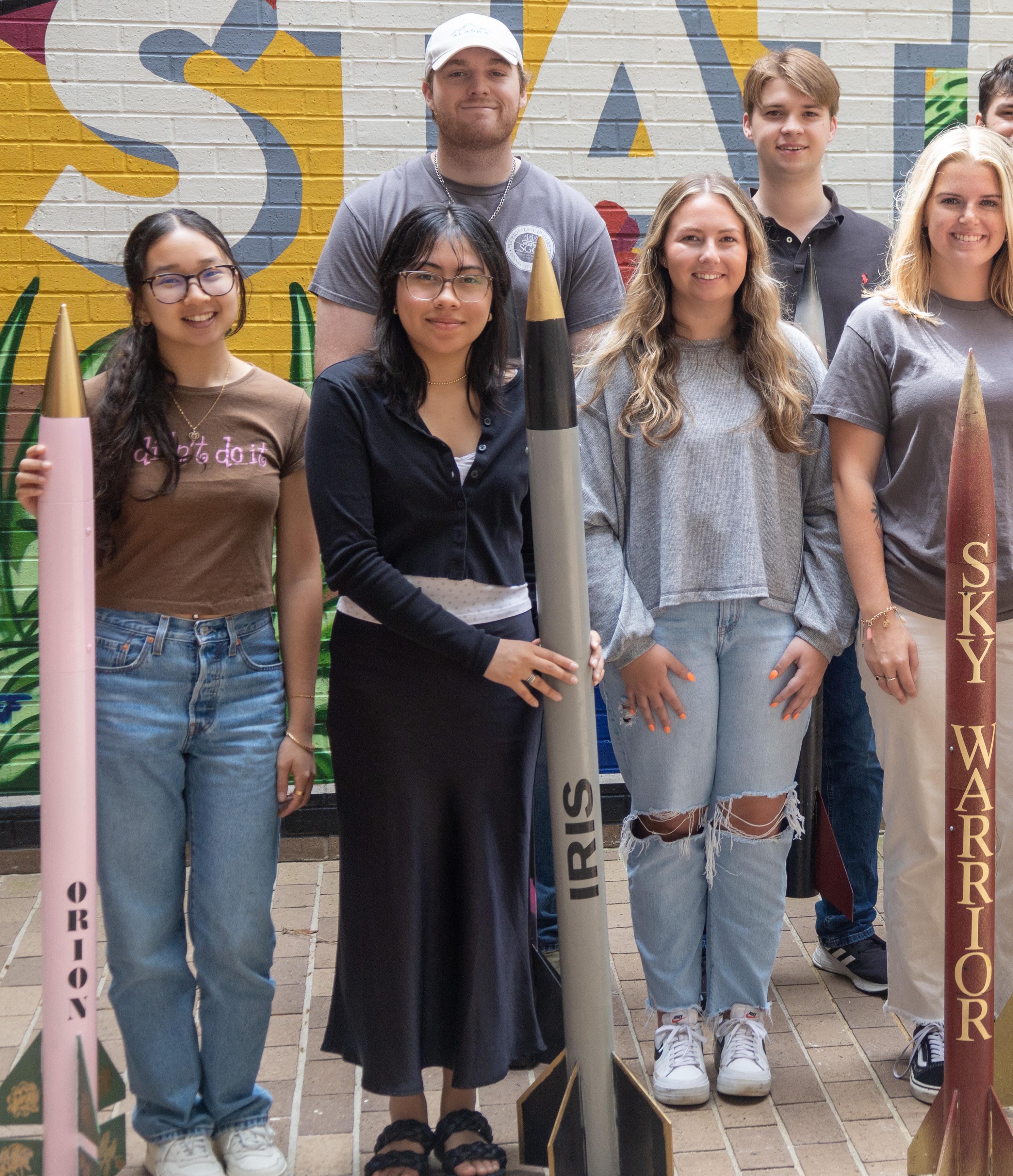
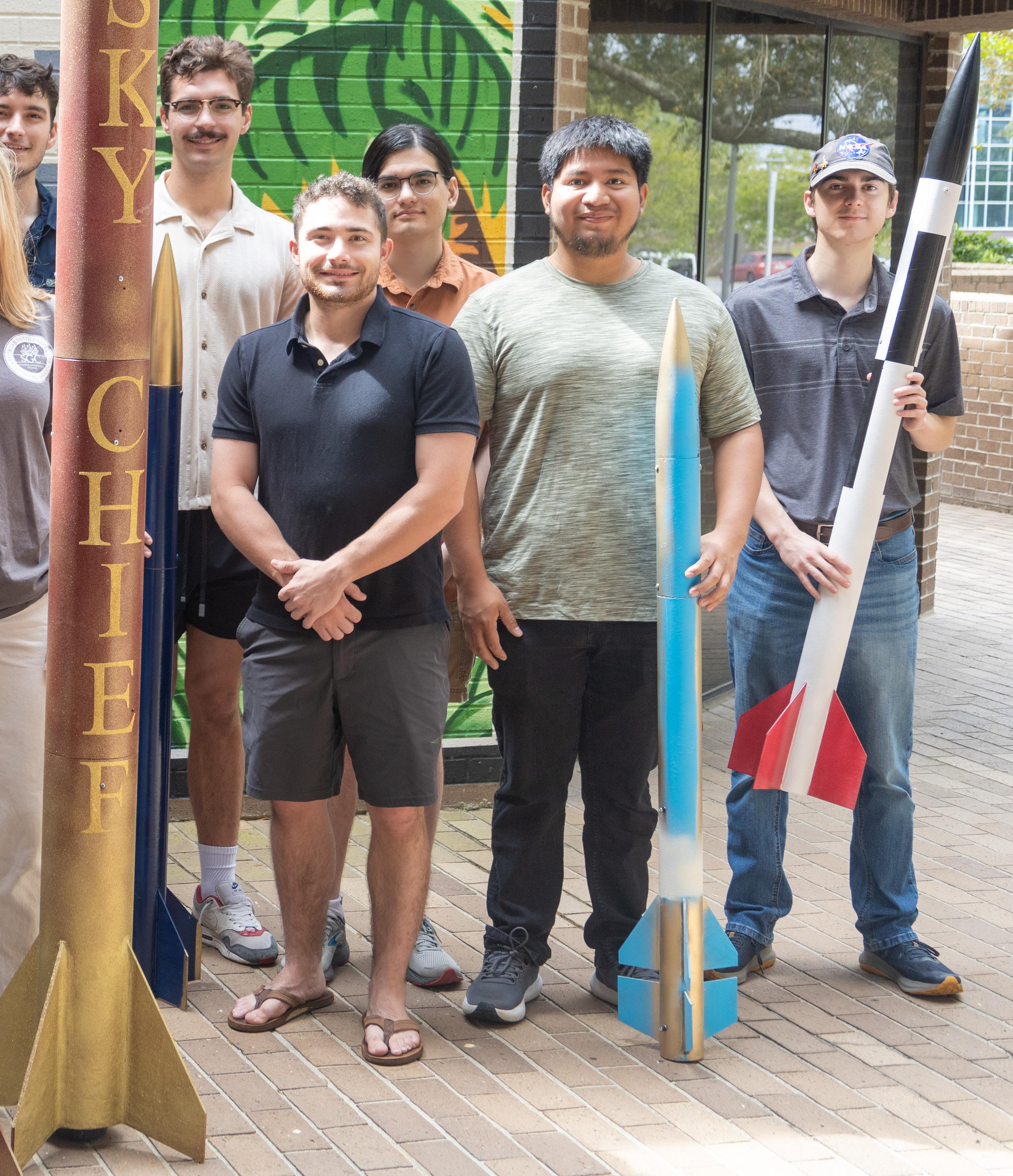
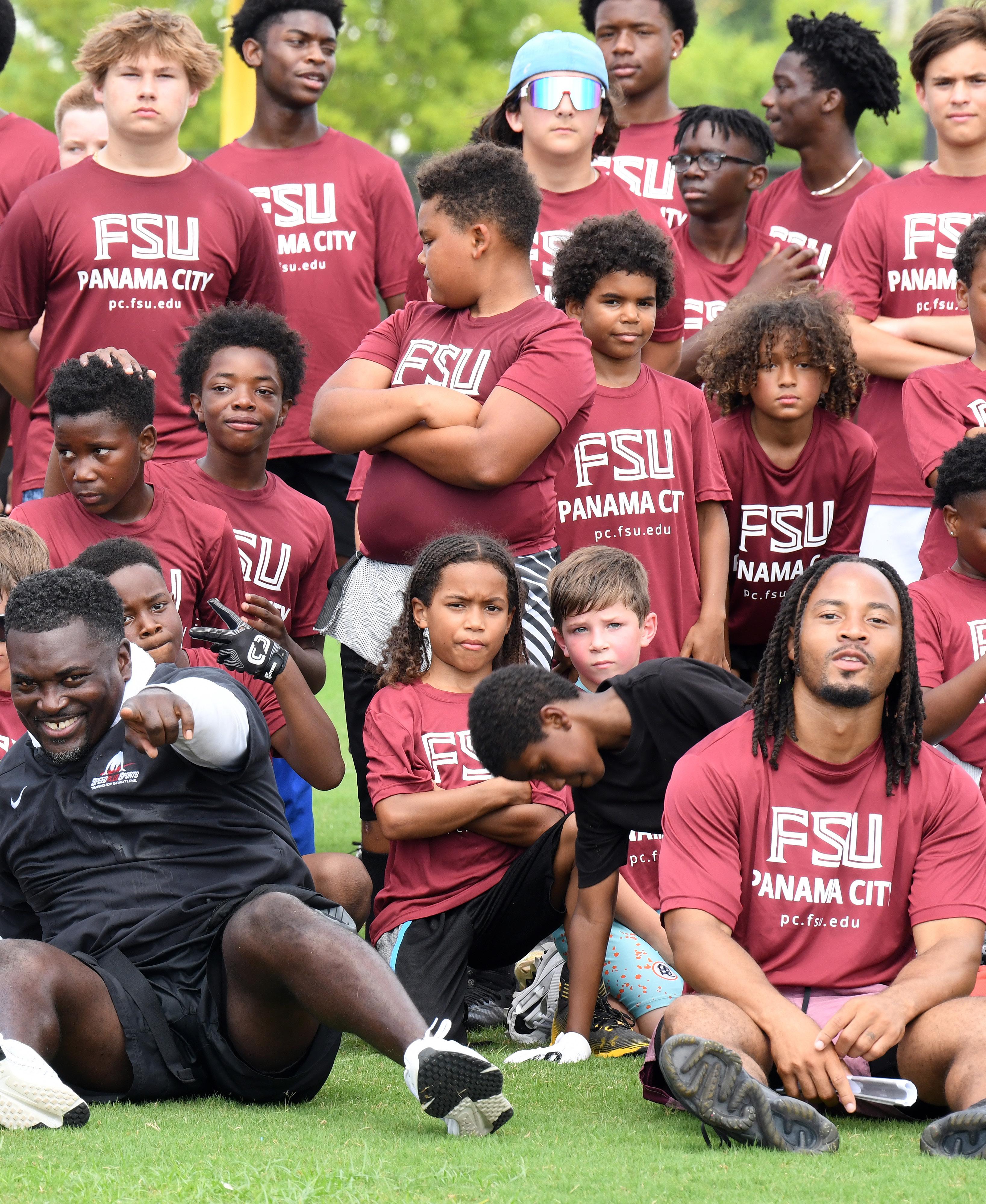
FIRST LOOK : Members of the Rocketry and Mechatronics Club pose with their rockets outside the Barron Building in April 2025. Sky Chief and Sky Warrior were designed for the 2026 NASA student competition. [Photo by Helen Johnson]
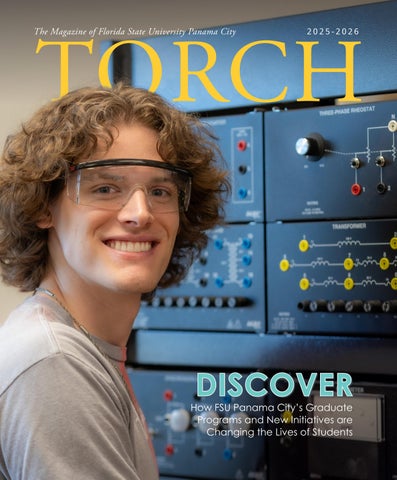
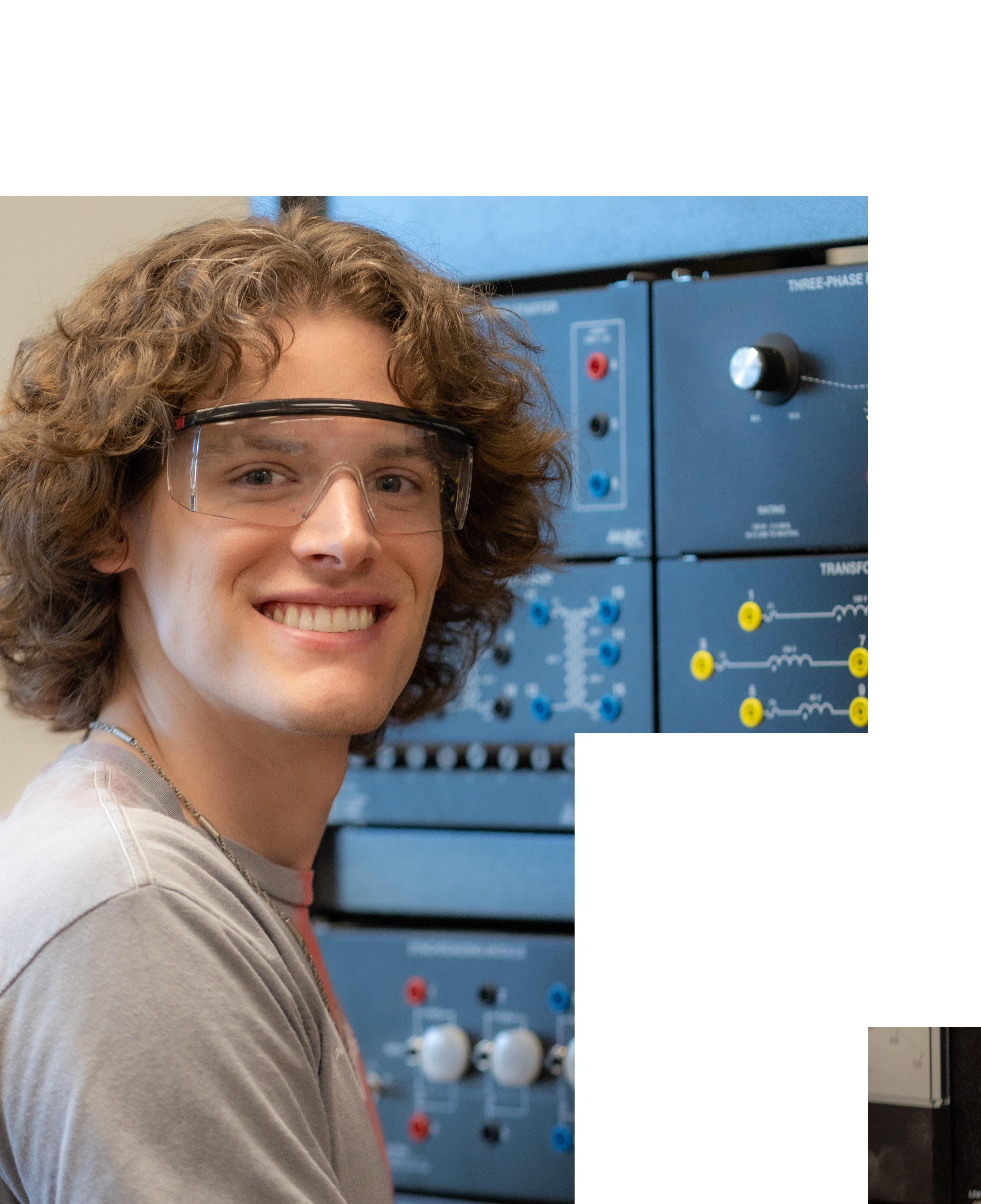
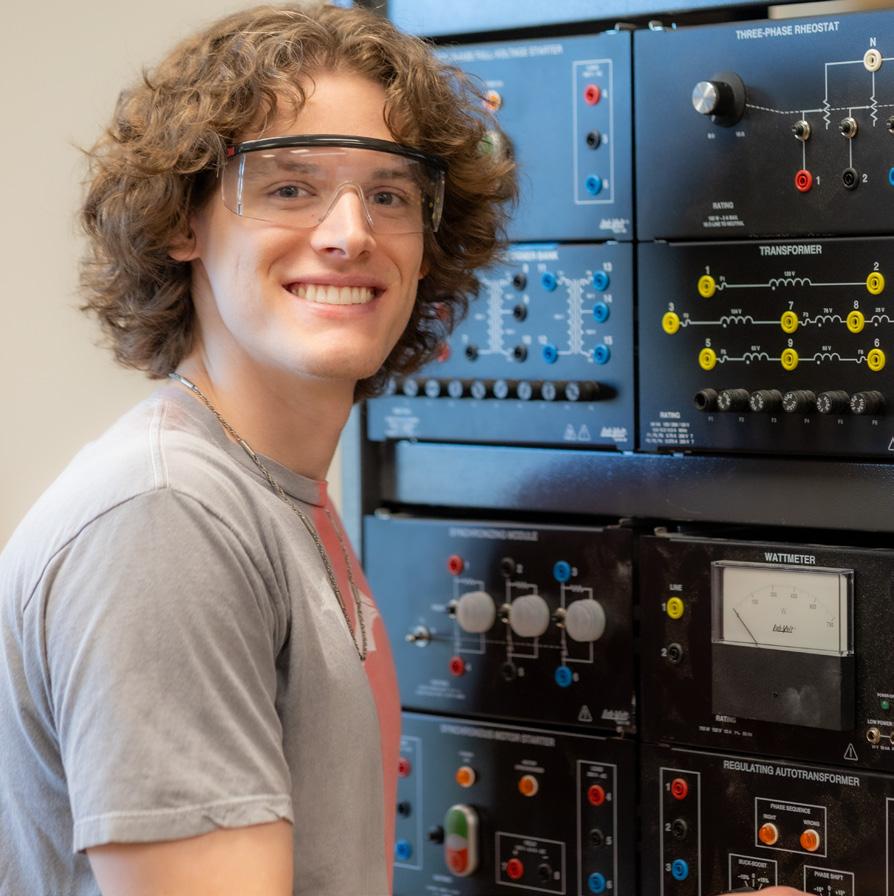
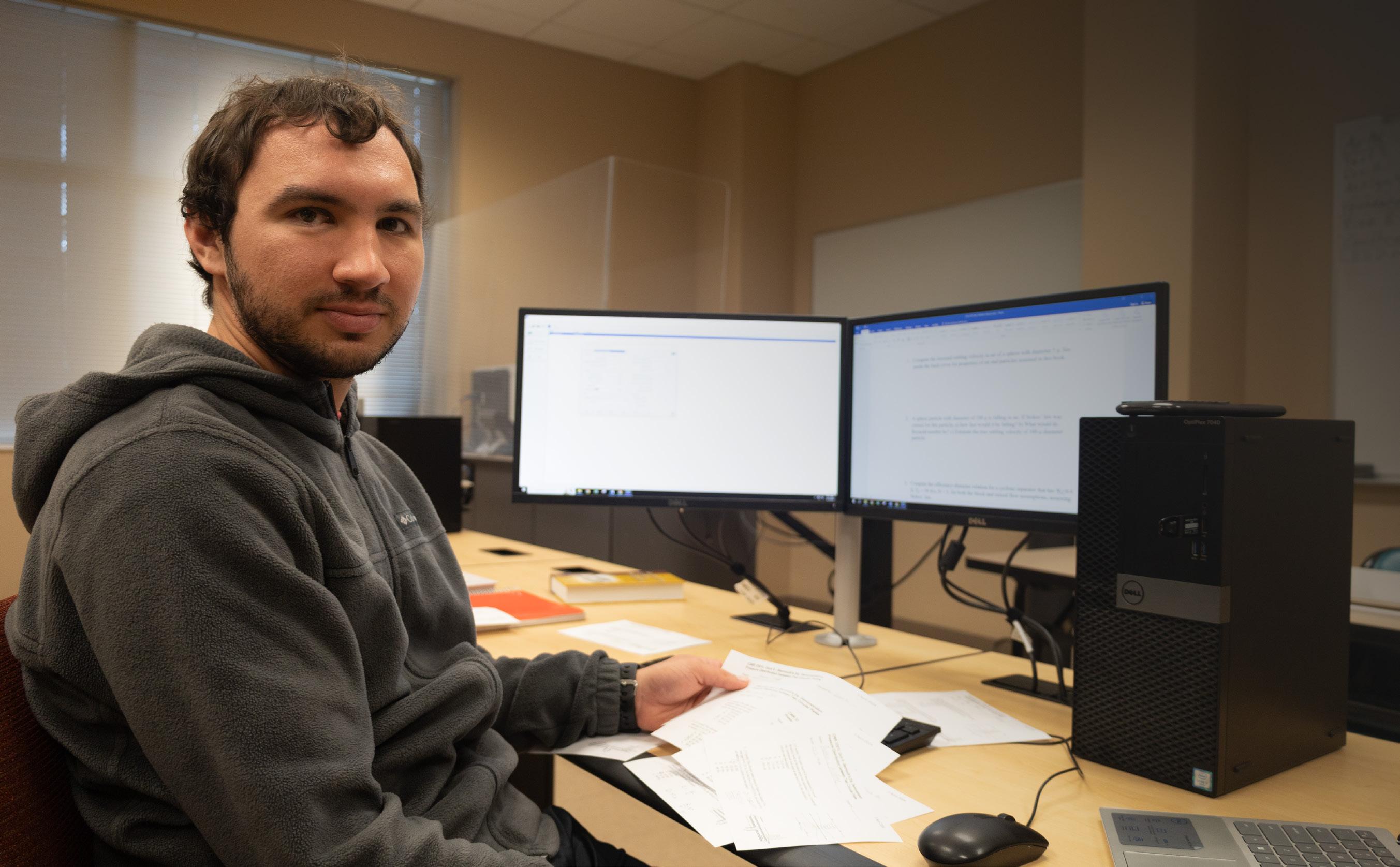
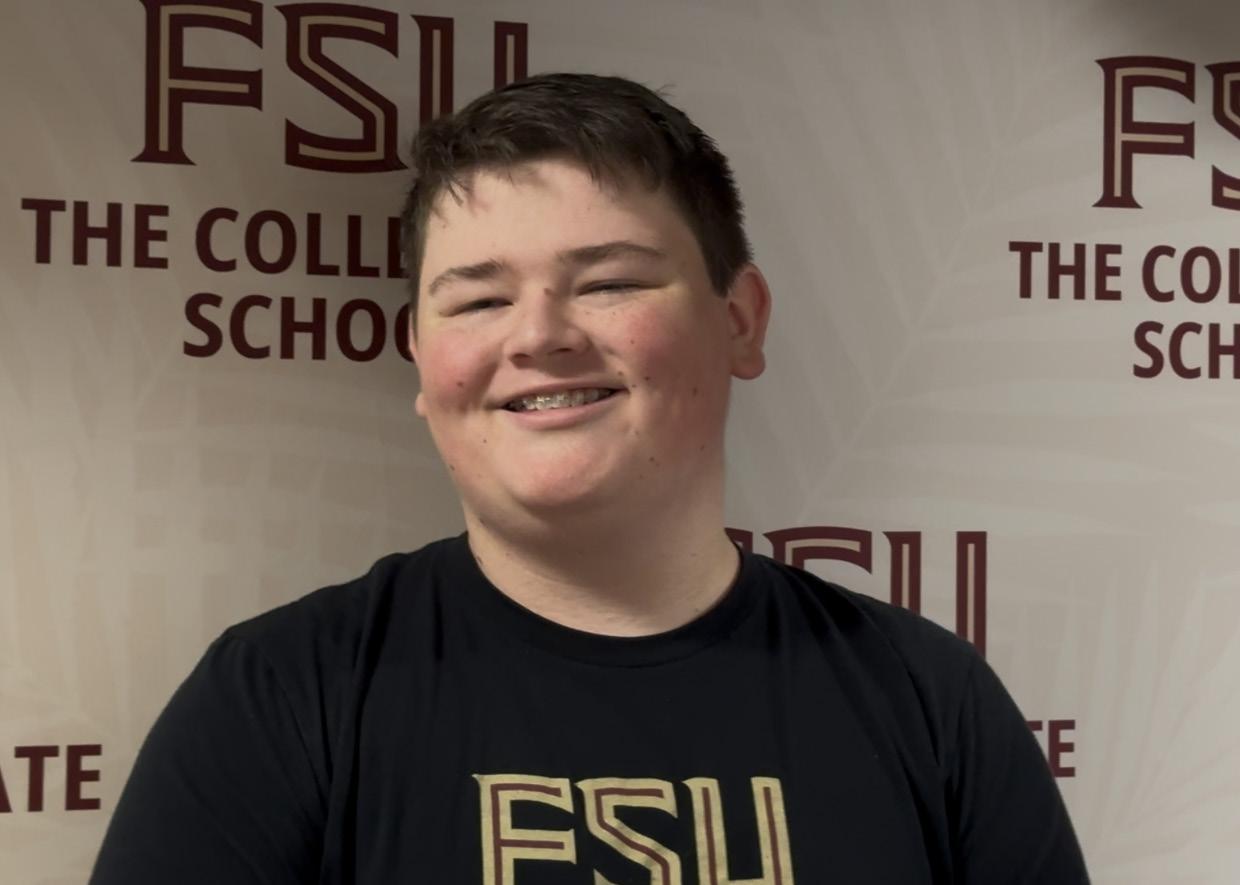
ON THE COVER : Christian Rich poses in the lab in the spring of 2025. Rich graduated in May with a bachelor’s degree in Electrical Engineering. [Photo by Helen Johnson]
TORCH
The Magazine of Florida State University Panama City 2025-2026
DEAN OF FSU PANAMA CITY AND THE COLLEGE OF APPLIED STUDIES
Emily Bowen ‘26 , Helen Johnson, Tony Simmons ‘26 , Andrew Wardlow
THE TORCH MAGAZINE is published by the Office of Advancement at Florida State University Panama City. To be included in the mailing list, or to submit a change of address, email us at torch@ pc.fsu.edu. Please send alumni updates to outreach@pc.fsu.edu.
THE DEAN’S MESSAGE
The heart of our mission is serving the population of Northwest Florida—providing for the higher education needs of our region while also keeping an eye on the future.
We’ve been working to expand our program offerings to meet the needs of this community. In 2023, we opened The Collegiate School, which has steadily grown each year and now includes about 300 students in grades 9-11.
In 2024, we graduated our first doctoral students in the Doctor of Nurse Anesthesia Practice.
Last year, FSU received a $98 million grant to establish InSPIRE, a center for excellence in manufacturing and aerospace research. InSPIRE will have a significant impact on FSU PC leading to the need for expanding our engineering programs over the next decade.
This fall, we have more than 90 students in our Systems Engineering master’s degree program, which started in 2018. Earlier this year, Boeing selected this program as one of five across the country where they want their employees to receive additional graduate education.
Next fall, we will launch a new Interdisciplinary Medical Sciences program in partnership with the FSU College of Medicine leading to a bachelor of science in Biomedical Science. And that’s just the beginning. All of this expansion means we will need additional faculty and classroom space, which we are already planning. When this campus opened in 1982, we had six people on staff and five resident faculty. Professors rode two buses from Tallahassee to teach business, social work and education.
Today, we’re a full service, comprehensive, regional campus of a major university—one of the top public universities in the country. Our growth at FSU PC is a tribute to the trust and support of this community, the hard work of faculty and staff, and the students who see FSU PC as a partner in their journey to the future.
I am consistently inspired by this community’s support for our campus. We are proud to be an integral part of building the future of Northwest Florida.
Go Noles!
Randy Hanna, Dean, FSU Panama City The College of Applied Studies
SHARING SMILES
Nurse Anesthesia students assist cleft lip & palate surgeries
BY TONY SIMMONS
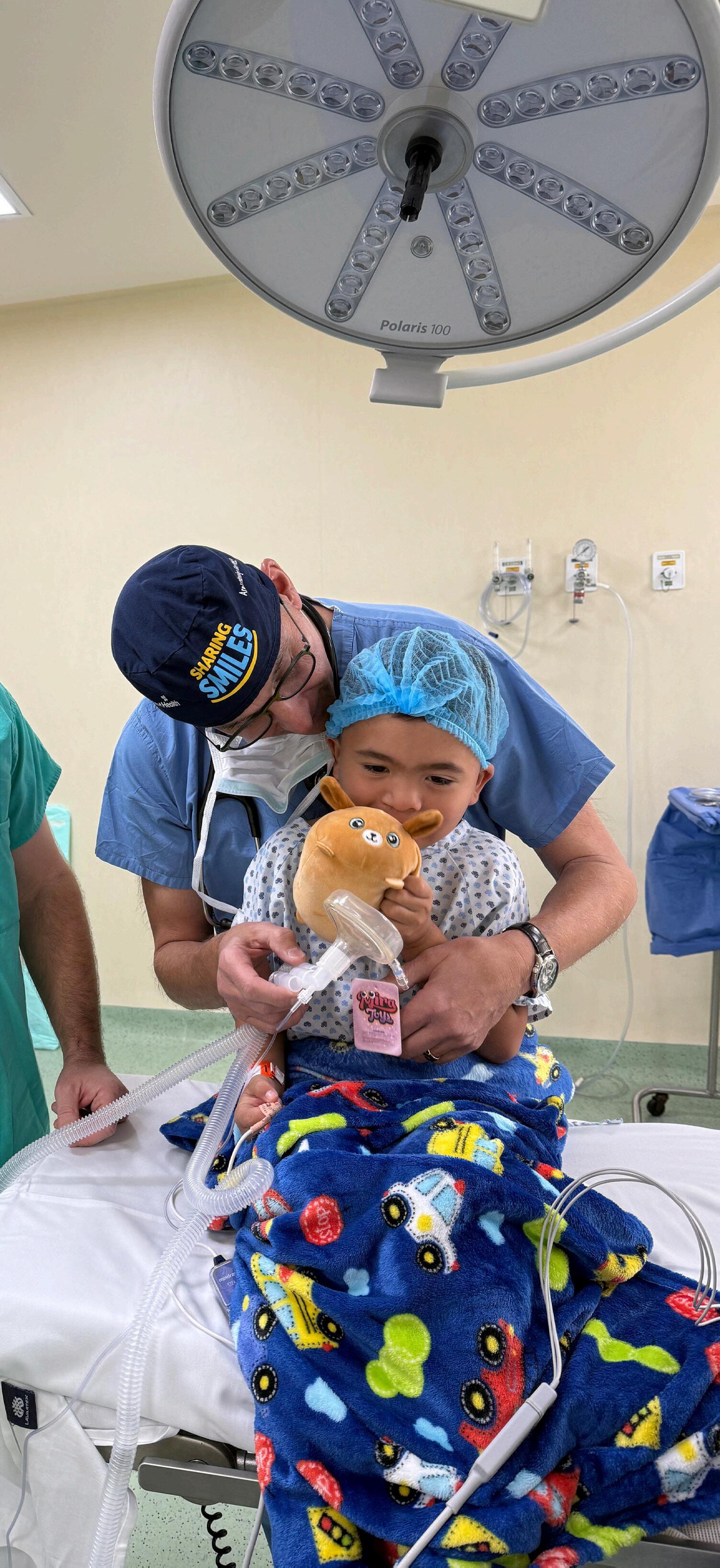
VILLAHERMOSA, Mexico — Two students in FSU Panama City’s Doctor of Nurse Anesthesia Practice program flew to Mexico in February to “share smiles.”
Alonso Martin Arcadia-Reynoso and Daniel O’Malley volunteered with the AdventHealth Foundation’s “Sharing Smiles” program, a medical charity that provides free corrective surgeries for children in Latin America who were born with cleft lips or palates. Their week on-site concluded with a total of 42 procedures benefiting 26 children.
“Unfortunately, some children were not candidates for surgery that week,” O’Malley said, “but the team did everything they could to provide help in other ways, like connecting them with orthodontist services to make the preliminary steps towards having a surgical repair or referring them to a nearby event they were hosting in a neighboring state in a few months.”
“I WITNESSED INCREDIBLE HUMILITY & APPRECIATION FROM EVERY SINGLE PARENT & CHILD THAT WE ENCOUNTERED.”
ALONSO ARCADIA-REYNOSO, DNAP STUDENT
For Arcadia-Reynoso, the experience was a “dream come true.” The son of immigrants, he lived for a while as a child in Mexico. His fluent Spanish helped bridge communication gaps for others on the team and provided an additional level of confidence for patients and their families.
“I witnessed incredible humility and appreciation from every single parent and child that we encountered,” ArcadiaReynoso said. “It was inspiring to see the collaboration amongst everyone, both local and from the U.S., that was a part of the effort to help these children in need.”
Sharing Smiles provides corrective surgery and rehabilitation therapy working in partnership with local public health institutions and private sector leaders to provide comprehensive care for children long after surgery. For more information, visit AdventHealth.com/sharing-smiles.
“Alonso and Dan were fantastic team members,” said Michelle Gross, program manager for Sharing Smiles. “As the trip coordinator, I absolutely loved having them on the trip, and hope they’ll join us again on future trips.”
Gross described the students as “positive, adaptable, great team players, and great with the children and their families.” She said she looked forward to working with more DNAP students on future missions.
CHANGING LIVES
“They are making a meaningful impact,” said DNAP Director Stacey VanDyke, DNP, APRN, CRNA, FAANA. “I couldn’t be prouder of their dedication and professionalism, and it’s an honor that our school was selected to be part of this mission.”
The nationally accredited DNAP program at FSU Panama City is a rigorous 36-month program focused on patient care before, during and after surgical procedures in a variety of settings. The curriculum highlights the use of critical thinking, clear communication and professionalism while conducting various anesthesia techniques. It places an emphasis on analysis, evaluation and decision-making skills in all anesthetic areas. For more information, visit pc.fsu.edu/nap.
“The nurse anesthesia program at FSU PC prepared us very well to be detail-oriented and resourceful in the face of complex clinical situations,” Arcadia-Reynoso said. He added that DNAP instilled “a very strong foundation of the principles of nurse anesthesia during our time as students.”
Dr. Chris Dobson, a pediatric anesthesiologist with Sharing Smiles, reached out to VanDyke when two anesthesiologists had to drop out of the Mexico mission unexpectedly. He asked if DNAP could spare two senior students who had done a pediatric rotation as part of their clinical experience.
“We’ve done mission trips over the years, but this is the first time someone reached out to us,” VanDyke said. “It can’t count toward their graduation requirements, but obviously the experience is going to benefit their practice.”
Both students are in the final semester of the doctoral program, which means they were working at clinical sites and preparing for board exams. VanDyke
VOLUNTEERS
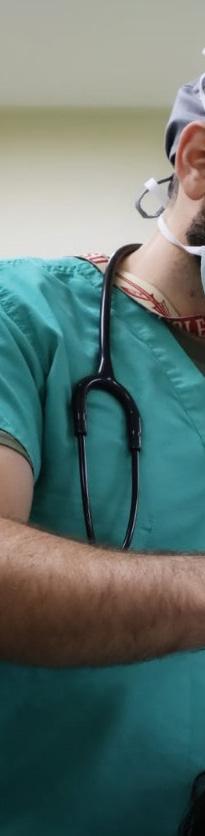
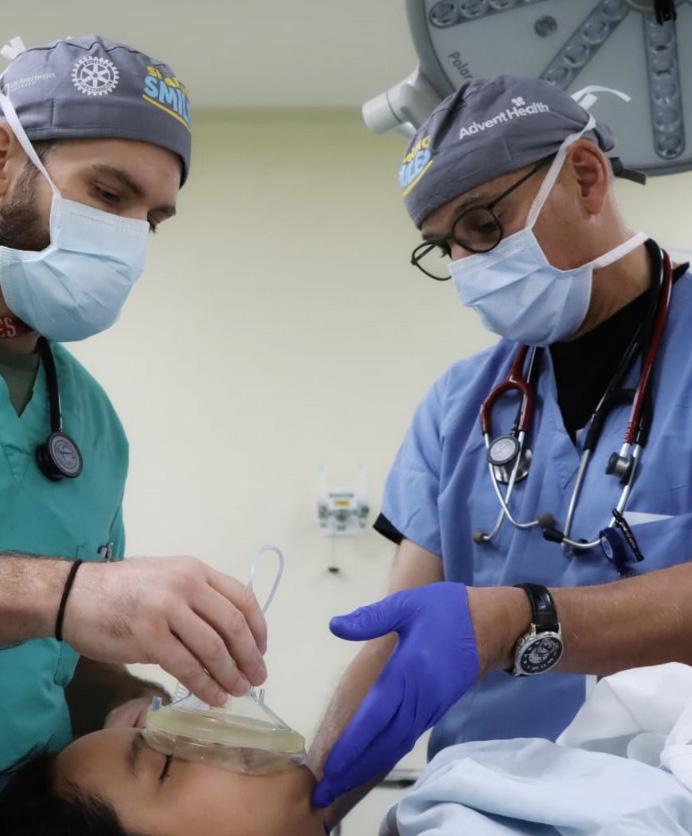
: Daniel O’Malley, left, assisting a physician.
said the clinical sites were incredibly supportive and released them for the mission.
“The knowledge and skills imparted to us by the FSU DNAP program allowed us to recognize and focus on what was important to maintaining the safety and comfort of our patients despite any obstacles or distractions that were presented by unfamiliar equipment, supplies, language, culture and facilities,” O’Malley said.
RECONSTRUCTING SMILES
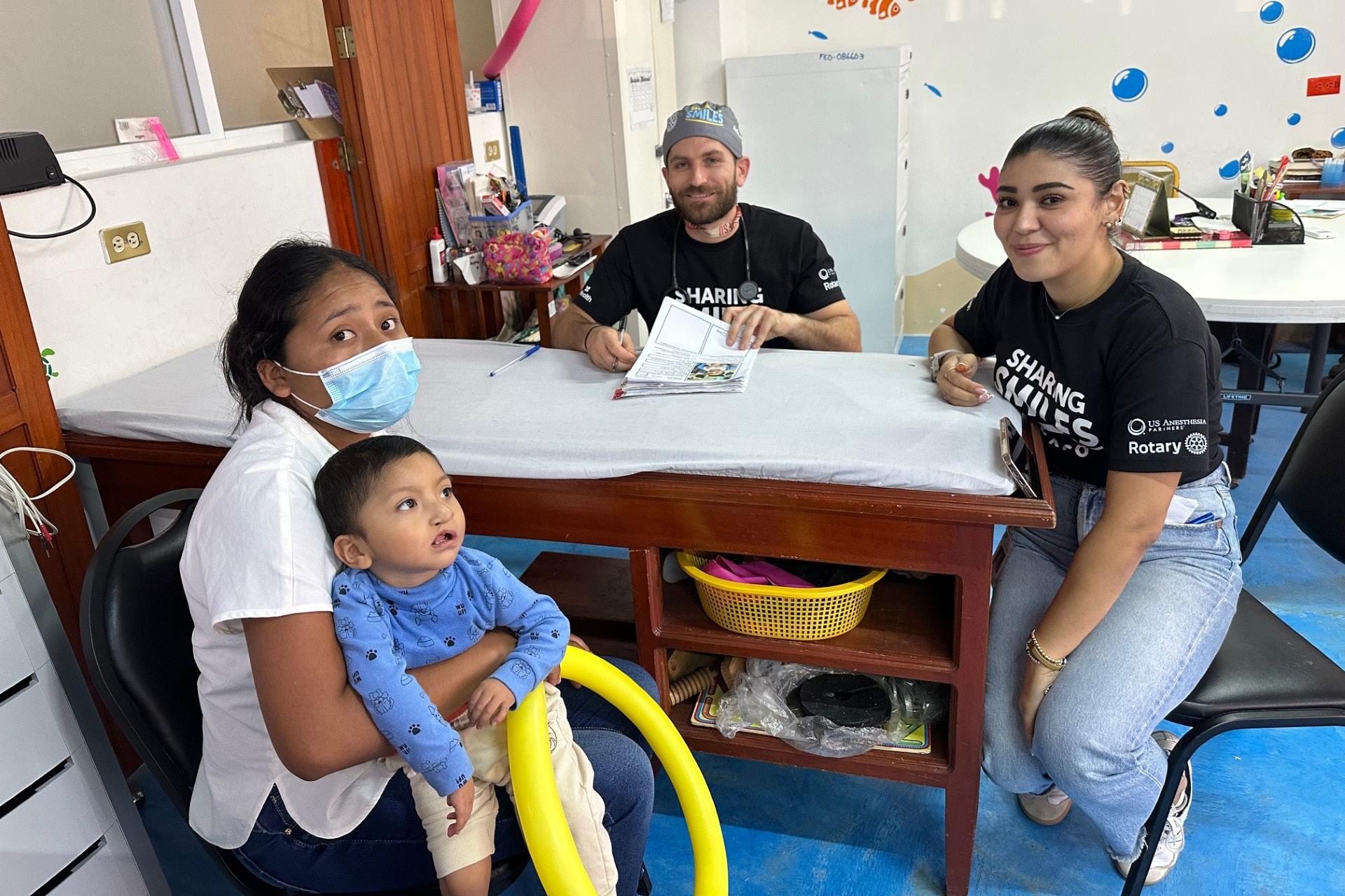
Their first day, the team screened 57 patients and selected 26 for surgery. The Villahermosa hospital has three operating rooms, Dobson said. With Reynoso and O’Malley assisting on anesthesia, the team was able to run two O.R.’s simultaneously.
Dobson praised the students’ work: “They both performed magnificently. That is saying something for their first time in a resource-limited environment.”
“Our students have strong foundational knowledge of anesthesia, including special populations like pediatrics,” O’Malley said. “This made it easier to deal with the equipment, supplies, and facilities that were different from what we are used to in the U.S. I think if we were
less sound clinically, it would have been harder to deal with being in a foreign country where everything was in a different language, some equipment wasn’t available, and other supplies that are disposable to us were being cleaned and reused.”
Sharing Smiles has been active since 1995, Dobson said. The organization puts together multidisciplinary cleft clinics in Mexico, Peru, Bolivia and the Dominican Republic, performing seven trips per year.
The missions usually manage three to five cases per room per day, for children aged 3 months to teens. The work includes cleft lip and palate repairs, alveolar bone grafting, ENT cases and sometimes cleft rhinoplasties.
The next Sharing Smiles trip, this time to the Dominican Republic, will include DNAP student Rebecca Lisson on the team.
“I expect this mission trip to be a life-changing experience and I’m very eager to serve those in need,” Lisson said. “Anesthesia is provided the same fundamental way, regardless of location; it all comes down to adapting to the available resources. The DNAP program is extremely rigorous, and it’s designed this way to ensure that graduates are proficient and safe anesthesia providers.”
SCREENING : On the first day, the team screened patients for surgery.
HAPPY CHILDREN : Sharing Smiles performs cleft palate and other surgeries for kids as young as 3 months.
DOCTOR OF NURSE ANESTHESIA PRACTICE
The mission of the FSU DNAP program is to embrace the advancement of the science of anesthesiology through a philosophy of intensive scientific education, evidence-based practice and application of clinical education to practice for the betterment of citizens in both the local and national communities. DNAP stands as a beacon of excellence, boasting national accreditation and a steadfast commitment to delivering a comprehensive education in anesthesia practice.
Spanning 36 months, DNAP immerses students in a rigorous curriculum that blends didactic teachings with vast clinical experiences. Through this multifaceted approach, graduates emerge equipped to navigate the complexities of nurse anesthesia practice with mastery and confidence, prepared to practice at the pinnacle of their profession.
For the cohort beginning May 2026, the online application window opened August 1, 2025 and will close January 15, 2026. Interviews are typically held in February following the application deadline. The highly competitive, limited-access program is offered through Florida State’s College of Applied Studies and admits 34-36 students each year.
WHAT CAN I EXPECT?
DNAP offers graduates a doctoral degree and expertise in research-based anesthesia clinical practices. Upon successfully completing DNAP, graduates become eligible to sit for the National Certification Exam administered by the Board on Certification and Recertification for Nurse Anesthetists. This certification is essential for practicing as a certified registered nurse anesthetist (CRNA) in the United States.
TAKING FLIGHT!
BOEING PARTNERS WITH SYSTEMS ENGINEERING
BY TONY SIMMONS
FSU Panama City’s Systems Engineering master’s degree program was chosen in 2025 by Boeing as one of six university degree programs across the nation that the global aerospace company wants as a partner.
The MSSE is part of the FAMU/FSU College of Engineering, which reported that Boeing’s Digital Systems Engineering office chose the joint program to participate in a pioneering initiative that will reshape graduate-level systems engineering education. Through a two-year pilot program, Boeing will develop its workforce as the university curriculum aligns to meet current industry challenges.
“This program is a cooperative effort between the FAMU/FSU College of Engineering and FSU PC, and is one of the fastest growing master’s programs in the college,” said Dean Randy Hanna. “This is a great partnership, and we are excited about the opportunities it will provide.”
Daniel Georgiadis, Ph.D., director of the MSSE
“THIS RECOGNITION AFFIRMS THE STRENGTH OF OUR CURRICULUM, THE DEDICATION OF OUR FACULTY AND THE TALENT OF OUR STUDENTS.”
DANIEL GEORGIADIS, PH.D.
program, credited David Gross, Ph.D., a member of the Systems Engineering teaching faculty at FSU Panama City, for the proposal that resulted in Boeing’s interest.
“We are honored that our systems engineering program has been selected as a partner in this groundbreaking initiative with Boeing,” Georgiadis said. “This recognition affirms the strength of our curriculum, the dedication of our faculty and the talent of our students.”
Austin Renwick, a senior system engineer with the
PILOT PROGRAM : Industry expertise will integrate with the MSSE curriculum.
D&SE Office at Boeing, said his team was “incredibly impressed by what’s going on at FAMU-FSU.” He added that a formal partnership would provide FSU Panama City with dedicated resources from Boeing. In addition, Boeing would recommend the program to its employees; encourage FSU Panama City to set up learning opportunities to promote programs to Boeing employees; and provide access to Boeing subject matter experts to provide industry data and feedback on courses or curriculum.
NASA BOOTCAMP
Additionally, the FAMU-FSU College of Engineering announced that the FSU Panama City Systems Engineering program received a 3-year grant from Amentum, a partner of NASA, for professional bootcamps at Kennedy Space Center in Florida. Under the leadership of professors Georgiadis and Gross, this first-of-its-kind graduate-level accelerated training initiative marked a significant milestone in expanding systems engineering education in direct support of NASA’s exploration objectives.
The inaugural bootcamp in the last two weeks of August provided training to 30 residents, scientists and engineers.
MASTER OF SCIENCE IN SYSTEMS ENGINEERING
Earn your MSSE in person or 100% online. FSU Panama City offers a methodical, multi-disciplinary approach for the design, realization, technical management, operations and retirement of a system. Housed under the Department of Industrial & Manufacturing Engineering of the FAMU-FSU College of Engineering, the program is part of a leading academic institution with excellent records of achievement in research and public service.
WHAT IS “SYSTEMS ENGINEERING?”
Systems engineering is an interdisciplinary field that focuses on how to design and manage complex engineering systems over their life cycles. These engineers are dedicated to ensuring all stakeholder needs are met in the best, most efficient way possible. SE facilitates integration of technical systems and helps ensure the systems developed offer coherent, effective and sustainable solutions. SE professionals work with all facets of a system, from hardware to facilities, personnel to procedures.
The systems engineering program integrates engineering disciplines with industrial and management practices. Through the program, students develop skills required in the national workforce for growing areas in the technologydriven global economy. The SE faculty at FAMU-FSU Engineering has broad experience in defense and industrial settings, making the program applicable to military and civilian engineering professionals.
WHAT CAN I EXPECT?
Designed for both full-time students and full-time working professionals, the MSSE program is a fully accredited, course-based non-thesis degree. The program is 30 credit hours with a flexible completion time of 1-2 years. The program requires seven 3-hour core courses and three 3-hour technical electives in systems engineering or other related engineering disciplines.
LEARN MORE ABOUT THE MASTER’S IN SYSTEMS ENGINEERING pc.fsu.edu/systems-engineering
BUILDING A CAREER
Civil engineers work to make life better in their communities
BY TONY SIMMONS
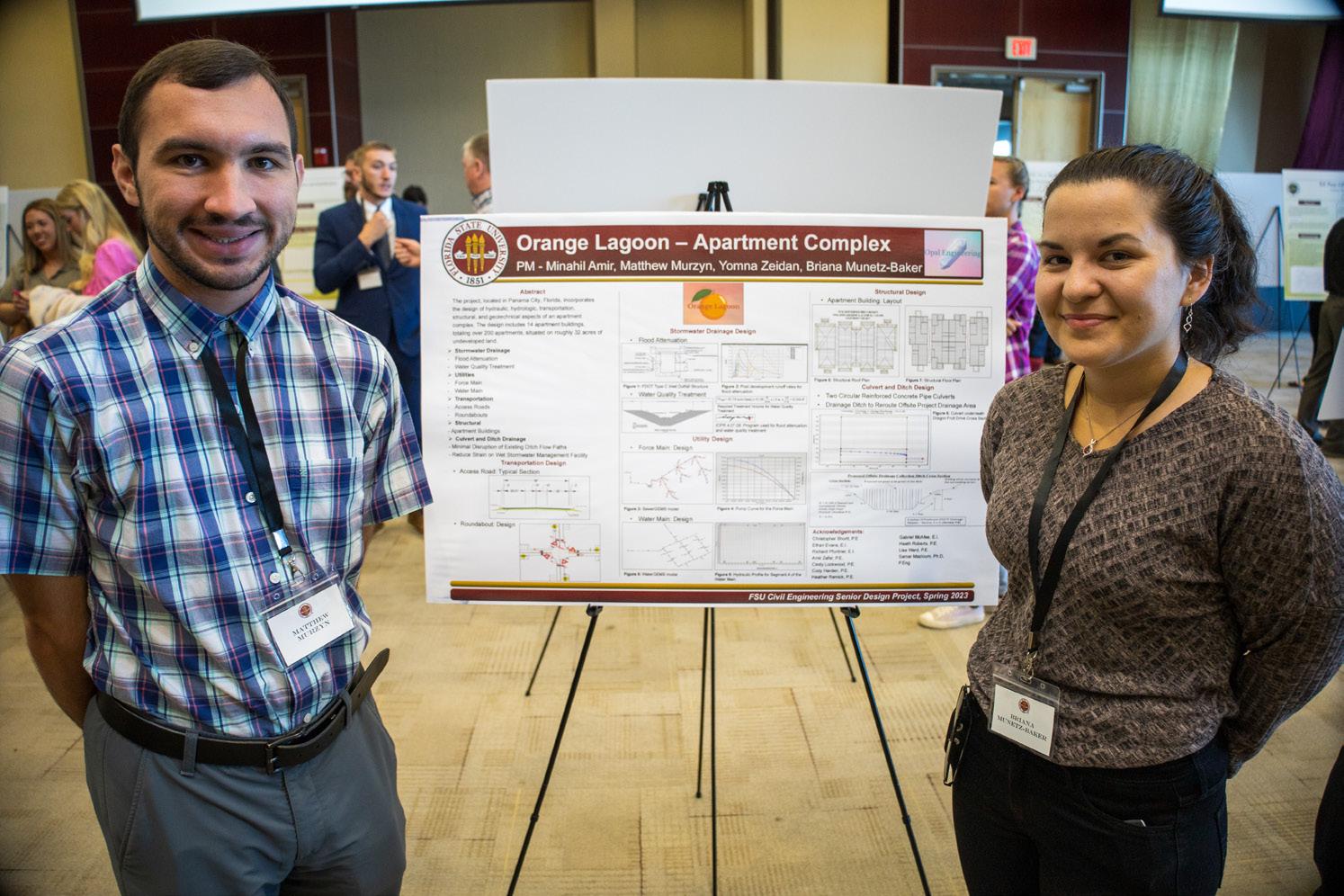
In 2023, student Matthew Murzyn participated in a civil engineering research project to design an apartment complex near the former site of the Panama City-Bay County International Airport.
The plan included 200-plus apartments in 14 buildings on 32 acres of land and incorporated the five fields of civil engineering: structural, transportation, environmental, geotechnical and water resources. It accounted for resource management and wetlands conservation—topics of importance to Murzyn.
“I have a deep appreciation for conservation,” he said. “Learning about constructed wetlands during my junior year of high school piqued my interest in environmental engineering, which then led me to study civil engineering.”
Murzyn, 24, from Lynn Haven, is now closing in on a master’s degree in Civil and Environmental Engineering at FSU Panama City. The program is part of the FAMU-FSU College of Engineering.
He’s also employed fulltime as a water and wastewater engineer performing construction engineering inspection and administration tasks for public work projects in Bay County.
“This involves visiting project sites in the field to ensure work is completed correctly,” he said. “This also
involves reviewing quantity counts and material quality to ensure a project is being completed in a timely manner with quality materials.”
Murzyn’s job grew out of an internship he undertook as part of his degree program. The internship “helped me by allowing me to have hands-on experience with real-world engineering projects, so I could better understand design theory in my courses,” he said.
PROFESSORS INVEST
Hurricane Michael tore through Lynn Haven in 2018, during Murzyn’s senior year of high school. The experience convinced him to stay in the Panama City area for his college education, which led him to FSU Panama City. He hopes to continue working in his current position for a while, and one day to teach engineering at the college level.
The CEE program opens those kinds of doors. According to instructor Hafiz Ahmad, Ph.D., the master’s CEE program “gives you the experience and expertise to work in a variety of settings resulting in skills to lead a team in public and privatesector jobs.” In fact, civil engineering is considered one of the best jobs in the U.S., based on salary, growth and security.
“Civil and Environmental Engineering is a broad-based program emphasizing all aspects of the profession’s practice, including structural analysis and design, geotechnical design, construction/transportation, hydraulics and water resources, and environmental engineering,” Ahmad said.
Small class sizes are also a strength of the program, Murzyn said, adding that the ratio of students to instructors “allowed for me to build strong relationships with my professors. Their encouragement has made the program special.”
“WHAT MAKES THIS PROGRAM SPECIAL IS THE ENCOURAGEMENT FROM MY ADVISOR TO DO MY BEST WHILE I ALSO WORK A FULL-TIME JOB.”
MATTHEW MURZYN, CEE GRAD STUDENT
Murzyn offered an example of a discussion with one of his professors after an exam, during which the professor explained Murzyn’s mistakes and how to improve.
“The experience helped me get an A in the class,” he said. “I ultimately went on to pass the Fundamentals of Engineering Exam, so I could obtain my Engineering Intern certificate because of the same professor.”
RESEARCH: Matthew Murzyn, left, was part of a research team that designed an apartment complex project along the shore of St. Andrew Bay.
MASTER OF SCIENCE IN CIVIL & ENVIRONMENTAL ENGINEERING
The graduate Civil and Environmental Engineering program at FSU Panama City is part of a leading academic institution with excellent records of achievement in research and public service. It is designed with the students’ success in mind with a curriculum using the latest technology applications in the field of construction, design of structures, roadways, foundations, water & wastewater treatment, soil remediation, fluid transport, land development, drainage, etc.
WHAT CAN I EXPECT?
A master’s degree in Civil and Environmental Engineering can lead to higher earnings, specialized expertise, expanded professional networks and a more comprehensive understanding of the field. Additionally, a master’s degree enhances opportunities for innovation and creativity, supporting advancements in new technologies across the civil and environmental engineering fields.
Getting your MS in Civil and Environmental Engineering is great for those who wish to earn a professional engineering license (P.E.). In addition to increasing your technical skills to better prepare you for the licensing exam, this program has professional development courses to prepare you for managerial roles. Those with a master’s degree in civil engineering can expect to receive a higher salary compared to those with an undergraduate degree, as well as greater job security and better career advancement opportunities.
When Njaree Collins of Tallahassee was comparing graduate-level communications programs, the Organizational Management & Communication master’s program at FSU Panama City stood out.
“Looking at other programs, I found that many leaned heavily one way or the other,” she said. “Some were very business-focused but didn’t dig deeply into communication, while others were communication-heavy without much emphasis on leadership or strategy. With OMC, I felt like I was getting the best of both worlds.”
Where the fields of psychology and communication meet is where OMC begins.
“When the science of Behavior Analysis is applied to business settings and organizational efforts, it becomes performance management,” said Emily Dickens, Ed.D., who is both the OMC program coordinator and director of FSU Panama City’s Early Childhood Autism Program. “The uniqueness of the program is that it disseminates the science of Behavior Analysis in a way that leaders can use those tools to improve their own organizations.”
Launched in 2021, OMC shares some courses with the Corporate and Public Communication track, as well as the Psychology program.
“It is fully data-driven,” said Dickens, a board certified behavior analyst.
“It’s organized, clear and designed to move at a pace that keeps you engaged without overwhelming you,” Collins added. “I really like the speed and structure because it allows you to make steady progress while still managing a full-time career.”
ONLINE CONNECTION
As a fully online program, OMC is designed for working professionals and individuals needing additional flexibility in their graduate studies. However, the digital format doesn’t mean it’s a cookie-cutter degree or that students are isolated.
“Even through its online format, you feel supported and encouraged, which makes such a difference when you’re balancing school with everything else in life,” Collin said. “The faculty go above and beyond to make sure students have the tools they need to succeed, and that kind of personal investment really stands out.”
Collins added that she can take what she learns in class—i.e., conflict resolution strategies, leadership tools or communication frameworks—and apply it directly to her work.
“That kind of real-time connection between learning and practice is priceless,” she said. “And even though it’s online, I’ve never felt disconnected. The professors and students foster a sense of community that makes the program feel supportive and collaborative.”
“OMC EQUIPS YOU FOR SUCCESS WHILE ALSO REMINDING YOU THAT YOU’RE PART OF SOMETHING BIGGER.”
NJAREE COLLINS, OMC
MAJOR
By the conclusion of the program, students will be competent in essential leadership and management skills from the fields of Communication and Applied Behavior Analysis; ABA is about applying the science of behavior to lead groups of people and solve organizational systems-based and employee performance-based problems. The program was built to include academic projects, research and coursework that are immediately applicable for working with others in any capacity.
“I think what is great about our program is that it is designed to meet students where they are,” said faculty member Laurie Lawrence, Ph.D. “We understand that most of our graduate students are working professionals with busy lives who still want the chance to grow as leaders.”
Lawrence, who teaches several courses in the OMC program, emphasized its flexibility and academic rigor; all of the OMC courses she teaches are built to Quality Matters standards to ensure clarity and accessibility.
“I want my students to have every tool they need to be successful,” Lawrence said, adding that graduates leave the program with not only advanced communication skills but also the confidence to step into leadership roles across industries.
PERSONAL ACHIEVEMENT
Collins said the OMC program has provided her both academic and personal growth.
“It’s helped me become a stronger communicator, a more confident leader, and someone who is better prepared for the next steps in my career and beyond,” she said. “I think that’s what makes the program so special: it equips you for success while also reminding you that you’re part of something bigger.”
OMC ties directly to Collins’ current job as a senior event planner—overseeing teams, managing vendors and leading clients through high-profile projects. And it has sharpened her ability to communicate effectively, navigate conflict and make strategic decisions.
MASTER OF SCIENCE IN ORGANIZATIONAL MANAGEMENT & COMMUNICATION
The OMC program at FSU Panama City is a fully online graduate program designed for working professionals seeking advanced leadership and organizational management and communication skills. Whether you are aiming to advance in your current role or develop the skills and expertise to step into a leadership role, the OMC program prepares you to solve complex business problems, drive success and lead with confidence in any business environment.
WHAT CAN I EXPECT?
By focusing on innovative business strategies and proven leadership techniques, the OMC program equips students with tools to tackle complex challenges and make a lasting impact in the workplace. In addition to leadership style development, students can expect to gain essential, competitive business skills such as:
Project Management
Team Performance & Navigating Employee Behavior Management
Business/Data Analysis
Conflict Resolution
The Art of Negotiation & Mediation
Stakeholder Communication & Presentation Skills
In only 1-2 years, OMC graduates are prepared to drive organizational success using data-driven and behaviorbased approaches to organizational challenges. The OMC program is a terminal degree under the Masters of Science in Professional Communication.
JUST DANCE
Former Rockette reinvents herself via CPC master’s degree
BY TONY SIMMONS
Sonya Livingston Smith knew at the age of 6 that she wanted to be a dancer when she grew up. Encouragement from her second-grade teacher, Miss Ferguson, cemented the idea in her young mind.
“That affirmation at that point in time affected me beyond measure,” she said. “Miss Ferguson pulled the tables back, put the cassette player on and said, ‘Dance, Sonya!’ She was so integral in the beginning.”
However, 50-something years later, sitting in the Holley Academic Center lobby at FSU Panama City—following a lifetime of dancing professionally and teaching dance—she said, “I still don’t know what I want to be when I grow up.” But she still has teachers who encourage her.
“I love FSU Panama City, because your class sizes are smaller and you have more of a connection—not just with professors, but also your classmates,” she said. Smith completed her bachelor’s degree in May 2025 and is now in the Corporate & Public Communication master’s program.
“I have taught dance since I was 14. I was always a teacher at heart,” she said. “My subject matter was dance— or maybe it was life, and dance was just the expression, the mode of communication.”
ROCKETTES LAUNCH
Smith grew up in Dothan, Ala., and at age 14 had her first audition for the Radio City Music Hall Rockettes dance line in New York City. The choreographer told her she was hired, but she couldn’t perform with the troupe until age 16 due to state laws protecting minors.
“I had never heard of the Rockettes, but my dance teacher told my mom that when I turned 14, I should go audition,” she said. “We were like the Dothan Hillbillies, going up to New York.”
Smith’s mother arranged for her to take dance classes in New York during her summer break, and she made an appointment for an audition while they were in the city.
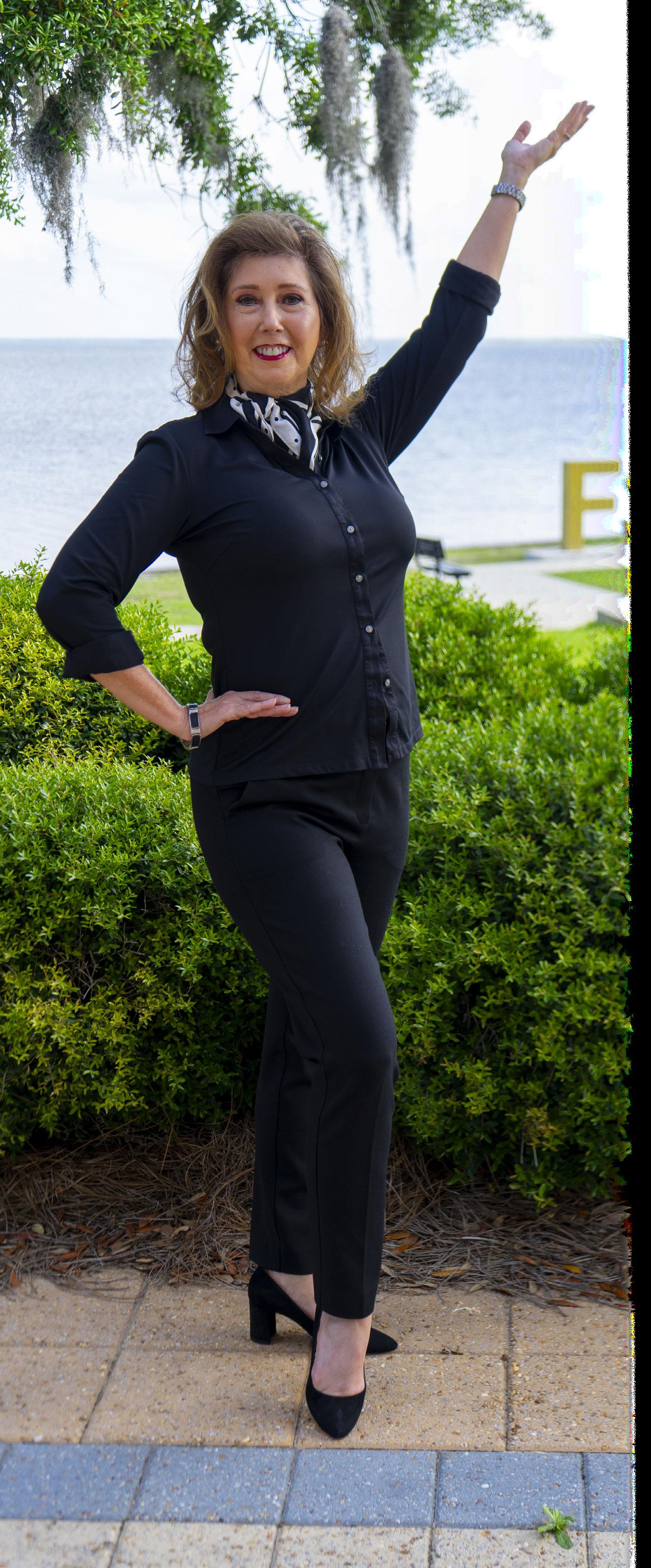
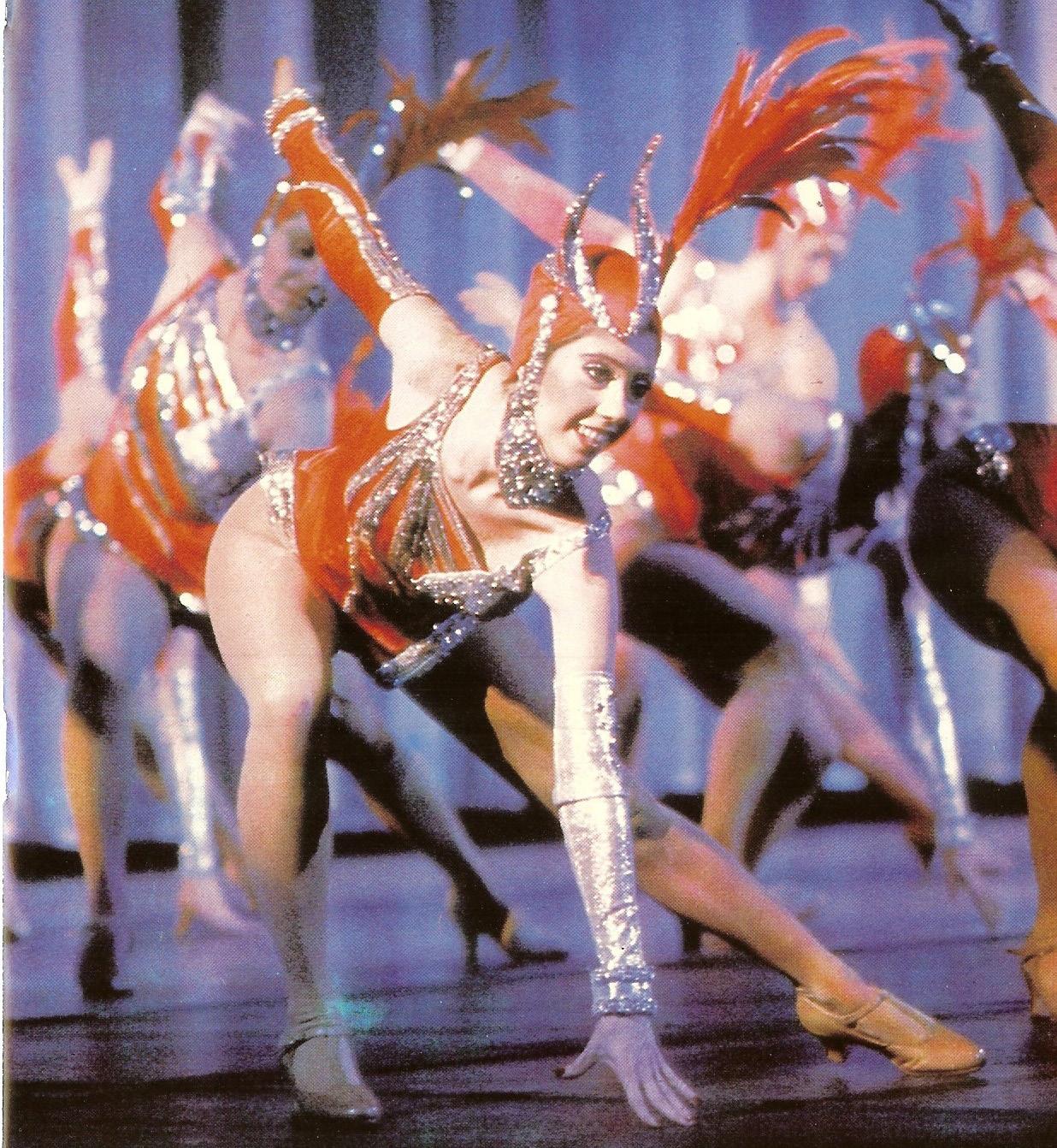
KICKS: Above: Sonya Livingston Smith performs with the Radio City Music Hall Rockettes at age 16. Opposite page: Current FSU PC grad student Sonya Livingston-Smith.
Before she auditioned, however, her mother told Smith, “I’ve done all I can do. The rest is up to you.”
The two years between her first successful audition and her return to the city seemed like a lifetime, Smith said. She had to audition again to prove that she had maintained her skills, and during that summer break, she began dancing professionally as a Rockette at age 16.
“I did four shows a day. No dress rehearsals, with only 15 minutes to learn the moves,” Smith said. “The dance captain was sweet. She said, ‘Just go out there and dance.’”
Smith’s mother and younger sister stayed with her until the final month of the summer break, leaving Smith in the care of some of the other dancers, who were 10 to 15 years her senior. She learned her way around the city, sometimes scared of walking home after dark.
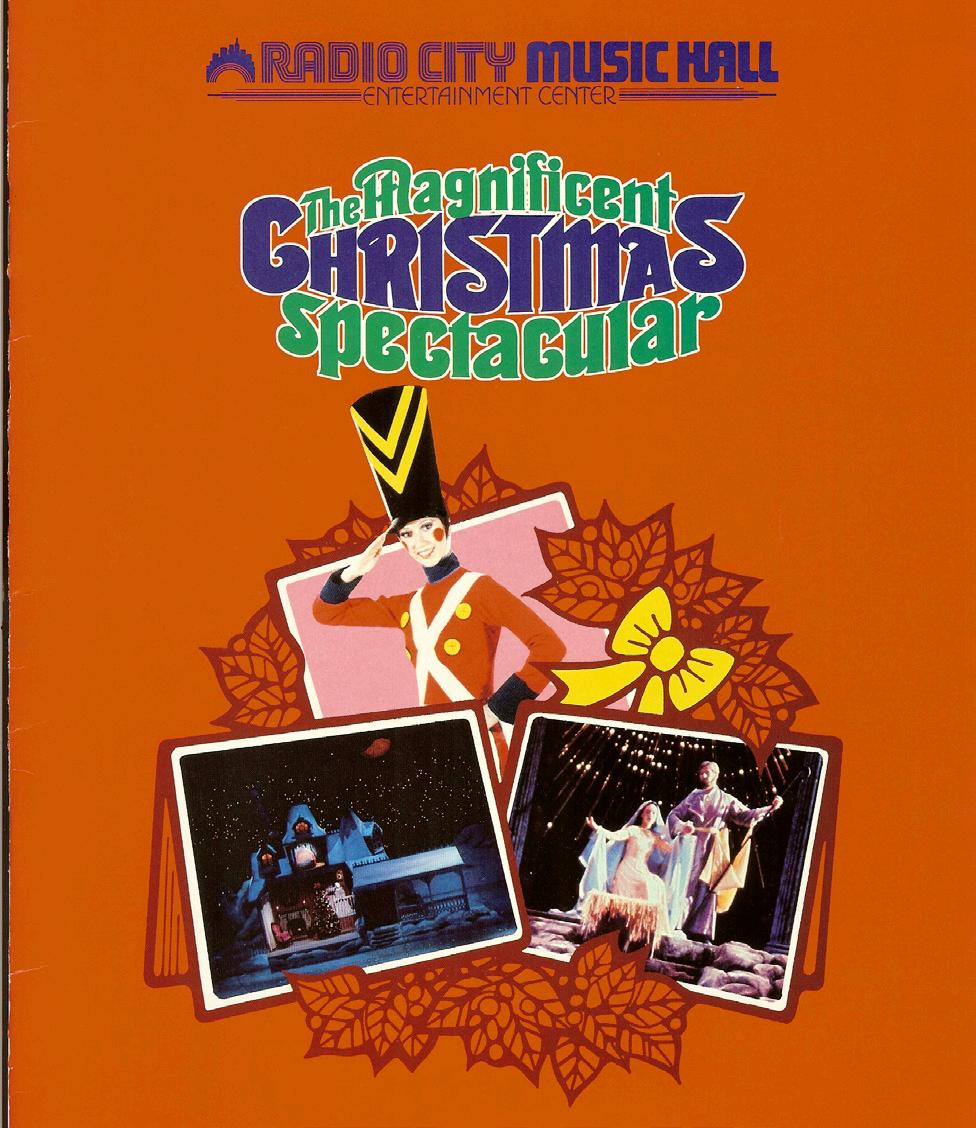
She returned to Dothan for her senior year of high school, though she rejoined the Rockettes during the winter break to dance in Christmas-themed shows. A photo of Smith dressed in a tin soldier costume became a featured poster throughout the city. When she finally graduated from high school, she returned to the Rockettes
SEE VIDEO OF SONYA TEACHING HER CLASSMATES A ROCKETTES ROUTINE bit.ly/4pkJQBb
full-time and remained there for 21 years.
“At that time, 1979, college was not a thought or option,” Smith said. “There were no dance programs at most schools. The best dance university was on stage in New York City. If you didn’t get into a company by the time you were 18, you were too old, so I was in the right place. Today it’s totally different. More kids come after college to go into Broadway.”
LIFE CHANGING
During her career, Smith toured and performed with stars including Liberace, Ann-Margaret, Liza Minnelli, Whoopi Goldberg, Billy Crystal, Robin Williams, Gregory Hines, Dick Van Dyke, Ben Vereen, Ginger Rogers and Sandy Duncan. She appeared in numerous television specials, ads for Diet Coke and L’eggs pantyhose, the Macy’s Thanksgiving Day Parade, “Night of 100 Stars,” Comic Relief, and two Super Bowl halftime shows.
“It wasn’t easy by any means. It wasn’t all sugar plums and fairies,” she said, adding that the industry can be cutthroat and demands extreme dedication. “Dancers are athletes, and as athletes we push our bodies to the limit. One time, I had broken three toes and was dancing on point, but I had a lead part and there was no way I was going to let anybody take that part.”
“I’M HERE AND LOVING IT. I’M NOT SAYING IT’S EASY— NOTHING GOOD IS EASY.”
SONYA LIVINGSTON SMITH
Among her other roles, Smith was on the faculty of Dance Theatre USA and Hoctor’s Dance Caravan, and was a master class teacher. She became the assistant artistic director for the Tallahassee Ballet Co.’s Dance Chance program and served as co-director of the Caravan Kids Program, a summer intensive providing youngsters insight on life as a professional dancer.
When she retired from the Rockettes at age 40, she said, “I had been a Rockette longer than I had not been a Rockette. It wasn’t just what I did, it was who I was. It was my identity. A lot of people go through this. Everyone sees you in that light. But who am I now? What am I capable of?”
Smith returned home, now Tallahassee, where her mother lived and owned Marie Livingston Steak House. Smith joined her in the business. Various colleges tried to hire her to teach dance, but she didn’t have what she called the “degree bona fides” to do so.
MASTER OF SCIENCE IN CORPORATE & PUBLIC COMMUNICATION
The Corporate and Public Communication major at FSU Panama City is offered both on-campus and online in the Professional Communication master’s degree program. The CPC major is a terminal master’s degree designed for those currently employed in or seeking professional positions emphasizing public affairs, public information and public issues management in business, government, not-for-profit organizations or educational institutions.
Curriculum focuses on combining theory and application to prepare students for advancement within their profession. Upon graduation, students will have experience planning and implementing marketing campaigns, resolving conflicts, managing individuals in crises, using the appropriate tools of persuasion and analyzing research data.
WHAT CAN I EXPECT?
Emphasizing theory, research and application, the Master of Corporate & Public Communication provides students with a broad set of skills in organizational and strategic communication. Course design focuses on the decision-making and practical skills needed to assess organizational forces, and manage the planning, execution and evaluation of communication strategies for the multitude of external and internal audiences in local, national and global markets.
She took classes at Tallahassee Community College, nervous about being the oldest person in the classroom. She credits her husband for encouraging her return to higher education, as he said, “It’s never too late to reinvent yourself.”
“At first I was thinking I might do early childhood or elementary education, with the thought that maybe I could be a Miss Ferguson for someone—one child that might need the right thing said at the right time,” Smith said. “At that age, teachers and their words have such value. You literally can change somebody’s life.”
She’s now working on a memoir of her time as a Rockette, which is something that she never thought she’d do because she struggled with English in high school. But she discovered a new love of writing as she closed in on an advanced degree.
“That has been one of the biggest, unexpected gifts,” Smith said. “I’m here and loving it. I’m not saying it’s easy—nothing good is easy. The great thing about dance is it teaches you so much more, like dedication and perseverance.
“It’s a struggle, but you pick yourself up, analyze how you can adjust, and correct it. Coming to college at this point in life, I take a lot of that with me into each class.”
LEARN MORE ABOUT CORPORATE & PUBLIC COMMUNICATION
pc.fsu.edu/cpc
SALUTE: A Rockettes poster features Sonya Livingston Smith as a toy soldier.
The St. Joe Community Foundation, Inc. was created with the express purpose of making Northwest Florida a wonderful place to live, work and play. Since 1999, the Foundation has contributed over $48 million grants in Northwest Florida to enhance cultural arts, strengthen education, improve healthcare, and protect the environment. How can the Foundation help you?
MASTER OF SCIENCE IN PSYCHOLOGY: APPLIED BEHAVIOR ANALYSIS
The FSU Psychology master’s degree program in Applied Behavior Analysis is a nationally top-ranked program. Upon acceptance, students choose which campus (Tallahassee or Panama City) they would like to attend, and all students and faculty engage in class together, either in-person or via technologyclassrooms that connect both campuses.
FSU has been a leader in the generation of behavior analysis research and has achieved “Top 50” status in the world in both authors published and educational institutions represented.
The master’s degree in ABA at FSU Panama City is accredited by the Association for Behavior Analysis International. The graduate curriculum and practicum are verified by the Behavior Analyst Certification Board, which certifies professionals at the bachelor’s, master’s and doctoral levels.
WHAT CAN I EXPECT?
All students in this limited-access program receive a tuition waiver for working at paid assistantship placements with approved behavior analysis agencies, such as FSU Panama City’s on-campus Early Childhood Autism Program. The experience working directly with clients offsets tuition while allowing students to build a portfolio demonstrating their ABA skills.
BCBAs work in areas such as autism, behavior and learning disorders, developmental disabilities, performance management, child abuse and neglect, behavioral safety, school consultation and language development. BCBAs can be self-employed, serve as educational or behavioral consultants for local or national consulting firms, work in residential settings or be employed by the state.
GOOD BEHAVIOR
ABA program ranks first in the world
BY TONY SIMMONS
Kallie Bateman was a psychology student working on a master’s degree in Applied Behavior Analysis (ABA) in the Early Childhood Autism Program at FSU Panama City. She had a young client who was unable to discriminate between food items that were available to him versus those that belonged to others or were otherwise unavailable.
Student clinician Emily Cloninger saw an increase in noncompliant behavior in her young client and implemented an intervention plan that carried over from clinic to the home environment.
And Clayton Hislop, who came to FSU Panama City from Louisiana specifically to attend the ABA program, recently worked with a client who exhibited a deficit in identifying or describing the emotions of others.
“THE ASSESSMENT OF A CHILD’S BEHAVIORS IS A SIGNIFICANT PART OF THIS SPECIALIZED PROGRAM.”
JON BAILEY, PH.D., PROFESSOR EMERITUS
Each of these students assisted ECAP clients under the age of 18 using ABA therapy. Each of them witnessed the positive effects. The results were documented for the 2025 Research Symposium in April—and served to encourage the students that ABA was an effective therapy.
LEARN MORE ABOUT THE ABA MASTER PROGRAM
pc.fsu.edu/aba
“Watching clients progress and add new skills to their repertoire is the most rewarding part” of her work, said ABA student Keegan Welch, whose research focused on a non-verbal 5-year-old girl. Using an ABA process of matching pictures to stimuli, the girl mastered her goal and used the picture matching spontaneously at home and in the clinic to communicate.
STUDY
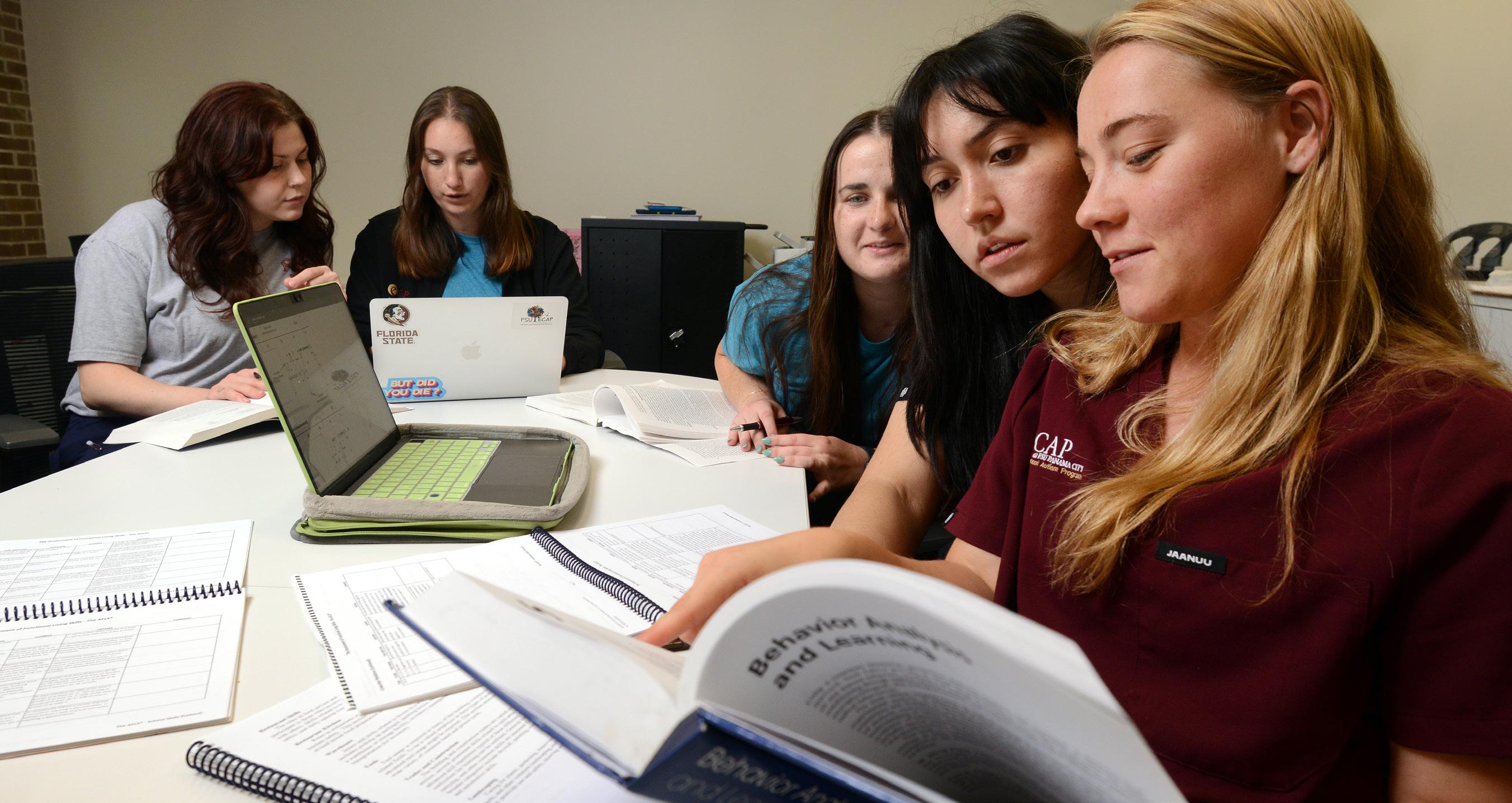
GROUP : ABA students study together in a conference room in the ECAP clinic.
26 YEARS OF ABA
ABA can be differentiated from other areas in psychology in that it focuses on analyzing and modifying behavior using well established principles of learning that stress environmental variables that can be manipulated directly to improve performance.
The ABA program at FSU Panama City opened in 1999 under the direction of Jon Bailey, Ph.D. ABA has been evolving since the mid-1960s as an area of extensive basic and applied research and as a profession helping to create and change client behavior.
“The assessment of a child’s behaviors is a significant part of this specialized program,” Bailey said in a 2023 interview. “In addition, ABA students learn how to perform a functional assessment to determine the best way to approach any maladaptive behaviors and develop a behavior plan to replace those behaviors with socially acceptable responses. The program also trains parents to use these procedures.”
The FSU Panama City ABA program trains students in the scientific underpinnings of the field; the application and evaluation of clinical assessments and interventions; and delivery of direct services through hands-on clinical experiences supervised by Board Certified Behavior Analysts.
ABA student Deina Escribano won second place in the Graduate Division of the Research Symposium. She
was supervised by Dakota Januchowski, BCBA, the ECAP clinical coordinator. Once she completes the program, Escribano said, she hopes to use what she has learned “to promote more quality parent-child interactions” among her clients and their families.
HIGH PASSING RATES
The Florida Panhandle has become a center of professional behavior analysis activity in the past 15 years. Today, more than 350 master’s degree graduates are helping families across Florida and the U.S., with the program ranked first in the world three times in the last decade by the Behavior Analyst Certification Board.
In 2024, the ABA program at FSU Panama City boasted a 94-percent pass rate for first-time candidates taking the BCBA certification exam. For a deeper dive into outcome data from 2015 to now, visit the ABAI Accreditation Board website: accreditation.abainternational.org/welcome.aspx.
“The job market for BCBAs is hot right now with at least five openings for every candidate,” Bailey said. “Our graduates quickly move up in their organizations, becoming clinical directors and eventually company owners or CEOs. Almost all our students have job contracts before graduating, and many go on to complete doctorates and work in university positions.”
CRITICAL THINKING
STUDENTS CONNECT THE DOTS
BY TONY SIMMONS
The terror attacks of Sept. 11, 2001, brought to the forefront a pattern of failures in communication among U.S. intelligence agencies. The attacks also cast a spotlight on the frontline law enforcement officers who are the eyes and ears of intelligence gathering efforts.
“The common goal of each course in the Master of Science Law Enforcement Intelligence program is to produce a student capable of providing an actionable intelligence product when faced with the types of uncertainty that are characteristic of any intelligence gathering situation,” said Lucy Hoover, Ph.D., the program coordinator of the LEI master’s program at FSU Panama City.
For Brittany Thomas, 34, the LEI program appealed to her learning style and professional needs as an activeduty officer in the U.S. Air Force. For the past eight years, she has been assigned to a Drug Enforcement Administration task force as a criminal intelligence analyst.
“The applied learning curriculum (and) the projectbased, practical application methods have been more beneficial than any essay-based online program ever could be,” said Thomas, whose husband is also active duty in the USAF. Together, they have three children.
“I enrolled in this degree and began my first course a month before our youngest son was born, and I will officially complete my master’s next summer, just before he turns 4 years old,” Thomas said. “Setting that example of fighting hard to complete a higher education for our kids means the world to me.”
Not only have professors been accommodating when a work obligation required her to ask for an extension, Thomas said, but they have also demonstrated interest in her life outside the classroom.
“The second class I took with Professor Hoover, she remembered how old my son was and asked me how he was doing,” Thomas said. “I hadn’t taken a course with her in a few semesters, and I was surprised to know that after so many online students she still made an effort to connect individually with each one and care about our families.”
PERSONAL STAKES
The FSU PC master’s in LEI takes a practical approach to producing professional practitioners, prioritizing skills specific to careers in the intelligence arena. It also boasts
online flexibility for working professionals in diverse fields. When paired with technical backgrounds, such as engineering, computer science or IT, the degree allows flexibility in study and career options.
“Our courses emphasize work products of students assessing competency in determining actionable intelligence, with a focus on law enforcement, to ensure their success upon graduation,” Hoover said.
One of Hoover’s courses, National Security Law & Intelligence, is intended to familiarize students with topical subjects related to U.S. national security law and the evolving authorities of the respective branches of the federal government. To a much lesser extent, this course also discusses the role of state and local law enforcement agencies in the domestic security realm.
“Each class that I have taken in the program contains information that I will need to do my future job well,” said LEI student Sabrina Arendts. “Critical thinking is the backbone for the work of an analyst, and the LEI program is continuously challenging me in that regard.”
POWER IN KNOWLEDGE:
Left: LEI student Sabrina Arendts. Right: Lucy Hoover, Ph.D., the program coordinator of the LEI master’s program.
Arendts is a program specialist for the Florida Department of Education’s office of Safe Schools, which was created in response to the 2018 shooting at Marjory Stoneman Douglas High School. While her job isn’t directly related to LEI, she collaborates with stakeholders who use intelligence to prevent school violence. Her goal is to join an Internet Crimes Against Children task force.
“The LEI program is preparing me to enter the
intelligence field after graduation so that I can work toward helping children find the justice that I never got,” said Arendts, who described herself as a victim of child sex trafficking. “It’s not about revenge for me, it’s about my desire for children to be free to experience healthy and happy childhoods and to ensure accountability for individuals who sexually abuse and exploit children.”
LEGACY STUDENT
Bill Howard, a fifth-generation Floridian from Fort Myers, received his LEI degree in 2023, channeling his lifelong interest in serving his community and country.
FSU’s National Intelligence Studies certificate program inspired Howard to investigate intelligence and law enforcement opportunities, and LEI’s online components were “a great fit,” he said, while praising his professors, well-designed courses and applicable materials.
“I love learning about international politics, terrorism and transnational crime,” Howard said. “It’s interesting to learn about how these groups operate and how analysis can lead to the capture of international criminals and terrorists.”
Howard chose to attend FSU in part because of his grandfather, who was one of the first in his family to go to college and graduate from Florida State.
“My family’s always been a big fan of the Seminoles,” Howard said. “FSU has some of the best programs, professors and degree paths in the state, so it was a nobrainer for me to choose Florida State.”
MASTER OF SCIENCE IN LAW ENFORCEMENT INTELLIGENCE
The Law Enforcement Intelligence master’s program at FSU Panama City is designed to prepare students for entry, supervisory and command-level positions within local, state and federal agencies with intelligence divisions or missions. The online-only program includes coursework covering research methods in criminal justice, economics, political science and military science. An independent research-based capstone project integrates coursework with a practical application within either the field or an academic setting.
The program offers online flexibility for working professionals in diverse fields (military, local, state, and federal agencies with intelligence divisions and/or missions). When paired with technical backgrounds, such as engineering, computer science or IT, the MSLEI allows graduates flexibility in study and career options.
WHAT CAN I EXPECT?
From terrorism to trafficking, financial crimes to street crimes, the program will prepare graduates from any educational or professional background for advancement within law enforcement agencies, the government or private firms. All faculty within the law enforcement intelligence program have direct experience working with law enforcement agencies, such as police departments, private investigation and the FBI. Classroom activities include active learning techniques with frequent evaluations for applied learning. Diverse course offerings include collection, analysis, management/ decision-making, and more. LEARN MORE
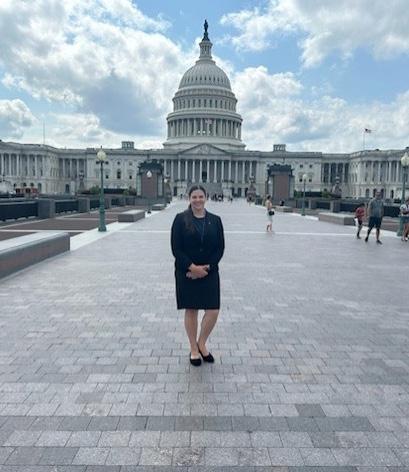
LAW & ORDER : Criminal intelligence analyst
Brittany Thomas at the U.S. Capitol Building.
MASTER OF SCIENCE IN ELECTRICAL ENGINEERING
The Master of Science in Electrical Engineering program is accredited by the Engineering Accreditation Commission of ABET. For more information, see the College of Engineering’s objectives and student outcomes for this degree program.
WHAT CAN I EXPECT?
A master’s degree gives you the experience and expertise to lead a team in public and private-sector jobs. The electrical engineering program focuses on developing computer hardware and software. Students will develop a strong understanding of the relevant mathematics, computer programming and natural science concepts needed by practicing electrical engineers. Graduates must demonstrate an ability to apply this knowledge in several fundamental areas of electrical engineering, including communication systems, control systems, digital signal processing, digital systems, electromagnetics, microelectronics, and power systems and complete a major design experience.
WHAT TYPES OF CAREERS COULD THIS PROGRAM PREPARE ME FOR?
Electrical engineers may have careers in telecom engineering or the “internet of things” and may work in electric power generation companies, semiconductor/component manufacturing firms, electromedical manufacturing firms, or in research and development.
POWER UP!
ELECTRICAL ENGINEERING STUDENTS DESIGN THE FUTURE
BY TONY SIMMONS
One of the designs drawing eyes at the spring Research Symposium was a project by a team of Electrical and Computer Engineering students.
They put together an interactive presentation dedicated to advancing wireless charging technology for the electric and autonomous vehicle industry.
It was a long way from the rudimentary “robodogs” that first-year students design and race in the Holley Center each year—a difference that illustrates the growth inherent in the degree, as described by Noah Fielder, a graduate of the master’s program in Electrical Engineering.
“I have always loved mathematics, and at a young age understood the importance of electronics as a developing science,” said Fielder, age 24, from Panama City.
“Electrical engineering is one of the best avenues for applied mathematics and physics. It also opens a door for numerous topics within the EE discipline.”
Fielder is now an electronics engineer for the U.S. Navy, employed at Naval Surface Warfare Center Panama City Division.
He designs and builds circuit boards, performs signal processing for programs, and performs magnetic testing for sensors.
“Taking graduate classes and pursuing projects helped me gain professional experience,” Fielder said, crediting each of his professors and fellow students for providing support and opportunities for growth.
“The best thing about FSU PC is how everyone there, both students and professors, do their best to help you.”
LEARN MORE ABOUT THE ELECTRICAL ENGINEERING PROGRAM pc.fsu.edu/ee-ms
“THE BEST THING ABOUT FSU PC IS HOW EVERYONE THERE, BOTH STUDENTS AND PROFESSORS, DO THEIR BEST TO HELP YOU.”
NOAH FIELDER, MSEE GRADUATE
DETAIL BY DESIGN
The field of electrical engineering grew an estimated 7 percent in the past decade, and that is expected to continue, according to the Bureau of Labor Statistics. That growth is being driven by the expansion of industries like renewable energy, electric vehicles and smart technologies.
Designing for the future through research and development is a strong component of the FSU Panama City Electrical Engineering master’s program.
“The Electrical Engineering program focuses on developing computer hardware and software,” said instructor Melissa Jackson. “Students develop a strong understanding of the relevant mathematics, computer programming and natural science concepts needed by practicing electrical engineers.”
Part of the FAMU-FSU College of Engineering, the graduate Electrical Engineering program at FSU Panama City is designed with curriculum covering advanced topics such as electromagnetics, sonar, wireless communication and robot kinematics. With a thesis and non-thesis option available, students can tailor the program to their academic and career goals.
A master’s degree in Electrical Engineering provides the experience and expertise to lead a team in public and private-sector jobs. Graduates must demonstrate an ability to apply this knowledge in several fundamental areas of electrical engineering, including communication systems, control systems, digital signal processing, digital systems, electromagnetics, microelectronics and power systems.
They must also complete a major design experience, such as the EV wireless charging station demonstrated last spring.
In addition, the program offers a new, state of the art online graduate certificate program in Cyber Security Engineering. This innovative track addresses security concerns by emphasizing secure product development and security-by-design principles. For more information, visit eng.famu.fsu.edu/ece/cyber-security-graduate-certificate.
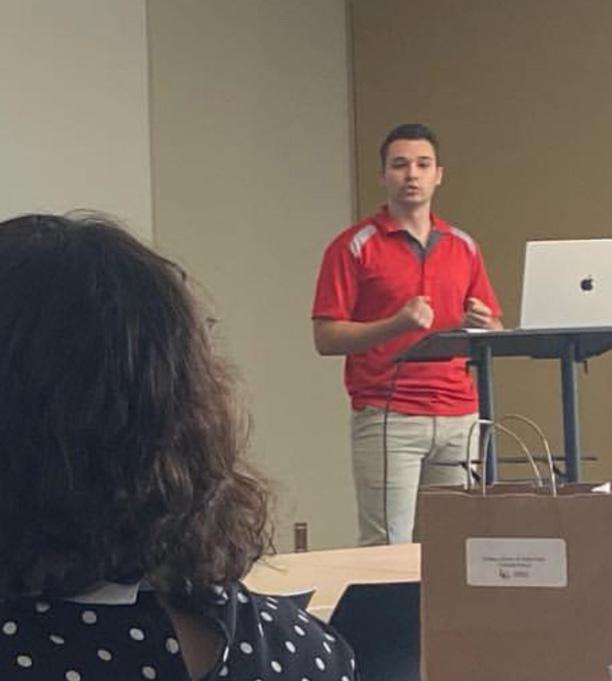
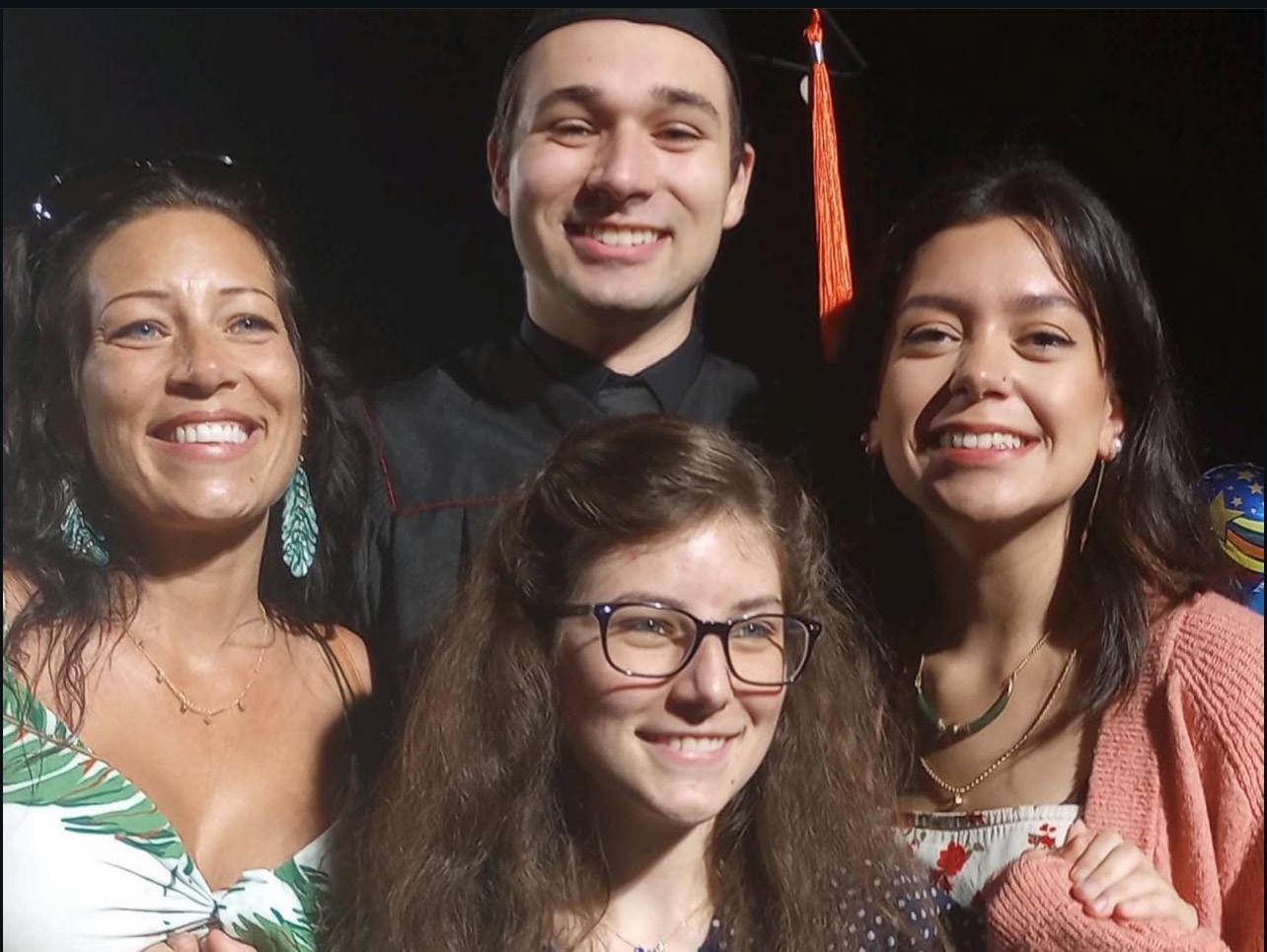
DRIVEN : ABOVE: MSEE graduate Noah Fielder leads a presentation on electrical engineering. RIGHT: Noah Fielder poses with his family members at his commencement.
SEEKING SOCIAL WORKERS
FILLING A NEED CLOSE TO HOME
BY TONY SIMMONS
Jayahna Miller always knew she wanted to offer therapy services of some kind, which prompted her to earn a bachelor’s degree in Psychology.
“I never knew exactly what I wanted to do until I heard about the foster care system and what the kids go through there,” said Miller, age 20. “Most people focus on the parent aspect, and I want to dive into therapy for the kids—how the system has challenged them—trying to help them in any way that I can.”
Originally from Blountstown, Miller was further inspired to pursue a master’s degree in Social Work by one of her professors, Sophia Crittenden, LCSW. “It was she who steered me towards this direction,” Miller said.
Social workers serve in a variety of settings, including healthcare, mental health, children, family and aging services, schools and more. The profession is expected to grow about 7 percent over the next 10 years, according to Denise Montford, MSW, Social Work program director at FSU PC.
“One of the reasons for the growth in the profession is because, by 2030, all Baby Boomers will be 65 and older,” Montford said. “Social workers will be needed to provide counseling and referrals for services to help older adults and their families facing the many challenges associated with aging.”
There is also the immediate need, spurred locally by traumatic events such as the devastation of Hurricane Michael and the scourge of COVID-19. Residents of the Florida Panhandle have recently suffered losses that accelerated the need for trained mental health professionals in the region.
“To address this community need, FSU Panama City has prioritized the recruiting, admission and support of students majoring in Social Work,” said Dean Randy Hanna. “By providing financial support for qualified students, we aim to increase the number of Social Work graduates who serve the Florida Panhandle within the next two years.”
Montford tells her students they can always find a job with a degree in social work. Student Brittney Sanders added that the variety of focus areas in MSW means the choice of careers is wide open.
“You can be a standard social worker or work in counseling for a variety of areas,” said Sanders, who is from Chipley. “You are not tied to one area, so you have the flexibility to learn about all areas.”
TOP-RANKED PROGRAM
“Our MSW program is growing, and we are happy to have students coming out of BSW programs and others such as psychology, who want to continue their service to the community,” said Elizabeth Crowe, Ph.D., the assistant dean for Academic Affairs. “We have experienced loss in Panama City in many different ways, and social workers are now more important than ever.”
The Master of Social Work degree program at FSU Panama City is one of the nation’s top-ranked, distinguished programs accredited by the Council on Social Work Education. It is designed to enable students to develop professional practice competence by providing a curriculum that includes social work practice, social policy, knowledge of human behavior and the social environment, research knowledge and experience, and field education.
“Our program provides the opportunity for students to complete both the BSW and MSW degrees,” Montford said. “With an associate’s degree, students can complete both programs in 3 years.”
Students pursuing this degree also have the option to earn an MSW degree in one year through the Advanced Standing MSW Program. This track is for students who have earned a BSW degree within the last seven years from an accredited social work program. For more details, visit pc.fsu.edu/bsw.
“We offer electives that focus on various areas,” Montford said, “including gerontological social work, grief and loss, children and adolescents, healthcare, trauma, and child welfare.”
Sanders, 30, entered the MSW program after earning a bachelor and master’s in communications. Currently an admissions counselor and scholarship coordinator in the FSU Office of Enrollment Management, she wants to provide counseling for a community that is underserved in rural areas.
“The LGBTQ+ community in small rural towns like where I am from find it harder to find someone they can relate to and feel comfortable with,” she said. “It is my goal to be that person. As a gay person myself, I know what it is like to have to search high and low for counseling services for someone I thought I would feel comfortable with.”
SCHOLARSHIPS AVAILABLE
With the aid of generous donors, students seeking a degree in Social Work at FSU PC may be eligible for scholarships.
“Social workers are essential to the delivery of compassionate, patient-centered care,” said Ashley Heinze, general manager for VITAS Healthcare in Panama City, “especially in hospice and palliative settings, where their guidance can make a difference for patients and families.”
VITAS Healthcare presented a check in September establishing a $75,000 scholarship fund for master’s degree-seeking students in the FSU PC Social Work program. In addition, Florida Blue established a scholarship in May for qualified students seeking a bachelor’s degree in Social Work.
“Within health care, social work is so critically important,” said Hong Potomski, spokeswoman for Florida Blue. “In order to support that need, it’s important to us to support workforce development and work with organizations like FSU Panama City.”
“YOU ARE NOT TIED TO ONE AREA, SO YOU HAVE THE FLEXIBILITY TO LEARN ABOUT ALL AREAS.”
BRITTNEY SANDERS, MSW STUDENT
MASTER OF SOCIAL WORK
The Master of Social Work degree program at FSU Panama City, one of the nation’s top-ranked, distinguished programs accredited by the Council on Social Work Education (CSWE), is designed to enable students to develop professional practice competence by providing a curriculum that includes social work practice, social policy, knowledge of human behavior and the social environment, research knowledge and experience, and field education.
WHAT CAN I EXPECT?
FSU Panama City offers a three-quarter time, 9 credit hours (maximum course load) pace Advanced Standing or Traditional MSW program in the Clinical Social Work concentration. The Advanced Standing program can be completed in four semesters, and the Traditional program can be completed in six semesters.
The Clinical Social Work concentration prepares you to provide therapeutic services, facilitate client access to community resources, cooperative/ collaborative work with human service professionals/organizations on behalf of clients, and to conduct empirical evaluations of social work practice interventions.
WHAT TYPES OF CAREERS COULD THIS PROGRAM PREPARE ME FOR?
Sample occupations with a master’s degree are addiction counselor, agency director, behavioral therapist, bereavement counselor, crisis counselor, clinical social worker, employee assistance counselor, guidance counselor, marriage and family therapist, mental health counselor, or social and community services manager.
SOCIAL MEDIA : At left, MSW students Jayahna Miller and Bryanna Morgan compare notes in Professor Denise Montford’s class.
LEARN MORE ABOUT MSW pc.fsu.edu/msw
COLLEGE OF MEDICINE
Bachelor of Science in Biomedical Sciences INTERDISCIPLINARY MEDICAL SCIENCES
A new biomedical sciences program at Florida State University Panama City will provide a major step forward in healthcare education for Northwest Florida. The Interdisciplinary Medical Sciences program, launching fall 2026, is designed to prepare students for a wide range of careers in health care — from clinical practice and medicine to healthcare management and policy.
“This new program will serve to improve access to a high-quality education in the clinical aspects of healthcare — it will be an investment in future healthcare providers for Bay County and surrounding areas.”
— Randy Hanna, Dean of FSU
Panama City
The IMS program, offered in partnership with the FSU College of Medicine, aims to support workforce development in the region. It will be open to first-time-incollege students as well as transfer students from state and community colleges.
Students in the IMS program will earn a Bachelor of Science in Biomedical Sciences, combining a rigorous science core with service learning, developmental seminars and a capstone coursework. The program is structured to help students discover their most suitable healthcare career path, build professional skills and mindset, and develop a deep understanding of community health needs
Courses will be taught in-person in Panama City by a mix of current and newly recruited faculty. The degree prepares students for further study in fields such as medicine, dentistry, pharmacy, physical therapy, veterinary medicine, child welfare, disability and elder care services, health policy, non-profit and research sectors.
LEARN MORE ABOUT IMS pc.fsu.edu/ims
NOTABLE NOLES
HONORING OUR OUTSTANDING ALUMNI
BY TONY SIMMONS
Florida State University Panama City announced the 2025 Notable Noles in October as part of Homecoming Week. This year’s four honorees include Alex Burgans, Catie Feeney, Cheryl Flax-Hyman and Lesley Miller. A campus tradition since 1996, the award is given to FSU Panama City alumni who demonstrated excellence as students and have made outstanding contributions to the community and within their careers. FSU Panama City has recognized 99 Notable Noles in the past 29 years, accounting for less than 1 percent of the campus’ alumni.
ALEX BURGANS, ‘20
Alex Burgans earned his Master of Science in Systems Engineering from FSU Panama City in May 2020. He was a member of the inaugural cohort of a pioneering academic–government partnership established between the Naval Surface Warfare Center Panama City Division and the FAMU-FSU College of Engineering. The program was designed to equip working professionals with advanced systems engineering expertise essential to defense innovation and regional economic growth.
Burgans currently serves as project manager for the Airborne Mine Neutralization System—a mission-critical weapon system employed by the U.S. Navy.
Beyond his professional accomplishments, Burgans is a world-class triathlete. After nearly a decade of disciplined training, he placed fifth in his age group at the 2024 Ironman Florida, earning a coveted qualification for the 2025 Ironman World Championship in Nice, France. In September, he became a World Championship finisher on what is arguably one of the most demanding Ironman courses in the world.
“Training allows me to fully unplug from life’s daily stresses,” Burgans said. “Balance is key—time with family, my fiancée and doing things I enjoy is what allows me to keep going.”
Dedicated to giving back to his community through education, Burgans tutors high school students in challenging subjects such as chemistry, trigonometry and calculus. He credits the encouragement of his middle and high school teachers for sparking his passion for math and science and hopes to continue paying that mentorship forward.
Burgans expressed deep appreciation for Dean Randy Hanna, who played a pivotal role in his decision to attend FSU Panama City: “Dean Hanna kept in touch with me while I was completing my undergraduate degree in aerospace engineering at the University of Alabama,” Burgans said. “He was developing a master’s program for Panama City and wanted to make sure I was part of it. We are blessed to have him as our dean—he never forgets a face and more importantly, he remembers everyone’s story.”
A lifelong Seminole, Burgans credits his parents for instilling in him a deep connection to FSU. “My mom earned three degrees from Florida State, so I’ve always been a Seminole. Honestly, I never really knew there was another option. She was recognized as a Notable Nole in 2010, and I think it’s pretty special to now be a part of a mother-son Notable Nole duo.”
Burgans was nominated by Dustin Stokesbary, Vice President at Centennial Bank and a 2019 Notable Nole. “Alex embodies what it means to be a Notable Nole,” Stokesbary said. “His life reflects the values Florida State University strives to instill—excellence, service, and resilience.”
CATIE FEENEY, ‘14, ‘18
Catie Munns Feeney of DeFuniak Springs serves as the Operations Coordinator for Walton County Emergency Management, where she oversees training, planning and operations that help safeguard her community. A two-time graduate of Florida State University, Feeney earned her bachelor of science in Criminology in 2014 and master of science in Corporate and Public Communication from FSU PC in 2018.
“What first brought me to FSU Panama City was a combination of life and timing — my husband, John, and my career,” Feeney said. “But what made me stay and ultimately pursue my graduate degree here was the incredible sense of community and the personal investment the faculty and staff have in their students. The way professors truly know their students, care about their success, and invest in their growth both personally and professionally has motivated me to share the good work of FSU PC.”
After earning her undergraduate degree, Feeney served as senior admissions officer and later as an academic advisor at FSU. College of Applied Studies advisor Angela Sexton encouraged her to pursue her master’s degree.
“I often say that if I had known about FSU Panama City when I was touring schools, I would have chosen to complete my undergraduate degree here, too,” Feeney said. “It’s a place that believes in you, challenges you and celebrates your success right alongside you.” Feeney received Special Congressional Recognition for her work as public information officer for the Bay County Emergency Operations Center during and after Hurricane Michael, and was later honored with the Key to the City of Live Oak for her contributions to Suwannee County’s response and recovery from hurricanes Idalia, Debby and Helene. In 2025, she received the Florida Emergency Preparedness Association Service Award.
Deeply rooted in community service and leadership, Feeney volunteers with the Walton County Community Emergency Response Team and serves on the Board of Directors for the Matrix Community Outreach Center.
During her master’s program, Feeney was assigned to produce a communications audit for a real client, which introduced her to Ron Sharp, the executive director of what was then the St. Andrew Bay Center. Feeney later served on the center’s board of directors, taking a leadership role as it went through the rebranding process and became The Arc of the Bay. Sharp nominated Feeney for Notable Nole recognition.
“This experience profoundly reshaped how I approach my role in emergency management,” she said. “It highlighted the importance of protecting and serving our county’s most vulnerable populations. … What began as a class assignment evolved into a life lesson, instilling perspective and purpose that continue to guide me every day.”
CHERYL FLAX-HYMAN, ‘92
Cheryl Flax-Hyman is the executive vice-president of Gulf Coast State College. She previously served as the head of Institutional Effectiveness & Strategic Planning at GCSC, focusing on strategic planning, accreditation and articulation agreements, and she served as president of the college in 2022-23.
Flax-Hyman holds a bachelor's degree in Speech Communication from the University of Maryland, a master's degree in Educational Leadership & Administration from FSU Panama City, and a doctorate of education in Curriculum and Instruction from the University of West Florida.
She said the proximity of FSU PC to home and work, combined with the quality of instruction, made it a natural choice for graduate school. “My favorite class— hands down—was Legal Aspects of Higher Education,” she added. “Dr. Terry Leas was the professor, and the class would be so heavily involved in discussing case studies that we would lose track of time and run over every class session, causing Dr. Leas to almost miss the van heading back to Tallahassee.”
At that time, professors from FSU Tallahassee traveled to Panama City by van several times a week to lead classes. She also had a Rotary Fellowship to Australia, during which she studied that country’s educational system and best practices.
“When I was a graduate student here in the Stone Age, I had to take so many classes specific to higher education, and I was going to have to commute two or three times a week to Tallahassee unless I could convince enough people that they, too, wanted to take these courses,” she said. “So I was the first unpaid recruiter for FSU Panama City.”
Flax-Hyman added that she was “incredibly grateful to all the support I received from my family, colleagues, and Gulf Coast State College for the opportunity to earn an advanced degree.”
Since joining GCSC in 1985, Flax-Hyman has worked in the areas of leadership training, economic development and student support services. She was nominated for recognition as a Notable Nole by GCSC’s current president, Glen McDonald.
She was described as “an exemplary leader regarded with utmost respect and beloved by all,” according to the plaque she received from the GCSC District Board of Trustees. She was also honored with the Distinguished Service Award, the highest honor bestowed by the board, for her 40 years of dedicated service.
LESLEY MILLER, ‘86
A resident of Lynn Haven, Lesley Miller recently retired as the chief accounting officer of Summit Bank. She received her bachelor of science in Accounting from FSU Panama City in 1986 and became a Certified Public Accountant 1999. She serves on the board of directors of Covenant Christian School in Panama City, a role she has enjoyed for nearly a decade, and she endowed a family education scholarship at FSU Panama City.
“I attended FSU PC primarily due to its reputation for excellence and the fact I could stay in Panama City,” she said. “I appreciated the small class size and the fact that we had the same instructors as the main campus. When I attended from ‘83 to ‘86, the professors commuted daily from Tallahassee.”
Miller had a long and distinguished career in the banking and credit union industry, rising up the corporate ladder to serve as the chief financial officer at one local credit union, and the senior vice president/CFO at another before joining Summit Bank. Now that she’s retired, she enjoys spending time with family and friends without worrying about a schedule.
“I love going to the gym, traveling, reading, learning card games, learning mahjong and especially enjoy attending concerts all over the country with my son,” she said. “My son and I have attended over 20 Billy Strings concerts. I have become somewhat of a groupie!”
“Over the years, Lesley has been an excellent representative of a Florida State University alumnus,” said Karen Hurst, a 2018 Notable Nole who retired from Innovations Financial Credit Union, and who nominated Miller. Hurst added, “She is an intelligent, dedicated, hard-working individual committed to her family, community and profession. I am very proud to have called her my good friend and colleague.”
Miller said she would encourage anyone who is considering college to attend FSU PC if they desire a quality education. It is something of a family tradition, she said, as her brother, two nieces (and the husband of one of her nieces) all attended FSU PC.
“As a matter of fact, my son, Ryan Miller, will be a 2026 graduate of FSU PC,” Miller added. “He will graduate with a degree in Financial Planning.”
EXCELLING BY DESIGN
The Collegiate School at FSU PC builds on success
BY TONY SIMMONS
The Collegiate School at FSU Panama City lived up to its name this fall, as it officially took over a section of campus while expanding to serve grades 9-11.
“As we move into Year 3, we will have almost 300 students in grades 9-11, adding one more group of students next year to complete our high school,” said Debbi Whitaker, TCS director. “We have grown to the point we are expanding onto the FSU Panama City campus, with our 10th- and 11th-grade students being on the college campus throughout the day.”
Sophomore Anastasia Cushing wants to go into a medical career. She took dual-enrolled classes during the summer semester, which provided her opportunities to interact with older FSU Panama City students, many of whom had visited the TCS campus for Lunch & Learn sessions.
“I think we were all looking forward to a new
building,” Cushing said, describing the move to the FSU PC campus as “new people, different place.” She added, “I have more dual-enrollment opportunities, of course, so that’s real exciting for me.”
The change marked the latest in a chain of achievements for TCS. In the spring, and for the second time in its two years of operation, TCS earned an “A” designation from the Florida Department of Education— scoring higher than any other K-12 school in Bay County.
“Earning an ‘A’ grade from Florida’s DOE is a great indicator of our school’s continued success, especially considering we earned an ‘A’ last year, our inaugural year,” Whitaker said. “The ‘A’ in both years shows the commitment from students, families, faculty and staff. We were also the highest ranked school in Bay County, demonstrating TCS to be an excellent educational opportunity for students across our area.”
School grades are based upon student achievement, learning gains, college and career achievements and more. According to a release from the DOE, school grades provide an easily understandable way to measure the performance of a school. Parents and the public can use the grade and its components to understand how well each school is serving its students. Find the details at https:// www.fldoe.org/accountability/accountability-reporting/ school-grades.
In addition, the DOE recognized TCS in 2024 as a Purple Star School of Distinction for its support of military families.
In June 2025, the St. Joe Community Foundation donated $38,177 to TCS for facility needs. Specifically, the money helped equip and furnish a study room as part of the renovation, which included new floors, lighting, security measures, smartboards and more.
“Most of those students, by the end of their 11th grade, will have their associate of arts degree,” Whitaker said. “Because those students will be fully on campus at FSU PC, we need a space for them to be able to study together, have study groups or advising sessions. Within this dedicated space, we will have technology connected to flexible seating, so it is really a state-of-the-art area for these students.”
Sophomore Charles Martin, who is working toward an undergraduate degree in engineering, remarked on the difference between the new location and the TCS campus off St. Andrews Boulevard: “Here is a lot bigger and you get more opportunities here. You get a lot more classes, a lot more flexibility with your schedule. We don’t really have any high school classes any more.”
The original cohort—now in the 11th grade and focusing on dual enrollment courses—began classes with the university’s fall semester on Aug. 25.
Also new for this year is the opportunity for 11th grade students to participate in academic student clubs and organizations on the FSU PC campus, which will broaden their academic experience while building their college resumes.
TCS was designed as a developmental laboratory high school with an emphasis on dual enrollment and career technical education. It opened to its first cohort of 100 ninth graders in August 2023, adding another 100 freshmen in 2024 and again in 2025. A tuition-free school, TCS gives preference to children from military families, but accepts students from 16 middle schools across Bay County.
The main campus, 2430 St. Andrews Blvd. in Panama City, comprisess nearly 13,000 square feet of instructional space, and was established using a start-up grant of $7.6 million (funded across six years) from Triumph Gulf Coast. The new facilities on FSU Panama City’s campus added nearly 7,000 square feet more space.
SECONDARY: Above: TCS sophomore Charles Martin. Below: TCS students and family members explore FSU Panama City during a reception.
EVERYONE’S BUSINESS
ENTREPRENEURS SHARE EXPERIENCES & ADVICE WITH FSU STUDENTS
BY TONY SIMMONS
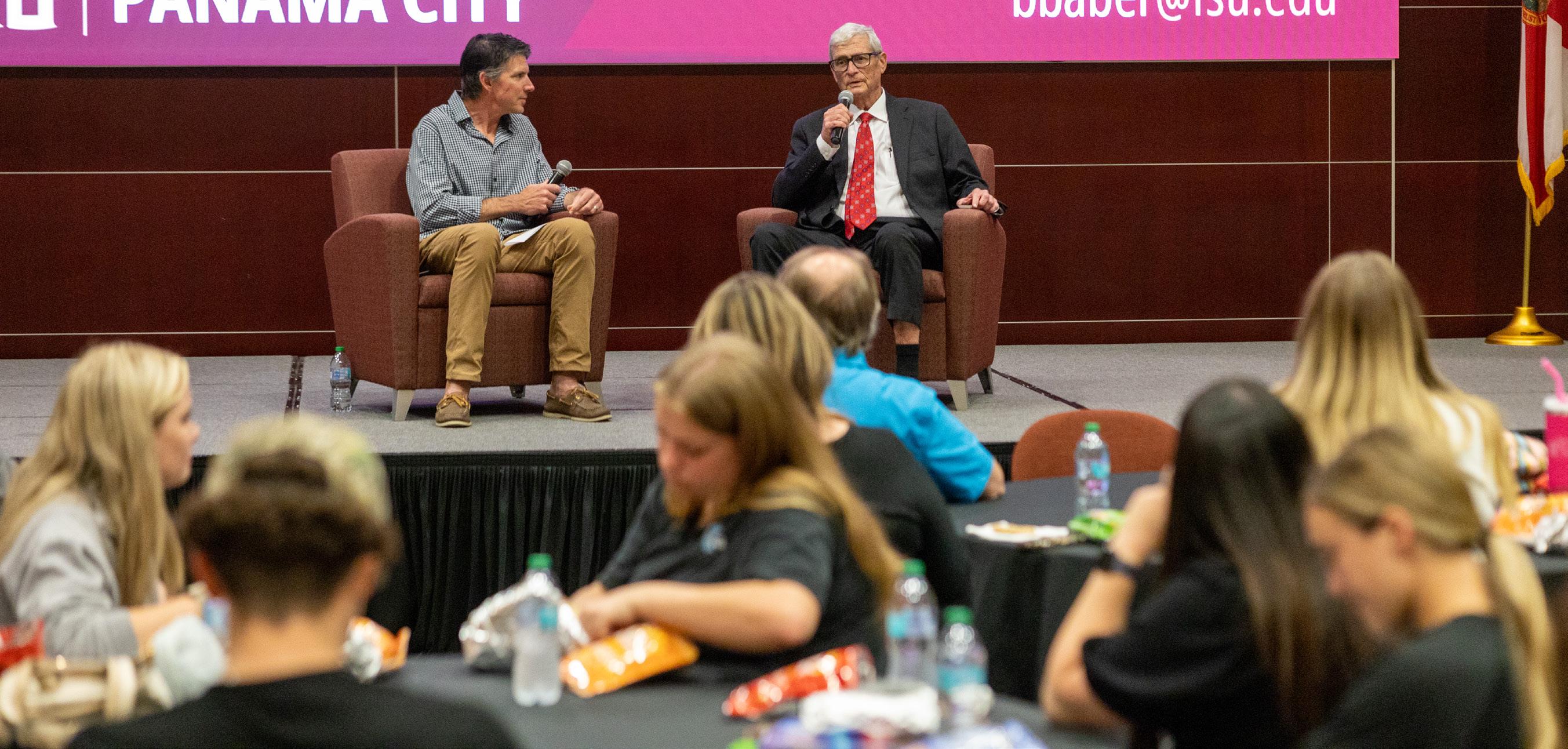
Contrary to popular belief, there is free lunch—although, in the case of instructor Brian Baber’s Entrepreneurship Lunch & Learn sessions, it’s targeted at those who are hungry to learn how to start their own businesses.
FSU Panama City’s Jim Moran College of Entrepreneurship hosts free “Lunch and Learn” events at least three times per semester, inviting students and the public to pick the brains of area business leaders while enjoying a light bite.
The sessions take the format of a casual conversation over a meal and are designed for those who may have an idea about starting a business or who long to own their own company. There is no charge for admission, and lunch is provided.
Baber, MBA, is the Entrepreneur in Residence at the Jim Moran College of Entrepreneurship, specializing in Real Estate and construction. For more information, visit pc.fsu.edu/entrepreneurship.
“We’re attracting students who may want to have a business one day, rather than work for someone else,” he said. “I bring real-world insights into the classroom, helping students to launch and grow their ventures.”
BUILDING RELATIONSHIPS
Baber has lived in Bay County since he was 4 years old. His father was a vice president for Gulf Coast State College. Baber earned his bachelor’s in finance and an MBA from
FSU. He has worked for Ford Motor Co. in Michigan and is currently specializing in real estate and construction.
At an early age, Baber was introduced to construction, spending time working on remodeling homes his dad had purchased as rentals.
Baber’s natural entrepreneurial spirit is reflected in his wealth of knowledge and experience as a franchisee of Arthur Rutenberg Homes, a custom and luxury home builder. His team’s customer service led to a first-place ranking in Best of Bay 2015, an Avid Diamond Award in 2016 and an Arthur Rutenberg Homes Gold Cup Award in 2019 for continuing to achieve high customer satisfaction ratings.
Baber is also no stranger to community involvement. He has served as a mentor and in executive leadership positions in civic and service boards including the Rotary Club, Bay Education Foundation, Elevate Bay Mentoring Program, Girls Inc., New Horizons School, Taunton Family Children’s Home, Bridges to Circles, Pi Kappa Phi House Corporation, and his church.
In 2017, Baber was presented the opportunity to teach—something that had long been a life goal. A proud husband and father of four, he is the author of “In-Home: Creating Your Dream Home Room by Room,” a guide to building a custom home. He also helped start and lead The Well, a college ministry at his church, where he serves 20-somethings navigating life, faith and career decisions
Baber describes himself as “an encourager, passionate about helping people grow and succeed. … I find fulfillment in seeing the potential in people and helping them grow.”
The Entrepreneurship major, established in 2017, is a highly competitive two-year curriculum. Students learn to start and grow a micro-business, learn the advantages and costs of the various sources of venture capital, and the process of obtaining it. They focus on opportunity recognition, market research and feasibility, as well as technology commercialization, financial analysis, legal issues and human resource management.
“This degree in entrepreneurship is designed to foster creativity and professionalism for future business leaders,” FSU Panama City Dean Randy Hanna said.
PODCAST PROGRAM
Launched in 2024 to widen the reach of Baber’s Lunch & Learn series, the “FSU Panama City Entrepreneurship Lunch & Learn Podcast” is now available on Apple Podcasts and Spotify.
Baber adds three fresh episodes each semester. Each interview is recorded live in the Holley Academic Center’s St. Joe Community Lecture Hall.
“Whether you missed our Lunch and Learn sessions or simply want to re-engage with the material, these podcasts offer a convenient way to connect with the entrepreneurial spirit at FSU PC,” said Baber. “Each episode is a journey into the life of a successful entrepreneur, uncovering the stories and strategies behind their business triumphs.”
INSIGHTS : Left: Brian Baber interviews Allan Bense for one of the Lunch & Learn sessions. Above right: Former ABC News President Kim Godwin discusses her career during the October Lunch & Learn. Below right: Baber and his family enjoy a beach day.
LISTEN TO THE ENTREPRENEURSHIP PODCAST ON SPOTIFY bit.ly/4ggPFeO
FOLLOW DIVERS FROM BASIC TRAINING TO INVESTIGATION
SEE VIDEO OF A UCSI SIMULATION
IN DEPTH : Students in the Advanced Science Diving Program explore the sandy bottom of a local spring during a class excursion.
BY TONY SIMMONS
As a team from the Florida Fish and Wildlife Conservation Commission worked through a series of SCUBA activities on one side of the pool, six FSU Panama City students gathered at the opposite corner for a series of basic skills swimming tests.
“A portion of what we teach requires a certain level of physical fitness,” said Mike Davis, the director of Dive Operations for FSU PC’s Advanced Science Diving Program. “It’s important when we do advanced diving and scientific diving that they have adequate physical fitness, even better physical fitness than a regular diver. “
The students were required to swim eight laps in the 25-meter pool within 12 minutes using any stroke they preferred. Then they had to swim the length of the pool underwater while holding their breath, tread water for 10 minutes and perform a recovery swim by towing a classmate the length of the pool.
One of the students testing on this spring morning was Caroline Gray, 22, majoring in Crime Scene Investigation. “It’s very different from anything I’ve done before. I wasn’t SCUBA certified before this class,” she said. “That was challenging, just to learn everything, but a very rewarding challenge.”
At the time of this test, Gray was in her second semester in the CSI program.
“Anything you would think a regular CSI would do on land we do under the water,” Gray said. “We will
learn recovery, rescue, things like that. We’ll start on body recovery next semester. Right now, we’re learning fundamentals and getting basic training in.”
After the students completed their skills tests, both Davis and ASDP Director Mark Feulner, Ph.D., led the group in a short activity to familiarize them with the Guardian full-face mask and regulator system they would use for some of their labs and simulations.
“This is a little different from how students are traditionally trained,” Davis said. “They usually train with just a mask and a (separate) regulator. So, it takes a little additional training to be able to deal with this.”
The full-face mask with built-in regulator allows audio communication along dedicated cables running to a director on shore. However, it requires a different approach to common problems like clearing a flooded mask.
Kace Davis, an engineering major who has attained science diver and dive master levels in the program, joined the morning session as an aid to Feulner and Davis (no relation). He has had an internship at Naval Support Activity Panama City, where he worked on dive technology and life support systems.
“I just love diving,” Kace said as he climbed into a dry suit before the Guardian activity. “My plan is that, whatever engineering gig I end up doing, it’s going to be dealing with the water.”
“WE’LL START ON BODY RECOVERY NEXT SEMESTER. RIGHT NOW, WE’RE LEARNING FUNDAMENTALS AND GETTING BASIC TRAINING.”
CAROLINE GRAY, UCSI STUDENT
ON THE SCENE
The dive team arrived early on a morning in March, unloading gear from the back of a truck and walking through the potential crime scene to determine the best course of approach.
The scene was a boat docked on a floating pier inside the Panama City Marina. The situation was a real-world simulation, and the team was comprised of classmates in the Underwater Crime Scene Investigation certificate program.
Test materials described the scene: A diver working on a boat propeller in the downtown marina overnight never reported in. He was suspected to have met with a problem and might be deceased, his body still somewhere underwater near the boat.
“They will mark out a search area, search through the area to find evidence and the body,” Mike Davis said. “Once they identify where it is, they’ll mark the body, mark all the evidence, and mark the positions based on some reference point, so if the evidence is required at trial, it is accurately depicted—where it was, the depth of the water, all of those references.”
Two team members suited up for the dive. Wearing Guardian masks, they were connected by colored cables to a student supervisor who gave them directions and monitored their progress from the dock. The divers conducted an arc search pattern, gradually widening the arc to move farther from the dock and under the boat at the far end.
The exercise was finished nearly an hour later, when one diver brought a mannequin representing the missing diver to the surface. Placed in an orange body recovery bag, it was carried back to the supply truck. The “dead” diver’s tools and SCUBA tank were bagged separately so they could be examined in the lab.
The Public Safety & Security program at FSU Panama
City offers the UCSI certificate, which may be earned independently or as part of a bachelor’s or master’s degree. The program of applied study focuses on underwater forensic research and investigations. Courses involve critical thinking to reach mission objectives and include the application of theory and methodology.
Each week, the class plans and performs a dive based on a simulated crime scene, said Madison Klick, age 21, a biology and criminology dual major pursuing a UCSI certificate.
“We get a detailed report from the investigator, then we go out and execute the dive,” Klick said, adding that the program was amazing. “It really allows you to be immersed in being in a crime scene. The underwater environment is totally different from what you see on land. It really made me see how important SCUBA divers are in crime scene investigations.”
The mission of the certificate program is to rigorously challenge students through five sequenced courses and labs that provide them with the theory and practical experiences to become underwater forensic scientists and highly qualified law enforcement and forensic professionals.
Graduates are educated to be both scientists and investigators, which benefits science-based disciplines such as engineering, medicine, criminology and archaeology. The UCSI certificate opens doors for careers processing accidents, insurance fraud cases, environmental pollution investigations and maritime security as well as crime scenes.
Originally from Pennsylvania, Klick moved to Melbourne with her family some years ago. A student at FSU in Tallahassee, she came to FSU Panama City specifically for the UCSI certificate.
“I knew I wanted to be in the water,” said Klick, who graduated in May. “This is my first time ever SCUBA diving, actually, with this team. I’ve seen them every Monday for the past four years.”
We Value Members
FSU PC ESPORTS TEAM WINS CHAMPIONSHIP
BY TRISTAN COSTALES
FSU Panama City began competing in the Peach Belt Conference in esports two years ago. In April 2025, the FSU PC esports team captured the League of Legends Champions Division title—the first athletic competition championship in school history.
Riding the high of their win, and having competed once again in Rocket League and Overwatch 2 in September, the team is building an impressive roster for this year.
“I’m very excited for the season,” said Esports Director Katie Dier. “We have a lot of talented students who are excited to dive right in and make it happen, and hopefully we can come home with another championship—fingers crossed.”
FSU PC’s 2024-25 team—Timothy Peagler, Steven Niemiec, Antonne Williams, Paul Myers and Christian Ivers— defeated Centre College 3-0 in the April final. Both teams were making their PBC championship debuts. Kennesaw State University hosted the event on its Marietta campus.
Dier said the team roster was growing in the new academic year: “We have a couple of returning members, and I know they are very excited to really try to make it back to that championship.”
Cross-Collegiate Esports is the first varsity team in FSU PC history, and in January 2023 the team was admitted to the NCAA Division II Peach Belt Conference as an associate member. Open to any full-time students in good standing, the team is university-funded and provides mentorship, the opportunity to travel and the potential to win monetary prizes.
The Peach Belt was the first NCAA conference to hold an esports championship starting with the 2017-2018 academic year. The league was also the first to partner with Riot Games, publisher of League of Legends, the mostplayed online game in the world, and the first to hold an in-person live conference championship.
Dier was excited to have a full production team for Twitch streaming this semester, so students can see the highlights of the team and get in on the action. The upcoming spring 2026 season for League of Legends was at the forefront of her thoughts.
“Something that’s really cool is, we have our alumni coming back to coach our team this semester, so you might see some familiar faces or familiar names on the stream,” she said. “I do have a freshman incoming that is going to do big things for our program. I anticipate he’s going to be a really great leader for our program.”
Dier encouraged students to show support for the team, emphasizing that they are not a club. “Our students are D2 student athletes—so they are full time students and then they do this on the side, but it is still a collegiate sport for them.”
She also suggested students follow their Twitch and Instagram, and join watch parties hosted by esports. “For us it’s the more the merrier,” Dier said. “The team really looks forward to the energy of the students supporting them— friends, family, alumni.”
Learn more at pc.fsu.edu/esports.
GAME ON : Left: FSU PC’s Esports Team wins the 2025 Peach Belt Championship. Right: Competing in the PBC finals.
CLUB KICKS OFF
Soccer coach brings experience to the pitch
CLUB SPORTS
FSU Panama City added to its club sports programs this fall with the launch of a collegiate bass fishing team and a clay shooting team, as well as a clubbased soccer team.
BY TONY SIMMONS
FSU Panama City’s new Soccer Club coach, Madisyn Flammia, has been playing what the rest of the world calls “football” since she was a toddler.
A Panama City native, the daughter of Mark Flammia and Amanda Turner, she played for Bay United in middle school. As a Mosley High School student athlete, she not only played soccer for four years, she also played every weekend in Atlanta for the Atlanta Fire Club.
After high school, Flammia played for the University of Southern Mississippi, where she started for the Golden Eagles as early as her second game. However, she tore her ACL near the end of her senior season, which put her plan to play professionally on hold.
“I had a little bingo card at the beginning of 2024, and I had all these things on there,” Flammia told WMBB News-13. “One of them was to play a professional soccer game this year, and then another was to go to Europe.”
She got those opportunities, as she played a season for IBV, a professional soccer team in Iceland, then served a season in Australia’s National Premier League.
“Obviously the level of play is really high,” she said. “I was prepared for it coming in. I think my training and everything I did at home definitely prepared me for it.”
Flammia, MBA, is now a student services specialist for The Collegiate School at FSU Panama City focusing on dual enrollment, career planning and college readiness. In addition to serving as the soccer club coach, she teaches a career development course under Anne’s College of Education.
The club began its weekly open play pickup game on Oct. 7, with 18 students from both FSU PC and Gulf Coast State College joining in on the fun.
“We had individuals who have never touched a soccer ball before, as well as individuals who have played travel soccer their whole lives,” Flammia said. “The pickup games were competitive, incredibly fun and made for a great workout.”
With about 30 active members currently, the group is expected to grow. Pickup soccer is open to all FSU PC and GCSC students for free, every Tuesday from 7:30-9:30 p.m. at Publix Sports Park in Panama City Beach. For details, contact Flammia at mjf24@fsu.edu.
“Our goal is to soon start having pickup soccer two days a week, to put men’s, women’s, and coed teams into local adult leagues, and to eventually form competitive teams for intercollegiate club sport play,” she said.
“Bass fishing and clay shooting teams are growing at the high school and college levels,” said Timothy Kessler-Cleary, director of Student Affairs for FSU Panama City. “Given the popularity of the sports in the local community and the region, we see starting these teams as excellent opportunities to bring the sports to the FSU Panama City campus and provide an opportunity for students who are competing at the high school level—as well as current FSU Panama City students—to compete at the college level.”
In addition to the collegiate Bass Fishing team, FSU PC hosted a Fishing Club as one of its registered student organizations this fall. The club provides students of all levels of experience with a way to learn more about diverse types of fishing and participate in the sport.
While the club will be open to all students, the Bass Fishing Team will be specifically for experienced anglers to compete at the local, state and national levels. Travis Page, coach of Mosely High School’s Bassmasters fishing team, is leading the FSU PC club and team.
FOOTWORK : Madisyn Flammia playing for USM.
FACULTY SPOTLIGHTS
Florida State University Panama City is pleased to welcome our newest faculty members
JAMES COCKERHAM, PUBLIC SAFETY & SECURITY
James Cockerham, assistant teaching professor for the Public Safety & Security program, came to FSU Panama City from Montreat College in Ashville, N.C., where he served as chairman of Health Science and Public Service as well as program director and assistant professor of Public Administration. He received his Ph.D. from FSU’s Askew School of Public Administration and Policy in 2020. He also holds an MPA in Public Administration and bachelor’s in Criminology and Criminal Justice, both from FSU. His research has focused on assessments of Teen Court programs in North Carolina, as well as traffic stop policies and implicit bias. He has been a presenter, panel member and guest lecturer on topics such as public policy, recidivism and “Teaching on the Edge of Chaos.”
WILLIAM D’ANGELO, ADVANCED SCIENCE DIVING PROGRAM
Following a 26-year career as a U.S. Army deep sea diver and dive master/instructor, William D’Angelo joined FSU Panama City as the dive safety officer and instructor for the Advanced Science Diving Program. As such, he’s responsible for planning all dive operations and is lead instructor for the Underwater Crime Scene Investigation course.
D’Angelo is a subject matter expert on SCUBA, hyperbaric medicine, side scan sonar, hydrographic surveys and search-and-recovery operations. A certified diving medical technician, he conducted more than 100 hyperbaric operations, treating injured divers internationally.
MICHAEL DAVIS, ADVANCED SCIENCE DIVING PROGRAM
Michael Davis, a retired U.S. Navy captain, shares his passion for diving as the director of dive operations for the Advanced Science Diving Program at FSU PC. He leads strategic growth efforts and is responsible for the program expansion and extensive outreach.
Davis enlisted in the Navy directly out of Middleburg High School and served on USS Minneapolis-St. Paul (SSN 708) and as an instructor at the Trident Training Facility in King’s Bay, Georgia. In 1995, he was selected to the inaugural class of the Seaman to Admiral program and received his commission. His subsequent baccalaureate education was completed at Jacksonville University, where he graduated magna cum laude with university honors.
JOY DUBOSE, LIBRARIAN
Joy Dubose received her master’s in Library and Information Service from the University of Southern Mississippi in 2008. Her research areas include video games in academic research; virtual reality and emerging technologies in libraries; cataloging non-English language materials and more. She previously served as assistant professor and extended reality and gaming librarian at Mississippi State University’s Mitchell Memorial Library.
In 2021, she was honored with the Library Faculty Award for Research at MSU. She has numerous presentations, webinars, and peer-reviewed articles to her credit, and she wrote the chapter “Chernobylite: A Light in the Exclusion Zone” for a book examining the intersection of video games, the humanities and the environment in 2024. Now leading the Dr. and Mrs. James T. Cook Library & Learning Center, she also oversees the Digital Design Studio.
LINDSEY IVES, PSYCHOLOGY
Lindsey Ives, Ph.D., BCBA, is a member of the Applied Behavior Analysis core faculty in the Psychology Department. She received her Ph.D. in Psychology-Behavior Analysis in 2025, and her master’s in 2023, both from the University of Florida. In 2020, she earned a master’s in ABA from FSU Panama City and was part of the Early Childhood Autism Program. At West Virginia University in Morgantown, she earned a bachelor’s degree in Psychology with minors in Sociology and Disabilities Studies, graduating summa cum laude.
Her professional presentations and publications have covered topics including social incentives in the treatment of substance abuse; emotional regulation in caregivers and families of children with behavior challenges; and ways to measure behavior analysis and apply it to preserve or reunify families.
NASIMA KHATUN, FINANCIAL PLANNING
Nasima Khatun is an assistant teaching professor in Financial Planning. She earned her Ph.D. and M.S. in Personal Financial Planning from Texas Tech University, and her BBA and MBA in Finance from the University of Dhaka, Bangladesh. Her research centers on financial literacy, financial well-being, retirement savings, and the impact of natural disasters on insurance markets. She specializes in advanced econometric and machine learning methods, including Bayesian modeling, multilevel regression, and structural equation modeling, to examine how financial knowledge, skills, and external shocks shape household financial outcomes. Her work has been published in journals such as the American Journal of Economics and Sociology and Econometrics. She presented at leading conferences including the American Council on Consumer Interests, the CFP Board Academic Research Colloquium and the Financial Management Association.
RECOGNITIONS
FACULTY HONORS
Nasima Khatun, Ph.D., faculty member in the Financial Planning Program, was invited to present at three major events advancing financial planning education and research. She attended the 2025 CFP Board Connections Conference in Chicago and presented her research study, “The Relationship Between Property Damage and Flood Insurance Take-up Rates After Hurricane Harvey.” She was joined by students Lindsey Martin, Kylari Williams, and E’Laycia Williams-Mallett. She was also invited to the Academy of Financial Services 40th Anniversary and the Dalton Education 20th Anniversary events.
Laurie Lawrence, Ph.D., received the Provost Sally McRorie Excellence in Teaching and Service Award from her fellow faculty members in recognition for her commitment to student success. She is a member of the Professional Communication teaching faculty, and is the faculty advisor for the Communications Club and Alpha Zeta Beta chapter of the Lambda Pi Eta honor society for the National Communication Association.
Karen Works, Ph.D., was awarded a Center for Parallel and Distributed Computing Curriculum Development and Educational Resources PDC Curriculum Early Adopter Grant. In addition, she was an invited guest speaker at WASTC Educator Workshop: Exploring Real-Time Data Analytics Using MongoDB & Tableau Desktop in June, and she attended the Summer Training Program in July at the University of Massachusetts Amherst.
STAFF HONORS
Becki Boortz, associate director of Finance and Administration, and Dennis Griffin, facilities director, were honored during the Welcome Back Luncheon for their exemplary service to FSU Panama City over the past 35 years.
Jerome Davis, maintenance support worker, received the Mayor Alfred L. Still Award for exceptional service.
Irvin Clark, Ed.D., the associate dean for Student and Strategic Initiatives, received the Communication and Leadership Award from Toastmasters International District 77. He was recognized because his “dedication and service to your community exemplify the highest standards of excellence and integrity, aligning perfectly with” the Toastmasters mission. District 77 includes Alabama, Northwest Florida and Southeast Mississippi. Clark also served as a judge for the Miss Florida competition in June.
Laurie Lawrence Karen Works
Associate Dean Irvin Clark and Miss Florida 2025.
STUDENT HONORS
Hailey Brock received the Prime Example award for emerging leaders who embody involvement, innovation and serve as role models for their peers. She was honored along with other FSU students, employees and organizations for their commitment to student success at Leadership Awards Night on April 8.
Krieg Conrad, president of the Student Government Council for 2024-25, received the Dean’s Service Award in recognition of his leadership and commitment to service. Conrad is majoring in Mechanical Engineering and was re-elected for the 2025-26 academic year. In October, he was awarded the 2025 Notable Noles Scholarship.
Students Jonathan Whelan and E’Laycia WilliamsMallet each received the Pat Evans Scholarship award during the Welcome Back ceremony in August.
Three FSU Panama City Psychology majors were among the 379 high-achieving graduates recognized during the April 29 Medallion Ceremony in Ruby Diamond Concert Hall. Recognized for achieving Honors in the Major were: Michael Ackeret, Olivia Curtis, and Emileigh Parda.
The Doctor of Nurse Anesthesia Practice program annually awards three graduates during the hooding ceremony. This year’s winners were: Adrienne Belcher, Clinical Excellence; Jeremy Matyjaszek, Leadership and Service; and Alonzo ArcadiaReynoso, the 2025 Agatha Hodgins Award for Outstanding Nurse Anesthesia Graduate. In addition, Dan O’Malley, Rebecca Lisson and Alonzo ArcadiaReynoso received the 2025 St. Rene Goupil Award for their support of Operation Sharing Smiles.
Delta Alpha Pi International Honor Society (Eta Omega Chapter) inducted students on March 25: Andrew Merrill, Jayahna R Miller, Maleah Scott and Lacy Whittle
Lambda Pi Eta, honor society of the National Communication Association (Alpha Zeta Beta chapter) inducted students on April 7: Linday Allen , Njaree Collins, Cristie Chase, Rachel Dippolito, Heinz Fernandez , Hillary Guantley , Leslie Grant , Aubrie Rounds, John Sceals, Tony Simmons, Sonya Livingston Smith, Chris Washington and Justin Waters
The Alpha Kappa Chapter of Delta Delta Epsilon, the honor society for forensic sciences. inducted students on Nov. 17: Ryan Beckendorf, Brianna Bogaez, Destini Courtney, Kathryn Devine, Brandi Kolmetz, Layne Mikesell and Elizabeth Moon.
Haley Brock and Timothy Kessler-Cleary
SGC President Krieg Conrad
BOBBY BOWDEN INVITATIONAL
PANAMA COUNTRY CLUB
APRIL 11, 2025
Teams included: 1. Presenting sponsor Cadence Bank (Frank Hall, Paul Dick, Mike Nichols, Bob Majka). 2. Sytem Services Engineering (Collin Higgins, Kyle Shoots, Cliff Thorne, James Hawkins). 3. Tyndall FCU (Jason Barton, Ben Morrisey, Larry Bailey, Trent Morrisey) 4. St. Joe Community Foundation (Tim Stuhr, Jeff Allan, Tom Bietzel, Rod Allan). 5. Centennial Bank (Matt Duncan, Cheree Duncan, Brett Johnson, Carrie Johnson). 6. Kent-Forest Lawn Funeral Home (Fraser Smith, Joe Lowery, Brian Gallagher, Joey Harris).
1
3
2
4 5 6
Byrd Family Foundation
ANNUAL DINNER
EDGEWATER RESORT
OCTOBER 21, 2025
1. Staff, faculty and ABA students from the Early Childhood Autism Program. 2. Tonie and Allan Bense surprised the gathering with a donation of $50,000 to the Panama City Promise Scholarship. 3. The largest Annual Dinner gathering to date filled the ballroom at Edgewater. 4. Scholarship recipient Tristan Costales shares his academic journey. 5. Robert and Susan Hogg. 6. Arthur Cullen. 3 1 2 4 6 5
GRADUATION CELEBRATION
TOMMY OLIVER STADIUM
MAY 4, 2025
1. Noah Lee received his master’s degree in Corporate and Public Communication. 2. Elizabeth Gildersleeve served as president of both the Society of American Military Engineers Student Chapter and the Rocketry and Mechatronics Club. 3. Krieg Conrad, SGC president. 4. Commencement took place at Tommy Oliver Stadium in Panama City.
2 1
3
4
STUDENT POSTSCRIPT:
ACCEPTING THE CALL
BY CHEYENNE HART
You have unlimited choices in life: good, bad and questionable ones.
The first pivotal choice that forever changed the trajectory of my life was vowing to be better. I grew up surrounded by bad choices and decisions, many of which affect me to this day.
Sharing four walls with addiction and poverty, I knew by 7 I was going to be better, I deserve better, and I am capable of better. Though the walls around me crept in, and sometimes it felt all too much to handle, as if I was a thin branch on a tree that was amidst a hurricane, I held on tightly because I knew there was so much out there to learn and create. Creation is my salvation in my darkest of hours; when choices are too much to handle, my creativity and imagination make them for me.
My senior year of high school felt like the entire world was in my hands, as though one decision would determine the rest of my life. Now I know your life typically is not defined by one particular choice but rather a sequence of choices.
The last month of your senior year is supposed to be the most exciting, with attending prom and embracing your final days feeling like you’re on top of the world. I felt like I was jumping off a cliff. Instead of going to prom, I journaled all my fears and anxieties, which led me to create a pro vs. cons list on whether I should move or stay after graduation.
See, I had a full-ride music scholarship, but accepting it meant staying in a place I knew I wouldn’t make it out of. Choices: Do you take the easy route or the hard one? Eventually, graduation rolled around, and while everyone was gleaming with pride, I felt a dark cloud looming over me, the choices becoming too heavy.
That summer, I stayed with my dad and stepmom in Panama City Beach, and I was embraced with nothing but love and support. I knew I had to make the hard choice. One week before classes started, I enrolled at Gulf Coast State College, packed 18 years of my life into the smallest U-Haul available, and drove 10 hours away from the only home I’d ever known. The first day of classes suddenly turned into graduation—only this time, I was beaming.
Still, I craved better, so I applied to Florida State University Panama City. Exactly one week before classes started, my mom passed away. Just as I felt on top of the world, I felt grief, fear and shame. Grief has taught me to live a life of gratitude, love and perseverance, the greatest gifts.
So exactly one week later, I packed my backpack and went to class. Though I was grieving, I showed up. This past year, I’ve lost loved ones and faced some of my darkest hours, yet I can so clearly see the light more than ever.
The most significant decision I’ve made recently is applying to the Professional Communications BS-MS program. Growing up, I hardly knew anyone with an associate’s degree, so I definitely didn’t know anyone with a master’s degree. Having made that choice to apply allowed me to become accepted, which allows me to further my dreams and achieve them. With each assignment I complete, even when stressed out, I know I am inching closer and closer.
Most of the choices and decisions I’ve made wouldn’t have been possible without making those tough decisions. Attending Florida State University has been a silent dream of mine since childhood, and because of FSU Panama City, it’s now a reality. You always have a choice to better yourself. You just have to accept the call.
“THIS PAST YEAR, I’VE LOST LOVED ONES AND FACED SOME OF MY DARKEST HOURS, YET I CAN SO CLEARLY SEE THE LIGHT MORE THAN EVER.”
ON TRACK : Cheyenne Hart is in the BS-MS track of Professional Communication. She will complete her bachelor’s degree in May 2026 and plans to finish her master’s in 2027.