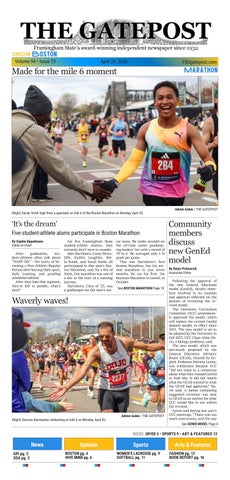
After graduation, student-athletes often talk about “NARP life” - the worry of becoming a Non-Athletic Regular Person after leaving their sport, daily training, and grueling schedules behind.
After they lose that regimen, they’re left to ponder: what’s next?
For five Framingham State student-athlete alumni, they certainly don’t have to wonder.
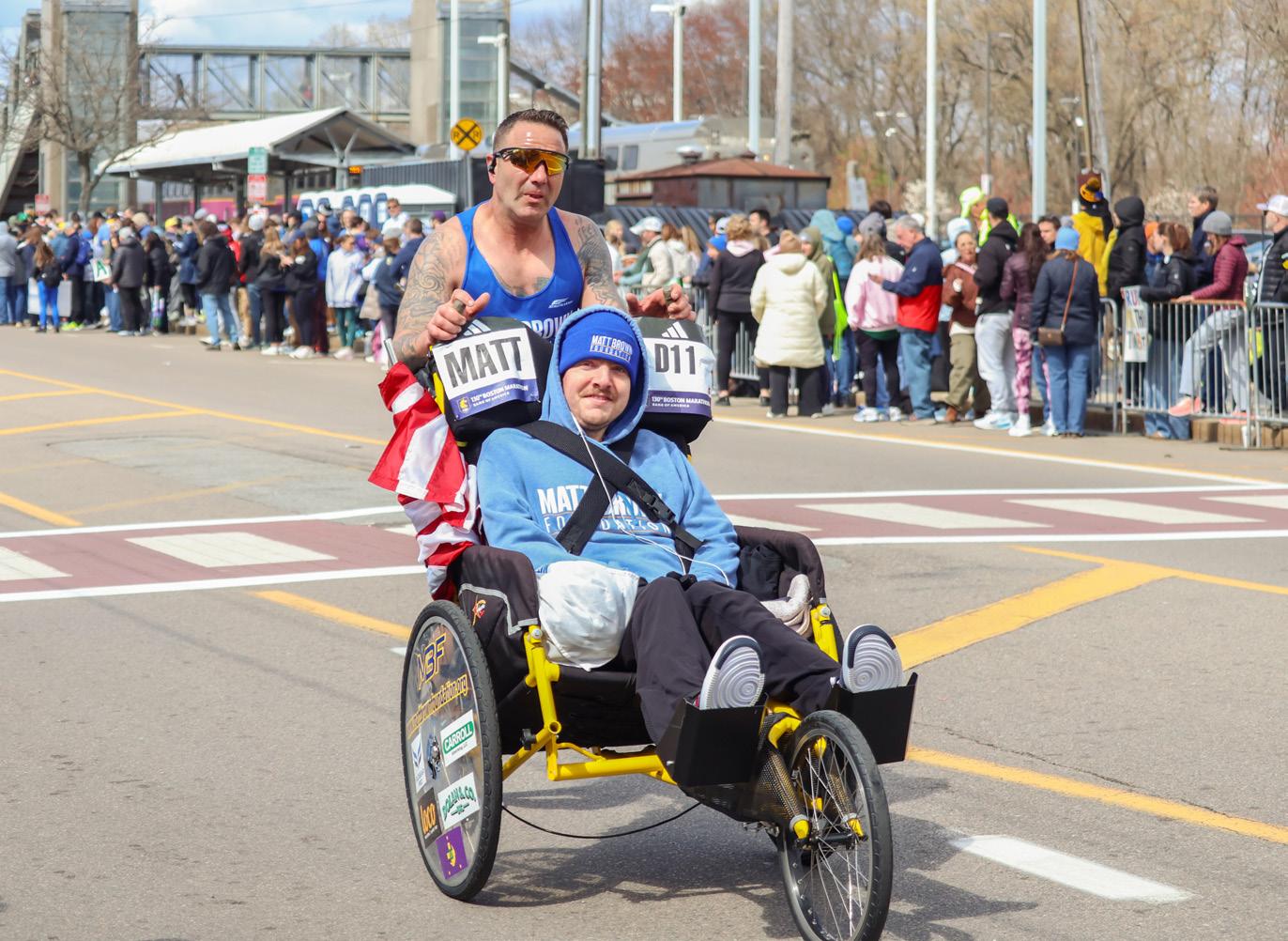
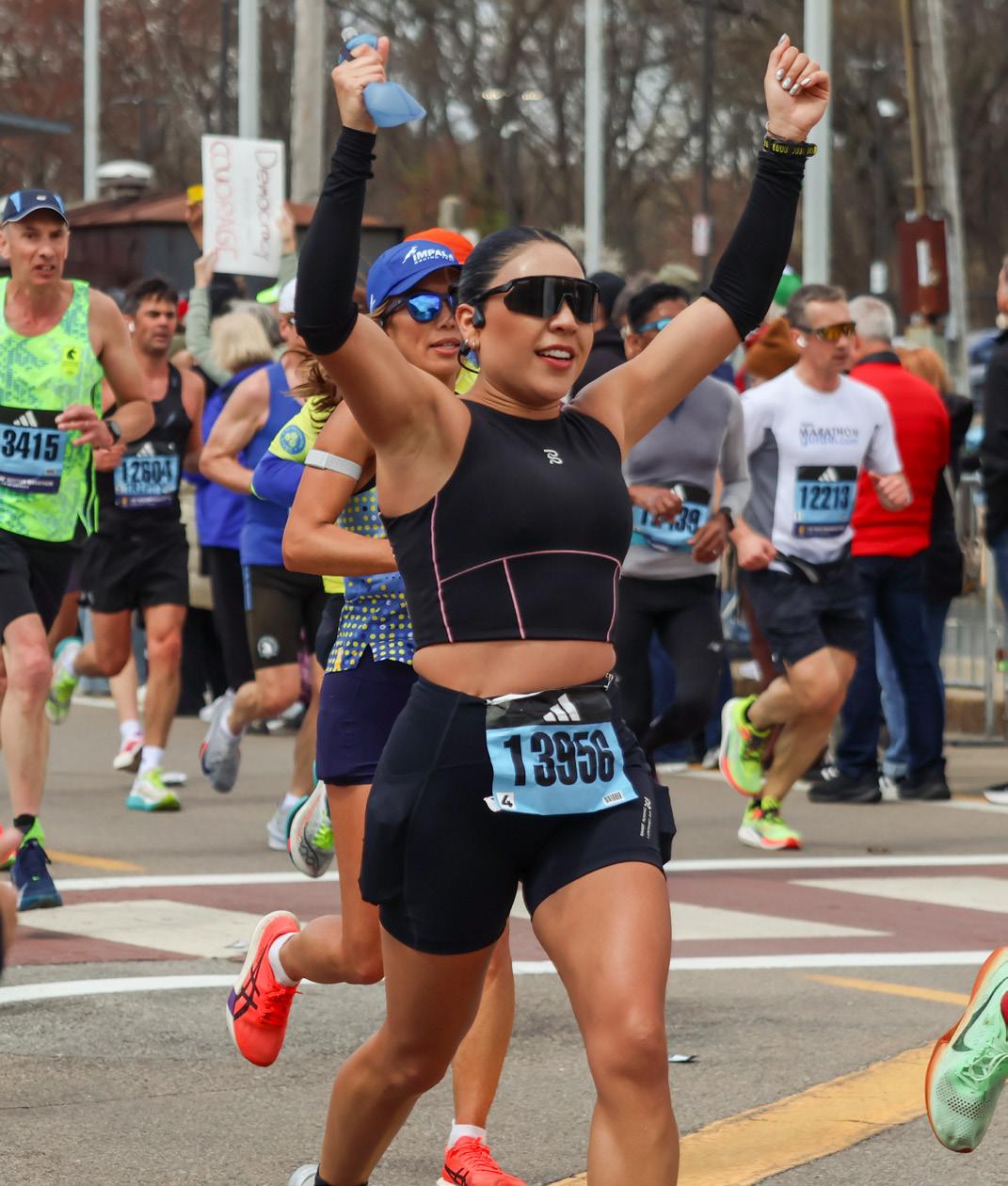
Jake Hartshorn, Casey McAuliffe, Kaitlin Loughlin, Bella Kondi, and Sarah Burke all participated in this year’s Boston Marathon, and, for a few of them, this marathon was one of a few or the start of a running journey.
Hartshorn, Class of ’23, was a goalkeeper for the men’s soc-
cer team. He ranks seventh on the all-time career goalkeeping leaders’ list with a record of 19-16-2. He averaged only 1.76 goals per game.
This was Hartshorn’s first Boston Marathon, but his second marathon in just seven months. He ran his first, the Baystate Marathon in Lowell, in October.
By Dylan Pichnarcik Associate Editor
Following the approval of the new General Education model (GenEd), faculty members involved in its creation and approval reflected on the process of reviewing the revised model.
The University Curriculum Committee (UCC) unanimously approved the model, which will replace the current GenEd domain model, in effect since 2013. The new model is set to be adopted by the University in Fall 2027, UCC Chair Aline Davis, a biology professor, said.
The new model, which was previously proposed by the General Education Advisory Board (GEAB), chaired by English Professor Patricia Lynne, was withdrawn because UCC “did not come to a consensus about what they wanted GenEd to look like. It did not match what the GEAB wanted or what the GEAB had approved,” Davis said. A memo containing suggested revisions was sent to GEAB as an outline for what UCC would like to see within the revision.
Lynne said during last year’s UCC meetings, “There was too much controversy, and the way
Adrien Gobin / THE GATEPOST
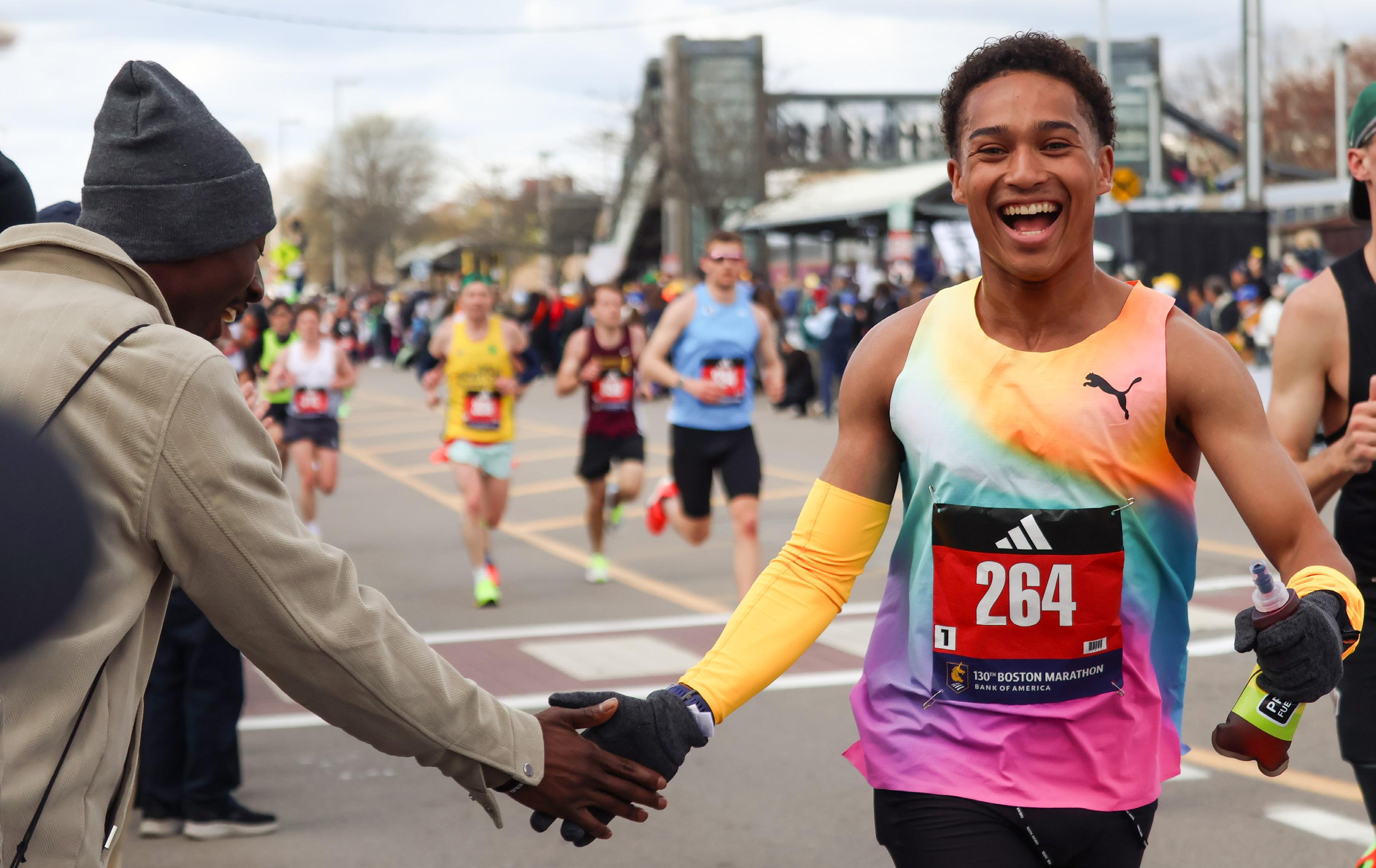
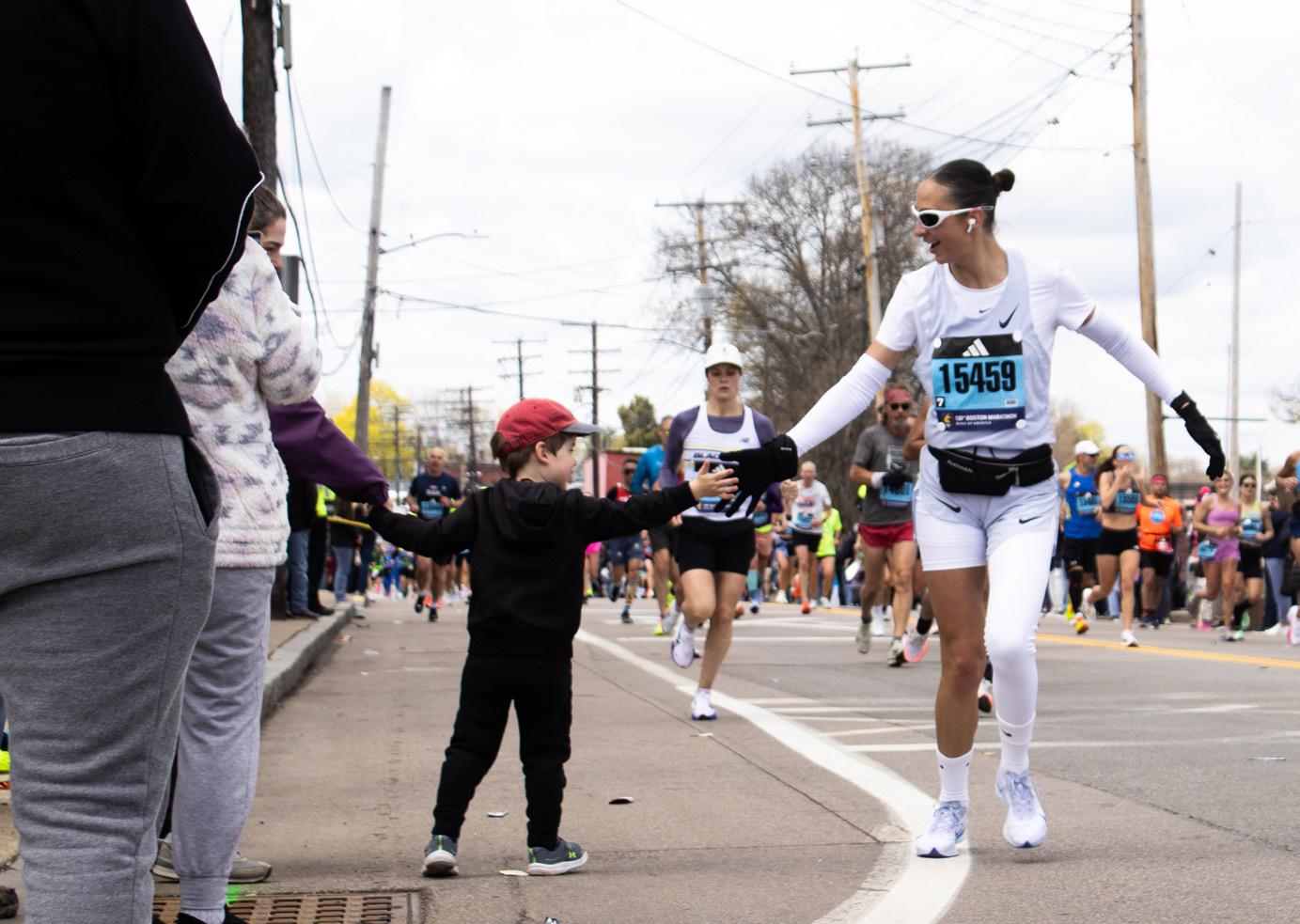
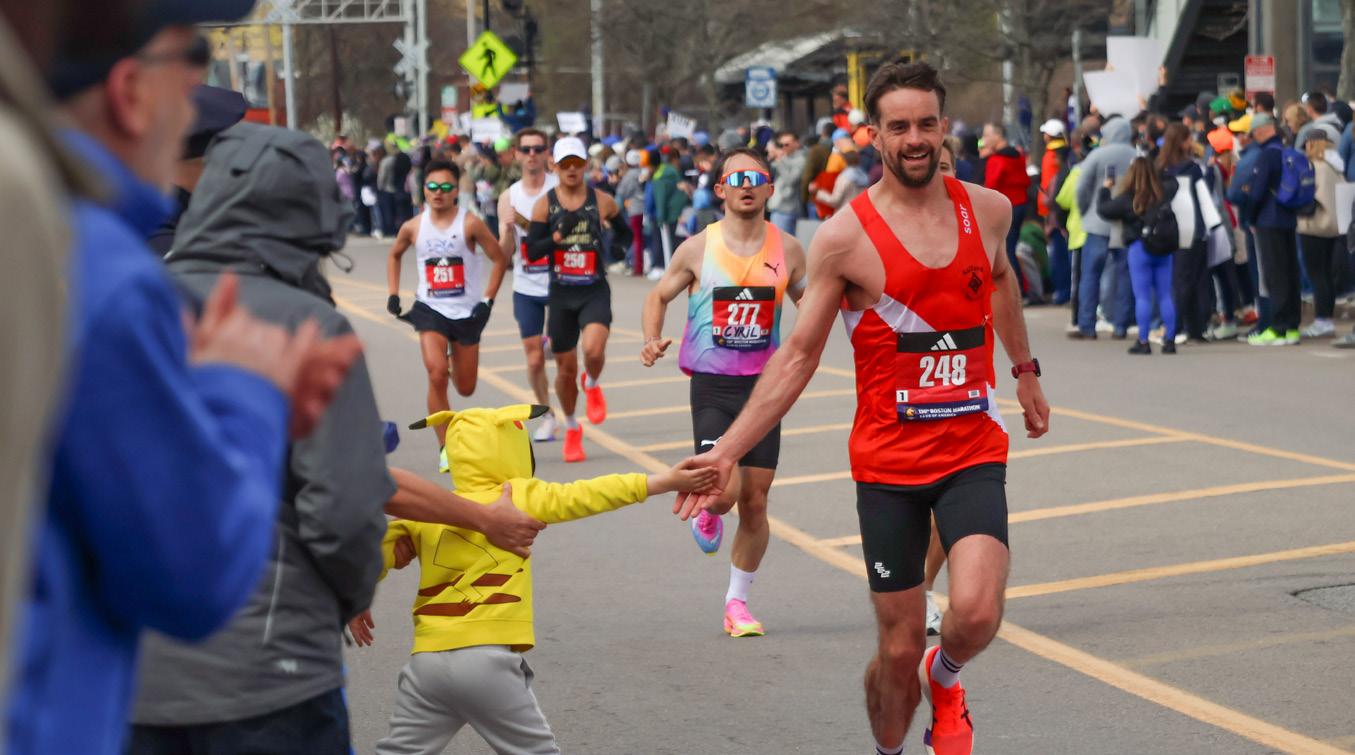
(Right) Xavier Smith high-fives a spectator at mile 6 of the Boston Marathon on Monday, April 20.
Adrien Gobin / THE GATEPOST
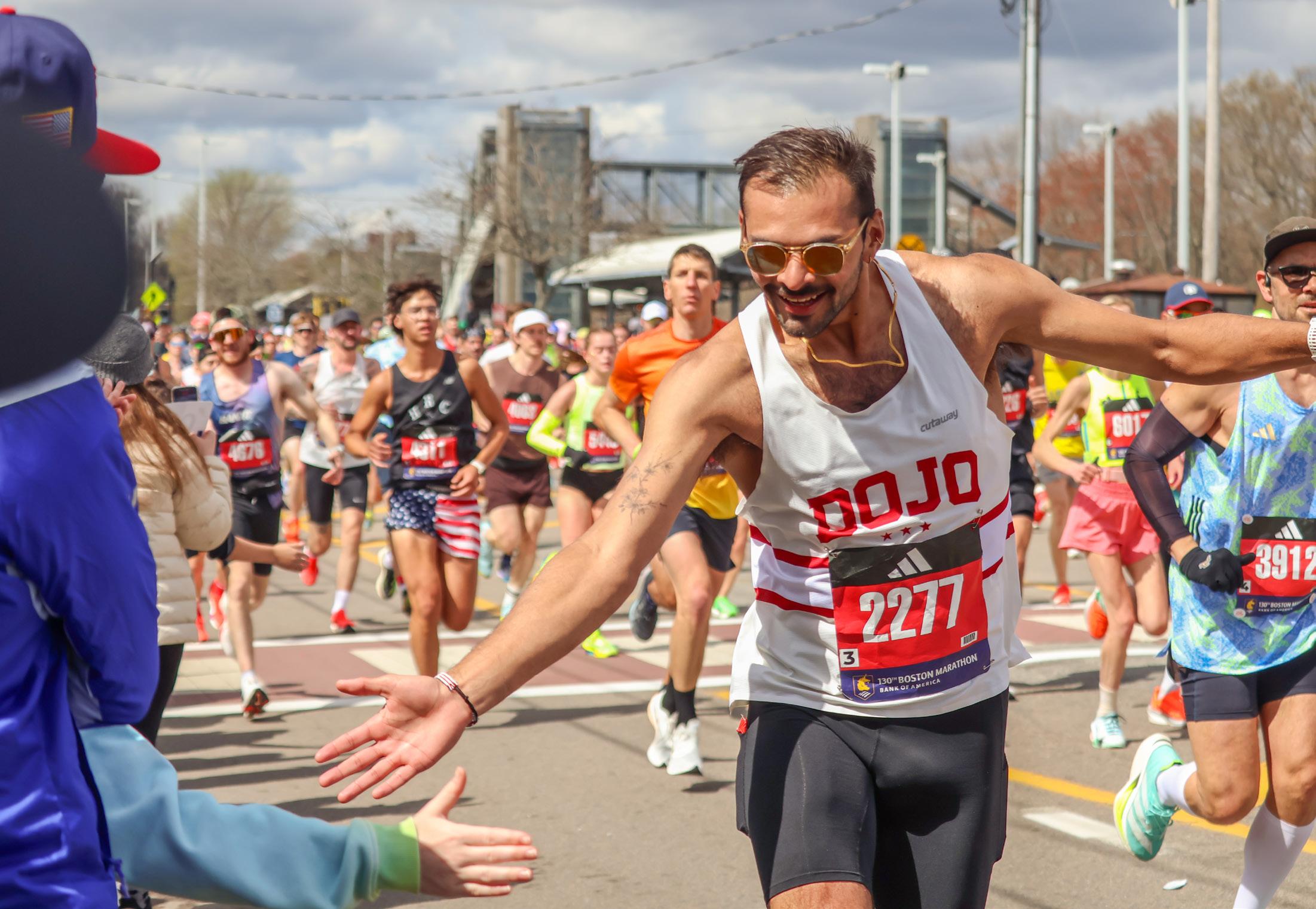
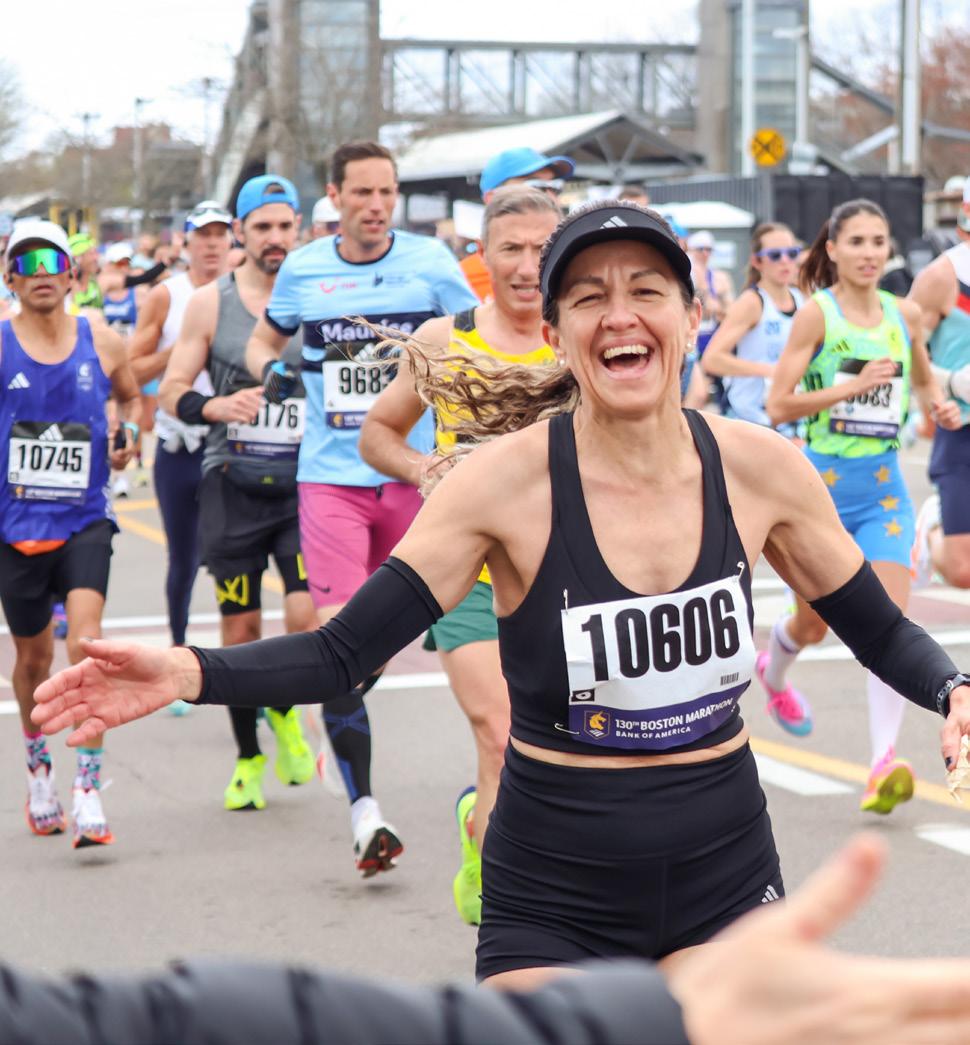
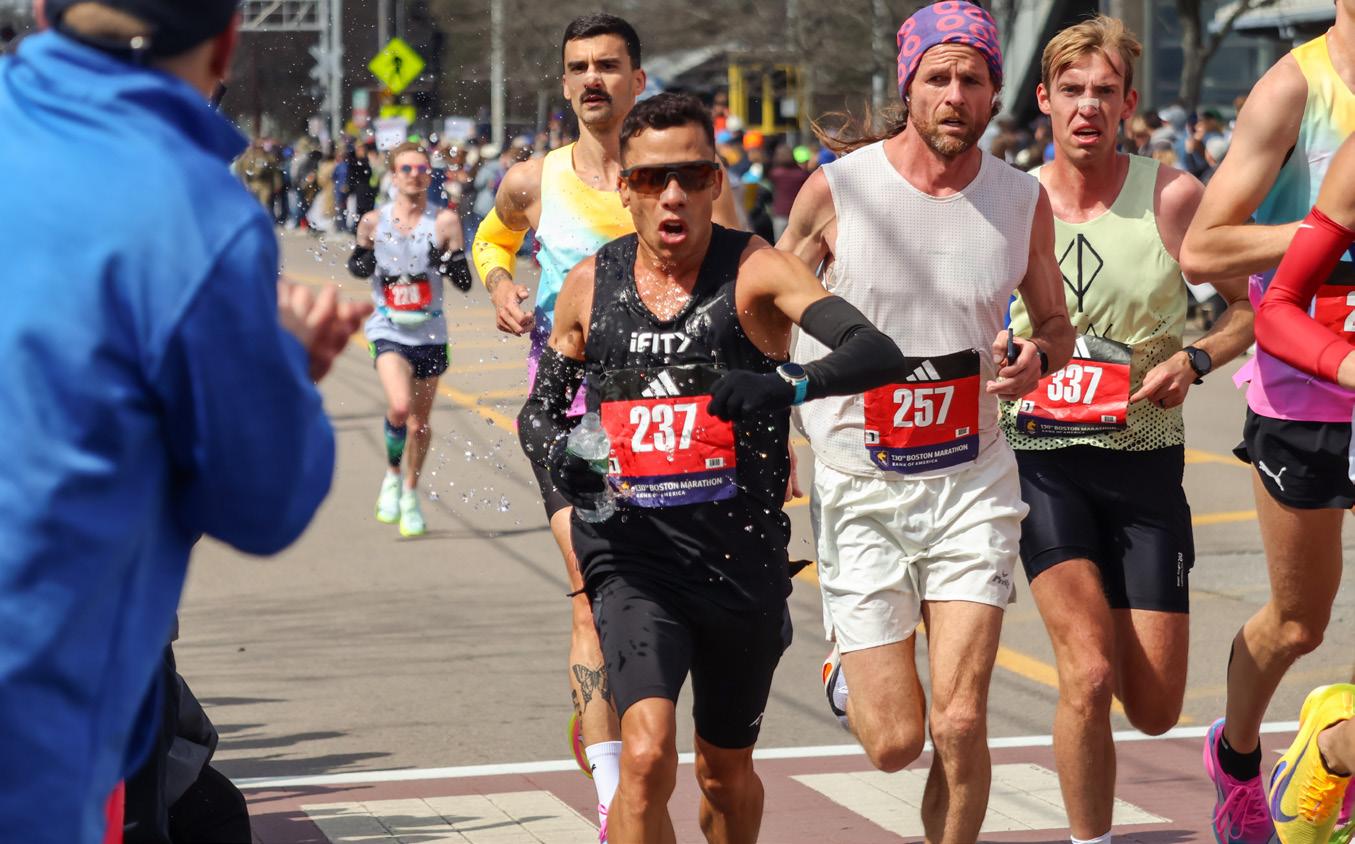
(Right) Samson Ramasamy celebrating at mile 6 on Monday, April 20.
E ditorial Board
Editor-in-Chief
Sophia Oppedisano
Associate Editors
Adrien Gobin
Dylan Pichnarcik
Multimedia Editor
Antonio Machado
Copy Editor
Cole Johnson
News Editor
Bella Grimaldi
Asst. News Editor
Avery Slavin
Opinions Editor
Izayah Morgan
Sports Editor
Izabela Gage
Asst. Sports Editor
Taylor Kimmell
Arts & Features Editor
Francisco Omar Fernandez Rodriguez
Sarah Daponde
Photos & Design Editor
Alexis Schlesinger
Asst. Photos & Design Editors
Christy Howland
Onyx Lovely
Illustrations Editor
Marcus Falcão
Staff Illustrators
Rileigh Kelley
Tobias Cotton-Selman
Staff Writers
Zaynab Ahmed
Desiree Ambila
Jesse Burchill
Kristel Erguiza
Julien Fernandez
Paul Harrington
Dan Lima
Anita Loughlin
Kate Norrish
Wenchell Pierre
Nathan Piette
Staff Photographers
Meg Dame
Advisor
Desmond McCarthy
Asst. Advisor
Elizabeth Banks
Graduate Advising Asst.
Emma Lyons
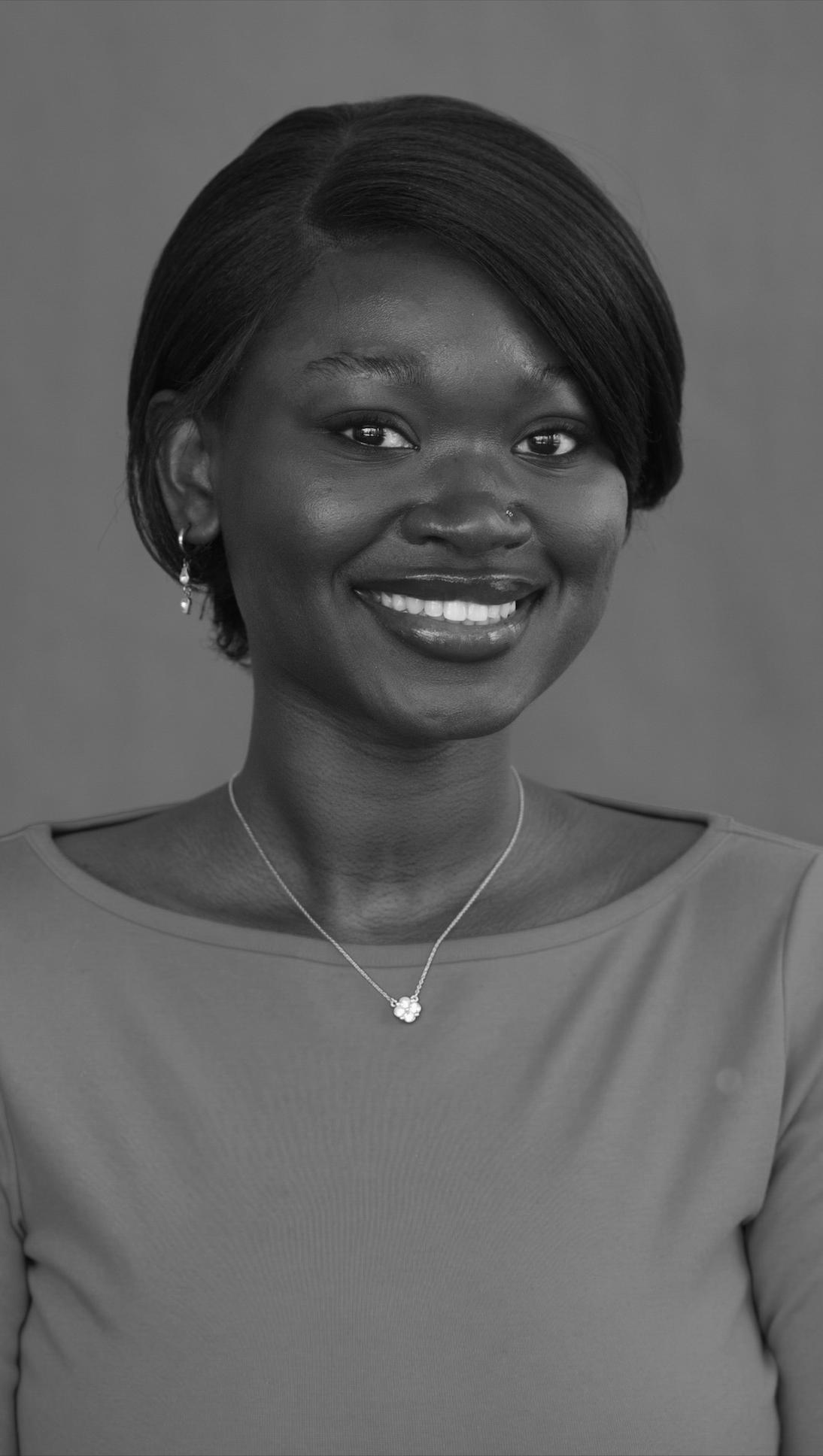
Gatepost Interview Victoria Adeyemi Reservations Office Assistant
By Avery Slavin Asst. News Editor
What is your academic and professional background?
So I actually went to Framingham State for college. I studied sociology. After school, when I graduated in 2021, I worked for Framingham Public Schools. I worked as a COVID test coordinator during that era. I also worked for an after-school program as well. Then, using my sociology degree, I worked in Worcester for Seven Hills Foundation as a therapeutic health mentor. Then I got the opportunity to come work as an admin here with campus events.
What drew you to Framingham State?
Honestly, I wanted a different career. I wanted a change. I was working in social services and it was great. I loved my major and loved my professors. I kept in touch with them. So, I remember when I was looking for more administrative roles, I was like, “Oh my gosh, what about FSU?” And I was so excited. It honestly just kind of came by. I wasn’t necessarily looking for it. It came to me and I was like, “Wait, this is the perfect opportunity,” and it’s been great. I reached out to all my professors and they were like, “Oh my gosh!” The opportunity just kind of came to be and I was open to it.
What do you like best about your role at FSU?
One thing I like about my role at FSU is that a lot of people don’t really know my face specificallythey just know my name through emails. I work in reservations, so basically, I encounter everyone on campus at least once, whether that’s a professor, staff, whoever. So I like that I know people before I actually meet them. When I introduce myself, I’m like, “I’m Victoria from Reservations!” and they’re like, “Oh, yeah!” So I think that’s a cool way to make connections.
What are some of your favorite hobbies?
I really love fashion. I love dressing up to work. It’s my creative outlet. I like trying different things when it comes to that. So, I
guess thrifting is my hobby. Maybe my hobby shouldn’t require spending, but I love thrifting. I just love putting things together. I feel like I’m a very creative person and I need some outlet, so that’s what fashion does for me. I used to act in high school, so that was fun. I don’t do it anymore, but I love creative things like that.
What advice would you give to students?
Making real connections is important. Either someone who is also a student, or a professor, or just anyone. I feel like connec-
tions are so important and it really takes you far. You never know when you might need someone in the future, so making sure you’re being real and intentional about the connections you make while you’re in school is important. Don’t take that for granted. My best friend is getting married in the fall and she was my roommate throughout college, so those are so important. And my professors, I’m still friends with them, too.
Courtesy of Victoria Adeyemi
SGA approves changes to bylaws
By Avery Slavin Asst. News Editor
SGA made changes to four of its bylaws at its meeting on April 21.
President Cesár Matos explained an article regarding office and department funding requests would be added as a new article to the bylaws.
Matos said, “Essentially, the department of funding is assessing the ability for departments to come [request money]. Is this department looking to request money that is going to benefit the staff of that department, or is it going to benefit the students who interact with the department?
“We wanted to be very specific in terms of who the money is going to in that department and who it is benefiting,” he added.
Matos said the department needs to provide information about attendance, the use of the funds, and the impact on the students.
“We want to make our name known as a student government organization on campus, and we are going to provide you with money. We expect to get something as reciprocation, even if that’s just by word of mouth. I’d appreciate that,” Matos said.
He said the misuse of funds and failure to comply with SATF policies may result in limiting funds allocated.
The motion to approve the bylaw passed unanimously.
The second order of business was to approve the Student Affairs Review Committee’s (SARC) bylaws.
The motion passed unanimously.
Next, Matos said SGA sets its own rules and regulations about how money is utilized.
However, he said, if there is any “outlier” already covered by the EXP handbook, they are able to have control of how things are done.
Merlin Clive said a metal part of the roof behind Miles Bibb Hall seemed to be loose, as it has been heard “rattling in the wind.”
Senator Cam Rokes talked about how he has heard complaints from students about there not being enough outdoor seating on campus.
Matos said while he was looking at initiatives from other student governments, he saw a hammock rental program, which he told the Senate to consider for next year if they so choose.
- Cesár Matos
SGA President
“I’ve heard [complaints] probably at least 30 times in the past couple days, whether I’d be passing someone or someone saying it directly to me,” he said.
“ We wanted to be very specific in terms of who the money is going to in that department and who it is benefiting.”
Matos said the explanation for this was to clarify the responsibility of SARC. The motion was approved unanimously.
He then proposed an idea for next year in which eBoard members can “not necessarily remove somebody from their capacity inside of SGA, but essentially to put them in probation and outline exactly why they’re in probation in order to create a guidance plan.”
Matos said they also have a caveat where if a policy in the EXP handbook contradicts something within the SGA constitution or bylaws, SARC can review it and determine the appropriate steps.
The motion was passed unanimously.
The next motion Matos discussed was about removing particular language in election bills, such as “respective classes,” since class votes are no longer done by SGA.
The motion passed unanimously.
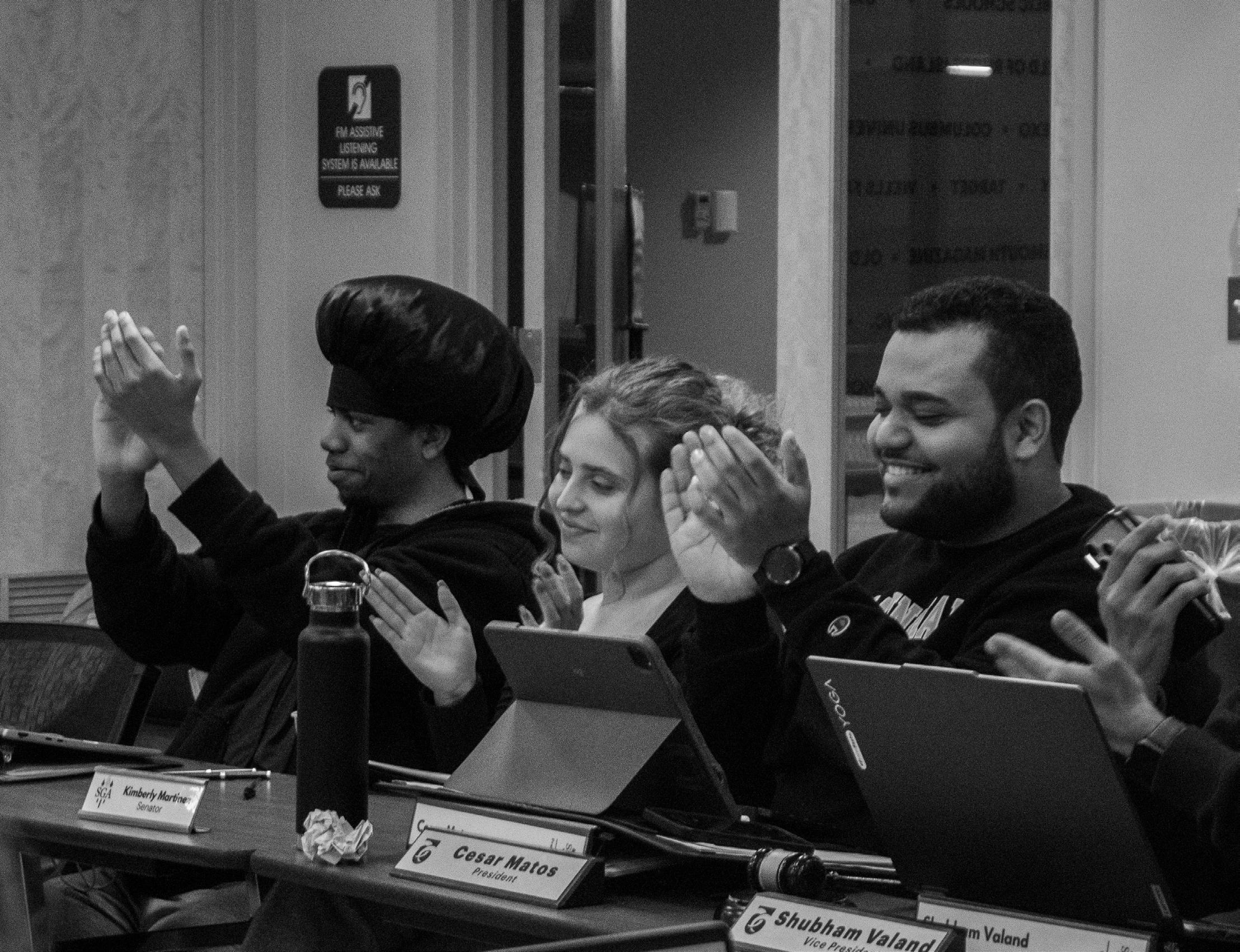
During the open forum, Diversity & Inclusion Officer
Police Logs
Tuesday, April 21 1:10 Suspicious Vehicle, Maple Lot
Tuesday, April 21 2:27 Trespassing, Miles Bibb Hall
Parliamentarian Grant Alleyne said during his freshman year, there were hammocks on campus outside of O’Connor Hall.
SGA Advisor Rachel Speiza said they were removed because of rough weather and possible student misuse, but still said it was a good topic for them to discuss because FSU is always looking for advancements, specifically for outside.
Vice President Shubham Valand said he’s been continuing to work on the Serenity Center. He said he is looking for space to incorporate this initiative on campus and is waiting for approval from the involved departments.
Clive said they are going to make a calendar for the events they’ve been thinking about putting on to promote diversity and inclusion, and asked the Senate for ideas.
Valand said the Finance Committee is thinking about improving funding and purchase requests for next year, such as finding a better way to submit requests and making CampusGroups easier to navigate.
During final announcements, Senator Nathan Piette said the Volunteers of FSU recruitment party will take place Friday, April 24.
Latinos Unidos N’ Acción and Political Science Club are also looking for new general members and eBoard members.
[ Editor’s Note: Nathan Piette is a Staff Writer for The Gatepost. ]
CONNECT WITH AVERY SLAVIN aslavin1@student.framingham.edu
Wednesday, April 22 6:53 Larceny Under $1,200, Larned Hall
Wednesday, April 22 8:06 Welfare Check, Horace Mann Hall
Gatepost Archives
GenEd model
UCC was running, it was not going to move forward as it was. So it was sent back to the General Education Advisory Board with the idea that we would reconsider and bring forward what we felt was best, and we reconsidered and brought forward about the same thing.”
Vinay Mannam, a professor in the Biochemistry, Chemistry, and Food Science department, and a 6-year UCC member, said he believes whenever there is a curriculum change, discussion is warranted. “That’s the purpose of UCC - to discuss the points before we make the change. It’s because it has a huge impact on students.
“So there were a lot of platforms within the committee, and also outside the committee. We had a lot of listening
and two mathematics or science courses.
Nolfo-Clements said the model itself has not changed much since last year. However, “the big thing that we had a change in the new model was to make sure that it was easier for us to assess student learning through the general education model.”
She added the new model was built with assessing student learning in mind, something that has been found difficult to do in the current domain education model. “In our current model, it’s more challenging because the learning objectives don’t necessarily align with the required courses perfectly.”
Nolfo-Clements said a disappointing part of the model was the removal of three requirements, “signature to the institution.”
model. “I see the value of taking a lab course, because science is often [done] in practice. It’s almost like taking an art class without a studio.”
He added, “But at the same time, hearing the arguments to remove it, like over time, like when it’s presented, you can see both sides. And there are ways we can still incorporate active learning, hands-on learningeven in a lecture.”
Nolfo-Clements said the model as a whole reflects the values of the institution “in that it allows students to have the flexibility to explore different areas that they’re interested in. … Also, because we do have a number of transfer students, it’s going to really streamline the transfer process, because the exploratory categories are broader - the learning outcomes are a little more flexible, so it’ll
So from what I’ve heard from students, too, in terms of sharing it in my classes, [it’s] very attractive.” He added he has been in favor of the general framework of the model, and students are happy to see the lab requirement removed. “You know, that requirement that kind of causes existential dread whenever I’m in advising with students.”
Trousdale said she likes that the new model is not “so much of a list of check boxes. By having fewer hyper-prescribed items that students need to address one at a time, we’re giving students more agency to pursue their interests. We’re giving students more opportunities to discover things they might not have known were there.”
Senior Merlin Clive, the student representative to UCC said they were pleased with the
“ The meetings had to be more structured. So you have to say this is the time period when the members of the community can speak, but then we need to stop that, and then only members of the committee can speak.”
- Lauren Nolfo-Clements
STEM Dean
sessions just to kind of consider all the points. So, whenever you see two people argue, it does feel like they’re contentious, but they might be friends,” he said.
Professor of English and UCC member Rachel Trousdale said she credits the work done on UCC this semester to “the very clear and decisive leadership of Professor Aline Davis, who did, I thought, a really admirable job of leading discussions that had room for dissent but didn’t allow the time and space that academics love to occupy with wrangling, and I thought she did a really nice job of making sure that important opinions were heard, but that we didn’t end up chasing our tails at great length.”
STEM Dean Lauren Nolfo-Clements, a UCC member, also said the new leadership of UCC impacted the committee’s proceedings. “The meetings had to be more structured. So you have to say this is the time period when the members of the community can speak, but then we need to stop that, and then only members of the committee can speak.”
Continued from Page 1 CONNECT WITH
The “core” model consists of 10 GenEd courses, making up one-third of the institution’s degree requirements as outlined by Framingham State’s accrediting body, the New England Commission of Higher Education. The University mandates a minimum of 30 credits to obtain a bachelor’s degree. At the core of the model, students will be required to take a RAMS first-year or honors seminar, a Composition II or writing course, one math course, and a world language course. Students will also take two courses in the humanities, two social and behavioral science courses,
These requirements are courses in diversity, technology, and civic engagement, which are not included in the core, but may be included later as “overlays” in the model.
Davis said overlays “match with our mission and values. But one of the things that came out of the GEAB recommendation was that they wanted those courses to be able to be filled by a major course, a minor course, a GenEd course, or a free elective. And given that wide range of courses … it’s not exclusively affiliated with the general education program.”
Davis said because of this, overlays did not belong in the log containing the new GenEd.
“They are being put in as suggested University requirements that somewhere in a student’s curriculum, they have to take a course that addresses this. Our hope is that, for many of them, that courses in the major will address this, because that’s honestly the best way to make sure all the students are going to be able to get it if it’s actually in their major. There will absolutely be GenEd courses that get tagged with those,” Davis said.
Davis said courses that reflect these learning objectives will be reviewed by a separate governance process between UCC and the Academic Policy Committee.
As another part of the new GenEd model, students will no longer be required to complete a laboratory science course as part of their general education requirements - a change Nolfo-Clements said she has mixed feelings about, but she sees the benefits of student flexibility.
Mannman said he was initially opposed to removing the laboratory requirement from the
be easier to transfer your courses into GenEd pretty much fully.”
Another requirement, which was potentially going to be removed from the model, a foreign language requirement, remains in the core. This is a requirement, Inés Vaño García, a professor of Spanish, is pleased to see.
“I still don’t think it’s enough. … We also need to be realistic. How much can you do with one semester, and what are going to be the skills that students have?”
Vaño García said she believes one foreign language requirement is “not what equity means” in relation to other requirements.
“Students have been taking English and math since they were 6, but they have not been taught, they have not been schooled in a language that is not English, since they were 6. So English writing 100 or math 100 is not Spanish, Portuguese, or Chinese 100.”
Professor of Political Science and UCC member Guliano Espino said he believes the approval of the model is a “massive winwin” for students and faculty.
He said, “It seems like those big issues were really kind of ironed out when I was coming in here. My biggest thing that I’m very favorable of is that it’s a very streamlined model, so it’s not going to be students going into these very nice, specific subsets of having to get specific domains out of the way. It gives students a lot more flexibility with the courses that they choose to focus on.”
Espino said he has spoken about the model to students in his classes, and “every student said that they wish they were here when this was the model.
GenEd model.
They added there was a “debate about the use of the word ‘sociocultural’ in a learning objective for the arts and humanities requirement I believe, I was in favor of the use of this language, arguing that art in all forms whether writing, screen play, sculpture, photography, music, murals, etc. has an inherently political and cultural connection to its making as a reflection of its time. A couple of professors did agree with me on this, and tried to push for the use of it.”
They added, “I also felt passionately about this as one of the models we were considering included a diversity requirement that would essentially help students learn more about culture and diversity.
“This was not approved which I did find to be a disappointment and disadvantage to our student body, which is majority students of color including myself as a Mexican American, secretary for L.U.N.A., and as diversity & inclusion officer of SGA. I hope UCC can reconsider this in the next gen ed review, as well as make an effort to encourage professors and other administrators to continue to push for these changes in current and future curriculum that incorporate a focus on diversity,” Clive said.
OPINION
THE GATEPOST EDITORIAL
What happened at the GenEd drawing board?
Last April, The Gatepost Editorial Board published “Proposed GenEd model uninspiring” in response to efforts made by the General Education Advisory Board (GEAB) to update the University’s General Education model.
By the end of the academic year, the proposed model had been withdrawn from the University Curriculum Committee (UCC) with the expectation that concerns would be heard by GEAB and revisions would be submitted.
The Gatepost Editorial Board was pleased that the model was not approved and hoped to see a revision reflecting the values of the University, while offering robust general education to future students.
A year later, a model that is essentially the same was resubmitted to UCC and unanimously approved earlier this April.
After all of the open forums, committee meetings, community input, and a UCC that could not come to an agreement on the model, what prompted GEAB to submit a model so similar?
While some recommendations from GEAB were beneficial to students, such as the removal of a laboratory requirement, which was done to allow students the freedom to explore the University’s course offerings, there is clearly something still missing from the GenEd remodel: flair.
The exploratory model is inherently uninspiring and dull, and does not reflect the vibrancy of a liberal arts education at Framingham State.
The idea that somehow telling students to “pick two” from each college on top of taking a RAMS 101, math, writing, and a foreign language course remains uninspiring.
A way to combat this is to provide clear and engaging descriptions of the learning objectives in each area to effectively outline what skills students should be honing.
With all the freedom in the new model, it will be significantly more difficult for students to find classes that target skills more in line with their major studies, and subsequently, advisors will then be tasked with ensuring students are not overwhelmed by their choices.
Students should feel empowered to take control of their education and make choices that will benefit their future. However, when seemingly countless options are laid out in front of them, it can easily fuel anxiety when selecting courses. The overabundance of choices may lead to requirements slipping through the cracks, and students may fall behind if graduation requirements go unnoticed or unchecked.
While student autonomy and expression will always be at the forefront of what FSU should value, particularly in general education, GEAB failed to submit a model that reflects other values that are part of the Framingham State footprint.
In earlier iterations of the model, educational “overlays” were included and reflected important areas of study in the areas of diversity, civic engagement, and technology.
Each of these subject areas should have been a cornerstone of general education in this new model.
They have now been separated from the model and must make their own way through governance to be included as University requirements.
Framingham State is currently on its way to becoming a Hispanic-serving institution. We also have a rich population of BIPOC students who make up our student body. These voices, these stories, this history should be celebrated and recognized as a vital part of Framingham State’s identity and an integral part of GenEd.
A diversity requirement should have been, without a doubt, included in the exploratory model, particularly to send students out into the world with an understanding and appreciation of different cultures.
College is also a time to develop your own opinions and explore the world outside of your childhood bubble. In the early stages of an FSU education - a time when most students will complete their GenEd requirements, requiring students to take a course in civic engagement would pop that bubble, furthering their free thinking in the way a college education should.
It is particularly vital for students, especially those who are new to voting and the processes of government, to understand the importance of using their voices and developing wide-emcopassing viewpoints as well as learning how to live as civically engaged, ethical citizens.
Framingham State is situated near some of the most influential companies in the world - companies that specialize in software development, e-commerce, and bioengineering, among other fields.
Requiring students to take a course structured around technology could have ignited a passion for business, development, and cybersecurity - a passion that could have been further nurtured by the Colleges of STEM and Business.
The world as we know it has greatly expanded as technology has advanced. Students now have the opportunity to explore a digital world and further their education more deeply than they ever could before. However, being exposed to this environment in an educational setting would have further advanced independent thinking and students’ desire to explore and think critically.
Each College offers a unique set of courses that will challenge students’ intellect and foster a deep sense of desire for further exploration and learning. However, the answer to the question, “How do we give students freedom in GenEd?” was not, “Pick six courses from three colleges.”
However, the University community now finds itself in the position to accept that this is the model that will be adopted in the near future.
What is important now is for faculty members to review the model and make the necessary changes to how they advise students. Ensure your advisees remain on track for graduation. Make sure they are not overwhelmed by the amount of choice they have. Encourage them to review their DegreeWorks each semester.
We are urging faculty to determine how to effectively include these three areas in their course offerings.
The Hive Mind: What happened to bathroom etiquette?
By Bella Grimaldi Editorial Staff
By Avery Slavin Editorial Staff
As college students, we know the horror of a communal bathroom. Whether you have experienced it yourself or someone has told you about using one regularly, you know how bad it is.
The truth of the matter is this could be easily rectified if students did better to take care of their space, themselves, and were courteous to others.
The common courtesy needed in a shared restroom begins with basic hygiene and decency.
Sometimes, it feels as though people do not necessarily care how they leave the bathrooms because it’s “not theirs,” but who wants to use a gross, unkept bathroom?
Pretty much every time we go in, the floor is absolutely covered in puddles.
Unless there is some kind of plumbing issue or problem with the pipes that we are unaware of, we suspect that it’s from people coming out of the shower and not properly drying off.
Walking in and dodging wet trails all over the floor is just an unnecessary way to have to start or end the day.
Speaking of the showers, those are probably the most tame thing in the communal bathrooms, and even then, they are still less than ideal.
Hair covers the walls, and the shower curtains are stained. The stainless steel of the showerhead is rusted and produces a water pressure that is nothing short of frustrating.
Upon arriving at a stall,
we always push the door open slowly, worried about what we might see. It is truly unpredictable.
Some days, the issue may be toilet paper littering the floor. Other times, it’s a wet seat or an unflushed toilet.
in a shared space is absolutely necessary. It is your job to take care of the space you have used. Failing to do so leaves everyone else in a disgusting living environment.
The biggest horror of a shared bathroom is the lack of
The sinks are also always covered in something, whether that be dried toothpaste, hair dye, or bodily fluids that absolutely should not be in a sink.
You should always leave an area cleaner than you found it, and it seems as though many students who live in residence halls generally believe there will be no repercussions for their actions because there are so many people living in the building. Cleaning up after yourself
handwashing people think is acceptable.
Washing your hands is a non-negotiable every time you leave a bathroom stall. Even if you just touched the door, you have subjected yourself to tons of germs that will get you and others sick.
When you wash your hands, soap is crucial. Water rinsing off your hands is not enough because all it does is remove the surface or visual material on your hands. Soap does the hard work by removing the
germs and nastiness that you cannot see, but are there.
Handwashing is the basis of good hygiene, but it is not where it stops.
When coming to college, we were all introduced to shower shoes and the need to use them in a dorm. Shower shoes and footwear in the communal bathroom is not a recommendation, it is a necessity.
As mentioned previously, it is really easy for bathroom floors to get messy and gross. Do you really want your body in contact with random liquids on the floor, or wet toilet paper in a stall?
Wearing no shoes in a communal bathroom puts you at risk of getting infections and spreading germs to others. Not to mention, you bring all those germs back to your room.
Courtesy in a restroom is not just practicing hygiene, but how you practice it.
We understand the need to blow your nose or clear your throat, but there are spaces and ways to do so in a shared bathroom that are respectful to others.
It should go without saying that you should blow your nose or clear your throat into a tissue or a paper towel, and that a sink or a shower are not a substitute. Trust us, no one wants to use a sink or a shower filled with phlegm. The bathrooms are not cleaned enough for that.
Due to the varying and unregulated number of people using a communal restroom, you never know what you are getting in contact with. The best thing you can do is take hygienic and courteous steps to better your shared living space.
If only every day could be like Patriots Day
By Sophia Oppedisano Editor-In-Chief
I grew up in the town where it all starts.
On Patriots Day, my hometown fills with thousands of runners waiting to step up to the Boston Marathon start line to begin their victory lap after months of grueling training, frigid February long runs, and to achieve what is, for some, a lifelong dream.
Going to high school in Hopkinton, I spent year after year rolling my eyes as every visitor began their speech with comments about the marathon start line. It’s the only thing people know about the town.
I know the ins and outs of the timing, the waves, when the roads will open again, and not to drive after dark the night before to avoid the Midnight Marathon Bike Ride.
When I was young, though, it became almost monotonous. Every year, the same Boston Marathon lessons and activities would pass through classrooms and, in middle school, our drama teacher even wrote and directed her own play, “It All Starts Here.”
I remember being fascinated that humans could run for so long, but I couldn’t comprehend the glory, the history, or the importance of that day in April. Then, when I was 11, the finish line was bombed. I remember exactly where I was when I found out and exactly
how I felt when I realized that hundreds of runners wouldn’t finish that day. Dozens were injured. Some lost their lives.
In the wake of that tragedy, I watched as the cities and towns along the Marathon route came together. The care, the hope, and that total “Masshole” drive
impact of humanity, the drive of hope, and the unparalleled importance of coming together.
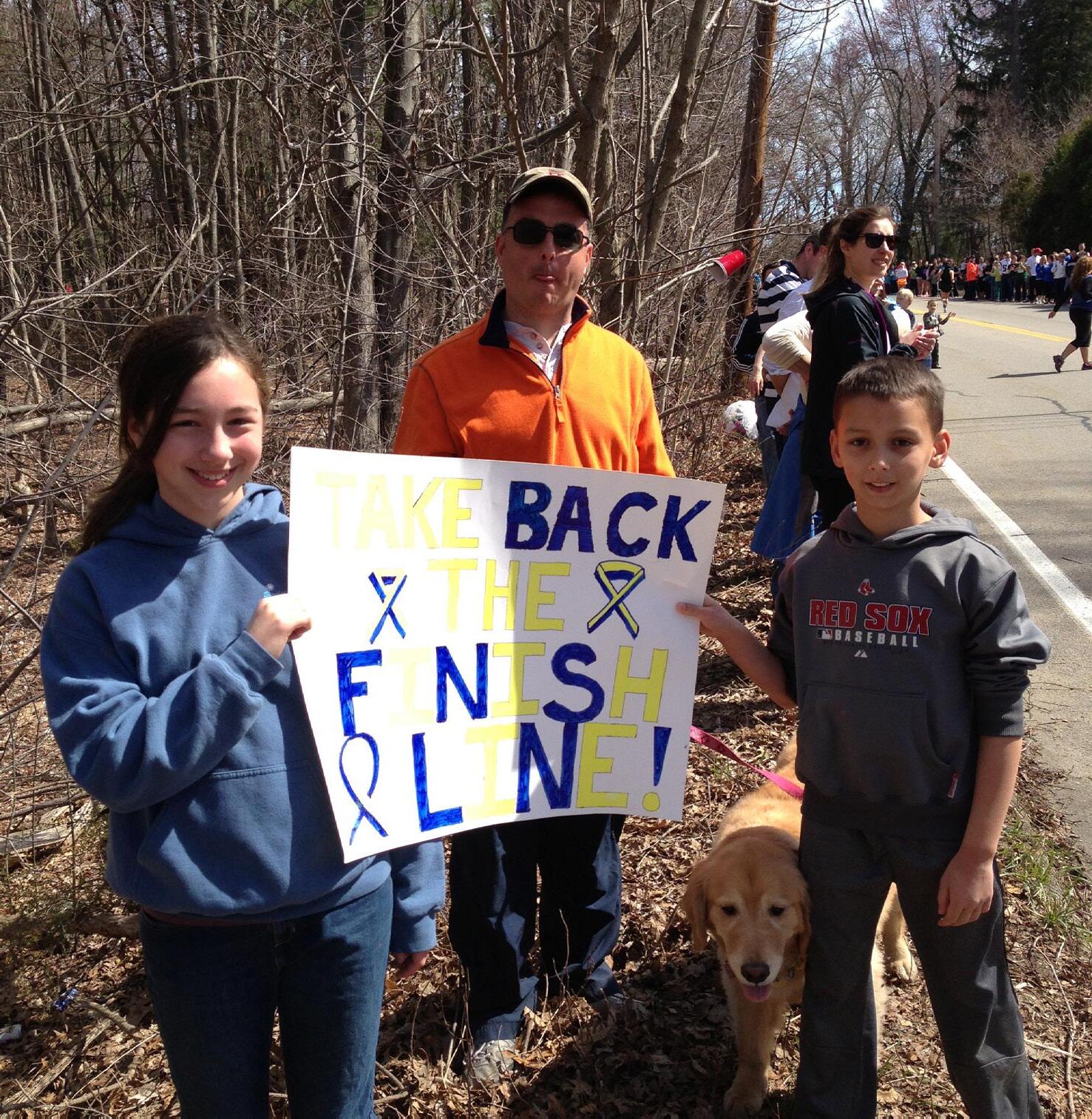
The year after the bombing, my family walked to the end of my street, right at the mileand-a-half mark of the race.
My brother and I held up a sign that read “Take Back
to prove people wrong was inspiring to me.
And it couldn’t have just been me who was inspired. I mean, the Red Sox won the World Series that year.
It’s one of the first times I remember registering the
Courtesy of Sophia Oppedisano
the Finish Line,” and runners stopped to high-five us and take pictures. I remember watching waves of runners crest the hill and the never-ending lines of spectators cheering them on.
“This is where I’m from,” I
thought. “This is special.”
Isn’t that what the Boston Marathon is all about?
So, now, at 23 years old, living in a world where hope is so hard to come by, I live for the Boston Marathon.
While I know every day can’t be marked by a 26.2-mile spectacle featuring thousands of people from out of town, big moments like the Boston Marathon bring out the very best in us.
As we watch humanity and joy wither away with every passing day, we should cling to moments of togetherness and moments of happiness to combat the lonely world we have, unfortunately, become all too familiar with.
Our compassion, empathy, and kindness are not only what make Boston strong - they are traits that make us strong.
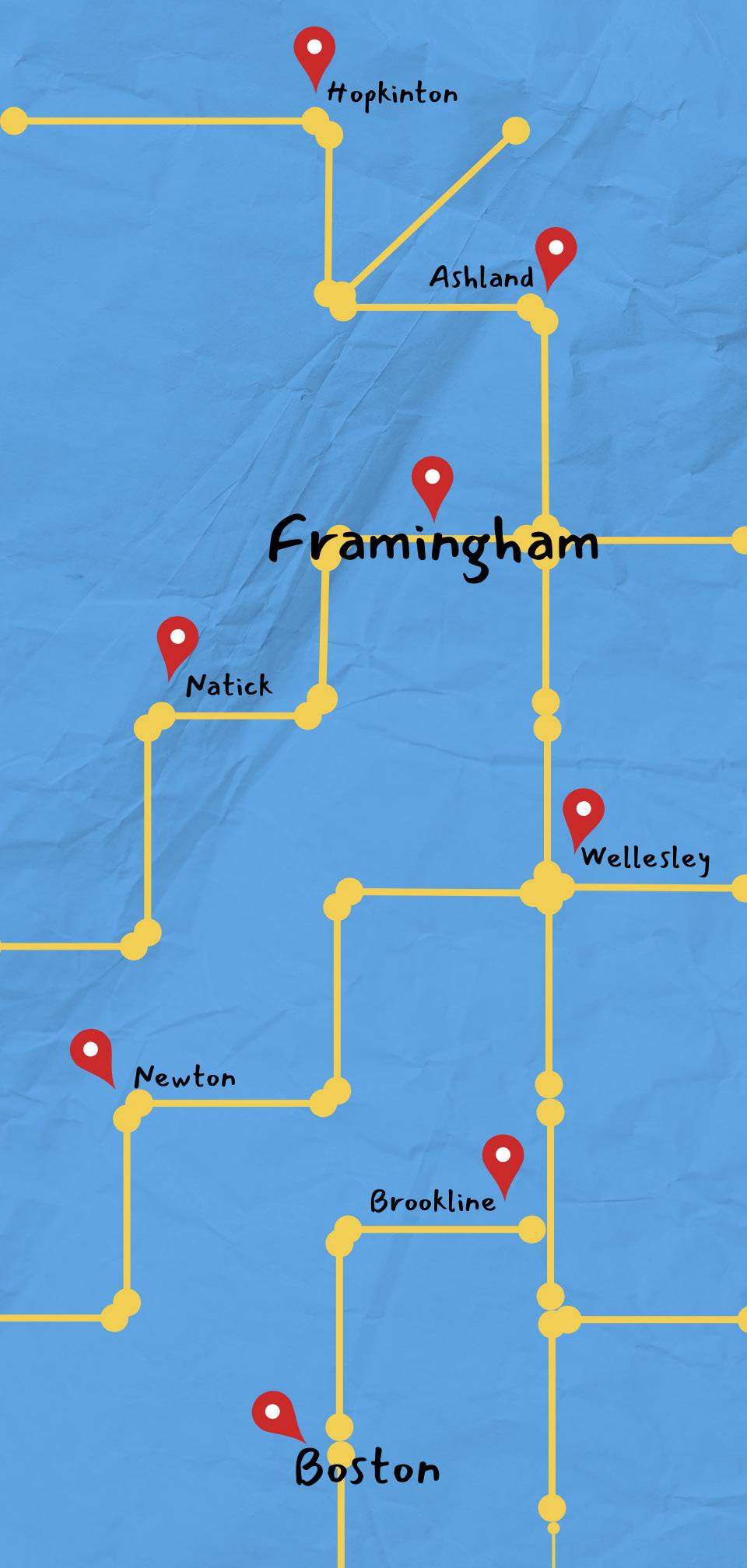
Whether I’m standing at the starting line, mile 6 at Framingham State, or the finish line, the feeling never changes. Framingham State students get up early, walk 2 miles, and get sunburns just to be together.
It’s not something I roll my eyes at the mention of anymore. When my high school friends post about how much they miss Hopkinton on Patriots Day, I want to tell them to run back home.
As much as it’s great to be together on the sidelines of the race, it’s even better to be together every day.
Gatepost Archives
What you know will always be changing COLUMNS
By Alexis Schlesinger Editorial Staff
From the time I was in kindergarten, I knew I wanted to be a kindergarten teacher.
As I started getting older, more and more kids were younger than me. Eventually, I started working at summer camps. I loved working with kids.
What started as a love of learning, evolved into wanting to teach.
Well, that’s what I assumed was happening.
I was good at working with kids, and I loved it. That meant I should stick with it.
Many of my peers had their dream schools and dream jobs figured out by the time they were 12 years old. I knew what I loved, so I had it all figured out too.
When I first started courses at Framingham State, I was an Early Childhood Education major, with plans to run cross country in the fall, and track and field in the spring.
When I tell people that now, they look at me like I have two heads.
It didn’t take long for me to realize what I had wanted when I was young wasn’t what I wanted anymore.
I was, for lack of a better word, miserable in my education classes. Seemingly, I was the only one in the room that felt that way, so I assumed it was something wrong with me.
How could I be so unhappy pursuing what I had always wanted?
After barely making it through my first semester, I decided to stick with it until at least the
end of my freshman year. Maybe I just had a rough transition.
It really didn’t make much of a difference. I actually got more miserable - raise your hand if you’re surprised!
Outside of classes my freshman year, I had found extra time to pursue my creative hobbies, especially
Eventually, I realized I didn’t want it to be an escape anymore. I wanted it to be my reality.
So I finally ripped the bandage off, and switched my major to Communication Arts.
Switching my major was a relatively simple process. My academic advisor was incredibly helpful in connecting me with the Communication Arts
photography. I was slacking off in my classes to spend more time on that, truthfully.
I joined the Photo & Design section of the newspaper, and became a member of the radio station.
The arts became everything to me. It was an escape.
department, and all I really had to do to switch my major was fill out a quick online form.
The switch being simple didn’t necessarily make it easy.
I was grateful, of course, that it was so easy to change my major on paper. Emotionally, I felt conflicted.
I felt like I was breaking a
promise to my younger self, to my professors from the past year, and to the students I “would have taught.”
As corny as it may sound, there were two things that pushed me through those negative thoughts.
One, it was always possible to go back.
Two, it didn’t matter if changing my mind multiple times caused me to take longer to graduate - everyone’s timeline is different.
Now, I know I wouldn’t change my career path for anything else in the world, but at the time, knowing I could always change my mind again was comforting.
Another thing I quickly learned after starting my communication arts courses the following semester was that I wasn’t breaking any promises like I thought I was.
I’d be doing myself, and those around me in my career, a greater disservice by staying somewhere that didn’t fit me. I wouldn’t be happy, so I wouldn’t be able to work to my full potential.
It’s also important to note, that even after all this, it didn’t mean my younger self was wrong about what she wanted.
Up until my freshman year, I did know I wanted to be a teacher. However, it was because I didn’t know there was another option for me.
Now, I know I want to be a concert photographer and a tour manager, and I’m lucky enough to be both of those things.
Someday, what I want might change again.
For now, I know what I know now, and that’s enough.
Courtesy of Alexis Schlesinger
Campus Conversations
“What class have you enjoyed most this semester, and why?”
By Alexis Schlesinger, Editorial Staff, and Desiree Ambila, Staff Writer
“Microeconomics with Vernon Aurelio‘The Wolf.’ Best professor on campus.”
- Michael Marcucella, freshman
“Dr. D’Andrea’s RAMS 101 philosophy class, because Dr. D’Andrea is the best, and he’s very knowledgeable and wise.”
- Madison Verdoia, freshman
“Probably my philosophy class. … I like hearing everyone’s perspectives that they give on readings that we do.”
- Jonathan Sundberg, sophomore
“ I’d probably say my Advertising and Promotions class. I like the teacher. He brings good energy, and the topic is interesting.”
- Giancarlo Totino, sophomore
“I would say Information Systems Research. We do surveys and interpret charts.”
- John Houre, senior
“Intro to Java. I like the way we work out the problems in class. It’s very fun.”
- Nathan Agra, freshman
“I’m taking a new course that was introduced. It’s called Thinking Like a Lawyer. … I like how it’s a course offered during my time at FSU, so it will prepare me when I graduate to take a very important exam.”
- Yas Mendez, senior
“Probably marketing - it’s pretty easy. It’s a good time. I have a few friends in there.”
- Aricin Griffin, freshman
“I’m really enjoying my precalculus class because I have a newfound understanding of mathematics.”
- Nat Natarajan, freshman
“None of them. I’ve struggled this whole time, and I’ve been mentally exhausted for the past two semesters. The professors are no help.”
- Kaylee Chace, freshman
“Visual Communications. It’s a good class to take, and I have a lot of friends in there.”
- Gavin Shlosser, freshman
“Intro to Math, with Bobby Paige.” - Saeed Micks, freshman
SPORTS
Women’s lacrosse bests Anna Maria in 15-0 shutout
By Taylor Kimmell Asst. Sports Editor
In a conference matchup April 18, the Framingham State Rams defeated the Anna Maria Amcats, scoring 15 goals in four quarters and improving their conference record to 3-2 and their overall record to 6-8.
Senior Kelley DeBellis won the opening draw control for FSU, and, not a minute later, freshman Jenna James found the back of the net, assisted by freshman Kate McGovern.
Another DeBellis-dominated draw control put the ball in motion for her to score Framingham’s second goal not 30 seconds following the first.
DeBellis won the third draw control as well. Then, a foul by the Amcats awarded the Rams a free position shot. Sophomore Madeline Bosma stepped to the arc, but her shot went high.
Still, Anna Maria struggled to defend their net, failing a clear attempt and earning a yellow card before James came in for a ground ball pickup to gain possession for the Rams.
A pass from Captain Alessia Lye, a senior, to Bosma allowed the latter to net a third goal for Framingham.
Anna Maria’s goalkeeper, Grace Holden, pushed back against the Rams’ next few shots, preventing goal attempts by McGovern, freshman Katie Pizzardi, and sophomore Emma Kendzulak.
A yellow card against the Amcats allowed the Rams to find the footing to score again, with a free position shot by Lye finding the back of the net.
McGovern scored just over a minute later off a pass from Lye, increasing FSU’s lead to 5-0.
Within the same minute, James netted Framingham’s sixth goal unassisted.
The ensuing draw control was won by Pizzardi, but the Amcats managed to force a turnover, making an offensive drive for the
first time during the match.
Anna Maria’s possession was cut short by Framingham freshman Kylie Thomas, who caused a turnover.
Possession altered for the final 4 minutes of the first quarter, seeing shot attempts by Bosma, Kendzulak, James, and Anna Maria’s Hannah Pratt.
Bosma said the Rams’ early six goals “definitely gave us a lot of confidence. It helped us settle into our game and play more freely instead of feeling pressure later on.”
Framingham maintained control of the match during the second quarter, with a strong offensive push early on that allowed McGovern to find a gap in the Amcats’ defenders to shoot, but the ball was saved by Holden.
After the shot, the Amcats battled back with a successful clear attempt, but Thomas forced another turnover and the ball returned to the Rams’ possession.
The Amcats failed to clear the ball a minute later, and another strong press by FSU resulted in McGovern earning a free position shot, which she sank into the back of the net to bring the score to 9-0.
Less than 20 seconds later, after DeBellis won the next draw control, Lye was able to put the ball into Anna Maria’s net once again.
James and sophomore Sarah Lewis followed suit with goals of their own within the next 2 minutes, increasing the Rams’ lead to 11-0.
The Amcats managed to make a strong enough drive to shoot on FSU’s net, but sophomore goaltender Allison Wurms defended the goal and saved the shot.
Anna Maria’s defenders held strong for the next 5 minutes, preventing shots by Lewis, James, and a free position shot by Kendzulak.
With a minute and 40 seconds left in the quarter, McGovern passed the ball to Kendzulak, who netted a shot to further bolster the Rams’ lead.
Although Anna Maria won the next draw control and forced a foul by Kendzulak, Framingham still fought to gain possession, with a turnover and ground ball pickup by junior Olivia Berggren
starting another drive.
The Rams cleared the ball and, in the final seconds of the half, Lewis attempted to score, but the shot went wide of the net.
In the opening minutes of the second half, the Rams again made efforts to stay on the offensive.
James sent in a shot two and a half minutes in, but it was saved by Holden. Holden was unable to prevent the Rams’ next scoring attempt, neglecting to save a hard shot by Pizzardi.
Sophomore Gabby Foster won the next draw control for Framingham, kickstarting the action that led to Thomas scoring the Rams’ 14th goal on an assist from Kendzulak.
Anna Maria’s offense picked up over the next several minutes, making it close enough to FSU’s net to attempt a shot. Sophomore goaltender Makayla Harvey, stepping in for Wurms, presented the shot and put the Rams back on the offensive end.
Harvey saved another Amcats’ shot 3 minutes later, setting FSU up for a successful clear attempt and allowing a goal by Foster soon after.
With just over 2 minutes left in the third quarter, the Amcats won the draw control and attempted to find openings in Framingham’s defense, but were unsuccessful.
Harvey saved another shot, then the Rams’ offense worked to run down the clock for the final minute of the quarter.
The Rams continued to make strong moves on offense in the final quarter, with a shot by junior Nicole Sheehan in the opening 20 seconds that was saved by Holden.
Despite the Amcats’ attempts to clear the ball, the Rams continued to push, eventually forcing a foul and earning a free position attempt. Foster took the shot, but Holden remained vigilant in the net and prevented her from scoring.
FSU’s offense remained steady, keeping the ball on the Amcats’ side of the field.
Foster attempted another shot about 3 minutes after the first, but it went wide of the net.
The next shot came from Sheehan, with Holden making
another save.
The final minutes of the match saw two more shots each from Sheehan and Lewis, but none found the back of the net.
Anna Maria made a final defensive push during the last minute of the match, holding off any other scoring attempts by the Rams.
The clock hit zero, sealing the deal on a decisive 15-0 victory for Framingham.
Bosma said, “Winning by a big margin is great for our confidence as a team.
“We’re also focused on staying humble and continuing to improve. Every game is a chance to get better, especially as we get closer to playoffs,” she added.
Bosma said the Rams found success on offense because they stayed “really disciplined and kept pushing the pace. We moved the ball well, took smart shots, and worked together as a unit for the full 60 minutes.”
This win improved FSU’s conference record to 3-2.
Bosma said while having a winning conference record is exciting, “Our mindset is to stay focused and not get too comfortable.
“Overall, I’m really proud of how the team played today. Everyone contributed, and we’re just going to keep building off this momentum,” she added.
Framingham hosted the Mass. Maritime Buccaneers for a conference matchup April 21, winning the match 19-8.
The Rams unfortunately fell to the Plymouth State Panthers 14-8 in a non-conference matchup April 22.
Following these matches, FSU’s overall record stands at 7-9 and their conference record improved to 4-2.
The Rams will host the Bridgewater State Bears for a conference matchup April 25 - their last game of the regular season. Bosma said, “We’re taking things one game at a time and preparing to compete at a high level going into the playoffs.”
Adrien Gobin / THE GATEPOST
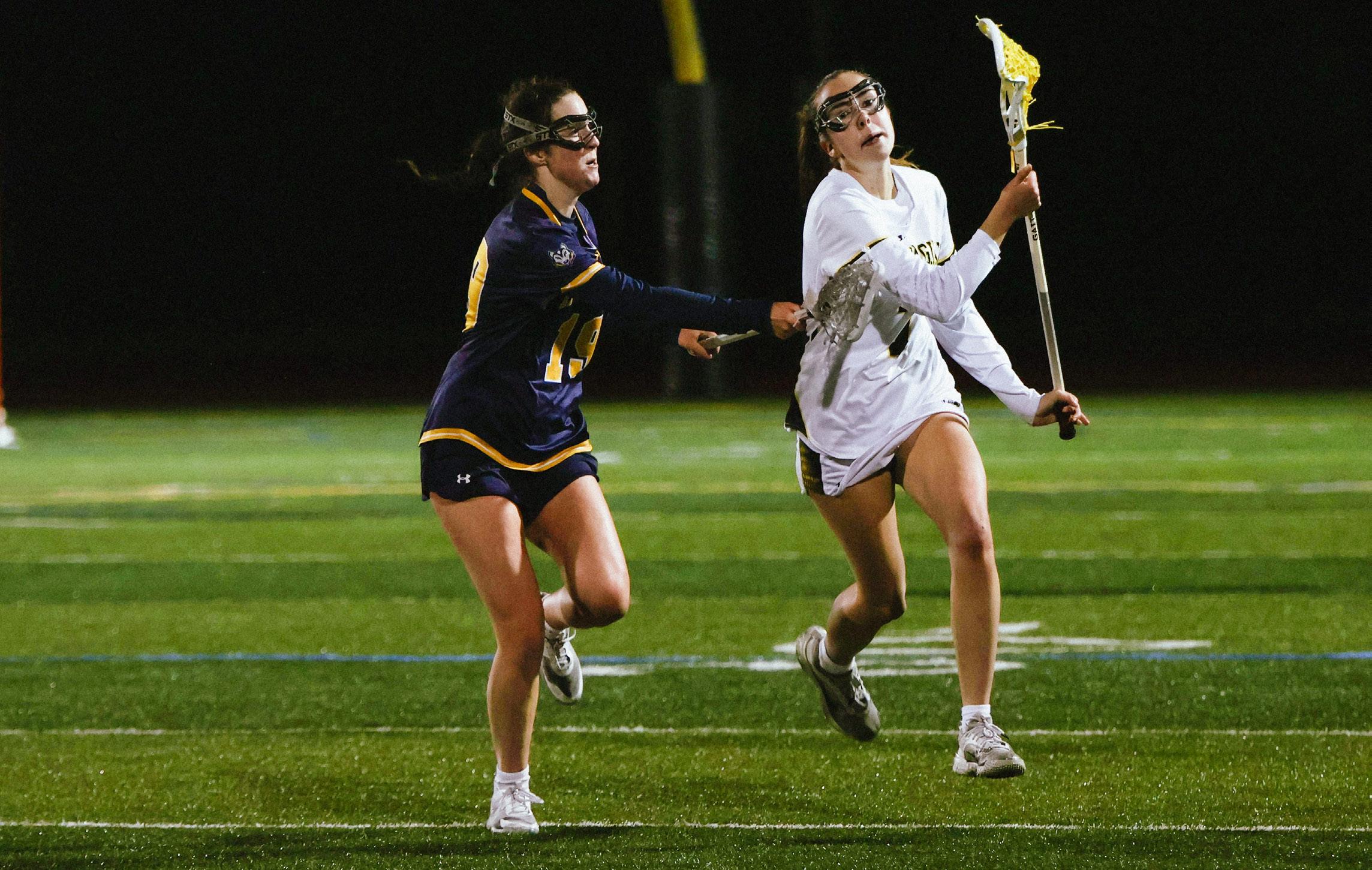
(Right) Kelley DeBellis avoiding a defender in loss against University of Southern Maine on April 1.
Adrien Gobin / THE GATEPOST
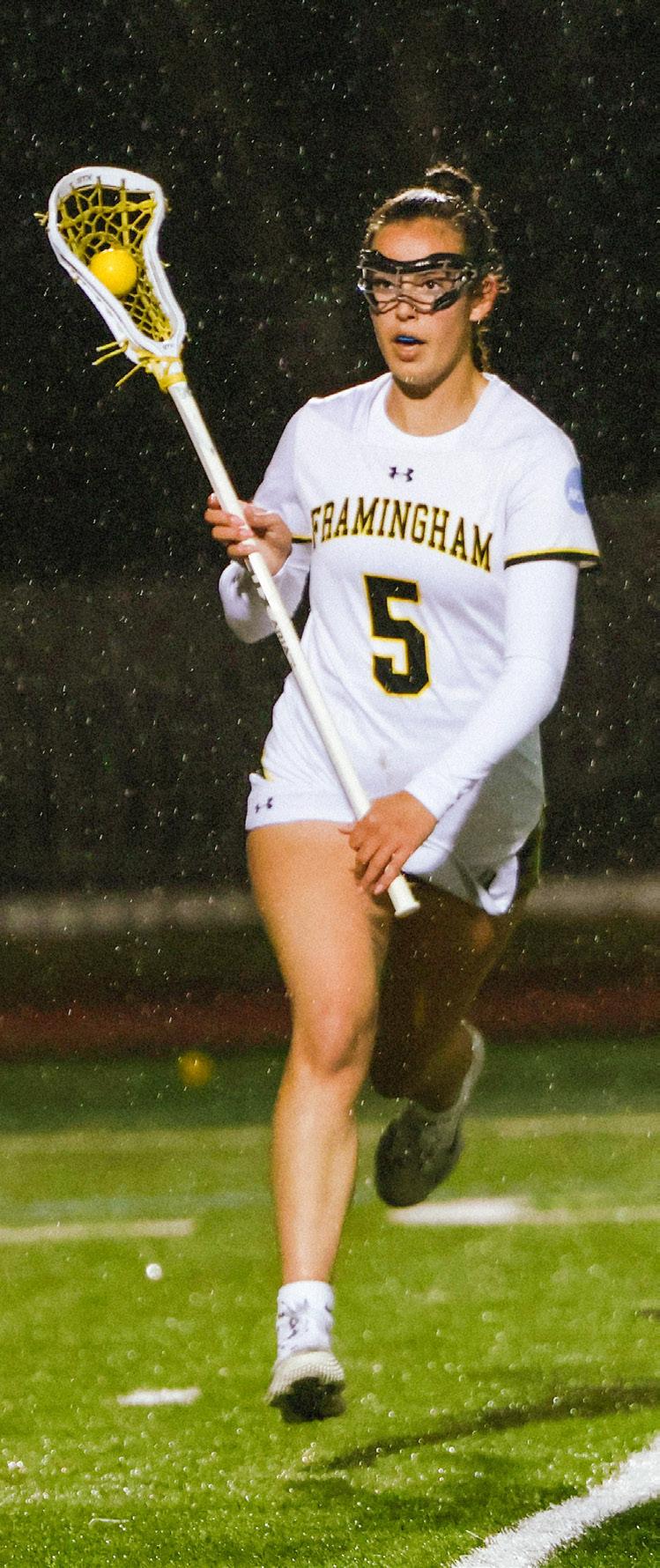
Katie Pizzardi running with the ball in loss against University of Southern Maine on April 1.
Boston Marathon
Continued from Page 1
Hartshorn works as a police officer in Chelmsford and ran his first Boston Marathon for Cops for Kids with Cancer, an organization that helps save families from eviction and pay down overwhelming bills.
He raised $10,000, and his team raised just under half a million dollars for the organization.
After running his first marathon in October, Hartshorn said the training for Boston was “tough.”
He said his winter training included lots of running on ice and salt and brutal stretches of harsh weather.
“It was tough on the body, but I got through it, and it was definitely all worth it. In the end, it was about 16 weeks of prep,” Hartshorn added.
His time as a student-athlete at Framingham State instilled in him “a drive, discipline, and passion” that helped him pursue his goal of training for and running Boston. He finished in 4:08.
Hartshorn’s favorite part of the day was “having 26 miles of packed sidewalks and people screaming the whole time and asking for high fives. It was honestly surreal, and the atmosphere - I’ve just never felt anything like it,” he said.
Now that he has Boston under his belt, Hartshorn is looking to run all of the World Marathon Majors. “It’s an ambitious goal. … I’ll just take it one race at a time and see how far this running journey goes,” he said.
Casey McAuliffe, also a member of the Class of ’23 and a fellow police officer serving in North Reading, was also out on the course.
McAuliffe played basketball for four years and helped the Rams win two MASCAC Championships in her freshman and junior years. In her senior year, McAuliffe joined the women’s track and field team and won the MASCAC title in the 10k race, earning her a spot on the MASCAC All-Conference team.
The Boston Marathon was McAuliffe’s first marathon, and she ran for the Boston Police Foundation, an organization that invests in special equipment, advanced training, new technology, officer safety and wellness, and youth outreach programs.
McAuliffe also raised $10,000.
To have Boston be her first marathon was “the dream,” McAuliffe said. She knew she wanted to run for a charity that meant something to her, but raising the money and getting to run on a course that is so familiar “made it even better,” she added.
McAuliffe started training in November and said the process was “definitely a journey” because of the weather. “At times, I felt like it was a part-time job, but the day made it worth it. I look back, and I think, ‘Oh, that wasn’t really that bad! I could do it again,’ but during the training block, I was like, ‘Oh, my God, this is brutal.’”
Even though the training was difficult, McAuliffe said it’s a completely “natural” feeling to work toward a difficult goal. Growing up as a student-athlete helped McAuliffe feel like going out for runs was just like going to practice.
“Growing up an athlete, you
definitely have an advantage while you’re training for something like a marathon just because your mind has been there before,” she said.
McAuliffe said running past Framingham State students and through the Wellesley Scream Tunnel helped keep her going on the course, and “seeing my family at the finish line, my friends, and my boyfriend made it all worth it.”
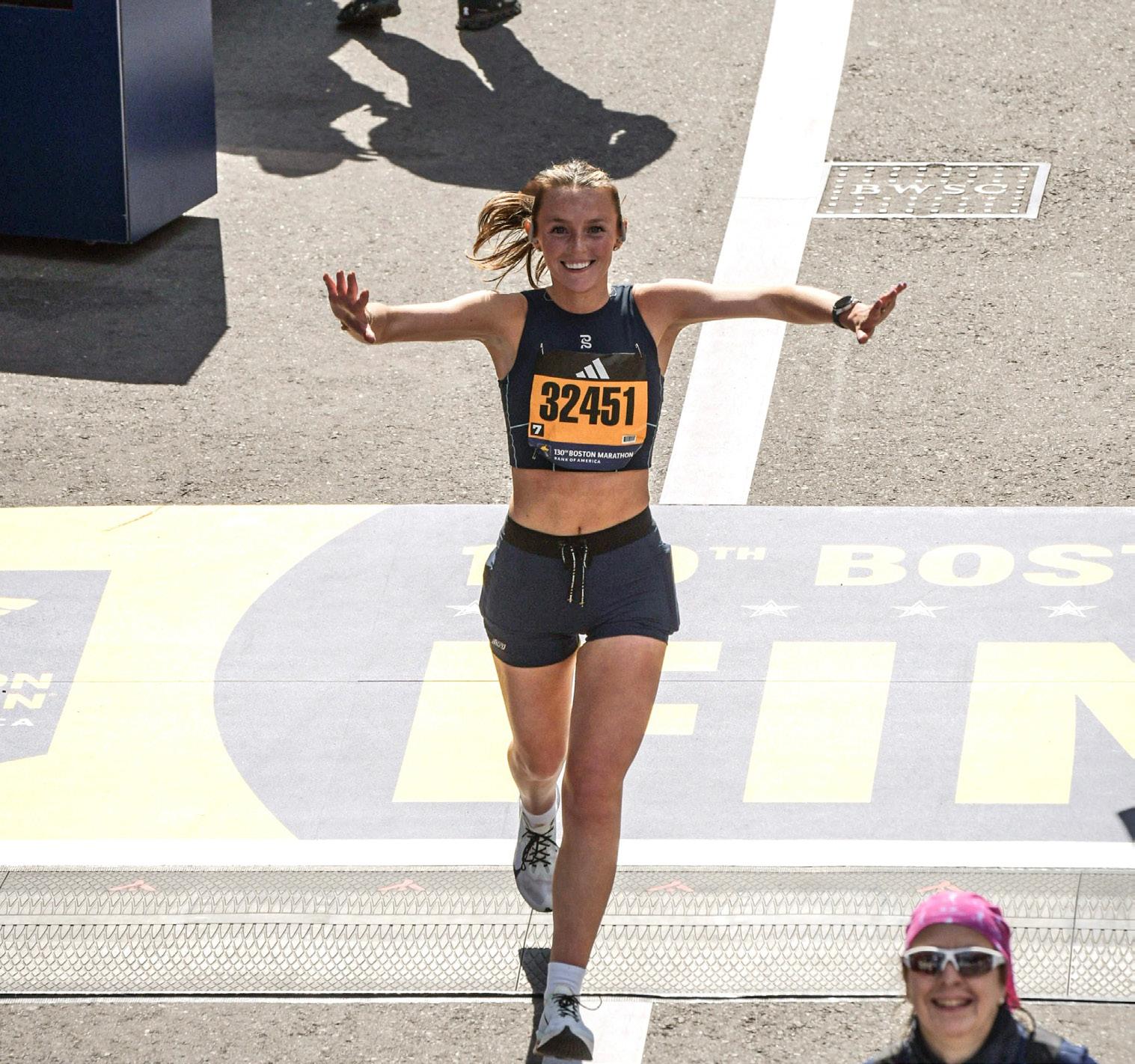
She ran through the finish line in 3:55 - a stellar finish time for her first marathon. “It was just so emotional. I cried, I swear to God, probably seven times,” she said with a laugh.
“I would do it 1,000 times again if I had the opportunity. … I have chills still talking about it, just because that’s how powerful the day was. There was never a lull in the crowd. People were lined up from the start line to the finish line, and everyone was screaming your name. It was just crazy,” McAuliffe said.
Also out on the course were three former Framingham State field hockey teammates: Kaitlin Loughlin, Bella Kondi, and Sarah Burke - a three-time Boston runner who was there to cheer them on.
Loughlin, Class of ’24, played field hockey beginning in her sophomore year through her graduate year in 2025 and now works in Framingham as a special education teacher.
She ran the Chicago Marathon for her first marathon in October with Kondi and ran the Boston Marathon for the Town of Ashland, where she grew up. She raised $3,000.
After training for Chicago, Loughlin said her training block felt “much easier because I knew what to expect this time around.”
She said her time as a studentathlete prepared her for this kind of activity every day, and her old field hockey schedule is still ingrained in her.
Making the final turn onto Boylston Street and seeing the finish line made Loughlin realize she “finally made it,” and it was her favorite part of the day.
After spending her life watching the marathon in Ashland and then from the mile 6 mark in Framingham, Loughlin said it was amazing to see family, friends, and teammates along the route.
Kondi, Class of ’23, played field hockey during her undergraduate career and coached alongside Allie Lucenta while completing her master’s degree in Fall 2024.
Kondi ranks fifth on the alltime scoring list for the Rams with 19 career goals. She also set two assist records in 2023.
She has moved on to coach at Sweet Briar College and just recently accepted the head field hockey coach position at Castleton University.
In October, Kondi ran the Chicago Marathon with Loughlin, but she didn’t have plans to run Boston until Supporting Outreach & Addiction Recovery (SOAR) Natick reached out and asked if Kondi wanted to raise money for a bib.
SOAR, founded by Lucenta’s mom, helps with forgiveness for those affected by opioid substance abuse. “It’s an awesome charity that fundraises to help
support families that are affected. They sponsor kids’ proms and different sorts of scholarships for high school seniors. And then, for anybody who is affected and is struggling, they’re able to help with their funds,” Kondi said.
Kondi raised $4,500 for the organization, and said she was “honored” to represent SOAR.
Training for Boston was preferable to training for Chicago, Kondi said. “I love running in the winter. … At this point, cold doesn’t phase me, and I actually look forward to running outside when there’s snow on the ground, which is such a strange thing to say now that I’m like a regular person who chooses to do that,” she added with a laugh.
She began training on New Year’s Day and had only 120 days to strength train and run three to four times a week. Kondi said her time as a student-athlete gave her the ability to understand what she is physically capable of and how to push those limits.
When she made the pivot to marathon training, she said being aware of the hardships her body had faced while she was playing field hockey made things easier.
“For me, especially for Boston, it was just like, I’m training to run for something bigger than myself and for a community that has essentially shaped exactly who I am as a person today,” she said.
She said she had someone she knew cheering for her in every town along the route, and while she was training, all of her old teammates reached out to support her. “You feel so alone sometimes in those training blocks, but from my time as a studentathlete to now, those people are still involved in my life, even if I don’t talk to them every day.”
The best part of the day was seeing her family on the course in Natick and seeing the Citgo sign.
“I knew that it was time. I just immediately started crying. I was like, ‘Oh my gosh, this is so real,’” she said. “From then on out, I was just like, breezing through like I hadn’t run the previous mileage. And I mean, taking a left down onto Boylston, that’s so real. The crowd is everything.”
Kondi finished in 5:10 and, now that it’s been a few days, she said she’s ready to consider running Boston again.
Burke, Class of ’22, is a threetime Boston runner, but took
this year off to support former teammates Kondi and Loughlin, and those who ran for the Ellie Fund for Breast Cancer.
The Ellie Fund provides services to breast cancer patients who either live in Massachusetts or are receiving care in Massachusetts. They provide non-medical support through child care reimbursement, grocery and gas gift cards, and housekeeping services completely free of charge.
Burke is a preschool teacher in Braintree, but has just accepted a full-time position with the Ellie Fund.
She ran her first Boston Marathon when she was a senior at Framingham State for Boston Children’s Hospital and raised $11,000 for a little boy who attended the preschool she works at and passed from brain cancer. Then, in 2024 and 2025, Burke ran in memory of her mom, who passed away from breast cancer, and raised a combined $46,000 for the Ellie Fund.
Burke said she took this year off so someone else could experience the marathon. “We get over 100 applications for people wanting to run for us. … Once I said no to running officially, I got invited to be a part of our Boston Marathon committee team. So I actually got to look through the applications and help pick our team, which I thought was really cool and special.”
She watched the marathon in Wellesley right at the end of Heartbreak Hill. Burke and her Ellie Fund team brought the energy with music and screamed, danced, and cheered runners on through the last seven miles of their journey.
“I was thinking about when I first ran and running past the Framingham point with all my friends there when I was a senior. There was music, and that’s what keeps the runner going, in my perspective. So I was so grateful to be a spectator that day,” she said.
While Burke unfortunately missed Loughlin on the course, she got to see Kondi, who ran over for a hug. “I was like, ‘Bella, you can do it! You can do it!’ she said.
Burke said she has been “fully inspired” to run her fourth Boston Marathon next year.
Courtesy of Casey McAuliffe
Softball snaps Westfield’s win streak in doubleheader
By Izabela Gage Sports Editor
In a conference contest, the Framingham State Rams split a doubleheader against the Westfield State Owls, winning the first game 7-3 and losing the second 6-1 April 19.
Their conference record now stands at 8-4, and their overall record is now 13-15.
The Owls were undefeated 26-0 until they faced the Rams, who snapped their streak.
In the NCAA Power Index rankings, Westfield is ranked ninth in the nation for Division III softball. According to the NCAA website, these rankings are based on an algorithm that uses winning percentage and strength-of-schedule data to determine the postseason tournament field.
Sophomore Bella MacDonald said, “Going into Westfield, we needed to take this MASCAC win. Whether it was a sweep or a split, we knew we could do it and needed to. … We just supported each other and went in there and did it.
“This win shows that we are a great team. We can compete with the top teams when we play our best,” she added.
In the first game, Framingham wasted no time getting on the board. Following a groundout, MacDonald hit a single to right center.
Captain Eliza Carignan, a junior, added another single to right field, moving MacDonald into scoring position.
Sophomore Amanda Roche delivered with a single, advancing to second on a throwing error by the left fielder and driving in MacDonald for the game’s first run.
Captain Jocelyn Pepe, a sophomore, grounded out to end the inning, but Framingham had taken a 1-0 lead on three hits.
Westfield went down quietly in the bottom half, with two groundouts and a strikeout.
Framingham extended its lead in the second inning. Sophomore Gianna Paolino and freshman Nina Buda went out to start, but sophomore Mikayla Yuricheck doubled to spark the offense.
Sophomore Ellie Etemad-Gilbertson followed with an RBI single to center, bringing Yuricheck home.
MacDonald then doubled, scoring Etemad-Gilbertson and pushing the lead to 3-0.
Westfield managed a single in the bottom of the second from Mia Alfonso, but a fielder’s choice and a double play from Yuricheck to sophomore Ava Gray quickly got rid of the threat.
Gray led off the third inning with a single, and Roche followed with another hit.
After Pepe flied out, Paolino singled to load the bases. Buda was then hit by a pitch, earning a run as Gray crossed the plate.
Yuricheck followed with a single, bringing in Roche and extending the lead to 5-0.
After a pitching change, Etemad-Gilbertson struck out, but MacDonald came through again with a single that advanced to second on an error. The play brought in two more runs, as Yuricheck and Buda scored, capping a four-run inning.
Carignan grounded out to end the frame, but Framingham had
built a commanding 7-0 lead.
Yuricheck said, “Personally, I think I did a good job of simplifying my approach at the plate to just hitting line drives up the middle, and that allowed me to see the ball deeper into the zone and execute how I wanted to.”
Westfield continued to struggle offensively in the bottom of the third, going down in order.
Framingham’s offense slowed slightly as the fourth and fifth innings passed without a run.
In the fifth, the Owls earned walks to put two runners on, but pitcher Peyton Farris, a junior, and the Rams’ defense held up with a strikeout, a groundout, and a pop-up ball.
Framingham picked up a hit in
there, thinking, ‘Well, why not us? Why can’t we beat that team?’ really helped us,” she added.
Etemad-Gilbertson said the team wanted to “challenge Westfield and make them work to try to continue their streak and not just give it to them. We knew we had it in us - we just had to execute, which we did.”
Yuricheck said, “As great as the win and breaking their winning streak felt, I think the part that I found the most joy in was how much fun we all had playing together and supporting each other. There’s always a bigger picture to the game, and the level of bonding and support that we had for each other in that game will carry much further than the
the sixth when Carignan singled and advanced on a wild pitch, but the Rams were unable to capitalize as a flyout ended the inning.
Westfield finally broke through in the bottom of the sixth. They hit a single, followed by a double, to put two runners in scoring position.
The Owls then doubled to left field, driving in both runners to cut the deficit to 7-2.
After a groundout, they added another double to left field, bringing in their last runner and trimming the lead to 7-3 before the inning ended.
The Rams went out in order at the top of the seventh, but Westfield could not continue its rally in the bottom half. A pair of groundouts and a strikeout sealed the 7-3 victory for Framingham.
Yuricheck said, “I think our team approached the game with a very positive mindset. We brought a very high level of energy to the game, which fueled our performance tremendously.
“We knew they were a topof-the-conference team, ranked high in the national Division III softball rankings. Coming in
Westfield started the second inning with their first batter reaching and advancing on an error and a wild pitch. Their next two walked to load the bases.
Framingham escaped without allowing a run when the Owls’ fourth hitter flied out to center, and MacDonald made the catch.
The game settled into a defensive rhythm over the next inning, with both teams going quietly in the third.
Framingham went down in order in the fourth, and Westfield took control in the bottom half.
Arielle Ostman doubled to left field, and their next batter followed with a walk. Sarah Hough then delivered the biggest swing of the game, a three-run home run that gave the Owls a 4-1 lead.
The rally continued with a single and a hit-by-pitch, but a double play from Carignan to Gray ended the inning.
The Rams were unable to respond in the fifth despite a Yuricheck single, as Etemad-Gilbertson flied out and MacDonald lined out.
Westfield added to its lead in the sixth. After a lineout, Hannah Wodecki homered, followed by a home run from Alfonso. Their next batter added a single, and although the inning ended shortly after, they had taken the lead 6-1.
Framingham attempted a late rally in the seventh. Gray singled up the middle, and freshman Maddie Blette doubled to put runners on second and third. A strikeout and a fielder’s choice ended the inning before any runs could be scored, concluding the game in favor of the Owls 6-1.
Yuricheck said the team was reading the pitches very well. “We brought a strong plan to the plate with us and executed it well, especially in the first game.”
Etemad-Gilbertson said, “The team energy was the best it’s ever been. Everyone was up and cheering the entire time, and we were the most in sync we’ve ever been.”
field.”
MacDonald tallied three RBIs in the win. She said, “I stayed consistent by not putting pressure on myself. I was OK with failing and knowing that if I didn’t do the best, my teammates would come behind me and do what needed to be done.”
The second game began similarly, with Framingham striking first in the opening inning. Etemad-Gilbertson grounded out to start, but MacDonald drew a walk and moved to second on a groundout.
Roche followed with a walk, and Pepe delivered an RBI single up the middle to bring MacDonald home for a 1-0 lead.
Westfield responded immediately in the bottom half. The Owls singled, and after a popout, their next batter walked to put two runners on.
They then singled to drive in their first runner and tie the game. A fielder’s choice ended the inning with the score even at 1-1.
Sophomore Audrey Gauthier singled and advanced on a sacrifice bunt by Paolino in the second inning, but she was left stranded.
The Rams hosted the Wentworth Institute of Technology Leopards and split a doubleheader, winning the first game 10-2 and losing the second 4-1 April 21.
The Rams traveled to Wellesley College and fell to them 6-4 and 3-1 in a doubleheader April 23. Their overall record is now 1418, while their conference record remains at 8-4.
Framingham hosts the Salem State Vikings for their last home conference matchup of the regular season April 25.
Yuricheck said, “As a team, we are focusing on bringing that same level of competitive energy and drive that allowed us to beat Westfield. If we play at that level, the success will be sure to follow.”
She added, “We have another big series this weekend against Salem, which is another team at the top of our conference. Getting some wins to close out our season is a crucial piece in earning the playoff run that we want.”
Stats sourced from fsurams.com and MASCAC.com
CONNECT WITH IZABELA GAGE igage@student.framingham.edu
Adrien Gobin / THE GATEPOST
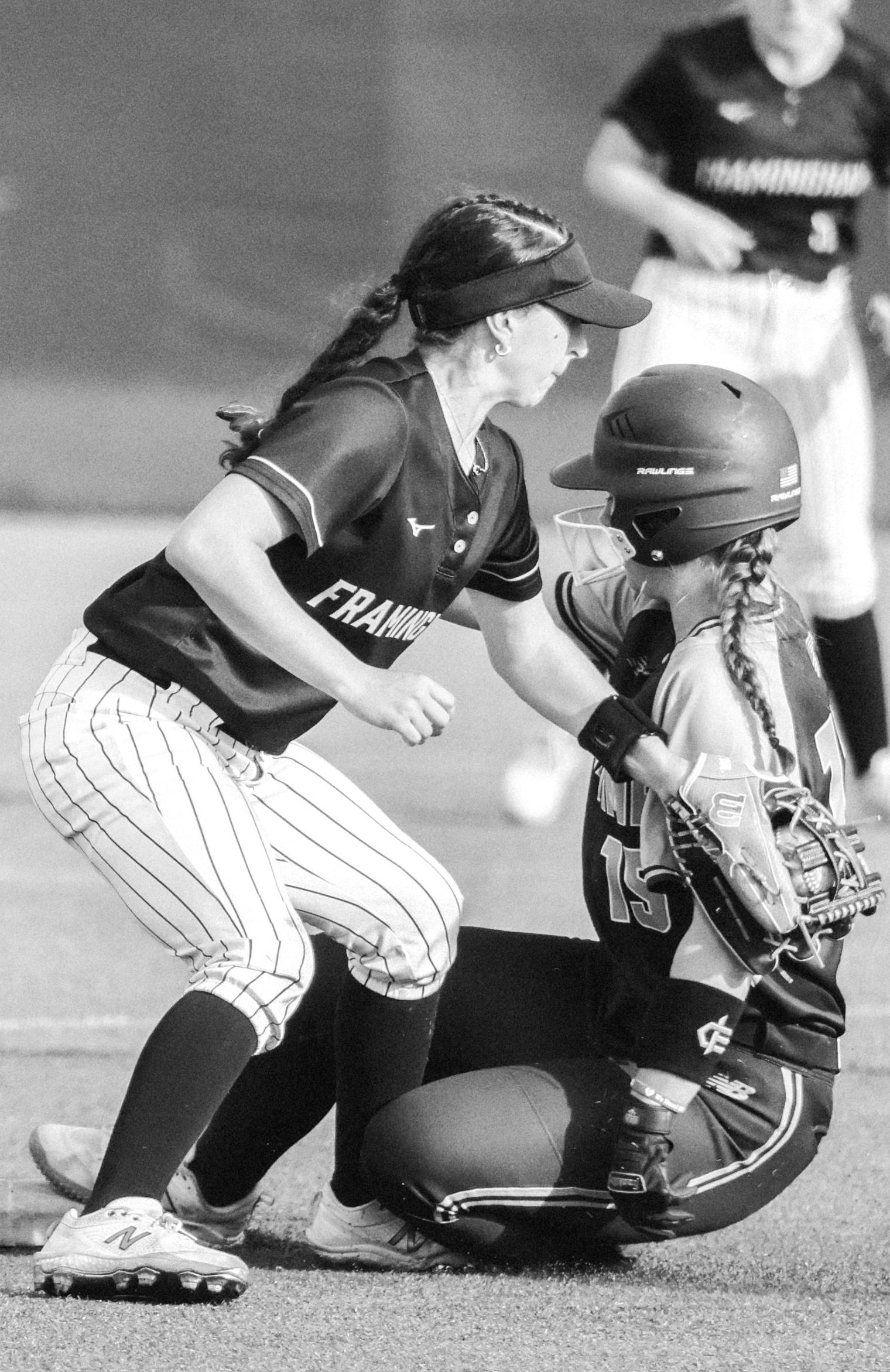
(Left) Nina Buda tagging a runner in win against Mass. Maritime on April 14.
ARTS & FEATURES
Far from home and finding their footing
Kenzy
and Paulina innovate their futures at FSU
By Avery Slavin Editorial Staff
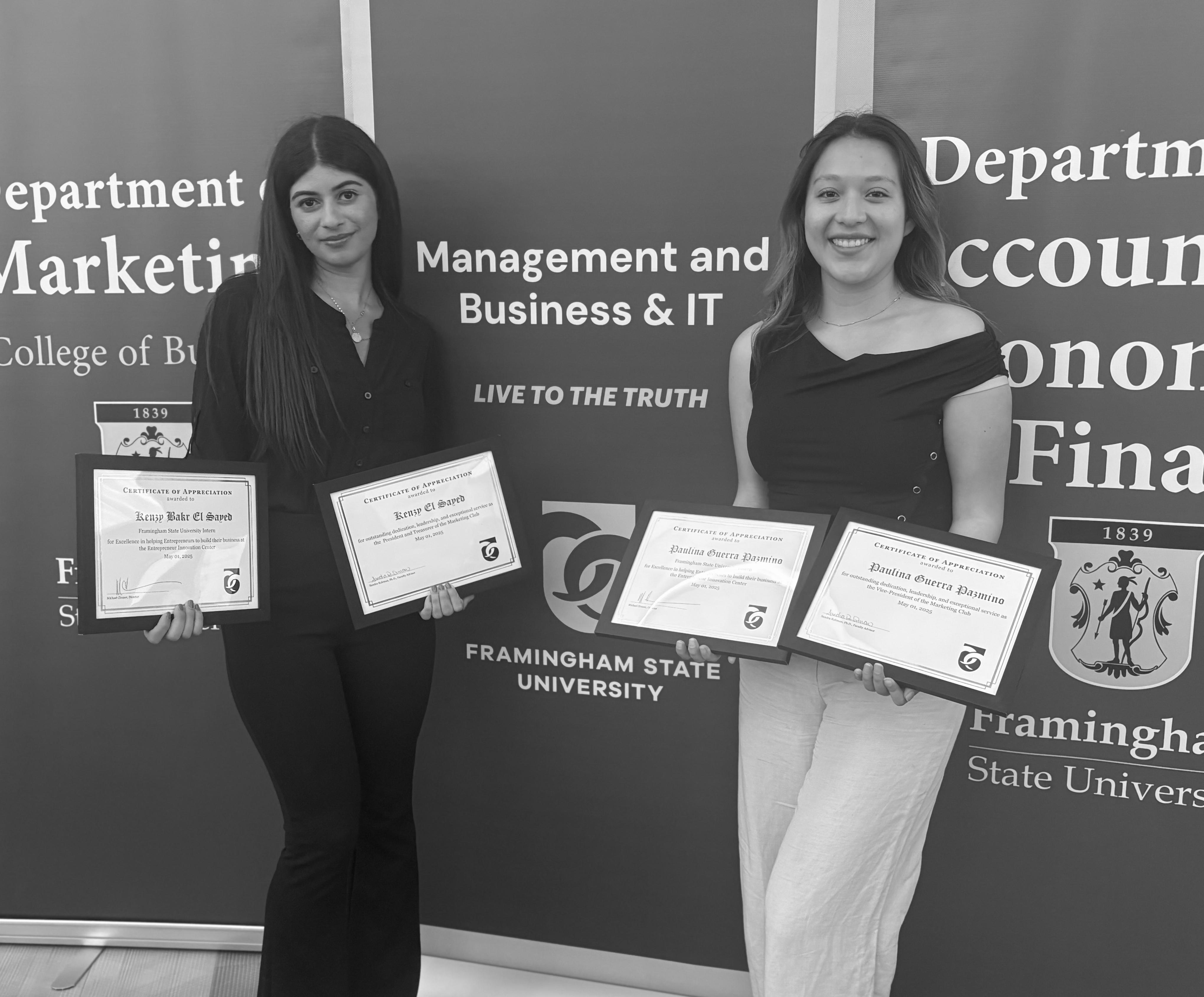
Kenzy El Sayed, a senior communications major and marketing minor, attends Framingham State on a student visa from Egypt.
Paulina Guerra, a senior marketing major and communications minor, attends Framingham State on a student visa from Ecuador.
While on their visas, Kenzy and Paulina are unable to get jobs off-campus, so the resources at FSU are essential to their professional growth.
They said the Entrepreneur Innovation Center, or EIC, has been the biggest factor in getting the experience they need without having to leave Framingham State’s campus.
Their interest in the field is not new. For Kenzy, it dates back as far as middle school, where she said she created short video documentaries on school field trips, adding background music to video clips of her and her friends.
During her senior year of high school, Kenzy said she took her interest in social media creation a step further and started making graphics on Canva.
She said she soon became the social media manager for her school’s Model UN, so when it came time to decide what she wanted to major in, the choice was easy - marketing.
On the other hand, Paulina said she took a business management class in high school, and it was “the only class [she] would look forward to.”
She said she learned about the creativity and planning aspects of marketing as well
as the science and psychology behind it, and that was a driving factor in her decision to study it.
As a part of her internship at the EIC, Paulina said she has worked with a website design startup for about two years now, which has really helped her understand what goes into all the aspects of a business.
She said she is applying that knowledge while completing her capstone in strategic marketing, where she is working with a “living, breathing restaurant” to make the marketing campaign for them.
“It’s different when you’re in class and just guessing and putting things on paper, but when it’s an actual business that will lose money if you don’t get your act together, the responsibility you have is different,” she said.
Kenzy said working at the EIC was similar to working with clients in any office job, giving her real-world experience while not having to go far.
Now working as a senior intern for the EIC, she said she was able to “grow” in that role and develop the leadership skills she will carry into her future endeavors.
Kenzy has started to apply what she’s learned on FSU’s social media pages.
Kenzy, along with social media intern Izabela Gage, run the University’s Instagram and TikTok accounts, posting frequent videos relating viral trends to campus life.
Gage said she and Kenzy spend a lot of time on social media to see what other universities post, teaching them about audience engagement, event photography, videography, and
editing.
“Starting here [at FSU], I wanted to do social media. When I was a freshman, I thought it’d be cool to manage it. It feels so cool doing it now. During the MASCAC Championship this past fall, I got a media pass, and it felt so special because no one else could access the field. I felt like I worked for ESPN,” Kenzy said.
Gage said, “I love being so present in campus life because it makes me feel like I’m getting the most out of my college experience by meeting so many people. My coworkers and boss make my internship so exciting and easygoing that it doesn’t even feel like a job sometimes.”
While they both stay busy with their own work, the two were able to help put together a Food Entrepreneurship Summit last Fall, with help from EIC Director Michael Clouser and intern Reagan Condry.
“It was kind of like our little baby. Seeing an event come to life and doing the whole planning process beforehand, and then the event going as well as it did was such an accomplishment,” Paulina said.
Kenzy added they planned out all the logistics and did all the marketing for the event, even drawing attention from Babson College and MIT.
Paulina said Kenzy is more of the event planner for the EIC. She reached out to businesses to see if they’d be interested in coming to the Food Entrepreneurship event, and found the networking events and conferences they attend along with other students.
“At the events we attend, it gives [us] so much confidence being in a room where [we’re] probably the youngest ones.
Everyone is usually looking to get their master’s, and we’re just like, ‘We’re seniors!’
“It gives you a different approach to professionals and other people. It gets rid of that nervous feeling, although we still have it sometimes,” Paulina added.
They laughed as they described a game they like to play at networking events, giving each other a specific number of LinkedIn connections to acquire by the time they leave.
“We broke a record last time. We got 10,” they said.
Currently, Kenzy and Paulina are helping plan the MetroWest Startup Week taking place on April 27 and May 1.
After graduation, Kenzy hopes to find a job in a luxury fashion market or the film industry, and Paulina hopes to land a job in the tourism industry, specifically working for an airline.
They both said they plan on going back to their home countries after they graduate, and Paulina said she looks forward to applying the work experience she got at FSU to her job in the future.
Their best advice for anyone interested in going down the same path is to just start.
Paulina said it’s disappointing hearing any kind of rejection in the professional world, but “if you don’t try, you already have a ‘no.’”
[ Editor’s Note: Izabela Gage is the Sports Editor for The Gatepost. ]
CONNECT WITH AVERY SLAVIN aslavin1@student.framingham.edu
Courtesy of Kenzy El Sayed
Students are setting new standards as value-driven consumers
By Anita Loughlin Staff Writer
Being a broke college student has never been more difficult to manage with the current economic climate.
Many students face difficulty juggling a tight schedule filled with classes, part-time jobs, and maintaining relationships, while also wanting to look their best.
Students of Framingham State University are finding new ways to build a wardrobe that expresses their identity while also prioritizing a strong emotional value in the clothing they choose to wear or purchase.
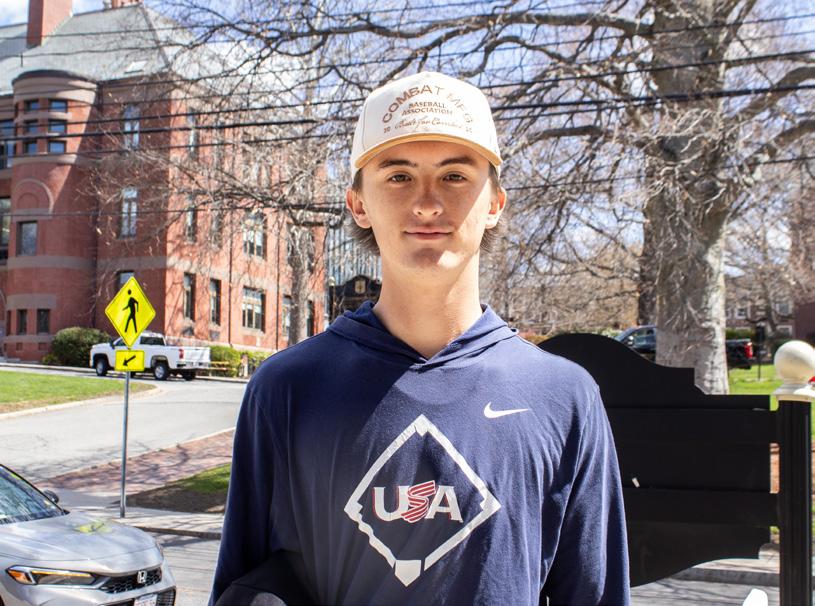
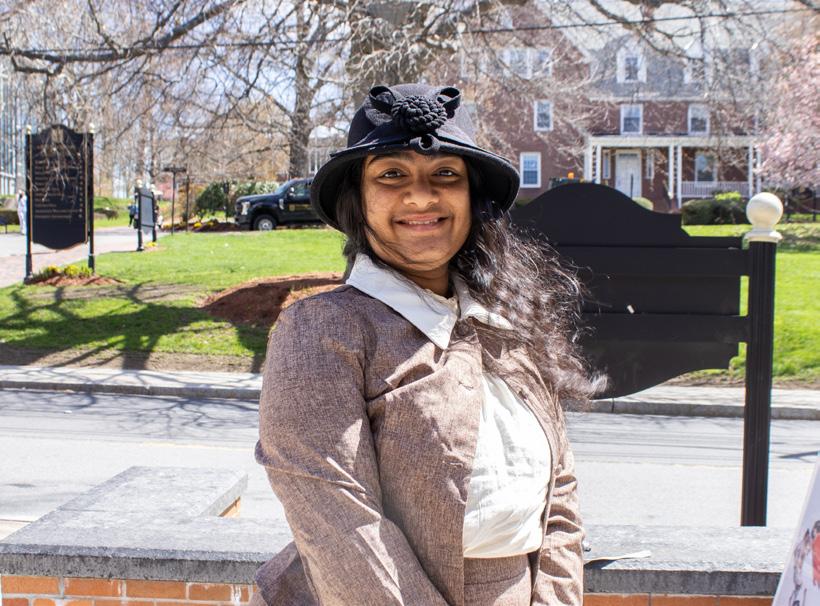
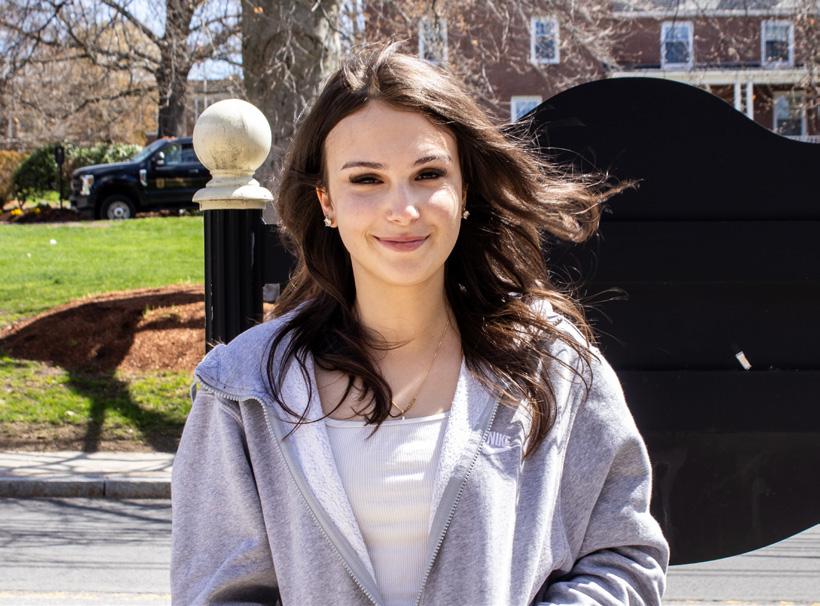
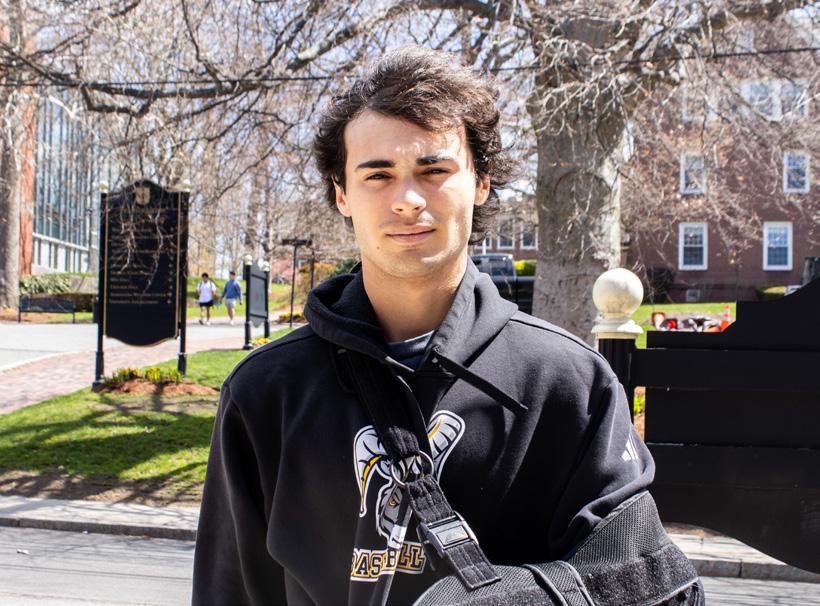
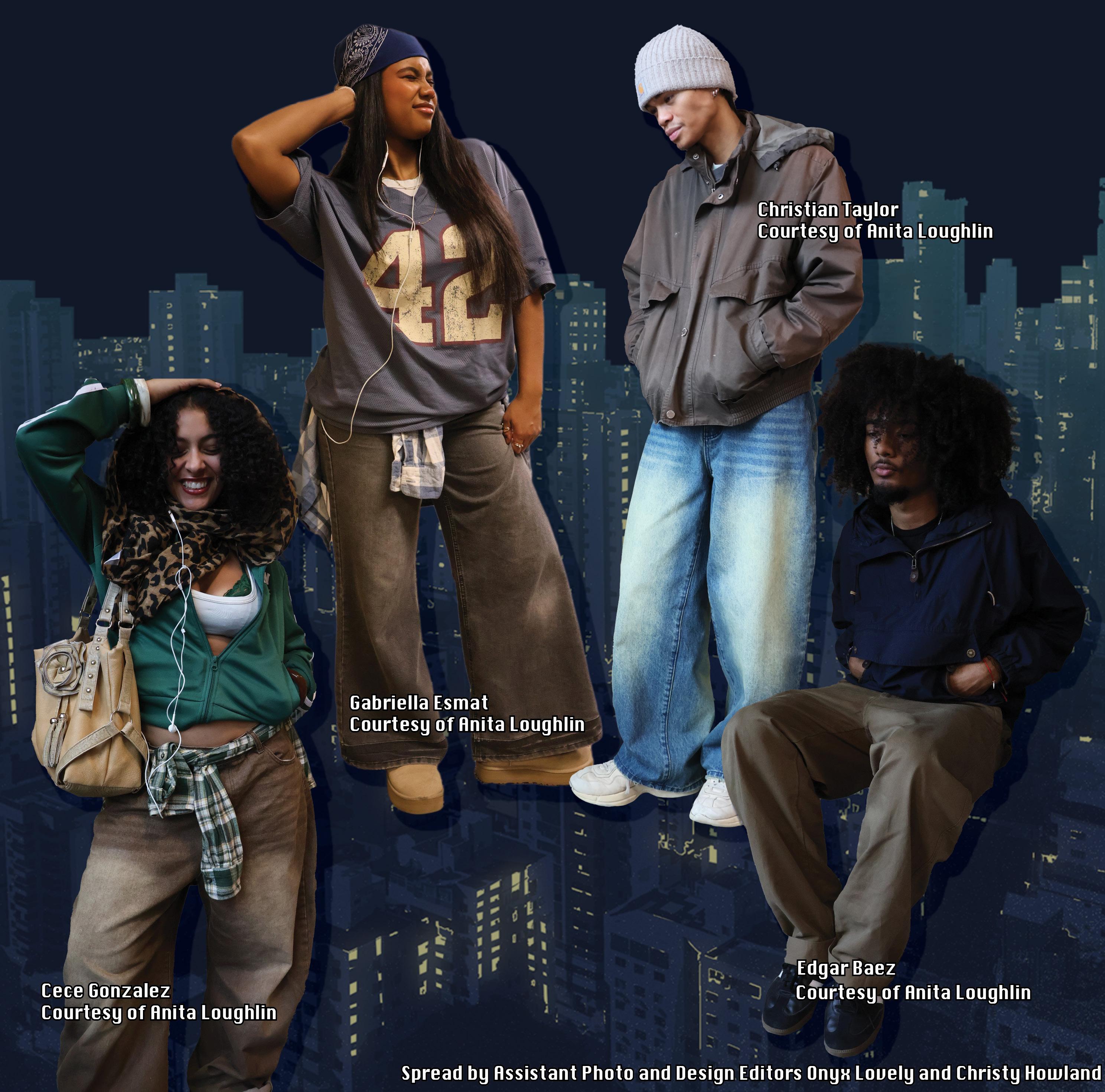
Edgar Santana Baez, a sophomore marketing major, said, “I’m in shambles - being in college is no joke. Most of us are in debt over our heads. It’s like a snowball that keeps tumbling down the hill. It just keeps getting bigger and bigger.”
Cece Gonzalez, a sophomore business major, said, “Everything’s gone up. A pair of nice jeans are like $150. We’re college students, nobody’s got that right now.”
Gabriella Esmat, a freshman MassBay student who lives on campus, said, “Being a college student, I really have to pick between either paying bills for school, expenses, or going out. It’s getting harder and harder to live comfortably in this economy, especially if you don’t have a career and degree yet.
“It has been very challenging. I remember I used to have three jobs to even be able to afford something comfortably.
That was the only way that I could buy clothes and then eat somewhere and do the stuff that I wanted,” Esmat added.
Nicholas Care, a senior fashion design major, also described being hesitant to purchase new items due to the current cost of clothing as well as not wanting to contribute to the escalating pollution on Earth.
“I haven’t bought anything in a really long time. There are always going to be people with buyer’s remorse, and I get itit’s so amazing to buy clothes. It’s like a whole thing that gives you so much happiness. I feel like you could still have that attribute in yourself, but make sure you’re just conscious about it,” Care added.
Fashion sustainability has become an essential conversation due to its substantial role in addressing the Earth’s pollution.
The fault lies within the rise of fast fashion and overconsumption. Baez said, “We must stay sustained. I feel like there are a lot of people that treat things that could be permanent as something more temporary when it’s not meant for that use.
“Someone’s quick to throw something away and then buy something new. That doesn’t disappear. It’s still somewhere in the world - in the ocean, probably, or in a land dump, which is so sad. Think about how many cool articles of clothing are rotting in a pile,” Baez added.
According to a Global Fashion Agenda article, “Examining the Era of Micro Trends” by Constance Beswick, “A common
destination for such clothing is the Kantamanto Market in Accra, Ghana, where, according to the Or Foundation, about 40% of the clothing leaves as waste.”
Christian Taylor, a senior fashion design major at FSU, said, “Definitely be mindful of what you’re buying. I’m subject to it too, where I see a garment that’s a statement piece, and it’s really fire, but then I never wear it and eventually, it just leaves my closet.
“Be mindful of how the clothing piece fits on you and how you actually enjoy it. There’s so many people I see who just buy from Fashion Nova or Shein, take a photo with it, and then are just never seen wearing it again,” Taylor added.
Gonzales said, “Before COVID came, I spent like $300 and I got 60 things from Fashion Nova and Shein, and now, it’s so expensive - it’s a problem. It’s all cheap stuff, and it’s cheap quality.”
Gonzales said she now prioritizes thrifting at various places like Urban Renewals, Goodwill, and Savers. “Ninetyfive percent of my clothes are just thrifted. I really don’t go shopping for real - it’s just thrift stores.”
Mia Andrade, a senior early education major, said, “I think it’s silly to not be sustainable with fashion, and I think everything is feeling cheaper recently.
“When I go into stores now, a lot of things are getting more expensive, but they don’t feel expensive - especially in shops at the mall.
“Some of the shops I would go to with my mom when I was younger always felt very high quality, and they were expensive to reflect that, and now they don’t feel as high quality,” Andrade said.
It’s no surprise that with the current age of social media and the internet, fashion trends cycle through extreme rise and decline periods at a much more rapid pace than ever before. The heightened exposure to these trends over the past five years and their short lifespan has earned them the term “micro trends.”
According to Beswick, senior communications manager at Global Fashion Agenda, the trend forecasting agency, TrendBible, defines a micro trend as “a niche or industry specific consumer behavioural trend which is mass market ready and actionable.”
“Micro trends trickle down and fuel fashion’s fleeting trend cycle with many brands latching on to every aesthetic that permeates our feeds, facilitating overconsumption in an entirely new way,” Beswick said.
In the past, previous trends existed for longer periods of time. They started exclusively through magazine covers, celebrities, or by word of mouth.
Now, with the exposure of influencers displayed on our screens at every scroll or swipe, trends can live for as little as three to five months, and most for no longer than two years.
Continued on Page 14
Consumers
Continued from Page 13
Care said, “I feel like I’m on the internet a good amount, so I do see micro trends starting a lot. I don’t buy clothes that often, but when I have the urge to or I see something but I know it doesn’t align with me, I just don’t really get close to it.
“When I was younger, I fell more into micro trends, but I identified with it so much that it became part of me. So I think it’s good and bad, but nowadays, I feel like it’s kind of a part of being a designer because at the end of the day, we’re all trying to make clothes that resonate with people,” Care added.
Taylor said that from a student designer’s perspective preparing to enter the industry, micro trends are hard for the industry because businesses create “a bunch of these pieces with the micro trend attached
continuously wear.”
Esmat shared her experience with being a conscious consumer. “When I go shopping and I see something that I really like, I have to know that I don’t have anything that looks like it in my wardrobe. Or if I do get it, then I get rid of another item from my wardrobe. That way, I’m not buying too many clothes.”
Dr. Virginia Noon, professor of Fashion Design & Retailing, said, “If we think about college students right now, I think we’re seeing a trend towards appreciating a product for its value.
“There’s a new appreciation for what was old, and the older products were produced at a better quality, and they still are of value,” Dr. Noon added.
On Feb. 26, Fashion Club organized “Thrift Pop-up” to help fundraise for an upcoming trip to Japan and Vietnam, as well as to build appreciation
work.
“Don’t be afraid to try things. Eventually, the more stuff you try, the more comfortable you get with yourself,” he added.
Care gave the styling tip of basing an outfit around one garment. “It could be pants, a jacket, a shirt, shoes, but once I pick something, I base it around that.”
Gonzalez said, “For fashionable on a budget, I’d say get three name-brand, expensive pieces that you can wear, like a pair of bottoms, one name-brand top, and shoes.
“Then you can just go to the thrift store and style things with it. You just have to have a creative mind about it,” she added.
Esmat outlined her go-to styling tip as styling the same pieces with different items. “It’s less likely to look like I’m repeating too many outfits if I’m always adding something new into the same pair of pants
every store in one, you know?” He added he frequently shops there.
The widest selections for unique secondhand pieces are located in Boston. Many communities and collectives come together to organize thrifting markets that can draw up to 8,000 at a time, according to Select Markets’ website.
Select Markets is a community-based organization founded in 2023 that blends fashion, music, and culture into monthly events with over 80 unique vendors selling vintage pieces. Their events are always posted on their official Instagram account, @select. markets.
Another community-based organization similar to Select Markets, is @found.boston on Instagram, where their monthly thrifting events are posted on their socials.
For online secondhand shopping, many apps or
“I know a lot of people, including myself, love to buy things, but just buying secondhand is one of the easiest things you could ever do, and once you make it a habit, it’ll stay a habit.”
- Nicholas Care Senior Fashion Design Major
to it, and then there’s so much fabric waste.”
Care said he practices sustainability as a student designer by “trying to get as close to zero fabric waste as possible.
“When I’m buying clothes, though, I don’t remember the last time I ever bought anything that wasn’t secondhand. I just think it’s so much better that way, because you can get more authentic swag, for lack of a better word,” Care added.
Baez brought up the lack of hand-me-downs. “I feel like we’ve lost the ways of handme-downs. I used to get trash bags full of my older cousin’s clothes.
“Everyone can do this. If you have a piece of clothing that you don’t like any more or if it’s too small, too big, you could ask your friends if they want it. Free stuff is amazing,” Baez added.
Andrade said she got her leather jacket from her brother. “I don’t know where he got it from, but he gave it to me. I was looking for one, and he goes, ‘I don’t like the way this leather jacket fits on me - do you want it?’ And so I took it.”
Taylor said, “I think the main thing is finding pieces you’ll
for quality secondhand pieces.
Dr. Noon said, “They were so well attended, it developed such a wonderful sense of community because all of the people from campus brought in garments and donated them, and then those were in turn recycled.”
Baez, who attended the event, said, “I literally spent 14 bucks, and I left with 14 items, which is crazy.”
When valuing the quality of clothing and resisting overconsumption, it can be difficult to put together outfits that feel brand new.
Taylor said, “One way to make yourself feel new when you’re wearing clothes that you’ve had is rearranging the outfits you wear. Change it up and put pieces together that you’ve had but you haven’t worn together.”
Andrade said, “Adding accessories makes [an outfit] feel more fun. If I like a style, I’ll look up Pinterest photos of it and take what I have in my closet and work with what I have, and usually, that helps, too.”
Baez said, “A good thing to do is just stand in front of the mirror and throw stuff on - see what works, and what doesn’t
or shirt. I style the same shirt in three different ways, and that’s already three different days.”
Some good places to start with for thrifting include Savers and Sister Thrift, which are located in Framingham and are a five-minute drive from campus.
Regarding the Savers in Framingham, Gonzalez said, “I found these amazing, huge brown jeans, and, oh my gosh, I wear them every day.” She also described finding her favorite beige bag that she frequently wears at the same store.
Andrade said, “I love Savers. I get a lot of clothes from there.”
Andrade also said she likes shopping at Sister Thrift for jewelry. “I got this really cute wool cardigan, and I got these very cute dangly earrings. They have great jewelry.”
Outside of Framingham, there are many other great options like Urban Renewals in Roslindale. The closest Goodwill is located in Sudbury, and there are many other locations scattered across the Boston area including Jamaica Plain, Somerville, and Cambridge.
Baez said, “Goodwill is so clutch. It’s so much of everything in there that it’s like
sites exist including Depop, Poshmark, ThredUp, Ebay, Mercari, TheRealReal, Grailed, Etsy, Vestiaire, and Vinted. The searches on these platforms are endless, and are even an excellent way to get rid of old clothes by selling them as well.
Care said, “I mainly shop for clothing on Depop, and I go thrifting a lot,” when asked about where he shops the most.
“Everything I’ve had has been a part of most of my closet for at least three years. I have the same clothes, and sometimes, I just forget to wear things, and I’m like, ‘Oh, I could wear this today.’
“I know a lot of people, including myself, love to buy things, but just buying secondhand is one of the easiest things you could ever do, and once you make it a habit, it’ll stay a habit,” Care added.
Andrade emphasized, “You don’t need to buy a new outfit for everything. I don’t actually buy new clothes unless I really need them. Rewear and rework your clothes.”
CONNECT WITH ANITA LOUGHLIN aloughlin@student.framingham.edu
Non-profit financial literacy event held in CIE
By Francisco Omar Fernandez Rodriguez Arts & Features Editor
The non-profit organization Planned to A.T. held a financial literacy workshop in the Center for Inclusive Excellence (CIE) on April 22.
Their co-CEOs, cousins Ashley Rutland and Tiffany Pearson-Kilgore, taught their budgeting course at the event.
Attendees were encouraged to follow along with the presentation on their phones, where they could answer questions asked to the group.
Pearson-Kilgore said their goal as an organization is to teach people how to manage money.
She said it’s important to “start thinking about what you’re spending your money on.”
She asked attendees to think about what they spend on a daily basis, such as getting coffee in the morning or a snack before class.
On a weekly basis, the expenses could be gas or public transportation, she said. On a monthly basis, it could be a subscription for a streaming service.
She asked everyone to think about where they get their money, such as a job or their family.
Next, they discussed needs versus wants.
“Understanding your need versus your wants is really the baseline of understanding how to budget well,” PearsonKilgore said.
She asked if an Uber or other rideshare service is a want or a need.
She said it depends on the context, such as whether the person owns a car and when
they need a ride.
In the United States, it is common for people to spend a lot on their wants, she added.
“A lot of times in America, we like to swipe, swipe, swipe our credit card and put ourselves in debt for things we don’t really need,” Pearson-Kilgore said.
When going to buy something, it’s important to ask if it is really needed, she said. Could it wait, or could this money be used to earn interest, she asked.
“Because that’s really going to get you financially stable over the long haul,” PearsonKilgore said. They did an exercise with the group where everyone wrote what they spent in one month on ten sticky notes. Then they were all placed on a white board under “wants” or “needs,” though many notes ended up in between.
“If you’re not looking back to see what you’re spending you’ll never check yourself,” Pearson-Kilgore said.
Wrestlemania in Vegas again?
By Izayah Morgan Editorial Staff
Wrestlemania always hits a soft spot for me every time it comes up, and this year was no different. Even though it is in Vegas for the second year in a row, the show this year was largely positive in my opinion.
Though the crowd didn’t seem all that excited.
We opened night one with a shocking opening with the USOS and LA Knight picking up the win vs IShowSpeed (yes, the streamer) and The Vision. The match was all right with some banger spots and the debut of IShowSpeed in an official WWE match.
We then moved to a quality match between Jacob Fatu and Drew McIntyre, which was the highlight for me in terms of technical wrestling between the two for night one.
We moved to a fatal four-way tag team match for the women’s tag team championship among the Irresistible forces, the team of Charlotte Flair and Alexa Bliss, the team of Bayley and Lyra Valkyria, and Brie Bella who chose the surprise teammate of Paige.
To the shock of many (including myself), Paige and Brie picked up the win. Visible frustration was left on the face of many that may have seen Paige winning in her return match as unfair to the other superstars who have been with the company for longer.
The next match was between Becky Lynch and AJ Lee, which was good in terms of week-toweek storyline building, but I couldn’t agree less with the outcome of Becky going over AJ.
Arguably the best match of the night was Gunther vs. Seth Rollins, which saw the two absolutely put the hurt on each other. A total brawl between two of the best in the company saw Gunther be put over Seth, which I believe was the right decision.
Especially with the surprise return of Bron Breakker, it gives Seth a storyline after Mania.
Before our main event of night one, our last match was Liv Morgan vs. Stephanie Vacquer for the Women’s World Championship. This was one of my most anticipated matches, and I felt the match was given no time to breathe, lasting for only 6 minutes. Disappointing, to say the least.
Our main event for night one was definitely a match. Cody Rhodes vs. Randy Orton with special friend Pat McAfee, who was taken out of the match rather quickly, much to the praise of many fans. The build up to this match was awesome, and even though I don’t agree with Cody going over in the end, I enjoyed it for what it was.
Night two opened with my most anticipated match of the weekend, Oba Femi vs. Brock Lesnar, and saw Femi win in
This exercise helps people notice where they’re spending their money, such as at a specific store or eating out in general, she said.
Emma Laurie, program coordinator for the CIE, asked what to do when friends want to eat out.
Pearson-Kilgore said she would go and just get an appetizer, or just a drink, or eat however she wants that time and turn them down the next time.
Jerome Burke, director of the CIE, said one of his friends asked if they could switch from going out to primarily visiting each other’s homes, which is cheaper.
They passed out sheets with SMART goals on them. SMART stands for specific, measurable, attainable, realistic, and timebound, she said.
For each letter, participants were asked to write a goal.
For S, Pearson-Kilgore used the example of saving enough money for a downpayment for
a dominant fashion which I believed needed to happen, ending with Brock making the tough decision to hang the wrestling gear up and retire.
Next, we had a ladder match for the Intercontinental Championship, which saw Penta defeat Je’Von Evans, Dragon Lee, JD McDonagh, Rusev, and Rey Mysterio. It had amazing spots - the standouts being Evans, Lee, and the MVP of the night, McDonagh.
Next up was my boy Trick Williams, who had his well deserved Mania moment and defeated Sami Zayn for the WWE United States Championship. I have no notes, just happiness.
The match following saw the return of Finn Bálor’s “The Demon” persona in victory against the greatest luchador of all time, Dominic Mysterio. It had epic entrances from both men and a good match to follow up.
The match before our main event saw Rhea Ripley take the win over Jade Cargill, with a very wholesome moment of Io Sky coming out to help Rhea when she was being ganged up on, but also leaving us with a cute celebratory moment between the two.
Our match of the night and main event was the head of table and tribal chief Roman Reigns vs. the best in the world, CM Punk. Punk pulled out every dirty trick he had,
a car.
For M, she asked how much money would be needed. For A, she asked where the money would come from, such as a job or allowance.
For R, she asked everyone to be realistic on how long it would take to save enough money. This could shift the entire goal, too, which is perfectly fine, she said.
For T, she asked for a deadline. This gives something to work toward and can push people toward achieving their goals, she said.
“If you know that you’re really trying to meet your goal by a certain date, it gives you more of an incentive to actually meet accountability,” Pearson-Kilgore said.
CONNECT WITH FRANCISCO OMAR FERNANDEZ RODRIGUEZ ffernandezrodriguez@student.framingham.edu
resulting in an absolute banger of a match that was a bloody slug-fest. But ultimately, he fell to Reigns when it mattered most.
Overall, this weekend was a mixed bag, as many wrestling events are. It provided payoffs to some story lines, and it left me thinking, ‘Wow, that match happened’ for others.
Rating: B Vegas can sit the next one out
Izayah Morgan / The Gatepost
(Left) Ashley Rutland and Tiffany Pearson-Kilgore teaching their budgeting course at the CIE on April 22.
ARTS & FEATURES
The Book Report: The Hunchback of Notre Dame
By Kate Norrish Staff Writer
If the first thing you thought of when you saw this title is the Disney movie, do me a huge favor for this article - forget everything you know about Claude Frollo.
I say this because the book, published in 1831, is arguably more about him than it is about the title character Quasimodo, and while I don’t like how the Disney film portrays Frollo, I understand why they chose to make him a standard villain. This is because I have no idea how anyone could create a bookaccurate Frollo and still wind up with a kid’s movie at the end.
The story begins when Frollo’s brother dies, and he is asked to care for the brother’s young son - Jehan. This makes Frollo extremely uncomfortable. The reason being because he, being a member of the Medieval French Clergy, was told his entire life that pedophilic activity is something men naturally do to children, and that it is unreasonable to ask them to abstain from it.
Despite never showing any desire to harm children in that way, he takes extreme measures to keep himself away from minors. This includes abandoning the child, who he cares for deeply. What adds a sense of deep pity - and slight horror - is when the audience does the math and realizes that Frollo’s paralyzing fear of sex and children began when he
was in his late teens.
This changes when a disabled 4-year-old, Quasimodo, is found abandoned in the cathedral and, noticing the local nuns’ disgust toward his facial differences, Frollo realizes that no one else would be willing to care for him. This results in him raising Quasimodo.
However, when Esmerelda enters the picture, Frollo’s sexual desires are more than he can handle, leading to some tasteful - yet horrific - selfharm and violence.
One of my favorite scenes focusing on this is when Quasimodo is publicly tortured and humiliated. Jehan, now an adult, takes an active part in it. Frollo is horrified, but makes no attempt to stop what is going on.
This Frollo is an incredibly sympathetic character, up until a scene that comes out of nowhere for people who have never seen the Disney film. I will not spoil it. However, I have concerns over how some may interpret it as showing how celibacy can corrupt a person. I feel that linking a lack of sexual activity with inappropriate behavior - both sexual and otherwise - is incredibly harmful.
Even so, the portrayal of Frollo’s confusion, and eventually moral decline, gives the reader whiplash, and gives me complicated emotions that seem to be similar to how Quasimodo sees his father figure.
Hugo also blurs the lines of what is appropriate for a man to do involving a
woman, allowing the readers to question the culture surrounding gender relations and sexually inappropriate behavior. For example, at one point Frollo humiliates himself by asking a man why he was alone in the streets with Esmerelda. That man turns out to be Esmerelda’s husband. It is left up to the reader to decide whether or not Frollo asked out of lust or genuine concern.
If you have not read any of Victor Hugo’s works before, fair warning, it is OK to skim a bit. Hugo is famous for including far more description than is necessary or wanted, and this book is the worst offender among the books of his I have read.
Unless you want chapters upon chapters of bland descriptions of seemingly every building in Paris, for the love of God, don’t make the mistake I did when I first read this book by getting it on audiobook unless you absolutely have to. It’s OK. You’re among friends here. You can cheat a little, because fun fact - this book was partially written to encourage tourism.
This is a powerful book that I would never trust Disney to do justice. It is ahead of its time, unafraid to show the most horrific ways sexuality can harm ourselves and others, and immensely empathetic. Mentally prepare yourself before reading, but set aside some time for “The Hunchback of Notre Dame.”
CONNECT WITH KATE NORRISH knorrish@student.framingham.edu
‘Lee Cronin’s The Mummy’ - a clever effort in reinvention
By Jesse Burchill Staff Writer
Released on April 17, “Lee Cronin’s The Mummy” is a supernatural horror film written and directed by Cronin and starring Jack Reynor, Laia Costa, May Calamawy, Natalie Grace, and Verónica Falcón. It is a reimagining of the Universal Studios franchise of the same name, which includes the original 1932 horror film, the 1990s/2000s action films starring Brendan Frasier and Rachel Weisz, and the 2017 flop starring Tom Cruise.
In Cronin’s new take on the franchise, the Cannon family is shattered when their middle child, Katie, goes missing in the desert. Eight years later, Katie is found mummified and buried in an ancient sarcophagus - and miraculously alive. She and her family reunite, but it soon becomes clear that something evil has followed Katie home.
Dalia Zaki, Calamawy’s character and the detective on Katie’s case, was probably my favorite character. She arguably plays the largest role in unraveling what happened to Katie, and there were times where I felt like she could have been a better main character instead of the Cannon family.
Grace as Katie was another standout performance. Even when she’s talking from offscreen, she pulls off the “possessed by a monster” character type very well, especially when she’s speaking with and tormenting her siblings under its influence.
Cronin’s previous film, “Evil
Dead Rise,” did not hold back with gruesome imagery, and while “The Mummy” is more restrained in comparison, the blood and gore get really intense when it comes down to it.
There are several moments that made me physically recoil when I watched the film in the theater, especially in the third act when everything goes to hell. The makeup effects for the gore and Katie’s possession certainly help matters.
Even outside of the gore, the movie manages to be frightening, thanks in part to how realistically chilling its setup is. Katie is kidnapped a short distance away from her house and out of her family’s sight.
Katie’s dad, Charlie, learns that something’s wrong just moments too late and follows to try and save Katie, but the crowds in the streets and a poorly-timed sandstorm prevent this. Thus, Katie’s family has no idea where she is for eight entire years. It’s every parent’s worst nightmare come true, and the way it’s implemented works.
Something to note is that aside from the name, the horror elements, and the presence of a character who’s been mummified, Cronin’s version of “The Mummy” has little in common with the rest of the franchise. It features a completely original story and completely original characters. This certainly brought a
sense of originality to the film and some interesting plot points, but the film is so different that it can feel like it shouldn’t be called “The Mummy” at all.
It’s tied to the larger franchise while trying to tell a unique and unrelated story, which results in a middle-ofthe-road experience that feels like it doesn’t go far enough in either direction to stand out as well as it could have.
On another note, I feel like the movie ended a bit too fast. The movie wraps up fairly quickly after Katie is saved, but the way it does this makes it feel like Katie and her siblings had little psychological hangups over all that’s happened to them, which can feel a bit disconnected from the experiences they endure.
In the end, however, Cronin’s take on the “Mummy” franchise has more ups overall than downs and reworks the “ancient Egyptian monster” plot in a clever way, even if its new ideas are a bit lost in the shuffle.
Rating: BEntombed between original and familiar.
CONNECT WITH JESSE BURCHILL jcelardo@student.framingham.edu
ADMIT ONE ADMIT ONE
Tobias Cotton-Selman / THE GATEPOST
Puzzles
ACROSS
1. Collections of family photos, maybe 7. Ambulance letters
10. Bosom buddy, briefly
13. Horse’s pen
14. Style associated with Wednesday Addams
16. “Hahaha”
17. *Courage shown during instruction?
20. Do some tailoring
21. ___-friendly 22. Each 23. *What might cover a local story?
27. Letters and such
29. I love, in Latin
30. They, in French
31. Walks (on)
34. Wan
36. “Intriguing,” or a hint to the starred clues’
answers
42. Speak indistinctly
43. “True fact!”
44. Common batteries
46. Refusals
48. Fill with cargo
49. *Fancy party for the “MythBusters” network?
54. Fill your lungs
55. Reactor safety agcy.
56. Pie ___ mode
59. *Tabulation device for a UPS driver?
63. Scot’s denial
64. Lake near Detroit
65. Get situated
66. Make an attempt
67. Plant, as seeds
68. Its state song is “Home on the Range”
DOWN
1. “Macbeth” has five
2. Folktales, e.g.
3. More muscular
4. Sch. near Providence
5. “Olympia” painter Edouard
6. Piece of a pie
7. Caviar bit
8. Unruly group
9. Wander
10. Sounds that cover up curse words
11. Compel
12. Promotional handout
15. “This is the ___ day of my life!”
18. Star that suddenly brightens
19. Medicine bottle
24. Skin care brand
25. Title for Japan’s mon-
arch
26. Sound of a loud crowd
27. “Laguna Beach” channel
28. “Chances ___ ...”
32. What salt flakes do in water
33. NBC sketch show
35. Fragrant necklace
37. Melody
38. Work the soil
39. Quarantines
40. U.S. intel org.
41. Neptune, but not Earth
44. “Missing” actress Judd
45. Purple berry
47. In ___ (harmonized)
49. “I guess someone ___ get the memo”
50. Like Apple AirPods
51. Swerves
52. Small waterway
53. Honda luxury brand
57. Singer Horne
58. Culinary ___
60. Carnaval city, for short
61. Toxic evergreen
62. “Delta of Venus” author Anais
6 M I L E
M O N D A Y
Spread by Associate Editor Adrien Gobin
Adrien Gobin / THE GATEPOST
Adrien Gobin / THE GATEPOST
The Framingham community came out to show their support for the runners at the Boston Marathon on Monday April 20th.