THE
FLORIDA STATE UNIVERSITY College of Music presents
University Wind Orchestra
Rodney Dorsey, Director
Collin Clark, Graduate Associate Conductor
Nicholas Nadal, Graduate Associate Conductor with special guest
John Will Parks IV, Percussion
Tuesday, February 24, 2026
7:30 p.m. | Ruby Diamond Concert Hall
PROGRAM
Trace (2021)
Lyric for Strings (1946)
Raise The Roof (2007)
Herald, Holler & Hallelujah! (2022)
Collin Clark, graduate associate conductor
Guest soloist: John W. Parks, timpani
INTERMISSION
American Guernica (1982)
Nicholas Nadal, graduate associate conductor
Zhou Tian (b. 1981) arr. Simon Holoweiko (b. 1989)
George Walker (1922–2018)
Michael Daugherty (b. 1954)
Wynton Marsalis (b. 1961)
Adolphus Hailstork (b. 1941)
Spiritual Suite (2024)
Margaret Bonds Valley of the Bones (1913–1972) The Bells tr. Tyler Ehrlich Troubled Water
To Ensure An Enjoyable Concert Experience For All…
Please refrain from talking, entering, or exiting during performances. Food and drink are prohibited in all concert halls. Recording or broadcasting of the concert by any means, including the use of digital cameras, cell phones, or other devices is expressly forbidden. Please deactivate all portable electronic devices including watches, cell phones, pagers, hand-held gaming devices or other electronic equipment that may distract the audience or performers.
Recording Notice: This performance may be recorded. Please note that members of the audience may at times be included in this process. By attending this performance you consent to have your image or likeness appear in any live or recorded video or other transmission or reproduction made in conjunction to the performance.
Florida State University provides accommodations for persons with disabilities. Please notify the College of Music at (850) 644-3424 at least five working days prior to a musical event to request accommodation for disability or alternative program format.
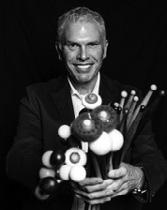
Dr. John Will Parks IV, Professor of Percussion and 2018-19 FSU Distinguished Teaching Professor, earned the DMA degree in Performance and Literature from the Eastman School of Music, two Master’s degrees in Performance and Jazz Pedagogy from Northwestern University, and a Bachelor’s degree in Music Education from Furman University. His teachers include Patricia Dash (Chicago Symphony Orchestra), John H. Beck (Rochester Philharmonic), Michael Burritt, Paul Wertico (formerly of the Pat Metheny Group), and John Beckford.
Parks made his Carnegie Hall solo recital debut in Weill Recital Hall in May of 2007, and has performed with diverse performing organizations ranging from the Eastman Wind Ensemble on their 2000 tour of Japan and Taiwan and the Schlossfestspiele Orchestra of Heidelberg, Germany to the Kansas City, Alabama, Key West, Jacksonville, and Tallahassee Symphony Orchestras as well as the Florida Orchestra, Naples Philharmonic, and Eastern Music Festival Faculty Orchestra.
Parks also leads the FSU Percussion Ensemble, winners of the 2007 and 2011 Percussive Arts Society International Percussion Ensemble Competitions, and has appeared as performer/clinician at the Belgium Basilica Festival, the Thailand Brass and Percussion Conference, three Midwest Band and Orchestra Clinics, twelve Percussive Arts Society International Conventions, National Public Radio, and state MENC conventions, as well as leading conservatory and university music programs throughout the United States. In 2006 he won a university-wide teaching award at FSU, and in 2013 was inducted into the Engineering Wing of the National Academy of Recording Arts and Sciences as a voting member of the GRAMMY Awards.
Parks’s recording and editing credits include projects with She-e Wu, Thomas Burritt, Will James, Blake Tyson, Payton MacDonald, Scott Herring, Omar Carmenates, The John Psathas Percussion Project, Line Upon Line, the City of Tallahassee, the Percussive Arts Society, the Tallahassee Symphony Orchestra, and many others through his audio/ video/image production company, Garnet House Productions, LLC. He has given lectures on the integration of technology into the classical curriculum at the Eastern Music Festival, Spark Laboratory, the Leigh Stevens Seminar, and appeared on podcasts including The Entrepreneurial Musician, Everything Band, The Percussion Educator, and @Percussion.
Tian: Trace
Zhou Tian is an internationally recognized composer whose music bridges cultural traditions and vivid orchestral imagination. Born in Hangzhou, China, he moved to the United States at nineteen. He studied at the Curtis Institute of Music, the Juilliard School, and the University of Southern California, working with composers including Jennifer Higdon, Christopher Rouse, and Stephen Hartke. Now an Associate Professor of Composition at Michigan State University, Zhou has written for major orchestras and wind ensembles worldwide. His Concerto for Orchestra received a Grammy nomination, and his wind work Sinfonia won the 2022 Sousa–ABA–Ostwald Contest. Critics have praised his ability to fuse disparate influences into music that feels both global and unmistakably personal.
Dr. Simon Holoweiko is Associate Director of Bands at Louisiana State University, where he conducts the Symphonic Winds, oversees doctoral studies in wind conducting, and directs the Golden Band from Tigerland. A former Michigan State University faculty member and veteran Florida high school director, Holoweiko earned the DMA in Wind Conducting under Kevin Sedatole. Active as a clinician, conductor, and arranger, he has prepared numerous wind transcriptions and was instrumental in bringing Zhou Tian’s Trace into its current concert band form in 2021.
Initially composed for orchestra and later adapted for wind ensemble, Trace is a thirteen-minute reflection on memory, loss, and the transformations brought by industrialization. Zhou paints a sonic landscape that moves between brightness and shadow: a sparkling flute-led opening yields to lyrical arioso passages, rich chorale textures, and a dramatic saxophone cadenza. A fast, folk-tinged toccata ignites the ensemble before the music reaches a powerful climax. In its final moments, Trace dissolves into a fragile, whispering coda, each gesture fading into the distance until only a breath remains, suggesting how the past can slip quietly from view.
Walker: Lyric for Strings
George Walker was an American composer, pianist, and organist whose career helped shape the voice of contemporary American concert music. Born in Washington, D.C. in 1922, Walker began studying piano at age five. After graduating from Dunbar High School, he entered the Oberlin Conservatory at just fourteen before continuing his studies at the Curtis Institute of Music, where he worked with renowned artists including Rudolf Serkin, William Primrose, Gregor Piatigorsky, and composer Rosario Scalero. He later earned his doctorate from the Eastman School of Music.
Walker’s compositions are noted for their lyricism, structural clarity, and emotional intensity. His orchestral work Lyric for Strings remains his most frequently performed piece, exemplifying his expressive style. Over the course of his career, he published more than ninety works spanning piano sonatas, chamber music, choral works, organ pieces, and orchestral compositions. Major ensembles such as the New York Philharmonic, Boston Symphony, Cleveland Orchestra, and Philadelphia Orchestra commissioned and performed his music.
In 1996, Walker became the first African American composer to receive the Pulitzer Prize for Music for his work Lilacs. He received numerous fellowships, awards, and honorary doctorates throughout his lifetime and served as a dedicated educator at Rutgers University until his retirement. Walker’s legacy reflects a lifetime of artistic excellence and lasting contributions to American music.
Walker composed Lyric for Strings during a deeply personal moment in his life. When he was twenty-three, his grandmother passed away. In the year following her death, Walker channeled his grief into music, originally titling the piece Lament as the slow movement of his first string quartet. Even in this early work, Walker demonstrated a remarkable ability to translate personal emotions into music. The piece was later arranged for string orchestra, where it has since become one of his most frequently performed and beloved compositions. Lyric for Strings unfolds as an expressive meditation on remembrance and loss. Walker alternates fluidly between richly layered harmonies and moments of fragile transparency, allowing the ensemble to breathe and swell like a single voice in mourning. In an interview before his passing, Walker stated, “I never played a string instrument, but somehow strings have always fascinated me.” This piece serves as strong evidence of his passion for music, fascination for strings, and feelings for his grandmother.
Daugherty: Raise The Roof
Michael Daugherty is an acclaimed American composer whose music bridges the worlds of concert hall tradition, American popular culture, and imaginative storytelling. Born in Cedar Rapids, Iowa in 1954 into a musical household, Daugherty absorbed the rhythms and sounds of jazz and rock from his father while his mother encouraged him to tap-dance, paint, and draw. These influences would later energize his distinctive voice in contemporary classical music. As a six-time Grammy Award winner, Daugherty has been widely recognized for his meticulous ear for musical color and compositional expression.
In Daugherty’s early career he studied composition with many of the most prestigious composers of the 20th century including Pierre Boulez at IRCAM in Paris, Betsy Jolas the Paris Conservatory of Music, Roger Reynolds at Yale and György Ligeti in Hamburg. After teaching from 1986-1991 at the Oberlin Conservatory of Music, Daugherty joined the University of Michigan School of Music, Theatre and Dance in 1991 as Professor of Composition, where he remains today and is a mentor to many of today’s most talented young composers.
Raise the Roof is a striking feature for a skilled timpanist. This timpani solo accompaniment was inspired by the world’s greatest architectural structures such as the Notre Dame Cathedral, the Empire State Building. In this rare feature for timpani, the soloist is given the opportunity to play long expressive melodies and a tour de force cadenza. From the extensive foot pedaling to the use of cymbals and maracas on the timpani this piece features the timpanist mastery of the instrument.
Constructed in the form of a double variation, this piece has two main themes. The opening theme first heard by the tuba recurs throughout the piece in multiple timbral and rhythmic variations including a fast-paced Cuban guaguncó. The second theme, first heard in the flutes is reminiscent of a medieval plainchant and used to emulate the feeling of a Gothic cathedral. Together these two themes interchange and permutate in a crescendo to create a grand acoustic representation of the greatest architecture.
Marsalis: Herald, Holler & Hallelujah!
Wynton Marsalis is among the most influential figures in contemporary American music, celebrated as a virtuoso trumpeter, composer, and educator. Raised in New Orleans and trained at Juilliard, he rose to prominence in the early 1980s as a member of Art Blakey’s Jazz Messengers, then forged a dual career in jazz and classical performance. Marsalis has won nine Grammy Awards, the National Medal of Arts, the National Humanities Medal, and a Pulitzer
Prize for his oratorio Blood on the Fields. As Artistic Director of Jazz at Lincoln Center, he has been a leading advocate for jazz as a central pillar of American culture.
Co-commissioned by seven major orchestras, Herald, Holler & Hallelujah! is a five-minute brass-and-percussion fanfare that bridges concert tradition and New Orleans jazz heritage. The work opens with a restrained, almost reverent chorale, then unfolds into a swinging, rhythmically buoyant section that evokes the spirit of a jazz funeral. Marsalis nods to both Duke Ellington’s Black, Brown, and Beige and Copland’s Fanfare for the Common Man, yet the piece ultimately feels unmistakably his own, bold, rhythmic, and celebratory. Equal parts homage and invention, the work affirms the power of brass music to proclaim, lament, and rejoice all at once.
Hailstork: American Guernica (1982)
Adolphus Hailstork is a distinguished American composer whose music often engages directly with history, memory, and the lived experiences of African Americans. Trained at the Manhattan School of Music, Howard University, the American Conservatory at Fontainebleau, and Michigan State University, where he earned his doctorate studying with H. Owen Reed, Hailstork has forged a voice that blends lyrical accessibility combined with contemporary techniques. His works have been performed by leading orchestras, including the Philadelphia Orchestra, Chicago Symphony, and New York Philharmonic, under conductors such as James DePreist, Daniel Barenboim, and Kurt Masur. Hailstork has long been based in Virginia, where he has served as Professor of Music and Eminent Scholar at Old Dominion University and was named a Cultural Laureate of the Commonwealth of Virginia in 1992.
American Guernica is a searing musical meditation on the 1963 bombing of the 16th Street Baptist Church in Birmingham, Alabama, which killed four young girls attending Sunday school. Hailstork frames the tragedy through the lens of Picasso’s famous mural, Guernica, drawing a parallel between two devastating attacks on innocent civilians separated by time and geography. The score imagines an interrupted church service; gentle, hymn-like material is shattered by sonic chaos, fragmented gestures, and anguished outcries, then settles into a somber, funeral-like conclusion. Through spatial notation, extended techniques, and stark textural contrasts, Hailstork transforms historical violence into an elegy that is both confrontational and deeply human, inviting listeners to remember, reflect, and mourn.
Bonds: Spiritual Suite
Margaret Bonds was a pioneering American composer, pianist, and arranger whose career intertwined artistry with social engagement. Raised in a musical household in Chicago, she studied at Northwestern University and the Juilliard School under Roy Harris, Robert Starer, and Emerson Harper. In 1933, she became the first Black soloist to perform with the Chicago Symphony Orchestra. Bonds lived and worked in Harlem, collaborated closely with Langston Hughes, and devoted much of her life to elevating Black musicians and musical traditions. Though long underrepresented in the concert canon, her music is now being rediscovered as among the most distinctive American art music of the mid-twentieth century.
Dr. Tyler Ehrlich is the Assistant Director of Wind Studies at the University of Cincinnati College-Conservatory of Music, where he conducts the Wind Ensemble and teaches graduate conducting. In addition to his academic work, he hosts a weekly radio program and maintains an active career as an arranger, producer, and clinician. His wind transcription of Spiritual Suite is the first commercially available band version of Bond’s music. It premiered in 2024 with the University of Texas Wind Ensemble, conducted by Ehrlich.
Originally composed for piano during the 1930s and ’40s, Spiritual Suite weaves together three spirituals: “Dry Bones,” “Go Ring Dem Bells,” and “Wade in the Water,” into a single dramatic arc. Although the final movement (Troubled Water) was published separately in 1967, the complete suite was not published in print until 2020, in Louise Toppin’s edition. Ehrlich’s transcription translates Bonds’s idiomatic piano textures into luminous wind colors, preserving the work’s rhythmic vitality and expressive rubato while adding new orchestral depth. Alternately jubilant, solemn, and ecstatic, Spiritual Suite stands as both a tribute to spiritual tradition and a testament to Bonds’s originality as a composer.
University Wind Orchestra Personnel
Rodney Dorsey, Director
Collin Clark and Nicholas Nadal, Graduate Associate Conductor
Piccolo
Moriah Emrich
Flute
Sam Malave
Kathryn Lang
Kendall Smith
Claire “Parky” Park
Oboe
Rebecca Keith
Sarah Ward
Jordan Miller (+ EH)
Bassoon
Hunter Fisher
Dakota Jeter
Elizabeth Novak (+Contra)
Clarinet
Harper Golden
Jenna Eschner
Charlotte MacDonald
Daniel Kim
Taylin Hamilton
Xavier Williams
Zhu Zhiyao
Hali Alex
Jariel Santiago
Reymon Contrera
Bass Clarinet
Steven Higbee
Alto Saxophone
Jack Blumer
Kaiden Klingler
Tenor Saxophone
Ash Stewart
Baritone Saxophone
Micah Mazzella
Trumpet
Noah Solomon
Sharavan Duvvuri
Jeremiah Gonalez
Avery Hoerman
Jordyn Myers
Will Rich
Horn
Gio Pereira
Eric On
Allison Hoffman
Jeason Lopez
Clare Ottesen
Trombone
Connor Altagen
Elijah van Camp-Goh
Landon Ellenberg
Bass Trombone
Maxwell Brower
Euphonium
Anthony Gonzalez
Adam Zierden
Tuba
Yoni Zegye
Colin Teague
String Bass
Jarobi Watts
Piano
Jiaqiu Song
Harp
Margaret Anne Altagen
Percussion
John “JJ” Baker
Caitlin Magennis
Waylon Hansel
Owen Montgomery
Jordan Brown
Sami Smith
Gabby Overholt
Alex Aquino