“
THE FLORIDA STATE UNIVERSITY College of Music presents

“
THE FLORIDA STATE UNIVERSITY College of Music presents
Liliya Ugay, Director
with special guests
Sungji Hong, Composer
Eunseon Yu, Composer
Jihye Chang Sung, Piano
Uisun Cho, Jeong-ga
Ahra Jo, Pansori
Noël Wan, Harp
Saturday, September 14, 2024
7:30 p.m. | Opperman Music Hall
IGERTHI, concerto for piano and sinfonietta
Sungji Hong
I. Descent into Hades (b. 1973)
II. Mandorla
III. Gates broken open
Soloist:
Jihye Chang Sung, piano
Kaitlyn Calcagino, flute; Luis Gallo Quintero, oboe; Brad Pilcher, clarinet
Hannah Farmer, bassoon; Eric On, horn; Johniel Najera, trumpet
Connor Altagen, trombone; Nicholas Montoya and Gordon Cortney, percussion
Angel Andres and Masayoshi Arakawa, violin; Maya Johnson, viola; Param Mehta, cello
Maximilian Levesque, double bass; Noël Wan, harp
Artur Akshelyan, conductor
This is, Too, Our Revolution
Eunseon Yu
Prelude: Girls’ School in 1886 (b. 1993)
I. Sorrowful Song
II. Long Live, Daehan Independence
III. On My Way to Him
IV. Daehan Is Alive
Uisun Cho, jeong-ga; Ahra Jo, pansori
Claire Park, flute; Nic Kanipe, oboe; Brad Pilcher, clarinet; Hannah Farmer, bassoon
Eric On, horn; Johniel Najera, trumpet; Connor Altagen, trombone
Timothy Thomas and Caleb Lee, percussion; Masayoshi Arakawa and Angel Andres, violin
Maya Johnson, viola; Param Mehta, cello; Maximilian Levesque, double bass
Brian Junttila, conductor
Please refrain from talking, entering, or exiting during performances. Food and drink are prohibited in all concert halls. Recording or broadcasting of the concert by any means, including the use of digital cameras, cell phones, or other devices is expressly forbidden. Please deactivate all portable electronic devices including watches, cell phones, pagers, hand-held gaming devices or other electronic equipment that may distract the audience or performers.
Recording Notice: This performance may be recorded. Please note that members of the audience may at times be included in this process. By attending this performance you consent to have your image or likeness appear in any live or recorded video or other transmission or reproduction made in conjunction to the performance.
Florida State University provides accommodations for persons with disabilities. Please notify the College of Music at (850) 644-3424 at least five working days prior to a musical event to request accommodation for disability or alternative program format.
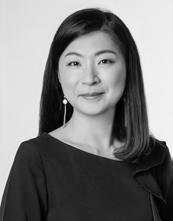
Sungji Hong’s music has been described as “a work of iridescent freshness” (BBC Music Magazine), “the sound is utterly luminous” (Fanfare Magazine), “the harmonies and fluid dynamics were modern” (The New York Times), and in a Citation awarded by the American Academy of Arts and Letters, “At times complex and at times straightforward, her passionate music uses precise timbres to unfold dramatic, virtuoso gestures, iridescent colors, and vivid, atmospheric auras.”
Her honors include a Guggenheim Fellowship, a Charles Ives Fellowship from the American Academy of Arts and Letters, commissions from the Fromm Music Foundation, the National Flute Association, the MATA Festival, the Tongyeoung International Music Festival, Kumho Asiana Cultural Foundation, Lorelei Ensemble, iSing Silicon Valley, Ensemble TIMF, and the Seoul Philharmonic Orchestra. Her Missa Lumen de Lumine on the ECM New Series (ECM 1929), performed by the vocal ensemble Trio Mediaeval, received critical acclaim and reached the top ten on the Billboard Classical Chart and iTunes classics. Sungji Hong (ARAM) holds degrees from Hanyang University, the Royal Academy of Music, and the University of York in the United Kingdom. Hong is an Assistant Professor of Music Composition at the University of North Texas.
The work draws inspiration from the timeless imagery of the Resurrection, depicted in Byzantine icons known as ‘Christ’s Descent into Hades’ or ‘the Anastasis.’ The title, ‘Igerthi,’ is a Greek word meaning ‘he has risen,’ signifying the central theme of the composition. The Piano Concerto unfolds in three movements, each representing a different aspect of the Resurrection narrative. The opening movement of IGERTHI sets a solemn tone with slow, spacious figurations, depicting Christ’s crucifixion. Poignant melodies and subtle harmonies express the separation of body and soul, transitioning into a triumphant march symbolizing Christ’s sacrifice. The ‘Luminoso’ second movement illuminates the spiritual realm with radiant melodies. The final movement, ‘Gates Broken Open,’ bursts with dramatic passages, vividly portraying Christ’s triumph over death.
IGERTHI was commissioned by Intersection and first performed by Intersection and their artistic director, Kelly Corcoran, to celebrate their 10th season. Listeners are invited on a journey of self-discovery and renewal, transcending religious boundaries to touch upon themes of hope, transformation, and the triumph of the human spirit. The work was composed during a productive leave year from the University of North Texas, following the receipt of a Guggenheim fellowship from the John Simon Guggenheim Memorial Foundation in 2023.
This Piano Concerto is dedicated to pianist Jihye Chang.
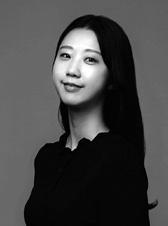
Eunseon Yu, originally from South Korea, is a composer who has written music in a diverse range of styles and mediums. Above all, many of her pieces represent her special interest in writing music that blends different styles or cultures encompassing jazz, Asian, Latin, and European concert music along with the focus on minority and women.
Her recent composition, This, too, is our revolution for Korean traditional singers and chamber orchestra, based on the research of Korean female independent activists, has been spotlighted in many significant events with the total grants received reaching the amount of $50,000. Shimcheong for alto saxophone on the theme of a female character in an old Korean tale, which won the PatsyLu Prize of 2021 IAWM Search for New Music Competition, has been presented by many artists in significant international conferences and festivals. On this basis, she has worked on projects based on subjects outside the mainstream, giving attention to minor cultures and marginalized stories by collaborating with eminent musicians including Wonkak Kim, Christina Lai, Caleb Shannon, and many others.
Her music has been performed across North America, Europe, and Asia by many professional ensembles and performers including yMusic, The Oregon Wind Quintet, Hong Kong New Music Ensemble, Avanti! Chamber Orchestra, etc. and has been featured at numerous events in diverse venues such as the Oregon Bach Festival, International Composers Workshop in Cyprus, 2022-2023 Busan International Contemporary Music Festivals, 2021 Changwon Contemporary Music Festival, The Piano Lunaire’s Composers’ Symposium, Mise-en_Place Acoustic + Series, NASA regional conferences. She has won numerous Call for Scores, the hosts of which include Contemporary Art Music Project, NYsoundCircuit, GRIT Collaborative & OME, etc. As a professional musician, she has been working on a majority of national and international projects with various artist grants from institutions such as Arts Council Korea and Local Cultural Foundations.
She earned her Bachelor’s degree in Music Composition at the University of Illinois at Urbana-Champaign and her Master’s and Doctoral degree at the Florida State University.
This is, Too, Our Revolution
The lyrics of This is, Too, Our Revolution are entirely based on the original documents of Korean female independence activists during the Japanese colonial era. All the documents were provided by the Korean Women Independence Movement Research Institute.
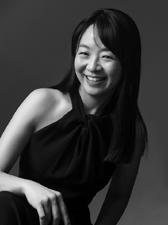
Pianist Jihye Chang is an internationally active performer, educator, and new music specialist. She has received the Henry Kohn Award from Tanglewood Music Center, the Honorary Fellowship from Montgomery Symphony Orchestra, the Yvar Mikhashoff PianistComposer Commissioning Award (with Derek Johnson), Grand Prize from Samick Piano Competition, and Barlow Endowment’s commissioning award (with Christian Gentry). As a devoted interpreter and promoter of contemporary music, Chang has premiered more than 50 works since 2016, many of them written for her. She premiered the Piano Concerto No. 2 by Robert L. Aldridge at the Brevard Music Festival in 2018 and premiered Igerthi, a new piano concerto written for her by Sungji Hong, with the Intersection Music in Nashville in March 2024. Her recordings can be found on Albany, Centaur and Ravello/Parma label.
Since 2020 she has led residencies at composition departments at UCLA Herb Alpert School of Music, University Jacobs School of Music, the Mason Gross School of Arts at Rutgers University, Tufts University, University of North Texas, and Tulane University. She has also been invited to new music festivals and series at Studio 2021 Seoul National University, University of Louisville, Ball State University, and Brandeis University.
Her research and performance activities have focused on piano etudes, and she has given recitals and lectures on this topic at various institutions and festivals, including a collaboration with the Brevard composition area since 2016 called “BMC Etude Project.” In 2021, eight composers based on Boston composed new piano etudes for her, and they were premiered on her YouTube channel youtube.com/jihyechangpiano. These etudes were recorded at the Tufts University and will be released in October 2024 on New Focus Recordings.
Chang is on the piano faculty of the Brevard Music Center and is Senior Lecturer of Piano at Boston University.
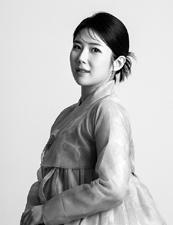
Uisun Cho is a Jeong-ga vocalist who seeks to communicate with modern audiences through traditional Jeong-ga music. She has been working on making Jeong-ga, which is often considered difficult for modern people, more accessible and enjoyable. Uisun Cho aspires to continue connecting with contemporary audiences through Jeong-ga, offering comfort and solace through her performances.
Uisun is Intangible Cultural Heritage No. 30, Gagok Completion Certificate Holder and Bachelor of Arts and Master of Arts in Korean Traditional Music from the Korea National University of Arts. She is a member of Jeong-ga Ensemble Souljigi. She is also Gold Prize winner at the 29th Dong-Ah Gugak Competition’s Jeong-ga Division in 2013, Gold Prize and Special Award winner at the 39th Onnara Gugak Competition’s Jeong-ga Division in 2019.
Since 2018, she has held a total of five solo recitals. Besides her own recitals, she participated in numerous events including the Korea Arts Creative Academy’s Project This, too, is our revolution and K-Arts Art Hallyu Project: in France and Belgium Tour. She has been selected for authoritative competitions such as the Charming festival, National Gugak Center’s “Gugak-in” and “Thursday Pungryu” projects. As a musical actress, she played a lead role ‘Sanwol’ in Seoul Donhwamun Gugakdang musical “Jeok-ro” in 2018 and 2019 and participated in the OST of Namhansanseong Fortress in 2017.
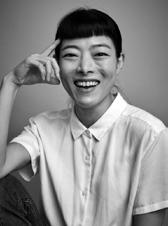
Ahra Jo is a versatile artist who has been actively engaged in various artistic fields both domestically and internationally. She began learning Pansori (Korean traditional narrative singing) during elementary school and specialized in it at the National Gugak High School and Korea National University of Arts. After graduating, she earned an MFA in acting and MFA in choreography at the Korea National University of Arts. Since 2011, she has led the performing arts group “BodySoudSpeakJoAhRa.”
“BodySoudSpeakJoAhRa” focuses on creating process-centered works that resonate with audiences within the cyclic structure of life and art. It emphasizes the connection between sensory perception of the body, sound, and movement in the present moment. Ahra Jo has presented various works including the Pansori Movement Research series, The Woman with Broken Bones and a
Physical Therapist, Wake Me Up, Sachealga Project, Let’s Take a Bath, Inevitable, and Pansori Sugunggaga Jo Ahra. Her works span multiple fields such as traditional arts, theater, dance, and literature.
This is, Too, Our Revolution
*All lyrics used here are from the documents written by the Korean female independence activists.
I. Sorrowful Song
Bird... Bird... Bird from the kingdom of Swallow
When you meet my mother, tell her your daughter is crying.
Sorrowful. Sorrowful. Our Joseon is sorrowful. How can this happen? Are our Joseon people this dark?
Sorrowful. Sorrowful. Our Joseon is sorrowful.
Sorrowful. Sorrowful. Abandons his own wife. Loves another’s wife. Can’t see my anger, I pound on my chest. It only breaks my heart. Let me go out and join the righteous army. Let’s help the army.
How would our Joseon women live without a country?
Let’s help the army.
Bird... Bird...
When you meet my mother, tell her your daughter is crying.
II. Long Live, Daehan Independence
Look, Japanese captain.
If you guys are greedy for our country, you’ll just come and have a look. What wrong have we done to you guys?
You harass our king using our people. How could you rule our country?
Even if we are such docile people, did you think we just sit and watch?
Never harass our king.
If you guys harass our king and our people, Do you think we, women of Joseon, would just sit back and watch?
It’s sad and unfair, our Daehan compatriots.
With the 5,000 civilization history of our country and 20 million people, We are worthy of self-reliance over this whole land.
Under all poisonous politics, our 20 million brothers and sisters have become slaves and sacrifices and received indignity that can never be washed away.
Life is too harsh to die, put in a trap of self-destruction. Ten years have passed, with each day feeling like a year.
In the meantime, the infinite pain is needless to say.
It’s proved by dagger in the hearts of our compatriots.
Even though we are a bunch of women who live in a boudoir, our knowledge is vague, and our bodies are weak, we are citizens, too, and have the same conscience.
Even if they were a heroic master with unparalleled power and renowned knowledge,
There are many people who have ended up this world unjustly without achieving his goal.
Although you are an extremely ignorant person, it’s a law of nature that you will achieve what you want if your heart reaches its peak.
We have nothing to worry about, we have nothing to fear.
Isn’t it our first duty we live and become a new active citizen during the independence period and follow and happily serve such teachers in the heavens without any embarrassment after death?
With the tears welling up from the inside and sincerity from the deep heart,
We bow down and announce to our beloved Daehan compatriots.
Compatriots, Compatriots,
The time doesn’t come twice, you can’t let things pass by, let’s pull ourselves up.
Compatriots, Compatriots.
We can’t live without a country. Let’s save our country and live.
We can’t live without a king. Let’s save our king and live.
We can’t live without ancestors. Let’s save our ancestors and live.
Don’t lament that you can’t live, move forward and take the enemy.
Let them kneel in front of our king and relieve his anger.
We can’t live without a country. Let’s save our country and live.
We can’t live without a king. Let’s save our king and live.
We can’t live without ancestors. Let’s save our ancestors and live.
Don’t lament that you can’t live, move forward and take the enemy.
Let them kneel in front of our king and relieve his anger.
So happy that the light of independence shone on the first day of March.
The beautiful land of Korea is new, and 20 million people are happy.
Long live our country
Long live our compatriots
Long live our country
Long live, Long live
Long live the independence of the Republic of Korea
When seven prisoners wearing muddy dress sit down on their knees pray to God, When two plates of beans and rice are thrown from the window,
I prayed with the tears of blood.
The sun is setting, the wind is cold.
Fierce eyes.
Aching and burning.
How could this virtuous body be tied up?
How could this innocent body be with iron bars?
Snow piles up on the head of Bukhan Mountain
The moon is bright in the middle of the night
It’s hard to hold back the boiling blood of youth.
Choked up from crying.
Even if the storm is strong and blizzard piles up, There is no way to change my firm heart for him.
Crossing a rough hill in the dark night,
The way to him is far away.
Even though there is a lot of suffering in the storms, For the day I welcome him, I will keep going to the end.
Even though there is a lot of suffering in the storms, For the day I welcome him, I will keep going to the end.
IV. Daehan Is Alive
Water parsley, water parsley, wild water parsley. A wild water parsley from Taehang Mountain. Even if you tear off just one two roots, The bamboo basket will overflow.
Water parsley, water parsley, wild water parsley. A wild water parsley from Taehang Mountain.
Even if you tear off just one two roots, The bamboo basket will overflow.
Eheya Deheya It’s good.
Hurry up. Rip it off. Let’s dig it up.
Eheya Deheya It’s good.
Hurry up. Rip it off. Let’s dig it up.
This, too, is our revolution.
Daehan is alive, Daehan is alive.
Mountains and streams are shaking. The sea is boiling.
Daehan is alive, Daehan is alive.
Mountains and streams are shaking, The sea is boiling.
Ehey Dehey Ehey Dehey
Daehan is alive.
Mountains and streams are shaking, The sea is boiling.
Daehan is alive.
Mountains and streams are shaking, The sea is boiling.
Ehey Dehey Ehey Dehey
Daehan is alive.