




Pg 04: When to Walk Out?
Pg 05: Silenced and Stored Away
Pg 08: From Cage to Fieldhouse
Pg 18-19: Leavenworth Ice Detention Center
Pg 23: Lawrence Alternate School
Pg 23: Arts Center to Education Center
Pg 06: Ted Lasso Hits Close to Home
Pg 07: Putting the Big First First
Pg. 09: More than Music
Pg 20: Future of Forensics

Pg 10-11: Kicking It Up a Notch
Pg 11: World Cup Fever
Pg 12-13: World Cup Impacts
Pg 14: Algeria Training in Lawrence
Pg 21: Track Stars
Pg 16-17: Photo Gallery
Pg 24: World Cup Fun Facts
Pg 01: Letter from the Editor
Pg 15: Diversity in Adversity
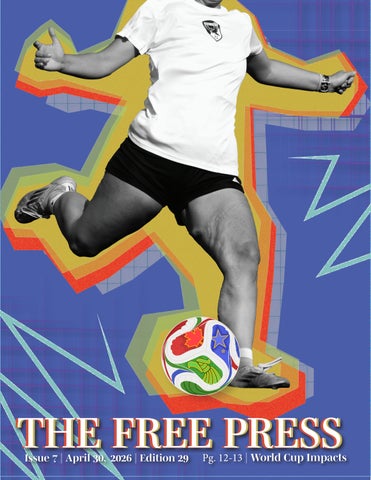
Approaching the ball with full force, a soccer player attempts to take a shot. With the FIFA World Cup coming to Kansas City this summer, Lawrencians have started preparing for the big event that will span from June 11 to July 19. Throughout the issue, we talk about the Algerian team basing in town, the hype within our student body and the pros and cons of hosting the world cup. Design by Abbie Veeder.





Curious Free State journalists will amplify voices, gather superior sources and tell pivotal stories of our community in a visually creative way in order to serve our audience and foster quality scholastic journalism in Lawrence, Kansas.
EDITORS-IN-CHIEF
Maria Mosconi
Evie Chancy
MANAGING EDITORS
Phoebe Morris
Rakshan Ossen
NEWS PLANNING TEAM
Stella Dorssom
Grace Mosconi
Kyla Meikle
DESIGN
EDITOR
Lucas Smith
ASST. DESIGN EDITORS
Bella Lylo
Abbie Veeder
PHOTO
EDITORS
Julia Velasco
Nathan Kramer
ASST. PHOTO EDITOR AND CAPTIONS EDITOR
Ceci Bennett
COPY EDITORS
Meredith Shryock
Lauren Rosen
ONLINE
EDITOR-IN-CHIEF
Baila Love
ONLINE
MANAGING
EDITORS
Kinley Gigous
Odelia Colvin
SOCIAL MEDIA
EDITOR-IN-CHIEF
Katie Campbell
ASST. SOCIAL MEDIA EDITOR
Julia Andrade
BUSINESS
EDITOR
Piper Northrop
PHOTOGRAPHERS
Sydney Brozik
Nora Greeson
Charlie Last
Carter Braden
Nate Willems
Leona Randall
Layla Afani Coburn
Rae Cordova
Collette Colvin
Michael Harding
Annika Lintecum
Aleia Kemp
REPORTERS DESIGNERS
Allison McCall
Ariza Noscal
Celeste Jenkins
Hannah Billen
Jonah Frye
Om Bhakta
Samantha Lowe
Jillian Lehmann
Penny Coleman
Harper Finck
Jaime Stone
Katie Campbell
Ava Talbott
BUSINESS TEAM
News editor-in-chief explains the FIFA World Cup package
Before anything else, thank you for picking up this issue, and more so, thank you for stopping to read the letter. I know that even doing something small, like pausing to read the paper or look at our photos and designs, is a decision to expend limited time and energy.
Over the last 30 papers that I’ve worked on, that question has always been at the forefront of my mind: What will people gain from reading this? After I became editor-in-chief, an additional question became important: what will my staff gain from working on this?
In balancing the desires of students and staff members, there are hundreds of stories we’ve considered that didn’t make it past planning because we couldn’t justify them taking up limited page space.
However, even though being this discerning can sometimes feel exhausting, when we find something that strikes a balance, it can feel like striking gold. The best work I’ve seen comes from passion, and there’s nothing more rewarding than seeing that passion met with an equally as enthusiastic audience.
That’s why we’ve gravitated towards creating packages, large sections of the paper themed around one idea or topic, with most of our issues. A package unites our staff. Of course, we’re always united in making the paper, but creating a package means so much more.
To create one cohesive work, designers get to collaborate across spreads to keep to one theme, photographers get to be creative and take more editorial shots and reporters get to dig deep on one topic or explore many different angles because they
Sincerely,
have the page space.
For my last paper as editor-in-chief, I knew there needed to be a package. Choosing the topic of that issue was easy: the FIFA World Cup.
The FIFA World Cup is one of very few events where people everywhere are all paying attention all at the same time. The FIFA World Cup is able to bring the world together at a scale that feels difficult to comprehend, and yet, this year, it’s happening outside of what feels like Free State’s backyard.
The ability to cover an event like this, as what feels like firsthand witnesses, was an opportunity I knew we couldn’t take for granted. Especially knowing this would be one of the last times many of us would work on a paper together, I wanted that sense of connection, both within our staff and across the world, to shape this issue.
So when you flip through this paper, I hope you feel part of something larger than just Free State — a glimpse of the same global connection that inspired this package and brought many of us on staff together for the last time.
Following a growing number of student walkouts held throughout the state, an addition to the Kansas Senate Bill 315 attempts to restrict students’ First Amendment rights to protest during school hours. The bill, which has been passed due to the Kansas House and Senate overriding Governor Laura Kelly’s veto, requires parents to excuse students for such activities and would impose penalties on districts supporting walkouts.
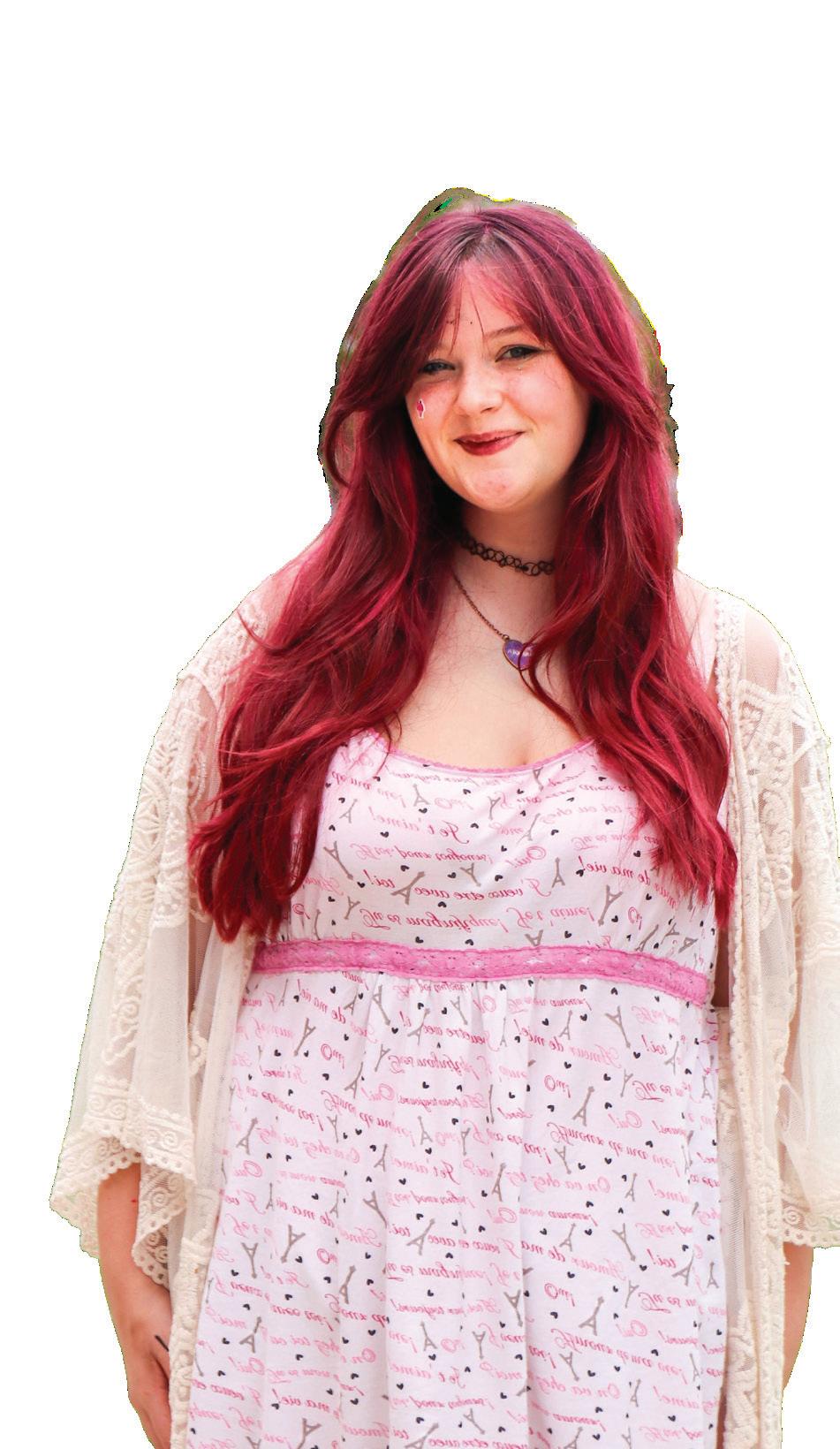
Senior Meera Lala, who has participated in multiple walkouts, said the bill goes against what teachers are trying to inform students of. She said that it is illogical to push activism on students just to confine it.
“We're doing it from what they want us to learn in school,” Lala said. “They teach us to speak out and be active, but then they restrict it.”
In support of student participation, science teacher Julie Schwarting said that students need to have a larger voice in these situations. Schwarting said that it is important for students to learn how to participate in a democracy, and walkouts are an accessible way to do so.
February 2026
Students begin the trend of participating in and creating walkouts.
Story by Stella Dorssom
Students already don't have enough of a voice or an involvement in their community and the politics of their community. How can we expect a democracy to go forward if we're not educating people about what it means to be a citizen in a democracy? “ “
Schwarting said.
Due to the widespread awareness of the bill, Lala said students may become fearful of participating. However, she said she hopes they don't feel discouraged and continue to walk out.
“I would love that they want to do more, but I think they might be scared…I would hope that people would be stronger now,” Lala said.
Senior Laila Lewis, who advocates for students’ protesting rights, said that the bill is not going to slow her down. She said that, if anything, it will make more students want to protest and walk out.
“For sure, it's not gonna stop. I mean, we have freedom of speech and freedom of press, like what we're doing now, and it's not gonna stop 100,000 people from protesting,” Lewis said.
Since January 2026, Free State and Lawrence High School students have worked in tandem to create and participate in three separate walkouts. These events have gained support from other community members, but have also caused some students to face pushback due to their participation.
Schwarting said that student walkouts are important to hold because they reflect the current events in our society. She said that sometimes these issues can be more influential than a lesson taught in school.
“Current events in the world are way more important to honor than a lesson plan that sometimes is as old as time,” Schwarting said. “This is the world we're living in. If it needs to be done now, it needs to be done.”
Early March 2026
Both chambers pass the package containing the walkout bill.
March 3, 2026
KS Sen. Michael Murphy proposes the walkout bill. The Senate votes 21-18.
March 5, 2026
The Senate passes the phone ban bill with a 32-4 vote.

Opinions on new phone ban restricting students from accessing devices during the school day
Anew district-led bill, HB 2299, has been proposed to enforce a ban on phone use throughout the school day, effective next fall. Next year, students will be required to store away their personal devices and will be forbidden from using them throughout the day.
Some students use devices for health accommodations and safety reasons. Sophomore Ruby Fritzel said she had a medical emergency last year and is worried about how students will be able to contact trusted adults in case of an emergency.
“There's also the school shooting concern. It's kind of crazy that we're passing a bill on keeping kids' phones out of the classroom instead of gun reform,
Fritzel
said.
March 10, 2026
The House passes the phone ban bill with an 84-39 vote.
“Story by Rae Cordova
Spanish teacher Paul Rosen said he can see how some students might run into issues with communication with this bill. However, he said that he has seen the impact devices have made on students' comprehension compared to deviceless learning environments.
“A lot of kids are not following the rules … It would be nice if we didn't need the law to support this, but the intentions are good,” Rosen said.
Incoming Free State student and current eighth-grade student at West Middle School, Eva Domenella, said the bill could help students grow academically. However, she also said that she does not think it will fix the usage of phones during school hours.
“I get things were different for older generations. But we grew up taught that we needed our phones with us and I really don’t think this will make a change,” Domenella said.
Furthermore, Fritzel said she finds it pointless to restrict the use of phones in the hallway and during open lunch. Fritzel said that the current phone policy, where students are only restricted from using their phones in class, is effective.
April 10, 2026
Gov. Laura Kelly vetoes the walkout bill.
Because we have open lunch, that would be very hard to enforce, and it's kind of pointless having no phones at lunch and even during passing period, “ “
Fritzel said.
When Domenella heard about the new phone ban, she said she was disappointed because she and her classmates were looking forward to the phone usage changes when entering high school. In addition, Domenella said she thinks students are just going to retaliate.
“When teachers are getting you prepped for high school, they speak about you having more responsibilities and being more grown up,” Domenella said. “I feel like this takes away from that.”
March 19, 2026
Gov. Laura Kelly signs the phone ban bill.
April 12, 2026
The Senate and the House override Kelly’s veto, passing the walkout bill.
Design by Katie Campbell
The feel-good sitcom “Ted Lasso” is set to release its fourth season this summer, and part of its filming was done in Kansas City. Jason Sudeikis, who portrays the main character Ted Lasso, grew up in Overland Park and went to Shawnee Mission West High School. Graphic design teacher Chastity Romero-Latham said Sudeikis is trying to promote and build a film industry in Kansas City.
“It's great for our local commerce,” Latham said. “It's bringing positive attention to the work that people are doing to make the city a place you want to go to.”
She said she was able to experience this positive attention firsthand while at a Mumford & Sons concert in July 2025 at the Azura Amphitheater when “Ted Lasso” cast members arrived mid-performance.
“They were there because Mumford and Sons sings the intro song to the show,” Latham said. “All the characters that were filming in town came out on stage and sang along with the band.”
Connecting even deeper into Kansas, Ted Lasso is based on a real teacher and very respected coach. Inspiring the show’s main character, Donnie Campbell graduated from Latham’s hometown high school in Lyons, Kansas and coached Sudeikis at Shawnee Mission West.
“The things that [Ted Lasso] teaches are based on a lot of the philosophies of the real teacher, who was a very impactful person,” Latham said.
Sophomore Sophia Dietze said Lasso’s philosophies are important for
boosting the team's morale as well as being a good metaphor for a lot of his own mental health issues. While Lasso’s positive mindset helps the team to succeed, she said he uses the phrases to remember to believe in himself.
It helped me to realize that you have to teach people both how to play the game and how to mentally compartmentalize the mental health aspect of the activity and the performance aspect,
Dietze said.
“
Taking similar advice from the series, sophomore Elise Hossler said the show taught her how to be a better leader.
"It's taught me to stay positive, be kind and not let mistakes define me," Hossler said. "Leadership is about supporting others, not just winning."
In addition to phrases, the show includes symbolism such as a sign that says “Believe” taped in the soccer team’s locker room doorway. Hossler said the “Believe” sign represents confidence and trust in yourself and your team.
“Having faith in yourself helps keep you motivated, take risks and keep going, even when things are difficult,” Hossler said.
Story by Samantha Lowe
Using this knowledge, Hossler said the pressure, friendships, sports and self-discovery high school students have to face is countered by the show’s emphasis on kindness and teamwork.
Dietze said the transition from middle school to high school is like trying to play a different sport because you have lots of pressure to succeed at something unfamiliar.
“You don't know how it works, and you have to rediscover the rules of the game,” Dietze said.
Dietze said she first watched "Ted Lasso" at the start of this year and it helped her regulate her thoughts in debate and forensics because she is now expected to coach underclassmen. Taking valuable lessons from the show, she said that everyone goes through hardships, but you have to believe that success is a possibility and that mental health conditions are not diseases.
“It's something we need to acknowledge happens on a worldwide scale,” Dietze said. “People have anxiety and depression, and acting like it's not happening is what's ultimately leading to all these players [breaking down].”
Dietze said that Lasso explains to his team how they need to stop viewing their own mental health problems as shameful. She said that everyone has to get along and support each other if anyone is going to succeed in any aspect of life.
“[Ted’s words] are important for boosting a team's like morale outside of that. they're like a good metaphor for like a lot of his mental health issues,” Dietze said. “Ted's main thing is: we'll win as a team. We'll lose as a team."
Story by Meredith Shryock
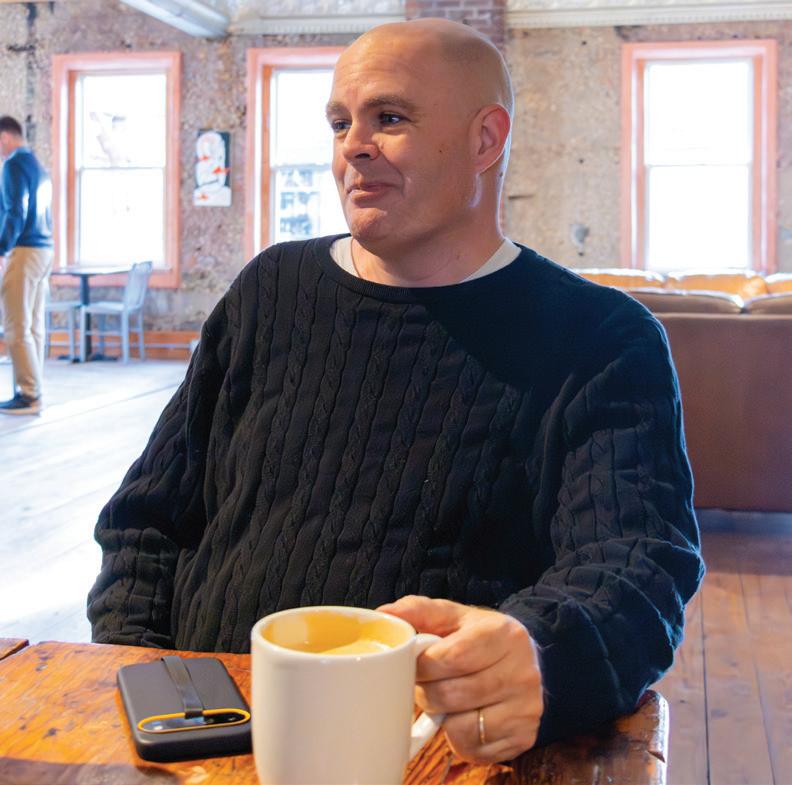
Colin McRoberts has a message for young people: head to the polls.
McRoberts is a Democrat running for the U.S. House of Representatives in Kansas’s first congressional district against Republican incumbent Tracey Mann. The district, known as the Big First, is the 11th largest in the country and home to more than 730,000 Kansans.
McRoberts grew up in Lubbock, Texas, 600 miles from his current residence of Lawrence, but was born at the southern end of the Ogallala Aquifer — the same one that waters farms in Western Kansas. McRoberts said that growing up in a heavily Republican area taught him that party loyalty can be dangerous when voters ignore policy, or the person implementing it.
I’ve
lived in blue cities and in red cities and blue states and in red states. The ones that are healthiest are the ones that are able to work across the aisle and pick a candidate instead of a party, McRoberts said.
McRoberts moved to Kansas in 2015 and is currently an associate teaching professor in marketing and business law at the University of Kansas School of Business and has worked as a professional negotiator. McRoberts said that he looks to the history of the Jayhawk and its
abolitionist ties when defining Kansas values as being disagreeable and fighting for what matters.
“That shows up in our history. It's not something that we've done the last generation or so in Congress, though,” McRoberts said. “We keep electing politicians who are the exact opposite of people who want to stand up and fight. They talk a lot about Kansas values, but you could not find a value that they'll actually defend when it comes down to it.”
In 2024, Mann won reelection by 69.1% of the vote and the district has only elected a Democrat once, in 1952. Despite those numbers, McRoberts said that his race is winnable this year given the low approval rating of the Republican Party recently.
“No one is working harder to elect Democrats right now than Donald Trump, so we actually have a chance of carrying out an absolutely historic upset of this election,” McRoberts said.
McRoberts said that there is no incentive for Republican leaders in Kansas to govern effectively because they assume they will get re-elected. He said that the primary difference between himself and Mann is their interactions with constituents, as Mann sees engaging with the public as a risk.
“I don't think any person in the world, even the deepest red Republican, would look at me and Tracy Mann next to each other and say, 'Tracy Mann is better at this job,'” McRoberts said. “Nobody would say Tracy Mann is the guy who's going to stand up and fight for Kansas.”
McRoberts said that his approach for representing Kansans who did not vote for him would not change. He said that
since it will be nearly impossible for him to win a second term, he would be able to make decisions informed by morality, rather than party loyalty.
“I'm going to do the right thing whether it helps me politically or not, and it doesn't matter to me if somebody voted for me, because I don't expect to get reelected,” McRoberts said. “You do what's right no matter what.”
McRoberts said that he is inspired by the recent student protests and sees it as a way for young people to send a message about what matters to them. He said it is also important for young people to build the habit of voting.
“If you've never stood up and argued for something and fought for something by the time you're 20, I don't think you ever will, and so it's a good time for students to get active like that,” McRoberts said.
McRoberts said that he is not running to build a long-term political career, but to transform the Big First into a competitive district whose representation is more aligned with Kansas’ identity and needs. He said that regardless of the electoral outcome, his campaign will still be worth it because it will close the margin.
“I want to make this not a district that historically votes Dem. I want to make this a district that votes for the best candidate, no matter who that is,” McRoberts said.
The Kansas primary election will be held on Aug. 4 and the deadline to register is July 14. The general election will be held on Nov. 3 and the deadline to register is Oct. 13.
The Class of 2026 is set to have its graduation ceremony at Allen Fieldhouse on May 19 due to the summer track replacement. The location change has sparked some controversy among students.
Following the announcement, senior Phoebe Morris started a petition with the intention of postponing the track construction so the ceremony could be held at Free State. Despite Morris collecting 157 signatures from families and students, she said she is worried that it is not possible to change construction plans.

Story by Michael Harding
“I figured that wasn’t gonna happen, I just wanted to show that we were mad about the decision,” Morris said.
Even though Morris said she felt that administrators tried to postpone the track construction, she said they didn’t fully take into account the students' perspective on the location change.
“They were concerned about it, but I don't think they realized the personal effect that it has on their students,” Morris said.
While Morris said she understands why the location change was made and thinks there are some advantages, she thinks that they don’t outweigh the sentimental value of graduating on the field.
“
From a senior perspective, I have waited 12 years to graduate, and the fact that we can’t graduate on the very grounds that we’ve been for the past four years is very upsetting, Morris said.
Board of Education president GR Gordon-Ross said that the pushback and concerns from students have been heard and have been taken into consideration, but the construction timeline would clash with the fall sports schedule if postponed.
“Superintendent Dr. Swift and Director of Facilities and Operations Dr. Englebrick met with our contractors to get a realistic view of the timeline,”
Gordon-Ross said. “They made the determination that if we push the start of that work, we would severely impact things in the fall more than we would impact them in the spring.”
Gordon-Ross said that he read the petition against the location change


and felt like the students made a strong argument as to why they wanted the graduation to be held at Free State.
“They were very passionate about wanting it to be at their school and they did a really good job of making their case,” Gordon-Ross said. “Despite making the best case in the world, sometimes the bigger picture wins out. In this case, the bigger picture is trying to impact the fewest number of students.”
English teacher and member of the graduation committee Adam Smith said that there are advantages to the location change, but the biggest disadvantage is that the ceremony is not on school grounds and is indoors.
“If the weather is beautiful, I know that the graduates would much rather be outside for graduation, understandably,” Smith said.
Smith said that the overall energy of the graduation could be different since it’s not outdoors, but he doesn’t think that much will change.
“It’s just different when it’s outside, energy wise, I don’t think it’s gonna be any different,” Smith said.
“Those who are graduating are going to be super excited no matter what.”






The Fifth Grade Strings program teaches both elementary and high schoolers Story by Collette Colvin
eginning this year, Free State Orchestra founded the Fifth Grade Strings program, which teaches orchestra to fifth graders at Langston Hughes Elementary School. Around 40 fifth-grade students meet with members of the orchestra twice a week to learn to play their instruments. The program can include high school students leading sectionals, individual lessons, tuning instruments or helping fix and teach technique.
Orchestra teacher Dawn Herron worked with Langston Hughes Principal Jackie Mickel and music teacher Cassidy Bell to start the program, which is based on a program that Herron was involved in while working in a school district in Texas. Herron said that many elementary school families didn’t know that orchestra was an option in middle and high school, and that the program has helped students look to the future and excited them to join high school orchestra.
“It’s definitely going to build a great foundation for us in the future. These little kids are going to come in for the next year you're playing … I've already had some of the fifth graders say, ‘I want to do what those high school kids are doing,’” Herron said.


Sophomore Ruby Fritzel, who plays the cello, said she felt the program would help the fifth graders grow musically. She said the program has helped build a community, allowed fifth graders to form friendships with their classmates and made her grow closer to her fellow high schoolers participating in the program.
Fritzel said the program gives fifth grade students role models to look up to in the orchestra program. She said participating in the program, which combines two of her interests, increased her confidence in communicating with kids.
“
I can see some of these kids building a passion for their strengths like I did, and I really hope that they can continue building that. It's helped me build these teaching skills, Fritzel said. “



Senior Galeno Wills, who plays violin and cello, joined the program to spend time with friends and because his younger sister is part of it. He said the program will help bring in more students to the orchestra, helping it continue to grow in the future. Wills also said he thinks that teaching the fifth graders has helped him notice and improve his own playing.
“Teaching other people what they're doing wrong has helped me with my own technique, like, ‘Hey, I haven't been doing this in my playing recently,’” Wills said.
Herron said the program has helped high school students learn new teaching skills and gain both expertise and confidence, mentioning that “when you can teach a skill, you’ve mastered it.” She said what she loves most about the program is the connection that forms between the high schoolers and fifth graders.
“I'd love to see this happening at more schools, because it's a great community bonding moment … they're great kids, so I look forward to watching them grow through middle school and come here soon,” Herron said.




Lawrence and greater Kansas City area prepare for incoming 2026 FIFA World Cup
Story by Kyla Meikle
Eight years ago, it was announced that the United States, Canada and Mexico would be the home of the 2026 FIFA World Cup. Kansas City would host six matches and serve as the home to training bases for four teams, one of which would be based in Lawrence.
The Algerian National Team announced on Feb. 19, 2026, that Rock Chalk Park would serve as their base and training facility for the duration of the World Cup. The Deputy Athletics Director for External Affairs and Revenue Generation at the University of Kansas, Jason Booker — who helped work with FIFA to book the Algerian team in Kansas — said that while Lawrence is a college town accustomed to hosting sporting events, the scale of this event coming to the Kansas City area is significant.
“We've tried to explain that [it’s like] we're hosting six Super Bowls. I think people who aren't soccer fans don't really understand what's coming, but when you put it in terms of Super Bowls, it resonates with people,” Booker said.
Sophomore Diego Salazar said that hosting World Cup matches is exciting and a good opportunity for Americans to look beyond and connect with others over a shared love of the worldwide sport.
“It'll be very exciting this year to have a World Cup close to us, so more people can see
the games and just experience one of the greatest sports there is. Football is just a U.S. sport, but soccer is a world sport,” Salazar said.
Kansas City is considered a good city to base the World Cup in because of its central location, which allows teams to travel to their matches across the United States with more ease. Because of this, the Kansas City area is one of only two cities to host four total base camps: Argentina, England, the Netherlands and Algeria.
“
“Teams might see that Lawrence and Kansas City have a good soccer Kansas City always tends to punch above its weight from a sports perspective. We have great collaboration amongst all the sports teams, a lot of good, close relationships across the region and that spirit of wanting to help and put Kansas City on a global stage is exciting, Booker said.
According to KCTV, the tournament is expected to bring 650,000 visitors and generate around $653 million in direct economic impact. Sophomore Henry Roberts said that this event will help expose travelers to the Kansas City area.
community, and we might get further facilities for future tournaments. So it helps with development and our infrastructure,” Roberts said.
In addition to larger development, Booker said that preparations have been ongoing through a 50-person committee that meets biweekly to prepare Lawrence for smaller-scale encounters with incoming visitors.
“They are a 90% Muslim nation, and so they only eat blessed meat, halal meat. We've had to make connections in the area for butchers who can provide those services,” Booker said.
“There are a few of those cultural things that you have to work through, but overall, it's been a really good experience.”
Booker said that introducing the team to Lawrence’s facilities and taking them to dinner was valuable for their interpersonal relations in the midst of language and cultural barriers.
“Getting to know new people and kind of opening your eyes and doors to new cultures has been a really good learning experience,” Booker said. “Sometimes we can sort of live in our Lawrence bubble, and so to have a whole new culture come, I think it's going to really open up our eyes.”
Salazar said those interactions and community bonding would be one of the most valuable lasting effects from the World Cup.
“It just brings more fans to our community and a broader range of people from different parts of the world. And bringing different countries and cultures together," Salazar said.
With Kansas City hosting six matches between various countries, Roberts said the national pride for so many teams and cultures will create connections and lasting relationships over a shared love of the game.
“It's the World Cup. It's all about bringing communities together, because you all rally around one team in one nation, and you're all rooting for the same thing," Roberts said.
Students share what they are most looking forward to about the FIFA World Cup
“
I am excited to see a bunch of great games and great competition. I think it will be exciting to see them play games in places like Arrowhead and other well-known stadiums. I think France will win because they have just so much dominance. But it would be cool to see the USA win, although I doubt it,
“
Collected by Rakshan Ossen
“
I am most excited to be able to experience high-level soccer in the USA. I am really excited to watch some entertaining matches and hopefully attend one. France is definitely going to win the World Cup,
“
“
I am excited to go to one of the games in the summer. Especially in a knockout phase game. I think the winner of the FIFA World Cup is going to be France, but I hope for Portugal,
“
Reporting by Jonah Frye and Aleia Kemp

Kansas City is the only city hosting more than one team in pot one, which includes the top 12 of the 48 competing World Cup teams. While Algeria is in pot three, Argentina, England and the Netherlands are all in pot one, meaning they will not play against one another in a match until later in the tournament to avoid early elimination.
Within the six-week period of the World Cup competition, there is estimated to be a $650 million economic impact across the Kansas and Missouri region. There are six matches scheduled to take place in Kansas City at Arrowhead Stadium, with each match expected to bring the same economic effect as the Super Bowl.
The 2026 FIFA World Cup is expected to surpass the all-time record World Cup attendance of 3.5 million in the United Stateshosted 1994 World Cup. Within the first phase of ticket sales, over 500 million ticket requests were submitted by fans and over 1 million tickets were purchased by Feb. 27, according to FIFA.com.
According to the Wall Street Journal, Kansas City is considered the soccer capital of America and is one of the 16 host cities for the 2026 World Cup. Kansas City, hosting Argentina, England, the Netherlands and Algeria, is one of two cities hosting over three teams. While England and the Netherlands are staying in Kansas City, Mo. Argentina chose to stay at the Sporting KC facilities in Kansas City, Kan. and Algeria elected Lawrence as its home away from home, expecting to attract 15,000 fans to Lawrence alone.








Increased air travel could generate high levels of pollution, potentially impacting the environment. Sports commentator Katie Gornall wrote a BBC article, saying, “Climate advocates Thrust Carbon say the potential 3.4 tonnes of CO2e emissions one England fan could generate traveling to every game is equivalent to the production of 34,000 plastic bags, or heating an average UK home for 19 months.”


AOccording to Kansas City Magazine, the KC area is expected to host around 650,000 visitors during the World Cup, which will drastically increase hotel and Airbnb costs. An article in the Kansas City Star stated that Airbnb and Vrbo listings are selling nights for double or triple the usual price.
ne major downside for international fans is that due to high prices for overnight stays and tickets, the World Cup experience is limited to higherincome individuals.
The influx of soccer fans is causing a ticket pricing surge for the final game at MetLife Stadium in New Jersey, which is expected to have a seating capacity of around 82,000. Despite the high number of seats, ticket prices are sky high. According to Henry Bushell at the Atlantic, Category One ticket prices are now over $10,000.





Story by Griffin McDonnell
The Algerian National team will train at Rock Chalk Park as they prepare for the upcoming 2026 FIFA World Cup this summer. This will be Algeria's first World Cup appearance since 2014, when they lost to Germany in the round of 16.
With the team having total access to all Rock Chalk Park amenities, Deputy Athletics Director for the University of Kansas Jason Booker said FIFA will not allow anyone outside the Algerian team to access the facilities, including local teams who regularly use these resources.
“It will impact the teams that normally practice there or host camps in the summer, as security with FIFA won't allow anyone but Algeria to access our main Rock Chalk Park facility,” Booker said. “We have a full workout facility in and training pitch that they will have access too.”
The team coming to Lawrence will bring a large group of people connected to the Algerian team to the area. Lawrence Director of Community Relations Ruth DeWitt said around 15,000 people can be expected with the team bringing players, staff and fans.
“The team brings 26 players, but they also bring a coaching staff, trainers, chefs, physical therapists and sometimes fans choose to stay in the same town as their team,” DeWitt said. “We are imagining people will be in our bars and restaurants, shopping for things to take back home and staying in our hotels. We hope to see lots of revenue come into Lawrence to help with our city budget.”
The process of being selected involved being visited by both FIFA and the team itself. DeWitt said she thinks Algeria chose Lawrence because of the quality facilities and welcoming nature of the city.
“
It was a combination of the quality of the Rock Chalk’s facilities, the fact that we’re in the middle of the country and easy to get to other tournament sites, the friendliness and welcoming nature of Lawrence and the fact that we shared that we’re prepared to meet the needs of their team, friends and families, DeWitt said.
“
The World Cup has only been in the United States one other time, which was in 1994. Freshman Sam Clarke said the World Cup coming to the U.S. will help grow the game here in America.
“I'm very excited for the World Cup being here in the United States and specifically in Kansas City,” Clarke said. “It is great exposure for the sport in the U.S., and it will help grow the game here in the States, since soccer is often eclipsed by sports like football or basketball.”
With a World Cup team training in Lawrence and playing
two of its three group stage games in Kansas City, Clarke said it will be fun to cheer on the team.
“I feel more excitement than pride about the team staying here,” Clarke said. “Algeria may not be the best team in the competition, but it will be fun to cheer them on more than I would have if they had been staying somewhere else.”
Sophomore Rylan Kemp said that Algeria’s choice to stay in Lawrence is a very unique opportunity that allows the city to be involved in something that unites people around the world.
“The opportunity that Lawrence has gotten to host a team in the World Cup is an amazing opportunity,” Kemp said. “It allows Lawrence to be more involved in this worldwide showcase that unites everyone around the world.”
ccommodating over 35 teams, North America will prepare to facilitate the stage for the 2026 FIFA World Cup. The United States has 11 cities that will host teams, including Kansas City.
Concerns have arisen among players and political leaders in European countries. President of the German soccer Bundesliga club St. Pauli, Oke Göttlich, said that teams should “seriously consider and discuss” boycotting the World Cup. According to the New York Times, however, many prominent European political figures have stepped forward and spoken out against a boycott, such as Bernd Neuendorf, the president of the German Bundesliga.
On June 13, 2018, the United Bid of the host countries won the U.S. the right to be the home of the 2026 World Cup. Since 2018, the United States has changed presidents and foreign policies. According to Trac Immigration, as of Feb. 7, ICE is holding 68,289 people in detention centers, with around a quarter having a criminal
conviction. Holding so many innocent people captive, against their will, is not a morally debatable subject. People are people, and should be treated as such, and not framed as “aliens.”
Tensions have only grown during the Trump Administration. The conflict over budgeting in the U.S. government has resulted in a partial government shutdown, with TSA workers' salaries not being paid. President Trump deployed ICE agents, not trained in security work, to 14 airports in response to the TSA workers' mass resignation. White House Border Czar Tom Homan said that while ICE is being trained in security work, they are not ceasing “immigration enforcement duties.”
President Trump said that ICE will make arrests if undocumented immigrants are spotted, but it is not the priority.
According to Inside FIFA, Heimo Schirgi, FIFA Chief Operating Officer of the World Cup, said, “We are committed to working with all the Host Cities and World Cup stadiums to meet ambitious human rights and sustainability goals and ensure that the tournament operations are respectful to people and the planet.”
No major boycotts have taken place, either by politicians or athletes, and the location of the 2026 World Cup has remained unchanged. According to the New York Times, if a boycott were to happen, it would need to be unanimous to have any effect.
Strong words, powerful as they may be, will not make revisions.
Words call for a change, actions make one.
U.S. foreign policies prompt World Cup concerns
Opinion by Grace Mosconi
Countries such as Iran, who have high tensions with the United States, will attend the World Cup. Iran previously boycotted the World Cup draw on Dec. 5, 2025 in the U.S. capital due to visa issues. The Trump administration enacted a travel ban, or partial ban for 75 countries, including Iran. Eliminating the opposition from a chance at victory before the competition has even started cannot result in a true victory for anyone.
The list of travel bans from specific countries is only growing. The World Cup, a symbol of peaceful competition between countries, is being transformed into something of fear.
Competitors travelling to the United States are at risk of facing antagonism, while any opposition of players wanting to support their home country will face equal levels of hatred. U.S. athletes who spoke out against the mental struggle of representing a country with policies they disagree with during the 2026 Winter Olympics will face the hostility of Americans who argue that an athlete should be nothing more than something to be watched.
Athletes build their platforms, yet are not supposed to use them. In a world full of diversity and culture, sports and peaceful competitions unite us. They should be protected and cherished, not feared and hated. This symbol of harmony and oneness could be destroyed by the prejudiced racism of our country. So, in 20 years, will we look at Göttlich’s words as a warning or a regret? Now is the time to act, before cautions become reality.

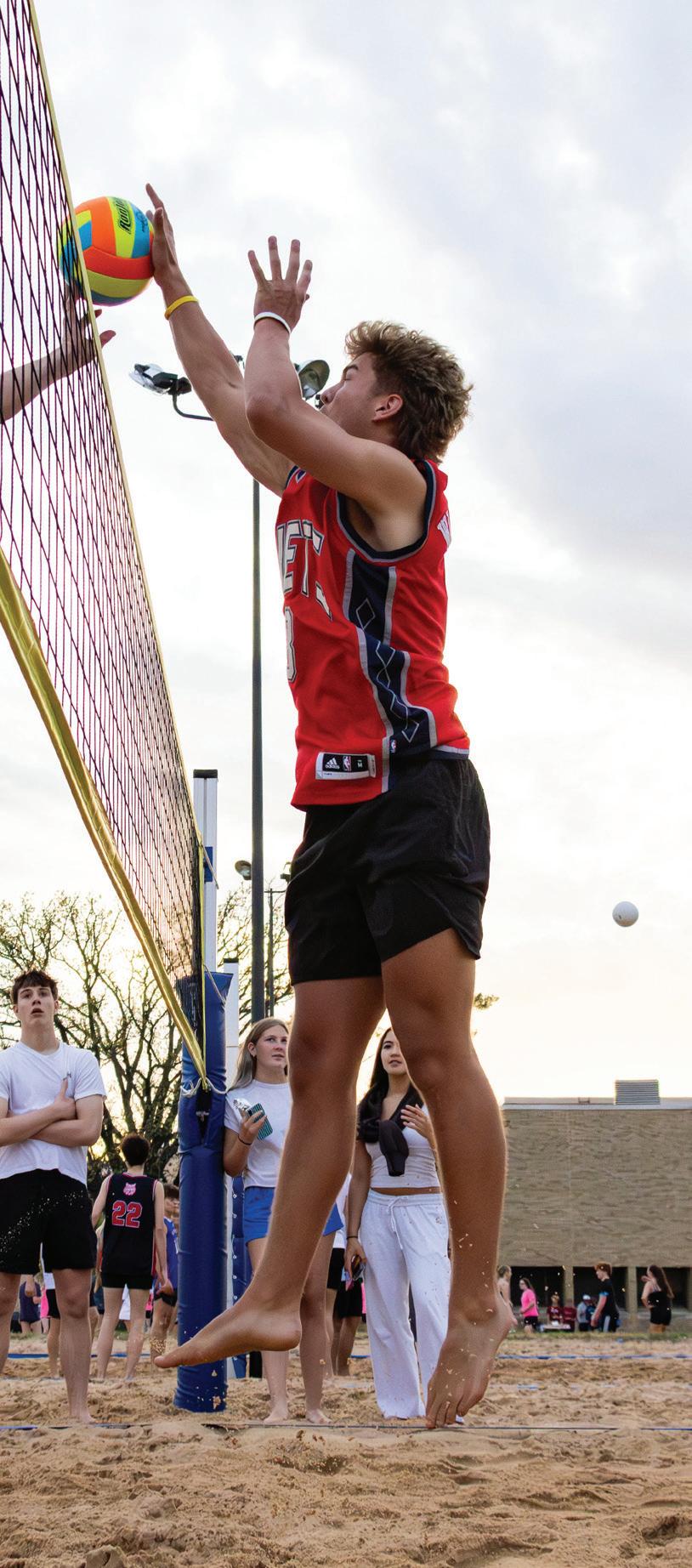


Leavenworth City Commission grants special use permit to open private prison as an ICE detention center
The Leavenworth City Commission voted 4-1 to approve CoreCivic, a previously privately-run prison, to obtain a special-use permit on March 10, allowing it to reopen as an Immigration and Customs Enforcement Detention Center. The permit, however, allows CoreCivic to reopen with 17 city-regulated conditions.
According to the American Civil Liberties Union, Former President Joe Biden issued Executive Order 14006, which aims to “phase out” private prisons, shutting CoreCivic in 2021. However, President Donald Trump reversed this executive order in 2025, and as the focus turns to immigration enforcement, Leavenworth Mayor Nancy Bauder said that the CoreCivic administration wanted to immediately open an ICE Detention Center despite receiving numerous safety concerns when they were originally a prison.
“There were a lot of problems in the prison, and a lot of drugs, abuse, overcrowding, understaffing … our police officers were being called out there many times during the year. We were glad to see them close,” Bauder said.
CoreCivic, who did not respond to a request for comment at the time of publication, wanted to reopen, but needed to obtain a permit because of a city
ordinance created in 2012. Mayor Pro Tem Rebecca Hollister said the city filed an adjudication against CoreCivic when they refused to apply for the permit in 2025.
After a year-long battle with the city, CoreCivic applied in March 2026.
“We wanted there to be conditions attached to the permit for their operations,” Hollister said. “There are 17 conditions that they have to follow, which is a victory [for the city], because originally they were not going to have a permit at all.”
Bauder said she voted yes because she was worried that the federal government would gain control of the facility and the city would not have any way of regulating the treatment and safety inside the facility.
“We have to do what we have to do to defend the city here. That's why we voted the way we did. If we didn't let them do this, it could be [that] we have no oversight at all. If the federal government bought the building, they'd have no oversight, just like the federal prison,” Bauder said.
City Manager Scott Peterson said the city’s fight was never to keep CoreCivic from reopening, but rather that they meet six requirements attached to the permit regarding zoning and
Story by Phoebe Morris
infrastructure, named the Golden Factors.
“It irks me when I see people out there saying, ‘Oh, the city lost its fight, or the city gave up its fight.’ No, the city won its fight. We made them go through the process, and they did. All we did was apply our required zoning laws to the special use permit, which is all that we asked them to do,” Peterson said.
Hollister, the only commissioner to vote against granting the special use permit, said she was worried that the permit regulations did not give as much oversight on the detention center as she wanted.
“I still had a couple outstanding issues about future potential litigation … The permit was vague in a couple of spots,” Hollister said. “I really voted no, because I didn't feel I had enough clarification on those issues.”
The given permit requires the city and CoreCivic to establish a corrections oversight committee to ensure compliance with the permit and due process treatment for all staff and detainees inside the facility. After touring the facility, Peterson said it includes chapel rooms, recreational facilities and personal TVs, even though it used to be a prison.
“These aren't dangerous criminals, and so our understanding from CoreCivic is that they're not going to be walking around with shackles. They'll be pretty much allowed free range facility, so long as they behave,” Peterson said.
According to the commission's





regular meeting notes, there were 62 public comments and two arrests, of which 51 were in opposition to CoreCivic. Hollister said the public was mostly against reopening the center, including all of the commissioners, but the city voted to make sure they had control, not because they were in favor of having the facility.
"The consequences of denying this outright could have been severe. We would have gotten in a pretty hefty lawsuit with CoreCivic and probably not have won. CoreCivic could have sold themselves to the federal government, and we would not have had any oversight," Hollister said.
Hollister said that all the commissioners who voted yes received death threats from the public in opposition to having the facility. She said she believes that the people sending the threats misunderstood why the city had to vote yes to granting the permit.
“ “
It has had a significant impact on their lives… all of us have the best interests of Leavenworth at heart. It's just sometimes we might disagree on how to accomplish those goals,
Hollister said.
Bauder said she hopes those people learn and get involved in government policy. She said she urges students to register to vote and learn about government policies.
“I could not get good people who are passionate about our city to run for office. So that's why I encourage people who feel strongly about removing the facility to run for office,” Bauder said. “It's so important for students to understand how the government works and get involved in it.”
Looking ahead, Bauder said that once Trump leaves office, focus and funding for ICE will likely be less prevalent. She said she hopes this will be a temporary facility and expects CoreCivic to shut down again.
“What they've been doing is going to be cut way back, and we may not even have that many people here. They could turn into another prison, but that would just be between them and us to make sure that they are treating anybody in there with respect and dignity,” Bauder said.
Foreign conflict affects local family
ince February, the United States' war with Iran has continued to unfold. Freshman Cy Colistra and sophomore Kian Colistra have witnessed the
The Colistras have close family members who frequently travel between Iran and the United States. Because of the conflict, they have not been able to return to their respective home countries.
“The hardest part has been not knowing if they are OK because there is really no way to reach them,” Cy Colistra said. “Fortunately, we have now started to be able to get calls through, but up until then, that was the worst part.”
Cy Colistra and his brother said that people should spread awareness and educate themselves about both sides of the story.
“I wish that people were more informed about the conflict as a whole before talking about it to others,” Kian Colistra said.
300,000
school-aged children have been forcibly displaced.
≈52 million




school-aged childrens' educations have been disrupted by the war in the Middle East.
schools and universities in Iran have been destroyed by airstrikes.
328 public schools in Iran are being used as shelters.
Debate and forensics students and alumni share their perspectives on coaching culture
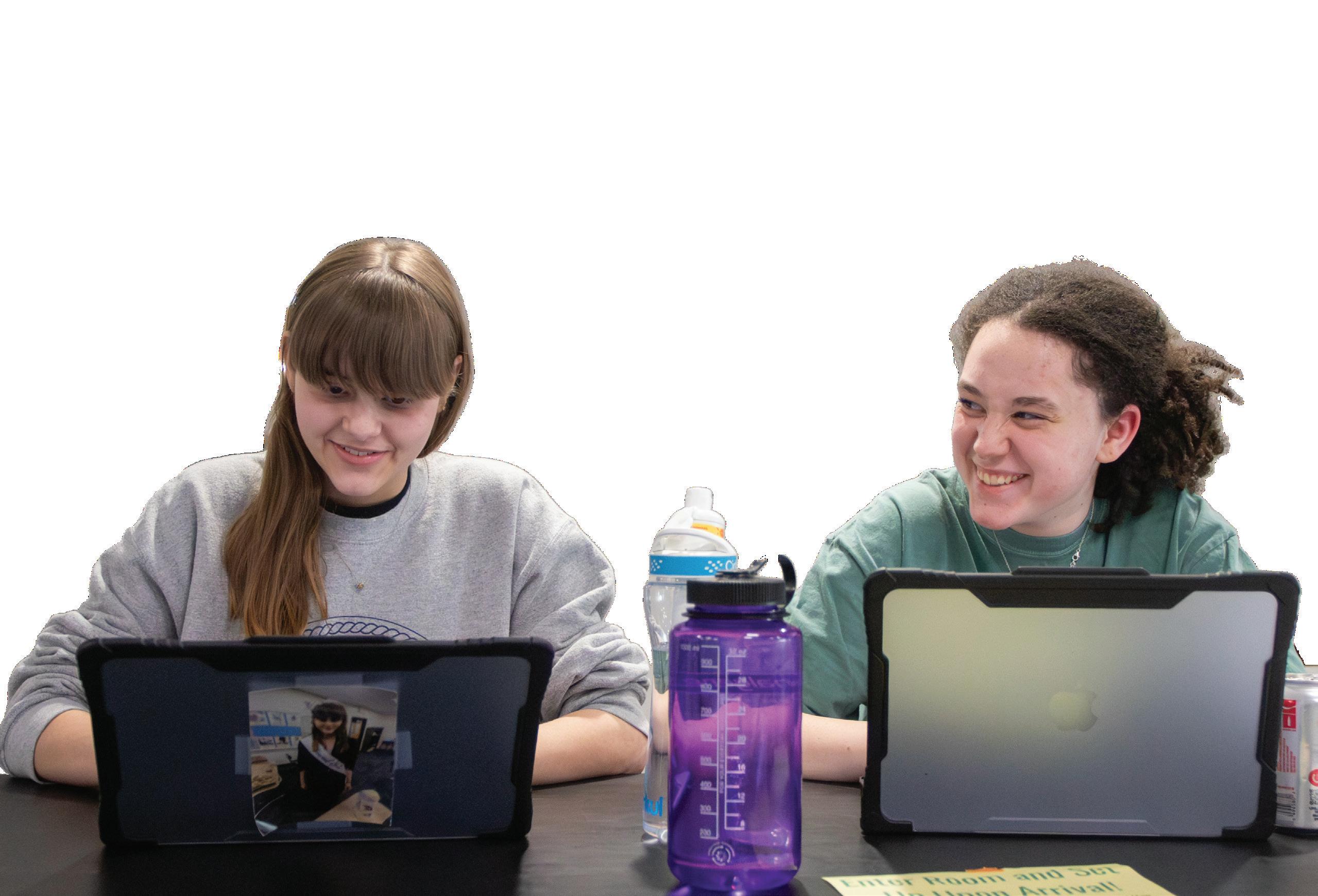
While still in high school, many debate and forensics students not only work with assistant coaches to improve their speaking skills, but also help coach underclassmen to prepare for tournaments. This tradition of coaching while being coached has improved the overall morale and comradery of the forensics community.
There are various types of speeches judged in forensics tournaments and each has its own delivery needed. In each practice with a coach, students receive notes on what they need to improve, such as body movement during the speech.
Having graduated from Free State three years ago, current junior at the University of Kansas Cici Hunter said she decided to come back to be an assistant coach to give back to the program that had taught her so much. Hunter said she was thankful for the adults who helped her during her three years spent as a part of the forensics program and wanted to be that adult for the kids currently in the program.
“I want to help these kids. I want to help see them succeed. A lot of my job is having difficult conversations with kiddos who are not really feeling competitive, or they're feeling burnt out, or they're not getting the results they want,” Hunter said.
”[Coaching is] talking about it with them, talking about what their goals are and how I can help them get to wherever they want to go."
When students progress in forensics, they are allowed to begin coaching the first-year students, called novices, in addition to still being coached by assistant coaches and fellow upperclassmen. Sophomore and second-year member Sophia Dietze both coaches underclassmen and is coached by upperclassmen.
“ “ Dietze said.
Working one on one with a coach means that you can focus on specific parts of the piece that need more emotion. Coaching the freshmen teaches me how to better understand it myself, because I have to explain it to somebody else,
Fourth-year forensics participant senior Breahna Randall said she has been coaching novices out of class for the last
Story by Ceci Bennett
year and, in that time, she has seen the community grow to be very close-knit. Randall said that the healthy environment has led to better teamwork before tournaments.
“Because I joined the speech and debate program, I became much more confident in myself, because I recognized that making mistakes were okay and I'm still able to communicate my ideas well, even if I make mistakes,” Randall said. “Speech and debate really flipped the entire way I viewed not only myself, but also the way I interact with others.”
Just like Hunter, Randall said she plans on returning as an assistant coach in a few years after settling in as a student at KU. Looking back, she said coaching forensics has helped her be proud of herself and her peers.
“It'll make me sad to leave behind something I've been doing for the past four years that has really shaped me as a person and helped me grow in my confidence and my communication skills,” Randall said. “… It brings me so much joy and so much love to be able to work with the students over something that literally changed my life for the better.”













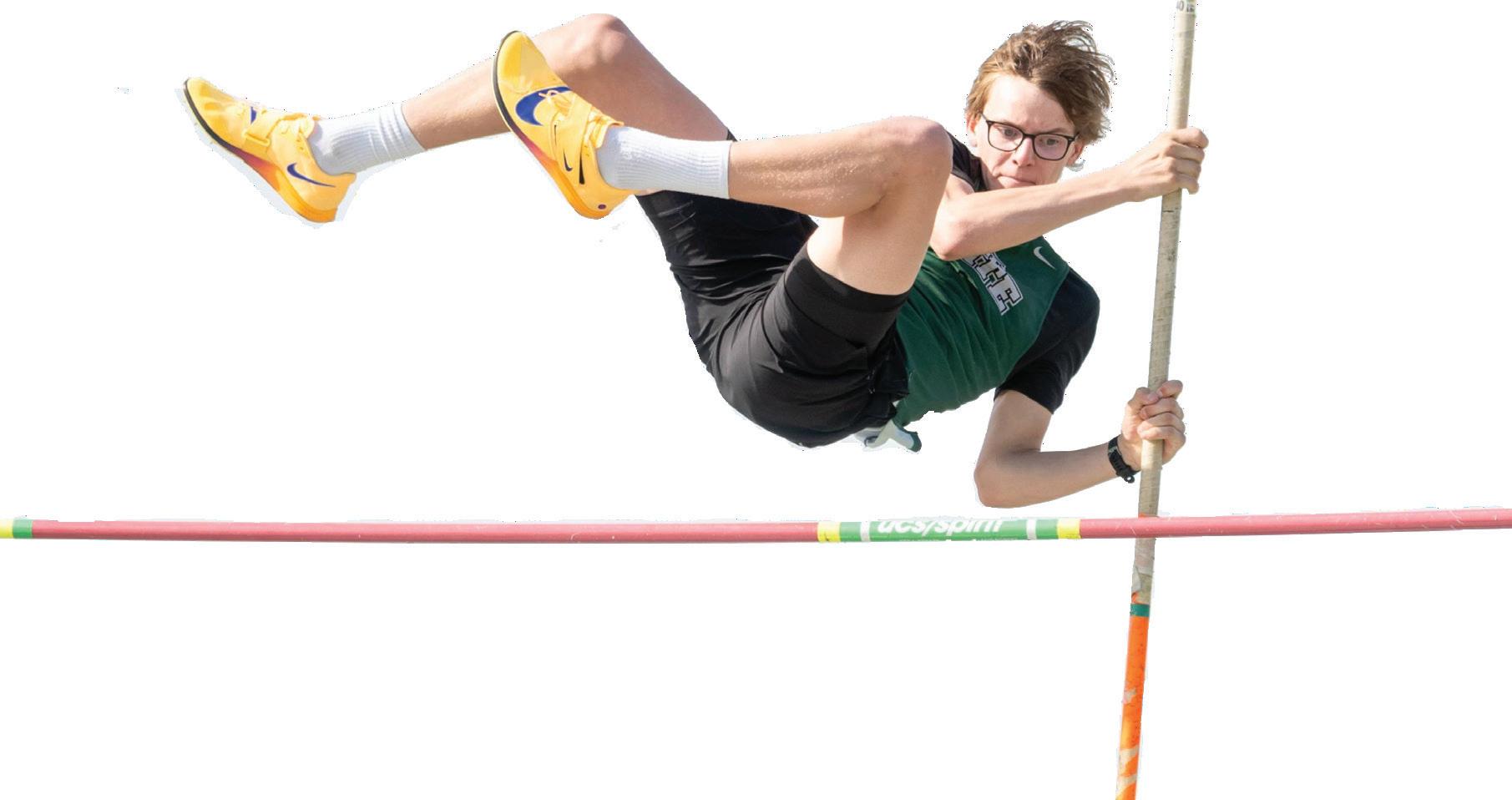
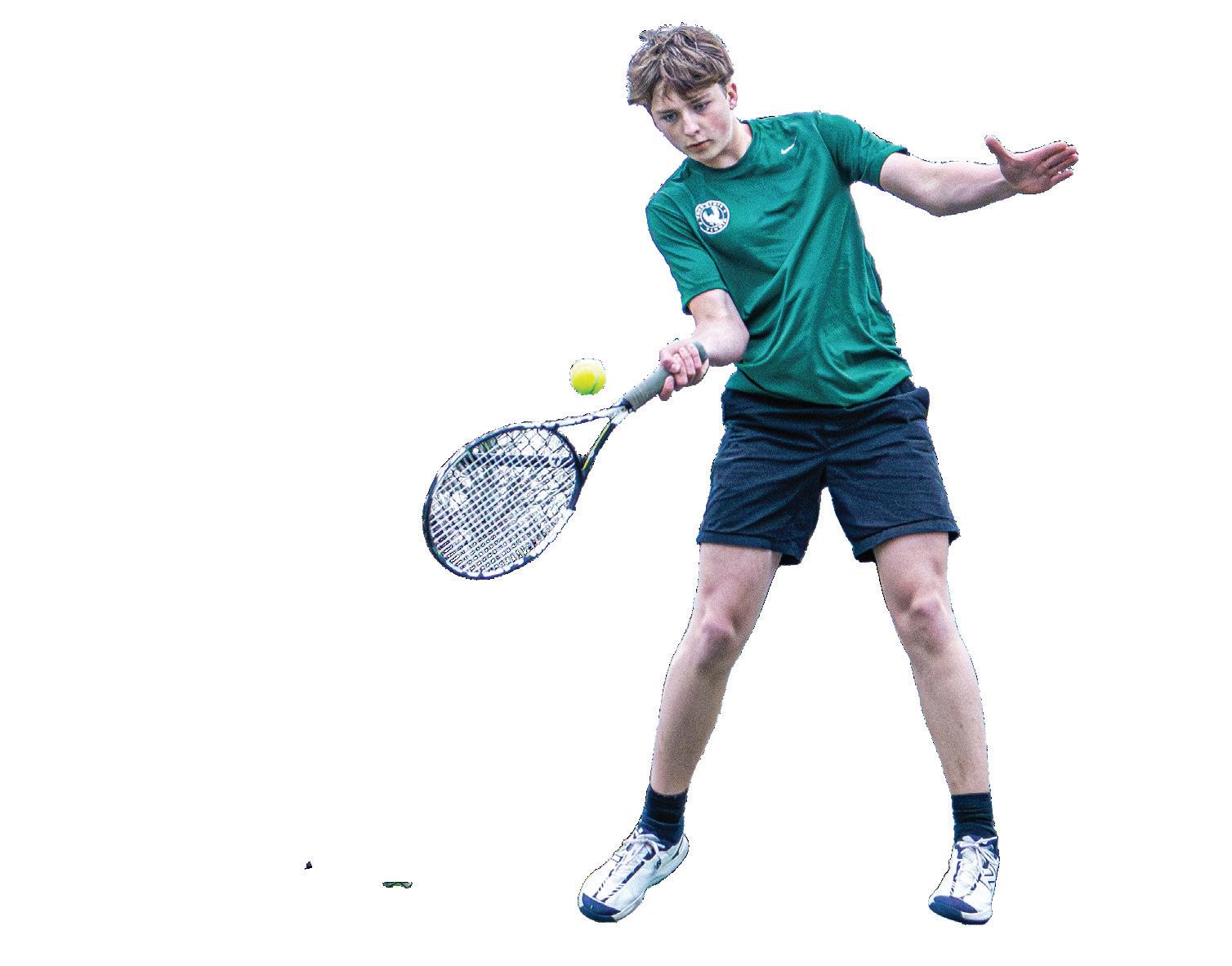
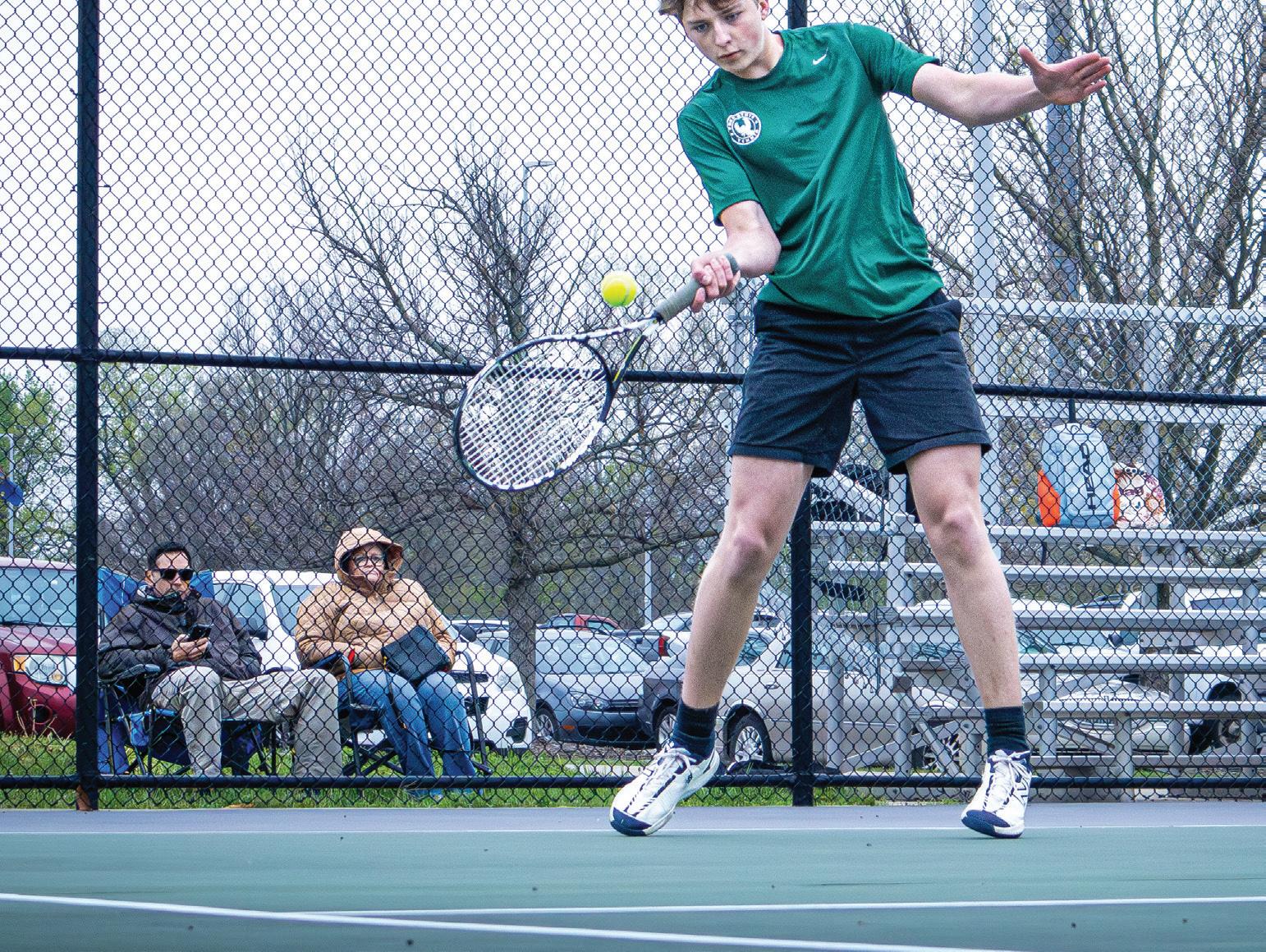
After transitioning from middle school track, many underclassmen have made an impact on the track program this season. These underclassmen had an opportunity to make their mark at home in the varsity and JV Early Bird Invitational meet on March 27, the JV Invitational track meet at home on March 30 and the varsity Coach Beardslee Invite at Washburn Rural on April 2.
Freshman Grace Toner, who placed first in the 800-meter race and 4x800-meter relay at the Early Bird Invitational, started track in seventh grade and later broke the West Middle School records for the 800 and 1,600-meter races. Toner said that high school track has been more organized than middle school track and that it has been a good environment. She said that although being a freshman can bring more nerves, she also likes being an underdog at meets, as it provides motivation.

Story by Collette Colvin

some new challenges for underclassmen to get used to.
“The competition is so much bigger, and [there is] a wider range of schools that you face and better athletes now that it's four grades rather than two,” Leiszler said.
However, he said he still stays motivated, and he wants to break the school record in the 400-meter sprint one day, though he says it will be a challenge.



1 2 3

“I definitely push myself harder, and then other people make me go harder by also having similar goals as me,” Toner said.
Toner said one of her goals for this season is to drop her 800 and 1,600-meter racetimes, and she hopes to set a school record one day.
Sophomore Harrison Leiszler, who placed eighth in the 100-meter dash and fourth in the 200-meter dash at the Coach Beardslee Invite, competes primarily in the 100, 200 and 400-meter sprints. He also set a record at West Middle School in the 4x200-meter relay and competed on varsity and in regionals last year. Leiszler said that high school track comes with


Seeing the progress that I make throughout the years is what pushes me; it's just to continue getting better, “ “
Leiszler said.
Freshman Keanu Kranke competes in the 800 and 1,600-meter races, which he has been competing in for two years, and placed fourth in the 800-meter race at the JV Invitational Meet. Kranke participates in summer track with Hot Feet Track Club, where he had the opportunity to compete in AAU Track and Field Regionals. He said that track has given him the opportunity to meet new people who challenge him.
“Success [is] being able to meet new friends, and setting goals for myself. I would say [success is] finding out who I am as a person,” Kranke said.


5th In the state

Two alternative high schools become available in August
Story by Jillian Lehmann
Sun Prairie High School is a Waldorfinspired Art School, starting at the Lawrence Arts Center next August.
A Waldorf school is a student-centered, arts-based learning model, where the teacher acts as a guide.
Math teacher Cody Kennedy said that the school will give the students different learning approaches than public schools.
“ “
For the students that attend the school, they'll have more opportunities for experiential learning than what you might in a traditional setting,
Art teacher
Rachel Downs-Doubrava said that the school will help students who want to focus on fine arts.
“It would help the students who really want to focus specifically on fine arts, because in a more general high school, public high school arena, you have all of the other core classes you have to take, and this would help students sort of zero in,” Downs-Doubrava said.
Kennedy said that the school will be a way for students to express themselves while using their own creativity and will help people see things in a different way.
problems that are different, creative, that might take a different approach than what I might do,” Kennedy said.
Ceramics teacher Jacob Lewis said that the Lawrence Arts Center has had financial problems in the past years that could make it difficult to fund Sun Prairie High School. According to the Lawrence Times, over the last few years the Arts Center has had financial issues.
“The Lawrence Art Center has had some financial issues in the past couple years, and funding an arts funding an art high school would be hard unless there are people paying a lot of money for it,” Lewis said. Kennedy said.
“Being exposed to the arts, especially at a younger age, really helps students see things in a different way, and can hopefully come up with ways to solve
Lawrence plans to open an Alternative High School to kick off the 2027 school year. According to the Lawrence Times, the new Alternative High School will have flexible hours, with the goal of helping students graduate. History teacher Kellie Lang said the school would be slower-paced and educationally helpful to students with learning disabilities.
“Students in an alternative setting should have the opportunity to be more self-paced and selective with how they're spending their time and how they're getting their education,” Lang said. “There should be a lot more voice and choice in it than this standard cookie-
cutter format that we have here in our normal high schools.”
Centennial Middle School shut down in 2003, and is being repurposed as a high school, aimed at helping students academically. Lang said Centennial High School would have long term benefits, including higher graduation rates.
We'll see a direct impact on the Lawrence community by producing happier young people and maybe even less of a dropout rate.
Lang said.
“ “
While the opening of a new high school may benefit students, history teacher Susan Carey said she is concerned over the funding of a new high school program.
“Where are the salaries coming from? Are they going to negotiate a bigger budget for salaries,” Carey said. “It would frustrate me if we had teachers recruited to go to the buildings and put more on our plates to teach additional classes without any compensation.”
Sophomore James Green said that he felt the announcement wasn't widely publicized, and many students aren't even aware of this new program.
“I didn't know this was happening until you asked to interview me. So maybe a lot of other students also don't really know about this and might be taken by surprise,” Green said.









Across
1. First team to qualify for 2026 World Cup other than the hosting countries
4. One of the countries hosting the 2030 FIFA World Cup
5. Only national team to have played in all FIFA World Cups
8. First time back at FIFA World Cup in 16 years
11. Team nickname translated in English is “The Lions of Teranga”
12. Hosted in the Swope Soccer Village in Kansas City, MO
Crossword themed around the International Federation of Association Football’s 2026 World Cup
Collected by Phoebe Morris
Designed by Bella Lylo
2. Winner of the 2022 FIFA World Cup
3. Player James Rodriguez scored the game winning point against Bolivia for this team to qualify for the cup
6. Second European country to secure qualification in 2026 games
7. Team captain is Joshua Kimmich
9. Seventh time in the tournament and a country hosting the games
10. Team hosted in Lawrence KS