Balancing her many responsibilities, a 1950’s era housewife struggles under the weight of expectations like motherhood and leadership. For Women’s History Month, we assembled an issue to present the obstacles women face today despite years of progress. We chose to represent this idea with vintage images to show how, despite the women’s rights movement making it easier for women to surpass men in their fields, modern women are still measured by and expected to follow archaic standards. Design by Ava Talbott
SOCIALS MISSION STATEMENT
Curious Free State journalists will amplify voices, gather superior sources and tell pivotal stories of our community in a visually creative way in order to serve our audience and foster quality scholastic journalism in Lawrence, Kansas.
EDITORS-IN-CHIEF
Maria Mosconi
Evie Chancy
MANAGING EDITORS
Phoebe Morris
Rakshan Ossen
NEWS PLANNING TEAM
Stella Dorsom
Grace Mosconi
Kyla Meikle
DESIGN
EDITOR
Lucas Smith
ASST. DESIGN EDITORS
Bella Lylo
Abbie Veeder
PHOTO EDITORS
Julia Velasco
Nathan Kramer
ASST. PHOTO EDITOR AND CAPTIONS EDITOR
Ceci Bennett
COPY EDITORS
Meredith Shryock
Lauren Rosen
ONLINE
EDITOR-IN-CHIEF
Baila Love
MANAGING EDITORS
Kinley Gigous
Odelia Colvin
SOCIAL MEDIA
EDITOR-IN-CHIEF
Katie Campbell
ASST. SOCIAL MEDIA EDITOR
Julia Andrade
BUSINESS EDITOR
Piper Northrop ONLINE
PHOTOGRAPHERS
Baila Love
Carter Braden
Kinley Gigous
Leona Randall
Miles Beaty
Nate Willems
REPORTERS
Baila Love
Ceci Bennett
Collette Colvin
Griffin McDonnell
Morgan Sponholtz
Odelia Colvin
Rae Cordova
Samantha Lowe
Sydney Tiemann
DESIGNERS
Allison McCall
Ariza Nozcal
Ava Talbott
Ceci Bennett
Celeste Jenkins
Hannah Billen
Harper Finck
Jaime Stone
BUSINESS TEAM
Annika Lintecum
LETTER FROM THE
News Magazine editor-in-chief reflects on the importance of Women’s History Month
Hi, Firebirds! EDITOR
Thank you for picking up the March issue of the Free Press!
March is Women’s History Month, where we recognize women’s past and present contributions to our history and society. It’s an important reminder that much of women’s equality and progress was hard-earned, but also a reminder that women are still working to overcome systemic barriers. This March, I believe it is especially important to recognize past and present women because the rights, equality and respect they fought for are being contested.
President Donald Trump has repeatedly employed misogynistic remarks against women, and since his second term began, it has become increasingly normal to speak and act derogatorily towards women.
As a female journalist, watching the president tell a woman reporter to “smile more” and call another “piggy” were truly heartbreaking moments for me, but they also reinforced how important this Women’s History Month issue is.
I have been working on the paper for almost four years now. When our editors plan and publish the paper, we are always focused on representing the entire student body. Still, I remember sitting in the journalism room and realizing that the monthly photo gallery featured no photos of women. While it was just one page in the paper, that moment truly demonstrated to me how women are still
unconsciously underappreciated.
constantly surrounded by smart, powerful women. I see them becoming the first in their families to attend college, leading teams and clubs and taking active roles in our community. I see our journalism program led by five female editors-in-chief and supported by a majority female editorial staff. These women and their accomplishments are evidence that women are so much more than a smile.
knew it was important to focus on both the adversity women face and their successes. This edition highlights the news stories that are often underreported and the women who may not always receive the recognition that they deserve. As you flip through this paper, I hope that you are reminded not only of the challenges women continue to face but also of their resilience and successes because women’s achievements are worth celebrating.
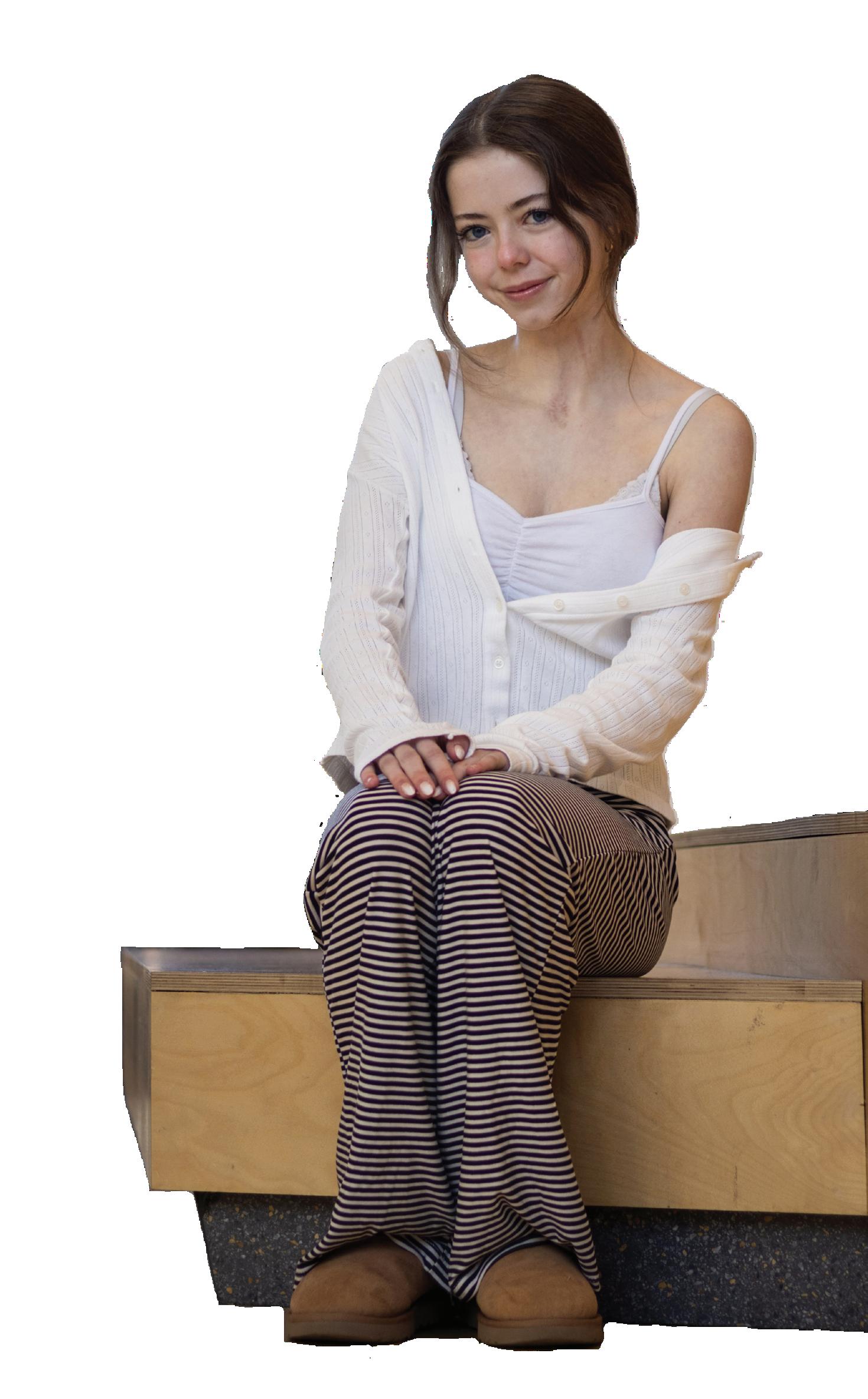
Sitting on the learning stairs, smiles for the camera.
COLLEGE
Proposed state bill restricts immigrants’ college tuition benefits
Story by Stella Dorssom
As of Feb. 23, Kansas Senate Bill 254 is being debated within a committee to resolve any differences between the House and Senate’s versions of the bill. According to Legiscan, a legislative tracking site, SB 254 is an attempt to prohibit “aliens” who are unlawfully present in the United States from receiving any state or local public benefit in accordance with applicable federal law.
Throughout Kansas, undocumented immigrants seek financial aid and benefits, such as in-state college tuition eligibility. Many of these are college students aiming to pay in-state tuition for their education.
Senior Sorcha Keating, an immigrant from Bristol, England, said she has had a positive experience living in the United States. Keating said she recognizes that she has an advantage, being a documented immigrant, when paying college tuition.
“A very significant negative impact of this bill will be thousands of immigrants across Kansas losing the opportunity to go to college because it will be simply too expensive,” Keating said.
European history teacher and an immigrant from Germany, Arne Scholz, said that undocumented immigrants should be able to receive benefits. He said
that if you bestow any help to society, it should be the basis for acquiring financial aid.
“
What makes people eligible to receive benefits, in my eyes, is not whether you are here legally, but whether you have contributed to society, especially by paying taxes in the state you live in,
Scholz said.
“According to KU admissions, out-of-state tuition can be $40,468$51,736 annually. However, according to the American Immigration Council, the immigrants, who pay this tuition, account for 10.2 percent of entrepreneurs, 11.8 percent of STEM workers and 20.3 percent of the construction workforce in the state. Keating said that this bill’s passing would not improve the state as a whole. Instead, she said that it would deter
immigrants from pursuing education, as being forced to pay out-of-state tuition can be costly.
“This will definitely discourage thousands of immigrants from pursuing higher education because they will not be able to afford the enormous price tag of outof-state tuition,” Keating said.
However, freshman Jacob Dirk, who was born and raised in the United States, said that this bill might improve Kansas’s fund distributions. Dirk said that the state could instead spend money on citizens who are documented and decrease the undocumented immigrant presence.
“This bill will lower the amount of undocumented immigrants inside Kansas,” Dirk said. “It will also help with sending money to people who are American citizens and not add people who have not gone through the system to become documented.”
Opposing the bill, Keating said that its timing is also important. She said that right now, Kansas’s legislators should not be trying to create division, but instead unity.
“Limiting the opportunities of immigrants will not bring more opportunities to others,” Keating said. “In a time where fear is widespread in our community, lawmakers should be working to unite us rather than further divide us.”
PUSHING PEACE
Peace agreements established in global conflicts
Israel-Hamas War
Oct. 7, 2023: A Palestinian militant group, Hamas, invaded southern Israel to attain more influence in the West Bank, establish itself as the leader of the Palestinian cause and take hostages for prisoner swaps. Israel fought back against Hamas to protect their security and territorial unity.
Oct. 10, 2025: A ceasefire agreement between Israel and Hamas went into effect. The final surviving hostages were released by Hamas on Oct. 13, but low-level violence from Israel continues, especially in the Gaza Strip.
Feb. 1, 2026: The Rafah crossing between Gaza and Egypt reopened for the first time since May 2024. This was a major requirement of the U.S. backed ceasefire agreement because it was the main route for humanitarian aid, medical evacuations and essential goods. The crossing remains under heavy protocol and only permits a small number of people daily.
Feb. 18, 2026: According to Gaza’s Health Ministry, 586 Palestinian civilians have been killed since the start of the ceasefire, bringing the total Palestinian deaths to 72,037 since the start of the war. In comparison, 2,000 Israelis have been killed since the initial attacks in 2023.
OCollected by Samantha Lowe and Maria Mosconi
Russia-Ukraine War
Feb. 24, 2022: Russia invaded Ukraine to prevent it from joining NATO and threatened to spread its influence into Ukraine. To defend its sovereignty and democratic aspirations, Ukraine utilized its Western ties for immediate military resistance.
January 2026: According to The Center for Strategic and International Studies, Russian forces have suffered 1.2 million casualties - dead and wounded - since February 2022. These numbers are unmatched by any major power since WWII. For every 2.5 Russian casualties, there is 1 Ukrainian casualty; Ukrainian forces have suffered roughly 600,000 casualties.
February 2026: The UN said that as of February 2026, there are currently 3.7 million Internally Displaced Persons in Ukraine out of the more than 9.6 million people who have had to flee their homes. The Kursk region of Russia had 112,620 registered IDPs in February 2025, and the number has grown since.
Feb. 17, 2026: According to the Associated Press, officials from both Russia and Ukraine met at the United Nations headquarters in Geneva, Switzerland, to discuss territory, security and humanitarian issues.
n the morning of Feb. 28, Trump announced that the United States and Israel launched a joint attack on Iran, which killed Iranian Supreme Leader Ali Khamenei. Since then, Iran has launched attacks on civilian infrastructure and American bases in Arab states.
According to CBS News, Trump said that the war will continue until his objectives are met, which he said expects to last four to five weeks. However, officials say that the operation may be completed sooner or later than the president anticipates.
BUDGET BLUES
Lawrence Arts Center faces budget deficit
According to a Lawrence Times article published on Feb. 7, 2025, the Lawrence Arts Center began laying off staff as the board asked them to cut $500,000 worth of expenses. This was following an almost $917,000 budget deficit as reported by their tax filings, ending in June 2023. Staff who spoke with the Lawrence Times expressed concerns about job security and workload. Staff also stated that as others were laid off, they were asked to take on additional responsibilities without compensation. About a dozen people were laid off in February of last year and 10 more moved from full-time positions to contract work.
Interim Executive Director Ben Ahlvers said no new layoffs have happened since, and two positions have been filled. He said that with an organization as large as the Arts Center, a certain amount of turnover is to be expected. However, he acknowledged the impact staffing changes can have on arts students and community members.
“Anytime you have teachers or staff who have been at a place for a long period and have had direct contact with students and community members, their presence will be missed. New staff/teachers coming in are contributing to our existing programming and will build upon what has come before them,” Ahlvers said.
Freshman Mary Swartzlander, a Lawrence Ballet Theatre member and long-time Arts Center student, said she has noticed the effects of the budget deficit. While the Lawrence Ballet Theatre only receives part of its funding from the Arts Center, she said that the organization is not operating as previously.
“
Story by Morgan Sponholtz
Our Summer Intensive got shorter by a week but only decreased in price by a little bit. Classes have increased in price but decreased in value,
Swartzlander said.
“Ahlvers said the Arts Center is working to reduce the budget deficit in many ways. He said his unique position as a former Arts Center teacher and staff member has allowed him to support staff in a variety of ways.
“There are multiple staff and board members that continuously fundraise, write grants and work with civic entities to ensure these programs are available for the community. We are also currently working with the Bloomberg Foundation’s Digital Accelerator Program to improve our existing systems, make our customer experience easier, and reduce operating costs,” Ahlvers said.
For the past year, the Arts Center has been operating normally with a variety of classes, programs, educational opportunities and showcases. Coming up, their annual art auction exhibition will take place in March and raise funds to help ensure galleries are open and free. Following that, the USD 497 art exhibition will occur. Swartzlander said she is hopeful for the future.
“The Arts Center is one of my favorite places in Lawrence,” Swartzlander said. “Our teachers are still trying their best to make it a good experience for all of us.”
Located on New Hampshire St., the Lawrence Arts Center has provided classes and performances since 1974. Photo by Julia Velasco
PUBLIC PAYWALL
City of Lawrence implements membership policy to use parks and recreation facilities
The City of Lawrence Parks and Recreation office announced its plan in mid-November to introduce a fee system for members of the community to use recreational facilities around town. While individuals under 18 can still enter for free, adults must now pay a monthly fee.
The proposal first made its way to the commission in 2023; however, it never made it to a vote due to public pushback. It was only recently that the Lawrence Commission voted in favor of the policy to cut the city’s multi-million dollar deficit.
For junior Peyton Moore, a temporary admin at Rock Chalk Park, she said that the change has drawn mixed reactions from students and community members who use the facilities frequently. She also said the adjustment has been difficult, especially for the front desk employees.
“I get yelled at a lot, and I get a lot of strong feelings,” Moore said. “But then, there are also people who understand, and they’re really kind about it, and they know that it’s not the people who are working. It’s not their fault.”
Although staff members received notice before the change, Moore said the rollout felt rushed. She said the city didn’t give recreation centers enough time to prepare. As a result of this, Moore said attendance has continually declined.
“[That] just shows that they don’t know what happens at the facilities and they don’t know how much the community relies on the facilities — youth and just minority populations,” Moore said.
Math teacher Ben Pope, who plays recreational basketball in the Lawrence Adult League occasionally, said he was disappointed about the decision, citing the importance of having a community space to exercise for free.
“They're important just for general health because not everybody can afford a gym membership,” Pope said. “But everybody should be exercising, whether they can afford it or not. And having a place where everyone has access is valuable for the community.”
Additionally, Pope said recreation centers serve purposes beyond sports and exercise. They are among some of the vital buildings around town.
“It's a place people can go to the bathroom, and they can get some water. They can get outside if it's hot or cold outside. Now obviously it's just a resource taken away, because I know there are a lot of people who will use it for showers and tornado shelters and things like that. Recreation is the intention, but there's a lot of other uses for it,” Pope said.
Students who regularly use the centers also expressed concern. Jacob Dirk, a freshman who has been visiting weekly to play basketball and run on the track since he was a kid, said he was surprised by the announcement.
Story by Rakshan Ossen
of taking this away from them almost will cause more issues,” Dirk said.
Additionally, freshman Will-Henry Tschundy said he typically goes to the recreation centers with his family, and now he has felt the effects of the new policy.
“It's really hard on my parents, because they used to come here all the time with me and have fun, and now they have to pay for it,” Tschundy said.
As the city implements the new fee system, Pope said he hopes recreation centers can remain spaces that prioritize accessibility and community connection. “
They started the rec centers out to be free to the community, so it was just kind of a shock, Dirk said.
While Dirk said he understands the financial reasoning, he worries about the broader impact, as individuals sometimes use these facilities to relieve stress and socialize.
“Some people go to the rec center to get away from whatever, and then kind
TFestival in April. After performing, band groups receive a rating on a scale of 1-5 from a panel of judges. Senior trumpet player Dexter Dillingham said lots of preparation will go into Festival songs.
“We play more challenging pieces for [the contest],
Collected by Odelia Colvin
plays Black Stache, said that
THEATRE
helps add to the energy of the show.
“There's a lot of interactive elements with the audience,” McGowan said. “Part of the reason we did it in the Black Box was to be right with the audience.”
McGowan said that he was excited to perform
in "Peter and the Starcatcher" because of how much he enjoyed participating in last year’s Black Box show, “The Importance of Being Earnest.” “I wanted to do one last show before I graduate,” McGowan said.
In the past, competitions have been held at the Lied Center. Dillingham said the atmosphere of the Lied Center can be intimidating to play in. “The first time, it definitely is a little bit scary, and you can see the amount
of people that are there. It's always more than you expect, and the room is really big,” Dillingham said. “It sounds a lot better, though. You can even hear how much better it sounds from the stage.”
Photo by Ceci Bennett
Photo by Leona Randall
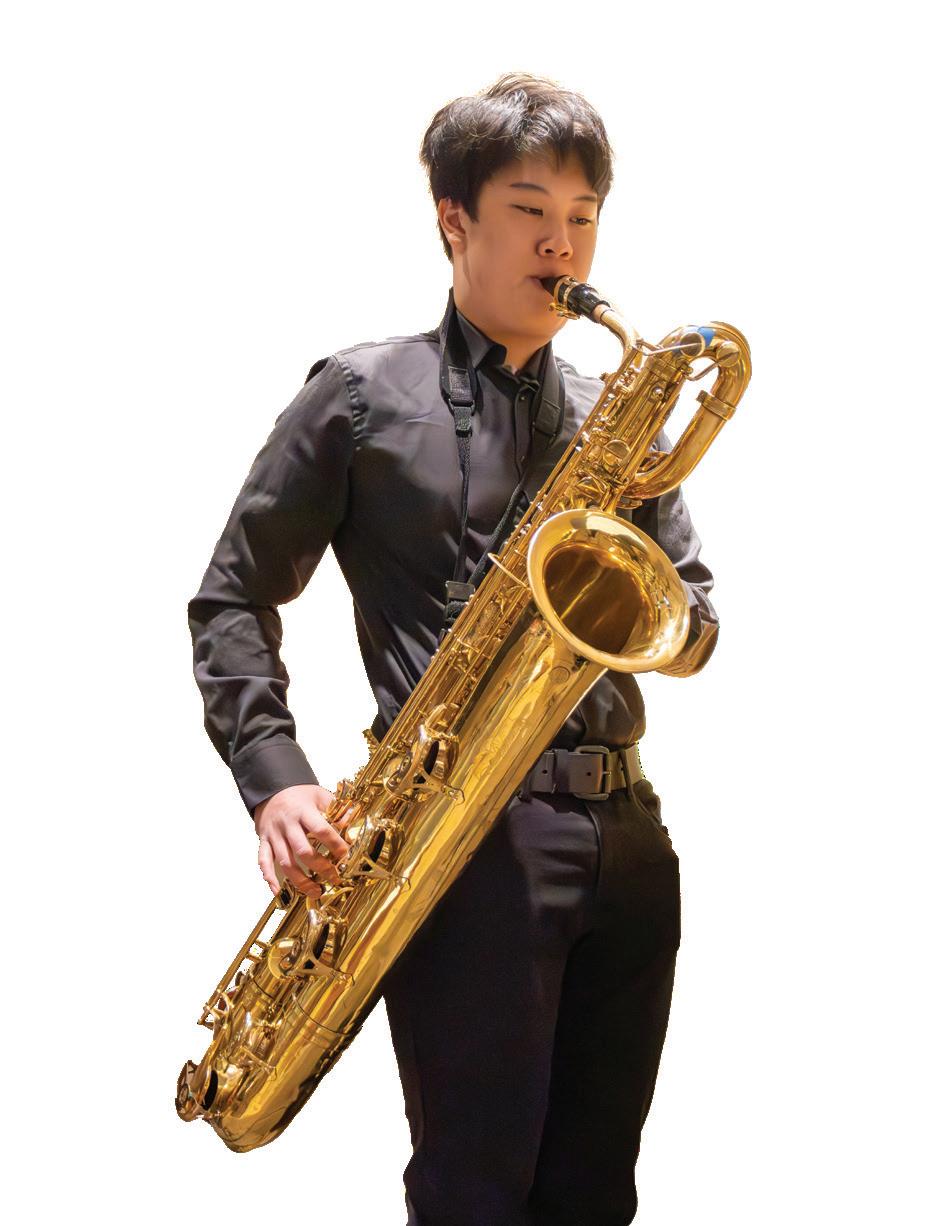
Playing the baritone saxophone, freshman Tong Li participates at the winter band concert on Dec. 11.
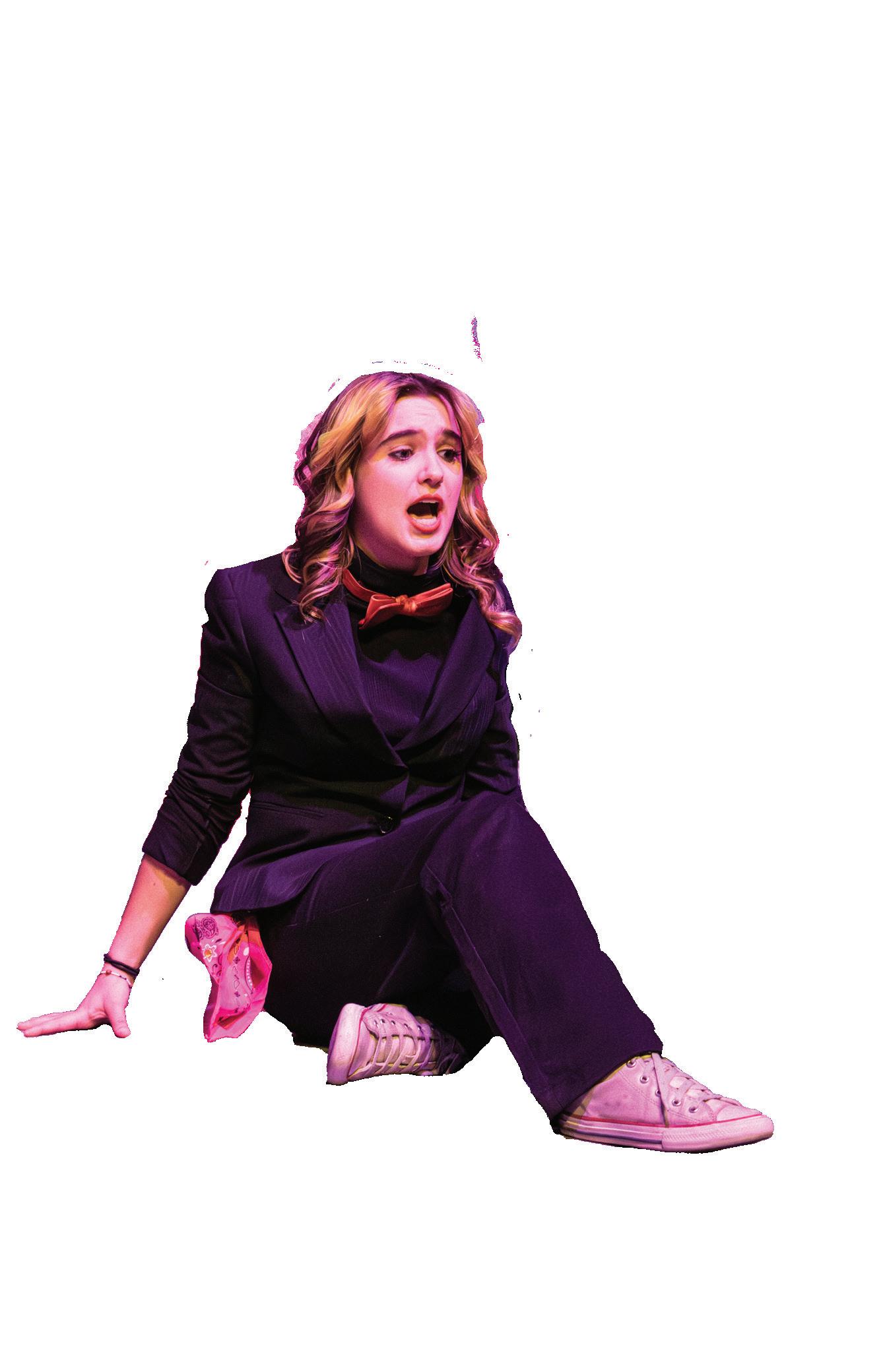
At “Proventines,” sophomore Elizabeth Davis participates in the improv game Freeze.
CHOIR
In March, the choir travels to Seattle to have a musicmaking and bonding experience. Senior choir member Morgan Sponholtz said she is excited to get closer to other choir members through the trip.
“It'll be a fun way for us to come together as a choir
[underclassmen] a lot, so I think that'll be really fun,” Sponholtz said.
The trip takes place every three years, with everyone being able to participate except freshmen. While in Seattle, the group will be performing at Pike’s Place Market as well as attending choral workshops to learn from other teachers.
"A lot of times we can get stuck because we
hear the same things from our choir teachers...when somebody comes in with that new perspective or that new technique to get to something that you've been struggling with, it's just so rewarding,” Sponholtz said. “I feel so lucky to be able to have that experience and to learn from so many different people.”
ORCHESTRA
he orchestra's end-of-year concert is set to take place in May. Senior orchestra member Delaney Earl said the end of year orchestra concert is a tribute to the seniors.
“We do this thing where every senior blows
Photo by Miles Beaty
out a candle for our concert, and that's pretty fun,” Earl said.
Earl said that preparation for the final senior orchestra concert starts when orchestra members are freshmen. In addition to separate songs played by each orchestra, the concert features one song that is played by all orchestra
members except the freshmen.
“There's this one song that gets played every year,” Earl said. “It’s tradition. So, you start playing it when you're a freshman. And then by the time you're a senior, you're pretty solid at it.”
FORENSICS
Junior Ewa Adedipe said that she was most excited for upcoming national tournaments like National Catholic Forensics League and National Speech and Debate Association tournaments.
“I'm really excited for nationals…I've spent a lot of time working on my pieces, because I have an opportunity to go again,” Adedipe said.
Students working on forensics pieces often meet with coaches in thirty-minute sessions to receive feedback.
Adedipe said that she has three to five practices a week.
At competitions, forensics competitors go through multiple rounds of judging, and are given 1-6 rankings which are then averaged to
Photo by Balia Love
Photo by Balia Love
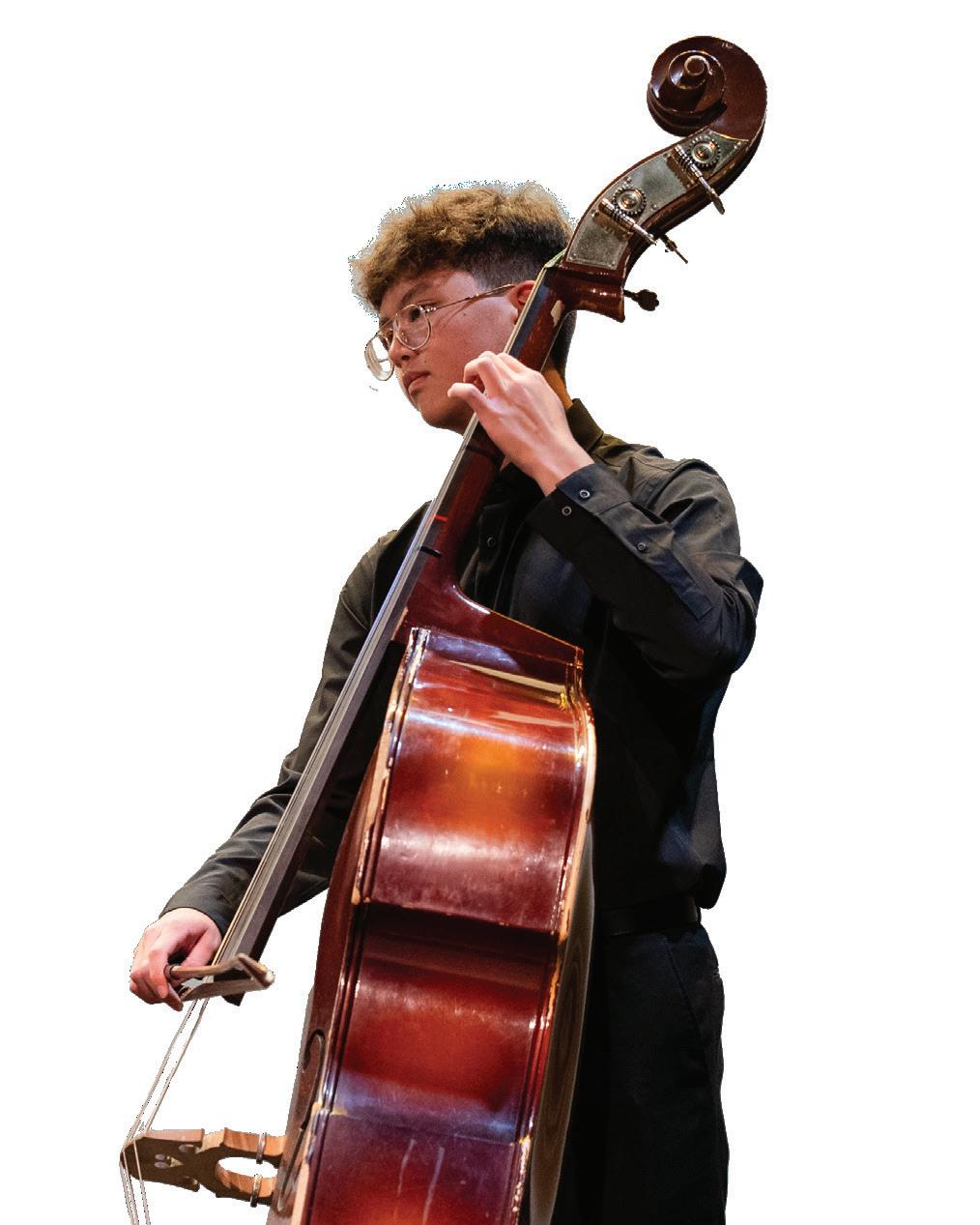
During the fall orchestra concert, freshman Ryden Finck plays the bass.
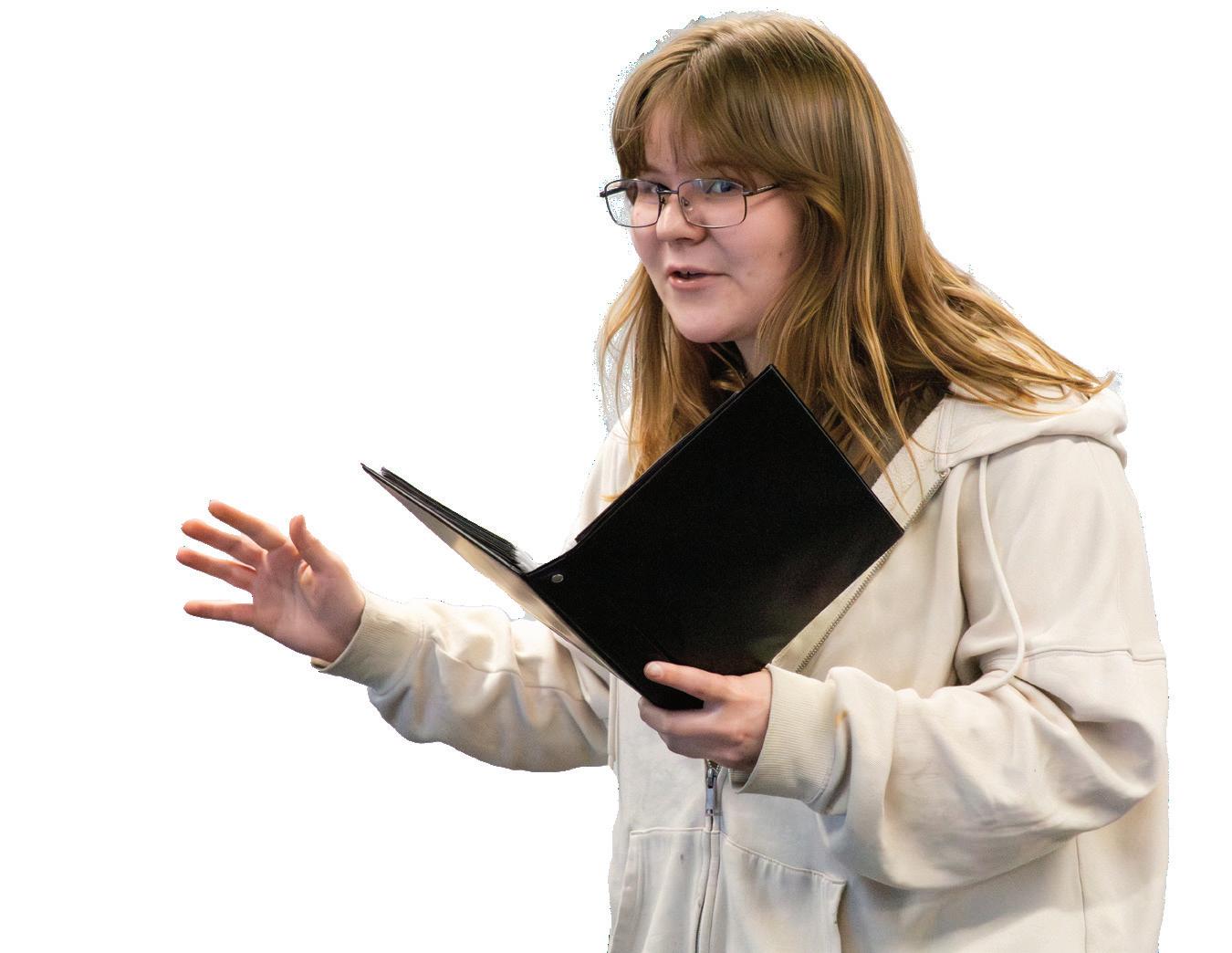
Reading her prose, sophomore Isabel Krestas prepares before the Sumner Tournament.
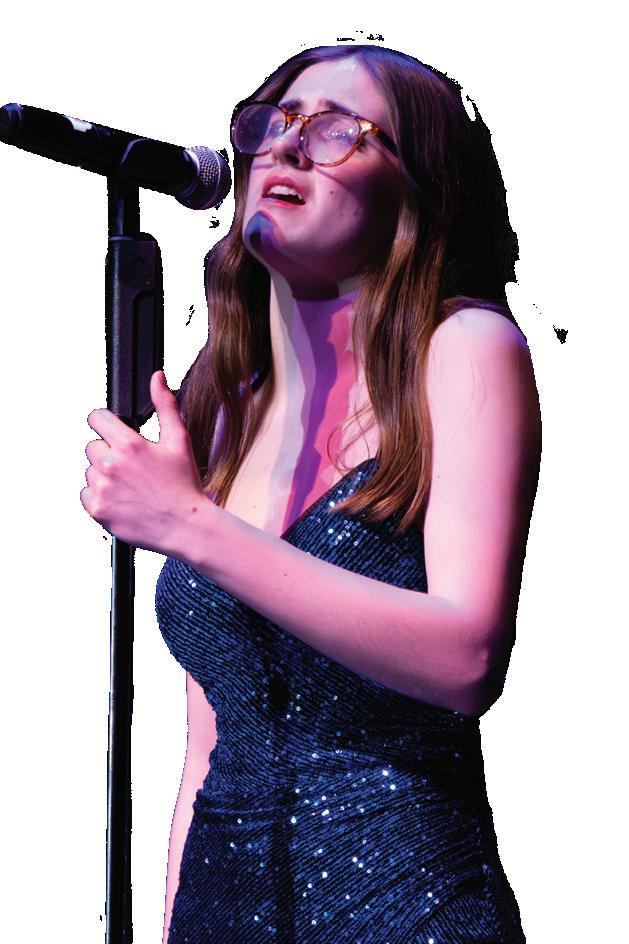
Singing into a microphone, senior Mimi Wood prepares for her solo song “This Masquerade” in Encore.
GIRLS WITH GAME
Female athletes share their success on female teams Story by Rae Cordova
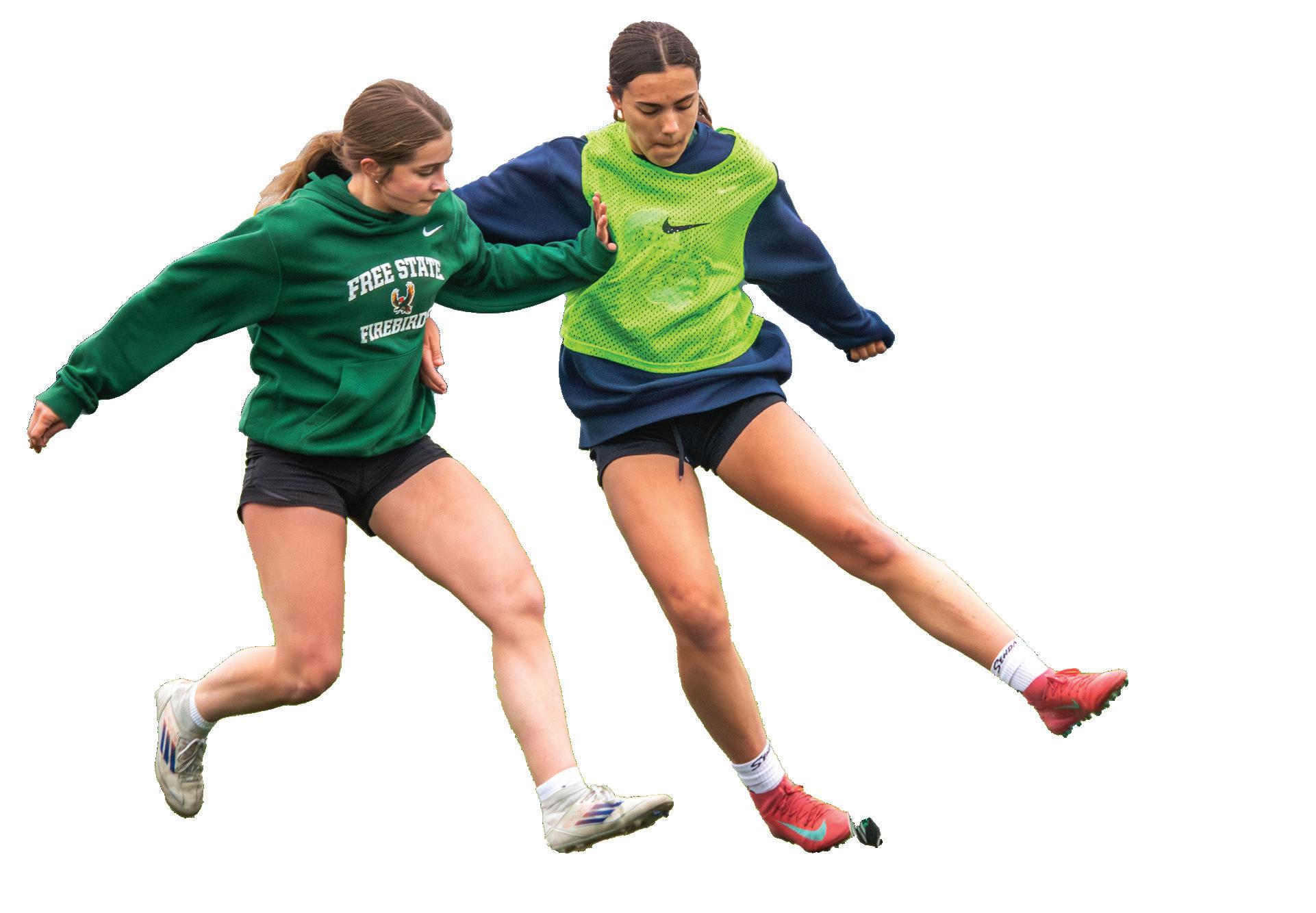
Despite limited resources, unequal attention and the ongoing fight for representation, female studentathletes continue to thrive and counteract the setbacks of being on a female team.
Up until this year, the girls wrestling team has had issues finding a place to practice due to the boys wrestling team already occupying the wrestling room. This year, however, the wrestling teams were able to practice at the same time by splitting the room in half with the girls' and boys' teams.
Senior Delaney Earl said that being a member of the girls wrestling team has deepened her appreciation for the program and its growth.
“Most schools just [have] separate girls teams in the past couple years,”
Earl said. “I think it's definitely made me appreciate [having a girls wrestling team] more, just because of having to pioneer the sport more than other sports, like basketball and softball, where they had girls teams for a while. It's definitely just given me more appreciation for the sport.”
Earl said that participating on a girls' team has elevated her confidence level on the wrestling mat. Additionally, Earl said that it is essential to have girls' sports since she finds herself being on the defensive side while wrestling a boy.
“It's really important, for girls' sports specifically, where they've had less representation, to make sure that every boys sport has a girls team as well,” Earl said.
Senior Taylor Andrews is a member of the Spirit Squad as well as the girls’ swim & dive teams and said she noticed the disparities in male and female sports since she began competing. Andrews said she and her teammates retaliate against the difficulties of being female athletes by supporting each other.
“We push each other to be the best, almost proving that what we do is just as important as any male sport,” Andrews said. “We work together and strive for success, and in the end, I am
always so proud of all the accomplishments that these women teams have achieved.”
Following accomplishments, freshman Leah Wilson successfully made her way to state after winning the Sunflower League as well as being cobowler of the year. Wilson said making state was a major goal of hers; however, she felt a little dejected knowing her team did not make state with her.
“Walking into regionals, I had bowled with some of these talented girls throughout tournaments so I knew the number they were capable of putting up,” Wilson said. “I trusted my training and was able to use the nerves to my advantage.”
Furthermore, senior Addie Fulscher, who participates in multiple sports such as girls' basketball and girls' flag football, said that working on a female team should be highlighted as it creates a space for female athletes to gain confidence and resilience while also making room to have fun.
“ “
In sports, you face adversity and learn how to bounce back, which is a crucial skill to have and will always be valuable in life, Fulscher said.
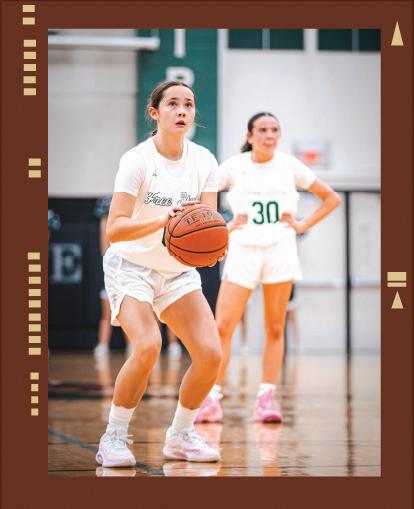
Looking at the hoop, senior Addie Fulscher prepares for her free throw shot. Photo by Miles Beaty
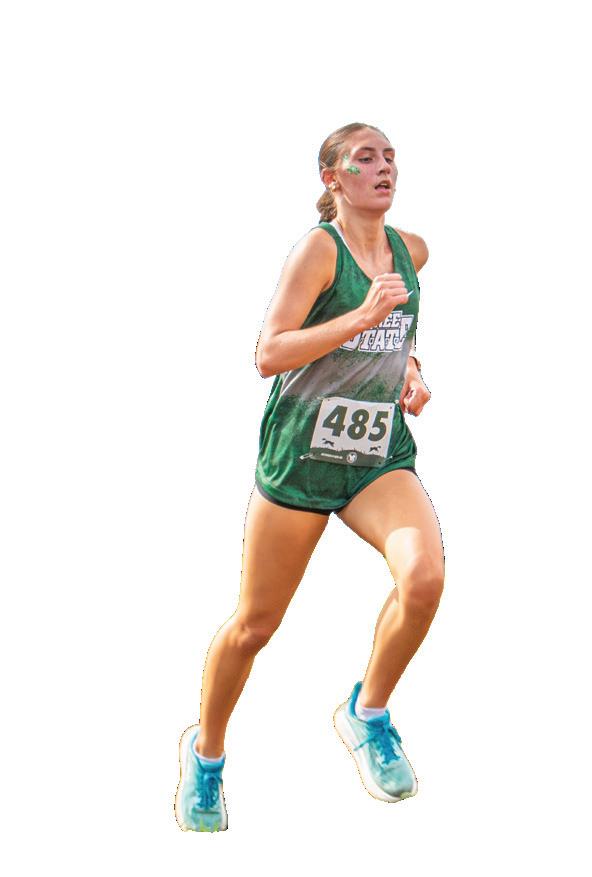
Running to the finish line, Bea Essman races at Rim Rock Farm.
Photo by Anders
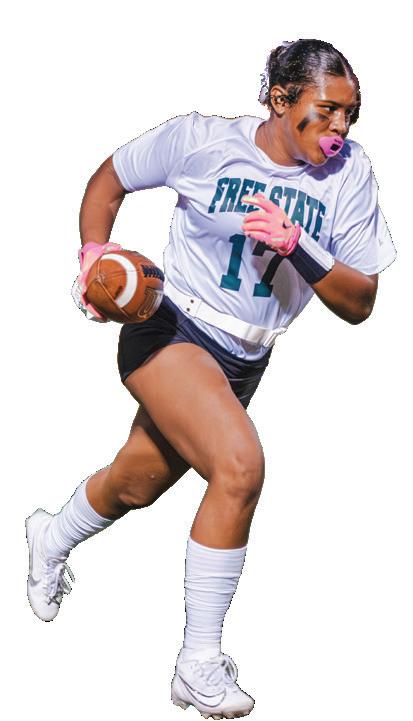
Sprinting with the junior Sarai Preston heads toward the end zone. Photo by Anders Benson
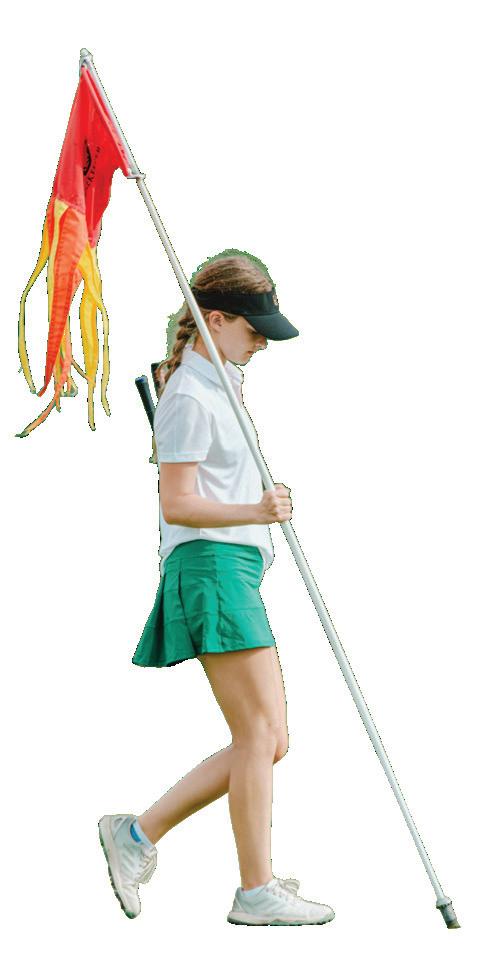
Placing the flag, senior Annie Pilakowski marks the hole’s location. Photo by Anders Benson
DIAMONDS SHINING IN KANSAS CITY
Story by Griffin McDonnell
Kansas City Diamonds one of seven teams in the Professional Softball League
Set to debut in the summer of 2026, the Kansas City Diamonds are one of seven teams in the new Professional Softball League. The team will play at Legends Park in Kansas City, KS, with its first game on June 11, and will end the season with postseason play in August.
While the team's roster is not finalized, some players, like catcher Leah Boggs, have already signed with the Diamonds. Boggs played college softball at the University of Virginia, but said she’s still most excited about playing in front of the Kansas City fans.
“ “
There is something different about the Kansas City community and the way they show up for their athletes, Boggs said.
“I’m ready to play in front of our fans and experience the city of champions firsthand.”
Softball has seen a large increase in viewership over the last few years,
with a record number of 1.3 million average viewers during the Women's College World Series. Boggs said the formation of the PSL will continue to help grow the game while providing opportunities to more female athletes.
“The PSL forming is such an incredible testament to the growth of softball and women’s sports in general,” Boggs said. “There are so many talented athletes who deserve an opportunity to continue their career and with the formation of the PSL and new teams like the Diamonds, they continue to create more opportunities. I know that this growth is only going to continue, and I’m excited to see where we end up.”
Since they will be playing so close to Lawrence, junior softball player Hallie Vail said she thinks the Diamonds will hopefully help continue to increase the popularity of softball locally.
“It’s going to be fun to have a professional softball team near us, and hopefully it will help with the growth of the sport,” Vail said.
Sophomore softball player Presley White said a new professional team could attract more people to the sport and hopefully bolster the number of people participating in women’s sports as a whole.
“I am really excited to watch good softball close to home. It will be fun to support a new team,” White said. “It can bring more attention to women's sports, and it might get more girls interested in
Boggs said building chemistry could be tough to do with the team being in their first year, but she said it's easy to connect with people who all value the same things.
“When you have a group of people who all value and want the same thing for this sport, it ends up being effortless,” Boggs said. “I’m grateful to have a head start on building relationships with those who I’ll be playing next to this season.”
INVISIBLE CODE
Women’s battle with social standards Opinion by Grace Mosconi &
Rakshan Ossen
We like to believe we live in the most progressive era in history. We celebrate female CEOs, female millionaires, female senators and female athletes breaking records. We post slogans about women's empowerment and equality. Yet, beneath the celebration, a harder truth remains: being female still means navigating a world that questions your worth before you even open your mouth.
What does it take to be a female? It is to wake up early to sculpt yourself into something “presentable.” It is to sit with your legs crossed and posture perfect, even when your back aches. It is to endure demeaning comments and respond with a polite smile. It is to meet every social standard and still be told you are not enough. A social code is still placed on them, aimed at turning spirited women into inanimate dolls. Equality may be discussed, but is it consistently practiced in today’s world?
Women in the United States were not recognized as full political participants until the ratification of the 19th Amendment
to the United States Constitution in 1920. Before then, their voices were legally irrelevant. According to Data People, women still dominate “pink collar” professions like teaching, nursing, sewing and clerical work. Their labor sustained society, yet their independence was restricted. That was not accidental; it was structural.
The laws have changed. The expectations have not. While women have gained significant rights over the course of history, the impact of harsh standards cannot be erased.
Females
lean over bathroom sinks and pick out every detail that is wrong in the mirror. Women still spend countless dollars on beauty products marketed to “fix” every imperfection on their bodies. They still shut their lips and bow their heads when men confront them.
Throughout history, women have dealt with demanding social expectations and restrictions on their freedom. Women were expected to manage an entire household while hiding their dirty hands and presenting a respectable image. Men worked in the public sphere under grateful eyes while women worked in the dark.
According to the Pew Research Center, women in the United States earn, on average, about 85% of what men earn, making nearly 15 cents less than men per
dollar. It affects retirement, security and generational wealth. Inequality is not just qualitative; it has become quantitative. Even today, workplace dynamics reveal hesitation shaped by history. Research by Harvard Business School professor Katherine B. Coffman shows that men apply for jobs when they meet about 60% of qualifications, while women tend to apply only if they meet 100%. It is not confidence, it is judgment.
Instead of jobs and personalities, a woman’s worth has historically been determined by their ability to maintain a family. Women were praised for meeting beauty standards and winning a husband, no matter the cost. In history, we learnt that women would stick leeches on their skin to suck their blood and make them paler, or tighten a corset until all the air was stolen from their lungs. If these characteristics appealed to the male gaze, the consequences did not matter.
It was easy for men to take advantage of these relationships, and women were often abused mentally and physically. According to the World Health Organization, about 30% of women will experience violence from their partner in their lifetime. Throughout all the abuse, women were still likely to keep the household running and produce children.
Women would take the abuse and hide it, portraying a picture-perfect life. They were turned into porcelain dolls that served better as a quiet display than as something meant to be contemplated and cared for. Women feel pressure to change their appearance to fit the doll's image. Entire industries profit from convincing women they are flawed. Confidence is marketed, but insecurity is cultivated. We call it self-care. Often, it is self-correction. And yet, despite every barrier, women continue to make societal breakthroughs. Women make up roughly
67% of the global health and social workforce. They are researchers, physicians, engineers, legislators and entrepreneurs. Women are carving their own paths instead of waiting for acceptance. But resilience should not be the requirement for respect. Women should not have to overperform to prove competence or overcompensate to earn equality. The burden of adaptation cannot remain solely on them. So, why did it take so long for people to see the value of women?
In a world determined to embrace equality between the sexes, we still fall short of the equality we seek. The invisible code of laws stands true for women despite how many try to erase it. Women are accepted into sports but are paid significantly less.
The uncomfortable answer is this: society has always seen a woman's value. The public simply chose to benefit by refusing to acknowledge it. Women's labor was welcomed. Women's leadership was not. If we truly believe in equality, symbolic progress is not enough. Closing pay gaps, confronting violence, dismantling double standards and rewriting cultural narratives are not optional tasks; they are overdue responsibilities.
So, how do we erase an invisible code of laws? Being female should not mean surviving scrutiny. It should mean existing without condition. The value of women was never absent. The recognition was.
SH NOR HEIRS
Honor Moon hires new board members
tocking supply closets and running fundraisers are responsibilities of the new Honor Moon board members, following the graduation of the founders from Free State and Lawrence High last spring. Honor Moon, a nonprofit organization and period pantry, has supplied period products to all of the local middle and high schools, as well as the pantries at the Douglas County Health Center and Heartland Health, since 2021.
The Honor Moon Director of Fundraising and Drives, junior Mira Edie, said she heard about Honor Moon through her sister’s friend, who helped found the organization. Edie said she was eager to join because she has always been interested in women’s rights, but Honor Moon has helped her better herself as well.
“ “
It's really strengthened that part of me and really strengthened my drive and my determination to make a difference and help my community,
Honor Moon has been working to educate the public about the severity of period poverty, which is defined by the inability to access necessary menstrual products and education. Nonetheless, Lawrence High senior and Honor Moon President Ashlyn Tell said that their pantry work has become the backbone of the organization and has been equally as impactful as their work to normalize menstrual health.
“Pantry work is not pretty. It's not appealing. We're fighting against the system that gives access to the privileged and leaves a lot of people feeling very hopeless when it comes to getting affordable products. But it is very meaningful,” Tell said.
Story by Ceci Bennett
Despite facing challenges like disregardance about the gravity of period poverty, the non-profit has gained substantial support. The current Vice President of Honor Moon, sophomore Ruby Fritzel, said that she has received positive feedback from students about supplying feminine products.
“So many people came up to support [the Honor Moon fundraiser], and it was just a really cool thing to see how many people in Lawrence knew about our organization,” Fritzel said.
The members of Honor Moon have spoken at various events, ranging from talking to senators in the Capitol to local students at middle schools. Tell said that they have been working to emphasize menstrual education and equity on the issue.
“Recently, we went into a middle school and talked to sixth grade boys about what menstrual health was and what menstrual equity was,” Tell said. “That's the kind of change and the kind of work that we're striving to do, because that's how we bring awareness, is we talk to sixth grade boys and we introduce them to a topic that probably their parents and older generations did not hear about until adulthood and maybe still don't know about.”
The Honor Moon board holds a busy schedule, speaking at events between once a month and once a week. Fritzel said that speaking at these events has taught her many skills she would otherwise not have experience with.
“It's definitely made me a better communicator and better at getting things done,” Fritzel said. “It's also helped me see the challenges that women face and be more enlightened to it.”
Edie and Tell said they are both hopeful for a dedicated group of students for next year’s board members and are optimistic about their future.
“I hope that the board that comes along after we graduate continues breaking into this atmosphere and continues trying to do things that haven't been done before,” Edie said, “And that we continue to try and obtain every goal that the founders set and that we set every day.”
Illustration by Harper Finck
Edie said.
THE FIRST FREDDY
Women’s historical connection to Freddy the Firebird Story by
When Free State first opened to students in 1997, the Firebird mascot had no name until the first person wore the suit. Although the Firebird is often portrayed as male, the name “Freddy” came from a female student. According to the 1998 Talon Yearbook, Jodi Kesinger (née Frederickson) wore the suit and took on the role of Freddy at every large sporting event.
In order to prepare for her role, Kesinger trained with the Head Mascot Coach of Kansas University, Le-Thu Erazmus Campbell, who was Baby Jay throughout the ‘90s. Despite both of them being women, Kesinger said many people assume mascots are men.
“It's the expectation that it's only a male position, but that’s not a thing,” Kesinger said. “I was a tomboy growing up, but I love dancing. So, when you think about a mascot, it’s really about entertainment.”
Through her experience with dance, Kesinger worked closely with the coaches of the Spirit Squad. Kesinger said this is what led to creating the name “Freddy” for the Firebird.
“It was a Pep Rally Day…, and they wanted to present the Firebird popping out of an egg. [One of the cheer coaches] was like, ‘We need to name this,’ and somebody just said, ‘How about we name it Freddy after Frederickson,’” Kesinger said.
However, Kesinger’s mascotting career didn’t start with Freddy; she said she also wore the first Warhawk mascot costume.
“I was good friends with Kathy Branson, who was the math teacher at that time at West Junior High. She asked me one day, ‘Hey, we have a Warhawk mascot costume now. Would you want to wear it for this event?’ I had a fun personality, and I was just kind of
outrageous anyway, so I was like, ‘Oh hell yeah. Let's do it,’” Kesinger said.
Kesinger said it isn’t common for mascots to receive athletic scholarships; however, because of her impact as Freddy, Barton Community College gave her an offer.
“
Baila Love
halftime shows, so I asked my coach if I could put one together myself,” Kesinger said. “I got to do it twice, and it felt like the last hurrah for me at Free State High School. I just wanted to show everyone I got some moves, I know how to entertain and this was a fun ride.”
Freddy the Firebird was my claim to fame,
Kesinger said.
“Since then, the Firebird costume has been worn by more girls than just Kesinger. Junior Olivia Storey represented Freddy for the 2025-2026 school year, and she said that it’s significant that the original Freddy was portrayed by a woman.
“It's important because it's not something that would always be seen as super traditionally feminine or something that a girl would typically do. It's important to have representation as mascots,” Storey said.
According to the Geena Davis institute, 67% of mascot characters are male. At Barton County Community College, there is one of few female mascots, Miss Kitty, which is who Kesinger portrayed. Despite getting a scholarship to go to Barton County Community College, Kesinger said her favorite memories of being a mascot were at Free State.
“I had watched the cheerleading and dance squads put together these elaborate routines for
As a member of the spirit squad, Storey also has experience in dance. She said that it’s nice to know there is someone like her who has portrayed Freddy the Firebird.
“Even though I only had Freddy for a very short time, it still is really cool for me to know that I have some solidarity there,” Storey said. “I don't really get easily insecure about things I do, but I still think that it can bring a sense of security, because I’m not alone
Waving her arms, Jodi Kesinger wears the Freddy the Firebird costume during a football game in 1997. Photo from Free State Journalism Archives
WHO IS IT
TProposed SAVE Act creates barriers for married women registering to vote
Story by Maria Mosconi and Phoebe Morris
SAVING? SAVING?
he Safeguard American Voter Eligibility Act passed in the House of Representatives and is awaiting the Senate’s vote as of Feb. 24. The bill was introduced by Texas Republican Representative Chip Roy and Utah Republican Senator Mike Lee and aims to keep non-citizens from registering to vote.
The bill is being voted on prior to the 2026 midterms. If passed, new requirements for registering to vote would be mandated before these elections, such as documentary proof of citizenship and photo identification.
According to the Campaign Legal Center, the SAVE Act would create new barriers for more than 21 million eligible voters who do not have access to the new required documents.
Biology teacher Sara Abeita said that this proposed bill would inhibit online voter registration, which would make it more difficult for voters who cannot easily drive to their voting registration office.
“If you're a citizen, a foundational part of our country and democracy, is that everybody has a voice,” Abeita said. “I feel very passionate that everyone [in the U.S.] should have the right to vote and have representatives that listen to them. Acts like this just keep people from participating, and it's not good.”
Treasurer of the League of Women Voters, Carol Williamson, said the act will diminish the league’s process of registering voters. Instead of the LWV registering them immediately, voters will need to show their documents to election officials in-person.
“There are a lot of folks who registered a vote at the farmers market, and they might not have or take time to get to an official government office during their hours to do that,” Williamson
said. “If they have to present their legal
According to NPR, legal experts
69 million married American women, who have taken their spouse’s name, will be affected if passed
“I think that, unfortunately,
the
Information collected from:
Kansas Public Radio
National Women Law Center
Bipartisan Policy Center
Photo By Miles Beaty
Photo By Nate Willems
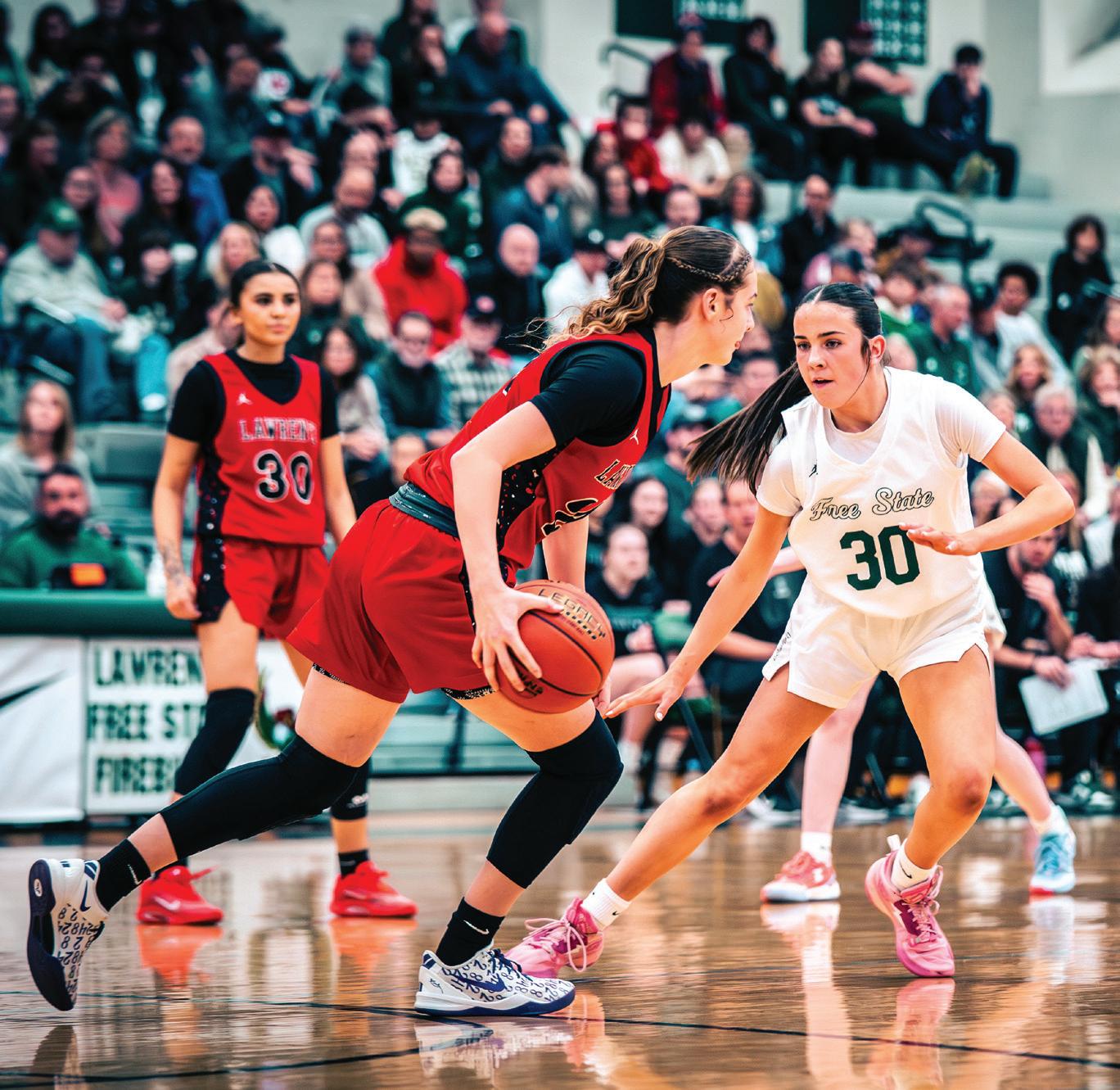
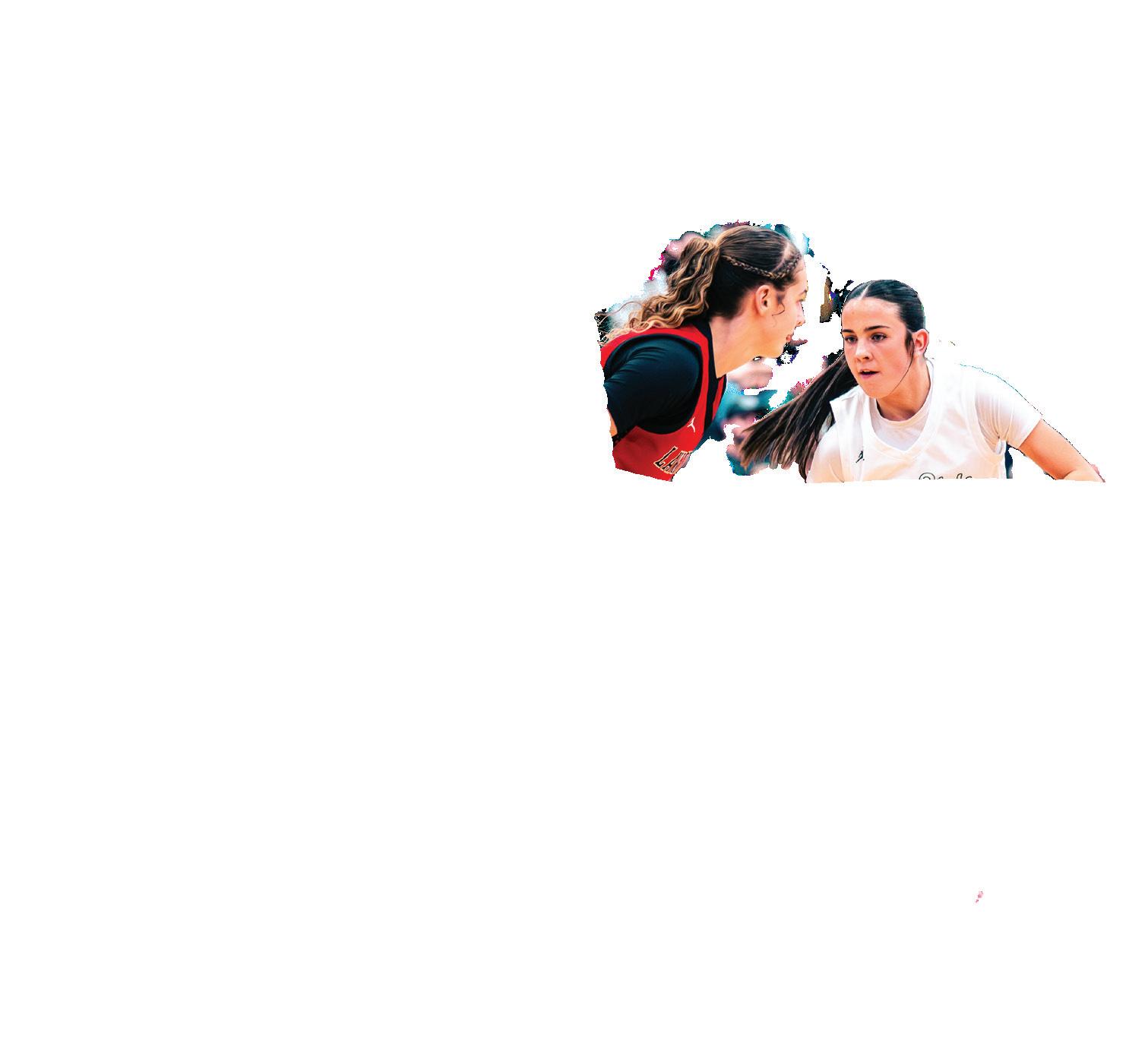
Trying to get the ball, freshman Morgan McClorey plays at the City Showdown against Lawrence High on Feb. 20.
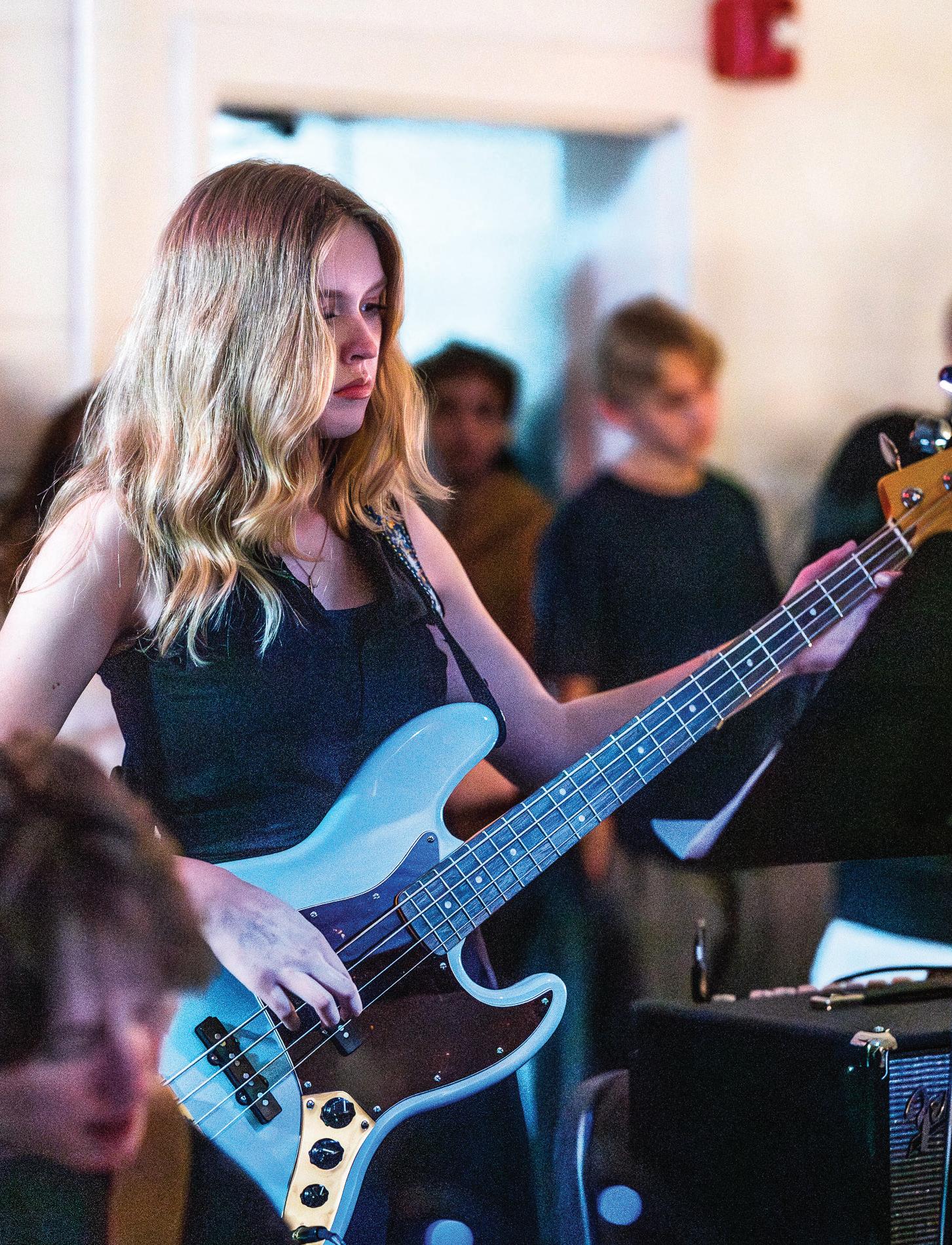
Playing the electric guitar, senior Annah Steele performs at the annual Java and Jazz concert at Lawrence High on March 3.
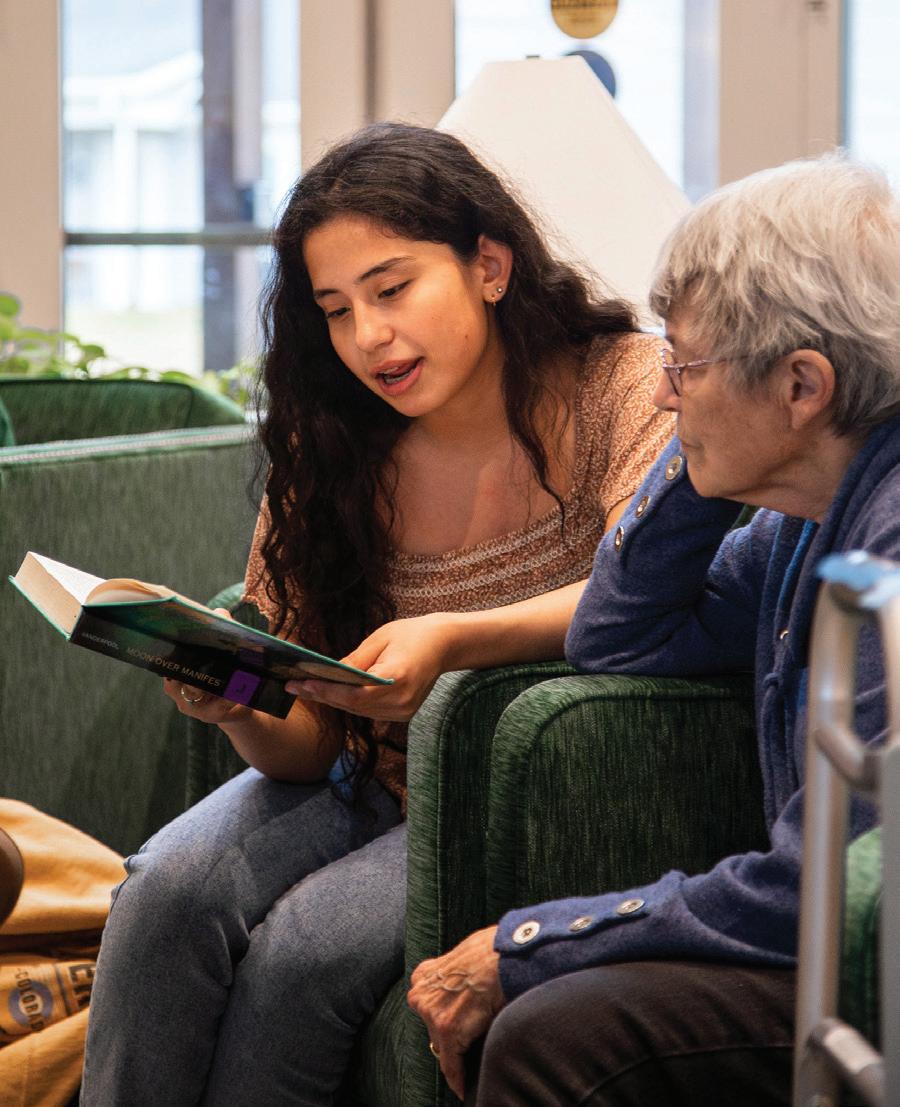
Reading aloud, sophomore Erika Rivera visits residents at Cedarhurst Senior Living of Lawrence with Free State’s chapter of the National English Honor Society. Photo By Nate Willems
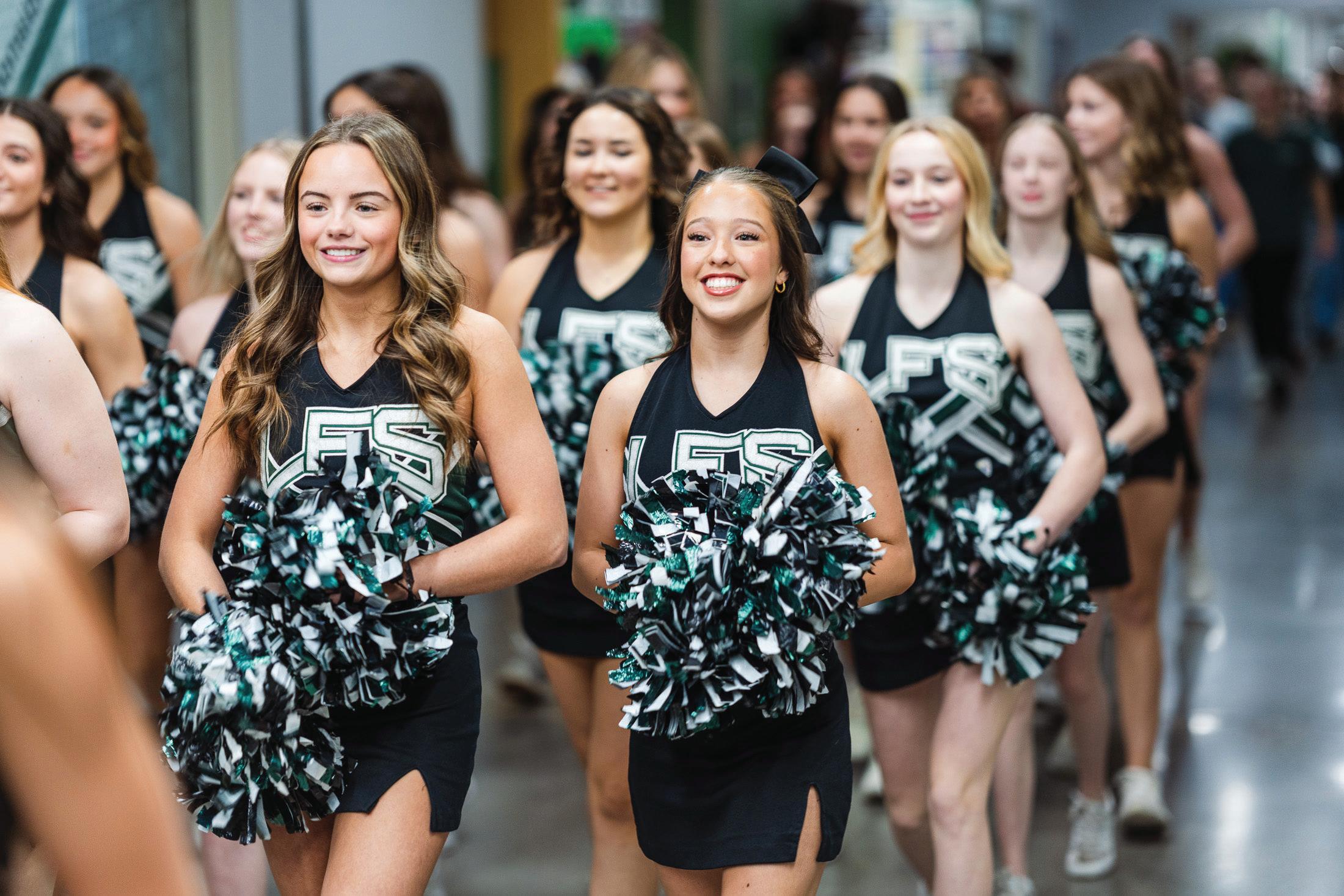
Parading through the 200 hallway, seniors Jules Classen and Emi Stone cheer in the State Walk to support swim and dive athletes going to state. Photo By Nathan Kramer
Holding a microphone, senior Landry Koester performs in "It's Raining Men" at Encore. Photo by Julia Velasco
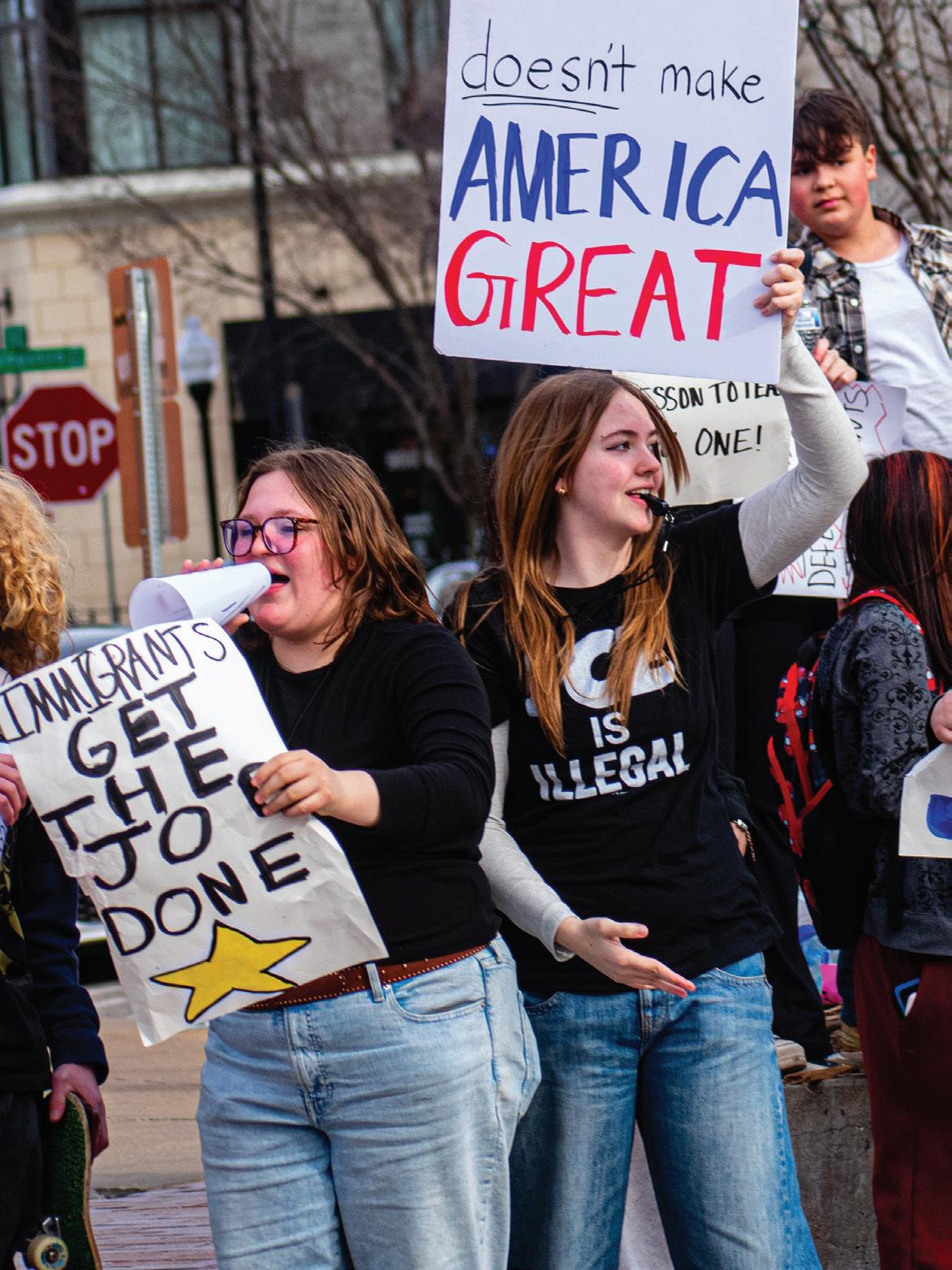
Gesturing at passing cars, seniors Lailah Lewis and Harper York protest U.S. Immigration and Customs Enforcement at Massachusetts St. and 9th St. Photo By Evie Chancy
TRUST THE TEXT
Story by Meredith Shryock
Members of English department weigh in on book-to-film adaptations
As film studios continue adapting classic literature for modern audiences, the value of literary adaptations has been called into question. The conversation resurfaced online after the release of Emerald Fennell's new film, “Wuthering Heights,” adapted from Emily Brontë’s 1847 novel.
Having read “Wuthering Heights,” librarian Marisa Hegeman said she was excited to hear the novel was being adapted, but entered the theater with low expectations after reading lukewarm reviews. Comparing the film to the novel, Hegeman said she had concerns with altering key themes, such as casting white actor Jacob Elordi as Heathcliff, the protagonist often inferred to be a person of color, which lessens the emphasis of Heathcliff being an outsider. Hegeman said the film ultimately won her over with its soundtrack and bold visual style and does not believe Fennell set out for historical accuracy.
”There were weird aesthetic choices, like the estate at Wuthering Heights looked so weird with its sleek black. It felt kind of
fever dreamy, but I was here for it," Hegeman said. “Somehow, Charli XCX and the weird aesthetic choices mixed with the story, although I'm not recommending it to people because I don't think it will be universally liked.”
English teacher Sophia Coen said that adaptations can bring classic texts back into cultural conversation, but hopes they aren’t necessary for the stories to stay relevant. In the classroom, Coen said she shows adaptations of assigned texts that provoke thoughtful class discussions.
“ “
Revivals, good or bad, help modern discourses of older works. Selfishly, as a teacher, they can also be very helpful for engagement in a classroom setting,
Coen said.
English teacher Brittany Brintnall said that film adaptations can serve as a useful tool in an increasingly media-driven environment. In her classes, Brintnall has shown adaptations of “Romeo and Juliet” and “The Hate U Give” to help students visualize characters and reinforce core themes.
“Visual literacy is so important with students. [They] are inundated with more information than anyone has ever been before…I usually try to be really intentional about using films to help bring a story to life,” Brintnall said.
Hegeman said that while adaptations can oversimplify the message to students, they can also aid in introducing complex concepts. She said that a film can't communicate all that is encapsulated in the original novel.
“I do think a lot of kids will go search out the original source material if they connect enough. I don't think [adapting a novel is] a bad thing, but I love stories in all forms, and whatever gets kids interested in the stories, whether it's the movie or the actual book, I'm here for it.”
BRANCHING OUT
Story by Sydney Tiemann
Community members share their opinions on the opening of Olive Garden
Since the opening of Olive Garden on Iowa Street on Feb. 2, the new restaurant has sparked conversation in Lawrence about business growth, job opportunities and competition for local restaurants.
Finance teacher Kimberly Hawks said more college students have migrated to the area because of the new restaurant chain. Hawks said the new Olive Garden has gathered attention from people of all ages since it is more accessible and is a beloved restaurant chain.
“
“ From a business aspect, it seems very smart for new restaurants to come to our town. We are a town that loves to eat out, Hawks said.
Hawks also said the opening of Olive Garden could be the start of more chain restaurants coming to Lawrence.
Junior Emily Alderdice said that although the chains could put other local restaurants out of business, they provide more options.
“I think the biggest pro of new chains in Lawrence is the fact that it gives more options for
the community members to eat in town. Especially with Lawrence being a college town, chains are more affordable options for college students and community members alike,” Alderdice said.
Alderdice said that although the opening of new chains creates more variety to eat out, it also could put many people out of jobs because of the competition. Similarly, Hawks said this addition not only puts people out of jobs, but it also puts local businesses at risk of going out of business.
“The biggest con of chains coming to Lawrence is competition for our small businesses that are located near downtown,” Hawks said. “I would hate for any of them to get pushed out or to lose profit as a result of a national chain coming in.”
Hawks said that the new Olive Garden will affect businesses downtown the most, specifically Italian restaurants, because they’re close to Iowa Street and sell similar food. Alderdice said that although restaurants may go out of
business, new chains allow for more job opportunities for high school students.
“Chains may impact me because I like going out to dinner with friends often, and I also would like to get a job in my senior year working in food services,” Alderdice said.
Alderdice said new chains could help students learn important life skills by teaching them how to work as a team in a kitchen. Sophomore Tola Jankowski said that although employment is a huge pro, her favorite part of new restaurant chains is the delicious food.
“Whenever we're choosing where to go for dinner, Olive Garden is the first thing that pops into my mind, and I will be eating Olive Garden a lot,” Jankowski said.
Jankowski said she loves Italian food, especially from Olive Garden, because it is cheaper but still tastes good. Hawks said that with more businesses in the community, the city makes more money because of the higher sales tax.
“From a sales tax perspective, the more businesses there are in Douglas County, the more sales tax our county can collect, and then that goes back to the community and funds programs and things that we [as a community] like,” Hawks said.
Rising therapy demand pushes
teenagers online HELP ON HOLD
As demand for mental healthcare outpaces available providers, patients are often forced to navigate a web of private practices, community and school-based supports and online services.
While many private practices with larger price tags aren’t seeing overflow, lower-income patients seeking community mental health centers commonly face larger waitlists. Because of this, students may be forced to consider cheaper, virtual alternatives for counseling via text, phone calls and video chats. An anonymous student who had struggled to find a therapist for years tried virtual services before switching to a therapist in Kansas City.
“I hated [virtual therapy]. It was just a Zoom call, and it was really weird, because as someone who didn't want to be there, I wasn't really forced to interact as much,” the student said.
“There wasn't that element of human contact and
movement and eye contact. That was just like, I'm sitting on the ground in my room with a computer, and if I don't want to answer the question, I'm not going to.”
WRAP specialist Adrianne Cooper, who provides in-school therapy services to students & families, said that the majority of her patients are unsatisfied with telehealth services for similar reasons.
“ “
You miss so much, even if it's a video … sometimes you miss cues— like you might say one thing, but your body language is telling me completely differently— that I would maybe miss on telehealth but be able to pick up on in person and address that, Cooper said.
Story by Kyla Meikle
Beyond the physical barrier, Cooper said the advertised ability to switch therapists instantly on digital services can hinder progress. Without a commitment, a patient is unable to build a relationship of trust with their therapist and tackle the deep issues that are causing harm.
“Usually there's a conversation to help decide [if] you truly need to switch, or do we need to try to work through this? Now, there's not that conversation which could keep people from actually growing and not realizing it,” Cooper said.
The problems also extend to on-duty providers. Local therapist and owner of Jordan Mayfield LLC, Jordan Mayfield, said online practices often strike a difficult work-life balance for the therapists.
“In private practice, you're technically on call 24 hours a day, but it’s only in very few case scenarios that you would be engaging with clients like that,” Mayfield said. “In this particular type of platform, that's the expectation, so you have to be accessible around the clock, and you're not paid for any of that time.”
Despite issues with digital therapy platforms, the anonymous student said the effectiveness of any treatment hinges on the patient’s commitment, and the value of these services lies in providing a starting point for those who might otherwise not receive care.
“I think a lot of people praise it in the media when it's not something that fits everyone, but I think it's something that people don't always realize that they could benefit from," the student said. "I think a therapist will help you carve out a path, but you're the one who has to walk it.”
On a zoom call, the patient talks to their therapist through the internet. The patient could not share their feelings to their full extent because the therapist could not pick up on social cues.
DOCTOR SHORTFALL
Doctor shortage across the world
Healthcare systems around the world are facing a growing healthcare workforce crisis. The World Health Organization estimates a shortage of millions of healthcare workers by 2030.
Specifically in the United States, access to specialized care is already low, particularly in cardiology, where many
Many students are choosing not to attend medical school due to the unbearable cost of tuition. For students attending the University of Kansas Medical Center, they can apply for the Kansas Medical Student Loan. The loan helps students cover the cost of school in exchange for agreements to practice medicine in Kansas after residency.
According to Georgetown University.
According to KUMC
Primary Care, by County, January 2025Kansas
Graphic by Rakshan Ossen
None of the county is a shortage area
Whole county is a shortage area
According to
Collected
by
Rakshan Ossen
counties lack a single specialist. An aging physician workforce, rising patient demand and uneven distribution of providers are intensifying the strain on the industry. As predicted by the WHO, the rise in these issues may widen health disparities and affect patient outcomes.
There will be a shortfall of at least million healthcare workers.
According to WHO
11 of
3,142
counties that were studied in the U.S.,
62%
According to AHA
The ratio of cardiovascular patients per cardiologist is expected to increase from one for every 1,087 patients in 2025 to one for every
2035 1,700 had no cardiologists.
According to MedAxiom patients by
Abby Cothern Seattle, Washington
“ ”
A senior trip is important to me because it represents moving into the next chapter of my life after more than twelve years of school. It marks the end of one phase and the beginning of another, Funke said.
Anton Funke, Isaac Mosier, Nathan Friedman and Drew Harrison - Montana
I'm going with some family that lives farther away from us. So it will be a nice chance to hang out with them, Davis said.
Houston, Texas
My senior important take one best friends our
Spring break, especially senior year, is huge because it’s my last chance hang out with all of my friends before we graduate, when I’m in Houston be seeing the World Baseball Classic quarterfinal game. Claassen-Wilson said.
Emily Ahern, Cara Jefferies,
Elizabeth Davis Cabo
Meredith Claassen-Wilson
senior spring break is important to me because I get to last trip with all of your friends and make the most of our time together, Easter said.
FIREBIRD FLIGHTS
Students’ spring break trips
Collected by Lauren Rosen
Mattea Rasmussen - New Zealand
Ahern, Annika Lintecum, Annie Pilakowski, Taryn Jones, Sara Kumar, Jefferies, Libby Easter and Claire Hull - Miramar Beach, Florida
year, to before I’ll Classic
Bolick Dominican Republic
Jaime Stone Caribbean Cruise
Max
MARCH MADNESS MARCH MADNESS
Fill out the bracket to choose your champion
BRACKET
THE ROAD TO EQUALITY
Story by Collette Colvin
July
19-20, 1848
The Seneca Falls Convention, considered the beginning of the organized suffrage movement, takes place. It became the first formal women’s rights convention in the U.S. that drew national attention.
Design by Ava Talbott
Women’s rights landmarks over the years
Nov.
7, 1916
Montana Rep. Jeanette Rankin becomes the first woman elected to Congress. When hearing the results of her election, she said, “I may be the first woman member of Congress, but I won’t be the last.”
June
10, 1963
The Equal Pay Act, which prevents wage discrimination based on sex, passes. It requires employers to equalize wages for employees performing the equal work at the same establishment, regardless of sex.
Oct. 28, 1974
The Equal Credit Opportunity Act passes and prohibits discrimination against people applying for credit due to gender or marital status. The ECOA allowed women to have bank accounts, credit cards, property and mortgages in their own names without male cosigners.
June
4, 1919
Following the suffrage movement, the 19th Amendment passes, granting women the right to vote. It was adopted as a part of the Constitution on Aug. 26.
June
23, 1972
Title IX passes to prohibit sexbased discrimination, violence, pregnancy discrimination and access to STEM and athletic programs in federally funded programs and education. It increased female participation in sports, STEM and enrollment in higher education.
October 15, 2017
The #MeToo hashtag goes viral. The “Me Too” movement, which is aimed at ending sexual harassment and abuse, was founded by activist Tarana Burke in 2006. The movement led to more workplace accountability and new state and federal legislation.
Present Day
Currently, 154 women serve in Congress, and 450 women have served in Congress in total. The gender gap has narrowed, but in the U.S., women earn an average wage of around 85% of what men earn.