Inclusive education
Collection of texts from the “Let’s make inclusion happen!” conference
Inclusive education
Collection of texts from the „Let's make inclusion happen! Inclusive education for a fair, resilient, and competitive EU” conference
Inclusive education. Collection of texts from the “Let’s make inclusion happen!” conference
Subject matter editor Anna Grabowska, PhD
Scientific consultancy Prof. Iwona Chrzanowska, PhD, Prof. Zenon Gajdzica, PhD
Managing editor Tomasz Mrożek
Cooperation Anna Atłas, Paulina Binder
Editorial consultancy Beata Maluchnik
Translation Artur Cholewiński
Proofreading Proofreaders.pl, Lidia Przygoda
Layout and DTP Artur Ładno
Cover design Grzegorz Dębowski
Publisher Foundation for the Development of the Education System
National Agency for the Erasmus+ Programme and European Solidarity Corps
Al. Jerozolimskie 142a, 02-305 Warsaw
D www.frse.org.pl | kontakt@frse.org.pl D www.erasmusplus.org.pl
The publication is fully accessible for screen readers. Images include alternative text. The text uses a heading structure. The table of contents enables navigation. Contrast meets WCAG 2.1 requirements.
© Foundation for the Development of the Education System, Warsaw 2025
ISBN 978-83-67587-68-6
The European Commission's support for the production of this publication does not constitute an endorsement of the contents, which reflect the views only of the authors, and the Commission cannot be held responsible for any use which may be made of the information contained therein.
Free copy
CItation: Grabowska, A. (ed.). (2025). Inclusive education. Collection of texts from the “Let’s make inclusion happen!” conference. Warsaw: FRSE Publishing.
FRSE Publishing periodicals and portals
FRSE publications are available at: D www.czytelnia.frse.org.pl
One of the priorities of the Polish Presidency of the Council of the European Union, held in the first half of 2025, was the development of more resilient, inclusive and accessible education systems. In the face of the challenges that today’s world poses for young people in this area, ensuring education that takes into account the needs of all learners – regardless of their background, social status or individual capabilities – is a key element of both Polish and European social and education policy.
Poland assumed the Presidency of the Council of the EU during a difficult period for the whole continent. The motto of the Polish Presidency, “Security, Europe!”, reflects the current concerns and challenges facing Europe. Supporting and strengthening European security on many levels, and ensuring stability and protection for all inhabitants of Europe, is a priority for us all.
Security also means creating an environment in which everyone, regardless of their needs or differences, has equal access to education and can develop to the best of their abilities in conditions that support their wellbeing and mental health. Accessible, inclusive education helps us build a more open, tolerant, and safe Europe.
The education of the future prepares young people for mature and responsible lives. Equal access to acquiring knowledge and skills means building a fair, equal and strong society – and a strong society is a safe society. Over six months, the Polish Presidency organised a series of events that enabled participants to exchange experiences and develop shared solutions in this area.
In January 2025, a two day informal meeting of education ministers of EU Member States and associated countries was held in Warsaw. Key discussion points included the preventive aspect of inclusive education and the need to design and implement evidence-based education policy to ensure high quality education. EU Member States unanimously agreed that inclusive education is not a cost, but an investment in the future – an investment that will pay off, as it helps prevent many contemporary civilisational challenges.
Inclusive education involves cooperation between schools, children, parents and specialist teams, and in a broader context – cross-sectoral and international cooperation.
The conference “Let’s make inclusion happen! Inclusive education for a fair, resilient, and competitive EU”, organised on 17–18 March 2025 in Warsaw, was a space for the exchange of ideas for people who practice inclusive education on a daily basis at various levels of education, across different countries, international organisations, and the European Commission, as well as for researchers who evaluate the effectiveness and relevance of substantive and organisational solutions.
Barbara Nowacka Polish Minister of National Education
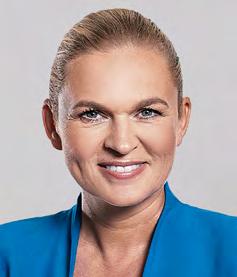
The event programme included plenary sessions, panel discussions, and workshops dedicated to various aspects of inclusive education. This publication, which is a collection of conclusions and recommendations from the speakers, is a result of these activities. I am convinced that policymakers, officials, experts and, above all, teachers, will find it invaluable for their continued efforts in improving the quality of education for all children, young people, and their parents. This task rests with us all.
Drawing on the Council meeting and expert presentations at the conference, the Polish Presidency produced the flagship document in the field of education – a Draft of Council conclusions on inclusive, learner-centred practices in early childhood education and care and school education. The document was adopted unanimously on 12 May 2025 at the meeting of the Education, Youth, Culture and Sport Council and published in the Official Journal of the EU1
I present here a record of the discussions, presentations, projects and European initiatives that were based on research findings and focused on existing resources and recommendations developed by the Member States. This publication not only compiles the theoretical foundations of inclusive education, but also demonstrates its practical dimension. This way, it can be implemented in the everyday practice of preschools and schools, which, I believe, will have a direct impact on the development of cohesive and resilient European societies.
Above all, however, I hope that our joint efforts for inclusive education will increase the self-esteem, sense of belonging, participation, and autonomy of children and young people in schools and educational institutions – places where they can feel fully accepted and valued. I believe that school should motivate pupils to learn and develop their interests, while respecting their agency. Creating conditions conducive to this process is essential for comprehensive development, as it supports independence, engagement and a positive self assessment among young people, which translates into their educational achievements and social functioning.
I am certain that the achievements of the Polish Presidency in the field of the education of children and young people will be continued by the Trio Presidency, and that inclusive education will remain one of the priority topics of the European Union, and will be included in the second cycle of implementation of the European Education Area for 2026–2030.
This publication was prepared with people with additional needs in mind.
1 eur-lex.europa.eu/legal-content/PL/TXT/?uri=CELEX:52025XG02796 [accessed 11/08/2025].
We are pleased to present this publication comprising texts by Polish and international experts who participated in the conference “Let’s make inclusion happen!”. It is an extremely valuable resource on inclusive education and the challenges that educators, parents, learners and policymakers face when striving to create schools that are welcoming to all. The book also showcases the potential of European Union educational programmes (including Erasmus+) to initiate good practices and support the exchange of interesting systemic solutions among Member States.
In 2025, Poland held the Presidency of the Council of the European Union for the second time. During this period, the Foundation for the Development of the Education System, in cooperation with the Ministry of National Education and partner institutions, prepared flagship events in the field of education. The conference “Let’s make inclusion happen!” brought together teachers, educators, researchers, representatives of international educational organisations, social activists, policymakers, and learners for whom an inclusive school offers the opportunity to achieve educational, personal, and professional success.
As the National Agency for the Erasmus+ Programme and the European Solidarity Corps, we are committed to ensuring that inclusive education is put into practice. Erasmus+ actively promotes equal opportunities and access to high-quality education for all beneficiaries. International educational projects implemented under the programme help eliminate financial, technological, social, and health-related barriers. The programme’s rules and available funding effectively support both individual and institutional beneficiaries in their efforts to cultivate diversity and implement solutions that promote inclusive education.
The impact of Erasmus+ on fostering openness, alongside social and intercultural sensitivity among participants is confirmed, among other things, by the RAY-MON study. Its results are presented in this publication. The vast majority of Erasmus+ project coordinators report incorporating the Inclusion and Diversity Strategy in their initiatives, and more than half of mobility participants say that they took part in projects that effectively counteract social exclusion. This demonstrates that Erasmus+ and the European Solidarity Corps equip beneficiaries with the tools to put the principles of inclusive education into practice.
I hope that this publication, which reflects the discussions, workshops, and conversations held during the conference, will inspire you to take actions that continue to advance inclusive education in our schools and institutions, helping to build an increasingly welcoming educational environment.
Mirosław Marczewski Director General, Foundation for the Development of the Education System, Poland
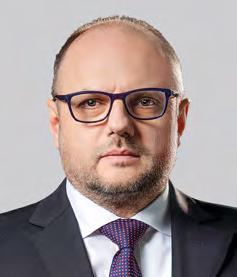
Inclusive, high-quality education is not a luxury — it is a fundamental right and a foundation for democracy, fairness and prosperity. We must ensure that every learner, regardless of background, ability or circumstance, can benefit from a high-quality learning environment. This is the core promise of the European Education Area and the driving force behind the Union of Skills.
There is still much to do — and we must act together. This publication testifies to that commitment and serves as a call to action. The insights contained in this volume underscore the transformative potential of inclusive education to shape individuals, strengthen communities and economies, and advance democratic values, social cohesion, and competitiveness.
At the heart of this transformation is the Erasmus+ programme. What began as a higher education exchange has evolved into a truly inclusive initiative, offering opportunities for people of all ages and backgrounds, across all education and training sectors. The Commission is committed to strengthening Erasmus+ and making it more inclusive and accessible — ensuring that more people can benefit, and that those who participate reflect the full diversity of our societies. We must continue to open doors and make mobility a reality for all.
But addressing disparities in education requires more than reforms within classrooms. It demands systemic change and strong partnerships across sectors — from health and housing to employment and social services. This is the essence of the Union of Skills and the Union of Equality: tackling exclusion, closing opportunity gaps, and helping every individual reach their full potential.
We must also listen. Giving learners a voice strengthens both policy and democracy. Schools and learning spaces must be safe, inclusive environments where everyone feels respected, supported, and empowered.
The path to inclusive education is clear, but challenging. With political will, sustained investment, and collective action, the European Union can lead the way. Education is not only a right — it is our shared responsibility, our best investment, and a bridge to a fairer, more inclusive Europe.
Pia Ahrenkilde Hansen Director General European Commission, Directorate-General for Education, Youth, Sport and Culture
Introduction
Poland’s actions to implement inclusive education in practice
The Ministry of National Education (MEN) in Poland carries out a number of systemic measures to improve the quality of inclusive education in Poland. These include support for teaching staff, the development of diagnostic tools and guides, and the creation of data- and research-based solutions that make it possible to respond effectively to the diverse needs of learners. These steps serve to build a school for all; one that is accessible, supportive, safe, and offers high-quality teaching.
The Polish education system guarantees every learner the right to education, and children and young people the right to upbringing and care appropriate to their age and stage of development1. All schools and institutions are obliged to take the necessary measures to create optimal conditions for teaching, upbringing and care, as well as to improve the quality of their work and organisational development2
A wide offer of school types and categories is a response to the diverse needs of learners. Mainstream schools located near a learner’s place of residence are the most commonly chosen. Parents or adult learners who need additional educational support may also choose a different type of school – an integration school or a special school. In every type of school, teachers are obliged to adapt educational requirements to individual pupil needs and to provide them with support in their daily work3. Legal provisions also ensure a range of further instruments that enable the adaptation of the education process (e.g. early start or extension of the period of study, the possibility to follow an individual course or programme of study, or an individual education and therapy programme). Every preschool, school and institution in the education system is obliged to provide psychological and pedagogical support, and its form should be adapted to the individual needs of learners.
Elżbieta Neroj
Ministry of National Education, Poland
Magdalena Olejniczak-McKay
Ministry of National Education, Poland
1 Art. 1 of the Act of 14 December 2016 – Law on School Education (Journal of Laws of 2025, item 1043, as amended): bit.ly/47yayzG [accessed 10/08/2025].
2 Art. 44(1) of the Law on School Education.
3 Art. 44c of the Act of 7 September 1991 on the Education System (Journal of Laws of 2025, item 881); bit.ly/4oGX8Yp [accessed 10/08/2025].
Although Polish education law does not define the concept of ‘inclusive education’, the tasks arising from current legislation correspond to its basic principles. While the detailed understanding of inclusive education changes alongside the development of societies and the resulting changes in the world and in education systems, its current understanding remains unchanged since the 1994 Salamanca Statement. As described in the declaration, inclusive education is high-quality education that enables young people to acquire the skills necessary to participate fully in society and to cope effectively with changes in the labour market4
The implementation of these principles varies between countries. Each state that has ratified the Convention on the Rights of Persons with Disabilities, whose Article 24 obliges them to ensure inclusive education at every stage of learning, operationalises it differently in the organisation of its education system and education policy.
For many years, the Polish Ministry of Education, in cooperation with the research community and education system stakeholders, has been working to develop a common understanding of accessible education, to raise awareness of its goals and benefits, and to build the methodological resources needed for its practical implementation. This work is also aimed at modifying the systemic legislative and organisational framework in order to remove barriers to access to information in the education process, strengthen preventive measures against learning difficulties, identify needs at an early stage, and disseminate scientifically proven forms and methods of support. This process requires developing mechanisms that enable the more effective use of the resources of the education system and cooperating sectors, as well as a more precise allocation of funds
to schools to meet the educational needs of learners and to monitor their effective use.
Although there are legal provisions in place to ensure inclusive education, problems with their implementation persist. Many countries face challenges in providing high-quality education to all learners. This is indicated, among other things, by the conclusions of debates and conferences organised during the Polish Presidency of the Council of the European Union in 20255, where the everyday application of the principles of inclusive education was one of the priority topics.
Work to improve the system
It is worth highlighting selected activities of the Ministry of Education preceding the selection of the theme of the Polish Presidency in the field of education, related to the implementation. In 2018–2021, within the European Commission’s Structural Reform Support Programme (SRSP), the MEN – in cooperation with the European Agency for Special Needs and Inclusive Education6 (hereafter ‘the European Agency’) – implemented the project “Supporting the improvement of quality in inclusive education in Poland”7. The key results of the project were 16 recommendations for legislative actions and 4 implementation actions8, which were considered, following public consultation, to be important for improving the quality of inclusive education. At the same time (2017–2019), a team of experts appointed by the MEN’s has worked to prepare proposals for legislative and organisational measures to improve the education system for learners with special educational needs. The outcome of this work, which took into account the recommendations and guidelines for change developed in the SRSP project, was a document called the Education for All Model (MEW)9
4 According to the first principle of the European Pillar of Social Rights, adopted in December 2017 by the European Council, the European Parliament and the European Commission; bit.ly/3V4Xvyl [accessed 10/08/2025].
5 Links to event coverage: bit.ly/4mGGqqg; bit.ly/4mKSrej [accessed 10/08/2025].
6 European Agency for Special Needs and Inclusive Education (EASNIE), www.european-agency.org [accessed 10/08/2025].
7 bit.ly/418aWkK [accessed 19/05/2025].
8 Project implemented under the Structural Reform Support Programme, bit.ly/4lAQMXM [accessed 10/08/2025].
9 The Education for All Model was attached to the legislative changes.
One of the key results of these actions, whose key element was inviting stakeholders to engage in cooperation, was the launch of a public dialogue involving both supporters and opponents of co-education in diverse groups. The public debate conducted in the media, on the internet, in conference rooms, and in correspondence addressed to the MEN, stimulated a dialogue on the kind of school the society expects. It also led to the spread of the understanding of inclusive education in Poland as based on rights (of every citizen, child, person with a disability) and aimed to ensure that all learners have conditions to develop knowledge and skills according to their abilities, together with their peers, as close as possible to their place of residence. This view was promoted by the MEN in the information campaign “Education within reach”10 which meant that the Ministry adopted a broad understanding of accessibility in education (architectural, organisational, methodological) as the goal of actions to increase the quality of education. Building a positive social climate and disseminating effective methods of working in diverse groups – in terms of pupil's needs – are key elements of these activities. These objectives have been set out in the Strategy for Persons with Disabilities11 and the Integrated Skills Strategy 203012 .
The key course of action adopted by the MEN to achieve these objectives entails a change in the model for identifying and meeting the needs of learners and the implementation of solutions for monitoring the effectiveness of the support provided. It was necessary to create mechanisms that dismiss the currently dominant formal procedures for identifying needs, in which the main criterion for gaining access to support is a formal document (an opinion or statement) prepared outside the school.
This is a significant issue, as the formal path not only delays the provision of real assistance in the teaching and upbringing environment, but also focuses action on ‘fixing’ the learner identified as having specific difficulties or deficits, while often leaving the barriers embedded in that environment unaddressed. This model of work reduces the effectiveness of support and places a considerable burden on the specialist support system. Another serious consequence of this system is the labelling of learners who ‘must’ be classified into a specific group of ‘special educational needs’ before they can be assigned specific support instruments.
The Ministry of National Education – in cooperation with research centres, local government units, regional education authorities and, above all, headteachers, teachers and specialists working every day in preschools, schools and institutions, including special ones – has taken steps to prepare systemic solutions that have been set out in the functional assessment model. It has been agreed that the effectiveness of these solutions must be scientifically proven and their feasibility tested in various contexts of the Polish education system. The new approach should provide resources that enable the removal of barriers to learning and participation, and that support all learners, starting at the school level. It was assumed that the funding mechanisms linked to the identification of needs should support the development of early intervention and prevention rather than focusing solely on compensating for difficulties.
The concept of systemic change evolved through public discourse13, research, and pilot projects commissioned by the Ministry and the intensified exchange of international knowledge and experience in the field of inclusive
10 The campaign website (edukacjawzasiegureki.men.gov.pl) contains many materials, including on functional assessment. More information can be found in a special supplement to “Rzeczpospolita” of 31 May 2022: bit.ly/4oG8yLS [accessed 10/08/2025].
11 Resolution No 27 of the Council of Ministers of 16 February 2021 on the adoption of the document Strategy for Persons with Disabilities 2021–2030 (M.P. 2021, item 218); bit.ly/3UAHIXV [accessed 10/08/2025].
12 zsu2030.men.gov.pl [accessed 10/08/2025].
13 Including, among others, public consultations, workshops, conferences, consultation meetings, online surveys, education debates organised by the MEN, as well as press articles, media statements and parliamentary interpellations.
education14. A key element of this evolution was a shift in the perceived target group of the reform – from a narrow group of learners with special educational needs to all learners, each of whom has individual educational needs.
MEN actions include, among others: preparing teachers, creating and disseminating diagnostic tools that use the biopsychosocial model, creating a database of effective solutions based on scientific evidence, as well as preparing new substantive and organisational solutions and verifying them in pilot projects. Numerous initiatives and projects aimed at developing this system of psychological and pedagogical assistance and counselling in Poland are being implemented as part of these activities.
Preparing staff and resources for inclusive education
Polish teachers can access many training courses offered by teacher training institutions15, including the central teacher development institution run by the Minister of Education – the Centre for Education Development (ORE)16. The training offer includes, among other things, identifying pupil needs, providing psychological and pedagogical support, and conducting effective crisis interventions.
For several years, the MEN has been supporting activities in this area by commissioning universities to organise free postgraduate courses for teachers. Their completion allows teachers to expand their
knowledge and skills in inclusive education or acquire new, additional qualifications. The third edition of the courses is currently underway17 .
Activities aimed at developing the knowledge and skills of educational staff, as well as expanding the methodological base and tools that support the implementation of inclusive education in the daily work of teachers, are also conducted through projects initiated by the MEN and implemented by other entities.
Examples include, among others:
1. The innovation and implementation project “Model of cross-sectoral support”, which aimed to pilot the model of cooperation between institutions operating across sectors to provide support based on the results of functional assessment. The project was implemented in 2022–2024 by the University of Silesia in Katowice in cooperation with the Maria Grzegorzewska University in Warsaw, Adam Mickiewicz University in Poznań, Maria Curie Skłodowska University in Lublin and the John Paul II Catholic University of Lublin;
2. The “Supporting the accessibility of education for children and youth” project, implemented by the Educational Research Institute – National Research Institute in Warsaw as part of the European Funds for Social Development (FERS). The project includes, among other things, training in applying universal design strategies and introducing reasonable improvements in education, and in conducting functional assessment18 using free
14 Including through the membership of the European Agency for Special Needs and Inclusive Education and during the implementation of the project “Supporting the improvement of quality in inclusive education in Poland”.
15 www.gov.pl/web/edukacja/placowki-doskonalenia-nauczycieli [accessed 10/08/2025].
16 szkolenia.ore.edu.pl [accessed 10/08/2025].
17 Fields of study: 1) “Early support for child development and family support” (studies enabling the acquisition of qualifications to conduct early support for child development and to hold the position of special education teacher in a preschool); 2) “Special education teacher in inclusive education” (studies enabling the acquisition of qualifications to hold the position of special education teacher in a preschool); 3) “Educational psychology with teacher preparation” (studies enabling persons holding a master’s degree in psychology to obtain teacher preparation required to hold the position of school psychologist in a preschool); 4) “Polish Sign Language for teachers” (studies enabling proficiency in Polish Sign Language at B2 level).
18 'Functional assessment' is a term coined by Polish experts and denotes a model for identifying needs and for planning, delivering and evaluating support provided in the teaching–learning process, based on the biopsychosocial approach. Tools based on the functional assessment methodology, using the International Classification of Functioning, Disability and Health (ICF), include: a set of tools for assessing and supporting socio-emotional and personality development (OKC, TROSK-A); a set of tools for assessing and supporting cognitive development (KAPP); Early Childhood Development Screening (a tool for assessing typical development for parents, carers and teachers of children aged 6 months to 7 years); and the School Functional Assessment Questionnaire (a tool for teachers to assess pupils’ functioning).
diagnostic tools developed with EU funds and the state budget19;
3. The “Accessible School for All” project20 implemented by the Educational Research Institute –National Research Institute in Warsaw in cooperation with the MEN, UNICEF, higher education institutions, and NGOs. The main aim of the project is to improve specialist teachers’ competences in providing support tailored to the needs of all target groups (children/learners, parents, teachers);
4. “A career without barriers” project21, which aims to develop an effective model of action in primary and upper secondary schools that prepares pupils to choose an education and career path and to enter the labour market. The project activities include individual counselling with a career advisor, pupil projects, teacher training, cooperation with employers and workshops for parents. The project is implemented by the Educational Research Institute –National Research Institute in Warsaw;
5. FERS project “Building a coordinated system of specialist support based on Specialist Centres Supporting Inclusive Education”22, implemented by the Centre for Education Development in Warsaw. The aim of the project is to build a specialist support system for working in environments that are diverse in terms of the developmental and educational needs of children and young people, which should be based on cooperation between the staff of special preschools, schools and institutions, and mainstream preschools and schools;
6. FERS project “Preparing comprehensive support for psychological and pedagogical counselling centres”23, aimed at supporting specialised education system institutions (psychological and pedagogical counselling centres) in introducing
19 Online trainings: ibe.edu.pl/pl/szkolenia [accessed 10/08/2025].
a functional assessment methodology and strengthening their coordinating role. As part of the project, a concept for developing psychological and pedagogical counselling was designed, which will be reflected in supporting activities within accompanying projects (16 grant projects for higher education institutions)24. The MEN acts as the project leader, with the Warsaw School of Economics as a project partner;
7. FERS project “Preparing an IT system to support psychological and pedagogical guidance”25 , which will be used primarily by psychological and pedagogical counselling centres. The project is implemented by the Education Information Centre (project leader) in partnership with the MEN;
8. FERS project “Peer support for the mental health of young people”26, whose main objective is to develop and test in upper secondary schools a method of supporting pupils in mental health crises based on peer support. The project is implemented by the Foundation for the Development of the Education System and the Positive Education Institute Foundation in cooperation with the MEN.
Strengthening pedagogical supervision
As part of the support provided by the Ministry of National Education to teachers and directors of preschools, schools and educational institutions in the practical application of legal provisions concerning the diverse needs of learners, inclusive education inspectors operate in every Regional Education Authority since 2017. Their tasks include replying to queries about implementing the generally applicable provisions of education law that relate to organising education for
20 ibe.edu.pl/pl/szkola-dostepna-dla-wszystkich-opis-projektu [accessed 10/08/2025].
21 ibe.edu.pl/pl/opis-projektu-kariera-bez-barier [accessed 10/08/2025].
22 bit.ly/41flVst [accessed 10/08/2025].
23 fersdlaporadni.sgh.waw.pl [accessed 18/08/2025].
24 fersdlaporadni.sgh.waw.pl/operatorzy-grantow-wybrani [accessed 18/08/2025].
25 bit.ly/4mMGxk7 [accessed 18/08/2025].
26 frse.org.pl/fers-peer-support [accessed 18/08/2025].
learners with special educational needs, including learners with disabilities. They are also responsible for disseminating effective inclusive education practices and increasing access to relevant information for parents and adult learners. The inspectors are part of a network for the exchange of experience and professional development set up by the Centre for Education Development on the request of the MEN.
Recognising the need to improve the accessibility and quality of education, work has begun on developing indicators to monitor and evaluate the effectiveness of measures taken in this area. Initiatives in this respect are being implemented in the “Supporting the accessibility of education for children and youth” project27. Among other things, the project plans to define indicators to support the examination of the effectiveness of inclusive education within the System for Assessing the Development of Accessible Education (SORED). Its aim is to analyse and diagnose the accessibility of education, both at the micro level (preschools, schools, institutions) and macro level (regions, country). The results of the cyclical analyses of data obtained during the pilot programme will form the basis for recommendations for potential changes in legislation. Ultimately, solutions are to be developed that will allow for a reliable analysis of the effectiveness of the measures taken in terms of content, organisation and finance, and will also enable the use of an evidence based model in educational and specialist support. The task includes a consultation stage with stakeholders. The planned completion date is October 2027.
Work on curriculum changes
Solutions for the academic success of all learners have been included in the Compass of Tomorrow reform, which focuses on changes in the curriculum
and assessment. Descriptive assessment will gain in importance, providing learners with feedback and support in developing their skills. Greater attention will be paid to the well being of learners and teachers. The reform is staged and will be introduced gradually – the first changes took effect on 1 September 202528 .
The aim of the changes is to prepare all graduates of Polish schools for life in a changing world. The school’s primary task is not only to impart knowledge, but also to build a sense of responsibility for one's own development and decisions. One of the main goals of these changes is to develop young people’s agency, which will help them achieve success in adult life and will also facilitate and streamline the daily work of teachers.
Starting from the 2025/2026 school year, a new subject is taught in primary and upper secondary schools – health education. In view of current civilisational challenges and the deteriorating health indicators of the whole population, system level educational actions aimed at developing a holistic approach to health are essential. The new subject is to be part of a multi stage process leading to the development of knowledge, skills and social competences that enable the accurate identification of one’s own and the environment’s health needs, and the adoption of appropriate preventive and remedial actions.
Rationale for the choice of the Presidency theme and preparation
Given that ensuring access to high quality inclusive education remains a priority in the EU, this topic was chosen as the lead theme in the field of education as part of the Polish Presidency of the Council of the EU in the first half of 2025. Work was undertaken to prepare draft Council conclusions, organise an informal meeting of education ministers of EU
27 More information is available on the project website: bit.ly/4fFGap7 [accessed 18/08/2025].
28 Starting from 1 September 2025, two new subjects have been introduced in polish schools – civic education and health education. The core curriculum for physical education will also change. From 1 September 2026, a new core curriculum will apply in preschools and grades 1 and 4 of primary school. From 1 September 2027, new core curricula will start to apply in grade 1 of upper-secondary schools.
Member States and associated countries, and prepare the flagship conference.
The mid-term meeting held in Warsaw in November 2024 provided an opportunity to present the planned activities of the Polish Presidency in the area of highquality education for all learners to representatives of the Member States of the European Agency. As part of the meeting, a seminar entitled “Implementation of high quality inclusive education. Exploring resources, working trends and progress towards outcomes” was organised in cooperation with the Educational Research Institute –National Research Institute. This facilitated an exchange of best practices in terms of system level implementation and monitoring of solutions in inclusive education, and enabled a discussion with representatives of ministries of education of European countries on key challenges in this area.
The results of the international seminar “Cross-sectoral cooperation in meeting the diverse needs of learners”, held in Gdańsk on 16–18 October 2024, were used in the preparation of the draft conclusions. The event was organised in cooperation with the European Agency, the Centre for Education Development, the Educational Research Institute – National Research Institute, the Office of the Marshal of the Pomorskie Voivodeship, and the Pomorskie Teacher Education Centre in Gdańsk. The theme of the seminar was the exchange of experience in the field of cross-sectoral cooperation in the framework of inclusive education in response to the diverse needs of learners.
The topics and planned events proposed by the Polish Presidency in the field of education were presented at the European Commission’s Working Groups forum during a joint meeting of the Working Group on Equality and Values in Education and Training and the Working Group on Schools Education (10 October 2024, Brussels).
The results of the discussions during these events confirmed the relevance of the thematic areas chosen for the informal Council and the flagship conference, as well as of the framework of the conclusions.
Key actions under the Presidency
One of the topics of work in the field of education identified during the Polish Presidency was the practical implementation of the principles of accessible education, which aims to secure conditions for academic success and the development of individual potential for all learners, regardless of their socio-economic status, health or disability.
The objective was to engage in dialogue with European Union countries and the European Commission on the conditions of education policy that effectively support teaching practice in the face of challenges linked to the diversity of learner needs. The exchange of information on existing resources and positive experiences in this area (both from countries and international organisations) proved to be essential, as did the identification of areas in which individual countries require support from the EC.
As an outcome summarising the conclusions of this dialogue, it was decided to prepare Council conclusions on inclusive, learner centred practices in early childhood education and care and in school education.
This goal was pursued through the organisation of two international events held in Warsaw: the informal meeting of education ministers (21–22 January 2025) and the conference “Let’s make inclusion happen! Inclusive education for a fair, resilient, and competitive EU” (17–18 March 2025). This ensured the opportunity to discuss the existing challenges and resources in this area among policymakers, experts from the research community, and practitioners (directors of educational institutions, teachers and specialists in the field of education), as well as representatives of learners.
Informal Council
Delegates from 27 EU Member States and associated countries took part in the informal Council. Experts invited by the Polish Presidency – João Costa, Director of the European Agency, and Andreas Schleicher, Director for Education and Skills at the Organisation
for Economic Co-operation and Development (OECD) – prepared speeches that introduced two sessions of experience sharing and discussion. The first session focused on the preventive aspect of inclusive education and the challenges linked to its implementation. The second session was devoted to shaping education policy through the use of facts and data on effective practices in inclusive education (evidence informed policy).
Participants in the discussion pointed out that ensuring equal educational opportunities for all children and young people is a moral and political imperative, as it is based on the realisation of every citizen’s right to high quality education. As such, inclusive education is not a cost, but an investment that can prevent many of the problems currently affecting European education systems. Implementing the principles of accessible, inclusive education means investing in teachers, infrastructure and, above all, in the well being, strong and meaningful social relationships, and the learning outcomes of all children and young people. This will help build strong civil societies that are well prepared for future challenges across Europe. The discussion showed that individual countries are facing increasing diversity in the needs of learners, resulting from factors such as socio economic conditions, migration and the associated linguistic diversity, deteriorating mental health among young people, the rising number of autism spectrum diagnoses, and the related need for adequate teacher training and support for schools.
Participants considered the need to develop cooperation at both national and international levels a key aspect. Creating conditions for effective cooperation between all education system stakeholders, and between sectors, enables more coordinated and effective (also in financial terms) support for citizens. Involving both parents and pupils in this process is crucial for identifying existing barriers and improving the quality of educational interventions. Addressing the needs of young people requires caring for their sense of belonging and mental health, developing their critical thinking and digital skills, and meeting their individual intellectual needs.
The issue of preventing learning difficulties and providing early and effective support at the first signs of symptoms was a key discussion point of the meeting. This approach minimises the risk of educational and social exclusion. The importance of early intervention and investment in supporting children’s development from an early age – before and during early childhood education and care – was thus highlighted.
The effective removal of barriers to access to high quality education is based on collecting and analysing data on how the system functions and on the current needs of learners, teachers and schools. It is therefore essential to invest in quality monitoring systems in education that are based on reliable indicators.
Given the importance of inclusive education for the development of education systems and for building social resilience, investment in staff was considered necessary. Many countries are currently facing shortages of headteachers and teachers, including specialists such as psychologists, school counsellors and support teachers. It is necessary to ensure that educational staff are appropriately prepared in the practical skills needed to work in schools that are diverse in terms of pupil needs. This concerns both initial teacher education and the development of competences throughout a professional career.
“Let’s make inclusion happen!” conference
The conference was a platform for the exchange of experience between experts, policymakers and practitioners, who jointly discussed solutions that foster education that is accessible to all learners. The event brought together around 270 participants, including senior EU officials, local government representatives, NGOs, international experts in inclusive education, and representatives of the EC, the European Agency, UNICEF and the Organisation for Economic Co-operation and Development (OECD).
As confirmed by the conference, there are a number of recommendations based on scientific research and the experiences of various countries, international organisations and other entities (including schools and other educational institutions) that can be used to improve the quality and accessibility of education, taking into account the diverse needs of learners. Information in this area was gathered during and after the event and published on the conference website.
The conference programme included plenary sessions, power speeches, panel discussions and workshops dedicated to various aspects of inclusive education. The topics for the workshop sessions were prepared on the basis of the results of the aforementioned November seminar, which was attended by representatives of the ministries of education of European countries, and incorporated conclusions from the discussion of the January meeting of education ministers. Informal consultations with staff of the EC’s Directorate-General for Education, Youth, Sport and Culture also provided invaluable support.
Nine workshop topics were proposed, in which self-advocates – learners – took part after being prepared by UNICEF:
1. Inclusive early childhood education and care;
2. Inter- and cross-sectoral cooperation;
3. Education in diverse classrooms;
different EU Member States were based on research results, focused on existing resources and effective working methods, and included cooperation and mutual learning.
The conclusions and recommendations gathered during the nine thematic sessions, grouped into the eleven priority areas highlighted below, enriched the content of the conclusions. The conclusions, adopted by the Council on 12 May 2025, set the directions for action for EU Member States to gradually build strong, fair and increasingly accessible education systems for all learners.
1. Inclusive education as a human right
Discussions in sessions on cross-sectoral cooperation and on the voice of learners and their families emphasised that the right to inclusive education derives directly from
Ensuring equal educational opportunities for all children and young people is a moral and political imperative, as it is based on the realisation of every citizen’s right to high quality education.
4. Including learners’ and the families’ voices in the education process;
5. Future of Erasmus+;
6. Career without barriers;
7. Staff preparation for inclusive education;
8. Quality monitoring and effective education for all;
9. New technologies for inclusive education.
The workshops revealed a wealth of experience and confirmed that inclusive education is not only one of the objectives of education policy, but, above all, a fundamental human right. The discussions and presentations of projects and initiatives from
the UN Convention on the Rights of the Child, the UN Convention on the Rights of Persons with Disabilities, and the Charter of Fundamental Rights of the European Union. Implementing their provisions means ensuring that every learner has equal access to education free from discrimination.
2. Education as the foundation of democratic societies Democratic societies are built on the foundation of fair and high quality education that provides accessible infrastructure, materials and teaching methods; guarantees the well being and development of all learners; and provides them with equal opportunities regardless of their background, ability or life circumstances. Examples
from the Erasmus+ programme and from non formal education showed that diversity in education fosters the building of communities based on solidarity, mutual respect and equal opportunities.
3. Early intervention – the preventive aspect of inclusive education
Sessions devoted to early childhood education and care confirmed the key importance of preschool and early school education in preventing social inequalities, and for supporting the development of every child from an early age.
4. A systemic approach
Panel discussions and workshop sessions often highlighted the need to build a culture of accessibility and inclusion across the whole school environment. Examples included the creation of campuses that combine mainstream and special schools, co teaching, and natural integration in shared spaces. Embedding inclusive social experiences in education systems increases competence, fosters a sense of agency, and creates a greater feeling of belonging among all learners in the school environment.
5. Professionalism of education staff
The effectiveness of inclusive education depends on the quality of initial teacher education and continuing professional development. It is therefore crucial to equip teachers with methodological tools, knowledge and attitudes that enable them to recognise and value diversity. Developing co teaching skills, cooperation with specialists and parents, and building relationships with learners are equally important. The workshop sessions helped to identify the need to encourage people with additional needs to enter the teaching profession. Not only does it put the principle of equal opportunities into practice, but it also provides pupils with role models.
6. Individualisation in working with learners
The need to understand learners’ needs individually, introduce flexible working methods, and identify learning barriers early and accurately was highlighted in the context of both education in diverse groups and career guidance. The validity of formative assessment was
voiced strongly, as was the importance of personalised and flexible teaching methods and strategies that take into account the needs, talents and interests of learners. In this context, education environments should support the full participation and academic success of every learner, and the bond-building role of the school should be nurtured in the daily teaching practice of all staff. Monitoring school ethos and the well-being of learners was recognised as an indicator of inclusive education implementation.
7. Assistive technologies in inclusive education
The session on new technologies demonstrated that digital tools and solutions supporting communication and learning can significantly increase access to information in the learning process. Their positive impact on the development of learners’ competences and agency was recognised, provided that equal access to these technologies, as well as their ethical and safe implementation, is ensured.
8. Cooperation with families and the voices of learners
The workshop devoted to the opinions of learners and their families in the education process indicated that the real inclusion of all learners requires open communication, joint decision making, and building trust between the school, the pupil and the parents (with respect for parental choices). Involving learners in decisions related to their own development and learning process (including the support provided in that process) strengthens their agency and builds a sense of responsibility for their own achievements. It is also important for developing civic competences, including tolerance and democratic attitudes. At the school level, this is fostered by building peer support networks. A number of practices that enable schools and local authorities to engage young people in co creating education environments were also identified: from creating formal structures (such as student councils and advisory councils to represent the voice of learners), through consultations to collect learners’ opinions on education policy and practice, to transparent communication between decision makers and learners to build trust and cooperation.
9. Non formal education
Good practices from the Erasmus+ programme and youth initiatives showed that combining formal and non formal education develops social, civic and cultural competences of young people and supports their full participation in social life.
10. Cooperation and partnership
All sessions – both plenary and workshop –demonstrated the important role of cooperation between sectors (education, health, social assistance and family support) and within local, national and international networks. Strong leadership and coordination at the regional level were identified as important factors that improve cooperation. Mapping resources and engaging the local community are key first steps towards integrated support and capacity building. The need to invest in the development of peer support was identified as essential for building a sense of belonging and creating a safe classroom environment. Examples presented included interdisciplinary school teams, inclusion coordinators, and the exchange of experience in international networks such as IFIP29. In order to develop pedagogical practices with proven effectiveness, it is also essential to include higher education and research institutions in cooperation networks. Moreover, a common terminology and clear frameworks defining the scope of work and responsibilities were identified as necessary for effective cross-sectoral cooperation.
11. Evidence based policies
Monitoring the quality of inclusive education, data analysis and the evaluation of the effectiveness of measures were the leading themes of the session on the accessibility of education. Participants agreed that decisions in the field of education should be based on research findings and the exchange of information between countries on solutions and practices with proven effectiveness. Platforms created within the European Education Area and the experience of international organisations are a rich source of knowledge for States.
Conclusions
The actions of the Polish Presidency showed that building schools that are accessible, inclusive and friendly to all learners is the path to ensuring the continuous development of education systems. This requires building partnerships and simultaneously strengthening policies and practices based on facts and data, as well as changing the attitudes of all education system stakeholders.
The article was written using materials prepared by the Ministry of National Education (Poland), particularly the Department of Inclusive Education. It is thus the result of cooperation between many individuals involved in preparing and organising events on inclusive education during the Polish Presidency. The authors would like to express their special thanks to Monika Pawliszewska and Jan Kosiński Gortych
References
• Chrzanowska, I., Szumski, G. (eds.). (2019). Edukacja włączająca w przedszkolu i szkole. Fundacja Rozwoju Systemu Edukacji. bit.ly/3HvqXum [accessed 19/08/2025].
• Olechowska, A. (2019). Specjalne potrzeby edukacyjne w urzędowym dyskursie pedagogicznym. Wydawnictwo Akademii Pedagogiki Specjalnej. bit.ly/4mjTSAx [accessed 10/08/2025].
• Council conclusions on inclusive, learner-centred practices in early childhood education and care and school education (C/2025/2796).
29 IFIP (International Forums of Inclusion Practitioners) is a global network of practitioners and educators (from over 130 countries) who support the development of inclusive education at the local, national and international level. IFIP’s activities include organising events such as the Global Inclusive Schools Forum and the World Inclusion Congress, as well as running educational programmes and recognising best practices through the Global Inclusion Awards. The network works closely with UNESCO, European institutions, and ministries of education, influencing policy and the implementation of inclusion; www.ifip.group [accessed 10/08/2025].
Research as the basis for inclusive education
Inclusive education poses an increasing challenge for education systems worldwide. Yet, the resources at our disposal are limited. Meeting growing challenges under resource constraints will only be possible if we make greater use of research findings. This will enable us to more effectively support schools in creating environments that include all learners, offering students settings that allow them to realise their full potential.
The number of learners with special educational needs is rising, as is the number of learners who move home and try to find their place in a different culture, a different language, or a new school – which may differ significantly from the one they are familiar with. There is also a growing belief that every learner has needs to which we should know how to respond.
Both the time and financial resources available to ministers and individual schools remain unchanged, so it is difficult to expect a significant improvement in school financing given the growing challenges in health and security.
Despite increased interest in inclusive education, there remains a shortage of robust scientific evidence as to what truly works in teaching people with special educational needs. A systematic review by Kerstin Göransson and Claes Nilholm (2014) indicates that, although social inclusion is often promoted as an overarching principle, empirical studies differ substantially in definitions and methodology, which makes it challenging to draw clear conclusions about its effectiveness. Likewise, a comprehensive meta-analysis by Geoff Lindsay (2007) showed that while some inclusive practices yield promising results, the overall evidence base is fragmented and lacks high-quality research, especially longitudinal studies. The Organisation for Economic Co-operation and Development (OECD, 2012) also notes that special education is often not conducted in a coherent, evidence-based way, and interventions are implemented without clear confirmation of their effectiveness. This gap impedes the development of policies and practices that are both effective and scalable. It confirms the need for more rigorous and context-sensitive research in inclusive education.
Maciej Jakubowski, D. Litt. Educational Research Institute – National Research Institute, Poland
We are still far from a situation in which every teacher and school relies on sound scientific knowledge and can advise learners on how to meet challenges. In this article, I also address educational myths – consistent with our experience and intuition, but unsupported by research – that often lead to incorrect solutions. In summary, I indicate how to build a system that supports every learner, regardless of their needs; a system in which the proposed forms of support are grounded in scientific research and are reliably monitored, ensuring that the assistance provided is effective.
Do we know what the learning outcomes are?
There are too few representative learner studies that can reliably determine possible learning outcomes. In Poland, the only sources of such information are international programmes: PISA, TIMSS and PIRLS. The PISA (Programme for International Student Assessment) survey was first conducted in Poland in 2000 and covered the final year of the ‘old’ education system, prior to the reform introducing lower-secondary schools (pol. gimnazjum). Subsequent editions – 2003, 2006, 2009, 2012, 2015, 2018 and the 2022 edition (delayed by one year due to the pandemic) – first showed a significant rise in the skills of Polish 15-year-olds (up to 2012), followed by a stabilisation of results at a level on par with European leaders in this regard, and more recently, a decline caused by the pandemic coupled with the abolition of lower-secondary schools. This is the only study documenting changes in learning outcomes in Polish schools over such an extensive period of time. It illustrates the positive effects of the 1999 reforms and the 2008 curriculum changes, followed by the negative effects of the longest school closure in the European Union during the pandemic, and the decision to abolish lower-secondary schools – a decision contrary to the available research findings. In the context of inclusive education, PISA shows that Poland was one of the few EU countries that managed to drastically reduce the number of learners lacking basic skills in key areas: reading, mathematical reasoning and science. Some of these positive effects were undone by decisions related to school structure and closures, yet the data suggest that Poland can serve as an example
of a country that successfully implemented reforms to increase the chances of learners from all backgrounds. The PIRLS and TIMSS studies, conducted in Poland for a decade among fourth-grade primary pupils, also point to improved teaching quality and a decreasing number of learners without basic skills.
However, none of the above studies offers insight into the effectiveness of education offered to people with the greatest educational needs. They do not include learners in special schools, or those in mainstream schools who require specific adaptations or who have not sufficiently mastered the language of instruction. This does not affect cross-country comparisons, since similar procedures are used in all countries and are strictly controlled. However, the fact is that such learners are not surveyed, nor are people from groups too small to be ‘captured’ in a random sample (in Poland this includes, among others, learners from immigrant families).
Another important source often cited in discussions about teaching quality is external examinations. These cannot form the basis for comparisons unless we evaluate the performance of learners in the same subject, in the same year, and using the most popular test forms. Examinations cannot capture changes in learning outcomes over time, as results primarily depend on the difficulty of a test in a given year. Consequently, for example, it is difficult to identify any significant postpandemic declines in skills on the basis of examinations. Moreover, they do not provide comparable information on learners completing non-standard test forms, let alone those who do not take knowledge tests at all.
Do we know how they feel?
The purpose of school is not only to transmit knowledge of history or mathematics – it is also a place that should shape attitudes, support learners’ overall health and develop their knowledge of it, and build competences through collaboration and the development of self-assessment and self-regulation. The international surveys mentioned earlier touch on these issues only to a limited extent, as it is much more difficult to measure
well-being or soft skills than mathematical proficiency. Nevertheless, these surveys provide representative data on how learners perceive school and peer relations, their knowledge and awareness regarding their own health, and their views on important issues (such as climate change). Although these data are fragmentary, they often offer unique insights into the thoughts, feelings, and plans of adolescents.
On the other hand, we are flooded with information from studies conducted by many entities – from universities and other research institutions to NGOs and polling organisations. Sometimes, such analyses are carried out in ways comparable to international standards, but they are rarely conducted on sufficiently large samples of learners or sampled in such a way as to support reliable inferences about the population of learners in Poland. These are often small-sample studies without documentation of refusals and without appropriate non-response adjustment. There is also a lack of external expert review of the instruments (questions) used, which is why they may be considered biased or simply poor in terms of measurement. So-called ‘studies’ also appear in the form of online questionnaires completed by people whose opinions differ substantially from those who do not participate in the survey. At times, studies are conducted by entities interested in a particular outcome. Although intended to fill gaps in our knowledge, their results may be highly misleading and do more harm than good in terms of providing knowledge that enables rational action.
Do we know whom to help?
In schools, few individuals are interested in representative studies showing how learners’ results change or how they perceive relationships within the institution. Above all, there is a lack of tools for a reliable diagnosis of needs or problems requiring immediate attention. Faced with difficulties, teachers are often helpless as they lack specialist knowledge to properly diagnose the situation and accordingly adapt their actions at the class and school level, or seek external support. In other words, there is a lack
of tools for needs assessment, screening or functional assessment that does not indicate what category a learner should be assigned to, but what support the learner needs. Confronted with this challenge, teachers often act intuitively, ignore it, or refer the case to counselling centres (yet waiting lists for diagnosis grow while school problems remain unresolved).
Solutions are also proposed that may serve primarily to boost sales of particular products rather than to deliver reliable diagnosis and real support for learners. An example is various diagnostic tests that are not grounded in scientific research. Many schools in Poland have tested learners for their preferred learning styles. Some discovered they were ‘auditory’ while others were ‘visual’. Yet cognitive psychology provides clear evidence that adapting materials to learning styles does not bring educational benefits and may even be harmful (for example, when learners and teachers adopt the false belief that learning is possible only through visualisation). Such myths and weak measurement tools are widespread in schools. It is time for their rational, critical appraisal.
Can we help?
Do we know how to help a learner when we are aware of the support they require? The answer is both yes and no. On the one hand, in recent years, there has been a significant increase in the amount of sound scientific knowledge about how we learn and how we should teach. On the other hand, the latest research findings rarely reach schools directly, or they are mixed with knowledge of doubtful scientific reliability. A case in point is the aforementioned adaptation of teaching to learning styles. Scientific knowledge in this area is extensive, and there is no shortage of robust analyses confirming what we already know. A review conducted by Harold Pashler’s team found no credible evidence in support of the theory and warned against applying it in educational practice (Pashler et al., 2008). Unfortunately, teachers, and even so-called experts or academics, continue to repeat intuitive yet scientifically disproven claims that everyone learns differently and
that the key to effective teaching is adapting to learning style. The gap between research and widely-held beliefs is large in this case.
Educational myths – beliefs about learning that are commonly accepted yet unsupported by scientific evidence – continue to influence pedagogical practice, often to its detriment. In addition to learning styles, another popular myth assigns dominant functions to the brain’s hemispheres, although neurobiological research shows that most cognitive functions rely on the cooperation of both hemispheres (Howard-Jones, 2014). The persistence of such beliefs stems, among other things, from their intuitive appeal and from their wide dissemination in teacher-training materials (Dekker et al., 2012). Recent studies confirm that many teachers still believe in neuromyths, especially in countries with limited access to evidence-based training (Macdonald et al., 2017). Dispelling this approach is crucial for promoting evidence-based teaching and ensuring that educational interventions rest on solid scientific foundations. In Poland, we have an additional lesson to learn in this area due to the fairly popular, though often contradictory to scientific knowledge and even common sense, theses put forward by representatives of the field known as ‘neurodidactics’. Professor Stanislas Dehaene, one of the leading researchers at the intersection of neurobiology and education, stresses that combining the terms ‘neuro’ and ‘education’ makes sense only when it is based on solid scientific evidence and a genuine understanding of brain processes during learning (Dehaene, 2021).
is so-called ‘sensory integration’, which has spread in Polish schools and private institutions supporting learners with special needs. Meta-analyses evaluating the effects of these methods at best indicate a lack of harm. Considering the substantial amount of money that schools, and, above all parents, invest in activities based on unproven methodologies, it is evident that valuable resources are being wasted, precisely due to the lack of sound knowledge on effective assistance. In special education, interventions based on popular beliefs or trends, rather than on evidence, are often implemented.
The purpose of school is not only to transmit knowledge of history or mathematics – it is also a place that should shape attitudes, support learners’ overall health and develop their knowledge of it.
Available scientific knowledge gives us a strong basis for building effective teaching methods (the main problem is the failure to translate knowledge into practice) in classes and with learners who do not require special adaptations. The issue is much more complex with regard to learners with special needs. Special schools use tools and methods with weak research foundations. One example
The absence of a systematic approach to assessing effectiveness means that learners with special needs are exposed to actions with unknown, or even negative, impacts.
How can research help?
The aforementioned key barriers hindering the full inclusion of all learners in the education system are linked to the lack of, limits to, unfamiliarity with, or reluctance to use sound scientific research. I briefly summarise each of these below, indicating how they can be overcome.
The first barrier is limited knowledge about learning outcomes. Such information can be obtained primarily from international surveys, which do not cover all levels of education and subjects, are conducted every few years, and do not include groups of learners
with special needs or minority groups. A solution would be representative national surveys carried out regularly at the highest standards – similarly to those in international analyses but conducted on much larger samples that include more learners from small target groups. These surveys should be more accessible to learners with different limitations. In computer-based versions, various adaptations for special needs could be introduced, including the adaptive testing of skills (with a broader spectrum of item or material difficulty than standard tests). Such analyses should be conducted by the Educational Research Institute (IBE-PIB), resulting in a growth of knowledge about what learners can do in different fields, at different levels, and in different groups with particular needs. This will enable the ongoing monitoring of education policy and its adjustment, as well as a focus on learners’ needs and support for teachers so they can meet those needs.
The second barrier is limited access to research that focuses on learners’ overall well-being, mental health, school relationships, attitudes and opinions. Large-scale national studies conducted by the Institute should include issues such as learners’ well-being. Each year, the studies could focus on different topics that are crucial to education and relevant in the context of young people’s development, society, culture or the economy. A base of sound knowledge will be created which, I hope, would replace ad hoc analyses on small, often non-representative samples. Data from IBE-PIB studies would be publicly available, so we could expect in-depth scientific analyses in this area.
The third barrier is the lack of reliable and easy-to-use tools that every teacher could apply in the classroom. Emerging functional assessment instruments, including computer-based versions with automatic reporting and guidance for further action, are already entering Polish schools. It is essential to refine these tools and promote them among teachers. Equally important is equipping teachers with knowledge about how, on the basis of reliable diagnosis, they can help learners even without the support of specialist counselling centres or external
experts. Access to proper diagnosis is crucial because without it, and without ongoing support from teachers, minor challenges at school can grow into major crises over time.
Finally, the last barrier concerns access to reliable information on how to effectively teach and support learners with diverse needs. Several countries have already created knowledge bases that summarise research meta-analyses and point to practical implications. The UK’s Education Endowment Foundation (EEF) is a clear leader in this area. Based on available data, it created the Teaching and Learning Toolkit – a knowledge base on what works and what does not in education. Additionally, it conducts large-scale research on randomised control groups. As a result, the knowledge base – available to UK teachers – has expanded significantly, and its research has a growing impact on teaching practice. Thanks to an agreement with the EEF and participation in a network of similar institutions worldwide (Leerpunt in Belgium, NRO in the Netherlands, SUMMA in South America), the Educational Research Institute has the opportunity to build a knowledge base from sound research to which teachers, school leaders, policy-makers, parents and learners would have easy access. The question of creating a knowledge base for inclusive education remains open. Certainly, large-sample national research covering diverse learner groups would provide a much better basis for decision-making and would offer more effective support. Better diagnosis would also help, with tools that are being refined and will be made available in a user-friendly format.
Where should we look for information on how to help?
The Educational Research Institute – National Research Institute is already conducting projects involving meta-analyses of research on key issues in inclusive education. It is also worth reviewing solutions that work in mainstream classrooms, as many of these can be slightly modified for use in special education. One example is ‘retrieval practice’ – a method whose effectiveness has been robustly documented in hundreds of studies, including experimental
research. In recent years, its usefulness has also been demonstrated in teaching neurodiverse learners (Agarwal, 2025).
If we are to seek out the right solutions, we should start with a review of sound research. We should not rely solely on intuition or the latest training trends. Instead, we must verify whether methods that are popular at any given time were developed on the basis of sound research. Intuition and experience do not always lead to the best educational solutions. When we underpin them with solutions derived from scientific analyses, the chances that learners will receive appropriate support increase significantly.
References
• Agarwal, P. (2025). Retrieval practice improves learning for neurodiverse students www.retrievalpractice.org/strategies/neurodiversity [accessed 04/07/2025].
• Dehaene, S. (2021). Jak się uczymy? Dlaczego mózgi uczą się lepiej niż komputery… jak dotąd. Copernicus Center Press.
• Dekker, S., Lee, N. C., Howard-Jones, P., Jolles, J. (2012). Neuromyths in education: Prevalence and predictors of misconceptions among teachers. Frontiers in Psychology, 3, 429.
• Göransson, K., Nilholm, C. (2014). Conceptual diversities and empirical shortcomings – A critical analysis of research on inclusive education. European Journal of Special Needs Education, 29(3), 265–280.
• Howard-Jones, P. (2014). Neuroscience and education: Myths and messages. Nature Reviews Neuroscience, 15(12), 817–824.
• Lindsay, G. (2007). Educational psychology and the effectiveness of inclusive education/mainstreaming. British Journal of Educational Psychology, 77(1), 1–24.
• Macdonald, K., Germine, L., Anderson, A., Christodoulou, J., McGrath, L. (2017). Dispelling the myth: Training in education or neuroscience decreases but does not eliminate belief in neuromyths. Frontiers in Psychology, 8, 1314.
• OECD. (2012). Equity and quality in education: Supporting disadvantaged students and schools.
• Pashler, H., McDaniel, M., Rohrer, D., Bjork, R. (2009). Learning styles: Concepts and evidence. Psychological Science in the Public Interest, 9(3), 105–119.
Inclusive Education: How to bridge the policy-practice gap
The Polish Presidency of the Council of the European Union rightly identified the need to establish inclusive education as a top priority in debates surrounding the current and future organisation of schools. When we acknowledge that diversity is the norm and that homogeneity in classrooms is a myth, we can foster a shared discussion on how to move from policy to practice, and how to support each other in implementing inclusive education.
In its almost 30 years of activity, the European Agency for Special Needs and Inclusive Education (EASNIE) has been working with and for its member countries1 , supporting them and learning from experience, in building a shared understanding of the key principles for inclusive education, based on practice, evidence and values. Its Key Principles – Supporting policy development and implementation for inclusive education report (EASNIE, 2021) provides a summary of recommendations and guidelines to overcome barriers and facilitate a strong, coherent change in education.
Despite a long-standing consensus on the need for change, we know that many obstacles persist. These may be due to political instabilities or competing policy priorities, a lack of societal consensus and support, or an array of other reasons that hinder progress in policy development or, more specifically, in the transition from policy to practice.
The title of the Flagship Conference, organised under the Polish Presidency, is powerful. “Let’s make inclusion happen!” is apt as it is a call to action, it is concerned with taking concrete steps, and because it is about mobilisation. The testimonies from individuals, teachers, practitioners, learners, and policymakers imbued us all with a sense of optimism and a shared willingness to move forward. At the same time, as some pointed out, some challenges persist and require our attention and reflection.
In this introductory paper, I revisit some challenges that countries and stakeholders have identified in implementing inclusive education in their systems, and outline some of EASNIE’s key recommendations that provide tools for moving forward.
1 european-agency.org/country-information
prof. João Costa European Agency for Special Needs and Inclusive Education
The good news is that the suggestions outnumber obstacles, implying that what we can do is much greater than the difficulties we face.
Before we revisit the challenges, allow me to provide some context.
What do we mean when we talk about 'inclusive education'?
One important step to ‘make inclusion happen’ is to make sure we are on the same page regarding its definition. We know that, unfortunately, everywhere in the world, there are learners who remain outside education, are placed in segregated settings, or have major difficulties in accessing the curriculum. Inclusion is, therefore, not only about access, but also about success. It is about making sure that all learners reach their full potential, together with their peers.
While disability is a very visible source of exclusion – as we still have many contexts in which learners with a disability do not have access to mainstream schools –other vulnerabilities must also be considered. Learners from a migrant background, with a low socioeconomic status, who are experiencing socioemotional difficulties, or who are discriminated against for whatever reason, are just some examples of those who do not feel they belong in school, are typically left behind, and struggle to learn effectively. Naturally, intersectionality – the way different forms of disadvantage or discrimination overlap and compound one another – adds layers of exclusion (EASNIE, 2022). For example, a learner who has a disability and comes from a low-income migrant family may face multiple, reinforcing barriers that cannot be understood or addressed in isolation. Recognising these intersecting identities is essential to creating truly inclusive learning environments.
For EASNIE and for the currently shared vision of education, all means all – that is, inclusive education targets all learners, regardless of their specific needs and conditions. Inclusion is, therefore, not only about access to mainstream schools. It is about belonging there
and removing barriers so that there are achievement opportunities for all.
This clarification aims to provide a common ground for dialogue on the implementation of inclusive education. It concerns the rights of every learner and the removal of barriers, which involves supporting systems to improve their capacity to identify what needs to be done to eliminate obstacles and enable learners to develop according to their specific needs. Given all the potential sources of vulnerability, inclusive education does not require a clinical referencing model or the labelling of learners. Rather, it requires the capacity to consider each learner as an individual, in their complexity and individuality, so that targeted solutions can be designed.
The term ‘learners vulnerable to exclusion’ covers a wide range of different groups of learners and all the factors that may negatively affect their learning opportunities. It is in line with Sustainable Development Goal 4 and is far broader than ‘special educational needs’ (EASNIE, 2022). This term encompasses various groups, including learners with disabilities, those from disadvantaged socioeconomic backgrounds, migrants, refugees and learners at risk of marginalisation or discrimination.
It encapsulates the broad vision and rights-based approach of including all learners in inclusive education. It acknowledges that every learner has their own unique experiences of discrimination and/or barriers to learning. It therefore considers everything and anything that can marginalise learners and increase their chances of exclusion.
The terminology linked to special educational needs is underpinned by a medical approach and potentially promotes a categorical approach to labelling learners. The alternative is to focus on characteristics of inclusive education systems that build capacity to more effectively ensure that all learners’ rights to inclusive education are met.
Inclusive education is also about a model of society. Growing together is good, because we shape a world in which we all share space, duties, and rights, and where co-responsibility for well-being is a collective feature. It is about the awareness that inclusion not only benefits those at risk of exclusion, but helps all of us develop humanity, solidarity, empathy, and responsibility for our peers, fostering skills, competencies, attitudes, and values that are essential for life.
While, in general, there is shared consensus on the principles of inclusion (despite criticism and some radical societal movements questioning its value), the process of building more inclusive education systems is often faced with difficulties in implementation. These challenges cannot lead us backwards. It is beneficial to acknowledge them and, essentially, to accept that we are talking about a process and a journey. Inclusion does not happen just because a law is changed. Vision and policy must be complemented with the recognition of an incremental and procedural change, where each and every small step leads to better results in the medium and long term.
Current challenges in bridging the gap between policy and practice
Being explicit about challenges paves the way to addressing them effectively. When we reflect together, we realise that some of these characteristics are not country-specific, which makes collective thinking and action more crucial than ever. Across European countries, we are aware of some of the concerns and discussions that shape national debates. On the one hand, we worry about data indicating a decline in academic performance in EU countries (for example, in PISA and TIMSS) and a rise in early school leaving in some regions. On the other hand, teacher shortages and teachers’ self-reported lack of preparedness to work in contexts of diversity are a major problem, since we need better trained teachers when more learners are struggling to learn.
2 www.un.org/disabilities/documents/convention/convoptprot-e.pdf
Let me set out four main challenges for the implementation of inclusive education.
1. Teacher shortages and preparedness
Article 24 of the United Nations Convention on the Rights of Persons with Disabilities (UNCRPD)2 obliges governments to ensure that teachers and educational staff receive adequate training to work in inclusive environments. However, both TALIS 2018 and the Teaching Careers in Europe report (European Commission/EACEA/Eurydice, 2018) addressed the context of teacher supply more broadly, highlighting the general issue of the attractiveness of the profession.
In addition to the challenge of attracting sufficient students to enrol in initial teacher education (ITE), there is the issue of ensuring that they complete the course and actually enter the teaching profession rather than migrating to other careers. Shortages of ITE graduates are not necessarily due to any real decline in ITE entry levels; they may stem from other issues, such as an increasing demand for teachers due to the ageing workforce, more teachers leaving the profession for other reasons, or high drop-out rates during ITE.
A review of Teacher Professional Learning for Inclusion policies across 26 European countries and regions found that teacher confidence and attitudes directly affect learner outcomes in inclusive settings and that there is a lack of practical training on inclusive methodologies, as well as limited professional development opportunities focused on inclusion (EASNIE, 2020).
2. A context of polarisation
Inclusive education does not happen in isolation from other societal contexts, and it requires building consensus. There is a new emerging need to strengthen evidence-based policies, since perceptions tend to become an active obstacle to policy development.
Inclusion at an early age pays off. The earlier we act on providing learning opportunities for all, the higher
the socioeconomic benefits for the whole of society (EASNIE, 2018a). Exclusion of young learners leads to more (juvenile) delinquency, higher rates of unemployment, increased poverty, and more hatred, with the consequent impacts on well-being and welfare.
The challenge, in the context of polarised discourse, is to provide the basis for constructive dialogue around this vision of educating all, toward securing a better future for all.
3. Financing and resources
Developing flexible funding and resource allocation systems is a particular challenge. EASNIE’s work on the topic of financing (EASNIE, 2016; 2018b) links funding systems to a three-level framework of support, known as the “Response to Intervention model”.
designed for all learners (in terms of curriculum, assessment and pedagogy) and provide extra support when needed.
In short, the challenge is clear. It is not only about finding enough resources, but also about allocating them in the most effective way. The more we fund early intervention, the higher the cost-efficiency, since less compensation will be needed. This is at odds with very common practices in funding systems.
Inclusion is, therefore, not only about access to mainstream schools. It is about belonging there and removing barriers so that there are achievement opportunities for all.
In this framework, three main funding systems (general, throughput, input) are linked to different levels of intensity of intervention/support. The first level of resourcing can be seen as a form of prevention, the second, as a form of intervention and the third as compensation. Countries that predominantly use funding approaches of the third level are focused mainly on compensation.
The analysis highlighted the following key issues for financing systems for inclusive education:
→ current modes of funding in countries encourage the labelling of learners. In the context of financial constraints, some schools directly link the support learners may need with an official decision of special educational needs and resort to compensatory approaches to funding;
→ in many countries, there are weak or inadequate reporting mechanisms that hamper policymakers’ attempts to link funding mechanism outcomes with effectiveness issues;
→ the challenge of flexibility in financing remains –this must be linked to the principles of universal design that focus on learning environments
4. Data collection for inclusive education
Article 31 of the UNCRPD underlines the importance of data collection in understanding and improving the implementation of disability rights, including inclusive education. Authorities are, therefore, encouraged to assume greater accountability and responsibility for developing data collection and monitoring strategies at all levels. Collecting accurate, comprehensive data allows governments and institutions to understand where improvements are needed and to make informed decisions about how to strengthen inclusive education policies. Without this data, it would be impossible to measure success or identify areas where learners may still be excluded or underserved.
However, several countries across Europe and other system-level actors face difficulties in formulating or ensuring effective monitoring and quality assurance policy frameworks. Specifically, there is often a lack of standardised or consistent frameworks to assess inclusiveness, which can lead to variations in how data is collected across different regions or schools (EASNIE, 2024a). In addition, inclusive education
encompasses a broad range of learners with diverse needs, including those with physical, intellectual and emotional disabilities, making it difficult to capture the full scope of support and outcomes. Ministries, local governments and non-government partners need to work closely together (and with schools and communities) to develop and implement an effective monitoring and evaluation framework to support continuous improvement.
Recommendations to bridge the policy-practice gap
In what follows, I present seven key recommendations to improve the implementation of inclusive education policies. These stem from the work developed collaboratively by EASNIE’s member countries3 , building on evidence, research and experience, as well as on the positive effect of peer-learning activities and engagement with multiple stakeholders. As mentioned above, everything that is presented involves incremental approaches, and the willingness to accept that inclusion is always an ongoing process.
1. Single legislative frameworks
The implementation of inclusive education systems entails an integrated approach to system and school organisation. This means that an inclusive policy has consequences for curriculum development, including the strengthening of school and teacher autonomy for specific learner needs, as well as a boost in formative assessment. It also needs to be developed with adequate resource allocation and quality assurance mechanisms, so that principles are not lost when schools are externally evaluated, and to respond to those who regard inclusion as a lowering of standards (which it never is). Teacher and staff initial training and professional development are key to the success of policy development. Collaborative approaches with other sectors must be incorporated so that schools do not feel the burden of responsibility for addressing all the possible barriers to learning. These are
3 european-agency.org/country-information
4 european-agency.org/resources
just examples of the multifactorial approach to positive implementation of inclusive education.
We advocate for integrated legislative models not only for the sake of coherence, but also to adequately anticipate the variables that are known to impact practices. For example, if one legislates on principles without establishing a systematic (and systemic) model for monitoring and quality assessment, it is likely that relevant data will never be properly collected. In this context, it is essential to stress that inclusive education should not be treated as an additional or a stand-alone policy. Rather, it must be understood as a guiding principle embedded across all policies in the education sector –ensuring that inclusion informs every aspect of planning, implementation and evaluation (EASNIE, 2024b).
2. Evidence-based policy development and implementation
No-one is starting from scratch. EASNIE and other institutions have built a great body of evidence on the ‘how’ question for inclusive education. Our policy briefs and activity reports on the teacher profile, on financing and resources, on preventing school failure, on integrating learners’ voices in shaping action, and on quality assurance models are just a few examples of evidence-based recommendations on what can be done – because it works.
Those struggling with how to make inclusion happen often report that more examples and resources are needed. The good news is that this evidence and resources exist, and are available to the multiple stakeholders involved in implementation. EASNIE publications and outputs, which can be of great help to all, are available online4 .
3. Cross-sector collaboration
As mentioned above, integrated approaches to implementing inclusive education guarantee cohesion and coherence. However, there is more to this. When we
talk about learners in vulnerable conditions, excluded learners or those at risk of exclusion, while they are referred to in the context of school, their vulnerability is often due to factors outside the education system.
A child from a low-income family, living in a deprived neighbourhood, where delinquency is present on a daily basis, and who does not have books at home, arrives at school with a heavy burden. Schooling and education are the best hope for this learner, but school cannot provide solutions for everything.
This is why cross-sector collaboration is a key dimension of implementation. Health systems, housing policies, welfare and social security, inclusive justice policies, family support, and counselling must converge towards the same goals. This is a condition for school intervention to be more effective and successful.
Again, effective models of collaboration are known to work. Within its current Thematic Country Cluster Activities5, EASNIE’s member countries are gathering evidence and developing policies on this important topic.
4. Specialist provision
Inclusion requires knowledge. When we talk about collaboration, teachers must be supported by those who have the technical experience and expertise to work with individuals with specific needs. The role of specialist provision is often discussed in the implementation of inclusive education. Moving away from contexts of segregation cannot mean that learners lose support. On the contrary, a reorganisation of the system is called for, which involves specialists taking on a new role: working with and in mainstream schools, helping teachers and developing the conditions for support to be provided where the learner is.
We are aware that this has a great impact on system organisation. However, experience shows that it is a successful initiative, since additional support is not
5 european-agency.org/activities/CAFIE
6 bit.ly/4mgqz1u
lost, but is provided in an environment that promotes collective growth.
In our work, the Changing Role of Specialist Provision in Supporting Inclusive Education activity6 provides examples of and guidance on how this can be achieved.
5. Cross-linking inclusive education with other global issues
Implementing inclusive education is incompatible with working in silos. The challenges education systems face are numerous and interrelated. I will just mention three of them.
→ Schools in Europe are more diverse than ever. A school in which more than twenty native languages coexist, often accompanied by multiple cultures, religions, or traditions, is no longer an exception.
→ Digitalisation, the rise of generative artificial intelligence, and the disruptive nature of social media on the beliefs and attitudes of children and adolescents are a new reality everyone is attempting to respond to.
→ Climate change is creating more adverse conditions for learning in various parts of the world, with waves of climate refugees fleeing, and learners feeling anxious about their futures. These are only three examples of disruptive emerging contexts. Again, they cannot be seen as side themes that have no impact on the implementation of inclusive education. Further research and action on language learning and teaching, media literacy, citizenship education, and climate education are critical to promoting a context of well-being for all learners.
This brings us back to the first recommendation on integrated approaches to inclusive education, though it also draws our attention to the inherent flexibility that inclusive education must encompass. The more open decisions are, the easier it is to accommodate emerging realities and needs.
6. The strength of family engagement
Successful implementation of inclusive education is participatory by definition. Families and parents know their children, so their voices matter. Most families want their children to be educated together with their peers but are also anxious to ensure the best opportunities and provision. For this reason, it is important to consider the advantages of multi-stakeholder approaches to implementation.
The strength of family knowledge and the high value of individual testimonies are not a trivial matter. This is again about collaboration. Schools educate better when there is cooperation with families. This is even more the case in contexts of vulnerability.
Unfortunately, in some contexts, this type of cooperation is not leveraged, and conflicts emerge. By contrast, communities where parents are heard and invited to participate in the measures developed by teachers achieve better solutions and attain a much smoother implementation of inclusion.
The same holds for the ‘other’ parents. A lack of knowledge may drive resistance to inclusion. A parent may fear that their child will not make the same progress in a class where there are learners with additional needs. This requires attention, clarification, and action. Evidence shows that everyone learns better and develops a greater sense of autonomy, empathy and solidarity in heterogeneous classes. They raise all learners up, but this has to be clearly demonstrated, which is achieved through dialogue.
7. Building societal consensus
In discussions on the implementation of inclusive education, the word ‘mindset’ often emerges. A mindset for inclusion is not something that can be established through law! It is a consensus that can be built through evidence, debate, and positive communication.
Consensus is possible, even in times of polarisation. Policymakers and local actors need to invest in showcasing evidence of the social benefits of inclusion and in the positive testimonies of learners, families, and teachers that show that inclusion is not a dream but a set of daily practices. This requires incremental debate and participation with the involvement of the whole community.
For this societal consensus, understanding the history of inclusion helps. A century ago, in many European countries, women could not vote. This is unthinkable now. The arguments for their exclusion were the usual ones: “They are not prepared”, “Society is not ready”, “They don’t have the same capacity”, etc. These arguments – and these barriers to inclusion in access to voting – are very similar to some of those that are still used to resist inclusive education. This is great news, actually. It demonstrates that change is possible and that we can make inclusion happen with will and knowledge. If it was possible to change the state of affairs in access to democracy for women, it will definitely be possible to continue this collective journey of ensuring access and learning opportunities for all, together in the same schools and classes. Now, just as then, democratic values shall prevail.
References
• EASNIE. (2016). Financing of inclusive education: Mapping country systems for inclusive education bit.ly/3H6IMPZ [accessed 28/07/2025].
• EASNIE. (2018a). Evidence of the link between inclusive education and social inclusion: A review of the literature bit.ly/4o90UJT [accessed 28/07/2025].
• EASNIE. (2018b). Financing policies for inclusive education systems: Policy guidance framework bit.ly/3J3RpeK [accessed 28/07/2025].
• EASNIE. (2020). Teacher professional learning for iclusion: Phase 1 final summary report. bit.ly/4faKAUH [accessed 28/07/2025].
• EASNIE. (2021). Key Principles – Supporting policy development and implementation for inclusive education. bit.ly/4lagKBq [accessed 28/07/2025].
• EASNIE. (2022). Legislative definitions around learners’ needs: A snapshot of European country approaches. bit.ly/4l5bmiT [accessed 28/07/2025].
• EASNIE. (2024a). Towards a multi-level, multi-stakeholder quality assurance, monitoring and accountability framework: Thematic country cluster activities literature review bit.ly/46ZGRaA [accessed 28/07/2025].
• EASNIE. (2024b). Country policy development support – Framework bit.ly/44RNKtg [accessed 28/07/2025].
• European Commission/EACEA/Eurydice. (2018). Teaching careers in Europe: Access, progression and support. bit.ly/46qhbUk [accessed 28/07/2025].
We are not born with prejudice
During the Polish presidency of the EU, I had the opportunity to speak at a conference on inclusive education – “Let’s make inclusion happen!”. While telling my story, I had the unique opportunity to invite the audience to reflect on how we perceive social diversity and the importance of working towards building a more inclusive society.
Ibegan my speech1 with a personal question that I hope prompted many listeners to look inward: “Have you ever had the feeling that life deals you different cards than the ones you wanted? That from the very beginning someone tells you who you are supposed to be?”. I have always answered that question firmly: “No”. Perhaps because I have not seen myself through the lens of limitations, and from the very beginning, my loved ones taught me to look at the world slightly differently, providing me with strong support. My story is a testimony to refusing to be defined by disability.
I spoke about the unawareness of childhood – a period when I did not immediately realise that I was different (spinal muscular atrophy, SMA). I was full of energy and curious about the world, and my limitations did not seem obvious to me. It was a time of carefree joy in which disability did not define my identity. Even as a child, although I did not run around the yard like my peers, I came up with great ideas for organising playtime so that I could participate (for example, in a game of tag, I was the timekeeper). My imagination knew no bounds.
I started education with the reception class in primary school, because at that time, children with disabilities could not attend pre-schools. Despite the offer of home tuition, my parents very much wanted me to be among peers rather than at home, confined within its four walls. My mother left her job so she could take me to lessons every day. We had to contend with an inaccessible school building – my mother carried me up the stairs because there was no lift, and watched over me during breaks so that no one would unintentionally knock me over, which could have led to serious fractures. A wheelchair was not yet essential at that time.
I remembered the first time I experienced discrimination from peers. Because of the way I moved due to my condition, some boys nicknamed me ‘duck’. I could have stayed sad, bitter and resentful. I could have carried those emotions like a backpack – but I chose to leave that baggage behind and move on, keeping a cheerful spirit. Not for them, but for myself – so my journey would be lighter. It is worth adding that,
1 The entire speech can be viewed on YouTube (from the 50th minute): bit.ly/4eJ6yOl
Agata Roczniak Diversum Foundation, Poland

in general, children are not born with prejudice; they learn it from adults. Adults play a huge role in shaping the younger generation and therefore influence inclusive education. Ask yourselves: when did you first notice, as a child, that someone was ‘different’? How did you react? Were you afraid? Or were you curious?
Parents who motivate
I was very fortunate that my parents never treated me as “poor little Agata”. They did not allow me to think that something was impossible for me. Quite the opposite –they encouraged me to experiment with life. Instead of “be careful”, they said “try”. Instead of “you will not manage”, I heard “find a way”. They taught me that my limits are where I set them myself. I remember that my biggest battles then were with my inner slacker. An example? We lived on the second floor of a block of flats without a lift. My father worked while my mother was with me. Instead of carrying me upstairs, she would say: “Agata, I am going up to make lunch, and you climb the stairs on your own, because you can. If it takes you an hour, I will be waiting for you with lunch”. I considered that extreme unfairness at the time and told her: “You must not love me!”. Today I know that without the effort she ‘forced’ me to make, I would not be who I am now. My parents focused on my independence and on strengthening my sense of agency – it did not matter to them that I did things more slowly, less neatly, less precisely. Even then I began to understand that disability is not a sentence but part of my being, and that I can still be effective. My parents taught me to look at myself differently – from the perspective of possibilities, not limitations – so I moved forward through life. However, not every child has the support I received. That is exactly why inclusive education is so important – it can offer children what my parents gave to me. It is the key to building self-confidence and a sense of worth in young people.
Let us pursue our dreams!
During the conference speech, I also talked about growing up and the rebellion that comes with it. During this stage, for the first time, I was struck with
the realisation that I was different after all – that I was not invited to every activity, that friends did not always want to go to a disco with me, that sometimes people looked at me differently. At that time, I did not like my wheelchair, which had already become essential. I would often get out of my wheelchair in an attempt to look ‘healthy’, hiding who I really was. I started to rebel, I was angry – with myself, with the world, with fate. I felt I had to prove something to myself and to others. I decided then: if I am to stand out, it will be on my own terms. That disagreement with reality led me to find a niche – the world of fashion, photo shoots and catwalks. I had always looked good in photos, so why not use that potential? I thought I would make my wheelchair my asset. I dreamed of being someone – pun intended – ‘outstanding’ (today I would say ‘valuable’). That stage was extremely important in forming my identity, and it shows how anger can become fuel for change.
Reaching the top in modelling took more than eight years and required hard work, breaking through many ceilings, knocking on doors no one wanted to open for me. I did not give up. The fact that I was seriously ill did not mean I should deny myself the pursuit of my dreams, that I did not deserve it, that I could not do it. What is more, I was convinced that I definitely wanted to try. As the first woman using a wheelchair, I broke the stereotype of the ‘typical model’. I was invited to a haute couture show alongside well-known Polish top models by a world renowned designer, Ewa Minge. My persistence, determination and desire to show that beauty and strength take many forms won recognition. After winning several photo model contests, I saw the market begin to open up to diversity. Diversity became fashionable! Today I appear in campaigns in which I carry out a mission for all of us – I do not allow stereotypes to define us. That was the beginning of an authentic search for myself and for acceptance – not as a victim but as an active participant in life. Catwalks and photo shoots were not just about fashion – they were a statement that each of us has the right to reach higher.
After fulfilling a great dream and having built courage, I wanted something new: new projects, new life roles, crossing new boundaries. Did it work? Yes! Although many people said that no man would want to be with a ‘cripple’, I started a family. Today I am a good wife and, although some plans require determination, good organisation and smart time management from my husband and me, our calendars often have no empty slots.
Children are not born with prejudice; they learn it from adults. Adults play a huge role in shaping the younger generation and therefore influence inclusive education.
For a long time, I wore a mask of self confidence to hide my fears so that no one would see that inside, I was still sometimes afraid. Taking on different social and professional roles helped me understand that strength lies in self acceptance, in the courage to live and to experiment with life. I felt true freedom when I stopped pretending to myself. Talking about this at the conference, I asked the audience: “How many times in your life have you felt you had to prove something? How many times have you put on a mask to fit expectations?”. I hope these questions prompted everyone to look inside and consider their own authenticity.
What is more, I kept hearing that if I had a child, I would do myself additional harm – because with SMA I would not cope with care. Well – I am a mother, and our son Kuba, now 14, is a happy young man. He is used to the specific rhythm of our family life and to the fact that not everything is simple, that some plans require a bit more effort, but I have the sense that this strengthens the both of us.
Difficulties exist to be overcome
Early in my career, many around me claimed that what awaited me was a life at home and, at best, filling in surveys or telemarketing. Today I am the president of a unique organisation – the Diversum Foundation – and an inclusion expert in a bank. I do what I am best at: I share knowledge and experience, and I educate. I could list many other things that I supposedly should not be able to do: I am an alpine cyclist, a diligent swimmer, an ambassador of diversity. I can do a great deal, and I have learned many times already (and I continue to show those around me) that hardships shape our character.
I try to share my experience in order to inspire others to overcome their own barriers. Three years ago, I felt that I wanted to speak about this louder and more widely, so that we – people with disabilities – would be more visible and more fully included in society. I founded the Diversum Foundation. My drive to change the way disability is viewed has become a mission. Episodes of discrimination from my childhood were my greatest motivation for what I do today. That is how I began to act for inclusive education. I believe that by sharing our experience in open conversation, we can change attitudes – starting from the earliest years. What we in the foundation say to children about disability shapes their attitudes for life. Or so we hope. How do we talk about this?
Demystifying disability
The Diversum Foundation runs educational workshops for children and young people. Our aim is to ‘demystify’ disability and to build empathy and sensitivity. During interactive activities, participants learn about the everyday lives of people with disabilities. We use roleplaying: children experience first hand what it is like to be a person with special needs. Trying a wheelchair, they find that not everything is within reach and that a route to school that is usually simple may be full of obstacles. They discover that touch and smell are extremely important senses when sight is lost – they
learn Braille and try to distinguish the shapes of everyday objects while blindfolded. They are surprised that it is possible to communicate in a language other than spoken language when a person is Deaf/deaf. Finally, they learn that you can help someone when help is needed –and that this is normal and may happen to anyone2 .
This work matters because most children do not have contact with someone who moves differently from them or communicates in a non verbal way. They lack awareness about people with disabilities and the kind of practical experiences that stick in the memory. The Diversum Foundation’s activities are part of the drive to create a more open society. When I hear from a teacher that children still mention me and recall things they heard during workshops even years later, I know that what we do works. I take great satisfaction in knowing that these young people understand that you must not mock someone who has no control over their appearance, way of moving, or means of communication, and that people with disabilities are neither worse nor better – we are all different, sometimes in visible ways and sometimes not.
Inclusive education makes sense not only at school but also at home. That is why we provide children with additional educational tools – books they can take with them. In our publications we present the adventures of real people with disabilities. Children are amazed to learn that a wheelchair user can go skydiving, a person without a leg can play football, and a deaf person can dance without hearing music. All the books are accessible for blind and partially sighted readers and include audio descriptions of the illustrations. When children read with parents, we help them find answers that adults do not always know how to give. Parents often struggle to explain why some people have a disability. This uncertainty may stem from a lack of knowledge, but also from a fear of prompting awkward questions or behaviour in children. The books we
propose help adults talk about empathy, tolerance and respect for others.
Teachers are not left empty handed, either! We know how important cooperation with them is, as they are the everyday ambassadors of change. With teachers in mind, we have developed inclusion cards to support lessons on, for example, communication or friendly behaviour towards people with disabilities.
Everyone is 'different'
Inclusive education is not only theory. It is, above all, practical action that delivers real benefits. Each of us can contribute to changing perceptions of people with disabilities and to education in this area; for example, by drawing attention to drivers who unlawfully occupy parking spaces reserved for people with disabilities, or by showing that people with disabilities live alongside us, and are full members of society. Let us support the development of children’s awareness and open mindedness. The education system does not address such issues: there is a lack of education in managing one’s difficulties, in mutual support, in naming one’s emotions. As a foundation, we try to fill that gap – conversations about disability support these competences. Inclusive education is a real change that we can bring about here and now.
Looking back on my life path, I see that every obstacle and every moment of doubt was a step towards who I am today. I share my story because I want everyone who feels excluded or undervalued to find inspiration in it and to hear echoes of their own struggles. I am certain that everyone knows the feeling of exclusion – we have all felt ‘different’ at some point, and perhaps still do. I have extensive proof that, thanks to diversity, the world is more interesting, richer and more inspiring (and everyone can find their own proof). My dream is that we all move towards inclusive education, keeping
2 More information about the foundation, its activities and projects can be found at: www.diversum.org
in mind that every change begins with one person, one conversation, one seemingly small action.
If I could overcome my own barriers, so can you. Let us take on challenges every day and, together, build a future
in which everyone has a chance at a full and meaningful life. We have already achieved a great deal, but imagine how beautiful and inclusive the world could be if the next generations did not have to solve the problems we face now – they would be able to start from the next stage.
Inclusive education in early childhood education and care
Comprehensive, cross-sectoral, integrated, and play-based early childhood education and care ensure that all children participate equally in education, while keeping their families and carers actively engaged in education and upbringing processes. Achieving this vision requires not only removing barriers but also building genuinely inclusive and effective systems of education and care. Such systems integrate key elements, such as promoting healthy nutrition, ensuring the integrity of upbringing, providing psychosocial support, and stimulating children's cognitive and social development both within families and across all early education and care institutions.
Contemporary opportunities for the rehabilitation and education of hearing-impared children
The term 'inclusive education' initially referred to enabling children with disabilities to fully participate in education. Over time, however, its meaning has expanded – today, it encompasses the needs of all learners, regardless of their individual characteristics or membership of particular groups.
Early Childhood Education and Care (ECEC) is a holistic approach that encompasses both care (e.g. health, nutrition, hygiene, safety and individually tailored care) and education (early stimulation, teaching, and developmental support). High quality education and care may look different depending on the cultural context and specific situation in a given country; however, fundamentally, it is about using varied resources to meet each child’s individual needs. Social inclusion within ECEC rests on the same holistic vision. The aim is that every child – regardless of individual characteristics or needs – has the opportunity to participate in varied forms of learning and play across multiple educational settings and social relationships. It is also crucial to recognise the fundamental role of the family as the first and most important environment for the child’s development. As children grow, they increasingly encounter different people and situations that influence their development to varying degrees (UNESCO, 2016; 2021).
The premise of inclusive education today is that diversity is not an obstacle but an opportunity – a tool to promote equality and social justice. This marks a clear shift from tolerating differences to consciously valuing diversity. It is also an affirmation of human rights and a way to combat inequality. Initially, this approach mainly focused on the specific educational needs of learners with disabilities. As a result, inclusive education was perceived as an area primarily related to developmental difficulties, pedagogical challenges, and concerns about the effectiveness of teachers’ actions amid diverse learner needs. During this period, however, the most significant challenge proved to be shifting the focus from the learners’ deficits
Magdalena Olempska-Wysocka, D. Litt., Prof. AMU
Adam Mickiewicz University, Poznan
to their strengths and developmental potential, which required changes in established patterns of pedagogical thinking and action. In parallel, critical reflections emerged on categorising learners by developmental characteristics, leading to calls to abandon such practice in the context of inclusion. Today, inclusive approaches increasingly stress the necessity to account for the needs of all learners, regardless of group membership. Consequently, this indicates that an inclusive school should operate as an environment in which educational support is systemic, activated in response to emerging needs, and continued as long as the child’s situation requires. Modern concepts of inclusive education treat individual diversity not as an obstacle, but as a resource that enriches teaching and pastoral processes. It is
The premise of inclusive education today is that diversity is not an obstacle but an opportunity – a tool to promote equality and social justice.
also worth noting that recent empirical and theoretical analyses help us better understand the determinants of teachers’ attitudes to inclusion and their impact on successful implementation in practice (Chrzanowska, 2019). A modern approach to inclusion means not only removing barriers, but also actively creating environments that foster high quality care and education. Responsibility rests on the entire education and care system, whose task is to recognise and respond to each child’s needs. Inclusive education involves not only providing access and participation, but also providing sufficient support for every child to develop fully and successfully. Programmes built on this approach support all children and allow them to benefit from rich and varied educational experiences (UNESCO, 2021).
Contemporary inclusive education requires education systems to implement innovative solutions, strengthen institutional cooperation, and redefine roles and
responsibilities at all levels of learning. Delivering equal opportunities for all calls for the integration of educational action with other public service sectors, such as social assistance, health care, the labour market, the justice system, youth policy and institutional care. By influencing family circumstances, these sectors directly affect the availability and quality of education for children, adolescents and adults. The effective implementation of inclusive education is based on extensive partnerships – both vertical and horizontal – that enable coordination across multiple layers of governance and practice. Vertical partnerships cover integrated cooperation between different tiers of public administration – from national through regional and local levels, to educational institutions. Ensuring coherence and continuity between the different stages of education is crucial for building inclusive learning environments. Horizontal cooperation refers to cross sector initiatives at different levels of the system, including actions between ministries, administrative units and entities representing the public and private sectors and community organisations (Ferguson, 2009). Examples include joint projects by NGOs, universities, or research institutions to support the development of educational technologies, promote advocacy of learners and their families, and study the effectiveness of inclusive practices. A holistic approach to inclusive education based on coherent partnerships forms the foundation of durable and flexible support structures that can respond to diverse learner needs and achieve the idea of educational social justice (EASNIE, 2025).
Current approaches to early childhood education place increasing emphasis on creating inclusive learning environments that not only ensure accessibility, but, above all, support the development of every child –regardless of their individual needs, abilities or social conditions. Inclusive Early Childhood Education (IECE) is a key element of education and social policy aimed not only at widening opportunities, but also at promoting equality, justice and full participation in social life
from the earliest years. Understanding quality in IECE, however, requires a multidimensional approach that accounts both for everyday pedagogical practice and for the broader structural and system context.
Available models for analysing quality in early childhood education, such as the outcomes–processes–structures model (European Commission, 2014; OECD, 2015), focus on observable child development outcomes, the quality of interactions in educational institutions and the organisational determinants that shape them. By contrast, the ecological systems theory (Bronfenbrenner, Morris, 2006) highlights the importance of interdependencies between the individual and their environment at different levels – from interpersonal relations to the influence of social and cultural institutions. As a response to the need to integrate both perspectives, an ecosystem model of IECE has been developed. This model enables a comprehensive, contextual approach to analysing the quality of inclusive education in the first years of life. It is based on five interlinked thematic areas that help capture the complex dynamics of educational processes and identify key factors that enable the creation of an inclusive environment. These areas are:
→ Participation as a quality indicator
Children’s presence in an educational setting and their engagement in everyday activities are key indicators of IECE quality. The active inclusion of children fosters both their development and their overall well being. In this context, more emphasis is placed on individual learning progress and equal access to education than on standardised test results.
→ Proximal processes in education
Everyday educational processes (such as social interactions, play, and routines) form the basis of a child’s development in the microsystem. The quality of these processes directly affects the child’s engagement and learning effectiveness, making them a core component of the early education and care environment.
→ Structures that support participation
The physical, organisational, and staffing components of an institution shape microsystem structures. While these factors may not directly influence children’s achievements, they condition the quality of
educational processes. Staff qualifications and group size are therefore important indirect factors, and are fundamental to the quality of the learning environment.
→ Local communities
Early education institutions operate within a wider social context. Local organisations and services that support children and families create a mesosystem that may either strengthen or constrain an institution’s capacity for inclusion and offering adequately tailored support.
→ Influence of the macrosystem
National education policies, quality standards, and curricular frameworks set the parameters for early education and care institutions. The macrosystem shapes the limits of action and either extends or hinders the potential to implement practices that promote equity and inclusion.
The IECE ecosystem model demonstrates the complexity of factors affecting the quality of inclusive education. A child’s participation is a result of the interaction of educational processes and structures operating at different levels – from local to system wide. Accounting for this perspective makes it possible to better design and implement solutions that promote integration (EASNIE, 2016; 2025).
Care and education for hearing-impared children
For a child with hearing loss, care and education are complex and depend on many factors – arising from both the child's environment and the learner's potential. As highlighted in the report Unheard Children (National Deaf Children’s Society, 2022), the early identification of hearing loss plays a fundamental role in shaping children’s language development and communication competences. In countries with lower levels of economic development, delays in diagnosis are most often due to limited access to specialist medical services (otolaryngology and audiology). This consequently leads to the late detection of hearing impairment in children and a lack of adequate support for their families, who are often left without any assistance.
Beyond early intervention itself, access to modern hearing assistive technologies and their proper adaptation is crucial. Although most children with hearing loss in developing countries lack access to hearing aids, educating parents and teachers in their use significantly increases the effectiveness of therapy. Children with hearing loss use different forms of communication – from spoken language through sign language, to combinations of the two. Using an approach known as ‘total communication’ and accepting diverse communication methods makes it possible to tailor support to the individual needs of children and young people. However, the lack of systemic solutions for teaching sign language, training teachers, and preparing interpreters limits the development opportunities of deaf children and their families. Parents and carers therefore play a key role, especially where external resources are limited. Peer support and self help groups, as well as family education programmes, can also be helpful, fostering the building of social capital and counteracting stigmatisation. Such groups often evolve into active advocacy entities that seek to improve the living and educational conditions of deaf children. Deaf adults act as role models, inspiring younger generations by sharing their life, professional, and educational experiences. Their presence helps build a positive identity and a sense of agency among children with hearing loss.
In addition, as the authors of the report point out, educating deaf children requires a comprehensive, systemic approach. Currently, only a small percentage attend school, and a significantly smaller proportion complete upper secondary education. Key educational barriers for this group include language limitations, insufficiently trained teaching staff, and marginalisation in mainstream settings. Initiatives that integrate deaf children in schools and supporting teachers through training and visual materials yield positive results. An integrated approach that covers early diagnosis, family education, access to hearing assistive technologies, the promotion of sign language, role model presence,
and comprehensive staff training underpins effective support for deaf children. Long term engagement by local communities and NGOs can also drive systemic change and significantly improve the quality of life for children with hearing loss in resource constrained countries.
Hearing loss is a serious health and social challenge which, in children, requires early detection and appropriate intervention. The World Health Organization’s World Report on Hearing (WHO, 2021) highlights that early intervention and education are key to minimising the negative effects of hearing loss on language, cognitive and psychosocial development, as well as on later social and economic functioning. Early diagnosis of hearing impairment, especially in the first six months of life, allows for rapid implementation of rehabilitation measures, which significantly improves the development of spoken language and communication competences. Implementing the entire process after the age of 18 months is already too late and insufficient, and is most often associated with serious language deprivation that adversely affects overall development. Early intervention is therefore the foundation for better educational and social achievement for a child. Early hearing detection and intervention programmes play a key role in this regard, including universal newborn hearing screening, the monitoring of children at risk, comprehensive diagnostics, and family support. These programmes also offer access to hearing assistive technologies (e.g. hearing aids and cochlear implants), and professional counselling and training. Family engagement in both diagnosis and therapy, along with the provision of psychological and social support, are an integral part of this process.
It should also be emphasised that without appropriate diagnosis and support, hearing loss negatively affects school achievement, contributing to reduced opportunities to acquire specific skills, competences and knowledge, and later in life, to an increased risk of dropping out and limitations in further education.
School hearing screening programmes1 and education on hearing protection are valuable tools that help detect problems and promote healthy habits. Their effectiveness depends, however, on rapid referral systems and the availability of appropriate rehabilitation services.
An important element in supporting the development of deaf children is the introduction of sign language from the earliest years, which fosters proper development in communication and emotions, while not hindering the learning of spoken language. These activities have a significant impact on educational and communication opportunities, enabling people with hearing loss to participate more fully in social and professional life. In every age group, auditory rehabilitation is also essential, including therapy that develops perceptual and language skills, which facilitates the full use of hearing aids and cochlear implants. Equally important is the acoustic adaptation of the learning environment, as inadequate conditions significantly hinder learning, especially for children with hearing loss. The WHO report also highlights the importance of prevention measures, broad access to diagnosis, intervention and rehabilitation, and international cooperation. A comprehensive approach to hearing care aligns with the Sustainable Development Goals, especially those under health and the quality of education (WHO, 2021).
Education of hearing-impared children in Poland
Deaf People at the Office of the Commissioner for Human Rights has prepared a comprehensive report assessing the current state of education and indicating necessary remedial actions. Key problems include the lack of an organised support system for parents of children with hearing impairment from birth. Hearing parents are most often left without professional assistance, forcing them to search for information on their own and cope with a difficult diagnosis. Additionally, inequalities in reimbursement for hearing aids and implants can place additional stress on parents, leading them to make decisions based on economic grounds, without taking into account individual factors supporting
Language and social development [of hearing-impared children] largely depend on early diagnosis, access to modern hearing assistive technologies, parent education, and the possibility to use varied forms of communication, including sign language.
The education of children with hearing impairments in Poland, including Deaf children, faces many challenges that have a significant impact on both their personal and professional development. The Expert Commission for
the child's development. Hearing children of Deaf adults (CODA/KODA) also face many problems – they often act as interpreters without adequate preparation, which negatively affects their lives later on. Misdiagnoses and referrals to special schools usually result from a lack of knowledge about the specifics of KODA bilingualism, and deaf parents’ limited knowledge of their children’s school environment complicates communication with schools. At school level, rigid and content heavy core curricula become an issue, as they do not match the perceptual
1 The introduction of a hearing screening programme in schools across Poland has significantly contributed to the identification of children with previously undiagnosed hearing loss. Between March and June 2008, the programme covered over 92,000 children aged 7–12 from rural areas and smaller towns in eastern Poland. In 2010, these activities were extended to the western part of the country as part of a broader sensory organ assessment programme, including ear, hearing and vision tests. At this stage, over 71,000 first-grade pupils from 4,041 schools were examined. The results showed that almost 14% of children suffered from hearing loss and required further diagnosis and treatment. A particular cause for concern was the fact that 58% of the parents of these children were unaware of the problem. In addition, 27% of children had never previously undergone a hearing test (apart from newborn screening), and 41% did not have access to specialist medical care for hearing loss. These results indicate the important role of screening in detecting hearing disorders that might otherwise remain undetected and untreated, negatively affecting children's development and their functioning in the school environment (Skarzyński et al., 2021).
capabilities of deaf learners, hindering the effectiveness of the teaching process. The requirement to prepare Individual Education and Therapy Plans (IETPs) every six months is often only a formality, limiting real support for the learner. Polish Sign Language (PJM), despite being the natural language for Deaf people, does not have the status of a subject in schools for deaf learners. There are no official curricula or examination requirements, which results in deaf learners having weak proficiency in Polish as a foreign language.
The qualifications of teaching staff are insufficient – many do not know PJM at the required level (cf. Wójcicka et al., 2024; Najwyższa Izba Kontroli, 2022), and the absence of legal requirements does not oblige them to be knowledgeable about Deaf culture. The profession of teacher in schools for deaf learners remains largely closed to deaf people. The integration of deaf learners with learners with intellectual disabilities in the same settings is another institutional problem that negatively affects the self-esteem of the former and hinders communication. Vocational education is neither adapted to learners’ needs nor to the labour market – there is a shortage of PJM interpreters with specialist vocabulary, and examination papers do not reflect the specific communication of deaf people. Career guidance is scarce, and there is no specialised, personalised psychological and psychiatric care for Deaf people, with this group’s mental health largely unmonitored. Standard medical procedures often fail to account for the specific needs of deaf patients, which may be harmful.
Among many important recommendations, the authors of the Deaf People in Poland 2020 report point to, among other things, the need to implement a support system for families with deaf children from the outset (including information, counselling and parenting support), and to ensure uniform rules for hearing aid and implant reimbursement. Support should also target CODA/KODA children, including education about their specific needs in schools, counselling centres and social assistance institutions. It is also recommended to increase school staff autonomy in adapting curricula
and to simplify documentation. There is a need to formally recognise PJM as the national minority language of Deaf people, which would enable its official inclusion in curricula and raise its status in schools. Teacher PJM proficiency should also be raised, a requirement for B2 (temporarily B1) level PJM proficiency should be introduced for special school staff, and the proportion of deaf teachers should be increased.
This broad, multi layered set of challenges and recommendations demonstrates the complexity of the educational situation of children with hearing impairments in Poland, and the importance of systemic measures designed to ensure their equal access to education and social development tailored to their individual needs.
Conclusions
Early childhood education and care form the foundation of a child’s broad development, combining care for health, safety and well being with educational activities that support their potential. A key element of contemporary approaches in this area is inclusive education, which states that every person – regardless of individual characteristics, abilities, life situation or disability – should be able to participate fully in learning and social life. This approach does not stop at integrating children with disabilities, but encompasses the full diversity of learners and recognises it as a value and a resource that supports equality, social justice and the quality of education.
Inclusive education places increasing emphasis on creating open and flexible environments in which support is systemically and sustainably tailored to the changing needs of children. Modern concepts emphasise the need to view the child through capabilities rather than deficits, which requires changing traditional patterns of pedagogical thinking and action. The approach rejects the categorisation and segregation of children and promotes accessibility, active participation and individualised support.
The situation of children with hearing loss, including Deaf children, remains a particular challenge for the education system. Their language and social development largely depend on early diagnosis, access to modern hearing assistive technologies, parent education, and the possibility to use varied forms of communication, including sign language. Unfortunately, in countries with lower levels of economic development, these children face many barriers, including late diagnosis, a lack of systemic family support, limited availability of hearing assistive equipment, insufficient teacher competence, and marginalisation in mainstream schools.
Reports and studies indicate that educating children with hearing loss requires an integrated, systemic approach that includes early intervention, comprehensive family support programmes, teacher competence development, recognition of Polish Sign Language (PJM) as a language of instruction, and greater participation by deaf specialists in education. Currently, many deaf children in Poland do not even attain upper secondary education, which is caused by misdiagnosis, ill suited curricula, an overly formal approach to IETPs, and a lack of specialised psychological and psychiatric care.
Legislative, programmatic and organisational changes are essential: implementing a support system from birth, recognising PJM as a national minority language, introducing mandatory PJM proficiency among teachers in special schools, simplifying documentation, and developing career guidance programmes tailored to deaf learners’ needs. Equally important is support for CODA/KODA children, who often act as interpreters in their families without adequate preparation, which adversely affects their emotional and educational development.
Conclusions and recommendations in national and international reports clearly indicate that equality in access to education cannot be achieved without systemic measures. Integrated steps in policy, cross sector cooperation (education, health and social assistance), the development of institutional partnerships and support for families and teachers are necessary. Implementing inclusive education from the earliest years is the foundation for building a society in which every child, regardless of their needs, has the right to full participation and development.
References
• Bronfenbrenner, U., Morris, P. A. (2006). The bioecological model of human development. In: W. Damon, R. M. Lerner (eds.), Handbook of child psychology, Vol. 1: Theoretical models of human development (6th ed.). Wiley.
• Chrzanowska, I. (2019). Postawy wobec edukacji włączającej – jakie skutki? In: I. Chrzanowska, G. Szumski (eds.), Edukacja włączająca w przedszkolu i szkole (Seria Naukowa, Vol. 7). Fundacja Rozwoju Systemu Edukacji
• National Deaf Children’s Society. (2022). Unheard children: Championing deaf children’s rights to family, community, education and independence in developing countries bit.ly/3GXUcFX [accessed 03/08/2025].
• EASNIE. (2016). Inclusive early childhood education: An analysis of 32 European examples.
• EASNIE. (2025). Cross-sector collaboration and governance in inclusive education systems: Background paper for the Advancing Collaboration in Education and Collaborative Action for Inclusive Education activities.
• European Commission. (2014). Key principles of a quality framework. Proposal for key principles of a quality framework for early childhood education and care. Report of the Working Group on Early Childhood Education and Care under the auspices of the European Commission. bit.ly/41pcsPl [accessed 03/08/2025].
• Ferguson, D. (2009). Understanding horizontal governance. Research brief. Centre for Literacy of Quebec. bit.ly/3JRGntD [accessed 09/09/2025].
• Najwyższa Izba Kontroli. (2022). Informacja o wynikach kontroli: Edukacja głuchych i niedosłyszących dzieci i młodzieży (LPO.430.001.2022; Nr ewid. 117/2022/P/22/075/LPO). Delegatura w Poznaniu
• OECD. (2015). Starting strong IV: Monitoring quality in early childhood education and care. OECD Publishing. bit.ly/40OaO9I [accessed 03/08/2025].
• Skarzyński, P. H., Kochanek, K., Skarzyński, H., Senderski, A., Wysocki, J., Szkielkowska, A. i in. (2011). Hearing screening program in school-age children in Western Poland. Journal of International Advanced Otology, 7(2), 194.
• Wójcicka, J., Mostowski, P., Dunaj, M., Kotowicz, J., Stopińska, A. (2024). Raport dotyczący podnoszenia kompetencji w Polskim Języku Migowym (PJM) nauczycieli pracujących z uczniami z uszkodzonym słuchem. Pracownia Lingwistyki Migowej, Uniwersytet Warszawski.
• Wiśniewska, D. (2020). Zdrowie psychiczne g/Głuchych Polaków a organizacja pomocy psychiatryczno-psychologicznej. In: B. Imiołczyk (ed.), Osoby głuche w Polsce 2020. Wyzwania i rekomendacje. Raport Komisji Ekspertów ds. osób głuchych. Biuro Rzecznika Praw Obywatelskich. bit.ly/47gh2Dg [accessed 04/08/2025].
• UNESCO. (2016). New horizons: A review of early childhood care and education in Asia and the Pacific
• UNESCO. (2021). Inclusive early childhood care and education: From commitment to action
• WHO. (2021). World report on hearing
Qualified for quality? Induction in inclusive early childhood education
The implementation of inclusive practices should take place at all stages of education. It is particularly important to focus on professional preparation within early education, as kindergartens are institutions with great potential for developing inclusive practices and fostering collaboration aimed at their implementation.
In the thematic work of the European Agency for Special Needs and Inclusive Education (EASNIE), inclusive early childhood education and teacher professional learning for inclusion have been central topics, among others, for policy and practice to understand inclusive education systems development (EASNIE, 2016, 2020, 2022a). Inclusive early childhood education includes a wide range of educational offerings for young children, from zero to six years of age, aiming to foster inclusivity from early years on. Teacher professional learning for inclusion considers all opportunities for teachers to qualify and improve their competences in the development of diversity, equity, and inclusion. It focuses on the school context and all stakeholders involved in school life and the life of vulnerable learners.
When addressing both topics, pre-school children and staff are at the centre. In Europe, the age to enrol in pre-school classrooms varies, ranging from 2.5 to 5 years of age. To establish a common ground and for the purpose of this paper, we will focus on pre-school settings in the neighbourhood (primary) school for children, with emphasis on teacher professional development for inclusion, which remains a high priority in policy and practice working towards inclusive education (EASNIE, 2020a). Viewing pre-school as a full-fledged part of primary education, as it is in many countries, this paper aims to explore the intersection of inclusive pre-school education and the (inter)professional collaborative learning of pre-school staff. In particular, it will focus on induction as a crucial phase of professional learning.
First, based on thematic work on teacher professional learning, specific challenges for inclusive pre-school professional learning will be addressed. Second, examples of practice are presented to demonstrate the strength of professional learning
Annet De Vroey, Ph.D.
European Agency for Special Needs and Inclusive Education
programmes and to inspire pre-school teams for further action and implementation.
A teacher’s professional learning pathway towards inclusion
Based on a survey on teacher professional learning opportunities in Europe (EASNIE, 2020a), it was found that the professional learning pathway of teachers revealed several gaps, particularly with regard to inclusion and equity. First, it did not fully focus on diversity and equity, but primarily took into account special educational needs. Second, it did not fully cover a continuum of professional development, from initial teacher education to continuous professional development. In particular, induction seemed almost absent. Third, it did not include others with whom teachers increasingly collaborate. Although short term interprofessional learning opportunities exist – and these are promising practices in bringing teaching staff and other practitioners together at different stages of their career – they do not structurally build capacity for inclusion. Fourth, an additional survey exploring competence development for inclusion at each level of education (EASNIE, 2022b) revealed that pre-school staff is regarded as primary education teaching staff when it comes to professional learning for inclusion, with little recognition of the need for a more holistic developmental view and partnership requirements in relation to younger children.
From special needs-focused diversity learning to competences for equity and inclusion
When addressing inclusive education in teacher professional learning, the focus remains on learners designated as having special educational needs. Although this trend responds to teachers’ concerns, it does not capture the meaning of inclusive education sufficiently, nor does it prepare pre-service or newly appointed teachers for inclusive practice. Chris Forlin and Dianne Chambers (2011) found that self-efficacy for inclusive education relates less to diverse experiences
of contact with people with disabilities or courses on accommodating the needs of learners with disabilities, and more to overall confidence in teaching skills and knowledge of legislation for inclusion. For beginning teachers in particular, a specific focus on special educational needs seems to produce higher stress levels and fear, and results in a higher acceptance of segregation, rather than fostering inclusion (Allan, 2011).
It is widely agreed that at a deeper level, a focus is needed on inclusive values, to raise awareness, sensitivity, responsiveness, self-reflection, collaboration, and competence to teach all learners (EASNIE, 2022a). Effectively including all vulnerable learners in mainstream schools is primarily based on respect for human dignity, human rights, diversity, equality, equity, and democracy, fighting stigmatisation and discrimination, and catering to everyone’s needs (Council of the European Union, 2019; UNESCO, 2020; EASNIE, 2021). In educational practice, inclusion reflects a commitment to social justice for all, critical thought, and affirmative interventions, and the acceptance of unpredictability of teaching when dealing with a diversity of issues (Allan, 2011; Naraian, 2017). To ensure the learning, participation, and wellbeing of all, inclusive teachers, through their actions, must be able to reflect core community values such as belonging, mastery, generosity (Peterson, Taylor, 2009), as well as dispositions such as empathy, bonding, forgiveness, acceptance, community, and positive school climate (Yin et al., 2019). In particular, based on three basic assumptions – that diversity is an essential aspect of human development and learning, teachers are capable of teaching all children, and the teaching profession develops creative ways of working with others – inclusive pedagogy (Florian, Black-Hawkins, 2011) offers a comprehensive approach to enact inclusive values and to demonstrate inclusive teaching and school development.
In line with the abovementioned values, dispositions, and assumptions, EASNIE developed a renewed competence framework for inclusive education for all professionals involved in inclusive education. The Profile for Inclusive
Teacher Professional Learning (EASNIE, 2022a) is based on four core values: Valuing learner diversity, Supporting all learners, Working with others, and Personal and collaborative professional development. Furthermore, the framework outlines ten areas of competence, each suggesting attitudes, knowledge, and understanding, as well as skills to develop inclusive classroom and school practice (De Vroey, Lecheval, Symeonidou, 2023). The framework confirms the strength of the Profile of Inclusive Teachers (EASNIE, 2012) which was developed for pre-service teachers and teacher educators earlier. Both frameworks reflect inclusive and culturally responsive pedagogies and competences (Allan, 2011; Florian, Black-Hawkins, 2011; Villegas, Ciotoli, Lucas, 2017), committed to representing and supporting all learners, acknowledging different perspectives, and focusing on quality education for all.
From individual to collaborative professional learning for inclusion
One of the core values of the Profile for Inclusive Teacher Professional Learning (EASNIE, 2022a) is working with others. This includes working with parents, working with other professionals, and, of course, working with learners and acknowledging their voices. As a consequence, collaborative professional learning is equally important. While in initial teacher education the focus is on personal professional learning aimed at an initial qualification, the complexity of inclusive education in which partnerships evolve requires a broader view of the professional learning process itself. The Profile emphasises this principle, both in name and content, by referring to inclusive, interprofessional learning in the title and to collaborative team reflection in the fourth core value and associated guidelines.
Throughout a teacher’s career, professional learning opportunities aim to build capacity to deal with the complexities of pedagogical practice. This requires new ways of professional learning, particularly in contexts where innovative practices emerge through collaborative and whole-school practice. Collaborative work enables and values the contribution of all education
professionals working alongside classroom teachers. As such, competence development for inclusion must be viewed as a collaborative process along individual and team careers, and requires alignment between professional standards and competence frameworks (EASNIE, 2021).
To build capacity for inclusion, this process evolves within and beyond specific contexts and initial qualifications. Hence, examples of collaborative professional learning include participatory action research, which enhances collegial support and shared responsibilities; lesson study cycles, in which collaborative inclusive practice is collaboratively built and examined; and professional learning communities, where teachers and other practitioners plan, teach, observe, discuss, and even theorise new models of collaborative work (Norwich, Ylonen, 2013; Robinson, 2017). Effective models of collaborative professional learning use critical enquiry in the here-and-now-practice and emphasise educational judgments rather than practice alone (Biesta, 2012; Robinson, 2017). Such a “local grounded approach” (Norwich, Ylonen, 2013) enhances professional autonomy, team agency, skilful and confident inclusive practice, and is applicable throughout a teacher’s career (Robinson, 2017; De Vroey, Lecheval, Symeonidou, 2023). Collaborative professional learning opportunities enhance broader teacher agency and contribute to the capacity of all teaching staff to act purposefully and constructively, and to strengthen their professional growth and the growth of their colleagues (Calvert, 2016, p. 4).
Induction as a crucial element of teacher professional learning for inclusion
Teacher professional learning for inclusion requires a continuum of professional learning opportunities. This involves connecting initial teacher education, induction, continuous professional development, school leaders’ and teacher educators’ professional learning for inclusion. Induction is understood as the systematic professional learning approach to initiate and guide
newly qualified professionals in the challenging context in which they are expected to work autonomously and make educational judgments. More specifically, beginning practitioners need structured induction and mentoring for inclusion to expand the critical reflection they achieved in initial teacher education in the context of daily practice (Beacham, Rouse, 2012).
While initial teacher education may lack meaningful opportunities for inclusive praxis, at first sight, induction and continuous professional learning offer plenty. However, two barriers persist: first, induction is rarely seen as a separate stage of professional learning, and second, mature sites of inclusive practice are needed for mentoring newly-qualified teachers to avoid the fear and stress resulting from diversity-focused professional learning (Allan, 2011; Watkins, De Vroey, Symeonidou, 2016).
A first response to tackle these barriers is to acknowledge the gaps that are found in the continuum of professional learning, suggesting significant weaknesses in the induction of beginning teachers and professional learning opportunities to qualify mentoring teachers for inclusion (EASNIE, 2020). Entering a school community that steadily unfolds inclusive practice requires thoughtful processes of induction and mentoring. For beginning teachers, time for induction and mentoring aims to reduce stress that comes with the early stages of teaching, particularly in diverse classrooms. Moreover, to strengthen inclusive pedagogies, mentoring roles must be prepared as an integral part of the continuum of professional learning for inclusion. This includes school leaders, learning support co-ordinators, teacher educators and other inclusion facilitators.
Second, a collaborative approach aims to compensate for the lack of mature inclusive settings by promoting collaborative professional learning for the development of inclusive practice. By encouraging collaborative and career-long professional learning for all educators, teacher professional learning allows more complex thinking about diversity, the application of critical enquiry, and theorising about new models through
collaborative practice (Cochran-Smith et al., 2015; Calvert, 2016; Robinson, 2017).
As such, collaborative professional learning provides a solution to both challenges. While the induction of beginning teachers in inclusive practice is much needed, it can effectively be combined with the professional learning of the school community. For example, supervision (Alila, Maatta, Uusiautti, 2016), “affinity groups” (Andresen, 2015), or wider professional learning communities mentioned above, can reinforce the induction process, reduce barriers to mentorship, create a culture of trust and foster teachers’ and others’ identities as inclusive, reflective practitioners (Beaton, Spratt, 2017).
Early childhood education staff and professional learning for inclusion
Beyond teaching staff working in pre-school classrooms, a wider group of professionals is involved in early childhood education, such as speech therapists, school psychologists, and teaching assistants. In many countries, mainstream teachers are supported by special education teachers, who acquired a specialist degree on top of an initial teaching degree (EASNIE, 2016). However, pre-school teacher qualifications do not always differ from primary school qualifications, e.g., when pre-school is an integral part of primary school. Likewise, specialist courses do not always differentiate between age groups in school. While this approach results in equally high standards and shared competences for pre-school and primary school teachers, with qualifications based on bachelor and master degrees, it also reinforces the need for induction in the specific context of early childhood education when entering the profession. Analysis of inclusive early childhood education shows how, within an inclusive perspective, its primary goal is best conceived as that of ensuring quality outcomes for all children in terms of participation – described as belongingness, engagement, and learning (EASNIE, 2016). This perspective reflects a fundamental stance towards shaping inclusion, focusing on a more holistic curriculum and the development of competences to design more personalised learning paths for all children.
Moreover, little clarity was also found on the existence and content of professional standards for inclusion for the different professionals working alongside pre-school teachers (EASNIE, 2022b). Yet, examples of inclusive early childhood education emphasise the importance and the need for structural inter-disciplinary and inter-agency support from outside the school setting (EASNIE, 2016). For young children, prevention and interventions are of the utmost importance, for which external support may be indicated, to collaborate closely with teachers in pre-school practice. As a consequence, evidence of a collaborative professional learning approach and team reflection processes to enhance team agency for inclusion, as argued above, are more likely to gain solid ground in pre-school settings, which may set an example for professional learning communities for inclusion in primary schools more broadly. Beyond the school level, there is a need for university departments that prepare specialist teachers, therapists, or educational psychologists, to consider collaboration in programme design, the alignment of learning outcomes in relation to inclusive classroom support, inclusive school development and inclusive communities, and the establishment of interdisciplinary dialogue needed to build inclusive pedagogies (De Vroey, Lecheval, Symeonidou, 2023).
as well as in evaluating the child’s support, which goes beyond the mere teacher–parent relationship, involving them in the wider school community.
Induction in inclusive early childhood education: Examples of practice
An analysis of teacher professional learning for inclusion opportunities in Europe (EASNIE, 2020) identified general induction programmes for beginning teachers, as well
One of the core values of the Profile for Inclusive Teacher Professional Learning is working with others. This includes working with parents, working with other professionals, and, of course, working with learners and acknowledging their voices.
Last but not least, the competence to work with parents and families requires further development at the beginning of a pre-school teacher’s career, as partnerships with parents form a crucial structural factor of quality early childhood education (EASNIE, 2016). The establishment of a collaborative relationship with parents may require broader types of collaboration, as the relationship involves more than simple communication about the child’s participation and learning in school. Parents are seen as providing the context for teachers to understand the children and to meet their needs. They may be asked to participate in planning the general and individual curricula for children,
as some induction programmes specifically focused on inclusive education and its particular challenges. The first underlines Forlin and Chambers’ (2011) recommendation to focus on beginning teachers’ need for overall confidence in teaching skills, instead of adding specialist knowledge to prepare for daily practice in diverse classrooms. The latter show a focus on inclusion within the general induction programme.
Examples of general induction programmes demonstrate beginning teachers’ right to mentoring, to settling into the school environment, as well as the obligation to participate in induction as a step towards their next career stage. In Bulgaria, Norway, and Serbia, induction and mentoring are regulated for all teachers. This requires highly qualified mentors, assigned to guide beginning teachers in their professional learning choices. Focusing on inclusion within the general programme, Lithuania stipulates the role of induction as the enhancement of the quality of initial teacher
education and as an opportunity to differentiate roles in inclusive education. In Wales (UK), the “Professional Standards for Teaching and Leadership” reflects a new curriculum designed for inclusive classrooms and support for learners with additional needs, and specifically highlights induction as part of the professional learning continuum.
In addition to strengthening universal teaching approaches (De Vroey et al., 2013), which is much needed for beginning teachers, knowledge of inclusive education legislation (Forlin, Chambers, 2011) and competences for interdisciplinary collaboration are crucial for induction, as outlined in the Profile of Inclusive Teacher Professional Learning (EASNIE, 2022a). For example, specialist teacher postgraduate programmes working in partnership with mainstream schools may install well-structured, collaborative induction programmes for inclusion. As such, these programmes contribute to the learning support capacity of schools as well as to the quality of induction for beginning teachers.
“The Inclusive Interdisciplinary Practice Design” (IIPRAD) project of KULeuven and teacher/educator colleges in Belgium (Flanders), (Emmers, et al., 2015) identified seven roles in inclusive education support to be performed by beginning practitioners working as specialist teachers or inclusion facilitators while enrolled in a postgraduate specialist programme: case-manager, member of the classroom teaching staff, learner support teacher, coach in inclusive education, partner of families, partner/‘bridge-builder’ in community service, and reflective practitioner. By embedding these roles in the learning outcomes of postgraduate students, closely aligned with general and specific (pre-school) teacher competences already achieved, postgraduate programme design in teacher education offers a unique opportunity for powerful induction of beginning teachers in the complex reality of inclusive education. Another example of collaborative professional learning for inclusion involves four universities – including teacher education and specialist departments – and two teacher education colleges in Belgium (Flanders), working together in a four-year research and professional
development project, ‘Potential’, which focuses on the 2012 Profile of Inclusive Teachers core values and competence areas: ‘Supporting all learners’ and ‘Working with others’. Based on knowledge development on differentiated instruction and collaborative networks for inclusion, as well as the implementation of professional learning communities for inclusion in primary schools, the project resulted in an online platform for continuous professional development for inclusion. In particular, working with parents was highlighted through the development of a documentary film that portrays a young child’s family as well as their school, and the close connection between both, in an attempt to better understand and fully engage in inclusive practice (EASNIE, 2022a).
In Sweden, in 2016, the National Agency for Education and the National Agency for Special Needs Education and Schools developed an online professional development program for teachers and schools (EASNIE, 2022a). The program promotes collaborative learning about inclusive education and special educational needs. It is based on the four core values of the 2012 Profile of Inclusive Teachers, and is addressed to all teachers, with an aim of increasing knowledge of interventions and working methods, and to better design and customize teaching to accommodate all learners. Designed for teachers at all levels of education, including pre-school, more than 40,000 teachers in Sweden have taken part in the program. It is shared with all municipalities and independent schools, school leaders, and teachers. The training modules cover 15 different topics, two of which specifically address inclusive pre-school education: interventions in pre-school and special education knowledge in pre-school. Ten other topics are relevant for all age groups and address different aspects of diversity.
Both structured postgraduate programmes and online life-long learning professional learning programmes may support mentors and school leaders in offering meaningful induction for teachers and other practitioners working together in inclusive pre-school settings.
Conclusion
To conclude, professional development for inclusive education requires innovative and highly collaborative practices to reflect and address the complexity of inclusive school development. Professional learning for inclusion is needed at all stages of the professional learning continuum, but induction and mentoring of beginning teachers are crucial to bridge the gap between initial qualifications and daily practice, and to transition from skills to informed educational judgments. To achieve this, newly-qualified teachers must be able to rely on experienced teachers and other inclusion facilitators. However, not all schools can offer a mature context for mentoring just yet.
While all schools are expected to demonstrate collaboration for inclusion, pre-schools may be among the first to refine the context for professional learning for inclusion along the professional continuum. Pre-school settings have long worked with other disciplines, taking a holistic view of the child’s development and a collaborative approach to address the child’s needs in both school and home contexts. Pre-service teachers take on many roles, work closely with parents/families, are aware of early childhood interventions, and are used to working with other services. Moreover, additional child development needs, when detected at an early age, may amplify a sense of urgency for collaborative practice, induction, mentoring, and team reflection. Collaboration and team reflection may come as more “natural” in the context of pre-school, promoting inclusive practice among colleagues and enhancing ‘collective self-efficacy’
or ‘team agency’ (De Vroey, Lecheval, Symeonidou, 2023; Salas-Rodriguez, Lara, 2022). As such, inclusive early childhood education has great potential to demonstrate inclusive practice and to serve as ‘mature’ inclusive settings for teacher professional learning for inclusion.
Still, to ensure quality induction in inclusive learning environments, irrespective of the educational setting, its implementation must acknowledge a variety of models and content, e.g. communities of practice, academic workshops, lifelong learning in higher education programmes, etc., beyond mandatory courses, wellbeing, and settling into the school community. As part of the professional continuum, it must be underpinned and connected with previous and subsequent professional stages through comprehensive and aligned competence frameworks for inclusion, based on core values for inclusion as a basic common language of knowledge, skills, and attitudes.
Considering the lack of knowledge of induction programmes for inclusion in general – and for pre-schools in particular – examples of inclusive research outcomes offering online platforms, films and/or models of professional learning and competence frameworks may inspire pre-school extended teams to establish inclusive pedagogies, communities of practice, and professional learning communities of their own. As such, collaborative pre-school professional learning for inclusion may become the exemplary practice needed to empower school teams and build capacity for inclusion in primary schools and beyond.
References
• Alila, S., Maatta, K., Uusiautti, S. (2016). How does supervision support inclusive teacherhood?. International Electronic Journal of Elementary Education, 8(3), 351–362.
• Allan, J. (2011). Responsibly competent: Teaching, ethics and diversity. Policy Futures in Education, 9(1), 130–137.
• Andresen, B. B. (2015). Development of analytical competencies and professional identities through school-based learning in Denmark. International Review of Education, 61(6), 761–778.
• Beacham, N., Rouse, M. (2012). Student teachers’ attitudes and beliefs about inclusion and inclusive practice. Journal of Research in Special Educational Needs, 12(1), 3–11.
• Beaton, M. C., Spratt, J. (2017). Professional learning to support the development of inclusive curricula in Scotland. In: L. Florian, N. Pantić (eds.), Teacher education for the changing demographics of schooling. Issues for research and practice (Inclusive learning and educational equity, Volume 2). Cham: Springer.
• Biesta, G. J. (2012). Giving teaching back to education: Responding to the disappearance of the teacher. Phenomenology & Practice, 6, 35–49.
• Calvert, L. (2016). Moving from compliance to agency: What teachers need to make professional learning work Oxford, Ohio: Learning Forward and NCTAF.
• Cochran-Smith, M., Villegas, A. M., Abrams, L., Chavez-Moreno, L., Mills, T., Stern, R. (2015). Critiquing teacher preparation research: An overview of the field, part II. Journal of Teacher Education, 66(2), 109–121.
• Council of the European Union (2019). 10th anniversary of the Charter of Fundamental Rights: Council reaffirms the importance of EU common values. Press release, 7 October 2019. bit.ly/4pwSwon [accessed 08/09/2025].
• De Vroey, A., Roelandts, K., Struyf, E., Petry, K. (2016). Inclusive classroom practices in secondary schools. Towards a universal teaching approach. In: B. De Wever, R. Vanderlinde, M. Tuytens, A. Aelterman (eds.), Professional learning in education. Challenges for teacher educators, teachers and student teachers (pp. 179–202). Academia Press.
• De Vroey, A., Lecheval, A., Symeonidou, S. (2023). Supporting all educators to take part in teacher professional learning for inclusion. Trends in Higher Education, 2, 320–331.
• EASNIE. (2012). Teacher education for inclusion – Profile of inclusive teachers.
• EASNIE. (2016). Inclusive early childhood education: An analysis of 32 European examples
• EASNIE. (2020). Teacher professional learning for inclusion: An analysis of country policies in Europe
• EASNIE. (2021). Aligning competence frameworks for teacher professional learning for inclusion. Conceptual Working Paper bit.ly/4p5UKKW [accessed 08/09/2025].
• EASNIE. (2022a). Profile for inclusive teacher professional learning: Including all education professionals in teacher professional learning for inclusion.
• EASNIE. (2022b). Developing the Profile for inclusive teacher professional learning – Implementing the teacher professional learning for inclusion phase 2 methodology.
• Emmers, E., Van Eynde, S., Verstichele, M., Vloeberghs, L., Witvrouw, K. (2015). Eindrapport onderzoeksrapport OOF IIPraD Inclusief Interdisciplinair Praktijkdesign. KU Leuven, UCLL, Odisee: Leuven, Heverlee, Dilbeek, Sint-Niklaas.
• Florian, L., Black-Hawkins, K. (2011). Exploring inclusive pedagogy. British Educational Research Journal, 37(5), 813–828.
• Forlin, C., Chambers, D. (2011). Teacher preparation for inclusive education: Increasing knowledge but raising concerns. Asia-Pacific Journal of Teacher Education, 39(1), 17–32.
• Naraian, S. (2017). Teaching for inclusion: Eight principles for effective and equitable practice. Teachers College Press.
• Norwich, B., Ylonen, A. (2013). Design based research to develop the teaching of pupils with moderate learning difficulties (MLD): Evaluating lesson study in terms of pupil, teacher and school outcomes. Teaching and Teacher Education, 34, 107–121.
• Peterson, M., Taylor, P. (2009). Whole schooling and reclaiming youth. Reclaiming Children and Youth, 18(3), 29–33.
• Robinson, D. (2017). Effective inclusive teacher education for special educational needs and disabilities: Some more thoughts on the way forward. Teaching and Teacher Education, 61, 164–178.
• Salas-Rodríguez, F., Lara, S. (2022). Unpacking collective teacher efficacy in primary schools: Student achievement and professional development. Educational Research for Policy and Practice, 22, 1–22.
• UNESCO. (2020). Global Education Monitoring Report 2020: Inclusion and education: All means all. en.unesco.org/gem-report/report/2020/inclusion [accessed 08/09/2025].
• Yin, L., Loreman, T., Majid, R., Alias, A. (2019). The dispositions towards loving pedagogy (DTLP) scale: Instrument development and demographic analysis. Teaching and Teacher Education, 86, 1–9.
• Villegas, A. M., Ciotoli, F., Lucas, T. (2017). A framework for preparing teachers for classrooms that are inclusive of all students. In: L. Florian, N. Pantić (eds.), Teacher education for the changing demographics of schooling (pp. 133–148). Springer Cham.
• Watkins, A., De Vroey, A., Symeonidou, S. (2016). Educating all teachers for inclusion. In: A. Watkins, C. Meijer (eds.), Implementing inclusive education: Issues in bridging the policy-practice gap, Volume 8 (pp. 63–87). Emerald Group Publishing Limited.
Inclusion of children with disabilities in Italian ECEC
Historically, the Italian early childhood education and care system has been split, with educational services for children aged 0–3 operating separately from services for children aged 3–6. The article examines the country’s ongoing transition towards a unified model (ZeroSix Integrated System) and focuses on the inclusion of children with disabilities in mainstream educational settings.
Early Childhood Education & Care (ECEC) is the provision for children from birth to compulsory primary education within a national regulatory framework. The Italian ECEC system is considered a split one, as it has been historically organised into two sections: ZeroThree and ThreeSix divisions. The most widespread form of service for children from 0 to 3 years of age is the nido d’infanzia (i.e. infancy nest or nursery school), established in 1971. Its legislation complies with the Ministry of Interior and the Ministry of Health general directives, which are subsequently implemented at the regional level, also showing huge differences between Regions1; nursery schools are mainly financed at a municipal level, meaning that each city uses its own budget to manage the services. Alongside the nursery schools, there are also servizi integrativi (i.e. supplementary services) established in 1997. These are designed to better reach a vast majority of children, thanks to play spaces, centres for children and families, and small home-based facilities, where a trained adult takes care of 3–5 children. The service for children from 3 to 6 years of age is the scuola dell’infanzia (i.e. childhood school or kindergarten), established in 1968. overseen by the Ministry of Education, and primarily financed at a national level. From 2006, kindergartens can host sezioni primavera (i.e. spring classes), which are designed for children between 24 and 36 months.
Despite the split system, nursery schools and kindergartens share similarities in educational goals, organisation, daily routines, and activities (Bondioli, Savio, 2018; Bulgarelli, 2018). According to the law, the practitioners and the coordinator are required to prepare a yearly public plan outlining the educational objectives, as well as the practices and procedures for achieving them throughout the year. In both divisions, educators and teachers are trained to assume a child-centred approach and to take
1 Italy is divided into 20 Regions, which are public bodies with political and administrative autonomy established and limited mainly by the Constitution.
Prof. Daniela Bulgarelli University of Turin
care of relationships with families. Nursery schools and kindergartens are organised into sections of children of varying group sizes and usually of mixed ages, who are assigned a specific room. Common areas, both indoor and outdoor, are used by multiple sections in turn or simultaneously. The typical daily agenda consists of: arrival, free play, snack with fruits, structured activities that are tailored to the children’s age, toilet routine, lunch, free play, nap, free play, afternoon snack (merenda), structured activity, and departure. The main differences between the two divisions pertain to the teacher-child ratio, which is 1 : 8–10 in nursery schools and 1 : 20–25 in kindergartens. Also, interactions between the staff and the coordinator occur almost daily, and the relationship is quite close in the ZeroThree division, while in the ThreeSix division it is less frequent and more distant. Finally, the work contracts tend to differ: usually, the kindergarten teachers’ salary is higher.
To move in line with the promotion of ECEC at the European level, starting from 2015, the national Law 2015/107 and the Legislative Decree 2017/65 established the Integrated System for the education of girls and boys from birth to six years of age. The aim of the Integrated System is as follows: “developing the potential for relationships, autonomy, creativity, learning, in an appropriate emotional, playful, and cognitive context; […] it guarantees equal opportunities for education, care, relationships, and play, overcoming territorial, economic, ethnic, and cultural inequalities and barriers” (Article 1, Legislative Decree 2017/65).
Specifically, the ZeroSix Integrated System aims to:
1. promote the continuity of the educational and scholastic path;
2. contribute to reducing cultural, social and relational disadvantages and promote inclusion;
3. welcome girls and boys with certified disabilities;
4. respect and welcome diversity;
5. support the primary educational function of families;
6. promote the alignment of parents’ work demands and hours with the provision of care for their children;
7. promote the quality of education by making use of educational and teaching staff with university qualifications and through continuous in-service training, the collegial dimension of work, and territorial pedagogical coordination.
Thus, currently, services for children from 0 to 6 years of age are also present in Italy and some regions are investing in the development of the so-called ZeroSix poles.
Table 1 lists the number of children enrolled in formal childcare in Italy in 2022 (Italian Working Group on the Convention on the Rights of the Child, 2024). The participation rate of children varied greatly depending on the type of division: about 30% of Italian children were enrolled in services for 0–3-year-olds (90.5% of them attended kindergartens, 4.6% spring classes, and 4.9% supplementary services), while 94% of 4–5-year-olds were enrolled in formal childcare. The contribution of private services to children’s access to formal childcare also varied: more than half of 0–3-year-olds attended private services, while more than 2/3 of 3–6-year-olds attended public facilities. The Italian National Institute of Statistics reported that in 2021, 1.4% of children with disabilities participated in nursery school, with this figure doubling in kindergartens (Istat, 2024a).
Inclusion of children with disabilities in Italian ECEC
The ECEC split system had an impact on the implementation of the inclusion for children with disabilities in Italy. As shown in the summary reported in Table 1, the ZeroThree division was concerned much more sporadically by inclusion laws than the ThreeSix division.
1971
1991
Summary of the main legislative developments for public education and inclusion in Italian ECEC
1992
2007–2012
Establishment of State Nursery Schools (Law 1971/1044)
Establishment of State Maternal Schools (Law 1968/444)
Education for children with disabilities must take place in mainstream classes in public schools (Law 1971/30)
Publication of the guidelines for educational activity in State Maternal Schools
The Framework Law for assistance, social integration, and the rights of people with disabilities (Law 1992/104) establishes:
• The right to education for children with disabilities from birth
• The presence of a specialised teacher to support children with disabilities and the class as a whole from maternal school upwards, while their presence in nursery school is regulated by each Italian region’s legislation
Publication of the Indications for the Curriculum in Childhood Schools and Primary Schools
2009 Guidelines for school integration of students with disabilities
Table 1. Children enrolled in formal childcare in Italy in 2021/2022
Table 2.
The Ministry of Education Circular 2012/8 Intervention tools for pupils with special educational needs (SEN) extends the right to learning personalisation to all pupils with Special Educational Needs
The Inter-ministerial Decree 2020/182 introduces a unique model of the Individualized Educational Plan based on the ICF biopsychosocial model for children with disabilities from 3 to 18 years
2021 Publication of the Pedagogical Guidelines for the ZeroSix Integrated System
2021 Publication of the National Guidelines for Early Childhood Educational Services
Source: Macagno et al., 2024, p. 2.
Due to the fact that kindergartens were established in 1968 within the school system, all subsequent laws by the Ministry of Education were soon adopted by the ThreeSix division. The first important milestone for inclusion was the State Law 1971/30, which required all children with disabilities to attend mainstream classes in public schools from 3 years onwards. In contrast, the inclusion of children with disabilities in the ZeroThree division was regulated only 20 years later, thanks to the Framework Law 1992/104. Moreover, between 1991 and 2012, the Ministry of Education published several documents relating to the educational curriculum and the promotion of inclusion in the ThreeSix services, while the first national guidelines for the ZeroThree division were launched only recently, in 2021.
Meanwhile, to overcome the split system, Law 2015/107 and the subsequent Legislative Decree 2017/65 established the ZeroSix Integrated System, as previously mentioned. In 2021, the Ministry of Education released a document to further support and inform such a system, entitled Pedagogical Guidelines. It presented a shared curriculum that was fully aligned with the National Guidelines for Early Childhood Educational Services
(2021) for the ZeroThree division, and closely connected to the Indications for the Curriculum in Childhood Schools and Primary Schools (2012) concerning the ThreeSix division.
Nevertheless, although in those months work was being done on the ZeroSix Integrated System, a further ministerial document brought the logic of the split system back into the limelight. In fact, in 2020, new national models for the Individualized Educational Plan – mandatory for children with disabilities and special education needs – were published, but only from the ThreeSix division up to secondary school. Notably, the failure to design the same model for the ZeroThree division should also be seen in light of a debate on the role of early diagnosis, which has been going on for years in Italy. Early diagnosis, on the one hand, guarantees early intervention and therefore better development possibilities for children; however, for some scholars and professionals, it could lead to thoughtless labelling and stigmatisation instead. Without being able to adequately delve into this debate in the current contribution, the fact remains that this law has once again marked a split in the construction of the ZeroSix Integrated System.
Years ZeroThree Division
ThreeSix Division 2012
The practitioners’ voice about inclusion in Italian ECEC
Andrea Canevaro (2013) effectively describes the evolution of the concept of inclusion that took place in Italy over the last 60 years. ‘Access’ refers to the entry of a person into an ordinary setting; it enables interactions between that person with those already part of that context. This initial step is significant, as it marks a transition from a condition of exclusion. When the individual and the hosting environment begin to engage in a process of mutual adaptation, we can speak of ‘integration’ – a concept frequently referenced in Italian legislation concerning ECEC in the late Twentieth Century. ‘Inclusion’, however, goes beyond integration: while in the integration phase the different other is still perceived as a special individual, inclusion implies that everyone enters contexts with equal dignity and rights, on an equal footing. From this perspective, there is no such thing as special education designed exclusively for particular individuals; rather, there exists an educational approach that employs methods and tools accessible to all. According to this view, inclusion is a continuously evolving process, progressing alongside the development of individuals and cultures.
A few studies published in the last 10 years have investigated the Italian ECEC practitioners’ views on the inclusion of children with disabilities in mainstream education services. Elena Bortolotti and Caterina Bembich (2016) described an action research project conducted in four nursery schools and six kindergartens in Northeastern Italy. They asked 111 ECEC professionals to use the Index for Inclusion (Booth, Ainscow, Kingston, 2006) to reflect upon and promote the inclusive processes in their educational settings. They investigated the three dimensions taken into account by the tool: creating inclusive cultures (e.g. building communities and affirming inclusive values); producing inclusive policies (e.g. developing settings for all and organising support for diversity); developing inclusive practices (e.g. coordinating learning and mobilising resources). The practitioners considered the following dimensions as priorities for inclusion:
1. fostering the feeling of acceptance and welcoming by valuing diversity and making information usable;
2. collaborating within the practitioners’ teams, through mutual respect, as well as shared educational projects and the sharing of problems;
3. respecting and caring for the environment, for the needs of others, and listening to children’s voices;
4. collaborating with families by communicating with parents about their children’s strengths and difficulties and involving them in the service life;
5. involvement of the local community in the service’s activities.
The authors reported differences in the quality of inclusion in the educational services involved in the research, with some still requiring deeper reflection on the inclusive processes and their effective implementation in everyday practice.
Malaguti et al. (2024) conducted an action research project in 30 ECEC services (nursery schools, kindergartens, childhood poles) in Northeastern Italy, using the Index for Inclusion to discuss inclusive processes with 200 practitioners. Through focus group methodology, the participants reflected on factors that facilitate or hinder inclusion. First of all, the services were deemed reachable and accessible, free of architectural barriers. As also reported in the previous study, much importance was given to the care of welcoming children and families, diversifying the language used to interact with them: attention was given to non-verbal communication with children and to the selection of inclusive toys (such as dolls of different origins); oral exchanges with parents happened on a daily-basis, in addition to the use of shared diaries, which were shown to effectively support communication. The practitioners also stressed the importance of taking into account the inclusive approach while drafting the annual planning that guided practices in the service. Regarding the most critical aspects for implementing inclusive processes, educators and teachers spoke about the need for more training, the necessity of staff specifically trained in disability, and stronger connections with social and
healthcare professionals with whom the care of children with disabilities should be shared.
Macagno et al. (2024) conducted in-depth interviews with 14 professionals from both nursery schools and kindergartens in Northwestern Italy, to find out how they implemented the inclusive practices, focusing on a specific child with disabilities they had recently worked with. A deductive content analysis was run on the interviews, focusing on eight aspects of inclusion proposed by the European Agency for Special Needs and Inclusive Education (EASNIE, 2017): overall welcoming atmosphere; inclusive social environment; child-centred approach; child-friendly physical environment; materials for all children; opportunities for communication for all; inclusive teaching and learning environment; family-friendly environment. All 14 professionals mentioned practices and ideas related to all dimensions at least once, demonstrating a comprehensive and nuanced conception of inclusion. The authors analysed whether the inclusion dimensions were cited while talking about positive aspects in everyday practice or whether they emerged while talking about difficulties in implementing inclusion. While positive aspects were more prevalent than negative ones, some difficulties persisted. To show some examples of excerpts, talking about a ‘child-friendly physical environment’, a teacher shared: “We tried to adapt the space to facilitate his participation, so that he could stay with other children and participate in daily activities with them”. When discussing ‘materials for all children’, another one said: “As suggested by the Local Health Services educators, we created unstructured games, in which she had to get face-to-face with the personalised learning teacher at the table and then she did simple interlocking activities”. When providing materials for all children was difficult, a practitioner noted: “We don’t have enough budget to buy materials that better
suit our children”. When discussing the ‘family-friendly environment’, another positive view emerged: “It is essential to create a trusting relationship with families; this is the basis. If parents can trust us from the first days when we welcome the child and the family, then it becomes easier for everyone”. At times, however, the professionals noted that building trust with families was not always easy, as some parents were not yet ready to accept that their children had difficulties and might feel uncomfortable when educators attempted to discuss these challenges. As an example of ‘opportunities for communication for all’, a practitioner said: “Images were useful for us to understand him and to allow him to understand us. As verbal language gradually appeared, we started using pictures less and less. Images were helpful […] to make him acquire routines”. This is an example of how professionals adapted their strategies to children’s needs. As a whole,
'Inclusion' goes beyond integration: while in the integration phase the different other is still perceived as a special individual, inclusion implies that everyone enters contexts with equal dignity and rights, on an equal footing.
when discussing the difficulties in implementing inclusion, an authentic child-centered approach, the choice of materials suitable for all children, promoting inclusive social contexts, ensuring communication opportunities for all, and guaranteeing a child-friendly physical environment were the most challenging aspects. Naturally, inclusion is not an easy process; therefore, it was vital that these professionals acknowledged these challenges. Otherwise, they would have presented an overly idealised view of their work, which would not reflect the reality of their experience.
Sannipoli’s (2021) action research project involved educators from 52 nursery schools in Central Italy, again adopting EASNIE’s (2017) conceptualisation of inclusion. When discussing inclusive contexts, the professionals emphasised the central role of the relational dimension between practitioners and children with disabilities, highlighting it as a key channel for mediation. The need to strengthen the local network connecting nursery schools with the healthcare services responsible for children with disabilities emerged, in order to promote more effective multidisciplinary planning. Moreover, reflecting on the meaning of ‘inclusive teaching and learning environment’, Sannipoli reports that, in the words of the educators, either pietistic attitudes often emerged or, conversely, compensatory ones – both of which can easily lead to practices of overprotection or a kind of ‘redemptive affection’. Achieving an authentic recognition of ‘the child in the context’ – one that values their strengths without denying their weaknesses while
acknowledging environmental barriers and facilitators – requires solid foundational training and continuous pedagogical supervision.
Conclusion
This contribution has briefly presented the complex Italian educational system, which is currently transitioning from a split structure toward the ZeroSix Integrated system. The participation of children with disabilities in mainstream schools, from birth onward, has been a well-established reality for many years now. The practitioners working within the ZeroSix services engage daily with the perspective of inclusion, and research conducted in Italy highlights how these professionals possess a rich and nuanced understanding of inclusion — one that acknowledges both effectively implemented practices and the persistent challenges that remain to be faced.
References
• Bondioli, A., Savio, D. (2018). Educare l’infanzia. Temi chiave per i servizi 0–6 [Educating childhood. Key themes for 0–6 services]. Carocci.
• Booth, T., Ainscow, M., Kingston, D. (2006). Index for inclusion. Developing play, learning and participation in early years and childcare. Centre for Studies on Inclusive Education.
• Bortolotti, E., Bembich, C. (2016). L’inclusione nei servizi educativi alla prima infanzia: un’esperienza di formazione [Inclusion in early childhood education services: A training experience]. Italian Journal of Special Education for Inclusion, 4(1), 153–164.
• Bulgarelli, D. (2018). Quality of employment in childcare. Country report: Italy. KU Leuven HIVA Research Institute for Work and Society. bit.ly/44MRJr0 [accessed 24/07/2025].
• Canevaro, A. (2013). Scuola inclusiva e mondo più giusto [Inclusive school and a fairer world]. Erickson.
• EASNIE. (2017). Inclusive early childhood education environment self-reflection tool. European Agency for Special Needs and Inclusive Education.
• Gruppo CRC – Gruppo di Lavoro per la Convenzione sui Diritti dell’Infanzia e dell’Adolescenza. (2024). I Diritti dell’Infanzia e dell’Adolescenza in Italia [Children’s and adolescents’ rights in Italy]. Save the Children. bit.ly/4kQWEM7 [accessed 24/07/2025].
• Istat. (2024a). L’inclusione scolastica degli alunni con disabilità. Anno scolastico 2021–2022 [The school inclusion of students with disabilities. School year 2021–2022]. bit.ly/3UzGKeh [accessed 24/07/2025].
• Istat. (2024b). I servizi educativi per l’infanzia in un’epoca di profondi cambiamenti. Anno educativo 2021–2022 [Educational services for children in an era of profound changes. Educational year 2021–2022]. bit.ly/4m2Hvch [accessed 24/07/2025].
• Macagno, A., Ragaglia, B., Henning, A., Bulgarelli, D. (2024). Inclusive approaches in Italian early childhood education and care: The view of practitioners. Education Sciences, 14(4), 385.
• Malaguti, E., Di Camillo, T., Maffeo, R., Gramantieri, L., Bonati, C. (2024). Quando l’educazione inclusiva diviene realtà? Index per l’inclusione 0–6 e contesti educativi per la primissima e prima infanzia. [When inclusive education becomes reality? Index for inclusion 0–6 and educational contexts for early childhood and early childhood]. Italian Journal of Special Education for Inclusion, 12(1), 313–326.
• Ministero dell’Istruzione, dell’Università e della Ricerca. (2012). Indicazioni nazionali per il curricolo della scuola dell'infanzia e del primo ciclo d’istruzione [National indications for the curriculum of childhood schools and primary schools].
• Ministero dell’Istruzione. (2021a). Linee pedagogiche per il sistema integrato zerosei [Pedagogical guidelines for the ZeroSix integrated system].
• Ministero dell’Istruzione (2021b). Orientamenti nazionali per i servizi educativi per l’infanzia [National guidelines for early childhood education services]
• Sannipoli, M. (2021). I servizi per la prima infanzia come contesti inclusivi: Visioni e possibilità [Early childhood services as inclusive contexts: Possibilities and visions]. IUL Res., 2, 208–224.
To prove to everyone that they were wrong
Iwas born with autism. Growing up, many people doubted me – they said I wouldn’t be able to develop, I wouldn’t be able to learn, to grow, or to finish school. But, today, I stand here proudly proving them wrong. I am currently in the 12th grade, and in just a few months, I will be taking my BAC exams. I am working hard, and I hope to finish high school successfully. But this is just the beginning – I have many plans and big dreams. I want to enrol in university, to continue learning, and to never stop growing.
I spent a lot of time going to doctors and psychologists, but their conclusion was always the same – they believed that I wouldn’t be able to finish school. It all started when my parents noticed that something seemed different about me. I was 2 years old, and I still didn’t speak (I started speaking when I was 4 years old). My parents read many books to understand when a child should start to develop, particularly walking or talking. However, I was not following the milestones described in the books. For 3 years, we saw all kinds of doctors, but back then, in my country – the Republic of Moldova – medicine was not very advanced, and very few doctors knew about autism. You have to understand that my country used to be a part of the Soviet Union, and during those times, we were kept in the dark about many things: people with disabilities were kept hidden in orphanages, no one talked about the inclusion of children with special needs, and not much was known about autism.
Whenever I went to the doctor, I was given the wrong diagnosis. One doctor told my parents that I have epilepsy; others assumed that I may be deaf or dumb. Anything but autism. It wasn’t until we went to France that we finally received the right diagnosis. In France, a doctor told my parents I was on the autism spectrum and that they would have to work hard with me. He said that I needed to go to a private kindergarten, where I could benefit from more special attention. That’s exactly what my parents did. But no one knew how impatient and unkind educators can be towards children with special needs. My parents tried so many kindergartens – so many, that I don’t remember them all. But there’s one I’ll never forget – the one where the staff were not kind. I remember that no matter what I did, even unintentionally, the educator would criticise or punish me. It hurt me deeply and I became

Emillia Teleucă Youth Advocate, UNICEF
psychologically traumatised. I closed in on myself and became afraid of absolutely everything. I knew that no matter what, I would be punished. This shows that these types of ‘teachers’ should not be working in the education system; either that, or they should be supported. They might need some training to understand the needs of different children.
Teachers should love both their job and children. They should be interested in getting to know the children they work with as much as possible: how they learn, what they enjoy, what challenges they face, and what kind of support they need. Educational programmes should be adapted to the individual needs of every child.
From an early age, all children and their parents should be taught about diversity and inclusion. They need guidance to understand that some of their classmates may require additional support and assistance.
I believe that children with disabilities are special. They are creative – they just need support to express their ideas. They have such great thoughts and ideas, but it’s hard for them to communicate them. That’s why they need to be involved in more activities, to be supported, encouraged and appreciated. These children are a source of art and inspiration in this world. They teach others the meaning of kindness and patience.
Inter- and crosssectoral cooperation to meet diverse learners needs, new role of specialist support
Children from marginalised groups, those with disabilities, refugees, or children who belong to ethnic minorities continue to face numerous barriers to learning. Forming inclusive school teams, establishing a common language, and providing peer support networks are essential for fostering a sense of belonging and safety in the classroom. Implementing inclusive education that results in coherent educational, health and social measures requires systemic transformation and inter-institutional collaboration. This includes introducing legislative changes, developing early intervention services, promoting inclusive teaching methods and establishing cross-sectoral partnerships.
UNICEF’s participation model and actions for children and young people with disabilities and with a refugee background in Poland
An inclusive education system takes learners’ perspectives into account when shaping the system and preparing the solutions of which they are the primary recipients. Participation is not treated as a supplementary activity to educational programmes, but as an essential component that affects the quality, relevance, effectiveness and fairness of proposed solutions.
For UNICEF, the participation of children and young people – especially those with disabilities and those with special educational needs (arising, among other things, from a refugee background) – is a key element of the education system. This is based on the belief that young people who personally face barriers are best suited to identify solutions that will overcome or reduce those barriers. Such an approach helps create actions that respond to real needs in a way that supports the full participation of children and young people in educational decision making processes, regardless of their abilities, background or experience.
Under Article 12 of the Convention on the Rights of the Child, every child has the right to express their views freely in matters affecting them, and adults should give due weight to those views. In interpreting this provision, the Committee on the Rights of the Child has made it clear that the principle also applies to children with disabilities – each of them, regardless of type and degree of disability, has the right to form views and to take part in shaping their own environment, with support adapted to their needs. The Convention on the Rights of Persons with Disabilities stresses in Articles 7 and 24 that children with disabilities
Magdalena Woźniak-Frymus UNICEF
Aleksandra Polesek UNICEF
have the right, on an equal basis with others, to full participation in social life, including education.
UNICEF undertakes actions to realise these rights in practice. It encourages children and young people to take an active part in co creating educational solutions and social initiatives, and it also shows decision makers how vital this group’s voice is. One of the most important aspects of quality inclusive education is ensuring that the voices of children and young people – especially those requiring special support – are an integral part of decision making processes and solution design. This article presents UNICEF’s model for the participation of children and young people used at the global level and its adaptation to local conditions in Poland, where the UNICEF Refugee Response Office works on interventions supporting refugee children from Ukraine. It also presents actions taken to involve refugee youth from Ukraine in designing initiatives that facilitate their return to education or continued education in Poland.
Participation according to UNICEF: Space, voice and influence
UNICEF’s work on the participation of children and young people, particularly those from the most vulnerable groups, employs a range of models and tools. The organisation’s approach is based on the belief that participation must be genuine, ethical and influential rather than merely symbolic. It must lead to real change in the lives of children and young people.
The quality of participation depends on adherence to principles that UNICEF applies in work with children and young people. Every person, regardless of age or life situation, has the right to take part in decision making processes, and the principle of non discrimination is central to this approach. At the same time, the responsibility of parents is respected, and the participation of young people is always voluntary – with the option to withdraw at any time. The whole process should be transparent and based on mutual respect, conducted in a child friendly and
safe environment, with adequate support adapted to the individual needs of the child.
Carefully designed feedback and complaints mechanisms are an integral part of UNICEF’s work, taking into account child protection strategies, including for children with disabilities. This group is particularly vulnerable to various forms of violence, including sexual exploitation. Therefore, procedures for engaging children in decision making must be developed with particular care so that they are fully accessible, understandable, and safe for all participants, enabling rapid action in the event of risks.
A well conducted participation process for children and young people yields tangible benefits. For young people, it provides space to develop critical thinking, strengthens leadership competences, builds belief in their own abilities, increases their agency and awareness of their rights, and helps cultivate the courage to express them. For adults, this process offers direct insight into the real needs of children and young people, which helps narrow the gap between adults’ assumptions about young people’s expectations and the actual needs of this group. One tool used for this purpose, especially in educational activities, is Laura Lundy’s (2007) four pillar model of participation, which identifies four conditions: space, voice, audience and influence. These are practical frames that help design effective participation activities, especially in the context of inclusive education.
Space means a safe, accessible and supportive environment in which young people can express themselves freely. For people with disabilities, this means not only the absence of physical barriers, but also adapted communication and emotional comfort. For young people with a refugee background, it means a sense of physical and psychological safety, as well as the possibility to speak in their preferred language.
Voice means creating conditions that enable participants to express views in ways that match their abilities. Alternative methods can be used – drawing, storytelling or practical exercises. An example of such
an activity was the preparation provided by the UNICEF Refugee Response Office in Poland for young people with disabilities and with a refugee background for their speeches at the “Let’s make inclusion happen!” conference. Participants received individual mentoring and adapted materials.
Audience reminds us that young people’s voices should reach those who have the real capacity to bring about change. For UNICEF, this means engagement in events where their views open discussions and shape decisions.
Influence is the translation of children’s and young people’s voices into real actions, policies, budgets and campaigns. One example is the “Back to Learning” campaign, supported by the UNICEF Refugee Response Office in Poland. Its content and messaging were prepared by refugee youth with mentors’ support, and the whole initiative was addressed to three target groups: peers, parents and teachers.
The Lundy model is one of the tools used within UNICEF’s broader approach, which emphasises that children and young people should not be merely passive participants in the conversation, but should co create their reality in practice. Participation is not a single moment, but rather a process that is based around relationships, adaptation to young people’s needs, and empowerment to take an active stance and express views. This approach makes it possible to move from a narrative in which children and young people are recipients of support to a situation in which they become active co creators of social and educational solutions.
Practice: Young people with special educational needs as youth advocates
UNICEF invited young people who act on behalf of others and represent diverse perspectives to take part in the “Let’s make inclusion happen!” conference. These included individuals with visual disabilities (including people who are blind and partially sighted), with motor and multiple disabilities, autistic people, representatives
of the Roma community, and people involved in supporting refugees from Ukraine. UNICEF ensured that young people’s voices could be strongly heard and enabled them to prepare their speeches independently. At the same time, additional support was provided through online consultations, conversations conducted in formats and at a pace adapted to participants’ needs, the possibility to take breaks, and the freedom to choose the degree of engagement. Special support was provided through cooperation with accompanying persons, whose role was to look after the well being of young people and could signal potential overload.
Young people had a real impact on the course of the event. On their initiative, for example, badges signalling readiness to talk or the need for quiet were introduced, as well as applause in sign language – for the benefit of Deaf/deaf people and those sensitive to sensory stimuli. Their speeches opened thematic panels, setting the tone for subsequent discussions and emphasising that the voices of learners, parents and teachers have equal value.
During the session on including learners and their families in educational processes, one participant – Jan – stressed that the ‘Learner – Teacher – Parent’ dynamic represents ‘power teams’, in which every voice has equal value, and that the Individual Education and Therapy Plan should be tailored to the learner, not to the system.
In the session on a career without barriers, another young participant – Zoriana – described her transition from school to employment and underscored the need to educate employers, who do not always know what work by a person with a disability looks like. She also stressed that disability does not mean a lack of competences.
The participation of young people in the conference shows that when they have access to adequate space, tools and real influence, they bring solutions that not only respond to their needs, but also inspire adults to change practice. Experience from the conference became a reference point for subsequent actions by
the UNICEF Refugee Response Office in Poland, including the “Back to Learning” initiative, based on similar principles of co creation.
“Back to Learning”
The “Back to Learning” campaign was launched in response to the challenges faced by refugee youth since the escalation of the war in Ukraine in 2022. Many teenagers found themselves in another country and faced with a new education system where, in addition to language barriers, they had to contend with feelings of alienation and cultural differences.
For years, UNICEF has followed the principle that the best solutions emerge when the people most interested in their implementation are asked about them. That is why work with refugee children and young people starts from their own observations, ideas and recommendations. These help tailor support to real needs – from ensuring physical and psychological safety, through overcoming language barriers, to accounting for cultural differences. Education is not only a right of the child enshrined in international conventions, but also a tool of integration and a foundation for future life chances. That is why, in 2025, the UNICEF Refugee Response Office in Poland, in cooperation with the University of Silesia, launched actions under the “Back to Learning” campaign –addressed primarily to teenagers who, on the one hand, increasingly decide on their own educational path and, on the other, still need adults’ support.
Seventeen young representatives of Ukrainian organisations – UNICEF partners – were invited to co create the project. Meeting regularly, the participants learned step-by-step how to create a social campaign: from defining the problem, through setting the goal and target groups, to selecting channels and forms of communication. Workshops led by experts in communication and social campaigns combined theory and practice. Participants took part in photography and film classes and learned how to create content and design visual materials. They were
the ones to decide that, in this case, the message should reach four groups: peers with a refugee background, the Polish community, parents in the Ukrainian community, and teachers in Poland.
An important element of empowerment was preparing to implement their own advocacy campaigns in local communities, which they will carry out under mentors’ supervision and with support from the UNICEF Refugee Response Office in Poland.
The whole process was based on the REAL principle – an approach that makes actions relevant, exciting, acessible and learner led. In practice, this meant that young people had the freedom to choose the topic, form, and language of communication, while having access to appropriate substantive support. As a result, the project represents the authentic voice of young people rather than an adult interpretation.
The initiative resulted not only in the publication of materials, but also in the creation of tools and lesson plans that can be used by schools and organisations. Through the project, participants expanded their communication competences, gained a sense of agency, and strengthened their belief in the power of their own voice in changing reality. This model for working with young people is ready for use in other countries – anywhere their voice is to be included in creating solutions concerning their education.
The conference and advocacy activities show that when young people are given the proper space, tools and support, they can have a real impact in shaping education. At the same time, the same experiences reveal the barriers that young people – especially those with disabilities or with a refugee background – still face.
The value of this experience is reflected in the words of one participant: “Taking part in the project gave me, above all, knowledge of how to run this kind of initiative. I also understood that through joint work, inspiration and engagement, you can create something
that genuinely changes the world for the better […]. I also very much liked that I could do something that helps others – so in the future I would like to do this professionally” (Maria, 17, Wrocław).
Barriers and solutions: What is effective in work with children and young people with special needs?
Work with children and young people with disabilities and with individual needs arising from other circumstances still involves many barriers that can limit their full participation in education and social life. Communication is often the starting point – using unsuitable forms of messaging or overly complicated language can effectively discourage them from speaking up. Choosing an uncomfortable place for conversation can also hinder communication. Technical obstacles (e.g. unsuitable equipment or lack of appropriate software) and prejudices entrenched in societies also make the work more difficult.
UNICEF recommendations: What should institutions do?
For the participation of children and young people, including those with disabilities, to become a permanent element of the education system, structural changes are necessary. UNICEF recommends establishing permanent advisory bodies (such as youth councils) that involve children and young people with disabilities, and which have a real influence on decisions concerning education. Participation should also be included in national strategies and in education policies and support programmes.
Education is not only a right of the child enshrined in international conventions, but also a tool of integration and a foundation for future life chances.
UNICEF shows that many of these barriers can be overcome through simple but consistent actions.
A flexible form of contact – by e mail or messaging apps –that is tailored to needs makes it easier to include young people in decision making processes. Equally important are simple and concise messages and materials prepared in formats accessible to different audiences.
It is also crucial to strengthen young people’s competences; for example, through mentoring or by including them in creating shared tools or shaping recommendations. The report Take us seriously (UNICEF, 2013) indicates that this approach not only enables children and young people with disabilities to express their opinions, but also allows them to see that their voice genuinely shapes decisions.
At the same time, it is worth investing in accessibility –both physical and digital – and in developing decision makers’ competences, so that they are able to run inclusive processes. For Poland, creating spaces for cooperation between children and young people with refugee backgrounds and local communities is also of significant value.
Conclusions
Building inclusive education in Europe, like any effective system level intervention, requires joint effort and cross sector cooperation. It is crucial to include the voices of children and young people, local communities, NGOs and public institutions in this process. Each of these groups brings a unique perspective and competences, especially when it represents vulnerable groups. UNICEF’s actions are based on the assumption that only through dialogue and partnership can we create an education system that excludes no one.
References
• Convention on the Rights of the Child
• Convention on the Rights of Persons with Disabilities
• Lundy, L. (2007). “Voice” is not enough: Conceptualising Article 12 of the United Nations Convention on the Rights of the Child. British Educational Research Journal, 33(6), 927–942.
• UN. (2009). General Comment No. 12 of the Committee on the Rights of Child: The right of the child to be heard.
• UNICEF. (2013). Take us seriously: Engaging children with disabilities in decisions affecting their lives. bit.ly/4lsrSJT [accessed 11/08/2025].
• UNICEF. (2017). Inclusive education: Understanding article 24 of the Convention on the Rights of Persons with Disabilities. UNICEF Regional Office for Europe and Central Asia.
• UNICEF. (2021). Child and adolescent participation in the child guarantee phase III – Version 1.0 bit.ly/3Hug6k9 [accessed 11/08/2025].
Implementing a rights-based, learner-centred inclusive education for Scotland
Inclusive education in Scotland starts from the belief that education is a human right and the foundation for a more just society. An inclusive approach which recognises diversity and holds the ambition that all children and young people are enabled to achieve to their fullest potential is the cornerstone to achieve equity and excellence in education1 .
Scotland’s journey to inclusive education for all learners has progressed since The Education (Mentally Handicapped Children) (Scotland) Act 19742, which declared that every child was ‘educable’. Children’s rights and entitlements have been and continue to be fundamental to Scotland’s approach to inclusive education. When the Scottish Parliament was established in 1999, education was devolved to the Scottish Government. Since then, there has been significant activity in the inclusion journey placing duties, expectations and standards for local authorities, early learning and childcare settings (ELC), schools, staff and multi-agency partners to ensure that they:
→ support improved outcomes and the delivery of excellence and equity for all pupils;
→ support all learners in achieving to the best of their ability;
→ deliver an inclusive education for all learners, which identifies, assesses, and addresses barriers to learning and wellbeing through universal and targeted support;
1 Presumption to provide education in a mainstream setting: guidance, bit.ly/44U4xvL [accessed 29/07/2025].
2 Education (Mentally Handicapped Children) (Scotland) Act 1974, bit.ly/4mgTulR [accessed 29/07/2025].
Frances Foreman Education Scotland
→ do not discriminate against those with protected characteristics3;
→ provide a flexible curriculum, which includes breadth, depth, progression, relevance, challenge, enjoyment, coherence, personalisation, and choice;
→ empower pupils, parents, and carers, teachers, practitioners, and communities;
→ meet the required professional standards.
The Scottish Government’s vision for inclusive education applies to all settings and for all children and young people from the age of two attending ELC or school. The ground-breaking, rights-widening legislative and policy framework supports all children and young people and takes place whenever possible in mainstream settings, and is referred to as the ‘presumption to mainstream’.
Children’s rights and entitlements are the foundation of the Scottish legislative and policy framework and accompanying key policy drivers. These are underpinned by a set of values aligned to social justice, a commitment to inclusive education, and collaborative partnership working. Implementation of this approach aims to make sure that every child and young person gains as much as possible from their entitlements to access the opportunities that their education can provide.
Legislation and policies reflect the United Nations Convention on the Rights of the Child (UNCRC)4 and form the foundation of Scotland’s strong track record of respecting, protecting, and fulfiling children’s rights in law, policy, and practice. Every child or young person has the right and the entitlement to education within
3 Technical guidance for schools in Scotland, bit.ly/44RIypb [accessed 29/07/2025].
4 UN Convention on Rights of a Child (UNCRC), bit.ly/4lUW4yk [accessed 29/07/2025].
Figure 1. The Scottish Educational Context
mainstream settings along with their peers. Additionally, education authorities have due regard to their views in decisions that affect them.
Inclusion
Inclusive practice is important whatever the setting, whether it be within a mainstream or special school. There are four key interconnecting features of inclusion which can be used to set expectations and evaluate inclusive practice in schools and early learning and childcare settings. These are ‘present’, ‘participating’, ‘achieving’, and ‘supported’5. Together, they foster the delivery of inclusive learning environments for all children and young people, enabling them to reach their full potential.
Figure 2. The four pillars of inclusion
HGIOS?4 (How good is our school?) is Scotland’s national self-evaluation framework and provides a suite of quality indicators that support staff in all sectors to look inwards, to scrutinise their work, and to evaluate what is working well for learners and what could be improved. This framework highlights the importance of
meeting the needs of all learners, partnership working, collaboration, and personalisation and choice within the curriculum. All 15 quality indicators are underpinned by inclusion.
Inclusion means taking positive action and intervening in order to enable achievement for all by building and fulfilling the potential of every child, young person and adult.
(HGIOS?4)
The Scottish Curriculum
Scotland’s curriculum is called Curriculum for Excellence (CfE)6, and was developed to help children and young people gain the knowledge, skills and attributes needed for life in the 21st century. It is divided into two phases: the broad general education and the senior phase. The curriculum is defined as the totality of all that is planned for children and young people from early learning and childcare, through school and beyond. This totality can be planned for and experienced by learners across four contexts:
→ curriculum areas and subjects;
→ interdisciplinary learning;
→ ethos and life of the school;
→ opportunities for personal achievement.
Within the Curriculum for Excellence, all children and young people are entitled to support that enables them to achieve, irrespective of their setting. Good quality learning and teaching, as well as an appropriate flexible curriculum supports all children and young people to benefit appropriately from all their early learning experiences and school education. All teachers in Scotland must be registered with the General Teaching Council for Scotland7 and uphold professional values and standards. This includes participation in reflective and continual professional learning opportunities.
5 Presumption to provide education in a mainstream setting: guidance, bit.ly/4o95rvO [accessed 29/07/2025].
6 What is Curriculum for Excellence?, bit.ly/4mivfUB [accessed 29/07/2025].
7 GTC Scotland – The independent regulator for teachers in Scotland, gtcs.org.uk [accessed 29/07/2025].
Additional Support Needs
There are a wide range of factors that may lead to some children and young people needing additional support. These fall broadly into the four interconnecting themes, supported by the surrounding wellbeing indicators and four capacities:
→ learning environment;
→ family circumstances;
→ disability or health need;
→ social and emotional factors.
3. Factors giving rise to ASN
confidentindividual s successfullearners
responsiblecitizens e ectivecontributors
•
Additional support needs (ASN) is the standard terminology used in Scotland when children and young people require more – or different – support to what is normally provided in schools or early learning and childcare settings to children of the same age and stage of development. The legal definition of ASN is explained in the Statutory Code of Practice 20178: “A child or young person has additional support needs for the purposes of this Act where, for whatever reason, the child or young person is, or is likely to be, unable without the provision of additional support to benefit from school education provided or to be provided for the child or young person”.
This very broad and inclusive term applies to children or young people who, for whatever reason, require additional support, long or short term, in order to help them make the most of their school education and to be included fully and meaningfully in their learning. This includes children and young people who need very little support because there are appropriate universal inclusive pedagogical approaches, ethos and learning environments, as well as those who have complex and/or profound needs and require significant targeted support.
It is recognised that children and young people can display a range of support needs, which can result in significantly different profiles and requirements, and that the issues they face do not always fit neatly into categories, often leading to overlapping factors and barriers. For example: a child whose family is seeking asylum may have emotional difficulties resulting from previous experiences; they may have suffered trauma, family breakdown or bereavement; they may have missed significant schooling; or they may have limited English language skills.
Identifying needs, planning and support
Staged intervention is the statutory, child-centred, strength-based process of identification, assessment, planning, recording, and review to meet the learning needs of children and young people who require additional support. This includes the use of the eight Wellbeing Indicators – safe, healthy, achieving, nurtured, active, respected, responsible and included. All local authorities have a staged intervention and assessment process in place, enabling practitioners to assess and meet learners’ needs.
Staged intervention:
→ provides a flexible solution-focused approach to meeting needs at the earliest opportunity and with the least intrusive level of intervention;
→ involves the child, parents/carers, school staff and, at some levels, other professionals, all collaborating to get it right for every child.
8 Additional support for learning: statutory guidance 2017, bit.ly/4l3qIo6 [accessed 29/07/2025].
Figure
support
All sta supporting the majority of learners
Universal support
Universal support starts with the ethos, climate, and relationships within every learning environment. The vast majority of learners’ needs in Scotland are met through universal support from within the existing ELC and school settings. It is the responsibility of all educators to take a child-centred approach, promoting and supporting wellbeing, inclusion, equality, and fairness. Class teachers hold the main responsibility for nurturing, educating, and meeting the needs of all learners in their class, working in partnership with support staff to plan, deliver and review curriculum programmes.
Targeted support
Some children and young people can benefit from additional or multi-agency targeted support, tailored to their individual circumstances. This could be at any point on their learning journey or throughout their entire journey. Targeted support is usually, but not exclusively, co-ordinated and provided by education staff with additional training and expertise, as it involves more detailed planning and support. In a primary setting, this support is often coordinated by a member of the senior leadership team. In a secondary setting, this support is usually coordinated by Guidance/Pastoral Care teachers or Additional Support for learning teachers.
Multiagency support
The Getting it right for every child (GIRFEC)9 approach is the Scottish Government’s policy commitment to providing all children, young people and their families with the right support at the right time – so that every child and young person in Scotland can reach their full potential. When it is required, the GIRFEC multi-agency partnerships support a team around the child approach. Through a common understanding of wellbeing, it is recognised that children and young people need to grow up safe, healthy, achieving, nurtured, active, respected, responsible, and included, so that they can become confident individuals, effective contributors, successful learners, and responsible citizens.
Conclusion
In December 2015, the OECD published a report entitled Improving School in Scotland10, highlighting that Scottish schools are inclusive and School inspection reports regularly exhibit examples of good practice in this area. However, a range of interconnecting factors have impacted on the vision, aims, and implementation of inclusive legislation and policy. The 2020 independent review Support for Learning: All our Children and All their Potential 11 focused specifically on the implementation of additional support for learning legislation. The report highlighted that despite committed individuals supporting children and young people, ongoing improvements are required to ensure Scottish education is inclusive for everyone. It is recognised that the education landscape has changed beyond recognition, as has the world around us. The coronavirus (COVID-19) pandemic, in particular, cast a spotlight on many of the strengths and weaknesses in the current education system. The national Additional Support for Learning Action Plan is contributing to improvements as Scottish education continues to evolve, reflect and improve, while the system undergoes reform. targeted support
9 Getting it right for every child (GIRFEC); gov.scot/policies/girfec [accessed 29/07/2025].
10 Improving Schools in Scotland: An OECD Perspective; bit.ly/4mlD4sO [accessed 29/07/2025].
11 Support for Learning: All our Children and All their Potential; bit.ly/3IOMKNQ [accessed 29/07/2025].
Figure 4. The Staged level of intervention
Let’s make support easier to reach
Too many young people with mental health struggles are being left behind in education. The system that should support them is failing and forcing them to fight alone for the help they need. Schools should be places of support and understanding, yet, too often, students face barriers instead of solutions. I know this because I was one of them.
A few years ago, I started having serious mental health problems. I needed help, but instead of finding support, I was sent from one place to another – between school, doctors, and therapists – without any sort of cooperation among them. I had to look for solutions by myself, which was exhausting and frustrating. No one told me where or how to find help, so I had to search for private therapists and doctors on my own because the waiting time for public healthcare was unbelievably long. In the end, I lost an entire semester of school just because there was no system in place to help me in time.
Eventually, I found a solution that worked for me: individual learning. My school and some psychologists advised me against it, but I decided to try. It turned out to be the best choice. It allowed me to continue my education at my own pace while also taking care of my mental health. This experience taught me that every student needs different kinds of support, and there is no single solution that works for everyone.
Remember: asking for help is not a weakness. It takes strength and courage. No one should feel ashamed to reach out. However, getting help should not be this difficult. It should not be a privilege available only to those who can afford private therapy or who have the energy to navigate a complicated system. Support should be easily accessible, clear, and available to everyone. Schools, healthcare professionals, and organisations need to communicate and work together so that no student is left behind.
Martyna Jarzymowska Youth Advocate, UNICEF
One project that does this well is the “Blue Sneakers” (pol. “Niebieskie Trampki”) project, created by the FOSA Foundation in Gdańsk. This programme is for young people aged between 14 and 18 years old. It provides them with a safe space where they can relax, meet others, and talk to a psychologist if they need to. I have been a part of this project for two years, helping in any way I can. There are two “Blue Sneakers” clubs in shopping malls in Gdańsk, where young people can play games, talk, or just sit and rest in a friendly environment. If they need support, they can talk to a psychologist without pressure, long waiting times, or complicated procedures.
Projects like this show that good solutions exist, but they need to be made available on a larger scale. The statistics on youth mental health are alarming. In Europe, one in five young people struggles with mental health issues, and suicide is one of the leading causes of death among teenagers. In Poland, around 1 in 6 young people experiences some form of mental health issue, and the number of suicides among Polish youth is steadily rising. A recent study showed that every third teenager in Poland has considered suicide at some point. Yet, many do not get the help they need in time. This must change!
Young people with mental health problems should not have to choose between their education and their well-being. Schools, doctors, and organisations must work together better to provide quick and effective help. Every student deserves a chance to succeed – not despite their struggles, but with the right support.
Let's work together to create an education system where no student is left behind because of their mental health.
Education in diverse classrooms
To work effectively with learners with diverse educational and developmental needs, teachers must be able to identify both their potential and the barriers they face. This should form an integral part of teaching practice. All school staff, including administrative personnel, should receive training in working with learners who have special educational needs. Formative assessment, which provides personalised feedback, plays a key role in teaching diverse classes. To support the learner's development, it should be based on identifying their individual difficulties and indicating specific ways to overcome them.
Building a positive classroom climate in diverse groups
The concept of classroom climate has gained increasing attention in educational psychology research. This is no coincidence, as it is credited with having a significant impact on both the wellbeing of students and their cognitive, social and emotional functioning.
In the broadest terms, classroom climate can be defined as the collective perception (of students and sometimes also teachers) of the atmosphere in an educational environment. This concerns the perception of issues such as: peer relationships, the clarity and consistency of classroom norms, the quality of emotional support from the teacher, and the extent to which the teaching style encourages student activity.
Unlike more ‘technical’ indicators (such as external exam results), classroom climate is a complex and dynamic phenomenon. It can be compared to the weather – its current state is easy to observe, but it is more difficult to predict or identify specific factors that will determine the direction of change. Climate arises from the interaction between structure (e.g. spatial organisation, system of rules) and relational processes (e.g. communication style, patterns of inclusion and exclusion, mutual kindness or hostility). Moreover, the classroom climate is both a result of and a factor influencing the psychological processes that take place in an educational context.
Classroom climate plays an important role in shaping pupils’ emotional security, intrinsic motivation and mental resilience. If it is favourable, it results in less problematic behaviour, better academic performance, and higher levels of school satisfaction. A negative climate, on the other hand, unsurprisingly correlates with withdrawal, conflict, and increased symptoms of mental overload. It is worth emphasising that climate is not a constant variable; it changes over time as a result of shifting group dynamics, teachers’ attitudes, and the institutional context (e.g. intervention by the school counsellor or the head teacher’s orders). It is therefore an important area for activities supporting the educational and psychosocial development of pupils.
Magdalena Kaczmarek, Ph.D.
Educational Research Institute –National Research Institute, Poland
Piotr Rycielski, Ph.D.
Educational Research Institute –National Research Institute, Poland
Research on school climate shows that effective measures in this area cannot be limited to post factum interventions in response to incidents. Such measures can be compared to putting out a fire – although necessary, they do not lead to long-term improvement. Therefore, it is worth highlighting the importance of a systemic approach, in which the climate of an educational institution is understood as a feature of the entire school community – the result of interactions between pupils, teachers, and institutional rules of operation.
In their review article, Ming-Te Wang and Jessica Degol (2016) identified four elements that constitute the school climate: teacher actions, peer relationships, sense of safety and the institutional environment. The authors stress that school climate is a multidimensional construct and that its individual components influence pupils’ performance, motivation, self-esteem and social functioning. The first dimension – teacher actions – refers to the quality of teaching, high educational expectations, clarity of instructional goals, and the involvement of teachers in the cognitive development of pupils. The second – the school community – includes interpersonal relationships within the institution: the quality of peer relationships and the sense of belonging to the community. The third element – safety – relates to both physical and mental aspects, as well as the implementation of transparent rules and effective interventions against violence. The final dimension, the institutional environment, is linked to the school’s physical conditions, its aesthetics, spatial organisation, and fairness in the treatment of pupils. Wang and Degol argue that consistency and balance between these domains shape the quality of a pupil’s educational experience. A climate conducive to learning is not limited to well-conducted lessons, but encompasses the entire psychosocial environment of the school, which determines not only pupils’ educational achievements, but also their wellbeing.
School climate and classroom diversity – the need for educational mindfulness
Classroom climate not only affects pupils’ achievements, but also shapes their sense of belonging, security and agency. As pupil populations become increasingly diverse, the answer to the question “who does this climate support?” is becoming ever more important.
It is worth admitting that school is not a neutral place. It creates a normative framework that is transparent and friendly to some, but alien, unclear and sometimes even oppressive to others. This is especially true for pupils from diverse groups, including children with a migration background, of low socio-economic status, minorities, or LGBTQ+ persons. However, diversity does not stop at demographics or social labels – it also includes differences in information processing, emotional regulation, and dynamics of attention. This is where the category of neurodiversity comes in – a term used with increasing frequency in the context of schools and classrooms.
Neurodivergent pupils, including those on the autism spectrum, with ADHD, dyslexia or sensory processing disorders, function in a different way in school than other pupils. If the school climate is not built consciously, it tends to only reflect the needs of neurotypical pupils, who are typically well-organised, less sensitive to sensory stimuli, and socially conventional.
The components of classroom climate can be perceived quite differently by pupils with different functioning profiles. For some, rules will be clear and predictable; for others, chaotic and unclear. For some, interactions with peers will be a source of support; for others, a source of anxiety and exclusion. How can we build a climate that supports diversity rather than suppresses it? First and foremost, through mindfulness. Climate is not produced in documents or during staff meetings. It emerges in micro-interactions – when a teacher notices tension in a pupil with auditory hypersensitivity, or when the class interprets someone’s ‘odd’ behaviour not as mischief, but as a different way of being. This requires not only
knowledge, but also willingness – a readiness to change perspective. Neurodivergent pupils are particularly sensitive to the classroom climate, especially in terms of emotional safety and structure. Research shows that when pupils can count on the support of their teacher, their sense of competence in the classroom increases, as does their openness to supporting people who function differently (Morgan, Streb, 2001).
Of course, this does not mean creating separate rules for each group with specific characteristics, such as rules for pupils with ADHD or for pupils on the autism spectrum. Although such a model may seem inclusive, it would in fact lead to a new form of segregation, merely masked by the language of care and diversity. The point of educational activities is not to isolate, but to seek common opportunities for action while taking individual differences into account.
Rather, the aim is for the school climate to be flexible both cognitively and relationally. Cognitive flexibility means that there is no single, “default” style of learning and thinking that is considered the binding norm. And relational flexibility means that differences in communication, emotional expression, or work rhythm are not treated as a problem, but as a signal to adapt the environment. This means recognising that it is not pupils who should adapt to the rigid order of the school class, but that the order itself can (and should) be established with diversity in mind.
School wellbeing – key principles of the measurement tool
Wellbeing is a multidimensional concept that refers to a positive state of health and mind, encompassing physical, psychological and social aspects. School wellbeing, a subcategory of overall wellbeing, focuses on pupils’ experiences within the educational environment, taking into account their emotional, physical, social and academic wellbeing.
The definition of wellbeing has been widely discussed in scientific literature. The results of numerous studies
emphasising its complexity and multidimensionality are available. Ed Diener and his team (Diener et al., 1999) defined wellbeing as a general assessment of the quality of life from an individual’s perspective, taking into account both positive emotions and satisfaction, as well as a minimum amount of negative experiences. Carol D. Ryff (1989) expanded this definition by introducing the concept of psychological wellbeing, which includes aspects such as autonomy, personal growth, positive relations with others, purpose in life, environmental mastery, and self-acceptance. Child wellbeing is compared in the literature to adult wellbeing (cf. Statham, Chase, 2010). In the case of children, attention is also paid to the developmental perspective, which means that any deficiencies in wellbeing not only affect their current situation but also worsen their prospects for the future. The lack of conditions for the proper development of a child has an impact on their adult life – it can therefore be argued that child wellbeing is an issue of particular importance. Ros McLellan and Susan Steward (2015) reviewed the literature on child and youth wellbeing in the school context and showed how its understanding in psychology has changed over decades of research.
Subjective wellbeing (SWB) is a broad category of phenomena that includes emotional reactions, domain-specific satisfaction, and overall life satisfaction. In this conceptualisation, wellbeing consists of two main elements (separate constructs): affect (i.e. feelings, emotions and mood, such as happiness) and satisfaction, which is a cognitive judgement. In this view, wellbeing can be understood as general/generalised, i.e. relating to the individual’s entire life situation, and as specific, i.e. covering a given area of life (e.g. school, work). Both approaches are applicable in research on adults. In the case of young people, and especially children, it can be assumed that it is more beneficial to focus on specific domains and areas of the child’s activity. Even a small child can determine whether a given type of activity suits them, whether they enjoy being in a given place (pre-school, school), and whether they feel confident and comfortable interacting with different people (teachers, peers).
The assessment of psychological wellbeing (PWB) is an extension of the concept of subjective wellbeing. While the SWB approach is referred to as hedonistic, PWB is described as eudaimonic. It emerged from a discussion on how viewing wellbeing solely through the lens of experiencing pleasure and satisfaction is insufficient. Both notions – hedonism and eudaimonia – originate from ancient philosophy and reflection on what constitutes a happy and meaningful life. The concept of PWB goes beyond equating wellbeing with positive experiences, taking into account elements such as a sense of fulfilment, the realisation of one’s potential, self-actualisation, development and mental growth, a sense of achievement and commitment to activities, a sense of meaning (significance), and satisfying social relationships. It defies simple definition and encompasses various theoretical frameworks linking wellbeing with beliefs about the self, motivation and engagement, and development. An example of an approach in the area of PWB is the self-determination theory of Deci and Ryan (1985). Also cited is the approach by Carol D. Ryff and Burton Singer, which bridges PWB and SWB by distinguishing certain dimensions of wellbeing, such as self-acceptance, personal growth, purpose in life, positive relations, environmental mastery and autonomy (Ryff, Singer, 2006). Martin Seligman’s PERMA model (2011) is also noteworthy, consisting of five elements: positive emotions, engagement, relationships, meaning, and accomplishment.
School wellbeing
In an educational context, wellbeing can refer to the pupils’ satisfaction with the school environment, relationships with teachers and peers, and their sense of safety and acceptance (Konu, Rimpelä, 2002). One concept that has gained popularity in recent years is the positive school wellbeing model developed by Anne Konu and Matti Rimpelä (2002), which identifies four main dimensions of such wellbeing: support at school (from teachers and peers), engagement in school life, health and wellbeing, and emotional and physical safety. The authors emphasise that school wellbeing is
the outcome of interactions between the pupil and their environment, highlighting the importance of positive relationships and a safe educational setting.
A holistic approach to school wellbeing means taking into account various aspects of a pupil’s life, including physical and mental health, emotional wellbeing, and academic achievement. Sue Roffey (2012) argues that schools that adopt a holistic perspective on wellbeing are more effective in creating a supportive environment for their pupils. She points out that building positive relationships at school is fundamental to pupils’ mental wellbeing. Good relationships with teachers can act as a buffer against negative experiences and stress, and a strong pupil community can help foster a sense of belonging and acceptance.
In the work on scales for monitoring pupil wellbeing, carried out by the Educational Research Institute – National Research Institute as part of the project “Supporting the accessibility of education for children and youth”, a model distinguishing six areas of school wellbeing was adopted as a starting point: relationships with peers at school, relationships with teachers at school, the pupil’s mental and physical condition, sense of self-efficacy at school, motivation to learn, and the school and classroom climate. The scales were defined separately at two levels – institutional and individual. The aim of measurement at the institutional level is to determine pupil wellbeing as shaped by the educational institution. Data in this area are collected individually from each pupil and form the basis for calculating wellbeing indicators for the group (for the given class, the year-group level and the entire institution). The purpose of measurement at the individual (subjective) level is to screen the wellbeing of each pupil. Values above the adopted threshold can be interpreted as ‘red flags’ that require further assessment of the pupil’s condition to check whether there are any problems that need to be addressed or require intervention. A detailed description of the proposed scales is provided in Table 1.
Table 1. Dimensions of school wellbeing and working definitions of dimensions
1 motivation to learn (institutional level)
2 motivation to learn (individual level)
3 self-efficacy at school (institutional level)
4 self-efficacy at school (individual level)
5 relationships with peers (institutional level)
• assessment of the institution as a place for learning, acquiring knowledge and skills
• assessment of support in stimulating and maintaining motivation to acquire knowledge and skills
• sense of strong motivation to achieve at school
• engaging in school activities largely due to intrinsic motivation, deriving enjoyment from learning, interest in school activities, interest in acquiring new knowledge and skills
• sense of involvement in school activities
• undertaking school activities with a sense of purpose and personal meaning
• assessment of the institution as a place for developing personal resources, including self-beliefs necessary for development (e.g. for learning)
• assessment of support in acquiring those resources that are important for an effective transition to subsequent educational stages and into the labour market
• sense of self-efficacy in school activities, particularly in activities related to the development of knowledge and skills included in the core curriculum
• self-esteem in the context of the activities carried out
• perseverance in carrying out these activities and the ability to manage learning properly over time
• assessment of the impact of the institution (including the pupil community) on the quality of interpersonal relationships between pupils, including through teacher intervention in these interactions, the presence of specialists (e.g. school psychologists), lessons devoted to this topic, and special programmes run by the institution
• assessment of peer relationships in the classroom
• assessment of one’s own peer relationships in an educational institution
• sense of belonging to a group
6 relationships with peers (individual level)
7 relationships with teachers (institutional level)
8 relationships with teachers (individual level)
• sense of peer social support
• assessment of the occurrence of negative phenomena (e.g. exclusion from the group, peer violence)
• assessment of the impact of the institution on the quality of relationships between pupils and teachers in a more general sense, other than the personal experiences of a given pupil
• assessment of one’s own relationships with teachers at the educational institution
• assessment of the extent to which these relationships are positive (based on liking, trust)
• assessment of the sense of teacher social support in difficult situations
• assessment of the occurrence of negative phenomena (e.g. violence on the part of teachers, creation of stress-inducing situations by teachers)
9 psychophysical condition (institutional level)
10 psychophysical condition (individual level)
• assessment of the institution as a place that provides support in ensuring and maintaining physical and mental health through prevention, counteracting negative phenomena, support for pupil development, and support for persons with disabilities (with health problems and in mental health crisis)
• assessment of the institution as a promoter of attitudes and resources conducive to high levels of mental and physical health
• assessment of one’s general physical and mental health (including self-image) relative to peers, and of one’s wellbeing (mood, experienced emotions) while at pre-school/school
• assessment of the school climate, i.e. values, promoted attitudes, methods of managing the institution, attitudes towards people, including pupils with special educational needs
• assessment of the self-governance of the pupil community
• assessment of the institution’s relations with its social environment
• assessment of the fostering of civic attitudes and preparation of pupils for roles in adult life by the school
• positive attitude towards school (in emotional, cognitive and behavioural aspects)
• sense of belonging to the organisation/institution
• perception of the school atmosphere as safe and supportive
• assessment of the school as an institution that is inclusive and open to diversity (rather than closed and discriminatory towards differences from the typical model)
• sense of participation in the life of the institution, sense of influence on its operation
• sense of fairness in how the school operates
Interventions – supporting wellbeing by shaping the classroom climate
Classroom or school climate is often presented as something soft and elusive – an atmosphere that can be ‘felt’ but is difficult to measure. However, it is an operational construct that is subject to change. Moreover, a well-designed climate becomes a solid foundation not only for the learning process, but also for the pupil’s social and emotional functioning, especially in diverse, inclusive and neurodiverse groups. The question, therefore, is not “does climate matter?” but “which interventions actually help improve classroom climate?”.
One of the most well-researched sets of approaches are social emotional learning (SEL) programmes. A meta-analysis by Joseph A. Durlak and colleagues (Durlak et al., 2011), covering 213 studies, showed that universal SEL programmes significantly improve pupils’ emotional, social and cognitive competences. Crucially, these effects persist in diverse classrooms, as long as teachers implement SEL systematically, rather than as an add-on to ‘real’ lessons. The benefits extend not only to pupils with special educational needs, but to the whole group – the climate becomes more predictable, relationships are less tense, and problematic behaviours occur less frequently.
By contrast, the Positive Behavioural Interventions and Supports (PBIS) model is based on reinforcing desirable behaviours and establishing clear, jointly agreed upon rules for functioning in the classroom and the school. As George M. Sugai and Brandi Simonsen (2012) indicate, PBIS not only reduces the number of disciplinary incidents, but also improves the emotional climate and increases the sense of justice (which is of great importance for marginalised pupils). And because the structure of the intervention is data-based (monitoring, response, adjustment), teachers feel more empowered and pupils feel safer.
Equally important are Universal Design for Learning (UDL) systems, which – rather than ‘adapting’ lessons later – assume flexibility already at the planning stage. As shown by Elizabeth Rae Thomas, Erica Lembke and Allison Gruner Gandhi (2023), combining UDL with the Integrated Multitiered System of Support (MTSS) can significantly reduce referrals to special education and improve the accessibility of the learning process for all pupils. These interventions, although different, have one thing in common: the belief that climate can be consciously designed. Implementing them concurrently (e.g. SEL with UDL and MTSS) enables synergy in which emotional, cognitive and social effects reinforce
one another. However, it is important to remember that effectiveness depends largely on the quality of implementation.
In diverse classes, the most important thing is not the outcomes ‘for the average pupil’, but whether the environment allows different pupils to function without constantly having to adapt to default norms. One of the foundations of climate-building is clear procedures for responding. This means not only documents that sit on a shelf, but practices rooted in everyday life: predictable reactions from teachers, clear consequences and, above all, fair and equal treatment of pupils. A sense of security increases when pupils believe that their problems will be acknowledged and taken seriously.
An example of such a programme is the RESQL system, which combines technological solutions with psychology and educational practice. It was developed as a result of research on the dynamics of violence conducted at the SWPS University. Its aim is not only to help better respond to bullying, but also to systematically improve the school climate, including in the area of inclusive education. At the core of RESQL is a mobile application containing psychoeducation modules that allow pupils to anonymously report cases of violence or other relational and emotional problems. Pupils’ reports are sent directly to designated members of the teaching staff trained in psychological interventions. RESQL
thus increases pupils’ access to help and enables adults to respond to signals that might otherwise be overlooked. It is not a ‘reactive’ tool activated only when violence occurs. The project also includes training cycles for teaching staff and young people, prevention-focused lesson plans, and support for staff responsible for interventions. It is designed as a comprehensive system enabling preventive action and facilitating intervention. By emphasising the pupil voice, RESQL also aligns with broader European recommendations on inclusive education and mental health protection in schools.
It is worth admitting that school is not a neutral place. It creates a normative framework that is transparent and friendly to some, but alien, unclear and sometimes even oppressive to others.
Psychoeducational programmes that focus on developing social skills, such as recognising forms of violence (including hidden forms such as social exclusion), empathy, non-violent communication and conflict resolution, seem to be of particular importance. The conclusion? Climate-building is a process. It cannot be achieved by a regulation or a one-off action. It requires time, consistency and, above all, the conviction that school is not just an institution, but a vital space for everyday relationships.
References
• Deci, E. L., Ryan, R. M. (1985). Intrinsic motivation and self-determination in human behavior. Plenum Press.
• Diener, E., Suh, E. M., Lucas, R. E., Smith, H. L. (1999). Subjective well-being: Three decades of progress. Psychological Bulletin, 125(2), 276–302.
• Durlak, J. A., Weissberg, R. P., Dymnicki, A. B., Taylor, R. D., Schellinger, K. B. (2011). The impact of enhancing students’ social and emotional learning: A meta-analysis of school-based universal interventions. Child Development, 82(1), 405–432.
• Konu, A., Rimpelä, M. (2002). Well-being in schools: A conceptual model. Health Promotion International, 17(1), 79–87.
• McLellan, R., Steward, S. (2015). Measuring children and young people’s wellbeing in the school context. Cambridge Journal of Education, 45(3), 307–332.
• Morgan, W., Streb, M. (2001). Building citizenship: How student voice in service learning develops civic values. Social Science Quarterly, 82, 155–169.
• Roffey, S. (2012). Pupil wellbeing – Teacher wellbeing: Two sides of the same coin? Educational & Child Psychology, 29(4), 8–17.
• Ryff, C. D. (1989). Happiness is everything, or is it? Explorations on the meaning of psychological well-being. Journal of Personality and Social Psychology, 57(6), 1069–1081.
• Ryff, C., Singer, B. (2006). Best news yet on the six-factor model of wellbeing. Social Science Research, 35, 1103–1119.
• Seligman, M. E. P. (2011). Flourish: A new understanding of happiness and well-being – and how to achieve them. London: Nicholas Brealey Publishing.
• Statham, J., Chase, E. (2010). Childhood wellbeing: A brief overview. Loughborough: Childhood Wellbeing Research Centre.
• Sugai, G., Simonsen, B. (2012). Positive behavioral interventions and supports: History, defining features, and misconceptions. University of Connecticut, Center for PBIS & Center for Positive Behavioral Interventions and Supports.
• Thomas, E. R., Lembke, E. S., Gandhi, A. G. (2023). Universal design for learning within an integrated multitiered system of support. Learning Disabilities Research & Practice, 38(1), 57–69.
• Wang, M.-T., Degol, J. L. (2016). School climate: A review of the construct, measurement, and impact on student outcomes. Educational Psychology Review, 28(2), 315–352.
Research Laboratory on Diversity
Effective support for people with special needs (educational, communication) and disabilities requires research, social and organisational activities, and the promotion of (neuro)diversity and inclusion. The response to these needs was the establishment of the Research Laboratory on Diversity in 2024.
The Laboratory is a global, interdisciplinary platform for research collaboration, bringing together scientists and specialists working in the field of (neuro)diversity, special needs, and disability. Work within this initiative focuses on people with special educational and communication needs, including children, pupils, and students with a migration background.
Research objectives
The main objectives of the international interdisciplinary team are:
→ to support pupils with special needs (including educational and communication needs) and disabilities, as well as pupils with a migration background;
→ to draw attention to the rights and regulations concerning this group, including the inclusive approach;
→ to promote research in this field, thereby improving the quality of life of people with special needs and changing the regulations and standards that concern them.
The team’s work also covers education and communication in and for diversity ([neuro] diversity, special needs, migration, mobility, changes in the educational environment), as well as communicating the law (i.e. providing information about the law, including children’s rights) to vulnerable groups and those with special needs (including people with neurodiversity, a migration background and refugee experience).
Laboratory structure
The Research Laboratory on Diversity was established on the initiative of Magda Żelazowska-Sobczyk (Faculty of Applied Linguistics, University of Warsaw), who serves as the head of the entire project. Three co-founding members joined the team: Urszula Markowska-Manista (Faculty of Education, University of Warsaw), Agnieszka
Magda Żelazowska-Sobczyk, Ph.D. University of Warsaw
Andrychowicz-Trojanowska, (Faculty of Applied Linguistics, University of Warsaw), and Joanna Osiejewicz (Faculty of Applied Linguistics, University of Warsaw). The members of the Laboratory are specialists working across the broad fields of linguistics, education, special education, law, psychology, medicine, and health sciences. Their interests include special needs and disability, childhood studies, children’s rights, migration background, interpersonal and specialised communication, and otolaryngology. They represent prestigious universities and institutions from around the world, including Georgia, Spain and the United States.
Members of the Research Laboratory on Diversity (as of 10 June 2025)1:
1. Prof. Sambor Grucza, Ph.D. (Faculty of Applied Linguistics, University of Warsaw) – Professor of Linguistics; a graduate in German Philology from the Saarland University and in Applied Linguistics from the University of Warsaw. His research and academic interests include metalinguistics, the theory of language and communication for specific purposes, glottodidactics, translatorics, and eye tracking research.
2. Prof. Tamar Makharadze, Ph.D. (Tbilisi, Georgia) – pioneer in research on special (educational) needs and disabilities in Georgia, particularly in educational and communication contexts (including inclusive education).
3. Prof. Joanna Osiejewicz, Ph.D. (Faculty of Applied Linguistics, University of Warsaw) – Professor of Law and Doctor in Linguistics, pioneer in the field of international legal communication. Her research interests include the broad field of communicating the law (including communication with vulnerable groups) and the transfer of legal knowledge.
4. Prof. David Poveda, Ph.D. (Universidad Autónoma de Madrid, Spain) – Doctor in Psychology, Associate Professor at the Universidad Autónoma de Madrid. He teaches courses in developmental and educational psychology, migration and education, and technology and education.
1 Listed in alphabetical order by title and academic degree.
For several years, Prof. Poveda has been involved in consultancy and training in qualitative and ethnographic research methods.
5. Prof. Henar Rodríguez Navarro, Ph.D. (University of Valladolid, Spain) – professor at the University of Valladolid, Doctor in Social Psychology, specialist in Psychopedagogy, Early Childhood Education, Intercultural Education, Master in Psychological Intervention in Educational Contexts. Her main areas of research are Systemic Thinking and Evaluation of Educational Systems that promote change.
6. Prof. Piotr H. Skarżyński, MD, Ph.D., MSc (Institute of Sensory Organs, Kajetany; World Hearing Center of the Institute of Physiology and Pathology of Hearing, Kajetany; Medical University of Warsaw) – a leading otorhinolaryngologist, paediatric otorhinolaryngologist, audiologist, and phoniatrist, and a public health specialist. He undertakes initiatives supporting the educational environment in Poland and abroad, including through the organisation of sensory screening.
7. Prof. Agnieszka Andrychowicz-Trojanowska, Ph.D. (Faculty of Applied Linguistics, University of Warsaw) – researcher specialising in special educational needs, especially among children on the autism spectrum. Her research interests focus on glottodidactics and its scientific foundations, eye tracking, and experimental linguistics.
8. Urszula Markowska-Manista, Ph.D. (Faculty of Education, University of Warsaw) – researcher in the field of children’s rights, childhood, special needs, including the education of children with a migration background. Her academic work is based on a participatory and inclusive approach in social research, decolonial methodologies, interclusion, ethical issues, and other areas.
9. Agnieszka Błaszczak, Ph.D. (Faculty of Applied Linguistics, University of Warsaw) – Doctor in Linguistics. Her research interests focus on foreign language teaching and learning, as well as special educational needs – mainly in the area of ADHD, inclusive education, and oculographic research.
10. Natalia Czajka, Ph.D. (World Hearing Center of the Institute of Physiology and Pathology of Hearing, Kajetany) – specialist in special education. For many years, she has been involved in the diagnosis and support of children with central auditory processing disorders. Doctor Czajka is a certified therapist and trainer in Polymodal Sensory Perception Stimulation, as well as a certified therapist of Audio-Psycho-Linguistic Stimulation applying the Tomatis method.
11. Sarah Hurwitz, Ph.D. (Indiana University, Bloomington, United States) – Doctor in Special Education. Her research interests focus on supporting pupils with disabilities in inclusive school settings, and on teacher education programmes that prepare teachers to work with diverse learners. Her research addresses the social and behavioural needs of children on the autism spectrum and aims to develop effective interventions for those pupils.
12. Angela K. Salmon, Ph.D. (Florida International University, United States) – researcher in the field of early childhood education, founder and leader of the Visible Thinking South Florida initiative. Author of the book “Children’s Literature Aligned with SDGs to Promote Global Competencies”, which encourages advancing the UN Sustainable Development Goals from a child-centred perspective.
13. Magda Żelazowska-Sobczyk, Ph.D. (University of Warsaw) – Head of the Research Laboratory on Diversity; researcher focusing on special educational needs, particularly from a glottodidactic perspective. She combines her interests in linguistics and health sciences, conducting research among children with central auditory processing disorders.
Main areas of activity – projects and research
Members of the Laboratory participate in research and implementation projects, teaching activities, conferences, seminars, debates and study visits in Poland and abroad. They also organise workshops for children, young people, and professionals.
The activities of the Laboratory Team can be divided into several categories:
→ research on legal regulations concerning children and young people with special needs (including educational and communication needs);
→ research on the special educational needs of children with central auditory processing disorders (CAPD);
→ research on the special needs of children with a migration background;
→ research on communicating the law to children with special needs, to vulnerable groups, and to those with a migration background;
→ workshops for specialists working with children with special needs;
→ participation in national and international conferences and congresses;
→ cooperation with various entities (including the Ombudsman for Children) on the rights of people with special needs;
→ preparation of thematic scientific publications;
→ establishing cooperation with researchers from networks and research groups with a similar profile.
Within the Laboratory, there are working groups (WGs) dealing with specific issues within the broad field of inclusion.
WG1: Special educational needs (SEN) and communication needs of children with hearing impairments
Collaboration: Institute of Sensory Organs in Kajetany, Department of Teleaudiology and Screening of the Institute of Physiology and Pathology of Hearing in Kajetany, and the Society of Polish Otorhinolaryngologists, Phoniatrists and Audiologists
Research team: Prof. Piotr H. Skarżyński, MD, Ph.D., MSc; Magda Żelazowska-Sobczyk, Ph.D.; Natalia Czajka, Ph.D.
Research focus: The team’s work focuses on difficulties in teaching and learning foreign languages among children with central auditory processing
disorders (CAPD)2. The aim of this line of research is to support children with CAPD in learning, including through the development of programmes and recommendations for teachers, therapists, parents and language instructors. According to the definition of the American Speech-Language-Hearing Association, central auditory processing disorders are “difficulties in processing auditory information at the level of the central nervous system even though the periphery exhibits normal structure and function” (Chermak, Musiek, 1997; Czajka et al., 2021: 54). These disorders can cause difficulties that translate into challenges and failures in school, reduce motivation to learn, and hinder functioning in peer, school, and out-of-school environments. For this reason, all activities that raise public awareness of this issue and promote the inclusion and support of people with central auditory processing disorders are crucial. It is also important to popularise knowledge on hearing protection, especially among children and young people, and to organise hearing screening. As part of WG1, workshops are organised for children in pre-school and early childhood education on hearing hygiene, as well as classes teaching tolerance towards people with disabilities. The research conducted within WG1 has been published (e.g., Żelazowska-Sobczyk et al., 2022; 2024a; 2024b; Żelazowska-Sobczyk, Andrychowicz-Trojanowska, 2024a; Żelazowska-Sobczyk, 2025c; Żelazowska-Sobczyk, Markowska-Manista, 2025) and presented at national and international conferences.
WG2: Special educational needs and inclusive education worldwide Collaboration: Indiana University Bloomington (United States), University of Ghana
Research team: Magda Żelazowska-Sobczyk, Ph.D.; Prof. Agnieszka Andrychowicz-Trojanowska, Ph.D.; Urszula Markowska-Manista, Ph.D.; Agnieszka Błaszczak, Ph.D.; Sarah Hurwitz, Ph.D.; Tina O’Neil, Ph.D.; John Kwame Boateng, Ph.D.
Research focus: WG2 research is conducted on two levels. First, it addresses support options in teaching and learning strategies for foreign languages for learners (children, young people and adults) with neurodiversity (central auditory processing disorders, autism, ADHD; Żelazowska-Sobczyk, 2025a; 2025b).
Second, it compares legal regulations and the actual situation of pupils with special educational needs and disabilities in Poland, India, Ghana, and the United States. The realities of diagnosing and supporting such pupils are taken into account, as well as the challenges and barriers that arise in the broad practice of working with pupils from these groups. Attention is also given to differences in how special educational needs and disability are defined, as well as to differences in inclusive approaches in the countries studied (e.g., Żelazowska-Sobczyk, Hurwitz, 2024; 2025; Żelazowska-Sobczyk et al., 2024c; 2025a; Błaszczak et al., 2024). WG2 organises workshops for children with (neuro)diversity (Żelazowska-Sobczyk, 2025e) and for specialists supporting children with special educational needs and disabilities (Żelazowska-Sobczyk, Andrychowicz-Trojanowska, 2024b).
WG3: Pupils with a migration background – inclusion and diversity
Collaboration: Kaleidoscope of Cultures Foundation
Research team: Urszula Markowska-Manista, Ph.D.; Magda Żelazowska-Sobczyk, Ph.D.; Olga Ovcharenko, Ph.D.
Research focus: WG3 research focuses on ways of supporting children and young people from different cultural backgrounds in processes of adaptation and inclusion, as well as on education and communication in and for diversity (migration, mobility, changes in the educational environment). It also concerns inclusion at the linguistic (language), diagnostic, and educational levels, and the provision of therapeutic (psychological) support (Żelazowska-Sobczyk, 2025b). Within WG3, workshops are organised for specialists on supporting
2 The author of this study proposes the creation of a subfield of glottodidactics – audioglottodidactics.
children with a migration background and those experiencing a change of educational environment (Markowska-Manista, Żelazowska-Sobczyk, 2024).
WG4: Communication with vulnerable groups Collaboration: Institute of Sensory Organs, The Centre of Hearing and Speech MEDINCUS
Research team: Magda Żelazowska-Sobczyk, Ph.D.; Agnieszka Błaszczak, Ph.D.; Magdalena B. Skarżyńska, MD, Ph.D.; Prof. Sambor Grucza, Ph.D.; Prof. Joanna Osiejewicz, Ph.D.; Prof. Agnieszka AndrychowiczTrojanowska, Ph.D.; Prof. Piotr H. Skarżyński, MD, Ph.D., MSc
Research focus: Tailoring the message to the recipient’s perceptual and linguistic capacities is a fundamental element of effective interpersonal communication. The WG4 researchers’ priority is to develop materials for people with special needs and disabilities (including special educational and communication needs). The target group also includes children and young people. While communication in the doctor–patient relationship is widely discussed, there is limited guidance on creating materials for parents/guardians of patients, and for child patients themselves as the main participants in the treatment process. It is therefore increasingly clear that materials should be prepared for parents/ guardians and their readability verified by recipients, and that a participatory approach should be implemented in the treatment process, i.e. preparing materials for children explaining the individual diagnostic and therapeutic steps. The WG4 team conducted an eye-tracking study of a leaflet on medication dosing after tonsillectomy in children. The results showed that parents/guardians highly rated the clarity and readability of the proposed leaflet, recognising the usefulness of this type of material (Żelazowska-Sobczyk et al., 2024d). WG4 organises workshops for specialists and students on creating patient information materials (Żelazowska-Sobczyk, Skarżyńska, 2024).
WG5: Contemporary childhood Collaboration: Universidad Autónoma de Madrid (Spain), University of Valladolid (Spain)
Research team: Prof. David Poveda, Ph.D.; Prof. Henar Rodríguez Navarro, Ph.D.; Urszula Markowska-Manista, Ph.D.; Magda Żelazowska-Sobczyk, Ph.D.; Prof. Agnieszka Andrychowicz-Trojanowska, Ph.D.
Special needs (educational and communication), disabilities, neurodiversity, inclusive education, and participatory approaches are the main pillars of interest of the Research Laboratory on Diversity.
Research focus: The team promotes research on children and childhood, with particular emphasis on ways to support children and on developing their creativity and inventiveness (including in therapeutic processes). The results of the research conducted to date have been presented during workshops (Żelazowska-Sobczyk, 2024; 2025d; Andrychowicz-Trojanowska, 2025).
WG6: Curriculum Innovation for Social Inclusion (CISI) Collaboration: Tbilisi State University
Research team: Urszula Markowska-Manista, Ph.D.; Prof. Tamar Makharadze, Ph.D.
Research focus: The team aims to develop new academic modules, certificates, and training programmes to improve the qualifications and skills of teachers in special education in Georgian schools. The research is also focused on supporting the social integration of people with disabilities and improving
the quality of inclusive education in public schools in Georgia (Markowska-Manista, 2024).
Conclusions
Special needs (educational and communication), disabilities, neurodiversity, inclusive education, and participatory approaches are the main pillars of interest of the Research Laboratory on Diversity. These issues are of great importance, as we are increasingly encountering pupils with special educational and communication needs who require appropriate support from teachers, educators, psychologists, parents/ guardians, and peers. Promoting knowledge about special needs and raising public awareness in this area, especially among the youngest generations, is key to building mutual tolerance, a culture of support, and a life in and for diversity.
The activities of the interdisciplinary Research Laboratory on Diversity are aligned with priorities in the humanities (linguistics), social sciences, legal studies, and health sciences. The research team focuses on the paradigms of equality, tolerance and inclusion, undertaking scientific, educational and dissemination activities. The themes of the Laboratory’s interdisciplinary research, as well as the national and international events organised under this initiative, concern the promotion of knowledge and scientific research in the broad field of special needs. In the longer term, the Laboratory’s activities may contribute to improving the quality of life of people with special needs and people from vulnerable groups.
References
• Andrychowicz-Trojanowska, A. (2025). Students with special educational needs in (EFL) classrooms: What (not) to expect and how to prepare (An eye-tracking perspective) [Conference presentation]. Workshop Infancia_c #11: Creativity and inventiveness in child research, Madrid, Spain.
• Błaszczak, A., Andrychowicz-Trojanowska, A., Żelazowska-Sobczyk, M (2024). Students with special educational needs in the Polish school system: Contemporary challenges [Conference presentation]. 21st AILA World Congress (International Association of Applied Linguistics), Kuala Lumpur, Malaysia.
• Chermak, G., Musiek, F. E. (1997). Central auditory processing disorders: New perspectives. San Diego: Singular Publishing Group.
• Czajka, N., Skarżyński, P. H., Skarzyński, H. (2021). Trudności dotyczące ośrodkowych zaburzeń przetwarzania słuchowego z perspektywy lekarzy, instytucji orzekających i pacjentów. Nowa Audiofonologia, 10(1), 53–57.
• Markowska-Manista, U. (2024). Sprawozdanie z seminarium CISI finalizującego międzynarodowy projekt: Curriculum Innovation for Social Inclusion CISI. Applied Linguistics Papers, 28(1), 83–86.
• Markowska-Manista, U., Żelazowska-Sobczyk, M. (2024). Wokół specjalnych potrzeb (edukacyjnych) dzieci z doświadczeniami migracji [Workshop]. Workshops for staff of the Municipal Preschool in Wólka Kosowska, Poland.
• Żelazowska-Sobczyk, M. (2024). Special educational needs vs. inclusive education in Poland: Expectations and reality. Examples of hearing loss and central auditory processing disorders [Conference presentation]. Workshop Infancia_C#10: Challenges and Expectations in Child Research, Madrid, Spain.
• Żelazowska-Sobczyk, M. (2025a). Special needs and disabilities in childhood (Poland). Bloomsbury Education and Childhood Studies. Bloomsbury Publishing.
• Żelazowska-Sobczyk, M. (2025b). Inclusion and Marginalization in Childhood (Poland). Bloomsbury Education and Childhood Studies. Bloomsbury Publishing.
• Żelazowska-Sobczyk, M. (2025c). Uczeń z ośrodkowymi zaburzeniami przetwarzania słuchowego – wybrane rekomendacje (glotto)dydaktyczne. Języki Obce w Szkole, 2, 45–51.
• Żelazowska-Sobczyk, M. (2025d). Creativity and participatory approach in engaging children in medical treatment [Conference presentation]. Workshop Infancia_c #11: Creativity and inventiveness in child research, Madrid, Spain.
• Żelazowska-Sobczyk, M. (2025e). (Neuro)różnorodność – różnorodni my, wspólna zabawa [Workshop]. Workshops for children from kindergarten preparatory groups, Municipal Preschool in Wólka Kosowska, Poland.
• Żelazowska-Sobczyk, M., Andrychowicz-Trojanowska, A. (2024a). Inclusivity in learning English as a foreign language in children with listening attention deficit [Referat]. Second International Hybrid Conference on Diversity and Inclusivity in English Language Education (DIELE), Tokyo, Japan.
• Żelazowska-Sobczyk, M., Andrychowicz-Trojanowska, A. (2024b). Dziecko przedszkolne w świetle specjalnych potrzeb edukacyjnych [Workshop]. Workshops for staff of the Municipal Preschool in Wólka Kosowska, Poland.
• Żelazowska-Sobczyk, M., Czajka, N., Skarżyński, P. H. (2022). Ośrodkowe zaburzenia przetwarzania słuchowego u dzieci w wieku szkolnym w świetle uczenia (się) języka angielskiego Applied Linguistics Papers, 26(4), 118–127.
• Żelazowska-Sobczyk, M., Hurwitz, S. (2024). International special educational needs and school inclusion: A comparison of the laws and regulations in the United States and Poland [Conference presentation]. World Congress on Special Needs Education, Oxford, United Kingdom.
• Żelazowska-Sobczyk, M., Hurwitz, S. (2025). International special educational needs and inclusion: A comparison of the laws and regulations in the United States and Poland [Conference presentation]. 23rd Annual Hawaii International Conference on Education, Honolulu, USA.
• Żelazowska-Sobczyk, M., Markowska-Manista, U. (2025). Nisze (glotto)dydaktyczne – audioglottodydaktyka oraz dydaktyka edukacji międzykulturowej (DEM) – propozycja badań [Conference presentation]. 32nd Conference of the Polish Association of Applied Linguistics, Lublin, Poland.
• Żelazowska-Sobczyk, M., Skarżyńska, M. B. (2024). Materiały dla pacjentów – wskazówki praktyczne: Od percepcji pokolenia BB do pokolenia Alfa [Workshop]. Workshops for pharmacy students (Student Scientific Circle), Medical University of Warsaw, Poland.
• Żelazowska-Sobczyk, M., Andrychowicz-Trojanowska, A., Czajka, N., Skarzyński, P. H., Grucza, S. (2024a). Ośrodkowe zaburzenia przetwarzania słuchowego w świetle specjalnych potrzeb edukacyjnych – luka w systemie orzeczniczym Applied Linguistics Papers, 28(1), 74–82.
• Żelazowska-Sobczyk, M., Andrychowicz-Trojanowska, A., Markowska-Manista, U. (2024b). Freedom of choice of students with special educational needs: Utopia, hope, or something that should be granted? Research-based perspective. European Conference on Educational Research, Nicosia, Cyprus.
• Żelazowska-Sobczyk, M., Błaszczak, A., Andrychowicz-Trojanowska, A. (2024c). Compensatory strategies in foreign language learning in students with neurodiversity: Central auditory processing disorders, autism, and ADHD [Conference presentation]. 5th International Conference on the Situating Strategy in Use: Embracing Strategy Diversity in the Multilingual World, Warsaw, Poland.
• Żelazowska-Sobczyk, M., Skarżyńska, M. B., Błaszczak, A., Skarżyński, P. H., Andrychowicz-Trojanowska, A., Osiejewicz, J., Grucza, S. (2024d). Użyteczność wytycznych pozabiegowych dla pacjentów po operacjach drenażu i adenotomii z perspektywy jasnego i prostego języka. Perspektywa okulograficzna [Conference presentation]. UCHO2024 – XLVII Krajowa Konferencja Naukowo-Szkoleniowa „Problemy otorynolaryngologii dziecięcej w codziennej praktyce”, Kajetany, Poland.
It's never too
late for intercultural education
As a Roma woman who once experienced the challenges of discrimination at school, I understand how important it is to create spaces where every child feels accepted. I also see this in my professional work – previously, as a multicultural assistant in a school, and currently, as an education specialist at the Foundation Towards Dialogue (pol. Fundacja W Stronę Dialogu), including in centres for Roma refugees.
Everyone, regardless of their background, deserves a space where they can grow, feel accepted, and express their individuality. My experiences confirm how important it is to support the Roma community and to recognise that education should respect cultural identity.
Research shows that 72% of Poles do not know a single person from the Roma community. The “Getting to know each other” campaign by the Foundation Towards Dialogue’s demonstrates that direct interaction helps overcome cultural barriers. This initiative caught my attention, especially in terms of education.
During their education, young people interact not only with teachers, but also with people working in administration or in the school canteen. They also play an important role in shaping children’s environment and have a significant impact on their sense of security and belonging to a community.
For this reason, training on different cultures should be offered to all school staff. Such an approach can create a synergy effect – every person in the educational institution, regardless of their role, can become an ambassador of a culture of openness and mutual respect.
Supporting parents is also an important part of building an open school community. Organising workshops on multiculturalism can clearly help them understand the importance of diversity, reducing the risk that learners will face discrimination from their peers. We are well aware that a lack of sufficient knowledge about other cultures is precisely what leads to acts of violence.
Noemi Łakatosz Youth Advocate, UNICEF
I truly believe that the strength of inclusive education lies in a holistic approach – not only through the application of appropriate teaching methods, but above all, through support for the entire school staff and for parents. This way, we can create a space in which every child, regardless of their background or faith, can develop their talents and pursue their dreams in an atmosphere of understanding, safety, and respect.
It is never too late for education – including intercultural education. Therefore, let us remain as curious about the world as children are.
Including learner’s and the families voices into education process
National education policies should take into account the views of children and young people. Effective inclusive education is grounded in mutual trust and understanding between teachers, policymakers, children and their parents. Cooperation between schools and families can be complex and may influence decisions about a child’s placement. When designing inclusive education measures, it is vital to remember that all learners, regardless of their age or ability, have the right to participate in every aspect of school life, to express their opinions freely, and to be listened to in ways appropriate to their level of maturity. Education must therefore embrace a culture of learner participation to ensure that the opinions of children and young people are prioritised in the development of education policy.
Including the voices of children and young people in Irish education policy
Ireland is embedding the voices of children and young people in education policy, guided by rights-based principles and structured participation at every stage of decision-making.
The right of children and young people to participate in decisions on all matters affecting them is firmly established within the United Nations Convention on the Rights of the Child (1989), most specifically in article 12, which relates to the child’s right to express their views freely and have their views given due weight on matters affecting them. This right to participate is a fundamental human right linked to dignity and equality. It is not a privilege granted by adults or dependent on outcomes (Lundy, 2007).
The Committee on the Rights of the Child (2009) advises that “a wide interpretation of matters affecting the child and children helps to include children in the social processes of their community and society. Thus, States parties should carefully listen to children’s views wherever their perspective can enhance the quality of solutions”.
Institutional and legal framework for student participation in decision-making
Student participation in decision-making has been a significant cross-government theme for many years in Ireland, with this work led by the Department of Children, Disability and Equality. The Department of Children, Disability and Equality ensures that children and young people have a voice in the design, delivery and monitoring of Government policies, programmes, and services at both national and local levels. The Department is committed to ensuring the inclusion of seldom-heard children and young people in participation structures and initiatives. A dedicated Participation, Play and Recreation Unit fulfils this commitment.
The National Framework for Children and Young People’s Participation in Decision-making provides guidance to Government Departments, state agencies, and non-governmental organisations to improve their practice in listening to children and young people, and in giving them a voice in decision-making. The Participation
Ireland
Judith Lyons Department of Education and Youth,
Charlene Brazil Department of Education and Youth, Ireland
of Children and Young People in Decision-Making: Action Plan 2024–2028 is the second national plan to support children and young people in participating in decision-making. It is informed by the final review of the first whole-of-government National Strategy on Children and Young People’s Participation in Decision-Making.
The Department of Education and Youth in Ireland is committed to ensuring that the views of children and young people are central to all its work, from policy development to curriculum design and school inspections. The department established a Student Participation Unit in April 2023 to support and promote the participation of children and young people into the development and implementation of department policy.
The vision of the Department of Education and Youth is to ensure an education system where every child and young person feels valued and is actively supported and nurtured to reach their full potential. The department firmly believes that student participation helps to achieve that vision, while enhancing wellbeing, increasing self-esteem, and fostering student agency. Moreover, it provides a sense of belonging, increases engagement, and strengthens relationships. Student participation results in better decision-making, better services, and better polices. The work of the department is enriched by the lived experience of children and young people.
Work of the expert group on student participation
An expert group on student participation was established by the department in May 2023 to advise the department on how best to progress its work on student participation. The group assessed the department’s activities, identified what was working well and what could be improved, and benchmarked this against international conventions and national policies. The expert group listened to children and young people and made recommendations to support the department in embedding a culture of participation across the department. Professor Laura
Lundy, who developed the Lundy model of participation, chaired the expert group.
The department’s Student Participation Unit supported the work of the expert group and held in-person engagements with 174 children and young people from a diverse range of backgrounds to hear their views. The unit established a child advisory group and a youth advisory group to pilot the methodologies for the consultations with children and young people, to advise on the proposed recommendations of the expert group, to advise on the design of the expert group report, and to advise on the actions for the department’s student participation implementation plan.
Children and young people were asked about the four areas of the Lundy Model: space, voice, audience, and influence.
In relation to space, they were asked where a good place for them could be to share their views. They advised that a safe, quiet, relaxed space would be most fitting, that food should be provided, with different options available. Some students did not like face-to-face engagement, and most students expressed that they prefer small groups.
Regarding voice, the children and young people were asked how the department could help them share their views. They advised that the department should use child-friendly communication and translators if needed. The students wanted to talk to people that they could trust – people who genuinely sought to understand. They asked the department to make the engagement fun and to be mindful that everyone has a right to participate.
In relation to audience, the children and young people were asked about how they would know that their views have been listened to. They said that the department should record their views and that the minister should attend. The students also suggested that the department should consider the views that are already there, for example online.
In relation to influence, the children and young people were asked about how they could know that their views have been acted upon. They said that the department should provide evidence that their views have been listened to. They expressed a desire to hear from the minister and to be informed by the department about how their views exerted influence. They suggested that the department should send them a newsletter or an e-mail.
The views of the children and young people were closely considered by the expert group, and they helped inform the recommendations of the expert group. The following are the high-level recommendations of the expert group:
1. That the department builds on its understanding: Department staff should understand why they need to ensure the participation of children and young people and the benefit of a participatory approach to policy-making. Department staff should understand how to ensure the participation of children and young people and apply best practices in this area in accordance with the National Framework for Children and Young People’s Participation in Decision-Making
2. That the department develops its processes: The Student Participation Unit should develop supports such as procedures, resource packs, and an annual student participation plan for the department to support sections to ensure the participation of children and young people. The department should ensure that the appropriate child protection and child safeguarding measures – including in relation to data protection – are put in place.
3. That the department communicates with children and young people: The department should consider, working with relevant partners, how it communicates with children and young people as an audience and a key stakeholder in the education system. The Student Participation Unit should assess the best methods to communicate with children and young people about the influence that they have had
1 bit.ly/3J21Yz5 [accessed 05/08/2025].
on department policy. A variety of measures should be considered; for example, a student participation page on gov.ie, a newsletter issued to schools, and videos from the minister.
4. That the department promotes good practice: The department should promote good practice internally in the department, for example, via internal staff magazines, the intranet, or best practice networks. The department should also promote its good practice externally, at conferences or participation events. Additionally, the department should promote good practice in schools and by others involved in the education sector.
5. That the department holds itself accountable: The department should develop accountability structures in relation to the participation of children and young people to ensure accountability internally to the management board and to the Minister. The department should continue to support existing accountability structures nationally and internationally; for example, via the crossgovernment Children and Young People’s Policy Forum and reporting on the implementation of the United Nations Convention on the Rights of the Child and the United Nations Convention on the Rights of Persons with Disabilities. The department should develop procedures to ensure that there is accountability to children and young people, ensuring them that their views have been considered, and informing them on how these views have influenced department policy.
The expert group published its report on 10 October 2024. The Report of the Expert Group on Student Participation is an innovative, user-friendly document that uses simple language to outline the work of the expert group and its recommendations. It also includes a “Making it happen” section from the department to provide immediate feedback to children and young people about the actions that will be taken1
Actions
of the
Department of Education and Youth in response to the expert report
The department published its Student Participation Implementation Plan 2024–2026 on 10 October 2024. The department’s plan contains 50 actions grouped under each of the five recommendations. The actions will be implemented from October 2024 to December 2026. The department will then publish an implementation report, which will be heavily informed by the views of children and young people.
Some of the key actions contained in the implementation plan include the following:
→ to develop and implement a training plan for department staff on how to ensure the participation of children and young people in policy development;
→ to publish an annual plan for student participation and an annual report on student participation that can be sent to children and young people;
→ to include a student-friendly summary page in inspection reports on curriculum evaluations in primary schools and on subject inspections in post-primary schools;
→ to pilot a student participation in policy development showcase event;
of Education and Youth is embedding the following message across all its work: “Student participation: it starts with you”. The department feels very strongly about the role that children and young people must play in influencing and shaping national education policy. There are many examples of how this approach has worked well, such as the school transport review, the review of the EPSEN act, work on the Numeracy and Literacy Strategy, work on the Strategy on Irish Medium education outside the Gaeltacht, and the development of the department’s new statement of strategy –student’ views have been central to these.
The Department of Education and Youth wants to ensure that every school has a student council, that every student council has a meaningful voice in their school, and that student councils are truly representative of their student body.
→ to raise awareness of the importance and benefits of student participation among students, parents, teachers, school leaders, school staff and boards of management;
→ to promote student-led initiatives in schools, such as initiatives to promote wellbeing, including preventing and addressing bullying behaviour.
The department has established a student participation implementation group to oversee the implementation of the actions in the implementation plan. The department has also established a child advisory group and a youth advisory group to inform the implementation of these actions. The Department
Another example is Cineáltas: Action Plan on Bullying. Not only did the development of Cineáltas benefit from the central participation of children and young people, but Cineáltas contains several actions which seek to strengthen the participation of children and young people at school level and at a national level. An example of this is the action to update the guidance to support the establishment of student councils in post-primary schools and to develop guidance for primary schools. The department wants to ensure that every school has a student council, that every student council has a meaningful voice in their school, and that student councils are truly representative of their student body.
The participation of children and young people is equally important for curriculum development.
The Irish Second-Level Students’ Union is a key member of the Senior Cycle Redevelopment Partners’ Forum and plays a vital role in ensuring that the voices of students are heard directly where it matters. The Irish Second-Level Students’ Union was appointed to the Board of the National Council for Curriculum and Assessment by statute in April 2022. This ensures that the views of students feed directly into curricular reform. The National Council for Curriculum and Assessment, as part of its processes, also consults with students on draft curriculum specifications, taking a ground-up approach to the development of curriculum specifications.
Student participation in the school inspection process
In relation to school inspection, the inspectorate’s journey in supporting children and young people’s right to participate in inspections has progressed steadily since the formation of its student participation project team in 2018.
The Code of Practice for the Inspectorate (2022) states that children and young people are entitled to have their views heard, listened to, and considered as part of the inspection process. Research shows that children and young people offer unique and honest opinions on school/setting and classroom practice as part of the inspection process (Conneely, 2015).
The Inspectorate consults regularly with children and young people to develop approaches and resources for how they work with students during inspection. Various resources are available to inform and support students about the purpose of inspection, how it transacts and their role in the process2 .
During an inspection, children partake in focus groups with the inspector to discuss the quality of their learning and how the school supports the learning process. They also complete a survey about their learning and school experience. This information
2 bit.ly/3Uajnbj [accessed 05/08/2025].
forms part of the evidence base for the inspection. The Inspectorate works to ensure that the process of eliciting students’ views is not merely about knowledge extraction. The Inspectorate is committed to a rights-based approach with children’s views being treated as more than just a data source, supporting children in expressing their views freely during inspection and ensuring that their views are given due weight as part of an empowering process, benefiting not only children but also schools and the Inspectorate.
The Inspectorate takes an incremental three-phase approach to promoting students’ participation before, during and after inspection, across early learning and care settings, as well as in primary and post-primary schools.
→ Before inspection
As part of this phase, the Inspectorate sought advice from children and young people on what information was relevant to them before an inspection happened, and how best to share that information. As a result, they published information leaflets, animated videos, and an e-book for children in early learning and care settings. They issued a newsletter for students outlining their work plan for the year. The Inspectorate also provided student-friendly versions of various publications.
→ During inspection
On an ongoing basis, the Inspectorate explores ways to improve their use of surveys and focus groups. They prioritise capacity-building, informed and ongoing consent, as well as voluntary participation. To support children’s participation, the Inspectorate uses a range of approaches, including think-pair-share and inviting oral, visual, and written responses. To help organise the interaction, they use visual aids and timetables as appropriate. The Inspectorate has published videos about how focus groups work, as these are not an everyday experience for children.
→ After inspection
Following consultation with schools, children, and young people, the Inspectorate introduced a summary page for children in two inspection models in September 2024. The page includes main findings and recommendations from the inspection in language that is accessible to children and young people. School inspection reports are published on the Department of Education and Youth website3
References
Conclusions
The Department of Education and Youth is committed to embedding a culture of participation for children and young people across all its work and will continue to build on existing work to ensure that the participation of children and young people is at the centre of education strategies and policies in Ireland.
• Committee on the Rights of the Child. (2009, July 20). The right of the child to be heard (General comment No. 12, CRC/C/GC/12). United Nations.
• Conneely, S. (2015). Children’s right to be heard during whole-school evaluation in Irish primary schools: Student’s and teachers’ perspectives [Doctoral thesis]. Queen’s University Belfast.
• Lundy, L. (2007). “Voice” is not enough: Conceptualising Article 12 of the United Nations Convention on the Rights of the Child for education. British Education Research Journal, 33(6), 927–942.
3 bit.ly/4mNLnhh [accessed 05/08/2025].
Inclusive communication: Problem or challenge?
It takes a village to raise a child. [African proverb]
The processes of education and upbringing begin at home. They may then move to the pre-school sandpit, and later, to the school desk. In all these settings, communities are formed, and relationships and values are developed.
Supporting a child and their inclusion in the local and global community is effective when it is based on cooperation with the child’s closest environment – parents, educators, and teachers. None of these groups, acting alone, is able to bear full responsibility for the holistic development of a young person. In the longer term, they need one another and must create space for cooperation, keeping the child’s best interests in mind. When seeking a model of inclusive education, it is worth looking at the community of an African village, where every person matters and everyone actively contributes (regardless of age, social status or ability), which is particularly important when difficulties arise or when one member has special needs.
How is inclusion shaped in our small educational communities? How do we work together for the good of our youngest members, especially when they need special support? How do we perceive the presence and importance of parents in this process?
When parents seek help for their child
Parents or guardians seek help from teachers and specialists, assuming that they have the competences needed to bring about real change in the child’s development (especially when they notice behavioural difficulties or developmental deficits). Parents are motivated to seek support when they imagine their child’s future and expect them to achieve independence and broadly understood happiness, including in social and cultural relationships.
Trust and confidence in the competences of the person working with the child are the foundations of the change in which parents see a real chance for a better future for their child. Entrusting their child to another person is an exceptional act of trust
Anna Krzyżanowska Kindergarten with integrational and special units in Zabrze, Poland
on the part of parents. This is reflected in teachers’ and therapists’ awareness that they are assuming joint responsibility for the child’s development, even though there is no guarantee that the proposed measures will prove effective. There are no universal solutions or methods of work – their effectiveness largely depends on how the child functions and their individual capacities, strengths and weaknesses. However, it should be noted that the ability to recognise a child’s developmental needs and determine their zone of proximal development, according to Lev Vygotsky’s theory (Skura, Lisicki, 2015) depends on the professionalism of the teaching and therapeutic staff. Their comprehensive knowledge, experience and involvement in the process of diagnosing needs, planning activities and evaluating their effectiveness seem to be crucial.
Based on my experience, humility – towards the child, their parents and oneself – is crucial in building genuine inclusion. This can be difficult, especially when we feel that we possess specialist knowledge and we assume that we know what is best for the child (sometimes it turns out that this is only our impression).
My pedagogical work in inclusive pre-school groups is based primarily on creating a space for cooperation with parents and specialists for the holistic development of pupils – including those with special educational needs identified during pedagogical observation or resulting from a decision on the need for special education. A specific kind of synergy, built on mutual trust, respect, and realistic expectations, is essential for creating inclusion in education and upbringing.
Two decades of professional challenges undoubtedly provide a broad overview of the place and tasks of each party (child, parent and teacher) and can change the way I think about my role in the life of the person entrusted to me. I consider several situations and experiences particularly valuable precisely because of their potential to change personal perspectives. They concern the tendency to judge people and their decisions, ways of responding to emerging problems, and how we can transform these problems into jointly tackled challenges.
When a parent opens our eyes and restores our heart
I will never forget a certain conversation I had with a parent. The topic of discussion was a three-year-old boy with muscular dystrophy during the settling-in period at pre-school, who, every few days, for no apparent reason, would remain at home with his parents or stay with his grandparents. A reflective educator versed in developmental psychology should recognise the worrying implications of this situation – the risk of adaptation difficulties and, subsequently, disharmonious social and cognitive development. The obvious step seemed to have an ‘educational’ conversation with the parents, pointing out the importance of the child’s regular attendance at pre-school. I had such a conversation with the boy’s mother. Confident in my position, I set out my concerns and arguments clearly. The mother took a deep breath and replied in a breaking voice: “We take our little boy to his grandparents so they can have time with him while he is still with us. For the same reason he stays at home with us when we do not have to go to work”. I admit it was hard for me to utter even a single word beyond “I am sorry”. Then came the reflection: Who gave me the right to judge what is best for this child? Do I really know what is most important in the life of this or any other family?
It is encouraging to know that the boy performed excellently in terms of cognitive and social development at subsequent stages of education and is now attending secondary school. At the time of the conversation, however, it was impossible to look at his life from such a distant perspective. It was necessary to open one’s pedagogical eyes and heart wider.
When a parent makes a choice and leaves us no choice
It is difficult to accept a situation where the professional support we provide to a child is taken as evidence of our incompetence. Especially when the situation is unclear, as in the case described below.
A three-year-old blind boy joins an inclusive group. We observe atypical behaviour and difficulties indicating a co-occurring autism spectrum condition. His need for manual exploration of the environment conflicts with sensory hypersensitivity, including touch. This is a significant obstacle on his cognitive and social path. Therefore, it seems necessary to extend the diagnosis in order to modify the scope of therapy and methods of work. This is the direction of the planned conversation with the parent, preceded by multiple consultations with a qualified teacher of children and young people with vision impairment working in an institution supporting blind children.
The boy’s mother rejects this position and questions the professionalism of the staff. In the heat of the moment, she says: “I am taking my little boy out of your pre-school. You have no idea how to treat a blind child. You are not able to help him”. That was indeed his last day at the institution. We will never know where he found his place. We ask ourselves a question that preserves the teacher’s internal motivation to make efforts for the child, mainly: Have I done everything I can in this situation, to the best of my ability and competence?
Sometimes, a teacher will notice clear patterns of behaviour characteristic of the autism spectrum within a few minutes. Sometimes they are wrong, and sometimes they are right. However, it is obvious that a professional does not make a diagnosis in this way and does not inform the parent of their suspicions on the child’s first day at pre-school.
Another three-year-old boy has just started pre-school. It is only the first few weeks, the settling-in period, but we quickly recognise the need for specialist support due to his disharmonious socio-emotional development and atypical motor and sensory behaviour. Time is needed for in-depth observation and a discreet conversation with the parent. During the first meeting, I gently ask the mother whether certain behaviours worry her and whether she has any important information about his development. She replies directly, setting the limits of influence clearly: “My son
was diagnosed with autism, but I disagree with it. Do not expect me to provide any documents!”.
A few weeks pass. We care about the child, so we decide to hold a conversation aimed at obtaining consent for the boy to be observed by specialists at the pre-school. His mother’s reaction is unequivocal, as is her message to the teacher: “Perhaps you should reflect on yourself instead of picking on my child?” This stance did not change for the remainder of his pre-school education. The teachers helped the boy to the best of their ability, but they were significantly limited by this attitude. Thus, further questions arise: Have I done everything within my power? Am I responsible for the parents’ decisions and their impact on the child’s further development?
The inclusiveness of the educational process should undoubtedly take into account the decision-making power of parents – their real influence on the chosen course of therapy for their child or the measures taken to support their development. Although teachers encounter a range of parental attitudes and expectations, they often see them as ‘inadequate’ to their pupils’ needs. Despite declaring a humanistic and accepting approach to others, teachers tend to be highly critical of parents, and less so of themselves and their own knowledge, competences, skills and attitudes in everyday professional situations.
Even if we are fully committed to supporting children and their families, we must be aware of the ambiguity of the situations experienced in mutual relationships – we should recognise that we interpret the same situations subjectively (and at times very differently). At times, it may be the case that we do not have sufficient competence to help a particular child, or that we may need to work with a pupil with special educational needs without a professional diagnosis. In such a situation, regardless of whether we call the education inclusive or not, its premise remains the same as the task we undertake every day. After all, we already strive to provide our pupils with the best possible conditions for developing their individual personal potential, so that they feel that they are fully fledged members of society.
There are many situations and conditions beyond our control. Perhaps it is worth focusing on what we can do to build relationships based on respect and mutual understanding between all participants in the educational process – teachers, children, and their parents.
When life allows us to truly hear another person
Nothing in my professional life has convinced me more of the need to recognise the different perspectives of parents and teachers than personal circumstances. Specifically: the prospect of my own child’s disability.
The ideas, expectations and hopes associated with the birth of my son seemed to be heading for a happy ending. He was born almost at term, a good size, with the right number of fingers and toes. Healthy. This last statement was quickly verified by hearing screening. All the tests carried out over the following days produced worrying results that required further examination. For a parent with specialist training in deaf education, this was a painful diagnosis. Awareness of the consequences of hearing loss in a child – namely, specific developmental difficulties in communication in the broad sense – does not favour adopting an appropriate, objective stance towards the situation.
In my case, professionalism and specialist training gave way to feelings that all parents experience in similar circumstances: helplessness, uncertainty, fears of not being able to cope with the new challenge and, as a result of emotional self-defence, the unconscious activation of emotional distance. Recommendations regarding the benefits of maintaining verbal contact with the child despite his hearing impairment were of no use. I did not have the strength for it. I focused all my efforts on obtaining a specialist diagnosis. We completed the full diagnostic process in two months. It began with a referral
and a visit to a paediatric ENT clinic (somewhat traumatic in terms of the procedure and communication). This was followed by a visit to an audiology clinic, where the first ABR/BERA test (recording brainstem auditory evoked potentials) was performed. The worrying results might not have been reliable due to suboptimal testing conditions – a thought I clung to as a last resort. After a month, we repeated the test under the prescribed conditions, and it is hard to forget how it went. My son was sleeping deeply enough, and the stimuli measuring brain responses produced tracings indicative of appropriate auditory responses. Decibels are key here for the perception and development of speech. We tested the left ear, and my son seemed to hear at 90 dB, likewise 80, 70, 60, 50… The diagnostician stopped at 30 dB, and although I asked him to go down to zero, he explained that it was unnecessary as the left ear showed normal hearing. I thought to myself: “it is not that bad; at least he can hear in one ear.” We tested the other, right ear, and the situation repeated itself down to 30 dB. A parent does not want and does not need to know more; I did not concern myself with aetiology in this situation; it was
Trust and confidence in the competences of the person working with the child are the foundations of the change in which parents see a real chance for a better future for their child. Entrusting their child to another person is an exceptional act of trust on the part of parents.
irrelevant. The certificate issued indicated a result within the norm: my son can hear. How real and restorative that feeling of relief was!
This happened seventeen years ago. The fact that I remember the circumstances and related issues in such detail attests to the strength of that experience.
The relief or parental respite at the moment of the favourable diagnosis was a profoundly real feeling, and one worth remembering. From the perspective of a teacher-therapist, this personal experience, though difficult, has given me far greater understanding of the attitude of a parent facing the difficulties or disability affecting their child. I know one thing – one cannot be both a child’s therapist and their parent at the same time. Moreover, specialist knowledge does not guarantee an appropriate parental stance and, consequently, the effectiveness of the actions taken. In this area, what we – teachers and therapists – need is an awareness of the processes that influence parents’ attitudes, a solid dose of patience, and basic human empathy. An awareness free of hasty judgement.
It is important to be aware of the stages parents go through when recovering from a crisis, which are necessary for the formation of attitudes that support a child’s development rather than hinder it. Accepting the child’s situation and cooperating with the therapist (which we expect for the sake of the child), may exceed their capacity. Accompanying them through this process with understanding is highly inclusive and is an invaluable element of mutual communication.
There are no children, there are people
Janusz Korczak’s1 well-known saying, “There are no children, there are people”, can be adapted to the issue of social expectations regarding the efforts of children, parents, and teachers. Every teacher, therapist or educator, regardless of their role stemming from their specialist training or the specific nature of the institution in which they work, is, first and foremost, a human being. They have their own professional and personal experiences, as well as their strengths and weaknesses.
We can look at the parent, who is additionally burdened with personal concern for their child, in a similar way, and, ultimately, at the children themselves, who are subjected to demanding developmental interventions and constant evaluations of their effectiveness. It is worth bearing in mind that everyone involved in education (including education oriented towards social inclusion) are human beings. The tasks set before them may prove too demanding at a given moment – after all, no one is a superhero. Let us not demand this of others or of ourselves.
Elements of effective inclusive education
A humanistic approach is an essential element of effective inclusive education. Other, more mundane factors are also important. These include the need for better remuneration of teachers and improving public perception of the profession, reducing group and class sizes, well-equipped institutions, the presence of specialists and teachers co-organising education, and access to psychological support for educators, including the implementation of supervision.
Providing these conditions is a task for policy-makers. This is a difficult challenge, requiring decision-making that affects the state budget. Teachers have no direct influence on introducing these changes, which can be a source of their frustration, resulting in reduced motivation, fatigue or burnout. So, what falls within the scope of effective influence of an average teacher? In what area can they (limited by personal volitional factors) introduce mechanisms that empower every person in the educational process, regardless of the external conditions? I would highlight communication, and above all, the language we use in our mutual relationships, not only with pupils.
I am referring to messages that promote inclusive cooperation between teachers and parents.
1 Polish-Jewish pediatrician, educator, children's author and pedagogue, an early children's rights advocate. Killed in Treblinka extermination camp in 1942.
It was almost a decade ago that the mother of one of my pupils – a boy on the autism spectrum – helped me understand how important this is. She shared her observations on the quality of communication and its impact on the situation of the child and the family by submitting a recommendation supporting my application for a national award for teachers (I did not receive the award, but that is not the point). What she pointed out is invaluable: the way one approaches and treats another person, using simple, effortless gestures and words, can contribute to positive change. In addition to describing her son’s developmental difficulties, the boy’s mother noted that the teacher was “the first stranger who was deeply committed to helping”, improving “the quality of life of the son and of the whole family”, providing “a sense of security that was sorely lacking during […] difficult times”, and allowing the parents to ”let go of the sense of guilt for [their child’s] condition”.
These words highlight the importance of focusing on the family rather than just the child’s developmental situation or therapeutic process. In her account, the mother stressed that she appreciated the tactful way in which guidance on working with the child was communicated, thanks to which she “did not feel embarrassed that a stranger could do something she could not”. A sentence that seems key to understanding the intervention process is: ”I was not told that my son was causing problems. I was told that he was our shared challenge”.
Problem or challenge?
It seems that a mere change in the vocabulary used when conveying information to parents about a child’s difficulties can have a major impact on cooperation in both motivational dimensions – the choice of actions and their implementation. Can changing the message affect motivation to cooperate? The problem will not disappear just because we call it a challenge, but this approach can change day-to-day therapeutic practice. A challenge does not negate difficulties; it treats them as something that can be worked on together. Behavioural and developmental difficulties, when treated as a shared challenge for parents and teachers, are easier to manage and resolve.
The inclusiveness of the educational process should undoubtedly take into account the decision-making power of parents – their real influence on the chosen course of therapy for their child or the measures taken to support their development.
The semantic difference between the two words may seem subtle, yet it is significant. If we compare the concepts of problem with the situations we face every day, in Julius Kuhl’s interpretation, this domain comprises choice motivation (the process that allows us to choose the action we undertake) and implementation motivation (the processes that ensure the implementation of that action despite the resistance and difficulties we encounter), (Gasiul, 2013).
The comfort of the space where the child, their parent, and teacher meet – including in terms of language of communication – is crucial to building inclusion, especially since parents sometimes need to be shown the difficult situations they face every day in a new light and from a different perspective, making them aware of the consequences. It is not easy to accept words that describe the reality of a child’s diagnosed situation: “He cannot see, he cannot hear, he cannot walk, he does not understand, he is not able to do this, he does not know”; “He does not behave appropriately, does not concentrate, does not look, does not listen”; “He cannot perform on his own, he is rude, he is asocial”. Statements further laced with adverbs such as “never” and “always”, as well as pronouns of an impersonal nature such as “he” and “she” (which signal emotional distance to the recipient) are difficult to accept.
Information about a child presented in this way is often too painful for parents, who interpret it negatively: the child has no prospects, there is no hope, it is not worth trying. In such a situation, their motivation to make an effort is low. Instead, their defence mechanisms (rationalisation, denial, counter-attack) are likely to be triggered, or a sad reflection arises: “I do not have the strength for this”.
It is worth adopting a different language of communication. Speak about the child using their name.
References
Describe the difficulties we observe, the situations we are trying to understand, and the potential we can see. Replace ‘never’ and ‘always’ with ‘rarely’, ‘often’, and ‘not always’. This is a good start to creating an inclusive educational space based on mutual understanding, trust and respect, and a willingness to take a flexible approach to the difficulties encountered. We must keep in mind that inclusion is not a one-off task to be completed in an institution, but a continuous process taking place in a pre-school group, a classroom, and in local and global communities – in our educational villages.
• Gasiul, H. (2013). Wybrane sposoby interpretacji procesów wolicjonalnych i wolności woli we współczesnej psychologii. Realizacja motywów ja jako podstawa rozwoju dyspozycji wolicjonalnych. In: Osoba i wola. Filozofia chrześcijańska, Tom 10 (pp. 23–45).
• Musiał, E. (2019). Współpraca rodziców i nauczycieli czynnikiem warunkującym efektywność pracy szkoły (ze szczególnym uwzględnieniem edukacji wczesnoszkolnej) – perspektywa teoretyczna. Wychowanie w Rodzinie, t. XXI (2/2019), 257–271.
• Rola, B. (2020). Rodzic w edukacji włączającej jako współuczestnik procesu. In: I. Chrzanowska, G., Szumski (eds.), Edukacja włączająca w przedszkolu i szkole (pp 248–262). Wydawnictwo FRSE
• Skura, M., Lisicki, M. (2015). Matematyka od przedszkola Wydawnictwo ORE bit.ly/3INPhYJ [accessed 29/07/2025].
Hearing the voices of learners
The idea of inclusive education, which embraces the participation of young people, is particularly close to my heart. I am a learner with my own educational needs: I am on the autism spectrum and live with co-occurring conditions, including epilepsy and Tourette’s syndrome. These conditions make my life extremely challenging.
For over seven years, I have been actively working to improve the quality of life for neurodivergent individuals and their families. Together with a self-advocacy group, alongside social initiatives and organisations, we launched an annual awareness campaign called “A school that is autism-friendly. A school that is neurodiversity-friendly. A school that is friendly to every human being without exception”. This campaign is shaped by the voices of young people and reflects their actual needs. As part of the campaign, self-advocates present the reality of Polish schools from the perspective of learners who follow a non-neurotypical developmental path. They speak about their needs, and often very difficult school experiences.
Their testimonies reveal that neurodivergent young people face barriers to education that are not immediately apparent. This is why we call for schools that are genuinely accessible, and not only in the declarations of specialists. We consistently call for the introduction of necessary changes and adaptations. Our main demands include:
1. The removal of loud school bells.
2. The introduction of psychological health and safety standards.
3. The establishment of quiet rooms, accessible to every learner.
4. The adaptation of education to the needs of each learner.
5. The implementation of diversity-themed lessons in every school, incorporating anti-exclusion (anti-discrimination) education during class tutor hours.
6. The abolishment of the points-based system for assessing behaviour and its replacement with descriptive assessment.
7. The appointment of a Commissioner for Learners’ Rights in every city and district.
Jan Gawroński Youth Advocate, UNICEF
8. The creation of EDUTeams: groups comprising learners, teachers and parents, in which everyone’s voice is equally important. These teams would work together to develop an Individual Educational and Therapeutic Programme tailored to the learner, rather than to the system.
As an expert at the Polish Office of the Commissioner for Children’s Rights, I regularly visit schools and educational institutions, where I hear young people expressing their views: “We want a school where we are wisely supported by adults, a school that cares about the quality of education for all learners, regardless of neurotype or level of ability. A school that provides unrestricted access to psychologists, where quiet rooms are the norm and not something whimsical. We want a school that is not a training ground, a place of survival, trauma and fear. We expect an institution where the needs of young people are understood, their rights are respected, and the recommendations outlined in special education needs statements are properly implemented. We call for sensory-friendly learning environments, lessons on diversity, and the replacement of the harmful points-based system for assessing behaviour with descriptive assessment. Let us ensure that inclusive education is delivered in practice, not just discussed in theory”.
I would like to add that I dream of a school where learners have space to develop their passions – that is, the things that interest them most.
How can we listen to and take into account the opinions of learners and their families? The answer lies in participation and the joint creation of spaces where learners with individual educational needs are not defined by their diagnoses or perceived deficits. We want to participate in building a better school, because nobody knows our needs better than we do – young people.
Please, let us feel safe. Create spaces allowing for self-determination and participation and together, we will shape a truly inclusive education tailored to every young person. Only then will it stop being an unattainable dream found in adult strategies.
Career without barriers
Supporting learners with diverse needs as they prepare to enter the labour market remains a challenge for many schools. Systematic careers guidance, combined with personalised support, helps learners make informed career choices. Creating favourable conditions for learners to fully achieve their potential – and thus strengthening vocational education – requires close cooperation between schools, careers advisers, and employers. Innovative vocational education and training methods are also useful in this regard.
Inclusion, access, and universal design: A pillar of lifelong guidance in Ireland
Ireland’s new strategic framework for lifelong guidance places access, inclusion, and universal design at its core, aiming to build a more coherent and equitable guidance system for all.
In 2022, the Minister for Education convened a national policy group (NPG) on lifelong guidance. The National Lifelong Guidance Policy Group comprises senior officials from: the Department of Education and Youth; the Department of Further and Higher Education, Research, Innovation and Science; the Department of Social Protection; the Department of Children, Disability and Equality; and the Department of Enterprise, Tourism and Employment.
The role of the NPG is to steer the development of a coherent, long-term strategic framework for lifelong guidance, ensuring that the response to the recommendations of the Review of Career Guidance report (Indecon, 2019) is consistent with the development of national and international approaches to lifelong guidance. This paper sets out the journey of the NPG to date, from developing the strategic framework to outlining actions and reporting on progress.
National consultation
In 2023, a national consultation on lifelong guidance in Ireland, which engaged more than 700 stakeholders through focus groups, written submissions, and surveys, revealed several clear messages with regard to the themes of access and inclusion, in particular. For example, stakeholders emphasised the need for cross-sectoral collaboration and shared learning in order to improve co-ordination and visibility of services. Stakeholders also noted the importance of continuous professional development as an essential aspect in relation to supporting diverse and marginalised groups.
In addition to observations about guidance-service provision, key messages around work-placement and work-experience programmes were also highlighted within the consultation. An emphasis on accessibility of meaningful work-related experiences to traditionally marginalised groups was a priority for stakeholders within this consultation.
Carol Guildea, Ph.D. Department of Education and Youth, Ireland
Throughout the consultation data, it was evident that guidance plays a valued role in negating limiting perspectives and heightening expectations in all lifelong-guidance services. Hence, a call for additional resourcing of lifelong-guidance services was also noted by stakeholders (Government of Ireland, 2023c).
The National Strategic Framework for Lifelong Guidance
Drawing on insights from the public consultation, and other contemporary publications related to the lifelong-guidance landscape, the NPG agreed on an ambitious and united vision for lifelong guidance in Ireland: “A more unified guidance system, which will allow all young people and adults to have access to high quality and appropriate lifelong guidance” (Government of Ireland, 2023a).
Within this vision, the importance of access to guidance services is clearly and directly highlighted. In addition to its placement within the overall vision, access to guidance is also one of four key pillars underpinning the strategic framework and, within this pillar, it is linked with the themes of inclusion and universal design. In developing the framework however, the NPG felt it was imperative to include these concepts within all aspects of the publication and the themes of access, inclusion, and universal design are evident within all parts of the strategic framework and action plan.
Actions and implementation
To date, in Ireland, a number of clear actions have been initiated, incorporating the pillar of access, inclusion, and universal design. Strong progress is being made in relation to all 35 actions outlined in the strategic action plan. However, to illustrate this progress, three examples are outlined:
→ The NPG has been steadily working on Action 3.4 of the framework, which commits the group to “seek to support all individuals including those who are marginalised or have disabilities to access personcentred opportunities such as work-shadowing/
work-experience” (Government of Ireland, 2023b). Over an 18-month timeline, a large review of literature and publications on this area has been carried out. In addition, focus groups and meetings were engaged with key stakeholders to identify what is needed in terms of support.
→ A report on this investigation was published in 2025. This report reflects on the layers within the action, highlights current challenges within the lifelong-guidance landscape, and summarises existing national initiatives. This report will inform the direction of all NPG departments in the shortand medium-term future.
→ The annual lifelong-guidance forum event took place in May 2025. The theme selected for this event was “Empowerment through effective lifelong guidance: navigating transitions and reflecting on pathways”. Within the agenda, service-users representing all sectors spoke of their experience of lifelong guidance and the impact it had on their lives. These individuals represented several groups within Ireland, including those with disabilities and those who are marginalised. The inclusion of service-user voice was powerful and a source of inspiration for delegates who represented 80 stakeholder organisations.
→ To increase visibility and awareness of services, a map of lifelong-guidance services in Ireland was developed and launched in Q2 2025. This map is accessible to service-users, practitioners, and all stakeholders, and will enhance clarity on service provision in Ireland, thereby improving access to guidance services at a national, regional, and local level.
Anticipated outcomes
Through active and reflective execution of the 35 actions outlined within the strategic framework for lifelong guidance, a number of anticipated outcomes have been identified. Under the pillar of Access, inclusion, and universal design specifically, it is anticipated that all individuals in Ireland will have access to comprehensive, high-quality, user-friendly,
accessible, and appropriate support. In addition, it is anticipated that guidance provision will be universally designed for all.
The strategic action plan for lifelong guidance is in its second year of implementation, and while progress has been strong, the NPG continues to strive to enliven the vision of a more unified guidance system that will allow all young people and adults to have access to high-quality and appropriate lifelong guidance.
Conclusion
The development and implementation of Ireland’s National Strategic Framework and Action Plan for Lifelong Guidance (2024–2030) marks a significant step toward realising a more inclusive, accessible, and coherent guidance system
References
of guidance in Ireland. Grounded in extensive stakeholder engagement and driven by a cross-departmental commitment, the framework places access, inclusion, and universal design at its core. The framework recognises that equitable access to guidance is not a peripheral concern but a foundational pillar.
The actions outlined within this paper, in addition to several other actions that are under way, reflect a deliberate and co-ordinated effort to embed inclusive practice across the guidance system. Through sustained collaboration and evidence-informed planning, Ireland is making meaningful strides toward a lifelong-guidance system that supports truly barrier-free, holistic, career development.
Collaboration on the development of the text: Manus de Paor
• Government of Ireland. (2023a). National strategic framework for lifelong guidance (2024–2030). bit.ly/45tIMTy [accessed 30/07/2025].
• Government of Ireland. (2023b). National strategic framework for lifelong guidance: Strategic action plan (2024–2030) bit.ly/4oas7Ml [accessed 30/07/2025].
• Government of Ireland. (2023c). National consultation on a strategic framework for lifelong guidance: Report on emerging key messages bit.ly/4moCfiT [accessed 30/07/2025].
• Indecon. (2019). Review of career guidance. bit.ly/3IRzNTm [accessed 30/07/2025].
• OECD. (2023). Skills Strategy Ireland: Assessment and recommendations. bit.ly/40Iw00O [accessed 30/07/2025].
The transition from the education system to the labour market – the Polish and German perspective
The issue of social inclusion processes related to the transition from education to the labour market is gaining importance in the face of dynamic demographic and economic changes in both Poland and Germany. This has created a demand for new labour reserves. In this context, broadly understood social inclusion is no longer just an ethical and educational challenge, but also an economic necessity.
Both countries are in an advanced stage of demographic transition. In Germany, the post-war baby boom generation is reaching retirement age, which has increased pressure on the labour market. Almost all industries are experiencing a shortage of specialists, technicians and skilled workers (Statistisches Bundesamt, 2024). At the same time, difficult macroeconomic conditions very often prompt young people to delay their entry into the labour market (Maksim, 2021). The transition from school to the labour market is also a significant issue in Poland. For example, one of the objectives of the 'six-year-olds reform' (lowering the school starting age from 7 to 6), alongside increasing access to pre-school education for younger children, was to accelerate pupils’ transition to the labour market1. The common denominator affecting the labour markets in both countries, including the need to recruit new employees, is demographic change. At the same time, with fewer and fewer people willing to take up employment, and with increasing expectations regarding working conditions and pay, agencies are taking steps to seek out potential employees among economically inactive or marginalised groups (including individuals with disabilities and young people leaving residential care).
The aim of this article is to analyse the main barriers in this area and to present good practices and possible directions for change.
1 This reform, carried out in 2013–2014, was reversed in 2017 by the Polish government.
Ewa Bacia, D. Litt. FiBS Research Institute for Education and Social Economics, Germany
Tomasz Kasprzak
Educational Research Institute –National Research Institute, Poland
Definitional issues: Theory with a strong impact on practice
The starting point for analysing existing and desirable solutions in the field of social inclusion and related processes2 must be definitional issues, as these have a decisive impact on practice (Vollmer, 2020). The perception of inclusion and social inclusion processes is changing. For many years, these terms were understood as the integration of people with a diagnosed physical or intellectual disability. At the beginning of the 21st century, a broader definition of inclusion emerged in public discourse, which identifies the goal of inclusion as the active participation of all people – in particular those affected by exclusion or disadvantage due to social, structural or individual factors – in society (Hinz, 2002).
The traditional understanding of social inclusion processes is based on the medical concept of diagnosed 'disability', which emphasises individual deficits. This narrow definition, which focuses on people with disabilities, was included in the UN Convention on the Rights of Persons with Disabilities.
In Germany, the narrow understanding of social inclusion is codified in the Social Code Book IX (Sozialgesetzbuch Neuntes Buch, SGB IX), which regulates issues related to the participation of people with disabilities in working life. Under this model, they can benefit from specific measures designed to compensate for the deficits resulting from various types of disability. In vocational education, examples of such solutions include extended examination times or separate educational programmes (e.g. workshops for persons with disabilities). This model has been criticised for perpetuating stigmatising structures resulting from the labelling of persons with disabilities as 'special cases'. This creates the risk of ignoring systemic barriers that hinder their performance, such as structural deficiencies in vocational education
institutions or a weak culture of social inclusion among employers (Beer, 2025).
A broader, systemic, non-group-differentiated approach to social and educational inclusion is reflected in the UNESCO moving forward the 2030 Agenda for Sustainable Development (UNESCO, 2017) publication. Goal 4 indicated therein refers to quality education for all, which, according to UNESCO, applies not only to people with disabilities, but to all learners, especially those who are at risk of exclusion or marginalisation for various reasons (e.g. poverty, gender, ethnicity, language, religion, migration/refugee experience, sexual orientation). This understanding of inclusion takes into account all differences, and is not limited to specific categories of people – a view that has already been stated in the 1994 Salamanca Statement (UNESCO, 1994).
Defining inclusion in a broad sense carries the risk that actual constraints or needs will not be taken into account ('blindness to differences'), leading to the creation of systems that are intended to be open to all but are ultimately exclusionary (Ahrbeck, 2016; Beer, 2025).
Research on neuroatypicality, which treats neurological differences as natural variations of human existence, drives the development of a broader understanding of social inclusion (Armstrong, 2012). Such an approach also makes it clear that 'invisible' disabilities, such as chronic illness or psychological stress, have often been overlooked in the discourse on social inclusion.
Polish legislation does not use the term 'social inclusion' in relation to people with disabilities; instead, the key term is 'rehabilitation'3. Solutions enabling such persons to live as independently as possible are also lacking – proposals for such measures are only found within the framework of tasks assigned to non-governmental organisations (Wołowicz, Kocejko, 2021). Among the few
2 In this article, the terms 'social inclusion' and 'social inclusion processes' are used. These terms are related but not synonymous. Social inclusion is a broader concept that refers to the general process of creating a society that is open and accessible to all, regardless of differences, whereas social inclusion processes are understood as specific acts or measures aimed at including an individual or group in society, e.g. through employment activation programmes, education, or social support.
3 Pursuant to Article 7(1) of the Act on Vocational and Social Rehabilitation and Employment of Persons with Disabilities (Journal of Laws of 2020, item 426, as amended) “rehabilitation of persons with disabilities means a set of activities, in particular organisational, medical, psychological, technical, training, educational and social activities, aimed at achieving, with the active participation of these persons, the highest possible level of their functioning, quality of life and social integration”.
mechanisms for the active integration and employment of people with disabilities in Poland are social cooperatives4 .
In practice, a broad understanding of inclusion requires designing education systems that treat diversity as the norm rather than the exception. This requires a systemic approach in which inclusion is neither an add-on nor a special programme, but a fundamental principle of educational policy and practice. It should apply to curricula, school organisation, teaching methods, teacher training and resource allocation. The aim is to identify and eliminate all barriers to participation in education – physical, social, linguistic, cultural or institutional.
The transition from the education system to the labour market – social inclusion practices in Germany and Poland
With the ratification of the UN Convention on the Rights of Persons with Disabilities, Germany undertook the task to guarantee all children the right to education in an inclusive system. In practice, the implementation of this provision focuses on children with special educational needs (SEN), even though not every disability requires support and not every child in need of assistance has a formal disability certificate (§ 2(1) SGB IX). The impetus for Germany’s accession to the Convention was a critical report by the UN Special Rapporteur, accusing the German school system of violating the right to education through the segregation of pupils on the basis of disability (Bittlingmayer, Sahrai, 2017).
The lack of a uniform definition of inclusion at the federal level results in varying education policies in individual federal states. While some states, such as Bremen, seek to abolish special schools, others (e.g. Saxony) maintain extensive special education systems (Werning, Thoms, 2015). In addition, the identification of SEN remains the responsibility of the federal states, leading
4 Act on social cooperatives (Journal of Laws of 2020, item 2085).
to differences in criteria and the scope of support. For example, North Rhine-Westphalia recognises more areas of support than Berlin, and the approach to pupils on the autism spectrum varies significantly between federal states.
Yuliya Nepomyashcha (2021) identified three models of transition from education to the labour market in Germany in the context of social inclusion:
→ The segregation model, which involves a direct move from the education system to transitional systems or vocational preparation programmes, without a clear prospect of vocational training. Typically, such a model does not lead to stable employment, but rather to the sheltered employment sector, e.g. workshops for people with disabilities.
→ The intermediate model, in which young people obtain qualifications through off-the-job or cooperative forms of vocational training, usually with support from institutions such as the Federal Employment Agency. While it enables the acquisition of specific qualifications (e.g. as part of assistant-level training), transition to the open labour market remains a major challenge in this model.
→ The transition to the regular labour market model, through which young people complete a full cycle of vocational training and then obtain employment on the regular labour market. However, this career pathway is rare among people with disabilities.
There is no reliable data on the number of people in each model. There are no comprehensive and accurate statistics on people with disabilities (or other difficulties) who participate in vocational training and find employment, or on their distribution between the sheltered and regular labour markets. It is estimated that 5% of employees are people with disabilities, which corresponds to the requirement imposed on employers in Germany, where every company or institution employing 20 or more people is required to fill at least 5%
of positions with people with a significant degree of disability. If this requirement is not met, employers are obliged to pay a compensatory fee. Nancy Reims and Brigitte Schels (2021) estimate that about 35% of people with special needs enter the sheltered labour market, and nearly 20% fall within the intermediate transition model. At the same time, the share of people with disabilities in apprenticeship contracts is negligible: in 2022, it was only 1.4%, even though they account for 6% of the working-age population.
In Poland, the number of people with disabilities has been steadily growing – compared with the 2011 National Census, by 2021 this group had increased by 750,500 and now amounts to 5.4 million (14.3% of the country’s population)5. Statistics Poland (GUS) reports that at the end of June 2023, 477,400 people with disabilities were employed in the national economy, 51.5% of which were women. Nearly 22% of this group found employment in the public sector6 .
As in Germany, in Poland, the ratification of the UN Convention on the Rights of Persons with Disabilities on 12 September 2012 established an obligation to fully include people with disabilities in education and the labour market. The Polish education system features special schools, mainstream schools and integrated schools/classes. Paweł Kubicki from the Warsaw School of Economics, in his analysis on the challenges of integrating pupils with disabilities, asks whether Polish education has stopped halfway on the road to inclusive education and, in practice, has opted for a segregation model – which is a paradox in integration schools/classes, where separate classes or groups are often created for pupils with disabilities. At the level of law and declarations, however, Polish schooling is moving towards inclusive education (creating an educational environment open to diversity and adapted to the needs
5 bit.ly/454W2On [accessed 06/08/2025].
6 bit.ly/3JjHy4E [accessed 06/08/2025].
of all pupils)7. Polish pupils with diverse educational and developmental needs, including disabilities, sometimes have individual requirements regarding education or vocational preparation.
Good practices
Despite structural difficulties, there are examples of measures that break from the segregation model. Pilot programmes to support the effective transition of people with special needs from education to the labour market are being implemented at the regional level. One example is the dual & inklusiv8 project implemented in Hamburg between 2014 and 2020. Funded by the European Social Fund, it introduced a comprehensive support system for young people with disabilities. The project involved qualified educational and professional assistants, training for teachers, and the implementation of teaching plans tailored to pupils’
In practice, a broad understanding of inclusion requires designing education systems that treat diversity as the norm rather than the exception.
needs. The involvement of local employers and employment offices was also an important element. All participants in the programme completed vocational training, and a significant proportion found employment on the open labour market. The resulting social inclusion model gained the support of the Hamburg Senate and is referred to as the Hamburg model. Similar measures are being taken in the northern federal states (Bremen, Hamburg, Schleswig-Holstein), which pursue an active integration policy.
7 https://archiwum.niepelnosprawni.pl/ledge/x/318190 [accessed 06/08/2025].
8 bit.ly/41qPUO9 [accessed 06/08/2025].
Within the framework of broadly understood inclusive education in Poland, several good practices can be identified for activating pupils with neurodiversity and/or disabilities in the labour market9
→ Functional assessment is an example of a solution designed to provide a comprehensive diagnosis of pupils (including those with SEN) in both schools and in psychological and pedagogical counselling centres. Functional assessment reflects a shift from the medical model towards a bio-psycho-social one. Functional assessment tools were validated in a pilot project as part of the nationwide project “Training and consultancy for psychological and pedagogical counselling staff”, implemented by the Centre for Education Development in 2021–202310 .
→ An example of a tool for comprehensive assessment of work capacity (covering physical and functional abilities, sensory functioning and psychosocial aspects) is the “Passport to Work” document, developed by the Central Institute for Labour Protection – National Research Institute11 .
→ Another tool is the Career Map, prepared by the Katalyst Education Foundation. It is an open, free and interactive information database for pupils, parents, teachers and school career counsellors (currently describing 815 career paths). The data on the Career Map are available as Career Paths for teenagers and adults12
→ An initiative directly concerning the transition of pupils with special educational needs to the labour market is the “Career without Barriers” project implemented by the Educational Research Institute – National Research Institute in 2023–2026. Under this initiative, measures designed to prepare people with diverse educational needs, including
disabilities, for the transition to the labour market are being tested in 160 schools13 .
→ “Active on Top” is a project implemented by the Main Headquarters of the Voluntary Labour Corps (OHP) in 2022–2023. As part of the project, 1,500 people aged 15–20 acquired qualifications or skills relevant for the labour market. Priority participation was given to people with disabilities14 . In addition, OHP provides job placement services, vocational training and counselling (through Mobile Vocational Information Centres and Youth Career Centres)15
→ Industry Skills Centres (BCU) also show potential. Established since 2023, these centres offer training, counselling and opportunities to obtain qualifications – including for people with disabilities (e.g. by providing a friendly and accessible environment)16
Recommendations
An analysis of the structures and practices of social inclusion processes during the transition stage from education to the labour market in Poland and Germany allows for the formulation of proposals for changes in the systems of both countries.
1. A systemic approach to inclusion (social inclusion processes as an overarching principle)
→ Inclusion embedded in the education and vocational systems: a shift in the approach to this issue, which involves abandoning special programmes in favour of universal accessibility, openness and, consequently, flexibility of the system.
→ Creation of mechanisms enabling the implementation of inclusive practices in every
9 These are selected examples of projects currently underway or recently completed.
10 bit.ly/40RerM9 [accessed 06/08/2025].
11 www.ciop.pl [accessed 06/08/2025].
12 www.mapakarier.org [accessed 06/08/2025].
13 www.ibe.edu.pl/pl/opis-projektu-kariera-bez-barier [accessed 06/08/2025].
14 dokariery.pl/aktywni [accessed 06/08/2025].
15 bit.ly/4moxWUA [accessed 06/08/2025].
16 www.gov.pl/web/edukacja/branzowe-centra-umiejetnosci [accessed 06/08/2025].
school and labour market institution (not only in specialised institutions and integrated classes).
2. Individualised support during transition
→ Introduction of transition mentors/assistants who provide individual assistance to people from groups at risk of exclusion in entering the labour market (Hamburg model). In the context of Polish schools, this would involve providing individual career guidance (issues to consider include the number of hours that should be allocated to individual counselling for pupils with special educational needs, and the way it should be organised).
→ Adequate support for pupils with special educational needs in mainstream schools and labour market institutions requires the introduction of functional assessment and the provision of tools to carry it out (such as the “Passport to Work” project), rather than focusing on formal certificates.
→ Holistic measures – providing assistance not only in improving skills or gaining professional experience, but also in solving problems that arise in the lives of young people (health, family, housing, finances, psychological wellbeing).
3. Cross-sector cooperation between education, the labour market, social assistance, NGOs and local government
→ Integrated local action: building partnerships between schools, employers, employment offices, social assistance institutions and NGOs.
→ Creation of regional centres for inclusive vocational development support that are based on good practices (such as the Industry Skills Centres established under the Polish “Active on Top” project or as part of the German dual & inklusiv model).
4. Flexible and diverse career paths
→ Expansion of modular vocational training opportunities for people with disabilities and neurodiversity.
→ Introduction of flexible forms of trial and transitional employment, appropriately supported by mentors and labour market institutions.
5. Training and programmes to raise awareness and improve the skills of teachers, labour market institution staff, employers, young people and parents
→ Introduction of compulsory training in inclusive education and neuroatypicality for teachers and career counsellors.
→ Incentives for employers to cooperate by providing diversity and inclusion training as well as through tax relief and financial support schemes.
→ Work on increasing the social acceptance of neurodiverse individuals, and educating parents of pupils with disabilities about the opportunities for social and professional activation of their children. Parents or guardians are key advisers on choices about further education or vocational training – not only for pupils with disabilities (Podgórska-Jachnik, 2024).
→ Development of peer and social support –buddy programmes, mentoring and student advocacy groups.
6. Data monitoring and collection
→ Establishment of a coherent system for collecting data on the transition of people from groups at risk of exclusion to the labour market, and the inclusion of people with disabilities in the Polish Graduate Tracking System.
→ Conducting regular analyses of barriers, career paths and the effectiveness of individual models to prevent their entrenchment as patterns of exclusion.
7. Legislative and institutional support for equal access
→ Unification of definitions and inclusion standards at the national level (especially important in Germany’s federal system). Creation of a coherent system of social inclusion processes for people with disabilities in Poland.
→ Expansion of the eligibility criteria for receiving support – beyond formally recognised disabilities (certificates) – by including factors such as stress, migration and poverty.
→ Ensuring greater technological accessibility –providing assistive tools: screen readers, TTS software, communication-support apps, etc.
→ Provision of stable institutional frameworks, including sustainable funding, systemic accountability and cross-sectoral coordination. A clear, long-term state strategy, expressed in appropriate legal provisions, is essential.
Conclusions
The inclusion of people with disabilities during the transition stage from the education system to the labour market is underdeveloped in both Poland and Germany. Structural conditions and entrenched
operating models in education and the labour market require systemic changes – both in pedagogical approaches and in creating new structures, financing models, and legal solutions. To date, both countries continue to exhibit strong sectoral divisions, i.e. the division between mainstream and special education, and between vocational and general education. A system that fosters social inclusion in the transition from school to the labour market is not divided and should therefore 1) operate systemically, not provisionally; 2) treat diversity as the norm; 3) offer flexible learning and employment pathways; 4) foster cooperation between the education system, the labour market and local institutions; 5) be systemically based on data and the evaluation of implemented solutions.
References
• Ahrbeck, B. (2016). Inklusion. Eine kritik. (3rd ed.). Kohlhammer GmbH.
• Armstrong, T. (2012). Neurodiversity in the classroom: Strength-based strategies to help students with special needs succeed in school and life. ASCD.
• Beer, M. (2025). Inklusion im Berufseinstieg. Gatekeeping am Übergang Schule-Berufsausbildung aus Sicht von Auszubildenden mit Lernbeeinträchtigungen. Wbv Publikation. bit.ly/4npwR01 [accessed 02/07/2025].
• Bittlingmayer, U. H., Sahrai, D. (2017). Inklusion als Anti-Diskriminierungsstrategie. In: A. Scherr, A. El-Mafaalani, G. Yüksel (ed.), Handbuch Diskriminierung. Springer VS.
• Convention on the Rights of Persons with Disabilities. bit.ly/3LUX4pa [accessed 02/07/2025].
• Domańska, K., Kasperek, K., Potocka, A., Nawrat-Wyraz, D. (2025). Mapa drogowa. Jak(ą) wybrać ścieżkę edukacyjno-zawodową? Materiał informacyjny dla uczniów ze zróżnicowanymi potrzebami edukacyjnymi, rodziców, nauczycieli, specjalistów i doradców zawodowych. Instytut Badań Edukacyjnych – Państwowy Instytut Badawczy.
• Hinz, A. (2002). Von der Integration zur Inklusion – terminologisches Spiel oder konzeptionelle Weiterentwicklung? Zeitschrift für Heilpädagogik, 9, 354–361.
• Maksim, M. (2021). Ze szkoły na rynek pracy. Modele, koncepcje i instrumenty wsparcia TNOiK Dom Organizatora
• Nepomyashcha, Y. (2021). Schulisch-berufliche Übergänge im Kontext von Inklusion: Studie zu Unterstützungsstrategien für förderbedürftige junge Menschen. wbv Publikation.
• Podgórska-Jachnik, D. (2024). Przyszłość zawodowa mojego wyjątkowego dziecka. Rola rodziców w planowaniu kariery uczniów wymagających wsparcia rozwojowego. Difin.
• Reims, N., Schels, B. (2021). Typical school-to-work transitions of young adults with disabilities in Germany – a cohort study of recipients of vocational rehabilitation services after leaving school in 2008. Disability and Rehabilitation, 44, 5834–5846.
• Sozialgesetzbuch Neuntes Buch – Rehabilitation und Teilhabe von Menschen mit Behinderungen
– Artikel 1 des Gesetzes v. 23. Dezember 2016, BGBl. I S. 3234, Neuntes Buch Sozialgesetzbuch – SGB IX.
• Statistisches Bundesamt (2024). Erwerbstätigkeit und Arbeitsmarkt 2024.
• UNESCO. (1994). The Salamanca Statement and Framework for Action on Special Needs Education.
• UNESCO. (2017). UNESCO moving forward the 2030 Agenda for Sustainable Development unesdoc.unesco.org/ark:/48223/pf0000247785 [accessed 02/07/2025].
• Werning, R., Thoms, S. (2015). Inklusive Bildung – Zum Stand der Umsetzung des Art. 24 der UN-Konvention über die Rechte von Menschen mit Behinderungen. Sozialer Fortschritt, 64, 254–259.
• Wołowicz, A., Kocejko, M. (2021). Analiza rozwiązań w zakresie włączenia społecznego osób z niepełnosprawnościami – raport syntetyczny. bit.ly/44ms5Jv [accessed 02/07/2025].
• Vollmer, K. (2020). Inklusion kontrovers – Schlaglichter auf Diskussionspunkte in der Beruflichen Bildung.
In: R. Stein, H.-W. Kranert (eds.), Inklusion in der Berufsbildung im kritischen Diskurs (pp. 25–45). Frank & Timme.
Careers without barriers
Aprofessional career for persons with disabilities is not just a matter of theory or statistics – it is a reality that my friends and I experience every day. Work is more than just a way to earn money; it also offers the opportunity for self-fulfilment, independence, social inclusion, and sharing one’s talents and skills. Unfortunately, for many persons with disabilities, the path to employment is significantly more challenging than it is for non-disabled individuals.
I can speak from personal experience. I spent three years looking for a job – three years filled with hope, job interviews, and disappointment. There were many obstacles: offices not adapted to my needs, and employers who saw me through the lens of my disability rather than my skills. I often heard that persons with disabilities cannot handle their duties as well as non-disabled employees.
I am not an exception. I have friends who have been looking for work for several years. They keep hearing the same excuses and encountering the same barriers. In Poland, as many as 83% of young persons with disabilities are unemployed – almost twice the rate found among young people in the country. What is worse, some employers hire persons with disabilities solely to receive public subsidies, not because they genuinely want to give them a chance to develop. These employees are often treated as tools for securing funding, rather than as valuable members of the team.
And yet, persons with disabilities have enormous potential. When you look at me, you might first notice the wheelchair. But you can also see someone who has completed marketing courses and knows how to plan a social media campaign from start to finish. Someone who connects well with people and knows how to reach them. Someone who is hardworking and disciplined.
Zoriana Kornak Youth Advocate, UNICEF
We – people with disabilities – are also ambitious, educated, and motivated. We want to work and grow. We want employers to see not only our limitations, but above all our potential.
What can we do to make this happen?
First: educate. Employers often fail to recognise the professional potential of persons with disabilities. Sometimes, they are afraid to hire them simply because they have no idea what to expect. That is why we need to speak out clearly, underlining that disability does not mean a lack of competence.
Second: adapt workplaces. Properly equipped offices, flexible hours, remote work – these are not luxuries, but basic tools that can open up the labour market to many people.
Third: change the law. We should reflect on how we can better support companies that genuinely want to employ persons with disabilities, and not just benefit from subsidies.
I believe that together, we can improve this situation. Everyone has the right to work, regardless of their level of disability. The time has come to start seeing people for their talents, not their limitations.
Staff preparation for inclusive education
Well-trained teachers who are capable of creating an educational environment conducive to the development of all learners are fundamental to the implementation of inclusive education. Moving away from diagnosis-based support requires teacher education programmes to focus on functional assessment, Universal Design for Learning (UDL), and differentiated teaching methods. Teachers should be equipped to adapt their teaching to the diverse needs of learners rather than relying on labels. Effective teacher training must combine knowledge acquisition and practical experience with the development of a mindset focused on including all learners in the educational process.
“School
Accessible
to All” project: Professionalisation of specialist staff in the context of inclusive education
Specialist teachers play a key role in shaping inclusive education by supporting schools in creating educational practices based on accessibility, equal opportunities and full participation. Their expert knowledge underpins the effective support of learning processes and the social inclusion of all learners.
Specialist teachers operate wherever diverse educational needs arise. Importantly, their activity is not limited to isolated specialist actions; they are also present in the everyday life of the school, taking part in teaching, pastoral and organisational tasks. In order to help create lasting change in educational environments, their tasks must be aligned both with school conditions and with the socio cultural context that shapes how schools and preschools function (Jimerson et al., 2021). Changes concern not only the core focus of their work (e.g. the deepening diversity of learners’ needs) but also the ways in which their role and professional identity are perceived. These elements are being revised in light of new pedagogical paradigms that imply a reorganisation of both the models of support provision and task implementation in the area of psychological pedagogical assistance, and of the expected outcomes of diagnostic and support activities. Given the high dynamism of this area, driven by legislative changes and advances in psychology and pedagogy, specialist teachers face major challenges, while the competences gained in Initial Teacher Education (ITE) become outdated or prove insufficient for real world professional demands. Continuing Professional Development (CPD) can strengthen their knowledge and skills, especially when it is not a one off event, but a time distributed process that enables reflection, adjustment and consolidation of competences in practice (EASNIE, 2022).
Beata Papuda-Dolińska, Ph.D.
Educational Research Institute –National Research Institute, Poland
Pragmatic and conceptual shifts in the work of specialist teachers
In Polish education law, ‘specialist teachers’ denotes school counsellors, psychologists, special educators, speech and language therapists, remedial education therapists and careers advisers – individuals who play key roles in organising psychological pedagogical support in schools and preschools. Their task is to identify learners’ individual needs, plan and deliver support for development and learning, and cooperate with teachers and parents. They help create conditions conducive to inclusive education, take part in developing Individual Education and Therapy Plans, and assist in adapting teaching processes to the diverse needs of children and young people. In recent years, Poland has seen a significant reconceptualisation of the framework for specialist teachers’ work, both pragmatically and substantively, due to social and political change as well as scientific advances in fields linked to education.
The first shift concerns the quantitative and qualitative complexity of learners’ educational needs. The learner population in Poland is highly diverse in this respect due to developmental, functional and cultural factors. The Ministry of National Education estimates that around 30% of children and learners receive some form of psychological pedagogical support. Due to the situation in Ukraine and the influx of refugees (including school age children who often show signs of trauma), educational needs have become more diverse. According to the Polish Education Information System, the number of foreign learners in Polish schools is almost five times higher than two years ago. The educational situation is complex from the perspective of both learners and teachers. A large share of teachers have had no teaching experience with children and young people from other countries and cultures, with those who do not speak Polish, or with people who have experienced war related crises (with consequences such as post traumatic stress
or trauma), (Pyżalski et al., 2022). This heterogeneity of the learner population poses a challenge for education systems that are increasingly focused on implementing inclusive education. In this context, it is essential to implement flexible, individualised and multi-dimensional support strategies aimed at meeting learners’ diverse needs and enabling them to participate fully in education.
Another shift in specialist teachers’ work involves the necessity of moving beyond an individualistic, biological schema in diagnosing and supporting learners with special educational needs. Under current regulations1 their actions include not only direct work with the learner, but also support for subject teachers in selecting teaching methods, applying tools tailored to learners’ individual capabilities, and shaping learning environments conducive to inclusion. In 2022, for the first time, Poland introduced statutory system level standards for employing specialist teachers in public and non public mainstream preschools and schools2 These standards define the minimum number of specialist teachers in each type of institution, ensuring their presence in every school structure. Besides being assigned standard tasks related to diagnostic research and activities for children and young people (such as assessing individual developmental and educational needs and psycho physical capabilities, or providing direct psychological pedagogical support), they have to work closely with form tutors and subject teachers, helping them identify the causes of underachievement and solve teaching and pastoral problems. This direction of development is consistent with conceptual shifts in diagnostic and support activities based on the bio psycho social paradigm of functioning and disability.
Learners’ developmental and educational difficulties are viewed from a multi-dimensional perspective – cognitive, emotional, motivational and social (Olechowska, 2019); thus, support is a response to functional manifestations
1 Regulation of the Minister of National Education of 9 August 2017 on the principles for the organisation and provision of psychological-pedagogical assistance in public preschools, schools and institutions (Journal of Laws 2017, item 1591).
2 Regulation of the Minister of Education and Science of 22 July 2022 on the list of activities conducted directly with pupils or wards, or for their benefit, by teachers in psychological-pedagogical counselling centres and by teachers – school counsellors, special educators, psychologists, speech and language therapists, remedial education teachers and careers advisers (Journal of Laws 2022, item 1610).
rather than merely to the post-diagnosis “label” contained in a statement or opinion from a psychological pedagogical counselling centre (Domagała Zyśk et al., 2022).
Such a perspective on learners’ educational difficulties also affects specialist teachers’ professional identity, especially that of special educators. Although their degree programmes were structured in a categorisation oriented way (e.g. typhlopedagogy, oligophrenopedagogy), in mainstream schools, teachers rely on more universal impact strategies that draw on similarities in the educational needs of learners classified in different disability categories (Papuda Dolińska, 2019). Inclusive education theory assumes a single flexible model of teaching internally diverse learner populations (Kauffman, Badar, 2014). This entails not only facing problems for which their degree programmes did not prepare them, but also reframing support as a continuous activity that begins well before a problem emerges. This is also a relatively new area in the work of specialists, who participate in the planning and design of the learning process in a universal, proactive way – anticipating potential barriers in line with the increasingly popular Universal Design for Learning approach (Knopik et al., 2021; Olechowska, 2021).
Psychological pedagogical assistance should therefore not be treated as ad hoc support; instead, specialist care for learners must be available on an ongoing basis so that support forms an integral part of the educational process.
Current trends in organising support for learners with diverse needs are based on educational tiers or multi tiered systems of support, which are fluid, adaptive solutions (Carvalho et al., 2024; Kauffman, 2021). Tier 1 typically comprises sound, evidence based teaching practices, and behaviour management approaches within universal prevention. Tier 2 involves activities aimed at the early identification of difficulties and
implementation of appropriate interventions by teachers and specialists. Tier 3 provides intensive, individuallytailored forms of support, also delivered cross sectorally in cooperation with experts and local community resources (Paloniemi et al., 2023; Robinson, Hutchinson, 2014). The effectiveness of this approach depends on coherent engagement by the whole teaching team, including school psychologists and subject teachers (Webb, Michalopoulou, 2021). In systems structured this way, distributed leadership is highly valued – a concept that is gaining prominence in inclusive education (Tejeiro, 2024), whereby specialists, form tutors, and other stakeholders share responsibility, make decisions, and practise collective problem solving in education.
Continuing professional development for specialist teachers in the “School Accessible to All” project
The “School Accessible to All” [pol. “Szkoła dostępna dla wszystkich] project is an example of a system level good practice designed to increase specialist teachers’ (school counsellors, psychologists, special educators, speech and language therapists, remedial education therapists) competences in providing support tailored to the needs of all target groups (children/learners, parents, teachers). The initiative was implemented by the Educational Research Institute – National Research Institute in partnership with the Ministry of National Education and UNICEF. Its main aim was to design and deliver CPD training for specialist teachers to prepare them for the challenges of working with learners with diverse educational needs. Around 2,000 participants from across Poland took part. Thanks to the project, they gained a new perspective on educational specialist support – as a continuous, proactive, collective and inclusive process.
Conceptual transformations in psychological pedagogical support Implications for specialist teachers’ professional practice
support is initiated on the basis of functional assessment
support is a continuous process
support is a collective process
support is a proactive process
support is an inclusive process
support requires universal and specialist knowledge
Source: author’s own elaboration.
• using findings from the functional observation of the participation of children and learners in school activities, rather than seeking characteristics typical of a specific disorder
• creating a functional learner profile in cooperation with the team of teachers, specialists and parents
• in addition to teaching and specialised activities, providing assistance to learners during everyday lessons (as part of joint activities with subject teachers and form tutors)
• involving the whole school team, parents and learners in diagnostic support activities; (it is necessary to establish a common understanding of the learner’s situation by all parties in order to identify learning needs; support is more effective if it involves teaching staff who work with the learner on a daily basis)
• taking pre-emptive action (rather than merely intervening in response to problems that already exist), such as the early identification of needs, and building staff and learner skills (e.g. social emotional)
• organising support in such a way that it does not stigmatise the learner as being in need of help, weaker, or different, and does not hinder their participation in school life; ensuring that diagnostic support activities are accessible and reflect their needs and capabilities
• in addition to expert knowledge of the specific aetiological and symptomatological characteristics of individual developmental disorders, specialist teachers must be familiar with solutions and universal strategies that make use of the similarity of needs and abilities of all learners
For the project, a specialised role of Learning Accessibility Adviser was defined, combining advisory and mentoring activities for teachers with direct support for learners with diverse educational needs. This adviser must have both the competences associated with the individual specialist roles in schools and universal skills for shaping an accessible learning environment. Ultimately, they are expected to act as a leader, initiator and coordinator of educational specialist support initiatives in schools and preschools. The competency profile includes:
→ knowledge (including familiarity with diagnostic methods supporting psychological pedagogical
assistance, and with methodological solutions that foster the participation of learners with diverse educational needs);
→ skills (e.g. identifying barriers and constraints that hinder learners’ functioning and participation in school/preschool life, planning and delivering support adequate to the needs of children/ learners, parents and teachers);
→ attitudes (readiness to support subject teachers in selecting methods, forms of teaching and teaching aids; respect for learners’ cultural, linguistic, emotional and intellectual diversity).
Table 1. Paradigmatic transformations in psychological pedagogical support and their implications for specialist teachers’ practice
Achieving such learning outcomes within a short period of time required choosing the most effective CPD form for practising specialist teachers. A review of research on CPD showed that traditional approaches based on a linear view of learning (Simon, Campbell, 2012) do not lead to genuine change in practice. Training built on an asymmetrical ‘lecturer–student’ relationship wrongly assumes that an individual learning process directly changes a teacher’s practice and increases their motivation to use new knowledge in varied contexts (Bausmith, Barry, 2011). Laura M. Desimone and Michael Garet (2015) identify five key features (good practices) that increase CPD effectiveness: a focus on content knowledge, active learning (e.g. action research), coherence, longevity and collective participation. The training concept in the “School Accessible to All” project was developed from research evidence; features of an effective training model for inclusive education teachers were identified and implemented conceptually. Research shows that professional development based on school collaboration yields better results in terms of educational institution development than actions taken by teachers individually, on their own initiative and responsibility (Holmqvist, Lelinge, 2020). The community orientation in professional development models is also reflected in the concept of Professional Learning Communities promoted in recent years as an exemplary model of practitioner learning (Brennan, King, 2022; Silveira Maia et al., 2023).
Models are also promoted that encourage teachers to experiment and engage in inquiry-based learning, use scientific evidence, reflect on their practice, learn from mistakes and take part in long term development (Blackmore, O’Mara, 2022). There is also a group of teachers who learn most effectively by actively participating in their work (Lofthouse, Thomas, 2014). This enables them to contribute ‘practice based evidence’, enriching training activities with a deeper situational and problem-based context, complementing the competences being acquired.
Participation in development activities should extend beyond the classroom – by including cooperation with leaders and colleagues, crossing sectoral boundaries, and
joining discourse with the wider community of teachers, researchers, parents and policymakers (Mooney Simmie, 2021). Nonetheless, it is important that innovations covered in training are not too far removed from everyday practice, otherwise they will seem unattainable and hard to implement (Wall, 2018). However, this practice must be grounded in research based theory annexed to educational fields. Various studies suggest that such experiences can be particularly important in teacher education when they are linked to didactic situations termed ‘practical dilemmas’ (Rojas, Niñoles, 2023).
The training model used in the “School Accessible to All” project combines concepts such as Kolb’s experiential learning cycle (1984), workplace learning, peer mentoring, co teaching and inquiry based learning. Training began with a self study e learning stage on the Integrated Educational Platform, which hosted essential educational materials (guides, manuals, intervention studies and educational films). The strategies described in the materials have theoretical and empirical foundations and were developed in cooperation with experts and representatives of universities and NGOs. In the second training stage, delivered as synchronous meetings, specialist teachers discussed key issues related to implementing specific proposed interventions (diagnostic, methodological, procedural and therapeutic working strategies) with their authors. In the third stage, each specialist teacher selected interventions to implement in their practice – at least 3 out of the 24 offered. Interventions were implemented in two ways:
→ as crisis measures – reactive responses to a specific problem (e.g. a procedure when a learner experiences severe anxiety);
→ as distal measures – the proactive building of strategies, resources and inclusive culture across the school/preschool (e.g. introducing an assessment system in a diverse class that supports teaching and learning).
Participants’ reflections on the interventions were collected in a final report, with space for personal views, suggested changes and identification of risk factors that compromise the achievement of goals. Although
an intervention has a structured format (including a description of the problem, objectives, scientific basis, strategies, expected duration, effectiveness evaluation and estimated risks), it is treated as a model – a desired state whose principles are validated against practice and the unique context of each school/preschool. Before taking action, each specialist participating in the training had to identify a problem in their institution that could be solved by a specific strategy described in the intervention study. In deciding to implement it, they planned the whole process with the participation of teaching staff, parents, teachers and learners (through workshops, consultations, simulations and in house training).
The project was very highly rated. Specialist teachers highlighted, among other things, its impact on expanding their knowledge about inclusive education, creating an accessible learning environment, and strengthening a positive school climate supportive of children’s mental health. They also emphasised access to professional diagnostic tools and knowledge about how to use them. One in four specialist teachers indicated that the project fostered collaboration between specialist teachers and subject teachers. The training model proposed by the project, which included the implementation of interventions with expert support, was rated highly by almost all participants (95.5%).
Conclusion
skills in this area (Holmqvist, Lelinge, 2020). CPD for this group of teachers must therefore utilise models with documented effectiveness. Otherwise, the support may have the opposite of the intended effect: instead of strengthening competences, it could consume participants’ valuable time, disrupt work rhythm, and weaken existing pedagogical practice without contributing to higher teaching quality.
Participation in development activities should extend beyond the classroom – by including cooperation with leaders and colleagues, crossing sectoral boundaries, and joining discourse with the wider community of teachers, researchers, parents and policymakers.
Embedding inclusive practices in day to day school practice is a major challenge for educational institutions, in Poland and elsewhere. In this context, specialist teachers play a key role in creating high quality education and establishing equal educational opportunities for all learners. It is no coincidence that teachers point to teaching learners with special educational needs as one of the most critical CPD needs. Meta analyses show that the training offered does not always improve
Another crucial factor in designing CPD training for specialist teachers is an accurate understanding of both the subject matter area of their professional activity and of the professional framework within which they have to operate (arising from the legal, political and social context). The “School Accessible to All” project can be seen as a pilot training tailored to the Polish context and its current characteristics. It shows that training offers for specialists should place greater weight on practical (empirical) action, as during training, practitioner specialists engage not only with content, but also with the method of operation.
There is always a gap between a strategy’s theoretical frame and its practical results. It is therefore all the more important to give teachers the space necessary to integrate new skills into their practice, shaped by experience. It is this direction – based on respect for individual development paths and the reality of specialist teachers’ work – that should guide the design of modern CPD models.
References
• Bausmith, J. M., Barry, C. (2011). Revisiting professional learning communities to increase college readiness: The importance of pedagogical content knowledge. Educational Researcher, 40(4), 175–178.
• Blackmore, J., O’Mara, J. (2022). Putting professional learning practice first in innovative learning environments. Studies in Continuing Education, 44(2), 232–246.
• Brennan, A., King, F. (2022). Teachers’ experiences of transformative professional learning to narrow the values practice gap related to inclusive practice. Cambridge Journal of Education, 52(2), 175–193.
• Carvalho, M., Serrão, R., Azevedo, H., Cruz, J., Alves, D., Martins, C., Marques, E., Fonseca, M., Tormenta, N., de Jesus, T., Ramalho, S. (2024). School psychologists’ training to support inclusive education in Portugal: Trainers’ perspectives of opportunities, challenges, and improvements. School Psychology International, 45(6), 593–615.
• Desimone, L. M., Garet, M. S. (2015). Best practices in teachers’ professional development in the United States. Psychology, Society & Education, 7(3), 252–263.
• Domagała-Zyśk, E., Mariańczyk, K., Chrzanowska, I., Czarnocka, M., Jachimczak, B., Olempska-Wysocka, M., Otrębski, W., Papuda-Dolińska, B., Pawlak, K., Podgórska-Jachnik, D. (2022). Szkolna ocena funkcjonalna: Przebieg procesu w aspekcie oceny aktywności i uczestnictwa. Wydawnictwo KUL.
• EASNIE. (2022). Profile for inclusive teacher professional learning. bit.ly/4ipDKwv [accessed 26/11/2025].
• Holmqvist, M., Lelinge, B. (2020). Teachers’ collaborative professional development for inclusive education. European Journal of Special Needs Education, 36(5), 819–833.
• Jimerson, S. R., Arora, P., Blake, J. J., Canivez, G. L., Espelage, D. L., Gonzalez, J. E., Graves, S. L., Huang, F. L., January, S. A., Renshaw, T. L., Song, S. Y., Sullivan, A. L., Wang, C., Worrell, F. C. (2021). Advancing diversity, equity, and inclusion in school psychology: Be the change. School Psychology Review, 50(1), 1–7.
• Kauffman, J. M. (2021). The promises and limitations of educational tiers for special and inclusive education. Education Sciences, 11(7), 323.
• Kauffman, J. M., Badar, J. (2014). Instruction, not inclusion, should be the central issue in special education: An alternative view from the USA. Journal of International Special Needs Education, 17(1), 13–20.
• Knopik, T., Papuda-Dolińska, B., Wiejak, K., Krasowicz-Kupis, G. (2021). Projektowanie uniwersalne jako perspektywa metodyczna edukacji włączającej. Niepełnosprawność, 42, 53–69.
• Kolb, D. A. (1984). Experiential learning: Experience as the source of learning and development. Prentice Hall.
• Lofthouse, R. M., Thomas, U. (2014). Mentoring student teachers: A vulnerable workplace learning practice. International Journal of Mentoring and Coaching in Education, 3(3), 201–218.
• Mooney Simmie, G. (2021). Teacher professional learning: A holistic and cultural endeavour imbued with transformative possibility. Educational Review (Birmingham), 75(5), 916–931.
• Olechowska, A. (2019). Specjalne potrzeby edukacyjne w urzędowym dyskursie pedagogicznym. Wydawnictwo Akademii Pedagogiki Specjalnej.
• Olechowska, A. (2021). Kształcenie nauczycieli do pracy w warunkach edukacji włączającej – wyzwania i kierunki zmian. Edukacja, 1(158), 61–74.
• Paloniemi, A., Pulkkinen, J., Kärnä, E., Björn, P. M. (2023). The work of special education teachers in the tiered support system: The Finnish case. Scandinavian Journal of Educational Research, 67(1), 35–50.
• Papuda-Dolińska, B. (2019). Kształcenie nauczycieli do edukacji włączającej w Polsce. Forum Oświatowe, 2(62), 61–79.
• Pyżalski, J., Kata, G., Poleszak, W., Plichta, P. (2022). Razem w klasie. Dzieci z Ukrainy w polskich szkołach. Potencjały i wyzwania w budowaniu wielokulturowej szkoły w kontekście wojny w Ukrainie według nauczycieli i nauczycielek. Raport z badania Fundacja Szkoła z Klasą
• Robinson, K. A., Hutchinson, N. L. (2014). Tiered approaches to the education of students with learning disabilities Queen’s University.
• Rojas, J. C., Niñoles, J. F. (2023). The role of experiences in the origin and development of theoretical and practical knowledge during teacher training. Professional Development in Education, 50(2), 360–371.
• Silveira-Maia, M., Alves, S., Aguiar, T., Sanches-Ferreira, M., Beaton, M., Bethere, D., Boonen, H., Callens, S., De Vries, P., Edwards, T., Eerlingen, A., Lofthouse, R., Sergeant, S., Teijsen, E., Touw, H., Ulmane-Ozoliņa, L., Wilssens, M. (2023). Collaborative learning for inclusion under a magnifying lens. Instituto Politécnico do Porto.
• Simon, S., Campbell, S. (2012). Teacher learning and professional development in science education.
• Tejeiro, F. (2024). Distributed leadership and inclusive schools. International Journal of Educational Leadership and Management, 12(1), 36–56.
• Wall, K. (2018). Building a bridge between pedagogy and methodology: Emergent thinking on notions of quality in practitioner enquiry. Scottish Educational Review, 50(2), 3–22.
• Webb, F. A., Michalopoulou, L. E. (2021). School psychologists as agents of change: Implementing MTSS in a rural school district. Psychology in the Schools, 58, 1642–1654.
From knowledge to practice: Teacher training for inclusive education in Romania
Teachers are the key element of effective inclusive education. By analysing studies published between 2006 and 2025, we can examine how their training in this area is implemented in Romania.
Inclusive education represents a global paradigm shift in educational thinking, emphasising the right of all children and adults to participate meaningfully in mainstream educational settings regardless of their abilities, backgrounds, or needs (UNESCO, 2017; Górak-Sosnowska, Markowska-Manista, 2022). For Romanian educators, this transformation carries particular weight given the country’s complex journey from segregated educational systems inherited from the communist era toward European Union standards of inclusion and equity. As Walker (2009) documents in a comprehensive analysis of Romania’s post-communist educational transformation, the country has grappled with dismantling segregated special education systems while simultaneously building inclusive alternatives – a process requiring not just policy changes but fundamental shifts in how educators, families, and communities understand diversity and educational possibility.
Since its accession to the EU in 2007, Romania has implemented inclusive education policies that prove challenging in practice (Ministry of Education, 2024). Research consistently demonstrates that classroom-level implementation remains the critical roadblock, with teacher preparation identified as perhaps the most important mediating factor determining whether inclusive education succeeds or fails (Jurca et al., 2023; Pachița, Gherguț, 2021). International experiences suggest that successful inclusion requires systematic attention to teacher preparation, policy alignment, and socio-cultural changes (Ainscow, 2020).
Research questions and objectives
This scoping review addresses the primary research question: What is known about teacher training for inclusive education in Romania from research published between 2006–2025?
Prof. Daniela Popa
Transilvania University of Brașov
Specific objectives include:
1. Mapping the scope and nature of research on teacher training for inclusive education in Romania;
2. Identifying key themes and findings across the literature;
3. Examining the evolution of teacher preparation approaches since EU accession;
4. Identifying research gaps and priorities for future investigation;
5. Providing evidence-based recommendations for policy and practice.
The review provides a mapping of research on inclusive teacher education in Romania, synthesising evidence from diverse sources to inform policy development, practice improvement, and future research directions. Given Romania’s position as the sixth-largest EU member state and its ongoing educational transformation, findings have relevance beyond national borders for other countries implementing inclusive education reforms.
Romanian legislative and policy framework
Romania’s inclusive education framework is anchored in the National Education Law No. 1/2011, which mandates equitable access to quality education for all students, including those with special educational needs (SEN), Roma communities, and migrant populations (Parlamentul României, 2011). This legislative foundation aligns with international frameworks including the UNESCO Salamanca Declaration (1994) and the UN Convention on the Rights of Persons with Disabilities (2006). However, as Adriana Berce with the team (Berce et al., 2025) demonstrate through an analysis of public policy changes regarding SEN concepts, implementation reveals significant discrepancies between legislative intent and classroom reality.
Recent policy analysis shows that while 3.2% of school-age children are officially identified as having SEN, with 60% educated in mainstream settings, substantial regional disparities exist in both identification rates and support service availability (Ministry of Education, 2024). These
statistics reveal progress but also highlight persistent challenges in translating policy objectives into consistent, quality implementation across Romania’s diverse educational landscape.
Romanian teacher education operates through a dual system combining university-based initial preparation with ongoing professional development through Regional Teacher Training Houses (Rom. Casa Corpului Didactic). Initial teacher education requires the completion of psycho-pedagogical studies alongside bachelor/ master’s degree programmes, with inclusive education components increasingly integrated into curricula since EU accession.
Scoping review methodology
This review follows the methodological framework developed by Arksey and O’Malley (2005) and enhanced by Levac et al. (2010), consisting of six stages: 1) identifying the research question, 2) identifying relevant studies, 3) study selection, 4) charting the data, 5) collating, summarising and reporting results, and 6) optional consultation with stakeholders. The review is reported in accordance with the Preferred Reporting Items for Systematic Reviews and Meta-Analyses extension for Scoping Reviews (PRISMA-ScR) guidelines.
A comprehensive search strategy was developed across two databases, Web of Science Core Collection and Google Scholar (first 200 results per search combination) from January 2006 to March 2025. The search terms were: (‘teacher education’ OR ‘teacher training’ OR ‘teacher preparation’ OR ‘professional development’) AND (‘inclusive education’ OR ‘special educational needs’ OR ‘SEN’ OR ‘inclusion’ OR ‘mainstreaming’) AND (‘Romania’ OR ‘Romanian’).
The inclusion criteria were: studies written in English and Romanian languages with available abstracts, addressing teacher education or professional development for inclusive education in Romania; publications between 2006–2025 (post-EU accession emphasis), empirical studies, theoretical frameworks, policy analyses, and
practice reports; as well as peer-reviewed articles, books, book chapters, government reports. We excluded studies focusing exclusively on other countries without Romanian relevance, duplicate publications, or sources with insufficient methodological rigor and those without empirical or theoretical foundation.
Using pre-defined inclusion/exclusion criteria, the full text articles were assessed by two researchers. A standardised data extraction form was developed and pilot-tested on five studies before full implementation. Extracted variables included study characteristics (author(s), year, publication type, study design, sample size, participant characteristics), setting content variables (research focus, theoretical framework, key findings, recommendations), and quality indicators limitation (methodology clarity, sample appropriateness, conclusion support). Data extraction was performed independently by two reviewers for 20% of included studies to ensure consistency, with full extraction completed by the primary reviewer. Following data extraction, a descriptive numerical summary was compiled to characterise the included literature. Qualitative content analysis was then conducted using Braun and Clarke’s (2006) thematic analysis framework to identify patterns across studies. Themes were developed inductively from the data while remaining grounded in the research questions.
Results
Study selection and characteristics
A total of 287 records were identified through database searching (25 in Web of Science). From those 262 found on Google scholar, only the first 200 results were screened. After removing duplicates, the list was reduced to 183. Excluding those that were not focused on the Romanian context or on teacher education, and those that were outside the review scope, the total number was 85 records (Figure 1).
Excluding those with insufficient scientific rigor (18), those that were inaccessible (15), and duplicates (11), the final
list of studies included 41 articles (25 from Web of science and 16 from Google scholar), spanning 2010–2025, with 73% published after 2015, indicating increased research attention following Romania’s EU integration period. Studies employed diverse methodologies: quantitative surveys (39%), qualitative interviews/focus groups (24%), mixed methods (22%), document analysis (10%), and theoretical/conceptual papers (5%).
Records identified through database searching: 287
• Web of Science: 25
• Google Scholar: 262 (first 200 results screened)
• Records after duplicates removed: 183
Additional records through other sources: 8
• reference list searching: 5
• expert recommendations: 3
Records excluded: 98
• not-Romania focused: 5
• not teacher education: 3
• outside scope: 8
• Records screened (title/abstract): 183
Full-text articles assessed: 44
• insufficient rigor: 18
• not accessible: 15
• duplicate content: 11
Studies included in scoping review: 41
• Web Science articles: 25
• Google Scholar unique articles: 16
The majority of studies were published between 2015 and 2019 (43.9%), followed by 2020 to 2025 (36.6%), and 2010 to 2014 (19.5%). In terms of study design, quantitative
Figure 1. PRISMA – ScR Flow Diagram
surveys were most common (39%), while qualitative methods such as interviews and focus groups accounted for 24.4% (Table 1). Mixed methods (22%), document or policy analyses (9.8%), and theoretical or conceptual studies (4.9%) were also represented. The sample populations most frequently studied were in-service teachers (58.5%), with fewer studies focusing on pre-service teachers (24.4%), teacher educators (9.8%), and policymakers or administrators (7.3%). Geographically, the studies predominantly targeted urban centres (43.9%), followed by national or multi-regional contexts (36.6%), and rural or specific regions (19.5%). Regarding research focus, over half of the studies explored teacher
attitudes and perceptions (53.7%), while others examined competency development (29.3%), training program evaluations (12.2%), and policy implementation (4.9%).
Thematic mapping of findings
Thematic analysis revealed five major themes across literature, with considerable overlap and interaction between themes: teacher attitudes and perceptions, teacher training and professional development, support systems and collaboration, policy implementation and systemic issues, specialised populations and adaptations.
Table 1. Characteristics of Included Studies (n = 41)
Theme 1: Teacher attitudes and perceptions (n = 22 studies, 53.7%)
The most frequently addressed theme examines Romanian teachers’ attitudes toward inclusive education, revealing complex patterns of both acceptance and resistance. This substantial body of research spans from early post-EU accession studies to recent investigations, indicating gradual but inconsistent attitude improvements. Key findings from attitude-related research reveal a complex picture of teacher perspectives on inclusion. While there is general support for the principles of inclusive education, notable reservations remain–particularly concerning students with more visible disabilities or complex needs (Ghergut, 2011; Jurca et al., 2024; Szasz et al., 2024). Teachers with prior successful experiences in inclusive classrooms tend to exhibit more positive attitudes (Roman, Hossu, 2018; Frumos, 2018).
Moreover, those who have received specialised training in inclusive education report not only more favourable attitudes but also greater self-efficacy (Clipa et al., 2020; Lustrea, 2023). Demographic factors also play a role, with younger teachers and those working in urban areas generally expressing more supportive views toward inclusion (Jurca et al., 2023).
Theme 2: Teacher training and professional development (n = 12 studies, 29.3%)
Research examining teacher preparation and professional development reveals significant gaps between training content and classroom implementation needs, with calls for more practice-oriented approaches. Major challenges in inclusive education training have been consistently identified across studies. A prominent issue is the disconnect between theory and practice, with many teachers feeling unprepared for the realities of inclusive classrooms despite completing the required coursework (Cojocariu, Balint, 2017; Marin, 2016).
Significant competency gaps also persist, particularly in areas such as the use of assistive technology, differentiated assessment methods, and collaborative practices (Blandul, Bradea, 2017; Hritcu, 2016). Another concern is the limited availability of supervised, practical
experiences in inclusive settings during initial teacher education programmes (Constantin, 2023). Furthermore, teachers express a strong need for ongoing support, including mentoring and continuous professional development opportunities, to build and sustain inclusive competencies over time (Mara, 2022; Mara, Hunyadi, 2018).
Theme 3: Support systems and collaboration (n = 8 studies, 19.5%)
Research emphasises the role of support teachers, collaborative teams, and school-family partnerships in successful inclusive education implementation. Support teachers play a central role in facilitating successful inclusion, with studies identifying them as essential to the integration process. Voinea and Topală (2018) emphasise their importance, while Turculet and Voinea (2019) explore how effective collaboration between classroom teachers and support teachers enhances inclusive practices, particularly in primary education. Additionally, the value of collaborative, multidisciplinary approaches is widely documented, with team-based strategies shown to improve support for students with special educational needs (Pislaru, Pislaru, 2015). However, significant challenges remain in the areas of assessment and evaluation. Traditional methods are often inadequate for addressing the diverse needs of learners in inclusive settings, making it difficult to ensure fair and meaningful evaluation (Margaritoiu, 2013; Lebeer et al., 2012).
Theme 4: Policy implementation and systemic issues (n = 6 studies, 14.6%)
The review emphasises persistent challenges in translating inclusive education policies into effective classroom practices, despite documented progress. A detailed policy evolution analysis by Berce et al. (2025) examines shifts in Romanian public policy related to special educational needs, revealing both meaningful advancements and ongoing inconsistencies in implementation. Several systemic barriers continue to hinder progress. These include limited funding and material resources, which hinder the delivery of inclusive education, as well as inadequate
infrastructure, especially in rural and disadvantaged areas. Additionally, cultural resistance, often rooted in historical segregation practices, poses significant obstacles to effective implementation (Anghel, 2017). Beyond primary and secondary education, recent studies have also turned attention to higher education, where university faculty exhibit similar challenges and attitudes toward inclusive education, underscoring the need for broader systemic change (Cojocariu et al., 2025; Costea-Barlutiu, Rusu, 2015).
Theme 5: Specialised populations and adaptations (n = 7 studies, 17.1%)
Studies examine the role of educational software and ICT in supporting students with special educational needs, revealing both potential benefits and implementation challenges (Hritcu, 2016; Blandul, Bradea, 2016). Research addresses particular populations including hearing-impaired students (Lustrea, 2016) and students with specific learning disorders in higher education contexts (Tăbăcaru et al., 2022). Studies document various approaches to curriculum modification and adaptation for diverse learners, though systematic approaches remain limited (Pislaru, Pislaru, 2015).
The Research landscape mapping
The temporal analysis reveals shifting research priorities:
→ 2007–2012: Policy development and initial implementation studies;
→ 2013–2018: Teacher attitude and perception research;
→ 2019–2025: Competency-based approaches and training effectiveness.
As for methodological trends, there is an observed increase in the use of mixed-methods approaches (15% pre-2015 vs. 32% post-2019) and longitudinal designs (8% pre-2015 vs. 23% post-2019), indicating a growing methodological accuracy. As for the geographic coverage, research seems to concentrate in major urban centres (42.5% of studies), with rural and disadvantaged areas underrepresented (19.2%) despite serving 35% of Romania’s student population.
Discussion
This scoping review reveals a substantial and growing body of research on teacher training for inclusive education in Romania, with a notable increase in scholarly attention since 2015. The evidence consistently demonstrates significant gaps between policy aspirations and implementation realities, mediated critically by teacher preparation quality and ongoing support systems.
As convergent findings across studies, these indicate that teacher attitudes toward inclusion have improved since EU accession but remain mixed, particularly regarding students with more visible disabilities. Competency development faces persistent challenges in specialised areas requiring intensive practical preparation. Furthermore, rural-urban disparities in training access and quality represent a systemic equity issue. Another aspect on which studies concur is that approaches based on practical learning show superior results compared to traditional lecture-based methods. Nevertheless, there are also divergent perspectives. While most studies emphasise deficits in current preparation, emerging research highlights innovative practices and successful adaptations, suggesting potential pathways for improvement.
The results of this review show that educational policies and practices can be improved by ensuring access to quality training for all teachers, regardless of the environment in which they teach, with an emphasis on practical learning through workshops and access to experts who can provide appropriate educational support strategies. Teacher training programmes can be improved by introducing more cross-curricular approaches to familiarise teachers with different ways of adapting school curricula to suit mixed-ability groups: simplifying language, changing pace, using tiered challenges, restructuring the curriculum, and integrating digital tools, especially in STEM subjects.
Promoting evidence-based training strategies is important in teacher training. Thus, intentional differentiation strategies (Westwood, 2024) like flexible
grouping, scaffolding, cooperative learning, and technology-assisted teaching should be the norm in inclusive classrooms. Teacher training programmes can also be improved by adopting Universal Design for Learning principles in all teaching methodology courses and by placing greater emphasis on mentoring and continuous support systems and multidisciplinary teamwork.
Romania’s challenges and innovations are closely aligned with international models in post-socialist countries implementing reforms in inclusive education. Similar to the experiences of Bulgaria, Croatia and Poland, Romania faces specific challenges related to transforming deeply rooted segregated educational traditions, strengthening capacities in under-resourced education systems, and addressing cultural attitudes shaped by historical practices of exclusion (European Agency for Special Needs and Inclusive Education, 2022). However, Romania’s progress in developing comprehensive policy frameworks and the benefits of European integration suggest promising prospects for further development.
Limitations
This study has several limitations that should be considered when interpreting the findings. The search strategy focused on published literature, and thus may have missed important practice-based innovations. Also, language restrictions might have excluded relevant studies in other languages. Not covering grey literature could be another limiting factor. A single reviewer conducted most data extraction, potentially introducing bias. To mitigate this risk, external reviewers were engaged at certain stages of the research project. The heterogeneity of study designs limits the depth of synthesis in some areas.
Conclusions
This scoping review demonstrates that effective teacher training for inclusive education in Romania requires a fundamental transformation from knowledge transmission toward practice-based
competency development models. While Romania has developed robust legislative frameworks aligned with European standards and made notable progress in policy development, significant gaps persist between theoretical preparation and classroom implementation capabilities.
Key requirements for transforming teacher training include integrating inclusive education principles into all curricula and continuing education programmes to ensure that all current and prospective school staff are equipped to support students with diverse needs. The systematic development of competences in specialised areas such as assistive technology and differentiated assessment is necessary to meet the needs of all students. In addition, closer collaboration between universities, schools, and communities is needed to create cohesive and supportive learning environments. Finally, the establishment of teacher learning communities is desirable to promote continuous learning and long-term professional development.
Evidence suggests that Romania has the adequate policy foundation, European support, and emerging innovative practices necessary for substantial improvement. This offers reason for optimism about the future of inclusive teacher education in Romania. However, scaling successful innovations requires sustained commitment to systemic reform, adequate resource allocation, and coordinated effort among multiple stakeholders.
Future research should prioritise longitudinal studies to assess the long-term impact of various teacher training approaches, providing evidence of their effectiveness over time. Cost-effectiveness analyses are also essential to inform resource allocation decisions and ensure the efficient use of funds. Incorporating the views of stakeholders – particularly students with special needs and their families – is essential to creating inclusive and responsive educational practices. Scientific research could focus on exploring how successful innovations can be effectively scaled up in diverse contexts. In addition, international comparative studies can provide valuable
insights for adapting strategies in context-appropriate and evidence-informed ways at the global level.
This research presents results similar to those of other recent studies that emphasise inclusive education practices, highlighting the importance of robust professional learning for teachers, adequate support through teaching assistants and resources, and the need for curriculum adaptation, collaborative planning, and manageable classroom conditions (Chow, de Bruin, Sharma, 2024).
Romania’s journey “from knowledge to practice” in inclusive education reveals an implementation gap requiring strategic intervention. While teacher training programs have improved since EU accession, educators struggle to translate theoretical knowledge into effective classroom practice. Five interconnected themes shape this transformation: teacher attitudes, professional training, ongoing support systems, policy frameworks, and specialised competences. Teacher attitudes provide
References
the foundation, and positive shifts create necessary conditions for change, but remain insufficient without systemic backing. The core challenge lies in bridging the knowledge-practice divide. Enhanced training exists, yet teachers lack sustained support for implementation. Support networks including peer mentoring and expert guidance prove essential for translating theoretical framework into action, though availability remains inconsistent across Romania.
Despite improved legislation, many schools lack implementation resources. Success requires synchronised collaboration when positive attitudes, quality training, continuous support, clear policies, and specialised skills reinforce each other, the knowledge-to-practice transition becomes achievable. Strategic investment in comprehensive teacher preparation, with an emphasis on practical competency and theoretical understanding, represents Romania’s most promising pathway toward inclusive education, transforming policy aspirations into classroom realities.
• Ainscow, M. (2020). Promoting inclusion and equity in education: Lessons from international experiences. Nordic Journal of Studies in Educational Policy, 6(1), 7–16.
• Anghel, G. A. (2017). School segregation vs. desegregation in Romania. Case study. Revista Romaneasca pentru Educatie Multidimensionala, 9(1), 95–105.
• Arksey, H., O’Malley, L. (2005). Scoping studies: Towards a methodological framework. International Journal of Social Research Methodology, 8(1), 19–32.
• Berce, A. D., Bernáth, K., Gál, K., Pásztor, R. (2025). Analysis of the public policy changes regarding the special educational needs (SEN) concept in Romania. Hungarian Educational Research Journal, 15(1), 20–43.
• Blandul, V. C., Bradea, A. (2016). The status and role of ICT in the education of students with special educational needs: A research from Bihor county, Romania. Problems of Education in the 21st Century, 71(1), 6–15.
• Blandul, V. C., Bradea, A. (2017). Developing psychopedagogical and methodical competences in special/inclusive education teachers. Problems of Education in the 21st Century, 75(4), 335–344.
• Braun, V., Clarke, V. (2006). Using thematic analysis in psychology. Qualitative Research in Psychology, 3(2), 77–101.
• Chow, W. S. E., de Bruin, K., Sharma, U. (2024). A scoping review of perceived support needs of teachers for implementing inclusive education. International Journal of Inclusive Education, 28(13), 3321–3340.
• Clipa, O., Mata, L., Lazar, I. (2020). Measuring in-service teachers' attitudes towards inclusive education. International Journal of Disability, Development and Education, 67(2), 135–150.
• Cojocariu, V. M., Balint, N. T. (2017). Comparative study on the identification of teachers' need for inclusive education training. In: Edu World 7th International Conference (Vol. 23, s. 652–661). Future Academy.
• Cojocariu, V. M., Amălăncei, B. M., Mareș, G., Cîrtiță-Buzoianu, C., Mâță, L. (2025). Higher Education Teachers' Attitudes towards inclusive education. Revista Românească pentru Educaţie Multidimensională, 17(1), 33–53.
• Constantin, A. (2023). Empowering Teachers for Inclusive Education: The Role of Initial Teacher Education. International Journal of Technology and Inclusive Education, 12(2), 1877–1888.
• Costea-Barlutiu, C., Rusu, A. S. (2015). A preliminary investigation of Romanian university teachers' attitudes towards disabilities – A premise for inclusive interaction with students with disabilities. In: 3rd International Conference – Education, Reflection, Development (Vol. 209, pp. 572–579). Elsevier.
• EASNIE. (2022). Teacher education for inclusion across Europe: Challenges and opportunities. Odense: European Agency for Special Needs and Inclusive Education.
• Frumos, L. (2018). Attitudes and self-efficacy of Romanian primary school teachers towards including children with special educational needs in regular classrooms. Revista Românească pentru Educaţie Multidimensională, 10(4), 118–135.
• Ghergut, A. (2011a). Education of children with special needs in Romania: Attitudes and experiences. Procedia-Social and Behavioral Sciences, 12, 595–599.
• Ghergut, A. (2011b). National policies on education and strategies for inclusion. Case study – Romania. In: 2nd International Conference on Education and Educational Psychology 2011 (Vol. 29). Elsevier.
• Górak-Sosnowska, K., Markowska-Manista, U. (eds.). (2022). Non-inclusive education in Central and Eastern Europe: Comparative studies of teaching ethnicity, religion and gender. London, Bloomsbury.
• Hritcu, M. S. (2016). The importance of educational software in improving the quality of education for children with special educational needs. In: eLearning Vision 2020!, Vol II (pp. 95–100).
• Jurca, A. M., Baciu, D., Borca, C. V. (2023). Exploring attitudinal dimensions of inclusive education: Predictive factors among Romanian teachers. Education Sciences, 13(12), Article 1224.
• Jurca, A. M., Lustrea, A., Borca, C. V., Sava, S. (2024). Perceptions of educational managers and teachers on the implementation of inclusive education in Romanian schools. Podstawy Edukacji, 17, 161–190.
• Lebeer, J., Birta-Szekely, N., Dawson, L. (2012). Re-assessing the current assessment practice of children with special education needs in Europe. School Psychology International, 33(1), 69–92.
• Levac, D., Colquhoun, H., O’Brien, K. K. (2010). Scoping studies: Advancing the methodology. Implementation science, 5, 1–9.
• Lustrea, A. (2016). Curricular adaptations for hearing impaired students. In: Social Inclusion and Equal Opportunities (pp. 129–136).
• Lustrea, A. (2023). Pre-service teachers' attitudes toward school inclusion in Romania. International Journal of Instruction, 16(4), 1–16.
• Mara, D. (2022). Training and mentoring activities for teachers involved in the inclusive education process in Romania. In: Instilling diversity and social inclusion practices in teacher education and curriculum development (pp. 189–196).
• Mara, D., Hunyadi, D. (2018). Romanian teachers’ training needs on educational mentoring for persons with disabilities. In: V. Chis, I. Albulescu (ed.), Education, Reflection, Development – ERD 2017, vol 41 (pp. 531–540). Future Academy.
• Margaritoiu, A. (2013). The obstacles of evaluation in mainstream schools. Journal of Educational Sciences & Psychology, 3(1), 32–37.
• Marin, E. (2016). Teachers' perspective towards the implementation of inclusive education. Revista de Științe ale Educației, 33(1), 36–44.
• Ministry of Education (2024). Statistical yearbook of national education 2023–2024. Romanian Ministry of Education. bit.ly/41JJtG6 [accessed 20/08/2025].
• Pachița, I. C., Gherguț, A. (2021). Inclusive education and stereotypes among teachers from mainstream schools. Journal of Educational Sciences, 22(1), 43.
• Parlamentul României. (2011). Legea educației naționale nr 1/2011 [National Education Law No. 1/2011]. Monitorul Oficial al României, Partea I, nr 18 din 10 ianuarie 2011.
• Pislaru, M. L., Pislaru, D. (2015). Curriculum design elements in the activity of Romanian support teachers. In: Advanced Research in Health, Education and Social Sciences: Towards a Better Practice (pp. 261–267).
• Roman, A. F., Hossu, R. (2018). Previous success in relation to primary teachers' attitude toward inclusion. In: V. Chis, I. Albulescu (ed.), Education, Reflection, Development – ERD 2017, vol 41 (pp. 670–677). Future Academy.
• Szasz, K., Orban, R., Gergely, R. H. (2024). Teachers' attitudes toward inclusive education in Romania. Journal of Educational Sciences & Psychology, 14(2), 65–78.
• Tăbăcaru, C. D., Stan, M. M., Langa, C., Dumitru, G., Lazăr, N. A., Kuparinen, K., Kanervo, R., Koundouraki, C. (2022). Teachers’ readiness to support effective inclusion of students with specific learning disorders in higher and adult education. Journal of Educational Sciences & Psychology, 12(2), 18–33.
• Turculet, A., Voinea, M. (2019). Teamwork between class teachers and support teachers as the basis of inclusion – A case study in Romanian primary school education. W: 11th World Conference on Educational Sciences (Vol. 6, pp. 328–335).
• UNESCO. (1994). The Salamanca Statement and Framework for Action on Special Needs Education. UNESCO. bit.ly/476b5ce [accessed 20/08/2025].
• UNESCO. (2017). A guide for ensuring inclusion and equity in education. UNESCO.
• United Nations General Assembly. (2006, December 13). Convention on the Rights of Persons with Disabilities (A/ RES/61/106). United Nations. www.refworld.org/legal/resolution/unga/2007/en/49751.
• Voinea, M., Topală, I. R. (2018). Support teacher as key factor of integration children with special education needs in mainstream school. European Journal of Social Science Education and Research, 5(3), 62–69.
• Walker, G. (2009). Inclusive education in Romania: Policies and practices in post-Communist Romania. International Journal of Inclusive Education, 14(2), 165–181.
• Westwood, P. (2024). Inclusive and adaptive teaching: Meeting the challenge of diversity in the classroom (2nd ed.). Routledge.
Better teachers – better schools
Inclusive education is not just the presence of learners with diverse needs in the same classroom as their peers. It is about creating an environment where everyone feels accepted, understood, and has equal opportunities to develop. To achieve this, teachers must not only possess pedagogical knowledge, but also specific skills – empathy, flexibility, and the ability to adapt teaching to individual needs.
There is much current discussion about the need to address the mental health crisis among young people, but we will not achieve real change unless we start with the foundations – namely, schools. Inclusive education is not merely an idea, but a fundamental right that allows every learner to feel accepted, understood, and supported. In order to truly ensure the well-being of young people, we must create schools that are open to diversity and tailored to the individual needs of all learners.
What we expect from teachers, above all, is understanding and empathy. We need you to recognise our individuality, listen to our stories, and respond to our needs – both educational and emotional. Inclusive education becomes meaningful when teachers treat every learner with respect and offer support that takes into account their unique abilities and the challenges they face. We ask for the creation of spaces where everyone feels safe and accepted. We want mistakes to be seen as part of the learning process, and the differences between us – both cultural and personal – as an added value, not an obstacle. We want to fully engage in our own learning and have a real impact on how our education is shaped, using methods that account for our needs and abilities.
Your openness, patience, and willingness to innovate in your daily work are the foundation for building a school in which everyone has a chance for development and fulfilment. Together, we can create an environment where every voice is heard and every learner feels part of a larger, supportive community.
Preparing teachers for inclusive education should include three important components. First of all, practical experience instead of theory. Teachers who gain experience working in inclusive schools and collaborate with experts are better
Aleksandra Twaróg Youth Advocate, UNICEF

prepared to understand and respond to our diverse needs. When teachers engage in such experiences, learners receive greater support, and lessons are more effectively tailored to individual requirements. This helps us feel more understood, accepted, and supported in the learning process, which is crucial for our educational and emotional development.
Second of all, sensitivity and communication training. Recognising our needs requires more than just knowledge about disabilities or learning difficulties. It is essential that teachers are able to listen actively, are open to our personal stories, and can collaborate with our families. Only then do we feel that our needs are truly understood and considered, which in turn allows us to function better at school and develop at our own pace.
Third of all, support at every stage of a teaching career. Inclusive education is more than just training courses for future teachers. For us, learners, it is important that teachers have access to regular workshops, mentoring, and spaces to exchange experiences. Without continuous support, even the most committed teachers may struggle to meet our growing needs. When teachers have the opportunity for continuous professional development, we can rely on better support and more effective assistance in our education.
In conclusion, inclusive education is not only a challenge, but also an opportunity to build a better society – one that is more open, empathetic, and equitable. To achieve this, we must invest in teachers. Well-trained educators mean better schools, and better schools mean a better future for us all.
Quality monitoring and effective education for all
Inclusive education for all is a concept that addresses the needs of learners and educators in both mainstream and minority education settings. The quality and effectiveness of inclusive education are linked to interdisciplinary and holistic approaches to knowledge, research, and practice. EU Member States employ various strategies to monitor the quality of inclusive education, enabling them to identify gaps, effective solutions, and system elements requiring improvement. This work requires applying appropriate indicators and methodologies while avoiding the misuse of data. Recent European initiatives propose indicators for evaluating the inclusiveness of education systems, thereby introducing inclusive education into public discourse.
Selected methodological challenges and dilemmas in research on inclusive education
Inclusive education plays a key role in diversity studies and interdisciplinary academic inquiry, whose overarching aim is to ensure equal educational opportunities in diverse sociocultural contexts. But what are the methodological challenges and dilemmas associated with conducting research in the field of inclusive education?
Inclusive education is a broad concept that focuses on addressing the needs of both learners and teachers, regardless of whether they belong to majority or minority groups. As Mel Ainscow and Kyriaki Messiou (2018) note, this concept revolves around eliminating systemic mechanisms of exclusion resulting from responses to diversity in areas such as ethnicity, socio-economic status, religion, gender, abilities, or special educational needs. Today, inclusive education is the subject of intensive, interdisciplinary research within diversity studies, whose primary goal is to ensure equal educational opportunities in diverse socio-cultural contexts.
This text presents a critical analysis of contemporary methodological dilemmas in the field of inclusive education, focusing on several key dimensions: the challenges of selecting research paradigms and methodologies suited to the complex nature of inclusive processes, and the issues surrounding the operationalisation of terminology (i.e. the lack of consensus on the definition of key concepts). Ethical dilemmas in research involving vulnerable groups, which require special procedures to protect participants, are also addressed. The article further indicates the need to adapt research methodology to the specific nature of educational settings, with particular emphasis on the context of the location, multiculturalism and dynamic social changes.
The main objective of the article, besides presenting the impact of the above-mentioned challenges on research in the field of inclusive education, is to outline methodologically sensitive solutions, including participatory methods that engage
Urszula Markowska-Manista, D. Litt. University
of Warsaw
respondents as co-creators of the research process, human rights-based approaches, and models incorporating the intersectionality of educational experiences in the context of research ethics. These have both cognitive and practical value – they can support the development of effective educational policies and practices promoting social inclusion, and indicate the need to adapt methodologies to the specific nature of the settings in which inclusive education takes place (with particular emphasis on the context of multiculturalism and social change).
Methodological challenges in research on inclusive education
of the environment, educational systems, and social policies.
From a pedagogical perspective, inclusive education addresses areas such as Universal Design For Learning (UDL) (Rao et al., 2024), the individualisation of the teaching process, the development of intercultural
The interdisciplinary nature of research in inclusive education not only reflects the complexity of this field, but also corresponds to the need for a holistic understanding of inclusive processes.
Inclusive education is an important subject of interest in interdisciplinary diversity studies, reflecting both contemporary social challenges and humanistic scientific paradigms. It thus provides a space for fundamental questions about the nature of difference, social justice and coexistence. Moreover, its examination requires an interdisciplinary approach and a commitment to social change –research for inclusion, not merely about inclusion (de Haas et al., 2022) – as well as methodological innovation (Adeleye et al., 2024).
Inclusive education, as a subject of scientific research, is a complex interdisciplinary phenomenon that encompasses, among other things, pedagogical, anthropological, sociological and psychological aspects (Ainscow, 2020). As such, it requires a synthesis of various theoretical and methodological perspectives. The multidimensional nature of this issue, highlighted by Tim Loreman and colleagues (2010), generates significant methodological dilemmas regarding the choice of both research paradigms and context-appropriate strategies, approaches and research tools. This stems from the need to consider not only the individual perspectives, needs or situations of the groups studied (e.g. learners, teachers and specialists), but also to explore broader socio-cultural contexts and to analyse the specific nature
competences of specialist staff, and the evaluation of the effectiveness of various inclusive models, approaches and strategies (Burgstahler, Cory, 2008). Pedagogical research in this area often applies the action research methodology, which makes it possible to analyse and improve educational practices simultaneously (Messiou, 2019). Educational anthropology contributes to the discussion on inclusion through, among other things, the analysis of cultural patterns of disability, ethnographic research on everyday school practices and the functioning of care institutions, as well as critical reflection on the concepts of ‘norms’ and ‘deviations’ – analysed through ‘constructs of typicality’ and ‘developmental differences’ in different cultures. Topics covered also include research on the situation of children with chronic illnesses (Reimann, 2018), and the analysis of learners’ experiences in the context of a multicultural setting and changes in the educational environment (Markowska-Manista, 2016). Anthropological methods and approaches allow us to capture the non-verbal aspects of inclusive processes (Hammersley, Atkinson, 2019) and to apply the thick description method (Geertz, 2005). They can also serve as a tool for deconstructing and decolonising thinking about research and research subjects (Markowska-Manista, 2020), which in inclusive
education means shifting the focus to the voices of marginalised communities that were previously scarcely present in research concerning them (Tuhiwai Smith, 2021). The sociological approach to inclusive education entails the analysis of educational inequalities and the mechanisms of their reproduction, as well as the examination of power structures in the school and care-education system. The concept of social and sociological theories – such as Bourdieu’s concept of habitus (1995) and Giddens’ structuration theory (1998) – provide important interpretative frameworks for inclusive education (Thomas, Loxley, 2022). Psychology contributes to this area with its analysis of learning processes in diverse groups, inquiries into learners’ self-assessment and motivation, the concept of psychological resilience, and models of psychological support and crisis intervention in diverse socio-cultural contexts. Crisis-intervention or psychometric methods seem particularly useful in evaluating the effects of inclusive interventions (Sharma et al., 2012).
The integration of these perspectives simultaneously creates new opportunities and challenges related to, among other things, the development of a common conceptual language, avoiding the superficial blending of disciplines, methodological issues in combining different research paradigms, and ethical questions regarding research on vulnerable groups in sensitive contexts on sensitive topics.
The interdisciplinary nature of research in inclusive education not only reflects the complexity of this field, but also corresponds to the need for a holistic understanding of inclusive processes. This requires researchers to possess both expert knowledge in specific areas and the ability to engage in dialogue across disciplines, while incorporating new directions in the development and evolution of social and humanities research, including in neurodidactics in inclusive education, childhood studies (Tisdall, 2012), educational analyses in the context of migration and forced displacement, and analyses of the impact of technology and artificial intelligence on knowledge about inclusion and on inclusive processes.
Methodological pluralism in inclusive research
Contemporary literature on the subject reflects the humanisation of research processes in the field of inclusive education (Seale et al., 2014). An increasing popularity of various research methods and approaches that humanise the research process can be observed. Among qualitative methods, in-depth case studies (Yin, 2018), educational ethnography (Hammersley, Atkinson, 2019), narrative biographical interviews, visual and participatory methods (Groundwater-Smith et al., 2014), and counter-stories as a tool for deconstructing and decolonising dominant approaches and discourses (Gabel, 2005; Mahmud, 2018) are of particular importance. In quantitative methods, an important role is played by statistical analyses of administrative data; standardised questionnaires assessing, for example, teachers’ attitudes (Sharma et al., 2012); and quasi-experiments in field settings. The diversity of learners’ needs requires the use of multiple research methods tailored to the specific context; hence, mixed-method approaches are increasing in popularity (Creswell, Plano Clark, 2017), combining the strengths of both qualitative and quantitative methods. This methodological pluralism allows for a comprehensive understanding of the complexity of this phenomenon. The concept is based on the assumption that no single method can fully reflect the multidimensional nature of inclusive processes (Haug, 2017). The key features of methodological pluralism include combining paradigms, methodological flexibility, triangulation, and the inclusion of the views and voices of marginalised groups. This enables more effective, comprehensive research on the effectiveness of inclusion or the evaluation of support programmes for learners with a migration background and special educational needs (McDevitt, 2024). Such an approach makes it possible to capture both measurable effects and the individual experiences of individuals and groups. To avoid excessive eclecticism (Slee, 2018) and reduce the risk of overlooking the perspectives of vulnerable groups, methodological pluralism requires a clear theoretical and conceptual framework. Pluralism, while necessary, must be adapted to local contexts, which raises further research challenges and dilemmas.
Contextual methodological challenges
Contemporary research in the field of inclusive education faces a fundamental methodological dilemma: how to balance the universal principles of inclusion with the complexity and diversity of educational contexts (OECD, 2023). Global diversity in societies, cultures and education systems, together with research ethics, necessitates adapting methodologies and tools to local characteristics. Solutions that work in one country may not be effective in another due to cultural, linguistic, economic or political differences. As researchers note (Bal et al., 2021; Florian, 2015), the heterogeneity of educational contexts and settings requires particular methodological sensitivity and the use of approaches that extend beyond traditional research paradigms. This requirement is driven by several factors.
First, international research (UNESCO, 2020) shows that the same inclusive interventions and actions can produce drastically different results depending on prevailing socialisation patterns (e.g. individualistic or collectivist), historical experiences of diversity (e.g. post-colonial educational contexts, Alegria et al., 2010), or religious determinants shaping perspectives about disabilities (Kwame, 2022). It is therefore necessary to take into account local cultural conditions and the specific features of the environment under study, and to adapt research tools to the requirements of target groups in the given context. The quality and interpretation of research results at the global level, taking into account their adaptability to a given context and local characteristics, can facilitate the development of international frameworks and standards for research methods.
Second, it is essential to ensure epistemic justice (Fricker, 2007), which acknowledges diverse sources of knowledge and includes the perspectives of subjects previously overlooked and marginalised in research concerning them (Fox et al., 2021). Employing intersectionality and reflexivity as research approaches (Cho et al., 2013) provides an opportunity to gain a more comprehensive understanding of the phenomena analysed and
to humanise the research process with vulnerable groups in sensitive research contexts. Participatory research models are helpful here, as they demonstrate how to create a space that upholds human rights, how to define research problems together with the research participants (e.g. through co-design workshops, the method double dialogue method), how to organise data collection in a participatory manner (visual methods, digital storytelling, participatory ethnography for mapping institutional spaces from the perspective of minority groups), and how to interpret the results (social validation panels).
The problem of operationalising key concepts
In research on inclusive education, definitional issues play a particularly important role. As Elias Avramidis and Brahm Norwich (2002) note, the lack of consensus on the understanding of basic terms such as inclusion, integration and accessibility can cause many problems (including inconsistencies in research projects, difficulties in comparing research results, problems with validating measurement instruments, and limited possibilities for conducting meta-analyses). In response to these challenges, contemporary researchers, including Roger Slee (2018), propose several ways to achieve definitional consensus and consistency in research. The key is to use clear theoretical frameworks, precise operationalisation of variables, and triangulation of research methods. It is also important to involve research subjects in the research process (in line with the participatory model) and to develop ethical standards for working with vulnerable groups.
Ethical dilemmas
Research in the field of inclusive education raises many ethical challenges, especially in terms of protecting the rights and privacy of learners and teachers with disabilities or other special needs (Slee, Tait, 2022). Ensuring confidentiality, obtaining informed consent, and avoiding stigmatisation are key elements which, as researchers point out, must be carefully observed
during the design and implementation of research and the presentation of results. At times, however, they face specific ethical dilemmas arising both from systemic conditions and from the specific nature of the groups studied. Committed researchers who seek inclusive solutions often encounter systemic problems, as ethical rigour does not allow for the inclusion of the voices and perspectives of previously excluded and marginalised groups (this is impossible for procedural reasons, due to the lack of consent from legal guardians for a child to participate in research despite the child’s willingness, provisions on the right to participation and the non-invasive nature of research, as well as time and financial constraints) (Alderson, Morrow, 2020).
Another challenge is obtaining informed consent to participate in the study from people with intellectual disabilities or communication impairments. Although international legal documents, including the Convention on the Rights of Persons with Disabilities, adopted in New York on 13 December 2006 (Journal of Laws 2012, item 1169), emphasise the right of people with disabilities to self-determination, in practice, researchers may face a conflict between the will of the participant and the decision of their guardian (e.g. a pupil agrees to participate in the study, but their legal guardian refuses out of fear of stigmatisation or excessive burden on the child). In such situations, a risk of paternalism also arises, and consequently, a risk of ignoring the voices of persons with disabilities in the name of ‘protecting’ them from potential stress, which perpetuates exclusion and marginalisation (Goodley, 2017). A further challenge for researchers is ensuring the comprehensibility of consent forms, which requires the use of alternative methods of communication (pictograms, plain language) in the case of people with intellectual disabilities (McDonald, Raymaker, 2013).
critical analysis of education systems, he points out that one of the key problems is the conflict between the need for evaluation and the risk of stigmatising marginalised groups. Ainscow emphasises that traditional indicators for measuring the effectiveness of inclusion (e.g. comparing the achievements of learners with disabilities with the rest of the class) often perpetuate and initiate divisions, overlooking qualitative aspects of inclusion, such as a sense of belonging and the development of social skills. In presenting a critique of education systems that reproduce inequalities (e.g. the exclusion of children with disabilities, migrant children, learners from low-income families), the researcher identifies inclusive education as a response to segregation
Contemporary research in the field of inclusive education faces a fundamental methodological dilemma: how to balance the universal principles of inclusion with the complexity and diversity of educational contexts.
According to Mel Ainscow (2015), another ethical challenge in inclusive education research is measuring progress without using stigmatising indicators. In his
in schools. He thereby highlights the multitude of mechanisms that reproduce inequalities in schools, including the lack of representation of diversity in textbooks and hidden curricula, as well as other context-dependent systemic barriers. Tony Booth and Mel Ainscow (2011) further emphasise that research ethics and ethicality require siding with excluded groups, and that their participation in the research process is crucial in view of social justice and the need to bring about change in matters that affect them.
Ethical issues in research on inclusive education require continuous reflection and dialogue among researchers, research participants, and institutions. Through reflective revision and the deconstruction of ineffective solutions, it is possible to avoid the paradox whereby research intended to combat exclusion reproduces inequalities.
Engaged nature of research
Researchers focusing on the paradigm of research for inclusion (and not just about inclusion) are above all theorists and practitioners. They emphasise the engaged nature of research (Brzozowska-Brywczyńska, 2019), its transformative potential, and the need to co-create knowledge with people who are excluded, marginalised, and have previously been absent from research concerning them. At the same time, they call for a stronger focus on human rights and greater participation – taking into account the voices of learners, parents, educators and other key participants in the inclusive education process. Such research should directly contribute to changing school practices; its aim cannot be merely to describe barriers, but to create tools that enable their removal (Ainscow, 2015; Ainscow, Messiou, 2018). Engaged research allows, among other things, to uncover invisible barriers in seemingly ‘friendly’ places and spaces of inclusive education, and to confirm the three key assumptions of the research for inclusion paradigm: empowerment of research participants, intersectionality, and systemic change.
Conclusions
In today’s increasingly diverse world, it is important to ensure high-quality and effective inclusive education. Issues of quality and effectiveness are linked to an interdisciplinary and holistic approach to knowledge and therefore require humanities-oriented research (Gonzalez, Mulligan, 2014).
The research methodology in the field of inclusive education requires continuous improvement and adaptation to changing socio-educational contexts, and must account for diverse sources of knowledge. Developing research tools that can adequately capture the complexity of inclusive processes in a given context is crucial. This requires collaboration between researchers, practitioners, and participants in educational and social processes to ensure both scientific reliability and practical usefulness of the research conducted.
A humanising methodology that enables the inclusion of the voices of all participants in the educational process (Reyes et al., 2021) makes it possible to obtain reliable data that facilitate the development of policies and practices that promote inclusion. Striving for a balance between human rights and research innovation can contribute to the development of effective and equitable educational solutions.
In summary, scientific analysis of the literature indicates that methodological challenges in research on inclusive education are complex and multifaceted. Tackling some of the problems and resolving the dilemmas requires an interdisciplinary and ethical approach that takes into account the local context, while drawing on global frameworks and proven scientific practices. Such methodological development enhances research quality, thus more effectively promoting social justice and human rights in inclusive education.
References
• Adeleye, O. O., Eden, C. A., Adeniyi, I. S. (2024). Innovative teaching methodologies in the era of artificial intelligence: A review of inclusive educational practices. World Journal of Advanced Engineering Technology and Sciences, 11(2), 69–79.
• Alderson, P., Morrow, V. (2020). The ethics of research with children and young people: A practical handbook London: Sage.
• Ainscow, M. (2015). Struggles for equity in education: The selected works of Mel Ainscow. London: Routledge.
• Ainscow, M. (2020). Promoting inclusion and equity in education: Lessons from international experiences. Nordic Journal of Studies in Educational Policy, 6(1), 7–16.
• Ainscow, M., Messiou, K. (2018). Engaging with the views of students to promote inclusion in education. Journal of Educational Change, 19(2), 1–17.
• Alegria, M., Atkins, M., Farmer, E., Slaton, E., Stelk, W. (2010). One size does not fit all: Taking diversity, culture and context seriously. Administration and Policy in Mental Health and Mental Health Services Research, 37, 48–60.
• Avramidis, E., Norwich, B. (2002). Teachers’ attitudes towards integration/inclusion: A review of the literature. European Journal of Special Needs Education, 17(2), 129–147.
• Bal, A., Waitoller, F. R., Mawene, D., Gorham, A. (2021). Culture, context, and disability: A systematic literature review of cultural-historical activity theory-based studies on the teaching and learning of students with disabilities. Review of Education, Pedagogy, and Cultural Studies, 43(4), 293–337.
• Booth, T., Ainscow, M. (2011). Index for inclusion: Developing learning and participation in schools Cambridge: Index for Inclusion Network.
• Bourdieu, P. (1995). Habitus, Kode und Kodifizierung. In: J. Hofbauer, G. Prabitz, J. Wallmannsberger (eds.). Bilder-Symbole-Metaphern (pp. 223–236). Wien: Passagen.
• Brzozowska-Brywczyńska, M. (2019). Badania partycypacyjne w działaniu (PAR): Między produkcją wiedzy a społecznym zaangażowaniem. Rozwój Regionalny i Polityka Regionalna, 46, 91–101.
• Burgstahler, S., Cory, R. (2008). Universal design in higher education: From principles to practice. Cambridge: Harvard Education Press.
• Cho, S., Crenshaw, K. W., McCall, L. (2013). Toward a field of intersectionality studies: Theory, applications, and praxis. Signs: Journal of Women in Culture and Society, 38(4), 785–810.
• Creswell, J. W., Plano Clark, V. L. (2017). Designing and conducting mixed methods research (3rd ed.). London: SAGE.
• de Haas, C., Grace, J., Hope, J., Nind, M. (2022). Doing research inclusively: Understanding what it means to do research with and alongside people with profound intellectual disabilities. Social Sciences, 11(4), 159.
• Florian, L. (2015). Inclusive pedagogy: A transformative approach to individual differences. Scottish Educational Review, 47(1), 5–14.
• Fox, J., Pearce, K. E., Massanari, A. L., Riles, J. M., Szulc, Ł., Ranjit, Y. S., Trevisan, F., Soriano, C. R. R., Vitak, J., Arora, P., Ahn, S. J. (G.), Alper, M., Gambino, A., Gonzalez, C., Lynch, T., Williamson, L. D., Gonzales, A. L. (2021). Open science, closed doors? Countering marginalization through an agenda for ethical, inclusive research in communication. Journal of Communication, 71(5), 764–784.
• Fricker, M. (2007). Epistemic injustice: Power and the ethics of knowing. Oxford: Oxford University Press.
• Gabel, S. L. (ed.). (2005). Disability studies in education: Readings in theory and method (Vol. 3). Peter Lang.
• Geertz, C. (2005). Interpretacja kultur. Wybrane eseje. Kraków: Wydawnictwo UJ.
• Giddens, A. (1998). Política, sociologia e teoria social. Unesp.
• Gonzalez, T., Mulligan, E. (2014). Creating classrooms for all llearners. In: E. B. Kozleski, K. K. Thorius (eds.), Ability, Equity, and Culture: Sustaining Inclusive Urban Education Reform (pp. 107–133). New York: Teachers College Press.
• Goodley, D. (2017). Disability Studies: An Interdisciplinary Introduction (2nd ed.). London: Sage.
• Groundwater-Smith, S., Bottrell, D., Dockett, S. (2014). Participatory research with children and young people. London: Sage.
• Hammersley, M., Atkinson, P. (2019). Ethnography: Principles in practice (4th ed.). Routledge.
• Haug, P. (2017). Understanding inclusive education: Ideals and reality. Scandinavian Journal of Disability Research, 19(3), 206–217.
• Kwame, E. B. (2022). Socio-cultural and religious perspectives about children with disabilities and its effects on education with focus on inclusive education (Master’s thesis, NTNU). bit.ly/3U8g9op [accessed 09/07/2025].
• Loreman, T. J., Deppeler, J. M., Harvey, D. H. (2010). Inclusive education. Supporting diversity in the classroom London: Routledge.
• Mahmud, T. (2018). Foreword: What’s Next? Counter-stories and Theorizing Resistance. Seattle Journal for Social Justice, 16(3), 607–657.
• Markowska-Manista, U. (2016). Praca z uczniem z trudnościami adaptacyjnymi – specyfika różnic kulturowych i zmiany środowiska edukacyjnego. In: E. Śmiechowska-Petrovskij (ed.), Dzieci z trudnościami adaptacyjnymi w młodszym wieku (pp. 125–148). Warszawa: Wydawnictwo UKSW.
• Markowska-Manista, U. (2020). O potrzebie dekolonizacji współczesnych badań nad dzieciństwem i prawami dziecka w krajach Globalnego Południa i Globalnej Północy. Rozważania wstępne. Przegląd Krytyczny, 2(1), 9–20.
• McDevitt, S. E. (2024). Inclusion in practice: Humanising pedagogy for immigrant children with and without disabilities. International Journal of Inclusive Education, 28(7), 1036–1051.
• McDonald, K., Raymaker, D. (2013). Paradigm shifts in disability and health: Toward more ethical public health research. American Journal of Public Health, 103, 2165–2173.
• Messiou, K. (2019). Collaborative action research: Facilitating inclusion in schools. Educational Action Research, 27(2), 197–209.
• OECD. (2023). Equity and inclusion in education: Finding strength through diversity. Paris: OECD Publishing.
• Rao, K., Garant-Jones, E., Dean, B. A., Eady, M. J. (2024). Applying Universal Design for Learning to Work-Integrated Learning: Designing for Inclusion and Equity. International Journal of Work-Integrated Learning, 25(1), 67–81.
• Reimann, M. (2018). Opowiadanie niepełnosprawności. Esej autoetnograficzny. Studia de Cultura, 10(1), 30–37.
• Reyes, C. C., Haines, S. J., Clark, K. (2021). Humanizing methodologies in educational research: Centering non-dominant communities. Teachers College Press.
• Seale, J., Nind, M., Parsons, S. (2014). Inclusive research in education: Contributions to method and debate. International Journal of Research & Method in Education, 37(4), 347–356.
• Sharma, U., Loreman, T., Forlin, C. (2012). Measuring teacher efficacy to implement inclusive practices. Journal of Research in Special Educational Needs, 12(1), 12–21.
• Slee, R. (2018). Inclusive education isn’t dead, it just smells funny. London: Routledge.
• Slee, R., Tait, G. (2022). Ethics and inclusive education. Berlin/Heidelberg: Springer.
• Thomas, G., Loxley, A. (2022). Deconstructing special education and constructing inclusion 3e. McGraw-Hill Education.
• Tisdall, E. K. M. (2012). The challenge and challenging of childhood studies? Learning from disability studies and research with disabled children. Children & Society, 26(3), 181–191.
• Tuhiwai Smith, L. (2021). Decolonizing methodologies: Research and indigenous peoples. Bloomsbury Publishing.
• UNESCO. (2020). Global education monitoring report 2020: Inclusion and education – all means all. bit.ly/4lHhChl [accessed 09/07/2025].
• Yin, R. K. (2018). Case study research and applications: Design and methods (6th ed.). London: Sage.
The process of evaluating inclusion: Conceptual and methodological challenges
Evaluating inclusive education requires clear goals, relevant indicators, and transparent communication to ensure all learners’ needs are met, and progress is visible across the education system.
Evaluation is a judgement formed after acquiring knowledge. Its fundamental role is realised when applied to systematic and socially organized activities. In a classic quote, Herbert Simons (1981) points out that evaluation is the mechanism that artificial systems use to adapt to change and survive. Natural systems have their own inherent feedback mechanisms by which they have the capacity to adapt to the changes demanded by the environment; for example, regulation of body temperature in living organisms – if body temperature rises, mechanisms like sweating or vasodilation help cool the body down. However, artificial systems, such as educational systems, lack this natural feedback; hence, evaluation is the mechanism for self-maintenance and the adjustment of their functionality. How can we, as a society, tell that our educational system is working well? How do we know that it is responding to the demands that society has placed upon it? Focusing our gaze on inclusive education, how can we know that our educational systems are inclusive? How do we know that our educational inclusive systems are working properly?
The long-standing history of evaluating educational policies and practices lacks assessments of the inclusiveness of educational contexts. Measuring inclusion in education is undoubtedly a difficult task, due, among other things, to the complexity and varied uses of the concept. Loreman et al. (2014) built a thorough analysis of this concept using UNESCO’s definition (2012) as a main starting point reference.
In fact, assessing inclusion refers to the different roles attributed by society to the education system, to the school, and to the classroom. Moreover, it involves identifying a very diverse set of educational practices tailored to the different needs identified for all students in the school context.
Prof. María Castro Morera
Complutense University of Madrid
Evaluating inclusion’s effects on the educational system involves reflecting on the indicators that will help in monitoring and decision-making processes for the improvement of the educational system. This is where both the conceptual debate and the methodological challenge lie.
With this paper, I would like to contribute to the analysis of the map of educational indicators that are being proposed for the evaluation of inclusive education for all, which allow us to assess the progress of the inclusiveness of educational systems. Evaluation, improvement, and quality go hand in hand, since evaluation is the tool that makes it possible to identify which areas of the education system are working adequately – or asking whether a quality service is being provided for all – and which areas are susceptible to improvement and therefore need further analysis and attention, along with the formation of new educational policies.
The importance of evaluation is assessed, identifying the two main questions and indicators that currently exist for the evaluation of inclusive education, and making a brief reflection on their criteria for success. Finally, some challenges and open questions will be proposed.
Questions and indicators of evaluation
One could consider evaluation as merely a complex technical exercise – and it is. Technically, one can judge its goodness, its quality. However, the technical correctness of evaluation systems is not the only important criterion. While it is a requirement, it is not what guides and defines the evaluation process. Any evaluation process depends on the evaluation questions. The central issue lies in the relevant evaluation questions to be answered in the framework of inclusive education.
Before diving into the subject, it is important to remember that what matters must be evaluated. Sometimes, we evaluate based on a set of data that we have already collected. And while much of this data is valuable, it may not answer the question of
a given evaluation, especially in the field of inclusive education. It may be necessary to incorporate new evidence to assess some dimensions of inclusive education. Mel Ainscow (2020) rightly points out that we should “measure what they value”, rather than, as often is the case, “valuing what can be measured”. In the absence of assessments specifically addressing inclusiveness, policymakers and evaluators are likely to appraise the education system based exclusively on the currently available indicators.
When reviewing the literature on evaluation models for Inclusive Education, two different types of questions are often found, alluding to the main differences in the evaluation goals.
The first type focuses on functionality with respect to the function that society has assigned to it. It seeks to determine whether inclusive education exists within the regular education system and to what extent (to what learners, at what levels, with what resources…). The main question is: does the educational system fulfil the functions that society has assigned to it? In the case of inclusive education, the fulfilment of this social function presupposes that inclusive education is implemented and developed for all students within the regular education system. Thus, the implicit success criterion is its own implementation in school contexts.
The second type has a different starting point. This approach establishes that since inclusive education must be the mainstream in the educational system, we must monitor and evaluate its progress with similar criteria to those used so far in the educational system.
The framework here is the inputs-processes-outcomes model, which can be helpful in identifying which areas of the system might be contributing to (or detracting from) the aim of achieving inclusive schooling. In its organisation, this type of architecture involves the assumption that all the elements of the system are oriented and related to the school’s outcomes. However, school outcomes could be defined in a very broad way. The way in which an outcome type is defined is the key
criterion in these models. The whole system is oriented towards obtaining valuable and quality results for all.
Thus, the indicators that make up a monitoring, evaluation, and quality system for inclusive education must be defined in relation to the evaluation question to be answered. Otherwise, information that has no weight in understanding the state of inclusive education will be sought and provided.
Evaluation of the functionality of inclusive education
The social function of inclusive education is reflected in most definitions of the term. According to UNESCO’s (2012) definition of inclusion, schools should not only be open to receiving students with diverse needs but also take proactive steps to remove any obstacles that hinder their full participation. Embracing inclusive principles requires schools to adopt inclusive practices while simultaneously working to eliminate systems and behaviours that contribute to exclusion. Inclusive education can thus be seen as “a process concerned with identifying and removing barriers to the presence, participation, and achievement of all students” (Ainscow, 2020, p. 9).
Whether our evaluation question is focused on these social functions, the answer to society lies in the extent to which education systems include all students. This is the criterion of good performance. Accordingly, the indicators that make up this evaluation system should focus on coverage, presence, placement, adaptations, and other key aspects of inclusive education policies.
A good example of this idea of monitoring inclusive education is the detailed description of indicators provided by the European Agency for Special Needs and Inclusive Education (EASNIE, 2024). The 21 indicators described address the issue of the enrollment and identification of learners with SEN and their place within the schooling framework of educational systems. The indicators are broken down from, for example,
the most general enrollment rates in the education system (e.g. Indicator 1.1: The enrollment rate in mainstream education) to the identification of those learners who are outside the education system (for example, Indicator 1.3: The enrollment rate in separate, non-inclusive groups/ classes within mainstream education; or 1.4: The share of children/learners who are educated outside of mainstream education).
The final result of the analysis of this set of indicators reflects a picture of the non-inclusion gaps detected in the various European education systems, in accordance with the definitions proposed and the social function assigned to inclusive education. EASNIE (2024) clearly proposes expanding the set of indicators, always referring to the design of a map of inclusion within education systems using institutional database sources. This review of the available data also reflects room for improvement in the analysis of educational inclusion.
Another illustration of this kind of assessment is the well-known Booth and Ainscow’s Index for Inclusion (2002). This tool aims to identify inclusive educational contexts within every school. In this sense, it is a test for the development of increasingly inclusive contexts in each school, rather than a tool for the analysis of the entire educational system.
It is a very flexible tool because it can help every involved school actor identify their own next steps in developing their school’s setting more inclusively, building on each person’s knowledge and experience about their own practices. It is a self-applied tool in each school. Rather than assessing anyone’s competence, it is a means of finding ways to support school and professional development.
The index aims to measure the impact of educational reform efforts and encourage an education system to improve by comparing itself, or parts of itself, to other systems. In the Index, inclusion concerns the education of all children and young people. In this sense, it is aligned with general definitions of Inclusive Education and with the social function assigned to it.
The analysis of this set of indicators and tools provides insight into the extent to which inclusive education is present in our educational systems and centers, as well as who it leaves out and where our educational efforts should be directed. This is undoubtedly valuable information. However, it does not provide insights on the quality of care received by all students, nor on the growth and learning achievements within the educational system.
Evaluation of Inclusive
Education within the inputs-processes-outcomes model
In the past decade, the growing emphasis on evidencebased policymaking has prompted several governments to design policies with clearly defined, measurable goals, accompanied by indicators to track their progress. This trend is also reflected in the international community’s efforts to establish indicators for monitoring progress in inclusive education.
The input-process-output model provides a valuable analytical framework for identifying how various dimensions of the educational system either facilitate (or hinder) the goal of achieving inclusive education. This general model assumes that all components within the educational structure are functionally interconnected and collectively oriented toward the school’s intended outcomes. Within inclusive education, these outcomes must be understood in a multidimensional sense, encompassing academic, social, and emotional development for all learners (Ainscow, Booth, Dyson, 2006). The definition of desired outcomes becomes a central determinant within this model, shaping how effectiveness is assessed and pursued. The framework emphasizes that the system as a whole should strive to generate equitable, meaningful, and high-quality learning experiences and results that respond to the diversity of all students (UNESCO, 2017).
This structural model is based on the premise that every component within the system is aligned with and contributes to the achievement of the school’s intended
outcomes. Effectiveness refers to the degree to which educational systems, schools, and teaching practices succeed in providing equitable, high-quality learning opportunities and outcomes for all students, regardless of their diverse backgrounds, abilities, or needs. It emphasizes not only academic achievement, but also the social, emotional, and participatory inclusion of every learner, ensuring that no one is marginalised or excluded from the educational process.
Thus, it is necessary to define inputs and process indicators; however, if our evaluation question concerns effectiveness, the criteria for good performance should be defined by complex outcome indicators, such as participation, academic performance, post-school evolution, and wellbeing.
The input-process-output model helps to ensure that the selection of indicators is relevant and balanced, and that it clarifies the links between indicators. Thus, it represents a flexible structure, in which the indicators selected depend on the authors and the interests of the evaluating agencies. A general definition of this structure can be stated as follows:
1. Inputs to a system generally denote all sources provided to a system to achieve a certain outcome. In the field of inclusive education, inputs cannot be limited to financial resources but also include the provision of teachers to schools and their preparation for inclusion, and necessary infrastructures, for example.
2. Processes refer to all educational activities taking place within education including procedures at different levels – from the state level to the classroom level. This includes not only teaching practices, but also assessments, the distribution of funds, the provision of individual support, school climate, etc. Processes also entail how certain things are done within education systems; for instance, by considering whether collaboration is present in schools.
3. The interaction between the inputs and the processes produces outcomes, which span from academic to socio-emotional in nature, while also taking into consideration economic and labor-market opportunities and wellbeing.
Furthermore, underlying the model is a general hypothesis: the indicators are related and all of them contribute to achieving the results of the inclusive education system. This is the reason why these models are identified not only as monitoring models but also as school effectiveness models.
Mary Kyriazopoulou and Harald Weber (2009) propose that the evaluation of inclusive education systems should occur at three distinct levels: the macro level, which encompasses broad contexts such as school districts, nations, and regions; the meso level, which involves individual schools, clusters of schools, and their local communities; and the micro level, which focuses on individual classrooms and learners.
Among the most relevant European initiatives in recent years, Cecilia Mezzanotte and Claire Calvel (2023) stand out for their capacity to influence the design and evaluation processes of inclusive education. They bring up specific proposals for indicators for the evaluation of inclusive education. This paper addresses the challenge of designing evaluation systems with the sensitivity to reflect progress and change in inclusive education processes. Authors provide examples of potential indicators at each level of the model, reinforcing the flexibility of the structure of these models, which can be adapted to the social and educational needs of each educational system. The detailed description of a broad set of outcome indicators is especially important, as it truly highlights the value of Inclusive Education, opening the perspective of the most limited and immediate school results.
communication component. This addition underscores the necessity of transparent and effective communication strategies to convey the achievements and progress of the educational system to diverse stakeholders. Without such communication, the overarching goal of fostering truly inclusive education for all learners remains unattainable, as societal awareness and support are pivotal for sustained educational reform and accountability.
The dimension of communication is notably underrepresented in the current body of literature, which often overlooks the necessity for clearly articulated and robust indicators that measure the development, operational effectiveness, and outcomes of inclusive education systems (Ainscow, 2020; Ainscow et al., 2006; UNESCO, 2017). This omission contributes to a lack of societal recognition and understanding regarding the achievements realised through inclusive education frameworks. As noted by Florian and Black-Hawkins (2011), the absence of transparent communication
The input-process-output model provides a valuable analytical framework for identifying how various dimensions of the educational system either facilitate (or hinder) the goal of achieving inclusive education.
Evaluation systems constitute a fundamental instrument for delivering systematic feedback to society regarding the adaptive processes within the educational framework. Recognising the critical role of information dissemination, the traditional input-process-outcome model has been augmented by incorporating a distinct
mechanisms undermines public understanding and support for inclusive practices. To address this critical gap, it is imperative to extend the traditional input-process-outcome model by incorporating comprehensive communication mechanisms that facilitate transparency and stakeholder engagement, thereby enhancing the visibility and accountability of inclusive educational initiatives.
Conclusions
Evaluation is important. Defining measurable and time-trackable objectives and outcomes for inclusive education reinforces its importance. The impact of this importance will depend on the skill with which the evaluation questions and indicators are selected.
Two general approaches for evaluation have been presented, both of which are useful in the context of inclusive education. Their flexibility and adaptability at the classroom, central (school), and broader educational system level make them useful evaluation tools.
The indicator map has been enriched by focusing on inclusive education purposes and interventions. There are widely recognized and clearly established indicators – essentially those related to equity and the coverage of inclusive education policies. Progress has also been observed in defining new indicators (e.g. recognised education), identifying and incorporating new data sources, and addressing information gaps in each country’s databases (EASNIE, 2024).
However, these indicators reveal a lack of agreement in the literature on what defines a ‘good’ indicator, what its referents are to link them to a value judgment, and its informative capacity for society. Indicators must
be recognisable as signs of a well-functioning system to society. In this sense, evaluation becomes a tool for communication with society. If we want to use evaluation systems as a tool for communication with society, we must be especially precise when determining the success criteria for inclusive education systems.
Information from assessments is important for teachers and educational administrators, as it helps guide evidence-based interventions. However, if we want to convey to society the importance and normal functioning of inclusive education, it is crucial to communicate these performance indicators and outcomes beyond decision-making circles.
Throughout this article, attention has been paid to the assessment of inclusiveness within the framework of the evaluation of educational systems. From this perspective, it is possible to evaluate an educational model based on addressing and adapting to the needs of students in school with a set of global indicators of the system’s functioning. I leave here some space for joint reflection. Should we consider the evaluation of inclusive education merely as a system, or should we also include the specific evaluation of programmes that address the diverse educational interventions of inclusion in education?
References
• Ainscow, M. (2020). Promoting inclusion and equity in education: Lessons from international experiences. Nordic Journal of Studies in Educational Policy, 6(1), 7–16.
• Ainscow, M., Booth, T., Dyson, A. (2006). Improving schools, developing inclusion. Routledge.
• Booth, T., Ainscow, M. (2002). Index for inclusion: Developing learning and participation in schools Centre for Studies on Inclusive Education (CSIE).
• EASNIE. (2024). European Agency Statistics on Inclusive Education – Shadow cross-country report: 2020/2021 School Year.
• Florian, L., Black-Hawkins, K. (2011). Exploring inclusive pedagogy. British Educational Research Journal, 37(5), 813–828.
• Kyriazopoulou, M., Weber, H. (red.) (2009). Development of a set of indicators – for inclusive education in Europe. European Agency for Development in Special Needs Education.
• Loreman, T., Forlin, C., Chambers, D., Sharma, U., Deppeler, J. (2014). Conceptualising and measuring inclusive education. In: Measuring inclusive education (pp. 3–17). Emerald Group Publishing Limited.
• Mezzanotte, C., Calvel, C. (2023). Indicators of inclusion in education: A framework for analysis. OECD Education Working Papers, No. 300. OECD Publishing. bit.ly/45a74lE [accessed 08/08/2025].
• Simons, H. A. (1981). The science of the artificial (2nd ed.). The MIT Press.
• UNESCO. (2012). Addressing exclusion in education: A guide to assessing education systems towards more inclusive and just societies.
• UNESCO. (2017). A Guide for Ensuring Inclusion and Equity in Education.
Examining the quality of the inclusive education system
Iam currently studying law; however, before I entered university, I studied exclusively in institutions specifically designed for visually impaired persons. While I see many advantages in such institutions, I cannot say that it was entirely my choice. I contacted several general schools regarding my potential admission. Each time, I was told that although they could accept me, they would not be able to provide an education at the same level as that offered to learners without disabilities. I also know many people with special needs who decided to begin or continue their education in mainstream schools, but as time passed, it became clear that they were not able to fully benefit from the educational offer. This made me realise how important it is to examine the quality of the inclusive education system.
When focusing on this aspect, we should first and foremost become aware of the resources we have at our disposal. I believe that teachers are our greatest asset in this regard. This applies to both the number of support teachers in inclusive classrooms and the knowledge of all educators, including those without specific qualifications to work with persons with disabilities (clearly, we cannot expect everyone to be a specialist in every field, but there is a great deal of information about individual groups of learners with special needs that is not difficult to convey, which can significantly facilitate collaboration).
Another aspect worth monitoring is the broadly understood accessibility of schools. In Poland, there are nearly 2,000 special schools, and yet, there are still areas where the distance to the nearest one remains significant. When referring to accessibility, I also mean facilities that allow everyone access to buildings. New legal acts mandating the adaptation of public spaces to the needs of persons with disabilities are a highly important step in the right direction. However, it is worth investigating whether the individual accommodations actually fulfil their intended functions – I think we have all seen a wheelchair ramp so steep that no one can use it, or a misplaced Braille sign.
One of the main goals of inclusive education should be to prepare young people to enter the labour market, which presents a particular challenge for individuals with disabilities. According to data from 2008, only 17% of visually impaired persons were
Bartosz Wróbel Youth Advocate, UNICEF
professionally active. This statistic is somewhat better for other groups, but there is still much to be done. This situation is influenced by many factors, such as employers’ attitudes and government policies, but the quality of knowledge provided in schools also plays a significant role. For this reason, investigating the share of persons with disabilities who are professionally active among graduates of the inclusive education system, as well as the quality of the employment they obtain, is necessary for assessing the effectiveness of the whole system.
It is important to remember that the premise of inclusive education is to bring benefits to all learners; for example, by developing their sensitivity and social awareness. Therefore, I believe that the impact of integrative learning on the progress and comfort of learning for learners without disabilities should also be an element of research. This topic requires individual case analysis, as many variables influence it, such as the type of needs of the learner, the teacher’s approach, and the size of the group.
For this reason, it is extremely important that the voices of people with disabilities are heard. Most of us are unlikely to be able to present a complete perspective on a given issue, as every person has a unique set of experiences. Through research, however, we can identify problems that might otherwise go unnoticed if our voices are not considered.
New technologies for inclusive education
Technology can significantly support the development of inclusive education, provided it is implemented in a thoughtful manner. Artificial intelligence and digital tools should enhance learning without replacing human interaction and relationships, and their use must take into account ethical issues such as overcoming prejudice and maintaining privacy. While Universal Design for Learning principles benefit all learners, genuine inclusion requires more than access to new devices – it also relies on infrastructure, training and policies that guarantee all learners equal access to education. The most effective solutions are developed in collaboration with learners, as this ensures that the tools designed meet their real needs. Moreover, innovation does not always require new tools – sometimes it means using existing tools in new ways.
Inclusion through space: The example of the ESERO office in Poland
Can space find its place in schools? The Polish branch of the European Space Education Resource Office proves that it can, offering a wide range of inclusive educational activities that help students feel more comfortable and confident in the world of science.
The European Space Education Resource Office (ESERO) is a project of the European Space Agency aimed at using the space context to make the teaching and learning of STEM (Science, Technology, Engineering, Mathematics) subjects more attractive and accessible, helping pupils feel more comfortable and familiar with sciences in general. ESERO’s activities aim to help bring STEM subjects within the pupils’ reach, challenging the misconception that science is only for geniuses. Space, in particular, becomes not just a source of inspiration or future dreams, but can also become a part of everyday life. In Poland, ESERO is coordinated by the Copernicus Science Centre, located in Warsaw, but it carries out its activities – both in person and online – all across Poland. Every national office adapts its activities to align with a nation’s particular needs, while keeping inclusivity and diversity as core values. We identify several angles from which we would like to approach inclusive activities within the ESERO-Poland programme.
Making science education more accessible
Building on a common interest shared by many young people, we use the topics of cosmos and space technologies as an exciting context for in school and extracurricular activities. Simply having a teacher introduce a concept using a unique space-related example can ignite interest in a student who may not have considered pursuing sciences earlier.
It is important to mix both inspiring content and a student-centered pedagogical approach, as one without the other would not be effective. That is why, in our workshops, we construct the educational setting in a particular way; specifically, in line with the constructivist paradigm – with an experiment (performed, hands-on, by
Science Centre, Poland
Aleksander Jasiak
Copernicus
students) before presenting the theoretical explanation. This approach fosters students’ sense of agency and cognitive independence. We believe that this sense of agency and independence, experienced during the educational process, can be transferred to other spheres of students’ lives and carries emancipatory potential.
This can lead to the inclusion of otherwise (often unintentionally) omitted students – based on gender stereotypes, low cultural capital, or simply a pupil’s tendency to become distracted during a lesson, to list a few. This inclusion happens, as their activity is structurally integrated into the process necessary for the class to progress. And, as they have agency over the course of the experiment, pupils not only develop cognitive independence (achieved through structure), but can also experience an inspiration-induced attitude shift toward their future (achieved through content).
ESERO-Poland’s main focus is to provide teachers with training opportunities; and students – with exciting challenges to tackle while collaborating in teams with their friends.
Working toward student inclusion through teacher support
A crucial element in striving to include students from different backgrounds or with specific needs is investing in their teachers. Teachers’ engagement and competences are key to students’ experiences in and outside of the classroom. Particularly, teachers from rural areas and smaller towns are often not used to having a wide range of interesting projects in which their students could participate. Therefore, pupils may hesitate and decide not to sign up for such initiatives at all. Students may even be unaware of the free opportunities available to them. To address this problem, we have started to organise Space Education Summer
School, during which we familiarise teachers working with students from disadvantaged backgrounds with the ins-and-outs of the space-themed challenges, such as Climate Detectives (studying an environmental issue from their neighbourhood), Moon Camp (designing a base on another celestial body), and CanSat (constructing a probe capable of performing scientific measurements). Apart from these content-focused, long hours of online workshops and discussions, participants are guided through the basics of running a project with their students in a participatory way. All of this is designed to help them to feel confident when they introduce the project to their students, allowing students to have as much responsibility as possible in the task.
The European Space Agency’s challenges
When presenting students with exciting challenges, we strive for them to be as inclusive as possible. When a student’s task is to construct a working model of a space probe from scratch (CanSat competition), we organise plenty of training and Q&As, ensuring that all students – not only those from elite schools – stand a chance. This is due to our experience of such exclusion happening in the first edition of the competition. By simply tweaking the competition schedule so that introductory trainings are free for all registrants and take place before the first elimination phase, we were able to achieve a more inclusive group of schools participating in the competition every year since.
Not every project aimed at inspiring through a space-related topic has to be research- or technology-oriented. We also organise a special challenge – Mission X – in which we encourage students to be physically active. The engaging context of astronaut training is used here, as students are asked to replicate activities done by astronauts before or during their space missions. These are mixed with STEM activities, so that students
with a wide range of interests and predispositions can participate and grow both physically and scientifically, thanks to these topics being linked together.
Reaching youth at risk of social and educational exclusion
We have identified a group of institutions that offer activities for underserved youth and that currently lack quality STEM education options. These institutions are called Youth Centres (Pol. placówki wsparcia dziennego), which are part of a social safety net in Poland. We invite them every year for a series of whole-day events (Space Adventure), during which their pupils can be inspired by space-themed workshops and activities, and carry that inspiration into their further lives. We now work with Youth Centre specialists to tailor a training course specifically for their staff, so they can access support by facilitating STEM activities by themselves later on. Creating these extracurricular educational activities through a dialogue with partners is of utmost importance in ensuring that they will ultimately serve the goals and needs of both parties. When the Copernicus Science Centre wants to offer STEM education training to the Youth Centres’ tutors, we do not simply prepare space-themed STEM activities that they could carry out. Instead, we start with a dialogue about their goals and needs as institutions, and the specificity of the context in which they operate. This kind of collaboration is crucial for the creation of a valuable course.
Reaching smaller communities
With every activity, we strive to reach across the country, as geographical exclusion can have an enormous impact on non-urban residents. Our flagship programme is Space Education Ambassadors. In it, we work together with active educators from all around Poland to reach sometimes very small communities, who otherwise would not have the same educational opportunities as in bigger cities. We also partner with local science centres and offer them support, enabling them to introduce space-
-themed STEM educational activities, developed as part of the whole European ESERO network. This enables centres to offer these programmes free-of-charge and provide educational activities centred around space exploration.
Presenting youth with role models
It is rather uncommon for students to be in direct contact with professionals from different career paths during their school time. Students are often not even aware that there is a space sector in their country. In such circumstances, they cannot imagine their future in such an area of the economy. This is further compounded for those with lower social and cultural capital. Therefore, through direct lessons carried out by experts from the industry/academia themselves (Space goes to School), as well as wide-audience webinars (Meet the expert), we aim to fill this gap. By presenting pupils with professionals or scientists who can serve as role models, we strive to change this perspective and open their horizons. To the same end, we organise workshops for secondary level students, encouraging them to reflect on the possibility of a career in the space sector, as well as to identify their competences and goals.
Conclusion
It is of great importance to link these two issues together – ensuring the inclusion of each citizen from the earliest stages of life, and the need to foster innovation in our European societies. This innovation can come from including demographics and groups that are typically left out from social and economic opportunities – opportunities that come from one’s access to education earlier in life. We believe that the use of student-centred pedagogies together with the space exploration context, alongside sharing European achievements in this field (while using this context in pair with hands-on educational activities), can inspire all students equally to actively participate in shaping our future world.
Technology and inclusive education: Empowering teachers, engaging pupils
ORBIUM is an educational kit developed in collaboration between the Copernicus Science Centre and Samsung Electronics Poland as part of the “School with Technology” project. ORBIUM can be regarded as a good practice in inclusive and universal design, as well as an inclusive research and development process.
The “School with Technology” project launched in 2023 with a diagnostic study on the use of mobile devices by children, young people and teachers. The first stage was concluded with the report Mobile devices in learning and teaching. Report from quantitative-qualitative research (Pol. Urządzenia mobilne w uczeniu się i nauczaniu. Raport z badań ilościowo-jakościowych, Potęga vel Żabik, Sadowska, 2024). The results of the study revealed, among other things, that tablets are more often used for entertainment purposes (for gaming or watching movies or TV series) than for education.
In the second stage of the project (2024), an educational kit prototype using a tablet was designed and prepared (in collaboration with teachers) to meet the following conditions:
→ interdisciplinarity;
→ the potential to develop pupils’ cooperation skills;
→ versatility (potential for use by individuals who did not design the kit);
→ use of the tablet as an educational aid rather than a prop or gadget.
The prototype developed according to these principles comprises: a tablet, lesson plans for years 4–8 of primary school, and accessories needed for their implementation at school (e.g. a MakeyMakey microcontroller, a MergeCube augmented reality cube, and a microscope attachment for the tablet camera).
In the third stage of the project (2025), four ORBIUM kits each were delivered to 25 schools, where they will continue to be tested under typical school conditions
Marta Sałkowska, Ph.D. Copernicus Science Centre, Poland
by teachers who did not take part in the earlier stages of the initiative1. In this article, I focus on the implementation of the second stage of the project.
Research and development: prototyping the kit
The key principles of the research and development methodology in the “School with Technology” project included involving representatives of all potential user groups of the kit, i.e. teachers and pupils (including pupils with special and specific educational needs).
In designing the kit, we worked closely with teachers because, on the one hand, we wanted to develop lesson plans consistent with ORBIUM’s original principles, and on the other, to obtain practical implementation guidance.
Research and development were conducted within the participatory action research2, under which teachers acted as co-researchers and experts. This means that they independently (co-)participated in the process of creating research tools, collecting data, and interpreting final conclusions. This process was coordinated by Karol Jachymek, who facilitated individual activities (e.g. elicitation workshops) and helped streamline ideas that emerged during subsequent meetings.
One of the aims of the kit was to create opportunities for developing cooperation skills. Therefore, teachers received expert support in designing lesson plans that foster these competences. We assumed that teachers would mutually test and comment on their prototypes, so we offered project participants workshops on giving feedback.
It should be emphasised that in this particular process, teachers were not merely consultants or testers of lesson plans developed by experts – they became genuine co-creators of the entire kit. They tested their own
ideas with pupils and gathered feedback from them. They implemented the lesson plans developed by their colleagues from their project teams. They consulted one another, made adjustments, and tested again – finding out how the lesson was received by pupils. The significance of this stage is described by one of the teachers taking part in the project: “The pupils were excited to be involved in testing tools that would actually be used in many schools. They felt proud. They believed that they were being treated not as recipients of an educational tool, but as people who have a real impact on how they will learn”.
Pupils want to be treated as individuals – not just as recipients or users of educational solutions, but as people who can express their needs and desires in how they learn. Moreover, they want to influence which educational tools their peers from other schools may use. The pupils were very important participants in the research and development process. Thanks to them, teachers were able to observe what worked and what needed improvement (e.g. what needed to be changed in a given version of the lesson plan).
Teacher–pupil collaboration, especially in the field of new technologies, is an excellent example of education as a relationship of exchange, i.e. learning from one another. Education was not a one-way transmission of information, knowledge and skills; at times, it was the pupils who were able to solve technological problems and even assist their teachers.
One of the objectives of the project was to develop an educational kit that could be used by teachers who did not participate in the conceptual work and lesson-plan prototyping. Therefore, we invited educators from outside the project to participate in testing – 20 teachers came to the Copernicus Science Centre with their classes (around 500 pupils in total, including pupils with special educational needs). We asked them to conduct a lesson using a selected
1 For more information about the “School with Technology” project, visit the Copernicus Science Centre website www.kopernik.org.pl/szkola_z_technologia
2 The term “participatory action research” is sometimes replaced by the term “action research”. In Polish-language publications, the term “action research” (Pol. badania w działaniu) is used (cf. Červinková, Gołębniak, 2010).
plan from the kit. After obtaining the necessary consent, the research team from the Copernicus Science Centre observed the lessons through a one-way mirror. During the observation, we noted how the tablets were used, potential difficulties, and instances in which participants cooperated with one another.
We also wanted to see how lessons using prototype lesson plans would work in a school setting, especially in inclusive classrooms. We therefore conducted trial lessons in classes with pupils with special educational needs. We asked the teaching staff to observe the lessons alongside researchers from the Copernicus Science Centre. After the series of lessons, we held a summary workshop with the teacher-observers to gather their impressions and recommendations for further developing the kit. In total, we conducted 1,760 hours of trial lessons.
ORBIUM and the challenges of inclusive education
From the outset, the ORBIUM kit was created in an inclusive and participatory way – teachers and pupils were the actual co-creators of the individual lesson plans. Already at the design stage of this educational aid, we intended it to be universal – usable by teachers who did not participate in its development.
We wanted the kit to meet the needs of diverse classes. Below are the main conclusions from testing the lesson plans in inclusive classes, identified during the summary workshops with the teaching staff.
Teachers highlighted both the positive aspects and the challenges associated with introducing technology into schools. One of the most frequently mentioned positive effects was the increase in pupils' independence. Teachers observed that the tablet gave children greater freedom in carrying out tasks, enabling them to work at their own pace and solve problems independently. This form of work was particularly effective in the case of motivated and engaged pupils. A teacher from the team designing the kit drew attention to a similar aspect of tablet use when observing pupils
who are non-native speakers: “There is a Ukrainian child in our group who is usually withdrawn – here he became highly engaged, translating difficult biological terms into his own language”.
Interest in technology was evident from the very beginning – pupils reacted enthusiastically to the opportunity to use tablets, partly due to their prior daily exposure to technology. The novelty factor proved to be an important motivating factor – participants eagerly used educational apps, especially those featuring interactive learning methods. Thanks to the use of multimedia and gamification, pupils began to view tablets as tools that facilitated learning.
Lessons conducted using tablets favoured group work. Teachers noted that joint activities fostered pupil integration and facilitated the exchange of ideas, and taught pupils to share responsibilities and achieve goals together. At the same time, they reported difficulties in ensuring the equal engagement of all pupils in inclusive classrooms. Interventions by teachers observing the lesson were necessary to balance the distribution of tasks within the groups. Pupils with special educational needs often required additional support, which slowed down the pace of work for the whole group. Pupils also highlighted a similar challenge: “Group work was successful; we communicated well and everyone had their own task. The distribution of responsibilities could still be improved so that no one gets bored”.
The quality of communication and the form of instruction delivery were of great importance. Clear, written instructions made it easier for pupils to carry out tasks, especially for pupils with special educational needs. When teachers relied solely on oral instructions, pupils had difficulty understanding them, especially amid the noise typical of group work. In inclusive classes, it was necessary to repeat instructions frequently, and the noise level made it very difficult to concentrate and complete tasks.
Pupils with special needs often did not understand instructions, which led to frustration and withdrawal
from activities. Access to non-educational features of the tablets was an additional problem – pupils sometimes used them for entertainment, which disrupted the lesson. Another concern raised was that if pupils became too accustomed to the technology, its appeal would diminish and the tablets would no longer act as a motivational tool.
Teachers recommended limiting the functionality of tablets by blocking access to entertainment apps and installing educational software. They also stressed the need to prepare detailed written instructions and lesson plans adapted to different levels of pupils’ abilities. They suggested more precise planning of group composition (taking into account the individual abilities of their members) and appointing leaders responsible for organising activities. In terms of communication, they pointed to the need to use visualisation and to introduce additional communication channels, e.g. audio recordings for pupils with special educational needs.
Next steps – implementation of ORBIUM
In 2025, 100 ORBIUM kits were delivered to 25 selected schools across Poland. We observe lessons in schools, paying particular attention to the way tablets are used, pupil cooperation, and difficulties that emerge during lessons. After each class, pupils complete an anonymous survey on the usefulness of the kits, engagement and cooperation. We also collect data from teachers on the format of the lesson plans – we want to find out how
Teacher–pupil collaboration, especially in the field of new technologies, is an excellent example of education as a relationship of exchange, i.e. learning from one another.
they use them and what changes, if any, are needed to make them more understandable and user-friendly.
Conclusions
As a result of the research carried out – both with teachers and with pupils, as well as with those outside the project – we decided to introduce additional elements to the kit.
First, we added instructional videos for teachers, which show step-by-step how to prepare and conduct a lesson using the ORBIUM kit. Additionally, the lesson plans were supplemented with specific guidelines for teachers on various aspects to consider, and on the ways of arranging the space for a given lesson.
References
Based on the experience gained during the research and development work carried out as part of the “School with Technology” project, it can be concluded that inclusion begins at the very start of the process, when representatives of various groups of potential users (in our case teachers and pupils) are invited to participate. Given the controversies surrounding the use of technology in education, it is also worth considering the perspective of parents, which creates an opportunity to engage the entire school community.
ORBIUM is not solely an educational solution – it is an example of design rooted in school realities, based on a partnership between creators, users and researchers.
• Červinková, H., Gołębniak B. D. (eds.), (2010). Badania w działaniu. Pedagogika i antropologia zaangażowane Wrocław: Wydawnictwo Naukowe Dolnośląskiej Szkoły Wyższej
• Potęga vel Żabik, K., Sadowska, S. (2024). Urządzenia mobilne w uczeniu się i nauczaniu. Raport z badań ilościowo-jakościowych Centrum Nauki Kopernik bit.ly/4kBhI9e [accessed 14/07/2025].
Positive sides of the pandemic
Iam a psychology student at university. My sight is limited and I cannot effectively use pen and paper, which means that I must work as hard as my peers, if not harder. Technology is therefore of great assistance to me. My primary tools are my tablet and phone. I also use headphones and additional accessories, such as chargers and a power bank. Together, they form an ecosystem for me to use.
At my university, all lecturers use PowerPoint presentations and share documents, materials and scripts via Microsoft Teams. This ensures that my colleagues and I receive everything in electronic form, which is inclusive because I can use it just as well as them. However, books and scientific literature are available only in print due to plagiarism-control measures.
Recently, the biggest phenomenon of our times has also come into play – artificial intelligence. I find it extremely useful because I can take a photo of a document and ask ChatGPT to read the text. Another useful tool based on artificial intelligence is my recorder: during lectures, I set up my equipment in front of me and start the recorder. Later, I can make the audio clearer, highlight the voice, and generate a transcript with the help of AI.
I consider myself lucky because I am not fully blind and I can use a screen magnifier or a screen reader. When I write, the screen reader reads out loud what I have just written. In lecture halls, I use headphones. These are the technological solutions I use, and I find them extremely helpful; however, two major problems remain.
The first issue is affordability: the accessories I use cost more than €4,000 in total. I am financially secure, but not everyone can afford such an expense. In Slovakia, current legislation does not provide full reimbursement, which means that this technology is not as accessible as it could be.
Stanislava Španková Youth Advocate, UNICEF
The second issue is low awareness of modern technology. When asked about my time during the pandemic, I always say that I found one clear advantage of the quarantine – digitalisation. We attended online classes that I could record, replay afterwards, and work on notes at my own pace in an accessible environment. Unfortunately, even today at my university, there are teachers who do not know how to use modern technological solutions, including common tools such as computers. Without such digital skills, they have difficulties in learning how to work with people with special needs. This is regrettable, because technology can bridge gaps and foster collaboration.
My main suggestion for institutions is to prioritise training for teachers and students in the proficient use of modern technologies, so that education becomes more accessible and more inclusive.
Perspective of the Polish National Agency of the Erasmus+ Programme
Erasmus+ through young people’s eyes – Results of the Polish edition of the RAY-MON survey
Inclusion and diversity is one of the key horizontal priorities of the Erasmus+ programme. In the context of the growing importance of these values in public policies, it is particularly important to monitor how they are implemented in practice within mobility projects in Youth sector.
This article presents selected results from the Polish component of the RAY-MON study ( Research-based Analysis and Monitoring of Erasmus+ Youth )1, It focuses on aspects associated with the above areas, and on the educational and social outcomes of youth projects.
The analysis shows that for young people, Erasmus+ projects are primarily a space for personal development, gaining new experiences, and building social competences. The research findings can serve as a starting point for reflection on how to reinforce the inclusive character of mobility actions, and how to support young people effectively in their development and civic engagement.
Organisational and methodological framework of the study
RAY-MON is an international research project carried out in 34 countries participating in the Erasmus+ programme. Its purpose is to monitor the outcomes of youth projects and to support the development of youth policy and education for young people. The study is quantitative and is conducted using the CAWI technique (Computer-Assisted Web Interview) with online questionnaires.
The Polish edition was implemented between June and December 2023 by the Foundation for the Development of the Education System. This article is based
1 Information on projects implemented under RAY is available on the network's official website (www.researchyouth.net).
Marta Pawelczyk
Foundation for the Development of the Education System, Poland
Karol Sobestjański
Foundation for the Development of the Education System, Poland
on data collected from 1,201 participants in Erasmus+ Youth projects who took part in actions delivered in 2021–2023 (Horta at al., 2024).
Study context: Inclusion as an element of public policies
In the current multiannual financial perspective (2021–2027) of the Erasmus+ programme, projects on social inclusion are supported alongside a range of other priorities (Jeżowski, 2023, p. 80). As defined, inter alia, in guides to European Youth projects, “social inclusion means ensuring that all people can participate in society by increasing their opportunities, including by guaranteeing equal access to resources and providing them with the right to be heard, while respecting their other rights” (Kosek, 2023, p. 10).
The provisions of the Erasmus+ Programme Guide (European Commission, 2025) indicate that actions implemented under the programme aim to promote equal opportunities and access, social inclusion, and diversity. The document notes that the task of national agencies is to ensure that projects are as inclusive as possible, while beneficiary organisations, when drafting projects and activities, should apply principles that make them accessible to diverse participants.
To implement the Inclusion and Diversity priority, funding frameworks for projects (including youth projects) and appropriate strategies have been developed. The aim is to facilitate the access to and the use of financial resources by beneficiary organisations, as well as to remove barriers and reach as many people with fewer opportunities as possible. This enables the opportunities offered by Erasmus+ to be used more extensively by different target groups2
In practice, the delivery of the priority means targeting actions at people who are at risk of exclusion due to, among other factors, disability, health problems, barriers linked to education and training systems, cultural differences, social barriers, economic barriers, barriers related to discrimination, and geographical barriers3 .
In Poland, the implementation of the Inclusion and Diversity priority is supported by the Inclusion and Diversity Strategy of the National Agency for the Erasmus+ Programme and the European Solidarity Corps for 2022–2027. This document refers directly to recommendations adopted at the European level, including the Interinstitutional Proclamation on the European Pillar of Social Rights (2017/C 428/09), the publication National Education Systems (Chapter 11: Educational support and guidance)4, and the Charter of Fundamental Rights of the European Union (2016/C 202/02). At a strategic level, it is consistent with five EU strategies: the LGBTIQ Equality Strategy 2020–2025, the Gender Equality Strategy 2020–2025, the Strategy for the Rights of Persons with Disabilities 2021–2030, the EU Anti-racism Action Plan 2020–2025 (European Education and Culture Executive Agency, 2025), and the EU Roma strategic framework for equality, inclusion and participation 2020–20305
Implementing inclusion strategies in youth projects requires a change in the attitudes and working methods of both individuals and organisations. It is also necessary to identify existing barriers using available measures, equipment, and services (Kosek, 2023, p. 11). The remainder of the article focuses on identifying the key factors conditioning the accessibility of Erasmus+ Youth projects and attempts to assess the impact of participation in youth projects on their end users.
2 Inclusion and diversity in the Erasmus+ programme, erasmusplus.org.pl/wlaczanie [accessed 18/08/2025].
3 Ibid.
4 bit.ly/4s0AAUn [accessed 18/08/2025].
5 bit.ly/3Hh0lNH [accessed 18/08/2025].
Motivations of young participants in Erasmus+ projects
The results of the Polish edition of the RAY-MON study show that young people taking part in Erasmus+ projects are mainly driven by motivations linked to personal and intercultural development. The most frequently indicated reason for participation was to gain new experiences, declared by more than 81% of respondents. This confirms that mobility projects are perceived as an exploratory space that provides young people with opportunities that go beyond their everyday educational or social environments. A very high proportion of respondents pointed to a desire to get to know other cultures (76.9%) and to learn something new (74%), confirming that mobility is seen as an opportunity to broaden horizons and acquire knowledge in an informal way.
Having fun (65.6%) and developing language skills (65.4%) were also important motivating factors, indicating the parallel importance of social and practical components. Young people not only want to learn, but
to have new experiences to get to know other cultures to learn something new to have fun to develop my language skills to explore the project topics to challenge myself to get engaged in tackling socio-political challenges to improve something in my network/organisation
also wish to have a good time, build relationships and improve competences that may prove useful in their further professional and personal lives. More than half of the respondents also indicated a need to explore the project topic and to test themselves, which may reflect a high level of awareness of the substantive value of projects among participants.
Interestingly, far fewer participants indicated motivations linked to social engagement – 26% wanted to engage through the project in addressing socio-political challenges, and only 20.5% declared a desire to make improvements in their organisation. This suggests that, for most young people, participation in the project is individual rather than institutional in nature.
Erasmus+ projects are therefore, for young people, primarily a space for personal development, gaining experience, and discovering the world, and to a lesser extent a tool for social or organisational change.
Figure 1. Reasons for youth participation in mobility projects (n = 1201)
Sources of information about mobility projects
Young participants in Erasmus+ projects most often learned about the opportunity through informal communication channels. The largest share of respondents (39.1%) cited friends as their source of information, while slightly fewer (37.1%) learned about the project from social media, which may confirm its dominant role in communication targeted at young people. The third most frequently indicated source (31.8%) was youth organisations. These three channels have the greatest impact on the dissemination of information about participation in Erasmus+ Youth mobility projects.
Other sources were indicated far less frequently. Only 13.2% of respondents indicated mentors and advisers as a source of information, and even fewer cited co-workers (8.4%). Institutions such as the National Agency for the Erasmus+ Programme (1.9%), Eurodesk (1.2%), or the SALTO Resource Centre (1%) were indicated relatively rarely, most likely stemming from the nature of their activities – they primarily cooperate
with organisations implementing projects rather than directly with young people. While functional at the system level, this communication model may limit these institutions’ visibility among participants. In summary, the data point to the dominance of informal and direct sources of information in the recruitment process for Erasmus+ mobility projects. Effective promotion of mobility should treat these channels, especially social media and personal networks, as the main tools for reaching potential participants.
Barriers to participation and experiencing discrimination
Data from the Polish edition of the RAY-MON study provide important information on barriers and discriminatory experiences faced by young people participating in Erasmus+ projects. This topic is key to understanding the extent to which mobility programmes are accessible and inclusive, as well as the issues that may limit young people’s full participation in such initiatives.
Figure 2. Sources of information about Erasmus+ mobility projects (n = 1201)
More than one third of respondents (36.4%) declared facing barriers that make it difficult to fulfil their full personal potential. This significant share indicates that there are structural and social factors that may limit the programme’s accessibility. The most frequently cited barriers were economic in nature: insufficient financial resources were indicated by 22.3% of the entire sample, and 61.3% of respondents who mentioned barriers saw this as the key obstacle. This confirms that young people’s financial situation remains one of the main factors excluding them from full participation in social life.
Other significant obstacles include family responsibilities (8.6%), living in a peripheral or poorly connected area (8.1%), and social background (7.7%). Among respondents experiencing barriers, these were indicated by 23.6%, 22.3% and 21.2%, respectively, indicating
that constraints arising from everyday life contexts (geographical, family or social) can have a real impact on opportunities for personal and social development. Although the shares are somewhat lower, it is also worth noting that gender identity and health problems were also indicated as significant obstacles, particularly among participants from groups at risk of discrimination.
Of all respondents, 19% described themselves as members of a group that experiences discrimination. This amounts to almost one fifth of participants, indicating a need for a deeper understanding of exclusion mechanisms – including in international projects. The most frequently indicated grounds of discrimination were gender identity (9.2% in the overall population, 48.5% among those experiencing discrimination) and sexual orientation (8.7% in the overall population, 45.8% among those experiencing discrimination).
Figure 3. Factors limiting young people’s potential
Other cited factors include nationality, age, religion, race, language, ethnic origin and disability – each appears in the responses, albeit less frequently.
It is also worth noting respondents’ subjective assessment of their life opportunities. Only 16.8% of respondents believe they have greater opportunities than their peers, while 42.4% assess their opportunities as equal, and as many as 22.3% as smaller. This distribution indicates that a significant proportion – nearly a quarter of young people – see themselves as having limited potential compared with others, which may affect their decisions about participating in projects and how they use the opportunities offered.
As the results indicate, there is a range of barriers and discriminatory experiences that can directly impact young people’s decisions to engage in social life. Economic, social, and identity-related barriers are particularly important and should undoubtedly be taken into account when designing increasingly inclusive actions, including under Erasmus+. At the same time, the subjective sense of unequal opportunities may affect how young people engage in mobility projects, which makes it essential to continue monitoring and supporting groups at risk of exclusion.
Figure 4. Grounds of discrimination experienced by young people
Effects of participation in Erasmus+ projects
Participation in Erasmus+ mobility projects has a clear impact on the development of young people’s social and civic competences, as well as on their attitudes towards diversity, discrimination and social engagement6 . As noted earlier, almost three quarters of respondents cited the desire to learn something new as one of the main motivational factors for participating in the project. An analysis of data on actual educational outcomes shows that these expectations were largely met.
The area most frequently indicated by participants in which they gained knowledge was solidarity – as many as 82.7% declared learning something in this respect. Other areas in which young people gained competence include acceptance (60%), diversity (57.3%) and European values (55.7%). Skills such as critical thinking (54.6%), empathy (51.9%), and social inclusion (49.7%) also scored highly. These data indicate that Erasmus+ projects effectively support the development of soft skills and pro-social attitudes, which are key in the context of non-formal education. Fewer respondents indicated acquiring
knowledge on democracy (25.4%) and social inequality (28.1%) thanks to participation in Erasmus+. This may suggest that these topics are less emphasised in project structures or require more in-depth work.
The project’s impact on participants’ individual attitudes was also assessed positively. More than 40% of respondents declared that after completing the project, they support diversity more actively, and 45.4% oppose discrimination and intolerance more strongly. The greatest impact was noted in actively defending one’s own rights (almost 49% declared an increase in this attitude). These results show that Erasmus+ projects not only provide knowledge but also strengthen young people’s sense of agency and civic engagement.
Analyses also confirm that participation in the project affects specific competences and social relationships. More than 53% of respondents strongly agree that their relationships with people from another cultural background improved, and 50.5% note an increase in reflective and critical thinking skills. A high share (42.4%) declare increased self-confidence, which may be particularly important for young people facing social
I have greater opportunities than my peers
I have the same opportunities than my peers
I have fever opportunities than my peers
I do not know / hard to say
6 In line with the methodological assumptions, questions on the effects of the Erasmus+ programme in the context of inclusion and diversity and other horizontal priorities were asked to a randomly selected group of respondents. Hence the size of the sub-sample (n = 185) is much smaller than the full population of respondents from Poland (n = 1201).
Figure 5. Participants’ perception of life opportunities in mobility projects (n = 1201)
barriers. Thanks to participation in Erasmus+, engagement in tackling socio-political challenges increased for 45.2% of participants, suggesting a rising awareness in this respect and readiness to act in the public sphere.
It is also worth noting respondents’ subjective assessment of the project’s impact on the organisation or network with which they were associated. As many as 31.6% of respondents rather agree that their participation had an impact on their organisation, and a further 18.6% strongly agree with this sentiment. Although this is not an overwhelming majority, the results show that projects can generate changes not only at an individual level but also at the institutional
level – especially if participants return to their environments and peer groups with new competences and perspectives.
The data presented indicate that Erasmus+ projects have a real and multidimensional impact on participants. They enable the acquisition of knowledge and the development of pro-social and civic attitudes, while strengthening interpersonal competences. Given participants’ stated motivations for taking part in the programme, it can be concluded that the projects largely meet their expectations (and perhaps even exceed them), offering a space for personal and social change.
Figure 6. Competence areas developed by project participants (n = 185)
Conclusions
Based on analyses of data from the Polish edition of the RAY-MON study, several key conclusions can be drawn regarding the impact of Erasmus+ projects on young people.
Above all, Erasmus+ mobility projects provide a space for intensive personal, educational and social development for young people. Participants are usually driven by the desire to gain new experiences, get to know other cultures, and acquire knowledge – and it is in these areas that the projects prove most effective. The data show that young people not only learn about solidarity, acceptance, and diversity, but also develop additional competences, such as critical thinking and empathy. Importantly, the projects also influence participants’ attitudes, strengthening their readiness to support diversity, oppose discrimination, and defend their own rights.
In addition, the study revealed that a significant proportion of young people face barriers that limit their ability to participate fully. The most frequently indicated obstacles are insufficient financial resources, family responsibilities, social background, or living in peripheral or poorly connected areas. In addition, almost one in five respondents identifies as a member of groups experiencing discrimination – most often due to gender identity and sexual orientation.
In light of the results of the Polish edition of the RAY-MON study, organisations implementing projects in the field of Youth, together with the National Agency for the Erasmus+ Programme (represented, inter alia, by the authors of this article), should continue to pay particular attention to accessibility, inclusion, and effective communication of Erasmus+ opportunities to diverse target groups, in line with the programme’s objectives and priorities. Young people most often obtain information about projects through social media and personal contacts, indicating a need to continue promotional activities through these channels.
At the same time, given the considerable share of participants experiencing social and economic barriers, projects should take into account measures that provide financial, organisational and psychological support. The study results also highlight the need to strengthen educational components related to equality, human rights and countering discrimination, which have a real impact on participants’ attitudes. It is also important to monitor the impact of projects not only on participants but also on the organisations and local environments with which they are associated. This will make it possible to reinforce the long-term effect of project activities more accurately. Continuing and deepening monitoring – both quantitative and qualitative – will enable a deeper understanding of the diverse experiences of young people and more effective adaptation of the programme to their needs.
I am involved in these activities:
I do not know / hard to say more than before the project to the same extent less than before the project
Figure 7. Changes in young people’s individual attitudes under the influence of mobility projects (n = 185)
8. Impact of participation in the project on social competences (n = 376)
Indicate your response to the statement that, as a result of the project, the following occurred:
increased self-confidence engagement in tackling socio-political challenges
improved reflection and critical thinking
improved relations with people from different cultural backgrounds improved capacity to discuss political issues
Figure 9. Impact of the project on the development of participants’ organisations and networks (n = 376)
To what extent do you agree with the statement: “My participation in the project already had an impact on my network/organisation”
do not know / not applicable
Figure
References
• Charter of Fundamental Rights of the European Union (2016/C 202/02).
• European Commission. (2025). Erasmus+ Programme Guide erasmus-plus.ec.europa.eu/pl/erasmus-programme-guide [accessed 18/08/2025].
• European Education and Culture Executive Agency. (2025). Educational support and guidance. EACEA – National Policies Platform.
• Horta Herranz, A., Karsten, A., Pitschmann, A., Schwenzer, F., Eick, J., Schwabe, K., Strecker, T., Pincus, T. (2024). Effects and outcomes of the Erasmus+ Youth in Action Programme: Transnational analysis 2021–2023 (RAY-MON Research Report). Youth Policy Labs. bit.ly/4ml3P0A [accessed 18/08/2025].
• Interinstitutional Proclamation on the European Pillar of Social Rights (2017/C 428/09)
• Jeżowski, M. (ed.), (2023). Polityka młodzieżowa w Polsce 2023/2024. Encyklopedia Komisji Europejskiej Youth Wiki, tom 1. Warszawa: Wydawnictwo FRSE.
• Kosek, E. (2023). Włącz się we włączenie! Przewodnik po europejskich projektach młodzieżowych włączających osoby z niepełnosprawnościami Warszawa: Wydawnictwo FRSE
About the authors
Ewa Bacia
Ph.D., social and political scientist and researcher. She worked as an academic teacher at the Technical University in Berlin, where she completed her habilitation in the field of educational science. Senior researcher and project manager in the FiBS Research Institute for Education and Social Economics in Germany. Her research focuses on democracy and civic education as well as the analysis of the acquisition of social and political competencies among young people and adults in the context of global societal processes, taking into account local influencing factors.
Charlene Brazil
Senior Inspector with the Department of Education Inspectorate in Ireland. Charlene works within the Inspectorate’s Business Operations and Communications Unit and is the team leader for the Inspectorate’s Student Participation Project (SPP). The work of the SPP team centres on the development of strategies to support greater participation of children and young people in the inspection process.
Daniela Bulgarelli
Associate Professor of Developmental and Educational Psychology at the University of Turin in Italy. Her main scientific publications concern play and social cognition in typical and atypical development; inclusion in ECEC; the effect of early childcare on children’s development; and healthy eating in pre-schoolers. She is chair of the project PRIN “CRESCI–CaRe & Education Supporting Children’s Inclusion and social skills” (2025-2027) and has taken part in several initiatives such as: Inclusive Approaches in European ECEC (2021-2023); Children’s Play in Crisis (2020-2021) and EIT Food “See & Eat” (2019-2020); and the COST Action TD1309 “LUDI–Play for Children with Disabilities” (2014-2018).
María Castro-Morera
Full Professor in the Department of Research and Psychology in Education at the School of Educa-tion at Complutense University of Madrid. Her research focuses on large-scale educational assess-ments, and she is the author of many articles on the development of methodological procedures for evaluation. Principal Investigator of a research group: Measurement and Evaluation of Educa-tional Systems. She was appointed by the Mexican Senate as Advisor for the National Institute for the Evaluation of Education (INEE) of Mexico (2014-2019). She was a visiting scholar at the Universi-ty of California, where she collaborated with the Department of Statistics and the National Center for Research on Evaluation, Standard and Student Testing (CRESST).
João Costa
Director of the European Agency for Special Needs and Inclusive Education (EASNIE). Full Professor of Linguistics at NOVA University Lisbon. He holds a PhD in Linguistics and was a visiting scholar at the Massachusetts Institute of Technology (MIT) in 1996. He has been a visiting professor at universities in Brazil, Macao, Spain, the Netherlands, and Italy. His research activity focuses on the domains of theoretical syntax, language acquisition, development and impairment, and educational linguistics. He served as the Portuguese Minister of Education from 2022 to 2024. Chair of the Advisory Group of the OECD Global Forum on the Future of Education and Skills 2030 since 2024. Chair of the OECD Education Policy Committee since January 2024. Chair of the Governing Board of the Teaching and Learning International Survey (TALIS) from 2017 to 2022. Member of the UNESCO Steering Committee for Sustainable Development Goal 4 from 2022 to 2024.
Frances Foreman
Senior Education Officer for inclusion and additional support needs in Education Scotland, an executive agency of the Scottish Government. Her role involves collaboration and engagement with a wide range of agencies and other stakeholders. She advises the Scottish Government on policy development and implementation and builds capacity for inclusive practice within and across the education system through professional learning. She was a secondary school teacher and is passionate about the rights of all children and young people to have their needs met within an inclusive environment.
Jan Gawroński
A person on the autism spectrum, involved in the Autism Team Foundation and the “We want a full life!” and “Our advocate” initiatives, and serving as the Social Deputy to the Commissioner for Children’s Rights. During the 2018 strike in front of the Polish Parliament, he appealed to the authorities to support people with disabilities. He is the author of the Letter to the Minister, which strengthened the campaign advocating for community-based self-help homes for people with autism and multiple disabilities. He is the coordinator of the social campaign “I Am – I Can – I Will”, aimed at promoting self-advocacy for children and young people on the autism spectrum, and the initiator of the “Diversity lessons” programme. He has co-created several social campaigns, including “I am, be with me”, “Our rights are fundamental”, “Autism-friendly school”, “STOP VIOLENCE! #friendshipforautism”, and “Childhood without violence. Adulthood without fear”.
Carol Guildea
Guidance Specialist in the Guidance Unit within the Department of Education in Ireland. She has over twenty years of experience working in education. From 2019 to 2022, she worked as Guidance Programme Coordinator, designing, coordining, and delivering a comprehensive programme of support for schools and contributing directly to the development of post-primary guidance policy. Her PhD research focused on stakeholder perspectives and assessment in second-level education. She has co-authored and published two books to support students and parents as they navigate the Irish education system. She is also a guidance counselling supervisor.
Maciej Jakubowski
Policymaker and researcher in education and labour market policy. He directs the Educational Research Institute – National Research Institute (Poland), leading work on student assessments, experimental research, and curriculum reform. He holds a PhD in economics and an MA in sociology from the University of Warsaw, where he works at the Faculty of Economic Sciences. His research focuses on statistical methods for policy impact evaluation and the analysis of international large-scale student assessments. He served as a Deputy Minister at the Polish Ministry of National Education between 2012 and 2014. In 2014, he established the Evidence Institute Foundation to promote evidence-based policymaking and teaching practice. Before joining the government, he worked in the OECD PISA team in Paris. He is a consultant for governments and international institutions, including the World Bank, OECD, European Commission, and UNESCO.
Martyna Jarzymowska
She comes from Gdańsk, where she lives and studies at a high school with a math and physics profile. She is a participant in the “Blue Sneakers” project, created by the FOSA Foundation in Gdańsk and supported by UNICEF’s Refugee Response Office in Poland. She also volunteers with the foundation, helping with various initiatives (including the organisation of an annual concert promoting mental health). Providing help is what she enjoys the most, as it allows her to broaden her horizons and gain valuable experience. In the future, she would like to become a psychologist to help others overcome difficulties and find solutions together. In her free time, she enjoys dancing, as it allows her to express herself and her emotions.
Aleksander Jasiak
Senior Education Specialist at the Copernicus Science Centre in Warsaw. Since 2017, he has managed the European Space Education Resource Office in Poland, including the coordination of the CanSat competition. He was also involved in a grassroots educational initiative, Autonomous Educational Space. Passionate about the use of satellite imagery in educational contexts and the emancipatory potential of STEM education. Author of the MOOC course “Satellite imagery in school”. He has research experience in planetary geology, gained through studying the surface evolution of the 67P comet. Chairman of the Copernicus Science Centre Labour Union.
Magdalena Kaczmarek
Psychologist and researcher with interests in the psychology of individual differences, psychological diagnosis, and psychological measurement. Assistant Professor at the Faculty of Psychology at the SWPS University in Warsaw. Expert in many projects on developing psychological tests, including a battery of computer tests for the diagnosis of cognitive functioning in children and adolescents (KAPP – Comprehensive Analysis of Cognitive Processes), addressed to psychologists working in psychological and pedagogical counselling centres as well as the CMVI (Carrotspot Motivation Value Index) questionnaire for the diagnosis of professional well-being. In the Inclusive Education project run by the Educational Research Institute – National Research Institute, she is involved in the development of tools for measuring and monitoring students’ wellbeing.
Tomasz Kasprzak
Sociologist, evaluator, trainer, expert and researcher in the area of educational accessibility and evaluation. Deputy Project Leader (“A career without barriers”) in the Educational Research Institute – National Research Institute. From 2009 to 2015, expert, lecturer and trainer in the project “New school inspection system”, run by the Jagiellonian University and Polish Ministry of Education. Evaluator of projects carried out by different NGOs, public administration bodies, and EU programmes.
Zoriana Kornak
She lives in Katowice (Poland), where she studies journalism and social communication. She has been using a wheelchair since the age of four, but this has not stopped her from being active and full of energy. She loves conversations, sharing knowledge, and meeting new people. She has volunteered in regional activities for children and youth organised by the Foundation for Active Rehabilitation in Katowice, where she led workshops on wheelchair riding techniques.
Anna Krzyżanowska
Practitioner in the field of Early Childhood Education and Care (ECEC). Teacher and therapist at the 48th Kindergarten with integrational and special units in Zabrze, Poland. Teacher consultant in the Regional Center for Teacher Development in Rybnik, focusing on challenges within the IT Education laboratory and distance learning. Experienced eTwinner and eTwinning ambassador, winner of Polish and European eTwinning Prizes. She is presently focused on outdoor education and sensory integration, seeing its positive impact on child development.
Judith Lyons
Principal Officer in the Department of Education and Youth, Ireland, where she leads the Parents and Learners Unit. Judith has worked in the Department of Education for over 15 years, promoting the participa-tion of children and young people in policy development at a national and school level. Judith led the development of the Student Participation Implementation Plan in 2024, which sets out 50 ac-tions on how the Department of Education can ensure that the views of children and young people are meaningfully included in policymaking. This work has been highly commended by experts and declared ‘a world first’ for a government department.
Noemi Łakatosz
Roma artist, animator, and social activist, awarded by the Minister of Culture and National Heritage for her artistic work and promotion of Roma culture. She is actively involved in fostering dialogue and integration between communities. Her artwork and photography, showcasing Roma life and cultural events, have been displayed in venues such as the Ethnographic Museum in Poznan and the Marek Edelman Dialogue Center in Łódź. For almost 10 years, she has been running artistic and creative workshops for children. She has created illustrations for books, including a Polish–Roma dictionary. As a Roma activist, she organised the “Brothers and Sisters” exhibition and murals in Wrocław promoting multiculturalism. She supported the Roma community by assisting families with documentation and by facilitating contacts with lawyers, doctors, and schools. Currently, she works as an Education and Culture Specialist at the Foundation Towards Dialogue, supporting Roma refugees from Ukraine and integration and educational activities aimed at increasing a sense of safety and trust between communities.
Urszula Markowska-Manista
Educator and field researcher specialising in childhood studies and children’s rights. She holds a postdoctoral degree and is an assistant professor at the Faculty of Education, where she heads the Interdisciplinary Centre for Research on Intercultural Education and Communication. For many years, she has been associated with German universities (FU Berlin, FH Potsdam, EHD Darmstadt). She conducts research in Africa (Horn of Africa and Central Africa), Central and Eastern Europe and the Caucasus, developing participatory and decolonial methodology in work on issues concerning children and young people in the context of education, upbringing, and children’s rights in culturally diverse and challenging environments. As a member of the Team for the Participation of Children and Young People at the Office of the Commissioner for Children’s Rights of the Republic of Poland (2024–2027), she is involved in developing the first national strategy for the participation of children and young people in Poland. She is the winner of the 2025 Janusz Korczak Special Award in the publications category.
Elżbieta Neroj
Representative member of the Board of the European Agency for Special Needs and Inclusive Education and the Accessibility Council in Poland. From 2017 to 2019, coordinator of the ministerial expert group drafting proposals for the Model of Education for All. Leader of the project “Supporting the improvement of quality in inclusive education in Poland”, implemented in 2018–2021 in partnership with EASNIE under the European Commission's Structural Reform Support Service. Since 2024, director of the Department of Inclusive Education at the Ministry of National Education of the Republic of Poland. She has initiated a number of projects on the implementation of inclusive education into school practice in Poland e.g.: “School
accessible to all”, implemented in cooperation with UNICEF and the Educational Research Institute in Warsaw.
Magdalena Olejniczak-McKay
English studies specialist, intercultural and educational psychologist (Education Scotland – University of Dundee scholarship holder), member of the British Psychological Society, special educator, pre-school and early years teacher, diagnostician, and trainer. Expert at the Ministry of National Education on the Polish Presidency of the Council of the European Union, and serves as an expert on the team developing the core curriculum for pupils with moderate and severe intellectual disabilities. She has many years of experience in inclusive education. She has gained experience through work in highly specialised educational institutions for pupils with multiple disabilities (including the National Autistic Society), in commercial companies, and in local government structures in Scotland.
Magdalena Olempska-Wysocka
Professor at Adam Mickiewicz University in Poznan, psychologist, special educator (therapist for the deaf), and speech therapist – neurologist. National Coordinator of the European Agency for Special Needs and Inclusive Education. Leader of Task 3 in the project “Supporting accessibility of education for children and young people”, implemented by the Educational Research Institute in Warsaw. Author of many scientific publications in the field of speech therapy, special pedagogy, and psychology. She specializes in speech and psychological diagnosis and therapy for children with developmental disorders.
Beata Papuda-Dolińska
Ph.D. in pedagogy. Deputy head of the Accessibility Education Team at the Educational Research Institute and leader of the “Accessible school for all” (UNICEF-ASA) project. Scientific researcher, author of many publications on students with diverse educational needs. Her scientific interests and research focus on inclusive education, teaching strategies in diverse classrooms, universal design for learning, and assessment for educational purposes.
Marta Pawelczyk
Economist and special education teacher by training, graduate of Maria Curie-Skłodowska University in Lublin (Poland). As an academic lecturer and passionate social researcher, she promotes multiculturalism and volunteering. Her interests include the impact of international mobility on its participants, including self-development and social skills.
Aleksandra Polesek
Philologist and education specialist, working with UNICEF at the Refugee Response Office in Poland since 2022. She coordinates partnerships with local governments and the activities of the working group on education responding to the needs of refugees. She has extensive experience working with young people – as a teacher and as a coordinator of Erasmus+ and European Solidarity Corps projects, implementing initiatives that increase young people’s engagement in the life of local communities.
Daniela Popa
Professor and Head of Teacher's Training Department at Transilvania University of Brasov, Romania. Head of the MA programme in English “Teaching, learning and Counselling in Intercultural Context”. Her research interests include teacher training in diversity, educational psychology, and education for sustainability and inclusion. She has authored books on strategies to stimulate self-regulated learning in students with learning difficulties, and on therapeutic approaches to communication disorders and inclusion, and co-authored a textbook on collaboration in designing a pedagogical approach in information literacy and teaching in diversity. She has participated in the “Curriculum Innovation for Social Inclusion” programme, and is an expert in training teachers working in various contexts with children with special needs. She is currently involved in the AMIF project “Language Buddy”, which aims to enhance the language learning of students with a refugee/migrant background.
Agata Roczniak
Her life has been a journey of challenges, determination, and breaking barriers. As a child with a disability, she experienced exclusion, but also support that built her courage. In high school, she began asking, "Why do I have to adapt?" This question became the foundation of her later work. Today, she is a woman who has shown that diversity is strength. She broke stereotypes as the first professional model in a wheelchair, started a family, and proved that everyone has the right to make their dreams come true. Now, as president of the Diversum Foundation, she educates and inspires, encourages openness to diversity, and shows how, thanks to inclusive education, future generations can begin from a greater level of openness and empathy.
Piotr Rycielski
Doctor of Psychology, staff member at the Faculty of Psychology at SWPS University in Warsaw, graduate of the inter-faculty, interdisciplinary doctoral studies at the Professor R. B. Zajonc Institute for Social Studies at the University of Warsaw. He was a scholarship holder at the University of Michigan. For many years, he served as an assistant professor and member of the Scientific Council at the Educational Research Institute. An established academic lecturer, he is the author and co-author of numerous academic studies and publications in the field of educational psychology.
Marta Sałkowska
She holds Ph.D. in sociology. Researcher, and disability studies expert. She is interested in participatory and inclusive research methods, exploring both formal and informal educational settings. She conducts research and development work within the "Science for You" programme and provides research support to the Laboratory Department of the Copernicus Science Centre. A member of the Polish Sociological Association and a long-time academic lecturer. Author and co-author of reports, articles, and monographs. Laureat of the Zygmunt Bauman Award for the monograph “Flammable Society: Practices of helping war refugees from Ukraine in 2022 in Poland”.
Karol Sobestjański
Sociologist with extensive years of experience in research, analysis, and evaluation of public policies. He specialises in education, digitalisation, and evidence-based decision-making. He is currently the coordinator of the Analytical and Research Team at the Foundation for the Development of the Education System. Previously, he was affiliated with the Educational Research Institute, where he conducted research on lifelong learning, and with Statistics Poland, where he cooperated with international organisations such as the OECD and the UN on projects related to quality of life and poverty.
Stanislava Španková
Psychology student at the Faculty of Arts of Comenius University in Bratislava. She has a visual impairment and is involved in activities supporting people with disabilities. She collaborated with UNICEF on the “Invisible Badge” campaign, which aims to raise awareness of invisible disabilities. She also volunteers with the Platform of Families of Children with Disabilities, where she participates in activities supporting families and initiatives promoting inclusion.
Emilia Teleucă
A 12th-grade secondary school student interested in defending children’s rights and the inclusion of children with disabilities in society. She is involved in school activities to ensure that every child is treated with dignity and respect and has equal opportunities. She has taken part in discussions on inclusion during the proceedings of a parliamentary committee in Moldova, where she shared her personal experiences and highlighted the importance of inclusive education and equal treatment for children with disabilities. Beyond her work for inclusion, she enjoys spending time in nature (including hiking in the mountains), likes animals, and relaxes by reading books. She believes that education should be accessible, inclusive, and empowering for all.
Aleksandra Twaróg
Student and School Dialogue Commissioner in Kraków. A first-year university student and former School Student Rights Commissioner in high school. Since 2019, she has been an activist focusing mainly on students' rights, women's rights, equality, and education. For many years, she has been involved in the social life of Kraków, and has served twice as a youth ambassador of the participatory budget. She is the Vice-Chair of the 10th term of the Kraków Youth Council, where she chaired the Committee on Equal Treatment, and served as a member of the Committees on Students' Rights and the Committee Culture, as well as a Małopolska regional coordinator at the GrowSPACE Foundation. Her activities include projects focused on student rights, civic participation, and mental health.
Annet De Vroey
Pedagogue, lecturer, and researcher. Worked at the Teacher Education College, UC Leuven and at KU Leuven, Parenting and Special Education department (Belgium). For ten years, she coordinated postgraduate and post-bachelor programmes on multilingual, special needs, and inclusive education. Currently, she works as a consultant for EASNIE, implementing several projects, including the Teacher Professional Learning for Inclusion (TPL4I) project.
Bartosz Wróbel
Bartosz is 20 years old and has lived in Warsaw since birth. He is currently studying law at SWPS University. He graduated from the Róża Czacka School and Educational Centre for the Blind in Laski. He has been involved in sports his entire life. He trained in swimming for nine years and currently plays goalball, a Paralympic sport for people with visual impairments. He has achieved considerable success, including winning the Junior World Championship and two Polish championships with the UKS Laski team. For the past two years, he has been a member of the Polish national team. He is also interested in music – having completed a first-level music school. Currently, he sings in a university choir and records his own songs. He eagerly participates in various initiatives aimed at raising awareness among people who do not interact with people with disabilities on a daily basis about the specific nature of their everyday lives. He believes that mutual understanding of one another’s situation can improve quality of life.
Magdalena Woźniak-Frymus
Psychologist and education specialist, affiliated with the Polish UNICEF Refugee Response Office since 2022. She designs and implements programmes that support mental health and equality of access to education, particularly for children from vulnerable groups and with refugee experience. She combines an evidence-based approach with work on systemic solutions in inclusive education.
Magda Żelazowska-Sobczyk
Assistant Professor at the Faculty of Applied Linguistics at the University of Warsaw, linguist and head of the Research Laboratory on Diversity at the University of Warsaw. For many years, she has cooperated with the Institute of Sensory Organs in Kajetany. She is a member of the international research team “Action for Access: Global Special Education Lab”. Her research interests focus on special educational needs, particularly in the field of foreign language teaching and learning (mainly English), inclusive education, as well as diversity and neurodiversity, especially central auditory processing disorders.
Inclusive education – watch and remember!
Visual notes are a creative method for capturing key messages, recommendations, and central ideas using both text and illustrations. Sketchnotes combine words with visual elements – such as images, arrows and shapes – to facilitate understanding and effective memorisation of information. During the conference “Let’s make inclusion happen!”, the talented graphic artist Magdalena Arażny was tasked with creating visual records of the debates, discussions and presentations. Her live notes illustrate the interrelated issues, programmes, models, and expert solutions presented during the conference in a clear and appealing way. We hope that translating these ideas into visual form will help readers of this publication better understand how joint actions can make inclusive education a reality!
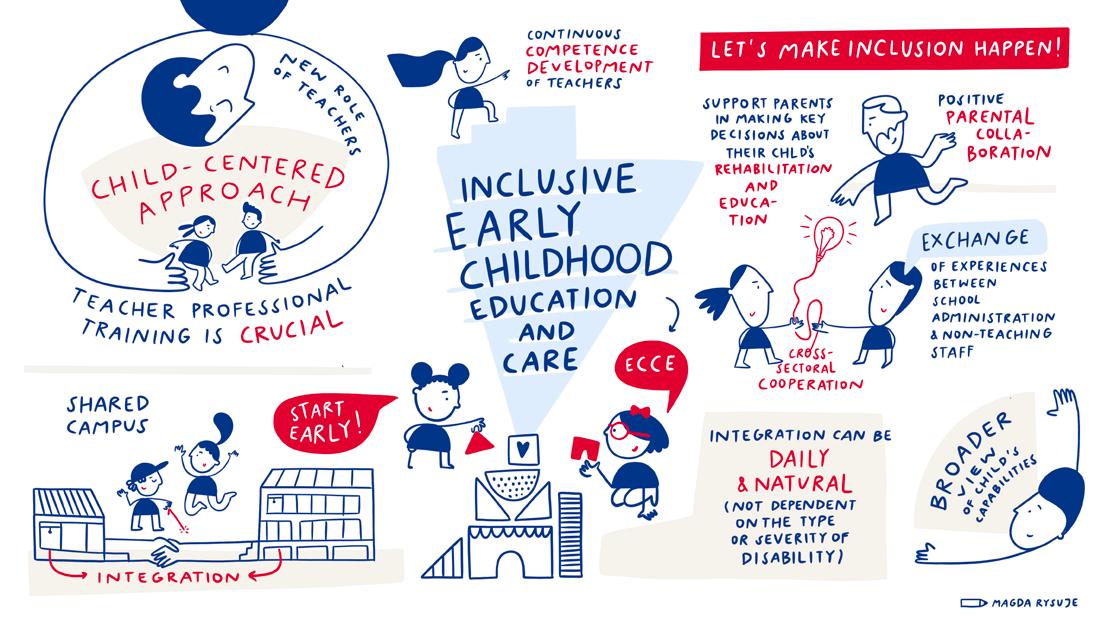
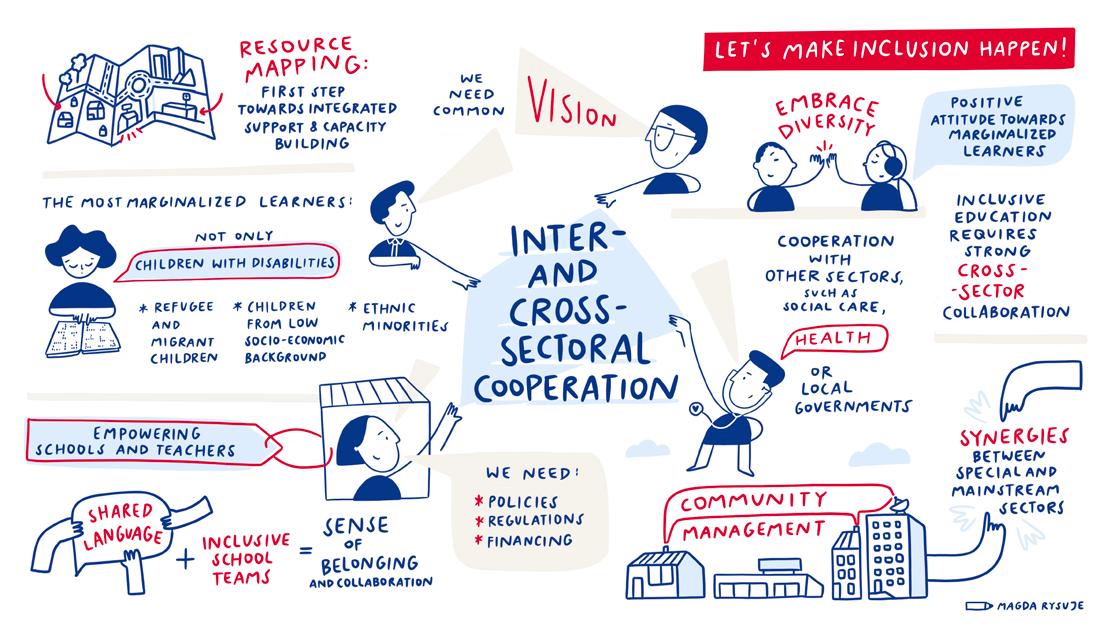
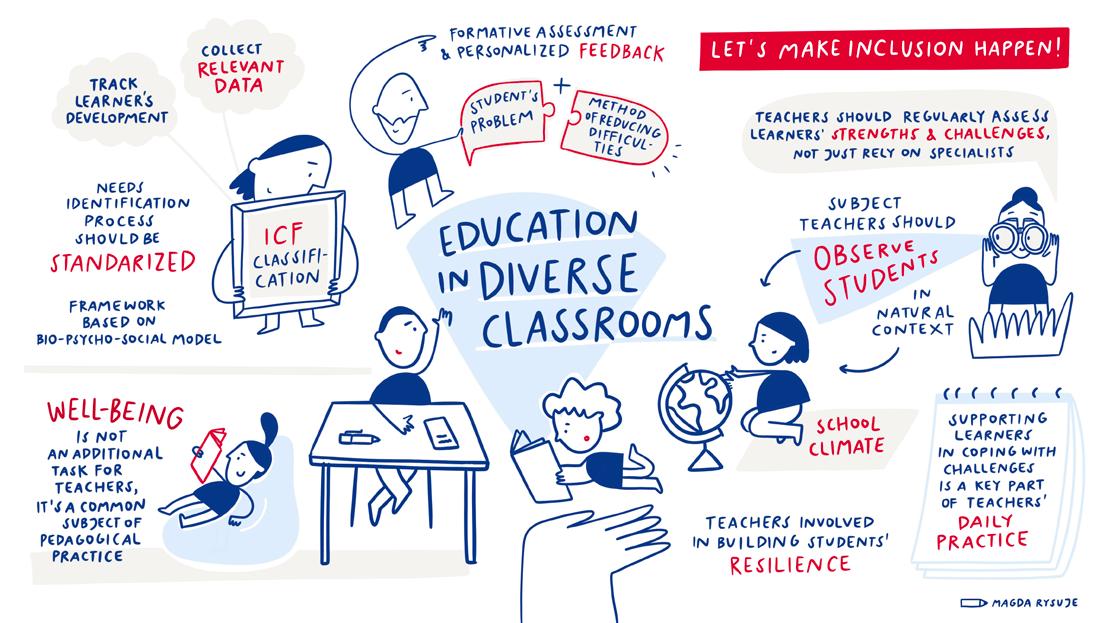
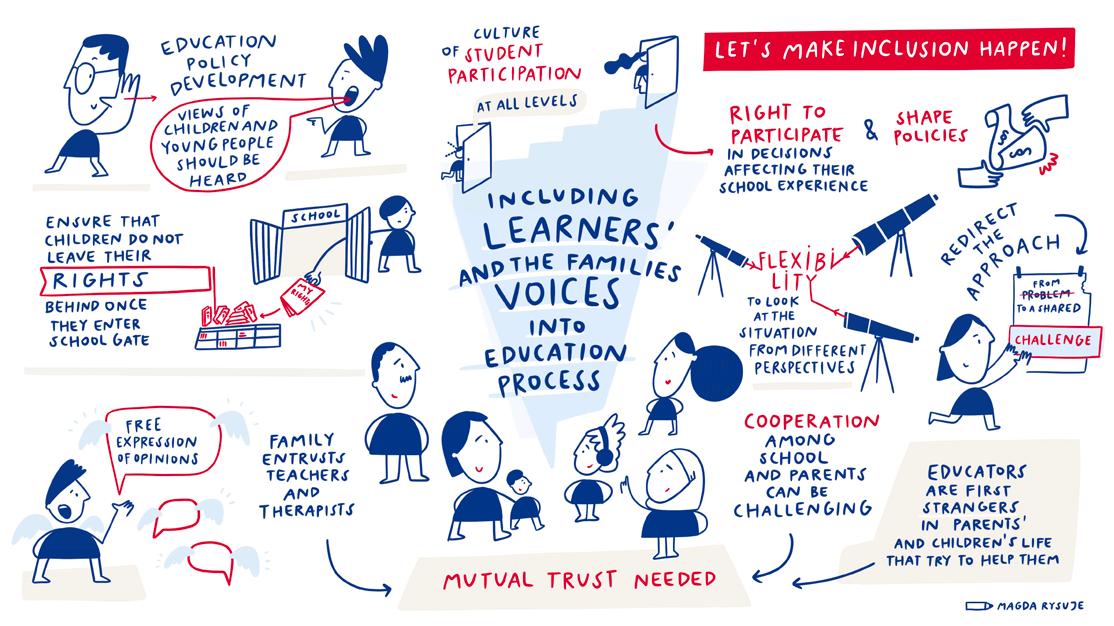
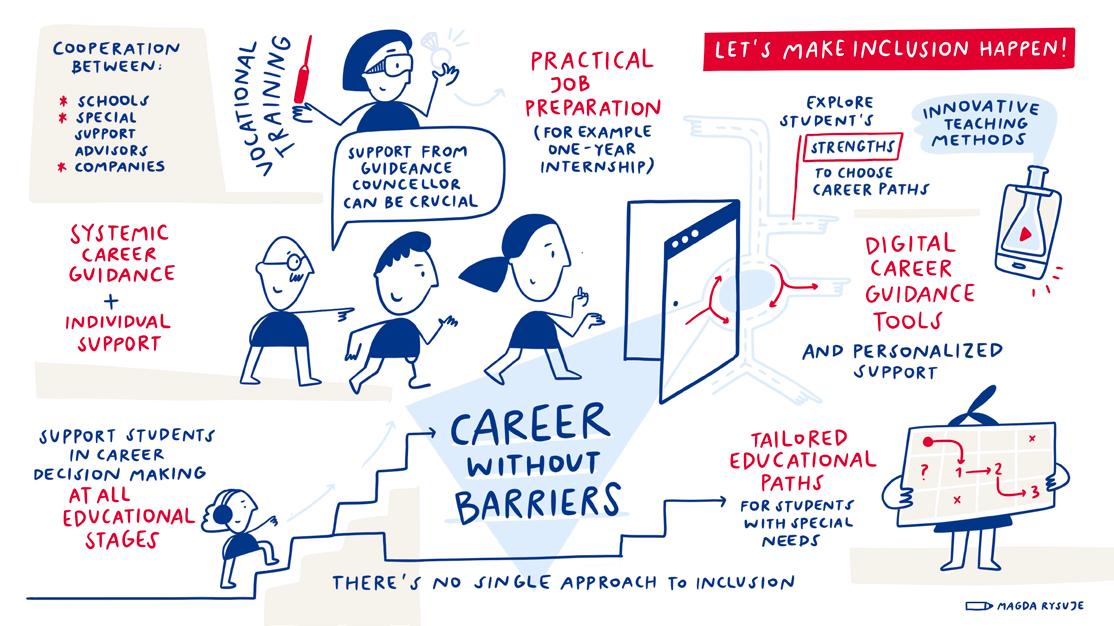
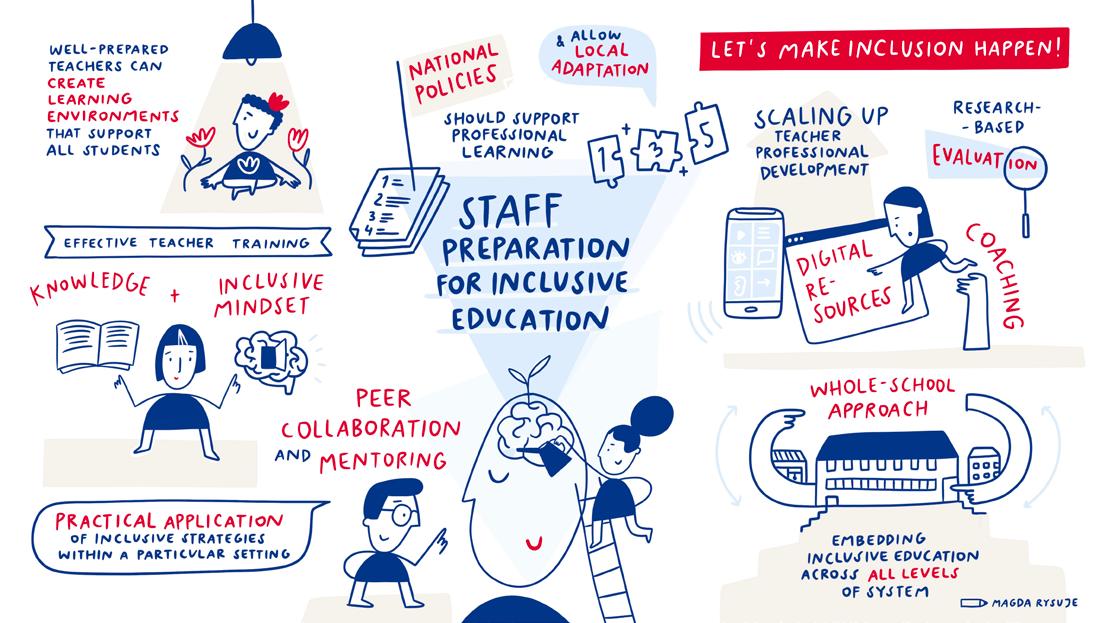
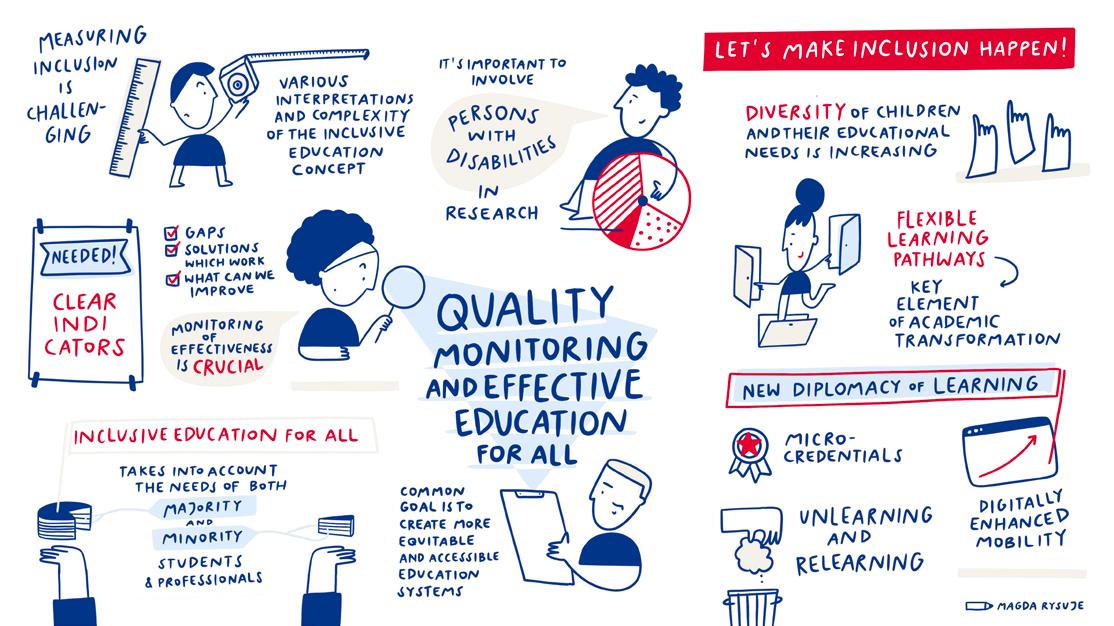
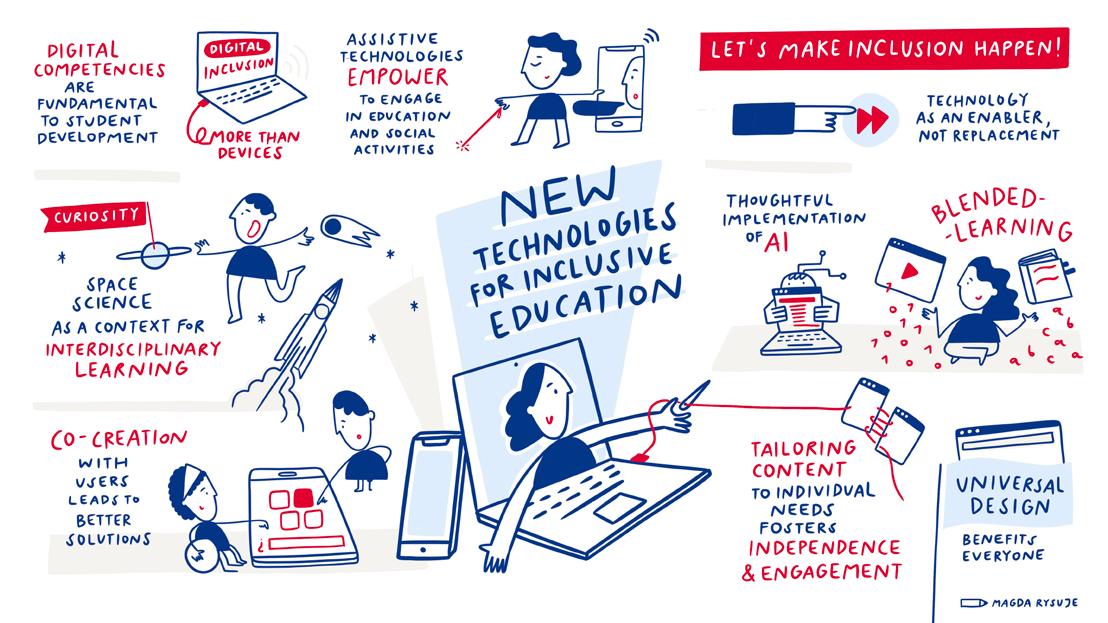
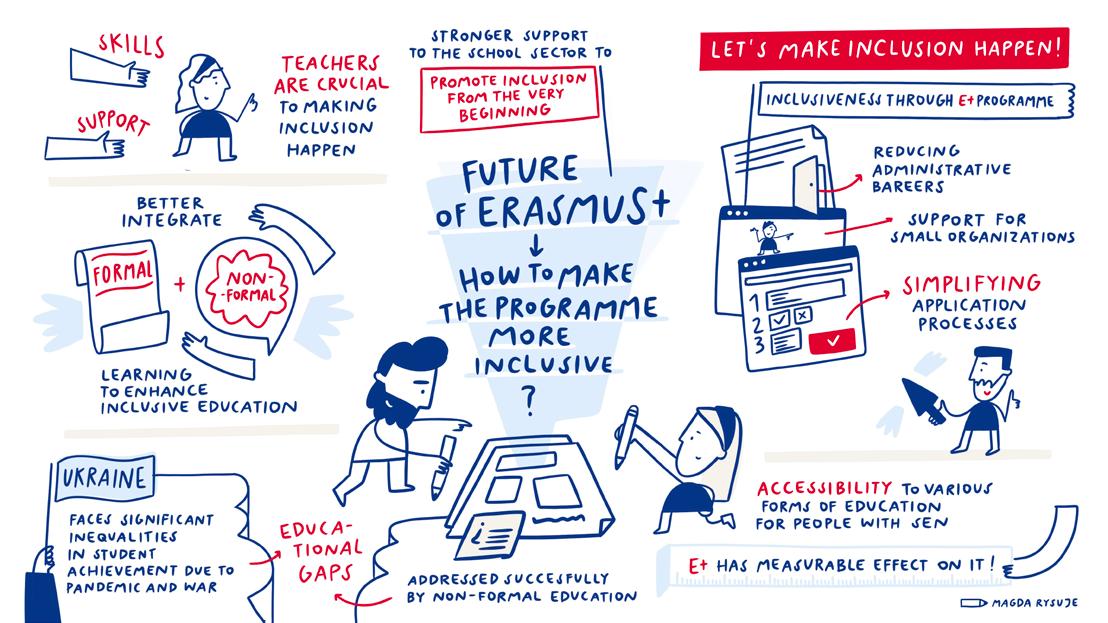
About the book
The publication “Let’s make inclusion happen!” is a collection of texts produced following an international conference on inclusive education organised during the Polish Presidency of the Council of the EU.
[…] The very idea behind the conference format deserves attention, particularly the section featuring self-advocates – learners taking part in workshops and discussions focused on nine topics: inclusive education in early childhood education and care; collaboration within and across sectors; working with groups of learners with diverse needs; including the voices of learners and their families in education; the future of the Erasmus+ programme; careers without barriers; preparing staff for inclusive education; monitoring the quality and effectiveness of education; and modern technologies for inclusive education. The post-conference publication thematically reflects these areas. […] The diversity of issues is evident in this case, and the topics of the texts exemplify the issue of inclusive education. This is typical of post-conference publications and constitutes their specific value. […]
The material is an interesting read that highlights both the strengths and weaknesses of initiatives undertaken in the field of inclusive education across many European countries. The positive outcomes of these activities motivate others to become engaged and can inspire action in areas where such efforts have not yet been initiated. The issues raised are also valuable in that they have been identified, which is the first, and a very important, step towards solving them.
[…] We should speak – and speak loudly – about achievements and successes in providing education of the highest quality for all. The fact that, as a country, we are not alone in these efforts is very important. This enables us to support each other and learn from our experiences, both successful and unsuccessful.
Prof. Iwona Chrzanowska, Ph.D. Adam Mickiewicz University, Poznan
Inclusive education is developing simultaneously in many countries under different social, cultural, political and economic conditions. It is therefore hardly surprising that it is characterised by conceptual diversity as well as diversity in terms of practical, systemic solutions. This is one of the reasons why discussions involving people with slightly different experiences and views are invaluable for the development of education, including inclusive education. […] The diversity of the authors’ experience and competences is one of the publication’s most important assets.
[…] The texts in this publication are cognitively interesting and present various levels of generality, while consistently introducing original themes, with many of them containing valuable the-ses. It is also worth highlighting the sizeable group of texts of a scholarly nature and noting that they meet standards of scientific rigour and methodological accuracy.
[…] I appreciate the idea that each chapter concludes with a statement from a young person experiencing difficulties in the area discussed, as well as the relevance of the issues raised – they fit perfectly into the key areas of inclusive education.
Prof. Zenon Gajdzica, Ph.D. University of Silesia in Katowice

The publication is the outcome of the “ Let's make inclusion happen!” conference, organised in Warsaw as part of the Polish Presidency of the Council of the EU in 2025. It brings together the voices of experts, practitioners and learners themselves, showing ways to break down barriers in teaching. Through the analysis of good practices, the presentation of research results and systemic solutions, educators and policymakers are provided with a practical guide for building a modern, accessible school where every learner has equal opportunities for development.
Foundation for the Development of the Education System (FRSE) operates since 1993. It is the Polish National Agency of the Erasmus+ Programme and the European Solidarity Corps for 2021–2027, also implementing projects of the European Funds for Social Development (FERS). The Foundation is responsible for other European educational and informative initiatives in Poland, such as eTwinning, Eurodesk, Eurydice, Europass, Euroguidance, EVET and EPALE. It supports cooperation with countries in the East via the Polish-Lithuanian Youth Exchange Fund, the Polish-Ukrainian Council of Youth Exchange, SALTO-EECA Eastern Europe and Caucasus Resource Centre.
Ministry of National Education Republic of Poland