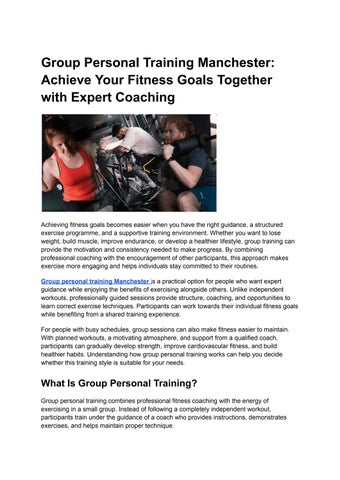
Group Personal Training Manchester: Achieve Your Fitness Goals Together with Expert Coaching
Achieving fitness goals becomes easier when you have the right guidance, a structured exercise programme, and a supportive training environment. Whether you want to lose weight, build muscle, improve endurance, or develop a healthier lifestyle, group training can provide the motivation and consistency needed to make progress. By combining professional coaching with the encouragement of other participants, this approach makes exercise more engaging and helps individuals stay committed to their routines. Group personal training Manchester is a practical option for people who want expert guidance while enjoying the benefits of exercising alongside others. Unlike independent workouts, professionally guided sessions provide structure, coaching, and opportunities to learn correct exercise techniques. Participants can work towards their individual fitness goals while benefiting from a shared training experience. For people with busy schedules, group sessions can also make fitness easier to maintain. With planned workouts, a motivating atmosphere, and support from a qualified coach, participants can gradually develop strength, improve cardiovascular fitness, and build healthier habits. Understanding how group personal training works can help you decide whether this training style is suitable for your needs.
What Is Group Personal Training? Group personal training combines professional fitness coaching with the energy of exercising in a small group. Instead of following a completely independent workout, participants train under the guidance of a coach who provides instructions, demonstrates exercises, and helps maintain proper technique.
Although several people attend the same session, each participant may have different fitness goals, abilities, and training requirements. A suitable programme considers these differences by offering exercise variations, alternative resistance levels, and modifications where necessary.
How Group Training Sessions Work A typical session follows a planned structure designed to make the most of the available training time. It generally begins with a warm-up, followed by the main workout and a cool-down period. The warm-up prepares the body for physical activity through movements that gradually increase the heart rate and mobilise the joints. The main workout may include strength exercises, cardiovascular activities, functional movements, or a combination of these elements. Finally, the cool-down allows participants to reduce their activity gradually and finish the session comfortably. Throughout the workout, the coach can demonstrate exercises, provide feedback, and suggest adjustments. This approach helps participants understand what they are doing and why each movement matters.
The Difference Between Group Training and Independent Exercise Independent exercise gives people complete control over their routines, but it can be difficult to know which exercises to perform, how much resistance to use, or when to increase training intensity. Group personal training offers more structure through planned sessions and professional supervision. Compared with large fitness classes, smaller group sessions may also provide more opportunities for individual feedback. Participants can ask questions, receive technique corrections, and learn how to adapt movements to their current ability. The most suitable option depends on personal preferences, budget, fitness experience, and the amount of individual attention required.
Benefits of Group Personal Training in Manchester Choosing a structured exercise programme can help make fitness a consistent part of everyday life. Group training offers several benefits that extend beyond the physical workout itself.
Professional Guidance and Better Exercise Technique Correct exercise technique is important for training effectively and reducing avoidable injury risks. A qualified coach can demonstrate movements, explain positioning, and identify common technique errors.
For example, beginners learning squats may need guidance on balance, posture, and comfortable movement depth. Similarly, someone performing resistance exercises may benefit from advice about controlled movements and appropriate weight selection. Professional supervision can help participants develop confidence as they learn new exercises. However, coaching quality and the amount of individual feedback available can vary between facilities, so it is worth asking about these details before joining.
Motivation and Accountability Maintaining an exercise routine can become challenging when work, family responsibilities, and other commitments compete for attention. Group sessions create a regular appointment that encourages participants to prioritise physical activity. Training alongside other people can also provide a sense of accountability. Seeing others work towards their goals may encourage participants to keep trying, even when a workout feels demanding. Furthermore, scheduled sessions reduce the need to plan every workout independently. This can make exercise more manageable for people who prefer a clear routine.
A Supportive Training Environment Fitness can feel intimidating for people who are new to exercise or returning after a long break. A welcoming group environment can help make the experience more comfortable. Participants may exchange encouragement, celebrate improvements, and share the challenges associated with building healthier habits. This sense of community can make training more enjoyable and help individuals remain consistent. Nevertheless, a positive training environment should respect different abilities and personal goals. Healthy encouragement should never involve pressure to lift more weight or perform movements beyond an individual's capabilities.
A More Structured Approach to Fitness Following a planned programme makes it easier to understand how workouts contribute to long-term goals. Rather than choosing random exercises, participants can follow a routine that balances strength, cardiovascular fitness, mobility, and recovery. For instance, a programme may gradually increase resistance as a participant becomes stronger. Cardiovascular exercises may also be adjusted to improve endurance over time. Progress should be based on individual ability rather than comparisons with other group members.
Who Can Benefit from Group Personal Training?
Group training can suit a wide range of people, provided the programme is appropriate for their abilities and circumstances.
Beginners Starting Their Fitness Journey Beginners often need help understanding exercise equipment, selecting suitable exercises, and developing a consistent routine. Professional coaching provides an opportunity to learn these fundamentals in a structured setting. Starting with manageable workouts is particularly important. Participants do not need to complete the most difficult exercises immediately. Instead, they can focus on learning correct movements, improving confidence, and gradually increasing their activity levels.
People Looking to Lose Weight Weight management involves several factors, including physical activity, nutrition, sleep, and overall lifestyle habits. Group training can contribute by increasing energy expenditure, improving fitness, and supporting a more active routine. However, exercise alone does not guarantee weight loss. Sustainable results generally require habits that can be maintained over time, alongside an appropriate approach to food intake. Participants should focus on measurable progress, such as improved stamina, increased strength, and greater consistency, rather than expecting immediate changes in body weight.
Individuals Who Want to Build Strength Resistance training can help develop muscular strength, support everyday movement, and improve physical capacity. Group programmes may incorporate exercises using dumbbells, resistance bands, bodyweight movements, and other equipment. A coach can help participants select appropriate resistance and maintain controlled technique. Over time, training difficulty can be adjusted according to individual progress. People interested in significant muscle development may also want to check whether the programme offers sufficient resistance-training time and opportunities for progression.
Busy Professionals and Active Adults People with demanding schedules often need an exercise option that fits around work and personal responsibilities. Prearranged group sessions can make planning easier by providing set training times and structured workouts. Additionally, participants can complete a variety of exercises within one session instead of planning separate routines for every fitness component. Selecting realistic session times and a convenient location can improve the likelihood of maintaining a consistent routine.
What to Expect from a Professional Group Training Programme Before joining a programme, it helps to understand how sessions are organised and how progress is supported.
Initial Fitness Assessment An initial assessment can help a coach understand a participant's current fitness level, exercise experience, preferences, and objectives. Depending on the facility, the assessment may include questions about previous activity, movement ability, and relevant health considerations. This information helps determine suitable starting exercises and training intensity. Participants should communicate any relevant physical limitations or medical advice that may affect their exercise choices. A thorough introduction can also clarify expectations and help establish realistic short-term and long-term goals.
Personalised Exercise Modifications
Although participants train together, exercises should not necessarily be identical for everyone. A beginner may perform a bodyweight squat, while a more experienced participant may use additional resistance. Likewise, cardiovascular exercises can be adjusted through changes in speed, duration, or impact. These modifications help create a more inclusive environment in which people can train at different levels. A well-managed programme encourages participants to work within their abilities instead of treating every workout as a competition.
Tracking Progress Over Time
Monitoring progress helps participants understand whether their training is producing useful changes. Progress can be measured through several indicators, depending on the original goals. For example, someone focused on strength may track resistance and repetitions, while a participant improving endurance may record exercise duration or recovery between activities. Other useful measures include attendance, movement quality, and improvements in everyday physical tasks. Regular reviews also allow the coach to adjust the programme when exercises become too easy, goals change, or recovery becomes difficult.
How to Choose the Right Group Personal Training Programme Manchester offers different fitness environments, so it is important to compare programmes carefully rather than choosing solely on price or convenience.
Check the Coach's Qualifications and Experience Look for appropriately qualified fitness professionals with experience in group instruction and exercise modification. Ask how coaches support beginners, manage different ability levels, and provide feedback during sessions. It is also sensible to check whether the programme is suitable for your particular objectives. Someone who wants to improve general fitness may need a different structure from someone preparing for a sporting challenge.
Review Session Size and Equipment Group size can affect how much individual attention a participant receives. Smaller sessions may allow more opportunities for technique feedback, although coaching quality and session organisation also matter. Check whether the facility has suitable equipment, enough space for safe movement, and a clear system for organising exercises. If you prefer resistance training, ask about the availability of weights and progressive strength exercises.
Compare Pricing and Membership Conditions Training costs can vary according to session length, group size, coaching provision, and membership arrangements. Before committing, review the payment structure and understand whether sessions are booked individually or through a membership. Ask about introductory sessions, cancellation rules, missed-session policies, and any additional charges. A programme should fit your budget without creating unnecessary financial pressure.
Consider Location and Scheduling Convenience plays an important role in consistency. Choose a training location that fits reasonably well with your home, workplace, or regular travel routes. Review available session times and consider whether they remain practical during busy periods. A realistic schedule is more valuable than an ambitious plan that becomes difficult to maintain.
Building Long-Term Results Through Consistency Successful fitness programmes rely on regular participation, gradual progression, and adequate recovery. A challenging first workout may feel rewarding, but lasting improvements usually develop through repeated effort over weeks and months.
Combine Training with Healthy Lifestyle Habits Exercise works best as part of a balanced lifestyle. Eating a varied diet, drinking enough water, getting adequate sleep, and managing daily stress can support energy levels and recovery. Protein-rich foods can contribute to muscle repair, while carbohydrates provide energy for physical activity. Individual nutritional requirements differ, so people with specific dietary or medical needs may benefit from advice from a suitably qualified professional. Recovery is equally important. Training hard every day without sufficient rest can contribute to persistent fatigue and reduced performance.
Set Realistic and Measurable Goals Clear goals help participants maintain direction. Instead of focusing only on appearance or a particular number on the scales, consider objectives such as attending two sessions each week, improving squat technique, or completing a longer cardiovascular workout. Breaking larger ambitions into smaller milestones makes progress easier to recognise. If a target becomes unrealistic, adjusting it is a sensible way to maintain a sustainable routine.
Allow Progress to Develop Gradually Fitness improvements do not happen at the same rate for everyone. Previous exercise experience, sleep, nutrition, age, consistency, and recovery can all influence progress. A structured programme should therefore allow room for gradual adjustments. Increasing resistance, exercise duration, or workout complexity too quickly can make training unnecessarily difficult. By focusing on steady improvements rather than immediate results, participants can build a more sustainable relationship with exercise.
Why Choose Frontline Fit Performance Centre? Finding a training environment that combines structured exercise with supportive coaching can make an important difference to the fitness experience. Frontline Fit Performance Centre provides a starting point for people exploring coached fitness options in Manchester. When evaluating a programme, consider whether the coaching approach matches your goals, whether sessions accommodate different experience levels, and whether the training schedule fits your lifestyle. It is also worth asking about the structure of the workouts, the level of individual feedback available, and how progress is reviewed. A suitable training environment should encourage participants to learn, improve, and develop confidence without unnecessary pressure. Clear communication between coaches and participants can help ensure that exercise choices remain appropriate as fitness levels change. Before joining, discuss your objectives and ask how the programme can support your starting point. This conversation can help you understand what to expect and decide whether the available training arrangements meet your needs.
Frequently Asked Questions Is Group Personal Training Suitable for Beginners? Yes. Beginners can benefit from structured guidance, exercise demonstrations, and appropriate modifications. It is important to choose a programme where coaches welcome questions and adjust exercises to individual ability.
How Many Times a Week Should I Attend? The ideal frequency depends on your fitness level, schedule, goals, and recovery needs. Two or three sessions per week may be a manageable starting point for many people, although individual requirements vary. Gradually building a consistent routine is generally more practical than starting with an excessive workload.
Can Group Training Help Build Muscle? Yes. Group sessions that include progressive resistance exercises can help develop muscular strength and size. Results depend on training quality, consistency, nutrition, recovery, and whether the programme provides sufficient challenge over time.
Is Group Training Better Than One-to-One Personal Training? Neither option is automatically better for everyone. Group training combines coaching with a shared environment and may be more affordable, while one-to-one training can provide more dedicated individual attention. The right choice depends on your goals, preferences, and budget.
What Should I Bring to a Training Session? Comfortable exercise clothing, suitable trainers, a water bottle, and a towel are useful for most sessions. Check with the facility beforehand to find out whether equipment is provided and whether there are any additional requirements.
Conclusion
Group exercise offers a practical way to combine professional guidance, structured workouts, and social motivation. With an appropriate programme, participants can work towards better strength, improved endurance, greater confidence, and healthier everyday habits. The key is to select training that matches individual abilities and to remain consistent while allowing enough time for recovery. Choosing group personal training manchester can be a positive step towards a more organised fitness routine when the programme provides suitable coaching, realistic progression, and a welcoming atmosphere. By comparing session formats, coach qualifications, scheduling, and costs, you can make an informed decision about your training options. Frontline Fit Performance Centre is worth considering as you explore ways to make fitness a consistent and rewarding part of your lifestyle.