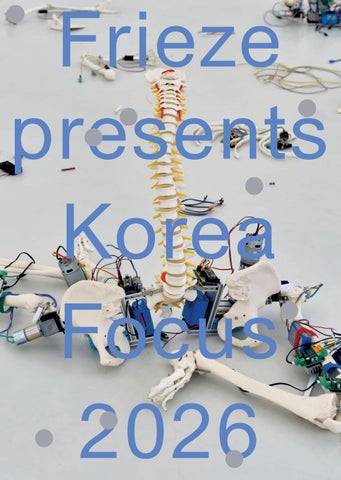
Frieze presents Korea Focus 2026
by
Editor & Creative Director, Frieze Studios
Matthew McLean
Project Editor
Sara Harrison
Senior Editor
Chris Waywell
Graphic Designer
Carol Montpart
Director, Frieze Studios
Francesca Girelli
Content Operations Manager
Rosalind Furness
Content Production Assistant
Rebeka Eleki
Proofreader
Kirstie Sequitin
Publisher Lisa Gersdorf
Special thanks to the team at KAMS including: CHU Myungji, Jiyoung Yun
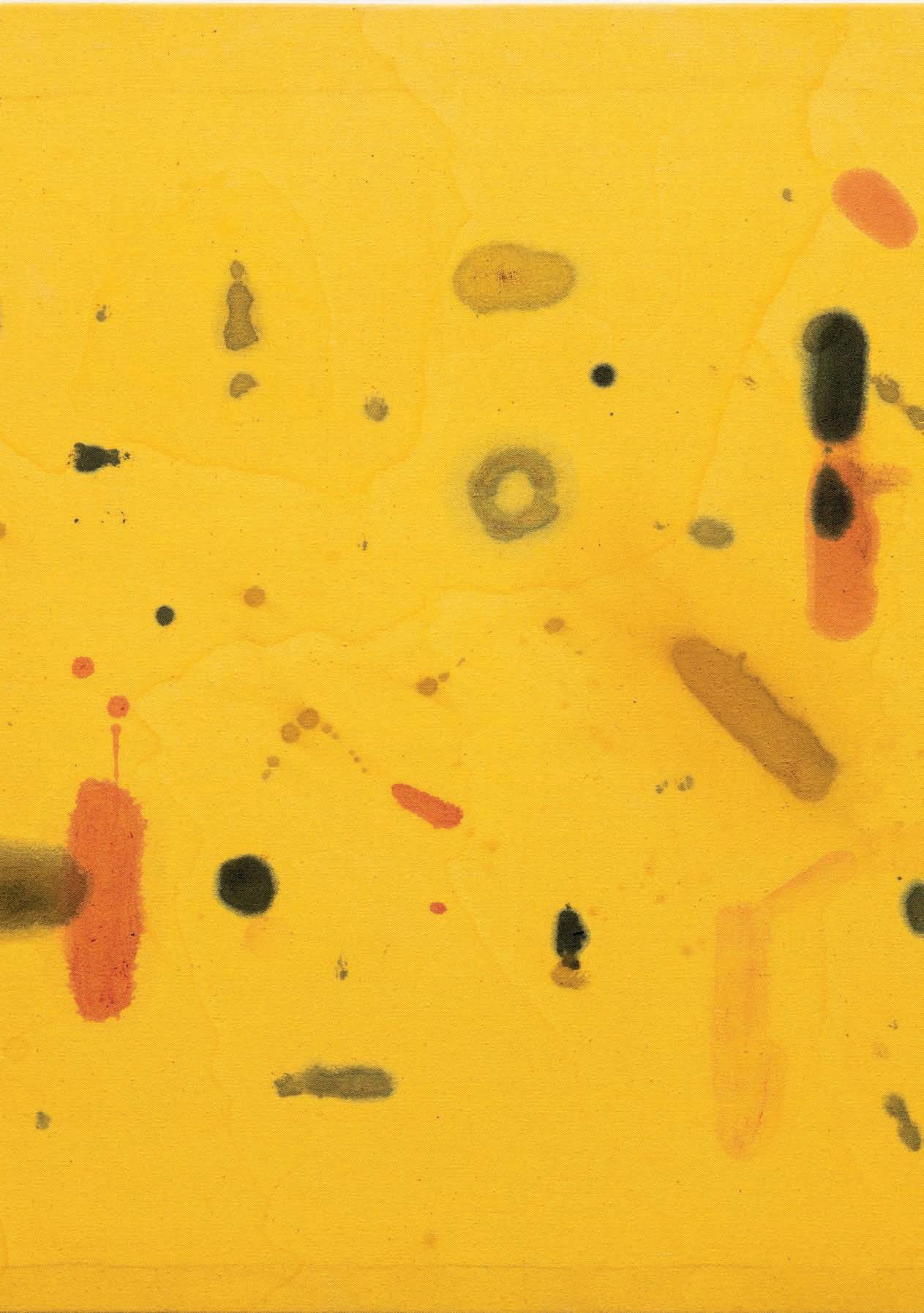
Shin Sung Hy, Peinture, 1994 (detail). Courtesy: the estate of the artist; photograph: Nicolas Borel
Produced
Frieze Studios for KAMS
Contents
ExhibitionAhn Chang Hong
In Washington DC, the American University Museum mounts the first survey of the artist’s work outside Korea
“Another Day in Seoul”
Hong Kong’s Asia Art Archive explores the Korean art scene of the 1980s and ’90s
Kang Seung Lee
The first solo exhibition in the UK for the LA-based Korean artist comes to the South London Gallery
Ayoung Kim
At the Van Abbemuseum, Eindhoven, the Seoul-based artist continues her exploration of the “mobile entity”
Essay “ Looking Inward, Looking Outward ”
Reflections on K-Photography, on the occasion of an exhibition organized by Musashino Art University, Tokyo
Artist ProfileChung Seoyoung
A career survey at Fire Station, Doha, reveals the artist making “subtle adjustment after subtle adjustment”
Interview Mael Bellec
The organizer of the Korea Focus Support Program exhibition “Shin Sung Hy: Coller, Couturer, Nouer” talks about the Korean holdings of the Musée Cernuschi, Paris
Artist Profile siren eun young jung
At the Württembergischer Kunstverein Stuttgart, the artist’s “directed politics” come to the fore
“Desire and the Machine”
Geumhyung Jeong at Collection Lambert, Avignon, and Choe U-Ram at Yuz Museum, Shanghai, show the depth of contemporary Korean art’s engagement with technology
Interview
Clara Kim
MOCA’s Chief Curator & Director of Curatorial Affairs talks about organizing “Haegue Yang: Star Crossed Lovers” and the music of Isang Yun

From Avignon to Yokohama, 11 exciting exhibitions of Korean art and artists have been funded by this year’s cycle of the Korea Focus Support Program. By the time you read this, some of these will have closed, and some will just be opening, and so this publication uses these exhibitions as a framework to consider Korean art from a multipolar perspective. This includes interviews with curators of Korean exhibitions in Los Angeles and Paris, profiles of Korean artists on the occasion of major exhibitions in Doha and Stuttgart, thought pieces on photography and technology in Korean art occasioned by exhibitions in China, France and Japan, and, of course, a guide to the Korea Focus Support Programs you can still see this year, including Ayoung Kim in Eindhoven and “Another Day in Seoul” in Hong Kong.
In addition, for those of you picking this publication up at Frieze Seoul and Frieze London, we include a listing and guide to all the Korean galleries exhibiting at the fairs this year. The Korea Focus Support Program aims towards “the internationalization of Korean art.” When I get to see the work of Kang Seung Lee, a Seoul-born, LA-based artist exhibiting at the SLG in my hometown of London later this year, I think I will know exactly what that internationalization looks like. For more information, please visit The Korea Arts Management Service (KAMS): www.gokams.or.kr/eng.
Matthew McLean
Exhibition
Ahn Chang Hong
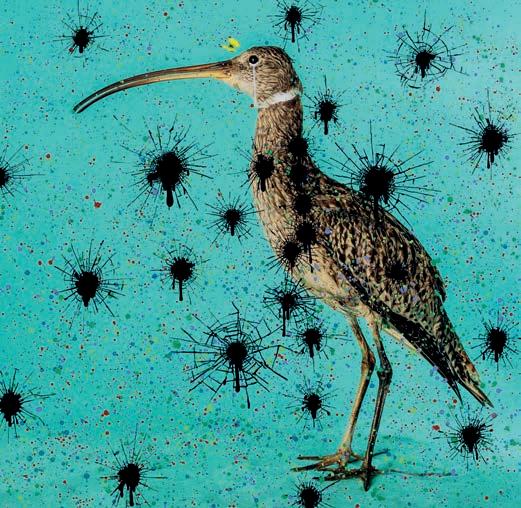
Ahn Chang Hong was born in 1953, right at the end of the Korean War. His work takes this as a starting point, reflecting on his country’s subsequent trials through oppressive regimes, unbridled capitalism and the global homogeneity of the internet. Hence, “Sorrow.”
This career survey of the South Korean artist brings together nearly 100 works, from paintings to reliefs to three-dimensional sculpture, and has at its center a series of mixed-media works featuring discarded stu ed animals. In a statement for the show, one of its co-curators, Jack Rasmussen, writes of Ahn: “His installations suggest a culture that embalms its own narratives, fetishizes the past while neglecting the present, and stages history even as it fragments it.”
“Embalm,” “fetishize” and “fragment” are key here. You can see Ahn’s work as a kind of futile triage, an attempt to select the good and display the bad as a warning, while always aware that he might be honoring the wrong things.
With seemingly limitless raw material available to explore how human beings can be horrible to one another, animals and the planet, Ahn’s practice circles around, vulturelike, before swooping down on an especially juicy bit. His painting alone spans discomfiting, near-photorealist naked portraits to clumsy parodies of early modernism; an ongoing series, “Sad Evaporation,” (2018–ongoing) features expressionless faces, described by Ahn at the time of his 2019 exhibition at Arario in Japan, as “anonymous people who not only lack names but presence
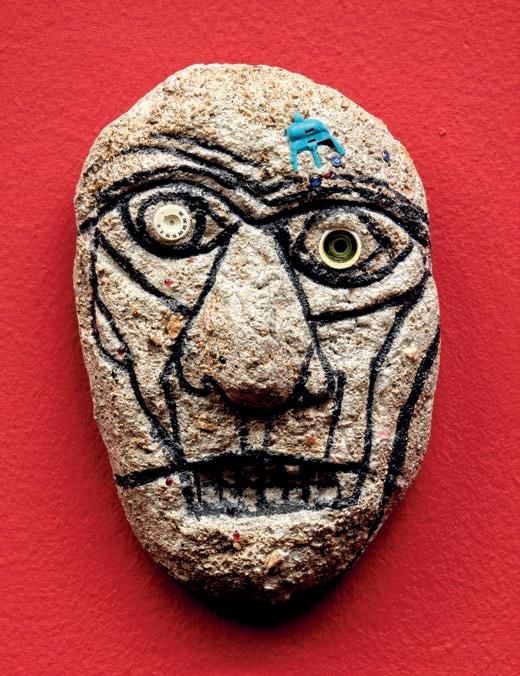
itself, their existence completely elided.” His sculptural work includes towering panels of accumulated stu surmounted by skeletal arms, fields of two-meter-tall heads, and giant, suspended sacred hearts. The mask is a frequent theme in his work, sometimes with its eyes blinded.
It’s as if everywhere Ahn looks—from sex to religion to the thousands of tons of rubbish that humanity generates every hour—he finds a new horror, and these horrors are not sequential; they are cumulative, and they pile up and up and up. If that sounds bleak, it neglects to mention the relish with which Ahn tackles his subject. After a while, his work takes on an almost rueful quality, a “what can you do?” shrug of fatalism. Having old taxidermy as the axis for this exhibition makes perfect sense. After all, what kind of creature kills another one for the way it looks, preserves it to make it appear as if it’s still alive, and then throws it away ?
Ahn’s grisly vision is what snags the gaze, but it is his compassion and his sorrow—probably for our own unbelievable stupidity—that holds it.
“Ahn Chang Hong: Sorrow,” AU Museum at the Katzen Arts Center, Washington DC, USA, September 5 – December 6, 2026.
Ahn Chang Hong, Faces, 2018. Courtesy: the artist
Ahn Chang Hong, Tear, 2025. Courtesy: the artist
Exhibition“Another Day in Seoul”
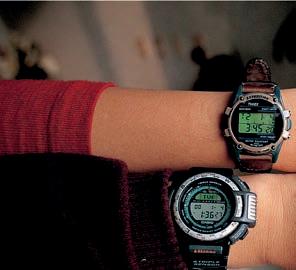
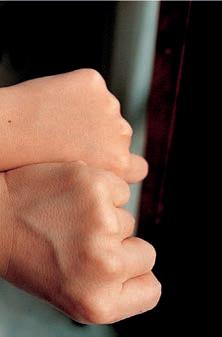
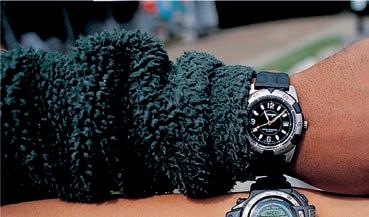
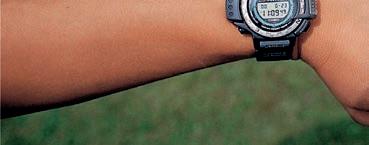
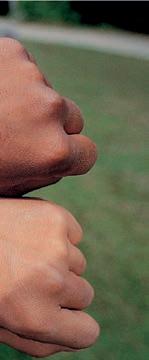
Top and bottom: Inhwan Oh, Meeting Time, 1999. Courtesy: the artist
The 46 years since the Gwangju Uprising of May 1980 have seen huge political and economic shifts in South Korea, accompanied by an explosion in contemporary art, whose exponential development of approach and visibility has kept pace with—or even outstripped—the rest of the country’s evolution. But there is also now a growing awareness that with the speed of change comes the risk of things being lost, forgotten and overwritten: that the relatively recent past demands careful examination just as much as more remote history.
“Another Day in Seoul,” organized by Asia Art Archive (AAA), is one acknowledgment of this. It is the visible face of an 18-month pilot project, supported by KAMS, to document Korean contemporary art of the 1980s and 1990s. The initial phase has concentrated on researching and digitizing the archives of significant Korean artists who both helped to shape, and responded to, the sociopolitical upheavals of the era, including Jung Jungyeob, Gimhongsok, Kim Beom and Lee Bul.
This exhibition, though, is more than just an exercise in academic and institutional curation. Inspired by AAA’s 2024 exhibition “Another Day in Hong Kong,” it aims to transport visitors to the Seoul of those decades, with multimedia installations, photographs, letters and ephemera displayed alongside artworks as a way of exploring parallel public and private narratives. The exhibition space itself will evoke the atmosphere of 1980s Seoul, recreating specific environments— a traditional tea house, an artist’s studio and a street scene—













to highlight the part these spaces played in the era’s fracturing of social structures.
The exhibition will feature a diverse roster of artists, with emerging artists presented alongside now-established figures who were venturing into the unknown in the 1980s. Ahn Kyuchul, whose delicate and witty transformations of everyday objects reflect the subversive impulse of Korean art of the era, will be showing materials from his own collection, as will Inhwan Oh, a pioneering figure in both Korean conceptual art and the country’s LGBTQIA+ community. All the participating artists have been invited to create new work that relates to their personal connection to the period, reflecting the complexities of recalling, preserving and interpreting the past, especially such a fraught and contested one.
“Another Day in Seoul,” Asia Art Archive, Hong Kong, November 15 – December 23, 2026.
Ahn Kyuchul, Silent House, 2017. Courtesy: the artist and Kukje Gallery
Kang Seung Lee Exhibition
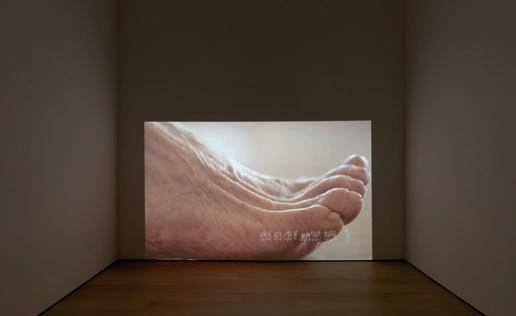
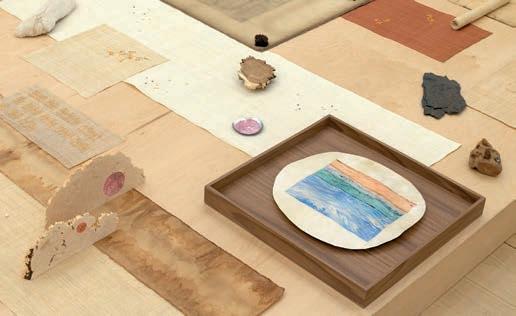
As the old saying goes, “a weed is a plant in the wrong place.” Once cultivated as a crop—or endowed by humankind with some other desirable attribute—the same plant is no longer a weed. Paradoxically, the cultivation of one particular species can mean that others suddenly become seen as weeds. It’s a potent symbol of both survival and reappraisal, qualities that are central to the work of Kang Seung Lee.
This is the LA-based, South Korean artist’s first solo exhibition in the UK, and it is being organized by the fellows of the South London Gallery’s (SLG) New Curators program, a training initiative for aspiring curators from disadvantaged backgrounds. This makes sense: Lee’s work is eminently curatable but o ers a steep learning curve. With its armature of research and archival investigation, its dense layers of history, reinterpretation and materials, his practice is a defiant gesture towards any simplistic idea of surface (although it is also often very beautiful.)
Over the last few years, Lee has presented a series of complex, multipart installations in “Made in LA: Acts of Living” at the Hammer Museum, Los Angeles (2023), a solo presentation at MMCA in Seoul (2023) and the Venice Biennale in 2024, reflecting on seminal queer figures who died of AIDS-related illnesses in the 1980s and ’90s. These include Singaporean choreographer Goh Choo San, Brazilian artist José Leonilson, US photographer Tseng Kwong Chi and US painter Martin Wong. Across the installations, Lee orchestrates elements from
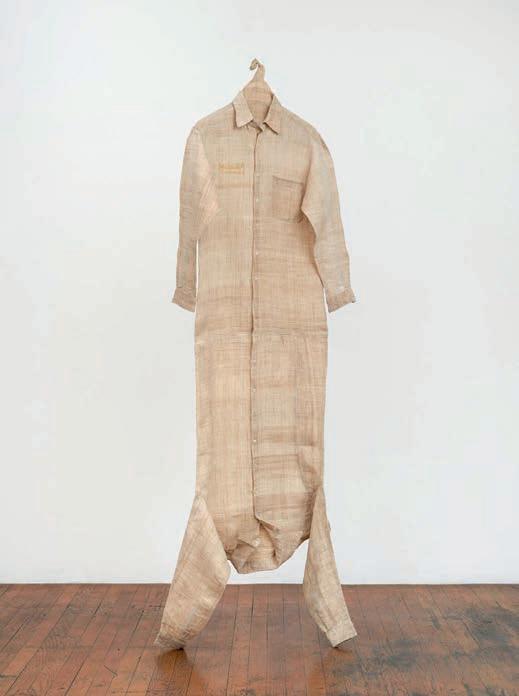
the di erent artists into new works. For example, Untitled (Lázaro, José Leonilson, 1993) (2023) takes Leonilson’s final work Lázaro , two rough linen shirts sewn together hem-to-hem, and remakes it in sambe , a hemp fiber traditionally used in Korea for funeral shrouds. The garment is embroidered with symbols derived from Wong’s paintings and appears in a video worn by—and symbolically linking—two male dancers, in a performance inspired by Goh.
“Weeds of Cultivation” will follow a similar thread, presenting recent works in the SLG’s Fire Station space, with a major new site-responsive installation down the road in the Main Building, looking at UK artists who were a ected by the AIDS crisis, including filmmaker Derek Jarman and Hamad Butt, whose work creates a profound unease and sometimes features lethal chemical elements such as chlorine gas. In excavating and memorializing these figures and archival works, Lee invests them with contemporary life. Lazarus-like, they rise again, with all their wit and threat intact.
“Kang Seung Lee: Weeds of Cultivation,” South London Gallery, London, UK, December 11, 2026 – April 11, 2027.
Kang Seung Lee, Untitled (Lázaro, Jose Leonilson, 1993), 2023
Kang Seung Lee, Skin, 2024, installation view
Kang Seung Lee, Untitled, 2025 (detail). All works courtesy: Alexander Gray Associates, New York
Ayoung Kim Exhibition
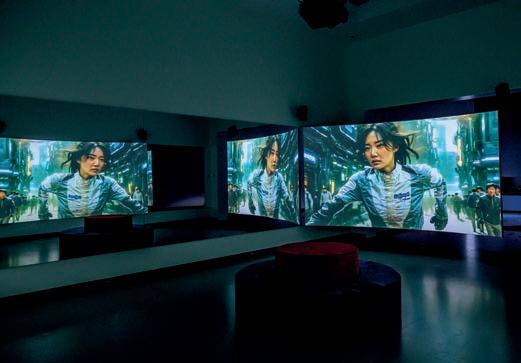
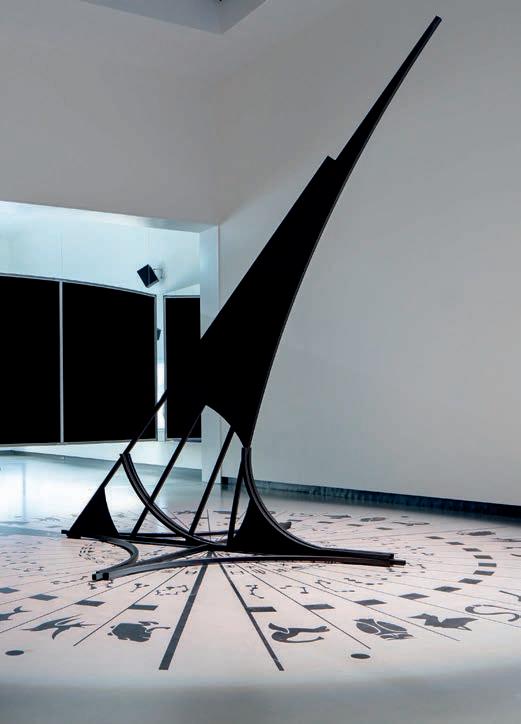
As part of the Van Abbemuseum’s first cohort of “System Thinkers,” Ayoung Kim makes her debut solo exhibition in the Netherlands. The new initiative embeds artists at all levels of institutional direction, from governance to technology, and coincides with the museum’s comprehensive rehang, “Collection as Cosmos.”
Kim seems like the perfect choice for this holistic reimagining of an institution. Exploring “speculative fiction” since 2017, her expansive world-building spans gender and identity, dystopian urban alienation, the mythic and archetypal, and even quantum theory.
“Delivery Dancer: Time Curves” is the latest episode in a series that began with Delivery Dancer’s Sphere (2022). This origin work was a response to the food home-delivery boom during the COVID-19 pandemic—a period that saw both increasing individual isolation for millions of people globally, and huge demands placed on a new tier of service worker. The existential bleakness of this worldview was distilled by Kim’s combination of live-action video and game simulation, and the release of an actual game version, Delivery Dancer Simulation , the same year. “I got curious about what kind of people they were,” Kim explained in a video interview at Frieze London in 2023, “because they were the most mobile entities during the pandemic.” In the series, a delivery rider in a future Seoul is at the mercy of an all-powerful algorithm called “Dancemaster,” which plots increasingly complex and pres-
sured itineraries. At the same time, the rider repeatedly encounters their dopplegänger, and faces other chronological and narrative disruptions.
Since then, Kim has further explored the idea of the “mobile entity”—a figure who can move between places and registers of significance while challenging the hierarchical assumptions of a society that is increasingly dependent upon the faceless and peripatetic. Dancer in the Mirror Field (2025), for example, set in a futuristic, Colosseum-like arena inspired by the giant shopping malls of Hong Kong, depicts a contest to find the delivery rider with “the most optimized movements.” The act of ordering your dinner is transformed into a gladiatorial spectacle.
“My work may appear futuristic because of its aesthetics,” Kim told The Brooklyn Rail earlier this year, “but it’s fundamentally about the present. I’m responding to existing realities—labor, migration, techno-precarity, geopolitics. The future appears not as a prediction, but as a tool for thinking about what already exists.”
“Ayoung Kim: Delivery Dancer – Time Curves,” Van Abbemuseum, Eindhoven, Netherlands, through April 1, 2027.
Chris Waywell is senior editor of Frieze Studios. He lives in London, UK.
Ayoung Kim: Delivery Dancer — Time Curves, 2026, installation view. Courtesy: Van Abbemuseum Eindhoven; photograph: Peter Cox
Ayoung Kim: Delivery Dancer — Time Curves, 2026, installation view. Courtesy: Van Abbemuseum Eindhoven; photograph: Peter Cox
LOOKING INWARD, LOOKING OUTWARD: ON CONTEMPORARY KOREAN PHOTOGRAPHY
Look at Japan and Korea’s shared history and you find a long, layered and contested tale of friendship and feud. In the late 19th century, a relationship of cultural exchange and uneasy diplomacy gave way to brutal colonization, plunging Korea into 35 years of Japanese rule and mass labor migration. Liberation arrived in 1945 but only brought further conflict, leaving behind a divided peninsula and lasting wounds that have been carried by the generations that followed.
Today, many contemporary South Korean photographers are turning their lenses inward, excavating family traumas, reimagining inherited memories and using the medium in myriad ways to understand their present through the histories that brought them there. It is one of the prevailing themes in an exhibition and research project led by Professor Hiroshi Suganuma and his team at Tokyo’s Musashino Art University. Studying the work of contemporary photographers born after the 1980s, they gathered a shortlist of 80 South Korean artists, presenting them to Taro Amano, chief curator at Tokyo Opera City Art Gallery and artistic director of the 2005 Yokohama Triennale. From there, Amano selected seven artists to be exhibited in the group show, “What Remains Anonymous Still Bears: Perspectives on Contemporary Korean Photography,” at Yokohama Civic Art Gallery Azamino. A further 30 were chosen in conjunction with Akaaka Art Publishing for the accompanying book.
“We chose photographers who share contemporary topics, and who also reflect, in some way, the historical context between Japan and South Korea,” says Amano. One such project is “Abnormal Sense” (2018–21) by Hyoyeon Kim, which takes her grandmother’s story as its starting point. Raised under Japanese colonial rule, Kim’s grandmother and her family were forced to migrate to Hiroshima. In 1944, aged 18, she fled to Busan with her new lover— Kim’s grandfather—leaving most of her family behind. A year later, the atomic bomb killed almost all of her relatives and all contact
was severed. Twenty-eight years passed before her elder brother, the sole survivor of her bloodline, came to find her in Busan.
Kim’s grandmother passed away in the 1990s, but, decades later, the photographer found herself longing to understand more. She sought out atomic bomb survivors and their descendants in South Korea and began a documentary project. “What I realized was that the e ects of the bombing did not end in 1945,” says Kim. “They continue to shape relationships, anxieties and everyday life across generations.” The artist constructed a “fictional family” out of the people she encountered, using her camera as a tool to unearth an “intimate language of emotion.” While interviewing survivors, she observed that the connection between photography and memory felt particularly charged.
“Watching them, I was reminded of a photograph,” says Kim. The elders would often struggle to recall recent events, yet their memories of the bombing in 1945 remained astonishingly vivid. “A photograph holds a single moment in place,” Kim says. “It does not move forward into the future or backwards into the past. I began to feel that the memory of the atomic bomb existed in their lives in a similar way, fixed at a particular point in time.”
Another artist in the show, Dawon Ha, also takes her grandmother’s experiences as source material. But where Kim examines how trauma resonates across generations, Ha gives shape to a single life that might otherwise go undocumented. As a young mother, Ha’s grandmother supported her family as a peddler, walking between villages and markets with goods balanced on her head and a child hunched on her back. Ha recorded her grandmother’s stories, then recreated the memories by following her footsteps between bus terminals, train stations, former marketplaces and remote rural homes. One image focuses on the physical gestures her grandmother made—movements which, Ha noticed, are still naturally ingrained in her body, surfacing whenever she recalls those times.
Titled “Silk on the Head, Child on the Back,” (2023) the project became a record of the “deep layers of the past” that would otherwise be left unrecorded.
Other projects in the show dive into questions about life and death in the present, such as Dongmin
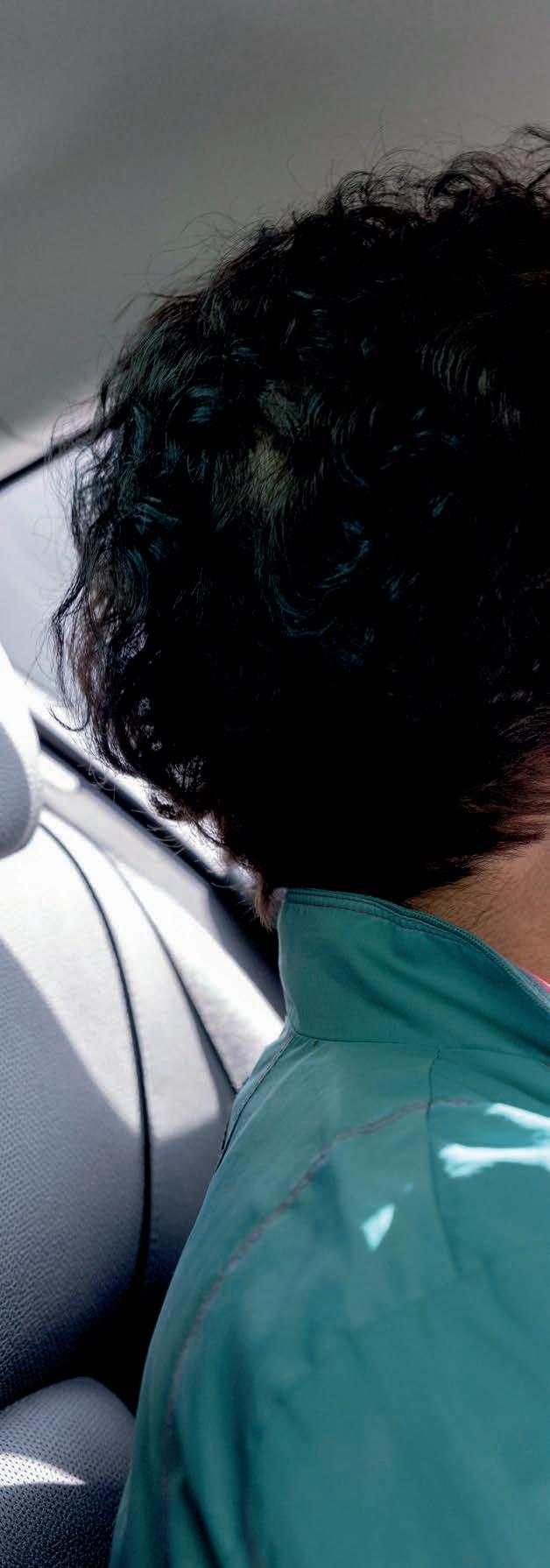
Dawon
Ha, The Face Yet to
Come, 2025.
Courtesy: the artist
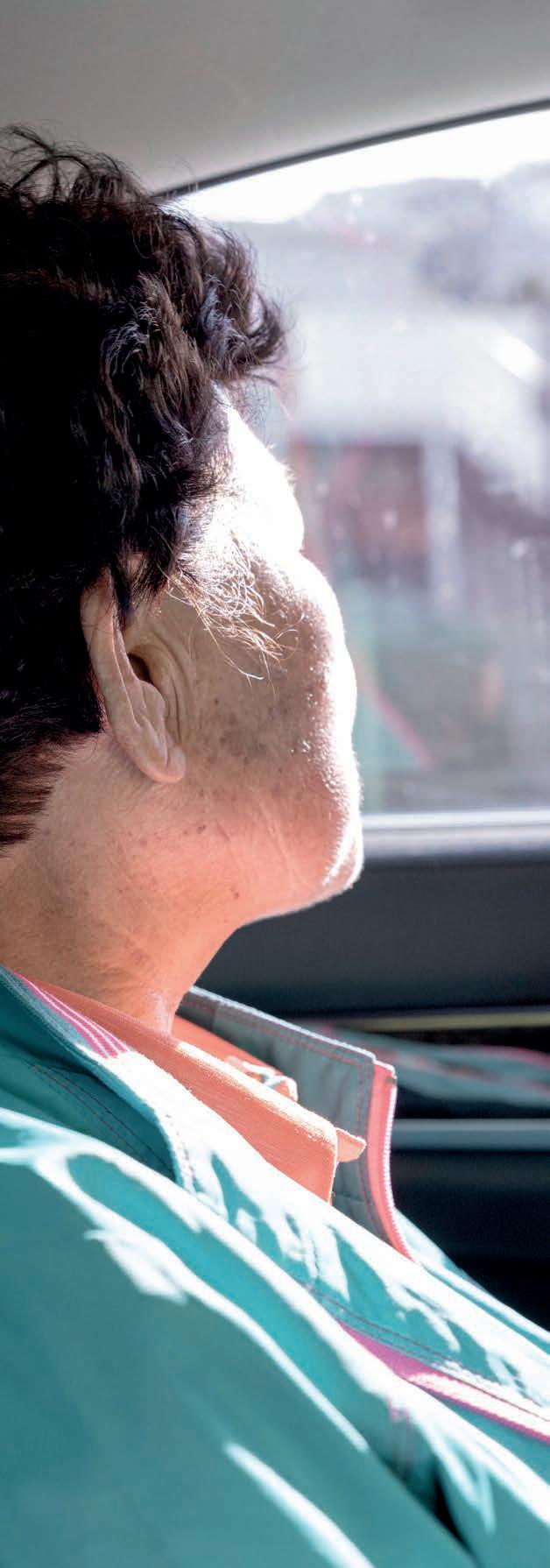
Yang’s “Mother” (2014–ongoing). That year, Yang’s mother was diagnosed with a malignant brain tumor. Rather than documenting her treatment, she dressed her in costumes, layering the images over memories of her in good health—a portrait of a woman spending her last days with humor and dignity.
For the curator, these two projects—Ha’s recreation of her grandmother’s memories as a pedlar, and Yang’s record of his mother’s illness—are complementary. “We approached Ha’s family work through the lens of diachrony,” says Amano, “and Yang’s work on his mother through the lens of synchrony, understanding both as themes that resonate with people today, particularly in Japan and South Korea. In other words, the work o ers a way of understanding the present while evoking the histories that preceded it, and of recognizing photography as a prompt for unraveling the past from a resolutely contemporary vantage point.”
Amano suggests that, compared to a medium like painting, photography has a special power to hold the past and present simultaneously. “Photography is reality,” he says. “By imprinting it, a photograph both attests to what was once there, while simultaneously confirming its absence. When a photograph is used as a memorial portrait, and people are moved to tears, it is evidence of exactly that.”
Such images remind the living that the past is gone, while pressing them with the question of what to do with its inheritance.
Where can this lifetime of memories, emotions and stories go without the human being to carry them, and how far can photography take us into the past?
The other artists in the show take that question in di erent directions. Hong Jin-hwon’s video work proposes that a photograph only acquires meaning through the context in which it circulates, tracing this theory through iconic documentary images such as Dorothea Lange’s Migrant Mother (1936). Elsewhere, Yezoi Hwang meditates on womanhood and hereditary trauma, while Haneul Lee traces the legacies of colonialism and military rule that ripple through contemporary life in Okinawa, Japan’s southernmost islands. Rounding out the seven, Young K. Kim’s “Flowing Earth” (2020–26) is the most formally adventurous. “We wanted to include
a photographer emblematic of the digital age,” the curator explains. Combining analog photography and AI-generated imagery, the artist conjures a post-labor future in which farmers have vanished and only their tools remain.
What unites all seven photographers is a shared impulse to interrogate the layers between history, the present and our shared future. In this context, the fact that the show is produced and staged in Japan feels significant. Long before the fractures of the 20th century, the two countries were engaged in a deep cultural exchange, with Buddhism traveling to Japan via Korea as early as the 6th century, transporting the art, architecture and scriptures that would go on to shape Japanese culture. As individuals, we cannot change the brutalities of the past, but through a shared visual language we can continue to find new ways to dissect and reframe it, and move towards a greater understanding of ourselves and our neighbors.
“What Remains Anonymous Still Bears: Perspectives on Contemporary Korean Photography,” a research project by Musashino Art University, Tokyo is on view at Yokohama Civic Art Gallery Azamino, Japan, August 28 – September 6, 2026.
Marigold Warner is a writer. She lives in Tokyo, Japan.
Artist Profile
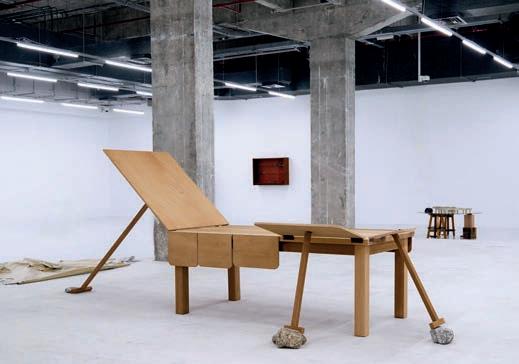
Chung Seoyoung: Endless Facts, 2026, installation view, Fire Station,
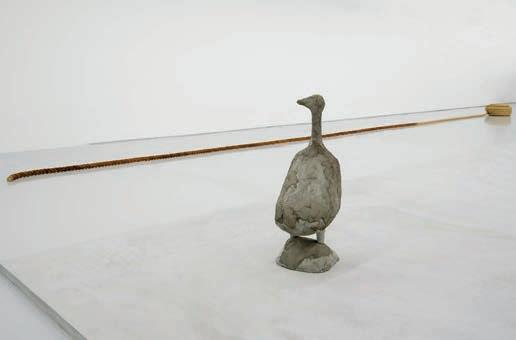
Chung Seoyoung: Endless Facts, 2026, installation view, Fire Station, Doha
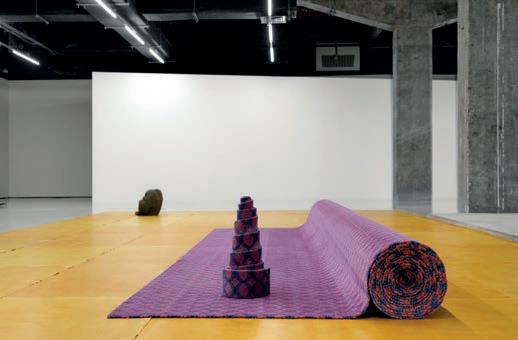
Chung Seoyoung: Endless Facts, 2026, installation view, Fire Station, Doha. All photographs: MCL
Photography
“Endless Facts,” the title of Korean artist Chung Seoyoung’s three-decade 2026 survey at Fire Station in Doha, Qatar, conjures up visions of a Constantin Brâncuși-style infinite column of information: an impossible tower of ontological and epistemological truths, stretching skyward as far as the eye can see. The show’s titular commission, however, skews more horizontal. Placed on the fl oor, Endless Facts (2025–26) consists of coils of thick rope—the type used on dhows, or wooden vessels, in Doha—that Chung has dyed with henna. “Patterning and layering the rope’s colors and forms back onto the rope itself,” she tells me, “the work draws out the facts inherent within the object and returns them to it.”
The artist, who works across a variety of media including drawing, performance and video, rose to acclaim in the 1990s for her sculptural installations and interventions. And as Endless Facts might suggest, her works’ evocative titles often thicken the plot. Incorporating commonplace and industrial materials in ways that are slightly “o ”—against the grain or to the side of their intended function—her creations make everyday life feel less familiar. She calls into question our confidence in seemingly straightforward designations with Carpet (1999)—a sculpture made of carpet—or A Goose (2007): a cement goose.
Born in Seoul in 1964, Chung is part of the “post-dansaekhwa generation:” artists who came of age in the wake of 1970s-era Korean monochrome painting. She studied at Seoul National University, obtaining a BFA and an MFA in 1987 and 1989 respectively. At the time, South Korea was undergoing what she describes as a “turbulent political and social upheaval that eventually led to the end of the dictatorship and the dawn of democratization;” her college education, with its focus on traditional formal concerns, fostered in her “a profound sense of spiritual and intellectual dissonance.”
Chung decamped to Germany to pursue graduate studies in sculpture at Stuttgart’s Staatliche Akademie der Bildenden Künste in 1989—the same year that overseas travel was fully liberalized in South Korea, and also the year that German reunification began. “In Stuttgart, I had the freedom to spend long hours in the studio,” she recalls. “The period gave me the opportunity to think deeply about the singular and endless pathways an individual takes in the world.”
She returned to Seoul on the eve of the 1997–99 East Asian fi nancial crisis: the meltdown that marked the end of the so-called “Miracle on the Han River,” South Korea’s sustained period of postwar economic growth. At that time, according to the artist, “questions surrounding institutions and individuality became visibly exposed and actively discussed” in artistic contexts. Alongside peers who came home to a transformed Seoul after immersing themselves in conceptual art abroad, she was an important participant in the city’s burgeoning alternative art scene, co-founding the nonprofit Art Space Pool with a group of 20 artists, curators and writers, and the arts periodical Forum A.
Chung tells me that she has long been interested in “the delicate point at which sculpture intersects with objects— or what we might call ‘things’—as forms of social evidence or traces.” Read with the financial crisis in mind, a work like Sink (2011)—a de- and re-constructed sink that Chung first exhibited in an abandoned model home that was a symbol of a uence in the early 1990s—accrues additional layers of meaning, hinting at the possibility of creative living amid failed systems. Sink is currently on view, along with several more
Doha
Chung Seoyoung
recent works by Chung, in the latest edition of the Carnegie International in Pittsburgh, “If the word we” (2026), whose opening coincided with the fi nal month of the Fire Station exhibition.
“Endless Facts” stretches back further: Untitled , an unassuming assemblage of wood, clothing and paint, hails from 1993. For Chung, this early work represents a significant inflection point in her practice. “By gathering things that could be named, I created something that could not be named,” she says. “I was curious to see whether this unnamable thing could become a new sculptural condition, and whether it could be accepted as a concrete reality.”
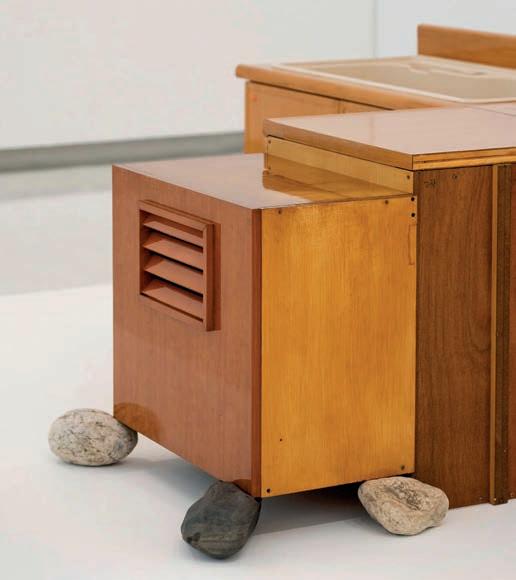
There Is Nothing Left to Add nor Take Away (2008), on view in “Endless Facts,” is one such unnamable thing: a monstrous wooden table whose irregular drop leaves balance are precariously balanced on wooden props. The work is a sculptural element from Monster Map (2008), a project inspired by a newspaper article about vampires. Spanning drawing, photography, text, video, performance and sculpture, Monster Map was commissioned by the 2008 Gwangju Biennale. Biennales are familiar territory for Chung; she had already participated in the 1997 and 2002 editions in Gwangju and in 2003, alongside Bahc Yiso and Whang Inkie, she represented Korea at the Venice Biennale. Her installation there included a chunky column of Styrofoam and concrete— A New Pillar (2003)—set awkwardly in the center of the pavilion for viewers to circumnavigate.
Replete with ri s on familiar domestic forms (tables, carpets, shelving), the Fire Station survey likewise asked its audience to navigate an environment slightly o -kilter. Chung wanted to explore “the paths traced by bodies moving alongside the sculptures, and the continuously shifting and circulating distance between sculpture and the body,” she explains. Driven by an interest in the conditions of space, her work is that of subtle adjustment after subtle adjustment: tweaks to the world, and the way we move through it.
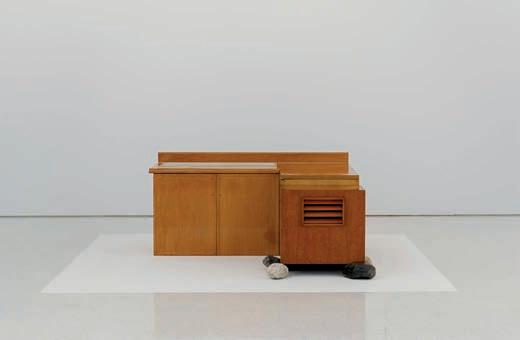
“Chung Seoyoung: Endless Facts” was on view at Fire Station, Doha, Qatar, from February to May 2026.
Cassie Packard is a writer and assistant editor of frieze She lives in New York, USA.
Top and bottom: 59th Carnegie International, Pittsburgh, 2026, installation view. Courtesy: the artist, Carnegie International and Tina Kim Gallery
Sara Harrison
Can you give a brief history of the museum? How does it perceive its role today?
Mael Bellec
The museum was founded by Henri Cernuschi, an Italian exiled in France. Between 1871 and 1873, he traveled the world, and collected around 5,000 Japanese and Chinese artworks. When he died in 1896, he gave his home and collection to the city of Paris, and the museum opened two years later. The role of the museum is to collect, protect, study and exhibit artworks from Asian countries to promote a better understanding of their history and cultures, whether ancient or modern. When it comes to contemporary art, we also try to support living artists as much as we can. →
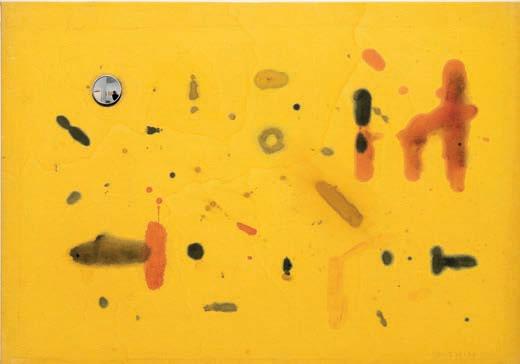
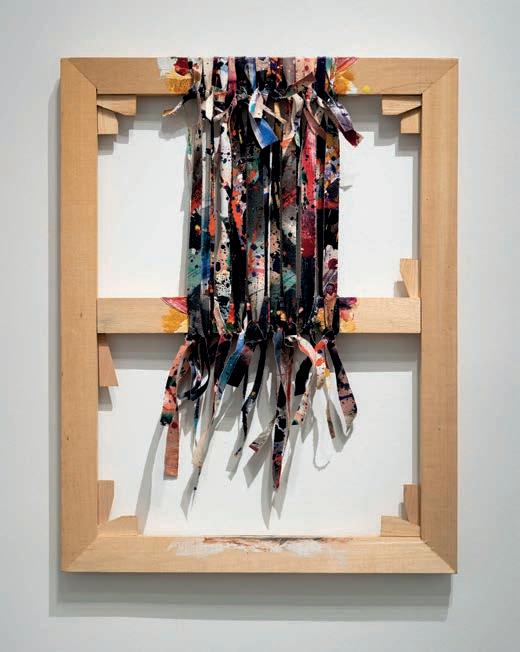
Shin Sung Hy, Peinture, 1994. Courtesy: the estate of the artist; photograph: Nicolas Borel
Shin Sung Hy, Peinture, 1996. Courtesy: the estate of the artist; photograph: Nicolas Borel
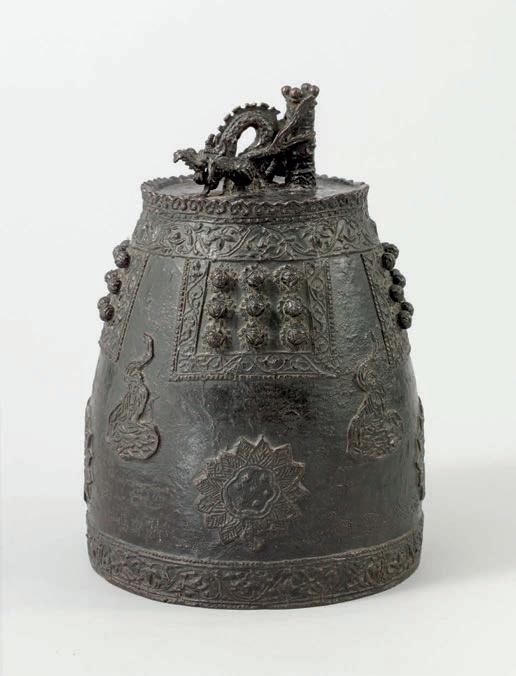
Bell, 1311. Courtesy: CCO Paris Musées / Musée Cernuschi, Musée des Arts de l’Asie
Mael BellecMusée Cernuschi
→
SH
Korean works have been part of the Musée Cernuschi from the very beginning, but since 2010, you have been expanding the collection’s holdings. Is the focus on consolidating the historical or bringing the collection into the present?
MB
We would love to do both. However, unless we receive an important collection in one go, our holdings of ancient Korean art would need a lot of acquisitions to be in any way comprehensive, and acquiring ancient art is complicated in terms of budget and provenance. Therefore, it seems more realistic to focus mainly on contemporary art, which has been integral to the museum since the 1950s, while always keeping an eye open for opportunities in the field of ancient art.
SH
What have been the museum’s most recent acquisitions?
MB
When it comes to contemporary art, we aim to include as many art historical landmarks as possible in order to provide a good overview of Korean art, and at the same time, we try to keep up with new trends which might later emerge as historical movements. We try not to miss any trains and can only hope we hop on the right ones!We have recently acquired paintings by historical figures such as Kim Guiline, Shim Moon Seup and Kim Soun-Gui, but also by younger artists such as Jang Kwang-Bum, Hur KyungAe and Ji-Yun. We’re also trying to expand our collections of ceramics, photography and video with artists such as Lee Hun Chung, Lee Kang-hyo, Min Byung-Hun and Lee Lee Nam. We like to work both with internationally well-known Korean artists as
well as those who are maybe new to a foreign audience less familiar with the art and history of Korea.
SH
Your recent exhibition “Shin Sung Hy: Coller, Couturer, Nouer” was timed to coincide with 140 years of diplomatic relations between France and Korea. Why did he feel like a particularly pertinent choice to celebrate this milestone?
MB
Most of Shin Sung Hy’s career was in France, from 1980 until his death in 2009. Although he is well-known in Korea, he has never had a solo show in a public museum in France before. The goal of this exhibition is both to celebrate the quality of his work, and to help give him his rightful place in the French art scene.
SH
Could you briefly outline his practice and the focus of this exhibition?
MB
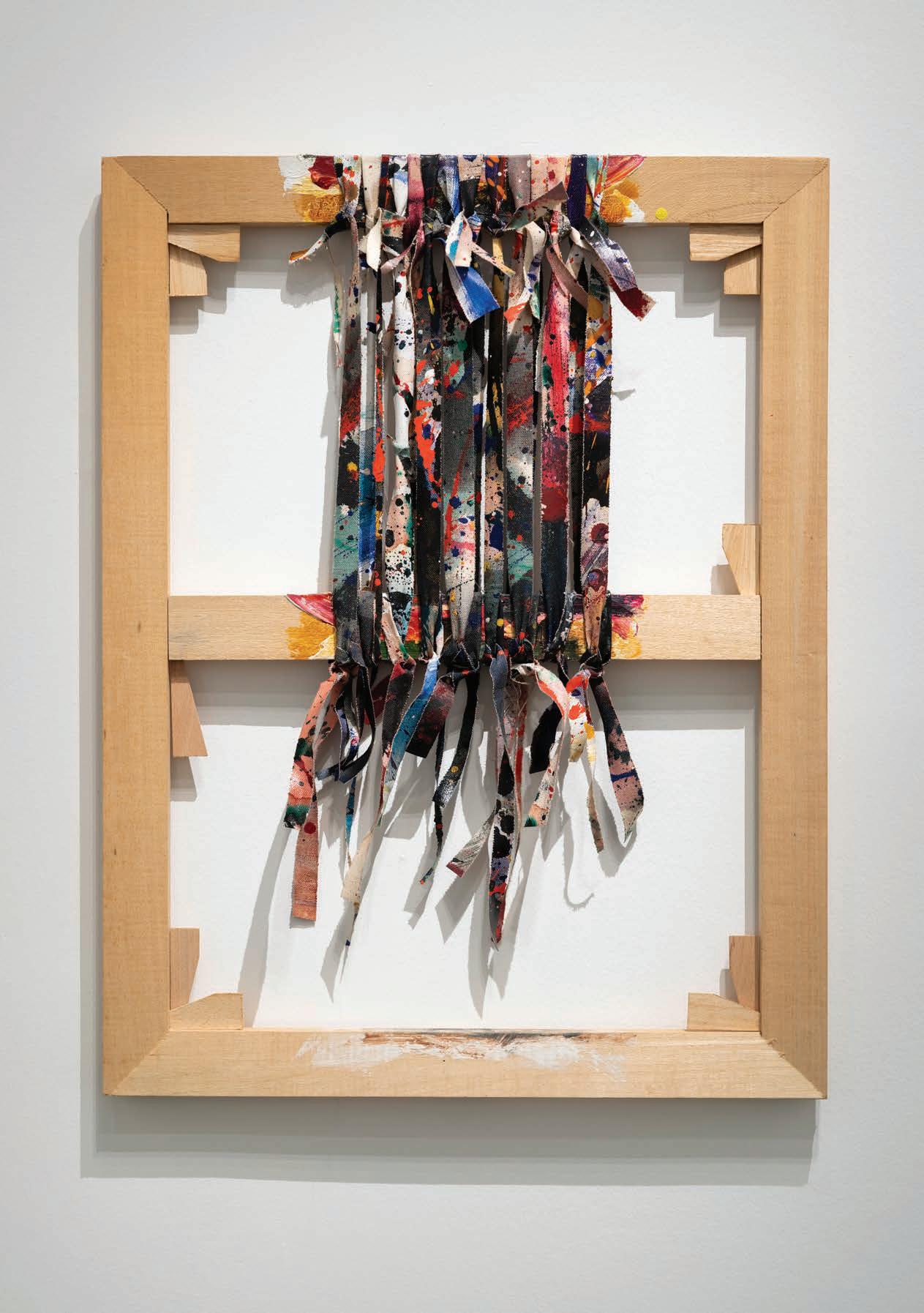
The exhibition focuses on the period he spent in France and is organized chronologically in four parts: the 1980s, when Shin Sung Hy made trompe-l’oeil paintings and started literally to dismantle his paintings; the return to a more traditional framework of painting at the beginning of the 1990s; the “Couturages” series started in 1993; and the “Nouages” series, begun in 1996. Alongside these is a room dedicated to more experimental works he made over the years.
SH What brought Shin Sung Hy to France?
MB
It’s hard to say what exactly brought him to France, but it is easier to say who. Kim Tschang-Yeul, who had been his teacher, seems to be the
one who suggested he should come to Paris. My guess is that it also had something to do with the dominant trends in Korea at the time. In some ways, Shin Sung Hy was paradoxically more of a traditional painter than his dansaekhwa peers. He loved painting and color, while his contemporaries emphasized process and minimalist aesthetics. He probably felt more at ease away from the Korean art scene, and color made a return in his work a few years after he settled in Paris.
SH
How did living in France impact his work?
MB
He is an interesting case of an artist who established a dialog with the French art scene. His creations have many similarities with works by artists from Supports Surfaces. This short-lived group, active between 1969 and 1971, wanted painting to be its own subject and to depersonalize their own practice. They deconstructed painting, isolated its components, replaced them with more neutral equivalents and found new ways of working with stretchers and canvas. However, what sets Shin Sung Hy apart from these artists is that he didn’t really move away from painting as it is traditionally understood. His works from the “Couturages” and “Nouages” series remain, despite the way they are created, paintings on stretched canvas. He felt there was a tension between painting as an image and painting as a material object, but also between painting as a bidimensional surface and a volume. The “Couturages”—and especially the “Nouages”— are first and foremost a way to solve these problems.
SH
Do you have other shows with Korean artists coming up?
MB Next fall, there will be an installation by Shim Moon Seup in the main space of the museum, in the middle of our ancient Chinese collections. In November, we will also open an exhibition on ancient Korean art with paintings by Jeong Seon, Kang Sehwang, Kim Hongdo and Heo Pil, among others.
SH
What are your two favorite works in the Korean collection?
MB
When it comes to ancient art, the Goryeo bell (1311) bought in either Japan or China by Henri Cernuschi is an important artwork. It was the first Korean piece to enter the collection and it is one of the earliest examples of Korean art we have. It is dated and bears an inscription that helps us understand Buddhist communities at the end of the Goryeo period. In terms of modern and contemporary art, I especially love an abstract painting from 1963 by Lee Ungno. It was discovered ten years ago under another painting that had been pasted on top of it. It took a lot of time and work to separate the two and to discover how gorgeous the work from 1963 was.
“Shin Sung Hy: Coller, Couturer, Nouer” was on view at Musée Cernuschi, Paris, France from April to August 2026.
Mael Bellec is a curator and the head of Chinese and Korean collections at Musée Cernuschi. He lives near Paris, France.
Sara Harrison is an editor. She lives in London, UK.
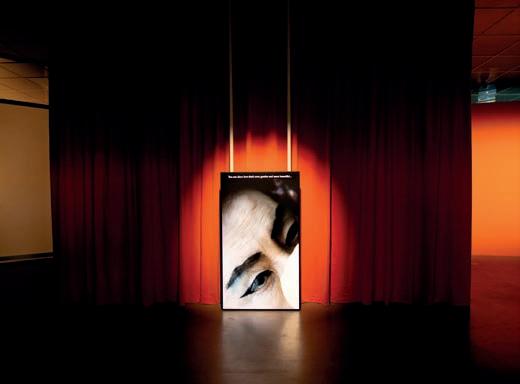
siren eun young jung. resistant theatre, 2026, installation view, Württembergischer Kunstverein. Courtesy: the artist; photograph: Hans D. Christ
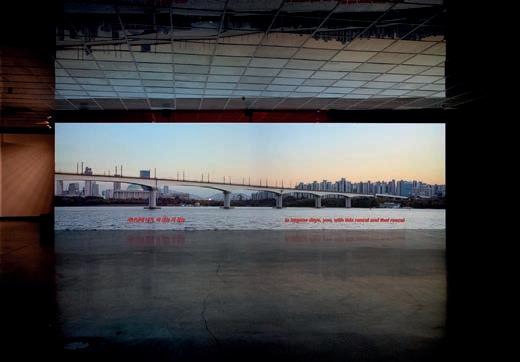
siren eun young jung. resistant theatre, 2026, installation view, Württembergischer Kunstverein. Courtesy: the artist; photograph: Hans D. Christ
We are physically in Stuttgart, Germany, but in every other sense, we could be in Seoul, South Korea. The sprawling Asian city emerges as a key protagonist in the work of artist siren eun young jung, whose solo exhibition “resistant theatre” has filled the Württembergischer Kunstverein with film works displayed on screens and projections, restaging and reanimating the cultural history of her home country from a feminist and queer perspective.
Movement, and how it can be captured and communicated through film, is a primary consideration for jung. All these works, in some way, contain a sense of bodies in motion, whether through observed community action, such as fl agwaving and Pride parades, or through the choreography of yeoseong gukgeuk , a Korean musical theater genre and central preoccupation for jung. Understanding yeoseong gukgeuk (literally “women’s national theater”) is key to many of these works, which span almost 20 years of making.
The theatrical form emerged in the late 1940s, during a fraught period in Korean history following the end of the Japanese occupation. The newly formed Republic of Korea attempted to eradicate the culture of kisaeng, a genre of female performance and sex work comparable to the geisha tradition in Japan. The kisaeng were state-registered, enslaved women who belonged to what was considered an underclass. After the occupation, they were freed from government control but not empowered to enter the new Korean society. Left as social outsiders, many former kisaeng set up performance troupes in which all roles, both male and female, were undertaken by women: yeoseong gukgeuk
It’s easy to see how, from a contemporary queer perspective, yeoseong gukgeuk o ers jung a way to reflect on Korea’s continued conservatism while also providing a touchpoint for historical transgression and a means of establishing a sense of lineage–it is a historical form in which the participants freely transgressed entrenched gender roles. In a 2025 interview with Debaser magazine, jung says: “I prefer to think the most important thing in art is form; not content, not artists.” This admission, I feel, is enlightening in terms of how she handles yeoseong gukgeuk within her practice: it is something that o ers a grounding for the reinterpretations that take place in the fi lms. The traditional form of theater is also a conduit through which she can o er reflections on the current state of Korean gender and LGBTQIA+ perspectives (there is no federal anti-discrimination law in South Korea, and same-sex marriage is not o cially recognized by its government). jung does not necessarily position yeoseong gukgeuk as a benign fragment of history so much as a form that can be reinhabited and enlivened to o er models from the past potentially useful to the present.
These films contain both constructed—or orchestrated— material as well as scenes from the street, such as in People, Not-Yet Here (2026). jung observes an activist waving an enormous Pride fl ag on a pole; not the eight-color rainbow one designed by Gilbert Baker in 1978 but the Progress Pride Flag designed by Daniel Quasar in 2018 and updated by Valentino Vecchietti in 2021, which includes representation for intersex, trans, marginalized communities and people of color alongside the original stripes. In the video, the flag rises and descends in slow motion, fluttering and billowing in the wind outside the National Assembly Building in central Seoul, a symbol of both the state and the patriarchy.
Jung’s decision to slow the action down draws attention to how the city interrupts the frame, as cars flow in front of this
scene, which, when viewed at a slower speed, becomes a morass of drama, with the incremental fl uctuations in the fl ag becoming emphasized. It’s one of several seemingly quite simple editing devices the artist employs to merge the city and landscape with a political impulse and sense of queer organization. Sick Seoul (2026) begins with a single, moving shot of the Han River with the skyscrapers of the city on the horizon, before slipping into a split screen containing footage of protests, parades and more urban environments. It’s an instance in which the title foreshadows the work, suggesting a diagnosis of the city’s health, framing it as a sentient entity capable of harboring ill-feeling or becoming ill itself. Again, the city becomes personified.
There are two things I’m encircling here: one is the relationship between the “real world” outside the gallery and the “constructed world” within some of the films. It’s quite unusual, in a way, to see an artist present the two in the same register, and it reads to me almost as if to say: here is an arena of my making (dramatization), and here is where the politics of that arena might be applicable (the streets of Seoul). There’s something potent in this collision between a magical reimagining of the past and the hard reality of the present. History plays a role in this work, not as something solid but as something that gives it form and propulsion: yeoseong gukgeuk is both a referent for content but, almost more importantly, a structure .
The four fi lms that make up the series “A Performing by Flash, Afterimage, Velocity and Noise” (2019) engage more directly with yeoseong gukgeuk —its delivery, costume and preparations. Though the scenes here are executed for the camera and shot in a studio, they contain the same sense of observation that characterizes the other works. In part one, we see an older performer powdering their face with a big pu , preparing their hair and lining their eyes; in parts two and three, we see the same performer either up close or in an empty auditorium performing “on stage” in ceremonial costume with a large fan. The absence of a live audience reminds us that this “performance” is conceived to be repeated and viewed as documentation (in this case, in jung’s presentation at the 2019 Venice Biennale in the Korean pavilion). Its staging becomes obvious to the viewer through the appearance of the empty seats and rigging even while the performer behaves as though there is a captive audience present.
Throughout the work, there is a sense of directed politics: jung has a message about queer liberation and the rights of women. That’s not to say that the films in “resistant theatre” are propaganda so much as that they are infused with a political position that grows in the audience’s mind through the confrontation of bodies and the city’s fabric, and through constructed scenes, which often reinhabit histories, shown in relation to and alongside street activity. I’m reminded of the work of the US artist Sharon Hayes, who dramatizes the slippages in the histories of LGBTQIA+ protest and liberation struggle, often inhabiting moments from the past or resituating the archival in the public realm in a way that makes it seem like an absurd rupture in the fabric of time.
In “In the Near Future” (2005–ongoing), for example, Hayes stages street actions in which she takes slogans from past protests and movements, from the 1960s, ’70s and ’80s back to the public realm to see how they land. There’s often both a friction and resonance that emerges from this direct confrontation between the past and present. Though jung’s work doesn’t always undertake precisely the same action, she
handles historical material in a similar way—as something pliable to draw from, something connected to her own experience of gender and queerness. The result is also similar in the sense that the artist is proposing a lineage from radical figures of the past and attempting to forge a dialog with the street today. In the same interview with Debaser , jung details how her political position was formed during her time as a student in the early 1990s: “There was a huge feminist movement in our society, especially in Ewha Woman’s University.” She speaks of feminism’s relationship with Korea’s queer, anti-war and disabled movements, which prompts me to think about how yeoseong gukgeuk enables jung to address the fundamental intersectionality of its performers, who cut across lines of gender but also engage with issues of class, visibility and labor. Here, the role of the past is to give form to and to drive forward a dance of resistance, often in the face of the same painfully regressive attitudes.
“siren eun young jung. resistant theatre” was on view at Württembergischer Kunstverein Stuttgart, Germany from April to August 2026.
Sean Burns is a writer and associate editor of frieze He lives in London, UK.
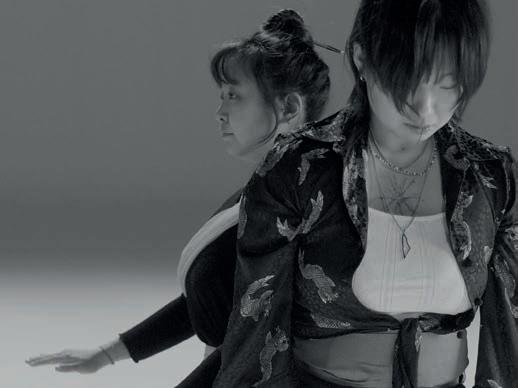
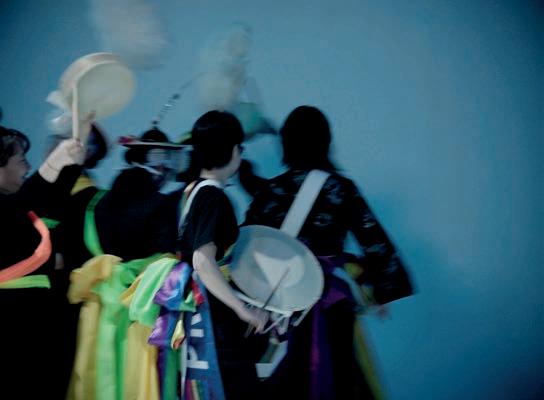
siren eun young jung, Sick Seoul, 2026. Courtesy: the artist
siren eun young jung, Sick Seoul, 2026. Courtesy: the artist
DESIRE AND THE MACHINE: TECHNOLOGY IN THE WORK OF CHOE U-RAM AND GEUMHYUNG JEONG
What do machines reveal about us? The work of Korean artists Geumhyung Jeong and Choe U-Ram suggests an answer—and it has as much to do with where they are from as what they make. Both are self-taught roboticists, born a decade apart in Seoul, who imbue their kinetic constructions with an animacy that belies their man-made histories. That South Korea should produce artists so attuned to the inner life of machines is not an accident of culture but a consequence of history.
After Japan’s 35-year occupation of the peninsula, which was swiftly followed by the Korean War (1950–53), South Korea emerged with something to prove. Scholars at the time believed the country’s outdated Joseon-era traditions and agricultural economy made it a soft target for colonization. To future-proof its autonomy, South Korea turned to machine technology and heavy industries as an emancipatory prerogative. In 1958, the electronics division of LG was created, Hyundai Motor Company was founded in 1967 and Samsung Electronics in 1969—between them and other chaebols , they have invented the first flash drive, consumer MP3 players and contactless payment technology. The country’s citizens also became fast adopters of all things tech— popularizing internet cafés (known locally as PC bangs) in the late 1980s. According to a 2021 report by the Organisation for Economic Co-operation and Development, South Korea had the highest number of broadband subscribers relative to population size in the world: within a generation, South Korea had become one of the most wired societies on earth.
Jeong’s current exhibition at Collection Lambert, Avignon, France, “Le murmure des Libres” (2026)—one of three autonomous presentations with Shilpa Gupta and Jumana Manna as part of the museum’s commitment to spotlighting women artists—o ers a useful entry point into her practice. Working across dance, performance art, installation and video, she investigates the relationship
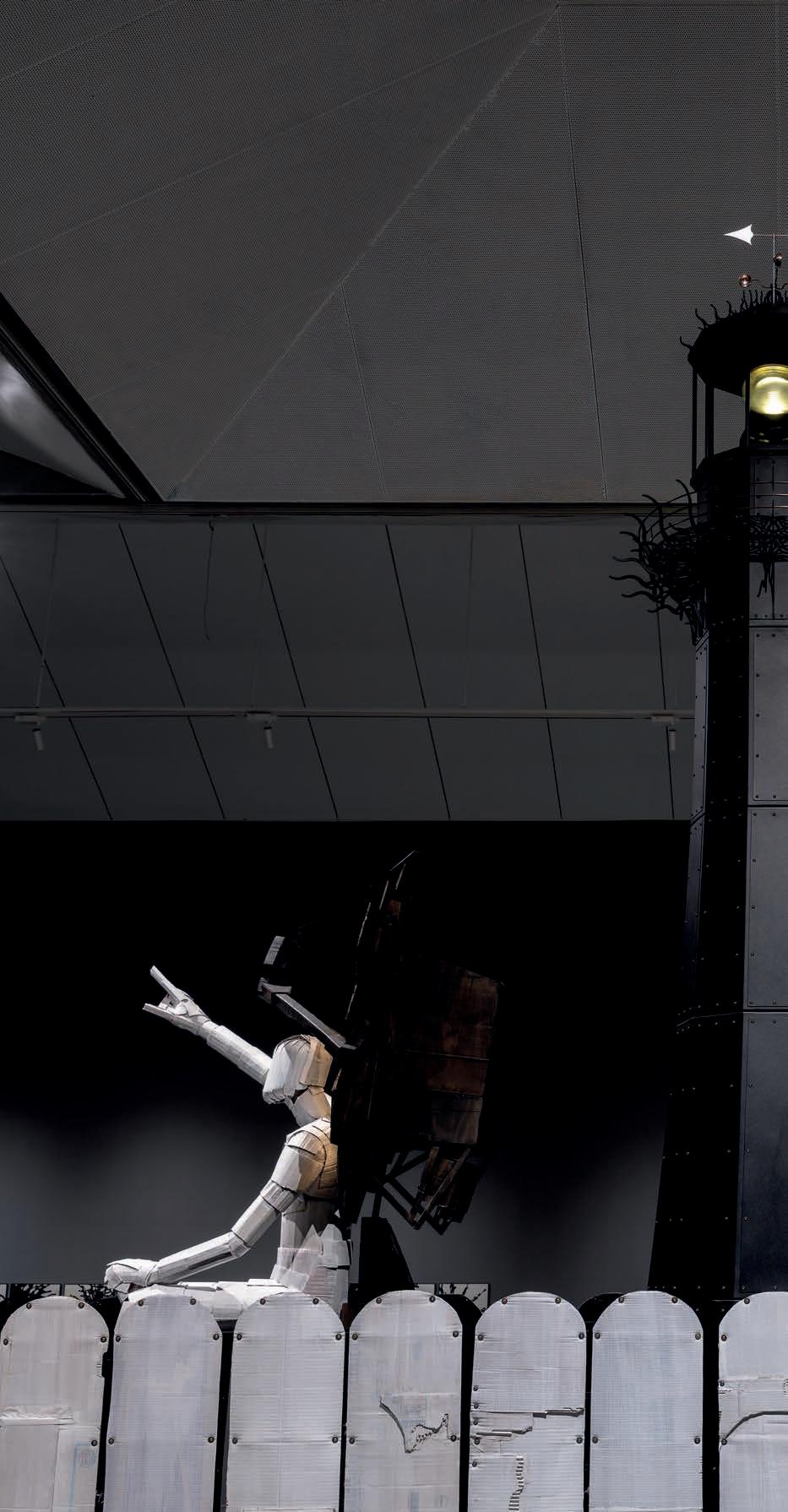
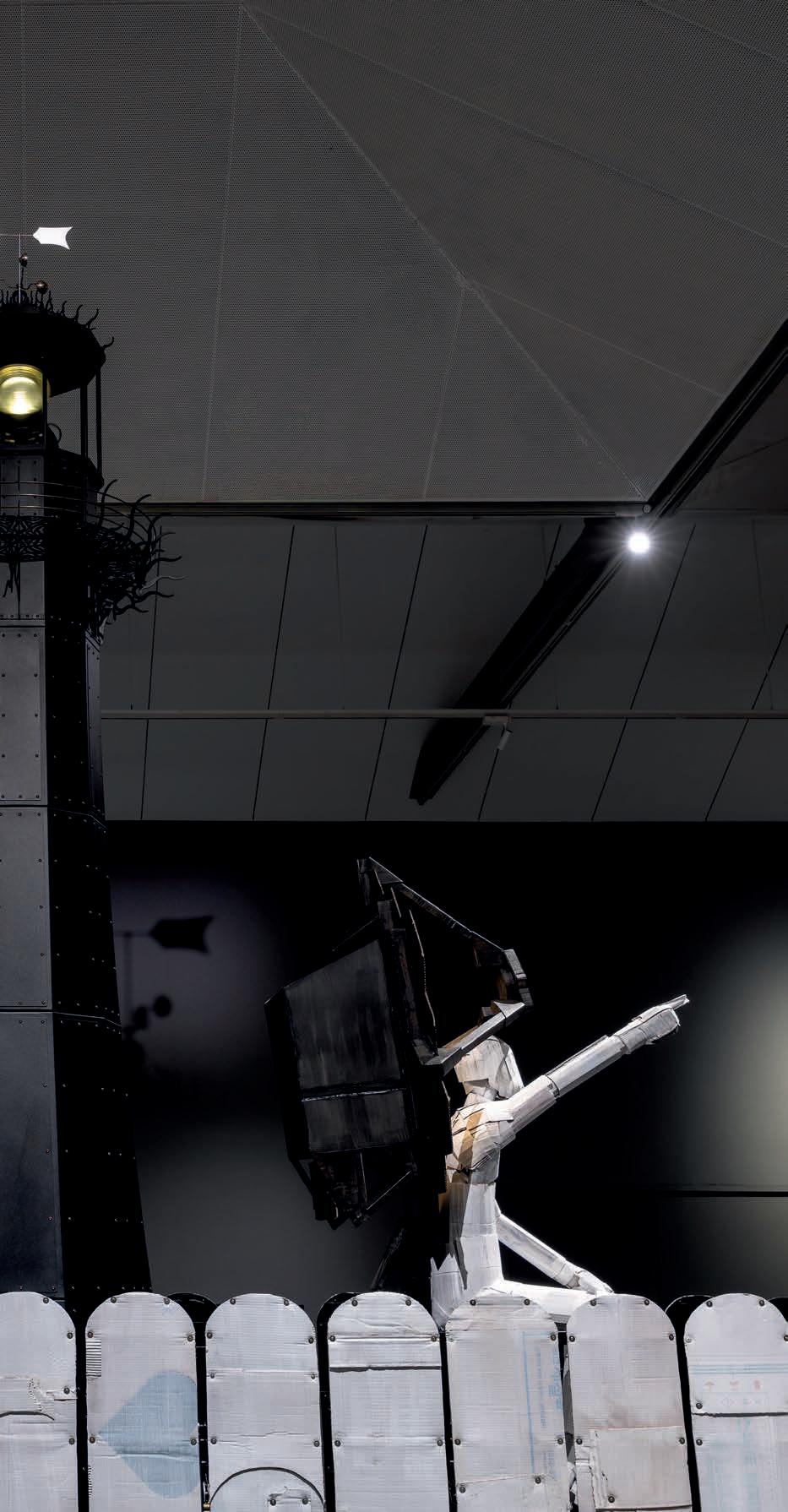
Choe U-Ram: Odyssey, 2025, installation view, Yuz Museum. Courtesy: the artist and Yuz Museum; photograph: Alessandro Wang
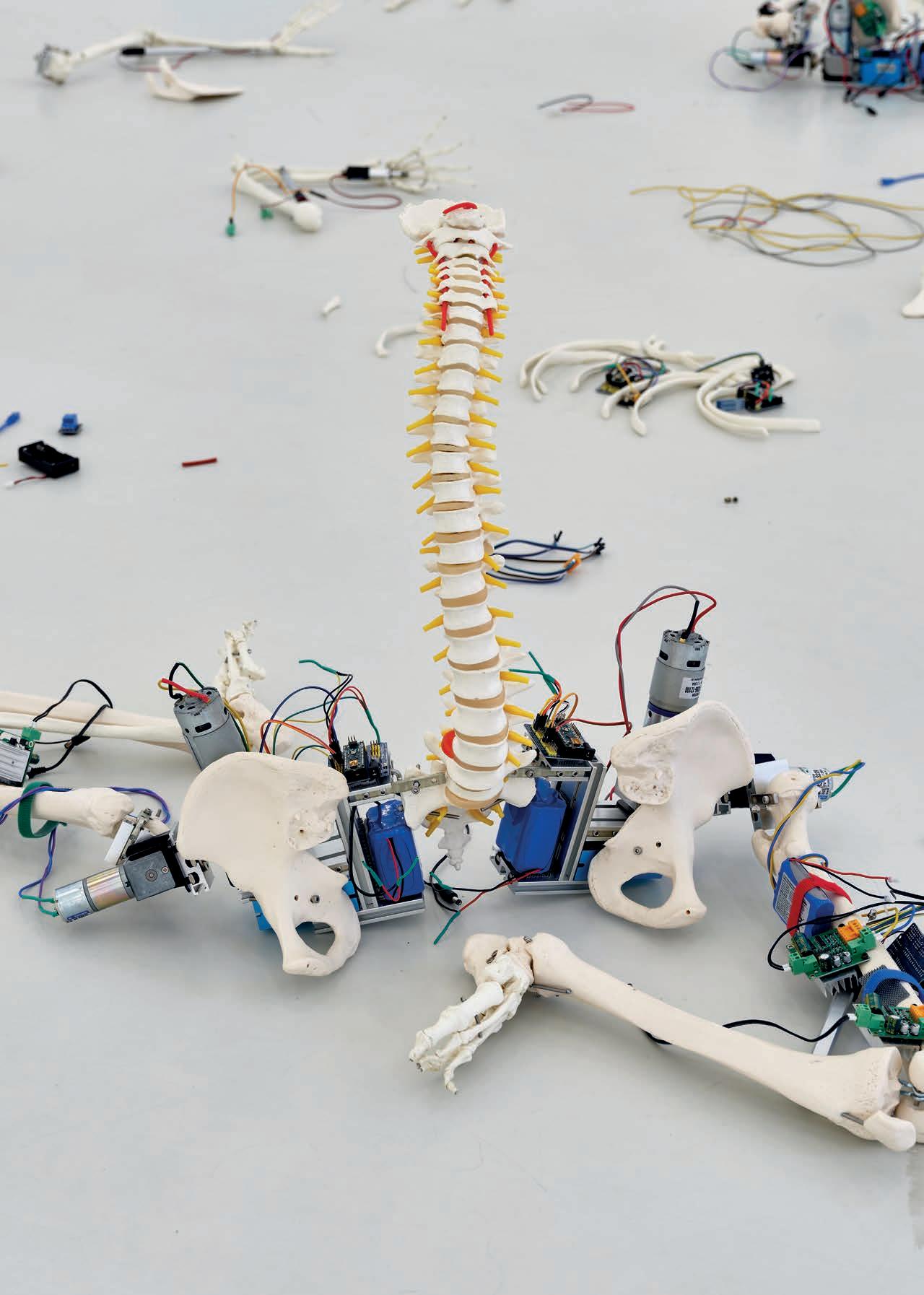
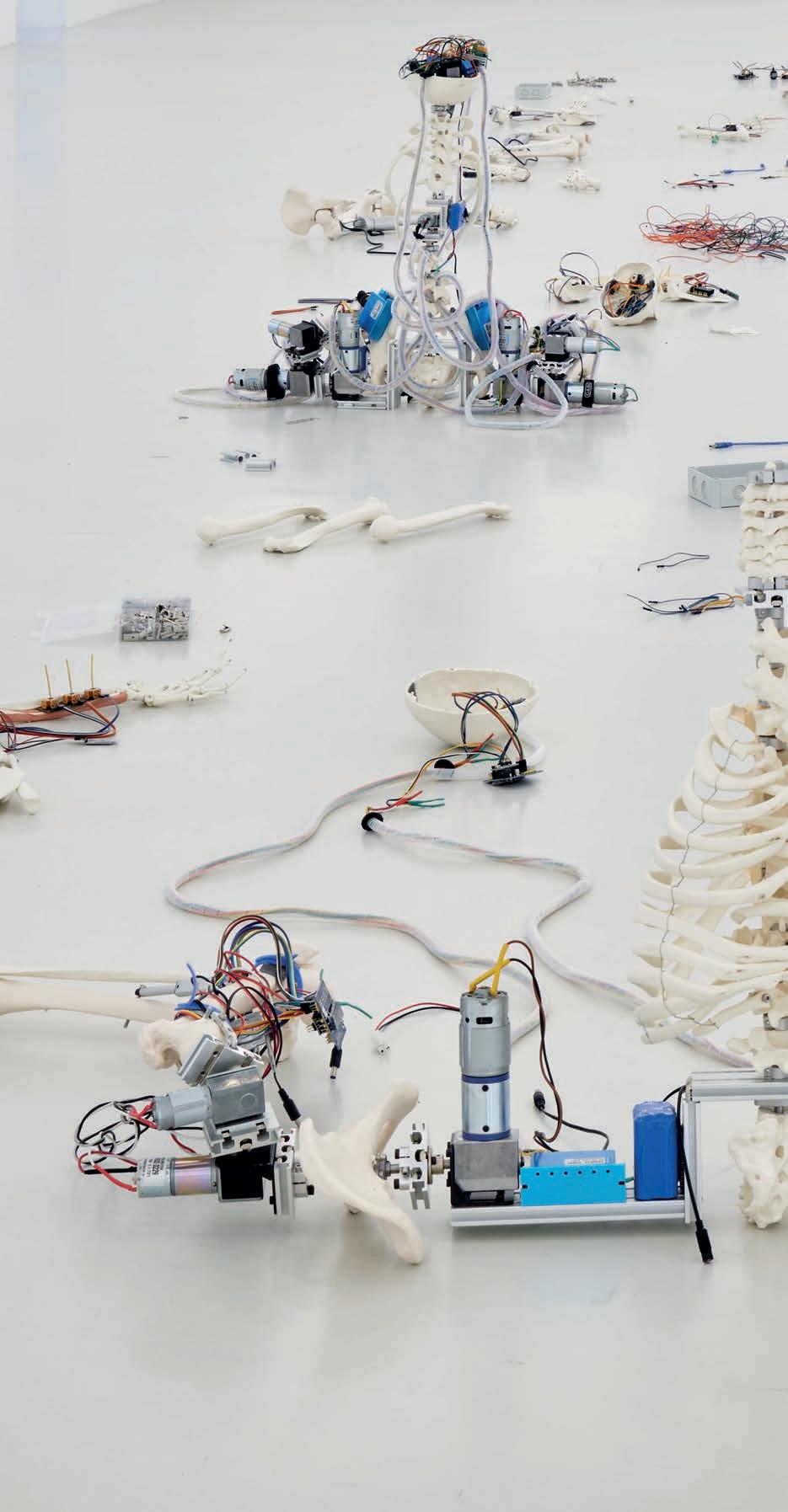
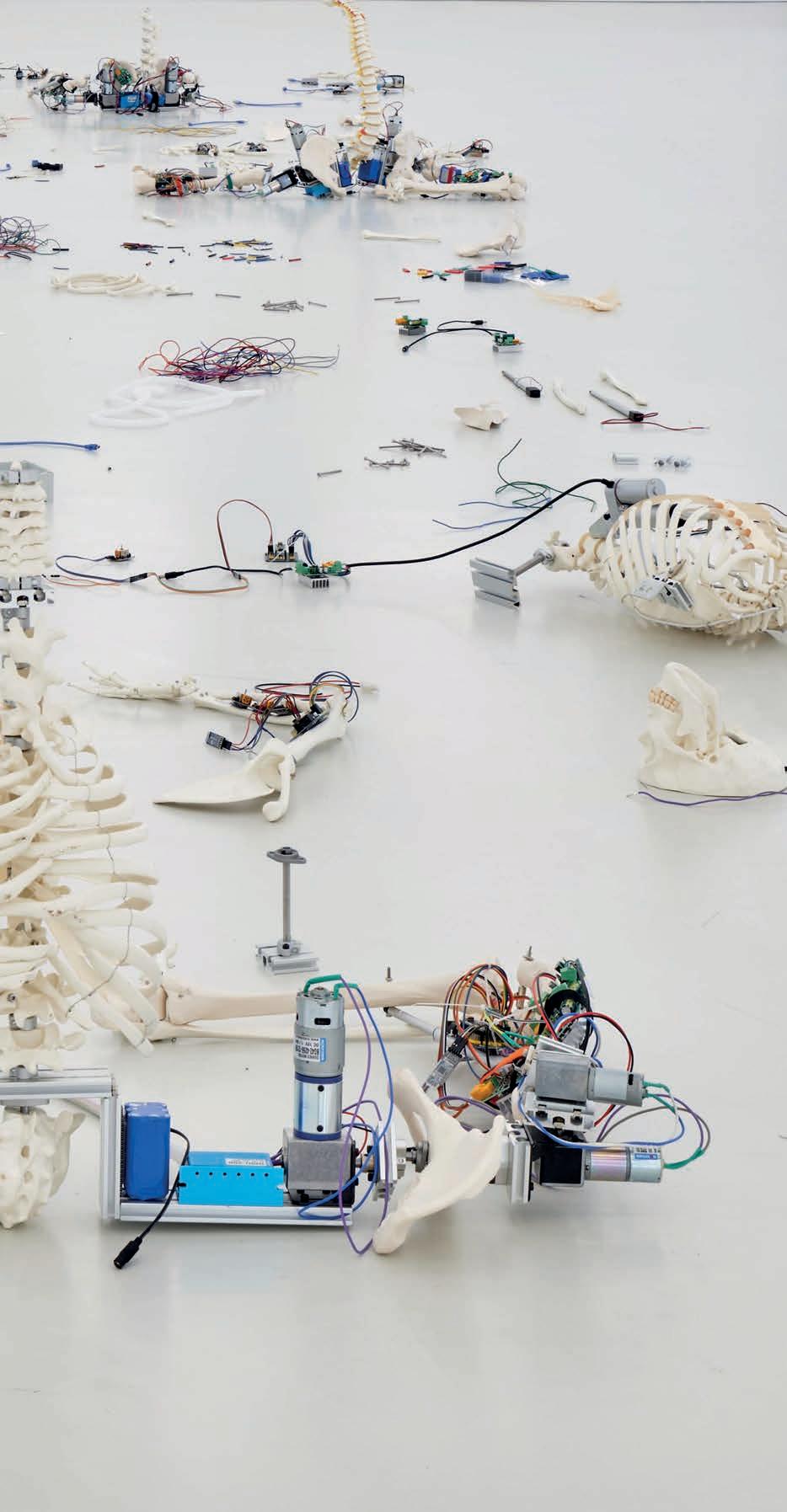
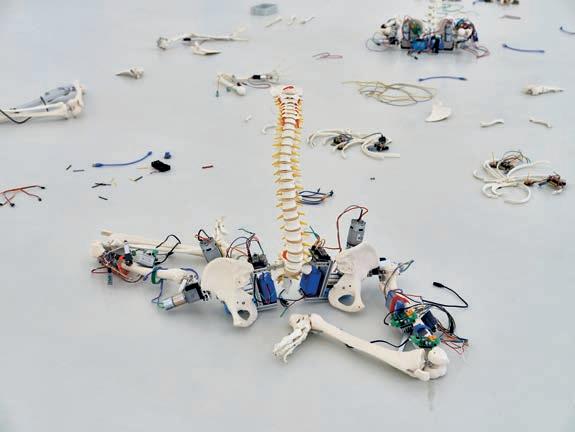
between the body—human or otherwise—and its attendant objects. In Avignon, she reprises “Under Construction” (2021–ongoing): along the gallery walls are about half a dozen gunmetal tables, each holding items laid out in size order: vertebrae and tibia on one, electrical clamps and CPU units on another, and so on. The curve of a collarbone follows the curve of a metallic bracket—or perhaps that should be thought of as the other way around? The impression is of a highly organized assembly line or workshop for a robothuman hybrid, until visitors turn a corner: wires, rubber tubing, batteries and screws burst forth from fragmented human skeletons abandoned on the gallery floor, as if a small explosion occurred before the opening of the exhibition.
On specific days, Jeong activates the installation—picking up the story mid-page, as it were— with unscripted choreography. These unfinished machines lurch and stagger, waver and fall over as she uses remote devices to control their movements, or she takes pieces apart and steadily reassembles them under the watchful eye of the audience. There is something absorbing about seeing her tend to these machines. The slow, deliberate attention she pays to understanding them, the patience with which she returns to a broken joint or a faltering motor, is closer to devotion than repair. What emerges, over time, is something that looks less like an artist operating a work and more like someone in the early, attentive stages of a codependent relationship, trading maintenance for companionship.
Animism holds a particular place within Korean society. Shamanism—an Indigenous practice in Korea—holds that all objects contain some form of spirit, and has in fact been subsumed into more recent belief systems like Confucianism, Buddhism and Christianity. Jeong’s nearly-human machines embody this shamanistic element—as do those of Choe U-Ram, who coined the term “anima machines” to describe his kinetic creations. Though where Jeong draws from the human body, Choe looks to the natural world. Choe’s creations are biomorphic in nature, mimicking the movements of living creatures as they swim, crawl and writhe. His 2024 solo exhibition “Odyssey” at Shanghai’s Yuz Museum presented more than a dozen of his most
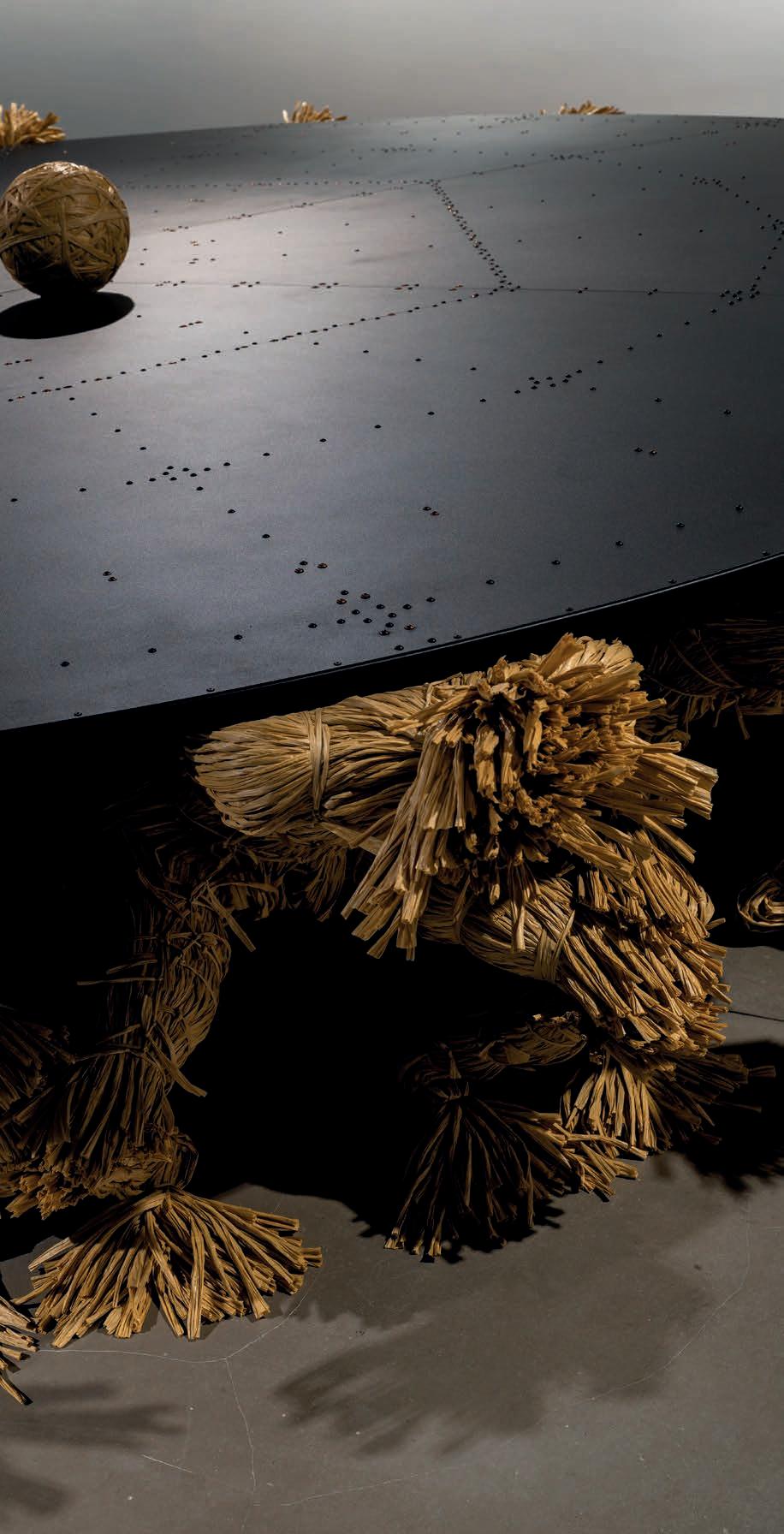
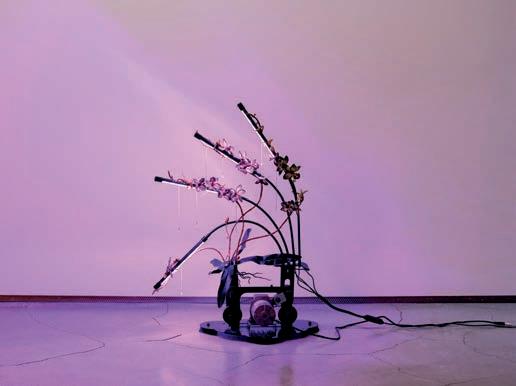
emblematic works from 2012 to 2022. The centerpiece, Little Ark (2022), stretches over 12 meters in length: a kinetic sculpture made of metal and recycled cardboard that resembles a boat with 35 pairs of mechanical oars, rising like a manta ray gliding through water and falling like a bird of prey. At the heart of the structure is a six-meter-tall lighthouse, and at its base two sunshields resembling those of the James Webb Space Telescope, with two humanoid figures perched backto-back, pointing in opposite directions. The composite work is enigmatic, yet the irresolvable contradiction of human choice and desire reads as a clear narrative.
In a talk he gave at Dartmouth College’s Hood Museum last year, titled “Art in the Era of Technology,” Choe said: “At a certain point, I came to see machines not as inventions for human happiness. Instead, [they] became the instruments through which human desire sought to detach itself from humanity.” Or put another way, a remote control is the externalized human desire to command a television from a distance. The same goes for a car—the longing to move faster than our legs can safely carry us. This is an idea that the French psychoanalyst Jacques Lacan spent considerable time on, though he arrived at it from a di erent angle.
In The Four Fundamental Concepts of Psychoanalysis (first published in French in 1973), Lacan defines desire as something beyond the simple act of wanting: “Pleasure limits the scope of human possibility—the pleasure principle is a principle of homeostasis. Desire, on the other hand, finds its boundary, its strict relation, its limit, and it is in the relation to this limit that it is sustained as such.” To reduce the idea further: desire is not defined by satisfaction but by the impossibility of the objective.
In South Korea, desire has a political history—one that was briefly underwritten by law. In the early 1980s, the authoritarian prime minister Chun Doo-hwan enacted his “3S policy”—Screen, Sports, Sex—a set of liberalization measures designed to distract Koreans from the political unrest caused by his military regime. Then in 1982, he lifted the midnight
curfew for most of the country that the population had endured for almost 36 years. The loosening of urges came with these nocturnal freedoms and with it a newly sanctioned culture of bodily pleasure— mostly evident in cinema at the time—which depicted heroes and heroines succumbing to base instincts. It is perhaps no coincidence that so many of Korea’s artists return to questions of the body so insistently.
Jeong makes the erotics of desire viscerally explicit in her earlier performance work, where she finds autoerotic pleasure in a miniature hydraulic excavator, Oil PressureVibrator (2008), or in Homemade RC Toy (2019) where she lies naked beside her Frankensteinian creations—her limbs comingled with the pale prosthetics and mannequin heads of her handmade machines—using her mouth to operate controllers placed where nipples or genitals would be if the machines were human. Erotic desire perhaps captures Lacanian theory most fully here: Jeong’s successive attempts to fulfil herself—and her machine partners—even at the point of orgasmic decay, only leaves a void that needs to be filled again.
Choe approaches the same territory from a greater remove, his works trading the carnal for the mythical—but the logic is identical. Made from metal, resin and gold leaf, Ouroboros (2012) is a mechanized snake perpetually eating its own body. Its scales swell just before it consumes its tail, then it returns to its slender state, forever hungry. Round Table (2022) stages things di erently: 18 headless figures made of artificial straw crouch beneath a circular table, each straining to claim the single straw head that rolls across its surface. Every time a figure rises to catch it, the tilting table sends the head rolling further away. Both works are desire made visible: not the satisfaction of wanting, but the wanting itself, endlessly renewed, endlessly frustrated. A motion, in other words, that would not need to be repeated if its action were fulfilled the first time around. This is precisely what Jeong and Choe’s machines enact. Jeong’s robo-humans lurch and stagger, are taken apart and reassembled, only to lurch and stagger again. Choe’s anima-machines rise, fall, spin and fly, in perpetual, purposeless rhythm. Neither artist’s machines arrive anywhere. They try, Le murmure des Libres: Shilpa Gupta –Geumhyung Jeong –Jumana Manna, 2026, installation view, Collection Lambert. Courtesy: the artist and Collection Lambert; photograph: Jean-Christophe Lett
and try again—which is to say, they desire.
So, returning to the question of what machines tell us about human desire, as seen through the lens of eminent Korean artistroboticists? We tell ourselves they are tools, but we build them like companions—sensitive to pressure and touch, programmed to respond to our voices, to remember our preferences, to vibrate against our skin. They are attuned to the precise frequencies of the mammalian brain, and are designed to make us feel seen, heard and understood. Whatever we claim to want from technology, what we actually build—when we build freely, when we build as artists—looks remarkably like the desire to be known. And perhaps that is what machines have always been doing, something more generous than we give them credit for: holding us together while we learn, slowly, how to do it ourselves.
“Le murmure des Libres: Shilpa Gupta – Geumhyung Jeong – Jumana Manna” is on view at Collection Lambert, Avignon, France, until September 20, 2026. “Choe U-Ram: Odyssey” was on view at Yuz Museum, Shanghai, China from November 2025 to March 2026.
Angel Lambo is associate editor of frieze. She lives in Berlin, Germany.
Choe
U-Ram: Odyssey, 2025, installation view, Yuz Museum.
Courtesy: the artist and Yuz Museum; photograph: Alessandro Wang
A-LOUNGE CONTEMPORARY
Seoul a-lounge.kr B02
ARARIO GALLERY
Seoul, Shanghai, Cheonan arariogallery.com A28
ART SPACE 3
Seoul artspace3.com MP1
ARUMJIGI FOUNDATION
Seoul arumjigi.org MP7
GALLERY BATON
Seoul gallerybaton.com B01
BB&M
Seoul gallerybbm.com A27
CAPTION
Seoul captionseoul.com F07
GALLERY CHOSUN
Seoul gallerychosun.com C13
CYLINDER
Seoul cylinderseoul.com B16
DRAWINGROOM
Seoul drawingroom.kr B21
Listing Korean Galleries at Frieze Seoul
FOUNDRY
Seoul foundryseoul.net F03
G GALLERY
Seoul ggallery.kr A19
GALLERY2
Seoul, Jeju gallery2.co.kr A18
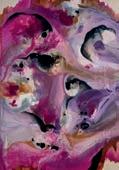
GANA ART Seoul, Los Angeles ganaart.com C07
JASON HAAM
Seoul jasonhaam.com A1
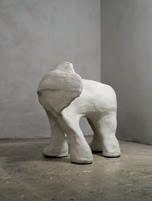
HAKGOJAE GALLERY
Seoul hakgojae.com C11
GALLERY HYUNDAI
Seoul, New York galleryhyundai.com B15
JOHYUN GALLERY
Busan, Seoul johyungallery.com A24
KIWA
Seoul, London gallerykiwa.com A13
KUKJE GALLERY Seoul, Busan kukjegallery.com A30
LEE EUGEAN GALLERY Gallery Seoul leeeugeangallery.com C24
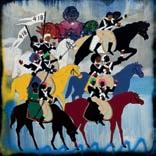
LEEAHN GALLERY Seoul, Daegu leeahngallery.com A07
LEEHWAIK GALLERY
Seoul leehwaikgallery.com C27
N/A Seoul nslasha.kr F08
P21 Seoul p21.kr A09
THE PAGE GALLERY Seoul thepage-gallery.com C01
PIBI GALLERY Seoul pibigallery.com A02
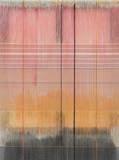
PIPE GALLERY
Seoul pipegallery.com F09
PKM GALLERY Seoul pkmgallery.com A15
PNC GALLERY Seoul, Daegu pncgallery.com S01
GALLERY SKLO Seoul gallerysklo.com MP9
SUN GALLERY Seoul sungallery.co.kr S05
THEO Seoul, Jakarta gallerytheo.com C32
THISWEEKENDROOM Seoul thisweekendroom.com A23
UM GALLERY Seoul umgallery.co.kr S12
UNAW GALLERY Seoul unawgallery.com S13
WELLSIDE GALLERY Seoul wellsidegallery.com S04
WHISTLE Seoul whistlewhistle.kr F02
WOOSON GALLERY Seoul, Daegu woosongallery.com C06
Jinsik Yoo, Misnamed, 2025. Courtesy: the artist and drawingRoom
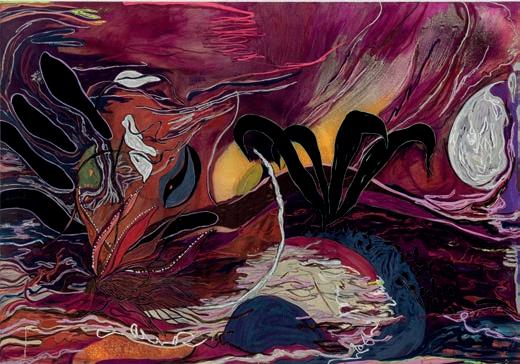
Top: Dawn Ng, Tectonic Feelings, 2026 (detail). Courtesy: Gana Art
Bottom: OUM Jeongsoon, Elephant without Trunk 6, 2026. Courtesy: Hakgojae Gallery
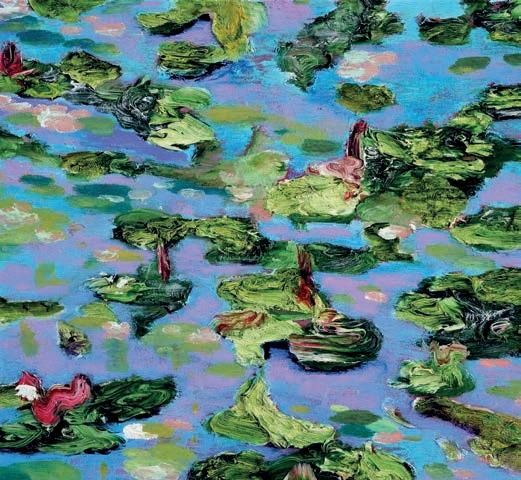
Top: Umar Rashid, Equus Cosmica part 2, 2021 (detail). Courtesy: the artist and Leeahn Gallery
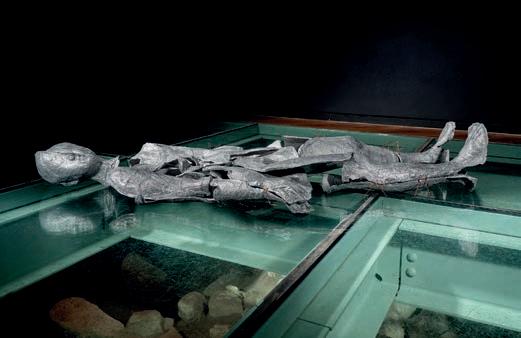
Bottom: Seungean Cha, 1971 Duvet cover_3, 2025 (detail). Courtesy: the artist and Pipe Gallery; photograph: Ian Yang
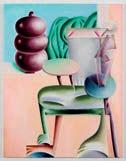
Pablo Benzo, Window with Vase, 2022. Courtesy: the artist and ThisWeekendRoom
GALLERY BATON
Seoul
Opening in 2011, Gallery Baton has distinguished itself through a distinct emphasis on a bold program and a commitment to a curatorial ecosystem: alongside its Hannam-dong gallery, it operates a below-ground space for video and new media work, and Chapter II, a non-profit exhibition and residency space supporting newly graduated artists. The gallery’s exhibition program spans the social sculptures of Liam Gillick through the delicate sensory installations of Doki Kim to the conceptual photography of Heeseung Chung. In London, a group presentation includes works by Bin Woo Hyuk, Minyoung Choi and Huh Dal Jae, amongst others.
gallerybaton.com
CYLINDER
Seoul
Dooyong Ro’s CYLINDER has quickly become known as one of the most original and forward-looking Seoul galleries. Its first space opened in Gwanak-gu, far from the usual art circuit, in 2020, and CYLINDER TWO arrived in the more central Yongsan-gu in 2023. Every year, the gallery hosts TORQUE, a platform for undergraduate art students; typical of this spirit of discovery was “Treachery Skin” (2024), the gallery’s exhibition at Frieze’s No. 9 Cork Street in London of Eunsil Lee’s arresting paintings. This year, CYLINDER participates in Frieze London’s Artist-to-Artist, which asks established artists to select a fellow practioner they feel deserves a platform. Ayoung Kim has chosen rising star Eusung Lee who presents new sculptures from her “Symbolon” series (2021–ongoing), incorporating wood, bronze, vinyl and roller-skate wheels.
cylinderseoul.com
FOUNDRY SEOUL
Seoul
While it now operates from Itaewon, Foundry Seoul first opened in the same building as the Hannam Gucci store in 2021. This summer, metal and glass sculptures by Omyo Cho were paired with delicate paintings by Hyunhee Doh at Frieze House Seoul as part of its “Summer Sparks” exhibition series. The gallery’s roster spans acclaimed Korean artists such as Yehwan Song alongside international names such as Heman Chong, Jonny Negron and Basim Magdy. At Frieze London, Foundry shares a stand with São Paulo’s Casa Triângulo, collaborating on a solo presentation of the deeply atmospheric work of Brazilian painter Fernanda Galvão.
foundryseoul.net
Eusung Lee, Eggshell, 2023. Courtesy: CYLINDER
Bin Woo Hyuk, Teufelssee, Evening, 2026. Courtesy: Gallery Baton
Fernanda Galvão, Ovo de peixe, 2025. Courtesy: the artist, Casa Triângulo, São Paulo and Foundry Seoul; photograph: Filipe Berndt
23 Korean Galleries at Frieze London
G GALLERY
Seoul
G Gallery first opened in Cheongdam in 2013. In a 2024 interview with frieze.com, gallery founder Seungjin Chung noted how her personal a nity for sculpture leads her to “viewing works of all genres from a more three-dimensional perspective.” This sensitivity embraces the practices of artists like Hwang Sueyon, who brings questions of weight and motion to works on paper as well as freestanding works, and Frieze Seoul Artist Award winner Woo Hannah, whose use of draped and hanging fabric explores gender and the body. For G Gallery’s first participation at Frieze London, it shares a stand with Sargent’s Daughters from New York, presenting a group show themed around the idea of cross-pollination, and including the hybrid botanical sculptures of Korean-American Rachel Youn.
ggallery.kr
JOHYUN GALLERY
Busan, Seoul
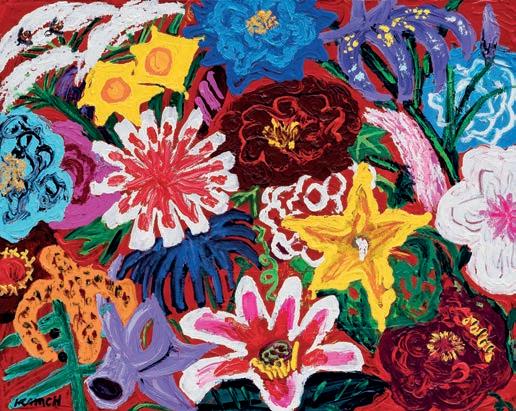
With locations on the scenic Dalmaji-gil road and near the popular Haeundae beach, Johyun is a major presence in the Busan art landscape. Originally founded in 1989 as Gallery World, Johyun’s early shows brought major dansaekhwa artists to the city. The program seeks to contextualize Korean art within a global discourse, showing important international figures such as Joseph Beuys, Bosco Sodi and the Japanese Mono-ha master Kishio Suga, whose exhibition opened the gallery’s Seoul space in the iconic hotel, The Shilla in 2024. At Frieze London this year, a focus on nature emerges, through the work of artists like Lee Bae, Kim Taek Sang and Hwang Ji Hae who all use natural materials and processes in their practices.
johyungallery.com
KUKJE GALLERY
Seoul, Busan
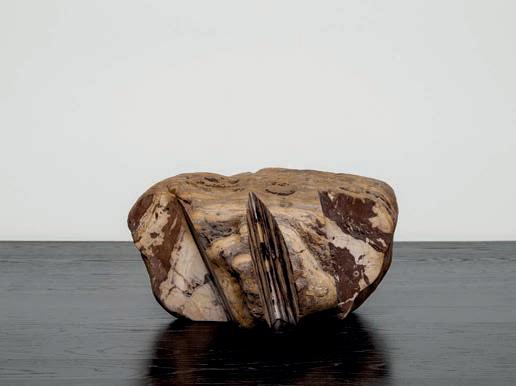
Founded by collector-turned-dealer Hyun-Sook Lee in 1982, Kukje has staged the first gallery exhibitions in Korea by the likes of Alexander Calder, Louise Bourgeois and Jenny Holzer, as well as maintaining representation of major Korean avant-garde figures. Today, its architect-designed buildings in Seoul, including an in-house restaurant, are a pivotal hub for contemporary art in Korea; a gallery in Busan opened in 2018. Expect the spirit of exchange to animate their Frieze London presence, with works by the likes of rising talents Gala Porras-Kim and Lee Kwang-Ho, established international names like Elmgreen & Dragset and Jean-Michel Othoniel, and foundational figures of Korean modernism, like Ha Chong-Hyun and Park Seo-Bo.
Kim
kukjegallery.com
Chong Hak, Untitled, 2018. Courtesy: the artist and Johyun Gallery
Kim Yun Shin, Add Two Add One, Divide Two Divide One 2002-749, 2002. Courtesy: the artist and Kukje Gallery; photograph: Jeon Byung Cheol
Rachel Youn, Obsession, 2025. Courtesy: the artist and G Gallery
Marko Gluhaich
You joined MOCA as Chief Curator and Director of Curatorial A airs in fall 2022. How did your curatorial career prepare you for your current position?
Clara Kim
After graduating from the University of California, Berkeley in art history in the late 1990s, I knew right away that I wanted to be in museums and be part of a community of artists, thinkers, writers and patrons. In 1997, I went to the Walker Art Center for its long-standing curatorial fellowship program. At the time, the Walker was led by Director Kathy Halbreich and Chief Curator Richard Flood. →
Clara Kim. Courtesy: The Museum of Contemporary Art (MOCA)
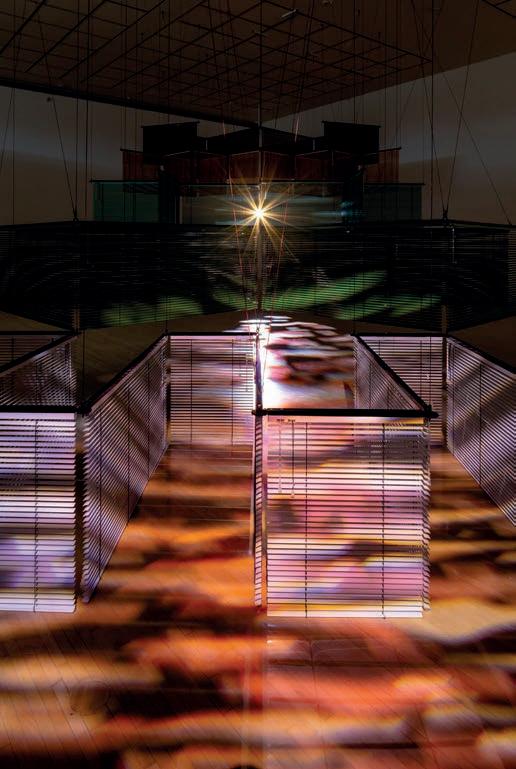
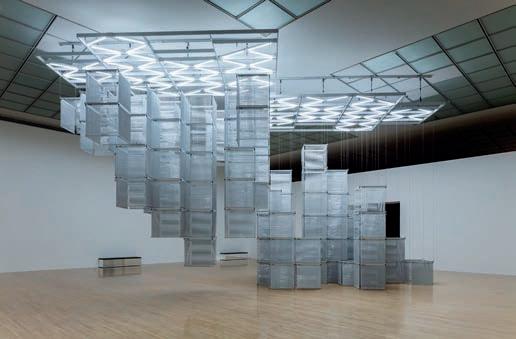
Top and bottom: Haegue Yang: Star-Crossed Rendezvous, 2024, installation view, MOCA Grand Avenue. Courtesy: Museum of Contemporary Art (MOCA); photograph: Zak Kelley
25 Clara KimMOCA
→ They were visionary, inspirational and formidable, and shaped for me (and many others) what it means to be a museum professional and the responsibility that comes with it—to your community, city, art history and artists. This moral and ethical grounding as well as working in di erent types of museums is what prepared me for where I am today.
MG
Immediately prior to MOCA you were at Tate Modern in London. How did that experience impact you?
CK
My time at Tate Modern as the Daskalopoulos Senior Curator, International Art (2016–22) was transformative—a real eye-opener in terms of breaking out of the art historical canon. My areas of research and collecting were Asia, Africa and the Middle East, and I worked with an incredible group of colleagues; we pushed each other to challenge our assumed understanding of art history from di erent cultural vantage points. Frances Morris was the force behind Tate’s radical and visionary approach to collecting and displaying art from global, decolonial perspectives. It became clear to me that a collaborative approach to collection and knowledge building was the only way to create new art historical narratives, epistemologies and vocabularies.
My diasporic existence also impacted my approach to curating, through having to negotiate and simultaneously hold multiple cultures,languages and realities. I started traveling to Korea and then elsewhere in Asia in the late 1990s. That was when I met Lee Bul and subsequently organized her first major solo show in the US, as well as Haegue Yang and artists like Choi Jeong Hwa, Minouk Lim and Kim Beom. It’s staggering to see how much the Seoul
art scene has changed. I feel lucky to have witnessed these transformations firsthand.
So, when I came back to Los Angeles four years ago, I wanted to rethink approaches to art history and explore global perspectives from Southern California, to look south to our neighbors in Latin America and also across the Pacific to Asia and examine the patterns of migration that have shaped the region today.
MG
What is your vision for MOCA?
CK
MOCA is an organization with a deep history in Los Angeles: it was the first dedicated contemporary art museum founded in 1979, in partnership with a group of artists, philanthropists and then mayor Tom Bradley. These roots are foundational.
While MOCA’s history and legacy looms large, we need to keep changing and building for a future. We are a downtown museum at the intersection of di erent communities and at the center of civic and cultural life. Coming back to LA in the post-pandemic, Trump era, it became clear to me that we need to build a museum that reflects the plurality of voices and cultures—the dynamic creative community but also the polyethnic and multilingual DNA of the city. The recent fires and ICE raids have made it plain how interdependent we are.
As such, I believe MOCA needs to be locally rooted but also radically open to the global—it is a microcosm of the world. We can be both international and local, and hold seemingly contradictory viewpoints together. I believe that universal concerns and shared visions can be found in creative acts spawned from local neighborhoods.
MG
I read an interview that you did with CIMAM (International
Committee for Museums and Collections of Modern Art) in which you talk about how museums can recenter diasporic movements, transpacific constellations and networks across the Americas. How do you think about this within the framework of your curation, the artists you work with and the exhibitions and additional programs that you put on?
CK
Postwar histories are still only marginally told from a West Coast perspective or from a transpacific perspective. I think it’s time for that to change. I am working on an exhibition for MOCA which opens next February titled “Afterlives: Japanese American Artists and the Postwar Era”. It’s a reconsideration of postwar art history from the perspective of a generation of Japanese American artists whose lives were disrupted and displaced by incarceration. It isn’t framed by stylistic movements or thematic concerns, but by lived experience from the West Coast and a specific political context that radically and materially changed the lives of an entire generation. This diasporic condition represents the realities of so many today, of populations displaced by war, violence and migration. I believe that we’re ripe to develop a vocabulary that takes into consideration these complex life formations.
MG
Turning to your current exhibition, “Haegue Yang: StarCrossed Rendezvous:” you first worked with the artist in 2007 at REDCAT. How has it been to work together again, 19 years later?
CK
It’s been terrific to be reunited with Haegue in LA. When I saw “Star-Crossed Rendezvous after Yun” at the Hayward Gallery in London in
2024, I knew we had to bring it here. Her approach to abstraction, community-building and her relationship to history, via an engagement of specific historical figures—in this case, with the avant-garde classical composer Isang Yun—speaks on so many levels to di erent audiences. Given LA’s vast Korean community, I knew that Yun’s story would have particular resonance here.
MG
It’s quite a multifaceted project. What conversations did you have with Haegue to realize this and incorporate the community in the way that you have?
CK
With Haegue, it’s not just about an exhibition landing in a museum, but about activating possible connections and relations; it’s what she would call bringing together a “temporary community” around shared interest, knowledge and expertise.
The grant from KAMS enabled us to think about the project in multiple stages. In November, we hosted a symposium with keynote speeches, a great panel of composers and musicologists and we even had performances by student musicians from our downtown neighbors, the Colburn Music School. MOCA Assistant Curator Paula Kroll, Haegue and I spoke with anyone and everyone with a connection to Yun—from a diligent librarian at the LA Public Library to the most esteemed specialists from Harvard, UCLA, Juilliard and Northwestern. Haegue has this incredible way of bringing people together; they trusted her and became her willing partners.
LA Philharmonic was a crucial collaborator in bringing Isang Yun’s music to life. We worked closely with their teams to realize a free, oneevening concert of “Double
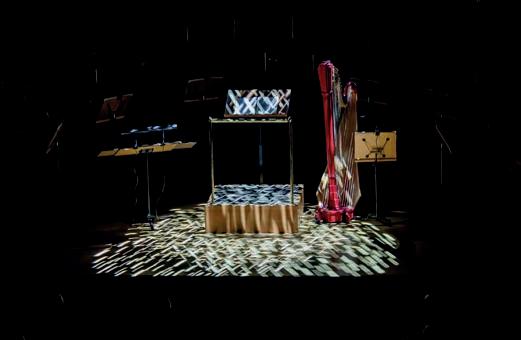
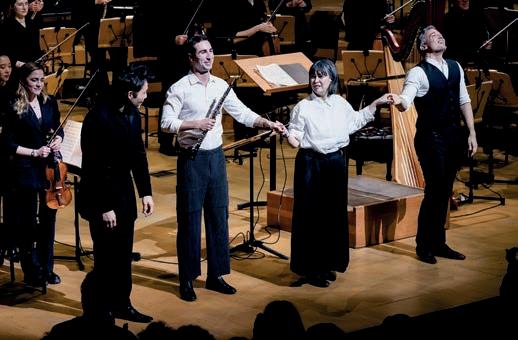
From le : Earl Lee, Ryan Roberts, Haegue Yang and Emmanuel Ceysson, Walt Disney Concert Hall, 2026. Photograph: Farah Sosa
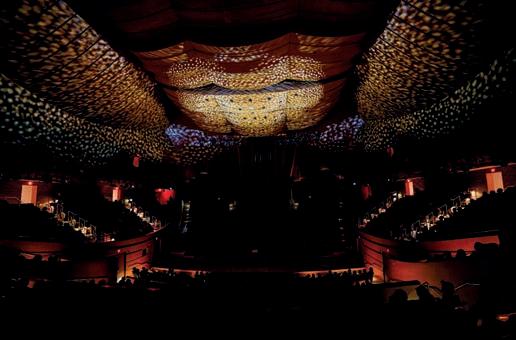
Concerto” (1977) on March 10, 2026. Haegue developed close relationships with the soloists, Ryan Roberts and Emmanuel Ceysson, and the conductor Earl Lee. It was a true cross-disciplinary collaboration. Haegue conceived of the evening as two parts of an asymmetrical whole: as a means to connect her art and Yun’s music, but also to bridge time, history and space. The music was moving and transcendental and the response was incredible: we had a full house.
MG
It’s interesting to hear how you’ve tapped into this network of MOCA’s neighbors. How do you consider your practice within the context of Los Angeles?
CK
The relationships that are formed in the process of making a show, that may be invisible to the viewer, are just as important as what ends up in the actual exhibition. I think that exhibition-making doesn’t exist in a vacuum; it’s about activating connections and possibilities. LA is a big, sprawling city, but it’s also small in some sense; it’s full of creative thinkers who are open to new ways of doing things, and are ready to form new alliances and partnerships.
MG
Do you think about these networks in a similar way to how you think about your curatorial practice across the Pacific Rim more generally?
CK
To broaden it out from LA to the Pacific Rim is incredibly important. Distances may be vast, but cultural reference points and influences are not. You can have an international artist like Haegue coming in and developing a project that can also speak to the local context. Yun’s music and life
would be familiar to many here, especially those who lived through the Korean War and experienced the pain of families divided by war. Art has the power to speak to and reflect on realities and memories that are too painful to articulate but are nevertheless felt and embodied. I suppose it’s that belief that informs my curatorial practice: global histories that shape local communities, art that communicates beyond language.
“Haegue Yang: Star-Crossed Rendezvous” was on view at the Museum of Contemporary Art (MOCA), Los Angeles, USA, from February to August 2026.
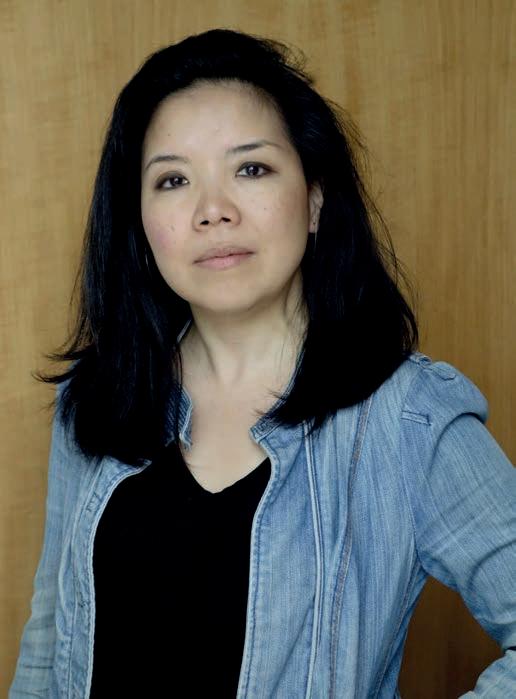
Clara Kim is chief curator and director of curatorial a airs at MOCA. She lives in Los Angeles, USA.
Marko Gluhaich is senior editor of frieze. He lives in New York, USA Concerto” (1977)
“Haegue Yang: Star-Crossed Rendezvous,” Walt Disney Concert Hall, 2026. Photograph: Elizabeth Asher
“Haegue Yang: Star-Crossed Rendezvous,” Walt Disney Concert Hall, 2026. Photograph: Elizabeth Asher
Shin Sung Hy, Peinture, 1996. Courtesy: the estate of the artist; photograph: Nicolas Borel
Le murmure des Libres: Shilpa Gupta – Geumhyung Jeong –Jumana Manna, 2026, installation view, Collection Lambert. Courtesy: the artist and Collection Lambert; photograph: Jean-Christophe Lett
KAMS Korea Focus Program
“Choe U-Ram: Odyssey” Yuz Museum, Shanghai, China
November 2025 – March 2026
“Chung Seoyoung: Endless Facts” Fire Station, Doha, Qatar
February – May 2026
“Haegue Yang: Star-Crossed Rendezvous” MOCA, Los Angeles, USA
February – August 2026
“Shin Sung Hy: Coller, Couturer, Nouer” Musée Cernuschi, Paris, France
April – August 2026
“siren eun young jung: resistant theatre” Württembergischer Kunstverein, Stuttgart, Germany
April – August 2026
“Le murmure des Libres: Shilpa Gupta – Geumhyung Jeong – Jumana Manna” Collection Lambert, Avignon, France
May – September 2026
“Ayoung Kim: Delivery Dancer –Time Curves” Van Abbemuseum, Eindhoven, Netherlands
June 2026 – April 2027
“Ahn Chang Hong: Sorrow” AU Museum at the Katzen Arts Center, Washington DC, USA September – December 2026
“Another Day in Seoul” Asia Art Archive, Hong Kong
November – December 2026
“Kang Seung Lee: Weeds of Cultivation” South London Gallery, London, UK
December 2026 – April 2027
“What Remains Anonymous Still Bears: Perspectives on Contemporary Korean Photography” Yokohama Civic Art Gallery, Azamino, Japan
August – September 2026
Korea Focus is a Support Program offering support to leading international art institutions for projects on Korean art and artists. The program aims to establish a sustainable f oundation for the production of discourse on Korean art while expanding its global presence. Art institutions and pr ofessionals worldwide can enquire further by email to: koreafocus@gokams.or.kr.