Conserving Lakeland
The magazine of Friends of the Lake District | Free to members
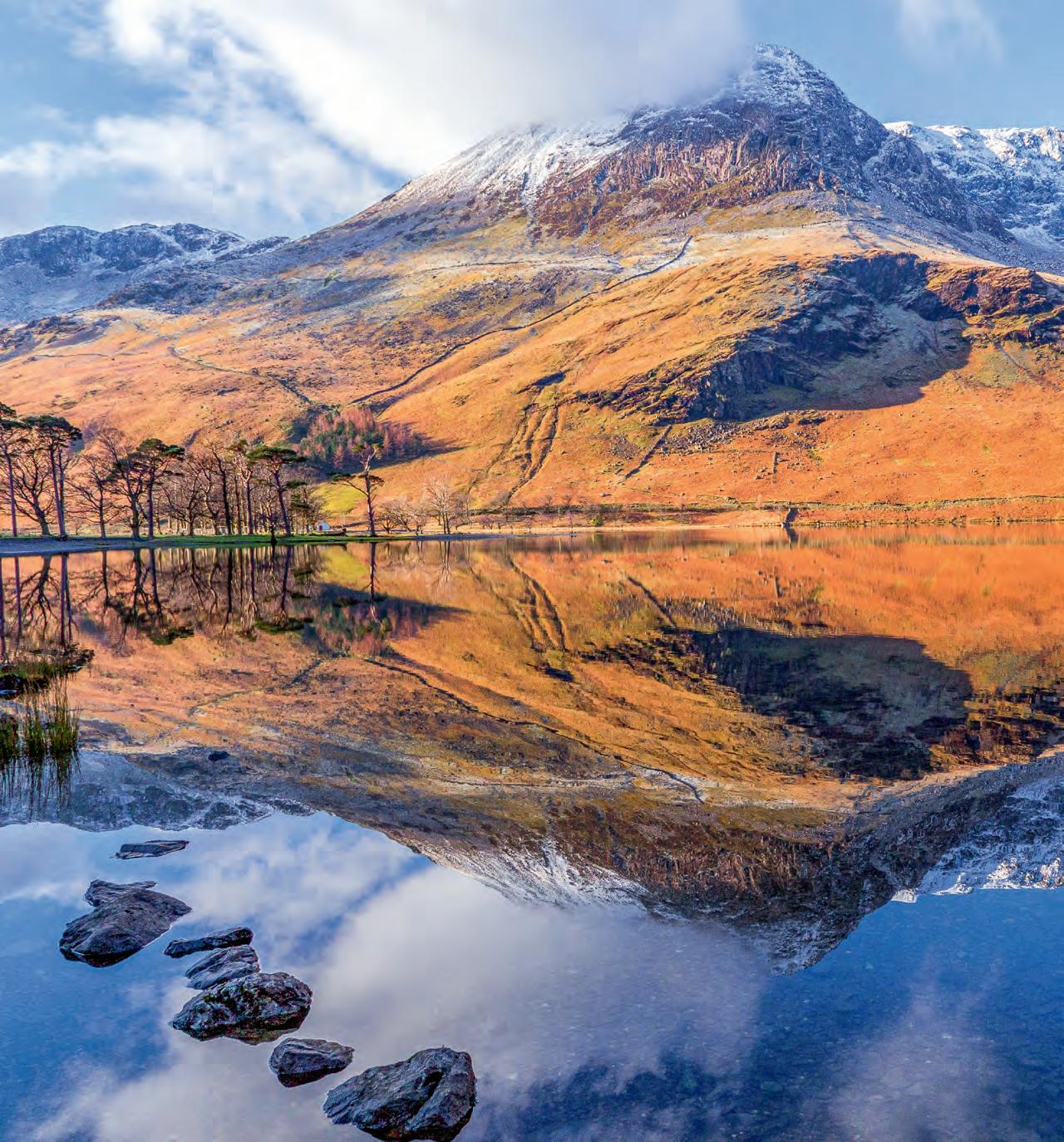

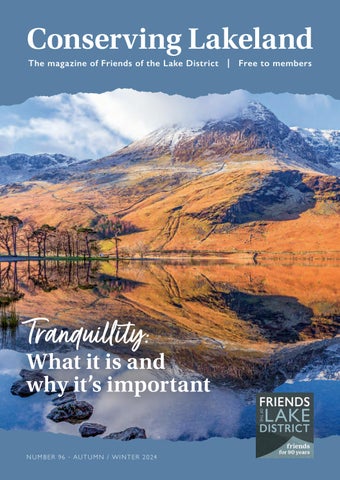
Cover photo: High Crag & Buttermere Pines by Rosamund Macfarlane
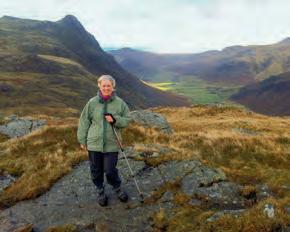
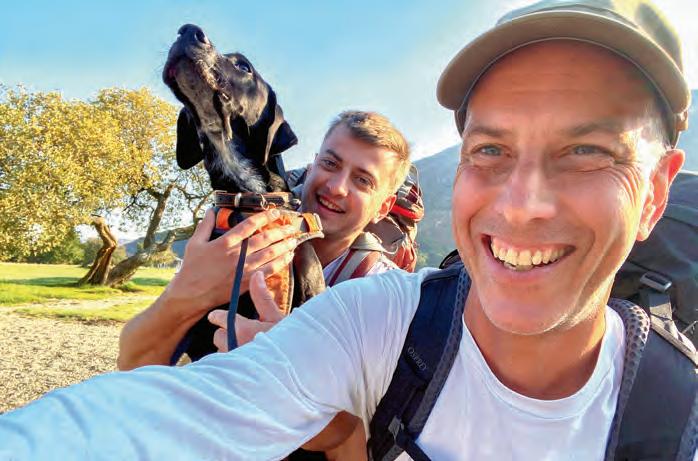
As we prepare this edition of Conserving Lakeland, autumn is creeping up on us. It’s a great time of year in the Lakes – the busy summer peak has passed, but there is still the magic of autumn to be enjoyed before the nights close in. I’ve just completed a 90-mile hike of the Lake District with my son Joe, and our dog Gem – and it re-connected me with our amazing landscapes, and much of the great work being done to protect them.
The team here at Friends has been working hard on a full season of events, including our 90th birthday AGM, the annual Kirby Lecture, and our mass volunteering event ‘Fell Care Day’, to name but a few. They’re also getting to grips with our new strategic objectives - including a renewed focus on campaigning against inappropriate developments, an exciting hedgerows project, a major debate about funding transport and other infrastructure improvements through visitor levies, and important research into tranquillity in the landscape. Read on for news about some of these emerging projects, and we’ll update you regularly as they progress.
We chose ‘Lake District 2051’ as the theme of the Kirby Lecture this year, looking at the farmed landscape, the visited landscape, and the lived-in landscape – and asking what sort of place the national park will be when it turns 100 (having been designated in 1951).
Of course, that’ll depend on the decisions and actions being taken right now. If we get it right, we could see new swathes of wilder landscape alongside a resurgence of small, resilient, naturefriendly farms; a radical new model of ‘regenerative tourism’ which puts value

Already a member?
Once you've read this magazine, please pass it on to a friend and encourage them to join us.
back into the landscape it depends on; and rejuvenated communities, connected to these places, and invested in making a life in Cumbria.
As we kick off our new campaigns, projects, and events, we will be focused firmly on that kind of future for our beloved landscapes, and the actions required today to achieve it. As a membership organisation, we rely entirely on your support to help us get there, and we are eternally grateful for your generosity.

Michael Hill Chief Executive
Friends of the Lake District is dedicated to protecting and enhancing Cumbria’s landscapes. We also represent CPRE – The Countryside Charity in Cumbria.

In the last issue of Conserving Lakeland, we asked readers for their memories of Friends of the Lake District and the landscapes that we all love.
Elizabeth Stocker and Nigel Tyas live in South Yorkshire but have visited the Lake District many times. Earlier this year, they attended the rally in Elterwater, an area they both love and know well, to protest against plans for the zip wire attraction in a nearby disused quarry. Here, they share their memories of the Lake District and what the area means to them.
tread in the footsteps of ancient people. What a privilege!

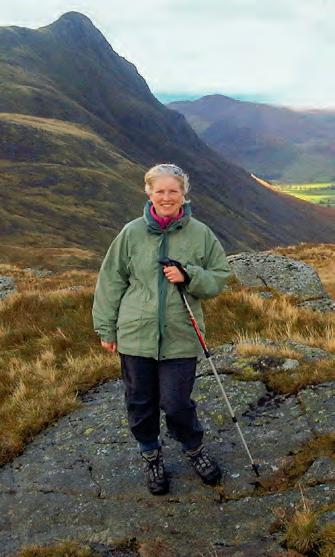
Elizabeth: ‘I’ve loved the Lake District for over 55 years. Both of my parents were passionate about the area and we visited whenever we could when I was a child.
‘One of the places that my husband Nigel and I always go when we visit, and which I absolutely love, is Langdale. I love the Neolithic history of the area, the fact that there was an axe factory in Great Langdale and that axes made there date back 6,000 years and are found all over the British Isles. I feel that these areas are sacred, some call them ‘thin’ places, where you can
‘Another place I love is Little Langdale and the footpaths through ancient woodland and across Slater’s Bridge. I’ve walked there so many times and it’s a place that just envelops you. ‘These sites are so precious, both historically and ecologically, and should be treated with respect. They are literally irreplaceable, and no one should be allowed to destroy them for a quick thrill or to make money! Too often the people who value tranquillity and peace end up being shouted down by those who want excitement and thrills, or shortterm profits. There has to be room for people who have different needs and there are plenty of places around the country more suited to zip wires and off-roading that are not World Heritage sites.
‘I feel a deep connection to the Lakes – it is part of me. I have never lived there, didn’t grow up there and don’t have family there, but I feel intensely protective of it and need to know that it is safe, even when I can’t be there. I don’t think you have to be from somewhere to care about it. My father is a great admirer of the poetry of William Wordsworth. The Lakes is somewhere that means a lot to him and my mother and has done all of their lives. I feel the same way.’
Nigel: ‘I grew up in a South Yorkshire mining village and worked as an apprentice blacksmith for the National Coal Board from leaving school at 16. We didn’t have much money when I was a lad, and holidays were a luxury we were seldom able to afford. Luckily I joined the Scouts, and when I was 16, we went up to the Lakes for the first time. We travelled at night and arrived at the Scout’s mountain base by Ashness Bridge near Keswick. I had no idea what to expect. The following
morning, I remember getting up and walking outside and being completely blown away by the stunning views in front of me. I had never seen anything like it in my life!
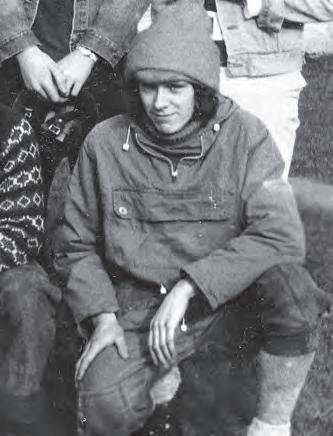
‘From that moment on I was hooked. In those days, the journey took over four hours each way, but I went there walking, climbing and canoeing at every opportunity for years and years, often on consecutive weekends. This was a place where I found not only physical and mental challenges, but quietness and time to think. That’s what it’s about for me.
‘Later, as a Coal Board apprentice, I had the opportunity to go to the Lakes on an Outward Bound course at Ullswater. This was 1972 and we were there for a month. It was February. Each morning, we had to get up at six, run almost a mile to the lake, break the ice and jump in. All we were allowed to wear was a pair of pumps and shorts. Apparently, it was character building. It helped push the boundaries of what you are comfortable with, and you learned a lot about yourself. I learned that I really didn’t like cold water!’
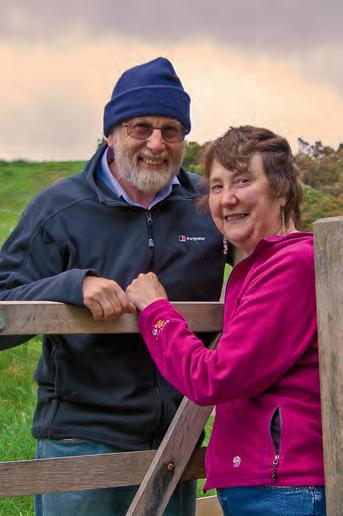
Terri Bryant: ‘I have been visiting the Lake District regularly, twice a year for the last 20 years. Formerly with my husband but more recently on my own since his death two years ago. I live just north of Portsmouth so it is a long drive up, but worth it.
‘We came for the dark skies originally as he was an astronomer, but we were stunned by the beauty and tranquillity of the area and this (as well as the night skies) is what brought us back year after year. We regularly walked, and occasionally cycled, in some of the more remote areas. Skelwith, Elterwater, Chapel Stile and the Langdales were our particular favourites and are still my mine.’
Ian Dyer: ‘I joined Friends of the Lake District in 1967 after signing a petition to prevent increased abstraction (taking of water) from Ullswater. I also was a trustee for about 13 years. There are many victories achieved by the charity, but I think a really great one was defeating plans for further abstractions from Ennerdale Water and Wastwater. An event covered in the late Geoffrey Berry’s book ‘A Tale of Two Lakes’.’
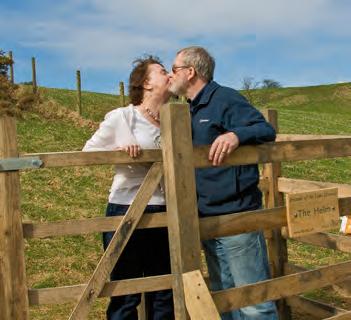
Malcolm Imhoff: ‘I fell in love with the Lake District on my first Scout Camp in Buttermere in 1960. When I met Maggie, Syke Farm in Buttermere was the first place I took her camping, and she immediately shared my love of the area. We married in 1970. During our time fellwalking, we kissed at every kissing gate we passed through, and we always encouraged others to do the same.
‘In 1974 Friends of the Lake District celebrated its 50th Anniversary, and one of the most memorable events was a mass night ascent of Helvellyn to reach the summit in time to see the sunrise. I made a video of it.
‘For our 40th Wedding Anniversary, Maggie and I had a kissing gate made by Gareth MacCartney and
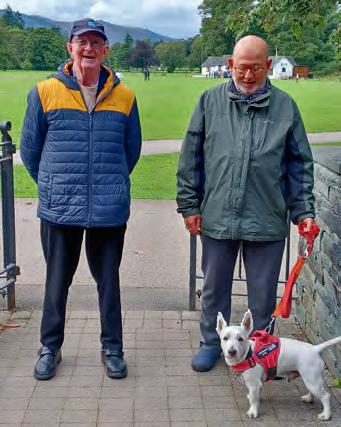
Michael Stephenson: ‘All of my family holidays during the 1940s and ‘50s were taken at the seaside and it was rather a shock when I was taken with my girlfriend's family to the Lake District in 1961. I was not aware of the Lakes at that time and had never even seen a mountain, coming from flat East Anglia on the edge of the Fens.
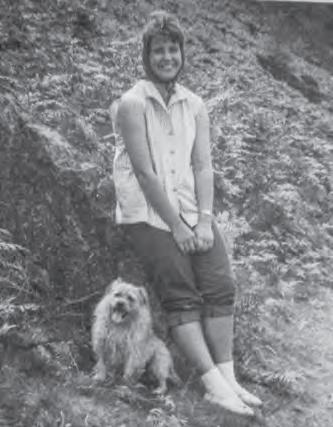
‘Sue and her parents took me on several walks up the fells, but my favourite excursions were those with Sue alone and one of the two dogs from the
Friends of the Lake District had it installed on the Helm just in time for our celebration on 27th June 2010.
‘Congratulations to Friends of the Lake District on their 90th anniversary. Thanks for all you do to protect our beloved Lake District.’
Howtown Hotel. One resident dog was Raleigh, a rather haughty greyhound who stayed inside the hotel, whilst Roughy was an adventurous coarsehaired terrier. It appeared that Roughy was well-known to the crews of the Ullswater steamers, often taking solo trips from the Howtown Pier to Glenridding and back. He accompanied Sue and me on my first ascent of Helvellyn via Striding Edge –he had to be given a few helping hands on the big steps up and down!’
Friends of the Lake District's planning officer, Lorayne Wall, explores what tranquillity means and why it's important to protect it.
We know that tranquillity is important to our members. It’s something that locals value and that many visitors to the Lake District and Cumbria come to enjoy. It is also one of many components of the overall character of a landscape. Tranquillity is often thought of as being mainly about noise, but it’s a complex concept and there’s a lot more to it.
Noise is clearly a factor, but activity, movement, light, smells and structures also come into play. The permanence of a particular factor, and whether it is natural or man-made, also affects the overall level of tranquillity. But natural and temporary don’t always mean ‘more tranquil’. Both a thunderstorm or fighter jet can cause alarm, and a bad smell, whether natural or not, can affect perceived tranquillity by altering our response to a place.
Tranquillity is about how a place makes us feel, our expectations and understanding of different characteristics and components of the landscape, and what these mean to us.
People who are used to an innercity environment may have different perceptions to someone used to rural areas, for example. Some people may find near-silence unsettling, and whilst many would consider seeing a calm lake as contributing to tranquillity, someone who has had a frightening experience in water might find their perception of tranquillity altered by its presence.
Tranquillity is therefore both subjective and relative, perceived differently by everyone, depending on personal values.
New developments can erode tranquillity by introducing structures,
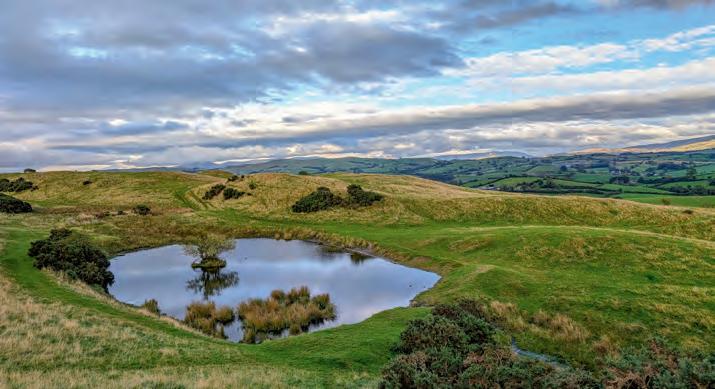
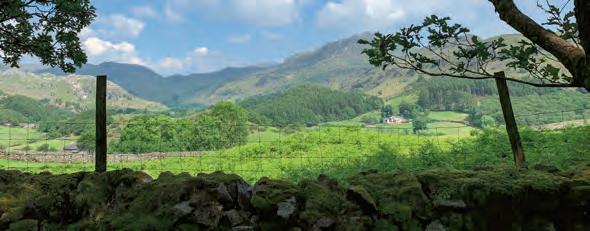
The relationship between different factors and their context is also important. A dry stone wall is manmade, but uses natural, almost always local, stone. In much of the Lakeland landscape, many of us would expect to see a dry stone wall and would understand its role. A tall, garishly coloured barbed-wire fence would generate a very different response.
noise and activity into areas previously free of them. Locating man-made structures, such as telecommunications masts, in areas perceived to be natural or with a traditional character also detracts from tranquillity levels. Developments with unnecessary or poorly designed lighting that dazzles or causes light pollution is another factor.
New development isn’t the only threat though. Consider the noise, fumes and disruption to a quiet walk caused by ‘green laning’ (when offroad vehicles drive up tracks often used by walkers). Or the difference in impact between seeing a handful of people out walking, and seeing large groups of people playing music, shouting and littering.
Whilst we know that tranquillity is important, its complexity means it is often misunderstood. It can also be difficult to articulate and effectively challenge threats to it. Loss of tranquillity harms the character of a landscape. Through its loss, we also lose the enjoyment, health and well-being benefits that tranquillity brings. There are other impacts too, such as the disturbance of wildlife by noise, and biodiversity decline because of light pollution.
We often cite impacts on tranquillity in our comments on planning applications and planning policy formulation, urging for changes to better protect it. Much of the work we do has a tranquillity dimension, from dark skies and transport, to litter picks and work to remove detractors from the landscape, such as the project to place overhead wires underground. But there’s a need to increase awareness and understanding of what tranquillity means, and to monitor it over time.
How we understand and protect tranquillity is a key part of the question of ‘who and what are national parks for?’ National parks are, of course, for everyone, but they are not for everyone to use for any activity, regardless of harm caused. We need to focus on quiet enjoyment, and activities that enable people to enjoy, connect with, and understand the landscape without losing what is special about it.
Among many other factors, litter can disturb someone’s sense of tranquillity. Friends of the Lake District launched a litter campaign to encourage people to care for the landscape this summer. A series of social media posts ran on Fridays from July to September, aimed at people making weekend plans to visit the lakes and fells.
Our campaign messages were based on answers from research we’d previously commissioned into why people litter, addressing some of the
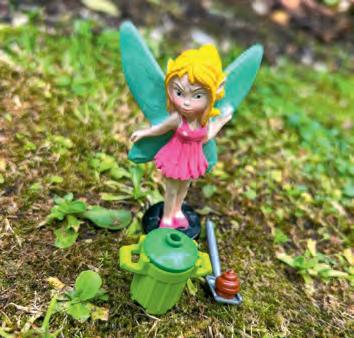
misconceptions like ‘I expected to find a bin’ (even on a fell top) and ‘someone is paid to clean up after me’. We also gave tips on how to leave no trace of a visit to the area.
We wanted to encourage people to plan ahead, pack food in reusable containers, bring a bag for their litter, or eat in one of many great pubs or cafés when they visit.
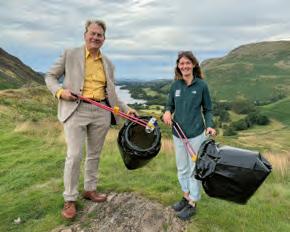
The campaign received good media coverage, especially after some fly camping on the shores of Buttermere made the news in early summer, when a group of party-goers left behind camping equipment and masses of litter. Alongside radio and newspaper coverage, we were also contacted by the producers of Great Railway Journeys, the BBC series which sees former politician, Michael Portillo, exploring the UK by rail. He joined our engagement officer, Kay Andrews, and a group of local residents in Martindale on a litter pick. The programme will be screened sometime next year.
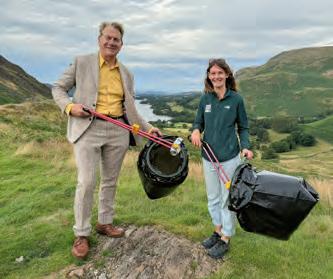
“The lasting effects of leaving rubbish in the landscape isn't just visual,” said Kay. “It can kill wildlife and livestock, damage our soils, leach into our water systems and cause health hazards for people too. Taking suggestions from our litter research we created a variety of messages, from serious mythbusting facts and spot-the-difference photos to light-hearted quizzes and of course, the non-existent littercleaning fairies! We will be analysing the impact of each of these messages to inform future litter campaign work.”
They're a vital part of the Cumbrian landscape with all kinds of benefits for nature and the land, as well as farmers. Friends of the Lake District’s Jack Ellerby explains what we love about the humble hedgerow.
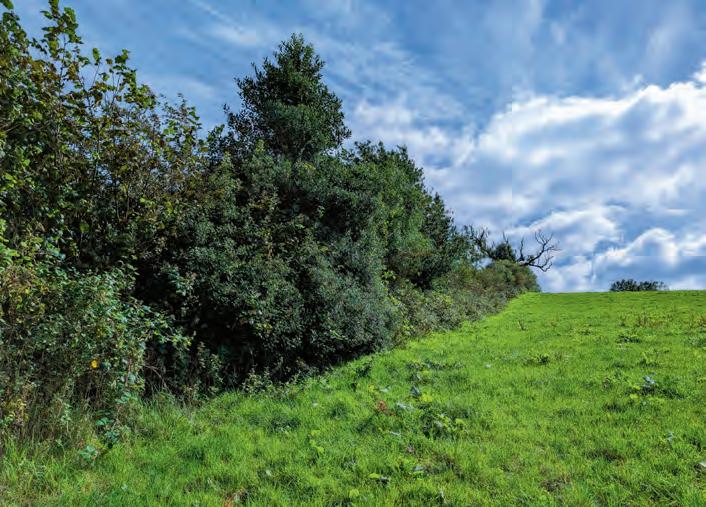
Hedgerows are a real winner. While often overlooked in favour of grander nature recovery habitats like forests, peatlands and river flood plains, they play a vital role delivering multiple natural and cultural benefits. They support a huge diversity of different species of wildlife all year round, they protect and improve soils, absorb and lock carbon in the ground, slow water run-off and enhance the appearance of the landscape. Healthy hedgerows don’t just provide these ‘public goods’, however. In livestock-producing areas like Cumbria, they have other vital farming functions too.
For a start, with worsening extremes of heat and cold, the availability of shade and shelter for livestock is growing in importance. Shelter can increase young lamb survival rates by reducing the effect of wind chill and thus hypothermia, for example, and can reduce supplementary feed requirements in the winter months, as livestock exposed to cold conditions require more food to keep up body temperatures. Thick hedgerows can also provide a wind break and increase crop yields by reducing damage from spells of cold strong winds.
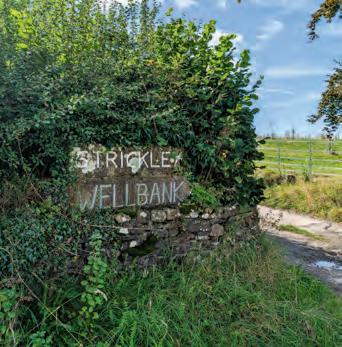
In the summer months, heat stress can reduce milk yield in dairy herds and can adversely affect numerous biological functions relating to production in both cows and sheep, including fertility. When you walk past a field and notice that the stock has headed for the shade in hot weather, it’s for good reason. Some hedgerow leaves have antiparasitic properties which livestock may consume to self-medicate. By nibbling on native hedgerow species, livestock can improve their gut health, which helps their immune function. Hedgerows also increase populations of predator species which are the natural enemies of crop pests. Farmland birds and predatory invertebrates such as spiders, beetles and wasps all feed on, and therefore limit, pest species. James Robinson, Chairman of the Nature Friendly Farming Network, who farms at Strickley Farm, Old Hutton, says: “Biodiversity is important to me and all the members of the Nature Friendly Farming Network. Hedgerows provide habitat corridors across the whole farm, supporting the health of both a large variety of wildlife and our livestock. We lay our own hedges on a 25-year rotation, ensuring there is a full range of heights, thicknesses and habitat needs. We’ve hosted Friends of the Lake District’s hedge laying competition in the past, and provide training opportunities for those wanting to improve their skills.” For farmers and landowners there’s a financial reason to love hedgerows too. The Government’s Environmental Improvement Plan includes targets for creating and restoring 30,000 miles of hedgerows by 2037, and 45,000 miles by 2050.
Species diversity: Mixed native species hedgerows provide the most wildlife benefits all-round, and are more resilient to pests, diseases and weather extremes.
Thick and dense: Manage hedgerows to encourage thickness and density, to provide a range of heights, nesting sites, shelter and food over the winter months.
Sensitive cutting and laying: Avoid flail trimming all your hedges every year. Gradually allow the hedge to grow by not cutting it at the same point and don’t cut until late winter so the berries, fruits and nuts have fed the local wildlife. Lay the hedges on a rotational basis every 10-25 years depending on the hedge species and growing conditions (such as altitude, soil types and rainfall.)

Trees: Look after and plant new trees within the hedges at varied spacing. Large canopy trees like oaks provide shade and good habitat. Smaller ones like crab, holly and rowan provide extra food sources alongside the hedge plants of hawthorn, hazel, dog rose and blackthorn.
Hedgerow margins: Encourage an uncultivated margin of vegetation alongside the hedgerow to encourage pollen-rich flowers like primroses and knapweed to provide nectar and food for bees and other beneficial invertebrates. Tussocky grasses provide safe places for beetles, spiders and mammals during the winter. Avoid the use of fertilisers, manures, herbicides or other chemicals in these margins.
There's more information on hedgerows on the CPRE – The Countryside Charity website: www.cpre.org.uk


To back up these ambitious targets, there’s more grant funding available to do this work than there has been for some considerable time. And a strong, thick stock-proof hedge will outlast several replacement fences. There is estimated to be 360,000 miles of hedgerows across England, of which approximately 12,500 miles are within Cumbria (3.5%). But since the 1950s, 118,000 miles of hedgerows
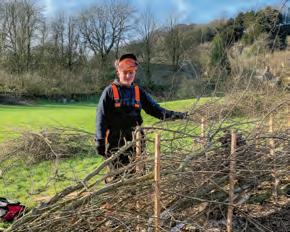
have been lost across the UK, so we need to get planting again. We started our hedge laying competition in 1977 to combat the decline of this traditional skill, but it's clear that more can be done with the help of other like-minded organisations. That’s why we're developing various projects, training and volunteer days to help get hedgerows thriving once more.
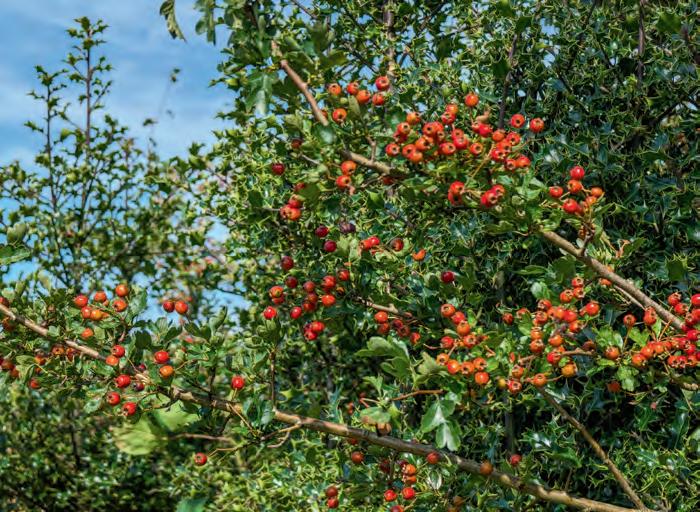
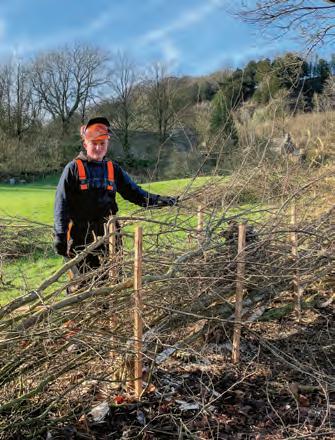
An entrant in the Junior category for our 2024 hedge laying competition
Our work started in October, with some volunteer hedgerow planting days near Penrith and a training session for farmers and land managers on how to use the Healthy Hedgerows App, developed by the People’s Trust for Endangered Species (PTES). That’s just the start of our work to restore and plant more of these fantastic hedgerows across the county. Turn to page 20 to find details of next year's hedge laying training days and competition.
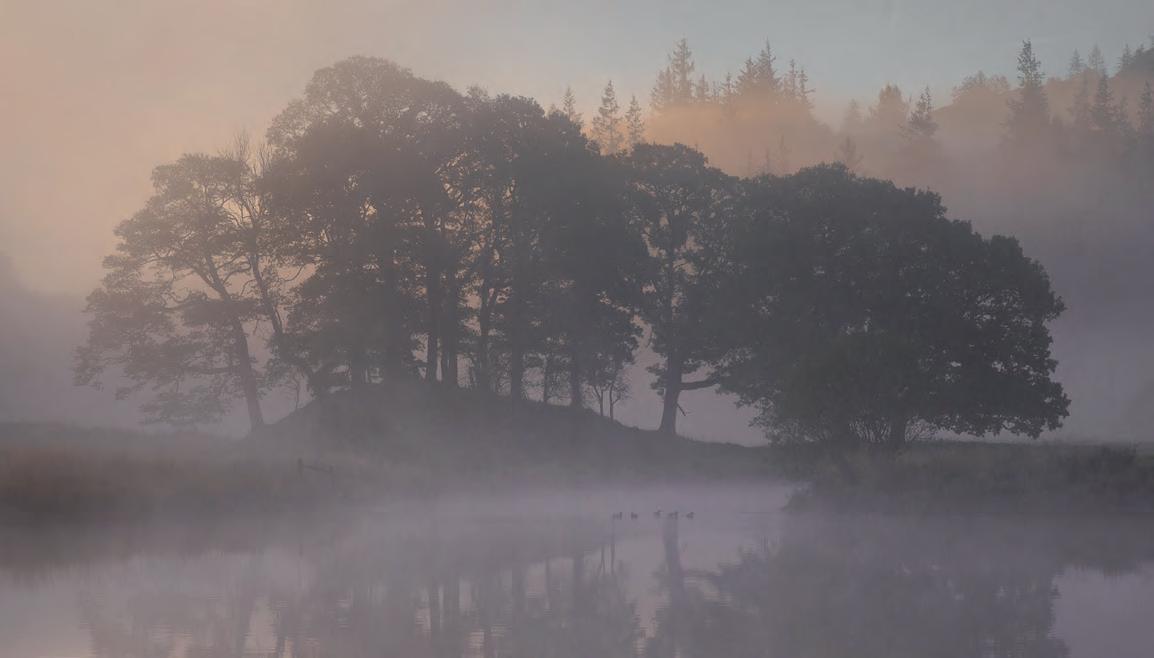
Even in an era of increasingly wayward climate, it is unseasonably warm, mist shifting slowly above a near-still Derwent Water. After a lifetime treading the fells, my legs have finally given out. I sit in the wheelchair (solar powered) at Friar’s Crag and survey the view. It is much as I remember it from 50 years back: the social bustle on this popular headland; geese circling overhead; the jaws of Borrowdale guarding the skyline south; rising flanks of Catbells framing the vista west. Look closer, though, and there is change in the detail: otters play in the bay; the lower slopes of Skelgill Bank are dotted with birch and oak; eagles call overhead.
The seeds of change were sown in the 2010s, ‘20s and ‘30s; literally in many valleys – Ennerdale, Swindale, Thirlmere, Borrowdale and the Caldew east of Skiddaw – new trees replacing lost woodlands as the Lakes began one of the country’s largest ecological restoration programmes. With new forests flourishing, more landowners joined a growing movement, planting up gills, restoring oak pastures and expanding wildlife corridors. As the science of nature restoration matured, bogs were re-formed, hedges re-planted and rivers re-wiggled. Ambitious works in upper river catchments finally ended debates around dredging, as nature-rich landscapes captured millions of tonnes of carbon and curtailed the worst of the ‘once-in-a-lifetime’ floods that came in 2032, 2040, 2051, 2052, 2054, 2063 and 2071. Change was not welcomed in all quarters. Some farmers were more vocal than others about perceived ‘clearance’ and its impact on culture and continuity. They found themselves
buffeted by a slew of headwinds, as the changing economics of hill farming tangled with the societal need to tackle the growing climate crisis. There were casualties. But there were winners, too, as many recognised that beavers, osprey, badgers, and even alpacas were more lucrative than Herdwicks, and that meeting the tourist economy halfway gave the Herdwicks, the annual shows and the family lineages, a future. A recognition of the true value of highquality, home-reared meat gave those remaining in the sector a viable, if not lucrative, parallel income stream, while subsidies that rewarded soil health meant that even those still concerned about change could play their part in sequestering carbon and slowing the flow of water.
Visitors whose aesthetic baseline was the sheep-grazed landscape of generations past initially rued the slowly changing vistas. But the fells – as Wainwright noted (his Pictorial Guides now in their 214th pressing) – were always eternal, and while some paths were lost to encroaching scrub, the majority remained well trod, some over the same sheep-grazed pastures of old; more through botanically diverse woodland pasture. In 2036 the first curlews returned to Matterdale, and, in 2040, eagles were seen again over Riggindale.
South of the Raise, new legislation in 2029 made water bosses personally responsible for illegal sewage discharges into water bodies. After 28 senior executives found themselves serving at His Majesty’s pleasure, a recruitment crisis paralysed the sector. The government responded by renationalising, and a new sewage ring-main around Windermere, as suggested by Matt Staniek back in the early ‘20s, was finally installed in 2038.
Challenges that had long faced the National Park found solutions under a series of energetic CEOs inspired by some of the visionary champions of Lakeland past: Ruskin, Rawnsley,
Trevelyan and Potter. After lobbying on the national stage, Friends of the Lake District alongside the Campaign for National Parks won legislative change in 2032 that allowed tourist levies to be channelled into national park coffers. This allowed the Park to recruit a new generation of valley rangers, with proper budgets to repair crumbling rights of way. The levy fund was also used to subsidise community events, village schools, the re-building of dry stone walls… and the re-opened Keswick swimming pool, now with a year-round heated lido.
The National Park Authority also initiated a world-class sustainable transport system funded by private vehicle charging, with free buses serving even remote valleyheads at 20-minute intervals. The scheme’s impact over a five-year period, coupled with rigorous enforcement of parking violations and ever-higher car park fees, was a near trafficfree Park, where the pleasure of bus and safe bike travel was simply one part of the visitor experience. In an era where car ownership had become the preserve of the wealthy, Lakeland’s Free Bus scheme opened the Park to demographics long-since shut out, including students and those in low-income jobs.
…It is October of 2075. Over the past five decades, the Lakes has changed beyond measure, yet much has also remained the same. On the shores of Derwent Water, I breathe in the sweet autumn air, and give thanks for the lifetime of pleasure and companionship this place has given me.
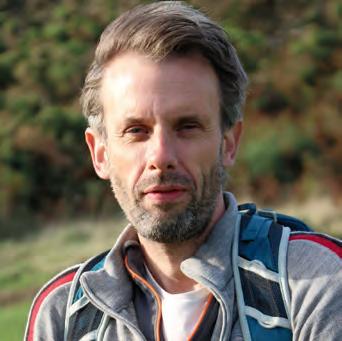
Dave Felton, Chair
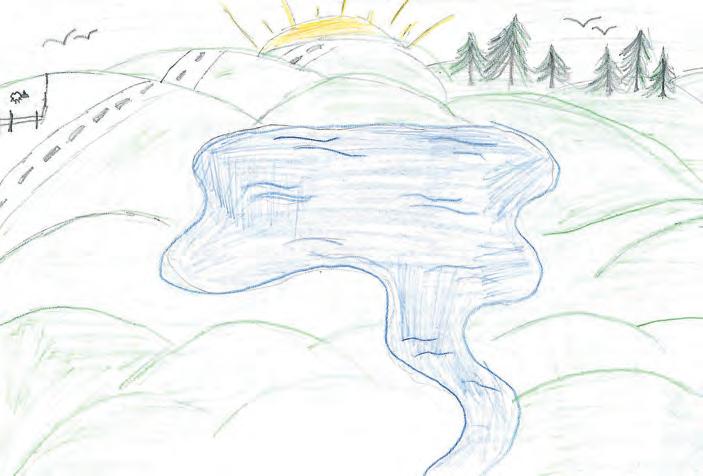
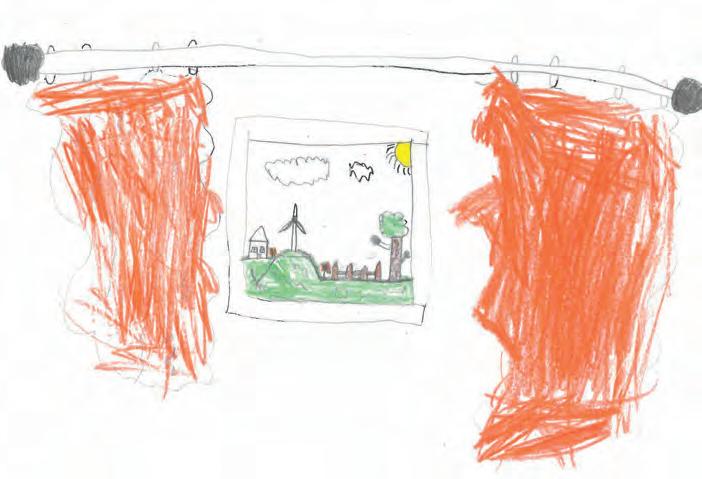
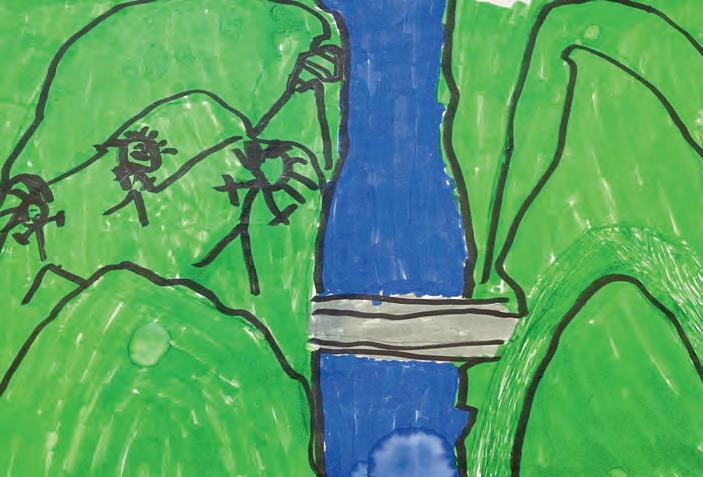
To celebrate our 90th birthday we ran a poster competition for young people, asking them to imagine how the Lake District and Cumbrian landscapes should look in the future. Thanks to everyone who sent something in – we had some wonderful entries. The judges felt the winning images conveyed positive ideas about what these future landscapes should include, such as clean water, litter-free fells, trees, people and wildlife.
Amelia Alderson
Zara White
Chloe Morphet
Nylah Jones
Jax Pocklington and Cora Scarisbrick.
We’ve shared the winners and runners up posters on our website and on our social media channels. Many thanks to World of Beatrix Potter and Eskdale Mill for donating prizes for the competition.
Our 2024 Kirby Lecture explored what the Lake District National Park might be like in 2051, when it turns 100 years old. Chaired by Dame Fiona Reynolds, this lecture looked at the hopes, fears and visions for three elements that impact the Lake District landscape: farming, tourism and people. We’ll be bringing you all the news and views from this event in the next issue of Conserving Lakeland.




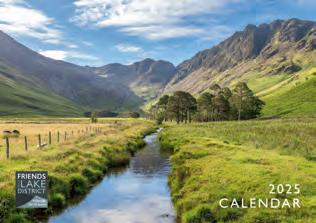
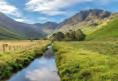
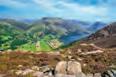
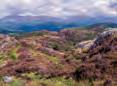
Inspired by the landscapes you love, our 2025 calendar features 12 stunning Lakeland scenes. Printed on sustainably sourced materials, this year’s fabulous images were taken by a range of brilliant photographers.
Size: A4 (21 x 29.7 cm) with a pre-drilled hole for hanging.


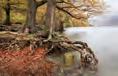

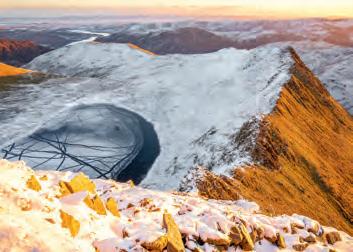
A pack of 10 cards featuring five different designs (two of each design). Printed on sustainably sourced materials, with the enclosed message: “Season’s Greetings”.
Size: A6 (10.5 x 14.8cm). Supplied in eco-friendly packaging with envelopes included.
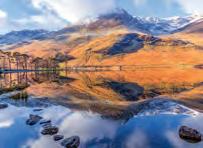
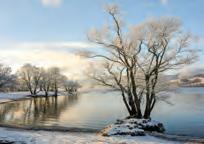
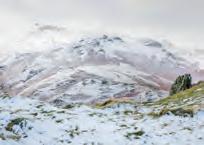
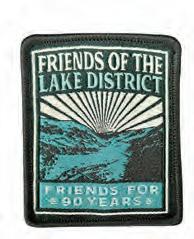
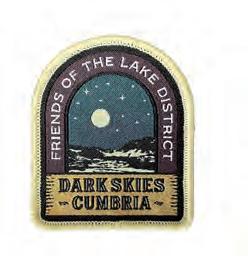
Limited edition patches featuring beautiful landscapes.


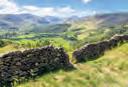

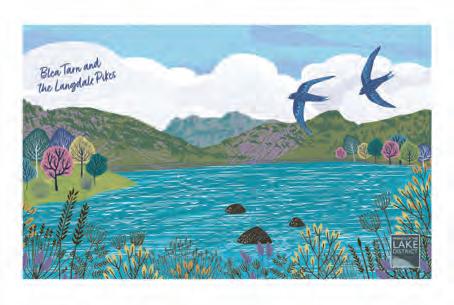

A view of Blea Tarn and the Langdale Pikes. High-quality cotton tea towel, hemmed on all sides.
Size: 76cm x 48cm.



A pack of 12 different notecards featuring spectacular Cumbrian landscapes. Perfect for any occasion. Blank for your own message. Size: 10.5 x 14.8cm. Envelopes included.
Order online now or via the enclosed form
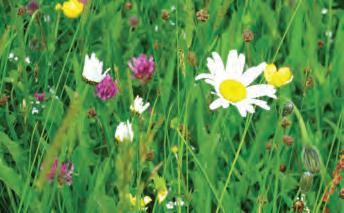
£18
As well as rare wildflowers, the meadows support bees and insects which, in turn, support birds and mammals such as bats and hedgehogs. Your gift will help wildflowers flourish and support the wildlife that makes them their home.
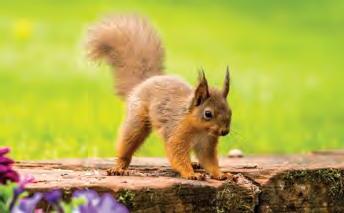
£30
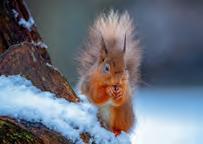
We provide nuts and seeds for feed stations and manage our woodlands to give them the best chance of survival. Our feed stations also need cleaning regularly to reduce the risk of squirrel pox contamination.
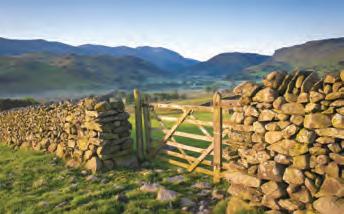
£48
Dry stone walls are an important part of Cumbria’s cultural and rural heritage. One metre of wall requires just over a tonne of stone and could last for over 100 years.
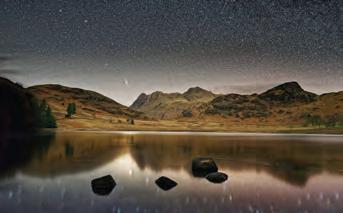
Unnecessarily bright lights obscure our beautiful night skyscapes and can blind and confuse nocturnal animals so that they can’t find food or a mate. Your gift will help us to tackle light pollution.
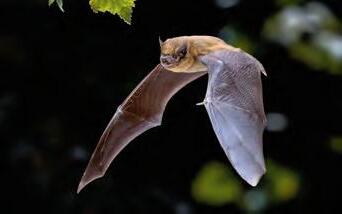
£35
Your gift will provide a safe home for bats in one of our woodlands. Bats are an important part of our ecosystem and help to control insect populations. We will put up a selection of boxes in our woodlands to ensure diversity of bat species.
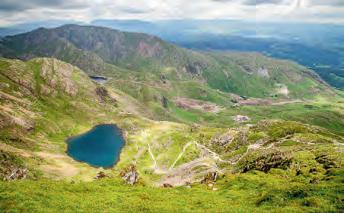
£99
Help repair one of the Lake District's most popular footpaths on Coniston Old Man. This path experiences extremely high footfall year-round and its rich industrial archaeology and ecology is vulnerable to damage and erosion.
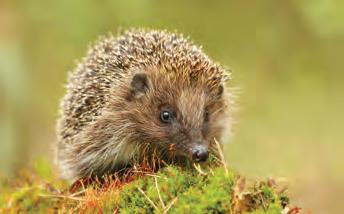
£30
Our dedicated volunteers create and maintain hedgerows, a vital source of food and habitat for many animals including hedgehogs. They also provide safe places for hedgehogs to hibernate and raise their hoglets (baby hedgehogs).
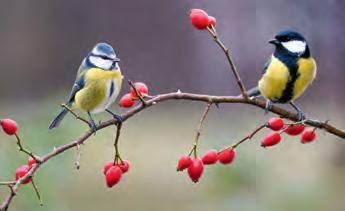
£35
Help us keep our woodlands full of birdsong. For many of us, the serenade of our native birds is what makes our woodlands so special. Your gift will provide a safe place for these woodland birds to nest and raise their young.
The perfect gift for someone who heads to the hills whenever they get the chance! Or perhaps someone who has fond memories of the Lake District and wants to see it protected for future generations.
Friends of the Lake District has been instrumental in the campaign to ensure that overhead wires do not criss-cross the Lakeland landscape. Dawn Groundsell gives a rundown of our work to move powerlines underground.
Friends of the Lake District has been campaigning about electricity (and phone) wires in the landscape since the charity was set up in the 1930s, before the National Park existed. From the start, we responded to proposals on a case-by-case basis with two guiding principles: we wanted routes chosen to have the least visual impact on the landscape and, in what were considered the most sensitive areas, we recommended that cables be laid underground.
In many cases power companies and the Central Electricity Board agreed alternative routes, often as a result of site visits by Friends members. In the 1930s Friends successfully campaigned to re-route a section of high-voltage wires to avoid pylons running along the eastern shore of Bassenthwaite. In Ullswater, the Electricity Company
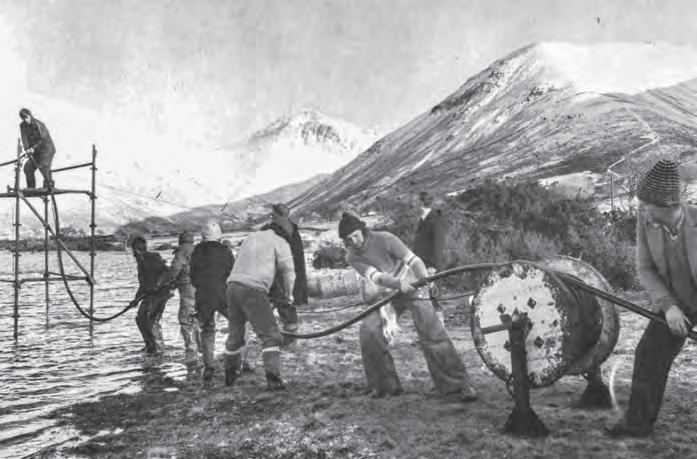
agreed to place 4.5 miles of high-voltage line underground along the eastern and southern shoreline. And a battle over wires in Borrowdale began in 1937,
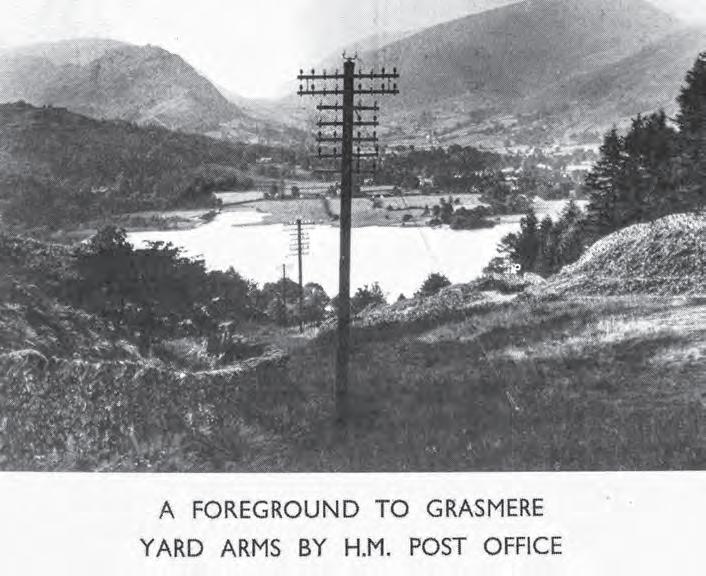
in which Friends offered to pay half the cost of burying the wires. Eventually the electricity supplier agreed to bury the whole Borrowdale line at its own expense and, by 1956, Borrowdale homes finally had electric light.
In 1949 Friends of the Lake District hosted a conference in which the Lake District planning authorities agreed to the principle that all power lines should be placed underground except where there was no harm to the landscape. Lines from Buttermere to Gatescarth were put underground in the early ‘60s, while electricity wires for Wasdale were laid under the lake in 1977.
In 2003 Friends published ‘A Clear View’, a report by Cardiff University which assessed the scope of placing overhead lines underground. This was key in persuading the government regulator, Ofgem, to establish an allowance in 2005 amongst electricity distribution companies to underground wires within all protected landscapes nationally, not just in the Lake District.
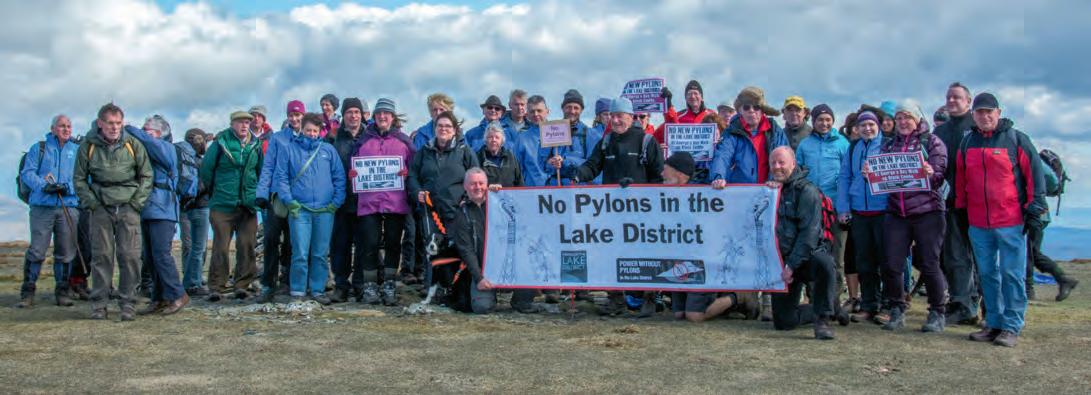
The allowance from the energy regulator Ofgem is all about undergrounding to reduce visual intrusion in the landscape, but it also reduces the impact on migratory birds and makes the energy infrastructure more resilient to extreme weather.
In 2016, we ran a major campaign to stop 24km of 50-metre-tall pylons being erected across the National Park from a proposed new nuclear power station to be built close to Sellafield. This generated more than a thousand letters in protest at the plans as well as extensive national press coverage, resulting in National Grid resolving to put new electricity lines underground through the western section of the Lake District National Park instead. Ultimately, however, the whole project was abandoned.
In light of this fight against new pylon lines in the Lake District, in January 2024, in its latest policy on electricity infrastructure, the government banned some new overhead wires from going through protected landscapes – although this decision covers only aboveground electricity lines that are 132kV or above, more than 2km in length, and not a replacement line.
In the last year, Electricity North West (ENW) has undergrounded 1.2km of overhead lines at Thompson Ground, near Hawkshead, and over 1.2km of overhead lines in Mungrisdale. ENW has also carried out work this year
in both Arnside and Silverdale and Solway Coast National Landscapes. Those lines are all part of the current five-year undergrounding programme, which has a budget of £8 million, and there are more lines planned for removal in North Pennines National Landscape, Yorkshire Dales National Park and Lake District National Park by March 2028.
“It is fitting in our 90th birthday-year that the important undergrounding programme by Electricity North West to enhance protected landscapes across
Cumbria will soon enter its third decade,” Friends of the Lake District’s overhead wires officer, Amanda McCleery, said. “This is thanks in no small part to sustained campaigning by this charity over many years.
“There is more work to do to remove man-made infrastructure from the landscape – more undergrounding of electricity wires but, just as importantly, undergrounding of broadband wires and alternatives to mobile phone masts, which we are also keeping a close eye on.”
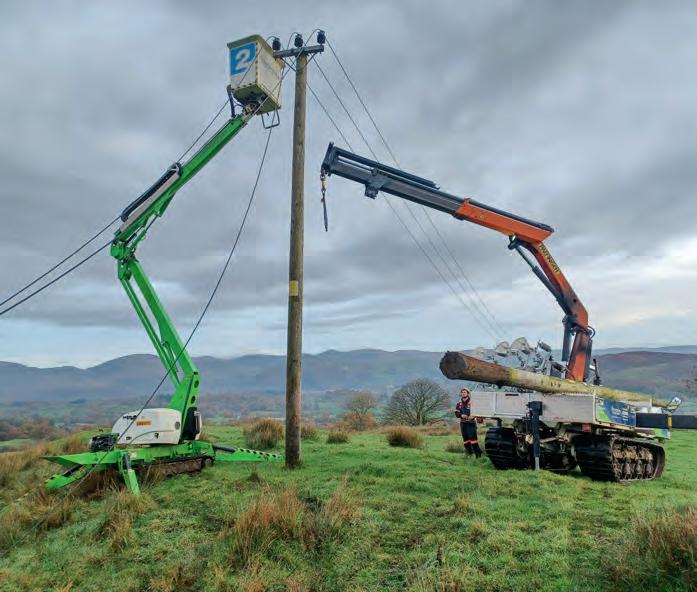
Friends of the Lake District’s policy officer Kate Willshaw fires the starting gun on a conversation about how the Lake District can cope with the ‘invisible burden’ of people visiting the area.
Have you ever wondered who should pay for the Lake District? Who should be responsible for the cost of the upkeep of the fells, lakes, footpaths, roads, sewage treatment, and all the other infrastructure the area depends on to keep it functioning?
It’s the 39,000 residents of the national park upon whom the necessary levels of infrastructure are calculated and those in Cumbria who pay for it via their council tax and water bills. The nearly 80,000 extra people that the Lake District welcomes on average every day of the year (equating to over 27 million visitor days a year) aren’t taken into account when it comes to these calculations. In case you’re wondering about business rates and VAT on purchases, these are sent straight back to the government after collection, and not returned to the area proportionately and in recognition of the pressures that visitors place on the area.
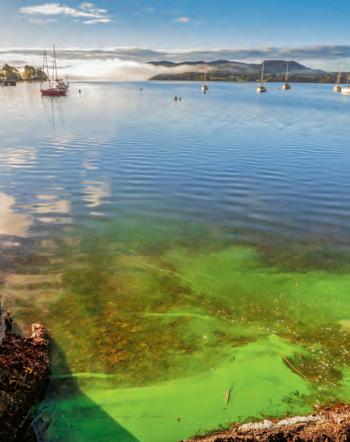
Disregarding the numbers of visitors when planning essential infrastructure leads to situations such as the water pollution in Windermere, where there can be up to 350,000 people in the
catchment area on a busy day, for a sewage infrastructure only designed for 10,000 properties. This huge mismatch in capacity has led to the Ambleside wastewater treatment works regularly illegally discharging untreated sewage into the lake (75 times between 2018 and 2022) because there are just too many people using bathrooms and kitchens for the treatment works’ capacity to deal with.
Rising house prices and rents exclude local people and those of working age from living in the communities where they work and have family. It also causes issues for employers who struggle to find staff, and for employees who find themselves having to commute from outside the National Park, often by car as the public transport doesn’t run at times designed to cater for them.
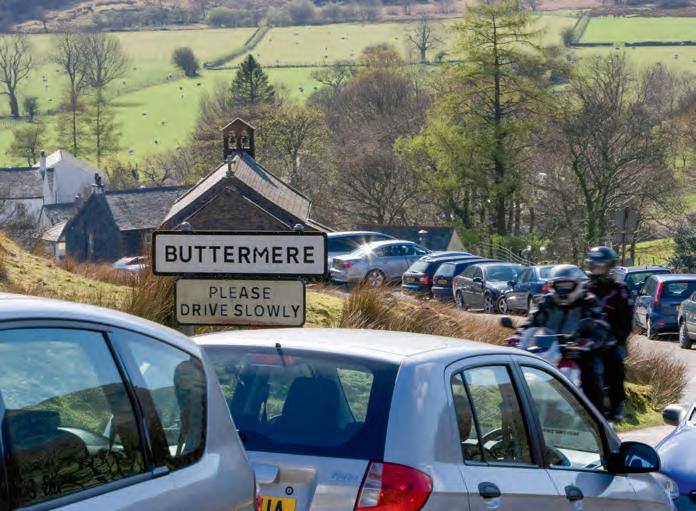
As well as the physical infrastructure, there are social and cultural issues arising from welcoming so many visitors. Studies have shown that, once a community reaches 20% of properties that are not permanent homes, community cohesion starts to fail. Schools, pubs, village shops and doctors’ surgeries become unviable because of the declining population. In the Lake District, 73% of parishes reported that 20% of homes are not permanently occupied, and 23% of parishes, such as Borrowdale and Skelwith, have nonpermanency levels higher than 40%.
As one local resident said in research conducted by UCLan: “I’ve lived here all my life [50 years]. My family have lived here for generations but I’m the only one left because we have been priced out. My children couldn’t stay despite wanting to because there are no jobs apart from tourism and no homes they can afford despite being in professional occupations.”
All of the above can be labelled the ‘invisible burden’ of tourism. Currently, there are very few mechanisms available in the UK to allow this issue to be addressed, but elsewhere in Europe it’s common
for popular tourist areas to charge tourists a visitor levy.
Earlier this year, Friends of the Lake District asked sustainable tourism expert, Dr Davina Stanford, to look at different compulsory visitor levy methods used around Europe, how they were collected and what they were used for. Dr Stanford looked at several in detail including a bed tax in the Balearics which pays for social housing, essential infrastructure upgrades and environmental enhancements. Another method was a car charge at the entrance to the Île de Ré in western France. There is a preconception in the UK that visitor levies deter people from visiting, but the data from these examples does not appear to support this claim.
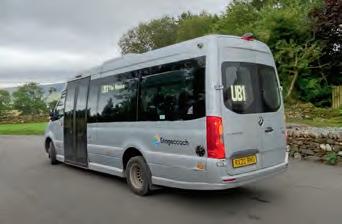
Friends of the Lake District wants to start a conversation about visitor levies. Dr Stanford’s report shows that tourism is affecting the Lake District negatively. Charities and community groups do excellent work to tackle some of the issues, such as footpath repair and wildlife enhancement, and projects such as the UB1 bus service, organised by Sustainable and Integrated Transport in Ullswater (SITU). But we believe that the big ‘invisible burden’ issues around transport, infrastructure and housing cannot be addressed other than via some sort of visitor levy.
The report Who Pays for the Lake District? can be found on our website at www.friendsofthelakedistrict.org. uk/whopaysforthelakes and we’d love to hear your thoughts about this issue. Please email info@fld.org. uk with the subject line Who Pays or write to us at Friends of the Lake District, Murley Moss, Oxenholme Road, Kendal LA9 7SS.
Friends of the Lake District has launched a legal challenge to the Lake District National Park Authority’s decision to grant planning permission for a zip wire attraction in a former quarry in Elterwater. The initial application by Zip World and Burlington Slate was rejected on the grounds that the development would bring significant additional traffic to the Langdales. We do not believe that the revised submission provides solutions in the form of a robust and enforceable Travel Plan. As a result, the development threatens the tranquillity of this treasured landscape. At the time of going to press, we’re still awaiting the result of this challenge.
A report, part-funded by Friends of the Lake District, has found that there is significant popular support for using alternative means of transport to get around the Lake District. Where do you want to get to? Public appetites for the future of the Lake District’s transport system reveals that people want to travel differently to protect the environment, see fewer cars on the road, to make space for bikes and walking, and to be able to enjoy the beautiful landscape more. The research, carried out by ACTion with Communities in Cumbria, involved online surveys and interviews with more than 3,000 people, as well as local focus groups. You can read the report on our website.
We are disappointed that permission has been granted by the Lake District National Park Authority for a new car park on a greenfield site in Coniston. The proposal had been refused permission twice previously on the grounds that the construction of a car park and other facilities on the site would cause landscape harm and the limited benefits of the proposal would not outweigh this. Read our full response to this decision in the Current Issues section of our website.
We've been inputting into The Westmorland and Furness Local Plan throughout 2024. The plan will, among other things, set out how much new development, such as housing, is needed and where this might be built. Consultations on the Local Plan ended in September and we’ll report on next steps soon. We’ve also been working with our partners the Campaign for National Parks and CPRE – The Countryside Charity to feed into the consultations on changes to the national planning policy, as set out by the new government. Again, more details about this will follow.
Want to stay up to date with everything we’re up to?
Make sure you’ve signed up to our monthly Postcard from the Lakes. You can do this by visiting www.friendsofthelakedistrict. org.uk and filling in the newsletter sign-up form at the bottom of our homepage.
For nearly two years, a group of local people has been campaigning to stop a major development near a sensitive area of coastline in south Cumbria. Christian Lisseman joins three members of the Save Roanhead group to learn how Friends of the Lake District has helped them keep up the fight.
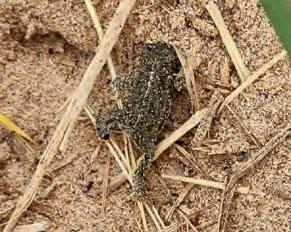
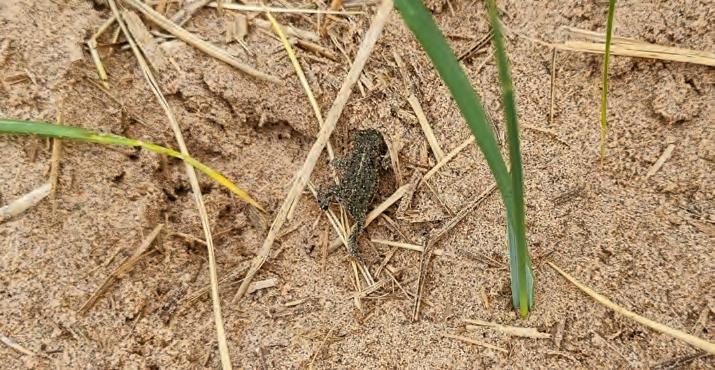
It’s a windy afternoon in early July and Kelly Atkinson, Rose Campbell and Claire Gould, all members of the Save Roanhead group, pick their way across the sand between the beach and the National Trust car park at Sandscale Haws nature reserve. They tread carefully because the sand is teeming with natterjack toadlets, each currently not much bigger than a pound coin.
The presence of the toadlets belies what someone recently said to Kelly: “There are no natterjacks on Roanhead.”
The inconvenient truth for the wouldbe developers of a nearby holiday park is that 25% percent of the UK’s natterjacks, a rare and protected species in the UK, call this stretch of South Cumbrian coastline home.
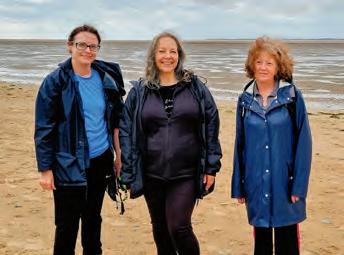
Kelly, a veterinarian nurse, was born in the area and now lives in Barrow. She has fond memories of school trips to see the toads when she was at school.
“I’ve always had an interest in wildlife and nature conservation and the importance of this area,” she says. “When I saw that they wanted to build a resort here I was just like, ‘That’s ridiculous!’ The idea of what could happen here just really disturbs me.”
Towards the end of 2022, initial proposals began to appear for a 450-lodge holiday resort dangerously
close to Sandscale Haws. Public meetings by the developer were held in early 2023. When she learnt more about the plans, Kelly decided to act. She started an online petition and set up the Save Roanhead Facebook group, and then organised face-to-face meetings. Friends of the Lake District’s planning officer Lorayne Wall came along to one of them.
“I’d not heard of Friends of the Lake District before,” says Claire, who lives in nearby Askam-in-Furness. “Lorayne explained how the charity sometimes fights planning applications, not just in the Lake District but around Cumbria too. That felt really important. There was a sense that the development was a done deal, and that local people didn’t have a voice in it. But the knowledge that we had a chance, with our small but growing group, and that people could have a voice and make a difference, gave us the confidence to keep going.
“Nobody in the group had done anything like this before. We knew
nothing about councils and the Local Plan, about applications, or about sites of special scientific interest. Lorayne helped us when we had questions, shared Friends’ template objection letter, and knowledge about how to object.”
With help from a grassroots campaigning organisation called Seeds for Change and Friends of the Lake District, among others, the Save Roanhead group grew throughout 2023. Many other conservation, wildlife and environmental organisations added their voices to the objections, including the National Trust, Cumbria Wildlife Trust, and the RSPB.
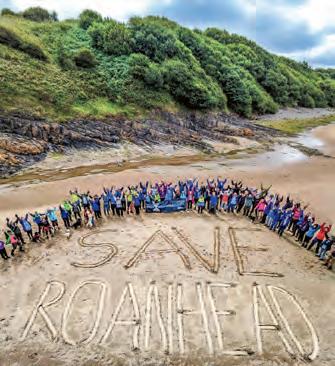
In July 2023, Friends of the Lake District and the Save Roanhead group staged the Make a Stand on the Sand event which demonstrated the strength of feeling against the proposals and raised awareness of what could be lost.
“80 people walked from Askam to Roanhead with a BBC film crew and we got some amazing publicity,” says
Claire. “We couldn’t have had such an impact without Lorayne’s help and the support of Friends of the Lake District.”
Towards the end of 2023 the group had a taste of success when the initial plans for the Roanhead resort were withdrawn. New plans, for a ‘scaleddown’ version of the resort were then submitted, reducing the number of lodges to 233. This reduction failed to address the issues of concern about the development and now plans for a separate development, consisting of yet more lodges, glamping pods and caravan pitches, has been put forward. And so the fight continues.
“I’m not against developments and holiday resorts, of course I’m not,” says Kelly. “Just not on the doorstep
of an important nature reserve. It’s the wrong kind of development in the wrong place.”
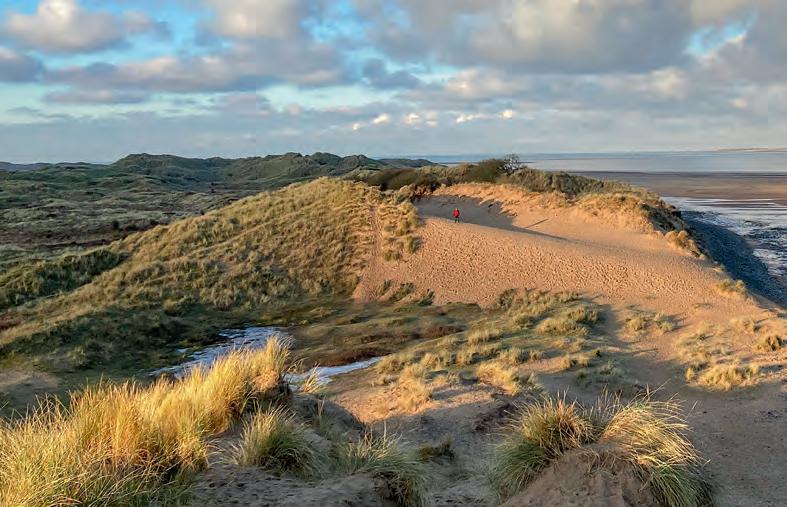
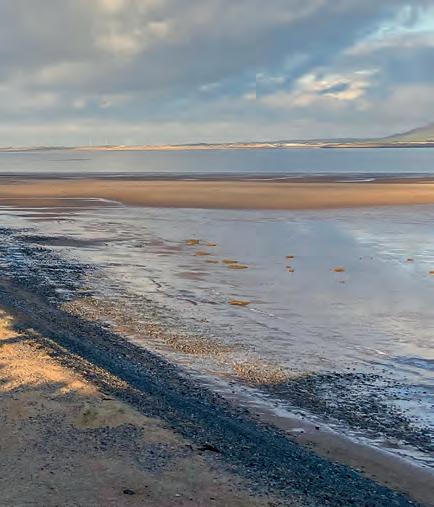
And what a place it is. Huge sandy beaches stretch around the coastline bordered by towering dunes. The views across the Duddon estuary towards the Lakeland fells are immense. “You get the most amazing sunsets here,” says Rose, another local resident.
“There aren’t many places like this left now,” adds Kelly. “It’s not touristy. It can feel so remote here.”
They all talk fondly of evening strolls on the beach in May and June, when the male natterjack toads are singing to find a mate. But it’s not just the toads that make this area special, Rose explains, lots of rare orchids and different kinds of bees all populate this nature reserve. As the National Trust’s Dan Taylor later explains: “This unique reserve… is home to over 600 flowering plant species and 500 species of fungus, an internationally important range of wintering, migratory and breeding birds, as well as … the natterjack toads.”
A film will be released at the end of the year, celebrating the 40th anniversary of the National Trust looking after Sandscale Haws.
There are many objections to the developments, including geological instability on the land caused by former mine workings and increased traffic on the narrow road leading to the proposed entrance to the main
site. But the main cause for concern for many is the impact on the Sandscale Haws nature reserve itself. Kelly, Claire and Rose all recognise the magic of this delicate place, loved by locals and visitors alike. They’re pleased people want to come and experience it for themselves. But when they do come, they want people to be aware of the sensitive habitats.
The new developments, if they were to go ahead, would bring thousands of new visitors to the area. It doesn't matter how eco-friendly the intentions of the developers are, says Kelly, “those extra thousands of people coming here won't share those concerns.”
They already have to contend with people lighting fires, leaving litter and dog waste, and driving motorbikes along the beach. As we walk up towards the car park, someone has kindly left a bright yellow dog-poo bag in the middle of a path.
“People have to take a stand for nature. Not just at Roanhead, but everywhere,” says Claire. “We absolutely need to protect this nationally important ecosystem. We have to preserve this natural environment, especially since the UK has lost so much nature. We’re determined to save Roanhead because it is so deeply loved by the people of Furness.”
For more information about the Save Roanhead campaign, and how you can help, visit www.saveroanhead.com
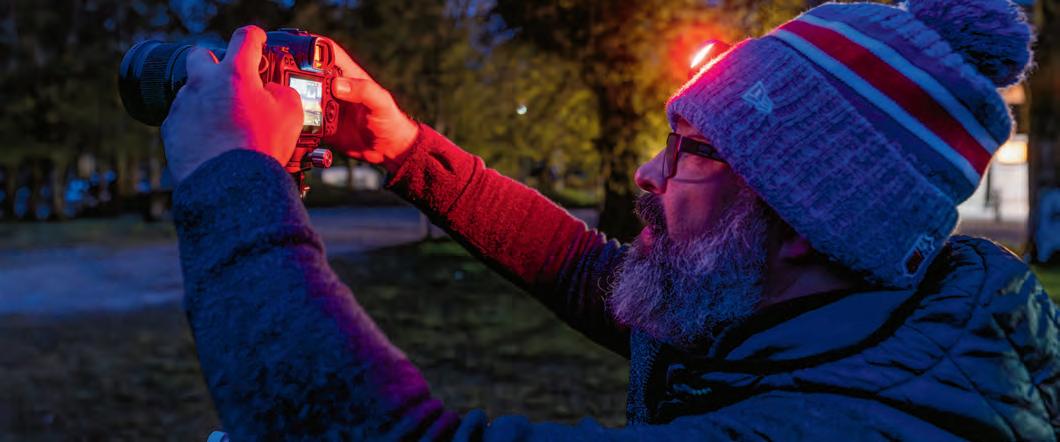
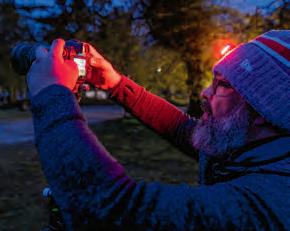
The 2024 Dark Skies Festival takes place in venues across Cumbria and includes talks, walks, astrophotography workshops, night swims and much more. Details on our website www.friendsofthelakedistrict.org.uk/dark-skies and the Cumbria Dark Skies Festival section at visitlakedistrict.com.
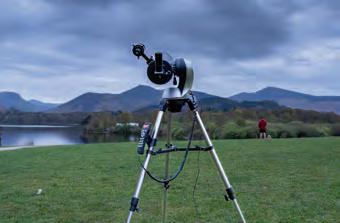
Stargazing | Friday 1st November
Map-marker-alt Crow Park, Keswick Weather permitting, this will be a great night to look up at the stars in the beautiful surroundings of this magnificent lakeside park. Bring your own binoculars and telescope, or use the ones provided. No booking required.
Hedge Laying Training Days
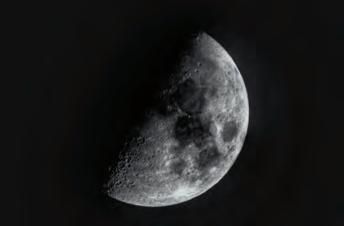
Dark Skies Talk | Thursday 7 th November, 7pm
Map-marker-alt Orton Market Hall, Orton Join project officer Jack Ellerby for a talk about the value of dark skies and the impacts of light pollution on wildlife, environment and people. Supported by Orton Wildlife and Landscape group. Free. No booking required.
Tuesday 21st January 2025 Map-marker-alt Low Beckside Farm, Mungrisdale
Saturday 1st February 2025 Map-marker-alt Low Sizergh Farm, south of Kendal Come and learn new skills with hedge layers from the Lancashire and Westmorland Hedge Laying Society.
Hedge Laying Competition | Saturday 8 th February 2025
Map-marker-alt Low Sizergh Farm, south of Kendal Test your skills in our popular annual tournament.
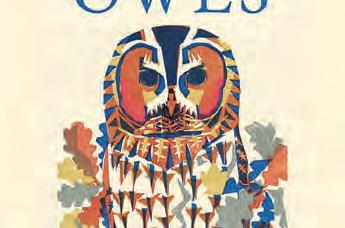
The Company of Owls Talk | Wednesday 13 th November, 7pm
A long-time fascination for the acclaimed writer, Polly Atkin turns her poet’s eye on the owls that live in the woods by her Grasmere cottage. In this online session, Polly will talk about the journey which led to her new book, The Company of Owls.
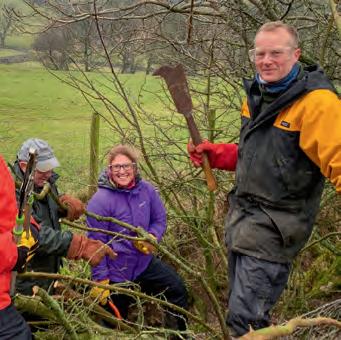
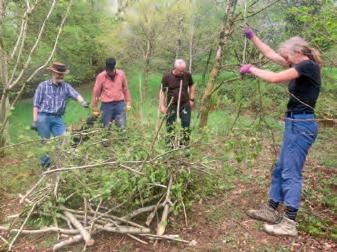
There are still some volunteer workparty dates left for 2024 and we’ll be announcing new ones for 2025 soon. Volunteers of all skill levels are welcome to come along and join us to help look after our land across Cumbria.
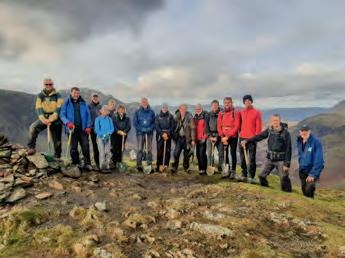
Fell Care Day | Friday 22nd November
Map-marker-alt Coniston
More details about our annual Fell Care Day event and the volunteering opportunities available will be shared on our website very soon.
For more information and to book visit www.friendsofthelakedistrict.org.uk/events or contact the Friends of the Lake District admin team on 01539 720788.
Is there a Friends of the Lake District event that you’ve attended that you’d love to see repeated? Or is there something you’d like to see on our events calendar in the future? Please send your thoughts to our Membership Lead, Helen Howe, by emailing helen-h@fld.org.uk
We’ll be sending out a Membership Survey in January, so please look out for it. If we have your email address, it’ll arrive in your inbox. Otherwise, it will come by post. This will be an important opportunity to have your say on the way we work with our members and what we can offer to entice new members to join our organisation.
Virtual Member Meet | Thursday 23rd January 2025
A chance to gather together and explore topics of interest to our members and supporters. Look out for more details in our monthly Postcard from the Lakes email (see page 17 for details of how to receive the postcard).
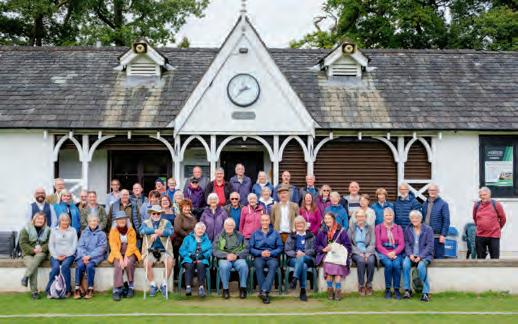
The Friends of the Lake District Annual General Meeting (AGM) took place in Keswick on Friday 13 th September. Members and supporters gathered together to review the year and look ahead to the future. We also enjoyed a walk around three of Keswick’s parks, ending at Fitz Park, where Friends of the Lake District was founded 90 years ago. Our 2023/24 annual report and other papers from the AGM can be found online: www.friendsofthelakedistrict.org.uk/agm2024
We’d love your help to spread the word about the work we do and how people can get involved. If you know of any local cafés, accommodation providers or event spaces that would be happy to display some of our flyers, please email info@fld.org.uk to let us know.
We are extremely grateful to our Benefactor Members for their continued support: John Berry, James Brockbank and Louise Ronane, John Campbell, Richard Coates, Philip Cropper, Margaret Haigh, John Harris, Peter Hughes KC, John and Margaret Jackson, Brian Leigh-Bramwell, Rosamund Macfarlane, Jim and Sue Martin, Elizabeth Reddaway, Taysia and Matt Malone.



Sophie Yeo
Is the past the key to our future landscapes?
Author Sophie Yeo takes a wide-ranging look at how humans have interacted with their home landscapes for thousands of years, from hunter-gatherer to Mesolithic farmer, and then modern agricultural worker. Along the way she talks to people who have debunked the primal wildwood paradigm (no, a squirrel could not have gone treeto-tree from the Scottish borders to the south coast without touching the ground), investigates how humans filled the megafauna niche once these massive beasts became extinct after the last ice age, and discovers the immense ecological richness of small-scale farming in Romania. At the heart of this book is humanity’s innate place in the landscape – a place that we are becoming more and more detached from through our modern way of living. It’s a plea for understanding that, at heart, we are a species with 100,000 years’ experience of living with nature, and only around 250 living outside of it, and that this disconnection is driving losses for both nature and for us. We need to find a way to allow nature to return, and to learn to live with it harmoniously. This is not a plea for total rewilding, but a blueprint for giving nature space to live and thrive on the edges and in-between, where often it is richest in diversity.
This is one of the most profound environmental books I’ve read. It’s not a polemic and it’s not prescriptive in its solutions, but it is warm, wise and respectful of both people and nature.
Review by: Kate Willshaw
Publisher: Harper Collins
Dani Robertson
Dani Robertson lives in Anglesey, where she is dark skies officer for Snowdonia National Park.
Her book is an interesting mix of genres and is, in part, a memoir of how nocturnal adventures with her father led her to a fascination with the stars, and how she came to love the darkness and nature at night time. Her lively book covers a lot of ground related to the dark, from a history of how different cultures around the world have created myths and stories from our earliest times to explain what they saw in the night sky, through to space travel –including space junk, the space race, and what the future might hold. Along the way, she tackles everything from a female perspective on the dark (how women are taught to be afraid of it), to dreams and insomnia, and how much insects, animals, and even trees need the dark and are affected by light pollution. She ends with a chapter on campaigning and who is fighting for the night, all told in a humorous style, with references to pop culture. A dry book about light pollution this isn’t, but it’s an impassioned cry for us all to care more about the dark.
Review by: Dawn Groundsell
Publisher: Harper Collins
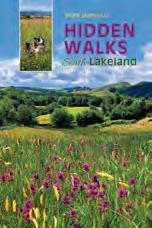
Hidden Walks in South Lakeland
Bern Marshall
The well-known and well-trodden paths within Cumbria’s landscapes can get congested at times and this guide offers an antidote to the crowds of walkingpole-wielding hikers. All these walks are – at most – a handy 36-minute drive away from junction 36 of the M6 (the South Lakes turn-off).
The walks range in distance and difficulty, from a gentle three-mile stroll to some hikes up the hills and back, but there’s nothing here that would scare the casual walker. The walks take in woodland, meadows, fells, lakes and riversides, and even the odd seaside route.
The absence of a map pinpointing the locations of each walk in relation to one another is a bit of an oversight. Unless you’re familiar with the area already, you’ll find yourself having to do some online searching to locate a few of these ‘hidden’ places.
The individual maps for each walk are clear however, and the commentaries are both concise and playful which, combined with some good-quality photography, means there are some enticing small adventures to be discovered within this book.
Review by: Christian Lisseman Publisher: Palatine Books
The next issue of Conserving Lakeland will be out in March 2025. In the meantime, make sure you've signed up to our monthly newsletter to keep up to date with news and events. See page 17 for details.




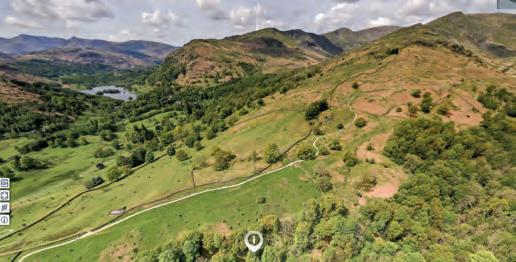
Love our land but don't visit as often as you’d like? Now you can come and explore from wherever you are in the world with our new virtual tours! Following the successful pilot of the High Borrowdale virtual tour last year, our new tours include common land in the Westmorland Dales, and several woodlands ranging from Ambleside to Eskdale. These online aerial 360-degree tours of our land allow you to explore these fascinating places on your home computer or your mobile, deep diving into key elements, such as history, wildlife and ecology, and land management activities via short videos and image collections. Visit www.friendsofthelakedistrict.org.uk/virtual-tours to begin your journey.
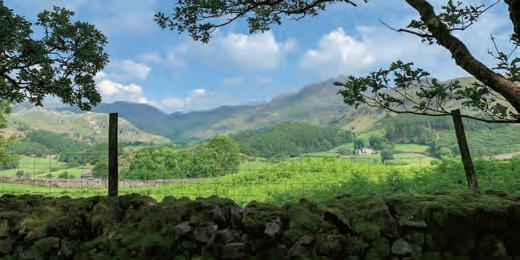
As part of a study into the range of benefits that land can provide, we’ve launched a survey of Hows Wood in Eskdale. The survey, which takes about 20 minutes to complete, looks at the different factors which make woodlands special and important. You don’t need to have visited Hows Wood to take part in the survey. You can look at our virtual tour of Hows Wood, or think about your own local woodland instead. We need as many responses as possible to make the research valid, so please help by filling in the survey.
Scan the QR code to take the survey today or visit www.friendsofthelakedistrict.org.uk /hows-wood-survey.

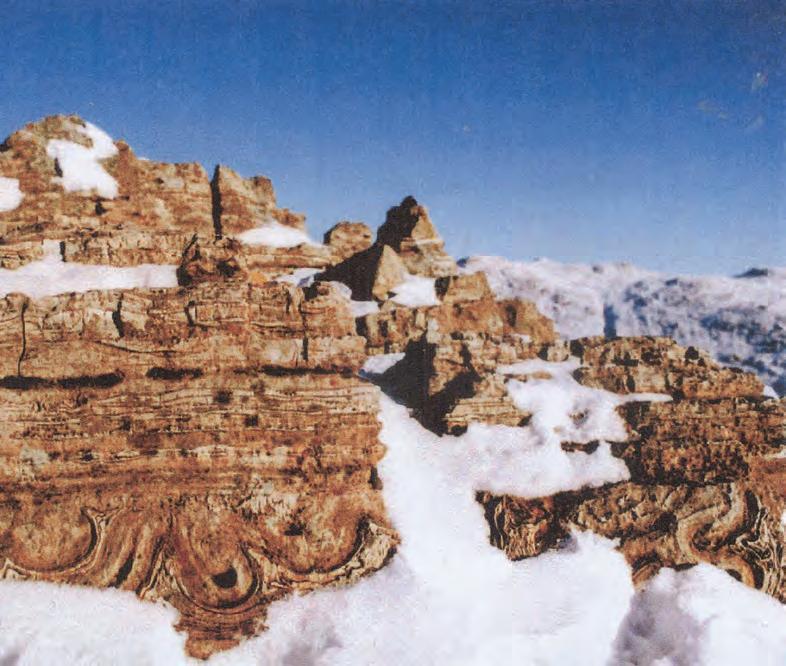
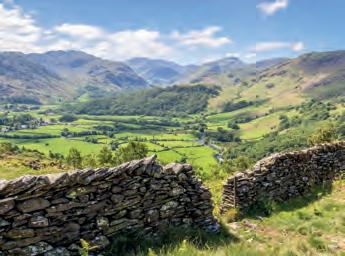
Do you know where this photo was taken? If so, write your answer on a postcard and send it to Where is it? Competition, Friends of the Lake District, Murley Moss, Kendal LA9 7SS or email christian.lisseman@fld.org. uk. One winning entry will receive a copy of ‘Nature’s Ghosts’ by Sophie Yeo (reviewed on the opposite page).
The photograph in the last issue of Conserving Lakeland was of Hobcarton Cragg from Hopegill Head. The winner was Judy Robinson from Penrith. Thank you to everyone who took time to enter.
Many thanks to Geoffrey Braithwaite for supplying this month’s competition image. If you have a photograph that you would be happy to share for a future competition, please send it to christian.lisseman@fld.org.uk with the subject line: ‘Where is it? photo’.
There are plenty of ways that you can continue to support our work protecting Cumbrian and Lake District landscapes:
Volunteer
Learn new skills and meet new friends while making a tangible difference to the landscapes you love.
Spread the Love
Share your passion for the landscape by inviting your friends and family to join our community and become members too.
Support our Appeals
Help us celebrate our 90th birthday by supporting our appeals. Every little bit counts towards protecting our surroundings.
Buy a Gift
We have a wonderful range of gifts now on sale, including Christmas cards and our 2025 calendar. See page 12.
Join our Campaigns
Take a stand with us against threats to our natural wonders, like the zip wire attraction in Elterwater.
Get Active
Join us at one of our many events, such as our annual Fell Care Day or our hedge laying competition. See page 20 for details.
Honour a Loved One
Keep memories alive by donating in their name, ensuring that their legacy lives on through the landscapes they loved.
Leave a Lasting Legacy
Include a gift in your Will to protect Cumbrian and Lakeland fells, lakes, woodlands, nature and heritage for generations to come.
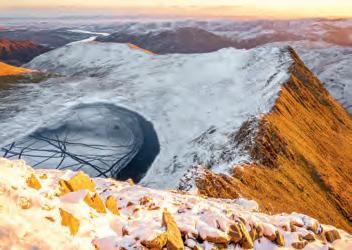


Fundraising for Friends of the Lake District is fantastic way to help protect the landscapes we all love.
Every single penny you donate really does make a difference, by helping us campaign and carry out practical conservation work to safeguard this special landscape for future generations to enjoy. Do not underestimate the impact you can have – these landscapes are under threat and nature is in crisis. They need you!
One of our amazing supporters, the late Ashley Pugh, raised an impressive £1,000 to support our work at his 90th birthday parties. (He had three!) And because of Ashley’s love for the Lake District, his family decided to share some of his legacy with Friends of the Lake District after he sadly passed away in 2022.
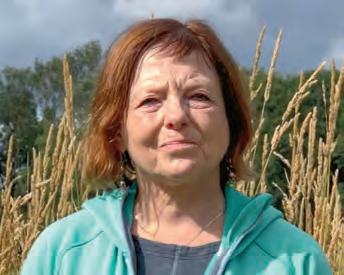
Ashley’s daughter Rachel, who is one of our amazing volunteers, told us: “I'm never happier than when I'm on a mountain. It comes from having a dad who was really keen on climbing and walking, and who took me out onto the mountains and hills. Because of his joy in the whole idea of contributing to the landscape, we decided to give part of his legacy to Friends of the Lake District. It's about advocating for the land and is there anything that is more important than that? Not just for us today, but for our children and our grandchildren. Probably one of the biggest gifts that you can give to anybody, is to hand on a world that's worth living in.”
Much of our work is only possible due to gifts in Wills. If you would like to explore leaving a gift in your Will to Friends of the Lake District, please get in touch. For more information about fundraising for Friends please contact our Fundraising Team via info@fld.org. uk or call us on 01539 720788.