Democrats are no better: Barack Obama commented in 2013 that he looks forward to seeing Nancy Pelosi, a Democrat, reinstated as Speaker of the House , following the 2014 midterm elections. He believes that if Democrats are afforded the possibility to accomplish their legislative agenda, they will be rewarded at the polls and Pelosi will regain leadership, a position somewhat lacking in attempted bipartisan cooperation. 2013 will undoubtedly be remembered as the worst year for congressional productivity, at least so far. Politicization and powerful divisions have left this Congress unable to compromise, a fact readily apparent in the statistics: 61 agreed-upon bills were signed into law in 2012, while only 52 made it to the president’s desk this year. It remains to be seen if Congress will improve upon that downward trend in the next year, but most assume that the legislators’ attention over the course of the next months will lie with their bids for 2014 midterms, where the entire House of Representatives and 33 senators will be up for re-election.
Sources: http://www.usnews.com/news/articles/2013/12/01/do -nothing-congress-was-way-more-productive-than-the-current-one http://www.factcheck.org/2013/03/pelosi-stretches-an-old-mcconnell-quote/
Miley Cyrus
By Samara Bradley
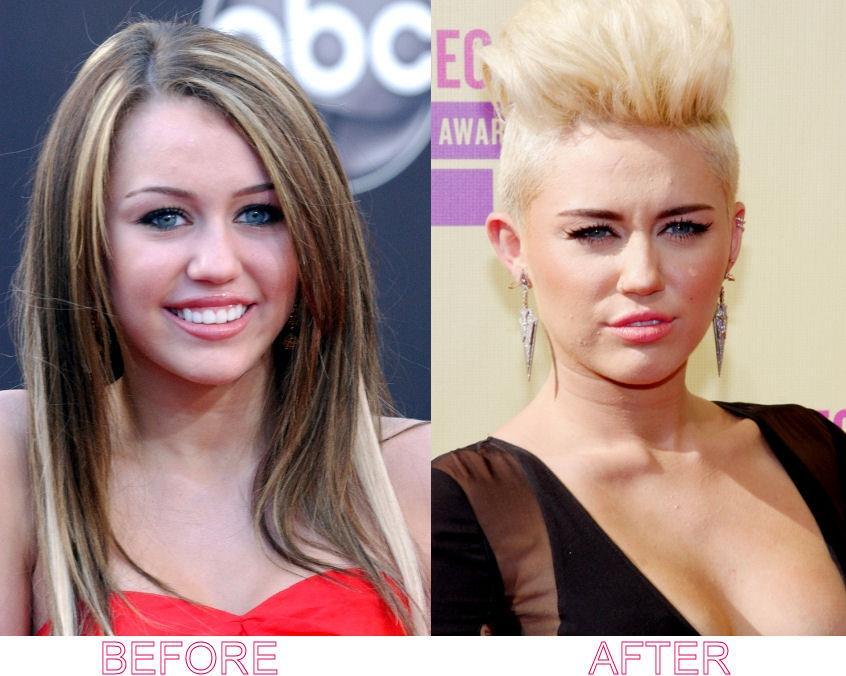
As somebody who spent the entirety of middle school watching Hannah Montana, while looking back on the year 2013 one thing that jumps out would be Miley Cyrus' transformation. Cyrus began breaking out of her pristine and ‘innocent’ image that Disney had blanketed her with for so many years when her song (and accompanying music video) 'Can't be Tamed' was released, c ausing a frenzy among the media and her fans. Little did they know that this was only the beginning. Over the course of the last year, Miley has not only changed her physical appearance by cutting and bleaching her hair, but the material in her songs has c hanged drastically as well. This caused everybody to go insane. Miley Cyrus became the most googled celebrity in 2013. People were fascinated to the point where they did not really notice the message behind her statement and only really associated her with twerking and sticking her tongue out. When Miley Cyrus first cut her hair, she posted a picture on twitter adding that she had never felt more like herself. In countless interviews she explains that Disney had molded her into an image that prohibited her from actually being who she was. Miley Cyrus is well aware of what people think of her, yet, she doesn't care because she is happy being who she is. I personally, am not, in any way condoning some of her actions, but instead of immediately judging her, I t hink that people need to recognize that Miley Cyrus is finally escaping from the chains that held her down for so many years, telling her how to be, how to look, or what to say, and now she is able to push aside the mask that she was living behind.


Occupy Kiev: The Battle in Ukraine
By Stefan Sultan
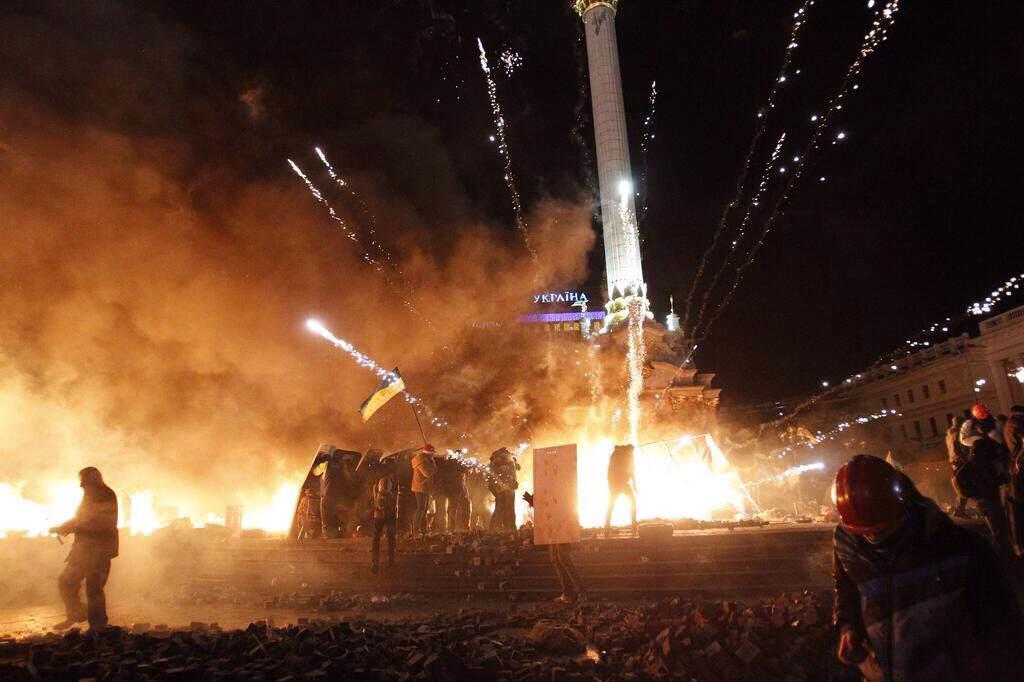
Ever since Ukraine’s president,Viktor Yanukovych, rejected a major trade deal with the EU in December, Kiev has been overrun by protesters. Sin ce then these protests have spread all over Ukraine, with some, such as the ones in central Kiev, reaching over 100,000 people, which are even bigger than th e ones in the 2004 Orange Revolution. While the protests have not turned violent, several government buildings throughout Kiev were occupied by protesters who have demanded the resignation of Yanukovych and a more Eurocentric foreign police 1 By mid January the protests had started to lose momentum and were getting smaller and smaller every day. It wasn’t until a new antiprotest law was passed on January 16th that anger against the government flared up again and a new wave of protests consumed Ukraine. This new draconian law imposed massive fines and detainment on anyone who committed various “crimes” such as putting up a tent in a public place or organizing or helping with meetings that had not been authorized by the government. In response to this Yanukovych offered many concessions to the opposition leaders. These included a repeal of these anti-protest laws, a roll back of several constitutional changes that expand executive power, and a replacement of the current Prime Minister with Arseniy P. Yatsenyuk, one of the main opposition leaders. Opposition leaders turned down these concessions- much to the relief of the protesters who don’t trust most Ukrainian politicians and want “more systematic change” 2 - demanding the resignation of Yanukovych and elections for late this year, a concession which Yanukovych is currently refusing to give.
On February 18th police forces moved in to several protests camps in an attempt to clear them out, but instead of quelling the crisis this move only sparked violence throughout the country. By the 20th, over 100 protesters and police had been killed and 571 injured and the unrest had spread to most Ukrainian cities, from the western port city of Odessa to the eastern city of Kharkiv.3 In response to this violence, the European Union imposed sanctions which included a freeze of all Ukranian assets and visa bans. After a f ew days of violence Yanukovych and opposition leaders reached a deal which would change the constitution to limit the powers of the president, presidential elections which would be held by December at the latest, and an interim government that would be cre ated within 10 days of the deal. However, just two days later, the Ukrainian parliament voted to oust Yanukovych, (cont. on next page) 1
in what Yanukovych described as a coup shortly after, and to set new elections for May 25th. Shortly after this protesters stormed the presidential compound to find Yanukovych gone -he had fled Kiev for Russia-but signs of mass corruption in the presidential palace, including a private zoo and a massive yacht. Furthermore, on the same day ex-PM Yulia Tymoshenko was released from prison after a vote by the parliament. Tymoshenko, who is a major opposition leader, was sentenced to seven years in prison in 2011 a move that was considered politically motivated by several countries and Non Governmental Organization’s, such as Amnesty International.4 Shortly after the new interim government was created by the parliament, Russian forces invaded the Crimea, a strategically important peninsula in southern Ukraine, and continue to occupy it.
1.http://www.nytimes.com/2013/12/02/world/europe/thousands-of-protesters-in-ukraine-demand-leaders-resignation.html
2.http://www.nytimes.com/2014/01/27/world/europe/ukraine-protests-spread-as-overture-is-spurned.html
3.http://www.bbc.co.uk/news/world-europe-26277378
4. http://www.cnn.com/2014/02/23/world/europe/ukraine-yulia-tymoshenko-profile/
Controversy and the Sochi Olympics
By Lindsay Saligman
You may have heard of Russia’s Gay Propaganda Law, but did you know that it’s only the tip of the iceberg?
This article will summarize Russia’s infamous anti -gay legislation as well as the numerous other human rights violations and controversies surrounding the 2014 Winter Olympic Games.
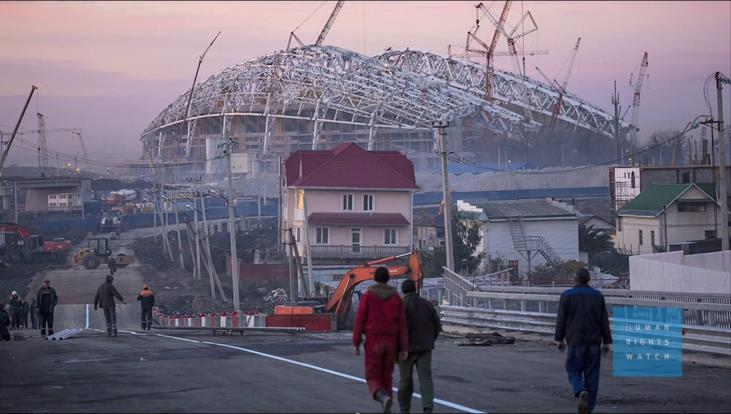
Anti-Gay Discrimination: In 2013, Russia passed what has become known as the “Gay Propaganda Law” which prohibits those within the country from spreading ideas about “non -traditional sexuality” to individuals under 18. The law is viewed by members of the LGBT community both in Russia and around the world as a human rights violation that attempts to equate homosexuality with pedophilia. Russian president Vladimir Putin confirmed this mindset when he was asked if homosexual athletes would be welcome at the Olympics: Putin responded that LGBT athletes were more than welcome to come to Sochi so long as they “leave kids alone.”
Migrant workers: Up to 70,000 migrant workers, coming mostly from Central Asia and the Ukraine were h ired by the Russian government to aid in the construction of the Olympic facilities. These laborers were forced to work twelve hours a day, seven days a week, with only one day off per month, conditions that directly violate Russia’s labor laws. Additionally, a large portion of these workers were paid far less than Russia’s minimum wage of $0.97 an hour. Some workers did not receive copies of their employment contracts and were paid nothing at all. Though public outrage directed at the International Olympic Committee from around the world could possibly help get more of these workers the paychecks and conditions promised to them by law, the human rights violations against these migrant workers have been majorly overlooked by the media due to extensive coverage of the gay propaganda law in the US and Europe.
Forced evictions: An estimated 2,000 families living in and around Sochi were forcibly evicted by the Russian government in order to make room for roads and facilities for the games. Although these fami lies were relocated by the government and promised financial compensation, many of them rely on agriculture or renting out of parts of their property for income and therefore have permanently lost a significant portion of their livelihood. (cont. on next page)
The Do Less Than Nothing Congress
By Julia Weiss
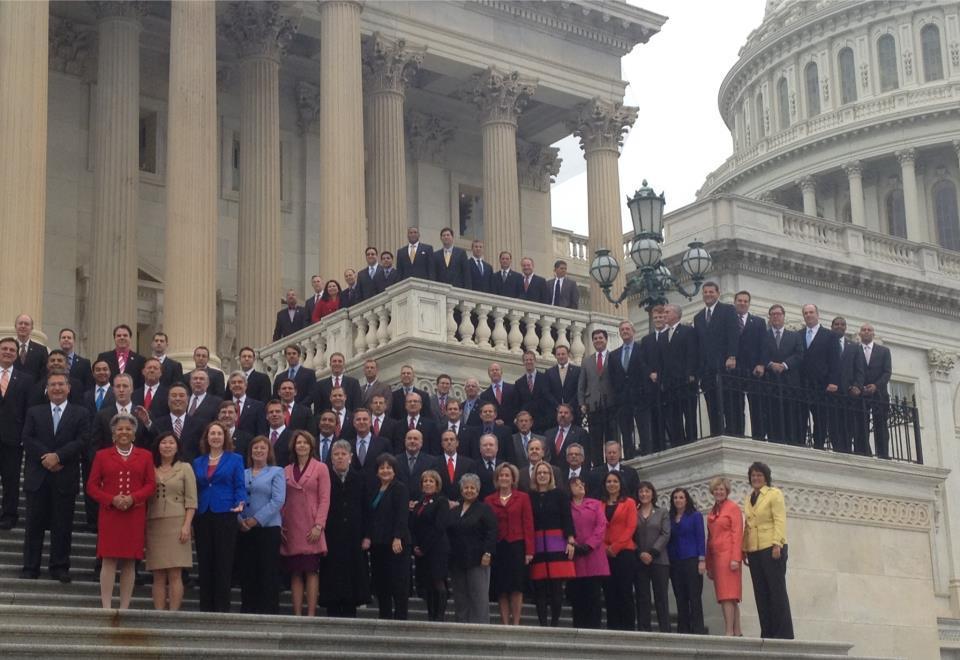
The 80th United States Congress, which served from 1947 through 1949 in Washington, was dubbed the “Do Nothing Congress” by Harry Truman after it successfully passed only 900 bills over the course of its two-year term. Though Democrats had previously held the majority in both the House and the Senate, Republicans seized control of both houses during the Do-Nothing period, sustaining a 6-seat advantage in the Senate and outnumbering Democrats by 63 seats in the House of Representatives. However, the majority party’s legislative influence was not enough to overcome the branch’sdivisive political gridlock and pass bills effectively, and so, the 80th Congress went down in history as the least productive legislative body of all time.
Until now. Maybe 900 bills came up short in 1949, but Truman might have reconsidered his judgments of the 80th (Do Nothing) Congress if given the chance to observe the 113th, our current legislative b ranch, in office. Since the group opened session in January of 2013, they have passed and allowed the president to sign only 52 bills into law!
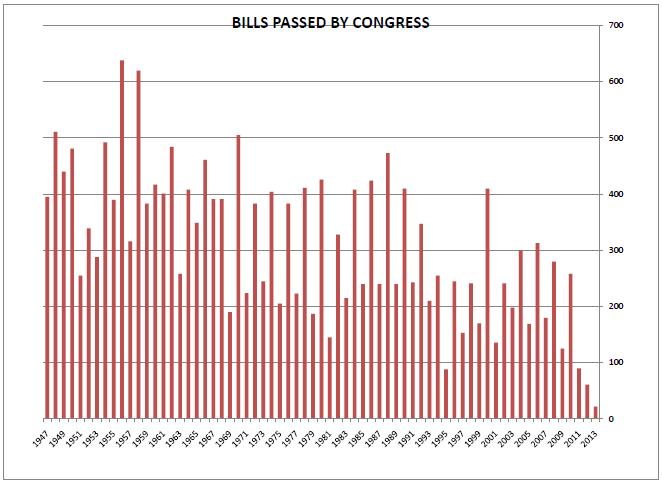
In case that statistic isn’t proof enough of the inactivity, let’s do the math: the 113th Congress, to merely uphold the standard set by the infamous Do Nothing Congress, would have to pass 848 bills over the course of its next year in session. Even an examination of the makeup of their 52 bills is equally indicative of Congress’ gridlocked state. While some of their bills, such as the Violence Against Women Act, represented successful and relevant legislative achievement, the 113th Congress spent time over the course of the year renaming bridges and sizing commemorative baseball coins, cosmetic issues always considered but usually accompanied by political decision-making on more pertinent issues. Clearly, this Congress did not maintain that balance.
Why can’t Congress pass bills? The answer isn’t definite, but much of the reasoning lies in the deep polarization of this particular legislative body. While the Democrats control the Senate, Republicans maintain the majority of the seats in the House of Representatives, yet that standing alone does not account for the branch’s intense and lasting state of gridlock. Perhaps a better explanation is the fact that animosity between the two major political parties has reached an all-time high.
Mitch McConnell, the current Senate minority leader, once claimed that Congress’ top priority should be to deny President Obama a second term in office, a goal in which the Republicans were unsuccessful but a divisivenot to mention unproductive - sentiment they still maintain. (cont. on next page)
Can Bitcoins be hacked?
In the time that Bitcoin has been around, it has never been hacked. The cryptographic security protocols that protect the Bitcoin transactions are nearly impossible to crack. Nothing is for certain though, and there could be a possible flaw somewhere in the coding. Experience suggests that the chances of that are very unlikely. Also, the fixed number of Bitcoins that are able to be in circulation is 21 million to avoid the problems that regular currencies have when they print too much money and the value goes down. For now, it is a safe and secure way of doing business.
Sources:
[1]http://bitcoin.org/en/faq
[2]http://www.thefreedictionary.com/currency
http://bitcoin.org/en/
http://www.youtube.com/watch?feature=player_embedded&v=Um63OQz3bjo
Gun Control
By Stefan Sultan
It was only six months ago that gunfire erupted at a navy yard in Washington, DC. A little more than a year has passed since gunshots broke the early morning silence in Newtown, Connecticut and a movie premiere was cut short by bullets in Aurora, Colorado. Just four years since a shooting permanently scarr ed an army base in Killeen, Texas; six years since students were left horrified in Blacksburg, Virginia; and nearly fifteen years since a massacre shocked Columbine, Colorado in 1999. Since Columbine over 450,000 Americans ha ve been killed by gun violence - which begs the question: what should be done about this? Some people, such as National Rifle Association President Jim Porter and the former Governor of Alaska Sarah Palin believe that the best way to stop gun violence is to make sure more people have gu ns. They believe that if the “good guys” have guns, they will be able to stop “bad guys” with guns, and they often advocate for armed guards in places such as malls and schools to prevent a massacre before it can begin. These people often warn against gun control. One such individual is NRA Vice President Wayne LaPierre, who claims, “A heinous act of mass murder either by terrorists or by some psychotic who should have been locked up long ago will be the pretext to unleash a tsunami of gun control. ”1 People, like LaPierre, are afraid that the government will use events such as the Columbine shooting to unrightfully take away their guns, an event which they believe could cause the government to overextend its powers.
However, not everyone agrees with these theories. Opponents often raise the point that America already has the highest rate of gun ownership in the world, and they also bring up that there were armed guards at Columbine High School and plenty of people with guns at Fort Hood. This group of peopl e, which includes President Barack Obama and former Congresswoman Gabby Giffords, argue that the solution to gun violence is not more guns but rather fewer. They say that in order to stop mass shootings we should enact gun control measures, such as an assault weapons ban, a ban on high-capacity magazines, and universal background checks. Gun control advocates will often draw attention to Australia, which they say is a perfect example of how gun control can work. The regulations implemented by Australia varied greatly from a massive buyback program to a ban of semi -automatic rifles. Since the gun regulations were passed in 1996, there has not been a single mass shooting in Australia, as opposed to the 13 shootings in the 18 years prior. However, those against gun control often say that Australia’s solution to gun violence is not appropriate for the U.S. because the two countries are completely different (completely ignoring the several similarities between the two nations). With America at a crossroads, the question must be asked: should this nation follow the paths of Australia and the U.K. and enact stricter gun control laws, or should we be closer to countries like Yemen and Somalia and leave firearms unregulated?
Sources:
- http://www.cbsnews.com/news/nra-ceo-its-not-paranoia-to-buy-a-gun-its-survival/
Economic Crisis: The estimated 50 billion dollars the Russian government spent on the Sochi games is the cause of major inflation that is causing economic crises in regions all across Russia. While the prices of everyday goods are increasing, most people’s salaries are not, which increases the financial strain on the average Russian. To give an idea of the scale of this crisis, two years ago, when preparations for the game more or less began, the ruble to dollar exchange rate was 29:1, meanwhile in recent months it has climbed as high as 35:1, roughly a 20% increase.
1. Washington Post. http://www.washingtonpost.com/world/olympics/how-russia-enforces-its-ban-on-gay-propaganda/2014/02/06 /0664d9ea-8f25-11e3-878ed76656564a01_story.html
2. Human Rights Watch. http://www.hrw.org/russias-olympian-abuses
3. Matthew Boesler, Business Insider. http://www.businessinsider.com/a-look-at-minimum-wages-around-the-world-2013-8
The Philly Education System...or lack thereof.
By Olivia Backal-Balik
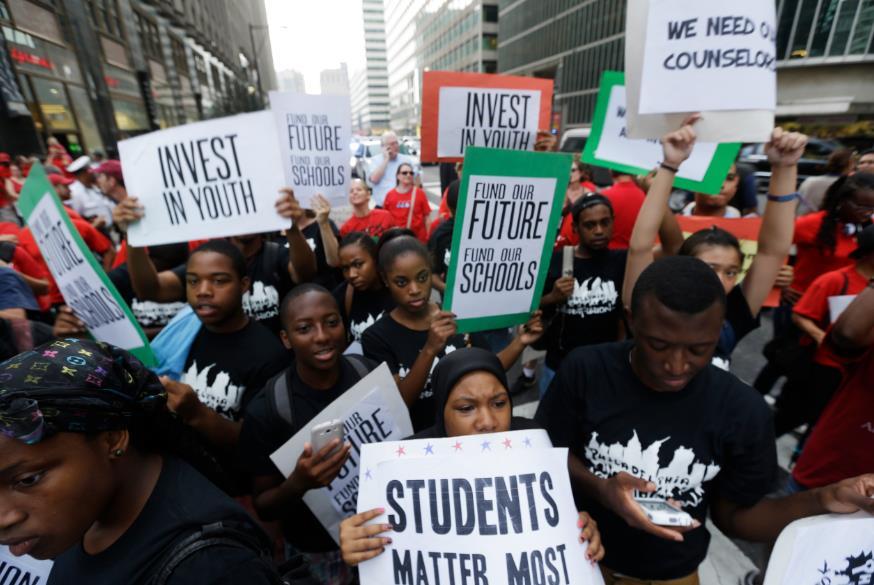
As you may have heard, earlier this year the Philly Schools struggled to start the school year right. Before the school year had even started it was predicted that a devastating five dozen schools in Philadelphia needed to be closed. Teachers took pay cuts to keep the schools open but even that sacrifice was not enough. Twenty four schools closed before the year began including landmark schools such as Germantown High School. Still, those schools that remained open were short of assistant principals, music teachers, guidance counselors, nurses, classrooms and so much more. Teachers have been sending their students home with wish lists asking the parents for supplies as basic as paper and pencils.
But why? How did these problems arise? Why are they now so poignant? These questions are complex and do not have just one answer. Many reasons led to the current state of the Philadelphia schools.
In the 2009 - 2010 school year, a federal stimulus package of 787 billion dollars was created to spark economic growth.1 650 million dollars of the stimulus money that Pennsylvania received was reserved for the education department. However, because the schools had been granted the extra federal money, and because of the state’s own budget crisis in the wake of the 2008 recession, the state cut its own spending on education by 350 million dollars. This left the schools with only an extra 300 million dollars to use. While this additional federal money was a wonderful help to a school system that had already been struggling, the money was only temporary. Despite a lot of argument as to whether another stimulus package should have been enacted, as the country was still struggling to recover from the economic downturn, Congressional gridlock meant that the additional federal funding expired.
When the stimulus package ended, after providing the schools with some preliminary help, there was hope that the state would use its revenue in order to keep funding the school systems. However, instead of further funding the schools, the state legislature, along with Governor Corbett, slashed the b udgets. Though it is clear that the school district cut a significant amount of money, the precise figure has been argued between political parties. Corbett's proposed initial cuts in the Philly schools budget were enacted in the beginning of 2011, around the same time when the federal stimulus money expired. Even before the federal stimulus, the Philadelphia schools were losing state support. The stimulus covered that problem up temporarily. This unfortunate timing of budget cuts led to a lot of controversy as to how much money lost from the schools was based Corbett’s budget cuts or the fact that the schools were losing support before the stimulus. Meaning: the cause for the extreme lack of funding is not quite clear. (cont. on next page)
As confusing as that may be, a clearer fact is that Gov. Corbett helped to reduce the state spending on K -12 education from the pre-stimulus amount of 5.8 billion to 5.3 billion dollars and his proposed cut of 50% from college funds was followed through with.2 The Philadelphia District approved a 2.4 billion dollar budget that many called the doomsday budget.3 These are only some of the many cuts that have taken place over the past three years. Between all of these budgets cuts, the Philadelphia schools fu nding has declined by 274 million dollars according to the Philadelphia State Education Association. This drastic decline in funding has led to the serious problems within the Philadelphia schools. The school year began with so many crowded classrooms and laid off teachers that the federal government lent the state 45 million dollars. 4 Yet, Gov. Corbett pushed to withhold this money from the schools unless teachers took bigger cuts in their pay and in their benefits. The teachers unions refused. Gov. Corbett and the state legislation only approved the release of the money after a significant incident. There was an enormous public outcry after a 6th grader died after having an asthma attack at her school with no nurse to take care of her. The girl’s parents and others believe strongly that she would have lived if a nurse had been at the school. 5 Corbett stated that the release was unaffiliated with the girl’s death but the money was released then nonetheless. The $45 million has been used to rehire some of the many laid off teachers and reinstitute some of the many cut programs. Even still, there is plenty of more work to be done.
1. http://www.fundphillyschools.org/the-facts
2. http://www.politicspa.com/obama-knocks-corbetts-brutal-education-cuts/50405/
3. http://www.delcotimes.com/general-news/20120306/pa-education-boss-fed-stimulus-warped-pa-spending-in-both-directions-with-video
4. http://mediatrackers.org/pennsylvania/2013/10/17/gov-corbett-releases-philly-school-funding-without-union-concessions
5. Ibid
Football & Concussions: Time for Drastic Measures?
By Anthony C. Moraglia
Football is a hard game. There is a myriad of plays to learn, and you're often going against players that are bigger, stronger, faster, and/or more aggressive than you are. You would think with such a physical game, the NFL would be meticulous about preventing serious concussions, right?
Well, our answer may need more explanation. Out of the 1,696 NFL players who were on an active roster this season, 228 said they suffered from concussions. In other words, 7.4% of players suffered from concussions. 1 in every 13.5 players suffered from game ending concussions. The percentage has been steadily increasing over the past 10 years, making the health concern more and more apparent.
Many precautions have been taken this season to decrease the number of concussions an d serious injuries. Mainly, NFL referees have become much more diligent about giving large penalties for plays that create a risk for injuries, such as head to head collisions or pass interferences. In addition, the NFL has been giving fines as large as $100,000 for the ‘dirty’ players causing these injuries. The health concerns have also led to new technologies: Nike has created helmets with sensors, to flash yellow for moderate impact hits and red for severe hits to create awareness for the team to medica lly address hurt players.
However, is the NFL doing enough? Major League Baseball just approved new protective ball caps for pitchers, as extra padding along the front and sides will soften the blow of line drive hits toward pitchers’ heads. So, if Major League Baseball is making headgear safer for players for a non -contact sport, why isn’t the NFL for a full-contact sport? The rate of NFL concussions is just starting to fall. Only time will tell if more drastic measures are necessary.
Bitcoin By Kyle Tuverson
What is Bitcoin?
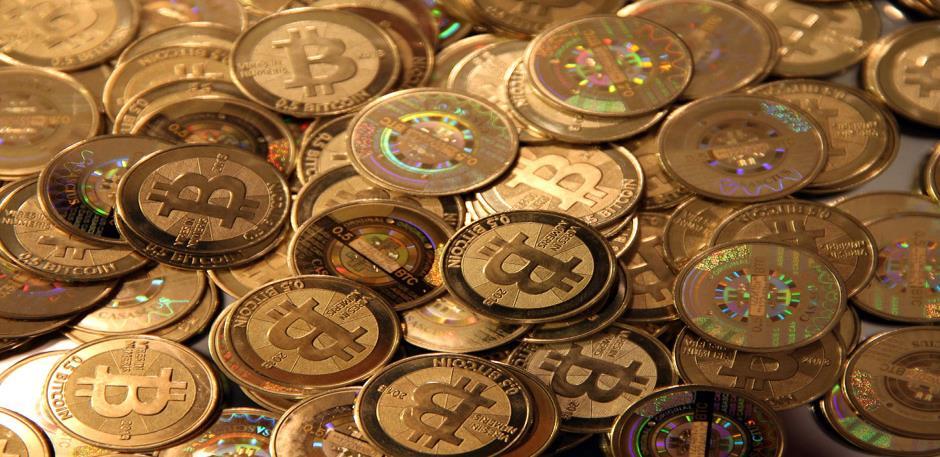
Bitcoin is a new, online digital currency and payment system. Bitcoin’s official website calls it “a consensus network that enables a new payment system and completely digital money. It is the first decentralized peer-to-peer payment network that is powered by its users with no central authority or middlemen.” [1] This means that the currency is not tied to certain countries, like the dollar or euro, but is tied to the Internet. Transactions are made through a mobile app or computer program that allows users access to their mobile Bitcoin wallets. The application also gives users the ability to send and receive bitcoins with other users entirely over the Internet. Bitcoins can be used to buy anything from snow blowers to brand new laptop computers.
When was Bitcoin created and by whom?
Digital, peer-to-peer currency is not a brand new idea. The term “crypto-currency” was coined by Wei Dai in 1998, first proposing to use encrypted data to perform transactions. The idea was later built upon and mapped out by someone under the pseudonym Satoshi Nakamoto in 2009. A year later he left the company which opened it up to hundreds of developers, all working on Bitcoin. The coding for Bitcoin is completely open and fre e, allowing any developer in the world to use the Bitcoin software. This open source makes it difficult or impossible for the Bitcoin software to be counterfeited.
How do you get Bitcoins?
There are a few ways that one could acquire Bitcoins, such as p articipating in a Bitcoin Exchange, being paid in Bitcoins, and mining them. A Bitcoin Exchange is the conversion of actual dollars into Bitcoins by using a credit card or a PayPal account with the help of a Bitcoin broker. One can also be paid in Bitcoins for a service or product; all that is needed is the Bitcoin application and wallet to begin using Bitcoins. There is also a way to earn Bitcoins through a method called mining. Mining is an incentivized way for people to participate in expanding the Bitcoin network. Those who solve complex Bitcoin algorithms are rewarded with a random amount of Bitcoins. The more mining being done, the harder the math problems are to solve. Miners started out using the processors on their computers, but when the algorithms got to be too difficult to solve, specialized software had to be developed. The mining process makes sure that the Bitcoin network stays fair and balanced, and makes sure that too many Bitcoins do not flood the market at one time.
How can a Bitcoin have value?
By definition, a currency is “transmission from person to person as a medium of exchange; circulation,” [2] and Bitcoin achieves this. It has all of the properties of tangible currency like durability, portability, divisibility, etc., but relies on mathematics instead of something like gold or silver in order to have value. But most importantly, what makes the currency work are the businesses and people willing to accept them and trade them. (cont. on next page) 5