

Venezuelan Crisis Intensifies as Both Maduro and Gaido Claim Presidency
By: Ryan Jokelson
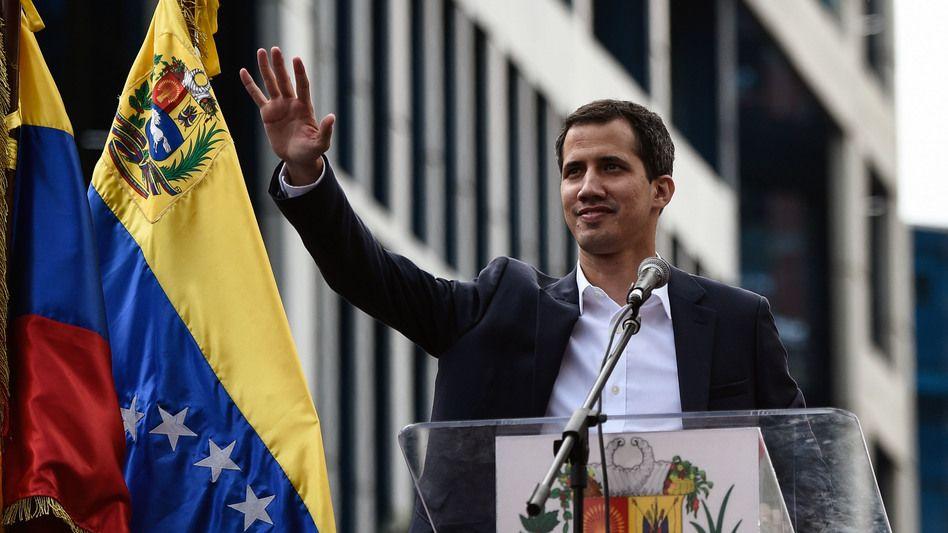
Following a widely criticized election and continued economic struggles in Venezuela, Nicolas Maduro’s hold on the country is being challenged for the first time Juan Guaido, 35, has declared himself the acting President of Venezuela and is calling for a new presidential election Maduro, the leader of Venezuela since 2012, and the successor of socialist Hugo Chavez, has overseen a period of turmoil in the country, which has been hard hit by the effects of lower oil prices, corruption, and mismanagement

Maduro’s government has responded to economic struggles by blaming the United States and by cracking down on the opposition. In 2017, as talks broke down between Maduro and the opposition-controlled National Assembly, Maduro pushed through constitutional changes that stripped the Assembly of most of its power and largely replaced it with a pro-Maduro legislative body. Protests broke out, resulting in thousands of arrests and 165 dead. Since then, Maduro has been denounced by the opposition and by several world leaders as a dictator.
The most recent Venezuelan presidential election, won by Maduro, was widely denounced by international observers and dissidents within Venezuela as unfair and undemocratic. This spurred the National Assembly, to exercise one of their few remaining constitutional powers, declare the results invalid, and appoint the President of the Assembly, Juan Guaido, as the acting President of Venezuela On January 23rd, when Guaido accepted the post, he became the first major opposition leader within the country to directly challenge Maduro’s hold on power Guaido was immediately recognized as the legitimate Venezuelan president by the United States, Canada, and the majority of its South American neighbors Maduro has denounced these moves as “imperialistic” responses by the United States and its allies Maduro briefly demanded that all American diplomats leave Venezuela, but reversed course after it became clear that American Embassy staff had no intention of leaving
The Trump Administration has imposed sanctions on Venezuela and on leaders of Maduro’s government over the past two years but has released no plan regarding the current crisis. Military options have been discussed by administration officials and President Trump has maintained that those options remain “on the table”, but no military action has been taken yet.
Sources:
https://www bbc com/news/world-latin-america-36319877
https://www bbc com/news/world-latin-america-46985389
U.S.-China Trade Negotiations Show Mixed Signals as Deadline Looms
By: Evan Sweitzer
The longstanding trade dispute between the United States and China shows no signs of ending, although Chinese officials made a surprising concession on Friday, January 18. China proposed a path to eliminate its trade surplus with the United States, which currently stands at around $350 billion per year, by 2024 Currently, the United States imports more goods from China than it exports to China, in terms of monetary value, and the Chinese proposal is to eliminate this difference
However, many American analysts are skeptical of the feasibility of China’s offer Some argue that the surplus would be very difficult to close, as the U S would have to drastically scale back its demand for Chinese products in conjunction with China’s buying spree. Tom Orlik, the chief economist for Bloomberg Economics, says that China buying more U.S. goods could negatively affect trade imbalances with other countries: ”If China switches its imports from other countries to the U.S. -- less Brazilian soybeans, more U.S. soybeans -- that might help deal with their bilateral problem with the U.S., but at the expense of worsening imbalances with other countries.”
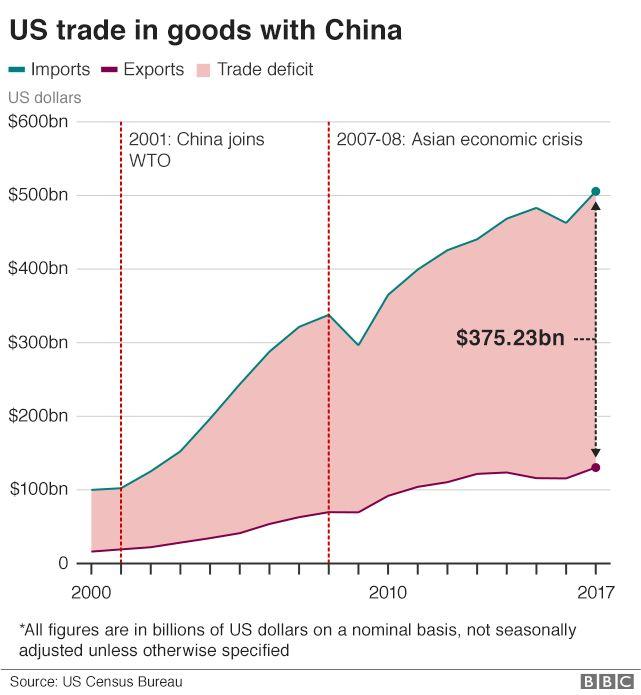
China’s economic growth is at its slowest point since 1990 Ning Jizhe, the director of China’s National Statistics Bureau, acknowledged that “The China-U S conflict is indeed affecting China’s economy,” but added that “the impact is manageable ” As the Chinese Government attempts to downplay the crisis, both parties are preparing for a critical round of talks, set for January 30 and 31 in Washington
A Chinese delegation headed by Liu He, China’s Vice Premier, will meet with Steven Mnuchin, the U.S. Treasury Secretary, and Robert Lighthizer, the Trump administration’s top trade representative, in Washington. Neither the U.S. nor China is optimistic that the countries will be able to reach a deal by March 2, a deadline that President Trump and Chinese President Xi Jinping set during a December meeting. The Trump Administration plans to levy tariffs on an additional $200 billion in Chinese goods if a deal is not reached by that date, likely crippling the Chinese economy further
Despite the Chinese offer to eliminate the trade surplus, the two sides are reportedly far from a deal While this lack of progress stems partly from the infeasibility of China completely erasing the surplus, the United States also wants profound changes to the structure of the Chinese economy to be included in a sweeping, comprehensive trade deal between the two countries For example, the U S wants China to make it easier for foreign companies to invest in Chinese markets, and for the country to privatize many of its federally-funded programs and enterprises This seems unlikely to take place within the context of a U S -China trade deal; if a deal is reached, it would likely entail more moderate changes to the Chinese economic structure, as well as a plan for China to buy more American goods
However, economic concerns are not the only sticking point for the Trump Administration as the two sides try to work toward a deal. The U.S. alleges that China has been stealing American intellectual property for “decades,” including forcing American companies to hand over technology in exchange for the right to operate in China. According to Bloomberg, early-January talks “amounted more to an airing of grievances than constructive negotiations,” according to participants and others briefed on the talks. The March 2 deadline looms with no deal in sight and potentially crippling consequences for Chinese and global markets.
Sources:
https://www bloomberg com/news/articles/2019-01-21/u-s-china-trade-talks-falling-short-on-make-or-break-ip-i ssues
https://www nytimes com/2019/01/21/us/politics/china-trade-pessimism html https://www bloomberg com/news/articles/2019-01-18/china-is-said-to-offer-path-to-eliminate-u-s-trade-imbala nce
http://fortune com/2019/01/19/can-china-make-its-trade-surplus-with-the-u-s-disappear/ https://www theguardian com/world/2019/jan/21/chinas-economic-growth-slowest-since-1990 https://www bbc com/news/world-43512098
Government Shutdown 2018-2019
By Lisa Green
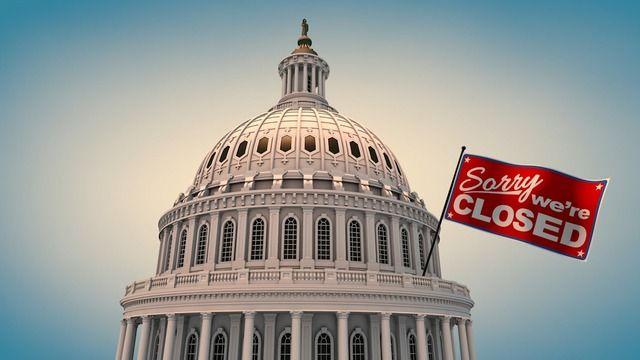
On December 22, 2018, a partial shutdown of the United States government began. It was caused by a failure to come to a policy consensus regarding border security. President Trump demanded over $5 billion to be allocated to the creation of the Mexican Border wall, while Democrats in Congress refused to allocate any funds to this venture, citing a desire to find alternative methods of securing the border. 3
On December by a failure to come to a policy consensus regarding border security. President Trump demanded over $5 billion to be allocated to the creation of the Mexican Border wall, while Democrats in Congress refused to allocate any funds to this venture, citing a desire to find alternative methods of securing the border. As of right now, this shutdown is ongoing and its’ effects are numerous.
First of all, this shutdown has caused a quarter of government programs to temporarily lose funding, meaning over 800,000 government employees have either had to work or stay home without pay indefinitely. Recently, over 450,000 employees have been required to report to work, despite not being paid, and that number could keep escalating as long as the shutdown continues. In addition, these employees would risk being fired if they were to go on strike. These conditions have made it nearly impossible for many of these employees to pay for their medical expenses, mortgages, and family’s basic needs, let alone afford some of the luxuries they could just a few months ago.
Many Federal Government positions belong to Americans in the Middle Class, and as a result, the Middle Class is suffering. Furthermore, these employees’ inability to contribute to businesses and their diminished role as consumers are harming economic growth. In fact, Kevin Hassett, the chair of the White House Council of Economic Advisers, has estimated that the shutdown has caused quarterly economic growth 0.13 percentage points per week. The longer the shutdown continues, the more likely it is that the Gross Domestic Product (GDP) will be irreversibly harmed.
In addition, funding for many government assistance programs, namely the Supplemental Nutrition Assistance Program (SNAP) has only been allotted for the next few weeks. Consequently, if this shutdown continues into February, up to 38 million Americans could lose their monthly benefits. Should the shutdown last even longer, hunger could elevate into a national health crisis, a status it has not held since Food Stamp programs first expanded throughout the 1960s.The consequences of this shutdown are countless, and more government agencies are being limited or closed by the week as a result of a lack of compensation for employees. To avoid having their positions terminated, TSA officers have called in sick at extremely high numbers. While some see this as a strategic protest, others see it as a precursor to quitting, as many officers already have.
Additionally, many government labs have stopped their operations, and funding for scientific grants has been diminished. On a similar note, the Environmental Protection Agency has halted its operations, which include monitoring pollution, inspecting oil refineries, water treatment plants, and chemical factories.
Moreover, national parks, like Joshua Tree National Park, have either closed or have restricted their staffing, which has contributed to questionable levels of safety and has even caused three deaths since the shutdown began. Similarly, National Museums, like all of the Smithsonian museums, have been closed.
On Friday, January 25th, President Trump agreed to reopen the government for three weeks. As of right now, a permanent end to the shutdown is not in sight. However, that could change should a border security compromise happen, especially considering how unfavorably Americans have viewed the shutdown itself and the border wall.
Sources:
https://www.huffingtonpost.com/entry/government-shutdown-food-stamps us 5c31070de4b0bcb4c25c4524
https://abcnews.go.com/Politics/tens-thousands-federal-employees-called-back-work-government/story?id=6043 1671
https://www.vox.com/policy-and-politics/2019/1/18/18188262/government-shutdown-economy-recession-work ers-gdp
https://denalifcu org/news/government-shutdown-help
Prison Reform - First Step Act
By: Nicole Gilliland
Based on the statistics at the bottom of page 6, many Americans believe that decisive action to improve prison conditions and the penal system in the United States is much needed. In general terms, “Prison Reform” are laws and actions to improve conditions and establish a more effective penal system and implement incarceration alternatives. When discussing prison and mass incarceration in the United States conflicts include overpopulation, mistreatment of convicts, the need for improved medical and mental health services, and reducing the problem of repeat offenders. Prison reform has been receiving a lot of attention recently due to the First Step Act. 5
There are two types of prison reform, front, and back-end. Front-end reforms focus on how to lessen the number of people sent to prisons and the length of their sentences before incarceration occurs. Back-end changes attempt to reduce prison time once the inmate is imprisoned. The First Step Act is mostly a back-end reform which has been predicted by some to make major changes to America’s mass incarceration problem.
The First Step Act is a revision of the Sentencing Reform and Corrections Act (SRCA). SRCA however, was not passed in 2016 due to House disagreements. The First Step Act advocates for a sentence reduction of federal drug offenses which continues some of the previous reform of SRCA. The First Step Act mainly targets how to shorten existing sentences of imprisoned inmates through a system of time credits. Prisoners can obtain credits from participating in rehabilitation or educational programs. These credits can accumulate and be used towards early release or monitored release. This was put in place for those who actively work towards a trade or job would be less likely to return to prison after their release. A study from RAND Corporation showed that inmates who participated in educational and other programs reduced the likelihood of recidivism by 43% . In addition to the education programs, the First 1 Step Act encourages the Bureau of Prisons (BOP) to place prisoners closer to their homes because family contact is thought to help with reintegrating inmates back into society. This Act also asks the BOP to relocate the low to medium risk inmates and older inmates to “Pre-release Custody.” Lastly, the First Step Act encourages better treatment for inmates, including pregnant women and those in need of medical attention. This act states that the BOP shall perform these tasks and will be held responsible for following through.
The First Step Act was signed and passed on December 18, 2018. Many are in favor of this Bill, including President Trump, however, some believe that this act will not have the desired effect for improving the problem of mass incarceration in the United States. Although the First Step Act does not address the source of the problems, it is predicted that the sentence reductions and early releases will amount to a large money savings with the good credits alone, “estimated that fixing this will allow some men and women to leave prison soon after the bill passes, yielding savings of $40 million in the first year.” Hopefully, this act will live up to its predicted achievements and positively impact both inmates and the overall system.
● 6.5 million US adults (1 in 38) currently have an immediate family member behind bars
● 1 in 7 US adults has had an immediate family member behind bars for at least 1 year
○ For 1 in 34 that relative has been behind bars for a decade or longer
● Low income and minority families are significantly more likely to see relatives jailed
● Less than 50% of adults who had a family member incarcerated for more than a year were able to visit
Sources:
https://www.washingtonpost.com/crime-law/2018/12/06/almost-half-us-adults-have-seen-family-me mber-jailed-study-shows/?noredirect=on&utm_term=.a2b96429dbca (Statistic source) https://www.firststepact.org/about https://www.vox.com/policy-and-politics/2018/5/22/17377324/first-step-act-prison-reform-congres s
https://www.brennancenter.org/blog/how-first-step-act-became-law-and-what-happens-next https://thehill.com/opinion/criminal-justice/422091-why-the-first-step-act-shouldnt-be-the-last https://www.rand.org/news/press/2013/08/22.html
Saudi Cleric Dies in Custody as Crackdown Continues
By: Ryan Jokelson
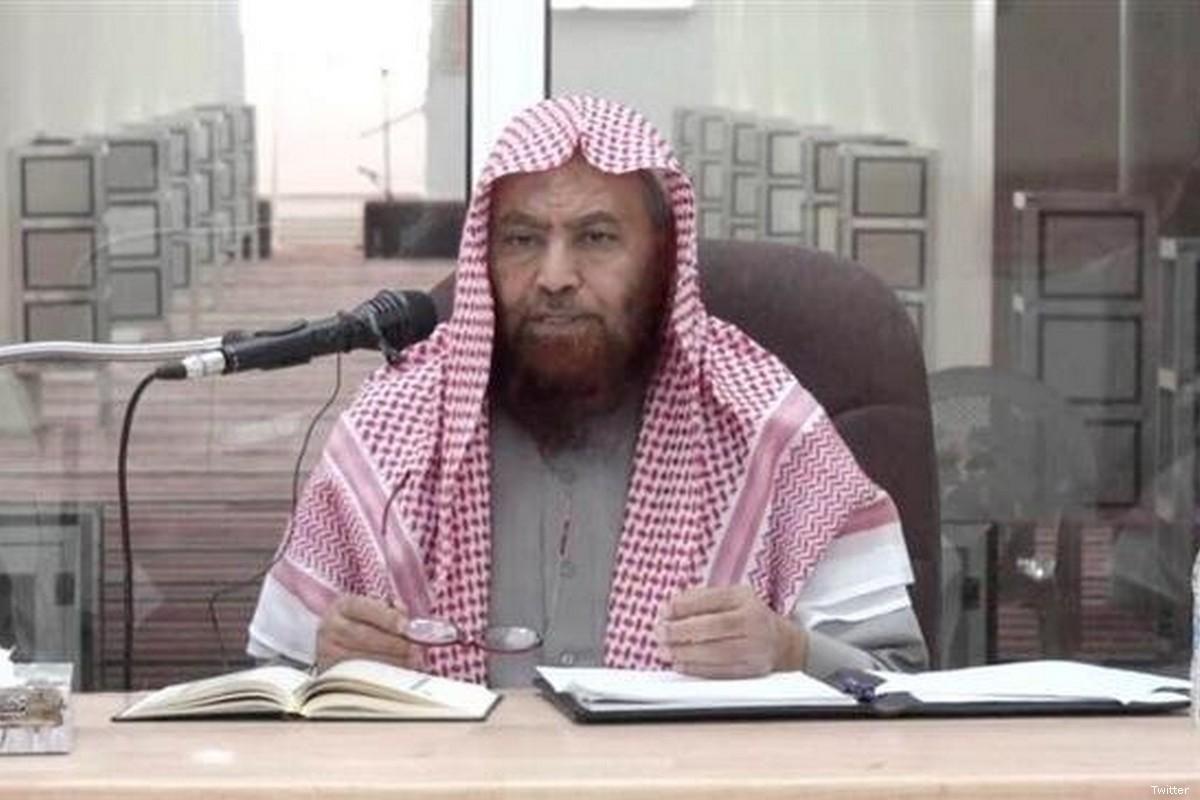
Saudi Imam, Ahmed al-Amari, has died of a brain hemorrhage after five months spent in Saudi prisons Amari’s death comes amid increased international scrutiny of human rights abuses by the Saudi government, particularly after the October killing of journalist Jama Khashoggi
A scholar, teacher, and imam, Amari had close ties to Safar al-Hawali, a scholar who just last year published a book that was highly critical of the ruling House of Saud, and Crown Prince Mohammed Bin Salman. Bin Salman’s rise to power has drawn international attention for the shift in Saudi power politics that it represents. Bin Salman has instituted some reforms, such as allowing women to drive, but they have been accompanied by more high profile crackdowns against those who oppose the Saudi government
Bin Salman is also seen as the primary driver of intensified fighting in neighboring Yemen Under his leadership, Saudi Arabia has done more over the past year to strengthen their military position in Yemen, where they are fighting a proxy war against Iran and the Iranian backed Houthi group The Yemeni Civil War, though, has also become a humanitarian disaster, prompting international scrutiny
Following the October killing of Khashoggi at a Saudi consulate in Turkey, human rights groups and others have called for a reexamination of the United States’ relationship with Saudi Arabia While the US maintains close ties to Saudi Arabia and Bin Salman, American support for the Saudi-led coalition in Yemen has waned, as American aircraft no longer resupply Saudi jets in the region.
Sources:
https://www.aljazeera.com/news/2019/01/prominent-saudi-scholar-ahmed-al-amari-dies-prison-activists-19012 1180756186.html
http://espanol.almayadeen.net/tags/Dr.%20Ahmed%20al-Amari/
http://blogs.friendscentral.org/worldpress/