FRIENDS’ CENTRAL
SPRIN G/SUMMER 2009
Editor: Marilyn Lager, Director, Friends’ Central’s Blackburn Library
Email: mlager@friendscentral.org
Asst. to Editor: Deborah Fedder, Middle School Language Skills Teacher


SPRIN G/SUMMER 2009
Editor: Marilyn Lager, Director, Friends’ Central’s Blackburn Library
Email: mlager@friendscentral.org
Asst. to Editor: Deborah Fedder, Middle School Language Skills Teacher
Forum is our community’s educational journal. Faculty, alumni, board members, parents and students are encouraged to contribute opinions, ideas, innovations and observations about any aspect of their lives relating to educational experiences.
Marilyn Lager Editor, Forum
By Liza Ewen
Liza has been teaching Upper School English for ten years at FCS. This article was inspired by her attendance at Bread Loaf School of English in Vermont where she began her studies for a master’s degree last summer.
It was during my freshman year at Swarthmore College that I first read Virginia Woolf, as part of a course in Modern European Literature. I’m almost certain this was my first introduction to her very existence. We spent two classes, all of two and a half hours, discussing To the Lighthouse, ostensibly the story of one family's summer on the shores of St. Ives and the promise of a visit to the lighthouse that ultimately takes ten years to fulfill. The modernist novel was so far removed from the Shakespeare and Dickens I had studied in high
The modernist novel [To the Lighthouse] was so far removed from the Shakespeare and Dickens I had studied in high school that I remember reading the first chapter over and over again...
school that I remember reading the first chapter over and over again, stymied in my persistent attempts to understand something before proceeding to the second chapter in complete ignorance. It was not the first time that year that I went to class with a combination of hope, anxiety and no small amount of embarrassment that I might find—in the professor’s lecture or other students’ comments—some clue as to the meaning of the pages I had dutifully turned. It was also not the first time that I was relieved to learn that I would have the liberty to choose which texts to write about in a
final paper at the end of the course—or rather, which texts I would not write about, a list whose length would, over the next four years, remain equivalent to the list of texts I came to understand, and a list on which To the Lighthouse would remain for many years to come.
Six years later, in my second year of teaching at Friends’ Central, I found myself staring down the pages of another one of Woolf's masterpieces. As I prepared to teach the senior World Literature course for the first time, I anticipated studying ARoom of One’s Own, Woolf’s extended essay on women and literature,with a bit of dread and plenty of determination. While I was, and still am, haunted by the vivid, visceral memory of coming into an acute awareness, within days of my arrival at Swarthmore, of all the things I didn’t know, certainly the intervening years had taught me more than enough about literature and had brought me much wisdom as a reader (so claimed the framed degree in English Literature hanging over the computer desk in my apartment). At the very least, I told myself, I now knew who Virginia
At the very least, I told myself, I now knew who Virginia Woolf was, and surely most of my students would not.
Woolf was, and surely most of my students would not. These are the small reassurances of a new teacher, and particularly of a twenty-fouryear-old one—the petty but nonetheless essential things that might put her one step ahead of those whom she has been charged to instruct. This academic year marks my ninth time teaching the senior curriculum, and at this point, many of the texts in the class have become as familiar to me as the picture books of my childhood, ones for which turning the pages was simply a formality that provided a reason for one of my parents to sit next to me. Teaching has taught me these stories so well that, four years ago, when I spent the summer studying in a Spanish language immersion program, I repeated the plots of Frankenstein and Hamlet aloud, a little less clumsily each time, as I learned and then practiced more and more verbs and their conjugations.
Each week meant a new tense, and therefore more re-telling, present, past, future, slowly tiptoeing into the realm of the conditional and the subjunctive, attempting to articulate all those things Hamlet might have done or would have liked to do. It is highly unlikely that my foreign language skills will ever allow me to translate the deep inner workings of Hamlet’s psyche properly into Spanish. All of this repetition of the same story, though, reminded me
of what I once knew, what every child knows, about stories: that some become better and richer with time and retelling, while others remain similar in a way that too easily threatens boredom. What teachers know (and work hard to disguise) is that for some books,
What teachers know (and work hard to disguise) is that for some books, the ninth time is as much of a charm as the fifth and the seventh [time]...
the ninth time is as much of a charm as the fifth and the seventh, while for others, we dutifully turn the pages for another year’s class, grateful that we’re surrounded by students for whom the story is uncharted territory.
For me, ARoom of One’s Own has always fallen into the former category. It is a book in whose familiarity I take great delight, both as a reader and as a teacher. I love to walk the path of Woolf’s famous lecture-turned-essay, from her opening assertion that a woman writer “must have money and a room of her own if she is to write fiction,” to her ideal concluding vision that “a great mind is androgynous,” unclouded by the bias and the grievances created by gender and our perceptions of it. The steps she takes along the way are a beautiful illustration of the brilliant truths illuminated by fiction—the essay is as much a story as it is an argument, in which Woolf herself takes on a fictional persona (“Mary Beton, Mary Seton, Mary Carmichael, or any name you please,”) who inherits money from her aunt and imagines the truncated talent and life of Shakespeare’s sister, Judith. Over the course of many years, A Room of One’s Own has taught me as much about persuasive writing as anything else I have read or written myself. It has long left me enamored of Woolf as a writer, despite the fact that my only other knowledge of her came from a work of recent fiction by Michael Cunningham, The Hours. (Like most people I know, I secured a copy of Mrs. Dalloway shortly after finishing Cunningham’s novel, inspired by Woolf’s, and had always meant to read it one day.) For me, one of the great gifts of teaching has been
For me, one of the great gifts of teaching has been that the longer I do it, the more I long to learn and to be a student once again.
that the longer I do it, the more I long to learn and to be a student once again. Ironically, one of the great challenges of teaching literature is making the time to read books besides the ones I’m currently teach-
ing. I simply added Virginia Woolf to a growing list of writers that I hoped one day to have the time to study.
This past summer, a full fifteen years after my initial (traumatic) introduction to Woolf, I decided to plunge into the writers and books on that list, and I enrolled in the master’s program at The Bread Loaf School of English, affiliated with Middlebury College. I had been receiving the course catalog for years, inspired and encouraged by fellow FCS Bread Loafers Dean of Faculty, Bill Kennedy and Middle School teacher, Alexa Dunnington, but I had shied away from the commitment of five summers. Five?! The very idea that I would be approaching forty years old by the time I finished the program posed a seemingly insurmountable mental block, as if those summers spent more freely would somehow delay the inevitabilities of time and age. (There are, after all, so many things I plan to be able to do by my fortieth birthday that would require those summer months—fluently narrating Hamlet in Spanish to my future bilingal children as we drive cross-country to Yosemite National Park is just the beginning of this other long list I’d been making.) Now, in addition to that everpresent awareness of all the things I have yet to learn is a growing sense that while my entire life still lies ahead of me, that entirety is shrinking. I am no longer the academic neophyte I was at eighteen, nor am I the twenty-four-year-old fledgling teacher I had once been.
I have always recognized in the abstract that coming of age is not isolated to the likes of Holden Caulfield and the ninth graders who read his story...
I have always recognized in the abstract that coming of age is not isolated to the likes of Holden Caulfield and the ninth graders who read his story; but now I can see that my life has always been a concrete illustration of that fact.
Perhaps it was with these inevitable truths fully illuminated that I flipped through the catalog last January and stumbled upon what could only, I think, be deemed a sign—it appeared to be a clue that, on the cusp of my thirty-third year, would help me figure out which items on which list I should pursue. There was her name, the one I once had no reason or means to recognize, under the course listings for English Literature since the 17th Century: Virginia Woolf. The course would be a detailed examination of four novels—Jacob’s Room, The Waves, Mrs. Dalloway, and (another sign) To the Lighthouse. With that, really, it was decided. I would give Bread Loaf a try, a one summer trial-run, knowing that I would walk away from the experience

Liza.
with the deeper understanding of Woolf that I craved, if not, ultimately, an M.A. with which to usher in my forties.
Upon my arrival in Vermont in late June, signs continued to reassure me that I was headed in the right direction. On the first day of class, the professor read aloud from Dickens (at last, proof that all those pages I had read when I was sixteen had a purpose!) to begin what would be a continual contrast between Woolf and the Victorian writers who came before her. I spent the summer in a rented cabin in Cornwall, Vermont, a faint echo of the summers Woolf spent with her
I spent the summer in a rented cabin in Cornwall, Vermont, a faint echo of the summers Woolf spent with her family near the sea in another Cornwall, theirs in England.
family near the sea in another Cornwall, theirs in England. Those summers by the ocean, which ceased upon her mother ’s premature death when Virginia was thirteen, became the basis for To the Lighthouse, a story about the loss of a mother, the return to an abandoned summer house, and an attempt to recuperate the past through art. As we began our consideration of the novel that had left me with so much uncertainty about myself all those years ago, I couldn’t help but see the ways in which I, too, was trying to recover the past through Woolf’s artistry, to revive the sheer curiosity of my eighteenyear-old self that was tempered by an intellectual self-consciousness that has lingered ever since.
Of course, recovering the past is not an entirely accurate description of the events that unfolded last summer. After all, my deepening admiration of Woolf had required the passing of time, not its recovery. It required the gradual, evolutionary casting off of beliefs and perceptions that comes with age, as well as the experiences and insights that can be gained only with the passage of time. It was another sign, perhaps, that this fundamental lesson lies, quite literally, at the heart of To the Lighthouse—its middle section is entitled, “Time Passes.” At eighteen, reading Woolf’s extended description of time’s erosion of the Ramsays’ summerhouse struck me as tedious (the parts of it I understood, that is). The drawn-out description of things growing cold, collecting dust, and falling off their hooks and hinges was simply that—a drawn-out description. Fifteen years later, however,
Fifteen years later, however, the same twenty pages became a stunning meditation on the material objects that hold our memories. I saw reflected back to me the utmost trust I have put in things...
the same twenty pages became a stunning meditation on the material objects that hold our memories. I saw reflected back to me the utmost trust I have put in things—from photographs to seashells, from ticket stubs to books—to tell my story back to me and to hold my place in time. I was, after all, reading the very same copy of To the Lighthouse I had struggled to comprehend years earlier. However, I could now see that while such things can indeed serve as markers in the story created by time’s passing, they inevitably accrue not only dust, but layers of loss and nostalgia.
As the novel moves towards its end, one of its central characters, Lily Briscoe, is an artist struggling to remember and then render, in a painting, the vivacity and spirit of Mrs. Ramsay, the novel’s mother figure who, just as Woolf’s mother did, died unexpectedly between two Cornwall summers. Lily can’t fathom how to capture the essence
“one
wanted fifty pairs of eyes to see with… fifty pairs of eyes were not enough to get round that one woman with.”
of Mrs. Ramsay in her absence: “one wanted fifty pairs of eyes to see with… fifty pairs of eyes were not enough to get round that one woman with.” Reading and re-reading that passage this summer, I couldn’t help but find another essential truth about stories, their
meaning, and my own life as a learner. All those years ago when I first struggled to figure out something—anything—about To the Lighthouse, I had only my eighteen-year-old’s eyes, the set in whose perception I had put so much confidence. Only after returning to the text years later could I recognize that their vision was hopelessly myopic, as, of course, it must be before my life had truly begun. While I’m not certain that the subsequent fifteen years have given me the fifty pairs of eyes Lily Briscoe imagines, they have given me a wider vision of the world, from my experiences as a student to my years as a teacher to the intricacies of Virginia Woolf’s prose.
To the Lighthouse ends with Lily Briscoe’s announcement that she has arrived at her artistic vision of Mrs. Ramsay; at the end of the summer, fittingly, I had arrived at a vision, too. Thanks in part to Woolf, I can see more clearly the certainty of life’s uncertainties—she
Thanks in part to Woolf, I can see more clearly the certainty of life’s uncertainties—...
has given me new eyes to help me through all of life’s not knowing. I don’t know if I’ll have an M.A. four years from now, or if I’ll ever master the subjunctive in Spanish, or even if I’ll read a few more books on that long list of books I’d like to read. I do know, though, as every child does, that a good story can change the way you see the world; and I now know that life, in turn, can change the way you see a story, in ways you never could have imagined, no matter how hard you once tried.

By Julie Cowitz Gordon '81
Julie, who worked as assistant director in the Admission Office for five years, has been, for the last three years, the Middle School drama teacher. This year's production, with sixty-five middle schoolers, was The Prince and the Pauper.
Choosing a play for the Middle School age range is always a difficult task. It cannot be too long or too short; it cannot be overly grown up in its content and characters; and it should serve to simultaneously educate and entertain. Writing one’s own play or adapting an existing work is at times the right path to choose, and this is what we did last winter with Mark Twain’s The Prince and the Pauper. It is a timeless tale for all ages with its imaginative story line and meaningful themes.
Identity, class distinction, and the road to humanization are three of the important themes in Mark Twain’s body of literature.
Identity, class distinction, and the road to humanization are three of the important themes in Mark Twain’s body of literature. In the novel, The Prince and the Pauper, these themes are essential to the story, where the conflict is a case of mistaken identity. While Twain’s The Adventures of Huckleberry Finn is considered the quintessential American novel for its American setting, characters and colloquial speech, The Prince and the Pauper is a novel whose appealing storyline continues to be reinvented every generation. There is the classic black and white Hollywood film version with Errol Flynn and the Mauch twins, and there are two more recent and popular “Tween” books, The Parent Trap and Freaky Friday, which were made and remade into box office film successes.
Mark Twain also played with his own identity. He was born in 1835 in Missouri, and his birth name was Samuel Langhorne Clemens. While working as a riverboat pilot on the mighty Mississippi, he adopted the pen name of Mark Twain, which is a depth measurement of two fathoms of water. Quel nom de plume! He was immensely popular, lecturing to crowds and selling a record number of books; some say he was the “Rock Star” of his generation, gaining the kind of popularity here and abroad previously
reserved for presidents and world leaders. Twain traveled widely in the USA, as well as the Middle East, and much of Europe. It is said that his delivery in lecturing was wonderfully droll and cleverly timed, and his material was rife with social criticism and sarcastic humor. He had the audience eating out of the palm of his hand, akin to the standup comics of today. Twain was a populist, and he shared his critical insights and sarcastic humor with many who could only think about the injustices of their time. He wrote in many formats; in fact, Wikipedia categorizes Twain’s work under: Fiction, Non-Fiction, Historical Fiction, Children’s Literature, Satire, Essay, Philosophical Literature, Social Commentary and Literary Criticism.
When Twain married Olivia Langdon, who came from a wealthy and liberal family, he met abolitionists and political activists, and he took up the fight to advance the causes of African Americans and women who worked for social equality for everyone. Twain also befriended Anne Sullivan, the governess and companion to Helen Keller, and it is he who is credited with describing Sullivan as Helen Keller's “Miracle Worker.” Twain had a strong friendship with the notorious Henry Rogers, a “Robber Baron,” who was an executive with Standard Oil. Eventually he introduced Rogers to Anne Sullivan, and Rogers and his wife helped pay for Helen Keller’s expenses at Radcliffe College. Twain also befriended Booker T. Washington, the famed former slave who became a leading educator, as well as having a strong relationship with the eccentric scientist Nikola Tesla. There are many quotes conveying Twain’s sharp wit and sense of compassion, his suffering and his awareness of the human condition. Here are a few:
. Alie can travel half way around the world while the truth is still putting on its shoes.
. Courage is resistance to fear, mastery of fear, not absence of fear.
. It’s good sportsmanship not to pick up lost golf balls while they are still rolling.
. Keep away from those who belittle your ambitions. Small people always do that, but the really great make you believe that you too can become great.
. A ‘Classic’ is a book which people praise and do not read.
. The first half of life consists of the capacity to enjoy without the chance. The last half consists of the chance without the capacity.
. The man who does not read books has no advantage over the man who cannot read them.
. The radical of one century is the conservative of the next. The radical invents the views. When he has worn them out, the conservative adopts them.
. The reports of my death have been greatly exaggerated.
The day Mark Twain died of a heart attack in 1910, Halley’s Comet was just about reaching its closest approach to the earth, which it also had done seventy-five years earlier, the day he was born. Mark
“I came in with the comet, and I expect to go out with it.”
Twain is said to have predicted his death and is quoted as saying, “I came in with the comet, and I expect to go out with it.”
By Lance Jones
Lance, who is director of security at FCS and also fitness instructor in the athletic department, is father of Sierra, Lance, Jr. ’08 and Nathan ’14. Ashortened version of this article was printed in the February issue of Focus.
As a young boy I knew I was black; all it took was looking in the mirror or watching the evening news. The black and white TV sets did a great job of differentiating the black person and the white person against a gray background. And when I watched news clips of police officers turning water hoses on men and women and of police dogs attacking people, I clearly saw who was black and who was white. Even young children like me were not immune to the pain of prejudice: particularly when I saw the pictures of the four black girls killed in the bombing of a church in Birmingham, Alabama, in 1963. In the background, you could hear the hapless comments of Huntley and Brinkley or some other stoically empathetic newscasters, all who offered me no answers. Growing up, I wanted to know when the black faces would stop being hosed, bitten and bombed.
I remember, during family gatherings in the 60’s and 70’s, the older members would sit at tables and discuss the ill treatment of our race. The opinions shared by my parents, aunts, uncles and cousins were clearly influenced by Dr. King (don’t hit them), Malcolm X (if they hit you, hit them back) and Huey P. Newton (just hit them). As
We were taught to understand that prejudice comes in many forms. But most of all it won’t go away on its own…or quickly.
a child I was never alienated from the discussions but encouraged to listen. We were taught to understand that prejudice comes in many forms. But most of all it won’t go away on its own…or quickly.
I remember being a small child of eight and seeing my mother crying; I asked, first, “Please stop crying…” and then, curious, I asked her why she was crying. I didn’t know that a beautifully eloquent and devoted southern minister had just been shot dead on a motel balcony. All I wanted to do was hold my mother’s hand to console her. My little fingers slipped from her trembling grasp. She cried all day. Later I heard the constant wails of police sirens and fire trucks. I watched the news and saw neighborhoods burned away, and black people destroying their world. I failed to realize not everyone cries tears.
As I grew older, the thoughts and opinions expressed by my family became evident, whether we were seeing thousands of young black people quietly sitting in defiance of Jim Crow laws or watching as two marvelously gifted athletes stood on an Olympic pedestal with clenched fists in the air. Or was it a turning point for me when black men and women on the steps of the California State Capitol, in 1967, with manicured afros, dark sun glasses and black turtlenecks declaring war on the white race, showed that black folk could handle weapons without firing them?
While traveling in northern Florida in 1982, and standing in a department store checkout line wearing a perfectly starched military uniform, I experienced firsthand the pain I had witnessed for years. A white person stood in line behind me, and even though my place in line was clear, the cashier waved the white customer to the front of
...the cashier waved the white customer to the front of the line.
the line. My immediate thought was, “I can protect you; I can fight for our country, but you can’t serve me like I serve our country.” I remember an overwhelming wave of anger and how I wanted to reach over and wrap my hands tightly around the cashier’s throat and “explain” to her my feelings. I had the urge to turn over magazine racks and shout my outrage. “Maybe now you will hear me and understand my pain,” I thought. Would there be the wail of police sirens? Would I start a riot? I sat my items down on the counter and left. As I walked to my car, a white gentleman stopped me and told me he had witnessed the incident and said he was sorry. He seemed
I knew I was hurt, as I felt the tears on my face. I knew how to cry.
hurt. I knew I was hurt, as I felt the tears on my face. I knew how to cry. To this day, I avoid the state of Florida.
I eventually followed in my father’s footsteps and became a police officer. I swore to protect the citizens of Philadelphia and their rights. As my life began with the police department, there was always an underlying sense that as a black officer, I would have to work harder to help break the “lazy-Black-man label.” You knew that upon graduation from the Police Academy you would most likely be placed in a high crime, predominately black area, unless you graduated high in your class. Then you were given a choice. I was given that choice… and chose a predominately black high crime area anyway. That’s how you make a difference, I thought. The white recruits chose the opposite. I remember working one Sunday evening when a group of upset men and women flagged me down. I stopped and asked them what the problem was. They simply told me two police officers had pulled up and said, “Why don’t you niggers turn down the music?” No longer a little boy helplessly watching a 1960’s newscast, the matter was handled: through internal investigations and my statements, the officers were disciplined.
In 1987, my first child was born. As a father, I knew that it was my job to see that she never needed anything and that I would protect her from everything. And with the combination of my wife’s experiences and my thoughts and experiences, I believed we would be able to provide our extremely precocious young lady a strong sense of who she was, where she came from and the struggle it took for her to be the apple of our eye. Eventually, I became the father of two sons, and they fell under the same veil of protection. I had to make sure that they
I had to make sure that they knew about the world they were growing up in.
knew about the world they were growing up in. Just because someone speaks to you, doesn't mean they want to. If someone gives you something, it’s not free, and if someone says you’re equal, you’re not. I would teach my sons through my experiences. I, as they do, had the privilege of attending a prestigious Main Line high school. I would tell them, “It’s okay to hang out with the black kids; I did.” On my first day at Episcopal Academy, all the black students had gathered together, and it stayed that way until I graduated. This was our comfort food. You see, when we came to school, we arrived via public transportation. The majority of our white peers were driven or drove, and both groups arrived from different directions and went home in different directions. You were invited to some parties, but for others you knew that no invitation would arrive and why. After all
this was the Main Line, and the only other people catching public transportation were lovely older black women who worked as nannies, housekeepers and day laborers and other visitors to exclusivity.
This hasn’t changed much at FCS and on the Main Line. Even today when I drive my children to school, I see our young black students getting off the public busses, making their way down City Avenue to FCS, and along with them you see older black women in nurses’ smocks heading next door to Green Hill Apartments.
I would say to my sons, “Eventually you are going to grow taller and will look into eyes you once looked up to, and your voice will deepen, sending messages further with more earnestness than before. To some, you’ll no longer be cute little boys. You are becoming black men, able to formulate your own opinions, and you will not always
To some, you’ll no longer be cute little boys. You are becoming black men, able to formulate your own opinions...
agree with an adult’s opinion. Or you will do the inconceivable and persuade others to be swayed by your opinions as a leader. Some people you may scare because you will be capable of interpreting the sincerity of a smile or a ‘How are you doing’.” Throughout my time in high school I was approached only once and asked by my teacher/ coach if I felt it was difficult not being white in a predominantly white society. My reply was, “No, it’s just difficult being black.” I tell my sons I wasn’t perfect, and I made mistakes. But it was always my goal to keep my mistakes as small as the imperfections that caused them, and in doing so, I knew solutions were obtainable.
I know I am a black man. All I have to do is look in the mirror or turn on the TV. But this year, we watched an intelligent and articulate black man sworn in as our forty-fourth president. Now I ask myself: does this mean my children will not feel the pain of prejudice? Does this mean that because a white person tells me he or she voted for Barack Obama, he or she will never make a decision based on an
I have never been one to believe this country was or will be free of prejudice. I believe it to be something most black people deal with every day directly and indirectly.
individual’s skin color? I have never been one to believe this country was or will be free of prejudice. I believe it to be something most black people deal with every day directly and indirectly. I’m hesitant to say
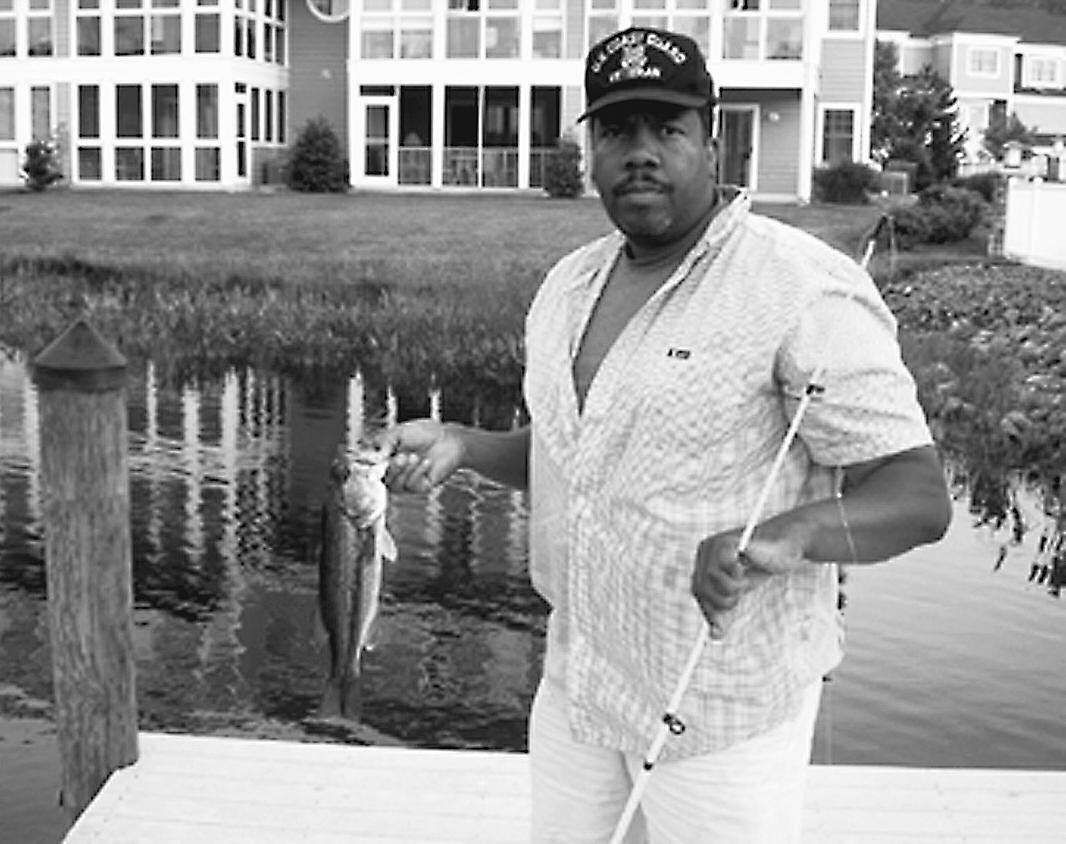
Lance, on vacation.
if it will ever end. However, the Obama presidency will demonstrate that no matter the color of a person’s skin, we share similar problems and will have to solve them together. Unfortunately, by some he will be referred to by names other than President Obama, names which have hurt so many for so many years.
By Marilyn Lager
Marilyn has been director of the Middle/Upper School Library for twenty-three years and editor of this journal for its full run of twenty years.
It’s a sunny March morning, right after spring vacation, and Lou DelSoldo is welcoming his senior psychology students back to class. First, there is the friendly chatter about what they were up to, and in particular, where he has been, to his beloved Italy, the country, he tells them, in which all four of his grandparents were born. Next, he reminds them that they have only eighteen days left of school (they are off in late April for Senior Project). “I will find ways to amuse you,” he promises, with his characteristic laugh.
And so he begins, in his fifteenth year of teaching psych, to talk engagingly of abnormal disorders about which they will give presentations, following the DSM-4 (the psychiatric Diagnostic and Statistical Manual of Mental Disorders). He talks comfortably about major depressive disorder, substance abuse and dissociative identity disorder, referring to some of the films which illustrate these conditions: Girl Interrupted, Days of Wine and Roses and The Three Faces of Eve. Any disorder can be discussed, and as senior Pat DeSabato says, “Mr. DelSoldo knows exactly how a teenager should learn. We discuss genuinely interesting topics; it’s not about the grades; it’s about acquisition of knowledge.”
“Mr. DelSoldo knows exactly how a teenager should learn. We discuss genuinely interesting topics; it’s not about the grades...”
This class began in the fall with a three-week introduction to research methods, including natural observation, culminating in child development observations of the pre-k and kindergarten classes at the
Lower School. Students were given check lists of behavioral and emotional traits appropriate to children of this age, and they discussed what they saw, such as a five-year-old with “mixed up past and present tenses, who identified the plural of mouse as mouses,” and a four-year old “who wanted to be a piranha, because of its sharp teeth.” The students were taught to collect data, and with Lou’s expert eye, of over forty years of working with children, including a job at Head Start in North Philadelphia which he held in the 70’s, to evaluate and understand.
Lou’s shuttling back and forth between the two campuses encapsulates his thirty-one year career at FCS. For it is the young children with whom he spends most of his time, and he was initially hired
...it is the young children with whom he spends most of his time...
to teach a pre-k/kindergarten of thirty students in 1978. As the school grew larger, he was named Director of Early Childhood Development, and then assistant principal of Lower School, setting up programs, supervising teachers and taking part in the gentle discipline of even the youngest students. Seating them in the small brown rocking chair in his office, over the years he has soothed and corrected, cajoled and set limits, solving problems that range from a sobbing second grader who was sure he had no friends to a child who promised he would never bite another child again, even though he had promised twice before!
Lou also assists the Admission Department at the Lower School and will soon see a dream begin to come true: the initiation of a nursery school class for three-year-olds which will begin next fall. “My true dream is to see this program grow to thirty children and also to
“My true dream is to see this program grow to thirty children and also to have a full-fledged day care for faculty children,” he muses.
have a full-fledged day care for faculty children,” he muses. “But this is a wonderful beginning.” His close working relationship with Joe Ludwig, head of Lower School and assistant headmaster, has made so much of his work successful. “Joe and I support one another. He is one of my best friends,” states Lou. And Joe admires Lou’s optimism, his likeability and his reliability. “I value his opinion; he has such a good heart and always tries to make things better. He is very bright with a wonderful sense of humor.”
Lou was in charge of the historic move of the Lower School from the City Avenue campus to the eighteen-acre site four miles away. The grounds had been the home of the Montgomery Day School, and at the time of the purchase in 1987, Lou and Joe realized that they had to make major changes to accommodate Lower School. “We had to renovate and build a new sixteen-classroom building, gut and build a new library, pack up, color-code and ship our existing school, and,” he smiles, “we even used Quaker Moving Company.” Pre-k to fourth graders came to a warm and inviting, smoothly functioning school in the September of 1990.
His participation in Lower School’s fall thematic project has involved him in developing a treasure map for Sports and Games, taking children on an imaginary trip to India, armed with passports and baggage for the theme of Flight, and he has dressed up as a Moor for the Middle Ages curriculum, garbed in kaffiyeh and djellaba, traditional Muslim dress. And he meticulously organizes “Open Period,” a Friday afternoon feature, where the children take such courses as Cartooning, Cricket, Scrapbooking and Lou’s own Pasta Making. His caring attention to detail revealed itself when he went to the classroom of two third-grade girls to ask them individually if they would be comfortable in a workshop that would include them along with ten boys.
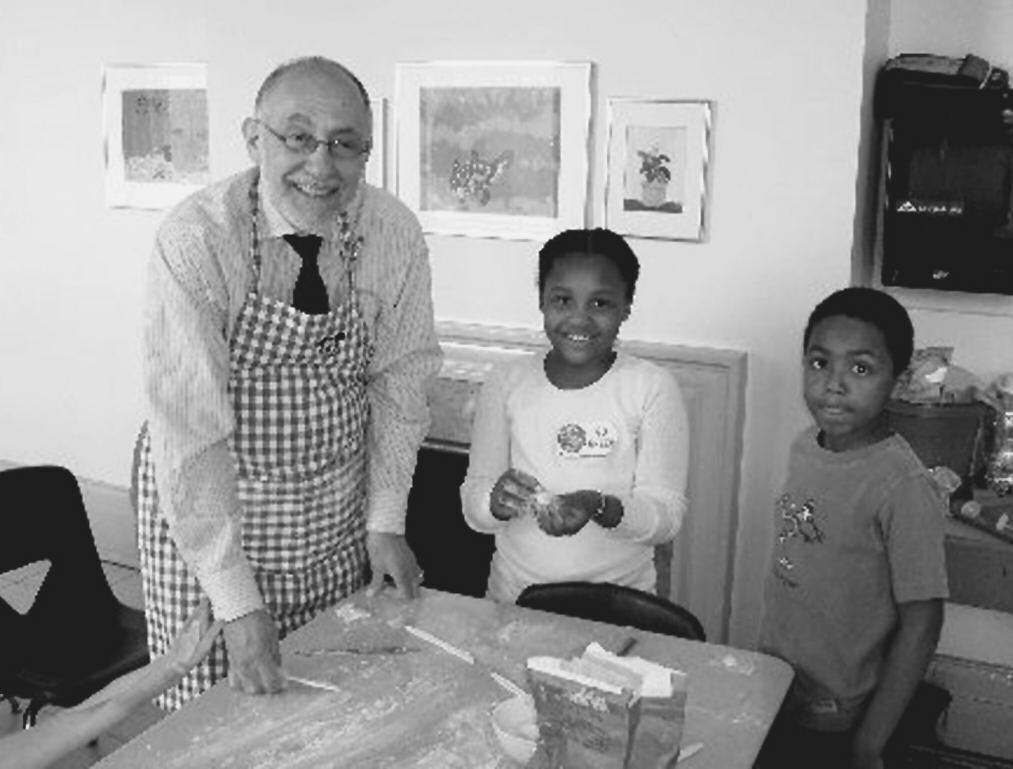
The richness of the curriculum has been made richer by Lou’s participation, and its variety mirrors his own varied and full life.
The richness of the curriculum has been made richer by Lou’s participation, and its variety mirrors his own varied and full life.
From the time he was an undergraduate at Villanova, when he realized that he wanted religion in his life, but not the Catholicism he was born into, through his Ph.D program at Temple in comparative religion, he knew he wanted to lead a spiritual life, but one in particular that would let him “Drink life to the lees.”* He was able to overcome the intense religiosity of his five-year-old self, one who terrified a young neighborhood child and was punished for it, by telling him he would burn in hell if he didn’t believe in God. His recently deceased sister became a Franciscan Sister of Peace, but Lou was to find his spirituality in Buddhism, a religion that promises, in balance, the happiness of a full and active, earth-centered life.
“I didn’t want to confine myself to a narrow world, but rather master many fields,” tells Lou.
“I didn’t want to confine myself to a narrow world, but rather master many fields,” tells Lou. Like the young Karl Marx, he wanted to “do one thing today and another tomorrow, to hunt in the morning, fish in the afternoon…criticize after dinner…without ever becoming a hunter, a fisherman or a critic.” His life is filled with art, theater, opera, reading, food, travel, cooking and a lively and interesting blended family, all which he shares with his partner, Ray Bentman, a retired Temple University English professor. Daughters Ramona, a nurse, and Eve ’92, a lawyer, as well as granddaughter Lauren, consult him frequently for his confident problem-solving and deep sensitivity.
Lou’s colleagues and students are unanimous in the praise of him as supportive, caring and generous, a person who can talk to parents and children, teachers and students with genuine interest and compassion. “I challenge you to find a kinder and more interesting man,” says senior Will Castelli, and he is echoed by classmate
* Alfred Lord Tennyson
Catherine Weingarten, who finds him “incredibly caring, about learning and also about having fun.” Chris Ramsey, fourth grade teacher praises “his authenticity, his genuine love of both school and colleagues, his sharing of information and knowledge. I also value sharing the big topics in our lives, and his perspectives on child
Lou’s colleagues and students are unanimous in the praise of him as supportive, caring and generous, a person who can talk to parents and children, teachers and students with genuine interest and compassion.
development and his spiritual grounding provide a steadiness and warmth.” And finally, as fourth grade teacher Ginger Fifer sums up, “When one knocks on Lou’s door, the person who is waiting is a model of consistency in patience, understanding and temperament, with both humor and compassion; he is a respected and treasured colleague, teacher and friend.”
By Gwendolyn Lewis ’10
Gwen is in the junior class at Friends’Central School.
When I ride home from Friends’Central, I prefer to take the long way. The long way includes the bus and the train, the train that is filled with students all with a common purpose, getting home. The long way involves the orange and black, the white and gray, the blue and yellow, the brown loafers, the red and green checkered skirts, the rainbows that intrigue me, the rainbow of standard public school uniform attire. The long way involves the girl who admires from her observation post in a corner, by a window, on the train so that she doesn’t miss a single color, a single logo or ID. She sits with her iPod on low volume so that she can listen in on who forgot his tie and who was assigned detention. She doesn’t blend with her individuality-sustaining
She, too, is a student, on the train, with a common purpose, but somehow she moves to the beat of a different drum.
outfit: any color she chooses, different every day. She, too, is a student, on the train, with a common purpose, but somehow she moves to the beat of a different drum.
I started attending Friends’ Central School when I was nine years old. When I graduate I will have spent half of my life in private school. I will have spent half of my life sleeping on the grass if I'm tired at a springtime lunch period, being dismissed from class with a simple, “See you guys tomorrow,” with no bells, meeting in silence once a week, every week, and eating food that is actually satisfying to the palate. This oasis is my reality, and although it is my home, I sometimes wonder what it would be like to walk down the hallway
of a school and discover a new face and make a new friend as opposed to traveling with the same faces, personalities and interests throughout my entire scholastic career. I sometimes find myself
I sometimes wonder what it would be like to walk down the hallway of a school and discover a new face and make a new friend as opposed to traveling with the same faces...
admiring the whole public school scene and even wishing to spend my final high school year in a large, intimidating school. I wish and imagine, until I realize that I, with my independent school attitude and education, I, with my liberal nature and expressive personality, would not be welcome.
I have only two close friends who have never been in the private school system, Taylor and Sierra. They vent to me their excitement about such things as the soph-hop, an annual sophomore dance, and I shoot back my enthusiasm about “Screen on the Green” and “Coffee House.” Screen on the Green? Coffee House? They simply cannot understand why a seventeen-year-old girl with a substantial level of mainstream “coolness” would even consider lying on the grass watching “Space Jam,” a PG-rated movie, or listening to artsy peers sing songs that they composed in their bedrooms, as options for a Friday night. They cannot comprehend it when I glow with excitement over a band of singer/songwriters that performed at assembly and go on to reveal that these singer/songwriters are some of my very own teachers! Taylor and Sierra feel sorry for me when I cannot hang out on both Saturday and Sunday night, because one of the two nights has to be dedicated to my weekend homework, homework they don’t have. While I sit in front of my computer on a beautiful spring Saturday afternoon composing my ten-page junior history research paper, they are at leisure and cannot grasp why I am not. The difference between them and me is that I not only understand it, I live
The difference between them and me is that I not only understand it, I live it; it’s a part of who I am.
it; it’s a part of who I am. My heart beats with weekly assemblies from Student Council, and my blood flows with those kids who hum music all day long, the kids who speak as if they are performing a dramatic monologue, and even the kids who would be stuffed in a trash can

Gwen.
and rolled down a hill if they were in public school. There, they are able to freely roam, because they are a part of Friends’ Central. And I am a part of Friends’ Central.
Last June, on Sierra’s last day of school, I went to school with her. At the door I was asked for a student ID, an ID that was expected to be easily accessible, an ID that I happened to find stuffed in the back pocket of my wallet. It proudly displayed my ninth grade school photo.
“Do you have an ID from this year?” the guard asked.
“Sorry, no. We don’t use them at our school,” I said as I quickly gathered my ID and rushed by to avoid the “What kind of school do you go to?” comments that I knew would follow. I was a spaghetti stain on a new white t–shirt as I swam through the seas of white shirts, orange shirts and black pants, all displaying their school’s logo. I was wearing a yellow shirt, blue jeans and Birkenstocks, so before I even opened my mouth, I was labeled as an imposter. I dreaded being asked what school I go to because I knew it would create further disturbances.
I dreaded being asked what school I go to because I knew it would create further disturbances.
“What school do you go to?” a girl asked me after staring at me in a larger group of students.
“Friends’ Central.”
“Whaaat?” she asked, clearly unfamiliar with the school.
“Oh, it’s a private school on City Avenue,” I mumbled, feeling embarrassed and alienated as if I had insulted her somehow by elaborating.
“Oh, good for you,” she said and the entire group of students immediately dispersed. We had no common ground, so they thought, but I wanted to make conversation. I wanted to show off how I could replace my commonly used phrases like, “Oh heavens!” with phrases like “For real?!” I wanted to talk about cafeteria lunch, and I wanted
to look forward to Dress Down Day. I wanted to show them that “private” doesn’t mean snobby and that “City Ave” doesn't mean paradise. Then the reality set in. The reality is that I’m private, and they’re public, and as soon as the distinction is made, the schism begins. As I age, I find humor in the criticism I receive from my friends about the music on my iPod and of my unique word choice in every day conversation. These things stem from aspects of my nature, but they are constantly being attributed to that fact that I am a girl who was bred in private school. They are stereotypes, but I live with them. I learn to ignore what the urban boy is thinking who stares at me puzzled while I pull out a 400-page copy of The Scarlet Letter on the bus. They watch me just as I watch them.
As I take the long way home, I, too, am the spectacle. The long way home involves the sound of “Teardrops on my Guitar” by Taylor Swift blasting through my iPod headphones. These are the headphones of the girl who sits in the corner on the train wearing blue jeans and leather riding boots. This is the same girl who whips out a copy of The Great Gatsby and begins jotting in the margins. “The private girl,” almost fluent in Spanish, who helps her public friend translate and copy the sentence: Ella está muy bien. The long way home involves me, the girl who moves to the beat of a different drum.
Steven Patterson
Steve has been teaching English to FCS Upper Schoolers for ten years.
The English curriculum at FCS is notorious among our students for its darkness, its reputed obsession with misery and suffering. Upon a first reading, at least, a few too many of our required texts do seem to leave us all in dark corners. After all, Holden Caulfield is still in that mental hospital when Catcher in the Rye ends; and yes, Tim O’Brien in The Things They Carried suffers traumas not only during and post-Vietnam but before ’Nam too; and admittedly, Hawthorne’s decision to have Hester’s secret lover drop dead the minute he comes clean in The Scarlet Letter does seem a bit harsh. Undaunted by the body count, we lit teachers labor to convince our students that there
...we lit teachers labor to convince our students that there is solace in tragedy...
is solace in tragedy, that there is often a final transcendent or redemptive moment—like when we try to make the several “death by hanging” endings in the inaugural texts of tenth grade lit seem less like a motif than they must surely seem, noose after noose. Of course, when we try to explain that life is like the books we read, we count on getting glassy-eyed stares or protests of incredulity. More often than our students think, we have great sympathy as they struggle with such mature themes and plots. These texts can be, after all, pretty weird, pretty tough to take. Some seem almost perversely obsessed with death and dying.
Whether it is the heroic death of the champion Odysseus; the murder of Gatsby, left floating in his stagnant pool, dreamless; the sickeningly forgotten dignity of a humiliated Okonkwo in Things Fall

Steve.
Apart; the eerily silent suicide of Antigone; or even the grotesque death of Faulkner’s Miss Emily, mistreated as a symbol by characters and readers alike, death is the saddest of everyday facts. The only truly tragic banality I know. And yet, as corny as it must sound, even a text like Margaret Edson’s Wit, about a middle-aged woman dying of incurable cancer, ends with symbolic nakedness and soothing light.
...death is part of the way life can sometimes be.
Warmed by such literary commonplaces, we can bear to see, for a moment, that death is part of the way life can sometimes be. Death is about memory, about loss, and it is about our own inability to say what authors say so provokingly, sometimes eloquently, for us.
More privately, when I search for “real life” examples that might help teenagers normalize such bizarre stories, I often think of, but rarely speak of, my mother and the way she died. My mom was (it might surprise some of you to learn, considering the proverb of apples and how far they fall from branches) a genuinely kind, thoroughly Christian human being. Not Christian, mind you, in the Biblethumping, God-fearing sense, but Christian in the “do unto others” sense. She was, in short, forgiving and kind-hearted. For many years my mother worked as an R.N. in a mental hospital for the criminally
For many years my mother worked as an R.N. in a mental hospital for the criminally insane...
insane (the obvious jokes about my mom having had practice raising five children are used up by now), and it was amazing, though not surprising to anyone who knew her, how even hulking inmates—men as mean as dirt—would be reduced to needy puppies in the presence of her sweet, slim frame. She didn’t kill them with kindness, but she certainly softened them. She practiced what she believed, and everyone could feel it.
Then, about seven years ago, much to our family’s shock (because we imagined, if one of our parents would “go” first, it would surely be our father), my mother became ill with cancer and died. How could this be? My mother was not only robust and healthy, but so gentle that it just didn’t seem at all possible, let alone “fair,” that she would do anything but live a long and happy life. We—my siblings and I— would not talk about who might have to care for her eventually, but who among us would get to. We pictured her, in her old age, adding life to our middle age. No burden, she.
We pictured her, in her old age, adding life to our middle age. No burden, she.
But Barbara, my mother, was diagnosed with gall bladder cancer, a rare and deadly form of cancer. Untreatable. The specialist told us, one sad day, that if she lived a full twelve months, she could count herself among the fortunate few. Of course, none of us could imagine it, and even my mom, ever faithful, ever trusting in a morally intelligible world, believed she would “beat” her cancer. Like each of us, she imagined that death would not be coming for her in any way that could conquer her before she was ready to surrender. Nevertheless, she grew ill, very quickly and very gruesomely. The cancer treatments were—as the commonplace knowledge about cancer treatment goes—more sickening than the disease. Taking turns round-robin style, for example, her four grown sons and her only daughter would enter her room with a swab, slightly bigger than a Q-tip, steep it in cool water, and moisten her lips. I think maybe the swabs came pre-moistened, but I clearly remember that in her last days, my mother ate or drank nothing else. To risk a metaphor here, and not a simile: a hungry, helpless baby bird, my mother drank in the tiny drops of water. She couldn’t speak, could only moan. We eventually learned what her moans meant: that she had had enough, that she was sated. Soon, she curled up in a little, featherless ball, grew emaciated, incoherent, and finally, at last, passed away.
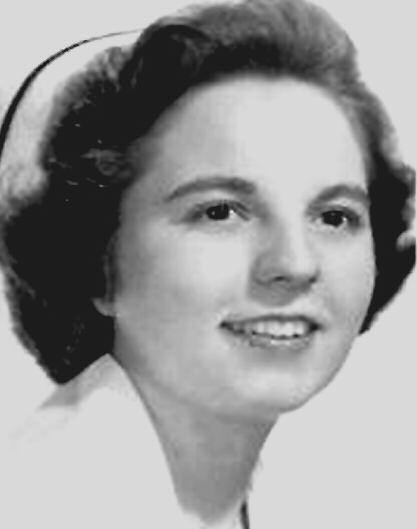
Steve’s mother, Barbara Ann Patterson 15 April 192925 October 2003
This sounds morbid, I know, and it certainly feeds the lie that all we do in the English department is think of ways to foist our unhappiness on to the happy lives of
young students. Believe me or not, when I recall these last moments with my mother, they are not despairing memories. And similarly, to return to the subject at hand, our department’s dark tastes in literature, I am not kidding when I assert that a tragic novel or play we are reading ends with (almost?) as much affirmation and promise as sorrow. Hope, wrote Emily Dickinson, is that thing with feathers, and
Hope, wrote Emily Dickinson, is that thing with feathers, and there is more plumage in some of our books than appears at first glance.
there is more plumage in some of our books than appears at first glance. This recollection of giving my mother water in her last days is also about—and this is so clichéd—the way things work in a circle. Indeed, in class we sometimes mock the “circle of life” motif, and as my fellow English teachers will no doubt agree, I’m sometimes the most jaded of its critics. Still, even bald clichés were once velvet-headed. And so it is sad, of course, that my mother could not have lived to see my younger brother, Michael, have a child at age fifty; that she doesn’t know Mike and his wife named their little girl after her (Barbara Angelina); sad that my mother can’t be at the dining room table to hear my dad, now eighty, recollect—for maybe the twentieth time?—how he first met “my Barbara” on a small town tennis court in junior high. But …
These memories and other remembrances of happiness past, help me see that our department’s sad reading lists are not simply the gloom of a group of English teachers who should really get out more. Each of us, old or young, teacher or student, has been subjected to the little losses love can bring—more so than any of us lets on.
Each of us, old or young, teacher or student, has been subjected to the little losses love can bring— more so than any of us lets on.
(This essay is written, with gratitude and admiration, for my tenth and twelfth grade students, 2008-2009.)