FORUM
Table of Contents
—E. M. Forster
Editor: Marilyn Lager, Director, Friends’ Central’s Blackburn Library
Email: mlager@friendscentral.org
Assistant to the Editor: Deborah Fedder ’79, Middle School English Teacher


—E. M. Forster
Editor: Marilyn Lager, Director, Friends’ Central’s Blackburn Library
Email: mlager@friendscentral.org
Assistant to the Editor: Deborah Fedder ’79, Middle School English Teacher
Forum is our community’s educational journal. Faculty, alumni, board members, parents and students areencouraged to contribute opinions, ideas, innovations and observations about any aspect of their lives relating to educational experiences.
Marilyn Lager Editor, Forum

The recent issue of Forum struck a chord with me. Reading the reflections of various teachers at FCS reminded me of their dedication to instill curiosity and to teach critical thinking skills to their students.
I ’m working on my doctorate at the moment, and I now teach and have my own students, so I can relate to the challenges and rewards of the job. Actually, I still keep a copy of Michael Crauderueff’s graduation speech that was printed a few years ago (Winter/Spring 2001–02) as a source of inspiration to teaching!
Again, thanks for your work in editing Forum.
All the best, Min Kyung Lee (Christina) '96
Art History Department Northwestern University Evanston, IL

By Laura Novo
Laurie Novo arrived to teach English in the FCS Upper School thirteen years ago as her son Tim and his classmates, the class of 2006, entered kindergarten.
At my own graduation from a high school as much like Friends’ Central as a small, non-sectarian American school in Argentina can be, I spent most of my time trying to memorize the words to the school song painted on the wall of the gym, because I knew I wouldn’t be able to read them when we were supposed to sing them, in candle-light, at the end of the ceremony. So I’ve been wondering again just what Mr. Hannon, my American history teacher, actually said at that ceremony so long ago—a reminiscence that both removes some of the pressure I’m feeling about my own words and, of course, adds to it. In my anxiety about what to say this morning, I’ve been paying more attention than usual to the snippets of graduation addresses that tend to appear in the newspaper at this time of year I can pass on some of the most common advice I’ve heard, just to make sure you get something out of the next few minutes.
In my informal survey, it seems that the most important graduation advice concerns remembering to wear sunscreen. Many speakers also encourage graduates to take advantage of the possibilities offered by technology. Although I think this is advice your generation has already taken to heart, you can use your expertise to go to “The Art of the Commencement Speech, An Archive,” for one-stop shopping and learn that Steve Jobs recommends that you “find what you love,“ Thomas L. Friedman tells you to “listen to your heart,“ and Toni Morrison, not surprisingly, urges you to “be your own story.“
...you can’t get the Friends’Central commencement address for the class of 2006 anywhere but here—for that, you have to be here now.
But, of course, you can’t get the Friends’ Central commencement address for the class of 2006 anywhere but here—for that, you have to be here now. I often talk, only partially in jest, about how seniors are sus-
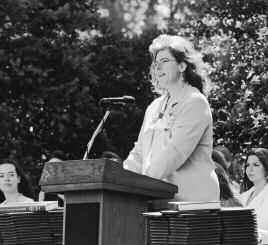
pended between nostalgia and anticipation. “Live in the now!“ I implore, as your attention wanders back to your first-grade Book Buddy or eighth grade Showcase, or forward to the thrill of choosing where you’ll go next, what you’ll do— all those possibilities suddenly tantalizingly close. This year, I’ve realized that living in the present is a challenge for parents of seniors as well, as I have swung sentimentally back towards memories of early birthday parties and class plays at the most unexpected moments, only to think in the next minute of how to turn Tim’s room into a…well, into a more versatile space. One purpose of ceremonies like this one, of course, is to invest the present moment with meaning, to focus our communal attention on being here now, before everything changes, and we are ushered into a new relationship with one another and the world. The effort we have all made to dress up, to arrive on time, to park, to find seats and maybe even to apply sunscreen, speaks to our desire to savor the moment.
These thoughts lead me to the perennial English teacher topic of the value of the journey, not simply of the destination—and not just of any old journey but of this particular journey that has brought us here to this common destination. The mother of the nineteenth century English writer John Ruskin was famously attached to him, so much so that when he went up to college at Oxford, his mother moved there with him. Tim is relieved, I know, that I will not be following that example, but I do feel
fortunate to have dogged his tracks for the past four years. Unlike most of my fellow parents, who have been forced to watch your progress from an increasingly greater distance, as you acquire cell phones, independent transportation and the sophisticated intellectual skills that mean we can no longer follow what you’re doing in your math classes, I have been able to take much of this journey right along with you.
At Friends’ Central we like to say lots of learning takes place outside the classroom, and that’s where most of my time with you [the class of 2006] has been spent. As a parent, I went with you on field trips—to the John Heinz National Wildlife Refuge in first grade with Mrs. MacMillan, to the Gamwing when it was still at Ridley Creek State Park, to Ellis Island with fourth graders and Mrs. Fifer. As a teacher in the Upper School, I’ve had many more significant interactions than you might expect, since I intentionally kept my distance from you in the classroom, indulging only in some extremely pleasurable elective classes. But I have still done many things with you—in places as distant from one another as Ocean City, New Jersey and Edinburgh, Scotland. As a homeroom advisor, I played bonding games in the rain in the gym with you on
I’ve done service with you at MANNA and at Greene Street Friends School. I’ve helped you clean up from Coffeehouse and look for your car keys.
Ninth-Grade Day. I’ve done service with you at MANNAand at Greene Street Friends School. I’ve helped you clean up from Coffeehouse and look for your car keys. I’ve talked with you about censorship and edited your writing for the Lit Mag, drama production programs and yearbook dedications. I’ve enjoyed your company and expertise as tutors in the Writing Lab and thought of you as I pulled paper clips off the long connected string of them you made when you were bored. I’ve watched you sing, dance, act, play lacrosse, soccer, tennis, softball, field hockey, baseball and basketball, seen you swim and run and play ping pong. I’ve played Hangman and Pictionary and Apples to Apples with you. And I’ve entered into any number of financial transactions with you: I’ve bought lollipops, bracelets, daisies, cupcakes, singing Valentines, candy canes, s’mores, bake-at-home pizza, MANNA pies…but never a raffle ticket. And, centrally, I’ve spent about forty minutes on approximately 138 Wednesday mornings with you in Meeting for Worship. I hope this partial list establishes my qualifications as a member of your community, one who is honored by being asked to address you today. As I began to write, though, I found myself quickly reflecting on those bumper stickers we’ve all seen in the Friends’ Central parking lot, the ones that say “Every child is honored in a Friends School.“ I suppose that could have had the effect of reducing my sense of being special, but instead it has focused and concentrated it. What does it mean to be “hon-
ored“ by Friends’ Central School? And how does understanding what that honor means here help me understand who we are?
Being honored is generally seen as an elevation. But of course it brings with it also a responsibility. In this case, the honor seems to me to reside in the trust placed in me to represent the community, to work hard to capture things about it and about you (and, most significantly, about the intersection of the two) that are both true and meaningful.
And this brings me to what might be the truth of this community. I have thought a lot about truth this year, and often in the past as well. I’m not sure any thoughtful person gets through a whole human life without a serious contemplation of what truth means. I can count on the fingers of one hand, still, the number of times I have been moved to speak during our weekly Meeting for Worship, but one of those times concerned The
I’m
not sure any thoughtful person gets through a whole human life without a serious contemplation
of what truth means.
Adventures of Huckleberry Finn and whether it was ever all right to lie— even for the powerless, even for the well-meaning, even to protect the feelings of others. This year a message at the opening Meeting for Worship for teachers led me to reflect on what truth means to a community, as well as to an individual, and I’ve continued to ponder that relationship throughout the year. The foundation of trust necessary for a community to function requires that we rely on one another’s truthfulness, at every point of interaction, even though our growing experience of life tells us that such reliance is risky. So the responsibility to tell the truth is a heavy one.
Certainly we English teachers are very interested in truth. We probe texts for the truth, we admire those writers who reach for the truth or who capture it in words. Yet as we look around at what tends to happen to characters in literature when they are enlightened, it’s not so clear why the truth is such a highly prized commodity. We often read about characters on a collision course with truth—and I use collision course advisedly. Willy Loman, whose son Biff yells at him, “We never told the truth for ten minutes in this house!“ has struggled desperately to avoid it. Emily Dickinson writes about the dangerous point of transition between ignorance and knowledge in a famous poem: “Tell all the Truth, but tell it slant…. The truth must dazzle gradually,“ she cautions; its implications, good and bad, must unfold only as we can take them in, “else every man be blind.“ Dickinson’s metaphor evokes Oedipus for us—an object lesson in both the cost of ignorance and the price of learning the truth. And Hamlet, another character of whom we have a communal understanding, is doubly buffeted by the truth he learns, knowledge he finds devastating in itself and paralyzing, ultimately fatal, in the demands it makes of him in response. To complicate his situation,
Hamlet cannot be sure which of the upsetting possibilities he is faced with, each carrying unpleasant implications, can be trusted to be true. (We quickly learn, entering Hamlet’s world, that his is not a community that has taken very seriously its obligation to speak truth to one another and that any decision to trust its members is a foolish one.) Hamlet is not prepared—nor are we, at the outset—for the eye-opening discovery that being handed the truth is in no way the end of the journey.
So, armed with our book-learning and, I’m sure, our personal experiences of the cost of the truth, we learn that truth-seeking is only the first of our tasks, perhaps not even the most difficult. How are we to recognize the truth, in the midst of clamoring, competing representations of it, incompatible versions presented by people we trust or love? And, even
How
are we to recognize the truth, in the midst of clamoring, competing representations of it, incompatible versions presented by people we trust or love?
when we are certain that what we see is the truth, how are we to survive the potentially devastating power of its implications? Much of what we learn is painful, especially as we enter the adult world where decisions often involve the rationing of scarce resources: not enough food, not enough safety, not enough education, not enough love to go around. As we go out into the world, how can we avoid being knocked down by the truth, daunted by our own inadequacy to respond to its challenges— destroyed by the very thing we have been taught to seek?
There is more than one way to seek the truth, but since we’re looking at this particular “text,“ this shared journey, I’m going to explore the way we have undertaken it here. In a community—not just a collection of people who happen to be using the same resources to pursue their individual goals—the pursuit of truth that leads to constructive action in the world is an optimistic activity. We have sought the truth together. To borrow the title of the Philadelphia Yearly Meeting’s guide to the Religious Society of Friends, a copy of which I was given on my first day at Friends’ Central, we have sought it through faith and through practice. We have learned to recognize truth through experience and with the help of one another; and we have gained strength and courage to act on that truth as a group. Arecent example of this process at its best can be seen in the trip many of you took to Washington DC to urge our government to help stop the genocide in Darfur; those of you who first understood the need for action brought your concerns to the rest of us, trusting in our support; the two busloads of students and teachers who went to the rally were the heartening evidence of how speaking truth can lead to action that nurtures a community and the world. If this sort of experience is a pattern at Friends’ Central, what is it about being here that has prepared us to
approach truth in this courageous, productive way—in a way that makes it possible to act on the truth we see to make the world a better place? One thing we have going for us from the beginning is that in a Quaker community we don’t seek agreement, grudging approval, or even enthusiastic support: we seek truth, and we seek it structurally and systematically in the recurring experience of speaking our own truth and of listening to many voices. This is true in Meeting for Worship, and it is true in the English classroom. Sometimes I ask the hypothetical question of why we don’t take all that time we spend sharing our views and listening to others talk about a single book and use it, instead, to read some more books on our own. The answer has to do with something I know to be true: “You can only read the book you can read“ and its corollary, “You don’t know what you don’t know.“ We grasp only the experience we are ready for—left to our own devices, alone, we would only slowly, and partially, achieve the wider perspective and greater experience that make us
We grasp only the experience we are ready for...
better readers, both of books and of life. The shared experience of many readers enriches us all; truth resides in all of us, and we have been taught here to acknowledge the truth we see and to share it. To return to Hamlet for just a moment, I always find one of the most painful aspects of his experience to be the isolation in which he finds himself as a result of his corrosive mistrust of those around him. But, for better or worse, we have not been able to escape one another here. We have done so many things together, learned so much in the doing, and come to know one another so well that our differences don’t usually drive us apart; in the most productive cases, they make us curious about one another, open to difference in a way we will not always find in the world beyond Friends’ Central. We’re the product of shared experience, shared goals, shared sadness, shared triumphs and disappointments, a shared language of nicknames and shorthand, shared celebrations, a shared English curriculum, shared moments of profundity and of silliness. You really had to be there.
So you are well prepared to go into a wide world of truths you have yet to discover, many of them exciting and nothing to be afraid of. You’re one of the most accomplished groups of people I know. You’re friendly,
...your time
at
Friends’Central has given you a deep understanding of the nature and rewards of community...
ambitious, and up for anything. And your time at Friends’ Central has given you a deep understanding of the nature and rewards of commu-
nity: the things you carry include your knowledge that you are more like other people than unlike them; that work done in community can be deeply satisfying; that you have the caring and energy both to support one another and to be supported; that you can think, speak and write about what you learn to be true.
It has indeed been an honor, in every sense of the word, to be in your company for this time—both this morning and over the years we have spent together. But even the heightened significance of a ceremony as important as this one can’t stop the passage of time forever. It’s time now to go. You’ll retain this community in your memories and in the fabric of your identity: as all those books we’ve read together keep telling us, we are where we’ve been. So in this moment, in the present, as you anticipate the future, I leave you with a memory of the past, the closing refrain of Lower School Meeting for Worship: Go now in peace. We wish you well.

By Jebb Chagan
Jebb has been teaching social studies to FCS Middle Schoolers for ten years. This was his first Clayton Farraday summer stipend.
I have been involved in teaching American history for many years, and last year, for the first time, I requested a stipend so I could travel down south to visit Civil War, American Revolution and AfricanAmerican historical sites. I also felt it was important to give some of my time back to a community in need, and I chose to spend two additional days working in New Orleans with Habitat for Humanity.
In August of this past summer, I headed down to Lorton,VA, to load my truck on to the Amtrak Auto Train: next stop, Stanton, Florida. While the train ride was long (eighteen hours), I was able to take the opportunity to sit and look out the window at the American countryside and small towns as I passed through them. What a terrific way to see a large portion of the East Coast. I arrived in Stanton on a Monday morning. You know you have arrived in Florida when the display counter at the local gas station exhibits alligator heads for sale right next to the key chains and gummy bears. The first official stop on my destination would be ten hours later (driving time), in Slidell, Louisiana, where I would work rebuilding houses with Habitat for Humanity.
Sunsets and fire ants were aplenty as I passed through the states of Alabama, Mississippi, finally arriving in Slidell, (about thirty-five minutes outside of New Orleans). I was told by the desk clerk as I checked into my hotel that if I thought I might stay more than one day in the N. O. area I should book my hotel for two nights. My puzzled look must have given me away as the desk clerk explained that hotels were regularly booked up
Wow, I thought, one year after Katrina and thirty miles outside of New Orleans, and you can’t get a hotel room.
every night of the week. Wow, I thought, one year after Katrina and thirty miles outside of New Orleans, and you can’t get a hotel room. The hotel and motel parking lots were filled with pickup trucks loaded with construction tools from New Orleans and Slidell Katrina victims who, as the
clerk explained, sometimes drove eight hours or more to rebuild their homes a couple of days a week. The desk clerk herself whom I had just met had, in fact, lost her house and all she owned in the storm and flood. Since she had lost everything, she had sent her teenage son to live in Philadelphia for much of the year following Katrina. As I carried my bags and work boots up to my hotel room, I was both excited and nervous for what lay ahead the next day with the Habitat organization.
Habitat for Humanity is a faith-based group, founded with the primary objectives of refurbishing and, in some cases, building from scratch, houses for those who are in need of proper housing. In order to qualify for a Habitat house, a prospective owner first had to spend time participating in the building of the Habitat house as well as agree to make interest free payments on the house towards the eventual goal of owning it outright.
Early the next morning, I put on those work boots, grabbed my tool belt, and I drove thirty minutes down I–10, across Lake Ponchatrain, and past miles of abandoned houses, apartments and shopping malls (comparable in size to Plymouth Meeting Mall). Once at the Habitat work site, I was fortunate to have a chance to meet and work with entire families, teachers, and college students as well as professional tradesmen, all who had traveled to give their time. (Some of these folk had been there, living and working already in the New Orleans area.) Like myself, however, many of the volunteers had traveled an extensive distance to be there, from western states, as well as the North. I spent my two days working

in the Lower Ninth Ward, the ward which many of you have repeatedly seen on the news networks. I was fortunate to have the opportunity to help build houses in what is known as Musicians’ Village, an area recently bought and funded in large part by Wynton Marsalis and Harry Connick Jr.
My two days in the Ninth Ward were humbling: I heard stories of elderly folks who currently have to walk blocks to get water, of folks still without power or money, folks who had little food, houses with toxic mold, and those who experienced the loss of neighbors, loved ones and entire communities. I am so glad I was able to help some, but it was admittedly such a small “drop in the bucket.“ I am hopeful that as a community, we can still give (whether that means prayer, time or money) to the Gulf Coast region. There is so much work still to do, that it’s staggering.
There is so much work still to do, that it’s staggering.
The rest of my trip was spent at places such as Vicksburg, Mississippi, where arguably the course of the Civil War shifted to the Union’s advantage. Probably General Ulysses S. Grant’s finest victory, the successful siege of Vicksburg provided the Federal Army with a way to control trade up and down the Mississippi River. From there I drove to Selma and then on to Montgomery, both in Alabama, two very moving places involved in our country’s Civil Rights movement. Imagine traveling on some of the same roads that Diane Nash and the other brave Freedom Riders traveled on. Anumber of years ago the Civil Rights Museum in Montgomery was firebombed by a hate group, and they have since rebuilt. The new museum is a powerful place that is dedicated to preaching tolerance, instilling knowledge and honoring those who gave their lives in the fight for equality. The museum was hard to leave without damp eyes. An excerpt from Dr. Martin Luther King, Jr.’s words, “Until Justice Rolls Down Like Water,“ chiseled into the black granite wall of the new Civil Rights Memorial Center, spoke volumes to me. As a world and as a country, we have a way to go, don’t we?
After Alabama, I traveled to Fort Ogelthorpe, Georgia, where I spent time at the site of the Confederate prison known as Andersonville. The National Park system has created a memorial center here to honor American POW’s from all American wars. It is a sacred place, especially when you visit the cemetery of over 13,000 Union and Confederate soldiers who lost their lives here.
I then traveled to Savannah, Georgia, where I visited with my sister and her family, and I met my wife Julie who flew down from Phila-
delphia to spend the rest of the trip with me. Together we went to the beautiful city of Charleston, the home of Fort Sumter, where the Civil War started in 1861. Just ouside the city, at nearby Morris Island, the famous attack by the 54th Massachusetts “Colored“ Regiment took place on Fort Wagner. (While in Charleston, Julie and I celebrated our one-year anniversary…I am not sure my stipend was her idea of the perfect anniversary present, but she was a good sport).
We also spent time at the Boone Hall Plantation which is considered by many to be the most historically accurate plantation left in the country. Boone Hall Plantation still has original slave cabins on the grounds (which is extremely rare). I also was able to meet an amazing woman named Sharon, who will, hopefully, be coming up here to Friends’ Central to spend time with our Middle Schoolers, teaching a workshop on slave life, music and the language and culture of Gullah, an intricate language and culture that was developed over the years by Africans who had been forcibly taken to America. Gullah speech involves parts of perhaps fourteen other languages, as well as elements of over 100 different dialects from the continent of Africa.
I am a visual learner, so the opportunity provided by this stipend was invaluable for my teaching of American history.
On the way home, we stopped in Virginia to visit Yorktown, where the British surrendered roughly two-thirds of its North American army to Generals Washington and Rochambeau, and Fredericksburg, a Civil War site, where thousands of soldiers lost their lives. I am a visual learner, so the opportunity provided by this stipend was invaluable for my teaching of American history. The 3,500 miles I put on my truck were well worth it. Through personally seeing, touching, tasting and experiencing this history, traveling across more than ten states in ten days, I was able to appreciate and learn about history in a way that no book could ever show. And I will communicate this to my students as we go through the year!
“Today is a Wonderful Day— To be Among ‘Family’…”
By Victor Freeman ’80
Victor Freeman ’80, a current member of the Board of Trustees at FCS, commuting from his Washington D.C. home, is former President of the Medical Society of the District of Columbia and is very active in health politics in our nation's capital. He is a regional medical director for a bio-tech firm. He delivered this talk to the FCS faculty at the Merion Meeting House at the opening of school on September 6, 2006.
Today is a wonderful day—to be among "Family"…
It turns out that even now, at the tender young age of forty-four, I have thirty-nine years of affiliation with Friends’ Central. Many of you didn’t know that I was an FCS “Lifer“—I attended Friends’ Central, kindergarten through twelfth grade, and it had a profound impact on me. I grew up in West Philadelphia, but I know this area around the Merion Quaker Meeting well. I drove to the Meeting today with my parents, and I drove here on instinct. I knew that if I came up 63rd St. and crossed City Line Avenue, right by the Overbrook train station, I would be delivered to the cobblestone road that ended at Montgomery Avenue—right out front. The area is familiar to me, since many of my FCS high school weekends were spent right up the street, working at the Narberth Animal Hospital. The veterinarian who hired me went on to become one of my oldest mentors, and I am godfather to his daughter. So, I just wanted to let you know that this area is very familiar territory… AND—Today is a wonderful day—to be among “Family“… I delight in the notion of being introduced by my former FCS camp counselor, Joe Ludwig. And I am further delighted that his memories of me as a “good kid“ are far better than the reality! I look out and see a woman, Beth Johnson, who grew up in my neighborhood. She has not only been a long time member of the FCS faculty/staff family but is also now welcoming her daughter Tanya who will work in Lower School, as a second generation to that same FCS family. And today I discovered that Ray DeSabato, Middle School Principal, is also welcoming his son as yet
another second generation to the FCS faculty/staff family!
I look out and see teachers whom I either had or just missed as a student here—including music teacher, Jim Davis, who knew me when I sang in higher register! As I look out among you, I see teachers who are mothers of my former schoolmates. And, in fact, I see former schoolmates. One of them told me that he taught one of you when you were in kindergarten here. I even have an old schoolmate who reminds me to this day that he knocked me out of the last FCS varsity tennis slot. That was twenty-six years ago……..Let it GO!!! (Well, I guess that’s family for you!)
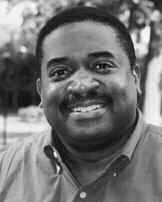
I do not know most of you, but I delight in being among you as family…
And as family, we are about to participate in an important Quaker tradition—Meeting for Worship. It is what I call:
“…Silence—Interrupted only by Human Voices, speaking from the Heart…“
It is amazing what you find in people’s hearts. Last night, I watched a program on Flight 175, the second plane to hit the World Trade Center on 9/11. Many of the passengers had the opportunity to call loved ones. And when you hear what they called to say, it warms your heart. None of those passengers called speaking about Hate. None called for revenge or retaliation. They all called to speak their Love for the important people in their lives. On that day, the terrorists taught us the frightening things that can get into people's minds; but those passengers taught us the amazing things that can still live in people's hearts.
This week, we stand between two anniversaries. One is the first anniversary of Hurricane Katrina, the worst “natural“ disaster in American history. The other is the five-year anniversary of 9/11, the worst “man-made“ disaster in American history. In response to both those events, we saw Americans become self-less, generous and heroic. But why does it take the worst to bring out our best?
And that question bring us to today—
Today we are recognizing the value of a Quaker education, in shaping young Hearts and Minds. You see, you are not just the faculty of a Quaker School. You are the builders of the foundation of all of our tomorrows, And Quaker values and traditions must be an integral part of that
foundation. Never underestimate the power of the Quaker traditions that you teach, serve as role models for and, in many other ways, instill. I am an FCS Lifer, and it is interesting to see the Quaker values engrained in me. I am engaged in a citizens’ struggle to build a hospital in the nation’s capital to replace DC’s only public hospital, which was closed by the mayor five years ago. We are fighting for what is right— against the power elite of the city. The mayor opposes us, and a powerful city councilman opposes us. Every other month, the newspapers report that our movement is dead. And then on those other odd months, they report how our movement has been resurrected. We survive, because we stand on principle, like Quakers did, against slavery. I caution my citizen colleagues against demonizing the opposition. We need to love them as lost brothers and sisters. No one gives orders. We all do our part. And we work by consensus. We take time each week to become self-reflective and to speak from our hearts on what we are up to with our movement. All of these values and traditions date back to my FCS experience…
And we are just moments away from one of those important traditions—Meeting for Worship…
“…Silence—Interrupted only by Human Voices, speaking from the Heart…“
I wish we could bring Meeting for Worship to the nation—from coast to coast. We could use it to bring together the Left and the Right, Red States & Blue States. I wish we could bring Meeting for Worship to the world and make it a major US export. Imagine—everyone coming together— Shiite, Sunni, Kurd, Muslim, Hindu, Christian, Jew, Atheist, Agnostic—EVERYONE… Humankind… If we could get everyone together for—
“…Silence—Interrupted only by Human Voices, speaking from the Heart…“
Maybe, just maybe, we could look into each other's eyes and see each other in a different light. Maybe, just maybe, we could look at each other and say…….
Today is a wonderful day—to be among “Family.“
By Mary Gregg
Mary has taught in the Lower School for five years. She currently teaches third grade. She and Don Denton, fourth grade teacher, were married in May 2006.
When people think of Spain they might envision gallant, brightly dressed bullfighters or elegant, dark-eyed women, with their heads held high and shoulders thrown back. In frilly black and red flamenco dresses they drive their black, thick-heeled shoes into the wood floor at lightning speed, with a furious intensity. In contrast, their torsos are held gracefully aloft and their arms, wrists, and hands bend and curl. Their faces alternately show grimace and joy, which matches the guitarist’s chords and the singer ’s words. In particular, thinking about Andalucia, the splendor of Moorish architecture comes to mind. Centuries old buildings gleam in the strong, unwavering light, and tell of a time of high intellect and prosperity. Also imaginable are wildly enchanting Moorish tales, maybe a beautiful, captive princess, frozen in time, awaiting the moment of her release, or stories of Moorish treasure buried deep in the hills around Granada.
Spain is all of this and more as I was to discover upon my first visit to the country in the summer of 2006, thanks to a Clayton Farraday summer stipend. In the summer of 2004, during a trip to Morocco, I became deeply interested in the history, people, and architecture of North Africa and was urged to continue this interest in Andalucia. This
Along with the Spanish language curriculum, I hoped to bring to my students elements of Spanish arts and culture.
enthusiasm, combined with the implementation of teaching Spanish in Lower School, prompted me to pursue this trip. Along with the Spanish language curriculum, I hoped to bring to my students elements of Spanish arts and culture.
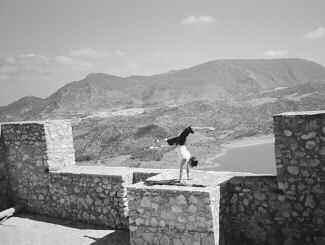
As a former dancer, and a devotee of all kinds of dance, I longed to see flamenco dance on its home turf. I’d also relished Washington Irving’s delightful Tales of the Alhambra. These stories, along with Irving’s heartening commentary, are flush with superb accounts of the Spanish character. My experience was enhanced by my husband and colleague, fourth grade teacher Don Denton, who not only speaks Spanish (I do not), but acted as my personal tour guide for some of the art sites and Moorish monuments we were to visit.
In Madrid’s Prado Museum, we spent nearly twelve hours, during two visits, admiring the style and technique of numerous masterpieces. Don instructed me about the Spanish painters, Velázquez, Goya, Murillo and others. Like the good teacher he is, he provided in-depth social and historical context and commentary. Don had suggested that I read beforehand, a middle school level biography about Velázquez’s devoted slave, turned respected painter, Juan de Pareja, and I complied with pleasure when he gave me numerous other books for careful preparation.
At the Prado, while Don intently studied the masters’ techniques’ and compositions, I marveled at the subjects’ faces wondering what their lives had been like, and, for the royals, if they ever knew any joy. When I looked at Velázquez’s portraits of King Philip IV’s family, I noticed the physical characteristics shared by the Hapsburgs: long, narrow faces,
blond hair, blue eyes and, in particular, the “Hapsburg jaw.” I had read about this jaw and how the Hapsburgs were prone to marrying cousins and nieces and therefore tended toward ill health. The “jaw“ became quite a disability in a son of Philip IV’s who was unable to eat solid food! To me, this knowledge was as ghastly as Goya’s masterpiece, The Third of May, which shows executions carried out by French troops in Madrid in 1808, and his chilling Pinturas Negras or ’Black Paintings’ from his final years. To my unschooled eye, both Velázquez and Goya seemed to have an “as is“ approach to their subjects. The faces and postures show people, whether ordinary or royal, who reflect the wear and tear of their times and places.
Shaking off the heavy, history-laden cloak of the Prado’s treasures, we wandered Madrid’s sunny streets and found a quiet tapas bar for refreshment of octopus with potato salad, crab and pimento croquettes, and sangría. Being almost as devoted to food as I am to dance, (a challenging act to balance, given that one can compromise the performance of the other), I continuously sought out new food discoveries and sampled as much of the local cuisine as possible. Anyone who has been in
Being almost as devoted to food as I am to dance, (a challenging act to balance, given that one can compromise the performance of the other), I continuously sought out new food discoveries...
Madrid will recall that bars and markets festively hang their hams from ceiling hooks. Dainty pigs’ feet with slim, tapered legs intact rise up from a vessel somewhere behind the bar. In Madrid, the pulpo a la Gallega (Galician Octopus) sprinkled with coarse sea salt, paprika and olive oil was a favorite.
From Madrid we drove south, stopping for a night in Toledo where Don pursued information about his Sephardic ancestors. We then undertook the long drive to Cordoba, the city of the great scholars Maimonides and Averroes. As we noticed in Toledo, there is, in Cordoba, an observable effort to preserve Spain’s Jewish and Islamic past. We were deeply impressed by the carefully restored synagogues and mosques we visited. As Cordoba was one of the centers of the Islamic caliphate, the city is home to a massive mezquita (mosque), containing about 850 columns of marble, jasper and granite, which are topped with red and white striped arches. There is also an astonishingly ornate mihrab, or prayer niche, dating from the tenth century. Cordoba seems less touched by time than other Spanish cities. Its narrow, cobbled streets are free of cars, and the city is famous for its enclosed patios, which open to the sky and are filled with colorful plants and fountains. Residents hang decorative ceramic plates outside their white washed
homes, and the scent of jasmine fills the air. Many of Cordoba’s architectural features reminded me of Morocco’s.
Next, in Seville, we noticed immediately the stylishly dressed people and a shiny cleanliness, at least in the old parts of town. Amorning walk demonstrated the sevillanos’ commitment to cleanliness and orderliness as shopkeepers mopped their floors and entranceways. An elegant city, Seville most certainly bears the marks of its golden past. The buildings, which reflect a rich variety of architectural styles, are grand and sumptuous. One evening we walked to the bullring. An early curiosity about Spain and bullfighting had stayed with me since reading Hemingway’s The Sun Also Rises in high school. Outside the arena there was a rush of excitement as T-shirt-clad tourists and smartly dressed sevillanos bought bottles of ice-cold water and took their seats in sections designated as either sol or sombre, sun or shade. Part of me was curious to see a fight, but all I could think about was Ferdinand, the gentle bull of the story of the same name that we had just read to our grandchild Eliza before we left.
However, that evening in Seville, we instead opted for a flamenco performance on an enclosed patio. We sat next to a young woman whom I guessed was a dancer in that evening’s show. We watched as she gulped down a coke and a café con leche. Talking on her cell phone, she displayed the right mix of a dancer’s temperament: impassioned and arresting in appearance, gesture and effect. At the show we found out that Carmen was her name, or at least her stage name. The music and dances were filled
The music and dances were filled with intense feeling.
with intense feeling. Elizabeth Nash, in her excellent book titled Seville, ACultural History, writes about the effect of flamenco.
“What prompts admirers to such extremes of emotion is what they call duende. Duende, which translates as devil, or spirit, is that elusive moment of ecstasy, when the hairs rise on your neck, that fleeting instant you will never forget, a stab to the heart that writers and barroom Spaniards pursue for a lifetime, and have spent centuries trying to define.“
Definitely a musically charged Andalusian evening!
We considered following Washington Irving’s route from Seville to Granada but decided instead to see some of the countryside. From Seville we headed south and east through the mountains to which clung picturesque pueblos blancos, or white villages, and seemingly endless olive groves. The heat was intense, and the unforgiving sun shone brilliantly in the cloudless sky. We observed most shops and houses to be closed up tight for siesta. It’s no wonder that Spaniards eat so late. It doesn’t begin to cool off until at least six p.m., and it does not get dark until ten.
We approached the famed city of Granada from the south. On the city’s outskirts we passed a sign that read, Suspiro del Moro or, Sigh of the Moor. This is a reference to the unfortunate Boabdil, Granada’s last Muslim king who supposedly wept as he looked back one last time at his beloved kingdom lost in 1492 to the Catholic monarchs Ferdinand and Isabella. Granada today is obviously far different than in Boabdil’s or Irving’s day. Its greatest draw is the palace fortress known as the Alhambra, which sits majestically above the city on a craggy spur at the foot of the Sierra Nevada Mountains. Moorish kings ruled here for nearly
[Granada’s] greatest draw is the palace fortress known as the Alhambra...
eight centuries. Today, Granada is a thriving university town with an abundance of creative young people for whom the arts and activism are important. Our first day we wandered around the old Islamic quarter called the Albayzin. On the high, white-washed walls that enclose homes with courtyards, we kept noticing small ceramic signs using the word Carmen as if indicating the name of the residence as in Carmen Flores. We guessed the word “carmen“ must mean something like ’hideaway’ or ’refuge’. Returning to our hotel we learned that carmen is Arabic in origin and means a hillside home with an enclosed garden, which follows the Islamic notion of an inner paradise, a mirror of heaven far from curious, prying eyes. We later climbed the hill, Sacremonte, to have a look at some Gypsy cave homes, which were open to the public. Beautifully finished and set up to look authentic, each cave featured a traditional craft including metalwork, weaving, basket-making and pottery.
We had purchased our tickets to the Alhambra back in January and arrived at the ticket window at eight a.m., hoping for an early start. We’d read that the Alhambra hosts 6000 visitors a day! We were inside the celebrated Nasrid Palace by nine a.m., and with Irving’s book in hand, I tried to re-familiarize myself with some of the legends and Irving’s touching accounts of the people he meets while living in the Alhambra. However, I was so bedazzled by the unsurpassed grandeur, I quickly tucked the book into my bag. Every detail of the exquisitely carved stucco
However, I was so bedazzled by the unsurpassed grandeur, I quickly tucked the book into my bag.
of Arabic inscription and arabesque motif begs a closer look as do the intricate, repetitive designs of mosaic tile, and the elaborately adorned carved wooden ceilings. We studied the painstaking care applied over the centuries by highly skilled craftsmen. An emphasis on light and water is noticeable amidst the walls and gardens of the Alhambra. The
pools of water and use of light produce a beauty, and you feel momentarily released from time. We spent the day wandering amongst the fragrant gardens to read further on the history and extraordinary architecture. As the Alhambra began to take on a reddish hue in the evening light, we walked down a cobbled path. In the narrow streets of Albayzin, we found refreshment in perfectly chilled bowls of gazpacho.
Like the children I teach, I also enjoy exploring concepts and discovering connections that reach far beyond the basic curriculum. As learning is greatly enhanced when children are actively engaged with purposeful and enticing materials, I am delighted this fall to share with my students the treasures and learning materials brought home from Spain. Thus far, classroom favorites seem to be English-Spanish word and picture games, a much-loved flamenco dancer doll, a large, illustrated children’s Spanish language dictionary, colorful cards featuring mosaic tile patterns and, of course, stories. It is my hope that over time the children will discover that language itself embraces a wider world full of opportunity and stretches far beyond the words they learn.
By Kim Parris
Kim, who has been teaching art to the early grades at Lower School for twenty years, spent part of the summer in New Mexico on a summer stipend.
Sipapu, “the place of emergence“ or “of coming into being,“ is a Puebloan word used to describe that people’s creation story. Then there is the original sipapu, a hole through which the first Anasazi people entered the existing world from within the earth, and there are other sipapu that are current passageways from that same mystical, subterranean world. These sipapu can be found as small holes in kivas, or ceremonial worship rooms, and even in special places in the landscape. The sipapu connect the Pueblo people with the spirit world and remind all of their bond to the earth. The concept of sipapu, as a beginning point of a person’s journey, is a good way to start to describe our 2006 summer travel to the American Southwest.
In late June, I stood with my family (my husband Peter Seidel who teaches art to Upper Schoolers, and daughters Camille ’14 and Sofia ’13) in an alcove on a cliff at Mesa Verde National Park in Colorado. We were looking down into the sunken rim of an ancient kiva exposed by the passing of time. I smiled to hear my daughter excitedly answer the ranger ’s question as to whether anyone knew what that small hole in the earthen floor of the kiva was called. “It’s a sipapu!,“ Camille called out. I had first encountered this word while helping Camille with research for her fourth grade state report. Her state was Colorado, and she was building a clay diorama of an Anasazi ruin at Mesa Verde for her teacher, Don Denton. Ceremonial kivas and their representational sipapu were outside my experience, and I was fascinated. It was fun to be a part of my daugh-
It was fun to be a part of my daughter ’s learning experience, which in turn became my own.
ter’s learning experience, which in turn became my own. As she crafted her little clay cliff dwelling in a shoebox, our whole family began to get excited. What was Mesa Verde really like? And now here we were, actually climbing the ladders and hearing the stories first hand.
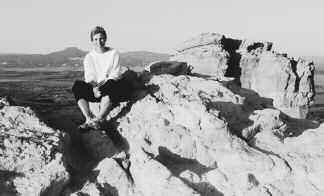
Our young park ranger guide that June morning was a native Hopi woman and a born storyteller. She graciously shared not only what she knew of the ruins of Mesa Verde but connected that ancient history with the very real stories of her own village and childhood. I felt, once again as I would many times on our trip, that I had been given a gift. There was a connectedness between the hospitality of the people we met, the music we heard, the artwork we saw and the landscape we traveled through so that the whole experience became more meaningful. Mesa Verde was just one awe-inspiring stop on our way to Ghost Ranch in Abiquiu, in northern New Mexico, where Peter and I, awarded Clayton Farraday summer stipends, would study and work.
Ghost Ranch is an education and retreat center owned by the Presbyterian Church. It is a community that speaks of its “mission motivated by faith to share joyfully the gift of hospitality, kindness and healing; to bring together people on various quests and from different perspectives.“ We were taking our two daughters along because the educational offerings are extensive and intentionally intergenerational. It has a wonderful “camp for the whole family“ feeling.
We were taking our two daughters along because the educational offerings are extensive and intentionally intergenerational.
While Peter traveled around the area in a van, using watercolors as a means of journal-keeping, and the girls explored the wide-open spaces of Ghost Ranch with new friends, I worked with clay. I took an introductory
course in Spanish Colonial Pottery. We made soperos, or soup bowls, as a means of exploring the rich history of northern New Mexico. It was exactly the kind of hands-on experience that can help one make sense of so much chronological detail. As a teacher, I was reminded of the power of examining the arts of a particular time or culture. Using locally gathered earthenware and colored slips, or liquid clay, we replicated handbuilt and stone-burnished bowls from a period (1700–1850) which, though contentious in many ways, shows the shared influences of two cultures (Native American and Spanish), thrown together on a rugged frontier. From crafting our own yucca brushes, to sharing stories and native bread around an outdoor firing, we were experiencing the positive blend of traditions that makes New Mexico so captivating.
But it was the sheer beauty of the southwestern landscape that haunts me still. Having never visited this part of the world, I felt I might well have been dropped on the moon. The “earthscape“ was startling.
Having never visited this part of the world, I felt I might well have been dropped on the moon.
Our living quarters at Ghost Ranch were on a mesa, and looking directly out of our dormitory door, we could see the distant Pedernal. This is the mountain that the American painter Georgia O’Keefe made so familiar, the mountain she said that God would give her if she painted it enough. It was easy to see from where she drew her inspiration and strength. My family and I also paid homage by painting. The stretching expanse of sky and intensity of color created a sense of space that was at once humbling
The stretching expanse of sky and intensity of color created a sense of space that was at once humbling and spiritual.
and spiritual. The quiet focus required to observe and record these surroundings made for some of the most treasured moments of our trip. I remembered the concept of the Puebloan sipapu: how special places in the landscape serve to remind us of our enduring connection to this earth, its people and the possibilities of one’s journey.
In this school year, my excited first graders will work with clay. I like to tell them that clay is a gift from the earth, dug from a hole in the ground, and though it may be their first experience working with this medium, it is one we share through the ages with so many.

“First
by Robyn Richmond
Robyn, in her first year as Quaker Coordinator, talked to the Upper School at the first Meeting for Worship of the school year. She is a member of Chester Monthly Meeting and is First Day School Coordinator. She lives at Pendle Hill, a Quaker worship and study center in Wallingford, where husband Lloyd Guindon is Coordinator of Buildings and Grounds.
Welcome. I am Robyn Richmond, and I am beginning my first year here as Quaker Coordinator. I am also the mother of 2006 FCS graduate Galen Guindon, eleventh grader Julian Guindon and newcomer to seventh grade, Breanna Guindon. One of my first official duties is to say some words to you about Meeting for Worship, and then we will settle into silence.
I was reading my predecessor Suzi Morrison’s notes from last year, and she suggests that I talk about the "dos" and “don’ts” in Meeting for Worship. Well, being new and all, I went to my son Julian who has been attending Meeting here since seventh grade. I recount this, with Julian’s permission, knowing that he has been carefully taught about such things in Quakerism classes.
“Julian, what are the rules at school for Meeting for Worship?“
“I don’t know,“ he mumbles.
“You don’t know? No one has ever talked to you about the rules?” (shrugs shoulders).
“How about hats? Can you wear hats in Meeting?“
“No.“
“How do you know?“
“The teachers take them off your heads.“
“What else?“
“No sleeping.“
“How do you know that?“
“The teachers poke you.“
“The teachers poke you? You sit next to a teacher?“
“No. They reach over the bench and shake you.“
OK, Julian!
I know that this meeting room in Shallcross Hall is used for many purposes, but in this time, it is our House of Worship. When any one of us enters for Meeting, the religious service begins. So please enter quietly.
When any one of us enters for Meeting, the religious service begins.
Quakers worship in silence, believing that any individual can communicate directly with God or the spirit or the light that is within each of us when sitting in an “expectant Silence.“
I did not attend a Quaker high school. My husband Lloyd, however, did. When I asked him about his experiences as a teenager with Meeting for Worship, he told me that every day began and ended with worship and that he spent four years at Olney Boarding School perfecting the art of cracking body parts, making his friends laugh undetected and trying to sleep without looking like he was sleeping! An FCS graduate also added the “studying the paper on the floor while looking worshipful“ approach. Yet, Lloyd also told me that although he didn’t understand it at the time, Meeting for Worship was the vessel that held, nurtured and defined their school community. I have heard similar testimonies from FCS seniors and alumni. One alumnus and Board member, Victor Freeman, spoke to the faculty at the opening of school, describing Meeting as “Silence—interrupted by Human Voices, speaking from the Heart.“ (See pages 14–16 for Victor Freeman’s article.) When we come together in worship, this experience has mystery and power even if we do not recognize it.
Here in this room, in this time together, our thoughts matter. Perhaps you have seen the film What the Bleep do We Know. In this film, about quantum physics, we learn that a person’s thoughts can actually change the molecular structure of water, and this can be shown in photographs. Humans are made up of mostly water Imagine if this room were filled
Imagine if this room were filled with anxious thoughts of an impending history test?
with anxious thoughts of an impending history test? You probably don’t have to imagine; you know from experience how stress affects you and, perhaps, the atmosphere in the room. I know it is a tall order to ask that each person enter this room, breathe deeply, clear one’s mind of outward thoughts and relax into inner thoughts, but I am asking for each of us to try. Our school and our world need for us to try.
Many people have found that meditation actually increases concentration and performance. Quakers have found that it opens a pathway to being in touch with the spirituality of life. From that centered place you
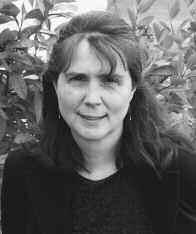
Robyn.
may feel the urge to speak or sometimes sing or read something. The hard part is figuring out if that urging is led by the spirit. One of the signs is an elevated heart rate along with the urge to speak. That is one of the ways Quakers became known as Quakers. That is how they knew a message was from the heart and not the head: they would actually quiver. Here in this room, in this time together, our words matter. When one speaks in Meeting, one’s words, as Friends put it, need to be measured. That means you only use as many words as you need. Now I’m going to pick on my son Galen for a moment. You know the category on your report card that evaluates verbal participation in class? Well, in the six years that Galen spent here, I never saw a high grade in that category! I wanted to tell Galen’s teachers that it really wasn’t his fault. It has been breed into his Quaker DNAthat words need to be measured. In his Quaker grandparents’ home, above the kitchen table, a plaque reads, “It is better to remain silent and be thought a fool than to speak and remove all doubt.“ I’d like to burn that plaque!
Do not be afraid to speak in Meeting for we in this community will be gentle.
Do not be afraid to speak in Meeting for we in this community will be gentle. If you feel that a message is not meant for you, or you don’t agree, let it pass you by, for this is not a time for debating. When you do speak in Meeting, consider your words. Is your message given in a spirit of love? Are you repeating what you or someone else has already said? Have you used only as many words as you need? Have you left time for silence between messages so that the last message could be reflected upon? And when our time of worship is over, we end by shaking hands with the person to the right and left.
Elaine Crauderueff, another past Quaker Coordinator, liked to end her initial talk with this Wendell Berry poem. I like it too.
There is no song like birdsong
In the quiet
But first one must have the quiet.
This brings me back to the conversation I had with Julian, because when I asked him if he liked the weekly Meeting here, he said “Yes,“ that it is a time of rest when nothing else is expected of him. Meeting for Worship provides the pause in the flurry of our active week.
Let us join together this year in this practice of community gathering and remember to:
Enter the Meeting Room quietly. Breathe deeply. Settle your body. Quiet your outward thoughts. Reflect on your own inner spirituality or energy. Interrupt the silence only with words from the heart.
By James Rosengarten
Jim has taught history, English and philosophy to our Upper Schoolers for seven years and is coordinator of Upper School service projects.
Though I was born, raised and remain a Catholic, I have had many brushes with peace churches throughout my life. My wife, Eda Kauffman, was born into a Mennonite family and, through her, I have become acquainted with the Mennonite church, a peace church that, like Quaker Meeting, embraces an ethic of non-violence. Members refuse to participate in any war or physical manifestation of conflict. Since then I’ve had many encounters with Mennonites and former Mennonites, many of whom were in-laws and others who were friends, some both! In 1995 the seeds for my Clayton Farraday stipend exploration were planted when I attended a family reunion on my mother-in-law's side. There I met her siblings; she is the youngest of nine children who grew up as plain-clothes Mennonite—that means they dress in the clothes that are considered plain, not that they’re the inspiration for a sort of #1 Mennonite Detective Agency series. Her brother Mark and his wife, a nurse, were leaving soon after the reunion for a stint in Africa, their second. As I listened to others in this family, I heard similar plans and other stories of the same ilk. While I'm sure that Mennonites are not immune to the righteousness that can plague all of us—especially those motivated partly or fully for religious reasons—I found it remarkable how much the ethic of service seemed to be inherent in the thoughts and lives of these people. It was not just the Conrad family that this applied to, either. Other Mennonites I have come to know seemed to have the same sort of ethic of service.
...I thought I might have a wonderful opportunity to ponder service and see what it was that inspired Mennonites to embrace an ethic of service so naturally.
So this summer when Eda’s father’s side was having a family reunion—a reunion to take place at Rocky Mountain Mennonite Camp in Colorado which was founded by Eda’s grandfather—I thought I might
have a wonderful opportunity to ponder service and see what it was that inspired Mennonites to embrace an ethic of service so naturally. I am also very interested in how one’s sense of justice imbues one’s notion of service. In fact, I must confess to a discomfort with the word “service,“ as it seems too easily to smack of a kind of paternalism that encourages righteousness and blocks compassion. I contacted my in-laws, as well as the director of Rocky Mountain Mennonite Camp, asking them if they would ponder the following questions and be open to chatting with me about them:
a) How have your Mennonite roots influenced your ethic of service, in particular, and other major decisions about living your life, in general?
b) Specifically, how has the ethic of non-violence played a role in shaping your ethic of service and your ethics in general?
c) How does your sense of justice inform your sense of service?
d) And the inverse of c: how does your sense of service inform your sense of justice?
When summer came, I was surprised at what a wonderful opportunity this gave me to speak with my in-laws. With the backdrop of Pikes Peak, I would sit on the balcony of a lodge in the camp and listen to life stories from Eda’s uncles and aunt. Some were about Jesse Kauffman, my wife’s grandfather and how he started this camp and a few others in Colorado and Michigan in which he focused on working with adjudicated youth. There were wonderful stories: Jesse had no money to start up a camp; indeed, he had no money at all. As a Mennonite preacher, he was usually paid in labor or with goods but not money. So, in 1951 when an army base in Colorado Springs was selling its buildings, he raised the money to buy one, went to the army base with some Mennonite volunteers, dismantled the building and took all of its wood and other parts to make the first building for the camp. As my father-in-law said in his stentorian voice, “Talk about turning swords into ploughshares!“ And of course there are the casualties of such a lifestyle, too. One of Jesse’s daughters still bristles at the romanticized version of these stories as her childhood recollections smack of deprivation and neglect.
“Well, you just did what had to be done.“ “If you saw someone in need, you helped them.“ “You took care of each other.“
So, as relatives pondered where the ethic of service originated, I heard comments like, “Well, you just did what had to be done.“ “If you saw someone in need, you helped them.“ “You took care of each other.“ Yet, what I had been witnessing over the last decade or so was a group that was taking care of more than just each other. They seemed to have broken away from the Mennonite communal barn-raising ethic and had
become more of an international presence—working with people of cultures and religious beliefs different from their own.
For American Mennonites, this seems to have been an outgrowth of World War II. While so many boys were being drafted and sent to Europe, Mennonite boys were remaining behind, declaring their status as conscientious objectors. As their neighbors mourned the loss of their sons and occasional tensions grew between Mennonite and non-Mennonite families, American Mennonites began to question whether it was enough simply to not participate in war. They began asking themselves how they might actually promote peace. To not participate in war does not necessarily mean that you promote peace. These are two different notions that we in a Quaker school can link more quickly than we probably should. In 1946 the Mennonite Central Committee, or MCC, a then twenty-six-year-old institution, turned its relief work to more than just other Mennonites in the world. It was this same ethic that encouraged Jesse Kauffman to advocate for the Rocky Mountain Mennonite Camp. He wanted a camp that would serve Christian youth— not just Mennonite youth. It is still a very Christian-oriented place.
...what does all of this have to do with service and justice?
But what does all of this have to do with service and justice? Well, returning to the conversations of my in-laws and the director of the camp, I found their motivations for doing service to initially be almost part of a habit; however, they seemed to have had a point in their lives when they eventually began doing what I think most of us teachers hope our students will do. Through their work for those who have less, they began to question why things are the way they are; they began to do social analysis.
Dale Cooper, retired and in his late sixties, grew up in a heavily Mennonite community in Ohio. When he was of draft-able age in the mid-1950’s, he declared conscientious objector status and was not drafted; however, he says he did so because that’s what his family and 32
friends did. He didn’t think much about it. In the 70’s and 80’s he taught grade school in the bush country of Alaska. He describes having his political and social consciousness awakened then when he realized that government educational policies were making it more difficult to teach the children he was working with. With that came a burgeoning awareness of the seamless garment that political systems actually are. Rod MacDonald similarly followed the expected path of being a conscientious objector. The questions put forth to him by the draft board caused him to think carefully about his actions. In fact, he found himself questioning whether he truly embraced an ethic of total non-violence or not. Partly as a result of that experience, he found himself always trying to understand the other side of a conflict before making judgments or coming to conclusions.
These stories and others made me reflect on our ultimate desire as teachers to help our students become thoughtful, compassionate people...
These stories and others made me reflect on our ultimate desire as teachers to help our students become thoughtful, compassionate people with critical-thinking skills to analyze situations and perhaps even effect some sort of change that might bring about justice. The stories reinforced for me how important family is in the growth and value that people place on working for justice. Mostly, though, it reminded me how much teaching is a profession that is full of humility and faith. We first try to pick the right seeds to plant, an action that is bound to make us humble, then we try to plant those seeds with hope that they might come to fruition. We have to have some sense of faith that this might happen. When and if these seeds do come to fruition, it is likely that we will not be around to notice.
As the stories I heard from committed service-oriented people demonstrate—our awakenings, our aha! moments, come at mysterious times, times that seem out of anyone’s control except, perhaps, the individuals themselves. I like to think that they happen in some sort of divine confluence of moments—as when we say it was the “right time for me to hear that message“... or something. But I wouldn’t pretend to begin to know what that means. And, frankly, as a teacher, I take some comfort that I am not responsible for engineering those moments. On the other hand, if I have any minor hand in making such a moment occur for a student, I would be thrilled, honored, and, once again, humbled.
F R I E N D S ’ C E N T R A L S C H O O L 1 1 0 1 C i t y A v e n u e W y n n e w o o d , P A 1 9 0 9 6