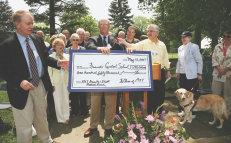
IFYOU PAY corporate net income tax, capital stock franchise tax, bank and trust company shares tax, title insurance company shares tax, insurance premiums tax, or mutual thrift institutions tax, then you could join other generous donors who are supporting Friends’ Central School through Pennsylvania’s EITC program.
This year, donors gave over $185,000 in support of Friends’ Central’s financial aid program which helped us open our doors to about 15 talented students with limited financial means
If you have any questions, or think your company would be interested in participating in this program, please call Lydia Martin, Director of Development: 610-645-5034, lmartin@friendscentral.org or Jim Brennan, Director of Annual Giving: 610-645-5036, jbrennan@friendscentral.org
Thank You!
GrGoing een
Friends’ Central Directions
Spring/Summer ’07
From the Headmaster:
Dear Friends,
The main theme of this edition of Directions is the environment. Our editor, Rebecca Anderson, provides an excellent opening essay and has compiled profiles ofFriends’Central alumni/ae who have chosen careers that reflect their interest in doing their part for the environmental cause. We would like to think that they and many other graduates have been encouraged by their experiences at Friends’Central to choose work compatible with the values inherent in our Quaker roots. You should know that as I write this note, the School is exploring several further ways ofreducing our use ofenergy and paper and conserving resources.
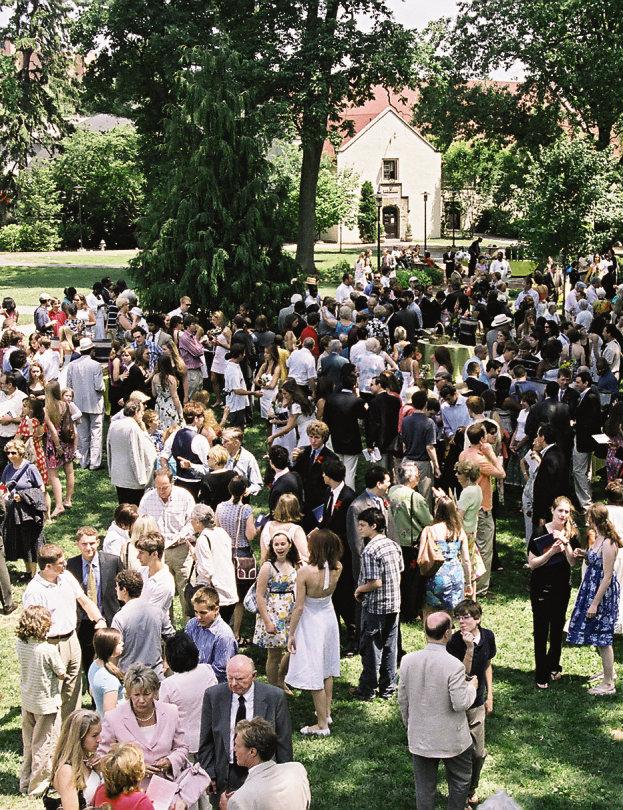
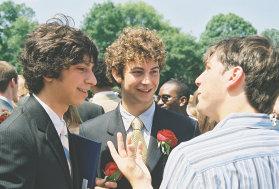
This issue also includes a photograph of the wonderful class of 2007. It is appropriate that the setting is the traditional graduation terrace framed by stately,well-cared-for trees and flower beds. Our hope is that our most recent graduates will join their predecessors in making our country and the world a better place, an aspiration that includes “developing compassion for fellow human beings across national borders and valuing the environment.”The stories within affirm our trust.
Sincerely,
David M. Felsen Headmaster
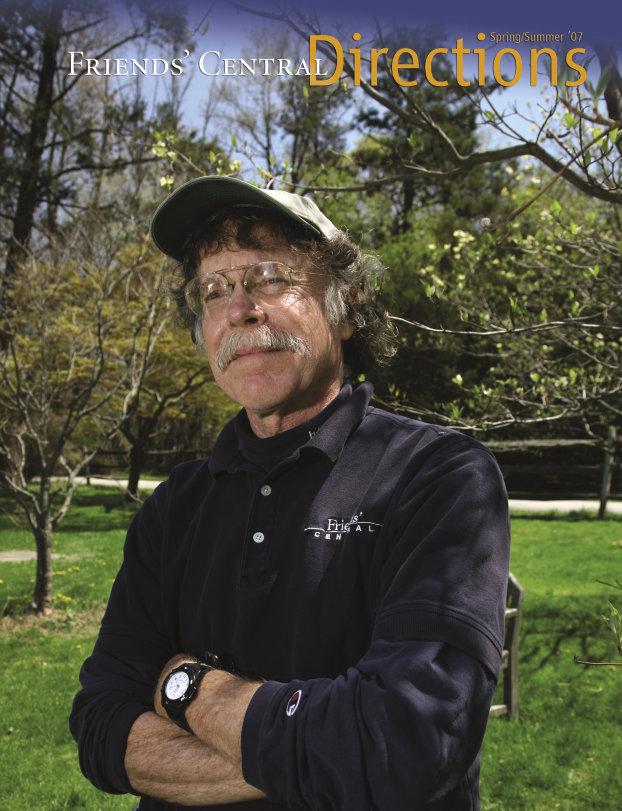
On the cover: Friends’ Central’s arborist, Doug Linton ’68 by Eleftherios Kostans.
Inside front cover: Commencement 2007
Reception on the Green by Todd Swimmer ’81.
2006-2007 Board of Trustees
Ann V. Satterthwaite, Clerk
Peter P. Arfaa
James B. Bradbeer, Jr
Adrian Castelli
Kenneth Dunn
Kaye Edwards
George Elser
Jean Farquhar ’70
Victor Freeman ’80
Christine Gaspar ’70
Robert Gassel ’69
Edward Grinspan
Irwin Gross
Walter Harris ’75
Sally Harrison
Karen N. Horikawa ’77
Deborah Hull
Michael Kelly
Craig Lord
Hillard Madway
Ed Marshall ’68
Carol Mongeluzzi
Jeffrey Purdy
Lawrence S. Reichlin
Marsha Rothman
Jonathan Sprogell
James Wright
Barbara M. Cohen, Emerita Joanna Haab Schoff ’51, Emerita
2006-2007 Alumni/ae Board
Andrew Newcomb ’87, President Mallory Floyd ’96, Vice President
Jordan Rubin ’98, Secretary
Gail Carter ’97
Anne Dufour Clouser ’50
Bess Collier ’96
Alice Hess Crowell ’46
Andrea Deutsch ’85
David Ellis ’51
Bill Georges ’88
Susan Kelsay ’59
Peter Klein ’87
Patrick Lord ’90
Jane Cubberley Luce ’68
Latifah McMullin ’99
Donald Reimenschneider ’52
Aaron Selkow ’88
Barbara Weinberg ’79
Jessica Zeldin ’88
From the Editor:
Dear Friends,
I began putting together this issue of Directions in mid-April, right around the time an unseasonal ice-storm rushed through the area, pulling down trees and wires and flooding streets. I dug out the boots and mittens I had just packed away and shoveled the snow off the suddenly incongruously yellow daffodils. By the end of that very same week, the temperature reached 90 degrees, and I scrambled through the closets for last summer’s shorts and sandals. These extremes were an uncanny reminder that the conversations I was having about climate change and the environment with alumni/ae and faculty for this issue were very current!
The feature, “Going Green,” highlights a deep concern we all share for the state of the earth by looking at how several alumni/ae are working on behalf of the environment. It was important to me that this issue of Directions do more than simply recount the efforts of others. So,for the first time, the magazine is printed on 100% recycled paper that contains a minimum of 10% post-consumer waste. The manufacturer,Sappi, is committed to sustainable development and does not source timber from indigenous forests or woodlands, does not use genetically modified trees, and does not harvest trees in ways that compromise the traditional or civil rights of any people.
Alongside its focus on the environment, this issue celebrates the importance ofcommunity here at Friends’Central. The Campus Log stories focus on cultural communities and the efforts made by Friends’Central teachers and students to explore the complexity and diversity of other cultures. The alumni/ae featured all emphasize that their concern for the environment is a natural extension of the vital sense ofcommunity they acquired at
Friends’Central. Finally, the pictures of Commencement, Reunion, and the many Home and School events celebrate the strength of the community we create together.
Middle School science teacher Doug Ross unwittingly tied these two different themes together the other day when he stopped by my office to talk about the School’s newly formed Environmental Advisory Committee and its plans for next year.“We could have solar panels, biodiesel buses, and five green roofs, but if we continue to throw trash on the ground, nothing has been accomplished. Our job is education and community building.This is a subject that will unite us as a community and become part of our education process. ”
Next year will be full ofactivities, strategies, conversations, and celebrations focused on improving Friends’Central’s environmental friendliness. Hopefully the articles in this issue will excite you to find a way to join us in a community-wide effort to go green.
Sincerely,
Rebecca H. Anderson Director ofCommunications
CORRECTIONS:
> In the Fall 2006/Winter 2007 issue, we incorrectly identified a student on page 7 as Ben Melman instead of Jeffrey Berman.
> Christopher Dante Sheldon was incorrectly listed as going to the University of Pittsburgh when in fact he is currently enrolled at the University of Rochester.
> On page 75, Kathleen Heller belongs to the class of 1995 not 1999. The editor regrets the errors.
Head of School
David M. Felsen
Editor
Rebecca H. Anderson Director of Communications
Art Director, Designer Suzanne DeMott Gaadt Gaadt Perspectives, LLC
Development Office Staff
Lydia A. Martin Director of Development
Linda Waxman Wasserman ’75 Director of Alumni/ae Affairs
James P. Brennan Director of Annual Giving
Elizabeth H. Finley, Archivist/Assistant Director of Annual Giving
Joel F W. Price
Webmaster/Data Specialist
Denise Koehler Morris Development Office Secretary
Monica Peterson Development Office Secretary
Joshua Wasserman ’02 Development Assistant Printer Smith-Edwards-Dunlap
We welcome any comments, letters, photographs, and suggestions for future issues. Please send all communications to:
Editor, Directions Friends’ Central School 1101 City Avenue Wynnewood, PA 19096 randerson@friendscentral.org
Visit Friends’ Central on the web at www.friendscentral.org
Alumni/ae, we want to hear from you!
Have you published a book recently? Run a marathon? Had a baby? FCS encourages friends to share their news with Directions. Email your notes and photos to alumni@friendscentral.org (preferred method) or mail information to the Development Office, 1101 City Avenue, Wynnewood, PA 19096. Please mark the back of prints with your name and class year. Digital images must be of high quality (28” x 21” at 72 dpi, or 4” x 6” at 300 dpi). We accept photos up to 2MB.
18 Going Green
Friends’Central Alumni/ae and the Campaign for the Environment
Doug Linton ’68
Rob Crauderueff ’01
Sherry McVickar ’70
Rachel Fertik ’91
Jonathan Adler ’87
Peter Viola ’02
Sarah Armitage ’77
Cultural Explorations
A Whirlwind Trip Around the World
By Michelle Johns
A spring walk through our halls is a whirlwind trip around the world. During the later part of the school year,Friends’ Central Lower School students delve into a culturally rich social studies curriculum. Some of the grades have created a “tradition”: all first graders, for instance, study an Asian culture (Japan, China, or India); second graders all study Africa; third graders study Native Americans; and the fourth grade looks at immigration and the United Nations. The curriculum in pre-k and kindergarten is more flexible and the focus often changes yearly.What is most imp tant is that the st dents thr
value other cultures, not just the geography and basic facts.
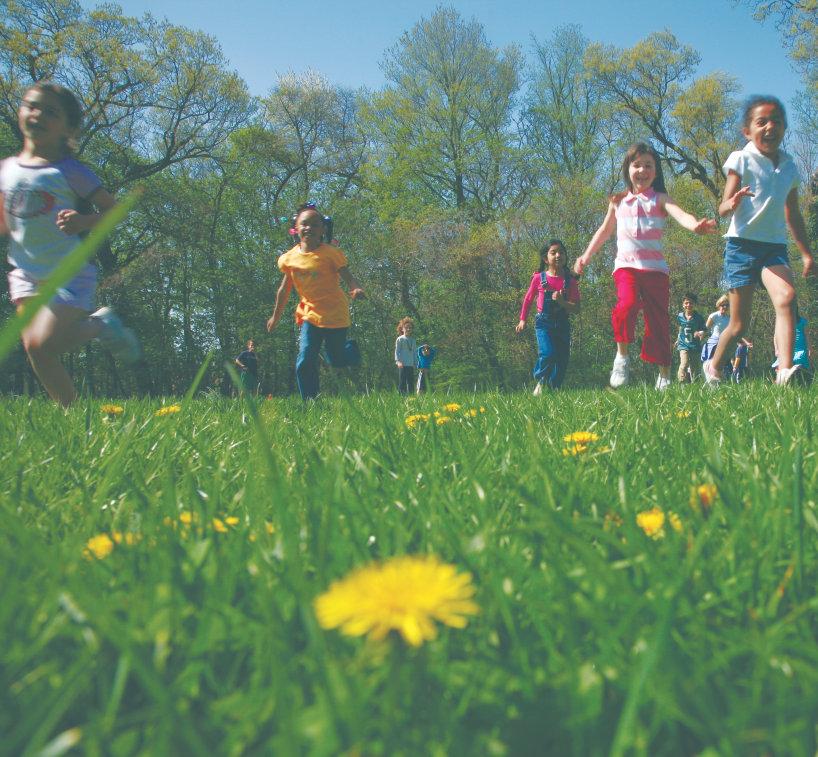
For many teachers, the Quaker emphasis on discovering that there is “that of God in every person” helps us organize our social studies curricula around a celebration of differences as well as similarities, and the various activities each classroom undertakes encourage each child to imagine what it is like to be a Japanese, Hopi, or Ugandan child. Second graders, for instance, walk five miles in Valley Green each spring to raise money for Streams of Life, an organization that builds wells for clean water in Kenya. The five miles is not an arbitrary distance—it is the same distance that hool-ag hildr n in r al villag
Eyes Wide Open
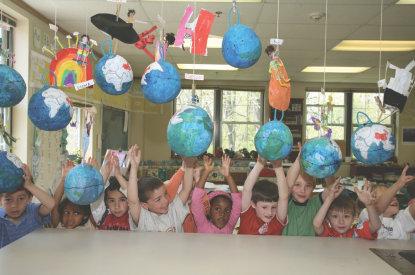
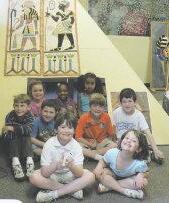
(Above) Students from kindergarten in front of their pyramid. Front Left to right: Gavin Sultan, Nina Saligman. Second row: Andrew van Buren, Ben Klein, Thomas Bradbeer, Ben Wainfran. Back row: Mia Bruckner, Amirah Alwyn, Nayah Moore.
(Top left) Kindergarteners Margaret Mushi, Jonah Wexler, Gideon Powell, Bradleigh Bell, Ben Schall, Jackson Forrest, Henry Shin.
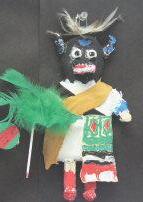
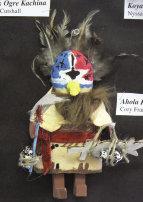
(Next page, top left and below) Kachina dolls made in the third grade class.
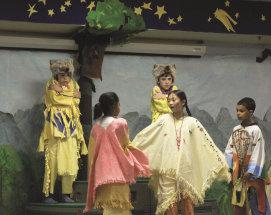
(Next page, top right) Bruno Vogrig Gassel, Matayia Mapp, Vera Lee, Jonathan Adams, and Steven Folwell, all '16.
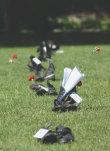
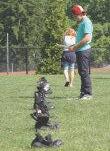
On Friday,May 25th, Friends’Central School hosted "Eyes Wide n Across PA," an exhibit ofover 160 pairs ofcombat boots— ged with the names ofPennsylvanian soldiers who have died in raq war, along with a display of shoes representing Iraqi civilian casualties. The American Friends Service Committee put ther the original exhibit, "Eyes Wide Open: The Human Cost of ar," to represent the lives lost in Iraq. This exhibit opened in hicago in 2004 with 504 pairs ofboots. It has been to more than 60 cities across the country and returned to Chicago this past Memorial Day weekend for its final show with 3400 pairs ofboots. Friends’Central was the first high school in the country to host the exhibit, co-sponsored by the Friends’Central School Quaker Life Group and the Parents of Students ofColor.
On February 27th, 27 Friends’ Central Middle School students and 22 Upper School students traveled to Cabrini College to compete in the Southeastern Pennsylvania Regional Competition for the 23rd annual Science Olympiad. The Middle School team won two medals. Ryan Cassidy ’13 and Claudia Detre ’14 came in 4th in Metric Mastery, and Sonjay Singh ’11 and Allegra Armstrong ’13 came in 2nd in Meteorology. Overall the Middle School placed 19th out of 39 teams. The Upper School team placed 9th overall.
in the classroom, in ir poetry, and in ir belief that the pi have much to h them about relato the earth. The ls remain on the lassroom wall to mind her students to y on the spiritual path.
fresh drinking water for their families. Joan Raina’s third grade students make their own interpretation of the kachina dolls given to young Hopi children in the southwestern part of the United States. “Ka” means respect, and “china” means spirit. The kachinas are the Hopi’s special protectors. They are powerful spirits who, the Hopi believe, come and live in their villages for six months every year to help them. The Hopi believe that if they live balanced lives, the kachina spirits will bring much needed rain and a good harvest. Joan loves this project because it is filled with reverence for the people the children have studied and whom they honor in their daily spiritual ceremonies
Ben Daniels ’03 premiered his new documentary “This is My Cheesesteak” to a sold-out audience on Saturday April 14th at The Bridge (40th and Walnut). Cheesesteak rivals from Pat’s King of Steaks, Geno’s, Tony Luke’s, Steve’s Prince of Steaks, and John’s Roast Pork were all on hand. We are looking forward to a special screening here at Friends’ Central next year!
This spring, y kindergarten class ned about Egypt. Many of the children were surprised to learn that Egypt is in Africa, and so right away,we were able to dispel many of the preconceived notions they have about the continent even at this early age. Of course my decision to study Egypt was also timely since we have the King Tut exhibit right in our back yard! In much the same way as with the Fall Project, we incorporated many different disciplines into our social studies. We read stories, learned to write Egyptian numbers, mummified apples, made jewelry, and even designed a lifesize sarcophagus. The learning is handson, interactive, and meaningful. All of us here at Lower School believe that as our world becomes smaller, it is especially important for us to understand and experience other cultures.
Upper School Science teacher
Melinda Yin’s article, “Evidence that a late-emerging population of trunk neural crest cells forms the plastron bones in the turtle Trachemys scripta,” was published this year in Evolution and Development (9:3).
DeBreea Dunston ’10 sang the national anthem on March 2nd for the 76ers game against the Memphis Grizzlies, the team for which FCS graduate Hakim Warrick ’01 plays.
Min Lee ’96 was the recipient of a Fulbright fellowship to France where she will be working for a research group at the Ecole Nationale d’Architecture in Versailles. Min is currently pursuing a dual PhD program in architectural history at Northwestern University and in urban sociology at the Ecole des Hautes Etudes in Paris where she is researching the history of cartography and its relationship to 18th and 19th century French architecture.
Ian Ramsey-North ’03 placed 7th in the 3,000-meter steeplechase and earned his third AllAmerican honor. Ian’s first was in 2005 for running on Haverford College’s Distance Medley Relay team. In 2005 he also earned AllAmerican honors for being one of the top 35 cross-country runners.
Friend’ Central School won two ribbons in the Philadelphia Flower Show Jason Goodman ’07 and members of the Friends’ Central Horticultural Society came home with a Third Place prize for a Euphorbia Obesa and an Honorable Mention for a Notocactus Turecekianus, a species that had never before been entered in the Flower Show All of the plants were purchased with money from the John Singer Memorial Fund for greenhouse plants and were nurtured since the fall by members of the FCS Horticultural Society
Other
Opportunities
for Travel at
Friends’ Central
Spanish Exchange in Seville
French Exchange in Lyons
Spanish Trip to Peru
Insectocology Program in New Mexico
National Observatory in Arizona
7th Grade trip to Echo Hill
Johanna Gelber ’01 is traveling to Otovalo, Ecuador this summer to work with the Village Education Project, an organization dedicated to empowering rural villages by providing their young people with higher education.
Emily Ziffer ’09 placed 3rd in the 2007 National Bouldering Competition and, once again, made the 2007 USA Junior Bouldering Team. She also competed in the open adult category and placed 11th nationally
Aurora Wardlaw ’07 was selected as the Seventh Congressional District Scholar-Athlete from Friends’ Central. This program recognizes student athletes who best exemplify the selfless dedication to academia and sports that help define the leaders of tomorrow.
David Eisner ’08 organized a benefit concert featuring Braddigan (of Dispatch), Penn’s awardwinning a cappella group Off the Beat, and Drexel singer/ songwriter, Matt Duke, for WXPN Musicians On Call, a nonprofit organi-
Conversation and Activism in French II/II Advanced
By Rochelle Ostroff-Weinberg
A French proverb reads: “It is by forging that one learns to forge.”And, so, it is through speaking that one learns to speak and communicate. This has always been my approach to the teaching ofFrench: speaking, discussing,debating,reading, discussing the reading.In my view, the courses are conversations that blend chat about our personal opinions on diverse topics with comparisons to opinions from the French-speaking world. “Let’s find out what you believe,” I say to my students. “How do you feel about this sport, music, lifestyle, responsibility,world view? Let’s compare your perspective to that ofyour classmates. Now let’s explore outside of ourselves in the larger French-speaking world, not only through readings and film, but through actual communication with those who share our common ground, the French language.”
The Quaker values oftolerance, peace, and truth lend a crucial focal point to all of our classroom conversations and activities. Over the course of this year I have developed projects to help students use French in ways that reflect these values and make the communication socially relevant. To me, it is essential that students perceive their power to communicate important ideas—about friendship, ecology, the search for peace, politics, homelessness, poverty, and cultural and religious diversity—in their French stud-
zation that brings live and recorded music to the bedsides of patients in healthcare facilities. Eisner raised over $40,000—more than his goal and more than enough to fund the program for one year.
Upper School English teacher Liza Ewen was awarded a grant from the National Endowment for the Humanities to study poetry this summer with Harvard professor Helen Vendler.
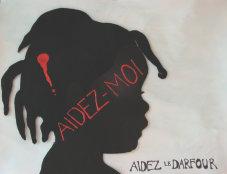
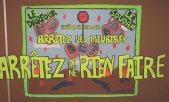
ies. In French II / II Advanced this year we have moved from talking about ourselves as individuals to creating group poems on friendship, from chatting about everyday interests amongst ourselves and with our Middle School French friends to writing friendship letters to children in Haiti, from discussing world issues to writing and sending letters to the Sudanese ambassador to France demanding an end to the violence in Darfur.The ever-widening circle of our conversations helps the students learn about themselves as they learn another language.
Through French they find their voice, not only to talk about themselves,
Eight Friends’ Central students qualified for the America Invitational Mathematics Exam (AIME) based on their performance on the American Mathematics Competitions 12 exam. The students are Ben Loughin ’07, Luke Pryor ’07, Justin Chen ’07, Joshua Abel ’07, Eric Nisenbaum ’07, Scott Kunz ’08, and Jennifer Simon ’09
This year, Friends’ Central took its turn hosting the 20th Annual Inter-School Art Exhibition. This exhibition celebrates the best in visual art done by Upper School
(Top left, bottom right) Posters protesting the violence in Darfur made by French II students.
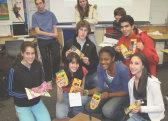
(Bottom left) Front left to right: Madelena Rizzo ’10, Alexandra Lizzi ’09, Morgan Gunter ’09, Samantha Greenberg ’10. Back left to right: Spencer Hewett ’10 and Hassan Zaki ’10
but also to express their ideas about the greater world; they become empowered to communicate about their immediate world, as well as about ways in which they can change the world. Our contacts with French speakers from other schools, be they in our region or in other countries, and with other governments help them apply their French lessons to communicate, explore, and take meaningful action.
Through their French studies my students learn that their opinions are important, but so are the opinions of others, no matter what language they speak. We share common ground regarding friendship and peace; let’s collaborate to create change for a better world.
students at Baldwin, Shipley, Agnes Irwin, Haverford, Episcopal, and Friends’ Central.
A classroom discussion about civil rights compelled Friends’ Central first graders to come up with a way they could help “right” injustice. They decided to start collecting backpacks, underwear, toothbrushes, and stuffed animals for The Children’s Aid Society to distribute to children in foster care. Annie Roberts ’08, Elizabeth Drebin ’08, Mira KauffmanRosengarten ’08, and Emily Lorry ’08 led the efforts.
On February 22nd, Pulitzer-prize winning journalist and Friends’ Central alum Dan Biddle ’71 delivered a talk entitled “Investigating History: How two Philadelphia Inquirer Reporters Uncovered an Untold Story of the Civil Rights Movement” as part of the Film and Lecture Series. The talk previewed Biddle’s forthcoming book, There Must Come a Change: Catto Octavius and the Battle for Civil Rights in the North in the 1860s to be published by Temple University Press in 2008.
Exploring Vanishing Cultures, Ethnodiversity, and “The Light at the Edge of the World”
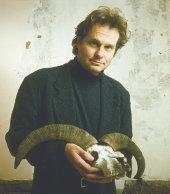
This spring, Friends’Central welcomed Wade Davis, National Geographic Explorer-in-Residence, as a part of the first annual Distinguished Scientist Program. The new program, which is the brainchild ofUpper School science teacher John Gruber and a supportive alum, seeks to inspire the next generation of scientists, researchers, and policy makers by bringing renowned scientists to Friends’Central for courses with the students and a public lecture. The students follow up the visit with their own field-trip to work with the scientist in his or her laboratory.
This year’s Distinguished Scientist was Wade Davis, an ethnobotanist and anthropologist who has spent the past 25 years studying the ways indigenous people live in harmony with the natural world. He has lived in Borneo,Australia, Tibet, Kenya, Haiti, the Arctic, and the Amazon exploring the connection between culture and biodiversity.In his lecture, “Light at the Edge of the World: An Exploration ofDiversity in the Biological and Human Worlds,” Davis focused on the ethnosphere, the “wonderful collection of thoughts, dreams, ideas, beliefs, myths, and intuitions we have created since the dawn ofconsciousness.”
Ready…Set…Go!
Human societies, Davis notes, are disappearing at an unbelievable rate due to climate change, global trade, and the spread of industrialized culture and technology.He mourns the loss of knowledge as much as he does the loss of linguistic, religious, cultural, and ideological diversity.For instance, the Waorani hunters can correctly identify an animal from 40 yards away by the smell of its urine, while native tribes in the Philippines can identify close to 500 more plants than westerneducated research botanists. We may think we have little to learn from small, self-sustaining cultures that inhabit the South American rain forests or barren mountain tops, but in fact, “these cultures do not represent failed attempts at modernity, marginal peoples who somehow missed the technological train to the future. On the contrary, these peoples,
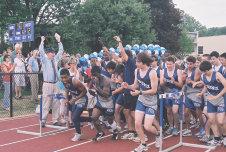
On May 12th, Friends’Central celebrated the opening of its brand new, all-weather track and soccer field. The old dirt and cinder track, built in 1968, was one of the last of its kind. The surface was slow, difficult to maintain, and potentially dangerous in poor weather. Spurred by a leading gift from Barbara and Anthony DeSabato,Friends’Central commissioned the Stephen Parks & Associates, the leading landscape architecture and planning firm for athletic fields in our area, to design a new, state-of-the-art all-weather track. The old track was removed in the fall, and the work continued through the winter and much of the spring. Finally amidst the sunshine and good cheer ofReunion Weekend, the new track opened. Friends’Central athletes, families, and alumni/ae all poured through the gates to walk the first lap together.
Brandon Laing, Wade Davis, Amy Corenswet, Eric Sorensen. All students are class of ’09.
with their dreams and prayers, their myths and memories, teach us that there are indeed other ways ofbeing, alternative visions of life, birth, death, and creation itself.”
Davis’s lecture was inspiring, as were his visits to the classrooms where he was able to talk with the Friends’Central students much more directly.As Alex Barron ’09 said, “Wade Davis helped us to look at these cultures without being clouded by our own experiences. He opened our eyes to an unknown world--the vastness of human cult ”
(Left) Portrait of Wade Davis. Photo by Tyler Mallory
(Above) Left to right: Sakina Abdus Shakur, Julia Ellis-Kahana, Phyllis Gallagher (teacher), Naomi Crimm, Stephen Nemroff, Tom Ringe,
The Upper Sc aculty Recommends….
This summer,
ee Cups ofTea: One Man’s Mission o Promote Peace…One School at a ime by Greg Mortenson
his book chronicles the adventures of mouner Greg Mortenson who,between 1993–2003, built 55 schools—especially for girls—in impoverished mountain villages in Pakistan. The book won the 2007 Kiriyama Prize for nonfiction, an award for outstanding books that promote greater understanding of and among the nations of the Pacific Rim and South Asia. (Carrie Brodsky)
Siddhartha by Herman Hesse
Siddhartha, a short, 125-page novel by Hermann Hesse, follows the path of a young Asian man in search ofenlightenment. He learns of the Buddha and many other spiritual teachers and of the variety of paths they offer: asceticism, self-rejection, indulgence, sexuality.Ultimately, he finds self-realization and peace as a ferryboat man living humbly in a tiny hut by a river. (Michael Crauderueff)
Special Topics in Calamity Physics by Marisha Pessl
Q: What do you get when The O.C., Alfred Hitchcock, The Catcher in the Rye, and the most influential works ofWestern literature collide?
A: Special Topics in Calamity Physics. Follow Blue van Meer as she navigates her senior year as a new student at St. Gallway, the small, prestigious prep school where she finds herself drawn into the web ofa clique of misfit-intellectuals and the enigmatic teacher they idolize. Simultaneously naïve and a bit too smart for her own good, Blue discovers that murder,mystery and international intrigue give new meaning to adolescent angst and the perils of high school. I was mesmerized, delighted and utterly obsessed with Blue’s story when I read it earlier this year, and so were plenty of other folks—it was hailed as one of the best books of 2006 by critics and readers alike. (Liza Ewen)
The Life and Times ofHarvey Milk by Randy Shilts Harrey
Milk is one ofmy heroes. His fascinating life story, as told in this biography by award-winning author Randy Shilts, encompasses both triumph and tragedy.From his beginnings as a camera shop owner in San Francisco,to his election as the first openly gay City Supervisor,to his assassination in City Hall at the hands of another City Supervisor,to the demonstrations and activism that followed his death, Harvey Milk changed the world for both straight and l/g/b/t people alike. His story is one every person should read; it encourages us to live life with courage, optimism, and hope for a better future. (Al Vernacchio)
A
Tale ofTwo Cities by Charles Dickens
As a wee college lad, while riding the Indianapolis bus to my summer job at the municipal gas plant, I was so taken by the first paragraph of this book that I memorized it then and there. (True to Pavlov,when I get on a Septa bus I often start reciting it.) Ifyou’ve never read Dickens, this is a great book to introduce you to him. Ifyou have read him, this
is a great one in which to meet him again. The two cities are London and Paris in the time of the French revolution. Two seemingly separate plot lines become more and more intertwined until they are one as you follow the journey of our main characters. You will witness the heights and depths ofhuman nature as you read about the best oftimes and the worst oftimes. (Jim Rosengarten)
Never Let Me Go by Kazuo Ishiguro
The purpose ofeducation is to prepare us for the life we will lead in the world; Hailsham School, whereKathy,Tommy and Ruth, the protagonists of Never Let Me Go, first encounter one another attempts to fulfill that purpose for a special group of students. Narrated by Kathy, the novel follows their journey as they come to understand themselves, the role they were created to play, and the world that would relegate them to that destiny.(Jim Davis)
Black Swan Green by David Mitchell
January, 1982. Thirteen-year-old Jason Taylor—covert stammerer and reluctant poet—anticipates a tedious year in his backwater English village. But what come his way are bullies, watching his family fall apart in slow motion, and those mysterious entities known as girls. Charting thirteen months in the black hole between childhood and adolescence, this is a captivating novel, wry, painful and vibrant with the stuff of life. (Matt Murphy)
The Paradox of Choice: Why More is Less by Barry Schwartz
Who would have imagined? Here we are, in the early years of the twenty-first century,being driven bonkers by the staggering array ofconsumer goods from which we must choose. Choosing something as (seemingly) simple as shampoo can force us to wade through dozens, even hundreds, ofbrands. We are, the author suggests, overwhelmed by choice, and that’s not such a good thing. Schwartz tells us that constantly being asked to make choices, even about the simplest things, forces us to “invest time, energy, and no small amount of self-doubt, and dread.”There comes a point, he contends, at which choice becomes debilitating rather than liberating.Did I make the right choice? Can I ever make the right choice? Schwartz has plenty of insightful things to say here about the perils ofeveryday life. (Phyllis Gallagher)
Funny in Farsi by Firoozeh Dumas
Firoozeh is a young girl, born in Iran, who moved with her family to Southern California in the early seventies. Her book is a collection of delightful essays that “chronicle the American journey ofDumas’s wonderfully engaging family.” Funny in Farsi is a touching story of family love, the struggle ofbeing your own person and yet respecting family heritage and tradition. Funny in Farsi reminded me of the movie My Big Fat Greek Wedding. I thoroughly enjoyed reading this book! (Laura Haimm)
All School: Awards
FANNIE COX HENDRIE STIPEND AWARD RECIPIENTS
Dyann Connor
Dyann will take two courses at St. Joseph University:“Science in the Middle School” and “Reading in Content Areas.”
Michael Fedder
Michael will learn and develop curricula around two new technologies: “Alice” and “Vex.”
Phyllis Gallagher
Phyllis will attend the Chautauqua Institution for a series ofweekly lecture topics and discussions hosted by experts in various areas ofhuman interest.
Deborah Goldader & Sara Callaghan
Together,Deb and Sara will observe and document the behavior of plasma in the “Northern Lights;” and will design a workshop for students ofchemistry and physics alike about plasma.
Mary Gregg
Mary will attend the Dana Hall Summer Math Institute from June 17-22, 2007.
John Gruber
John will attend an educators’ seminar and retreat in the Pacific Northwest.
Chris Guides
Chris will attend the Environmental Systems Research Institute Education User Conference in San Diego, CA.
Gayle Harmer
Gayle will attend three math workshops to be held this spring for all Lower School faculty.
Julie Plunkett
Julie will work with Nick Pulos during the remainder of this school year and in the summer to work on a body of math materials often broad topics.
Doug Ross
Doug will do a presentation on his eighth grade’s environmental service learning in Albuquerque, NM.
Erik Williams
Erik will take The College of the Atlantic’s summer course for teachers, “Introduction to Whales, Porpoises and Seals” from July 22-August 4, 2007 in Bar Harbor, Maine.
2007 Cum Laude Society inductees
CUM LAUDE
Joshua David Abel
Joshua Seth Aichenbaum
Noor Muhammad Raheem Beckwith
Gabriel Zenon Bloomfield
Max David Branzburg
Justin Chao-Nien Chen
Melissa Ashley Hewson
Julian Somes Kantor
Natalie Julia Kitroeff
Erica Danielle Kivitz
Susanna Kurnick
Benjamin Joshua Loughin
Jonathan Samuel Milestone
Eric Jeffrey Nisenbaum
Luke Christopher Pryor
David Marc Siegel
Emily Jennifer Spooner
Laura Kathleen Umbrecht
Michael Brian Weiss
LANGUAGE DEPARTMENT
The Foreign Language Department recognizes juniors and seniors who have exhibited exceptional achievement on an advanced level and enthusiasm in their foreign language studies.
Joshua Abel
Julian Kantor
Natalie Kitroeff
HISTORY PRIZE PAPER
Juniors in their American History classes each undertake an independent, primary source-based research project in the second half of the year.They begin the topic selection process in January,gather and begin to study their sources in February, present “work in progress reports”to their peers in March, submit rough drafts in April and turn in their completed essays in May.The history department takes this opportunity to highlight two of these works and to recognize the time and energy devoted to all of their projects by the class of 2005.
Julia Feinberg
Laura Umbrecht
SCIENCE
The faculty of the Science Department presents this award to senior students who have demonstrated excellence in scientific scholarship and achievement, and who have shown breadth of study across the science disciplines.
Sarah Bach
Noor Beckwith
Melissa Hewson
MATHEMATICS
The Mathematical Association ofAmerica and Friends’Central School present the mathematics award. Selection of the student receiving the award is based on the scores made on the Annual American High School Mathematics Examination. The awards are a book and gift certificates to:
Scott Kunz
Eric Nisenbaum
The POETS & PLAYWRIGHTS PRIZE
This award, sponsored by the English department, recognizes the work ofpoets & dramatists in our student community.
Jasmine Martin
THE RAMSEY AWARD FOR PROSE
Given by Mary Ann Ramsey’41, a writer, editor and public relations director, this award recognizes a writer for a piece of fiction or non-fiction prose.
Gabriel Bloomfield
BENJAMIN V. OGDEN AWARD
Given by Mrs. Andrew Joseph Newman, Jr and the late Thomas B.Ogden, ’45 in memory of their father Benjamin V. Ogden, Director ofFriends’Central Summer Day Camp for fifteen years and teacher ofphysical education in the Philadelphia Public School System. Mr Ogden was concerned about developing future citizens who were aware of their spiritual, mental, and social responsibilities. A silver bowl has inscribed on it the recipients in the Upper School.
Joshua Aichenbaum
Sarah Bach
Erica Kivitz
Emily Olson
CALVIN RANKIN AWARD
Established for Calvin Rankin ’43, whose fine and sensitive spirit displayed itself in a love ofgreat music, in a gift for discriminating writing, and in a character that combined gentleness with integrity. A group of friends offers annually a carefully selected book to students who are worthy representatives of the high ideals for which Calvin Rankin is remembered.
Gabriel Bloomfield
Melissa Hewson
Emily Spooner
Laura Umbrecht
Friends’ Central
Athletic Award winners: Joshua Aichenbaum, Jacob Fogel, Brennan Umsted, Maggie Lile, Sarah Friedman, Emily Olson
LEOLA ADELAIDE SMITH
MEMORIAL AWARD
Established in memory ofLeola Adelaide Smith, ’74 by her classmates and friends, this award is to be given annually to students who have an appreciation for cultural and intellectual pursuits and at the same time are sensitive to the beauty in nature as well as in people. Leola set an example for all of us—she possessed dignity, integrity, a desire to learn, a love of people, and a talent in music and art.
Noor Beckwith
Samantha Eisenberg
Stella Schwartz
ART ACQUISITION AWARD
From time to time it is in the interest of the school to acquire an exceptional work of art made by an accomplished student. This year Friends’Central is proud to honor and grateful to accept the donation ofjust such a work made by Kate Lindenbaum
SUSAN DURNFORD SNIPES
MEMORIAL AWARD
Given by the Upper School Faculty, in memory ofSusan Durnford Snipes, in recognition of outstanding contributions made by seniors to community service in the school. This year the faculty would like to honor:
Catherine Adler-Josem
Renata Arauz-DeStefano
Gabriel Bloomfield
Basil Coutifaris
Kathleen Fox
Natalie Kitroeff
Maxwell Skolnick
JOHN H. MCCOLLUM MEMORIAL AWARD
The Home & School Association recognizes graduating senior young women and young men who represent the spirit John McCollum brought to the community ofFriends’Central School. The deserving students are presented with a book (selected by representatives of the Home & School Association and/or the faculty) that hopes to signify some of the philosophy espoused by John during his tenure.
Renata Arauz-DeStefano
Julia Feinberg
Kathleen Fox
Benjamin Loughin
Amber Sims
CLAYTON
FARRADAY SUMMER STIPEND AWARD RECIPIENTS
Janet Bowker
FLORENCE JACKSON AWARD
For twenty-two years, Florence Jackson was the predominant figure in the area of girls’ athletics at Friends’Central School. The Florence Jackson award is given to that girl who, through her dedication and love of sports, has shown to the coaches the outstanding qualities of leadership, sportsmanship, and spirit which Mrs. Jackson sought to instill.
Maggie Lile
DAVID KIRK MEMORIAL AWARD
David Kirk was an instrumental figure in the area of athletics at Friends’Central. This award is given to boys who, through their dedication and love of sports, have shown to their coaches the outstanding qualities of leadership, sportsmanship, and spirit which David Kirk sought to instill. This honor is awarded to two young men in the Upper School who are selected in the spring by all coaches of boys’ sports.
Jacob Fogel
Brennan Umsted
OUTSTANDING SENIOR ATHLETE AWARD
The outstanding senior athlete award is presented to members of the graduating class who have demonstrated outstanding skills in athletic competition as members of at least two Friends’Central Varsity teams during their senior year.The criteria for the award include athletic achievement, leadership ability and sportsmanship throughout their high school careers.
Joshua Aichenbaum
Sarah Friedman
Emily Olson
EXECUTIVE AWARD
Awarded to a boy and girl in the Upper School who,by vote of students and faculty,represent the highest qualifications of school citizenship.
Sam Aronson
Claire Glass
Janet will travel to Tuscany to study works of art and literature for use as a teaching tool for the Lower School Renaissance theme.
Sue Clough
Sue will travel to Greece and Italy. She will document in photographs the connection between the ancient cultures and the Renaissance.
Michael Crauderueff
Michael will attend a teachers’conference in Berkeley,California. The conference, “Creating a Culture ofNonviolence: In the Classroom, Community and Beyond,” will help in the Peace Studies course that Michael plans to teach next year.
Alexa Dunnington
Alexa will travel to Oxford, England to take her final graduate course at Lincoln College; Alexa will graduate in Oxford on August 4th.
Emily Pryor
Emily will travel to Chile this summer to reconnect with the Chilean culture and to keep her linguistic skills sharp. She will use photography and video to compile scenes ofpeople, scenes and objects that will augment her classroom lessons.
Jim Rosengarten
Jim will attend a six-day retreat led by David Mallery at the Westtown School in June.
Al Vernacchio
Al will attend the workshop “Sources of Spiritual Renewal for Educators” at Pendle Hill in July.
Painting by Kate Lindenbaum
2006-2007
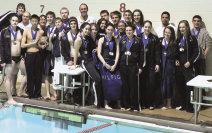
Boys’ and Girls’ Swim Teams— Friends League Champions
WINTER ATHLETIC AWARDS 2006-2007
SPORT MOST VALUABLE
MOST IMPROVED
Boys’ Basketball Quaran JohnsonArthur Bush
Girls’ Basketball Sarah Friedman Talia East
CAPTAINS
Quaran Johnson, Tymiak Hawkins
Sarah Friedman, Maggie Lile Erica Bash
Wrestling Jacob FogelHal Woodin
Jacob Fogel
Boys’Indoor Track Patrick DeSabatoBrennan UmstedJon Dellum, Parker Umsted, Parker UmstedBrennan Umsted, Patrick DeSabato
Girls’Indoor Track Madelena RizzoAlexandra Barron
Emily Olson, Jordane Blum
Boys’Swimming Michael Weiss Thomas “Max” BernardMike Weiss John Armstrong Maxwell Gilbert
Girls’Swimming Mary Stroman Taylor AndersonMary Stroman
ALL FRIENDS SCHOOLS
Boys’ Basketball: 1st team, Quaran Johnson ’07; HM, Arthur Bush ’09 Girls’ Basketball: 1st team, Sarah Friedman ’07; HM, Erica Bash ’09
Wrestling: 1st team, Jacob Fogel ’07, Fernando Jones ’08, Ken Ludwig ’08; HM, Jacob Snider ’09, Nathan Rieder ’07, Bryan Farrar ’08, Hall Woodin ’09
Boys’Swimming: 1st team, Chris Hall ’08, Michael Weiss ’07, John Armstrong ’09, Justin Chen ’07; HM, Jordan Villars ’08
Girls’Swimming: 1st team, Mary Stroman ’08, Sarah Shaw ’10, Andie Luongo ’09, Olivia Gillison ’10
FRIENDS SCHOOLS LEAGUE INDIVIDUAL CHAMPIONS
Girls’Swimming: 200 yd. Medley Relay: Sarah Shaw ’10, Sonja Eisl ’09, Olivia Gillison ’10, Andie Luongo ’09; 500 yd. Freestyle: Sarah Shaw ’10; 400 yd. Freestyle Relay: Olivia Gillison ’10, Sarah Shaw ’10, Andie Luongo ’09, Mary Stroman ’08; 200 yd. Freestyle Relay: Olivia Gillison ’10, Sarah Shaw ’10, Sonja Eisl ’09, Mary Stroman ’08
Boys’Swimmming: 200 yd. Medley Relay: Michael Weiss ’07, John Armstrong ’09, Chris Hall ’08, Jordan Villars ’08; 200 yd. Freestyle: John Armstrong ’09; 200 yd. IM: Michael Weiss ’07; 50 yd. Freestyle: Chris Hall ’08; 100 yd. Butterfly: Michael Weiss ’07; 500 yd. Freestyle: Jordan Villars ’08; 100 yd. Backstroke: John Armstrong ’09; 100 yd. Breaststroke: Chris Hall ’08; 400 yd. Freestyle Relay: John Armstrong ’09, Justin Chen ’07, Michael Weiss ’07, Chris Hall ’08
FRIENDS SCHOOL LEAGUE TEAM CHAMPIONS
Boys’Swimming and Girls’Swimming
ALL MAIN LINE
Boys’ Basketball: 1st team, Quaran Johnson ’07; 2nd team, Sam Propper ’08, Arthur Bush ’09
Girls’ Basketball: 1st team, Sarah Friedman ’07; 2nd team, Erica Bash ’09, Margaret Lile ’07; HM, Taylor Lee ’08, Talia East ’10
Boys’Swimming: 1st team, Chris Hall ’08, John Armstrong ’09; 2nd team, Michael Weiss ’07; HM, Justin Chen ’07
Girls’Swimming: 1st team, Mary Stroman ’08, Sarah Shaw ’10; 2nd team, Olivia Gillison ’10, Andie Luongo ’09 Wrestling: 1st team, Jacob Fogel ’07, Frenando Jones ’08; 2nd team, Ken Ludwig ’08; HM, Hal Woodin ’09, Bryan Farrar ’08
Boys’Indoor Track: 1st team, Patrick DeSabato ’09, Ivo Milic-Strkalj ’09; 2nd team, Colin Yarnell ’08; HM, Dan Adelson ’09, Jon Dellum ’07
MAIN LINE TIMES ATHLETE OF THE WEEK: Quaran Johnson ’07, Chris Hall ’08
SPORT MOST VALUABLE
Baseball Andrew Roth
Softball
Sarah Bach
2007 Spring Athletic Award Winners
SPRING ATHLETIC AWARDS 2007
MOST IMPROVED CAPTAINS
Thomas LefevreJoshua Aichenbaum, Max Branzburg
Elizabeth Deutschman
Boys’Tennis Joshua AbelAlexander Margolies
Girls’Lacrosse Sarah Friedman
Andrew Roth
Sarah Bach
Joshua Abel
Sarah BradburdNatalie Kitroeff, Margaret Lile
Margaret Lile Candice Hardie
Natalie Kitroeff
Boys’Lacrosse Noor Beckwith
Girls’Track Jordane Blum
David Thomas
Brennan Umsted, Noor Beckwith Kristoffer Jones
Elisabeth FiferJordane Blum, Emily Olson
Emily OlsonSamantha Greenberg
Boys’Track Patrick DeSabatoMichael Dohrmann Jon Dellum, Patrick DeSabato
Isiah Hammond
Golf Benjamin Bersoff
Lance Jones, Jr.Bryan Farrar,Sam Propper
Matthew Biron
Oliver Backes
ALL FRIENDS SCHOOLS
Boys’Track: 1st team, Patrick DeSabato ’09, Bryan Farrar ’08, Isiah Hammond ’07, Lance Jones, Jr. ’08, Ivo Milic-Strkalj ’09
Girls’Track: 1st team, Megan Wilson ’09, Elisabeth Fifer ’09, Emily Olson ’07, Jordane Blum ’07
Baseball: 1st team, Andrew Roth ’07, Richard Moses ’09, Thomas Lefevre ’08; HM, Edward Rooney ’10
Boys’Lacrosse: 1st team, Noor Beckwith ’07, Andrew Fusselbaugh ’09; HM, Henry Lobb ’10
Girls’Lacrosse: 1st team, Sarah Friedman ’07, Natalie Kitroeff ’07, Margaret Lile ’07, Sarah Bradburd ’08, Lindsay Nadkarni ’08 Golf: 1st team, Benjamin Bersoff ’09; Softball: HM, Sarah Bach ’07, Katherine Ivory ’07
Tennis: 1st team, Joshua Abel ’07, Basil Coutifaris ’07, Brendan Kaminsky ’08, Alexander Margolies ’10; HM, Daniel Fedder ’08
FRIENDS SCHOOLS LEAGUE INDIVIDUAL CHAMPIONS
Tennis: 3rd Singles: Brendan Kaminsky ’08; 1st Doubles: Basil Coutifaris ’07, Joshua Abel ’07; 2nd Doubles: Henry Friedman ’08, Daniel Fedder ’08
Boys’Track: 4x100 (3rd place): Jonathan Dellum ’07, Christian Weber ’10, Tymiak Hawkins ’07, Isiah Hammond ’07; 4x400 (2nd place): Ivo Milic-Strkalj ’09, Jonathan Dellum ’07, Isiah Hammond ’07, Michael Dohrmann ’08; 100 meter: 1st place: Isiah Hammond ’07; 110 High Hurdles (2nd place): Michael Dohrmann ’08; 200 meter (3rd place): Isiah Hammond ’07; 300 Intermediate Hurdles (2nd place): Michael Dohrmann ’08; 1600 meter (3rd place): Ivo Milic-Strkalj ’09; 3200 meter (2nd place): Patrick DeSabato ’09; Discus (2nd place): Sam Propper ’08; Pole Vault (1st place): Bryan Farrar ’08; Javelin (1st place): Lance Jones ’08, (3rd place): Sam Propper ’08; Girls’Track: 4x100 (1st place): Megan Wilson ’09, Jordane Blum ’07, Michelle Smith ’07, Tracy Weldon ’08; 4x400 (2nd place): Jordane Blum ’07, Michelle Smith ’07, Emily Olson ’07, Samantha Greenberg ’10; 100 meter (1st place): Megan Wilson ’09; 200 meter (1st place): Megan Wilson ’07; 400 meter (1st place): Tracy Weldon ’08; 300 Intermediate Hurdles (3rd place): Jordane Blum ’07; Discus (1st place): Elisabeth Fifer ’09, (2nd place): Jona Shreeves-Taylor ’09, (3rd place): Ashley Beard ’07; Javelin (3rd place): Elisabeth Fifer ’09; Pole Vault (2nd place): Natalie Willis ’09
ALL MAIN LINE
Baseball: 1st team, Andrew Roth ’07; 2nd team, Richard Moses ’09, Thomas Lefevre ’08; HM, Edward Rooney ’10; Boys’ Track: 1st team, Patrick DeSabato ’09, Ivo Milic-Strkalj ’09, Isiah Hammond ’07; 2nd team, Michael Dohrmann ’08, Bryan Farrar ’08, Lance Jones ’08; HM, Sam Propper ’08, Peter Chawaga ’09, Jacob Snider ’09; Boys’Tennis: 1st team, Joshua Abel ’07, Henry Friedman ’08, Daniel Fedder ’08; 2nd team, Basil Coutifaris ’07, Brendan Kaminsky ’08, Alexander Margolies ’10; Boys’Lacrosse: 1st team, Noor Beckwith ’07, Andrew Fusselbaugh ’09; 2nd team, Henry Lobb ’10; Softball: 2nd team, Katherine Ivory ’07, Sarah Bach ’07; HM, Taylor Lee ’08, Grace Honik ’07; Girls’Track: 1st team, Emily Olson ’07, Jordane Blum ’07, Elisabeth Fifer ’09; 2nd team, Natalie Willis ’09, Tracy Weldon ’08, Megan Wilson ’09; HM, Samantha Greenberg ’10, Kristen Mann ’10; Girls’Lacrosse: 1st team, Maragret Lile ’07, Natalie Kitroeff ’07, Sarah Friedman ’07; 2nd team, Sarah Bradburd ’08, Lindsay Nadkarni ’08
MAIN LINE TIMES ATHLETE OF THE WEEK: Andrew Roth ’07
ALL NORTHEAST LACROSSE LEAGUE: 1st team, Andrew Fusselbaugh ’09, Noor Beckwith ’07; 2nd team, Ahmad Zachary ’10, Henry Lobb ’10; HM, Emmett Culhane ’09, Andrew Mongeluzzi ’10, Brennan Umsted ’07
BOYS’LACROSSE ACADEMIC ALL-AMERICANS: Noor Beckwith ’07
7th CONGRESSIONAL DISTRICT SCHOLAR ATHLETE: Aurora Wardlaw ’07
Friends’ Central: Commencement
STUDENT
COLLEGE CHOICE
Joshua Abel Swarthmore College
Catherine Adler-Josem Sarah Lawrence College
Joshua Aichenbaum Middlebury College
Renata Arauz-DeStefano Tufts University
Samuel Aronson University ofPennsylvania
Earl Atta-Fynn Middlebury College
Sarah Bach Rensselaer Polytechnic Institute
Noah Bachow Franklin & Marshall College
Lara Baidoo studying in Australia
Ashley Beard Hampton University
Noor Beckwith Harvard University
Lindsay Bedford University ofPittsburgh
Emily Berger ’08 MIT
Dana Berschler Syracuse University
Niara Blakney Hampton University
Gabriel Bloomfield Yale University
Laurie Bludman Penn State University
Jordane Blum SUNY Binghampton
Max Branzburg Princeton University
Sarah Brodsky Connecticut College
Sarah Brown Howard University
Amanda Carr Franklin & Marshall College
Peter Castelli University ofVermont
Justin Chen Washington University in St. Louis
Christian Chester undecided
Deanna Connor University ofDelaware
Basil Coutifaris Franklin & Marshall College
Matthew Dancis Drexel University
Jonathan Dellum LaSalle University
Andrew Duncan Philadelphia University
Samuel Dweck George Washington University
Samantha Eisenberg Goucher College
Matthew Elser Clarkson University
Julia Feinberg Stanford University
Samuel Feldbaum Lafayette College
Caroline Fenkel University ofDelaware
Kathleen Fox Franklin & Marshall College
Jacob Fogel Oberlin College
Sarah Friedman University ofPennsylvania
Allison Gibson New York University
Julie Gilbert University ofMaryland
Claire Glass New York University
Cameron Glen Penn State University- Del Co
Jessica Goldstein Ithaca College
Jason Goodman Connecticut College
Jeremy Greenbaum Penn State University
Isiah Hammond Columbia College in Chicago
Philip Harrison Hampton University
Tymiak Hawkins Eastern University
STUDENT
COLLEGE CHOICE
Melissa Hewson University ofRochester (EMS)
Jasmine Hill Alfred University
Grace Honik University ofMichigan
Katherine Ivory Tulane University
Quaran Johnson East Stroudsburg University
Kristoffer Jones Drexel University
Jeffrey Kang Penn State University - Del Co
Julian Kantor Yale University
Nicole Kirk Pitzer College
Natalie Kitroeff Princeton University
Erica Kivitz University ofPennsylvania
Mwaputsa Kuretu Drexel University
Susanna Kurnick Dartmouth College
Margaret Lile Wesleyan University
Kendra Linton Neumann College
Zachary Lobb Temple University
Benjamin Loughin University ofPennsylvania
Laura Matey Penn State University
Darryl McDuffie Drexel University
Jonathan Milestone Brown University
Shane Newman Drexel University
Max Nisen Pomona College
Eric Nisenbaum Dartmouth College
Emily Olson Muhlenberg College
Shawn Orr Johns Hopkins University
Elena Pereira University ofPennsylvania
Benjamin Present University ofMaryland
Luke Pryor Cornell University
Emily Radson Penn State University
Sarah Ribner University ofPennsylvania
Nathan Rieder University of Southern California
Julie Roberts Muhlenberg College
Brittany Rodriguez University ofMaryland
Danielle Rodriguez Goucher College
Holly Rooney Syracuse University
Andrew Roth Oberlin College
Stella Schwartz Smith College
David Siegel University ofPennsylvania
Amber Sims Eastern University
Maxwell Skolnick Syracuse University
Michelle Smith St. John’s University
Kevin Smith Mansfield University
Emily Spooner Tufts University
Laura Umbrecht Georgetown University
Brennan Umsted Penn State University
Parker Umsted Penn State University
Aurora Wardlaw University ofPennsylvania
Michael Weiss University ofPennsylvania
Mark Ziffer Colby College
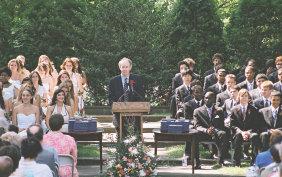
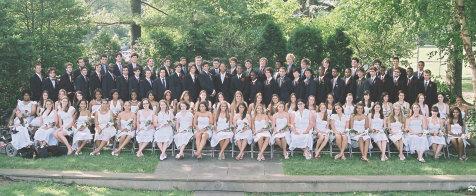
Friends’ Central Class of 2007
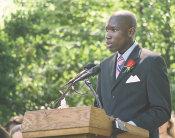
1. Commencement speaker, Claire Glass ’07
2. The class of 2007
3. Headmaster David Felsen
4. Jeremy Greenbaum’07 and Michael Weiss ’07
5. Amanda Carr ’07
6. Lara Baidoo ’07 and Noor Beckwith ’07
7. Commencement speaker, Earl Atta-Fynn ’07
The care of the Earth is our most ancient and most worthy, and after all our most pleasing responsibility.To cherish what remains of it and to foster its renewal is our only hope.
Wendell Berry
GreenGoing
Very few of us will dispute the truth, however inconvenient, that climate change is a reality.We live in a warmer world, and everywhere schools, cities, politicians, celebrities, and neighborhoods are “going green. ” The question we all need to ask, as communities, institutions, and individuals, is what exactly will we do now? How will we use our amazing capacity for progress and invention to rethink our relation to the world, the efficiency ofour systems ofproduction and culture, the difference between our needs and our habits ofconsumption?
The Friends’Central community has embraced the environmental cause with characteristic thoughtfulness and commitment, and our students and teachers have initiated a variety of original ways to “go green. ”
On May 15th, an 8th grade Earth Force team installed a green roofoutside Room 25 of the Wood Building; the Friends’Central cafeteria serves organic, fair trade coffee in environmentally friendly disposable cups; we have a composting project; the campus is an arboretum; Lower School science teacher Peter Grove has a bird blind, a beehive, a frog pond, and a vegetable garden; Upper School science teacher John Gruber and Middle School science teacher Doug Ross have partnered with neighboring Lankenau Hospital and the Jewish Community Center to restore the wetlands around Indian Creek; Upper School science teacher Phyllis Gallagher and some students have conducted a thorough cost analysis and written a proposal to install solar panels on the roofof the language building; our fields and playgrounds are maintained without any chemicals; and our technology department has built a remarkable intranet that enables us to reduce the amount ofpaper we use to teach and communicate.
These examples are just a few of the ways in which the Friends’Central community of students and teachers is working to make the School more environmentally friendly.We have a long way to go and many changes still to make. But we are taking the small steps that we can.
The problem is that in order to make a significant difference we must spend more time thinking about the roots of the problem, not just the immediate solutions. For instance, a large part ofour waste on campus happens in the cafeteria. But if we could just use plates instead of the disposable cardboard dishes and metal utensils instead of the plastic ones, we would dramatically improve our eco-friendliness. The difficulty is that a plastic container can be picked up and the contents eaten anywhere; then, the container can be tossed into a trash can as we run across campus to class or read through email at our desk. The real changes we need to make are difficult ones, because the real changes we need to make are lifestyle changes—we need to choose to forego the extra minutes studying or returning phone calls and instead set aside enough time to eat lunch, sitting down, in the cafeteria. That, for too many of us, is very difficult to do.
This issue of Directions profiles a few of the many alumni/ae who have turned their interest in and concern for the environment into a way of life. They each have their own answer to the question ofwhat exactly we need to—or can—do now,but all of them would agree with Wendell Berry: “The care of the Earth is our most ancient and most worthy, and after all our most pleasing responsibility.To cherish what remains of it and to foster its renewal is our only hope.”
Rebecca H. Anderson
epped on garlic before with bare and within n minutes, I ould taste it in y mouth. hildren’s feet are even more sensitive. What, I wondered, was getting into their systems from the ground?”
Ludwig (Lower School principal) called and told me that the hawks had used the tree for a perch. Neither one of us was happy about that one coming down.”
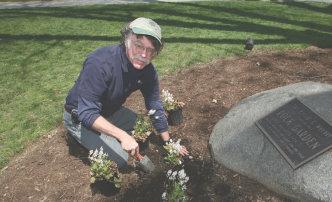
Doug Linton ’68 has been keeping Friends’Central green since 1986 when he accepted Clayton Farraday’s request for help and returned to campus as staff horticulturalist and arborist. At that time, Linton was in business for himself. He had majored in landscape design at Temple, Ambler and spent a few years as a resident gardener in Haverford. He was thrilled to return to the School; “It was like coming home!”
Doug’s work at Friends’Central has been guided by his efforts to maintain the fields and playgrounds without using any chemicals and to develop the campus into an arboretum; it has also been guided by his memory of the beautiful spring days on campus when he was a student. “We used to have Meeting for Worship under a magnificent walnut tree that was right outside the Linton Gym, and I always felt so at one with the world at those meetings.”
In 1997 Doug made Friends’Central one of the first pesticide-free schools in the area. Like almost everyone else, Friends’Central had always used chemicals to maintain its athletic fields. But then one year, an infestation ofclover,a new sprayer, and Doug’s innate cautiousness produced some startling results. “I put on my protective gear, calibrated my new sprayer, and, just to be extra safe, diluted the chemical twice what the manufacturer recommended. Overnight the clover was gone. ”
A clover-free field was Doug’s original goal, and he should have been thrilled. “But I thought about the difference between the recommended strength and the actual, diluted strength I had laid down, and I thought about the toxicity and the children,”Doug explains. “I’ve
So the next time Doug had to treat weeds, he used a granular chemical the strength ofwhich he could manipulate more easily and which he had been assured was safe by the supplier.“Two years later,”Doug recalls, “the product was pulled from the market. That’s when I decided to go completely natural and we’ve been that way ever since.”
Now when weeds crop up,Doug treats them with a mix ofvinegar and cloves. For grubs, he uses a locally developed mix of cayenne pepper and garlic. He feels much better about the safety of the campus and of the students. He also likes the way he’s been able to educate the kids about healthy choices and the environment. When he has to treat weeds, the whole campus smells sweet with cloves. “Students always stop and ask me, ‘What is that potpourri?’ When I tell them it is vinegar and cloves so that I’m not watering the soil with chemicals, they give me the thumbs up.”
In 1995, Doug began identifying the more than 400 trees on both the Lower School and City Avenue campuses, and he has worked with Middle and Upper School students and teachers to create a computer data base of them. “Our idea was to document the trees and create an arboretum. The collection has become a living laboratory for the 12th grade botany class, and the mapping of the trees will become a guide for walking tours.”
Doug also works carefully to balance the safety of the students with the safety of the trees. “I prune the trees inside the campus so that the kids are safe, but I try to leave the rest of the trees alone. It is a difficult balance sometimes. Once, I took out an older larch near the Lower School bus circle. After I took it down, Joe
The construction on the City Avenue Campus has posed a particular challenge for Doug.Inevitably,trees have needed to be removed to make way for the Shimada Athletic Center, the Fannie Cox Center, and most recently, the new track. But Doug is diligent about moving rather than removing as many of the trees as he can. Doug had ten trees relocated when the Fannie Cox Center was built and another six to make way for the expanded footprint of the new track. In order to protect the trees around the site, Doug buried pipes in the soil; the weight of the construction equipment and the heavy piles ofbuilding materials compact the soil and suffocate the root systems of the trees. The pipes reach up above the dirt to fresh air and allow the trees to continue to breathe.
Between his chemical-free program and his development and maintenance of the campus as an arboretum, Doug single-handedly does a lot to keep Friends’ Central green. “I see the whole campus as a living laboratory for generations of students to come. ”
A Sustainable Vision
Rob Crauderueff ’01 believes strongly that our current environmental concerns will be solved best from the bottom up He spends his days, however,working from the top down, as a project coordinator for the Green and Cool Roof Demonstration Project for Sustainable South Bronx.
Sustainable South Bronx (SSB), which began in 2001, is dedicated to achieving “environmental justice through innovative, economically sustainable projects that are informed by the needs of the community.”The organization has a wide variety ofprojects that range from advocacy for more recycling facilities to making all New York City waters swimmable, all of them guided by the principle that economic development and environmental justice cannot be addressed as separate issues.
Eleftherios
Cleaner and Greener
Rob started at SSB as an intern while working on his senior thesis for Columbia University on urban heat island mitigation strategies—especially cool roofs and green roofs—in the New York City context. He had been studying environmentally friendly and sustainable urban planning as part of his urban studies major and had spent a year in Ecuador documenting the success ofLoja, an ecological city of 160,000. Here Rob saw first-hand the fundamental connection between social justice and economic development, and he was particularly interested in the way Loja had committed to drawing neighborhood communities into its clean-up efforts. In order to achieve its goals, the city allocated considerable resources to educating everyone, especially the poorest of the poor.As a result, Rob notes, it has an incredible rate of public participation that has made the goal ofenvironmental and economic sustainability possible. For instance, while the city provided the pipes and a certain amount ofexpertise, neighborhoods, inspired by knowledge, worked together to install the new water lines and then to recycle all waste. The result is guaranteed clean water for everyone—an anomaly in most South American urban areas.
(Recently Rob put much of his research and observations from Loja into an article in a new book State of the World 2007: Our Urban Future, published by WorldWatch Institutes.)
When he ret d to Columbia, Rob pat
sustainable development program (a course of study that Columbia had never before offered) combining classes in land use planning and environmental planning “For a lot ofpeople,”Rob explains, “sustainable development is just an idea. But when you actually see it functioning, it is only logical that we set it as a goal for ourselves.”At SSB,Rob is part of an organization that shares his vision. While most of its projects are focused on the South Bronx, SSB hopes to lead by example and inspire other urban areas to look for similar solutions.
Right now,Rob’s focus at SSB is a campaign to make sure all the water in New York City is swimmable through sustainable solutions. SSB’s campaign emphasizes the connection between public health problems and the built environment and proposes sustainable solutions that New York City can realistically manage. Specifically, it proposes the implementation ofwide-spread source control strategies such as the installation ofgreen roofs that would curtail polluted run-off and prevent bad water from getting into the system in the first place.
New York City, like so many cities, Rob says, recognizes that climate change and pollution are significant problems, but it doesn’t set its expectations high enough. “The city leaders are willing to take significant steps within a current set ofboundaries, but they are not willing to think how they do business. Specifically, ddress these problems in s that are more inclusive, o incorporate public input, and consider the value of life ommunities.”Rob cites xample ofNew York s remarkable recovery m the economic low point the 1970s, a recovery ounded on the efforts of hborhoods deciding they eded to change their qualilife. “This is a good xample of the fact that political change happens from the om up—it starts in ols and neighborhoods—through education first and then action.”
By Cynthia B. Harris
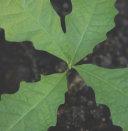
The Lower School thematic project “Into the Woods” inspired a kindergarten fieldtrip to the Friends’Central Arboretum on our City Avenue campus. Mrs. Jones, Ms. Lubking, Mrs. Pepino, and Mr.Williams accompanied their classes last fall on a guided tour of the trees with Doug Linton ’68, Friends’Central’s arborist. During their visit they were introduced to the glorious Burr Oak tree next to the Blackburn Library.
While some believe the Burr Oak to be a William Penn tree, planted over 300 years ago, a study of the rings from a fallen branch date the tree closer to 150-175 years old. In the 1930s it was considered the largest of its kind in Pennsylvania. Since that time others have been identified, as well, but the FCS tree remains one of the ten oldest Burr Oaks in the state. The tree remains healthy through careful monitoring and fertilization.
Mr Linton explained to the children that the tree is so old that it produces almost no acorns. With the particular enthusiasm of fiveyear olds, the children rose to the challenge and immediately began combing the ground for the elusive acorns. To everyone’s delight they found two.
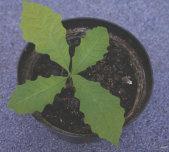
Upon returning to their classrooms, the children pulled Lower School science teacher Mr.Grove into the project of planting the acorns. And there they sat, on the windowsill ofKA, dormant through the winter as all little acorns should be. The children stuck other seedling treasures into the soil of the same pot and, in early spring, Mrs. Jones began watering them. One day, amidst the riot ofbean sprouts, impatiens cuttings, and a wisteria vine, Mrs. Jones noticed a strange leaf. The Burr Oak had sprouted!
In May, the children traveled back to the City Avenue campus to give Mr Linton the gift of a new tree. The “baby Burr” is now six inches tall with four leaves and a pot of its very own. It is everyone’s hope that once the sprout is strong enough to stand on its own, a suitable location will be found for it to begin making history of its own.
The Tale of the Baby Burr
Teaching Environmental Respect
Peter Grove’s first garden was a secret garden, under a very dense rose bush in the back of the woods behind his grandfather’s pig farm. Peter and his friend would sneak into the woods, crawl under the bush, and spend hours clearing off and smoothing out all of the dirt. Eventually, they planted some seeds, and then day after day they carried buckets of water into the woods. But in the dark, cool space, tucked away from the sun, nothing ever grew.
Peter has come quite a long way! This year, the Friends’Central Lower School science teacher was awarded the Elizabeth Abernathy Hull Award by the Garden Club ofAmerica. This national award was established in 1992 to recognize outstanding contributions to the early environmental education ofchildren and the efforts of an individual to inspire in children an appreciation for the beauty and fragility of our planet. For the past twenty years, Peter has been inspiring the children at Lower School.
Peter’s teaching philosophy is simple: “My students must have their own successes and failures. There is only one way to learn how to build a fire and that is to allow the students to make one—on their own.”It is also very important to him that his students see science as a part of their lives, not just a class they go to once or twice a week. So he teaches them about the birds by first having them build, and maintain, a bird blind (an observation hut made out of old Christ es). Each class in the School visits the b They sit and watch what flies by.He teaches them about plant cycles and nutrition by having them help him maintain a vegetable garden. Last year,a kindergarten class planted potatoes which they harvested, cooked, and ate this fall. Other classes learn about gravity and pulleys by pulling Mr.Grove’s car up a hill. They learn about velocity by building— and then flying down—a zip-wire. Science at Friends’Central is never boring, and the children look forward to each new adventure.
Farming in a Natural Cycle
When Rachel Carson’s Silent Spring was published in September of 1962, Sherry McVickar ’70 was in 5th grade. “I remember very clearly that we had A mbly every Thursday.And in 5th e we had an entire Assembly devoted ilent Spring and the issue ofconservaWhen I was in Upper School, I read The Good Earth catalog, thanks to WMMR, which was still an underground dio station very into the back-to-theland movement. But that Assembly in Lower School stands out. It is pretty amazing that we were looking at Silent ing right when it was published and ing asked to think about ecology as young children.”Forty-five years later, Sherry knows just how influential that Assembly was on her life.
es that are more than 50 years old. ustrial almond farming uses the trees y between the ages of three years old o twenty years old because they have n genetically modified to produce a ash crop by then. As far as I am conned, that is the science of farming in the model of Dr.Frankenstein.” Sherry, n the other hand, works to improve her es through a more natural cycle of wal—honey bees.
Almond trees, along with sunflowers, alfalfa, cherries, and many other crops nd on honey bees to carry the pollen m plant to plant. For farmers like rry, the past decade or so has been h because the bee populations have n dwindling “I had a relationship with a bee farmer who brought his bees to my almond farm to winter,but I didn’t hear from him this year.The latest word is that cell phones are threatening the bees.”
Between the disappearance of the bees, drought, and the loss of itinerant workers, it is getting harder and harder for Sherry to farm the way she wants. “The first farm I owned was a biodynamic farm. That was a very difficult model to sustain and so when I bought the almond farm, I was happy just to be organic. But that was when ’organic’ meant something.Now it is a useless word because it doesn’t account for genetic modifications and the standards are relaxed about how close you can be to a farm that uses chemicals.”
In addition to his work at Friends’ Central, Peter has served on the board of the Riverbend Environmental Education Center, which is located in Gladwyne, PA. He is also an active member of the Bridlewild Trail Association, and he helps out by organizing groups to clean up local trails.
Now Sherry owns an organic almond farm in Rumsey,California. “There are five things necessary to my kind of farming,” Sherry explains. “A huge amount of rain, wind at the right time, bees, sunshine, and labor. Dry-land farming predates modern technology and the use of heavy irrigation, so the first two conditions especially have to be very coordinated.”In the past ten years, Sherry has produced only two crops, but she has produced her almonds without the help of chemicals or genetic engineering and on
Sherry spends much of her time now back in the Philadelphia area, both to be near her mother,Alice Penza ’36, and to study painting at the Pennsylvania Academy of Fine Arts. It probably comes as no surprise that she specializes in landscapes. She travels back to California every other month to meet with her onsite manager Reyna Davis. And she has no intention ofbending to the trend and starting to use chemicals or new,genetically-enhanced plants. “I learned early on at Friends’Central to think about the way I worked and the choices I made. My mother and grandmother,Alice McIlwee ’07, were taught these same values, and I can’t imagine a life in which my actions didn’t contribute to the greater good.”
Friends’ Central
Rachel Fertik’s ’91 deep-seated interest in protecting the environment has historical roots. “My mother was a World War II baby in England and everything was used more than once. It is an ethic she passed on to me along with her strong curiosity about the natural world.” Rachel developed her own curiosity and ethics first at Friends’Central, where she was part of the student-run environmental club, and then at Connecticut College, where she majored in environmental studies focusing on wetland ecology. “Along the way, I was very fortunate to have wonderful, engaging teachers who openly shared their passion for science through their teaching,which inspired and motivated me.”
After college, Rachel volunteered for The Nature Conservancy and then went to work for a small consulting firm in Connecticut doing environmental planning.For the most part, Rachel worked on wetland impact studies and Clean Water Act permitting for large infrastructure projects such as airports, bridges, roads, and town sewage plants. Following that, she earned a Masters in Environmental Management (MEM) from the Yale School ofForestry and Environmental Studies. The degree was very multi-disciplinary: “I studied policy, law,ecology, and management, because the sources and solutions ofenvironmental problems are very complicated,” Rachel explains. “For instance, you need to understand the psychology ofwhat drives people to make decisions. You need to understand how civil society is structured and at what points you can influence outcomes.”
Rachel realized that she wanted to work at the national level where she could affect how policy is developed. So she took a job at the Environmental Protection Agency in the Office ofWater as a member of the Wetlands Division, interpreting which waters were considered jurisdictional under the Clean Water Act and following recent Supreme Court decisions.
Water is protected under the Clean Water Act when it relates to interstate commerce or navigation. The challenge comes when you have a body of water
that is further up the watershed and whose relationship to those interstate or navigable waters may be less clear legally. The recent Supreme Court cases have posed stricter challenges to the government’s interpretation of the law in these grey areas.
Rachel’s job is to help policymakers and field staff identify a scientific and legal basis for deciding whether waters such as prairie potholes, vernal pools, ephemeral streams, and floodplain wetlands are protected under the CWA. Much of this involves translating scientific information for policy decision makers who may have less of a technical background. “Science speaks clearly about the importance of these waters. My job is to put the best information I can gather in front of the decision makers. I am basically translating the law into science, and I need to be able to explain the facts and arguments to a number of different audiences. ”
One of the things Rachel finds most frustrating about her job is that politics intrude on the policy process. “Politicians make their decisions based on short time frames. But environmental issues have a long horizon and are very complex,” Rachel explains. “It is exciting that climate change is becoming part of the popular consciousness, but it needs to be translated into a commitment by the government. I think there is hope for this. After all, politicians like to have a legacy. They like to be able to point to what they’ve enacted or supported, especially if it is popular.”
But Rachel believes that the change needs to come from the bottom up as well, and that, unfortunately, most people are a long way from recognizing the connection between environmental threats and their own life. “There is a fundamental lack of understanding at the individual level about the connection between consumption and climate change,” she says. For her part, Rachel tries to lead as low impact a life as she can. “I bike to
work, I buy a lot ofmy clothes and furniture second hand, and I resole my shoes rather than buy new ones. I don’t look like a ragamuffin, but I think hard about what I consume and the resources I use.” She gets very frustrated at the grocery store with the amount of packaging and processing she sees and with the thought of how much energy goes into each tripled-wrapped frozen dinner shipped from a far-flung location. “It is very hard with our busy lives to make all the right choices, and I am far from perfect, but I try to make conscious lifestyle choices based on both my economics and a longterm sense ofwhat I want my world to look like.”
Much like Rob Crauderueff ’01, Rachel believes that caring about what our world looks like is easier to address within a community, and from kindergarten through twelfth grade, Friends’ Central was Rachel’s community. She and Lower School librarian Jean Taranta are still exchanging birthday cards, a tradition that began when Rachel was in second grade and they discovered they shared the same birthday. “I’d love to come back to Friends’Central, to talk to a science class or with students who are interested in doing more. Forging connections in a community and caring for that community is an important part of caring about what happens to the world around you.”
The Complexities of Environmental Policy: A Q & A with Jonathan Adler ’87
Jonathan Adlergraduated from Friends’Central in 1987. He went on to Yale University where he majored in history and then to George Mason University School ofLaw for his J.D.Currently, he is a professor of law and Director of the Center for Business Law & Regulation at the Case Western Reserve University School ofLaw in Cleveland, Ohio.Among the courses he teaches are several in environmental law, including an introductory survey course, an international environmental law simulation course, and seminars on advanced environmental law topics.
1) How does your work participate in the ongoing conversation about efforts to improve the environment and combat global warming?
Much ofmy research focuses on non-regulatory approaches toenvironmental protection. Environmental conservation is a tremendously important goal. Unfortunately, many of the government regulations that have been adopted by the United States are overly prescriptive, excessively costly, and inefficient. In some cases, well-intended regulatory measures can even frustrate environmental progress. For this reason, I devote a significant portion ofmy time investigating and analyzing the potential for nonregulatory measures to replace existing programs.
2) What, in your opinion, are the most important issues facing the environment?
Many of the most important environmental issues receive relatively little popular attention. For example, there is no serious debate about the dire condition ofglobal fish stocks. Overfishing has depleted wild fish populations, and existing government regulations have proven wholly ineffective at conserving marine resources. Global loss ofbiodiversity, driven by habitat destruction, is a particularly severe problem as well.
In developing countries, the biggest environmental problem is how to conserve environmental resources without
can undermine support for environmenrotection in the long run.
ou note that “America’s environmental movement was founded on the idea that private conservation was the key to ecting wildlife and natural resources urselves and our future. Environntal groups were founded to purchase and protect habitat directly.”Yet it seems that the demand for governmental regulaion of the environment is growing. When did this change happen? What was it ed by? Is it misdirected and why?
depriving local residents ofeconomic opportunity and the promise of a better life. This requires the development of policies that advance environmental conservation without sacrificing economic development, and it is a particularly urgent challenge if we are to ensure that the needs ofpeople are part of the environmental policy equation.
3) In a USA Today Op-Ed piece, “Opposing View: It’s not up to the EPA,” you wrote, “If current climate policies are inadequate and unwise, the place to seek redress is back in Congress, not the courts.”Where and how can we affect change? Are we getting it right or are we misdirecting our efforts? What type of efforts can be regulated and what can’t?
The point in my article (which was in reaction to the efforts of several states and environmental groups asking the Supreme Court to force the EPA to impose nationwide regulations on greenhouse gases) is that large questions of environmental policy involve significant costs and trade-offs that should be openly debated and discussed in the policy-making process. If, as a nation, we decide to adopt far-reaching regulations, then we should – as a nation – approve such regulations through our elected representatives. Relying too much on the courts to drive environmental policy risks making environmental policy undemocratic, and
The evolution ofenvironmental policy is a long and complicated story.Too often we assume that environmental regulation was a planned response to the failures of free enterprise and economic growth. The truth is more complex. First, as society became wealthier, individuals learned more about environmental problems, and their demand for environmental amenities increased. Phenomena that were once considered acceptable consequences ofeconomic activity were now recognized as destructive pollution that needed to be controlled. Additionally, many environmental problems that were blamed on the excesses of capitalism actually have their roots in governmental failure to protect people and their property rights. In still other cases, industrialists saw government regulation as a means of securing competitive advantage, and environmental regulation became a pretext for special interest protections.
In a recent article, “Back to the Future ofConservation,” I argue that conservation efforts have been most effective when they have been built upon the principles ofprivate stewardship,rather than seeking to predict and prevent every potentially negative private action through regulations. Ifwe are going to be successful at meeting the environmental challenges of the 21st Century,we have to be smarter about how we seek to advance environmental values, and build upon the Western market institutions that provide the foundation for our freedom and prosperity.
The Moral Center of Environmental Change
“Caring for the environment, the beauty in and around us, gives a moral center to what we do,” says Peter Viola ’02 who works as an intern for the Orion Grassroots Network, a branch ofThe Orion Society that focuses on connecting and empowering organizations committed to positive social and environmental change.
“Since I was a kid, even though I grew up in suburbia, I’ve always felt a bond with nature—not just forests, mountains, or the sea, but the neighborhood trail, the stream, or the backyard,” he explains. But for much of his time here at Friends’Central and later at Middlebury College, Viola approached the topic through literature and the arts. In fact, when asked about his early interest in environmental activism, books were what came to mind first, specifically The End ofNature,by Bill McKibben (recommended by FCS Upper School dean of faculty Bill Kennedy) and The Unsettling ofAmerica,by Wendell Berry (assigned for economic botany by FCS science teacher John Gruber). Both books had a deep influence on Peter, and when he went to Middlebury College he started to think about how to broaden his interest in ecology into practical activity.As it turned out, he was in the right place at the right t
Toward the end ofPeter’s junior year, a small group of his friends began to gather on Sunday nights outside ofclass to discuss what they could do about global warming.The issues ofclimate change and environmental sustainability were only just beginning to return to the forefront of our cultural consciousness, but this group was determined to start a public conversation. They fell upon the name Sunday Night Group, and over the course ofPeter’s senior year at Middlebury, the group grew from 10 students to over 70. This past winter, Middlebury Magazine featured an article on SNG that quoted Bill McKibben, the same Bill McKibben whose book Peter came across in high school, “I’ve spoken on hundreds ofcollege campuses in the last decade, and there is no question that SNG represents the most active and engaged college environmentalists in the country.”As of this spring, SNG can probably add “most effective”to McKibben’s list ofadjectives, for on May 6th, the Board ofTrustees at Middlebury College approved a plan, proposed by SNG, to make the school entirely carbon-neutral by 2016. This is a bold move for the school and one that would not have been possible without the foundation ofenthusiasm and support in the community that SNG epitomizes. “It was exciting to be part of the energy at SNG,”Peter recalls. “The group really motivated me to make a difference.”
vitally active organization that is equally committed to change. The Orion Society began in 1982 with Orion, a bimonthly magazine devoted to “re-imagining humanity’s relationship to nature, culture, and place.”Its mission “is to inform, inspire, and engage individuals and grassroots organizations in becoming a significant cultural force for healing nature and community.”For now,Peter spends most of his time attending to administrative work for the Orion Grassroots Network, specifically membership, outreach to groups that would fit well with the Network’s mission, and management ofa job service. The work is rewarding because the organization’s mission echoes Peter’s conviction, one developed here at Friends’Central, that caring for the environment is a moral issue inseparable from the way we live.
“For a long time, environmental issues have been pushed off to the side, lumped together, and labeled ’environmentalism.’But now the effects ofglobal warming are being felt in the here and now, and people are starting to see that their decisions and actions add up.It isn’t always easy to walk the talk, but it’s important to try,”Peter says. He tries his best to live by the familiar adage “reduce, reuse, recycle,” he seeks to minimize his energy use, and he buys organic, close to the source food. “In general, I try to lead a life in which the effect ofmy actions and choices is as healthy for others as it is for me. ”
One ofPeter’s biggest concerns is that whatever we do now will be viewed as just the next public policy debate. “We need to understand that global warming is not just another ‘issue,’but fundamentally impacts how we relate to the Earth.”
“We’re hearing about climate change all the time now because some of the news is that bad—the sense of urgency is real. But our culture is also approaching a tipping point, I believe, when our actions will really begin to guide us toward living more wisely and confronting some of the most entrenched problems we face. My generation is rallying around this challenge, and wherever I can participate and help move that vision forward, that’s where I feel I belong.”
Views from an Air Geek on Science, Service, and Hope for the Environment
By Sarah Armitage ’77
For many years, I have worked at a state agency called the Oregon Department of Environmental Quality (DEQ). This agency is responsible for protecting and improving the quality of Oregon’s environment. In the field of environmental protection, there have been recent periods of little progress and backsliding.But now awareness is building and changes have begun. This is rewarding to people like me (aka “air geeks”) who spend their days immersed in arcane technical and regulatory materials.
Like most environmental jobs, working in the Air Quality Division at Oregon DEQ is a multidisciplinary pursuit. You need to know the state and federal laws, the science of estimating, measuring and controlling air pollution, the health effects ofvarious chemicals, how to communicate risk about these chemicals, and how to guide the slow process of public participation. In this specialized area, it can take several years to understand the full picture. I began by poring over the Clean Air Act (the comprehensive Federal law that monitors emissions and establishes national air quality standards). I read through state laws, piles ofregulations, pages ofacronyms, and reams of awkward writing that strained to describe our government’s efforts to guarantee healthy air I learned to speak about the risks of harmful, everyday chemicals, and eventually I began to work with concerned citizens, businesses, politicians, and federal officials. (Looking back, I realize that my work with multiple stakeholders has been supported by a Quaker education that taught the power ofconsensus, respect, and open communication.) Finally, after bluffing my way through the remaining techno-jargon, I joined the other air geeks in government, consulting firms, and environmental groups to discuss “plumes,”“exposure pathways,” and “computer models.”
Recently my work has become noticeably more exciting.Typically,envi-
ronmental improvements take at least a decade to see. This is not surprising given the many steps required: gathering information, defining the problem, building awareness, creating laws, securing funding, and finally, launching a strategy.But lately the pace has quickened because the science about air pollution has reached a critical mass and because all of us are getting better at explaining it. What’s more, the sudden rise ofglobal warming as a hot topic has resulted in an increased public awareness about all sorts ofenvironmental problems. Those of us working for clean air feel encouraged. We have known for years that decreasing our carbon dioxide emissions from fossil fuel can reduce a host of air pollutants that aggravate asthma and cause serious health problems; now it seems that many others are coming to agreement and shifting attention to air pollution.
An example is the fact that just this year the EPA placed new federal limits on cancer-causing benzene in the Northwest’s gasoline supply.From 1999 through 2006 the Oregon Department of Environmental Quality worked tenaciously to conduct studies and construct a process to evaluate and reduce high risk air pollutants. Last year,when the EPA proposed controls that would have reduced benzene nationally but allowed refineries to trade credits, a situation that would leave the Northwest with the dirtiest gas (and air) in the country, Oregon was prepared with enough information to push back.
With the help of a talented journalthe message got out that gas in the thwest contains more than twice as h benzene as the national average cause it comes from Alaskan crude oil, h naturally contains more of the mpound. As a result, vehicles burning asoline in Oregon and Washington emit t fifty percent more toxic comounds into the air than cars on the East ast and in the southern states. This means that residents in Portland, Oregon, encircled by major highways, breathe more than forty times the amount of benzene considered safe over the long term. But as our research showed, the cost ofproducing cleaner gasoline is a scant fourth of a cent per gallon.
In February 2007, under escalating pressure from Northwest lawmakers, the EPA issued tougher limits on refineries to achieve a significant reduction in benzene everywhere in the country.Benzene levels in Northwest gas will now fall nearly threefold by 2015, and the risk ofdeveloping cancer from breathing benzene in Oregon and Washington will be cut practically in half.
This policy shift represents the power of the growing partnership between knowledgeable, concerned citizens and state and local governments. Together we have been able to step up to fill dangerous gaps in federal protection of our health and the environment. I feel very hopeful about having reached this tipping point. More and more we can all exercise our choices for cleaner,greener products, transportation, and energy. Our options increase almost monthly.Ifyou haven’t done so already, find your local air agency’s website and sign up to get notices announcing proposed regulations. Ifyou feel so moved, write a quick e-mail expressing support for environmentally protective measures. Collectively, all of our actions add up to make a huge difference.
Sarah went to Williams College after graduating from Friends’Central and majored in Biology.She later earned her J.D.with a focus in environmental law from Lewis and Clark University.She has been with the Oregon DEQ since 1987.
IMPORTANT NEWS FOR ALUMNI/E AND FRIENDS WHO ARE AT LEAST 70 YEARS OLD!
New legislation allows IRA owners to share the wealth of their retirement savings now by giving directly to charity—without first counting it as income and paying income tax. This provision is only effective for tax years 2006 and 2007. If you are interested in learning more about this wonderful opportunity, call Friends’ Central’s development office today: Lydia Martin, 610-645-5034 or lmartin@friendscentral.org.
WE WELCOME WITH THANKS THE FOLLOWING PEOPLE WHO JOINED THE BLACKBURN SOCIETY THIS YEAR:
*John C. Barnard ’48
Andrea G. Cohen ’86
June Singley Evans ’66
Francis M. James ’53
Susan L. Kaufmann ’56
ALUMNI/AE
Anonymous ’58
Priscilla Okie Alexander ’41
Diana Stambul Burgwyn ’54
Helen Starling Burke ’51
Ellen Burr ’46
Diane Bierman Carson ’67
Prudence Sprogell Churchill ’59
Andrea G. Cohen ’86
Ellen M. Cohen ’88
Alice Hess Crowell ’46
Charlotte Pugh Ellithorp ’42
June Singley Evans ’66
Alexander L. Fetter ’54
J.P.Guggenheim ’76
Elizabeth S. Harper ’51
Margaret H. Harper ’36
Gardner Hendrie ’50
Patricia Hibbs ’60
Cinda Buswell Hill ’59 ***
Francis M. James ’53
Susan L. Kaufmann ’56
Stephanie Helen Koenig ’70
Henry W. Lavine ’53
Jean Campbell Lumpkin ’39
Patricia Spotts MacLachlan ’47
Pamela J.Melcher ’61
Margaret G. Mitchell ’35
Gladys Baker Monier ’32 ***
Deborah Hazzard Nash ’51
Dana Lynne Iverson Neefe ’61
Andrew Newcomb ’87
Albert Carter Pottash ’66
William D.Ravdin ’46 **
Lisa Korostoff Rooney ’73
L. Paul Saxer ’38 ***
Joanna Haab Schoff ’51
Nicholas Scull ’60
Joan Lallou Smith ’52
Arnold E. Smolens ’38
Benjamin Statzell ’37
Lucy Christman Statzell ’37
Margot Newman Stickley ’48
Andrew T C. Stifler ’57
Leonard Sylk ’59
Winifred Jess Tierney ’53
Rich Ulmer ’60
Patricia Myers Westine ’57
David Wetterholt ’62
Marjorie Harris Wolf ’34
Ann Hort Wolfe ’63
Bruce Woodruff ’60
*Eleanor Jenkins Zendt ’25 **
TRUSTEES AND FORMER TRUSTEES
Peter Arfaa
Prudence Sprogell Churchill ’59
Barbara M. Cohen
Deborah Hull
Gregg Jackson
Emma Lapsansky-Warner
Jean Campbell Lumpkin ’39
Hillard Madway
Bernard Newman
George L. Pew
William D.Ravdin ’46 **
Ann V.Satterthwaite
Joanna Haab Schoff ’51
Koji Shimada
*Eleanor Jenkins Zendt ’25**
CURRENT PARENTS AND PARENTS OF ALUMNI/AE
Anne and Peter Arfaa
Molly Love and Adrian Castelli
Stanley Cherim
Barbara M. and Sarle Cohen
Alice Hess Crowell ’46
Colette and Michel Guggenheim
Deborah and T.Reagan Hull
Gregg Jackson
Carolyn Klock and George McCook
Emma Lapsansky-Werner
Janet and Hillard Madway
Sara L. Matthews and Raymond Fabius
Judith and Bernard Newman
Sally and George L. Pew
William D.Ravdin ’46 **
Lisa Korostoff Rooney ’73 and John Rooney
Ann V.Satterthwaite
Lynne and Donald V.Selkow
Lucy Christman Statzell ’37 and Benjamin L. Statzell ’37
Leonard Sylk ’59
Barbara A. Willis
Vera and Murray Wilson
*Eleanor Jenkins Zendt ’25**
FRIENDS
Marla Hamilton Peele
Kim Shimada
Ruth Tanur
Beverly Ulmer
Peter Westine
FACULTY AND FORMER FACULTY
Beatrice Barclay Trust
William W.Bower
Grant Calder
Stanley Cherim
Prudence Sprogell Churchill ’59
David M. Felsen
Julia Beyer Houpt
Stephanie Helen Koenig ’70
Sara Matthews
Ann V.Satterthwaite
Andrew T. C. Stifler ’57
Maria Williams
Thomas A. Wood
*Eleanor Jenkins Zendt ’25 **
*Deceased
** Pooled Income Fund Participants
*** Charitable Gift Annuitants
Thank You!
Thanks a Million!
For the first time ever, our Annual Giving campaign has raised over $1 Million!
Thank you to all of our generous donors and loyal volunteers. Each and every gift helped us reach this exciting milestone.
From the Co-Presidents of the 2007-2008 Home and School Association
The Home and School Association (HSA) supports the School by involving parents in a variety ofcommunity-building as well as fund-raising events, from the annual Pumpkin Fair and Lower and Middle School Book Fairs to the newly inaugurated FCS Fun Run and Family Day. HSA also regularly hosts parent grade gatherings and coffee hours as a way to keep parents connected with each other and with the School. Finally, the HSA provides many opportunities for parents and families to get involved with service projects in the greater community throughout the year.We sponsor collection drives for reading glasses, winter coats, used athletic shoes, and toiletries; we organize Saturdays at the SHARE warehouse; we collect prom dresses; and we put together the Martin Luther King Day ofService.
Friends' Central School is a vibrant, creative, and nurturing community because of the strength of its faculty, administration, alumni/ae, students, and their parents. Come join us in our efforts to support the School.We welcome the involvement of all parents and hope to see you on our campuses—as classroom helpers, chaperones on field trips, fans on the athletic field, audience members at our many music and drama performances, members of our Parents of Students of Color or Quaker Life Group, and participants in parent gatherings.
Anja Levitties ’86 and Charlotte Schutzman
(Above) Swing Your Partner!
(Right) Round and Round!
(Below right) Adara Cohen '08, Daniel Horowitz '08, David Rosenblatt '08, and Jasmine Martin '08
(Below left) Jamal Sample '14 and Marcus Vaughn '14
(Bottom right) Hoping for a strike!
Book Fairs
The Lower School and Middle School book fairs featured authors Bruce Coville, Rick Riordan, and lots and lots of books! Bruce Coville, author of the popular series, Moongobble and Me, My Teacher is an Alien, The Unicorn Chronicles, and adaptations of Shakespeare's plays, visited the Lower School to talk about where he gets his stories, the power of dreams, and the creativity of all children. Coville spoke with the children about how dreams are the brain's way oftelling stories and told them that everyone can make up a story. To demonstrate his point, Coville made up a tale on the spot about a child who drops his mother's high school yearbook in a mud puddle. The child has a decision, as does the author: should he pick up the book and brush off the mud, or push it down a bit deeper and not admit to his mistake? Coville left the Friends' Central students with that question, perhaps knowing that once excited, their imaginations would come up with a whole range of different endings.
Rick Riordan, multi-award-winning author of the Tres Navarre mystery series for adults and the New York Times bestselling Percy Jackson and the Olympians series for children, talked to Friends' Central Middle School students about the origin of his Percy Jackson series, which features a twelve-year-old dyslexic boy who discovers he is the modern-day son of a Greek god, and read them an excerpt from The Titan's Curse, the third book in the series that began with The Lightening Thief.
The book fairs promote reading and raise funds to purchase additional books for the libraries.
Thank you to organizers Vicki Gratz, Betty Bard, Beth Dahle, and Janet Bortnick.
Melanie
(Top) Back row: John Gallagher, Marissa Gr Hannah Kaminsky, Sophie MacFarlane, Rose Gendelmann, Olivia Backal-Balik. Front row: Billy Koutcher, Kevin Bendesky, author Bruce Coville, Max Sall
(Bottom) Rebecca Dahle '12, Ilan Dreyfuss '12, Samuel Brodfuehrer '12
Home & School had two new events this year—a Winter Carnival in January and a Fun Run & Family Day at the end ofApril. Both events were well attended and generated a wonderful feeling of School spirit, family, and community.
At the Winter Carnival Lower School families warmed up a cold winter afternoon by playing games, swimming, and enjoying carnival treats such as face painting, arts and crafts, and a bake sale at the Upper School's Shimada Athletic Center. Thank y
Narin and Laur
FCS Puts Its Best Foot Forward!
The inaugural Friends’Central School Fun un & Family Day was held on Sunday, April 29th. The City Avenue Campus was ustling with activity and basking in the warmth of a beautiful, sunny day. 112 runrs competed in the 5K and One Mile races, including FCS faculty, students, and their families. The Kids’Relays featured the popular “Tug ofPeace,” as well as obstacle ourses, and running races. The craft table, clowns, moon bounce, and busy food tent lighted children of all ages, while the Plant Sale offered everyone the chance to celeate the arrival of spring.Proceeds from the Plant Sale benefit the FCS Arboretum. he Annual Peace Concertfeatured 22 Lower and Middle School performers, the hest number ever, and a standing-room-only audience. Gently used sports equipnt donations were delivered to Nike Reuse-a-Shoe and the Upper Darby Youth Achieving Project, which should make everyone feel good! It looks like the “Fun Run” will be back next year!
Thank you to co-chairs Jane Ebby and Cathy Fiebach.
(Above) Browsing at the Plant Fair (Left) . . . and they're off!
(Top left) Matayia Mapp '16
(Top right) Daniel Nemroff ’15 and Etan Ginsberg ’17
(Middle left) Aiming High!
Martin Luther King Jr. Day of Service
Friends’Central honored Martin Luther King Jr.’s legacy with a day of service on January 15th. Dozens of students, parents, and teachers from all three division participated in the 11th annual day organized by Melissa Anderson, Lisa Prince, Jessica Coss, Marian Pearlman, and Barbara Matteucci.
Lower School students decorated pillow cases, made t-shirts, and created sensory books for children whose fine motor skills are limited. The projects all benefited Ashley’s Angels, an organization that supports the Palliative Care Unit at the Children’s Hospital of Philadelphia.
Some Middle School students and their parents helped clean the historic Smith playground, located in Fairmount Park, while others visited the Alain Locke Elementary School in West Philadelphia, where the volunteers added some color to the school hallway by painting a mural scene from Dr.Seuss’ The Lorax.
Upper School volunteers helped out at the historic Friends’Neighborhood Guild and the nearby Fishtown Recreation Center, assisting with sorting donated clothing, fixing windows, computer and filing work, cleaning and organizing the kitchen pantry, and painting walls.
At the end of the day the volunteers took some time to reflect on Martin Luther King Jr.’s legacy and what the day of service meant to them. Those who spent their day at the Alain Locke Elementar
Quaker education and how it related to the celebration ofMartin Luther King Jr.’s life. The discussion ended with a reflection about what each person would do to change the world. The Lower School volunteers began their day with a speech given by Renee Chenault-Fattah, from NBC-10 News. She discussed her experie growing up in a predominantly e neighborhood during the time of tin Luther King Jr.’s death. Chenaultattah ended her speech by quoting tin Luther King Jr., “You will not all e famous, but you can all be great ough the service you perform.” nds’Central’s community is certainly proving itself to be great and memorable through its tradition of this day of service.
(Top right and above)
(Bottom left)
and
(Top left) Friends' Central Lower Schoolers Hannah Anderson '16, Alison Bovarnick '16, and Caroline Fakharzadeh '16
Friends' Central Middle Schoolers painting at the Alain Locke Elementary School
Chelsea Pasahow '10, Grace Pearlman '10,
Emma Fox '10 at Fishtown Recreation Center
The 18th Annual Golf Classic
On June 18th, Friends’Central School hosted its 18th Annual Golf Classic at the ACE Club in Lafayette Hills. Alumni/ae, parents, faculty, and friends gathered to play a round ofgolf, test their touch at a putting contest, and enjoy lunch, dinner, and an auction. The money raised at the event supports the financial aid program at Friends’Central. This year, the Golf Classic raised over $52,000 to help Friends’ Central open its doors to children with limited financial means.
parents
(Left) Current parents David Ebby, Walter Schoenborn, Brad Bradbeer, and Jon Harris
(Below) Josh Wasserman '02, Alex Sokolov '02, Tom Hale '75, and Josh Klein '80
Driving practice and The Putting Contest
Linda Foreman, Judy Lazarus, Audrey Soslow, and Lisa Becker
(Above) Current
Rodd Bender, Robert Nourian, Brian Benjet, and Steve Nierenberg
The Fabulous ‘57’s lead the way!
The Class of 1957 was determined to do something really special for their alma mater as they celebrated their 50th reunion. In addition to their typical trail-blazing annual giving performance, the class set their sights on a legacy gift. Working closely with David Felsen, the reunion committee, on behalf of the class, decided to honor its FCS teachers, along with current faculty and staff, by creating the Class of 1957 Faculty and Staff Retreat Fund.
Committee members, led by Andrew Stifler,worked tirelessly through the year to raise $150,000 for their Retreat Fund. In addition to this stunning gift to the School, 83% of the class also made an annual giving gift.
This close-knit and generous class organized “extra” reunion events, with a golf outing and Sunday Brunch rounding out the Reunion weekend. Committee member Bert Peterson gathered pictures and reflections from classmates to create a beautiful yearbook they will cherish for years to come.
“These gifts and the incredible loyalty of this class are really special,” said headmaster David Felsen. “We hope other classes will be moved to follow their example. Friends’Central School is tremendously grateful to the Class of 1957 for their loyalty,generosity, and School spirit!”
Photos by Eleftherios
ar Friends, n I graduated m Friends’Central in 2002, I never thought that I would urn four years r to work in the umni/ae and Development Office. My experience at the School this year has been a rewarding one: I have been able to work and coach at a place to which I am deeply connected, and I have been able to make a difference.
I realized early this school year that I wanted to reach out to younger alums. I have always been enthusiastic about Friends’Central, but I thought it would take a more organized program to elicit in other graduates ofmy age the same passion that I possess for my alma mater. So I decided to start a young alumni/ae program. Throughout the year, I hosted several successful young alumni/ae events in the Philadelphia area, such as an exam week break at the Bubble House, and next year we hope to expand these events to other cities. Every time a group ofFriends’Central alums gets together, there is a lot of laughter, along with good memories, and growth in School spirit.
This year was also my 5th reunion, and five ofmy classmates had also returned to work at FCS. So we joined forces, contacted as many of our classmates as we could, and brought back over 40 members of the class of 2002—a record for any reunion so far
I experienced many great things this year,but the most important to me was being able to reconnect with FCS as an alum. I hope that all alums—young and old—will continue to support Friends’ Central, a school that has given each of us so much.
Josh Wasserman ’02 Development Office Assistant
2002
(Above) Young alums gather for tea at the Bubble House in est Philadelphia
The class of
at Reunion
ALUMNI/AE CAREER DAY
PANELISTS: FRIDAY, MAY 11, 2007
Tony Wood ’77
Professional photographer, Anthony Wood Photography
Journalist, critic, author: Black, White, Other: Biracial Americans Talk About Race and Identity; The Color Purple: A Memory Book; Pig Candy: A History ofMy Father,Race, and Place
Mary Louise Alexander Cole-Wood ’52 President and CEO, Bay Point Schools, Inc
Curtis Pontz ’57
Adjunct Professor, Philadelphia University and LeBow College of Business, Drexel University
Hank Zoob ’57
Rabbi Emeritus of Temple Beth David, MA and founding President of the Rashi School, the Boston Area Reform Jewish Day School, Newton, MA
(Left column, top to bottom) Business and Finance panel; Communications panel; Law panel.
(Right column)
Social Services panel; Engineering panel; Education panel; Arts panel.
Min Lee ’96
Fulbright Grant to France, Bourse Chateaubriand Fellowship, Ecole des Hautes Etudes en Sciences Sociales
Geoffrey Kerr ’67 Electrical engineering manager, The Haartz Corp.
Mallory Floyd ’96 Aerospace Engineer, Boeing Company
Jonathan Fiebach ’82 Co-owner and ChiefInvestment Officer of Duration Capital
Marcus Alston ’87 Assistant Counsel, United Technologies Corporation
Richard Klein ’57 Superior Court Judge, Commonwealth of Pennsylvania
Adam Welsh ’92
Trial Attorney, U.S. Dept. ofLabor,Office of the Solicitor
Eve Del Soldo ’92 Partner, Schnader Harrison Segal & Lewis LLP
Jonathon Adler ’87
Professor of Law and Director of the Center for Business Law and Regulation, Case Western Reserve University School ofLaw Contributing editor, National Review Online
Paul Paz y Mino ’87 Associate Fellow, Institute for Policy Studies; Research Analyst, Service Employees International Union; Country specialist: Colombia, Amnesty International, USA
Nancy Carroll ’92
Child Advocate Social Work Supervisor, Defenders Association ofPhiladelphia
Kimberly Rothwell ’92
Human Relations Representative, Pennsylvania Human Relations Commission
Friends’Central School Distinguished Alumni/ae Award
May 12, 2007
Mary Louise Alexander Cole-Wood
Distinguished Alumna Citation
Friends’Central School ~ Class of 1952
Mary Louise, we are deeply gratified to have you with us today.Your life is a model ofprofessional achievement and community service —a life that has turned tragedy for young boys into triumph and that exemplifies the grace of putting others before self. Teacher,advisor, and advocate ofyoung people, you support education at all levels.
We are proud that your dedication and commitment to education, learning, and community were encouraged at Friends’Central School. It is with highest regard and great pleasure that we confer upon you the Friends’Central Distinguished Alumna Award.
Andrew T.C. Stifler
Distinguished Alumnus Citation
Friends’Central School ~ Class of 1957
Andy,you are indisputably Friends’Central’s Volunteer Extraordinaire. From class agent to fund raiser and reunion volunteer,you have distinguished yourself in every role you’ve taken on, and we are confident that you will continue to do so.Wise, loyal, and good-humored, you demonstrate an instinct for what is important, the energy to get the toughest jobs done, and the good will that inspires others to join in the effort. You generously bring these qualities to bear for Friends’Central’s benefit, and we are the better for it. It is with greatest pride and gratitude that we award you the Friends’Central Distinguished Alumnus Award.
Class of 1937
Tom Kelly, Sally Hooper Farrington
Class of 1942
Mary Ann Cohee Freemann, Marion Gaskill Livingston, Harry Coslett, Barbara Baketel Leonards, Duke Smith, Charlotte Pugh Ellithorp
Class of 1952
Back Row: Shirley Sherak (wife of George Harkins), George Harkins, B.J. Wood (husband of Mary Louise Alexander Cole-Wood), Eve-Ann Jones (wife of James Wilson), James Wilson, John Balson.
Front Row: Margery Trescott Kniffen, Mary Louise Alexander Cole-Wood, Joan Lallou Smith, Donald Reimenschneider, Anita Reimenschneider (wife of Don Reimenschneider)
Class of 1947
Standing: Barbara Acomb Elliott, Julie Miller Edgerton, John “Ditty” Jones, Jane Wooster Scott, Larry Johnson, Doris Lauber Adams, David K. Trumper
Seated: Joyce LaRoche Finkbiner, J. R. Relick, Brigitte Solmitz Alexander, Kenny King
Class of 1957
Back Row: Erik Guthy, Gretchen Young Lerch, Curtis Pontz, Lilla Hepworth Bingham, Sarah Staats, Abby Huberman Silverman, Roberta Sheen Peterson, Hermann Rosenberger, Bryan Pokras, Barbara Davis Widmayer, Albert Lilly, Peter Savage, Richard Klein.
Front Row: Henry Zoob, Mary Louise Lundgren Wentzel, Andrew Stifler, Nancy Gruber Frisbie, Jill Banks Barad, Elizabeth Leiby Hiller, Leslie Miller, Patricia Myers Westine, Ann Tolson Lippe, Gary Fields
Class of 1962
Back Row: Michael Cohen, Francis Bradley
Front Row: Kathleen Murray-Allain, Patricia Stanton Cooley, Lee Hillerson
Class of 1967
Brian Kunz, Carolyn Hebden Facchiano, Ronald Diment, Richard Reish, Geoffrey Kerr, Marjorie Hallahan Crawford, Thomas Woodbury
Class of 1977
Back Row: Rodney Willis, Morris Kay, Thomas Spencer, Tony Wood, Mark Adams
Front Row: Ellen Shapiro Freeman, Rachel Fell McDermott, Denise Willis, Karen Murphy-Cain, Abby Moyerman Renfroe, Beth Davis Johnson, Karen Horikawa
Class of 1987
Back Row: Stephen Treatman, Seth Lundy, Beryl Brown, Marcus Alston, John Stein, Melanie Fischer Rubenstein, Claudia Melaragni Fitzgerald, Christopher Dick Wolfe, Dawn Skwersky Schakett. Kim Kurtz Lent, Paul Paz y Mino, Rachel Broker Kaplan and their children
Front Row: Pam Reif Phillips, Sara Volkman Shack, Jessica Coplon, Samanta Marks Gordon, Danielle Paul Barson, Elizabeth Toborowsky Pollard
Class of 1982
Back Row: Eric Larson, Ken Heckman, Angela Corbisiero Love, Lee Wesson Odescalchi, Martin Wachs, Erich Schultz
Front Row: Ed Rehfeld and Paul Clough
Class of 1997
Back Row: Brian Jacobs, Ben Shargel, Geoff Stevens, Sondra Rosenberg, Kristen Hevner, Nick Dent, Rachel Coombs
Front Row: Leo Chang, Dave Wertime, Emil Steiner, Matt Murphy, Zach Leibowitz, Matt Hagarty
Class of 2002
Back Row: Geoff Wertime, Peter Viola, Jerome Mopsik, Josh Wasserman, Jason Polykoff, Todd Schneider, Jeff Pozzuolo, Jeff Meyerson.
Front Row: David Glasser, Read DeSabato, David Gershkoff, Willie Day Frank, Sara Kankowski, Tracy Miller, Lindsay Tintenfass
Reunion 2007
1. The class of 1992 at Reunion Dinner
2. Roberta Sheen Peterson ’57 and Donald Peterson
3. Representatives for Alumni/ae and Development (RAD) members, Caitlin Louie ’08, Alec Unkovic ’08, and Isabel Friedman ’08 greet returning alumni/ae.
4. Beryl Brown ’87
5. Richard Relik ’47 and Joyce LaRoche Finkbiner ’47
6. The class of 2002 parades to Commencement Terrace
7. Joan Lallou Smith ’52
esearch by Drs. Lurie and Dannenberg.The ok offers a comprehensive resource for clinicians, public health investigators, and laboory researchers in tuberculosis and immunology.”Arthur is a professor at the nter for Tuberculosis Research at Johns pkins University’s Bloomberg School of lic Health and School ofMedicine.
an Oberly Haviland ’42 writes: “My best ards to my 1942 classmates. We will be up north in July and August—near Cortland, NY We are keeping busy with various activities— especially pla ing b idg ”
Alumni/ae
1930s
Ed Rice ’34 reports: “I am still active at 90 thanks to daily walks and exercise. Also still driving extensively,even at night fortunately due to my unimpaired vision. Stopped counting grandchildren some years ago.Now am counting greats and great-greats. Proud to be an original “Racer”!
Jane Armor Terry ’39 writes: “Doing well. New hip.Back riding my horse.”
1940s
Louise Goetzenberg Howard ’40 writes: “I have four great-grandchildren now.The eldest is not much older than my youngest grandchild!”
Pathogenesis ofHuman Tuberculosis: Insights from the Rabbit Model by Arthur M. Dannenberg, Jr. ’41 was published in 2006 by the American Society for Microbiology Press . Arthur reports that it is 468 pages long and took him nearly five years to write! According the ASM Press, “Pathogenesis ofHuman Pulmonary Tuberculosis updates and revises the ground-breaking work ofMax B.Lurie, summarizing the combined 80 years of
arjorie Brown ahan ’42 was y sorry to have missed her union, but she nt in a picture rself with her oungest grandson, Robert Frederick Davis, who is going into his junior year at Furman University.Marjorie has four grandsons and one granddaughter.
Carl E. Reichert, Jr. ’49 writes: “I am fully retired from my orthopedic surgery practice. We get together with Ruth and Ivan Gabel ’49 during the summers and occasionally hear from Jack Trautwein ’49.”
1950s
Shirley Smith Earle ’51 writes: “I had an article published in Care Management Journal (February 2006), entitled ’Reflections on Twelve Years ofFacilitating Alzheimer’s Caregiver Support Groups.’This work has been the highlight ofmy geriatric social work career.”
Marilyn Downs Monks ’52:“When I opened my class book, memories came flooding back ofclassmates, lasting friendships, teachers who encouraged me, ofMartha on the switchboard, and, of all things, the gingko tree.”
J. Donald Reimenschneider ’52: “I will always have special memories ofClayton Farraday and Richard Burgess.”
Donald J.Ritt ’52:“The academic challenges were good and the caring teachers superb,but the single memory most appealing was beating Wilmington Friends on the way to becoming the first undefeated football team in the history of FCS.”
In a note from Barbara Stein Sickles ’52, she reports that her daughter Nancy, married to Alan Rothschild, has a son Cole, eight months old, and her daughter Kay Ellen and her husband Morse have a son Jacob, three, and are expecting in March. Barbara’s husband, Lewis, who spent 35 years as an electrical engineer, is now doing patent work as an attorney. Barbara has been selling real estate since 1971.
Joan Lallou Smith ’52 writes that she is in good health and looking forward to Reunion.
Francis Markland ’53 has been appointed Associate Dean for Scientific Affairs at the Keck School ofMedicine at the University of Southern California.
Donald Small ’53 retired from teaching at the United States Military Academy at West Point in May 2007. He had a 50-year career teaching mathematics at the University ofKansas, University ofConnecticut, Colby College, and West Point.
Martha Harper ’54 recently travelled to Adelaide, Australia where she found and visited a Quaker Meeting House.
Middy Minster Larson ’55 writes: “Just a note to mention that our so
pus for his 25th reunion in May along with brohters Bill ’80 and Jim ’83 Eric graduated exactly 100 years after his great grandfather John Taylor Wolfenden did in 1882.”The Minster family has a long tradition here at Friends’Central: John Taylor Wolfenden 1882 (Middy’s grandfather), Mildred Wolfenden ’20 and Pemberton Foster Minster ’20 (Middy’s parents), Pemberton Foster Minster Jr., ’44, Elizabeth Minster ’48, John Minster ’48, and Emma Minster Beideman ’52 (Middy’s siblings). Bill ’80 was Friends’Central’s first fourth-generation graduate.
Allan Mackey ’55 writes: “My oldest grandson is heading off to college in September (Guess I can’t be 39 anymore!) Working on my book, Prisoner ofRock ’n’Roll: 50 Years With No Parole, No Time Off For Bad Behavior and looking for a winter retreat (January - April) where it is sandy rather than snowy!”
George M. Walters ’55 reports that the Class of 1955 remains in close contact through email. “We still care about each other and are happy to send and receive mail!”
Carol Perloff Capper ’56 writes: “Our 50th reunion in May ’06 was fantastic! Some of us hadn’t seen each other in a long time and yet it felt like we had never been apart. Many of us are staying in touch with each other.”
Patricia Pugh Dugan ’56 writes: “Our 50th reunion last year was a very enjoyable experience. We are still enjoying our life here in South Carolina. In the summer, however,we do head for the mountains in North Carolina and New Hampshire for a change of scene and cooler weather.”
Andrew T. C. Stifler ’57 writes: “I had a wonderful conversation with Erik Guthy ’57.He has retired after 40 years oforthopedic surgery and moved to the Alps equidistant from Munich, Salzburg, and Innsbrook.
Barbara Davis Widmayer ’57 writes: “that she is looking forward to our 50th reunion.”
1960s
Bruce Woodruff ’60 continues to enjoy the Florida lifestyle, including time with his family,grandchildren, and his financial consulting practice with ING in Winter Park.
A photographic exhibition by Ann Ginsburgh Hofkin ’61, “IN SIGHT” was featured at the A.I.R Gallery on West 25th Street in New York City for the month ofMay 2007. Ann’s website is www.aghofkin.com. On it she writes, “When I fell in love with photography, I embarked on a wonderful journey of discovery. Photographs are distillations ofperception and experienc
of metaphor.Imagination and reality operate together.It is this union that directs my work. What we know–or what we think we know–will most likely evolve over time in much the same way that a kaleidoscope shifts its design when the eyepiece is rotated. Colors and shapes may change, positions of pieces may vary,but the same essential rudiments are there all the time. And, since each of us has a series of ’holes’ in our respective existences, we seek to fill these in our own way.How we do so is one thing that makes each of us an individual.”
John T.White ’61 writes: “I retired last year at 64 because my wife is very ill. We have three daughters and six grandchildren. I am now nursing my wife full-time, and often taking care of five ofmy grandchildren.”
David Boyd ’62 writes: “Dear Class of ’62, I am sorry that I couldn’t make it to Reunion, but I am currently stuck in the Adirondack
Park acting as the Managing Director ofa resort hotel called The Sagamore.It looks like I am up here for the balance of the year.I enjoyed reading the names on the email and would love to hear from any/all ofyou. News from the Boyd family:My older daughter Melanie Boyd PhD (imagine me having a child with a PhD?) has just been hired, as has her husband, at Yale where she will teach Women’s Studies. My younger daughter still resides on Bermuda. Both have two children, 8,8, 8 & 5 (one set of twins). Susan and I have our home on Hilton Head Island, where we moved when leaving Bermuda in 1996. I am there only occasionally it seems as I do most ofmy work away from home. (I guess I am one of the itinerant workers you read about.) Most people say that I would be divorced if I stayed home; it would be more than my wife could bear She is more tolerant of me than was Mrs. Herron or Nicky Jenkins. Have a wonderful get together.”
Christopher Clews ’62 writes: “On my shoulders is my nearly-2-year-old (1st) grandson, Sasha. He’s the adorable (and brilliant) son of my oldest daughter,Natasha, who is a Denver architect. Actually,by my younger daughter, Pip, I am grandfather to a Great Pyrenees, a Bernese mountain dog, three pigmy goats, and ten newly acquired chicks, all living much closer to me in Maine – b t I s ’ll wait ’till next t
“I got my student pilot’s license while a senior at FCS, along with my brother, Henry (also FCS ’62). We have both enjoyed flying something ever since – the planes just keep getting smaller,quieter, and more fuel efficient. (I’d really like a pedal-powered airplane, but alas, at 62, maybe I’ll have to settle for a solar-pow-
David A. George ’67 was unable to attend Reunion this year due to commitments in California. “My best wishes to all ofyou!”
ered model!) This photo (taken from wingmounted camera) is me at the Sun ’n Fun Splash-in at Lakeland, FL in April ’07 aboard my Air Creation float trike. It’s a 2-seater if anybody would like a ride over Lake Winnipesaukee this summer.Don’t hesitate to contact me at Kit@Clews.org.Am planning now to be there for our 50th! Egads, that’s 2012!”
Michael A. Cohen ’62 writes: “I am currently the Director of the Graduate Program in International Affairs at the New School University in New York.”
Margery DeArmond Maconachy ’62 was unable to make Reunion in the spring She and her husband were crewing for friends in The Atlantic Cup from Tortola, BVI to Bermuda then to Annapolis. “I am really sad to have missed our BIG 45! Can it be ... #45?!”
Clemence Ravacon-Mershon ’63 is semiretired, doing substitute teaching.In addition, she volunteers locally in college theatre and a literacy council, as well as internationally with Quaker organizations and Habitat for Humanity.
Jed Z. Callen ’67 writes: “Best to all classmates, and FCS family on our 40th! Sorry I am living somewhat far away ... Friends can email me or check on me at www.nhlandlaw.com . ”
Ron Diment ’67 is looking forward to the 40th but writes, “You know you have aged when a featured event at your 35th is the groundbreaking for a new science, math, and technology building which will stand where the junior high building was that you helped break ground for when you were in 6th grade!”
Cathy Zahn Jann ’67 sent along this note: “I would love to attend my 40th Reunion, however, after divorcing husband #1 after attending (a reunion) and having 2 more husbands die after going to others, I have decided to spare husband #4, who has survived 9 years, even though he says he is indestructible! Hope all have a great time.”
Katharine Smith Kosinski ’67: “I look back with fond memories of some excellent teachers and wonderful classmates.”
Constanze Raschkowitsch Meile ’67 writes from Germany:“Thank you very much for your invitation to the class reunion this weekend. I’m very sorry that I could not make it possible to come, I really would have loved to see you and my classmates again after so many years! I still remember so well my last visit at Friends’Central School, which must be about ten years ago! My son Alexander was in 8th grade then, and now he is already 24 years old and studies in Vienna, Austria at an Actors’ School! It was just a wonderful week-end we had then and it was so nice to meet you! I still have the beautiful blanket which we former exchange-stud nts received as a gift fr m the School. Time j
use it for the rest ofyour life. Well, since my English is not very good any more (I’m totally out ofpractice), I have to stop my philosophical excursions at that point. Please give my greetings and best wishes to my former classmates (class of ’67). I hope to meet them at one of the future reunions and to hear then all the news. I hope you have a wonderful and interesting day and thank you for keeping in touch! Best wishes to everyone! PS.If any of you should plan to visit Munich/Germany,just call, and I will show you the Nymphenburger Schloss and some other nice bavarian places! PS. The picture from Michael Schuster and me was taken at the last class-reunion we had in our school in Gräfelfing 2 years ago.”
1970s
Lise K. Funderburg ’77 writes: “This year my second book, The Color Purple: A Memory Book, was published, and I am really excited that my third book, which is narrative nonfiction and called Pig Candy will be published in Spring 2008.”
Alexandria Richardson Graber ’77 writes: “My husband is the Ambassador to the Czech Republic. We are living in Prague. One son is with us, the other a freshman at Wake Forest. A true experience! Will be here about two and a half years—until January ’09.”
Denise C. Willis ’77 writes: “I am still single. I am a graduate student at Lincoln University.I am seeking my second Master’s M.E.D in Early Childhood.”
older I get, the more I realize, how very important the year as an exchange student at FCS was for me and how much the spirit of the School influenced my thinking and my attitude about people—especially children (I’m working as a therapist with children). It’s like a treasure someone gave you and you can
Marion Crowell Entwisle ’79 writes: “I am directing a small, progressive preschool in Takoma Park (Washington, DC area). Recently enjoyed returning to my ’home’ in Vermont to go skiing! Daughter Amy is 17 and Laura is 15.”
1980s
Ruth Bramson ’82 “I have a rare liver disease, primary biliary cirrhosis, with no cause or cure, only a transplant. I am in the last stage –stage 4 – and am on the transplant list in Houston at Baylor Hospital. My mom and I live two doors down from my sister who is a doctor.Because of these health problems, I will be unable to attend Reunion.”
David Arfaa ’84 writes: “I would like to say that I hope all is well with my Class of 1984. I’m now working for my dad’s firm as a CAD operator while I’m an artist at home.”
Andrea M. Deutsch ’85 and her canine companion Maddie were recently featured in a Philadelphia Inquirer article on the pet food contamination crisis. Andrea owns Spot’s –The Place for Paws in Narberth. “I’m having trouble keeping the shelves stocked,” said Andrea in the article, “There’s definitely been an upswing in people who are interested in feeding their pets healthy foods that don’t contain things like wheat gluten as a source of protein.”
Vincent David Feldman ’85 and his wife Kaori welcomed son Kai on July 13, 2006.
Kennedy Behrman ’87 writes from Toronto that he has a new daughter,Lydia Itta Behrman.
Tonya Evans-Walls ’87’ s new book, Copyright Companion for Writers, is a Writer’s Digest Book Club selection. In the spring of 2007, she was an adjunct professor at York College, teaching music licensing, publishing, and copyright. Tonya maintains a full-time law practice and a wine site www.joyofthetable.com.
Rachel Broker Kaplan ’87 has joined BermanBraun as head of scripted TV.“She’ll be in charge ofdeveloping and overseeing production of all scripted comedies and dramas for the company.” Variety 4/15/2007
The artwork of Melanie Fischer Rubenstein ’87 was featured at the Sara Nightingale
Gallery in the Hamptons, NY in April–May 2007.
Danielle Waldrop ’87 has graduated from Southern Illinois University School of Medicine and is now an intern in obstetrics and gynecology. She lives in Arlington, VA and is glad to be back on the East Coast after living in the midwest for six years.
Samantha Hauser Ekert ’88 writes: “We are enjoying being back on the East Coast and reconnecting with old friends. We recently saw Ellen Cohen ’88 and Macon Jessop ’88 and their husbands. Our kids are now four and six and a half and doing wonderfully!
1990s
Julian Berrian ’92 is assistant professor of communications at Worcester State College in Massachusetts.
Perri Shaw Borish ’92 writes: “I have a son, Elijah, who will be two in November, and I maintain a psychotherapy practice in center city Philadelphia.”
Ruth First Goldstein ’92 writes: “FCS was indeed my home away from home for five years. It was a place where I felt completely safe and comfortable to express myself, and where I discovered to love the art of learning.I love the bond that the class of ’92 will forever share and look forward to seeing everyone in May!”
Meredith J.Keiser-Roddy ’92 writes: “I was married last September to Anthony Roddy. We live in Chestnut Hill, and I am a Sales Executive at a company called Beadalon - we manufacture jewelry wire and sell all kinds of components for making jewelry.”
Kimberly A. Rothwell ’92 writes: “It was a wonderful experience to be a part of the first girls track & field team at FCS to win a Friends’ School League Championship! I would love to see my ninth grade self-portrait I drew in art class again.”
Bill Weinstein ’94 is a talent agent with Endeavor Talent Agency in Hollywood, CA. Bill’s client Michael Arndt won the 2007 Oscar for Original Screenplay for Little Miss Sunshine
Brent S. McIvor ’95 is teaching 7th grade Social Studies in Philadelphia.
Andrew Scharff ’95 emailed recently: “For one week every month since March I’ve been teaching circus skills and helping put shows together with the National C NY State. We enter the school on Monday and perform a few shows for the kids. Monday through Friday we have workshops and teach the kids circus skills. Then on Friday the core group (a class that was selected before we showed up) puts on a show.It’s been interesting having to get the kids to put together a halfway decent show by the end ofonly one week. I would have pictures of this, too,but during the week, there isn’t really enough time for that. In April, I promoted the Ringling Bros. and Barnum and Bailey Circus before it came to Philadelphia. Then more recently I went to China with 50 other clowns for the Happy Liuzhou International Clown Festival.The first week of May is one big holiday for many Asian countries. The organizers set up five stages in beautiful Long Tan Park near the center of town and thousands ofpeople showed up to enjoy nature and clowns. I’ve worked in a lot of places, but I’ve never been part of a clown festival before.”
Sandra Bernhard’s one woman show Everything Bad & Beautiful directed by David Brind ’96 was in Philadelphia in January after a New York run in 2006.
Scott Alberts ’97 writes: “Everything is proceeding according to plan. I work for a record label by day, and I alternate between playing music and playing politics by night. My most recent projects have been the management of Pennsylvania State Representative Greg Vitali’s reelection campaign and the reunion ofmy old band, Super Buick.”
Brian Jacobs ’97 married Candice Aloisi, a fellow 2004 graduate ofColumbia Law School. He is currently a law clerk for the Honorable Jed S. Rakoff , a United States District Judge for the Southern District ofNew York.
Zach Leibowitz ’97 is doing sideline reporting on the Major Indoor Soccer League’s National Game of the Week. Zach is a producer on ESPN’s Cold Pizza, and formerly worked sideline reporting for that show.
Ann Scharff Vernon ’97 writes: “doing well in NC and enjoying family life.”
Liz Shinn Hulford ’98 is currently living outside ofChicago with her husband and two cats. She is employed as a chaplain in the Adventist Health System. This summer she will be ordained as a Presbyterian pastor.
Paintings by Lauren Tanzio ’98 were featured at the Artistic Endeavors ofLongwood gallery in May.
Elizabeth Hutchin ’99 is in Madrid, Spain, working on her PhD after a year ofresearch at the University of St. Andrews in Scotland.
Greg McIvor ’99 is working on his PhD in physics at the University ofTexas.
Samantha Taylor ’99 is working in cancer research at Jefferson University.
2000s
Doug Mand ’00, a member of Chubby Skinny Kids, has been signed to an acting/writing deal with Endemol Inc., a Los Angeles production company responsible for Deal or No Deal “Their brand ofcomedy is youthful, a bit self-
deprecating, and a little bit dangerous,”Jeremy Gold, scripted programming head, was quoted in Variety in May.
Lauren Pearlman ’00 is working on her Master’s in African American Studies at Yale.
Rob Crauderueff ’01 is currently working at an organization called Sustainable South Bronx in NYC. It is a grassroots organization focusing on environmental issues and sustainability in urban contexts. Rob’s areas ofexpertise are green roofs and urban environmental policy
Rosie Dent ’01 is living in Ecuador teaching English and volunteering in a youth organization.
Johanna Gelber ’01 will be traveling to Otavolo, Ecuador this summer with coaches and members of the Swarthmore College Women’s Soccer team to participate in a Village Education Project. They will conduct math classes and create an athletic program. Before heading out to Ecuador,Johanna solicited new and gently used classroom and sports equipment donations and arranged for the items to be shipped to Otavalo.Johanna is an assistant coach with the team.
READ DeSabato ’02 is teaching Prekindergarten at FCS Lower School after graduating from Cabrini College. He is actively involved in the Philadelphia Ultimate Frisbee League.
David Jason Gershkoff ’02 writes: “I graduated from Yale in May, 2006 and am now working as a strategy consultant in New York and living on the Upper West Side.”
C. Jerome Mopsik ’02 writes: “I am living in Saratoga Springs, NY after graduating from Skidmore College in May, 2006. I am working at The AYCO Company LP, a Goldman Sachs Company. I enjoy visiting my family and sister, Jennie ’04, and the warmer weather in Philadelphia.”
Rachel Shore ’02 writes: “I am teaching in Spring-Ford Area School District as a special education teacher. I am teaching 2nd through
4th grade part-time and resource-level autistic students, and am loving it!”
Bridget Campbell ’03 reports that she and Judy Lavi ’03 are traveling this summer, starting in Turkey.They’ll make their way around parts ofEurope. After returning,Bridget will move to Mountain View, CA to begin work for Google in its Human Resources Department. She applied on a whim and is delighted with the offer. Judy is unsure about her fall 2007 plans, but is thinking about applying to Teach for America
Luciana Colapinto ’03 was in an OffBroadway production of Tape by Stephen Belber.Assistant Director ofAdmission
Cynthia Harris saw the play and writes: “It was a fascinating play and Luciana was sublime.”
Mary Crauderueff ’03 will be graduating in May from Earlham College with a major in theatre arts and minors in creative writing and religion. She is planning to get her Master’s in Library Science. She has just finished her final senior work and is looking forward to her last semester with great classes and great friends.
Ben Eisenberg ’03 writes: “I just took a year off from school to live in China, learning Chinese and kung-fu and teaching English. I have three semesters left at the University of Colorado.”
Joyce Miller ’03 attends NYU/Tisch School of the Arts and writes: “This spring I was in the world premier of a new play by Alexandra Gersten-Vassilaros on the Tisch Mainstage. In the fall, I was selected for an acting class taught by Kathleen Turner. She brought in a lot of different guests to talk about the business ofacting, including Edward Albee. We are now putting up a showcase at the Rattlestick Theater.In the fall, I was also in a production called Hellhouse produced by Les Freres Corbusier, a young theater company, that ended up getting quite a bit ofgood press.”
Edges, a contemporary musical theater review by Benj Pasek ’03,will be produced offBroadway next year
Amanda Witts ’03 attended Hampton University and is in the process of applying to law school.
Jon Aronchick ’05, a sophomore at Brown University, is double majoring in religious studies and environmental studies. He is also pre-med. He is involved in community service, an a cappella group, and theater.He is thinking about going to Paris next spring to study.He has been doing research in international environmental energy politics and just spent time in Israel. He plans on going to Iceland this summer to continue this research.
Natalie Aronson ’05 is a PPE major at Penn and is enjoying herself greatly. She is hoping to travel to Rome with fellow FCS Alumnus
Sam Eisner ’05 to study abroad in the fall. She is also a big sister in West Philadelphia with Big Brothers Big Sisters
Ami Bagia ’05 is a sophomore at the University of St. Andrews in Scotland. She has a double major in the honors program in psychology and international relations.
Rachel Bradburd ’05 recently ran into Deb Charamella ’01
Rachel plays, played Bryn Mawr College, where Deb coaches.
Geneva Campbell ’05 was inducted in the John Marshall Pre-Law Honor Society and the National Society ofCollegiate Scholars Honor Society at the University ofPennsylvania. She studied abroad in Tours, France last summer and will be studying in London, England in June. She is an English and French major,with an Africana studies minor. She spoke to
Madame Ostroff-Weinberg’s French classes in Fall and Spring 2007. She is also on the Dean’s List and is on the dance team at Penn, the Quaker Girls, which performs during halftime of basketball games.
Brad Cohen ’05 is majoring in PPE concentrating in PSCI, possibly with a minor in economic history, and playing lacrosse on the club team at Penn. He is planning to study at the University ofSydney in Australia and then travel to New Zealand, Fiji, and Europe.
Andrea DeSabato ’05 is currently a sophomore at Temple University,where she is enjoying a lot ofclasses in philosophy and journalism. She plays Division I Lacrosse, which she says, “basically runs my life.”
Samuel A. Eisner ’05 is majoring in philosophy,politics, and economics at Penn. He is coaching a basketball team of 10-13 year olds in West Philly.Sam and fellow FCS alumna Natalie Aronson ’05 hope to study abroad in the fall. He writes, “I am in the process of signing a multi-year deal with the Eagles.”
Michael Grinspan ’05 is an editor at the Columbia Comedy Newspaper and is double majoring in history and creative writing.He is an actor and writer for a sketch comedy group, Chowdah, and got his first writing job for an online publication entitled IvyLeak.com.
Ben Grinspan ’05 sees Kate Fussner ’05, Anna Raff ’05, Eli Muhrer ’05, and Sarah Brown ’05 at Vassar College all the time. He is a political science major and has recently learned how to make an omelet. Because of his recent move to center city Philadelphia, he is on the path to becoming one of the world’s best parkers.
Dan Lieberman ’05 is working on TV McGill and is writing and producing online series. He is majoring in political science with a minor in history at McGill University.
Eli Muhrer ’05 is majoring in psychology at Vassar College, with a focus in social psychology.
Anna Raff ’05 is busy as a French major with an art history minor at Vassar College. She is producing the Shakespeare troupe show of The Taming of the Shrew and doing field work at the Hudson Valley Psychiatric Center.Her summer ’07 plans are to intern at the Cambridge Hospital. Anna hopes to study in Paris next spring
Alex Abelson ’06 has a pet fish named Neil and is writing a book ofpoetry that includes photography for an independent study course at Hampshire College entitled writings from here, there and the third place
Dwight Dunston ’06 is planning on majoring in English at Dickinson College and is currently part of an improv comedy group called Run With It. He is also running indoor track.
Bob Grasberger ’06 is singing in an a cappella group called the Hullabahoos that travels the country and sings for events such as professional basketball and baseball games. He attends the University ofVirginia.
Karen Lavi ’06 reports: “I am returning to Guatemala over winter break 2007 (went there for my senior project) with my professor from Haverford College, Anita Isaacs, to present information from the surveys that she and students took the past two summers concerning truth and reconciliation after the civil war that ended in 1996. We are returning to the communities where the surveys were taken and hope to create a dialogue within the communities. Other Haverford students and alumni are coming on the trip as well as Natalie Kitroeff ’07 and Max Branzburg ’07.”Karen also plays varsity squash and tennis.
Niambi McDonald ’06 is at Pennsylvania State University and is an avid participant in THON, a campus club which raises money to help kids with cancer.
Justin Plummer ’06 is a business major and plays basketball for Albright College.
Andrew Richardson ’06 is a computer science major at Hamilton College and a varsity lacrosse player.
Rob Ricketts ’06 is at LaSalle University and participating in cross country and track & field. He also does foster care tutoring
Morgan Robinson ’06 is a freshman rep for the Pharmaceutical Marketing and Management Club at the University of the Sciences in Philadelphia and has organized service projects with the BSU She is also organizing a concert series for the University.
Adam Valen Levinson ’06 is very active at Columbia University.He is participating in the wind ensemble, a jazz sextet, the big band, and taking lessons with Don Sickler, a well-known producer and trumpet player.He writes for a satire/humor paper called The Fed, is taking Arabic, and is in the surfclub
Aleeza Wachs ’06 was recently on a 10-day trip ofcommunity service helping the communities in northern Israel recover from the war this past summer. She attends the University of Rochester.
NEW ARRIVALS
1. James Oscar Saltalamacchia (Heidi Pokras Saltalamacchia ’82 and John Saltalamacchia) on December 14, 2006.
2. Kai Feldman (Kaori Ikeuchi Feldman and Vincent David Feldman ’85) on July 13, 2006.
3. Alexa and Amelia Citron (Andrea G. Cohen ’86 and Roger Citron) on September 27, 2006.
4. Aarik and Rabee Singh (Ashu Diwan Singh ’89 and Vinayak Singh) on July 22, 2006.
5. Connor Williams (Erin and Matthew Williams ’91) on October 18, 2006.
6. Finnegan Daly (Courtney Papada Daly ’92 and Andrew Daly) on February 7, 2007.
7. Liam Michael Gallaga (Andrea Pedisich Gallaga ’92 and Bill Gallaga) on November 30, 2006.
8. Elijah Kass Glaser (Lisa Cosiol Glaser and Zachary Glaser ’92) on May 10, 2005.
9. Sarah Elizabeth Wellington (Jennifer Briggs ’95 and Carl Wellington) on January 31, 2007.
MARRIAGES
Meredith J.Keiser ’92 to Anthony Roddy on September 3, 2006
October 7, 2006
Tanya Johnson ’02 (shown left) to Omar Muse on
Remembrance of a Classmate
The Class of 1952 lost a dear friend in 2006, Eduardo (Lalo) Hermosillo Lalo spent six wonderful years with us at Friends’Central, seventh grade through twelfth. He was hosted by Emanuel (Pat) Hudock and his family.Pat is a classmate and a successful doctor.
After graduation in 1952, Lalo invited classmates James Wilson and Donald Reimenschneider to visit Mexico, his homeland. We had an enjoyable stay with Lalo—one unusual experience stands out above the rest.
At Acupulco,Jim and I got a taste of coconut milk, and we liked it. That night we were boarding at a motel with no air conditioning.Jim and I could not sleep. Lalo was resting comfortably.
Jim and I decided to take a walk to the ocean front and pick coconuts from the trees that lined the beach. We planned to take them back to the motel and drink their milk.
While we were collecting the coconuts, a beach patrol arrested us and took us to a station. We were told that the beach was owned by the government, and we could have been shot for stealing federal property.
Jim could speak some Spanish (thanks to the courses he had at Friends’ Central) and told our captors that we had a Mexican companion back at a motel. They released Jim and kept me hostage.
Lalo returned with Jim and began bargaining with the patrolmen. I could not speak Spanish, but by the tones of the voices and by the gestures being made, I knew what was happening Lalo had to bribe the patrolmen for our freedom. We left Acapulco with almost no money, and had no choice but to return to Mexico City,where Lalo lived.
Lalo was a gentleman and carried himself with dignity.The memories of that summer are forever ingrained in us.
Donald Reimenschneider ’52
IN MEMORIAM
Former Faculty
John Burrowes
Ethel Sears
Alumni/ae
Marion Christman Beyea ’33
Mary Phillips Lauser ’33
Kitty Henry Spaeth ’33
Richard F.Berkes ’36
Margaret Rankin Driver ’37
Hannah Moorshead Turner ’37
Alma Meyer Kennedy-Crocker ’38
Maurie Gieg Rullman ’38
Frances Jones Hastings ’39
Amy McMullin Freemann ’40
Adele Golder Kates ’42
Mary McMullin ’42
Barbara Moore Childs ’43
Katherine Rich Murdoch ’44
John C. Barnard ’48
Thomas A. Pugh ’55
Marcia Graham Higgins ’56
James W. Pittinos ’57
Richard A. Niedland ’59
Rolfe Marsh ’66
Have you ever run for office?
Helped on someone else’s campaign?
Do you cover politics for a journal or newspaper?
Do you teach political theory or lead tours of statehouses?
Are you a consultant, activist, cartoonist, or fundraiser?
For our next issue, we want to hear from anyone involved with politics and elections. Contact: Rebecca H. Anderson, editor, at randerson@friendscentral.org.
The Blackburn Bonnet
“Thee must learn what thy bonnet stands for. Thee must learn Quaker ways.”
From Marguerite de Angeli’s Thee, Hannah! which recounts the story of a young Quaker girl named Hannah who struggles to find meaning in her family’s plain customs.
Carefully wrapped in acid-free tissue paper in an archival box lies a simple Quaker bonnet in the Friends’Central Archives. Fraying in some spots and water-stained in others, the fragile bonnet harks back to a time when many Quaker women wore unadorned head coverings on a daily basis. Part of the personal effects of Eliza Blackburn ’22, beloved physical education teacher, the bonnet belonged to Eliza’s grandmother,Hannah Engles Blackburn (1838-1920).
The Blackburn family’s connection to Friends’Central is deep-rooted. Eliza graduated and taught at the School from 1926-1967, and her two brothers, Jackson ’18 and Albert, Jr ’25 also returned to teach. Their father,Albert E. Blackburn, was a trustee at Friends’Central for 25 years. In 1958, the Blackburn family provided the School with the Blackburn Library as a memorial for Albert, Jr.who died in 1935.
“I think it’s a wedding bonnet,” says Friends’Central’s Quaker Coordinator Robyn Richmond, based on research and speaking with plain Friends she knows. While there is no concrete evidence to show that this was the wedding bonnet of Hannah Engles Blackburn, who married Uriah Blackburn in December 1863, it seems likely.The fact that this bonnet has been preserved and passed down over the generations implies that it held some kind of distinction for the Blackburn family.Images of Quaker wedding bonnets are scarce but have shown that some Quaker women have married in white bonnets. And black bonnets seem to be more prevalent which suggests that white bonnets were meant for special occasions.
While the complete story behind the Blackburn bonnet is unknown, the unassuming head covering is a fine illustration of the Quaker sentiment for moderation in dress. The American writer Elbert Hubbard (1856-1915) described members of the Religious Society ofFriends as exemplifying “plain living and high thinking.”Indeed, the bonnet is modest: uper-fine ribbons and eight deep pleats converging at the brim are the bonnet’s nly real ornamentation. And while silk is considered a modern luxury, it was commonly worn by middle-class Quakers and was an alternative to cotton, which had ties to slavery. Plain and elegant at once, the bonnet is a testament to the Quaker belief that one’s outer trappings are secondary to one’s spiritual workings. Friends’Central is fortunate to have such a meaningful artifact in its possession and it seems fitting that the bonnet is kept in the School’s archives in the Blackburn Library. Like the building where it is housed, the bonnet is part of the Blackburn family’s legacy and enriches the school community.The delicate bonnet, silently resting in its archival box, offers a glimpse of Quaker history and tangibly links Friends’Central to the Quaker principles upon which the School was founded.
Elizabeth H. Finley Archivist
1. Unidentified photo from the personal effects of Eliza Blackburn possibly showing her grandparents, Hannah Engles Blackburn and Uriah Blackburn.