Science Center and Houghton Hall
First Floor Naming Opportunities
For more information about the Fredonia Science Center Complex project, please visit: fredonia.edu/science-complex
Updated on 04/13/2026, v26 ada
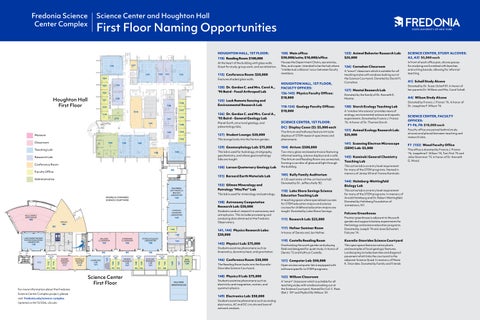
HOUGHTON HALL, 1ST FLOOR: 110) Reading Room: $100,000
At the heart of the building with glass walls. Great for study, group work, and socialization.
115) Conference Room: $50,000 Features shaded glass walls.
120) Dr. Gordon C. and Mrs. Carol A., ‘95 Baird - Fossil Arthropod Lab
125) Lash Remote Sensing and Environmental Research Lab
126) Dr. Gordon C. and Mrs. Carol A., ‘95 Baird - General Geology Lab Planet Earth, structural geology, and paleontology labs.
127) Student Lounge: $20,000
This lounge looks into the Fenton garden.
129) Geomorphology Lab: $75,000
This lab is used for hydrology, stratigraphy, geochemistry, and where geomorphology labs are taught.
130) Larson Quaternary Geology Lab
131) Barnard Earth Materials Lab
132) Gilman Mineralogy and Petrology “Min/Pet” Lab
This lab is used for mineralogy and petrology.
138) Astronomy Computation Research Lab: $30,000
Students conduct research in astronomy and astrophysics. This includes processing and analyzing data obtained at the Fredonia Observatory.
141, 144) Physics Research Labs: $30,000
145) Physics I Lab: $75,000
Students examine phenomena such as kinematics, dynamics heat, and gravitation.
146) Conference Room: $50,000
The Reading Room looks into the KourelisStavrides Science Courtyard.
148) Physics II Lab: $75,000
Students examine phenomena such as electricity and magnetism, motion, and quantum physics.
149) Electronics Lab: $50,000
Students examine phenomena such as analog electronics, AC and DC circuits and laws of network analysis.
150) Main office: $30,000/suite; $10,000/office
Houses the Department Chairs, secretaries, files, and copier. Intended to be the hub where “intellectual collisions” occur between faculty members.
HOUGHTON HALL, 1ST FLOOR, FACULTY OFFICES:
136-143) Physics Faculty Offices:
$10,000
118-124) Geology Faculty Offices: $10,000
SCIENCE CENTER, 1ST FLOOR:
DC) Display Cases (5): $5,000 each
The Atrium and hallways feature intricate displays of STEM research specimens and phenomena.
104) Atrium: $500,000
Two-story glass-enclosed entrance featuring informal seating, science displays and a café. The Atrium and Reading Room are connected, forming a corridor of glass and light through the building.
105) Kelly Family Auditorium
A 120-seat state-of-the-art lecture hall. Donated by Dr. Jeffery Kelly ’82.
110) Lake Shore Savings Science Education Teaching Lab
A teaching space where specialized courses for STEM education majors and science courses for childhood education majors are taught. Donated by Lake Shore Savings.
111) Research Lab: $25,000
117) Hefner Seminar Room
In honor of Dennis and Jan Hefner.
119) Costello Reading Room
Overlooking the south garden and playing field and designed for quiet study. In honor of Dennis ’72 and Kathryn Costello.
121) Computer Lab: $50,000
Open access computer lab is equipped with software specific to STEM programs.
122) Willson Classroom
A “smart” classroom which is suitable for all teaching styles with windows looking out at the Science Courtyard. Named for Col. C. Ross (Ret.) ’39* and Phyllis Ellis Willson ’39.
123) Animal Behavior Research Lab: $25,000
126) Carnahan Classroom
A “smart” classroom which is suitable for all teaching styles with windows looking out at the Science Courtyard. Donated by David H. Carnahan.
127) Mantai Research Lab
Donated by the family of Dr. Kenneth E. Mantai.
130) Storch Ecology Teaching Lab
A “window into science” provides views of ecology, environmental science and aquatic experiments. Donated by Francis J. Priznar ’76. In honor of Dr. Thomas Storch.
131) Animal Ecology Research Lab: $25,000
141) Scanning Electron Microscope (SEM) Lab: $5,000
143) Kaminski General Chemistry
Teaching Lab
This active lab is an entry level requirement for many of the STEM programs. Named in memory of James ’69 and Yvonne Kaminski.
144) Holmberg-Wettingfeld Biology Lab
This active lab is an entry level requirement for many of the STEM programs. In memory of Arnold Holmberg and Dr. Robert Wettingfeld. Donated by Holmberg Foundation of Jamestown, NY.
Falcone Greenhouse
Premier greenhouse is adjacent to the south garden and supports botany experiments for the biology and science education programs. Donated by Joseph ’74 and Jane (Schuster) Falcone ’74.
Kourelis-Stavrides Science Courtyard
This open space features native plants and examples of local geologic features.
Landscaping includes benches and diagonal pavement which links the courtyard to the adjacent Science Quad. In memory of Marie K. Stavrides. Donated by Family and Friends
SCIENCE CENTER, STUDY ALCOVES: A2, A3) $5,000 each
In front of each office pair, alcove spaces for studying are furnished with benches and writing boards, allowing for informal teaching.
A1) Schall Study Alcove
Donated by Dr. Susan Schall ’81. In honor of her parents Dr. William and Mrs. Carol Schall.
A4) Wilson Study Alcove
Donated by Francis J. Priznar ‘76. In honor of Dr. Josephine F. Wilson ‘74.
SCIENCE CENTER, FACULTY OFFICES:
F1-F6, F8: $10,000 each
Faculty office are paired behind study alcoves and placed between teaching and research labs.
F7 (132) Wood Faculty Office
This office is donated by Francis J. Priznar ‘76, Josephine F. Wilson ‘74, Tom Fink ‘75 and Jules Silverman ‘75. In honor of Dr. Kenneth G. Wood.
Fredonia Science Center Complex
Science Center and Houghton Hall
Second Floor Naming Opportunities
HOUGHTON HALL, 2ND FLOOR:
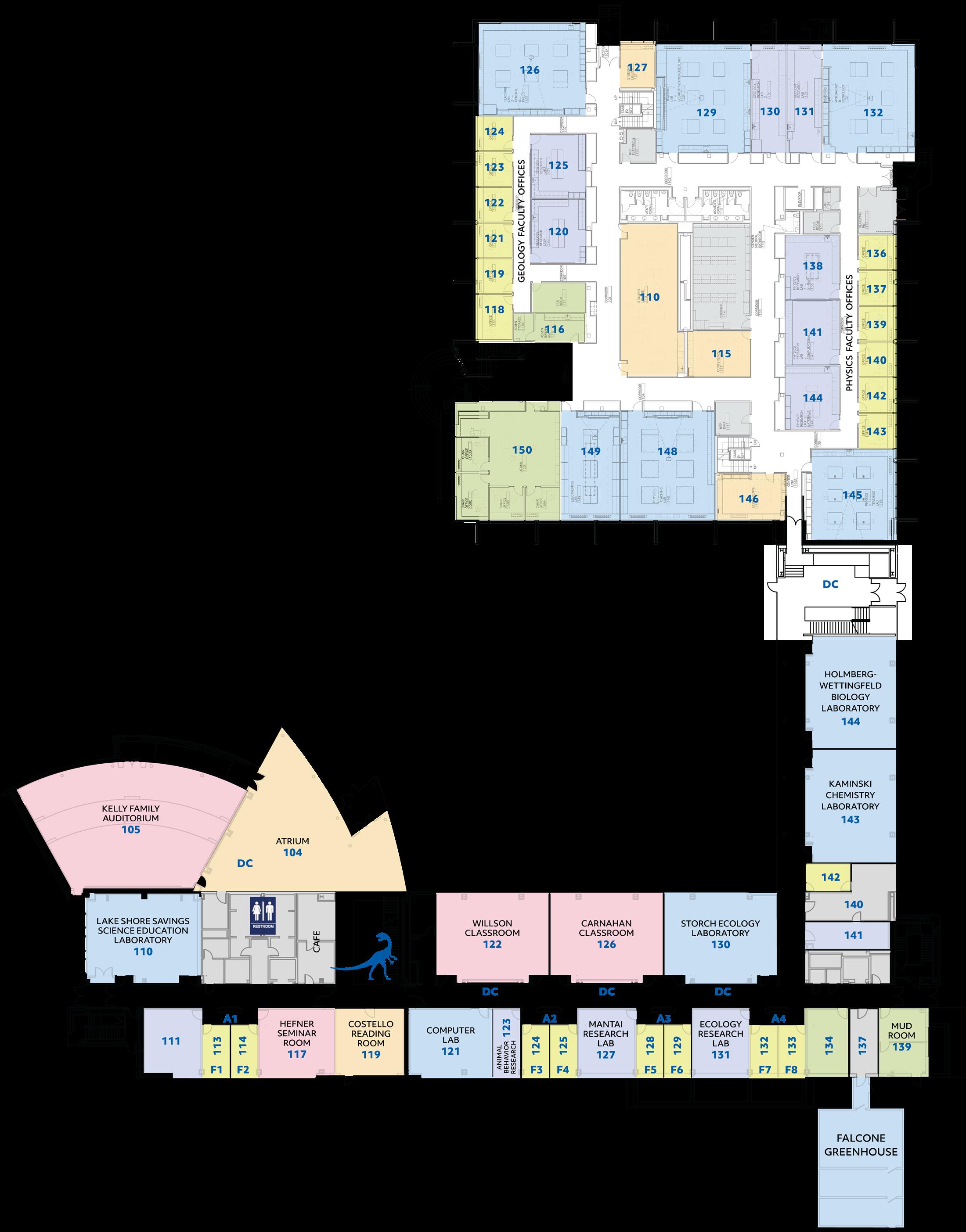
210) Collaboratory: $125,000
Designed for group or individual study with glass walls, comfortable seating, and large wall-mounted displays for group work.
213) Stanley Conservation: $35,000
214) Dr. Willard F. Stanley Museum Named Endowment: $100,000
A named endowment in support of the Dr. Willard F. Stanley Museum, and the outstanding natural science collection, used extensively by University Departments throughout the campus, and open to schools and the public.
222) Conference Room: $50,000
224) Robotics/Computer Vision Lab: $75,000
A space for students to create autonomous robots.
234) Student Lounge: $35,000
Intimate student study space with writing boards.
236) Classroom, $75,000
237) Math Education Room, $75,000
256) Conference Room: $50,000
258) Computer Hardware Lab: $50,000
Utilizing CISCO kits to develop networking skills that could result in a CCNA certification.
259) Kegler Computer Teaching Lab Lab is used for computer science courses (multimedia, vision and human computer interaction labs, geology, and statistics).
260) Computer Teaching Lab 1: $75,000
Lab is used for many computer science courses that involve operating systems, geology, and statistics.
261) Conference Room, $50,000
264) Math Department Fishbowl: $100,000
Large, comfortable study room for students located in the heart of the math department, with faculty offices just steps away.
HOUGHTON HALL, 2ND FLOOR, FACULTY OFFICES:
215-233) Computer and Information Science (CIS) Faculty Offices: $10,000
238-263) Mathematical Sciences Faculty Offices: $10,000
219) Systems Administrator Office: $15,000
SCIENCE CENTER, 2ND FLOOR: Gavin Balcony
A key architectural feature of the building with its vaulted roof and views into the Science Courtyard and Science Quad, the Science Balcony opens from the Aerie. Donated by Nicole C. and Claire A. Gavin in memory of Dr. Peter F. Gavin, ‘92.
210) Molecular Biology Research Suite: $40,000
Research in the lab focuses on bacteria and their roles in different ecosystems. Students collaborate with faculty on research projects using molecular approaches to answer questions relating to environmental microorganisms.
213) Fluorescent Microscopy Lab: $30,000
214) Honduras Health Care Study Abroad Program: $30,000
220) Gavin Aerie
Perched above the Atrium this meeting room has views onto the Science Couryard and the Science Quad. Donated by the Gavin Family.
222) Genetics Research Suite: $40,000
This suite provides space for joint student/ faculty research programs in developmental genetics, signal transduction, and molecular biology. It features multiple microscope workstations, an anesthetic delivery system, cryostat sectioning for histology, and equipment for DNA amplification and analysis. Functional adjacencies include the Molecular Imaging Suite and Genetics Teaching Laboratory.
224) Good Family Molecular Imaging Suite
225) Pennica Research Laboratory: Donated by Dr. Diane Pennica. In honor of Mamie and Frank Pennica.
226) Genetics Lab: $50,000
This lab provides space for classical and advanced molecular genetics courses. Stateof-the-art instrumentation for microscopy, DNA amplification, and molecular biology to facilitate inquiry-based learning. Computer and microscope projection capabilities allow for dynamic and interactive presentations.
Seating is designed for lab, group and lecture activities.
227) Carnahan–Jackson Foundation Research Lab
Donated by the Carnahan-Jackson Foundation.
231) Microbiology Lab: $50,000
In this laboratory, students are involved in the identification of microbes by colonial and microscopic features, biochemical properties and antibiotic sensitivities. Advanced labs include serological and immunological determinations which detect antigen-antibody interactions.
232) Aquatic Physiology Research Lab: $25,000
236) Aquatic Ecology Research Lab: $25,000
240B) Clean Room: $5,000
The laminar flow hood and inverted phase microscope supports cell culture research and teaching labs.
242) Biochemistry and Principles II Lab: $50,000
This lab provides space for the Principles of Biology II (introductory cell and molecular lab course) and Biochemistry. Students work on the isolation and characterization of nucleic acids and proteins. This lab is designed to provide students with hands-on experiences learning techniques, and applications for research in the biochemical and molecular field.
243) Anatomy/Physiology Lab: $50,000
bench to monitors on the student benches, allowing the instructor to demonstrate features much more effectively.
244) Marletta Conference Room Donated by Dr. Michael Marletta ’73.
SCIENCE CENTER, STUDY ALCOVES: A3, A4) $5,000 each In front of each office pair, alcove spaces for studying are furnished with benches and writing boards, allowing for informal teaching.
A1) Fox Study Alcove
Donated by the Fox Family. In honor of Dr. Kevin A. Fox, Distinguished Teaching Professor.
A2) Prusak Study Alcove Donated by Nancy E. Prusak in Memory of Mark P. Prusak, ‘75 Biology.
A5) Mandery Study Alcove Donated by David, ‘06 and Michelle Swackhammer, ‘10, ‘12 Mandery.
SCIENCE CENTER, FACULTY OFFICES:
F1-F10) $10,000 each
Faculty offices are paired behind study alcoves and placed between teaching and research labs.
SCIENCE CENTER, MAIN OFFICES: 221) Administrative Suite: $30,000 Houses the Department Chairs, secretaries, files, and copier. Intended to be the hub where “intellectual collisions” occur between faculty members.
221A) Yudenfreund-Sujka Biology Chair Office
Donated by Dr. Shari Yudenfreund-Sujka ’79. In honor of Drs. Kevin Fox and Allen Benton.
221B) Director, Pre-Health Professions: $7,500
221C) Chair, Chemistry and Biochemistry: $10,000
For more information about the Fredonia Science Center Complex project, please visit: fredonia.edu/science-complex
Updated on 04/13/2026, v26 ada
265) Conference Room: $50,000
This space provides state-of-the-art technology for courses and research in genetics, molecular biology, and cell biology. Instrumentation includes a confocal laser scanning microscope as well as epifluorescent microscopy for detailed examination of cell and subcellular structure. Donated by Deborah J. Good.
This teaching laboratory utilizes sophisticated data acquisition hardware/ software that allows students to perform a comprehensive suite of physiological experiments, analyze resulting data and prepare reports, greatly enhancing their understanding and learning of complex systems. Additionally, the lab is set up to allow for traditional and computerenhanced anatomical investigations, and incorporates a video feed from the instructor
221D) Director, Science Education Partnership: $7,500
Fredonia Science Center Complex
Science Center and Houghton Hall
Third Floor Naming Opportunities
SCIENCE CENTER, 3RD FLOOR:
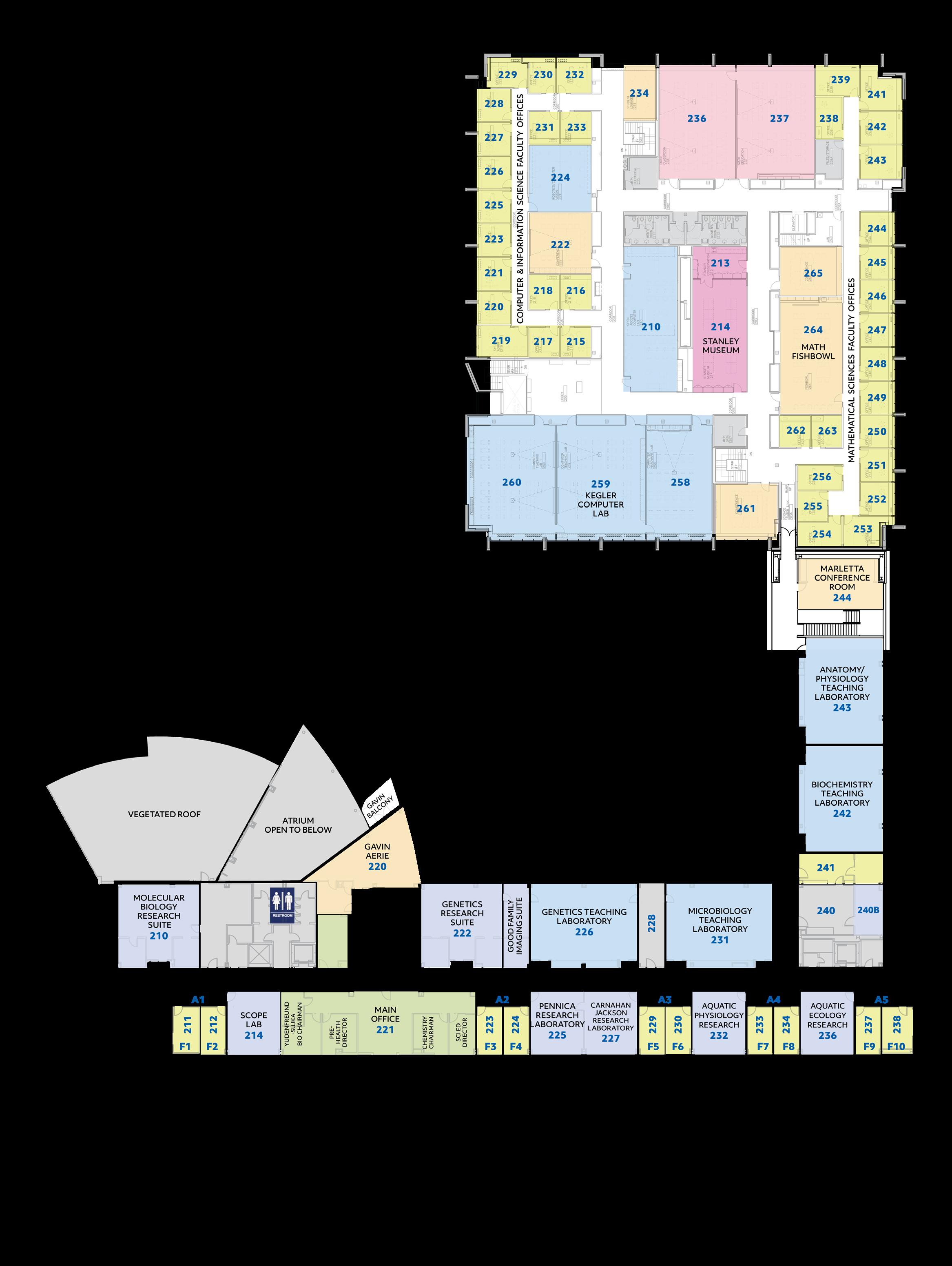
310) Biochemistry Research Suite:
$40,000
Research in the biochemistry research suite focuses on the structure of biological macromolecules. High-Performance Liquid Chromatography (HPLC) equipment for purification and UV-Vis and fluorescence spectrometers for quantification and characterization of samples is used in conjunction with state-of-the-art NMR spectrometers to characterize the structure of both small and large biological macromolecules. The suite also has several molecular modeling work stations that enable faculty and students to determine the structure of biological macromolecules from NMR data and study ligand binding to nucleic acids and proteins. Collaborative projects are on-going with research groups at the University at Buffalo and Scripps Research Institute.
313) Biochemical Instrument Room:
$100,000
Contains the LCMS, Maldi-TOF Mass Spectrometer, Fluorescence spectrometer, and Biospectrometer for nucleic acid analysis.
315) Organometallics Research Lab:
$25,000
321) Major Alice Conference Room
Floor to ceiling glass wall overlooks the south garden and playing field. In memory of Major Alice M. Sam, USAF RET. and Adele R. Sam. Donated by Barbara A. Sam and Grace M. Sam.
322) Moos Organic Lab:
In this laboratory, students extensively use spectroscopic methods to identify different functional groups and the structures of organic compounds. Advanced labs involve the synthesis, isolation and characterization of organic compounds. Donated by Dr. Walter Moos and Dr. Susan Miller in memory of Walter’s father, Dr. Gilbert E. Moos, who taught Organic Chemistry for many years.
323) Janik X-Ray Diffractometer Lab:
This space is dedicated to High-Performance Gas Chromatography (HPGC), gas chromatography (GC), mass spectrometry and x-ray diffraction experiments. Donated by Dr. Christopher, ’93 and Mrs. Cathy Cahill. In honor of Dr. Thomas S. Janik.
324) Kumler Spectroscopic Instrument Room
This lab contains infrared and ultraviolet/ visible spectrometers for the identification and quantification of chemicals. Donated by his former students in honor of Dr. Philip Kumler.
327) Synthetic Research Suite:
$40,000
Students and faculty collaborate to synthesize and characterize novel inorganic, organometallic and organic molecules. Advanced air-sensitive technique are required for some of the syntheses and traditional separation procedures aid in product purification. New molecules are characterized by spectroscopic and x-ray diffraction studies.
328) Analytical/Physical Lab:
$50,000
The Analytical Laboratory Courses rely heavily on the use of analytical instrumentation for the quantification, characterization and identification of chemical species; students get extensive experience utilizing chemical instrumentation. In the Physical Chemistry Laboratory course students engage in experiments that apply the laws of kinetics, thermodynamics, quantum mechanics and statistical thermodynamics to chemical systems.
330) Analytical Instrument Room: $5,000
The spectroscopic and chromatographic instrumentation in this lab supports the characterization of advanced synthesis, biochemical, physical and analytical experiments.
332) Inorganic/Advanced Experimental Biochemistry: $50,000
This laboratory is outfitted with the capability to perform inert-atmosphere inorganic and organometallic syntheses and analysis by spectral, solid-state and electrochemical methods. State of the art biochemical and molecular techniques are taught in Advanced Experimental Biochemistry including techniques such as polymerase chain reaction, oligonucleotide synthesis and gel electrophoresis.
333) Natural Products Research Lab: $25,000
336) Environmental Research Suite: $40,000
Research students are engaged in the isolation, purification and analysis of air and waterborne, semi-volatile organic and inorganic pollutants found in the Great Lakes area. Components, such as nitrate, sulfate, polyaromatic hydrocarbons (PAHs), PCBs, dioxins, and mercury are detected by Gas Chromatography Mass Spectrometry (GC-MS). This work is funded by NYSERDA and the EPA and is done in collaboration with researchers at Clarkson University and SUNY Oswego.
338) Research Lab: $25,000
SCIENCE CENTER, STUDY ALCOVES: A4-A6: $5,000 each
In front of each office pair, alcove spaces for studying are furnished with benches and writing boards, allowing for informal teaching.
A1) Roth Family Study Alcove Donated by the Roth Family
A2) Lawson Study Alcove Donated by Drs. Holly and Jerry Lawson-Keister. In honor of Eleanor and William Lawson
A3) Secker Study Alcove Donated by Dr. Christopher and Cathy Cahill in memory of Robert Secker (Class of 1993).
SCIENCE CENTER, FACULTY OFFICES:
F1-F12: $10,000 each
Faculty offices are paired behind study alcoves and placed between teaching and research labs.
For more information about the Fredonia Science Center Complex project, please visit: fredonia.edu/science-complex Updated on 04/13/2026, v26 ada
Science Center and Houghton Hall Basement and Roof Naming Opportunities
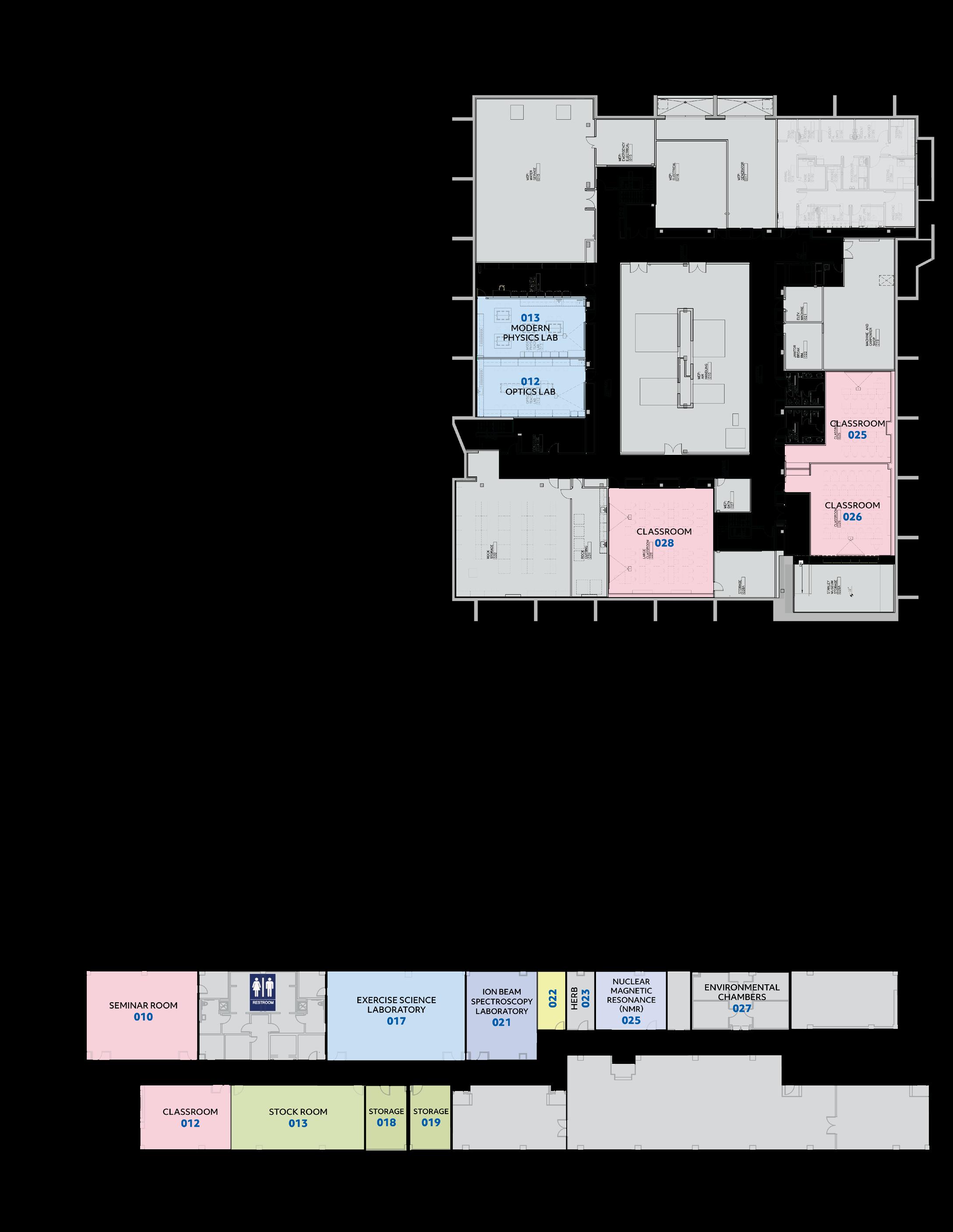
For more information about the Fredonia Science Center Complex project, please visit: fredonia.edu/science-complex Updated on 04/13/2026, v26 ada

HOUGHTON HALL, BASEMENT: 012) Optics Lab: $35,000 Where students get an introduction to geometrical, physical, and modern optics.
013) Modern Physics Lab: $50,000
Where students learn special relativity, wave motion, basic concepts of quantum mechanics, atomic structure, solid state, and nuclear physics.
025) Classroom: $50,000 General use with priority given to sciences.
026) Classroom: $50,000 General use with priority given to sciences.
028) Classroom: $50,000 General use with priority given to sciences.
SCIENCE CENTER, BASEMENT: 010) Seminar Room: $25,000
A “smart” classroom which is suitable for all teaching styles.
012) Classroom: $35,000
A “smart” classroom which is suitable for all teaching styles.
017) Exercise Science Laboratory: $75,000
021) Atomic and Molecular Spectroscopy Lab: $30,000
This state-of-the-art facility houses an ion source, used to create a fast atomic or molecular beam, along with an infra-red CO2 laser and a microwave excitation region in order to perform precision spectroscopy which investigates fundamental properties of atomic and molecular structures.
025) Nuclear Magnetic Resonance (NMR) Room: $50,000
The 500MHz research nuclear magnetic resonance spectrometer is used to support synthetic, analytical and biochemical research programs.
SCIENCE CENTER, ROOF: R1) Observatory: $100,000
Open to campus and the community, the Observatory shelters our cutting-edge telescope.
R2) Telescope: $30,000
The showcase of the Observatory is our new telescope with state-of-the-art optics and mechanics, automatic tracking and, remote access.