















BY SAMANTHA CHANG Rock Ridge High School
It had been about six months since the Boston Tea Party, an act that had brought the frustrations of colonials to a climax.
For years, these British subjects had been expected to accept a series of policies designed to squeeze more money from them for the crown:
• The Sugar Act of 1765, which taxed imports of sugar and molasses
• The Stamp Act of 1765, which taxed all printed goods
• The Townshend Acts of 1767-68, which taxed imported British goods ranging from glass to lead, to paper and … tea.
“The Boston Tea Party became the ultimate symbol of colonial discontent,” authors George Tindall and David Shi said in their book “America: A Narrative History.”
“So much so,” the authors write, “that King George III proclaimed that the ‘colonist must either submit or triumph.’”
And this led to Parliament punishing the whole of Massachusetts with the Intolerable Acts of 1774. These acts not only closed the port of Boston until all the tea thrown was paid for, but also replaced the colonial assembly with a military governor.
Outrage consumed the colonies.
On May 27, 1774, the Virginia House of Burgesses met to plan a strategy to show their solidarity with the people of Boston. In the end, they agreed to join the call for
a Continental Congress, to boycott all British goods and to encourage all counties in Virginia, including Loudoun, to hold similar meetings.
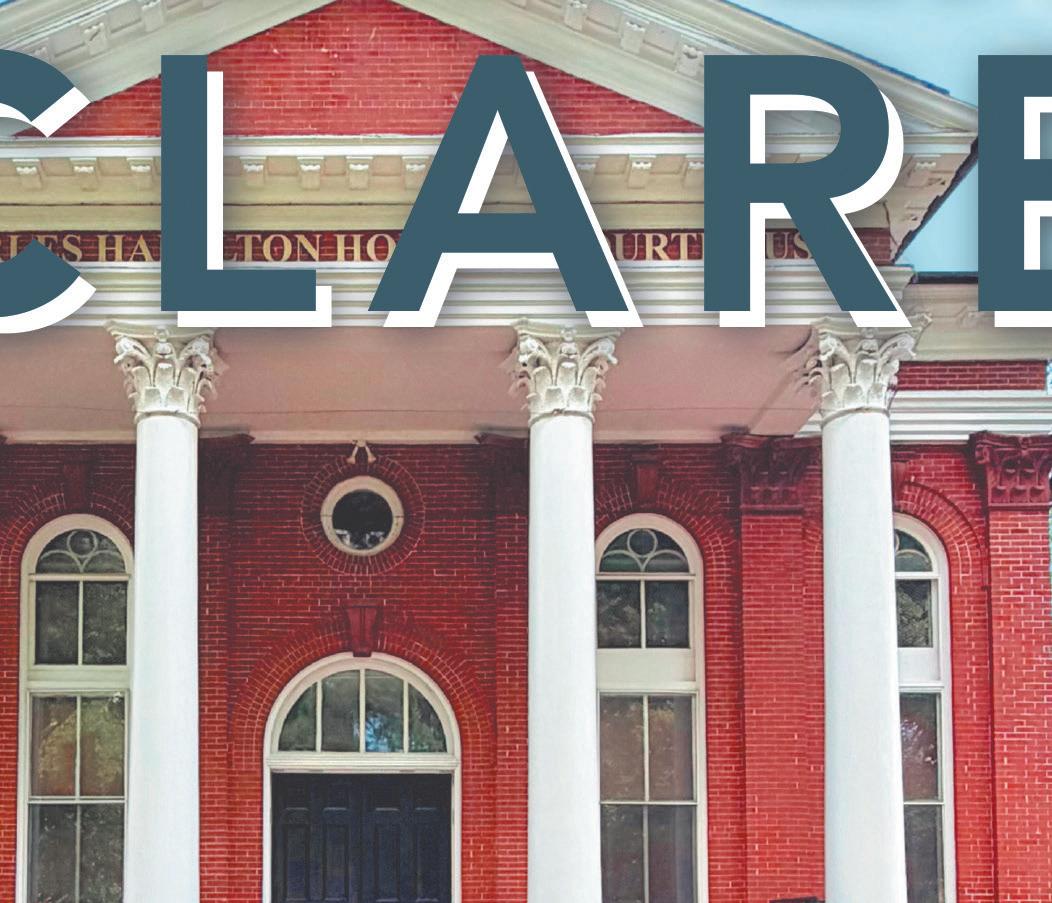
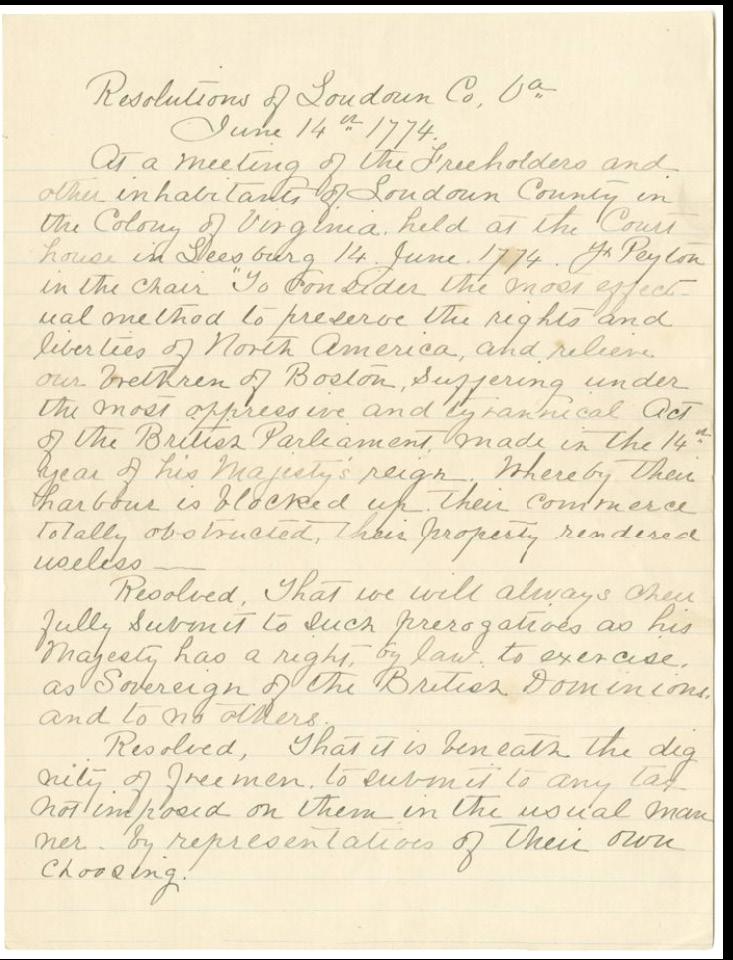
Shortly thereafter, on June 14, landholders gathered at the courthouse in Leesburg. There, 51 Loudoun County men began drafting the Loudoun Resolves — one of the first of such documents to be drafted in Virginia.
The men were British subjects, of course; but they supported their brethren in Boston. They promised to boycott all British goods and make it known they were not to be ruled by Britain, but as a colony of it. And as such, they would need representation in decision-making.
The signers also warned Britain that “enforcing the execution of the said Act of Parliament by a military power, must have a necessary tendency to raise a civil war” — a haunting foreshadowing of the future fight for independence.
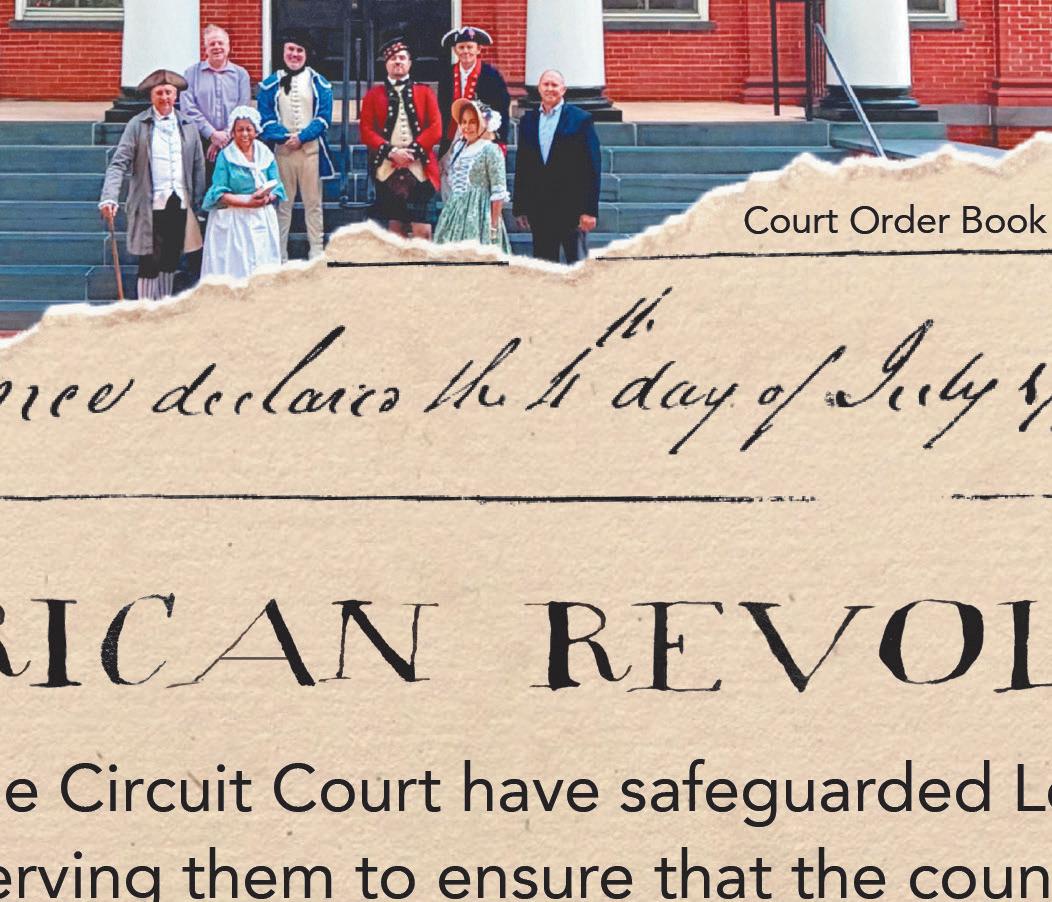
Two years later, on Aug. 12, 1776, Loudoun County Sheriff Philip Noland read the Declaration of Independence on the very same steps of the courthouse where those 51 men had called for reform and support.
Today the original copy of the Loudoun Resolves is preserved at the College of William and Mary in Williamsburg.
Samantha Chang produced this article as part of her senior Capstoneproject.
Text of the Loudoun Resolves:
At a Meeting of the Freeholders and other inhabitants of the County of Loudoun, in the Colony of Virginia, held at the Court-house in Leesburg, the 14th June, 1774—F. Peyton, Esq., in the Chair—to consider the most effectual method to preserve the rights and liberties of N. America, and relieve our brethren of Boston, suffering under the most oppressive and tyrannical Act of the British Parliament, made in the 14th year of his present Majesty’s reign, whereby their harbour is blocked up, their Commerce totally obstructed, their property rendered useless—
Resolved, That we will always cheerfully submit to such prerogatives as his Majesty has a right, by law, to exercise, as Sovereign of the British Dominions, and to no others.
Resolved, That it is beneath the dignity of freemen to submit to any tax not imposed on them in the usual manner, by representatives of their own choosing.
Resolved, That the Act of the British Parliament, above mentioned, is utterly repugnant to the fundamental laws of justice, in punishing persons without even the form of a trial: but a despotic exertion of unconstitutional power designedly calculated to enslave a free and loyal people.
Resolved, That the enforcing the execution of the said Act of Parliament by a military power, must have a necessary tendency to raise a civil war, and that we will, with our lives and fortunes, assist and support our suffering brethren, of Boston, and every part of North America that may fall under the immediate hand of oppression, until a redress of all our grievances shall be procured, and our common liberties established on a permanent foundation.
Resolved, That the East India Company, by exporting their tea from England to America, whilst subject to a tax imposed thereon by the British Parliament, have evidently designed to fix
on the Americans those chains forged for them by a venal ministry, and have thereby rendered themselves odious and detestable throughout all America. It is, therefore, the unanimous opinion of the meeting not to purchase any tea or other East India commodity whatever, imported after the first of the Month.
Resolved, That we will have no commercial intercourse with Great Britain until the above mentioned Act of Parliament shall be totally repealed, and the right of regulation the internal policy of N. America by a British Parliament shall be absolutely and positively given up.
Resolved, That Thompson Mason and Francis Peyton, Esqs., be appointed to represent the County at a general meeting to be held at Williamsburg on the 1st day of August next, to take the sense of this Colony at large on the subject of the preceding resolves, and that they, together with Leven Powell, William Ellzey, John Thornton, George Johnson and Samuel Levi, or any three of them, be a committee to correspond with the several committees appointed for the purpose.
Signed by,
John Morton, Thomas Williams, Thomas Ray, James Noland, Thomas Drake, Samuel Peugh, William Borax, William Normal Benj, Isaac Humphrey, Thomas Luttrell, Samuel Mills, James Brair, Joshua Singleton, Poins Ansley, Jonathan Drake, John Kendrick, Matthew Rust, Edward O’Neal, Barney Sims, Francis Triplett, John Sims, Joseph Combs, Samuel Butler, John Peyton Harrison, Thomas Ching, Robert Combs, Appollos Cooper, Stephen Combs, Lina Hancock, Samuel Henderson, John McVicker, Benjamin Overfield, Simon Tripplett, Adam Sangster, Thomas Ansley, Bazzell Roads, Isaac Sanders, John Wildey, Thos. Williams, James Graydey, John Williams, Joseph Bayley, Henry Ansley, John Reardon, Wm. Finnekin, Edward Miller, Richard Hanson, Richard Hirst, John Dunker, James Davis, Jasper Grant.
BY SAMANTHA CHANG Rock Ridge High School
If you live in Loudoun, you might recognize the name John Champe from the high school in Stone Ridge. But do you know about the man behind the name?
He’s a soldier among many during the Revolutionary war, but unlike his fellow troops he fought in enemy territory — but not as a defector or traitor.
John Champe, a Loudoun County native, was a spy for the Continental Army.
According to Library of Virginia, Champe was born and raised near Aldie. He joined the Continental Army during the early years of the war, and served under Gen. Henry Lee, George Washington’s cavalry officer.
In October 1780, Lee, Champe and their troops were stationed near Bergen, N.J. Just a few miles north, in British-occupied New York, Maj. Gen. Benedict Arnold commanded British troops.
A month earlier, Arnold had defected to the British in exchange for 20,000 pounds, worth $1 million today. Frustrated by a lack of recognition and promotion opportunities, he had abandoned the Continental Army and joined the enemy.
Arnold’s desertion alarmed Gen.
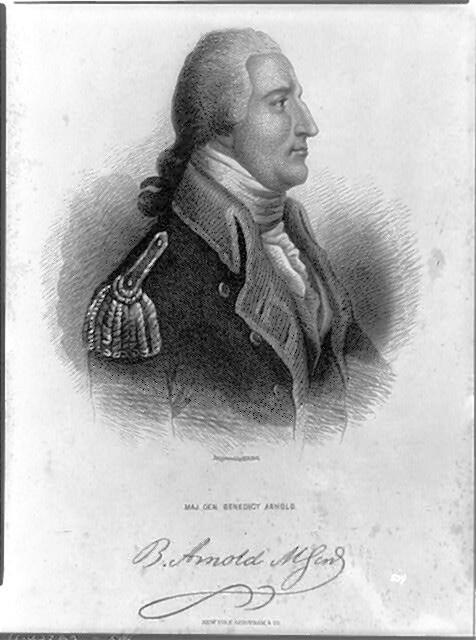
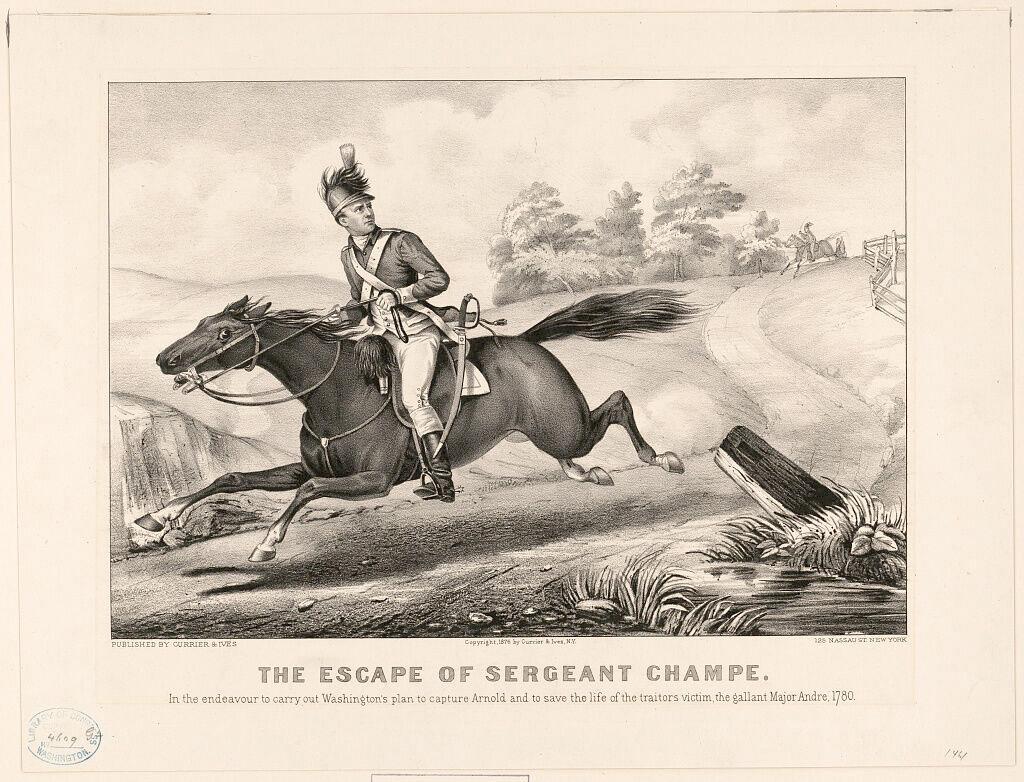
Washington, who feared more Continental soldiers would follow. Determined to make an example out of the traitor, Washington called for Lee. He wanted Arnold captured — alive.
The men formed a plan. A Continental soldier would appear to desert, cross the Hudson River, and enlist in the British army. Once he gained Arnold’s trust, he would capture him and smuggle him into a Continental boat.
Lee selected Champe for the mission, and on Oct. 20, 1780, Champe escaped the camp and rode toward the Hudson. Once in New York, he was captured by British troops, including high-ranking commander Henry Clinton.
But the Virginian convinced Clinton that he deserted, and soon Clinton introduced him to Arnold,
who made Champe one of his recruiting sergeants. The position gave Champe access to Arnold’s home on the southern tip of Manhattan.
Through fellow conspirators, Champe communicated with Lee. Ten days later, Lee finalized the plan to capture the traitor.
Each evening, Arnold would roam through his fenced garden. Champe would pry the fence boards loose, and then with a conspirator, would seize Arnold and hustle him through the back alleys of lower Manhattan to a waiting boat.
But the day before the planned capture, Arnold moved his quarters to another part of the borough, taking Champe with him — and the plan collapsed. Soon after, Arnold and his troops were called to fight with other British troops in Arnold’s
home state of Virginia.
With his mission no longer possible, Champe returned to Lee’s command, gaining notoriety among the troops — and even Lee himself.
“(The) whole story soon became known to the corps,” Lee said in his memoirs.
Washington later discharged Champe from military service, and the former spy retired to family life in Loudoun County.
Champe never saw his story in Lee’s memoirs, as he died in 1798 at age of 46. Today, an obelisk memorial stands near west Aldie on U.S. 50, where Champe’s house once stood.
Samantha Chang prepared this article as part of her senior Capstoneproject

From shopping and dining to everyday hangouts, Dulles Town Center brings everything together. With popular stores, great food, and fun for all ages, it’s your go to spot for style, flavor, and good times. Your day upgrades here.
















BY TAMELA BAKER Loudoun Times-Mirror
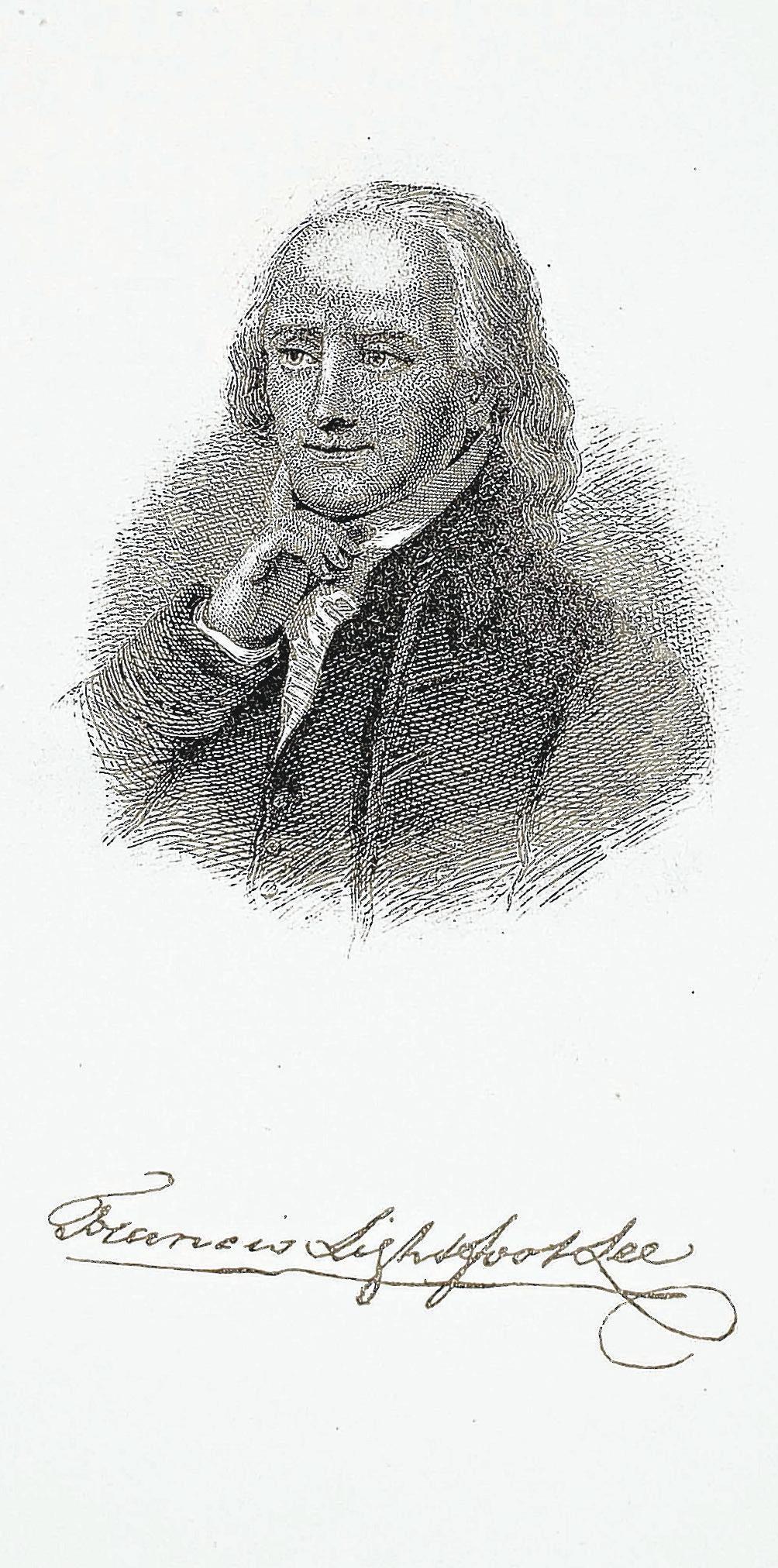
By the time he signed the Declaration of Independence, Francis Lightfoot Lee had left Loudoun County. Yet he was a part of both the county’s and the nation’s early development.
You might recognize him as the namesake of a prominent downtown Leesburg restaurant, but as no less than Mark Twain observed, he’s one of the more overlooked of our founding fathers.
“This man’s life-work was so inconspicuous,” Twain wrote, “that his name would now be wholly forgotten, but for one thing — he signed the Declaration of Independence.”
Francis Lightfoot Lee (not to be confused with his distant cousin, George Washington’s friend “Lighthorse Harry” Lee, father of Robert E.) was born at the Lee family estate Stratford Hall in Westmoreland County. His father, Thomas Lee, served briefly as Virginia’s colonial governor and was a major landholder in what would become Loudoun County.
Francis inherited a portion of that property in eastern Loudoun.
The years 1757 and 1758 were pivotal, both for Francis and for the county. Loudoun separated from Fairfax County, its county seat was named for Lee’s family, and Francis Lightfoot Lee — now a Loudoun resident — became county lieutenant for Loudoun in 1757, and a trustee for Leesburg in 1758, according to the Lee family archive. He was Loudoun’s delegate to the Virginia House of Burgesses beginning in 1758.
While serving in the House, Francis was appointed to the committee investigating House Speaker and Treasurer John Robinson over a scandal involving paper money and the payment of taxes. Robinson had apparently kept outdated paper money he was obliged to destroy, according to the archives, and used it to help friends who were in debt. Robinson died before the investi-
gation was complete, but the committee found more than £100,000 — equivalent to about $28 million today — was missing.
During his time representing Loudoun in the House of Burgesses, tensions grew between London and the colonies. Francis and his brothers (and Washington and his brothers) were all affected by royal limits on land grants, as they had partnered to develop land westward through their Ohio Company. That effort was thwarted by royal decree in 1761. Further efforts to develop land to the southwest ended as a result of a royal proclamation in 1763.
Meanwhile, Britain maintained a standing army in the colonies at the expense of the colonists. Parliament levied a series of tax measures on the colonies to pay for the army and help defray costs of the French an Indian War (1754-1763). This, on top of the frustrated development plans, was enough to make a proud Virginia landowner revolt:
Loudoun,April5,1766
Thesubscriberrequestsitasafavour of all his Acquaintances, That they will never take any LETTER directedtohimoutofthePOSTOFFICE,asheisdeterminedneverwillingly to pay a Farthing of any TAX laiduponthisCOUNTRY,inanUNCONSTITUTIONAL Manner.
In the same year, Francis signed the Westmoreland Resolves, drafted by his brother Richard Henry Lee, declaring that “we do determine at every hazard, and paying no regard to danger or death, we will exert every faculty to prevent the execution of the said Stamp Act.”
In that regard, at least, the Lees and their compatriots were successful; the Stamp Act, which required colonists to buy a stamp from the government for most printed papers — even playing cards — was rarely enforced. It became effective Nov. 1, 1765, but was repealed by March.
Three years later, Francis married Rebecca Tayloe, daughter of a Virginia planter. As a wedding
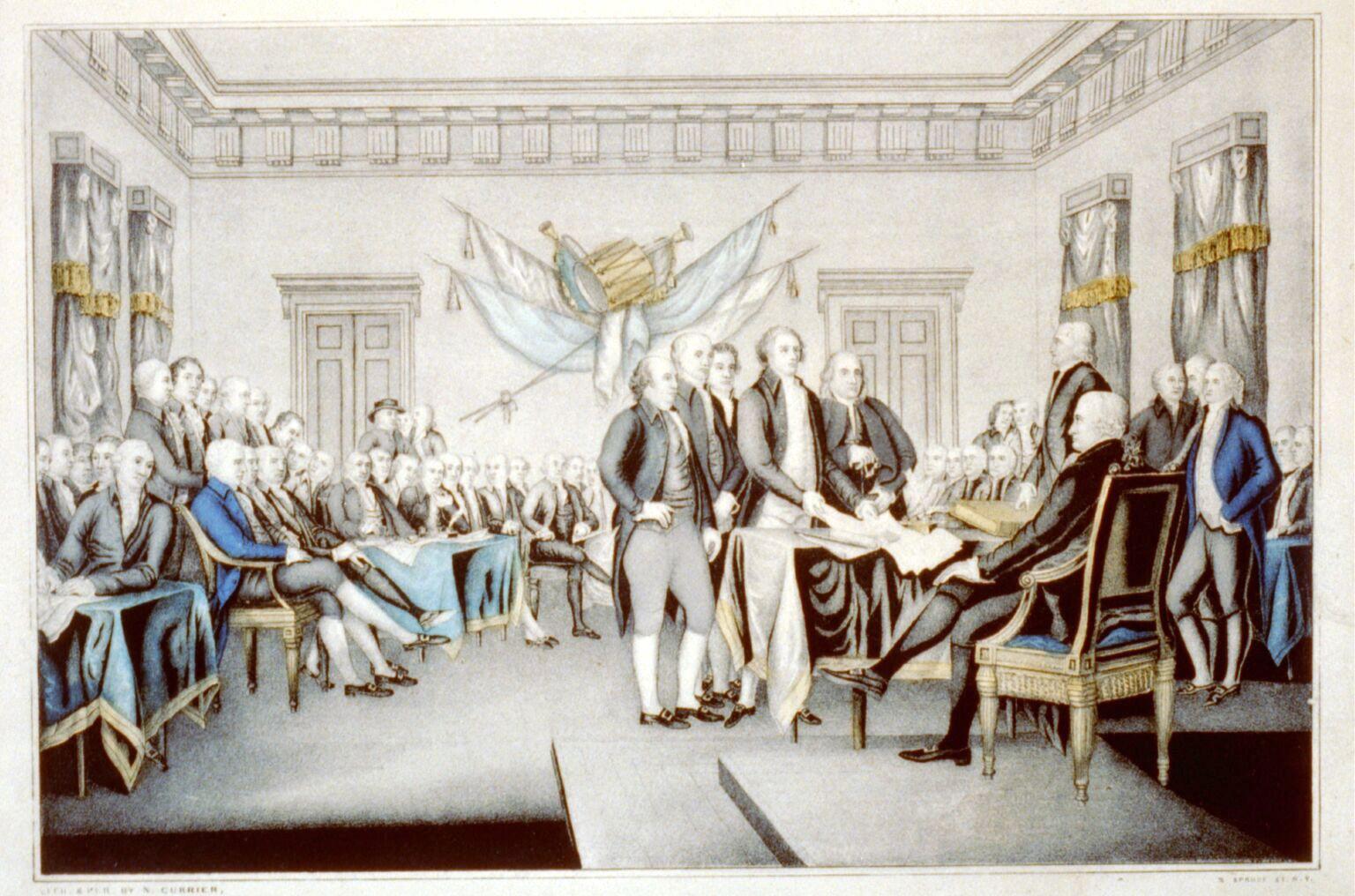
Declaration of Independence: July 4th 1776 — N. Currier, between 1835 and 1856
gift, John Tayloe gave his daughter and new son-in-law property in Richmond County. The couple made that property their home, and Francis served as burgess and justice of the peace for Richmond County — and as justice of the peace for Loudoun as well in 1771, according to Encyclopedia Virginia. In the meantime, he remained active in defiance of British policies. He was a member of the political Society of the Supporters of the Bill of Rights, according to the archives, and joined his father-in-law and his brother Richard Henry Lee in an unsuccessful “Patriotic Store” — an agricultural cooperative that would provide supplies to planters while undermining British import tax policy. In 1773, Francis and Richard met with Patrick Henry, Thomas Jefferson and Dabney Carr to discuss the tax situation, and agreed to form a correspondence committee to communicate with the other colonies. The plan was approved by the House of Burgesses in
March, and the Lee brothers served on the committee.
Two years later, Francis was elected to the second Continental Congress, and continued to serve there until 1779.
He and Richard Henry both signed the Declaration of Independence in Philadelphia during that revolutionary summer of 1776. The following year, Francis was tapped to chair a special committee to support Gen. Washington’s troops, according to the National Constitution Center.
He wasn’t quite finished with politics; he served in the Virginia Senate until 1782, and died in 1797 — just 10 days after Rebecca.
“When at last his public career was ended, he retired honored of all, applauded by all, unaccused, unsmirched, utterly stainless,” Twain wrote.
“Let us gravely try to conceive how isolated, how companionless, how lonesome, such a public servant as this would be in Washington today.”
TIMES MIRROR STAFF
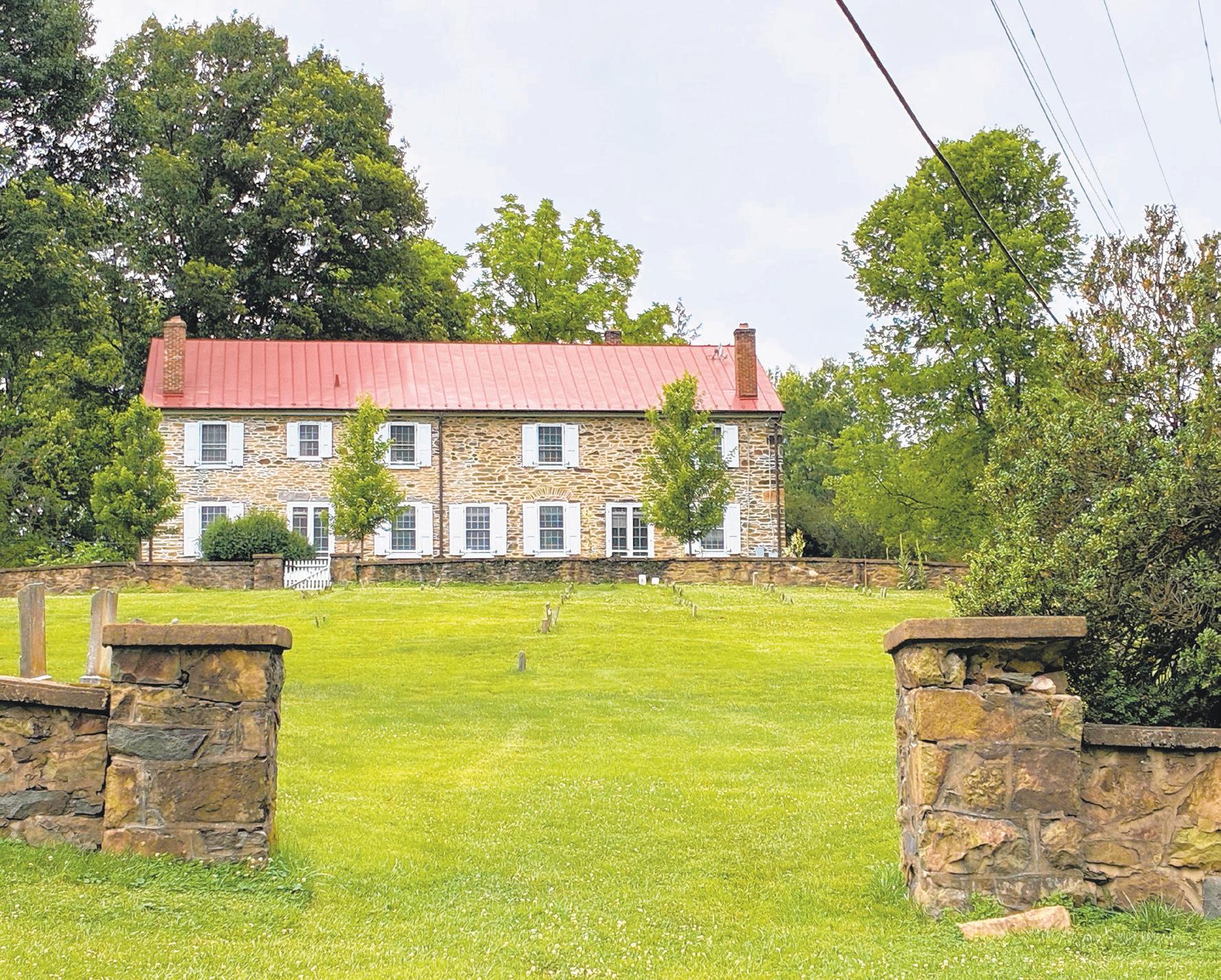
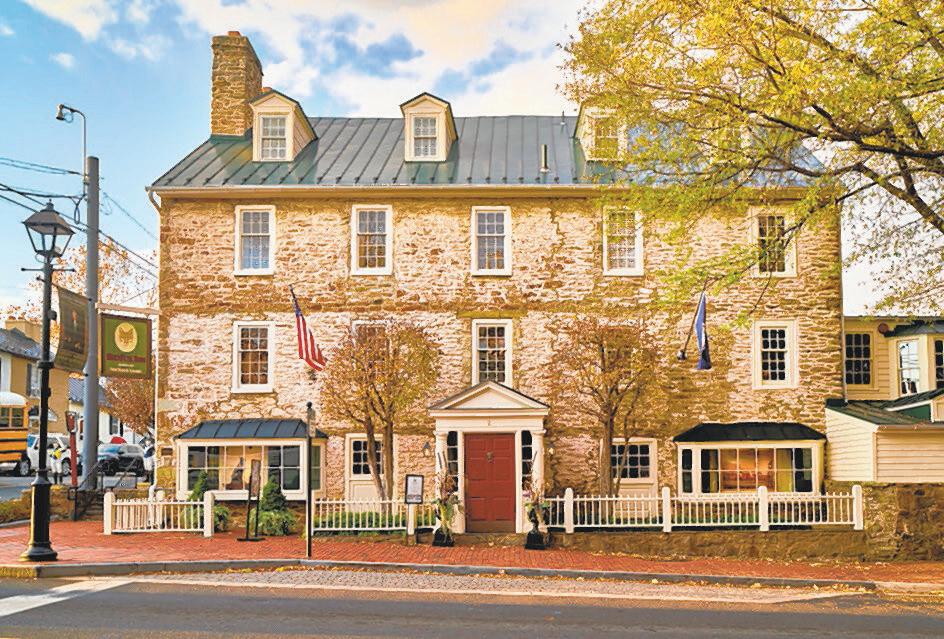
Created from Fairfax County just before revolutionary ideas began to foment in the colonies, Loudoun County is home to a number of buildings that witnessed that momentous era.
Leesburg and Waterford, population centers during that time, boast a number of Revolutionary era buildings, but they exist throughout Loudoun County.
The Thomas Balch Library in Leesburg, the Loudoun VA250 Committee and the Virginia Piedmont Heritage Area have prepared guides to Loudoun’s revolutionary history and sites so you can see them for yourself. And the best part? They’re all available free online:
Loudoun’s Revolutionary Landscape — travel to site across Loudoun to learn the role the played in the county’s young history. tinyurl.com/3zzfev32
Leesburg’s 18th Century Walking Tour — Echoes of colonial Leesburg still resonate downtown, and you can walk to all of them in an afternoon. tinyurl. com/3dcdbv2c
A Guide to Loudoun in the American Revolution — The people, places and preparations that led to Loudoun’s contributions to independence. tinyurl. com/r67e4he2 (Printed copies of this guide are also avaialbe at local sites including Loudoun Museum, Balch Library, Heritage Farm Museum and others)
on the
Get discounted admission to 5 top historic and cultural destinations — plus exclusive hotel savings
Valid through December 31, 2026, the joint initiative between the George C. Marshall International Center and leading local museums and cultural destinations to offer discounted admission to five top destinations: MORVEN PARK
OATLANDS HISTORIC HOUSE & GARDENS
GEORGE C. MARSHALL’S DODONA MANOR LOUDOUN HERITAGE FARM MUSEUM
NATIONAL SPORTING LIBRARY & MUSEUM
Visitors receive a 15% discount on hotel stays through a special partnership with the B.F. Saul Hospitality Group.
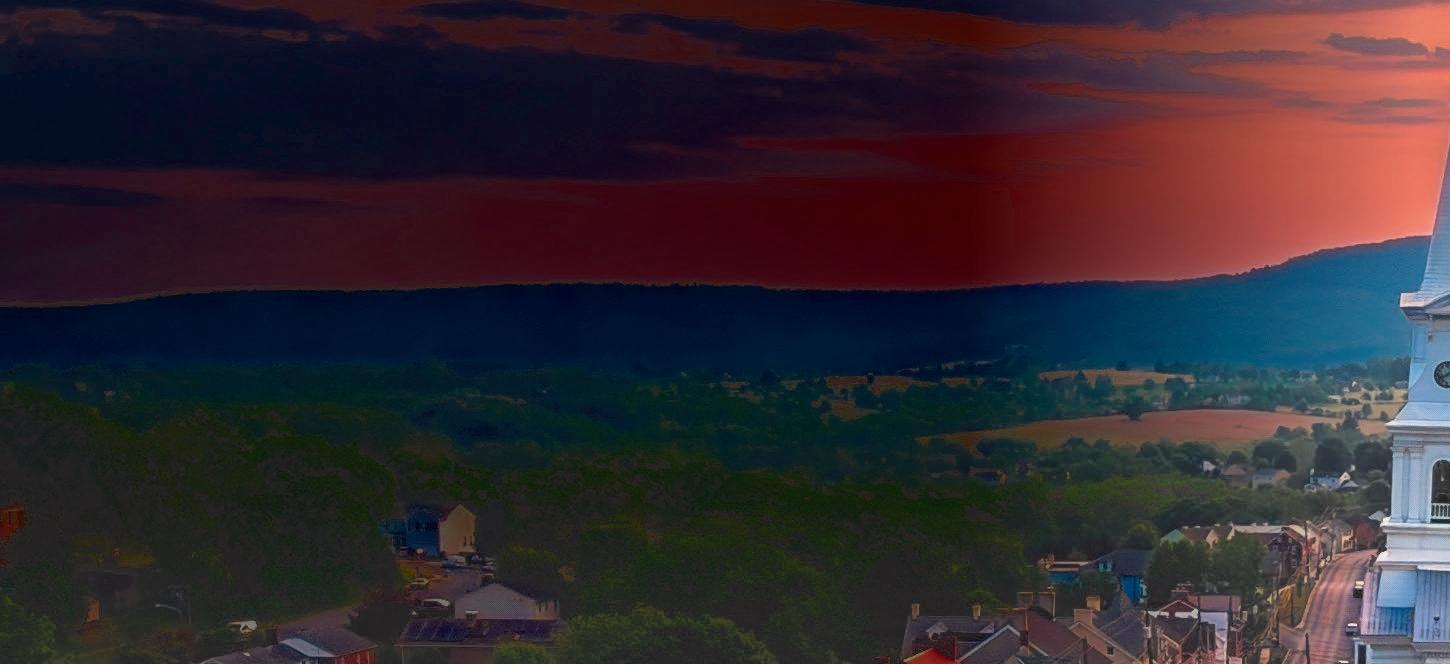
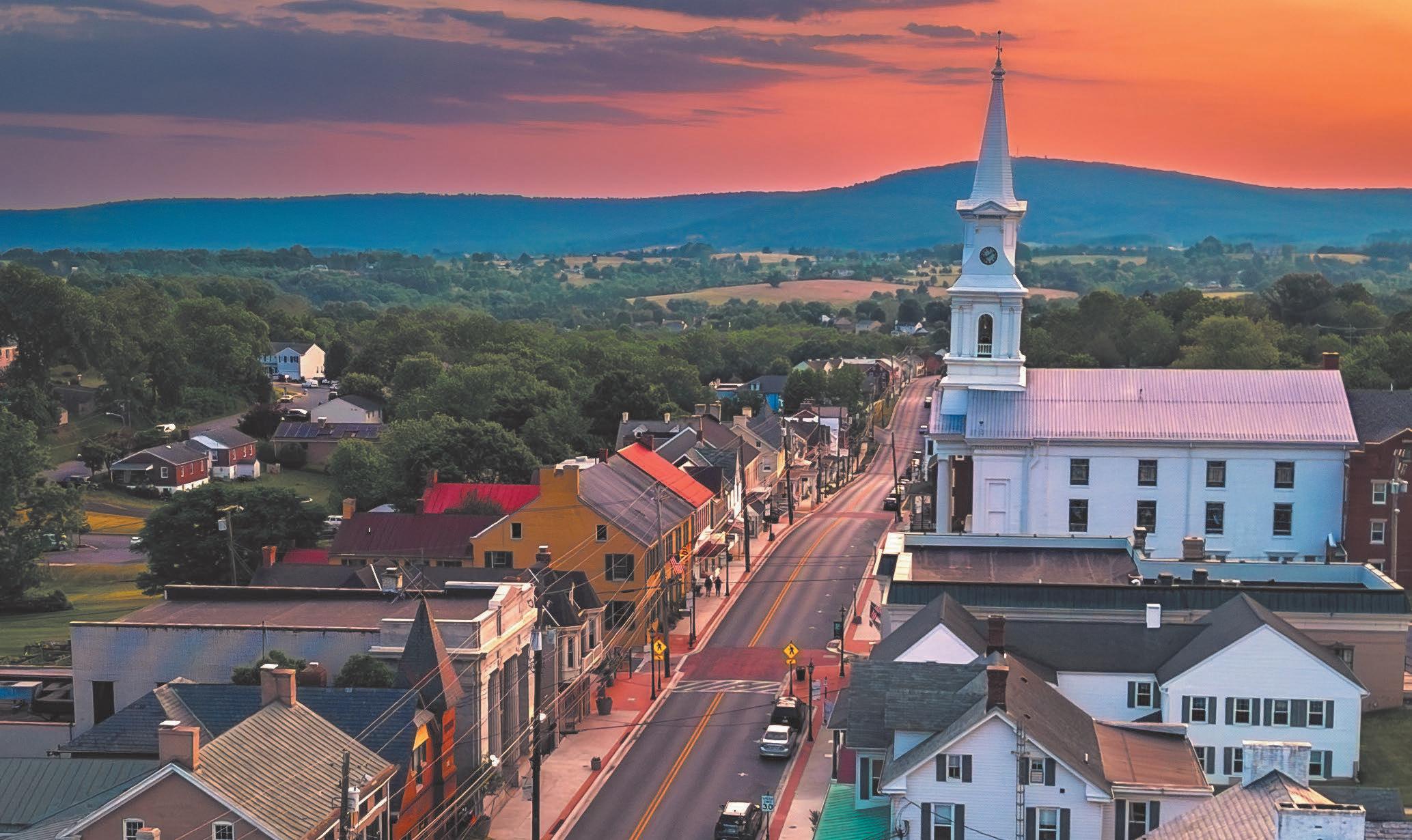
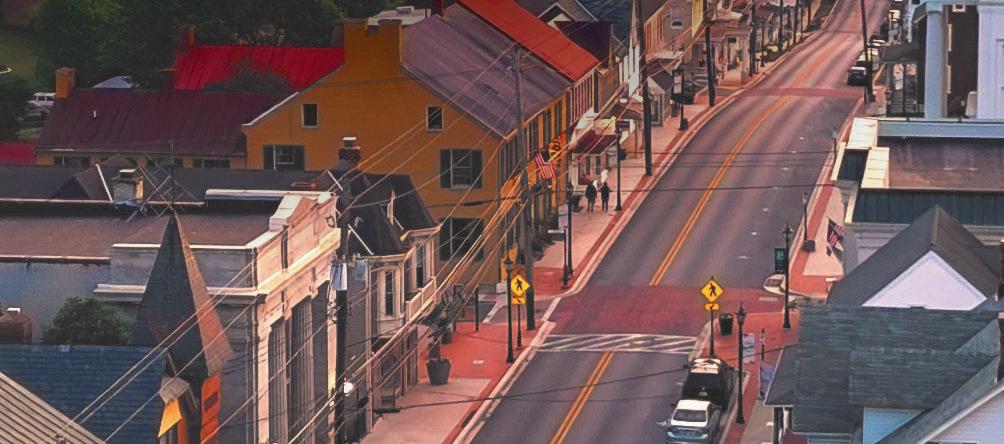
A young George Washington proclaimed the Middletown Valley "most beautiful" More than 250 years later, that beauty still awaits. Stroll our historic Main Street and discover unique shops, local dining, and small-town charm nestled in the heart of the Middletown Valley.
We invite you to discover why the Middletown Valley continues to inspire visitors generation after generation.

LEARN MORE georgecmarshall.org/ heritagepass



Independence Hall — Inside this red-brick building, delegates approved the Declaration of Independence in 1776 and later drafted the U.S. Constitution, laying the foundation of American self-government.
Independence Hall — Inside this red-brick building, delegates approved the Declaration of Independence in 1776 and later drafted the U.S. Constitution, laying the foundation of American self-government.
Liberty Bell — Once used to summon lawmakers, the cracked bell became an enduring symbol of liberty, abolition and civil rights in America.
Liberty Bell — Once used to summon lawmakers, the cracked bell became an enduring symbol of liberty, abolition and civil rights in America.
Jamestown Settlement — Founded in 1607, Jamestown marked the beginning of permanent English settlement in North America and the roots of colonial America.
Jamestown Settlement — Founded in 1607, Jamestown marked the beginning of permanent English settlement in North America and the roots of colonial America.
Plymouth Rock — Though symbolic more than certain, the site represents the Pilgrims’ arrival and the story of religious freedom in early America.
Plymouth Rock — Though symbolic more than certain, the site represents the Pilgrims’ arrival and the story of religious freedom in early America.
Mayflower II — The carefully crafted replica helps tell the story of the perilous Atlantic voyage that brought the Pilgrims to New England.
Mayflower II — The carefully crafted replica helps tell the story of the perilous Atlantic voyage that brought the Pilgrims to New England.
Colonial Williamsburg — Restored streets, homes and shops immerse visitors in the political debates and daily life of colonial America.
Colonial Williamsburg — Restored streets, homes and shops immerse visitors in the political debates and daily life of colonial America.
Mount Vernon — The plantation home of George Washington reveals the life, leadership and contradictions of America’s first president.
Mount Vernon — The plantation home of George Washington reveals the life, leadership and contradictions of America’s first president.
Monticello — Thomas Jefferson designed this mountaintop estate while shaping many of the ideals that defined the new nation.
Monticello — Thomas Jefferson designed this mountaintop estate while shaping many of the ideals that defined the new nation.
Valley Forge National Historical Park — The harsh winter encampment tested the endurance and resolve of Washington’s Continental Army during the Revolution.
Valley Forge National Historical Park — The harsh winter encampment tested the endurance and resolve of Washington’s Continental Army during the Revolution.
Bunker Hill Monument — Though technically a British victory, the battle proved colonial forces could stand against the world’s most powerful army.
Bunker Hill Monument — Though technically a British victory, the battle proved colonial forces could stand against the world’s most powerful army.
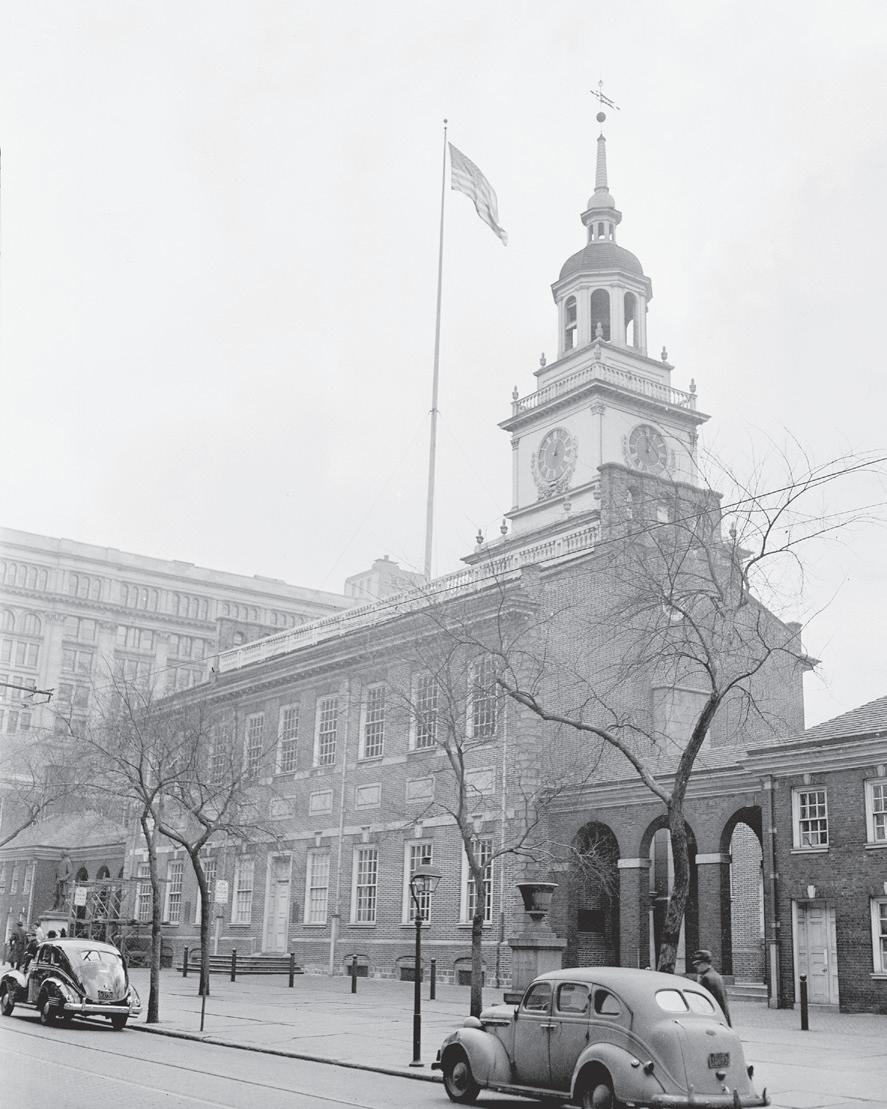
A 1941 photo of Independence Hall, formerly State House, where the Declaration of Independence was adopted on July 4, 1776. The building is located on
in Philadelphia, Pa.
story of one of America’s best-known Revolutionary War patriots.
story of one of America’s best-known Revolutionary War patriots.
Minute Man National Historical Park — The “shot heard ’round the world” was fired along these roads and fields in April 1775.
Minute Man National Historical Park — The “shot heard ’round the world” was fired along these roads and fields in April 1775.
Federal Hall — George Washington took the first presidential oath here as the new republic began to govern itself.
Federal Hall — George Washington took the first presidential oath here as the new republic began to govern itself.
Ellis Island — More than 12 million immigrants passed through the island in search of opportunity and a new American life.
Ellis Island — More than 12 million immigrants passed through the island in search of opportunity and a new American life.
Statue of Liberty — France’s gift to the United States became America’s greatest symbol of hope, democracy and immigration.
Statue of Liberty — France’s gift to the United States became America’s greatest symbol of hope, democracy and immigration.
Gettysburg National Military Park — The Union victory here halted Confederate momentum and inspired Lincoln’s most famous speech.
Gettysburg National Military Park — The Union victory here halted Confederate momentum and inspired Lincoln’s most famous speech.
Antietam National Battlefield — The staggering casualties of America’s bloodiest day gave Lincoln the opportunity to issue the Emancipation Proclamation.
Antietam National Battlefield — The staggering casualties of America’s bloodiest day gave Lincoln the opportunity to issue the Emancipation Proclamation.
Fort Sumter National Monument — Confederate cannon fire against the federal fort in 1861 officially began the Civil War.
Fort Sumter National Monument — Confederate cannon fire against the federal fort in 1861 officially began the Civil War.
Appomattox Court House National Historical Park — Robert E. Lee’s surrender to Ulysses S. Grant here effectively ended the Civil War.
Appomattox Court House National Historical Park — Robert E. Lee’s surrender to Ulysses S. Grant here effectively ended the Civil War.
Ford’s Theatre — Abraham Lincoln was assassinated here just days after the Civil War ended.
push the colonies toward revolution.
Boston Tea Party Ships & Museum — The protest against British taxation without representation helped push the colonies toward revolution.
Boston Tea Party Ships & Museum — The protest against British taxation without representation helped
Old North Church — Lanterns hung in the church steeple warned patriots of approaching British troops before the Revolution’s opening battles.
Old North Church — Lanterns hung in the church steeple warned patriots of approaching British troops before the Revolution’s opening battles.
Paul Revere House — The preserved home tells the
Paul Revere House — The preserved home tells the
Ford’s Theatre — Abraham Lincoln was assassinated here just days after the Civil War ended.
Lincoln Memorial — The towering memorial honors Lincoln’s role in preserving the Union and ending slavery.
Lincoln Memorial — The towering memorial honors Lincoln’s role in preserving the Union and ending slavery.
United States Capitol — The Capitol has served as the center of American democracy and debate for more than two centuries.
United States Capitol — The Capitol has served as the center of American democracy and debate for more than two centuries.
White House — Home and workplace of U.S. presidents, the White House symbolizes executive leadership and national power.
White House — Home and workplace of U.S. presidents, the White House symbolizes executive leadership and national power.
National Museum of American History — From the Star-Spangled Banner to presidential artifacts, the museum preserves the objects that shaped the American story.
National Museum of American History — From the Star-Spangled Banner to presidential artifacts, the museum preserves the objects that shaped the American story.
National Museum of African American History and Culture — The museum chronicles centuries of struggle, resilience, achievement and cultural influence.
National Museum of African American History and Culture — The museum chronicles centuries of struggle, resilience, achievement and cultural influence.
National Archives Building — America’s founding documents are safeguarded here under heavy protection and public trust.
National Archives Building — America’s founding documents are safeguarded here under heavy protection and public trust.
Arlington National Cemetery — Rolling hills filled with white headstones honor generations of military sacrifice.
Arlington National Cemetery — Rolling hills filled with white headstones honor generations of military sacrifice.
Vietnam Veterans Memorial — The black granite wall quietly lists the names of more than 58,000 Americans lost in Vietnam.
Vietnam Veterans Memorial — The black granite wall quietly lists the names of more than 58,000 Americans lost in Vietnam.
Korean War Veterans Memorial — Lifelike statues and memorial walls honor those who fought in the often-forgotten Korean War.
Korean War Veterans Memorial — Lifelike statues and memorial walls honor those who fought in the often-forgotten Korean War.
World War II Memorial — The memorial pays tribute to the Americans who fought and worked to secure victory in World War II.
World War II Memorial — The memorial pays tribute to the Americans who fought and worked to secure victory in World War II.
Martin Luther King Jr. Memorial — Quotes and towering stone honor the pastor whose leadership transformed the civil rights movement.
Selma to Montgomery National Historic Trail — The route traces the courageous marches that helped secure voting rights protections for Black Americans.
Edmund Pettus Bridge — Images of peaceful marchers beaten here on Bloody Sunday shocked the nation and accelerated civil rights reforms.
Little Rock Central High School National Historic Site — Federal troops escorted nine Black students into the school during a pivotal desegregation battle.
Lorraine Motel — Martin Luther King Jr. was assassinated outside Room 306, forever linking the site to the struggle for equality.
Stonewall National Monument — Protests following a 1969 police raid here launched the modern LGBTQ+ rights movement.
Alcatraz Island — Beyond its prison history, Alcatraz became a symbol of Native American activism during a 19-month occupation.
Golden Gate Bridge — The massive suspension bridge became an icon of American engineering, ambition and the Pacific Coast.
Gateway Arch — Rising above the Mississippi River, the arch commemorates America’s westward expansion and the pioneers who pushed toward the frontier.
Oregon Trail Interpretive Center — Through wagons, diaries and exhibits, the center tells the story of settlers risking everything to move west.
Bent’s Old Fort National Historic Site — The reconstructed adobe fort illustrates trade, travel and cultural exchange along the Santa Fe Trail.
The Alamo — The former mission became legendary after Texan defenders died fighting Mexican forces in 1836.
Pearl Harbor National Memorial — The devastating Japanese attack here in 1941 thrust the United States into World War II.
Rosie the Riveter/World War II Home
Front National Historical Park — Factories and shipyards here honor the millions of civilians, especially women, who powered America’s wartime industry.
Cape Canaveral Space Force Station — America’s earliest space launches lifted off here as the nation raced to explore space
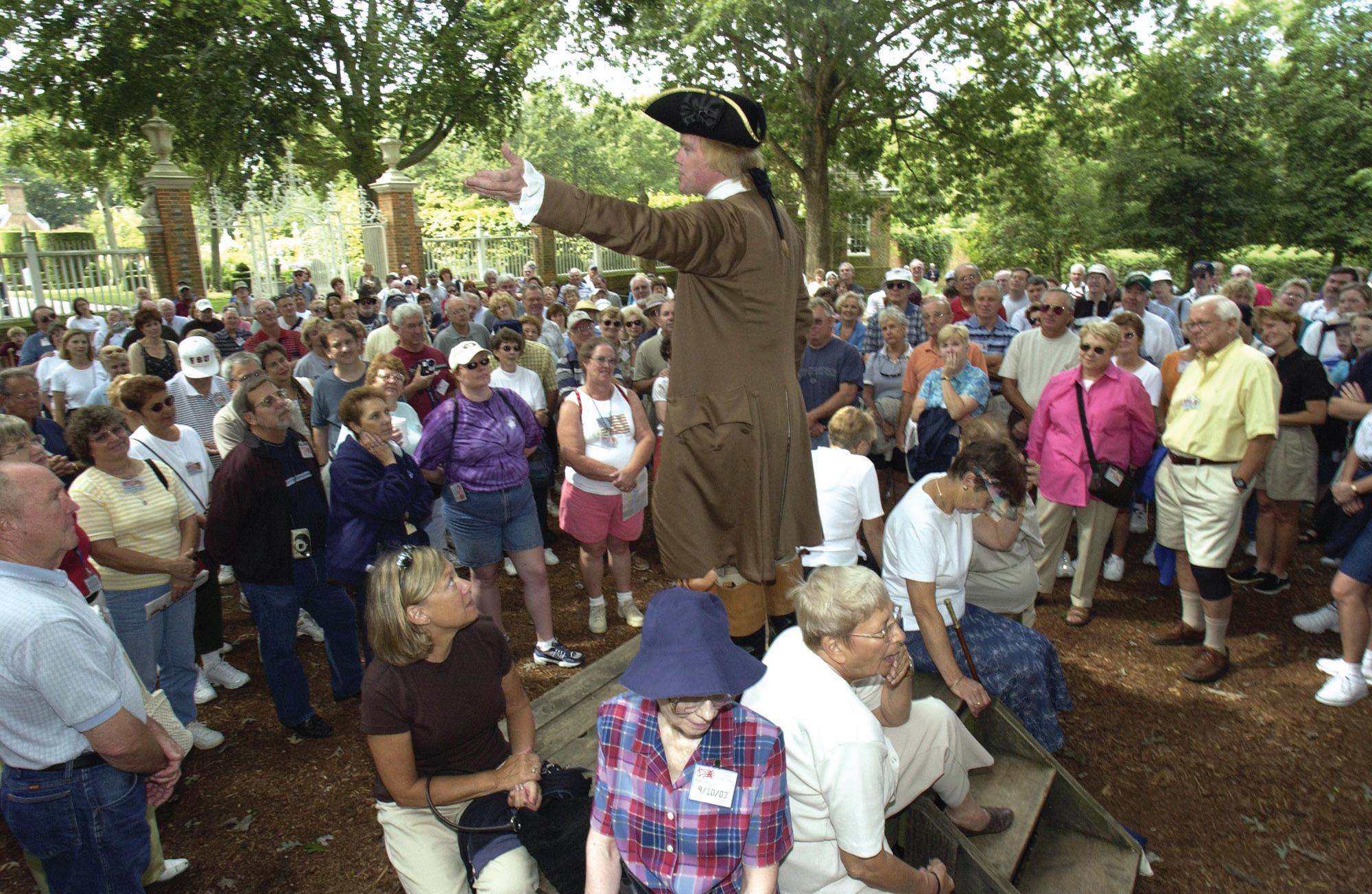
Colonial Williamsburg historical interpreter Bill Barker holds a public audience as Thomas Jefferson in the restored area behind the Governor’s Palace in Williamsburg, Va., in September 2003.
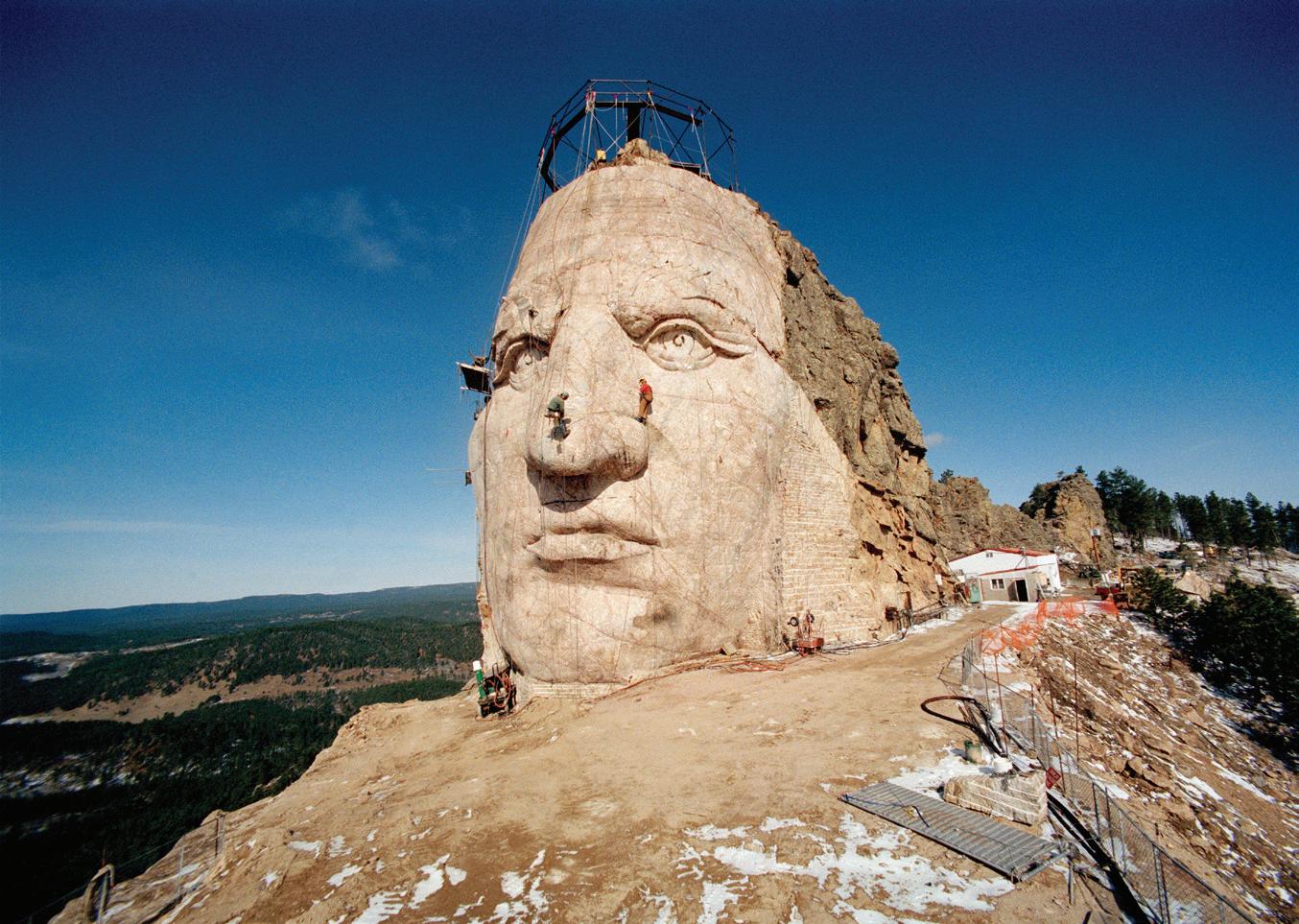
Workers continue work carving the Crazy Horse memorial in the Black Hills of South Dakota on April 15, 1998. The project, begun 50 years ago, would be the largest sculpture on Earth when finished. The stone carving of Crazy Horse sitting atop his stallion is be 563 feet high and 641 feet long.
during the Cold War.
Kennedy Space Center — From Apollo moon missions to modern launches, the center remains at the heart of America’s space program.
Johnson Space Center — Mission Control guided astronauts through triumph and tragedy, including the Apollo moon landings.
Wounded Knee Massacre Site — The killing of hundreds of Lakota men, women and children here symbolized the violent close of the Indian Wars.
Little Bighorn Battlefield National Monument — Lakota, Northern Cheyenne and Arapaho warriors defeated Lt. Col. George
Custer here in one of the West’s most famous battles.
Mesa Verde National Park — Ancient cliff dwellings carved into canyon walls preserve the history of the Ancestral Pueblo people.
Cahokia Mounds — The sprawling earthworks reveal the remains of a sophisticated Native American city that thrived centuries before Columbus.
Taos Pueblo — The multistory adobe community has been continuously inhabited for more than 1,000 years.
Trail of Tears National Historic Trail —
The trail remembers the forced relocation and suffering endured by Native American tribes removed from their homelands.
Fort Laramie National Historic Site —
Once a frontier outpost, the fort served fur traders, pioneers, soldiers and settlers heading west.
Homestead National Historical Park — The park tells how millions sought opportunity through the Homestead Act and transformed the Great Plains.
Mount Rushmore — The giant stone faces of four presidents symbolize America’s founding, expansion and preservation.
Crazy Horse Memorial — Still under construction, the monument honors Native American culture and resistance.
Harpers Ferry National Historical Park — Abolitionist John Brown’s raid here intensified tensions that pushed the nation
toward civil war.
New Orleans French Quarter — The historic district reflects the blending of French, Spanish, African and American influences that shaped the Gulf South.
Preservation Hall — The intimate venue helped preserve traditional New Orleans jazz for future generations.
Graceland — Elvis Presley’s mansion reflects the rise of rock ’n’ roll and the global influence of American music.
Sun Studio — Music legends including Elvis Presley, Johnny Cash and Jerry Lee Lewis recorded here during rock music’s formative years.
Woodstock Museum at Bethel Woods — The museum preserves the story of the 1969 festival that became a defining symbol of the counterculture era.
Hollywood Walk of Fame — The stars embedded in the sidewalks celebrate entertainers who shaped global popular culture.
Smithsonian National Air and Space Museum — Historic aircraft and spacecraft chronicle America’s achievements in flight, exploration and innovation.
Kitty Hawk — The Wright brothers achieved the world’s first powered airplane flight on these windswept dunes in 1903.
Transcontinental Railroad Golden Spike Site — The ceremonial driving of the golden spike united the country coast to coast by rail in 1869.
Hoover Dam — Built during the Great Depression, the massive dam showcased American engineering and economic recovery efforts.
Grand Coulee Dam — The New Deal-era megaproject brought electricity, irrigation and industrial growth to the Pacific Northwest.
Route 66 Hall of Fame and Museum — Exhibits celebrate the famous highway that embodied road trips, migration and roadside Americana.
Times Square — Bright lights, giant billboards and crowds turned the intersection into a symbol of American entertainment and commerce.
Wall Street — America’s financial markets grew here into a driving force of global capitalism.
Chicago Board of Trade Building — The towering exchange became synonymous with American agriculture, commodities trading and economic power.
Empire State Building — Completed during the Great Depression, the skyscraper symbolized optimism and modern American ambition.
Brooklyn Bridge — The groundbreaking suspension bridge transformed transportation and engineering in the modern city.
Faneuil Hall — Fiery speeches and protests here earned the marketplace its nickname as the “Cradle of Liberty.”
Salem Maritime National Historic Site — The waterfront preserves the story of America’s early shipping trade and global commerce.
Fort McHenry — Watching the fort withstand British bombardment inspired Francis Scott Key to write “The Star-Spangled Banner.”
Chesapeake and Ohio Canal — The canal reflects the era when waterways powered commerce and westward development.
Erie Canal — Linking the Great Lakes to the Atlantic transformed trade and fueled New York’s rise as an economic giant.
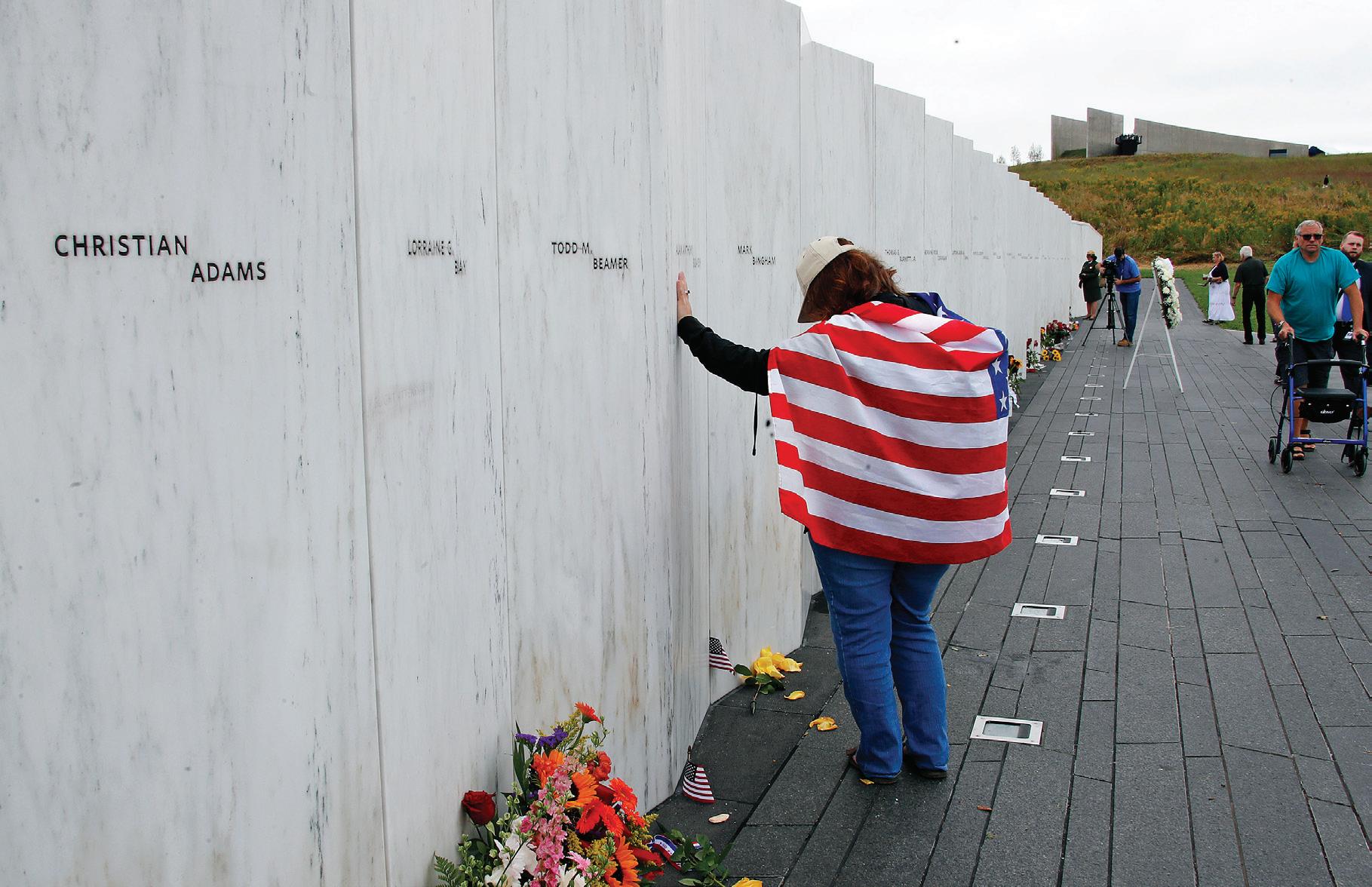
Chrissy Bortz of Latrobe, Pa., pays her respects at the Wall of Names at the Flight 93 National Memorial in 2018 in Shanksville, Pa. The Wall of Names honors the 40 people killed in the crash of Flight 93.
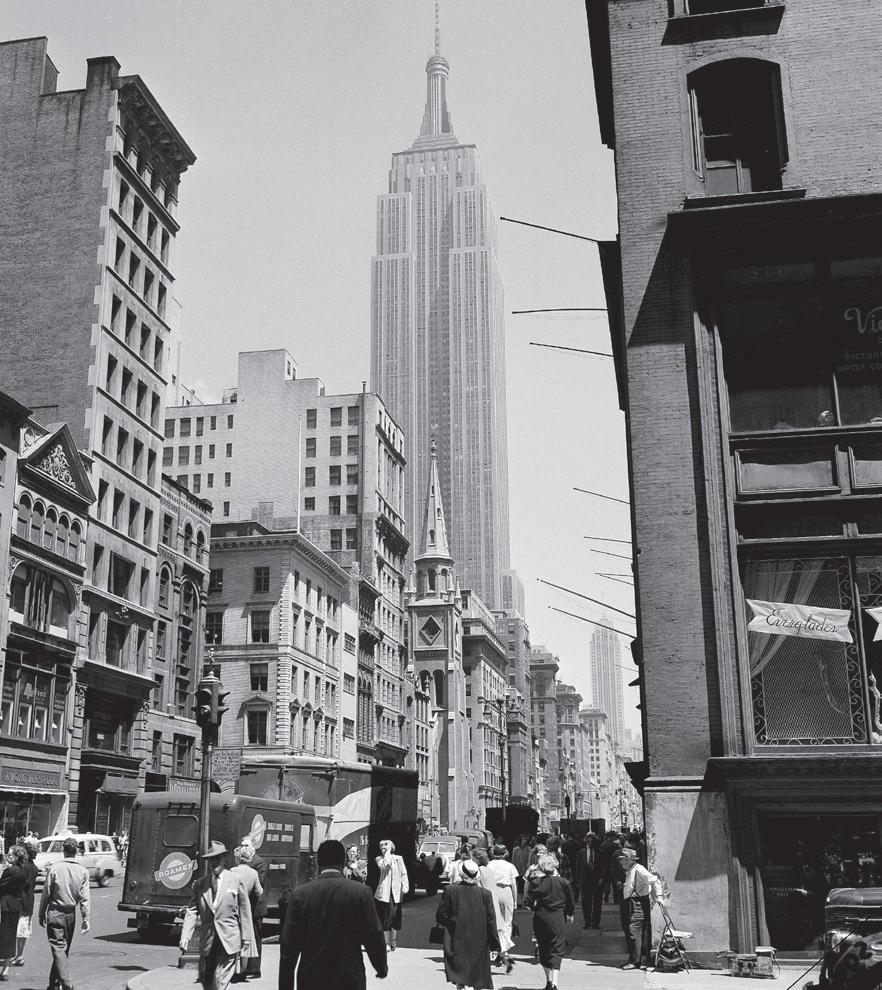
The Empire State Building in New York City, once the world’s tallest building, is pictured from 27th Street and Fifth Avenue, on May 31, 1951.
Sutter’s Mill — Gold discovered here in 1848 triggered a rush that rapidly transformed California and the American West.
Deadwood — The rough mining town became legendary for gamblers, gunslingers and Wild West lore.
Dodge City — Cowboys, cattle drives and frontier justice made Dodge City a lasting symbol of the Old West.
Tombstone — The infamous gunfight at the O.K. Corral cemented the town’s place in Western legend.
Pullman National Historical Park — The company town and labor strikes here became defining chapters in the history of unions and workers’ rights.
Yellowstone National Park — Established in 1872, Yellowstone became the world’s first national park and a model for conservation.
Yosemite National Park — Yosemite’s granite cliffs and giant sequoias inspired generations of environmental preservation efforts.
Grand Canyon National Park — Carved by the Colorado River, the canyon became one of America’s most awe-inspiring natural landmarks.
Great Smoky Mountains National Park — America’s most-visited national park preserves Appalachian traditions, forests and wildlife.
Denali National Park — Vast wilderness surrounding North America’s tallest peak reflects the scale and ruggedness of the American frontier.
Muir Woods National Monument — Towering coastal redwoods helped inspire America’s conservation and national monument movements.
9/11 Memorial & Museum — The memorial and museum honor the victims and recount the events of the Sept. 11 terrorist attacks.
Flight 93 National Memorial — The site remembers passengers who fought hijackers and prevented further destruction on Sept. 11, 2001.
Oklahoma City National Memorial — The memorial honors the victims of the 1995 bombing that shocked the nation.
Manzanar National Historic Site — Barracks and exhibits preserve the story of Japanese Americans imprisoned during World War II.
Angel Island Immigration Station — Often called the “Ellis Island of the West,” the station processed immigrants arriving from Asia and the Pacific.
Seneca Falls Convention Site — America’s first women’s rights convention convened here in 1848, launching the organized suffrage movement.
Tuskegee Airmen National Historic Site — The site honors the pioneering Black military aviators whose success challenged segregation in the armed forces.
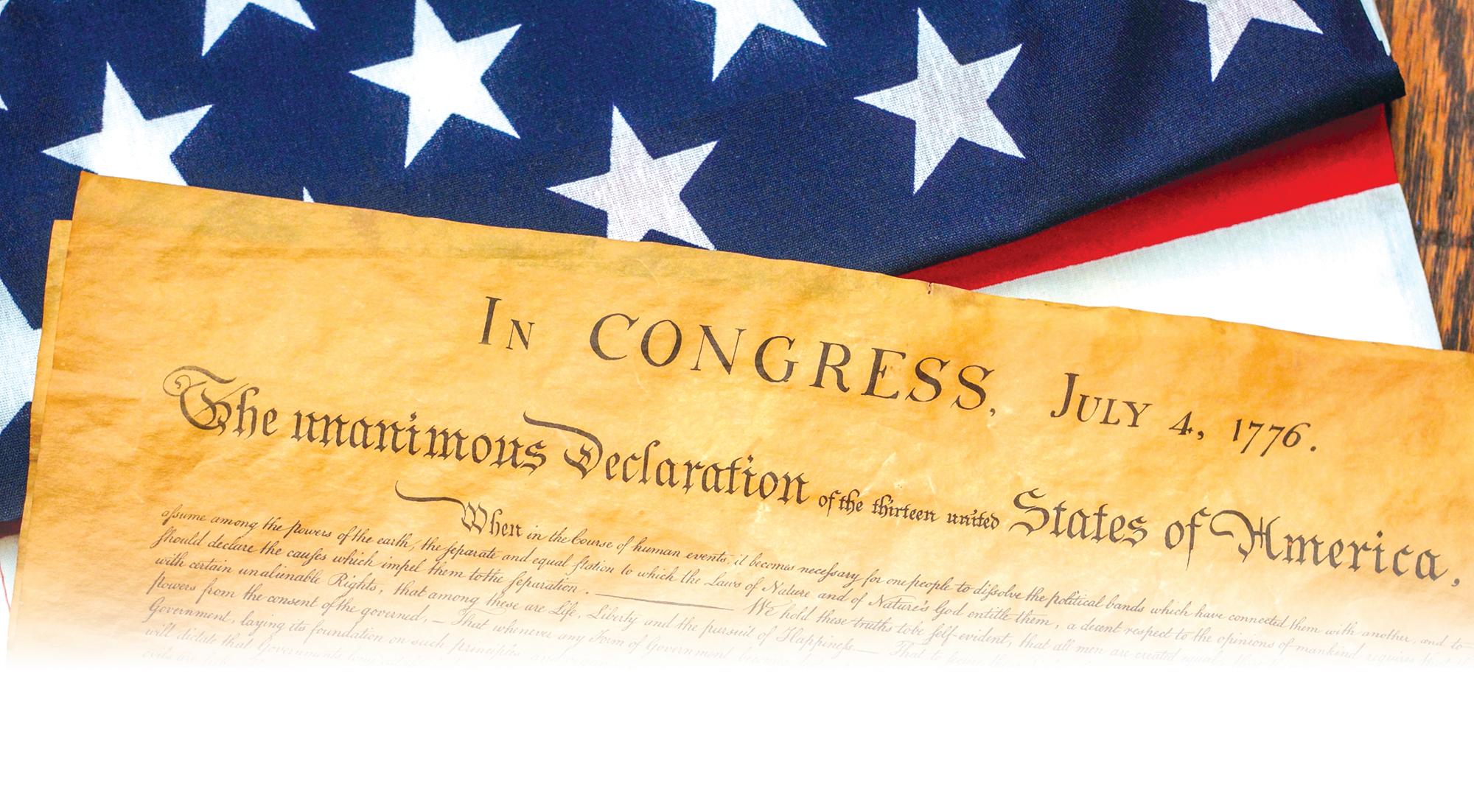
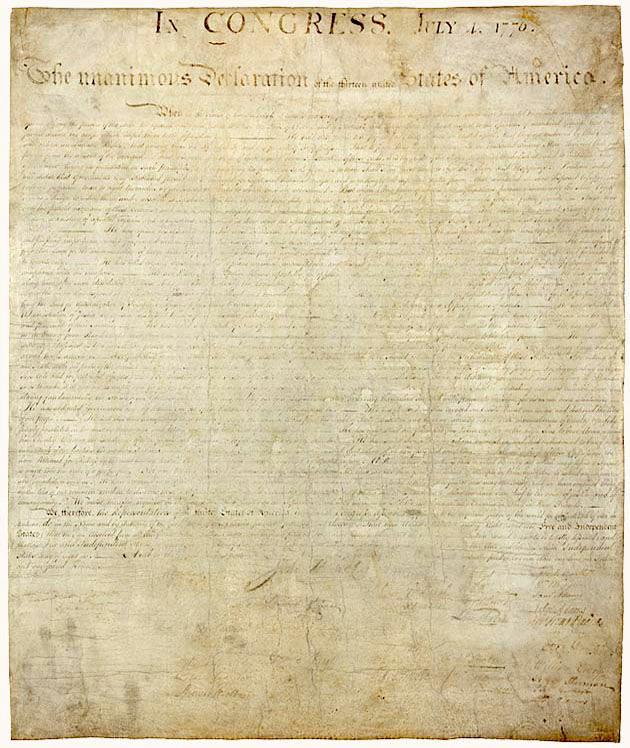
IN CONGRESS, JULY 4, 1776.
TThe unanimous Declaration of the thirteen united States of America, When in the Course of human events, it becomes necessary for one people to dissolve the political bands which have connected them with another, and to assume among the powers of the earth, the separate and equal station to which the Laws of Nature and of Nature’s God entitle them, a decent respect to the opinions of mankind requires that they should declare the causes which impel them to the separation.
he unanimous Declaration of the thirteen united States of America, When in the Course of human events, it becomes necessary for one people to dissolve the political bands which have connected them with another, and to assume among the powers of the earth, the separate and equal station to which the Laws of Nature and of Nature’s God entitle them, a decent respect to the opinions of mankind requires that they should declare the causes which impel them to the separation.
commit on the Inhabitants of these States:
We hold these truths to be self-evident, that all men are created equal, that they are endowed by their Creator with certain unalienable Rights, that among these are Life, Liberty and the pursuit of Happiness.–That to secure these rights, Governments are instituted among Men, deriving their just powers from the consent of the governed, –That whenever any Form of Government becomes destructive of these ends, it is the Right of the People to alter or to abolish it, and to institute new Government, laying its foundation on such principles and organizing its powers in such form, as to them shall seem most likely to effect their Safety and Happiness. Prudence, indeed, will dictate that Governments long established should not be changed for light and transient causes; and accordingly all experience hath shewn, that mankind are more disposed to
We hold these truths to be self-evident, that all men are created equal, that they are endowed by their Creator with certain unalienable Rights, that among these are Life, Liberty and the pursuit of Happiness.--That to secure these rights, Governments are instituted among Men, deriving their just powers from the consent of the governed, --That whenever any Form of Government becomes destructive of these ends, it is the Right of the People to alter or to abolish it, and to institute new Government, laying its foundation on such principles and organizing its powers in such form, as to them shall seem most likely to effect their Safety and Happiness. Prudence, indeed, will dictate that Governments long established should not be changed for light and transient causes; and accordingly all experience hath shewn, that mankind are more disposed to suffer, while evils are sufferable, than to right themselves by abolishing the forms to which they

For cutting off our Trade with all parts of the world: For imposing Taxes on us without our Consent:
are accustomed. But when a long train of abuses and usurpations, pursuing invariably the same Object evinces a design to reduce them under absolute Despotism, it is their right, it is their duty, to throw off such Government, and to provide new Guards for their future security.--Such has been the patient sufferance of these Colonies; and such is now the necessity which constrains them to alter their former Systems of Government. The history of the present King of Great Britain is a history of repeated injuries and usurpations, all having in direct object the establishment of an absolute Tyranny over these States. To prove this, let Facts be submitted to a candid
For depriving us in many cases, of the benefits of Trial by Jury:
For transporting us beyond Seas to be tried for pretended offenses
For abolishing the free System of English Laws in a neighboring Province, establishing therein an Arbitrary government, and enlarging its Boundaries so as to render it at once an example and fit instrument for introducing the same absolute rule into these Colonies:
For taking away our Charters, abolishing our most valuable Laws, and altering fundamentally the Forms of our Governments:
John Adams
Samuel Adams
Josiah Bartlett
Carter Braxton
Charles Carroll
We, therefore, the Representatives of the united States of America, in General Congress, Assembled, appealing to the Supreme Judge of the world for the rectitude of our intentions, do, in the Name, and by Authority of the good People of these Colonies, solemnly publish and declare, That these United Colonies are, and of Right ought to be Free and Independent States; that they are Absolved from all Allegiance to the British Crown, and that all political connection between them and the State of Great Britain, is and ought to be totally dissolved; and that as Free and Independent States, they have full Power to levy War, conclude Peace, contract Alliances, establish Commerce, and to do all other Acts and Things which Independent States may of right do. And for the support of this Declaration, with a firm reliance on the protection of divine Providence, we mutually pledge to each other our Lives, our Fortunes and our sacred Honor.
Thomas Lynch Jr.
Thomas McKean
Arthur Middleton
Lewis Morris
Robert Morris
For suspending our own Legislatures, and declaring themselves invested with power to legislate for us in all cases whatsoever.
He has abdicated Government here, by declaring us out of his Protection and waging War against us.
He has plundered our seas, ravaged our Coasts, burnt our towns, and destroyed the lives of our people.
He is at this time transporting large Armies of foreign Mercenaries to complete the works of death, desolation and tyranny, already begun with circumstances of Cruelty & perfidy scarcely
be obtained; and when so suspended, he has utterly neglected to attend to them.
He has refused to pass other Laws for the accommodation of large districts of people, unless those people would relinquish the right of Representation in the Legislature, a right inestimable to them and formidable to tyrants only.
He has called together legislative bodies at places unusual, uncomfortable, and distant from
Francis Hopkinson
Samuel Huntington
Thomas Jefferson
Francis Lightfoot Lee
Richard Henry Lee
Francis Lewis
Philip Livingston
George Walton
William Whipple
William Williams
James Wilson
John Witherspoon
Oliver Wolcott
George Wythe
We have reminded them of the circumstances of our emigration and settlement here. We have appealed to their native justice and magnanimity, and we have conjured them by the ties of our common kindred to disavow these usurpations, which, would inevitably interrupt our connections and correspondence. They too have been deaf to the voice of justice and of consanguinity. We must, therefore, acquiesce in the necessity, which
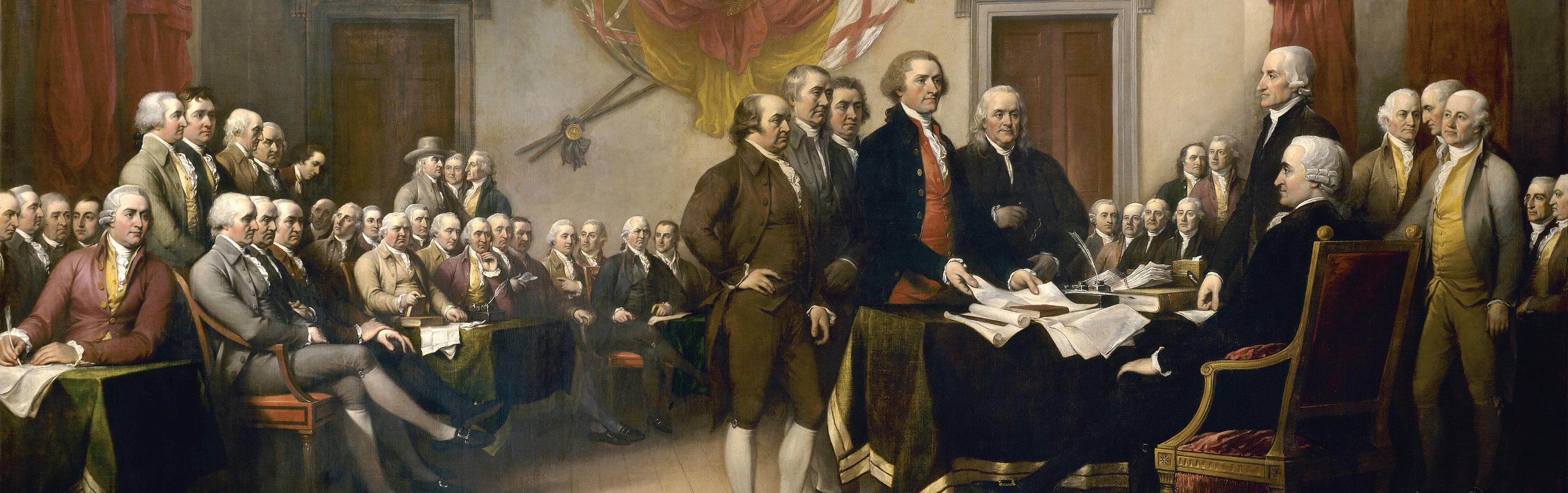
“Declaration of Independence,” John Trumbull, 1819
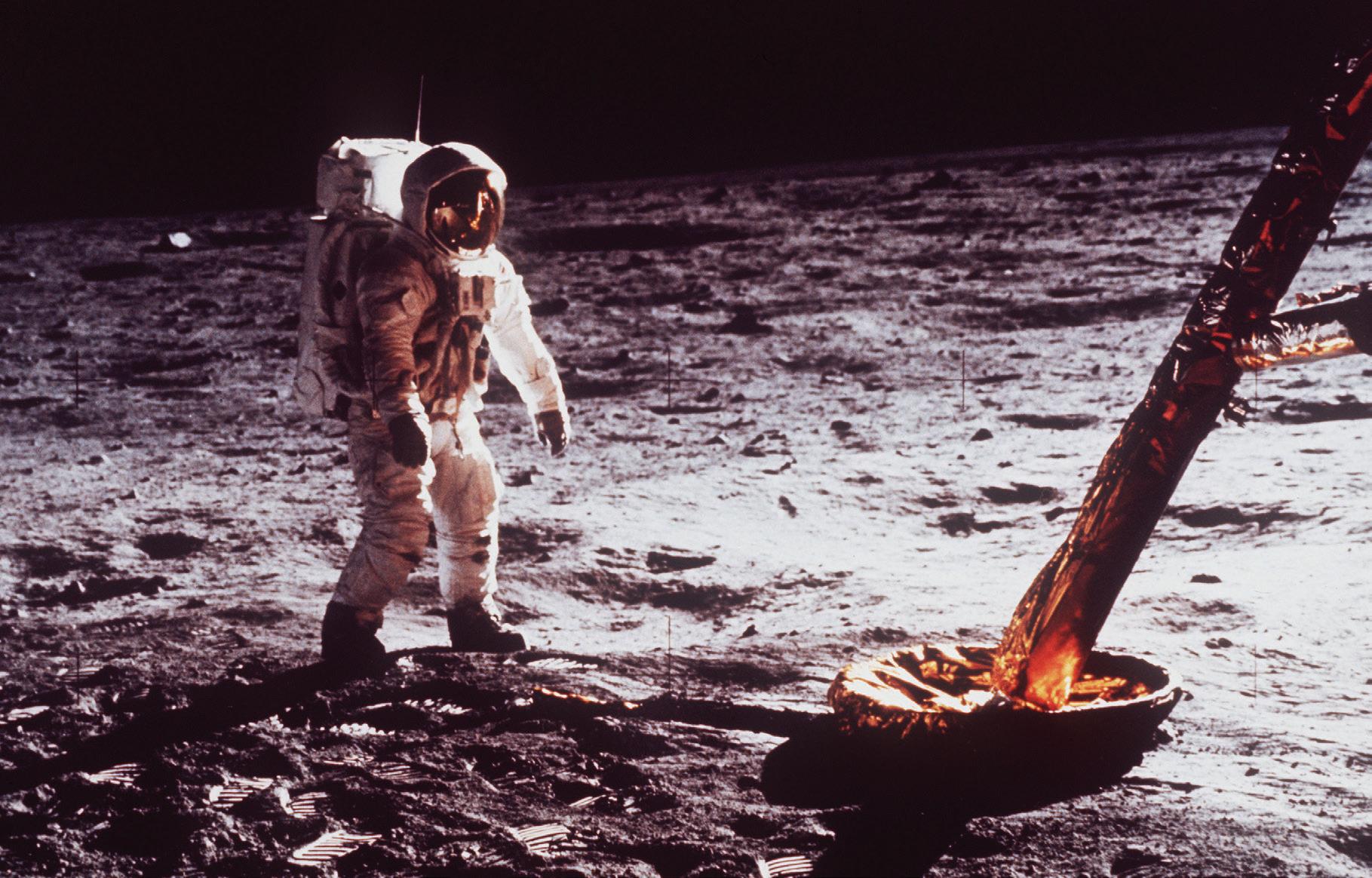
NASA
Apollo 11
Apollo 11
In 1969, Apollo 11 carried Americans to the Moon, fulfilling President John F. Kennedy’s challenge and marking one of humanity’s greatest achievements.
In 1969, Apollo 11 carried Americans to the Moon, fulfilling President John F. Kennedy’s challenge and marking one of humanity’s greatest achievements.
Bald Eagle
Bald Eagle
Adopted as the national emblem in 1782, the bald eagle symbolizes strength, freedom and the independence of the United States.
Adopted as the national emblem in 1782, the bald eagle symbolizes strength, freedom and the independence of the United States.
Constitution
Constitution
The United States Constitution established the framework of American government and remains the oldest written national constitution still in use.
The United States Constitution established the framework of American government and remains the oldest written national constitution still in use.
Declaration of Independence
Declaration of Independence
Adopted on July 4, 1776, the Declaration announced America’s separation from Britain and proclaimed that all men are created equal.
Adopted on July 4, 1776, the Declaration announced America’s separation from Britain and proclaimed that all men are created equal.
Ellis Island
More than 12 million immigrants entered the United States through Ellis Island between 1892 and 1954.
More than 12 million immigrants entered the United States through Ellis Island between 1892 and 1954.
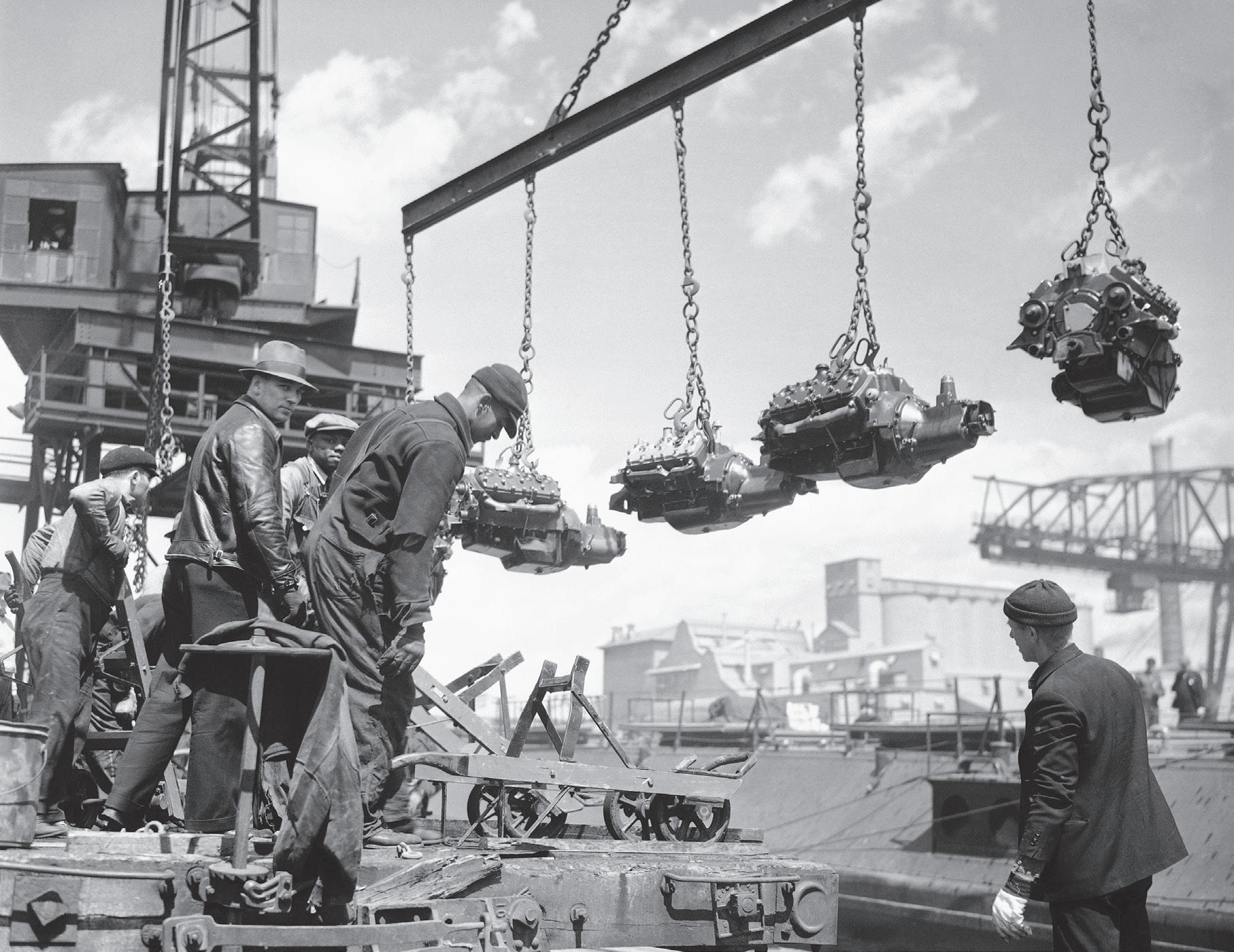
Ford’s Assembly Line
In 1913, Henry Ford revolutionized manufacturing with the moving assembly line, making automobiles affordable for millions.
In 1913, Henry Ford revolutionized manufacturing with the moving assembly line, making automobiles affordable for millions.
Gettysburg
Gettysburg
The Battle of Gettysburg in 1863 marked a turning point in the Civil War and inspired the Gettysburg Address.
The Battle of Gettysburg in 1863 marked a turning point in the Civil War and inspired the Gettysburg Address.
Homestead Act
Homestead
Signed in 1862, the Homestead Act encouraged westward expansion by granting settlers land in the American frontier.
Signed in 1862, the Homestead Act encouraged westward expansion by granting settlers land in the American frontier.
Interstate Highway System
Authorized in 1956, the Interstate Highway System became the largest public works project in American history.
Authorized in 1956, the Interstate Highway System became the largest public works project in American history.
Jazz
Jazz
Born in New Orleans, jazz became America’s original art form and influenced music around the world.
Born in New Orleans, jazz became America’s original art form and influenced music around the world.
Library of Congress
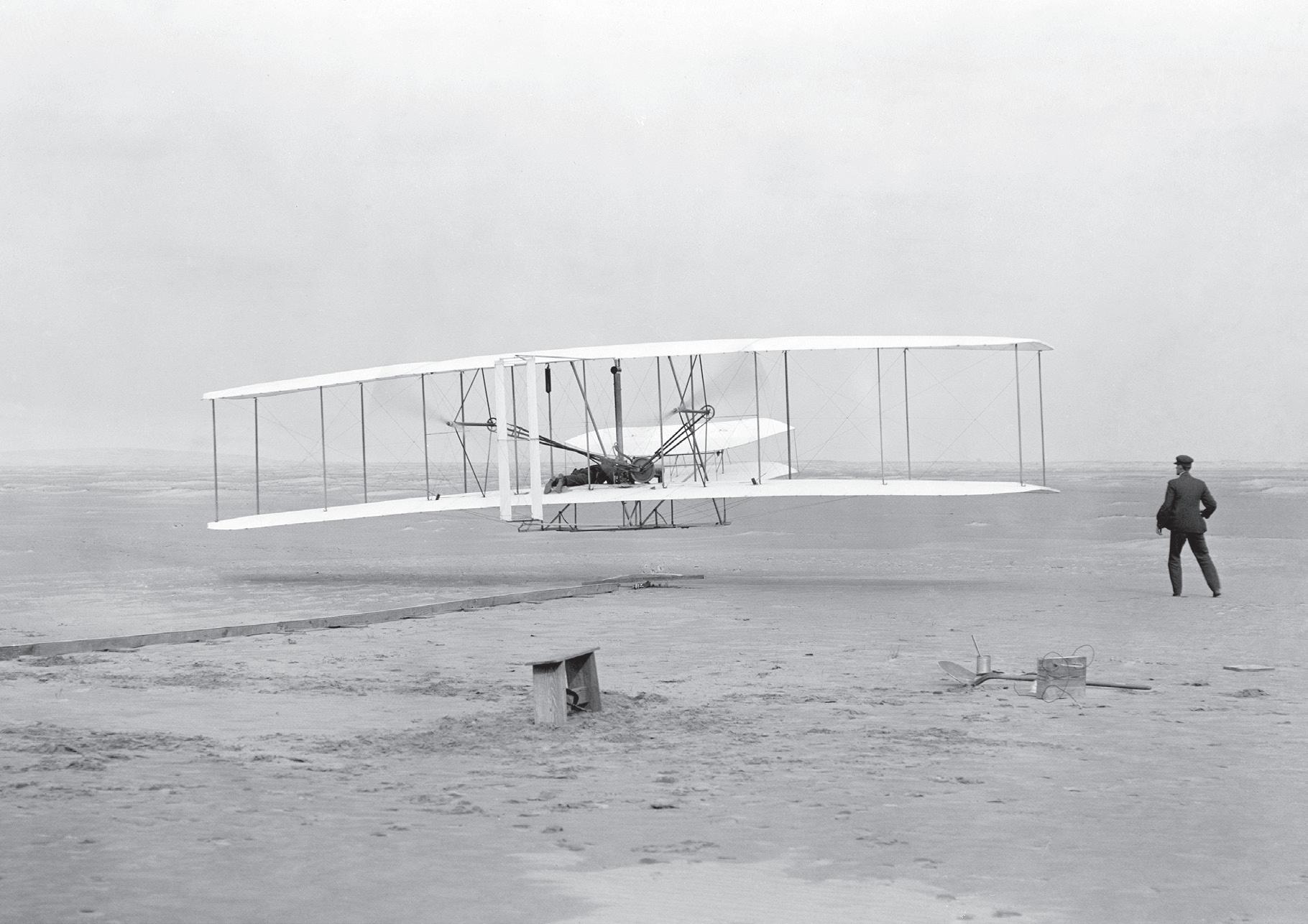
Orville Wright, lying at the controls on the lower wing, pilots the Wright Flyer on the first powered flight by a heavier-than-air aircraft on Dec. 17, 1903, at Kitty Hawk, N.C. In the moments before going airborne, his brother, Wilbur Wright, watching right, guided and steadied the plane as it accelerated along the starting rail at left.
Kitty Hawk
At Kitty Hawk in 1903, Orville Wright and Wilbur Wright achieved the first powered flight.
Liberty Bell
The Liberty Bell became an enduring symbol of American independence and freedom.
Mount Rushmore
This iconic monument honors Presidents George Washington, Thomas Jefferson, Theodore Roosevelt and Abraham Lincoln.
National Parks
America created the world’s first national park, Yellowstone National Park, in 1872.
Oregon Trail
Hundreds of thousands of pioneers traveled the Oregon Trail during the 19th century in search of opportunity in the West.
Plymouth Colony
Established in 1620, Plymouth Colony became one of the earliest permanent English settlements in New England.
Quakers
Members of the Religious Society of Friends helped shape the American character through their commitment to religious freedom, equality, abolition of slavery and social justice. Their influence can be seen from colonial Pennsylvania to the reform movements that helped define the nation.
The American Revolution secured independence from Great Britain and created the United States.
Statue of Liberty
Gifted by France in 1886, the Statue of Liberty welcomed generations of immigrants to America.
Transcontinental Railroad
Completed in 1869, the railroad connected the East and West coasts and transformed commerce and travel.
Uncle Sam
Uncle Sam emerged during the War of 1812 and became the personification of the United States.
At Valley Forge, George Washington and the Continental Army endured a difficult winter that strengthened the Revolutionary cause.
Washington, D.C.
The nation’s capital serves as the seat of the federal government and a symbol of American democracy.
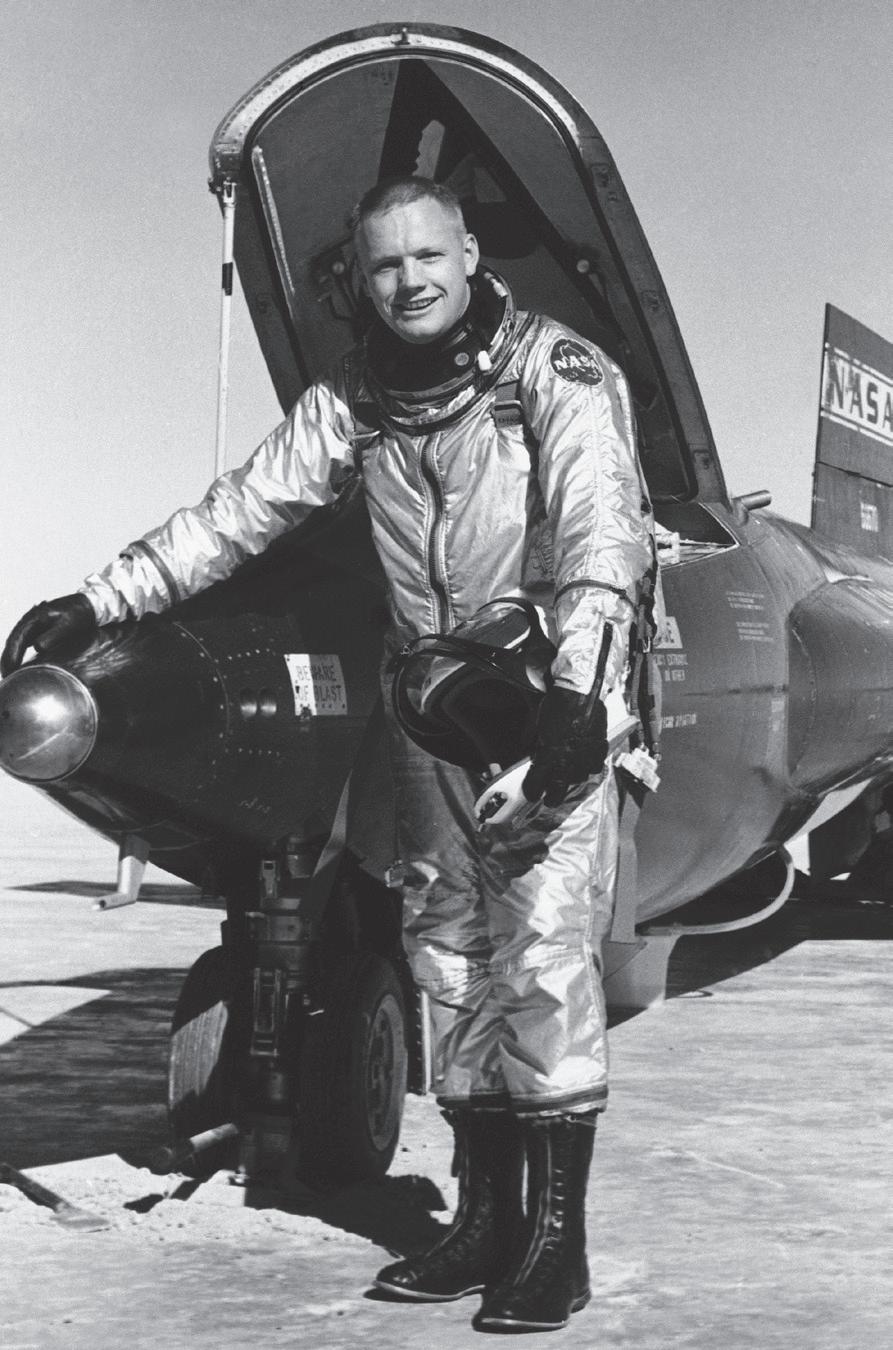
The North American X-15 helped pave the way for the American space program by setting speed and altitude records.
Yosemite
Yosemite National Park showcases some of the most spectacular landscapes in the United States and helped inspire the conservation movement.
Zimmerman Telegram
The Zimmerman Telegram helped draw the United States into World War I after Germany sought an alliance with Mexico against America.

















1777
1777
The Continental Army endured Valley Forge and American forces won at Saratoga, a turning point that helped persuade France to back the Revolution.
The Continental Army endured Valley Forge and American forces won at Saratoga, a turning point that helped persuade France to back the Revolution.
1778
1778
The Treaty of Alliance with France brought the United States its most important foreign partner in the Revolutionary War.
The Treaty of Alliance with France brought the United States its most important foreign partner in the Revolutionary War.
1779
1779
John Paul Jones won fame aboard the Bonhomme Richard, answering surrender demands with defiance during a dramatic naval battle.
John Paul Jones won fame aboard the Bonhomme Richard, answering surrender demands with defiance during a dramatic naval battle.
1780
1780
The treason of Benedict Arnold shocked the Patriot cause and made his name a lasting synonym for betrayal.
The treason of Benedict Arnold shocked the Patriot cause and made his name a lasting synonym for betrayal.
1781
1781
British General Cornwallis surrendered at Yorktown, effectively ending major fighting in the American Revolution.
British General Cornwallis surrendered at Yorktown, effectively ending major fighting in the American Revolution.
1782
1782
Preliminary peace articles between the United States and Great Britain recognized American independence in principle.
Preliminary peace articles between the United States and Great Britain recognized American independence in principle.
1783
1783
The Treaty of Paris formally ended the Revolutionary War and recognized the United States as an independent nation.
The Treaty of Paris formally ended the Revolutionary War and recognized the United States as an independent nation.
1784
1784
The Confederation Congress ratified the Treaty of Paris, completing the legal end of the war for independence.
The Confederation Congress ratified the Treaty of Paris, completing the legal end of the war for independence.
1785
1785
Congress adopted the Land Ordinance of 1785, establishing a system for surveying and selling western lands.
Congress adopted the Land Ordinance of 1785, establishing a system for surveying and selling western lands.
1786
1786
Shays’ Rebellion exposed weaknesses in the Articles of Confederation and helped build momentum for a stronger national government.
Shays’ Rebellion exposed weaknesses in the Articles of Confederation and helped build momentum for a stronger national government.
1787
1787
Delegates met in Philadelphia and wrote the United States Constitution, creating the framework still used today.
Delegates met in Philadelphia and wrote the United States Constitution, creating the framework still used today.
1788
1788
New Hampshire became the ninth state to ratify the Constitution, putting the new federal government into effect.
New Hampshire became the ninth state to ratify the Constitution, putting the new federal government into effect.
1789
1789
George Washington took the oath of office as the first president of the United States in New York City.
1801
George Washington took the oath of office as the first president of the United States in New York City. 1801
1801
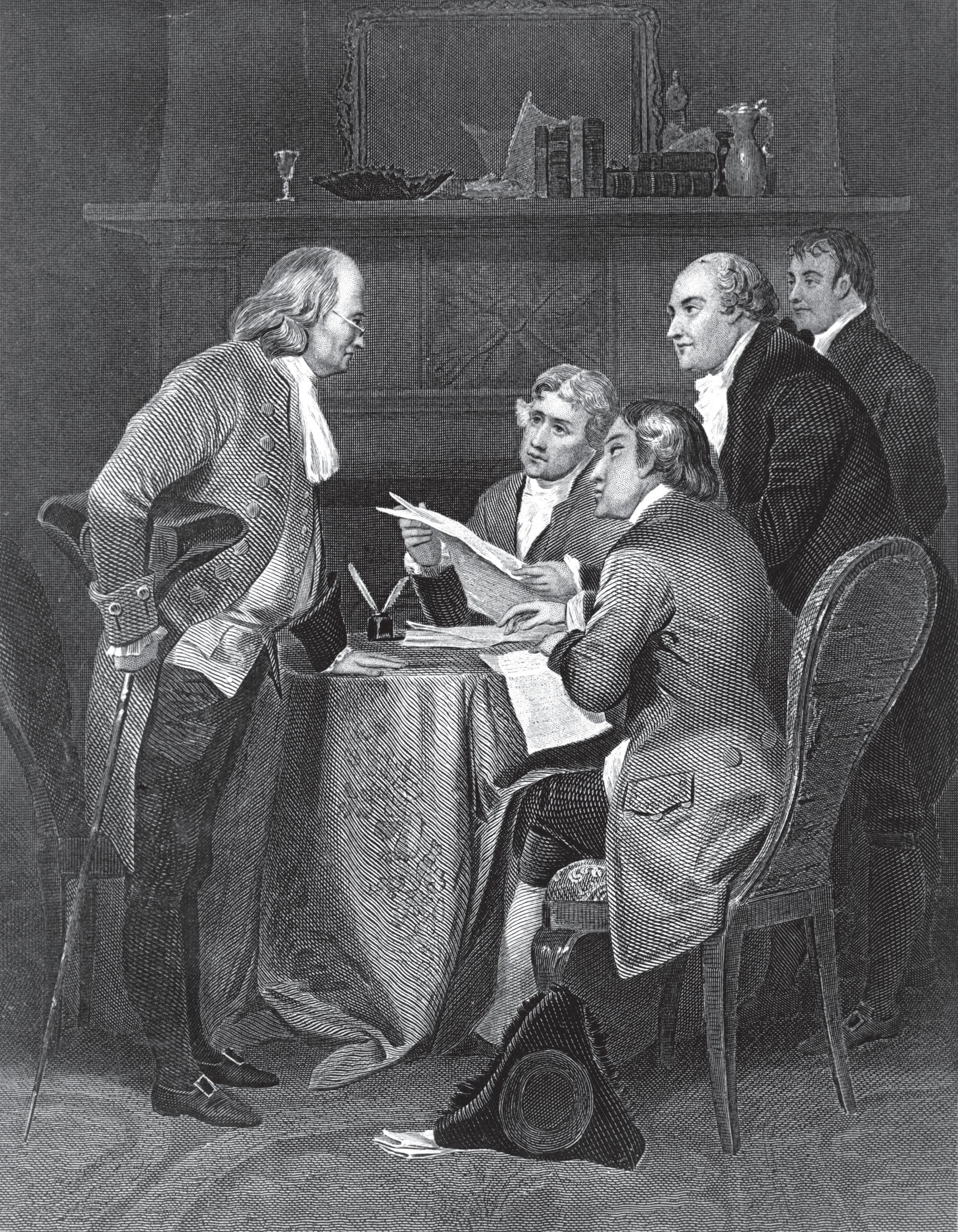
This image provided by the National Archives shows the 19th-century engraving “Drafting the Declaration of Independence” by Alonzo Chappel which depicts of the the committee chosen to draft a declaration of independence. The five members are, from left, Benjamin Franklin, Thomas Jefferson, John Adams, Philip Livingston and Roger Sherman. One of the nation’s founding fathers - but never president -- Franklin was born to a soapmaker and earned his wealth as printer, publisher and inventor.
This image provided by the National Archives shows the 19th-century engraving “Drafting the Declaration of Independence” by Alonzo Chappel which depicts of the the committee chosen to draft a declaration of independence. The five members are, from left, Benjamin Franklin, Thomas Jefferson, John Adams, Philip Livingston and Roger Sherman. One of the nation’s founding fathers — but never president — born a and his publisher and inventor.
This image provided by the National Archives shows the 19th-century engraving “Drafting the Declaration of Independence” by Alonzo Chappel which depicts of the the committee chosen to draft a declaration of independence. The five members are, from left, Benjamin Franklin, Thomas Jefferson, John Adams, Philip Livingston and Roger Sherman. One of the nation’s founding fathers - but never president -- Franklin was born to a soapmaker and earned his wealth as printer, publisher and inventor.
1790
The first federal census counted nearly 4 million people in the young United States.
1791
The Bill of Rights was ratified, adding the first 10 amendments to the Constitution.
1792
The Coinage Act created the U.S. Mint and established the dollar as the nation’s standard unit of money.
1793
Eli Whitney’s cotton gin was introduced, transforming agriculture and deepening the nation’s dependence on enslaved labor.
1794
The Whiskey Rebellion tested federal authority under President Washington and ended when militia forces marched into western Pennsylvania.
1795
The Treaty of Greenville opened much of present-day Ohio to American settlement after conflict in the Northwest Territory.
1796
George Washington’s Farewell Address warned against permanent foreign alliances and bitter partisan division.
1797
John Adams became the second president, marking the first peaceful transfer of executive power under the Constitution.
1798
The Alien and Sedition Acts ignited a national debate over civil liberties, immigration and federal power.
1799
George Washington died at Mount Vernon, prompting nationwide mourning for the Revolutionary War leader and first president.
1800
The election of 1800 produced the first peaceful transfer of power between rival political parties in American history.
1801
Thomas Jefferson was inaugurated and called for unity after one of the nation’s most divisive early elections.
1802
Congress passed the Enabling Act of 1802, beginning the process that led to Ohio becoming the first state formed from the Northwest Territory.
1803
The Louisiana Purchase doubled the size of the United States and opened vast western lands to American expansion.
1804
The Lewis and Clark Expedition set out to explore the newly acquired Louisiana Territory and the route to the Pacific.
1805
Lewis and Clark reached the Pacific Ocean, completing one of the most famous exploratory journeys in U.S. history.
1806
Zebulon Pike began an expedition that helped map parts of the West and later gave his name to Pikes Peak.
1807
Congress passed a law ending the legal impor-
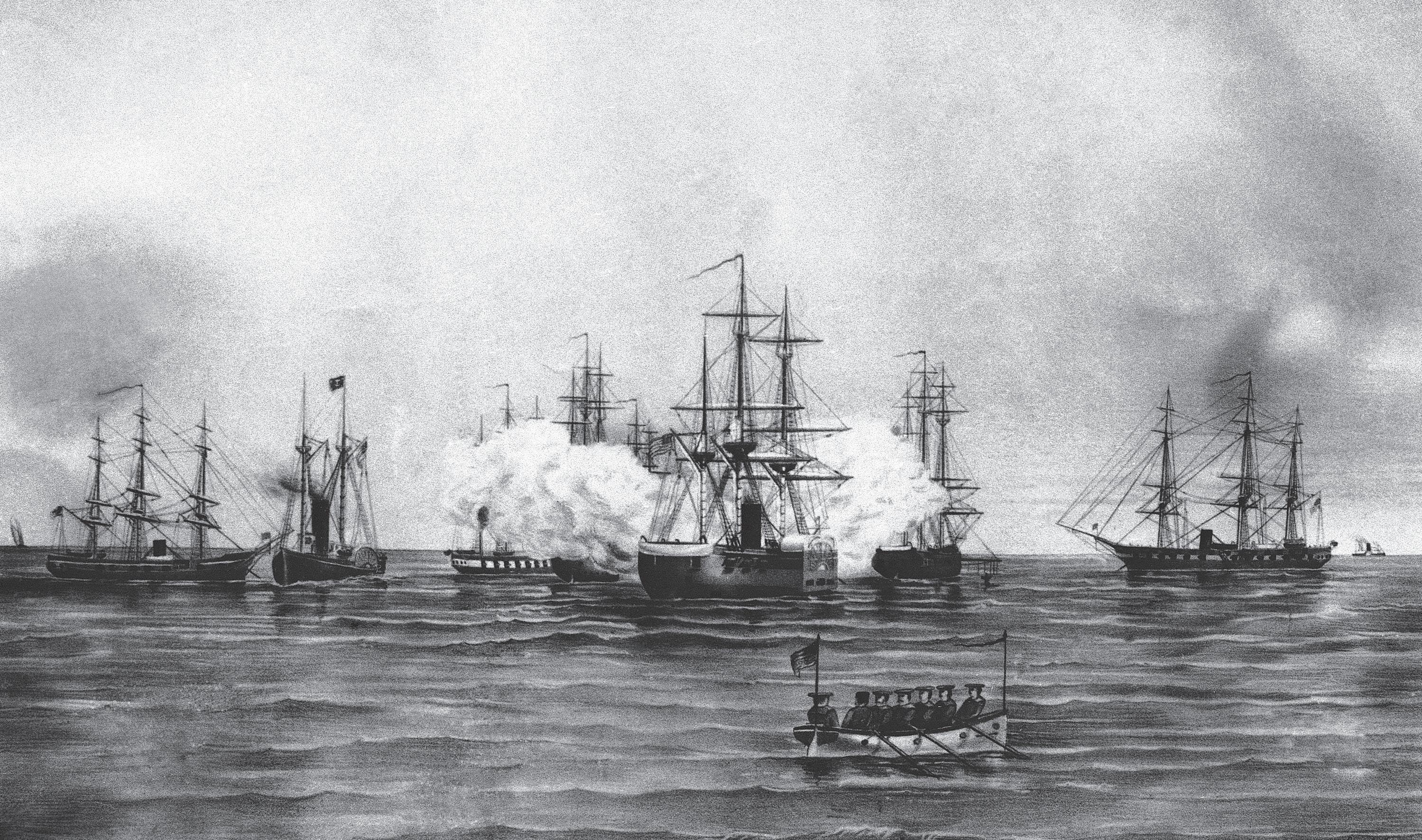
Ships battle during the War of 1812. The war was primarily caused by British maritime blockades, the forced impressment of American sailors into the Royal Navy, and British military support for Native American tribes resisting U.S. expansion.
tation of enslaved people into the United States effective in 1808.
1808
The federal ban on importing enslaved people took effect, though slavery itself continued in much of the country.
1809
James Madison became president as tensions with Great Britain continued to rise.
1810
The United States continued expanding into the Mississippi Valley as tensions grew over Spanish control of nearby territories.
1811
William Henry Harrison’s forces fought Tecumseh’s confederacy at the Battle of Tippecanoe in Indiana Territory.
1812
The United States declared war on Great Britain, beginning the War of 1812.
1813
Oliver Hazard Perry won the Battle of Lake Erie, giving the United States control of the lake during the War of 1812.
1814
British troops burned public buildings in Washington, D.C., while defenders at Fort McHenry inspired the future national anthem. 1815
Andrew Jackson’s victory at the Battle of New Orleans became a legendary American triumph, though the peace treaty had already been signed.
1816
Indiana entered the Union as the 19th state. 1817
Construction began on the Erie Canal, a project that would transform transportation and commerce in the young republic.
1818
Illinois became the 21st state, expanding the Union deeper into the Old Northwest.
1819
The Supreme Court’s McCulloch v. Maryland decision strengthened federal power and protected the national bank from state interference.
1820
The Missouri Compromise admitted Missouri as a slave state and Maine as a free state, temporarily balancing sectional tensions.
1821
Missouri entered the Union as the 24th state.
1822
Authorities in Charleston claimed to uncover a slave revolt plot allegedly led by Denmark Vesey, intensifying Southern fears of rebellion.
1823
President James Monroe announced the Monroe Doctrine, warning European powers against new colonization in the Americas.
1824
The presidential election ended without an Electoral College majority and was decided by the House of Representatives.
1825
The Erie Canal opened, linking the Great Lakes with the Hudson River and helping make New York a commercial powerhouse.
1826
John Adams and Thomas Jefferson both died on July 4, the 50th anniversary of the Declaration of Independence.
1827
New York abolished slavery within the state, a major step in Northern emancipation before the Civil War.
1828
Andrew Jackson won the presidency in an election that signaled the rise of mass democracy and modern campaigning.
1829
David Walker published his Appeal, one of the era’s most forceful antislavery writings.
1830
Congress passed the Indian Removal Act, leading to forced removals of Native peoples from their homelands.
Nat Turner’s rebellion in Virginia became one of the most significant uprisings by enslaved people in American history.
South Carolina’s nullification crisis challenged federal authority over tariffs and foreshadowed later sectional conflict.
1865
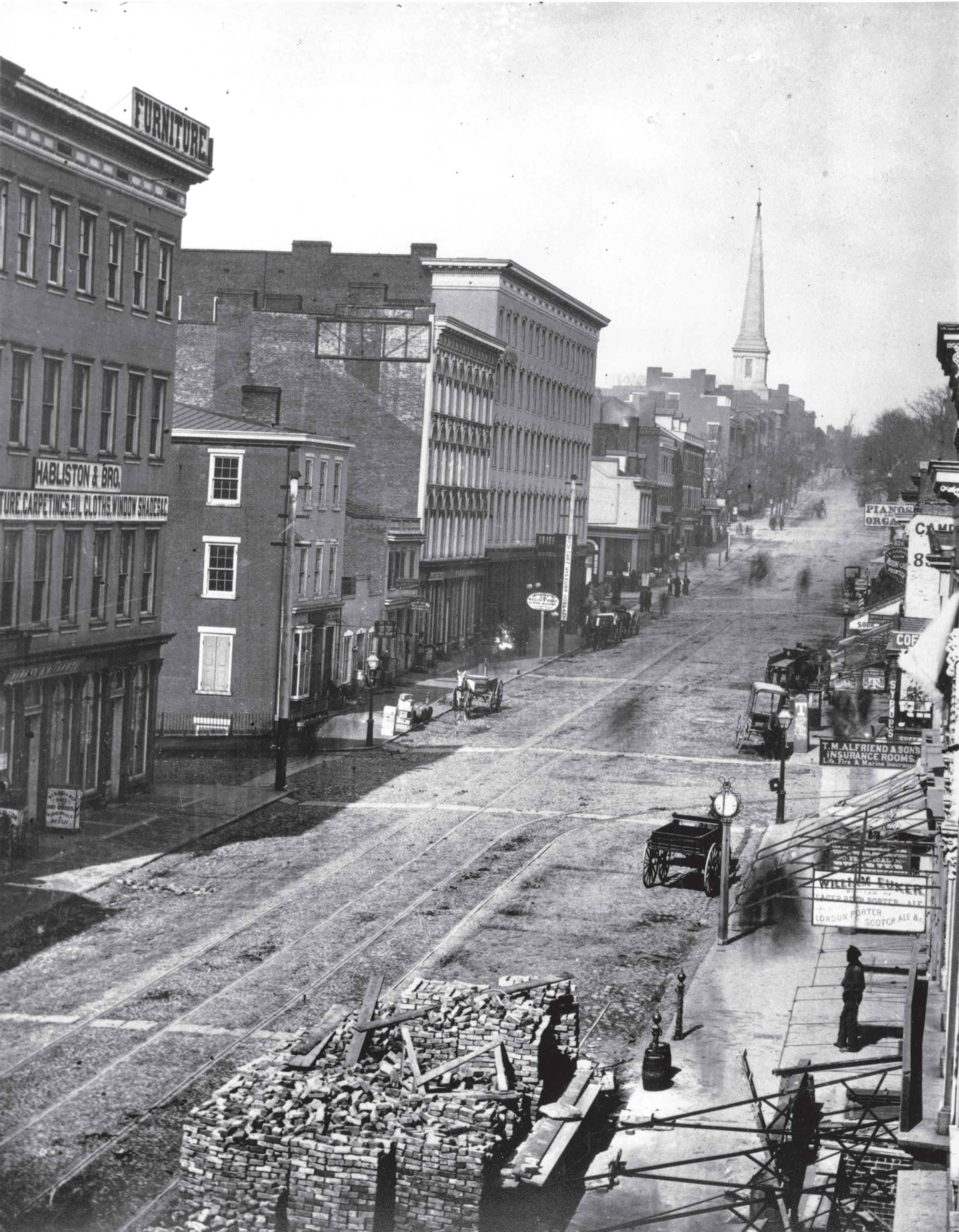
Main Street in Richmond, Va., in 1865. The city is undergoing reconstruction from the fires set in April 1865 during the city’s evacuation just before the Confederate surrender at the end of the American Civil War. The spire of Second Baptist Church can be seen in the background.
1833
The Compromise Tariff of 1833 helped defuse the nullification crisis between South Carolina and the federal government.
1834
The Whig Party began to emerge as a national opposition movement to Andrew Jackson’s Democrats.
1835
The Second Seminole War began in Florida, becoming one of the longest and costliest Indian wars in U.S. history.
1836
Texas won independence from Mexico after the battles of the Alamo and San Jacinto.
1837
Michigan became the 26th state, and the Panic of 1837 triggered a severe economic depression.
1838
The forced removal of the Cherokee on the Trail of Tears became one of the darkest episodes in American history.
1839
The Amistad case began after Africans aboard a Spanish schooner seized control of the ship, leading to a landmark freedom case.
1840
William Henry Harrison’s log-cabin campaign helped usher in a new age of popular presidential politics.
1841
William Henry Harrison died after only a month in office, making John Tyler the first vice president to become president by succession.
1842
The Webster-Ashburton Treaty settled boundary disputes between the United States and British North America.
1843
The Oregon Trail carried thousands of settlers westward in what became known as the Great Migration of 1843.
1844
Samuel Morse sent the famous telegraph message ‘What hath God wrought’ from Washington to Baltimore.
1845
Texas was annexed by the United States, intensifying tensions with Mexico and the debate over slavery.
1846
The United States went to war with Mexico, and Iowa entered the Union as the 29th state.
1847
American forces captured Mexico City during
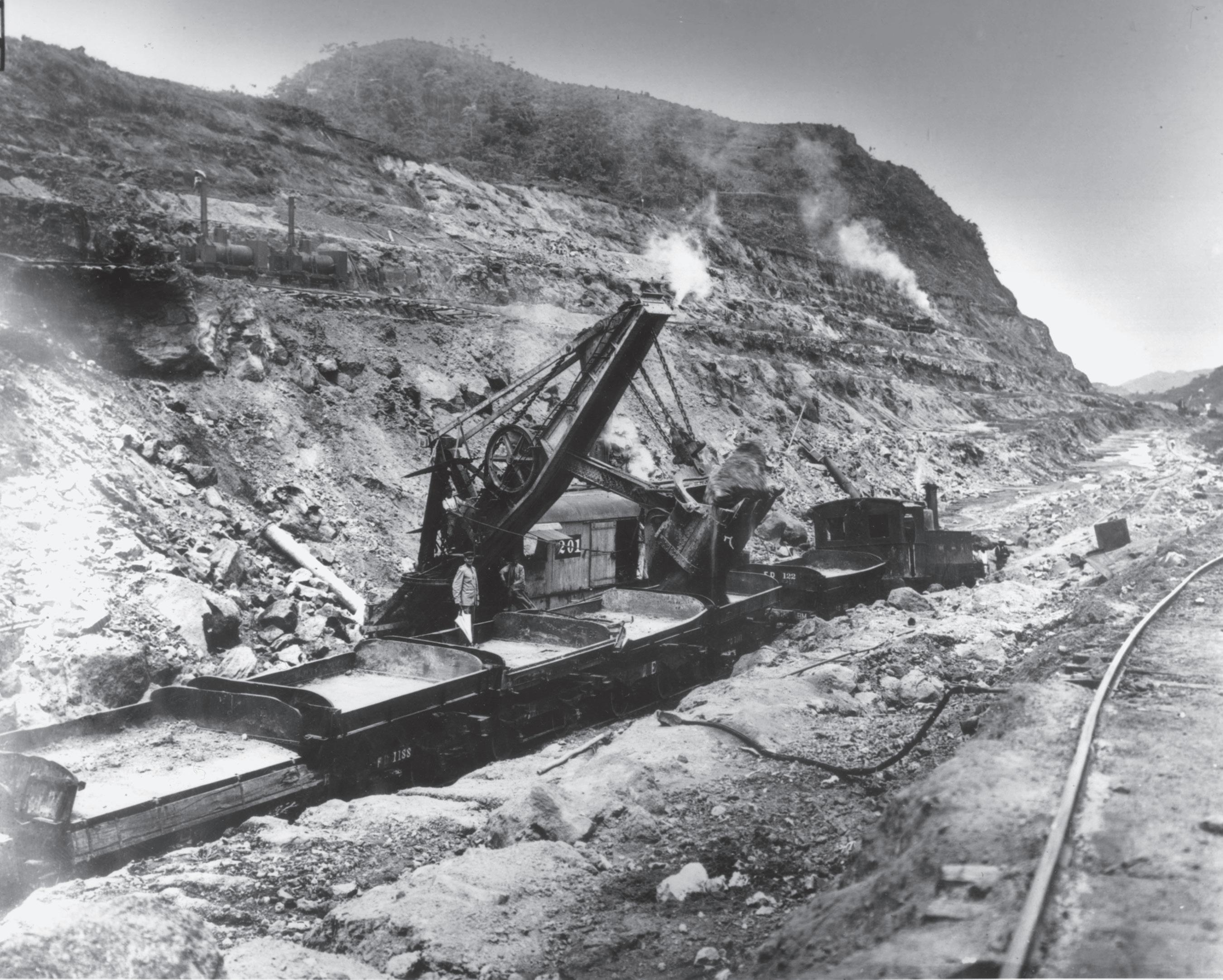
1904 A steam shovel used for excavating and loading French dirt cars is shown in Culebra Cut, Culebra, in the Panama Canal Zone in 1904.
the Mexican-American War.
1848
The Treaty of Guadalupe Hidalgo ended the Mexican-American War and added vast western territories to the United States.
1849
The California Gold Rush drew thousands of fortune seekers west and accelerated California’s path to statehood.
1850
The Compromise of 1850 admitted California as a free state and toughened the fugitive slave law.
1851
Abolitionist Sojourner Truth delivered her famous “Ain’t I a Woman?” speech in Ohio, becoming one of the most influential voices for both racial equality and women’s rights.
1852
Harriet Beecher Stowe’s “Uncle Tom’s Cabin” became a publishing sensation and sharpened national debate over slavery.
1853
The Gadsden Purchase added land in present-day Arizona and New Mexico for a southern railroad route.
1854
The Kansas-Nebraska Act reopened the slavery question in the territories and helped lead to the
creation of the Republican Party.
1855
Bleeding Kansas violence escalated as proslavery and antislavery settlers fought over the territory’s future.
1856
Preston Brooks caned Senator Charles Sumner on the Senate floor, symbolizing the collapse of civility over slavery.
1857
The Supreme Court’s Dred Scott decision denied citizenship to Black Americans and inflamed sectional tensions.
1858
The Lincoln-Douglas debates made Abraham Lincoln a national figure in the struggle over slavery’s expansion.
1859
John Brown’s raid on Harpers Ferry intensified fears and hopes surrounding the coming conflict over slavery.
1860
Abraham Lincoln was elected president, prompting the first Southern states to move toward secession.
1861
The Civil War began with the firing on Fort Sumter in Charleston Harbor.
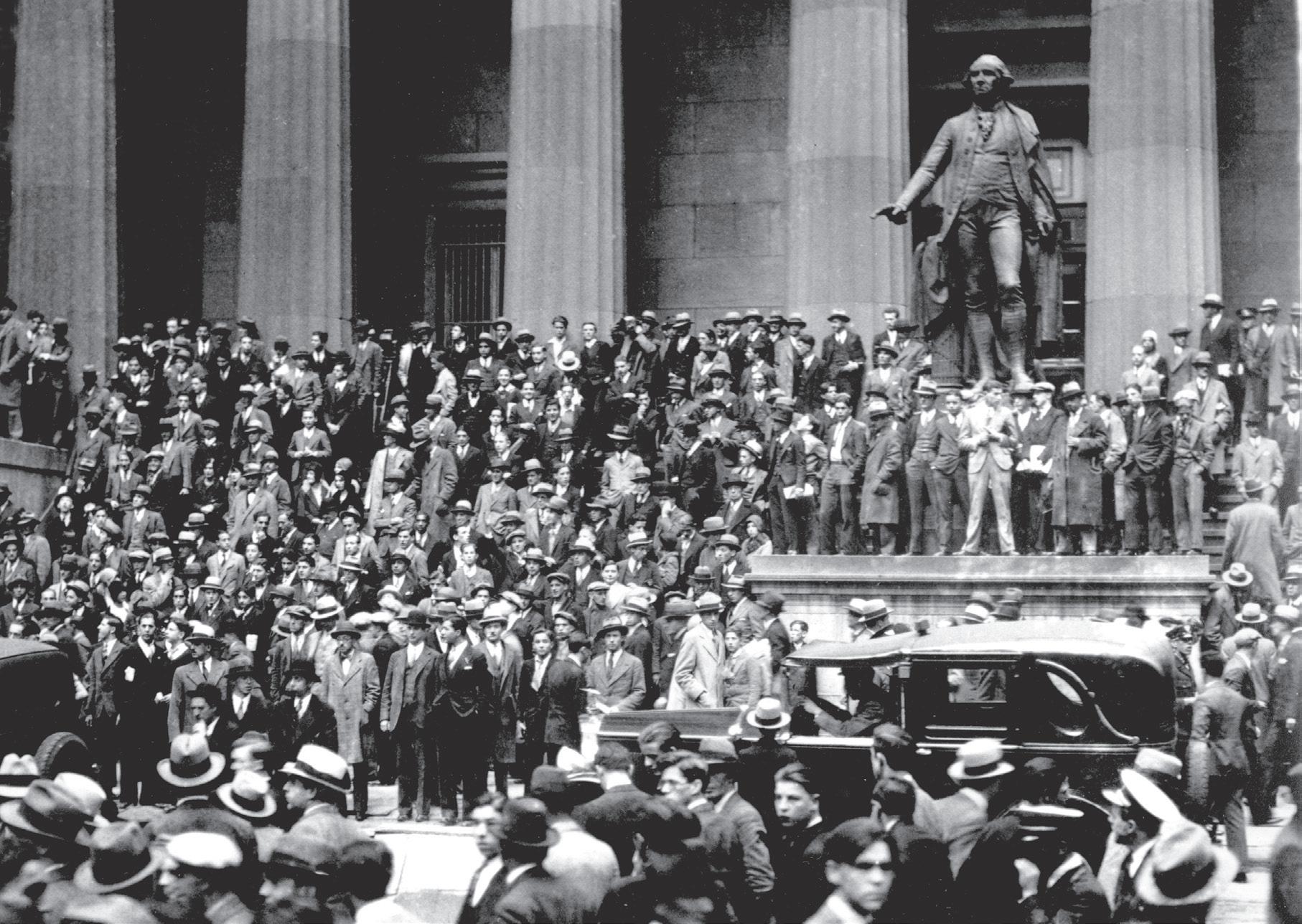
1929 BELOW RIGHT: People gather on the sub-treasury building steps across from the New York Stock Exchange in New York on “Black Thursday,” Oct. 24, 1929. Thousands of investors lost their savings in the worst stock market crash in Wall Street history after a five-day frenzy of heavy trading. Too much speculation with borrowed money had inflated market values unrealistically. Huge buying orders, hastily erected by powerful financial interest, finally checked a frantic sell-off. The Great Depression followed thereafter.
1862
The Homestead Act opened western land to settlers, while the Battle of Antietam led to the preliminary Emancipation Proclamation.
1863
Lincoln issued the Emancipation Proclamation, West Virginia became a state, and the Battle of Gettysburg marked a turning point.
1864
Lincoln won re-election as Union armies pressed toward victory in the Civil War.
1865
The Civil War ended, the Thirteenth Amendment abolished slavery, and Abraham Lincoln was assassinated.
1866
Congress passed the Civil Rights Act of 1866, asserting citizenship rights for formerly enslaved people.
1867
The United States purchased Alaska from Russia for $7.2 million.
1868
The Fourteenth Amendment guaranteed birthright citizenship and equal protection under the law.
1869
The first transcontinental railroad was completed at Promontory Summit, Utah.
1870
The Fifteenth Amendment prohibited denying voting rights based on race, color or previous condition of servitude.
1871
The Ku Klux Klan Act strengthened federal efforts to combat racial violence during Reconstruction.
1872
Yellowstone National Park was established, beginning America’s national park idea.
1873
The Panic of 1873 triggered a long economic depression and deepened political unrest during Reconstruction.
1874
The Woman’s Christian Temperance Union was founded, becoming a powerful force in social reform and Prohibition politics.
1875
The Civil Rights Act of 1875 sought to protect equal access to public accommodations, though it was later struck down.
The United States celebrated its Centennial while the disputed Hayes-Tilden election exposed deep postwar divisions.
1877
Federal troops withdrew from the South, effectively ending Reconstruction.
1878
The Bland-Allison Act revived limited silver coinage amid national debate over money and debt.
1879
Thomas Edison demonstrated a practical incandescent electric light, helping launch the electric age.
1880
James A. Garfield won the presidency in an election that reflected the power of post-Civil War party loyalties.
1881
President Garfield was assassinated, and Chester A. Arthur became president.
1882
The Chinese Exclusion Act became the first major federal law to bar immigration based on nationality.
The Pendleton Civil Service Act began replacing patronage with merit-based federal employment.
Grover Cleveland was elected president, becoming the first Democrat to win the White House after the Civil War.
1885
The Statue of Liberty arrived in New York Harbor in pieces from France.
1886
The Statue of Liberty was dedicated. The Haymarket affair shook the American labor movement.
1887
The Dawes Act divided Native American tribal lands into individual allotments, with devastating effects on tribal sovereignty.
1888
Benjamin Harrison won the presidency despite losing the popular vote to Grover Cleveland.
1889
North Dakota, South Dakota, Montana and Washington all entered the Union.
1890
The Sherman Antitrust Act gave the federal government a tool to challenge monopolies and
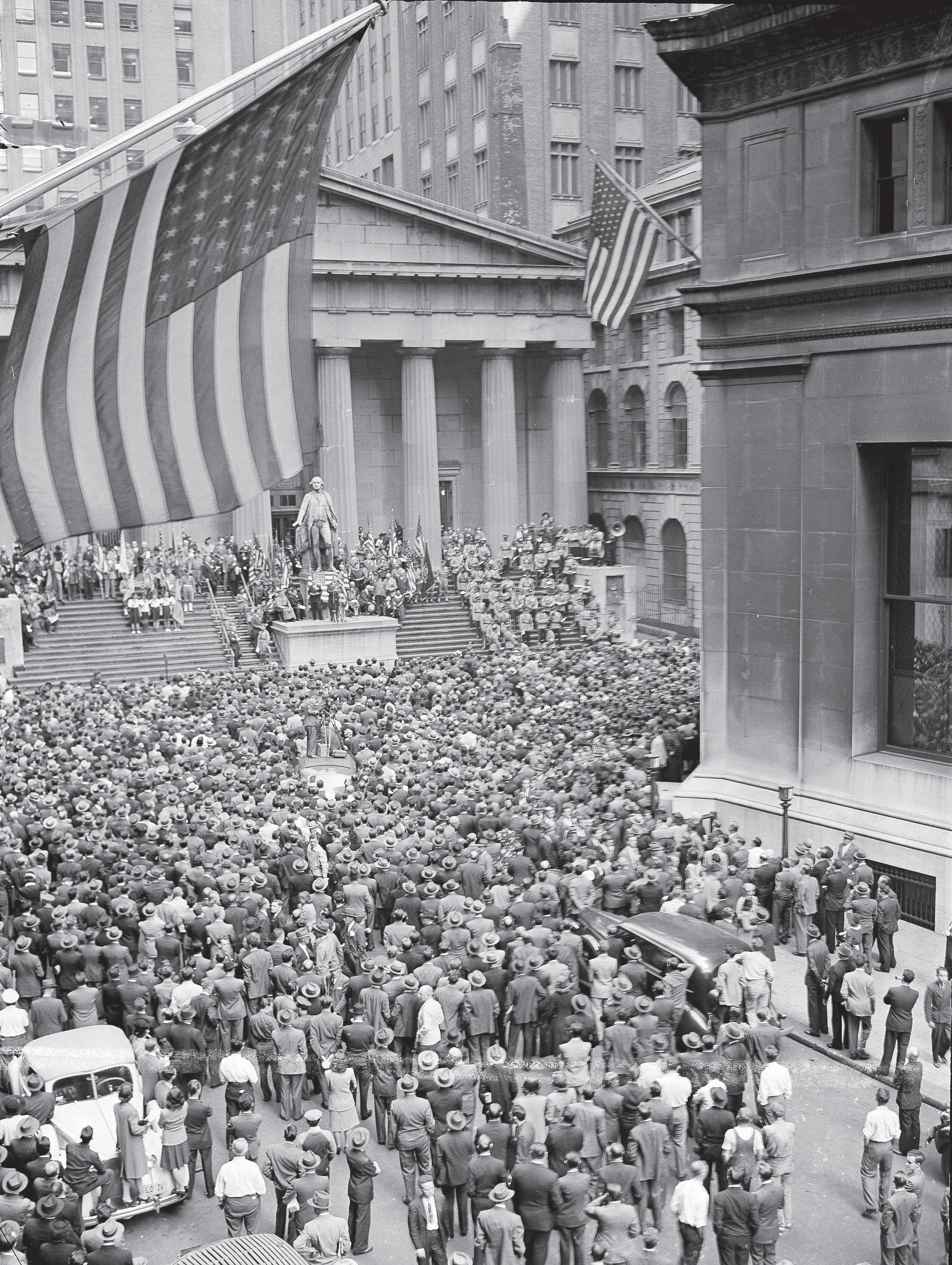
1941 This is the scene as about 6,000 persons gathered before the SubTreasury building in New York City, Sept. 25, 1941, for the opening of the three-month celebration marking the 150th anniversary of the ratification of the Bill of Rights.
restrain corporate power.
1891
Congress created the forest reserve system, an early milestone in federal conservation policy.
1892
Ellis Island opened as the nation’s main immigration station in New York Harbor.
1893
The World’s Columbian Exposition opened in Chicago, showcasing American industry, architecture and ambition.
1894
The Pullman Strike became a national labor crisis and brought federal troops into a conflict
between workers and railroads.
1895
Booker T. Washington delivered the Atlanta Exposition address, shaping debate over Black advancement after Reconstruction.
1896
The Supreme Court’s Plessy v. Ferguson decision upheld racial segregation under the doctrine of ‘separate but equal.’
1897
The Klondike Gold Rush drew thousands of Americans and Canadians toward Alaska and the Yukon.
1898
The Spanish-American War made the United States a global power with new overseas possessions.
1899
The Philippine-American War began, raising fierce debate over empire and self-determination.
1900
The Galveston hurricane became the deadliest natural disaster in U.S. history.
1901
Theodore Roosevelt became president after William McKinley was assassinated in Buffalo.
1902
The Newlands Reclamation Act promoted irrigation projects that transformed parts of the American West.
1903
The Wright brothers achieved powered flight at Kitty Hawk, North Carolina.
1904
The United States began work on the Panama Canal after backing Panama’s separation from Colombia.
1905
The Industrial Workers of the World was founded in Chicago as a radical labor union.
1906
The Pure Food and Drug Act and Meat Inspection Act marked major victories for Progressive Era reform.
1907
Oklahoma entered the Union as the 46th state.
1908
Ford introduced the Model T, putting automobile ownership within reach of millions of Americans.
1909
The NAACP was founded to fight racial discrimination and defend civil rights.
1910
Angel Island immigration station opened in San Francisco Bay, processing many immigrants from Asia.
1911
The Triangle Shirtwaist Factory fire in New York killed 146 workers and spurred workplace safety reforms.
1912
Arizona and New Mexico entered the Union, completing the 48 contiguous states.
1913
The Sixteenth Amendment authorized a federal income tax, and the Seventeenth Amendment provided for direct election of senators.
1914
The Panama Canal opened, dramatically shortening ocean travel between the Atlantic and Pacific.
1915
The first long-distance telephone call connected New York and San Francisco.
1916 Congress created the National Park Service to manage and protect the nation’s growing park system.
1917
The United States entered World War I after years of neutrality.
1918
American troops helped turn the tide on the Western Front, and the war ended with the armistice of November 11.
1919
The Eighteenth Amendment was ratified, paving the way for national Prohibition, and the Nineteenth Amendment was sent to the states for ratification.
1920
The Nineteenth Amendment was ratified, guaranteeing women the right to vote nationwide.
1921
The Tomb of the Unknown Soldier was dedicated at Arlington National Cemetery.
1922
The Lincoln Memorial was dedicated in Washington, D.C.
1923
President Warren G. Harding died in office, and Calvin Coolidge was sworn in by his father in Vermont.
1924
The Indian Citizenship Act granted U.S. citizenship to Native Americans born in the United States.
1955
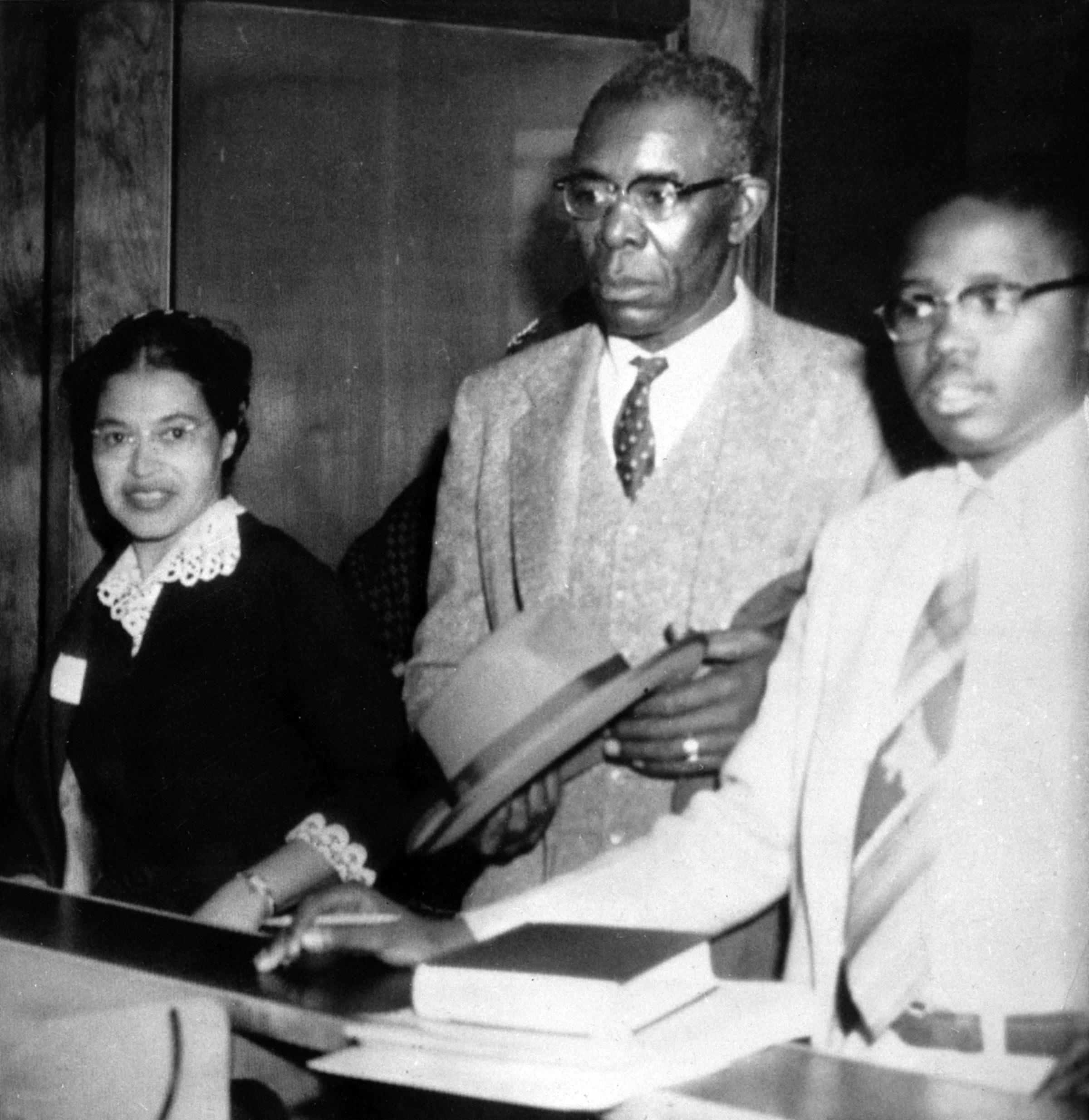
Rosa Parks, left, who was fined $10 and court costs for violating Montgomery’s segregation ordinance for city buses, makes bond for appeal to Circuit Court on Dec. 5, 1955. Signing the bond were E.D. Nixon, center, former state president of the NAACP, and attorney Fred Gray. Gray hinted that the ordinance requiring segregation will be attacked as unconstitutional.
The Scopes Trial in Tennessee put evolution, religion and public education at the center of national debate.
1926
Route 66 was established, eventually becoming one of America’s most famous highways.
1927
Charles Lindbergh completed the first solo nonstop flight from New York to Paris.
1928
Herbert Hoover was elected president just before the nation entered the Great Depression.
1929
The stock market crash of 1929 marked the beginning of the Great Depression.
The Smoot-Hawley Tariff raised import duties and worsened international trade tensions during the Depression.
The Star-Spangled Banner officially became the national anthem of the United States.
1932
Franklin D. Roosevelt was elected president after promising a New Deal for the American people.
1933
The New Deal began, and the Twenty-first Amendment repealed Prohibition.
1934
The Securities and Exchange Commission was created to regulate Wall Street after the market crash.
1935
Social Security was enacted, creating a lasting federal safety net for older Americans.
1936
Jesse Owens won four gold medals at the Berlin Olympics, challenging Nazi racial ideology before the world.
1937
The Golden Gate Bridge opened, becoming an engineering landmark and an American icon.
1938
The Fair Labor Standards Act established a federal minimum wage and restrictions on child labor.
1939
The New York World’s Fair opened as war began in Europe, showcasing visions of America’s future.
1940
Franklin Roosevelt won an unprecedented third term as the world crisis deepened.
1941
Japan attacked Pearl Harbor, bringing the United States into World War II.
1942
Japanese Americans were forced into internment camps under Executive Order 9066.
1943
Allied victories in North Africa and Italy marked a turning point in World War II.
1944
Allied forces landed at Normandy on D-Day, beginning the liberation of Western Europe.
1945
World War II ended, and the United Nations was founded with the United States as a central member.
1946
Winston Churchill delivered his ‘Iron Curtain’ speech in Missouri, helping define the emerging Cold War.
1947
The Truman Doctrine signaled a new American policy of containing communism as the Cold War emerged.
1948
President Truman ordered the desegregation of the U.S. armed forces.
1949
NATO was founded, binding the United States to a peacetime military alliance with Western Europe.
1950
The Korean War began, drawing U.S. forces
into a major Cold War conflict.
1951
The Twenty-second Amendment limited presidents to two elected terms.
1952
Dwight D. Eisenhower was elected president after commanding Allied forces in World War II.
1953
The Korean War armistice ended active fighting on the peninsula, though no formal peace treaty followed.
1954
The Supreme Court’s Brown v. Board of Education decision declared public school segregation unconstitutional.
1955
The Montgomery Bus Boycott began after Rosa Parks refused to give up her seat.
1956
The Federal-Aid Highway Act launched the Interstate Highway System.
1957
Federal troops escorted the Little Rock Nine into Central High School, enforcing school desegregation.
1971
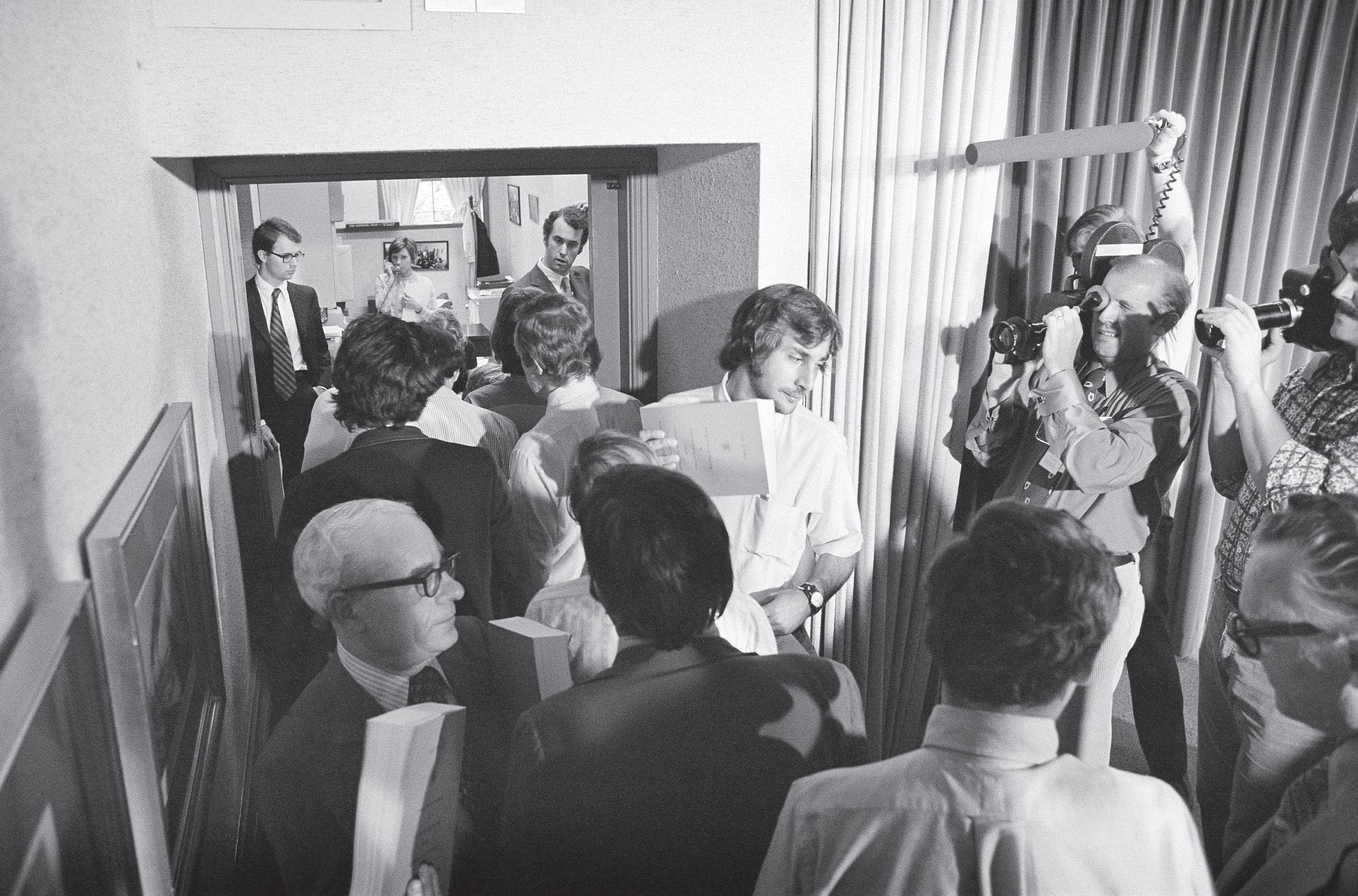
Newsmen wait in line outside the White House press office for their copies of the transcript of White House tapes related to the Watergate break-in.
1958
NASA was created in response to the space race with the Soviet Union.
1959
Alaska and Hawaii became the 49th and 50th states.
1960
John F. Kennedy won the presidency after the first televised presidential debates helped reshape modern campaigns.
1961
Alan Shepard became the first American in space, and the Freedom Rides challenged segregation in interstate travel.
1962
John Glenn became the first American to orbit Earth during the Mercury-Atlas 6 mission.
1963
Martin Luther King Jr. delivered his ‘I Have a Dream’ speech, and President Kennedy was
assassinated in Dallas.
1964
The Civil Rights Act of 1964 outlawed segregation in public accommodations and banned employment discrimination.
1965
The Voting Rights Act became law after the Selma campaign exposed violent resistance to Black voting rights.
1966
The National Historic Preservation Act strengthened protection for historic places across the United States.
1967
Thurgood Marshall became the first Black justice on the U.S. Supreme Court.
1968
Martin Luther King Jr. and Robert F. Kennedy were assassinated during one of the nation’s
most turbulent years.
1969
Apollo 11 landed on the Moon, and Neil Armstrong became the first person to walk on its surface.
1970
The first Earth Day was held, and the Environmental Protection Agency was created later that year.
1971
The Twenty-sixth Amendment lowered the voting age to 18.
1972
The Watergate break-in began the scandal that would bring down a president.
1973
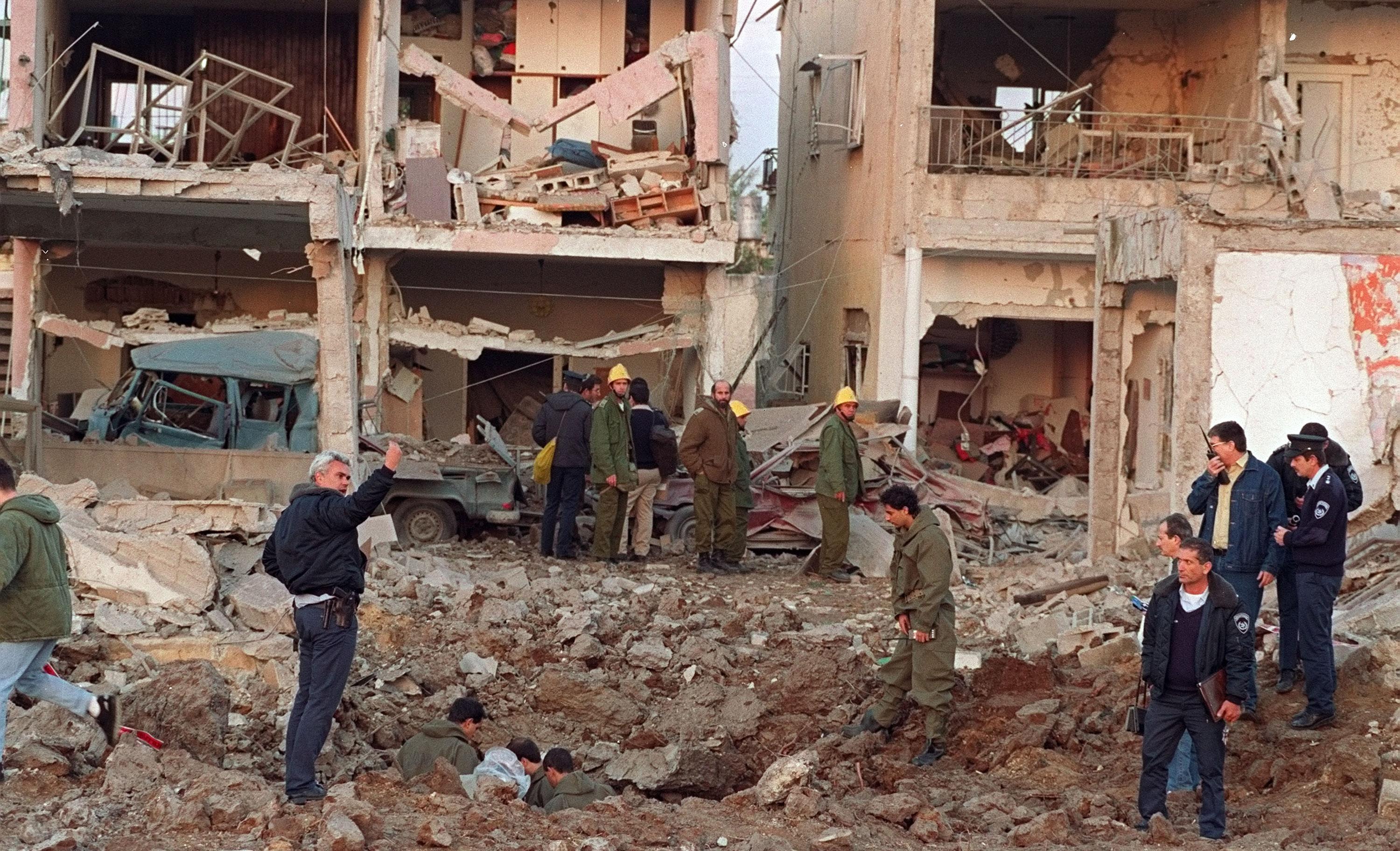
The Paris Peace Accords ended direct U.S. military involvement in the Vietnam War. 1991 A residential area lies in ruins after an Iraqi Scud missile attack in Tel Aviv, Israel, on Jan. 18, 1991. The Iraqi missile attack came one day after U.S. forces launched Operation Desert Storm — the Gulf War — against Iraq.
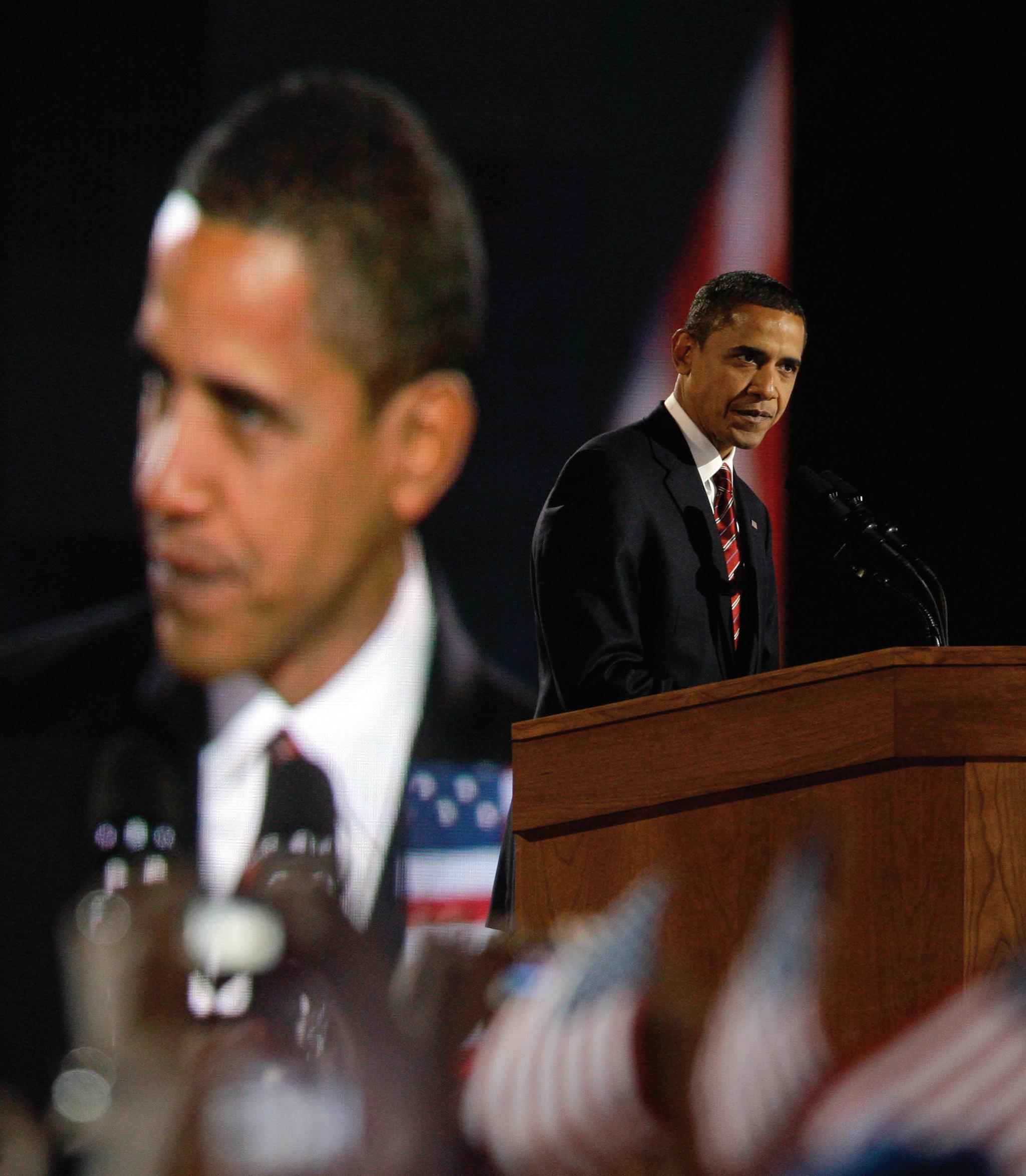
2008
President-elect Barack Obama delivers his victory speech at his election night party at Grant Park in Chicago on Nov. 4, 2008.
1974
Richard Nixon resigned the presidency, and Gerald Ford became president.
1975
The Vietnam War ended with the fall of Saigon.
1976
The United States celebrated its Bicentennial with national commemorations of 200 years of independence.
1977
Jimmy Carter became president and emphasized human rights as a theme of American foreign policy.
1978
The Camp David Accords were negotiated with U.S. mediation, leading to peace between Egypt and Israel.
1979
The Iran hostage crisis began when Americans were seized at the U.S. Embassy in Tehran.
1980
The U.S. Olympic hockey team defeated the Soviet Union in the ‘Miracle on Ice.’
1981
Ronald Reagan became president and survived an assassination attempt in Washington, D.C.
1982
The Vietnam Veterans Memorial was dedicated in Washington, D.C.
1983
Sally Ride became the first American woman in space.
1984
Geraldine Ferraro became the first woman nominated for vice president by a major U.S. political party.
1985
The first version of Microsoft Windows was released, foreshadowing a transformation in personal computing.
1986
The space shuttle Challenger exploded after launch, killing all seven crew members.
1987
President Reagan challenged Mikhail Gorbachev to ‘tear down this wall’ during a speech in Berlin.
1988
George H. W. Bush was elected president after serving eight years as vice president.
1989
The Berlin Wall fell, symbolizing the approaching end of the Cold War.
1990
The Americans with Disabilities Act became law, expanding civil rights protections for people with disabilities.
1991
A U.S.-led coalition liberated Kuwait in the Gulf War.
1992
The Twenty-seventh Amendment, first proposed in 1789, was finally ratified.
1993
The North American Free Trade Agreement was signed into law, reshaping trade among the United States, Canada and Mexico.
1994
The Violence Against Women Act became law as part of a major federal crime bill.
1995
The Oklahoma City bombing killed 168 people and became the deadliest act of domestic terrorism in U.S. history.
1996
Atlanta hosted the Summer Olympics, bringing the Games back to the United States.
1997
Madeleine Albright became the first woman to serve as U.S. secretary of state.
1998
John Glenn returned to space aboard the shuttle Discovery at age 77.
1999
The Senate acquitted President Bill Clinton after his impeachment trial.
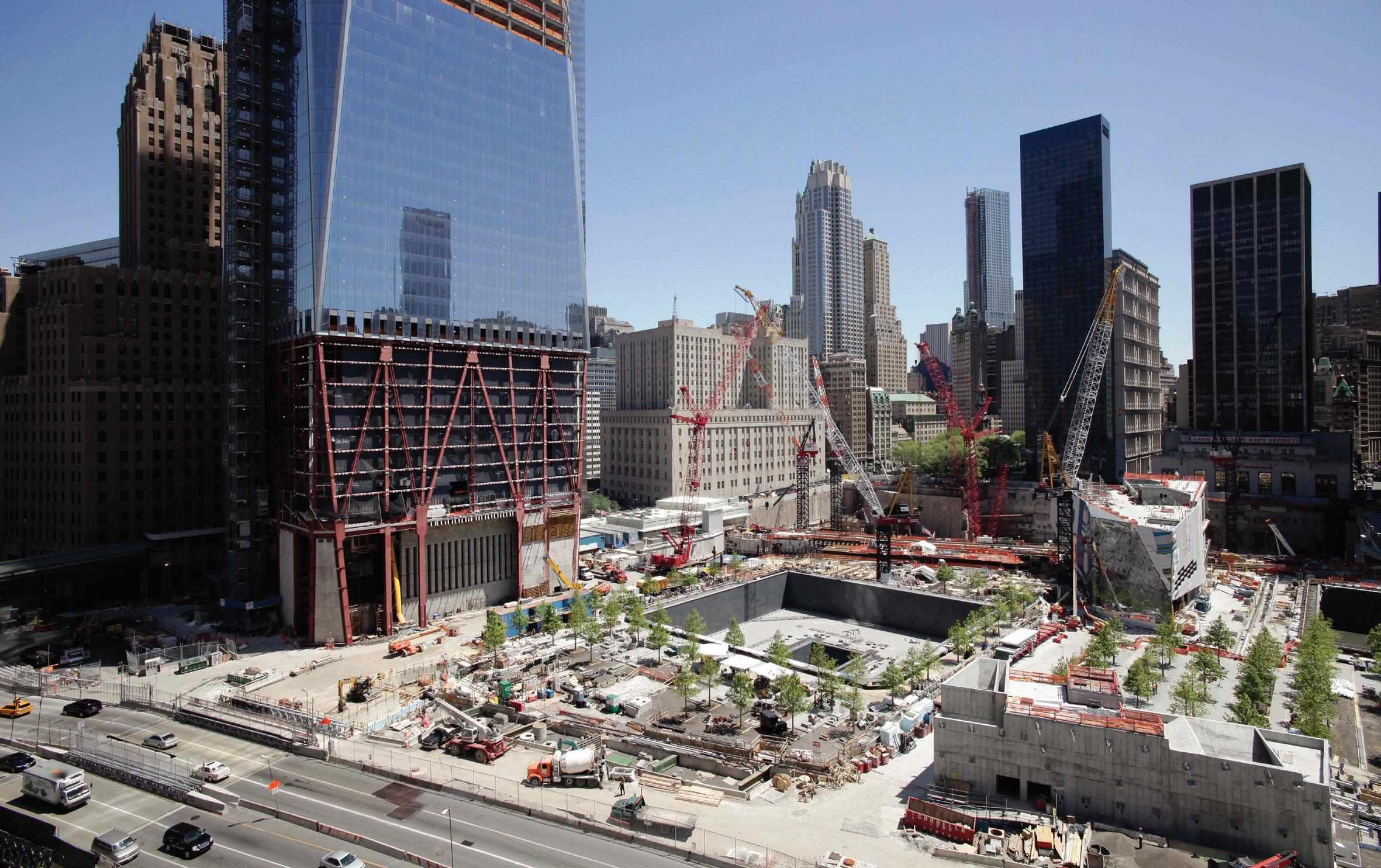
2000
The disputed presidential election was ultimately resolved by Bush v. Gore, leading to George W. Bush’s election as the 43rd president of the United States.
2001
The Sept. 11 terrorist attacks killed nearly 3,000 people and reshaped American security and foreign policy.
2002
The Department of Homeland Security was created in response to the Sept. 11 attacks.
2003
The United States invaded Iraq, beginning a long and controversial war.
2004
The National World War II Memorial was dedicated in Washington, D.C.
2005
Hurricane Katrina devastated New Orleans and the Gulf Coast, exposing major failures in disaster preparedness.
2006
Twitter was launched, becoming part of a new era of social media and public communication.
2007
The iPhone was introduced, accelerating the smartphone revolution in American life.
2008
Barack Obama was elected the first Black president of the United States.
Sonia Sotomayor became the first Latina justice on the U.S. Supreme Court.
The Affordable Care Act was signed into law, reshaping health insurance and health policy.
U.S. forces killed Osama bin Laden in Pakistan nearly 10 years after the September 11 attacks.
Hurricane Sandy struck the East Coast, causing severe damage from the Caribbean to New York and New Jersey.
The Boston Marathon bombing killed three people and injured hundreds at one of America’s most famous races.
The National Sept. 11 Memorial Museum opened in New York City.
The Supreme Court’s Obergefell v. Hodges decision recognized same-sex marriage nationwide.
2016
Donald J. Trump was elected the 45th president of the United States.
A total solar eclipse crossed the United States from Oregon to South Carolina, drawing millions of viewers.
Construction continues on the National September 11 Memorial at the World Trade Center site, Tuesday, May 10, 2011, in New York. On the left is
1 World Trade Center, also known as the Freedom Tower.
Construction continues on the National September 11 Memorial at the World Trade Center site, Tuesday, May 10, 2011,z in New York. On the left is 1 World Trade Center, also known as the Freedom Tower.
by The Associated Press
The First Step Act became law, one of the most significant federal criminal justice reforms in decades.
The U.S. women’s national soccer team won its fourth World Cup title.
The COVID-19 pandemic disrupted American life, and a presidential election produced record turnout.
Juneteenth became a federal holiday, recognizing the end of slavery in the United States.
Ketanji Brown Jackson became the first Black woman to serve on the U.S. Supreme Court.
2023
The United States marked 247 years of independence while preparing for the coming semiquincentennial.
A total solar eclipse crossed parts of the United States, drawing national attention to science and skywatching.
President Donald J. Trump began his second term in office.
The United States celebrates its semiquincentennial, marking 250 years since the Declaration of Independence.