
Client
Frasers Property Australia
Site
Mambourin (Wyndham Vale) Residential Development
City of Wyndham, VIC
Address
Black Forest Rd. Wyndham Vale, VIC 3024
Elevation
RL35m to RL88m
Coordinates
37.912°S 144.549°E
RCP and Temporal Scale
RCP8.5; 2015 (baseline), 2030, and 2050
Date of Assessment
March 2025
As part of its commitment to obtaining a Green Star Communities (v1.1) rating for the upcoming master planned community development, Mambourin, Frasers Property Australia (FPA) has developed a Community Resilience Plan (CRP) (collectively referred to as the Plan) to support the development of their Mambourin, Wyndham Vale development.
The CRP describes extreme events to which the Wyndham Vale community and its users can expect to be exposed into the future and the key actions to improve the resilience of the community to these future extremes in climate. The key climate risks for Mambourin include:
1) An increase in extreme heat days, leading to:
a) heat stress, solar exposure and reduced thermal comfort of residents, contractors and visitors, resulting in increased illness, dehydration related illness and/or morbidity
b) higher summer cooling loads on buildings resulting in increased water and energy demand/costs, and brownouts/power outages.
c) higher rate of deterioration of buildings and structures
2) Drought conditions could result in reduced water availability and pressure on urban water resources as well as water for gardens and landscaped areas.
3) Both extreme heat and drought conditions would result in higher Bushfire risk within the local area.
4) An increase in extreme rainfall events, as well as sea level rise would lead to localised flooding.
5) An increase in frequency and severity of extreme storms and high winds could lead to higher exposure of built assets and property resulting in more damage to assets with associated costs and loss of service.
Recent events across Australia such as floods, heat waves and bushfires have demonstrated the vulnerability of property, infrastructure and assets to climate extremes. It is critical that steps are taken to minimise any potential impacts of a changing climate and that these steps are specific to the local vulnerabilities.
The CRP contains information on the potential risks to the community from extreme events as well as community contacts (e.g. police, senior members of community groups, schools and other community-based leaders) and emergency procedures.
The CRP aligns with local disaster management plan(s) prepared by the relevant authorities such as Wyndham City Council and the local SES. The draft plan may be provided to the local council and emergency management authorities for comment. It is noted that emergency response management is governed by the Wyndham Emergency Management Plan.
Recent extreme climate events across Australia such as flooding, heat wave and bushfire events have demonstrated the vulnerability of property, infrastructure and assets to climate extremes. The changes in climate extremes will have a range of impacts putting stress upon property assets, infrastructure and sensitive communities. It is critical that steps are taken to minimise the potential impacts of a changing climate and that these steps are specific to the local vulnerabilities.
The climate variables of temperature, precipitation and sea level rise collectively act as catalysts for extreme weather events such as bushfires, floods, droughts and cyclones and as evidence continues to demonstrate these events are becoming more intense and frequent. Extreme events such as the 2018 storms and floods in greater Melbourne and 2019/20 bushfires illustrate our current vulnerability to climate.
FPA acknowledges the need to understand the impacts that extreme weather and climate change may have on its assets and projects and is committed to the development of climate adaptation plans (CAPs) and for new communities Community Resilience Plans (CRPs) across its operations. FPA believes that this will build resilience into the communities. It considers that addressing climate change is a fiduciary responsibility to key stakeholders. FPA have commissioned the development of a Community Resilience Report (CRP) to support the development of its Mambourin, Wyndham Vale, VIC development.
This Community Resilience Plan is for the Mambourin, Wyndham Vale (“Mambourin”) development. The CRP has been developed according with the compliance requirements outlined by the Green Building Council of Australia (GBCA) Green Star Communities Submission Guidelines. Specifically, the Plan accords with compliance to resilience component of the Governance Category – 04 Adaptation and Resilience (Credits 2 for the CRP).
This Plan draws upon the CAP also produced as part of Adaptation and Resilience which in turn was developed in accordance with International Standard - ISO 31000:2018Risk Management standard, the Australian Standard AS 5334-2013 Climate Change Adaptation for Settlements and Infrastructure, and the Australian Greenhouse Office (AGO) Climate Change Impacts & Risk Management: A Guide for Business and Government 2006.
As part of its Sustainability Plan FPA aims to achieve and maintain a leadership position in the industry. This has been assisted by FPA’s commitment to achieving a Six Star Communities and Five Star Green Star Design & As Built ratings for new industrial, commercial and retail projects, and committing to managing climate adaptation and resilience concerns.
FPA acknowledges the need to understand the impacts that extreme weather and climate change may have on its assets and projects and is committed to the development of CAPs across its operations. This will allow FPA to build resilience into the assets and communities in which it operates. Emergency relief would be by the retail centre, private school, council assets including the library, community arts centre and community centre, in a manner consistent with the Wyndham Emergency Response Management Plan. FPA has developed both a CAP and CRP for the Mambourin development to assist the development to withstand and adapt to the future climate. It is recommended that this Plan is read in conjunction with the CAP for Mambourin.
As part of its Sustainability Plan, FPA aims to achieve and maintain a leadership position in the industry. This has been assisted by FPA’s commitment to achieving Green Star ratings for all new residential, industrial, commercial, and retail projects, and committing to managing climate adaptation and resilience concerns.
The Green Star Communities submission guidelines define the minimum information requirements within a Community Resilience Plan:
Potential project specific risks to the community from extreme events;
• Key community contacts (e.g. police, senior members of community groups, schools and other community-based leaders);
• Emergency contacts (e.g. local authorities, utility providers, insurance, counselling etc.)
• Nominated emergency shelter location(s) for the community such as shopping centres or school halls;
• Information on how to develop an emergency plan and emergency kit for centre users, businesses and other occupying the facilities within the community;
• Comprehensive list of communication channels to enable the community to stay informed (e.g. radio, social media);
• Guidelines for disaster prevention at a local level, procedures to follow in the event of an emergency and what to do after an emergency; and
• Checklists to support the implementation of the above.
The CRP must align with local disaster management plan(s) prepared by the relevant authorities. The draft plan should be provided to the local council and emergency management authorities for comment.
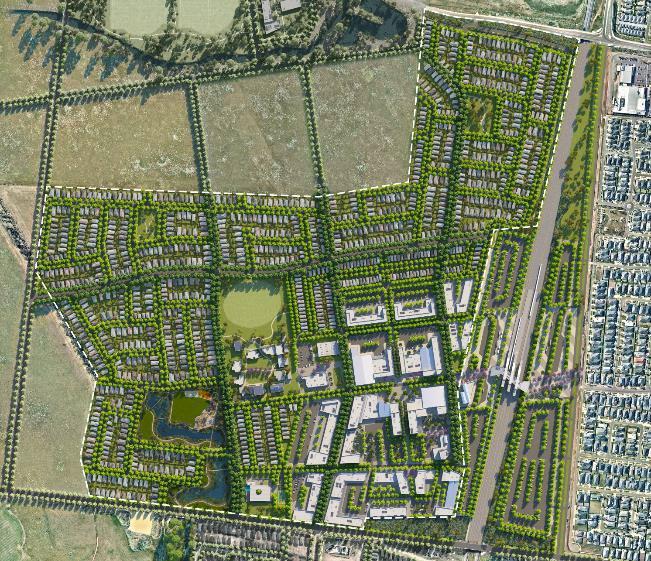
The vision for Mambourin focuses on creating a new master planned community, encompassing housing and mixed use limited commercial development within the City of Wyndham Council LGA, near Melbourne, Victoria
Table 1 : Project details
Development
Development and construction of a new master planned residential community east of Werribee and Wyndham Vale, VIC. The development will cater for approximately 3,000 residents.
Address
Black Forest Rd. Wyndham Vale, Victoria 3024
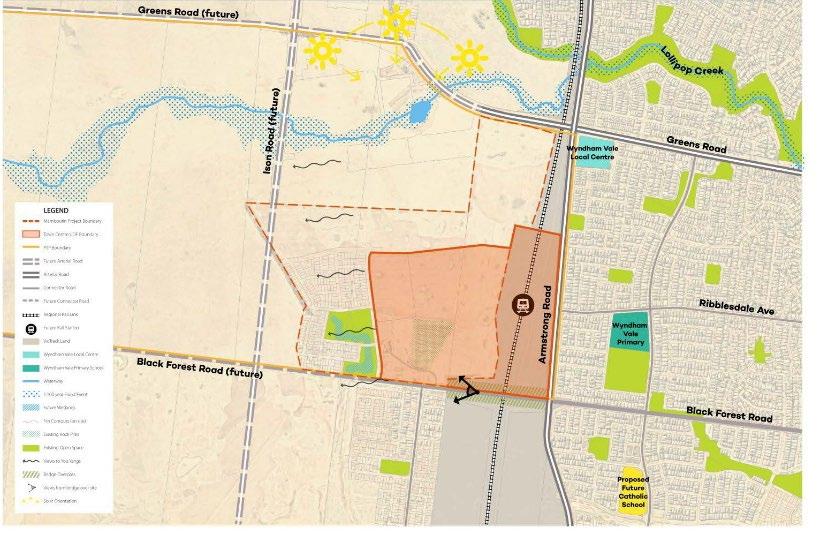
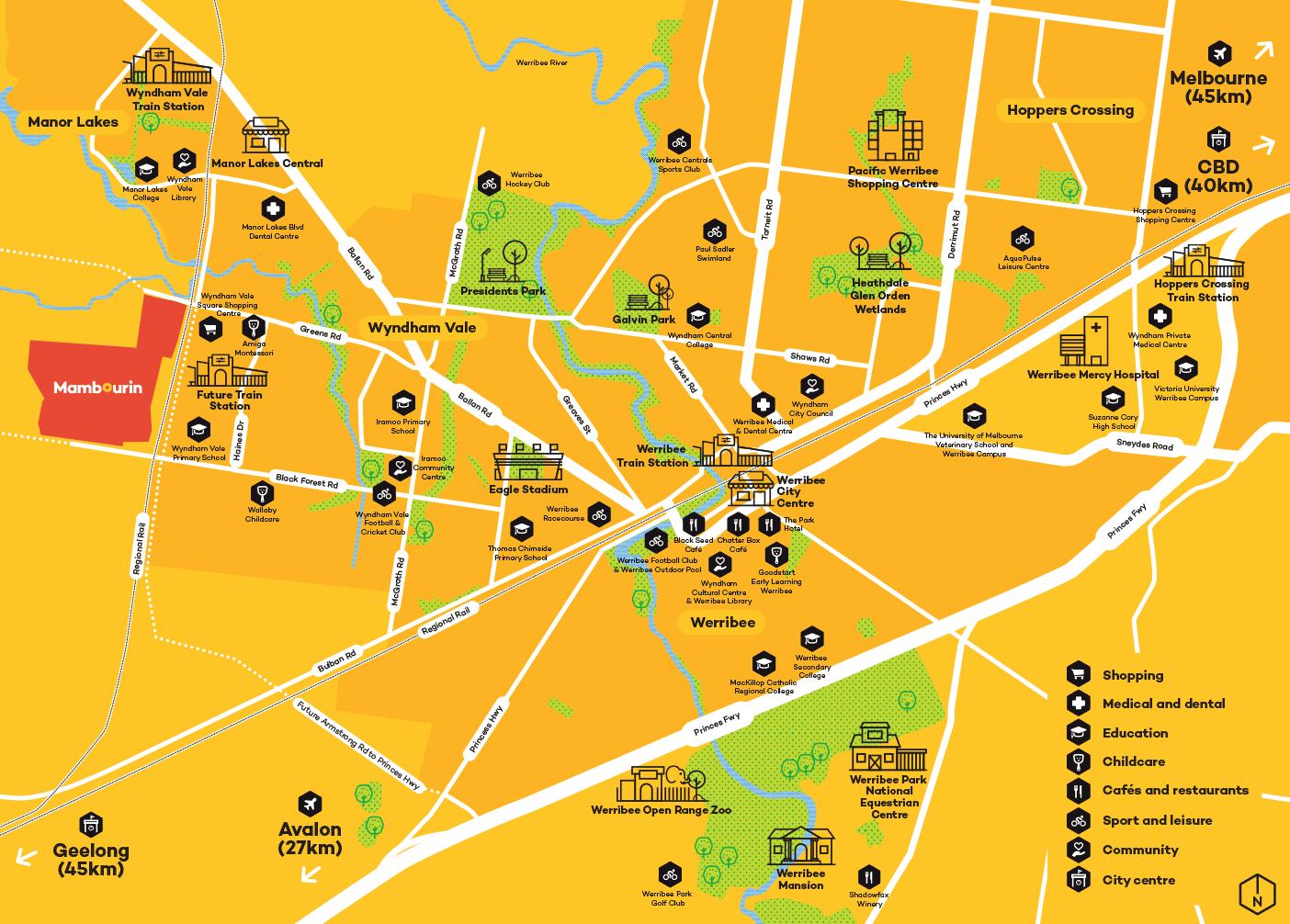
The development area is 48km southwest of Melbourne CBD, 5km west of Werribee and approximately 7km from Port Phillip Bay. See locality plan below.
Status
Design (Stage 1 approval obtained)
Description
The project involves the development of approximately 115 hectares of greenfield land, comprising:
• 1,200 residential lots, and
• 25,000 m2 retail and other uses:
o 21,720 m2 retail,
o 1,450 m2 non-retail, and o 1,830 m2 c commercial/PAD sites
Lifetime of Asset
50 years
Stakeholders Engaged
FPA – 4 staff, Ramboll – 2 project consultants, Wyndham Vale Fire Brigade – 1 member, Wyndham West SES – 1 member, Club Mambourin – 1 member
Key features of the development include:
• Potential for approximately 1,200 lots.
• Town Centre comprising retail floor space with a supermarket, discount department store, 30 to 40 specialty stores and an entertainment precinct with a cinema.
• Residents Club – community centre (subject to separate CAP), including pools, function area, multi-use court gymnasium and BBQ area.
• Adjoins future Rail Station.
• Central 5.4-hectare wetland and park with an all-ages play area, fitness nodes, walking and cycling paths, shelters and barbecues.
• Community facilities include private school, community arts centre, library and kindergarten.
Lo cality Map (Source: Tract Consultants, 2018)
This CRP contains information on the potential project specific risks to the community from extreme climate events and sets out key emergency procedures and community contacts (e.g. police, senior members of community groups, schools and other community-based leaders) that are relevant to responding to these risks.
“Naturaldisasterssuchasbushfires,floodsorcyclonesconstituterealthreatstocommunities.Thelong-term effects ofclimatechange,suchassealevelrise,alsoconstitutepotentialthreats” Green Star – Communities.
The precincts and communities that will bounce back from future events will be those that have built a strong sense of ownership and belonging to the place. The communities that have recovered the quickest to some of the recent climate events have been those that have come out to help in the clean-up and recovery from the impact.
Building that sense of belonging at the start of the creation of a new community is one of the fundamentals to future resilience.
The CRP and CAP together describe the risks associated with extreme climate events and natural disasters and focus on emergency response related adaptation options. It has been developed in accordance with Green Cross Australia’s Community Resilience Guideline for Developers (2013).
Appendix 2 describes the agreed adaptation actions for the extreme and high risk events that have been identified based on a climate risk assessment for the locality and described in the Mambourin CAP.
• Millennium Drought – Ongoing drought conditions affected most of southern Australia, including the wider Melbourne region. Water restrictions were progressively increased from Stage 1 in 2002 to Stage 3a in 2007. 6 March 2010,
• Melbourne – Storms with large hail, flash flooding and high winds caused damage across western and central Victoria. Impacts included disruption to transportation in Melbourne and flash flooding of key CBD streets.
• 4 February 2011, Melbourne – Severe rainstorm caused flash flooding.
• 25 December 2011, Northeast Melbourne –Severe thunderstorms, large hailstones, flash flooding, and reports of tornadoes caused significant damage
• 4–12 March 2013, Melbourne – heatwave lasting 10 days.
• 31 May 2013, Melbourne – Heavy rain and thunderstorms.
• 18 July 2013, Melbourne – Highest Melbourne July (Winter) temperature on record: 23.3 °C.
• 14–17 January 2014, Melbourne – Four consecutive days of temperatures exceeding 41 °C, two of which exceed 43 °C.
• 21 November 2016, north and west Melbourne – High heat and humidity cause thunderstorms to form. As a result, and due to excessive grass growth in the north and west of Melbourne, pollen counts triggered thousands of severe asthma attacks, including nine fatalities due to asthma and overloading of emergency response.
• 19 December 2017, Melbourne –Severe thunderstorms along with heavy rain, damaging winds and large hail.
• 14 December, 2018, Melbourne – Severe storm bringing 30mm of rainfall in 15 minutes swept across greater Melbourne causing widespread flooding, damage and obstructuions to many road and public transport routes including the Werribee Train Line. Point Cook, Werribee, Hoppers Crossing and Truganina were among the worst affected areas for power outages.
• Summer of 2019/2020 – Australia experienced the largest and most devastating bushfire season to date, where Victoria lost 300 homes and over 1.2 million ha of land were burnt causing a biodiversity disaster. Smoke from the fires blanketed greater Melbourne and at times air quality was rated the worst in the world.
Key community climate risks have been identified for the Mambourin location
1) An increase in extreme heat days , leading to:
a) heat stress, solar exposure and reduced thermal comfort of residents, contractors and visitors, resulting in increased illness, dehydration related illness and/or morbidity
b) higher summer cooling loads on buildings resulting in increased water and energy demand/costs, and brown- outs/power outages.
c) higher rate of deterioration of buildings and structures
2) Drought conditions could result in reduced water availability and pressure on urban water resources as well as water for gardens and landscaped areas. This may also result in the increase of biological hazards near residents and in recreation areas, such as snakes in search of water sources.
3) Both extreme heat and drought conditions would result in higher bushfire risk within the local area. This may also result in deliberate lighting of fires on total fire-ban days.
4) An increase in extreme rainfall events, as well as sea level rise would lead to localised flooding.
5) An increase in frequency and severity of extreme storms and high winds could lead to higher exposure of built assets and property resulting in more damage to assets with associated costs and loss of service.
Appropriate adaptation and resilience actions have been identified to respond to these risks including:
• Engaging residents, owners and stakeholders in understanding the likely comfort conditions in the public realm to extreme heat events through the Welcome Pack and other resources
• As the frequency of droughts and bush fires increase mechanisms to push weather information, air quality and ozone levels to the local community will be discussed.
• Information on preparedness and response to climate risks will be provided to residents, visitors and owners as appropriate in the Welcome Pack and other resources
• Residents will be informed about options during storms and what to do in an extreme storm event.
Systems to alert residents and town centre users to flooding events, including impacts to access and egress to decrease sensitivity, will be investigated.
The resilience of a community is influenced by aspects such as age, community interdependency, governance, awareness and financial position. At a broad level obtaining strong resilience in these areas sets up a good foundation for building the capacity of the community into the future (adaptive capacity).
Resilience is a measure of how well communities can cope with the impacts of climate variability and extremes. It is linked to vulnerability and is a combination of the following aspects – exposure, sensitivity and adaptive capacity. A community’s ability to respond to climate extremes is determined by their adaptive capacity and sensitivity.
Key influential factors are:
• Age
• Education
• Family structure
• Financial position
High sensitivity can occur for:
• 65 years or over and living alone
• Fully dependent (4 years and under)
• High housing density
Low adaptive capacity can occur for:
• Household ownership (owned by bank or rental).
• Median household income (below $750 per week).
• Non-English speaking (ESL)
Objective: ‘Building resilience to climate eventsbyworkingwiththecommunity toimplement a local context CommunityResiliencePlan’
Key stakeholders:
This part includes names and contact details of people, associations, groups are to be consulted, such as residents, industry representatives, schools, local businesses or services, council, emergency services and the like. Grouping helps identify where information could be tailored.
Key Messages :
This part includes key messages for the Mambourin community concerning applicable climate risks, natural hazards, the local context, challenges, opportunities and the like.
Methods of engagement:
This part outlines potential engagement methods to inform and liaise with the community, such as Welcome Pack, newsletters (of other organisations or newly created), websites, information stands, advertising, word of mouth through networks or training.
Feedback:
This part outlines feedback mechanisms to encourage input and update of information material and this CRP
Timing of engagement
The CRP is an iterative document. FPA will review how the plan is working and if the objective is being achieved. This part identifies of the different engagement periods and stakeholders
To develop community resilience for this development, project specific risks to the community from extreme climate events have been identified, this has been drawn from the climate risk assessment undertaken by FPA for its assets in mid-2015. A description of recommended actions to address community resilience of the Mambourin community are included in Appendix 2.
Increase in extreme heat days
An increase in extreme heat days (number of days over 42 °C) leading to heat stress in the community. The following resilience actions are recommended:
• Potentially impacted persons will be engaged, through a Welcome Pack or other resources to be distributed as residents and owners. As the climate changes over time, the affected stakeholders will be engaged in planning for increased heat events to minimise sensitivity. To reduce climate effect impact on contractors in the area, alternative work practices may need to be considered. For example, scheduling maintenance outside of high heat stress hours.
• FPA will engage with emergency services, government agencies and community groups throughout the design process to enable preparedness for the effects of emergencies such as heatwaves. This would include details of safe shelter locations and function (i.e. nearby air-conditioned community facilities) as part of design development and project delivery (note: project completion due in 2025-2026) In addition, it will ensure the community is aware of relevant policy, increase community education on awareness of dangers of sun exposure/symptoms of heat stress and provide advice on how to stay cool in homes, public buildings and other residential institutions and workplaces.
• The advice given will incorporate information on the availability of heat wave alerts. FPA intend to provide to residents and owners relevant Welcome Pack including sustainability information and resilience actions.
• Information will include responses in a heatwave containing advice on the active identification and care of at-risk populations, measures to tackle high risk situations and transport breakdowns.
• Information to management of the development and tenants of retail spaces about limiting working hours of outdoor staff and managing any OH&S issues during high risk incidents.
Drought conditions
Drought conditions could result in reduced water availability and water restrictions, in turn this could lead to reduced water for homes, gardens and landscaped areas. As the impact of potable water availability increases into the future the water use/reuse plans for the site could be re-planned to form part of a more sophisticated system to reduce the impact of water shortages to the broader community.
In addition, drought conditions may also result in an increase in biological hazards near residents and recreation areas, including snakes and other potential harmful creatures, that may be in search of new water sources. To improve resilience, it is recommended that information on preparedness and response to water shortages, along with an increase in biological hazards will be provided to residents and owners
Intense storms
Intense rainfall and hail events can damage properties. Storms can lead to access & egress issues and electricity and communications infrastructure interruptions. In the case of one transport option being impacted, residents, as well as commercial and retail staff can choose alternative options. The following resilience action is recommended:
• Residents and owners will be informed about options to improve the resilience of their homes to storms and what to do in an extreme storm event.
• Residents and owners to be informed about critical road locations and routes for control and access for emergency procedures, including a response plan identifying emergency passage and access in extreme events
Localised flooding
Increase in rainfall can lead to localised flooding. The following resilience actions are recommended:
• Advice to residents and owners as part of the Welcome Pack will include access and egress information in the event the site and local streets be subjected to localised flooding.
• Resident groups will be encouraged to work with the Regional Emergency Management Office (REMO) and other agencies as identified in this CRP to co-coordinate appropriate responses to localised flooding.
• Encouragement for retail tenants to review long term financial plan, insurance and business continuity as a result of predicted future flood risk.
Through the Welcome Pack social media, newsletters and other resources, residents and owners will be encouraged to consider the following community safety aspects and processes as part of an Emergency Response Plan:
• Possible emergency incidents that could affect the development and how these could impact the safety of residents, contractors and visitors (e.g. flooding, extreme heat, road closures, bushfire smoke, etc.).
• Vulnerable persons or groups within the development.
• Actions that could be safely taken to mitigate the emergency incident prior to emergency services assistance and what actions should not be taken. For example, establishing a buddy system or contacting local volunteer networks/groups to help vulnerable persons during a heat wave.
Life - threatening emergencies
T : Triple Zero (000); mobiles (000 and 112)
Police/fire/ambulance
T : Triple Zero (000); mobiles (000 and 112)
Flood & Storm Emergency
T : 132 500, 1300 VIC SES or 1300 842 737
W : www.ses.vic.gov.au
Wyndham City Council
T : 1300 023 411 (emergency)
Emergency shelter
Penrose Promenade Community Centre
A: 81-83 Penrose Promenad, Tarneit 3029
Wyndham Vale Community Learning Centre
A: 85 Manor Lakes Blvd, Wyndham Vale 30 24
Featherbrook Community Centre
A: 33- 35 Windorah Drive, Point Cook VIC 3030
Utilities
Greater West ern Water (Water & Sewerage fault & emergencies : T : 13 44 99
Powercor: T : 13 24 12
Vic Emergency Hotline : T : 1800 226 226
(stay alert for warnings and emergency advice)
A comprehensive list of communication channels to enable the community to stay informed is available including: Radio: Emergency broadcaster for weather and warning updates – ABC Local Radio 774 AM, FM and SKY NEWS television
Warnings: Standard Emergency Warning Signal – a wailing siren sound at the beginning of serious warnings on radio and TV.
Online/Mobile App: Stay informed with VicEmergency (http://emergency.vic.gov.au/respond/) Victoria’s main website for incident information and warnings. The VicEmergency App is available for download on the apple store or the google play store.
Checklists to support the implementation of the above are included in Appendix 1 to this report.
The following FPA officers have been appointed to engage with the community to identify key community leaders. These leaders will include senior members of community groups, and schools and other community-based leaders.
Michelle Perkins
Community Development Manager
Frasers Property Australia
T: +61 3 9258 1322 M: +61 456 425 314
E: michelle.perkins@frasersproperty.com.au
Health: W: health.vic.gov.au
Medical: Ambulance (non-emergency) transport booking
T :1300 366 313
Poisons Information Centre
T :13 11 26
Werribee Mercy Hospital
T : 9216 8888
Lifeline
T: 13 11 14
Red Cross
T: 1800 232 969
Local authorities:
Wyndham City Council
T : (03) 9742077 (non – emergency)
E : mail@wyndham.vic.gov.au
W : https://www.wyndham.vic.gov.au/
Weather
Bureau Meteorology : Weather warning service (VIC)
T : 1300 659 213
W : http://www.bom.gov.au/
Schools
Laa Yulta Primary School
Mark Zahra, Principal
T : (03) 9967 2600
E : laa.yulta.ps@education.vic.gov.au
Good News Lutheran College
Mikaella Nelson, Head of Campus - Mambourin
T : (03) 8742 9000
E : mambourin@goodnews.vic.edu.au
Local Police Stations
Werribee Police (24h, non - emergency)
A: 134 Princes Hwy., Werribee 3030
T : 9742 9444
Wyndham North Police (non-emergency)
A: 610 Sayers Rd, Tarneit 3029
T : 8734 1100
Crime Stoppers
T : 1800 333 000
Fire
Country Fire Authority, District 14 (non-emergency) –
A: Ballan Rd, Wyndham Vale
T :03 99742953
Communications : Telstra
T: 132 203
Optus
T: 131 344
Miscellaneous
Vic Roads
T: 131 170
W: www.vicroads.vic.gov.au
Environmental Protection Authority (EPA)
T: 1300 372 842
Parks Victoria
T: 131 963
Residents Club Club Mambourin
Adam Grizzell, Resident Club Manager
T: (03) 8731 9007
E: adam@clubmambourin.com.au
Drought, humidity: CSIROClimateFuturesExplorationTool - : http://www.climatechangeinaustralia.gov.au/en/climate-projections/climate-futures-tool/projections/
CSIRO 2015, ClimateChangeinAustraliaTechnicalReport – Chapter7Projections:AtmosphereandtheLand .
Victorian State Emergency Service (VICSES), StormSafe Victorian State Emergency Service (VICSES), Emergency Toolkit
Green Cross Australia, 2013, Community Resilience Guideline for Developers (https://www.greencrossaustralia.org/media/9921293/community%20resilience%20guideline%20v7.pdf)
Green Cross Australia, 2012, Community Resilience Report Checklist for Green Star Communities Pilot Victoria State Government, Emergency Management Victoria, Building Community Resilience core capability (Building Community Resilience core capability | Emergency Management Victoria)
Disaster Relief Australia, Community resilience plans (Community Resilience Plans - Disaster Relief Australia)
Ramboll prepared this report in accordance with the scope of work as outlined in our proposal to Frasers Property Australia, subsequent communications and in accordance with our understanding and interpretation of current and relevant regulatory standards including Green Building Council of Australia Green Star Design & As Built v1.1.
The conclusions presented in this report represent Ramboll ’s professional judgment based on information made available during the course of this assignment and are true and correct to the best of Ramboll ’s knowledge as at the date of the assessment.
Ramboll did not independently verify all of the written or oral information provided to Ramboll during the course of this investigation. While Ramboll has no reason to doubt the accuracy of the information provided to it, the report is complete and accurate only to the extent that the information provided to Ramboll was itself complete and accurate.
The climate change information provided is subject to the uncertainties of scientific and technical research, may not be accurate, current or complete, is subject to change without notice, is not a substitute for independent professional advice and users should obtain any appropriate professional advice relevant to their particular circumstances. Ramboll does not guarantee, and accepts no legal liability whatsoever arising from, or connected to, the use of any material contained therein.
As the climate change projections used are approximate by nature, it is possible that the climate change and ensuing consequences that actually occur may not be an exact fit to those assumed in this exercise. Climate change assessment by its nature is a dynamic and ongoing process. Therefore, it is recommended that Frasers Property Australia routinely
incorporates the latest climate change impact knowledge into all future planning.
It is recognised that there may be other impacts from climate change that could not be fully assessed in this process due to the limitations of the exercise.
The establishment of the climate change context used in this work will be undertaken using data and scenarios based on publicly available information by the key science organisations such as the Australian Climate Change Science Program by CSIRO and the Australian Bureau of Meteorology.
The data and processes to be used as the basis for conducting the climate risk assessment has been approved by Frasers and based on the Australian and State Government Guidelines as per the requirements of the brief or instructions.
To the extent permitted by law, Ramboll makes no representation or warranty (expressed or implied): as to merchantability or performance of the Data; about the fitness of the Data for the Permitted Use; or that the Data does not infringe the intellectual property rights or any other right of any person.
The recipient indemnifies and releases Ramboll against all claims, demands, suits, liability, loss or expense arising directly or indirectly from: the Recipient’s use of the Data; or any breach of this Agreement by the Recipient.
This report does not purport to give legal advice. This advice can only be given by qualified legal advisors.
This report has been prepared exclusively for Frasers Property Australia and may not be relied upon by any other person or entity without Ramboll ’s express written permission
Extreme event community information
Links to local guidelines are provided below.
Get Prepared App (Australian Red Cross) to get a personal emergency plan
Resilient Wyndham 2021-2025
Wyndham City Municipal Emergency Management Plan
Wyndham City Storm & Flood Emergency Plan 2023
Wyndham City Municipal Fire Management Plan 2023-2026
VIC SES Community Resilience Strategy 2016-2019
Get Prepared app | Australian Red Cross
Wyndham City Resilient Wyndham 2021-2025.pdf
https://www.wyndham.vic.gov.au/sites/default/files/202401/Wyndham%20City%20Emergency%20Managment%20Plan.pdf
https://www.ses.vic.gov.au/documents/d/www/wyndham-msfep-v4-1-march-2023-pdf
https://www.wyndham.vic.gov.au/sites/default/files/202401/Municipal%20Fire%20Management%20Plan%202023-2026.pdf
https://www.ses.vic.gov.au/documents/8655930/8796798/VICSES++Community+Resilience+Strategy+2016-2019.pdf/baafdd0c-186c-a56a-a3d9dc859599f8d6?t=1620874396496
Adaptation actions relating to the Community Resilience Plan
Climate Risk Agreed Adaptation Action Related to CRP and/or Welcome Pack
T1 Promote a sustainability awareness program, concentrate on energy demand management. Encourage the uptake of renewable energies to ensure continued supply.
T8, T10, T14
P8, P11
Create a Heatwave Response Plan, raise awareness of residents and contractors of the policies and procedures during heatwaves. Include active identification and care of at-risk populations, measures to tackle high risk situations including events, transport breakdowns. The Heatwave Response Plan should outline procedures for residents and staff to follow when there is a heatwave, including contact details for key agencies. Provide information on dangers of sun exposure / symptoms of heat stress and advice on how to stay cool, including the use of portable fans, improved ventilations of homes, public buildings and other residential institutions and workplaces.
Through the CRP and Welcome Pack, recommend that tenants develop / review business continuity plans, with consideration of emergency access and egress, emergency response procedures. This may be through sharing of legislated communications pathway or resharing official communications.
The CRP to identify critical road locations and routes for access, including routes for control and access for emergency procedures and devise a response plan to ensure emergency passage and access.
C1 Promote the use of water efficient usage and use of Sustainable Urban Design Systems (SUDS) and water efficient installations for new developments.
C2 Raise awareness of potential health hazards during periods of bushfire to residents and contractors, including methods to minimize health risks, particularly for young, elderly and those more at risk (e.g. asthma sufferers). This may be through sharing of official emergency management resources.
C4 Raise awareness of potential health hazards during periods of dusty storms or periods of high dust in the atmosphere (to residents), including methods to minimize health risks, particularly for the young, elderly, and those more at risk (e.g. asthma sufferers).
C6 Through the Welcome Pack, provide information instructing residents and owners to contact local council with a link, as well as what to do when there is a perceived risk of trees damaging property or causing injury.
T13, T14
Through the Welcome Pack and other forums, encourage opportunities for indoor recreation within the Town Centre (gymnasium, specialist activities, and children’s play).
Responsible
CD / Marketing / Sustainability
CD / Retail / Marketing / Sustainability
Sustainability
CD / Club Mambourin
CD / Club Mambourin
CD / Marketing
CD / Marketing
Through the Welcome Pack and other forums, information for Extreme Heat Days. This should include information on sun exposure, symptoms of heat stress, how to stay cool, where to go on heat wave days, and use of portable fans.
General risk Investigate translation of Welcome Pack into other languages.
General risk Use legislated communications pathways and channels when sharing information on emergency preparedness, mitigation, management and recovery.
General risk Consistency between Resident Club communications and other Frasers Property messaging should be ensured while continuing to develop the Community Resilience Plan.
General risk Collaborate with Resident Club to develop a program of seasonal safety events to build networks within local community, whilst raising awareness about emergency preparedness.
General risk Add defibrillation locations to Welcome Pack
General risk Include emergency safety and resilience into FPA Community Development Transition Plan as FPA transitions out of the estate.
CD
CD / Marketing / Club Mambourin
CD / Marketing / Club Mambourin
CD / Club Mambourin
CD
CD
Project stakeholders
Stakeholder name and position Organisation
Workshop organisers and CAP working group
Michelle Perkins
Community Development Manager
Roland Chanin-Morris
Senior Managing Consultant - Urban Planning
Sarah Laustsen Larsen
Senior Consultant – Urban Planning
Workshop attendees
Rebecca Matthews, Assistant Development Manager – Mambourin Green
Ben Fleming, Development Manager – Mambourin
Andrea Janeva, Marketing Coordinator
Frasers Property Australia
Ramboll
Ramboll
Frasers Property
Frasers Property
Frasers Property
Trevor Weston, Captain Wyndham Vale Fire Brigade
Liz Dowson, Administrator
Wyndham West SES
Adam Grizzell, Resident Club Manager Club Mambourin