
A 343-Year-Old Cape Legacy Reimagined for a New Era of Luxury Hospitality.
Newmark Hotels & Reserves’ Blaauwklippen Manor, comprising the historic Manor House and Jonkershuis, officially reopened on 1 February 2026, following an extensive and carefully considered restoration, thus reintroducing five-star accommodation to one of South Africa’s most significant and storied wine estates.
Established in 1682 and recognised as the first registered company in the Cape Winelands, Blaauwklippen has played a formative role in the country’s viticultural, commercial and hospitality history. The reopening of the Manor marks both a return and a renewal – honouring more than three centuries of heritage while confidently stepping into a contemporary era of refined luxury.
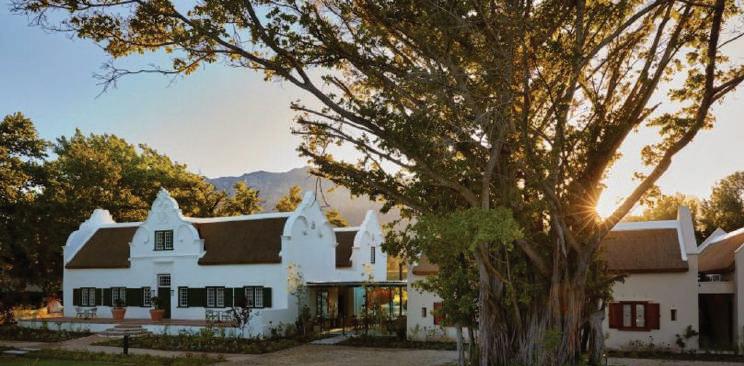
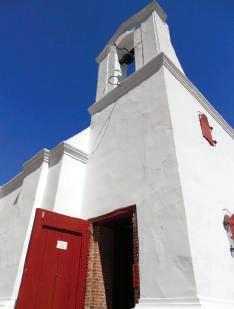
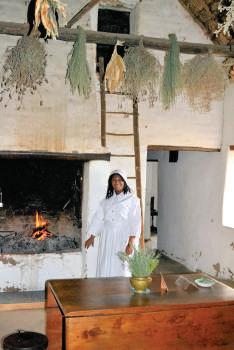
The reopening follows the devastating fire on 7 April 2024, which caused extensive damage to both historic buildings and other parts on the farm. What could have marked a permanent loss instead became a moment of collective resolve. Guided by heritage architects and specialist craftsmen, the restoration balanced historical integrity with modern comfort. Original materials, including centuries-old bricks and fragments of Delft porcelain uncovered during the rebuild, were carefully conserved and reintroduced wherever possible.
The Cape Wine Auction 2026 once again demonstrated the power of generosity and world-class wine, raising R10.6 million at a spectacular weekend hosted at Nederburg Wine Estate.
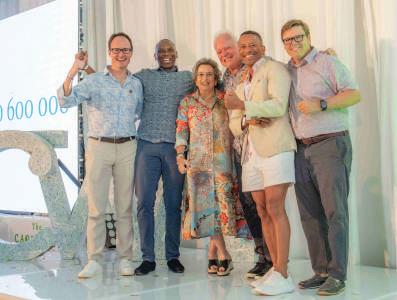
This brings the total raised since the inaugural 2014 auction to R152.8 million, reinforcing the event’s status as one of South Africa’s most impactful charitable initiatives.
Cape Wine Auction Trust chairman Paul Clüver described the twelfth edition as “a unique oasis of hope and inspiration for the Cape Winelands,” adding that organisers were humbled by the generosity of donors and bidders.
The weekend combined fine wine, philanthropy and entertainment, with strong participation f rom the Saturday Barrel Auction through to the main auction and celebration party. Guests enjoyed live performances by Mi Casa and Lloyiso.
Top lots included an Abu Dhabi Grand Prix VIP Experience with Paddock Club™ access, luxury accommodation and exclusive Formula 1® experiences, which sold for R1.3 million; a life-size bronze sculpture by Anton Smit that fetched R650,000; and three seven-night luxury villa stays f rom The Hideaways Club, each achieving R600,000.
Other highlights were the Côte du Cap coastal escape (R420,000), a Willamette Valley wine journey (R320,000), a Zambezi River experience at Thorntree River Lodge (R240,000) and the AdVini France Domaine Laroche Chablis experience (R230,000).
Nederburg General Manager Kate Jackson said the estate was proud to host the auction and support its mission of driving meaningful change through education in the Cape Winelands.
Widely regarded as South Af rica’s leading international wine charity event, the Cape Wine Auction brings together wine enthusiasts f rom around the world for exclusive wine, travel and culinary experiences in support of education and social upliftment.

Text: Editorial Desk | Image: Supplied Lees die Afrikaanse weergawe
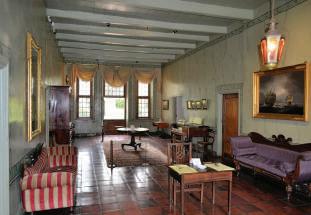
The restoration also incorporates contemporary interior design elements that honour the original architecture while offering modern comfort. The interiors were led by acclaimed Cape Town-based designer François du Plessis, whose work brings a layered, elegant and slightly eclectic interpretation to the historic spaces.
“We reintroduced a classic, luxurious feel that alludes to the estate’s history, complemented by a creative, colourful and slightly eclectic finish. We drew inspiration from the majestic surroundings at the foot of the Stellenbosch Mountains and incorporated prints that celebrate the region’s natural beauty,” said Francois du Plessis.
The restored Manor offers 11 luxury en-suite rooms in the Manor House and three spacious suites in the Jonkershuis. Guests enjoy access to a shared swimming pool set within the estate grounds.
During the 1800s, Blaauwklippen served as a regular stopping point along the early carriage and postal route between Cape Town and Stellenbosch. Its tree-lined avenue, courtyard and gateposts remain enduring symbols of its long-standing role in hospitality.
“Blaauwklippen has stood for resilience, enterprise and hospitality for over three centuries,” said Roelof van den Berg, CEO of Blaauwklippen. “The reopening of the Manor House and Jonkershuis is not simply about restoring buildings – it is about restoring a sense of place. These walls have welcomed travellers, thinkers and families for generations, and reopening them after such loss is a powerful reminder that heritage is something we actively carry forward.”
“This restoration project represents a profound milestone for the estate, and we are proud to have been part of this journey,” said Neil Markovitz, CEO of Newmark Hotels & Reserves. “It required determination, resilience and a shared commitment to excellence. We look forward to welcoming guests to experience the sophistication and character of Blaauwklippen Manor once again.”

Text: Editorial Desk | Supplied Lees die Afrikaanse weergawe van die berig op ons webwerf
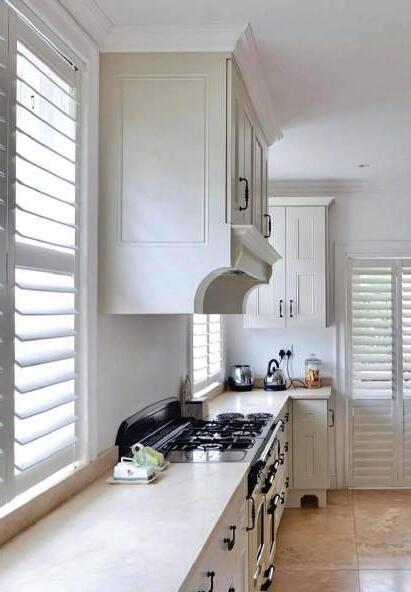

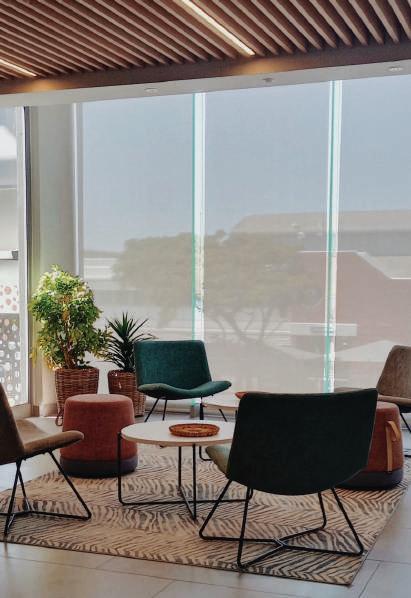
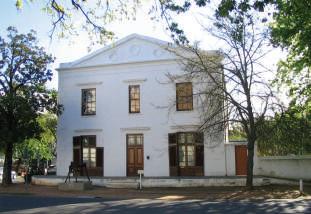
Where does the name De Oude Werf (The Old Yard) come from? Well, one has to go back more than 300 years to make sense of this.
This well-known and iconic piece of land earned its original and unique name due to the role it played in becoming the first place of worship for the young village. It’s here that the foundation stone was laid in 1686 for the construction of a church, which, together with the Drostdy, would upgrade it to a genuine town. That change in status also promoted the Cape of Good Hope from a mere refreshment station to a proper colony. But the tragic town fire of 1710 gutted the building. After that, the premises were left empty and unused for almost seven decades. It became known in town as “De Oude Kerken Werf” (The Old Church Yard).

The unkempt property became somewhat of an irritation to the villagers. The town managers didn’t believe it was their duty to take care of it, while the church –having been relocated to the top of Church Street – also refused any responsibility. By 1783, the landdrost (magistrate) had had enough: “That’s it, we’re subdividing and selling! “The considerable property - surrounded by Ryneveld, Andringa, Plein, and Church Streets – quickly sold out its newly drawn erven. And just like that, the church fathers had an epiphany: “But it’s our property, where’s our money?!”
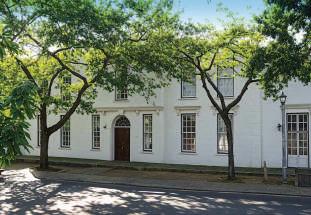
The specific erf where the hotel stands today was owned by several families between 1783 and 1800. The most prominent figure among them was Marthinus Wolferum from Hesse-Kassel in Germany, who bought the erf and its house on 24 October 1800. The earliest record indicating it provided overnight shelter to visitors, at a fee to Mr Woferum, is in 1802.
By the next year, it had clearly become a fully-fledged family inn. In 1803, a Dr. Heinrich Lichtenstein paid 3 Rijksdalers per day for his lodgings, with three meals and Cape wine included. Imported wines were also available at extra cost. An unknown scribe from the 1800s complained that 3 Rijksdalers were a little stiff. But he also noted that the host was very friendly, and recorded that the tables buckled under the sumptuous meals and fresh fruits.
Wolferum sold the property in 1811, after which it changed hands several times. By 1838, it was taken over by the Wium family, who stayed until 1896. During those years, some illustrious guests lodged at Arcadia, as it was known at the time. When Prince Alfred of England visited the Cape in 1860, the Governor Sir George Grey, accompanied him to Stellenbosch. The Prince stayed over with Dominee (the pastor), but the governor was booked in at Arcadia. (He was the very Sir George Grey after whom Grey College in Bloemfontein was named.) And it was during this visit that Prince Alfred broke ground at the harbour to start construction of what would more than a century later become the Victoria and Alfred Waterfront.
The owners who followed the Wiums seemed to have struggled to keep things going, and one even had to declare insolvency. The Marais family took over in December 1898 and launched a prosperous era. Their generous contributions to the welfare and development of Stellenbosch included the restoration of the church, the building of a library at the College (which would later become the University) and bequeathing the farm Coetzenburg to the University.
Growing numbers of students meant more demand for longer-term board and lodgings. These students were referred to as “Parlour Boarders”, because many families turned their parlours into rented accommodation. The inn, however, fairly quickly returned to opening its doors to tourists and ordinary visitors. At that time, the mid-1900s, the name was changed from Arcadia to D’Ouwe Werf and more recently it became De Oude Werf.
In the process of digging foundations on the various erven of De Oude Kerken Werf, workers constantly came upon old graves. It was suspected that De Oude Kerk (the Old Church) might have once stood upon Erf 5, where the inn was located, and the hotel stands today. This was confirmed in the late 1900s when the hotel was extended to include a restaurant and kitchens. De Oude Werf was
And that is how De Oude Werf came to earn its now famous name: it’s the premises where the foundations of the oldest church building in South Africa can still be seen, it’s the oldest place where travellers could find overnight accommodation, and it’s the place from where the oldest ghost in Stellenbosch and his horse still do their tiresome rounds during the wee hours of the morning.vernoem was. En dit was ook met dié besoek wat Prins Alfred die eerste sooi gespit het vir konstruksiewerk by die Kaapse hawe, vandag bekend as die Victoria en Alfred Waterfront.

Text:
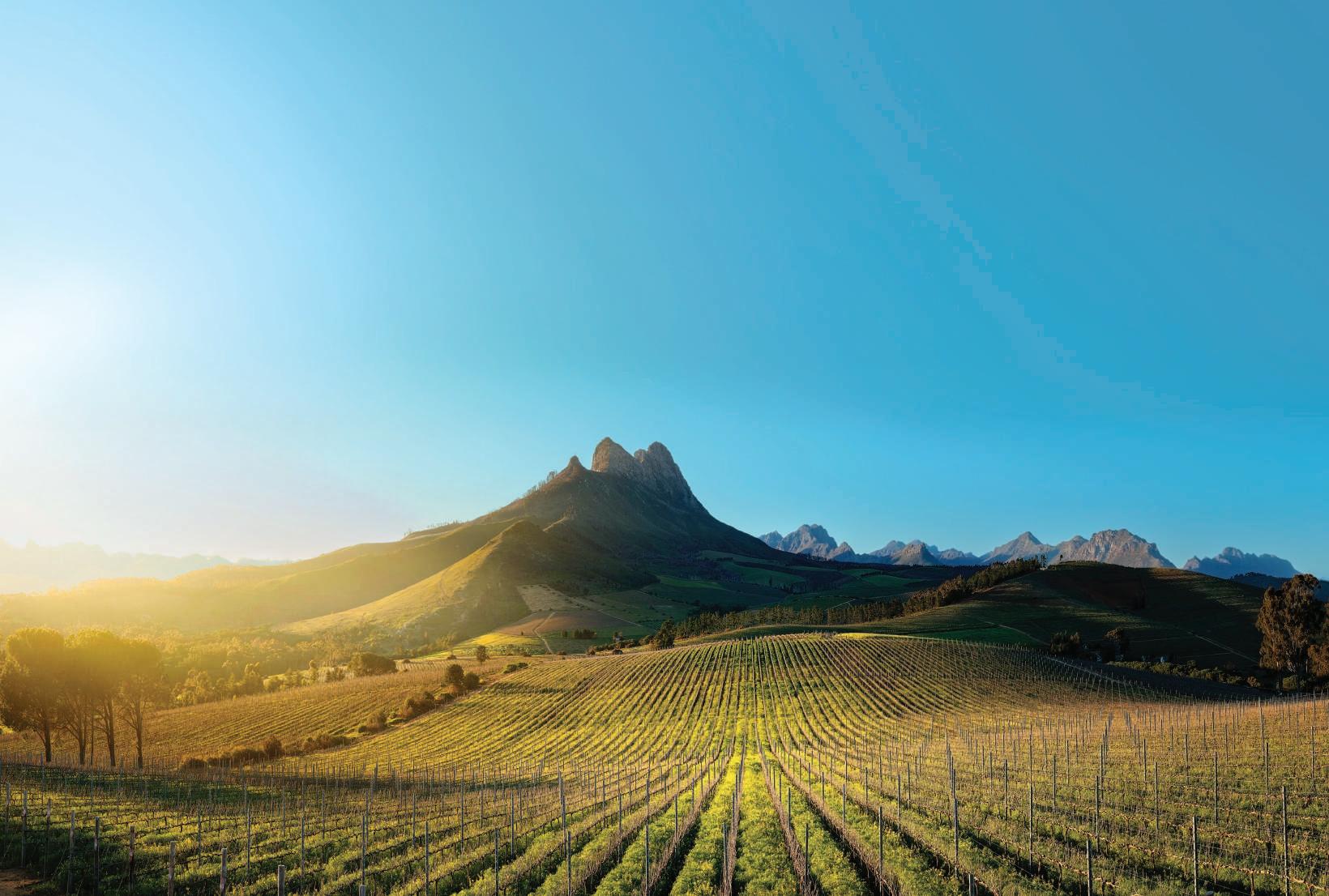
In Stellenbosch, where culture, science, and lifestyle converge, peptides are redefining health – from reproductive renewal to regenerative recovery –ushering in a new era of wellness and human potential. The Next Generation of Weight Management.
The ‘weight loss’ category itself is undergoing a renaissance. New therapies like CagriSema, which combines semaglutide with an amylin analogue, are designed to activate multiple satiety pathways simultaneously. Clinical trials show weight loss exceeding 20%, a leap beyond current single-target drugs. Triple agonists, which co-target GLP-1, GIP, and glucagon receptors, promise even greater metabolic benefits.
For Stellenbosch’s health-conscious community – where lifestyle, fitness, and longevity are prized – these advances signal a future where weight management is not just about shedding kilos, but about precision metabolic engineering.
Peptides are rewriting the code for conditions once deemed untreatable. Elamipretide, approved in 2025, became the first therapy for Barth syndrome, a devastating genetic disorder. Similarly, investigational drugs like navepegritide for achondroplasia are showing not just improved growth velocity in children, but enhanced physical functioning and quality of life.
In oncology, peptides are being transformed into delivery vehicles that carry radiation directly to cancer cells. Candidates like 177Lu-edotreotide for neuroendocrine tumors and peptide-radiopharmaceuticals for gastro-intestinal cancers are redefining precision oncology. Unlike bulky antibodies, peptides penetrate tumours more effectively, offering hope for cancers that have resisted conventional treatment.
Autoimmunity: Teaching the Body to Heal Itself
Perhaps the most elegant application lies in autoimmunity. Instead of suppressing the immune system, new therapies aim to re-educate it. Experimental treatments like TPM203 use peptide-nanoparticle complexes to “teach” the immune system tolerance, offering a paradigm shift in diseases such as pemphigus vulgaris.
For Stellenbosch’s academic and medical community, this represents a thrilling intellectual frontier: programming biology rather than fighting it.

Reproductive Health and the Joy of Renewal
Peptides are quietly revolutionising reproductive medicine, offering hope where traditional therapies have often fallen short. Kisspeptin, dubbed the “master molecule” of reproduction, is being trialled as a therapy for women whose menstrual cycles have shut down due to stress or low body weight. By mimicking the body’s natural rhythm of hormone release, it aims to restore fertility without the risks associated with conventional IVF drugs. For men, peptides such as gonadorelin are being explored to support healthy testosterone levels by stimulating the pituitary gland directly – an approach that avoids the shutdown of natural production seen with synthetic testosterone.
For the public, this is more than science; it is about reclaiming vitality, intimacy and enjoyment of life. In a community that values both family and longevity, peptide therapies could redefine how we approach fertility, sexual health and the graceful extension of reproductive years.
A Word of Caution
With power comes responsibility. The easy availability of research peptides online poses risks, from impurities to mislabelling. These therapies demand medical oversight, rigorous testing, and ethical consideration.
The Stellenbosch Connection
Why does this matter here? Because Stellenbosch is uniquely positioned at the intersection of science, lifestyle and longevity. With its world-class university, thriving biotech research labs, and a community that values both wellness and innovation, the town is primed to be a hub for peptide-driven medicine.
The peptide revolution is not just about treating disease – it’s about redefining human potential. And Stellenbosch is ready to embrace it.
Weight Management Reinvented: Next-generation peptides like CagriSema deliver weight loss exceeding 20% by targeting multiple satiety pathways simultaneously.
• Rare Disease Breakthroughs: Elamipretide became the first approved therapy for Barth syndrome, offering targeted energy restoration where only symptom management existed before.
• Cancer Precision Strikes: Radiopharmaceutical peptides act as “guided missiles,” delivering radiation directly to tumour cells while sparing healthy tissue.
Immune System Re-Education: Experimental therapies such as TPM203 use peptide-nanoparticles to “teach” the immune system tolerance, tackling autoimmunity at its root.
• Reproductive Renewal: Kisspeptin is being trialled to restore fertility naturally, while gonadorelin supports healthy testosterone without shutting down natural production.
• Regenerative Recovery: Peptides like BPC-157 and TB-500 accelerate healing of tendons, ligaments, and cartilage – offering athletes and active lifestyles faster, smarter recovery.
• Longevity and Vitality: Mitochondrial-derived peptides such as MOTS-11 enhance muscle function and metabolic resilience, helping maintain strength and mobility with age.

I haven’t been sleeping well lately.
Not the gentle, “Oh I woke up once or twice” kind of not sleeping. I mean the full,wide-eyed,staring-at-the-ceiling,negotiating-with-my-own-thoughts-at -2:47AM kind of not sleeping.
You know the sort. The brain suddenly decides this is the perfect time to become deeply unhelpful. It replays conversations from 2003.

And then I remember the milk.
It asks important questions like: Did you reply to that email? Should you repaint the guest bathroom?
It questions my life choices. And then, in what feels like a very mature and sensible move, I decide: I’ll make tea.
Tea feels responsible. Tea feels like the sort of thing people who “manage stress well” do in the middle of the night. So I shuffle to the kitchen, trying not to wake the household, convinced that this is a calm, restorative decision.
The kettle boils with theatrical enthusiasm, as if announcing to the entire valley that I am awake again. I place the teabag in the cup. I pour the water. I feel composed.
Now, I could drink it black. Many strong, admirable people do. But at 3AM, I am not strong or admirable. I want comfort. I want milk.
So I open the fridge. And that’s when the trouble starts.
Because the fridge at midnight is not the same fridge you meet at noon. During the day, the fridge and I have a perfectly respectable understanding. I open it with purpose. I know what I’m looking for. It’s all very adult and efficient.
At midnight, however, things change. At midnight the fridge becomes a glowing, humming accomplice. It’s as if it’s been waiting for me. “Oh good,” it seems to say. “You’re back.”
I reach in for the milk. That’s all I need. Just the milk. But while I’m there, I notice things. Cheese. Half a lemon. A heroic-looking container of leftovers I was very excited about at lunchtime. A jar of something that might once have been pesto but is now more of a concept.
The real problem, of course, is the cheese. Cheese has a way of whispering. It doesn’t shout like chocolate. It murmurs. Calmly. Reasonably.
“It’s protein,” it says.
“It’s basically a health decision.”
“Also, you haven’t slept. You deserve this.”
And before I know it, I’m standing in the kitchen in my slippers, holding a small piece of cheddar like it’s a very private reward.
The next morning, of course, the evidence is there. The slightly crooked cheese edge. The fork left in the sink. The fridge light that now feels less like a friend and more like a witness.
But perhaps the fridge is not the problem. Perhaps it is just a silent companion for those of us who find ourselves awake when we shouldn’t be. It asks no questions. It offers no advice. It simply hums like a loyal companion who keeps your secrets.
There is something oddly comforting about that.
So until sleep returns properly, I suspect the fridge and I will continue our late-night meetings. Quiet, respectful, slightly suspicious of one another.
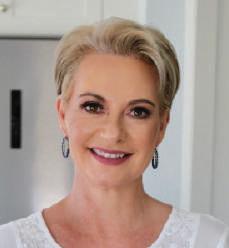

Chantal Lascaris is the author of the highly successful ‘All Sorts of’ series of cook books. She’s also written another best seller called ‘The Ultimate Salad Book’. She maintains that she’s not a chef but rather a home cook with an interest in health and nutrition. She lives in Franschhoek with her husband and cat Loxie. For recipes, lifestyle and healthy living ideas, follow her on @ChantalAllSorts on Facebook, @chantal_lascaris on Instagram and ChantalLascaris on Twitter/X as well as her website chantallascaris.co.za
Text: Chantal Lascaris I Images: Chantal Lascaris Lees die Afrikaanse weergawe van die berig op ons webwerf
Drie jaar nadat dit as 'n sjiek bestemmingsrestaurant met globale kontemporêre ambisies geopen het, het Eleven sy mees opregte uitdrukking tot nog toe bereik. Vandag is die restaurant diep gewortel in sy vallei en streef hulle doelbewus daarna om in alles wat hulle doen 100% Franschhoek te wees –van personeel en produkte tot breekware.
Toe Eleven in 2023 geopen het, het 'n proespyskaart die ambisie daarvan gedefinieer: kontemporêr, wêreldwyd beïnvloed en hiper seisoenaal. 'n Versnaperingspyskaart het gevolg, wat gespreek het tot die straathoek ligging en balkon uitsigte. Met verloop van tyd het seisoenaliteit ontwikkel in iets meer doelbewus – hiper-plaaslikheid. Plek het identiteit geword.
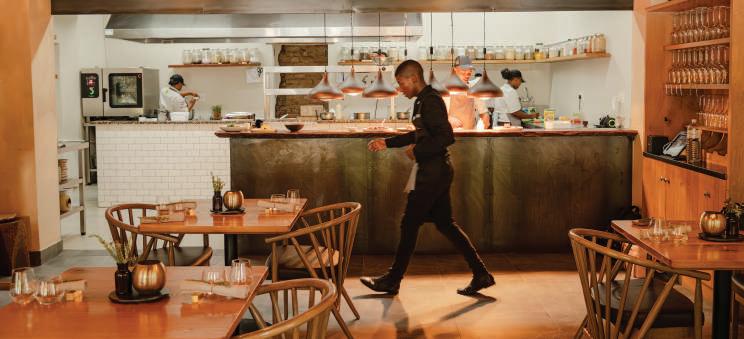
“Die identiteit van Eleven het lank ontwikkel,” sê stigter Ryan Shell. “Dit is so naby as wat ons gekom het.”
'n Belangrike verskuiwing was die oorskakeling na 'n à la carte-spyskaart, wat die restaurant meer toeganklik maak vir plaaslike eters. Die doel is eenvoudig: kook wat plaaslik beskikbaar is, so goed as moontlik – sodat Franschhoek inwoners 'n plek het wat soos hul eie voel.
Spyskaarte word nou gebou rondom bestanddele wat van produsente en kwekers in die vallei verkry word. Wat as 'n voorneme begin het, het 'n netwerk van noue verhoudings geword, met baie bestanddele wat direk van kleinskaalse boere gekoop word. Eleven kan reeds al sy proteïene plaaslik verkry en ongeveer 60% van sy vars produkte, met vordering wat voortduur.
Die aanbod behou sy kenmerkende styl. Versnaperinge sluit in beesstert-arancini bedien met chili aioli. Voorgeregte sluit in Three Streams-gerookte foreltartaar met framboosskuim en vinkelslaai. Hoofgeregte wissel van Dalewood geklopte feta ravioli met gerookte tamatiesous tot La Combé speenvarkie met patat, appel, prei en port demi-glasuur. Eters kan hul ervaring saamstel, van 'n ligte middagete tot 'n feestelike aandete.
Die transformasie strek verder as net die bord. Veldblomme versier tafels, vere dui sitplekke aan, en ystervarkpenne wat deur 'n plaaslike boer versamel is, voeg subtiele tekstuur by – gebare wat die verbintenis met grond en gemeenskap weerspieël. Die span is nou byna uitsluitlik in Franschhoek gebaseer, met jong plaaslike inwoners wat opgelei is as deel van die restaurant se langtermynvisie.
“Dit gaan nie net oor wat ons bedien nie. Dit gaan oor wie jou bedien.”
Die wynaanbod weerspieël hierdie filosofie en bevoordeel nabyheid en verhoudings met plaaslike boere en wynmakers.
Eleven jaag nie meer elders heen nie. Dit het presies geword waar dit is: 'n Franschhoek restaurant gevorm deur sy vallei, sy mense en sy produsente.
Om te bespreek, stuur 'n e-pos na reservations@eleveneats.co.za. Eleven is gelëe te Huguenotweg 11. Tel: 021 023 3755. Oop 12:00–14:30 (laaste sitplek) en 18:00–21:00 (laaste sitplek), Maandag tot Sondag.

Teks: Redaksie | Foto’s: Verskaf Read the English version of this report on our website
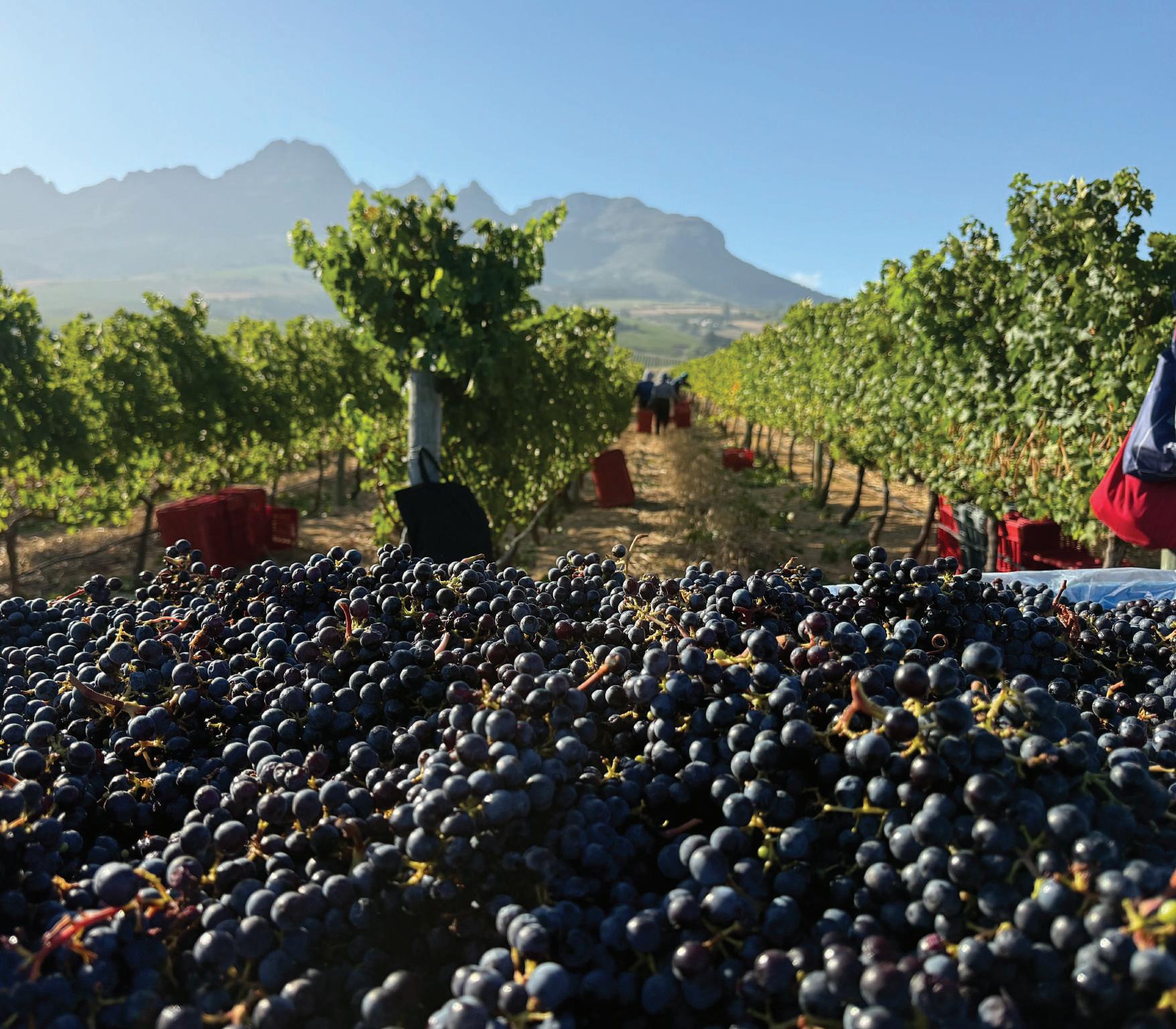
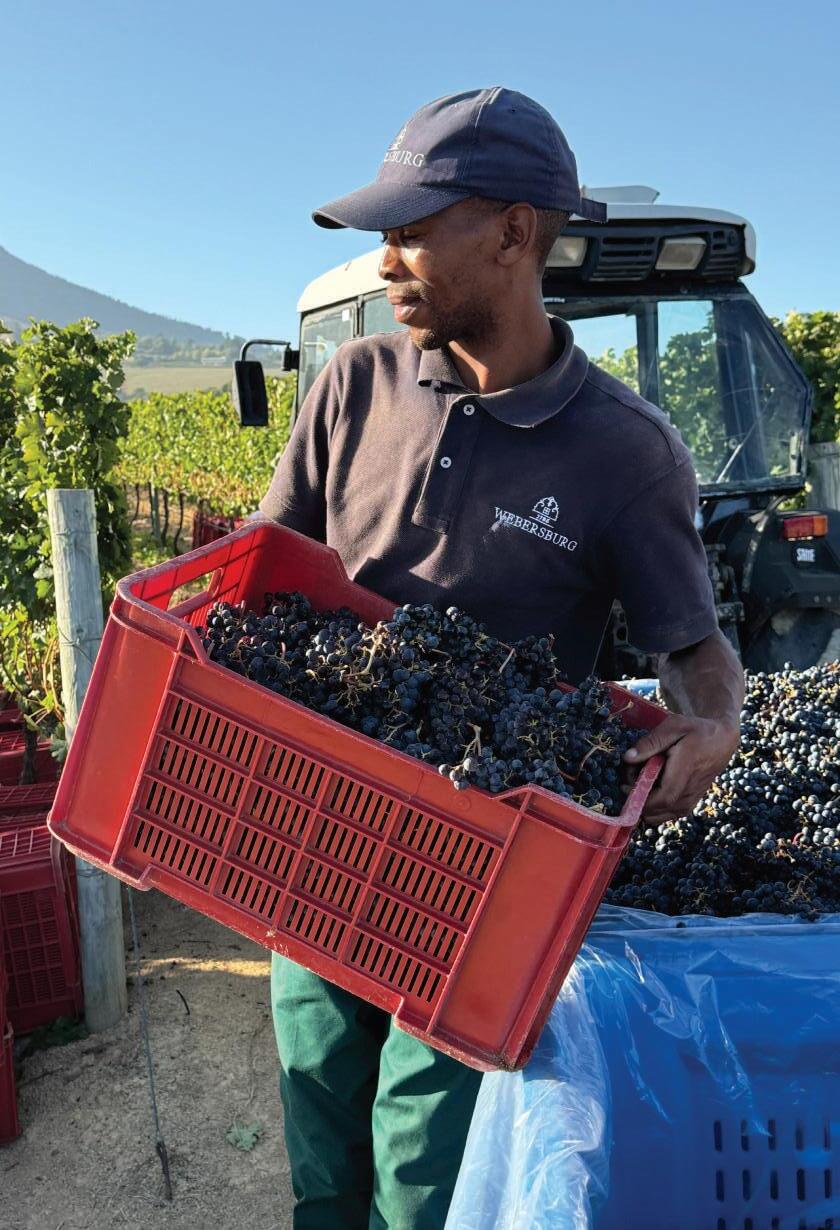
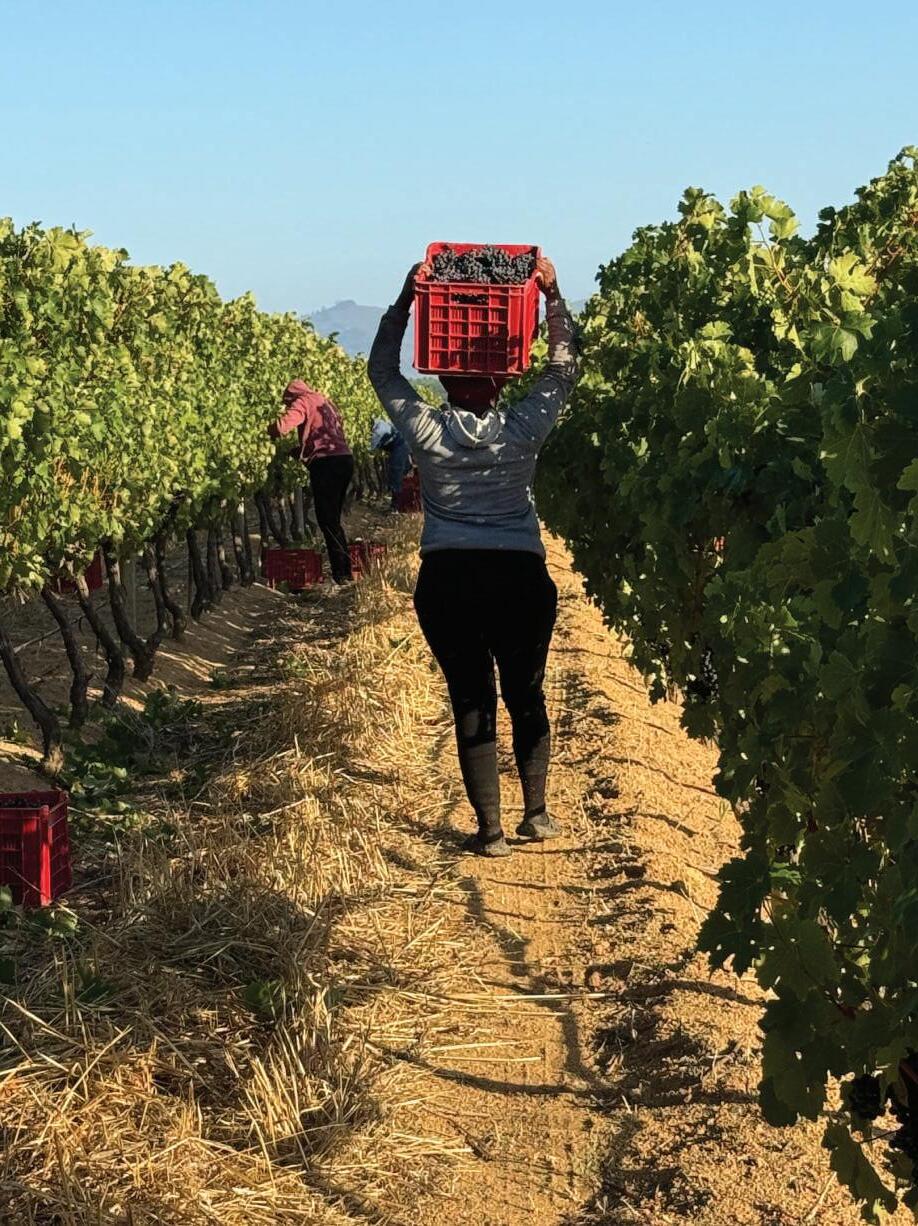
Harvest season is in full swing across Stellenbosch, and the valley hums with the energy of tractors at dawn, cellar doors flung open, and the sweet scent of crushed grapes hanging in the late-summer air. As bins of Chenin, Cabernet and Chardonnay make their journey from vineyard to vat, winemakers are taking the first careful steps of what will become the next vintage’s story. In this issue, we celebrate the rhythm and ritual of harvest – a time when long days, purple-stained hands and quiet anticipation remind us why Stellenbosch remains the beating heart of South African wine.
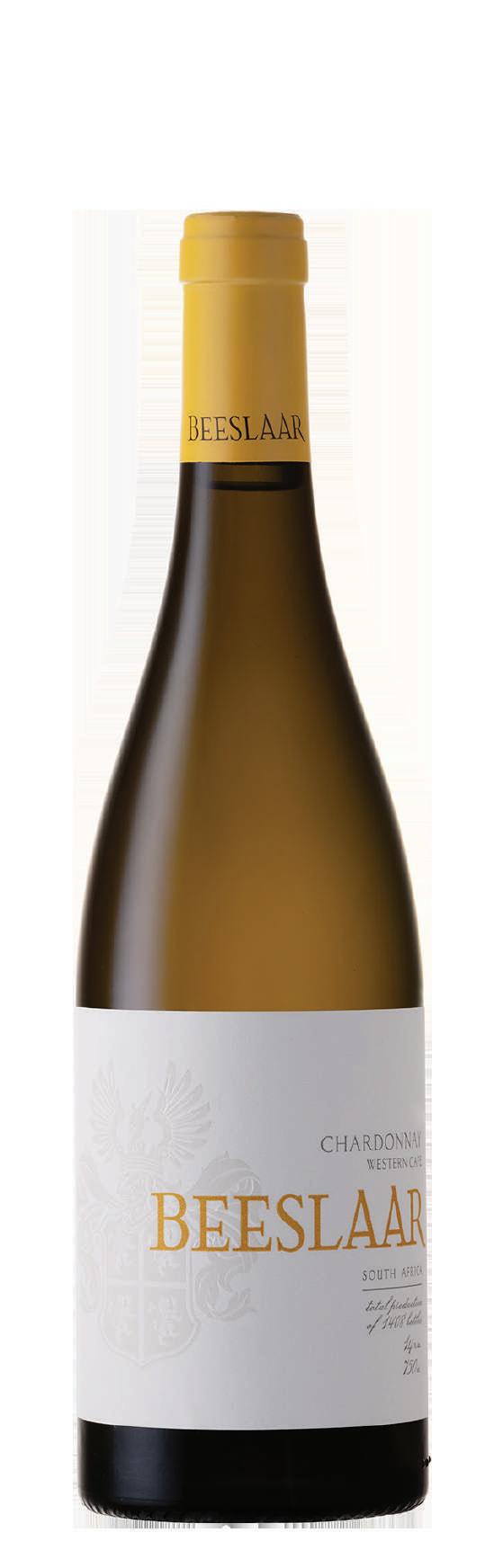
Beeslaar Chardonnay 2023
The wine exhibits fragrant aromas of citrus fruits and green apples. On the palate, ripe pineapple flavours contrast delicately with the mineral nucleus of the wine. In addition to the delicate acidity that interweaves with the perfectly balanced core, the moderate alcohol content contributes to a palate-pleasing and revitalising finish.
Cellar price per bottle: R430

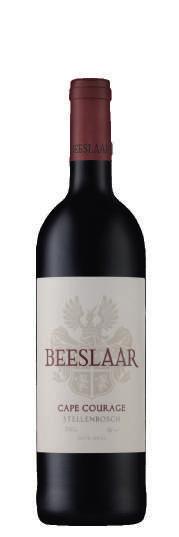
Beeslaar Cape Courage 2023
This five-way, Cabernet Sauvignon dominant blend is dense ruby in colour with a slight purple edge. Cabernet Sauvignon leads on the nose, showing graphite, tea leaf, dark hedgerow fruit and cassis, supported by subtle herbal notes, cinnamon spice and a dusty, earthy nuance. The palate is broad yet refined, with ripe, fine-grained tannins framing a generous, approachable fruit core. Classic Cabernet flavours carry through, with Pinotage adding red-fruit lift and gentle spice. Balanced and composed, finishing dry in the Beeslaar style, with excellent character and value.
Cellar price per bottle: R230
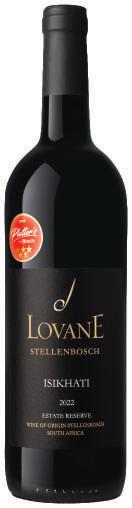

Lovane Isikhati 2022
Time and patience define Isikhati, a Stellenbosch blend that tells the story of our estate. Deep and composed, it reveals dark fruit, cassis, and plum, layered with cedar, cocoa, and spice from 24 months in French oak. Firm yet graceful, the palate carries fine tannins and quiet persistence, promising enjoyment both now and in years to come. Crafted from our estate-grown Cabernet Sauvignon, Petit Verdot, and Cabernet Franc, this wine reflects the rhythm of the vineyard: steady, deliberate, and guided by care. A wine to savour slowly, shared among those who value moments that last.
Cellar price per bottle: R220
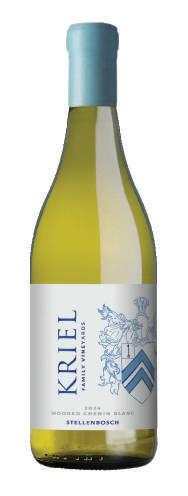

Kriel Family Vineyards Wooded Chenin Blanc 2024
This wooded Chenin Blanc is a full-bodied, bold wine created from a single vineyard. It has vibrant aromas of stone fruit and dried apricots with subtle floral hints. A smooth, lingering finish of vanilla and oak notes. Pairs exceptionally well with seafood, soft cheeses like camembert and creamy pasta dishes.
Cellar price per bottle: R300


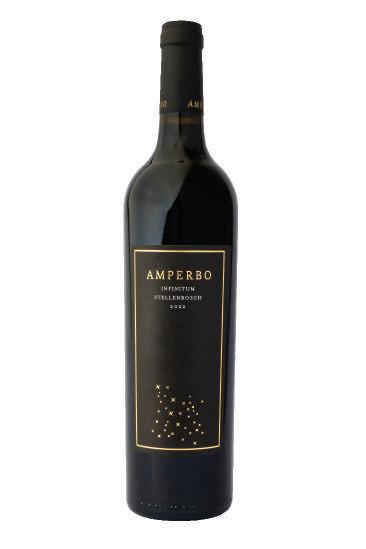
Amperbo Infinitum 2021
A true Bordeaux blend featuring the five classic cultivars of Cabernet Sauvignon, Merlot, Cabernet Franc, Malbec & Petit Verdot. The wine delivers fruit scents and flavours of blackberry, cherry, vanilla and cassis. Picking at higher sugar levels, delivers riper tannins which contribute to the soft, silky and elegant mouthfeel. An ideal complement for lamb, bobotie, curries, venison, roast pork and fillet on the bone. balanced. Natural fermentation adds to the complexity of the wine. This wine will go well with venison, lamb, duck, oxtail and beef steak.
Cellar price: R225

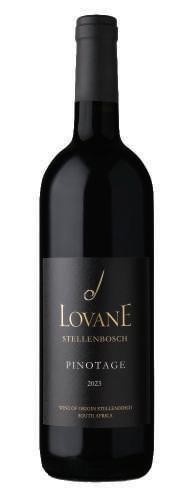
This Stellenbosch Pinotage is bold and expressive, yet elegantly structured. Aged for 24 months in a mix of French and American oak, it reveals generous layers of dark cherry, blackberry, and ripe plum, seamlessly woven with notes of warm spice, mocha, and toasted oak. The palate is rich with vibrant fruit, a subtle smokiness, and fine-grained tannins that add depth and poise. A long, savoury finish makes this wine compelling partner at the table.
Cellar price per bottle: R220

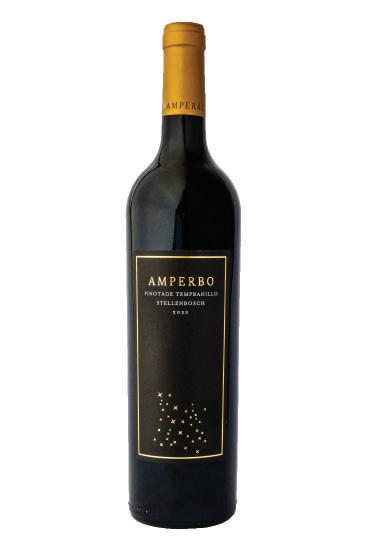
These two cultivars are in love with one another. Their marriage gives you a well-balanced wine to drink now or cellar for a couple of years. This wine with its deep dark colour shows blackberry, cherry and plum fruit and is rounded off with floral flavours. Made with minimal intervention this wine reflects the unique terroir of Amperbo. It is well-structured and balanced. Natural fermentation adds to the complexity of the wine. This wine will go well with venison, lamb, duck, oxtail and beef steak.

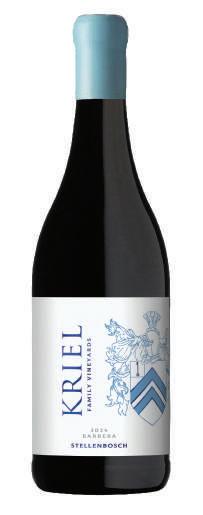
Kriel Family Vineyards Barbera 2024
With our Barbera we pay tribute to our Italian heritage. It is a vibrant, ruby-red wine with bold flavours of ripe berries, plums and hints of spice. The balanced tannins deliver a velvety smooth finish on the palate. Pairs well with hard cheeses like parmesan, tomato-based dishes and mushroom risotto.
Cellar price per bottle: R300
Experience a new level of comfort and style with a Li a Home Li — where luxury meets independence
Designed to complement your home, its compact and elegant form fits beautifully into any space, while e ortless installation means no sha , pit, or heavy construction. Enjoy the sophistication of quiet luxury, with smooth and whisper-quiet travel between floors. Engineered with precision and safe by design, every Li a Home Li ensures complete peace of mind. Elevate the way you live — gracefully, safely and beautifully.
Contact Li a on 080 73 73 73 7 or visit www.li a.co.za to discover more.
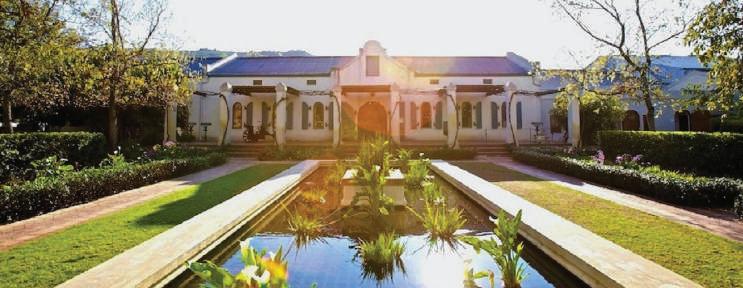
Fairview nooi gesinne uit om te ontdek waarom dit een van die Kaapse Wynlande se gewildste bestemmings bly. Genesteld teen die hange van Paarlberg, kombineer die landgoed bekroonde wyne, artisinale kase, die ikoniese Boktoring met sy charismatiese bokke, ryk erfenis en 'n verskeidenheid gesinsvriendelike besienswaardighede. Met sy gewilde Plaas Deli en Bakkery, plaas-tot-vurk-etes by die Bokstal, tuine, uitgestrekte uitsigte en warm gasvryheid, beloof elke besoek om onvergeetlik te wees. 'n Sterk fokus op volhoubaarheid en plaaslike produkte verhoog die aantrekkingskrag verder.
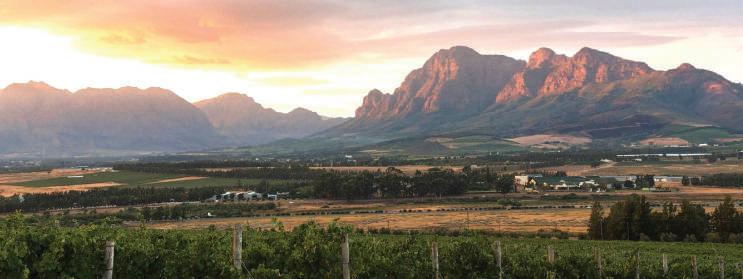
Fairview, 'n derdegenerasie-familielandgoed wat in 1937 deur die Litause immigrant Charles Back verkry is, het onder die leiding van sy kleinseun ontwikkel tot 'n internasionaal erkende bestemming vir wyn, kaas en agritoerisme, terwyl dit steeds 'n werkende plaas is. Vandag is dit die tuiste van komplementêre ambagsmatige mikro-ondernemings wat wyne, kase, gebak en innoverende plantgebaseerde produkte produseer.
Besoekers word verwelkom deur die betowerende, ommuurde Boktoring, 'n ikoniese landmerk wat deur kinders en volwassenes bemin word en sedert 1981 die tuiste van Fairview se geliefde bokke is.
Fairview Proelokaal en Wyne 'n Stap deur die tuine lei na die bekende proelokaal, waar vatvormige stasies en kundige wynambassadeurs 'n ontspanne, sosiale ervaring skep. Proeë word gepaar met Fairview se gevierde koei- en bokmelkkase, terwyl die Beryl Back Meesterproelokaal begeleide proeë van vlagskipwyne aanbied. Jonger besoekers kan 'n prettige Kinderproe geniet met sagter kase en 'n soet peuselhappie.
Fairview se portefeulje strek oor sowat 50 wyne, van rooi- en witwyne tot versnitte, rosé, dessertwyne en Cap Classique. Van die Goats do Roam-reeks tot erfenisbottelerings, weerspieël die wyne diverse Kaapse terroirs, met Shiraz wat die sleutelvariëteit bly.
Oop daagliks, 09:00–17:00.
Fairview Deli, Bakkery en Kaas Langsaan bied die Fairview Deli and Bakery ambagskase, charcuterie, konfyt, olywe en olyfolies, asook vars brood en gebak gemaak met Fairview se eie koring. Die plantgebaseerde reeks sluit kase, jogurt en roomys in. Fairview bly een van Suid-Afrika se voorste ambagskaasprodusente.
Oop daagliks, 09:00–17:00.
Fairview Goatshed Restaurant
Die Goatshed bied ontspanne, seisoenale plaas-tot-tafel-etes met Mediterreense-geïnspireerde disse gemaak van plaasgekweekte of plaaslik verkrygde bestanddele. Gaste kan binnenshuis eet, op die stoep of onder die wingerdbedekte priëel wat uitkyk oor die Boktoring, met 'n toegewyde kinderspyskaart wat dit 'n vaste gesinsgunsteling maak.
Daagliks oop vir ontbyt en middagete.
Boer Donald se Fairview Toere
Gaste wat graag verder wil verken, kan saam met Boer Donald begeleide ervarings bywoon, insluitend bokplaas-toere met proeë of versnaperinge, of 'n begeleide bergstap, wat die plaas se storie tot lewe bring.
Voordat jy vertrek, maak seker dat jy die bokke by die Boktoring besoek — veral in die lente gedurende die lamseisoen, wanneer besoekers Fairview se bekoorlike pasgeborenes kan ontmoet .

The Zambia Luxury Lodge Collection – launching in May 2026 – promises elegant safari experiences for discerning travellers. Each lodge showcases Zambia's most inspiring landscapes and wildlife, offering guests an immersive connection with nature, luxury accommodation, fine dining and authentic local experiences – all while keeping sustainability and community engagement front of mind.
Here’s a taste of some of the lodges in the collection:
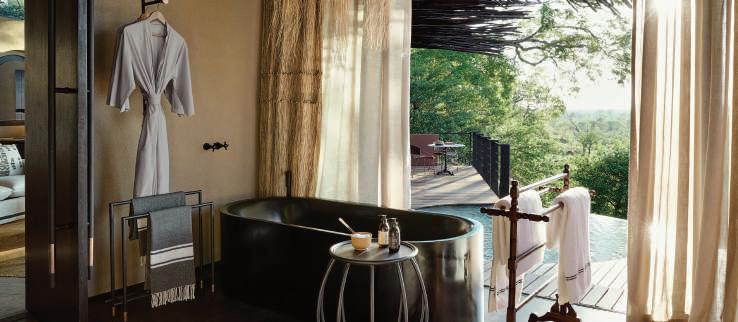
Set atop a hill in the game-rich South Luangwa, Chichele blends contemporary luxury with rich history – once hosting Queen Elizabeth and other dignitaries. Designed by Jack Alexander Architects and Fox Browne Interiors, the lodge features ten spacious suites with floor-to-ceiling glass, private plunge pools, and sweeping views of salt pans and riverine forest, providing a private bush sanctuary. Interiors mix local craftsmanship, warm woods, Afro-print fabrics, copper and gold accents, and modernist touches. Guests can enjoy fine cuisine, wellness experiences and immersive wildlife encounters in one of Zambia's most diverse parks.
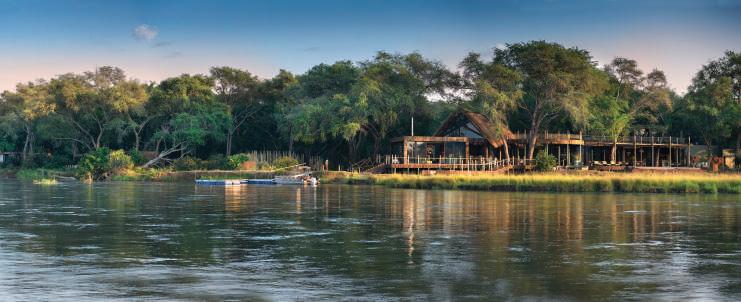
A riverside retreat blending adventure and serenity, Lolebezi offers ten glass-fronted suites, featuring sculptural decor, private plunge pools, and fire-lit decks overlooking the pristine Zambezi River. Guests can enjoy bespoke dining experiences, intimate wildlife encounters with elephants, hippos, lions, and more, and expertly-guided safaris with exclusive access via private airstrips.
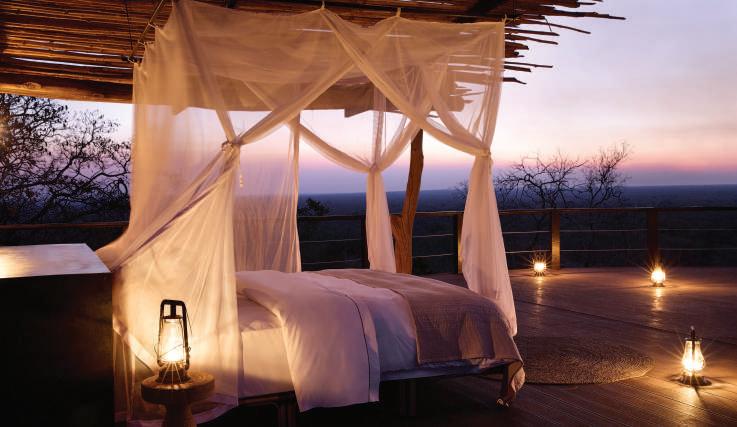
Spanning 30,000 hectares, this remote wilderness sanctuary offers seven expansive riverside suites, seclusion and far-reaching views of the Lunga River. Interiors are elegantly modern, using natural materials, local art, and subtle nods to Zambian culture. Communal areas include a dining deck, spa, rim-flow pool, and the Ngoma Deck for private dining or sleeping under the African stars. Visitors can enjoy customisable safaris – game drives, walking safaris, river cruises, and more. The lodge emphasises conservation, with the recent reintroduction of cheetahs and other native wildlife.

It did not take the humiliated Old Order long to extract some form of revenge following its terminal defeat at the Davos 2026. In less than a week from its closing – the following Thursday night – a salvo was fired from London (where else?). The Reuters news agency released a report that the American government would no longer support the metals market and is moving away from it. It sparked panic across the globe. About three hours later, the US refuted the story, but the damage was done. Unfortunately, nobody can un-tumble a stack of dominoes after the fact. By Friday morning, the silver, gold and crypto markets were engulfed in a blood bath. The biggest silver market in the world, China, shut down everything around its silver trading, traders couldn’t even access their own data while everything blew up around them. Industrial entities around the globe dependent upon physical silver to keep up their production, rented trucks and security to descend upon silver depots to load, lock and drive away their stashes.
Donald Trump’s reaction was equally swift: “Really? You want to play that game with me? Fine. Pam Bondi, release the Kraken!” Before that very Friday was out, the first batch of the notorious Epstein Files was dumped. And it kept on coming for a week, three million pages of it. The effect on London – not to forget the other side of the pond – was ruinous. Besides the many red faces, longtime political stalwart Lord Peter Mandelson had to resign as US Ambassador, the ‘former Prince’ Andrew Mountbatten-Windsor was arrested, and the Labour government took a fall from grace unlike anything since the Profumo Affair of the early 1960s. In the few weeks since, Labour lost all three by-elections, Prime Minister Keir Starmer’s public support plummeted to 20% – the lowest for a serving PM in history – and 52% of his own party want him gone. He’s not expected to last long, and calls for early general elections get louder by the day. Westminster may look a lot different in the not-too-distant future.
For decades, we have measured success with numbers. GDP growth. Income per capita. Market returns. Asset prices. These indicators are useful. They help us compare countries, track performance, and analyse trends. But they do not tell the full story.
An economy can grow while its people feel insecure. Markets can rise while households feel financially exposed. Income can increase without creating confidence.

This is the global conversation shifting today. Countries have started to ask: What is the purpose of growth? Is it simply to produce more, or to enable people to live more securely and meaningfully? Growth is important, but growth is a tool, not the goal.
The real question is whether people feel in control of their finances, whether they can absorb a shock, whether they can plan with confidence, and whether they have options.
This is what we call financial well-being. Financial well-being moves the discussion from aggregates to people. It is not only about income or access to products; it is about resilience, understanding, and agency.
Research in many developed economies shows an important point: higher income does not automatically reduce stress. Access to credit does not guarantee stability. Participation in markets does not automatically create empowerment. Money alone does not create security; structure does.
If economics is about human flourishing, we must measure more than output. We must measure whether households are becoming stronger, more capable, and more independent over time.
This is not about replacing traditional indicators. GDP still matters. Fiscal discipline still matters. Markets still matter. But indicators measure activity, while financial well-being measures durability. And durability determines whether prosperity lasts.
There are three reasons this shift matters:
• First, it forces long-term thinking. If we define success as resilience and stability, policy becomes less about short-term performance and more about sustainable progress.
• Second, it connects macroeconomics to real life. National growth only has meaning if individuals experience confidence and security.
Third, it strengthens economic participation. When people understand their finances, prepare properly, and build buffers, they are less dependent and more productive. That is how you build a durable economy.
The question for us is simple: Are we measuring what truly matters?
Adopting financial well-being as a guiding principle does not mean abandoning rigour. It requires serious data, disciplined measurement, and credible benchmarks. But it also demands honesty: prosperity is multidimensional. Wealth has purpose only if it supports dignity, resilience, and meaningful choice.
GDP tells us how much we produce. Financial well-being tells us whether we are building something that lasts. And that is the measure that truly matters. askdawie@efgroup.co.za | www.efgroup.co.za
So far, it’s been a tumultuous 2026, one that provoked tit-for-tat moves that shook up political, financial and traditional institutions. And there’s more to come. Restoring sanity and preventing all out ruin still rests – as through the centuries of old – on the shoulders of diplomats, a class that has been confoundingly overseen and under-utilized in the hot-headed environment of modern international politics. Many believe the watering down of education systems and the insistence on ideology-based courses rather than honest history and pragmatic statecraft training are to blame for hollowing out diplomatic excellence and mutual understanding. It’s an extremely dangerous place for the world to be in. But one surprising voice of reason was rewarded with an unexpected standing ovation at the second major international convergence of the year, the Munich Security Conference.
Cuban-American US Secretary of State, Marco Rubio, presented a softer tone in his Munich address, veering from the robustness of his President and even Vice-President: “We do not need to abandon the system of international co-operation we co- authored, and we don’t need to dismantle the global institutions of the Old Order that together we built. But these must be reformed, they must be rebuilt.” He went on to warn that decline is a choice, an unnecessary and avoidable one. The shackles of guilt and shame ultimately weaken societies, countries and all their institutions, which is in nobody’s interest. Strength grows from pride in culture and heritage, not the hopelessness of shame and the paralysis of fear. The only fear should be, and singular shame will be, he argued, “to not leave our nations prouder, stronger and wealthier for our children.”
Rubio’s conciliatory and cautioning address landed in a world where war has taken on a new meaning. It’s not necessary to launch nuclear missiles to incinerate trillions in currencies, bring governments to a fall and mete out punishment upon those in high places. But it’s a very fragile state of conflict to prevail, things can easily boil over. And our planet has truly become a village, everything happening in the greater world will ultimately affect our own country, our personal security, and the well-being of our families. We’re in an era where the comfortable slumber of unknowing and the easy habit of clinging to what no longer serves its purpose are not only inadvisable, it is downright stupid. Be wise, be awake and be aware of what’s heading our way.

The opening ceremony of the Winter Olympics in Italy did nothing to snow over the revelations of the Epstein files and ignited another storm of controversy. Featuring a pentagram on fire at the Milan extravaganza, the Olympics provoked similar criticism as the Paris Summer Olympics which opened with a transvestite-themed scene of Christ’s Last Supper with his disciples on the night before his crucifixion. The organizers of both events claim their symbolism was misinterpreted, but Christian denominations say evident satanic undertones at both events cannot be a coincidence.

Rumen
Bulgaria is heading for snap elections in April, the 8th in five years, following the resignation of the government in December and President Rumen Radev early in the new year. He became the first president to resign in the post-Soviet era. The country saw massive street protests against corruption and perceived election interference by the EU in earlier elections. In spite of being without a government and the majority of Bulgarians opposing the loss of their own currency, the Euro was introduced on 1 January without a referendum or any other form of consultation with the people. Radev is now forming a new political party to contest the upcoming elections.
America deployed a 100 military staff to Nigeria to conduct training courses and help strengthen intelligence structures. This follows an official request by Nigeria for technical support and better equipment to deal with the increasing insurgency and military violence of recent years, which now seems to be spreading f rom the northeast to other parts of the country. No details about the US operation were released, but American troops have been noticed around Maiduguri, an insurgency hotspot.

Last time out I penned a few words on AI – Artificial Intelligence. To those of you who have been on the moon (or grape harvesting), I surprisingly concluded that us mere mortals still have a say in the future of the world.
Onto another modern(ish) day phenomena Cryptocurrency. Is crypto in the same league, another inevitable step forward, but as challenging for us generation of boomers? Or is it a dot.com phenomenon –overpriced, misunderstood, and far too complex?
A cryptocurrency is a digitally native, cryptographically secured, decentralized monetary system in which units of value exist exclusively as entries on a distributed ledger, typically a blockchain, maintained collectively by a network of nodes rather than any central authority.
So that’s cleared up that then. Except it hasn’t. So, rejecting the first commandment of life – if at first you don’t succeed, then give in quickly –let’s have another try.
We already have money, I hear you protest. It’s in our bank. It works. We give “them” a card, “they” give us wine /food/petrol until there’s no more. So why get computers and logarithms involved, just so I can buy a packet of slap chips?
Cryptocurrency (“crypto” for short) is digital money and logically you can’t hold it in your hand, but you can store it on your phone or computer. The key difference from normal money is that it isn’t controlled by a bank or government. So far so good. Aanything that takes incompetent corrupt government (and not just Cyril and his mates) out of action, gets an A plus. Banks, the inventors of the lowest form of customer service known to man, seem to be equally out of the picture.
Something called a blockchain – a global network of computers that all hold identical copies of a digital ledger – take over. In simpler terms, I hope, it’s a shared public list of transactions, stored on thousands of computers, updated every few minutes and impossible to change once recorded. No one owns, everyone can view, and no one can edit/copy/steal. It’s as if the internet decided to start its own banking system.
Fears of a US-Iran war can hopefully be laid to rest, as the two countries prepare for diplomatic negotiations. This came in the wake of nationwide protests in Iran, against the background of a communications blackout, in which thousands were killed and tens of thousands – including children – were arrested. The Iranian Government claims that about 3 000 people have been killed in government crackdowns, but the Human Rights Activist News Agency, HRANA, says it has confirmed 7 000 fatalities, while the UN puts the number closer to 20 000. Iranian universities are re-opening for classes, but clashes continue to occur between anti-establishment students – who wave the pre-revolution flag with a lion and sun – and those supporting the Shia-Islamist regime. Iranians from diverse backgrounds joined hands in the 40th-day commemorations of the 8 & 9 January bloodbath.

One of the most famous and beloved fashion designers in history, Valentino, died at his home in Rome at the age of 93. His last name was Garavani, but his fame made him globally recognizable by his first name, like the other one-name fashion guru, Chanel. ‘Valentino Red’ became his signature colour during the Dolce Vita years. He dressed global icons like Jacqueline Kennedy, who wore a Valentino for her wedding to Onassis, after which he would dress several Royal brides. He insisted men should wear suits, and he always turned down the air-conditioning at his studio to make them comfortable. When it came to women, he coined a famous line: “I know what women want…they want to look beautiful.”
What’s more, you scan end money anywhere in the world within minutes. No delays and no horrendous fees as crypto lets you “be your own bank.” You hold your own funds – not a financial institution.
But is it working for you and me? In fact, despite all the great stuff above, most crypto activity is in trading, not spending. In the US, less than 2% of consumers use crypto for payments, and this share has been slowly declining. Trading volumes dwarf all other activity: reaching a staggering $86.2 trillion in 2025. Like stocks and shares crypto is volatile in value. So strap in, crypto prices can go up 40% before breakfast and fall 60% before lunch.

Where there is money, there are scammers. Where there is anonymous money there are more scammers. It only holds its value if enough people believe in it. Most people buy crypto right now because they think it will go up, not because they want to use it like proper money. And of course, where there’s trading there’s risk, much higher seemingly than other financial instruments. Just as with other asset-free giants, like Uber, it’s not so easy to assess value or risk.
But back to us humans... Investing in crypto offers very big opportunities to make much more filthy lucre by trading the currency over its very high “highs “and really low “lows”. So yes, it is exciting, but it’s very risky as with all high-return opportunities. It’s a scammer’s dream, isn’t regulated and it’s confusing, but like AI it’s not going away anytime soon, so best to understand more or fall further behind. But then that’s up to you!
If you work from home, your workspace is where inspiration meets productivity - yet few of us consider how colour impacts our focus, energy, and wellbeing.
"The hues that surround us influence our mood, cognition, and productivity levels," says Palesa Ramaisa, Dulux Colour Expert. "This new year presents the perfect opportunity to redesign your home workspace as a carefully curated space that supports your vision, professional and creative work."
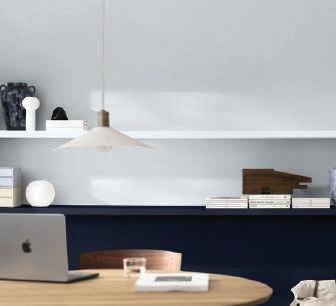
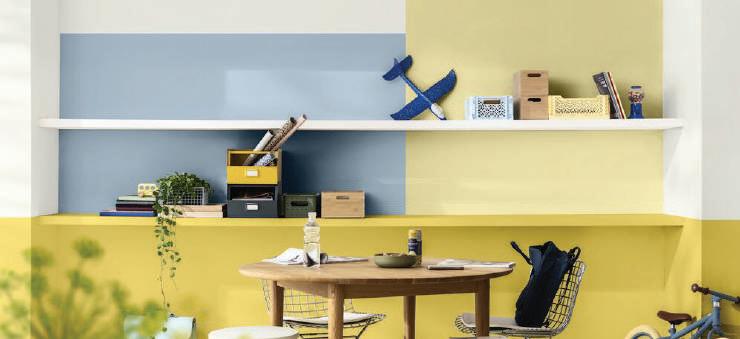
This light sky blue (62BB 08/369) balances calm with energy - perfect for those juggling multiple projects or collaborating remotely. It creates a friendly, approachable atmosphere while maintaining professional polish. Combined with warm terracotta and natural earth tones, the Mellow Flow palette creates a welcoming, composed atmosphere where genuine connections thrive and collaboration flows.
For deep focus and reflection
A meditative dark blue (10BB 39/100) creates a calm, focused environment ideal for writers, researchers, and creative professionals who need sustained focus. Pair it with warm neutrals and soft browns for a sanctuary-like workspace that encourages profound thinking. The Dulux Colour of the Year Slow Swing palette combines moody blue with earthy tones that evoke nature and stability, providing the setting for intense intellectual work.
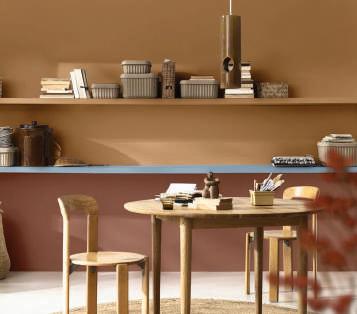
For creative energy and innovation
A vibrant, cobalt blue (66BB 06/077) is your colour choice if your work demands creativity and bold thinking. The Free Groove palette paired with energetic yellows and greens creates an uplifting, forward-looking environment that celebrates innovation and freedom of thought. Perfect for designers, entrepreneurs and creative professionals, it encourages playfulness, experimentation, and outside-the-box thinking.
Transforming your home workspace is an investment in your wellbeing, creativity, and productivity. Whether you choose the contemplative calm of Slow Swing™, the balanced harmony of Mellow Flow™, or the vibrant energy of Free Groove™, remember you are composing the rhythm for your work life. When your workspace is designed for your pace, success follows naturally.
For more information about the Colour of the Year 2026, visit www.dulux.co.za

Text: Editorial Desk | Images:Dulux Lees die Afrikaanse weergawe van die berig op ons webwerf

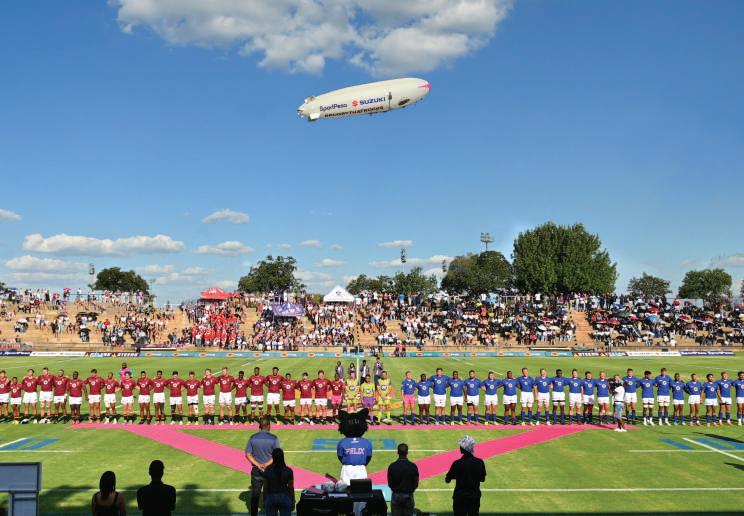
A Stellenbosch-based company – Cloudline – made sporting history in Bloemfontein on 16 February as its solar-powered airship soared above the field during the FNB Varsity Cup opener between FNB UFS Shimlas and FNB Maties.
In a first for a rugby match in South Africa, the Cloudline Sc-240 airship took to the skies, circling the venue and delivering a striking aerial presence that elevated an already electric atmosphere. The pioneering aircraft provided a powerful visual spectacle for fans in attendance and viewers watching around the country, marking a bold new chapter in sports event innovation.
The Sc-240 airship is the world’s first commercially available solar-powered airship in its class. Powered by solar-recharged batteries and lifted by helium, the airship can remain airborne for more than 10 hours with zero carbon emissions. Its appearance at the FNB Varsity Cup opener showcased not only cutting-edge technology, but proudly South African engineering on a national stage.
Beyond its impact as an advertising and broadcast platform, the Sc-240 represents a broader shift towards sustainable aerial solutions. With the ability to carry payloads of up to 40 kilograms and operate at a fraction of the cost of traditional aerial systems, the airship opens new possibilities for environmental monitoring, disaster response and resource surveying.
For the thousands of fans packed into the stadium, however, the focus was simple: history was unfolding above their heads.
The successful flight over the Bloemfontein venue signals the beginning of an exciting new dimension in live sporting experiences in South Africa. As the 2026 FNB Varsity Cup campaign gathers momentum, the airship display will be remembered as the moment innovation quite literally took flight. www.flycloudline.com
Editorial Desk | Image: Varsity Cup Lees die Afrikaanse weergawe van die berig op ons webwerf
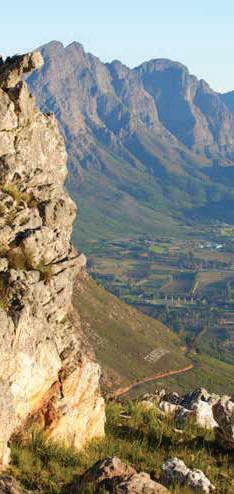
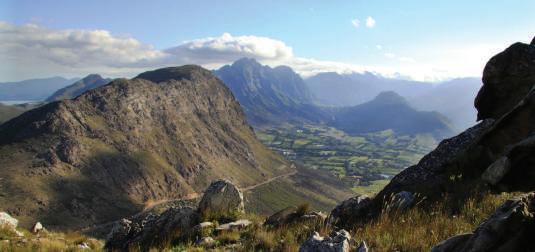
Situated high above the Franschhoek Valley the Mont Rochelle Nature Reserve (established 1983) is part of a UNESCO Natural World Heritage Site - the Cape Floral Region Protected Areas (2004) and linked to the UNESCO-designated Cape Winelands Biosphere Reserve.
Ever since 1823 mountain springs in the reserve have provided Franschhoek with high quality drinking water. The reserve is known for its spectacular views of the valley, diverse plant and small animal life and well-maintained network of hiking trails. It is also a popular jumping-off point for paragliders and is becoming a favoured destination for trail runners.
The Franschhoek mountainland consists of Table Mountain sandstone that was raised as a mountain range more than 265 million years ago. The present mountain and valley landscape is the result of erosion over the past 140 million years.
Three large peaks dominate the reserve: Perdekop (1575 m), DuToitskop (1418m) and Middagkrans (1029 m). In summer south-easterly winds can form impressive 'cloudfalls' over Middagkrans. Both summer and winter weather conditions in the reserve can be challenging to the uninitiated - the former being hot and dry and the later wet and cold with occasional snow on the higher ground.
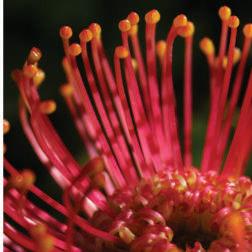
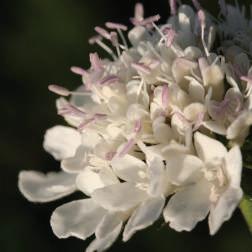
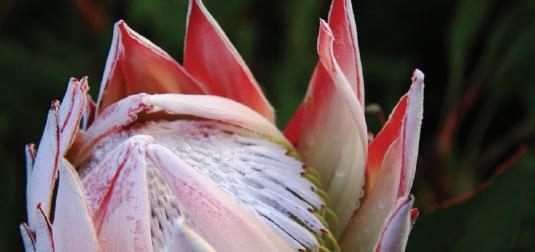
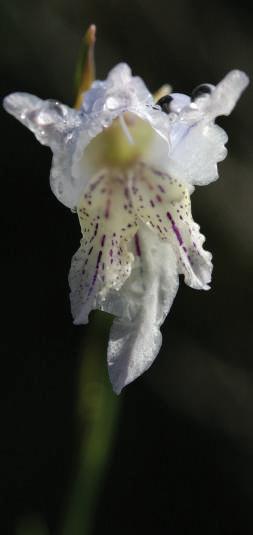
The reserve's flora consists of montane fynbos established on leached acidic sandy soils. Fynbos (the world's smallest and most diverse plant kingdom) is primarily characterised by four types of plants: Proteas, Ericas, Restios (reed-like plants resembling grass) and geophytes (bulbs)..
Hiking permits and maps available at: Tourist Information Centre, Reserve Entrance or www.webtickets.co.za (permits only)
Day Hiking Permit: R70 p. p. | Year Permit: R350 p. p.
Hiking Trail Map: R30
Keep the permit with you. | Hike at own risk. Do not hike alone. | Always put safety first. www.montrochellehiking.co.za
Huawei’s impact on the automotive industry is often framed as a value-driven disruption, but its real play is far more strategic. Rather than competing on price alone, Huawei has built a tiered, multi-brand ecosystem that spans from high-volume family SUVs to ultra-luxury electric saloons. Each brand serves a distinct purpose within a coordinated masterplan.
The Apex: MAEXTRO – Engineering at the Highest Level
At the top sits the MAEXTRO S9, Huawei’s most ambitious statement. Designed to rival traditional ultra-luxury marques, it pairs advanced electric performance with exceptional craftsmanship. Features such as active noise cancellation, acoustic glass, and meticulously finished materials create an atmosphere of near-silent refinement.
Performance is defined not just by acceleration but by intelligence. Predictive air suspension powered by Huawei’s advanced driver-assistance sensors reads the road in real time, delivering exceptional ride comfort. Inside, HarmonyOS transforms the cabin into a digital environment where personalization, seamless control, and over-the-air updates redefine modern luxury.
MAEXTRO demonstrates that Huawei intends to compete at the very summit — not by undercutting rivals, but by out-engineering them through software-driven innovation.
The Strategic Portfolio
Beneath MAEXTRO lies a carefully structured brand lineup:

(with Seres): The Volume Vanguard
Models such as the M5, M7, and M9 deliver Huawei’s smart cockpit and driver-assist technologies to the mainstream market. Positioned against established German SUVs, AITO models combine competitive pricing with advanced digital integration, making them key drivers of scale and brand visibility.

Targeting style-conscious and performance-focused buyers, LUXEED blends athletic design with dual-motor powertrains and Huawei’s intelligent cockpit systems. It competes directly with premium electric performance sedans while emphasizing technology leadership..
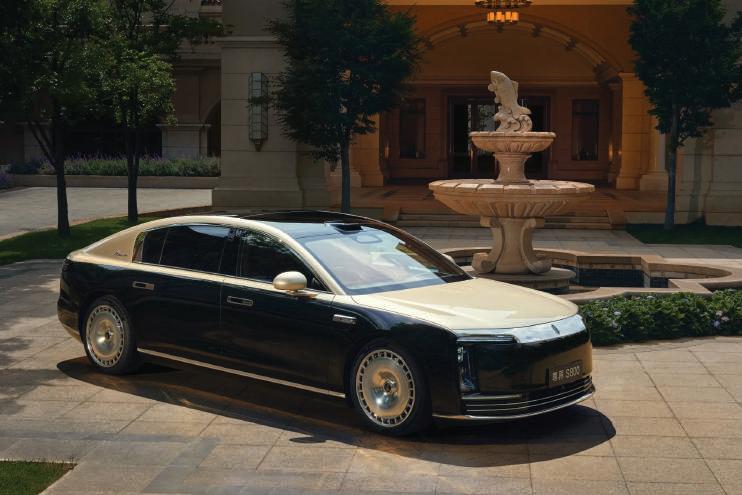
Focused on the executive and chauffeur-driven segment,
comfort, presence, and discreet technology. It challenges established luxury electric sedans with a more formal design language and advanced in-cabin intelligence.

The SAIC Collaboration
Huawei’s partnership with SAIC Motor expands its reach further into the mass market. This alliance reflects the growing importance of Huawei’s software and driver-assistance ecosystem across China’s largest automakers.
The Grand Design
Huawei’s automotive push is not a collection of isolated ventures but a unified ecosystem strategy. Each brand addresses a specific market segment, yet all are linked by HarmonyOS, advanced driver-assistance systems, and continuous software updates.
Rather than selling standalone vehicles, Huawei is building a connected automotive universe — one that blends hardware, software, and brand positioning into a cohesive whole. The result is a new competitive paradigm: a technology company attacking every tier of the market with tailored products, bound together by a software experience that evolves over time.

Text: Editorial Desk | Images: Maextro Lees die Afrikaanse weergawe van die berig op ons webwerf

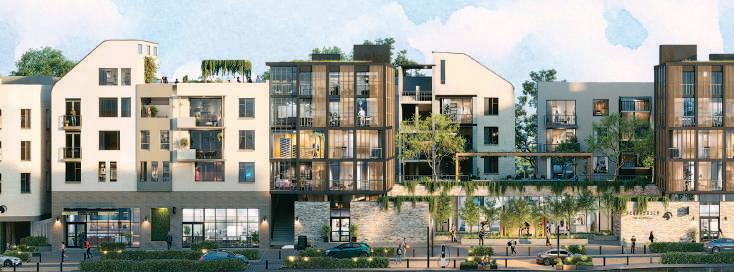
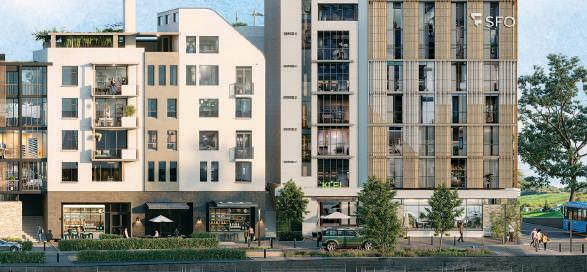
HUMAN-SCALED ARCHITECTURE
Building proportions create comfort, not intimidation, making streets feel friendly and walkable.



When you invest in Devonbosch, you gain more than the square metres on your plan. You inherit a thoughtful urban environment that extends your life beyond your front door. Here, good design isn’t an upgrade; it’s the value built into every part of the town.
MICRO-MOBILITY SUPPORT
Infrastructure encourages sustainable mobility options.

SMART MECHANICAL & ELECTRICAL SYSTEMS
ventilation, and temperature control reduces cost of living and environmental impact.



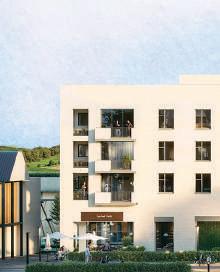


GENEROUS PUBLIC PLAZA
The central open space with shaded landscapes and micro-climate, creates a peaceful garden and social hub.

HIGH CEILINGS FOR SPATIAL COMFORT and better natural lighting.





SHADED FACADE TREATMENTS
Double-glazed façade set back with solar shading screens for noise comfort and thermal control.


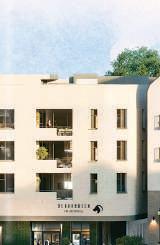












BASEMENT PARKING HIDDEN FROM VIEW
Cars park and charge below ground, freeing the surface for greenery, walking, and dining.



BRICKS FROM BELOW
100% of the non-toxic clay bricks were produced from the clay on the property adding sustainability and soul to every structure.


RAINWATER HANDLING & FILTRATION
Bioswales and rooftop drainage manage stormwater sustainably.




GREEN TERRACES
Vegetation improves insulation, reduces heat, and enhances biodiversity, while softening the build environment.


ACTIVE GROUND FLOORS
Retail, cafés, and studios spill out onto the plaza, encouraging community interaction.




ACOUSTIC COMFORT
Insulated walls and strategic materials keep noise and thermal levels low for peaceful living and working.
GREEN BY DESIGN
As a member of the Green Building Council, our buildings are purposefully environment and the people who inhabit them. They resource conservation, and the use of eco-friendly and sustainable materials.