The 2026 Multi-Unit 50 rankings highlight brands with the largest number and highest percentage of multi-unit franchisees.
Top operators improve profits by tracking key metrics, fixing hidden leaks, and making small, disciplined improvements year after year.
Franchising thrives when local ownership is protected through clear laws, unified advocacy, and long-term regulatory certainty.
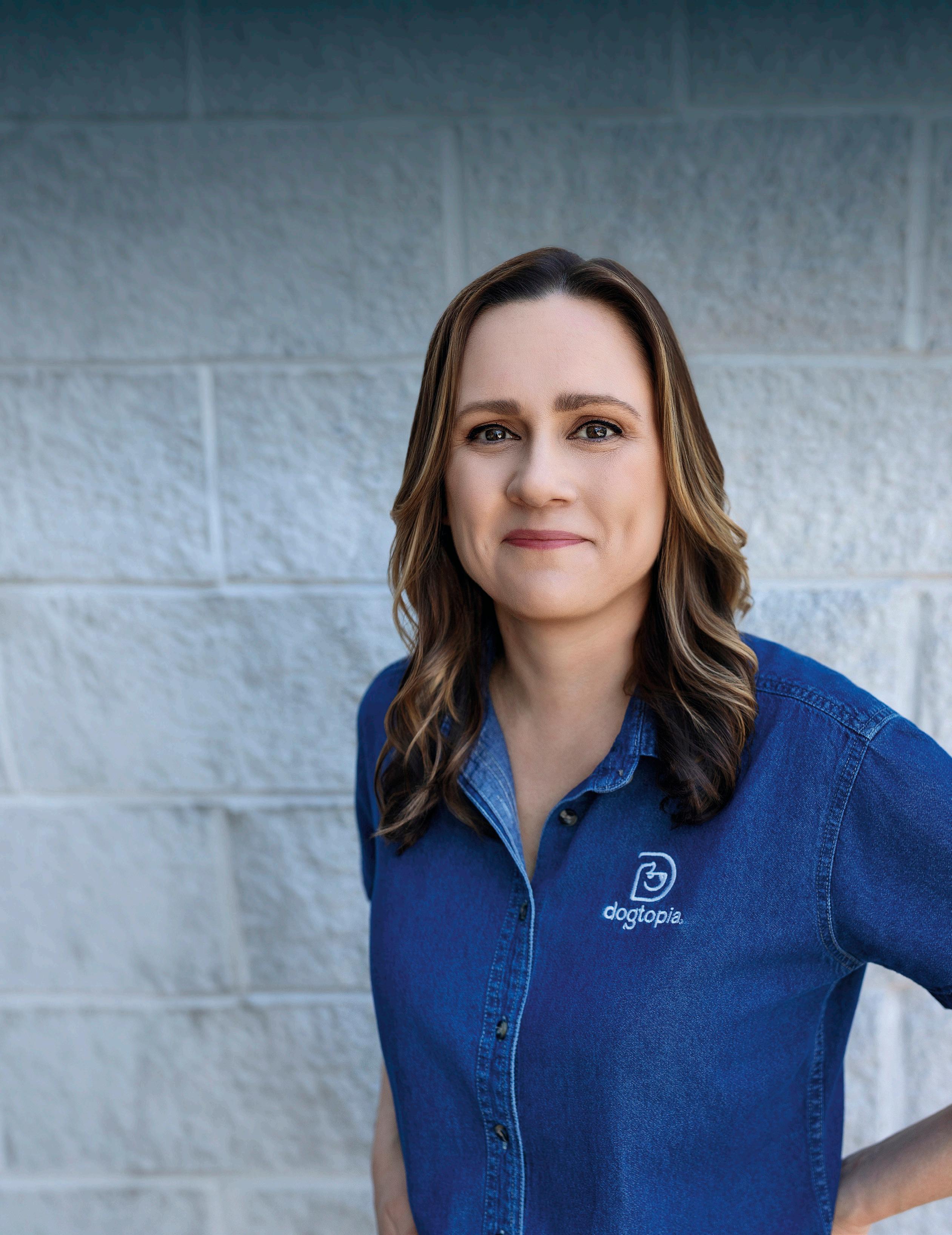
Leader of the Pack
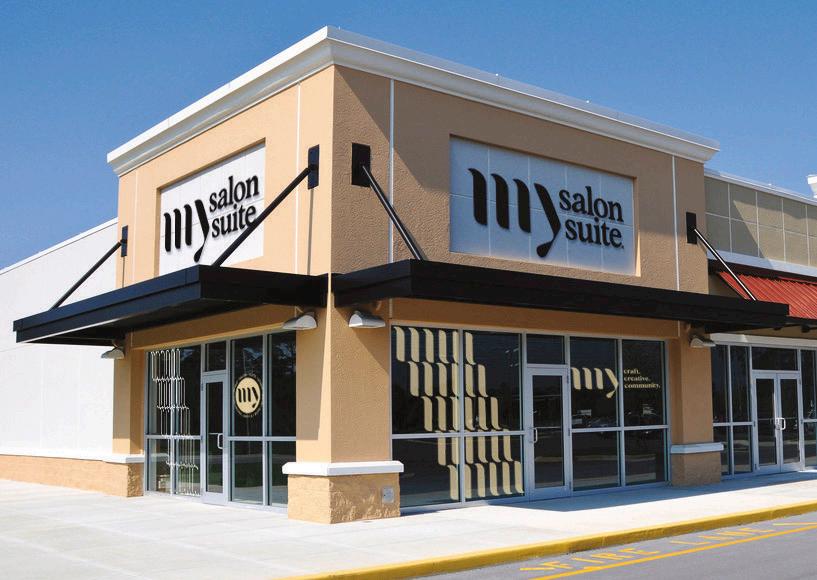
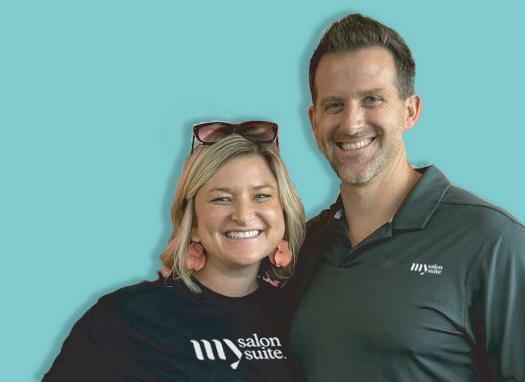
We were recently named a Top Franchise for Multi-Unit Owners because our system is built from the ground up for multi-unit growth, in fact, our average franchise partner owns three locations.
• Average EBITDA 40%
• Top Quartile EBITDA 54.8%
• 88.8% Average Occupancy for units open 24+ months
My Salon Suite has been life-changing for me. I worked in the corporate world for 17 years, I worked at several large Enterprise companies. I did a lot of Global traveling and while some of that was sexy we made good money, I was not in control of what I was working on or who I was working with when I had to travel.
My Salon Suite started as a side hustle for us in 2019 and has become the primary source of income for our family. I quit my corporate job and I'm not looking back, I love it!”
TaStE ToGeThErNeSs WiTh
is
ScAn HeRe
RANKINGS
42 Multi-Unit 50
Top U.S. brands by total and percentage of multi-unit franchisees
Multi-Unit
46 Numbers Don’t Lie
Small metrics can create big results
52 People
Employee experience is customer experience
54 Customers Count Starbucks forgot what made it special
56 Finance Benchmarks don’t fix anything; people do
I grew up in the franchise industry. My dad founded Hand & Stone Massage and Facial Spa, and by the time I was in high school, I was working in the business and training new franchisees who were more than twice my age. I didn’t realize it then, but I was already learning the lesson that has shaped my entire career: Who you spend time with determines how fast you grow.
Today, I run a multi-brand portfolio that includes Hand & Stone Massage and Facial Spa, Sweat440, and Drybar. I built it faster than I expected. I get asked how I got here so quickly. The honest answer is that I’m not smarter than the next franchisee, and I don’t work harder. I’ve just been deliberate about the rooms I put myself in.
There’s a quote I come back to often: “Your net worth is your network.” In franchising, that isn’t a cliché; it’s an operating principle. The franchisee three years ahead of you has already solved the problem keeping you up tonight. The handshake at a reception becomes the partner who finances your next deal. One conversation, one introduction, one relationship can change everything.
But networking only works when it flows both ways. The further I’ve come, the more time I spend giving back. I mentor new franchisees considering their first unit, established operators wrestling with tough decisions, or anyone in our community in need of support, perspective, or a little inspiration. That give-and-take is what
makes our industry different, and it’s why I’ve spent the past four years on the Multi-Unit Franchising Conference Advisory Board. I get as much from those conversations as I give.
This year, MUFC welcomed 2,600 attendees, including more than 900 franchisees representing 600 enterprises and 22,000 operating units. Somewhere in a room like that is the one person who could change the next decade of your business. Your job is to find them. Your other job is to be that person for someone else.
That’s exactly the theme I want to carry into 2027: Relationships are powerful, and a single new connection can change the entire trajectory of your life. We’re heading to Caesars Forum in Las Vegas, April 27–30, 2027. Save the date, bring your team, and come ready to share what you know and learn what you don’t.
I’ll be in those rooms too, looking for the next person to shape my life. See you in Vegas.
NICHOLAS MARCO 2027 MUFC Chair
Nicholas Marco
Dine Meets Demand
“It is important to stay focused on what makes us successful. We need to avoid cutting corners or taking shortcuts.”
Claiming the Mantle
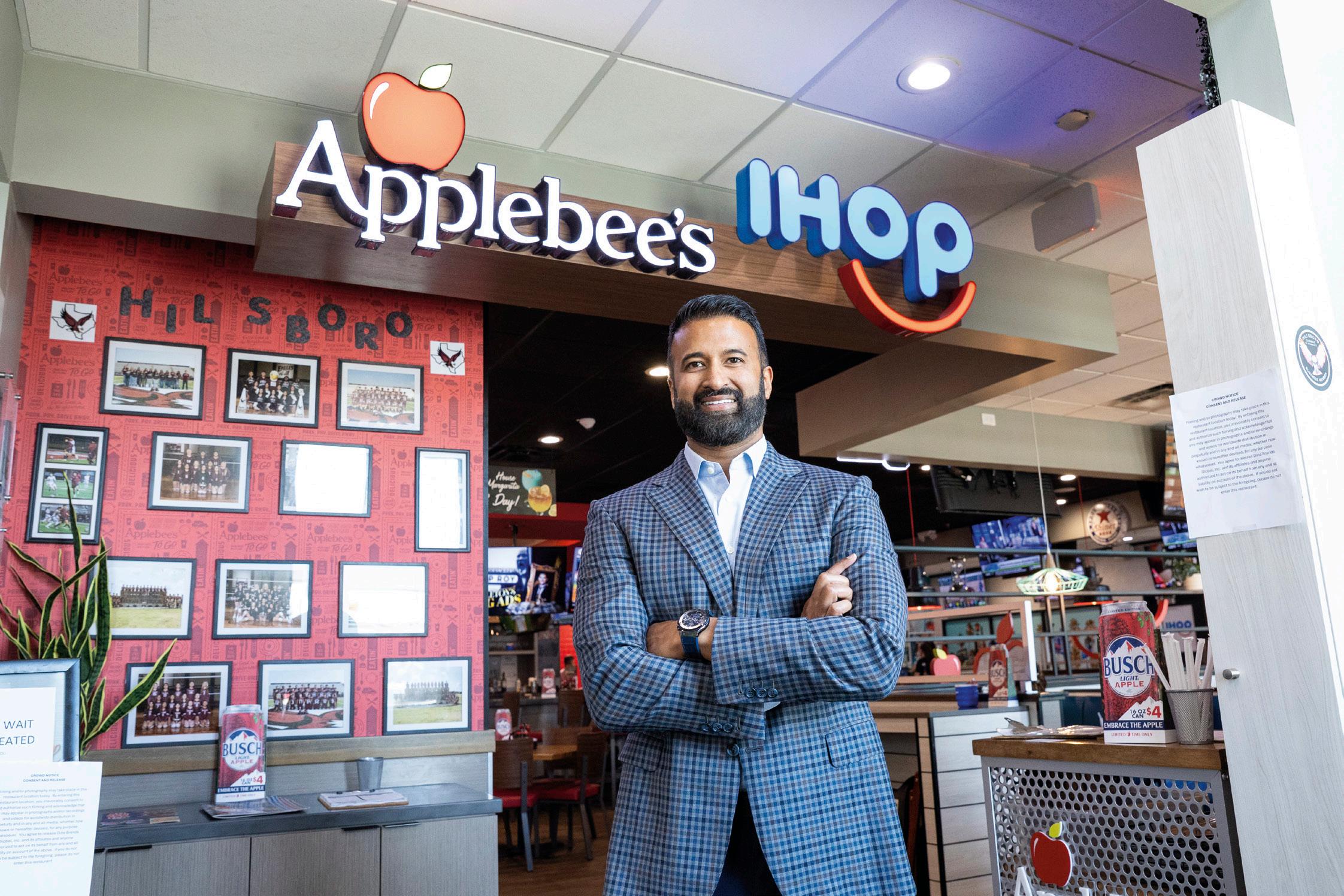
Second-generation operator continues a 50-year IHOP legacy
Written by KEVIN BEHAN
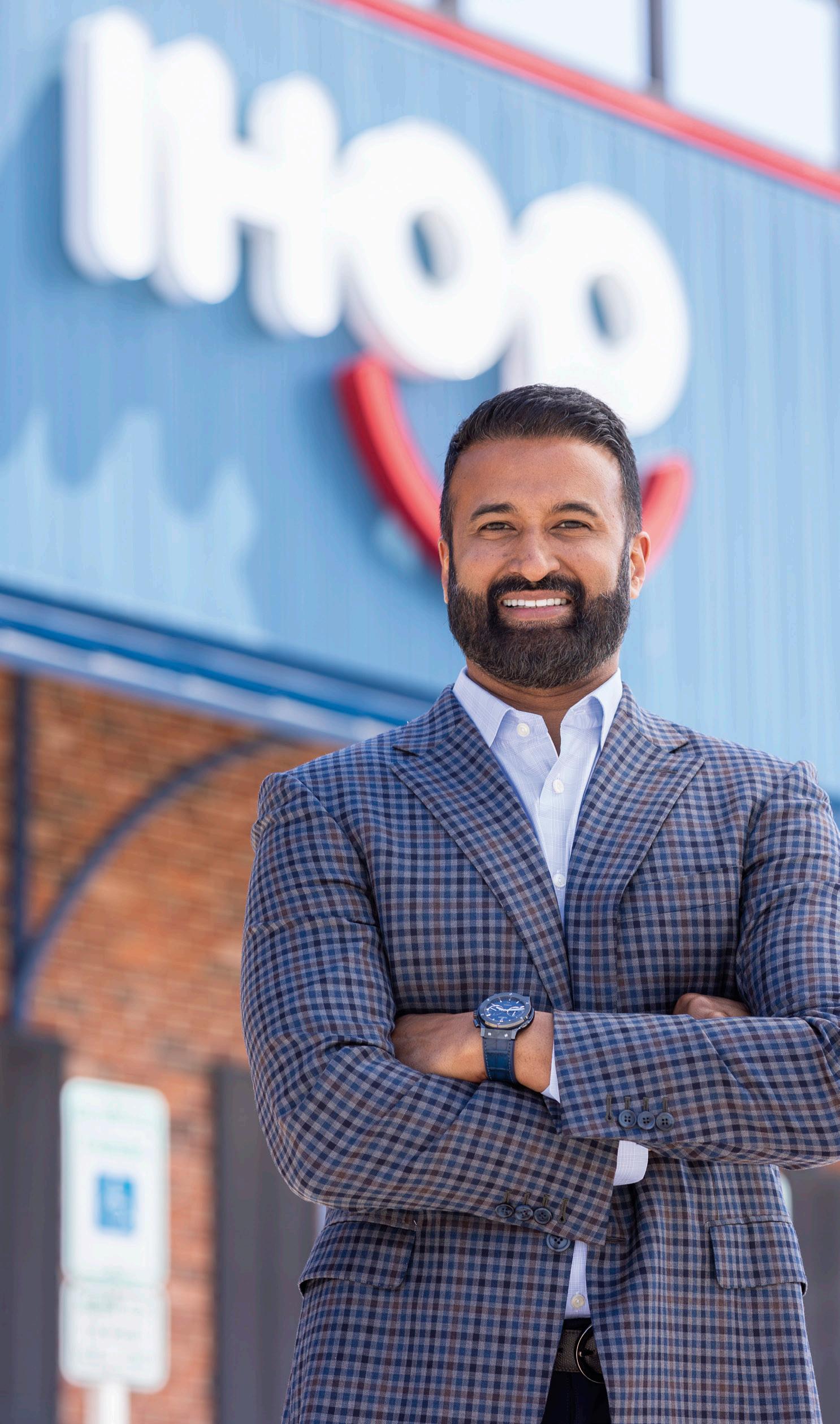
If anyone seemed destined to become an IHOP franchisee, it was Alex Anthraper. His father, John, spent 50 years with the brand, starting as an assistant manager in 1974 before moving through several corporate roles and eventually becoming an IHOP franchisee for 31 years.
Growing up around IHOP, Alex developed an early appreciation for the restaurant business. He was especially drawn to the stories of operators who started washing dishes and worked their way up to become multi-unit franchisees. Through his father, he built relationships throughout the system and took every opportunity to learn from experienced operators. When he joined IHOP’s corporate office after college, it felt less like starting a career and more like coming home.
“A lot of people knew me and literally watched me grow up,” Anthraper says. “When I went to work for the company, all those people kind of knew the plan for me to eventually become a franchisee. I was getting mentored by a lot of my dad’s peers who were still on the corporate side. There were a lot of franchisees whom my dad helped get set up with their first restaurant. Those individuals naturally gravitated toward me. That gave me a wealth of knowledge and experience at a fairly young age.”
Anthraper often turned to his father for advice while learning the ropes on the corporate side and when he opened his first restaurant in 2002. But the first several years of business ownership did not come easily for Alex. A native of Dallas, he moved to Ohio to run the initial store, and he faced ups and downs. Looking back, he gained valuable experience and learned the importance of perseverance. Although his father served as a trusted resource, Anthraper knew that he had to build his own
reputation in business. He earned the respect of corporate team members and IHOP franchisees and learned from both groups.
“Whenever there is a business connection between a father and a son, there is a connotation that you didn’t work for it, go through the struggles, or listen to others because you didn’t understand the journey,” Anthraper says. “I was always looking to prove that I wasn’t that guy. I wanted to be respectful of the moment and the challenges that my dad and others went through.”
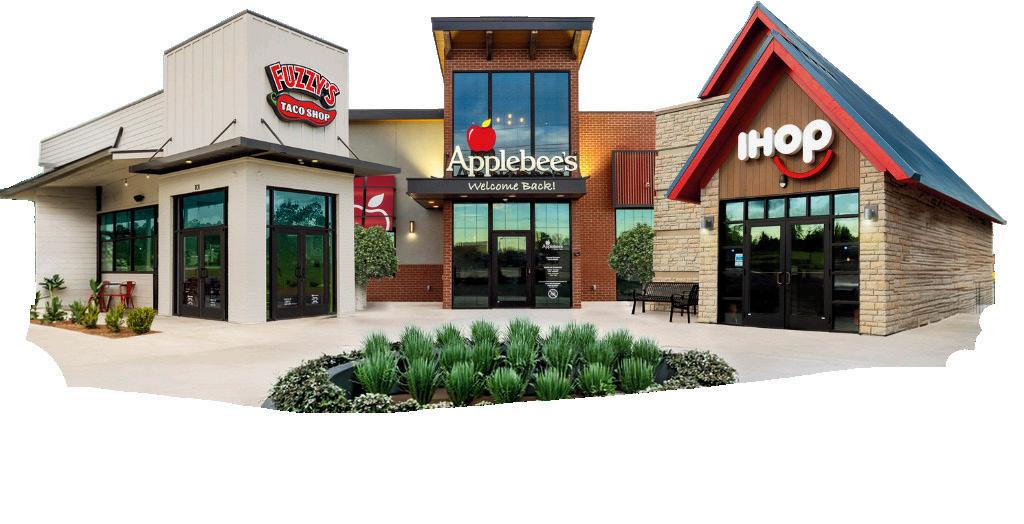
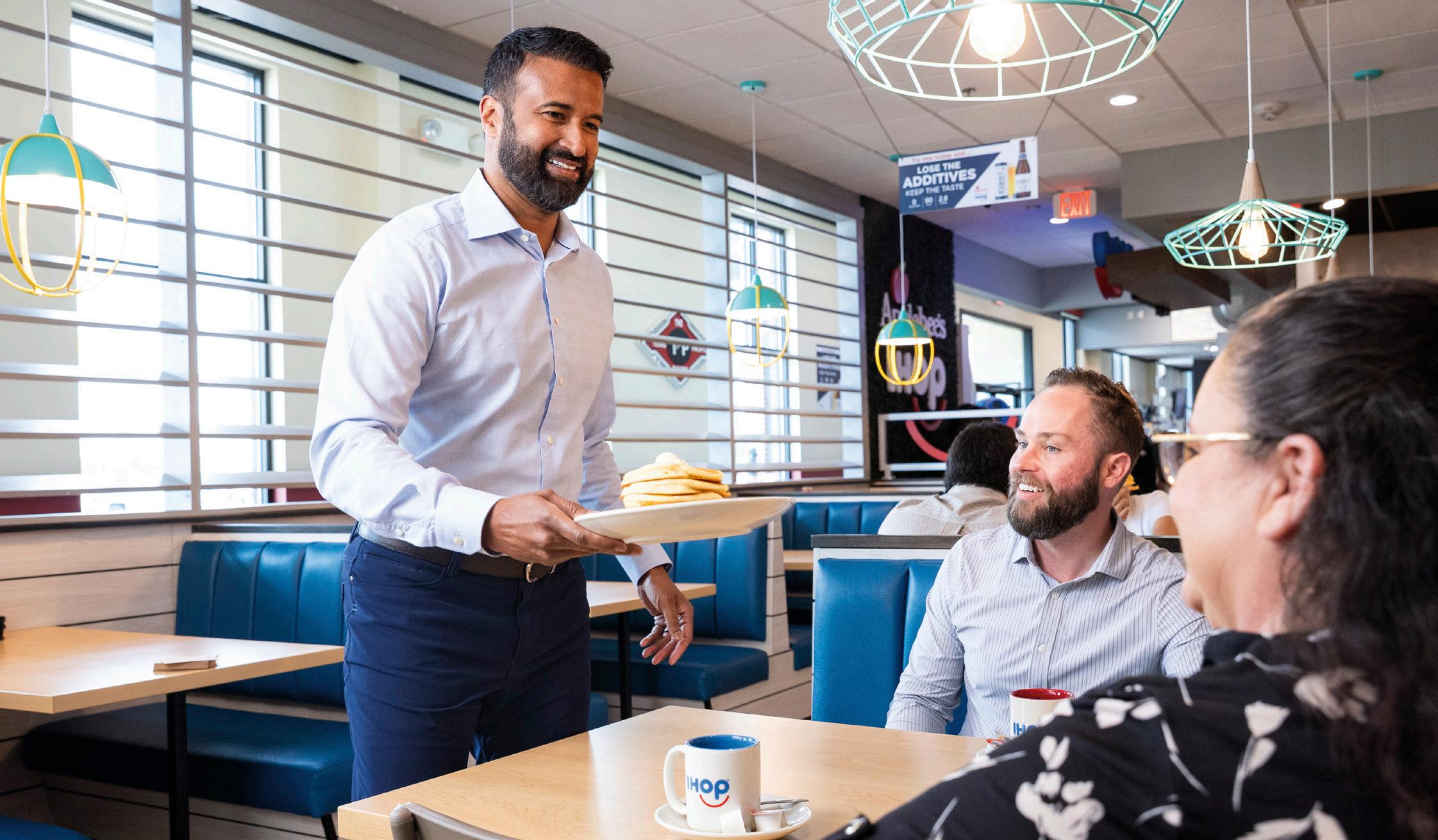
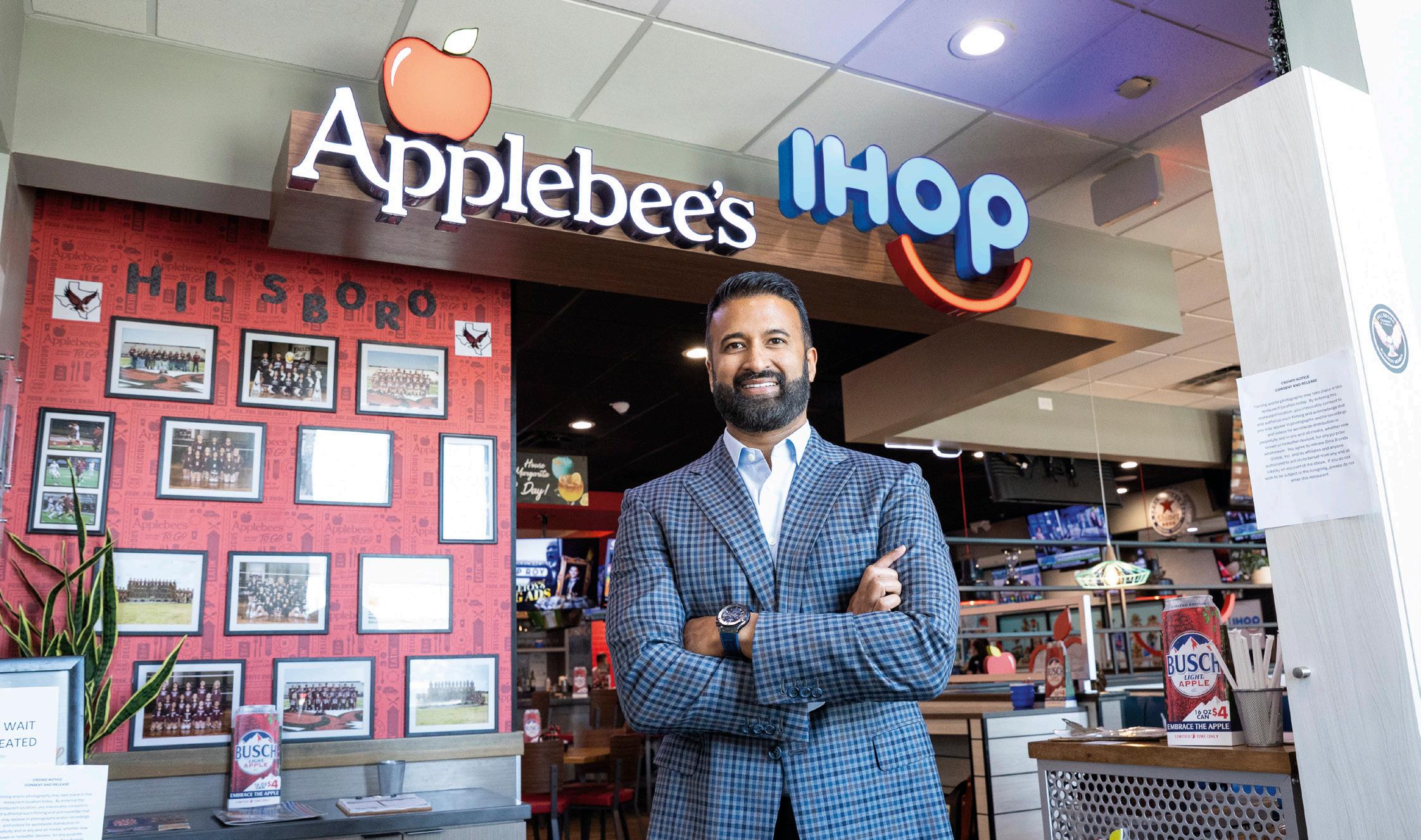
More than two decades later, Anthraper owns 22 IHOPs and one Applebee’s location under the Dine Brands umbrella. He is focused on the continued growth of his business while exploring opportunities to bring dual-branded IHOP and Applebee’s concepts under one roof.
In a full-circle moment, he estimates that about half the restaurants he owns are from former franchisees who watched him grow up with the brand and then sold to him upon their retirement.
“I was always grateful for those relationships and respectful of what I could learn from them,” Anthraper says. “They saw me grow, mature, and handle myself properly. I think that is why they appreciated my ambition. So, when the time came and their exit strategy was to sell, they felt like they wanted this guy to have an opportunity at it.”
PERSONAL
First job: I washed dishes and bussed tables at TGI Friday’s when I was 17.
Formative influences/events: My father, who spent 50 years with IHOP. Having the ability to be around someone with that much industry knowledge at a young age was extremely beneficial. He worked his way through corporate America and achieved the dream of owning a business. That gave me a great foundation and understanding that doing things the right way and working hard are what ultimately get you to your goals. The values I learned from both my mom and dad are that faith and family are the most important. Those values continue to drive me today.
Key accomplishments: I was a company store manager when I worked for IHOP corporate. We
had a company store that was severely underperforming, and nobody wanted it. It was extremely challenging and a great opportunity, but I was able to turn it around to the point that it was ultimately sold to someone else. I am also proud to serve on the IHOP Franchise Leadership Council and as a board member on the Blue Roof Franchise Association.
Biggest current challenge: We are in an extremely competitive industry. Costs are escalating, and the workforce challenges are huge. It is important to stay focused on what makes us successful. We need to avoid cutting corners or taking shortcuts. With all the challenges outside of our walls, we must stay true to our convictions and what brought us to this point.
Next big goal: I want to continue to represent the brand well. Expansion and development are always on the radar. One goal is to understand how to grow by bringing dual brands under one roof. In general, we want to take calculated growth based on the success we’ve had so far.
First turning point in your career: When I became a franchisee and opened my first restaurant in 2002. I was relatively young, and it was always the goal to own my own business. When I worked for corporate, it was always on my radar, and I wanted to build credibility with them and gain experience. It was a big turning point because I didn’t have to wait any longer. It was also where I met my wife, Kimberly, who has been so supportive of all my business goals and helps me keep things in perspective.
Best business decision: One of the best decisions I made was going to work directly for IHOP corporate after graduating from college. It gave me invaluable operational experience and credibility that have helped shape my career as an operator. Hardest lesson learned: Don’t let good people get away from you. It can be very difficult to replace them. Sometimes personalities clash, and philosophies are different. In the end, you need to be able to look past that and see that the strengths some people have are your own weaknesses.
Work week: It’s hard for me to say I’m ever fully off. My mornings are typically the busiest, and I end my day in the afternoon. I stay connected to the business every day in some capacity. I may take a weekend day off here or there.
Exercise/workout: I work out at least five days a week and try to stay very active outside of the gym as well.
Best advice you ever got: My father always told me, “Absolutely nothing good comes easy, so stay committed.” That mindset has stayed with me throughout my career.
What’s your passion in business? I’m passionate about building successful restaurants alongside a tenured team we’ve developed over the years. Seeing people grow within the company and achieve opportunities they may not have had otherwise is incredibly rewarding.
How do you balance life and work? I’ve always had one speed when it comes to work, and I’ve never
regretted being fully committed. That said, I know balance is important and something I can continue to improve.
Guilty pleasure: Good bourbon and a great cigar.
Favorite book: How Successful People Lead by John Maxwell.
Favorite movie: “A Few Good Men.”
What do most people not know about you? It’s the fear of failure that keeps me driven.
Pet peeve: Laziness.
What did you want to be when you grew up? An attorney.
Last vacation: Rome, Greece, and Italy in 2025. Person you’d most like to have lunch with: Warren Buffett.
MANAGEMENT
Business philosophy: Treat people the way you want to be treated.
Management method or style: Empower strong leaders and give them the autonomy to execute.
Greatest challenge: Keeping our team driven, focused, and avoiding complacency. We are in a very competitive environment, and others are trying to attract your best people. I also want to make sure I am not overbearing to the point where our employees don’t want to be here.
How do others describe you? I hope they characterize me as unselfish, caring, and loyal. I am always looking to help others achieve their goals,
provided they are personally driven and invested in that process.
Have you ever been in a mentor-mentee relationship? I’ve been fortunate to have several IHOP franchisees mentor me over the years. The common trait among all of them was an unwavering commitment to the brand and its success. My father was also my greatest mentor. He constantly reinforced the importance of hard work, honesty, perseverance, and staying committed.
One thing you’re looking to do better: Recognize the outstanding commitment, loyalty, and results of our great team with better communication throughout our company.
How you give your team room to innovate and experiment: I consistently challenge our teams to bring forward new ideas and thoughtful feedback. We try to create an environment where people feel empowered to identify opportunities to improve and adapt.
How close are you to operations? I stay involved on a day-to-day basis but feel extremely fortunate to have a very dedicated team led by my right hand, our director of operations, Jimmy McGarvey.
What are the two most important things you rely on from your franchisor? Innovative marketing strategies that help differentiate the brand along with product innovation that keeps the menu fresh and relevant. From there, it’s our responsibility to execute consistently at a high level.
What you need from vendors: Consistency and dependable operations.
Have you changed your marketing strategy in response to the economy? I believe we need to be more value driven in today’s economy and continue to deliver a great guest experience even amid the myriad challenges we have.
How is social media affecting your business? Social media has been a huge positive for us. It allows us to connect with guests of all ages and elevate our marketing strategy in ways that weren’t possible years ago.
In what ways are you using technology (like AI) to manage your business? I am trying to follow the industry trends using technology. Payment prompts and order entry make it easier for guests to check out. IHOP is using an ordering suggestion prompt on the website.
How do you hire and fire? We focus on hiring great personalities first and then training and developing them. We try to exercise patience and work through challenges whenever possible.
How do you train and retain? We use many of our strongest and most dedicated team members to help train new hires. We also actively seek feedback throughout the training process to continuously improve our processes.
How do you deal with problem employees? We are very cautious about maintaining a positive vibe in all our restaurants, and so any issues are dealt
with promptly and fairly. Obviously, we make all attempts to work with our teams, but when all else fails and standards are not met, we will take appropriate and prompt action.
Fastest way into your doghouse: I have zero tolerance for dishonesty. The second thing that really bothers me is complacency. We must continue to challenge ourselves and seek constant improvement.
BOTTOM LINE
Annual revenue: $45 million.
Goals over the next year: Continue to strengthen our operations with speed of service and amazing food quality while continuing to upgrade our facilities with remodels.
Growth meter: How do you measure your growth? We measure growth through year-overyear sales and traffic and also by the strength and development of our teams.
Vision meter: Where do you want to be in five years? 10 years? We plan to continue growing through both development and acquisitions across IHOP, Applebee’s, and dual-branded concepts that bring both brands together under one roof.
Do you have brands in different segments? Why/why not? I have a certain level of comfort with the restaurant industry. It has been gratifying to see the growth of individuals inside our company. Many franchisees started as cooks and dishwashers, or they were people who initially struggled with their first store or two. That is what keeps me grounded in this industry. It is
what I know and am comfortable with. I feel like I can understand the concept and how to turn it around.
How is the economy in your region(s) affecting you, your employees, your customers? Current economic conditions impact everyone. That’s why value-driven initiatives are so important for maintaining traffic and attracting new guests.
Are you experiencing economic growth in your market? Our Texas and Oklahoma markets are very strong for us right now. In general, as with many other elements, performance really varies from region to region.
How do changes in the economy affect the way you do business? We must continue delivering the value and experience guests expect. Strong value positioning only works if operational execution follows.
How do you forecast for your business? We always look back at historical data and the trailing 12 months. On a restaurant calendar, looking back at how we performed in the summer or on particular holidays gives us an accurate calculation of what to expect. It allows us to adjust budgets and margin expectations while maintaining our level of profitability.
What are the best sources for capital expansion? We have found that regional banks tend to be more competitive and interested in our business, particularly during challenging economic times.
Experience with private equity, local banks, national banks, other institutions? Why/why
not? We have never pursued private equity funding although it’s a model we would consider. We have used local banks and built great relationships with them.
What are you doing to take care of your employees? We try to treat them with the utmost respect. Our goals are to provide a consistent work schedule and to train and develop those who have a desire to move into management and other roles within the company.
How are you handling rising employee costs (payroll, minimum wage, healthcare, etc.)? We look for efficiencies within our company and strive to keep costs and margins within our targets. This eases some of the pressure of rising costs.
What laws and regulations are affecting your business, and how are you dealing with them? The states we operate in are business friendly, and we have systems in place to make sure we remain compliant.
How do you reward/recognize top-performing employees? We have a bonus plan based on incentives that everybody in the company qualifies for. It is something we feel strongly about. We have recently made sure to recognize outstanding performance and great behavior regardless of tenure.
What kind of exit strategy do you have in place? At this point, I don’t have a formal exit strategy. I’m extremely proud of the team we’ve built and remain focused on future growth through development and acquisitions. ■
Leading Beauty & Wellness Brands
One powerful franchise platform, built for endless growth opportunities.
Elements Massage captures the growing wellness market with massage therapy, personalized skincare, and a model built for multi-unit growth.
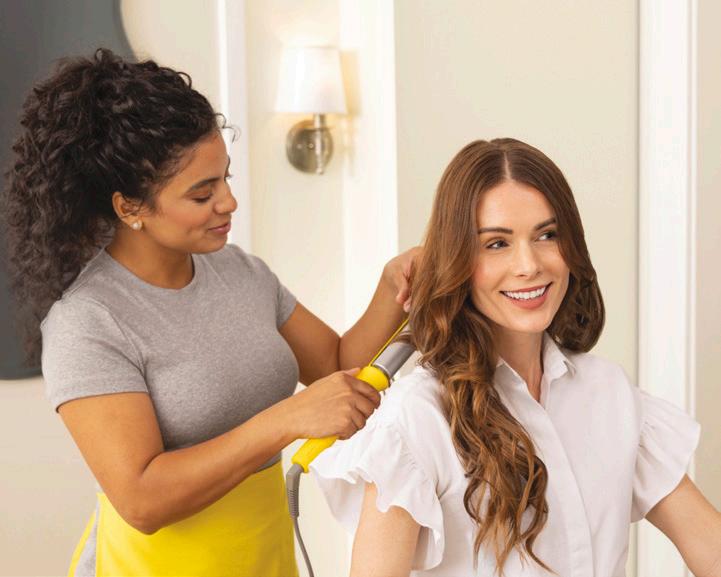
As the fast-growing powerhouse at the center of the blowout bar boom, Drybar is the ultimate beauty asset.
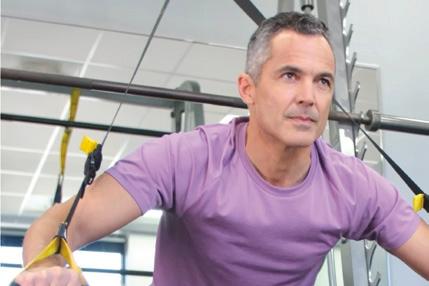
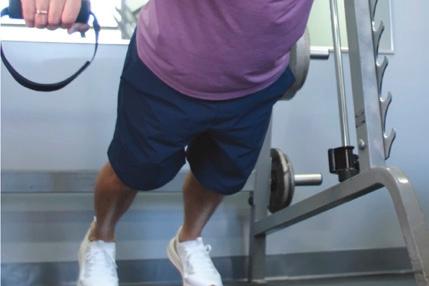
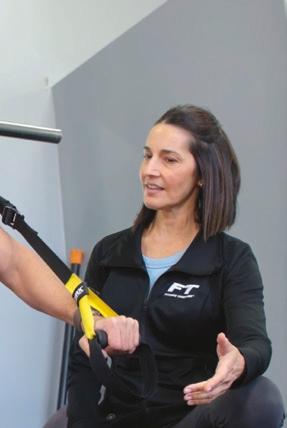
Be the heartbeat of your local health scene with Fitness Together, a personal training and tness franchise backed by a recurring revenue model.
YOUR NEXT VENTURE STARTS HERE
Ready to get started? Connect with WellBiz Brands and take the rst step in adding top, category-de ning concepts to your franchise portfolio.
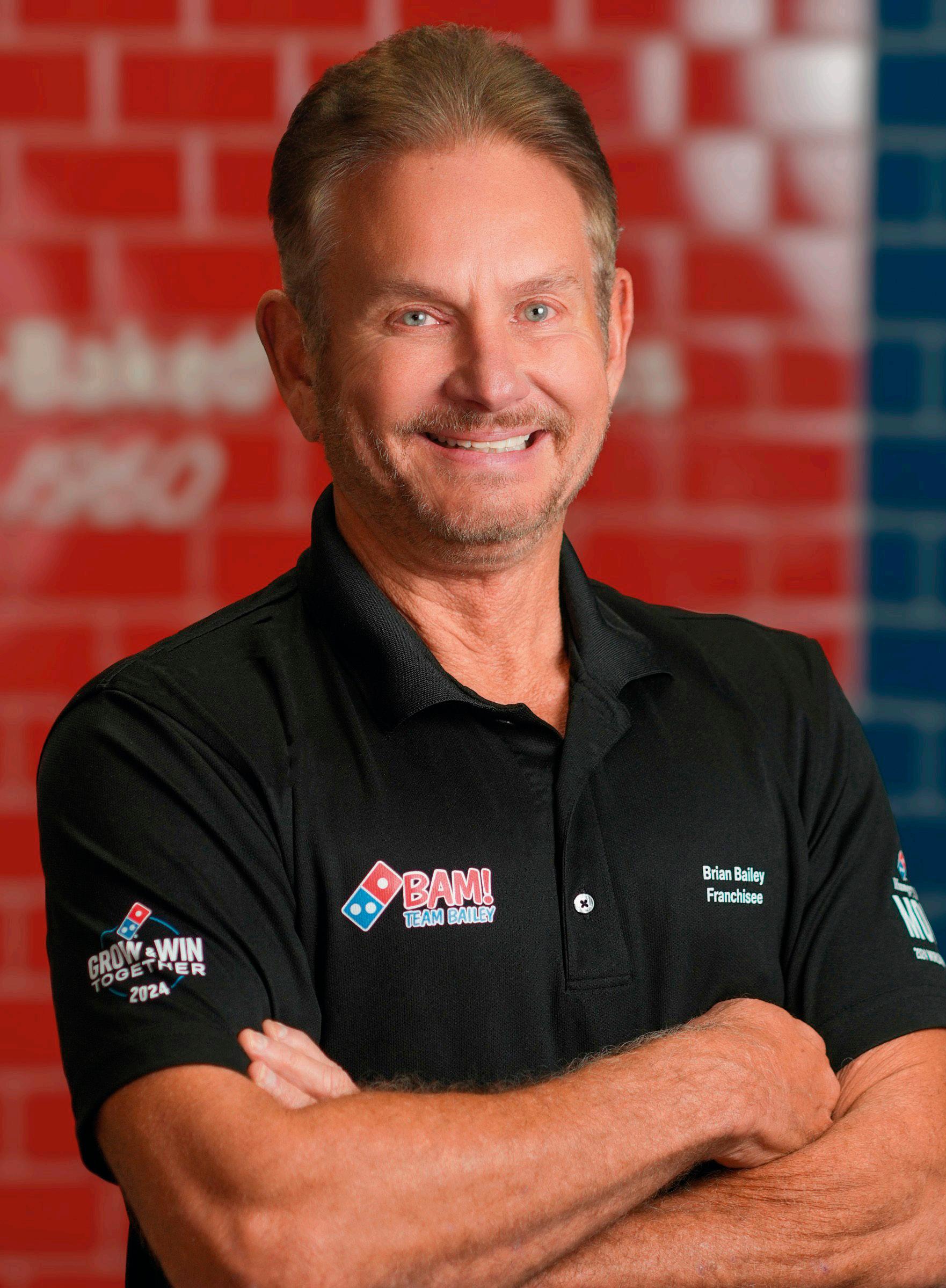
Brian Bailey
“Why me? I don’t know. I lead with a servant attitude and try to have as many people do that as well.”
The People Business
Former delivery driver now operates 160 Domino’s locations
Written by KEVIN BEHAN
Brian Bailey’s entrepreneurship journey started decades ago with an interview for a part-time pizza delivery driver job.
After earning a degree in electronics engineering, Bailey moved back home and began searching for a full-time job while sending out résumés. To help pay off his college loans, he applied for a part-time delivery job at Domino’s, figuring he would work there until he found “a real job.” A conversation a few days later changed the course of his career and his life.
“I can’t emphasize enough how good of an interview the general manager of the store did 40 years ago,” Bailey says. “He did a wonderful job of telling me what Domino’s could do for me and selling me on the whole dream of franchising. He told me what the requirements were and said that if I saved up my bonuses, I would have enough money to make a down payment on the store after a few years. I was sold from day one. I didn’t know how I was going to do it because I didn’t have two nickels in my pocket at the time, but I thought, I’m going to own a bunch of those someday.”
BRIAN BAILEY
CEO Company: Team Bailey
No. of units: 160 Domino’s Age: 64
Family: Wife, Michelle, 11 children, and 20 grandchildren
Years in franchising: 38
Years in current position: 38
create headwinds instantly. One negative post can move the narrative fast, but when customers share their own photos, stories, and great experiences, that is today’s word of mouth at scale. Authentic advocacy from real guests is incredibly powerful.
In what ways are you using technology, like AI, to manage your business? We use technology in so many ways to operate smarter and faster. Domino’s is one of the most technology-forward restaurant brands in the world with more than 85% of our business coming through digital ordering channels. Domino’s app connects to our stores in real time, allowing our pizza makers to begin preparing orders before the customer has even finished entering payment information. We can also track our delivery drivers on the map in real time and know how far they are from completing a delivery or returning to the store. Customers can track their orders in real time through the Domino’s Tracker. How do you hire and fire? Our hiring and onboarding process is all online, which helps us move quickly and consistently at scale. We try to promote internally as much as possible because our best leaders often come from inside our own stores. When it comes to firing, we believe in having clear conversations, coaching, and documentation along the way. Getting fired should never be a surprise. How do you train and retain? We’re blessed to have the two-time Domino’s National Trainer of the Year serving as our vice president of training. She, along with her incredible team of field trainers, leads our organization’s training program. In addition to in-store on-the-job training, we use an interactive digital training platform that consistently covers every position and every part of the business. Retention comes from investing in people, giving them a clear path to grow, and creating a culture where they feel valued and supported.
How do you deal with problem employees? We’ve worked hard to build a culture where problem team members are the exception, not the rule. When issues do arise, we address them early and directly through honest conversations, coaching, and accountability. If needed, we follow a progressive discipline process with written warnings and clear expectations for improvement. When someone is unwilling or unable to meet the standard, termination becomes the final step.
Fastest way into your doghouse: Dishonesty and creating drama. I can handle mistakes but not broken trust or negativity that hurts the team.
BOTTOM LINE
Goals over the next year: Continue improving operations, growing profitability, increasing market share, and strengthening our leadership bench across the company. We want every store to perform at a high level, wow our customers, and create more opportunities for our people to grow.
Growth meter: How do you measure growth? We measure growth in several ways: sales, profitability, market share, and operational performance.
But the biggest measure of growth is people: how many leaders we develop, how many team members advance, and how strong our culture becomes as we grow.
Vision meter: Where do you want to be in five years? 10 years? I absolutely love what I do, but we have many longtime key team members who have earned the opportunity to step up, realize their sweat equity, take over many of the stores, and become great owners themselves. I’d like to see the next generation continue to grow the business, create opportunities, and carry our culture forward. Do you have brands in different segments? Why/ why not? We do not. We stay focused on one great brand and do it at a very high level. The Domino’s brand has tremendous runway for the continued growth of my organization, and we believe concentration creates excellence. Rather than spreading ourselves thin across multiple concepts, we’d rather keep building depth, scale, and market share in a business we know extremely well.
How is the economy in your region(s) affecting you, your employees, and your customers? Like most businesses, we’re seeing pressure from higher costs across the board: labor, food, insurance, rent, and everyday living expenses. Our team members feel it, and our customers feel it too. That’s why value matters more than ever. We work hard to provide great opportunities for our team members and great value for our customers while striving to operate as efficiently as possible in every market we serve.
Are you experiencing economic growth in your market? It varies by market because we operate across multiple states and communities. Some areas are seeing strong population growth, new housing, and business expansion while others are more mature or facing economic pressure. Overall, our focus on having the most delicious food and renowned value is working; we continue to see positive year-over-year sales.
How do changes in the economy affect the way you do business? Changes in the economy make us sharpen our focus. We pay even closer attention to costs, staffing, efficiency, and value for the customer. They also push us to move faster and make smart adjustments, so we can protect profitability while continuing to serve customers at a high level.
How do you forecast for your business? We use our proprietary technology and real-time data to help forecast sales, labor, and food ordering. Good forecasting and scheduling are done store by store, using historical trends, current sales patterns, current marketing and promotions, weather forecasts, and seasonality.
What are the best sources for capital expansion? Strong banking relationships, disciplined reinvestment of cash flow, and a proven track record. Capital follows operators who execute consistently. When you build trust with financial partners, run strong operations, and stay disciplined, you’re better positioned to grow when the right opportunities come along.
Experience with private equity, local banks, national banks, other institutions? Why/ why not? We’ve grown through strong banking relationships rather than private equity. We value long-term partners who understand our business, move with us, and support disciplined growth. Both local and national banks can play an important role, and we’ve found that the right relationship matters more than the size of the institution.
What are you doing to take care of your employees? We try to create a culture where people feel valued, are supported, and have a real opportunity to grow. We also work hard to take care of our people in meaningful ways. That includes a strong health insurance plan, 401(k) options, work anniversary bonuses, bonuses for great inspections, and profit-sharing opportunities. Across the Domino’s brand, more than 95% of franchisees started as delivery drivers or customer service representatives, which shows the kind of opportunity this business can create.
How are you handling rising employee costs (payroll, minimum wage, healthcare, etc.)? We focus on running a smarter, more efficient business. That means improving productivity, using technology, controlling waste, and scheduling effectively while continuing to invest in our people. We also know that taking care of great team members is essential, so the goal is to balance rising costs with creating opportunities, strong benefits, and long-term retention.
What laws and regulations are affecting your business, and how are you dealing with them? Like most multi-state operators, we navigate changing labor laws, wage regulations, healthcare requirements, food safety standards, and delivery-related regulations. The key is staying proactive, well informed, and highly compliant in every market we serve. We work closely with our legal, HR, payroll, and operations teams to adapt quickly and keep the business running the right way.
How do you reward/recognize top-performing employees? We’re very intentional about recognizing and growing our top performers. Promoting from within is a big part of our culture, and many of our best leaders started by delivering great results on the front line. We support that with performance bonuses, recognition programs, development opportunities, and public celebrations of big wins.
What kind of exit strategy do you have in place? Our long-term strategy is centered on succession and opportunity. We have many longtime key team members who have earned the chance to step up, become owners, and carry the business forward. Rather than selling to the highest bidder, I’d prefer to see the next generation be our longtime leaders, growing into ownership and continuing to build on the legacy we’ve created. ■
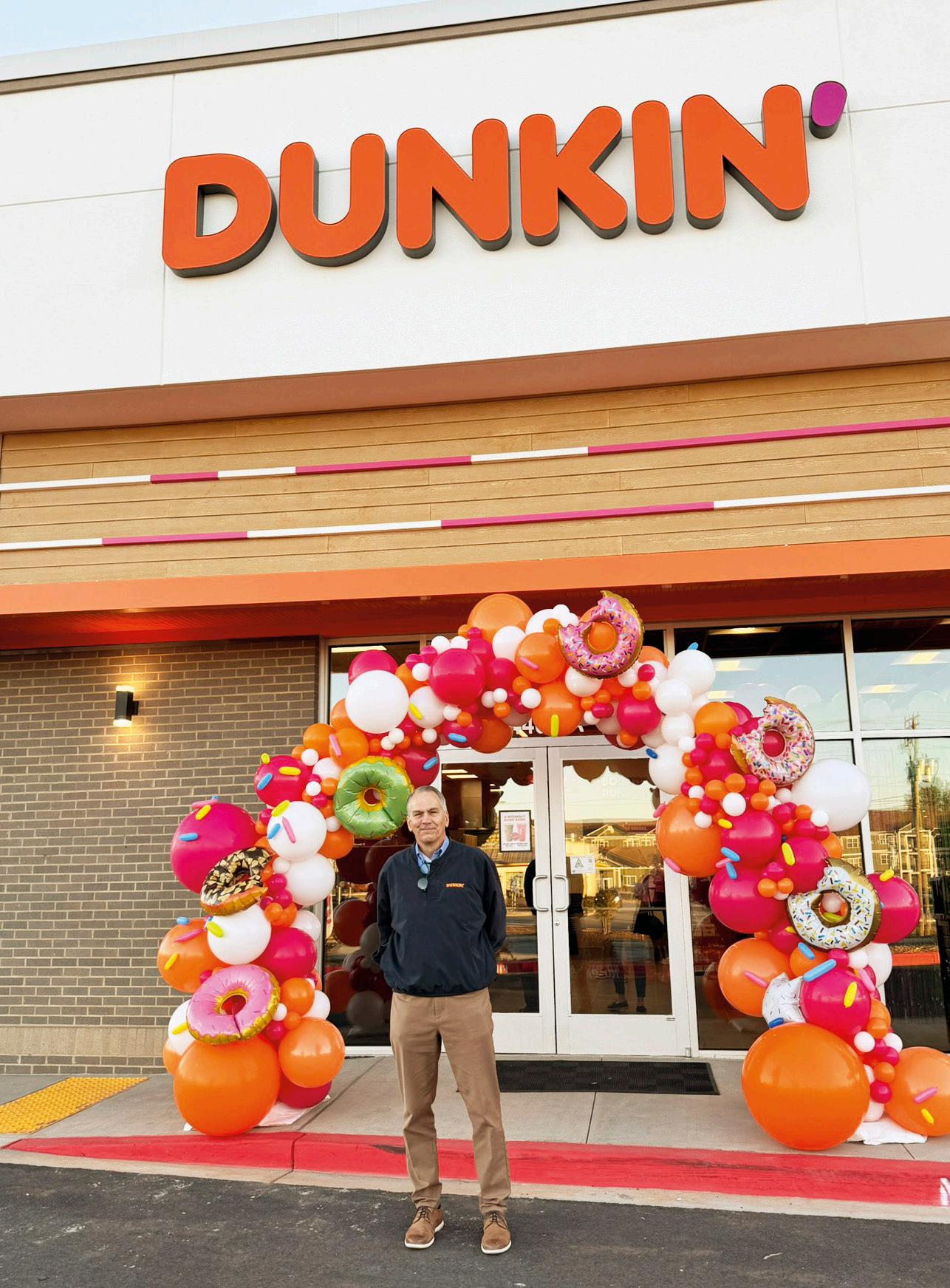
Dave Baumgartner
“It is very gratifying to look back on it and think of how far we have come as a company.”
Reaching 100 Dunkin’ franchisee invests in long-term growth
Written by KEVIN BEHAN
When Dave Baumgartner opened his 100th Dunkin’ location in Chatsworth, Georgia, in March, he achieved a goal he set 16 years earlier as a first-time franchisee. Starting with a single store in Hixson, Tennessee, in 2009, Baumgartner and the Bluemont Group have steadily built a growing Dunkin’ empire.
After earning a degree in chemical engineering and operating in manufacturing management with Procter & Gamble, Baumgartner later worked for a small wholesaler of music books and magazines for retail stores. The third act of his career took him to franchising, where he sought to mitigate some of the risks of operating a business around the time of the recession.
He discovered an opportunity with Dunkin’, which had a strong brand loyalty, intentions for rapid growth, and fewer than 10 locations in his native state of Tennessee. Recognizing a chance to scale his business, Baumgartner signed a four-store agreement with an option for 17 additional units. While he believed he possessed the management skills and business background to be successful, a lack of experience with restaurants led him to lean heavily on Dunkin’ for training and brand operations.
“If I were going to give anyone advice, it would be to start with just one store,” Baumgartner says. “Don’t try to build four in two years. That is probably too aggressive because you need that year or two to learn what you don’t know. If you are building them and you are new to the industry, it is better to go slowly at the beginning. I don’t think it is a good idea to buy a franchise, build five units, and then problem-solve if they are not successful.”
Although he set and accomplished a goal of opening 100 Dunkin’ units, growth was not linear. Early in his ownership tenure, Baumgartner spoke with a longtime college friend, who had extensive experience with multiple franchise brands. His friend advised him that companies often fail if they don’t have the staffing and infrastructure to support growth. The conversation changed
DAVE BAUMGARTNER
CEO/Managing
Partner Company: Bluemont Group No. of units: 100 Dunkin’ Age: 69
Family: Wife, Karen, 3 children, Anna, Laura, and Matthew, and 6 grandchildren
Years in franchising: 16
Years in current position: 16
Baumgartner’s mindset to a proactive approach to developing his management team and culture to handle scaling more units.
The company has built 37 new stores over the past four years with more on the way. He has expanded Dunkin’s presence in Tennessee with 74 of his stores. He’s also operating in six other states.
Baumgartner is now turning his attention to his succession plan. He envisions continuing as CEO of Bluemont Group and serving on the company’s board of directors. He feels confident in the direction of the company and its continued growth under the leadership of his two business partners and members of the team.
He says some of the most rewarding parts of his time as a Dunkin’ franchisee have been building and empowering a team and watching them accomplish great things together. He laughs when recalling how much his involvement has changed with each additional store opening.
“I remember when I was solely responsible for a new store opening,” Baumgartner says. “Now, I just go there on the day of the opening. It is very gratifying to look back on it and think of how far we have come as a company.”
PERSONAL
First job: Working at a local fast-food restaurant that served fried shrimp and burgers when I was 14 years old.
Formative influences/events: My parents gave me moral values, and my dad taught me the value of hard work. My first boss taught me everything, including how to clean a toilet, with the lesson being that how you do things that seem
inconsequential is also important. I met some people in college at Kansas State who really inspired me, including current business partners. I learned during that time that I am capable, in control of my future, and responsible for making the decisions.
Key accomplishments: I over-index on empowerment and surrounding myself with good teams and good people. I have used my position and opportunities to do good in the world. I launched a donut fundraiser in partnership with the local Rotary Clubs with the motto “service above self.” It has raised nearly $9 million for polio research in the past eight years.
Biggest current challenge: We’ve built a great team, and it’s a constant challenge to keep providing personal and professional growth opportunities and to make sure people feel they are contributing and are valued.
Next big goal: Transitioning the leadership team and planning retirement. One of my personal goals is to shoot my age in golf.
First turning point in your career: I’ve had three careers and four turning points. While in college, I discovered that I wanted to run a business, and I pivoted from chemical engineering to include business classes. I left Procter & Gamble to run a small wholesale magazine business. The biggest turning point was leaving the wholesale magazine distribution business, a dying industry thanks to digital media, to start a Dunkin’ franchise.
Best business decision: I was fortunate that I got into Dunkin’ because it was really the first franchise I seriously looked into, and it was a top-10 brand that was expanding. Unlike the print media business, coffee isn’t going anywhere. When considering
the challenges and risks, I decided Dunkin’ could be a great fit for me. I didn’t have to look into a ton of other brands.
Best advice you ever got: A friend once told me to be proactive instead of reactive in business. That requires planning, which means building a culture that produces high-performance teams that plan to be there instead of waiting for it to happen.
Hardest lesson learned: You can’t be so focused on a plan that you are ignoring changes that are occurring. There was very little inflation during the first 10 years of the business. We stuck with some of our original plans, and when things got more expensive, particularly on the construction side, I had some regrets. If I could do it over again, I would have been more on top of some of the financial changes that were taking place.
Work week: Two to three days of travel per week during the busy times (quarterly meeting cycles). The work week has changed a lot as I have transitioned leadership to a successor and started working toward retirement.
Exercise/workout: I have not taken the elevator to the fourth-floor office in three years. I try to be intentional about lifting weights and doing some cardio. What’s your passion in business? Developing people and culture. I don’t want to just build a great culture and not have a bottom line; there needs to be a connection. I want to build a culture that results in a high-performing company. I like to do it with people and culture instead of the other ways people use to build a bottom line.
How do you balance life and work? It’s different from when I was building this business 17 years ago. I’m in a position where we have a high-performance team.
Guilty pleasure: Ice cream.
Favorite book: There are too many to choose. I lean heavily toward nonfiction books like Unbroken, history books like Undaunted Courage, and my favorite fiction is The Hunt for Red October. I am currently reading a history book about Abraham Lincoln and Stephen Douglas, The President and the Freedom Fighter.
Favorite movie: I’m not a big fan of movies, but I love a good series. I really enjoyed “Breaking Bad” and its spin-off, “Better Call Saul.”
What do most people not know about you? I’m not that mysterious. I’m currently learning the card game Duplicate Bridge.
Pet peeve: Indifference from employees toward our customers.
What did you want to be when you grew up? When I was 3, I wanted to be a bulldozer driver, and by the end of college, I wanted to be an entrepreneur. Last vacation: I traveled to Turkey and Greece in October 2025.
Person you’d most like to have lunch with: Winston Churchill or Ben Franklin.
How is the economy in your region(s) affecting you, your employees, your customers? Spending is down, costs are up, and cash flow is down because of the inflation of construction costs over the past few years. It’s interesting how you look at the business differently as you get bigger.
Are you experiencing economic growth in your market? We are in several markets, and over the years, we have seen great economic growth in some areas. For example, Rutherford County, which includes Murfreesboro, Tennessee, was one of the fastest-growing counties in population a few years ago. That growth helped us expand from one location to 10 in the county.
How do changes in the economy affect the way you do business? The economy exposes underlying issues that booming top-line sales will hide. When we started, I was personally doing site selection and expenditures, so we didn’t need a process to ensure we kept good discipline. As we got bigger, different people were responsible for development and unit growth and for managing spending. Controls got looser, but that didn’t really become obvious until the extreme inflationary period. So really, the economy forced us to reevaluate our processes. How do you forecast for your business? We do a continuous five-year plan. The first year is the current
year with a detailed budget, and then the next four years are adjusted as the second year becomes the current year, etc. When we first got started, we had a 20-year plan. It’s much easier to see a positive outcome with a 20-year look.
What are the best sources for capital expansion? The best is cash flow followed by sale-lease-back and then banking syndicates.
Experience with private equity, local banks, national banks, other institutions? Why/why not? Yes. The private equity experience is the family office of our partners. We stayed with local/regional banks for a long time. We decided to switch to syndicates to get a bigger investment for a more aggressive growth rate.
What are you doing to take care of your employees? We provide fair pay and good benefits. The challenge is being competitive but also being very careful because you can never take anything away. We want people to be really satisfied with our culture and our compensation package. I think our package is very competitive.
How are you handling rising employee costs (payroll, minimum wage, healthcare, etc.)? With healthcare specifically, we are evaluating how we can get better pricing out of the box.
We’ve recently switched to Imagine360, a selffunded healthcare platform that uses a concierge service and reference-based pricing.
What laws and regulations are affecting your business, and how are you dealing with them? Tariffs have been hard. In our states, we are fortunate that we don’t have a lot of regulations, including required parental leave, variable start times, and advanced scheduling.
How do you reward/recognize top-performing employees? We do it through several ways such as public recognition, confetti cannons, a financial bonus program, and career development. We focus on internal promotion that publicly demonstrates that top performance leads to career growth.
What kind of exit strategy do you have in place? I have been working on my personal succession planning for the past few years and have put a great team in place. I am very comfortable that there will be life after me at Bluemont Group. There’s a certain amount of discipline you must have to make this transition. You need the right leader who is confident, and you have to be comfortable with decisions being made by someone else even if it’s not how you would have done it. ■
James Bullock
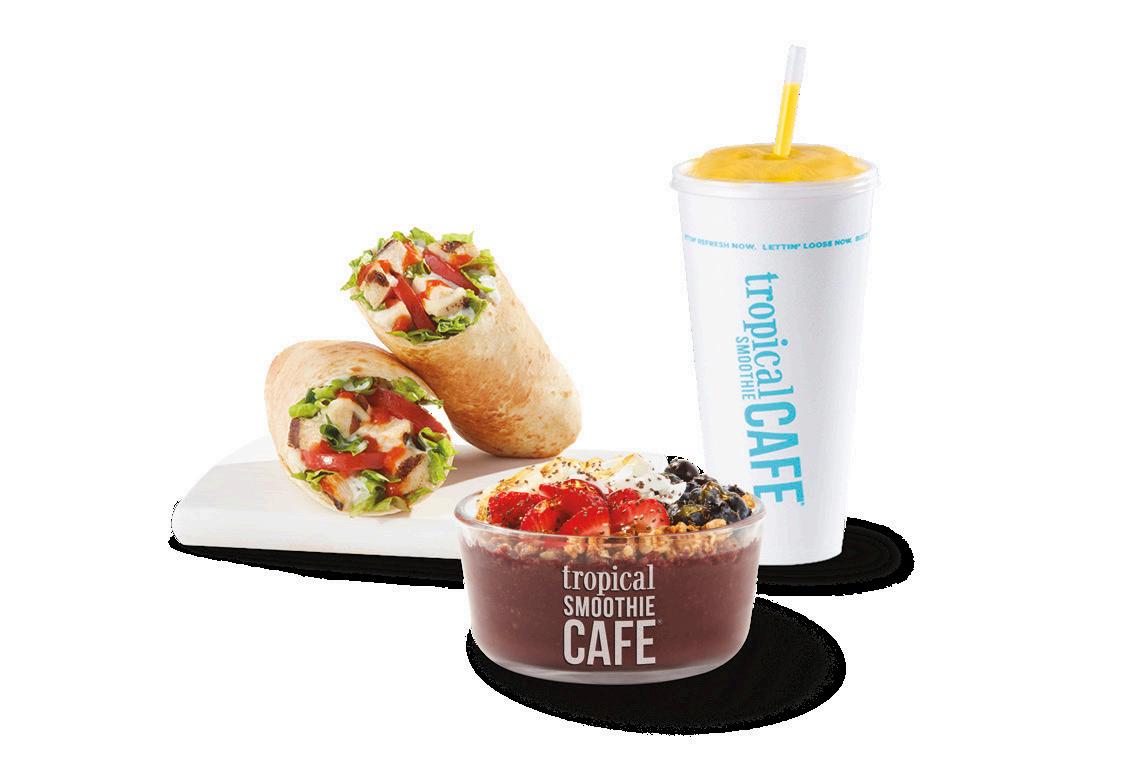
The couple found their calling when they opened their first Tropical Smoothie Cafe in the Raleigh, North Carolina, area eight years ago. Though new to the restaurant industry, they felt they could play active roles by stepping behind the counter, helping with high school fundraisers, fixing plumbing issues, and doing whatever else was needed to keep their store running. The pair also liked the brand’s healthy menu offerings, which include fruit smoothies, wraps, and acai bowls.
“We think it is a pretty cool thing,” he says. “We are very involved in the community, and people know us. It is just fun.”
During their first few years of ownership, Paula spent most of her time in the store, and Bullock handled HR responsibilities while continuing with his full-time job. When Covid hit, many restaurant operators lost money or considered leaving the business. The Bullocks’ cafe remained open and profitable. They used that period as an opportunity to grow. Instead of using the Payroll Protection Plan money they received to cover their bills, they applied it to paying off their SBA loan and scaling their business.
The pair opened two stores during the pandemic, purchased two more, and signed an agreement for an additional cafe after another franchisee backed out. As multi-unit owners, they knew they had to approach their business differently.
“When I realized the time had come when we could sustain and even improve our lifestyle, I pulled my boss at the time aside and told him I would be there as long as he needed me, but I wanted to make smoothies for a living,” Bullock says. “It was one of the most liberating feelings I ever had. When I was able to fully dedicate my time to the business, I stepped in and took over a lot.”
He now runs the day-to-day operations while Paula remains involved with the stores’ catering services, school meal programs, and smoothie and meal preparation and deliveries. The couple opened their 14th location earlier this summer, and another cafe is under construction. Their next goal is to open three more units over the next two years.
They are bringing the next generation into the business. When he graduates with a business degree, Tripp, 21, will work as a manager to gain experience. The plan is to partner with him at a new location in Mebane, North Carolina, next year. So, another generation of Bullocks has caught the entrepreneurial spirit.
PERSONAL
First job: Delivering newspapers when I was 13. Formative influences/events: My father was a Navy pilot for 20 years, and we lived in Hawaii, California, Mississippi, Florida, and Virginia Beach. This taught me how to quickly make friends and how to tolerate being on my own and become self-reliant.
Key accomplishments: In sales, I achieved many awards, which gave me a sense of pride. I was
focused on patient care and able to make recommendations to improve outcomes without pushing needless treatments.
Biggest current challenge: It is critical to hire, train, and retain the best employees. There has been a change in mindset since Covid. People seem to want to work less and get paid more. It shrinks our talent pool, and we have to hire people who have fewer skills.
Next big goal: Our current goal and trajectory in business is to open 18 total locations. We would love to do this by the end of 2027 or by the spring of 2028.
First turning point in your career: While most people were pulling back and not attempting to expand during the Covid years, we opened two new locations, took over a lease agreement for another cafe, and bought two other restaurants from existing franchisees. At that time, my wife was doing the heavy lifting with the stores. This quick move, combined with an excellent concept, enabled me to leave my corporate job and focus on continued growth.
Best business decision: When my wife was pregnant with our oldest son, we opened a small home decor kiosk at a mall and lost $10,000 in two months. We had no employees and worked from open to close each day. We then took a chance on a franchise model and, after opening three locations, realized it was not a great fit. Our best business decision was not quitting and not feeling like the corporate golden handcuffs would keep us bound any longer. We continued to allow our entrepreneurial spirit to drive us and opened our first Tropical Smoothie Cafe.
Hardest lesson learned: The kiosk we opened was terrible. It was not due to our customer service; our product wasn’t desirable. Product matters.
Work week: We have no traditional work week and will work until the job is done.
Exercise/workout: My wife and I go on four or five walks per week. We joined a local gym but prefer doing “Tiff x Dan” YouTube workouts in our garage. At some point, seeing how much I can bench doesn’t sound fun anymore. However, I can give 35 minutes in the garage with 30 to 40-pound dumbbells three to four times per week and feel good.
Best advice you ever got: As Ronald Reagan once said, “Trust but verify.”
What’s your passion in business? I enjoy the growth. It is like mowing my lawn. It can sometimes drain you, but when you are finished and look back at what was accomplished, it feels great, especially if you take that extra time to do a really good job.
How do you balance life and work? My faith in Jesus is the most important thing in my life. If I put his teachings first and walk according to his perfect plan for my life, everything else will fall in line. My wife and I do our best to always make time for each other and do as much together as possible. We also try to be there for our kids as much as possible. We go to all their activities and make time for their passions too.
Guilty pleasure: I love extremely fast sports cars.
Favorite book: The Bible. I love the history and God’s redemptive plan.
Favorite movie: “Battleship.” It is an inside secret as to why.
What do most people not know about you? I didn’t take school seriously and failed out of college. I sold cars and then went back to school. I also slept on an air mattress for about six months when I didn’t have enough money for a bed after college.
Pet peeve: When someone doesn’t shoot straight with me. Tell me the truth. I can handle it.
What did you want to be when you grew up? An entrepreneur, but I didn’t know in what. I delivered and sold subscriptions to the local newspaper and won a trip to go snow skiing.
Last vacation: We love the Caribbean and went to Jamaica earlier this year.
Person you’d most like to have lunch with: Jesus. I have some good questions that we’d all love to hear his responses to.
MANAGEMENT
Business philosophy: Always do the right thing, and everything else will fall in line. A sense of urgency and attention to detail are critical to success in almost anything. Procrastination creates more frustration and decreases your time.
Management method or style: I am committed to meritocracy. I do not promote pay raises because it is the end of the year or because you have been with the company the longest. I believe great performance deserves great opportunities.
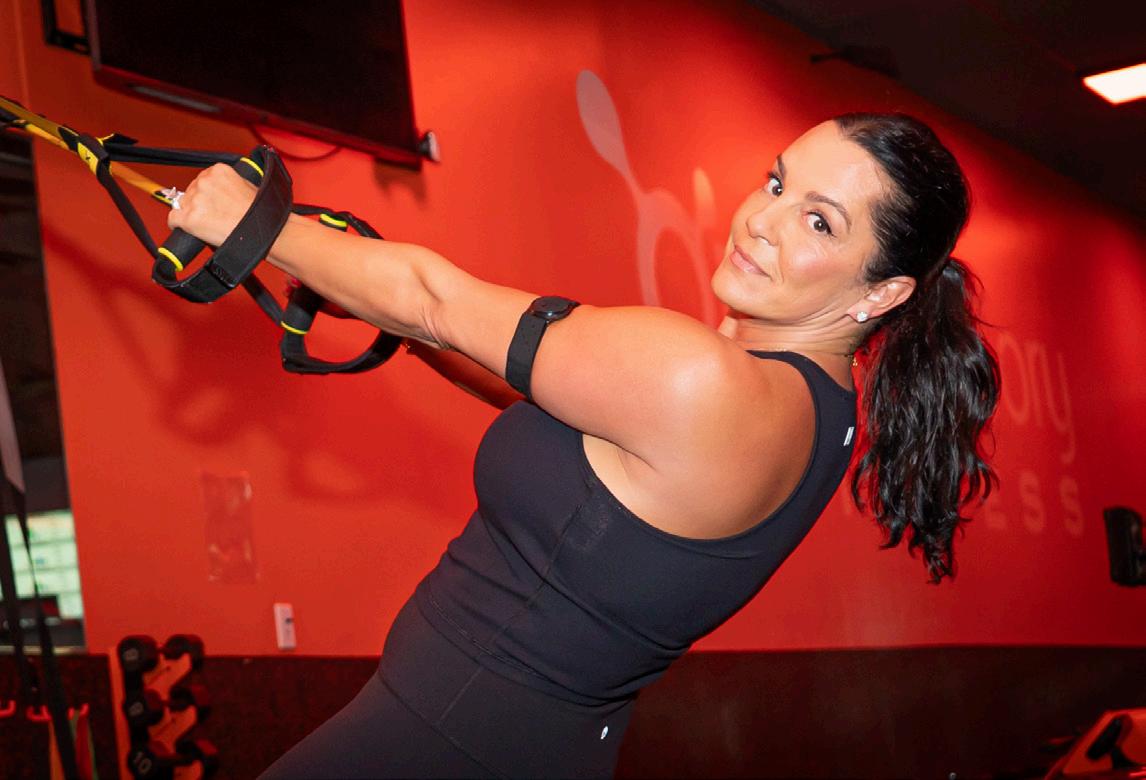
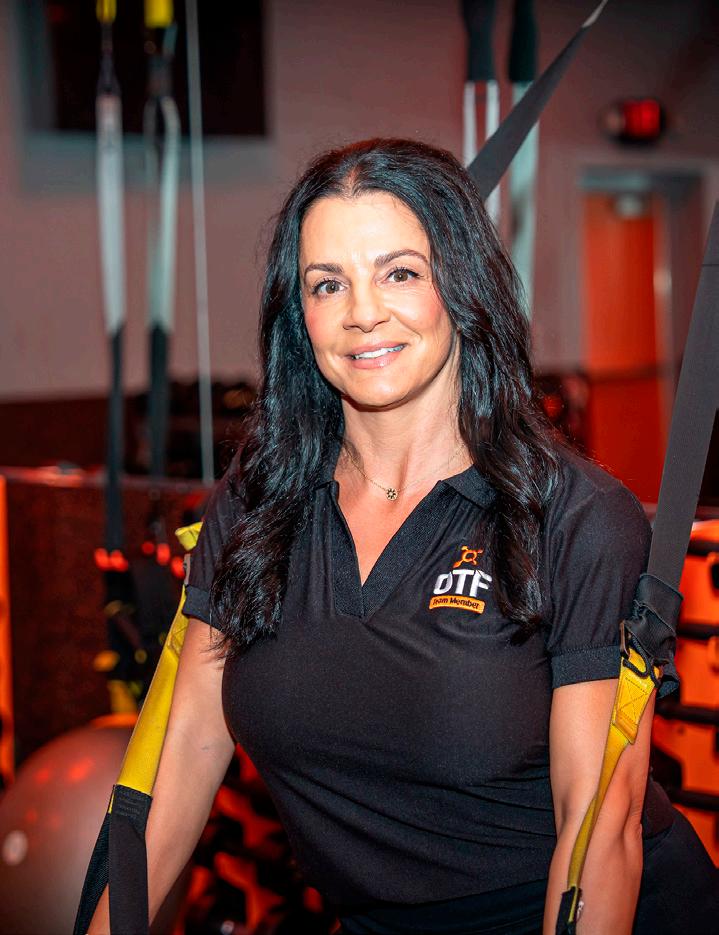
She acquired her first location outside New York in February with a studio in Massachusetts.
“It is always nerve-racking. You are adding more debt, more responsibility, and more people are counting on you,” Horvath says. “Sometimes, the location isn’t right next door, but having the team we have in place makes it work. I’m proud of our success and our growth. Without our team, we wouldn’t have been able to expand the way we have. Having a full bench and trusting in your people is what makes growth sustainable.”
Horvath manages the responsibility of running 19 units by visiting each studio as often as possible while holding weekly Zoom calls with leaders from each location. She is also committed to building a strong team and culture across each territory to optimize performance and support potential growth.
“I love what I do. I love this brand, and I cannot see myself stepping back anytime soon,” Horvath says. “This is not just a business to me. It is a passion.”
PERSONAL
First job: I got my first job at 14, working as a cashier at a P&C supermarket.
Formative influences/events: My parents immigrated to the U.S. from Italy with my brother while my mother was pregnant with me. Italian was actually my first language. They did whatever it took to keep food on the table and a roof over our heads. Watching them work that hard without complaint shaped everything about how I approach business.
Key accomplishments: Every studio we have opened is a genuine accomplishment. Each one requires significant capital, months of preparation, and then the real work of building a membership base from scratch. I am especially proud of the studios we have acquired and turned around. Taking an underperforming location and transforming it into a thriving community is hard, risky work and deeply rewarding when it pays off. None of it would be possible without the people beside me. Building the right team and trusting the right people is its own kind of accomplishment.
PAOLA HORVATH
Multi-Unit Franchisee
Company: Orangetheory Fitness
No. of units: 19
Age: 52
Family: Husband, Jim, son, Lorenzo, 29, and daughter, Milana, 26
Years in franchising: 12
Years in current position: 12
Biggest current challenge: Rising operating costs, including rent, labor, and utilities, are a reality every business owner is navigating right now. Managing margins while still investing in our studios and our people takes constant attention. At the same time, it’s challenging to maintain a consistent culture and member experience across 19 locations. The energy and standards that make Orangetheory special must show up the same way in every studio, every day. As we have grown, that is something I think about and work on all the time.
Next big goal: More locations if the right opportunity presents itself. We have built a strong foundation and the infrastructure to support continued growth. But it is not just about adding studios. My goal is to keep growing the right way, maintaining the culture, developing the people around us, and making sure every new location opened or acquired lives up to the standard we have set. I believe deeply in where this brand is headed, and I want to be part of that story for a long time.
First turning point in your career: Selling our trash business was the turning point. We had built something really good over more than 15 years, and it would have been easy to stay with it. But we decided to leap into something totally new. Between selling the trash business and finding Orangetheory, my husband and I kept building. We did angel investing and went into real estate, purchasing shopping plazas and condo projects. Every venture taught us something new about business, risk, and what it means to grow. Then I took my first Orangetheory class in Florida, and that was it. I followed the prospect process and signed on in 2014. Sometimes, you have to trust yourself enough to make a big change even when it is scary. Best business decision: Signing on with Orangetheory when I did. The brand was still early in its growth, and I believed in the product from the moment I experienced it as a member, and that passion has never faded. That gut instinct, backed by the due diligence I had developed as an entrepreneur, turned out to be exactly right. Watching our portfolio grow from that first studio in March 2015 to 19 locations today is something I never take for granted.
Hardest lesson learned: You cannot do it alone, and trying to do it is a mistake. The sooner you build a strong team and trust them, the faster everything grows. Learning to delegate and rely on the people around me was harder than I expected, but it has made all the difference. I have an incredible team and partners I could not do without.
Work week: Every day in some capacity. That is just the reality of owning 19 locations. But I would not have it any other way.
Exercise/workout: Four to five Orangetheory classes per week. I have logged more than 1,800 classes to date. Orangetheory gives me the perfect combination of strength and cardio in just 60 minutes. It is effective and efficient for my busy life, and I truly believe it is giving me longevity. The product works, and I am living proof. I am in the best shape of my life, thanks to Orangetheory Fitness!
Best advice you ever got: Stay consistent and be patient, especially during the down times. The operators who survive and grow are the ones who do not panic when things get hard. They just keep showing up.
What’s your passion in business? Building things. Whether it is a company, a team, or a studio community, I love taking something from zero and watching it grow. There is also something deeply satisfying about creating jobs and being part of people’s fitness journeys. That is a unique thing about this brand. Every member who walks through the door is there because they want to improve their life in some way. Getting to be part of that is a privilege.
How do you balance life and work? For me, work and life are not really two separate things. As a business owner, there are absolutely days and nights when you need to put your head down and get it done. But those hard moments are what make the good ones mean something. When I do get to step back and enjoy time with my family and friends, I am present for it because I know what it took to get there. Having a husband who works right alongside me makes all the difference too. It all flows together.
Guilty pleasure: Oreos. No explanation needed.
Favorite book: Unreasonable Hospitality by Will Guidara. It speaks directly to what I believe about business: that going above and beyond for people is not just good service; it is a mindset. I highly recommend it to anyone, no matter what business they are in.
Favorite movie: “Pretty Woman.” A classic. What do most people not know about you? Italian was my first language. My parents emigrated from Italy, and English came later. It is not something that comes up often, but it is a big part of where I come from.
Pet peeve: Loud chewing in a quiet room. I cannot explain it. It just gets me every time. What did you want to be when you grew up? I did not have a specific career in mind, but I clearly knew that I wanted to be successful and build something of my own. I watched my parents work so hard with their hands. I had tremendous respect for them, but I was driven to find a different path. That ambition was always there.
Last vacation: St. John in April 2026. It is a beautiful island.
Person you’d most like to have lunch with: My kids and my husband, all together. We used to look forward to family dinners regularly, but now that everyone is grown and living in different places, getting everyone around the same table is rare. That is the lunch I would choose every time.
MANAGEMENT
Business philosophy: Surround yourself with people who are better than you in their areas, give them what they need to succeed, and get out of their way. My job is to set the vision, remove obstacles, and show up consistently for my team. I also believe in doing things before you feel 100% ready. That feeling of readiness does not always come. You have to go for it.
Management method or style: I lead by example. That is the foundation of everything. If I expect hard work and consistency from my team, they need to see it from me first. I am very much a people-first leader. I care deeply about the people I work with, and I try to approach difficult conversations with empathy rather than just delivering hard truths. Being fair matters to me. Have high standards but always with heart. Consistency comes above all. I think the greatest thing you can be as a leader is someone your team can count on every single day.
Greatest challenge: Scaling a culture across 19 locations. It is easy to create a great team environment in one or two studios. Maintaining that across a growing operation, making sure every coach, every front-desk employee, every team leader, and every member feels the same energy, requires constant attention and investment in your people.
How do others describe you? I hope they would say I am hardworking, consistent, and someone who has their back. I have been told I am driven but down-to-earth, and I think that comes from building a business from scratch and knowing exactly what the grind feels like. I also hope people would say I am kind. You can be kind and still be strong. That is something I have had to prove more than once.
Have you ever been in a mentor-mentee relationship? What did you learn? I have had informal mentors along the way, people who took me seriously when others did not and whose example taught me what real leadership looks like. What I have taken away most is that presence matters. The people who influenced me most were not the loudest in the room. They were the most consistent and the most genuinely interested in the people around them.
One thing you’re looking to do better: Being more intentional about pausing to recognize milestones and celebrate what the team has accomplished. When you are driven, it is easy to hit a goal and immediately shift focus to the next one. I want to acknowledge progress, especially for my team. Great leaders do that well. I am actively working on it.
How do you give your team room to innovate and experiment? We hire people we trust and then let them do their jobs. We set the vision and the standards, but we do not micromanage the how. Some of the best improvements we have made have come from people on the ground seeing something we could not.
How close are you to operations? Very close. My husband and I are both actively involved in the business day-to-day. I came up through the trenches of building businesses from scratch, so I have a deep respect for what it takes to run things well on the ground. I trust my team completely, but I stay engaged and informed. I want to know what is happening, not just hear about it in a report.
What are the most important things you rely on from your franchisor? Trust, innovation, and clear communication. We need to know the brand is making decisions with the franchisee’s success in mind and that they are continuously evolving the product to stay ahead of what members want. When things change, we need to be informed promptly and brought along on the journey. Orangetheory has delivered on all of these, and that is a big part of why I remain so passionate about this brand after more than a decade.
What you need from vendors: Reliability and fair pricing. We need vendors who show up when
they say they will and stand behind their product. In a business where the member experience is everything, we cannot afford vendors who are not dependable.
Have you changed your marketing strategy in response to the economy? How? We have gone back to basics, like when we opened our first few studios years ago. We use heavy grassroots, local marketing, events, workshops, and community activations that bring people through the door and let them experience the brand firsthand. We find the right balance across channels, but it is that small-business, boots-on-the-ground approach that has always worked for us. As we have grown to 19 locations, it has been important to keep that small-business feel, making sure every location and every teammate feels valued and connected. It is easier said than done at this size, but it is something we are intentional about every day.
How is social media affecting your business? It is significant. Social media is where potential members discover us and where current members share their experiences. We are fortunate to have talented teammates who have created amazing content that truly shows the culture of each location. That authenticity, real people and real energy, resonates far more than any polished ad ever could. In what ways are you using technology (like AI) to manage your business? I am a bit old school, but AI has already been helping with small daily tasks in ways I did not expect. I am starting to explore what it can do, and I am genuinely excited to learn more. I look forward to finding ways to use it for operational efficiency as we continue to grow. How do you hire and fire? We hire for attitude and train for skill. You can teach someone the job, but you cannot teach someone to care. Our operating partner is deeply involved in hiring and staffing decisions, particularly when it comes to our leadership teams. When it comes to letting someone go, we believe in being fair and humane. Nobody should be surprised by a termination if we have done our jobs as leaders.
How do you train and retain? Training is ongoing. It does not stop after onboarding. We invest in our coaches and staff because they are the product. Retention comes down to culture and making people feel valued. People stay where they feel seen and supported.
How do you deal with problem employees? Fortunately, the culture we have built means this is rarely an issue. When it does come up, it is handled directly but with empathy, understanding what is driving the behavior, having an honest conversation, and setting clear expectations. We believe in giving people the chance to course correct.
Fastest way into your doghouse: Not showing up and giving excuses. I would also say that presentation matters in this industry. We wear athletic uniforms, but we are fitness professionals, and how we show up reflects the brand. When our teams take pride in their appearance, that energy carries
into everything, setting the tone for every member who walks through the door.
BOTTOM LINE
Goals over the next year: Continued growth, expanding our portfolio where the right opportunity exists, and strengthening the performance of our current studios. We are always looking to improve the member experience and our team culture.
Growth meter: How do you measure your growth? We measure growth in multiple ways: membership numbers, studio performance, team development, and the health of our overall portfolio. Numbers matter but so does the quality of what we are building.
Vision meter: Where do you want to be in five years? 10 years? Still growing. We have some licenses for studios that we have not built, and we will add more locations. We will continue to add when the opportunity is right.
How is the economy in your region(s) affecting you, your employees, your customers? We feel the pressure of rising costs on the operational side. For members, we know fitness can be one of the first things cut when budgets tighten, so we work hard to reinforce the value of what they get. For our employees, we try to be mindful of their reality too.
Are you experiencing economic growth in your market? We are navigating the same headwinds as everyone else, but Orangetheory’s community aspect and results-driven model have proven resilient. Members who are invested in the brand tend to stay. For us, it’s the results and value that keep members showing up.
How do changes in the economy affect the way you do business? We are always watching our costs and looking for efficiencies without compromising the member experience. Economic shifts push us to be sharper operators, which ultimately makes us better.
How do you forecast for your business? We track membership trends, class utilization, and local market indicators closely. Past performance gives us a baseline, but we also pay attention to the broader economy and adjust accordingly. What are the best sources for capital expansion? A combination of bank financing, reinvesting profits from the business, and personal financing when needed. Building strong relationships with banks early on has been important. We have always been thoughtful about taking on debt. Growth for the sake of growth is not the goal.
Experience with private equity, local banks, national banks, other institutions? Why/why not? We have stayed independent and financed our growth through a trusted local bank that invests in us both as operators and in the strength of the Orangetheory brand. That relationship has been invaluable. They know us, they believe in what we have built, and that makes all the difference.
What are you doing to take care of your employees? We have reorganized and built out more top-level support for our teams so that our leaders can do more, serve as mentors, and inspire their people to keep growing. We create an environment where people feel valued, heard, and supported. We provide competitive compensation, a positive culture, and genuine investment in their development. People need to know their work matters.
How are you handling rising employee costs (payroll, minimum wage, healthcare, etc.)? We are managing carefully and looking at scheduling efficiency and operational costs in other areas to make sure we compensate our people fairly.
What laws and regulations are affecting your business, and how are you dealing with them? Minimum wage increases are an ongoing reality, and like most operators in this space, we feel the pressure of that on our margins. We manage it by running lean where we can on the operational side with scheduling efficiency, vendor costs, and energy management. Beyond wages, we stay closely attuned to employment law changes across our operating areas because regulations can differ by state. We work with legal and HR advisors to make sure we stay ahead of compliance rather than reacting to it.
How do you reward/recognize top-performing employees? We give shout-outs for good performance in a large group chat across all our studios. We recognize positive achievements from entrylevel to management roles.
What kind of exit strategy do you have in place? That is not something I am thinking about right now. We are still very much in growth mode, and I am as passionate about this brand today as I was when I signed on in 2014. But when that time comes, it would need to be something that truly works for my leadership team. It would have to value them and everything we have built together. ■
“If you take care of your business as your baby, you can get rewarded rather handsomely.”
Golden Arches of Opportunity
McDonald’s franchisee turns $400 into North Texas success
Written by KEVIN BEHAN
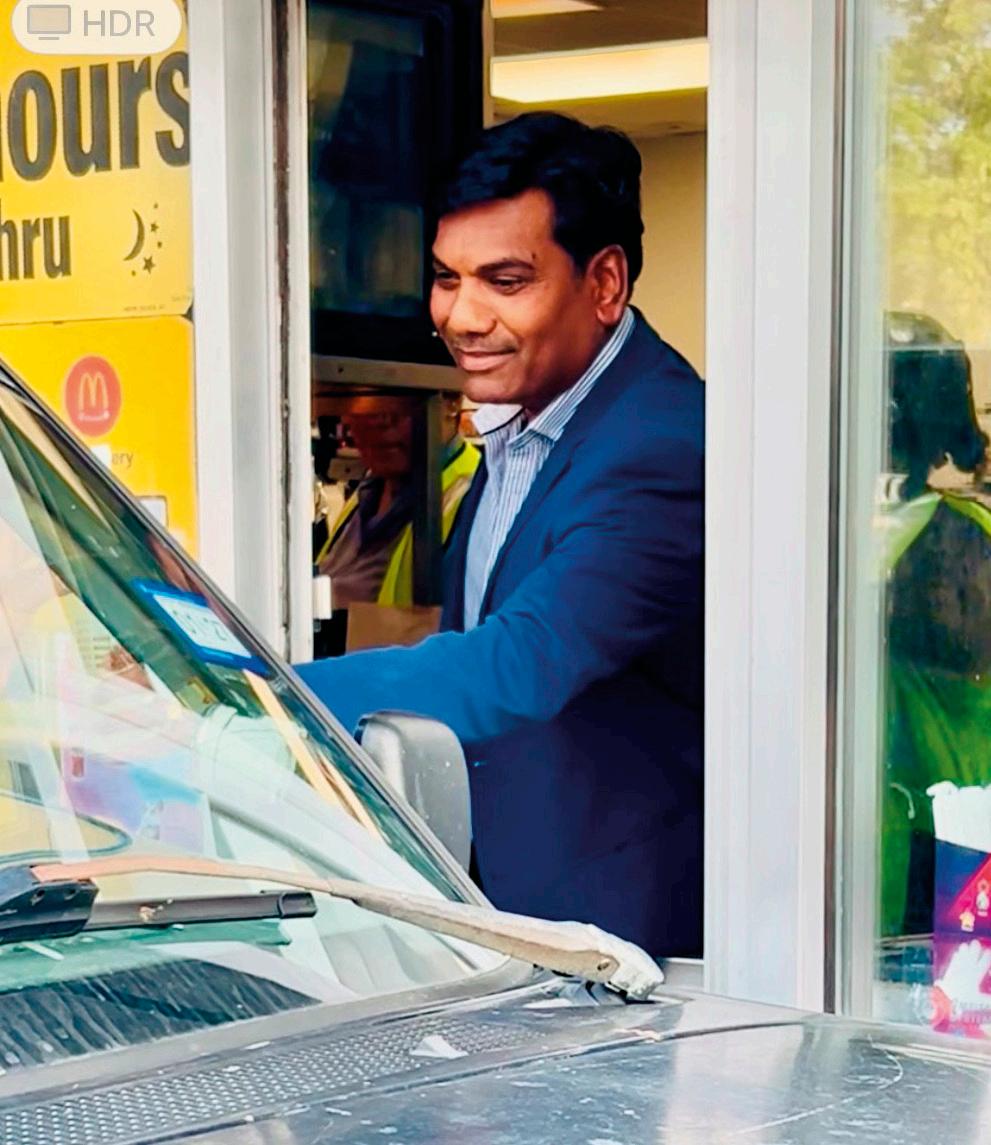
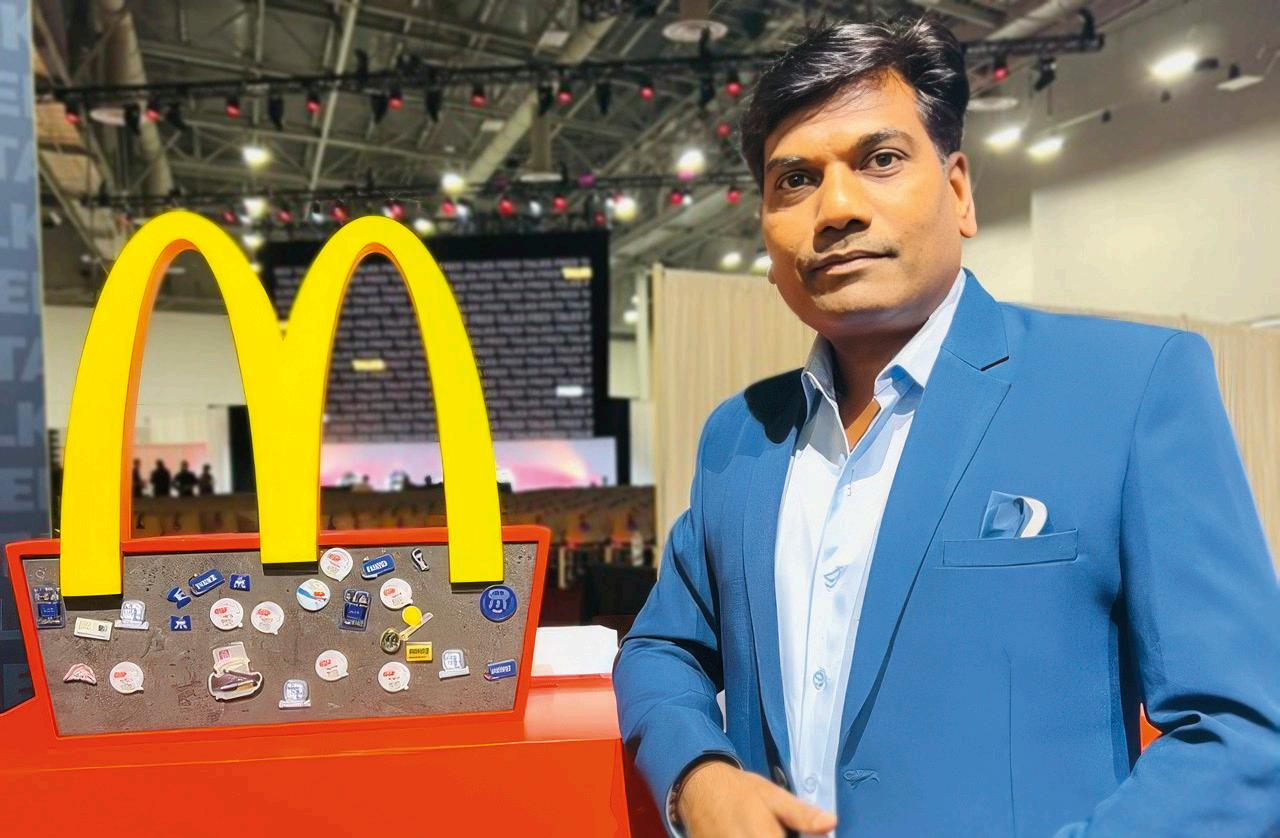
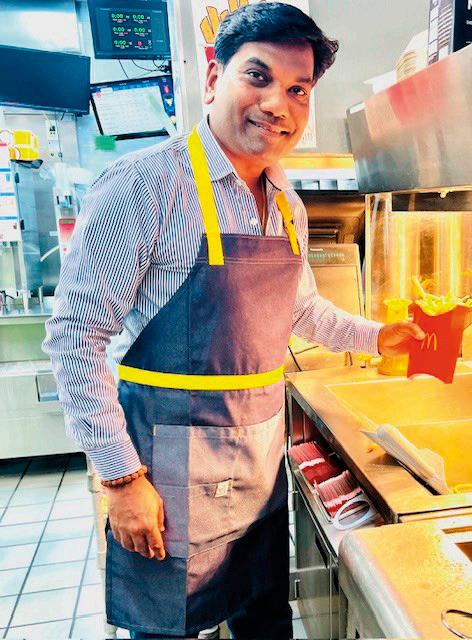
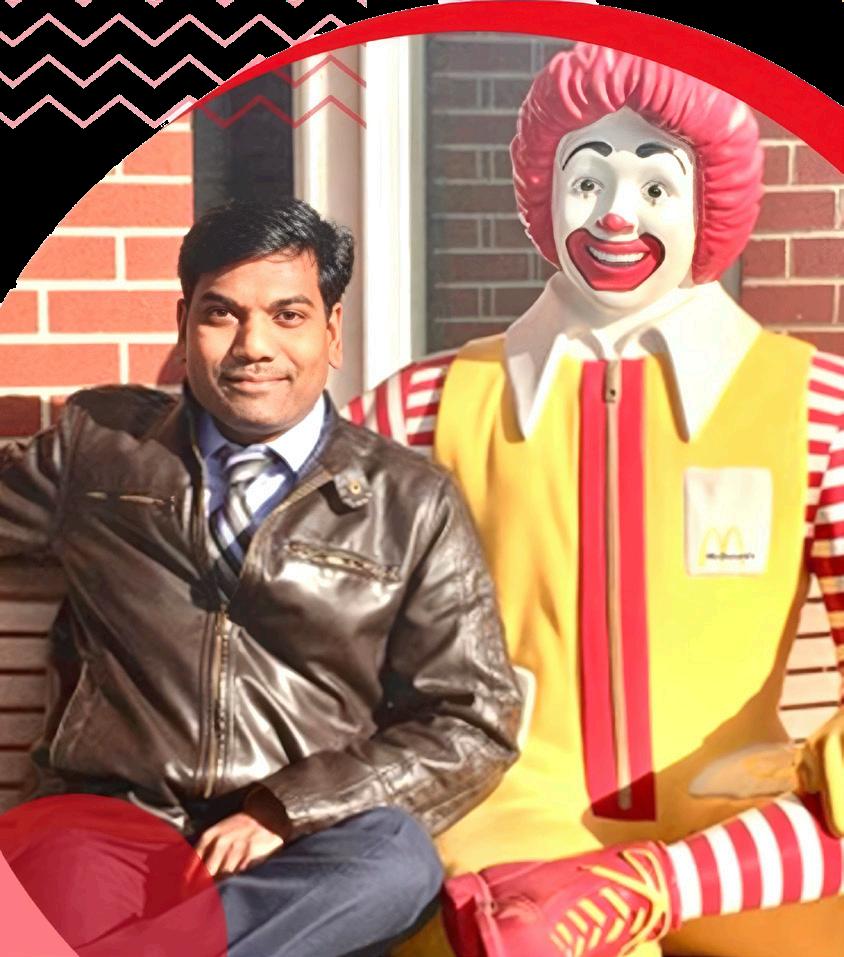
In 2000, Andy Kumar arrived in the U.S. from India with $400 to his name. He’d planned for a short visit with his brother, but the land of opportunity proved to be enticing.
He was fresh off earning his law degree in India and planned to build a law career in the U.S., but there was a snag. He was told it would take two years and $75,000 for legal certification in the U.S., an impossibility for someone who needed to make a living.
Kumar took a job working the overnight shift at a local convenience store gas station. Although he enjoyed interacting with customers and discovering American culture, Kumar struggled to find his career path after two years. During a call with his father on a pay phone outside the store, he vowed not to return to India unless he found success in his new home. That conversation changed his perspective on how he approached his career and life.
Kumar threw himself into working 12-hour days and eventually managed three different gas stations. He purchased his first station in 2005 and went on to own four more stores that he developed into solid businesses with steady cash flow.
After nearly a decade, he felt the need for a bigger platform and a more structured business than his independent gas stations provided. He was attracted to franchising and inquired about QSR opportunities before joining McDonald’s 17-month training program at a nearby restaurant.
During the training period, Kumar continued to operate his gas stations, which often resulted in 18-hour workdays. He purchased his first McDonald’s location with capital he raised by selling the stations. Although he was new to the restaurant industry, Kumar says his experience of
During a call with his father on a pay phone outside the store, he vowed not to return to India unless he found success in his new home.
ANDY KUMAR
Multi-Unit Franchisee
Company: Kumar McDonald’s, North Texas
No. of units: 19 McDonald’s Age: 54
Family: Wife, Susana, and 3 children, Daniella, 22, Anjali, 11, and Alexander, 4
Years in franchising: 9
Years in current position: 24
owning multiple gas stations eased the learning curve because he already understood how to run successful businesses.
Though he had customer service experience, he says living up to customer expectations for a worldwide brand was a big adjustment. He also adapted to training and leading his team, so he could guide the business forward with people he trusted.
His approach was immediately successful. His first store increased profits by 22% in its first two years, attracting attention from McDonald’s officials.
“The company was like, ‘What the heck is this guy doing?’” Kumar says. “People in leadership started visiting my store and asking what I was doing differently. I said I was just taking care of the customer, making sure everything was nice and clean, and following the standards of McDonald’s. It pays off right away. If you take care of your business as your baby, you can get rewarded rather handsomely.”
Kumar now has 19 McDonald’s “babies,” and his restaurants have become an integral part of the North Texas community. He has funded scholarships at two colleges. He’s also formed partnerships and hosted events with local schools, police departments, and civic organizations. His collection of stores has provided free Thanksgiving meals to those in need for the past eight years.
“I am blessed. God has given me more than what I could have asked for,” Kumar says. “I still vividly remember those early days working at the gas station. I look back and know I have received a lot of blessings. I tell my employees that if this is what God has given you, make sure you do a good job because you don’t know what opportunities may come next.”
PERSONAL
First job: Working the overnight shift as a gas station attendant starting in 2000.
Formative influences/events: I immigrated to the U.S. from India with limited resources. I worked 12 to 14-hour days at a gas station and later rebuilt my career after being unable to afford pursuing a U.S. law degree. Those years taught resilience, humility, and the power of starting over.
Key accomplishments: Growing from one store to 19 McDonald’s restaurants, employing 1,200 to 1,300 people across North Texas, becoming the digital lead for the North Texas Co - Op, building strong partnerships with police departments, schools, chambers of commerce, and nonprofits, mentoring youth across multiple school districts, and being recognized by elected officials and community leaders for civic impact.
Biggest current challenge: Accelerating personnel development fast enough to match our business growth while maintaining operational excellence across 19 locations.
Next big goal: To build a standout brand and leadership legacy recognized as the most communitydriven, operationally excellent McDonald’s franchisee organization in the country.
First turning point in your career: Realizing that the gas station job was a stepping stone, not a destination, and pursuing franchising despite financial and cultural challenges.
Best business decision: Investing early in people, especially young leaders, and creating a culture where crew members can grow into managers and operators.
Hardest lesson learned: You can’t outwork a broken system. You must build leaders, not just operations.
Work week: Six days a week, rotating between stores, community events, digital strategy, and leadership development.
Exercise/workout: Walking, light workouts, and staying active through store visits.
Best advice you ever got: “Success is never owned. It is rented, and the rent is due every day.” I read it in a book by an Indian writer, Shiv Khera.
What’s your passion in business? Creating jobs, developing leaders, and giving young people their first chance at success.
How do you balance life and work? Integrating family into community events and being intentional with time. Presence over hours.
Guilty pleasure: Good food, late-night chai, and motivational videos.
Favorite book: You Can Win by Shiv Khera.
Favorite movie: “Rocky.” I like inspirational and entrepreneurial films.
What do most people not know about you? I originally trained in law and planned to become an attorney.
Pet peeve: People who lack accountability. What did you want to be when you grew up? A lawyer.
Last vacation: San Miguel de Allende, Mexico, in early 2026.
Person you’d most like to have lunch with: A visionary business leader or public servant who has built something meaningful for their community, such as Warren Buffett.
Andy Kumar
MANAGEMENT
Business philosophy: Lead with humility, operate with excellence, and serve the community that supports you.
Management method or style: Hands-on, people first, and development focused with high expectations and high support.
Greatest challenge: Maintaining consistency across 19 locations while growing leaders fast enough to meet our demand.
How do others describe you? Driven, humble, community focused, and always willing to help.
Have you ever been in a mentor-mentee relationship? What did you learn? Yes, both as mentor and mentee. I learned that mentorship is about unlocking potential rather than simply giving answers.
Things you’re looking to do better: Delegating more strategically and building a stronger leadership bench.
How you give your team room to innovate and experiment: I encourage test-and-learn strategies and empower managers to own results.
How close are you to operations? I’m very close to operations. I’m in stores weekly, reviewing metrics daily, and I’m deeply involved in people development.
What are the two most important things you rely on from your franchisor? Brand strength and operational support.
What you need from vendors: Reliability, transparency, and true partnership.
Have you changed your marketing strategy in response to the economy? How? We put a greater focus on digital engagement, community partnerships, and value-driven messaging.
How is social media affecting your business? It helps amplify our brand reputation, recruitment, and community engagement.
“I am blessed. God has given me more than what I could have asked for.”
—Andy Kumar
In what ways are you using technology (like AI) to manage your business? We use it to help with our scheduling, forecasting, digital sales optimization, training, and operational insights.
How do you hire and fire? Hire for attitude; train for skill.
How do you train and retain? We offer leadership development, employee recognition, clear pathways for advancement, and a growth-focused culture.
How do you deal with problem employees? Direct coaching, clear expectations, and structured follow-up.
Fastest way into your doghouse: Blaming others or making excuses.
BOTTOM LINE
Goals over the next year: To strengthen our leadership pipeline, improve digital performance, deepen community partnerships, and potentially acquire more units.
Growth meter: How do you measure your growth? Through people development, operational consistency, digital performance, and community impact.
Vision meter: Where do you want to be in five years? 10 years? Over the next five years, to build the strongest leadership bench in North Texas. In 10 years, become a nationally recognized leader in franchising and community impact.
Do you have brands in different segments? Why/why not? No. I am focused exclusively on McDonald’s because of the scale, systems, and community impact that align with organizational strengths.
How is the economy in your region(s) affecting you, your employees, your customers? North Texas’ growth continues to drive demand though rising costs and competitive labor markets require constant adaptation.
Are you experiencing economic growth in your market? Yes. Population growth and development continue to drive customer demand.
How do changes in the economy affect the way you do business? It forces us to focus more on value, efficiency, our digital channels, and customer retention.
How do you forecast for your business? With digital tools, historical data, local trends, and McDonald’s system insights.
What are the best sources for capital expansion? Local banks, national banks, and reinvestment from operations.
Experience with private equity, local banks, national banks, other institutions? Why/why not? Relationship-based financing through local and national banks. We have not used private equity.
What are you doing to take care of your employees? Through training, recognition, growth opportunities, flexible scheduling, and community engagement.
How are you handling rising employee costs (payroll, minimum wage, healthcare, etc.)? By operating with greater efficiency, adopting technology, emphasizing leadership development, applying retention strategies, and encouraging employee cross-training.
What laws and regulations are affecting your business, and how are you dealing with them? Labor laws, wage changes, and compliance requirements are managed through training, systems, and proactive planning.
How do you reward/recognize top-performing employees? With bonuses, public recognition, growth opportunities, and celebrations.
What kind of exit strategy do you have in place? I want to build a strong leadership bench and a sustainable organization capable of thriving beyond my personal involvement. ■
FRANCHISE TERMS
• 8-HOUR DAY 7AM-3PM
• 2 DAY PARTS, 1 SHIFT
• 43 LOCATIONS / 6 STATES
• FLEXIBLE REAL ESTATE — 2ND GEN / CONVERSIONS
• 1.5% BRAND MARKETING / 2% LOCAL STORE MARKETING $2.7 mil average systemwide AUV* (All stores—not just the top quartile)
• 4.5% ROYALTY
• 2% ROYALTY FOR FIRST 2 YEARS*
(for area development agreement signed by 12/31/26)
Kayla Seely
Top Dog
Former franchise executive builds Dogtopia’s
biggest pack
Written by KEVIN BEHAN
With nearly 20 years of operational experience on both the franchisor and franchisee sides, Kayla Seely blends corporate insight with hands-on ownership to build a thriving pet care business. She’s applied her skills to grow Red Barn Holdings into the largest franchisee group in the Dogtopia system with 36 locations across 10 East Coast states.
Seely got her professional start working in operations roles with a pair of wellness franchises. When she was director of operations for a Massage Envy franchisee, Mike D’Amara, the owner, taught her the level of detail it takes to support employees and create memorable experiences for customers. Seely then moved on to the franchisor side as a regional business manager for Miracle-Ear, where she learned the importance of consistency, brand integrity, and operating standards.
KAYLA SEELY
Chief Operating Officer
Company: Red Barn Dog Holdings
No. of units: 36 Dogtopia
Age: 40
Family: Husband, Chip, and 2 children, Emmie, 8, and Mason, 6
Years in franchising: 18
Years in current position: 7
“My standards are high, but I’m approachable and always willing to listen.”
After three and a half years with Miracle-Ear, Seely missed the entrepreneurial side of franchise ownership and the ability to affect customers. In 2019, she formed Red Barn Holdings and became a Dogtopia franchisee, applying her health and wellness experience to canine care. In addition to daycare, boarding, and grooming, Dogtopia provides socialization and exercise to help dogs maintain a healthy weight and live longer.
“My dog goes to daycare, and I can tell that it has significantly changed her fitness level,” Seely says. “She lost about 15 pounds by going to daycare two to three times per week. There are days when we can track her activity level to about 17 miles, and I try to think what my day would look like if I had to walk her myself for that long.”
Seely charted an aggressive path for growth fueled by acquisitions of existing Dogtopia units and conversions of independent locations. That plan allowed for existing, stable locations to support overall growth while new stores were built. Although construction slowed during Covid, Seely reached 20 locations by the end of 2021. She has acquired 21 stores and built 15 more.
The pandemic helped pet care businesses like Dogtopia. Seely says her stores remained open, albeit on a modified schedule, to serve essential workers and their pets. A growth in pet ownership during Covid led to an increased demand for pet care in the years that followed as people returned to the office and resumed traveling.
As the business grew, Seely prioritized developing talent on her internal team to manage franchise operations. She has promoted from within almost exclusively and allows managers to lead multiple locations. Team members have grown from general manager to area manager and then district manager. Developing a deep and talented bench remains important as Seely plans to add three to five locations per year for the foreseeable future.
“We always intended to have multiple locations and build an extensive portfolio,” Seely says. “It was fast and furious during those first few years, and at times, I was a bit frustrated that it was slowed by Covid or other growing pains. Considering each of those challenges, I’m very pleased with where we ended up.”
PERSONAL
First job: I started working at an Italian bakery when I was 14. To this day, I can still smell the bread, and I learned early the value of hard work and pride in craftsmanship.
Formative influences/events: As a child, I frequently tagged along to my dad’s job sites, piecing together scraps of wood from his cabinetry projects. What stuck with me most wasn’t the building; it was that he genuinely loved his work. Serving his companies and clients wasn’t a chore; it was something he looked forward to. That work ethic shaped who I am today.
Key accomplishments: My two amazing kids will always top the list. Professionally, I’m incredibly proud of our team for earning multiple awards across our portfolio, including top sales in the Dogtopia network for the past three years.
Biggest current challenge: Taking the organization from good to great by refining systems, elevating leaders, and ensuring scalability without losing culture.
Next big goal: Achieving $1 million in sales in year one for a new location.
First turning point in your career: Realizing that leadership isn’t about being the best operator in the room. It’s about building people who can outperform you.
Best business decision: Relentlessly investing in internal talent development even when external hiring would have been faster.
Hardest lesson learned: Not every high performer is meant to move into leadership, and forcing that transition can hurt both the individual and the organization.
Work week: Our business operates 24/7/365. I usually work Monday through Friday with a half day on Saturday to catch up on work. I intentionally carve out at least one day a week for family time, but when the business needs me, I’m here.
Exercise/workout: Hiking to a new or favorite fishing spot.
Best advice you ever got: “Yes” is easy. “No” takes discipline. Learning to say no when the timing isn’t right, the idea isn’t fully formed, or the risk is too high creates clarity, slows the spin, and protects focus.
What’s your passion in business? Building and developing a team that learns from me and ultimately teaches me. As they grow stronger and challenge the status quo, that’s where the real magic happens.
How do you balance life and work? I laugh at this question because there is no true balance; there’s work-life integration. Some seasons are 80% business and 20% family; others are closer to 50/50. Like everything else, it comes in waves.
Guilty pleasure: Nintendo video games. Retro or new—an hour with a controller can be almost as rejuvenating as eight hours of sleep.
Favorite book: For business, it is Traction by Gino Wickman. On the personal side, it is The Murder of Roger Ackroyd by Agatha Christie.
Favorite movie: “The Godfather” or any great sports movie. Al Pacino’s “game of inches” speech from “Any Given Sunday” is a frequent reference, especially when it’s time to rally.
What do most people not know about you? I am an introvert.
Pet peeve: Excuses.
What did you want to be when you grew up?
A lawyer. While that didn’t pan out, I served as foreperson on a murder trial last year, so I feel like I got the best of both worlds.
Last vacation: A few days in the British Virgin Islands in April 2025 to detach from the constant go-go-go.
Person you’d most like to have lunch with: A former U.S. president for insights on leadership, negotiation, and decision-making at scale.
MANAGEMENT
Business philosophy: Failure is not an option, but learning from mistakes is mandatory.
Management method or style: Fanatical attention to detail until mastery is proven and then full autonomy to do what you were hired to do.
Greatest challenge: Maintaining bench strength in a constant growth mode. We prioritize internal promotion, which has resulted in incredible success stories, but growth can sometimes outpace readiness. Ongoing development is critical.
How do others describe you? Tough but fair. My standards are high, but I’m approachable and always willing to listen.
Have you ever been in a mentor-mentee relationship? What did you learn? I worked for five years for a franchisee in another industry. He taught me operational excellence, customer experience, and disciplined hiring and training. He passed away just over a year ago, and I still keep a running “When I talk to Mike” list.
One thing you’re looking to do better: Not sweat the small stuff.
How you give your team room to innovate and experiment: If an idea doesn’t violate brand standards or safety and is well thought out, I’ll usually greenlight it. We try it once, and if it works, we keep it. If not, we move on.
How close are you to operations? Very. I still oversee the district managers, interact with them daily, and have a pulse on every daycare. I aim to visit each location at least once per year.
What are the two most important things you rely on from your franchisor? The backing of an industry leader and an open, accessible partnership. What you need from vendors: True partnership: mutual benefit, transparency, and alignment.
Have you changed your marketing strategy in response to the economy? How? We’ve leaned more heavily into value-driven messaging, retention, and local relationship marketing rather than broad awareness tactics. Building strong, visible relationships within our communities is a key priority. Trust and familiarity matter more than ever in uncertain economic environments.
How is social media affecting your business?
Social media plays a critical role in building community trust and reinforcing brand credibility. It’s often where prospective team members and pet parents validate who we are. It also gives each location a voice to celebrate its personality, culture, and creativity. Pet parents truly enjoy seeing their dogs, the unique activities, and the people who care for them every day.
In what ways are you using technology (like AI) to manage your business? Technology is integral to both the pet parent experience and operational execution. We use Dash, our activity tracking collar, to monitor the dogs’ engagement throughout the day. Digital whiteboards in every playroom display photos of each pup along with key notes for our teams. Our mobile app allows pet parents to alert us when they’re on the way, enabling fast, convenient curbside drop-off and pickup. Each tool is designed to enhance communication, safety, and efficiency.
How do you hire and fire? We use the Predictive Index to ensure behavioral alignment. At the multi-unit level, I’m very selective. When someone isn’t the right fit, we make changes quickly and respectfully.
How do you train and retain? A blend of online modules, hands-on learning, and structured one-on-one meetings across departments. New leaders spend four to six weeks in daycare operations learning canine behavior and daily execution. How do you deal with problem employees? Most issues stem from misaligned expectations. I first clarify understanding and then reset expectations or retrain. If that doesn’t resolve the issue, it may be time to make a change.
Fastest way into your doghouse: Trying to hide something. Bad news needs to travel fast.
BOTTOM LINE
Annual revenue: $35 million.
Goals over the next year: Continue strengthening systems while responsibly growing the portfolio.
Growth meter: How do you measure your growth? Year-over-year comps, unit count, and employee development.
Vision meter: Where do you want to be in five years? 10 years? Ideally, sitting on a dock, fishing quietly with four dogs. More realistically, continuing to develop leaders and building a portfolio that thrives without daily dependence on me.
Do you have brands in different segments? Why/ why not? Not currently. All our energy is focused on serving the pups and the people who care for them exceptionally well.
How is the economy in your region(s) affecting you, your employees, your customers? We consistently keep a pulse on national and local trends, recognizing that conditions vary by market. That said, headwinds have existed since day one, and it’s simply part of doing business. Overall, we’ve found the pet services sector to be both stable and resilient even during periods of broader economic uncertainty.
Are you experiencing economic growth in your market? Yes. Across the portfolio, we continue to see growth. Individual markets will always experience hills and valleys, but we take a longterm view, stay disciplined, and ride those cycles with optimism.
How do changes in the economy affect the way you do business? It always comes back to value. Our focus is on delivering a service that pet parents truly find worthwhile and making it as easy as possible to do business with us. That starts with convenience, transparency, and trust, and it ends with exceptional care for their dogs.
How do you forecast for your business? We forecast annually with monthly reviews to assess performance and adjust assumptions as needed. Staying nimble is critical.
What are the best sources for capital expansion? The best source is the one available and aligned with your goals. Every operator has a different relationship with their capital partners, so there’s no one-size-fits-all solution.
Experience with private equity, local banks, national banks, other institutions? Why/why not? Equity can be an excellent option when available and well aligned. We’ve worked with a regional bank for more than six years, and they’ve been incredible partners, especially during the inevitable bumps along the way. Having a lender that truly understands your business makes a significant difference.
What are you doing to take care of your employees? First and foremost, let them know you care. Appreciation matters. My team is my backbone, my ride-or-die group, and they know that no matter how tough things get, we face challenges together.
How are you handling rising employee costs (payroll, minimum wage, healthcare, etc.)? Hasn’t this been an ever-changing landscape? Because labor is the largest line item on our P&L, it must be managed thoughtfully and daily. We focus on responsible cost control by refining systems, leveraging technology to eliminate inefficiencies, and continuously reviewing vendor partnerships
to ensure we’re receiving the best value without compromising quality or care.
What laws and regulations are affecting your business, and how are you dealing with them? Labor regulations, wage requirements, and safety standards are the most impactful. We stay proactive by partnering with strong legal and HR resources, continuously educating our leaders, and ensuring our policies evolve alongside regulatory changes. How do you reward/recognize top-performing employees? Recognition takes many forms, from internal advancement and expanded responsibilities to public acknowledgment and meaningful one-on-one feedback. Growth, trust, and visibility are powerful motivators when paired with appreciation. For our managers, performance-based bonus plans are especially impactful, ensuring alignment with company goals while rewarding results.
What kind of exit strategy do you have in place? Right now, it’s all systems go. Our exit strategy is building an operation so strong, structured, and values driven that it could be seamlessly handed off to the next steward when the time is right. ■
CHESTON SYMA
Multi-Unit Franchisee/ Team Leader
Company: Wheelhouse Partners
No. of units: 43 Sport Clips, 2 Big Blue Swim School, 2 SweatHouz, 1 Hand & Stone Massage and Facial Spa
Age: 49
Years in franchising: 22
Years in current position: 22
The money he made while working overseas allowed him to pay off the loans of his two stores and slowly add a few more units. Syma said once he got to five locations, he faced a fork in the road. He could sell and pursue something else or go all in with Sport Clips. He chose the latter, and his plan for scaling the business took off.
Syma partnered with Dr. Setul Patel in 2018 to fuel growth. Soon afterward, a franchisee in Dallas offered to sell 18 salons, tripling the size of the business. He has developed long-term relationships with older franchisees in the Sport Clips system, and several of them have sold their stores to him when they were ready to retire. He said that about 70% of his stores have come through acquisitions.
He is now up to 43 Sport Clips locations and has branched out to several other brands in recent years. Having long been attracted to “Amazonproof” and, more recently, “AI-proof” businesses, Syma signed agreements for 10 Big Blue Swim Schools in Houston, 12 SweatHouz locations in Austin, and one Hand & Stone Massage & Facial Spa in Magnolia, Texas. One of his next goals is to hire people to oversee the daily operations of each brand to give him the freedom to travel more and enjoy what he has built over the past two decades.
“I don’t see myself leaving what I currently have, but I don’t see myself adding more brands,” Syma says. “I am at the point in my career and personal life in which I want to try not to work so much and enjoy what I have done. I would like to take my success and enjoy the fruits of my labor and slow down a bit.”
PERSONAL
First job: Worked on a farm in rural Texas when I was 12.
Formative influences/events: I came from very humble beginnings, which taught me the
importance of hard work. I served in the Marines, which taught me what good and bad leaders look like. I learned how to persevere and carry on with grit.
Key accomplishments: My very successful tenure in the Marines and employing more than 400 team members across all my businesses.
Biggest current challenge: Identifying, hiring, and retaining talented employees. In the hourly rate pool of talent, it is more difficult to find good leaders and people with business experience. The people who have that often go off and do the right thing. When you do find them, you have to compensate them well and take care of them.
Next big goal: Promoting the top leaders in the company to take on larger roles.
First turning point in your career: Buying my first two Sport Clips paved the road to where I am today. Because the first two units were successful, it allowed me to expand to many other locations.
Best business decision: Joining Sport Clips in June 2004. The franchise has many great values that I share as well.
Hardest lesson learned: Losses will come, and some will take a heavy toll mentally, psychologically, and financially, but you can never give up. If you do, you lose. My first business was owning a tanning salon when I was 24. I was just out of college and didn’t have much money. I ended up losing more than $400,000 over a 10-year period. That was pretty painful. What if I gave up my entrepreneurial journey and took a job? I’m sure I would be happy, but I wouldn’t be where I am today.
Work week: I am always on call, checking emails and responding even on weekends or while on vacation. Most of my work I can do on the go from my phone. I am the last resort for all my employees,
and they know I can be reached any time, any day, if the rest of the leadership team cannot be reached.
Exercise/workout: Morning cardio at 7:30 a.m. for 40 minutes followed by afternoon weight training for 60 minutes. I do both five times a week and play in an adult soccer league on Sundays.
Best advice you ever got: My father told me that opportunities are everywhere; you just need to have the ability to find them and execute on them.
What’s your passion in business? Developing leaders and watching their rise in life and in work and helping them accomplish their personal and family goals.
How do you balance life and work? By having a great team behind me to handle the day-to-day challenges. People often ask how I manage 50-plus businesses, and I tell them it’s easier than managing 10 because now I can afford to have a very talented team to support me.
Guilty pleasure: A few glasses of a great cabernet during dinner, which I only do once or twice a month.
Favorite book: A Game of Thrones.
Favorite movie: “The Wolf of Wall Street.”
What do most people not know about you? I spent three years working as a security contractor for the CIA in Afghanistan.
Pet peeve: Negativity. Your attitude or perception wires your brain. If you are mostly negative, your brain will be rewired to view the world from a negative viewpoint.
What did you want to be when you grew up? I had always wanted to be an infantry Marine. Last vacation: A Bahamas cruise in April 2026.
Person you’d most like to have lunch with: My dad, who passed away in 2001. You can never have enough time with those whom you truly love.
MANAGEMENT
Business philosophy: I will quote Marcus Lemonis on this: “People, products, and processes.” Find and hire the right people and treat them right. Have a great product. Have processes in place that are replicable, easy to understand and manage, and can stand the test of time.
Management method or style: Train the trainer, trust but verify, and employees will execute the job at hand. Be the cheerleader for your people.
Greatest challenge: Finding good employees who share your values. I think this is the biggest challenge for all businesses.
How do others describe you? Strategic, structured, involved, and fair.
Have you ever been in a mentor-mentee relationship? What did you learn? I have had many great mentors in my life. Most were while I was in the Marines, and I was lucky enough to serve alongside them. I learned everything I know today about leadership, patience, tact, integrity, and unselfishness.
Cheston Syma
One thing you’re looking to do better: Learn about AI and how to effectively use it in the business to increase efficiency and productivity.
How you give your team room to innovate and experiment: I do not control my district managers’ daily schedules. I let them lead, manage, and work as they deem fit with the desired outcome detailed for them. I am always a phone call or text away, so support is always there, and I am in daily contact with most of them.
How close are you to operations? I am very close to operations, but I do miss being closer. When I did not have as many locations, I knew all my people by name. Now, I only know my district managers and a handful of team members well. It’s the sacrifice of getting big, but I do miss the intimacy of being a smaller operator. What are the two most important things you rely on from your franchisor? Innovation and brand awareness/reputation.
What you need from vendors: One of the main things I look for from a vendor is responsiveness. As a franchisee, many of my vendors are selected by the franchisor. For the ones I can choose on my own, I want quick responses and good communication.
Have you changed your marketing strategy in response to the economy? How? I have not. I typically am not a fan of continuous discounting, which degrades a brand’s value and perception. A few times a year, I will run large marketing campaigns with discounts, but those are random so that customers do not come to expect or rely on them. Many times, when a business does continuous discounting, it brings in a different type of clientele we may not want, replacing other clients we do want.
How is social media affecting your business? The great thing about franchises is that they usually handle the heavy lifting on social media. We have a part in it, but I leave that to the district managers since I don’t personally have or use social media.
I n what ways are you using technology (like AI) to manage your business? My goal for the foreseeable future is to learn how to use AI to manage and increase efficiency in HR management, bookkeeping, forecasting, and financial analysis. AI is moving so fast, and it is truly difficult to learn and keep up with it.
How do you hire and fire? I like to hire based on personality and teach the skill. I seldom like to fire, but when I do, I will give people more than enough chances so that I have a clear conscience. I should probably hire fast and fire faster, but maybe my heart is too big, and I give too many chances. How do you train and retain? I have a system and a progressive path for training. Retention is not very easy to manage since every employee wants something different in their job or life. It’s not always about paying the most. There are so many variables to get right, and even when you do, people will still leave due to personal reasons. We try our best to
provide the best pay we can along with the best culture, training, recognition, support, and clients.
How do you deal with problem employees? Most problem employees want to be heard. If you give them that and reaffirm expectations, many times they can evolve into good employees. For those who cannot evolve, an exit is the last resort.
Fastest way into your doghouse: Having a lack of integrity.
BOTTOM LINE
Annual revenue: $18 million.
Goals over the next year: I want to trim the fat or the inefficient stores from the company. There will be some locations that are not doing as well, and they are dragging down the profitability of the other stores.
Growth meter: How do you measure your growth? Client count is the best way to measure business growth. Sales are a good indicator but can be misleading due to price increases over time. Employee retention is a good way to measure business culture and morale.
Vision meter: Where do you want to be in five years? 10 years? In the next five years, I would like to be able to have a director of operations manage the daily challenges. I cannot see that far out in 10 years. So much can change in that time.
Do you have brands in different segments? Why/why not? I try to stick to something that is Amazon-proof, AI-proof, and service related. Men’s haircare, swim lessons for kids, and health/wellness are the segments I am in that cannot be taken over by technology.
How is the economy in your region(s) affecting you, your employees, your customers? Currently, macroeconomic conditions remain strong enough that they haven’t affected my businesses very much. Sport Clips does better in a recession, but the other brands may suffer. That is why it is good to diversify.
Are you experiencing economic growth in your market? It varies by location.
How do changes in the economy affect the way you do business? Being diversified allows me to be positively affected in both good and bad economies. One business may fare better in a recession while others flourish in a growth cycle.
How do you forecast for your business? I forecast more competition coming into each market and a compression of profits. Most businesses stabilize around a 15% profit margin once the market reaches maturity. If I see a 25% margin, I don’t expect that to last forever. If the margins are good, competition will enter and take market share. At a 15% profit margin, the name of the game would then be volume.
What are the best sources for capital expansion? Good relationships with more than one bank. Experience with private equity, local banks, national banks, other institutions? Why/why not? I do not have experience with private equity, but I do with local and national banks. I tend to like local banks better because smaller banks can make decisions faster, and a better banking relationship can be formed with top decision-makers.
What are you doing to take care of your employees? Above market pay, constant recognition, having an open-door policy, adequate training, good benefits, and providing them with good leaders to follow.
How are you handling rising employee costs (payroll, minimum wage, healthcare, etc.)? Unfortunately, the price is rising on everything and not just wages. With inflation, wages must go up; thus, prices must increase, but they can only go up so much. Profit margins tend to compress with rising costs, so a balance is met somewhere between rising prices and lower margins, especially in times of high inflation.
What laws and regulations are affecting your business, and how are you dealing with them? Most of the laws and regulations affecting my businesses have to do with professional cosmetology and barber licenses. Currently, there are many states that require 1,500 credit hours to get a cosmetology or barber license while some states require only 1,000 hours. The extra 500 hours may push students away from this industry due to cost and time.
How do you reward/recognize top-performing employees? My pay plan is structured so that the top-performing employees are automatically recognized with bonuses. The entire leadership team gives constant praise and recognition. Sport Clips also has a great infrastructure to recognize tenure and top performers at the individual and store level, and recognition is given at the national convention. What kind of exit strategy do you have in place? Currently, I am content with my work-life balance and do not see a need to exit. I know at some point that sad day will come, but at this time, I am more focused on growth and performance. ■
of franchise owners would recommend MassageLuXe
THE 2026 MULTI-UNIT A SNAPSHOT OF SCALE
Written by AMBIKA OBEROI
The 2026 Multi-Unit 50 rankings offer a clear snapshot of where franchisee scale is most concentrated across the industry. As with any living dataset, ongoing refinements to how FRANdata classifies franchisee data have made this year’s rankings a more complete picture than ever.
Measured by sheer volume of multi-unit operators, Subway leads with 1,945 multiunit franchisees across a total system of 5,605. McDonald’s follows with 1,630 multi-unit franchisees and a notably high concentration: More than 83% of its franchisees operate multiple locations, placing it fifth on the percentage-based list as well.
The UPS Store, AFC, and Dunkin’ round out the top five by count. Each has multi-unit operators numbering in the hundreds, reflecting the depth of experienced operators within these mature systems.
The percentage-based rankings tell a different story about brand architecture and operator strategy. iFoam tops this list with 100% multi-unit penetration. It’s followed by Panera Bread at 96% and Dave’s Hot Chicken at 95%.
Several service-based concepts, like Servpro, ServiceMaster, RooterMan, Koala Insulation, and America’s Swimming Pool Company (ASP), appear across both lists. This reflects a strong appetite among multi-unit operators for recurring-revenue, service-based models that scale well across territories ■
Ambika Oberoi is director of information management for FRANdata.
Source: FRANdata
Note: Brands with fewer than 25 franchisees were excluded. Disclaimer: Due to ongoing changes within this system and FRANdata’s continuous data verification process, the
owners may be subject to updates.
Numbers
Don’t Lie
Small metrics can create big results
Written by HELEN BOND
Greg Costley has been thinking about Cicis Pizza for more than 30 years. Not occasionally. Constantly.
He started as an entry-level manager, worked his way through the system, and became a franchisee in 1997. Along the way, he learned—sometimes the hard way—every breakpoint in the business and how to grow sales at each location.
Today, he operates the No. 1 and No. 3 stores in the chain, including one location approaching $4 million in annual revenue, a milestone no Cicis has reached before.
Most of his 14 restaurants generate roughly $1 million more per year than when he acquired them.
“I’m never satisfied,” Costley says. “Whatever we do today is not good enough to stay in business tomorrow.”
The math that operators relied on in the past no longer works. Labor costs remain elevated. Food inflation continues to pressure margins as do rising insurance, utilities, and capital costs. Consumer behavior has fundamentally changed. For multiunit franchisees, the pressure is coming from every direction.
The operators outperforming their peers say they aren’t looking for one big fix. They’re focused on 100 small ones, figuring out which numbers matter, catching vendor creep before it compounds, and acting on a weekly trend before it shows up on a monthly P&L.
NET REVENUE
Ask any top operator what number they watch first, and the answer is almost always the same.
“It all goes back to total net revenue,” says Monica Harrigill, who runs a diverse portfolio of wellness, retail, and hotel brands (Palm Beach Tan, Massage Envy, My Salon Suite, Hampton by Hilton, and others) through Sunray Management Systems. “At the end of the day, it’s total net revenue: What’s making it up? Is it growing? Is it not? And then we work backward from there.”
Early on, Harrigill tracked too many metrics. More data, she learned, doesn’t drive better performance; execution does.
“Numbers are telling you a story,” Harrigill says. “Are you understanding that story?”
She monitors a handful of leading indicators tied directly to results. Each metric has an owner, and every variance triggers a conversation. The language changes with each brand’s vernacular, but the process doesn’t.
At Harrigill’s 20 Palm Beach Tan locations, the conversion percentage is the critical metric. With her 12 Massage Envy sites, it’s closing percentage.
Daily reports cover revenue, labor, service metrics, and guest feedback. They are color coded and delivered each morning to Harrigill’s inbox and to every general manager in her portfolio.
“They’re also seeing where they rank compared to everyone else,” Harrigill adds.
Weekly reviews focus on sales pacing, staffing, and local marketing. Monthly meetings go line by line through the P&L, benchmark rankings across units, and reveal operational best practices across divisions. When a location starts trending wrong, a conversation takes place immediately.
“What are we doing to support this person right now, to flip these numbers before the month ends?” Harrigill says.
Barry Tu operates six Orangetheory Fitness studios in Salt Lake City and eight Broken Yolk Cafe restaurants across Southern California and Las Vegas. They bring in roughly $31 million in combined revenue, and their scorecards look nothing alike.
Orangetheory is a membership-driven boutique fitness business. Tu tracks weekly lead counts, booking rates, show rates, and close rates alongside longer-term indicators like 120-day retention, membership utilization, and freeze rates. Broken Yolk runs on a completely different clock. Managers submit a daily summary report covering discounts, voids, revenue against the prior year, hourly labor, guest counts, and average check size.
Every Monday, Tu goes over the weekly numbers with his full Orangetheory leadership team, including coaches, studio managers, assistant managers, and executives overseeing sales, operations, and fitness. Each studio’s results are on display.
“If you’re in last place, you know it,” Tu says. “I don’t want them to feel shame, but I do want them to feel like, ‘Oh, I need to step it up.’”
Orangetheory’s promotions routinely change, so Tu uses this time to evaluate the success of recent offers. He also makes sure staff and coaches know what’s coming so that they can communicate it to members.
More recently, he started tracking coach performance through attendance patterns, comparing average class size by instructor across morning and evening sessions. The data has been telling, surfacing best practices worth passing on.
Costley, a 2024 IFA Franchisee of the Year who was recently named Oklahoma’s 2026 SBA Small Business Person of the Year, considers productivity his weekly thermometer.
With the buffet model at Cicis, food costs run whether the dining room is full or empty, which means the ratio of total sales to labor hours tells him almost everything he needs to know about how his locations are running across Oklahoma, Texas, Missouri, and Arkansas.
Greg Costley Cicis Pizza
Metrics
“There’s a limit to how hard you can push people in the restaurant,” Costley says. “Whatever that limit is, that’s the benchmark.”
Monthly financials give him the full picture. He moves through each line (food sales, game sales, total sales, food cost, labor, and EBITDA), flagging anything that needs a closer look.
“Every day, we should be getting better, and sales should be going up,” Costley says. “If they do not do that, you have operational issues.”
An operational breakdown surfaces as revenue growing while margins decline. That’s usually followed by scheduling chaos and rising caregiver turnover. A market challenge can show up as caregivers asking for more hours while census growth stays flat.
“Most locations are not struggling because they don’t have enough referrals,” she says. “They’re struggling because they can’t operationally support growth consistently.”
“You see certain things,” Costley says, “and then you go look at other operations. It’s not happening here. It’s not happening here. So why is this behavior going on?”
LEAKS ADD UP
Harrigill has a phrase for what operators can miss while they’re watching the big numbers: “fighting elephants and forgetting the mice.”
Strong units have managers who move early, staff proactively, and respond quickly, Torrez says. Average ones live in reactive mode.
ACROSS LOCATIONS
Harrigill ranks her units by revenue in descending order, so the picture is honest before she starts asking questions. Every unit gets benchmarked against internal portfolio averages, top performers within the franchise system, and historical performance trends.
When a variance emerges, she applies a threepart diagnostic before drawing any conclusions: Is this a people problem? A process problem? Or a market problem?
“If multiple units show the same pattern, it’s usually system wide,” Harrigill says. “If one unit stands alone, it’s almost always execution at the local level.”
Becky Torrez has spent 13 years building a BrightStar Care operation across four territories and recently added three Five Star Bath Solutions locations. The two businesses, with 251 employees across BrightStar and 12 at Five Star, have almost nothing in common operationally, but the financial discipline required to run them, Torrez says, is surprisingly similar.
“The numbers usually tell you something is wrong before you can feel it operationally,” Torrez says.
She maps out exactly what each problem looks like in her business. A staffing issue signals strong referral volume with slow starts of care. In that case, the demand is there, but the agency can’t fill it.
“High-performing locations usually are not less busy,” Torrez says. “They are simply more disciplined.”
Torrez tracks gross margin as her primary early warning signal across both businesses. In home healthcare, she targets above 42%. When that number starts drifting, she knows something is wrong underneath the surface often before it shows up anywhere else.
“I can see revenue growing,” she says, “but if gross margin starts eroding, that usually tells me we have some kind of staffing, pricing, or operational issue happening underneath the surface.”
Along with brand platforms, Torrez looks to additional tools, Monday.com at BrightStar and ServiceMinder at Five Star, for real-time visibility into scheduling efficiency, recruiting pipelines, and project profitability that previously waited until month-end financials.
Across both businesses, certain numbers are nonnegotiable regardless of model. They include revenue growth, gross margin, labor efficiency, sales pipeline health, customer satisfaction, and cash flow. For Torrez, leadership stability underlies all of them.
Costley uses a version of the same diagnostic. When a store isn’t performing, he makes the move he thinks will work, which often involves the manager, and watches what happens next.
“When you make the change, the numbers should fall in line,” he says. “When they don’t, you’ve got to start looking deeper.”
He also wants to know whether what he’s seeing is an event or a trend. A $25,000 airconditioning unit explains a profitability dip without requiring a personnel conversation. A cost line drifting for three months requires a completely different response.
“You just kind of go back in and bird-dog it,” Costley says. “Is this a one-time event, or are we trending?”
Costley watches for anything that looks out of character compared to his other stores. When something doesn’t match, such as voids piling up at one location late at night or a cost line behaving differently from everywhere else, he goes looking for why. That instinct has led him more than once to uncover employee theft.
Labor, rent, and cost of goods sold get attention. What often gets overlooked are the line items that erode margin slowly. Harrigill points to utilities billed at the wrong rate, insurance renewals on autopilot, and vendor contracts that roll over at higher rates without anyone noticing. None of it feels urgent, but spread across 20 units over 12 months, it can quietly eat at what was supposed to be profit.
“Don’t ignore the small leaks,” Harrigill says.
Of all the line items on her profit leaks list, she singles out discount creep as one that operators often underestimate. Discounts, she says, can quietly accumulate over time, and most aren’t tracking what they’re giving away as a percentage of sales.
“I look at discounts all the time,” Harrigill says. “These are the hidden costs that you just don’t realize are there.”
Sunray Management Systems
Harrigill picks two or three vendor contracts to rebid each year rather than trying to fix everything at once. This past year, it was waste pickup and internet service costs. Across her company’s seven hotels alone, the rebid dropped costs by $500 a month or $6,000 per year for one brand.
“If you do that times four divisions, you’re now at $24,000,” Harrigill says.
For Costley, the biggest leak in a buffet model is almost always waste. He’s adjusted pizza sizing and portion protocols multiple times over the years to reduce what gets left on the table. He also monitors for behavioral patterns in his POS data that don’t match what’s happening in the dining room,
Becky Torrez BrightStar Care and Five Star Bath Solutions
Monica Harrigill
which can include voids clustering at odd hours and transactions that don’t align with guest counts on camera. Two of his managers were ultimately let go after that kind of analysis revealed discrepancies that deeper investigations confirmed.
Torrez flags software subscription drift as one of the quietest leaks across any multi-unit operation. Scheduling tools, marketing platforms, HR systems, and training portals can all stack up one justified purchase at a time. Operators rarely go back to ask whether any of them are still producing a return.
ACTION ITEMS
For Costley, turning insights into action starts with keeping the right people in place long enough for the system to work.
His assistant managers earn 2.5% of EBITDA with the potential to reach 5% if they hit their goals. Bonuses come as physical checks handed directly by the general manager to the employee and accompanied by a conversation about what the team accomplished and what the next quarter needs.
“I’m trying to empower the management team to have more influence and buy-in from their people,” Costley explains.
The longer people stay, the better the operation gets. Several of his locations have employees who have been with him for 30 years. His highestvolume store has a general manager who has been there for 38 years.
Retention builds the foundation. Costley builds on top of it.
Years ago, he began installing growth-driving game rooms in his Cicis locations, treating each one as its own P&L center with the same reporting rigor he applies to food sales and labor. At his highest-volume store alone, the game room generates $600,000 a year.
“All I do is build sales,” he says.
Every month, Tu’s Orangetheory studios are scored across 15 to 18 metrics, including sales execution, member experience, review volume, and event activity. The results feed a monthly ranking he calls the “Orange Cup.” The numbers are tracked weekly so that management knows where each location stands in real time. The winning studio gets a trophy and a $500 bonus for team activities.
“It’s a culture-building thing for us,” Tu says. “It also sparks up competition.”
MAKING IT STICK
Harrigill runs her portfolio on the principle of continuous incremental improvement, a concept known as kaizen that she brought back from Harvard Business School’s Owner/President Management Program and put directly to work.
The housekeeping departments at her seven hotel properties offer one of the clearest examples. Each property got three months to redesign its process
Profit Leaks Franchise Operators Miss TOP
When it comes to profits and losses, little decisions add up over time. Here’s a practical checklist for multi-unit operators reviewing unit-level profitability:
1. Discount creep. Promotions quietly grow over time. Track discounts as a percentage of total sales and review monthly trends.
2. Unmanaged menu or service mix. Some products drive revenue but destroy margin. Identify high-contribution items and steer demand toward them.
3. Credit card processing fees. Rates often rise without review. Audit interchange categories, processor markups, and equipment fees.
4. Common area maintenance (CAM) reconciliation errors. Landlords frequently overestimate CAM charges. Audit annual reconciliations and challenge incorrect allocations.
5. Property tax pass-throughs. Verify that your share of property taxes is calculated correctly.
6. Insurance renewal without market testing. Insurance renewals often rise automatically. Rebid policies periodically and review five-year loss runs.
7. Workers’ compensation MOD rate. A high experience modification rate increases premiums dramatically. Monitor claims and implement safety programs.
8. Utility demand charges. Most operators only review the usage charge. Demand charges can represent 30–50% of the bill.
9. Incorrect utility rate classification. Businesses are often placed in the wrong rate class, increasing energy costs unnecessarily.
10. Equipment energy waste. Poorly maintained HVAC, refrigeration, or lighting systems create hidden cost increases.
11. Vendor contract auto-renewals. Pest control, waste removal, linen, and maintenance contracts frequently renew automatically at higher prices.
12. Fragmented purchasing across units. Multi-unit operators miss savings by not consolidating purchasing.
13. Cleaning and supply over ordering. Lack of inventory discipline creates slow but steady expense leakage.
14. Software subscription drift. Operators accumulate multiple systems for scheduling, marketing, HR, training, or analytics. Audit subscriptions annually.
15. Marketing spend without ROI tracking. Many local campaigns measure activity, not results. Track cost per customer acquisition.
16. Agency fees hidden in marketing budgets. Creative and digital marketing fees can quietly consume large portions of marketing spend.
17. Unemployment claims not contested. Failure to contest claims can significantly increase unemployment tax rates.
18. High employee turnover costs. Turnover creates hidden costs through recruiting, training, and lost productivity.
19. Deferred maintenance. Ignoring small repairs leads to major capital expenditures later.
20. Brand compliance delays. Waiting until the last moment for franchise improvement plans or required upgrades often increases project costs.
to cut time per room without hurting guest scores. The team that posted the best results won roughly $5,000, a trophy, and branded jackets.
The winning team figured out that stocking cleaning caddies in advance and moving through each room in one direction instead of retracing steps cut as much as three minutes per turn. Harrigill estimates the process changes added roughly $50,000 to the bottom line. When you’re turning hundreds of thousands of rooms a night, she says, shaving those minutes adds up fast.
Tu has aggressively used AI to cut administrative time and save money. His team previously spent 15 hours a week manually compiling KPI dashboards across his studios. He rebuilt the process with AI, and it now takes just two and a half hours.
Payroll was even more time-consuming: Orangetheory’s commission structure involves roughly 20 variables per pay period, and processing it manually took two people six hours at each location every two weeks. After training an AI tool on the commission rules, the same work takes 45 minutes. By his estimate, the payroll change alone saves about $34,000 a year across six studios.
“I love the data,” Tu says. “Because if you present it the right way, it really becomes your biggest ally.”
Finding and keeping the right people, Tu says, is where execution starts. Tu already offered health insurance to his Orangetheory employees, and he added a 401(k) plan to help him compete for elitelevel managers and staff.
“I call it the Jordan Effect,” Tu says. “To attract a Michael Jordan to run a studio, it’s 100% worth it because they’re going to improve retention significantly and improve our membership base, and their training time is cut because they’re already proven.”
At Broken Yolk, the rule is that between 9 a.m. and 1 p.m., managers are on the floor, not in the office. Rather than sitting behind a desk, Orangetheory coaches should be standing and greeting members 15 minutes before class. When those behaviors aren’t happening consistently, Tu doesn’t treat it as a coaching problem. He treats it as a commitment problem.
“If they can’t do the basics,” he says, “they’ve already checked out.”
Torrez says that building accountability into an organization sometimes requires looking at the business differently.
“Too many business owners do not really understand what is happening financially in their business until it is too late,” she says. “I was very guilty of this in the beginning.”
The answer for Torrez came from outside her organization. She joined a performance group through BrightStar that meets quarterly. Every member presents their financials, explains the numbers, and justifies the decisions behind them.
“That level of accountability forces you to pay attention and improve,” Torrez says. “The operators who consistently win are usually the ones who know their numbers best and are willing to make adjustments early.”
Torrez has learned from both of her businesses. Healthcare, Torrez says, taught her operational discipline and retention, and she learned that small inefficiencies compound quickly when managing recurring services every day. The remodeling side reinforced speed, pipeline management, and production efficiency.
Harrigill starts every planning session with a simple question: Is the bigger issue revenue growth or cost control? The answer determines everything that follows.
“It’s not a one-year plan,” Harrigill says. “It’s a five to seven-year process. You take on two things this year, so next year you can focus on two more. Don’t get overwhelmed. Just take one thing at a time.”
Costley has thought about what drives performance for decades and keeps arriving at the same answer: “Take care of your facilities and take care of your people. And if you do those two, you might have a chance.”
The data, he’ll tell you, only confirms it.
“You can take all the data points you want, but it’s still about people, and it’s key to having operational excellence,” Costley says. “My whole world is about being better than I was yesterday, and all my employees are the same way.” ■
An Operator’s Formula
The most profitable franchise operators follow a simple discipline:
• Assume labor and cost of goods sold are already controlled.
• Review the entire P&L for hidden leaks.
• Identify the largest opportunity each year.
• Fix one or two issues well.
• Repeat every year.
• Small improvements compound across multiple units and over time.
Tu Orangetheory Fitness and Broken Yolk Cafe
Barry
Retention Builds Results
Employee experience is customer experience
Written by TAYLOR SUMAN
The moving industry has always had turnover. It’s physical work, long days, and weekends.
Many operators accept that as the cost of doing business, but I never really bought into that mindset.
I think people leave jobs when they stop feeling valued, stop feeling seen, or stop believing somebody is invested in them. That’s true whether you’re running one location or 20.
At Two Men and a Truck, I’ve been fortunate to build teams with a lot of long-tenured employees. We’ve had movers grow into drivers, drivers become leaders, and leaders help train the next group coming in. It happened because we made the employee experience part of the operation itself.
If your employees dread showing up to work, customers eventually feel that too. In service businesses, especially, culture always reaches the customer eventually. That’s why I believe your employee experience is your customer experience.
PEOPLE FIRST
Most operational skills can be taught; character usually can’t be.
When interviewing, I’m looking for somebody who treats people well and carries themselves with energy. I want someone who can handle customers respectfully on stressful days.
Moving is stressful for customers. Sometimes, they’re leaving a home they’ve lived in for 20 years. Sometimes, there’s divorce involved. Sometimes, somebody has passed away. Our crews walk into emotional situations all the time.
You can teach somebody how to wrap furniture. You can’t easily teach empathy.
Many hiring mistakes happen because operators hire solely for availability or experience. Everybody needs labor, but bad culture spreads fast in
physical-service businesses. One negative employee can drain an entire crew.
We slow the process when needed. We stay selective. I’d rather operate slightly understaffed for a short period than bring in somebody who damages the culture we’ve built.
CONTINUOUS TRAINING
A lot of operators misunderstand training. It is not orientation. It’s not a two-day process where somebody watches videos, rides on a truck, and then gets thrown into the schedule permanently.
The best teams are constantly coached. That applies to sports, restaurants, retail, moving, and anything involving people. Once operators treat training like a one-time event, performance usually plateaus.
We continuously train. Sometimes, it’s formal. It could involve small conversations after a job. Or we might pull somebody aside to recognize how they handled a difficult customer in the right way.
Most employees only hear feedback when something goes wrong. That’s a mistake. Positive reinforcement builds confidence, especially among younger employees.
Hourly employees want clarity. They want consistency. They want to know that somebody notices the effort they’re putting in. That doesn’t require expensive systems. It requires attention.
ORDINARY MOMENTS
A lot of people think culture comes from big events, and we sometimes cater breakfast. We organize employee events. I cook for the staff regularly. Those things are fun, and they matter.
But culture is usually built in smaller moments. Employees figure out fast whether leadership means what it says. You can’t fake that for long. The ones who’ve been around longest usually have the clearest read on it.
Employees can tell whether leadership cares about them or just talks a good game. When I was working hourly jobs during college, I noticed that good managers understood that employees have lives outside work. The job is important but shouldn’t consume someone’s entire identity.
As an owner, I try to approach leadership the same way. My role isn’t just to get productivity out of people. It’s to create an environment where they
can succeed professionally while still being human beings outside the building.
When employees feel respected personally, accountability conversations become easier because trust already exists.
OBSTACLES
The bigger you grow, the easier it is for culture to weaken. That’s reality.
Once you add multiple locations, you can’t rely on personality alone. Communication, leadership development, and recognition must become intentional. Otherwise, the culture starts becoming inconsistent depending on which manager is working that day.
I try to stay disciplined about visibility. Even as responsibilities grow, I still want employees to see me regularly, talk with me regularly, and know I’m accessible.
Frontline employees pay attention to what owners prioritize. If owners only show up for financial meetings or operational problems, employees notice.
The best operators I know stay connected to their people even while scaling.
MAKE IT ENJOYABLE
This industry is demanding. There’s no point pretending otherwise.
People are carrying heavy furniture in the Texas heat. They’re solving problems all day. They’re dealing with traffic, difficult staircases, emotional customers, and long hours. If work only feels stressful every day, eventually people burn out.
I think operators sometimes underestimate the importance of energy and enjoyment in a workplace. That doesn’t mean being unprofessional. It means creating an environment where people can laugh, feel supported, and enjoy being around their team. People stay where they feel connected. I’ve seen it hold up across every stage of growth we’ve been through.
Keeping your team together isn’t a complex puzzle, but it requires more than just good intentions. Most owners understand the fundamentals of what employees want. The difference is that successful operators turn those ideas into consistent, everyday actions.
Employees remember those things.
And when employees stay, customers notice the difference too. ■
Taylor Suman is a multi-unit franchisee with Two Men and a Truck in Texas, where he oversees operations in Fort Worth, Arlington, and Weatherford. He was recently recognized with the brand’s Heart of the Brand award after being nominated by his employees.
Model Great Service
Starbucks forgot what made it special
Written by JOHN DIJULIUS
Ihave a complicated relationship with the Starbucks story right now. On the one hand, I’ve spent 25 years holding it up as one of the greatest customer-experience organizations ever built. I helped create its Customer Experience Action Statement. I’ve written about it, spoken about it, and used it as the gold standard in nearly every keynote I’ve ever given.
On the other hand, watching what happened to Starbucks over the past several years was genuinely painful for me because I could see exactly why it was happening, and it was entirely preventable.
Starbucks spent years optimizing for efficiency and scale at the direct expense of the human experience. Mobile ordering exploded. Wait times ballooned. The barista who used to know your name became a person desperately fulfilling a queue. The cozy “third place” between home and work became a chaotic pickup counter. The focus on rapid mobile fulfillment shifted the atmosphere away from what had made Starbucks irreplaceable.
When Starbucks’ board members brought in Brian Niccol as CEO in September 2024, they were hiring someone to do the hardest thing in business: remind an organization of what it was always supposed to be.
His “Back to Starbucks” strategy is built on something I’ve believed my entire career: You cannot out-innovate a broken culture. You have to fix the foundation first.
Niccol simplified store metrics to five: customer experience, performance during peak hours, employee scheduling, product availability, and
health and safety. He reintroduced handwritten names on cups. He restored seating that had been removed to make room for mobile order staging. He said publicly, “If you don’t like customer service, you’re probably not going to like working at Starbucks.” And according to Starbucks’ investor communications, customers are describing stores as “places of comfort, familiarity, and joy” again.
BIG QUESTIONS
Here’s the question I often get asked: How do I get my team to deliver the experience I want?
Excellent customer experience must start at the top of the hierarchy. Not with training. Not with policy. With the leader. Your team watches what you do, what you prioritize, what you celebrate, and what you let slide.
For years, Starbucks’ leadership signaled that speed was the priority. They never said, “Stop caring about customers.” But the signals they sent shaped the culture at 17,000 stores. Baristas optimized for speed, not connection.
Niccol’s first move was to visit dozens of stores to talk to baristas and customers. He modeled what mattered.
The Starbucks decline happened because of dozens of individually reasonable decisions that collectively drifted the organization away from its core identity. Mobile ordering made sense. Operational efficiency made sense. Menu expansion made sense. But nobody was asking the most important question: What is all of this doing to the experience we promised our customers?
That’s the trap I see leaders fall into constantly. They’re making good business decisions while slowly eroding the thing that made their business worth choosing in the first place.
BE THE EXAMPLE
Whether you’re running a coffee chain or a law firm, the principle is the same. Here’s how I advise leaders to model the experience they want their teams to deliver:
• Be present. Niccol didn’t unveil a customer experience strategy from the boardroom. He went to the stores, sat with baristas, and experienced the business firsthand. Just as important, his team saw him doing it. That visibility matters. In your business, that means engaging with customers regularly, modeling the behaviors you expect from your team, and holding yourself to the same standards.
• Simplify. One of the smartest things Niccol did was narrow Starbucks’ focus to five key metrics tied directly to the customer experience at all locations. What leaders measure signals what they value. If your metrics focus only on speed, volume, and revenue, that’s the culture you’ll create. When customer experience becomes a real accountability metric, you signal that it matters just as much as financial performance.
• Customer Experience Action Statement. The CXAS isn’t a poster on the wall. It’s a daily leadership tool. Culture changes when leaders consistently make decisions that reinforce it. Niccol’s decision to bring back handwritten names on cups didn’t improve speed, but it reinforced an important message: Starbucks is still in the people business.
The “Back to Starbucks” turnaround is working because the brand remembered what it was and rebuilt the experience from the inside out, starting with leaders who were willing to be personally accountable for the culture they’d allowed to erode.
Every business I’ve ever worked with that struggled with inconsistent service, high turnover, or declining customer loyalty had one thing in common: a gap between what leadership said they valued and what leadership actually modeled. Closing that gap is not a training initiative. It’s a personal commitment.
The question isn’t whether you have a Customer Experience Action Statement. The question is whether your team sees you living it every single day and whether your decisions, your metrics, and your presence make it unmistakably clear that it’s not optional. ■
John DiJulius III, author of The Customer Service Revolution, is president of The DiJulius Group, a customer service consulting firm that works with companies, such as Starbucks, Chickfil-A, Ritz-Carlton, Nestle, PwC, Lexus, and many more. Contact him at 216-839-1430 or info@thedijuliusgroup.com
Passing the Torch
Succession requires more than good intentions
Written by BRENT ELSASS
For many multi-unit and franchise operators, building a business is about more than just restaurants, stores, or EBITDA. It is about building something lasting that their children may one day continue.
In theory, passing a business down to the next generation sounds ideal. Parents spend decades building a platform, creating wealth, and eventually handing the keys to their children. The business stays in the family. The legacy continues.
Sometimes, it works. Sometimes, it absolutely does not.
After years of working with multi-unit operators across a variety of franchise systems, we have seen both outcomes and everything in between. The reality is that transitioning a business to children is often far more complicated emotionally, operationally, and financially than owners expect.
WHAT DO THEY WANT?
The first and most important question is also the hardest one: Do your children actually want the business?
Not every child wants to operate a business, manage labor issues, deal with franchise requirements, or answer calls about broken equipment on a Saturday night. Many children grow up seeing the stress, long hours, and pressure their parents endured building the company. Some admire it. Others want no part of it.
One of the biggest mistakes operators make is forcing succession because they want the business to stay in the family even when the next generation lacks the interest, temperament, or operational discipline to run it.
A poorly managed transition can destroy enterprise value remarkably quickly. We have seen situations where the second generation inherited an excellent business and then erode margins, lose key employees, and ultimately reduce the value of the company dramatically within just a few years.
In some cases, owners would have been financially better off selling the business and simply giving their children the proceeds, whether through trusts, estate planning structures, investments, or other means, rather than forcing them into an operating role they never really wanted.
EXPERIENCE MATTERS
For the operators whose children do want to be involved, preparation matters.
One of the best indicators of future success is whether the next generation has earned credibility inside the organization. That starts with operating experience. Real operating experience.
Children should work in the stores. They should understand labor scheduling, customer complaints, food costs, throughput, and the realities of managing people. Employees can quickly tell the difference between a future leader who earned respect and one who simply inherited a title.
The next generation should also spend time outside the four walls. They should attend franchise conferences, meet franchisor leadership teams, build relationships with lenders and vendors, and network with other operators in the system. One of the advantages of franchising is the strength of the operator community, and the next generation needs to become part of that ecosystem early.
Importantly, many children first gain experience outside the family business as well.
Many successful operators encourage their children to work elsewhere first, sometimes even outside the multi-unit and franchise industry entirely. That outside experience often creates maturity, perspective, accountability, and confidence that cannot be replicated by immediately stepping into a family leadership role.
THE SIBLING QUESTION
Another challenge operators frequently underestimate is fairness among siblings. What happens
when one child wants to run the business and another does not?
This is where emotional family dynamics and business realities often collide. Equal ownership does not always make sense if only one child is actively operating the company. At the same time, unequal treatment can create resentment within the family.
We have seen ownership structures where inactive siblings receive passive distributions while active operators carry the burden of growing and managing the business. Over time, this can create tension around compensation, decisionmaking authority, reinvestment strategies, and risk tolerance.
These issues are manageable but only if they are discussed openly and planned for early.
SELLING VS. GIFTING
Succession planning is not just operational, it is financial. Depending on the structure, owners may choose to gift equity over time, create trusts, implement family partnerships, or structure intra-family sales.
The right strategy depends on the size of the business, the owner’s financial goals, estate considerations, and family dynamics. What matters most is beginning the planning process before a transition becomes urgent. Too many operators wait until a health issue, burnout, or unexpected life event forces difficult decisions.
BEYOND OWNERSHIP
Perhaps the biggest misconception of all is that succession is primarily about ownership transfer. In reality, successful transitions are often more about leadership transfer, trust transfer, and relationship transfer.
The next generation is not simply inheriting a business. They are inheriting employees, culture, vendor relationships, franchisor credibility, and organizational trust built over decades. That takes time to transfer properly.
For operators fortunate enough to have children who genuinely want to be in the business and are willing to put in the work, generational transitions can be incredibly rewarding. Some of the strongest franchise organizations in the country are second and third-generation family businesses.
But succession should never happen by default because sometimes the best way to preserve a family legacy is to pass down the business. And sometimes, it is to sell it. ■
Brent Elsass is a partner with C Squared Advisors, an investment bank that has completed hundreds of transactions in the multi-unit franchise and restaurant space. Contact him at (937) 623-6121 or brent@c2advisorygroup.com
The Franchise Leadership & Development Conference (FLDC) is the premier networking event for franchise growth and development. Only FLDC brings together leading franchisor executives and their teams to learn, collaborate and network to deliver fresh ideas and insights to drive growth. FLDC is where franchising leaders network and learn best practices to drive growth at every level of the organization. Exclusive to FLDC is the full day CEO
The annual Multi-Unit Franchising Conference (MUFC) is the premier event attended by leading multi-unit franchisees in the food, hospitality, retail and service sectors – along with developers, chain store operators and private investment groups looking to build and expand multi-unit operations. This is the ultimate dealmaking event for Franchisors, Multi-Unit Franchisees and Service
Customer acquisition costs are rising. AI is moving faster than teams can adapt. Martech is expensive and underutilized. Franchisees want proof of ROI. And too often, corporate marketing strategy doesn’t show up as unit-level profit. The Franchise Growth and Marketing Conference (FGMC) exists to close that gap. FGMC brings together franchisor CMOs, C-suite leaders, brand presidents, and marketing, field ops, CRM, loyalty, and martech teams to focus on one thing: profitable growth at
For more information on becoming a conference sponsor, contact (800) 289-4232 x202 or sales@franchiseupdatemedia.com
Produced by
Summit, the Annual Franchise Development Report review and the Annual Star Awards Extravaganza, where the brightest stars in franchise development are acknowledged. If you are a supplier looking for growth in the franchise industry you don’t want to miss this annual event. Exclusive to franchisor attendees and supplier sponsors. Scan the QR code for more details.
Produced by
Providers. Our exhibit hall is the central meeting place for Multi-Unit Franchisees to explore new brands and supplier services. With worldclass speakers and timely learning sessions, this is the must-attend event every year for Multi-Unit Franchisees looking to grow their operations and expand their portfolios.
Produced by
the unit level. Built from the unit P&L up, the conference connects marketing spend, technology, and execution directly to location-level performance. Through Growth Pathway workshops, learning labs, and real-world case studies with franchisors and supplier partners, attendees get practical, data-driven insight into what actually drives traffic, optimizes spend, and scales results. Team-friendly pricing allows leadership teams to align, learn, and attend the conference together.
Market Trends
Paws, Profit, Potential Pet industry comes with promises and challenges
Written by PAUL WILBUR
The pet industry has been one of the fastestgrowing franchise categories to emerge from Covid. As households spent more time at home, pet adoption surged, and discretionary spending on pets held steady or even increased. Services that had once been “nice to have” (grooming, daycare, training) became essential.
This growth in consumer demand was reflected in franchising. Over the past five years, 52 new brands have started franchising pet-related services.
The industry currently has 107 active brands with approximately 4,600 domestic franchised units. Most of these brands are still getting off the ground, and 70% of them have fewer than 25 units.
Is it time for franchisees to look at this industry? Maybe. Overall, the industry is stable:
• 67% of current franchisees in these brands are single-unit operators; only 10% operate more than five locations.
• On average, a new unit generates a total of $891,352 during its first year of operation and $1.1 million during its second year of operation.
• It takes about 18 months for franchisees to break even when opening a store.
• The historical unit success rate is more than 96%.
Currently, there are not many large multi-unit operations in the industry, but that is because some of these businesses have structural issues that don’t lend themselves to multi-unit ownership. While all these concepts are related to pets, their operations differ.
Operators, particularly those who offer pet services such as grooming, training, and daycare, build relationships in their communities. Consumers want to know and trust these businesses, making their operations more labor dependent than others. Staff need to be knowledgeable and fully engaged in working with pets. As a result, operating more than a few locations is challenging.
Pet supplies concepts are different. Like other retail operations, there is an opportunity for standardization of products and services. If the brand is defined by factors such as inventory, price, and convenience, these stores are less dependent on skilled labor. Not surprisingly, these supply brands are the largest in the industry.
Some platform companies are already involved in the pet industry. With concepts offering complementary services, it seems a natural fit. Similarly, multi-unit, multi-brand operators might find these concepts a good addition to round out their portfolios.
This sort of fragmented industry will likely see some consolidation in the coming years with brands starting to distinguish themselves against their peers. Investment in operational efficiencies could well make the difference. Private equity may provide that sort of change.
Investors evaluating entry points should watch for brands showing unit economics maturation past the five-year mark, improving franchisee satisfaction scores, and early evidence of multi-unit adoption within their own systems. Those signals, more than unit count alone, will distinguish the brands worth backing from those still working out the fundamentals. ■
Paul Wilbur is instrumental in building the research and consulting framework at FRANdata. He plays an integral role in the strategic development of FRANdata’s suite of franchise solutions. Nearly a 20-year veteran at the company, he is the franchise business model expert and plays a key role in fostering strategic advisory relationships with some of FRANdata’s biggest clients. Visit FRANdata.com or email frandata@frandata.com
Franchising at 250 Local independence and shared success go together
Written by MATT HALLER
America turns 250 this year. And while that milestone invites a lot of reflection, the question that matters most isn’t where we’ve been; it’s what we want to protect going forward.
For two and a half centuries, this economy has been built by people willing to bet on themselves. Not just corporations or institutions, but individual owners rooted in their communities, building something real.
Franchising is one of the most direct expressions of that tradition and dates all the way back to our nation’s founding. It started as a concept with Benjamin Franklin’s printing press and led to a business model formally established by salon founder Martha Matilda Harper in the 1800s. Now, there are more than 832,000 franchise businesses that support nearly 9 million jobs in the U.S. But the numbers aren’t really the point. What makes franchising distinctly American is its structure: It’s a model that lets individuals own their future while drawing strength from something larger than themselves. Independence and shared success go together.
You can see what that looks like in practice.
In Maine, Cody and Catie Currier of Aroma Joe’s loved their morning coffee stop and wanted to build one of their own. Navy veteran Clement
Troutman saw a need for healthier food options in his Maryland neighborhood and opened a Tropical Smoothie Cafe. He left corporate America behind and became one of the top performers in the system. Jeff Silverman of Little Caesars started as a dishwasher and saved up to take his now-wife to prom. Today, he owns two Detroit stores. These stories aren’t exceptional. They’re the norm.
This is what we mean when we say Franchise Means Local. Behind every national brand is a local owner. Someone who lives there, works there, gives back there.
But that model doesn’t sustain itself without the policies that allow for its growth.
For too long, franchise owners have operated under shifting regulatory standards that threaten the very independence that defines this business model. That’s why the International Franchise Association is prioritizing passage of the American Franchise Act (AFA), bipartisan, bicameral legislation with 121 House cosponsors that would establish a clear, consistent joint-employer standard. Not a partisan ask. An economic one. A local one. This bill would end the back-and-forth that has had the entire business model at the whim of the political tide and provide business owners with much-needed certainty at a time of too much uncertainty.
If we want to preserve what franchising makes possible for first-time business owners, for workers, for communities, we have to protect the conditions that allow it to thrive. Congress has the chance to make a real impact on a business model that has been part of this country from the very beginning.
This bill will not happen without everyone in franchising doing their part to help get us toward the finish line. Whether that’s writing a letter, making a call, or hosting a member of Congress at your business, every bit of it makes a difference. You can also have a direct effect by attending the IFA Advocacy Summit in Washington, D.C., this September. It’s where franchisees, franchisors, and suppliers make the real change happen, bringing the stories of local owners directly to the people who write the laws. The future of franchising counts on it, and this is the shot to get it done.
As we mark 250 years of American enterprise, the path forward looks a lot like the one that got us here: local people taking local ownership and making a national impact.
Now is the time to show up and help write the next chapter. ■
Matt Haller is president and CEO of the International Franchise Association.
UPCOMING IFA EVENTS
IFA ADVOCACY SUMMIT
Sept. 14-16, 2026 | Washington, DC
THE IFA WORLD FRANCHISE SHOW
Sept. 25-26, 2026 | Ft. Lauderdale, FL Partnership event with Business
FRANCHISE LEADERSHIP AND DEVELOPMENT CONFERENCE
October 6-8, 2026 | Atlanta, GA
EMERGING FRANCHISOR CONFERENCE
November 16-18, 2026 | Nashville, TN
IFA26 SCALE
November 18-19, 2026 | Nashville, TN
IFA27 ANNUAL CONVENTION
February 22-24, 2027 | Las Vegas, NV
INTERNATIONAL FRANCHISE SHOW LONDON
April 16-17, 2027 | London, England Partnership event with
MULTI-UNIT FRANCHISING CONFERENCE
April 27-30, 2027 | Las Vegas, NV
MEET 5000+ FUTURE FRANCHISE OWNERS
EVERY INVESTOR LEVEL FROM ACROSS ALL INDUSTRIES
COMPREHENSIVE SEMINAR SCHEDULE
HUNDREDS OF LEADING FRANCHISES, ALL IN ONE PLACE
SAFEST WAY TO START A BUSINESS
If you’re serious about growing your franchise network, there’s no better place to be.