Curating lifestyle, culture, commentary, and community from the river’s edge.
Mission & Vision
Editor’s Notes
Fox Valley Review is a regional digital magazine dedicated to curating and elevating the voices, stories, events, and cultural expressions of the towns and communities along the Fox River.
02 Cold Won’t Keep Us Inside
A spirited winter reflection on resilience, community, and the quiet joy of bundling up and continuing to live fully, even when the Fox Valley cold tries to hold us back.
03 When Help Hurts
04 Woven Quilt Series, Pt. VII
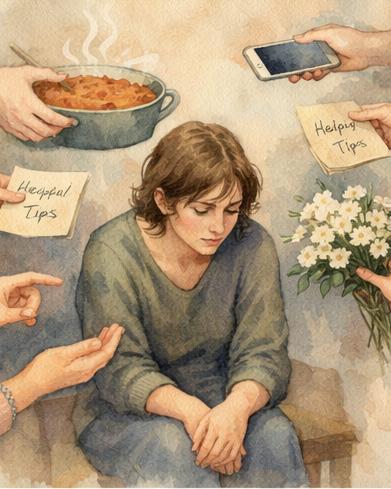
A thoughtful exploration of how well-meaning support can sometimes land as pressure, and a reminder that true care often begins with listening, tenderness, and respect for boundaries.
In this seventh installment of the Woven Quilt Series, Granny offers a warm, nostalgic evening under the glow of the big screen where laughter, friendship, and small-town tradition turn an ordinary Friday night into something unforgettable.
PAGE 4
8
10
PAGE 14
A New Beginning in the Same Place
Kim Wheaton reflects on loss, faith, and the slow work of healing, reclaiming community and sanctuary in familiar streets as she rebuilds a sense of home and belonging.
Addison and Ruthy
PAGE 19 When Independence Fades
In this tender and quietly powerful piece, Jeff introduces us to Addison and Ruthy: two lives rendered with warmth, nuance, and the emotional clarity that defines his storytelling. Truly a reflection on connection, dignity, and human meaning.
PAGE 22
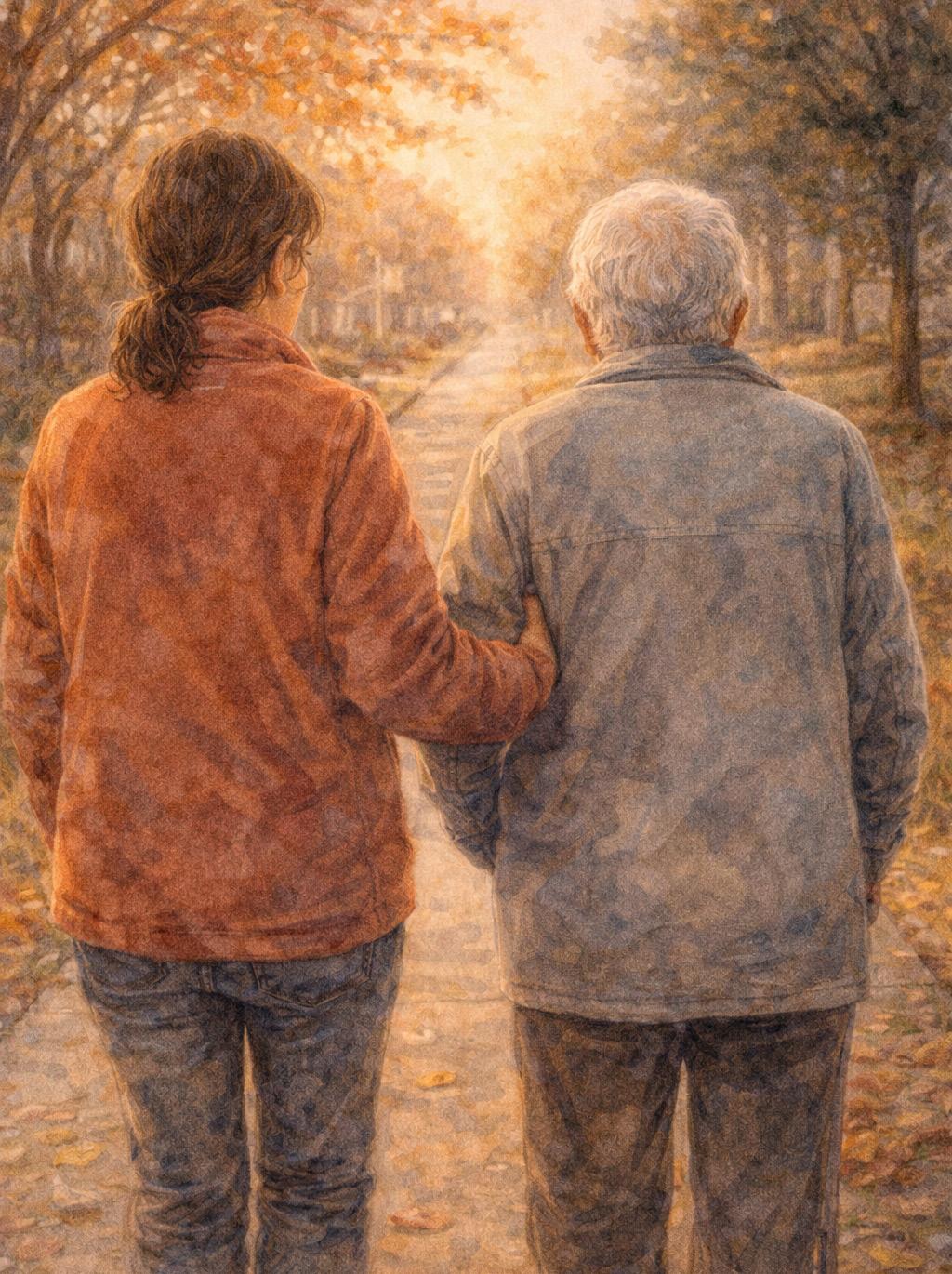
Miriam offers a gentle reflection on the delicate onset of Alzheimer’s and dementia. She introduces the Caring for Aging Parents Initiative with grace, reminding us that love often means patience, presence, and walking beside those who once led us. PAGE 26
Valentine’s Day in the Classroom
A warm reflection on the childhood tradition of classroom valentines, where no one was left out, and a gentle invitation to revive that same spirit of appreciation and connection today.
PAGE 30
Mission & Vision 01
WHO WE ARE
WHAT WE DO
WHERE WE AIM TO GO
FOX VALLEY REVIEW is a regional digital magazine dedicated to curating and elevating the voices, stories, events, and cultural expressions of the towns and communities along the Fox River. We strive to inform, inspire, and connect residents through thoughtful storytelling, critical reflection, and celebration of the local from neighborhood events to regional art, food, and civic life.
We envision a more connected and culturally vibrant Fox Valley where every town and resident sees themselves reflected in the stories we tell. Through inclusive journalism, creative expression, and civic commentary, Fox Valley Review aims to become the cultural compass of the region, building bridges between communities, generations, and ideas across the river.
February arrives with a particular kind of honesty.
The holidays have long since passed, the resolutions have softened, and winter still holds its quiet authority over the Fox Valley. The trees remain bare. The mornings ask more of us. And yet beneath the cold something persists: endurance, tenderness, and the subtle return of light. This month’s issue is shaped by that spirit. It is an issue about what remains when life grows quiet. About the ways we continue through memory, through community, through the small warmth of shared presence. In these pages, you will find stories that linger in the everyday and uncover something deeper there.
FROM THE DESK OF THE CHIEF EDITOR
DR. BAUDELAIRE K. ULYSSE
We are especially grateful, as always, for the steady literary presence of Jeff Weisman, whose work continues to enrich Fox Valley Review with its rare combination of insight, humility, and emotional clarity. Jeff reminds us that writing is not merely production; it is devotion, persistence, and attention to what matters most.
This issue is also illuminated by the stunning sensibility of Kim Wheaton, whose contribution, A New Beginning in the Same Place, invites us into the geography of renewal. Kim reminds us
that transformation does not always require departure. Sometimes the most profound beginnings happen not by leaving, but by learning to see familiar ground with new eyes by rediscovering belonging both outwardly and within.
We also return, with gentleness, to the emotional textures of childhood in Remembering Valentine’s Day in the Classroom, a nostalgic reflection on handmade cards, candy hearts, and the early lessons we learn about kindness, inclusion, and being seen.
“
“ LET THIS BE YOUR WINDOW, YOUR MIRROR, YOUR INVITATION!
In When Independence Begins to Fade, Miriam offers a deeply compassionate meditation on the onset of Alzheimer’s and dementia. This piece serves as a soft launch of our Caring for Aging Parents Initiative, an ongoing space we hope will offer reflection, support, and community for readers walking this path. None of this work happens alone. I extend heartfelt thanks to Diane Kondratowicz, our Associate Editor, whose care and steady support continue to
shape the texture of this magazine. Diane has also been instrumental in helping organize our release gatherings, bringing readers, writers, and neighbors together in the spirit of celebration and connection that Fox Valley Review is truly about. Elsewhere in the issue, we continue to explore the quieter forms of comfort, the kind that does not rush in with solutions, but stays with us in stillness. Our visual essays and illustrations echo this theme: hands
GROUND ZERO LIT IT UP!
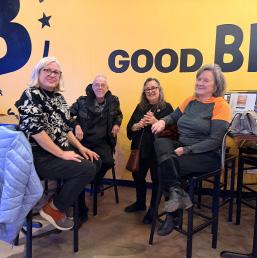
We are also deeply grateful for the tremendous community support shown at our January Release Party, which reminded us how vibrant local storytelling can be when shared in person. The lively performance from Ground Zero was electrifying.
JANUARY RELEASE PARTY | GLOBAL BREW
that mean well, boundaries that heal, seasons that turn in one place, and kindness that does not need performance to be real.
Thank you for reading, for supporting local storytelling. May this February issue offer you warmth, recognition, and perhaps a quiet beginning of its own. Happy Valentine’s Day to all!
With gratitude,
Baudelaire Ulysse Chief Editor, Fox Valley Review
Cold Weather Won’t Keep Us Inside
And The Sun Shall Shine
WRITER:
Beau
PH: Staff
In mid to late January, Chicagoland was hit with one of those winter stretches that makes you question your life choices. The kind of cold that bites through your coat, stings your face, and turns ordinary errands into minor expeditions.
Weather advisories reminded us to stay inside, to venture out only if we absolutely had to. And of course, the danger is real. Frostbite and hypothermia aren’t metaphors; they’re serious, even deadly, in extreme temperatures. Under those circumstances, it’s wise to be cautious.
But still, I find myself asking: is winter really meant to shut life down?
Should we remain caved inside for
“Is winter really meant to shut life down? Or is it simply asking us to adapt?”
“Humans are evolutionary creatures. Social creatures. We adapt.”
weeks at a time? Should we abandon our routines, our friendships, our movement through the world? Or should we simply…bundle up? Humans are evolutionary creatures.
Social creatures. We adapt.
I was raised in the tropics, where cold is almost unimaginable. But life carried me north; first to New Jersey, then Minnesota, and eventually Chicago. Friends and family thought I was out of my mind.
You’re going to freeze. The truth is, I’m still thawed.
A couple years ago, I visited Montreal in the heart of winter and found myself standing outside on a frozen lake, just taking it all in: the silence, the snow, the strange beauty of cold weather. Meanwhile, my relatives could barely tolerate the draft from an open door.
That said, late January in the Chicago suburbs was no joke. It reminded me of Minnesota, the kind of cold where
“Bundle up. Respect the weather. But don’t put your life on hold.”
your hands ache within seconds if you forget gloves. It nearly brought me to tears.
And yet…life continued. I grocery shopped. I went to the gym. I filled my tank. I even met friends at a bar for trivia, because community doesn’t disappear just because the temperature drops.
My point is simple:
Don’t be foolish. Dress warmly. Respect the weather.
But don’t put your life on hold. Go out. Meet people. Stay social. Stay alive to the world.
And as we do, let’s also remember those who don’t have warm coats, steady heat, or safe places to wait out the storm. Winter is the season when small acts of generosity matter most. Bundle up and show up.
~Beau
“Sometimes the hands that reach for us are full of kindness and still, too many at once can feel like weight.”
When Help Hurts
Grieving What Does Not Exist, Part IV
PROCESSING GRIEF
WRITER:
Emma
PH:
Staff
There’s a particular kind of heartbreak that comes not from infertility itself, but from what happens when you reach for help. Adoption is often framed as the compassionate alternative, a moral high ground, a path of generosity, a
solution wrapped in hope. futures.
Yet stepping into the adoption industry felt less like entering a community and more like entering a marketplace where grief becomes currency. We paid for notarizations, clearances,
“
“ We agonized over photos & phrasing, trying to package authenticity into something marketable.
The first shock was the cost. Tens of thousands of dollars upfront, then more layered fees: home study fees, agency fees, background checks, classes, CPR certifications, medical documentation, and mandatory “new parent” trainings.
psychological evaluations, and even for someone to walk through our home with a clipboard determining if our bookshelves were “family friendly.” At every turn, the subtext felt clear: grief alone was not enough. You had to be able to afford it.
Then came the “dating profile,” a glossy, curated portfolio engineered to appeal to expectant mothers. We were instructed to present ourselves as warm but not naive, accomplished but not intimidating, financially stable but not flashy. It felt like branding a relationship that didn’t exist yet. We agonized over photos and phrasing, trying to package authenticity were case files. “Twenty-four years
into something marketable. Adoption agencies call it “a family book,” but it’s a marketing deck. A profile meant to say: Choose us. Choose me. Match opportunities would through in erratic bursts, flurry of emails describing expectant mothers as if they
old. Two previous pregnancies. Limited support network. Baby due in three weeks.” And every time, at the end of the email: “Please confirm interest by noon.” It felt like a moral audition. Say yes fast enough, and maybe you’d be considered. Say no, and you were quietly marked as “selective.”
The financial requests were often immediate and large: support for rent, groceries, transportation, medical care. In principle, the desire to support the expectant mother felt right. But in practice, it became a system where the ability to pay determined your proximity to a child. There were no caps, no guardrails, no protections
for adoptive families or expectant mothers. Just a quiet, unspoken understanding: the more you give, the more invested you become, and the harder it is to walk away, even if something feels wrong. Sometimes the “yes” led to nothing.
Weeks of communication would collapse into sudden silence, ghosting so common in the adoption world that agencies treat it as an administrative inevitability. One expectant mother we supported simply disappeared. No closure. No explanation. The agency’s response was a canned phrase: “This happens sometimes. We encourage you to stay hopeful.”
Then there were the certification changes: every time a single document expired, an address change, a background check renewal, the agency required a full refresh. More fees. More delays. More “updated” classes that taught the same material but cost more each year.
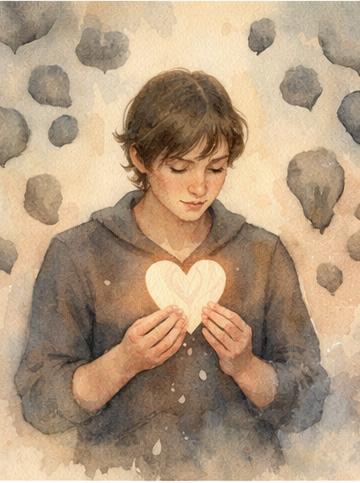
“Even gentle words can carry unexpected weight and in grief, the heart holds what it can, glowing quietly beneath it all.”
Our inbox filled with template emails reminding us our profile would be paused, suspended, or archived if we didn’t update quickly enough.
And then came the longest silence of all, a full year without a single match possibility. No calls. No updates. Not even a check-in. Our profile, once described as “excellent,” might as well have been buried under digital dust.
When we finally reached out, an intern wrote back with another canned message: “Matching opportunities are limited in your region.” This from the same agency that had promised “high match rates” when we wrote our initial check.
Eventually, the truth settled in: the adoption industry doesn’t work the way people think it does. It isn’t built around ethics or equity or family-building. It’s built around scarcity and urgency, and those emotions become revenue streams.
But it doesn’t have to be this way.
If adoption is truly to serve children and mothers; not agencies, not profit motives, then the system needs structural reform:
• Fee Caps: No family should be bankrupted, and no parent should feel pressured to choose an adoptive family because they received financial support.
• Transparent Cost Breakdown: Every dollar should be traceable, accountable, standardized. No more opaque “support requests.”
• Third-Trimester Rule: Matching should not begin until the third trimester to limit coercion, emotional manipulation, and financial entanglement.
• Rollover Fees: If a match fails or a year passes without progress, families should not lose their investment.
• Smaller, Ethical Matching Pools: Agencies should stop overintaking families when match rates cannot support them. Hope should not be sold in bulk.
When help hurts, something fundamental has broken. But naming the harm is the first step toward rebuilding the possibility of care. Adoption should never feel like a transaction. It should feel like a community grounded in dignity. And reform is not just possible; it is necessary.
~Emma
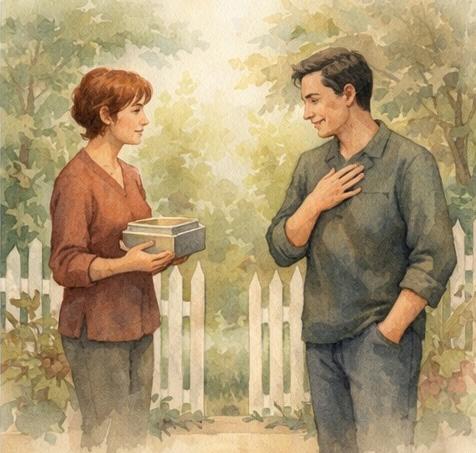
“True care makes room for distance, a kindness offered gently, and received with gratitude, without crossing the quiet boundary.”
GRANNY’S WOVEN QUILT SERIES
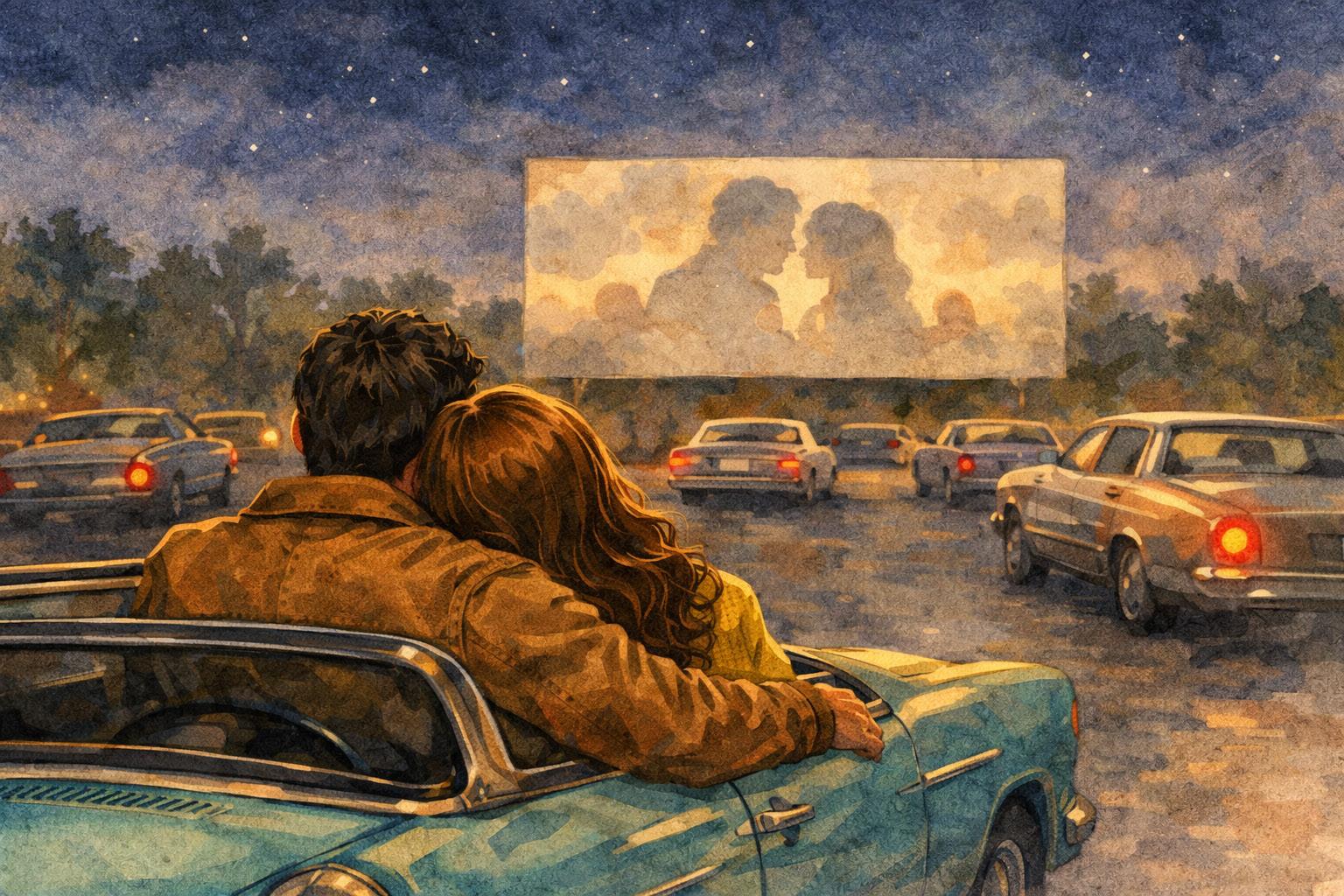
OSWEGO’S DRIVE-IN WAS OUR FRIDAY NIGHT
“
“ BACK THEN, HEADLIGHTS WERE BRIGHTER AND SO WERE THE DREAMS.
IWRITER: GRANNY
PH: STAFF
t was the 1950s, and in Oswego, Friday nights had their own sparkle, the kind that flickered through rearview mirrors and glinted off chrome bumpers.
The drive-in wasn’t just a burger joint; it was a stage where stories began, romances blossomed, and teenage independence revved its engine under the glow of neon lights.
We didn’t need a reservation; just a full tank of gas, a dollar or two, and a whole lot of excitement. Carhops on roller skates zipped between cars,
trays balanced like magic on their fingertips, delivering root beer floats and crinkle fries with a wink.
We tuned our radios to the same station and let the music dance between vehicles, a shared soundtrack of doo-wop harmonies and rock-and-roll anthems.
I remember my first real date; Jimmy Patterson pulled up in his dad’s Chevy, all nervous charm and Brylcreem hair. We sat under a sky so clear you could see the constellations gossiping overhead.
He handed me a cherry-topped sundae like it was a bouquet, and we laughed, talked, and blushed through every bite.
Sometimes we’d pile in with friends, a jumble of elbows, soda straws, and borrowed lipstick. Other times, we’d linger long after the last order, engines cooling as conversations warmed. Plans were made there. Hearts were broken and mended. Promises whispered over vanilla shakes felt eternal.
That drive-in wasn’t just a place; it was a rite of passage. We learned how to be young there. How to flirt. How to dream. How to sit still and let the world slow down just long enough to memorize the smile of the person across from you.
And though the lights have long gone dark, and the gravel lot has turned to memory, I can still hear the clink of glass soda bottles and feel the anticipation of Friday night in Oswego.
“Classic drive-in date night scene, featuring a couple locking eyes and the lady sipping on milkshake with cherry on top.”
So pour yourself something sweet and fizzy. Because back then, headlights were brighter and so were the dreams.
~Granny
“At the drive-in, it isn’t just the movie that glows; it’s the laughter between friends, popcorn in hand, and a summer night that feels like its own small tradition.”
Stay tuned for the next story from Granny’s Woven Quilt Series. It’s coming up in the March Issue.
Deeply Rooted Tree by the River
Some beginnings do not require new ground, only new seeing. What holds us is often hidden beneath the surface: roots of memory, roots of place, roots of all we have survived.
And still, the tree rises; not because it has forgotten where it came from, but because it belongs there.
“The environment feels deeply familiar, but I feel newly awake within it.”
WRITER: Kim Wheaton PH: Staff
A New Beginning in the Same Place
I’ve lived three out of the four decades of my life in the same community. And while it’s not uncommon to hear folks who live here talking about wanting to get out of this town, somewhere warmer, more exciting; my roots here run deep, and I don’t ever really want to leave.
For a while, I attributed my love for this place mostly to the church I was a part of, and had been since I was twelve years old. I loved that place, those people. That community was the cornerstone of my life, and that of my husband and kids.mbut because I
“My roots here run deep, and I don’t ever really want to leave.”
“My body no longer felt safe in the church that had raised me.”
Then COVID happened, and so did the summer of Black Lives Matter and George Floyd, and the growing rise of Christian nationalism within the church and our country.
At the same time, I was just at the beginning of a personal reckoning with childhood trauma, in large part realizing how my covertly abusive father, alongside the church whose theology he used to keep me quiet and submissive, kept me from flourishing because of my gender.
This perfect storm of events meant that my body no longer felt safe in the church that had raised me. Even if I wanted to, I could not step foot into that place without triggering a fight-or-flight response.
Not only that, but the sense of betrayal I felt was visceral. The people who had taught me about Jesus’ heart for the marginalized refused to speak out. The church that taught me that all
people are equally valuable in God’s kingdom refused to elevate women to have the same status as men.
For a while, I stayed to fight for change for my own kids, and for the youth spending their formative years in that environment. But the consequence of my lower-class status meant that I didn’t have any power. It felt like I was screaming into the void, and eventually, I left beat up and bleeding on the side of the road.
I couldn’t stay.
My world was wrecked. My family of origin was in turmoil, my community evaporated, and my faith shattered. I lost so very much.
And yet this city. It still had my heart. While I grappled with devastating grief, struggling to come to grips with my world flipped upside-down, I found comfort in its familiar streets.
A sense of resolve rose up within me to reclaim this place as my own. While buildings that had once been a safe haven were no longer accessible, I could find new places. And while the people I had once considered to be family were suddenly just… not there, I could create a new community.
So I joined a little house church. All of us had experienced some degree of church trauma, and I found solace in their companionship as we struggled to rebuild our faith together.
Music had been a very big part of my church experience, so I joined a choir and made some new friends. And our beautiful public library became my new sanctuary, where I began to spend hours and hours in a building that felt safe to my nervous system.
Through therapy, I’m continuing to heal and grow. And while my experiences over the past five years have been utterly devastating, I am truly
“Our beautiful public library became my new sanctuary.”
grateful for them for the growth I’m experiencing now wouldn’t be possible without them.
And this city, this lovely, beautiful city, remains my home, and still has my heart.
~Kim
FAMILY FUN & GAME
WRITER: Jeff Weisman
PH:
Staff
Addison and Ruthy
“At some point, it developed into a game where my daughter simply tortured me the whole time.”
“I like the giraffes
too,
Ruthy. But I am really excited to see the lions. Maybe we can hear one growl.”
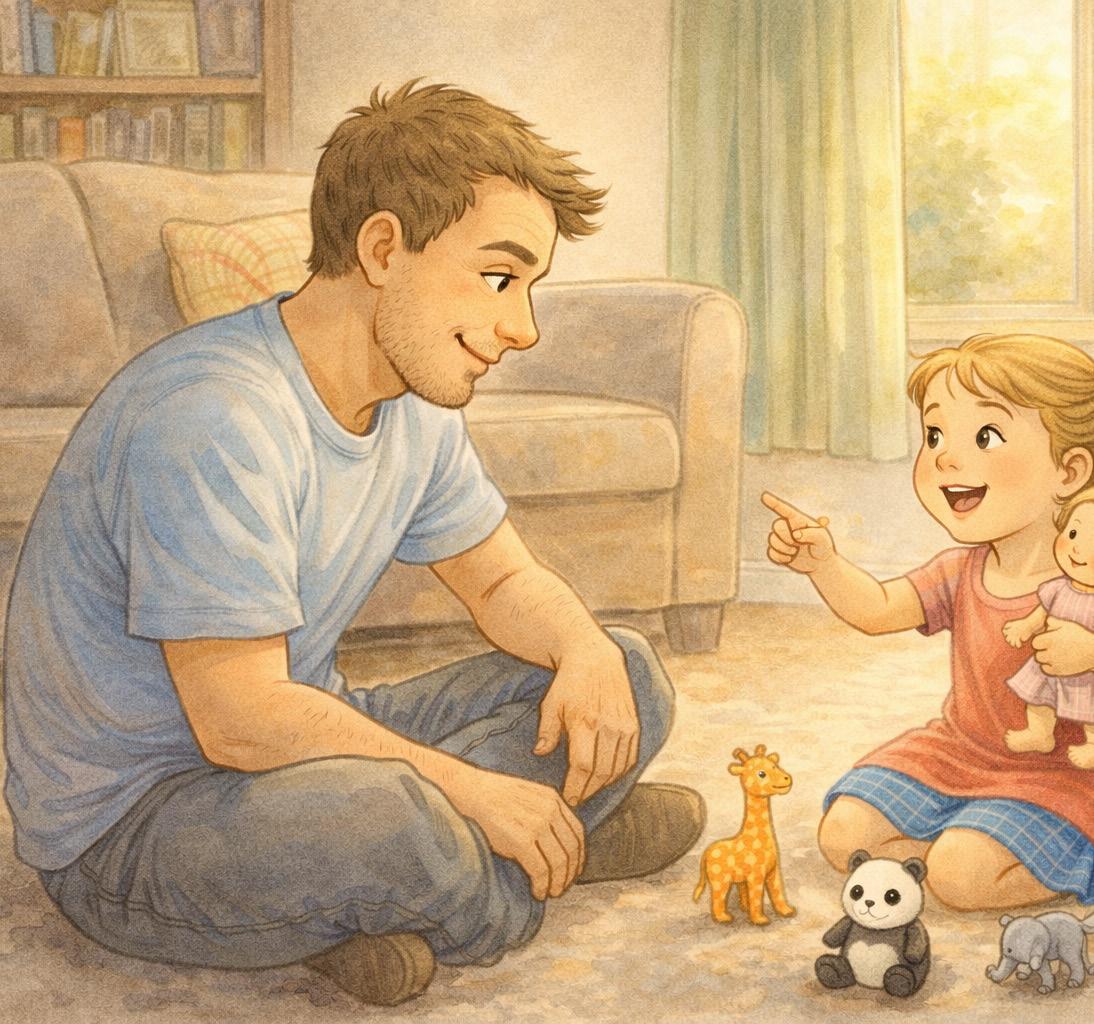
It’s not always clear how games start with your children. Sometimes they’re family traditions like checkers or Go Fish, or sometimes they’re common games like I-Spy or Would You Rather? that everyone plays, or sometimes they’re just things you totally make up.
That’s what happened with my daughter and me and the game we created called Addison and Ruthy.
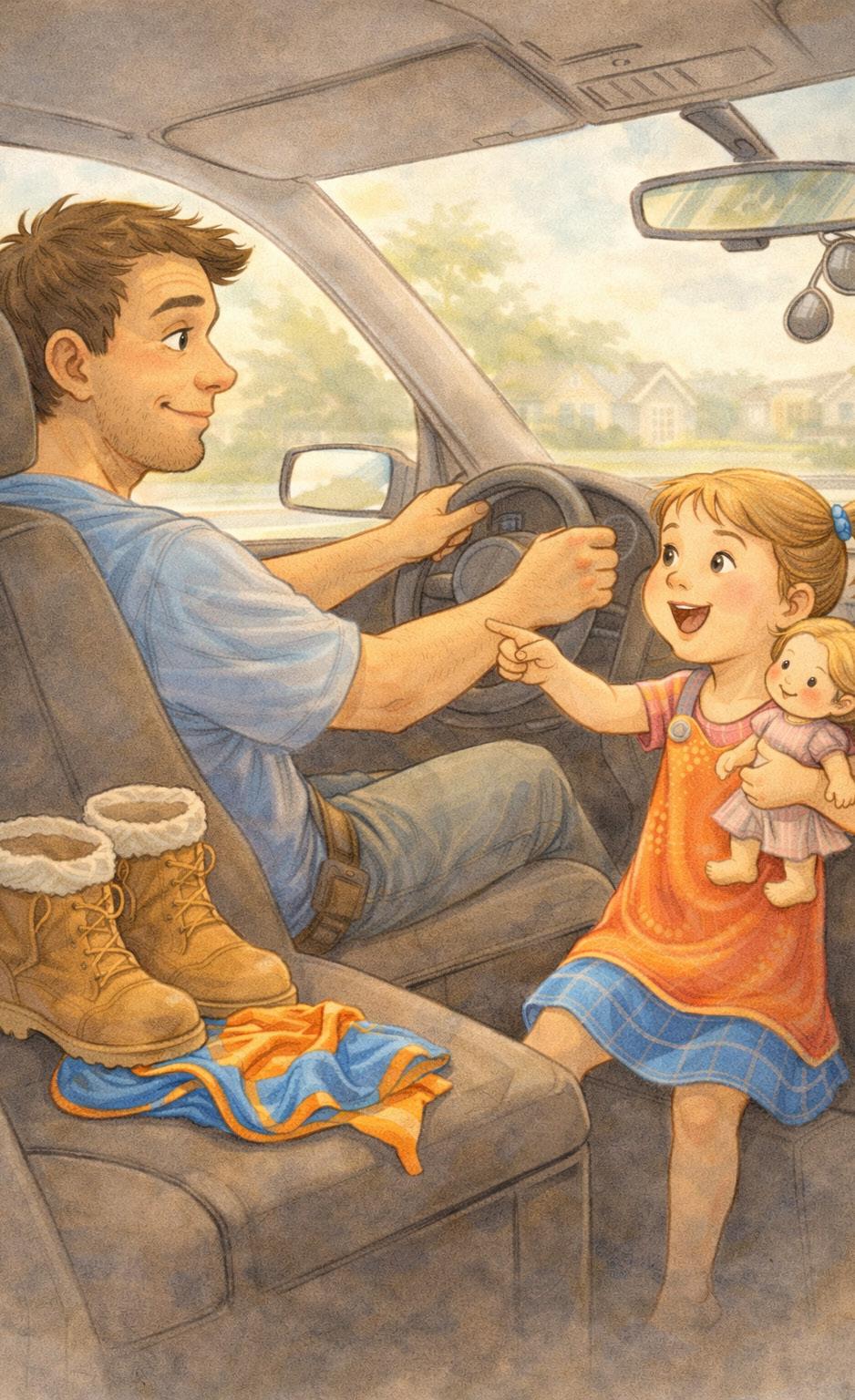
At first, it was a relatively simple game that started from playing with her dolls at home, and then evolved into something we would play in the car to keep ourselves entertained while driving somewhere. We would come up with different adventures for them to go on, and then we would have Addison (my daughter) and Ruthy (me) create the dialogue for that experience.
For example, we would say Addison and Ruthy are going to the zoo, and then we would imagine the exchange they would have.
“I can’t wait to see the monkeys, Ruthy,” Addison (my daughter) would say. “They’re my favorite.”
“Me neither,” Ruthy (I) would reply. “What else are you looking forward to, Addison? I like the giraffes.”
“I like the giraffes too, Ruthy. But I am really excited to see the lions. Maybe we can hear one growl.”
“That would be great.”
“It sure would, Ruthy.”
It was simple stuff like that at first.
However, at some point, it developed into a game where my daughter (AKA Addison) simply tortured me (AKA Ruthy) the whole time. How this happened, I don’t know. But it did.
So instead of having some sedate experience about going to the zoo, it would turn into some bizarre exchange about seeing what I (AKA Ruthy) could endure.
“Did you put on your blue dress, Ruthy? We’re going out to eat.”
“I have it on, Addison. What are you wearing?”
“Good. I’m wearing my pink dress. Now, wear your swimsuit over your dress. That would look funny.”
“I don’t want to wear my swimsuit over my dress, Addison.”
“Wear it,” Addison (my daughter) would demand.
“Why?” I would say, continuing to drive down the street. “I don’t want to wear it.”
“Because that’s what you need to wear, Ruthy. I’m going to have chicken fingers. You can have meatloaf with mustard and pickles on it.”
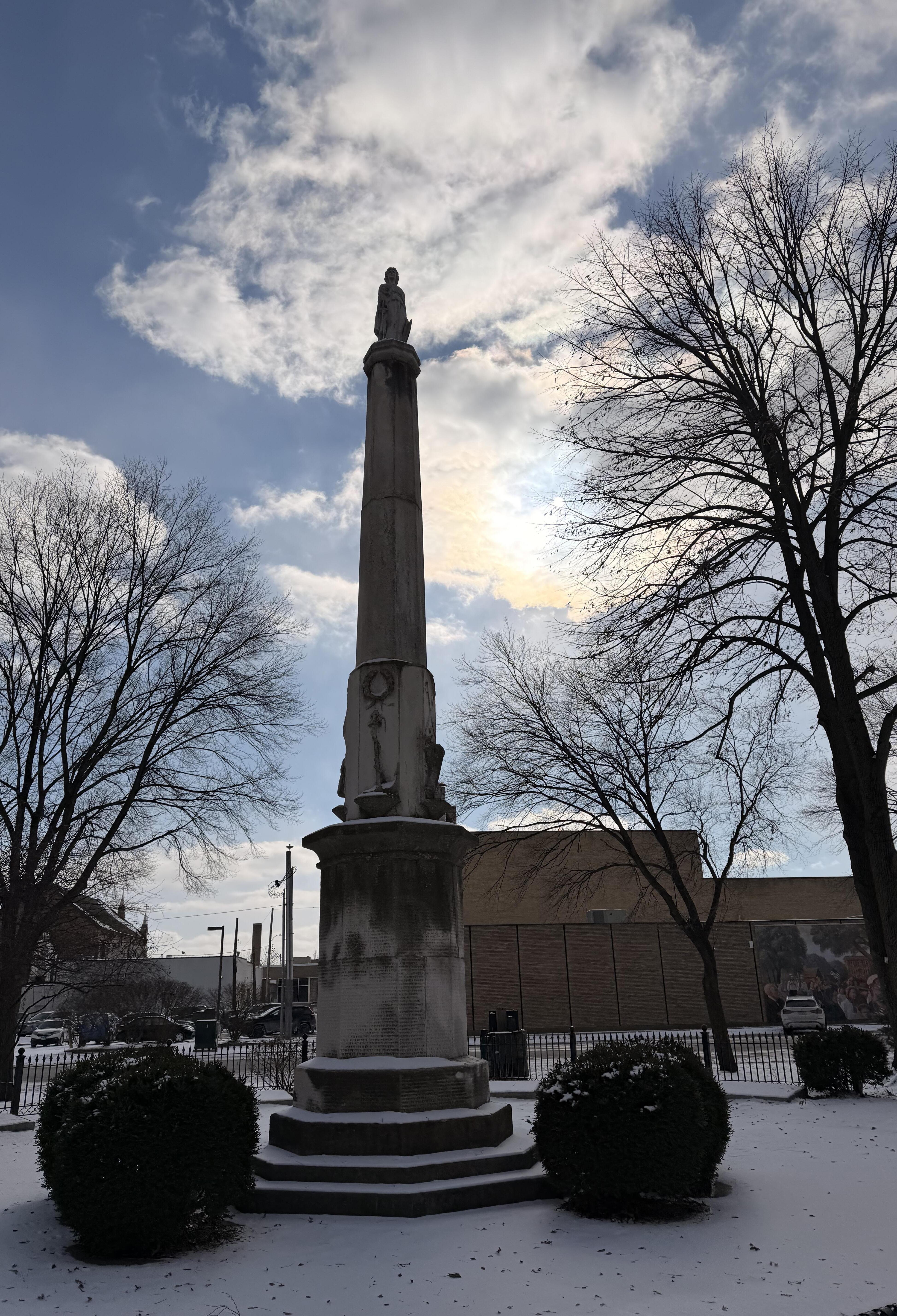
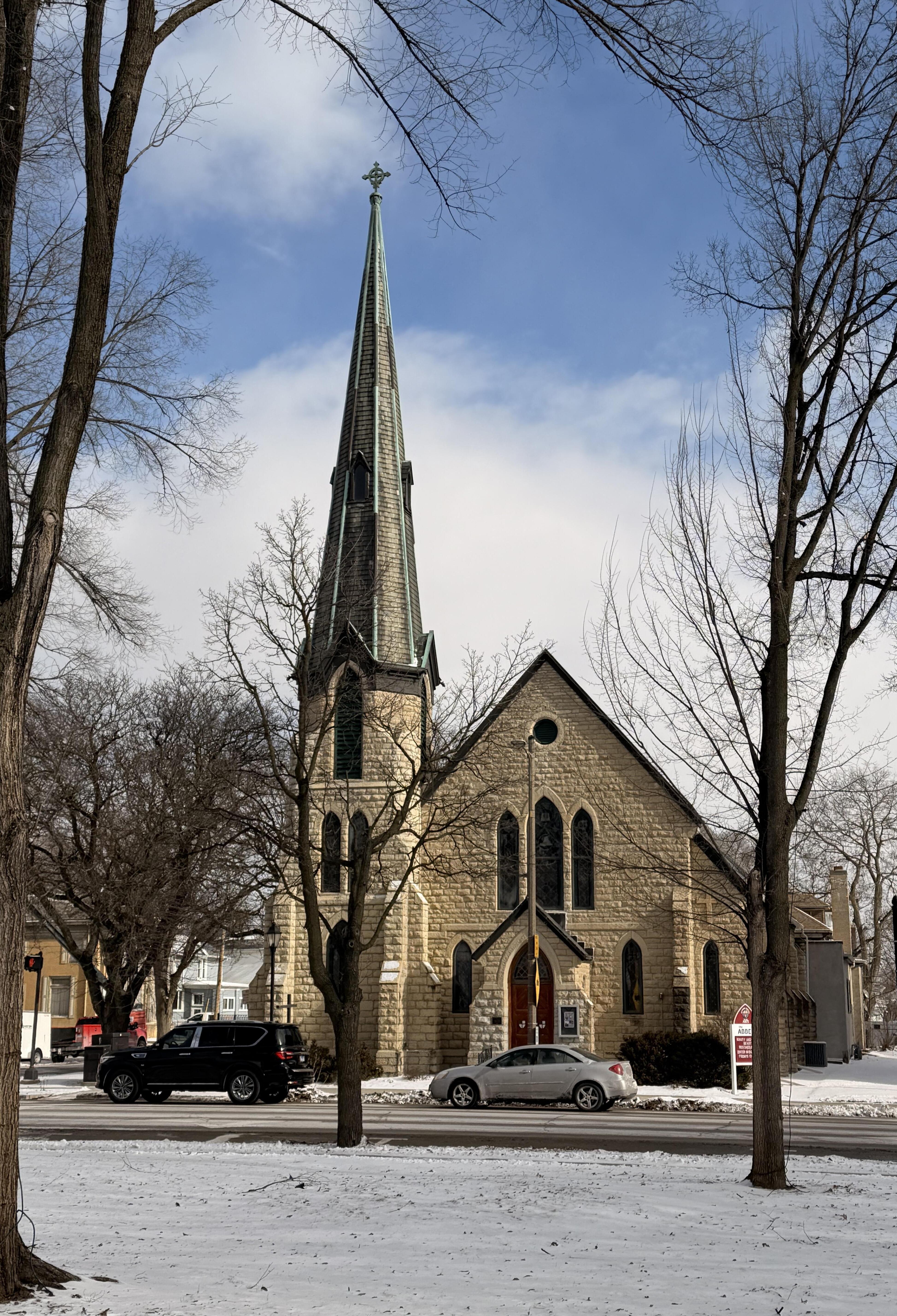
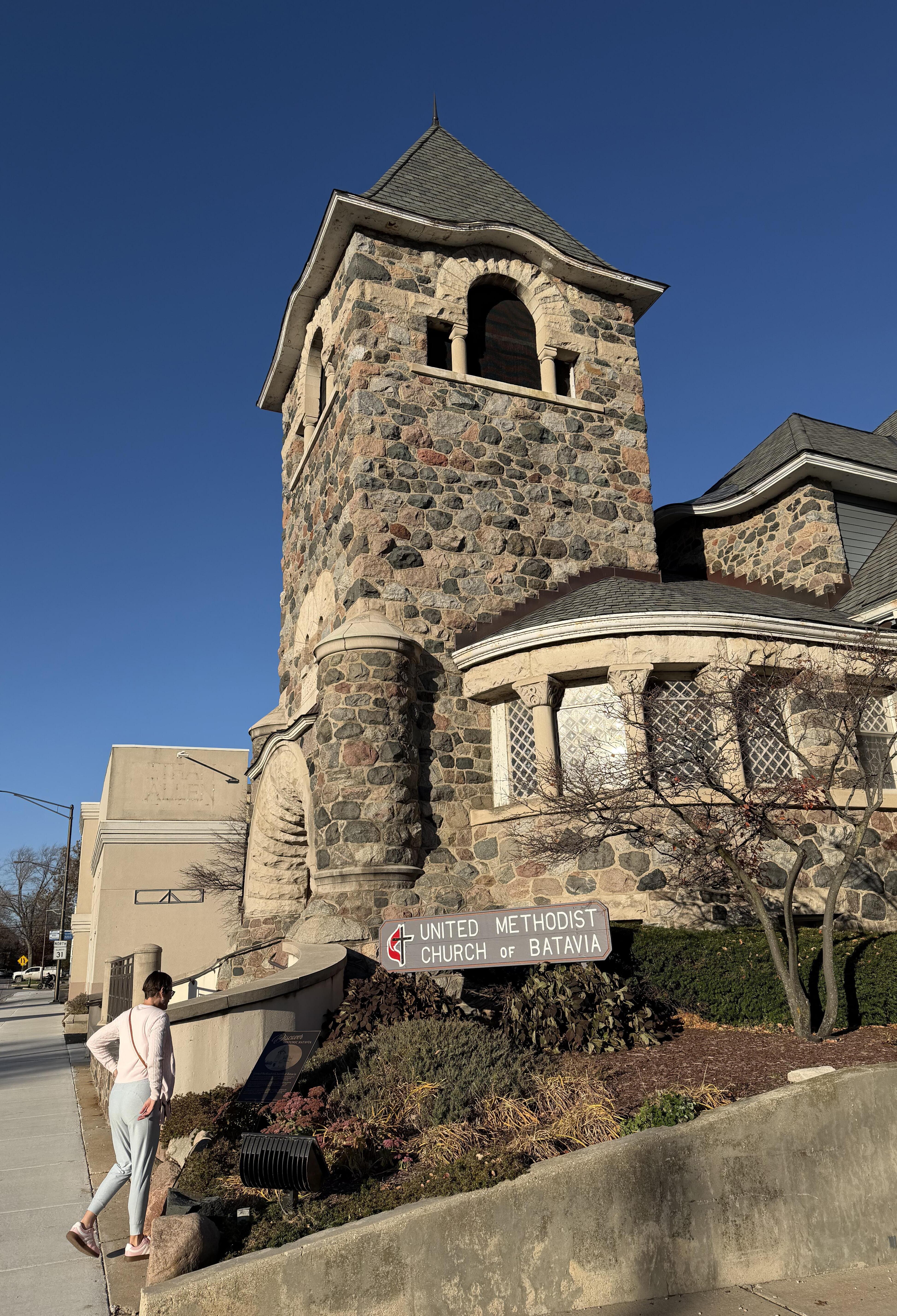
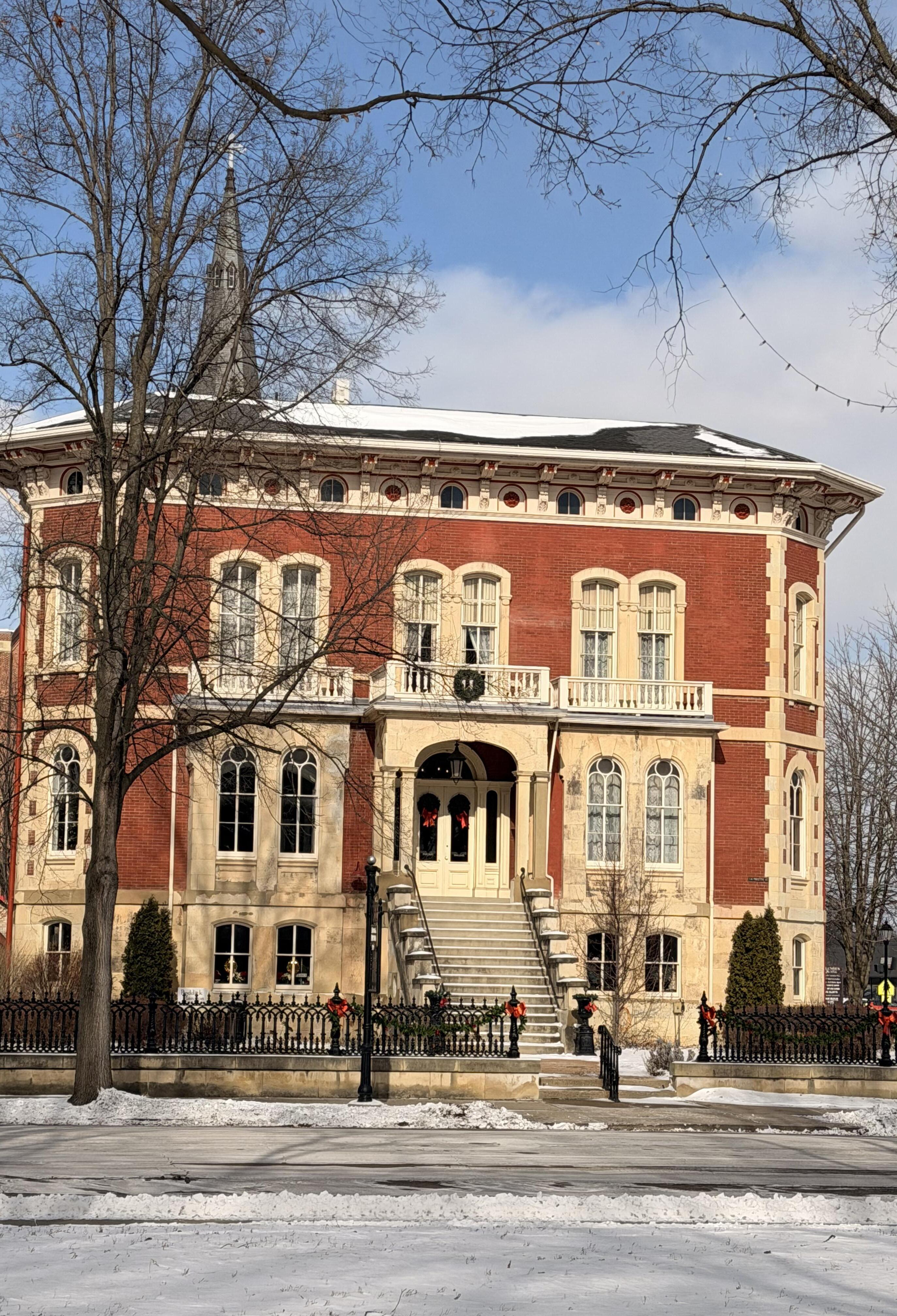
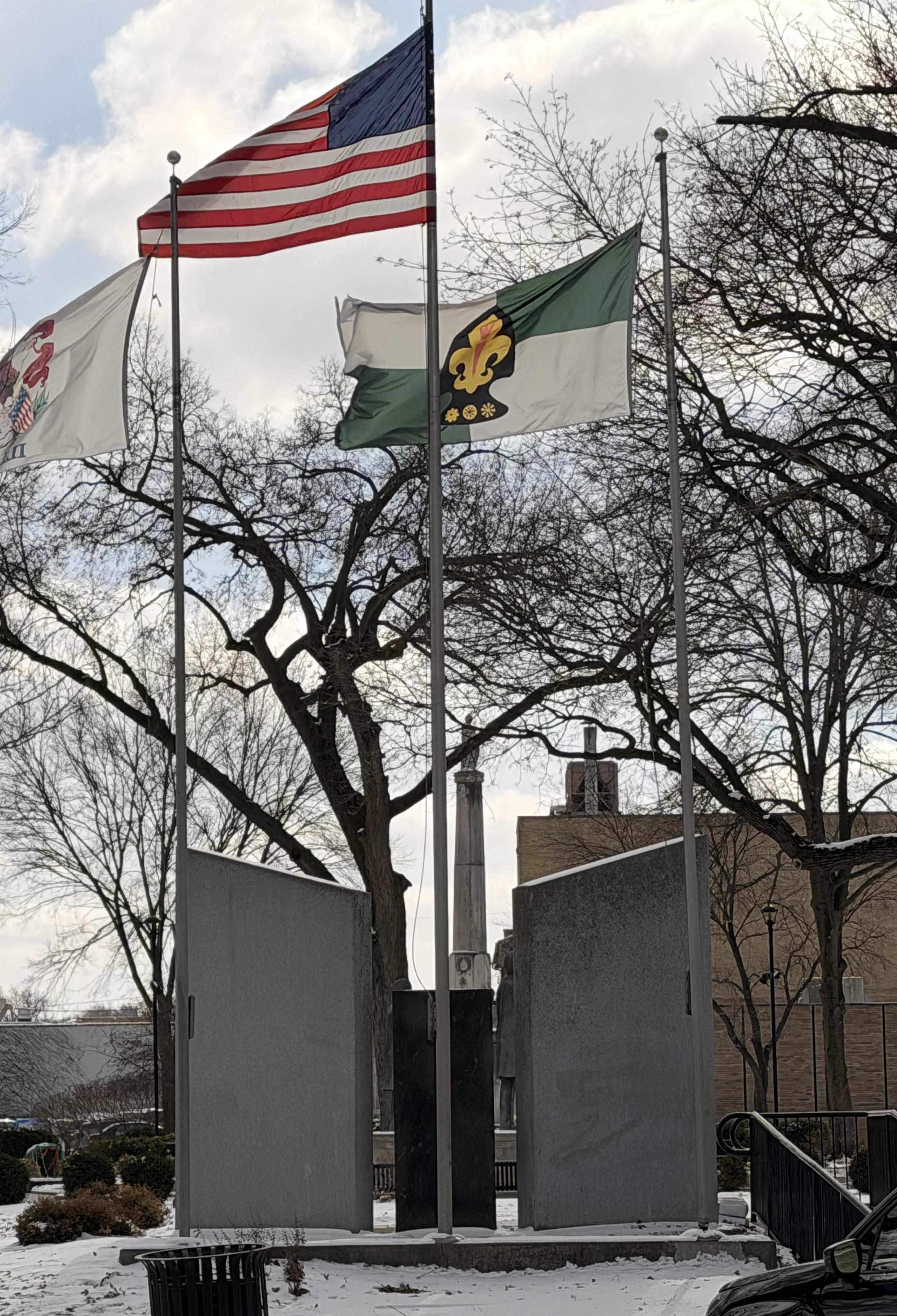
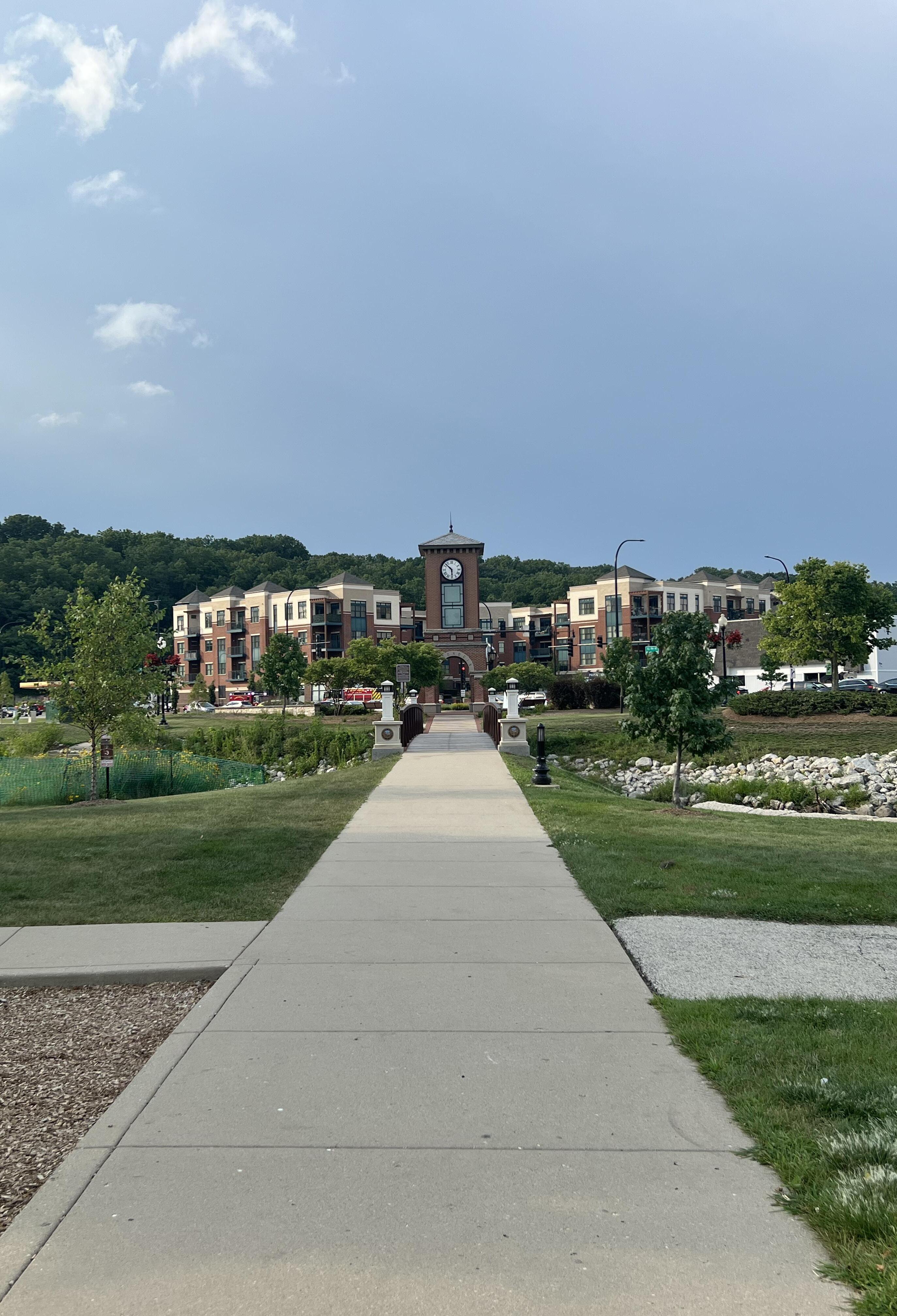
Where nature meets memory: Fox River towns stitched together by parks, shrines, and familiar steeples.
“I know she was exercising her desire to have more control over her life and her dad than she normally
“I don’t want meatloaf with mustard and pickles on it. I want a hamburger. Who eats meatloaf with mustard and pickles on it anyway, Addison?”
“You do, Ruthy. And don’t forget to wear your snow boots too. You’ve got to stay warm.”
“It’s summer, Ruthy. Why would I wear my snow boots?”
“You don’t want to have a time out, Ruthy, do you? Listen to what I say.”
“Alright, Addison,” I would answer, shaking my head while turning onto another street. “I’ll put on my snow boots.”
Now, I’d like to believe that I was helping my daughter develop her creativity (and I undoubtedly was), and I know she was also exercising her desire to have more control over her life and her dad than she normally did at that time.
But she was also teaching me something about human psychology. It’s twisted.
Love you, sweetie.
~Jeff
WRITER: Miriam PH: Staff
When Independence Begins to Fade
A soft launch of the Caring for Aging Parents (CAP) Initiative
The onset of Alzheimer’s and dementia is rarely abrupt. More often, it arrives quietly through small forgettings, misplaced objects, repeated questions, or a subtle confusion that lingers just beneath the surface of an otherwise ordinary day. At first, these moments are easy to dismiss. Everyone forgets things. Everyone has off days. But over time, what seemed incidental begins to form a pattern, and families find themselves standing at the edge of a delicate transition.
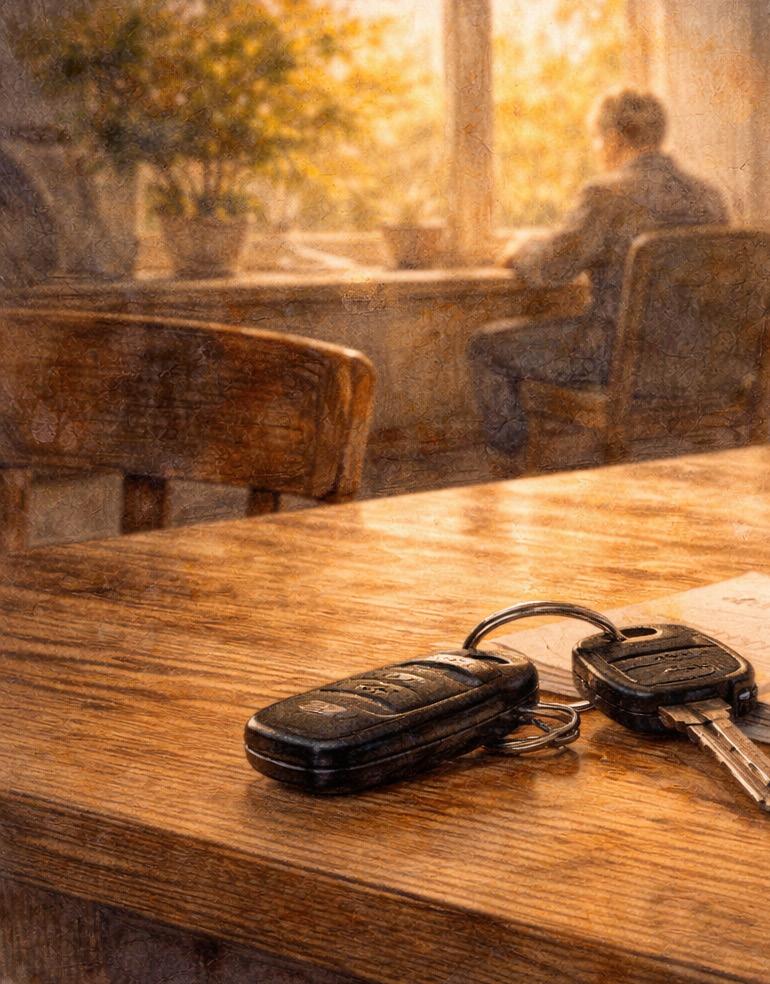
For many older adults, this transition is among the most painful they will ever face, not only because of what is happening neurologically, but because of what it represents emotionally. Alzheimer’s and dementia do not simply affect memory; they touch identity, autonomy, and dignity. They ask a person, often fiercely independent, to accept that something within them is changing beyond their control. Independence is not merely practical. It is psychological. It is the ability to drive to the store, to manage one’s own finances, to cook dinner without assistance, to live without supervision. For decades, our parents have occupied the role of provider, protector, decision-maker. To relinquish that role, even gradually, can feel like surrendering the self.
And for the adult child, the shift is equally profound. If by luck or by circumstance, or by quiet necessity, you become the designated caregiver and decision-maker for your own parents, you may find that love takes on an entirely new shape. Caregiving is not simply a set of tasks. It is a posture. It is the long work of patience, the steady practice of grace, the intentional choice to respond with tenderness even when the road becomes difficult.
Parents experiencing degenerative mental struggles often resist the very
“I do love the idea of a new beginning: the chance to reflect, reset,
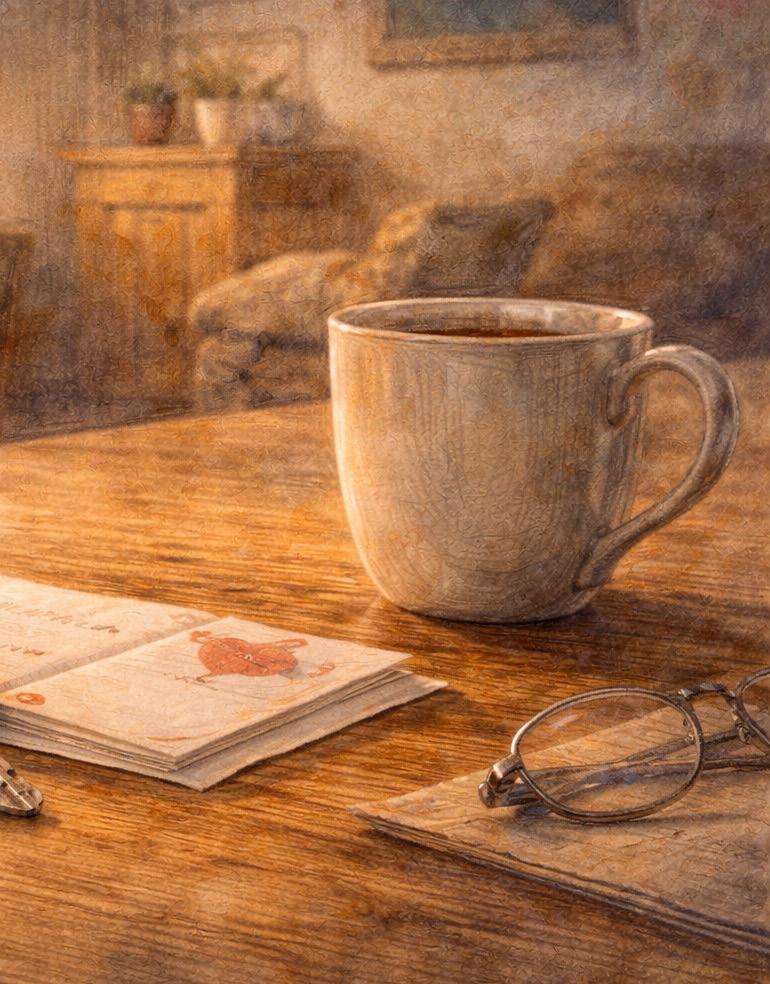
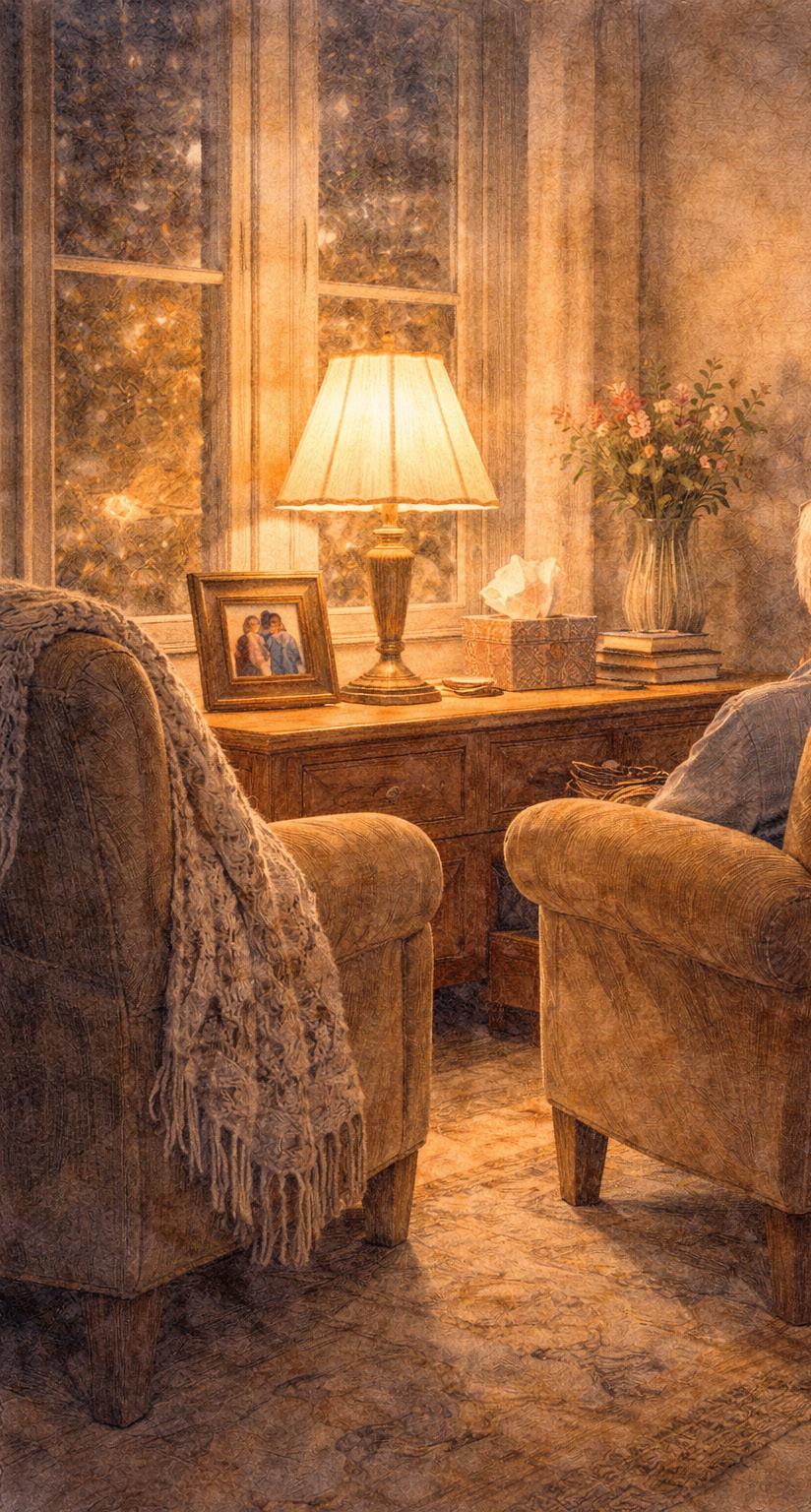
Care arrives in the smallest gestures, a steady arm beside us, a light left on in the quiet. Even as memory fades and independence softens, love remains.
help they need. They may deny what is happening. They may lash out. They may insist they are fine. This resistance is not stubbornness; it is grief. It is the mind struggling to hold onto control. It is the heart mourning the loss of independence before the body has even fully acknowledged it. In these moments, caregiving requires something deeper than efficiency. It requires thoughtfulness. It requires understanding that dignity matters as much as safety, that compassion must accompany structure, and that the person before you is still your parent, still a whole human being, deserving of respect even in vulnerability. This is why we are beginning the Caring for Aging Parents Initiative, as a space for reflection, community, and shared support in the Fox Valley. Because so many families are walking this road quietly, often without language for what they are carrying. Caregiving can be isolating. It can be emotionally complex. And yet it is one of the most human experiences we will ever encounter: the moment when we begin, in small ways, to return the care that was once given to us. If you are standing at the beginning of this transition, know this: you do not need to do it perfectly. But you can do it with grace. With patience. With presence.
Sometimes, love is not found in grand gestures.
Sometimes, love is simply staying.
~Miriam
Remembering Valentine’s Day
in the Classroom
When I think of February, I immediately think of the Valentine’s Day holiday. As I have grown older, it seems that this day is usually thought of as a special occasion in which one connects with, appreciates, and celebrates with one’s significant other whether such be a boyfriend, a girlfriend, or a spouse.
On this day, however, I routinely recall my days in grade school. Back then which, to be forthright, was decades ago, Valentine’s Day was a day filled with anticipation, wonder, and excitement.
OWRITER: Staff
PH:
Staff
ur classroom often celebrated this occasion in the afternoon as the day was winding down. Specific time was devoted to halting our studies for the day and simply dedicating ourselves to celebrating the occasion, and one another.
In preparation, I recall that we were required to write a Valentine card and message, often on handmade hearts that we cut out of pink or red construction paper. We were instructed to write a short note to each and every one of our classmates so that no one was left out.
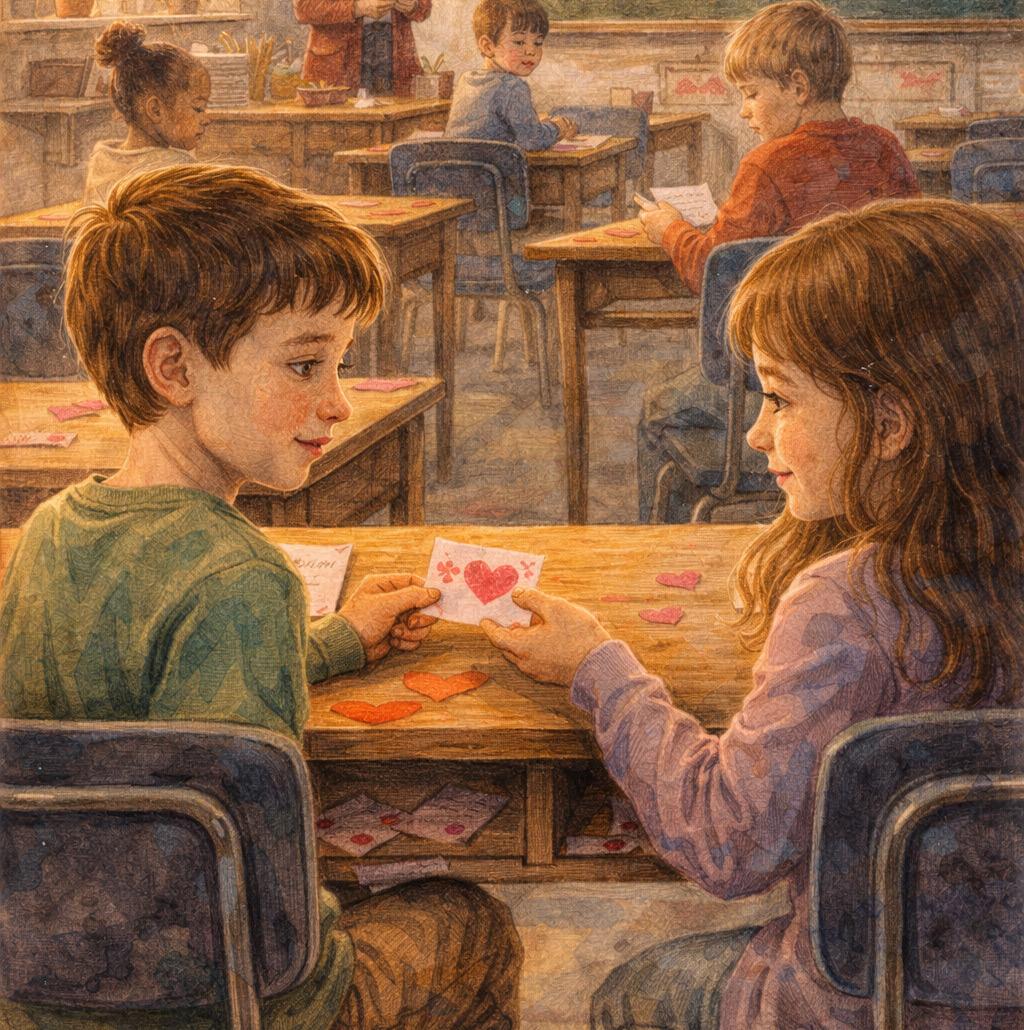
One
child handing a Valentine card to another
I also recall routinely writing a note of appreciation and gratitude to my teacher.
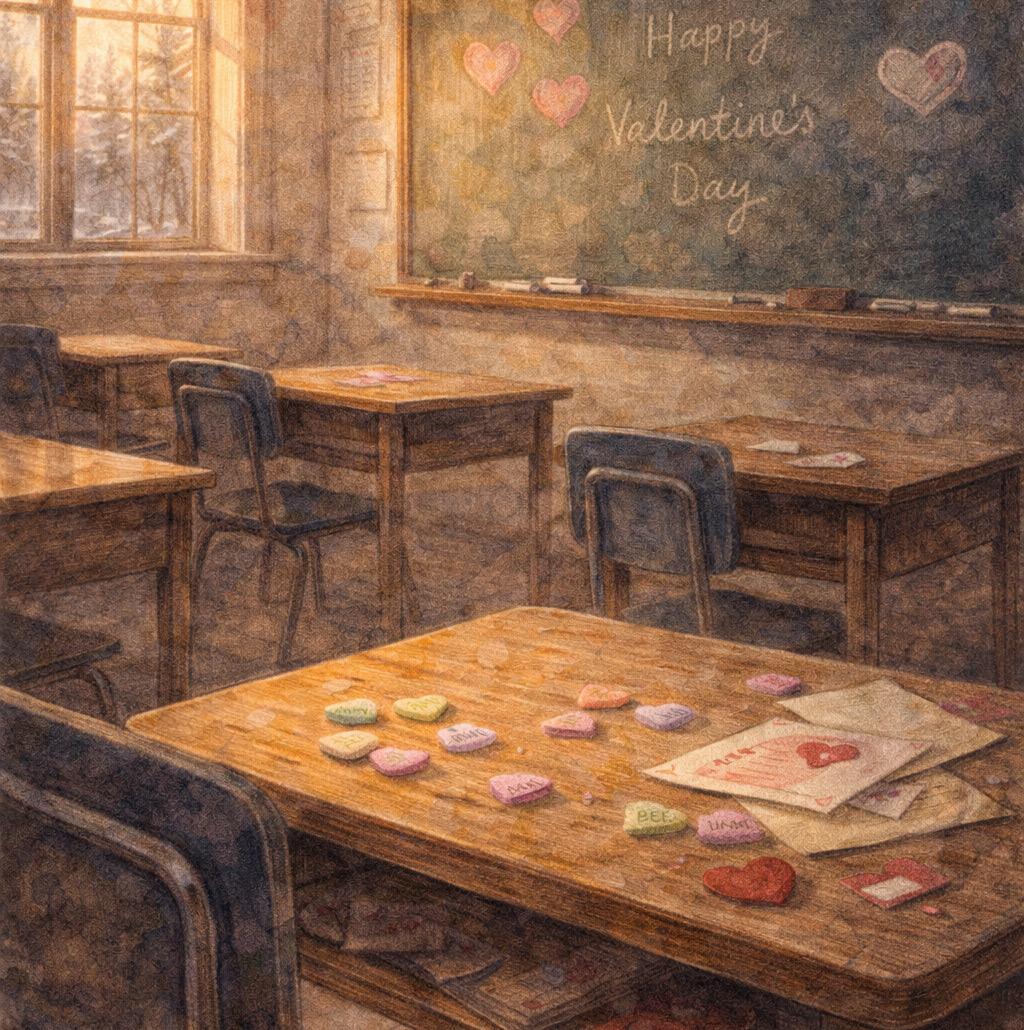
As part of the classroom celebration, we would have pink or red punch and cupcakes that, it seemed, were lavishly decorated specifically for Valentine’s Day, along with the candied hearts on which tiny, short messages were printed, such as “Be Mine.”
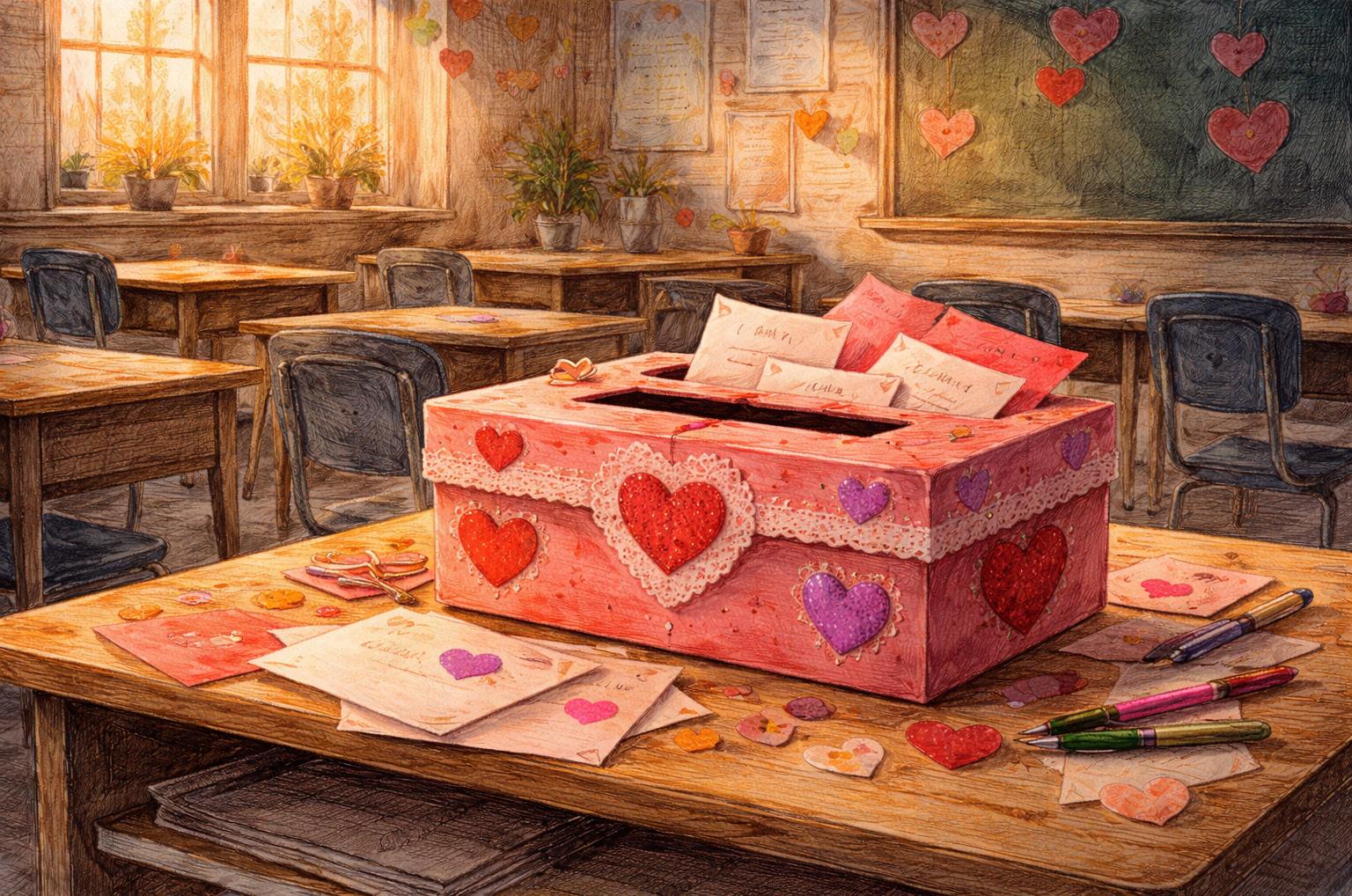
As the years proceeded, some students got creative, decorating tissue boxes and affixing them to the front of their desks so that fellow classmates could drop their Valentine’s Day cards into them.
Although I was not close with each and every classmate, and there were certainly cliques of close friends, the sentiment was not lost on me
that no one classmate was to be left out, that every child ought to be recognized and appreciated on this special day.
Although such a tradition was no longer practiced as I advanced in school, I think about this formative experience just about every Valentine’s Day. For some reason, it has always stuck with me.
I believe it is because of the sentiment that we ought to recognize and appreciate those around us who are meaningful in our lives. I often regret that this special tradition was not somehow carried on as I advanced through school and life. In writing this essay, I question why it cannot somehow be reinstituted by me, in my own life, and perhaps by others as well.
Candy hearts or small treats left on a desk
To this end, I propose that, should you have time and be so inclined, please consider reaching out this Valentine’s Day to a family member and/or to a friend or friends to let them know, at the very least, that you are thinking of them and perhaps share the various ways in which they are meaningful to you and contribute to your life.
At the very least, this will be a lovely gesture and express a heartfelt sentiment. In some instances, it might also prompt your loved one(s) and/ or friend(s) to recall a similar joyous childhood memory, perhaps in a classroom setting, in which they took time to appreciate and celebrate significant persons in their lives.
In the spirit of this writing, Happy Valentine’s Day to you and to those who are important in your respective lives.