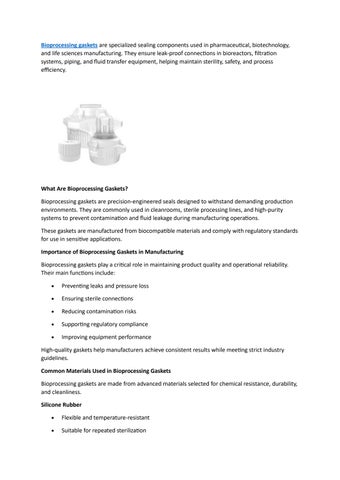
Bioprocessing gaskets are specialized sealing components used in pharmaceutical, biotechnology, and life sciences manufacturing. They ensure leak-proof connections in bioreactors, filtration systems, piping, and fluid transfer equipment, helping maintain sterility, safety, and process efficiency.
What Are Bioprocessing Gaskets?
Bioprocessing gaskets are precision-engineered seals designed to withstand demanding production environments. They are commonly used in cleanrooms, sterile processing lines, and high-purity systems to prevent contamination and fluid leakage during manufacturing operations.
These gaskets are manufactured from biocompatible materials and comply with regulatory standards for use in sensitive applications.
Importance of Bioprocessing Gaskets in Manufacturing
Bioprocessing gaskets play a critical role in maintaining product quality and operational reliability. Their main functions include:
Preventing leaks and pressure loss
Ensuring sterile connections
Reducing contamination risks
Supporting regulatory compliance
Improving equipment performance
High-quality gaskets help manufacturers achieve consistent results while meeting strict industry guidelines.
Common Materials Used in Bioprocessing Gaskets
Bioprocessing gaskets are made from advanced materials selected for chemical resistance, durability, and cleanliness.
Silicone Rubber
Flexible and temperature-resistant
Suitable for repeated sterilization
Common in bioreactors and tubing systems
EPDM (Ethylene Propylene Diene Monomer)
Excellent resistance to steam and chemicals
Ideal for CIP and SIP processes
PTFE (Polytetrafluoroethylene)
Highly inert and non-reactive
Used in aggressive chemical environments
Fluoroelastomers
High resistance to solvents and oils
Long service life in demanding conditions
Applications of Bioprocessing Gaskets
Bioprocessing gaskets are widely used across various stages of biomanufacturing, including:
Bioreactors and fermenters
Filtration and separation systems
Single-use assemblies
Fluid transfer lines
Chromatography equipment
Mixing and storage vessels
They ensure reliable sealing in both reusable and disposable systems.
Regulatory Compliance and Quality Standards
To meet industry requirements, bioprocessing gaskets are manufactured in accordance with recognized standards and guidelines, including:
U.S. Food and Drug Administration (FDA) regulations
United States Pharmacopeia (USP) Class VI certification
International Organization for Standardization (ISO) quality standards
Compliance ensures safety, traceability, and suitability for pharmaceutical and biotech applications.
Key Features of High-Quality Bioprocessing Gaskets
Premium bioprocessing gaskets typically offer:
High chemical and thermal resistance
Low extractables and leachables
Excellent sealing integrity
Compatibility with sterilization methods
Long operational life
Smooth, non-porous surfaces
These features help maintain process stability and product purity.
Benefits of Using Bioprocessing Gaskets
Using certified and well-designed bioprocessing gaskets provides several advantages:
Improved process safety
Reduced downtime and maintenance
Enhanced sterility assurance
Lower risk of batch contamination
Better compliance with regulatory audits
Cost savings through extended lifespan
How to Choose the Right Bioprocessing Gasket
When selecting bioprocessing gaskets, consider the following factors:
Operating temperature and pressure
Chemical compatibility
Sterilization method (CIP/SIP, autoclave, gamma)
System design and connection type
Regulatory requirements
Application environment
Choosing the right gasket ensures optimal performance and long-term reliability.
Conclusion
Bioprocessing gaskets are essential components in biopharmaceutical and life sciences manufacturing. By providing secure, sterile, and durable sealing, they help protect product integrity and ensure smooth production processes. Investing in high-quality, compliant gaskets enhances efficiency, safety, and regulatory confidence in modern bioprocessing operations.