



By Sophie Cho News Editor
For more than 60 years, Vibrato’s purpose has stayed the same: to memorialize creative literary works and art by students in magazine form.
The earliest edition of Vibrato in Hockaday’s archive is from 1979. Throughout the years, the design has undergone many changes and lots of experimentation.
According to senior Sharika Mandyam, one of the four members of the Vibrato class, the earliest editions were in black and white and very simple in design. In later years, some editions included CDs and cassettes so students could listen to original music or works read aloud. In another year, the magazine was produced as tarot cards, and another came with 3D glasses that allowed readers to see different designs in the book.
Junior Saanvi Kumar has been submitting poetry to Vibrato since her freshman year.
“I feel inspired by seeing other people's works, so I hope that others may also feel inspired by mine,” Kumar said.
Mandyam joined Vibrato during her
sophomore year. Within the magazine, students form a close community.
“[My favorite part of Vibrato] is the community,” Mandyam said. “Ever since I joined, Vibrato has always been a close-knit group, with us bringing food and hanging out outside of class.”
This year, the class is especially tight-knit—it consists only of four seniors, including Mandyam.
Because of this, beginning next school year, Vibrato will no longer be a class. There will be a new visual journalism class that will be part of the Vibrato production process.
In a typical Vibrato cycle, the first step the class takes is deciding on a theme.
“This theme isn’t necessarily how we select which pieces to publish,” Mandyam said. “It guides us as we design the magazine and perhaps include special elements that
reflect the theme, such as covers, dear readers and any accessories.”
The magazine opens for submission by student artists and writers. Submitted works are reviewed anonymously, and written and visual works are paired together.
“Just because a piece is not selected for the magazine does not mean it’s ‘bad,’” Mandyam said. “Pieces may be removed based on how they’d show up on the spread and pair with other works.”
For students whose works are chosen, being published in Vibrato can sometimes be nerve-wracking.
“It feels great when someone tells me they read my poems, but at the same time, these are really emotionally intimate glimpses into my mind, and it's scary knowing that others can judge my work,” Kumar said.

After choosing which works to include, members of Vibrato design the magazine using Adobe Creative
Cloud tools. Pages go through several rounds of editing to ensure perfection when printed. Vibrato staffers aim to finish the final drafts by mid-April in order to print and distribute the issue before senior graduation.
“When we design spreads, we’re careful to add our own elements, such as cutouts or background colors, without overpowering the piece,” Mandyam said.
That is the priority of Vibrato: to preserve the works of students and allow them to shine.
“I think everyone can benefit from the authenticity of Vibrato because it showcases the essence of human emotion and experience, which is something that can never be replaced,” Kumar said.
Over the years, Vibrato has captured the works of hundreds of students.
“I think Vibrato serves as a voice of student creativity,” Mandyam said. “Vibrato can’t exist without all the amazing students who submit, and I’m truly so grateful to everyone who has spent time submitting to our literary magazine.”
By Melinda Hu Editor-in-Chief
Like with any new rising technology, many people’s sentiment towards robotaxis—self-driving taxis without human operators— is distrustful. The emergence of driverless taxi services around the U.S., with companies such as Waymo, Tesla and Zoox cements its place as the hottest new technology. While most of these companies started their services in the Bay Area, the DallasFort Worth (DFW) Metroplex serves as a prime location for these robotaxi services because of the area’s low walkability and reliance on cars to get around.
Senior Isabella Luo ’26, who researched information sharing between two autonomous vehicles at The University of North Texas (UNT) and ultimately published a paper, also shares the same view.
“Waymo’s emergency feature is to

shut down,” Luo said. “No autonomous vehicle right now can ethically make correct decisions in an emergency, so that’s why they have to shut down.”
When encountering emergency situations, Waymo vehicles are programmed to pull over and stop. Through her research, Luo helped create a machine learning program that used Bird’s-Eye-View (BEV) sensors to track mapping, path planning and object orientation between two autonomous vehicles all while exchanging data at each step.
“Right now, we’re just testing how well and how efficient [the program] is,” Luo said.
Luo’s research helps make information sharing between autonomous vehicles simpler and more efficient. The research was also sponsored by Toyota.
“The program, once it’s done, whenever it has matured, it’ll probably be used for Toyota vehicles,” Luo said. “We were working with [Toyota’s] research and development team. It was more looking into potential viable options for the future.”
With big car companies such as Toyota, BMW, Ford and General Motors heavily investing into researching and developing autonomous vehicles, it’s no surprise that more and more people are being called to the industry.
Melody Hu ’23 has had two
internships in college, both working on autonomous vehicle projects in tech companies in the Bay Area.
“I started doing competitive robotics in second grade and have kept that passion ever since,” Hu said.
“Robotics and autonomous vehicles share a lot of the same technology, so I’ve worked closely with autonomous vehicle technologies for a while now.”
Hu believes that autonomous vehicles on public roads are a result of both numerous trials and approval from community governments.
“Companies go through a lot of engineering testing and precautions before putting passengers in autonomous vehicles,” Hu said.
“Additionally, local governments have a strong say in what companies can put on their public roads, ensuring that safety is prioritized.”
Despite these successes in the Bay Area, Hu is unsure of Dallas’
technology is different in the Bay Area compared to Dallas,” Hu said. “Autonomous driving services are normalized in the Bay Area, and the Bay is known to be a tech hub. In comparison, Dallas is a newer market, and I also think in general, standard ride hailing services seem to be more popular in Bay Area cities compared to Dallas.”
Another company planning to bring their robotaxis to Dallas is Tesla, planning to launch in the first half of 2026. Tesla launched their taxi service using Model Y vehicles in Austin in June 2025.
Currently, most of their robotaxis have human safety operators, with plans to remove them for all their robotaxis. Unfortunately, Tesla robotaxis have encountered 14 crashes in their first eight months of operation, all with human operators still in the vehicles.

Tesla Robotaxis and Waymos are known to be significantly cheaper in the Bay Area compared to other human-operated taxi services such as Uber and Lyft. Though, the same cannot be said for other areas, as most locations do not have as many autonomous vehicles.
By Audrey Liu & Anika Shah Multimedia Editors
As the school year comes to an end, the Upper School Athletic Department is implementing significant changes to the structure and future of the department. From P.E. exemptions to captain voting, administrators say this restructuring will lead to a smoother athletic experience for all students.
As part of these changes, beginning next year, Upper School students will need fewer PE credits to graduate, but will no longer have the option for exemptions based on outside activities. Students will earn PE credits for Hockaday athletics, dance and physical education classes only.
Current exemptions were granted to students who participate in at least 10 hours of outside-of-school sports. These include club swimming, outside dance and horseback riding among others.
Director of Athletics Melissa Coyne said the current policy is tedious and inconsistent.
“The process of tracking, verifying and managing these exemptions is a heavy administrative burden,” Coyne said. “Ultimately, creating a consistent student experience is the goal.
Changing the narrative from ‘this is what I have to do to get out of P.E.’ to ‘this is what I have to complete in order to graduate with the appropriate credit for PE’ is the other goal.”
by two credits, which provides more student flexibility in scheduling.
“Given the new graduation requirements for PE, it also felt unnecessary to continue to allow exemptions,” Coyne said.
Coyne considers this change a positive for club athletes.
“Students who participate in outside activities should be thrilled with this new policy,” Coyne said. “They will be able to schedule P.E. around their club seasons. For example, a student who plays club volleyball in the spring can choose not to take P.E. during that trimester and schedule it when they have more bandwidth in their schedule overall. Exceptions would be granted in very, very rare circumstances.”

Coyne said an independent assessment of the program supports the change.
“The recommendation was made to eliminate P.E. exemptions,” Coyne said. “The exemptions often create an uneven student experience.”
Coyne also clarified that although the administrative burden is heavy, it is not a primary reason for the change.
“The leading drivers are the change in graduation requirements for PE (making the exemption unnecessary) and creating a more even student experience,” Coyne said. “Athletics is a cornerstone at Hockaday and PE is a part of athletics.”
With the elimination of P.E. exemptions, the graduation requirements for P.E. were reduced
“Sometimes, we would have lifts [during PE], and then I would have to do a test piece, like a 2k that day,”
to go off of to know how a person would lead as captain.”

Patel said. “That sometimes made me sore.”
In another change, team captain selection will take place at the beginning of each season instead of the end of the previous season. Coyne said the change was based on shifting team composition from year to year.
Sophomore Zara Patel's experience this year illustrates inconsistency in the exemption program. Despite practicing 18 hours a week for the Dallas Rowing Club, Patel was denied a P.E. exemption for the winter season this year.
“I guess it was just based off of the Hockaday schedule,” Patel said. "My club practices year-round, and we compete year-round.”
Coyne said that a common reason athletes were denied exemptions was that dates of competition fall outside the current trimester and therefore can't be considered for the exemption.
She agreed that this system creates massive inconsistencies, which is another reason why the Athletic department has decided to discontinue exemptions for outside activities that they cannot control.
Patel said not receiving a free period increased her stress as she arrives home after practice at 8:30 p.m. and works on homework each night until 12:30 a.m.
She also believes taking P.E. at school has negatively affected her club sport performance.
“Team composition is new from season to season,” Coyne said. “Sometimes, a roster can have 5060 percent new players, who, in the current policy, would have no say in the leadership of their team. I believe the current team should select the leadership.”
Some students disagree, arguing that the change disadvantages incoming freshmen while also removing outgoing seniors from decisions about teams they have spent years with.
“When you have voting at the end of the season, then you see people's track records of how they lead a team throughout all the seasons that they've been on the team,” senior and varsity swim captain Sophia Lou said. “For new freshmen, with the new policy, they’re really at a disadvantage because they only have [captains’] speeches
Coyne said younger athletes are more capable than they are often given credit for.
“They were talented and capable enough to make the team, which says to me that they should be included in decision making,” Coyne said, adding that players moving up from junior varsity face similar situations.
Athletic Board chair senior Sena Asom raised concerns about how the change affects preseason planning and team traditions.
“It’s just not optimal for sports to plan stuff at the beginning of their season,” Asom said. “For example, I know cross country does the retreat, so you don’t have captains to help plan preseason. Senior influence helps because you're passing the torch on.”
Coyne acknowledged that the lack of captains and clear leadership during offseason could be difficult, but she framed it as a chance for broader leadership.
“The obvious challenge with this change is how to manage off season or pre-season workouts/activities when no captains exist yet,” Coyne said. “I believe this change will have a very positive impact on team culture as it will promote inclusivity across the entire team. Everyone has a say in leadership. No one is left out.”
By Sarah Moskowitz Copy Editor
With a bustling crowd filling Tarry House and the smell of espresso wafting through the space, Ela’s Coffee Shop, run by Student Council, opened for business on Feb. 6, 2026. In the 70-minute pop-up, three baristas, with the support of 10 other team members, brewed over 150 coffees for Hockaday faculty, staff and Upper School students.
After Director of Innovation and Collaboration Laura Day presented the idea during first semester for Student Council (StuCo) to start a coffee shop, members of StuCo opted into the project. Inspired to leave a mark on Hockaday, senior Peyton Johnson serves as co-manager of Ela’s.
“It started in a big student council meeting, and we took it outside and built it with Ms. Day,” Johnson said. “We came up with the name and the details of the business.”
Upper School English teacher and Student Council sponsor Dr. Jason Goldstein joined the Ela’s team to support the group and provide insight into running the business.
“I have a little bit of a background in the food service industry, and I
thought the project was terrific,” Goldstein said. “I love projects that encourage student entrepreneurship, learning more about business and what it is like to function in the world outside of Hockaday.”
So far, Ela’s hosted a pop-up in Tarry House and a collaboration event with College Counseling.
“We are working with Mrs. Spence to find a time to fit into Alumnae Day so that we reach out to older Hockaday generations and let them know about this new business coming to Hockaday,” Johnson said. “We also hope to continue working with College Counseling.”
While Ela’s currently serves cold brews and flavored iced lattes, Johnson hopes that the business can continue to grow and thrive.
“The purpose of Ela’s is to bring a student-run business to Hockaday, and everyone has been looking for a coffee shop,” Johnson said.
In order for the coffee shop to run smoothly, the Ela’s team invests time in meetings, planning and behind-thescenes preparation.
“We worked with Dr. G to learn how to calculate the unit price of one cup of coffee,” Johnson said. “That
was really helpful to understand how much profit we need to make and how much it is costing us to create and purchase the supplies to make the coffees.”
Throughout her position as a co-manager for Ela’s, Johnson has gained invaluable skills in business and innovation.
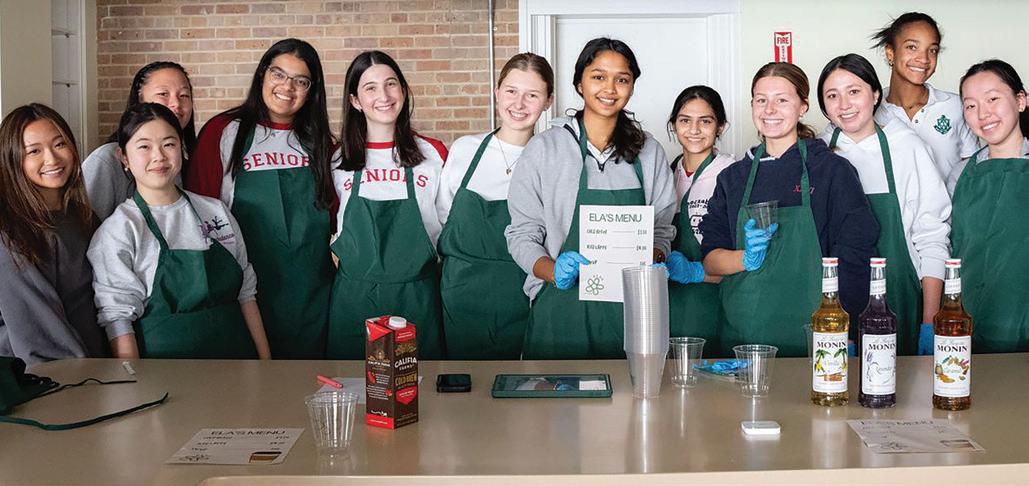
“There are lots of parts to a business that I wasn’t aware of, and I think that going into [the process], I thought it would be much simpler than it is,” Johnson said. “There are so many behind-the-scenes moments that, as a customer, you don’t even realize go into getting the drink ready for you when you order it."
Goldstein feels proud of the way in which Student Council is contributing to the Hockaday community.
“Student Council aspires to make a significant contribution to student life here, and we welcome opportunities for future projects and ways to respond to the needs of our students; student dreams and ambitions can be realized with the support and the will to fulfill them,” Goldstein said.
As Ela’s looks toward the future, the team feels encouraged by the positive responses to the first popups. In order to collect feedback from the community, they included a whiteboard for customers to add suggestions during the pop-up.
“We had a lot of people come for our first pop-up, and they were optimistic [on the] suggestion board,” Kwun said. “We got a rhythm going quickly, and it was organized.”
Johnson hopes that students feel inspired and empowered to embrace their own initiatives and goals after seeing Ela’s.
“I want Hockaday students to take away that they can run their own business and that it’s possible to start something from the ground up,” Johnson said. “It’s possible to create something that Hockaday hasn’t done yet, and we want them to continue it."
By Sara Vijay Staff Writer
For decades, immigrants arriving in the United States have searched for the “American dream,” which promises opportunity, education and a better life for their families. But the path to success is not always linear and is rarely easy.
For senior Anaiya Saxena’s grandparents, their path to success did not come without struggle.
“My grandparents had a very good life in India,” Saxena said. “But when they came to America, it was not the same. Life was a lot more expensive, it was harder to find work, and they didn’t have family close by.”
Saxena’s grandparents decided to leave India to improve their lives.
“There wasn’t as much opportunity for my grandma as a female,” Saxena said. “She did not go to college, and my grandpa had a better opportunity to create a name for himself outside of his family.”
Despite these challenges, Saxena’s grandparents persevered in pursuit of their dreams.
“I think especially at the time it was the land of the free, where anything was possible and where there was unlimited opportunity,” Saxena said. Her grandmother, arriving at nineteen without knowing English,
navigated hardships with her husband.
“She didn’t know what to expect,” Saxena said. “But she has always been very open to learning, determined and persistent, so she studied on her own and learned English.”
Saxena’s grandparents also encountered administrative obstacles in their path to citizenship. Because of issues with their documentation, they were deported to Canada and forced to repeat the immigration process. Despite the setback, they ultimately completed the process through legal channels and gained their citizenship.
“I think it’s an eye-opening experience,” Jabulee said. “For me, the biggest change was my friendships. You’re suddenly removed from your entire circle and placed in an

For senior Aahana Jabulee, who also immigrated from India, her transition has been shaped more by social changes. Jabulee moved when she was in her junior year for her dad’s job. She applied directly to Hockaday after deciding not to attend boarding school in India.
Jabulee also noted that immigration stories are often generalized, even though they vary widely.
“There are a lot of different immigrant experiences,” Jabulee said. “Mine is much more privileged. I didn’t move here to create a livelihood or escape from a bad situation, but instead for my dad’s job.”
She also said immigration impacts a country’s economy.
“From an economic standpoint, immigration is very important,” Jabulee said. “It’s really important to bring more money into countries.”
According to a study by the American Immigration Council, immigration contributes $1.7 trillion to the U.S. economy. Yet beyond the
economic influence, many students say immigration has shaped their personal identity.
Senior Mimi Davison, who immigrated from Australia, has grown up in multiple countries due to her parents' jobs, which has influenced her sense of identity.
“I think the hardest thing about immigrating when you’re younger is knowing who you are and being true to yourself even though the places around you are different and changing,” Davison said.
She said cultural differences are prevalent in day-to-day life.
“There are so many things that you overlook every day, such as slang terms, jokes or mannerisms, which can be so different from place to place,” Davison said.
Through experiences such as trying new foods and learning different languages, Davison said immigration has broadened her outlook. Davison also sees immigration as an important source of perspective.
“I value diversity a lot,” Davison said. “Growing up with people who are so different from you makes you focus on your similarities rather than differences, while still celebrating them.”
By Emilie Illum & Claire Gicheru Photo, Graphic and Castoff Editor & Staff Writer
Having difficulty navigating an inaccessible world, feeling guilty for using accommodations and being shamed for being disabled: these are just a few examples of targeted negativity that disabled people may experience.
March is Developmental Disabilities Awareness Month, a fitting time to recognize the experiences, challenges and strengths of disabled people. Developmental disabilities refer to a wide array of conditions that begin in childhood and affect physical, learning, language or behavioral development.
“I think a lot of Hockaday students are really used to hearing the term ‘microaggression’ when it comes to discussions of race, but the same is true for disability as well,” Upper School English teacher Dr. Claire Cothren said.
Microaggressions are a form of ableism, which is defined by Merriam-Webster as “discrimination or prejudice against individuals with disabilities.”
Cothren teaches the Disability Identity class and emphasizes the importance of language when beginning a discussion on disabilities.
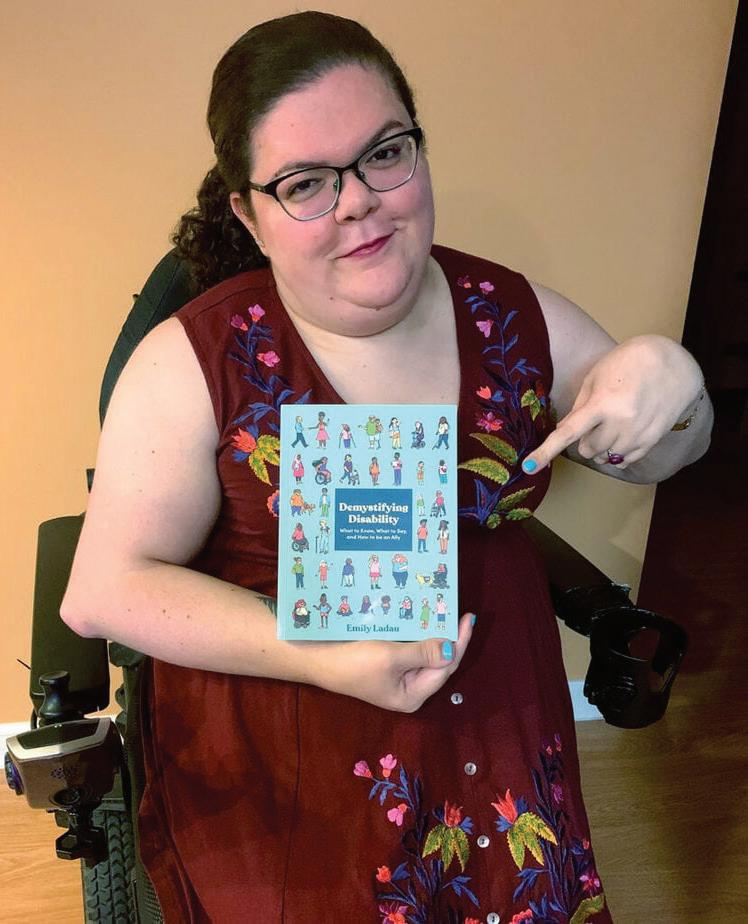
“In our class, we read this book by Emily Ladau, which I thought was really helpful,” Cothren said. “[Ladau] emphasized that everybody who identifies as disabled gets to decide their own terminology.”
People often use such terms as a way to indirectly address disabilities. However, Ladau states in her book that there is nothing wrong with recognizing a disability.
“[Ladau] feels like a lot of people try to use euphemistic language, that they're afraid to say in a straightforward way, ‘that person has a disability,’” said Cothren. “[Ladau] says, ‘No, that is something that I feel very proud of. I don't have to use euphemistic language and skirt around it. This is part of who I am.’”
Georgia Fuller ‘25 took Cothren’s Disability and Identity class her junior year and was diagnosed with a visual impairment known as Stargardts eye disease at age 13. Fuller carries lessons with her today that she learned from Cothren’s class.
“One of the first units that we did was on language used about disability, and that was such an empowering unit for me, because I haven't been disabled my whole life,” Fuller said. “So, I didn't grow up learning the correct rhetoric to use; I was kind of thrust into it. That class really helped me learn the right language to use.”
Fuller’s visual disability has largely changed her perspective on humanity and the world we live in.
“I do think that being blind has given me a new perspective on things and different ways of seeing the world that have helped me help others in a way and have more grace in a way that I don't think I had before I was diagnosed,”
Fuller said.
Ladau, who wrote Demystifying Disability: What to Know, What to Say, and How to be an Ally, is an American disability rights activist, writer, speaker and advocate. She was born with Larsen syndrome, a genetic joint and muscle disorder. In her English class, Cothren discusses, how the language surrounding disability is determined by how each individual disabled person prefers to identify as.
“Some people have preferences about using person-first [language] by saying ‘I am a person who has autism,’ versus indentity-first, which is ‘I am an autistic person,’” Cothren said.
Cothren also delves into the origins behind the antiquated terminology that is frequently used when discussing disability.
“As a whole, the terms ‘handicapped’ have become outdated,” Cothren said. “We think more about accessibility, as opposed to keeping the focus on limitations. So instead of saying, ‘This is a handicap parking space,’ we'll say, ‘This is an accessible parking space, because here more people can use it to get to the things that they need more quickly.’”
However, Fuller’s disability has also been difficult for her. Even in the world today, where we have plans and laws in place to protect people with disabilities, they are shamed and ignored for the accommodations they need.
“In college, I had a professor last semester who told me I was a disruption in class when I silently got up to ask my [teacher’s assistant (TA)]
advocate for others because the world is not as accessible as it may seem for people with disabilities.
“My TA right now has been essential for me to feel included in college,” Fuller said. “I am a music major, and a lot of my major is reading sheet music, which, for obvious reasons, is a little bit difficult for me.”
Fuller believes that everyone deserves to chase their dreams and pursue their passions, and everyone needs help getting there. Yet our society perpetuates a stigma around asking for help or propagates judgement around asking for accommodations.
the way you view disability.

“I've always wanted to do music for as long as I can remember,” Fuller said. “And there were definitely a lot of moments where I could have dropped it, or a teacher could have discouraged me. But teachers like Kirsten, Mrs. Poe and Dr. Bemenderfer have been so vital for me because they responded to those worries with, ‘No, you are beyond capable of this.’”
In recent years, there has been a surge in disability empowerment movements and a change in the language around disabilities.
“I am proud to be blind, I am proud to be all of these things,” Fuller said. “There are times where you wish that you had a certain ability, because it would make your life easier, but also you are proud to be who you are and to be disabled and to be part of this powerful community.”
Junior Christine Park, who serves as Affinity Council representative for the Neurodiverse Student Union, says that there is a general lack of understanding around neurodivergence and disability as well as stigma around being neurodivergent.

Kirsten in the back of the lecture hall if she could quietly read me the text on the slides, because my professor had forgotten to send them to me, which was part of my accommodations,” Fuller said. “By law, she had to do so. She then made me feel really ashamed in a place where I should not have because I was not being properly accommodated, as the [Americans with Disabilities Act] legally binds her to do.”
Fuller encourages everyone to
“People are like it's so lucky or it's unfair that neurodivergent people get ‘special treatment’, but the unfortunate fact is it can be very difficult at times to be neurodivergent, and not just because of neurodivergent traits, but because of discrimination and ableism in society,” Park said.
Park said that, for example, calling a disabled person ‘special’ or 'special needs' may seem more correct, but it is in fact language that can exclude or degrade.
“It sort of ignores the reality of it and perpetuates this idea that like, ‘Oh, there's something wrong [with] disability,” Park said.
Park says that it is important to remember that disability is an everpresent part of the human experience so it is important to be mindful about
“[For neurodivergent people] sometimes solutions to problems are clearer, but I want to emphasize that being neurodivergent isn't some kind of superpower,” Park said. "I think there's a common trope in media where the neurodivergent character, normally an autistic or autistic coded person is this genius savant, but it shouldn’t be that a [neurodivergent] person is only valued for their skills, and rather because they are a person.”
Perpetuated stereotypes and ignorant or fearful comments can be harmful for people with disabilities as they are for anyone else.
Cothren has personal experience with raising her son, Jaime, who was born with 1p36 deletion syndrome, a rare genetic disorder that leads to developmental, intellectual and physical challenges.
“He seems happy to me, and he's young, but I worry about his mental health sometimes,” said Cothren. “I see how people interact with him in the world. He's been lucky to meet a lot of really sweet people who are kind to him, but also, I see how those unfamiliar with visibly disabled individuals sometimes react to him with surprise or talk about him like he's not there.”
Regardless of how others respond, Cothren is committed to supporting Jaime and helping him feel confident and valued.
“I haven't done things to prepare him, like warning him what's out there, because he's so young, but what I have done is try to give him confidence,” said Cothren. “I tell him all the time how smart he is to the point where he [repeats it back] to me in his talker.”
Cothren emphasizes treating all people with respect, not pity.
“[Respect is] making sure that you talk directly to him as opposed to talking about him,” said Cothren.
“He may look like he's not interacting with you because he doesn't have eye contact like a neurotypical person might have, but he always hears and understands what you are saying.”
Overall, grace and understanding are key to a more accessible future.
“You can never fully know the reason for someone's behavior,” Park said. "You never know what's going on in someone's life; I feel like you must try to meet people where they are rather than making judgements and assumptions first."
PHOTOS COURTESY OF
By Alina Zheng & Katie Ma Sports Editor & News Editor
Since 1923, students have used the learning experience in The Fourcast as a launchpad for their entry into the ranks of professional journalism. Today, three alumnae are making their mark in a constantly changing field. From college to 30 years of experience, they offer a variety of perspectives.
Harper Harris ‘24
Former Fourcast Co-Editor-inChief Harper Harris '24 is currently pursuing a journalism degree at the University of Texas at Austin (UT). She joined Fourcast after watching her sister take part in the student newspaper. Harris said she poured most of her time during high school into Fourcast, so majoring in journalism in college felt like the natural next step for her.
Serving more than 40,000 UT students, the Daily Texan is much faster paced with daily online content and a biweekly print edition. Harris, a social media reporter, works each week on Tuesdays, typically until 11 p.m. writing the copy for the paper’s social media.
“Every journalist should know how to do the digital side,” Harris said. “Especially now, with social media and no one really getting physical print papers anymore, it's really important to know how to use your cell phone to make a video or post photos, like on Twitter or on Instagram, to share information with readers.”
Faith Isbell DiBiagio ‘15
As a current web-editor of Bloomberg.com, Faith Isbell DiBiagio '15 has witnessed the impact of social media and values its ability to reach a wide expanse of audiences.
“With the proliferation of social media and automation, we are constantly having to balance urgency with accuracy,” DiBiagio said. “As an outlet, you want to be first, but more importantly, you want to be accurate – so getting as many readers as we can while also maintaining the integrity of our journalism and maintaining the trust of our readers.”
“I don’t get to pick what I write,” Harris said. “I get assigned stories to write copy for. I don’t have any niche in it, but I definitely want to go into political and breaking news, investigative journalism and such.”
Harris credits the Fourcast for showing her the value of deadlines.
“At the Daily Texan, it's very important to stay on deadline because if you turn in a story late, it kind of screws up the whole production process,” Harris said. “Staying strict to my deadlines as a staffer on the Fourcast made me realize, ‘Okay, this is really important because I don’t want to mess up anyone else’s schedule and mess up the paper’s integrity.’”
She has gained experience through classes like the Basics of a Newspaper and Ethics of Journalism and Social Media. Harris said her favorite class so far has been Reporting Images where she learned about photojournalism.
“When I was at the Fourcast, I didn't really take photos or make videos or anything,” Harris said. “I only did the print side, so it was cool to do a whole other side of journalism that I've never done before. I don't think I want to do it professionally or in my career down the road, but it's a good skill to have.”
Harris stresses the importance of gaining a variety of experiences, particularly on the digital side.
DiBiagio, a business journalism graduate from Washington and Lee University, works with her team to maintain a website where readers have access to a world-wide range of stories. DiBiagio and her team in the U.S. work with Bloomberg’s other hubs in Hong Kong and London to keep up with news all day, every day.
“We run the website for the US as well as other regions, including Canada, Latin America, Asia, Africa, Middle East, Europe and the U.K.,” DiBiagio said. “So, we are constantly monitoring those websites and curating them, adding stories, artwork, photos, visuals or charting the markets in real time.”
As web editor, DiBiagio’s role isn’t to write specific stories, but to work with teams to optimize traffic and curate multimedia, attracting attention to their website.
“We work in shifts, and we are in charge of the U.S. website from 7 a.m. to 8 p.m. ET,” DiBiagio said. “When it’s time for us to wrap up here, we hand over the website to our colleagues in Hong Kong and Sydney, so at any given point of the day there is someone [abroad] running the US homepage, just as we are also running Asia’s homepage in the middle of the night for them as it’s the middle of the day for us.”
By making sure the website is staffed at all times, Bloomberg ensures all the content is fresh and up to date.
“If there’s any breaking news in any
of those regions, we are responsible for sending a push alert to their phone,” DiBiagio said. “But in that respect too, in my role, I have to be familiar with what’s going on in South Africa or in Thailand, like the geopolitical events, the major companies in those areas or the billionaires in each region.”
With all of these tasks, she still ensures that her purpose answers the question, “why should the reader care?”
To understand what specifically attracts the reader, she analyzes the data Bloomberg.com accumulates.
reporting still has not changed.

“We have all of this data at our fingertips now that we’re constantly keeping track of, just in terms of what works and what doesn’t, what resonates with the reader, what keeps them reading and ultimately what keeps them paying for Bloomberg. com,” DiBiagio said. “I’m not a pen and paper reporter, but in my role, I am helping edit and optimize stories to the best of my abilities to do well online.”
Her tools include AI to help generate headlines and Search Engine Optimization to interpret data on readership.
“I feel like AI can allow us to focus more on our reporting and our storytelling, but ultimately, the editorial judgment, the heart of what we do, still lies with us as people,” DiBiagio said.
Mary Clare Jalonick ‘93
A reporter who covers Congress for Associated Press News (AP) in Washington D.C., Mary Clare Jalonick ‘93 focuses on maintaining credibility in her articles.
“You have to always remember that all sorts of different people are reading what you're writing, and you really want them to trust you,” Jalonick said. “It's so important to me that people look at my byline or look at the AP logo and at what we've written and feel like they're able to trust what we're telling them. We want to make sure that people do have faith in what we're saying.”
“There's still a lot of people out there doing journalism and holding people accountable, and letting people know what's going on out there,” Jalonick said. “It's just a little bit different in the way that everyone's consuming it.” From working for Congressional Quarterly, a publication that covers Congress, to now working for AP, Jalonick can often be found covering stories in the Capitol building when Congress is in session.
“It can get really fast and really busy, and then it can be a little bit slower,” Jalonick said. “Then, all of a sudden when you think it’s slower, then something big happens, and then all of a sudden, you’re busy again. So, you have to be always ready to move if something happens.”
Jalonick’s adaptability to the inherent unpredictability is a vital skill in her career. Jalonick was on site covering the Capitol riots on Jan. 6, 2021. She wrote another article on the 1-year anniversary of the event that focused on the lawmakers who were trapped in the Capitol building.
“I had a lot of interviews I'd already done when people told me their experiences, and I wasn't able to use all of that, because if you look at a normal article, you're just using quick quotes from whoever you talk to,” Jalonick said. “I did all these different interviews, but I was only able to use parts of them for the story.”
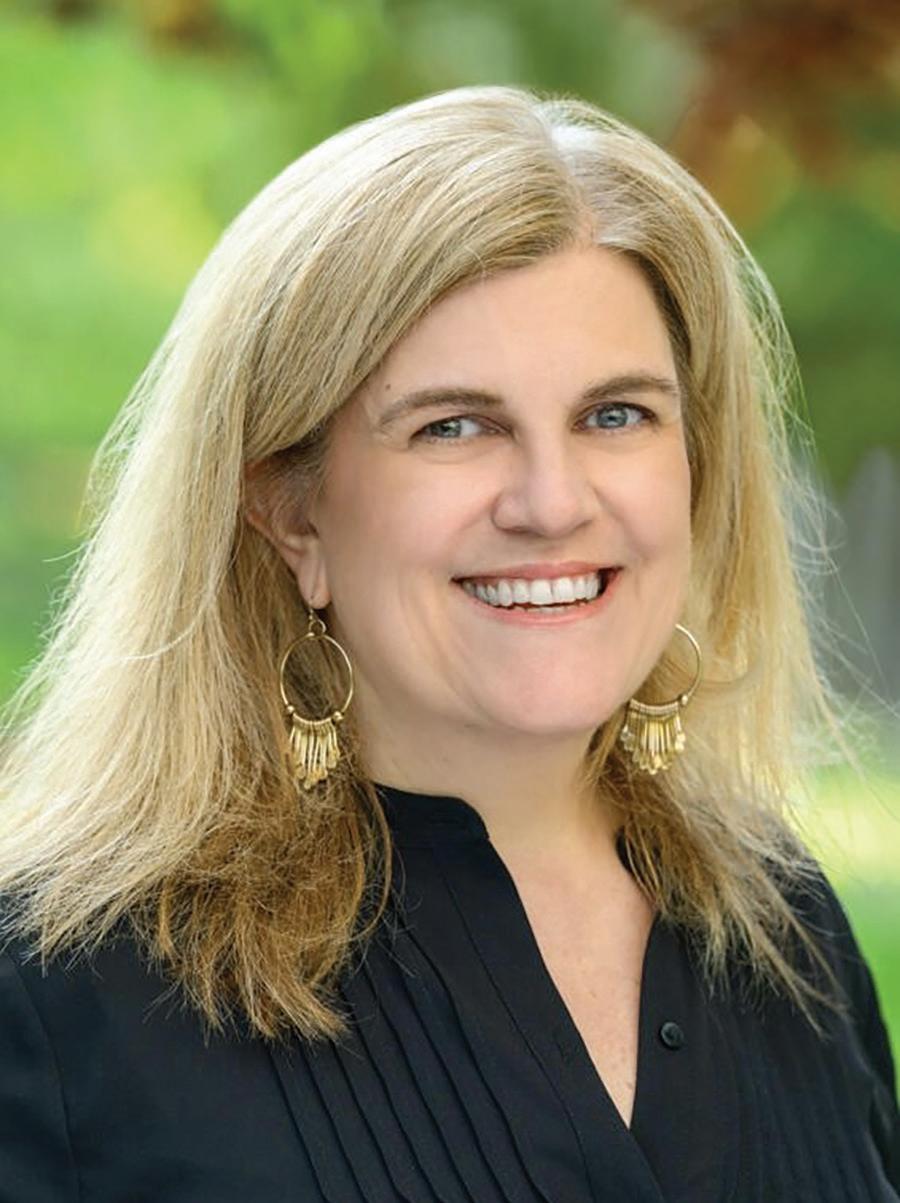
This inspired her to write her first book, “Storm at the Capitol,” which features interviews from police officers, lawmakers and staff who experienced the event first-hand. With all of these different and sometimes clashing perspectives, Jalonick found it difficult at times to sort through partisanship and opposing viewpoints. She relied on facts to lay out the different sides of what people are saying.
Even with the increasing digitization of journalism, Jalonick recognizes that the core purpose of
“It’s really important to always remember that we [journalists] are not advocates,” Jalonick said. “We're reporting what the news is. So, people can form their opinions by reading what you write, but they can't really trust you unless you do that in an evenhanded way.”
By Jenny Chu Features Editor
Two WIN periods a week, students have access to a very special opportunity, where they walk in excited to learn amidst a casual backdrop of literature and language. This experience is a result of Upper School French teacher Chérine Chlone and Upper School History teacher Dr. Wesley Lummus’s two weekly language learning initiatives, both new this semester: La Table Française and Kalaam Gamiil.
La Table Française, which meets on Day 2 in Chlone’s room, is designed for students to practice their conversational French, and Kalaam Gamiil, which meets on Day 4 in Chlone’s room, is designed for students to learn basic Arabic. Both Chlone and Lummus have been interested in starting opportunities like it for a very long time.
“This idea has always been on my mind, but I always felt that I needed the right time and right person to make it work,” Chlone said. “Dr. Lummus and I both share a passion for language and sharing ideas, and I felt he would be the right person to partner with to start this.”
Chlone, who grew up speaking French and Arabic, has a strong passion for and connection to what she teaches.
“Though I have a very pedagogical
experience with language, it also represents love, nostalgia, passion and a way to connect with my roots and family.” Chlone said. “Growing up speaking both, I always felt that these languages were already connected in many ways, culturally and linguistically.”
Lummus, who majored and got his Ph.D. in Middle Eastern history, has an innate connection to Arabic.
“One of the requirements for my major was to learn Arabic,” Lummus said. “I’ve worked with Arabiclanguage sources in the Istanbul historical archives, and I’d say I’m at an upper intermediate level.”
Senior Sharika Mandyam, who’s attended every Kalaam Gamiil meeting, enjoys how the activities are guided by student preferences.
“A lot of us love listening to Madame Chlone’s Arabic songs, so we do that every single time, and we even made our own playlist outside of class,” Mandyam said. “But the teachers are always open to suggestions and changing it up based on what we want from day-to-day.”
Senior Isabella Luo, who attends Kalaam Gamiil meetings with Mandyam, believes these opportunities have helped her familiarize herself with both a new language and new faculty members.
“I started at a beginner level, but it’s
been great learning a new language and being around teachers who are genuinely passionate about it,” Luo said. “They get really excited, and that makes us excited.”
Though the linguistics are new, Mandyam finds the experience very fulfilling.
“Even though Arabic is really different from English, I’ve liked learning about a different alphabet that’s not offered [at Hockaday],” Mandyam said. “We recently started practicing writing and reading, which has been really cool.”
Beyond the Arabic language, students are immersed in Middle Eastern literature.
“We recently read a story about a trickster named Juha who’s popular in Arabic folktales,” Luo said.
Senior Chloe Oeschger, who attends both La Table Française and Kalaam Gamiil, finds that they help her in different ways.
“Since I’ve taken all the French classes I possibly could here, these weekly meetings help me retain my French in a casual way,” Oeschger said. “For Arabic, it’s just been pretty fun exploring a new language with other people.”
La Table Française places a special focus on cross-country conversation.
“We talk a lot about what’s going on in France to stay up to date with

French events,” Chlone said.
Similarly, Kalaam Gamiil seeks to help students develop basic Arabic speaking skills.
“At the first meeting, we started with basic conversational phrases and ever since then, we’ve also been practicing conversation and the alphabet alongside other activities,” Mandyam said. “Everyone’s incredibly supportive of each other.”
Above all, Chlone aims to help students immerse themselves in the cross-cultural connections these programs serve to foster.
“There are so many connections that already exist in a lot of languages and cultures,” Chlone said. “Many of my students tell me about the similarities between the different languages they know and what they’re learning with us.”
By Haniya Khowaja Staff Writer
Just two months after joining Cure Quest, the fight against blood cancer became personal for junior Lauren Lockhart after a family friend’s daughter got diagnosed with leukemia at the age of three.
“It was the craziest thing ever,” Lockhart said. “I feel like you never think that cancer is going to impact your life until it does.”
According to Blood Cancer United, an organization dedicated to curing blood cancer and improving the quality of life of those affected by it, blood cancer impacts an estimated 1,759,461 people in the United States. Blood Cancer United also empowers students to get involved in the fight against blood cancer through student teams such as Cure Quest Dallas.
blood cancer research and support for the patients and families affected by it. Within the past two years, Cure Quest has raised over $230,000 for Blood Cancer United.
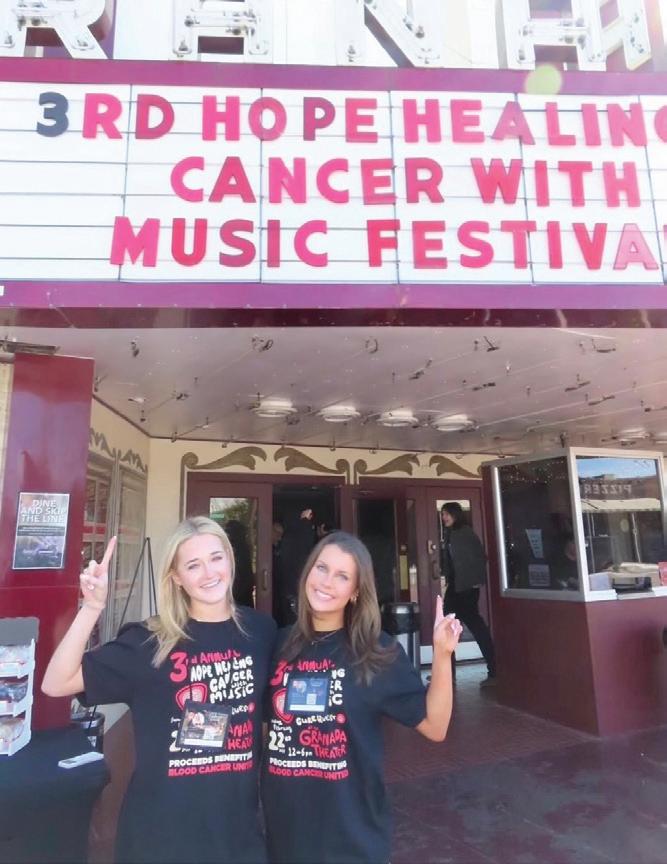
Team Cure Quest is a Dallas-based team that focuses on the “patient support” pillar of Blood Cancer United. Cure Quest raises funds for
Lockhart is the Candidate of Cure Quest, meaning she leads the sevenweek fundraising campaign and handles administrative tasks, such as hosting meetings and organizing fundraising events. One of the main ways they fundraise is through the annual Hope Healing Cancer Music Festival, typically during late February. The festival features various bands and a silent auction for fundraising.
“We’re very big on how music has the power to heal,” Lockhart said. “We wanted to use our passion to advocate and raise money for this cause, so we got involved with the festival.”
Sophomore Kyle Pinkus, also
a board member, said that with planning comes challenges of getting businesses on board and engaged.
“You have to constantly be sending out texts and emails to them because they’ll forget about them or not take you seriously at first,” Pinkus said. “It’s hard to get people to really care about it and want to donate money.”

McAtee has a personal connection to blood cancer.
“A close family member of mine was diagnosed with blood cancer,” McAtee said. “I know a lot of people who are experiencing blood cancer, so I thought it was a good cause and a good way to show them my support of their journey.”
But the challenges of asking for help are worth it to fight blood cancer. This notion keeps Pinkus focused on the bigger picture and her reason for joining the team.
“I feel like blood cancer is a huge problem in the world,” Pinkus said. “I joined to improve the quality of life and give opportunities for more resources to people affected by blood cancer.”
While Pinkus’s involvement derives from a drive for advocacy and awareness of the issue, junior Kate
She said seeing the support from those around her is her favorite part of joining Cure Quest.
“When I was reaching out to some of my family friends, they were so happy to donate to our campaign,” McAtee said. “It’s just really cool to see how many people are supportive of my family members and their diagnosis.”
McAtee said the organization is open to anyone interested.
“Anyone can help out, especially if they’re hardworking and want to be a part of the cause," McAtee said.
By Aneeka Tansen Features Editor
Dallasites have long boasted possessing the largest continuous urban Arts District in the nation. With the Dallas Museum of Art, the Nasher Sculpture Center, the Perot Museum of Nature and Science and many other galleries and performance spaces, Dallas’ arts scene is nationally renowned. These were my must-visit art stops:


This installation is made from 12 inflated black tubes, each around 10 feet high. The tubes, stacked closely together, embody a life-like nature to them as they move together in slow, cyclical movements. The name takes inspiration from the ZERO group, which was a collective from the 1950s that explored how artwork is impacted by space. Watching the tubes move together is an eerie and overwhelming experience that makes the visitor feel small in contrast to the work’s scale and movement.

Founded in 1903 by the Dallas Art Association, the DMA boasts over 25,000 works of art from renowned artists like Claude Monet and Frida Kahlo. The collection captures over 5,000 years of art and is situated at the heart of the Dallas Arts District. The museum showcases two standout exhibitions that will run through parts of 2026:

This 150 foot-long mural is divided into six regional sections that depict Dallas’ musical heart with each section representing a distinct flavor of the city’s music. Artists Bobby Miller and Ebony Lewis used their music knowledge as a lens into identity gained through art in the city. The six sections are Oak Cliff, South Dallas, East Dallas, Central Dallas, West Dallas and North Dallas with each area containing specific elements special to the region.

In November of 2025 the Balloon Museum came to Dallas, showcasing their “Let’s Fly” exhibition. The exhibition uses air not only as the substance that fills balloons but also as an agent for movement. If you visit, make sure to see Hyperfrequency, Mariposa and ZEROS.

Designed by Hyperstudio in collaboration with Bruno Ribeiro/ STROBOSCOPE in 2025, Hyperfrequency is an interactive, kinetic installation that is the focal point of the exhibition. The performance has three acts, synchronized with sound and music that evolves with visual elements. Visitors sit in a pit of black spheres with balloons that drift in and out of the walls at intervals. The immersive setup allows the audience to sink into the pit and absorb the rush of feelings created by light, sound and motion.

This 26-foot-wide butterfly sculpture designed by Christopher Schardt in 2023 is made of aluminum wings, a wooden body, plasma globe eyes and over 39,000 full color LED lights. Originally built for Burning Man 2023, the installation hangs from a tower with a swing attached directly below. Visitors can either use seating provided in front of the installation or can sit on the swing and feel the motions of the butterfly. The butterfly wings and swing are in constant motion. More than any other installation, Mariposa fully transported me into the sensation of flight.


Constellations: Contemporary Jewelry Nov 9, 2025 – May 3, 2026
This exhibit showcases over 350, never seen before, wearable art pieces. Although the collection features many sought after pieces, it mostly seeks to capture the variety in contemporary jewelry. From golden crowns intended to look like cardboard to plastic bag necklaces, the exhibition has a piece for everyone.
Scan here to see more photos from the exhibits!

By Elizabeth Farrell & Savannah Simon Arts & Life Editor & Staff Writer
Although queer love has always existed, it was not openly recognized on TV until the early 70s when the first openly gay character appeared in the show “An American Family.” Within the past decade, shows like “Heated Rivalry” transformed American television into a more diverse space by fostering a more inclusive mindset towards the queer community.
“Heated Rivalry” follows two hockey players in a gay relationship and is normalizing queer love. Gay characters historically played comedic or supporting roles without a main story of their own, so “Heated Rivalry” is significant in redefining queer representation in the media.
Junior Marley Randolph believes the rising popularity of queer television reflects the changes in societal attitudes and culture.
“With ‘Heated Rivalry,’ the whole point of the show is that they’re gay and their experiences around that, so I think it's really powerful, and it's really nice that we're seeing a lot of shows that focus more on that rather than just being like, ‘ha ha, they're gay,’” Randolph said. “It’s something that
needs to be shown.”
The experiences of queer characters on TV also help members of the LGBTQ+ community, like Randolph feel seen. In “Heated Rivalry,” Shane Hollander, a main character in a queer relationship, struggles to talk to his parents about his sexuality, and Randolph related to this struggle.
“I feel like I identified with him in that aspect of not knowing what your parents are going to think and those being your biggest supporters, and you just don't want to let them down,” Randolph said.
through television paves the way for inclusion.
Queer Student Union (QSU) President Pilar Hoitsma, a senior, believes that queer representation can sometimes be sexualized more than straight TV, even though the content of the media is roughly similar.

The popularity of “Heated Rivalry” lifted stigma from sports across the globe, offering room for oppressed players to be open about their queerness. Destigmatizing queerness
“When you think about ‘Bridgerton,’ you're not like ‘that show is only about [explicit things],’ whereas with ‘Heated Rivalry,’ I think a lot of the reason that people become interested in it is because it's a little bit more explicit,” Hoitsma said. “I just think it’s interesting that it’s somehow different.”
QSU Vice President senior Xeno Bennett encourages viewers, queer or straight, to look at media with an open-minded perspective.
“Seeing characters on a TV show
and doing your best to understand them and process the struggles they’re going through makes you more open to doing that with someone in real life,” Bennett said. “It makes it so that queerness and everything that comes with it is not so foreign to people.”
Bennett believes that queer media has inspired more than one community and created a gateway for other marginalized groups to be recognized.
“Now, we have those kinds of stories in the mainstream and have lots of people engaging with media that think critically about queerness and how it also interacts with different identities like being a person of color, a woman or disabled,” Bennett said.
Hoitsma also said modern film and shows that feature queer characters are making an impact outside of the queer community.
“It's not like they're not acclimated to seeing gay people, but I think it's nice to have a queer story that is so popular [so] people are not either weirded out by it or [think] ‘that’s weird’ or ‘that's gay,’” Hoitsma said. “I kind of love it.”
FROM HBO MAX
By Siena Ebert Arts & Life Editor
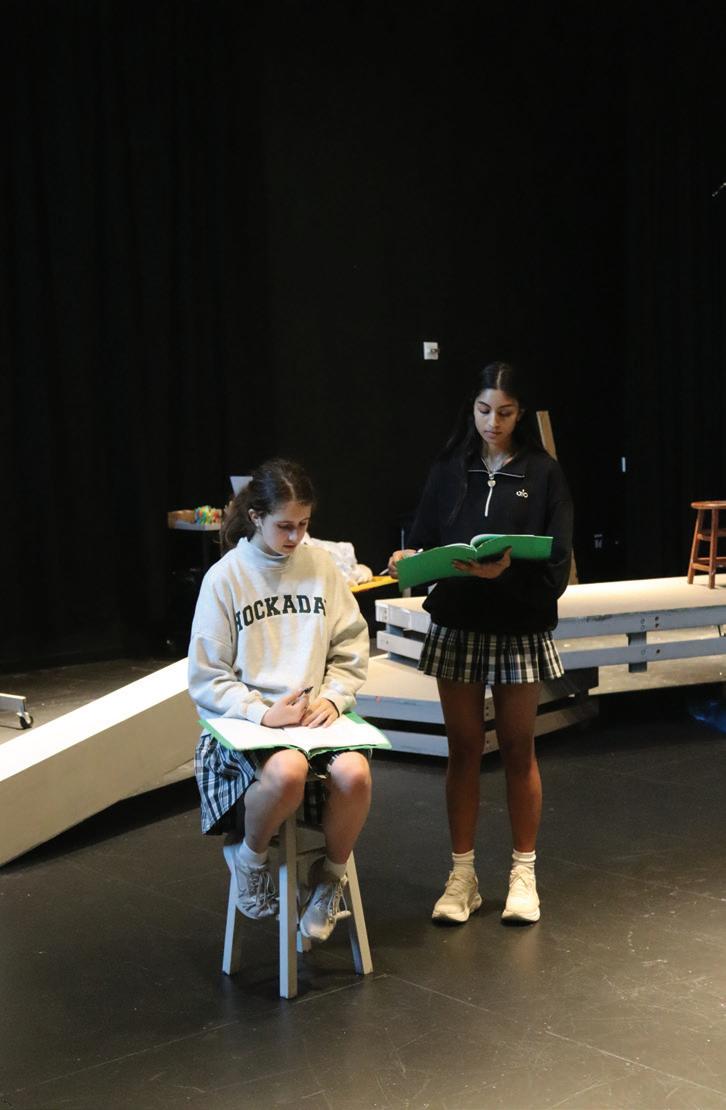
Grief, justice and resilience take center stage in this year’s spring play, "Women of Lockerbie." Performed by the Upper School Acting Lab class, the play is scheduled to take stage on April 23rd and 24th.
Inspired by the real-life aftermath of the 1988 bombing of Pan Am Flight 103, "Women of Lockerbie" follows an American couple who travel to Lockerbie, Scotland in search of answers after losing their son in the attack. There, they encounter a group of local women determined to return the victims’ clothing to their families as an act of dignity and compassion.
Junior Avika Guttigoli plays Bill Livingston, the husband of a grieving mother. As his wife spirals under the weight of their loss, Bill must remain emotionally grounded, grieving quietly while holding his family together. Taking on such a layered role reshaped Guttigoli’s perception of grief.
“After understanding Bill and his wife’s experience, I began to realize that grief can’t be confined in a specific order of five stages,” Guttigoli said. “It ebbs and flows depending on each person and their situation.”
To authentically portray their characters, the cast conducted extensive dramaturgical research before rehearsals intensified. The play
builds toward catharsis, the emotional release that allows audiences to process complex emotions. To reach that level of emotional depth, Guttigoli immersed herself in research and character development.
“We did dramaturgy work as the research backbone of the play,” Guttigoli said. “We developed a backstory to each character, which helped put ourselves in their shoes and understand how they lived prior to the accident and what shaped their reaction to the tragedy.”
Sophomore Caroline Hayes was cast as George Jones, an American bureaucrat tasked with managing the personal belongings from Pan Am Flight 103. Though fictional, Jones represents the cold government bureaucracy that prevents the grieving women from retrieving their loved ones’ clothing. To understand the motivations of her character, Hayes focused on empathy rather than judgment.
“Understanding your character requires you to sympathize with them and see things from their point of view,” Hayes said. “As an actor, you have to be able to agree with them because if all you do is judge them, then that's going to come through when you're performing it.”
Jones undergoes significant
development over the course of the 40-minute play, shifting from refusing to return the clothing to eventually allowing the women to honor the victims. The largest challenge for Hayes lies in authentically portraying this transition with just two on-stage scenes.
“A lot of George’s character arc happens offstage,” Hayes said. “I have to figure out almost an internal monologue for my character while he is offstage and then show how he’s been impacted when he returns.”
"Women of Lockerbie" was written as a Greek tragedy, a structure that Hayes says deepens the lyrical beauty of the production.
“One of the beauties of the show is that it is very poetic,” Hayes said. “There are choral odes that discuss broader themes, like grief, hate and faith, that remind us to find a path back to love, even if it requires confronting grief.”
The director of "Women of Lockerbie," Upper School Acting Lab teacher Michelle Greene, recognizes the enduring power of the play’s reminder to choose compassion and unity in the face of adversity.
“Regardless of the tragedies that we may experience, the idea of coming together for a cause is timeless,” Greene said. “Looking past our
differences and seeing what we all have in common, which is love and support for each other, is the best way to move forward.”
For Greene, one line in particular captures the heart of the production’s central message.
“One of my favorite lines in the play is ‘Hatred will not have the last word in Lockerbie,’” Greene said. “It shows how we can do things as a community when we come together with love in our hearts instead of hatred.”
There is no Planet B.” “Keep it green, keep it clean.” “Plant trees, not excuses.”
As Earth Day (April 22) approaches, these popular phrases exemplify the trendiness of eco-friendliness. But environmental sustainability means managing natural resources to meet current needs without compromising future generations' environmental conditions—and this requires consistent and responsible action, not just slogans. To maintain Earth’s beautiful ecosystem and the survival of its inhabitants, people must distinguish between surface-level eco-consciousness and deeper, more engaged sustainability.
In a world where climate change is wreaking havoc, protecting this planet is more important than ever, but how green are people really?
When it comes to sustainability, personal habits at home are often overlooked in the name of convenience. However, these routines have some of the most significant environmental impacts and tackling them can decrease household carbon footprints.
According to the US Environmental Protection Agency (EPA), transportation in the United States accounts for almost a third of the country’s total greenhouse gas emissions.
Almost two-thirds of all commutes contain just one passenger, meaning more cars jam roads and create increased amounts of carbon dioxide.

Senior Mimi Davison, president of the Environmental Board, acknowledges students’ participation in this issue.
“Because so many students drive to school every day, I think transportation and our lack of carpooling and other more sustainable transportation methods create a massive impact,” Davison said.
Public transportation is a popular alternative to driving, especially in major U.S. cities and countries around the world. Junior Vittoria Sofia Testa, a student who actively tries to be more sustainable in her daily habits, enjoys the unique experience of public transit.
“Whenever I’m in different cities or countries, I love public transportation,” Testa said. “Beyond just being better for the environment, you see so many cool people. It’s really interesting.”
The hardest habits to give up are often smaller routines that people dismiss easily. According to the Carbon Disclosure Project, buying a coffee every morning can produce as much as 100 kg of carbon dioxide yearly. Shopping is a source of significant greenhouse gas emissions because of the energy needed for producing, packaging and transporting goods. Sustainable brands help reduce these emissions by using less energy, relying on clean resources and minimizing waste.
“Less plastic has definitely been the hardest habit for me,” Testa said. “If you go to the grocery store, everything is packaged in plastic. But I try to buy all my makeup from sustainable brands, try to buy things that aren’t in plastic or do my research to make sure a company isn’t just pretending to be sustainable.”
However, shopping sustainably is often more expensive. Eco-friendly options, especially in the clothing sector, can cost as much as 75 percent more than cheaper, more environmentally damaging ones, according to research from Kearney. While green purchases may require a larger initial investment, it pays off in the future.
“The reality is that making eco-friendly choices may cost more upfront but save us a lot of money in the long-run, and are therefore the more economical options,” Davison said. “Buying a pair of more expensive pants that you will wear all the time and will last for decades is cheaper than buying a pair of less expensive pants that will only last a few months.”
Choices can be both cost-effective and more efficient. For instance, showering drains money while producing hundreds of kilograms of carbon dioxide yearly. According to the BBC, taking shorter showers instead of baths could save 849 kg of carbon dioxide yearly for a family of four.
“A few summers ago, I started taking really cold showers in the morning and that’s both better for the environment, but it’s also really good for your health,” Testa said. “Shorter showers definitely make a difference. Water is
a huge resource that’s going to be depleted in the next couple of decades, so it's important that we ration it and only use it when we really need to.”
Yet another obstacle that dissuades many from adopting more ecofriendly choices is the global outlook on climate change. According to the European Geosciences Union, Earth is predicted to reach the “point of no return,” where human damage to the planet becomes irreversible, before 2035.
“Climate change feels like a distant, threatening issue to many of us; it’s easier to keep it out of sight and out of mind,” Davison said. “It’s hard to attach our daily choices to the catastrophic consequences playing out across the world. It’s important to not view climate change as scary and distant, though, and to recognize that our positive actions, much like our negative actions, have the potential to make massive impacts.”
From SAGE composting to environment-focused Social Impact student clubs, Hockaday plays an active role in limiting climate impact. Despite this long-term dedication, daily actions of Hockaday students, including excessive food and paper waste, can often have unintentionally harmful consequences.
Joan Guzman, Chief Operations Officer, said efforts are ongoing to reduce single-use products, like the SAGE to-go containers, and explains how Hockaday works to minimize harm to the planet.
“I think that we're very mindful about the products we're purchasing, recyclable and biodegradable products whenever possible,” Guzman said. “We also look at building materials and cleaning products that are less harmful to the environment. At times there's an expense associated with that, but we believe it's important to take on that expense to be responsible stewards.”
Although diners are encouraged to use plates, Hillary Whiteside, General Manager of SAGE Dining, reports that 16,100 containers have been used since the beginning of this school year. Guzman said that limiting the use of to-go containers is an opportunity for improving Hockaday’s impact daily, for students, faculty and staff alike.
“Every little piece that we try to do to help the environment actually does help,” Guzman said. “It impacts not just us locally or nationally; climate change has a global impact. What we do here can affect someone all the way across the world, and I believe people need to be conscious of that.”
Guzman applauds student involvement in climate-focused student groups such as the Environmental Board or Social Impact clubs. That being said, he warns students to plan for the longevity of these student groups.
“What is important is that you, the student body, will drive this type of change,” Guzman said. “But there has sometimes been a lack of followthrough. We've had members of the student body try to drive change, but the question becomes: who picks up the mantle when those students graduate? There isn't always someone continuing the work they started.”
Another way to increase environmental awareness and activism, Guzman



By Aria Knepler-Pearl, Samara Bhatki & Sophia Salem | Staff Writers & Business Manager
explains, is through the education of younger generations, a sentiment that is deeply reflected in Hockaday courses and Social Impact opportunities.
“Education is critical and can have a huge impact,” Guzman said. “Longterm environmental change depends on habits formed early and reinforced consistently. The question is: how do we continue to educate the community to understand that the little things they do every day have a cascading effect on the climate? Choosing to use a reusable plate instead of a disposable one, or selecting to print double-sided instead of single-sided, or not printing at all. Those small decisions, when accumulated across an institution of more that 1,100 students and the supporting faculty and staff, have a meaningful impact on both the environment and the finances of the school.”
For senior Megan Li, co-president of the Social Impact Compost Club, composting is a quick and easy way to help the environment. Every day, Li and other club members collect their compost bins located around campus and repurpose the waste as fertilizer for the Lower School garden.
“Our main mission is to make people aware that they can make a difference, even at such a small level, like making the choice to throw their food away in these bins instead of a trash can,” Li said. “Even going the extra mile to do that, it really does make a difference.”
Through education and hands-on activities, Li encourages others to be more aware of their daily choices that have the power to impact the environment significantly over time.
“I've really seen how small actions can make big change,” Li said. “A lot of times, climate change is viewed as something that's too big or that we can't really resolve. But even daily actions that may seem very small add up, and every single person can help minimize their impacts and their footprint.”

To identify and improve environmental impact, individuals and organizations must first define what they are working towards. Dr. Brendan Lavy, associate professor of Sustainability Science at Texas Christian University (TCU), said that sustainability goes beyond environmental protection.
“It is about social equity,” Lavy said. “And it is about economic stability.” Lavy studies sustainability metrics, the quantifiable indicators used to measure an organization's environmental impact. They differ by category but share a common goal.
“There are so many different metrics out there in terms of sustainability, but the important thing is measuring progress,” Lavy said. “And the other thing about the metrics is it's a planning tool.”
Lavy points to Sustainability Tracking Assessment and Rating System (STARS), a framework for colleges and universities to measure and evaluate their sustainability. STARS tracks everything from academics and operations (including waste production, greenhouse gas emissions and energy consumption) to student and faculty engagement. Metrics like STARS enable organizations to gather data on their sustainability performance and formulate effective plans.
"If we're not meeting our goals, we can go back, and we can assess,” Lavy said.
goods to project particular identities or images within a society.”
Today, eco-conscious shopping is a popular practice that carries its own social signaling. According to a 2024 survey by consulting firm PwC, 80 percent of consumers say they are willing to pay more for sustainably produced or sourced goods.
Jessie Crowley, Upper School science teacher, reminds students of the influence they wield.
“You have a lot of power as a consumer,” Crowley said. “If people aren't willing to buy products that are not sustainable, then the corporations can't make money anymore.”
Unfortunately, some corporations profit by preying on this knowledge. Greenwashing is the deceptive advertising practice of portraying a company, product or service as more environmentally responsible than it truly is.
“It can be more about marketing than measurable progress,” Lavy said. “They're not making any kind of meaningful changes to reduce the company's actual environmental impact.”
Lavy warns consumers to be wary of misleading buzzwords and brands that lack substantiated evidence.
“It can be easy for consumers to see something that's labeled ‘natural’ or ‘clean’ or ‘eco-friendly,’” Lavy said. “And you're like, ‘Oh, that's good. I'm going to make that purchasing choice because the label clearly says that it's natural.’”
He said third-party verifications like certified organic, Fair Trade, the Forest Stewardship Council (FSC) and B Corps are more reliable metrics for sustainability. In the absence of rigorous metrics, he urges consumers to research the validity of companies’ claims or forgo the product entirely.
“Reducing is one of those key things that's at the top of the hierarchy of the R's,” Lavy said, referring to the famous “reduce, reuse, recycle,” waste management tip list. "The other thing that I would be remiss if I didn't say is just refusing things.”
The need for greater sustainability is urgent: according to the World Health Organization (WHO), climate change is expected to cause 250,000 additional deaths per year between 2030 and 2050 due to disease and heat. Lavy said that the problems extend far beyond global warming.
“It's not just climate change; it's biodiversity loss, it's pollution,” Lavy said. “All of those things are measurable realities studied by scientists.”
A report from the United Nations Environmental Programme (UNEP) envisions Earth in 2050: extreme heat will affect 9.2 billion people; the world will lose 1 million square kilometers of forests; one-third of the population will face water stress; and the Amazon rainforest may wither into a savannah.
"I think we're getting close to that point where it's going to be difficult to turn it around,” Crowley said. “And we have the tools and the brains and the technology to do it. So why aren't we?”

In her AP Environmental Science class, Crowley teaches about geologic time and how the environment allows humanity to evolve, then delves into population growth and its environmental ramifications. She leads students to question how human behavior impacts the planet.
“How are we using the land?” Crowley said. “How are we abusing the land? And what are the better ways that we can use the land and still live in harmony?”
Maintaining equilibrium (a state of balance within an ecosystem) is a major focus for Crowley, and one that she advises students to

He encourages individuals to engage in similar types of reflection on a smaller scale. When lecturing on Green Economics, a model for achieving sustainable economic growth, Lavy asks students to examine their consumption habits and justify their purchases.
“What I'm trying to get at is this idea of conspicuous consumption,” Lavy said. “Conspicuous consumption is when people are purchasing certain

By Anya Aggarwal Jade Editor-in-Chief and Web Managing Editor
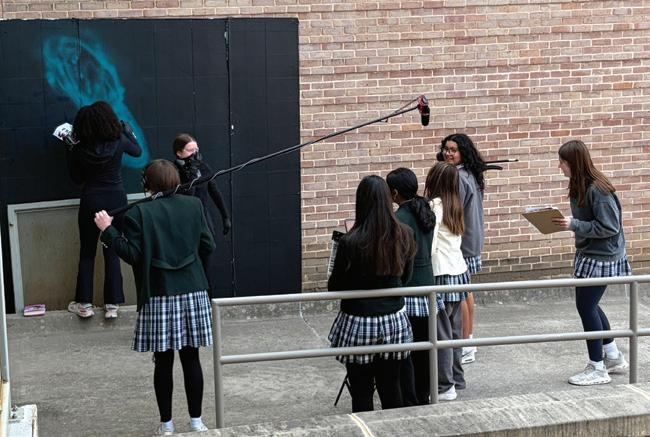
After almost a year of work, Middle and Upper School film students will premiere their work at the Texas Theatre on April 28, showcasing projects from both the Foundations and Advanced classes in an evening dedicated to student storytelling.
Upper School film teacher Morgan Swartz said in addition to individual projects, students are currently producing an all-class collaborative film led by two senior directors.
“The roles on set and in the editing stage have been divided up so every student gets a taste of the different opportunities within the filmmaking world,” Swartz said.
One of the senior directors is Isla McKenna, who has been in the film program since freshman year. Swartz explained long-term involvement in the program allows students like McKenna to steadily build confidence and skill. Now serving as a director, McKenna said leadership has required both organization and mentorship.
“The advantage of having two directors is that we had the most experience in the group so we could split up the work while also mentoring effectively,” McKenna said.
For freshman Foundations student Katie Helfrich, working alongside Advanced class students has been one of the most rewarding parts of the experience.
“I’ve been most surprised by how integrated our class dynamic is,” Helfrich said. “I even forget who’s in which class because we mesh so seamlessly.”
Helfrich highlighted that senior guidance has helped her grow both technically and creatively.
“Every critique they have is based on experience,” Helfrich said. “By using their advice, I can learn how to frame emotional shots, write an impactful
script and edit a film to bring out all the feeling that I want the audience to experience.”

By Lang Cooper Editor-in-Chief
This year’s collaborative project is a sitcom set at a girls’ boarding school. The group began by developing detailed character profiles before writing the script, focusing heavily on structure and resolution.
“I usually ask students to bring three to five ideas to class,” Swartz said. “A lot of times their first idea isn’t as strong as it could be, so I challenge it and make them think about how the story will resolve.”
The class moves from outlining to peer editing before beginning production, and past films have addressed complex topics such as body image and abuse in thoughtful ways.
“I’m really glad that at Hockaday we have the space and confidence to bring up real world topics and address them in a mature way through our films,” Swartz said.
For McKenna, film has become so much more than just a technical skill.
“Film is kind of the intersection of everything,” McKenna said. “You’re writing, you’re thinking visually, you’re working with sound. It’s about communicating on multiple levels at once.”
While students use professional cameras and sound equipment, Swartz said the program’s greatest strength is its collaborative spirit.
“Obviously, having high-tech equipment is great, but what really stands out to me is how eager and willing the students are to teach each other,” Swartz said.
By Bella Portera Staff Writer
Ariana Grande.
Harry Styles. Noah Kahan. These are just a few of the many artists whose concert ticket prices have dramatically increased within the past year, making live music a luxurious privilege that many cannot afford.
Sophomore Zara Patel finds it difficult to budget for concerts, inconvenienced by ticket resale and unreasonable face value pricing.
“When I saw that Harry Styles was coming, I really wanted to go, but people were reselling for thousands of dollars,” Patel said. “My family was planning to go to Europe over the summer, so I am probably going to his Amsterdam show because tickets are so much cheaper.”
Although she managed to convince her parents to buy these specific tickets, Patel typically navigates the ticket purchasing process without her parents’ financial assistance.
“Recently, my parents have been making me pay for some of my own stuff, because I have a job babysitting,” Patel said. “It’s been really hard budgeting when [tickets] are so expensive.”
Concert sales often involve calculated tactics that disadvantage consumers like Patel. According to TSE Entertainment, the supply of tickets available and demand for tickets by the market are the two key factors in how much tickets are sold for. When sellers utilize dynamic pricing, the prices rise when demand and buzz spike.
Sophomore Maddie Johnson has tried to avoid the consequences of this strategy, turning to presale in hopes of procuring tickets to Noah Kahan’s upcoming tour.
“When it hit 8 a.m., [my mom] got [in queue] and was in 20,000th place," Johnson said. "She thinks she was behind a bunch of bots buying the tickets to resell for four times the price that they were. I love going to concerts and listening to music, but [expenses] dim the excitement.”

Sophomore Mahathi Chadalavada, an Ariana Grande fan since 2019, shares similar complaints about concert ticket prices. Chadalavada was eager to get tickets when Grande announced The Eternal Sunshine Tour, as it is rumored to be Grande’s last.
“When the presale sign up was posted, I immediately signed up, but my parents were at work during the time the tickets would be sold,” Chadalavada said. “So, all the resellers got there first. The tickets were supposed to be my birthday gift, but they turned out to be a lot more expensive than we thought.”
For Chadalavada, this concert was a culmination of excitement and love for Grande dating back to her childhood. She was extremely let down by the pricing, with some companies reselling tickets for more than $5,000.
“When [Ariana] went on a very long hiatus in 2019, I told my mom that if she were to ever do another tour, she was definitely going to take me," Chadalavada said. "Now, it just hurts that I can’t go.”
Hockaday is filled with talented, confident and insightful Upper Schoolers, and in my last year, I want to learn about as many students as possible. And the best way to do so is, of course, over a scoop of ice cream. This issue, I took the one and only Samantha Moseley — skilled pole vault athlete— for ice cream, and she had quite the scoop to share.
Sprinting down a short runway, junior Samantha Moseley uses a lengthy pole to lift her body over a bar many feet in the air. But as effortless as her flights may seem to lucky spectators, Moseley has dedicated myriad hours to perfecting her craft.
“I saw [pole vault] for the first time in seventh grade, and I told my dad I had to do it,” Moseley said. “In eighth grade, I fell in love with the technicality of it. Although it seems daunting at first, it's highly rewarding. And you get to fling yourself up into the air with each jump, which is so fun.”
Moseley committed to the sport, joining Texas Express Pole Vault Club in Princeton, Texas in eighth grade. Despite the hour long drive, Moseley practices as much as possible. On her own, she trains speed and strength to make her in-person training sessions as productive as possible.
“It gets challenging sometimes, because it takes four to five hours out of my Saturday,” Moseley said. “But it's so rewarding every time I go. The adrenaline rush of jumping up and falling back down motivates me.”
In January, Moseley attended the National Pole Vault Summit in Reno, Nev., and competed alongside hundreds of other athletes.
“There were Olympians, there were people who were trying it for the first time and there were people who were 80 years old,” Moseley said. “That was the most amazing pole vault experience I've ever had.”
Due to the numerous technical aspects of the sport, maintaining a positive, confident attitude is essential to success.
“Because you jump as high as you can until you fail at each meet, there is such a mental block that a lot of pole vaulters can get,” Moseley said. “I just always try to keep a positive mindset and know that I will get better because I'm doing the work. My main mindset is to jump the best that I can with better technique, even if it’s not as high, because it will help me in the long run.”
In the spring, Moseley competes with the track and field team, building excitement about representing Hockaday pole vault and teaching the next generation of athletes.
“[Pole vault] has reinforced my love of teaching,” Moseley said. “I really love seeing [the] light in people's eyes when they finally get it.”
Finding inspiration in Olympic gold medalist Stacy Dragila, who began the sport at 23, Moseley wants to encourage the next era of pole vaulters to chase their goals, even if they seem impossible.

“There's always the mental block whenever you first start something of ‘I'm not going to be good enough,’” Moseley said. “Everyone can pole vault. Just show up thinking one more, and that one more will form the habit and it'll keep you going.”
By Lucy Pigott & Mia Frary Staff Writers
After spending more than 80 hours each in separate projects, seniors Ava Ortega, Peyton Johnson and Laila Scott worked in passion projects to achieve the Gold award. The Gold Award is the greatest honor for a Girl Scout to receive and the highest possible award. To earn it, girls develop a long-term solution to a problem in their community and address it.
Ortega’s Girl Scout career started in first grade when she saw a Girls Scouts advertisement and immediately knew she wanted to join. There weren’t any troops in her region, so her mom started one. After nearly 10 years with her troop, getting her Bronze and Silver awards in the process, Ortega set her sights on the gold award.
“I thought [pursuing the gold award] would be a really good opportunity to put my skills to the test and apply what I learned doing [the bronze and silver awards],” Ortega said.
Ortega spent her summer before junior year at the Social Innovator Program at the University of Pennsylvania. There, she worked with peers to address a community issue through entrepreneurship. After the program, Ortega used the skills she developed for her Gold Award.
“I conducted a lot of interviews to see why people were so stressed about homework piling up,” Ortega said. “What I found was that a lot of girls were using their phones during their free time at school.”
She felt that completely taking away students’
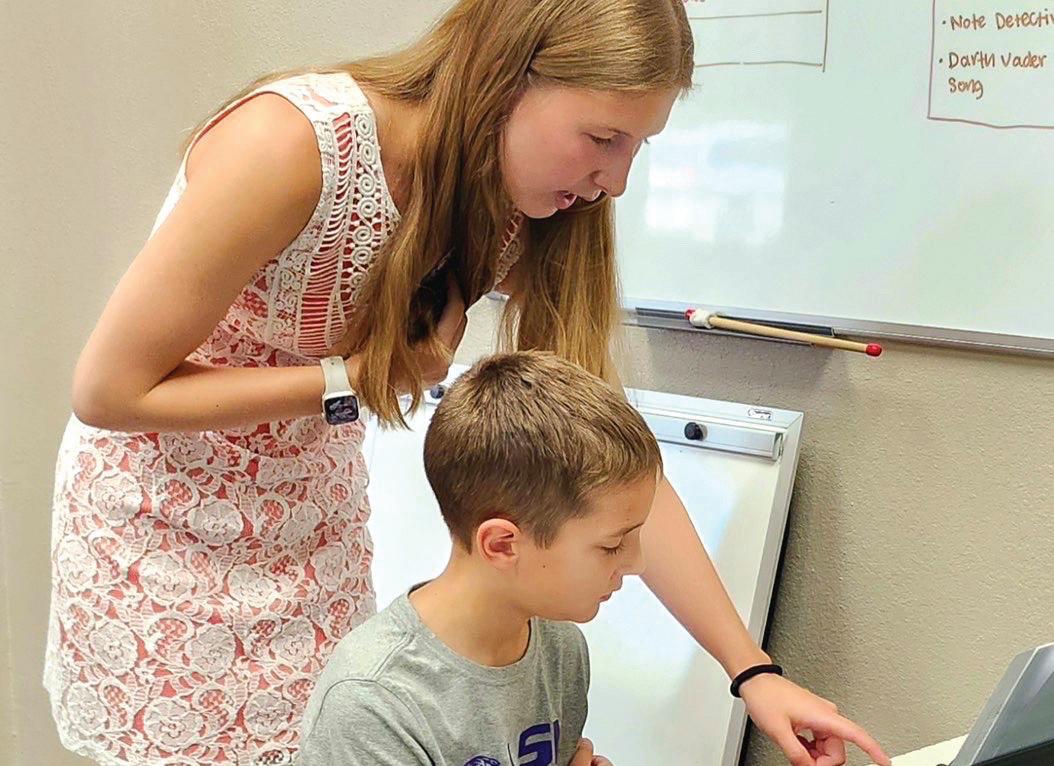
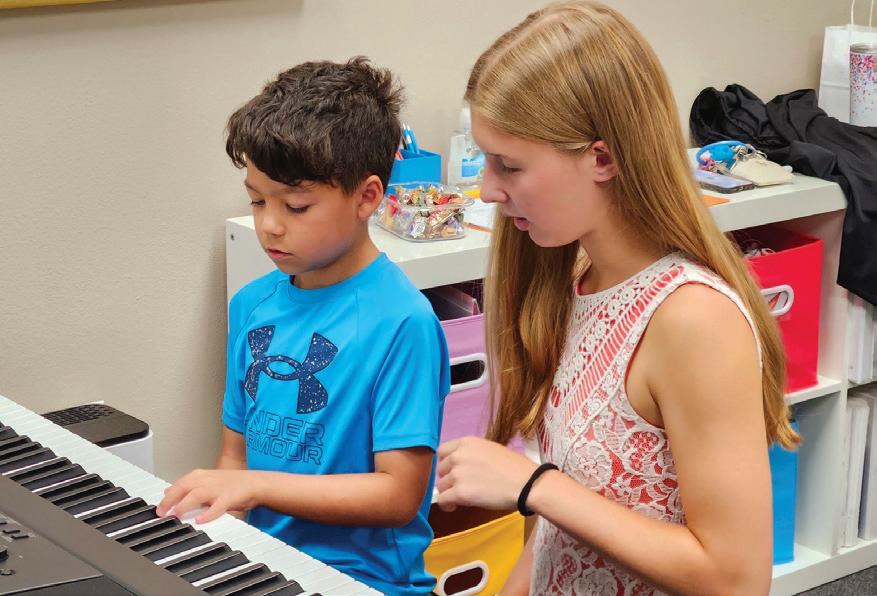
A Girl Scout since Pre-K, Scott launched a tutoring initiative called Helping Hands at Nathan Adams Elementary School. After interviewing school leaders, she discovered that many students at Nathan Adams struggled with reading levels and English proficiency.
“Their STAAR testing levels were really low,” Scott said. “A lot of students were behind in reading and English speaking.”
What began as a small initiative her junior year has grown into a tutoring program with approximately 30 student volunteers who provide one-on-one tutoring twice a rotation. Hockaday students in the program work with the same elementary students each time, allowing them to build long lasting and personal relationships.
“A lot of them have learning disabilities, and there are too many students in each class [for teachers] to focus on each one,” Scott said. “Through Helping Hands, they get the support they need.”
phones would spark retaliation rather than solving the problem. So, Ortega developed “phone boxes” which students could choose to leave their phones in during the day. By getting away from their phones, students had better focus and more productive study sessions.
“The most rewarding part, I would say, was when, after my project was done, I had girls coming up to me in the hallway and saying that they used my phone boxes, and they found them really helpful,” Ortega said.
She also created a website about proper study techniques and how to disconnect from phones. She hosted workshops with Girl Scouts in her service unit to teach them about phone usage and how to make their own phone boxes.
Ortega said her project encouraged her to leave her comfort zone and taught her how to ask for help, skills that have proved invaluable.
“Every Girl Scout should do it,” Ortega said. “It’s a really good way to apply your skills and make a difference in your community and advocate for something that you care about.”
Johnson has been a Girl Scout since kindergarten and earned her Bronze and Silver Awards before earning the Gold Award. For her project, she combined her love of piano with a desire to make a difference in our community.
Johnson partnered with Marcus Elementary School to redesign its piano program. Drawing on her own experience, Johnson also leaned on information she learned from her teacher about music’s impact on brain development, memory and stress reduction.
“When I’m really stressed, I like to just go play piano songs,” Johnson said. “It’s calming for me. After learning there’s scientific evidence that it helps with stress and memory, I wanted to bring that to my community.”
After researching the Marcus piano program, she discovered the biggest problem was multiple students sharing a single piano during lessons.
“They had two or three students on one piano, which is really unproductive for practicing,”
Balancing communication with school administrators and managing a large, multi-grade volunteer group proved challenging. The project spanned more than a year, requiring consistent discipline and motivation.
The experience sharpened Scott’s leadership skills and taught her how to advocate for herself with adults in professional settings. Witnessing the program’s impact firsthand, she hopes the program continues after she graduates, leaving behind not just a club, but a lasting legacy of service and empathy.
“Seeing [a long-term student’s] progress and being excited to see me every time, that really showed the impact,” Scott said.
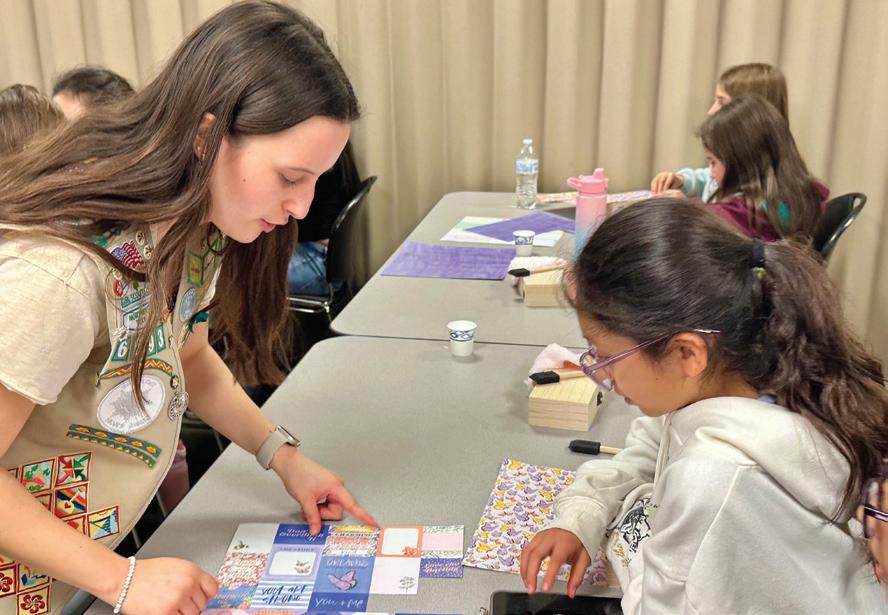
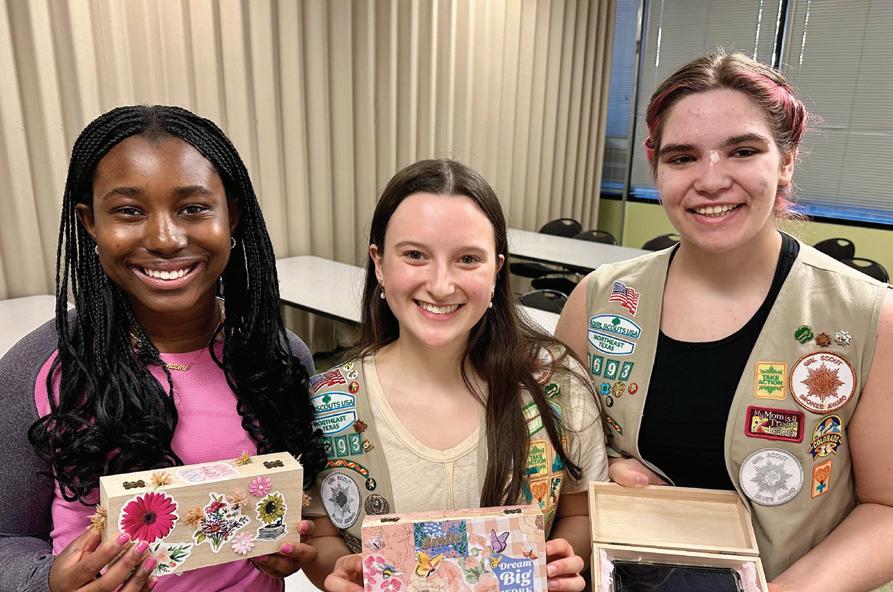
Johnson said.
She fundraised to purchase seven new keyboards and headphones, allowing students to practice individually without distraction. Beyond equipment, Johnson created original worksheets covering basic skills and arranged beginner-friendly versions of children’s songs for students to learn. She later hosted a summer camp to test her curriculum, culminating in a final performance for parents that she regards as her favorite memory in the process of earning the Gold Award.
“It was such a cool moment to see them actually perform something and be excited that they could play a song,” Johnson said.
She said the experience helped strengthen her self-advocacy and leadership skills.
“Don’t let the beginning scare you,” Johnson said. “Once you get into the project and it’s something you love, it becomes an exciting journey.”
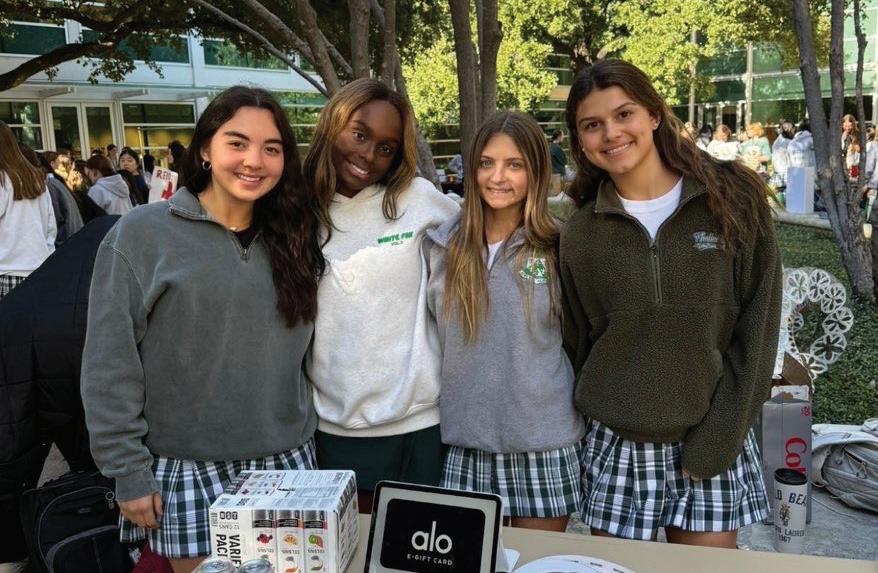
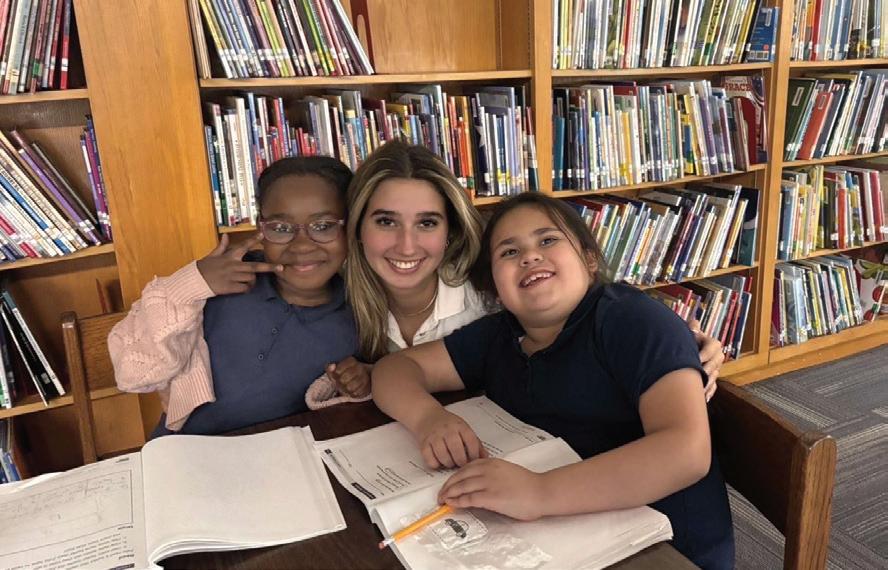
By Emily McLeroy Managing Editor
After grading stacks of essays, Upper School
English teacher Sarah Blanton ‘14 steps into CorePower Yoga to lead Vinyasa Yoga and Yoga Sculpt classes. Like many students at Hockaday, she enjoys practicing yoga, but in addition to practicing yoga, Blanton also teaches it a local yoga studio.
“Getting my 200 hour yoga certification was something I’ve always wanted to do since high school, but it’s kind of a huge time commitment, so it had never been the right time,” Blanton said. “I’d practiced yoga on and off pretty consistently since I was 16, and joined the SET team at CorePower, where you clean the studio to get a discount on your membership. I got to know some instructors that way and also got a discount on my training.”
Although she initially only took Vinyasa Yoga, Blanton discovered Yoga Sculpt through her teacher training. Vinyasa Yoga is a more traditional style of yoga, while Yoga Sculpt adds in strength training and some cardio.
“I wasn’t really a Yoga Sculpt person, but one of the instructors I was friends with convinced me to do the training for it, and I found that it’s a really great way to get into the space, and what I found is that I loved it,” Blanton said. “It played on so many
things I was already strong at. I love the adrenaline. So, I actually found that I loved teaching sculpt more than I like taking it.”
In addition to Blanton, Hockaday Development Services Associate Katie McLeroy also teaches at CorePower Yoga, instructing Vinyasa Yoga classes. In her 10 years of teaching, she has also taught at two other studios.
“When I was in college, you had to take a health class to graduate, and I heard that you could take yoga for your health credit and you got to take a nap,” McLeroy said. “I signed up to take it, and it was true: we got to nap every single class during Savasana. From there, I realized how much I love yoga and continued to practice after college.”
Like Blanton, McLeroy had considered teaching yoga for a while before she began training.
“Teaching yoga was something I always wanted to do,” McLeroy said. “When a studio opened up close to my house, and there was an opportunity to do teacher training, the timing was right, so I decided to try it out.”
McLeroy believes yoga is unique because it places focus on calming your mind and emotions.
“Not only are you working out your body, but the goal is to feel better in your mind when you are done,” McLeroy said. “Many people go to
a workout class because they want to get in a physical workout, but I think the reason they keep coming back is because of how it makes them feel in their mind. Getting out of your head and freeing yourself from the noise that resides in our heads every day and getting into your body can calm your mind.”

Blanton shares this view, seeing yoga as something to help her slow down from her fast-paced life as an English teacher.
“Yoga has taught me that you can always take a moment and catch your breath,” Blanton said. “It’s also a reminder that we can always start fresh. There’s always a new day, a new chance and a new opportunity, and I think that’s helped me a lot. Teaching, in general, has also taught me a lot about myself and risk-taking and confidence, and what it means to make connections with people.”
To balance her job at Hockaday and her job teaching yoga, Blanton prioritizes each area at a different time during her week.
“I teach Friday evenings and Sunday mornings, and I like it because it’s how
I end my school week,” Blanton said. “I go from Hockaday and enter that space, and then it’s Sunday morning, so all of my yoga is contained in that weekend space. I’ve been intentional about not picking up an early morning weekday class where it would be more challenging for me.”
McLeroy also strives to have this balance in her life. She enjoys the flexibility and community of yoga and makes sure to make space for both her yoga teaching and job at Hockaday.
“I think yoga and sculpt classes appeal to all kinds of people because they are scalable to what you need, and they are taught in a really fun atmosphere” McLeroy said. “The best thing that has come out of teaching yoga is all of the wonderful people I’ve gotten to meet. I look forward to seeing my yoga students every week.”
PHOTO COURTESY OF KATIE MCLEROY
By Gwendolyn Becker Staff Writer
Preparing for her second time competing at a national championship, 12-year-old MK Connatser grooms and braids the manes of her horses, Donny and Blitz, before the Festival of Champions competition.
Now a sophomore, it is clear that horseback riding has played an incredibly large role in Connatser’s life. Her mother grew up horseback riding, which is why Connatser specializes in riding and not jumping. Riding is the skill of controlling a horse at a walk or canter while jumping is a riding discipline requiring specific techniques to navigate obstacles.
“I started when I was three in a little barn called Dallas Equestrian Center,” Connatser said. “But then my trainer moved, so I moved to a different barn called Rocking M Stables. Since I was four, I have had the same trainer.”
From a young age, Connatser knew that she wanted to compete at the highest level possible. Now,
she is nationally ranked, according to results from competitions such as the 2025 North American Youth Championships and Festival of Champions.
Although a lot of this journey has come naturally and been extremely rewarding, it has also had its challenges.
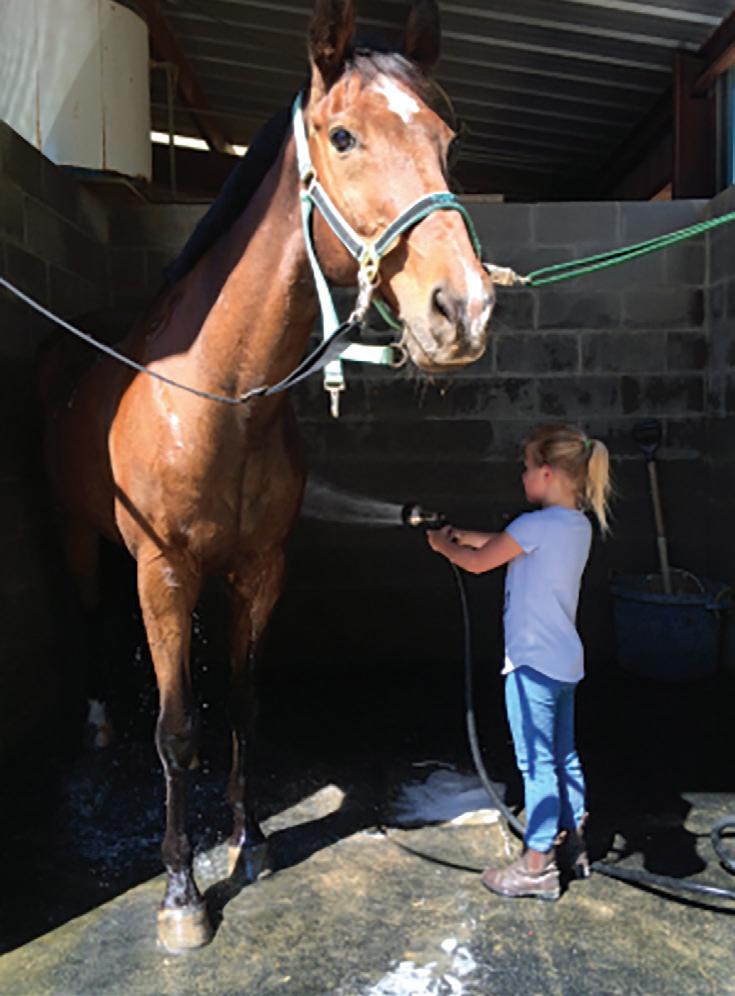
“It's such a different sport because you can't just talk to the horses who also have a mind of their own,” Connatser said.
To overcome this challenge, Connatser has learned how to work with horses, understand them and most importantly, build a strong foundation of trust.
“They don’t all work the same,” Connatser said.
“Today this works, tomorrow it may not, so there is a lot of trial and error.”
Before each competition, Connatser mentally prepares for what is ahead.
“I have a mental coach,” Connatser said. “It's a lot of pressure because it's not necessarily a completely individual sport as you are working with an animal, but it is individual in the sense that I'm the only person on my team. It really is just making sure that I am physically prepared and have done preparations in the weeks and months leading up to the competition.”
Connatser’s typical day of
training is very complex.
“I go up to the barn in the mornings before school, usually waking up around 5:15 a.m.,” Connatser said. “I am able to get my horse ready in about 15 minutes, groom and tack him up. Then, I ride for about 30 to 45 minutes in our arena. My warmup usually takes 15 minutes, and then I get into more intense work with him, depending on the week or the level that we are working on.”
Connatser’s goals for her future in horseback riding are not solely centered around winning awards or competitions, but mainly revolve around always having horses in her life.
“I would love to be able to compete in the World Cup, which I have to wait to be 18 for, but after that I would just like to have horses in my life, at least through college,” Connatser said.
By Anderson Rhodus & Juliette Friguletto Sports Editor & Opinions Editor
As rivalry weeks approach in college sports, anticipation builds far beyond campus. For Hockaday alumnae, now scattered between various schools, the game represents more than just a rivalry; it becomes a source of pride and success for their respective schools.
Rivalries between the University of Notre Dame and University of Southern California (USC), Auburn University and University of Alabama and Florida and Georgia are a few of many competitions that occur in college sports each year. Between conferences and divisions, the games exist as a source of pride, showing the student and alumni devotion to their respective schools and how it builds a special, interconnected community. The traditions that date back decades and the heightened sense of school spirit bring universities together as a whole.
year, so it was fun finally experiencing a win. In that moment, the school really came together as a community.”
At Auburn University, rivalry traditions take on a distinct southern intensity, especially at the Iron Bowl against big-time rival, the University
For Caroline Petrikas ‘23, a Notre Dame sophomore, the first experience at the Notre Dame vs. USC football game formed her strong sense of passion towards the team. Rivalry week at Notre Dame means stands packed with alumni and constant conversation about the matchup with USC, bringing excitement that extends beyond the game itself.
“Freshman year, Notre Dame played USC right after exams,” Petrikas said. “It was our first big game. It was a night game, and it was the day before we left for fall break. My family came up, we tailgated and we ended up winning. It ended up being one of my favorite games of my time at Notre Dame.”
Even though wins are always special, all the important traditions are what make games special to Petrikas and enforce her devotion to her school.
“Friday night right before midnight, there’s these things called Midnight Drums,” Petrikas said. “Then on Saturday morning, there’s bagpipes playing across campus.”
The rival connection to the game against the University of California, Los Angeles (UCLA) brings USC traditions to a new level, such as promoting selling t-shirts and protecting the Tommy Trojan Statue, a symbol of USC, 24 hours a day.
“One moment from the rivalry that I’ll never forget is when USC won [versus UCLA] sophomore year,” Millie Trumpower ‘23 said. “It was so exciting because we had lost the prior
of Alabama. For London Rhodus ’23, the sense of community at Auburn stretches far beyond the football game.
“You can just feel the excitement in classes,” Rhodus said. “Everyone knows there’s a big weekend ahead. Even the professors seem aware of the big game. They’re not necessarily going easier on you, but there’s definitely this shared understanding that something big is happening. “
Rhodus said participation can be seen in the stands of the Iron Bowl
“For big games like the Iron Bowl, they’ll do color themes, like a ‘navy out,’ where everyone in the stands coordinates,” Rhodus said. “Alabama will wear one color, Auburn another and the stadium looks unified.”
When Auburn wins, Rhodus said the celebration extends beyond the stadium.
“One thing that’s special about Auburn is that whenever we win any sporting event, everyone goes to roll Toomer’s Corner,” Rhodus said. “It’s a special tradition that brings our community together.”
This same blend of tradition and tension also defines rivalry culture.
“Game-day atmosphere at Alabama is insane,” Alabama student Alexa Welch ‘23 said. “The outfits, tailgating and school spirit take over the entire quad and the strip. It is a full city takeover.”
This same energy spreads far beyond campus boundaries as fans pack the city, turning the day into a statewide marvel.
“Strangers yell ‘Roll Tide’ at each other all day,” Welch said. “Especially
during Iron Bowl week, there is friendly trash talk and watching the other team’s games all season to prepare for the Iron Bowl.”
Leading up to the big game, Welch said traditions add to the anticipation.
“We also have a tradition of getting game day pins that poke funny jabs at the Auburn Tigers,” Welch said. “We also wake up on Iron Bowl Day every morning and run a lap around our house and have fun tailgating parties to get ready for the game.”
During rivalry week, Welch said the campus unites around school spirit.
“The campus becomes a community during rival week,” Welch said. “Everyone wears crimson, and we talk about the game in class. There are high standards and discipline for hard work with legacy and history, which always makes us aim to win.
Some of her most memorable moments have come during the Iron Bowl itself.
“One rivalry moment I will never forget was my freshman year Iron Bowl,” Welch said. “We were down and had about seven seconds left, and the play was fourth and 31, and we won the last second. It was electric.”
While Alabama and Auburn divide one state, another Southeastern Conference (SEC) rivalry takes over an entire region each fall. At the University of Georgia (UGA), Jane Clark ’23 experiences rivalry week through the annual Florida-Georgia matchup in Jacksonville.
For Clark, the excitement begins long before the clock starts.
“Leading up to the big games,
For many Georgia students, the preparation becomes part of the tradition, marking the unofficial beginning of rivalry weekend.
“The Georgia-Florida game always falls on our fall break and usually Halloween too, so we have Friday off from classes, and we all pile into cars and drive to St. Simons, GA, the day before the game,” Clark said.
The road trip itself has become one of the rivalry rituals for Clark.
“Some of the most memorable traditions include the road trip to St. Simons, spending all day on the beach with thousands of other UGA students and then caravanning out to the game and attending tailgates in the lots outside the [Jaguire’s] stadium,” Clark said.
Some of her most memorable moments have come during the rivalry football game itself.
“During the 2025 game, UGA and FL were down in the fourth quarter and then in the last four minutes got a touchdown, and the student section just erupted, and it was so fun,” Clark said. “The whole remainder of the game was so loud and exciting, and when everyone was leaving the stadium, the cheering continued all the way to the parking lots.”
While Georgia students experience the rivalry from Athens, students at the University of Florida (UF) share a similar excitement for the annual Florida–Georgia matchup. For Payton Arbaugh ’23, the game brings together a mix of tradition, travel and school pride.

especially Florida, the atmosphere on campus and in Athens is full of excitement, anticipation and preparation,” Clark said. “The week before the game is so fun, getting ready to leave town and pack all of your game day attire.”
“Something that makes the game really special is that it’s played in Jacksonville instead of on either campus,” Arbaugh said. “It’s supposed to be neutral territory between the two schools, and the whole city fills with fans from both sides.” Arbaugh said the rivalry reflects the pride students have in Florida athletics.
Even when negative outcomes arise, sports communities worldwide still stay interconnected.
“Students take a lot of pride in being Gators,” Arbaugh said. “Even when the outcome isn’t what we want, people are still excited for the game and the traditions around it.”
By Mary Elise Estess and Brooklyn Friesen Opinions Editor & Staff Writer
From long, heavy skirts used in field hockey, to shorts that were once worn on the softball field, athletic uniforms at Hockaday have changed throughout the decades.
Most sports at Hockaday typically redesign their uniforms every four years to freshen their looks. Over the years, these uniforms have embraced many different designs, styles and materials.
Varsity Softball Coach Natalie Kozlowski, who started at the school in 2020, created a new uniform for the team to wear this season.
“I’ve only ever seen one uniform, and it wasn’t my favorite,” Kozlowski said. “I’m excited to finally have a uniform that I got to design.”
Participating in designing the new team uniform, Kozlowski chose to include pinstripes, which is a very traditional look.
“Pinstripe looks really good on baseball and softball uniforms,” Kozlowski said. “I think pinstripe is really sharp looking, and I would like to keep it for at least one uniform in the future.”
Comfort is one of the biggest differences of softball uniforms today compared to those in the past.
“Uniforms used to be thick and heavy,” Kozlowski said. “They had big, embroidered letters and numbers. Now, everything is sublimated, so it’s much more comfortable and makes the uniform much lighter.”
Megan McClain Sapp ‘04 remembers her uniforms well while playing field hockey, basketball, softball and lacrosse during her time at Hockaday.
“The uniforms were big and oversized,” Sapp said. “They were made of a thick cotton and weren’t the most comfortable.”
Sapp remembers her uniforms changing throughout her time on varsity sports.
“We had long kilts and white polo shirts with a collar for field hockey,” Sapp said. “Our basketball uniforms were similar to those uniforms today, but we had mesh shorts for softball and a sleeveless V-neck top for lacrosse.”
Reflecting on the materials used today, Sapp believes that
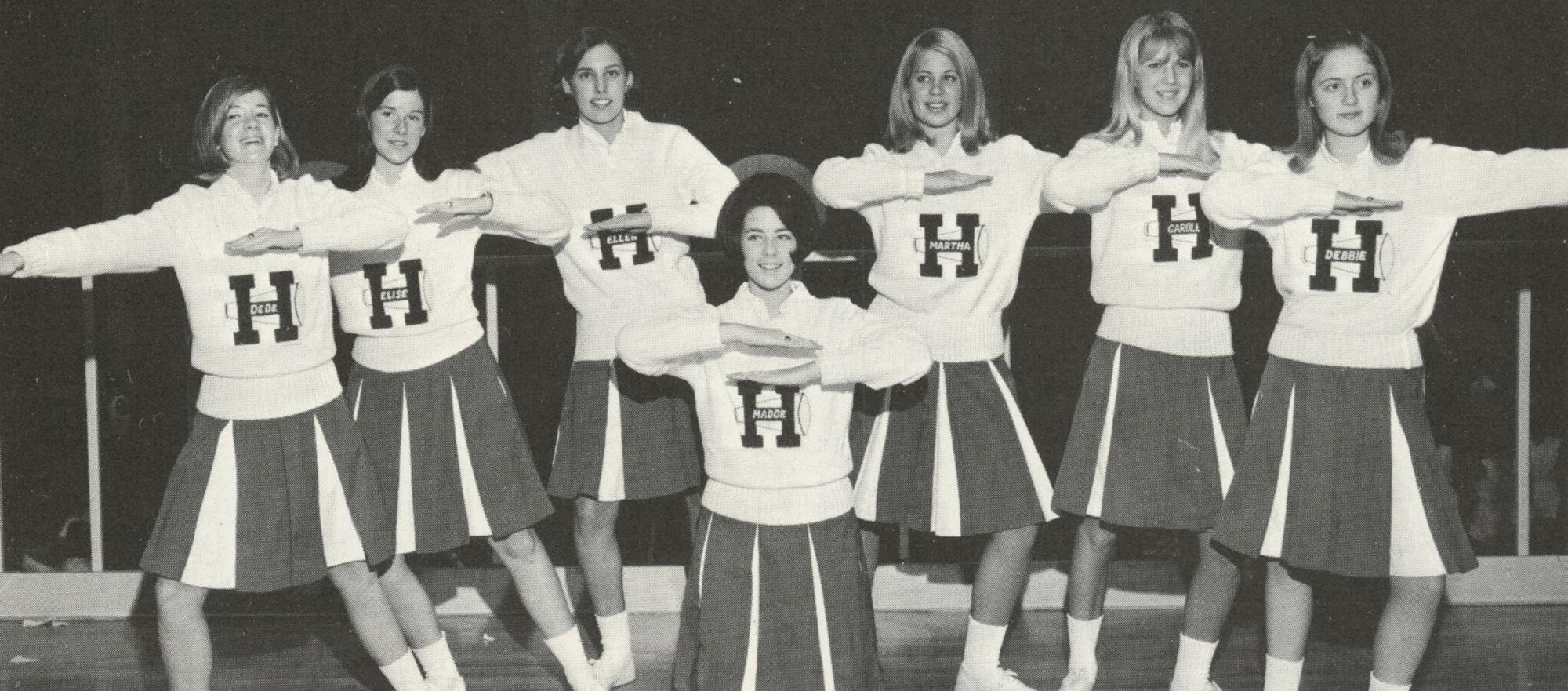
major improvements have been made to how uniforms are designed now.
“There’s probably a lot of dri-fit materials used today in the uniforms,” Sapp said. “The cut of the uniforms has also changed, and I’m sure what they use now for the uniforms is so much thinner and a better athletic material.”
The comfort and quality of jerseys is also a factor that Head Soccer Coach Rodney Skaife takes into account when deciding to get new uniforms.
“Some people like to play all four years in the same uniform, so I try and keep them at least four years,” Skaife said. “But really, if they’re in good condition and we like them, then I keep them longer.”
Skaife shared that, aside from players wanting to keep their same uniform all four years, the uniforms change when they have worn out or if the style is outdated. Skaife said his favorite uniform was the first one he got when he came to Hockaday in 1999. He also likes the team’s current uniforms.
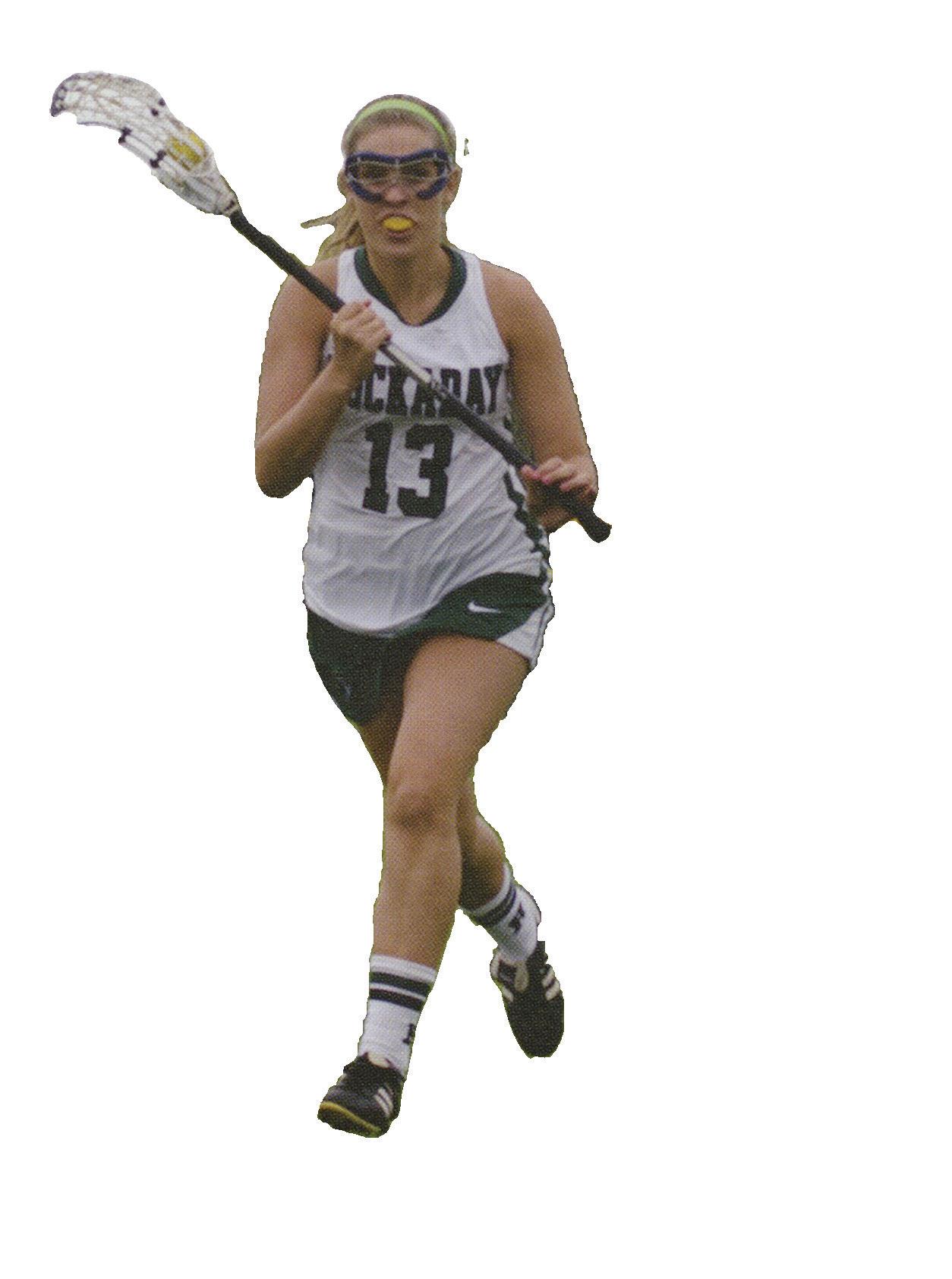
are successful in them,” Skaife said.
designs, a lot goes into the process of finding uniform vendors. Skaife said that one of the biggest difficulties they have is finding places that make uniforms in
Skaife said. “And there’s so many shades of green that it’s hard to get the right one.”
remembers her athletics uniforms when she played field hockey, soccer and lacrosse.
hockey and lacrosse uniforms being very similar,” Mihalopoulos said. “They were athletic skirts with
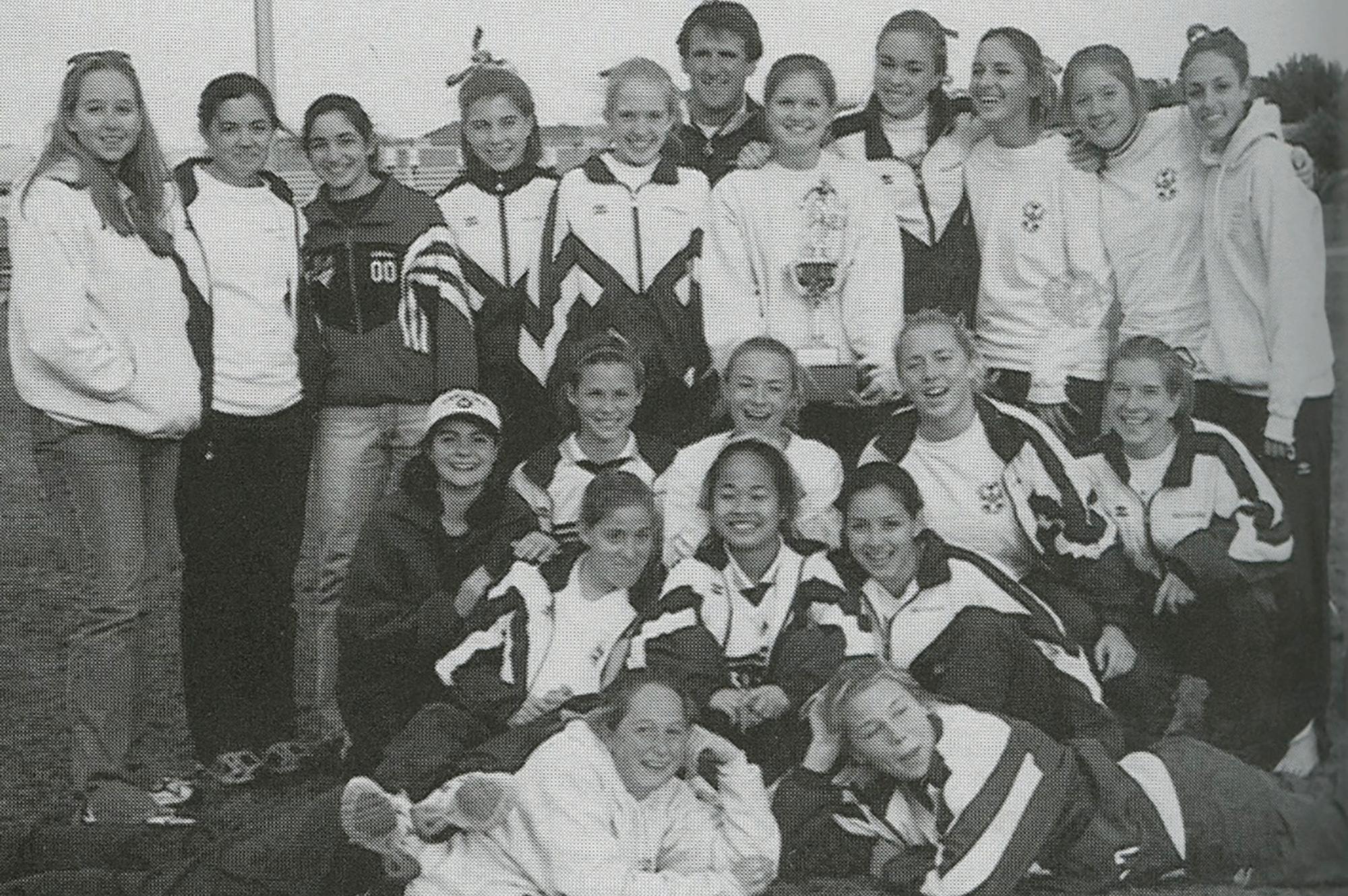
top jerseys. Our soccer uniforms were pretty classic shorts and t-shirt jerseys.”
Once her uniforms got upgraded to a better material, Mihalopoulos felt that the uniforms she wore improved and were much easier to play in.
“When we got new uniforms, they became lighter weight,” Mihalopoulos said. “The uniforms before
said. “We were alays able to come together and wear our uniforms with pride and be one united force on the field.”


By Tanvi Cherukuri Staff Writer
Imagine spending all week focusing on one thing. It could be sports, singing or drawing, and by the end of the week, you feel uninspired. You’re putting in hours, yet each day starts to feel the same as the next. The excitement the activity brings disappears. This life tires out many students who keep themselves from exploring new hobbies. In school and life, students are pressured to focus on a single hobby and talent, hoping that mastering it will lead to success. While dedication is important, sticking to one hobby can be draining, boring and even stressful.
However, having multiple hobbies can fix this burnout. It allows us to stay active, and we might discover new passions, skills or parts of ourselves we never knew existed. When one interest starts to fade, another might grow, keeping us energized rather than being worn out.
I spent my childhood playing competitive soccer. It was only soccer. Nothing else. At some point, I felt my
whole life had revolved around soccer, and as the years went by, I started to loathe going to practice and games. But, because of my sister, who explored different types of activities, I was exposed to different options such as piano and art classes. This allowed me to take a break from over exerting myself in soccer. Exploring new hobbies took off the pressure of being perfect and allowed me to have balance in my daily life.
be afraid of trying. Growth happens outside of our comfort zones, and by staying engaged, we can learn more about ourselves, such as our likes and dislikes. Additionally, you learn to manage failure and risk by trying new activities.
helped better my life.

Variety also allows us to stay curious and explore passions we might
From what I’ve seen, picking up a new hobby like painting from my art classes, forced me to develop a growth mindset and allowed me to focus on progress over perfection. It also broke the stress of having a singular hobby. Fostering a mindset where I was able to explore new interests
Some students believe that dedicating all their time to a single hobby will ensure they seem focused on college applications. They think being committed to one thing is better than noticing new possibilities, stopping them from exploring different passions, and hindering themselves from learning new skills.
Additionally, having multiple interests does not necessarily mean one lacks focus or commitment. It allows us to have better time management and a balanced schedule. Instead of wasting time by doom scrolling or napping, we can switch out this wasted time for various activities, allowing us to have a more productive life.
I encourage you to think about the endless opportunities you have as Hockadaises and take risks in exploring different hobbies. Life is not meant to be a single path; it is supposed to be a journey where we explore multiple pursuits.
By Aadhya Yanamadala Copy Editor
In the high-pressure ecosystem of modern education, students are frequently groomed to function as professional generalists, a sort of “jack of all trades.” However, this often results in them becoming “masters of none.”
From the strategic curation of college applications to the relentless pace of a culture that equates busyness with worth, the prevailing wisdom suggests that the ideal student is a master juggler of varsity sports, competitive debate, musical instruments and community service. However, this fragmented approach often yields a kind of fake excellence, where a student’s potential is spread so thin that it never reaches the point necessary for true deliverables.
To move beyond the superficiality and achieve a level of success that is both personally fulfilling and professionally distinct, students must reject the urge to dabble and instead possess the courage to go “all in” on a single, primary pursuit. By prioritizing quality over quantity and mastery over participation, a student can transform their extracurricular life from a frantic checklist into a reflection of their true
interests and passions.
The primary driver behind the multi-activity frenzy is the belief that a crowded resume equates capability, yet this often becomes a euphemism for mediocrity. When a student’s mental bandwidth and physical hours are divided across multiple activities, they rarely have the opportunity to truly excel in any of them. True mastery requires a level of immersion that an overextended schedule cannot offer. Whether it is coding, distance running or painting, the highest levels of achievement are found in hard work long after the initial novelty has worn off.

greater opportunities for skill acquisition. Whereas dabbling leads to incremental, often invisible growth, dedicated focus creates a steep and rewarding learning curve. A student who spends 10 hours a week on chess will see their strategy expand and their progress climb in ways that a student playing once a month never will, creating a positive feedback loop where genuine improvement fuels further dedication.
joining clubs for a single semester just to check a box, and are instead looking for the character revealed through a multi-year journey within a single organization. A long-term commitment shows that the student navigated the difficult middle years, handled internal conflicts and likely rose to a leadership position, providing a richer narrative of maturity than a laundry list of superficial involvements.
This singular focus allows for
Beyond personal growth, there is a significant strategic advantage to this deep dive: it signals a level of grit and long-term commitment that is increasingly rare. Admissions officers and future employers are weary of “resume padding,” the practice of
Perhaps most importantly, this approach preserves the student’s mental health by preventing the burnout associated with being overcommitted. When every afternoon is a race from one activity to the next, the student loses the mental space necessary for reflection or creative thought. Focusing on one activity allows that to become a sort of sanctuary rather than a chore; it becomes an identity and a primary source of pride rather than just another looming deadline on a crowded calendar.
In the long run, the world does not need more people who are merely “okay” at everything; it needs individuals who have the focus to become extraordinary at one thing.
By Lang Cooper and Leyah Philip Editors-in-Chief
Leyah Philip:
At our freshman retreat, I wrote a letter to my senior year self that said: “I think Fourcast is my calling. Did that work out?” If only that eager-eyed freshman had known that the next three years of her life spent on the third floor of the LLARC would give her some of her best memories, she wouldn’t have doubted for a second that this was exactly where she was meant to be.
As I reflect on the 21 articles and over 40 interviews that I’ve been honored to produce as a part of the Fourcast, I realize that although I am sad to see this chapter of my life come to an end, I’m leaving it with newfound wisdom, friendships and confidence that I will carry with me for the rest of my life.
Unfortunately (or fortunately for the section editors), I can’t fit my entire journalism career on this page. But, to properly say goodbye, we have to start at the beginning in Intro to Journalism. While many of us think the highlight of that class was watching My Octopus Teacher, it was there that I developed my passion for journalism and learned what an editorial actually was—also that the Voice Memos app would prove very useful.
As a staff writer, my curiosity for storytelling only grew. What once felt like a humiliation ritual of sending
repeated emails to upperclassmen, only to get ghosted, turned out to be preparation for the rest of my career and the foundation of my confidence. Later, “mastering” InDesign as a section editor (a word I use loosely, as there is always more to learn on InDesign) allowed me to grow into my role as a leader. However, none of the skills I have now would be possible without those who helped me along the way.
First, to my family, thank you for reading (and keeping) every issue.
To the 2025-2026 Fourcast staff, each of you challenges me to be a better leader, mentor and friend every single day. I’ll miss the overcrowded elevator rides up to the third floor, and I am so proud of you all. Keep Fourcast strong and the Oxford Comma Counter low when I’m gone!
To the Fourcast seniors, it has been such a gift to grow alongside such a strong group of writers and women.
To my mentors, Lizzy and Shreya, I couldn’t have asked for better role models along the way. You trained me to spot every widow and lead with integrity, two traits I hope to pass down to generations of EICs to come.
To Ms. Rodgers, I’ll miss all the Friday afternoons in the journalism room with no lights on. Thanks for staying after hours, encouraging me
to push the boundaries on every story and always having our backs. And of course, for pancakes.
To Mary Bradley and Melinda, the two of you and the camera room have seen and heard it all this year. Y’all have been my constant source of laughter and support through all the ups and downs and are worth more Dallas Dollars than anyone at Gloria Shields could ever count.

And finally, I have to thank the person who quadruple checks every email I send, answers all my latenight FaceTimes (including the one while writing this) and is first to like my message on every GroupMe: my co-Editor-in-Chief, Lang Cooper. Words cannot express the gratitude I have for you, Lang. Since our first interview together freshman year, to spending hours in White Rock Coffee writing about Brainrot and now
writing our last story together, I am so proud of us and how far we’ve come. Your dedication and passion are seen through everything you do. There is truly no one else that I would rather spend days picking fonts with, stare at the same InDesign page for hours with or get lost in a creepy office building on sales day with. You are legen...waitforit... dary, and I could not have done any of this without you by my side.
Lastly, to the Fourcast, a platform where, for the past three years, I have been able to express myself creatively and find a home. I am so grateful to have been a part of a publication that has allowed me to discover my voice, and I hope that in the many editions to come, it continues to do the same for others. So, the owner of computer #12, your workday playlist curator and your 2025-2026 Fourcast Editor-in-Chief, is signing off. I guess it was my calling after all.
Woohoo Fourcast!! Leyah Philip Lang Cooper:
Walking by a stack of (sometimes) neatly folded newspapers in the rack in the hallway, colorful covers and headlines filled with alliteration may catch your eye. For those lucky enough to pick one up, you are opening the pages of not only numerous powerful articles but also the passionate work of 34 skilled journalists hoping to make an impact in our community.
The Fourcast is home to a legacy of creativity, and I am beyond grateful to have been even a small part of its history.
Making my first journey up the treacherous stairs to LLARC room 305 for Intro to Journalism, I vowed to always take the elevator from then on and to fully embrace every new opportunity. I learned very quickly that procrastinating interviews was not an option and that Fourcast would be the place for me. I fell in love with storytelling; each person I interviewed had a unique perspective to share, and I had the opportunity to articulate their story to new audiences, gaining confidence in
myself while doing so.
My first year of Fourcast was full of embracing the new: a new writing style, new ways to edit photos, new friendships. Each skill I learned taught me how to be a better journalist, and each friendship showed me what collaboration really looked like (with lots of laughter).
During my junior year, I learned the highs and lows of InDesign, how to edit articles and that there was not much I loved more than Saturday workdays with loud music and some of my favorite people.
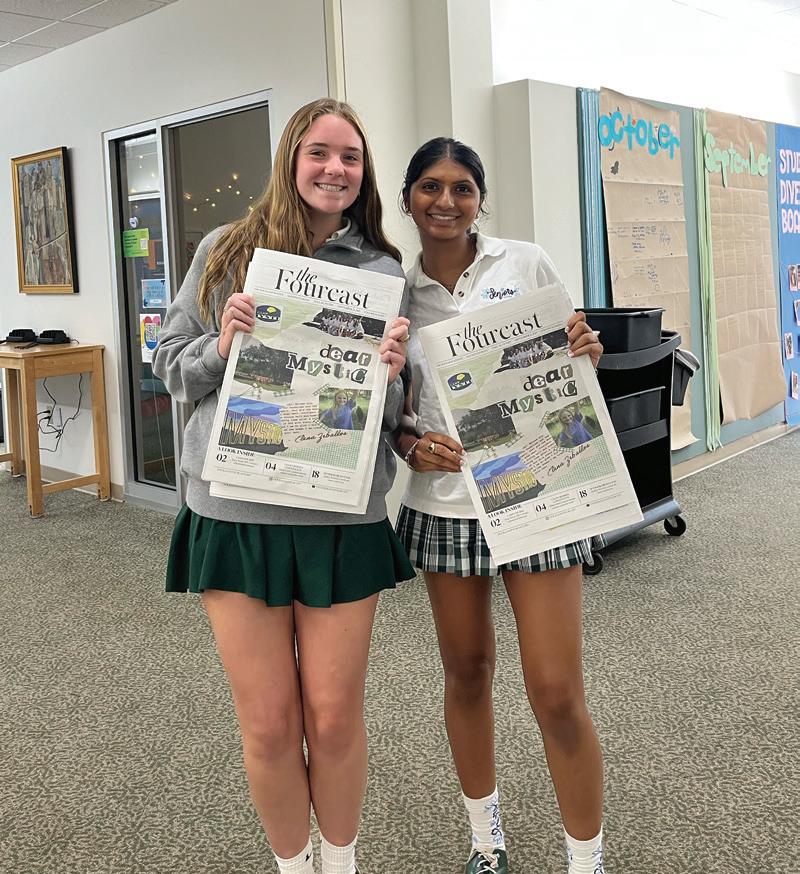
This past year as print Editor-inChief has taught me life lessons I will keep with me forever. I learned problem solving skills, an intense attention to detail and how to truly be a leader. In my column, The Scoop with Coop, I got to celebrate the successes of just a few of the talented Upper Schoolers I see in the hallways daily. I’m immensely grateful for the lifechanging opportunity this year has been. So, to end my final piece, I’d like to thank the following people.
Thank you to each reader who has tuned in every issue. You are who we write for.
Mom and Dad, my biggest cheerleaders, thank you for reading every article.
Fourcast seniors, from learning how to write a headline, to developing our InDesign skills, to leading the staff, we’ve done it. So grateful for each and every one of you.
Lizzy and Shreya, thank you for teaching me nearly everything I know. You are the epitome of great leaders, and it has been an honor to follow in your footsteps.
Ms. Rodgers, you push us to think outside the box and stay at school long after we should all be home, and for that, I’m so grateful (and for the secret candy stash at 6 PM in Fourcast on Friday nights).
Mary Bradley and Melinda, from Gloria Shields to late night story list discussions, we made the Fourcast happen each issue. Thank you for fresh ideas, solving problems and lots of laughs. It has been such a privilege to work with you this year.
Leyah, when I reflect on my favorite memories over the past three years, Fourcast with you is at the top. From writing our very first article together, to scouring the science building looking for a model brain, to checking each other’s InDesign spreads, to trying to find two cohesive shades of red, to running in the rain (shoeless)
at 7 PM on Friday night after hours of pages, we’ve been through it all. When lines on a spread started to look crooked, you were always there to tell me they were in fact straight. Each early morning and late night in the Fourcast room with you was filled with laughter and memories I’ll cherish forever. Thank you for pushing me to be not only a better editor but also a better person. I couldn’t have done it without your reassurance and brilliant ideas.
To the 2025-2026 staff, everyone has grown tremendously this past year, and I am so proud of each of you. I’m forever cheering each of you on. My final words of advice:
Everyone has a story to tell. And as journalists, it’s our job to find it. Get up, look around and search for the story.
Adobe is your best friend. If you can dream it, you can make it on Adobe. Google ‘how to’ and create some magic.
Have fun and be proud. Fourcast is our home on campus, and publishing the paper every issue wouldn’t be possible without each one of you – so own it!
To the future staff, enjoy every moment because it flies by. And to the next owner of computer #11, take good care of her.
For one final time YAY FOURCAST, Lang Cooper
FEDITORS-IN-CHIEF
Lang Cooper and Leyah Philip
WEB EDITORS-IN-CHIEF
Melinda Hu and Mary Bradley Sutherland
COPY EDITORS
Sarah Moskowitz and Aadhya Yanamadala
MANAGING EDITOR
Emily McLeroy
WEB MANAGING EDITOR
Anya Aggarwal
MULTIMEDIA EDITORS
Audrey Liu and Anika Shah NEWS EDITORS
Sophie Cho and Katie Ma
ARTS & LIFE EDITORS
Siena Ebert and Elizabeth Farrell FEATURES EDITORS
Jenny Chu and Aneeka Tansen SPORTS EDITORS
Anderson Rhodus and Alina Zheng
OPINIONS EDITORS
Mary Elise Estess and Juliette Friguletto
PHOTO, GRAPHICS & CASTOFF EDITOR
Emilie Illum
BUSINESS MANAGER
Sophia Salem
STAFF WRITERS
Gwendolyn Becker, Samara Bhatki, Tanvi Cherukuri, Mia Frary, Brooklyn Friesen, Claire Gicheru, Haniya Khowaja, Aria KneplerPearl, Lucy Pigott, Bella Portera, Savannah Simon, Sara Vijay FACULTY ADVISER
Kristy Rodgers
EDITORIAL POLICY
The Fourcast is written pri- marily for students of the Hockaday Upper School, its faculty and staff. The Fourcast has a press run of 500 and is printed by Midway Press. It is distributed free of charge to the Hockaday community. The staff reserves the right to refuse any advertising which is deemed inappropriate for the Hockaday community. Opinions will be clearly marked and/or will appear in the views section. Commentaries are the expressed opinion of the author and do not necessarily reflect that of The Fourcast staff, its adviser or any other member of the Hockaday community. The Staff Editorial on the Opinions page reflects the position of The Fourcast staff, but not necessarily the position Hockaday administration or community. The Fourcast staff determines the content of each issue and strives to work as independently as possible in producing the student newspaper, but the content is subject to prior review by the Head of Upper School, the Communications Director and other members of the Hockaday leadership team. Letters to the editor and guest columns are welcome and should be addressed to the editors-in-chief. Only signed pieces will be published. Corrections and clarifications from previous issues will be found in the news section. Questions or concerns should be addressed to Editors-in-Chief Lang Cooper (lcooper26@hockaday.org) or Leyah Philip (lphilip26@hockaday.org).
By Sudha Kodem Guest Writer
Once upon a time, romantic comedies were parcels of love. A woman could run a failing bookstore without secretly being a duke’s longlost fiancée. A man could own a café without being emotionally constipated due to a traumatic lacrosse injury in boarding school. Plots meandered. The characters could make strange choices. Someone might even have a hobby to artisanal baking or venture capital.
Now, thanks to TikTok and the publishing industry’s enthusiastic courtship, we get the absolute joy of the algorithm-approved rom-com.
You know the one. Our heroine is outspoken, “not like other girls,” and doesn’t believe in love because of a traumatic backstory that will not be explained. Our love interest is tall, grumpy and rich in a way that suggests he has never once seen his bank balance. They meet through a contrivance that feels less like fate and more like a screenwriter muttering, “Put them in an elevator.” They hate each other. They banter. Wait! They have something innocuous in common! Cue emotional scene involving a panic attack of some sort, and now they’re in love and getting married. Fade to black and call Glen Powell immediately. We’re making a movie!
BookTok—the corner of the of TikTok dedicated to overconsumption of book recommendations, and people weeping over mediocre fictional men— has become one of the most powerful forces in publishing. Entire backlists have been resurrected overnight because a 23-year-old with a ring light sobbed about a morally gray love interest, debut authors can catapult to bestsellers in weeks. It’s democratic, thrilling and unfortunately, increasingly homogenizing.
multiply like viruses. We saw this in the pipeline from the Hunger Games to Divergent and all the soulless spinoffs thereafter. A trope goes viral in March, and by June, editors are demanding it. By the following month, an entire season’s list reads like a single extended episode of “Previously on BookTok.”
This trend-seeking wouldn’t matter if the same handful of authors weren’t being pushed repeatedly. If the algorithm favors what already performs well, publishers, facing shrinking margins and an uncertain market, understandably lean into “sure things,”, resulting in a small circle of highly marketable writers dominating the conversation, while quieter, stranger, riskier voices struggle to be heard over the chorus of “You HAVE to read this.”
meaning corporate diversity seminar in novel form. Characters announce their identities with the enthusiasm of someone updating a LinkedIn profile. Their arcs, meanwhile, remain suspiciously untouched by those identities in any deep or complex way.
This representation is deeply disingenuous—not malicious, but hollow at the very least.
Ironically, this has triggered a backlash of its own. As publishing leans into progressive branding, an opposing movement has emerged—one that romanticizes traditional gender roles with the same algorithmic zeal. Enter the “trad-wife” aesthetic, but make it paper.
In these books, heroines find ultimate fulfillment in domestic submission, usually while baking sourdough in a cottage that would cost $2.3 million in the real housing market. The male leads are hypercompetent providers who may or may not refer to their love interest as “little one” or “kitten." The politics are rarely explicit, but the message is clear: the modern world is confusing, exhausting and perhaps the solution is to return to a time when the most pressing decision was which apron to wear.

Like their progressive counterparts, these novels often feel less like organic storytelling and more like ideological wish fulfillment. They, too, are optimized for a niche audience hungry for validation.
The algorithm rewards the familiar—and then keeps serving it again and again
This should be wonderful. Readers are discovering books through passion, not just through the polite tyranny of the New York Times review section. “Frivolous” genres, like “romantasy” are finally receiving mainstream validation. The people who were always reading it now have a safe space to share with a community that engages with words just as much. Unfortunately, when an industry that has always been risk-averse finds a mechanism to predict virality, it takes the most reasonable action: it feeds the machine.
Suddenly, manuscripts aren’t just evaluated on craft or voice. They’re evaluated on “trope density.” Enemiesto-lovers? Check. One bed? Check. Grumpy/sunshine? We’ve got it, girls.
The publishing industry has always chased trends. Vampires begat more vampires and dystopian love triangles
with identical domestic setups. High fantasy series with interchangeable maps. Literary fiction about vaguely disaffected thirty-somethings in Brooklyn who think about climate change between ironic hookups. The aesthetic may vary, but the bones are familiar. Everything is optimized for shareability.
Of course, no contemporary literary discourse would be complete without talking about representation. Over the past decade, readers have (rightly) demanded more inclusive stories— more protagonists of color, more queer love stories, more disabled heroes who are not metaphors for moral lessons. This push has reshaped the industry in meaningful ways. For many readers, it has meant finally seeing themselves in stories where they were once invisible. And yet, as with all things that gain moral urgency and market value at the same time, complications arise.
Representation has become a checklist. “Diverse cast” now sits alongside “high-concept premise” and “comp titles” as a selling feature. You can feel the difference between a story written from a lived or wellresearched experience and a story that sprinkles identity markers like confetti. The latter often reads like a well-
In a strange way, both extremes— the sanitized “diverse” rom-com and the aggressive trad-wife fantasy—are symptoms of the same system that rewards clarity over complexity. It wants clean branding and returning tropes over experimentation.
TikTok did not invent this inescapable boredom, but it has certainly streamlined the process.
Of course, none of this means that good books don’t exist. They do, and they always will. For every paint-bynumber rom-com, there is a novel that sneaks on you with a violently compelling character or a visceral metaphor.
Unfortunately, it’s becoming increasingly difficult to find spectacular books. As recommendation ecosystems become centralized, quieter, introspective books suffer, like those that cannot be summarized in a single trope of aesthetic mood board.
GRAPHIC COURTESY OF SHRAVYA VYAS