Foundation & Friends of the Botanic Gardens Ltd, Cottage 6, Mrs Macquaries Road, Sydney 2000 Phone (02) 9231 8182 instagram.com/FoundationandFriends linkedin.com/company/foundation-and-friends facebook.com/FoundationandFriends
ACKNOWLEDGEMENT OF COUNTRY
We honour and respect all Elders and Traditional Custodians of the lands on which the Botanic Gardens of Sydney and Foundation & Friends stand. We acknowledge the profound significance of the enduring connection between the First Custodians and this land, recognising their vital care and stewardship for their country and its meaning to all who cherish and share in it.
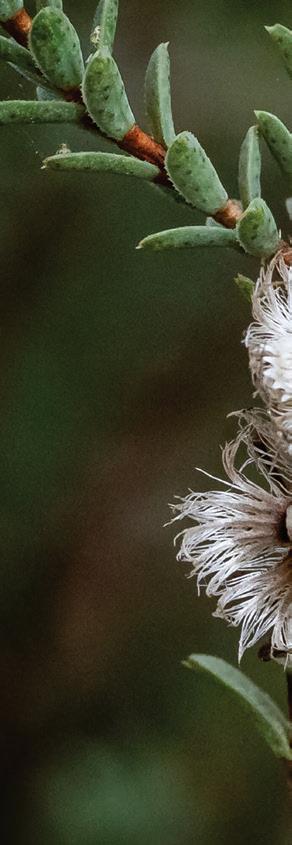
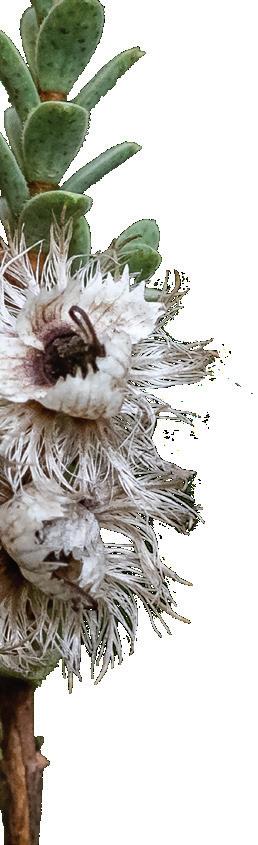
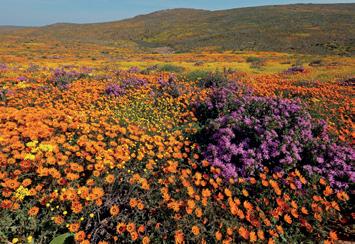
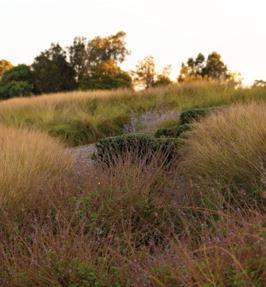
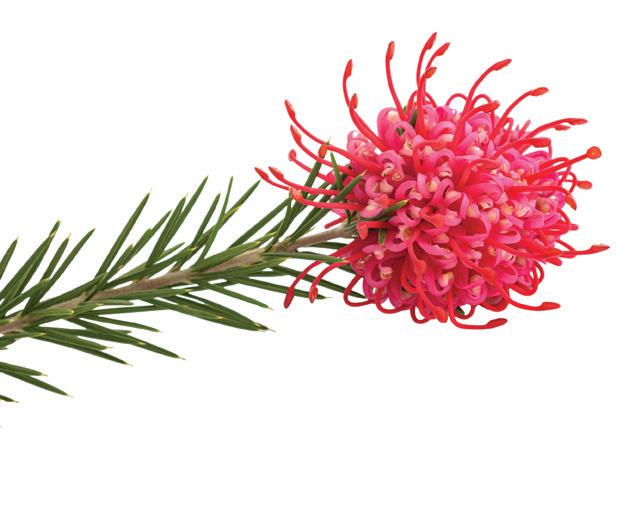
This page: Verticordia Lindleyi subsp. purpurea
Photos: Glenn Smith Photography
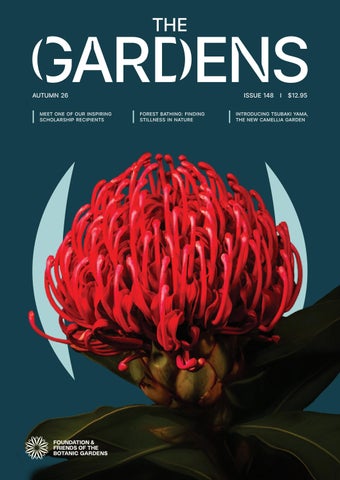
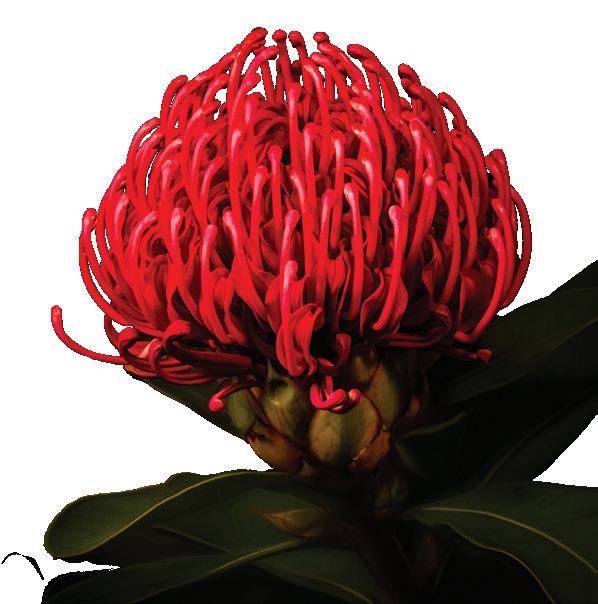
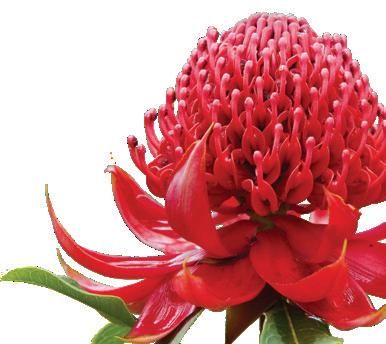
Cover: Red waratah (Telopea ‘Shady Lady’)
Autumn News
Behind the Garden Gate
Our sincere thanks to everyone who supported our Behind the Garden Gate auction in December last year. Thanks to the generosity of our community, the auction raised $14,000 to help protect and grow the Gardens’ Living Collections. Home to more than 12,000 plant species, including many that are rare and threatened, these collections sit at the heart of the Gardens’ conservation, research and horticultural science work. Your support helps ensure these remarkable plants are cared for and safeguarded for generations to come. Thank you for playing such an important role in their future.
Botanical Notes: a summer celebration in the Gardens
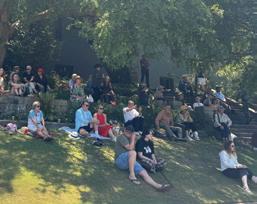
On Friday 5 December, Foundation & Friends welcomed 60 members to Botanical Notes, our end-of-year celebration held in the heart of the Royal Botanic Garden Sydney. Despite the summer heat, the atmosphere was relaxed and joyful, with guests settling into shady spots to enjoy live music and good company.
A highlight of the afternoon was an unforgettable performance by the Royal Australian Navy Big Band, whose 17-piece jazz set filled the Gardens with energy and
warmth. The event also showcased the Amphitheatre, a much-loved space generously funded by Robert and Janet Constable and family, and a special setting for music and community connection.
Following the success of the afternoon, we are delighted to announce that Botanical Notes will now become an annual event. Thank you to everyone who joined us, we look forward to welcoming members back next year for another memorable celebration in the Gardens.
From the Executive Director
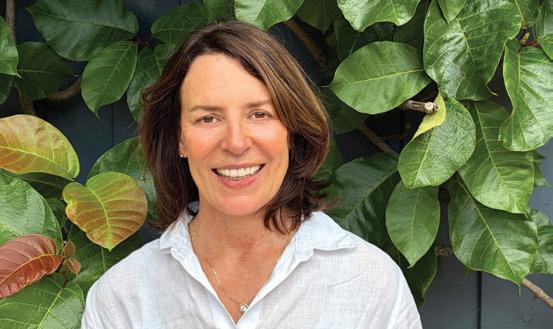
I’m delighted to introduce myself and share how excited I am to be joining Foundation & Friends. It is a real privilege to be part of an organisation which holds a special place in the hearts of so many people - myself included.
I grew up in the Midlands of Ireland, surrounded by green spaces, where my connection to, and appreciation for, the natural world first took root. Inspired by my father, a passionate gardener, I developed a deep love of the outdoors and an early appreciation for the importance of conserving our natural environment for future generations.
Choosing Sydney as my home more than 14 years ago was a purposeful decision, drawn by its extraordinary beauty and vibrant culture. For me, the Botanic Gardens represent the embodiment of this, and I pinch myself each morning when I arrive and realise I get to spend every working day in what is arguably one of the most stunning locations in the world. How lucky I am!
Over my first weeks, I have already been struck by the depth of care, knowledge and generosity that surrounds Foundation & Friends. This organisation has been shaped over many decades by dedicated members, volunteers, supporters and staff who believe deeply in the value of green spaces, conservation, science and shared cultural experiences.
My role, as I see it, is to build on that extraordinary foundation, supporting the Botanic Gardens to thrive now and into the future, while valuing the wisdom, history and relationships that have sustained this place for generations. My background is in philanthropy and engagement, and I have seen how long-term, values-led support can help extend impact and deepen connection to purpose. I am excited about the opportunity to strengthen those
connections here, helping amplify the excellent work already underway across conservation, science, research, education and horticulture.
I would also like to acknowledge Paul Thorley, whose leadership as Interim Executive Director helped position Foundation & Friends strongly for the future.
There is much to look forward to in the year ahead. Plans are underway for The Grounds in The Domain, a thoughtfully designed new hospitality precinct that will open a historic site to the public for the first time and support long-term investment in the Gardens. Creativity and storytelling continue to be championed through initiatives such as the Writers in Residence program, which invites Australian writers to engage deeply with the Gardens, their collections and world-leading science.
I am looking forward to working closely with Simon Duffy, Chief Executive of Botanic Gardens of Sydney and the Botanic Gardens team as we move into the next chapter together.
Thank you for the warm welcome I have received so far. I look forward to meeting many more of you over time, in the Gardens, at events and exhibitions, and through the shared conversations that make Foundation & Friends such a special community.
CIARA TIMLIN, EXECUTIVE DIRECTOR, FOUNDATION & FRIENDS
Growing Friends takes Plant Sales to the city
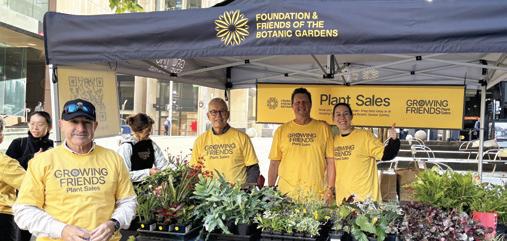
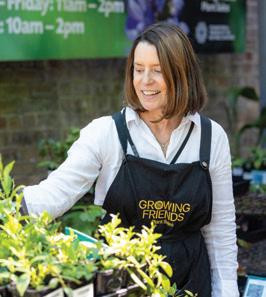
In December, Growing Friends Plant Sales stepped beyond the Gardens for two pop-up stalls at Martin Place, bringing plants directly to city workers and shoppers in the leadup to the festive season. Held on Wednesday 3 and 17 December, the pop-ups were a great success, introducing Growing Friends to entirely new audiences.
Across the two days, the team reached thousands of people, sparking plenty of surprise and delight as passersby realised they could purchase plants lovingly propagated
Botanica Exhibition returns in 2027
by the Botanic Gardens. The pop-ups helped spread the word about Growing Friends Plant Sales while showcasing the dedication and expertise of our volunteers.
For many, the stalls offered the chance to discover a thoughtful gift that keeps on growing, while also supporting the Gardens’ important work. Following the strong response, more Growing Friends pop-ups are planned for 2026. Stay tuned to our digital channels for future dates and locations.
The much-loved Botanica Exhibition will return to The Garden Gallery at Royal Botanic Garden Sydney in May 2027 with a bold and intriguing new theme: Parties and Poison. Running from May 8-23, 2027, the exhibition promises a rich and surprising exploration of how plants shape both celebration and caution in human life.
Volunteer curators Alissa Cook and Katharine Rogers are delighted to welcome Jenny Winstanley to the curatorial team. Together with the Foundation & Friends Exhibition Team, they are preparing an exhibition that showcases the finest examples of Australian botanically accurate art, alongside a curated selection of botanical-inspired works in ceramics, wood and glass.
The Parties theme invites artists to explore plants associated with joy and ritual – from weddings and birthdays to cultural ceremonies and festivals. In contrast, Poison offers a more contemplative lens, examining the beauty and risks of toxic plants, many of which are more common than we might expect. Fungi are also warmly welcomed, with mushrooms responsible for the highest number of plant-related poisonings in Australia.
Applications open in July 2026. Scan the QR code For more information
An unforgettable New Year’s Eve at the Gardens
Board and leadership updates
There have been several updates across our Board of Directors. Nancy Fox was nominated by the Royal Botanic Gardens and Domain Trust Board, replacing Tony Pearson. Kate Horrobin concluded her term after 12 years of service. Kate served as Deputy Chair, chaired the Nominations Committee, contributed to the Business Committee and The Calyx working group, and was a principled advocate for the Gardens and city green spaces. We thank Tony and Kate for their valuable contributions and service to Foundation & Friends and the Botanic Gardens of Sydney.
As the sun set over the Royal Botanic Garden Sydney on December 31, more than 4,000 guests gathered for our New Year’s Eve Picnic, making it our biggest celebration yet. With stunning harbour views, great entertainment and a warm, joyful atmosphere, it was a night many of us will remember for a long time.
Thanks to the generosity of our guests, the event raised over $767,000. These funds will support vital conservation work, scientific research and education programs across the Botanic Gardens, helping protect these much-loved green spaces for future generations.
“What a wonderful night. From the moment we arrived, we were welcomed with laughter, smiles and such a friendly atmosphere,” shared Karolin, one of our picnic guests.
As we look ahead to the year to come, we are excited to build on this momentum and continue creating meaningful experiences that bring people together in support of the Gardens.
Scan the QR code and relive the evening and explore the photo gallery.
Photos: Felipe Molina
A garden made possible
The opening of the new Camellia Garden, Tsubaki Yama (Camellia Mountain), at Blue Mountains Botanic Garden Mount Tomah on Thursday 27 November marked a significant milestone for the Gardens and a proud moment for the community that helped bring it to life.
The garden is a serene and beautifully designed space showcasing the elegance and diversity of camellias at their seasonal peak. More than a new garden, it stands as a lasting example of what philanthropic support can achieve when passion for plants and place comes together.
“This project would not have been possible without the extraordinary generosity of our donors,” said Simon Duffy, Chief Executive of Botanic Gardens of Sydney, at the opening. “Each contribution played a crucial role in bringing this dream to fruition.”
The project was made possible through the generosity of Foundation & Friends supporters, who contributed almost $30,000 in funding and in-kind support, including financial gifts, plants, and design materials.
Additionally, the legacy of Steven Jupp played a foundational role in the creation of the garden. A devoted lover of gardens and nature, his bequest helped lay the groundwork for what has become Tsubaki Yama, a space that will be enjoyed for generations to come.
The Camellia Garden now offers visitors a place to pause, reflect and connect, made possible by a shared belief in the value of gardens and the power of giving.
If you would like to discuss leaving a legacy please contact: foundation.friends@botanicgardens.nsw.gov.au
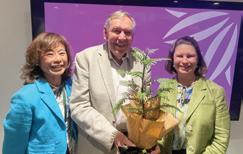
Congratulations to Clive Austin AM, our new Honorary Life Member
We are proud to recognise Clive Austin AM as an Honorary Life Member of Foundation & Friends, celebrating his extraordinary contribution to the organisation and the Botanic Gardens of Sydney.
Over more than 17 years as a Director, including serving as Chair of the Royal Botanic Gardens Foundation from 2007–2012 and leading Foundation & Friends until 2018, Clive played a pivotal role in shaping the organisation we know today. His leadership guided the successful merger of the Royal Botanic Gardens Foundation and Friends of the Botanic Gardens Inc, strengthening our community and impact.
A passionate advocate for the Gardens, Clive has played a pivotal role in strengthening support for the Gardens and connecting audiences with the incredible work that takes place here. Together with his wife Patricia, he has been a long-time supporter of our exhibitions, campaigns and fundraising.
We are deeply grateful for Clive’s leadership, generosity and enduring legacy, and congratulate him on this well-deserved recognition.
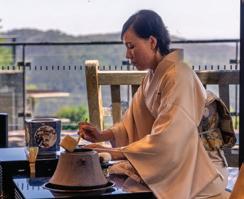
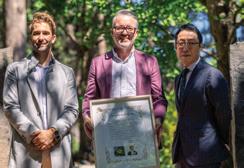
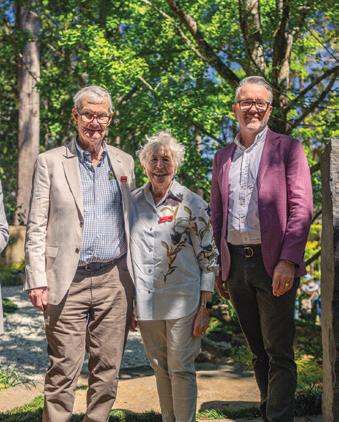
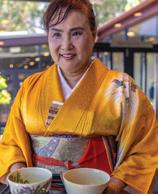
Top: Mihoko Ura, Urasenke Sydney (Japanese tea ceremony) Right: (From L-R) Ashley Filipovski, Curator Manager, Blue Mountains Botanic Garden Mount Tomah; Simon Duffy, Chief Executive, Botanic Gardens of Sydney; Deputy Consul-General of Japan, Mr Nishida Yuichiro
(From L-R) Akiko Jackson, Clive Austin & Kate Horrobin
Botanic Gardens of Sydney. Foundation & Friends does not receive commission from bookings.
Forest bathing
Shinrin-yoku or “forest bathing“, the Japanese practice of immersing oneself in the atmosphere of the forest, is a balm for the body and soul, writes Marion Whitehead, Supervisor Ornamental Gardens and Nursery Mount Tomah.
I haven’t missed a day of running in three years. It started out as a New Year’s resolution, but that quickly felt trivial as my daily incursions into the heathlands and forests of the Blue Mountains National Park became indispensable to my wellbeing and happiness.
Every morning, I woke knowing that I would run somewhere, at some point, and that immersion in nature was a foregone conclusion. The run and the forest became inseparable. And it was no different when I found myself in the town of Nikkō, north of Tokyo, on my birthday last year. I knew there would be running, and I knew I would be among trees where I am always happiest.
It was on a Japanese hillside, ablaze with the last of the autumn colour, that I realised what I had been doing for the previous 1,040 days had a name. Shinrin-yoku or “forest bathing” the Japanese practice of immersing oneself in the atmosphere of the forest.
We had travelled to Japan as a family after I was lucky enough to attend the International Camellia Congress in Tokyo earlier that year. From March onwards, I endured months of plaintive cries of “Can we go to Japan too?!” from my two boys, until we finally returned together in November.
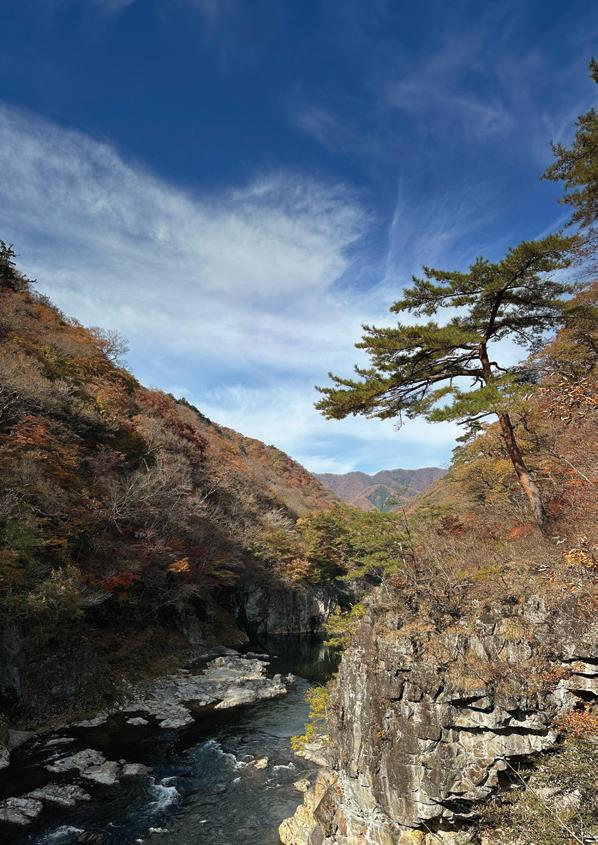
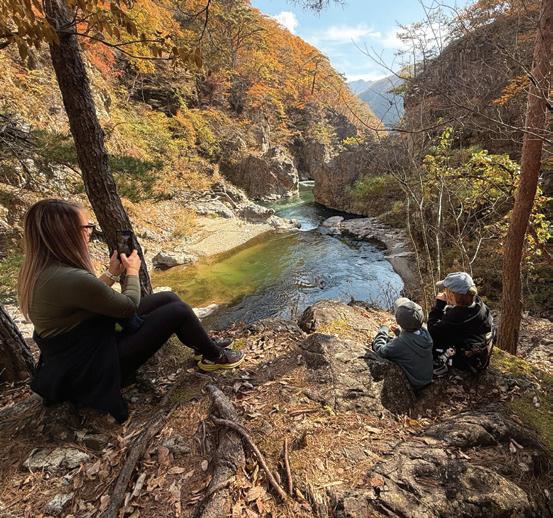
On my birthday, my partner organised a walk through Ryuokyo Gorge, a deep, river-carved canyon outside Nikkō, where we crossed bridges and wandered slowly through the tail end of the season. Like my run streak, shinrin-yoku is not about exercise, fitness, or achievement. Nor is it about belief, ritual, or instruction. It is simply about attentiveness. When we forest bathe, we aren’t trying to conquer nature or consume it, we are allowing ourselves to be absorbed into it.
Absorbing nature
Plants are already deeply woven into our lives. My children have grown up watching Studio Ghibli films where forests are sentient, protective, sometimes dangerous, but always deserving of respect. At home, they learn plants not from labels but from proximity, from being in the bush constantly, and stopping mid-walk to learn about the plant adaptations of a Stylidium (trigger plants) or to marvel at a carnivorous Drosera (sundew). Japan felt like an extension of that education, not a departure from it.
At Ryuokyo Gorge, the boys were captivated. The Arisaema (Jack-in-the-pulpits) were impossible to miss, their brilliant red seed heads poking jauntily from the forest floor. The river itself was a shock of colour, a vivid, electric blue water coursing over pale stone throwing into relief the blood-red leaves of Acer palmatum (Japanese maple) and the golden light filtering through the last of the Carpinus leaves above us. Even the familiar was comforting: the azaleas (Rhododendron species), no longer in flower, carpeted the forest floor with foliage I recognised instantly. Being so far from home, yet surrounded by plants I have revered forever, was deeply grounding.
Before I heard about the term shinrin-yoku, I had been practicing it instinctively. I have always gone into the bush when I feel overwhelmed, stressed, sad, or joyful. It is where I celebrate and where I retreat. Learning that this way of being had been named, studied, and culturally embedded elsewhere felt less like discovery and more like recognition.
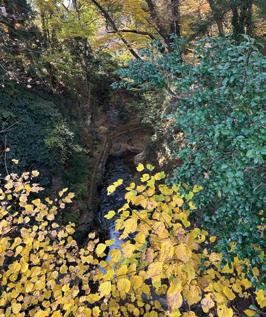
Main image: Ryuokyo Gorge, Nikko in late autumn; Right: Lindera obtusiloba in full autumn colour
Photos: Marion Whitehead
“Now, layered over the desire to observe and understand every part of the natural world around me, I began to notice Japanese philosophical ideas reflected everywhere.“
MARION WHITEHEAD
Taking lessons home
Returning home after Japan, I began to see the coachwood and sassafras forests differently. I am well known for immediately diverting off paths on runs or walks, cutting away at forty-five-degree angles to follow a botanical curiosity rather than trail markers. Now, layered over the desire to observe and understand every part of the natural world around me, I began to notice Japanese philosophical ideas reflected everywhere.
I see kami, the Shinto belief that spirits inhabit elements of the natural world, in the immense trunks of Angophora costata (Sydney red gum), their smooth bark peeling and oozing over sandstone boulders as if the trees themselves are in motion. I see it in the stately fronds of Dicksonia antarctica, tree ferns that trace their lineage back to a time before dinosaurs, standing watch over valleys like ancient sentinels.
I see yūgen – a Japanese aesthetic meaning the profound, partially hidden depth of things – in the ancient fragments of escarpment that have broken away over millennia and now lie scattered across the forest floor, softened and obscured by moss. These stones do not announce their age or their origin. Their beauty lies in what they withhold. And I see wabi-sabi in the quiet acceptance of decay, impermanence, and return, in fallen branches, decomposing logs, and the slow reclamation of human paths by plant life.
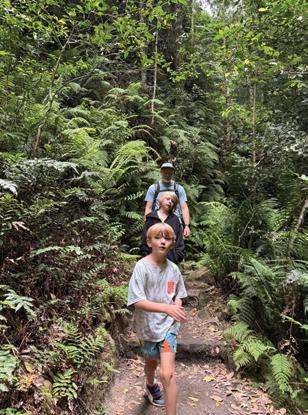
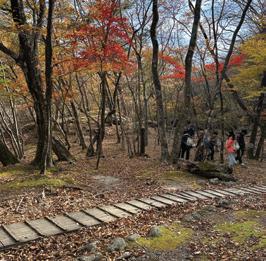
Top: George, Max and Nick Whitehead in the Grand Canyon, Blackheath; Above: A path through moss and maples on Ryuokyo Nature Study Trail
Respecting the landscape
There is something about how long these rainforests and clifftop ecosystems have been cherished and cared for. With the Darug and Gundungurra peoples living with, moving through, and cherishing these places for thousands of years, passing through these spaces myself makes me feel connected to other people and other times through plants, even when I am alone. The traditional owners of this land know better than anyone how to observe closely and act carefully, how to exist as custodians rather than owners.
There are plants I would never attempt to grow in my garden not because I couldn’t, but because I shouldn’t.
Small Pterostylis orchids belong where they are, emerging quietly in winter, seen only by those willing to look closely. Instead of trying to possess them, I get to do something far better; I get to visit them, year after year, acknowledging that not all relationships with nature are meant to be extractive.
Shinrin-yoku may be the Japanese words that encompass this practice, but the experience itself is universal. Immersing ourselves in nature is a deeply human instinct, one that transcends language, culture, and time. It is why plants are such powerful unifiers. They remind us that whatever we are feeling has been felt before beneath different canopies, on different soils, and across vast stretches of history.
Marion, George and Max taking in the last of the autumn sun in Nikko
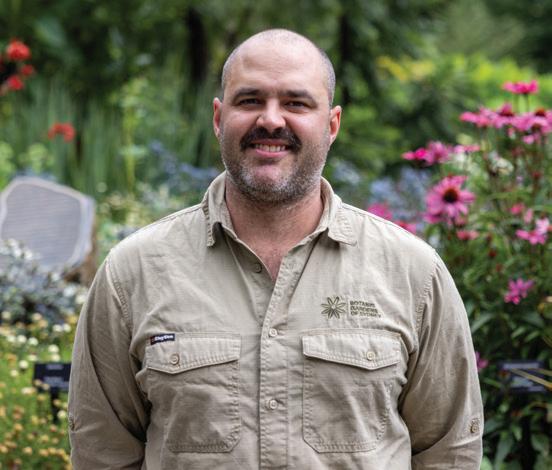
Joel Bowmer
Senior Horticulturist, Blue Mountains Botanic Garden
After making the move from the warm coastal waters of Byron Bay to the cool bushland of the Blue Mountains last year, First Nations man Joel Bowmer is thriving in a role that brings together conservation and a deep love of plants. Now a Senior Horticulturist at Blue Mountains Botanic Garden Mount Tomah, Joel oversees ornamental gardens while working to champion Indigenous knowledge, bush foods and the vital conservation work happening behind the scenes.
Joel Bowmer is passionate about conservation work
Photo: Ella Williams
How did you get started working at the Botanic Gardens?
I started off working in places like Lord Howe Island before moving into a role at a conservation nursery in Byron Bay, where my interest in the conservation side of horticulture really began. When a role came up at Mount Tomah caring for endangered species, I made the move to the Blue Mountains. I started as a horticulturist and progressed to a senior horticulturist role overseeing the ornamental gardens within three months.
It was a bit of a shock at first – especially with summer days where it’s cool enough for a jumper –but I wanted to challenge myself and try something new. The Blue Mountains are beautiful and there’s great hiking here, so I feel very lucky.
Where did your interest in horticulture come from?
Being a First Nations man, caring for Country is a big thing for me, and native plants have become my passion. I’m a bit of a plant nerd and I read about plants all the time. It’s one of those jobs where you can learn forever. There are so many plants out there and so much to know, and I’m just fascinated by it all.
What’s a typical day working at Mount Tomah like?
My focus is keeping my team of seven experts happy and ensuring they have what they need to get the job done. I then essentially act as a second pair of hands and help them in their individual gardens – which include a Gondwanan collection, rhododendron collection and the ninety-year-old redwood that is found in the conifer garden. They’re the experts in what they do, so it’s rewarding being able to support them and learn from them. That was a big part of why I took the job; I wanted to get out of my box of natives and learn from the best.
What’s something about the Botanic Gardens people might not know?
We know botanic gardens are beautiful, but I don’t think people realise there’s also an important conservation element. Most botanic gardens have plants that are the last of their species or hold the largest collection of a species in the world. There’s a lot of hard work happening behind the scenes to conserve these collections for future generations.
You’ve been awarded a Foundation & Friends scholarship. What will that funding allow you to do?
I’m going to Tasmania this year to learn from and culture-share with the Tasmanian mob. I’ve touched base with the Aboriginal Land Council of Tasmania, who are happy to share language and knowledge, and I’ll also be going on a bush food tour to learn about plants that grow at a similar altitude to Mount Tomah. From there, I’d love to develop a bush food or cultural collection together at Mount Tomah. I’ve also spoken
with the Darug mob in the Blue Mountains, and they are supportive of me using my own language, Bundjalung, from the Northern Rivers region. There’s a lot of bush food from that area that could work in this climate, and my dream is to create a collection that centres culture rather than focusing solely on endangered species.
Where did your passion for bush food come from?
It’s probably the easiest way for me to connect with culture because before I was a horticulturist, I was a chef. So it was a logical step – I knew how to cook food, but I also wanted to know how to grow it. A big part of Indigenous culture is plants and how they’re used, not only for ceremony and medicine, but also for food.
Why is it important for you to share that bush food knowledge with the community?
It’s about having the privilege to speak culture to a wider public – not everyone gets to do that. I also believe that when people talk about healing Country and coming together, one of the best ways to do that is through food. There’s so much scope to share this knowledge, and healing people is part of healing Country, and that’s something I’m really passionate about.
What are your favourite bush foods to cook with?
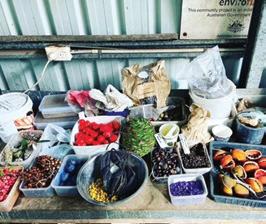
At home I’ve got jars of dried and frozen ingredients like lemon myrtle, whose leaves can be used in baking. There’s also Davidson plum, which is very tart and commonly used to make jams. I like to dehydrate it and turn it into a powder so it can be incorporated into lots of different recipes.
Do you have a home garden?
I do, but like plumbers with a leaky tap, it doesn’t always get the attention it deserves. I’ve got some sunflowers now that are looking a bit sad because I’m so focused on watering the plants at work that I sometimes forget to give my own garden the love it needs.
Bush food helps Joel connect with culture
Camellia connections
Perched high at Blue Mountains Botanic Garden Mount Tomah, Tsubaki Yama – Camellia Mountain – is a new garden rooted in friendship, artistry and shared botanical heritage, honouring the enduring connection between Nonoichi City in Japan and Sydney.
The new Camellia Garden, Tsubaki
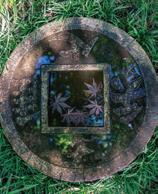
Yama (Camellia Mountain), at Blue Mountains Botanic Garden Mount Tomah, brings together traditional Japanese landscape principles, artisan stonework and the refined art of Suiseki – the display of naturally formed stones that capture the essence of mountains and water.
Within this contemplative setting sits a remarkable collection of camellias, spanning historic Asian and Australian cultivars to rare cool-temperate species, each reflecting stories of culture, exchange and conservation.
While the camellias will reveal their full splendour in season, visitors can already explore carefully placed details, including a 250-year-old ornamental tea caddy once used for ritual handwashing in temples, set against sweeping mountain views.
This garden has been made possible through the generosity of our donors and supporters, whose commitment to plants and place continues to shape the future of the Gardens. We also extend our sincere thanks to the Mayor of Nonoichi City, Mr Awa Taka’aki, for sharing the name Tsubaki Yama across two hemispheres.
Clockwise from top: (L-R) Supporters James and Leonie Furber with Simon Duffy, Chief Executive of Botanic Gardens of Sydney; traditional tea ceremony by Urasenke Sydney; artisan stonework
Photos: Botanic Gardens of Sydney
Mount Tomah road trip
Less than two hours from Sydney, Blue Mountains Botanic Garden Mount Tomah is the ultimate day trip – where crisp mountain air, cool-climate gardens and sweeping views await. Make a day of it by stopping en route for boutique distilleries, country bakeries and some of the region’s most legendary pies.
Set along the scenic Bells Line of Road between Bilpin and Lithgow, Blue Mountains Botanic Garden Mount Tomah is a coolclimate garden that sits high above sea level, framed by UNESCO World Heritage wilderness. Wander beneath towering giant sequoias, spot fairy-ring trees along the Lady Nancy Fairfax Walk, and, in autumn, soak up blazing reds and golds. Crisp mountain air and tranquil paths make it restorative year-round.
Turn the drive into part of the adventure with stops for seasonal fruit, famous local pies, wood-fired pizza and small-batch cider at boutique distilleries. At the Garden, explore the Formal Garden, admire sweeping valley views from the Visitor Centre and pause for coffee at Bell Bird Cafe before descending the iconic basalt-rock spiral. Cool, quiet and full of surprises, Mount Tomah is the perfect destination this autumn.
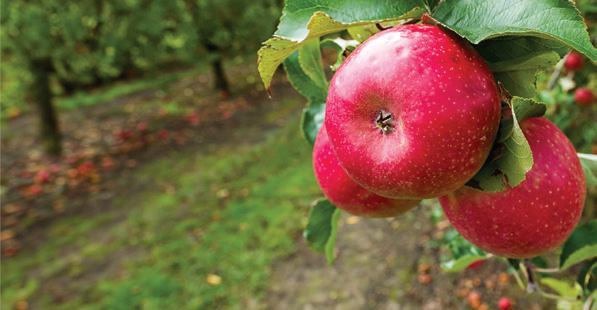
Above: Pick your own Bilpin apples
Right: Enjoying autumn colour at Blue Mountains Botanic Garden Mount Tomah
Photos: Botanic Gardens of Sydney
THE HIVE thehivebar.com.au
THE OLD SHED DISTILLERY oldsheddistillery.com
BILPIN FRUIT BOWL bilpinfruitbowl.com.au PIE IN THE SKY ROADHOUSE pieintheskybilpin.com.au
BLUE MOUNTAINS BOTANIC GARDEN MOUNT TOMAH botanicgardens.org.au/blue-mountainsbotanic-garden-mount-tomah
Stop 1: Pie in the Sky Roadhouse
A local institution for 25 years, Pie in the Sky has earned its cult following. Fresh batches are baked every few hours, so chances are your pie will be warm from the oven. The menu spans premium steak fillings, classic pastries and golden apple pies, all wrapped in French-style butter puff pastry and made without ultra-processed ingredients. Closed Tuesdays and Wednesdays, but absolutely worth timing your trip around.
Stop 2: Bilpin Fruit Bowl
Bilpin Fruit Bowl is a family-run shop and farm that makes for a fun stop during your road trip. Depending on the season, you can pick your own apples, strawberries, or stone fruit straight from the orchard. The onsite shop sells home-made apple pies, meat pies, cakes, slices, and scones, as well as fresh fruit, eggs, local honey, and jams. There’s also soft-serve made with strawberries grown on the farm.
Stop 3: Hillbilly Cider
Hillbilly Cider is a relaxed stop where rustic charm meets award-winning craft. The cider shed pours small-batch ciders, beers, and wines – including the world’s only cider made from the locally discovered Julie apple. Settle in for a wood-fired pizza, enjoy live weekend music, and let the kids roam free. It’s all about slowing down, soaking up the mountain air, and enjoying good times with good company.
Stop 4: The Old Shed Distillery, Bilpin
The Old Shed Distillery is housed in a 100-year-old building that once served as a sawmill, apple-sorting shed, and honey extraction site. Today it produces small-batch gin and vodka infused with local botanicals. There’s also snow cones for the kids, charcuterie and other small snacks. Take a distillery tour, soak up the mountain views, or explore the lovingly restored space filled with reclaimed farming machinery if you’re after a character-rich pause during your trip to the Gardens.
Stop
5: The Hive
Specialty coffee and quality food await at the Hive, including artisan sourdough, apple pies, gourmet savoury pies, toasties and a great range of local products. The Hive is also the home of Bilpin Bush Honey, the area's premium local honey collected from the local flora. There are 250 hives situated near flowering native gums, producing up to 10 tonnes of lovingly hand-extracted, pure raw honey every year.
Stop 6: At the Garden
Once you’ve stocked up on local pies, honey and smallbatch ciders, park at Blue Mountains Botanic Garden Mount Tomah. Wander through the colourful, textural Formal Garden before heading to the Visitor Centre for sweeping valley views. Pause for lunch at Bell Bird Cafe or grab a coffee to go, then explore the striking basalt rock garden terraces. Look out for the seasonal wildflower meadow behind the Residence Garden and the beautiful new Tsubaki Yama (Camellia Mountain).
Futureproofing against myrtle rust
A molecular tool could change the future of broad-leaved paperbark, allowing scientists to identify myrtle rust–resistant trees and restore threatened landscapes more effectively, writes Tricia Hogbin, Restoration Genomics Outreach Coordinator.
Thirty years ago, volunteer Steve Wisniewski planted 4,500 broad-leaved paperbarks at the Hunter Wetlands Centre. Established on a former rugby field and dumping ground, these trees now form a mature swamp forest. Unfortunately, if the same restoration were attempted today, it is unlikely it would be as successful due to the devastating impact of myrtle rust.
Steve and other volunteers had to contend with drought, grazing by hares and weed invasion. They protected the new plantings by installing a hare exclusion fence, hand watered with buckets and have been controlling lantana, kikuyu and other environmental weeds ever since.
These are all threats that could be overcome with hard work. But myrtle rust is different, because we don’t yet have the tools to be able to prevent its devastation. Thankfully, the Research Centre for Ecosystem Resilience (ReCER) is on track to develop a molecular tool that will enable restoration practitioners to source seed stock that is resistant to myrtle rust.
Myrtle rust and its impact on restoration
Myrtle rust is a plant disease caused by the exotic fungus Austropuccinia psidii. It was first detected in Australia in 2010 and is now threatening the survival of dozens of Australian native plant species. The fungus has bright yellow spores and infects new growth in a range of species belonging to the Myrtaceae family, a large plant
family that includes eucalyptus (gum trees), melaleuca (paperbarks), and syzygium (lilli pillies). This targeting of new growth makes the fungus especially devastating for restoration plantings. When myrtle rust destroys new growth, young plants struggle to establish, which doesn’t bode well for the success of habitat restoration efforts.
“I’m not sure we would have the same success if we undertook these plantings today, now that myrtle rust is here,” Steve says. Restoration practitioners don’t yet have the tools to be able to prevent myrtle rust from devastating their plantings, but hopefully that will soon change.
Not all species or plants within species are equally susceptible to myrtle rust. Some species, like the once common native guava and scrub turpentine, have become critically endangered in the wild because most individuals are highly susceptible. Whereas other species, like the broad-leaved paperbark Melaleuca quinquenervia, exhibit varying susceptibility to myrtle rust.
Identifying genetic markers for resistance
Knowing which seed sources, or mother trees, typically exhibit high resistance to myrtle rust will ultimately allow restoration practitioners to source seed and nursery plants that are known to be highly resistant.
Karina Guo is a Technical Officer Biodiversity Genomics at the Botanic Gardens of Sydney. A key focus of her PhD research, in collaboration with ReCER and the University of Sydney, is to develop a molecular assay, or simple genetic test, which can be used to identify and select resistant Melaleuca quinquenervia individuals and seed lots for restoration.
“We planted out a mass of seedlings in the nursery from a range of sources, infected them with myrtle rust, and recorded how susceptible each was to the disease,” Karina says. “We then sequenced the full genome of all these plants and found genetic markers, or specific DNA sequences at a particular location in the genome, which seem to be highly predictive of whether a plant is resistant to myrtle rust.”
Left: Karina Guo and Jason Bragg planting Melaleuca quinquenervia that have been molecular assayed for myrtle rust resistance at at Hunter Wetlands Centre.
Above: Volunteer Steve Wisniewski, with the swamp forest he planted thirty years ago.
Photos: Hannah Izzard
Field testing genetic markers
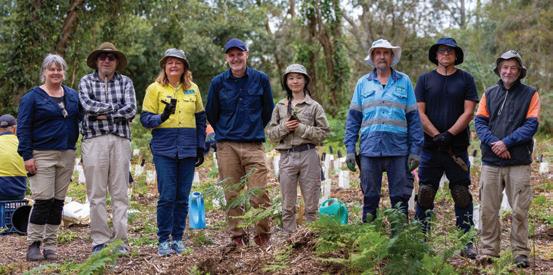
The molecular assay for myrtle rust is now being field tested, with on-ground help from a range of collaborators including Lake Macquarie Landcare and Hunter Wetlands Centre.
“We grew a second batch of seedlings, used our molecular assay to predict their susceptibility to myrtle rust, and planted them in the wild at Cattai Wetlands site and Hunter Wetlands Centre,” Karina says.
“The amount of support we have received from our collaborators has been incredible, with our partners preparing the sites and taking care of ongoing watering and weeding. They’re keen to be part of a project that will hopefully one day help them protect the ecosystems they manage from myrtle rust.”
Unlike the nursery plantings, when plants were infected with myrtle rust, this time there’s no need. Myrtle rust is now widespread and established in much of New South Wales, and it didn’t take long for the plantings to show signs of myrtle rust.
Almost 800 seedlings have been planted. Karina, and a team of colleagues and volunteers, are monitoring the plants every month for the next year, documenting their health, growth, and response to myrtle rust.
Resilience and resistance
It’s not only resistance to myrtle rust that is considered when developing a mix of seed for use in ecological restoration. Jason Bragg is a Senior Research Scientist at ReCER and Karina’s PhD supervisor. He is leading a team undertaking research on multiple species threatened by myrtle rust and has an interest in ensuring plant collections and
material used in restoration retains the potential to adapt to other diseases and environmental change.
“It is important that we don’t create seed collections that are resistant to myrtle rust, but not resilient to other diseases and change,” Jason says. “We do this by maximising genetic diversity and making sure it is representative of wild populations.”
Genetic diversity maximises adaptive potential. Adaptive potential is a population’s capacity to adjust to changing environmental conditions. The higher the genetic diversity within a population, the greater the probability that at least some individuals will possess a trait that facilitates adaptation, for example, to climate change, the presence of diseases such as phytophthora and other unknown future threats.
Inspiring action
Steve hasn’t seen seedling recruitment in the broad-leaved paperbarks at the Hunter Wetlands Centre for a while. And a more recent planting, around 10 years ago, failed entirely.
“They were looking fantastic. But then I noticed the new growth curl up and die off. We ultimately lost the lot. They were all stressed out with the rust,” Steve says. He is excited about one day being able to introduce individuals with the myrtle rust-resistant gene that will cross pollinate with the trees he planted 30 years ago.
“We might get a bit of pollen from one of the disease-resistant plants pollinating one of the [established] trees,” Steve says. He’s excited and bubbling with enthusiasm and I see firsthand the playing out of Karina’s objective that her research bridges the gap between application and science, inspiring action rather than breeding despair.
Karina Guo (centre), Jason Bragg (fourth from left), and Steve Wisniewski (third from right) and other volunteers and collaborators from the Hunter Wetlands Centre and Botanic Gardens of Sydney at a Melaleuca quinquenervia planting day.
Photo: Hannah Izzard
A growing commitment to the Gardens
Liz Jeavons-Fellows is a multi-faceted supporter of the Botanic Gardens; she is a volunteer, Growing Friends co-team leader and donor whose connection has grown steadily since she began volunteering in 2018. She says the Gardens are woven into her life, somewhere she feels deeply connected to and proud to support.
How did you first become involved with the Gardens?
I moved from England to Australia in 2005. I’m an architect by background and had my own practice, but when I came here I had a young family and decided to step away from that path for a while. I’d always loved gardening, but Australia is very different – different plants, different conditions, different pests and diseases – so I enrolled in a TAFE horticulture course. I loved it so much that I didn’t
want it to end there. A friend mentioned volunteering at the Botanic Gardens, and it felt like the perfect segue: continuing to learn, while also giving something back to a place I already loved. I started volunteering in 2018, and within a couple of years I became a co-team leader with the Growing Friends program. Now, it’s really under my skin – I can’t imagine not being involved anymore.
What inspired you to host the Foundation & Friends event to introduce plans for the new Nature Restoration Nursery at your home?
That came about through conversations with Paul Thorley when the Nature Restoration Nursery project was being launched. Through my volunteering, I’d learned more about the work happening at Mount Annan, and I hadn’t realised just how poor the facilities were for the scientists doing this extraordinary work. What they do is fundamentally important – conservation, restoration, seed banking, tissue culture, and even supporting large-scale projects like Western Sydney Airport revegetation. Hosting the event at my home felt like a good way to bring the science side and the volunteer side together, and to spread the word to people who are interested but don’t yet know how to help.
Liz has been involved with the Gardens since 2018
Photo: Ted Rose
“What I find inspiring is that you’ve got all these people from completely different backgrounds, working on different days, often without ever meeting each other, yet all working towards the same goal.“
LIZ JEAVONS-FELLOWS
Was there a moment that shaped your view of why philanthropic and member support are important to the Gardens’ future?
Listening to the scientists speak at the Nature Restoration Nursery event really stayed with me. Horticulturists and scientists tend to be quite inward-facing – they don’t blow their own trumpets – but hearing them talk about what they’re achieving was extraordinary. One example that really struck me was how vulnerable their work can be. At Mount Annan, power is unreliable, yet they’re caring for plants that rely on very specific conditions. The idea that you could haul a plant back from extinction and then lose it because of a power failure is devastating. Knowing they’re on call, sometimes an hour away, ready to respond at any time – that really brought home how critical proper facilities and support are.
What does your role as a Growing Friends coteam leader mean to you?
I love my team. We’re very cohesive and committed, and my co-team leader Greg Lamont and I work really well together. Beyond our Wednesday team, part of my role is also to support and motivate the Growing Friends teams on other days. What I find inspiring is that you’ve got all these people from completely different backgrounds, working on different days, often without ever meeting each other, yet all working towards the same goal. Every team thinks they’re the best team, which I think is wonderful. It’s not something you see in many places, and it’s incredibly effective.
How do your experiences as a donor and volunteer complement each other?
I hate waste, and I feel a huge responsibility about how resources are used. As volunteers, we’re constantly reviewing what we propagate, what sells, and what doesn’t, because if something doesn’t sell, that’s wasted time, space, materials and effort. As a donor, I also think about how people want their money used. You don’t want to feel like your support is disappearing into paperclips. I feel incredibly lucky to work with plants all day, knowing that someone has paid for the pots, the mix and the space. That perspective really helps the donor and volunteer roles gel together.
What excites you most about the Gardens right now?
There’s so much happening. We’re about to launch a very rare clivia collection that Growing Friends helped enable, and we’re fundraising for a boardwalk around the new Camellia Garden so people can enjoy it without damaging existing trees. The Martin Place pop-up store was also incredibly successful – it brought the Gardens to people who might never normally visit. More broadly, I feel we’re in a really strong place. When you visit botanic gardens around the world, there aren’t many that come close to what we have here. Supporting the Gardens means keeping Australia at the forefront of world horticulture, and that’s something I’m incredibly proud of.
Liz at work in the Growing Friends Plant Sales
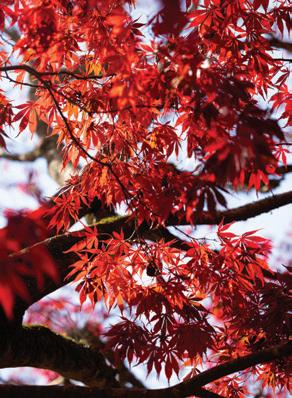
Acer palmatum (Japanese maple)
glowing in autumn colour at Blue Mountains Botanic Garden
Mount Tomah
Plants in the Gardens
Step into autumn and explore the seasonal stars putting on a show across the three Botanic Gardens.
BLUE MOUNTAINS BOTANIC GARDEN
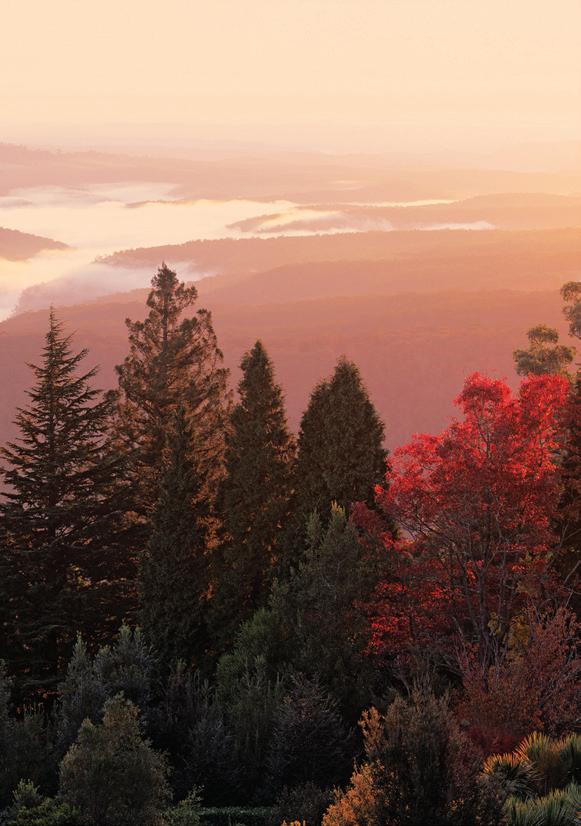
Renowned for its spectacular autumn foliage, the Blue Mountains garden is vibrant this time of year. Acer, liquidambar and oak species in particular take visitors through a progression of reds, oranges, and golds. In recent years, horticulturists have implemented a phased planting strategy, introducing taxa specifically chosen for their pigment diversity and extended autumnal display periods. Ongoing monitoring of soil pH, microclimate, and phenological patterns underpins these efforts. This means that each year promises an increasingly vibrant and resilient foliage display not to be missed.
This year’s season focuses on two gardens in particular. The recently opened Camellia Garden, which has begun to flourish, and the innovative de Ferranti Landscape soon to be unveiled.
Opened at the close of 2025, the Camellia Garden has quickly become a highlight of the Botanic Garden. This dedicated space celebrates the beauty and diversity of camellias, showcasing rare and heritage varieties alongside modern hybrids. Thanks to the garden’s expert care, the camellias are feeling very much at home as they begin budding in preparation for their
first winter bloom. While waiting for the camellias to put on their grand show, new plantations of established trees, such as the acer, create a bright yet tranquil autumnal backdrop for visitors exploring this unique and reflective garden.
Vying for the limelight will certainly be the debut of the de Ferranti Landscape, a bold and imaginative facelift to the de Ferranti Pavilion. The purpose of the de Ferranti garden upgrade is to connect the de Ferranti Pavilion with the Camellia Garden, creating harmony between the Eurasia Woodland Collection and Camellia Collection. The exotic flora, sculptural landforms, pathways, and staircases also blend the Pavilion and its surroundings into the natural beauty of the Blue Mountains. We are deeply grateful for the generous donations from the de Ferranti family, whose unwavering support and vision have brought this landscape to life and enriched the Garden for all.
Ever-growing and ever-changing, it is, as always, the perfect time to visit and enjoy the gardens and all the displays and collections made possible by passionate stewards and generous supporters.
ASH FILIPOVSKI, CURATOR MANAGER, BLUE MOUNTAINS BOTANIC GARDEN
Photo: Botanic Gardens of Sydney
ROYAL BOTANIC GARDEN SYDNEY
With summer now behind us, it has certainly left its mark this year. Sydney experienced some unusual weather patterns, ranging from colder-than-average weeks to periods of intense heat. As a result, parts of the living collection showed signs of stress, including leaf burn, and will spend the autumn months recovering. For many of our deciduous plants, however, these scars will be shed along with their leaves, and the familiar cycle of growth and renewal will continue as if nothing had happened.
The changing seasons are also reflected in changes across the landscape. One recent highlight is the renovation of Bed 4 near the Levi Fountain. This rejuvenated space marks the beginning of a new chapter for the collection and will continue to develop and mature over the coming months and years, adding depth and interest to this part of the Garden.
Alongside these horticultural changes, a number of capital projects are currently underway. Most notably, the Mare and Foal Amenities are being completely rebuilt. Once finished, the new amenities will offer a modern, welcoming facility, complemented by thoughtful planting both at ground level and atop the building. The green roof landscape will feature species from Southern Africa’s fynbos bioregion, transitioning seamlessly into native plants from the Sydney Coastal Sandstone Foreshores Forest.
This blending of global and local flora will create a distinctive and engaging space, and the upgrade will be warmly welcomed by visitors when completed. We are also working towards the final stage of the Central Controller project, which was generously funded by Foundation & Friends. Throughout autumn, we will see the majority of the Garden connected to the new controller, allowing us to begin realising the full benefits of this significant project.
Last year also brought an exciting addition to the collection with the acquisition of a significant clivia collection from Peter Hay, made possible through the generous support of Foundation & Friends. Much of this material has now been planted throughout the Gardens, where it will continue to establish and flourish. My sincere thanks go to everyone involved in making this important acquisition possible. Your support helps ensure the richness, diversity and future of the living collection for generations to come.
Please enjoy all that autumn in the Garden has to offer and thank you for all your wonderful support.
JARRYD KELLY, CURATOR MANAGER, ROYAL BOTANIC GARDEN SYDNEY
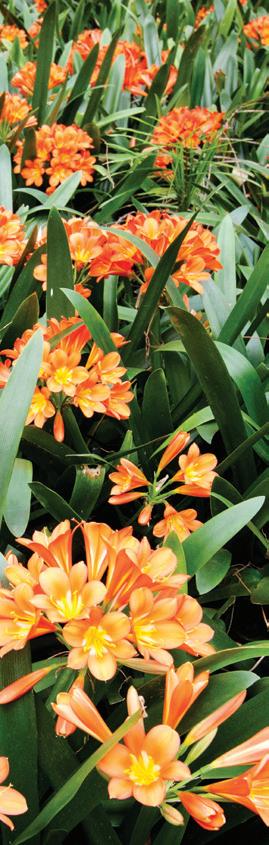
Clivia in bloom at the Royal Botanic Garden Sydney
Photo: Botanic Gardens of Sydney
AUSTRALIAN BOTANIC GARDEN MOUNT ANNAN
The Australian Botanic Garden is never static, and no two days in the Living Collection are ever the same. As the heat of summer finally eases, the landscape begins its shift into the cooler months. This is a time when many species, including those growing well outside their natural climate zones, rebound with fresh and renewed energy and the horticulture team are already curating the Living Collection through the seasonal transition.
One of the first major tasks of late summer is the annual cutting back of the spent kangaroo paws and surrounding foliage. This year, around 300 kilograms of material was removed, opening up the beds and giving these much-loved specimens the space they need to rejuvenate ahead of the next growing cycle. It is a dramatic transformation, but one that sets the stage for the vibrant displays to come later in the year.
With the summer display winding down, preparations for our much-anticipated spring paper daisy display have begun. Soil conditioning works are underway, seeds are being sown, and protective netting has been installed to prevent ducks from disturbing the freshly prepared beds. Soon, the first soft haze of green seedlings will emerge, a quiet but exciting sign that the seasons are turning.
Autumn also brings significant progress on key landscape projects across the Garden. Planting has commenced at both the Mount Annan Summit Entrance Garden and the Summit Deck, where a curated selection of native species from the Cumberland Plain Woodland and Western Sydney Dry Rainforest communities is being established. These plantings celebrate the botanical richness of our region while contributing to the long-term restoration of these threatened ecological communities. They will help stabilise the soil, soften the newly constructed elements, and begin reestablishing the natural character of the summit landscape.
the Garden, many members of our Proteaceae collection are also beginning to bud. Their striking inflorescences will reach full display from late autumn into early winter, offering visitors a spectacular seasonal highlight.
As we move into this cooler period before winter, we are reminded that each season brings its own rhythm, its own challenges, and its own rewards.
MICHAEL ELGEY, CURATOR MANAGER, AUSTRALIAN BOTANIC GARDEN MOUNT ANNAN
Top: Golden hour at the Australian Botanic Garden Mount Annan
Right: Proteaceae on display at the Garden
Photo: Botanic Gardens of Sydney
Across
Five plants for the autumn garden
The recently opened Greenway walking track in Sydney’s Inner West is described as being the local version of the famous High Line in New York. The designer of the High Line, Piet Oudolf, has transformed the way we see gardens, especially in the quieter, slower seasons. His naturalistic approach, built on texture, form, structure and the expressive power of plants left standing, invites us to appreciate the beauty that emerges as summer fades. Autumn, in Oudolf’s hands, is not a decline but a continuation – seed heads become sculpture, fading grasses catch the low light and muted colours take on a painterly richness. Interpreting his ideas for autumn plantings provides inspiration with structure, movement and ecological purpose. Growing Friends Plant Sales has many options available for naturalistic plantings and our volunteers are happy to provide advice and assistance. Here’s a selection to choose from.
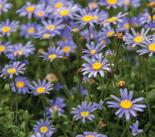
season and well into autumn it is a useful accent in naturalistic plantings, providing contrast to stronger architectural forms. Thriving in full sun and well-drained soils, it is droughttolerant and attracts pollinators.
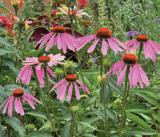
Echinacea purpurea
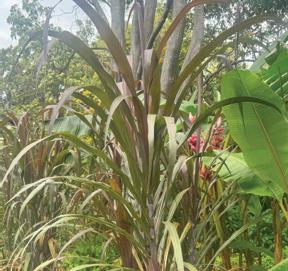
Saccharum officinarum
Saccharum officinarum
‘Atropurpureum’ is a striking ornamental form of sugar cane with tall, upright stems and deep burgundy arching leaves, bringing drama and vertical structure to naturalistic plantings. Though associated with tropical climates, it thrives in warm, sunny positions. In autumn, its rich colouring intensifies making it a powerful anchor plant to the seasonal palette.
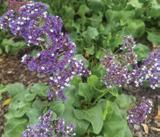
Limonium perezii
Limonium perezii, commonly known as sea lavender or statice, is a resilient perennial valued for its long-lasting, papery flowers. Its leathery basal leaves form a rosette and colour to rusty red in autumn/ winter. Thriving in coastal conditions, poor soils and dry climates this is a dependable choice for naturalistic plantings with colours becoming more intense as it gets colder.
Felicia amelloides
Felicia amelloides, or blue daisy, is a cheerful perennial known for its vivid sky-blue daisy flowers with yellow centres. Blooming over a long
Echinacea purpurea, or purple coneflower, is a sturdy perennial, celebrated for its bold blooms and strong architectural presence. Its prominent coppery cone sits at the centre of drooping pink to magenta petals, creating a striking silhouette that holds well into autumn, feeding birds through the cooler months. Coneflowers are drought-tolerant and thrive in full sun in free-draining soils.
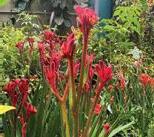
Anigozanthos sp.
Anigozanthos ‘Bush Princess’ is a compact kangaroo paw with soft pink to rose-coloured flower spikes that rise above slender strappy foliage. The tubular flowers are a valuable contract over a long period providing colour as the season shifts, especially in naturalistic designs where texture and form matter as much as flowers. These drought-tolerant, sun-loving plants thrive in well-drained soils and attract nectar-feeding birds, bringing movement and life to autumn displays.
BELINDA MOON, GROWING FRIENDS PLANT SALES, SYDNEY
What’s On
Autumn is here and it’s a great time to visit the Gardens. From art workshops to fun walks and talks and special events, there’s something for nature lovers of all ages to enjoy.
For more information about our events and to book visit botanicgardens.org.au/Whats-On scan the QR code or phone 02 9231 8182
Walks and talks
INTERNATIONAL WOMEN’S DAY WALK
Foundation & Friends Terrace, Royal Botanic Garden Sydney Sun 8 March, 10am – 11.30am
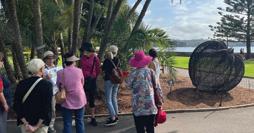
Step into the Garden for a special guided walk celebrating the women who have helped shape it, and the many stories rooted here. Wander along leafy paths and seasonal displays as our friendly expert guides share inspiring tales of female botanists, artists, scientists and community changemakers, past and present. This gentle and uplifting stroll is a chance to slow down, connect with nature and mark International Women’s Day together. Along the way, you’ll discover plants that symbolise strength and resilience, spot some of the Garden’s much-loved wildlife, and celebrate the remarkable impact of women – in the Garden and beyond.
HOME AMONG THE GUM TREES
Foundation & Friends Terrace, Royal Botanic Garden Sat 21 March, 10am – 12pm
Celebrate National Eucalypt Day (a couple of days early) with a guided walk around the Royal Botanic Garden Sydney. Let our volunteer guides show you the good oil on gum trees.
Learn how eucalypts have influenced Australian art, history and culture. Marvel at the colourful array of animals that depend on them for food and shelter. Find out how to identify an angophora from a corymbia and how our botanists have shaped the science of eucalypts. By the end of the morning, you'll feel at home among the gum trees.
ASTRONOMY AT THE CALYX
The Calyx, Royal Botanic Garden Tues 24 March, 7pm – 9.30pm, and Mon 25 May, 6.30pm – 9pm
Discover the night sky with our distinguished astrophysicist Dr. Ángel Lopez-Sanchez. More than 4,000 planets have been discovered and our team of experts will take you on a journey to these strange “other” worlds. Hear from astronomer presenters about everything from space volcanoes to dark energy, then venture outside to be immersed in a mindful star gazing activity and view the night sky through the telescopes with volunteers from the Northern Sydney Astronomical Society. These powerful telescopes will allow a personal discovery into the world beyond Earth.
A WALK ON THE WILD SIDE
Foundation & Friends Terrace, Royal Botanic Garden Thurs 26 March, 8.30am – 10.30am
Join our volunteer guides as we venture along winding paths, under high canopies, through fields, along a creek and beside ponds to see what wildlife is at home. Apart from our ever present and captivating birds, we're likely to encounter eastern water dragons, blue-tongue lizards, the colourful koi carp and maybe even eels and a turtle. A close-up encounter with the impressive golden orb-weaving spider in her web is always memorable, as is meeting up with our native social bees at their hive log. Solitary bees such as the beautiful, blue-banded bee and the funky “teddy bear” bee may be out and about. And we're sure to be welcomed by the Southern Pearl-white butterfly as it breeds here, its most southern colony. The tour concludes with morning tea on the Foundation & Friends Terrace.
Child & Member $55 I Non Member $65
Member $45 I Non Member $55
SUNSET SPOTLIGHT TOURS
Woolloomooloo Gate, Royal Botanic Garden
Wed 8 April and Wed 15 April, 6.30pm – 8pm
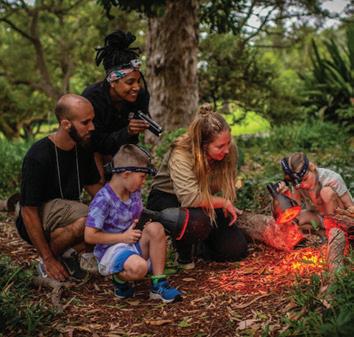
The Garden is an oasis waiting to be explored. Wander the garden pathways and visit biodiversity “hotspots” such as the ponds to look for nocturnal animals –some who fly in for the night, others who are long-term residents. We'll use our senses and some tech gadgets used by our scientists to help us locate animals and plants that have special nocturnal adaptations. We may see Golden Orb spiders, Brush-tailed Possums, Microbats, Flying Foxes or Tawny Frogmouths.
Adult $49
Child (8 – 15 years old) $23
Adult Foundation & Friends Members $42
Child (8 – 15 years old) Foundation & Friends Members $20
MOTHER’S DAY SCULPTURE WALK
Maiden Theatre, Royal Botanic Garden
Sat 9 May, 10am – 11.30am
From neoclassical nudes carved in marble to plants sensually represented in woven copper, the Royal Botanic Garden is home to more than 70 statues and sculptures, each brimming with stories that reflect changing values, aesthetics and ideals over time. This Mother’s Day, join our expert volunteer guides for a special guided walk through this open-air gallery. Discover the fascinating history behind these works of art, learn about the artists who created them, and explore how these pieces connect to the rich history of the Gardens. Each guest will receive a small plant from Growing Friends Plant Sales to take home. Whether you’re an art lover, a history buff, or looking for a thoughtful Mother’s Day experience, this walk promises to inspire and delight.
Member $30 I Non Member $40
Classes and workshops
NATURE JOURNALING
Rathborne Lodge, Royal Botanic Garden
Sat 14 March, Sat 11 April and Sat 9 May, 10am – 12.30pm
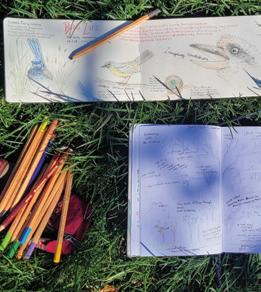
Join us for a series of interactive workshops designed to cultivate mindfulness, creativity, and profound observation. Each session will feature a distinct theme, exploring different aspects of the Garden, encouraging exploration and a greater appreciation for the surrounding environment. These classes are beginner friendly. No prior experience with drawing or journaling is required.
ASTRONOMY AT MOUNT TOMAH
Visitors Centre, Blue Mountains Botanic Garden Sat 23 May, 6.30pm – 9pm
Join us for a night of astronomy and star gazing immersed in the World Heritage National Park, in the heart of the Blue Mountains Botanic Garden. Discover what the night sky teaches you with our distinguished astrophysicist Dr. Ángel Lopez-Sanchez. More than 4,000 planets have been discovered and tonight our team of experts will take you on a journey to these strange “other” worlds. Hear from astronomer presenters about everything from space volcanoes to dark energy, then venture outside to be immersed in a mindful star gazing activity and view the night sky through the telescopes with volunteers from the Northern Sydney Astronomical Society. These powerful telescopes will allow a personal discovery into the world beyond Earth.
Child & Member $55 I Non Member $65
Adult $109 I Child $98 Foundation & Friends Members $98
Kids activities
AUTUMN HOLIDAY PROGRAM: BUDDING BOTANISTS
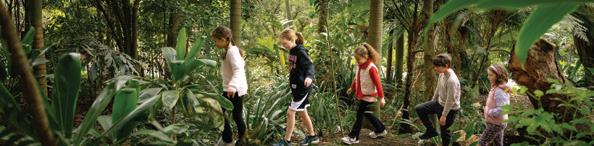
Discover the hidden world of plants at the Botanic Gardens of Sydney. In this hands-on holiday program, kids will become plant detectives on a guided garden walk, uncovering the secrets of leaves, flowers, and plant adaptations. They’ll conduct a fun experiment to learn more about the plants around them, then create their own herbarium pressing, a beautiful botanical keepsake to take home. Spaces are limited, so book now for an unforgettable botanical adventure.
AUSTRALIAN BOTANIC GARDEN
Wed 8, Thurs 9, Wed 15 and Thurs 16 April, 10.30am – 12pm
ROYAL BOTANIC GARDEN
Tues 7, Wed 8, Thu 9, Tues 14, Wed 15 and Thurs 16 April, 10.30am – 12pm
BLUE MOUNTAINS BOTANIC GARDEN
Tues 7 and 14 April, 10.30am – 12pm
Child (5 – 12 years) $21 I Foundation & Friends Members $19
SEEDLINGS NATURE SCHOOL
Join experienced Early Years educators for playful, hands-on learning for your little one. Children will explore their local Botanic Garden, connect with the natural world, and discover the fascinating plants and wildlife around them. Along the way, they’ll build confidence, resilience and social skills with other children in a safe, supportive environment. Each term also includes a special session led by a First Nations educator, offering children and caregivers the opportunity to learn more about Country. Seedlings provides a captivating combination of garden-based activities, games and stories for children aged 2.5 – 5 years and their caregivers.
AUSTRALIAN BOTANIC GARDEN
Every Wed from 29 April – June 17, 9.30am – 11.30am
ROYAL BOTANIC GARDEN
Every Thurs from April 30 – June 18, 10am – 12pm
Term pass $140 I Casual pass per session $21
For Botanic Gardens kids activities, parents or carers must attend and participate in the session and are responsible for their children's whereabouts and safety.
Volunteer with Foundation & Friends
By volunteering with Foundation & Friends, you’ll play a vital role in supporting the Royal Botanic Garden Sydney. Our volunteers help raise funds, engage visitors and champion the work of the Gardens, with proceeds supporting scientific research, horticulture, conservation and education programs.
Current volunteer opportunities include:
Growing Friends Plant Sales – join a community of plant lovers, build your horticulture knowledge and connect with passionate visitors and supporters.
Events and catering – help prepare and serve refreshments and support the smooth running of Garden events and functions.
Information booths – welcome visitors and share your knowledge of the Gardens, exhibitions and membership. Exhibitions and office support – assist with exhibitions, administration, membership and behind-the-scenes operations.
IGNITE YOUR PASSION FOR NATURE AND MAKE A LASTING IMPACT.
Ready to make a difference? We need your help. JOIN US NOW (02) 9231 8182 I foundation.friends@botanicgardens.nsw.gov.au
Exhibitions and special events
MEET THE HEAD GARDENER
The Gadi Rooms, Royal Botanic Garden
Wed 1 April, 5.30pm – 7.30pm
Meet the Head Gardener is a storytelling series from Foundation & Friends that celebrates the people behind the plants. Through candid conversations with Head Gardeners across our network, we’ll explore their unique career journeys, the diverse gardens they manage, and the lessons they’ve learnt along the way, including practical advice for gardens of any size.
Returning in autumn, we’ll hear from Tom Breen, owner and manager of the 45 hectares of stunning gardens, parkland and native bushland at Breenhold Gardens, Mount Wilson; and James Beattie, Living Collections Curator of the ever-evolving Wollongong Botanic Garden.
TALKING PLANTS: A NEW SCIENCE TALK SERIES
Acacia Theatre, Australian Botanic Garden
Wed 6 May, 10am – 11.30am
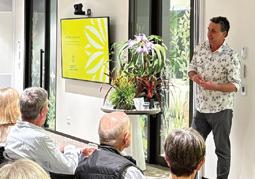
We are excited to launch a new science talk series at the Gardens, led by renowned botanist and science communicator Tim Entwisle. This series explores the fascinating science behind plants, landscapes and the natural world, bringing together research, global environmental challenges and the everyday wonders of nature.
Through engaging conversations, Tim will be joined by leading scientists to share insights drawn from decades of research and discovery, making complex ideas accessible and inspiring for audiences of all backgrounds.
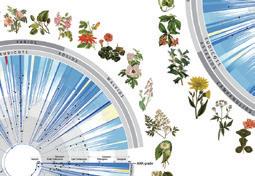
The first talk in the series will feature Hervé Sauquet, an internationally recognised evolutionary biologist, who will explore how plant evolution and biodiversity shape the world around us setting the tone for an exciting new program of science at the Gardens.
Member $50 I Non Member $65
FUNGI MYSTERY, MAGIC & MARVELS
Foundation & Friends Terrace, Royal Botanic Garden
Sat 30 May, 10am – 12pm
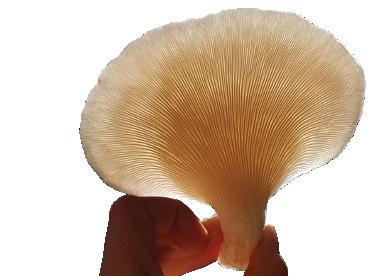
With an estimated 3.8 million species worldwide, fungi are the most populous kingdom on Earth. Join us for a beautiful fungi photo slideshow during morning tea, followed by a fascinating 20-minute presentation and a 90-minute garden walk to uncover the mysteries, magic and marvels of fungi.
Member $40 I Non Member $50
Member $30 I Non Member $45
BLUE MOUNTAINS BOTANIC GARDEN MOUNT TOMAH
Escape to crisp mountain air, peaceful walks and autumn’s vibrant natural palette.
Termites: friends or foes?
As dusk approaches on humid late summer evenings, we often witness swarms of what appear to be flying ants. Close examination of these insects may reveal that they may be termites. Termites are more closely related to cockroaches than ants. They feed on dead plant matter, and live in colonies, comprising between a few hundred to several million, depending on the species and the age of the colony. Termites also have a caste system with kings, queens, soldiers and workers.
The winged termites we witness on humid evenings are the reproductive caste known as alates. These are potential kings and queens that fly out on humid evenings, sometimes in huge swarms, looking for potential new nest spots, and are often a clue that there is a termite colony nearby, possibly in an old tree. The flight cuts, which are the exit slits on the trunk, will reveal where alates have emerged from a colony. The vast majority of alates are unsuccessful and will die within an hour of emerging. However, one or two individuals may be successful in pairing up and finding a suitable tree (or similar), where they can establish the beginnings of a new colony.
On warm evenings, the sudden appearance of winged insect swarms is a fascinating natural event that marks the beginning of a new generation for the local termite population, writes David Bidwell.
Termites are common throughout Australia and a natural component of many ecosystems. Most termite species pose little problem for damaging property, and most species do not colonise timber in service. However, there are commonly occurring species of termite which do damage structural timber, and can be identified by a suitably qualified arborist or pest controller.
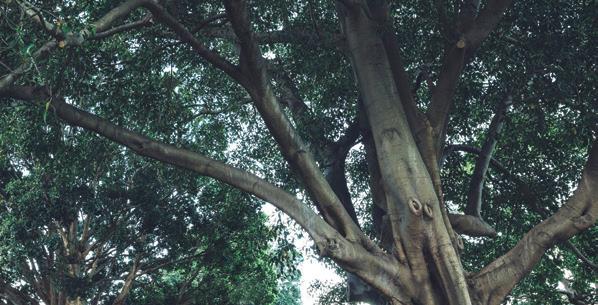
Several termite species are present in trees in the Royal Botanic Garden Sydney and the Domain. Among the most distinctive are the nasute species which construct the familiar large black structures found in old trees. The nasute termites are very rarely a risk for damaging property, and usually co-exist with the host tree for decades. However, in some instances they can exacerbate the decline of an old tree.
Mostly, termites are secretive and rarely seen, but a careful look in some of the old trees in the Woolloomooloo and Yurong precincts of the Domain may reveal the occasional old fig or forest red gum with a colony of nasute termites co-existing with the trees.
Top image: Several termite species are present in trees in the Botanic Gardens of Sydney
Photo: Botanic Gardens of Sydney
AUTUMN PLANT SALE
Get ready for Autumn planting season.
A seasonal selection of native and exotic plants, propagated by Growing Friends volunteers from Royal Botanic Garden Sydney’s living collection.