
by Lylle Antonette A. Flores
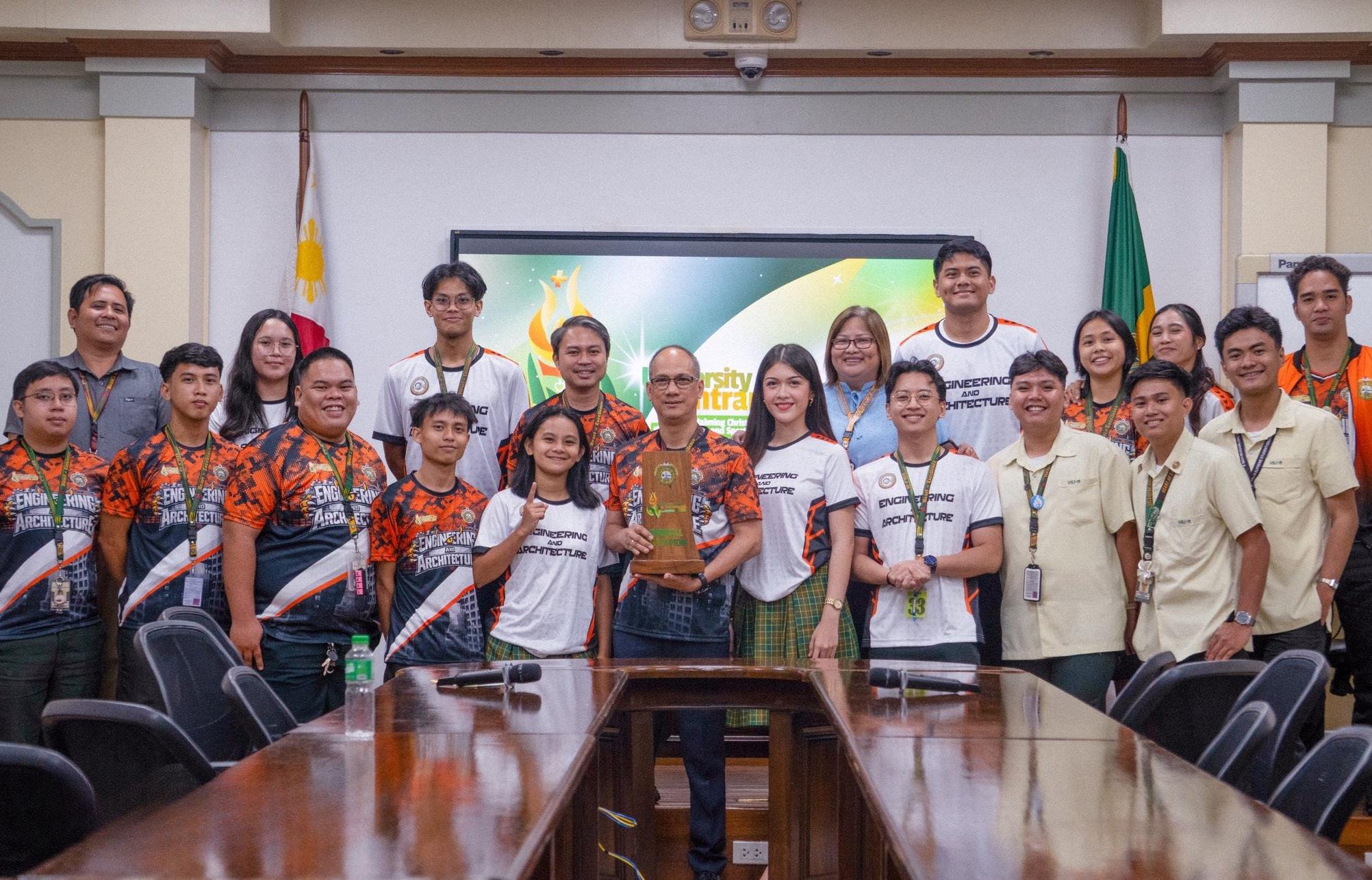
FOR THE FIRST TIME IN 16 YEARS, the overall championship switched reigns as the School of Engineering and Architecture (SEA) dethroned the School of Business and Management (SBM), claiming the University of San Jose-Recoletos (USJ-R) Intramurals 2026 Overall Champion title, formally awarded at the USJ-R Main Conference Room on March 5, 2026.
SEA finished strong with 915 points in total, followed by SBM with 820 points, and the School of Arts and Sciences (SAS) with 690 points.
SEA Sports Coordinator Engr. Anthony Jagures shared their outlook and preparation for this year’s Intramurals.
“Intramurals have been a big challenge for every school. In our case, we tried to do our best…Coaches have been doing their part. We do not yet know our capabilities based on the number of population,” he said.
Apart from ending SBM’s 16-year championship streak, SEA’s Men’s Volleyball
team also dominated the court, ceasing SBM’s decade-long winning run in the ball game.
Fourth-year Civil Engineering student and Men’s Volleyball player Noli Ofianga expressed pride toward his teammates and credited the team’s hard work and unity for their victory.
“The volleyball men longed for 15 years for a championship in volleyball, for me it is a combination of struggles and doing our best para ma -champion,” he added.
Ofianga added that the victory was a proud and momentous achievement for the team.
“We are happy not just for ending the 16year streak, but for finally achieving [a championship] for ourselves,” he said.
After last year’s setback, Fourth-year Civil Engineering and Flag Football player Alleya Salinas shared her gratitude and gratefulness toward fellow athletes with this year’s victory.
“Since akoa gi duwaan sa flag football, last year, third ra mi, but we fell short, na silver ra
USJ-R produces lone Cebuano topnotcher in 2025 Bar exams
by Kimberly G. Capuyan
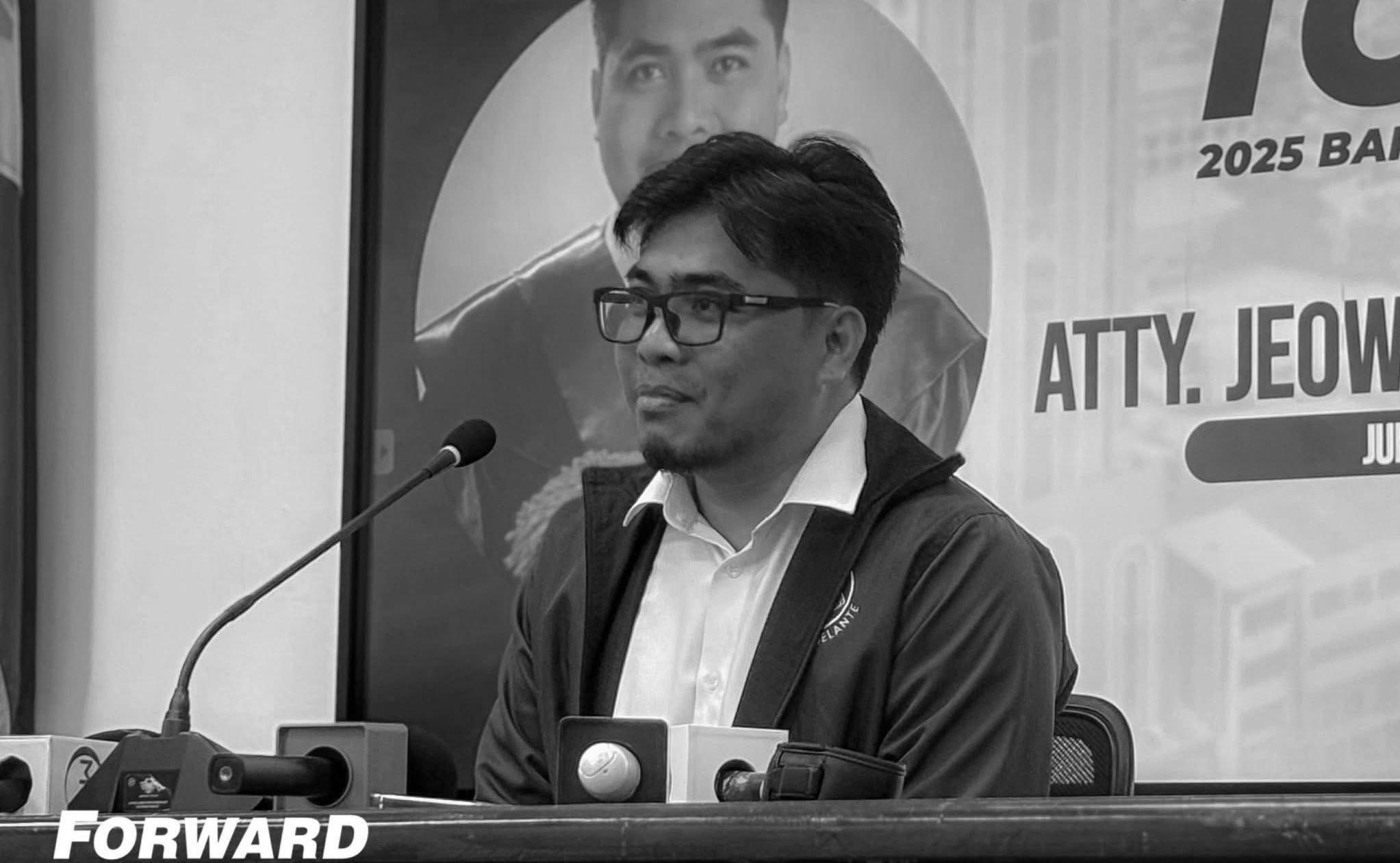
ATTY. JEOWY OMPAD, A GRADUATE OF THE UNIVERSITY OF SAN JOSE-RECOLETOS SCHOOL OF LAW (USJ-R SOL), emerged as the sole topnotcher from the Visayas in the 2025 Bar examinations, with results released by the Supreme Court of the Philippines on January 7, 2026.
Ompad placed sixth with a 91.25% rating.
In a press briefing, he credited his success to his parents, family, and the Josenian community.
A son of fisherfolk from Bantayan, Ompad highlighted how his background shaped his determination.
“I [come] from a family of fisherfolk. I really worked hard, so it helped me [have] the determination to realize my dream,” Ompad said.
He shared that he helped his father fish before moving to mainland Cebu to pursue Accountancy as his pre-law degree.
After passing the Bar, Ompad expressed his commitment to serve the fisherfolk community.
by Sharry M. Cuizon
Kudos sa Volleyball Women kay last year, usa mi sa kinaubsan na ranking sa volleyball, but karon, they made it to the second place,” she said.
Both players have shared the same mindset about why this year was a promising win for SEA.
“I believe[d in my] teammates. I believe sa among process, sa among bilib sa usa’g usa So I know na makaya namo Wala ko nag doubt sa akong players and teammates,” Ofianga said. Further, Salinas emphasized that their collective effort led to their victory, and how united and cooperative their group had been.
“ Amoang batch karon , grabe ang pagkahiusa, [nag]tinabangay tanan ,” she highlighted.
Meanwhile, the School of Allied Medical Sciences (SAMS) placed fourth with 660 points, just ahead of the School of Computer Studies (SCS), which finished fifth with 620 points.
Further, the School of Law (SOL) placed sixth with 520 points, and the School of Education (SED) settled in seventh with 405 points, marking the conclusion of the event. FWD
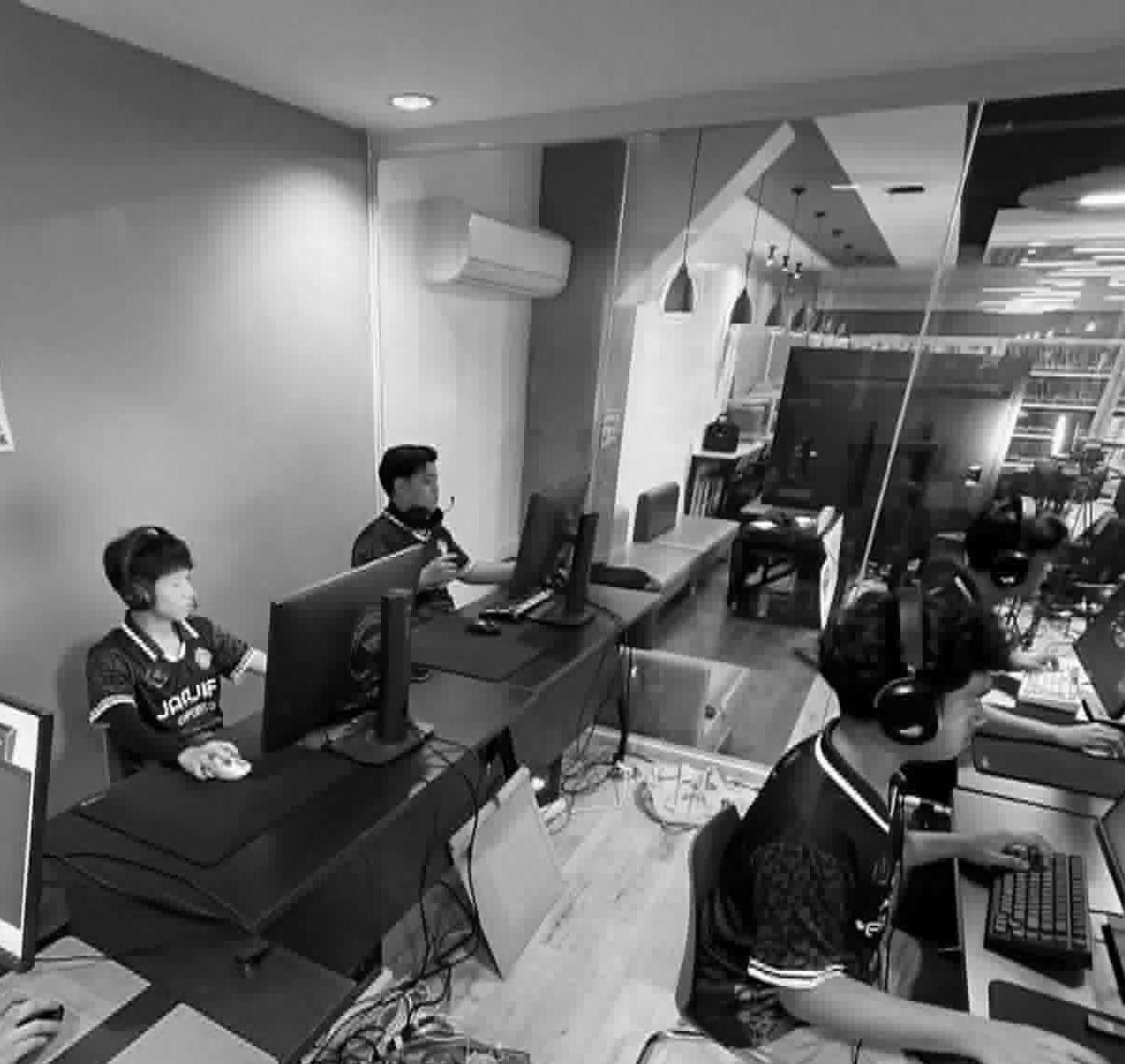
THE UNIVERSITY OF SAN JOSE-RECOLETOS (USJ-R) JAGUARS outplayed the Cebu Eastern College (CEC) Blue Dragons, 3-0, in the Cesafi Esports League Mobile Legends: Bang Bang (CEL MLBB) Upper Bracket Semifinal Playoffs Season 4 at the Cebu Institute of Technology-University (CIT-U) on April 11, 2026.
Jaguars set off with a commanding pace against the Blue Dragons, putting the sustainability of the opponent’s strategy to test in the early game.
Following the Blue Dragon’s series of kills and aggressive map control, the Jaguars fought back with a sequence of killing spree keep-ups to shift the momentum in their favor.
Most Valuable Player (MVP) Harold “SPEED 67” Perez bagged the title with nine kills, one death, and six assists. Together with Klevince “CELIBOURGE1” Marikit’s calculated trounces, the Jaguars eventually aced the first match.
by Regem Mae V. Rivera
TWO GRADUATES OF THE UNIVERSITY OF SAN JOSE-RECOLETOS (USJ-R) placed among the top examinees in the January 2026 Certified Financial Management Specialist (CFMS) examination, according to results released by the Center for Professional Advancement and Continuing Education, Inc. (CPACE) Philippines on January 23.
Bachelor of Science in Business Administration major in Financial Management (BSBA-FM) alumnae Riezel Sabior and Bea Bianca Guevarra ranked fourth with an overall score of 92.50%, and sixth place after earning 91.67%, respectively.
Sabior, a former Junior Financial Executives (JFINEX) officer who served as Ways and Means Officer and Auditor, said she had at least a month to prepare for the examination.
She shared that discipline, consistency, and faith helped her maximize the limited review period.
“I had to be intentional in every study session and trust the process,” she said.
Meanwhile, Guevarra, also a former JFINEX member who served as Director of Graphics and Design, echoed a similar experience, noting that her month-long preparation required balance and self-discipline.
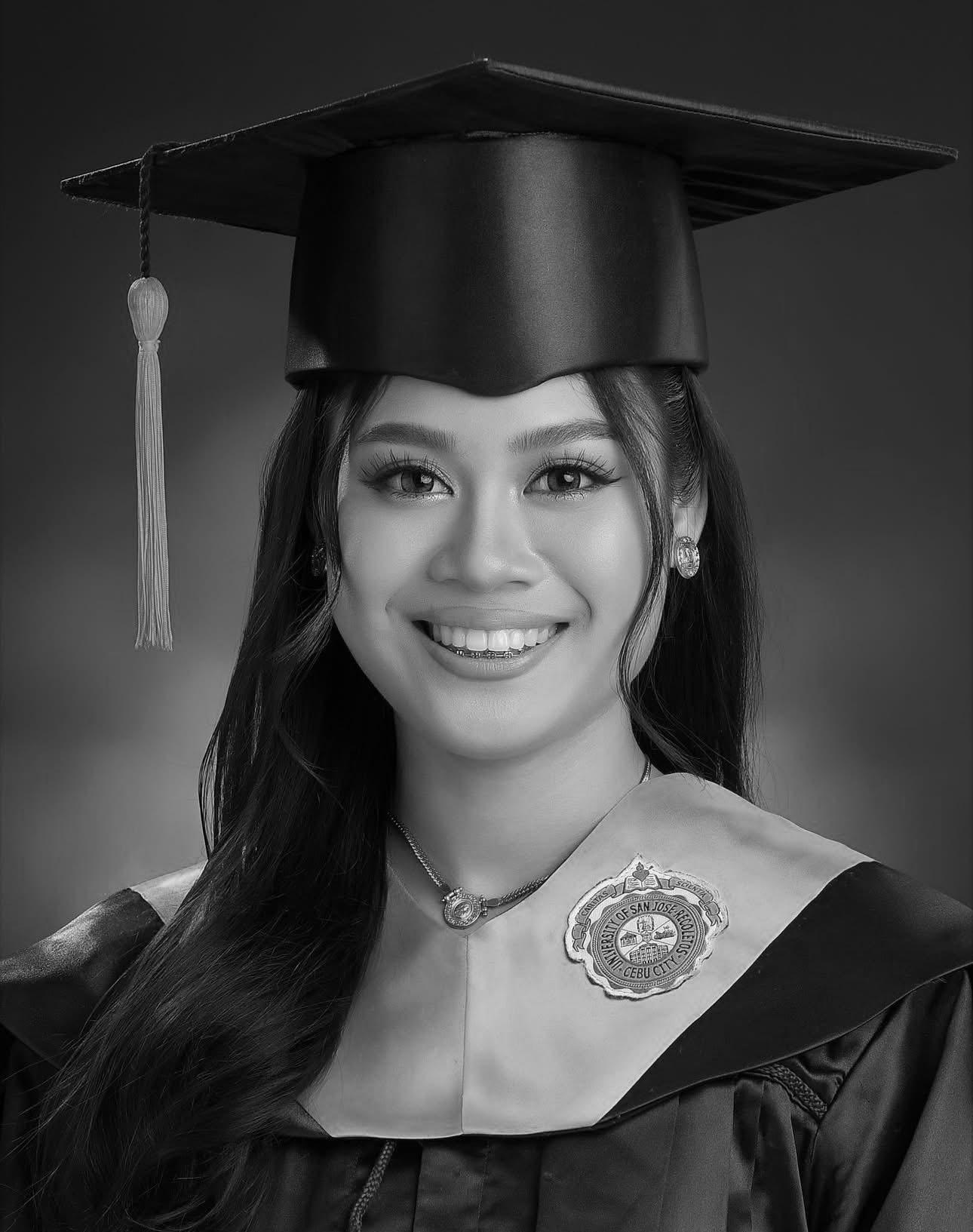
“Even within a limited period, I trusted God and believed that focused preparation would lead to good results,” Guevarra said.
Both topnotchers credited their mentors and the values-driven environment of USJ-R for shaping their academic discipline, character, and professional readiness.
They also expressed their intention to give back by mentoring future finance students pursuing professional certifications.
“Beyond personal growth, I hope to give back by mentoring future finance students and supporting
by Maria Cristina G. Lamug
THE UNIVERSITY OF SAN JOSE-RECOLETOS SUPREME STUDENT COUNCIL (USJ-R SSC) 44th Congress presented its accomplishments in the term’s first six months during the State of the Council Address (SOCA) at the Main Lobby on January 26, 2026.
SSC President Kyle Barte said the Council assumed office during a period marked by “institutional transition, student fatigue, and crisis,” noting that the address aimed to document governance and leadership under pressure.
Barte explained that the Council prioritized strengthening internal systems and coordination to ensure responsiveness before rolling out campuswide programs and services.
“Student leadership was no longer defined by tradition, but by responsibility under pressure… Leadership is not about personalities. It is about the systems we hold,” he said.
Among the initiatives implemented during the semester were Lakbay Hiwaga 2025, EnrollUFirst, KAT-UNA, JOFEST, JoCredit, SBM MarketPulse, SASosyo, SEACart, and JCash, which focused on
student engagement, enrollment assistance, and financial accessibility.
The Council also reported student welfare and safety initiatives, including Kalingkawas: Josenian Wellness Day, Defend Jose, a road safety seminar, and SpaceX, a student space improvement initiative based on consultation and data gathering.
In response to calamities during the term, the Council launched relief operations through Josenian Caritas and Duyog Sugbo, raising a total of P273,939 and extending assistance to more than 500 affected families in Cebu and nearby districts.
Looking ahead to the second semester, the Council emphasized sustained support for student welfare, campus engagement, and academic policy advocacy.
Priorities include expanding wellness programs, improving student spaces, strengthening financial assistance, enhancing governance systems, and building partnerships to broaden services for the student community.
Meanwhile, SSC Vice President Hannah Jane Barco shared that the accomplishments reflected the collective efforts of the student body.
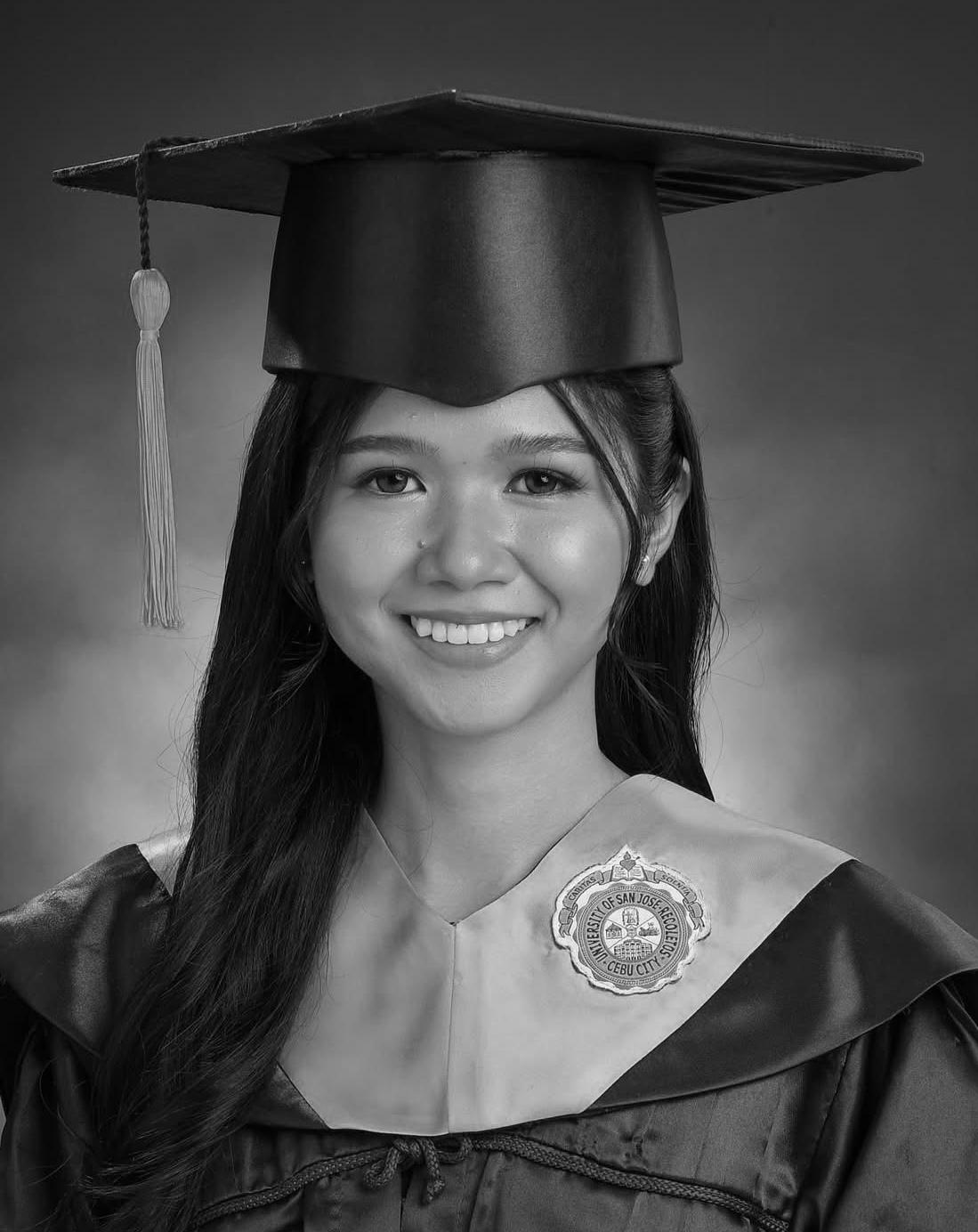
initiatives that promote financial literacy and professional excellence,” Sabior said.
“Moving forward, I plan to continuously grow—professionally and personally—while applying everything I’ve learned, gaining meaningful experience, and improving my skills with faith, determination, and purpose,” Guevarra added.
The CFMS examination is administered by CPACE Philippines to assess core competencies in finance, including capital markets, financial analysis, and corporate finance. FWD

“All of the wins presented here aren’t just the wins of the SSC, but of the entire student body,” she said. Barco added that the Council will continue to actively engage with students, ensuring that policies and programs reflect the needs and feedback of the community.
“We are committed to moving forward with consistency, deliberate planning, and service in the interest of every Josenian,” she added. FWD
from page 1
“Coming from the background of fisherfolk, I wanted to work with them, so that they will have voices, and I can represent them. This is a cause that is close to me,” he said.
Ompad also revealed that he was with his wife when he learned about his achievement, admitting he felt anxious before the announcement.
Prior to law school, he was a Certified Public Accountant and worked as a strategic finance manager. He continued working full-time while studying law.
Despite his preparation, Ompad said he did not expect to land in the top.
“ Wala gyod ko nag- expect nga mo -top, but I really studied hard to give honor to my school, to USJ-R, [and] to put a culmination to the efforts of my professors,” he said.
He also credited USJ-R for supporting him as a university scholar and for providing strong academic guidance during his review.
Ompad graduated cum laude in 2025 as batch valedictorian.
Meanwhile, a total of 5,594 out of 11,420 examinees passed the 2025 Bar exams, posting a 48.98% passing rate. FWD
by Lylle Antonette A. Flores & Ma. Ehla Fatima C. Inanod
IN CELEBRATION OF THE 15TH RECOLLECT AUGUSTINIAN YOUTH NATIONAL SUMMIT (RAYNS), delegates across the Philippines convened at the University of San Jose-Recoletos (USJ-R) Basak Campus, marking the first biennial summit in Cebu on January 31, 2026.
With the theme “Proclaim Christ Wherever You Can,” the summit calls young Recollects to set their hearts and minds for service and to strengthen their faith in God.
The four-day event featured a variety of group discussions and talks, including a session by Rev. Fr. Christian James Mayol.
from page 1

In his discussion, he urged participants to acknowledge the consolations in life as Catholic Christians.
“Sometimes we don’t see these things right there and then. Pero nandyan ’yan, bigay ’yan ng Panginoon,” he said.
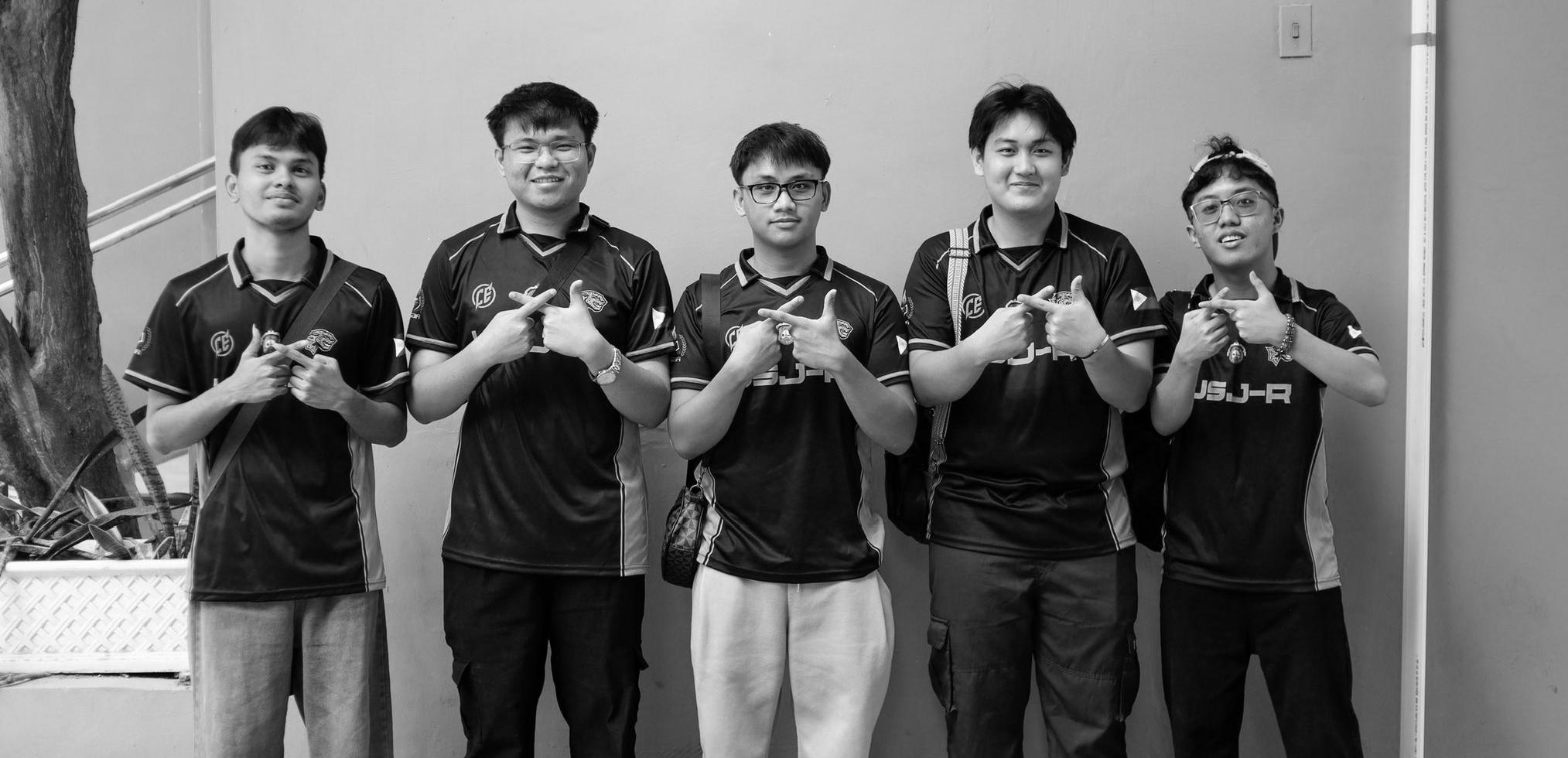
Further, RAYNS Vice President Kenneleen Slam Alvarado shared that for the first time ever, the Philippines will host the Jacintos Augustinos Recoletos (JAR) event next year. FWD
With maintained composure, the second match went by with relentless pushing from the entire roster, taking critical hits in key clashes and maximizing the team’s strategy that left the Blue Dragons in blind zone.
Meanwhile, Jaguars Player Jericho “KAZUKI” Chua shared the team’s perspective during the early fast attacks and comeback attempts of the Blue Dragons. “Lisod ganiha ang ila gameplay and identity kay pick-off jod, [mao] naglisod mi pag game one. Pag game two naka [lamang] nami...dayon na diretso na,” he said.
Chua also emphasized that the team’s experience and skills made it possible for them to win the playoffs and head to the finals.
The team emerged victorious in the second and third match with outstanding gameplay, sending a strong message of clinching the championship title this season. FWD
by Kristianna Amor M. Tagsip

THE UNIVERSITY OF SAN JOSERECOLETOS (USJ-R) Jaguars Athletic Teams snatched various championship titles at the 2026 Regional Private Schools Athletic Association (PRISAA) games held at Tagbilaran City, Bohol on March 13 to 15.
USJ-R teams ruled the tournaments, claiming the Chess championship and seizing multiple titles in Badminton Men’s Singles, Women’s Singles and Doubles, and Mixed Doubles categories, Lawn Tennis Men’s Doubles, Women’s Singles and Doubles categories, and Karatedo, where they took gold in the Senior Kumite events.
Following their respective campaigns in their local leagues and intensive training preparations, both the high school and collegiate athletes entered the regional stage to represent
the University and Region 7 across multiple sporting disciplines.
Leading the champions roster, Men’s Singles Badminton Champion John Kerby Rocacurva emphasized that the teams’ success was rooted not only in individual talent but in their shared discipline and unity.
“Dili lang kay skilled mi individually, but we really trust each other and support one another in every game. Our mindset is also different—we stay hungry and focused on our goals,” he said.
Rocacurva also shared that one of his biggest challenges during the competition was handling pressure from the crowd while striving to surpass his previous bronze medal finish.
Meanwhile, Lawn Tennis Head Coach Misael Bersaluna highlighted the athletes’ preparation and mindset where their willingness to improve
allowed them to maintain composure and deliver strong performances under pressure.
“Our athletes came in well-prepared, both physically and mentally. They stayed focused, disciplined, and committed to representing the school with pride,” he said.
Moreover, Rocacurva expressed that representing USJ-R on a bigger stage is both an honor and a personal achievement for him.
“This is not only my dream, but also my family’s dream…Dako kaayo ni nga pride not just for myself but also for the school,” he shared.
The victories secured the Jaguars’ qualification to the National PRISAA, representing Region 7 in Bacolod City, Negros Occidental on May 5 to 15. FWD
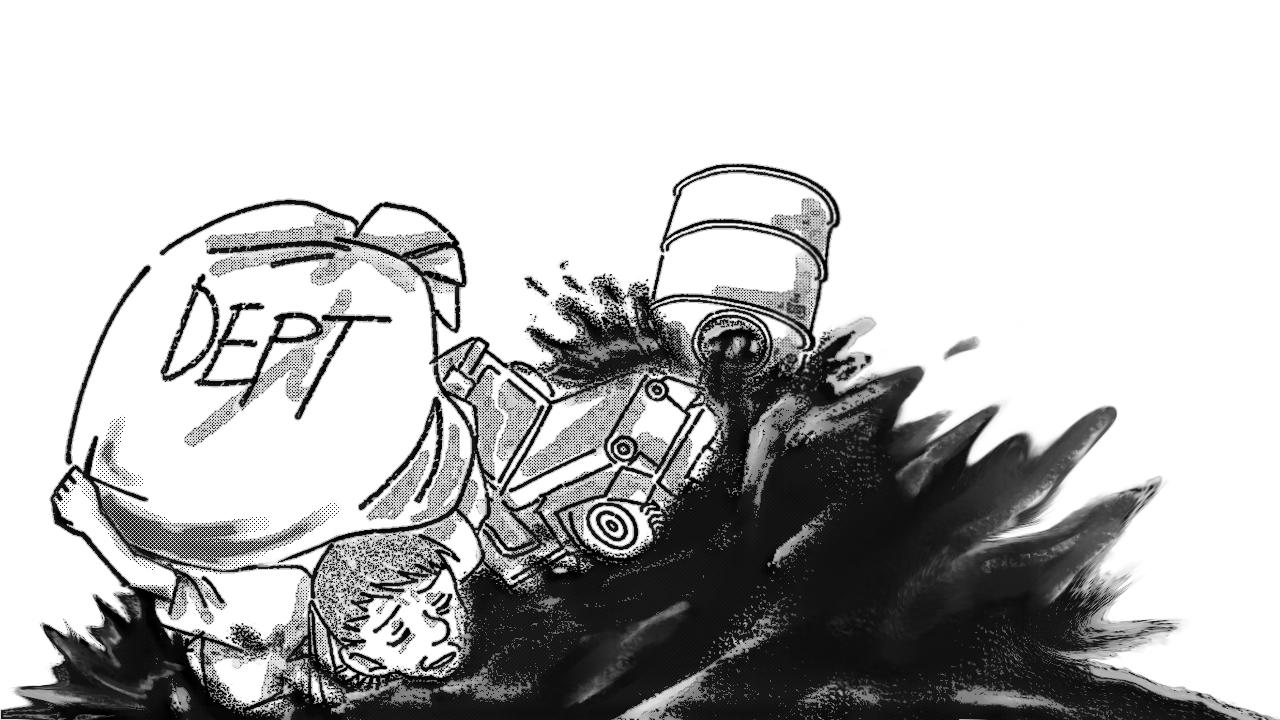
What is the biggest mistake people make during a crisis?
As war tensions between the United States (U.S.) and Iran continue to drive global gas prices upward with the closure of the Strait of Hormuz, the impact travels far from the frontlines.
It settles heavily on the “kings of the street,” the jeepney drivers who keep the country moving.
But today, even the kings are cornered and are left running empty on the streets that once defined their livelihood.
A sector long regarded as the backbone of public transport is now not only under pressure from a war it did not start, but is also being hollowed out by the very government meant to protect it.
Cebu Federation Transport Cooperatives President Ellen Maghanoy said drivers previously earned between P1,000 and P1,500, net of expenses.
Now, on a good day, some take home P400 or less, due to gas spiking up to P160 to P200 per liter.
That is P400 for a full day of labor to cover food, rent, school allowances, and every other basic necessity of a family’s survival.
Worse still, the burden does not end with fuel. Loans tied to the “Jeepney Modernization” program further drain what little drivers earn, leaving them with obligations already deducted before fuel costs are even considered.
What remains is often barely enough to justify the effort. This is not income. This is endurance.
Faced with this reality, drivers are not asking for excess, they are demanding survival.
BOARD AND STAFF
Ava Donalie A. Ferolino Editor-in-Chief
Krisha Faye A. Gascon Associate Editor / News Editor
Kimberly G. Capuyan Managing Editor-Administration
John Kherwin A. Pansacala Managing Editor-Finance
Narvie Klaryzze B. Borja Creative Director
What they are calling for is a concrete response from the government: a temporary increase in minimum fare and an Oil Fuel Fund to subsidize domestic prices.
Instead, the response has been restraint.
President Ferdinand Marcos Jr., suspended fare increases for certain Public Utility Vehicles (PUVs).
“In my view, since we are still facing challenges due to the conflict in the Middle East, I said that this may not be the right time to increase the fares for our people,” Marcos said in a video message.
While framed as protection for commuters, the government ends up regulating drivers instead because it cannot regulate private oil companies.
The Philippines, unlike many of its Southeast Asian neighbors, has a fully deregulated oil industry that is governed by the Downstream Oil Industry Deregulation Act of 1998.
In a Senate hearing, Energy Secretary Sharon Garin told the Senate Proactive Response and Oversight for Timely and Effective Crisis Strategy (PROTECT) committee about the impact of these deregulation policies.
“Kaya hindi mo sila madidiktahan kung kailangan, kung kailan na talaga kailangan pumasok ng gobyerno because the only thing that the government can do is supervise, monitor,” she said.
This creates a false balance—one where relief of one sector comes at the expense of a more vulnerable group.
As Energy Undersecretary Alessandro Sales noted, nations like Thailand channel revenues into subsidies that keep fuel prices stable while
Lylle Antonette A. Flores Opinion Editor
Kristianna Amor M. Tagsip Features Editor
Louise Lambiquit Literary Editor
Ceraley S. Cabiltes Jr. Sports Editor
Ma. Ehla Fatima C. Inanod Broadcast Manager
Khen B. Fernandez Co-Broadcast Manager / Illustrator
the Philippines has instead opted to provide “direct assistance” such as the P5,000 cash transfers to drivers.
Band-aid solutions that offer temporary relief but fail to address the structural problem.
This is where the failure becomes clear.
The crisis did not arrive unannounced, because since then, the Philippines’ long-standing dependence on imported oil has always made it vulnerable to global disruptions.
Yet there has been little effort to anticipate or mitigate these risks.
And as long as jeepneys continue to run, as long as drivers continue to show up, the system appears functional.
Commuters are transported, routes remain active, and the country moves. But beneath that surface is a workforce slowly being drained financially, physically, and emotionally.
Drivers push through, not because the system works, but because stopping is not an option. For them, to stop driving is to stop earning altogether—a risk far greater than operating at a loss.
The question now is whether those in power will recognize the urgency and not when the engines stop, but while they are still running.
Because the greater danger lies in this: a country that still fails to see it is already in a crisis. FWD
Krista Marie B. Yaoyao Therese Margarette A. Racaza Online Editors / Layout Artists
Kimberly O. Tumilap Property Administrator / Photographer
Raghnall P. Cena IT Administrator / Videographer
Gabrielle Marie R. Paradiang Art Director / Photographer
Trixcy D. Clar
Sharry M. Cuizon
Regem Mae V. Rivera Writers
Yasu M. Al-dawood
Vince Praxie C. Nuñez Photographers
Karina Adel A. Vestil
Sienna Rio E. Young
Heron Augustus S. Flores
Hannah Vanessa O. Mondilla Illustrators
The Philippines is a patriarchal society, where power and authority have long been shaped by male supremacy.
This shows in leadership spaces that remain largely male-held, in who is afforded authority without question, in how women’s experiences are trivialized, and in the subtle yet persistent ways control over women’s bodies and presence is normalized.
On April 8, 2026, a Facebook user who goes by the name Boss Toyo Mansi uploaded a photo of himself with Filipina actress Xyriel Manabat, where the latter appeared to have booked a ride in his vehicle.
Despite exchanging pleasantries throughout the ride, the Grab driver expressed lewd remarks while in conversation with a friend, which prompted backlash from netizens as the post circulated, was deleted, and then reuploaded through screenshots, a sequence that has become all too familiar in cases like this.
If a driver can brazenly post a photo of a passenger and attach lewd remarks, it is reductive to frame this as mere individual misconduct, because what emerges is not only the act but the audacity behind it.
The presumption that such behavior can be done without immediate repercussions, and if it can happen to a celebrity, then it raises a more unsettling question: What happens to women whose experiences do not reach headlines and who are left to carry the discomfort quietly?
While laws exist and discourse persists, everyday reality still reflects a system where women traverse public spaces with a level of caution men are not burdened to carry, where something as ordinary as a ride comes with an unspoken calculation of safety.
This caution is not imagined but empirically grounded.
According to a Social Weather Stations survey conducted under the United Nations (UN) Women Safe Cities Programme, data shows that three out of five Filipino women have experienced sexual harassment at least once in their lifetime, including catcalling, stalking, and unwanted comments in public spaces.
This incident does not exist in isolation, because patterns like this have surfaced before, including reports of ride-hailing drivers forming group chats where photos of female customers are shared and paired with explicit commentary, turning everyday interactions into subjects of private discussion.
What makes this more infuriating is that it happened a month after the incident where a politician also expressed lewd remarks about Filipina actress Anne Curtis.
Boundaries are consistently crossed and these men have grown too comfortable commenting on women’s bodies.
Growing up in a lower middle-class household taught me how to catch a jeepney at a very young age.
At seven, I was made to memorize their signages— 04C, 17B, 04H, 15—along with their corresponding routes because no one was left at home to remember it on my behalf.
With just a two-peso coin, tsupers would drive me from Lahug where my elementary school is located to Ramos, our residence then.
Back-and-forth, as I am always seated in the front seat, my eyes would be fixed on the dashboard with the towering coins collected from fares of the other passengers. Each clink of metal seemed to signal a “good day,” an assurance that their needs might be met.
I may have been young but I was never naive to notice those exhausted eyes and the lumbar support attached to their backrest to relieve their strain from the relentless hours on the road.
As much as how fulfilling it must be to safely fetch people and bring them to their various destinations in exchange of a penny, the system they move within elucidates a harsher reality—one that demands so much from them, yet gives so little in return.
Different national issues arise as time goes by and each time they become imminent, they fight whatever is challenging their very survival.
From the modernization program to the augmentation of diesel fuel costs due to the geopolitical tension in the Middle East, it is no question that they are one of the most affected sectors in society.
In the Philippines, the government passed a legislation coined as the Downstream Oil Industry Deregulation, Republic Act No. 8479 enacted in 1988, which
This all points to a culture undergirded by the same ideological premise, that women’s bodies are accessible to scrutiny and we are expected to endure behavior that should never be normalized.
The Safe Spaces Act, or Bawal Bastos Law, represents a legislative effort to confront these dynamics by codifying and penalizing gender-based harassment across public and digital spheres, yet its existence alone is insufficient to dismantle the deeply entrenched attitudes that sustain such behavior.
While the law delineates consequences, it does not inherently recalibrate the cultural norms that precede them.
As long as objectification is tolerated in small, everyday ways, it creates an environment where larger violations feel less like exceptions and more like extensions of what has always been allowed.
The imbalance of power in these situations makes the issue harder to confront, because in ride-hailing services, drivers hold access to personal information, physical proximity, and control over the immediate environment.
The passenger has limited options in the moment, and even after the interaction ends, the violation can continue through posts, images, and commentary that spread beyond the original space, leaving the woman to deal with something she never agreed to be part of.
Addressing this issue necessitates more than reactive measures, as suspension and apology do little to forestall recurrence, and public statements fail to rectify the structural conditions that enable such conduct.
Platforms must enforce stricter standards that extend beyond the ride itself, including clear policies on post-service conduct, stronger monitoring, and systems that respond with urgency.
Beyond institutional action, there must be a shift in how these behaviors are understood and challenged within communities, where participation in objectifying spaces is no longer dismissed as harmless.
Moreover, accountability should not be limited to formal consequences but should extend to everyday interactions—a broader cultural shift in how these behaviors are perceived, challenged, and ultimately rejected.
What a girl wants is to be respected, what a girl wants is to explore the world without fear of being objectified by grown men.
And what she deserves is a society where that expectation is not seen as ideal but as standard, where safety is not dependent on status, and where dignity is not something that has to be defended after it has already been taken. FWD
Choosing silence in times of crisis does not protect anyone but rather shapes the times we must live with.
Being Filipino means being born with a backpack missing essential equipment and still being expected to survive. It comes with watching your family budget every peso, make sacrifices, and endure more than they should.
Ironically, for all this vigilance at home, we often become strangely passive in the one area that most shapes our collective fate: politics.
I remember being in ninth grade when a teacher advised the entire class to avoid political conversations. “You should be ashamed because you are not taxpayers yet. Your opinions do not matter,” she said.
At the time, I was too young to comprehend the gravity of her words. In hindsight, it is dangerous to receive that as a lesson.
That is precisely how apathy is taught and how societies regress: under the guise of propriety and a cold shrug.
The Philippine Statistics Authority (PSA) reported that voter turnout in the 2022 elections reached 84.09%, a higher percentage compared to the previous election.
However, we can only hope that those who voted thought about their choices critically and not just based on how they felt.
After all, I recall a friend sharing how, while lining up to vote, she overheard a conversation between an Overseas Filipino Worker (OFW) and her companion. They said they would simply choose whoever came to mind once inside, because they could not care less about Philippine politics as they were leaving for another country anyway.
The repercussions of indifference are unfortunately measurable.
The PSA reported that inflation rose to 4.1% in March 2026, notably the highest in over a year. At the same time, the peso’s purchasing power fell to 0.7519, its lowest level in recent years.
Essentially, what money could buy before, it no longer can today. The decisions that led to these outcomes are products of the same nonchalance toward it.
A 2024 study published in the Formosa Journal of Multidisciplinary Research warns that declining political participation weakens democratic systems, undermines government legitimacy, and limits the quality of decision-making.
Therefore, to be apolitical is not to stand outside the system. It is to gamble on others to make decisions for you.
At the same time, disengagement is not always rooted in indifference. Researchers from Yale School of Medicine found that heavy social media use affects attention and emotional regulation.
In this kind of political climate, stepping back from political content can feel like self-protection and regulation.
But that is exactly why we should be uncomfortable with such detachment, because it was never truly serving us.
prioritizes the fiscal health of the oil corporations, and free market.
With the absence of the regime’s control, companies have the leeway to adjust the prices of their petroleum products without the intervention and regulation of the former.
Simply put, consumers bear the suffering while the prices of other necessities and fares, proportionally increase. There is a need to inculcate this: the abolition of such has to be expedited as it tends to favor corporation’s interest over public welfare.
Whereas, if we will compare it to other neighboring countries such as Brunei Darussalam, Cambodia, Vietnam, Thailand, and several others, they have adopted interventionist approaches including price controls, subsidies, or state regulation mechanisms, which help cushion their citizens from extreme price volatility as published by The Diplomat.
To be fair, the executive suspended the excise taxes imposed on fuel, granted subsidies to operators, drivers, and other groups who are affected with the current crises, and ordered the same to put brakes on fare hikes.
But the thing is these are merely palliative measures— one that is not really remedying but providing short-term relief—a kind of service the Philippine government has grown accustomed to providing.
What prevents lawmakers from totally repealing a law that hinders their own functions to impose fuel price caps?
I am now a grown man, but the problems the sevenyear-old me once witnessed have not outgrown me.
I can only hope that one day, the Filipino people get to finally experience a sustainable transport system that works on the passengers, and in which manong drivers are afforded the protection they truly deserve. FWD
We often say we love our families. We work for them, sacrifice for them, and endure for them.
But love, in its fullest sense, is not only about providing—it is also about protecting the conditions in which they live.
To love is to fight. Ang magmahal ay pakikibaka. Admittedly, the right to be apolitical exists. But rights are not shields from consequences.
In many ways, to have the luxury of remaining silent, unconcerned, and neutral is to be numb to the plight of many Filipinos who have no option to disengage from rising prices of fuel, unstable policies, and limited opportunities.
Civic participation, particularly voting and public discourse, remains one of the few direct ways individuals can influence outcomes that affect their daily lives.
There is no expectation for everyone to become highly political overnight. But there is value in acknowledging that participation, even in small ways, matters.
Paying attention, staying informed, and being willing to engage are simple but significant steps toward ensuring that individual and collective voices are part of the conversations that shape our everyday reality.
Not everything is within our control, but these small choices to care and to act on that care still are. If there was ever a time to reject apathy, it is now.
As citizens, our greater responsibility is to continue the conversations our ancestors began; conversations they were often denied, but which now depend on us to be heard and carried forward.
Get up. Pay attention. And choose to be political. FWD
by Ma. Ehla Fatima C. Inanod
NABBING A STRAIGHT SET VICTORY, the School of Engineering and Architecture (SEA) dethroned the School of Business and Management (SBM), 3-0, and ending its 10-year championship run in the Intramurals 2026 Men’s Volleyball tournament at the University of San Jose-Recoletos (USJ-R) Basak Campus Covered Court 1 on February 20.
SEA banked on strong attacks, securing the victory with a 27-25, 25-23, 25-20 finish.
Multiple aces in the first set left SBM tailing behind at 27-25 while SEA pressed again with open spikes, placing the second set at a close 25-23.
In the final stretch, SEA reinforced crucial plays and dominated the game at 25-20.
Meanwhile, SEA’s setter and awarded Most Valuable Player (MVP) Gems Hector Entoma
shared communication as a key strategy in their gameplay.
“ Mao gyod na among gi -work [on] throughout the game, nag -adjust mi sa amoang positions, hantod naabot mi sa finals nagkasinabot na gyod m i, ” he said.
Further, team coach June Anne Caladcad also shared sentiments on the historic win.
“I think even as a student before wala ko kakita nga nakadaog among volleyball men. It is a very monumental moment for them as well as me as a coach,” she said.
According to open spiker and team captain Noli Ofianga, the team is at its “best state” with the players they currently have.
“We’ve been experimenting sa among lineup, so eventually nakuha na gyod namo ang saktong timpla sa among team,” he said.
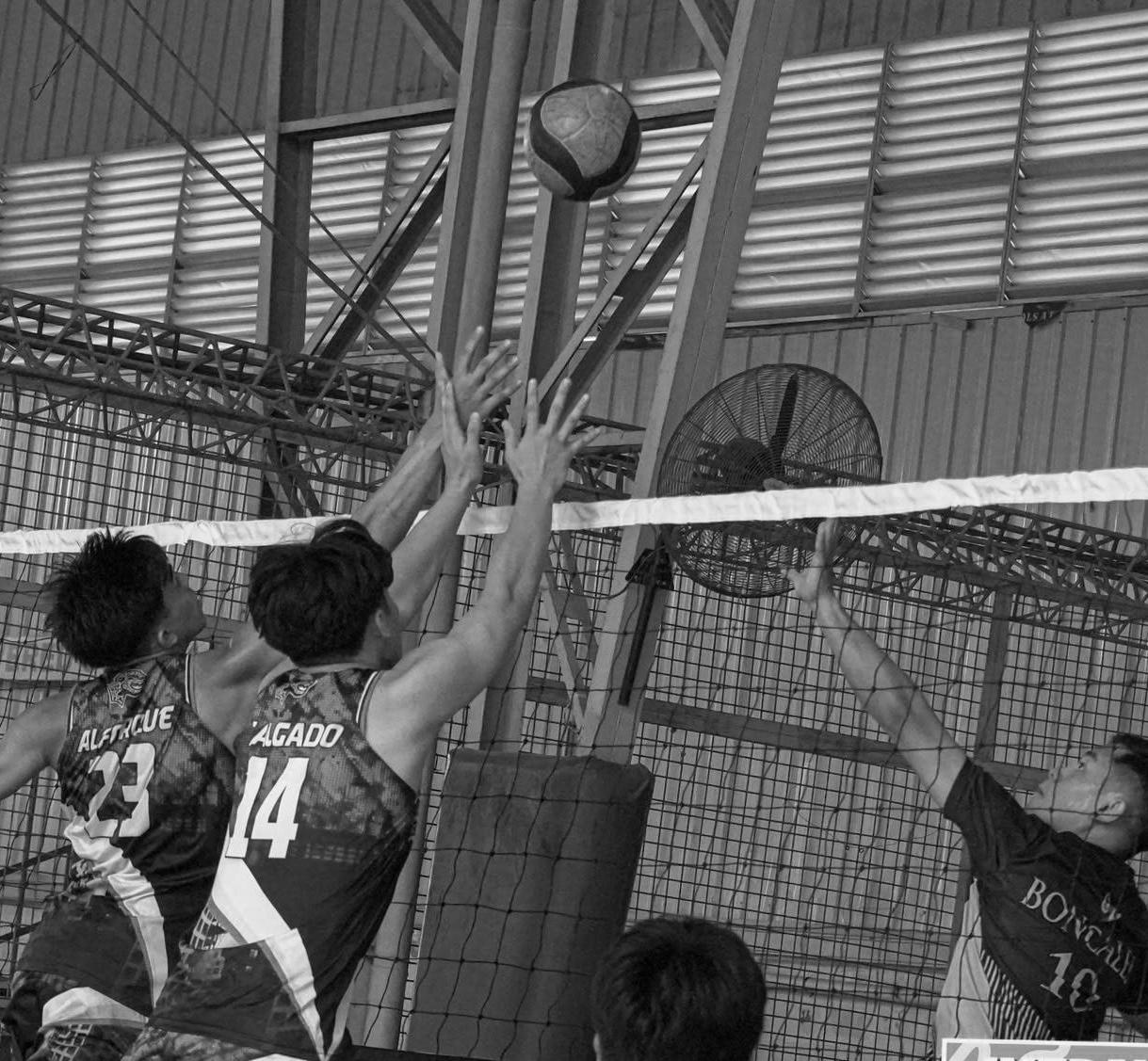
Moreover, SEA also bagged individual awards, including “Best Opposite Hitter” Mitch Suba, “Best Setter” Gems Hector Entoma, “Best Libero” JM Anthony Teraza, “Best Middle Spiker/Blocker” Vince Niño Tagalog, and “Best Coach” June Anne Caladcad. FWD
SBM claims crown, SAS ends title drought in Mr. and Ms. Intrams ‘26
by Krisha Faye A. Gascon
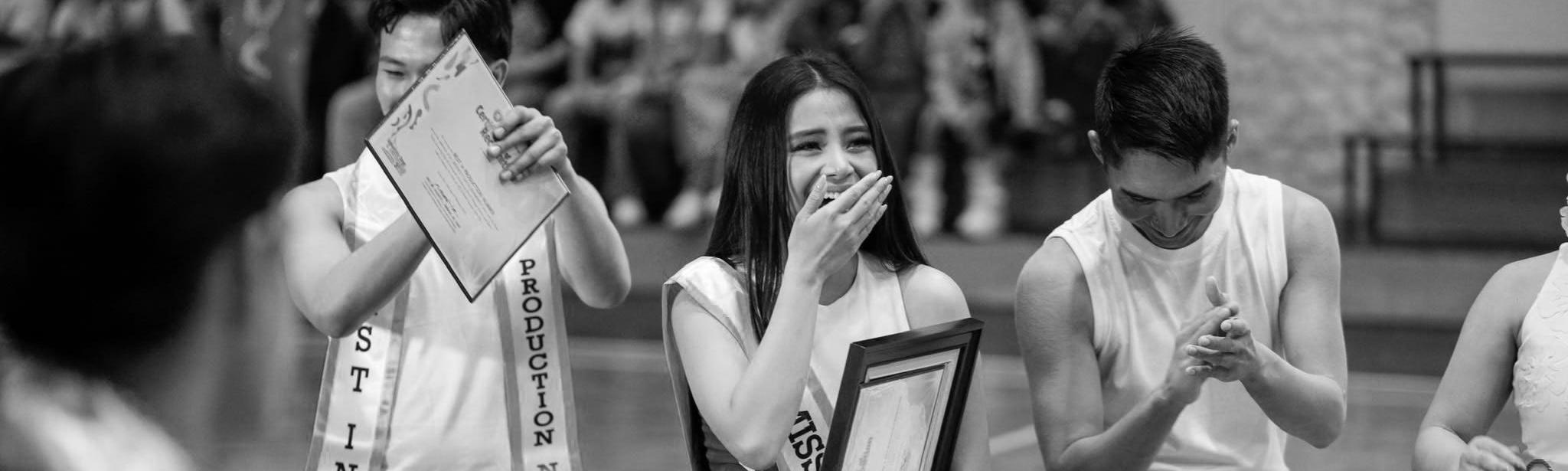
THE SCHOOL OF BUSINESS AND MANAGEMENT (SBM) and the School of Arts and Sciences (SAS) shared the spotlight as they captured the Mr. and Ms. Intramurals 2026 titles at the Recoletos Coliseum on February 19.
SBM’s John Lloyd Mejares and SAS’s Lilia Amapola Buhat emerged victorious, rising above representatives from the School of Allied Medical Sciences (SAMS), School of Computer Studies (SCS), School of Engineering and Architecture (SEA), School of Education (SED), Expanded Tertiary Education Equivalency and Accreditation Program (ETEEAP), and School of Law (SOL) to claim the University’s most coveted crowns.
Second-year Psychology student Buhat ended SAS’ title drought and also took home the Ms. Photogenic award.
“This has been my prayers ever since because I have been planning to join Ms. CESAFI, this is my dream, and right now I won this title and I’m so happy and [I] thank the Lord above,” she expressed.
“My preparation for this [was] constant [and I had] rigorous training when it comes to pasarela because for me, I’m not really good [at] walking in pasarela , so everyday I work[ed] hard,” she added.
Meanwhile, second-year Marketing Management student Mejares strengthened SBM’s hold on the pageant after also being named Mr. Photogenic.
“Thankful ko nila [Mr. Al Radomes] nga andam sila ni tabang sa ako and sa akong partner,” he said, crediting his mentors for the consistent support.
The competition also recognized outstanding finalists and special awardees.
Named as 1st runners-up were Hanes Enopia (SAMS) and Louidine Gelig (SBM), while Carl Vincent Yap and Rhempshe Lynspherd Anajao (SEA) secured the 2nd runners-up titles.
For special awards, Isaiah Nicholas Nadal (SAS) and Louidine Gelig (SBM) earned the Best in Production Number awards for the male and female categories, respectively.
Delegates from the Basic Education Departments also took to the stage, competing in their respective searches for the Mr. & Ms. Junior Teen Intramurals, Junior High School Teen Intramurals, and Seniors High School Teen Intramurals crowns. FWD
by Ceraley S. Cabiltes Jr.
THE UNIVERSITY OF SAN JOSE-RECOLETOS (USJ-R) JAGUARS VALORANT TEAM succeeded in their bout for the CESAFI Esports League (CEL) Season 4 Playoffs after their CEL Play-ins campaign against different universities in bestof-one matches at the Cebu Institute TechnologyUniversity (CIT-U) on Sunday, March 29.
Entering into the first match, the University of San Carlos (USC) Warriors was immediately forfeited, granting USJ-R an automatic win and an early point in the play-in standing.
Afterwards, USJ-R sealed their second map with a 13-10 clinch against the University of the Philippines Cebu (UPC) Maroons, showcasing well-planned executions and structured rotations as they coordinated to remain keen the entire match, guarding their grounds to withhold vital sites.
Meanwhile, USJ-R was unable to bag another score during their third match, falling behind the
Cebu Doctors’ University (CDU) White Stallions, 6-13. Despite an intense battle between the two teams, USJ-R failed to build momentum and make a comeback, leaving CDU with a win.
Josh Mc Kenzy Tinapay, the team’s manager, voiced his joy and fulfillment as the team ventured to the playoffs competition.
“We know n ga mas lisod ang upcoming matches, so for our preparations, we are doubling down sa among practice. Sige mi og scrims to test new [strategies], and nag -focus mi sa VOD reviews para ma -correct namo among mistakes from the previous games,” Tinapay expressed.
Despite the 2-1 score in the play-ins, the Jaguars Valorant team still advanced to the CEL Season 4 Playoffs, fighting off their standing against other university team qualifiers for a chance to win the championship. FWD
by Kimberly G. Capuyan and Ceraley S. Cabiltes Jr.
In the recently held series of Constitutional Convention meetings, the University of San Jose-Recoletos Supreme Student Council (USJ-R SSC) proposed a 10-peso increase in its fee, raising it from P50 to P60. With this, we asked Josenians: “Do you support the proposed SSC fee increase? Why or why not?”






by
& cy






School of Arts and Sciences
“I do not support the proposed fee increase. It might seem small to some, but it represents a bigger issue for us, students, katong mga naglisod sa allowances, gipit pa gyod, especially in today’s tough economic climate. Many Josenians are stretching their budgets down to the last peso just to survive. It is never “just 10 pesos.” When we add this up alongside sa atoang regular tuition, grabe na gyod ang financial pressure sa nagpaeskwela sa atoa, as well as sa mga working students. Right now, we need a student council that is highly sensitive to the financial realities we face, rather than one that adds to the burden.”
“The proposed hike in the SSC fee from P50 to P60 is modest, as it will give the council the opportunity to address inflation and allocate funds to activities that enhance student welfare. Even though this might seem like one more burden among many, as both a student and someone who has witnessed the hard work of the SSC, I believe this increase is well-deserved, as long as the council provides the transparency we deserve as well.”
“As much as possible, I would prefer to keep the SSC fee at P50, since any reduction in expenses can be a big help to students. Small fee increases can add up and take a toll on students’ funds, especially for those managing tight budgets. However, if the additional ₱10 is truly necessary to improve services, programs, and the overall student welfare, I am willing to support the increase. I just hope this change will be transparent and result in a clear, meaningful contribution to students’ lives at the university.”
“I don’t fully support the proposed fee increase at this time. While I understand the SSC may need more funds, even an extra P10 can still add up for students. Also, especially on the Basak campus, we don’t really feel the SSC’s presence. It’s hard to support an increase when the current fee’s impact isn’t visible to us. I think they should first be transparent about how the funds are used and ensure their presence is felt across all campuses. For now, I’d rather they maximize the current ₱50 before asking for [an increase].”
School of Engineering and Architecture
“As a student, 10 pesos could [mean a] difference between having enough for a jeepney ride home or having to walk. Before requesting an increase, the SSC must provide a transparent report on the current P50 fee to demonstrate that it is being managed effectively. I believe the school should focus on making life easier for students during an oil crisis, not adding more fees. Instead of raising prices for events or activities, the council should find ways to be more creative with the money it already has, or cut unnecessary expenses to save students money.”
School of Allied Medical Science
“I agree with the fee increase only if it goes toward a good cause that directly benefits the students. We all know that even a single peso is very hard to earn. Because money is tight, we must be practical and make sure we spend on our needs rather than our wants. If this extra 10 pesos ensures better services and higher-quality support for every Josenian, then it is a necessary investment. I am willing to support this change as long as it prioritizes quality over quantity. If the money is well spent to improve our student life, then every hard-earned peso will be worth it.”
Capricorn (December 22–January 19) I wonder why most Capricorns look like they’re always on the go—panting and sweating as if they’re out of breath or something. I suggest you guys slow down a little and air for some timeout. Sure, life can feel hectic, but take it easy; it is never a crime to just chill!
Aquarius (January 20–February 18)
Some things are better left in the past, Aquarius. When will you guys ever move on? Let go of memories that no longer serve you! Stop holding yourself hostage to situations beyond your control. And please, stop making up theories of your own to feed your delusions.
Pisces (February 19–March 20)
Not everything needs to be shared, Pisces! This is not your personal podcast. It’s not selfish to keep some things to yourself. And let’s be real, sometimes some people just don’t care. You cannot pour from an empty cup—protect your peace first before giving more to others.
Aries (March 21–April 19)
Fueled by momentum, you have the energy to start everything and the patience to finish…some of it, Aries. The challenge now is not motivation, but follow-through. Don’t get distracted—lock in! Always remember to choose consistency and control over excitement.
Taurus (April 20–May 20)
You love a good routine, Taurus, and honestly, it loves you back. You work best when things feel stable, but growth might ask you to be a little uncomfortable. So, hang in there and believe in yourself. Try saying yes to something unfamiliar, even if it feels inconvenient at first!
Gemini (May 21–June 21)
Pulled in different directions, you can do everything all at once! Not so fast though, the real question is, should you, Gemini? Your ability to multitask is impressive, but it stretches your focus thin. Choose what truly matters and give it your full effort.






Cancer (June 22–July 22)
Feelings are valid, Cancer, but they do not have to run the whole show. There may be moments when feelings take the lead more than your plans do. Pause, reset, and get back to work!
Leo (July 23–August 22)
Yes, you shine naturally, Leo, but not every moment needs a spotlight, you know? Some of your best work can happen quietly, away from attention. Prep now, get noticed later. Rest assured, you’re still the main character.
Virgo (August 23–September 22) Your standards are high, Virgo, and that is not a bad thing. The problem is, perfection slows progress. There is no harm in dialing things back. Sometimes, finishing the task is already a win!
Libra (September 23–October 23)
You tend to struggle with decision-making, Libra, which can paralyze you and keep you from going after what you truly want. Make up your mind. Strategize and then strike! Make your move now and be unapologetic about your dreams.
Scorpio (October 24–November 21)
You are more capable than you let on, Scorpio. What are you so afraid of? Do not shy away from leadership roles. Learn to assert dominance—you carry a quiet resilience that many people overlook!
Sagittarius (November 22–December 21)
Why stay in the corner when you could take up space, Sagittarius? Do not dim your light just to let others shine. There is more to life than staying in the corner of the party. Dance, laugh, and let your presence be known. You are your own person, too!
FORWARD Publications clinched 3rd place in the inaugural PUNLAAN 2026 Multimedia category at the University of the Philippines Los Baños (UPLB) on March 22. The Publication also won Best in Scriptwriting and placed 2nd in the Komunikasyong Pangkaunlaran special award. PUNLAAN is a campus journalism competition organized by UPLB’s official student publication, UPLB Perspective.
Capturing its third consecutive triumph, the School of Business and Management (SBM) secured another win in the University of San Jose-Recoletos (USJ-R) Intramurals 2026 Dance Palabas at the Recoletos Coliseum on February 19. The SBM performance showcased a pageant-inspired concept that featured service and tourism in the Philippines.
Fourth-Year Bachelor Of Arts In Communication Student Jhon Mark Aboabo, from the University of San Jose-Recoletos (USJ-R), conquered the 2026 CESAFI Bangga sa Balak competition held at the USJ-R Basak Campus on March 16.
The Servi Amoris Community, through Gugma Productions, staged a free-for-all Theatre Play for a Cause at the Recoletos Center for Arts and Culture (RCAC) on March 14, 2026. Featuring performances by Josenians and volunteer actors from Gothong National High School, the event showcased three plays aimed at promoting community engagement through art.
Associate Professor At Hiroshima University in Japan Dr. Lawrence Liao, delivered a lecture on “Critical Issues in Research Ethics and Integrity Across Borders” at the Recoletos Center for Arts and Culture (RCAC) on March 4, 2026, discussing global standards in research conduct and collaboration.
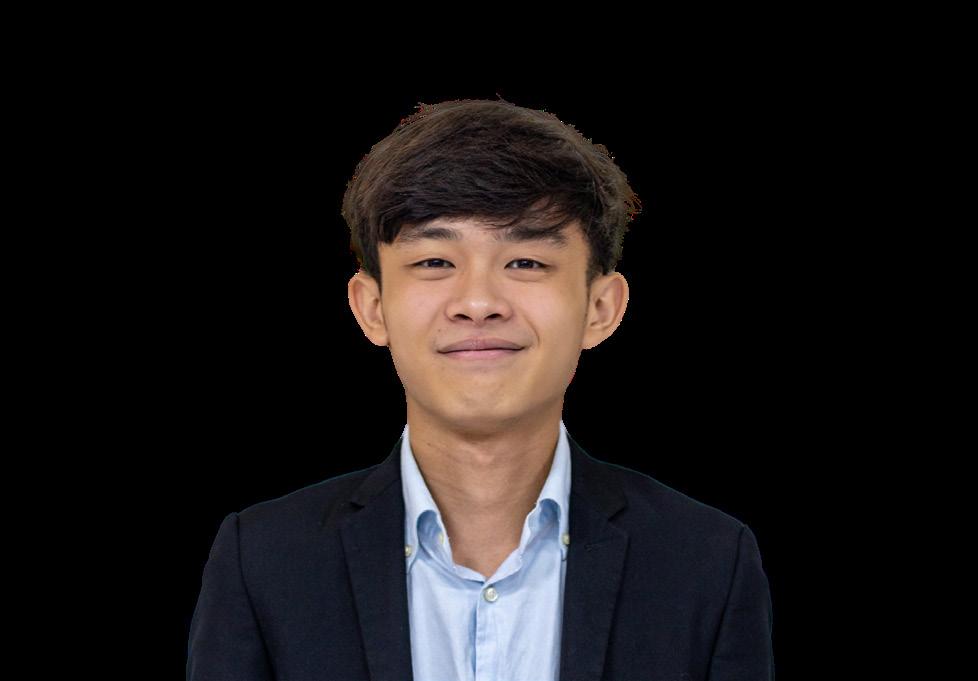
Presidential Candidates’ Credentials, Achievements, and Platforms SSC 45th Congress Election Coverage

Bachelor of Arts in Political Science
Standard Bearer, Kabataan sa Sambayanang Makatarungan (KASAMA)
Credentials
• House Speaker, USJ-R SSC 44th Congress
• SAS House Representative, USJ-R SSC 44th Congress
• Director for Management Information Service, USJ-R SSC 43rd Congress Office of the Vice President (A.Y. 2024-2025)
• HUMSS Upper House Representative, USJ-R SHS SSG 7th Congress (A.Y. 2023-2024)
• House Speaker, USJ-R SHS AHLSA 6th Parliament (A.Y. 2023-2024)
• Project Head, SAS Lakbay
• Event Head, SSC Constitutional Convention 2026
• Event Head, KASAMA sa Pasko 2025
• Co-author, #BeyondTheBreak (Typhoon Tino Academic Continuity Plan)
• Co-author, #MoveTheMidterms Policy Proposal Achievements
• Dean’s Lister (A.Y. 2025-2026, 1st Semester)
• Outstanding Executive Staff, USJ-R SSC 43rd Congress OVP, Pasidungog ni Jose 2025
• Dean’s Lister (A.Y. 2024-2025, 1st Semester)
• With Honors (A.Y. 2023-2024)
• With Honors (A.Y. 2021-2022)
Platforms
1. Josenian OutREACH
In times of crisis, no student should be left without support. Josenian OutREACH aims to establish a centralized emergency fund that delivers immediate and accessible financial assistance to students in urgent need, backed by a dedicated base fund from SSC’s resources. It streamlines the application, verification, and release of aid through a clear and efficient system, while ensuring long-term sustainability through voluntary contributions and allocations from SSC income-generating events.
2. Josenian 911
When emergencies happen, every second and every connection matters. Josenian 911 provides a mobilebased emergency support app that centralizes verified contact details and connects students to essential services in just a few taps, ensuring fast and reliable access to help. It integrates accessible features like fast-dial contacts and more that aim to improve response time and establish continuous enhancement of campus safety.
3. Josenian ONE SEARCH
When daily student needs start to feel overwhelming, having everything in one place makes it easier to navigate campus life. This centralized directory platform connects students to affordable and reliable services, from dormitories and parking spaces to healthcare and school necessities, by providing accessible, verified, and regularly updated information. Through partnerships with trusted providers offering student-friendly rates and exclusive discounts, it ensures convenience, informed choices, and sustained support for students’ everyday needs.
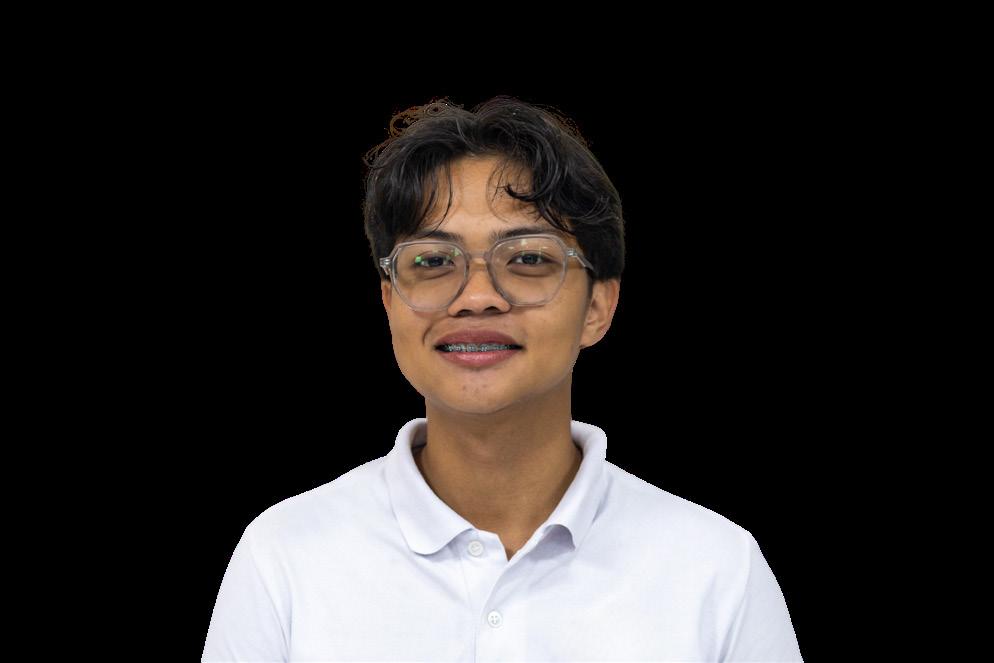

Kimson Godinez
Bachelor of Science in Psychology INDEPENDENT Credentials
• USJ-R SSC House Representative of the School of Arts and Sciences (2025–2026)
• USJ-R SSC Committee on Student Affairs Chair Person(2025–2026)
• First-Year Representative, Josenian Association of Psychology Students (2024–2025)
• External Affairs Representative, United Young Leaders Coalition (2024–2025)
• Steering Committee Member, Coalition of Anti-War Advocates and Youth (CAWAY) (2024–2025)
• Member, Youth for Nationalism and Democracy –Philippines (2024–2025)
• Member, USJ-R Supreme Student Council –Commission on Youth Empowerment (2024–2025)
• Volunteer, Set Forth Philippines
• Internal Volunteer, Kids for Kids
• Member, Josenian Debate Varsity (AY 2023–2024)
Achievements
• Founded two youth organizations
• Headed the Opening Week of A.Y. 2025-2026
• Headed JosenYouNight during the Intramurals A.Y. 2025-2026
• Headed the Program Committee for Intramurals and Battle of the Bands A.Y. 2025 - 2026.
• Awarded Journalist of the Year by Bright Minds in Action Learning Village.
1. Josenian All-Means-All Policy
Recent calamities exposed gaps in support for READS scholars and PWD students. Some scholars were required to stay on duty during emergencies, while delayed facility repairs like the campus elevator created barriers for students with disabilities. This highlights the need for stronger crisis policies and better accountability in maintaining accessible campus facilities.
2. Josenian FeesWatch
Josenian FeesWatch is a student-led watchdog initiative of the USJ-R Supreme Student Council that audits SIS tuition breakdowns for RED fees—Redundant, Excessive, and Defective charges. Its goal is to ensure that the TAMFI (Tuition and Miscellaneous Fee Increase) for upcoming years.
3. Josenian MenstruaCare Policy
This policy recognizes conditions like dysmenorrhea and menstrual migraines as valid grounds for excused absences. Students may submit a parent or guardian letter instead of a medical certificate, limited to three times per semester. All documents must be submitted within seven working days.
4. Josenian InstantResolve
Coordinate with the CCSO to establish a centralized grievance system for students. Currently, the SSC Grievance Center remains relatively unknown to many, leading students to raise concerns through program organizations or other informal channels. While these efforts help surface issues, officers are often not fully oriented on the proper grievance procedures. In partnership with the SSC Grievance Center, student organizations will be oriented on the correct process to ensure concerns are directed properly, handled effectively, and that the Student Council remains informed of student issues.
5. Josenian CrisEase
Lobby for institutional policies that provide temporary tuition flexibility during major crises, including adjusted payment schedules, extended deadlines, and other financial accommodations.
6. SpaceX Padayon
Lobby for a convening hall or meeting room that organizations can freely use, and allow classrooms to be used at no cost since utilities like air-conditioning and lights are often running anyway. Additionally, improve campus study spaces by providing more charging outlets, chairs, and bean bags, and strengthening Wi-Fi coverage, especially in areas with weak or no signal, to better support libraries and learning hubs.


Ma. Rhaenna D. Fernandez
Bachelor of Science in Psychology
Standard Bearer, Student Alliance for a Christian and Real Education Democracy (SACRED) Credentials
• Social Media Manager (TikTok) – Office of the Vice Mayor, Tomas “Tommy” Osmeña (2024–Present)
• Scholar – Office of the Vice Mayor, Tomas “Tommy” Osmeña (2024–Present)
• Governor – SACRED, First Semester, Academic Year 2024–2025
• Vice President – Mayflower Youth Organization (2023–2024)
• Governor – HUMSS Organization, University of Cebu – PRI Campus (Academic Year 2022–2023)
• President – Supreme Student Council, University of Cebu – PRI Campus (Academic Year 2021–2022)
• Academic Scholar – University of Cebu Main Campus (2021–2023) Achievements
Dean’s Lister – University of San Jose–Recoletos (A.Y. 2023–2026)
• Undergraduate Chairperson – Lead2Lead: Student Leaders Entrepreneurship Congress (2026)
• Event Host – Art & Yap: A Painting Workshop (Women’s Month Celebration), SACRED (2026)
• Partnership Coordinator – One Child Organization Collaboration, SACRED (2025–Present)
• Collaboration Partner – Love Yourself, SACRED (2025)
• Head – 2025 Kids Expo, One Child Organization (2024–2025)
• Participant – Visayas Young Feminist Agenda, University of the Philippines Cebu (2023–2024)
• Champion – FORWARD Spoken Poetry (2023)
1. HerSafe Initiative
Platforms
Aims to bring back and strengthen the Commission on Women to create a safe and supportive space for women in school. This platform is made especially for women, providing free sanitary napkins, reproductive health seminars and workshops, and free emergency kits like pepper spray and whistles for those who have night classes.
2. JoseMorning Meals
The JoseMorning Meals aims to support students, especially those living in dormitories or boarding houses, who may struggle with their daily food expenses. This program provides free breakfast for students every Wednesday and Friday at the university canteen from 6:30 a.m. to 7:30 a.m., helping them start their day with proper nourishment before attending their classes.
3. JoseBayanihan
The JoseBayanihan aims to organize and empower students to actively participate in helping communities during calamities such as earthquakes, typhoons, and other emergencies. By strengthening partnerships with external organizations such as local government units, NGOs, and disaster response groups, the program ensures that students can volunteer safely and effectively without placing a heavy financial burden on SSC funds.
4. Student - Admin Townhall
A platform wherein the students and the administration can interact especially on topics such as TAMFI, Student Policies, and more. The students have a chance to directly ask questions to the admin in regards to policies, while the admin has the chance to explain the policies. The Supreme Student Council serves as an intermediary between the students and admin.
5. Iskolar ni Jose
This platform helps all students, whether working students, athletes, or regular students discover and apply for scholarships. The OVP serves as a bridge between students and scholarship providers by gathering and organizing opportunities into one updated master list. The OVP makes the process easier by guiding them step-by-step, and with one-onone office hours, students can ask questions, get personalized advice, and receive direct assistance, making scholarships more accessible and less stressful to apply for.
6. JoReady
It is an adulting and civic access hub that helps students overcome the challenges of securing essential government and financial services such as IDs, insurance, and banking, which are often delayed by long processes, off-campus requirements, and class conflicts. Through semester-based One-Stop Student Services Caravans in partnership with agencies like SSS, PhilHealth, PSA, and partner banks, JoReady brings these services directly to campus on non-peak academic days.