The future holds endless possibilities filled with vibrant hues. In this summer edition, FORWARD brings stories that transform, inspire, and ignite our excitement to discover what lies ahead; for what’s next is an adventure awaiting us.
BEHIND THE COVER
Producers
Astrid Niña T. Vidal
Trixcy D. Clar
Jonathan M. Ricardo
Cover Illustrator
Jane Frances P. Latorza
Photographer
Astrid Niña T. Vidal
Assistant Photographer
Christian A. Mananguite
Hair
Karina Adel A. Vestil
Make up
Christian A. Mananguite
Model
Diana M. Gillo
REACH US
For comments, reactions, suggestions, and contributions, contact us at:
Read the latest FORWARD Magazines and Folios online at www.issuu.com/usjrforward
ABOUT US
The FORWARD Magazine is printed every semester and once every summer under the name SOLSTICE. It is managed and published by FORWARD
Publications, Ground Floor, San Agustin Building, University of San Jose-Recoletos, Magallanes Street, Cebu City. FORWARD welcomes contributions from Josenians such as formal/informal essays, poems, short stories, artworks, and photographs.
All rights reserved. No part of this magazine shall be used for any purpose except when allowed by the law without prior explicit permission from FORWARD Publications.
The next big thing in FORWARD is YOU. 76 years, 7 decades, and a boundless journey to tread.
Your commitment, your skills, your passion.
This upcoming academic year, unleash your potential and be part of the official student publication of the University of San Jose-Recoletos. We are in need of writers, illustrators, layout artists, graphic designers, and videographers who are bold enough to take the path forward with us.
Create history. Be part of FORWARD.
Editor’s Note: To Tread Amidst Pauses
Trends: In or Out?: Fashion Trends
Places: Next Stop: Cafes in Cebu Where You Can Chill
Society: Singapore-like Cebu City: A Nightmare Dressed Like a Daydream
Discussions: The Balancing Act: The Burden of Filipino Breadwinners
Society: Ano ba talaga’ng mas gusto mo?
Food: Flavors of Home: Rediscovering Beloved Filipino Home-cooked Dishes
Travelogue: Medellin: The Joys in the Storm
Discussions: March of the Machines
Cover Story: En Route: What’s Next?
Things: 10 Things To Do Near Colon After Class
Column: Of Different Paths And Generational Gaps
Music: Moving Forward Playlist
People: They Did That: Queer Artists Who Paved The Way
‘n Run
Bullseye: Freedom for the Pens
Column: Dreams on Hold?
To Tread Amidst Pauses
illustration by Karina Adel A. Vestil
Traversing through a journey filled with roadblocks, detours, and the unknown often leaves us off-track in unfamiliar places. Some are lucky enough to find the right way, while others take a lifetime trying to figure out where to land the next step.
Along with the fulfillment that comes after passing a seeming finish line, there’s also this crippling fear of not knowing what’s to come, whispering a series of unanswered questions.
After graduation, what should we do next?
After joining the cause of the marginalized, what actions must be taken then?
After taking a fleeting stop, what awaits us on the next road?
In this year’s comeback of SOLSTICE, the official summer magazine of FORWARD, we bring you stories of endless adventures as we head towards different paths.
We shed light on societal issues such as the emergence of artificial intelligence, the plight of Carbon vendors, the gray areas of walwal culture, and the often overlooked breadwinners.
We also offer exciting things to try, spots to visit, trends to anticipate, and a variety of features to look out for.
We encourage you, dear reader, to find something that inspires you to tread onward amidst the pauses, delays, and inevitable stops.
The pace doesn’t matter so long as you take the courage to reach your desired places.
Singapore-like Cebu City: A Nightmare Dressed Like a Daydream
by Ejay D. Villaver and Ava Donalie A. Ferolino
photos by Christian A. Mananguite
When Mayor Rama envisioned Cebu City to be Singapore-like, did he mean the quality of living or the prices of necessities?
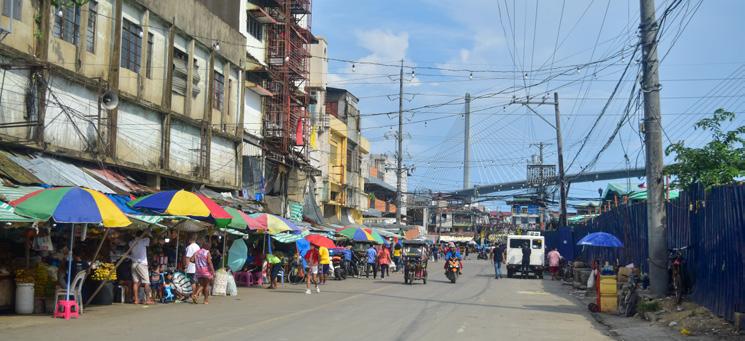
Almost a year after the demolitions took place at the Warwick Barracks and Freedom Public Park, the struggle continues for the displaced vendors who were stripped of their livelihoods.
As the long-awaited Carbon Market opened its doors to the public, the vendors found themselves trapped in a nightmarish version of the Singapore-like dream, thrusting them into a dire struggle for survival.
Now that Cebuanos have had their first sip from the cup of the Singapore-like vision, we ponder its bitter aftertaste. Which brewed some hot tea: Is it justifiable to endure the unsatisfactory governance in pursuit of Mayor Michael Rama’s fantasy? What’s next for the Barracks?
Unfulfilled Singaporean Fantasy
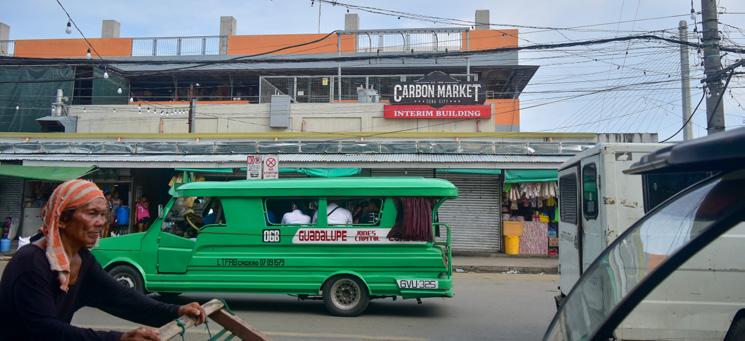
Situated at the heart of the metropolis, Carbon Market has served as a lifeline that once pumped financial sustenance for thousands of local vendors and consumers, making it a century-old public market with deep historical roots.
Over the past year, the Cebu City Government, in an effort to strive for progress and development, has set in motion plans for the market’s privatization by entering a 50-year multi-billion Joint Venture Agreement (JVA) with a construction company, Megawide Corporation.
The development plan for Carbon Market aims to modernize the infrastructure, enhance facilities, and the overall experience of consumers from all over Cebu
that flock to the market for its low prices and accessibility. However, the agreement posed a massive problem instead of a much-needed solution.
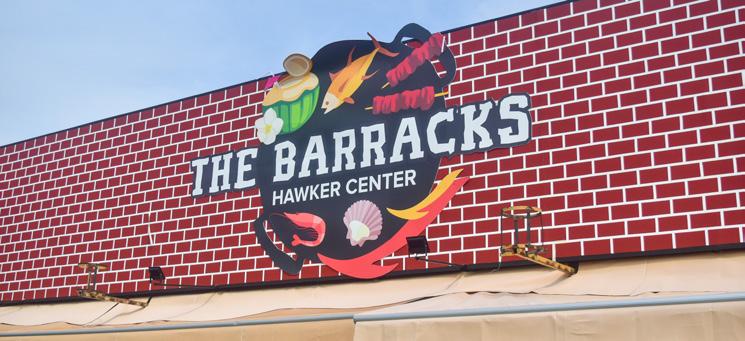
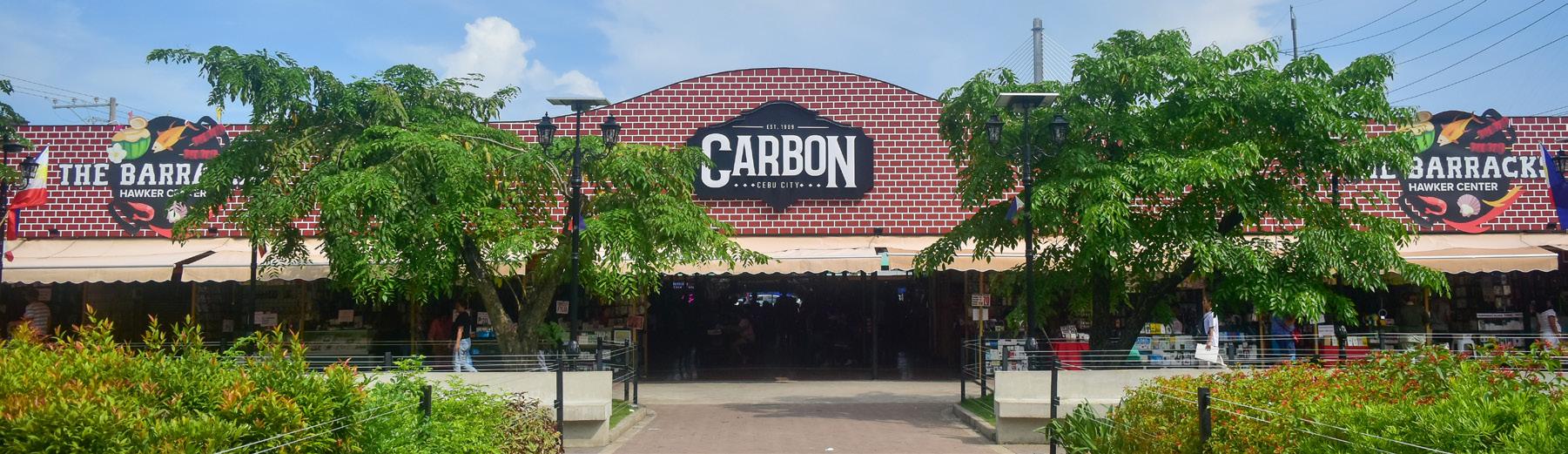
Since the signing of the JVA, Cebuanos have seen the opening of two infrastructures that were stipulated in the said contract, the Freedom Park and The Barracks.
The Barracks had its grand launching on May 12, 2023, with most of the tenants coming from the Puso Village— another extended project established in the JVA that was not to be a part of the Carbon Market.
Initially, Puso Village is part of Carbon’s Redevelopment Plan Phase 1 and would cater to more than 300 vendors, most of which would be food and beverages.
However, the ownership of the land area where it is built was contested by the Cebu Port Authority, and a preliminary injunction was issued by the Regional Trial Court’s Branch 10 prohibiting Cebu City from occupying the area on December 23, 2022, halting the construction of the P300 million commercial strip.
To make up for their losses and save face, the government had no choice but to place the tenants supposedly for the Puso Village at The Barracks.
“Katong mga investors nga naka-down na sa Puso Village, [kay] gipangitaan nila og paagi, mao na ang The Barracks now,” claimed Ann Marie Ariosa, the chairperson of the Carbonhanong Alyansa Alang sa Bahandianong Ogma sa mga Nanginabuhi (CARBON).
The initial mock design of The Barracks showcased a three-story building with an industrial design capable of housing numerous vendors offering “world-class products.”
Yet, the reality fell far short of expectations, as Cebuanos were met with a one-story, pig-pen-like structure during its launch. This disparity raises questions about the feasibility of the government’s vision for a Singapore-like city.
Reality of The Barracks
According to the CARBON Alliance, out of the 300 vendors currently occupying the Barracks, a significant majority of 80% is not a part of the original displaced vendors. Instead, the stalls are occupied by private businesses like Potato Corner and Santino’s, deviating from the promise of reinstating the original vendors once construction is completed.
This influx of commercialized businesses pits struggling vendors against well-established companies with the resources and marketing advantages to attract customers, making it increasingly difficult for them to regain their footing.
Exacerbating the situation, there are petitions to amend the Market Code of 2017 and increase the rental fee of the stalls. If this happens, the vendors will be forced to inflate their prices to compensate for their profits, sharing the burden with their consumers.
“Ang gusto nila i-amend is from P8.50 per square meter nga bayaran sa rental, gusto nila himoon og P15 sa next year, ‘nya next year na pud ana P18, then P21, then P24. Yearly ang rent increase,” they said.
To put things into perspective, when the market was under the Cebu City Government the monthly rent averaged around P1,020 which is significantly lower in contrast to The Barracks, which is P30,000 to P40,000, depending on the stall’s location, according to SunStar Cebu.
Escaping the Nightmare
With the current state of the Barracks, the vendors, and the looming price increase that is bound to happen if we let this continue, Cebuanos will surely suffer because this will be another chapter in the book of incompetence and misguided leadership.
Moreover, the Cebu City Government has the capability to modernize its infrastructure, enhance facilities, and improve the overall experience of consumers without the help of private corporations, whose only goal is to generate profit. The aforementioned objectives can also be accomplished while upholding and staying true to our Cebuano heritage.
It is undeniable that we must pursue a better future for Cebu, but the government must focus on uplifting the needs of Cebuanos rather than imitating another city because with the way things are unfolding, the Carbon Market risks transforming into a soulless replica of privately-owned marketplaces found elsewhere.
The City Government must tread carefully. If progress and development truly are the goal, they must heed the call of the marginalized and ensure that any development plan will not displace their needs but will protect them.
With this, the CARBON Alliance urges Cebuanos not to be blinded by the facade and the promise of a Singapore-like private market. Rather Cebuanos should scrutinize the feasibility and practicality of the project and protect what truly matters—the pursuit of a future that embraces progress without leaving the poor behind.
Perhaps, it is time to draw the line between reality and fiction, especially when people’s lives and futures
With this, they are left with no choice but to sell their goods somewhere else. To do so, the Market Authority required them to secure a tent. Failure to comply would not only result in their inability to sell, but it would also expose them to the risk of being caught. Unfortunately, even securing tents was a major challenge for them.
“Ang presyo sa tent is P3,500 kung mo-cash ka, P4,500 kung mo-utang ka pero kung i-order sa uban nga tindahan P1,800 ra siya pero wala nama’y available tent sa market kay napakyaw naman nila,” they lamented.
The bitter reality is that the waters are muddy as to the government’s top priority: Is it the local vendors, or is it their self-serving desire to fulfill an unsustainable goal?
Ano ba talaga’ng mas gusto mo?
Nagsimula sa patikim-tikim, pinilit kong gustuhin
by Juan Enrique D. Reboquio graphic design by Astrid Niña T. Vidal
Alcohol is deeply entrenched in our culture as it has become a staple in the lives of Filipinos. However, we have the option to choose what’s the best coping mechanism for our troubles.
After a series of mind-boggling and draining exams, finally, the awaited time to unwind and destress comes. One friend eventually suggests, “Tagay ta na,” without skipping a beat. A consensus then agrees to spend a night out with friends to celebrate. This setup is omnipresent no matter what the case is when it comes to Filipino events.
While social drinking is seen in various cultures worldwide, the Filipinos’ flair for the practice is unlike any other.
Although, in a world with a variety of coping mechanisms, it is worth considering whether these customs are still appropriate in modern times. It begs the question: What lies ahead for our drinking culture?
Tama na ‘yan, inuman na
Commonly known as tagay, this art of social drinking can be traced back to our pre-Hispanic ancestors with their native alcoholic concoctions and the well-known custom of using one glass for all involved.
However, the peak of refinement was during the Spanish era, wherein the tradition came to be what we have today. Tagay is now being expected on all occasions, may it be big or small.
Over time, this tradition has evolved further, with the introduction of “pulutan”, primarily fried food, to combat drunkenness during sessions and the aid of a “tig-tagay” or “gunner,” whose job is to facilitate the refilling of drinks.
Despite these changes, at its core, the reasons why Filipinos drink remain constant. Among them is to establish kinship with one another through cherishing the old and celebrating the new. The tradition is keenly alive today and adopted by a new generation of Filipinos.
As the tradition lives on, the youth elevated the art of tagay by embracing the “walwal” culture.
With its evolution, it has gone to redefine the culture while keeping true to tradition.
Apart from the evident merry-making events such as fiestas and celebrations, drinking also serves as a centerpiece during troubling points in one’s life.
Alcohol, to most, exists as an elusive option from one’s reality.
We see this through the drinking sessions of some students to destress the ails of their academic life to the broken-hearted ones, swallowing their heartaches away via clubbing or plain tagay sessions in the hopes of moving on. All of these allude to the notion that drinking presents an outlet from the worries of a changing world and that it opens a safe space to be vulnerable with oneself.
The “hows” may have changed, but the “whys” stayed the same. Problematic as it may be, alcohol is a quick way to be self-aware, leading to the last reason why Filipinos drink: To essentially enjoy both the good and bad times and everything in between.
‘Di magtatagal,
tayo ay liligaya
Alcohol provides an opportunity for harm towards those who consume it and the ones around them.
An ethnographic research entitled “The Social Dynamics of Filipino Drinking” authored by Jamaal Omamalin from the University of San Carlos (USC) highlighted the harm that the culture poses such as liver complications, hypertension, and tuberculosis (transmitted by partaking from a single glass). This is partnered with the increase in cases of drunk driving, which often lead to critical injuries, or even worse, death.
Alcohol may be quick and cheap, but the dangers are too big to be overlooked.
Walwal culture is only one of the multiple ways to foster camaraderie in this day and age, especially with the development of communities both in real life and online.
Posing the other side of the coin, there are those who engage in healthier alternatives to deal with stressors.
Sobriety offers an opportunity to bond over shared interests while maintaining stability in contrast to the unpredictable nature of alcohol. A part of this discussion is the prevalence of support groups that focus on lending a hand to those in need. They remain options despite the deep influence of walwal culture.
Ultimately, the choice is ours. There is room for finding middle ground as both sobriety and walwal culture introduce lifestyles that dwell on how we cope. It is a personal decision that shapes how we love others and ourselves.
Ano ba talaga’ng mas gusto mo? Ang beer na ‘to o ang pag-ibig sa sarili mo?
The Balancing Act: The Burden of Filipino Breadwinners
by Rey Martin B. Rio illustration by Hannah Vanessa O. Mondilla
Breadwinners navigate an intricate web of familial expectations, societal pressures, and personal aspirations. While their dedication to support their families is commendable, it comes at a valuable cost.
In Filipino culture, the role of breadwinners is highly esteemed, from contributing greatly to family support to nurturing a sense of collective responsibility. This cultural norm places significant pressure on breadwinners as they harmonize their goals with the well-being of their families.
This predicament leaves them making difficult choices and enormous sacrifices, particularly in academic endeavors.
But what lies beyond the isolated path of being a breadwinner?
demands, unable to allot sufficient time or energy to contemplate and attain their life goals. Others can focus on self-discovery and growth, while breadwinners must juggle familial tasks with their aspirations, creating a challenging balancing stunt.
Providing for the family is an admirable and noble act, but it is also crucial to recognize the toll it exacts on the individuals bearing the burden.
Object (of) Manipulation
Breadwinners often put their ambitions on hold or sacrifice them entirely to accomplish their duties to their younger siblings. They are expected to prioritize their siblings’ needs at the expense of them postponing education, professional pursuits, or even their own development to provide financial support and guidance.
Unfortunately, breadwinners are susceptible to exploitation by family members—the pressure to meet expectations can subject them to emotional manipulation and guilt-tripping. This perpetuates a cycle where breadwinners continually prioritize others and struggle to break free from this situation.
Despite these challenges, the lives of breadwinners are far from diminished. Their strength and resilience are a testament to their unwavering love and commitment to their family.
Aside from their inherited obligations, creating spaces in their lives is vital for them to have moments of introspection and self-contemplation.
Ethel Rose Projimo, a recent graduate of Bachelor of Science in Psychology from the University of San JoseRecoletos (USJ-R) and a former Recoletos Educational Assistance for Deserving Students (READS) scholar, can attest to the struggles as the eldest in the family.
A Tightrope Journey
It is often said that firstborns grow up faster than any of the siblings in the family. This rings particularly true as they are assumed to bear becoming a breadwinner.
From a young age, breadwinners often hear their parents’ phrases like “Pasagdi na lang, ikaw may mas maguwang,” (Let it go, you’re the eldest) or “Pagpaubos kay maguwang ka,” (Make sacrifices because you’re the eldest), which serve as constant reminders of the unique path they must maneuver.
The weight of expectations and the understanding that they must provide for their family from an early age instills a sense of maturity.
Their sacrifices and the delicate balance they must maintain become defining features of their lives as they steer the challenges and opportunities that lie ahead.
The Struggle for Equal Footing
Driven by necessity rather than choice, breadwinners lack the luxury of exploring career options or pursuing passions, especially in the field of arts, as their focus remains on meeting immediate family needs.
This leads breadwinners to grapple with conflicting
“As a breadwinner, I have to work hard para sa akong mga manghud kay para ra g’yud nila akong tanang future plans after I graduate—mao man sad g’yud [ni] akong gi-promise sa akong self once mahuman nako og school, [nga] priority [nako] sila. Ako naman lang gud ang ni-stand up as a mother sa akong mga igsoon kay wala na ako mama and although naay work akoang father, dili siya ingon na financially stable,” she said.
This is not a call for selfishness but rather an acknowledgment of the importance of celebrating individuality for breadwinners like Projimo.
They also possess talents, skills, and ambitions that, when given a chance to flourish, can have a transformative impact on their lives and also on the broader community.
By fostering a culture of understanding, compassion, and support, we can help them break free from the confines of societal expectations and unlock their truest potential.
Through empowering breadwinners, they not only become providers for their families but also catalysts for change, paving a brighter future for themselves and the entire nation.
MARCH OF THE MACHINES
by Rufino Rico L. Jamisola and Jonathan M. Ricardo
illustration by Jane Frances P. Latorza
Our regression as a species shall not be heralded by the noise of our machines; it is with the silence of our submission to our creations.
There was once a time when all humanity needed to survive was to hunt animals in the wildlands for food. The good life simply meant striking pieces of flint to create fire to cook their game. Little did they know that this fire was the first spark of technology.
From then on, humans have devised mechanical muscles to make their lives easier. From the invention of the wheel to the ocean-spanning galleons to the printing press to typewriters to weapons of warfare to computers jumping straight into the innovations made for smartphones today, the evolution of technology has truly come a long way, accompanying humankind since its inception.
The human mind once invented and mastered conducive technological products for their benefit. However, today, it seems like artificial intelligence (AI), controlled by technology itself, threatens to replace the human mind.
Ed Burns of TechTarget, an American technologyfocused company, defines AI as the “simulation of human intelligence processes by machines, especially computer systems. AI applications include expert systems, natural language processing, speech recognition, and machine vision.”
“AI has become central to many of today’s largest and most successful companies, including Alphabet, Apple, Microsoft, and Meta, where AI technologies are used to improve operations and outpace competitors,” a portion of Burn’s article further reads.
At Alphabet subsidiary Google, for example, AI is central to its search engine, Waymo’s self-driving cars, and Google Brain, which invented the transformer neural network architecture that underpins the recent breakthroughs in natural language processing. Apart from this, AI is a cornerstone in programming, powering factory assembly lines, and even leisurely pursuits such as video game AIs.
While technology has been a guiding flame illuminating our path, it can also cast a shadow over our existence. And while technology has made our lives easier, long has the debate raged on the perils it brings to its creators.
We now find ourselves grappling with the haunting question: “Will AI replace me in the workplace in the next years to come?”
Jobs at Risk
Technology has been designed to reduce time, resources, and risk for efficiency. However, it has gradually assimilated the duties of skilled workers without the need for frivolous things like income, employee support, or welfare expenses, driving them out of work.
According to an article from Forbes in 2022, “Global unemployment will amount to 207 million, exceeding the figure for 2019 by about 21 million, by the end of 2022. We can indefinitely blame it on AI, robots, and the pandemic.”
Even in the Philippines, technology has already replaced workers. Notably, at branches of the famous fast food chain Jollibee, kiosks have replaced workers taking and serving orders.
Without any doubt, given its reliability, AI is expected to take over manpower and may increase the country’s unemployment rate, which is at 4.8 percent as reported by Philippine Statistics Authority (PSA) in January 2023.
Moreover, a study by the McKinsey Global Institute predicted that by 2030, robots would have replaced as much as 30 percent of the world’s current human labor force. Depending on various scenarios, automation will displace between 400 and 800 million jobs by 2030, requiring as many as 375 million people to switch jobs entirely.
Tech jobs, media jobs, legal industry jobs, market research analysts, teachers, finance jobs, traders, graphic designers, accountants, and customer service agents are the jobs at risk with the rise of AI, according to an Insider article in June 2023.
Despite these strong claims by companies about the jobs at risk, some Josenians remain steadfast in their faith that AI will not replace humans in the workplace.
A fourth-year Bachelor of Science in Accountancy (BSA) student at the University of San Jose-Recoletos (USJ-R) does not believe that AI will replace the roles accountants and auditors perform, contrary to public belief.
“Notably, AI can help streamline procedures, spur technological advancements, and shift the responsibility for labor-intensive jobs. Yet, since AI cannot replicate our innate skills and morals as human beings, it only exists to add value to the profession and improves the efficiency of how accountants and auditors carry out their duties,” she said.
Further, a second-year BSA student believes that AI cannot replace human intelligence, especially in the accounting industry.
“While AI may replace accountants in duties like journalizing and financial statement preparation, it will not drastically impact the accounting sector enough to replace our jobs as accountants. Human intelligence is irreplaceable,” she said.
Although AI is a growing utility in the professional world, its current sophistication is still a new paradigm and much of its effects remain to be seen as its potential applications are explored. However, setbacks abound— even the academe is not spared from them.
Artificial Learning
Since the notorious ChatGPT’s release on November 30, 2022, teachers have worried about the intensifying “cheating epidemic” in schools. Evolving from cruder forms of cheating, students submit outputs that they claim to be originally made but have been artificially fabricated.
ChatGPT, as an online chatbot, uses natural language processing and retrieves data from textbooks, websites, and various articles to produce its outputs in a single click.
This AI app sparked controversy within the University of the Philippines-Diliman (UPD) community in January 2023 as one of the students of History Professor Francisco Guiang wrote a lengthy essay in compliance with their final exam that was under suspicion of being made by AI.
What sparked the assumption was Professor Guiang’s observation that the “entire essay did not make sense—it did not have cohesion, and just randomly dropped proper nouns that had nothing to do with the essay question.”
Such an incident is only a taste of what’s to come.
Expect a future where student performance degrades, as AI allows them to make assignments with great ease. This jeopardizes the entire point of academic assessments, as a proper test of one’s abilities to construct outputs by their skills alone is invalidated by ChatGPT.
While arguments arise that ChatGPT is but a tool to be used by responsible students to cut down work and still produce original outputs, the integrity of our learning process is compromised when AI’s assistance overshadows analytical thinking, critical reasoning, moral character, and creativity.
Whether in the workplace, the classroom, or even our homes, it must be remembered that we alone are responsible for our creations and not the inverse. The risks associated with the technology we develop may not be as horrific as the bleak, post-apocalyptic wasteland dominated by T-800 robots in the Terminator films, but surrendering our minds to AI can only have similarly dire consequences.
While we can only assume what the loss of uniquely human aspects of good moral character and boundless creativity in favor of total automation will bring, we must not allow that to happen.
Every step taken to develop AI must be done responsibly and with the end goal of aiding humanity in mind.
AI must never be a replacement for our indomitable human spirit, merely an aide as we face the frontier of the unknown future.
Next Stop: Cafes in Cebu Where You Can Chill
by Diane Rose G. Baynos
photos by Jane Frances P. Latorza
Braving a busy week calls for a moment of celebration. And more often than not, the best place to share your mini successes is just right around the corner.
The inevitable urge to recharge and unwind after a grueling week at school is almost impossible to ignore. A bunch of adventures out there are ready to cater to our own kind of fun, but we often don’t know where to start.
What’s a better way to spend a free day than sipping a coffee at our favorite cafe—enjoying our quiet?
This summer, we dare you to step out and reward yourself as we list down cafes in the nooks and crannies of Cebu, Josenians!
1. Kaffee Alde
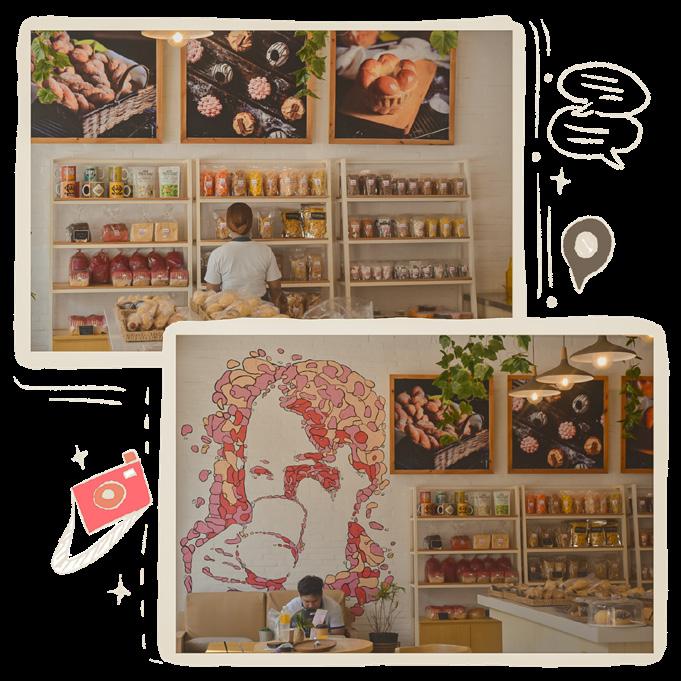
Established in 1991, Kaffee Alde is the perfect haven for someone who loves pastries, cakes, and classic baked goods. Its years of expertise in the industry won’t let you think that the homegrown bakery only started as a pastime of the owner, Loreta Dytian, who was dubbed “Loreta Ensaimada’’ for her recipes. Truly, the customers remain loyal when you know the ins and outs of their hearts, matched with the cafe’s wide variety of appetizing sweets and mouthwatering savories.
food
From well-designed cakes, soft loaves, and artisan bread to freshly made coffee, Kaffee Alde’s got you all covered! The elegant interior of the place would give you the impression that it only offers expensive delectables—but you’d be surprised with their menu. For as low as P15, you can already get a taste of their scrumptious shakoy, a Filipino deep-fried twisted doughnut sprinkled with sugar. Some other foods include Classic Ensaimadas at P39, Sausage Bread at P40, and Honey Oat Baguette at P70.
For people with a sweet tooth, get ready to be in love with their cakes as they don’t disappoint—both in quality and price. The starting price for cakes is P245, and by that, you can already try their Red Velvet Cake.
Of course, none of these foods would be perfect without a cup of coffee. Their price range for coffee starts at P65 to P90, which may be served hot or cold, whichever you prefer.
how to get there?
The store is located at Pope John Paul II Avenue, Mabolo, Cebu City, right across from the Mabolo church. From the University of San Jose-Recoletos (USJ-R) Main Campus, you may ride a 03B jeepney to reach your destination, with Andok’s as your nearest landmark. Kaffee Alde’s store in Mabolo is the sole branch in Cebu and operates under the Creative Cuisine Gourmet Group, which also runs Filipino restaurant Chikaan and Chinese restaurant Big Mao.
If you’re looking for a hidden gem in Cebu with a Japanese and Ghibli-inspired interior, Simatra Cafe is the place for you. On the outside, it looks like any other typical cafe along the street, but once you enter the coffee shop, it’s almost as if you’re in a different dimension with its captivating beauty—and this isn’t an exaggeration!
This is the type of place that you want to gatekeep so you can enjoy it by yourself, but you know that the cafe deserves more recognition, as it should, so here we are.
Since 2021, the 24-year-old owner Ritchiel Pabilic managed to make the cafe as dreamy as it is now by herself. She came up with the business idea due to her passion for coffee-making and love for Japanese-related aesthetics.
The ambiance of the place stays true to its goal of giving the customers comfort, with faux ivy leaves hanging around the walls. They also put up several illustrations of well-known anime characters—which would surely bring smiles to otakus. The place is also perfect for study outs since they offer charging ports and free WiFi.
One couldn’t ask for a better cafe experience! food
Try out Japanese cuisine like no other with Simatra’s Mix Salad, Omutaco rice, and Choux Cream. They also serve different types of desserts that you can choose from, like fluffy Japanese cheesecake, pudding, and coffee jelly.
And what’s a Japanese cafe without a matcha latte? Pair a Japanese dish with their highly-recommended cup of matcha. They also take pride in their best-seller Caramel Macchiato to quench your thirst.
Every munch on Simatra’s Japanese food is almost a step closer to your favorite Ghibli or anime characters. This is your sign to experience Japan through Simatra!
how to get there
Simatra Cafe is located at 38 F. Cabahug St., Cebu City. From Carbon Public Market, ride a 03A jeepney and you can find the coffee shop on the ground floor of Sarrosa International Hotel.
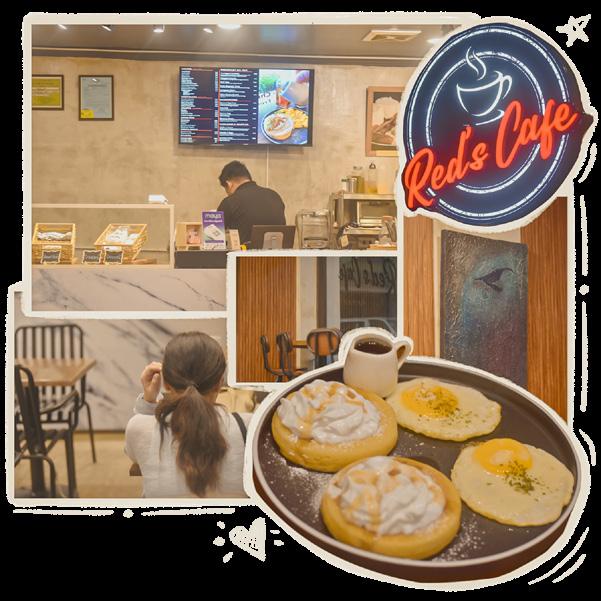
There are way too many cafes on Ramos Street to dine in, but Red’s Cafe is just exceptional with its offerings. Established on May 1, 2023, with Rihdhwan Bin Muhammad Faizal Rosales as the owner, the cafe flaunts a modernized interior with fine paintings displayed on its walls. Despite its new presence in the coffee industry, the cafe has been steadily growing due to its consistent service.
Good news for students: They offer a 15% discount on your orders. The cafe is also ideal for studying because they have charging ports and free WiFi.
food
The “what you see is what you get” concept is not merely a concept in this cafe—they made it a reality! If you compare the photos from their social media accounts and your actual orders side by side, you’d see no difference. Both are aesthetically pleasing online and in real life, and they will also match your expectations with the food quality.
What’s more, their pancakes, sandwiches, and waffles will linger with your taste buds as they are abundant with fillings. You want more whipped cream? They got it. More syrup? No problem. Red’s Cafe basically just raises your standards when it comes to choosing the best cafe! Also, the meals of the store are quite different from the other coffee shops, as they feature a “Breakfast All Day” selection. They have Hungarian Favorite, Beef Tapa, Garlic Baguette Toast, and many more. Regardless of your order, they always make sure that the viands are cooked to perfection and the food presentation is a chef’s kiss.
And topping it all up with their premium coffee, frappes, or smoothies at affordable rates, you are almost free from the stressors away. There’s nothing that coffee can’t save!
how to get there
Red’s Cafe is located at Unit 123, Raintree Mall, 528 F. Ramos St., Cebu City. From Carbon, you may ride 04C or 17C to reach the Raintree Mall. From The Workplace Cafe, you may walk a few steps until you see the Red’s Cafe.
2. Simatra Cafe
3. Red’s Cafe
Medellin: The Joys in the Storm
by
conditions, beautiful things are embedded within it, although not seen with the typical set of eyes.
I knew something was off the moment a short burst of winds started to be more prevalent as the days went by.
The Municipality of Medellin is located approximately 120 kilometers north of Cebu City. It is considered a part of the island’s northernmost point along with Daanbantayan and one of the nine municipalities that make up the 4th Congressional District of the Province of Cebu.
Medellin is a haven bordered by the City of Bogo
on the south, Bantayan Island on its west, and the Municipality of Daanbantayan by the north. Its name was derived from the parallels of the events of September 9, 1881, where the same Spanish village in the Badajoz Province was declared to be a municipality via a Royal Decree of Queen Isabela II of Spain.
Notably, the roughly 7,383 hectares of land were originally part of Daanbantayan until December 1, 1901, wherein the town was established to become a municipality.
Traveling to Medellin takes roughly 4-5 hours, depending on the traffic conditions from preceding cities or municipalities. To make it there, however, one might opt to travel via V-hire or bus. Both options are found at the Cebu North Bus Terminal located at SM City Cebu.
This is where the journey made its shaky start.
A sense of uncontrollable excitement spelled out the entire tone of what was supposed to be a trip for the ages. I mean, after months spent in distress fulfilling both academic and non-academic responsibilities throughout the entire school year, who wouldn’t be excited for a vacation frolicking at the beach and under the hot sun, right? It seems that all the suffering was worth all for that three-day of summer fun.
The timing was also in sync with everyone gearing up for the good times as we prepared for another chapter next semester. All it had to do was let things take their place the way it was intended to be for the next three days.
Juan Enrique D. Reboquio photos by Christian A. Mananguite
However, red flags started to fly as impending Super Typhoon Betty was en route to the country. Soon after that, winds started to intensify with each day getting close to the trip. Even on that day itself, it drizzled—certainly not good fortune.
The journey north was riddled with more obstacles. Cebu’s love affair with worsening traffic conditions along with the prospect of heavy rains set us back way past schedule. Despite this unfortunate situation, I found comfort through the humor and energy of my peers. Not long after, we reached Medellin and eventually our place of stay at a resthouse in one of the 19 barangays, Daanlungsod.
Not long after, the winds amped up to eleven, pulling like how one pulls through a rough crowd. All settled in well at first but the dire circumstances continued from there on out, with the harsh weather making it difficult to move around. That, coupled with some misfortunes with supplies, things were proving themselves to be against our favor. Aside from the storm that was already running loose outside the walls of the resthouse, one was brewing inside as well.
Our expectations of basking under the sun were faced with the reality of challenging the waves brought by strong winds. Even though the odds were against us, to say the least, we made the most of what we had and apparently, that was more than enough for us to work with.
Hearing the laughter and seeing the smiles of my friends in contrast to the gloomy weather has made me realize that the day was still waiting to be seized as Medellin was still irking to give us what it has to offer.
Often overshadowed by its well-known neighbors, Medellin encapsulates the underrated beauty it holds, despite the ugly weather.
The climate might have been cold throughout the three days I spent there, but what remained constant was the warmth of the people which made my stay a bit more special.
The tricycle drivers who took me from one place to another and asked me about my stay, the strangers who gave thorough instructions in reaching my destination, and the locals who showed me their simple yet beautiful way of living—these people made everything worth it. They were the hidden gems of Medellin.
My stay there was short-lived but the experience was enough to fill a lifetime.
Before leaving, the storm that filled me with so much dread cleared up and as I traveled back, I caught a glimpse of the sunset on a calm sea overlooking Medellin’s known Gitbingil Island.
I let out a sigh as this was the one I’d been looking forward to since the trip was planned weeks prior. The solace of the ocean and the breath of fresh air made me feel whole once again.
With the events that transpired, it’s those moments I had with my peers and the locals of Medellin that led me to realize that I am more than a student stressing over my academic responsibilities—I am a friend and a colleague that others can look up to.
The place was really something, but at its core, it was the people who made my trip unforgettable. As cliche as it is, there is truly a rainbow after the storm.
And hopefully, you can look forward to finding the same treasures when you visit Medellin soon.
In a world brimming with possibilities, the spirit of exploration is a powerful catalyst for discovery and growth.
In an ever-changing and fast-paced world where advancements in technology and societal shifts are transforming the way we think and live, the future is both exhilarating and daunting.
Truly, there is so much to traverse. Within the realm of endless potential, there are diverse quests to embark upon. And no matter how the fear of the unknown might creep on us, there is that innate thrill of anticipation as to where we might be headed that comes with it.
As we step on the brink of a new era, it is only natural to feel a sense of uncertainty about the direction we should take. However, this uncertainty presents the beauty of exploration—propelling us to move forward and see what’s next for us.
After all, the glimpse of tomorrow leads to the intersections of human curiosity and innovation that can spark momentous change.
With the revival of SOLSTICE, FORWARD Publications brings you, with renewed vigor, EN ROUTE: WHAT’S NEXT?—a summer magazine that captures the essence of wanderlust, the excitement of new experiences, and the joy of looking forward to the opportunities that lie ahead.
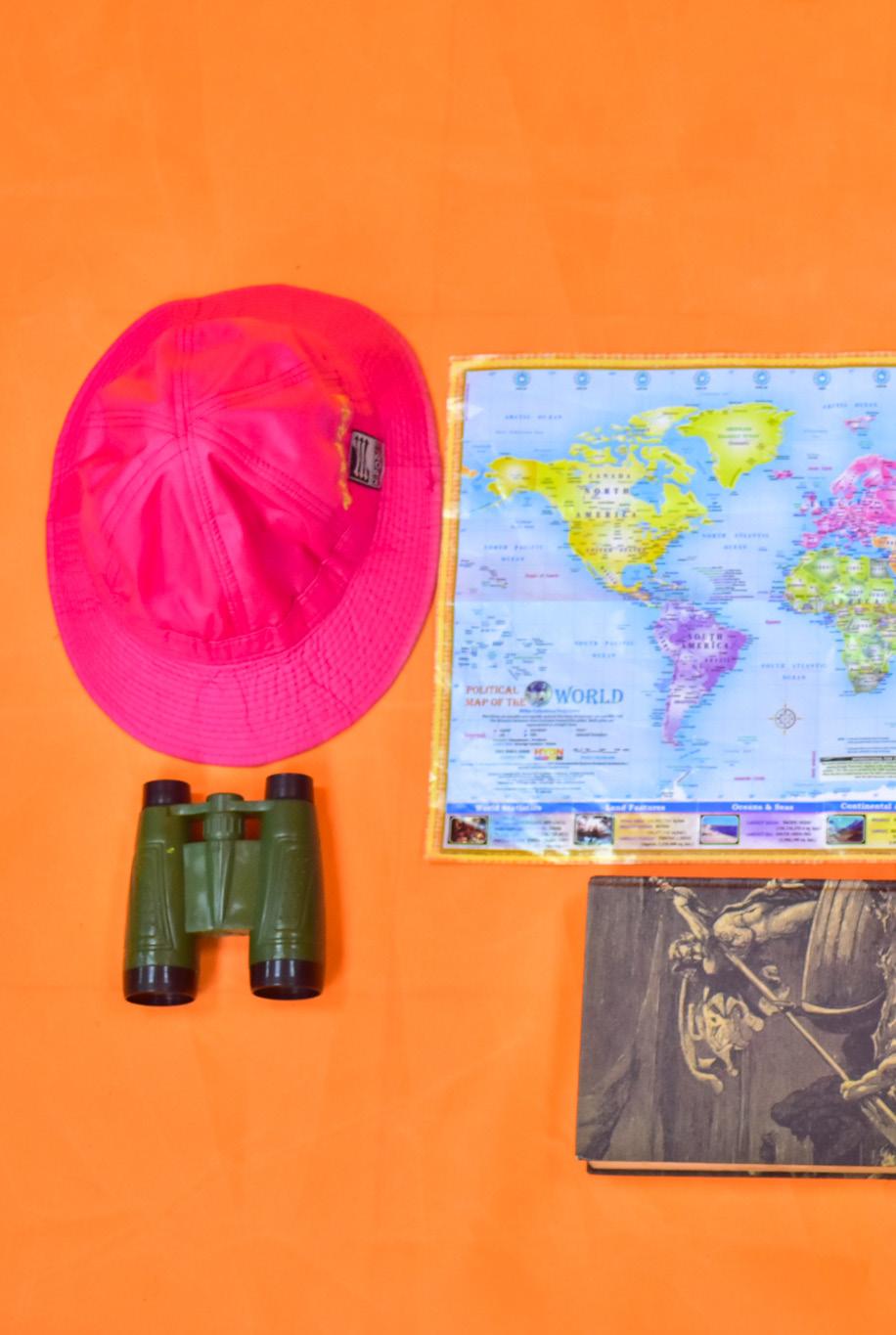
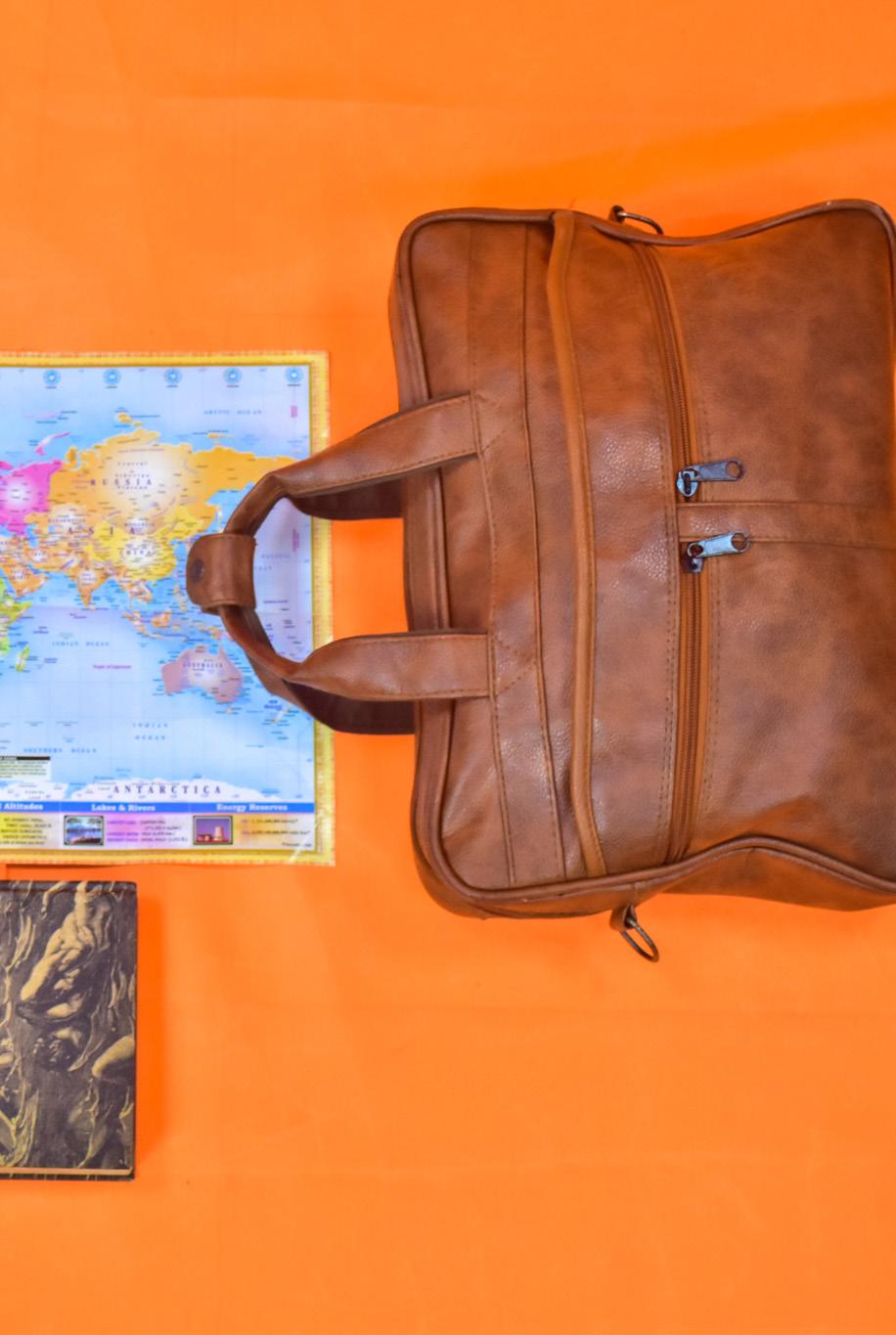
Drawing inspiration from the visual aesthetics of Wes Anderson’s distinctive film style, the cover of this year’s SOLSTICE reflects the significance of being open to what the future brings. Its kaleidoscope of colors reflects the realization that the world is not confined to stark black and white, but rather, the future is a symphony of vibrant hues.
Armed with binoculars in hand, we carry a symbol of curiosity and boundless potential that is hidden within each of us. These lenses allow us to see beyond the present and envision the extraordinary in store for us.
With a map in the other, we try to navigate, and peek into the future, trying to map out where we might be headed, so we can visualize our trajectory and face the future with unwavering determination and purpose.
Through this magazine, we celebrate the spirit of exploration and we uncover the profound transformations that shape our world, may it be with today’s digital revolution, dynamic trends in the fashion industry, and things that we all look forward to as we battle through our bustling lives. Found on these pages are stories that inspire, inform, and ignite the imagination.
Moreover, we recognize the intrinsic beauty in ambiguity and the importance of welcoming the journey itself. Life, we must remember, is an adventure—a continual process of improvement.
As we stand at the precipice of shifting tides, may we always be enthusiastic to unravel the mysteries of the unknown and maneuver the enigmatic path of what’s to come.
The future stretches before us, an open-ended expanse awaiting the brushstrokes of our ingenuity.
Let us begin this enthralling escapade together on the ever-evolving tapestry of human existence, for the future is not a destination—it is an avenue for continuous discovery, waiting to be embraced with open minds and unwavering determination.
The future is calling, asking: “What’s next?”
Are you ready to answer?
IN or OUT?: Fashion Trends
by Samantha Mae A. Murillo
photos by Astrid Niña T. Vidal and Christian A. Mananguite
Looking for that one fit or OOTD? Get a glimpse of what’s hot and hip in today’s fashion industry!
1. OUT: Skinny jeans
Hey, are you still holding on to those 10-year old clothes hiding behind your closet which you claimed you’d be able to use someday? Perhaps, you should check them out again because they might be making a comeback, the next big thing in the fashion world—or the next lame thing.
Fashion, like any other, comes and goes. FORWARD presents to you fashion items you should either keep or let go.
While skinny jeans embrace the hip-hugging look we used to die for, let’s admit that it’s not a look gentlemen, gals, and gays would go for in this era of fashion anymore. The Philippines is experiencing one of its hottest states (literally!) right now, so we can’t help but sweat every minute of the day, even while we’re doing nothing at all. This makes skinny jeans uncomfortable; these should have been specially named sticky jeans, not skinny jeans! This is a big OUT!
IN:
Baggy pants
Baggy is the new sexy. Typically, people’s idea of sexy when it comes to clothes is showing curves and some skin (did they lie, though?). But nowadays, sexy can also be in the form of comfy, baggy pants! Matched with an oversized shirt or any cute top, the street fashion look can’t help but turn heads. Cargo pants, mom jeans, or anything loose levels up today’s sense of style!
2. OUT: Espadrilles
Back in the day, people always had a nice pair of classic espadrilles, perfect for casual dates with the loves of their lives, lunch outs with the gang, and even solo adventures. Known for its comfortable and neat finish to the overall look,
these loafers, it easily makes you a hero from zero real quick.
3. OUT: Crochet scarves
Crochet has mostly been used as scarves to warm oneself back in the shivering days. They were used not only to protect yourself from the cold, but they also became a staple for rich tita (and cool grandma) serves! At this time around, crochets are never out! However, the idea of crochets as one-dimensional items no doubt is!
IN: Crochet everywhere!
It’s amazing how crochet was mostly associated with grandmas, but now, people just crochet everything, anywhere, anytime! From tops, bikinis, and bags to hats, crochet has slowly been dominating the Gen Z lookbook! It’s fun, cute, and quirky, but the best thing is, you could DIY it, baby! For an affordable and handcrafted piece, you are already wearing a straight-out-of-abillboard ad fashion masterpiece.
5. OUT: Leggings
Admit it. At least once in your life, you had a pair of black leggings camouflaging in your wardrobe. There was a period of time when leggings basically became an “it” fashion item. Influencers and young teens obsessed over leggings and how cute they looked to be paired with graphic t-shirts, cropped tops, and XL hoodies. While leggings are still very in for workouts and sports, we can’t say the same for their fashion influence. Adios, leggings!
IN: Leg warmer socks
Apparent in today’s K-pop groups, Pinterest feeds, and TikTok trends, Y2K fashion is serving! Leg warmers, a pair of long, loose, and soft socks, are being widely put to fashionable use this year. Originally worn for warming up the legs before ballet dances, sports activities, or simply for protection from the cold, leg warmer socks help create the soft or grunge persona you’re going for! So we say yes and yes to this trend—a pair of yeses for a pair of leg-warmer babies!
Special mentions: Low-rise jeans, tote bags, strappy heels, cardigans, messenger bags, bucket hats, and hair clips are some notable IN fashion items we couldn’t possibly miss in this list! These staples are surely also taking up space not just in our closets, but also in our hearts.
4. OUT: Handbags
Handbags can still be seen being carried by many around the corner. But they aren’t as trendy anymore as they used to be. Yes, handbags are classy, but when not paired with the right outfit, they might look old-fashioned. Isn’t it also tiring to carry around this type of bag all the time? Perhaps, handbags aren’t as handy anymore (pun intended.)
IN: Shoulder bags
Hobo or baguette-shaped shoulder bags are definitely one of the fashion items which have risen to the top this 2023. It’s not too big nor too small to fit everything you need in this bag (everything = lipstick only, jk!) and it’s perfect for casual days or formal events. The bag’s shape and size automatically make the outfit classy—the type of item which has people with good taste asking, “Where did you get that?”
In the end, fashion and clothes don’t necessarily make up your entire being. Though they do add a touch of personality, you’re allowed to wear whatever you please, even if such clothing items no longer catch up with time and trends. Stripes on stripes, denims, butterfly patterns, or fur jackets—Who knows if one of these might be the next big thing? As long as you feel confident and safe in what you put on, you do you, honey!
Flavors of Home: Rediscovering Beloved Filipino Home-cooked
Dishes by Jonathan M. Ricardo and Rey Martin B. Rio photos by Christian A. Mananguite
Busy as we are, college students often miss out on the opportunity to enjoy home-cooked meals with their families due to their demanding academic schedules, especially for those of us living away from home temporarily. It’s no surprise that at the end of our taxing days, the relief of food is one of the greatest joys our tired souls look forward to.
Consequently, for the sake of convenience and practicality, the majority chooses to purchase ready-to-eat meals from eateries or simply relies on fast food options. But regardless of how base these convenient meals may seem, they remain close to our hearts (and stomachs!) as fuel for both sunny and rainy days of our lives.
Taking this into consideration, here is a selection of five delectable Filipino dishes that capture the iconic flavors that bring us to our cozy abode, while embracing our rich culinary heritage.
1. Lumpia
A versatile crispy delight enjoyed all year round and a must-have at every Filipino gathering, whether it’s weddings, birthdays, or even funerals. Lumpia consists of a thin wrapper filled with a delicate blend of vegetables, meat, and spices. Deep-fried to perfection, these bite-sized wonders with their umami fillings are sold in almost every food stall and are a perfect snack or meal, especially for students on a budget. With just a bite, these tantalizing rebels will surely dance in your mouth, leaving you craving for more.
2. Adobo
A household staple and often regarded as the Philippines’ national dish, adobo is a delicious blend of tender chicken or pork, tangy vinegar, soy sauce, and aromatic spices. Its name comes from the Spanish word “adobar,” meaning “marinate.” While it shares a name with Spanish and Mexican versions, our adobo has a unique origin dating back to salt and vinegar preparation, which later evolved when Chinese merchants introduced soy sauce, adding to its distinctive taste and making it a perfect pair with our beloved rice.
3. Banana Cue
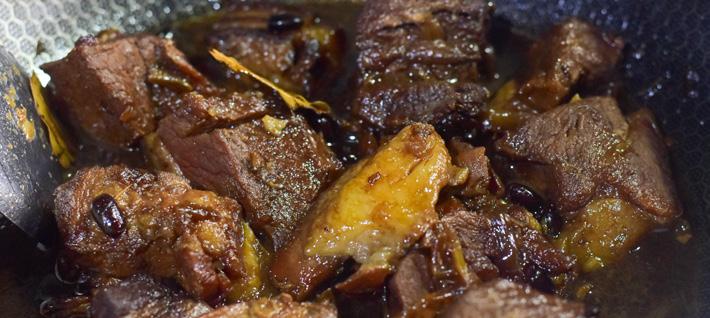
Whether it’s on the busy thoroughfares of Cebu City proper or in the quaint alleyways of your local barangay, it’s always a wonderful sight to see vendors hawking freshly-cooked banana cue. This extremely simple snack of skewered sab-a bananas dusted with sugar and fried until glazed perfection coats each steamy bite with bliss is the perfect energy boost for hungry fellows, exhausted students, kids, and kids at heart with a sweet tooth, and everyone in between!
4. Escabeche
While it’s commonly seen on special occasions, escabeche is a frequent, economical taste of home amidst more ubiquitous choices such as the ever-present lechon and hotdog-laden Filipino-style spaghetti, to name a few. Simply put, it’s a dish of steamed fish taking the stage in a rich sweet-and-sour sauce, garnished with a bold supporting cast of spices such as ginger, alliums, and bell peppers. Relatively accessible and pleasing both to the eye and palate, escabeche will always be a mainstay in the fiesta!
5. Monggos
On rainy days when we need piping hot soup to warm our bones, the humble monggos rises to the challenge. A soup of boiled monggo beans— from which it takes its name—with the meats, fish, or even bits of leftover chicharon (pork rind crackling) of one’s choice, it’s sure to bring joy with each thick, savory serving. Eaten alone, or with rice, or with bites of buwad (salted dried fish) to cut through the richness of the soup, it’s sure to give the comfiest of vibes on your coldest days.
These simple home-cooked dishes evoke the taste of home and love with each bite. As simple as they may be, they are filled with irreplaceable Filipino flavors we can’t help but long for—something not even the most expensive Wagyu steak can provide.
With every savor of the flavors of these dishes, they transport us to familiar places and treasured memories that deserve to be celebrated and enjoyed by all, nourishing both body and soul.
Recognizing and embracing these serves as a bridge to our cultural identity while providing solace even for those far from home. Joyful memories, national pride, and nourishment are all a feast for the hardworking student, as they arrive home from a day of tribulations looking forward to their next meal.
Indulge in the flavors of home and reconnect with cherished memories as we embark on a culinary voyage, exploring dishes that embody the essence of Filipino comfort and tradition amidst the whirlwind of college life.
Moving Forward Playlist
by Jonalyn V. Omania
design by Karina Adel A. Vestil and Astrid Niña T. Vidal
With our meticulously chosen “Moving Forward Playlist,” created to motivate and inspire you toward a better tomorrow, you may unleash the transforming power of music.
Life is a journey full of highs and lows, and successes and failures. A well-chosen playlist might be the ideal companion for those times when we need an extra boost of inspiration. We explore the “Moving Forward Playlist” in this article to serve as a sonic roadmap for your ventures, whether facing struggles, pursuing personal growth, or just in need of a good lift.
Here’s a playlist for you, Josenians, to listen to whenever you feel lost, broken, or uncertain.
1. Ride Home by Ben & Ben
“Took a morning ride, Found a place up in my mind, No one else can see,”
The song refers to finding a space in their imagination—personal haven, further conveyed in the phrase “no one else can see.” It emphasizes the seclusion and privacy of one’s thoughts and emotions by denoting that this mental retreat is unavailable to others.
This song is about coming back home and being with the one you love, reminding you to treasure the relationships that make you feel at home and to always embrace your emotions.
3. With A Smile by Eraserheads
“Lift your head, baby, don’t be scared Of the things that could go wrong along the way,”
The lines send a powerful message of resilience, motivating the listeners to face life’s adversities and worries head-on.
Although it is normal to experience difficulties and setbacks along the way, you shouldn’t let your fear of them prevent you from moving on. Instead, you ought to press on, confident in your capacity to overcome any obstacle that may appear. It is in taking chances and welcoming uncertainties that you may tread personal progress.
The song delivers a straightforward yet impactful message of hope and perseverance, making it a timeless classic that continues to resonate with listeners today.
“You have no reason to be afraid, You’re on your own, kid
Yeah, you can face this,”
The lines refer to the awareness and acceptance that one must rely only on oneself to triumph over tribulations in life. The song encourages you to celebrate your individuality, believe in your gut feelings, and tap into your inner strength to conquer challenges, remembering that tenacity can result in individual willpower.
Swift’s song is certainly a stirring hymn for everyone who has battled feelings of isolation and doubts about the future.
2. Leaving On a Jet Plane by John Denver
“So kiss me and smile for me, Tell me that you’ll wait for me,”
The lyrics of the song elicit longing and melancholy as it follows a person setting out for a journey while still holding onto a loved one. It is a way of asking for reassurance from their significant other while they are away, capturing the bittersweet nature of bidding someone goodbye.
It examines the contradictory feelings of regret at leaving someone behind and excitement for what lies ahead.
Eventually, this cherished traditional love song sings of lost love and that even when you must part ways with your loved ones, you always carry them in your heart and memories.
4.
Ain’t
It Fun by Paramore
“Ain’t it fun, Livin’ in the real world?”
The lines convey a sarcastic yet reflective mood, expressing skepticism of the notion that the real and unpredictable world is fun.
The song’s lyrics address the obligations that come with growing up and the necessity of tackling them courageously. It encourages listeners to enjoy the trip and to feel empowered and mature amidst the complexity of the real world.
In a world where nobody owes you anything, the song’s message is to succeed hardships and bravely seize your independence.
This playlist serves as a reminder that life is an uphill battle with ups and downs and that we can find motivation to keep going forward while breaking barriers, accepting uncertainty, and drawing strength from within.
What’s your playlist to share?
graphic
5. You’re On Your Own, Kid by Taylor Swift
They Did That: Queer Artists Who Paved theWay
by Ejay D. Villaver
design
Astrid Niña T. Vidal
In the rich tapestry of art and culture, there are extraordinary individuals who transcend boundaries, break molds, and challenge the status quo.
Life outside the closet may be terrifying. Throughout history, queer artists have faced limited representation and visibility within the artistic landscape due to the heteronormative biases that excluded them from the spotlight.
However, rather than blending into society’s norms like a well-behaved watercolor, LGBTQIA+ artists take hold of the brush and fearlessly paint their narratives—unfazed by the constraints imposed upon them.
As they break into the mainstream, queer artists are carving out their spaces using their artistry and creativity as a chisel to break free from the walls of prejudice that have long hindered them.
Flash forward to today, and it seems that the influence of these artists can be felt across a multitude of disciplines and unites people regardless of identity and background. From visual arts to literature, from music to fashion, their contributions and unique perspectives have continuously expanded artistic boundaries and amplified marginalized voices.
With this, FORWARD features a gallery of queer icons whose bold and unapologetic expressions have not only redefined the artistic realm, but also paved the way for other artists to bring their art out of the closet.
Fashion Forward
In a groundbreaking moment for both Vogue Philippines and the LGBTQIA+ community, Bretman Rock, the charismatic and influential beauty guru, made history as the first openly homosexual man to land the cover of Vogue Philippines.
graphic
by
Through tears, Rock took to Instagram acknowledging the magnitude of being the face of the iconic fashion magazine. “This truly is a big deal, and I really wish, I hope that every brown queer kid gets to have their Vogue cover one day because every queer kid deserves to feel like this,” he said.
With its first-ever Pride cover, the internet superstar courageously shared his non-binary journey and being in touch with his true self, igniting a sense of hope for queer Filipinos and opening doors for a more diverse representation in the Philippine fashion industry.
Gender is not a Limitation; It’s a Force to be Reckoned With
As a sought-after singer-songwriter, Nica del Rosario has proven time and time again that her gender is not a weakness but a secret weapon in the field of Philippine pop music. She is known for her hit compositions such as “Rosas” and “Kay Leni Tayo,” which were tributes for the 2022 presidential election of former Vice President Leni Robredo that became an anthem for women’s empowerment.
“The most compassionate yet toughest leaders in the world are women. With everything society throws at us, we’ve learned how to walk through life with both hardness and gentleness at the same time,” she said in her interview with ABS-CBN News.
Beyond her musical achievements, she also embraces her identity as an openly bisexual woman, becoming a beacon of inspiration for the queer community. This Filipina musician definitely deserves a spot in your playlist as with every song she writes, del Rosario empowers minorities and champions the strength and resilience of a woman.
The Rise of Cebu Drag
For Kat Phischeur, the founder of the Haus of Rena1ssance, the pandemic couldn’t keep fabulous drag artists down. “Despite the ongoing battle with this pandemic, queens from all over the country have managed to continue their crafts and even further it,” they said in an interview with CDN Life.
As the co-founder of the Cebu Drag Artists Community, Kat and her fellow drag artists are dedicated to making drag a prominent art form in the Queen City of the South. The community gave birth to the new era of drag and provided a platform for Cebuano drag queens to showcase their talent, creativity, and self-expression.
“This year, a lot of drag shows are being organized compared to last year. Testament to this is that now, establishments would reach out to us to perform for them. Last year, we really had to knock on establishments’ doors to give us the opportunity to showcase our artistry. It was a struggle, but it was all worth it getting here!,” says Phischeur.
The Cebu drag community is steadily gaining momentum with their visually stunning looks and breathtaking shows. These queens are making waves both locally and internationally, one glamorous performance at a time.
The legacies these artists have left behind serve as a foundation for the next generation of queer icons to carry the torch forward to a more inclusive and equitable world. The ongoing fight of the LGBTQIA+ rights movement may be far from over, but their courage and unapologetic selfexpression continue to break down barriers and challenge systemic discrimination.
10 Things To Do Near Colon After Class
by Trixcy D. Clar and Jonalyn V. Omania illustration by Hannah Vanessa O. Mondilla and Karina Adel A. Vestil
Indulging in thrilling explorations and captivating activities can be a great way to unwind. But, what lies ahead near Colon that Josenians can eagerly anticipate and undoubtedly enjoy after class?
The final bell marks the end of a long day at school and an arduous academic schedule. The day, however, is far from over! It’s time to explore the range of things that might make those post-class hours extraordinary. A world full of possibilities awaits—whether you’re looking for calmness, excitement, or a place to hang out with your friends. The choices are endless, from shopping at thrift stores to having delicious meals at affordable spots.
Josenians! Here are the things that we can do near the University of San Jose-Recoletos (USJ-R) and Colon Street that will turn those after-class hours into treasured times of delight and personal enrichment.
1. Mangukay ta! (Ukay-Ukay)
Looking for budget-friendly OOTDs? Ukay-ukay is your best choice! The word “ukay” derives from “halukay,” which means to dig up. One goes shopping by searching through stacks of clothing until they locate something they like. Second-hand or thrift shopping has become extremely popular in recent years for budget-conscious students. When we comb through racks and shelves looking for hidden gems, the exhilaration of discovering one-of-a-kind and vintage things adds to the experience. There are a lot of thrifting stores around Colon to stroll at!
2. Chibugan sa Kamagayan
Do you have cravings after class? Located at the old V-hire Terminal near the University of San Carlos-Main (USC), Colon Food Park’s got your back! Food lovers craving delicious food in a lively and social environment have grown to rely on food parks as their go-to location. These foodie gatherings house a large number of food sellers and offer a diverse selection of flavors and cuisines to suit all tastes. Going to a food park, one can discover a diverse gastronomic delights, from international cuisines to creative fusion meals—thanks to an array of food alternatives being offered.
3. Iconique Mall
Want to chill after a long day at school? Iconique Mall may pique your fancy! It is situated at Colon Roadway, the oldest roadway in the country. The only outdoor entertainment area and roof deck food court in Colon are found at this mall, which also offers fresco dining. The restaurant has a wide variety of foods and beverages from our favorite regional brands. Your daily demands are met by Iconique Mall, including food desires, shopping, wonderful finds, and many other things. They have an Italian restaurant with a sizable eating space to satisfy your cravings and milk tea stores ready to quench your thirst. On the other hand, you could also take advantage of their upscale and chic Salon to treat yourself. And at night, Iconique is a nice place to jam with the live band on the roof deck while catching up with friends.
4. Corndog Cafe
Many students prefer to do study outs to keep their focus, and Corndog Cafe is one of the nearby places around USJ-R for us to do exactly that! Corndog Cafe is located at Junquera Street beside Palm Grass Hotel. It is a Korean-inspired cafe that offers a good assortment of Asian comfort food. Its comfortable eating space makes it a great place to conduct your upcoming study session while savoring delectable meals. Plus, wifi is also accessible!
5. Carlito’s Fried Chicken
You must be familiar with Carlito’s Fried Chicken since it’s near the University and the go-to karenderia close to Colon. The flavor of their chicken has a good after-taste that will surely leave you craving for more. Savoring fried chicken after a stressful day at school is bliss! Plus, the meat is soft and tender, which perfectly complements the gravy to boost your appetite. Dining at Carlito’s Fried Chicken is a great way to relive the amazing flavor and reminisce good time memories—who doesn’t want to give it a try?
6. Street Walk or Photography
Exploring or strolling without a planned route can be an enjoyable journey, as it allows you to fully immerse yourself in your surroundings. Colon Street, located in the downtown commercial area, offers the ideal setting for street walking or photography. With its numerous malls, shops, cinemas, street vendors, and offices, you can truly absorb the vibrant setting created by the bustling locals. However, it is crucial to exercise caution, particularly at night, due to the presence of snatchers. As the sun sets, the safety level decreases significantly, and swift pickpockets begin to lurk in the shadows. Pose at your own risk!
7. Run after Jeepneys
After class, it is unavoidable that students either head straight home or have errands to attend to. Some students ensure they leave the campus early to secure a seat in the desired jeepneys or deliberately avoid peak traffic hours. Considering these, there comes a time when we have to hustle just to get home. Running after jeepneys near Colon, known as one of the busiest streets where students from various universities and workers from different establishments converge, is definitely an activity you can engage in.
8.
Street Foods
It is essential to personally engross in Cebu’s street foods as a must-do activity after class. These culinary delights are a representation of the city’s cultural identity, which offers its unique variations. In the vicinity of Colon Street, there is a plethora of street foods that one should not miss, including siomai with puso, pungko-pungko, kwek-kwek, saang, balot and penoy, tuslob buwa, tempura, and fish ball. To truly divulge yourself in the world of Cebu’s street foods, it is recommended to explore the crowded streets where you can relish its flavors.
9. Mall Hopping
Are you in need of “me-time” after class? Mall hopping is a great option to consider! Who wouldn’t want to visit one, right? There are many malls around and near Colon, including Metro Colon, E-Mall, and City Mall, where you can go window shopping and play arcade games to recharge. Mall hopping can be done for leisure, entertainment, or shopping purposes. Malls offer a fun way to alleviate stress and provide a mental break from academic pressures.
10. Waiting Game
Waiting for extended periods of time is an inevitable encounter after class. There are various reasons why this is a common occurrence in this area. First is the need to wait for transportation, as daily commuting is unavoidable for students, workers, government officials, businessmen, and ordinary individuals who rely on jeepneys for their travels. Colon Street, renowned for its vibrant and fast-paced atmosphere, attracts a large influx of people throughout the day. Particularly during rush hours and after classes, the street becomes crowded with students, commuters, shoppers, and locals engaging in their daily activities.
Ending the day by exploring Colon can be an excellent way to let loose, have a good time, and engage in new endeavors. The captivating and immersive nature of doing our hobbies allows for the discovery of new places and encounters through little pleasures in life. TEN
Our generational differences often mirrored an eerily familiar pattern. And this pattern points a striking similarity: The young in every generation echo a louder voice and take up larger spaces.
“Papunta pa lang kayo, pabalik na kami.” on your way there while we’re already on our way back)
This overused phrase rings a bell to most Filipinos, typically hearing it from our parents, who heard it first from their parents, and it has become a passed down quote for generations.
It is true, though. With the older ones having trailed this path ahead of us, it is no surprise that they give us advice and guide us on how to navigate life.
But just like Taylor Swift’s song entitled “The 1,” they somehow assume that we know nothing just because we are young.
The stark contrast in beliefs, ideals, and experiences between people from different generations is apparent in our daily lives.
From a minor disagreement with our parents on certain social issues to a heated debate with a “boomer” on the internet over political stances—the list goes a long way.
A particular instance where generational conflict sparked recently was when a millennial, being the “ate” or sister to younger generations, posted a TikTok video about the unprofessional and unethical behavior of some Generation Zs or Gen Zs.
In the now-deleted video, a user named “Aencille” pointed out that most Gen Zs are unprofessional in the way they approach employers in the workplace, quickly generalizing the cohort of young people based on an encounter from a single person. She shared how a Gen Z inappropriately messaged her after she posted a hiring application poster on Facebook, an obviously informal platform.
While the person she encountered indeed acted unprofessionally, what made the netizens dislike, aside from the stereotyping, was Aiencelle’s condescending tone.
One’s point will not get across if the tone used is demeaning to the other person.
Perhaps that’s what the above Filipino idiomatic expression was all about; the once young individuals from the now older generations have walked the same path we are taking.
The social issues may have changed, and the measures of expressing our causes may be different, but it was relentlessly for the holistic development of our people.
Some movements have not even succeeded yet, and it is our responsibility to continue what they started.
And I’d like to believe it that way.
When the day comes that the next generation is in charge of amplifying the cause of the marginalized, may we not antagonize them but rather lead them towards the right way of doing things.
This is a reminder that we should not let our generational differences divide us—let these differences establish a meaningful connection for everyone’s benefit.
May we never grow accustomed to the things that make us uncomfortable. May we never settle for default. May we continue to resist.
Moreover, the generational stereotype does not stop there—and it is not only present in Gen Z.
And may the young continuously take paths that are rarely taken to foster a better environment for the next generations to come.
Freedom for the P ens
illustration by Karina Adel A. Vestil
because that was a blatant attack on our campus press freedom,” Castañares said.
In light of TC’s current circumstances, the publication perseveres in sharing crucial information for the entirety of the Carolinian community, thereby exercising their right to freedom of the campus press.
Another student publication, Cebu Normal University’s (CNU) Ang Suga Publication (ASP), faces a different challenge. Although they are financially supported by their administration through its Project Procurement Plan, their challenge is that “the funds are handled by the administration.”
According to Law Insider, a student publication is “any matter prepared, substantially written, or published by students, then distributed or generally made available, free of charge or for a fee, to the student body, under the direction of a certified employee.”
Student publications and journalists are crucial in keeping students informed about campus activities, acting as a check on the administration, and uncovering stories that the external media would overlook.
In the Philippines, press freedom is every Filipino’s right to self-expression. This principle prompted the Senate to legislate the Republic Act (RA) 7079 or the Campus Journalism Act of 1991. A portion of the act states that “it is the declared policy of the State to uphold and protect the freedom of the press, even at the campus level, and to promote the development and growth of campus journalism as a means of strengthening ethical values, encouraging critical and creative thinking, and developing moral character and personal discipline of the Filipino youth.”
While this law exists, there are instances where student media fail to address problems on and off campus adequately. This could be due to pressure from school administrations that compromises editorial independence.
Cebu City Campus Pens
Despite the fact that student journalists are given strong safeguards, some universities still suppress or punish student publications, especially when the articles cover critical subjects that the administration finds disagreeable. Some administrators have employed various strategies to intimidate journalists—defunding publications, threatening investigations, requiring prior review before publishing, and placing pressure on reporters and student media advisors to shape the narrative.
One such publication is Today’s Carolinian (TC), the official student publication of the University of San Carlos (USC). The publication has gained a reputation for taking strong and unwavering stands that effectively represent the sentiments of the Carolinians.
Yelena Castañares, the Editor-in-Chief (EIC) of TC, describes the publication’s current situation as “kind of complicated.” Despite managing its operations effectively, TC does not receive funding from the USC administration, resulting in its independent operation.
“The biggest issue we face right now is that we don’t have funds. We keep emphasizing our defunding
Rena Mae Avila, the EIC of ASP, shared that “with this system, the publication cannot immediately access the funds for [they] still have to go through different processes and acquire approval from different offices to ensure transparency and proper handling.”
“Although these processes guarantee that the fund is processed well, this mechanism doesn’t allow us to have immediate access and full control over the fund when we urgently need it for our publication necessities,” Avila added.
TC and ASP are only two of the many Cebu City campus presses that struggle to exercise editorial freedom.
University’s Pens
The University’s press is supported by the administration as a publication fee is stipulated in the students’ statements of accounts. This fee is utilized to produce newsletters, magazines, and other supplementary materials released every semester. However, the University’s press independence is limited given that all the articles, whether in print or online, are monitored as agreed upon by the publication and the University administrators. It takes at least one week for the printed publication materials to be fully approved for release.
In this environment, the student journalists’ desire to disseminate the truth about the University is dominated by hesitation. The supposed independence of the University press becomes nothing more than an illusion, a facade that masks what is truly happening.
What’s Next for the Pens
The battle for editorial independence in university press is far from over. It requires an unyielding belief in the power of a free press. The voices of student journalists must be amplified, and the shackles that restrain their pens must be broken.
Today, student publications from various universities in Cebu City collaboratively strive towards a common goal: Advocating for the rights of students to have an independent press.
Regardless of the obstacles that they encounter, their commitment remains steadfast in fostering responsible campus journalism. They shall continue to serve as catalysts for the pursuit of knowledge and truth, arming individuals with social awareness and inspiring them to actively contribute to society.
In this enervating, fast-paced society, is it wrong to pause, let loose, and get lost?
graphic design by Ayn E. Nazareno
Typically, dreams are for sleeping. But sometimes, dreams are waking up to a hard reality.
Have you figured out your dream in life yet? Or are you, like me, still uncertain of what you truly want to pursue and achieve in the future? This wasn’t always the case for me, though.
Every time Pinoy Master Chef played on television, the younger me always exclaimed that I wanted food to be the subject of my life—as if it were art and I were the artist. It was an enthusiastic dream that lasted as quickly as the eggs I fried burned.
At another point in my life, the idea of being an interior designer also once dawned on me, but I knew that just because I enjoyed playing SIMS 3, it didn’t mean that I fancied the idea of studying the actual course.
There was even a time I dreamt of being an astronaut, away from civilization and overlooking the entire universe as if it were my own. But faced with heights, even when looking over the skywalks, I already quivered in fear.
Yes, I proudly called myself a dreamer—but only because I was still young, clueless, and worry-free. Most of the time, I was certain of my dreams, but through the eyes of an innocent child, who would have known that life was ever-changing?
Fast forward, I somehow ended up as a struggling Accountancy student; with the gravity of the degree program and the competitiveness in the environment painfully present, I continue to stand, unsure if I truly want to throw myself into the corporate world.
All my life, I have always been the “go with the flow” type of person, embodying the YOLO (You Only Live Once) personality everyone left behind in 2012. And it was evident in all the spontaneous last-minute trips I took, in the friendships I got to keep, and in the crazy worthwhile experiences I would never dare do again.
However, it was also evident in the useless stuff I impulsively bought online, my messed up body clock, and the fights I had to stand up for but lost.
But sometimes, we cannot help but ask: Why don’t I have any dream as big, grand, and worthy as theirs? Why am I still unsure of my path while other people my age are already slowly crossing bridges toward their dreams?
The pressure of finishing my degree, landing a good job, becoming the next breadwinner, paying bills, and navigating adulthood, almost feels like the weight of the entire world on my flimsy and fragile shoulders— impatiently waiting for me to collapse and waver.
With all these expectations weighing on me, my concept of “the dream” remains hazy, like a level waiting to be unlocked.
To the big, small, and non-dreamers, we don’t have to rush our lives and constantly compete with others as to who’s living the better life because not all of us are enduring the same conditions.
However, we shouldn’t be complacent with the idea of our time. For as long as we can, let’s continue to grow for the better, keeping in mind that being content is entirely different from settling for less.
Perhaps, our “what ifs,” “not yets,” and “maybes” are all part of the process and progress. You’re not weird, lazy, or hopeless for undergoing a normal phase in life.
You’re simply a human being making your way through this harsh world. One day, you’ll get through it in ways you can’t even imagine.
Until then, we’ll continue to wonder, “What’s next?”
Naa mo’y orasan, mamser?
profs noh nga di man lang magpahibaw kung magklase ba or dili, sayo pa kaayo ta ni mata para di ma-late, ang ending, wala diay siya! Panagsa ra mosulod kung ting-klase pa, mo-extend pa jud og klase bisan nga summer na! Imbes maglangoy-langoy ta, mo-attend na lang ta sa iyang klase—kapaet ba!
“Wala pa man tela, balik lang.”
Di sad lalim magbalik-balik pangutana kung nahuman na ba og tahi atong uniform ay! Mura ta’g guba nga plaka, ang tubag sad balik-balik ra: “Wala pa man tela, balik lang.” Asa man diay na kuhaon ba? Nag-summer na lang, wala gihapon. Unya inig balik sa klase, civilian na pud? Kapoya na’g laba!
Namalabi naman ka GE!
Grabe ang ka-stress sa uban mga estudyante, pero dili tungod sa majors nga mao unta ang angay na i-focus, kundi tungod sa mga minor nga mura na’g nahimong major! Activity diri, assignment didto, task diri, project didto! Ah, mas time-consuming pa man kaysa sa major! Pila gani ni ka-units?