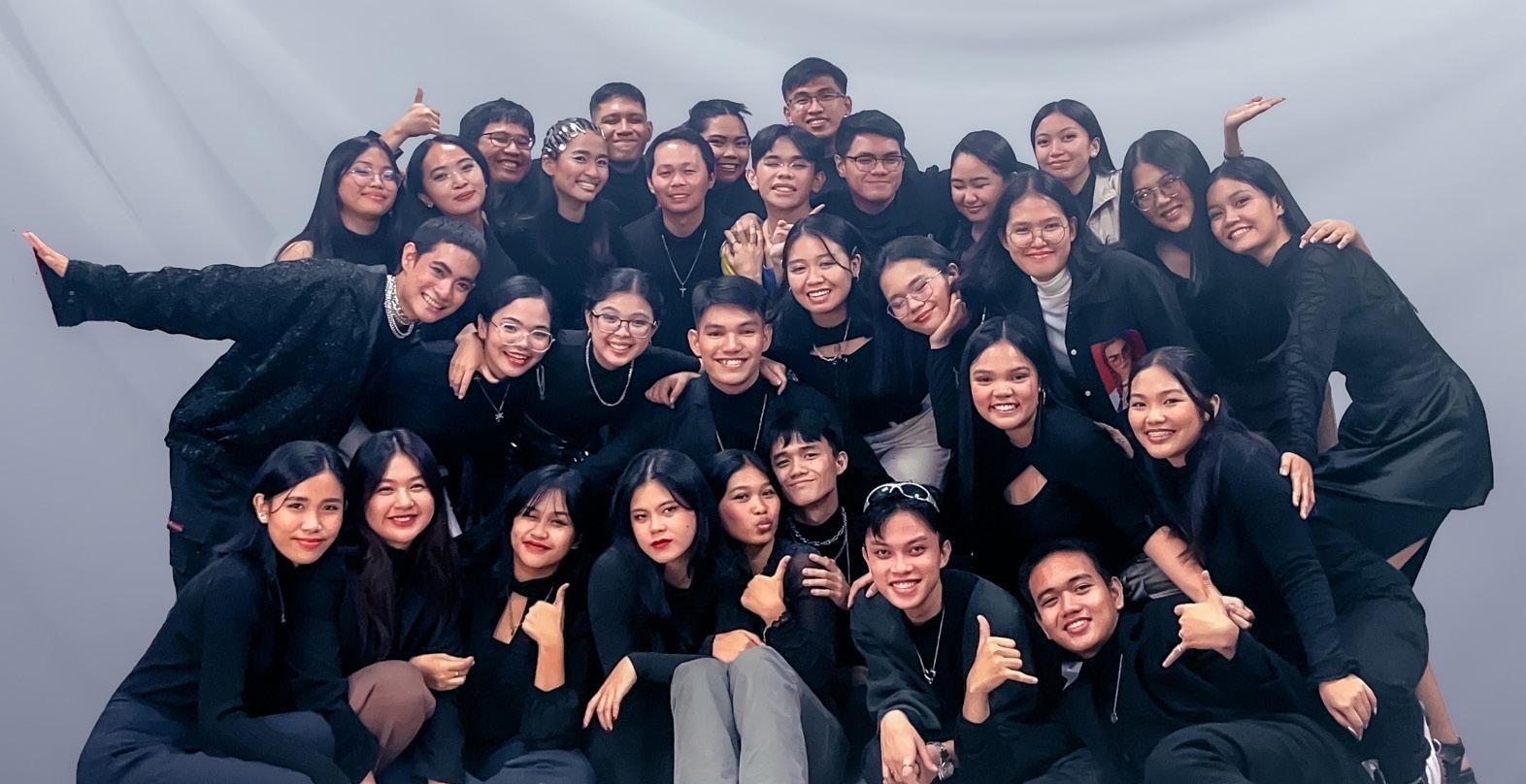
One must refine the plans of the present to conquer the unknown frontiers of tomorrow. In this semester’s issue, FORWARD sketches a BLUEPRINT upholding the values of creativity and justice on which society stands firmly upon.
VOLUME 75 | A.Y. 2023-2024
THE OFFICIAL STUDENT PUBLICATION OF THE UNIVERSITY OF SAN JOSE-RECOLETOS
BEHIND THE COVER
Producers
Hannah Vanessa O. Mondilla
Ejay D. Villaver
Juan Enrique D. Reboquio
Photographer
Astrid Niña T. Vidal
Assistant Photographers
Christian A. Mananguite
Jane Frances P. Latorza
Hair and Make-up
Jeorg Antonni G. Salutillo
Model
Cleijhanne Daeniel Doña
Probationary Staff
John Louise V. Lambiquit
Khabzeel Clark P. Payao
Krisha Faye A. Gascon
Maria Cristina G. Lamug
Sharry M. Cuizon
Aliyaah T. Alvez
Khen B. Fernandez
Heron Augustus S. Flores
Gabrielle Marie R. Paradiang
Narvie Klaryzze B. Borja
Marylit Silje C. Cañizar
Krista Marie B. Yaoyao
REACH US
For comments, reactions, suggestions, and contributions, contact us at:
ABOUT US
Publication Adviser / Technical Guidance
Mr. Robert Pongot
Assistant Moderator
Rev. Fr. Glynn C. Ortega, OAR
Moderator
Rev. Fr. Persiuz Joseph M. Decena, OAR
The FORWARD Magazine is printed every semester and once every summer under the name SOLSTICE. It is managed and published by FORWARD Publications, Ground Floor, San Agustin Building, University of San Jose-Recoletos, Magallanes Street, Cebu City. FORWARD welcomes contributions from Josenians such as formal/informal essays, poems, short stories, artworks, and photographs.
Read the latest FORWARD Magazines and Folios online at www.issuu.com/usjrforward
All rights reserved. No part of this magazine shall be used for any purpose except when allowed by the law without prior explicit permission from the FORWARD Publications.
by Karina Adel A. Vestil
Illustration
Tomorrow, be ours Tomorrow, be ours
Tomorrow, be ours
Ever so often, when silence reigns, in the quiet moments between breaths, life speaks to us through its intricate details. It lies in the streaks of a painter’s brushes, the strings of a writer’s words, the cryptograph of a technician’s inventions, and the canvas of an architect’s scrupulous designs.
Behind every magnificent work is the stellar mind of its creator; a mere thought becomes an idea, an idea transforms into a plan, and a plan materializes into a blueprint.
The modern age we see today is a by-product of blueprints sketched together—whether it be visible structures or abstract edifices. From technological advancements to society’s belief system and the status quo, in one way or another, we contribute to scaffolding its foundation.
But where do we draw the line when the creations that humans made turn into something that threatens the very existence of their creators?
In such cases, we, too, can tear it down into debris.
With the series of breakthroughs that unfolded over the years, FORWARD Publications presents to you its meticulously crafted semestral magazine with a concept that scrutinizes the grid system and dimensions that make up a blueprint.
Inside the first few pages of this magazine are the opinion articles that delve closely into how the political landscape is architected by the officials who vowed to serve us; the rise of Artificial Intelligence (AI) and its threat that ties back to the industrial blueprint; and the mold that holds the framework of our society.
We also have feature articles that magnify the notable contrivances that showcase the artistry and talent of human minds—spanning from innovative inventions, architectural designs, and movies that are ahead of their time.
Naturally, we unravel University-based reports that construe the blueprint of the Josenian community, understanding its scope outside the four corners of a classroom.
Through this magazine issue, we urge our readers to open their eyes and be vigilant of life’s ebb and flow. To deny the asymmetrical structures of our reality that do not intercept with what we envision. To question whether our creations live up to their mission of bringing comfort or do they open paths that bring about an imbalance of the universe’s nexus.
Our tomorrow clings upon the hands that sketch, design, and plot the construction of a blueprint. It boils down to which structure they plan to build or break.
The future is now—and the future is ours to claim.
A Modern Framework
Technological advancements and innovation allow us to tread onward in this ever-evolving world, but does it also entail leaving behind the authenticity of human talent?
This year, artificial intelligence (AI) has been dominating various fields of education, information, and entertainment, including reports, art, films, and music—but the least expected of all is journalism.
Who would have imagined even “journalists” would hop into this trend?
When GMA Integrated News introduced its AI sportscasters, Maia and Marco, at the National Collegiate Athletic Association (NCAA) Season 99 opening on September 24, 2023, it garnered extreme flak from the public.
These two sportscasters were generated by AI using image generation, text-to-speech voice synthesis, and deep learning face animation technology.
The area of sports journalism requires the reporters to put utmost energy, grit, and passion in the way they deliver commentaries—and Maia and Marco’s almost lifeless delivery does not stand a chance.
Journalists and those who belong in the same field must understand that nothing beats actual human talents performing the roles of reporters.
In a statement made by Senior Vice President and Head of Integrated News, Regional TV, and Synergy Oliver Victor Amoroso, he said that the introduction of the first AI sportscasters significantly impacts their objective of “Mas malaking misyon, mas malawak na paglilingkod sa bayan,” while also mentioning that it promotes inclusivity in their reporting.
Amoroso added, “[Our] adoption of AI technology also demonstrates our commitment to innovation in journalism. We embrace emerging technologies to stay at the forefront of the media industry by providing our audience with a modern and engaging sports news experience.”
It appears to be a tad hypocritical that they intend to give their viewers an “engaging” sports news experience while launching stagnant AI sportscasters who flaunt a deadpan look.
Moreover, is this “innovation” and “inclusivity” truly applicable to all and serving the field? Or does it only discourage and undermine the efforts of Journalism and Communication students striving to earn the degree and credibility essential for such roles?
While Amoroso also emphasized that Maia and Marco are merely presenters and not journalists, assuring that “they can’t replace our seasoned broadcasters and colleagues who are the heart of our organization,” it still contradicts everything that GMA claims to stand for.
If GMA genuinely cares for its workforce, who have been the center of its excellence and success for decades, they should instead shift their focus on addressing persistent issues media workers face, such as unjust compensation, contractualization, and protection from the existential threat due to the rise of AI in the industry.
The beauty of authentic human ideas and passion can never, in the slightest way, be compared to a mere machine.
Furthermore, if this scheme was intended to cut costs, perhaps it is high time that GMA must reevaluate its objectives as a media company.
Must they replace pure passion for a cheaper alternative at the expense of losing our livelihood in the process?
AI is merely a tool that can aid humans—its lines of code cannot replicate the emotional depth that humans possess.
We went from fearing dystopian films about technology disturbing reality to actually questioning our worth in this AI-driven world.
We could only dream that our situation today is just part of the entire movie plot and that the future has a better ending in store for us.
There is an abundance of human talent drive that we are wasting and burying alive. With GMA’s single move of succumbing to AI, it has laid hundreds and thousands of Filipino dreams in peace.
If this is the future that awaits us, the blueprint must be scrapped; we do not deserve to constantly worry that the opportunities we have today may be gone tomorrow.
FORWARD condemns anything that instigates the job displacement of people from various fields, much less the initiatives that mock the essence of journalism.
Modern journalists refuse to be replaced by emotionless robots.
Confidential Fun? Confidential Fun?
Confidential Fun?
by Rufino Rico L. Jamisola and Juan Enrique D. Reboquio
For a common Filipino, having fun takes no cost. However, “fun” seems to take a different turn for some of those in power.
More than a year since Sara Duterte was proclaimed the Vice President (VP) of the Philippines by the votes of over 32 million Filipinos and appointed as the Department of Education (DepEd) Secretary, it seems that she has been having fun playing with requests for lump sum Confidential Funds (CF).
With this fun(d) play comes serious constitutional violations.
In December 2022, the eyebrows of several politicians and analysts raised upon their knowledge that a CF costing P125 million was transferred by the Office of the President (OP) through the Department of Budget and Management (DBM) to the Office of the Vice President (OVP).
In September 2023, it was revealed that this whopping amount was spent in only 11 days.
As per the Office of the Executive Secretary (OES), the CF was intended “for newly created satellite offices” of the OVP.
Subsequently, when the VP herself was questioned about the fund’s utilization, she would only resort to denial of the allegations and personal attacks against the inquisitive critics instead of giving the public direct answers to the investigation.
[Budget] Relay
From the approval of the OP to pass on the December 2022 CF to the OVP, the objectives of the OVP for the budget request, up to the list in the line item intended for the year 2022—numerous concerns with the Constitution and several statutes have found positions for discussion.
“The Philippine Constitution lays down clear rules on the budget process: the president proposes the budget, Congress authorizes it, then the president implements the budget as authorized by Congress,” as stated by Filipino economist Benjamin Diokno in his study, “Recent Philippine budget reforms: Separating the chaff from the grain, the whimsical from the real” in 2014.
The magnifying lens is focused on the statement: “The Congress authorizes the budget.”
Now, the question is: What happened to the budget process?
Despite the clear input from the Constitution, President Ferdinand “Bongbong” Marcos Jr. approved the budget instead of Congress.
Was there an overstepping of responsibilities in that regard? It is apparent that the system of check-and-balance had been unfairly affected. If the President continues to do such a thing, the Congress would only be as strong as its weakest link.
Hampas Palayok: Guidelines Not HitA 2015 Joint
Circular between the Commission on Audit (COA), the Department of the Interior and Local Government (DILG), the Governance Commission for Government-Owned and Controlled Corporations (GCGOCC), and the Department of National Defense (DND) laid down guidelines on confidential and intelligence funds.
“Confidential and intelligence funds are lump sum allocations set aside in the national budget for expenses that involve surveillance and intelligence information gathering activities,” a portion of the circular said.
As its name suggests, confidential funds are for expenses related to surveillance activities in civilian government agencies that are intended to support their operations.
However, do satellite offices align with surveillance?
Think twice, think thrice—one wonders where those funds are spliced.
While the OP and OVP have defended these allocations, saying they are necessary for programs relating to national security, Albay House Representative Edcel Lagman, along with some lawmakers, refused to believe their side.
“The OVP is not a surveillance agency and has no jurisdiction over matters of national security,” Lagman said in September 2023.
It appeared that the OVP was prioritized more when there could be other agencies needing that amount for their intelligence gathering.
The Boat is Sinking: Item Not in the Group
In the context of the allocation of items, it is a fact that former VP Leni Robredo, the predecessor of Duterte, did propose a CF for the year 2022, which was approved for her last year in the OVP.
Duterte sat in her office in June 2022; therefore, the current OVP had no right to manipulate the budget until that fiscal year ended.
The three-time former Senate President Franklin Drilon firmly disagreed with what happened, emphasizing that the transfer runs counter to the basic principles of budgeting and governance enshrined within Article VI, Section 25 (5) of the Constitution.
“No law shall be passed authorizing any transfer of appropriations; however, the President, the President of the Senate, the Speaker of the House of Representatives, the Chief Justice of the Supreme Court, and the heads of Constitutional Commissions may, by law, be authorized to augment any item in the general appropriations law for their respective offices from savings in other items of their respective appropriations,” the section in the Constitution states.
In the absence of a CF in the 2022 budget of the OVP, what item is there to legitimately augment? The decision was alarming as it raised serious concerns regarding the constitutionality of the fund transfer.
Congress, VP Sara proposed P500 million in confidential funds incorporated in the OVP’s presented P2.385 billion budget for 2024.
Duterte said the OVP’s confidential fund supports their programs, including tree planting, free bus rides, and livelihood and calamity assistance programs.
However, in this particular hearing, it took Senator Risa Hontiveros, the only opposition in the Senate, 30 minutes to interrogate the VP and put her on the hot seat about the causes of the CF.
No matter what route VP Sara tried to take through the maze, she could not escape.
Of course, it is because everything was evident that the VP’s intentions for the CF were not aligned with the mentioned 2015 Joint Circular.
CF discussions have been held here and there—even online—but when Duterte asks for it, the administration never says “no.”
Many citizens would expect that even before the end of this year, the OVP’s plea would be approved because the majority of the public servants sitting in the Senate are pro-administration.
However, in a fascinating turn of events, the House Committee on Appropriations reached a unanimous decision to scrap the OVP’s request for confidential funds in the 2024 General Appropriations Bill last October 10, even opting that the office receive the more auditable miscellaneous and other expenses.
As of writing, Duterte issued a statement retracting the OVP’s efforts in pursuing CF, highlighting that this issue divides the Filipino people and goes against her oath of keeping the country peaceful and strong.
The Philippines dodged a bullet this time. Simultaneously, Duterte also dodged the chore of answering why the funds were needed in the first place.
This is not new to many Filipinos; that is how politics work in the Philippines—most of the time, “public servants” run for self-serving interests rather than the welfare of their constituents. It coincides that they are having so much fun with this unfair play of power.
One of the resolutions for this issue could be the reformation of the provision stating what government agencies could avail of the CF.
There should be strict specifications and qualifications on which of them can be appropriated with CF. It is as simple as that—of course, when thoroughly thought about.
Let no one—even those in power—ever bend the law.
The Constitution serves as the blueprint of our nation. Why do its architects design its very destruction?
Limbo Rock, But Make It Higher
Fast forward to September 2023, during a budget hearing in
Keeping Up With the Marcos Administration
by Ejay D. Villaver Graphic Design Karina Adel A. Vestil
President Ferdinand “Bongbong” Marcos Jr. (PBBM) made a lot of promises during his campaign period up to when he assumed office. He had campaigned on a broad pledge of bringing “unity” as well as creating jobs and cutting the cost of food, among others.
As the dust settled on PBBM’s first year in office, it became evident that it was not all smooth sailing. Political analysts were quick to label it as “mediocre,” highlighting the missed opportunities and distractions plaguing the halls of Malacañang.
With the current setbacks, it has left many questioning the administration’s direction and efficacy. Looking back, was the President’s blueprint successful in addressing the nation’s myriad of problems?
Unfulfilled Promises
During his campaign, PBBM promised to lower the price of rice to P20 per kilo, a pledge that garnered many Filipino voters in the 2022 polls. However, more than a year later, officials of the Department of Agriculture (DA) admitted in August 2023 that achieving this goal within the next two years is “unlikely.”
From
viral memes that always hit the mark to platforms that have missed the target, the Marcos Administration’s “Bagong Pilipinas” scorecard has been marked by a series of notable flip-flops.
As of October 2023, rice inflation experienced its most significant increase in 14 years, despite the government’s imposition of price caps on regular milled and well-milled rice, as reported by the Philippine Statistics Authority (PSA).
National Statistician Dennis Mapa revealed that rice inflation skyrocketed to 17.9% in September, a stark increase from the 8.7% recorded in August. This is the highest price inflation rate since March 2009, when it reached a staggering 22.9%.
Despite the government’s implementation of price ceilings of P41 per kilo for regular milled rice and P45 per kilo for well-milled rice, the inflation rate for rice continued to surge in September 2023.
As the former DA Secretary, analysts say that PBBM’s performance has been “less impressive.” Some argue that this dual role hampers his ability to effectively lead the nation, leading him to make reforms with limited impact.
Given the looming global food crisis, there is a need for a full-time secretary who possesses a deeper understanding of the industry and can effectively tackle issues facing the rural sector and food security. If PBBM fails to meet it, then it is time for a change in leadership.
The welfare of farmers and the entire agricultural industry deserves nothing less.
Numbers Don’t Lie
The impact of the COVID-19 pandemic on the Philippine economy was particularly devastating. While external factors played a role, much of the burden of this crisis can be attributed to the previous administration’s flawed pandemic response.
When PBBM assumed office, the Philippines found itself grappling with an unprecedented employment crisis that reached severe levels. Its true extent is often concealed by a significant prevalence of informal employment.
According to the IBON Foundation, an education and information development non-governmental organization, the number of Filipinos engaged in informal work stood at 16.8 million in 2019. Yet, by 2022, this figure had ballooned to 19.9 million, laying bare the harsh reality faced by countless individuals without the security and benefits of formal employment.
Regrettably, under Marcos Jr.’s leadership, this predicament only intensified. Informal workers continued to surge in numbers, with statistics revealing an alarming monthly increase from 20.1 million in July 2022 to a disconcerting 20.8 million by April 2023.
To put this in perspective, out of every 100 individuals classified as “employed,” 73 were entangled in informal labor.
With these alarming statistics, the administration needs to shift the narrative from mere job creation to the creation of stable, decent employment opportunities that strengthen the Filipino workforce.
The Corruption Continues
In his recent State of the Nation Address (SONA) in July 2023, PBBM discussed that the Maharlika Investment Fund (MIF) will be used to make high impact and profitable investments, such as the Build Better More (BBM) program—an infrastructure program superseding Duterte’s Build Build Build.
Despite PBBM’s attempt to alleviate concerns about the fund’s management, he assured the nation that “a group of internationally recognized economic managers” would oversee it, ensuring sound financial management and decisions based solely on financial considerations without political influence.
Nonetheless, despite these reassurances, several legislators have expressed doubts about its legality and potential repercussions, with former Finance Undersecretary Romeo Bernardo criticizing the perceived haste in implementing the fund without comprehensive staff work.
The swift approval of the MIF Act of 2023, just over eight months
after its proposal in Congress and enacted days before the President’s second SONA, has sparked concerns. These concerns have been echoed by professors and lecturers from the University of the Philippines’ School of Economics, who labeled it as “defective” and a substantial threat to the nation’s economy.
It has the potential to exacerbate corruption and divert attention from pressing issues such as wage hikes, rising inflation, and national sovereignty challenges.
Given these valid apprehensions, it is crucial for the Marcos Administration to be transparent regarding the fund’s intricacies. Prioritizing a detailed and transparent roadmap for the MIF and the Maharlika Investment Corporation (MIC) is imperative to prevent unforeseen fiscal risks.
Assurances alone are insufficient. The Filipino people deserve comprehensive information on how the MIF will function and benefit them. Transparency, oversight, and adherence to best practices are essential to ensure the fund’s success and its contribution to the nation’s economy.
The Marcos Administration could have used its first year to put forward legislative reforms that would truly answer the socioeconomic needs of the people. But instead of addressing the most urgent social issues, the President has prioritized a self-serving agenda that benefits the elite few and local and foreign big business interests.
PBBM’s Administration falls far short of the grand promise of delivering a “Bagong Pilipinas” vision.
Under his watch, food prices have continued to rise, making food more and more inaccessible to many Filipinos, especially among the poorest households. The administration’s response to the employment crisis, exacerbated by the COVID-19 pandemic, has been inadequate. The controversial MIF, while discussed with reassurances of sound financial management, has raised legal and economic concerns.
In essence, the blueprint laid out by President Marcos during his campaign has yet to yield tangible benefits for the Filipino people.
Some may have put their hopes on PBBM to resolve our mounting problems, rather wrongly, as he did not present any platform at all during his campaign nor that “comprehensive, all-inclusive plan for economic transformation” that he announced during his inauguration.
The quality of life for many under his presidency has taken a downturn. It is imperative for the government to reevaluate its priorities and take concrete steps to fulfill the promises made to the nation.
Rebranding 101: Money Laundering in Disguise
by Diane Rose G. Baynos
When the taxpayers’ money is put in vain for whimsical rebranding, they have every right to demand a blueprint of transparency.
Despite justifications, the budget did not match the changes made.
The Filipino people are no strangers to the Philippine government’s questionable plans that usually leave them raising their brows and scratching their heads.
Recently, a wave of rebranding efforts by some government agencies ignited money laundering suspicions among netizens. Such initiatives involved changing their logos and slogans using a substantial amount, which went as high as millions.
With the staggering budget, Filipinos naturally expected well-crafted rebranding outcomes that reflect the nation’s identity, aspirations, and ideals of its people.
Regrettably, that does not look like the case.
For context, the typical cost for rebranding and logo creation ranges from P30,000 to P50,000, as reported by the Inquirer in July 2023. This poses a huge gap once compared to the costs that the government agencies have allocated, even accounting for the additional deliverables that it entails.
This comes as no surprise in a country perceived as one of the most corrupt globally in 2023, ranking 116th out of 180 countries in the Corruption Perceptions Index (CPI) report from Transparency International, which is a registered association that aims to create change toward a world free from corruption.
If there is one thing that Filipinos are good at, it is spotting public-funded yet poorly made government logos that appeared to have been decided on a whim.
Let us take a look at the two “horsemen of bad graphic designs” in 2023, which potentially squandered taxpayers’ money. As the netizens phrase its comparison, “Choose your fighter.”
Love the Philippines?
The Department of Tourism (DOT) raised furor during its 50th anniversary on June 27, 2023, following the launch of its new tourism campaign slogan, “Love the Philippines,” replacing the iconic “It’s More Fun in the Philippines” after 11 years.
Graphic Design by Hannah Vanessa O. Mondilla
As per Tourism Secretary Christina Frasco, the new campaign was meant to herald a new era of tourism in the country, saying that there is “so much to love about the Philippines.”
However, there is certainly nothing to love about a P49 million rebranding campaign.
Some social media users expressed their sentiments on the new slogan, commenting that it sounds more like a command and is “off-putting” instead of “inviting.” One user in particular said that it could have been fixed with a comma after the word “Love” to avoid such negative connotations.
The logo also received multiple criticisms due to its quality and accompanying visuals.
A netizen said that it looked like an output made by a Grade 3 student, while others referenced Canva, an online graphic design platform, in the discussion.
Aside from the logo and slogan, the audio-visual presentation (AVP) of the campaign was also mired in controversy due to the use of unoriginal and foreign stock videos. It included shots from Thailand, Indonesia, and the United Arab Emirates, which completely contradicted the campaign’s supposed nationalist vision.
This is not only a blatant disrespect to the Filipino people, but it also disregards the many beautiful places in the Philippines there are to feature.
The incident gained global attention, with international media outlets probing into the tourism campaign, such as BBC News, Kuwait Times, and The Independent.
This reaction is not surprising, though—a Philippine tourism video that featured stock footage clips of countries other than its own? We made it way too easy to be a laughingstock.
The contracted ad agency, DDB Philippines, then apologized and took the controversial video down. Consequently, DOT ended its multi-million contract with the ad agency.
Perhaps this is what they meant in the previous tourism slogan: It is indeed more fun in the Philippines, but only because of the apparent circus in this tourism campaign fiasco.
PAGCOR Logo
Less than a month after the “Love the Philippines” incident, another government agency went under scrutiny for the same reasons.
On July 11, 2023, the Philippine Amusement and Gaming Corporation (PAGCOR), in celebration of its 40th anniversary, introduced its new logo depicting a fire-like symbol with shades of red and blue, replacing the green and yellow brand that the agency was known for.
According to PAGCOR Chairman Alejandro Tengco, the new logo is meant to “symbolize the flame that ignites change and drives progress.”
However, Filipinos perceived the logo otherwise.
Numerous netizens questioned the gaming body because of the P3.036 million expenditure on the said logo, which cast criticisms on its purpose, relevance, and cost.
The logo had been the center of memes and amusement for weeks. Some likened the new logo to that of Petron Corporation due to its similarity in colors and stylized letter P, while others turned it into a fireball from a “Street Fighter” game.
PAGCOR seemed to take its name way too literally for all the wrong reasons.
Independent and freelance artists also wasted no time in posting their different versions of the logo, proudly showcasing their creativity despite limited resources.
If ordinary people could produce a better output even without the million-peso budget, why cannot our government officials do the same?
This prompted a probe into the agency’s rebranding initiatives.
Cagayan de Oro 2nd District Representative Rufus Rodriguez expressed his concern over the logo and urged an investigation if the budget was reasonably used.
“I would like to know the rationale behind the unnecessary change and the expenditure of P3 million in taxpayer’s money,” he said.
Rodriguez also urged the agency to strengthen its fight against illegal gaming activities under PAGCOR rather than expensive logos. After all, that is their main duty to the public.
A House Resolution has then been filed in the same month to look into the said issue.
The logos, slogans, or taglines may be altered, but no amount of rebranding could change the valid disappointment that Filipinos had felt.
May our government officials be reminded that any course of action, especially those that involve the taxpayers’ money, should not be taken lightly. It must undergo careful planning and implementation to ensure that every cent is put into meaningful initiatives.
More so, instead of focusing on rebranding, they should give greater importance to implementing laws that alleviate the lives of the Filipino people, including employment opportunities, wage hikes, and cost reduction of goods and services.
With the millions of piled-up problems that Filipinos face, the last thing that ordinary people need is rebranding projects that cost millions of pesos. The Philippine government must set its priorities straight.
So long as the taxpayers’ money is not justified, and the actions of the government officials do not exhibit the qualities of competent leaders, the Filipino people continue to demand a blueprint that shows accountability and transparency.
We relentlessly resist because we are entitled to more than superficial rebranding efforts.
Give us the blueprint. Give us what we rightfully deserve.
ChatGPT: Game-changer or Potential Pitfall?
by Trixcy D. Clar
Graphic Design by Hannah Vanessa O. Mondilla
From initially aiding students to possibly fostering dependency and diminishing self-reliance, how far should we push the boundaries? Is AI genuinely empowering or entrapping us?
The universal yearning for instant gratification is undeniable in today’s fast-paced world, spanning entertainment, communication, and shopping to the demand for rapid global information access.
Fortunately, modern technology has risen to the challenge of fulfilling these desires.
Artificial Intelligence (AI) plays a pivotal role in enabling convenience and transforming work, leisure, and our daily lives.
As described by TechTarget, an American company that offers data-driven marketing services to business-to-business technology vendors, AI emulates human intelligence processes using machines, including applications like expert systems, natural language processing, speech recognition, and machine vision.
The most extensively used AI system, especially among students, is ChatGPT—a model designed for natural language understanding and generation that allows it to engage in human-like conversations and generate text.
Nevertheless, this AI has a potential drawback that hinders critical thinking and stifles creativity, conceivably limiting students’ ability to express their own ideas and perspectives.
Within the education sector, ChatGPT’s capabilities have stirred a whirlwind of diverse sentiments among educators.
A faculty member in the Department of Communication, Languages, and Literature (DCLL), Miraflor Saldua, stated that ChatGPT is “informative” and has “impressive word choices.” She also noted that ChatGPT makes fewer mistakes in terms of numerical accuracy and is more efficient.
Despite its perks, Saldua acknowledged that ChatGPT’s responses are not as creative as those generated by the human brain—emphasizing that humans have a unique “personal touch,” especially in research.
Saldua highlighted that AI should not be entrusted with everything, as it remains crucial for individuals to nurture skills in learning, critical thinking, and mental abilities.
Moreover, she pointed out the limitations of AI in her field, particularly its challenges in accommodating the Filipino language. ChatGPT’s responses often require rephrasing or verification.
“Mali-mali ‘yong mga words nila o spelling at translation. Parang kulang pa sila ng translator na English to Filipino. Parang hindi kami isa sa mga nakikinabang ng ChatGPT o kung meron namang general information na gusto naming malaman, pwede kami doon pero in English,” she said.
The rise of ChatGPT promises to revolutionize education. With the students being the most affected populace, FORWARD asked four Josenians from different year levels and degree programs to
gather their perspectives on ChatGPT.
Embracing the Upsides
AI, like ChatGPT, has the capacity to offer instant, extensive information across diverse topics and is invaluable for research and knowledge acquisition, especially when used ethically in academic and scientific domains.
“AIs can really help us in various ways, whether it be academic-related or not. AI benefits us in our time consumption since we don’t have to go to the library and scan books just to get the answer to the topic that we [need]. We just have to provide or encode the question, and AI will be there, providing all that we need without the sub-ideas that are not really needed. Unlike scanning books [where] we can encounter phrases or lines that are not ‘that’ relevant to the topic we are looking for. Embracing 21st-century advancements is good, but depending on it can sometimes make us [fools]. AIs are created to help us improve, but our minds and wisdom will always have much bigger [things] to prove.”
- Ynah Dominique Sargado, BA Communications 1
Navigating the Downsides
While AI offers advantages, it also raises concerns about the increased prevalence of plagiarism and the probability that researchers and students become overly dependent on machines, reducing self-reliance.
“Personally, AI has two major risks or disadvantages. Students who use AI (specifically ChatGPT) develop a dependence and an incessant need to use it for all schoolwork. It also dehumanizes the learning experience. AI does all the thinking for students. Although it allows for a more efficient rate of output, important skills like critical thinking, writing, and creativity tend to stagnate due to this dependence.”
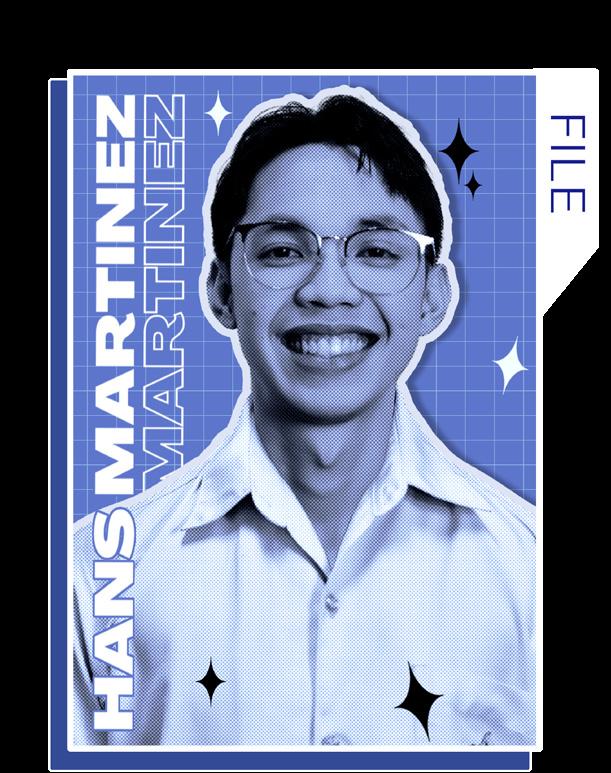
- Hans Gabriel Martinez, BA Political Science 2
Exploring the Gaps and Boundaries
AI sometimes generates responses that are coherent-sounding but factually incorrect or nonsensical, as it generates text based on patterns in the data it has been trained on rather than always providing accurate or contextually relevant information.
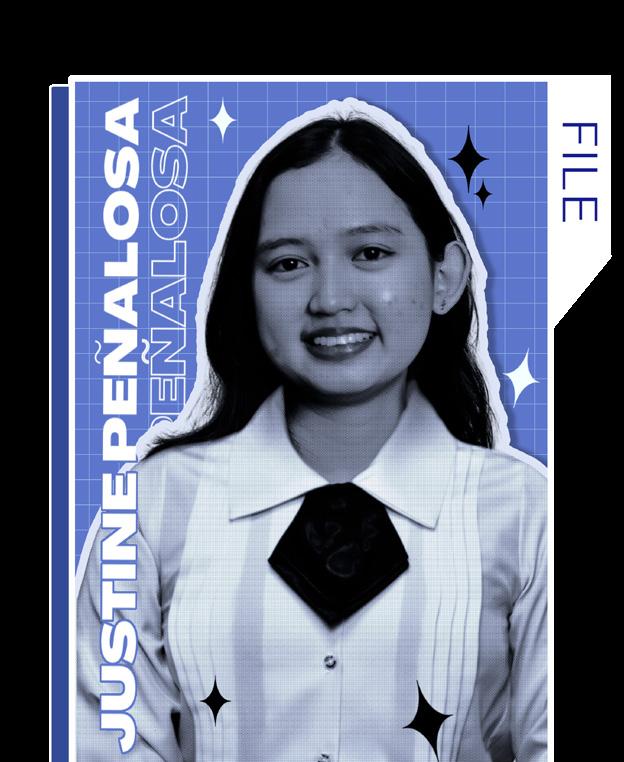
“AI [is] made to serve as [an assistant] to everyone’s needs in terms of employment, education, and our daily endeavors. ChatGPT is not a ‘know-it-all’ AI. Answering some accounting questions, for example, is a limitation to its knowledge because, based on our experience and observation, its answers are inaccurate and unreliable. This leads us to the fact that although AI indeed generates information, it cannot analyze transactions like accountants do. AI merely makes accountants’ work easier by eliminating some complex and manual tasks through the introduction of accounting softwares. However, it cannot replace accountants in analyzing economic events. We cannot expect the AI to make business decisions if we present it with financial statements because there are certain functions that only humans can do.”
- Justine Candice Peñalosa,
BS Accountancy 3
Pioneering Tomorrow
AI technologies like ChatGPT are designed to support us by enhancing the speed and efficiency of data-related tasks. This can significantly benefit various fields and industrie s that rely on processing vast amounts of information, making ChatGPT a valuable tool for the future.
“As someone who has used ChatGPT and other AI tools for a variety of reasons and programmed an AI model myself in one of our IT classes, I think companies that are exposed and the commercialization of AI usage will result in a high demand for programmers in the near future, which will then result in more AI tools being published. What I see about using AI is like a pencil; a pencil is to be used for writing on paper alone. On the other end, when held in the wrong hands, it could be used as a weapon for homicide. AI can be used to automate farming, space exploration, rescue missions, aid in health care, and other means for good intentions. With the same technology, it could be used for military usage, assassinations remotely, and other bad intentions. There are kind and goodhearted people, and on the other end, there are also sick-minded people. It really boils down to the objectives of who’s holding the end of the stick.”
- Enrique Pacudan III, BS Information Technology 4
The advancement of AI has not only fueled a surge in efficiency but has also ensured universal access to information. Yet, AI consistently outperforms humans in several domains, especially in tasks requiring meticulous attention to detail and repetition.
While we recognize the advantages of AI, we also share a common understanding of its limitations, particularly in educational settings.
AI may encounter challenges when dealing with complex scenarios, exhibit difficulty adapting to individualized learning preferences, and may not effectively promote critical thinking or problem-solving skills. Furthermore, its responses can be influenced by the present dataset it relies upon, potentially perpetuating biases or stereotypes.
AI should never dominate us; instead, we must remain in control.
Besides, nothing can truly compare to our brain, as imagination knows no bounds, and it is we who envision the limitless possibilities of this technology.
In the end, it is the indomitable human spirit that will continue to drive innovation and shape the future, for even the most advanced AI can never replicate the unique qualities and prowess of the human mind.
When we hear the word “girlboss,” we immediately think of a woman who is in control and needs nobody else but herself. Yet, this image perched on a high pedestal begs the question: Is it truly representative of women’s complex realities?
Determined and ambitious—the girlboss will unapologetically build her empire and get things done independently.
Despite all the systemic inequality and historical oppression that exists, the girlboss will win, and when she wins, every woman wins.
But is that really the case?
girlboss, girlbuzz
In recent years, the term “girlboss” has gained popularity as a buzzword that celebrates women’s empowerment and entrepreneurial spirit.
Popularized by businesswoman Sophia Amoruso in her 2014 book “#Girlboss,” the term denotes a woman “whose success is defined in opposition to the masculine business world in which she swims upstream.”
Originally, the girlboss culture encouraged women to break through glass ceilings, shatter stereotypes, and carve out their paths in various industries.
While the movement started on a positive and progressive note, criticism has lingered around its exclusionary nature and the potential to perpetuate unrealistic standards.
Sleeping in because you have had a busy week? No chance; you have got to grind and hustle to thrive like all the other girlbosses.
The “Girlboss” narrative often champions a relentless adherence to the “hustle” lifestyle—a robotic and over-glorified approach to triumph.
However, it disregards the fact that this mold is typically tailored for women who already possess the necessary resources to flourish in the first place.
The lack of intersectionality is not something to be ignored when discussing concerns surrounding the girlboss issue.
A one-size-fits-all image of success disregards the unique struggles that are faced by other women, particularly women of color, queer women, and women from marginalized backgrounds—the ones getting the short end of the stick.
A user from X (formerly Twitter) aptly pointed this out by saying,
“Girlboss culture is great if you’re a straight, white, able-bodied woman with privilege, but it erases the struggles of so many others who don’t fit this mold.”
The lack of focus on the systemic issues and celebration of individual stories without looking at why these women were able to flourish is the root cause of why a double-take should be given to the hustle standard.
Not to be taken the wrong way, these stories are certainly worth celebrating. But in the context of “girlboss-ing,” this only detaches women from the reality that winning does not look similar to everyone.
#girlboss merch
A sense of fight evoked the first wave of feminism, women who have longed for gender equality, especially in the workplace.
At its core, feminism is a movement advocating for gender equality, dismantling oppressive systems, amplifying the voices of the marginalized, challenging the status quo, and breaking down barriers that have historically held women back.
It cannot be denied that the movement was initially well-intentioned, but the girlboss formula has taken this powerful movement and turned it into a marketable, consumer-friendly product.
The commodification of feminism has turned it into a trendy accessory—something to be worn like a fashionable handbag, which not only trivializes the movement but also turns it into a fashion statement rather than a call to action.
Girlboss culture often prioritizes profit over progress, like promoting the idea that women can “have it all” by starting their businesses or climbing the corporate ladder, but it neglects the fact that the system itself may be flawed.
It glosses over the wage gap, workplace discrimination, and the lack of support for working mothers, all in the name of profit.
Women are told to rise to the challenge, empower themselves, and be a girlboss in the face of the impossible but this is late capitalism at its very worst—making individuals responsible for structural problems.
Reducing feminism to a marketable concept dilutes the real goals of the movement.
It is not just about women leaning in at the office or becoming influential entrepreneurs; it’s about abolishing patriarchy, challenging systemic sexism, and striving for true gender equality.
stereotypes shattered (?)
attention to. The female community has suffered enough in its refusal to accept gender stereotypes that have been detrimental to them for decades.
What we need is structural change and policy reforms to address gender disparities in the workplace, not a mere buzzword that strays away from pressing issues in the corporate world, such as pay gaps and workplace harassment that disproportionately affect all women.
We should prioritize actions over slogans, systemic change over individual stories, and solidarity over competition.
Remember that feminism is not a product to be bought and sold but a powerful movement that demands our active participation and commitment to change.
Let us not be content with oversimplified narratives that limit the potential of women.
It is high time to reclaim feminism from the clutches of commodification and refocus on its true purpose: achieving gender equality for all.
We wanted the girlboss to become our new blueprint—a blueprint of success that will change the toxic workplace that the status quo has been so used to.
But the girlboss is so much more than that; she should not be an icon of oversimplified feminism but rather a blueprint that transcends oversimplified ideals, shallow stereotypes, and catchy slogans.
Generations of women are breaking free from societal stereotypes and are liberating themselves from the confines of traditional roles.
Women are no longer limited to the “homemaker,” “babysitter,” and “nurturing” stereotypes.
Unfortunately, the unspoken truth is that the girlboss culture is yet another way to set a stereotype of how women should be—breaking through societal barriers to be accomplished in a world dominated by men.
This may seem empowering on the surface, but it only perpetuates a cycle of harmful stereotypes for women, conforming to yet another one-dimensional image, which can be emotionally and mentally taxing for many.
Established stereotypes have reigned far too long to be still paid
Excellence: The Tatak Rekoleto Way
by Ejay D. Villaver and Rey Martin B. Rio Graphic Design by Narvie Klaryzze B. Borja and Krista Marie B. Yaoyao
Since its founding in 1947, USJ-R’s pursuit of excellence has always been embedded in the Rekoleto brand of education.
Throughout the years, the University of San Jose-Recoletos (USJ-R) has continuously produced excellent topnotchers from the Accountancy and Finance (AccFin) Department that gave honor and raised the Josenian flag on a national level.
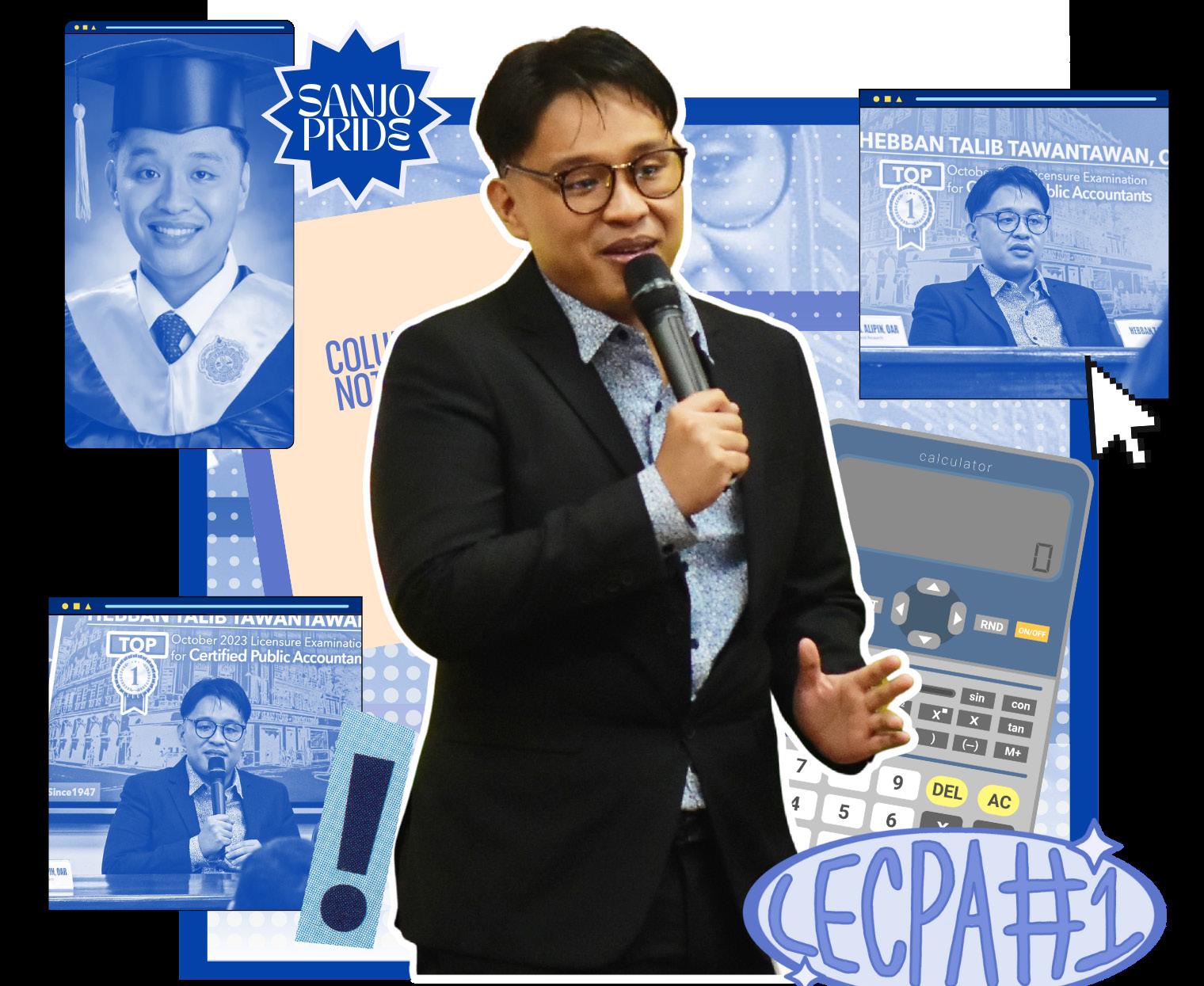
After 13 years, USJ-R reclaimed its prestigious position atop the accounting board with Hebban Talib Tawantawan, CPA, a magna cum laude graduate of the Bachelor of Science in Accountancy (BSA) program in December 2022.
In the September-October 2023 Licensure Examination for Certified Public Accountants (LECPA), Tawantawan achieved an impressive score of 91.17%, making him the third Josenian to achieve the feat, following in the footsteps of Robert Lim, CPA, in 1959 and Gecel Codera, CPA, in 2010.
Tawantawan’s success also marked the 50th time a Josenian has secured a top-ranking finish in the exam since 1959, a milestone confirmed by CPA Review Center (CPAR) Director Kristine June Uy, CPA, MBA.
The Journey to Success
Right from the beginning, Tawantawan’s goal was clear.
“First-year pa lang ko, I was already thinking na gusto ko ma-top one, dili lang jod top, top one talaga. Mao jod akong dream. Mao jod ang akong goal,” he expressed.
This unwavering commitment guided him diligently through his undergraduate years, earning him the reputation of being a “dedicated” and “studious” student among his peers.
“My friends would tease me na akoa na daw ng balay ang CPAR Library, murag ako nay moabli. 7 a.m. [and] I’ll be there waiting for the READS (Recoletos Educational Assistance for Deserving Students) to open, the moment na mo-open sila ‘matic naa nako sa sulod, and also mo-out ko inig-out pod sa CPAR READS, ako pod ang manira,” he humorously recounted.
Tawantawan emphasized that the rigorous nature of the tests he encountered as a student significantly contributed to his readiness for the LECPA. Reflecting on his journey, he noted that the constantly demanding exams he had during his undergraduate studies, in a way, served as valuable preparation for him.
He also candidly discussed the challenges he faced during the licensure examination, particularly in the Regulatory Framework for Business Transactions (RFBT) subject, which had been challenging for him since his first year.
“Pag-first-year, ang subject nga almost nagpa-give-up nako is RFBT. Ang pinakalisod sa CPA board exam is also RFBT. The thing is, pag-review nako, ang RFBT sad ang akong gi-focus-an pag-ayo Like forty percent siguro sa akong time is nakalaan jod sa RFBT,” he said.
University Support and Mentors
The former chairman of the AccFin Department, Dr. Cedric Val Naranjo, CPA, remarked that the training for undergraduates will always go beyond the licensure examinations.
“We always make sure they (students) always come prepared for the board examination. So, I always tell them jokingly, ang pag-take og board exam seatwork nalang na because you’ve been trained to answer [a] very difficult set of examinations,” Naranjo said.
“If you survive the program with that set of questions, all the more you can survive or pass the board examinations. That’s been reflected in our passing percentages of the University,” he added.
On the other hand, the Vice President for Academics and Research, Rev. Fr. Jose Alden Alipin, OAR, announced that Tawantawan would receive a cash incentive of P100,000 and a brand-new laptop.
“It may not sound that very lucrative, but we give it to him from the bottom of our hearts,” Fr. Alipin expressed.
On Family and Motivation
Tawantawan revealed that his family’s financial struggles motivated him to work harder.
“My family was my biggest motivator jod na maningkamot,” he said.
He also confided that the BSA program was not his first choice, but he grew to love it over time.
“My parents, as well as my kuya, ingon sila pag-accountancy daw because CPAs kay dali daw ma-employ, so mao na ilang giingon
nako. At first, I was hesitant because I was against jod na mag-read og daghan like tapulan ko mobasa, especially RFBT. It will require you to read daghang code and provisions,” he said.
Subsequently, Tawantawan attributed his success in passing the exam and achieving a topnotcher status to discipline despite his fondness for playing video games.
“I told myself na, ‘Hebban, ayaw sa pagduwa, four months of sacrifice, four months of discipline, and ma-achieve nimo imong goal.’ So gibiyaan sa jod nako akong game, ” he said.
Plans Moving Forward
When asked about whether he wished to pursue studying law after obtaining the CPA title, Tawantawan shared no immediate plans.
“For now, wala pa na siya (law school) sa akong mind kay medyo kapoy pa mag-study balik, gaming sa [and] work, maybe after two years ako na siya i-consider,” he said.
Meanwhile, School of Business and Management (SBM) Dean Dr. Edgar Detoya, CPA, shared their goal of pursuing “excellence and innovation,” particularly regarding BSA, the University’s flagship program.
“USJ-R is the Center of Development in Accountancy here in Visayas. In the entire Philippines, there are only three centers of Accountancy: De La Salle University (DLSU) in Manila, which is Center of Excellence; USJ-R in the Visayas, which is Center of Development; and University of Mindanao (UM), which is also Center of Development. Our goal moving forward is to elevate the status from Center of Development to Center of Excellence,” Detoya said.
Currently, USJ-R’s accreditation status for the Accountancy program is Level III. Its long-term goal, according to Detoya, is to elevate it to Level IV, which is the highest level.
USJ-R placed fourth in the whole country in terms of schools with over 50 test takers. The University also produced 54 new Josenian CPAs with a passing percentage of 62.79%, nearly twice the national passing rate of 31.37%.
For 75 years, USJ-R has consistently nurtured exceptional individuals, a commitment demonstrated by Tawantawan’s recent academic triumph.
This feat not only strengthens the institution’s legacy in the field of Accountancy but also reinforces its core values of INSPIRE, which stands for Interiority, Nationalism, Service, Pioneerism, Integrity, Reliability, and, notably, Excellence—standing as a testament to its aim of providing a quality Christian community-oriented education.
As of writing, Tawantawan works as an Assurance Associate at PricewaterhouseCoopers (PwC) Philippines, a brand under PricewaterhouseCoopers International Limited (PwCIL), one of the most renowned accounting firms in the world.
Beep, Get a Grip Beep, Get a Grip
Beep, Get a Grip
by Diane Rose G. Baynos
Graphic Design by Karina Adel A. Vestil
Overcharged fees, ignored discounts, and a sardine-like space—this is the reality of our commuters in the Philippines.
By the time I am writing this, I just came home after struggling to catch a jeepney ride during rush hour. Every public vehicle in sight was already full, and everyone was desperate to secure a ride bound to their destination.
The last thing we want to face after a hectic day is a terrible public transportation experience.
However, that seems to be a far-fetched reality because the Philippines, particularly its capital, ranks fifth among the worst public transportation in the world, according to a 2022 study by think tank Oliver Wyman Forum and the University of California, Berkeley.
Moreover, a new set of problems arose along with the introduction of modernized jeepneys that prove we are regressing.
In a now-deleted post, a Cebuana student-commuter detailed her experience when she rode a modern public utility jeepney (MPUJ) bound for Minglanilla. She only meant to get off around Tabunok, which is nearer, which also means it is cheaper.
But she was charged by the conductor with a higher fare and was not even granted a student discount.
According to the fare matrix of the Land Transportation Franchising and Regulatory Board (LTFRB), the typical fare from Colon Street to Minglanilla is P30, while to Tabunok is only P25.
In the same incident, a fellow commuter, who was carrying a child, was also ordered to pay a Minglanilla-rate fare even though they were only supposed to get off at Basak, which typically costs P15 to P20.
The conductor reasoned that he did it because the jeepney was primarily catered to people living in Minglanilla, and the commuters must pay the same amount regardless of their close destinations.
When the post went viral, it only speaks volumes about the number of commuters who had the same experience.
Prior to this, the LTFRB had already warned the operators of public utility vehicles (PUVs) about overloading and overcharging passengers, saying that they would face heavy fines and penalties.
Unfortunately, despite regulations and sanctions, some transport companies still bend the rules for self-interests that disregard the financial capacity of ordinary people.
Personally, this did not only happen once—I lost count, honestly—but most of the MPUJ conductors I encountered always seemed to make it their mission to raise the transportation fare of the commuters, as if the rising prices of the goods and services were not tough enough for us.
While I understand they need to squeeze every cent they can get in these trying times, it is equally difficult for regular commuters. We are also struggling to make ends meet; how hard is it to extend help, even through mere fairness?
What’s even worse is that during the rainy season, they continuously accept additional passengers despite the limited space available. Some standing passengers are hardly breathing, while others are holding on to their dear lives because one wrong move could have them falling.
One netizen recalled his experience of riding a modern jeepney that overly reached its maximum capacity. The tires apparently blew up because of the overloading, which also jeopardized the health and safety of commuters.
It is already too much that we are stressing over long queues and packed jeepneys. Can’t we, for once, aid each other instead of adding to everyone’s burden?
As we constantly ask for reforms in the overall transportation system, may we also address its related issues through a microscopic lens.
While I also acknowledge that this stems from a systemic problem, we cannot attain holistic solutions if the people at the grassroots are already rotten.
Further, it may be easy to be desensitized over the dishonest and arbitrary things we witness every day, but our default response should never be to accept it—it should never be our type of normal.
We do not deserve to beg and fight for something that only requires compassion and basic human decency.
By the time I read this in the future, I hope we no longer have to experience the draining and unfair transportation system, which seemingly has become the most taxing out of all of our daily routines.
The blueprint applies to everyone. We cannot flourish as individuals and as a community, if the people on the micro-scale continue to craft plans that contradict the changes we want to make.
Inconsiderate operators of modern jeeps, get a grip.
Ilustration
by
Khen B. Fernandez
In a true University of San Jose-Recoletos (USJ-R) fashion, a faculty member—who has requested anonymity to shield himself from the overwhelming adoration—has been lauded for his outstanding ability to consistently fail students and proudly stand by this remarkable feat.
Since his tenure began, Jose (not his real name), had become the talk of the campus, renowned for his unparalleled talent in transmuting hopes and aspirations into fragments of despair.
Reports from the student body suggested that this educator’s lectures are like “black holes,” sucking the life and enthusiasm out of every subject.
“Taga-human jod sa iyang class kay ma-vertigo jod ang ferson. Way tarong mag-discuss, basahon ra iyang PPT (PowerPoint presentation). Like, hello? Kaybaw sad mi mobasa sir oi, di man sad ni EP (English Proficiency) atong subject,” a Josenian complained.
Adding to the aura of mystery surrounding Sir Jose, sources claimed that his appearance in class is like a four-leaf clover: very rare. As a result, students often find themselves in an educational limbo, with their classroom resembling a deserted ghost town.
“Di ko sure if nagskwela ba mi or ga-tagu-taguan,” one student said, glancing at the empty desk where their teacher should have been.
In an exclusive interview with FORWARD, Sir Jose shared that he believed in the power of crushing dreams, asserting that “failure” is a vital “life lesson.”
“I’m preparing these kids for the harsh realities of life. If they can’t handle my class, how will they survive the real world?” he proudly added.
His unwavering commitment to extinguish any flicker of academic ambition has undeniably earned him the recognition of the University administration and the entire Josenian community.
Indeed, one can only marvel at such unyielding dedication!
Meanwhile, a former “lucky” student of Sir Jose shared a gripping testimony of the educator’s awe-inspiring impact on their life’s trajectory.
“Tungod niya kay ga-duha-duha jod ko if magpadayon pa ba ko ani na course,” their voice trembling with the trauma of countless red-penned assignments. “Sayopa jod na na-under ko niya. -100 out of 10, would not recommend.”
Josenian students can vividly remember the terror during their first meeting with Sir Jose.
“Imbes mag-discuss sa classroom rules and regulations, or bisan ‘Introduce Yourselves,’ giingnan man hinuon mi nga mangita nalang og laing maestro siya ra baya’y ga-handle aning subjecta!”
“Kung pwede pa lang mabalik ang oras, maypag nidayon nalang kog withdraw ”
College student survival tip: If your professor in your first meeting encourages students to drop out of the subject or find different offer codes, that’s not your typical professor, that’s sir Jose!
“I know you heard rumors about me, and they are not wrong,” Sir Jose cockily said.
Despite uproars from distraught parents and cries for intervention, Sir Jose remains unfazed as students’ efforts to report the teacher were met with stony silence.
“Ni-comment man jod ko na di siya maayo motudlo sa teachers’ evaluation sa SIS (Student Information System) pero wala ramay impact. Gatudlo man japon siya sa University,” they said.
Moreover, the administration seemed preoccupied, perhaps perfecting their strategies for fostering an environment of excellence.
This paradigm-shifting display underscores a crucial lesson: Why lift each other up when you can squish aspirations underfoot?
In essence, Sir Jose embodies the benchmark of the blueprint of educational excellence and the standard-bearer of Quality Christian community-oriented education, where nightmares you weave become the students’ recount for generations to come.
Cheers to Sir Jose!—for sleeping soundly at night while wearing the death knell of student dreams during the day like a badge of honor. Surely, your name will ring a bell during alumni homecomings and batch get-togethers!
via Boi Ha G. Bong | BACKWARD Staff Writer
Sir Jose Strikes Again!
THE FUTURE IS NOW THE FUTURE IS NOW
At the foundation of every groundbreaking innovation, from the tiniest gadgets that ease life’s little discomforts to towering, glittering skyscrapers piercing the clouds and every man-made marvel in between, lies a draftsperson on the drawing board.
Dull aches pounded through their frame, their back hunched under the dim glow of their lamp; sleep long eluded them. And yet, fervidly, they sketch on, unceasingly, passionately, the irrepressible flame of humanity driving them ever onward to produce the blueprints that lay the groundwork for civilization’s finest achievements.
Whether by used brushes, drained pens, weathered hammers, or tired yet deft and loving hands alone—beyond whatever means, it is the spirit and mind of the creator that carves the wood, shapes the steel, blends the colors, spins the stories, captures the panoramas, cuts into the world and brings forth a masterwork that is theirs alone.
And thus it is the simplest sketches from the humble draftsmen that bring glorious beauty and great bounty alike, for they are the genesis of ingenuity.
But now, this Promethean flame we have nurtured for so long is fading into the darkness, and it is our designs that have stifled it.
Our success has given way to careless indulgence and thoughtless dependence upon emotionless contrivances, which, while saving time, rob us of our souls.
We speak, of course, of the current discourse regarding sophisticated Artificial Intelligence programs that can effectively mimic normally extremely human acts, such as the creation of written works, lifelike images, and even voices. While these advances in the field are certainly the pinnacle of human innovation, their ability to mimic human ability comes at the cost of pirating existing works that artists have starved to create.
Suddenly, what the draftsperson has on the drawing board can be very easily reproduced—and with that, society’s worth in them reaches its all-time low in an industry already marred by abuse.
On July 14th of 2023, the Screen Actors Guild and American Federation of Television and Radio Artists (SAG-AFTRA) went on strike, joining the Writers Guild of America (WGA) in calling for better pay and job security and drawing attention to disparities in the film and television industry.
Apart from pervasive issues such as severe underpayment, the strike’s greatest catalyst is the fact that recent developments in AI have undermined both actors’ and writers’ creative resources. Their magnum opuses are easily stolen by generative AIs run by the insatiable greed of the opportunistic who robs them both the toil and treasure they rightfully deserve.
This has only been the severest symptom in an already festering disease afflicting not only the highest levels of creative industry, but even the seemingly smaller realms like the academe.
While it cannot be denied that our technology aids us and grants us unparalleled efficiency with minimum effort, it rots the very framework we have set to protect that which humanity holds dear; therefore, the line must be drawn, harshly, clear as day, as we take the rightful stand to protect those who fight to make our lives beautiful.
Thus, FORWARD brings forth BLUEPRINT. A headlong dive back into the oceans of blue and white of the blueprints on which the foundations of every generation’s inventions surface. Amidst the dark discourses surrounding our topic, FORWARD seeks to show that rightful BLUEPRINTS that society must be built upon, regardless of how mundane or grand the scales maybe.
That while humanity and technology are deeply intertwined, it is humanity that ultimately takes the reins.
No more shall we allow ourselves to be enslaved by our creations. Let us seize destiny, and sketch the blueprints for our bright tomorrow!
PG Rate or Inappropriate?
by Samantha Mae A. Murillo
Graphic
Design by Karina Adel A. Vestil
Licking icing is indecent and unbelievable, yet joking about suicide is comical and sensible. In the current entertainment world, just how are standards easily bent and broken?
The Philippine media industry, especially television (TV), has been long applauded for producing quality entertainment and comedy.
Over the years, we have witnessed personalities thrive because of the humor they bring to the table. However, in this evolving industry, we must question whether certain forms of “humor” are still acceptable or if they should never have been part of our entertainment culture to begin with.
While many viral incidents come and go quickly, one particular case managed to sustain controversy and legal repercussions.
This time, it was another icing fiasco. Not anymore with Alex Gonzaga, but with Vice Ganda, along with his partner, Ion Perez.
What’s with icings and celebrities in 2023?
On the July 25, 2023 episode of the noontime TV show, “It’s Showtime,” an acting segment required hosts to eat icing off their fingers, provoking enraged reactions from viewers.
Following this, the Movie and Television Review and Classification Board (MTRCB) suspended the show for 12 airing days, citing a violation of Section 3c of Presidential Decree No. 1986.
The section states that MTRCB has the power to “approve or disapprove, delete objectionable portions from and/or prohibit the importation, exportation, production, copying, distribution, sale, lease, exhibition and/or television broadcast of the motion pictures, television programs, and publicity materials.”
Even on social media, discussions were rife, with some condemning the icing scene as “bastos” and “not a good example to kids.” Some even went as far as discriminating against the entire LGBTQIA+ community.
These people suggested that the hosts clearly knew that what they were doing was too obscene for a PG-rated show, evidently showing a “double meaning” in their actions.
Some asserted that there was nothing wrong with trying to eat frosting off your fingers. It is typically how people taste icing; they lick it off—an act that is not inherently malicious. It all depends on how one interprets it beyond the given context.
This includes Director Joey Reyes, who said it’s an “overreaction,” pointing out that worse things have been aired on television.
However, what’s most puzzling is the hypocrisy surrounding such debates.
The people who claim to be concerned about the appropriateness of TV shows are also the ones who sexualize situations, objectify celebrities who show the tiniest bit of skin on TV, and applaud inappropriate jokes from their favorite stars while frown on others.
This glaring double standard cannot be ignored.
This hypocrisy clearly showed during the September 23, 2023 “Gimme 5” segment of E.A.T., also a noontime TV show. A contestant was asked to list five items that may be worn around the neck, to which host Joey de Leon answered and joked, “Lubid, lubid, nakakalimutan niyo, lubid,” insinuating suicide.
He must have thought that it was witty. To me, it was only filthy and the most preposterous thing I’ve heard in a while on national TV.
Concerned viewers were infuriated. Mental health advocates also insisted the noontime show be sanctioned. Yet, the “vocal” critics went deaf. MTRCB was silent.
Further instances of De Leon making light of mental health issues resurfaced, like when he said that depression was “gawa-gawa lang ng mga tao” on the October 5, 2017 episode of Eat Bulaga.
Seeing how he has always taken the issue as a laughingstock, De Leon, along with other hosts and producers, has a problematic nature, and their luck to get away with it goes way back since the media industry has tolerated it.
On September 27, 2023, the production team of E.A.T. issued an apology letter to MTRCB. Despite this, Atty. Paul Cases of the adjudication committee said that they are not in the position to confirm yet if the show did commit any violation.
They were so quick to respond to the other party’s behavior, yet they were hesitant on this one.
Filipinos are so good at condemning one issue while discounting another. Like always, they choose to wear and take off their rose-colored lenses anytime they want.
If we are upset at Vice Ganda’s icing incident, we should be equally or even more outraged with Joey de Leon’s suicide comment.
Real concern should not be selective.
Perhaps, it is about time to redefine the blueprint of the Philippine media setting.
Cebu’s Finest: Stepping Outside the Ordinary
by Samantha Mae A. Murillo
Photos by Marylit Silje C. Cañizar
Indulge yourselves into five among many wondrous infrastructures standing tall and proud in the City of Cebu.
Are you easily wowed with just “nice,” “good,” and “okay,” or are you itching to seek something beyond the field of ordinary? Well, if you are curious to find out more, then you are on the right page of this magazine.
Among the basic, monotonous, and repetitive structures we typically see, FORWARD flaunts to you places in Cebu with one-of-a-kind architectural designs must-sees! So sit back, relax, read, and venture through a variety of Cebu’s most exciting architectural blueprints.
1. Compania Maritima.
As modernism is taking over the city, rarer is it to spot old, well-preserved heritages. Lucky for us, Compania Maritima, located near the South Road Properties (SRP), continues to live up to its neoclassical vision; luckier for us, we get to live up until this day to witness remnants of this iconic three-story ruins standing since 1910. Despite having been affected by World War 2, the building carries on with its prominent arched windows, classical pilasters, and sculptured railings on its roof deck. Its architect, Karl Cabilao, even wrote that the ruins are “reminiscent of beautiful Renaissance palazzos of Europe,” basically implying that Compania Maritima is designed so iconically.
2. Taoist Temple
Situated at Beverly Hills Subdivision in Cebu City, Taoist Temple is a religious site that stands out in its distinctive Chinese architectural design. Care and dare to look around; where else would you find dragons and paintings hovering in this hometown? Probably only in movies and documentaries. As soon as you enter through its gigantic red gates, you are greeted by intricate features and symbolistic structures unusual in the daily life of a mere passer-by. Not only does the Taoist Temple amuse our eyes, but it can also mentally and spiritually calm us with its quiet and calm environment, perfect for reflection and meditation. Apart from that, it also offers an all-encompassing view of the skyline. Though it was not originally a tourist attraction, the Taoist Temple continues to attract even non-believers of the religion, proving that its unique and breathtaking existence knows no bounds.
PLACES
3. One Montage Tower
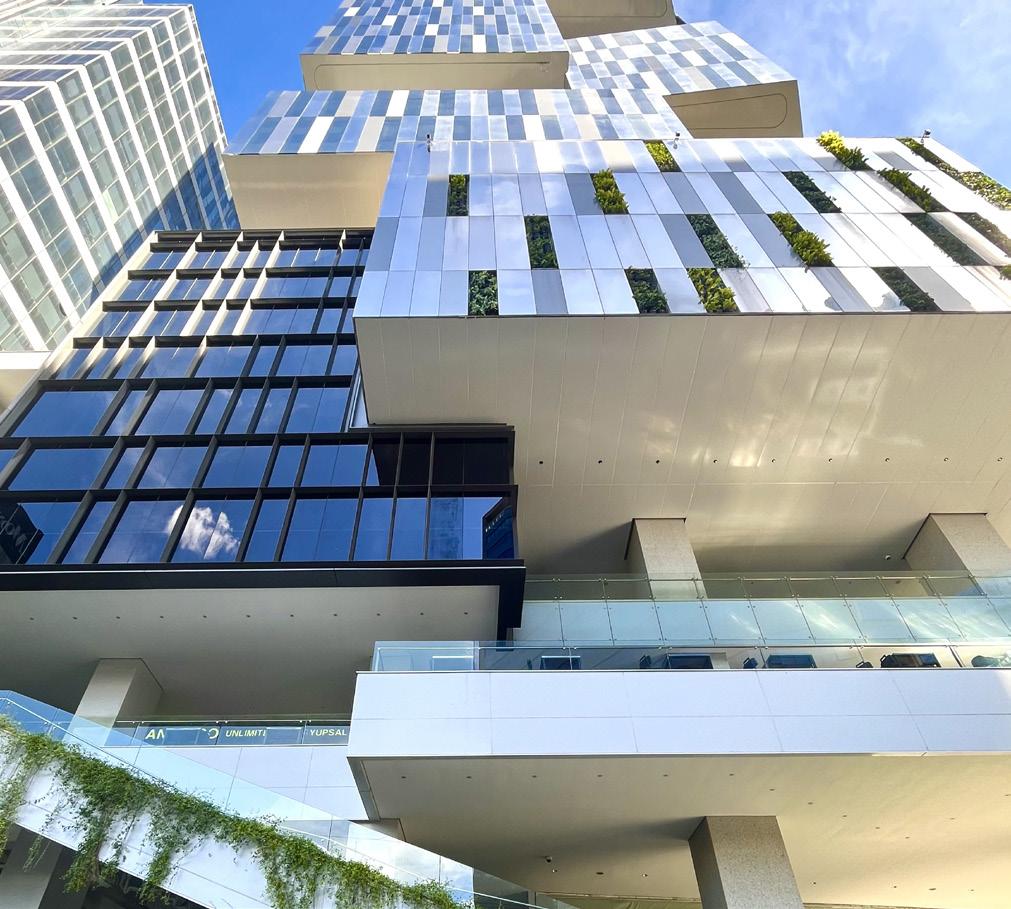
Visible along Archbishop Reyes Avenue, this 29-story commercial complex is a feast to the eyes with its unorthodox outdoor design, offering leasable spaces for both office and retail. One would easily assume that this grade-A building is just a pretty face with its eccentric structure, but no. Beyond its complex appearance, the tower is actually environment-friendly! It makes use of green concept design and utilizes nature’s influence to provide a sustainable environment. Its facade is coated with various textures of aluminum cladding and green moss walls, which help cool down the space, especially during summer. It is also built with an auto-irrigation system, making the vertical greenery scheme more sustainable than ever. Yes, it’s green and a show-stopping scene!
5. Cebu City Philippines Temple
Say hello to another temple that made it to this list! Among many places of worship in the area, the Cebu City Philippines Temple, found on Gorordo Avenue, has one of the most elegant architectures to date. The temple makes sure to engross folks with its intricate and delicate fine lines along its interior and exterior designs. Even just one glance at it, there is no doubt that its unequaled design lingers in your mind longer than it should. It’s simple, but it’s inexplicably beautiful. It is the second temple built in the country, following Manila’s.
4. Calyx Residences
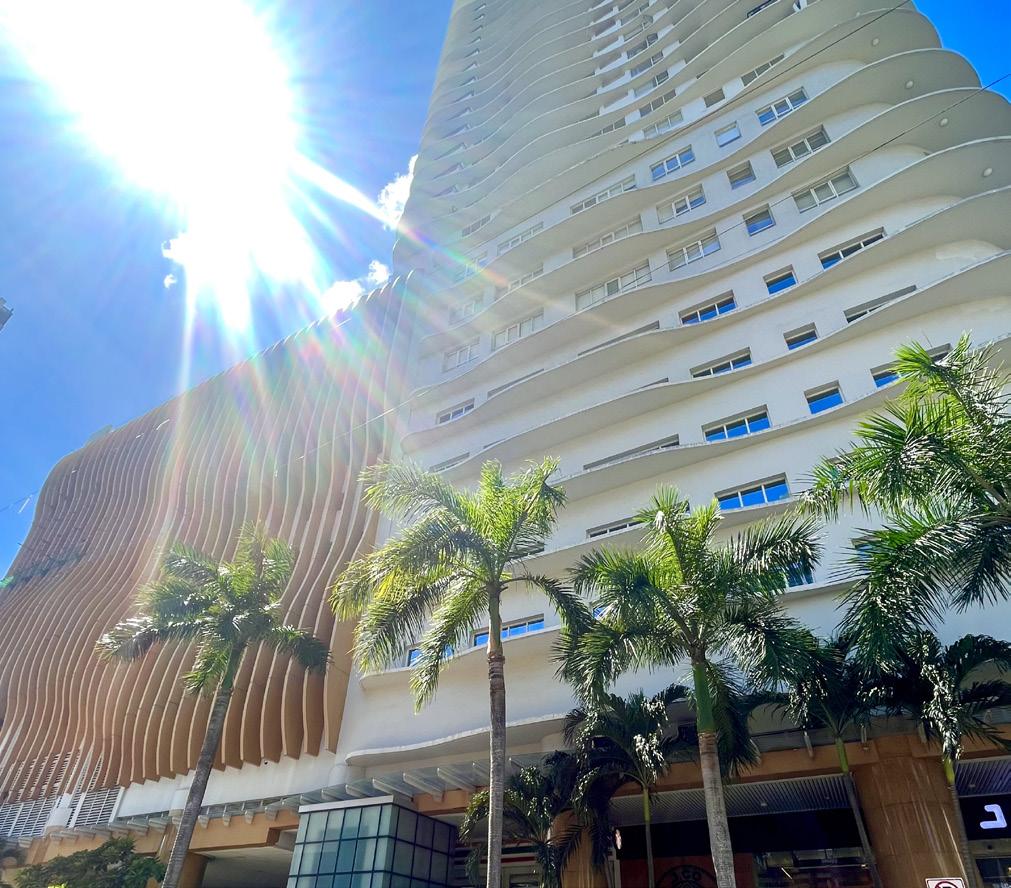
Impressed by the spiral patterns of leaves surrounding the flower, Calyx Centre, located in Cebu Business Park, continues to impress people with its nautilus-like design. The residential building has an exterior unlike any other, urging strollers to take a double look and perhaps wonder, “How could something be so harmonious and convoluted at the same time?” It’s definitely one I would love to discuss with fascinated friends over coffee. It is also Cebu’s first high-rise rooftop Aqua deck with an infinity pool on the 28th floor, featuring a panoramic sight of Mactan channel—one that would certainly close the deal!
Beauty is never limited to one structure. Like in architecture, designs can step way above the standard. It can be bold and daring, simple and elegant, or complex and mind-boggling—anything as far as the human mind and talent can make out of—all hail to the architects, engineers, builders, and designers who give a much-elevated meaning to the blueprint.
Cinematic Blueprints: Shaping Perception,Reflecting Life
by Rey Martin B. Rio
Films transcend mere entertainment—they shape our worldview and communicate vital themes. Since the pioneering days of the Lumiere brothers, they have evolved into a fundamental aspect of contemporary existence, serving as guiding blueprints through life’s complexities.
Cinema serves as a powerful global medium for effectively conveying emotions, ideas, and narratives while reflecting society’s deepest concerns, desires, and fears. Within this constantly evolving art form, some films emerge as pioneers, reshaping cinematic history and setting new standards in storytelling, aesthetics, and technology. Often unknowingly, these films become the guiding blueprints for the future of the filmmaking industry.
Graphic Design by Gabrielle Marie R. Paradiang
Jurassic Park (1993): A Visual Effects Revolution
In 1993, Steven Spielberg’s Jurassic Park stormed into theaters, revolutionizing cinema’s visual effects landscape. The film was felt industry-wide as it boldly introduced computer-generated imagery (CGI) technology to resurrect long-extinct dinosaurs, departing from practical effects and animatronics. Spielberg’s visionary leap into computer-generated realism showcased CGI’s immense potential.
Beyond its technological achievements, the film wove a compelling narrative that tapped into humanity’s fascination with the past, the perils of scientific ambition, and the delicate balance of life’s fragility. Jurassic Park extended beyond visual effects, inspiring the adoption of CGI as a transformative storytelling tool and cementing its legacy.
Hunger Games (2012): A Zeitgeist of Socio-Political Turmoil
In 2012, Gary Ross brought Suzanne Collins’ dystopian novel to life with The Hunger Games, capturing a society grappling with political turmoil and the overwhelming impact of mass media. The film has led to the resurgence of young adult dystopian adaptations.
Set in a bleak future, the tale of Katniss Everdeen’s battle against the oppressive Capitol resonated with viewers, offering a stark warning about the perils of sacrificing humanity for entertainment’s sake. The film was more than just a thrilling adventure: it served as a mirror to society’s anxieties, delivering a social commentary within the framework of a blockbuster.
Mean Girls (2004): An Exploration of Social Dynamics
Citizen Kane (1941): A Cinematic Masterpiece
Orson Welles directed Citizen Kane in 1941 and rewrote the rules of filmmaking. It was a game-changer in both cinematography and storytelling. Welles employed innovative techniques such as deep focus photography, non-linear narrative, and groundbreaking use of lighting and camera angles. These techniques combined create a visually stunning and narratively complex film that continues to influence filmmakers to this day.
The film’s protagonist, Charles Foster Kane, remains one of cinema’s most enigmatic and iconic characters. His rise to power, personal tragedies, and mysterious final word, “Rosebud,” invites viewers to delve deep into the human psyche. In its totality, the film set a new benchmark for character development and storytelling in cinema.
Directed by Mark Waters in 2004, Mean Girls used biting humor to delve into the intricacies of high school social hierarchies. The film’s portrayal of cliques, gossip, and teenage insecurity strikes a chord with audiences, embedding itself as an enduring part of pop culture. Iconic scenes, such as the declaration “On Wednesdays, we wear pink,” remain emblematic of the film’s cultural impact.
The story follows Cady Heron, a new student navigating high school’s treacherous social waters. It expertly explores how individuals succumb to peer pressure and societal expectations and sheds light on the inner workings of social groups through sharp wit and memorable characters. The film has become a cultural touchstone—offering invaluable insights into the complexities of human behavior persisting still in our pop culture.
Parasite (2019): A Genre-Defying Triumph
REVIEW
Bong Joon-ho’s 2019 film Parasite serves as a compelling testament to the storytelling prowess of cinema. The film adeptly interlaces themes of social stratification, parasitism, violence, and duplicity within a narrative that rises above conventional genres. It effortlessly melds elements of social commentary, humor, and suspense, thus creating a film experience that earned it the highest accolades, including an Oscar.
The film mirrors contemporary society by emphasizing the glaring disparities among social classes and the extreme measures individuals undertake in pursuit of a better life. It dissects the concept of parasitic existence, prompting viewers to reevaluate their own values and ethical principles. Bong Joon-ho’s creation pushed the boundaries of filmmaking—demonstrating that cinema can both captivate and provoke thought while remaining thoroughly entertaining.
The Truman Show (1998): A Meta-View on Reality in Media
Peter Weir’s The Truman Show, released in 1998, offered a meta-commentary on reality and media. Starring Jim Carrey as Truman Burbank, the film delved into the blurred lines between authenticity and manufactured reality. Truman’s life, unbeknownst to him, is broadcast to the world 24/7, prompting questions about the ethical dimensions of such voyeuristic entertainment.
The film’s technical aspects, including the innovative use of concealed cameras and the meticulous construction of an extensive set, crafted a world that felt unsettlingly plausible. The Truman Show has truly left a mark in shaping subsequent films that delve into the convergence of media and personal identity.
Akira (1988): A Visionary Anime Classic
The Shining (1980): Timeless Technical Mastery
Stanley Kubrick’s The Shining is a testament to the enduring significance of technical brilliance in the realm of filmmaking. Kubrick’s unwavering commitment to precision, inventive utilization of camera shots, and iconic narrative through visual techniques have proven to be timeless. While the film undeniably left an impact on the horror genre, its supremacy stretches far beyond that scope.
Kubrick’s technical expertise, as showcased in the film, also resonates in his other cinematic creations, such as 2001: A Space Odyssey and Dr. Strangelove. His unmatched capacity to craft atmosphere and cultivate tension through the interplay of visuals and sound remains unparalleled. It continues to serve as an abundant source of inspiration for filmmakers aspiring to master the art of visual storytelling.
Katsuhiro Otomo’s Akira, released in 1988, remains a visionary work of anime cinema. The film’s stunning animation, dystopian world-building, and exploration of psychic powers set it apart as a groundbreaking piece of animation. Akira shattered the ceilings of what was possible in anime and introduced the medium to a global audience.
Set in a post-apocalyptic Tokyo, the film delves into themes of power, identity, and the consequences of unchecked scientific experimentation. Akira demonstrated that animation could tackle complex and mature themes, challenging the notion that animated films were solely for children. Its legacy can be seen in the subsequent rise of adult-oriented anime and the global popularity of the medium.
In the realm of cinema, these works (and more!) drive technological and narrative advancements, reflecting and shaping society. They continue to inspire, captivate, and remind us of film’s power to challenge the status quo and entertain avid viewers. As these films transcend their era, they become the blueprints for future filmmakers.
The school clinic is in charge of identifying and solving students’ health problems. However, how can the clinic be of full service to the Josenians when there are internal systemic issues that remain unresolved?
Ouch, Where’s the Clinic?
by Jonalyn V. Omania and Rufino Rico L. Jamisola
Photo by Christian A. Mananguite
At the University of San Jose-Recoletos (USJ-R), health services are classified into dental care and medical care. While the Josenian population continues to heighten to over 7,000 students, the USJ-R Health Services Department (HSD) is expected to exert more effort and manpower to accommodate the unprecedented health concerns and scheduled consultations of the Josenians.
HSD is situated in a minute room under the open-air study lounge at the San Jose Building of the USJ-R Main Campus. At the Basak Campus, it is located at the Our Lady of Consolation Building. Every day, students pass by these offices without knowing their purpose.
Like the little offices they occupy, the school clinic is also composed of a few doctors and assistants, not equating to the demands of the Josenian population. This claim has been supported by Dr. Feli Rose Domugho, the Clinic Head of the University.
“Actually, ang amo gyu’ng problem is that we are understaffed,” Domugho emphasized in an interview with FORWARD.
This timely problem of the clinic has led to the delay, postponement, and cancellation of many of the students’ appointments. With this, Josenians would complain because they do not feel the existence of health services at the University.
”Wala ko nakasuway jod sa services sa clinic kay wala natagad akoang appointment and if mo-respond na sila kay too late na kaayo; wala nako’y time,” a fourth-year BS in Civil Engineering said.
In this investigative report, FORWARD presents to the Josenians what services they might not have been acquainted with, as well as the reasons for the times when the school clinic wrestles with imparting what the Josenians need.
What are their services?
Even without the majority’s knowledge, the school clinic has a fixed schedule for its dental and medical services.
They offer dental services, including tooth cleaning, restoration, and extraction. They hold cleaning sessions on Mondays and Fridays. For tooth restoration, including dental pasta, they have sessions on Tuesdays and Thursdays; for tooth extraction, they do it on Fridays.
However, because there are only a few who avail of the tooth extraction, the clinic inserts students for tooth cleaning in the afternoons on Fridays.
Saturdays are reserved for the services of the University staff and the Recoletos Educational Assistance for Deserving Students (READS) scholars.
Domugho said that the clinic has been offering physical examinations (PE) upon each batch of students’ admission to the University, but the regular PE is on hold as of writing because the department had prioritized the student-athletes and licensure exam takers.
“We have our annual physical examinations for the new students, but wa pa namo natrabaho because na-sagonson man gud to for the Cebu Schools Athletic Foundation, Incorporated (Cesafi), for mga Bar exam, so mao to’ng na-busy pod ta,” Domugho said.
Why do we see a few doctors?
Despite the booming number of enrolled Josenians, Domugho revealed that there are only two medical doctors working together to accommodate the medical needs of the students.
“Ang nag-work gyod karon, duha ra mi. One sa Basak and one sa Main Campus,” Domugho said.
She further addressed that there would be times when no doctors were left on duty in the clinic because of urgent meetings with the University administrators.
“So, mao nang ang gina-advice nako sa READS scholar [sa clinic], if dili ra emergency, ipa-message ang students sa amo’ng Facebook page. If emergency, dapat mo-call dayon ang READS scholar nako,” she added.
The Main Campus clinic has only two dentists: one full-time and one part-time. However, Domugho expressed a different issue in Basak.
“Ang problema lang nato kay sa Basak Campus because we lack two READS scholar[s] sa clinic. So, mao nang usahay ang sa dental, consultation nalang na ang ilang dawaton kung wala’y READS scholar kay wa ma’y maka-assist. So, maglisod baya og extract nga siya-siya lang, need baya ka’g assistant,” she said.
Alyssa Marie Jabido, a fourth-year BS in Psychology student and READS scholar at the Main Campus school clinic, elaborated on the reason why dentists would tend to offer only consultations with the lack of assistants like her.
“Given the nature of these dental treatments, which require close proximity between the provider and the patient’s mouth and throat…we are rigorously implementing infection control and preventive measures in the dental office, including disinfecting tools, equipment, and the dental workspace,” Jabido further explained.
Why is the schedule of appointments full again?
The clinic offers walk-in medical services and consultations during class hours. As for dental care, only consultations can be done through a walk-in since its services are made available through appointments.
INVESTIGATIVE REPORT
Josenians shared the same feedback: The dental appointment schedule is full for the day—or even the semester.
“I don’t like their way on scheduling appointments kay every Saturday ra pwede and dapat jod mo-chat sa ilahang page kay di pwede walk-in,” a third-year BS in Accountancy student said.
On the other hand, Domugho divulged that they have challenges when scheduling engagements with students since they work on a first-come-first-serve basis.
Since students can only communicate with them about the reservation of slots through their Facebook page, it is also difficult for the clinic to cater to all their messages.
“Usually, dili na ka-reply ang mga READS scholar on the weekdays but i-note na nila nga kinsa’y nag-message una. So, mao nang maghatag sila og time slot kung dili na sila busy kaayo. Kung puno-puno ilahang classes, dili sila maka-reply dayon, mao na ilang ginabuhat mag-reply sila every Saturday kay mas less man ang [magpa]-appointment sa Saturdays,” Domugho said.
There are also moments when the delay of response comes from the students, the reason why the assigned READS scholar would have no choice but to give the slot to others.
Why are we not informed?
Many students profess that they do not know the clinic services. However, Domugho stated that their office had already promoted their services during the student orientation held during the first week of the first semester.
“Ginabalik-balik na nako during orientation, especially sa first-year[s] and if naa’y mag-message, if mangutana unsa’y mga services gina-message na namo sila kung unsa’y mga services,” she said.
For complete details about their services, students can browse their newly created Facebook page: USJ-R Health Services Department - Medical & Dental.
With all the complaints at hand, the HSD has prepared concrete resolutions that can be implemented as soon as possible.
They are already coordinating with the University’s Human Resources (HR) Department to hire more doctors and assistants in the clinic for efficient flow. They are suggesting that they could employ more doctors who could do the job part-time because they understand that the doctors’ pay in the hospitals is more lucrative than that in the University clinic.
Domugho is also willing to go beyond what she is doing now as the clinic head by providing lectures for Josenians.
The HSD may still be far from what they should have done before, but what matters now is that the Josenians know their services will be better as they have plans to be enacted in time.
Upon entering USJ-R, Josenians were promised facilities and service offices that would aid them in their “quest for holistic growth.” However, with the disparity between the number of classrooms and the number of enrollees, is this promise realized?
Blueprint Check: The Quadricentennial Campus
by Ava Donalie A. Ferolino and Juan Enrique D. Reboquio
by Ayn E. Nazareno
The growing population of the University of San Jose-Recoletos (USJ-R), with over 7,000 students, has created problems in terms of having permanent classrooms.
“Some classes even hop from classroom to classroom as there would be no permanent classroom assignments by the end of the semester,” a BS Management Accounting major lamented.
Transferring from one room to another leads to classes falling behind schedule, which affects the learning progress and productivity of the students.
To combat this problem, some professors opt to hold their classes on Saturdays because of insufficient classrooms during the weekdays, which then affects the students in another way.
“I feel really sad thinking how my expenses would increase and how I wouldn’t be able to use my Saturdays as rest days anymore,” a BA Political Science student expressed.
Upon hearing these complaints, FORWARD Publications sought answers for the solution presented by the administration to address this concern.
Unveiling the Plans
On December 8, 2021, USJ-R administrators led the blessing and groundbreaking ceremony for the third USJ-R Campus in Cebu City, the “Quadricentennial Campus.”
Former University President Rev. Fr. Christopher Maspara, OAR, mentioned in his opening message that the campus is called as such to commemorate the 400 years of the Recoletos missionary presence in the province of Cebu and the Archdiocese of Cebu. It is also “a testament to USJ-R’s commitment to providing quality Christian community-oriented education to all learners” as it celebrated its 75th founding anniversary in 2022.
“This structure must be a symbol of a realization of a dream and aspiration of an entire community united in its desire to evangelize, educate, and transform lives,” he said.
Current University President Rev. Fr. Eduardo Celiz, Jr., OAR, also shared that the new campus will address the ongoing issue of classroom shortage as it will have 17 floors, enough to house more than 70 new classrooms.
“Ang Quadricentennial started with the past administration. Ila kuno nang nahimo because there was already a need for classrooms. As they said, there is an increase [in] enrollment every year,” he said.
Photo
In cognizance of the problem, the new administration that started in 2022 directed the Academic Team, primarily the USJ-R Center for Policy, Research and Development Studies (CPRDS), to conduct an analysis regarding the need for space of every school, the entire institution, and enrollment projection.
USJ-R CPRDS Director Englevert Reyes collated the needed data with the help of each school’s deans and the Basic Education’s principals to present a plan to the School Board.
“We did these studies and presented [them] to [the] School Board, and we found out that we lacked several classrooms; our computations [stated that] we lacked 70 classrooms and as to normal projections that time, [there] would be a 3.4% or 3.5% increase per year,” Reyes said.
With this, the construction of the new campus was set in motion, a 17-story building with half of it dedicated to classrooms equipped with the necessary resources to solve the classroom shortage experienced by the Josenians.
New Building? What’s In It?
According to Campus Planning Head Engineer Geoffrey John Tabon, the initial planning of the campus began in June 2021, which took about three to five months, and the construction started on July 18, 2022.
In collaboration with the CPRDS Director, Tabon supported the findings of the Research Center that the high population density of USJ-R is one of the main reasons for building the new campus.
To mitigate this problem, the University plans to transfer several programs to the Quadricentennial Campus as soon as it is finished, such as the School of Law, Graduate School, and the CPA Review Center.
When asked why they selected these schools for the transfer, Reyes from the Academic Team shared that the enrollees in these schools are from the working demographics who usually have full-time jobs.
“They have different schedules and they have needs, especially parking needs, so it would be very advantageous and it would be more attractive to them if we house them in the new building,” he said.
Further, the college department that is sure to be transferred will be the School of Computer Studies.
The decision was due to the fact that the University aims for the new building to be “future-ready” and to form a “smart campus.”
“It’s technologically well-equipped, and there is also the sustainability aspect of the building. Since it is really a smart and future-ready building, I believe the School of Computer Studies would be very much fitting in that new building, knowing that they deal with technology,” Reyes stated.
The other degree programs’ approval will solely depend on the outcome of the research conducted by the Academic Team. Accordingly, each college was asked to submit a five-year development plan, which encompasses the plan of every school for student welfare, possible activities, faculty development, curricular enhancement, and offerings, as well as new facilities and programs.
Once the analysis of these is completed and the departments have decided, there will also be rooms allocated for interdepartmental organizations’ use.
Plenty of considerations were made upon finalizing the designs of the building—may it be services from VIOSarchitects, which is the building’s contractor, or former Campus Planning Heads.
But between the lines are the agenda of the Cebu City Government.
The proposal is that this building adheres to the guidelines set forth in the Metro Cebu Development Plan by the City Government, thus further heightening expectations.
17 Floors—What to Expect
To maintain the Josenians’ anticipation of the new campus, Tabon also discussed the specifics of the aforementioned building.
With the structure reaching 17 floors, each floor will contain facilities that will serve the needs of the Josenian community.
The ground floor will be used for commercial purposes for the University’s revenue as it will be income-generating. The second to fifth floors will be designated as parking spaces, as per the requirements of the Cebu City Government—an answer to the current limited parking spaces in the Main Campus. The sixth floor is reserved for the different review centers. The seventh floor is for the canteen, chapel, and museum. The remaining floors will depend on the outcome of the Academic Team’s research and the selection of the departments that will be transferred to the new building.
Another feature of the Quadricentennial Building is its viewing deck that will face the Cebu-Cordova Link Expressway. A level above the roof deck, which will be located on the building’s 17th floor and it will be accessible to everyone who wishes to see a panoramic view of the city,
Reyes also mentioned that they plan to recommend a 24/7 library where the students can access hardbound and digital books.
“[We are looking forward] to an industry-related facility, a facility for technology business incubation, for commercialization of outputs, for faculty and students’ innovations—mura bitaw og start-up facility where they develop their business, their technology,” he added.
Meanwhile, Tabon assured the Josenians that the new campus would not fall short of their expectations.
“On our end, we continue to provide the Josenian community the facilities they deserve,” he said.
As of writing, 51% of the structural package has been completed, and it is forecasted to be finished in the early half of 2025.
When cleanliness and sanitation issues persist, how quickly can the intended “comfort” of comfort rooms turn into “complaint,” thus changing these spaces from havens of ease into sources of frustration?
Comfort Room or Complaint Room?
by Rey Martin B. Rio and Trixcy D. Clar
by Gabrielle Marie R. Paradiang
Well-lit comfort rooms (CRs) with large mirrors, designed for personal necessities such as handwashing and grooming, remain an indispensable routine of every Josenian student. The maintenance of these facilities within educational institutions is of utmost importance as the cornerstone of hygiene standards for students.
However, in striving for a one-step-ahead CR experience in the academic setting, considerable challenges emerge. This issue has the potential to significantly affect the lives of students and deter them from using restrooms at school—a predicament not unique to the University of San Jose-Recoletos (USJ-R).
The University caters to thousands of Josenians daily. Getting stuck in a seemingly endless queue or stumbling upon a restroom cubicle that is grimy beyond belief, all while racing against the clock, are a couple of the challenging scenarios one might encounter within the campus walls.
Flushed with concerns
First-year BA Political Science student Franrico Jagonia mentioned an incident where he encountered seminal fluid in the University’s restrooms.
“I couldn’t believe it because it’s dirty and awful to experience,” he said.
Jagonia further expressed, “The Main Campus comfort rooms are always clean and maintained by the staff,” but noted that those at the Basak Campus, especially the ones inside the coliseum, are “really dirty and disgusting.”
Meanwhile, another freshman, Jeri Mae Alejandrino, shared the common issues she usually faces when using the University’s comfort rooms.
Photo
“People tend to neglect flushing due to the reasons of either they are in a hurry, [there] is no water to flush [with], or they are just [too] lazy to flush the toilet,” Alejandrino said.
Moreover, Alejandrino expressed her frustration about the long lines in CRs.
“It is very hassle…especially when you have things to do, and you need to use the comfort room…and you need to stay in a long line just to use [it],” she said.
Taking into consideration the Josenians’ concerns regarding the CRs, such as the neglect of flushing after use, the forceful slamming of doors leading to loose hinges and defective door locks, and leaving water faucets running, USJ-R remains committed to ensuring and upholding sanitation standards.
Campus Planning Office Staff Jamaica Arbien Lumayag stressed that addressing these problems aligns with the students’ ethical responsibilities.
“We could not contain that. As much as possible, we are addressing [problems] immediately. As soon as there [are] any [complaints], we address [them],” Lumayag said.
The mismanagement of some Josenians’ waste led to the unclean and odorous state of the restrooms, compounded by the lack of key sanitary items like tissues, which affects everyone, including students, teachers, and non-teaching staff.
Lumayag noted the previous provision of tissues inside the CRs was before the onslaught of the COVID-19 pandemic and that the University had begun distributing them together with the Josenians’ health kits. He further supplied that the restrooms are equipped with bidet attachments in the absence of tissue papers.
In response to the concerns about the cleanliness of the CRs, Lumayag explained that there are designated personnel who are assigned to the regular upkeep of the facilities.
“In the morning, naa nay molimpyo ana, [a] few hours from then, naa na sad molimpyo ana. There’s a daily rotation of a specific job intended for the comfort room alone,” he said.
Lumayag also pointed out that the University CRs are sufficient for the needs of the Josenians.
“Based on the number of comfort [rooms] that we are actually providing, substantial ra siya [with regard to] the number of population of the students and comfort rooms are located in strategic areas,” he said.
Further, he stated, “Here in our institution, we are trying to promote a responsible, [eco-friendly] nga approach. Students as well [should] take part of their responsibility.”
Behind the closed doors
Meanwhile, USJ-R has 29 personnel of PACUBAS General Services, Incorporated (PGSI) in the Main Campus, while 27 are assigned at the Basak Campus to maintain the orderliness and sanitation of the University.
USJ-R PGSI Head Enrico Muli emphasized that while some Josenians may not prioritize or take good care of the University’s facilities, particularly the CRs, this behavior is not representative of the entire student body.
“Naa gyod mga estudyante na mag-ing-ana pero gamay ra man
na sila, kasagaran mga maayo man, maghatag jod og katahuran. [Kung] maabtan nila nga naay manglimpyo [mangutana gyod og] ‘Pwede ba makagamit sa CR?’ naa gyod mga ing-ana [nga estudyante],” Muli stated.
Muli explained that despite the conscientious behavior of most of the students, an operational issue persists. The maintenance personnel are further affected by having only one available plumber, in addition to handling a heavy workload.
“Gamay ra bitaw sila, ang atoang plumbers gamay ra sad, usa ra kabuok. Unya, usa ra iyang matimbang-timbangan. Matawag ra [sad] siya nga dili jod siya plumber, assistant ra siya ba sa pagtrabaho,” Muli said.
He highlighted that despite the adequate number of CRs, many refuse to use those located on the higher floors, resulting in cramped hallways.
“Usahay molinya gyod [og] daghan, pero naa jod ta’y daghan CR Ang uban, di ganahan nga mosaka pa. Usa sad na sa rason,” he said.
He added that the University has provided designated restrooms for both males and females on each floor level. However, the ground floor or lower level restrooms are still congested, affecting their overall cleanliness due to the high usage.
Students’ Responsibility and Accountability
According to the 2023 Edition of the Student Manual, under Article XVII in the Table of Offenses and Penalties, the range of penalty for violations against the cleanliness and sanitation on the campus, as well as the regulations on the use of school facilities can ultimately lead to suspension if proven with substantial evidence.
Accordingly, Lumayag encouraged the Josenians to take an active role in preserving the hygienic condition of these shared school spaces.
“I think the school in itself is providing the best quality of amenities for the students. It’s up to the students on whether to be responsible with respect to the amenities [or not],” he said.
Muli likewise urged mutual respect from the Josenians in maintaining not only the CRs but also the overall condition of the school in excellent shape.
“Hangyo na lang ‘ta ko na magpakabana lang unta, dili lang sa CR [kung dili] tanan diri sa USJ-R. Usa ra ta kapamilya diri. Kung pwede lang, kung limpyo ang inyong pag su’d, limpyo sad sa inyong pagbiya sa tanan—sa classroom, CR, canteen, mga corridor[s], lobbies, mao lang gyod na,” Muli expressed.
It has become evident that upholding hygiene standards is an ultimately shared responsibility. The sentiments offered by various stakeholders highlight the pivotal role that everyone plays in ensuring a safe and healthy Josenian environment.
Let this not just signal a conclusion but also spark a catalyst of progress towards a culture where cleanliness and sanitation become an intrinsic part of our collective ethos—a blueprint for a comfort room where the emphasis on “comfort” remains paramount before and after use.
KISLAP NG KALINANGAN: Ten Filipino Pioneering Inventions
by Jonathan M. Ricardo
Illustrations by Khen B. Fernandez and Heron Augustus S. Flores
Throughout history, Filipino ingenuity has always been the key to our society’s prosperity. Let these innovations be the passion and inspiration for every generation’s evolution!
1.
In our formation, both as individuals and as a society, Filipinos have held a trademark blueprint of values, which rest the foundations of our very reputation as a nation.
Resilience. Hard work. Hospitality. Creativity. Optimism. All these precepts and coalescence in the finest minds of our generation as they set out to aid their countrymen with their talents to bring forth wondrous creations that even our global community has come to recognize.
Readers, one and all, bear witness to Ten Filipino Pioneering Innovations!
Erythromycin
Perhaps you’ve been prescribed this antibiotic before to treat ailments that have gone bad. As improbable as it sounds, Erythromycin was discovered by a Filipino!
In 1949, Dr. Abelardo Aguilar stumbled upon a strain of bacteria that produced erythromycin, noting its antimicrobial effects. He sold this bacterium to his employer, the Eli Lilly pharmaceutical company’s labs, for further study—but in exchange for his generosity, he was given no just compensation for his discovery. Despite this disservice, Erythromycin continues on as his legacy and aids millions in need worldwide.
2. Year-round Mangoes
Ever craved for mango far beyond the sumptuous fruit season in May? The famed Dr. Ramon Barba has got you covered!
One of the Philippines’ pioneering National Scientists, the late Dr. Barba discovered that farmers could stimulate flowering and fruiting in mango trees at any time of the year simply by using potassium nitrate mixed with water and sprayed the trees. Through this research, published in 1974, Dr. Barba has been hailed as one of the country’s cornerstones in horticulture and has built and left behind a legacy of discovery for his successors to take inspiration from.
3. Hybrid Trimaran
An ongoing development in the field of Nautical Engineering, the Hybrid Trimaran is a masterclass of Filipino ingenuity.
Designed by Engineer Jonathan Salvador of Metallica Shipyard, it takes inspiration from local outrigger pump boats and takes their utility further beyond. It is crafted to implement a hybrid engine through recycled plastics for its hull, and harnesses the ocean waves themselves to power generators that drive the vessel. Planned to be a combined passenger and vehicle vessel, much like current Roll-On/Roll-Off (Ro-Ro) units serving local shipping lines, the Hybrid Trimaran is sure to make waves in the industry when it finally launches!
4. AirDisc Aircon
While the comfort of an air conditioning unit during hot months is a godsend, its environmental effects, especially its increased energy consumption and the release of harmful chlorofluorocarbons, cannot be understated.
Enter Maria Yzabell Angel Palma, national James Dyson awardee of 2019, who developed the AirDisc refrigeration system that uses low compression and high-density air molecules to facilitate heat transfer. Notably, the AirDisc only consumes 150 watts compared to the thousand-watt air conditioners present in the market.
Undoubtedly, it is a revolutionary design to cool hot heads in the sweltering dry season!
5. Pili Seal
While the comfort of an air conditioning unit during hot months is a godsend, its environmental effects, especially its increased energy consumption and the release of harmful chlorofluorocarbons, cannot be understated.
Enter Maria Yzabell Angel Palma, national James Dyson awardee of 2019, who developed the AirDisc refrigeration system that uses low compression and high-density air molecules to facilitate heat transfer. Notably, the AirDisc only consumes 150 watts compared to the thousand-watt air conditioners present in the market. Undoubtedly, it is a revolutionary design to cool hot heads in the sweltering dry season!
7. Brakong
6. Agapay Project
The brainchild of several dedicated teams at the De La Salle University (DLSU) and sponsored directly by the Philippine Council for Health Research and Development of the Department of Science and Technology (PCHRD-DOST), the Agapay Project is the country’s most sophisticated foray into prosthetics technology.
Implementing advanced robotics and engineering into its design, it is a lightweight 3D-printed exoskeleton tailored to assist recuperating stroke patients by reading neuromuscular signals in order to perform both active and passive motion exercises for the upper body. Having already passed the first two phases of its development, the Agapay Project is now running clinical tests and hopefully shall be available on the field soon to extend helping limbs to those in need!
A design that has won multiple awards, such as the international top 20 for the James Dyson Awards, the Circular Design Challenge 2021, and the Sustainability Solutions Exchange Exhibit 2022, the Brakong is the brainchild of Emmanuelle Pangilinan and Jason Pechardo. They are inventors from the University of the Philippines Diliman (UPD) who compassionately reached out to those affected by breast cancer and body image issues.
Repurposing brakong plants, normally treated as weeds in waterways, the Brakong is a biodegradable, light, and accessible breast prosthetic for cancer survivors who have undergone mastectomy, devised to be worn as supplements to bras by patients.
8. AuREUS
9.
Tropical Apples
It’s well known that temperate fruits are unable to produce fruit in our tropical climate. But one man in Mindanao defied all odds to create nothing short of a miracle.
In 2014, Benzone Kennedy Franes Sepe of Davao sowed apple seeds—which normally only flower and fruit in temperate conditions—and reared them at the best conditions he could provide over the next four years. Finally, in 2018, his efforts literally bore fruit, and his trees flowered and soon were laden with fully-grown Fuji apples. His foray has birthed the first successfully grown apples in Mindanao and is proof that persistence and creativity can achieve even that which seems impossible!
Harnessing the power of the sun in the panes of your window, AuREUS is a solar panel system made by Carvey Ehren Maigue of Mapua University, which won the very first James Dyson Global Sustainability Award in 2020.
Inspired by the iridescent Aurora Borealis and Astralis, the AuREUS solar panels, comprised of the Borealis Solar Window and Astralis Solar Wall, maximize sustainable energy generation by using fruit and vegetable scraps in its compact yet colorful design to capture light and even ultraviolet rays, and convert it to electricity. Now, that takes going green to another level!
10. Make-roscope
In this generation’s latest investigation into the frontiers of innovation, Jeremy de Leon leads the charge as he wins the most recent James Dyson National Award this year and represents the country in the upcoming competition with his ingenious Make-roscope.
Used in tandem with smartphone and tablet cameras, the Make-roscope is a highly portable, durable, and effective silicone keychain microscope that boasts the ability to magnify images from 125x to 400x their original resolution. Already available for purchase—albeit limited—the Make-roscope brings the wonders of the tiny world around us to the common Filipino, one image at a time.
All these innovations are the country’s blueprints of the past, shaping the present for a brighter tomorrow. That is what our paragons of progress have poured their passions into, producing precious products of their perseverance that no price or prize can pilfer.
Let us keep the torch of progress burning, their examples lighting the way forward. Let us never cease to continue drafting blueprints of success upon which our name as Filipino is indelibly inscribed.
HIT ‘N RUN
DISCLAIMER: The issues presented are solely from the Josenians. It does not reflect the views and opinions of the publication. Nag-bakasyon para maghunahuna pila’y GWA
Mahuman na lang ang Pasko, mahuman na lang ang bakasyon, apan wala pa gihapon ta’y GWA tungod sa ubang magtutudlo nga wala pa nihatag og grado. Imbes makapahuway ta’g insakto aning mga adlawng tingpahulay, mura na man og padulong na jod ta aning pahulay sa dayon kay sige’g huna-huna pila’y atong grado. Kita ang magpahuway or atong grado ang mamahuway? Mao na ni ang ginaingon nga, ‘Bawi nalang next life!’
Mas taas pa sa langit
Nagka-anam na man ni’g saka ang cut-off sa academic discount, oy! Mura na man ni’g langit nga lisod kab-uton, makigtigi man hinuon ni crush! Mosugot ra man kaha ta nga dili na matulog kay magsige og tuon para maka-avail aning discount? Plano unta nato’ng tabangan ato’ng ginikanan gamit ning discount ba, pero basin kita na hinuon ang mahimong tabangonon ani. Ah, kapait ‘ning kahimtanga!
Assignment sa room + assignment sa Brightspace = hangak
Full face-to-face classes na man kaha ta, nganong naa pa man ning Brightspace, oy? Daghan na gani ipabuhat sa classroom sila mamser, gakalampuas pa jod na ilang ihatag nga tasks sa Brightspace. Makahangak og samot. Hay, asa na lang ta’g oras para sa lovelife ani? ‘Nya naa pa jo’y plus points ani—oo, plus points sa school fees! Nahurot na gani’ng kwarta para ibayad sa Brightspace, wala pa jo’y lovelife I’m lonely paminsan-minsan pa naman. (OE!)
Extended diay ang exam week?
Naa jod ta’y mga professor nga dili mosunod sa exam schedule bisan gihatag na ang kopya nila. Imbes mahuman na atong kalbaryo sa usa ka semana, ipa-extend pa man hinuon sa kon kanus-a nila gusto magpa-exam. Bakit parang kasalanan ko nga dugay ka nisud, Sir? Sus, wala na lang unta to gi-hell week; gi-hell sem na lang unta! Nauwaw pa jod.
Pang-usa ka PE video ra man siguro ni
Five gigabytes na man lang daw ang maximum sa atong data storage sa USJ-R Google account? Sa kagamay ana, mura’g usa ka full video ra man intawn sa atong PE ang masulod ani. ‘Nya karon, asa na man daw nato ibutang ning dili maihap nga mga project? Hmm, kung pwede pa lang i-anam og post sa Facebook kay didto walay limit ang pwede ma-upload nga files—hehe, ma-shy man sad ta diring dapita!