The Economist “The World in 2009”, FORBES- “Investing in 2009”, Ετή-
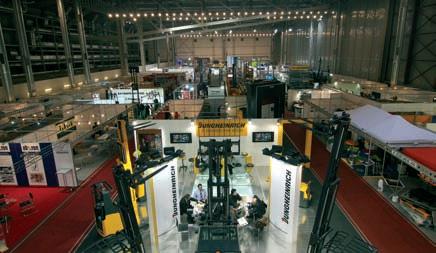
JUNGHEINRICH
Jungheinrich Hellas
H•
(Infrastructure)
•
(International shipments)
•
Logistics. (Logistics competence)
•
(Tracking & tracing)
•
(Domestic
•
• Θαλάσσιες
• Χερσαίες
• Αεροπορικές
• Αστικές plus...
Rebitzer (University of Nortingen - Gieslingen),
ATISREAL DEGI,DTZ, Jones Lang Lassale
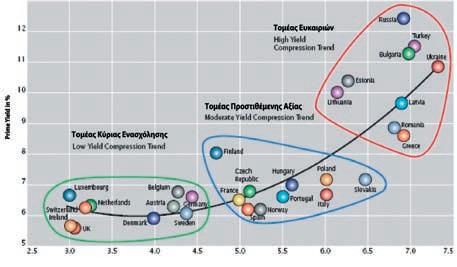
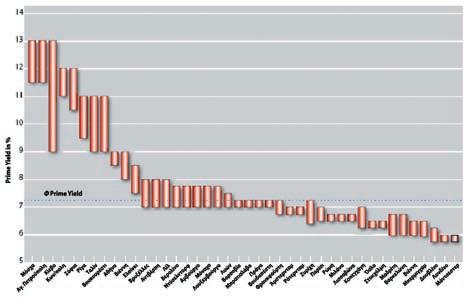
Warehousing Prime Yields (Πηγή: “Growth and restructuring all across Europe - The European Logistics Market”, Prof. Dr. Dieter W. Rebitzer (University of Nοrtingen-Gieslingen)
Αγορά
Logistics
Νew Year’s Blog
ΣΑΒΒΑΤΟ 07-02-09 >> [11:00 - 20:00]
ΤΟ ΠAΡΟΝ & ΤΟ ΜΕΛΛΟΝ
ΤΩΝ ΕΜΠΟΡΕΥΜΑΤΙΚΩΝ ΜΕΤΑΦΟΡΩΝ Διοργάνωση: Περιοδικό Cargo Plus
ΚΥΡΙΑΚΗ 08-02-09 >> [11:00 - 17:00]
LOGISTICS ΣΕ
Chain & Logistics
09-02-09 >> [12:00 - 20:00]
HI-TECH IN SUPPLY CHAIN Διοργάνωση:
Supply Chain & Logistics
ΚΥΡΙΑΚΗ 08-02-09 >> [10:00 - 14:00]
• Αναγκαιότητα Οργάνωσης
(Διοργάνωση: ΠΣΣΑΜΕΕ)
ΚΥΡΙΑΚΗ 08-02-09 >> [16:30 - 18:00]
• Συµβάσεις Ψυχρών 3PL (Διοργάνωση: Ε.Ε.Β.Ψ.)
ΚΥΡΙΑΚΗ 08-02-09 >> [18:00 - 20:00]
• Περιβάλλον & Green Logistics (Συνδιοργάνωση: Περιοδικά “Supply Chain & Logistics” και “Περιβάλλον 21”)
ΔΕΥΤΕΡΑ 09-02-09 >> [12:00 - 15:30]
• Ευφυείς Μεταφορές & ∆ιαχείριση
Η ΣΥΜΜΕΤΟΧΗ ΣΤΙΣ ΗΜΕΡΙΔΕΣ ΕΙΝΑΙ ΔΩΡΕΑΝ ΠΛΗΡΟΦΟΡΙΕΣ - ΕΓΓΡΑΦΕΣ: 210 9010040 www.sce.gr
(Διοργάνωση: ΙΤS Hellas)
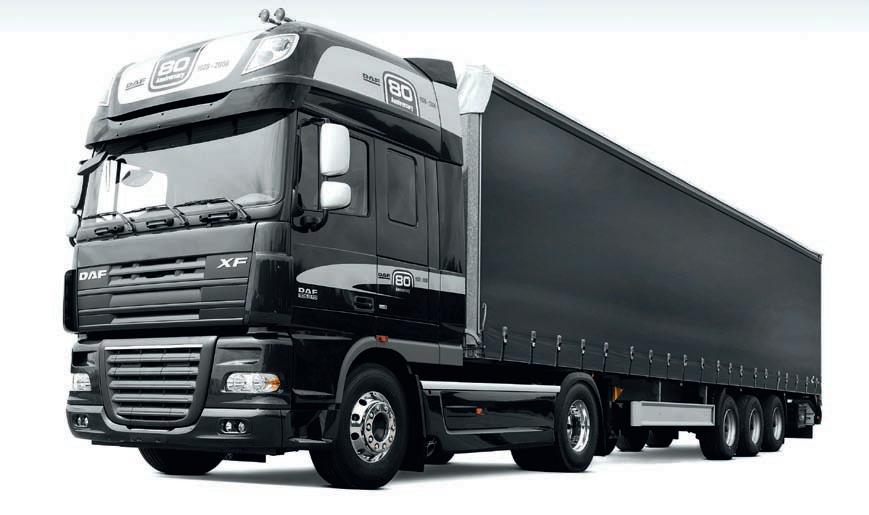
κιβώ-
τιο ταχυτήτων 12-σχέσεων (ZF Ecosplit), παρέ-
χει ακόμα μεγαλύτερη άνεση και αποδοτικότητα.
Το νέο κιβώτιο ταχυτήτων,
κιβώτιο 16-σχέσεων. Επίσης,
αποδί-
δει από 250hp ως 360hp. Ο κινητήρας PACCAR
MX 12.9 λίτρων EEV -με απόδοση από 360 ως 510hp- τοποθετείται στο CF85 και στο XF105.
Επίσης, το LF45 με απόδοση 160hp πληροί τα
χαμηλά επίπεδα εκπομπής καυσαερίων EEV χωρίς
Athens Imperial
SUPPLY CHAIN & LOGISTICS IN ENGLISH…
Globalization is a word that we all have, eventually, got used to. Logistics -as a term and as a sciencecould -easily- be the synonymous of globalization… That is why, the Supply Chain Magazine team, estimated that we had to publish an English version of our magazine, in the dawn of the new year 2009, which is planned to be an important year as far as Greek logistics are concerned. What you have in your hands is the most important DETAILS of the 20th Issue of the greek “Supply Chain & Logistics magazine”, the issue that was presented in the 2nd Global Exhibition for “Supply Chain & Logistics 2009” - Greece, that took place from 6-9 February 2009 in Athens. Wishing you a pleasant reading…
The editing team of Supply Chain & Logistics magazine
Translation in English: Anna Faltaits
TIME TO CHANGE THE LANDSCAPE FOR FREIGHT TRANSPORT CENTERS
Soon before 2008 ends and as 2009 begins, the debate about accelerating procedures for the establishment of freight transport centers in Greece has heated up.
This time, on the occasion of the amendment of the 3333/2005 Act, on the expansion of the potential of establishing and funding freight transport centers. According to Article 13 of the 3710/2008 Act “a freight transport center can be established and it can take up more than one, non adjacent, plots, provided that certain conditions are met”.
One of these conditions, and perhaps the most important one, provides that “if in one of the freight transport center’s plots there is a port, or railroad station, or airport, the plot’s size can be smaller than 100,000 sq. meters”.
What is important is that, after many years of delay, policymakers understood that, combined transportation and integrated supply chain management, must include ports as well. Especially since we are talking about Greece.
On the institutional side, this development is undoubtedly positive. The Transport Minister’s commitment for the construction of a transport center at Sindos, in Thessaloniki (where there is a direct connection to the railroad, and therefore railroad freight transportation intermodality is achieved),
shows the way.
Reality however is gloomier, as all parties involved -some more than others- know that the bidding process for the first, main, necessary freight transport center in the Thriasion Pedion, is at a stalemate, after some bidders appealed to the European authorities.
The column wonders if it would have any
meaning to criticize or judge the causes of these appeals, the logic behind the delays, or if there is any meaning in analyzing how helpful it would be to simplify the procedures of Logistics operations (and the external commerce as a whole) in Greece. We won’t criticize it, not because it is not worth mentioning, but because we think the answers are granted…
It is a matter of squaring off the circle! What we mean is that one amendment in the law is not enough to warm up the market - and to make private initiatives miraculously converge with public volition in order for things to start moving. The new amendment, the opportunities the new Public-Private Partnership law offers for funding, constructing and operating such centers, the separate studies for each private investor for the ROI of such an investment, must become a subject of discussion and fermentation for the market. Only then will the initial “national” planning for the construction of 6 freight transport centers - hubs in all of Greece, start to gradually materialize, and not remain a plan on paper…
Mary Efthimiatou - Editor in Chief
DECONSTRUCTING THE FINANCIAL CRISIS…
For many months now, the international economy is “dancing to the beat” of the financial crisis, which started from the credit crunch in the US, spread out in developed and developing countries and gradually affected the real economy and commerce, and transit commerce in particular. Analysis-Redacting by Mary Efthimiatou
In this environment and with major western markets seeing low revenues during the Christmas and New Year holidays -a sign of cautiousness from the consumer’s sidemost enterprises, multinational or not, are looking for ways to boost their revenues,
their sales, while most are definitely asking if this is the right time for new investments -in the context of utilizing the financial crisis for future profit.
Our contact with the Greek transit commerce market, with the supply chain management,
lead us to seek a project plan which might be utilized by decision-makers, so that the Greek market can handle the crisis in such a way that it can overcome it, without being hit hard.
Reading behind the lines … In order to have a clear picture, we gathered all possible data regarding the outlook for the international economies, but also for Greece’s economy (National Budged for 2009, Economic Analysis by the Foundation for Economic and Industrial Research, Quarterly Accounts by the National Statistical Service of Greece, The Economist “The World in 2009”, FORBES- “Investing in 2009”, IMF’s World Economic Outlook for 2009).
Different conclusions can be made from these analyses, especially for the transit commerce sector and the course it will take this coming year. Some crucial questions, upon which the future of international transit commerce relies on, would be the following: a) is recession “knocking on the door” of Asian markets as it did in 1997-98 and how will this affect commerce? b) should large industries refute their strategic policy of maintaining their production network in these economies? c) to what extent will international oil prices and consumer cautiousness affect transportation costs?
Cargo in the developing Asian markets...
No one can disregard the fact that the financial crisis has affected the real economy, production and transit commerce. Consumer reluctance in the USA and in the other developed economies, has obviously affected demand and has limited production, but only for certain goods. These are mostly luxury goods, such as cars, expensive clothing and footwear. The crisis hit automakers first and affected their main production units in Asian markets (China, India, Korea, Taiwan, Hong Kong, etc), resulting in the reduction of demand to below half. According to November 2008 data, groupage services from Asian ports to central Europe and the USA were down 20% (year-on-year). According to the Economist however, this was a fictitious “freeze” in routes. Orders were not reduced, but it was hard to find reliable credit warrants in order to ensure payments from creditors and decongest ports.
This, however, seriously affects Asian countries’ economies, as growth rates in many
GREEK BUSINESS
According to the scientific director of the Institution for Economic and Industrial Research, professor John Stournaras:
• The support package for the Greek financial system equals to the 11% of the GDP.
• There is the possibility for an anticyclical fiscal policy and management, by increasing social expenditures as well as the public investment program.
• Greek companies that do business in the Balkan region, must be vigilante and not worried, as the crisis does not deeply affect our broader region. Only a 20% of our GDP is exported to Balkan countries.
• The Greek economy will grow by 2% in 2009, but there is no fear of a negative growth rate.
of them almost halved, toward the end of 2008 - remaining however and significantly higher levels compared to estimates for the USA and European economies.
According to an analysis by Nomura (reproduced in Forbes), “Asia has definitely been hit by the crisis that started in the USA -cross docking being the first “patient”- but it will recover much faster than other economies, as most Asian governments have more room to facilitate the economy’s flow, compared to the USA or Europe”.
In its annual review about the outlook for 2009, the Economist, points out that “Asian economies can implement an anti-cyclic fiscal policy, which will include boosting production, maintaining the flow of transit commerce and creating reserves in the European hubs”.
Oil prices a decisive factor
Most international analysts, research companies, financial brokerage firms, conclude that the freight market was hit by the crisis long before it broke out in the financial markets. One of the main factors, were the unusually high oil prices during 2008 -although prices fell 62% around November (oil prices fell 62% toward the end of November, from an all time record of 142,27 dollars a barrel on July 11 2008).
An analyst for “Robert W. Baird & Company”, said that “the carriers market is closer to seeing the end of the crisis than other markets are, but this is unlikely to happen before nine months” (toward the end of the first half of 2009).
In the same report, the analyst said that a rationalization of international oil prices -with a “logical” price being around 70-75 dollars a barrel for crude oil, much lower than the price for diesel fuel- will help world transit “revive” rates, thus obtaining a competitive advantage, once production starts increasing again. According to the report, transit rates are likely to go up in the next five years, as transporters will have to justify their investments and the expected increase in tonnage.
How much does the crisis affect 3PL
and the supply chain?
An interesting answer to this question was given toward the end of 2008, during the international convention of CEMA (Conveyor Equipment Manufacturers Association), when the representative of the American Institute for Trend Research, said that “for anyone involved in the supply chain, 2009 will not be that difficult, especially if attention is given to reserve stocks and if efforts are made to take advantage of the crisis”. His advice to the conveyor equipment manufacturers was to “concentrate on your
Tstrategy
capital equipment and in the food and energy sectors, as these sectors will overcome the crisis sooner than others”.
As to what extent the international credit crisis will affect 3PLs, our magazine hosted relevant articles in previous issues (18 and 19). Our position in our last two issues seems to be similar with that of the Economist analysts, who, in their annual review for the sector, estimate that, internationally, 3PLs can take advantage of the crisis, increasing their competitive advantage, lower prices and cost containment for their clients.
A representative for “Armstrong & Associates”, one of the leading 3PL companies, told the Economist that as of the beginning of 2009, Asian economies, in an effort to sustain strong growth rates (although single-digit ones), are starting to negotiate the transfer of larger shipments at more logical prices, as well as the containment of empty cargo return routes. This, according to Richard Armstrong, is an excellent opportunity for strong 3PLs to take advantage of the situation and close profitable contracts, not only for 2009, but for the next year as well.
“ROUGH TIMES ” FOR OFFSHORING;
Perhaps the time has come for supply chain managers to re-evaluate conditions, in order to see if transferring production units from the USA to third countries does indeed still offer advantages. Redacted by Despina Kalivi
his is the concept that advisors at The McKinsey Quarterly are reviewing in an article published -under the current financial conditions and while oil prices are still high- regarding how profitable it really is to move production and production units (offshoring) from the USA to other countries, especially in Asia.
It is common knowledge for anyone doing business with international supply chains that, strategically, production units -the entire integrated production of large brand names- especially in the field of high technology, have steadily been transferred from the USA to Asia during the last decade. The reasons are well known: lower salaries, stable world economy and rapidly developing local markets. These factors were combined and turned countries like China and Malaysia into fully industrialized zones, with integrated production units that almost entirely manage brand names from abroad.
However, the analysts point out that, during the last two years, the “tailwinds” of economy that facilitated the transfer of production units from the USA to Asia, are turning into “headwinds”. The new conditions are reversing some of the factors that lead
producers from all sectors -including the hi-tech sector- to move their production to third countries.
For the experts managing the international supply networks, there are three main questions that need to be answered: will current conditions lead to a reversal? Is this the right moment for supply chain managers to cut back on their plans for transferring integrated
production units to third countries and bring the production back to the countries they are based in? Is there and indicative “answer” that fits these new conditions?
But, before experts change their strategies, McKinsey’s analysts advise them to ascertain the total cost for each product that is being produced and take under consideration the equivalence between cost savings from off-
shoring (e.g low salaries) and the rising cost of logistics (especially the transfer cost).
Readjustments in the supply chain?
McKindey’s analysts say that production in Asian countries implies not only a higher labor cost -because of increasing salariesbut also a higher cost for transporting goods, which means that it is not as profitable as it would be if goods were produced in the USA or other countries that are closer, like Mexico for example. The hike in oil prices did not influence only the cost of transpor-
tation, but also increased the sums paid for raw materials. Given the fact that changing financial conditions can reverse some of the advantages of a supply chain supported by offshoring, the analysts ask whether this is the right moment to re-evaluate which is really the right location for production units. Their advice is to ascertain if returning part of the production to the USA or areas near the US will help balance the higher transfer cost. But, before that, there should have a clear picture about the total cost, which in-
cludes the cost for raw materials, inventory transfer, the management of reimbursements as well as other “hidden” factors. McKinsey’s analysts, in cases of readjustments in the supply chain, also advise managers to examine the geographical distribution of demand for their products, to evaluate the importance of speed, the availability of skilled workers, the prospects of further profits from producing in Asia, the cost of one time transition, local import and tax implications as well as organizational interfaces.
EEL-MINISTRY OF TRANSPORT & COMMUNICATIONS SPECIAL LOGISTICS COMMITTEE,
FORM COMMON FRONT FOR THE 2009 PROJECT PLAN
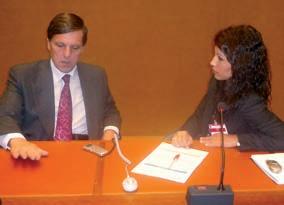
For the past 10 months, the establishment and operation of the Ministry of Transport and Communications’ permanent committee for Logistics has become known in the market, after the Minister Mr. Kostis Hajidakis made the commitment during the EEL conference which took place two years ago. Until now, the Committee’s chairman, Mr. Dimitris Vamvakopoulos, had only presented the Committee’s targets. Now, the Committee has started taking action as well. Interview to Fotis Fotinos, Mary Efthimiatou
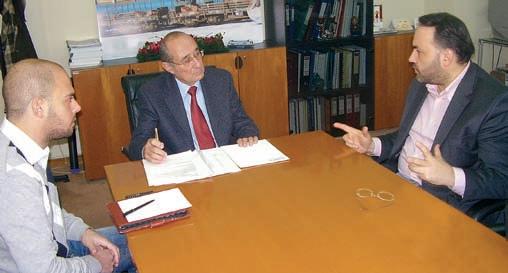
D. Vamvakopoulos VS K. Alexopoulos
Shortly before the end of 2008, the Supply Chain & Logistics magazine, met with the chairman of the Permanent Logistics Committee of the Ministry of Transpot and Communications, Mr. Vamvakopoulos and the chairman of the board of the EEL for 2008 (the board changed at the beginning of 2009) Mr. Konstantinos Alexopoulos and listened to their conversation about the course of the Committee’s work, the ways in which the EEL could assist this effort and how this can be projected in magazines of the sector. After a two hour conversation, it emerged that the Committee’s Project Plan for 2009 will “hide” some positive surprises for the sector as a whole…
» Mr. Vamvakopoulos, you have told us that as we are speaking, the two subcommittees you have set up within the Permanent Logistics Committee are holding
a meeting. Why did you decide to “separate” the operation of the Committee and what is the subject these two subcommittees will be occupied with?
DV Based on the Minister’s directions, and in order not to complicate the plethora of issues that are not possible to be solved immediately, thus creating more problems, we chose to work on issues that are of the Ministry’s concern, initially. At a second phase, and if all has gone well, we will proceed with more complicated issues (such as logistics relations with other ministries). Therefore, we decided that in the first phase the committee will undertake three tasks -the third task being the outcome of the other two. For this reason we formed two committees, each one of which has undertaken a different field: the one committee, which I personally coordinate, works on the development
of infrastructures and services and the second one, which is coordinated by Professor Mr. Kapros, works on the modernization of transportations (and not liberalization as it is widely referred). These two subcommittees will concentrate and work on -they are already working on- these two issues. The third issue the Permanent Logistics Committee will work on will be Greece’s promotion abroad, as a transit hub. We are talking about a Road Show, which will take place only after the two subcommittees complete their work and come to certain conclusions and make suggestions. That is to say that this Road Show will not take place before the end of the first quarter of 2009. Besides, we could not give a specific timetable for this. We can only say that the two subcommittees have been given a timetable up until the end of the first quarter of 2009. The subcommittee that has undertaken the Transportation issue (mainly road transportation), specifically, recognizes the EEL’s prac-
tical work and utilizes it. We must point out, of course, that since there already exists another transport committee within the Ministry, our work cannot be dominant, but will be supplemental. We are discussing about specific issues. In the meantime, we must not forget that there are people that participate in both committees, so it’s easy to transfer know how and facilitate the final work. Currently, the subcommittee is documenting the sector’s problems-malfunctions, concentrating material and opinions. At the same time, we are examining and specifying the necessary institutional changes that must be made in order for the market to adjust to the changes of the new era, while we are also trying to estimate the course of the sector’s competitiveness. It should be noted that market people, professors, institutional and others participate in the committee and therefore we are trying to conduct a fruitful discussion about possible conflict of interest, so that we can find or propose the “happy medium” for best promoting the freight project. In essence, what each member of the committee is doing now, is to give his own in-
PROPOSAL AHEAD OFTRANSPORT & LOGISTIK MUNICH 2009
• As the EEL, we can propose for one step to be made, perhaps even a common step and with the assistance of the Committee, so that Greek Logistics can be presented in a common and large kiosk at the pan-European Transport & Logistik 2009 which takes place in Munich (12-15 May 2009).
• This presentation could be organized by the EEL, with the participation of different companies of the sector, but it would be important for it to have the aegis of the Ministry, with the contribution of the Committee.
• D.V: “If the Committee can include the presentation of our country with a common kiosk at the Munich Exhibition in its 2009 Action Plan, it obviously will do it -or at least will suggest it to the political leadership”.
put, his own knowledge, so that we can have some conclusion.
KA Therefore, it is important to mention that the committee is currently working on road transport, trying to “untangle” any legislative or other complicated conditions it is working under…
DV Yes, for the time being we are mainly discussing about road transportation and its modernization, as this is the sector that faces the most significant problems.
KA From what I understand, forwarding agents, 3PLs, etc, are participating in the Committee. A question-suggestion I would like to make to the Committee is if you have approached the smaller links of the chain, namely the drivers, in order to get their opinion as well. What I am suggesting is that perhaps someone from the Greek Federation of International Road Transport Carriers
(OFAE) or the Greek Union of Land Transport, should participate so that the Committee can also talk to the market that basically controls TIR?
DV This is an important suggestion by the EEL and I note it down so that we can approach these people and either listen to their views, or involve them more in the Committee. Besides, the issues they are facing, such as licenses, is a serious mater, which we ourselves can see. I believe that the market is mature enough to hold serious and unbiased discussions. As a Committee, we are obviously “open” to suggestions, so that we can eventually come to a conclusion and help the market move on, without offending interests and without jeopardizing jobs.
» What has been done regarding the preparation of further suggestions? For example, has the material for the legislative framework for transportation been gathered? Have these texts been made known? Could the EEL, for example, contribute to the Committee?
DV I can’t say that the documentation -at a legislative and study level- has been completed, in order to have a clear picture for the sector. This, of course, is also due to the fact that the members of the Committee, because this is not their only occupation, don’t have the time to work on this…
KA This is where we, as the EEL, can help, as we have already conducted a significant part of the documentation, which can be utilized by the Committee, as ready material. Whatever we have gathered from studies about the sector, the market, malfunctions, from our own studies which were conducted two years ago along with the Ministry of Development, we can gather and give to the Committee, in order to facilitate its task. The same can be done with studies by the Foundation for Economic and Industrial Research, the Athens Chamber of Commerce and Industry, etc.
DV This is extremely important for the Committee’s task. Even if we obtain the legislative framework, in the form the magazine has it, it would be useful so that we can better organize our work. Besides, the aim for the market as a whole is common. We, as the Committee, acknowledge the work done by the EEL and we are happy to see that actual steps have been taken in order to improve the market’s operation.
» The EEL, in its initial memorandum -before the Committee was set up- had suggested the creation of a broadened general secretariat. How do you regard this possibility?
DV This could be the final stage of the whole effort. The EEL, and to its credit it was the first one to bring up the subject, has been pressuring for this matter. Practically, at the moment, it would be rather hard -because of the problems the market is facing- to promote this proposal. However, the Committee, which is the first step, could lead to a broader organization chart, at a later stage. But, maybe ultimately it would not be good for a Logistics directory to be set up in each
ministry separately, because this would complicate things even more. It would be desired that the works of the Committee could be diffused, under the Committee’s “umbrella”, to other ministries, so that promotional efforts are coordinated, but this is a long-term plan. If this Committee is generally -politically- strengthened, then its work would become easier. The political leadership of the Ministry of Transport already sees the need to promote this issue and helps as much as possible.
KA In this logic, yes, fragmenting the target would not be good. Since the first step has already been taken and a Committee has already been set up in the Ministry of Transport, a committee which seeks out logistics and makes proposals (not only regarding transportation, but also regarding operations in general and combined transportation), it would be best if everyone helped towards this, so that the specific Committee can present results in a reasonable time span.
» Mr. Alexopoulos, the EEL’s memorandum for the creation of the general secretariat, was based on similar practices in other European countries. Do you think this can be implemented in Greece as well?
KA Indeed, when we sent the memorandum with our proposal for the creation of a general secretariat, we had taken under consideration similar structures in other European countries. In Germany, for example, the supply chain organogram is diffused to several Ministries. Of course, it is important to say that in Germany there is a federal ministry for transportation and infrastructure. There is a general secretary for logistics and supply chain, who is responsible for the master plan for the country’s policy regarding Logistics.
In that memorandum, we had analyzed the organization chart regarding the operation of the supply chain sector in Germany, Britain and elsewhere, presenting the policy in those countries regarding Logistics, how it is institutionally implemented and what are its results. In Germany, the automobile in-
dustry supports a central logistics policy, in Britain it is the same for ports, as it is in Holland. The same could happen in Greece -although it might be harder at a legislative level- and, if it was centrally decided, our country could be presented as a full and direct competitor to Holland.
DV The efforts you have made so far, as the EEL, and our efforts as the Committee, have a common target. To promote the importance of Logistics and the supply chain. Under this broader concept, of course there should be a general secretariat, if this is legislatively possible. I repeat: the Committee is the first political step towards the recognition and organization of the sector. We cannot go straight to a general secretariat. We cannot make this leap yet. The first step has been made. Its results will be judged later on.
» We talked about the issues that the subcommittee for Transportation has undertaken. Do combined transportations fall into the “jurisdiction” of this subcommittee, or is it more related to the second subcommittee, and how is this placed in the Committee’s Project Plan for 2009?
DV The combined transports issue, because it is a complicated issue that combines many parameters, has been assigned to the second subcommittee, for the development of infrastructures and services. This subcommittee will examine in depth -some work on this has already been done- issues such as the creation and operation of freight transport centers, land use planning, railroad transportation as the backbone of combined transportation, trans-shipments, terminals, etc. If this work is done within the timetable and until the end of the first quarter of 2009 and has come to certain conclusions, it can become the basis for the changes needed in the market, as we know it today.
The Ministry’s and our target is not to end up as one more institution that only speaks theoretically. Our target is to document-analyze the situation and the problems and propose practical and applicable solutions. This is why we proceed gradually with few
and tangible targets: one or two at a time that will lead to somewhere, and continue from there.
» Tell us a little about the Road Show for promoting Greece as a transit hub. What EEL’s expectations for the 2009 Project Plan?
KA As the EEL, we had proposed the promotion of an agency for the supply chain, within the Hellenic Foreign Trade Board (HEPO), or at least, in the logic of the HEPO. An agency for promoting Greece’s supply chain. This is of great importance for promoting our country as a whole. This is what the
ACommittee refers to as a “Road Show”. This is what they do in Holland and this is how they have managed to establish their country as the only pan-European hub. We could definitely appear as a competitive country, if we do it right. Why should international cargo be trans-shipped from Rotterdam and not Thessaloniki?
Such an agency in Greece - I don’t know if it would begin from the Committee or if it would end there- would have significant power and, basically, its only job would be Road Shows for the promotion of our country. However, in order to close contracts and advertise Greece, ports, railroad representatives, logistics companies, institutional bod-
ies, customs etc, would have to synchronize, so that what each entity presents each time, will be an aggregate proposal for prospective investors-clients.
DV The Road Show as a program has not been defined yet, neither when its going to take place, nor how, since this will basically be the capstone of the results of the two subcommittees. Your proposal for common participation of the market as a whole, the whole Greek logistics community at an international exhibition, could be a first step for the Road Show, it is revolutionary, it is what we all call “economic diplomacy”.
THIRD PARTY LOGISTICS SERVICES
IN BULGARIA
Ιt is regarded to be one of the most developing market in the whole South-East Europe area, in which many Greek companies take action the last years. We are talking about Bulgaria and the trends in its internal logistics market. outside greek borders
nd even thought from this column, we usually present Greek companies which have export activity, this time we are making the difference, presenting the results of a sector study from ICAP Bulgaria, as far as the logistics market is concerned.
Trends, demand and the analysis
The demand for logistic services in Bulgaria will keep its positive trend in the next few years, shows a sector study on Third Party Logistic Services in Bulgaria conducted by ICAP Bulgaria. Key factors for the development of the sector that could be pointed out are the stable growth of the economy, improving business climate resulting in international and domestic trade flow growth as well as the country’s geographic location. The sector study presents data compiled from official local and international public sources as well as from in depth personal interviews with the managers of the leading companies in the field and related sec-
WILL CONTINUE ITS POSITIVE TREND
tors representatives. It includes an overall analysis of the demand, supply and market of logistic services in relation to the infrastructure capacity and transport conditions of the country as well as presents the future development of the third party logistic services in Bulgaria.
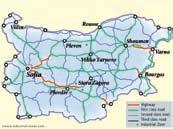
The Bulgarian international trade marks a significant development in the last few years. For the 2000-2006 period the national export has an average annual growth of approximately 17% and import average annual growth of approximately 20% per year. Five out of ten Pan European Transit Corridors cross the country, namely 4, 7, 8, 9, and 10th corridor and that establishes the logistics sector as attractive for investments.
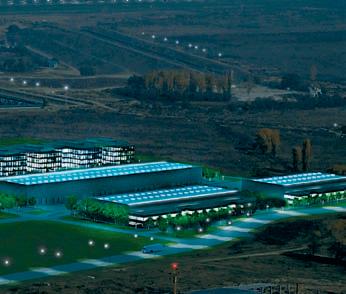
The global industrial zones positive trend development has its influence on the Bulgarian economy as well. Currently approximately 700 thousand m2 logistics areas are offered on the domestic market and according to the analysis the demand exceeds the supply with approximately 60%. The average rental price of industrial zones is about 3 - 5 Euro per m2 is. It varies according to the region situated and the infrastructure conditions.
Giving power to 3PLs…
As more large European companies enter
the market and the tendency local companies to transfer some of their activities to logistic companies stimulate the third party logistic sector development. According to the survey’s data approximately 1 735 thousand m2 will be needed to answer the market’s terminal areas needs, reaching approximately 2 025 thousand m2 in 2 015.
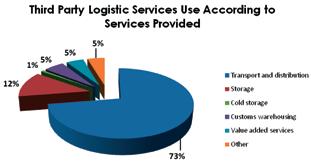
According to specialized research among 300 end users of logistic services provided by TNS BBSS Gallup, companies use logistic services mostly for transportation, distribution and storage. Products that could be pointed out are food and beverages, clothing and footwear, construction materials and others.
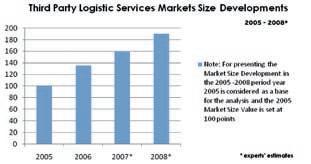
According to the results of the sector study the market of third party logistic services in Bulgaria increased with almost 35% for the 2005-2006 period and that tendency is expected to go on.
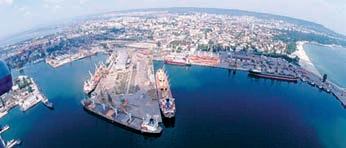
Most of the world famous transport and logistics companies are present on the Bulgarian logistics and transport market. Still the large scale logistics centres operate mainly near the capital Sofia and the big towns. The logistics centres are located in proximity to airports, ports and rail stations, so
that logistics providers may offer cost effective and time saving services. According to ICAP Bulgaria’s analysis the market for logistic services consists of approximately 80 large and medium sized companies. However ICAP experts’ estimates show that approximately 20 companies hold a significant part of the total market share. The report presents the profiles and carefully studies the financial results of the key sector representatives based on their financial statements.
“BUILDING THE FUTURE…
The 2005-2006 comparison shows a significant key players’ development according their financial profitability, liquidity, and leverage ratios.
Featuring in the future…
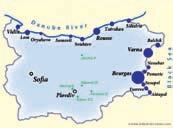
There are a number of projects that are expected on the market within the next few years described in the sector study in order to meet the increasing demand. They are situated around the biggest towns in the country. Such are the intermodal terminals around Sofia, Plovdiv, Dimitrovgrad, Rousse.
Main constraints for the sector developments are considered the poor infrastructure conditions, the high land prices, and the lack of qualified labour force.
The sector study shows that the growing demand encourages the 3PL providers to offer a variety of value added services to their clients. The sector is at its initial stage of development and future steps need to be undertaken regarding the implementation of higher quality complex services which meet European demands and investments in domestic assets and facilities such as warehouses, specialized equipment, software, enhancing consolidation services and modernization of operation systems.
EVERY DAY” WITH POWERFUL SUPPLY CHAINS
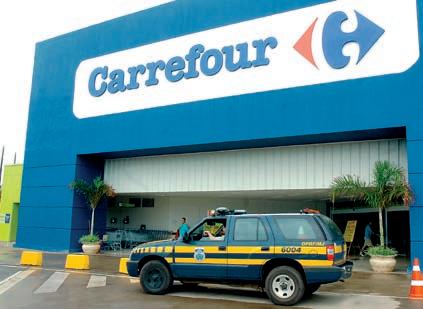
With a presence in more than 30 countries worldwide and with millions of clients visiting its stores on a daily basis, Carrefour is undoubtedly one of the largest retail chains internationally. Interview with Mary Efthimiatou • Photos by Despina Spirou
CARREFOUR Μarinopoulos
Agroup of such size, based and headquartered in France, and with individual administrations in all it local market branches, can only be strategically supported by the efficient operation of its supply chain, so that the final client -its
customer- can always be satisfied. Recently, Carrefour Marinopoulos in Greece, created a new Supply Chain department, which answers directly to the French central supply chain department Mr. Akis Staikopoulos, Carrefour Marinopoulos’ Supply Chain Di-
rector, explained us the philosophy of these changes, the department’s future plans and the strategic changes in Carrefour’s supply chain operational structure.
» Mr. Staikopoulos, how does a large retail company like Carrefour Marinopoulos, utilize or is supported by its supply
CARREFOUR’S SUPPLY CHAIN DIRECTOR’S “VISION”
• Currently, each warehouse has its own expedition plan, under the operation director’s supervision.
• This part of transportation management will be conducted centrally for all Greek warehouses.
• It is possible that, after studying market trends, in a two or three year period we could adopt 4PL solutions.
• A successful warehouse outsourcing plan αποθηκων, within the next two years.
SUPERVISION OF THE DISTRIBUTION NETWORK
• Carrefour Greece, in order to meet the challenge of servicing regional stores, in islands and in urban areas, where distribution is difficult, is considering and evaluating the establishment of consolidation center(s) in nodal points around Greece (one or two points), which will be closer to Points of Sales and will have a “time to market” philosophy. Consolidation centers are an innovative idea that is being developed abroad and I believe that it will soon be implemented in Greece as well.
• Consolidation centers will have small, flexible trucks, which will be able to serve small regional stores.
chain so that the shelves in its stores are always full?
AS Last year, that is during all of 2008, Carrefour Marinopoulos remodeled -within its business logic- its supply chain, understanding the importance of supply chain, changing the structure of its operation. So, the order was given to create a new operation department, which did not exist then, as only the replenishment part of the supply chain was in operation, and a supply chain department was established. This new operation depart-
ment was established in order to have control of daily operations, as that is where all retail companies have the most problems. In the replenishment part, things were pretty much set, either with the installation of new systems, or with the existing infrastructure. The logic behind the change in the company’s attitude, was to lean on strong replenishment -which we already had- and create a new operation division that, under a dynamic management, which would intervene
wherever necessary in daily business, would lean on existing infrastructure and operations and would achieve the best results in everyday business. This is a characteristic example in order to understand the importance Carrefour Marinopoulos gives to the supply chain. But the change in orientation does not stop here, as there is now a strong and clear involvement of the headquarters in the supply chain’s operation. A Global Supply Chain Department has been set up in France, where the company’s headquarters are, which has undertaken the central
coordination of local supply chains. For example, as Carrefour’s supply chain director in Greece, I report directly to this department and I can obtain information about the group’s supply chain operation as a whole. It must also be mentioned that the supply chain department director in France, is also a member of Carrefour’s Executive Committee, a fact that proves the importance given to the supply chain and its management, by such a large retail group. At the
HOW OUT OF STOCK LIMITATION IS ACHIEVED
• Carrefour has limited out of stock at its stores and warehouses, to percentages below 3-4%, a very satisfactory percentage compared to common practice.
• How did it do this?
Α)By the high integration rate in our warehouses. The percentage of services offered by the company’s warehouses to the retail chain’s stores, exceeds 85%. Direct deliveries from our suppliers to our stores are limited, and are used in order to avoid possible local management problems.
Β)A best practice for Carrefour’s stores is Αct Spots, where different products are offered at especially low prices (foods or non-foods). In these cases in particular, the supply chain’s response time in order to cover these offers, is nil or minimum.
C)Regarding our warehouses, we want our products to be at least 90% full, while at the same time our stock remains at a low level.
D)We have privately-owned truck network, which we consider the “backbone” of the chain’s expedition plan, and we also occupy a number of external partners (practically permanent), offering a high level of services, some of which work exclusively for Carrefour and are on standby 24 hours a day, so that we can immediately cover even the slightest need of our stores. The transportation network is a catalyst for the supply chain’s efficiency.
same time, we must also mention that the Greek counterpart is a member of the Board of Directors.
» Does a retail group, such as Carrefour, base its supply chain operations on in house solutions, or outsourcing?
AS Traditionally, all these years the company utilized and still utilizes, in house solutions. That is to say that basically we organize every new warehouse, and the existing ones, with our own personnel, our own software systems, our own infrastructure and internal management.
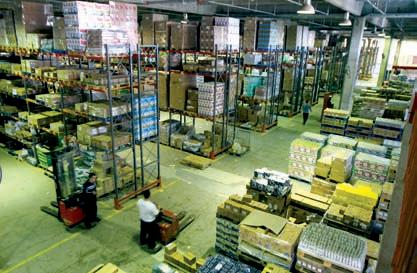
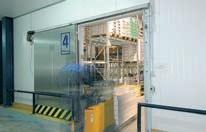
However, there is an exception to the rule, and this refers to our warehouse center in Inofita -which is one of the largest refrigerated cargo facilities in Greece, and also a second no-food warehouse in Inofita that handles all non food cargo for all of Greece. This is where we use the 3PL external partnerprovider solution, our cooperation is going smoothly and I believe that soon the company -from a strategic point- will chose the solution of synergies and use of the supernetwork in more warehouses and, eventually, for the 100% of its facilities. At the new supply chain department, strategically, we believe that eventually we will adopt this solution, giving this part of our core business to specialized persons and we, as the directorate, will supervise these external partners, always aiming at optimizing daily operations at Carrefour’s branch network.
Up until now, the company always chose the solution of in house management, as most food retail companies do. However, by creating the new supply chain department and the global department we spoke about before, the trend is different. For example, the in house solution can offer the certainty of total procedure supervision, offer the ability to monitor your company’s productivity on a daily basis, but it can generally be pointed that performance does not reach the levels that can be achieved by cooperating with a specialized provider. Planning for this change in strategy that the company follows for its supply chain, obviously, will not be
immediately completed, but it will be in a period of two years.
Our main concern is to ensure smooth business operation during the transition period, but, above all, to ensure our human resources, which will continue to be the backbone of this new approach.
Besides, we are talking about six large warehouses in Greece, of which only two are currently operating with the assistance of a 3PL provider, and a network of 350 points of sale, which have a different format. We are talking about hyper-markets, super markets, proxi, franchise etc.
In 2009, the company’s development plan is promising, not only regarding its sales points, but also its revenues. Therefore, the supply chain, must not only be expanded quantitatively, but also qualitatively. The abovementioned are my personal and the department’s goal, with strict timetables.
» What is the supply chain department’s role in Carrefour’s change in strategy regarding supply chain management?
AS What we must, ought to do and called upon to do, as a department, is to qualitatively upgrade business, mainly by imposing stricter and more analytical quality indicators regarding the supply chain’s operation. 3PL partners on their behalf, must meet these quality criteria, and will be gauged by these on a daily basis. We are referring to Key Performance Indicators (KPI), which are used, but are very subjective when it comes to in house solutions, since we cannot judge ourselves as objectively as our external partners can. The aim of this procedure is to upgrade the quality of our work. And we believe that our cooperation with 3PLs does not only focus on pre-sales, but also on after sales. The particularity of retail is that the supply chain operation does not stop when the truck leaves the warehouse, as it still has to handle returns, deficient or destroyed cargo, special returns (due to expiration dates). Therefore, the organization and operation of after sales support from the warehouses to the stores, is especially important.
» How will supply chain management be carried out after the gradual change in supply chain operations? Will it be carried out by the 3PL solely under your supervision, or will there be more involvement by Carrefour?
AS This “problem” has already been solved by the practice we followed in both our warehouses in Inofita. So, in the event of a possible cooperation with a 3PL for the rest of our warehouses, the decision we have made regarding the management’s structure is as follows: we assign service provision to a third party, but at the same time we set up our own internal structure, which is small in number, but substantial, in order to achieve a second inspection in real time. This of course does not mean that there is a lack of trust regarding our external partner-provider. This planning has already been applied in Inofita, where there is a limited structure that manages both the refrigerated cargo and the non-food divisions. This is the model we plan on following in the future, by examining productivity indicators, revenues, possible cargo flow and preparation problems, on a daily basis.
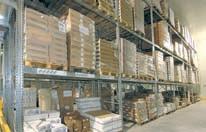
warehouse solutions
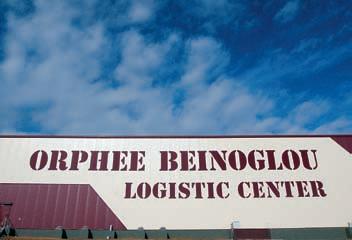
NEW MODEL MULTIPLE USE WAREHOUSE FOR ORPHEE BEINOGLOU, BY CONSTEEL
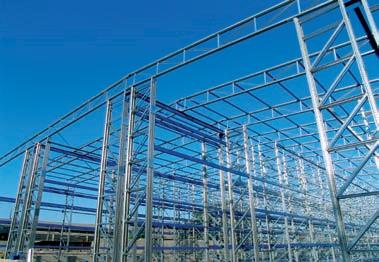
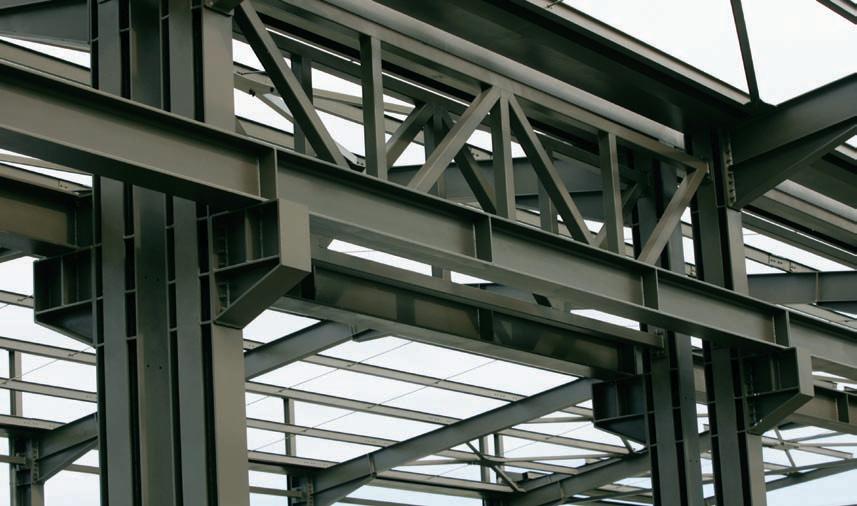
Up until recently, when the construction of specialized warehouses was confused with constructing commercial warehouses or industrial buildings, mixed constructions of concrete and steel were considered specialized constructions…
By Mary Efthimiatou • Photos by Despina Spirou
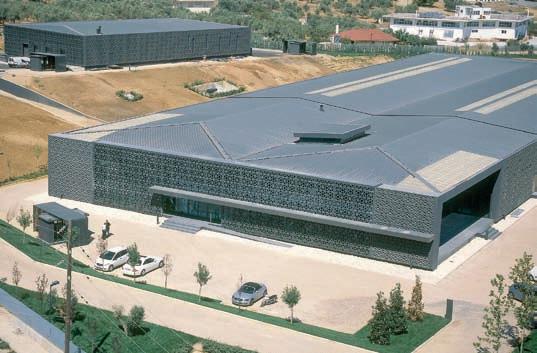
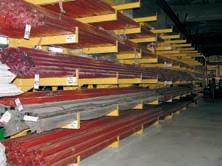
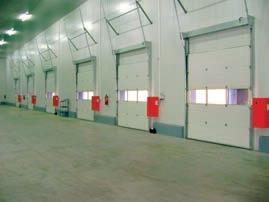
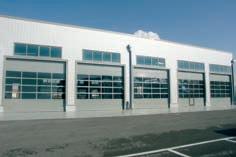
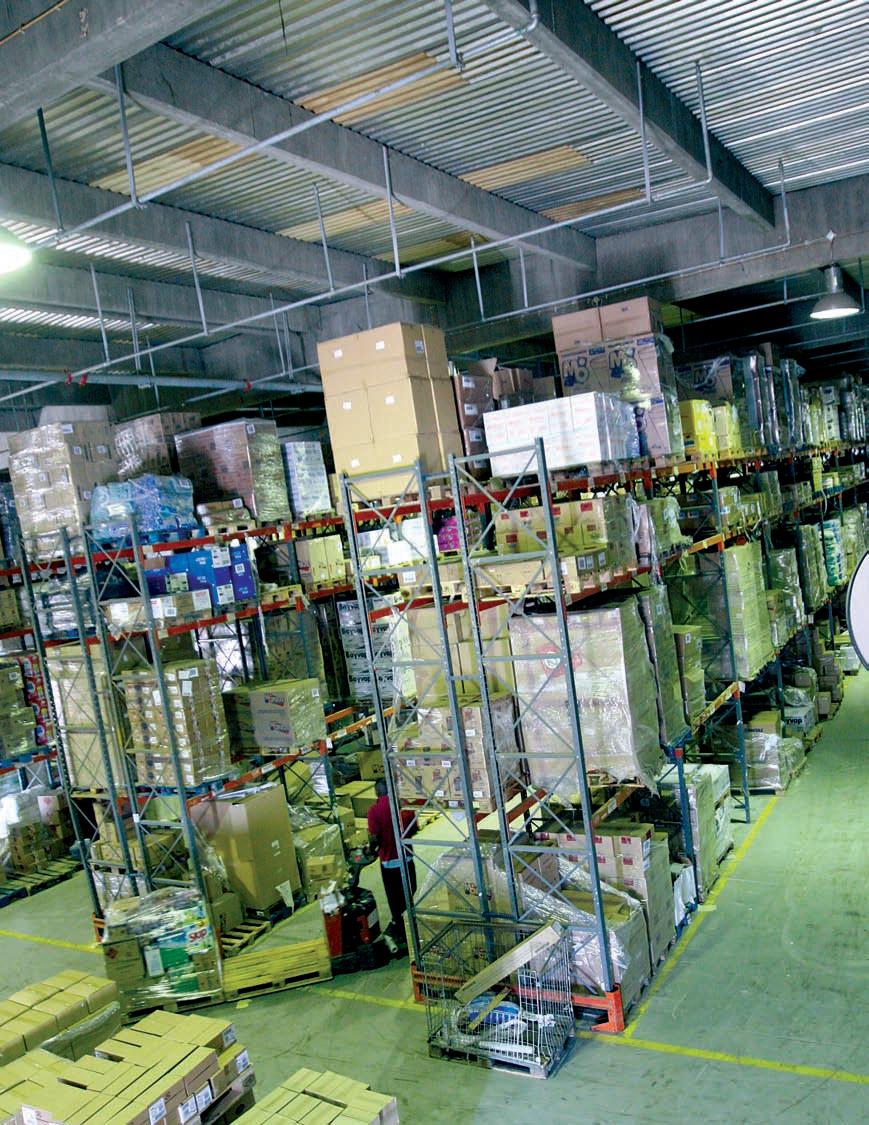
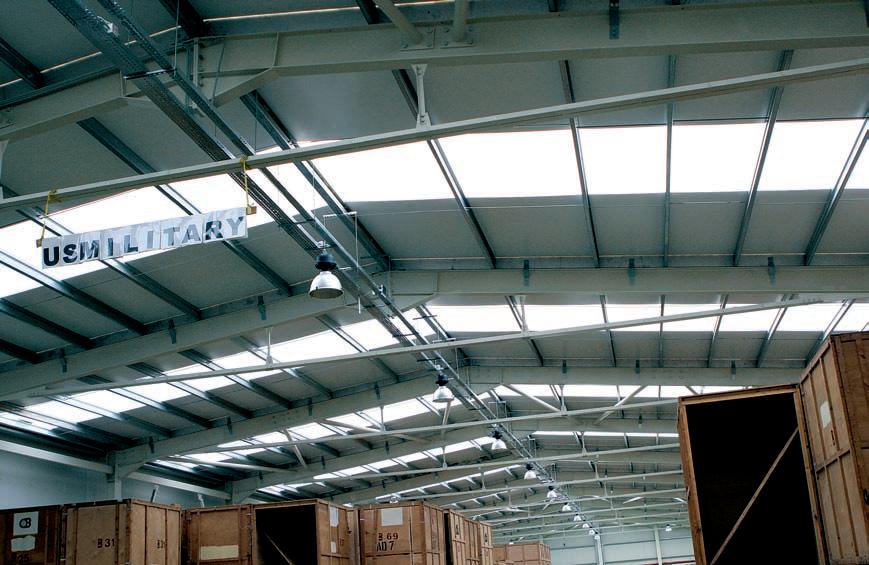
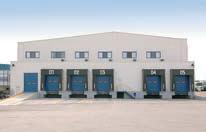
The construction market, however, is now mature and the design and construction of warehouses are fully specialized and constitute a separate field of action for companies. For the last six months, the forwarding and logistics company Orphee Beinoglou, has been operating from its new warehouses in Elefsina, which are considered a model mixed construction.
The Supply Chain & Logistics magazine visited the new warehouses and spoke with Mr. George Mileros, Consteel’s CEO, the company that designed and constructed the warehouse, and Mr. Panos Katsadakis, Orphee Beinoglou’s Warehouse & Project Manager.
Design and construction
We had an analytical discussion with Mr. Mileros about the design procedure and the construction of this specific warehouse. Mr. Mileros explained that “the initial design for the construction of the building, was for an area of 50.000 sq. meters. Another adjacent plot of 20.000 sq. meters was acquired later on. The initial design and target was to cover most of the plot so that we could utilize -based on existing legislation- as many sq. meters as possible.
Total coverage reached about 30.000 sq. meters and after that, and based on the design, we separated the area in order to facilitate the logistics operation and cargo management in general -either the company’s cargo, or third party cargo that Orphee Beinoglou handles as a 3PL”.
Asked about how the layout of the warehousing areas was designed and structured, Mr. Mileros said that “the warehousing area layout was based on the operational objective of the user company”, adding that “there were some specific items during construction, that were based on the client’s demands
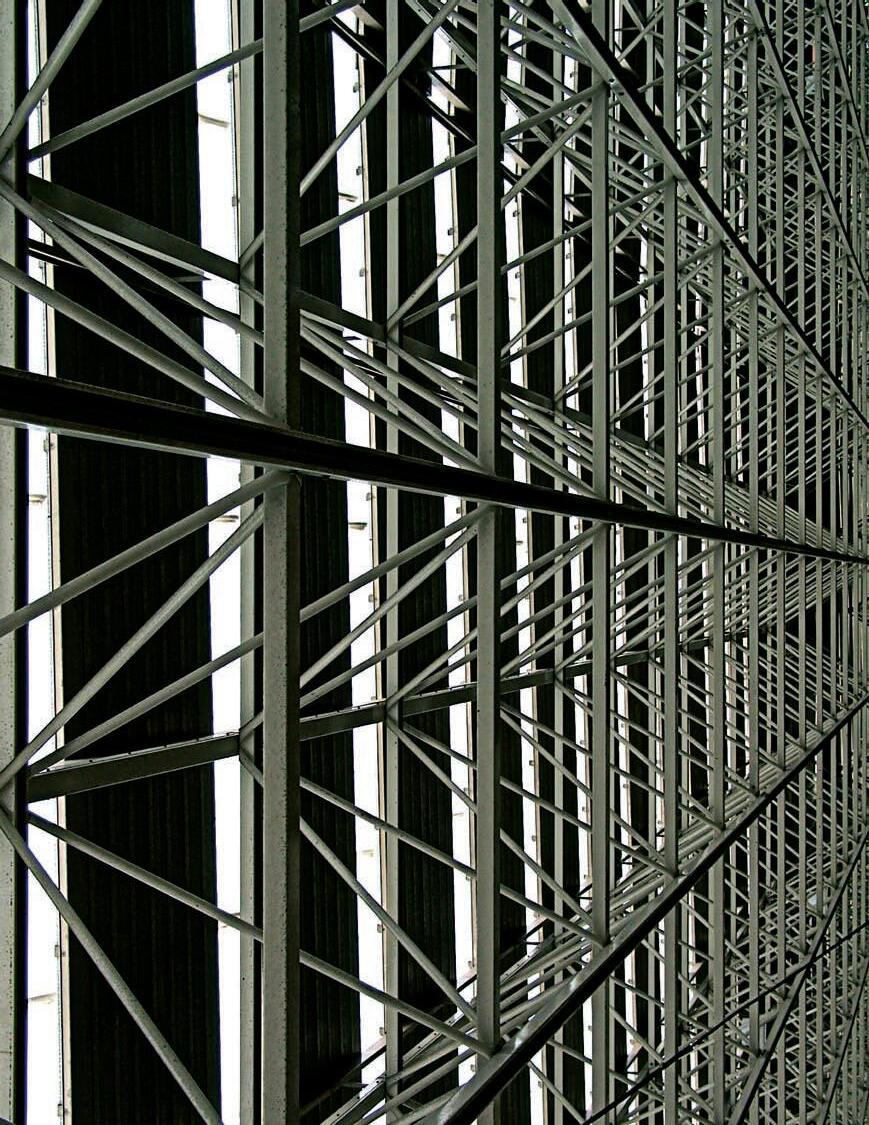
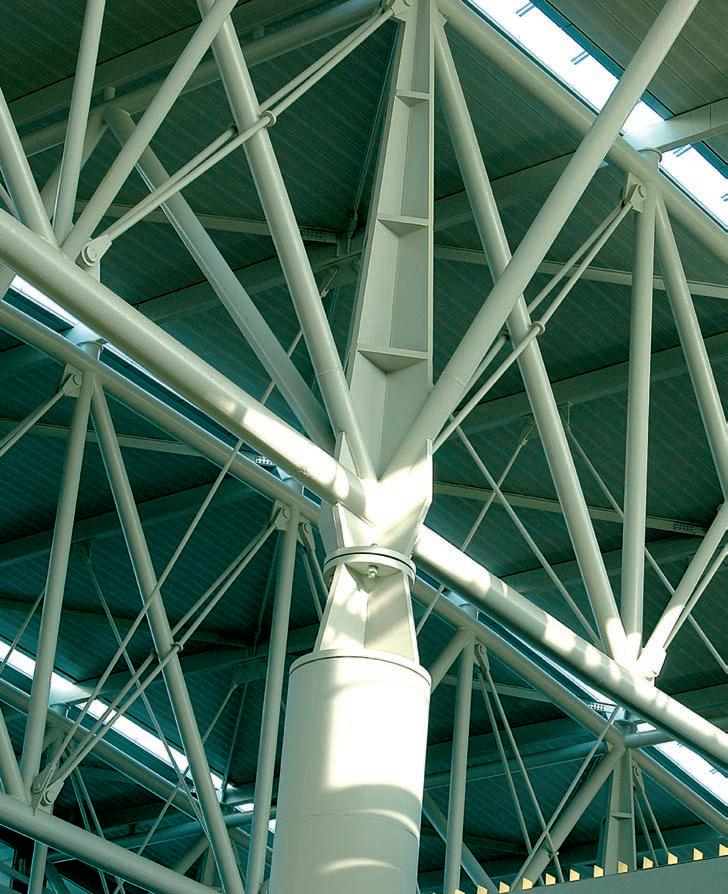
(e.g. because of the volume of the merchandise that needed to be stored), regarding for example maximum openings without columns in between, maximum fire resistant
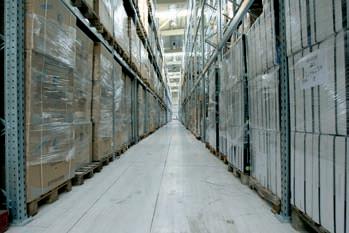
surfaces, the warehouse’s height (covering the maximum height of the building and also covering the utilization of height for storing merchandise)”.
Utilization of all areas
THE “IDENTITY” OF THE CONSTRUCTION
• The construction as a whole, is a mixed construction with concrete and steel elements,
• At the basement of the office building, another warehouse of about 1.000 sq. meters was designed, with controlled temperature and humidity, for the storage of works of art.
THE “IDENTITY” OF THE WAREHOUSE
• The warehouse is relatively new, as it has been in operation for six months.
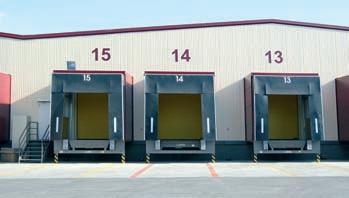
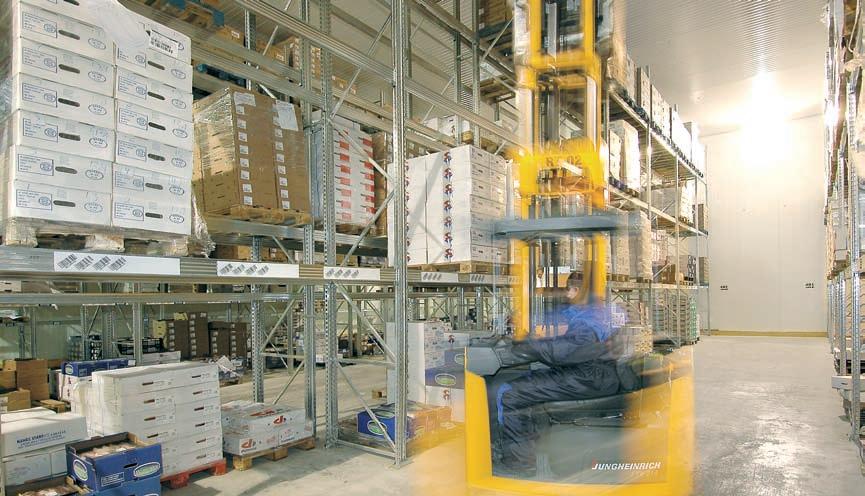
• The warehouse together with the basement, have a reception for 60 ramps, all synchronized by self-designed WMS.
• 140 employees (warehousers and administrative staff) are occupied in the warehouse.
CONSTRUTION PARTICULARS OF THE WAREHOUSE
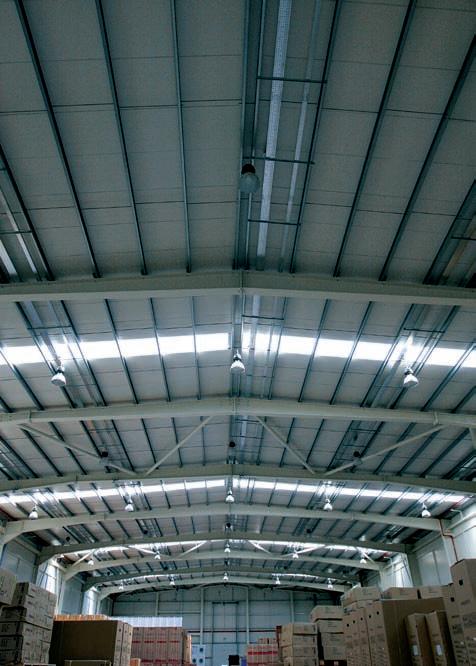
• Very large openings -openings 27.5 meters wide in all rooms without pillars in between.
• Very small inclinations
• Special draining systems, because of the very large roof surface.
• Special construction for the office area, as the area below the offices has no pillars since all the offices were installed from the roof. This refers to special support conditions on the main construction girders, so that the offices could be “hung up”.
• Construction of a large traffic junction hub, since the warehouse is located on the old national road.
• There is a separate electricity substation, for energy saving without significant loss in the warehouse and the offices.
According to Mr. Mileros “based on the client’s specific demands, we conceived and executed the design, regarding the building’s capacity”. “At the same time”, he explained, “since in this specific area we could construct a large basement, because of the terrain’s incline, we designed a 10.000 sq. meter basement, which includes parking spaces and some auxiliary spaces, but also a large enough storage area, compartmented in fire compartments”.
Asked by Supply Chain & Logistics if it was a complicated construction, Mr. Mileros pointed that Consteel “had to manage a total space of 10.000 sq. meters of basement, 30.000 sq. meters of superstructure and, in addition, external areas that had to be designed in such a way that they would facilitate traffic management during loading and unloading cargo. At the same time, we needed to design a large parallel building, which in 2009 will accommodate management offices. The warehouse’s offices are already operating on the top part of the existing warehouse”.
As for the degree of difficulty, he said that “there was a serious construction matter -that led to delays- because of the excavations that had to be done, but also because of archeological findings during excavations. The project was delayed for some month, because of the excavation works and because of the involvement of the archeological directory, which had to evaluate the findings and then authorize the continuation of the project”.
Emphasizing on materials, flooring and roof
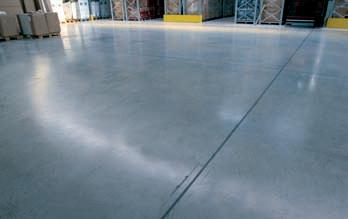
Both interlocutors -one on the constructor’s side and the other on the client’s side- agreed that, during the construction, emphasis was given to the quality of the materials, the modulation of the roof -in order to utilize maximum height- and the flooring, in order to facilitate machinery operations.
Mr. Mileros explained that “all materials were selected according to Fire Department norms and we installed the most up-to-date materials in the market, for the coating, the
steel frame, the concrete construction, insulation, rainwater draining systems, the offices, etc. In cooperation with the client, the most modern materials were chosen in order to create a model warehouse of mixed design (concrete-metal), that would offer efficient area management and perfect construction quality.
He stressed that “special emphasis was given to the flooring construction, because modern lifting machinery that mainly runs in the warehouse, needs a high level of flatness”.
Asked whether there is a part of the construction that could be considered as a “special construction”, he explained that “the offices that are in the warehouse, which basically “hang” over the warehouse, could be considered a “special construction”.
A model multiple use warehouse for Orphee Beinoglou
The client-company on its behalf, via its warehouse manager, Mr. Panos Katsadakis, said that it enjoys the benefits of this specific construction, the greatest advantage being total utilization of height.
In particular, Mr. Katsadakis told us that “the construction of the warehouse, aimed at utilizing the maximum height, was the best possible for us, as the user company. Even the fact that there are no roof supports and we can fully utilize the height of the building without having any obstacles, is a great advantage for our everyday business and the storage volume”.
He explained that “in the new warehouse, special emphasis is given to “sensitive” cargo, such as works of art, that is stored in a special area, while, in general, household items are stored in large crates that can stay in the warehouse from a month to several years. Emphasis is also given to logistics, storage and distribution of products for companies such as LG, Benroubi, etc., and also stock management for our clients.
Our company’s initial aim for our headquarters to be in the same building with our warehouses, is now achieved, while this warehouse, because of its size, can also facilitate the needs of our clients, in different areas of Greece”.
A NEW START IS NECESSARY IN ORDER TO CONFRONT TRANSPORTATION PROBLEMS
In this country, we are used to being the last in Europe and to consider this position as normal and expected. We are used to accepting this fatalistically and we are pleasantly surprised when for some (usually accidental) reason “we actually make it” and come first, or at least somewhere in the middle, and not last!!!
We were recently pleasantly surprised when we found out that our country was one of the first to sign the European e-call protocol (the service of immediate location and notification in cases of road accidents), about 8 years ago. However, when we tried to find out what happened with the implementation of this protocol, our efforts came up with no results. We were also pleasantly surprised, about ten years ago, when we found out that our country was one of the first to sign the Kyoto protocol, but were “slapped in the face” recently when it became internationally known that in essence nothing has been done... Of the many things one could recite and document -and unfortunately with examples- as reasons for the misfortunes of this country, we could make special reference to the delays, not to mention the total lack of “continuity” and “planning”, or “programming”, which is evident in the projects and actions
of this country’s Public Administration. These concepts in our country are used by “theoreticians”, a characterization used as a synonym for “quaintness”. Reforms and different public works are decided and announced individually and fragmentally and, most importantly, without the necessary preparation or the necessary allocations for their materialization. For example, about a year ago, the construction of a large transshipment port in Southern Crete (in Tympaki specifically) was announced. We -who had suggested and have been promoting the idea of such a port for at least a decade now- were happy and applauded the idea. But what has practically been done since then?
The mentality behind planning must change
In order to utilize the funding opportunities that are (still) generously being given to our country, and in order for Greece to
obtain the infrastructure that will give the country the position it deserves within the European Union, new structures and -most importantly- new mentalities in planning, programming and materializing projects are necessary. Timing is perhaps more critical than ever, since the implementation of the fourth Community Support Framework -the last support framework to offer so many allocations and opportunities- has already begun…
We do believe that we can learn from the “adventures” of the projects in the transportation sector in Greece during the last 30 years. The first and most important lesson is that the “solutions” adopted must come from an aggregate and well documented planning that will cover the whole transportation and traffic system of each area. Solutions and projects that are not based on an aggregate planning, or at least a documented evaluation procedure, but instead are based on individual efforts or decisions, almost always end up being the projects that take decades to materialize and are technically and financially non viable. Naturally, political will is needed in order to materialize bold and innovative proposals, but for projects that have been studied correctly and are provenly part of an aggregate System Planning and not for the promotion of ideas of individual people or committees. Political will is also needed in order to have a systematic and timely programming and elaboration of the research that is necessary for the maturing of the projects, so that we can have an increase in the absorption of available EU fundings. We also need to cut through the red tape, to overcome the inertia of different departments and executives and the state mechanism needs to work efficiently.
Hellenic Institute of Transport
Finally, political will is needed in order to upgrade the Public Administration’s human resources, which manage the whole system for transport or non transport projects. It is impossible for downgraded and under-staffed Services to take on the burden of conducting a synchronous procedure of planning, conducting research, supervising projects and timetables of this scale. The creation of
a suitable managerial infrastructure and well trained and positioned human resources that will staff the relevant Services, is the “base of the pyramid” for any effort to rationalize the transport infrastructure and other projects production system in this country. This is the basis. This is where we should have started from in 1981, when we became an EU member-state (perhaps even before that).
This is where, even now, the famous “political will” must concentrate, even if it is a matter that cannot be politically exploited. So let us proceed, even now, unbiased and without guilt and let us make the necessary and right decisions in order to help change this country’s future, having our past decade’s experience as a valuable consultant and guide.
RISK MANAGEMENT TRENDS IN SUPPLY CHAINS
THE INTERNATIONAL BUSINESS LANDSCAPE AND RISKS FOR SUPPLY CHAINS
It is a fact that the fastest changing element of international business, is risk, as -by nature- it has a double substance: the prospect for profit or the exact opposite, namely financial losses. By John Papageorgiou safety
The interest for effective supply chain risk management has increased significantly during the past years, as globalization has lead many companies to sign contracts of international range, which means that these companies, even unintentionally, participate in the risks their partners from different parts of the world face.
A systematic interest for the secure operation of supply chains becomes increasingly valuable for many companies from different business sectors. This is reflected in the continuous development of new “defense lines” at different operating levels within each company. Many times, the choice of a logistics services provider or a supplier can be decided by its risk management methods but also by factual proof that these methods have been tested and can be effective.
In the broader field of supply chain risk management, two main trends are evident. The one trend is companies that place supply chain risk management among their top priorities. On the opposite, there are other companies that significantly downgrade this concern.
Although companies in the second category seem to pursue a maximization of profit, by following simpler tactics, the possibility of
them maintaining their robustness against operational or even destructive risks, is significantly lower, a fact that makes them more vulnerable. They are just as vulnerable against strategic and economic risks, as in many cases the company’s viability and competitiveness, relies on the even management of strategic and economic risks.
On the other side, we see companies that systematically pay attention to supply chain risk management and to certain extend develop important abilities, which can help them overcome even unforeseen incidents.
In the middle of these two trends, we see
companies that are concerned about supply chain risk management, without however taking decisive measures towards dealing with the mater more effectively. In the supply chain sector, mature and systematic risk management is an important differentiation element for many companies, but also a means for penetrating the most dynamic and demanding markets.
Business attitudes on supply chain risks
Many times, the apparent positive attitude of some companies, that think they are in a
position to effectively manage supply chain risks, is overshadowed by gaps or even superfluity. This is mainly caused by the arbitrary selection of managerial methods and tactics, without their suitability being examined first. A classic example of this, is insurance coverage planning and selection of insurance programs, before examining which risks can be insured and to what extent and under which conditions they can be rolled over to the insurance market.
The wrong selection of supply chain risk management solutions, however, is also observed in a vast range of risk categories. The solutions that are selected in order to deal with these risks are characterized by a lack of homogeneity in the manner and range of their implementation.
Many companies may chose solutions that are costly and energy-consuming, on a human resource level, without having examined the adequacy of these solutions in respect to the size of the problem they are facing. No matter how much a company avoids accepting this fact, insufficient strategy for confronting risks is mirrored, to some extent, in its balance sheet. It is not wrong to believe that every negative result is partly caused by wrong viewpoints on business risks.
Research has revealed that, executives in a significant percentage of companies rank their company’s approach regarding risks their supply chains face as “fragmental” and “elemental”.
The common element in the two types of approach is the lack of a common way of perceiving and confronting risks.
A simple example that stresses the lack of homogeneity in the perception of risks, is the phenomenon witnessed in many companies, where each executive gives his own definition about the meaning of supply chain and other business risks. Perceptions are so different that, in most cases, there is confusion about the real size of business risks. This phenomenon is especially evident in individual business models, where the main element is “specific” people in key positions. On the opposite, we see non individual companies, where people may have coordinating roles instead of leading roles. In these
THE IMPORTANCE OF RISK ASSESSMENT
• Successful risk assessment lies in its adjustment to the needs and characteristics of each company, and its ability to organize in such a way that the participation of company staff will be utilized to the maximum. It is a given fact that each company’s staff is the most essential source of information that a risk management consultant must utilize. After a risk assessment, what will make the difference is the passage from conclusions to the adoption of solutions that contain value for the company’s operation. Their ability to suggest solutions and participate in their implementation is the main differentiating characteristic of risk management consultants.
• Companies that chose a mature approach and management of supply chain risks starting from the risk assessment procedure can have many benefits.
• The main benefit is the limitation of uncertainties that in many cases lead either to indecisiveness or dangerous relaxation of vigilance.
• Another significant benefit pertains to the adoption of a common culture and approach for risks. This way, dangerous trends that can lead a company to wrong choices are removed.
• It would be wrong to assume that the knowledge obtained by risk assessment about supply chain risks is useful only for finding solutions for one specific division of the company. Companies can approach other business risks, aside from supply chain, in a similar way. For this reason, we at A.on believe that it is essential not only to offer piecemeal value solutions, but to regard each company as a total, thus offering solutions based on all the aspects of business risks.
companies, most of the time, we see a commonly accepted perception about the meaning of risk, making them more mature in or-
der to take the necessary steps in adopting systematic management solutions. Another factor that causes questions, regards the difference of perceptions between companies in the secondary and tertiary sectors, regarding supply chain risks. In the tertiary sector we see advanced perceptions in risk management maters, with a significant percentage of businesses saying that the systemic confrontation of these risks is one of the pillars of their corporate governance. The reason behind this attitude is the dependence of many companies of the tertiary sector on computerized systems and information administration and processing technology in general. In the secondary sector, supply chain risk management is partly bolstered by client pressures, whose demand for quality, continuous and unhindered coverage of their needs is increasing.
FROM QUESTIONS TO ACTION
At A.on we believe that the first step a company should take, in order to go from questioning to constructively managing supply chain risks, is to evaluate the way its executives perceive the meaning of general business risks, in order to have an even better understanding of specific risks for supply chains.
Once the “geography of opinions” and maturity when it comes to taking action is clear, the company can proceed with a risk assessment, focused on supply chain risks. Risk assessment includes four distinctive stages, which are the following:
1.
“Charting”
the supply chain
The first stage includes analyzing the supply chain in as many distinctive operations as possible. This stage may “hide” a few surprises for company executives. On many occasions, the expansion of some supply chains is so vast and is conducted at such speed, that its real size is not always distinguishable by those involved in and those that rely on its operations. The development of supply networks is by itself a significant source of risks, especially during the past years, as the cooperation between many companies expanded to areas where regulatory and economic instability is the main characteristic.
2. Locating risks and vulnerable points
The second stage includes locating vulnerable points. This action is based on gathering views and experience obtained by the staff from each division of the company. Many efforts stop at this stage, as gathering impressions and evaluating them is time consuming and energy consuming -and these are elements of great importance for company executives. At this point the contribution of risk management consultants is decisive, as they are called upon to evaluate trends and views from a large number of executives in each company. Different problems, such the non homogeny of opinions, are not unknown to the work groups than consultants organize within their client companies. Effective gathering, evaluation and impression of the data at this stage, are essential for the company’s efforts to create a cohesive risk management framework.
3. Analyzing risks
The third stage includes the assessment of the relation between possibilities and consequences for each risk that was located in the second stage, based on specific criteria. As in the second stage, this assessment demands an excellent cooperation between company executives and the risk management consultant.
The importance of this stage is crucial as in may reveal many opposite trends regarding the feeling that prevails within the company about supply chain risks. Before proceeding with any action connected to finding a solution for tackling supply chain risks, these trends must be clarified. For the most demanding organizations, the completion of this stage gives them the ability to implement even sophisticated methods for analyzing risks, such as “stress tests”. In these cases, companies are able to safely test the
effects different combined incidents could have on the operations of their supply chains. The application of such methods depends on the cost-benefits relation, but mostly on the extent a company wants to excel its general risk management framework, by investing in high analysis techniques.
4. Choosing risk management solutions
The final stage includes the selection and running of supply chain risk management solutions. This is the stage that allows a company to make the proper decision about the risks it will roll over, the span of risks it will cover, its various management plans (e.g. crisis management) as well as any change it must make in its supply chain operations in order to limit its total exposure to risk.
* Mr. John Papageorgiou is a risk management consultant for Aon Hellas
TRAVELOGUE IN CENTRAL & EASTERN EUROPE EXPERIENCE AND IMPRESSIONS THE NEXT DAY
Reaching the end of our travelogue in Central and Eastern Europe, we take this opportunity to review and analyze the conditions in the broader region, after the latest financial and business developments. The world financial crisis will certainly not leave the region’s countries unharmed, although the degree and timing of its effects will differ, depending on each country’s economies.
By Athanasios Mavros and Vasilis Papakostas
Hungary, for example, has already felt the consequences of the crisis, as a result of its higher exposure to international financial markets, while Slovenia is still protected by its recent accession to the eurozone and its higher level of domestic consumption. The financial crisis is expected to affect the region’s and the EU’s economy as a whole, directly or indirectly, as the flow of international investment funds -the main factor of progress and development in the region- has already slowed down. Countries that have developed their infrastructure and have a healthy domes-
tic market, will find it easier to weather the crisis, while companies and organizations that survive the crisis at a national and regional level will become the market leaders and drivers after the crisis.
Economic Situation
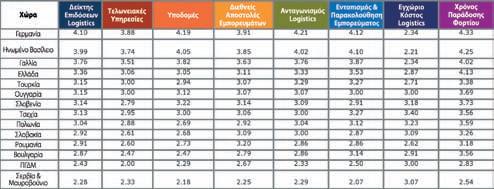
The differences regarding the region’s countries development, dynamics and future prospects in the logistics sector, are summarized in the Logistics Performance IndexLPI, surveyed annually by the World Bank, which ranks countries according to their efficiency in the following sectors: • Customs
services • Transport and technology infrastructure quality • Organization and cost of international shipments • Logistics competence • Cargo tracking and tracing • Domestic logistics services costs • Timeliness for cargo shipments.
The LPI index is weighted based on the ranking of each country in the 7 aforementioned indexes and the evaluation and comparison of the countries is conducted.
Central and Eastern European countries rankings fall short in the LPI index, compared to Europe’s developed countries. However, there is a separate grouping in the region’s coun-
travelogue
tries, based on their performance, which also reflects the degree of their domestic goods and services market development.
Hungary, Slovenia, the Czech Republic and Poland are at a better position than Slovakia, Romania, Bulgaria and the Former Yugoslav countries, based on their geographic vicinity to developed western European markets, a factor that has made them a more appealing investment destination since the beginning of the 1990s. During this period, these countries invested at a different degree in their production infrastructure and their transport networks, which was combined with the presence of international companies from all sectors.
Countries in the second group (Romania, Bulgaria, FYROM, Serbia, Montenegro) are following the first group’s development with a 5-10 year delay and, in the cases of Serbia and FYROM, they are still behind, as they lack in infrastructure and the efficiency and availability of logistics services.
On the one hand, this hinders the development of these countries’ economies, but on the other hand in creates an environment of opportunities, that partly depend on the countries’ ability to efficiently invest in the development of their infrastructures, the improvement in the organization and efficiency of their public sector, setting strict legal and organizational frameworks for their logistics services markets, and also on their ability to attract companies with international experience and know-how to their domestic markets. Here too, Central and Eastern European countries are separated in two groups, with central European countries presenting a smaller investment risk, but also smaller investment yields.
In the next paragraphs of this article, we will try to analyze the main parameters that are expected to affect the logistics services markets in the next years.
Investments-Infrastructures
Infrastructure investments are of crucial importance for the development of national economies. In this context, European funds will play an important role, and so will the ability of governments to utilize these funds. A recent example is Bulgaria, where the European Union decided to “freeze” all funding, for almost all of 2008, until the country’s corruption problems are eliminated. This shows the EU’s decisiveness for the proper disposal of Community funds, but also the role that national governments play. This will be an important factor for countries that have not become members of the EU yet (Serbia, Montenegro, Turkey, FYROM), as the EU is an important trade partner and the accession prospective will not only give these countries access to European funds, but also offer motives to promote their legislative and operational frameworks. The development of their road infrastructure in particular, is crucial for the connection of the region with the markets and transit hubs of Western Europe and the global market, as road transportation covers the largest part of transit trade and presents rapid growth rates.
Market
The retail market, in the past 15 years, has shown significant growth rates, under diverse circumstances. Consolidation and restructuring of national markets is expected in the next years, with organized trade networks having a stronger presence and role. However, because of the region’s geography and the agricultural basis if its economies, a significant part of traditional retail is expected to be maintained, with considerable market shares especially in rural areas, but also in urban areas. At the same time, the traditionally important role of wholesale, must not be overlooked.
In the past years, the double-digit consumption growth allowed the creation of medium efficiency structures, combined with particular demands for the provision and efficiency of logistics services, and the development of complex structures and distribution networks of national coverage. The successful development of these networks and the improvement of their efficiency will be a crucial factor in the formation of new balances in the retail and the logistics markets.
Logistics
The logistics sector presents significant development opportunities, as a result of the development of the region’s economies in export-orientated activities and in covering increasing domestic needs. Mass investments for the construction of new warehouses, because of increased needs, have been the characteristic of recent years. These investments, however, are not enough to cover increasing demand, reflecting the significant yields of these investments, which differ from those in western European countries. Global economic conditions have lead to a stalemate in this specific market, as relevant investments have “froze”. Nonetheless, these markets still have needs, which will certainly be covered in the mid-to-long term. The presence of international players of the logistics market and the prospective restructuring of the markets, based on cost effectiveness and on services, is expected to create conditions for the development of the markets. In this context, even under current conditions, central and eastern European logistics markets are expected to continue growing, creating significant opportunities for investments.
* Mr. Vasilis Papakostas is Consultant - International Division at PLANNING A.E.
* Mr. Athanasios K. Mavros is general manager at PLANNING A.E.