

Zest It Up
It’s that time of year again, time for our annual celebration of food and food lovers and everything and everyone in between. We hope you’ll hold onto this issue as a sort of reference guide. It’s loaded with tasty info, including a few must-try recipes. There are a couple for Jell-O salad (pg. 30) and, in celebration of Afroman’s trial victory, one for pound cake and its glaze. If you don’t know the whole story, go to pg. 39. It’s insane, but when cops busted down the rapper’s door on the hunt for contraband, all they found was some delicious-looking pound cake.
Speaking of wild tales, the one-woman show at Amphibian Stage is a real treat. In Did You Eat? , food and family come together in at times funny and other times poignant moments (pg. 20).
What we eat and the stories we tell go way back, and on pg. 37, we offer a look into Hollywood’s relationship with cuisine through the decades.
Zest 2026 also serves up an indepth feature on how food affects our moods (pg. 11), a takedown of the new MAHA Food Pyramid (pg. 9), a list of spring foodie events (pg. 14), and so much more, so grab your apron and pull up a chair. It’s Zest 2026. — Anthony Mariani, Editor



METROPOLIS
Cold Drinks, Bold Stances Tariff fallouts trigger refund fights and new legal battles.
BY THOMAS L. KNAPP AND JENNIFER BOVEE
Tarriff Refunds to Companies En Route?
The Austin American-Statesman says that more than a dozen Texas companies sued the current White House over the negative impacts of the tariff hikes implemented on April 2, 2025, on what Donald Trump called “Liberation Day.”
In a 6-3 vote announced in February, the Supreme Court said Trump’s use of the act was improper. Will there be refunds? Hopefully.
While the tariff battle played out in Washington and at the Supreme Court, its consequences — and its reversal — are felt close to home. One beloved Texas-based manufacturer wasn’t having it.
On February 20, the Supreme Court ruled that part of Trump’s crazy-quilt tariff scheme was illegal in its particulars. Specifically, SCOTUS noted that the International Emergency Economic Powers Act does not provide the authorization Trump claims to impose tariffs as he pleases, in the amounts he pleases, on products from whatever country he pleases, when doing so pleases him.
The court did not, however, initially order refunds of the money collected from American importers (and passed on to consumers in the

form of higher prices). It remanded the case back to the lower courts.
Since that ruling, lower courts have begun siding with those importers, with refund claims now moving forward and potentially involving massive sums. The process remains slow and uncertain as the government struggles to determine how such repayments would be handled in practice.
Tariff victims had already begun preemptively suing for the restitution they’re owed even before the Supreme Court ruling, and since that ruling, many more companies have initiated court proceedings. The victims should not have to sue. Trump should just order the U.S. Treasury to refund the money immediately. That would be the honest thing to do.
Naturally, Trump disagrees.
Instead of doing the right and honest thing, he’s throwing a tantrum over being held to the law and pursuing new, just as legally suspect tariff-powers claims to keep collecting money from American businesses and consumers ... at least until the courts nix those schemes, too.
Here’s the thing: Refunding the money wouldn’t just be honest policy. It would be smart politics. At the moment, the coming midterm elections look like an impending bloodbath for the Republican Party.
The Democrats seem to be sitting pretty in their quest to become the majority party in the U.S. House and to have a decent shot at taking the Senate as well. Trump has already announced his fear of a third impeachment when — if — that happens.
Can he turn things around? It may not seem likely, but eight months is a long time in politics, and even the prospect of large-scale refunds and economic stabilization could help his party, and him, out. But how?
Step One: Stop fighting the refund process and ensure that money gets back into the hands of the companies that directly paid the tariffs. (Sadly, in our partially cash-based economy, it just isn’t feasible to identify and reimburse individual consumers.)
Step Two: Watch those companies use the pseudo-windfall to get competitive again with lower prices and capital investments toward more (and more efficient) production. More jobs, more sales, more economic activity.
Step Three: Republican candidates take credit for the improving situation while hoping everyone forgets that what we’re recovering from is a Republican president’s economic idiocy and policy lawlessness.
Voters do tend to forget, and those who don’t forget might be inclined to forgive — if their wallets start getting fatter instead of thinner. Six months of good economic news could make a big difference at the polls.
Or Trump can keep (family-friendly version) Fooling Around and Finding Out. Which, with this as with many other things, seems to be his habitual inclination. —Thomas L. Knapp

YETI for the Win
In February 2026, YETI Holdings Inc. was among several Texas-based companies, including jewelry designer Kendra Scott, that successfully challenged the federal government over its sweeping tariff policies.
Those tariffs, which generated a massive increase in government revenue, came at a steep cost to American businesses — particularly in the consumer and industrial sectors. For companies like YETI, which rely heavily on imported raw materials, the added expenses strained supply chains and squeezed margins. The Supreme Court’s decision to reverse the widespread tariffs will now deliver direct relief. The victory could have a big impact on the Texas economy. One can only hope.
Although headquartered in Austin, YETI has strong cultural and commercial ties to the Fort Worth area, and its products are found at many local retailers, including Cabela’s and Academy Sports + Outdoors. YETI’s first and primary retail location, right here in Tarrant County in Southlake Town Square (211 Grand Av, 817-812-3515), has served as a hub for local YETI enthusiasts since opening in October 2022 — a bold move mid-pandemic, right?
The brand is a major sponsor of rodeo and Western culture, including the annual Fort Worth Stock Show & Rodeo, and the company’s fundraising program is frequently used by local nonprofits to support charitable initiatives through product auctions and events.
YETI also releases limited-edition designs to raise awareness for its charitable partners. For example, in November, the company launched a new line of 20-ounce stackable cups called the Rambler in support of Folds of Honor, which provides scholarships to families of America’s fallen or disabled military personnel and first responders. Learn more by visiting FoldsofHonor.org. — Jennifer Bovee l
YETI launched its Rambler 20-ounce Stackable Cups line in support of Folds of Honor, which provides scholarships to families of America’s fallen or disabled military and first responders.
SCOTUS: “The International Emergency Economic Powers Act does not authorize the president to impose tariffs.”









METRO
Pyramid Scheme
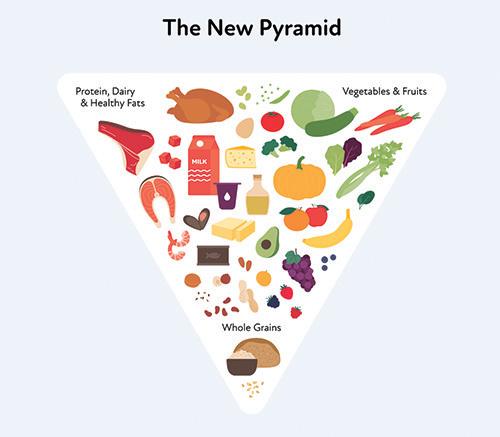
In a bid to “Make America Healthy Again,” the 2025-2030 Dietary Guidelines for Americans contain some confusing recommendations.
BY LAURIE JAMES
“We are ending the war on protein.”
With those words, U.S Secretary for Health and Human Services Robert F. Kennedy Jr. and U.S. Department of Agriculture Secretary Brooke Rollins announced dramatic changes to what was formerly known as the Food Pyramid, also known as the Dietary Guidelines for Americans 2025-2030, earlier this year.
“For decades, we’ve been fed a corrupt food pyramid that has had a myopic focus on demonizing natural, healthy saturated fats, telling you not to eat eggs and steak and ignoring a giant blind spot — refined carbohydrates, added sugars and ultra-processed food,” said U.S. Food and Drug Administration Commissioner Dr. Marty Makary at the January 8 briefing announcing the new government guidance.
Carbohydrates, fats, and proteins make up what scientists call macronutrients. Carbohydrates are the first-line energy for your muscles and the central nervous system during movement and exercise. Fats serve as an energy reserve, help insulate and protect your organs, and are needed to absorb what are called fat-soluble vitamins, like vitamins D and K. Less than 10% of total daily calories should come from saturated fats –– fats that are generally solid at room temperature.
The American Heart Association says saturated fats — most often found in beef, pork, poultry, full-fat dairy products, eggs, and tropical oils like coconut and palm — can cause problems with your cholesterol levels, specifically your low-density lipoprotein (LDL). All of this may increase your risk of heart disease. It’s worth noting that nuts, nut butters, soybean, and olive oils, and even hemp, also contain saturated fat.
Protein provides structure to tissues like cell membranes, organs, muscle, hair, skin, nails, bones, tendons, and ligaments, along with maintaining some of your metabolic functions. At the January briefing, Commissioner Makary alleged Americans were significantly deficient in protein.
“The old guidelines had such a low protein recommendation that we are increasing that by 50% to 100% — kids need protein,” Makary said. “The old protein guidelines were to prevent
starvation and withering away. These new protein guidelines are designed for American kids to thrive, and they’re based on science, not on dogma.”
But that’s not reality. Most reputable nutrition professionals agree that most Americans consume more protein than we need, albeit not necessarily in the form of lean meats and legumes. It is true that the first Food Pyramid (1992) was definitely heavier on the carbs –– the then-guidance called for up to 11 servings of grains. The 2025-2030 visual guidance turns this relic upside down, but in reality, most people who spend any time talking about health or nutrition in recent years used the USDA’s updated My Plate model, which was an easier-to-communicate visual, focusing on portion size in relation to a dinner plate, with more emphasis on lean protein, veggies, and fruits than bread. Fifty percent of any My Plate meal was meant to be fruit and vegetables.
I’m a nurse who’s spent the bulk of my career talking about how to reduce what the feds are now calling ultra-processed food. I’ve also spent the last decade covering the Blue Zones movement for the Weekly. I’ve worked with families who don’t know where their next meal is coming from, people who have way too much access to food, and critically ill people whose medical conditions are adversely affected by the consumption of too much protein, fat, or sugar.
But even nurses need the advice of an actual Dietitian. Samantha Davis has been a licensed and Registered Dietitian Nutritionist (RDN) since 1991. Davis is currently Professor of Professional Practice in Texas Christian University’s Department of Nutritional Sciences, part of the Davis College of Science & Engineering. Previously she was a licensed Dietitian for Meals on Wheels of Tarrant County, a clinical Registered Dietitian at Harris Downtown Fort Worth, and the assistant chief clinical Dietitian at Montefiore Medical Center at the Albert Einstein College of Medicine in the Bronx. Davis teaches nutrition, medical nutrition therapy, and nutrition counseling, encompassing a complex combination of chemistry and physiology, at TCU.
RDNs complete a master’s degree in nutrition or dietetics and a supervised internship and pass a national exam. Unlike Karen from the Healthy Mom’s Raw Milk Fan Club, RDNs are required to maintain continuing education to remain registered and licensed, and they’re health-care professionals who can provide medical nutrition therapy, so when you have questions, they may have the best evidence-based answers.
Davis agrees that the information in the new Food Pyramid is confusing to anyone who doesn’t have a background in nutrition science. She concurs that we should take aim at ultra-processed food, including sugary beverages and high-calorie, nutrition-sparse snacks. And that means watching the hidden sugars or salt content especially in easyto-grab prepackaged snacks.
“Nobody disagrees about reducing the processed foods and sugar,” Davis said. “We’re all for whole foods, but on a consistent basis, if one takes in more calories than their body burns, this can lead to health consequences down the line.”
Part of the confusion here is that any suggestions regarding the number of calories needed in a day are highly individualized. This is where an RDN can help a person based on their medical condition and activity (or lack thereof).
The new USDA guidelines emphasize 1.21.6 grams of protein per kilo for adults, almost doubling the previous guidance on protein. If
you learned the metric system in grade school but have never used it since, a kilo is 2.2 pounds. A 150-pound person is approximately 68 kilos and, by this guidance, would need around 109 daily grams of protein. A 200-pound person would need 145 grams of protein daily.
The new guidance on protein consumption has increased from the previously recommended 0.8 grams per kilo, although Davis says that most Americans were getting much more protein in their diets than that. “Protein deficiency is not an issue in this country.”
The previous recommendation for protein works out to about 54 grams of protein a day. That’s the normal recommendation for a sedentary adult, based on a study by Harvard University. Older adults at risk for muscle breakdown that may come with aging need as much as 1.2 grams of protein per kilo, and if you exercise moderately, your protein need may go up about 100 grams of daily protein for that 150-pound adult. One size definitely doesn’t fit all.
“There is no one guidance,” Davis said. “It’s not down to so many grams of each nutrient but a general percentage that is calculated on an individual’s needs.”
This is why working with a RDN would help –– they can do the math quicker than you or I could.
Unfortunately, foods high in protein may also contain saturated fat, especially if you’re reaching for large amounts of animal sources in your diet, and the American Heart Association (AHA) continually urges Americans to limit saturated fat. That advice hasn’t changed. So, the math isn’t really math-ing, Davis says.
“When a person consumes a diet high in animal protein and the recommended number of servings from animal sources, then for a 2,000kcal diet, the saturated fat content would be 20% of your intake,” Davis said.
In addition to being one of the most overconsumed nutrients by Americans, protein has a rep as a muscle builder. Davis debunks that. “The only thing that makes muscle is exercise.”
Protein, she goes on, is “important to maintain and repair muscle tissue and has a multitude of other functions. Protein is not the major fuel source for exercise, and neither does a bunch of protein land on your arm to make a bicep. Exercise does that, and protein supports it.”
I questioned the idea of including beef tallow — which is essentially rendered, saturated beef fat, similar to lard — in the new Food Pyramid.
“Tallow does have some stearic acid that has been researched as being neutral in terms of saturated fat,” Davis said, but tallow also has more palmitic than stearic acid, which does increase LDL.
“When you hear someone say, ‘I grew up on the farm, and I drank raw milk, and we used lard, and that’s how we should eat,’ they are talking about farmhands cleaning out stalls, bringing
in crops, being active all day,” Davis said. “If you want to eat like that, you have to move like that.”
The best practice would be to match your diet with your activity level, Davis said.
There’s the science of individual body chemistry. The National Institutes of Health says that about one in seven Americans have chronic kidney disease (CKD). People with Type 2 diabetes and those with uncontrolled high blood pressure are at higher risk, and CKD is often silent. Per the National Kidney Foundation, if you have CKD and consume the amount of protein in the new dietary recommendations, your kidneys may not be able to clear all the waste and byproducts of protein breakdown. If your kidneys are already under stress, you might experience nausea, loss of appetite, weakness, or ultimately kidney failure.
The U.S. Centers for Disease Control and Prevention cites heart disease as the leading cause of death in America for both men and women –– about one in every three people who die in the U.S. die from cardiovascular disease. The AHA lauds the dietary guidelines for focusing on the reduction in added sugars and ultra-processed foods, but cardiologists call the emphasis on red meat and whole milk (both containing saturated fat) “upside-down thinking,” said the AHA’s companion release shortly after the release of the new dietary guidelines for Americans.
“Promoting saturated fat and increasing the amount of protein goes against all nutrition and cardiology science,” said Dr. Kim Williams, a cardiologist and chair of the department of medicine at the University of Louisville.
The AHA started a campaign in 1961 to encourage Americans to limit saturated fat, like lard and tallow.
“We’ve been researching this for decades,” Williams said, “and we definitively know saturated fat — such as butter fat, beef tallow, red and processed meat — are all closely associated with more deaths from cardiovascular disease.”
All types of fat can play a role in a healthy diet, said preventive cardiologist Dr. Andrew Freeman, director of cardiovascular prevention and wellness at National Jewish Health in Denver, “but the emphasis is on polyunsaturated and monounsaturated fats. That’s what the Mediterranean diet and other plant-predominant diets have shown.”
RDN Davis still believes there is merit to the Mediterranean Blue Zones-style of food consumption, where plants and grains make up more of the plate and proteins are more fish and plant-based.
“Where the [new Food Pyramid] guidelines are confusing is, it looks like they’re promoting more of the meat as opposed to promoting fish and plant sources of protein,” Davis said.
In places where the Blue Zones-type diets are popular, the populations live longer and healthier.
“It’s not just the food,” she said. “It’s connection and movement and exercise.”
Figuring out your dietary needs is going to require a visit with a health-care provider. Getting a consult to an RDN may be as easy as going to the website EatRight.org and following the steps to find an RDN in your ZIP code. Anyone seriously considering changing the way they eat ought to know some basic lab numbers, including your A1C (the marker of blood sugar stability over three months, not just 24 hours), kidney and liver functions, your blood pressure, and your total fasting cholesterol. Because one (serving) size definitely doesn’t fit all in the “war” to make America healthy. l


LIVING LOCAL
How Does Your Garden Grow?
Those
interested in gardening can help grow food for neighbors in need through a community garden program.
By Tarrant Area Food Bank
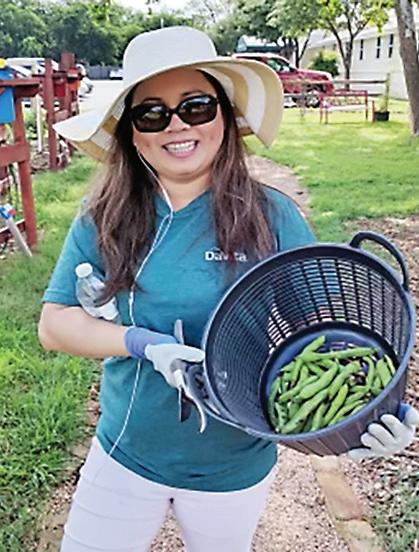
Did you know that Tarrant Area Food Bank (TAFB) has a Community Garden Program? Through this project, TAFB helps community members and organizations create thriving gardens by teaching effective tending techniques and supporting the growth of nutritious fruits and vegetables for distribution to those in need. To bridge learning and hands-on impact, volunteers are invited each week to help plant, harvest, pull weeds, and develop new gardening skills.

Benefits of Community Gardens
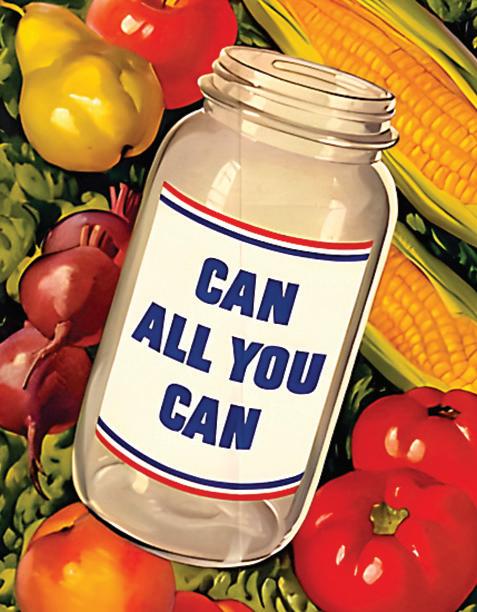
Community growing efforts have historically been tied to periods of recession and heightened national security, such as the “Victory Gardens” established during World War I. Read about that in the History of Community Gardens in the U.S. official government handout at TAFB.org.
Modern churches, neighborhoods, non-profit organizations, and schools choose to start these gardens for a variety of reasons. Along with increasing access to nutritious local food for residents, these projects provide educational opportunities to address prevalent health issues, including obesity, foster a sense of community, and benefit the surrounding environment by bringing beauty and purpose to underutilized areas.
Increasing Food Access
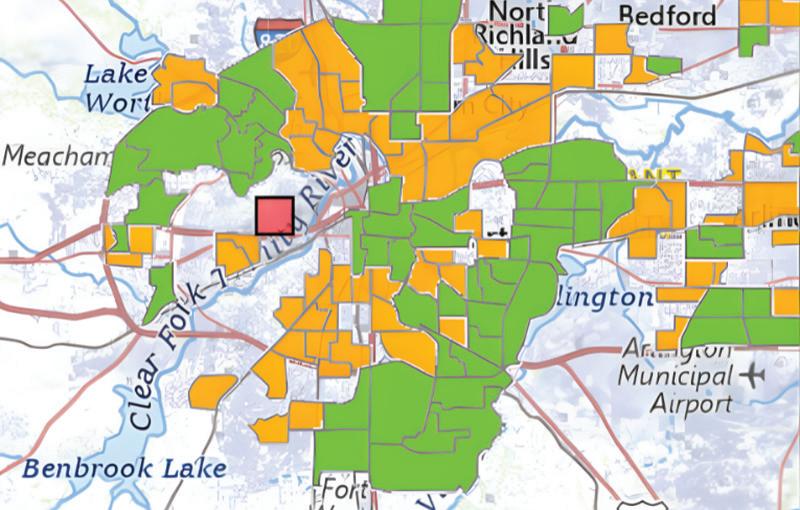
Gardens are frequently started in areas where fresh produce is not available within a 1-mile radius. The USDA has a Food Access Research Atlas (go to https://bit.ly/USDA_FoodAtlas) where you can enter your ZIP code to see the current food climate in your area. This helps you visualize the neighborhoods with a significant number of low-income residents who lack a supermarket nearby. Sadly, there are more food deserts in Tarrant County than you know.
For example, go to page 29 and check out the map we created by plugging in the zip code of the Fort Worth Weekly offices (the red square). Green indicates areas where a significant number of low-income residents are more than 1 mile (urban); orange indicates more than 1/2 mile in urban settings. In the outlying (or “rural”) areas, this can mean up to 10 miles rather than 1/2 to 1 mile. Imagine trekking that on foot or via public transit. You’re more likely to grab junk food at the convenience store nearest you.
Providing Nutritious Options
In addition to conserving resources by reducing the number of transportation steps from continued on page 29


Community growing efforts have historically been tied to periods of recession and heightened national security, such as the “Victory Gardens” established during World War I.
Start a community garden with help from an area nonprofit.
harvest to table, locally grown produce is more nutrient-dense than fresh produce shipped from far away. Community gardens provide consistent access to high-quality produce in areas with limited markets, and give neighbors affordable access to herbs for flavoring food, as well as a variety of produce tailored to the community’s specific preferences.
Addressing Health Issues
Studies have shown that community gardeners and their children eat healthier, more nutrient-rich diets than do non-gardening families. This tracks, as children tend to get excited about eating what they grow themselves, in our experience, and herbs provide a healthy alternative to sugar and salt.
Regarding mental health, time in nature reduces stress and improves resilience. Being in natural places fosters recovery from mental fatigue, improves outlook and life satisfaction, helps us cope with and recover from challenges, and boosts productivity.
Gardening also offers light-to-moderate physical activity and strength training and can be considered a moderate-to-heavy-intensity physical activity associated with significant beneficial changes in total cholesterol, HDL cholesterol, and systolic blood pressure.
Building a Sense of Community Gardens provide opportunities for neighbors with diverse abilities, socioeconomic statuses, education levels, ages, and cultural backgrounds to connect with one another. Gardeners can share resources and connect with one another, and host events and activities that appeal to a wide audience at low or no cost. This helps reduce isolation and increase engagement within the neighborhood.
Creating Beauty
Gardens can beautify vacant lots that can otherwise be magnets for litter and criminal activity. Community gardens are monitored and managed by gardeners, resulting in a cleaner space and a more active local community.
All of this often comes at little or no cost to the city. Gardens add beauty, increase people’s appreciation for nature, and provide safe outdoor spaces for positive activities and meetings. New businesses may choose to locate near a well-maintained community garden.
Helping the Environment
Food from the United States travels an average of 1,300 miles from farm to fork, changes hands half a dozen times, and consumes 10 calories of fossil-fuel energy to produce a single calorie of modern supermarket food. Meanwhile, growing food in community gardens reduces greenhouse gas emissions from food transportation and the amount of organic material going into landfills, reduces air pollution, and soil runoff. Plus, they attract pollinators, which are crucial to every garden ecosystem.
While bees are synonymous with flowers, they are also essential for most vegetable crops—such as squash, peppers, tomatoes, and beans. Without these pollinators, production of these crops would drop significantly, so supporting them in community gardens is vital.
Starting Your Own Community Garden
TAFB envisions everyone having access to food. As part of this mission, TAFB provides resources for those interested in creating a partner garden. Options range from backyard gardening to homesteading and urban farming, offering many models to suit various community needs.
For those interested in beginning their own community garden, step-by-step instructions are available at TAFB.org. A self-paced training program, with modules on history, building community, and garden planning, can guide you through each stage.
Once your garden is up and going, TAFB’s Community Garden Network will help you connect with other support organizations. You’ll have ongoing support, including gardening consultations, education and training, planning guides, networking opportunities, and access to annual impact reports and a volunteer system.
For more promotional information from the Tarrant Area Food Bank, visit TAFB.org.



MARCH 28
8 a.m. - 11 a.m. Citywide Cleanup
11 a.m. - 1 p.m. Earth Party
REGISTER TODAY!
The first 3,000 volunteers to register receive a free T-shirt.


Join the 41st Annual Cowtown Great American Cleanup and help beautify Fort Worth. Register as an individual or group, choose a cleanup hub or your own public area — supplies provided.
28 DE MARZO
¡REGÍSTRATE HOY!
Los primeros 3,000 voluntarios en registrarse recibirán una camiseta gratis.
Join us for food, music, activities, and more to celebrate your impact.
A creative showcase of designs made from recycled materials — prizes awarded.
Recycle old or used tires for free and help keep Fort Worth clean.
Únase a la 41.ª Limpieza Anual Cowtown
Great American Cleanup y ayude a embellecer Fort Worth. Regístrese como individuo o grupo, elija un punto de limpieza o un área pública de su preferencia — se proporcionarán materiales de limpieza.

Acompáñenos para disfrutar comida, música, actividades y más para celebrar su impacto.
Una muestra creativa de diseños elaborados con materiales reciclados — se otorgarán premios.
Recicle llantas sin costo y ayude a mantener Fort Worth limpio.

BOOKS
Slice of Life
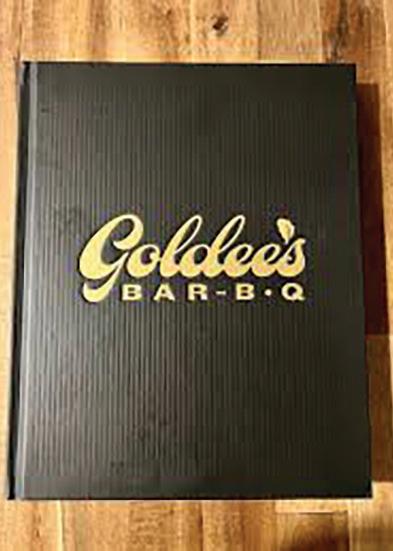
With their newish cookbook, the guys at award-winning Goldee’s BBQ reveal their secrets.
BY CODY NEATHERY
When it comes to barbecue, there is no reinventing the wheel, only improving upon recipes and methods created by the original drivers of the craft. Those who stretch the playing field with something different shouldn’t be treated as a risk to old-school ways, more as an ode to the origins. Sometimes, better can be a byproduct of different.
The boys of Goldee’s BBQ, a heralded joint in a low-profiled fire engine-red building in Kennedale, know this concept all too well. For these reasons, with the assistance of James Beard-winning author Lisa Fain, they decided to bestow their story upon fans, friends, and strangers with a self-titled cookbook published by UT Press.
Their journey isn’t one of special circumstances but more of a reflection of lifelong friendship molded by determination and sheer grit — all of which can be reinforced by going through hefty obstacles together and celebrating tiny victories along the way. That journey ultimately led Goldee’s to a No. 1 ranking by Texas Monthly in 2021.
“It was always something in the back of our minds, and when we met Lisa, it suddenly felt realistic,” said co-owner Lane Milne. “Our goal was to get it done as soon as we could but without compromising quality. Lisa spent
about a year with us working hands-on and learning the processes and then about another year writing the book.”
For grade-school friends Milne, Dylan Taylor, Jonny White, Jalen Heard, and Nupohn Inthanousy, their dream of rock ’n’ roll stardom took them to the most obvious city in our state — Austin. Then something happened one day when they were hungry. They discovered quality barbecue that coincided with the need for jobs. This epiphany launched a different dream: to become stars in the barbecue world.
The cookbook is playful in describing their story, from using hand-me-down grills to jury-rigging various cooking apparatuses as a base for learning in their shared Austin backyard during off time. This didn’t come without a few misfires from local pop-ups, but these setbacks provided more motivation than determent. Employment at the now-shuttered Freedmen’s BBQ under the guidance of Evan LeRoy; La BBQ, led by the late LeAnn Mueller and wife Ali Clem, who now carries on; and Micklethwait BBQ, created by Tom Micklethwait, helped sharpen the friends’ skills as each of these establishments brings a different personality to their barbecue approach.
Feeling that Austin was too cramped with barbecue options, the guys’ return home to North Texas became cemented when a former barbecue restaurant on Dick Price Road became available. The guys snatched it up and went to work, outfitting it for their needs. Named in homage to Taylor’s old truck, Goldee’s opened February 2020 with a line to show for the anticipation. All was well in the world — until the world shut down due to the pandemic. Curbside service became the business practice for a year before the dining room reopened.
Although the Goldee’s guys spent years defining their craft, which is a constantly shifting scale of tinkering, they have managed to break down their education into this cookbook as a masterclass in what not to do, giving the novice reader a feasible chance to produce stellar smoked meats. The bottom line they emphasize here is to just have fun while learning.
Taylor departed early on to, uh, greener pastures in Colorado, and White opened Ribbee’s before selling his shares to apprentice and former Sabar BBQ owner Zain Shafi (we
are glad he’s part of the fold), while Milne, Heard, and Inthanousy still hold it all down. And if you’ve spent time with them, their voices shine through via Fain’s writing.
Recurring themes that keep the reader grounded are self-assurance and patience. Both are necessary when there are hits and misses and perfection won’t be obtained during the first cook or 10th (their term for the entire cooking process, not an individual chef).
Another theme is that there are no secrets. The guys want to maintain transparency with their recipes and processes because, again, processes can and will shift depending on who the pitmaster is and conditions such as wood, fire, and weather, so being flexible is key.
The reader will find the hows and whys for each stage of the process — starting with the book’s 10 steps for cooking barbecue. Tools, meat selection, and seasoning are found in the beginning, and preparation follows, covering the more hands-on elements like learning your smoker, along with cook time and temperature range.
When asked his opinion about the single most important item of the cook, without hesitation Milne replied, “In a restaurant setting, it’s hard to pick just one part. We and the crew try to do everything to the best of our ability.”
Heard piggybacked on Milne’s answer: “If anything, in Texas, brisket is judged the hardest. It’s also the most time-consuming and labor-intensive item on the menu. Every part — from trimming, pit placement, temperature control, pulling, resting, slicing — is equally important to getting the final product where we shoot for.”
They speak on their tips for what is best, which often dispute standing myths. For instance, spritzing meats with apple-cider vinegar has long been a standard for maintaining moisture, but the Goldee’s guys are satisfied with water. And it’s free! Another is taking a knife to remove the thin membrane attached to the back of ribs, which the guys opt to leave intact due to the membrane’s assistance in keeping the rack’s integrity during smoking.
One trick taught is the biscuit test for gauging your smoker’s hot spots. This requires layering a pan with raw dough, then placing it inside your smoker. Which biscuits become burned will show you where your smoker is burning hottest.
Between chapters, each pitmaster is afforded a profile. Lane is described as the mad scientist when it comes to flavor; Jonny as the engineer-minded one who relies on roll-up-your-sleeves ingenuity; Jalen as the steady and quiet presence, adding soul to the team; and Nupohn as the brains behind their Laotian influence, which is a personal favorite of mine.
“Barbecue, as a cuisine, is an awesome way to showcase personality and uniqueness in food,” Milne said. “We shoot for a tray of meat and sides that complement each other and are balanced as a whole versus just a single dish, which makes it fun to experiment and constantly adapt.”
The Goldee’s crew’s recipes are extensive, and it’s imperative for the reader to make no attempt in swapping steps for technique. The crawl-before-you-walk method is the way. They’re even generous with all their scene-stealing sides and dessert recipes. Though they are listed to be made in large quantities, simple math can assist the reader in dialing it down. Even better, each recipe offers a “short version,” which yields smaller portions. As the guys often say, they want you to be the best and spread the gospel of Goldee’s. They didn’t reinvent the barbecue wheel, but the Goldee’s cookbook now puts you in the driver’s seat. l

BULLETIN BOARD
ADVERTISE HERE!
Email Stacey@fwweekly.com today.
Are You Road-Trip Ready? CALL COWTOWN ROVER!
With our handy pick-up and drop-off services, having your car checked out could not be easier. www.CowtownRover.com
3958 Vickery | 817.731.3223
BCI BATH SHOWER
The bathroom of your dreams in as little as 1 day. Limited Time Offer: $1000 off or No Payments/ No Interest for 18 months for customers who qualify. Many options available. Quality materials, professional installation. Senior and military discounts available. Call 1-855-659-5784 today! (MB)
HISTORIC RIDGLEA THEATER
THE RIDGLEA is three great venues within one historic Fort Worth landmark. RIDGLEA THEATER has been restored to its authentic allure, recovering unique Spanish-Mediterranean elements. It is ideal for large audiences and special events. RIDGLEA ROOM and RIDGLEA LOUNGE have been making some of their own history, as connected adjuncts to RIDGLEA THEATER, or hosting their own smaller shows and gatherings. More at theRidglea.com.
HOST A PET FOOD DRIVE!
Thinking of hosting a Pet Food Drive? That’s great! Not sure how to begin? No problem. Don’t Forget to Feed Me will help you get started. Visit the website and look for “Host a Pet Food Drive” in the “Support DF2FM” dropdown: DontForgetToFeedMe.org
I BUY OLDER CARS DEAN 817-614-0614
JACUZZI BATH REMODEL
We can install a new, custom bath or shower in as little as one day. For a limited time, waiving ALL installation costs! (Additional terms apply. Subject to change and vary by dealer. Offer ends 12/27/26.) Call 1-877-593-0683. (MB)

NEED A FRIEND?
Ronnie D. Long Bail Bonds
Immediate Jail Release 24 Hour Service. City, County, State and Federal Bonds. Located Minutes from Courts. 6004 Airport Freeway. 817-834-9894
RonnieDLongBailBonds.
OLSHAN Foundation Solutions
Your trusted foundation repair experts since 1933. Foundation repair. Offering crawl space recovery, basement waterproofing. water management, and more. Limited time special: up to $250 off foundation repair. Call Olshan for a FREE evaluation: 1-844-991-1445. (MB)



Spring Kickoff
Sat March 28 Noon -3p with Penny and the Flamethrowers at Fort Worth Harley Davidson Penny and The Flamethrowers are a rocket-fueled rockabilly freight train with a little grittier guitar sound. It’s 50s and 60s style versions of hit songs -- hearkening back to a time when rock and roll was based on three chords and rebellion. The event will have food, beer and significant savings on helmets, hand controls and service.
Music Starts at noon
3025 W. Loop 820, FW TX. 76116
LEGAL NOTICE
Maria Munoz v Kapil Davis
In the Superior Court of California, County of Ventura in the matter of Maria Munoz, petitioner, and Kapil Davis, respondent. Case number: D419311
To Kapil Davis, Respondent, you are hereby notified that a divorce action (Petition for Dissolution of marriage) has been filed against you. You have 30 calendar days after the date this publication is complete to file a response with the court and have a copy served on the petitioner. If you do not respond by the deadline, the court may proceed in your absence and grant a default judgement for divorce, potentially deciding issues such as property division and other request without your input.
For legal advice, you should call an attorney immediately.
The original documents are on file with the Court Clerk at the address below: 800 S. Victoria Avenue, Ventura, CA 93009 The name, address, and telephone number of Petitioner's Attorney: L. Paul Zahn, Esq. 877 S. Victoria Ave., Ste 216 Ventura, CA 93003 3/3/2026