
Vol. 10, Issue 2 Spring/Summer 2026
Vol. 10, Issue 2 Spring/Summer 2026

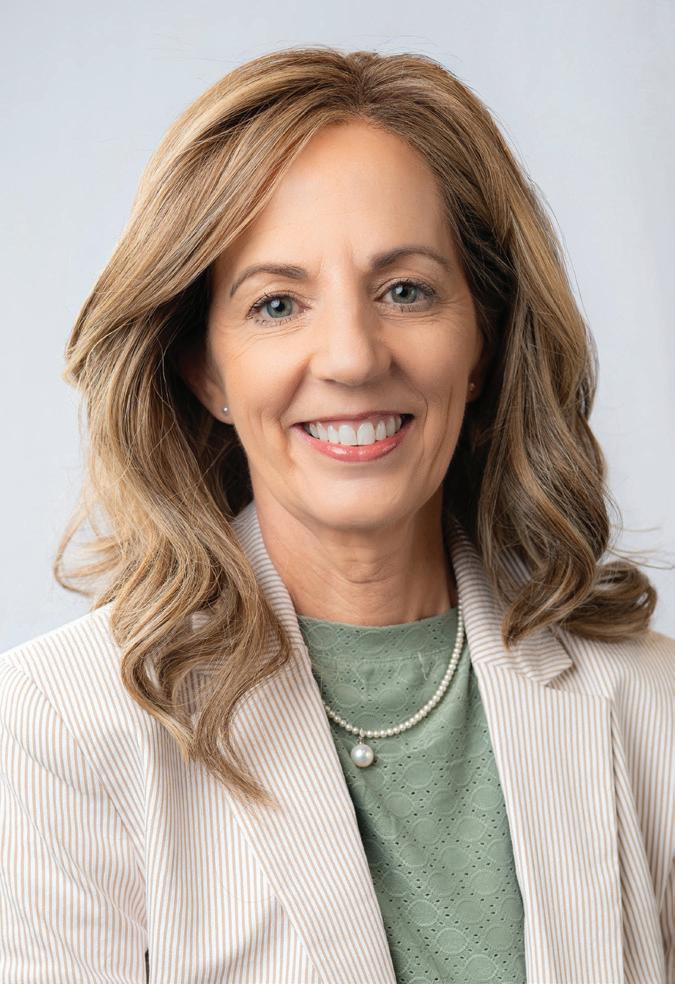
My name is Taylor Hill. I study interior design at Fort Hays State University, and I am a student-athlete on the FHSU soccer team. Originally from Castle Rock, Colorado, I have gained early experience in the field through an internship with Sami Broerman Interiors. Through both my academic work and hands-on experience, I have developed a growing understanding of how thoughtful design can impact everyday life.
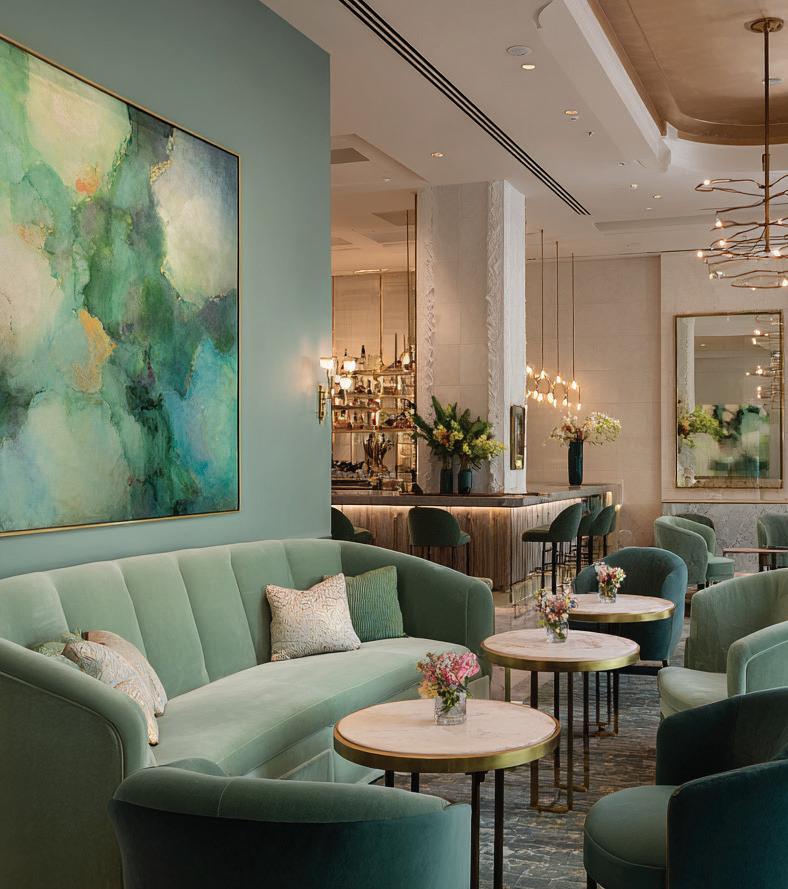
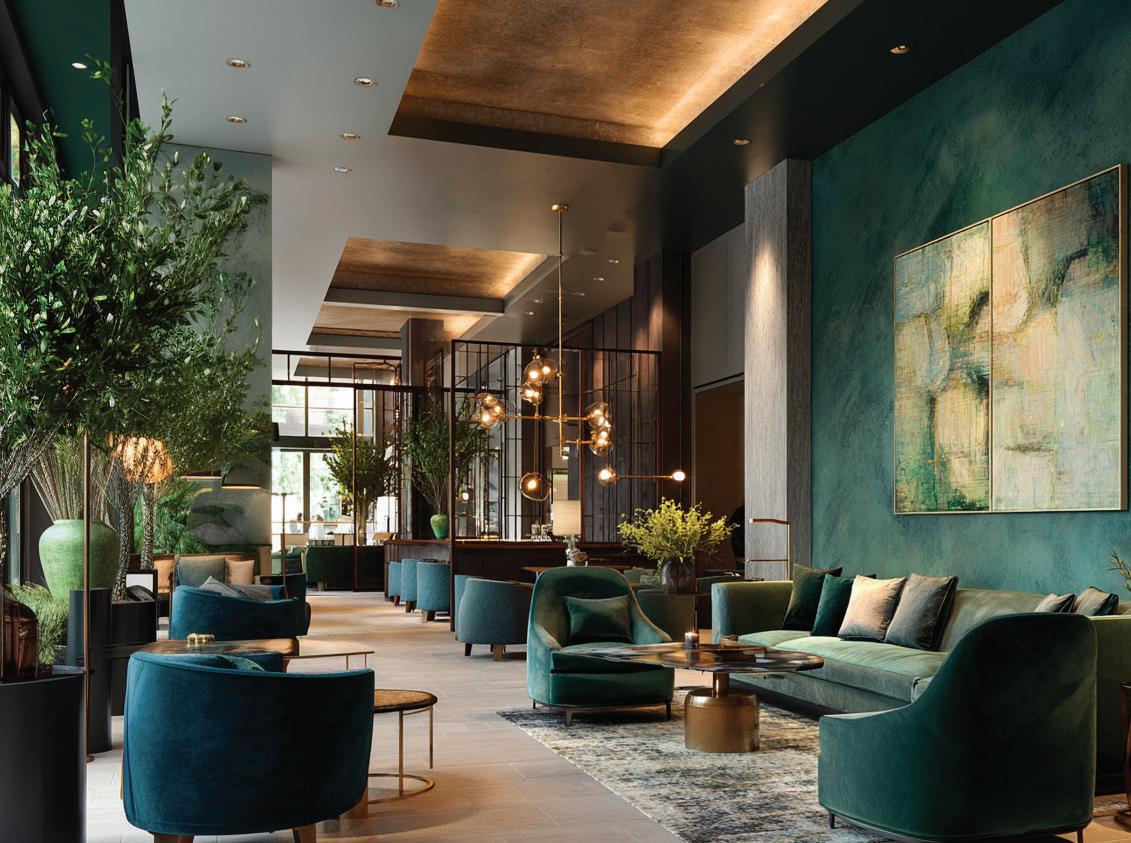
The Material Bank Student Design Competition challenges students to reimagine commercial spaces through the lens of iconic art. We build boards on Material Bank and then use AI to render images of the spaces we imagined, with inspiration from a piece of art.

My project reimagines a boutique hotel lobby inspired by Gustav Klimt’s Portrait of a Lady. I used the painting’s rich teals, golds, and soft pastels to shape three connected spaces: a moody reception desk with LED accents, a bar lounge with deep greens and warm lighting, and a brighter dining area reflecting the artwork’s lighter tones. Natural light, layered textures, and contemporary forms unify the overall design. Using AI presented challenges with unwanted results, but refining each image allowed me to achieve the calm, luxurious atmosphere I envisioned.
My style leans toward clean, structured designs with subtle complexity, where each element has a clear role within the space. Ultimately, my goal is to create environments that elevate how people live and interact within a space, while still remaining practical, realistic, and intentional. The Material Bank Student Design Competition was a great way for me to showcase my style, drawing Portrait of a Lady.
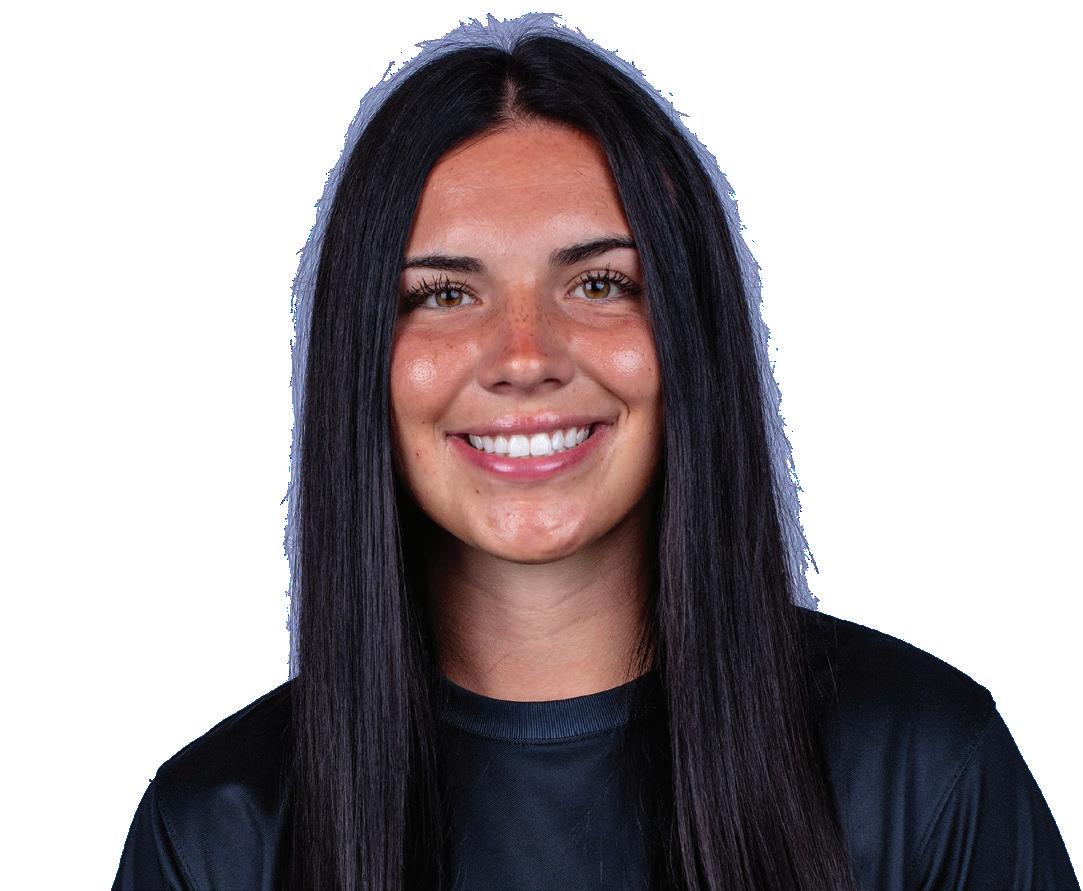
“Through both my academic work and hands-on experience, I have developed a growing understanding of how thoughtful design can impact everyday life.”

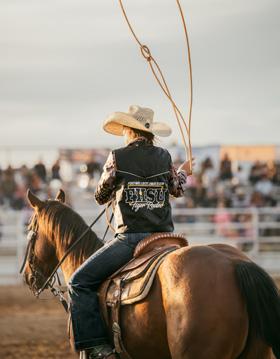
ON THE COVER:
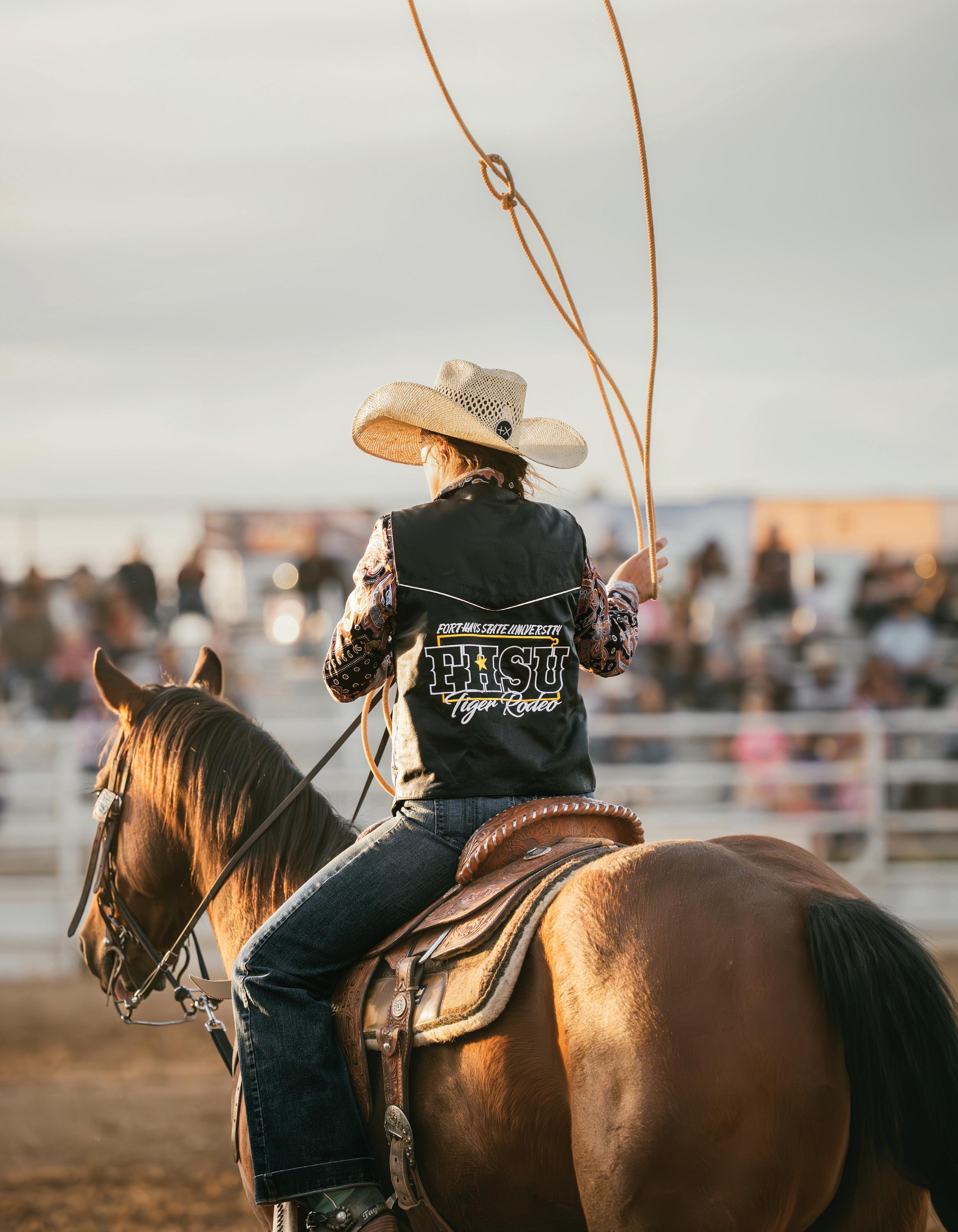
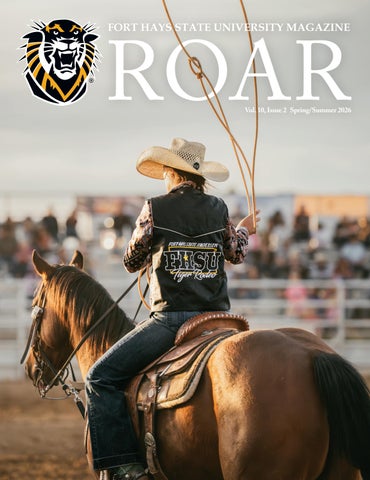
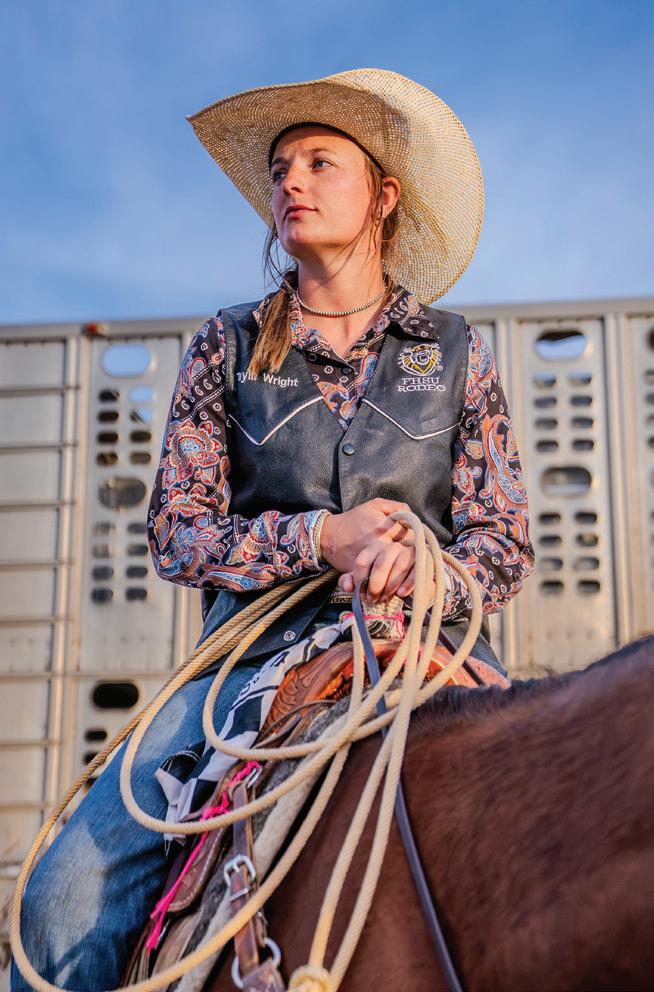
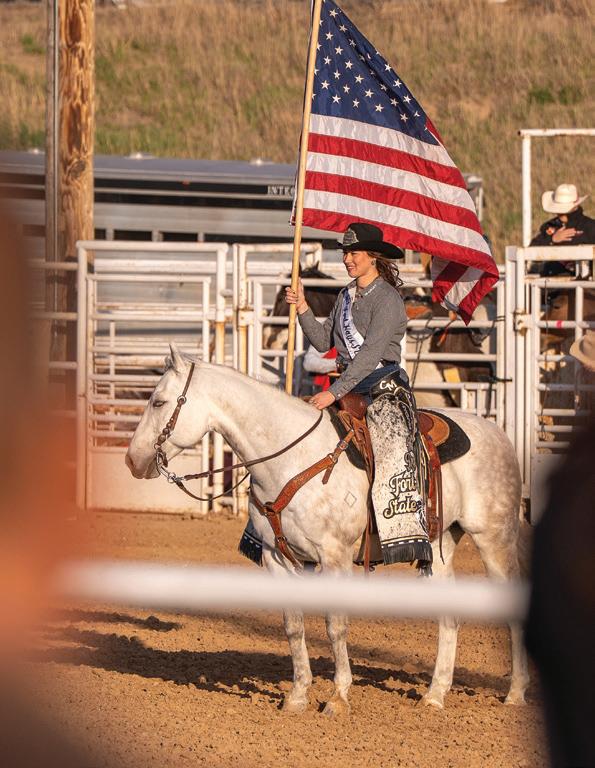
Tayln Wright of Canadian, Texas, is an ag major who exemplifies the grit and perseverance that define FHSU Rodeo. Competing in breakaway, goat tying, team roping, and barrel racing, she quickly fell in love with the program, saying “In rodeo, respect isn’t given – it’s earned one ride at a time.”
ROAR Magazine is published through a partnership between Fort Hays State University’s Office of University Marketing and Strategic Communications and the Fort Hays State University Foundation and Alumni Office.
SEND ADDRESS CHANGES TO: FHSU Alumni Office, PO Box 1060, Hays, KS 67601
VISIT:
foundation.fhsu.edu/donate or scan the QR code to support students, a campus project, or area of Fort Hays State University that’s important to you. Every gift matters!

Hayley
Boyce
Dawne
Angie Stieben
Stocks Creative
Boyce Durr
Cyndi Landis
Dawne Leiker
Ryan Prickett
Stacey Smith
CONTRIBUTORS
Alicia Brungardt
Scott Gross
Avery Jones
Andrew McGinnis
Dawson Stegman
Tebo Library
Tiger Athletics
Tiger Media Network (TMN)
Zach Woolf
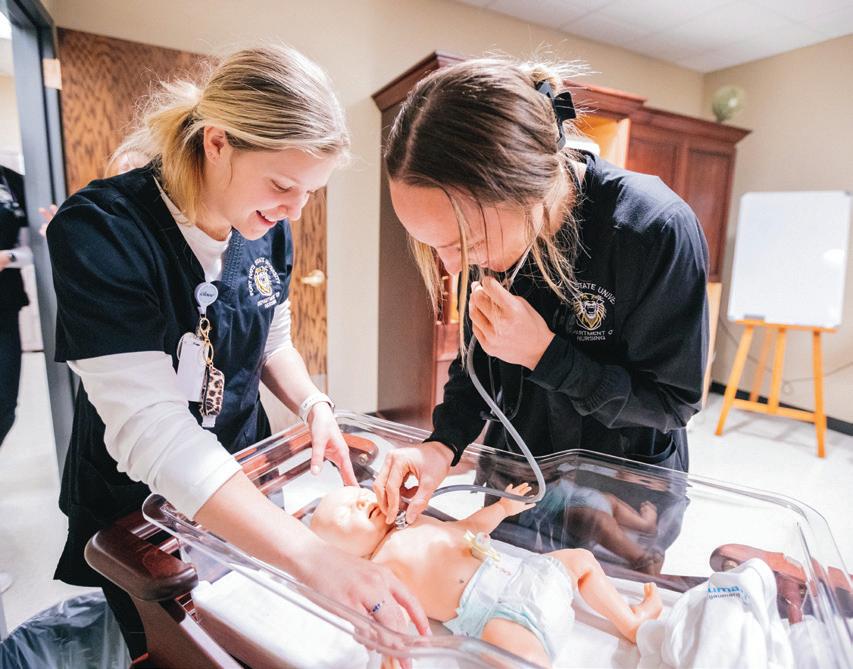
Fort Hays State University launched its new hybrid pre-licensure Bachelor of Science in Nursing (BSN) program last fall with an inaugural cohort of 10 students. The program blends online, theory-based coursework with synchronous instruction
that allows real-time interaction, while lab and clinical experiences are grouped to reduce travel to Hays.
Designed for flexibility, the program enables students to balance coursework with work and family responsibilities.
Participants include working professionals, parents, and nontraditional students who benefit from fewer in-person requirements and more manageable schedules.
Students spent three to four days on campus and two to three days in a senior living community, with the remainder of coursework completed online. The format requires strong time management and self-discipline but offers greater accessibility than traditional programs.
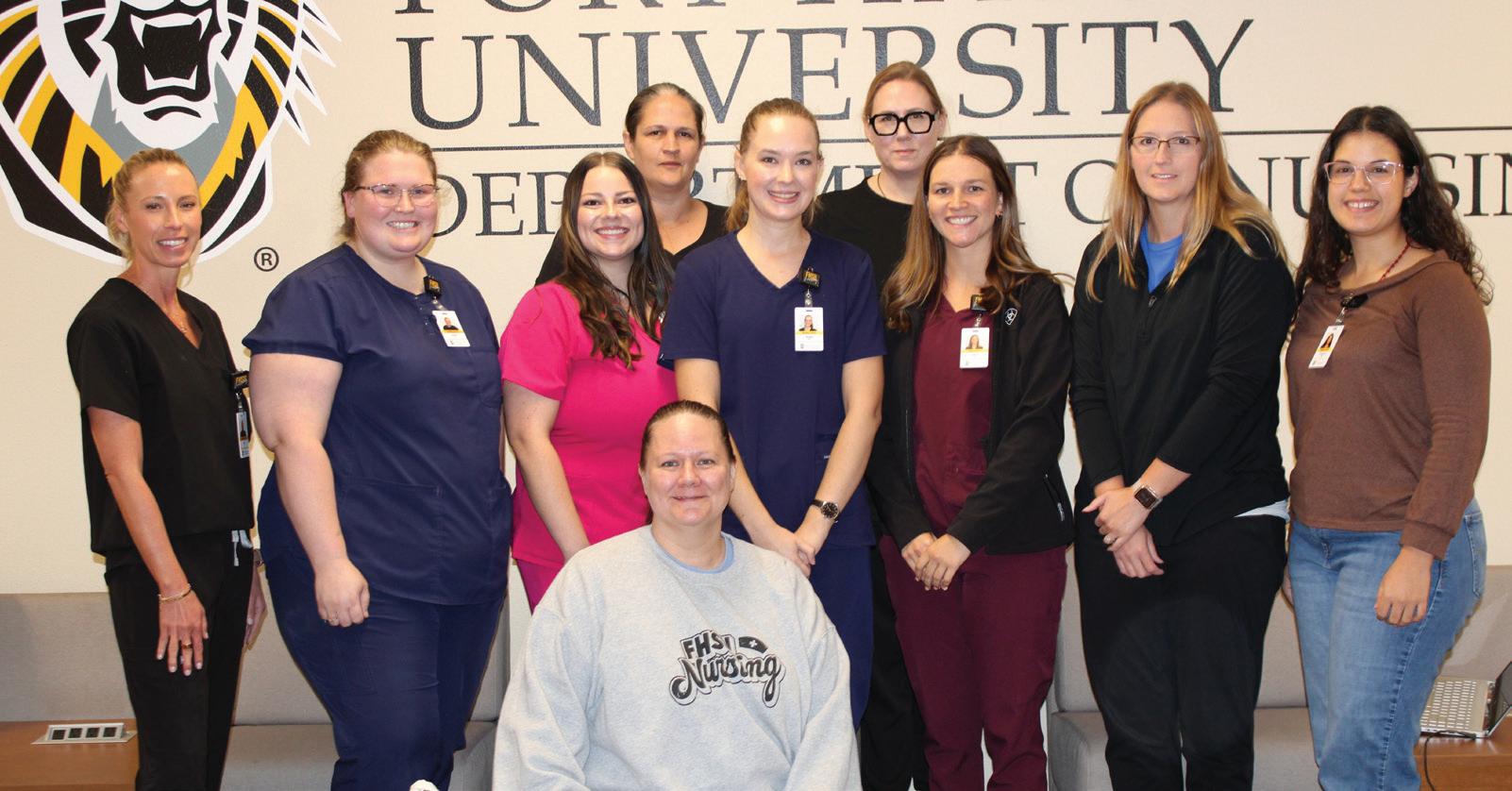
The hybrid BSN admits students once per year for a fall start with applications opening annually on Nov. 1. For additional information or to apply, contact Tanya Smith, Coordinator of the BSN Program at Fort Hays State University, at tlsmith17@fhsu.edu.
Dr. Tisa Mason was selected as a recipient of the NASPA Annual President’s Award, one of the highest honors in student affairs leadership, recognizing her commitment to student success, leadership, and service.
Mason was honored at the 2026 NASPA Annual Conference in Kansas City in March. A first-generation college student, she credited mentors and student affairs professionals for shaping her career and emphasized the importance of integrity, compassion, and
collaboration in higher education.
Throughout her career, Mason has earned national recognition for her advocacy and leadership. As FHSU president, she champions access, affordability, workforce preparation, and community engagement while strengthening partnerships across Kansas and beyond.
NASPA, which represents more than 15,000 student affairs professionals worldwide, presents the award to individuals who demonstrate exceptional leadership and dedication to the field.
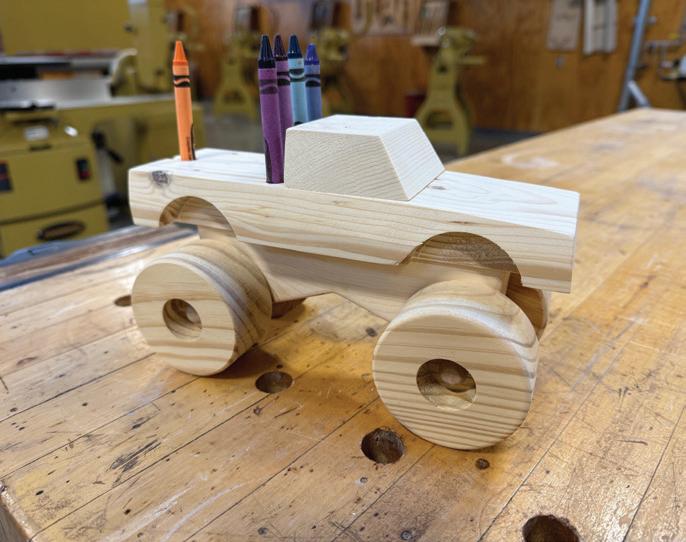
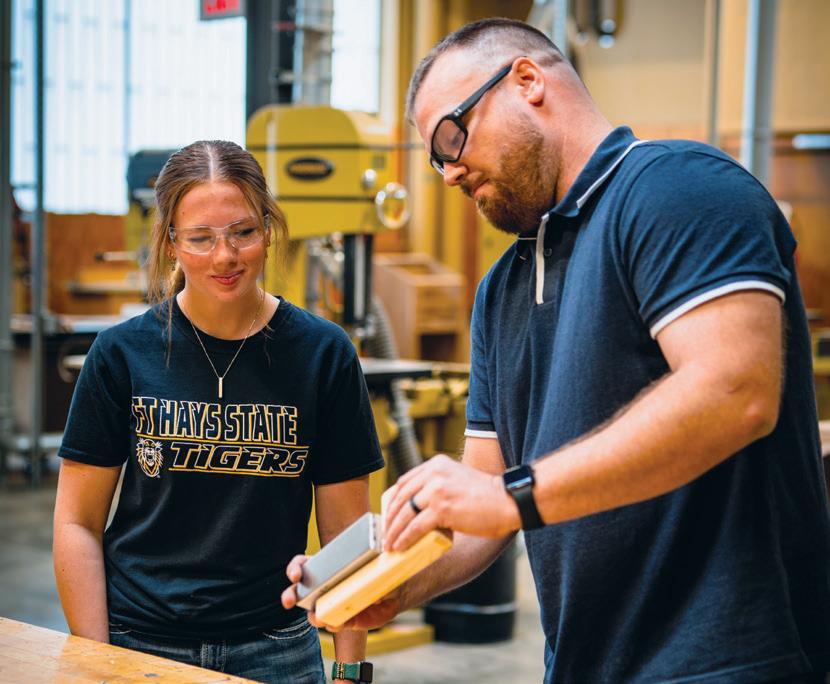
The 36th Annual Fred Ruda’s Teaming Up for Tots event was held in December at the Center for Applied Technology at Fort Hays State University. Community and campus volunteers built more than 180 wooden monster truck toys that were distributed to children in need during the holiday season. The annual toy-building event is meaningful to those who knew the late Fred Ruda and is a touching way to give back to local kids.
Students in the Department of Applied Technology design a new wooden toy each year, along with all the processes, jigs, and fixtures needed to produce them on a mass scale. Volunteers work at various stations, from operating machinery and moving pieces along the assembly line to gluing and assembling parts, to sanding and applying an oil finish to the toys.
“This is one of the best opportunities for our students to give back to the community,” said Zach Pixler, assistant professor of applied technology. “Not only do they learn more about the manufacturing process, but they flex their creative muscles, practice critical thinking skills, and see the positive impact their hard work has on those around them.”
Fort Hays State University hosted an AI Hackathon during the spring semester, inviting students to be innovative in creating solutions to real-world issues.
Designed as a high-energy, hands-on experience, the event encouraged students from various disciplines to collaborate. Participants used artificial intelligence to tackle challenges in sustainability, healthcare, and education.
The hackathon emphasized rapid innovation and teamwork, with students developing and presenting ideas in a fast-paced environment that mirrored real-world problem-solving and workplace dynamics. A key theme,
“No code? No problem,” highlighted the event’s accessibility to students of all skill levels, encouraging contributions through coding, design, research, and pitching ideas.
“Every community is going to face a choice about whether they shape AI or just have it happen to them,” said Hays Mayor Mason Ruder.
FHSU Director of Innovative Learning Strategies, Dr. Magdalene Moy, said the event helped connect classroom learning to workforce needs.
Top teams received cash prizes, and the event supported FHSU’s commitment to innovation and applied learning in a technology-driven workforce.
A group of Fort Hays State University STEM Education students traveled to Chicago this spring for an immersive learning experience designed to enhance their future teaching careers through hands-on exploration, professional development, and real-world connections.
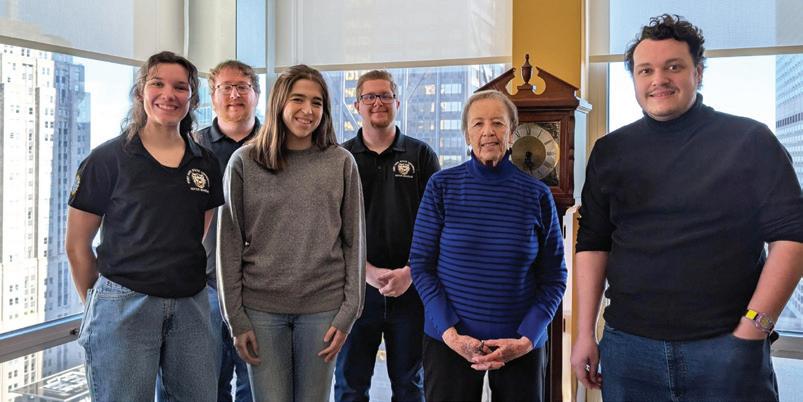
For many students, the trip began with a new experience of traveling by train. From there, a highlight was attending a teacher workshop at the Griffin Museum of Science and Industry, where students explored inquiry-based approaches to teaching STEM and learned strategies for engaging K-12 learners through hands-on discovery.
The group was able to visit Indiana Dunes National Park, observing natural forces like wind and erosion while reflecting on the value of place-based
learning. Another meaningful experience was meeting FHSU donor Gail Kellogg, giving students the chance to discuss their goals and express appreciation for her support and generosity.
“More than anything, the trip was about growth,” said Dr. Janet Stramel, FHSU professor of teacher education.
Throughout the experience, students built confidence, broadened perspectives, and gained inspiration for creating meaningful, hands-on learning opportunities for their future classrooms.
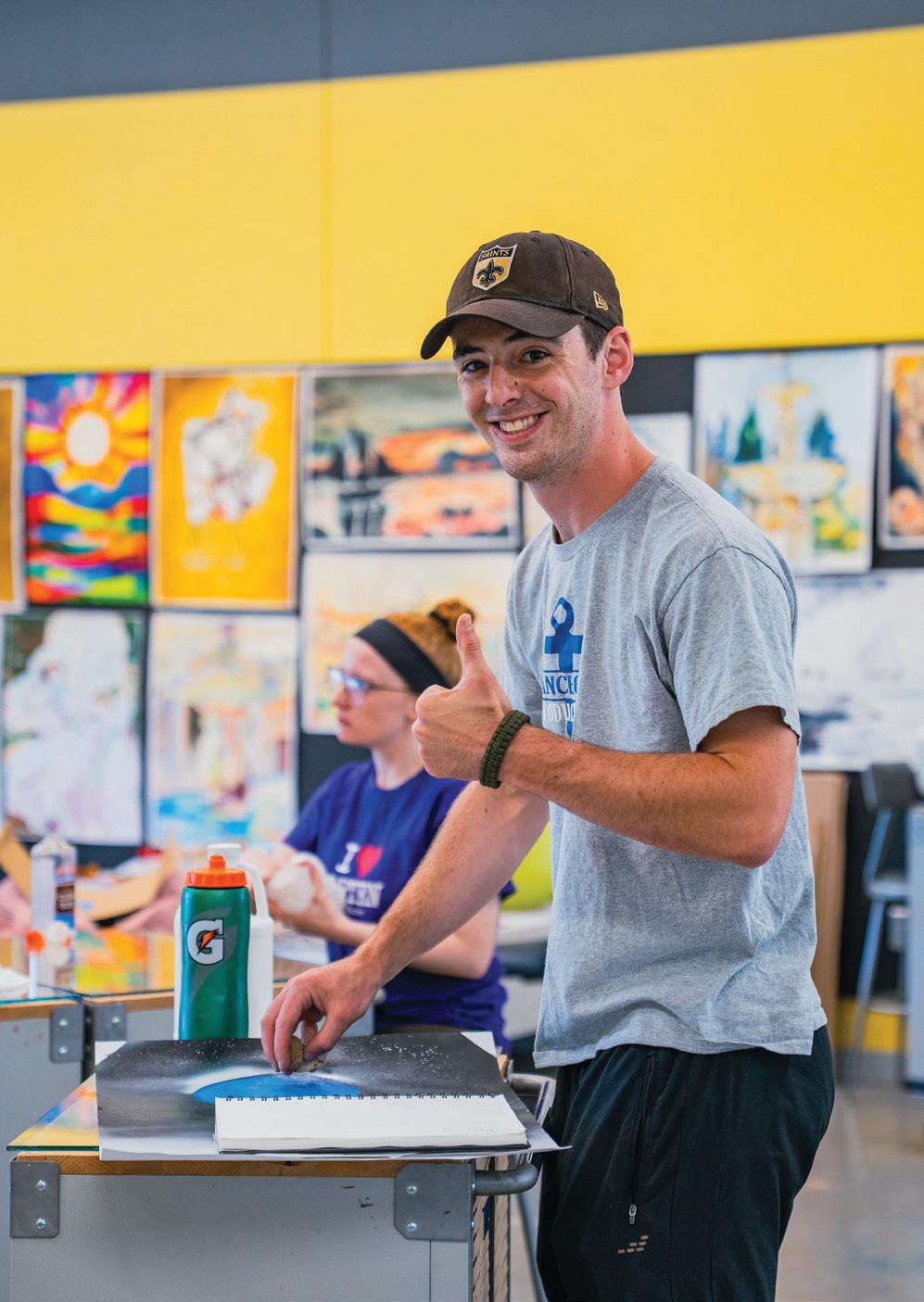
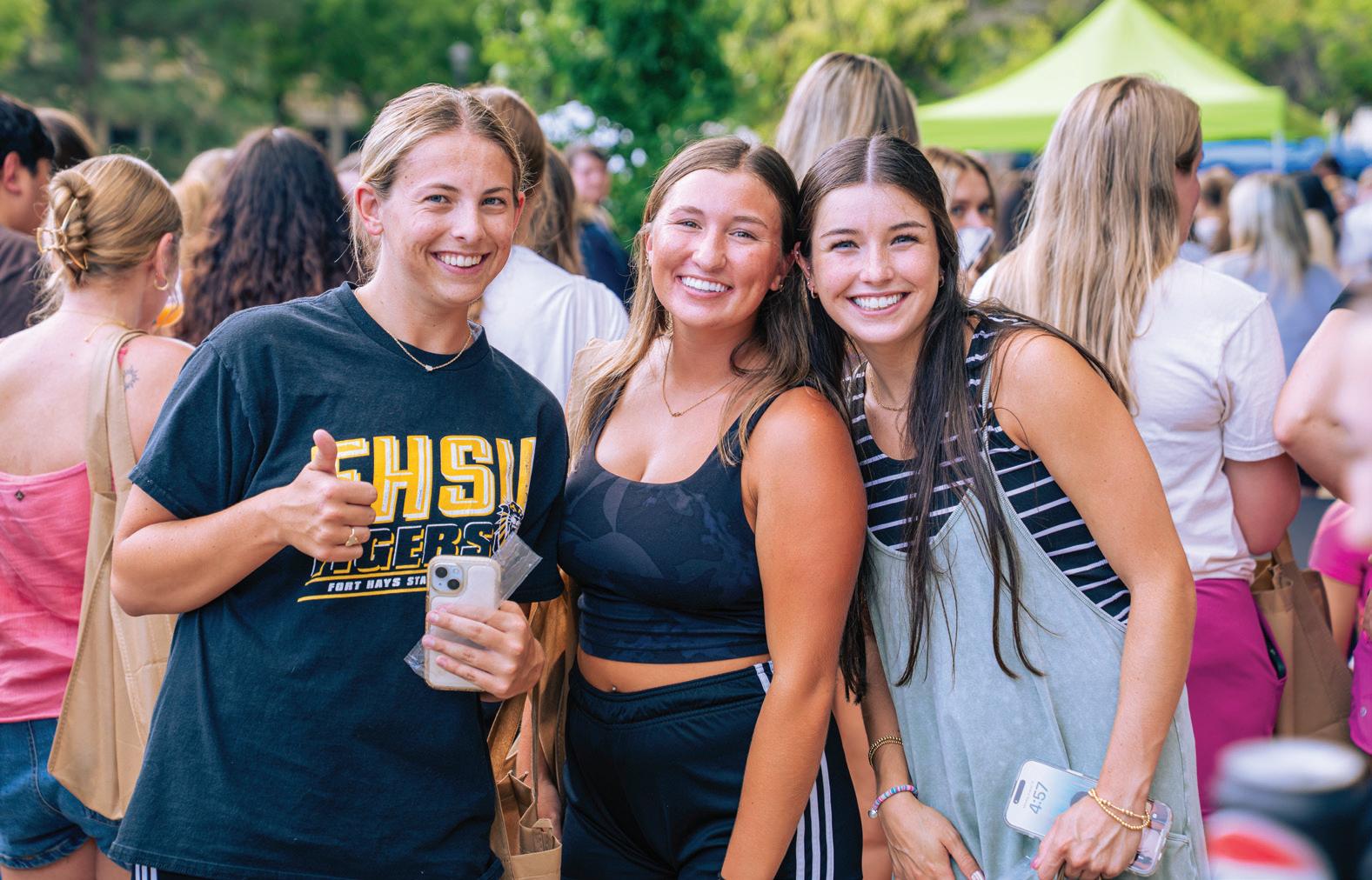
FHSU has students from every county in Kansas, all 50 states, 49 countries, and every branch of the military.
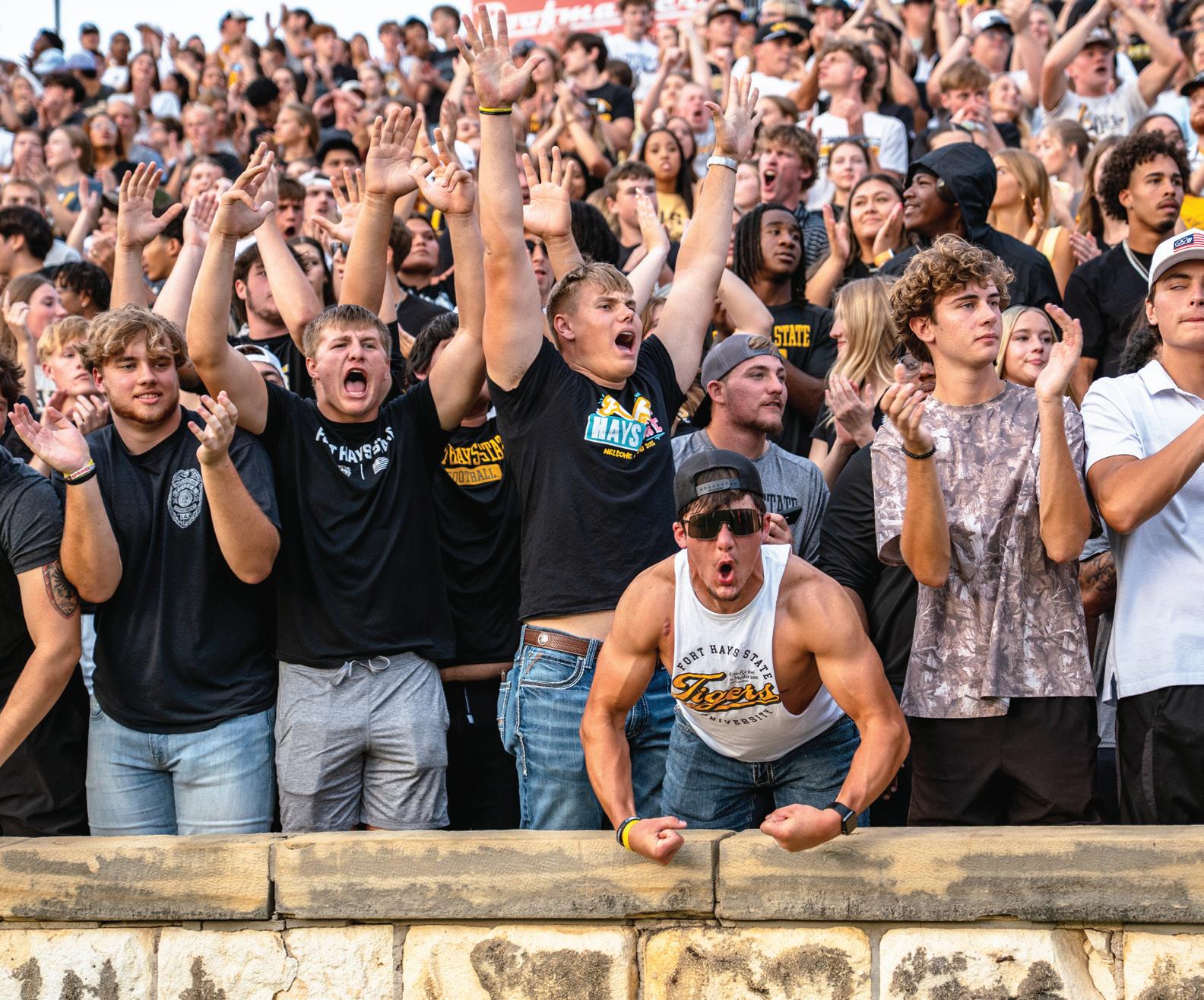
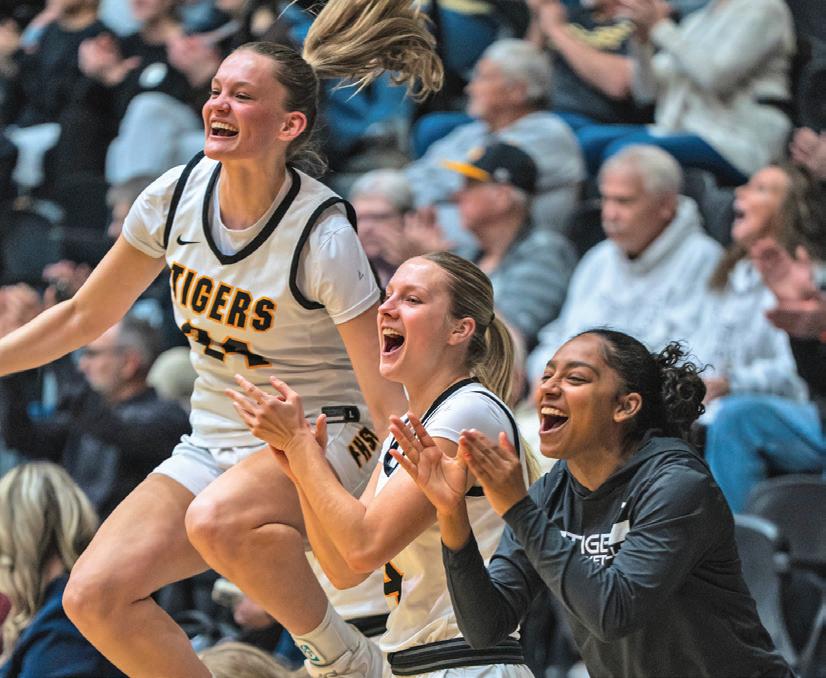
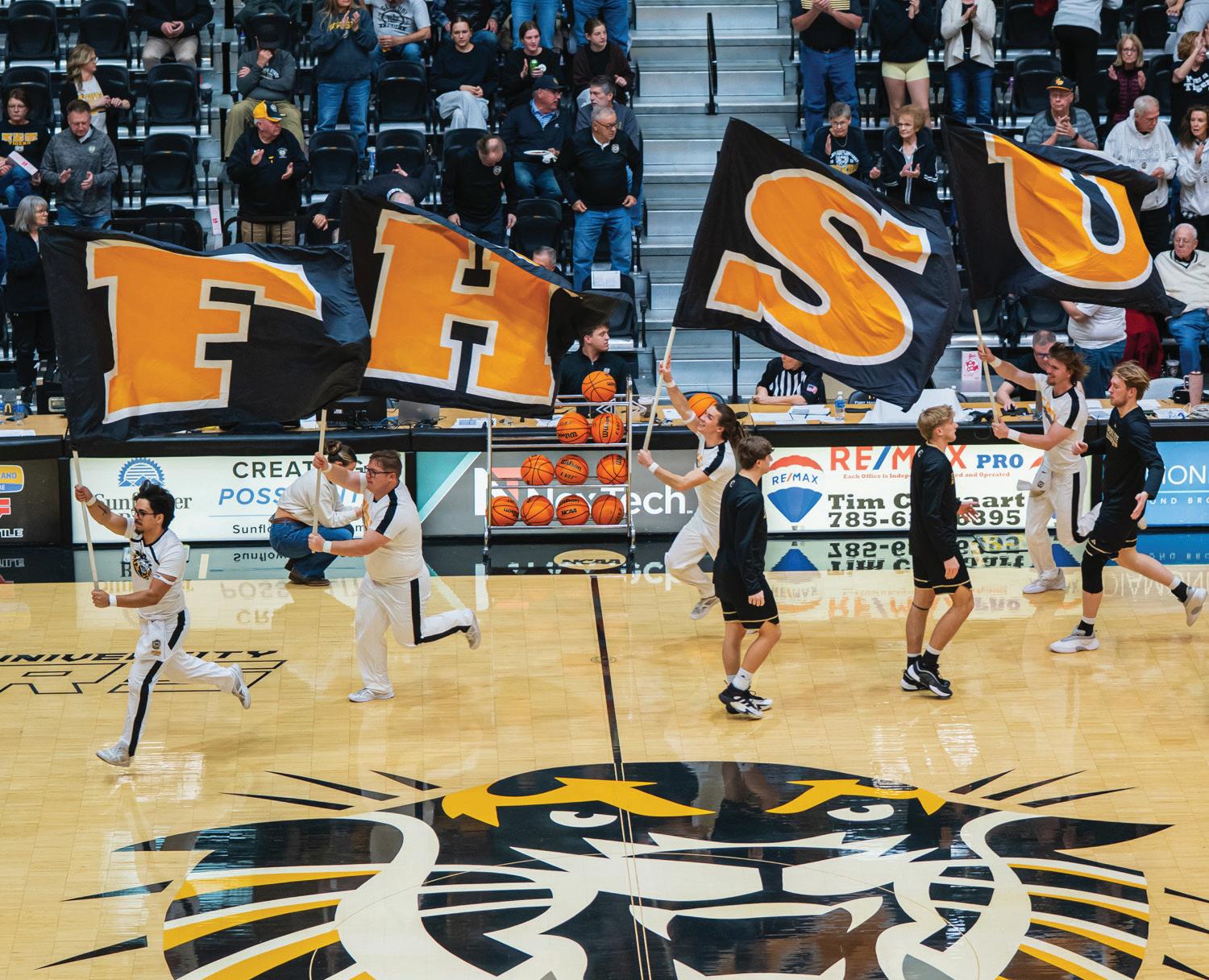
FHSU has 550+ student-athletes across all men’s and women’s sports programs.
FHSU continues to be the largest comprehensive regional public university in Kansas while offering the lowest tuition rates in the Kansas Board of Regents system.

FHSU FACTS:
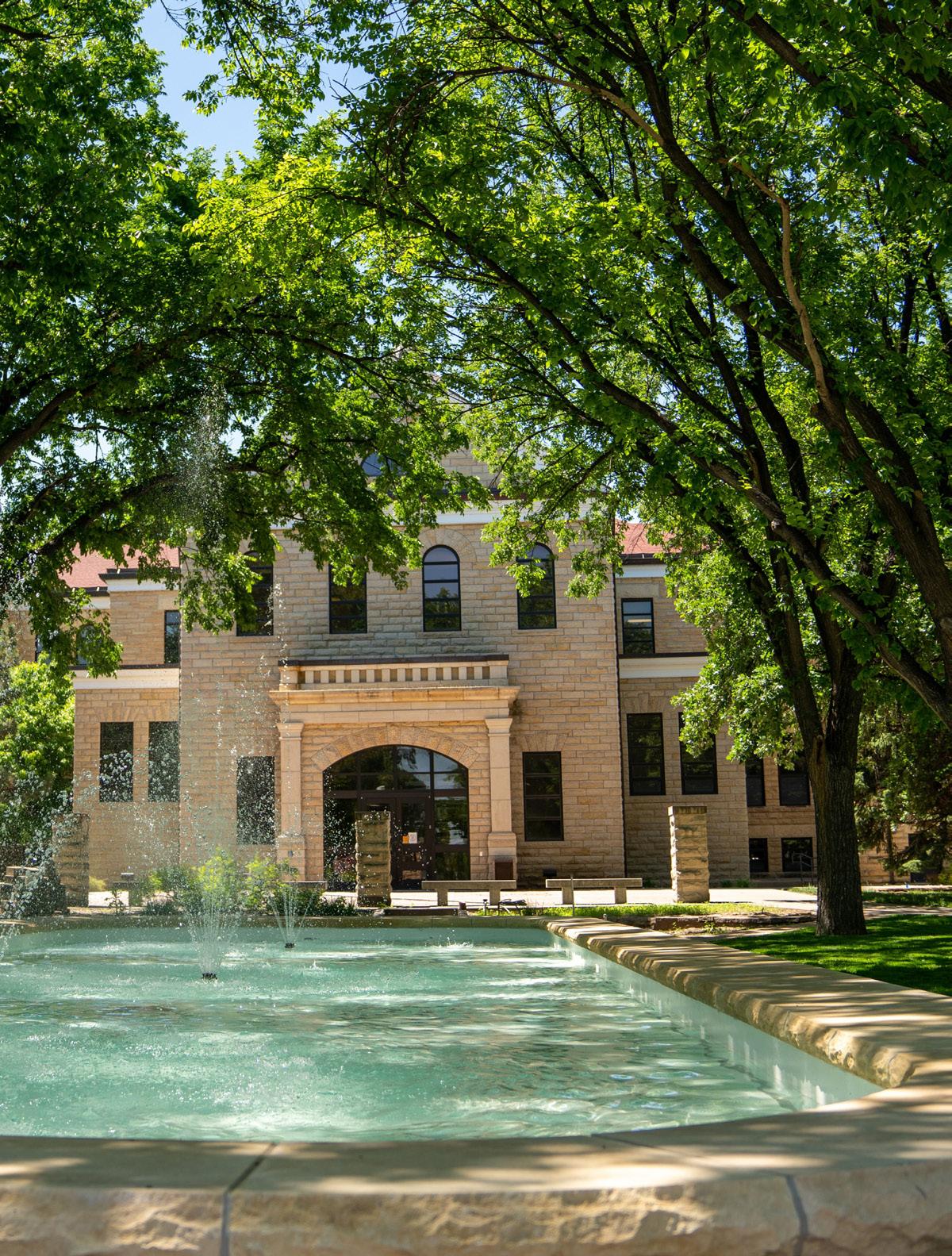
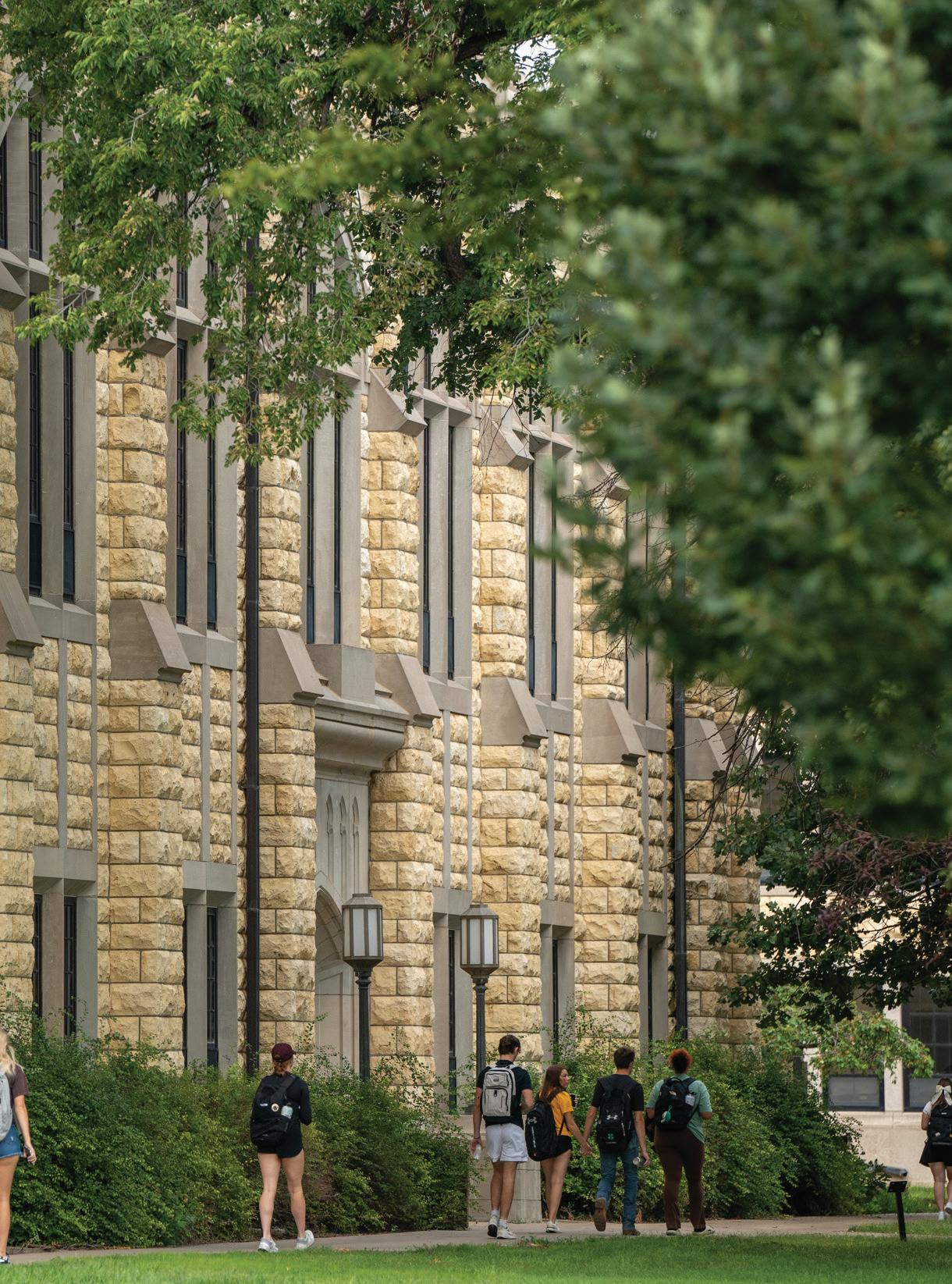
• 200-acre campus with 3,825 additional acres that make up the University Farm
• 17 academic and administrative buildings, as well as 9 residential life buildings
• 100+ student organizations
• 3,800 on-campus students, nearly 6,000 online students and over 3,000 enrolled through international partnerships
FHSU offers a 17:1 student-faculty ratio and a 98% employment or graduate school placement rate with more than 200 degree programs, 30 graduate degree programs, and over 50 online programs.
UNMATCHED AFFORDABILITY: See how FHSU’s resident, full-time undergraduate tuition and fees compared to others for the 2025 academic year.
KANSAS BOARD OF REGENTS UNIVERSITIES
FORT HAYS STATE UNIVERSITY
NATIONAL AVERAGE $11,371 $9,097 $6,112
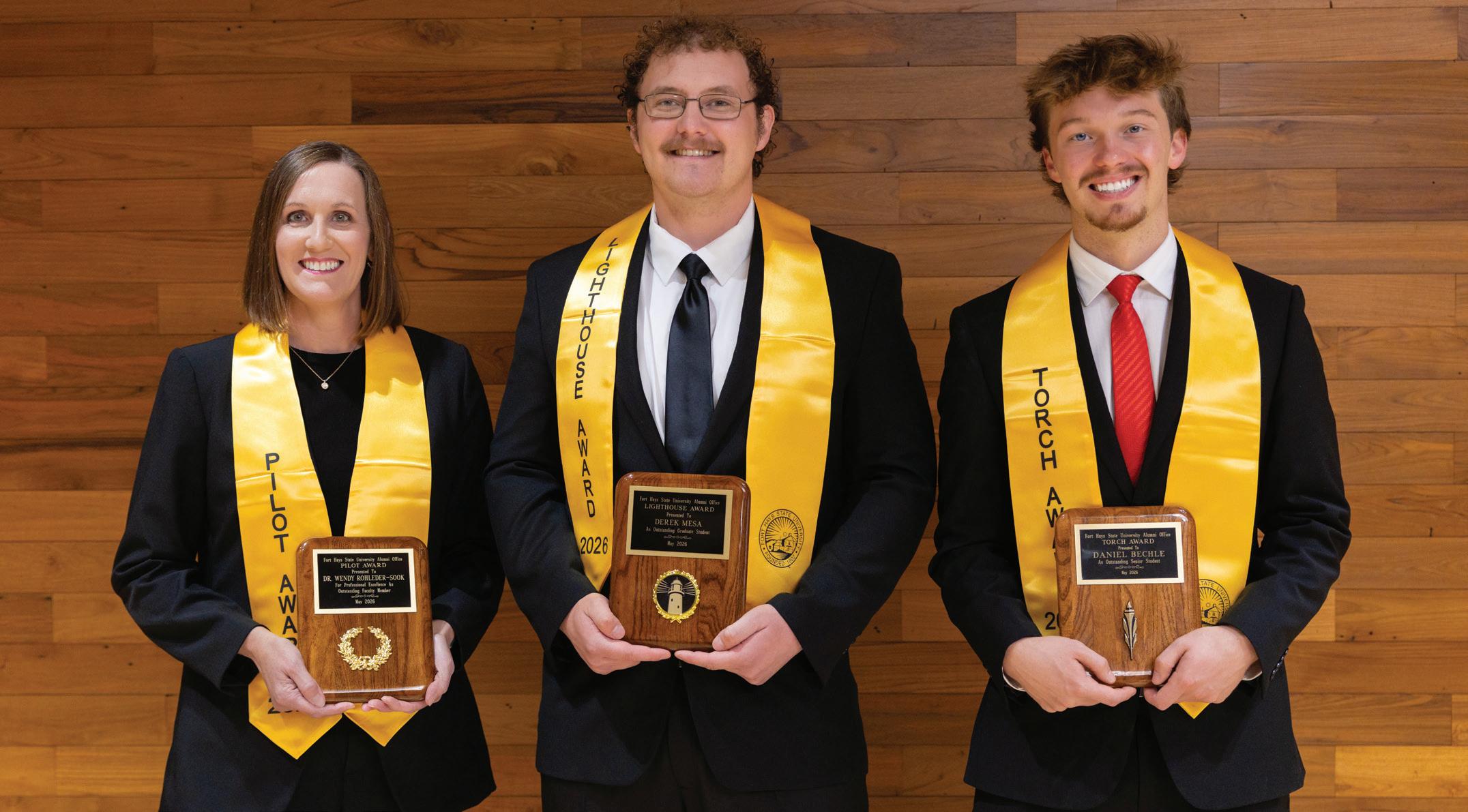
DR. WENDY ROHLEDER-SOOK was honored as this year’s Pilot Award recipient as an exemplary faculty member. Recognized for her direct, effective, and student-centered approach to teaching, Wendy creates a respectful, inclusive classroom that values diverse perspectives and backgrounds. “My goal is for students to become engaged learners who see the relevance of course material to their lives, communities, and future careers,” she says.
Wendy actively refines her teaching by reviewing student evaluations, collaborating with peers, and attending pedagogical training workshops. She also volunteers as co-chair of Women Who Lead, serves on the Hadley Foundation board, and has been president of the Hays High School Academic Booster Club.
Dr. J. David Macey, Dean of FHSU’s College of Arts, Humanities, and Social Sciences, commented on her dedication, stating, “Dr. Rohleder-Sook is one of the most impressive faculty members whom I have had the opportunity to review. She is an innovative teacher who meets the evolving needs of students.”
DEREK MESA, recipient of the 2026 Lighthouse Award, demonstrated exceptional academic achievement, service, and campus involvement during his graduate studies in Health and Human Performance at Fort Hays State University.
While maintaining a perfect 4.0 GPA, Derek excelled as a researcher, collaborated with faculty, presented at conferences, and served as a teaching assistant.
Beyond academics, he worked as a pharmacy technician and group fitness instructor in Hays and played a pivotal role in establishing the Exercise is Medicine – On Campus initiative at FHSU. As president of Phi Epsilon Kappa, he led health promotion events and was selected to be a session moderator at the American College of Sports Medicine Central States Conference. Derek also volunteers at a local nursing home, assisting individuals with disabilities through recreational activities.
A first-generation college student from Holcomb, Derek plans to pursue doctoral studies and aspires to become a professor, inspired by the support he received at FHSU.
DANIEL BECHLE, Aurora, Colo., received the 2026 Torch Award, recognizing his exceptional achievements as a graduating senior at FHSU. A double major in political science and criminal justice, Daniel excelled academically while immersing himself in the classroom and across campus.
He was president of Pi Sigma Alpha Honor Society, the Student Athlete Advisory Committee, and the Student Research Cluster – Combating Gender Based Violence, while also having served as vice-president of the College Republicans and Model United Nations. Dr. Christopher Olds, FHSU Political Science Associate Professor, commended his impact stating, “I give Daniel so much credit for helping to revitalize the Model U.N. program and demonstrating the university’s mission of engaged global citizen-leadership.”
During Daniel’s time on campus, he faced the unexpected loss of his father, but he persevered. Reflecting on that time in his life, Daniel said, “My time at FHSU was marked by tragedy, but it was not defined by it. It was defined by growth, leadership, scholarship, and perseverance.” Looking ahead, Daniel plans to attend law school and dedicate his legal career to prosecuting sex crimes.
JOE ERDMAN ’85, helps propel missions “to the moon and beyond” through his work for Lockheed Martin, a key NASA partner. He played an important role in the 10-day Artemis II mission in April 2026 that sent four astronauts on a record-setting journey around the moon, laying the groundwork for longterm research on the lunar surface and deep space exploration.
The magnitude of Artemis II was not lost on Erdman. “For ten days, people across the globe followed and celebrated the mission, sent well wishes, and hoped for a positive outcome. It is humbling to think that my work contributed to something people viewed worldwide,” he said.
When Erdman graduated from Fort Hays State University with a degree in industrial education, he started working
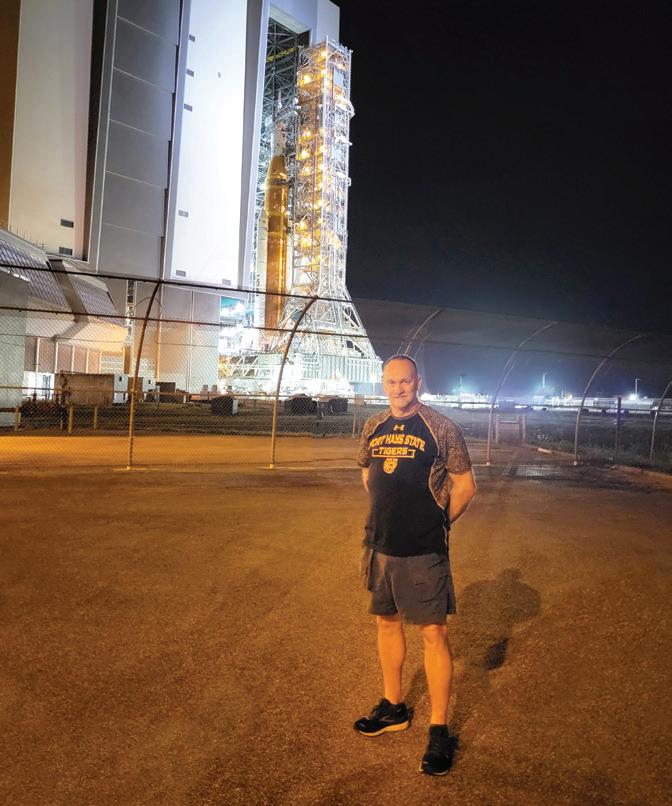
as a draftsman in Littleton, Colo., and didn’t necessarily have his sights set on the stars. Today, however, he is at the forefront of lunar exploration.
As the Lead Responsible Systems Engineer and System Architect on the Orion program for the spacecraft flying the Artemis missions, Erdman supports spacecraft functional testing during assembly operations at Kennedy Space Center, approves engineering changes to the avionics system, and certifies the Avionics, Power and Wiring subsystem for flight prior to turning the vehicle over to NASA.
For his dedication, Erdman earned NASA’s Circle of Excellence Award in 2024. “Every day is a new challenge. I am constantly learning something new and given assignments where I have an opportunity to excel,” he said.
Based in Colorado with his wife, Kelly Wallace, Erdman is now helping NASA prepare for the next giant leap: the Artemis III mission launch planned for 2027.
SHANE DEWALD ‘01, transformed his lifelong passion for sports into a career spanning more than two decades in parks and recreation leadership. He now serves as executive director of the Blue Valley Recreation Commission in Overland Park, where he works to expand recreational and sports opportunities throughout the community.
Originally from the Otis-Bison area, DeWald came to Fort Hays State University to study business administration and physical education, while competing as a pole vaulter on the Tigers’ track and field team. His time on campus shaped his journey and drove his desire to help people find a path to be active, connected, and engaged. In reflecting on his experience, DeWald commented, “I was never a number while attending FHSU. I was
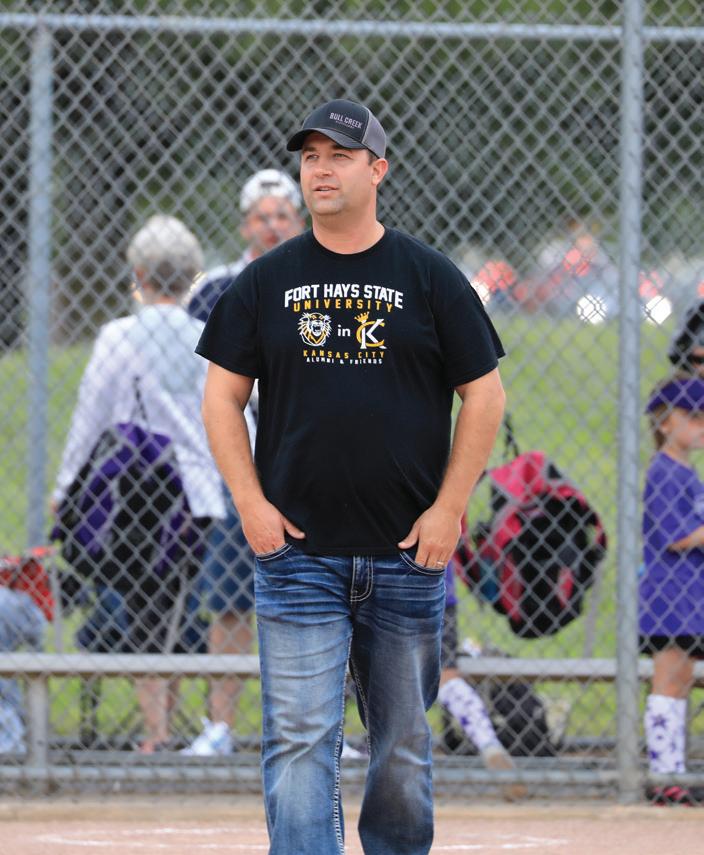
very fortunate to have great teachers and mentors who knew me and truly wanted to help me succeed.”
During his years working in parks and recreation, he has partnered with
others to build inclusive playgrounds, increase program participation and revenue, and improve recreational facilities and fields. His work reflects a consistent focus on building environments that support healthy, active lifestyles for all.
DeWald also serves on the Fort Hays State University Foundation Board of Trustees. His professional background and expertise complement the Foundation’s commitment to support the university’s mission and growth. “I am proud to be an FHSU Tiger, and I feel responsible to give back and stay connected,” he said.
He and his wife, Amber (Wasinger) DeWald, ’02, and their daughters, Hailyn and Hadley, enjoy visiting Hays and the campus. “Fort Hays State is a hidden gem for those that do not live close to Hays.”
WOMEN’S
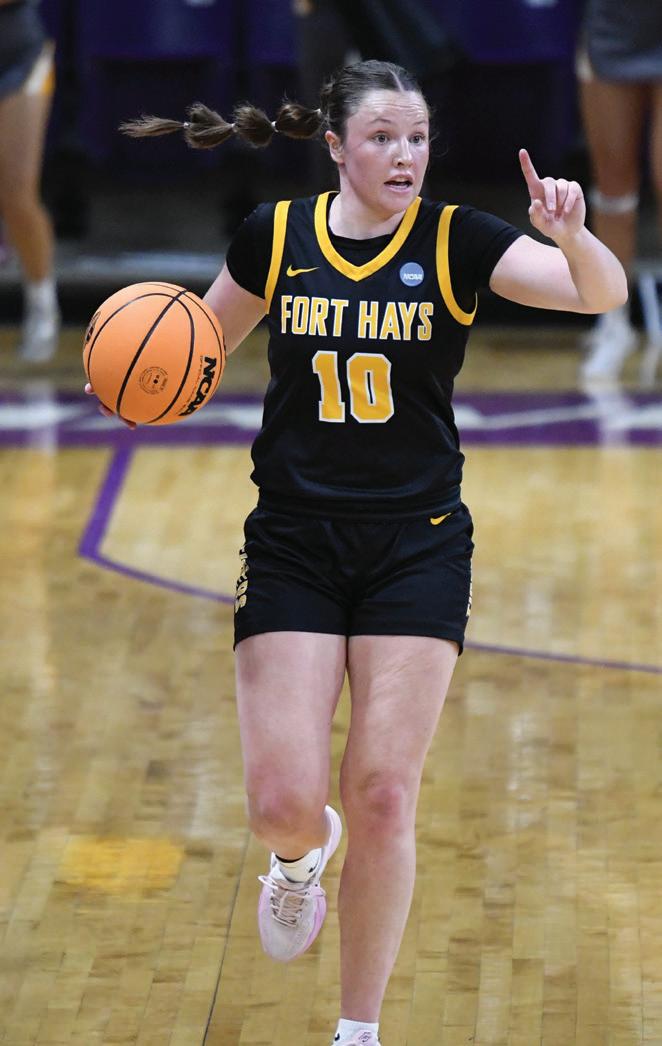
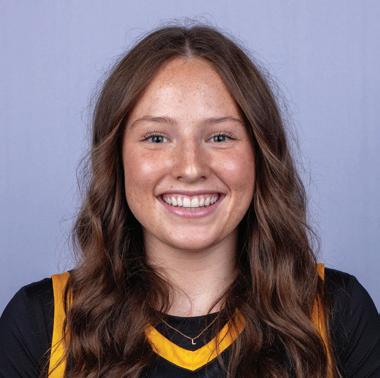
Olivia Mortensen, a native of Broomfield, Colo., had a tremendous freshman season at Fort Hays State alongside All-America standouts Talexa Weeter –the D2CCA National Player of the Year and the nation’s leading scorer – and Brooke Loewe, the nation’s leader in assists. Mortensen earned All-MIAA Third Team honors, averaging 13 points, 5.7 rebounds, 1.8 assists, and 1.1 steals per game, and started all 31 games for the Tigers in 2025-26. In addition, her scoring and rebounding averages both ranked second best on the team. She scored in double figures 19 times and produced 20 or more points eight times, reaching a season-high of 27 points twice.
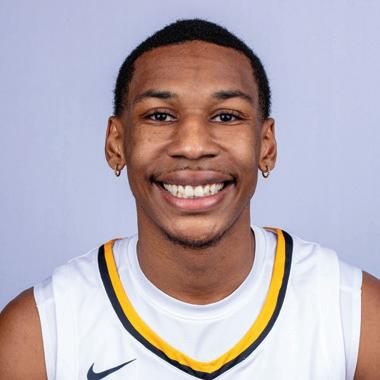
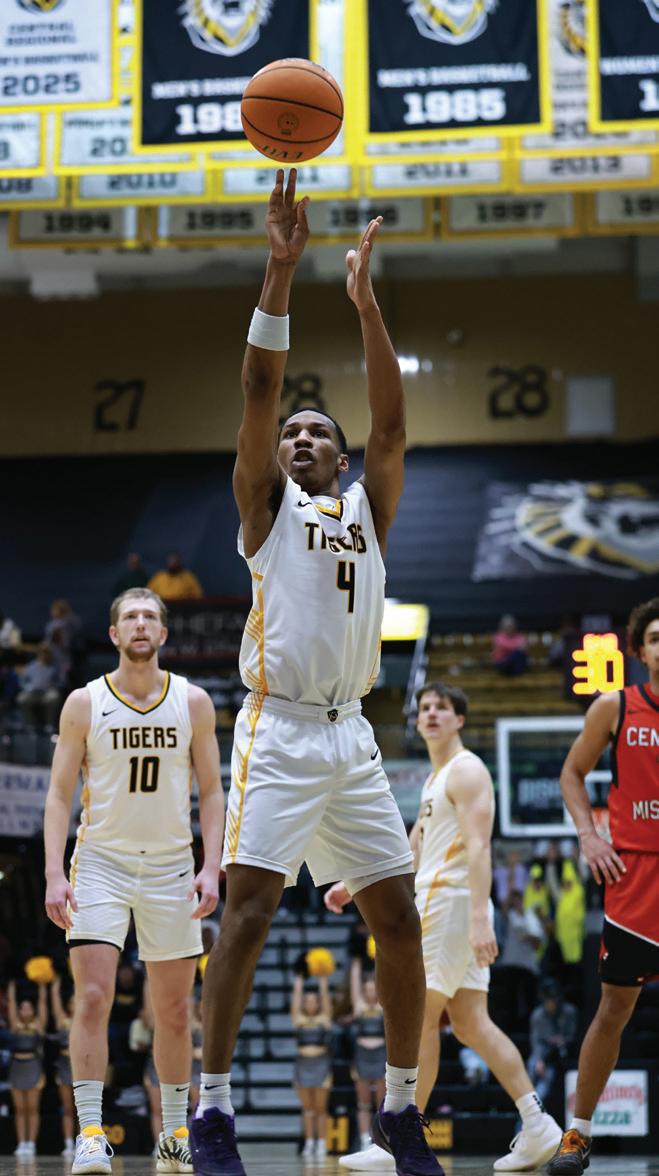
Jahvari Martino, a native of Gresham, Ore., had a breakout year for Fort Hays State in 2025-26. After redshirting his first year at FHSU, following a transfer from Portland (Ore.) Community College, he averaged 11.6 points and 3.4 rebounds per game while establishing himself as one of the team’s premier defenders. Often assigned to defend the opponents’ top scoring guard, he helped the Tigers rank among the Top 10 in scoring defense nationally for the fifth-straight season (FHSU led the nation the two previous seasons). Martino scored in double figures 19 times and reached 20 or more four times. His season-best in scoring was 23 points, and he was the team’s top 3-point shooter by percentage.
MEN’S
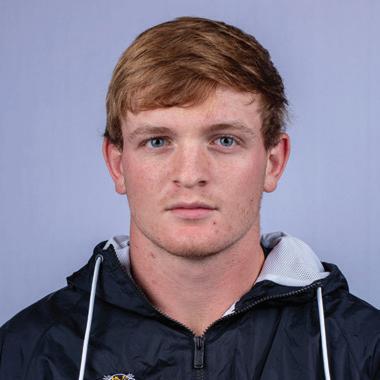
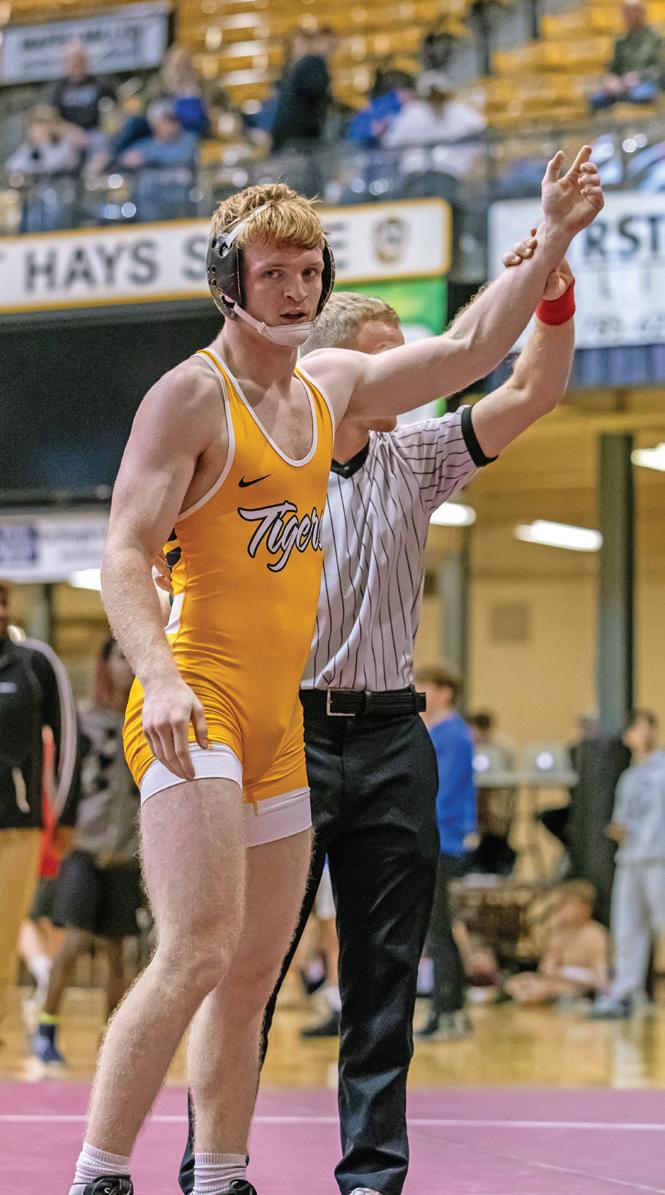
Houston Frank, a native of Scott City, had a strong second season at Fort Hays State by placing in three tournaments. Frank redshirted his first year at FHSU, wrestling unattached in the tournaments he competed in. In 2025-26, he had a pair of runner-up finishes at the FHSU Bob Smith Open and the Northeastern Oklahoma Golden Norsemen Open. Frank finished third on the team in total wins and was one of only two Tigers to record multiple victories at the NCAA Super Regional.

WOMEN’S INDOOR TRACK AND FIELD
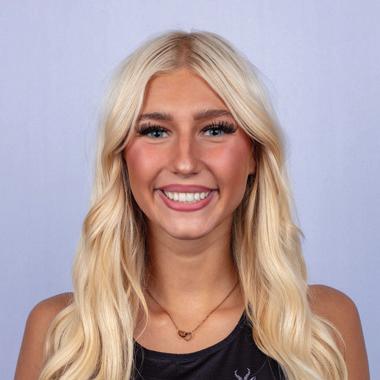
Katie Linenberger, a native of Hays, opened her collegiate career as a freshman in impressive fashion during the indoor track and field season, establishing herself as both an All-MIAA and AllAmerica performer in the high jump. She placed second at the conference meet and ninth at the NCAA Indoor Championships. Linenberger cleared 5’10” during the indoor season, the second-best mark in program history, and later matched that height outdoors to set a new outdoor school record. She totaled three event wins indoors and three more outdoors. Linenberger collected All-America honors during the outdoor season as well, finishing fourth nationally.
WOMEN’S WRESTLING
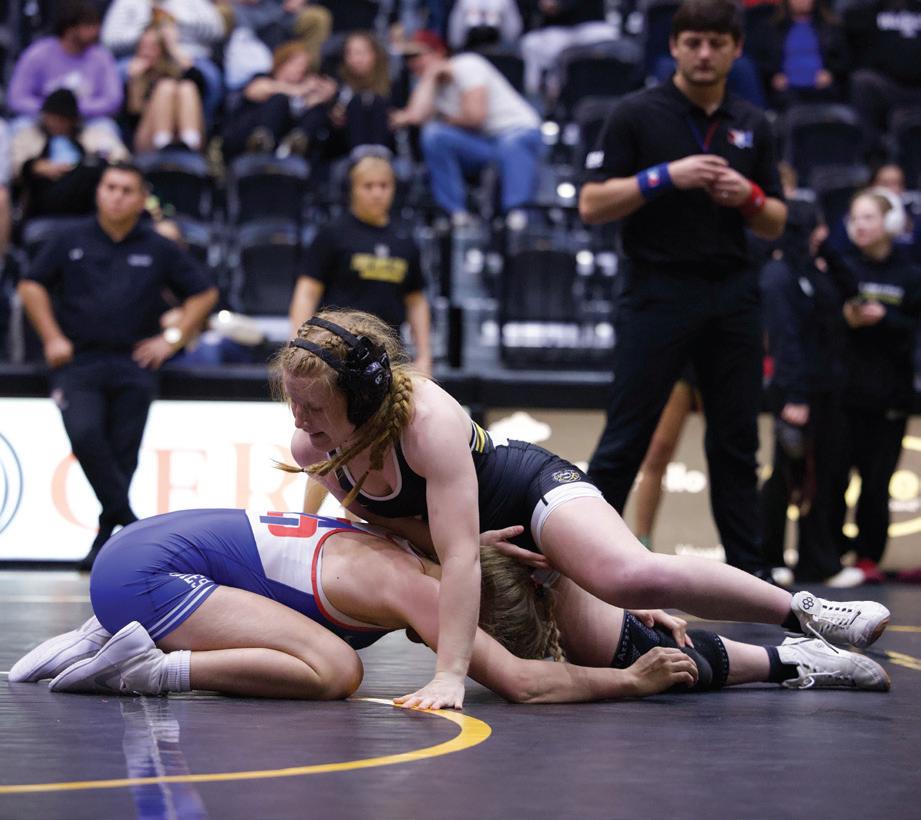
Alexis Burton, a native of Hays, had a tremendous performance in the second half of the 2025-26 season. After moving from the 145-pound class to the 160-pound class in late January, Burton posted an 11-2 record and emerged as one of four FHSU wrestlers to qualify for the inaugural NCAA Women’s Wrestling Championships. She won a match at the NCAA Championships and closed the season with a 22-10 overall record, becoming one of six Tigers to reach the 20-win mark. She also tied for the team lead in tournament placements with six, matching All-America standout Isabella Renfro, and captured an individual title at the Grand View Open.
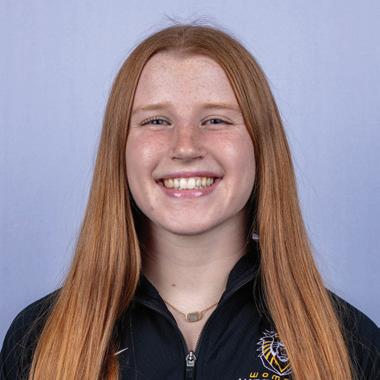
MEN’S INDOOR TRACK AND FIELD
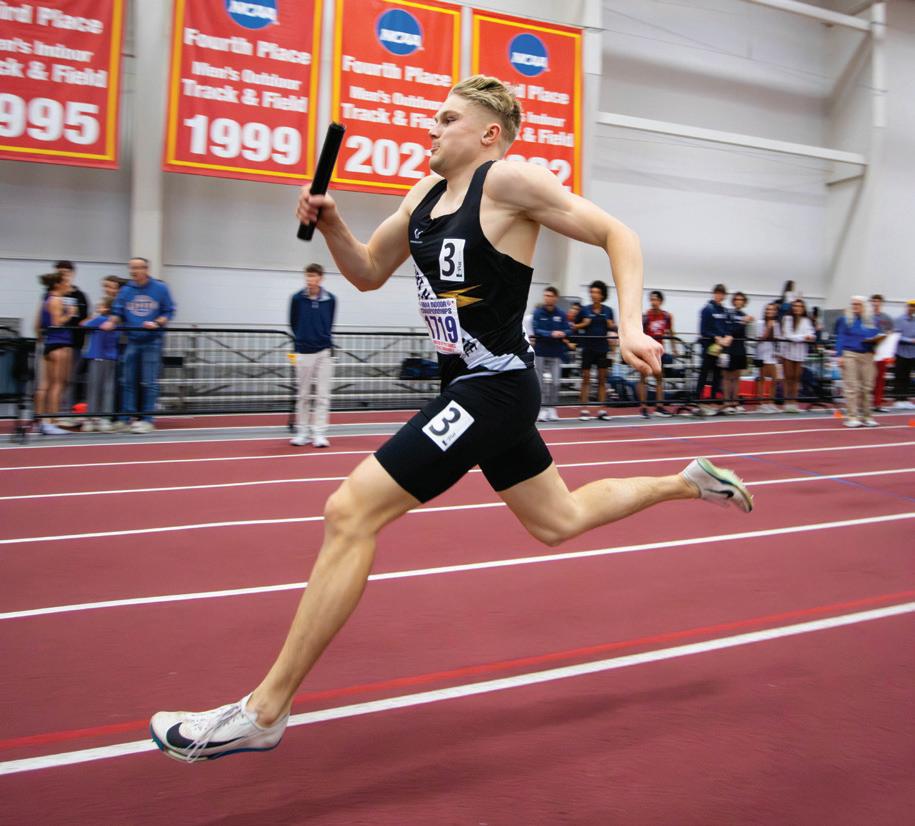
Drew Tolar, a native of Cheney, has emerged as one of FHSU’s top multi-event track and field athletes. During the indoor season, his best score in the heptathlon was 5,117 points while also leading the team’s best marks in both the high jump (6’2.25”) and long jump (23’8.75”). Tolar contributed to an AllAmerica performing 4x100 meter relay team during the 2025 outdoor season as a freshman and was also part of an All-MIAA performing 4x400 meter relay team during last year’s indoor season. He earned All-America honors during the outdoor season, finishing 11th in the decathlon at the NCAA Championships.
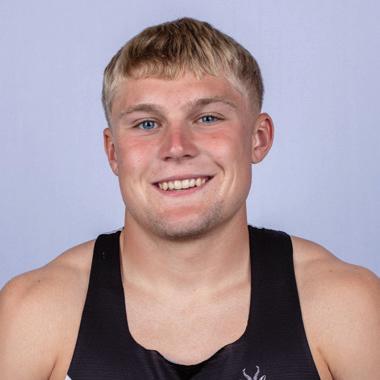
Hannah Green, a native of Kansas City, Mo., had an outstanding freshman season for the Tigers, earning All-MIAA Second Team honors as an outfielder. She earned a spot on the NFCA Player/Pitcher of the Year watchlist during the 2026 season and went on to lead the team with a .448 batting average, 78 hits, 50 runs, and a .470 on-base percentage. Green also stole 30 bases, becoming the third player in program history to do so in a single season. Her .448 batting average ranks second-best in program history for a season, while her hits, runs scored, and on-base percentage each rank third-best in program history for a single season.
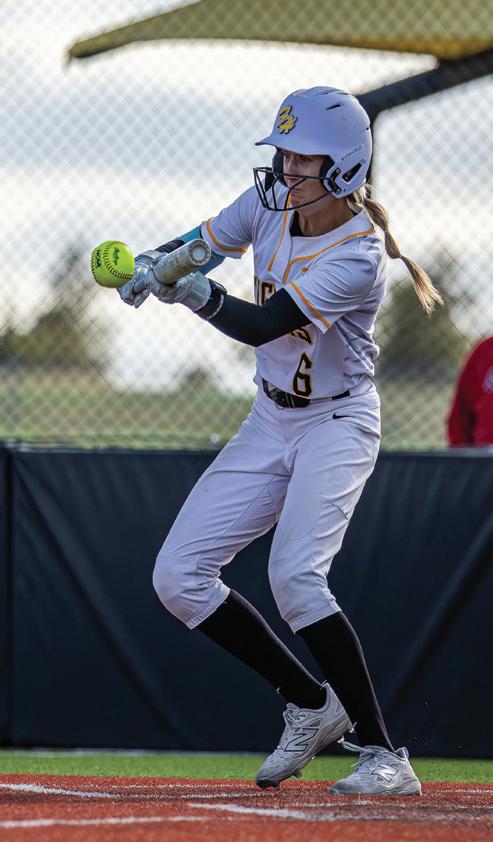
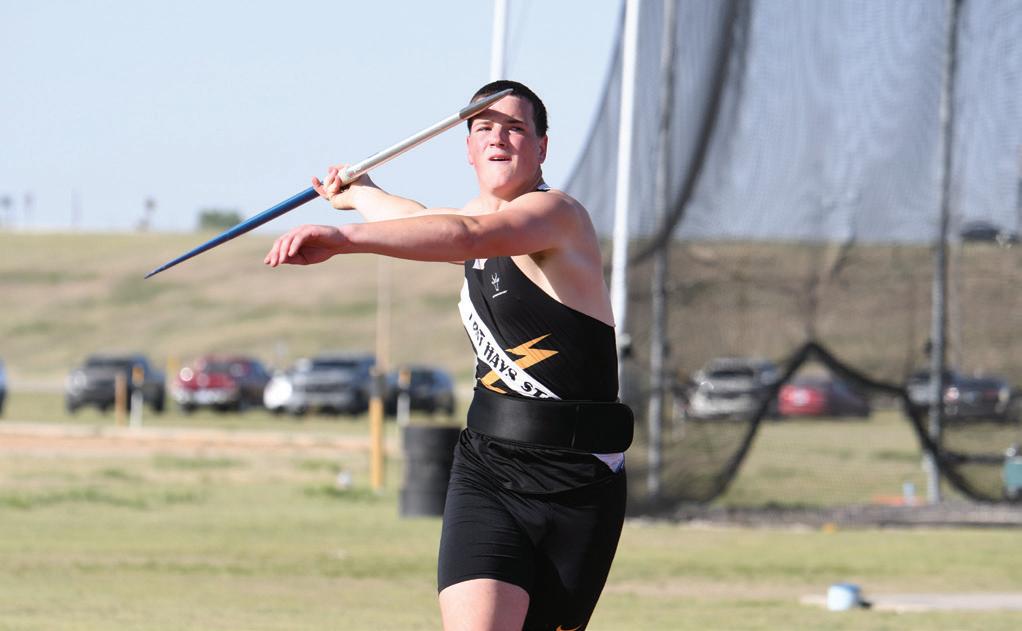
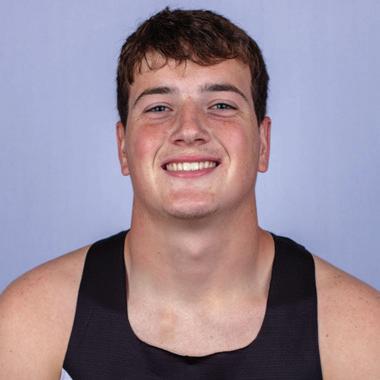
Jackson Rumford put together a strong freshman season at Fort Hays State in the javelin. A native of Scott City, he threw a seasonbest 218’11” to qualify for the NCAA Outdoor Championships and finished runner-up at three meets throughout the outdoor season.
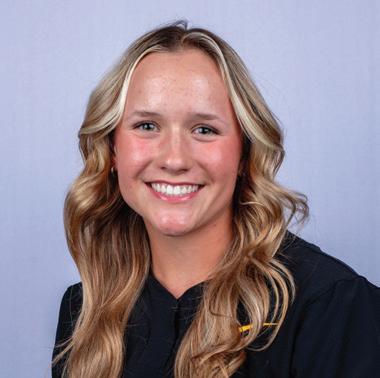
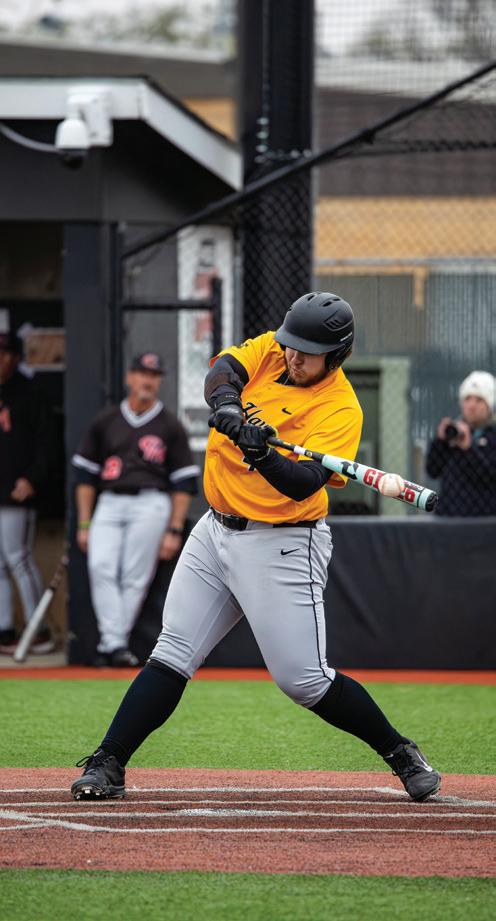
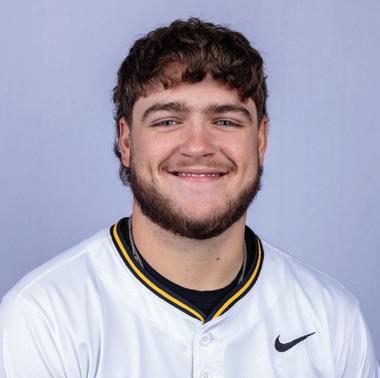
Garretson Cook, a native of Bolivar, Mo., had an impressive freshman season for the Tigers. He played in 45 of the team’s 50 games and made 43 starts, quickly becoming a key contributor in the lineup. Cook finished the year with a .345 batting average, second-best on the team, while adding 29 RBIs and 32 runs scored. He produced 16 multi-hit games, including an impressive 6-for6 performance in a win over nationally ranked Central Missouri in Hays.
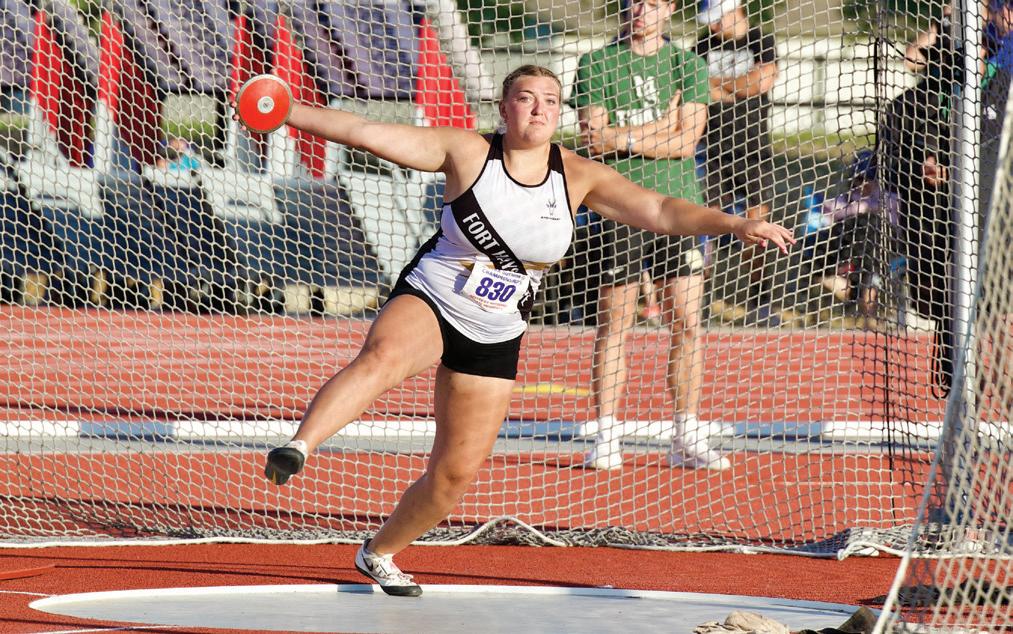
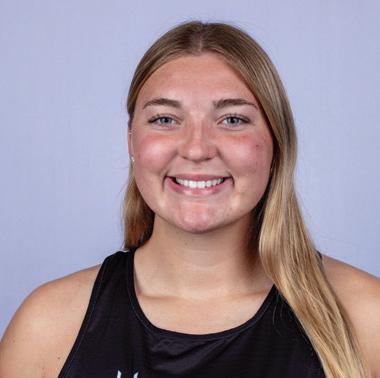
Natalee North, freshman from McCracken, put together an outstanding first year at Fort Hays State. She qualified for the NCAA Outdoor Championships in the discus after recording a season-best throw of 158’7”. North was also FHSU’s top finisher in the event at the MIAA Championships. In addition to her success in the discus, she posted the team’s best mark in the shot put during the outdoor season at 43’11.25”.
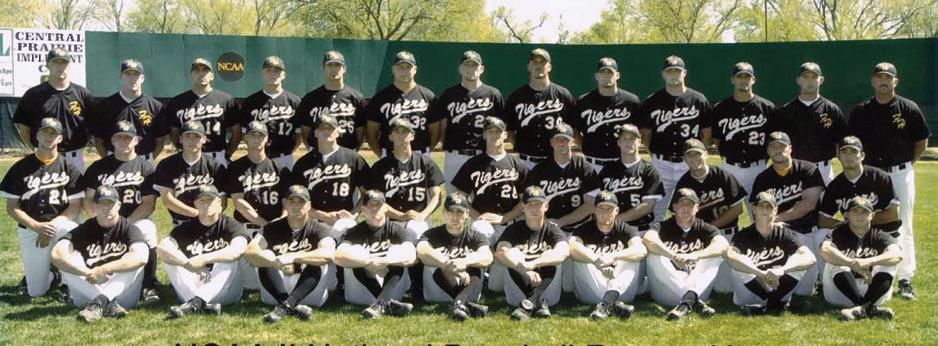
2000 BASEBALL TEAM, NCAA Division II National Baseball Runner-Up, 2000 Rocky Mountain Athletic Conference Champions. Players: Paul Arnhold, Dan Auckland, Steve Barbo, Jared Brown, Brandon Brungardt, Wayne Burton, Ryan Callaway, Tyler Cotton, Scott DiOrio, Matt Dill, Dustin Dreher, Vonley Frey, Thom Garcia, Nate Guffey, Derek Lopez, Franco Martinez, Darris Meitler, Justin Moore, Jason Patty, Brett Power, John Rawie, Jeremy Schmeidler, Tracy Schneweis, Joey Scogin, Jamie Suchy, Pat Taylor, Ian Van Kooten, Jesus Villarreal, Ryan Wasinger, Josh White, Kyle Wolf. Coaches: Bob Fornelli (head coach), Jeff Neher, Matt Ranson, Eric Smith. Manager: Mark Maskus
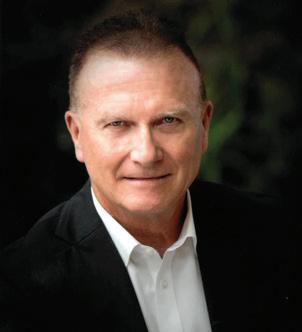
David Meter Football (1974-1977)
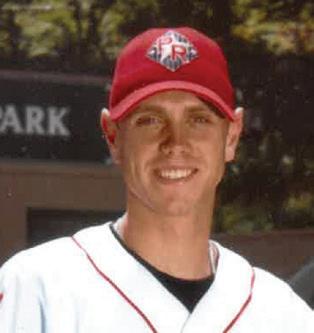
Jason Patty Baseball (2000-2001)
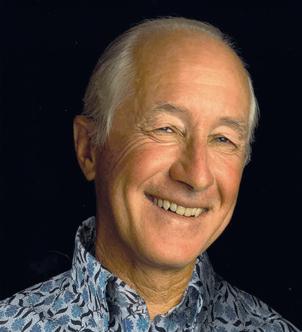
JP Worcester Cross Country/ Track and Field (1979-1982)
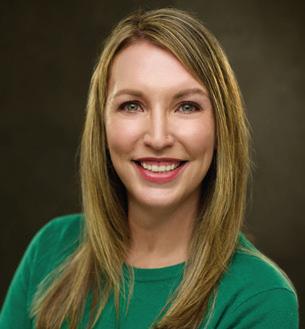
Ashlee Gustin Women’s Basketball (2003-2007)
Thur., Aug. 27, 7:00 p.m. Angelo State
Thur., Sept. 3, 7:00 p.m. CSU Pueblo
Sat., Sept. 19, 7:00 p.m. Pittsburg State*
Sat., Sept. 26, 7:00 p.m. Missouri Western*
Sat., Oct. 3, 7:00 p.m. Missouri Southern* (Homecoming)
Sat., Oct. 10, 7:00 p.m. Central Oklahoma*
Sat., Oct. 17, 7:00 p.m. Northwest Missouri State*
Sat., Oct. 24, 1:00 p.m. Washburn*
* MIAA Games, Home Games in Bold
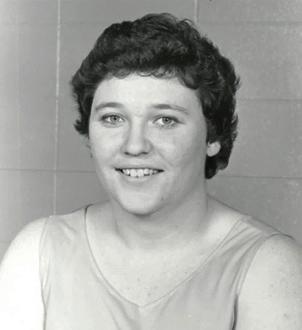
Brenda Wolf Track and Field (1985-1986)
Diego Cabral Men’s Soccer (2011-2014)
Sat., Oct. 31, 1:00 p.m. Central Missouri*
Sat., Nov. 7, 1:00 p.m. Nebraska-Kearney*
Sat., Nov. 14, 1:00 p.m. Emporia State*
Sat., Nov. 21, time TBA NCAA Playoffs
Garcia Ramser was hired as head coach of the Fort Hays State University volleyball team. He came to FHSU from Adams State University in Colorado, where he served as head coach in 2024 and 2025. In his first year at Adams State, the program had a three-win improvement, and in his second season, a four-win improvement. In 2025, he led the Grizzlies to their first Rocky Mountain Athletic Conference Tournament appearance in eight years.
Before starting his career as a head coach, he served as an assistant coach at Angelo State University, a highly successful NCAA Division II program. In his first season there, he helped guide the team to a 16-2 overall record
and contributed to them winning the AVCA national tournament following the cancellation of the 2020 fall season due to COVID-19. Over four years at Angelo State, he played a role in two NCAA regional appearances and two Lone Star Conference championships. His impact and promise as a young coach were recognized with the AVCA Thirty Under 30 Award, which honors top rising coaches in collegiate volleyball. Ramser also had a brief stint as an assistant coach at Canisius University in New York.
Ramser is a graduate of the University of Pittsburgh Swanson School of Engineering. He served as head coach of the men’s club program
Alex Hagan has joined Fort Hays State University as the women’s soccer head coach. He brings nine years of experience as a collegiate women’s soccer coach to FHSU, both as a head coach and an assistant coach.
Hagan came to Fort Hays State from Johnson County Community College. He served as the assistant coach there for four years under long-time head coach Jim Schwab. Johnson County has consistently been one of the top junior college programs nationally, and Hagan helped the Cavaliers to a 66-17-7 record in his four seasons, including threestraight seasons of 18 or more wins from 2023 through 2025. Johnson County was the NJCAA national runner-up in both
2023 and 2024. Hagan was an integral part of their staff, being named 2024 NJCAA D-II National Coaching Staff of the Year by United Soccer Coaches, as well as the regional staff of the year in 2023. Hagan helped guide Johnson County to three-straight conference titles (2023, 2024, 2025) and two NJCAA Division II national title game appearances (2023, 2024).
Prior to his time at Johnson County Community College, Hagan served as the head women’s coach at Bethel College for five seasons. He took over in 2017 and turned a struggling program into a competitor, qualifying for the KCAC Tournament in each of his last two seasons. Before his first head coaching
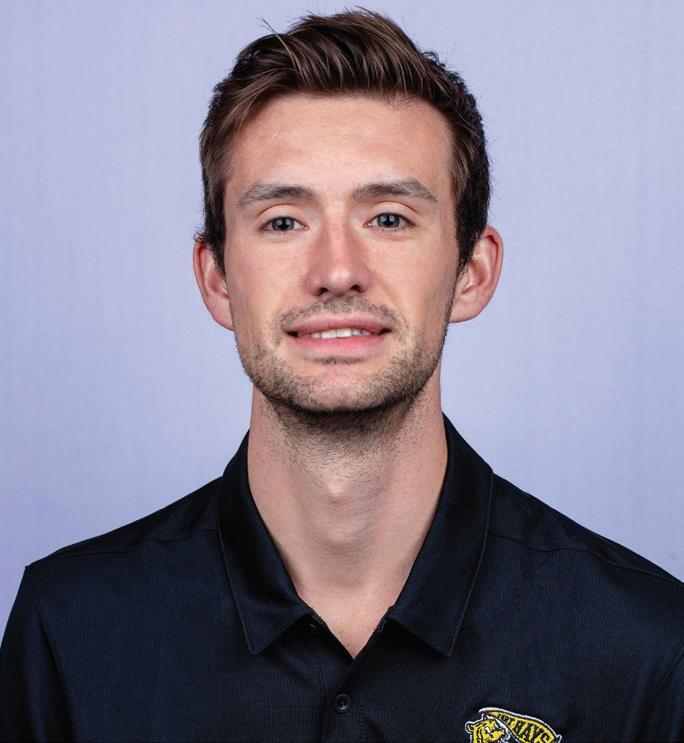
at Pittsburgh for three years and was named the National College Volleyball Federation Coach of the Year in 2018. He then earned a master’s in educational leadership from Quincy University, where he served as a graduate assistant for its men’s volleyball program for two seasons.
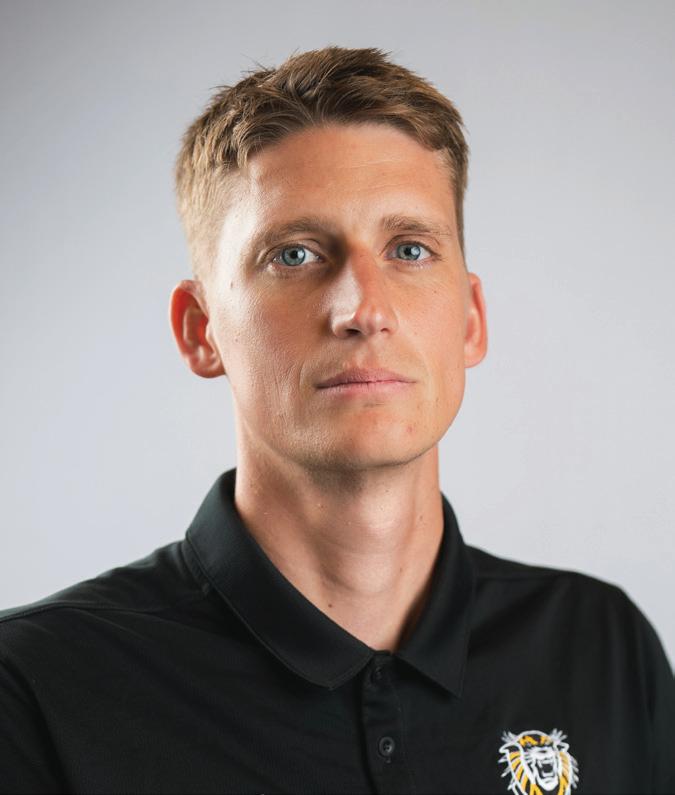
role, Hagan served as an assistant for the Bethel men’s program in both 2015 and 2016. He is a graduate of Bethel College, where he was a standout player. He earned a bachelor’s degree in health and physical education, along with a minor in sport management.
THURSDAY, OCTOBER 1
FRIDAY, OCTOBER 2 SATURDAY, OCTOBER 3 Tiger Bonfire
Half Century Club Social, Luncheon, and Induction (For All Graduates 1976 and Prior)
Campus
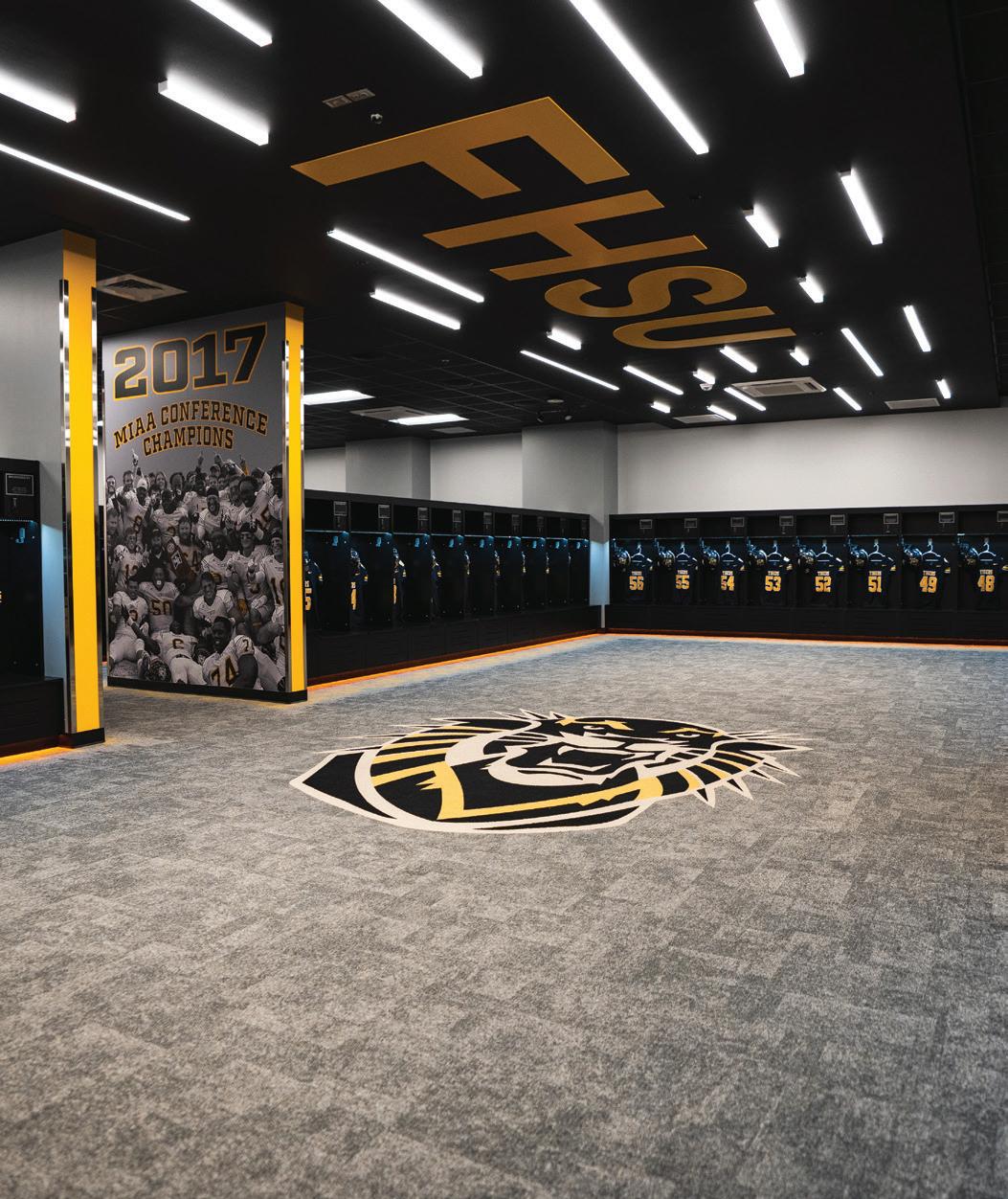
New Football Locker Room fit for 130 student-athletes
BY BOYCE DURR
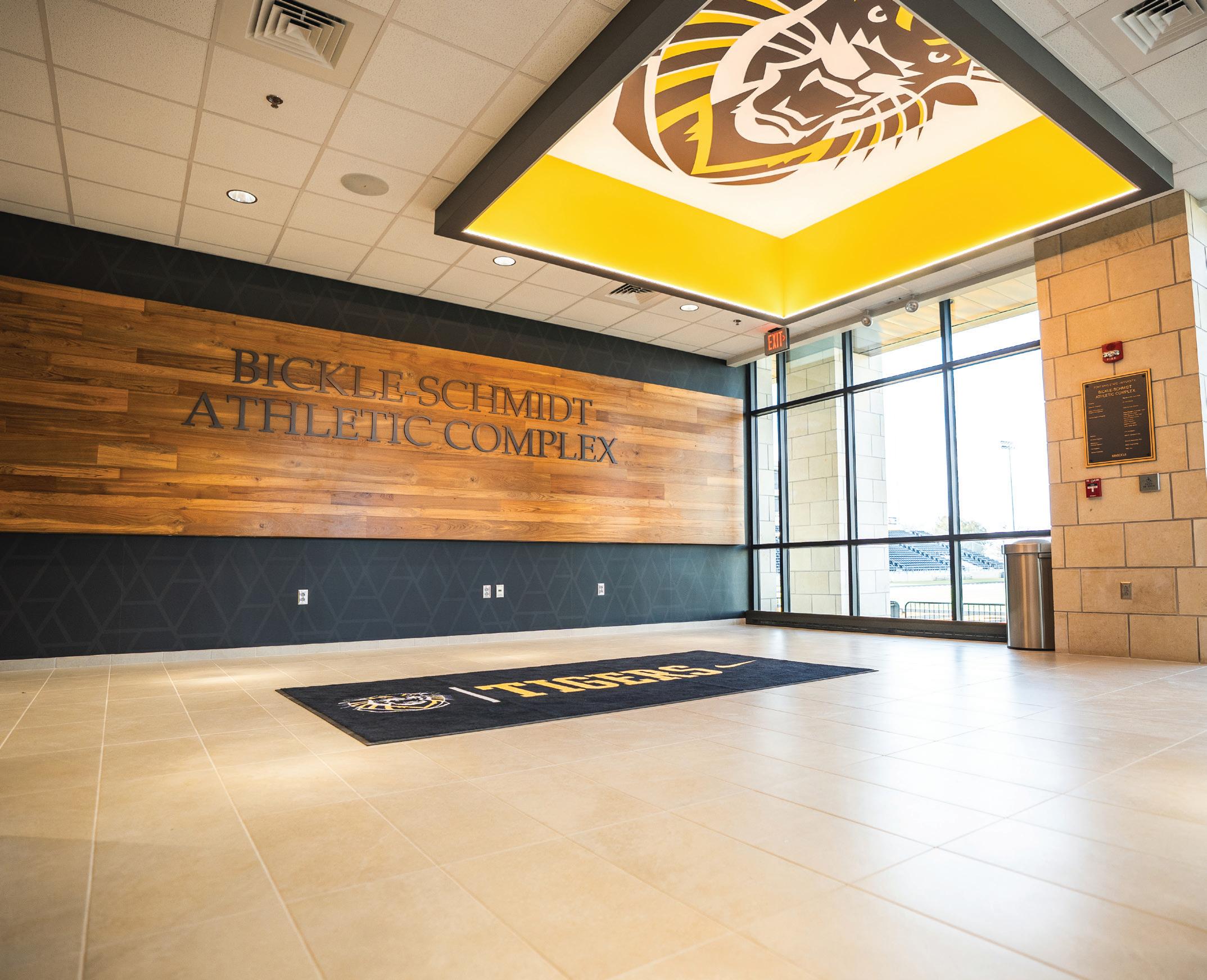
on Fort Hays State University’s Bickle-Schmidt Athletic Complex, a transformative new facility located in the south end zone of Lewis Field Stadium. The 20,000 square foot, two story complex is an $11.5 million investment in the future of Tiger Athletics, designed to serve all FHSU student-athletes in training, performance, and recovery for generations to come.
Following the project’s groundbreaking in 2024, the facility has drawn excitement across campus. FHSU student-athletes were the first to tour the complex, followed by donors who helped bring the project to life. Reactions during both previews reflected pride, appreciation, and anticipation for what the building provides.
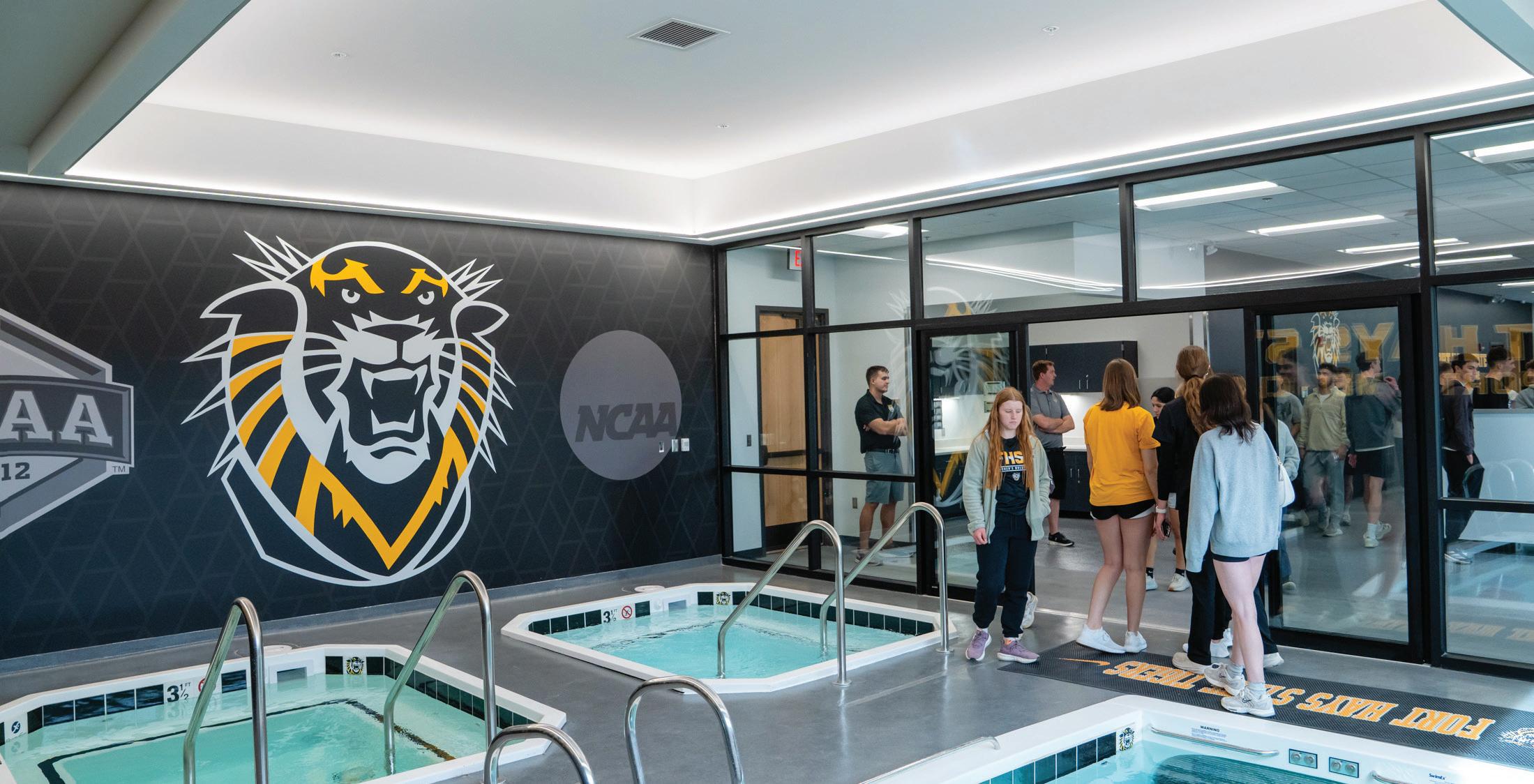
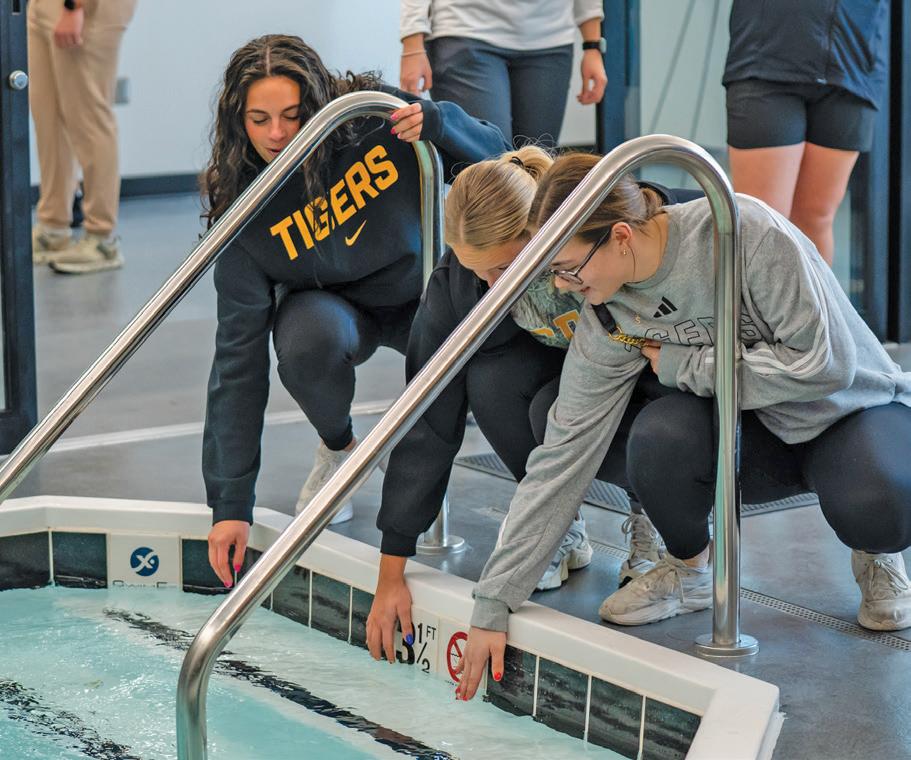
The lower level of the Bickle-Schmidt Athletic Complex includes a state-of-the-art sports medicine and athletic training area that more than doubles the size of the previous space. Equipped with hydrotherapy pools, advanced treatment and recovery zones, and modern rehabilitation equipment, the facility places FHSU on par with many Division I programs while setting a new standard within the MIAA and NCAA Division II. A new football locker room accommodating 130 student-athletes also anchors the first floor.
“The new Bickle-Schmidt Athletic Complex brings modern, centralized spaces for training, recovery, and team development, far surpassing our previous facilities,” said Dr. Wally Walstrom, FHSU Athletics Health Care Administrator and Head Team Physician. “For FHSU student-athletes, it means better support, improved performance, and a higher-quality experience, while positioning us ahead of the conference and as a leader in NCAA Division II sports medicine.”
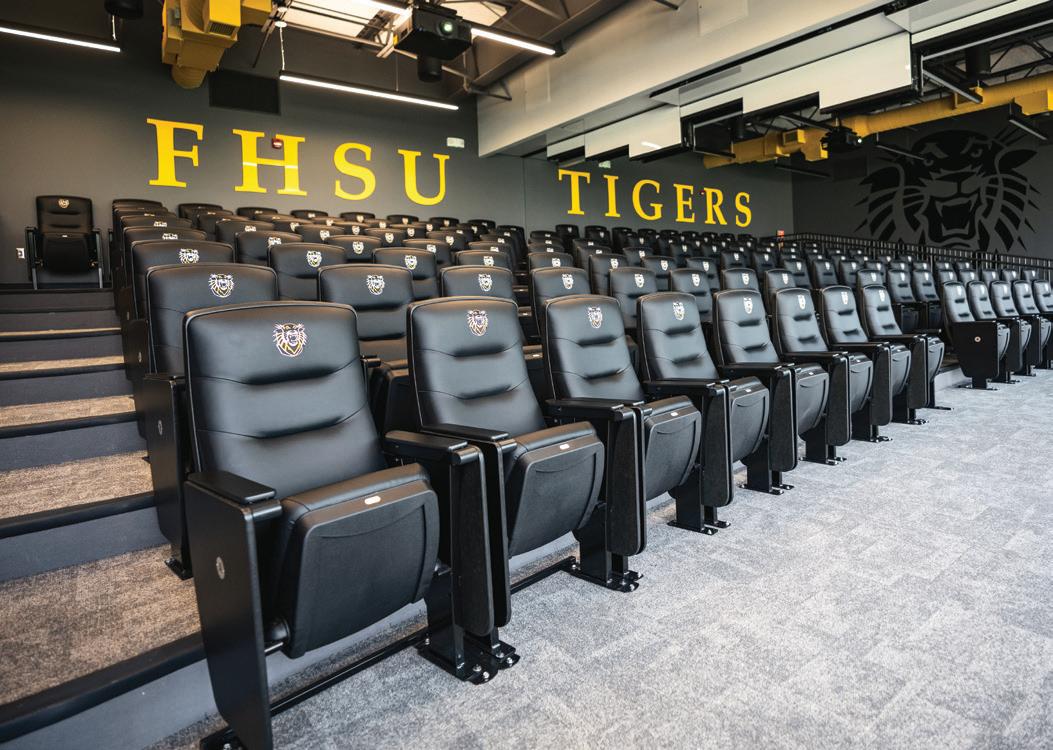
Theatre-style team meeting room
Upstairs, the complex delivers a collaborative and educational environment featuring position-specific meeting rooms, coaches’ offices, recovery stations, and a student-athlete lounge with a kitchen-style gathering space. A standout feature is the 130-seat theater-style film room, offering premier sightlines of Lewis Field Stadium and the south end of campus.
More than a football facility, the Bickle-Schmidt Athletic Complex elevates the overall student-athlete experience, enhances recruitment efforts, and reinforces Fort Hays State’s commitment to health, wellness, and competitive excellence.
“This impact is especially meaningful as we serve the largest student-athlete population among Kansas Board of Regents schools, ensuring all of our athletes have access to the resources they need to succeed,” Walstrom said.
Campus Building Update:
FHSU’S TEBO LIBRARY REOPENS AS A
BY BOYCE DURR
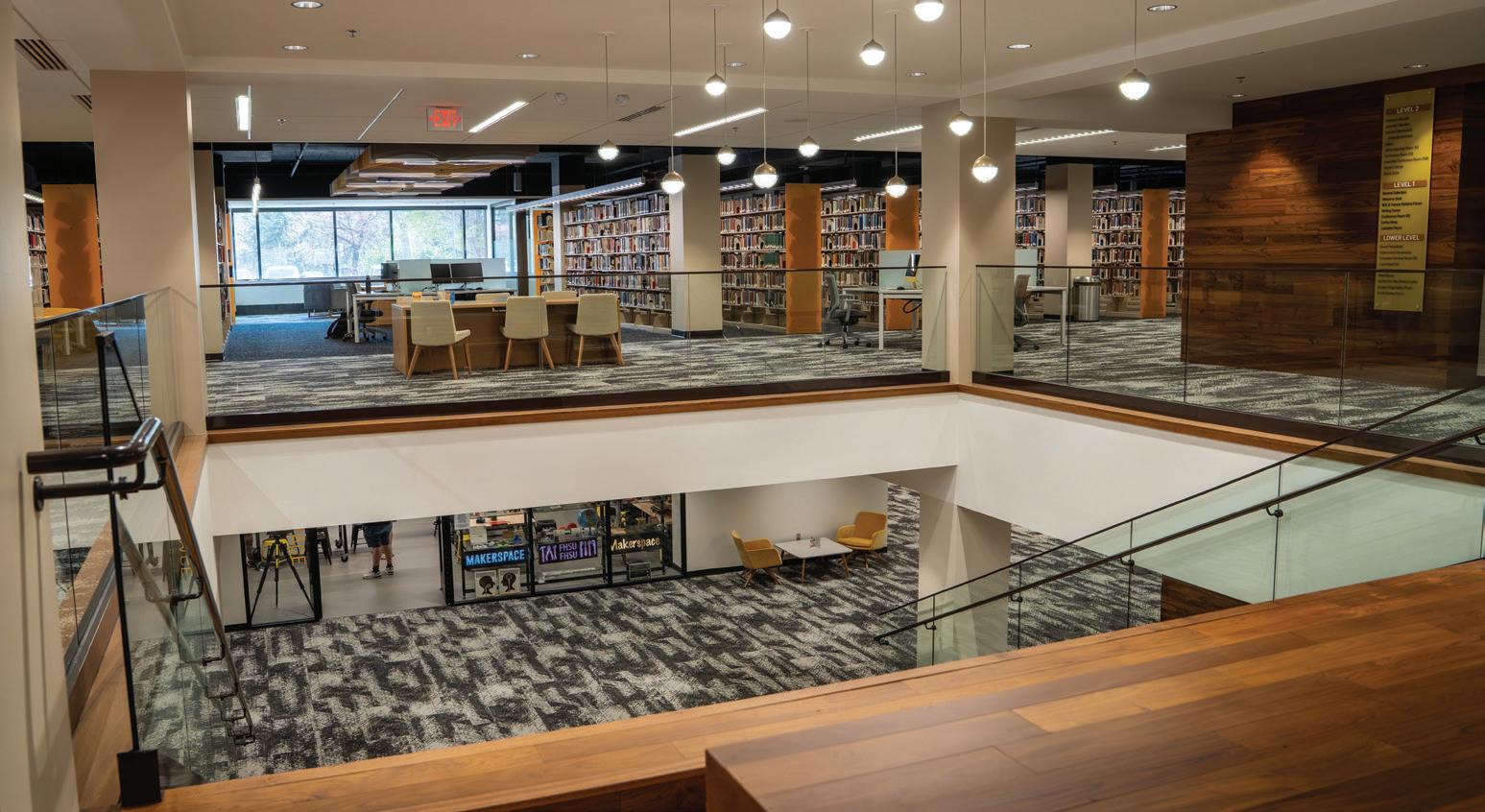
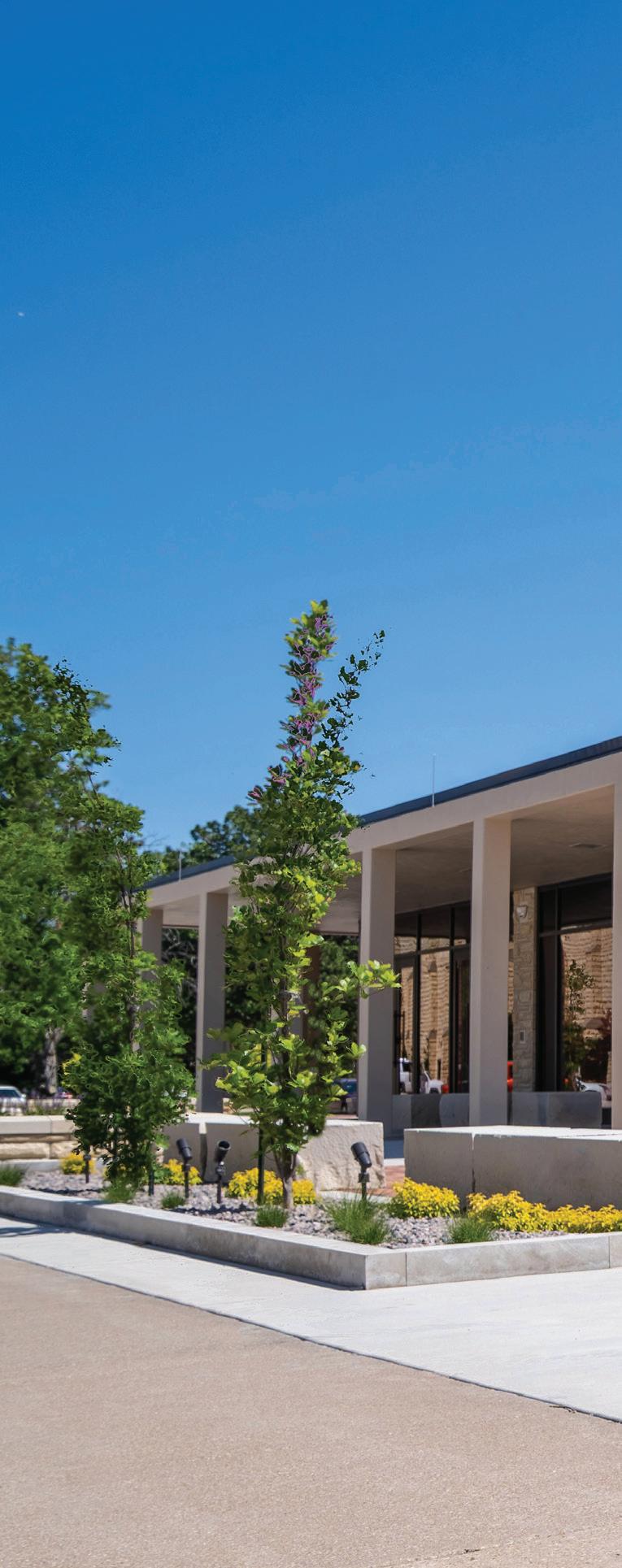

Fort Hays State University’s library has reopened its doors, unveiling a transformed space designed to serve students for generations to come. Formerly known as Forsyth Library, the building was officially renamed Tebo Library in September 2025 and reopened in January 2026 following an extensive $27.7 million renovation.
Originally built in 1967 in the Brutalist architectural style, the library had long been a cornerstone of campus life but faced mounting challenges from aging infrastructure, including roof leaks, poor Wi-Fi, and outdated HVAC and electrical systems. Rather than addressing these issues piecemeal, the university pursued a comprehensive renovation to reimagine the library as the academic heart of campus.
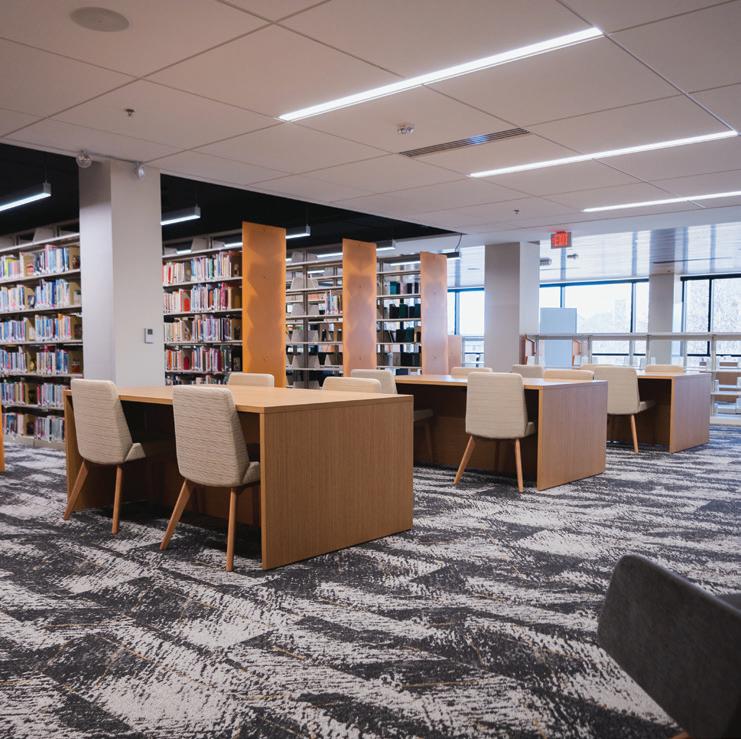
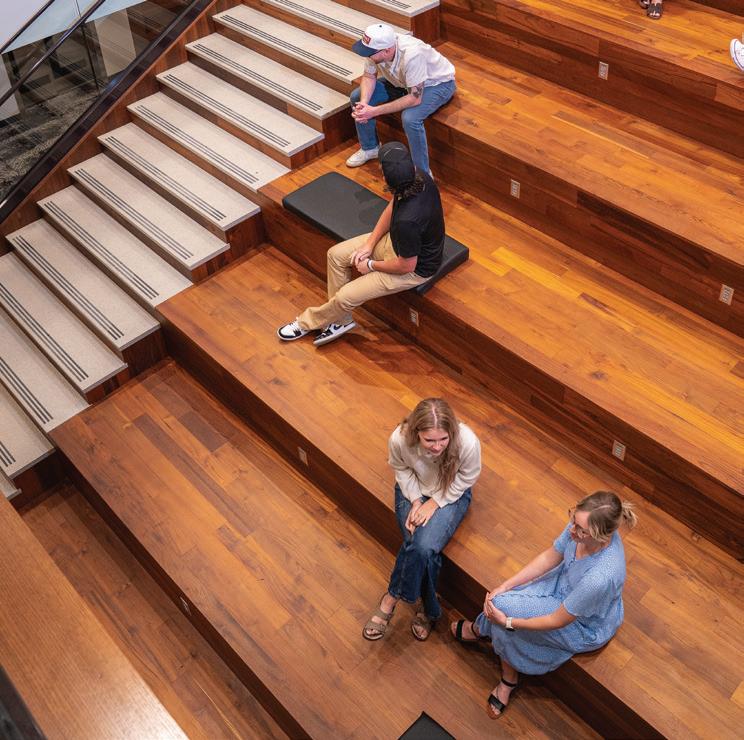
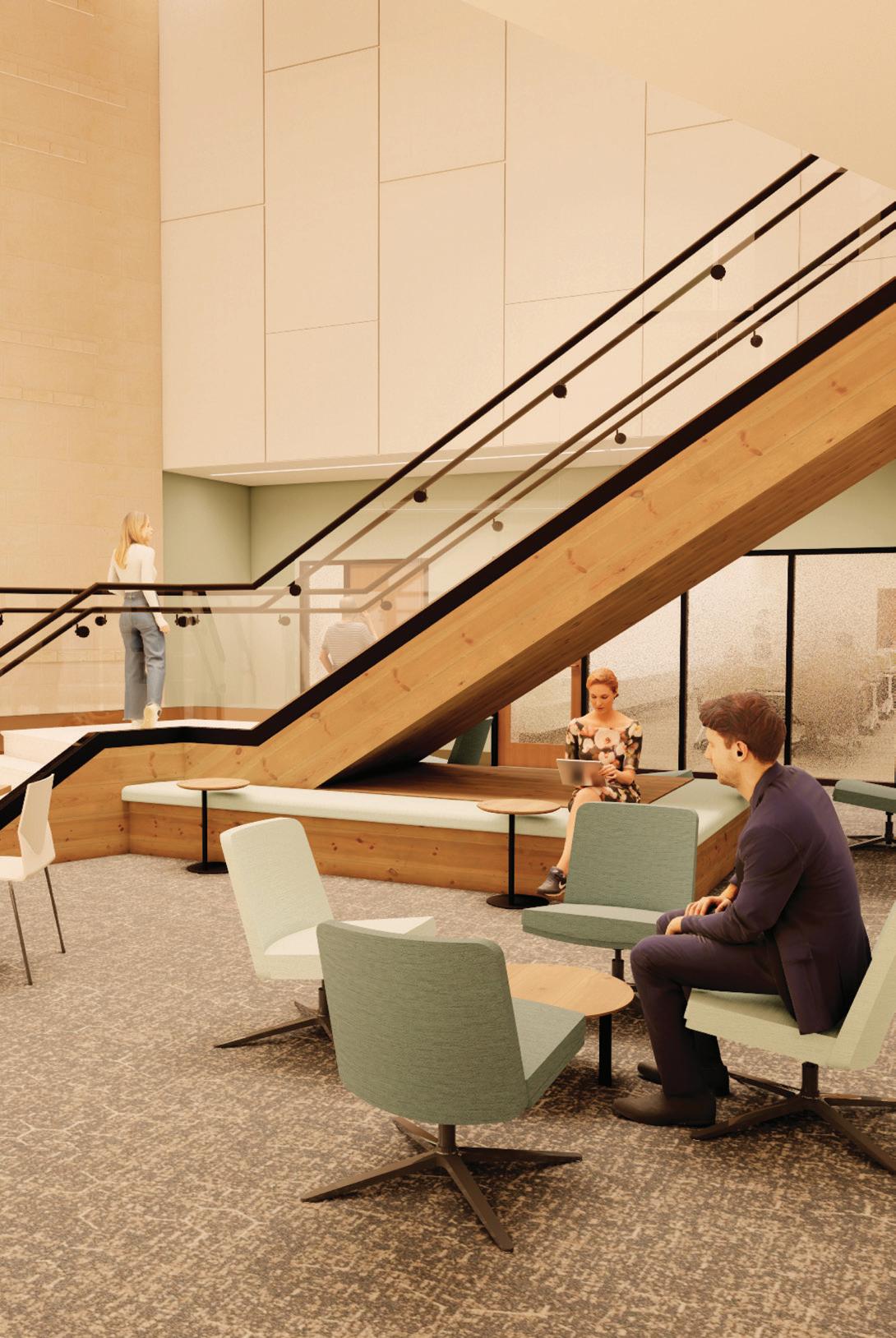
Planning for the renovation was guided by extensive input from students, faculty, and staff. Feedback emphasized the importance of natural light, quiet spaces surrounded by books, technology-rich collaboration areas, and access to food and coffee. Those priorities are now visible throughout the renewed facility, with expansive windows, nature-inspired design elements, and a variety of study environments.
“Tebo Library is more beautiful and more functional than we could have imagined,” said Ginger Williams, FHSU Dean of Library Services. “It couldn’t have been such a success without students sharing their needs during the programming phase, or without such positive collaboration with the Tebo Library team.”
Tebo Library now offers 15 group study rooms for up to 6 people, 10 individual study rooms, and numerous private
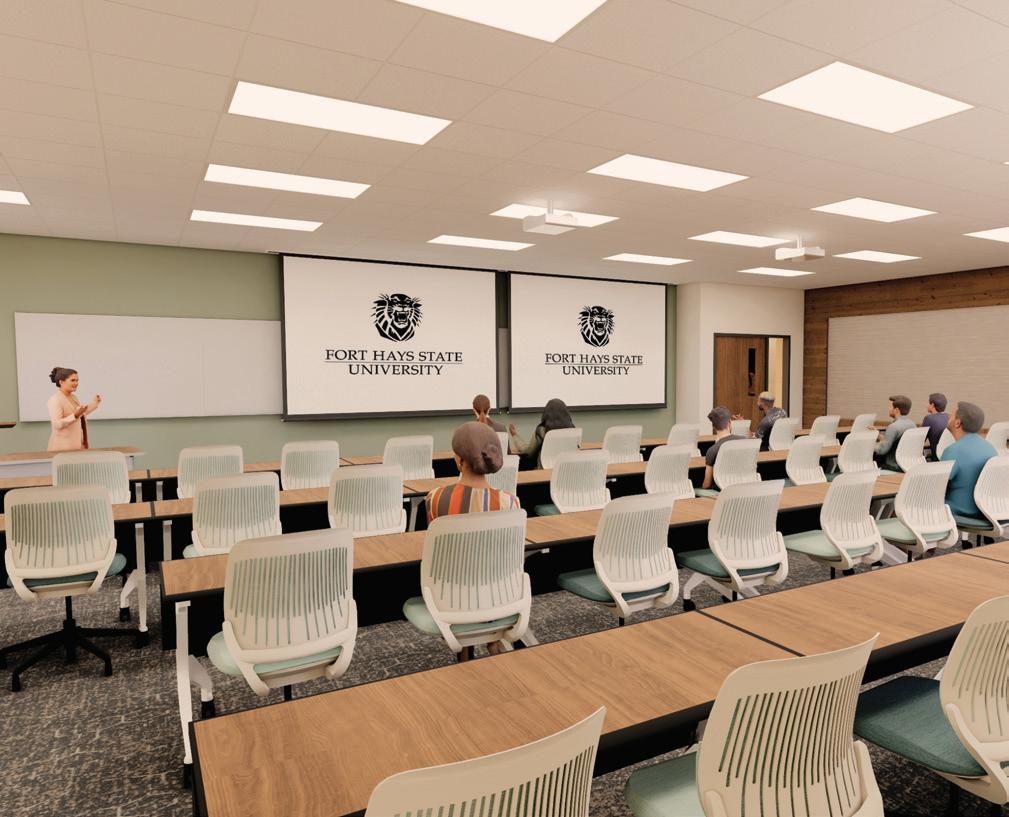
study pods. It also houses a robust mix of academic and creative spaces, including video and audio studios, the MakerSpace, the Institute for New Media Studies, and the Fenwick Reading Room for Special Collections and University Archives. Academic support within the building is further enhanced by the inclusion of the Writing Center, two 20-seat conference rooms, a library classroom, a computer lab, and the Robbins Forum – an event space for up to 112 people.
While technology plays a prominent role, the library’s extensive collections remain central. About 75–80% of resources are available electronically, complemented by a physical collection of roughly 400,000 books and bound periodicals. Librarians continue to provide robust academic support, fielding 800 to 1,200 research questions annually and delivering 120 to 150 instructional sessions each year.
Early usage data suggests the renovation is already making a significant impact, with library visits increasing by nearly 575%.
“We couldn’t be happier to see students’ positive reaction to Tebo Library,” Williams said. “It’s a dream come true to see them using every space and every whiteboard they can find.”
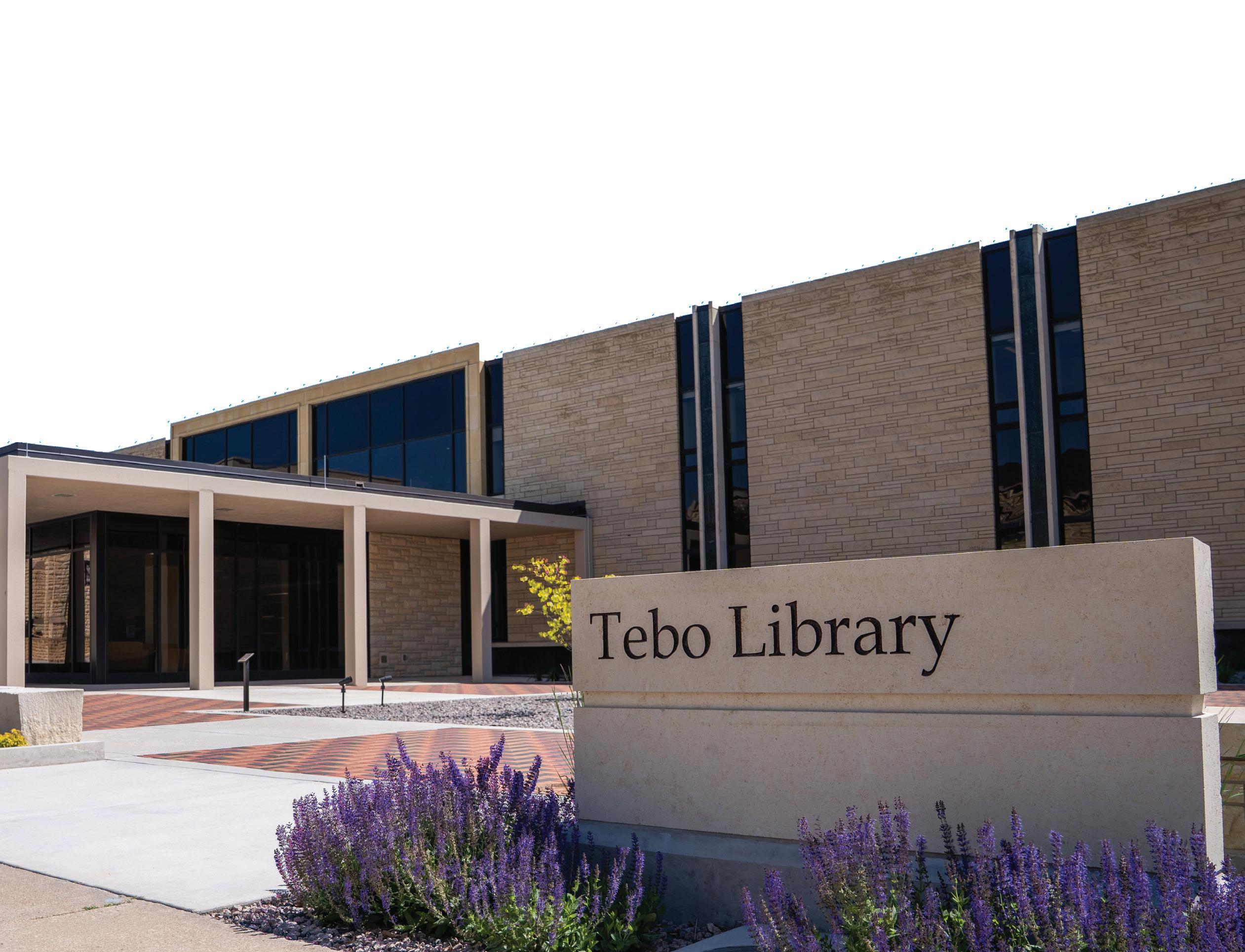
Blending light-filled spaces, modern technology, and quiet corners for focused study, Tebo Library has quickly reclaimed and expanded its role as a vibrant center of learning, collaboration, and innovation at Fort Hays State University.
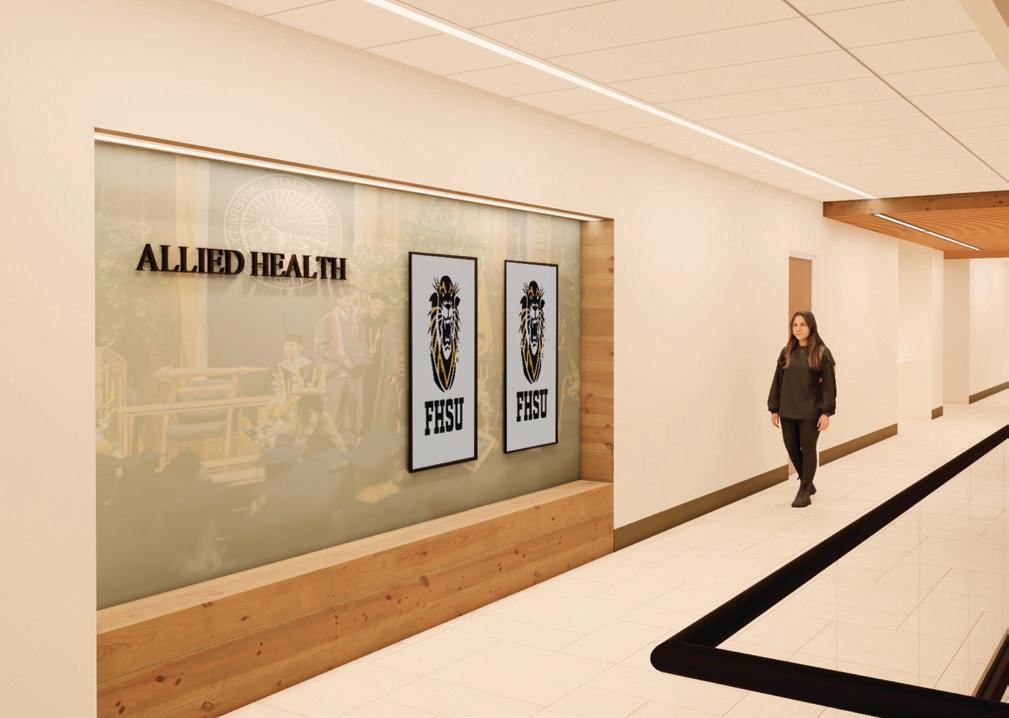
SINCE ITS OPENING IN 1981, Stroup Hall has been the heart of nursing education at Fort Hays State University, preparing generations of students to meet the healthcare needs of Kansas and beyond. That legacy is now entering a new chapter as FHSU moves forward with a transformational renovation and expansion of Stroup Hall, an investment designed to strengthen healthcare education, workforce readiness, and interdisciplinary collaboration.
Named in honor of Leora B. Stroup, founder and longtime director of FHSU’s nursing program, the building symbolizes decades of growth. What began in 1952 with one faculty member and 16 students, the program has evolved into a comprehensive academic enterprise that remains central to the university’s mission of “growing our own” healthcare professionals.
Supported by $15.4 million in funding from the Kansas Legislature, the project will double the space available to the Department of Nursing while creating a new home for Allied Health programs. Once complete, Stroup Hall will bring nursing, medical diagnostic imaging, and related health disciplines together under one roof, reflecting the realities of team-based healthcare delivery.
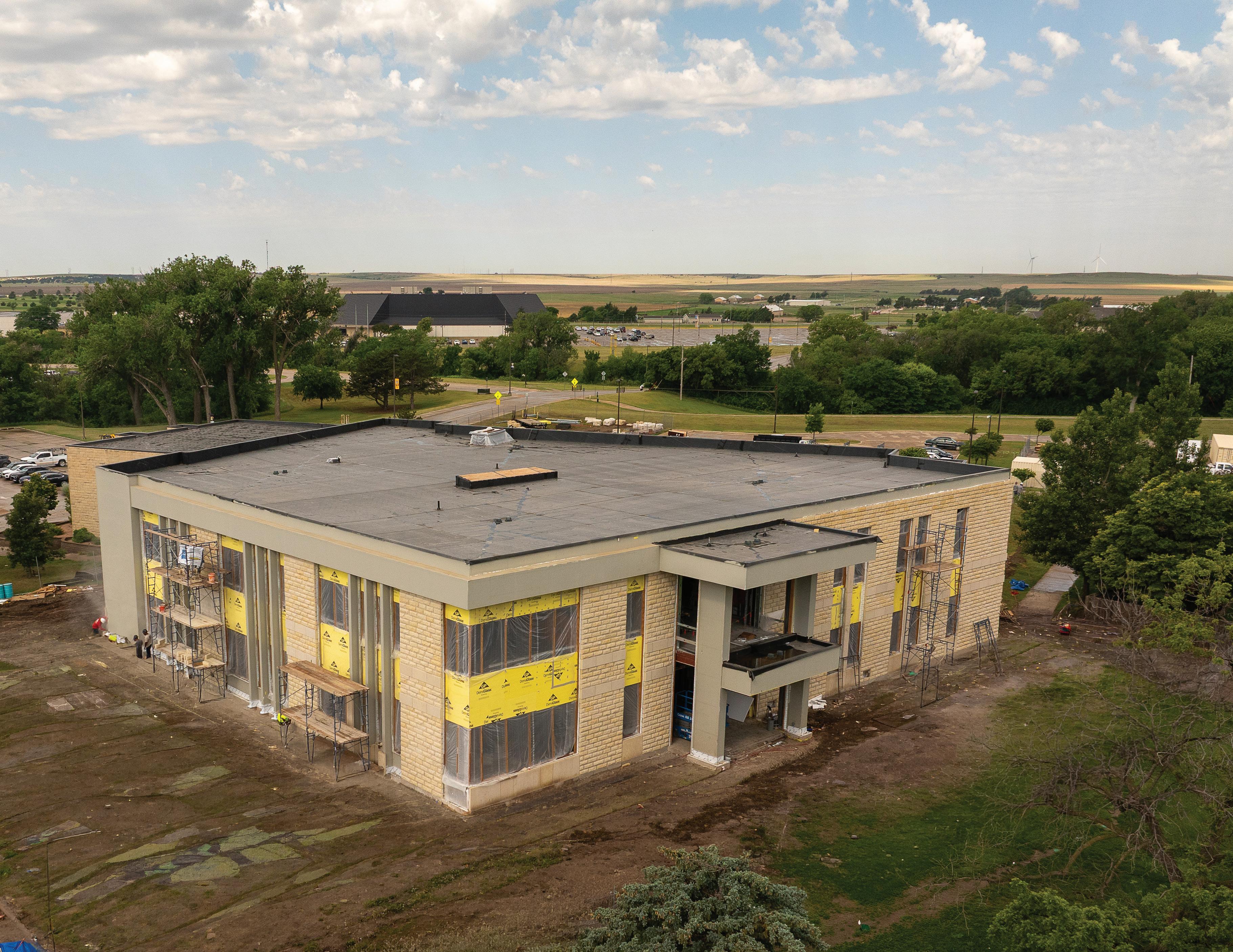
Construction is well underway. Exterior framing and roofing were completed in April, and limestone veneer installation began in May. Renovation work within the original Stroup Hall spaces is progressing steadily, with most areas expected to be ready for the fall term. Some existing simulation lab spaces are scheduled to turn over by October, with overall
construction slated for completion in December. Full occupancy is set to take place before the start of spring 2027 classes.
A centerpiece of the expansion is a cutting-edge Immersive Learning Room, a space featuring four immersive, interactive walls and an adaptive floor. The space allows faculty to create highly realistic healthcare scenarios. Each simulation can be customized to address specific challenges within healthcare, including limited staffing, resource constraints, and geographic isolation.
“This immersive environment allows students to engage in complex, high-stakes clinical scenarios in a safe, controlled setting,” said Dr. Jeff Briggs, Dean of the College of Health and Behavioral Sciences. “They build confidence and competence before ever stepping into a real clinical placement, which is critical for both student success and patient safety.”
Beyond student preparation, the expansion enhances faculty collaboration and innovation. “By bringing Nursing and Allied Health together in shared, technology-rich spaces, we are creating learning environments that mirror real-world healthcare,” Briggs said. “That interdisciplinary collaboration strengthens teaching, improves learning outcomes, and ultimately benefits the communities across Kansas our graduates will serve.”
For alumni, students, and the region, FHSU’s Stroup Hall expansion represents more than a construction project; it is a commitment to the future of healthcare education and highquality patient care.
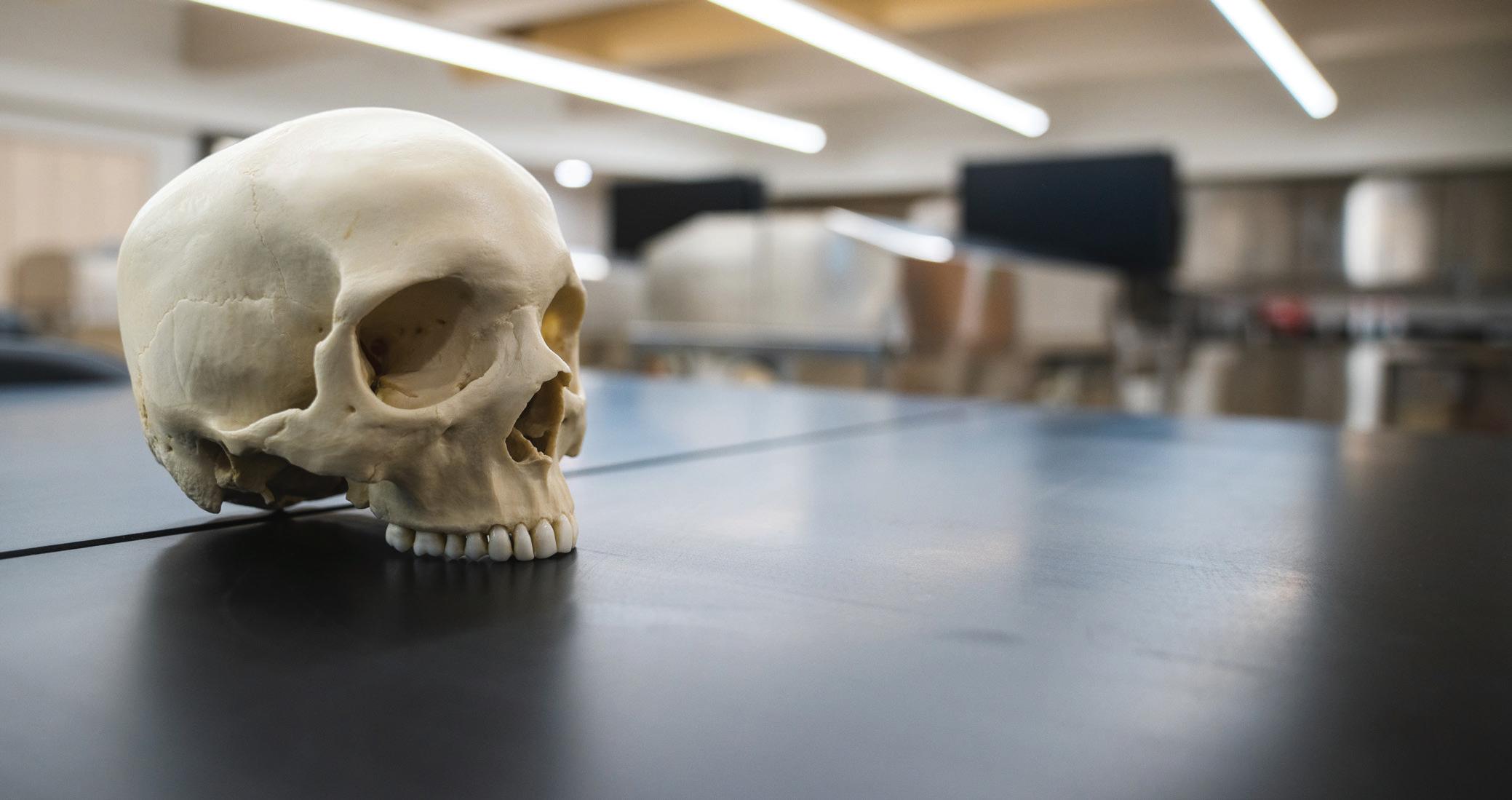
has wrapped up a major renovation of its cadaver lab in Albertson Hall, ushering in a new era of hands-on, technology-driven learning for students in the biological and health sciences. The project, which began in June 2025, was finalized in December and opened to classes in time for the Spring 2026 semester.
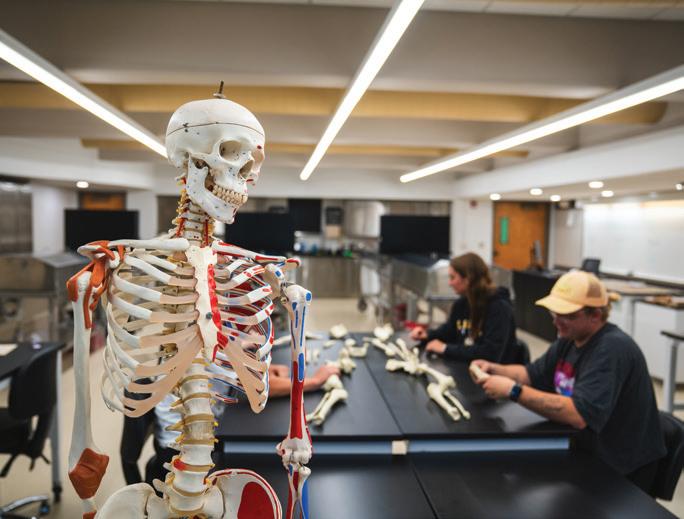
Originally created during a 1998–2000 renovation, the cadaver lab had long served as a cornerstone of anatomy instruction. Over time, limited space, aging materials, and a lack of instructional technology made it increasingly difficult to support modern teaching methods. The newly renovated facility now reflects contemporary best practices in anatomy education.
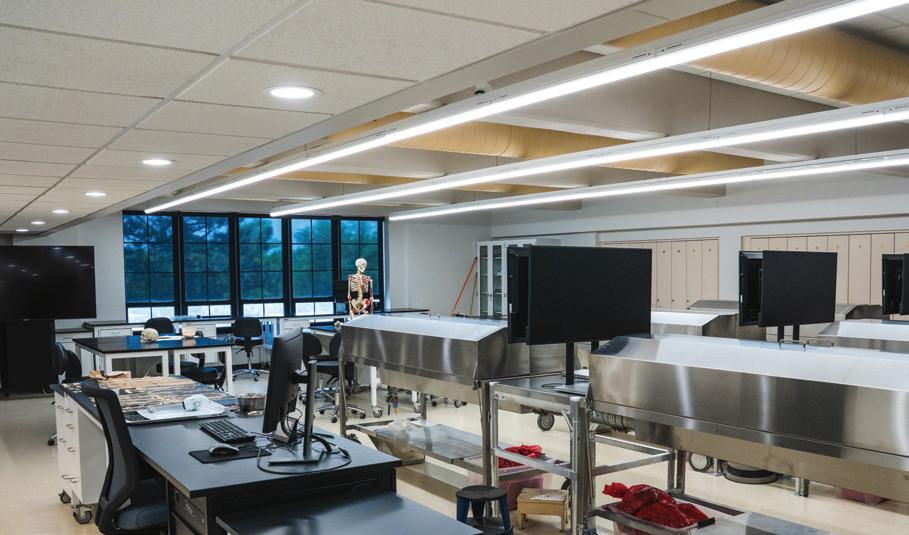
The redesigned lab features an open layout that better integrates teaching and research, along with stainless-steel cabinetry, updated flooring, and six modernized cadaver tables designed to improve preservation and accessibility. Mobile student workstations provide flexibility, allowing faculty to adapt the space for a range of instructional approaches.
A centerpiece of the renovation is the integration of advanced technology. Each dissection station now includes computer access, while an instructor station and overhead camera system allow real-time
BY BOYCE DURR
demonstration of techniques. Together, these upgrades enable more interactive instruction and allow students to better visualize complex anatomical structures.
Dr. Tara Phelps-Durr, professor and chair of the Department of Biological Sciences, said the renovated lab is already transforming the student experience.
“This renovation has completely changed how we teach and how students learn,” she said. “We now have a space that supports innovation, engagement, and deeper understanding.”
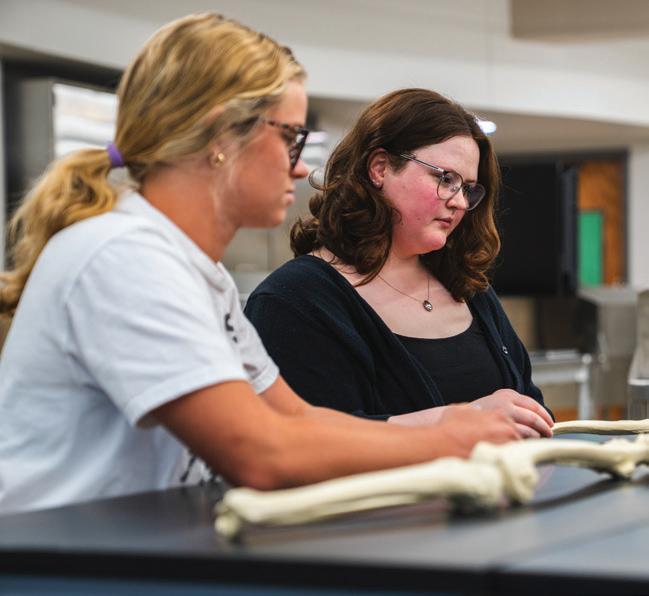
Students are benefiting from clearer visibility, stronger collaboration, and access to digital tools that reinforce learning. The lab also supports undergraduate research opportunities, helping students build critical thinking skills alongside technical knowledge.
“Our goal is to prepare students for success beyond FHSU,” Phelps-Durr added. “With this facility, they gain both the confidence and the experience needed to excel in competitive healthcare and graduate programs.”
Funded through state support, grants, and donor contributions, the project demonstrates FHSU’s continued commitment to providing high-quality, transformative educational experiences.
BY DAWNE LEIKER
FOR MANY STUDENTS, scholarships help make college affordable. For the communities of rural Kansas, the Northwest Kansas Learn and Live Scholarship has become something much larger: an investment in the future workforce, local schools, hospitals, and families.
Since the scholarship was created in 2019, the Northwest Kansas Learn and Live Scholarship has provided nearly $1 million in support to Fort Hays State University students through funding from the Dane G. Hansen Foundation. The program was designed to help students from Northwest Kansas earn college degrees and return to their hometowns to serve in critical fields, such as education and healthcare.
Today, the impact can be measured not only in dollars awarded, but by the graduates who chose to stay, return, and invest their talents where they are needed most.
The personal stories of scholarship recipients represent the broader impact of the Northwest Kansas Learn and Live Scholarship. Each graduate followed a different path, but all share a common outcome: they are using their education to strengthen rural Kansas.
Whether providing mental health services, supporting families, providing healthcare, or helping children find their voices, these professionals are filling critical workforce needs while serving the communities they call home.
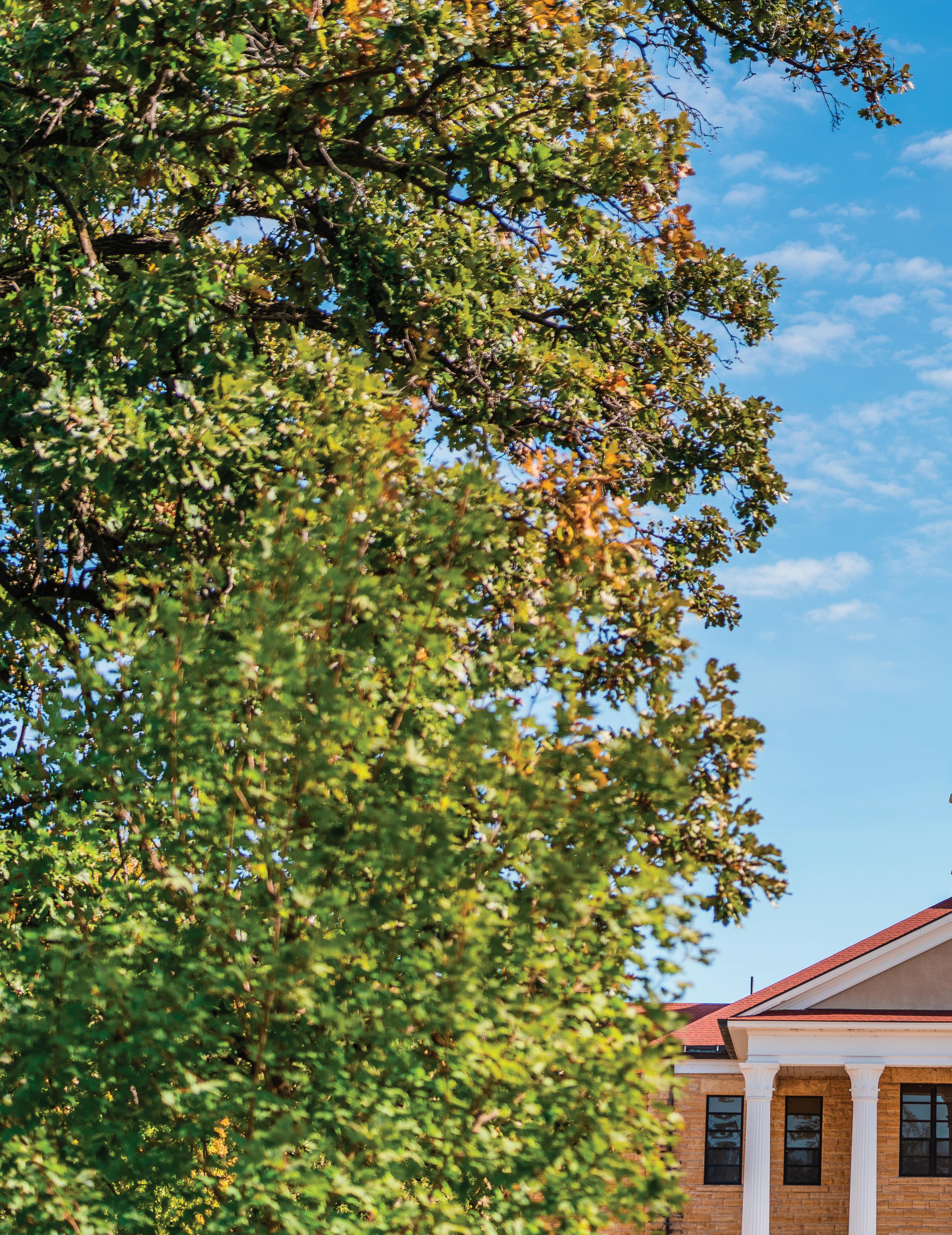
Feil, who grew up in Saline County, completed her Master of Social Work degree at Fort Hays State University in 2025. Without the financial demands of working multiple jobs to support her education, she was able to devote more time and energy to her studies.
Today, Feil serves as the student-family support coordinator for USD 240 Bennington Schools, helping students and families navigate challenges and promote academic success and wellbeing. Returning to the school system that helped shape her own life has meant a lot.
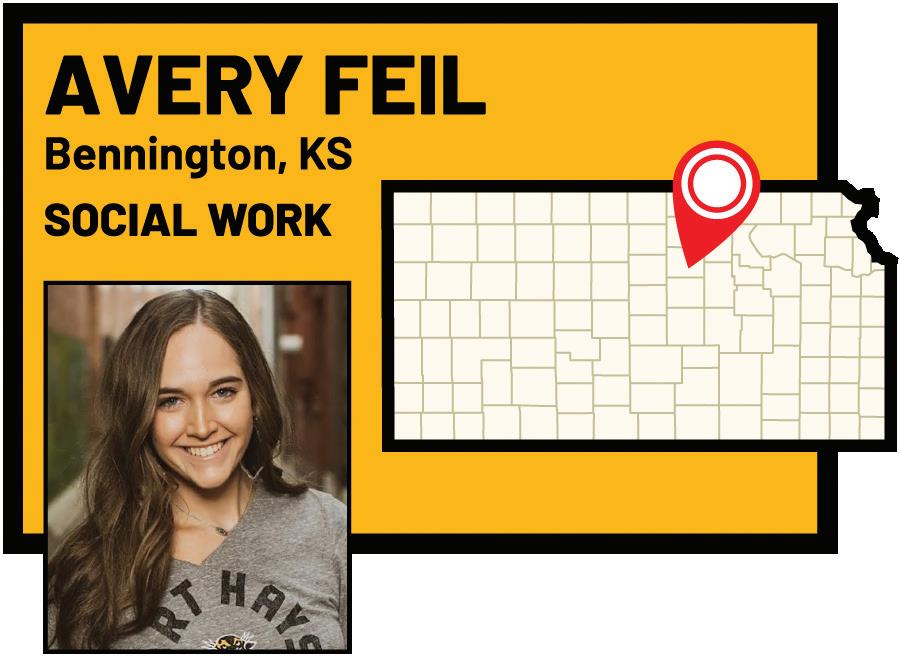
“Just coming back and being in this role has been really meaningful,” she said. “This is home to me.” Her work includes providing one-on-one support for students who may be struggling academically or socially.
“Pulling them out of the classroom and intentionally putting focus into that one student makes a world of difference,” she said.
The confidence and skills she gained through her graduate education at FHSU inspired Feil to launch a summer meal program in Bennington. Last summer, the initiative served approximately 120 meals each week throughout a 10-week period, helping address food insecurity while maintaining connections with students during the summer months.
“Being able to see our students over the summer was good, because we worry about them,” she said. “Deepening those connections is meaningful.”
Like many scholarship recipients, Feil felt the pull of home.“It’s hard to leave a small town,” she said. “They call you right back.”
Gillespie transferred from Dodge City Community College to Fort Hays State University, earning credentials in radiologic technology, ultrasound, and medical diagnostic imaging. Now, she serves patients in Western Kansas while remaining deeply connected to her hometown.
“I love that family aspect,” she said. “It feels like you’re working for friends and family, not just random patients.”
Her commitment to community was tested in 2025 when a devastating tornado struck Grinnell. While sheltering in her parents’ basement, she experienced firsthand the destruction that affected much of the town. As the community rebuilds, she remains optimistic about its future.
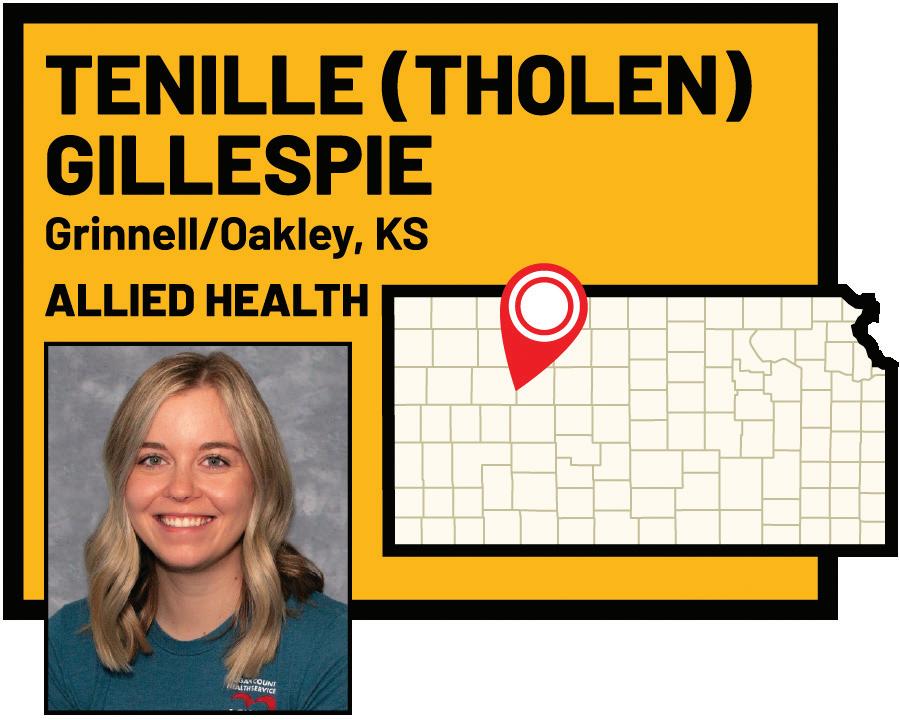
To Gillespie, investments made by the Dane G. Hansen Foundation represent hope. “To see the foundation invest in small-town living gives hope that things like schools and hospitals can continue to grow,” she said. “You see people who have benefited from Hansen Foundation scholarships everywhere.”
Kennedy was completing her bachelor’s degree in medical diagnostic imaging when she decided to pursue an additional ultrasound credential. The financial challenge of returning to school, however, created uncertainty.
The Learn and Live Scholarship helped make that decision possible. Following graduation, she successfully completed three professional licensing exams, qualifying her to perform vascular, abdominal, and obstetric/gynecologic sonography.
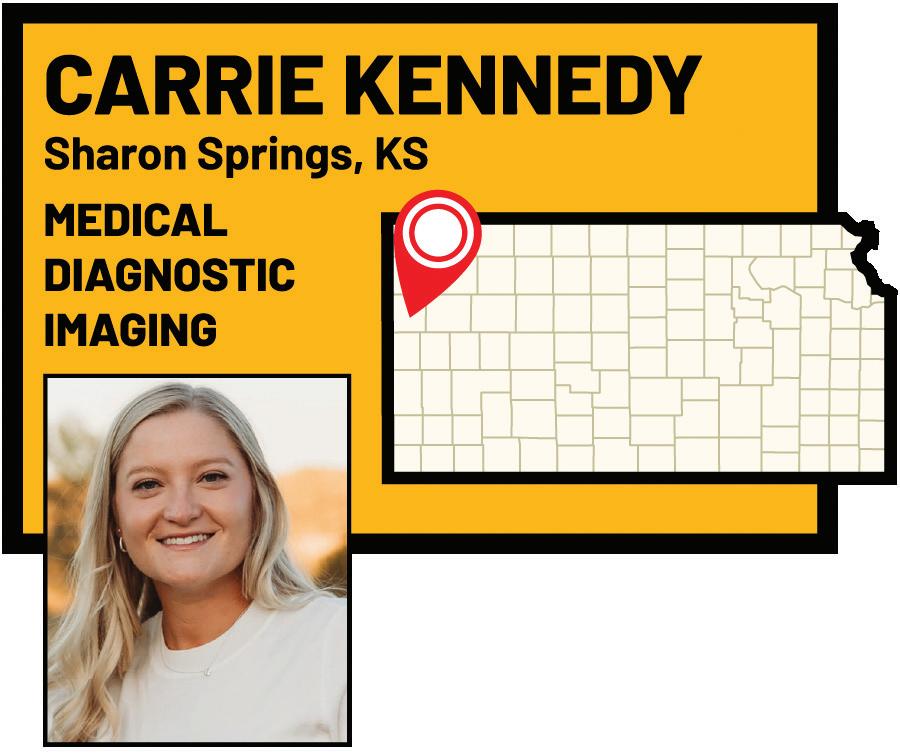
She now lives in Sharon Springs, working at both Citizens Medical Center in Colby and Greeley County Health Services in Tribune. “It’s a cool thing,” she said. “You get exposed to so many things you wouldn’t expect to see in a small community.”
Kennedy also received Hansen Foundation scholarships as an undergraduate student, support she says helped reduce financial pressures and allowed her more time for academics.
“The Dane G. Hansen Foundation is focused on Western Kansas as people and communities and not so much as just a location,” she said. “I’m extremely grateful to be someone who has benefited from that.”
Born and raised in Concordia, Kearn completed her graduate degree at FHSU in speech-language pathology in 2025. Today, she serves students across two school districts in Republic and Cloud counties, traveling among seven buildings and providing therapy services to more than 50 children.
“When I got the email that said I got the scholarship, I absolutely cried my eyes out,” she said. “It was a blessing.” Without the scholarship, she believes she would have had to delay her education.
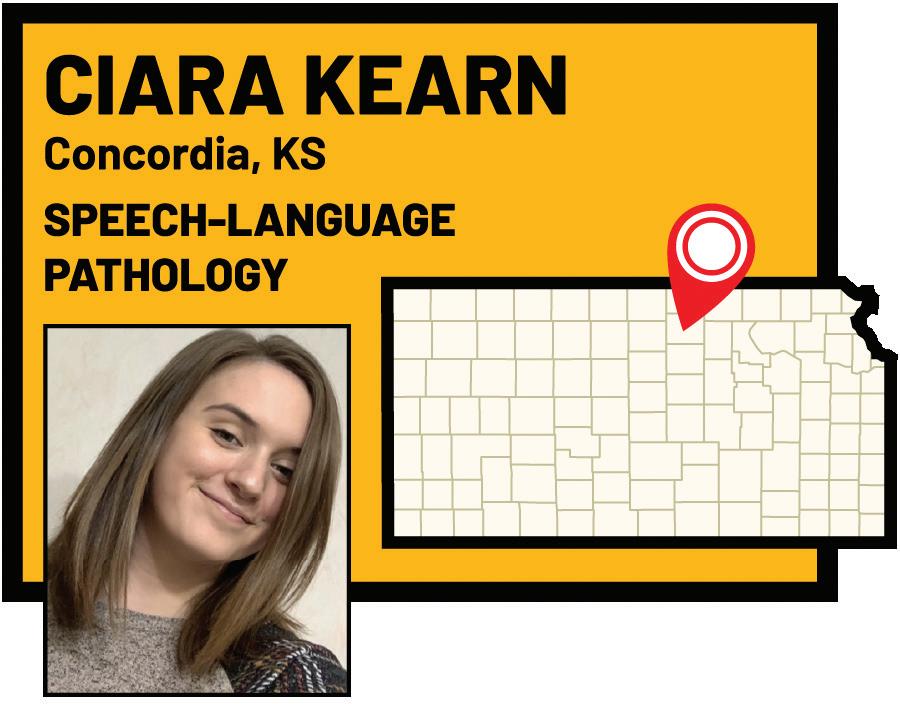
Instead, she entered the workforce immediately following graduation and now helps children develop communication skills that will benefit them for life.
“I feel like I have a better foundation for my work than others from different universities,” she said. “FHSU really set me up well.”


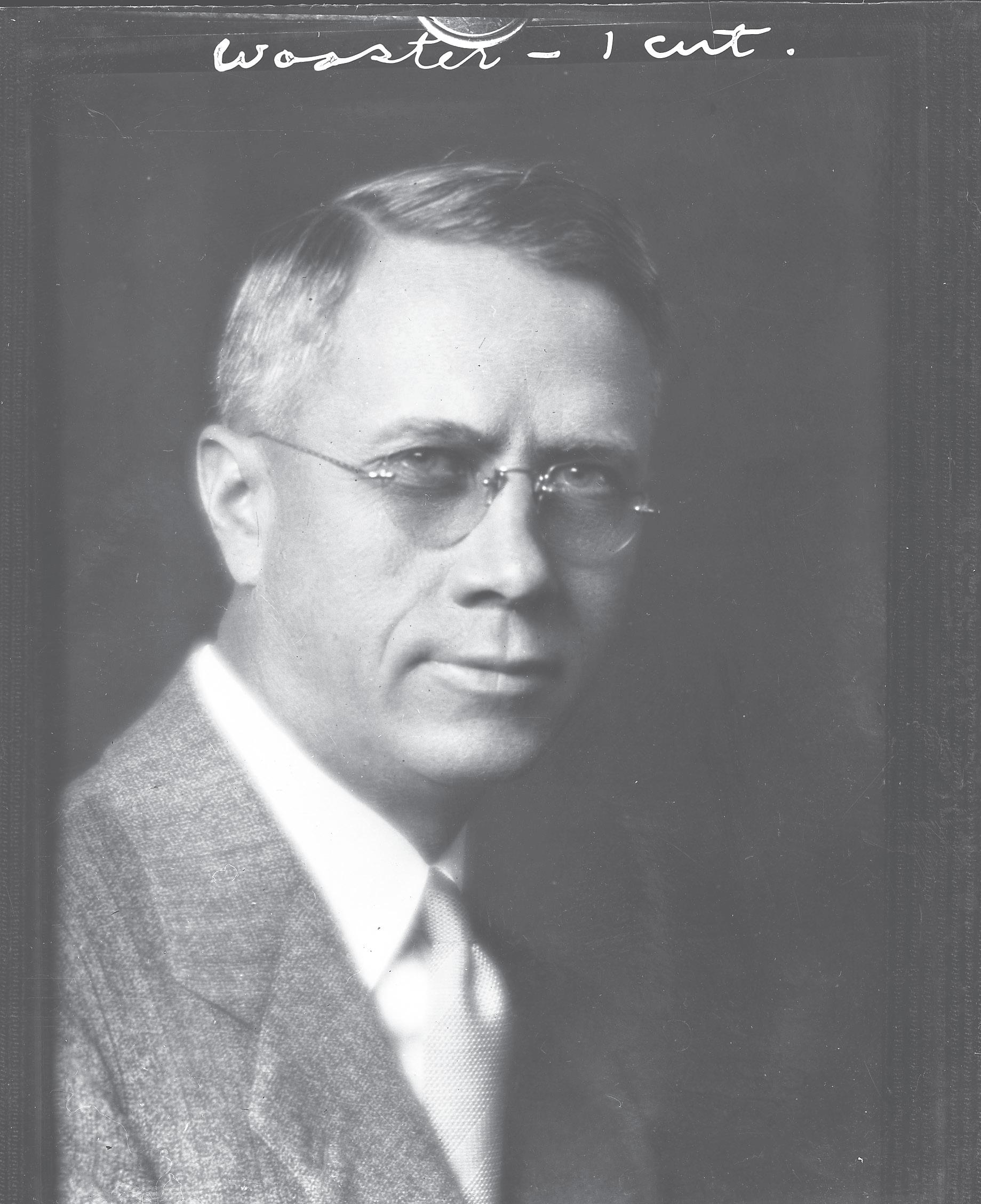
Named for the fourth president of Fort Hays State University, the Lyman Dwight Wooster Society seeks to honor individuals who arrange gifts to the FHSU Foundation through planned giving.
By including the FHSU Foundation in your estate plans through a will, trust, life insurance, annuity, or other means, you become a cherished member of the Fort Hays State University Wooster Society.
If you had a professor at Fort Hays State University who profoundly influenced your way of thinking or career ambitions, your legacy belongs here.
If you received a scholarship allowing you to earn your degree at FHSU, your legacy belongs here.
If you boldly and proudly represented Fort Hays State on the field or cheered for our Tigers on the sidelines, your legacy belongs here.
If you were a student leader who found your voice on campus or were involved in a club or student organization that broadened your perspective, your legacy belongs here.
If you found your passion at FHSU and are grateful for the people you met, the experiences you enjoyed, and the educational opportunities you received, your legacy belongs here.
WHAT MARK WILL YOU LEAVE BEHIND? WHAT WILL YOUR LEGACY BE?
If you have not yet arranged your planned gift, we encourage you to do so. As a member of the Wooster Society, you join a distinguished tradition of alumni and friends whose support shapes the future of Fort Hays State University and creates opportunities for generations to come.
If you have already included the FHSU Foundation in your estate plans, please let the Foundation office know if you have not already done so. Sharing your intentions allows them to celebrate and recognize your commitment, while also helping you stay informed about meaningful benefits associated with your planned gift, such as potential tax advantages, life income opportunities, and the enduring legacy your support will create.
Become a member of the Wooster Society by including the Fort Hays State Foundation in your estate plans. Arrange a no-obligation visit to discuss further details and potential tax advantages that may be available to you.
Brent Williams Assistant VP of Development FHSU Foundation
b_williams19@fhsu.edu
785-628-5719
“There were always leaders with courage and hope to point the way.” Lyman Dwight Wooster -
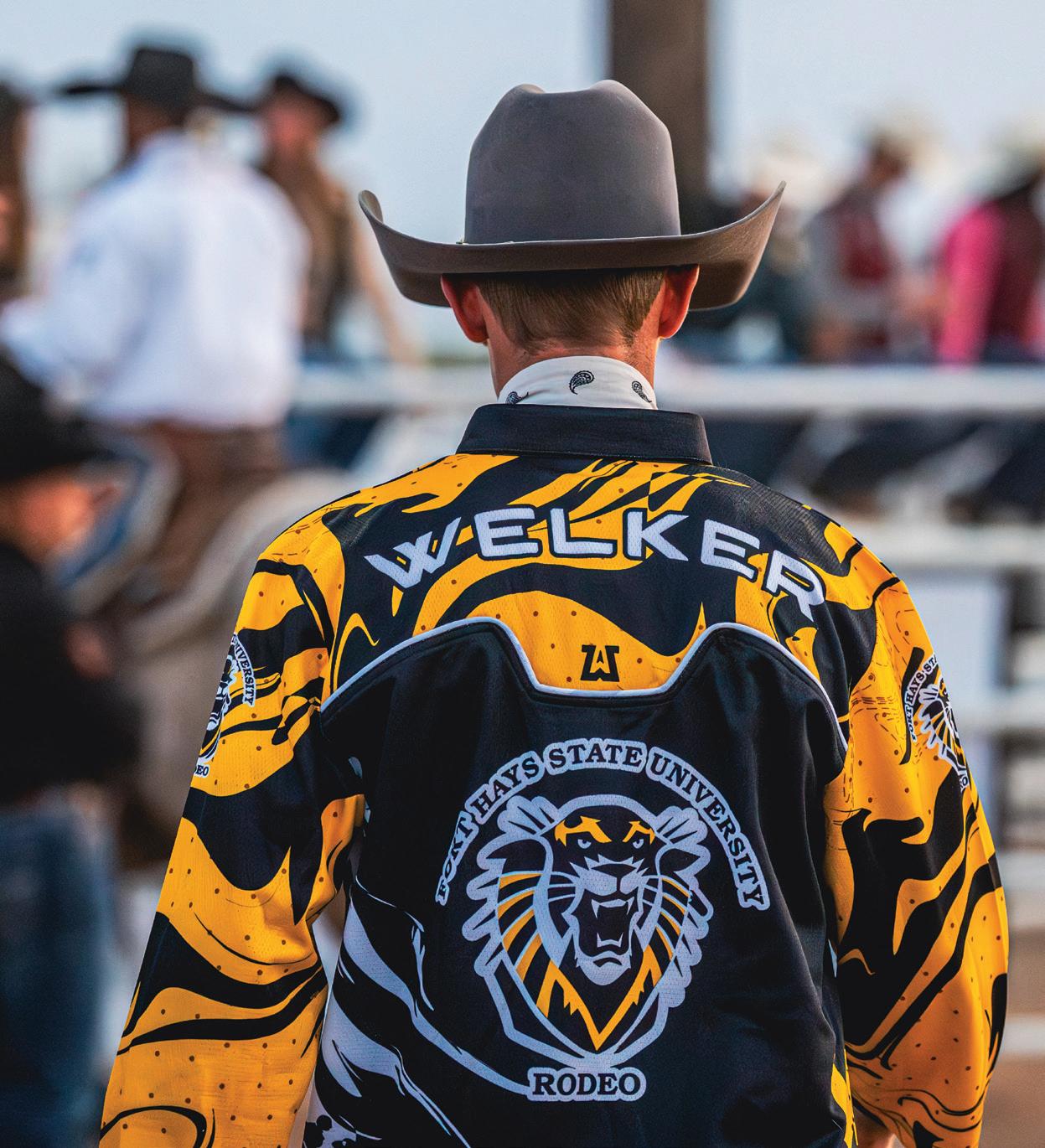
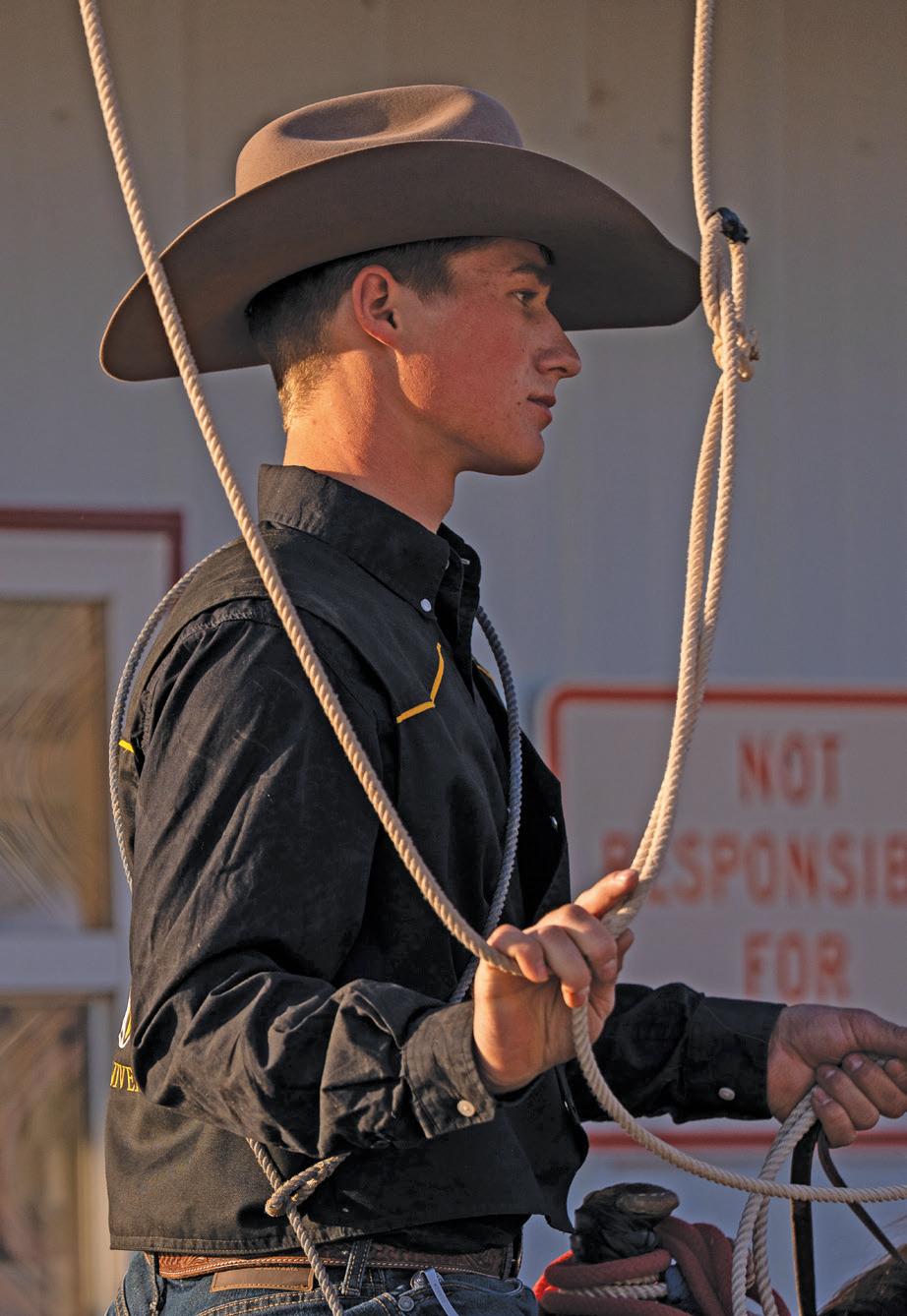
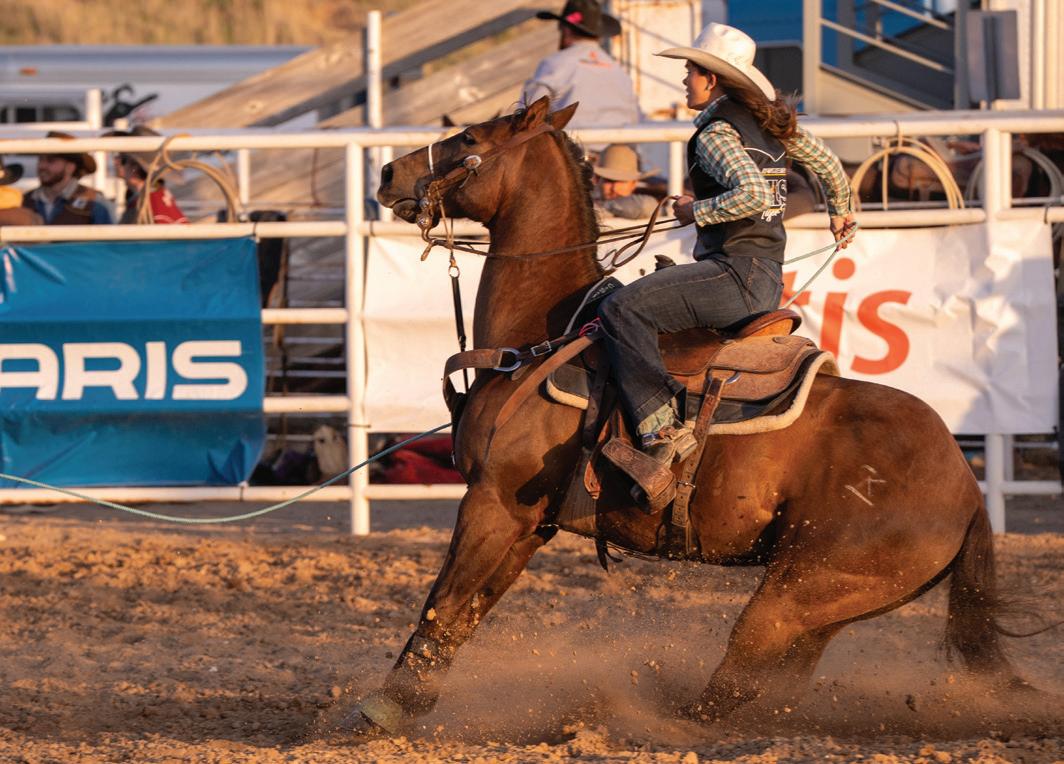
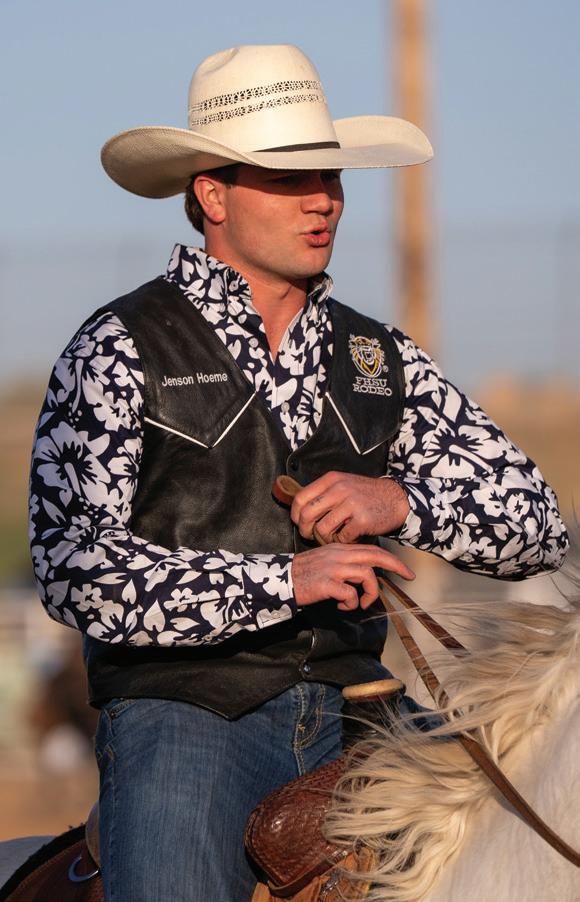
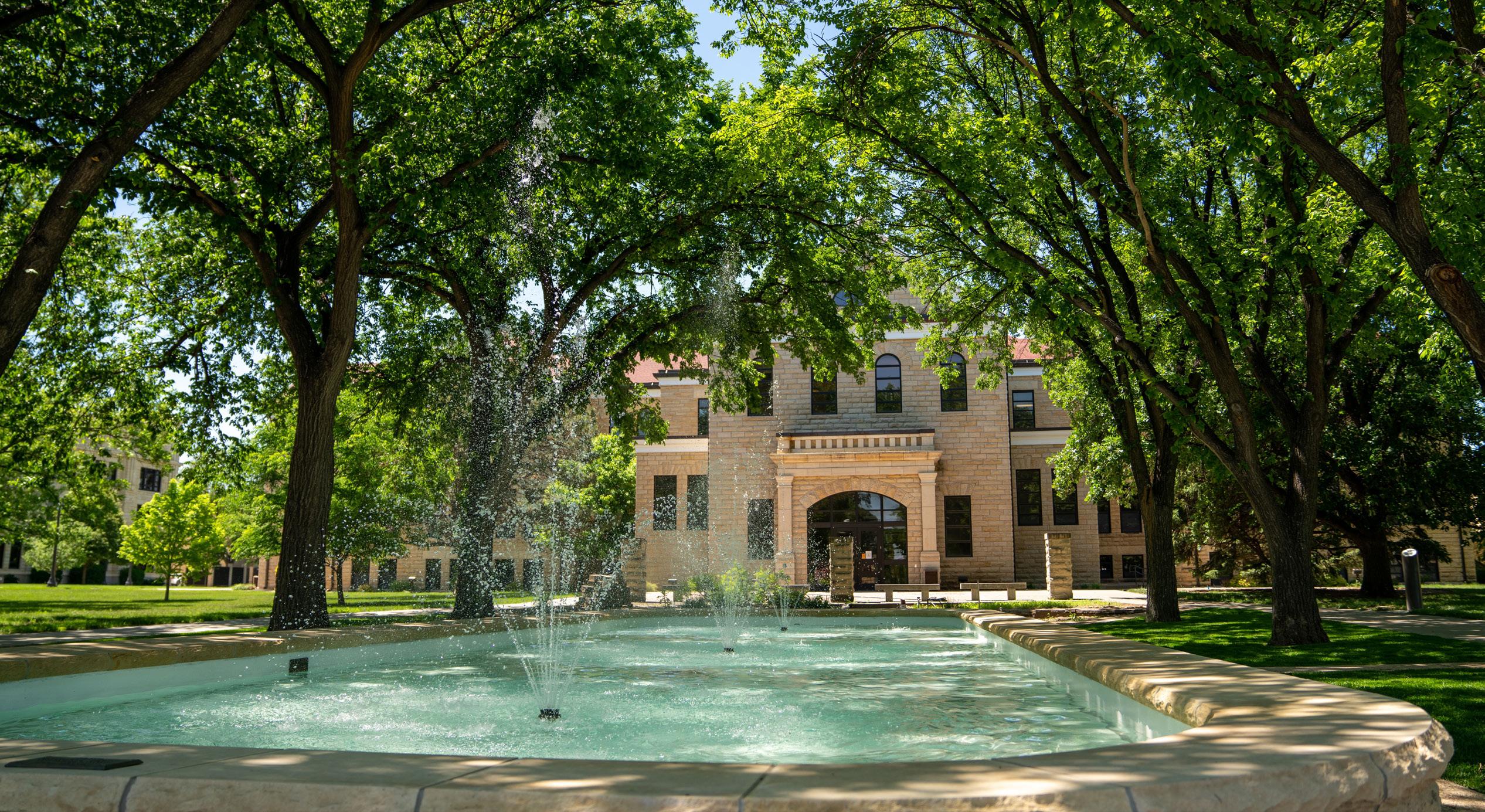
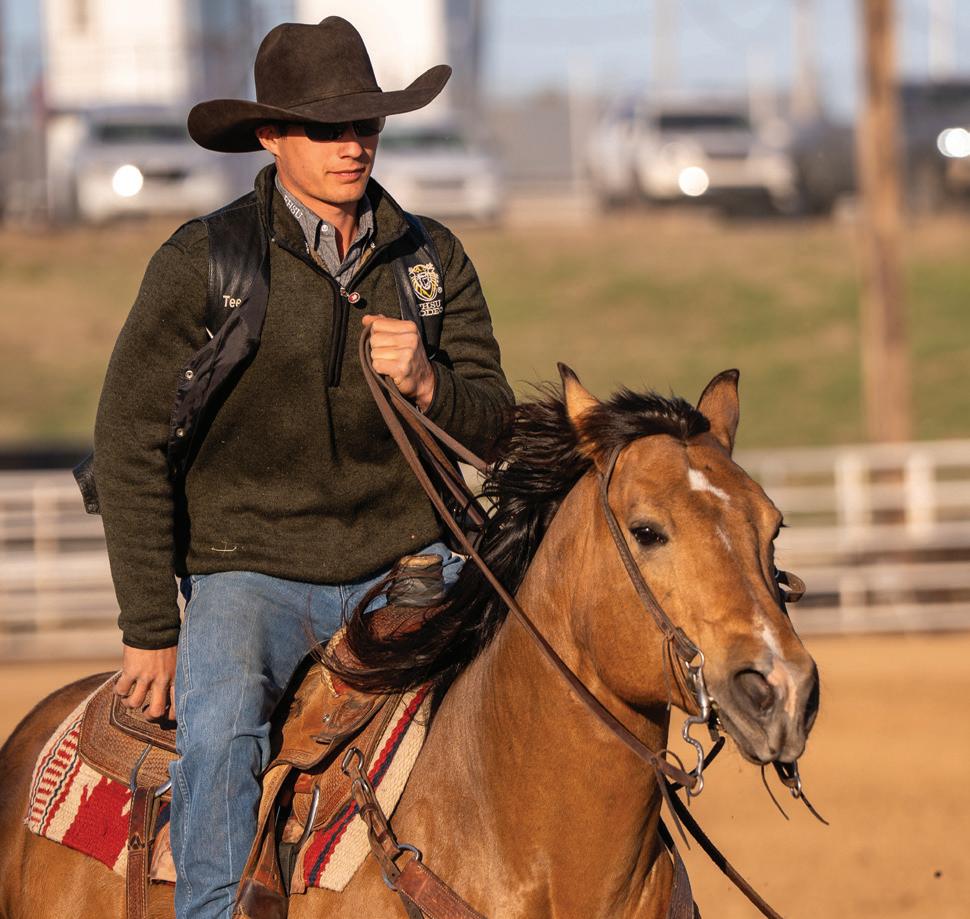
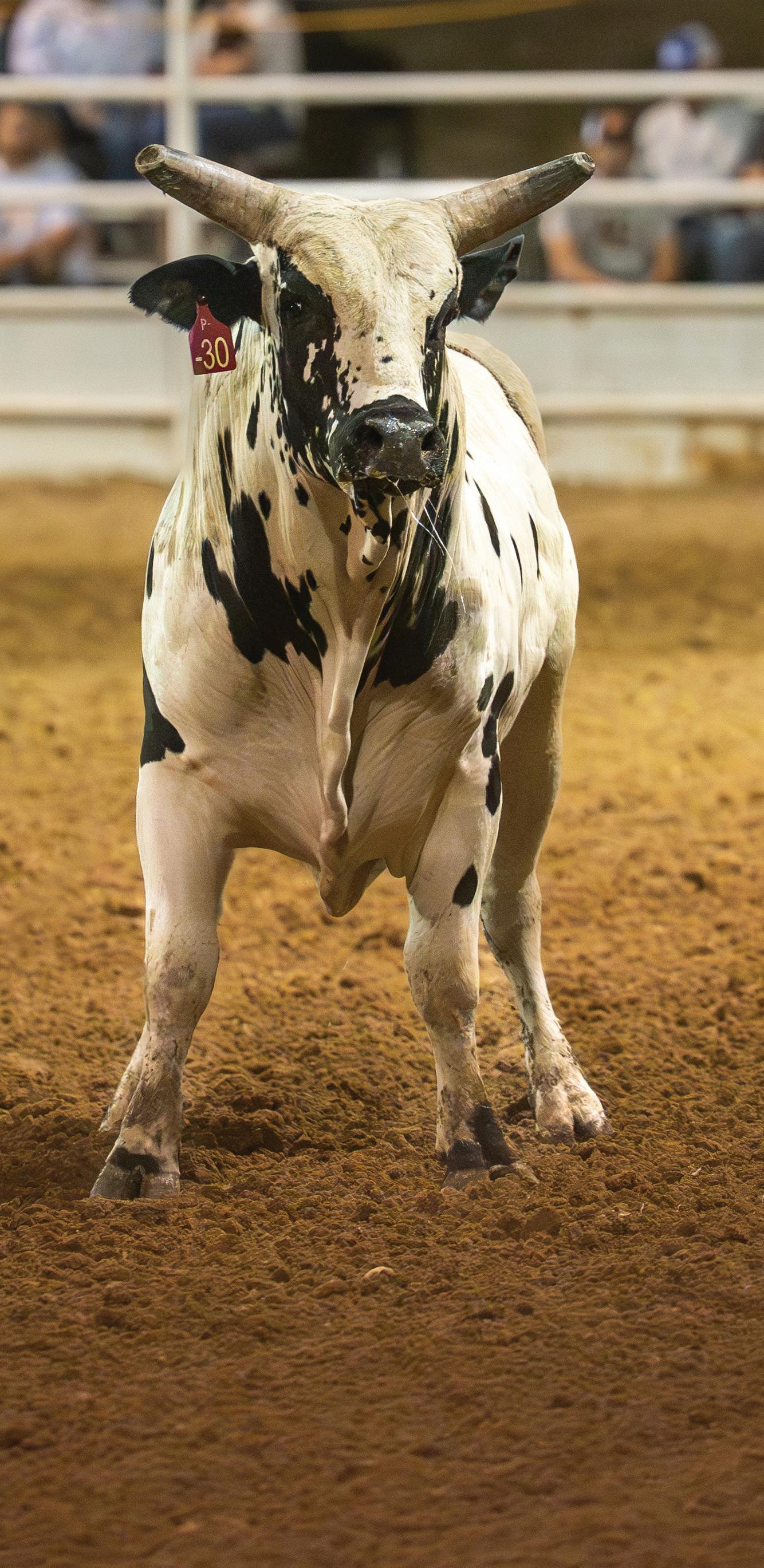
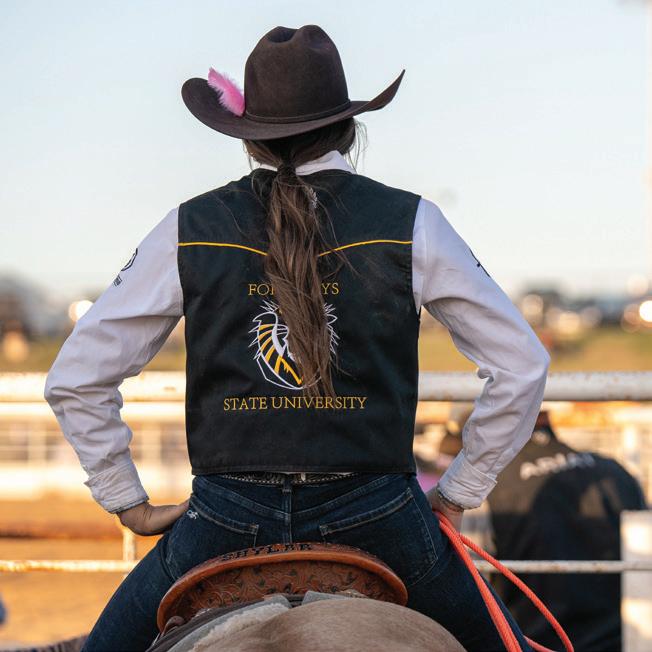
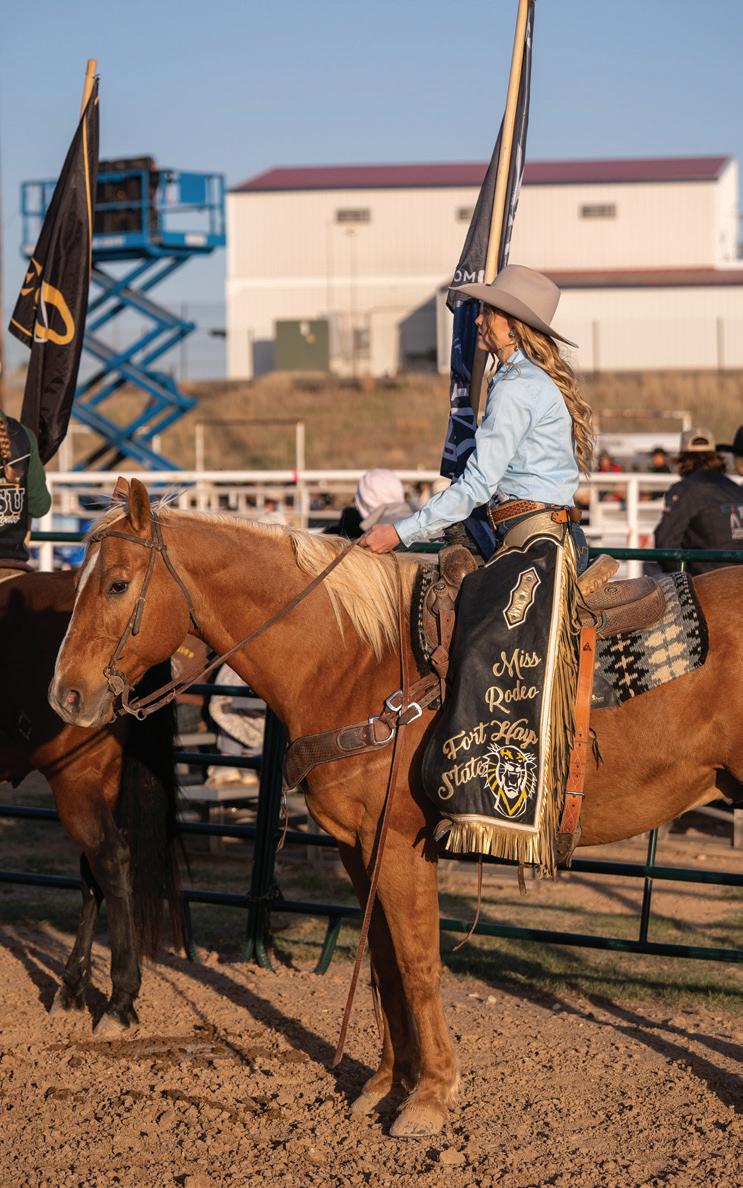
FORT HAYS STATE UNIVERSITY’S RODEO CLUB AND TEAM celebrated a major milestone this spring by hosting the 60th Annual NIRA Rodeo at the Ellis County Fairgrounds in Hays. The three-day event brought together hundreds of collegiate athletes, alumni, supporters, and community members to honor six decades of rodeo tradition, competition, and excellence at FHSU.
For the Fort Hays State Rodeo Club and Team, the anniversary represented far more than a weekend of competition. It marked 60 years of growth for the program. After moving to the Ellis County Fairgrounds last year to accommodate increasing attendance and participation, the expanded venue once again provided an enhanced experience for contestants and spectators alike.
To commemorate the milestone anniversary, generous sponsorship support made free admission possible for this year’s rodeo, allowing community members of all ages the opportunity to experience collegiate rodeo firsthand. Fans filled the stands throughout the weekend, honoring the rich history of the FHSU Rodeo Team and the future of the program.
THIS YEAR’S RODEO welcomed
500–600 contestants from nearly
20 colleges and universities throughout the Central Plains Region. Featuring a full slate of roughstock and timed events, competitors battled for regional standings and national qualification opportunities through the National Intercollegiate Rodeo Association.
“This milestone represents generations of studentathletes, coaches, alumni, and supporters who helped build this program into what it is today.”
— RODEO COACH TREVOR MEIER
FOUNDED IN 1964, the FHSU Rodeo Club has been an important part of campus, providing students with opportunities to compete while building leadership, discipline, and sportsmanship both in and out of the arena. Over the years, the program has grown from a small student organization into one of the region’s most respected collegiate rodeo programs, consistently attracting talented athletes from across Kansas and beyond.
For a video highlight of this year’s rodeo, scan here:

BY CYNDI LANDIS
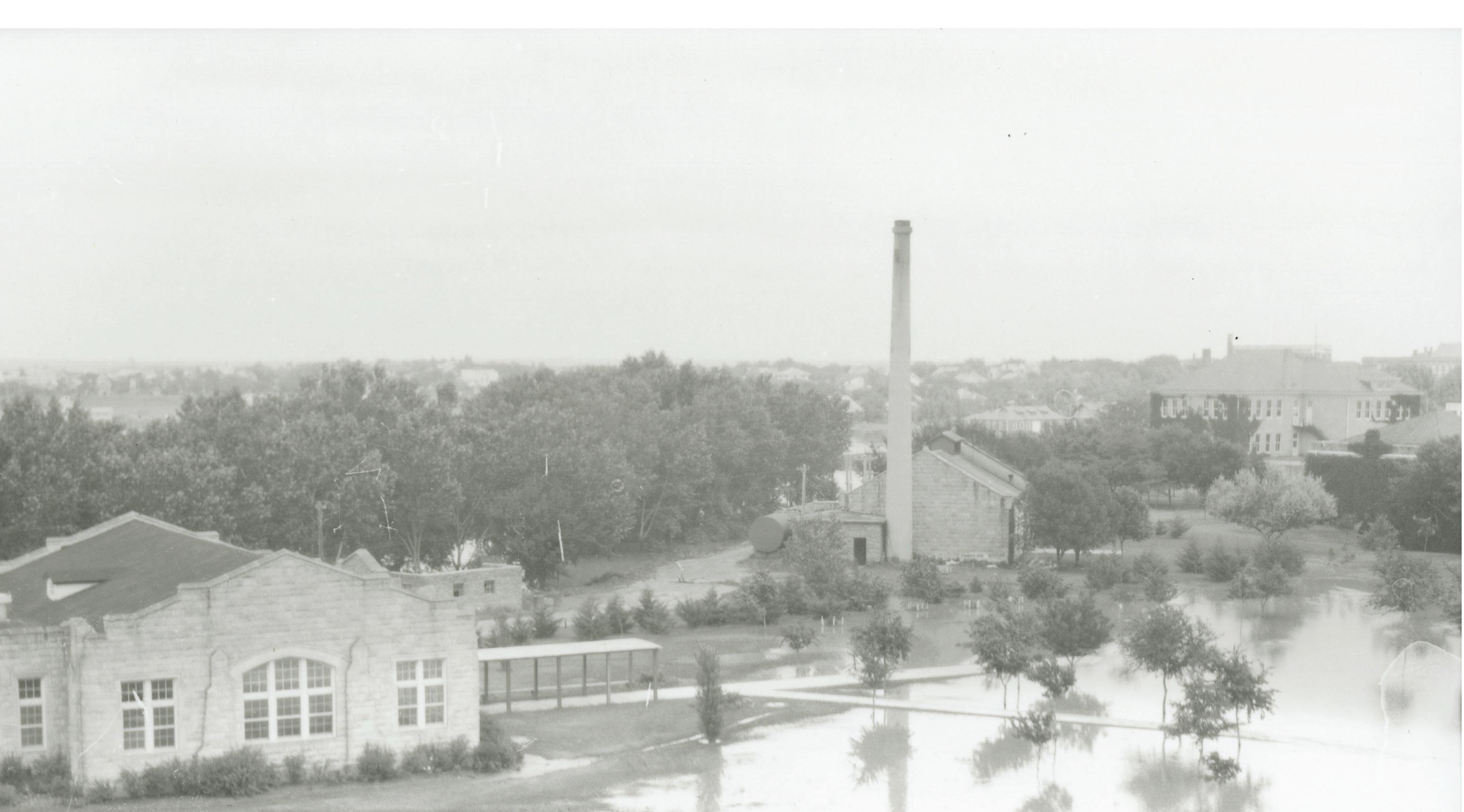
THIS YEAR MARKS THE 75TH ANNIVERSARY of the 1951 flood, a disaster that devastated both campus and the town of Hays while sparking much-needed improvements in local flood protection. Looking back at this historic event reveals the resilience of a campus community that refused to let mud and debris dampen the Tiger spirit.
As the spring semester came to a close in May of 1951, students of Fort Hays Kansas State College were ready to celebrate. The post-war boom was in full swing, and graduates were preparing to walk across the stage to receive their hard-earned diplomas. However, on the night of May 22, 1951, the joyful rhythm of campus life came to an abrupt halt when a massive cloudburst just west of Hays sent a wall of water down Big Creek, transforming the scenic waterway into a destructive force.
Big Creek, a tributary of the Smoky Hill River, has always been central to the identity of campus, but it has also periodically plagued the college with flooding when it proved too narrow for heavy rains. That night, Big Creek broke its banks, causing flash flooding that blindsided campus and the southern side of Hays.
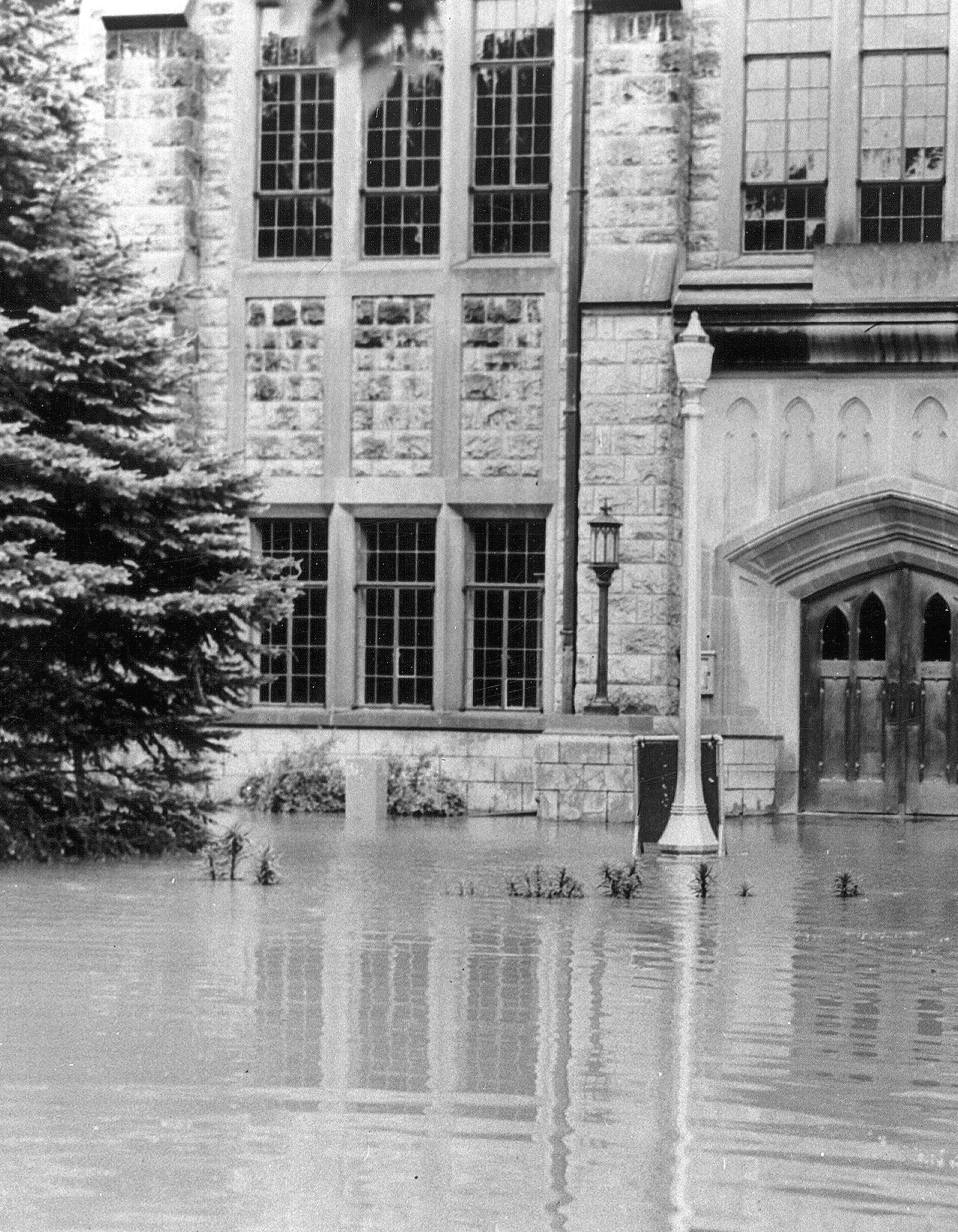
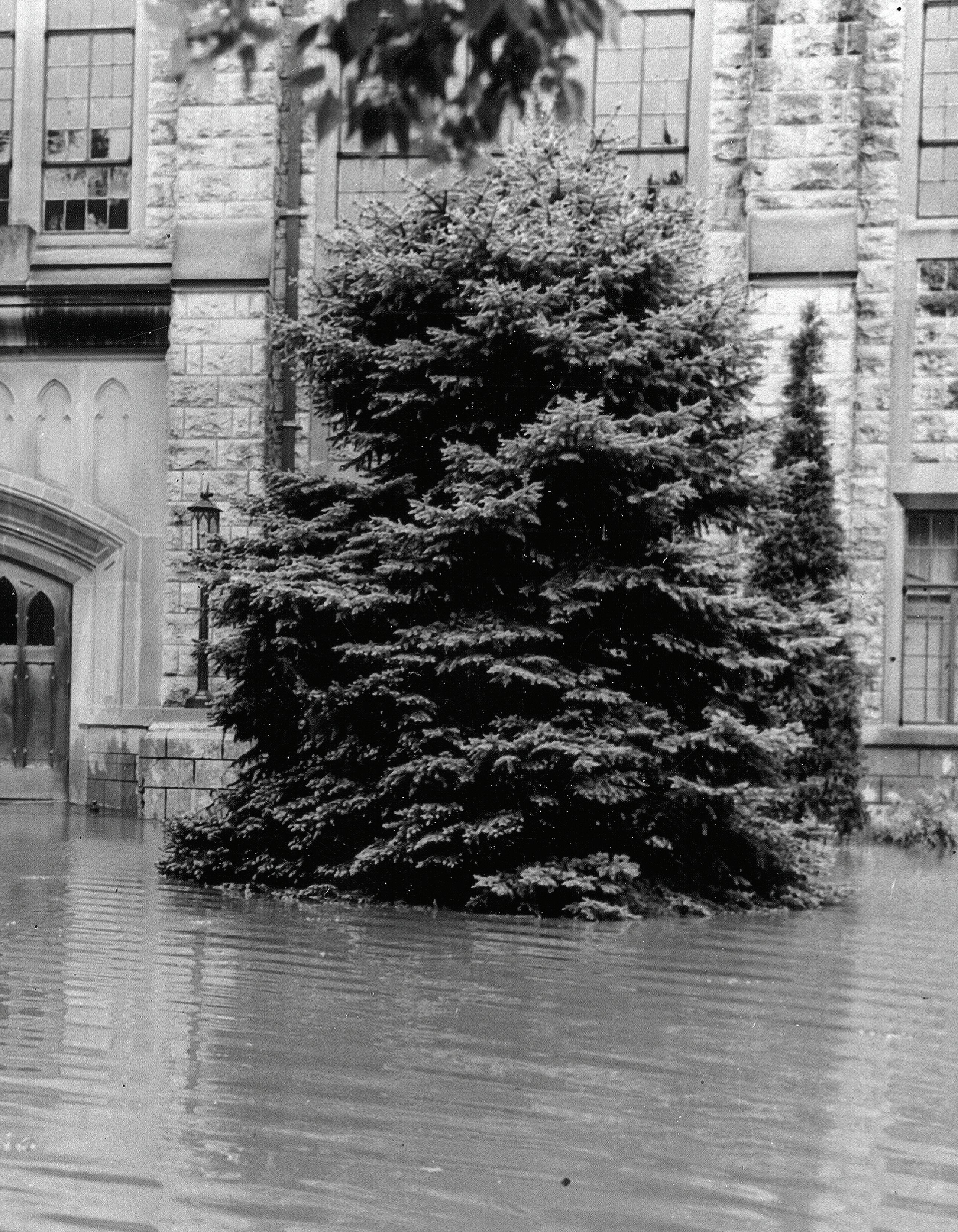
Cars were washed away, and campus buildings that had stood for decades were suddenly under several feet of muddy water.
Picken Hall was severely damaged. Because its first floor was situated four feet below ground, the entire level was submerged. Floodwaters inundated the network of steam tunnels, causing extensive interior damage to the system that provides heating and cooling across campus. The excavation site for the new Davis Hall completely caved in.
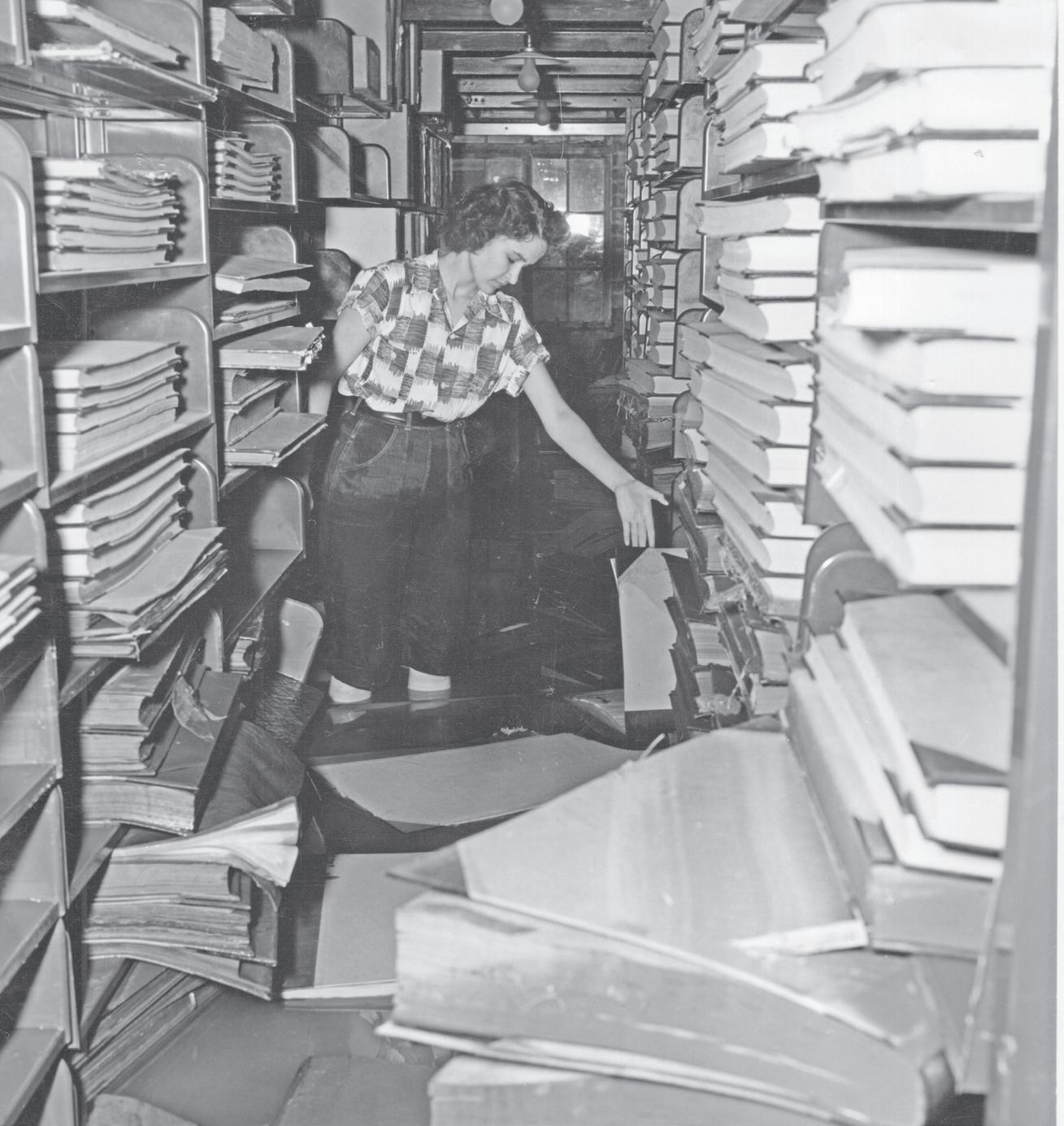
Present day McCartney Hall was one of the hardest-hit facilities. At the time, it was home to the original Forsyth Library (now known as Tebo Library) and the Fort Hays College Museum (now known as the Sternberg Museum of Natural History). Floodwaters reached 16 inches deep, wreaking havoc on the museum and library collections on the first floor.
In the museum, display cases were ruined, and some of the fossils, and taxidermied animals and birds were covered in mud and water. Many handprinted labels and record books were lost or damaged beyond repair.
The library sustained similar losses, with many books being ravaged by the floodwaters. Beyond physical damage, the greater tragedy was the loss of six
lives, including two individuals with close ties to the university community. Dr. Charles Fisher Wiest, a beloved retired professor of philosophy and religion who had joined the faculty in 1920, perished in the waters. Weist would later be memorialized in the naming of Wiest Hall in 1961. The flood also claimed the life of the 14-year-old stepson of President Emeritus Lyman Dwight Wooster, Robert Rippeteau, who was killed in the basement of their home on West 7th Street, when a wall collapsed under the pressure of the water.
By morning, it was clear that the academic year could not continue. With dormitories uninhabitable and classrooms filled with silt and debris, the college canceled final examinations and the annual commencement ceremony.
Even though the semester ended abruptly, faculty members prepared grades based on existing coursework, and degrees were granted in absentia. Graduates of the Class of 1951 were eventually honored during summer school commencement later that year.
Merely a month after the initial flood, nature struck again. On June 21, 1951, Big Creek rose once more. While lives were spared in this second flood, it reinforced a
grim reality that the college wasn’t safe on the flood plain without permanent protection.
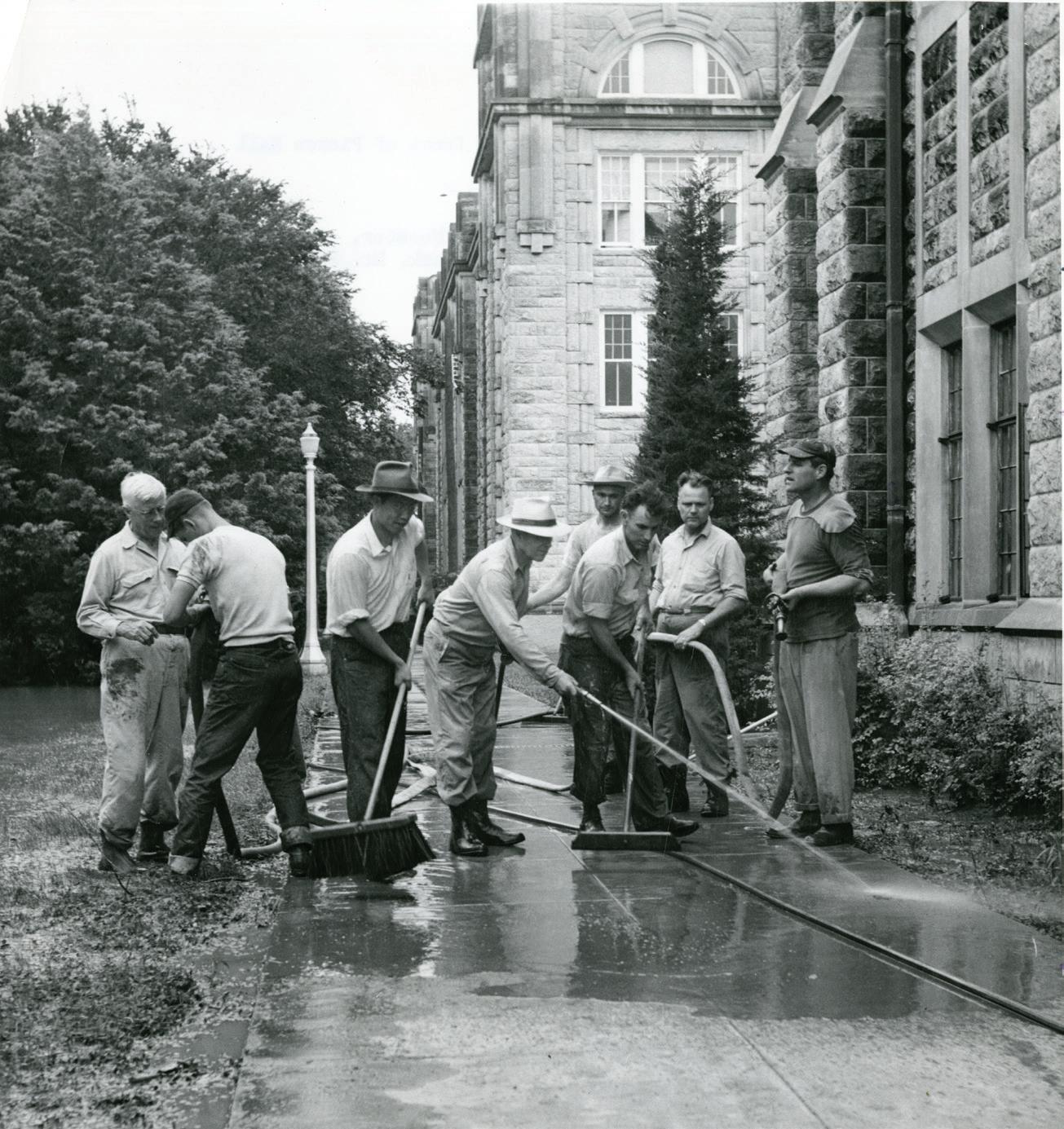
President Cunningham estimated that recovery would require nearly $385,000 for emergency repairs, building rehabilitation, equipment replacement, and flood protection. However, the State Emergency Fund Board allocated only $250,000 toward recovery efforts. To make up the difference, the college used its own funds and labor from maintenance crews, which paved the way for a massive engineering project.
In the aftermath, the task of protecting the campus fell to Raymond Brooks, the coordinator of physical plant planning. Brooks, who had been on campus since 1935 and designed Lewis Field Stadium, envisioned a system of levees, flood gates, and channels to direct excess water away from campus.
Brooks coordinated the university’s flood control plan closely with the City of Hays, ensuring the college’s defenses integrated with the city’s overall flood control plans. Teams from the U.S. Army Corps of Engineers and the consulting firm Servis & Van Doren also reviewed the plans. The future construction of a US 40 bypass, built in 1953 by the State Highway
water
Commission, was also considered during flood prevention planning.
The project was a massive undertaking. Crews moved 300,000 cubic yards of dirt to clear and straighten Big Creek’s channel and construct a high levee around the campus perimeter. Even a national steel strike in 1952 couldn’t stop them. To keep the project on schedule, the college used concrete pipe when steel was unavailable.
Rain tested the levee again in the mid-1960s and again in 1993, when flood waters rose to within two feet of the top of the embankment. Both times, the campus remained dry.
Today’s students walk on the 1.8-mile dike trail between Big Creek and campus, perhaps without realizing the tragedy and the toil that necessitated its construction. For the alumni of 1951, the flood remains a defining moment.
Three-quarters of a century have passed since the waters receded, yet the memory of that day remains etched into the community. We remember the lives lost and celebrate the innovation that was born from a campus and a community that refused to be washed away. True grit can weather any storm.
LISTEN to a first-hand account of the 1951 flood in a Tiger Tale featuring Dolores Earnest (Ingram): https://bit.ly/51Flood

The Gary Sinise Foundation serves our nation by honoring defenders, veterans, first responders, their families, and those in need. They do this by creating and supporting unique programs designed to entertain, educate, inspire, strengthen, and build communities.
Valor Scholars is the Foundation’s higher education initiative supporting spouses and children of fallen or severely wounded veterans as they pursue college degrees.
Through this partnership:
• The Gary Sinise Foundation provides scholarship funding for eligible students.
• Fort Hays State University matches those funds through institutional scholarships or donor-supported funds.
• Students receive coordinated support through the university’s military or veteran services office.
This model ensures that every scholarship dollar creates twice the impact while creating an ecosystem of care that supports students every step of the way.
BY DAWNE LEIKER
SUPPORTING STUDENTS like CoCo Bates and Faith Carnahan is the mission behind Valor Scholars, a program of the Gary Sinise Foundation that partners with Fort Hays State University to provide scholarship support for spouses and children of severely wounded or fallen veterans.
“Many military families aren’t just pursuing higher education – they’re rebuilding life after sacrifice, loss, or profound disruption,” said Kelli CampbellGoodnow, senior manager of scholarships for the Gary Sinise Foundation. “When education costs outpace available benefits, opportunity slips further out of reach, and we’re here to bridge that gap.”
For Campbell-Goodnow, the work is personal. After losing her husband in a military helicopter crash in 2016, she experienced firsthand how quickly life can change and how important educational support can become.
For students like Bates and Carnahan, that support represents more than financial assistance. It provides stability, momentum, and the ability to continue advancing toward education and career goals.
UNCERTAIN, CoCo Bates chose not to stand still. She chose to reinvent herself.
Following a variety of careers from teaching to real estate, Bates found herself navigating a new chapter abroad with her husband, Deitrick. He was a U.S. Army veteran who had served in Iraq. He suffered from PTSD and during the COVID-19 pandemic, his symptoms intensified, eventually forcing him to take unpaid leave from work. Faced with mounting financial pressure, the couple made an unconventional decision: they moved abroad to reduce living expenses, first to Costa Rica and later to Panama.
While adjusting to life in a Spanishspeaking country and balancing the responsibilities of caring for her husband, Bates discovered FHSU Online and decided to pursue a degree in Spanish.
Finding a way to afford school was another hurdle. Through Fort Hays
State University’s financial aid portal, Bates discovered the Valor Partners Scholarship, which supports spouses and children of severely wounded or fallen veterans.
“The Valor Partners Scholarship opens up an opportunity for me that I wouldn’t have otherwise,” Bates said. “Education represents far more than career advancement. FHSU Online classes allow me to have a social outlet to take my mind away from the caregiver role that I’m constantly in. That is a blessing.”
Returning to college at 42 came with challenges, especially in an online environment, but Bates said the support she has received from FHSU faculty and staff have made all the difference.
Bates is continuing her education while creating a more manageable life for her family – proof that sometimes the path forward begins with the courage to start again.
FAITH CARNAHAN of Harper, Kan., has found more than financial assistance through FHSU Online and the Valor Scholarship program. She found the support and flexibility needed to move forward.
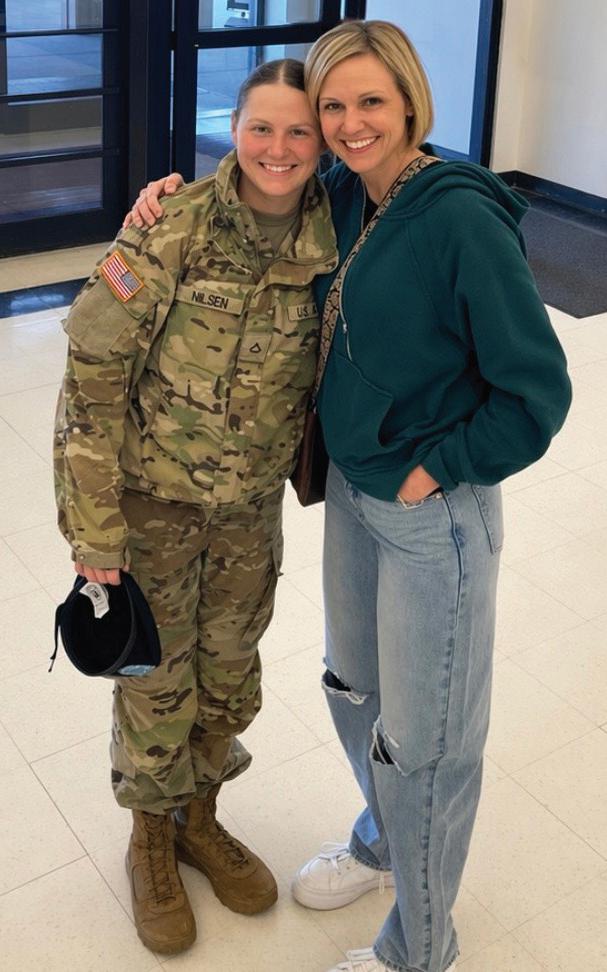
Carnahan recently completed her master’s degree in social work while balancing the demands of military family life. A U.S. Army veteran herself, she comes from a family deeply rooted in military service. Her husband served both in the Army and the Kansas National Guard, and this year, their daughter continued the tradition by graduating from basic training.
“It is neat to see our service pass from one generation to the next,” Carnahan said. “We see it as our ability
to give back, to serve. It feels not so much an obligation, but as a value.”
Receiving the Valor Scholarship helped ease financial pressure and allowed Carnahan to focus more fully on the clinical training required for her social work degree and professional growth.
“The scholarship helped relieve financial pressures,” she said. “With the financial support I was able to focus more on clinical practices. That opened quite a few doors for me.”
She also credits FHSU faculty and military student support services for helping her succeed throughout graduate school.
“The responsiveness and guidance have been huge,” she said.



investments a person can make because they
cholarships are one of the most meaningful create opportunities that extend far beyond
a student's time in college. They remove financial barriers, allowing students to focus on their education, gain valuable experiences, and graduate with less debt. For many, it can be the difference between pursuing their dreams and putting them on hold.
The impact extends far beyond graduation. Student recipients go on to become teachers, entrepreneurs, business leaders, and healthcare professionals who strengthen their communities and contribute to the workforce. By supporting an FHSU student today, you are investing in those who will shape the future of Kansas and beyond.
Creating a scholarship at Fort Hays State is more attainable than many realize. With a gift of $2,500, you can establish an expendable scholarship, or create an endowed scholarship with a $25,000 gift that provides ongoing support to FHSU students for generations. The scholarship can be named in honor or memory of a friend, family member, mentor, or business. This can be a meaningful way to support Fort Hays State University, while celebrating achievements, values, and the people who have made a difference in your life.
More than financial assistance, a scholarship is a lasting expression of generosity and belief in the power of education. They open doors for students and help to ensure that future generations of Tigers have the opportunity to learn, lead, and make a difference.
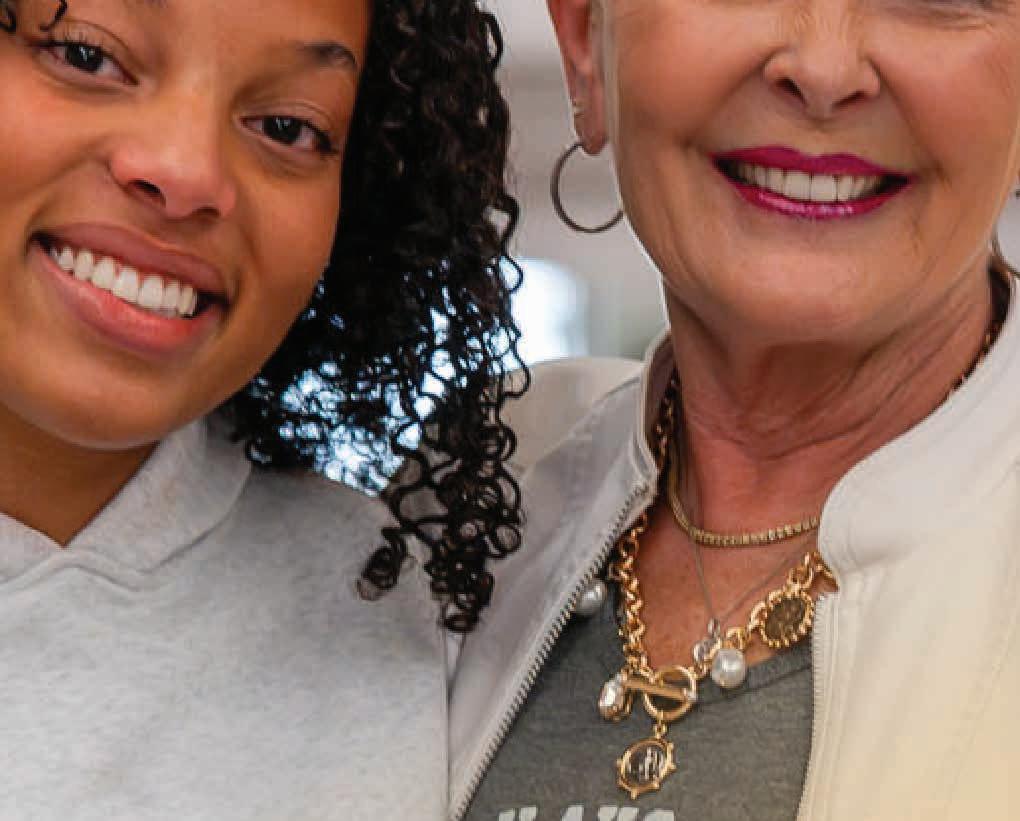
“The Coleen Ellis Career Enhancement Scholarship began as a dream while I was a student at Fort Hays State University. Even then, I hoped that one day I would be able to support a student who resembled me – someone dedicated to learning and growth but in need of financial assistance. As that dream became a goal, I grew even more passionate about creating opportunities that make a fuller college experience possible for students who might not otherwise have access to them.
This full-ride scholarship reflects my belief that financial barriers should never stand in the way of purpose-driven education. I have seen firsthand how the right education, at the right time, can transform not only a career but an entire life trajectory. Supporting Fort Hays State University aligns deeply with my values of forward-thinking education – education that extends beyond the classroom to include clubs, associations, and other experiences that help students grow. FHSU represents a model of higher learning that meets students where they are and prepares them for real-world impact.
My support is not only financial – it is also an investment in people. I love connecting with scholarship recipients as a mentor, so they feel seen, supported, and empowered to pursue excellence without hesitation. This initiative is about legacy. It’s creating a ripple effect in which one opportunity leads to many more. At its core, my “why” is simple: when we invest in people with purpose, we can change outcomes for generations and model the importance of paying it forward. I’m especially excited to be part of Jess’s FHSU journey.
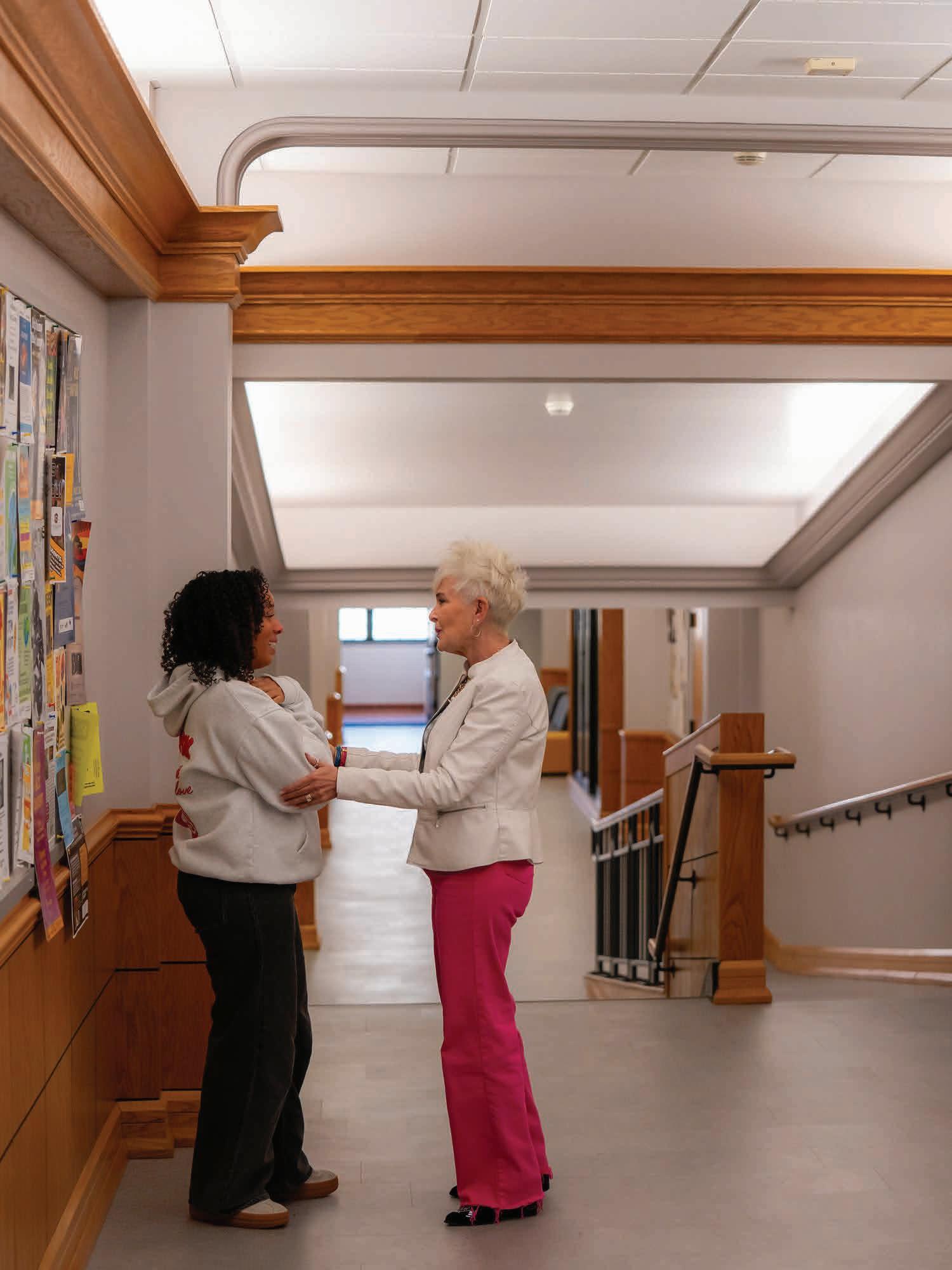
Receiving this scholarship is an incredible honor. Mrs. Coleen’s generosity and kindness are truly inspiring, and it’s clear that she has a meaningful impact on everyone around her. Her dedication to supporting students and investing in their futures means more to me than words can express.
Knowing that someone believes in me enough to support my college journey makes me more thankful than she will ever know and it motivates me to work even harder toward my goals. I am deeply grateful for her support, and hope that one day I can pay this kindness forward and make the same positive impact on others that she has made on me.
BY DR. STACEY SMITH PROFESSOR, TOURISM AND HOSPITALITY MANAGEMENT CHAIR, DEPARTMENT OF APPLIED BUSINESS STUDIES
ANY
WEEKEND, a tourism and hospitality management student might be coordinating logistics for a large-scale event that draws visitors from across the state, working a sporting event, planning a banquet, organizing a conference, or assisting a wedding planner. They might also be facilitating activities for resort guests, working at an airport, assisting executives in a corporate office, or checking guests in at a local hotel. These are not simulations or classroom exercises – they are real moments, with real guests, real challenges, and real expectations. It is in these moments that learning comes alive and the lessons discussed in the classroom become reality.
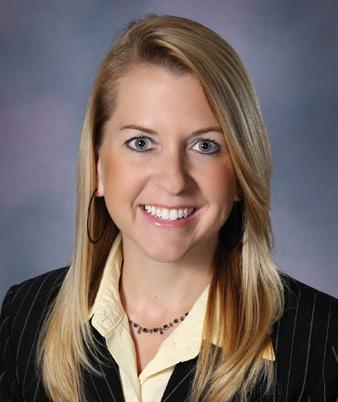
This is precisely why applied learning is at the heart of the FHSU Tourism and Hospitality Management program, where industry internships are a requirement. Internships, event-based coursework, and industry partnerships are intentionally woven into our curriculum to ensure students engage directly with the environments they aspire to enter. Students are not only learning about event planning – they are planning and executing events. They are not just studying customer service – they are delivering it. They are not only discussing tourism development – they are contributing to it.
In an industry built on experiences, it is only fitting that education follows the same principle. Tourism and hospitality is a dynamic, peoplecentered field where success depends on adaptability, communication, problem-solving, and the ability to think on one’s feet. While classroom instruction provides a critical foundation, it is internships and applied experiences that transform knowledge into practice and students into professionals.
The tourism and hospitality industry operates in real time. Guest expectations are immediate, service recovery must be swift, and no two days look the same. Whether managing a hotel front desk during a peak travel weekend, assisting with operations at a casino or resort, or planning an event, tourism professionals must navigate complex situations with confidence and composure. These are skills that cannot be fully developed through lectures alone. They must be practiced, refined, and experienced firsthand.
These experiences are structured and purposeful. Faculty at Fort Hays State work closely with industry partners to create opportunities that align with academic goals while meeting professional standards. This intentional, strategic design ensures that students are not simply working - they are learning, reflecting, and growing through each experience.
The benefits for students are both immediate and long-lasting. Applied experiences help students develop important professional skills, including communication, leadership, problem-solving, and adaptability. These skills are strengthened through real-world experiences that cannot be replicated in a traditional classroom setting. Students also learn skills essential in hospitality environments, such as navigating workplace dynamics, managing time under pressure, and responding to unexpected challenges.
Equally important, these experiences help students gain a clearer understanding of their career options. The tourism and hospitality industry offers
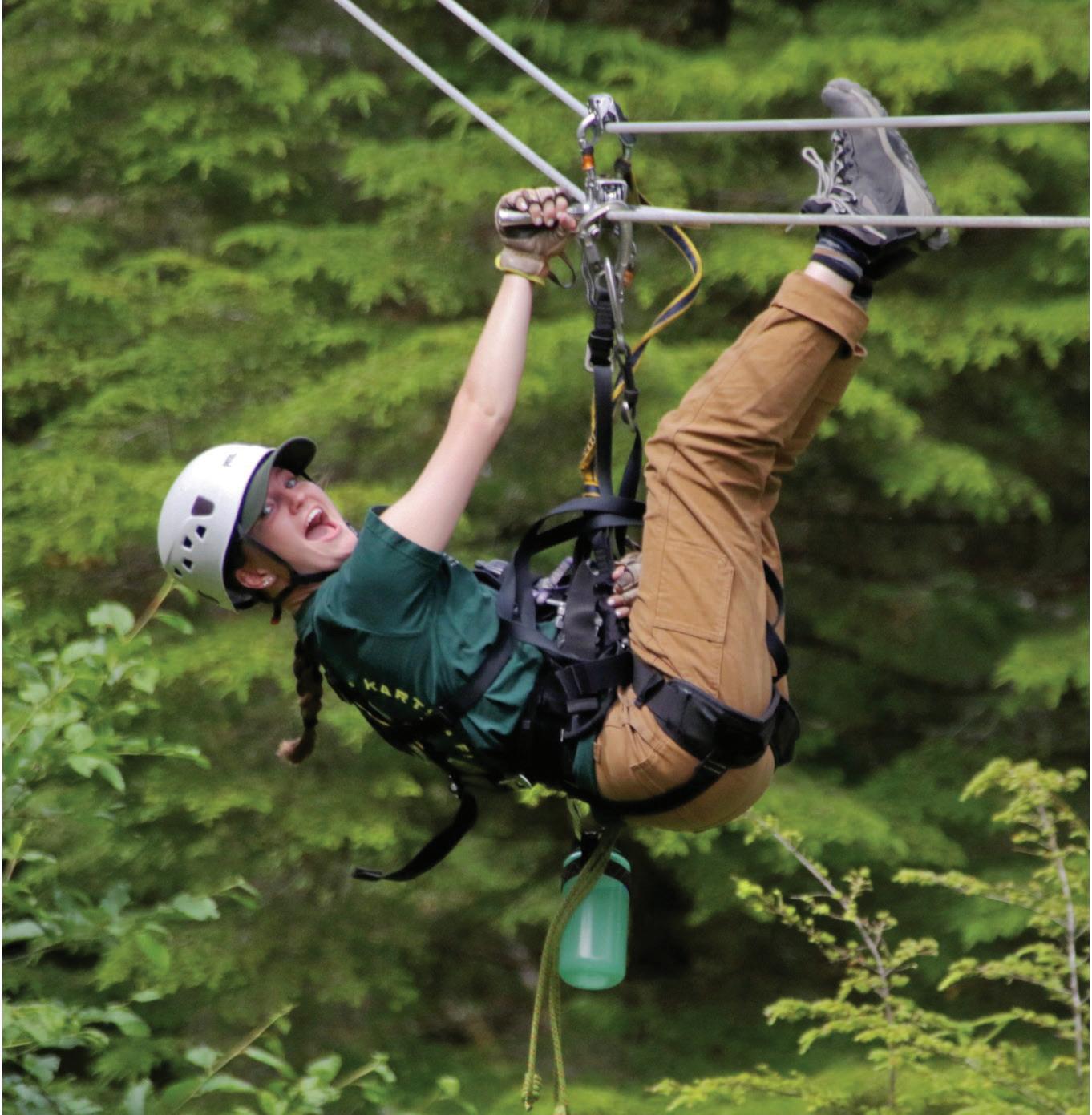
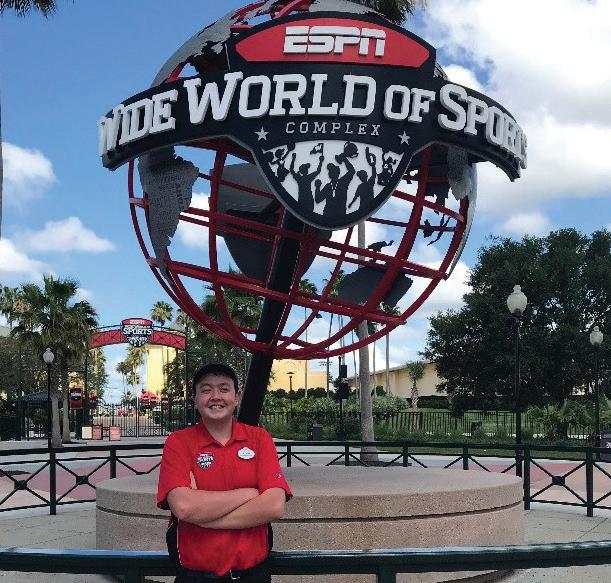
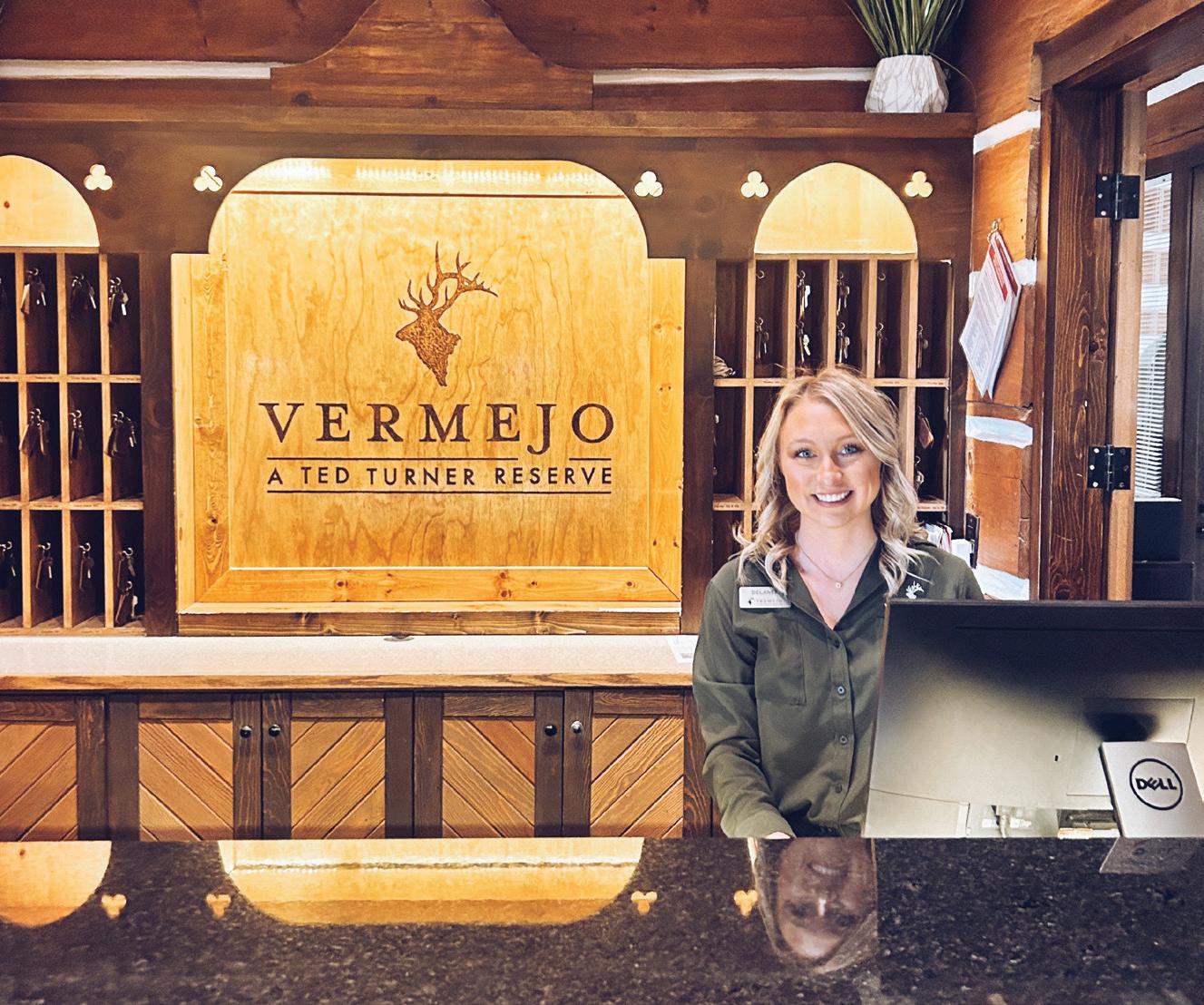
Cally Anderson, Topeka, zip guide in Alaska; BELOW, LEFT: Adam Daniel, Arriba, Colorado, at Walt Disney World;
a wide range of career paths, from hotels and resorts to event management, destination marketing, and attractions. Through internships, students can explore different areas, refine their interests, and make informed decisions about their future. For some, an internship confirms a passion. For others, it provides valuable insight that redirects their path. In either case, students are better prepared.
Confidence is another powerful outcome of internships. As students transition from classroom learners to emerging professionals, they begin to see themselves differently as they develop their
“Through my internship at Vermejo, I was able to see firsthand how tourism, hospitality, and conservation connect in the real world. I appreciated the opportunity to step out of my comfort zone, gain hands-on experience in a unique area of the industry, and continue developing as a hospitality professional. ”
— DELANEE BEDORE, Stockton, KS
professional identity. They begin to see themselves as capable contributors and clarify the type of role and environment that best fits them. They gain a sense of ownership over their work and develop the confidence to take initiative, make decisions, and contribute meaningfully to their organizations. This shift is often what sets FHSU graduates apart as they enter the workforce.
Internships also serve as a bridge to employment. Through these experiences, students build professional networks and establish relationships with industry leaders. Many internships lead directly to fulltime positions, giving graduates a head start in an increasingly competitive job market. Employers, in turn, gain access to motivated, well-prepared individuals who already understand industry expectations and demands.
The impact of applied experiences, overall, extends beyond students to the broader community and industry. Local and regional partners benefit from fresh perspectives, energy, and a pipeline of emerging talent. Collaborative projects – whether supporting a community festival, working with a regional tourism organization, or partnering with a hotel, restaurant, or casino – strengthen the connection between
“
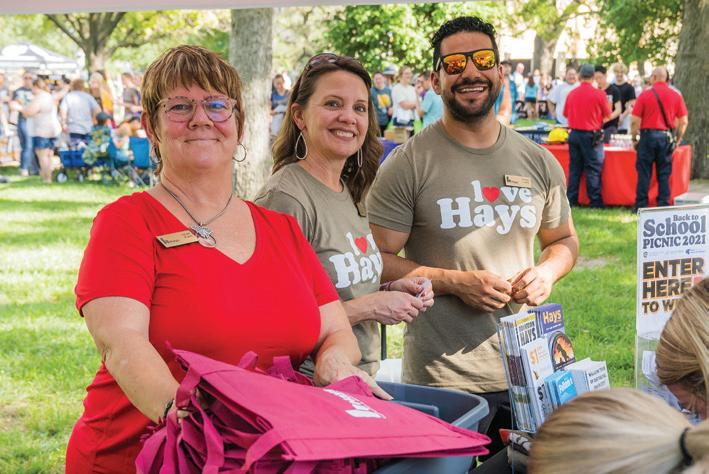
My internship with the Hays Convention and Visitors Bureau helped me build connections within the tourism and hospitality industry while deepening my understanding of destination marketing and community engagement. The experience helped support a long-term dream of opening my own restaurant by strengthening my professional network, confidence, and understanding of how hospitality businesses connect with visitors and the local community.”
— ISRAEL LUNA ‘15, ‘21, Hays
the university and the industries it serves. These partnerships contribute to economic development, enhance visitor experiences, and support the continued growth of tourism.
Alumni success stories provide powerful evidence of the value of these experiences. Graduates who once completed internships as part of their academic journey are now managing hotels, opening their own restaurants, leading event teams, directing tourism initiatives, and shaping the future of the industry. Many trace their career trajectory back to a single applied experience, such as a first internship, a handson project, a study abroad, an undergraduate research conference, or a faculty connection that opened the door to opportunity. These stories reflect not only individual achievement but also the strength of a program committed to experiential learning.
Faculty play a critical role in this process, serving as mentors, connectors, and advocates for student success. By maintaining strong industry relationships and staying attuned to evolving trends, they ensure that applied experiences remain relevant and impactful. The goal is not simply to prepare students for their first job, but to equip them with the skills, mindset, and adaptability needed for long-term success in a rapidly changing industry.
As the tourism and hospitality industry continues to evolve, the importance of experience-based education will only grow. Employers are seeking graduates who can step into roles with confidence, contribute from day one, and navigate the complexities of guest service and operations. Internships and applied learning experiences make this possible.
In the end, the value of applying classroom knowledge in real-world settings is both practical and transformative. These experiences prepare students not only to enter the field but also to lead it. By learning beyond the classroom, students develop the skills and perspective needed to create meaningful experiences for others, and in doing so, help shape the future of tourism and hospitality.
If you’d like to learn more about the FHSU Tourism and Hospitality Management program, how it creates applied experiences, or how you can support the students who complete these experiences, please contact Dr. Stacey Smith at slsmith21@fhsu.edu.
BY DAWNE LEIKER
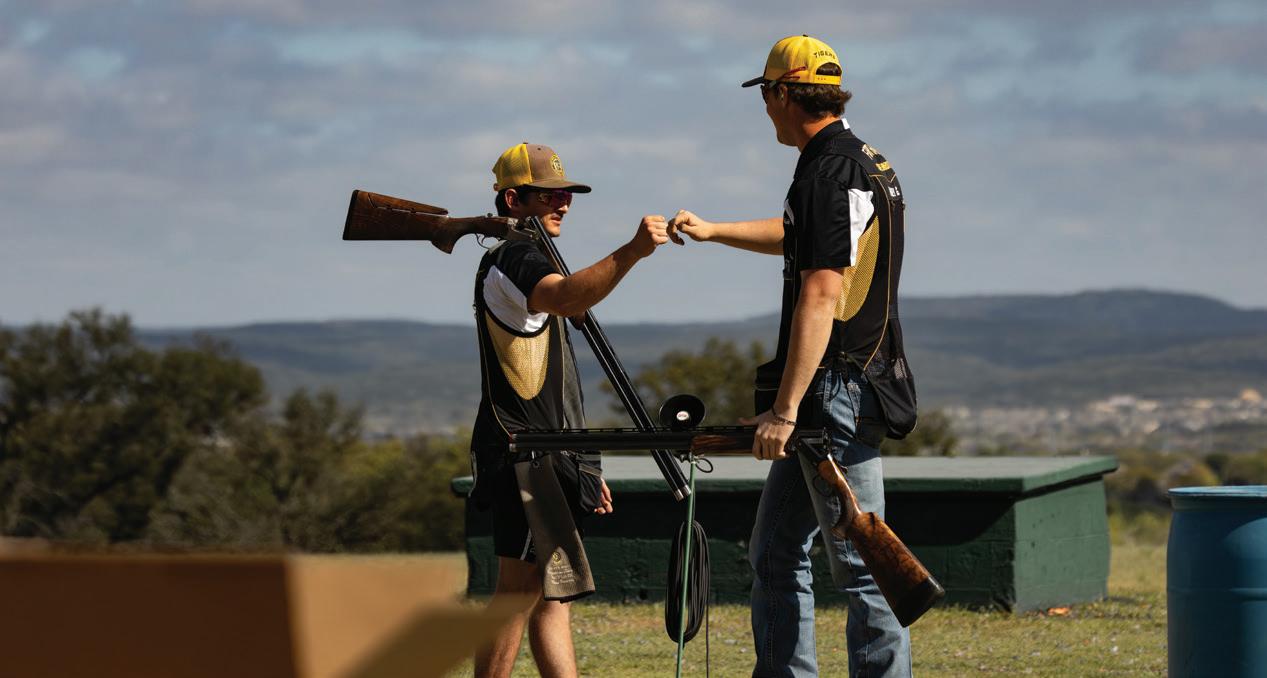
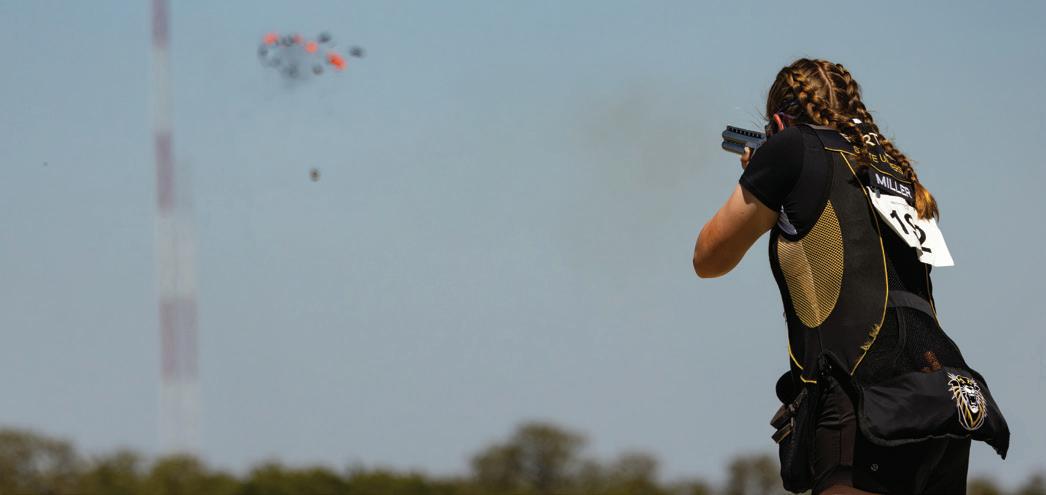
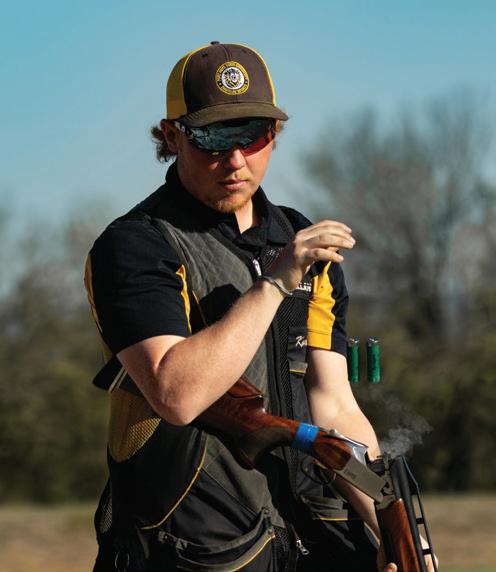
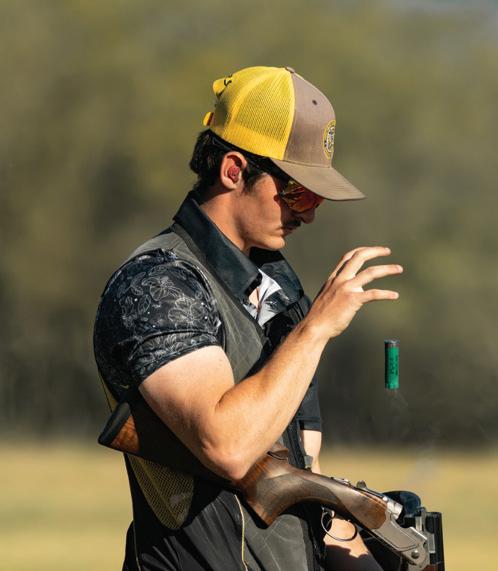
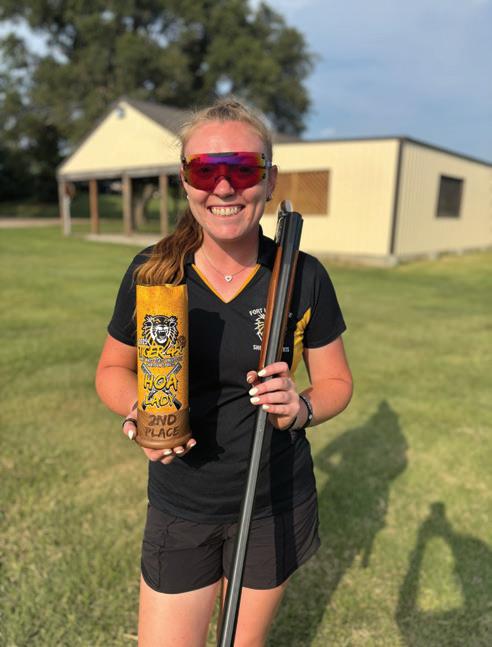
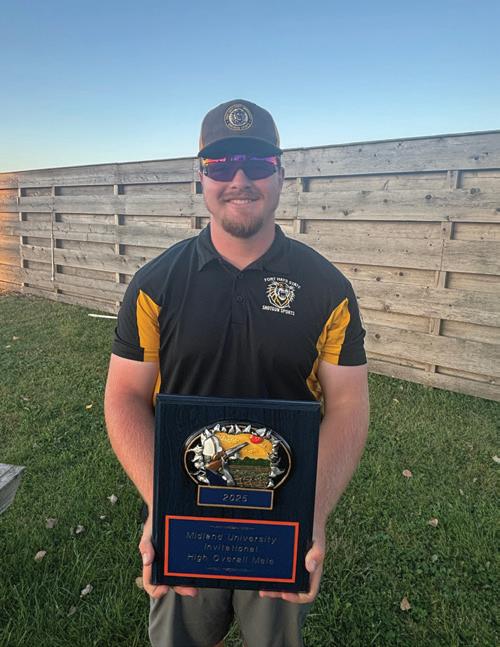
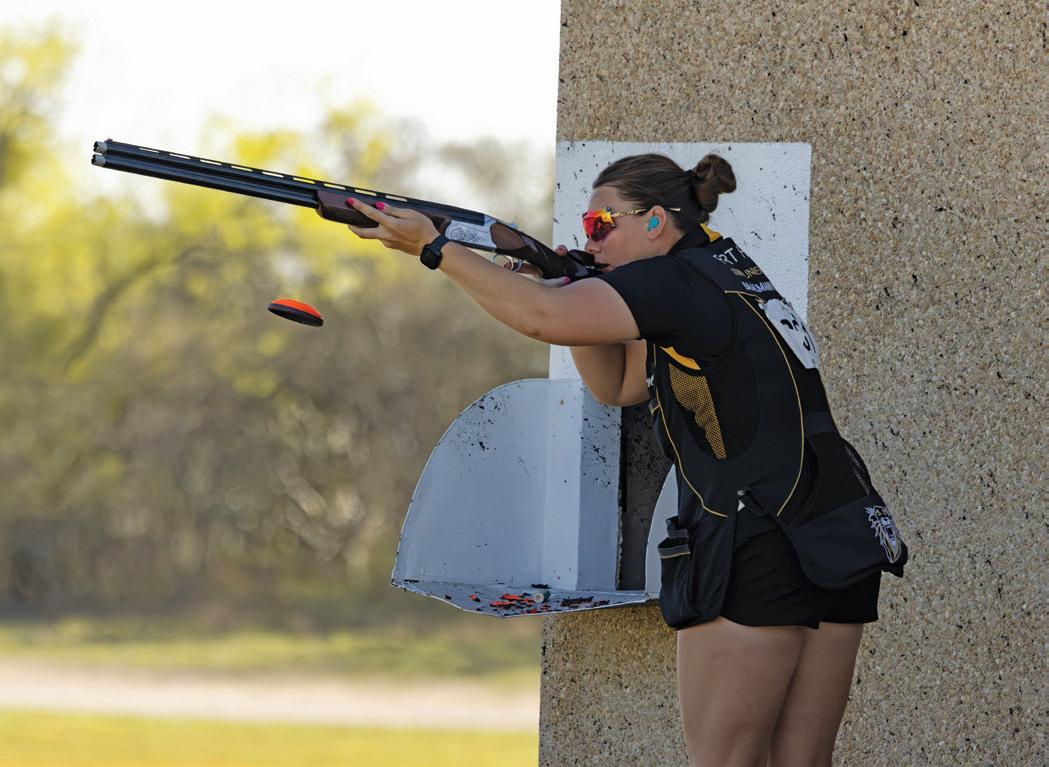
FOR MEMBERS of the Fort Hays State University Shotgun Sports team, success is measured beyond trophies and titles. It is measured in miles traveled, shells loaded, hours spent on the road, and relationships built along the way.
During the 2025-26 season, the team traveled more than 10,000 miles, competed in 15 competitions, and spent eight months chasing excellence on shotgun ranges across the country. For Head Coach Jerrod Lies and Assistant Coach Damian Giles, the schedule was non-stop.
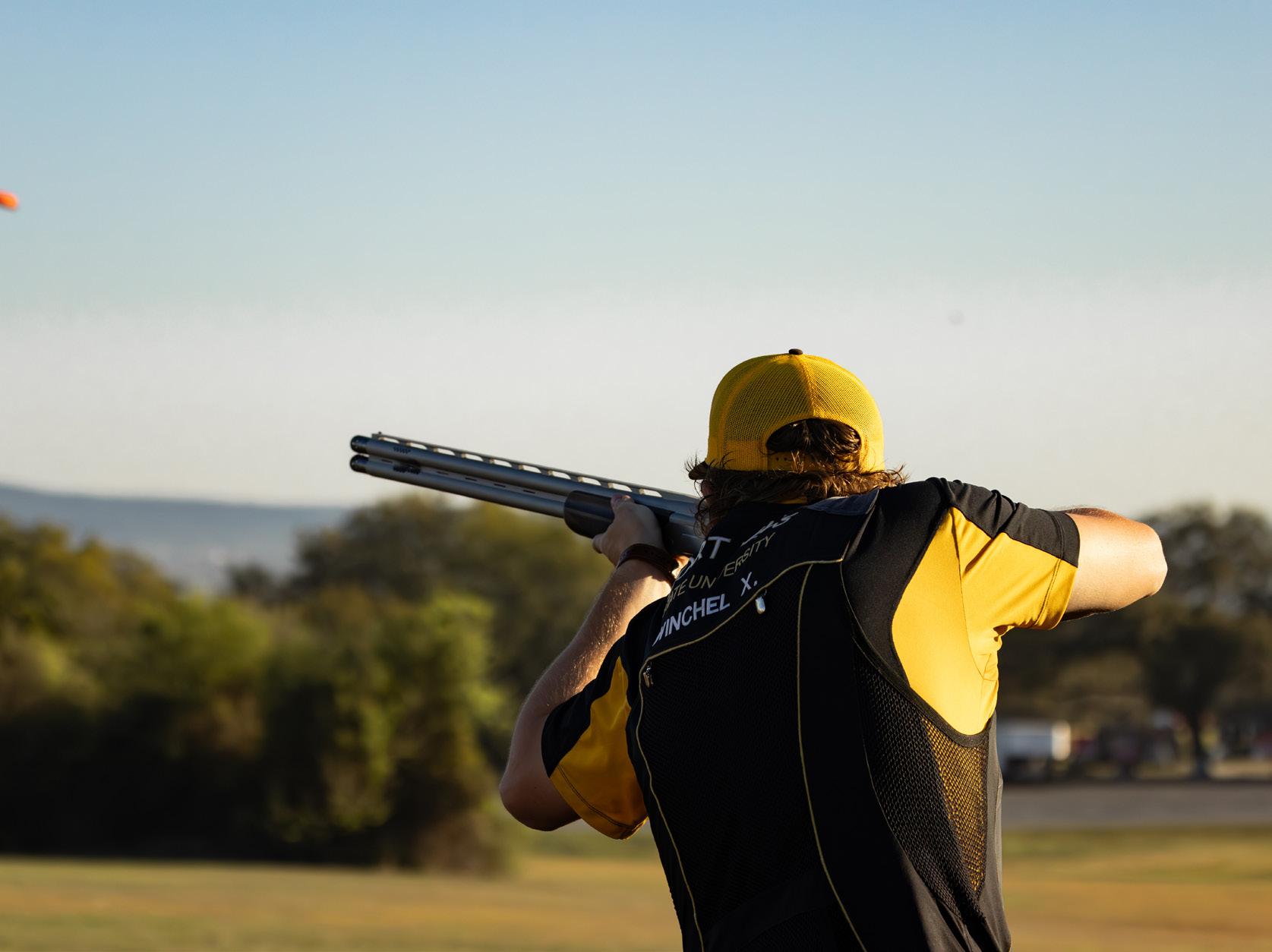
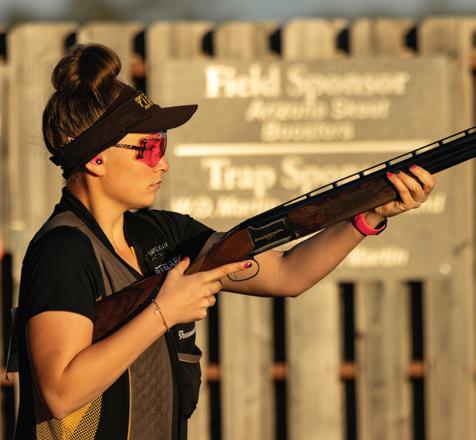
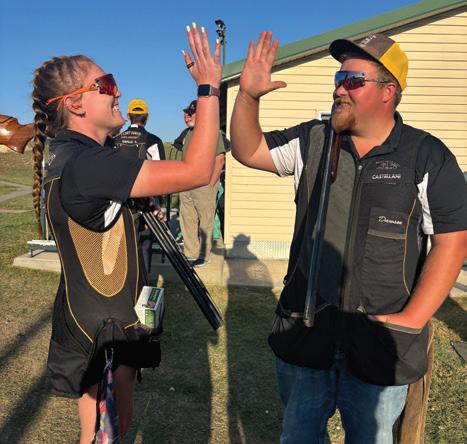
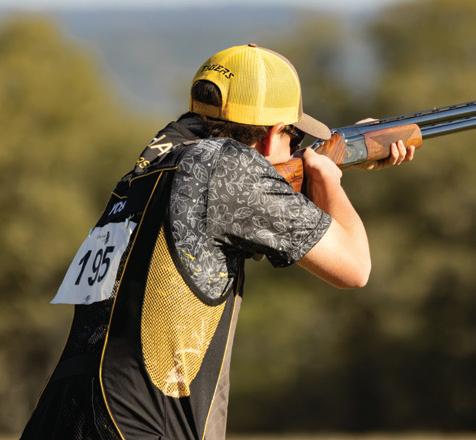
“WE WERE ON THE ROAD 12 WEEKENDS IN A ROW DURING THE FALL SEMESTER,” Lies said. “However, our numbers behind the season are impressive. The team’s 45 members shot approximately 120,000 competition rounds and another 130,000 practice rounds. If you put all that together, we shot about eight tons of lead this year.”
The travel and preparation paid off. Fort Hays State was undefeated during the fall season, posting its best varsity performance since 2023 and capturing the Prairie Conference Championship. The conference includes North Dakota, South Dakota, Nebraska, Kansas, Oklahoma, Colorado, and Wyoming.
Along the way, the team recorded seven first-place finishes, two second-place finishes, and one third-place finish. Seven team members earned All-American honors, while five were named Academic All-Americans.
“We had a very good group of competitors this year,” Lies said. “Very strong leaders and a very talented group of freshmen. We are looking for big things from them in the next couple of years.”
As the team prepares for a new year ahead, Lies and Giles spend much of their summers recruiting at high school shooting competitions across the country.
For both coaches, the recruiting trail feels familiar. Each came through the FHSU program as student-athletes themselves. Lies shot for the Tigers from 2014 to 2019, while Giles competed from 2009 to 2015. The duo competed together during Giles’ final year.
“It was cool how it all fell into place,” Lies said. “I had told Coach Shepherd when I graduated in 2019 that if he
ever wanted to retire, to give me a call.”
That call eventually came in late 2020 from longtime coach Duane Shepherd, who founded the program in 2005 and led it for 17 years. He asked Lies, “How serious are you?”
“And I said, ‘pretty serious,’” Lies recalled.
Lies spent two years as Shepherd’s assistant before taking over the program. Soon after, the team realized it needed additional help, as the team had grown to more than 40 members.
“You can’t do this by yourself with 40-plus kids,” Lies said. “The logistics are a nightmare.”
At the time, Giles was coaching in Texas. Originally from North Platte, Neb., he felt the FHSU opportunity was right for him.
“I was 14 hours from family in Texas, and I was kind of over it,” Giles said. “I was ready to be closer to home.”
The team has evolved dramatically since Giles first arrived on campus in 2009. Back then, the program had roughly 10 members. Now, the program competes nationally and travels more extensively than nearly any collegiate shotgun sports team in the country.
Behind the scenes, alumni support plays a critical role in making those trips possible.
“One of the big ways we get funding to help pay for ammunition, practice targets, and travel is through the generosity of alumni,” Lies said. “We wouldn’t be able to do what we do without their support.”
The team culture emphasizes hard work and personal investment. Team members even reload their own practice ammunition. “It gets them invested in the program,” Lies said. “They have to work for it.”
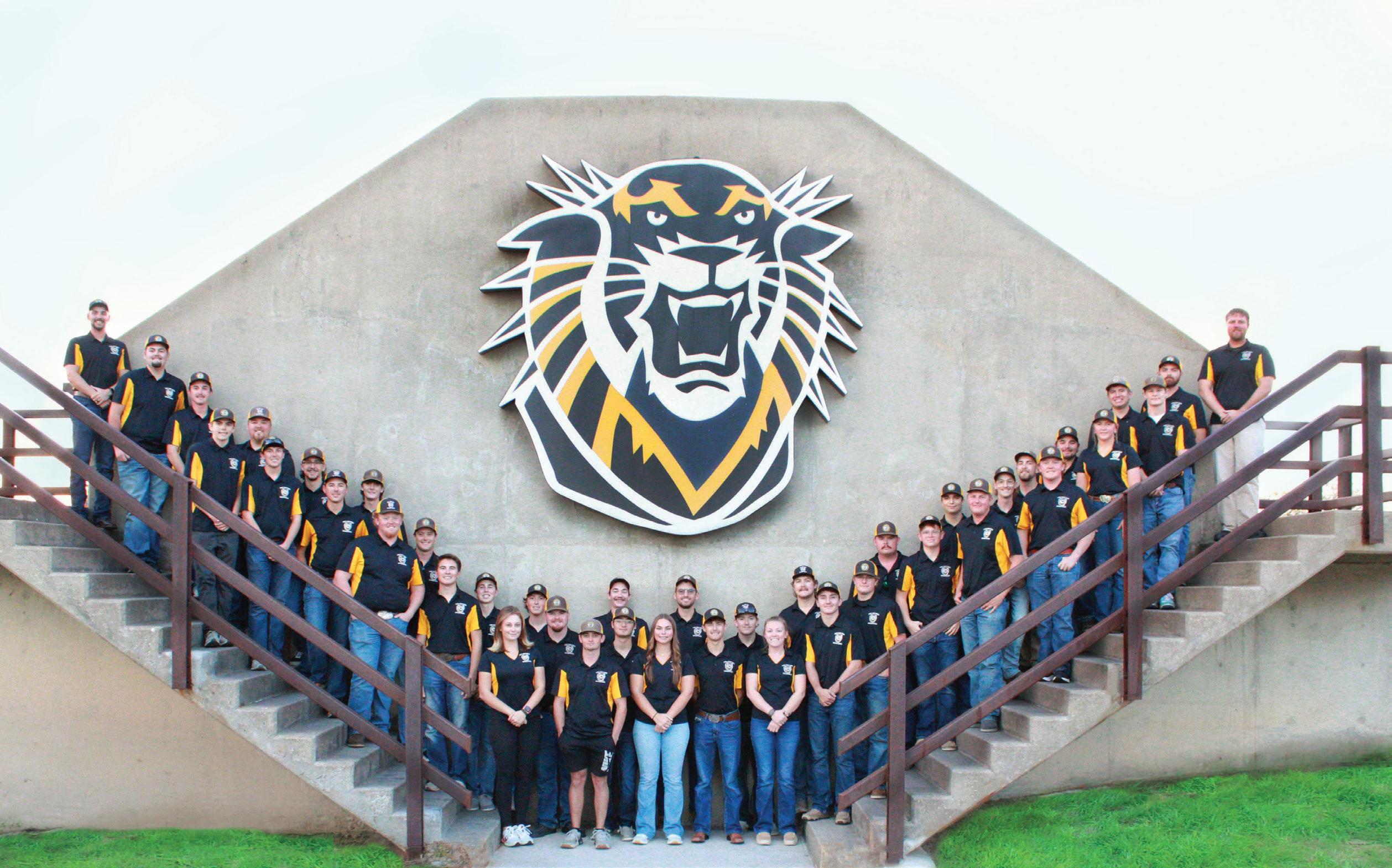
That culture extends beyond the range. According to team member Emily Miller of Norton, the team’s support system is one of its greatest strengths.
“I decided I wanted to further my education but also compete for a team that is nationally ranked and work with coaches who could push me,” she said.
Miller finished the season as both an All-American and Academic All-American before graduating in May with a degree in technology leadership.
Miller says the most meaningful part of the experience is the sense of community.
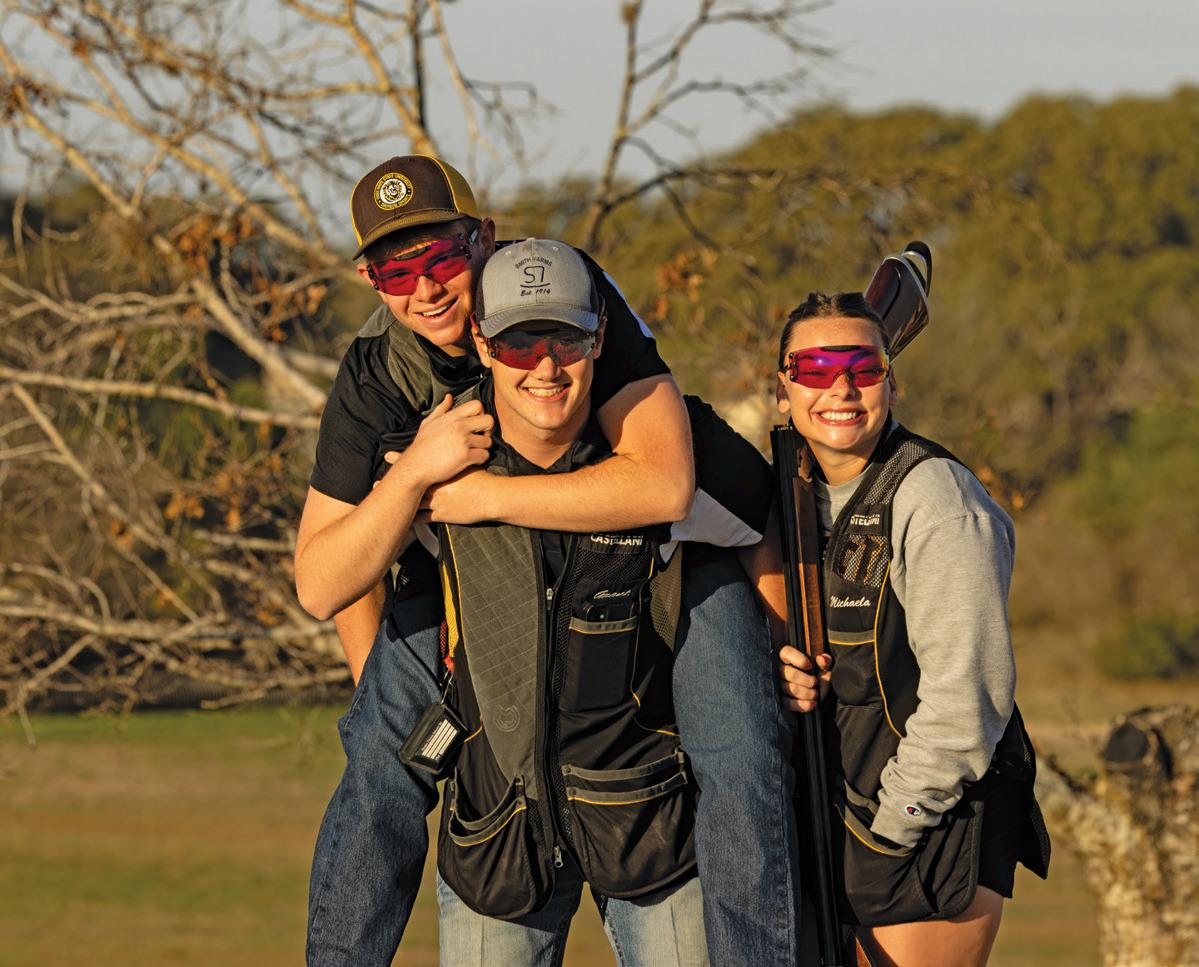
“We treat each other with respect,” she said. “We’re there for each other like a big family.”
That family atmosphere may ultimately be what separates the FHSU Shotgun Sports program from the rest of the field. Championships matter. So do the miles, the trophies, and the rankings.
But for the Tigers, the true foundation of success is the people willing to put in the work together. One round, one road trip, and one season at a time.
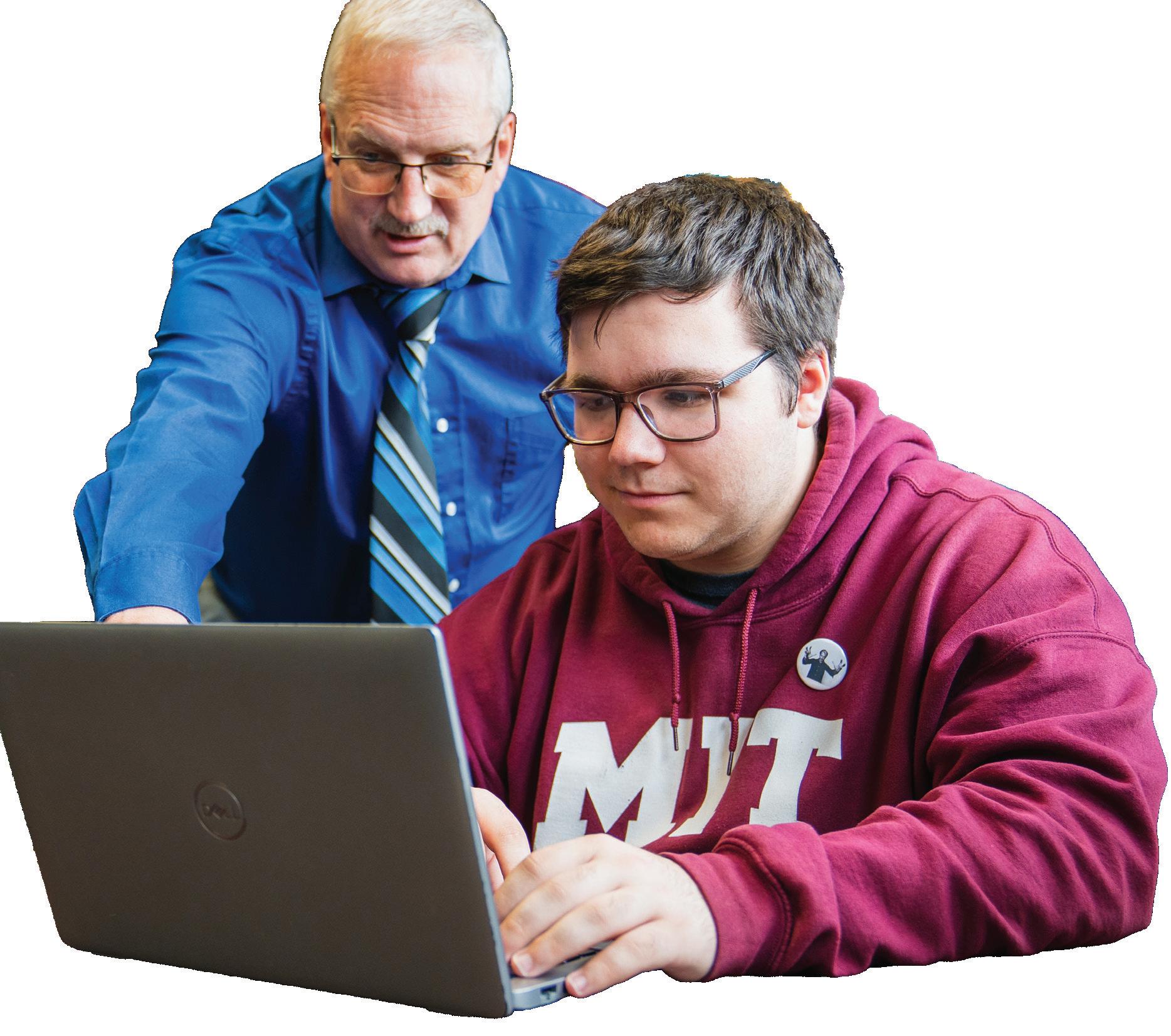
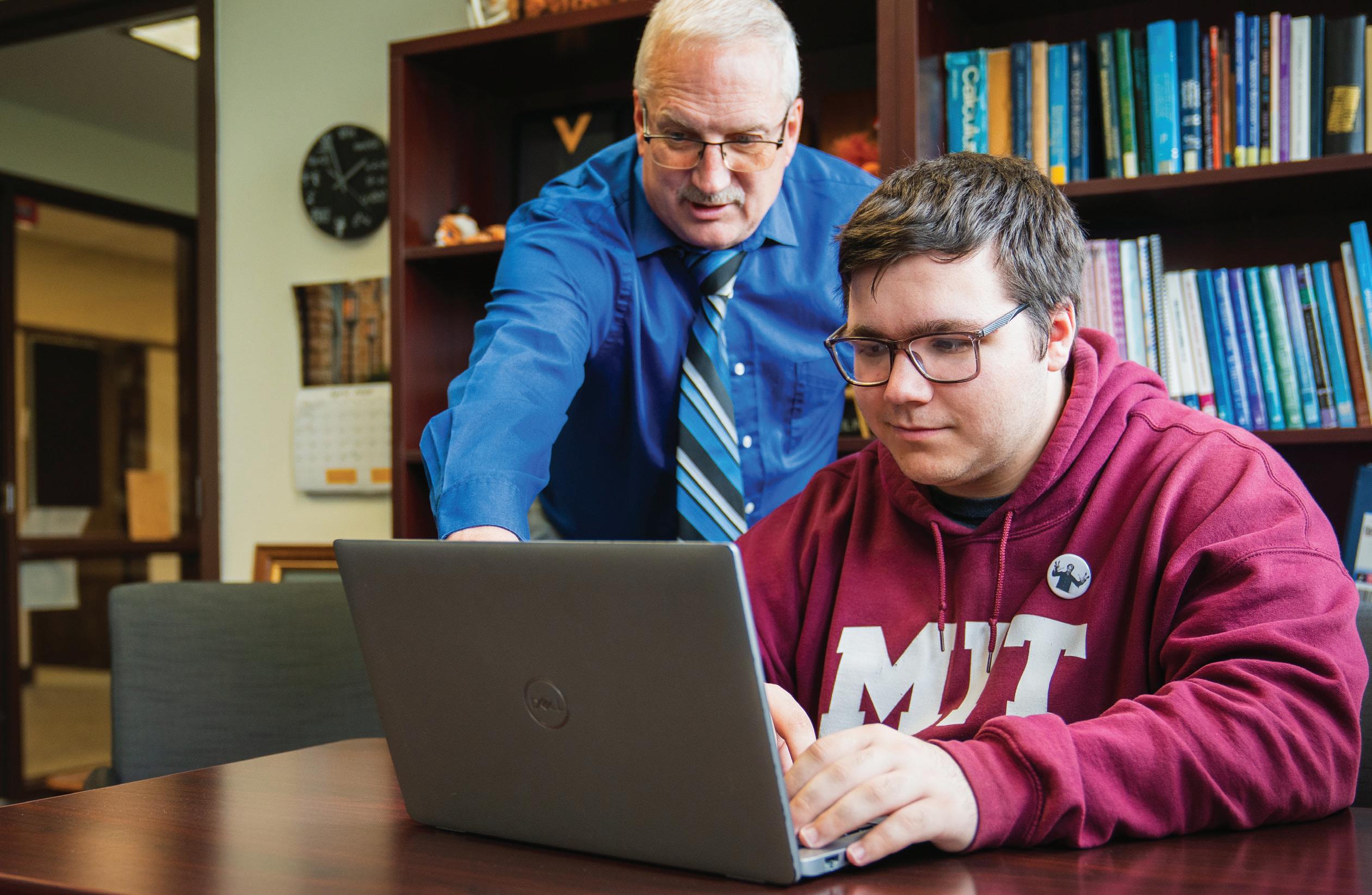
When William Mooney opened his inbox in the Kansas Academy of Math and Science (KAMS) office at Fort Hays State University, the moment was quiet. He had slept in that morning, unsure when the email would arrive. But once he saw the message that he had been accepted to Massachusetts Institute of Technology, his top choice, the calm dissolved into celebration as friends in the KAMS office congratulated him. Within minutes, William was calling his mom with news few students ever get to share: he was headed to MIT, on a full ride.
For Mooney, now a KAMS graduate preparing to study Computer Science and Engineering at MIT, that moment was the culmination of years of persistence, curiosity, and adaptability. It was shaped not only by his personal journey but also by the unique opportunities made possible through Fort Hays State University and the KAMS program.
Mooney’s story begins far from Kansas. He spent most of his childhood in Las Vegas, moving frequently between schools and living situations. By the time he reached high school in Phillipsburg, Kan., change became something he was used to dealing with.
One of his most significant transitions came in 2020. Almost overnight, he went from an only child to the oldest of five when his mom adopted several cousins. The adjustment was challenging, but it shaped him into a resilient student who adapts quickly. He mentioned in his MIT application essay that, while life often felt “scrambled,” like a Rubik’s Cube, each change taught him to reorganize and adapt.
Amid all that change, one constant remained: his curiosity. From puzzles to programming, Mooney discovered joy in problem-solving.
“Computer science isn’t about writing code,” he says. “It’s about problem solving and persistence.”
That focus and academic mindset made Mooney a strong candidate for the Kansas Academy of Math and Science. KAMS is a selective, residential early-college program administered and hosted by Fort Hays State University, designed for academically talented Kansas students. Students leave their traditional high schools after sophomore year to complete their final two years as full-time FHSU students, living on campus and taking the same courses as undergraduate students.
Mooney first learned about KAMS during a gifted education seminar hosted at Fort Hays State University during his sophomore year. Encouragement from friends and family led him to apply, and he joined KAMS alongside two classmates from Phillipsburg.
The transition from high school to a full-time college student was demanding. From day one, Mooney was immersed in the academic expectations of Fort Hays State University, including multi-hour labs, advanced STEM coursework, high-level computer science courses, and the personal responsibility that comes with living on a university campus.
“The freedom is great,” Mooney explains, “but you’ve got to be responsible with it.”
That balance of freedom and accountability defines the KAMS experience. Students aren’t sheltered from college life; they are supported within it.
Mooney thrived. He maintained a 4.0 GPA while completing an exceptionally rigorous schedule that included upper-division STEM courses, all taught by FHSU faculty.
Starting college early played a defining role in his acceptance to MIT.
“Living on a college campus and taking actual college classes helped me stand out,” he says. “It’s very different from just taking Advanced Placement or online courses.”
One of the most meaningful aspects of Mooney’s experience at FHSU was the opportunity to engage in undergraduate research, an experience typically unavailable to high school students.
Working with mathematics department chair and professor Dr. Keith Dreiling, Mooney participated in a research project that pushed him beyond coursework and into original problem-solving. The experience not only strengthened his MIT application but also reinforced his confidence as a thinker and collaborator.
“William is an intelligent, creative young man,” Dreiling said. “His persistence in trying to solve our research problem was motivating to me and caused me to work harder on this project than on any other student research project that I have done. He thinks deeply about mathematical concepts and communicates his ideas well.”
That mentorship helped Mooney develop skills that elite universities value highly: intellectual independence, perseverance, and the ability to articulate complex ideas clearly.
Alongside academics, Mooney independently pursued computer science projects, including game development and a hackathon, which demonstrated genuine passion.
“You need good grades and test scores,” he says, “but schools like MIT really care about passion – about going beyond what’s required.”
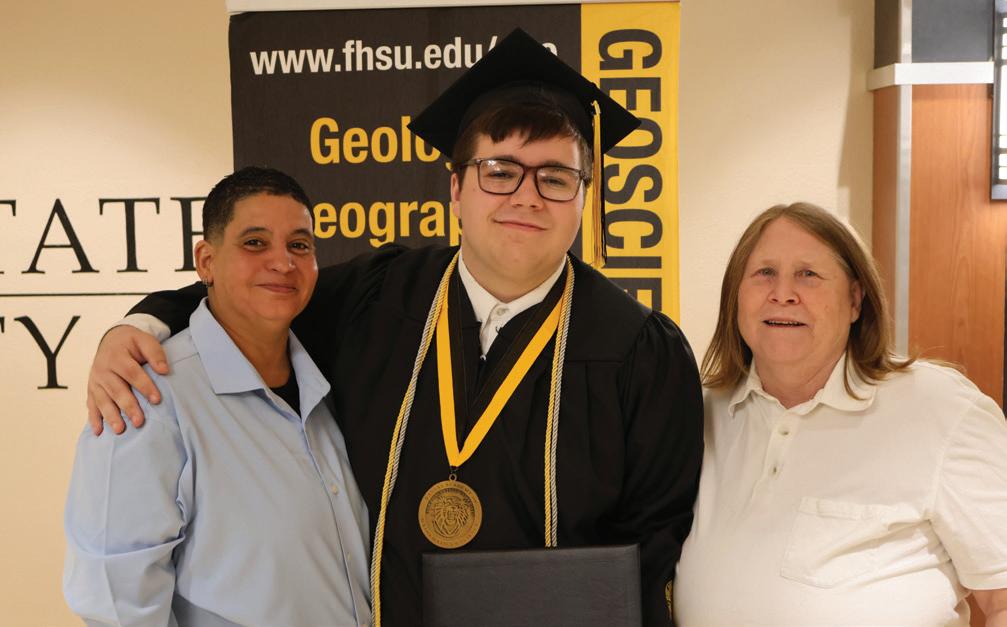
Mooney applied to MIT after writing more than 30 essays. The online application system allowed him to rank 12 schools based on his interests. He was matched with his first-choice school, MIT, and received a full-ride financial aid package.
This fall, Mooney will leave Kansas for Cambridge, Massachusetts, carrying with him not only acceptance to a world-renowned institution but also two years of college experience gained at Fort Hays State University.
Looking ahead, he plans to pursue software engineering and remains open to wherever that path may lead, including industry, research, or even NASA.
What he knows for certain is that his success was not the result of a single moment, test score, or application, but of preparation, opportunity, and support.
For William Mooney, Fort Hays State University and the Kansas Academy of Math and Science didn’t just offer early college credits and experiences; they opened a door. A door to college, to research, and ultimately, to MIT.
We want to hear from you!
Let us know if you’ve recently moved, received an honor or award, got married, or changed jobs by visiting FHSUalumni.com/alumni-update or emailing alumni@fhsu.edu.
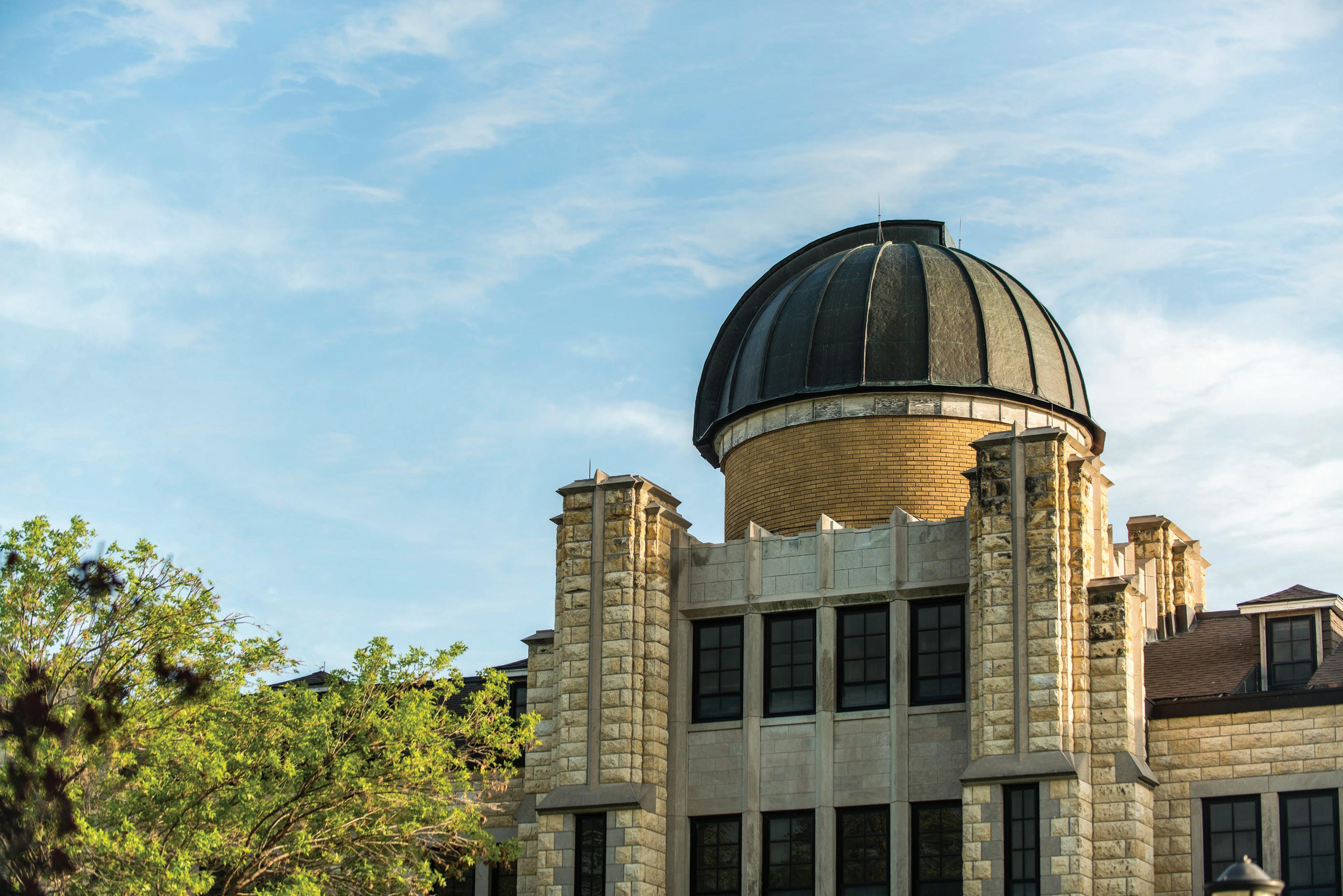
Virgil Hemphill ’52, El Paso, Texas, received the 2025 Outstanding Alumni Award from Pratt Community College.
1960s
Bob Hayden ’62, Albuquerque, N.M., published Fool Me Twice.
1970s
Janet (Steffen) Fleske ’76, ’06, Pawnee Rock, was named to the Kansas Teachers Hall of Fame Class of 2026.
Bill Jeter ’70, Hays, received the 2025 Willis K. Musick Professionalism Award from the Ellis County Bar Association.
Duane Lang ’79, Hays, received Thomas More PrepMarian’s Point of Light award.
Frank Leo ’72, ’73, Hays, was listed in Ingram’s Magazine “50 Kansans You Should Know” for his dedication to coaching baseball.
Karen (Wilkinson) Threlkel ’75, Hays, received Thomas More Prep-Marian’s Point of Light award.
Bob Threlkel ’70, ‘81, Hays, received Thomas More PrepMarian’s Point of Light award.
Kathy (Schulte) Amrein ’80, Hays, received Thomas More Prep-Marian’s Point of Light award.
Deanna (Fitzsimmons) Aspedon ’89, Wichita, was promoted to Sedgwick County Appraiser.
Dirk Benn ’85, Adel, Iowa, retired after a 40-year career in agriculture.
Roger Bixenman ’89, Hays, retired as sports superintendent at Hays Recreation Commission.
Darla (Gfeller) Braun ’85, ‘91, Victoria, was named executive vice president/chief financial officer for the Bank of Hays.
Monty Breneman ’88, Lincoln, retired after 37 years of service with the U.S. Department of Agriculture, Natural Resources Conservation Service.
Kevin Faulkner ’83, ’83, Pebble Beach, Calif., was named board chair of the National Diaper Bank Network, which serves more than 390,000 children per month.
Linda (Bunker) Ganstrom ’80, ’86, ’90, Hays, was the juror for the 26th San Angelo Ceramics North American Competition that represented the work of 250 artists.
Randy Graver ’84, Perryton, Texas, was promoted to CEO of KCB Bank.
Clare (Schulte) Gustin ’80, ‘85, Hays, received the Golden Belt Bank Hall of Fame Award.
Steve Henderson ’83, Huntsville, Ala., was awarded NASA’s Exceptional Public Service Medal for supporting the International Space Station with Boeing.
Wayne Hessler ’85, Titusville, Fla., retired after teaching social studies for 20 years at Brevard County Public Schools.
Vicki (Melkus) Johansen ’83, Hays, retired from FHSU as academic advisor.
Todd Lynd ’86, Hays, retired as general manager at Eagle Media.
Mike McCarthy ’89, De Pere, Wis., was named the head coach of the Pittsburgh Steelers.
Leslie (Zeldin) Paige ’81, ’87, Tucson, Ariz., received the 2025 Kansas Association of School Psychologists Lifetime Achievement Award.
Nicholas St. Peter ’82, Winfield, was presented with the annual Award for Judicial Excellence by the Kansas District Judges Association.
Rita (Gradig) Timmons ’89, Houston, Texas, retired after a 30-year career in IT and SAP implementation.
Steph (Groninga) Bannister ’92, Manhattan, was named a 2026 alumni fellow for KSU’s College of Education.
Mark Bland ’91, Hattiesburg, Miss., retired after 20 years of service as associate professor of Biology at the University of Central Arkansas.
Corey Burton ’94, Hays, retired as superintendent of the Ulysses School District after serving in public education for 31 years.
Jeana (VanPelt) Dinkel ’94, ‘03, Hays, received the Inspire 489 Award from the Hays 489 Foundation for Education.
Theresa (Thoennes) Flax ’98, Hays, received Thomas More Prep-Marian’s Point of Light award.
Sandra (Dreiling) Gottschalk ’98, Hays, was recognized for her 30 years of service to Fort Hays Tech | North Central at their Hall of Fame reception.
Jennie Helget ’98, Hays, was selected as the Salina Diocese Distinguished Educator of the Year for the Kansas Association of Independent and Religious Schools.
Kenda (VonFeldt) Leiker ’94, ’97, Hays, was awarded the Advocacy Award from the Kansas Association for the Gifted, Talented, and Creative.
Jerry Michaud ’90, Hays, received the Mark Elmore Award for Leadership from InterHab for improving the lives of individuals with intellectual and developmental disabilities.
Todd Powell ’95, Hays, joined Jeter Law Firm, LLP, as a partner.
Don Scheibler ’96, Hays, joined the board of directors of The Bricks of Downtown Hays.
Terry Siek ’91, ’02, Hays, was appointed to the Hays Arts Council board of directors. Terry is also currently serving the Kansas Hospital Association as director of clinical services.
Janelle (Harvey) Stelter ’96, Salina, was recognized as the USD 305 Teacher of the Year.
John Thyfault ’98, ’99, Shawnee, won the Big 12 Faculty of the Year Award for his work as a professor of cell biology and physiology at the University of Kansas Medical Center.
Michael Toews ’95, Tifton, Ga., was named the associate dean for extension programs within the College of Agricultural and Environmental Sciences at the University of Georgia.
Debbie (Penn) Tomlinson ’98, Great Bend, retired from The University of Kansas Health System after 50 years in nursing.
Jeff Bieker ’06, Hays, was promoted to vice president and chief financial officer at Sunflower Electric Power Corporation.
Brendon Boone ’06, Quinter, received the annual Lee Nusser Award for Outstanding Magistrate Judge.
Kelly Chrisman Jacques ’06, Lawrence, was named director of the University Press of Kansas.
Cole Engel ’07, ’07, ’09, Hays, was promoted to professor of accounting at FHSU.
Gene Flax ’02, Hays, received Thomas More Prep-Marian’s Point of Light award.
Joshua Guymon ’04, Garden City, became the superintendent for USD 457, Garden City.
Jared Hulstine ’07, ’07, ‘22, Sioux Falls, S. D., was named South Dakota Art Teacher of the Year for 2026.
Michael Marsh ’00, Manhattan, retired as athletic director at Manhattan High School after 25 years of service.
Kris Munsch ’03, ’09, ’14, Hays, published Living on the Razor’s Edge.
Brendon Pishny ’02, Olathe, published Boring Rentals.
Alysia Starkey ’00, Salina, was inducted into the Kansas Aviation Museum Hall of Fame for her innovative influence in successfully transforming the K-State Salina campus into a national leader in aerospace and technology education.
Scott Thomasson ’03, ’09, Ellsworth, received the Ducks Unlimited Wetland Manager of the Year Award.
Zach Binder ’16, Hays, was promoted to manager of resource planning at Sunflower Electric Power Corporation.
Bryan Brasher ’14, Arvada, Colo., accepted a space weather forecaster position with the National Oceanic & Atmospheric Administration.
Danea Buschkoetter ’19, Beloit, was accepted into the Future Leader program for the American Welding Society.
Matt Cook ’11, ’13, Hays, was named executive director of the Hays Recreation Commission.
Elyssa (Blackburn) Gavin ’16, Olathe, published Junko’s Climb.
Kyle Haas ’10, Kansas City, Mo., was awarded the Gordon Docking Award at the 2025 Simone Awards for his work in sports media.
Trey Herman ’15, Shawnee, joined VanTrust as an asset enhancement manager.
Noelle Husmann ’15, Wichita, joined Trouvaille Creative as their new director of client success.
Brianna (Woolridge) Kear ’17, ’17, ’20, ’25, Gardner, received the Adjunct Faculty of the Year Award from FHSU.
Brian Kitchen ’12, Hays, became manager of treasury services at Sunflower Electric Power Corporation.
Israel Luna ’15, ‘21, Hays, received the Grow Hays Robert E. Schmidt Entrepreneur of the Year Award.
Johna (Hungler) Meldau ’19, Decatur, Ga., received a Fulbright scholarship and is participating in the teacher exchange program in the Philippines.
Corey Moomaw ’12, ’14, Wichita, was selected as a member of the 2026 Wichita Business Journal 40 Under 40 class.
Derek Peckham ’17, Hays, joined the HaysMed Emergency Department Team.
Macey Pfeifer ’18, Hays, received the Vyve Broadband Rising Star Award for her work as executive director for First Call for Help of Ellis County.
Heather (Weeks) Porter ’17, Newton, became the chief clinical officer at Newton Medical Center Health.
Heather Rinkenbaugh ’15, El Dorado, was named to Wichita Business Journal’s 2024 40 Under 40.
Jeff Sekavec ’13, Oakley, was named to Marquis Who’s Who in America 2025 for his professional achievements, leadership, and contributions.
Cody Sherwood ’13, Wichita, was named Craft Brewer of the Year.
Kayla (Farris) Stading ’16, ’24, Maize, became the president and CEO of Mid American Credit Union.
Lori (Hinton) Tackett ’15, ’23, Haysville, received the Wichita Business Journal 2026 40 under 40 Award.
Cristal Ugarte ’17, ’19, Kansas City, has been nominated for the Young Professional Award by the Greater Kansas City Kansas Chamber of Commerce.
Marty Wendel ’15, ’15, Salina, was named head boys basketball coach of the Salina South Cougars, USD 305.
Braiden Werth ’19, Hays, was named the Under 30 Entrepreneur for the state of Kansas at the 2025 To the Stars: Kansas Business Awards.

Paul Whalen ’11, Fort Thomas, Ky., was appointed to the Campbell County Kentucky Board of Elections for a 4-year term.
Tiffany (Sheltrown) Wright ’14, Durant, Iowa, retired from the U.S. Coast Guard after 23 years of service.
Gavin Blehm ’21, ’21, ’21, Abilene, received the Secondary Horizon Award from Salina Public Schools.
Noah Erichsen ’25, ’25, ’25, Alma, Neb., accepted a position at Harlan County Lake, U.S. Army Corps of Engineers, as a park ranger.
Nina Perez ’24, North Plainfield, N. J., was recognized by Influential Women 2025.
Nathan Spencer ’20, Hutchinson, became the CEO of Sunshine Meadows Retirement Community (SMRC).
Richard Sudderth ’23, Alcoa, Tenn., was awarded the Adjunct Faculty of the Year Award at Fort Hays State University.
Anthony Ventura ’21, Overland Park, was promoted to senior analyst at Raytheon.
Shane Watts ’24, Shawnee, signed to play running back with the Canadian Football League’s Hamilton Tiger-Cats.
Jordan Betts ’22 and Ali Weber ’22, ’22, September 20, 2025
Matthew Diercks ’25, ’25 and Alyssa Pierce ’25, September 27, 2025
Andres Faundez ’23 and Maggie Speno ’24, September 20, 2025
Garrett Kahrs ’14 and Marisa Kistler ’21, ’21, October 4, 2025
Spencer McCue ’19, ’21 and Allyson Gottschalk ’21, September 26, 2025
Kaden Powers ’25 and Rhyann Brown ’24, ’25, August 09, 2025
Trevor Rooks ’23 and Carly Ferland ’24, October 11, 2025
Luke Ruder ’23 and Ciara Seib ’22, July 26, 2025
Cameron Skipper ’22 and Megan Rust ’18, ’22, August 2, 2025
Tanner Unrein ’19, ’19 and Emilie Pearson ’19, June 28, 2025
Kyler Voss ’22 and Macey Steckel ’22, ’22, November 8, 2025
Tanner Yohe ’20 and Taylor Adams ’19, ’22, November 15, 2025
John Beougher ’59, ’59, Pierre, S.D., December 16, 2025
August Brock ’59, Albuquerque, N.M., December 6, 2025
Pauline (Dean) Fishel ’58, Colby, November 30, 2025
Robert Fusillo ’51, ’52, Atlanta, Ga., January 3, 2026
Suzanne (Miller) Grizzell ’59, Lawrence, December 5, 2025
James Haney ’59, Crown Point, Ind., December 9, 2025
W. L. Harrison ’58, Hutchinson, October 12, 2025
Ruth (Knowles) Horton ’58, Hugoton, April 12, 2026
Patricia Lancaster ’51, Lufkin, Texas, August 29, 2025
Bob Leiker ’59, Wimauma, Fla., December 12, 2024
Laverne Lessor ’56, ’61, Wichita, December 9, 2025
Frederick Lindenmeyer ’51, ’57, Andover, December 11, 2025
Howard Mai ’55, Lakewood, Colo., January 19, 2026
Milford Messer ’58, ’63, Coppell, Texas, February 19, 2026
Pat Murphy ’57, ’69, Gorham, February 23, 2026
Donna (Gibson) Needels ’55, Galveston, Texas, March 25, 2026
Neil Rogers ’58, Collins, Miss., December 15, 2025
Vaunita Rusco-Schnell ’57, Newton Center, Maine, February 4, 2026
Don Smischny ’56, ’57, Salina, November 29, 2025
Donald Stewart ’58, Lawrence, October 24, 2025
Robert Thompson ’51, Denver, Colo., October 9, 2025
LaVerne Wesley ’59, Salina, March 22, 2026
Karen (Bell) Ashbaugh ’61, Denton, Texas, October 31, 2025
Earl Blauer, Jr. ’63, Shawnee, October 4, 2025
Lynn Brown ’60, Overland Park, March 21, 2025
Ethel Clow ’64, Aurora, Colo., August 21, 2025
Rex Cooper ’69, ’77, Salina, March 12, 2026
Ron Darst ’67, Olathe, November 16, 2025
Dale Davidson ’67, O’Fallon, Ill., November 15, 2025
Gary Donart ’62, ’63, Las Cruces, N.M., January 17, 2026
Ed Durall ’60, Manhattan, January 3, 2026
Donna (Knowles) Fraley ’60, ’60, Bigfork, Mont., July 31, 2025
Donna (Wait) George ’64, Natoma, November 4, 2025
Ron Harms ’67, Lees Summit, Mo., February 25, 2026
Dave Harris ’65, Kansas City, Mo., November 15, 2025
Mary (Platt) Hillin ’66, Topeka, April 5, 2026
Allen Jirik ’64, ’69, Hoisington, April 12, 2026
Virginia (VanGundy) Johnson ’60, Hays, January 20, 2026
Marjorie (Weber) Knoll ’69, Hays, September 22, 2025
Ava (Barcus) Maydew ’62, Smith Center, January 1, 2026
Gary McCarty ’63, Wichita, April 13, 2026
Grace (Staab) McGinnis ’60, Hays, January 9, 2026
John Milburn ’68, Rolla, March 12, 2026
Tom Miller ’66, Topeka, February 3, 2026
Marty Myers ’68, Russell, March 20, 2026
Dean Popp ’62, ’67, Lakewood, Colo., October 19, 2025
Randy Randle ’69, Rolla, November 26, 2025
Riley Rankin ’68, Santa Rosa, Calif., November 4, 2025
Jim Rogers ’68, Hoxie, December 12, 2025
Phyllis (Berens) Ross ’67, St. Peters, Mo., October 19, 2025
Marylin (Richard) Ruth ’63, Johnson, February 22, 2026
Mary (Fraley) Schrandt ’61, Oregonia, Ohio, March 13, 2024
Al Schuster ’60, Hays, September 14, 2025
Ray Schweitzer ’63, Shattuck, Okla., January 4, 2026
Alice (Holmes) Sinclair ’68, Cimarron, March 18, 2026
Verle Smith ’65, Spearfish, S.D., March 30, 2026
John Sturman ’60, Overland Park, November 18, 2025
Coralee (DeWald) Thornburg ’61, ’70, Utica, September 26, 2024
Luanne (Engel) Warren ’63, Winfield, February 22, 2026
David Yohe ’64, Mulvane, October 29, 2025
John Albright ’74, Hazelton, September 27, 2025
Chris (Hildenbrand) Butler ’73, Hays, October 6, 2025
Elaine (File) Campbell ’72, ’89, Beloit, February 11, 2026
Gerald Collins ’74, Winona, March 7, 2026
Mark DeWald ’76, ’82, Great Bend, November 19, 2025
Dennis Dietz ’71, Polk City, Iowa, February 11, 2026
Kristi Ekum ’76, ’82, Dodge City, January 5, 2026
Rodney Friesen ’75, Spring Hill, October 9, 2025
Earl Garnett ’77, Bay City, Texas, January 8, 2026
Jan Garwood ’71, Nixa, Mo., February 6, 2026
Carolyn (Rietcheck) Gatschet ’71, ’73, Hays, April 9, 2026
Tom Hammeke ’73, ’75, Milwaukee, Wis., April 8, 2026
Vernon Harding ’71, Wichita, March 20, 2026
Joe Herrman ’70, Utica, March 10, 2026
Stanley Higley ’76, Atwood, January 24, 2026
Fred Huser ’73, Fort Collins, Colo., December 7, 2025
Sherry (Twitchell) Lemuz ’75, ’90, Larned, January 14, 2026
Ruth (Grace) Moriarity ’71, ’79, Loveland, Colo., December 27, 2025
Verlin Pfannenstiel ’71, Hays, February 15, 2026
Donald Rice ’72, Wichita, March 10, 2026
Harland Rolfs ’72, Bartlesville, Okla., January 7, 2026
Jane (Dixon) Scarffe ’78, Baldwin City, October 27, 2025
Randy Schmidtberger ’71, Hays, January 11, 2026
John Simpson ’72, Rochester, N.Y., November 14, 2025
Marcia Stephens-Zierlein ’70, New Braunfels, Texas, January 27, 2026
Donna (Kleinschmidt) Surprise ’70, Lyons, March 4, 2026
Nancy (Adams) Todd ’75, Columbia, S.C., March 10, 2026
Janice (Splitter) Watkins ’73, Marinette, Wis., December 8, 2025
1980s
John Allen ’89, Rome, Italy, January 22, 2026
Donna (Steele) Cooper ’80, Hays, November 9, 2025
Anita (Walker) Cordill ’81, Stockton, February 13, 2026
Greg Feist ’84, Beverly Hills, Mich., October 5, 2025
Terry Hauschel ’84, ’84, Salina, November 29, 2025
Barry McPeak ’82, Glen Elder, April 13, 2024
Mary Beth (Bechard) Nelson ’84, Tonganoxie, November 17, 2025
Michael Warner ’86, Wichita, December 29, 2025
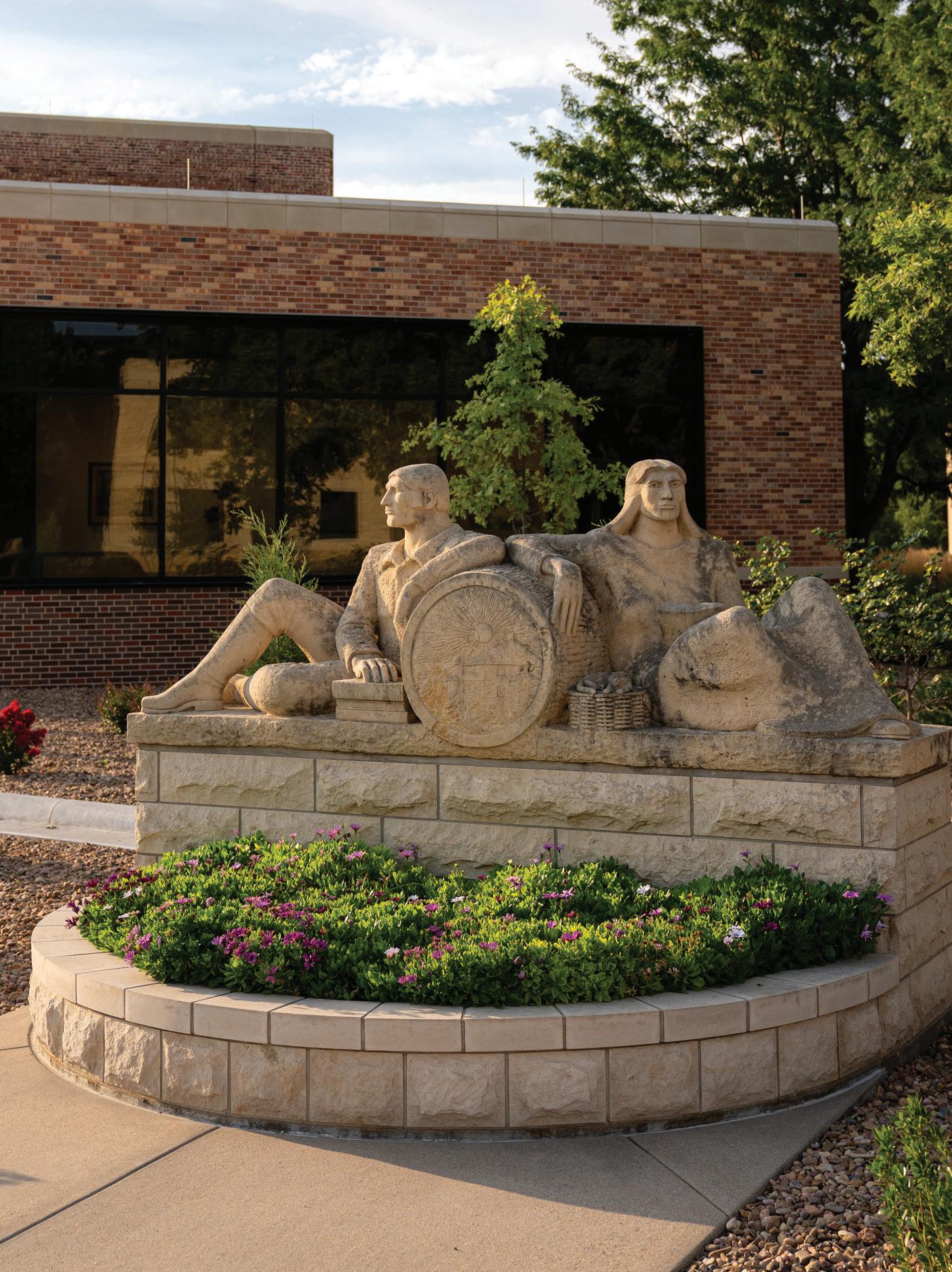
1990s
Cory Eberle ’96, Ellis, January 25, 2026
Steven Herrman ’91, Ellis, November 4, 2025
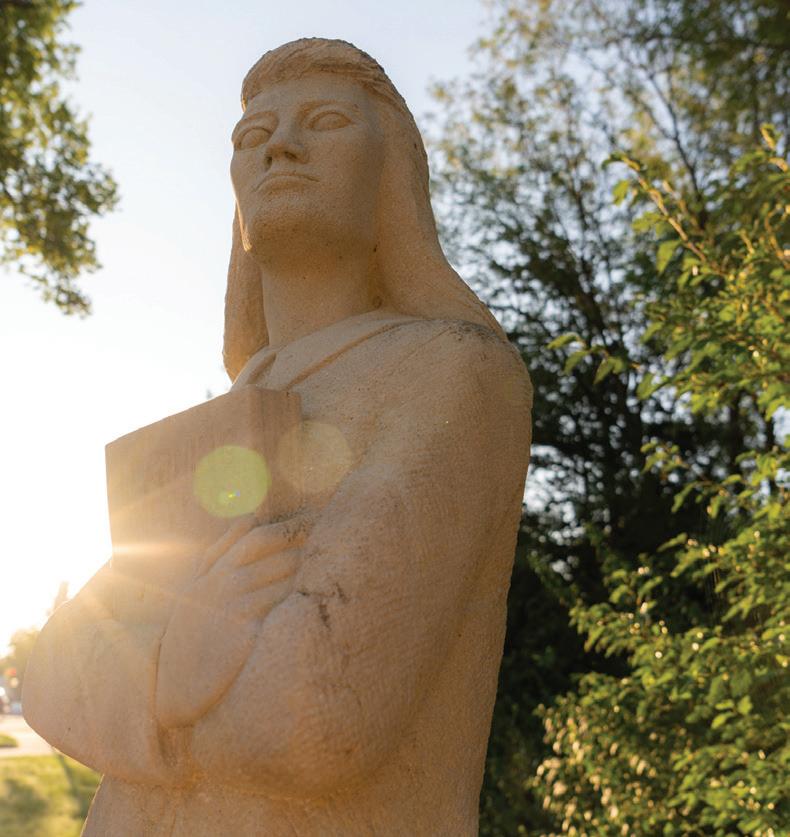
On your next visit to campus, explore Fort Hays State University’s collection of iconic Pete Felten sculptures. Felten passed away Feb. 4, 2026, at the age of 92. His creations can be found throughout Hays, Western Kansas, and the Kansas State Capitol.
Felten’s works at FHSU include:
• Teacher and student (at the intersection of Lyman and South Campus Drive)
• Pioneer students (8th Street and North Campus Drive)
• Memorial to the 1970 student shootings at Kent State University (on the south side of the Memorial Union)