Reflections from the Pandemic

The Covid-19 pandemic was an extraordinary time that changed how we lived, worked, and cared for one another Though the memories may feel distant or difficult, they remain an important part of our shared story
At Forest Holme Hospice Charity, we wanted to ensure that the experiences of the pandemic were not lost to time This booklet brings together reflections from hospice staff, both clinical and non clinical, sharing their personal and professional experiences of living through Covid 19
Some stories speak directly about caring for patients and supporting families, while others reflect on life beyond the workplace, including the impact on home, family, and wellbeing Together, these voices offer an honest record of what it was like to live and work through a period that changed us all, and what it meant to remain connected to care, compassion, and humanity during a global crisis
We would love for readers to contribute their own experiences, especially those whose loved ones were under palliative care during this time, so together we can preserve this important part of our history.
To contribute your experience, please email; paul@forestholmehospice org uk or call 01202 670644
Forest Holme Hospice is part of University Hospitals Dorset NHS Foundation Trust and is funded through a partnership between the NHS and Forest Holme Hospice Charity.
T A B L E O
“I
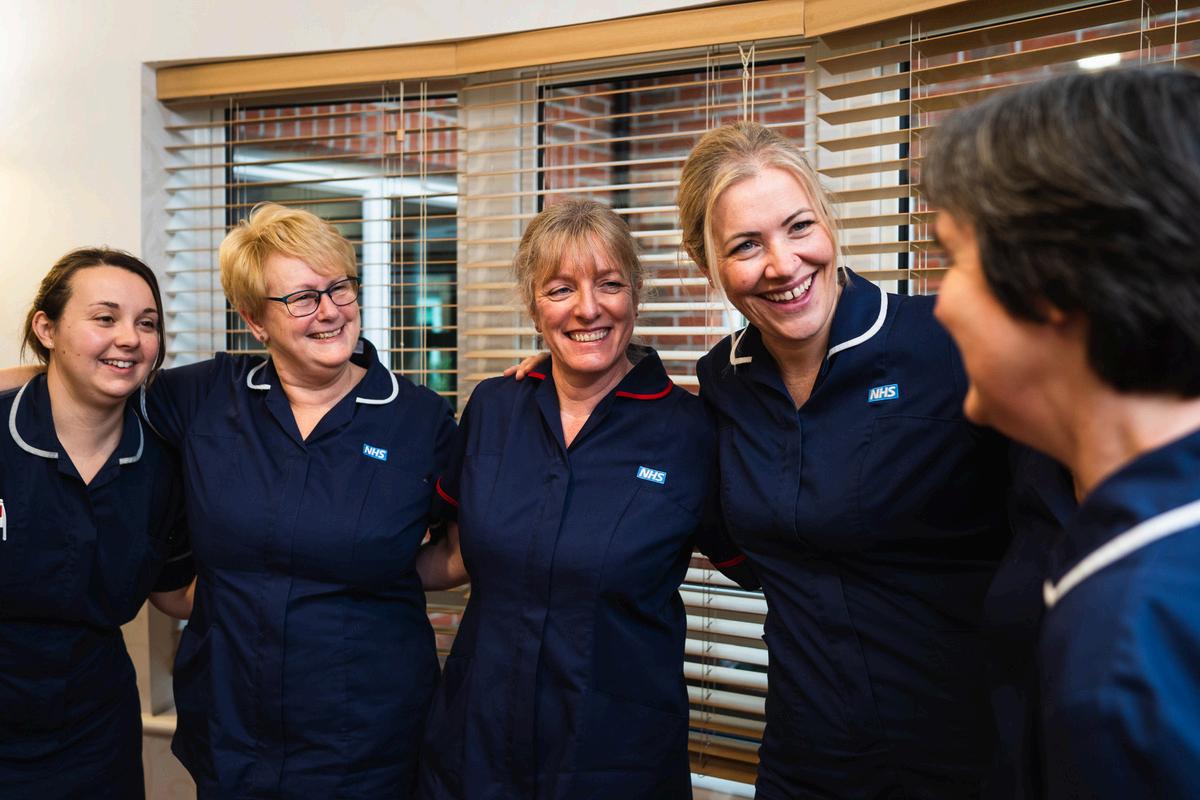
"So, whilst our smiles could no longer be seen beneath our masks, our focus remained on what we could STILL do."
As a team of seven community specialist palliative care nurses based at Forest Holme Hospice, working across an area of East Dorset spanning from Bere Regis to Swanage, to Cranborne in the north, we continued to support the many differing and complex needs of our patients during the pandemic in ways we could never have imagined.
Their already difficult journeys became even more challenging, with increased isolation. Family and friends could no longer visit, hug, or support them in the ways they once had.
Wearing uniform and PPE at each home visit, our communicat through surgical masks. Managing difficult symptoms and provid support meant negotiating a more complex path; accessing resources that were often reduced or constantly changing. Visits h planned, ensuring infection control and social distancing Conversations were sensitively managed, with children now at hom school and often in earshot.
Dispersed family members required more of our time, often thr calls to ease their worries. We also had to adapt, using virtual techn additional support For everyone, there was a heightened awaren difference a simple touch or brief moment of human contact could more so than in a time of such uncertainty. And yet, we couldn’t.
So, whilst our smiles could no longer be seen beneath our m remained on what we could STILL do Our eyes and voices c empathy and compassion. We could still use our expertise to man the complex paths of pain, nausea, and other symptoms. We could with GPs, district nurses, and colleagues across health and socia patients’ needs were met as best as possible, despite the demands a all services.
We could still spend time each day on the phone with relatives, that someone was there for their loved one We could still remain we are, even though our appearances had changed with outgrown h

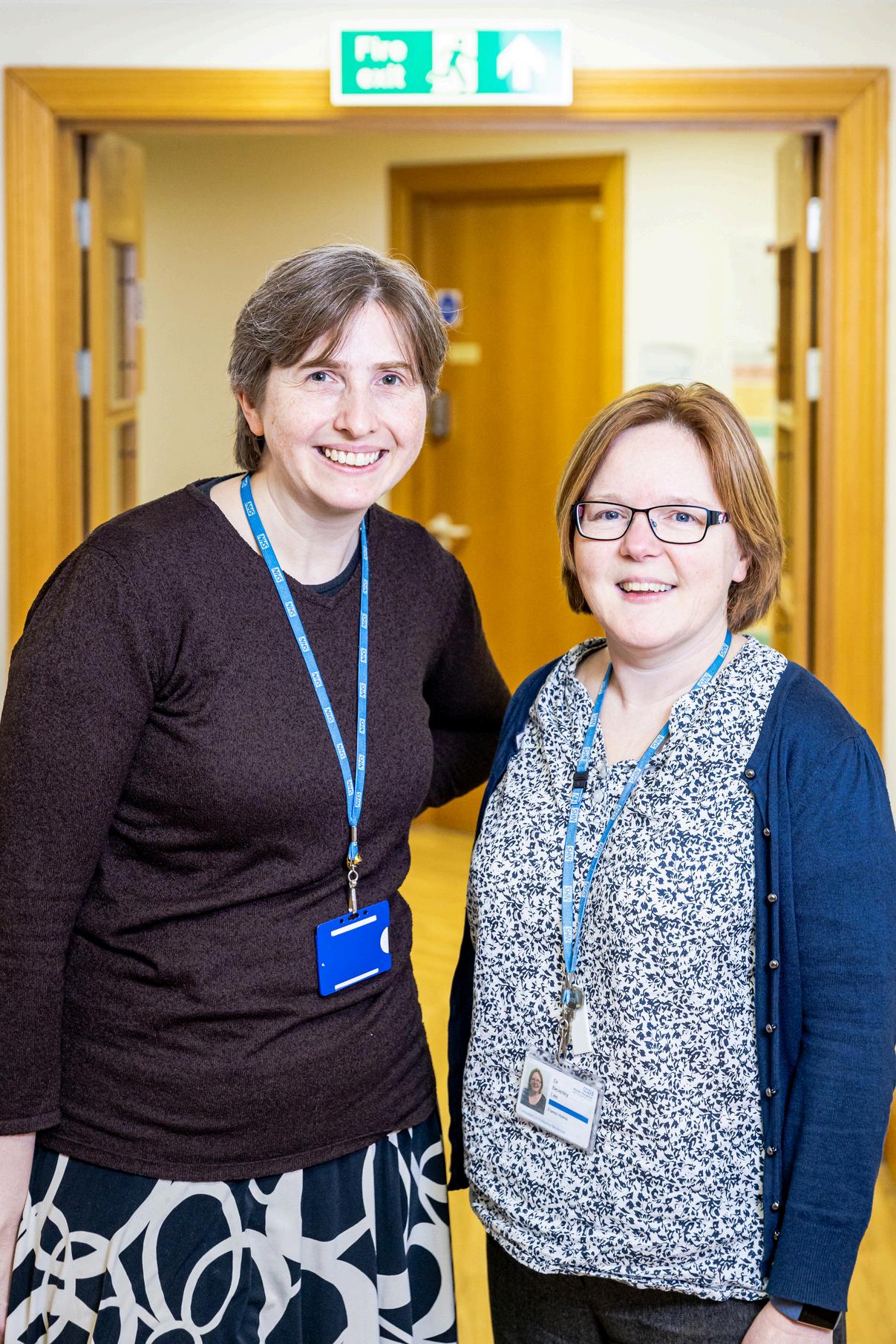
“Covid denied me precious time with my mum as her dementia advanced.”
Although it was something I was sad about, over the following months I took solace in seeing her blossom again. She had always been a social lady and the care home provided her with much needed social interaction: visits to the pub, garden centres, the local Christmas Fair and plenty of craft activities. She even made friends with two other ladies, and they were affectionately known as “The Terrible Trio”
In January and February 2020, I was unable to visit because of heavy snow, ice, and flooding, which left her town under water just before the first lockdown
I had regular updates from the home with photos, but it was n hug. I also received updates about Covid outbreaks among resi came the news I feared, my mum had caught it She had to be others, something I knew she would struggle with. Thankfully, sh
When the first lockdown lifted in May 2020, I was finally able visited alone, meeting her in the garden through the gate. She layers of blankets Still, I wasn’t allowed to hug her; I had to sit at
That summer, I got a call from her GP. My mum was unwell, a needed to go to hospital She was admitted into a ward and th visitor policy. She stayed there for three weeks. The change of en more confused The nursing staff kindly arranged occasional Fa an iPad, but it was hard to see her so distressed and disorienta understand what so many families were going through; endless p that went unanswered, promises of updates from doctors that n anguish of not knowing what was happening to a loved one who themselves. When she finally returned to her care home, I was de
Then came the second lockdown. This time the home had prepa allowing one person at a time But the experience was far fr Mum. She was brought down to the room and sat behind a pers wear a mask. She was deaf and couldn’t hear me. They gave m write on, but she couldn’t process the words She didn’t recognis played her music, and we sang along together, but on one visit s distressed, looking at me as if I were a stranger. She gave me the look I remembered from childhood when I had done somethin favourite carer came to reassure her, and immediately Mum’s face
y those months she slipped further away, moving from recognisin seeing us as strangers. Yet, I take solace in knowing she was cared and familiarity, never left alone, and unlike so many other care hom she lived for me to tell this tale”
“WELLBEING
Christine - Complementary Therapist
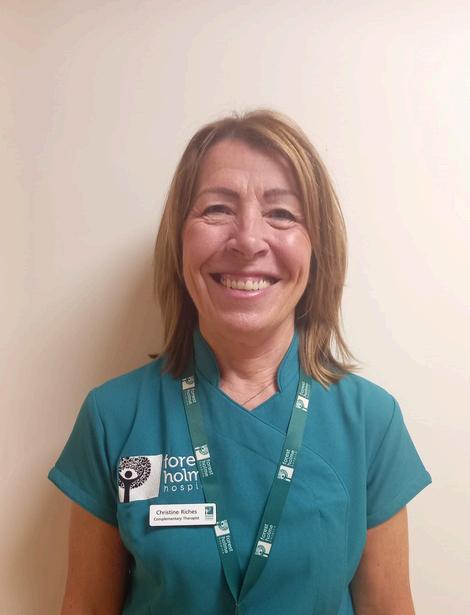
“I have never forgotten that time spent with staff who were so brave and went above and beyond the call of duty.”
I learned that many were experiencing PTSD as a result of the difficult and traumatic challenges they were facing, so we started making up aromatherapy inhalers that they could keep in their pockets and use when needed
We sent an email out, and within hours the response was enormous. We offered a variety of oils designed to promote relaxation, ease anxiety, and uplift the mood. Managers then asked if we could make up hundreds so they could be placed in “bubbles” (the areas staff went to for a rest) so people could help themselves
positive. Many said it made a huge difference to their health and I have never forgotten that time spent with staff who were so br and beyond the call of duty.”
Hannah - Charity Chief Executive
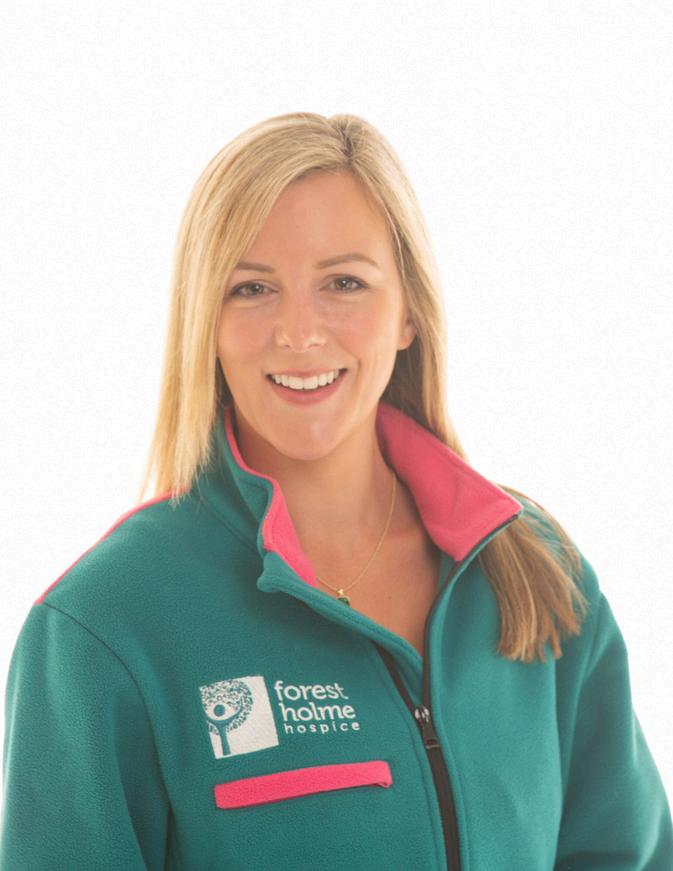
with the rest of the UK.
At the time, I was pregnant and caring for my lively two-year-old while managing the usual waves of morning sickness. My husband, classed as a key worker, was often away with his essential work at Public Health England, so I was holding the fort at home. Like so many others, even simple tasks became more complicated; supermarket delivery slots vanished almost instantly, but I eventually found a local farm shop that could deliver what we needed.
One of the hardest moments came when my dad, living in Surrey with my mum and sister, was rushed to hospital with a
The months that followed were filled with worry as he underwe at The Royal Marsden to remove surrounding deep tissue desperate to be with my family, but separated by restrictions and
Other memories from that time are etched in my mind: heari Minister was hospitalised with Covid, seeing the Queen sit alon funeral, masked faces becoming the norm, and endless Zoom ca nights with family and colleagues to stay connected.
Giving birth during the pandemic was another defining experience I attended every antenatal appointment alone, grateful it wasn’t my first baby Complications meant I was induced at Poole Hospital. I vividly remember lying in a four-bed bay, alone, waiting for my Covid test results before I could be near anyone else. My husband was finally allowed in during established labour, both of us masked until I couldn’t wear it any longer The birth went smoothly, but after only a short time together he had to leave, and I spent that first night alone with my newborn in hospital.
There were no baby showers, no family visits, no joyful gatherings Looking back now, I realise how extraordinary it all was. Yet I feel fortunate; my experience, while challenging, was nothing compared to what so many endured, especially my clinical colleagues and those who lost loved ones. ”

Clare - Palliative Care Nurse
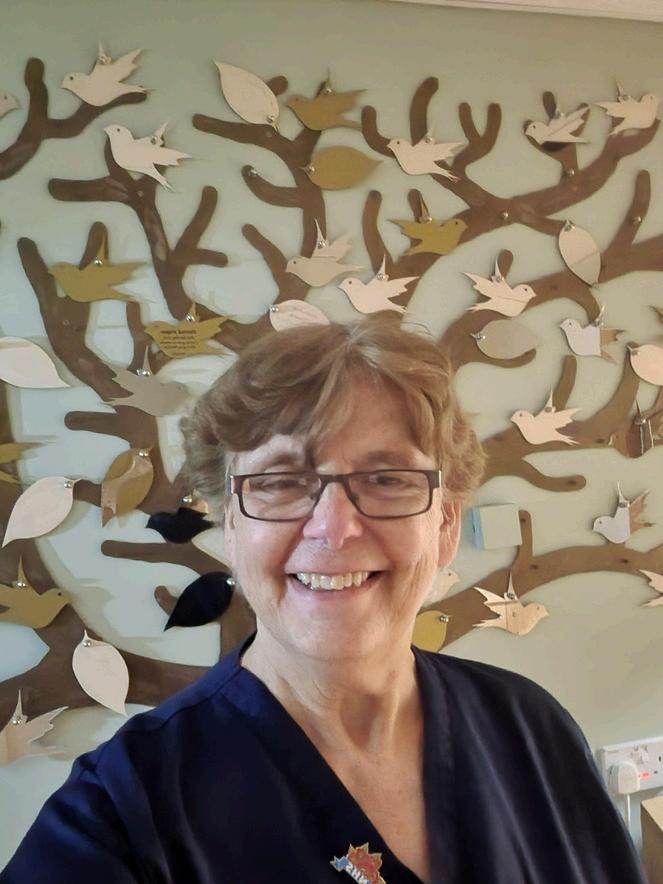
”Looking
back, it was a time of unimaginable loss, but also of courage, compassion, and connection.”
a brave decision, but one that often meant they died sooner than expected
From a nursing perspective, this was one of the most intense periods of my career. The unpredictable nature of Covid, coupled with the emotional strain, made every shift exhausting. Our workload increased by around 70%.
Before Covid, a typical night meant five or six visits. During the pandemic, that number rose to ten or eleven. The number of verifications of expected deaths (VOED) also soared from one or two a night to as many as seven or eight.
Service, and NHS 111 became crucial in supporting our commu boroughs we covered, two had no overnight district nursing ser was so inundated that we often took on their palliative patien they were known to us.
Before Covid, I typically worked three or four nights a week. Du it became six, sometimes seven, as our small team faced sickness We all knew how vital it was to keep the service going, no matter were. One of the strangest things was the silence. These were busiest boroughs, yet the streets were deserted Driving through just police cars, ambulances, and 111 doctors passing in the ni crossed paths, there was a quiet wave, a small but powerful weren’t alone out there That little gesture brought comfo solidarity.
I was incredibly lucky to have wonderful neighbours who would doorstep and post encouraging notes through my letterbox; m going, this won’t be forever You’re making such a difference” kindness meant the world. The hardest part, though, was lo colleagues to Covid. The RCN later reported that around 1,500 across the UK died from the virus a devastating number Kn those faces were ones I had worked alongside made it even more
Being from a close family, I also found it very hard not to see th my distance, not wanting to risk passing anything on. That isol some ways, going to work was a relief, it meant being around pe the most difficult circumstances. Looking back, it was a time of but also of courage, compassion, and connection. I’ll never forget teams I worked with and the quiet heroism that got us all throug
“THE
“I’m not sure we did much, really, other than turn up, every single day But sometimes, that’s all you can do.”
By March, we entered lockdown. The hospital was emptied in preparation for the Covid patients we were expecting. During the first wave, numbers were relatively low, but the patients we did see died in ways we weren’t used to Many initially seemed to recover, only to deteriorate rapidly around day seven to ten. It was devastating. We learned a lot in that phase, but our numbers, thankfully, remained manageable
Everything changed again in January 2021. The hospital was full, and our Covid numbers along with the national figures began to soar
died, and new names were quickly added. I’ve worked in pallia years, but I had never experienced anything like this The speed o shocking; often there was so little time to manage symptoms or o
A few moments from that time have stayed with me I remembe in a bay with five other men. He seemed to be recovering from man in the next bed took his final breaths, he looked at me and will be me tomorrow.” He died the next day.
I also remember sitting beside a resident doctor, listening as he to families, telling them their loved one was likely to die, and ad visit because they too might catch Covid. January was relent watched the rising death tolls on the news and saw those numb wards. I can still recall exactly where I was on the day England r number of daily deaths
On 3rd February 2021, I tested positive for Covid myself. My ov was, strangely, relief; relief that I now had a reason not to go ont witness more people dying. Luckily, by the time I returned to had begun to fall. But a new challenge soon emerged: the afterm hadn’t seen their GPs for months began arriving with advanced, Many were angry about what they had endured and what they w tried to support them, but the emotional toll was heavy I’m not with everything I saw; it’s something I’ve simply parked away in m
In 2025 I visited the Covid Memorial Wall in London I walked a my then 16-year-old son ’ s arm, and sobbed the whole way. He to of what I had done. I’m not sure we did much really, other t single day But sometimes, that’s all you can do”
“THE
THAT MEANT EVERYTHING”
Vicky - Senior Finance Administrator
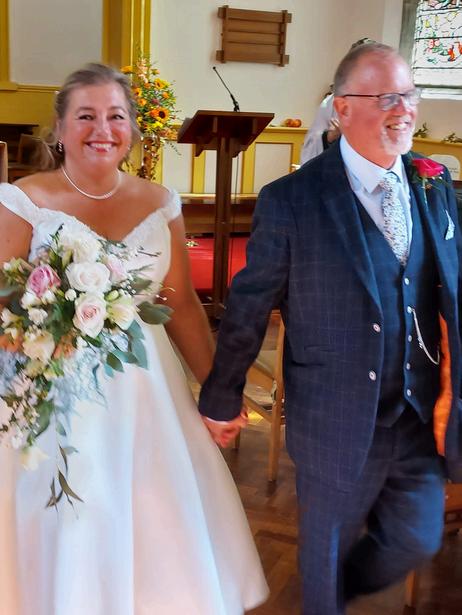
“We will never take life for granted again.”
We quickly changed our view. Like everyone else, we stocked up on food and supplies; though, in truth, our wine and beer supply was probably larger than the food one. We found it hilarious that people were bulk buying toilet roll. Our youngest son worked for a food wholesaler, so we weren’t particularly worried about running out of essentials.
I remember driving into work at the main hospital; the roads were empty, parking was easy, and the phones were constantly ringing Businesses that were closing down were donating everything from tissues and soap to crisps, biscuits, and care packs for staff. Then one day, a member of my team asked, “Are you okay? You’re coughing.” I hadn’t noticed, but later they
the doctor, who prescribed him antibiotics for what was thought infection or pneumonia But he kept getting weaker, shuffling a struggling to talk. He called 111 and his GP, but neither would see him took over the call and insisted he had to be seen.
They finally agreed to assess him at a local surgery. When we arrived, from the car. A staff member, dressed head-to-toe in PPE, came allowed to go in He was checked over and told to wait in the car for t By now, I was terrified, he had aged 30 years in a matter of days. He to he didn’t think he would recover I tried to reassure him, talking abou and places we’d visit. He looked at me and said, “I have no regrets. again tomorrow. My only wish is that we’d done the Norwegian Fjord was so special when I went as a teenager”
Moments later, I received a text: “Report to Poole Hospital. Stay in the department, and they will collect you ” We went home briefly to things. While driving, my husband rang each of our sons to say go heart-breaking At home, I told our 11-year-old granddaughter what w She was so brave, she hugged her grandad tightly and told him she l also called his brother, asking him to promise to look after me and the
At Poole Hospital, we called the number as instructed. A nurse even in full PPE with a wheelchair. My husband was so weak he could b asked where they were taking him and begged for one last hug That and clumsy through tears and masks, was the most important one of The nurse told me to call the number later for an update I sat in the sobbing, before forcing myself to go home and be strong for the family
When I arrived home, both my sons were in tears My granddaught trying to process it all. I had to call both sets of parents to tell th happened.
Everyone was stunned my husband was the fit one, always full of energy
After hours of waiting, I finally spoke to him. He was exhausted and in pain but a bit more coherent on oxygen. His oxygen levels had been so low, around 40, that alarms kept going off. At first, staff thought the monitors were faulty. The GP later told us that if I hadn’t insisted he be seen, he would have died; his organs were on the verge of shutting down An X-ray confirmed his lungs were completely congested
A doctor discussed his options: an induced coma and ventilator, or participation in a drug trial. Neither offered guarantees. He chose the trial. The dose was so strong that a crash cart was kept in his room in case he reacted. His assigned nurse was so distressed she couldn’t stay with him People meant well by calling and checking in, but I found it exhausting; constantly on edge, waiting for updates I stopped answering most calls, saving my energy for the hospital or my husband. We were lucky to be able to talk each day thanks to mobile phones; it was a lifeline for both of us. Slowly, he began to improve.

The Covid-19 pandemic changed all our lives in ways we could never have imagined.
Within these pages are real stories from those who lived and worked through that time; stories of loss, courage, compassion, and quiet resilience.
But these are just a few voices among many. We know there are countless others with experiences that deserve to be heard.
If you have a memory, reflection, or story to share, we’d love to hear from you. Together, we can ensure these moments are never forgotten.
E: paul@forestholmehospice.org.uk
T: 01202 670644
A: Forest Holme Hospice Charity, 5 Seldown Road, Poole, Dorset, BH15 1TS