Drones and Mass Salvo Attacks: Lessons Learned from the American Defense of Israel
Aaron Stein
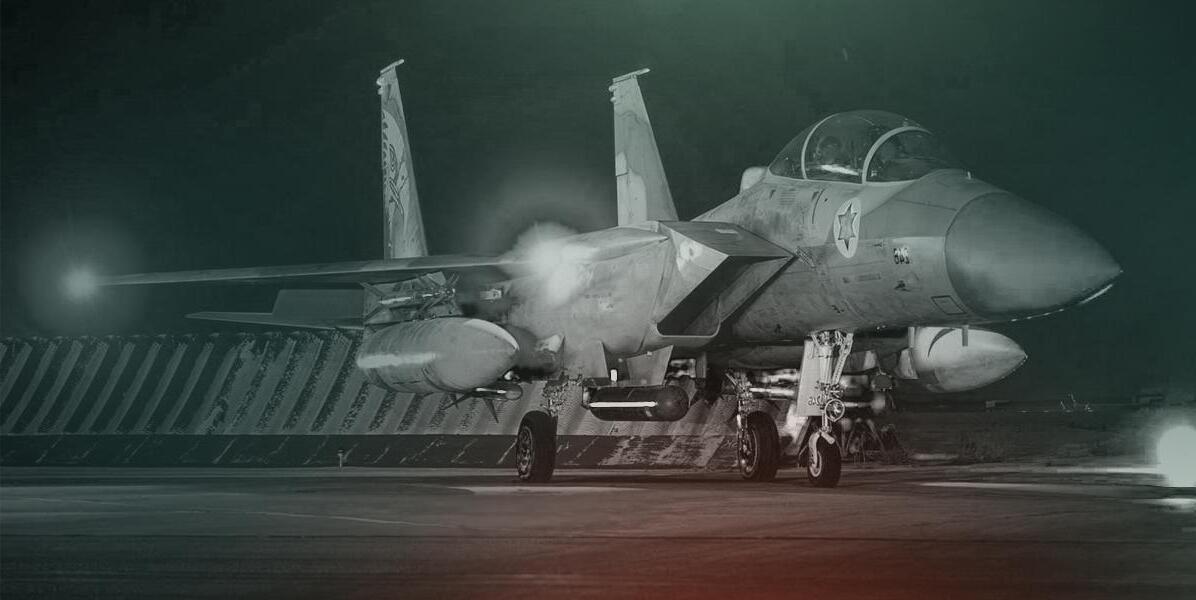
On a cool night in April 2024, the Iranian military surprised American and coalition war planners. It launched a massive salvo of drones, cruise missiles, and ballistic missiles at Israel, following an Israeli air attack on an Iranian diplomatic facility in Damascus. The Israeli attack in Damascus killed a senior Islamic Revolutionary Guards Corps General. The April 13 Iranian attack predated the start of Operation Rising Lion, the 12-day air war Israel launched against the Islamic Republic in June 2025. However, the multinational layered defense of Israel in April is revelatory, both in terms of how the US military and its allies were able to blunt a massed air attack and how that air attack seriously challenges how Western militaries are trained and equipped for combat.
The lessons from the night of April 13 have direct relevance for the future of global security, specifically on the NATO-Russian border in the Baltics and Poland, and throughout the Middle East. This chapter is based on a series of interviews the author conducted with US personnel directly involved in combat operations that night.1 The defense of Israel and US forces in the region that night was truly unprecedented, and has been overlooked as a potential turning point for the future of air combat. The successes should be replicated throughout all European and USallied militaries. However, the tools that enabled success are not as widely proliferated through the air and air defense arms of US allied militaries, which means that much of Europe will remain uniquely exposed to Russian drone incursions for the near future. The broader lesson is also more about how to think about defense against massed salvos of cheap munitions.
In publication after publication, and in industry briefing after industry briefing, the focus is on creating products that can shoot down drones cheaply and efficiently2—in short, building an interceptor with a price point similar to the drone being fired. This is certainly part of the answer to this problem. Yet, the challenge is far larger than a simple cost-exchange calculation. The defense against massed drones and ballistic missiles is more about standardizing equipment, sharing data across different services and nations, and reconceptualizing air and missile defense for a combined arms approach. In short: Cross cueing capability that allows for “any targe/any sensor” weapons capability for air and ground-based shooters.
1 Author interviews were conducted in October 2025.
2 See for example: Wes Rumbaugh, “Cost and Value in Air and Missile Defense Intercepts,” Center for Strategic and International Studies, February 13, 2024, https://www.csis.org/analysis/cost-and-value-air-and-missile-defense-intercepts; Lara Seligman and Matt Berg, “A $2M Missile vs. a $2,000 Drone: Pentagon Worried over Cost of Houthi Attacks,” Politico, December 19, 2023, https://www. politico.com/news/2023/12/19/missile-drone-pentagon-houthi-attacks-iran-00132480.
This chapter builds on the work by Sam Lair, who used open-source tools to document the firing rates of American and Israeli antimissile interceptors.3 The challenge of air and missile defense is far broader than the need to intercept ballistic missiles in flight and to have the magazine depth to maintain stockpiles of these expensive interceptors to sustain combat operations for months. This chapter will explain how drones pose a similar challenge to US systems and how simple, technologically focused fixes to this problem may be inadequate for future contingencies.
Defending The Bubble: Tower-22 and the Air Bridge to Syria
In 2015, American Special Forces had carved out a small base on the Jordanian side of the tri-border area with Iraq and Syria. The location had emerged as a flash point in the still raging Syrian civil conflict, which the United States and its allies intervened in to quell the Islamic State (ISIS), a terrorist group that had consolidated territorial control over swathes of northern Iraq and northern Syria. The Jordanian monarchy is a close American ally and had grown concerned about the influx of Syrian refugees in the area and about the possibility of an ISIS-led cross-border assault on the country itself. In return for access to a then remote Jordanian F-16 base, the US Army set up Al Tanf, a garrison to train Syrian fighters to plug into US air power and to take the fight to Islamic State. These fighters were never intended to be the main ground force in the campaign; instead, they were intended to harass ISIS lines along the Euphrates River to the north.4
The efficacy of this effort remains questionable. However, the garrison soon became a flashpoint in regional and global
relations. After the Russian intervention in Syria in September 2015, the civil conflict risked entangling the world’s two largest nuclear powers in a regional skirmish. The two sides eventually reached agreement on a deconfliction arrangement, for both ground- and air-based operations, that entailed carving out a 30-mile (55-kilometer) bubble around the area. The idea was to segment American and Russian areas of operation on the northern and southern sides of the Euphrates River, with two carve-outs for American outposts in the Russian area of operations.
The bubble around Al Tanf emerged as a hot spot and a target for Iranian aligned militias to harass and target during times of geopolitical tension. Russia also sought to challenge American supremacy in the area, often flying transport aircraft over the facility in violation of the spirit of the deconfliction arrangement. The vulnerability of the base to asymmetric air attack has been consistent since it was established. During the height of the American-led air war, the US Air Force patrolled close to the facility to quickly strike targets on the ground, or to track and shoot down manned or unmanned aircraft that threatened the ground troops.5
The fallout from the Oct. 7 Hamas attacks was felt throughout the entire Middle East. Israel began a devastating air campaign in Gaza, expanded the war to include Hezbollah leadership targets in Lebanon, struck Iranianlinked militants in Syria, and even bombed Qatar, a close American ally. For months afterwards, Shia militias linked to Iran used armed drones to harass US forces in the Middle East.
3 Sam Lair, “Shallow Ramparts: Air and Missile Defenses in the June 2025 Israel-Iran War,” Foreign Policy Research Institute, October 17, 2025, https://www.fpri.org/article/2025/10/shallow-ramparts-air-and-missile-defenses-in-the-june-2025-israel-iran-war/.
4 See: Aaron Stein, The US War Against ISIS: How America and Its Allies Defeated the Caliphate (Bloomsbury Publishing, 2022).
5 Aaron Stein, The US War Against ISIS
At the time, according to author interviews, Iranian-linked groups were launching “onsie and twosie salvos” of so-called Type 2 and Type 3 drones, Iranian-built systems similar in size and range to the American-made MQ-27 Scan Eagle or RQ-7B Shadow. In the years prior, American pilots had downed the Iranian Shahed-129 near Al Tanf. However, these were one-off engagements that neither the pilots nor the Weapons Systems Officers had been trained to shoot down previously.
In April 2024, an Iranian-built drone slipped through the American defense around Al Tanf. The drone struck barracks at Tower 22, killing three people. The attack was the first time in 70 years that American ground troops had been killed by an aerial attack. The event prompted the Biden administration to launch retaliatory airstrikes. The airstrikes, according to author interviews, did tamp down the launches of drones. However, they would resume in response to Israeli attacks on Iranian-linked assets in the Middle East.
Improving Point Defense: The Aftermath of the Tower 22 Attack
American air assets first “had to go through a couple of iterations to place [defensive counter air] assets in the correct locations” to aid with the defense of Al Tanf.6 The challenge that these drones present to both air and ground-based radar is that they fly very slowly and very low to the ground. The low altitude means that they stay below the radar horizon until they are very close to the target. For air assets, the first step is to position potential shooters in the correct locations to be able to see the drones and then be able to track them for a potential shot.
The first shoot down, following the Al Tanf attack, “went well.” The second “did not” and “both shootdowns garnered significant lessons learned especially with limited testing against” these types of threats before deployment . The best defense, as it turned out, was the large-scale airstrikes on Feb. 2, 2024. The airstrikes led to a détente.
The major challenge for drone defense is that the launchers are entirely mobile and easily disguised as civilian trucks, which in many cases they are. This makes the launch points for these attacking drones hard to predict. In response to this, American planners had to anticipate likely flying routes for the drones. The routes then allowed for the allocation of aircraft in different corridors, paired together and tasked with searching both high and low for incoming drones.7
The United States has a lot of experience in shooting down drones and, critically, the fighters that were sent to the Middle East after the Oct. 7 attacks had Active Electronically Scanned Array (AESA) radar, a significant upgrade over the older mechanically scanned radars previously fitted on fighter aircraft. The advantage of the AESA is that it is computercontrolled can scan very quickly with higher fidelity than older radar models, helping to detect low and slow flying objects. The combination of AESA and the Sniper pod allowed for both detection and then visual confirmation to ensure that the target was indeed a drone and not a vehicle on the road.
The drones that Iran and its proxies use typically fly on a low-to-high pattern. Early in flight they cruise at around 1,000 feet to conserve fuel. However, once they reach a potential threat area, they drop down very low to less than 100 feet off the ground. They fly with a pre-programmed inertial navigation
6 Author Interview, US Air Force Personnel, October 2025.
7 Author Interview, US Air Force Personnel, October 2025.
system (INS), or with GPS for navigation. For the INS variants, this means that they do not have any electronic emissions or signatures for trackers to search for. An INS works by having specific waypoints along a programed route, which dictates commands to the flight control system. The Iranian operators preprogrammed the on-board INS to “erase the previous points to where they flew from” in order to obscure launch location information if they crashed and were recovered by US personnel for exploitation.8
In the case of Al Tanf, the Iranians and their proxies would “fly at 100-200 feet and try and route around the base because there is a coyote garrison that could shoot it down.” The ground-based defense at the base—in this case the Coyote—“is for point defense.” The system has “two missiles on the rails … based on the probability of kill for each missile, the operator has to fire both at a single target.” The reload time for the system, then, is approximately 45 minutes for a field representative to resupply the garrison. The system also targets based on squawking the Identify Friend Foe system. This means that an orbiting fighter “has to be more than 10 miles away because if it sees a friendly transponder in the area it won’t work.”
The implication, of course, is that small numbers of deployed ground-based defense will have to be rigorously deconflicted with airborne assets. They also have to be deployed in large numbers and the reload time significantly shortened. Yet, stepping back, the point defense approach requires more forward-based fighters—or a different concept of ground-based deployment—to truly handle large incoming salvos. It also means that ground-based defense is the
8 Author Interview, US Air Force Personnel, October 2025.
last line of defense. This places an emphasis on so-called left-of-launch capabilities, finding and destroying targets before they are launched. And for those that cannot be destroyed on the ground, airborne assets are required to target them far away from intended targets.
Sanitizing and Sorting: The Shahed Turkey Shoot
The size and scope of the Iranian missile and drone salvo on night of April 13 was not expected. As one person explained to the author, “You should also know that [intelligence] did not expect Iran to launch 120 ballistic missiles. They were prepared for it. But they did not expect it.”9
The same is true for the numbers of drones Iran launched at Israel. The mass of these drones challenged basic fighter “sanitization” techniques. On the night of April 13, the first challenge was how to build a defenders’ course of action. This is initially based on intelligence—the defender has to surmise how an adversary will likely route the incoming drones. Iran knew enough to “route attacking drones around the ground-based radar.”10 For one-way routes to Israel, the American planners surmised correctly that Iran would route drones over Iraq and through the tri-border area with Syria and Jordan. This assessment was based on logic and prior Iranian practice.
However, Iran also updated its approach and “by the end they were launching them through Saudi Arabia; with them flying over the Golan Heights; or over the Mediterranean and then turning back towards Israel.” The airspace to defend, therefore, was “expansive
9 CNN, “Iran Launches Drones and Missiles toward Israel,” CNN, April 13, 2024, https://www.cnn.com/2024/04/13/middleeast/ iran-drones-attack-israel-intl-latam; Author Interview, US Air Force Personnel, October 2025.
10 Author Interview, US Air Force Personnel, October 2025.
– a 360 degree threat axis.” To deal with this vast area, the United States set up three corridors: Northern, Middle, and Southern along the expected ingress routes for the attacking drones. In each corridor, the United States placed four fighters, with two four-ships of F-15Es assigned to the northern and middle corridors. Each F-15 carried eight missiles. A four-ship of F-16s was assigned to the southern corridor, with each jet carrying six missiles. All of these planes had AESA radar.11
As the attack began, each of these four ships had to first “sanitize” the airspace. This is a brevity term for “showing up to an airspace for the first time, where the pilot has no idea what is out there, so they start to build radar tracks to build fidelity … [and] setting up for the right radar modes to find the specific threat.” The AESA radar, in this regard, is very important, as it allows a pilot to “sanitize an airspace out to tens of miles” for this current threat. For the older, far more prevalent mechanically scanned radar used by European air forces, the scan area “creates a narrow lane for range azimuth and elevation, which creates the soda straw effect” for drone detection, sanitization, and then defense while also requiring exquisite intelligence for proper detection and sanitization during a large salvo. The AESA radar allows for the defender to have a bit more leeway for detection.
On the night of April 13, the four different four ships of lead defending aircraft moved after sanitizing to properly identify all the targets that were coming across the desert. This allowed for the defender to build the air picture, identify all the targets as flying objects, and then to determine if the conditions met the rules of engagement for weapons engagement. The issue with the slow, low-flying drones is that they travel at about the same speed as a fast-driving
vehicle. The speed the Shahed flies is far slower than most other flying objects. They are also flying very low to the ground and “if drones are near roads it is going to complicate radar and sanitization.” The defender then has to use an “[electro-optical] or [infrared] sensor to tell if it is a car or a drone.”
The Royal Air Force, which flew defensive missions that night, has the option to “set their speed filter on their mechanically scanned radars to zero.” The problem, of course, is that it will then “pick up everything that is moving against the flat desert background.” This required the Royal Air Force to work closely with the US Air Force to “point them out” and then transmit data “via link 16” for them “to get their kills.”12
The US Air Force, in contrast, were all operating more modern radars and carrying the Sniper pod. This allowed for the pilots to use the radar to find the targets and then to identify them with the Sniper pod’s infrared sensor. The Shaheds have no lights, so they are hard to spot visually. They do, however, put off a very small infrared signature, which allows for their visual identification with the pod. Their most obvious characteristic, as it turns out, is the noise that the engine puts, which is auxible to the naked ear within a couple miles on the ground.
The defenders quickly surmised that the best weapon to shoot them down is the AIM-9X, the most modern variant of this fivedecade-old heat-seeking missile. The older variant, the AIM-9M, did not work well for the American drone defenders. The Israeli Air Force, however, has made a change to the AIM-9M’s seeker and employed them with considerable success.
11 Author Interview, US Air Force Personnel, October 2025.
12 Author Interview, US Air Force Personnel, October 2025.
However, they have not yet shared the technology with allies, even the United States. The advantage of the AIM-9M is that there are a lot of them. They have been in production for four decades. They are substantially cheaper than the AIM-9X.13
The US Air Force began to engage the 200-plus targets once the sanitization was finished. The frequency of missile shots meant that the night-vision goggle-wearing pilots would be “blinded by the flash” from the missiles. This forced them “to transition instruments for safety of flight until the blindness ended.” They had to do this well below minimum safe altitude and with terrainfollowing radar pods that have long been defunded and that do not work.
At the outset of the engagement, a defender would have “20 or so targets on their scope” and was able to identify them and ensure that the rules of engagement were being followed by pulling up a moving map. This map would ensure that there were no roads in the area, ruling out that the slow flyers were vehicles. The defenders would then use the optical targeting sensor to look for headlights or signatures for vehicles driving at night in the desert. After this, they would start the weapon launch process, firing missile after missile at the incoming Shaheds.
The defending jets expended all of their missiles “within 20 minutes.” They would then pass data to backfilling jets that were sitting alert to continue the process of shooting them down. The slow flying speed, in this case, turned out to be an advantage. The defenders had the luxury to let some of the drones get behind them and instead focus on either passing data to incoming defending fighters or destroying drones still in front of them. The fighters could then turn around catch back
up with the slower flying drones and start the identification and shooting process all over again. As one defender described it, “with drones moving so slowly, you can retrograde. You can flow towards the defended asset. Turning hot again. And then begin building the picture again. And then you start to do it again.”14
The defending sorties were “typically four hours or so,” which is far less than the average mission most American fighter pilots have grown accustomed to during the post9/11 wars in the Middle East. Yet, the intensity of the defense is considerable. And after this period, defenders are “exhausted … you are cleaning off jets in less than 15 minutes. And now you have the responsibility for controlling the next layer of defense.”
The defenders were tasked with defending both Israel and US assets in the region. The actual defense itself, however, “was planned independent of Israel and deconflicted with airspace. There was a basic level of coordination.” The Israeli Air Force did not allow their pilots to “be on the same frequency” as the United States and its other coalition partners. The Israelis use a novel approach for their airborne drone defense— their response, of course, had the benefit of the American support, but their tactics do differ. Their F-15 and F-16 aircraft all have mechanically scanned radars so they “used their F-35 to point out the drones and then would use the F16 and F-15 as missile trucks.” They also tend to “husband air-to-air” missiles so try and not use them in the same ways as the US Air Force. They also leveraged attack helicopters, carrying rockets and the gun, to piggyback on both the F-35 and groundbased radar to intercept the Shahed drones. They rely heavily on ground-based defense, particularly the Iron Dome system, for drone
13 Author Interview, US Air Force Personnel, October 2025.
14 Author Interview, US Air Force Personnel, October 2025.
intercepts, giving Israeli planners a lot of flexibility on the drone side and freeing the Israeli military to focus almost exclusively on ballistic missile defense.
Dis-Jointed Defense: The Air and Missile Defense Multi-Service Mission
The attack was not limited to one-way drones—Iran also fired a large salvo of ballistic and cruise missiles. To intercept the ballistic missiles, the defenders used four different anti-missile interceptors: the SM-3, Terminal High Altitude Area Defense (THAAD), Patriot, and Arrow. Each of these systems works a bit differently. The longest range of these are the SM-3 and the Arrow systems, both of which are designed for exo-atmospheric intercepts. THAAD has the capability for both exo- and endo-atmospheric intercepts. The saturation of the Iranian attack meant that the defenders had to deal with the very low-flying drones, while different branches of the military were working independently to intercept ballistic missiles.15
The size and scope of the attack was a surprise. The challenges, as Sam Lair has noted, come from the volume of fire needed for the defenders and the slow production time for more missiles in the event of a much longer, protracted conflict that involves regular salvos of ballistic missile fire.16 This is the same problem faced by ground-based drone defense.
On a more tactical level, the high level of intercept success created secondary challenges for the airborne assets flying anti-drone missions or simply returning to base. On April 13, “the missiles would get hit and then all the shrapnel would fall back to earth.” The shrapnel and missile debris was
falling back down to earth through the aircraft corridors established to return to base. In many cases, the aircraft had to perform highperformance maneuvers to avoid being hit. It also was a safety concern for the ground crews. In the air above the base, the ballistic missile intercepts were happening, with debris then falling while personnel had to be out on the apron refueling and rearming jets, raising the risk of an accident that could kill personnel and destroy jets on the ground.17
The challenge with this type of defense is that each US service was operating quasiindependently of the other. The Navy was responsible for one aspect of missile defense, while the Army had another. The Air Force had the drone defense mission, but so too did the Army at Al Tanf. The overlapping mission creates an obvious challenge about how to best create “identification pathways for each individual service” and harmonize doctrine given that each service has different terminology, different ways of measuring distance (kilometers vs. nautical miles), and no way to share data.
The European Theater: Baltic Sentry and Sanitization Challenges
The challenge with airborne-based drone defense starts with how to identify and then target low and slow flying objects. The Shahed-style drones Iran—and now Russia—favors for a large salvo attack fly at the speed of a fast-driving car. They fly low to the ground. For older mechanically scanned radars, this creates a considerable problem in identifying them and ensuring that what is being shot at is not a vehicle. The advantage that the United States and Israel had over Syria and Iraq in April was that the drones
15 Sam Lair, “Shallow Ramparts.”
16 Sam Lair, “Shallow Ramparts.”
17 Author Interview, US Air Force Personnel, October 2025.
were flying over desert. The terrain is flat, featureless, and depopulated. There simply is not a lot of infrastructure that the defenders had to be worried about when identifying drones.
This is not the case in Europe. On Sept. 10, 2025, 19 Russian-made drones crossed into Polish airspace. The event prompted Polish quick reaction alert F-16s to launch, along with Dutch F-35s. Of the 19 drones that crossed into Polish airspace, three were reportedly shot down by the Dutch F-35s. The Polish F-16s that responded have the mechanically scanned AN/APG-68 radar, which is not ideal for drone defense. In August 2025, the Polish government announced that it would begin to upgrade its F-16 fleet to the AN/APG-83 AESA radar.18 The Dutch F-35s carry the AN/APG81 AESA radar, which make them better suited to the task of drone defense.
The difference in radar types may explain why the Polish F-16s did not shoot down any drones that night. It also may explain why so few Russian drones were shot down overall. Without accurate intelligence, the small number of F-35s may have been restricted to searching in specific corridors, identifying the drones, and then complying with the restrictive rules of engagement for the NATO air policing mission. The challenge was magnified by the proximity of the incursion to populated areas.
European air forces have deferred AESA radar upgrades, which means that the backbone of current European fleets have a less than ideal radar type to counter large salvos of drones.19 It is unlikely that single investments in Airborne Warning and Control System
(AWACS) aircraft can offset these challenges. The drones fly so low and slow that they may get lost in ground clutter, requiring a fighter to identify it. This creates the same sort of challenges for airborne operators.
The lack of AESA radar in other European fighters means that the F-35 is the best option for regional drone defense, at least until those other fighters receive the proper radar upgrades. This basic reality calls into question the actual efficacy of Baltic Sentry, the NATO-led response to Russian incursions.20 The deployment of greater numbers of surveillance platforms is certainly capable of detecting manned fighter incursions. However, the challenges with drone defense will persist. The risk, of course, is that the Russian side is acutely aware of this vulnerability to NATO’s eastern front. In the event that Vladimir Putin orders the military to infiltrate European airspace again, increased deployments are unlikely to make the equipment deployed enough to guarantee a capable and robust response.
Drone Defense: Rethinking Employment
The drone defense of Israel was a success. The US Air Force and its partners were able to neutralize one aspect of Iran’s air attack. However, there are considerable lessons to be learned, ranging from the equipment being used to how future defenders should think about this task. The first change is to increase the efficacy of cost-effective ground-based defense. This approach is lifting directly from the Israeli model, which has a truly layered defense, anchored around Iron Dome.
18 Bartosz Głowacki, “Poland Signs Off on $3.8 Billion F-16 Fighter Jet Upgrade,” Breaking Defense, August 14, 2025, https://breakingdefense.com/2025/08/poland-signs-off-on-3-8-billion-f-16-fighter-jet-upgrade/.
19 For a more thorough analysis of this issue, see: Justin Bronk, “Airborne Electromagnetic Warfare is Critical for NATO’s Airpower Edge,” Royal United Services Institute (RUSI), October 24, 2024, https://www.rusi.org/explore-our-research/publications/commentary/ airborne-electromagnetic-warfare-critical-natos-airpower-edge.
20 North Atlantic Treaty Organization (NATO), “NATO Launches ‘Baltic Sentry’ to Increase Critical Infrastructure Security,” NATO, January 14, 2025, https://www.nato.int/cps/en/natohq/news_232122.htm.
This allowed for the Israelis to husband air-toair missiles, a task admittedly made far easier by the heavy-handed US support.
The other is to decrease the cost of drone intercept. For air-oriented militaries, like the United States and much of Europe, the cost per flight hour is simply baked into the equation. The true cost savings can and should come from forcing the Israelis to share the AIM-9M seeker modification with their allies, especially the allies that defended them before and during the 12-Day War.
Another improvement has already taken place in the United States: The integration of the Advanced Precision Kill Weapon System (APKWS) laser-guided rocket kit on to AESAcarrying fighters. The APKWS rocket pod allows for each jet to carry 42 rockets, along with eight AIM-9X. The cost per APKWS rocket is equivalent to the cost of the drone being intercepted, which evens the playing field on the cost-exchange ratio between offense and defense. The APKWS system, however, is not a magic bullet. It requires the pilot use the laser seeker for each individual intercept, a task that would need to be repeated 42 times when destroying a large salvo of drones.
The very straightforward solution is for European air forces and American allied air forces to prioritize AESA radar upgrades. The upgrade increases the lethality of the pilot and jet in general and would give the defenders the proper tools to deal with drone swarms. This upgrade and the subsequent integration of APKWS into European air arms is critical. This would allow for Europe to build a layered, multi-country defense capability against the Russian drone threat. The technology, however, is only viable if there is a clear plan for air defense.
As was the case during the Cold War, European and American planners have to share intelligence about likely routes and corridors for drone infiltration. It would then be prudent to divide these potential routes into corridors and assign jets to each corridor. In the near term, the best way forward is to assign F-35s or AESA-carrying 4th-generation fighters to lead the defense of these corridors. The older jets should also be carrying the Sniper pod, or a European equivalent, to identify the low and slow flying objects. They can then take the shots themselves or mimic the Israeli “missile truck” tactics used by the US Air Force and the Royal Air Force on April 13, a clear, off-the-shelf template to train for. Additionally, these drones are slow, allowing European air forces to carve out potential locations along ingress routes where shooting them down poses little risk to civilians. This would allow for fighters to patrol closer to these areas and use data passed from forward-deployed sensors to their advantage.
The ideal solution would be to alter how militaries pass and share data. The United States military did centrally plan the defense of Israel. However, once the shooting started, each air defense arm operated independently in support of the same goal. The result is increased risk of fratricide and less than optimal solutions to complicated problems. As the United States and others think about how best to counter increased amounts of cheap mass in the air, a future-looking starting point for a more cost-effective defense starts with better information collection and distribution.
It may also be prudent to consider older, tried and true tactics for massed air raids. During World War II, British defenders used simple barrage balloons to force lower-flying dive bombers to ascend into walls of anti-aircraft
fire.21 The challenge with these drones is not that they are hard to spot on radar, per se. It is that they fly so low to the ground that it takes exquisite radar to find them. The challenge is broadly analogous to the defense against the V-1, the first cruise missile. The missile flew at lower, predictable altitudes that allowed for the defenders to place objects in its flight path. The Shahed drone threat is more or less the same, albeit with the caveat that drones are also inexpensive. A cheaper defense could be to marry obvious air power upgrades with more prosaic changes to how ground forces engage targets.
The deconfliction challenges are considerable during a massed salvo attack. For the small numbers of ground-based missiles, it is questionable about whether they would (or should) work when allied fighters are in the area. However, if a drone has leaked through forward defense, the ground-based systems are truly a defense of last resort. They provide point defense for close in threats. A novel way to drive down the cost of defense could be to leverage ground-based antiaircraft guns and put up a flack along likely ingress routes. The shoot down could be aided by physical barriers, perhaps modelled on barrage balloons, to force drones into specific corridors, or even to ideal altitudes for ground-based defense.
Conclusion
The lessons from the defense of Israel on April 13 were used against Iran during the 12-Day War. The US Air Force rapidly fielded APKWS, which increased the cost-efficacy of airborne centric counter-drone operations. The broader lesson is that low-cost, oneway drone defense is a vital component of future combat planning. A narrow focus only on the interceptor cost-exchange ratio
misses multiple facets of the challenge, including sanitization and the building of a comprehensive air picture for the defenders to use. For the US Air Force and its allies, this is primarily done with airborne assets, which require AESA radar and intelligence. One option would be to leverage tactics that Ukraine has developed, using the drone’s sound to triangulate a location and to build a picture of likely ingress routes. This method to provide planners with an initial look-ahead to help sanitize the air space is both innovative and cost-effective.
The next obvious step is to harmonize the data picture for each component of the drone defense. This is not so straightforward. The US military and its allies still struggle with passing data amongst different services, and then they also struggle to share data with one another during combat operations. A standardized mechanism to share the air picture is a worthwhile goal to consider, even if it is an additive peace of hardware like a tablet that could be used to augment the fielded systems’ onboard software. As new systems come into service, they should also have the ability to share data more fluidly across platforms. This approach would help increase the efficiency of the allocation of shooters to different corridors of drone defense and allow for the better integration of rotary aviation and slower flyers into elements of the layered defense of targets.
The drone challenge is certain to continue. The defense against these slow flyers is holistic, requiring better integration across services and allied forces, along with a better mechanism to pass and share data.
21 Franklin J. Hillson, “Barrage Balloons for Low-Level Air Defense,” Aerospace Power Journal (Summer 1989), accessed August 12, 2007, https://web.archive.org/web/20070812023821/http://www.airpower.maxwell.af.mil/airchronicles/apj/apj89/sum89/hillson.html.
At the tactical level, this means modernizing radar and exploring how to reduce further the cost per intercept, whether it be with APKWS, layered ground defenses, or left-of-launch strikes.
The tools for an effective defense against drones already exist. For the near term, Europe is acutely vulnerable. But with proper investments, updated training, and strategic investments, there is no reason to think that Western militaries cannot overcome this threat.
About the Author
Aaron Stein is the President of the Foreign Policy Research Institute (FPRI). Dr. Stein most recently served as the Chief Content Officer at War on the Rocks/Metamorphic Media, where he led the company’s editorial strategy and hosted the War on the Rocks podcast. Previously he served as FPRI’s Director of Research from 2020-2022, and Director of its Middle East Program from 2019-2022.
Dr. Stein holds a BA in politics from the University of San Francisco and an MA in international policy studies with a specialization in nonproliferation from the Middlebury Institute of International Studies at Monterey. Dr. Stein received his PhD in Middle East and Mediterranean studies at Kings College, London.
He is the author of The US War Against ISIS: How America and its Allies Defeated the Caliphate (Bloomsbury, 2021) and Turkey’s New Foreign Policy: Davutoglu, the AKP, and the Pursuit of Regional Order (Routledge, 2015).