




The STudenT Voice of fordham LincoLn cenTer

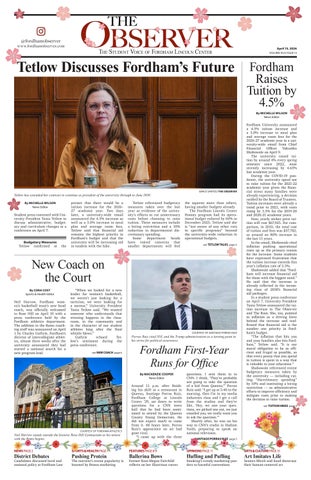


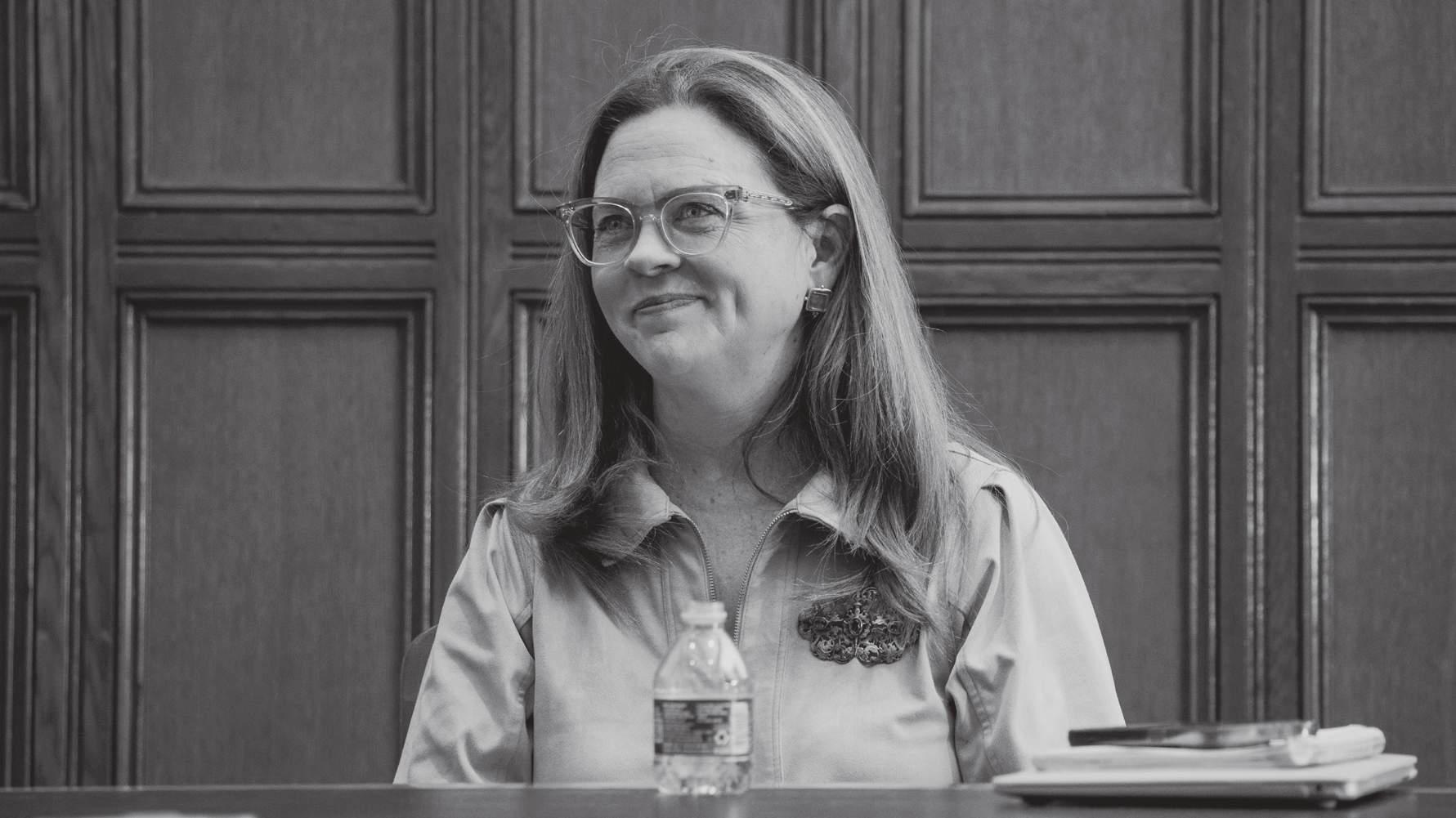
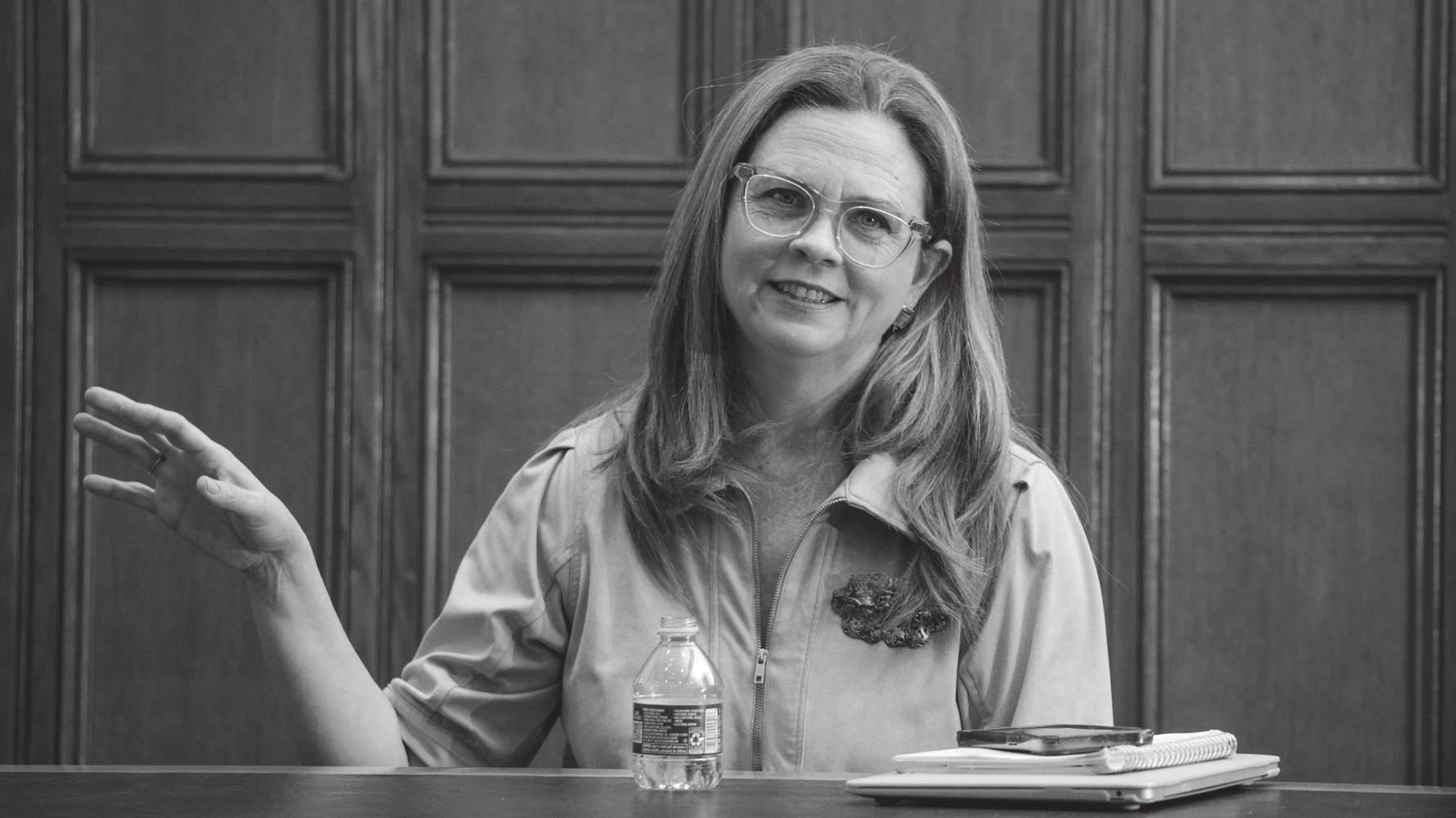
Student press convened with University President Tania Tetlow to discuss administrative, budgetary and curriculum changes at a conference on April 7.
Tetlow confirmed at the

By CORA COST Sports & Health Editor
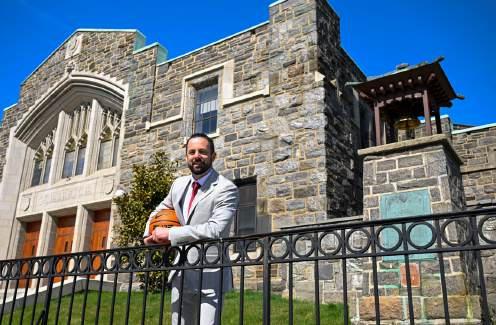
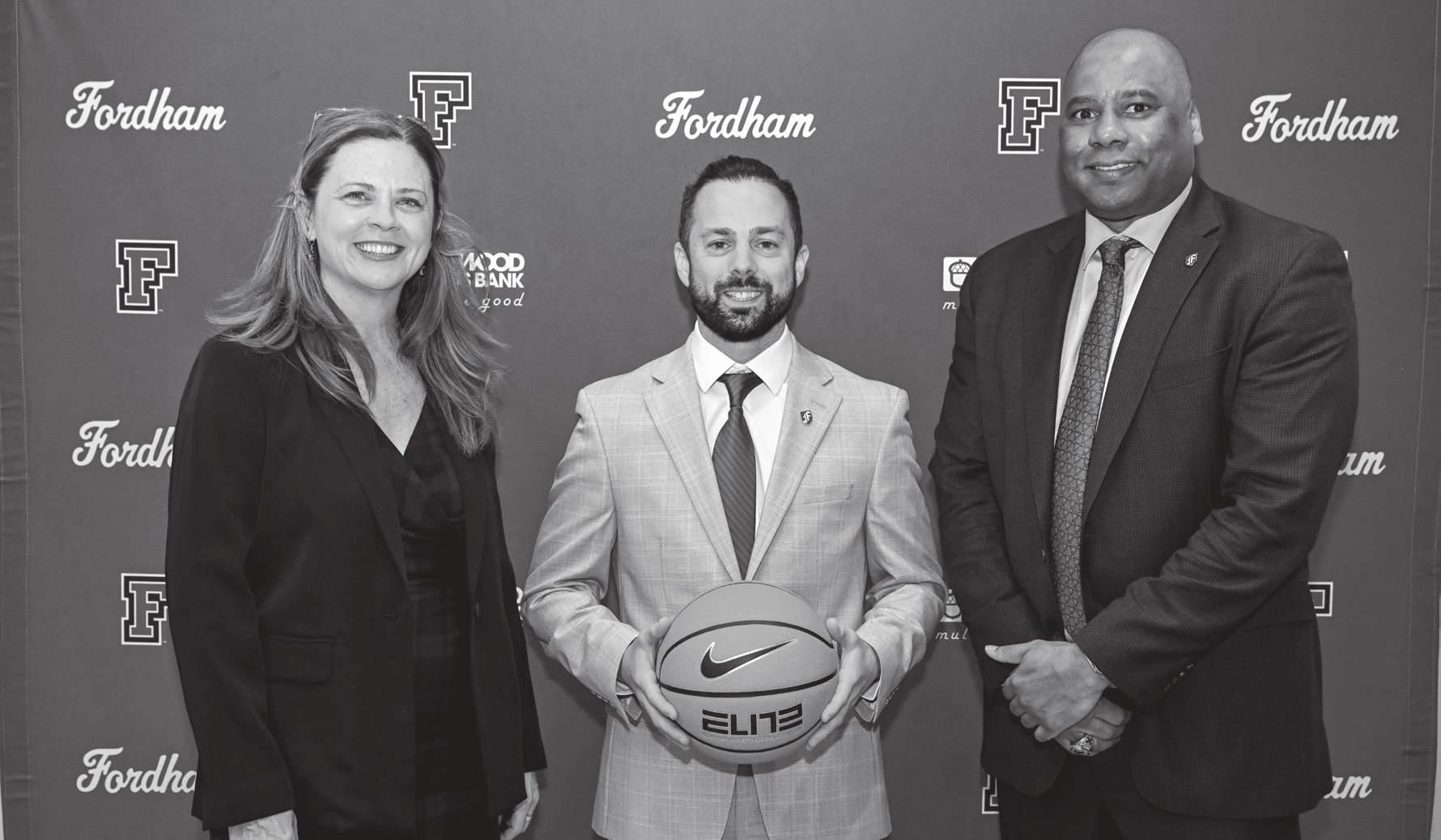
Neil Harrow, Fordham women’s basketball team’s new head coach, was officially welcomed to Rose Hill on April 10 with a press conference held by the Fordham athletics department. The addition to the Rams coaching staff was announced on April 1 by Charles Guthrie, Fordham’s director of intercollegiate athletics, almost three weeks after the university announced they had started a national search for a new program lead.
presser that there would be a tuition increase for the 202627 academic year. Two days later, a university-wide email announced the 4.5% increase as well as a 3.0% increase to meal plan and average room fees. Tetlow said that financial aid remains the highest priority in Fordham’s budget and that the university will be increasing aid in tandem with the hike.
Tetlow referenced budgetary measures taken over the last year as evidence of the university’s efforts to cut unnecessary costs before choosing to raise tuition. These measures include a hiring restriction and a 10% reduction in departmental discretionary spending.

“When we looked for a new leader for women’s basketball, we weren’t just looking for a tactician, we were looking for a mentor,” University President Tania Tetlow said. “We wanted someone who understands that winning happens in the classroom, in the community and in the character of our student athletes long after the final whistle blows.” Guthrie echoed Tetlow’s sentiment during the press conference.
Some department heads have voiced concerns that smaller departments will feel
the squeeze more than others, having smaller budgets already.
The Fordham Lincoln Center Honors program had its operational budget reduced by 60% in December 2025. Tetlow said she is “not aware of any other cuts to specific programs” beyond the university-wide reduction in operational budgets.

By MACKENZIE COOPER News Editor
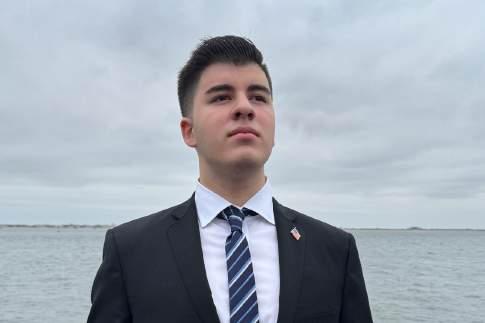
Around 11 p.m. after finishing his shift at a restaurant in Queens, Santiago Porras Ruiz, Fordham College at Lincoln Center ’29, sat down to write questions for a CNN town hall that he had been nominated to attend by the Queens County Young Democrats. He did not expect much to come from it. 48 hours later, Porras Ruiz’s appearance on air had gone viral. “I came up with the three
questions. I sent them in to CNN. I think, ‘They’re probably not going to take the question of a kid from Queens,’” Porras Ruiz said. “I get up at 5:40 in the morning, then I’m in my media industries class and I get a call from the studios and they’re like, ‘Hey, we saw your questions, we picked one out, we just emailed you, we really want you to ask the question.’”
Shortly after, he was on his way to CNN’s studio in Hudson Yards, preparing to speak on national television.

By MICHELLE WILSON News Editor
Fordham University announced a 4.5% tuition increase and a 3.0% increase to meal plan and average room fees for the 2026-27 academic year in a university-wide email from Chief Financial Officer Tokumbo Shobowale on April 9.
The university raised tuition by around 4% every spring semester since 2022, most recently increasing by 4.65% last academic year.
During the COVID-19 pandemic, the university opted not to raise tuition for the 2021-22 academic year given the financial stress many families were already experiencing, a decision ratified by the Board of Trustees. Tuition increases were already a trend prior to 2021, with costs rising by 3.3% for the 2019-20 and 2020-21 academic years. Now, yearly sticker price tuition will cost $67,925. For comparison, in 2010, the total cost of tuition and fees was $37,782, so around an 80% increase in the last 15 years.
In the email, Shobowale cited inflation pushing operational costs up as the primary reason for the increase. Some students have expressed frustration that the tuition increase exceeds this year’s inflation rate of 3.3%.
Shobowale added that “Fordham will increase financial aid for those with the biggest need.” He said that the increase is already reflected in the incoming class of 2030’s financial aid packages.
In a student press conference on April 7, University President Tania Tetlow announced the tuition increase to The Observer and The Ram. She, too, pointed to inflation as a driving force behind the increase and reaffirmed that financial aid is the number one priority in Fordham’s budget.
“The inflation that hits you and your families also hits Fordham,” Tetlow said. “It is our moral obligation to be as efficient and frugal as possible, so that every penny that you spend in tuition is spent in a way that is valuable to your education.”
Shobowale referenced recent budgetary measures taken by the university — including cutting “discretionary spending” by 10% and instituting a hiring restriction — as administrative efforts to improve efficiency and



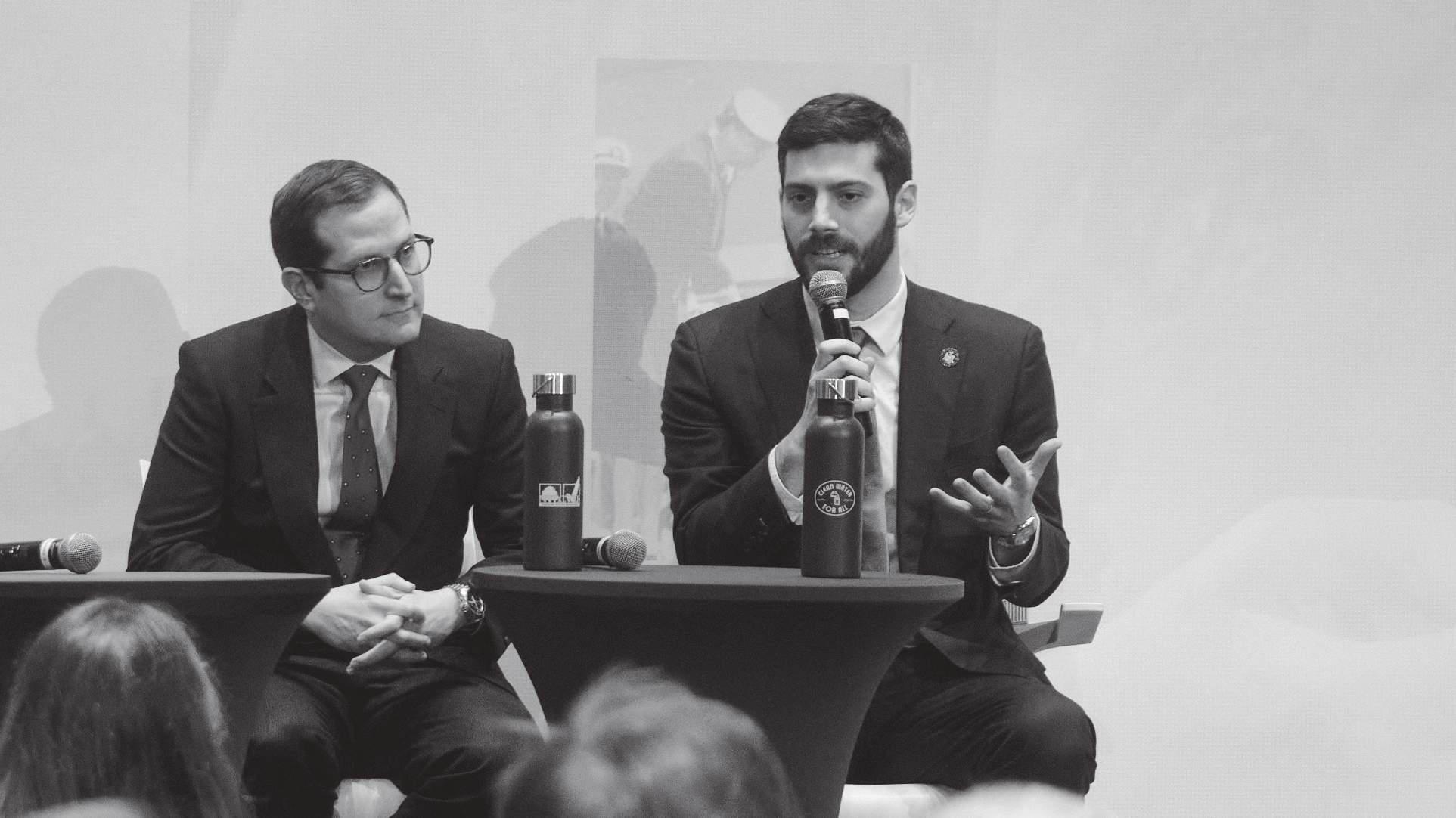
Four leading candidates outlined competing visions for New York’s 12th congressional district at a forum hosted by Fordham Law School
By ALEENA SIDDIQUI Staff Writer
At an April 8 candidate forum at Fordham University School of Law, the race to replace Jerry Nadler felt less like a typical forum and more like a pressure test for how Democrats are defining this political moment.
For nearly two hours, candidates in the coming race for New York’s 12th congressional district — Assemblymember Alex Bores, Attorney George Conway, Assemblymember Micah Lasher and public health expert Nina Schwalbe — returned again and again to the same conclusion: The stakes in this race are not abstract. They are immediate, structural and, in their view, existential.
Still, what separated them was how they think Congress should respond and what kind of leadership that requires.
From the start, Bores framed his campaign in terms of both personal narrative and his legislative experience. Recounting how he protested outside of Disney’s building as a child after his father was locked out during a labor dispute, he positioned politics as requiring both strategy and collective action.
“I learned both the power of having the right message and the fact that the only way we win is when we do it together,” Bores said.
Bores repeatedly returned to his record, noting that he has passed 30 bills in the State Assembly and emphasizing coalition building as his defining skill.
Lasher’s legislative priorities centered on affordability. He proposed tying federal funding to housing development, raising the minimum wage and expanding child care support. His argument was that Democrats must demonstrate that the government can improve daily life.
Schwalbe focused on healthcare, calling it a leading cause of poverty and outlining plans to lower drug prices and expand access.
“Healthcare is the number one reason why people fall into poverty,” Schwalbe said.
Bores emphasized affordability as well but paired it with ethics reform and tech regulation. He called for a ban on stock trading by members of Congress and warned that the United States is “missing the boat on artificial intelligence” without stronger federal oversight.
That tension between policy and urgency carried into the final portion of the event, where candidates were asked how they would approach constituent services and day-to-day representation.
Here, the tone shifted: Conway acknowledged his lack of direct experience but emphasized building a strong staff and learning from existing offices.
Lasher highlighted local quality-of-life issues, pointing to scaffolding as a persistent problem he has already worked on.
Schwalbe focused on accessibility, proposing expanded constituent offices and systems to track responsiveness.
Bores described a more hands-on approach, saying he spends Fridays outside subway stops talking to constituents.
“There’s no substitute for shoe leather,” Bores said.
That emphasis on accessibility carried into the individual interviews conducted after the forum, where candidates were asked directly about their messaging to students and young voters.
Bores’s answer was blunt.
“Get involved,” Bores said. “You don’t know the power that you have.”
He pointed to low youth turnout as both a problem and an opportunity, arguing that young people are already experiencing issues like housing costs and workforce disruption firsthand.
Lasher framed youth engagement as essential to the election itself.
“Fordham students should feel a real stake in this election and make your voice heard in the primary,” Lasher said.
Schwalbe’s response focused on reaching out to youth through social media. She encouraged students to reach out and explained that one volunteer on her team is readily available to answer questions.
“Everybody needs to vote in this election. If you don’t vote, you can’t be heard,” Schwalbe said.
Conway, who spent much of the forum focused on national crisis, returned to a more personal framing in the closing moments.
He emphasized accessibility and visibility, criticizing the distance many voters feel from their representatives and promising a more present approach.
Bores later emphasized his ability to work across the aisle, noting that every bill he passed has received at least some Republican support.
He also framed himself as already in direct conflict with President Donald Trump’s interests. Bores has made artificial intelligence (AI) regulation a big part of his campaign, such as through his work on New York’s Responsible AI Safety and Education Act last December, a New York state AI safety regulatory law. As a result, Bores has been the subject of an over $1.1 million
attack ad campaign by AI super politician action committees.
“I’m the only one who mega donors are spending millions of dollars to defeat,” Bores said, arguing that opposition from those groups signals effectiveness.
Conway, by contrast, made it clear that he is not running a traditional policy campaign. His focus was singular and blunt. He described Trump as a threat to the rule of law and democratic institutions, calling the current moment “very, very dangerous.”
For Conway, everything else comes after that. He said that “nothing can happen on those issues until (Trump) is gone,” arguing that impeachment and removal should be Congress’s top priority.
Lasher positioned himself somewhere in between.

He echoed the urgency but focused more on sustained, tactical resistance.
“We have to fight Donald Trump in the courts. We have to fight him in the halls of Congress and we need to fight him in the streets,” Lasher said.
At the same time, Lasher emphasized that Democrats need to rebuild trust on economic issues. He pointed to housing, wages and childcare as areas where the government has failed to keep up with voters’ needs, arguing that legislative wins must be tangible.
Schwalbe brought a different kind of authority, grounding her campaign in public health and global experience. She warned that institutional failures are already visible.
“Measles right now is exploding in the United States,” Schwalbe said. “A flashing red warning sign that our systems are failing.”
Her approach throughout the forum was systems-focused. Rather than framing issues as isolated debates, she described them as interconnected breakdowns across healthcare, governance and international cooperation.
Despite their different styles, the candidates largely agreed on the limits of relying on courts alone to counter federal overreach. Conway described current legal efforts as insufficient, arguing that judges are “playing whack-a-mole” and cannot replace congressional action. Bores added that vague legislation has handed too much power to the executive branch, allowing abuses to expand.
That consensus extended to oversight. All four candidates called for aggressive
investigations into the Trump administration, though their tones varied.
Bores argued that while oversight may not directly change Trump’s behavior, it can influence those around him.
“He cannot do this alone. The people around him are afraid of accountability,” Bores said.
Conway went further, calling the administration a “criminal regime” and pushing for investigations that could lead to both impeachment and state-level prosecutions.
Lasher framed oversight as both accountability and political strategy, saying it is critical to “put on full display for the American people what this administration has done.”
Schwalbe focused on structural fixes, arguing that accountability mechanisms themselves are broken and proposing new systems to track government performance. By the end of the event, the contrasts were clear.
Bores is running as a technocratic legislator with a focus on effectiveness and emerging issues. Conway is running on undertaking a constitutional intervention centered almost entirely on removing Trump from power. Lasher is offering a blend of aggressive resistance and economic policy. Schwalbe is framing the race through systems failure and public health expertise.
All four agree the moment is urgent. What they disagree on is what kind of leadership that urgency demands and what Congress should prioritize first.
At Fordham University’s forum, that question was left open. The answer now shifts to voters.
The university president sat down with student press to share an administrative perspective on key subjects
Tetlow later addressed Rose Hill’s United Student Government’s recent proposal to amend the university’s student handbook to allow the distribution of contraceptives on campus.
Tetlow said that, irrespective of her personal feelings on the subject, the university’s policy would not change until the Church’s does.
“I will tell you that, like the vast majority of American Catholics, I disagree with the Church on its policy on contraception, but it is the Church’s policy and, as a Catholic institution, we don’t vio -
“ I will tell you that, like the vast majority of American Catholics, I disagree with the Church on its policy on contraception, but it is the Church’s policy and, as a Catholic institution, we don’t violate that. ”
Tania
late that,” Tetlow said.
This position is not new. Tetlow provided a very similar statement on Fordham’s contraceptive policy at a prior student press conference in 2023.
The ongoing revision to Fordham’s core curriculum recently moved to phase three and will be ratified by the Board of Trustees on April 23. Tetlow commented positively on the progression of the project.
“I know that the faculty put years of deep thought into what matters most to prepare students for a changing future,” Tetlow said. “(The change comes) at a time where technology, I believe, has made the humanities more relevant — not less relevant — but also giving choice, also making us a little more friendly to transfer students.”
Tetlow pushed back against the notion that the change marks a departure from the humanities – core to a Jesuit education.
Tetlow said that science, technology, engineering and mathematics (STEM) initiatives like
Fordham’s new STEM honors program would increase the number of STEM majors, allowing the university to grow the undergraduate class without changing the standards of admission.
“That would mean needing to hire more humanities faculty to teach the core curriculum to those students, so this is the quickest way to be able to invest in the size of those humanities departments,” Tetlow said.
Tetlow also provided an update on the $100 million donation for a new STEM research facility at the Rose Hill campus. The current estimated timeline for construction is four years, and the university is still formulating its official budget, talking to donors and assessing borrowing options. The Board of Trustees will vote on the budget this summer and the project will move into the design phase.
Starting this past summer, the university conducted “risk assessments,” screening faculty and university webpages. According to the Fordham Faculty Senate, professors received reports from administrators proposing revisions to the content of their webpages, without faculty leadership having been consulted. This raised questions about infringements on academic freedom and shared governance.
In response to the assessment reports, the Faculty Senate requested full disclosure of all documents related to the risk assessments by the Jan. 23 Senate meeting. These requests were not met by the university.
When asked about the risk assessments, Tetlow said that the administration asked faculty to check if the descriptions of their research on their webpages were accurate, not that they change the content. This, Tetlow claimed, was part of a broader effort by the university to review the more than 8,000 pages on Fordham’s website so that, “as we prepare to defend academic freedom, we feel good about its accuracy.”
“There was, in the game of telephone tag, some misquoting of that instruction and that intention, and some faculty felt pressured to change the website, which we corrected,” Tetlow said.
Tetlow affirmed the university’s commitment to academic freedom and shared governance, saying that Fordham, as a Jesuit institution, has a religious freedom to teach subjects like racial justice. Regarding shared
governance, Tetlow called it an issue of scale.
“We really want you (faculty) at the table, we want your help, but it can’t be that, (for) the 200 decisions made on any score in any given week, that we stop and create a committee and wait to decide until we talk to you because you don’t have time for that,” Tetlow said.
Tetlow confirmed that Fordham would not be fulfilling the Faculty Senate’s request. She said that the university has “bigger fish to fry in defending academic freedom” and that disclosure would be challenging and require a lot of time and resources. Tetlow added that the documents requested include communications with outside counsel. If the university gave them over, they would “be waiving privilege (so that) anyone else who wanted that information could also get it, and that would make us more vulnerable to outside interference,” Tetlow said.
Federal Government
Students may face pressure regarding the affordability of their education from the federal government, on top of the recent tuition hike.
President Donald Trump’s proposed budget for 2027 would eliminate the Federal Supplemental Education Opportunity Grant program and dramatically reduce the Federal Work-Study program. The proposal also seeks increased funding for Pell Grants while keeping the maximum award amount the same.
When asked how this could
affect Fordham students. Tetlow said the proposal is still a long way from being approved.
Last summer, the university sent out an email to students, their families, alums and faculty asking them to contact Congress in support of federal financial aid.
Tetlow said that Fordham continues to reach out to alumni and
“ (The change comes) at a time where technology, I believe, has made the humanities more relevant — not less relevant — but also giving choice, also making us a little more friendly to transfer students. ”
Congress members toward this end and is urging other universities to do the same.
Trump has pushed a number of other antagonistic measures against diversity, equity and inclusion (DEI) and higher education. On March 26, the federal administration passed an executive order (EO) requiring universities and federal institutions to add DEI-related clauses to their contracts or risk losing federal funding. The measure is to take effect by April 25.
Tetlow said that Fordham expects the EO to be litigated before it is implemented. The Association of Jesuit Colleges and Universities (to which Fordham belongs) has signed onto a letter written by the American Council on Education opposing the plan.
How the EO will affect Fordham remains to be seen.
For the incoming class of 2030, the university saw over 54,000 applicants, a 23% increase from the previous year. Fordham has also followed through on its goal to increase selectivity, having accepted 47% of applicants, an 11% decrease from last year.
Tetlow said she is “extremely excited about the statistics” and credited them in large part to the university’s new marketing and communications team. This
follows Fordham’s rebranding in the fall of this academic year.
At the previous student press conference in September 2025, Tetlow shared that the university had seen a small decrease in international graduate student applications due to the visa revocations in spring 2025 and the Trump administration’s overall anti-immigration stance. This year, graduate Gabelli applications are down by 15%, partly due to a decrease in international applicants.
However, this past summer, visa applications for Fordham students were approved at a faster rate than the previous year thanks to the university’s increased efforts to guide international students through the process.
On top of expanding its marketing team, Fordham has also hired a couple of new administrators in the last year, particularly expanding its fundraising personnel. With regard to how the university is balancing its budgets (administrator salaries cost a lot more than other faculty positions), Tetlow said that, while some new positions have been added, several others have been cut in the restructuring of the School of Arts and Sciences.
“On the top administrative side, we added two vice presidents who report to me, but we sunsetted two vice presidents who report to me. We had four (senior vice presidents), now we have two (senior vice presidents). We had 10 deans, now we have six. So, I think, when we add a position, that gets attention. When we sunset it, it gets less attention,” Tetlow said.
This past academic year, Fordham made a couple changes to orientation in service of their “One Fordham” goal, including inviting students from each campus to go to the other. In the coming academic year, Student Affairs will continue this work of unifying the campuses, a “logistical feat” which Tetlow said was very well-received. They will also be adding an extra day of orientation, as well as combining the academic orientation and the Student Affairs orientation on the same day(s).
Tetlow recently extended her contract to remain the university’s president until 2030. Looking toward the end of this academic year, Tetlow said she is particularly excited for graduation and the coming of the new first-year class.
The university announced an increase to tuition, meal plans and room fees for the 2026-27 academic year
Tetlow also spoke to the additional costs incurred simply based on Fordham’s location in New York City, while Fordham students do not “pay hugely higher tuition to go to school in New York.”
Tetlow added that the university’s focus on disbursing financial aid will be on ensuring returning students are not forced to leave the university if the increase pushes past what their families can afford.
“ It wasn’t unexpected to me that there was a tuition hike this year and that was a big, big reason as to why I (am transferring) because I can only imagine the school is going to continue to get more expensive and I can’t see this school being affordable to me in the next (two) years. ”
Juan Hernández-Cabrera, FCLC ’28
The realities for students may not necessarily reflect these sentiments, though. At the beginning of last semester, The Observer reported that several students
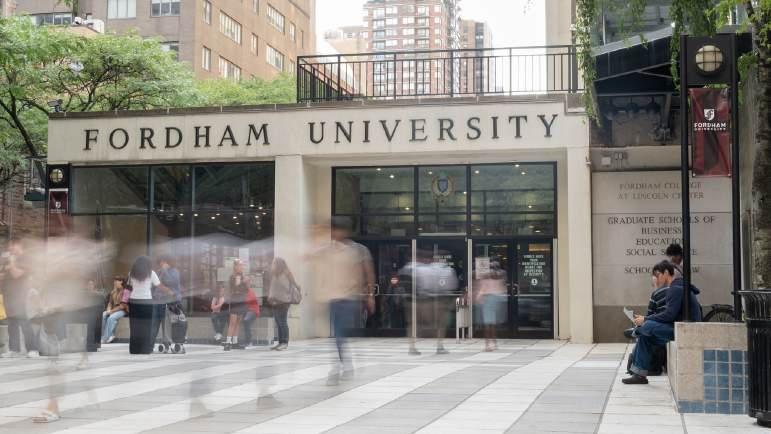
The university has demonstrated a pattern of raising tuition every spring semester over the last several years.
transferred out of Fordham due to the previous tuition hike after their appeals for additional financial aid failed to result in substantive enough increases.
Juan Hernández-Cabrera, Fordham College at Lincoln Center (FCLC) ’28, is transferring out of Fordham this semester for financial reasons. After the increase to tuition and room and board for the 2025-26 academic year, Hernández-Cabrera began to reevaluate his future at the university.
Over the summer, he applied for more financial aid, receiving an increase and securing additional funding through other scholarships. However, he said he expects that tuition will only
continue to go up, becoming increasingly unaffordable.
“It wasn’t unexpected to me that there was a tuition hike this year and that was a big, big reason as to why I (am transferring) because I can only imagine the school is going to continue to get more expensive and I can’t see this school being affordable to me in the next (two) years,” Hernández-Cabrera said.
Jacob Chen, FCLC ’27, shared similar concerns about future increases. He stressed that the tuition hike will have a disproportionate impact on first-years and sophomores — as they have more years of school and likely more tuition increases ahead of them — and on-campus
residents whose housing costs are going up.
Both Chen and Hernandez spoke to what they view as a lack of transparency regarding the university’s finances and the necessity of the repeated hikes. Chen said he wishes the university would allow students to participate in conversations about tuition increases, especially considering they are a consistent phenomenon.
“(The tuition hike) is kind of ridiculous since they also increased the tuition last year as well, and I think now Fordham is comparable or even more expensive than other New York City schools like NYU (New York University) while not offering
as many opportunities as other schools,” Chen said.
NYU’s tuition for the 2025-26 academic year was $65,622 — about the same as Fordham’s. Chen added that he feels the university’s repeated increases of tuition are misleading with respect to what students originally planned to pay, as he, like some other students, chose to attend Fordham largely due to the financial aid package he was awarded.
Chen said he wishes the university would allow students to participate in conversations about tuition increases, especially considering they are a consistent phenomenon.
Chen plans to submit a financial aid appeal over summer, though he said the appeal process is needlessly complicated and (in his experience) rarely results in substantive increases.
Of course, not all students will be equally affected. Maykon Reyes, FCLC ’29, shared that, as a veteran, his tuition is covered by the Government Issue (G.I.) Bill so the tuition hike will have no impact on him.
Nonetheless, the news was met with widespread frustration among students, some of whom will have to reconsider their economic plans for the coming year.
The document formally extends union protections to Fordham Lincoln Center’s student residential staff
By ANA WINSTON Managing Editor
After three bargaining sessions between union representatives, student residential staff and university administrators, a memorandum of agreement (MOA) has been approved by all parties.
The MOA amends the standing collective bargaining agreement between Fordham University and the Office and Professional Employees Union Local 153, the representative union for the student residential staff at Fordham Lincoln Center (FLC) and Fordham Rose Hill (FRH).
The document has been approved by the union and university representatives and is expected to be signed this week, according to Jennifer Petra, associate vice president for media and public relations.
The MOA was approved by 100% of the FLC resident assistants (RAs) and resident first-year mentors (RFMs) who voted.
Negotiations occurred on Feb. 5, March 5 and March 9. The resulting MOA is based on policy proposals offered by union representatives and negotiations between the union and the university. The MOA was approved by 100% of the FLC resident assistants (RAs) and resident
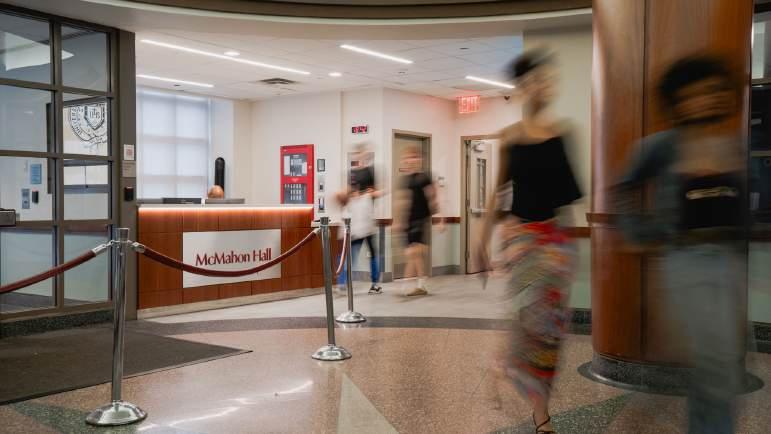
GRACE SANTOLI/THE OBSERVER RAs and RFMs working in McKeon and McMahon Halls approved a memorandum of agreement to add FLC student residential staff to the standing bargaining agreement between the RA union and the university.
first-year mentors (RFMs) who voted, according to Om Patel, Gabelli School of Business at Lincoln Center ’27. Patel, an RA at McMahon Hall, attended all three of the bargaining sessions and described the resulting contract as “a very solid agreement.”
The MOA incorporates the FLC RAs and RFMs into protections codified by the collective bargaining agreement negotiated in spring of 2024, when the union consisted solely of FRH RAs.
FLC student residential staff are now entitled to union orientations at the start of each academic year, as well as the creation of a labor management committee.
The committee would consist of five union members and five university representatives meeting twice per semester (once at each campus) to discuss “issues of mutual concern.”
In addition, the FLC RA and RFMs’ semesterly stipends have increased to $775 for RAs and $650 for RFMs, as opposed to the previous $675 stipend for RAs and $600 for RFMs. Staff who worked a full semester during the current academic year will receive a retroactive payment of $50 (for RAs) or $25 (for RFMs) to cover the increase.
The MOA stipulates that the stipend payments must be made within two weeks of the start of
each semester, given that each RA or RFM has filled out the necessary paperwork. According to Patel, this addition follows an issue from previous semesters in which training meal stipends arrived after the training had actually occurred.
“That was an issue because that means everyone’s paying out of pocket to be there for those two weeks that’s mandatory. So we got a new provision that says that all compensation gets disbursed within two weeks,” Patel said.
“That’s nice because it means there’s more consistency and you can expect when to be paid.”
Other implementations in the MOA include the possibility
of one-semester contracts for residential staff who wish to study abroad, as well as codification of the RA and RFM job descriptions, compensation and rehiring process.
Although the contract contains several wins for the union, negotiations were limited by the fact that the standing bargaining agreement is set to expire in June of 2027, meaning that not many changes could be made before the actual renegotiation date of the current contract. Meal checks for RAs and RFMs in McKeon Hall are one proposal that would be brought up during the next negotiations, Patel said.
Patel described the negotiation sessions as fair and productive.
“Negotiating, I think, was really interesting and enjoyable,” Patel said. “(Fordham) definitely tried to hear out what the students are asking for and do whatever is reasonable for them. I felt like the people that we were negotiating with were actually quite reasonable and certainly surprised us in certain ways.”
Negotiations for the new bargaining agreement will begin in 2027 and will involve student residential staff from FLC and FRH negotiating together for the first time.
“I think it’ll be a little bit more complicated now managing all the different interests involved, but I think there’s certain things which both campuses can probably agree on,” Patel said.
Until then, the RAs and RFMs at Lincoln Center are included in the newly amended bargaining agreement.
A first-year Fordham student is running for a seat on
Porras Ruiz asked: “How is a war in a country half the world away, funded by the taxes pulled from my check, helping me in any way?”
That moment, which lasted less than a minute, would later go viral online, earning Porras Ruiz the nickname “The New York waiter.”
Eighteen-year-old Porras Ruiz is running for a seat on the Democratic County Committee of Queens, an official political party organization for Queens Democrats. While the position itself attracts little to no public attention, it often serves as an entry point into broader political involvement.
For Porras Ruiz, this campaign reflects his years of engagement with the political world.
Porras Ruiz grew up in College Point, Queens, an area he described as ideologically varied. Located in the northern part of the borough, College Point is represented by Republican New York City Council member Vickie Paladino but has seen a mix in demographics between left and right wing votes.
“ At first, I wanted to be a lot of things. I wanted to be an actor … and I also wanted to be a zoologist. I cared a lot about animal rights at the time so, again, it was a good balance. I didn’t wake up every day thinking. ‘I’m going to be in politics.’ ”
Though Porras Ruiz decided to run for office at a relatively young age, he has not always imagined that he would become a politician.
“Politics was never in the cards,” Porras Ruiz said. “At first, I wanted to be a lot of things. I wanted to be an actor … and I also wanted to be a zoologist. I cared a lot about animal rights at the time so, again, it was a good balance. I didn’t wake up every day thinking. ‘I’m going to be in politics.’”
Porras Ruiz described the 2016 presidential election as a turning point for his investment in politics.
“When Donald Trump got elected in 2016, it was a turning point for a lot of people and that had varying degrees. Some people initially looked up, ‘How do I run for office?’ Some people started paying attention to the news. Some people started feeling the effects like I did, being a Latino, being somebody who comes from immigrant parents,” Porras Ruiz said.
At the time, his middle school science teacher worked for Saturday Night Live (SNL) and would regularly reference current events and political satire. This exposure led Porras Ruiz to question what was happening in his political environment.
“I used to watch SNL and I would always say to myself, ‘Politics cannot be this crazy.’ And then when I started listening to the joke references, like, ‘What did that actually mean? Who is
this person? Why do they do this? Why do they have this cadence?’ I realized, ‘Oh, it can be, it is this crazy — but it affects me and it’s interesting,’” Porras Ruiz said.
Since then, Porras Ruiz’s political involvement has included local organizing, voter outreach and advocacy work.
“From trying to pass contraceptives in public schools, which we did do, from making sure immigrants know about their rights, doing canvasses, getting out the vote of people who don’t necessarily vote … all these actions and more,” Porras Ruiz said.
Porras Ruiz also referenced his family’s background and the United States’ broader political climate as another factor contributing to his engagement in politics.
“I didn’t come from a political family,” Porras Ruiz said. “My mother became a U.S. citizen around the 2016 election. It was her first time voting, that was a big moment. I remember she brought me to the poll site. She said, ‘The first time I get to vote for this country, it’s going to be for the first female president of the United States.’”
Porras Ruiz said his decision to run was shaped not only by national politics, but by changes he observed closer to home.
Although he has lived in College Point since early childhood, he spent much of his time growing up in Jackson Heights, a neighborhood with a large Colombian community. Having observed the contrast between the two areas, Porras Ruiz said he has become more cognizant of the political polarization of College Point, deepening his desire to serve his community. In recent years, he has noticed rising antagonism toward Latine communities.
“(In my experience) growing up, the phrase ‘Go back to Mexico’ wasn’t a thing. … ‘We speak English, we’re in America,’ that wasn’t a phrase. It has gotten so bad, the assimilation that they’re doing and the demonizing of our culture, that it has pushed young Latinos like me to not speak Spanish anymore,” Porras Ruiz said.
His family, Porras Ruiz said, all differ in their political affiliations. During the 2020 Democratic primary, members of his family voted for different candidates.
“Even though in my family we’re all Democrats, we’re all different Democrats, so my dad really wanted Bernie Sanders, my mom really wanted Mike Bloomberg and I really wanted Elizabeth Warren,” Porras Ruiz said. “So you have that contrast of like very progressive socialist leaning to very key moderate centrist Democrats.”
While his interests grew gradually, Porras Ruiz recalled the specific moment that pushed him from being a mere observer to getting involved: news coverage during the first Trump administration showing families being separated at the United States-Mexico border. He said the images were hard to forget.
“It was hard knowing that people who looked like me, sounded like me, who came from similar backgrounds as we were (being) put into cages like animals, and that this was happening in my country in the 21st century, and that nobody’s saying anything about it.” Porras Ruiz said. “And the worst part (is that) it is normalized a lot now.”
That moment, he said, was one of the first times that politics felt personal, and it stayed with

him as he began getting involved more directly.
During the 2025 New York City mayoral elections, Porras Ruiz worked on former New York Governor Andrew Cuomo’s campaign. He described the experience as formative as it introduced him to the internal dynamics of a political campaign. He was initially drawn to Cuomo’s leadership, especially during the COVID-19 Pandemic.
“The main thing that first attracted me to Cuomo was I remembered him from the pandemic because that’s when I first got involved in politics and I was like, that man was on TV every day. He gave us the information calmly,” Porras Ruiz said. “At a time when our president was telling us to inject ourselves with bleach, he was the competent person in charge.”
Porras Ruiz said his perspective shifted after working under Cuomo, leading him to leave that position and root for Mayor Zohran Mamdani in the general election.
“The problem is … Andrew Cuomo has the ability to attract a wide type of character. He is the driest politician I’ve ever met. He has no appreciation for people who help him out, and he will do anything to win, even if it means selling out his own mother for a dollar. He’s just the embodiment
of corrupt politics,” Porras Ruiz said.
Now, his responsibilities are divided. Between going to class at Fordham’s Lincoln Center campus, working as a waiter, serving as President of the Lincoln Center Democrats (a student club) and now running for office, Porras Ruiz stays busy.
“ My mother became a U.S. citizen around the 2016 election. It was her first time voting, that was a big moment. I remember she brought me to the poll site. She said, ‘The first time I get to vote for this country, it’s going to be for the first female president of the United States.’ ”
“I’ve been in politics for a long time, but that hasn’t isolated me from the working class because I
am working class. I work every day. I’ve worked a job since I was 14,” Porras Ruiz said.
Porras Ruiz was featured on “A CNN Town Hall: War with Iran,” which aired on March 20. U.S. Ambassador to the United Nations Mike Waltz sat down with CNN Anchor Dana Bash to discuss the ongoing war in Iran. A few audience members (including Porras Ruiz) were selected beforehand to ask questions.
After the town hall aired, Porras Ruiz got recognized quickly, receiving emails from his middle and high school teachers and his advisor saying they had seen him on CNN. By the beginning of the next week, he said, it was clear how wide the clip had circulated.
“Monday was the moment I truly knew that it went viral because my English professor was having dinner with her boyfriend’s family. She goes: ‘Oh, my student was on CNN.’ His mom goes: ‘The waiter?’ (And) the guest lecturer at my anthropology class recognized me,” Porras Ruiz said.
On most nights, the day ends the same way it began for Porras Ruiz: continuing to balance school, work and preparation for the upcoming Democratic County Committee of Queens elections, which will take place on June 23.







Neil Harrow was named head coach of the women’s basketball program
“When we canvassed every corner of the country, it became apparent that Neil really cared about students and that’s where it all starts, so we’re excited about his care for students and how we’re going to move our women’s basketball program forward,” Guthrie said.
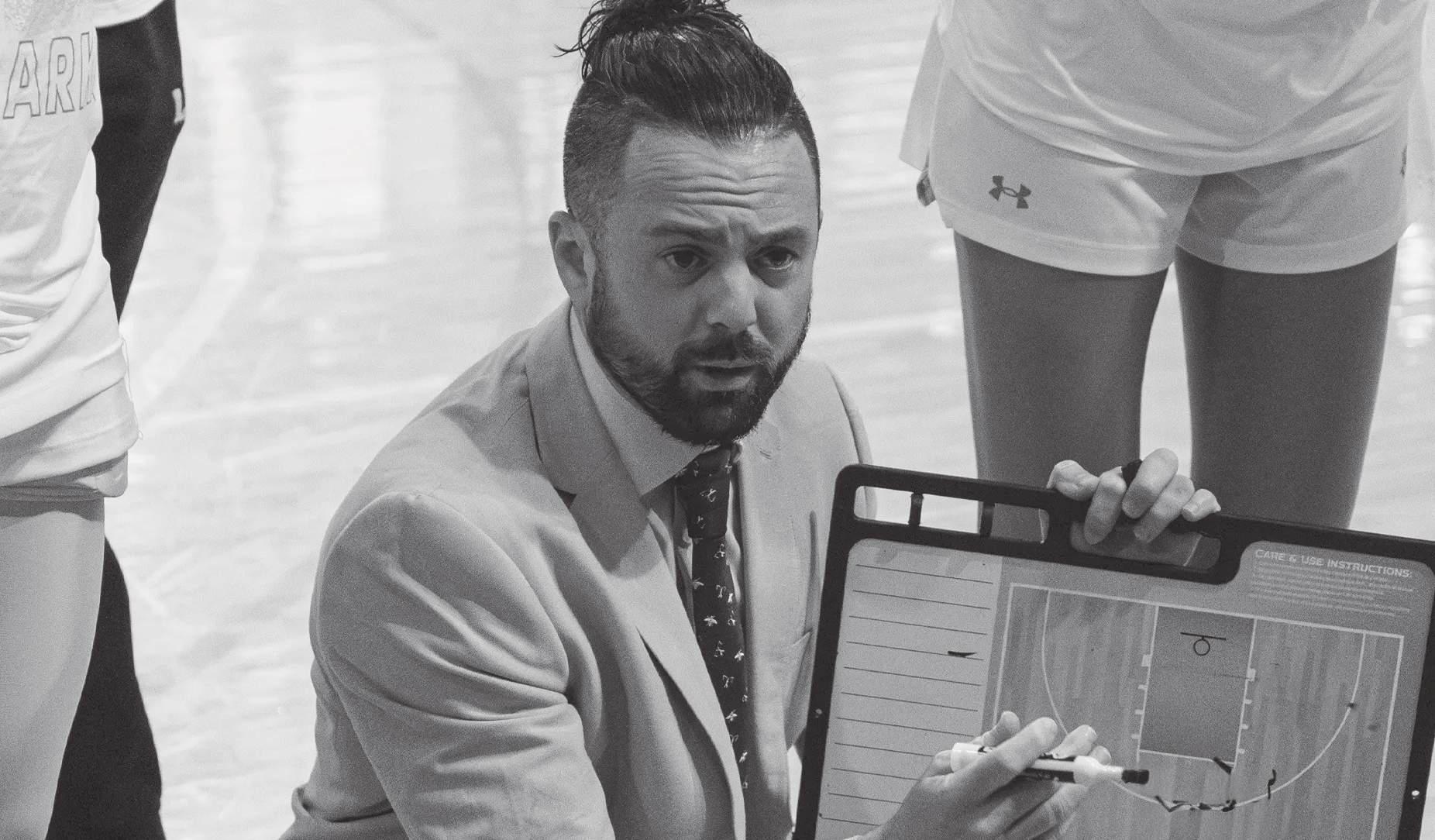
As the former Head Coach of the women’s basketball program at Long Island University (LIU), Harrow’s move to Fordham is not a far one. Although the move may be short in distance, Harrow comes to Fordham with an impressive career in tow, most notably a standout 2025-26 season at LIU. In his first year with the Sharks, Harrow led the program to a 21-11 overall record with 14-4 in the Northeast Conference. The season included LIU’s first appearance in a championship title game since 2010, a success that made Harrow a frontrunner for Fordham’s open position.
“We were looking for a championship-caliber coach,” Guthrie said. “Going from six wins to 21 wins at LIU is almost impossible. Everyone across the country knows that’s a very challenging, daunting task to have a competitive program, and he had one of the best win totals in the entire country this year.”
“ Another reason I’m really thankful for my WNBA experience (is that) cutting-edge trends are important; you’ve got to be aware of those. ”
for seven seasons. His tenure on the sideline in Alabama kicked off his success in the NCAA’s Sun Belt Conference. Over the course of his time with the Trojans, Troy women’s program won five Sun Belt Championships and four NCAA Tournament berths.
As head coach at Long Island University, Neil Harrow led the women’s program to a 21-11 overall record in their 2025-26 season.
Continuing his success in the Sun Belt, Harrow won three more conference championships as the associate head coach at James Madison University (JMU), including an NCAA Tournament appearance during his time in Virginia from 2022-25.
In addition to Harrow’s vast collegiate coaching experience, in the summer of 2024 he joined the Los Angeles Sparks as an assistant coach, soon returning to JMU to serve as their head coach for his final season. His time spent on the sideline in the Women’s National Basketball Association (WNBA) with the Sparks was not the only time he spent in the league. Harrow had previously been on the payroll as an advanced scout for both the Sparks and Connecticut Sun.
Harrow’s time spent under head coach Curt Miller with the Sparks sets him apart from other collegiate coaches. Harrow hopes to transfer his familiarity with the caliber of professional play to his coaching approach to Fordham and continue his success at the collegiate level in the historic Rose Hill gymnasium.
A native of Scotland, Harrow came to the United States to complete his master’s degree in education leadership at Valdosta State University in Georgia, where he was a graduate assistant for two years before graduating in 2015.
Harrow remained in the South, where he worked on the coaching staff at Troy University
“Another reason I’m really thankful for my WNBA experiences (is that) cutting-edge trends are important; you’ve got to be aware of those. You’ve got to play how the pros are playing. You’ve got to understand those cutting-edge concepts,” Harrow said. “We’re going to be a fun team to watch and we’re going to be a hard team to beat, and I think that’s a really good combination.”
Harrow joins the Rams after the departure of the previous Head Coach Bridgette Mitchell,
who was with the program for three seasons. During Mitchell’s last season the Rams ended with a 10-20 overall record.
Harrow becomes the third new head coach brought into the athletics department since Guthrie’s tenure began in December of 2024. Mike Magapayo was one of Guthrie’s new additions to the head coaching staff in the department. Magpayo joined the men’s basketball program last year, after the program parted ways with Keith Urgo, hoping to turn
the page on a team that had been riddled with recruitment violations and staffing scandals. Magapayo finished his first season with the Rams with a 17-15 record and four of his new recruits have returned to continue to play for Fordham.
“ My door will not be closed, my phone will not be off, and I want everybody to be along; this is going to be a special ride. ”
Harrow finds himself in a similar predicament as Magapayo at the start of his tenure; the women’s program currently has six players on the 2026-27 season roster, leaving Harrow with the task of rebuilding the team before their season starts next November. Part of that recruitment process will be balancing new recruits with the existing Rams to create a new dynamic within the program.
“To the current players … we’re going to create a positive environment. We’re going to find joy along the way and we’re going to roll up our sleeves and get to work,” Harrow said. “Success is not easy, but it’s worth it; the journey is worth it.”
Along with building a new team, Harrow hopes to bring wins to the program.
“Yes, defense wins championships, but I would rather win 80 to 75 and 50 to 48,” Harrow said. “So let’s put some points on the board, let’s share the ball, let’s make quick decisions, let’s get everybody involved.”
Although wins, points and success are the goals of any athletic program, Harrow emphasized the importance of the process and the time spent as a team to that goal.
“We’re going to seek joy along the way and we’re going to work really hard to bring glory to this institution, this department, this community,” Harrow said.
The importance of connection between the program and the wider Fordham community was highlighted by Harrow as key to his coaching philosophy.
“I really need community, faculty members, alumni, former players, everybody. I’m not that hard to find — my door will not be closed, my phone will not be off, and I want everybody to be along; this is going to be a special ride,” Harrow said. “We’re going to have fun and do things that a lot of people outside of this room might not see coming.”
Harrow closed his remarks at the press conference with his goals as the women’s basketball program turns a new page in leadership.
“We’re going to build the best thing possible. We’re going to build the best staff and the best roster that we can,” Harrow said. “We’re going to play the best basketball that we possibly can, and I’m extremely grateful for this opportunity. We will represent in the best way we can. Go Rams.”
Protein builds more than just muscles; it has now become a building block for brand campaigns
By ALEENA SIDDIQUI Staff Writer
Protein is appearing in more places than ever. Starbucks has introduced protein cold foam, Dunkin’ now offers protein coffee and even Chipotle has promoted a “protein cup” as a customizable add-on of a protein source to a menu item. On campus, Saxbys, Fordham’s student-run cafe, has added the “Fit Frolatte,” a drink containing 22 grams of protein to their menu. Notably, each of these additions have emerged within the past year.
The expansion reflects a broader shift in how food and beverages are marketed, with protein increasingly positioned as a central selling point across menus that once focused primarily on taste or caffeine content, a strategy echoed in Starbucks’ promise of “the flavors you crave and the nutrition you need.”
At Saxbys, student CEO Borna Shayei-Mousavi, Gabelli School of Business at Lincoln Center ’28, said the demand is visible in daily student behavior and ordering patterns.
“I think a lot of people like the Fit Frolatte because it has 22 grams of protein,” Shayei-Mousavi said. “I normally see everyone before the gym coming to get it or after their gym session.”
He added that students are also increasingly customizing other menu items to increase protein content, particularly smoothies.
“We have an option of adding protein to any smoothies, and I’ve seen a lot of people add protein, especially to the Green Goals smoothie,” Shayei-Mousavi said.

According to the International Food Information Council (IFIC), 71% of Americans are actively trying to increase their protein intake.
Shayei-Mousavi estimated that Saxbys processes roughly 300 to 400 orders per day. Smoothies make up a significant portion of those sales, he said, and about 40% include added protein.
The rise in protein-focused items reflects broader national consumer trends. A 2023 survey from the International Food Information Council (IFIC) found that 71% of Americans are actively trying to increase their protein intake and often associate high-protein foods with overall health and wellness.
“Our data show it is the most sought-after nutrient, the most followed eating pattern and the top characteristic consumers use to define a ‘healthy’ food,” Wendy Reinhardt Kapsak, IFIC president
and CEO said in response to the survey.
That perception has helped make protein one of the most widely used marketing tools in the food and beverage industry. Adding protein to a product label can signal health, strength or functionality to consumers, even when other nutritional components remain unchanged. The Harvard T.H. Chan School of Public Health notes that most people consume adequate protein and emphasizes overall dietary patterns over individual nutrients.
On college campuses, the trend is especially visible among students balancing academic responsibilities, social commitments and fitness routines.
Limited kitchen access, time constraints and irregular schedules often shape student food choices. Many rely on prepared foods that clearly display nutritional information, especially protein content, to make quick decisions between classes or workouts.
“A lot of students need a source of protein, and it’s easier to come to a business like us and see that it has 22 grams of protein and get it in five minutes,”
Shayei-Mousavi said.
The emphasis on protein is also tied to the growing visibility of fitness culture among young adults. Some students track protein intake as part of exercise routines or general wellness goals, which can increase demand for products that
simplify those calculations.
Still, nutrition guidelines suggest that most Americans already consume sufficient protein. According to the National Library of Medicine, the recommended daily allowance for adults is about 0.8 grams of protein per kilogram of body weight. For many people, especially those without specific athletic training goals, daily intake already meets or exceeds that benchmark.
Despite this, protein continues to gain prominence in marketing and product development. Industry analysts say foods labeled as high protein are often perceived as healthier options regardless of overall nutritional composition, making the label itself a powerful sales tool.
Shayei-Mousavi said the trend reflects broader shifts in how students approach food decisions on campus. He also noted that the popularity of protein additions has increased across multiple menu categories, not just signature drinks, suggesting that students are actively seeking ways to modify existing products rather than simply choosing new ones.
“That culture of getting protein in and eating more healthy is boosting businesses to have more protein options,” he said.
As protein becomes more prominent across national chains and campus cafes, it is shaping how products are developed, labeled and consumed.
For students, that means everyday decisions such as coffee, smoothies and snacks are increasingly influenced by protein content, turning a once-simple nutrient into a defining feature of modern food marketing.
The importance of getting outside amid end of semester stress and ways to do so in New York City
By CATHERINE RAIMONDI Staff Writer
With only three weeks left in the semester, final projects, exams and impending assignments currently loom over Fordham students. With a seemingly never-ending to-do list, it can be difficult to leave the library. The week before finals is commonly referred to as “Hell Week” for a reason; with the constant pressure of academics and personal tasks, students’ stress levels naturally increase.
According to surveys by Tessa Koschel and John C. Young, 32% of students experience physiological markers indicating increased levels of stress.
According to professors in the department of kinesiology and nutrition sciences at the University of Nevada Las Vegas, Tessa Koschel and John C. Young, 32% of students experience physiological markers indicating increased levels of stress. Another study found that more than 89% of survey respondents felt increased stress from studying for and taking finals.
While stress is blooming in students’ lives during the final weeks of this semester, so are trees and flowers as spring arrives in New York City. Although the beauty of the season alone motivates many to spend time outdoors, there are also direct, measurable benefits

Whether it be enjoying the blooming
brings a plethora of outside experiences to take advantage of.
that indicate that getting outside improves stress levels and overall academic performance for students.
Time spent in nature is proven to improve mood, well-being and mental health. Research collected by Cornell Health establishes that even short breaks outside can help reset focus, increase motivation and give crucial mental breaks throughout long study periods.
Maura Dagon, Fordham College at Lincoln Center (FCLC) ’29, finds great benefit from study breaks, especially when they are taken outside.
“It really helps to make time to take a break while you’re studying … I like to go to the
park, maybe go for a walk. It really resets me,” Dagon said.
The Japanese Shinrin-yoku (taking in the forest or forest bathing) was coined by the Japanese Ministry of Agriculture, Forestry and Fisheries in 1982, highlighting how making contact with the atmosphere of the forest can improve both an individual’s mental and physical state. Studies by environmental research professor at Nippon Medical School Qin Li et al. and professor at Park Chungnam National University Bum-Jin Park et al. have researched how Shinrin-yoku and time connecting with nature manipulates levels of specific stress-impacting hormones. In particular, feel-good hormones
such as serotonin increase in nature, while stress hormones such as cortisol are reduced.
The shift in hormonal levels is crucial in helping the body to relax, allowing students to take exams and complete assignments with a clearer, more productive mindset.
Living in New York City, there are many free and close places for students to spend time outside to relieve stress.
Central Park is only 0.3 miles from the Fordham Lincoln Center (FLC) campus, and between 72nd and 96th Streets there are currently several blossoming cherry blossom trees. There are many paths and trails students can walk along to have a rare
escape from the large buildings. The park offers an environment with a variety of opportunities to interact with wildlife and greenery.
Another option is The Highline. Only 1.8 miles from FLC, the elevated park provides beautiful views of the city with carefully curated greenery along the path. It has a great 1.45 mile trail where students can walk and absorb the outside before returning to studying.
For those who are at Rose Hill for the day, take advantage of the beautiful Botanical Gardens. Fordham students have free admission, and it is a great place to disconnect and enjoy nature for its 1.7 mile loop.
Another option closer to FLC is the West Side Highway, providing a relaxing waterfront view for walking, running, biking and even just sitting in one of the parks to admire the view. Along the path, there are opportunities to play beach volleyball, pickleball and more athletic activities for an active break.
Finally, for those really not wanting to travel, step right outside Lowenstein after class and take a minute to sit on the plaza. Take advantage of the campus, as FLC has one of the largest green spaces among New York City colleges.
While the library may seem like the only place one can venture to, it is important not to forget the value of a brain break in nature. Spring in New York City will not last much longer, so students must get outside while the flowers are still in full bloom. More importantly, the outside can ultimately help with grades, completing assignments and most of all, mental health.

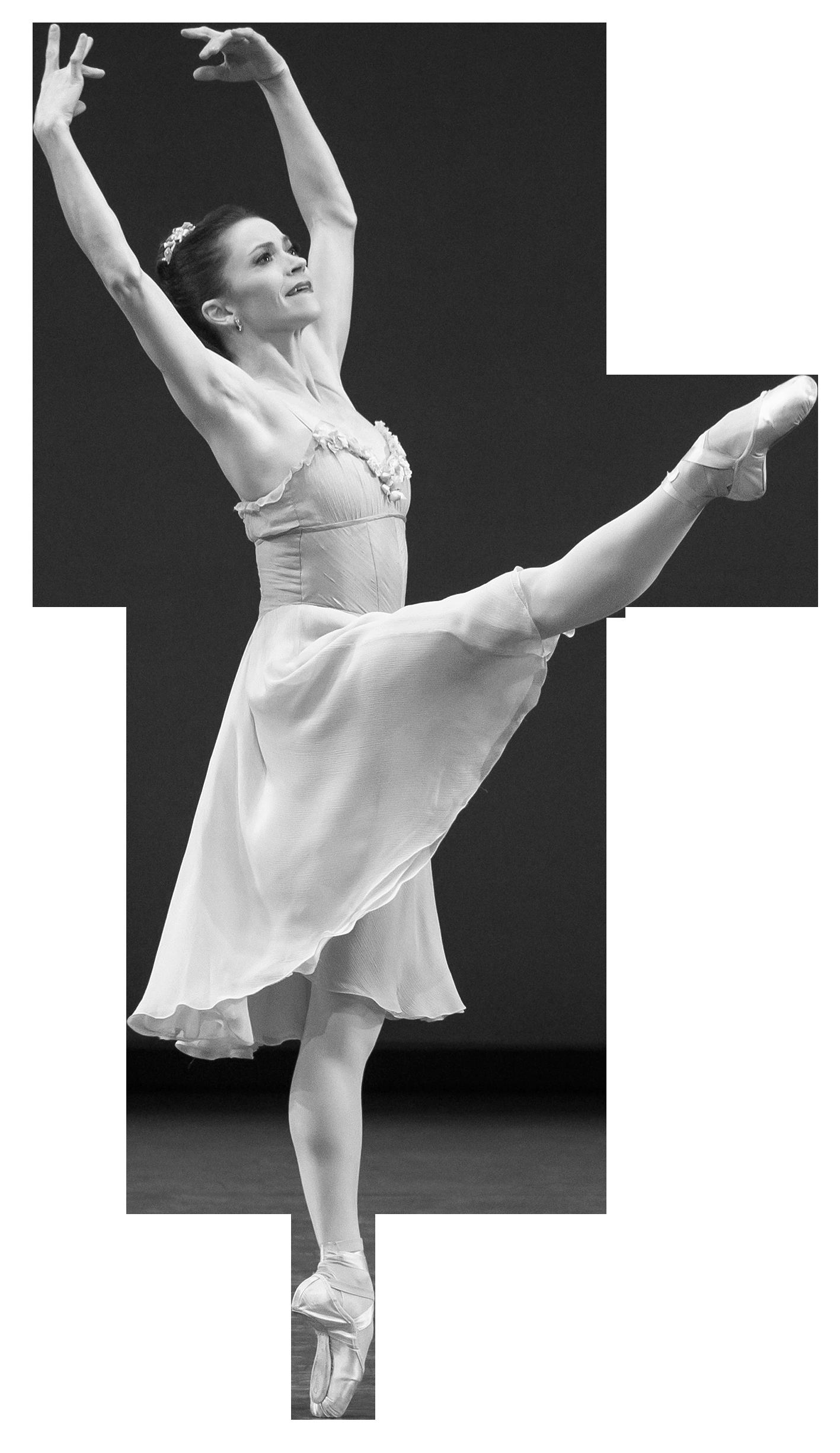
New York City Ballet Principal Dancer and Fordham graduate Megan Fairchild on finding longevity in a notoriously grueling career
utilizes her MBA as part of their finance committee. On top of her artistic, academic and professional successes, Fairchild is a mother to three daughters.
Alongside Fairchild’s multitude of accomplishments, she radiates a calm confidence and ease, both in herself as a dancer and in her identity outside of her career. But she says that was not always the case. Fairchild recalled struggling to feel like she belonged in the early stage of her career, even as she began moving through the ranks and gained the titles she trained her whole life to achieve. As a young principal, the stress and competition of casting and performing well was difficult.

full life is what makes you a good dancer,” Fairchild said. Fairchild was always dedicated to her academics — growing up in Utah, school was important to both her and her family. An accomplished student, she attended a school a good distance from her family’s home for its honors program. Like many young dancers who leave home to study at the School of American Ballet, she attended the Professional Children’s School to finish high school.
Immediately after graduating high school, during her first year in the corps de ballet, she enrolled at Fordham, starting out with just one introductory writing class. At the time, continuing her academic education seemed like the natural next step, but in the throes of her
side of it.
The prima ballerina sat down with The Observer to discuss her journey to find that balance, including her years spent at Fordham. She also let us in on what her identity as a dancer means to her now and her hopes for what will come next.
Fairchild has been a beloved dancer with the New York City Ballet since becoming an apprentice during her senior year of high school in 2001. She moved quickly through the ranks of the company, gaining the title of principal dancer in 2005. She is renowned for her precision and musicality, a valuable attribute when performing the technically challenging range of choreography demanded by New York City Ballet’s diverse repertoire.
“ I was trying so hard to be this perfect thing and look the right way, and then I realized all the other aspects of your life and having a full life is what makes you a good dancer.”
Fairchild’s accomplishments are not limited to the studio and theater — she holds a degree in math and economics from Fordham University, as well as a Master of Business Administration (MBA) degree from New York University. Fairchild is also an author — she published her book “Ballerina Mindset: How to Protect Your Mental Health While Striving for Excellence” in 2021. Additionally, she is on the board of the Professional Children’s School (her personal alma mater) and Yaa Samar! Dance Theatre, where she
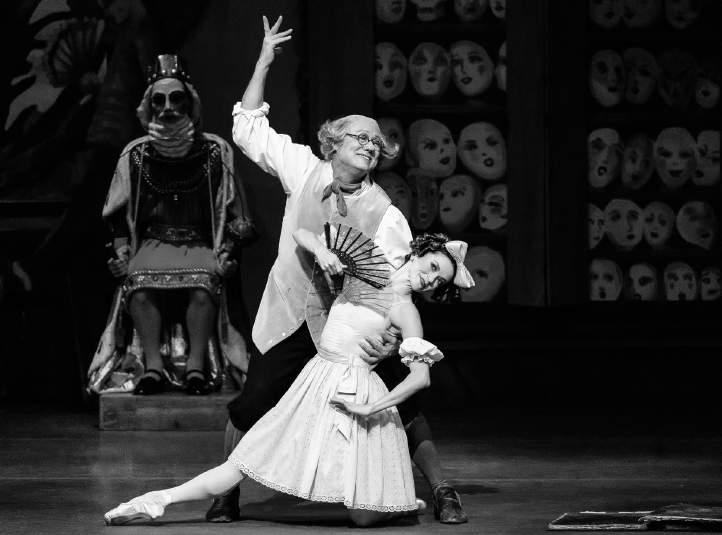
“I didn’t have any confidence in myself as (an) artist. I just was like, ‘I like to dance, and I’m pretty good at it,’ but I didn’t see myself as someone that they should use,” Fairchild said. Fairchild remembered the heightened pressure of her first starring roles. She recalled one particular performance during NYCB’s summer residency in Saratoga: As a second-year member of the corps de ballet, Fairchild was an understudy for the leading role in “Coppelia.” When all of the principals scheduled to perform got injured, she had to step in. Fairchild ended up performing the lead role for four shows — two per day. The experience was a testament to her reliability and hardworking nature, but the pressure it put on her as a young dancer was undeniable. She remembered doubting her abilities before and crying in the days leading up to the performances.

Fairchild credits the faith of directors and other supporters for getting her through those difficult early moments. As she progressed in her career, however, it would be her experiences outside of the studio — stepping into the role of a student and expanding her identity beyond who she was as a dancer — that allowed her to find faith in herself.
“I was trying so hard to be this perfect thing and look the right way, and then I realized all the other aspects of your life and having a
first season of “The Nutcracker,” she found it hard to balance the new workload.
Two years later, she tried again, but still struggled to manage the added demands of school as she adjusted to her career. By age 22, she was getting used to the rigorous schedule of being in the company and was ready to add her academic pursuits back into her life for good. This time, Fairchild said she was

finally able to reap the benefits that continuing her studies could bring, both to her health and her career.
“ It felt like, ‘I have this other part of my brain that has energy — to expand, to grow, to learn — that I’m not using at the ballet.’” Megan Fairchild
Her first class upon her return was the quintessential Fordham core theology course, a class that she admits, as many students may, did not seem very exciting at first. With her grueling rehearsal schedule, she had to take the class on Monday nights, but Fairchild recalled that even at that late hour, “it woke me up, it gave me life.”

Coming from Utah, where Mormonism dominates religious conversation, she remembers finding it exciting to have such lively group conversation about all different religions. She credits that first theology professor for getting her excited to engage in academics again, even on a Monday night.
“It felt like, ‘I have this other part of my brain that has energy — to expand, to grow, to learn — that I’m not using at the ballet,’” Fairchild said.
From then on, she was set in her academic routine, taking around two classes per semester and often more in the summer. After 15 years of hard work and balancing academic and artistic responsibilities, she graduated with a degree in math and economics.
Since joining the company, Fairchild has been excited to see more and more dancers prioritize continuing their education alongside their career. She estimated around 75% of her colleagues are beginning academic pursuits, many of them at Fordham.
“We wouldn’t be able to do it without the partnership we have
with Fordham,” Fairchild said, expressing gratitude for the flexibility she was granted to allow her prolonged studies.
“ We wouldn’t be able to do it without the partnership we have with Fordham.”
Megan Fairchild
For Fairchild, continuing school offered a needed confidence boost. She said exercising that different part of her brain and completing her degrees took pressure off casting and intense rehearsals; it felt good knowing that she had other goals and opportunities to work on.
“The fact that I had more things to put my mind on and focus on is when I started to have more success and really thrive mentally,” Fairchild said.
In the same way that she saw her performance improve with the intellectual variety of her studies, Fairchild finds similar benefits in her role as a mom. After so many years, Fairchild feels she can trust her body and her training, so when she is not at work, Fairchild said ballet is not her focus at all.
“I think I’ve danced better than ever after having kids because I’m not obsessing over shows,” Fairchild said.
After fighting to develop that confidence in her career, Fairchild is open about the mental toll that a career in dance can take. She said it requires a “thick skin” to stand in front of the mirror all day or to put oneself in the vulnerable position of performing in front of thousands of people each night. According to Fairchild, it often feels that in the ballet career, dancers are “all kind of pretending to feel fine about things.”
“ We’re making magic happen, and that’s what elevates people in the audience and makes them cry, makes them feel something.”
Megan
Fairchild
“That’s ridiculous,” Fairchild said. “I know we’re all feeling the same things.”
To combat that experience, she started discussing her personal journey with her audience. In 2015, 10 years after gaining the title of principal dancer, she started a podcast called “Ask Megan,” where she gave advice on all those career difficulties that she had to work through — things like auditioning, managing injuries and pursuing academics.
While she no longer produces the podcast, its large success (even with those outside of the dance community) inspired the creation of her book in 2021.
Fairchild said stress will always be part of a career in dance “because we care about it so much,” but that means that dancers and companies have to find a way to manage it. For that reason, Fairchild is grateful for many systematic changes that came during her career. Beyond an increase in academic interest, she said their company better supports its dancers by offering things like personal trainers and classes during time off to help the dancers stay in shape.
There is certainly something special about Fairchild retiring with “Coppelia” after it being one of her first starring roles so many years ago.
But for all the ways that Fairchild (and the larger dance world) are learning to manage the high standards that come with the career, she is clear that she does not think there is anything wrong with its level of intensity. For Fairchild, that high standard is exactly what makes ballet so exciting, and what she said made her into the person she is today. Dance teaches resiliency and discipline, traits that Fairchild describes as “superpowers” that are not always present in those she works with outside of the dance world.
“We’re making magic happen, and that’s what elevates people in the audience and makes them cry, makes them feel something,” Fairchild said.
On May 24, Fairchild will grace the audience one last time as a New York City Ballet principal dancer with a retirement performance of “Coppelia” at the David H. Koch Theater in Lincoln Center. It is not common to choose a full-length ballet for a retirement performance, but Fairchild said she wanted to perform something she had prior experience dancing all in one night (as opposed to doing multiple shorter repertoire picks, as many dancers do for their retirement performance) and because, she said, “my daughters will be able to enjoy it.”
After that performance, Fairchild and her family are making an exciting move to France. Always a hard worker, she plans to start work with The George Balanchine Trust in Europe, where she can help preserve and share much of the repertoire that she performed throughout her career with the next generation of dancers. Ultimately, she said she hopes to utilize her MBA to work in arts consulting or to step into an executive role at a dance company, but Fairchild adds that she is going to “take some time to get settled first” — a fair plan after a decadeslong career as a prima ballerina and a move across the ocean.
There is certainly something special about Fairchild retiring with “Coppelia” after it being one of her first starring roles so many years ago. Her composure and regality make it hard to picture that scared younger dancer taking on the role last minute, but that progress is a testament to her journey. It is her decades of hard work both in and out of the studio that allowed her to shine on stage and protect her longevity.
“Sometimes when you’re doing it, you’re not sure what it’s going towards. You just gotta keep going,” Fairchild said.
There is no doubt that audiences and aspiring dancers everywhere are grateful that Fairchild did just that.






Rebellion isn’t about aesthetics; it’s about uprooting the status quo
ebellion is something that many try to emulate. So many aspects of our culture pose themselves as countercultural. There are the plastic spikes on the “alternative” pieces from fast fashion brands. There are conservatives embracing open prejudice in the face of a culture that, for at least a couple of years, attempted to move away from unabashed hatred.
But what actually makes these things countercultural? Well, I would posit, nothing does. To be countercultural is to rebel against the dominant culture. Instead, these things only reinforce the status quo, which is the opposite of any real rebellion.
For one, purchasing clothing from a fast fashion brand only greases the wheels of the already-capitalist machine that rules our world. The central problem of capitalism is not, of course, the preyed-upon consumer who gives in and gets a studded jacket from Shein. But still, purchasing “alternative” wear from Temu isn’t a countercultural act, regardless of how the clothes are branded.
Trying to reinforce restrictive conventions and traditions, especially ones that never actually went away, isn’t counter to anything.
For a more dangerous example, how is the new wave of shameless prejudice countercultural? Today’s conservatives certainly like to pretend it is. But there is clearly no rebellion in regression. Trying to reinforce restrictive conventions and traditions, especially ones that never actually went away, isn’t counter to anything.
Even further, “political incorrectness” isn’t an act against a suppressive movement hostile towards free speech. It’s simpler and far less gallant. Politically incorrect speech is just the ornery sigh of those who refuse to change the prejudiced language they’re used to.
So where can one look for an example of genuine counterculture? The answer is punk rock.
In the face of pseudo-rebellious posturing, we can’t take the seed of defiant energy inside us and waste it on alternative Shein hauls. And more significantly, we can’t let this flashy new wave of Donald Trump-era conservatives claim their prejudice and repressive traditionalism as somehow new, much less something that will upend the dominant culture.
Keeping in mind a movement like punk — one that actually sought to fight against cultural norms, tradition and the powers that be — will allow us to quickly point out false counterculture when it’s in front of us.
Punk rock was born in New York City in the 1970s, coming to life through the Ramones, then booming with the popularity of English band the Sex Pistols. Instead of solely being a sonic phenomenon, those influenced by the biting and spirited style of these bands quickly channeled this new sound into a medium for political speech; a divergence from the Ramones singing about how they “wanna be sedated,” though not too far off from the initial drummings of “God save the Queen … the fascist regime” from the Sex Pistols.
As the 1980s began, countless punk scenes developed in the U.S. and U.K., punk’s dual birthplaces, but also all over the world. A shift came over the world of punk, and the era of hardcore came about, with bands like Black Flag, Minor Threat and Bad Brains becoming the new major leaders. Music became faster, more aggressive and even more explicitly political. Across the U.S.,
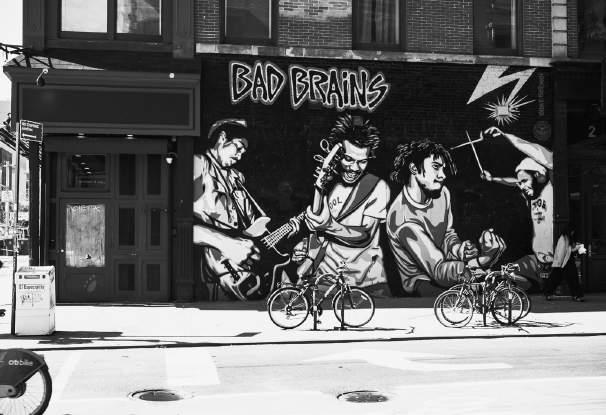
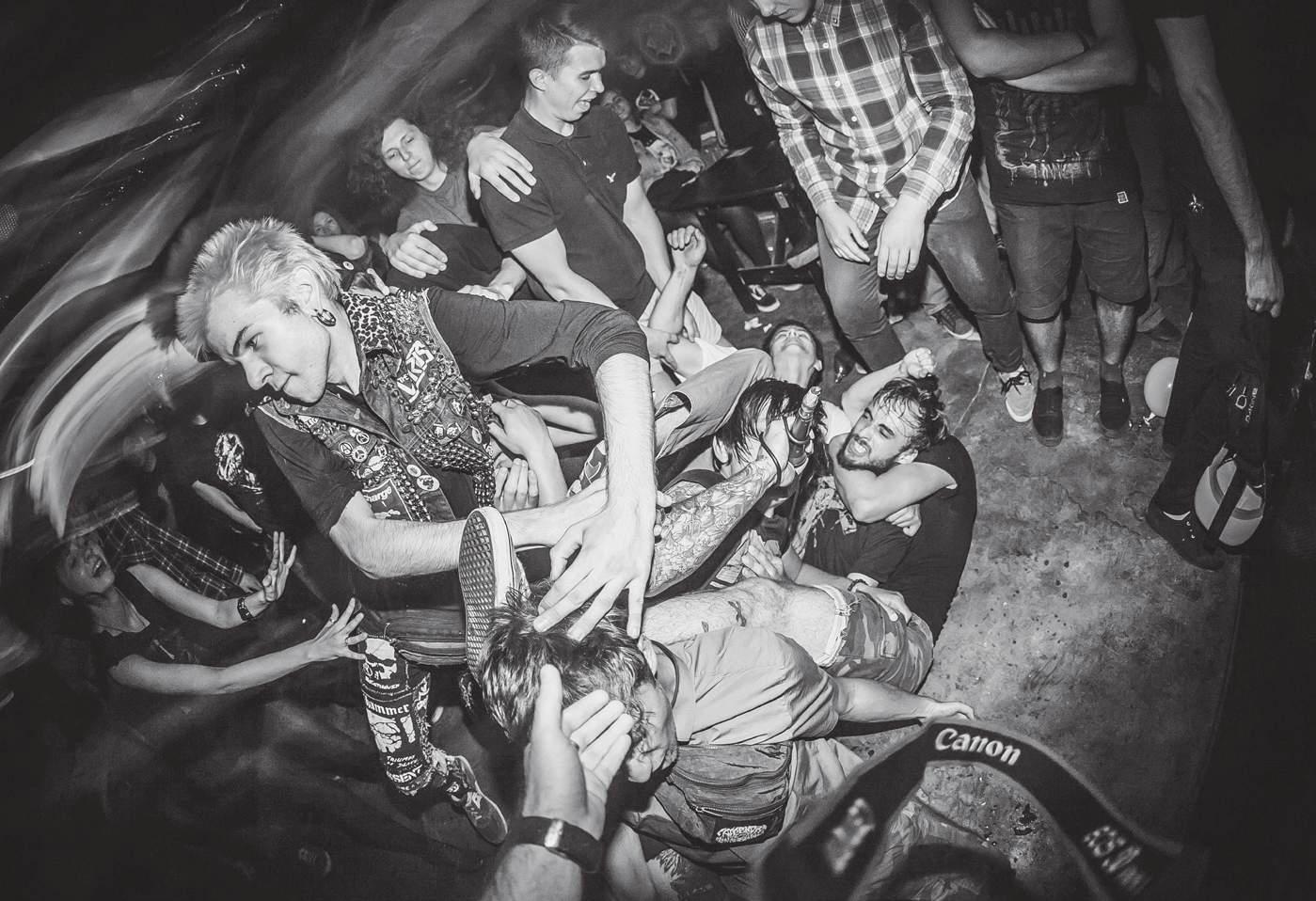
nearly every city — and even in many small towns — had its own scene of moshing punks. And this remains true today: I’m sure that your hometown has a punk scene. No matter where, there truly are punks everywhere, standing as uncompromising examples of all the loud resistance that music can contain.
No matter where, there truly are punks everywhere, standing as uncompromising examples of all the loud resistance that music can contain.
The punk subculture has built and religiously committed itself to authentic counterculture (and not just for its own sake). Core punk principles include a do-it-yourself ethos and thinking and living in a way that was unflinchingly anti-establishment, anti-consumerism, anti-capitalist and anti-conformist. In addition to the perennial defiant sentiment, more explicit leftist politics began to be a major presence in punk music in the 1980s. Many punks in these scenes espoused anarchist, socialist and other leftist commitments, as commonly represented in lyrics and band imagery. Punk subculture is also strongly associated with its members’ DIY sense of style: ripped or studded clothing, piercings, buzzcuts, mohawks, leather jackets and combat boots, to name some. That style has trickled down to other subcultures — goth, grunge, emo — and now, you can find it from fast fashion brands. However, brands can never repackage punk’s countercultural commitments. Punk has taken on a dual, revolutionary purpose: the activation
of a crowd’s pent-up, defiant energy and the speech contained in the music that channels this energy into firm, actionable principles. Punk rock shows function not only as art, but as acts of protest. In reminding people of their typically pacified anger at the forces of oppression in our world and government, they are allowed to go out into the world less passively. And more directly, the community fostered by punk rock scenes directly counters the erosion of our communities through the isolation of consumerism, and in the U.S. especially, infrastructure hostile to walkability and proximity.
Furthermore, punks have perennially been active in protest and organizing spaces, bringing the values of the subculture outside of the scene. Punks foster independent, communal spaces with cheap shows for anyone to attend, and even more so, seek to combat the threats of rising cost of living through co-ops and punk houses that can support many. In committing to independently-produced art, they provide a means to partake in culture outside of the commercial mainstream. Punk culture works to foster a world that is not hinged upon greater capitalist forces, in which free expression and community can be better realized.
Punk offers the chance of a future where the status quo is truly upended, and it should be regarded as a necessary foil to be held up against the false countercultural posturing that plants itself in our culture today.
Punk recognizes that an uprooting of the status quo is necessary, and channels the righteous anger of the individual feeling powerless in the face of the forces behind our country and the world’s injustices. Then, in a way only screaming, moshing and distorted guitars can, punk channels our resolve to go fight for that future in the real world. That is what defines true counterculture — and anything less isn’t something we should accept.

The smoking aesthetic is back and it should probably be put out

To get the obvious out of the way, smoking is bad for you.
If you are like me, born in the 2000s and raised in the 2010s, then you never experienced any great controversy over the detrimental health effects of smoking. They’ve been known for decades, beaten into our heads repeatedly through graphic PSAs, school health classes and the glaring Surgeon General’s warning on each smoker’s first pack of cigarettes. But no matter how many government health campaigns are run or public space smoke bans enacted, freedom demands that every New Yorker retain the right to participate in what remains the leading cause of preventable death in the United States.
Thus, I have no interest in talking about smoking’s health effects or making a paternalistic plea to others to make better choices. We all know that smoking is bad for you, and I am hardly in any position to tell others how to live their lives. What really interests me is the enduring aesthetic of smoking and the widespread sentiment that smoking, regardless of its health effects, is undeniably cool.
To see the glamourization of smoking in action, look no further than the Cigfluencers Instagram page, a repository for candids, magazine shots and film stills of celebrities lighting up. After only a few seconds of scrolling, it becomes apparent just how versatile the smoking aesthetic is. A cigarette on the lips or between two fingers can confer an image of seriousness, rebellion, sophistication or playfulness. The cigarette can either be enjoyed alone in stoic calm or bring people together as a leisurely social activity. In real life, you may associate smoking with the smell of death or yellow nails and teeth. But in these images, where the lighting always happens to be forgiving, smoking is fun, sexy and cool.
To be fair, the perceived “coolness” of smoking is hardly a recent phenomenon. Be they classic Hollywood stars like James Dean or Audrey Hepburn, or rock stars like Jimi Hendrix or Kurt Cobain, the cigarette has always been a visual shorthand for desired images of elegance or depth. The willingness of stars like Dua Lipa and Jeremy Allen White to smoke in public is only a continuation of a styled aesthetic that has existed in pop culture for over a century.
But what does it really mean for something to be “cool”? After all, coolness is famously mutable; what one generation considers cool is often decried as “uncool” by the next generation. This makes it all the more interesting that the smoking aesthetic has persisted in pop culture for so long. It was glamourized by the likes of Humphrey Bogart and Lauren Bacall in the 1950s before becoming a symbol of rebellion in the rock and punk scenes of the 1970s. By the 1990s, when the dangers of smoking had become widely known to the public, the cigarette was embraced as part of the “messy” aesthetic embodied by the grunge movement and heroin chic style. While millennials popularized a shift away from cigarette smoking and towards vaping, the cigarette continues to be a much more powerful symbol in the public’s imagination. Its image has been cultivated and appropriated for decades, becoming a marker for both idealized masculine and feminine images.
Social desirability is a central aspect of “coolness.” The cigarette’s association with both “cachet” and “contrarian” attributes may best explain the enduring allure of the smoking aesthetic. Years of mainstream and celebrity cigarette use have led to smoking’s association with a certain kind of maturity or discernment. At the same time, countercultural cigarette use and the ubiquitous understanding of smoking’s dangers have allowed the cigarette to become a symbol of rebellion and non-conformity. Cigarette smoking rates may be at historic lows, but this decline could be the very reason why the smoking aesthetic has seen a comeback. It embodies both a nostalgic return to a long-romanticized image and


a contemporary reaction to the excesses of an increasingly prevalent and toxic “wellness” culture.
I was once receptive to the romanticized image of cigarette smoking. I knew that it was bad to smoke ever since the cartoons of my childhood were interrupted by images of jawless women and men with holes in their throats. But even then, I still found it difficult to deny that there’s something strangely captivating about it. It’s at least much cooler-looking than puffing a mango-flavored USB drive (whatever happened to the lollipop?). But in the same way that explaining a joke kills it, learning about how the smoking aesthetic came into being made me realize that I had been duped by one of the most successful propaganda campaigns in the history of American capitalism.
Prior to World War I, the most popular use of tobacco in the United States was chewing tobacco. The cigarette, which had only begun mass production in the 1880s, became popular among American soldiers during the war due to its ease of use and transportation. Cigarette companies capitalized on this newfound popularity by adorning their advertisements with American flags and images of servicemen. When soldiers began to return from the war, they brought their smoking habits with them, and the cigarette began its longstanding association with patriotism and masculinity.
Expanding cigarette use to women would require a more targeted campaign. While cigarette smoking rose among men, female smoking was considered taboo and a threat to public morality. To change this perception, the American Tobacco Company hired Edward Bernays to promote its Lucky Strikes brand of cigarettes to women. Bernays, a nephew of Sigmund Freud, employed a multitude of tactics to get women to embrace smoking. Given nicotine’s suppressing effect on appetite, Lucky Strikes were marketed as a form of weight control, and advertisements promoted the thin ideal. When
women chose not to buy Lucky Strikes because its green packaging did not match their clothes, Bernays organized “The Green Ball” to generate positive coverage of debutantes wearing green in an effort to make the color seem more fashionable. Perhaps Bernays’ most infamous creation was the “Torches of Freedom” campaign, which presented smoking as an emancipatory act that liberated women from a prejudicial sex taboo. During the 1960s, the tobacco industry continued to tie the cigarette to women’s liberation, even while using imagery that reflected a male-driven view of desired femininity.
Decades of advertising, product placement in film and movies, and celebrity usage allowed the tobacco industry to successfully manufacture the smoking aesthetic. The 1998 Tobacco Master Settlement Agreement between America’s four largest tobacco companies and 46 states almost completely curtailed cigarette advertising in the United States. All outdoor advertising for cigarettes was banned, and the tobacco industry was forced to give up all their famous trademark characters, such as Joe Camel and the Marlboro Man. But by the time the agreement was reached, the smoking aesthetic had been irreversibly ingrained into the minds of several generations of Americans. It is now promoted to a new generation for free by accounts such as Cigfluencers or whenever the cigarette is used to reflect a time or convey a mood in a piece of media. Rather than being a form of authentic expression, the smoking aesthetic is a deliberately manufactured image created by and for the benefit of the tobacco industry.
Due to the fact that smoking rates are down and cigarette advertising is practically nonexistent, it may seem anachronistic to treat the tobacco industry as a modern threat. But the tobacco industry continues to be immensely powerful and incredibly profitable. Buying and smoking a cigarette is no more rebellious than
buying a Che Guevara shirt from a fast fashion retailer.
I did not want to dwell on smoking’s health effects, but once the smoking aesthetic is revealed to be a manufactured image, it becomes impossible to separate it from the tobacco industry’s reliance on addiction. The tobacco industry survives by creating a problem and offering the easiest solution to address it. They have and continue to target children and young adults because these demographics are most likely to develop a lifelong nicotine addiction. Ninety percent of adult daily smokers started smoking by the age of 18, and only ten percent of adults who attempt to quit smoking actually succeed. Addiction is the business model, and the smoking aesthetic has always existed for the purpose of onboarding new addicts, most of whom start young and are likely to fork over thousands of dollars to the tobacco industry for the rest of their lives. Even when you try to quit cigarettes, the tobacco industry has successfully invested in alternative nicotine products such as e-cigarettes and nicotine pouches.
Even when putting health effects to the side, the coolness of smoking easily dissipates once it is seen as aligning with an incredibly powerful and predatory industry. The billions of dollars extracted from an addicted consumer base end up in lobbying efforts to weaken public health regulations, environmentally destructive tobacco farming and cultivation operations that utilize child labor. One could argue that there’s no ethical consumption under the current system of global capitalism, and thus, buying cigarettes is no different from buying a phone or a piece of clothing. But the key difference is that there is absolutely no need to smoke or to start smoking. Romanticizing smoking or doing so to match an aesthetic only serves to benefit an industry that represents the very worst aspects of modern capitalism. And there’s nothing cool about that.
Situationships have taken over the modern dating sphere, and they’re
doing more harm than good

IOLIVIA IANNACCONE Contributing Writer
f you’re a college student in your twenties, you’ve likely been inundated with talk about situationships. Whether it’s on social media or in real life, people who have been in a situationship never seem to regard the experience as positive. Luckily for those who have had a situationship or have to hear about one, psychologist Susan Albers has lent a hand in defining what they are: “Situationships are characterized by a lack of obligation or exclusivity, but the real hallmark is a lack of clear boundaries or labels.”
I’d hate to fault all of those who have found themselves in situationships as of late — they probably need some tender love and care instead — but why does it feel like the pointless existence of situationships is a recent phenomenon? The sexual revolution may be partly to blame.
Like “hangry,” a combination of “hungry” and “angry,” the literal term “situationship” is a portmanteau. This fabricated word skyrocketed in popularity in January of 2023. However, I believe the concept dates back to the start of the sexual revolution when social rules about dating were forgone and new ones emerged.
Young adults no longer sought out lifelong partners in places like college because sexual exploration was at the forefront, and in the background lingered war — a future for young people almost seemed impossible. When commitment wasn’t prioritized, especially among young adults in cities, the ways people approached dating changed. As historian Beth Bailey described, “no completely dominant national system of courtship has emerged” since the 1970s. Compare this to prudent years like 1939, when 47% of women were married before their 19th birthday.
A great way to gauge the opinions of 1970s youth on their newfound sexual prowess is by analyzing the media published at the time.
This is why I believe that the dating practices of past decades share less in common with those of the 1970s than those of today. The 1970s were marked by political and economic instability — it was a turning point for the United States, so it’s not surprising that when it came to intimate relationships, a ring on the finger didn’t bear much weight anymore.
A great way to gauge the opinions of 1970s youth on their newfound sexual
prowess is by analyzing the media published at the time. Take the New York publication “Singles News” as an example. First published in 1975 by Marilyn J. Appleberg, young adults were given the opportunity to advertise themselves to potential partners. In the 1976 issue, Kally, a 25-year-old hair stylist, stated that she wanted to meet someone who “loves being a single New Yorker as much as she does.”
Rather than be the talk of a town, living in cities like San Francisco and New York City allows people to move among the crowds without ever getting wrapped up in a singular experience or relationship.
People like Kally found liberation during the sexual revolution by being single and being proud of it. The demarcated line between the joy of sexual freedom in the 1970s and today is that it’s not refreshing or new anymore. Young adults living in cities seem to be at a breaking point with their experiences in situationships; in densely populated areas, it’s not surprising that people are able to date around. Rather than be the talk of a town, living in cities like San Francisco and New York City allows people to move among the crowds without ever getting wrapped up in a singular experience or relationship. For both gay rights activists and feminists, the sexual revolution’s overarching sentiment was for people to use their sexuality and gender as vehicles for empowerment.
The online and print publication ““On The Rag”” may be the best textual evidence future historians will have of Generation Z’s dating culture. Ranging from a few sentences to pages of text, writers can submit their stories on any topic. Some submissions are dating ads such as the brief post titled “Seeking autofiction-loving gf.” Others detail unrequited loves like the submission titled “He only likes me when it’s subtext,” where the writer described his tumultuous relationship with a friend he went on some dates with, and was then rejected by, only to continuously pine for after said boy got into a relationship. The writer ended his piece stating, “I go between liking this dynamic and thinking it’s all very humiliating. I don’t even know what I want from him, he’s not boyfriend material.”
Other submissions are written directly for situationships, like “using this site to reach my blocked situationship,” where the writer revealed, “I think a part of me is always missing you even when you’re

Situationship culture may be a
abide by it.
in my life” and “sometimes it feels like you only love me when I’m not available to you.” Whether a situationship occurs due to external things, like a boyfriend or one’s own self-doubt, what unites the people in our generation is that they’re all going through the same thing, just different versions of it.
So, while the sexual revolution served a purpose, situationships, on the other hand, do not. They serve no benefit, nor do they empower people. I’m not a psychologist like Albers, but from some inferring, the crux of many situationships seems to be a lack of communication between people. I honestly believe situationships have done more harm than good, and not only in regard to Gen Z, but also to millennials.
According to a 2024 YouGov report, over 50% of U.S. adults between the ages of 18 and 34 have admitted to being in a situationship. The fact that millennials are experiencing this epidemic of situationships may be even more shocking than the actual statistic, because for the past 20 years, people in their 30s have served as the maximum threshold for marriage, but slowly, the average age for marriage for women and men has been creeping up on Americans. Last year, the U.S. Census revealed that the estimated age for men to have their first marriage was about 30 years old, and for women, it was 28 years old. As long as young adults keep pushing off marriage, the standard for relationships will follow suit.
Cultural touchpoints like “On The Rag” publicly display how situationships can be harmful. Even on social media, TikTok videos and Instagram posts discuss in detail personal experiences being in a situationship, sometimes while it’s ongoing. The accessibility of the internet allows for the opinions and moods of different people to be published and immediately viewed by others. This, in
turn, creates an influx of words online that people take and use to describe their own experiences. What I’m trying to say is that we are all operating on a collective hive mentality. Situationships, both the term and dynamic, have been used to make sense of emotional undertakings that are sometimes so difficult and life-changing that a label may just lessen their blow. For young adults who grew up on the internet, a label like “situationship” is a call sign to share our unique emotional grievances with one another.
In a perfect world, the dating scene in 2026 would resemble that of the 1970s, but that would mean situationships would never have become the baseline for the way we experience loving another person — it would be much more personal. Think about Kally’s advertisement; she was upfront about her adoration for being single and wanted a partner, or lover, to have the same appreciation for it. When people enter relationships of any kind, it’s important that communication is not only heard, but also clear.
I’m not advocating that our generation restore 1950s dating culture, even though bringing back heavy petting could be fun. However, I think that as a collective, we need to stop being in situationships. This means when a friend tells you about an ongoing situationship that’s causing them anxiety and stress, be up-front and tell them to end things with that person. But then again, I am not a psychologist, and you probably aren’t either.
Regardless, it’s good to understand that the peaks experienced in a situationship will never outweigh the lows. Additionally, perhaps we can all stop posting about our situationships. I don’t think an Instagram create mode post will heal anything. Instead, funnel those emotions into creating something that serves a greater purpose, or do what I do and let them quietly eat you alive!
To be Awarded to Jason Endaya, IPED ’10 for Excellence in the Service of Faith through the Promotion of International Peace and Development

Thursday, April 16, 2026 • 5:30 pm Open to the Public Keating Hall, First Floor Auditorium Fordham University, Bronx, NY

WELCOME: The Reverend John Cecero, S.J., Vice President, Fordham University
AWARD CONFERRAL: Dr. Dennis Jacobs, Provost, Fordham University
ADDRESS BY: Mr. Jason Endaya, Assessment Specialist for Asia, Catholic Relief Services and Fordham IPED Class of 2010
CLOSING REMARKS: Ms. Michele Gilfillan, Vice President, Catholic Relief Services






Kristoffer Borgli’s “The Drama” offers perspectives on deliciously morally ambiguous characters
By MARGO CRAVEN Arts & Culture Editor
Warning: This review contains spoilers.
Norwegian director Kristoffer Borgli takes viewers on a hypnotically-absurd rollercoaster ride of a couple’s unraveling with his surrealist romantic dark-comedy “The Drama.”
Shot on 35-millimeter film, “The Drama” invites its audience into a deceptively dreamlike world, as Charlie (Robert Pattinson) deliberates over his wedding speech with his best man Mike (Mamoudou Athie). We move in and out of the present as Charlie recalls favorite memories with his bride-to-be Emma (Zendaya), including their coffee shop meetcute that is so storybook it is almost nauseating.
The illusion of the Boston couple’s perfect relationship is quickly shattered when, a week before their wedding, Emma drunkenly reveals her darkest secret to Charlie, Mike and his wife Rachel (Alana Haim) — Emma’s maid of honor.
Inhibitions lowered by more than their fair share of wine samples from their wedding caterer, Emma and Charlie hesitantly agree to share the worst things they have ever done after being egged on by Rachel. The friends all offer their confessions — Mike used an ex-girlfriend as a “human shield” to avoid being attacked by a wild dog, Charlie cyberbullied a classmate so badly his family
moved away and Rachel locked a child she describes as “slow” in a closet of an abandoned RV overnight. This troubling admission by Rachel, who explains that she never told the boy’s parents where he was, even when the police were called to search the area (though he was eventually located), is immediately swept under the rug.
What Emma reveals, however, is so shocking that it brings the buoyant evening to a screeching halt. As a teenager, she planned and very nearly carried out a violent act at her high school. Charlie and Mike react in quiet disbelief, while Rachel is disgusted and furious.
The remainder of the film unpacks the fallout of Emma’s admission, almost exclusively through Charlie’s eyes. Borgli’s choice to center Charlie is equally fascinating and frustrating — it forces audiences to consider what they would do if the person they were days away from committing to for eternity suddenly became unrecognizable. Pattinson’s performance as the weak-willed and spiralling Charlie is stunningly convincing, enhanced by jumpy, non-linear editing in which imagination and reality blur.
Zendaya shines as Emma, capturing her character’s instability and desperation to reconcile with her darkest secret before it destroys her life and her relationship. However, the film’s structure and writing keeps viewers at more than an arm’s length from Emma.
By offering a limited view of
Emma’s troubled past, the film never allows her to fully take shape. Whether this is an intentional choice by Borgli in order to communicate that Emma is a stranger to herself — who understands the motivations that drove her to almost commit an unthinkable act no more than the audience does — or an indication of Borgli’s ability to effectively write complex female leads is up for critics to decide.
Alternatively, perhaps Borgli’s characterization of Emma (or lack thereof) is intended to force audiences to view her through Charlie’s one-dimensional perspective of his fiancée. The film’s small details reveal just how little Charlie really knows about Emma (beyond the obvious) — he knows almost nothing about her childhood, even finding out for the first time that her father was in the military in the middle of their wedding. Though clearly deeply in love with Emma, Charlie loves an idealized, surface-level version of her that does not actually exist. He has put Emma on a pedestal since their very first interaction, and when the perfect fantasy he has made of her crumbles, so does he. We come to understand the film’s other characters, especially Rachel, on a fundamental level through their responses to Emma’s admission. Haim flaw
lessly embodies Rachel’s snobbish, holier-than-thou attitude, bringing to life a character so satisfyingly unlikeable that the audience I viewed the film with regularly
erupted in groans in response to her dialogue. Rachel’s strong reaction to what Emma confesses, while certainly understandable, demonstrates a deep hypocrisy. Moments after admitting she traumatized a vulnerable child — essentially leaving him to die — for the sole purpose of satisfying an “impulse,” Rachel is willing to condemn Emma for planning an act that, while horrific, she never actually carried out. Throughout the film, Rachel exaggerates her closeness to a cousin who was left physically disabled by a similar act of violence
— using her cousin’s real trauma to center herself in a situation that has little to do with her.
“The Drama” captures the moral superiority contest that dominates our modern culture, and raises questions that bring no clear answers. How much should we really know about the people we love? How long should we spend atoning for what we have done — or almost done — in the past? And with a subjective, constantly moving moral goalpost constructed through self-serving bias — can any of us be truly good?
The Martha Graham Dance Company’s centennial celebration featured some of Graham’s iconic works
By MICHELLE WILSON News Editor
The Martha Graham Dance Company celebrated their 100th season in a series of performances at New York City Center — just a few blocks from the now-shuttered 48th Street Theatre where the company debuted in April of 1926 — reviving several of Martha Graham’s iconic masterworks and debuting two guest works.
The Graham Company is a modern dance company founded by Graham (1894-1991) and is the oldest working dance company in the nation.
During the preview performance on April 8, the all-Graham triad — “Appalachian Spring” (1944), “Chronicle” (1936) and “Diversion of Angels” (1948) — was punctuated by a talkback with Artistic Director Janet Eilber and conductor David Hayes detailing the collaborative process of setting dance to live music.
Graham technique centers around contraction and release. Movement is guided by breath, originating from the pelvis, core and back. It is characterized by spirals, angular shapes and dramatic, sweeping movements. Like other modern dance styles, it emerged as a rebellion against the soft, rounded shapes and rigid rules of ballet.
“Appalachian Spring”
“Appalachian Spring,” arguably Graham’s most well-known work, opened the show. It tells the story of a young bride and her husband on their wedding day on the American frontier. The set was designed by sculptor Isamu Noguchi — a collaboration that shaped Graham’s work for decades.
“Appalachian Spring” was created during World War II as a
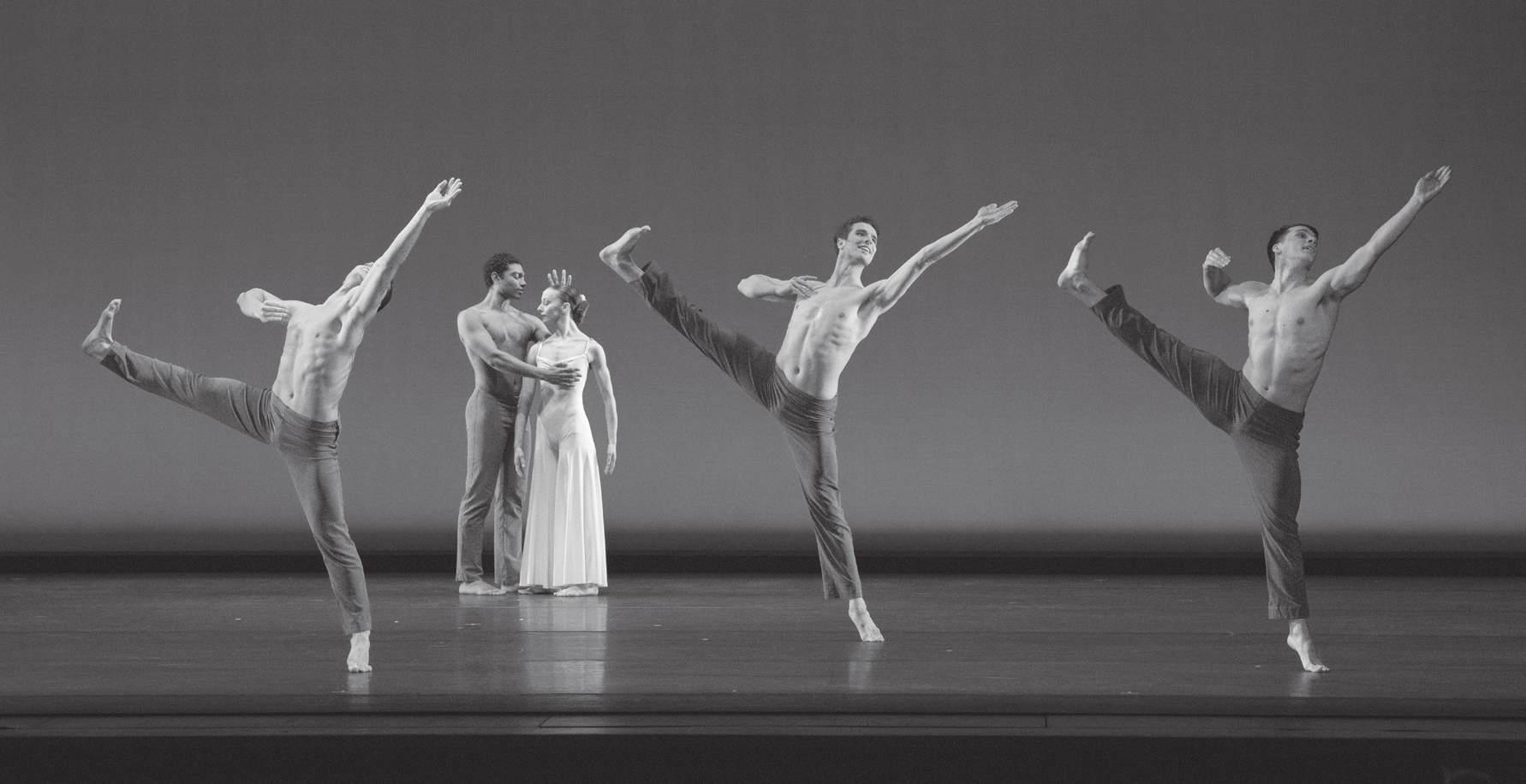
testament to American optimism, determination and hope for the future. Eilber said that Graham saw the piece as “her contribution to the war effort.”
It features eight dancers: the bride, the husband, the pioneer woman, the preacher and his four followers. Eilber noted humorously that it is unclear if the followers are “in love with religion or in love with the preacher.”
The young couple are filled with joy and enthusiasm, leaping and embracing to an elegiac score as they imagine their future together. The preacher and pioneer woman, in contrast, are much more reserved, with the preacher often pointing to the newlyweds in chastising motions.
Working with the Orchestra
Once the applause died down, Eilber and Hayes discussed the process of setting dance to live music. Graham had a particular
relationship with new music, working exclusively with commissioned music for over four decades.
“Appalachian Spring” was originally set arbitrarily to the tempo of Graham’s rehearsal pianist when she first received the score from the composer, Aaron Copland. In the years since, the tempo has slowed because “conductors love to wallow,” Hayes said.
Hayes described the biggest challenge of such a process as eliminating musicians’ habits from practicing on their own. Giving some insight into this process, the dancers repeated a couple short segments from the piece, communicating with the orchestra to increase the tempo.
“Chronicle”
“Chronicle” (1936) was created in reaction to the rise of fascism in Europe prior to World War II and represents the tragedy of war. It was originally divided
into five sections and has since been reconstructed into three.
The first is a solo titled “Spectre” which expresses the foreboding prelude to war. The second, “Steps in the Street,” depicts the devastation that war leaves in its wake, and the final part, “Prelude to Action,” is a call to action against war.
“Chronicle” opens with a woman in a long black dress seated on a stool. Her skirt is trimmed in red, creating the image that she is caged within a red circle. The stage is otherwise empty. The tense, shrill violins and militant rapping of the snare drums create a haunting atmosphere as the stage is slowly backlit by a red glow. The choreography is jerky and defensive, at times erupting to reveal the skirt’s blood red underside, which the dancer wraps around herself like a cloak.
“Steps in the Street” begins in silence, with only the sound of nine dancers’ shuffling feet as they take halting backward steps across the stage.
“Prelude to Action” is dramatic and effusive, with a faster tempo and larger, energetic jumps and movements, shifting between dimensions of space.
“Diversion of Angels”
“Diversion of Angels” wrapped up the night on a euphoric note. The piece has no plot and is an abstract expression of love, taking place in an imaginary garden created by love itself.
“Martha wanted to create a world without gravity, topsy-turvy. The movement is often off balance and the space on stage is constantly shifting with geometric patterns. You can watch for the phrases ‘falling in love’ or ‘head over heels’ brought to life,” Eilber said.
The piece features three couples representing the different forms love can take. A dancer in yellow represents adolescent love, the red mercurial or erotic love and the white spiritual, enduring love.
The differences are represented choreographically. The girl in yellow is playful and upbeat. She takes small, running steps, loose hair streaming behind her, and jumps into her partner’s arms for a vivacious pas de deux. The girl in red, true to Kandinsky’s painting, dashes across the stage. Her movement is fiery and angular, somewhat indicative of flamenco. The girl in white’s movement is softer, rounded and almost classical.
Reflecting on the milestone that is the Graham Company’s centennial, Eilber looked forward to what she hopes to be another 100 years of the company.

A bold new documentary on artificial intelligence swings big but ultimately falls short of its potential
By DOVE AJMANI Contributing Writer
Exactly how scared should humanity be of artificial intelligence (AI), and is all of humanity inevitably doomed? Those questions are the central basis of Daniel Roher’s newest documentary “The AI Doc: Or How I Became an Apocaloptimist.”
The film follows a similar coming-of-age arc after he and his wife, Caroline, learn they are expecting a baby boy. That sends Roher into a slump, wondering if now is the right time to bring a child into a world defined by uncertainty. He fixates on how AI might reshape social, economic and cognitive life, and what it could mean for the next generation.
“The AI Doc” begins with Roher seeking answers, which first requires him to understand the basics of AI and how it operates. When he posed the question of “What is AI?” to high-profile AI specialists, teachers, journalists and tech bros, everyone gave a different answer, underscoring how the term “AI” has become a matter of expertise.
These professionals generally agreed that AI involves systems trained to recognize patterns and follow instructions, and to predict which operation or action should come next. As these styles continue to grow and learn at an accelerated pace, they evolve towards a hypothetical level of AI known as AGI (Artificial General Intelligence), where the system can think at a human-level capacity or higher.

The first half of the film focuses on a new kind of arms race: an AI race among countries, each trying to reach AGI first.
Roher highlights another fear: If AI systems are trained to adapt to human behavior, even extending to traits such as manipulation and greed, who knows what they will transform into and be used for.
Anxious about the world his son might grow up in, Roher pivots to a more hopeful perspective. The tone shifts drastically, embracing the optimistic case for AI’s rapid growth and accelerating capabilities. Experts featured in the second half of the film argue that if AI is used wisely, it could lift societies well beyond
mere survival, powering breakthroughs in humanitarian relief and transforming healthcare.
Here, the film argues that, with unprecedented access to information and creative outlets at one’s fingertips, this can be a joyful, even lucky, time to be alive.
One of the film’s highlights was Roher’s sit-down with three of the biggest CEOs from the most prominent AI tech companies featured in his documentary: Sam Altman of OpenAI, Dario Amodei of Anthropic and Demis Hassabis of Google’s DeepMind.
The documentary lets the CEO’s neutrality shine, normalizing their versions of an AI-driven future. It positions them as “middlemen,” grounded — at least
from the film’s perspective — and unafraid of what the future holds. Calling into question what kind of narrative Roher is trying to tell, the interview questions were very surface-level and failed to truly inform audiences.
Roher ultimately lands in the middle, taking the “apocaloptimist” route. He finds both sides compelling but agrees with the neutrality that, to thrive, humanity needs to learn to build a society capable of handling powerful technology.
What makes “The AI Doc” a standout is Roher’s playful, striking and eye-opening use of cinematography along with his blending of cartoon animation to make abstract and conceptual ideas legible to general audiences.
While the documentary offered a good scope of understanding and presented the topic in a simplified way for the average viewer, it ultimately lacked any real substance. The film ended on a fairytale-like kumbaya note, even after exploring the genuine and serious risks and underlying factors at play.
Although encouraging public awareness is admirable, relying solely on collective human maturity feels idealistic. The film gestures toward hope without offering tangible strategies, policies or concrete steps for audiences to act on. It is better to be prepared than to remain caught between optimism and apocalypticism with nowhere productive to go.
Two exhibitions centered around the beauty of personal life and humanism are on display in the Lipani Gallery
By BENI CWIAKALA Contributing Writer
The walls of the Lipani Gallery in April showcase the senior exhibition thesis works of visual art partners-in-crime Lily Sood and Nicole Miceli, both Fordham College at Rose Hill (FCRH) ’26.
The two friends did their senior exhibition side by side, exploring similar themes through two different mediums. Through Miceli’s painting and Sood’s photography, the viewer is embraced by each artist’s personal expression of their heritage and the way they interpret humanism.
“ I think that what I’m trying to do now is make art for myself, by myself, for everybody.”
Nicole Miceli, FCRH
’26
The works of Miceli greet the viewer with the eyes, holding an intense gaze inspired by the historic Renaissance. Her five paintings hold the title “Volti Viventi,” meaning “living faces” in Italian. Her collection is a tribute to her relationships and to herself, with stylistic inspiration drawn from her time abroad in Italy.
“I became obsessed with Renaissance art. It just permeated my brain in a way that made sense,” Miceli said.
As viewers make their way through Miceli’s works, they see soft brush strokes and gorgeously blended pigments to complement
the personal themes of love, family and matriarchal values. Through the somber facial expressions and pomegranate symbolism in “Madonna and Child” and the realism and intimacy of “Venus in her Bedchamber,” Miceli balances both the simplicity of the moments and the complexity of why they stand out.
During the Renaissance, art was commissioned by royalty or the wealthy. As a result, the paintings were kept from the general public; the talent and symbolism hidden and preserved only for the view of the high-class. Miceli wants to go against that, harnessing only the period’s aesthetic.
“I think that what I’m trying to do now is make art for myself, by myself, for everybody,” she said.
Across the gallery literally, and roughly 3,800 miles away thematically, Sood’s photographic anthology captures the everyday life and color of India, regarding the same themes of simple human life and interaction.
Similar to Miceli’s works, Sood’s documentary street-style portraits capture intimate moments within busy days. Visitors are transported to everyday life in India.
Visitors of the Lipani Gallery can view 12 images selected from over 2,500 photos Sood took on her trip to India. While participating in an undergraduate research grant that brought her there, she was also visiting her extended family, people she had not gotten to see much throughout her life.
“I’ve always felt a little bit disconnected from that side of my heritage,” she said.
Sood explained that she grew up consuming India through the media, but she felt she was missing
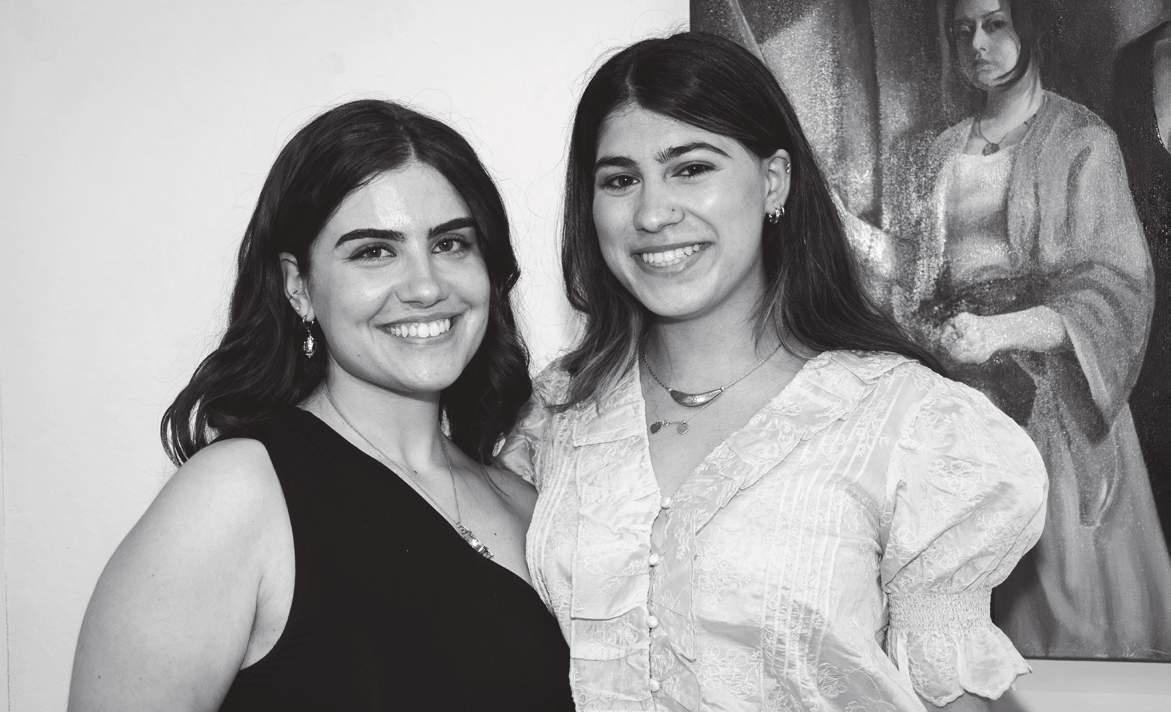
out on the big picture. Her love for photography, cultivated from an early age, made her want to “factcheck” ways of life in India that exist away from the spotlight.
“ We see (Indian culture) in the media, and we see it portrayed in one way, but how does it actually exist?”
Lily
Sood, FCRH ’26
“We see (Indian culture) in the media, and we see it portrayed in one way, but how does it actually exist?” Sood said.
Along with her trusted Fuji X-Pro Two camera, Sood’s exhibition came from a process of wandering through the simmering

By SOFIA LAJE Staff Writer
“ERUPCJA”
Film
April 17
While traveling through Warsaw with her partner, a woman rekindles a connection with someone from her past, destabilizing her present life. Ohs traces how memory and proximity can blur boundaries between nostalgia and desire.
“With its Warsaw setting, French New Wave-inspired aesthetic, and techno-pulse reminiscent of a Danny Boyle film, ‘Erupcja’ (Eruption) plays like a modern arthouse pastiche from Eastern Europe.” - Brian Eggert, Deep Focus Review
For fans of: chance encounters, emotional ambiguity, “Lost in Translation,” texting someone you shouldn’t English
“WASTEMAN” DIR. CAL MCMAU (2025)
Quad Cinema via Sunrise FilmsOpens April 24
McMau crafts a tense portrait of survival following a man who fixates on meeting the son he’s never known, while shifting power dynamics inside prison threaten to derail his fragile hopes. For fans of: moral crossroads, clenched-jaw tension, Andrea Arnold English
“OMAHA” DIR. STEPHEN COLE WEBLEY (2025)
IFC Center via Greenwich Entertainment - Opens April 24
A cross-country trip takes on unexpected weight when a young girl begins to sense that her family’s spontaneous journey carries deeper, more troubling motives. Webley builds a slow-burn coming-of-age story shaped by discovery, unease and the shifting meanings of home.
For fans of: road movies, “Paris, Texas,” Chloé Zhao, “Aftersun,” staring out the car window English
“NO PICNIC” DIR. PHILIP HARTMAN (1986)
Film Forum via Film Desk - Opens April 17
hot streets in places like Delhi and Bulandshahr. While many of the photos consist of Sood’s family members, she also prioritized catching strangers in their natural surroundings.
“I grew up with a lot of social anxiety; I guess (photography) was my way of communicating with other people,” Sood said.
The most touching aspects of Miceli and Sood’s exhibitions come from their fascination with people. Through their work, the strength of their friendship is evident, and their love for the people in their lives shines through. Each work takes the viewer by the hand and pulls them into somebody else’s shoes. For a brief moment, they can see a whole different life through each shot or brush stroke.
The impact of this exhibition is as lifelong as Miceli and Sood’s friendship; it serves as a love letter to each other, their family and friends, and themselves.
Set in a pre-gentrified East Village, Hartman’s black-and-white indie follows a down-on-hisluck jukebox operator drifting through the neighborhood in search of a mysterious woman in a striped dress. Anchored by David Brisbin’s performance, the film doubles as a time capsule of a vanished downtown scene.
“One movie about the East Village that gets it right. (...) A swan song to a languishing New York tribe.” - Manohla Dargis, Village Voice
For fans of: indie grit, the 1980s, Jim Jarmusch, black coffee English
“PAULINE AT THE BEACH” DIR. ÉRIC ROHMER (1983)
Roxy Cinema on 35mm via Janus Films - Opens April 16
Set along the Normandy coast, Rohmer’s sunlit story follows a teenager observing the romantic entanglements of the adults around her, where shifting alliances and conflicting desires reveal the illusions people maintain about love.
For fans of: talky French cinema, “Call Me by Your Name,” eavesdropping, “It’s complicated” French with English subtitles



39. Nevertheless
40. Big steps
42. Counterparts of chutes


44. Sales pitch: “It’s __ ____!” (2 Wds.)
45. Edmonton’s hockey team
46. Estimator’s phrase (2 Wds.)
47. Fútbol cheers
48. Twin of Artemis
51. Rihanna and Jay-Z hit
55. Vanilla sandwich cookie (2 Wds.)
57. Regretted
58. Former New York City mayor Giuliani
59. The end of ___ ____ (2 Wds.)
60. Letters before a summary (Abbr.)
61. πr², for a circle
62. Last but not ____
63. Kill it, in slang
BY JASMINE WHITE
20. Whistleblower?
22. Chip away at, as profits (2 Wds.)
23. Not of the cloth
24. Opposite of NNW
25. Love, in Lima
27. It may be shameless
30. The “L” of LSAT
15. On the verge of doing (2 Wds.)
16. Ending for “gee” or “free”
31. Honest ____
32. The “A” of IPA
1. Vegan gelatin substitute
2. Where all roads lead
3. What this puzzle’s title brings, in an old saying
4. Toyota model introduced in 1982
5. Busy as __ ____ (2 Wds.)
6. New Yorker bag
7. Word before “date” or “diligence”
8. Nebraska native
9. Other, in Oaxaca



33. Paul Anka song: “____ Beso”
11. Stratospheric shield with a “hole” in it 1. Upper limb 4. Pet portal (2 Wds.) 11. Tolkien monster 14. Smallest state in India
10. Carrots and potatoes, for two
17. Detective Santiago on “Brooklyn Nine-Nine”
18. Study of weather
36. Organization with Cubs and Eagles (Abbr.)
BY JASMINE WHITE

1. Each row and column of the KenKen puzzle should be filled in with a number from 1-5 exactly once.
2. The bolded lines break the puzzle into multiple sections of 1-4 cells, with each section containing a target number and mathematical operation in the top left. The numbers in each section must be combined using the given operation to create the target number. For example, in the top left section made up of two cells and given the rule of 1-, the two cells should be subtracted together (in any order) to get the target number 1.
3. A number can be used more than once in the same section, as long as the first rule is not violated.


BY JASMINE
Ramses, Ramona, Rambo and Rama all volunteer at their local community garden, and this month, they are in charge of taking care of the flowers that have just been planted in the garden. Each Ram is responsible for one kind of flower and must water them at the right frequency so they can be as healthy as possible.
Use the clues below to match up each Ram with their correct flower and watering frequency. The first clue has been put in for you as an example — use “X” to cross out what’s incorrect and “✓” to denote the correct matches. Remember, no two Rams have the same kind of flower or will water them at the same frequency. After you have completed the puzzle, you can check your answers with the grid in the bottom corner!