
NO TIME FOR DOWNTIME.
If you’re awarded infrastructure or large construction projects, profitability hangs on efficiency. These days, controlling dust, dirt and debris is a must, so your mechanical sweeper better not mess around.

When there’s no time for downtime, it’s time for Broom Bear ® or Broom Badger ® .
Elgin brings 100+ years of hustle and reliability to every job-site. Broom Bear® and Broom Badger® are built for you — fast and dependable, with the best customer service in the business.
©2025 Elgin Sweeper
Closing The Gap: Cleaning, Crack Sealing, And Mastics
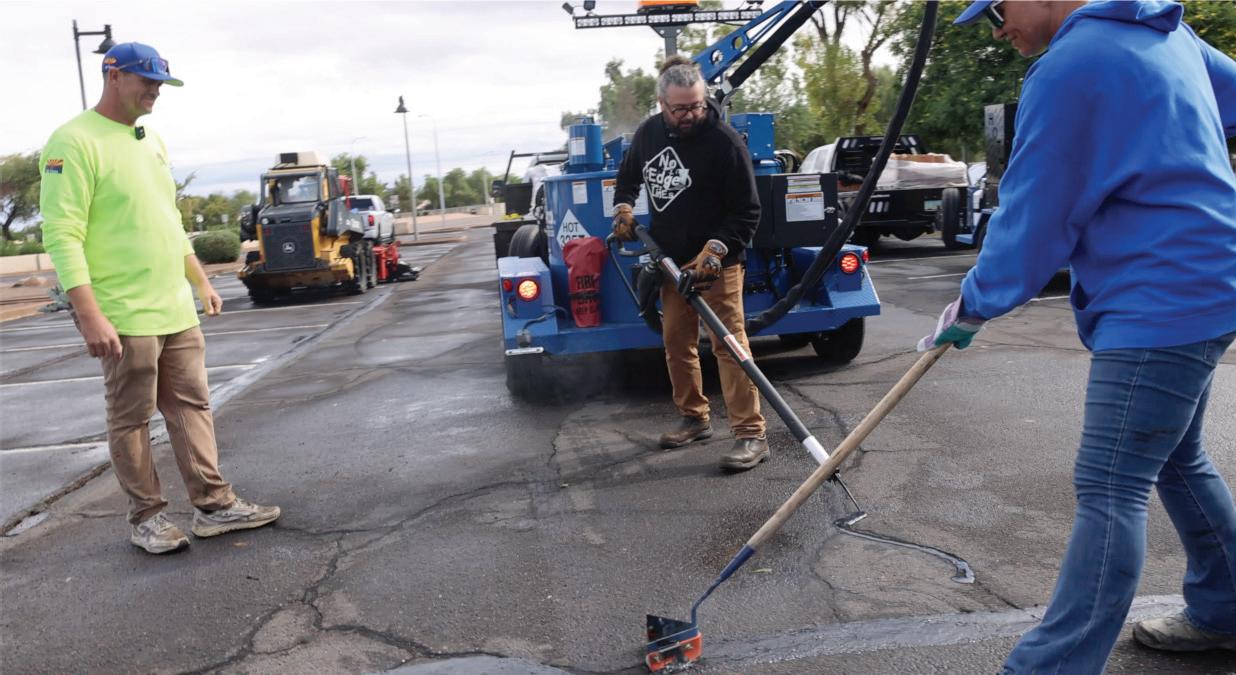
On a rain-soaked jobsite in the Arizona desert, I got hands-on with crack sealing and mastics alongside the DeHart Asphalt crew.
Turning 100% recycled asphalt into a high-performance slurry seal by cutting costs, carbon emissions, and waste without sacrificing
and recap from the 2026
Experience which took place Feb. 9 through Feb. 12 in New Orleans,
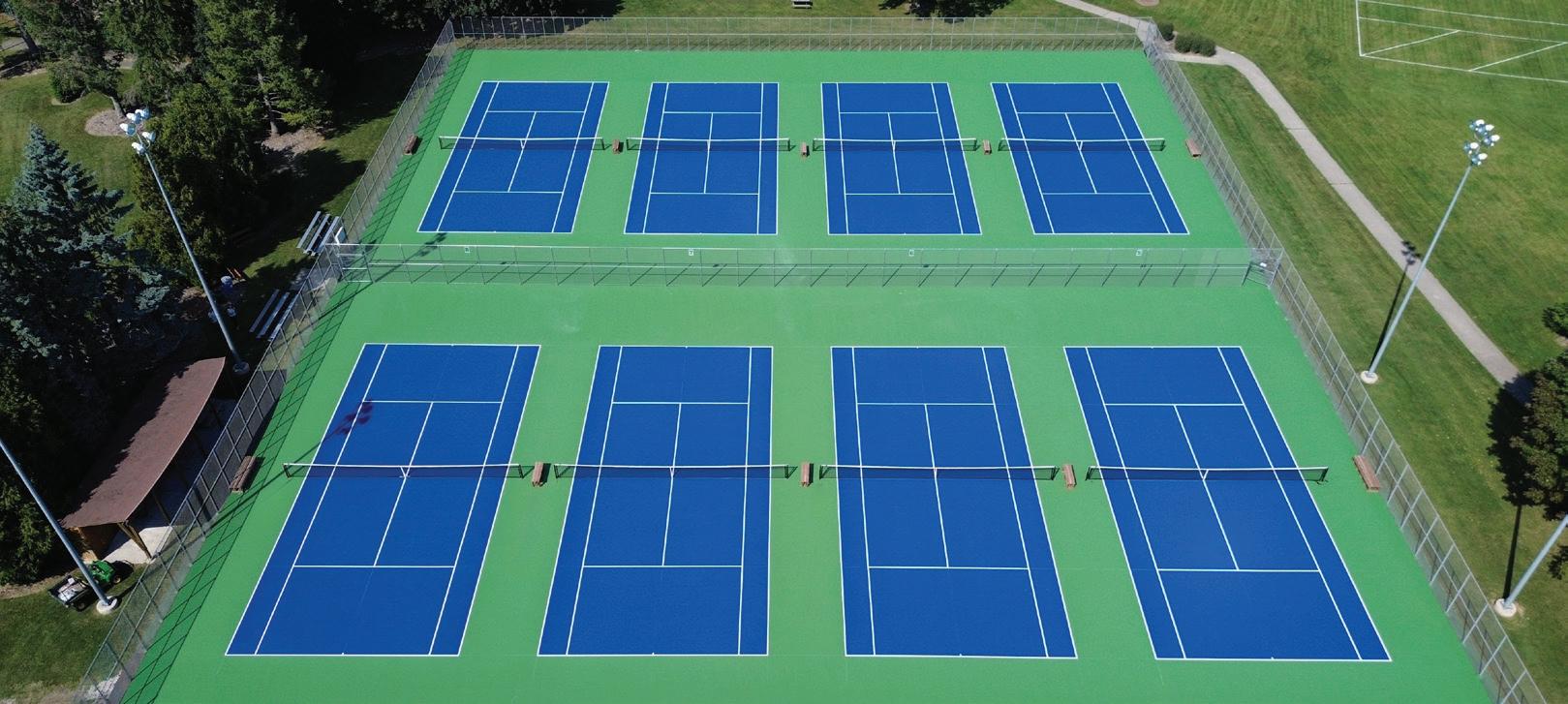
The demand for sport courts, and primarily those for the Pickleball craze, continues to grow nationwide and supply is struggling to keep up.
of the latest news in the industry.
The newest pavement maintenance products hitting the market.
The most overlooked investment in pavement industry. The asphalt industry excels at teaching business skills, but what happens when the leader is running on empty?
Simpler estimates, faster payments: A contractor’s guide to winning more work.
What is your biggest power sweeping barrier?
Pavement striping and sweeping contractors: Add-on service or referral profit center?
Bart’s Asphalt: Community is the most underrated tool in the asphalt industry.
Preparing for future challenges now.
WHAT’S ONLINE
Construction Starts Strong: 2026 Driven by Technology, Infrastructure and Productivity Opportunities
Megan Tanel, President and CEO, AEM, offers in-depth observations on the construction industry, today’s emerging trends and expectations heading into 2026.
Formoreinformationvisit
https://pavemg.com/q150oscz
[VIDEO] Learn How to Stop Taking The Wrong Jobs + Start Making More Money
Not every project grows your business. In this PAVE/X 2026 preview, Nick Yoss breaks down how strategic project selection and strong subcontractor partnerships protect your margins, your reputation, and your team.
Formoreinformationvisit
https://pavemg.com/1lzujies

SUBMISSIONS CLOSING SOON: Pavement Maintenance & Reconstruction’s 2026 Top Contractor Award
This survey of paving and pavement maintenance contractors helps develop an objective and verifiable listing in each of the four industry segments. Submissions close March 27, 2026.
Formoreinformationvisit
https://pavemg.com/TopContractor26
Vol. 40, No. 3, March 2026


Published and copyrighted 2026 by IRONMARKETS. All rights reserved. No part of this publication may be reproduced or transmitted in any form or by any means, electronic or mechanical, including photocopy, recording or any information storage or retrieval system, without written permission from the publisher.

Subscription policy: Individual subscriptions are available without charge in the U.S. only to pavement maintenance contractors, producers and government employees involved in paving or pavement maintenance; dealers, and distributors of pavement maintenance equipment or materials; and others with similar business activities. Complete the subscription form at www.forconstructionpros.com or use your company letterhead giving all the information requested. Publisher reserves the right to reject nonqualified subscribers. One year subscriptions for nonqualified individuals: $35.00 U.S.A., $60.00 Canada and Mexico, and $85.00 all other countries (payable in U.S. funds, drawn on U.S. bank). Single copies available (prepaid only) $10.00 each (U.S., Canada & Mexico), $15.00 each (International). Pavement Maintenance & Reconstruction (ISSN 1098-5875), is published eight times per year: January, February, March, April/May, June/July, August/September, October/ November, December by IRONMARKETS, 201 N. Main St. Ste 350, Fort Atkinson, WI 53538. Periodicals postage paid at Fort Atkinson, WI and additional entry offices.



POSTMASTER: Please send change of address to Pavement, 201 N. Main St. Ste. 350, Fort Atkinson, WI 53538. Printed in the USA.
PAVEMENT MAINTENANCE & RECONSTRUCTION is proudly supported by these associations:





ADVISORY BOARD


Agua Trucks Inc Wickenburg, AZ, Scott Duscher
Asphalt Contractors Inc., Union Grove, WI Robert Kordus
Asphalt Restoration Technology Systems, Orlando, FL Connie Lorenz
Brahney Paving, Hillsborough, NJ
Eosso Brothers Paving; Hazlet, NJ
Maul Paving/Concrete/Sealcoating, PLainfield, IL
Parking Lot Maintenance, Lake St. Louis, MO
Steven Brahney
Tom Eosso
Chris Maul
Todd Bruening
Petra Paving, Hampstead, NH ...................................................................... Chris Tammany
Pioneer Paving, Albuquerque, NM Don Rooney
Roberts Traffic, Hollywood, FL Lisa Birchfield
Show Striping Inc. (SSI), Wisconsin Dells, WI Amber Showalter
T&N Asphalt Services, Salt Lake City, UT
Nick Howell
Young Sealcoating Inc, Lynchburg, VA Steve Young
The Paving Lady Mauro Comuzzi
JMP Excelsior Services Jim Panzenhagen
Sweeping Industry Veteran Gabe Vitale
Flat Nickel Management Michael Nawa
Wis-Coat Asphalt Maintenance Marvin Joles
Clear Choice Sealing Warren Johnson
Jacketta Sweeping Services Debbie Jacketta
Royal Pavement Solutions Kenneth Roy III
ASSOCIATION REPRESENTATIVES:
Pavement Coatings Technology Council ....................... Brian Riggs, Executive Director
2026: Third Time’s The Charm
Sometimes failure is the best teacher.
My first national pavement event was in Charlotte, NC, in 2023. There are a lot of things that I learned from that experience that have carried through all the way to now. The biggest things, by far, are the relationships that I established and that continue to grow.
One of those was with ARM Pavement Services, Rodd Moore and his sons, who operate out of Detroit. They were the first contractor who’s story I had the privilege to share with readers of the magazine. That conversation was something that set the tone for how I was going to structure my articles about contractors going forward.

Brandon Noel, Editor-In-Chief bNoel@iron.markets 234-600-8983
Obviously, another big meeting was with Kenny Roy and the team behind Royal Pavement Solutions. They’ve continued to be a huge source of camaraderie and experience in the field, as I’ve spent more time out on the jobsite with these guys from Long Island than anywhere else. Somehow, during Mardi Gras and PAVE/X we found the time to go and devour a 10+ pound cajun seafood boil. The #RoyalBoil is something I will never forget.
But another important thread from 2023 found an inflection point in New Orleans this past week. We have an amazing team of business owners, retired pavement pros, sweepers, pavers, and everything in-between, who make up our Pavement Advisory Board. I met them all for the first time at a luncheon in Charlotte, and I was nervous as all hell.
I needed these guys to like me, and I was nervous that they wouldn’t. If they didn’t accept me, how was I going to be able to function in this role? The good news is that they were the best, but the bad news was that after that luncheon, I kind of dropped the ball.
You see, every year when we do the Pavement Awards, the winners are voted on by this advisory board. That’s one of the biggest parts they play in making the selection as fair and unbiased as possible. Not only that, but their expertise ensures that the winning jobs are of actual consequence, and not something that an editor just thinks is cool. But this isn’t supposed to be their only job.
Before my time, they were much more engaged with the content creation for the magazine, as well as, supporting the editorial team. However, if there’s one thing I’ve not really handled the best -- it’s been this facet of the job. Consequently, the first two years of PAVE/X, I failed to even meet with the board. It kept falling out of my priority list. But this year I got my act together.
I want to thank them (you can find their names listed in the front matter of every issue), but especially call attention to Nick Howell, who also contributes the Owner’s Desk column. He really made it a point to reach out to me, offering his support in any way he could, and was key in getting the ball rolling.
Going forward he is going to function as the Director of the Pavement Advisory Board, and we have a much bigger role planned for the board for 2026. I still need their support and help to make this magazine a success, and I’m grateful to them all. This is the real benefit of shows like IGNITE and PAVE/X, because the relationships you build are irreplaceable. You just don’t know what you’re missing until you take the plunge.
See you on the road! ■
PAVEMENT


EDITORIAL
Editor-In-Chief ........................................................... Brandon Noel bnoel@iron.markets
Content Director, Marketing Services ...........Jessica Lombardo jlombardo@iron.markets
Managing Editor ......................................................Allyson Sherrier asherrier@iron.markets
AUDIENCE
Audience Development Director Angela Franks
PRODUCTION
Senior Production Manager Cindy Rusch crusch@iron.markets
Art Director April Van Etten
ADVERTISING/SALES
Brand Director ........................................................... Amy Schwandt aschwandt@iron.markets
Brand Manager ..................................................... Megan Perleberg mperleberg@iron.markets
Sales Representative Sean Dunphy sdunphy@iron.markets
Sales Representative Kris Flitcroft kflitcroft@iron.markets
IRONMARKETS
Chief Executive Officer Ron Spink
Chief Revenue Officer ............................................ Amy Schwandt VP, Finance Greta Teter VP, Operations & IT Nick Raether
Brand Director, Construction, OEM & IRONPROS Sean Dunphy
Brand Director, Supply Chain Brian Hines Director, Marketing Services Becky Peck
Content Director Marina Mayer Director, Event Content & Programming........ Jess Lombardo Director, Lead Generation Operations Bailey Bunescu
CIRCULATION & SUBSCRIPTIONS
201 N. Main St. Ste. 350, Fort Atkinson, WI 53538 afranks@iron.markets
LIST RENTAL
Sr. Account Manager Bart Piccirillo | Data Axle (518) 339 4511 | bart.piccirillo@infogroup.com
REPRINT SERVICES
Brand Manager Megan Perleberg mperleberg@iron.markets | (800) 538-5544
Published and copyrighted 2026 by IRONMARKETS. All rights reserved. No part of this publication may be reproduced or transmitted in any form or by any means, electronic or mechanical, including photocopy, recording, or any information storage or retrieval system, without written permission from the publisher.
PAVEMENTMAGAZINE






by IRONMARKETS
N. Main St. Ste 350, Fort Atkinson, WI 53538 (800) 538-5544 • IRON.MARKETS.COM
WWW.FORCONSTRUCTIONPROS.COM/PAVEMENT














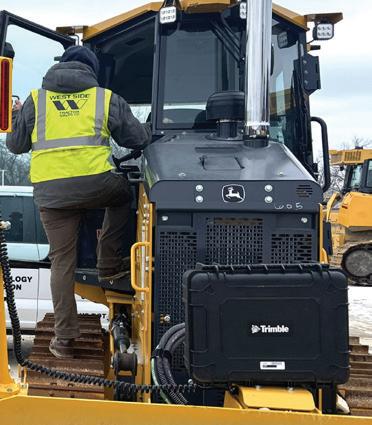






























West Side Tractor Sales Co. Named Newest Trimble Technology Outlet, Serving Customers in Illinois, Indiana and Michigan
Trimble announced West Side Tractor Sales Co. as the newest Trimble Technology Outlet. West Side Tractor will now sell Trimble grade control, site positioning systems and correction services technology directly to customers using John Deere earthmoving equipment, including dozers, excavators, motor graders, mini-excavators and compact track loaders.
Trimble Technology Outlets are an important part of Trimble’s civil construction distribution strategy. By adding authorized resellers representing a wide variety of manufacturers to the Trimble distribution channel, it becomes easier for users of various machine types to purchase, install and utilize Trimble technology for improved jobsite productivity and profitability. As an authorized Trimble reseller, West Side Tractor now sells Trimble technology directly to its customers in northern Illinois, across Indiana; and Berrien, Cass and Joseph Counties in southwest Michigan.
“Our goal is to make it as easy as possible for civil contractors to reap the benefits of Trimble machine control, site positioning and correction services technology, regardless of machine type,” said Ron Bisio, senior vice president, field systems at Trimble. “West Side Tractor has established a reputation for going the extra mile to find solutions that help its customers advance their operations.”
West Side Tractor customers can expect to receive the same superior level of support, including installation and training — for which the Trimble dealer channel is known.








JOHN DEERE ANNOUNCES MAJOR EXPANSION WITH TWO NEW U.S. FACILITIES COMING
In keeping with our strong tradition of building America, we are excited to announce plans to open two new U.S.-based facilities: a state-of-the-art distribution center near Hebron, Indiana, and a cutting-edge excavator factory in Kernersville, North Carolina, both set to open in the next year.
“Our investment in these new facilities underscores John Deere’s dedication to strengthening the backbone of American industry and supporting local economies,” said John May, chairman and chief executive officer of John Deere. “We believe in building America, and these projects represent our intent to continue driving innovation and job creation in the United States.”
John Deere recently broke ground on a new distribution center near Hebron, Indiana, strategically located to enhance our supply chain capabilities nationwide. This facility will be designed to streamline operations and ensure timely delivery of equipment and parts. The Indiana project is anticipated to generate significant employment opportunities with approximately 150 jobs, contributing to the state’s economic growth.
The new $70M factory in Kernersville, North Carolina, will bolster John Deere’s manufacturing capabilities, leveraging advanced technologies to produce industry leading excavators for the construction market. The North Carolina factory will assume production of future generation excavators previously produced in Japan.
This facility will employ over 150 people and will help meet equipment demand and strengthen our commitment to U.S. manufacturing innovation.
DICK ANDERSON CONSTRUCTION NAMES DISTRICT MANAGER OF ARIZONA OPERATIONS
Dick Anderson Construction (DAC), who recently acquired Chanen Construction in Phoenix, AZ, announced the promotion of Rivers Anderson to District Manager of DAC’s Arizona operations, marking a significant leadership milestone for the regional construction leader.
Anderson recently led the $8M renovation of the Mountain Modern hotel in Sedona, AZ, the $32M expansion and renovation of the beloved Phoenix Theatre, and the $95M student housing project for Midwestern University. As District Manager, he will continue to spearhead projects in the Arizona region with a focus on building higher education projects, hospitality renovations across the state including at Hilton at the Peak, as well as healthcare and airport work.
A native Montanan, Anderson worked as a laborer and intern for DAC before earning his degree in Construction Engineering Technology. He went on to work in DAC’s commercial and civil divisions, including wind energy projects, K-12 and higher education facilities, and hospitality developments. Most recently, Anderson served as a project manager in Arizona, overseeing contract control, budget management, and subcontractor coordination across multiple construction sectors.
“This promotion represents an opportunity to build on our team’s established excellence while embracing new markets,” Anderson said.


PORTABLE MARKING REMOVAL
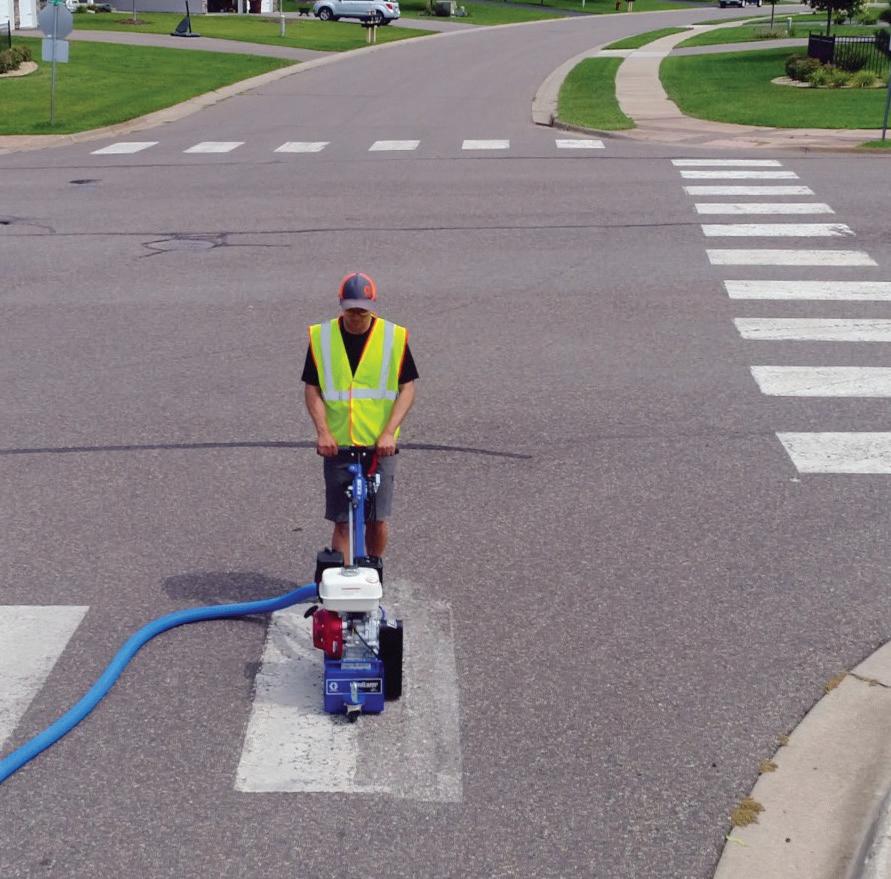
Tackle Light Removal Jobs Fast With Graco
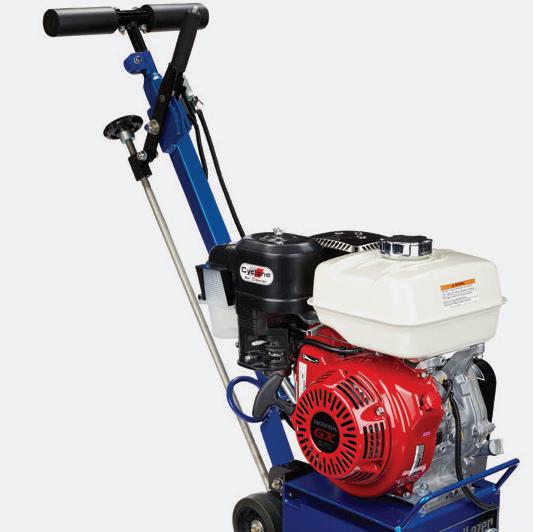
Grindlazer ® Standard-Series Scarifiers




PRODUCT FEATURES:
• Highly-portable design for increased mobility
• Cut a path up to 8 in wide
• Wide variety of cutters and accessories for job flexibility
• Depth control lever and dial for fine-tuning your removal
• Adjustable handlebars and vibration-reducing grips for operator comfort
«

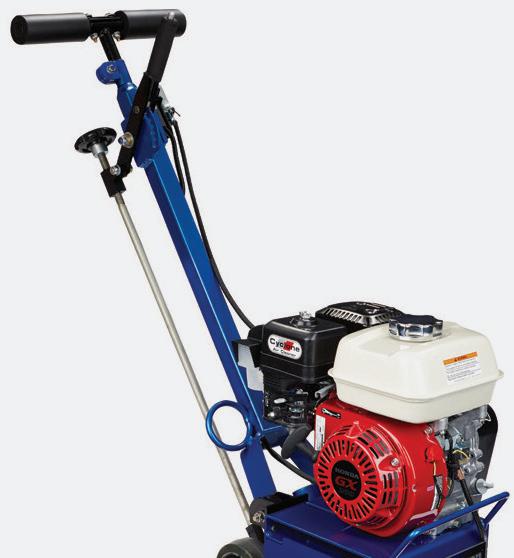

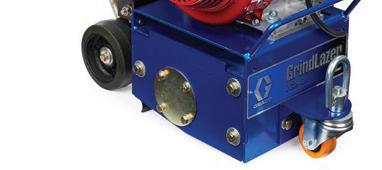
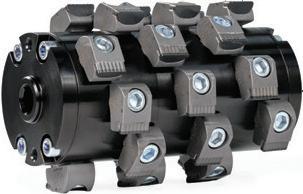
• Graco GrindLazer Standard Series scarifiers are great for removing trip hazards and smaller traffic markings. These highly-portable scarifiers pack a ton of capability into a light, compact package that’s easy to load into the back of a truck. This makes them ideal for tackling multiple smaller jobs quickly or working in urban areas with limited parking.
• Reliable 6.5 HP and 9 HP Honda® gasoline engines
New Generation of Wheel Loaders with Updated Tech
Volvo CE

Volvo Construction Equipment’s new generation of wheel loaders aimed at improving efficiency, cycle times, operator experience and sustainability across a range of heavy-duty applications. This launch follows recent overhauls of the company’s articulated haulers and excavator product lines. The latest wheel loaders feature loadsensing hydraulics for more responsive lifting and lowering, automatic bucket leveling and a new Auto Bucket Fill function that automates throttle, lift and tilt for consistent material capture. A new fuel-saving engine mode called Smart Control is designed to reduce fuel consumption by up to 4%. The loaders are also compatible with HVO fuels, which can lower greenhouse gas emissions compared to traditional diesel. Upgrades include a higher-torque converter for better low-speed performance, as well as improved gear shifting and braking systems that support faster acceleration and smoother operation. Other updates include Volvo’s torque parallel linkage system for consistent breakout force across the lifting range, and compatibility with a wide variety of work tools and attachments.
New Simulation Training Features
CM Lab Solutions
The company plans to introduce new features aimed at improving instructor oversight and boosting training efficiency. CM Labs will also showcase additional equipment models to give contractors more options when developing operator training programs.
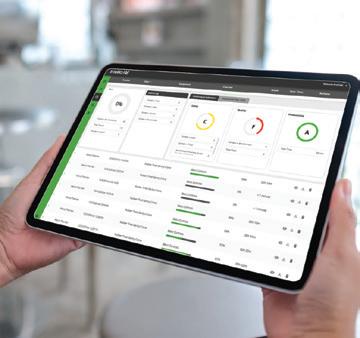
Updates to the company’s soil simulation technology are expected to provide more realistic machine response and better reflect changing ground conditions, helping trainees build judgment before stepping onto a jobsite.
CM Labs will also preview its move into adjacent training markets to support broader workforce development needs across construction and related industries.
308 CR Mini Excavator
Caterpillar - Cat
Caterpillar’s new Cat 308 CR Fixed Boom mini excavator replaces the 307.5 with more power, higher hydraulic output and a compact radius design for confined jobsites.
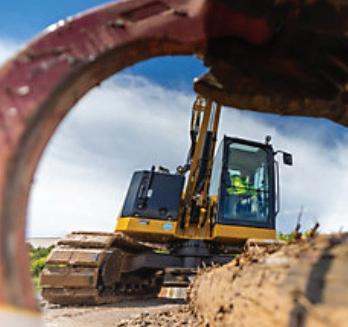
The 8-ton machine reduces rear overhang by up to 67% depending on counterweight setup and is powered by a 69-hp Cat C2.8 turbo engine that meets EU Stage V and U.S. EPA Tier 4 Final standards. A wider undercarriage and added operating weight improve lifting stability, while optional long-stick configurations increase digging depth and reach. Load-sensing hydraulics support auxiliary attachments, and existing 307.5 work tools remain compatible. Optional Cat Indicate, E-Fence and Cat Grade systems add grade guidance and motion limits to help operators avoid obstacles. The excavator also features a sealed cab, updated monitor, joystick travel control and rear and side cameras.
750-Gallon Fuel and DEF Trailer for Jobsite Refueling
FuelPro Trailers
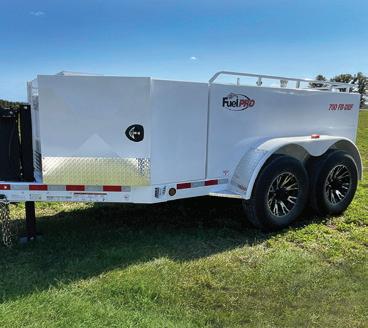
A DOT-compliant fuel and service trailer designed for refueling equipment in remote or high-production environments. The model includes a 750-gallon steel fuel tank and a 125-gallon stainless steel DEF tank. The trailer is built on a chassis made from 6-inch C-channel and features a double-seam welded 7-gauge fuel tank with internal surge baffles, cross bracing, a fuel shutoff valve, vented fill cap, pressure relief vent and visual fuel gauge. The DEF tank meets ISO 22241 standards and includes stainless steel filtration and an at-a-glance gauge.
A self-priming pump rated up to 25 gpm is standard, powered by a 12-volt deep cycle battery. The trailer comes with a 1-inch hose and auto-trip nozzle, with hose lengths up to 50 feet and an optional retractable hose reel. The dual torsion axles are rated at 5,000 pounds and equipped with EZ-lube hubs, electric drum brakes, ST235/80R16 radial tires and LED lighting. Safety equipment includes heavy-duty chains, diamond plate fenders, reflective DOT tape, roll-over railings and a 7,000-pound jack.
Fleet Software For Construction Equipment Tracking
Heavy Construction Systems Specialists, Inc.
HCSS has updated its fleet management software to give construction companies more visibility into equipment performance, maintenance and fuel tracking.
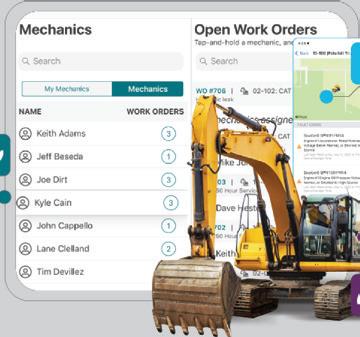
The platform combines Equipment360 maintenance software, HCSS Telematics and FuelerPlus fuel management into an integrated system. Equipment360 automates preventive maintenance and work orders, while telematics tools deliver real-time machine location and operating data. FuelerPlus tracks fuel consumption and reporting. The updates focus on tighter integration between systems, allowing contractors to automate service schedules, monitor fleet health and generate cost reports aimed at reducing downtime and improving equipment planning.
All-In-One Pavement Platform
Bitumio
The most robust and user-friendly asphalt estimation and scheduling software for asphalt contractors. Bitumio consolidates your efforts into a single software for job estimation, scheduling, customer management, job costing, and a whole lot more. Manage all your contacts, proposals, and jobs in a single, user-friendly location with our asphalt estimating and scheduling software designed for paving and maintenance contractors. With all your customer data in one place, you can communicate and close deals with your clients more effectively. From phone numbers and email addresses to names and locations, you can securely store all the data you need to help build and maintain productive relationships With all your customer interactions stored in a single, easy-to-access location, you’ll never lose track of what’s going on. Cut estimation creation times by over 40 percent! With our precise, pre-built calculations, your estimates are accurate every time.

HIGH PERFORMANCE QUALITY RESULTS


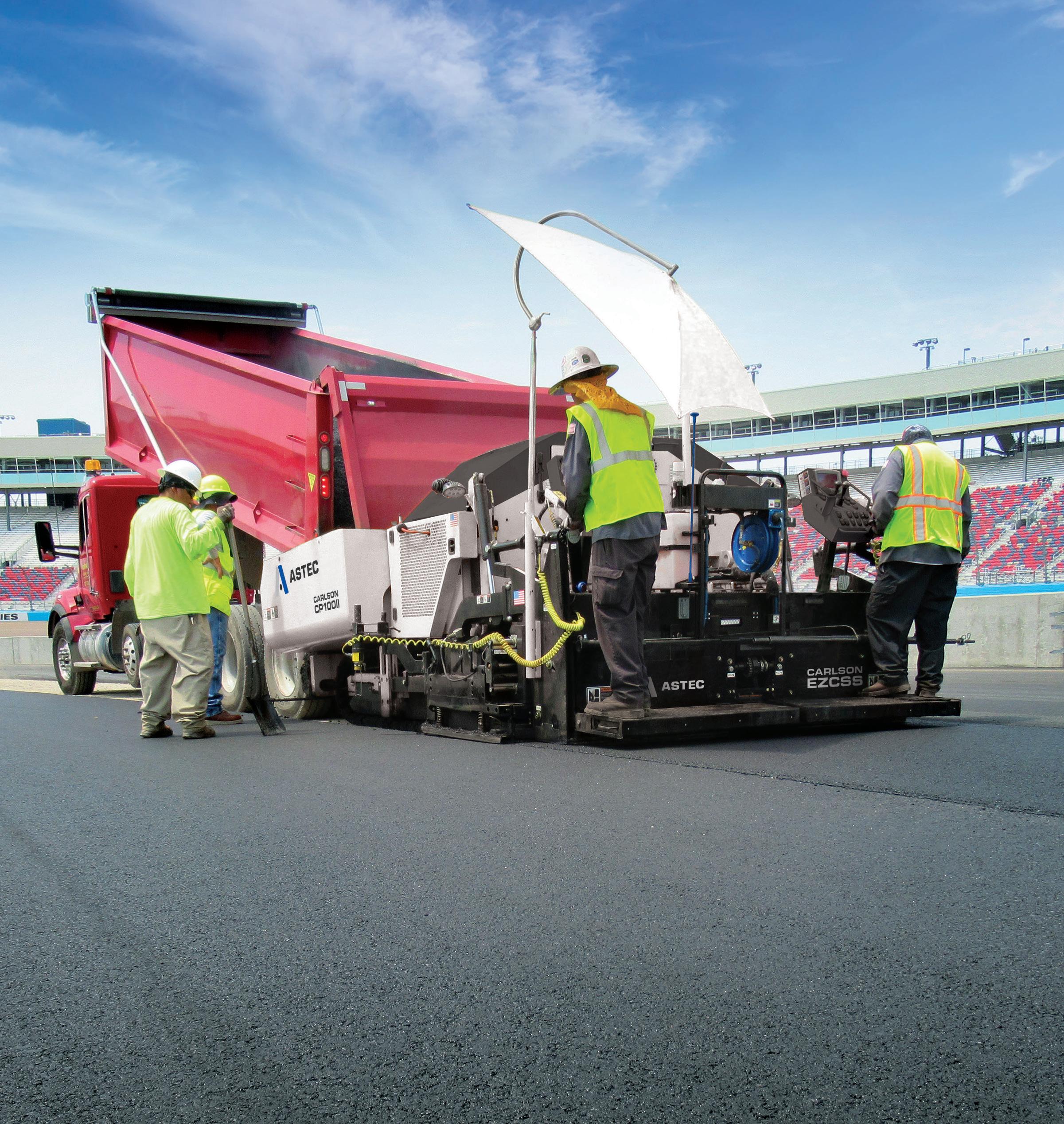
Carlson CP 100 II
The CP100 II sets the standard for versatility, component life cycle and mat quality. With a powerful 100 horsepower engine, an array of configurations and the class-leading Carlson EZCSS single slide screed, it’s easy to see why the CP100 II is the ideal choice for heavy-duty commercial paving.
BUILT TO CONNECT

By Brandon Noel, Editor-in-Chief

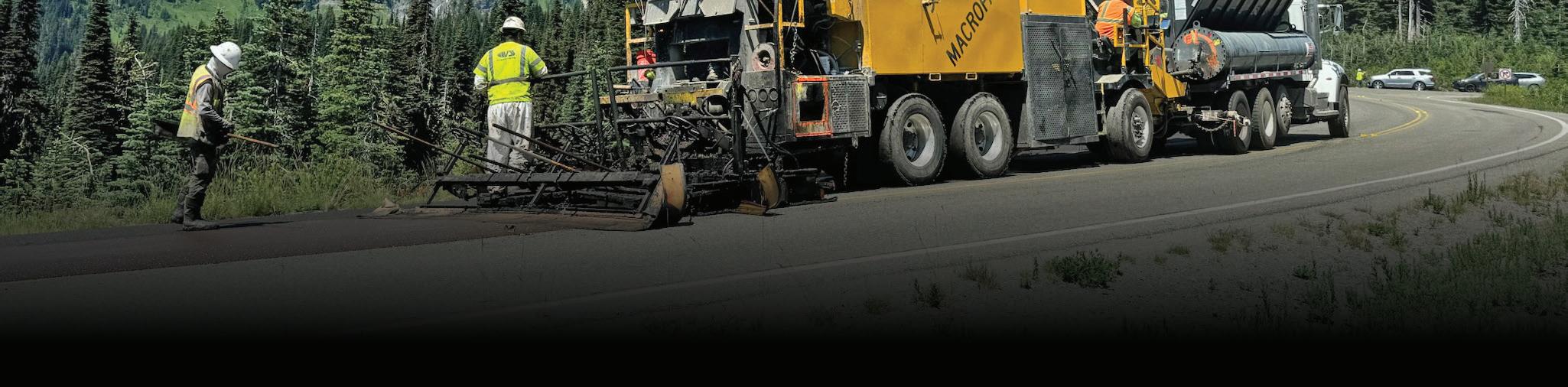
SUSTAINABLE PAVEMENT TECHNOLOGY: 100% RAP In Slurry Seals
Turning recycled asphalt into a highperformance slurry.
In an industry often defined by incremental improvements, VSS Macropaver has taken a bold step: combining a production-grade slurry / micro surfacing paver with fully recycled asphalt (RAP) to deliver highperformance pavement preservation solutions.
In a recent interview, Jeff Roberts, President of VSS International, walked me through how their Macropaver equipment works in a slurry seal application, the challenges and payoff of 100 % RAP use, and what this could mean for the future of pavement preservation.
When I asked how the Macropaver functions in a typical slurry seal application and how it measures up to industry standards, Roberts didn’t hold back praise for his product. The machine was recognized last year in Asphalt Contractor’s Top 30 Products.
Roberts pointed to the 12-EX model’s fixed gate design, which, “Not only speeds up the calibration process but also ensures precise material flow control and enhanced consistency of the finished product being placed on the road.”
In other words, the gating ensures that the aggregate, water, and emulsion are metered strictly, reducing variation in the mix and increasing consistency across the pavement surface.
Importantly, the Macropaver is fully compatible with RAP aggregates in slurry seal and micro surfacing mixtures. It doesn’t require any retrofits or extensive machine conversions. This means crews familiar with traditional Macropaver operation can adopt RAP formulations with minimal additional training or cost. My real curiosity, however, became fixated on this efficient use of old millings.
WHY ADOPT 100 % RAP?
Switching from conventional virgin aggregates to 100% RAP in slurry or micro surfacing is not a trivial shift.
When I asked what motivated VSS to experiment and implement 100% RAP mixes (and what obstacles the team encountered), Roberts said, “What initially led us to using RAP in our mixes was that we had several agency customers who had mountains of RAP materials that were not being utilized. We recognized that there could be potential cost savings to all stakeholders if we could utilize these materials since RAP is significantly cheaper than virgin
aggregates and asphalt binder.”
This is something I hear quite frequently from contractors and DOTs around the country. There’s more than enough RAP laying around, and never enough effective uses.
He cited a dual benefit: cost savings on materials and hauling, and conservation of natural resources. In many cases, agencies already own the RAP material but lack strategies to put it to use. However, the switch is not fully plug-and-play.
“The biggest challenge with getting the mix right is making sure that we isolate consistent piles of RAP materials that we can use for mix design purposes and make sure that the materials being used on site are representative of the materials we designed around for our job mix formula. Once that is done it is important to make sure that all machines have been properly calibrated with these same materials.”
In practice, this means tight quality control on stockpiling, sampling, and ensuring that the on-site RAP matches the laboratory feedstock. Without that match, the risk of off-spec performance rises. This isn’t too different from what we’ve heard from our friends at Green Asphalt, who produce batches of 100% RAP asphalt for use on public roads.
VSS Macropaver
PERFORMANCE, DURABILITY, AND RIDE QUALITY
One natural concern, and one I raised, is whether a 100% RAP slurry seal can match or exceed the performance of conventional mixes. Roberts’s response is cautiously confident:
“The performance of a RAP slurry seal should be the same as a conventional slurry mixture with virgin aggregates as long as the base RAP materials are properly tested to ensure that the finished RAP product being used in consistent with the job mix formula provided for the job.”
Proper testing, consistent stockpiles, and strict adherence to mix design are nonnegotiable. If those controls are in place, he contends that ride quality, curing times, and integrity need not suffer.
ENVIRONMENTAL AND COST BENEFITS
Beyond the technical performance, Roberts emphasized that sustainability and cost efficiency are paramount.
“We like to communicate to project owners that reusing RAP reduces the environmental footprint by conserving natural resources using an asset that, in most cases, they already own and most likely are underutilizing,” He said. “RAP use also decreases the need for landfill disposal of old asphalt and reduces greenhouse gas emissions from production and transport of new materials.”
Many agencies struggle with stockpiled RAP or limited landfill capacity. By converting that “waste” into a functional treatment layer, agencies gain not just cost avoidance but also a narrative advantage in lifecycle stewardship.
I pressed on whether they ran into unexpected problems during production or placement. Were there any issues related to material handling, moisture sensitivity, calibration issues, or machine limitations.
Roberts acknowledged that RAP is more commonly used in hot mix applications but said that the Macropaver handles slurry mixes just fine.
“RAP is more commonly used in hot mix asphalt (HMA) than slurry seals and micro surfacing now due to several factors,” he said. “When utilizing RAP in cold mixes, you don’t necessarily achieve the same benefits due to the lack of heat in the system. Otherwise, we have had very few problems with slurry mixtures as long as the stockpiles are managed to limit inconsistencies and mix design sensitivity.”
One operational best practice, however, stands out. For RAP slurry seal mixes, they require the use of a pneumatic roller after placement which is not necessary for all slurry seal. That pneumatic roller step helps place the aggregate before initial cure, and it’s particularly useful when working with less-than-perfect RAP gradations or moisture fluctuations.
MARKET RECEPTION AND DEMAND
Given the novelty of 100% RAP slurry, I asked how client agencies and DOTs react to it, and whether interest in it is growing.
“The concepts of sustainability and economic savings have been received very well by local agencies. Pavement preservation is a rapidly growing industry. Sustainability is and always has been a major advantage for buying agencies and private clients in that preservation techniques typically require less materials, heat and energy to produce, transport and place on the road.”
He predicts a natural evolution in the way things are done.
“The use of RAP mixtures will naturally evolve over time and those who have access to large RAP piles will naturally use them to seek financial advantages as long as industry performance standards can be met and maintained.”
He also sees the broader context: pavement preservation provides a strong lifecycle cost argument against more capitalintensive overlays or reconstruction. Used judiciously, preservation with recycled materials can strengthen that argument.
SCALING UP
Finally, I asked whether Roberts believes that recycled slurry or micro surfacing treatments could become standard—and what it would take to scale adoption across the industry.
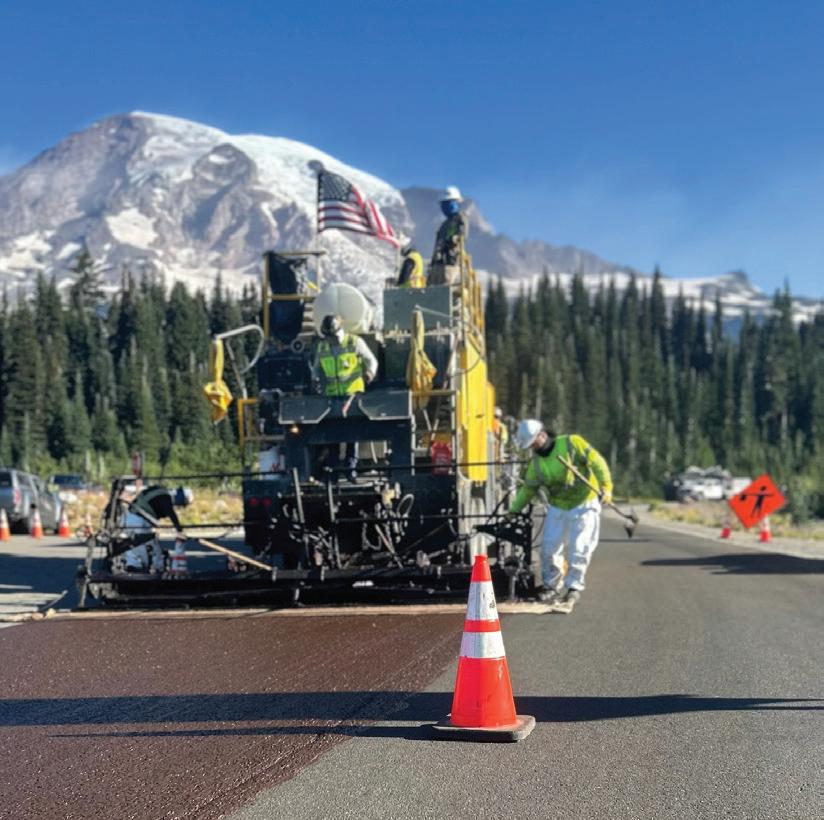
“There is still a lot that our industry needs to learn about using RAP in these techniques but much of this work is being done today. Industry Associations like the International Slurry Surfacing Association (ISSA) have made RAP use part of their strategic plan and they are working hard to collect the data from its members and ‘connect the dots’ for the benefit of the entire industry and the agencies they serve. This will help develop better standards and training for all.”
By aligning innovation with association efforts and real-world trials, he envisioned a future where recycled slurry is not niche but routine. The use of a 100% RAP slurry strategy represents one of the more aggressive sustainability pivots in pavement preservation.
With that boldness comes actionable lessons and cautions, especially as it concerns quality control, stockpile management, and performance verification. But it represents a great use for recycled material, while stretching DOT and municipal budgets. ■
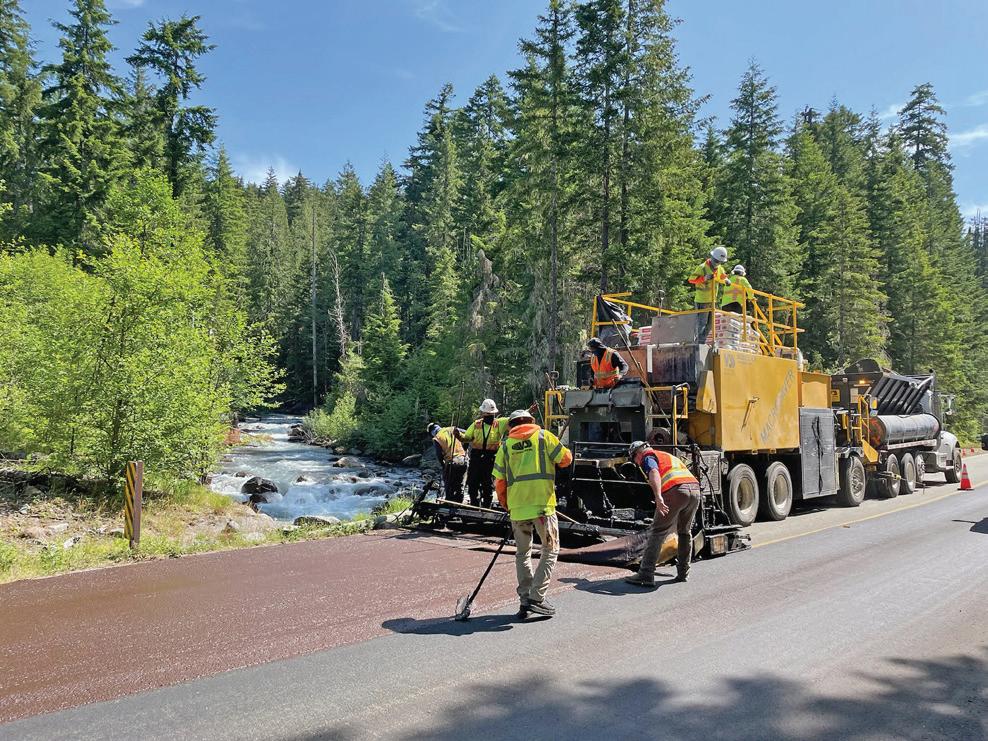
VSS Macropaver
VSS Macropaver
By Brandon Noel, Editor-in-Chief


PAVE/X 2026: Mardi Gras Meets The Pavement Industry
Adam Rahn
NOLA
provided a vibrant
background as
the
growing trade show hit its’ stride in year three.
As soon as PAVE/X 2026 was announced, and we learned that it would be taking place in New Orleans, LA, during the week of Mardi Gras, a certain chill ran down our collective spines. I was immediately confronted by all the cultural imagery and alluring expectations that I’ve been fed over the last four decades about the tradition. However, during my week at the annual Pavement Experience, as the industry gathered to see what was new, all my personal preconceived notions about the colorful celebration were obliterated, and I found a new favorite city.
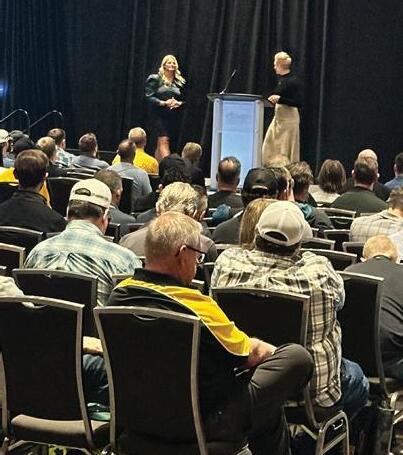
“Year three in New Orleans was a powerful reminder of what happens when this industry comes together with purpose,” Jessica Lombardo, Director of Event Content and Programming, and one of the co-founders of PAVE/X, told me.
“The education was deeper, the conversations were stronger, and the momentum is undeniable. PAVE/X continues to grow, and we’re thankful for everyone who helped make New Orleans unforgettable. We can’t wait to see you in Savannah in 2027!”
With everyone bracing for CONEXPO just around the corner, there were more than a few people concerned about maintaining that momentum that followed the show into year two’s stop in Chattanooga, TN. By day two, however, with expanded
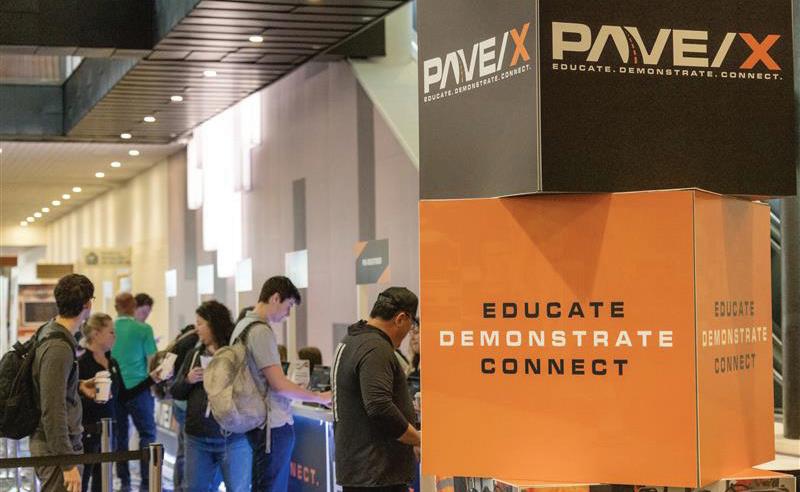
education and show floor hours, and two live contractor competitions in a Roller Rodeo (sponsored by HAMM) and a striper race (sponsored by Graco and 1-800 Stencils).
“PAVE/X 2026 did not disappoint! With one hundred forty participating exhibitors and thousands of contractors in attendance from all over the nation, New Orleans brought more excitement than ever before,” reported Amy Schwandt, chief revenue officer, and another co-founder of the show.
“Our addition of outdoor demonstration competitions was an amazing experience boasting camaraderie, fierce competitiveness and the ultimate challenge. The show floor was buzzing with excitement and the equipment giveaways were an incredible addition on the final day.”
HIGHLIGHTS FROM THE SHOW
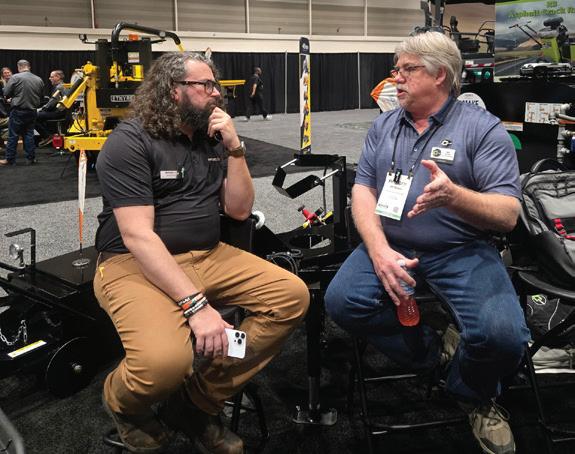
One of the more technical conversations I had was with Bill Ganger of Cimline about crack sealing standards, FAA advisory circulars, and whether emerging applications like J-Band and VRAM will make it into airport specifications.
For context, FAA Advisory Circular AC 150 includes Section P-602, which governs crack sealing on airfield

pavements. That specification dictates what materials and methods are acceptable on runways. Contractors who understand it are immediately ahead of the game.
The takeaway was simple: airports are tightly controlled environments. You cannot just “try something new” on an active runway. It must go through formal approval. But the data supporting J-Band, V-RAM, and similar applications is strong. According to Ganger, it is not a question of if inclusion happens, but when.
If these preservation techniques can reliably extend pavement life by fifteen years or more, that has serious implications for federally funded twenty-year runway cycles. For contractors who understand specifications and can speak that language confidently, this is competitive advantage.
SPORT COURT DEMAND
Sports surfacing continues to explode, and my conversation with Sean Martin reinforced something I’ve heard repeatedly: this is not a side hustle you bolt onto your sealcoating crew.
A properly installed pickleball or tennis court is a system. It involves surface

inspection, planarity correction, layered resurfacers, aggregate blends, multiple coating applications, and hand-applied striping. A standard court may involve four layers. Cushion systems can reach nine.
And that is just new construction.
Eighty percent of the market is resurfacing. That means crack repair, membranes for moving cracks, binders instead of traditional crack sealants, and a completely different repair philosophy.
Could a pavement contractor enter this space? Absolutely. The skill set transfers. But the mindset must change. This is detail-driven, multi-day work. It is not three parking lots before lunch.
The encouraging part: there are good-better-best system tiers. Contractors can scale offerings to customer budgets. And the residential demand is real.
TRUSTED
Courts costing $30,000 to $50,000 are going into backyards across America.
Nothing about this “fad” seems to be showing any signs of slowing down. That makes it a bonafide revenue stream that every contractor should, at the very least, be having conversations about at this point. If you’re still curious, there’s a great article on pg. 18!
CS = CW
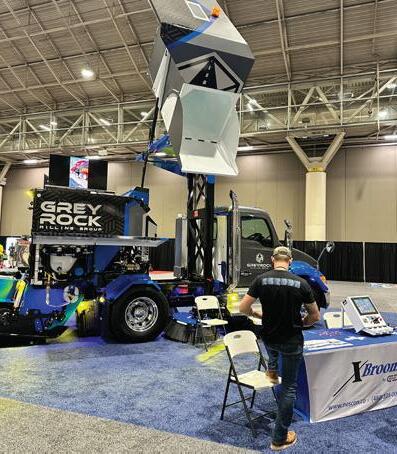
Street sweeping rarely gets the spotlight, but the Clean Streets = Cleaner Water initiative is trying to change that.
“This project focuses on aligning street sweeping with best practices in stormwater management,” said Joe Hendrickson, Group Vice President of Sales and Marketing for Alamo Companies including Schwarze Sweepers.
“There’s been a disconnect with
many areas not understanding the value of sweeping and how it contributes to the MS4 goals and to the reduction of pollutants. It’s really cool to see all these entities coming together with a passion to understand more and bring awareness into the stormwater management community so we can help, and make the world is a better place as a result.”
The initiative aligns sweeping practices with MS4 stormwater compliance goals. Municipalities over 100,000 residents are federally mandated to manage stormwater runoff. Sweeping can significantly reduce pollutant loads before they ever enter drainage systems. What struck me most was the coalition itself. Major manufacturers including Schwarze, Elgin, Tymco, and




Stewart-Amos, alongside organizations like NMSA and 1-800-Sweeper, are collaborating rather than competing.
That kind of alignment signals a big shift in the sweeping industry. Most importantly for this new coalition, though, is that if municipalities can meet MS4 goals more cost-effectively through optimized sweeping, that creates long-term, sustainable demand.
CONSTRUCTION ANGELS
Perhaps the most sobering conversation I had during the whole week was at the LeeBoy booth with Kristi Ronyak, CEO and founder of Construction Angels.
Construction Angels provides immediate financial assistance to families who lose a loved one on a jobsite. One of the biggest things that stood out to me from our conversation was the fact that, on average, 3.5 construction workers are killed each day in the United States. In the last two years, a greater majority of the cases they assisted involved roadway workers struck by vehicles.
We talk often about productivity, margins, and growth. But work zone safety is not abstract. Cameras, enforcement, better signage, and education are not taxes, though, on the political front, they are often construed as such. From Ronyak and the Construction Angels’ perspective, they are accountability.
Leeboy sold a specially branded
Construction Angels 6150 model paver to Kenny Floyd of Seminole Asphalt, supporting the charity’s efforts to uplift families who’ve recently suffered a loss.
WHERE AUTOMATION LIVES
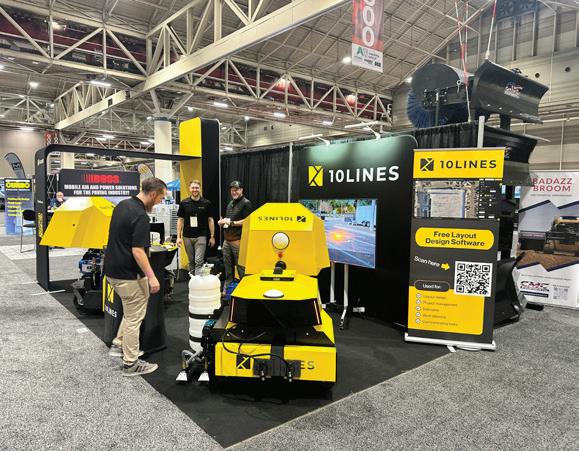
I first met the team behind 10Lines two years ago, when they were still in the early days of contractor testing their machines in real-world scenarios here in the United States. Their striping robot was already impressive then, but they’ve absolutely taken it to the next level.
Rather than resting on their growing success, they’ve continued to iterate and improve the design and features based on the feedback they’ve received from the early-adopters who’ve seen the machine work in the field day-in and day-out.
Some of the upgrades they’ve made include the deployment of an all-new remote control that is primarily used for safety and positioning for the onsite human user. They’ve also added specially designed, multi-spray nozzles that can now hold two colors (original model was limited to a single color at a time), and adjust its parallel line width while preventing overspray and bleed.
But 10Lines doesn’t leave behind the early-adopting contractors in the same way that often happens with new tech products. Their striping robot is built to be completely modular. That means that if a single function or part of the robot breaks down it can be replaced, but, more importantly, if future add-on features are released (like the dual color system), they can be added retroactively to an existing unit rather than having to buy a completely new platform.
Also, you can now try their striping layout software for FREE: 10Lines.app/ register
THE BIG PICTURE
Did you know that Mardi Gras isn’t just Fat Tuesday? Maybe you did, but I didn’t. I didn’t know that it was a multiweek celebration. I didn’t know that it was more than one parade, and that sometimes there are more than a single parade in the same day! Bourbon Street? I never even set foot there. The parades
wind their way down through the city from the outer neighborhoods where the local residents live, and then into the more touristy parts where it ends.
I waited too long to hitch an Uber to the PAVE/X after party, and by the time I tried to get there, the parade had split the city in half. When I set out on foot from the riverfront on my two mile journey, I had no idea what I was in for.
Somewhere past the World War Two museum, I made a wrong turn down a side street and realized that I was walking broad-side into the parade route. I stopped, pulled out my phone, and did the thing that visitors do. With another 1.1 miles to go, what unfolded was nothing short of a life changing experience.
While I’m sure there is plenty of truth to the type of Mardi Gras that pop culture present us with, none of that was present here. I was walking through a multi-racial, multi-generational, multi-political, multi-spectrum vision of what I think America can be when it’s at its’ best.
I didn’t expect to see young families with their little children running around, chasing floats, and impromptu dance parties in the street when a large gap between them opened up. I didn’t expect to see grandparents manning tailgate tables, handing out food to anyone walking by, between laughing and more dancing.
This was a family. This was a community. Celebrating itself. And here I was in the middle of it. An interloper, a stranger, and a wide-eyed observer. But to finally reach the party, I had to BECOME a part of the parade. Well, at least, for a moment.
My last obstacle, and the enduring element of my experience this year at the trade show, was realizing that I had to do, as I watched many locals do, and cross the parade between the oncoming acts of jazz quartets, dancing go-go dads, and high school marching bands. Even if only for a moment, I was in the Mardi Gras parade.
If I can leave you with one message, loud and clear: Don’t miss next year! ■



Photos by Brandon Noel
By Brandon Noel, Editor-in-Chief
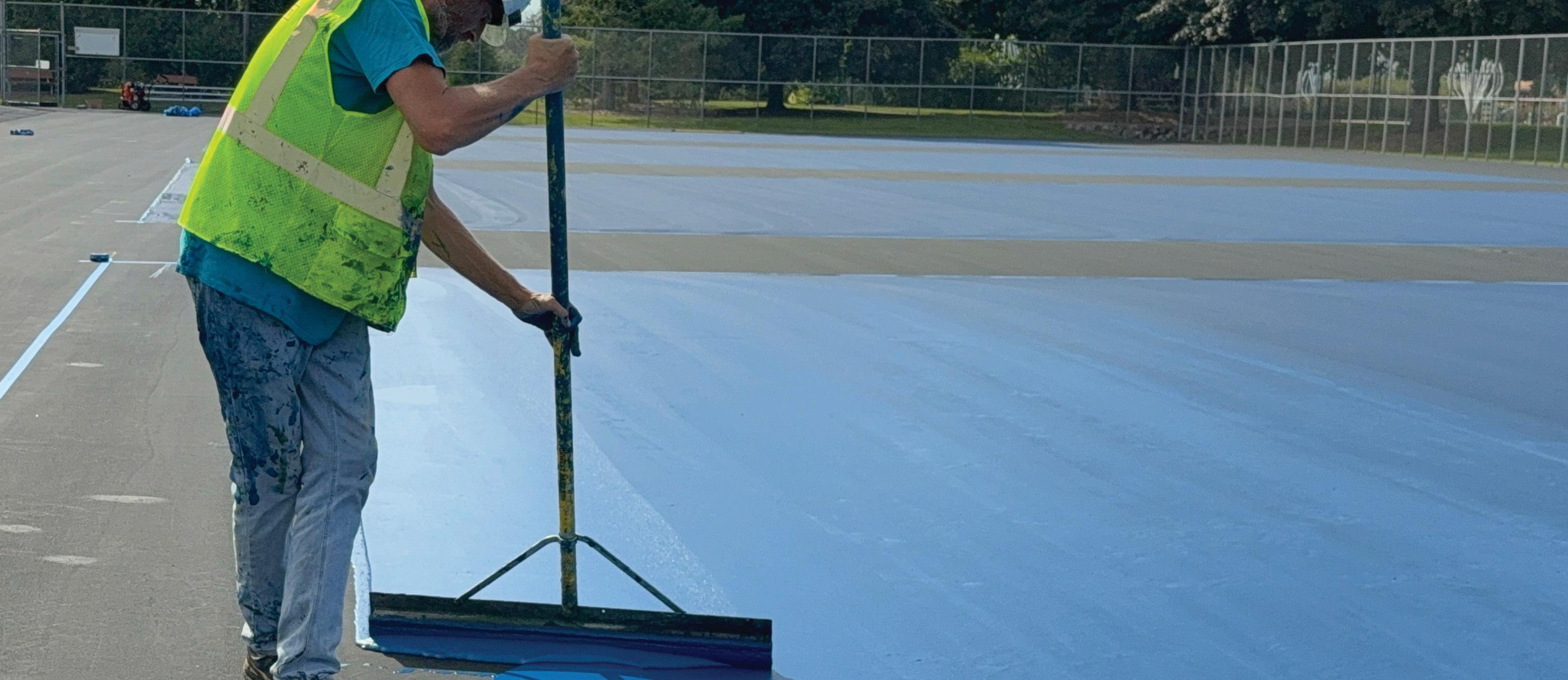
The craze shows no signs of dying down.


PPICKLEBALL PAVEMENTS: Opportunity Contractors Can’t Ignore

ickleball was not what I set out to write about for this issue. No, it came up to me at the IGNITE Construction Summit and told me about the boom. Or, rather, Ryan Laughlin, President and CEO of PLM, did. I was aware of pickleball, but I had no idea that it had transformed into an economic driving force to be reckoned with.
At first glance, sports surfacing can look deceptively familiar to asphalt and pavement maintenance contractors.
The work still starts with a base. It still involves surface preparation, crack repair, coatings, and striping. And in many cases, it involves the same customers contractors already serve: municipalities, schools, HOAs, park districts, and even the odd individual residential request.
But as I learned through my conversation with the team behind the newly launched American Sports Construction, sports surfacing is not just a mere add-on service. It is a specialized market that rewards contractors who understand precision, patience, and process, but it can be punishing for those contractors who try to rush it or treat it like a simple afterthought.
Across the country, pavement contractors are discovering that the same
fundamentals they apply to parking lots, roadways, and athletic surfaces can open the door to a rapidly growing market: sports surfacing, and most notably, pickleball courts. For contractors willing to slow down and learn the process, pickleball courts represent a real opportunity.
FROM HUMBLE CURIOSITY TO STAGGERING BACKLOG
I met Mike Blaney when he was working for Thom Eosso and Eosso Bros. Paving (2024 Pavement Contractor of the Year), and now is vice president of American Sports Construction. Not only could he fully pull off wearing the hell out of a cowboy hat while living in New Jersey, but he was also bringing in so much business through this sector, they decided to spin it off.
“We sort of got into it at the beginning of the rise,” Blaney said. “It was becoming big, and we saw the opportunity here in New Jersey… everyone was having to play.”
What began as court conversions for HOAs quickly expanded.
“All of a sudden, all the parks needed them,” Blaney recalled. “There were just lines at the gates waiting. Park systems are eliminating tennis courts, old splash pads, roller hockey rinks, and putting in pickleball.”
That demand has not slowed. Ryan Laughlin, who first tipped me off to the growing phenomena reiterated the same type of meteoric rise the sector has seen, even outside of the garden state.
“We went from subcontracting twoor-three jobs a year to self-performing twenty jobs in 2025,” Laughlin said. “We did close to $2 million worth of paving and coatings last year.”
Blaney noted that their current backlog includes roughly four times that figure in sport court work under contract.
For pavement contractors considering this market, the good news is that sports courts follow the same lifecycle logic as parking lots. Blaney broke down their work into three verticals, and they sound very familiar to any commercial pavement contractor:
• Brand New Courts
• Reconstructions
• Conversions
When it comes to the first type, it’s just like any other new construction job a paving contractor would do.
“You sometimes start from scratch,” he said. “Grass, dirt, grade it, stone it, pave it. Let it sit for thirty days, then come back and do your coatings and lines.”
The second is reconstruction or conversion. That may involve milling or excavating an existing tennis court or converting a roller hockey rink into

multiple pickleball courts.
“You’re reconstructing that by milling it out or excavating and putting back new blacktop,” Blaney said.
The third, and often the entry point for contractors new to sports surfacing, is maintenance and resurfacing. This is where familiar pavement preservation skills apply.
“You’re treating it like a parking lot,” Laughlin said. “Crack repair, resurfacing, conversion. Same track.”
The key difference is precision. On a court, cracks are not cosmetic. They are performance failures.
“If the crack gets too wide, it’s structural,” Laughlin said. “We’re spending $5 a linear foot to fill a crack with acrylic patch binder. We’re spending $30 a linear foot if it’s structural.”
Blaney emphasized that sport court crack repair is not a one-step process, and requires a more careful eye than the version you’d use on a parking lot.
“It’s a five-step crack repair system with fiberglass mesh,” he said. “If you leave a little air bubble on that mesh, you’re going to see it in the final product.”
That attention to detail is what separates sport surfacing from high-production pavement work. This leads to one of the biggest mindset shifts contractors face in this market: the project pacing.
“This is not a rush job,” Blaney said. “Even on the paving side.”
A typical coating sequence includes multiple coats of acrylic resurfacer, interior color, exterior color, and striping. Dry time between each step is critical.
“You’re not turning around these courts in a day,” Laughlin said.
And there is no shortcut on application.
“It’s actually just a cut-off squeegee,” Blaney said. “That’s the only way to apply it.”
Striping is handmasked. Colors are rolled by hand. Anti-bleed agents are used to keep lines crisp. Every
imperfection telegraphs through the finished surface, and when clients pay a premium, the finished result has to reflect that.
THE EQUIPMENT IS FAMILIAR. THE PRECISION IS NOT.
Despite the specialized finish, most contractors already own the core equipment required to build the courts themselves. Any quality paver can do the work.
“You could use anything from a LeeBoy to a Weiler,” Laughlin said. “It’s all about access.”
Fence panels are temporarily removed. Small rollers and vibratory plates are used for compaction. Cleaning and surface prep are critical.
“The power washing and cleaning is huge,” Laughlin said. “It’s got to be spotless.”
For contractors worried about new capital investment, coatings require little more than drums, mixers, squeegees, and disciplined crews. A follow-up article is in the works with the companies that supply the surface coatings, but it’s important to have a conversation with yours before you place an order.
WHO’S BUYING COURTS?
HOAs remain a dominant market, but they are far from the only one.
“Parks and schools are [also big buyers],” Laughlin said.
Beyond that, demand is expanding into unexpected places: bars, breweries,
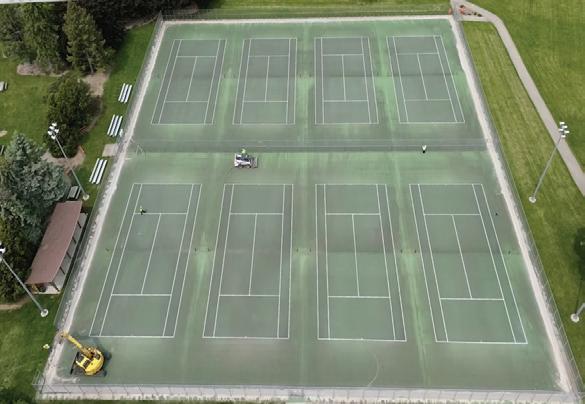
resorts, hotels, country clubs, and even some private developments.
“There are pickleball leagues now,” Laughlin said. “People take this very seriously.”
That seriousness is exactly why quality matters.
“If that court starts peeling up, you’re going to have an unhappy customer,” Blaney said.
For contractors, sports surfacing is not just new revenue, buy a new conversation oppotunity.
“In an industry where asphalt isn’t a sexy product, this pops,” Laughlin said. “It’s an explosion of color. It’s customizable.”
That visual impact gives contractors a reason to re-engage existing customers with something new, while also creating internal pride for crews assigned to the work.
“I want you to be the artist that builds this,” Laughlin said.
Pickleball participation continues to grow nationwide, and supply is struggling to keep up.
“It’s not a saturated market,” Laughlin said. “It’s an opportunity.”
For pavement contractors willing to invest in training, patience, and process, sports surfacing is not a side hustle. It is a legitimate expansion lane built on familiar fundamentals.
As Blaney put it, “You just have to slow down and do it right the first time.” ■
By Brandon Noel, Editor-in-Chief
››Closing The GAP
Cleaning, Crack Sealing, And Mastics
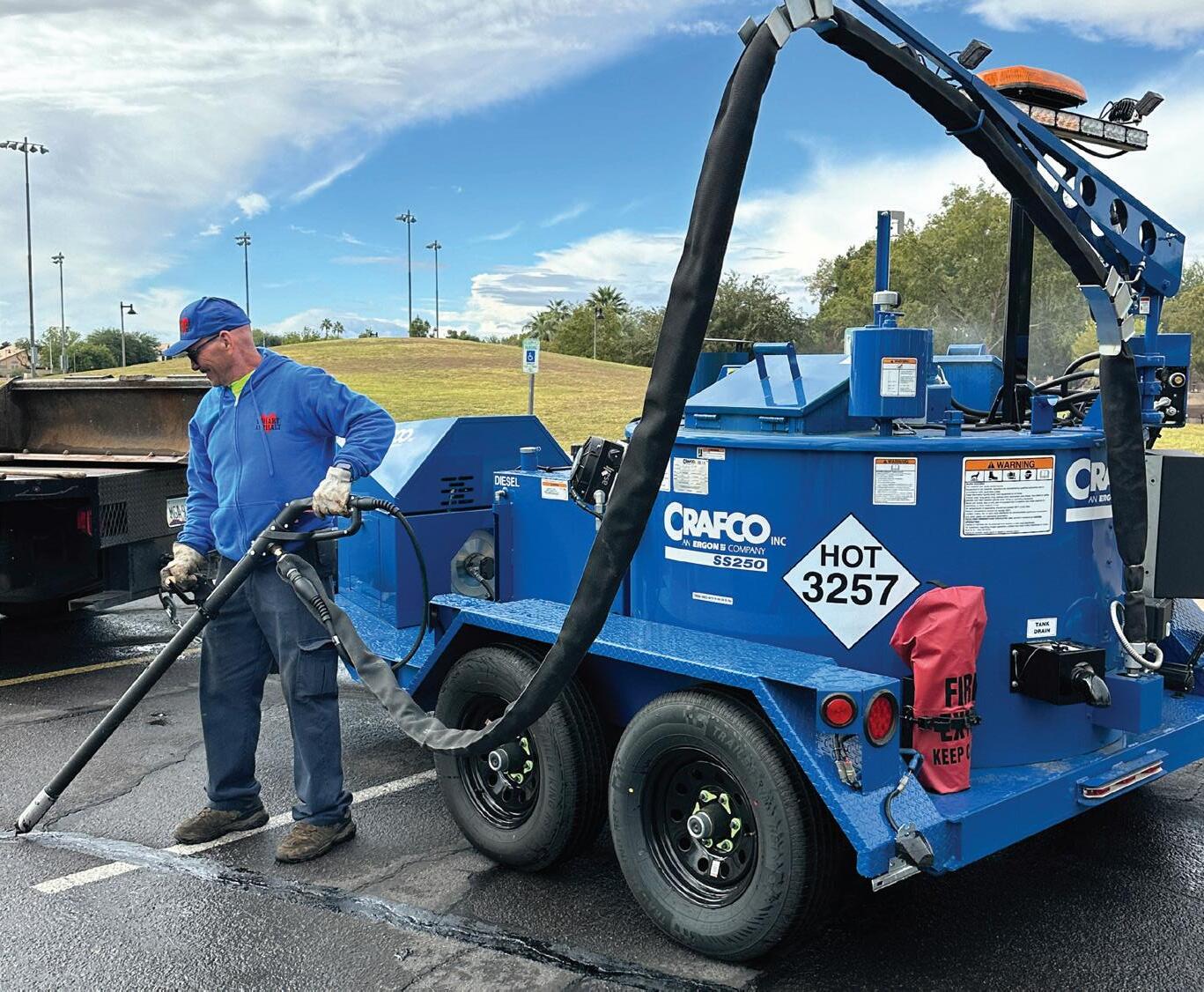
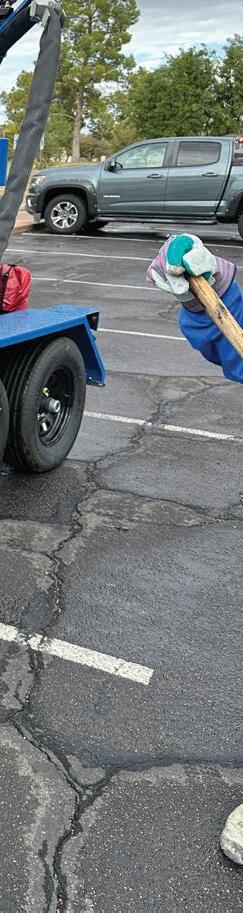
On a rain-soaked jobsite in the Arizona desert, I got hands-on with crack sealing and mastics alongside the DeHart Asphalt crew.
Cracks are unavoidable. In asphalt pavement, they are not a question of if, but when. Temperature swings, traffic loading, oxidation, and subgrade weakness or movement all conspire over time to pull a surface apart, one fracture at a time. What separates a pavement that survives from one that fails early is not whether cracks appear, but how quickly and how correctly they are addressed.
For contractors like DeHart Asphalt, crack sealing is not a secondary service or a filler between paving jobs. It is foundational work. It is preservation in its most direct form. And it is a discipline that demands precision, patience, and equipment that performs exactly as expected in the field.
This is especially true when the elements come together to work against you. Such was the case when I visited Robert Bonura and his family in Chandler, AZ, to get some hands on training with their custom blue Crafco machines. It figured that the first time I travel to the desert, it would pour rain while I’m there. Despite that, they still did a great job showing me the ropes, as they trained me in the two ways they deal with asphalt cracks: Crack filler and mastics.
THE FIRST FAILURE POINT
The city of Phoenix, AZ, and the surrounding communities, like Scottsdale or Chandler, have seen a recent shift in the pavement maintenance industry landscape over the last couple of years. It looks a lot different now than it did back when DeHart first opened their doors. More and more of the local pavement contractors have sold to private equity firms, who roll up these business into a larger packaged asset, which they usually hold for a varying length of time, until it’s determined the asset has reached maturity, at which time it is
sold off to someone else.
This process isn’t unique to Phoenix or Arizona, no, it’s probably been happening in your area too. While not all private equity firms are created equal, nor do they all operate in the same manner, Bonura explained how it has changed the landscape for those who remain independent. Those who want to keep working for themselves are often forced into situations where they are working at extremely low margins, or risk being completely priced out of a market.
To push back against this trend, the DeHart Asphalt team hangs their hat on their ability to treat their longtime local customers with the sort of person-to-person touch that is harder for larger corporately controlled entities to maintain. While that’s not impossible, it helps when, like Bonura and his family, they are invested not only in the work itself but in the community – because it’s their community.
However, despite all this adversity, they get up each day and put their heart and soul into their work. I saw it firsthand as they gave me my first lessons in
Kristen Tetrault







how to deal with asphalt cracking in all shapes and sizes. Because cracks do not just appear all at once, overnight. They begin as small hairlines, then widen with time and wear, and left untreated, they become pathways for water intrusion, accelerating base failure and eventually leading to potholes, rutting, and full-depth distress.
As we crouched over one of these cracks in a small lot connected to a nearby metro-park, Bonura explained to me, “Once water gets in there, you’re not fixing just the surface anymore. You’re fixing everything underneath it.”


me to see how the pros overcome these problems to help their customers even when the weather is against them.

As a tight knit, family owned and operated crew, this reality is what has driven DeHart’s approaches pavement maintenance. For their customers, they are there to identify this type of damage early-on, and ensure that their customer’s assets remain protected from these types of intrusions. The first failure is only the beginning.
“It’s easy to look at a crack and think it’s minor,” Bonura said. “But we’ve all seen what happens when those get ignored for two or three seasons.”
THE PROCESS: DEALING WITH ADVERSE CONDITIONS

This provided me with, perhaps, my favorite part of the whole trip, which was getting to bust out the Crafco Heat Lance. Usually, when I’m out learning a new part of the industry, I’m kind of the only one excited by these mundane activities for the contractors. But when the Heat Lance came out, Bonura’s father-in-law Leonard had the biggest smile on his face since in the high desert, there’s not often occasion to deploy it.


One of the biggest lessons I learned from my time on the DeHart jobsite was that effective crack sealing is not simply a matter of pouring material into a void. That might seem obvious to the well acquainted with the process, and, while I assumed there was more involved, I was impressed with the level of detail they brought to it. It is a sequence of steps that must be executed consistently to ensure the material bonds fully and does its job.
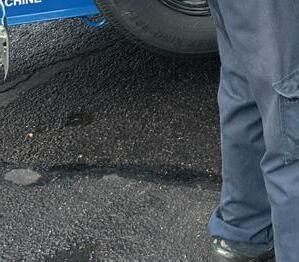
Preparation comes first. Cracks must be cleaned thoroughly, removing debris, vegetation and moisture. Routing may be required depending on crack width and movement. Only then does material application begin. On the day I trained with them, we faced some additional challenges because of the deluge of rain all morning. However, this did allow

a narrow working range, and delivered to the crack at the correct viscosity.
“If that material isn’t at the right temperature, everything goes sideways,” Bonura explained. “Too cold and it won’t flow. Too hot and you’re burning it.”

We targeted one of the longer cracks in the parking lot, less than an inch wide in most places, and I started going over it with the Heat Lance. It’s 2,500+ degree temps and 3,000 feet per second air speeds instantly turned the blacktop from a slick wet sheen, to the matte dry appearance we needed. When I assumed we’d start pouring in the crack filler, Bonura surprised me again.
“Right now, we only know for sure the outside of the crack is dry,” he said. “There could be wet dirt or plants down where we can’t see them. If we put down the crack fill now, it might just pull right off when we’re done.”
That’s when we broke out the Crack Vac, which he explained was additionally important since they have to abide by some strict dust suppression policies in their area. The Crack Vac, also from Crafco, is exactly what you imagine it is. A high pressure cleaning device that pushes in compressed air to loosen any debris, and combines it with a powerful vacuum head that collects the dislodged particulates.


This is where equipment performance becomes inseparable from workmanship. For crack sealing and mastic application, uneven heat is the enemy. Burnt material loses elasticity. Underheated material fails to bond. Either outcome compromises performance. Prior to prepping the crack, Bonura walked me through the process.


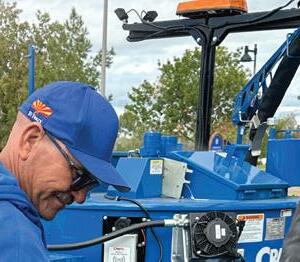
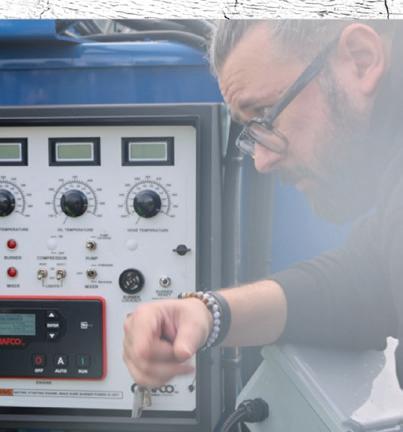
“Most mornings I start it up about an hour and a half before we are due on the jobsite,” he told me, pointing to the control panel. On this newer model, a lot of the warm-up process is automated, but knowing that Robert had decades of experience I was curious what the older models were like. “It used to be just an on-switch, you’d kick it on, wait for it to warm up a bit before turning on the pump because it would bind up – same with the agitator. You could blow it. We had a scenario where that happened. These new models are great because it’s all automated.”
Truthfully, those types of options are safety related features. They not only protect the machine, but they protect


WHY CONSISTENCY IN HEAT CHANGES EVERYTHING
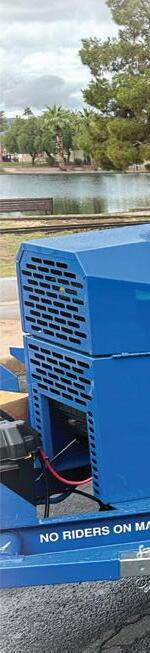
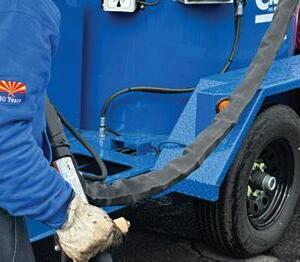
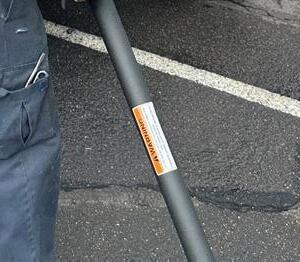
DeHart’s crew uses a Crafco Super Shot 125D with the flexible boom arm that keeps the material hose out the way and the weight off anyone’s shoulder. Bonura emphasized that temperature control is one of the most critical variables. Crack filler must be heated evenly, held within







Brandon Noel









CRACK SEALANT VERSUS MASTIC

the user too. Once everything was heated up, and we’d cleaned the crack I got my first shot using the hose while the DeHart crew followed behind me with their squeegees. If you’d like to see how I did, scan the QR code in this article to watch the video!

onboard camera. That helped me line it up with the crack we intended to repair, and made my life so much easier, because I am not the greatest or most experienced Skid Steer operator in the world.
After Leonard got to try it out first, I was excited to try it out for myself, but I had never seen mastics first-hand, and wasn’t sure what exactly makes the material all that different from crack filler. I knew it had aggregate in it, but it’s not hot mix asphalt with large stone, but something else entirely. It’s in its own category. It can be a bridge between permanent, long-term asphalt rehabilitation and emergency repair work.

Anyone who’s walked a parking lot knows that not all cracks are created equal. Narrow, working cracks may be well served by traditional crack sealant. Wider, more distressed areas are often better addressed by mastic, which incorporates aggregate to provide additional structure and load resistance. DeHart uses both, selecting the treatment based on crack width, movement, and pavement condition.
“Mastic isn’t just sealant with rocks in it,” said Daniel Darling, Western District Manager for Crafco. “It behaves differently. It levels out. It distributes the load.”
Mastic application demands even greater control of material temperature and flow. Improper heating can lead to segregation or poor bonding. Equipment capable of maintaining stable temperatures throughout the system becomes essential. On the day I spent with them, we had a new piece of equipment to try out that I’ve been wanting to see in action. Representatives from Crafco came to the site and let us try out their new skid steer attachment, mastic applicator called the EZ Patcher.

While the aggregate provides a structural matrix, mastic retains its flexibility even after it has hardened. This allows it to expand and contract, moving with the bonded pavement, and preventing any further moisture intrusions.

through in how they sharing with me how they do what they do, and how they do it consistently. Some of that is the tools they use, but it is also in how they carried themselves and how they put pride into their work.
The next day I had the chance to tour Crafco’s manufacturing facility where they build all their hardware. From sealcoat tanks to mastic melters and applicators, everything is welded, painted, tested, and validated before ever reaching a contractor’s yard.

Once we had it hooked up to the skid steer, from inside the cabin I could see exactly where the applicator was positioned, because it is equipped with a


“This is where we build all of our machines,” said Greg Frantz, the plant and engineer manager. “From start to finish, everything happens here.”
From my seat in the cockpit of the skid steer, I could move forward slowly, make tiny adjustments, and ensure I was covering the large crack equally. Within just a few minutes after I finished, and climbed out of the cabin, the mastic I’d put down wasn’t even tacky when I touched it with the bottom of my shoe. It set up much quicker than I imagined it would at volume, especially given the higher than usual moisture in the air from the heavy morning rain storms.
REFLECTIONS IN THE DESERT
My time with Robert Bonura, his family, and the entire DeHart Asphalt crew was short, but it had an outsized impact on me. A lot of contractors whom I visit are in a family business. That wasn’t new, but the way I watched them all interact with one another while doing the work was actually quite something to behold. When I had the crack seal wand in my hands, and I was trying my best to shoot the material where it was needed, they danced around me without a word.
I could tell that, while they work together every day, and, of course, no family is perfect, that they enjoy doing it together. That togetherness came


The facility is not an impersonal, automated assembly line. Instead, it reflects a deliberate, controlled manufacturing process. Approximately 450 to 500 machines are built each year, with each unit assembled, painted, tested, and run under load before shipment all across the world.
“We’re not building thousands of units,” Frantz said. “We’re building tens at a time, and that lets us control quality at every stage.”
Near the end of the tour we came to the work station for a mechanic named Chris whom, at the time, was just three months shy of celebrating twenty-six years at the company. He grew up nearby, was in the Marine Corps for thirteen years, and when I walked into the supply closet he had retrofitted into his “office” I told him that it smelled just like my grand-dad’s garage. I asked him what he would say the generation coming up these days into the world and workforce. “Learn knew things,” he said, explaining how he found and then followed his passion. He didn’t know what it was right away, but he stayed open, and said yes to opportunities as they came to him.
“If you’re not happy where you’re at, or doing what you’re doing, those will be the stepping stones to get you where to want to be. To find your passion. But [sometimes] you got to do a lot of different things. Every day I get to wake up and do my passion.” ■

Kristen Tetrault



RAISING THE STANDARD
Since its introduction, the Weiler P385 has set the standard for commercial pavers. The P385C raises that standard.



Increase to 120 hp with the Cat® C3.6 Tier 4F/Stage V engine.

Variable speed and reversible conveyors and augers and a 25% increase in tunnel height provide optimal material output.


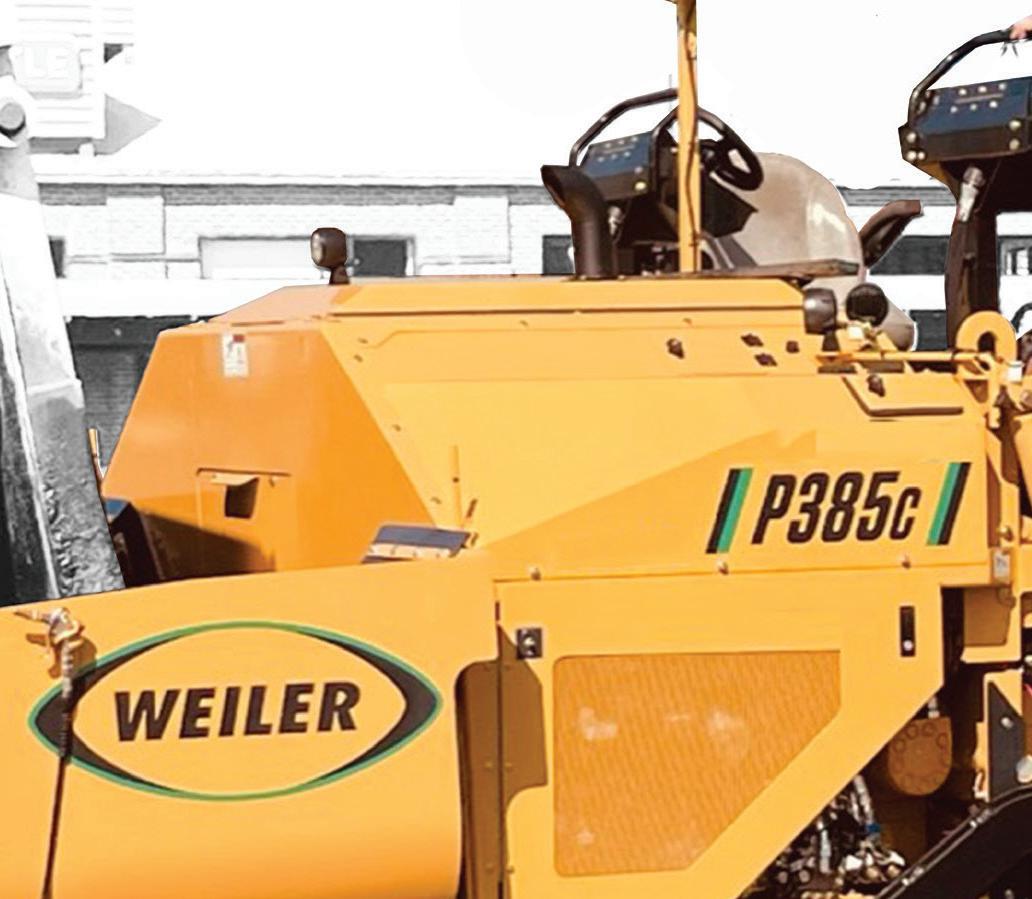
Modular conveyor drive and sealed chain case increase feeder system reliability and life.
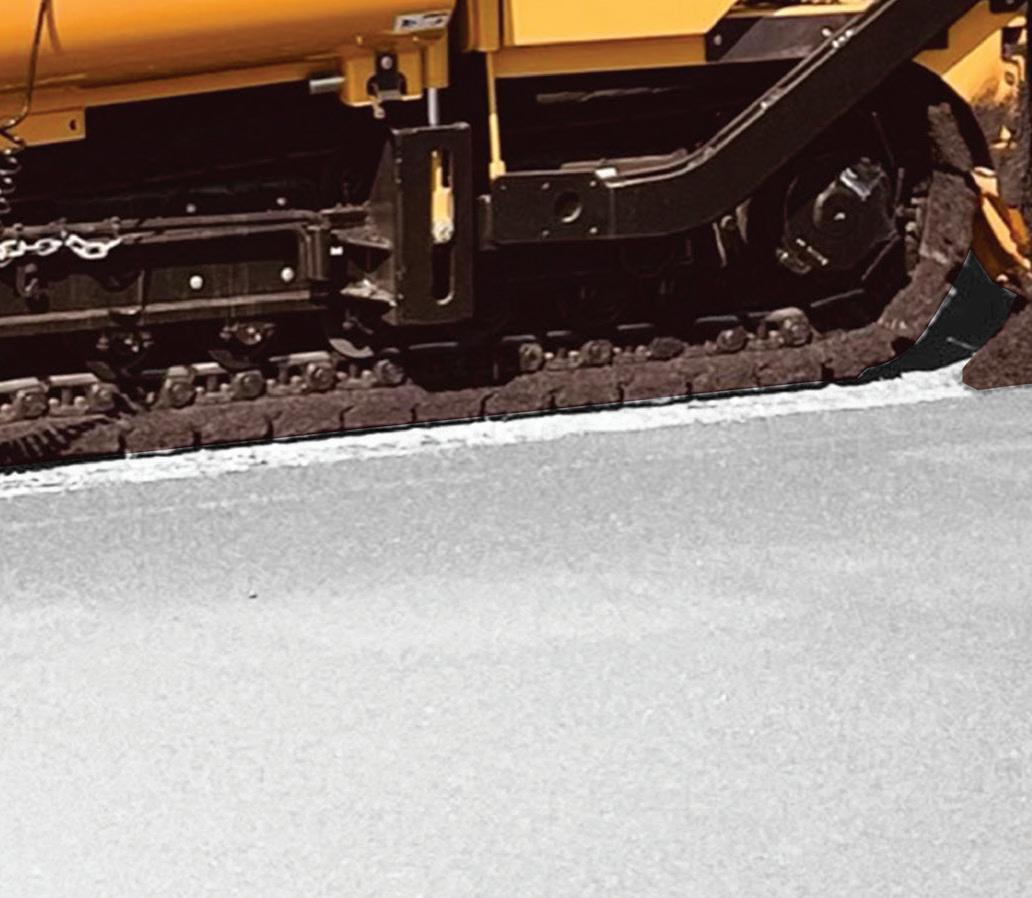


Enhanced heat system performance with direct-drive hydraulic generator and elimination of GFCI breakers.



In Pursuit Of Better: Why Leaders Must Invest in Themselves First
What happens when the leader is running on empty?
Pavement conferences across our industry have always done a great job teaching us how to build better businesses. We talk production, margins, equipment, crews, estimating, systems, and financials—and we should. Ignoring those things would be irresponsible. But here’s a question we don’t ask often enough...
WHEN THE LEADER IS RUNNING ON EMPTY
This column isn’t just for owners or CEOs. Everyone reading this has influence and everyone can get 1% better.
In 2016, I heard a message from Albert Tate at the Global Leadership Summit that completely reframed how I live and lead. We’re often taught to give 115%, leave it all on the field, and pour everything we have into the business. That sounds admirable—until you realize that when you truly “leave it all on the field,” you go home with nothing left. Nothing left for your family. Nothing left for yourself.
That message hit me hard because it described exactly what I was doing. At the time, I was giving everything to my business and to the organizations I was involved in. On paper, I was doing all the right things at home. I was at every game, every recital, every school event. I showed up, but I wasn’t fully there.
My body was present, but my mind was still at work. I was exhausted, distracted, and running on fumes. My family was getting whatever energy was left over—and some days, there wasn’t much. That was a wake-up call.
I realized that being present isn’t just about attendance. It’s about capacity.
And I had allowed my capacity to be drained by pouring everything outward and almost nothing inward. I made a conscious decision to change.
Not overnight, and not perfectly— but intentionally. I started treating my own health, discipline, and growth with the same seriousness I gave my business. Because leadership doesn’t end when you leave the office, and the people who matter most deserve your best, not your leftovers.
If it’s negligent to ignore equipment maintenance or the financial side of the business, what is it when we ignore our health—physical, mental, and emotional? This magazine has long helped leaders grow stronger businesses. My goal with this column is to focus on something equally important: helping leaders become stronger people.
Over the next few articles, we’re going to talk about personal disciplines that make a real difference. Here are four that were game changers for me.
Discipline #1: Who Is Building Into You?
I start most mornings with a small circle of men. We train together, push ourselves physically, then circle up for coffee and talk openly about life and struggles.
There are no titles and no posturing—just honesty, accountability, and encouragement. “Iron sharpens Iron” is not a catchphrase, its Biblical, and it’s how the best leaders grow stronger.
You don’t need a massive group or formal program. But you do need someone who can ask you hard questions, challenge your blind spots, and remind you of who you’ve committed
to becoming. Isolation weakens leaders. Community strengthens them.
Action Step: Who can you circle up with? Identify one or two people who will challenge you, encourage you, and tell you the truth. It doesn’t need to be formal—just intentional. Commit to showing up consistently.
Discipline #2: What Are You Putting Into Your Body?
Fuel matters. Just like you wouldn’t run a paver on bad diesel and expect quality results, you can’t expect consistent leadership performance while neglecting your body.
For me, that looks like planning my lunches ahead of time—simple, repetitive, disciplined. Venison, rice, and green beans almost every day. Not because some “influencer” said to, but because it’s clean fuel, removes decision fatigue, and helps me stay consistent.
This isn’t about perfection or extremes. It’s about intentionality. Energy, focus, patience, and resilience all start with how you fuel yourself.
Action Step: Take an honest look at what you’re eating this week. Don’t overhaul everything—make one simple tweak. Pack lunch. Cut liquid calories. Add more protein. Small changes compound.
Discipline #3: What Are You Putting Into Your Mind?
We live in a media-saturated world. TV, podcasts, email, social media, texts— voices are constantly competing for our attention. What we consume doesn’t just inform us; it shapes us.
Protecting your inputs matters. What you read. What you listen to. What you scroll past—or stop on, can change your mind, for the good or the bad. What flows into your mind eventually shows up in your leadership.
For me, that means being intentional with reading, limiting noise, and anchoring my day with Scripture. A year-long daily Bible reading plan keeps it point-and-shoot and helps steady my mind before the chaos of the day begins.
Action Step: Quiet the noise. Replace social media scrolling with reading a few pages a day from a leadership book that sharpens how you think. Try “Atomic Habits” or “Win the Day”
Discipline #4: Stay Ready, Not Get Ready!
One of the tools I’ve found helpful is a simple daily journal—something that
helps me track habits, reflect honestly, and stay prepared instead of reactive.
Leaders often wait until pressure hits to make changes. But when leaders are put through the fire—and they will be—it doesn’t create character. It reveals it. You don’t come out the same. You come out stronger or weaker.
Action Step: Buy a leadership or personal growth journal or planner this week. My circle uses the Stay Ready Journal , but the brand matters less than the habit. Find what works for you—and start using it daily. Everyone wins when a leader gets better. Your team wins. Your family wins. Your customers win. And over time, our entire industry wins.
Each month, we’ll build on these disciplines—going deeper and sharing the tools, habits, books, and challenges that help leaders keep getting better.
Because all the success and money in the world mean very little if we lose sight of what really matters.
THIS MONTH’S CHALLENGE
Before the next issue hits your mailbox, focus on just four simple tweaks:
• Circle Up: Identify one or two people who will challenge you, encourage you, and sharpen you and commit to showing up consistently.
• Fuel Better: Make one intentional change to what you’re eating this week.
• Quiet the Noise: Replace social media scrolling with reading three pages a day from a leadership book.
• Stay Ready: Buy a leadership or personal growth journal and start using it daily. ■
by Todd Eichholz, CEO at A&A Paving | Founder of The Pursuit Consulting Co.


HOT-APPLIED JOINT SEALANTS




























FROM THE OWNER’S DESK




















LSimpler Estimates, Faster Payments: A Contractor’s Guide to Winning More Work
Get A Better Gameplan.
et’s face it — you may be one of the best asphalt professionals around, but are you good at business? Are you good at customer service? And most importantly, do you make it easy for people to do business with you?
DON’T ITEMIZE ADMINISTRATIVE COSTS
Let’s first consider administrative costs such as fuel surcharges, mobilization fees, cleaning fees, environmental fees, and credit card fees etc. I’m not saying these costs aren’t real – they are and you should certainly know what all these types of expenses are for your company.
Over the years I’ve witnessed numerous contractors who delineate these costs as line items in a bid -- either in a misguided effort at transparency or an effort to justify the final bid number. From the customer’s perspective, itemizing these expenses feels like death by a thousand cuts. Pavement work already feels expensive to many clients; don’t make it feel sneaky or confusing.
Instead, these types of administrative expenses should be considered part of the overhead that’s included in every estimate. Roll those costs into your pricing and present one number. These expenses are simply the cost of doing business.
SIMPLIFY SERVICE OPTIONS
The second way to make estimates easier to understand is to reduce the options offered. This is especially true in pavement maintenance, where customers generally don’t want to decipher the

difference between crack filling versus crack sealing, sealcoat types, oil spot priming, or mix designs.
Admittedly this will vary depending on the customer and customer type (and probably the market). It might not work on commercial projects, for example, where delineation and pricing of each service provided might be required and even recommended. But even in those situations your bid should be as easy to understand as possible. And if you offer options, consider limiting the choices to two options – with all other support work being the same.
I recently received a quote from a window washing company that offered multiple pricing tiers with different discounts based on how often I committed to using them. It became so confusing that I almost walked away. I wasn’t interested in commitments — I just wanted their best price, out the door. I needed to see the quality of their work first.
I’m not suggesting avoiding the “good, better, best” approach many contractors rely on, but if you use that approach to estimating, each of those options should be written cleanly and
easy to understand and easy to compare. And maybe not all your customers need or want three options.
To reference my window washing experience, don’t offer three different approaches to the job, each with an early-signing discount, plus additional discounts options depending on whether the client commits to a one- two- or three-year plan. It’s just too much!
Property managers and HOA boards, in particular, value simplicity. They manage multiple properties, multiple vendors, tight timelines, and strict budgets. The contractor who provides a clean proposal, a clear scope, and a straightforward price often wins — even if they aren’t the lowest bidder
On a residential driveway, consider offering one clear price that includes crack sealing and sealcoating instead of breaking everything into multiple line items. (You can list everything you’ll do – just don’t price each service as a line item.)
And if you want to get that residential client for another year or more –track that in your system and reach out to them periodically. Don’t ask them to make that commitment up front.
AdobeStock/Dusan Petkovic













The more complicated your bid, the greater the chance of frustration. And frustrated customers hesitate, delay decisions, or walk away. The goal is to ease the buying process by removing confusion.
MAKE GETTING PAID EASY, TOO
Once the job is complete, send the invoice promptly so the customer can pay you. It’s unbelievable how many contractors sit on invoices for weeks or even months. That doesn’t help you or your customer. They’re expecting a bill – and have made budgetary plans to pay it – and you need the cash flow. Prompt invoicing shortens payment cycles, reduces disputes, and keeps momentum during the busy season.
If you accept credit cards, treat the processing fee as a cost of doing business. Is Apple Pay an option for you? What
about Zelle or Venmo? PayPal? These all aren’t options for every contractor or for every job but offering them to customers does make the payment part of the transaction easier for your customer. And it makes it more likely you’re going to get paid more quickly.
Here’s a real-world example: About 10 years ago a friend hired a snow removal service to plow his driveway and sidewalks every time snow reached 2 inches. When he first hired the service, the crew would plow and he would receive a paper invoice in the mail about 10 days later. He wrote a check and mailed it back when he got around to it – usually when he paid his other bills., whenever that happened.
After a few years the snow removal company started sending invoices via email, which he was asked to print and return with payment. So, one step forward, one step back.
But this year – eureka! – invoices arrived via email within 24 hours and with an Apple Pay option. My friend pays as soon as he receives the invoice, and the contractor has his payment in less than 48 hours.
Tell me, who is not happier in that situation? That contractor couldn’t make paying his invoice any easier.
In an industry built on timing, follow-through, and reputation, that simplicity and ease of doing business matters more than most contractors realize. After nearly 30 years in this business, I’ve seen it proven over and over again. Customers may forget the exact details of the job, but they will never forget how easy — or how difficult — you were to work with. Keep it simple. It will pay off more than you think. ■
Nick Howell, President of T & N Asphalt Services

SWEEPING ASSOCIATIONS
What Is Your Biggest Power Sweeping Barrier?
Finding and retaining skilled operators stands out as the most significant challenge.
Nancy Terry, Executive Director
SweeperSchool is a comprehensive online learning platform that offers a wide array of programs and courses. These educational resources are the result of years of collaborative effort among NAPSA’s most experienced and respected industry professionals. Each program and certification path is carefully crafted to provide power sweeping operators and other industry personnel with essential knowledge about the trade, industry standards, and best practices. The ultimate goal is to elevate the level of professionalism across the entire power sweeping field.
CERTIFIED SWEEPER OPERATOR
The CSO certification program offered by NAPSA is a cornerstone of professional development in the power sweeping industry. The program offers specializations tailored to three key environments: municipal areas, parking lots, and construction sites.
• Sweeper basics and troubleshooting techniques: Fundamental knowledge about sweeper mechanics and how to address common issues in the field.
• Health issues: Emphasizes the importance of operator well-being.
• Pre-start procedures: Ensures operators can properly prepare their equipment.
• Safe sweeper operation guidelines: Outlines best practices for operating sweepers safely and efficiently.
• Accident procedures and protocols: Handling unexpected situations professionally and safely.
• Paperwork and recordkeeping best practices: Trains operators to maintain accurate documentation.
The certification program is tailored to specific work environments, recognizing the unique challenges each presents:
• The parking lot credential: Covers 51 comprehensive lessons.
• The construction credential is even more detailed, spanning 68 in-depth lessons.
• Municipal sweeping currently has 27 lessons, with more being added. By investing in operator education and certification, companies can overcome their biggest barrier. ■

The North American Power Sweeping Association (NAPSA) is a nonprofit association made up of 200+ contract sweepers, service providers and sweeping equipment dealers, manufacturers and suppliers. NAPSA is dedicated to providing beneficial support to the membership and enhancing services to the sweeping industry. NAPSA is committed to promoting and educating the power sweeping community while enhancing the environment. For more information on NAPSA membership, please visit www.powersweeping.org or call (888) 757-0130.
Striping And Sweeping: Add-on Or Referral?
There’s some definite do’s and dont’s that you should be conscious of.
Ranger Kidwell-Ross, Executive Director
Pavement striping is a service that very much goes ‘hand-in-hand’ with sweeping. To ensure the pavement is clean prior to striping for parking spaces, ADA compliance, etc., it is vitally important that air/vacuumbased sweeping be done beforehand in order to prepare the surface for striping. Mechanical broom units are not suitable since they will leave a residue of dust and other small particles.
Additionally, it can be beneficial for striping and sweeping contractors to work together since parking area sweeping contractors are able to forecast when striping is needed by their customers. The relationship may take one of
several forms: Some choose to establish a mutual business relationship to share leads and referrals. However, many have developed a profit center based upon the amount of business provided to the striping contractor.
Some common costs associated with acquiring new customers in the pavement striping industry include advertising expenses, sales commissions, networking costs, and any promotional materials or events. Experts estimate the typical acquisition cost of a new client to be in the range of 20%.
Hypothetically, a contractor might establish a relationship where they receive a finder’s fee amounting to 15% of the striping contract. The striping contractor then makes 5% more, since the business is brought to them, and the striping client pays the same at they normally would.
If you develop that sort of

relationship, though, be sure to check the credentials and ratings of the striper before entering into business with them. One ‘sell’ to your customers is that you have pre-qualified the contractor you use and, since your company is a large overall client for the striping contractor, they are even more likely to do an excellent job. Alternatively, striping machines cost much less than sweepers and the profit percentage is often higher, although pavement striping is done only occasionally. ■ WSA contributor Ranger Kidwell-Ross has been providing information to the power sweeping industry since 1988. He is editor of WorldSweeper.com, an information resource for power sweeping, as well as founder and executive director of the World Sweeping Association. For more information about WSA visit www.WorldSweepingPros.org or contact Kidwell-Ross at director@worldsweepingpros.org.
Community Is The Most Underrated Tool In The Asphalt Industry
All the failures, burnout, and breakthroughs that come with owning an asphalt company, and why community matters more than any piece of equipment.
Do you ever drive past a competing contractor and just laugh because you can see how awful their work is going to turn out? Well, if you were driving past me on M-60 in Spring Arbor, MI back in 2020, you would have been laughing at Bart’s Asphalt.
Smoke was billowing out from underneath the infrared machine and my laptop with the flash drive playing How-To Do an Infrared Repair was perched on the hood of my truck. The two guys that were working with me were wide-eyed. We knew without a shadow of a doubt that we were in over our heads. I vividly remember the fear creeping into my mind watching this process unfold. I was an accountant by trade and had just quit my full-time job in tax compliance to do…. this? For the rest of my life? Maybe everyone in my life was right, maybe this fantasy of starting up my own business to work for myself was just going to fall flat on its face before it even started.
By the time the machine shut off at the ten-minute mark of heating, I was already envisioning how embarrassing it was going to be to have to go back into my old job and ask for it back.
The three of us eventually worked up

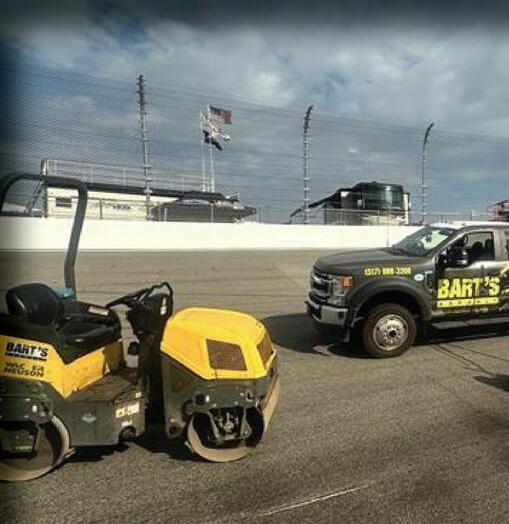


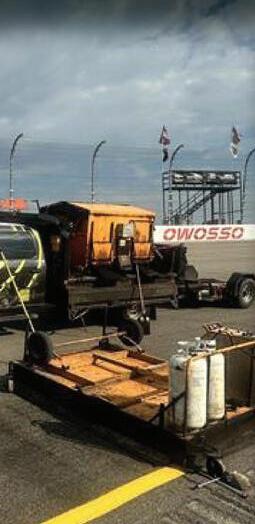


the courage to move the machine off of the repair and began to get to work on raking out the asphalt, adding the oils back in, adding fresh hot mix, and trying our best to compact it without it looking like an unsupervised child was left with a plate compactor.
FAILURE TO LAUNCH?
While that repair turned out pretty horrific, I remember how quickly that fear and doubt vanished from my body and how it turned to excitement because we had another ten or so repairs to complete on that property.
As that first week progressed, that excitement continued to grow and my passion for the industry really took root. I had absolutely no clue what was possible with asphalt, what problems I could help customers solve, absolutely no sense of up or down. Simply put, I looked at this industry as a blue ocean. Anything I wanted it to be, I could do it.
Now with six years of experience under my belt, I still feel that way. I wake up every morning and I see limitless possibilities. Sure, my guys put diesel in a DEF tank and got the roller
stuck under a car port this year, but asphalt is truly such a beautiful industry to be a part of.
We get to wake up and have the opportunity to control what we can control, the opportunity to provide great paying jobs within our community, to solve problems for customers that think the rock hard gray stuff is asphalt, but most importantly it provides us a platform to provide leadership and influence to our employees, who then go out and can positively impact their families, who then go on to positively impact our communities.
A couple years into this adventure, I realized that asphalt is actually an insanely difficult industry. The allure and promise of working for myself and taking time off when I wanted to, running one of those sweet Weiler 385’s with a new quad-axle, and having a lethal team of employees that always had my back seemed like it may as well have been a thousand light years away. Over time, that excitement definitely started fading. The days grew longer. Sometimes you miss so many obligations that it tears away friendships and
Kyle Bartholomew

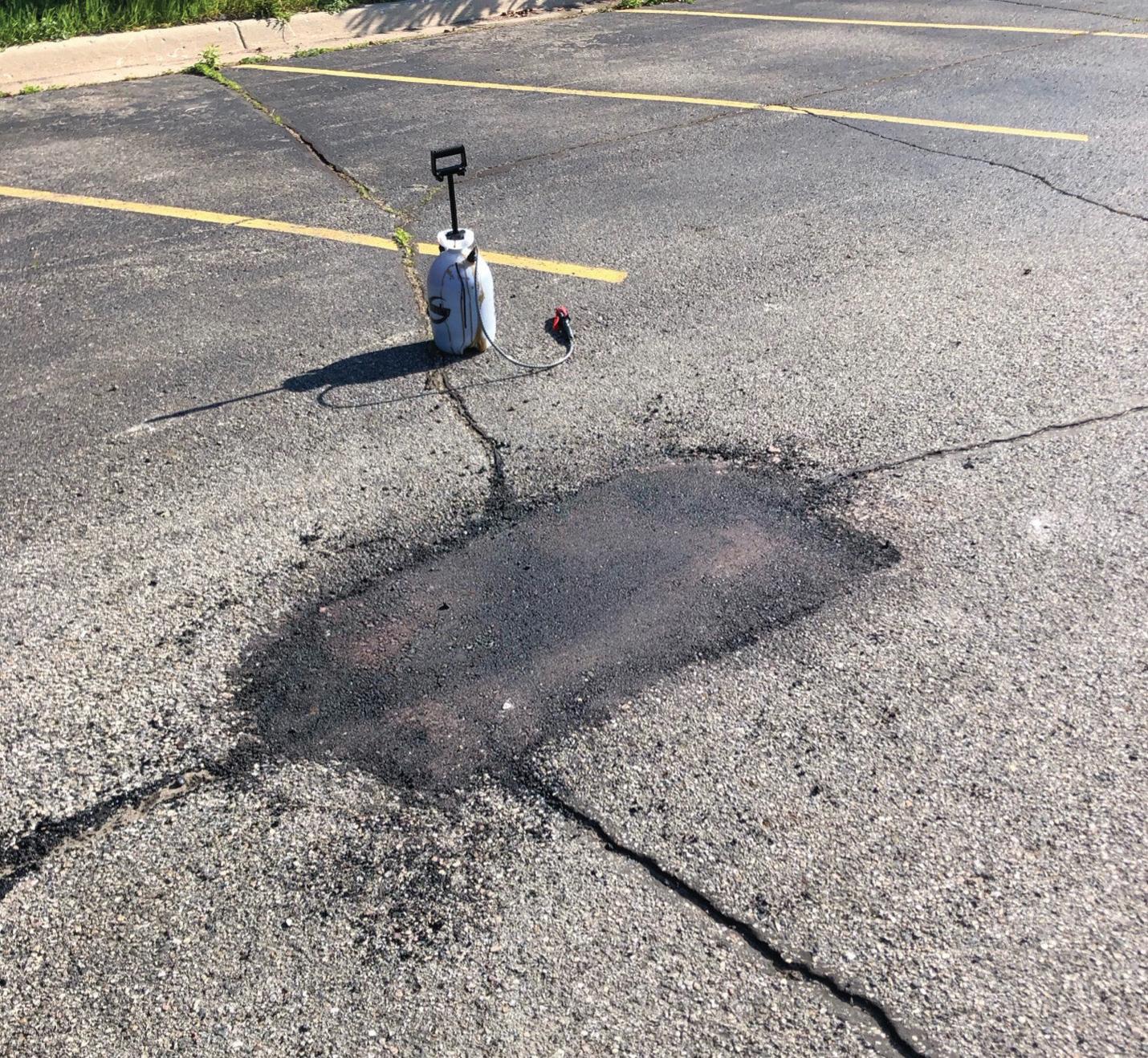

family. I wondered, how can my competition drive by in their brand-new F-250s laughing at us? How do I get this excitement to come back every day? I desperately wanted to be able to feel like Bart’s Asphalt is going to retire me sooner than later so that I could just hit the golf course and turn my phone off.
A NEW LIFELINE
Fast forward to the IGNITE Construction Summit in 2024 out in Palm Springs. I was at an incredibly dark point in my journey. I had herniated a disc in my back from picking up a 30-pound doodle and was useless physically to help with my crews. I was going through a divorce as our interests and goals in life had drifted so far apart. I was flat out exhausted, albeit still passionate about the industry.
From the moment the golf outing started at IGNITE, I just remember this feeling of being in a brotherhood with everyone else that was there. It was such an incredibly intimate conference where we were really forced to talk with the other people there, even if you really wanted to just go swim in that beautiful pool.
I had the privilege of playing that round of golf with Jacob and Chad Buck from Buck Brothers. During the conference sessions, I met this LinkedIn guru, Todd Eicholz, who I had self admittedly been lurking in his posts for a while. And I developed an awesome relationship with Ryan Austin from BSI Paving. And literally countless others from around the country.
Once I got to talking with these guys whom, to me, seemed wildly successful, I thought to myself: “Holy crap, they almost lost their company from some stupid financial decisions?” “Holy crap, they had an employee put diesel in a DEF tank too?” “They had…they had…they had…”
It was more than therapeutic. I found a community of people with the same stupid struggles that I had every day.
Let’s face it, owning and operating an asphalt company is tough. You may not be able to count on the plant being open, but you can absolutely count on this industry trying to eat you up and spit you out.
While it was nothing more than a conversation to some of these guys, it was everything to me. Unsurprisingly, these guys didn’t have the silver bullet to the industry to be successful. But they showed me it starts with an unfathomable amount of consistency, resilience, and, most importantly, community.
GAINING PERSPECTIVE
When you know your purpose and you have the community and support to fall back on, it gives you an immense amount of mental freedom to operate in a way that you can rest your head peacefully at night knowing that you are moving the needle for your family, your employees’ lives, your community, and the asphalt industry.
Thank you to anyone and everyone that I have had the privilege of having a conversation with within this industry and I am beyond excited to continue to shape the asphalt industry in a way that we are all proud of.
You have a story to tell, and, big or small, that will impact someone in this industry. And as someone that has thrived on hearing these stories, I am beyond excited to continue to hear more as the years go on and hopefully, I have the opportunity to hear yours as well. ■
by Kyle Bartholomew, owner, Bart’s Asphalt
Kyle Bartholomew
Kyle Bartholomew




















By Brad Humphrey









Between supply-chain inconsistencies, ongoing government overreach and financial concerns
filling much of senior leader’s discussions, it is important that we strengthen our focus as owners and leaders moving ahead.
Rarely do I write “time period” articles related to what is happening at a single point in history. My written works have normally been more timeless while addressing leadership, executing field planning strategies and the like. But with recent events over the past few years, my engagement with contractors around the world has led me to address some of the more current issues.
No doubt the impact made from COVID-19 is global and it was, and is, devastating. This epidemic also “carpet bombed” leadership, production, safety, quality, etc., like we have never seen before in our industry, leaving some incredibly negative consequences in its wake. Between supply-chain inconsistencies, ongoing government overreach and financial concerns filling much of senior leader’s discussions, it is important that we strengthen our focus as owners and leaders moving ahead.
Financially, contractors must take an honest look at their cash situation. “Cash is king,” as the saying goes, may be more appropriate

Preparing for Future Challenges… NOW!














today than in the past. As interest rates are again moving northward, it is critical that contractors take a second, third and even fourth look at their cash situation, being careful to take borrowed money that will have greater rates than we have seen in many years.
Purchasing equipment may require more evaluation than in prior years. Contractors love their equipment and, like a proud collector of antique cars, it’s easy for many contractors to build a fleet of equipment. It is good for one’s pride to look out over one’s yard and enjoy the line-up of trucks, trailers, and needed pieces of equipment, clean and shining cats, deer, and such.
Leasing equipment may need to be more the norm for contractors, and for more than only financial reasons. At the rate of updates now being provided on equipment, it may make more sense to lease such equipment where software upgrades are most likely covered as part of one’s lease arrangement.
Material costs have sky-rocketed in many parts of the United States and the outlook doesn’t immediately look better, although any significant return to fossil fuel development would provide some relief. But again, at this time it doesn’t look promising. So, what’s a contractor to do? Keep a few things in mind, including:
• Don’t be shy about bringing increased material costs to the attention of your customers. They don’t like it either, but most are more understanding as they too pay more at the pump and grocery store.
Start preparing better when recruiting and interviewing. We’re still seeing way too much hiring just because we’re very short on the bench.
©bannafarsai – stock.adobe.com
• Conduct a potential volume need and negotiate with your material supplier. They may not be able to help as much as in past times but stay at it. Material plants are still a bit more loyal to those who have stuck with them.
• Tighten up your estimating procedures to ascertain that you are bidding more exact what the material use will be. This will require a more accountable documenting on material use on projects. I still see contractors throwing a few extra yards of materials, tons of asphalt, etc. into a bid “just in case.”
Tool purchases have always been a lost leader for contractors between tool breakage, loss, and theft. Most contractors admit they know that they have always had tools break, lost or stolen, but it was just part of the industry. There is some truth to that, but contractors may want to rethink their tool use, storage and security. This isn’t about badgering workers when they break a broom handle or lose a screwdriver, but it is about building more accountability about maintaining and retaining tools. This is a “nickel and dime” cost compared to equipment and worker costs, but this component is still adding up to 2% - 5%, and more for some contractors. This is a needless cost that we can improve. Employee costs continue to be as much or more rise than ever.
With new employee loyalty at perhaps one of the lowest points in many years, contractors are working harder than ever to find the right worker and retain that same worker. I’ve written and spoke on this topic for years, but we are just having more challenges in our industry than we have ever faced. Couple of thoughts for the next few years:
• Start preparing better when recruiting and interviewing. We’re still seeing way too much hiring just because we’re very short on the bench. Be careful about giving in to this. It often creates more problems.
• Pay competitive wages, but more importantly, start training on Day One.
• Start paying retention bonuses, to the new worker, foreman and your crew. It’s the foreman or crew that often run off a new worker. Give them an incentive to work with, develop, and retain the new worker.
• Personally make more trips to follow-up and speak to new workers. My research has shown that the top three reasons why new workers quit early, many after just 30-40 days is because:
1.No one is talking to me
2.No one is training me
3.No one is following up or coaching me
You must be more active and visible in the new worker’s start with you. Create a regular training program for workers that includes tool handling, required work processes, material knowledge and how to be a better team player, improve safety, etc. We are hiring workers who do not know the difference between a Phillips head screwdriver and a wrench. Educate, educate, educate! If any of the recent developments in our industry are an indication of what we are about to see in the next few years, it would be wise to go back and navigate through each of the items spelled out in this article.
No one has a crystal ball, but you would almost have to be blind and deaf to read the tea leaves. Things look extremely challenging moving forward. Tread sure-footed by being honest and quick to address future indicators that might reflect bumps and hurdles ahead. The successful
contractor has always taken an inventory of his approach and then preparing his or her company to take on the future challenges, head on. Being prepared for the worst may help you achieve the best! ■
Brad Humphrey, The Contractor’s Best Friend