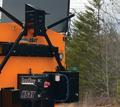
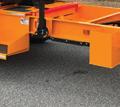
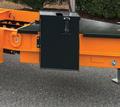
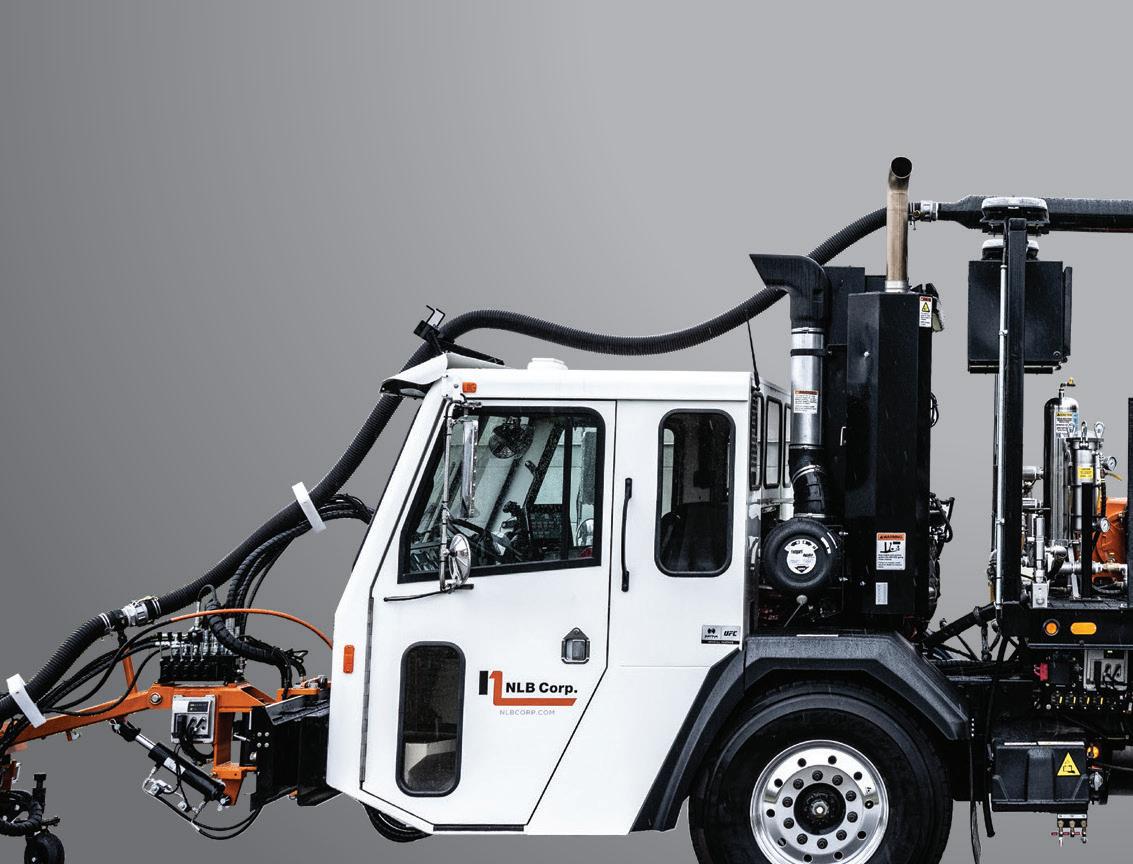
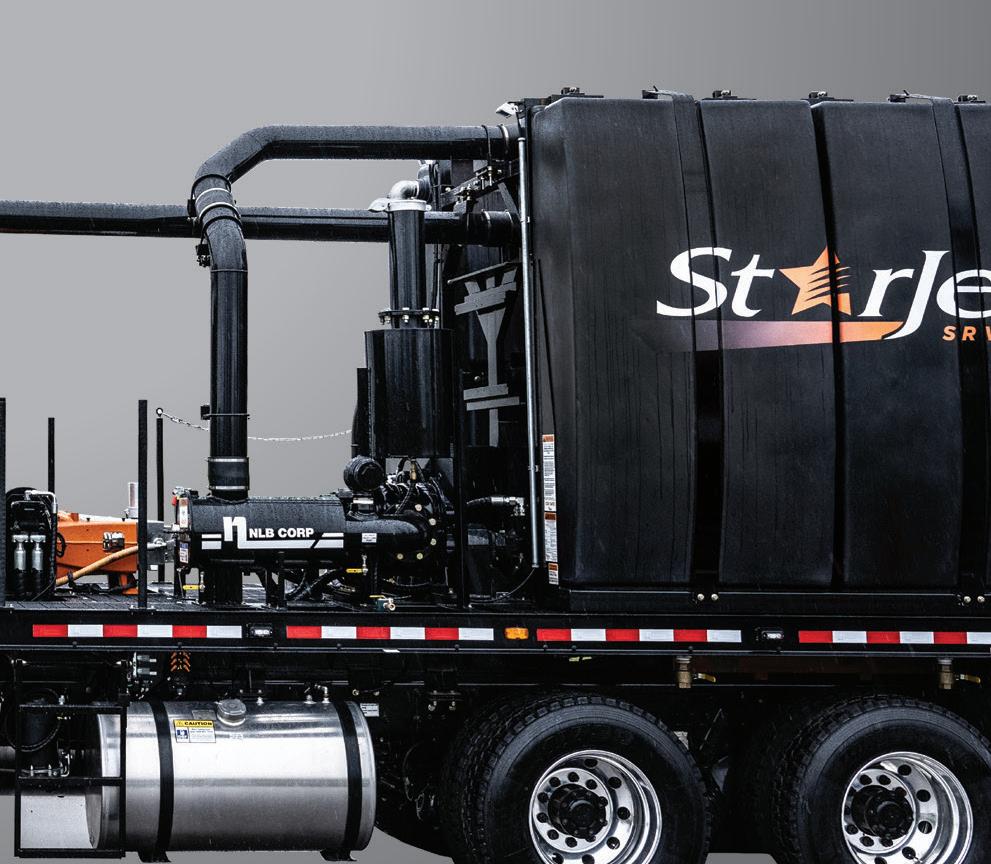
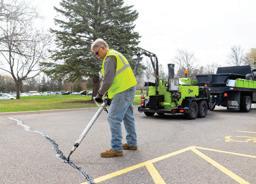
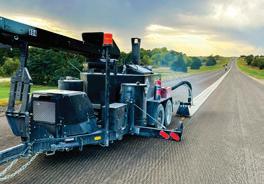
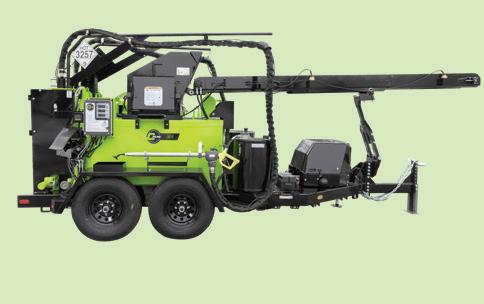
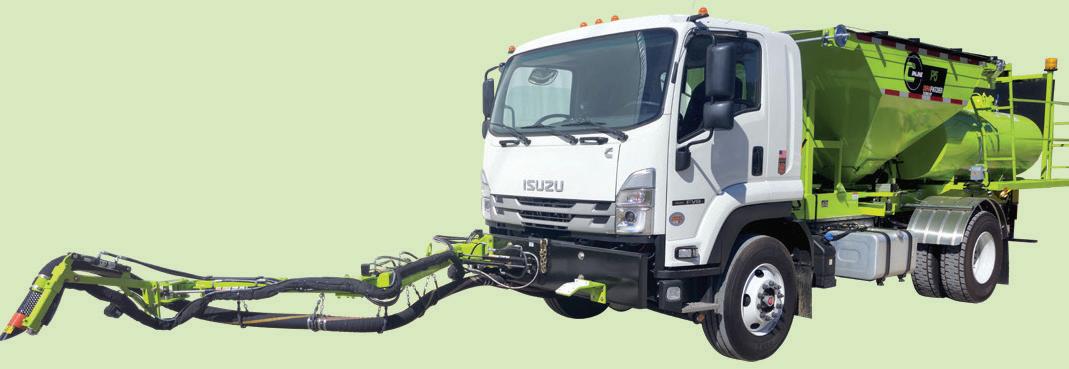
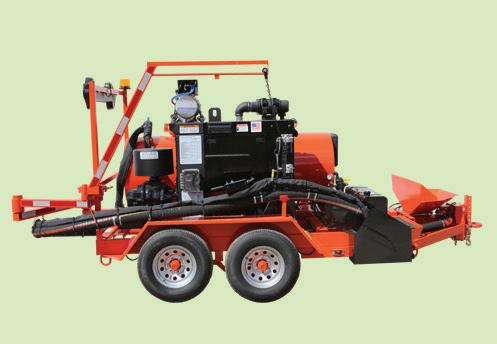
No fumes. Less noise. Less maintenance. Same pro-grade results.
NEW FOR ES 3400:
Dependable airless performance
SmartControl™ monitors and adjusts performance for perfect results
Eliminate costly downtime
Swap pumps on the jobsite in minutes with ProConnect™ replacement system
Easy gun adjustments
Perfect gun setup every time with easy-to-use Guide Mark System
• Proven LineLazer Performance
• No engine noise, vibration or fumes
• Designed for traffic paints
Delivered complete with two D E WALT® batteries and fast charger for continuous striping.
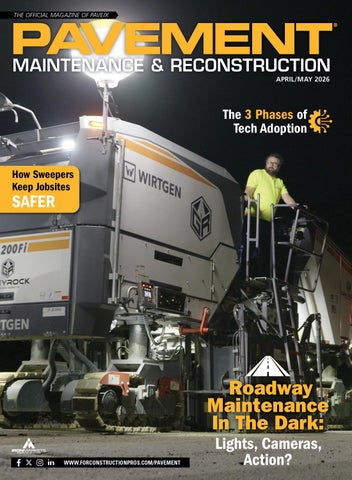
Between work zone safety, speed cameras, and what the industry still needs from lawmakers -night highway milling is some of the most dangerous work in construction.
The
show that almost beat me, and how
how
The newest pavement maintenance products hitting the
FORCE: Building leaders in the pavement industry.
In Pursuit of Better: part 2. The gap between the leader you are and the leader you want to be doesn’t close with good intentions.
Managing mindset is key to pavement preseason stress. The season hasn’t started yet, but the stress already has.
More power sweeping specific online classes launched. These operator training programs create a great baseline of training for improved professionalism in your drivers.
Paving in paradise with Coastal Asphalt.
The legality and science of risk management is quite well known among most contractors and is growing in need to be embraced, understood, and practiced by all specialty contractors.
WHAT’S ONLINE
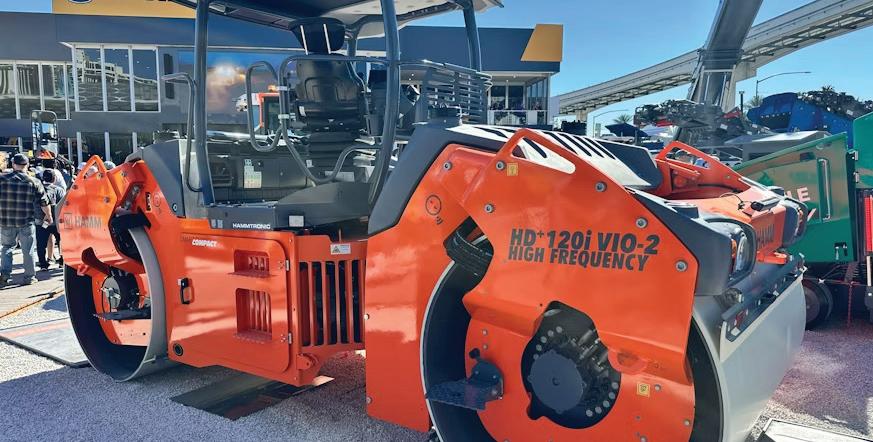
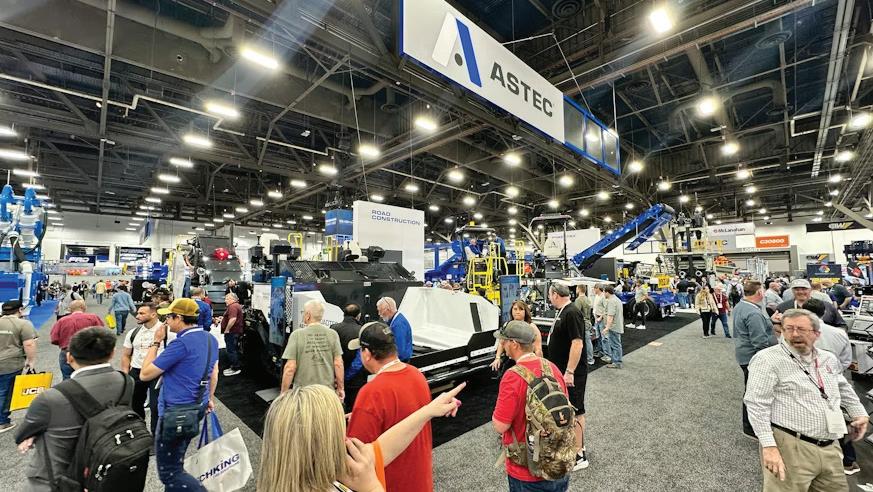
CONEXPO 2026 Highlights And Trends | Part 1: Paving And
Compaction
The biggest construction trade show in North America returns, and with it comes no shortage of new products, equipment, and technology. Part 1 focuses on paving and compaction.
Formoreinformationvisit
https://pavemg.com/8ms1omee
Running
An Asphalt Crew | No Edge Lines
Season 3 Episode 3
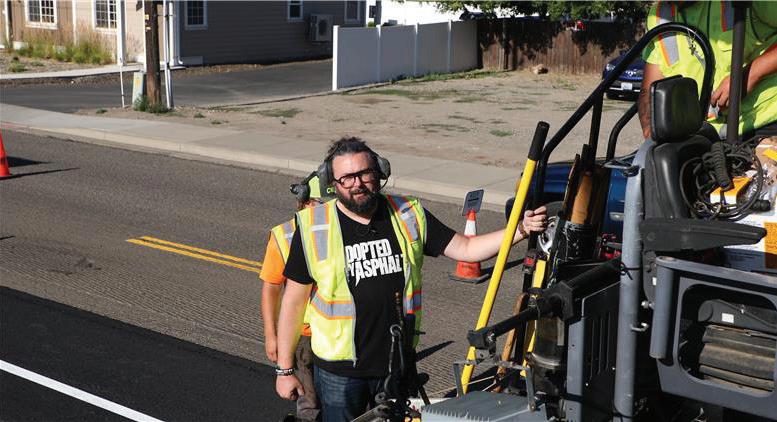
Editor-in-Chief, Brandon Noel, heads out to the Pacific Northwest to visit Central Paving LLC, and learn how they pave their roads eschalon style.
Formoreinformationvisit
https://pavemg.com/NELS3E3
CONEXPO 2026 Highlights And Trends | Part 2: Plants
And Technology
The biggest construction trade show in North America returns, and with it comes no shortage of new products, equipment, and technology. Part 2 focuses on plants and techonology.
Formoreinformationvisit
https://pavemg.com/cl9z21ti
Vol. 40, No. 3, April/May 2026
PAVEMENT
ADVISORY BOARD
Agua Trucks Inc
Wickenburg, AZ, Scott Duscher
Asphalt Contractors Inc., Union Grove, WI Robert Kordus
Published and copyrighted 2026 by IRONMARKETS. All rights reserved. No part of this publication may be reproduced or transmitted in any form or by any means, electronic or mechanical, including photocopy, recording or any information storage or retrieval system, without written permission from the publisher.
Subscription policy: Individual subscriptions are available without charge in the U.S. only to pavement maintenance contractors, producers and government employees involved in paving or pavement maintenance; dealers, and distributors of pavement maintenance equipment or materials; and others with similar business activities. Complete the subscription form at www.forconstructionpros.com or use your company letterhead giving all the information requested. Publisher reserves the right to reject nonqualified subscribers. One year subscriptions for nonqualified individuals: $35.00 U.S.A., $60.00 Canada and Mexico, and $85.00 all other countries (payable in U.S. funds, drawn on U.S. bank). Single copies available (prepaid only) $10.00 each (U.S., Canada & Mexico), $15.00 each (International). Pavement Maintenance & Reconstruction (ISSN 1098-5875), is published eight times per year: January, February, March, April/May, June/July, August/September, October/ November, December by IRONMARKETS, 201 N. Main St. Ste 350, Fort Atkinson, WI 53538. Periodicals postage paid at Fort Atkinson, WI and additional entry offices.
POSTMASTER: Please send change of address to Pavement, 201 N. Main St. Ste. 350, Fort Atkinson, WI 53538. Printed in the USA.
PAVEMENT MAINTENANCE & RECONSTRUCTION is proudly supported by these associations:
Royal Pavement Solutions ............................................................................. Kenneth Roy III
ASSOCIATION REPRESENTATIVES:
Pavement Coatings Technology Council Brian Riggs, Executive Director
CONEXPO 2026: Coming Full-Circle In Las Vegas
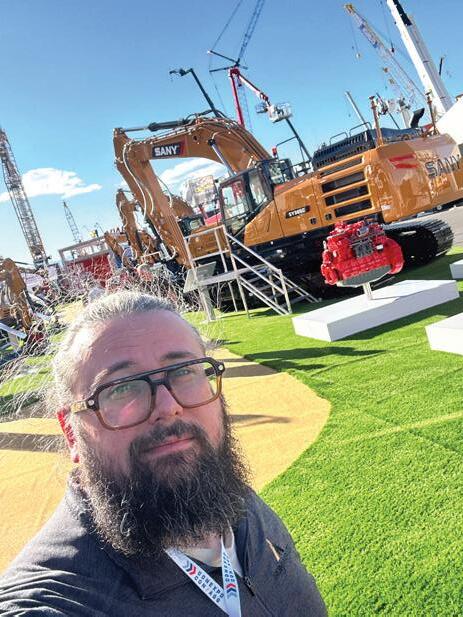
It was the same show, but I felt like a different editor.
Three year’s ago I didn’t just attend my first CONEXPO, it was my first construction trade show ever. As much as my colleagues tried to communicate what it would be like, no matter how carefully I thought I’d prepared, it was a complete trial-byfire experience. I won’t sugarcoat it. After I got home from that eight day stint, I felt exhausted and like a total failure. If you’ve ever hear of “imposter syndrome” then I was feeling like the living embodiment of the idea. Privately, I told my family that I wasn’t sure that I wanted to be around by the time CONEXPO returned.
Brandon Noel, Editor-In-Chief bNoel@iron.markets
234-600-8983
Thankfully, I didn’t let those feelings of failure win, because shortly after leaving Las Vegas behind, I started to figure out how I was going to make this role my own. If I’d come back and decided this wasn’t for me, and walked away, I can confidently say that I would have deeply regretted it -- a sentiment only confirmed to me by my return this month to Sin City itself and the trade show that almost beat me.
It’s Too Late To Turn Back Now
Three years is just long enough a time period to feel distant, and at the same time, it feels too close to justify claims of major changes or growth. However, as I walked through the massive halls of the Las Vegas Convention Center’s sprawling campus for the second time, things felt different.
It’s still too big of a show to see EVERYTHING there is to see, or even all that you want to see, because of its sheer numbers. But the biggest difference maker this time wasn’t just knowing more about the industry or having more trade show experience, even while both of those are true. The real difference maker was the same thing it always has been in our industry: relationships.
As each year goes by and I’m in this role as your editor-in-chief, that addage only grows in relevance and affirmation. It isn’t just true on the manufacturing and media side of the industry, no, it’s also true of the long-standing contractors who’ve survived many decades, economic seasons, and innumerable difficulties. The relationships forged, both in business and in their personal support structures, those are what made the real difference.
Three years ago, the construction world met and was licking its wounds from the sting of a global pandemic. In 2023, everyone sighed for even the slightest indicator of normality. We looked ahead. In 2026, I would argue that things feel less normal than they did then. In videos and interviews and off-the-record moments I had, people rephrased or out-right avoided words like “uncertain” or “challenging” though it was clearly what they wanted to express. What has me concerned is that there are times when it’s the careful things no one is saying that loom largest.
Published and copyrighted 2026 by IRONMARKETS. All rights reserved. No part of this publication may be reproduced or transmitted in any form or by any means, electronic or mechanical, including photocopy, recording, or any information storage or retrieval system, without written permission from the publisher.
@PAVEMENTMAGAZINE
@PAVEMENTMAGAZINE
@PAVEMENTMAGAZINE
@PAVEMENTMAINTENANCE
Published by IRONMARKETS
201 N. Main St. Ste 350, Fort Atkinson, WI 53538 (800) 538-5544 • IRON.MARKETS.COM
WWW.FORCONSTRUCTIONPROS.COM/PAVEMENT
SCAN TO READ MORE
Brandon Noel
ROBERT H. PEDERSEN INSTALLED AS BOARD CHAIR OF AMERICAN RENTAL ASSOCIATION
The American Rental Association (ARA) has installed Robert H. Pedersen, president and CEO of A Tool Shed, Inc. in Santa Cruz, California, as board chair.
In the role, Pedersen will lead the association’s 17-member board of directors and help guide the organization’s efforts to support members and advance the equipment and event rental industry.
Pedersen previously served as ARA president and has held several leadership roles within the organization. His involvement includes co-chairing the ARA Equipment Rental Shared Interest Group and serving on the Executive Committee, Budget/Audit Committee and Investment Committee. He has also participated in industry events, including The ARA Show.
In addition, Pedersen has served as ARAPAC Council chair, ARA Region Nine director and a member of the ARA of California Legislative Committee.
Pedersen said serving as ARA president over the past year provided opportunities to meet members across the U.S. and Canada, participate in industry events and advocate on government issues affecting the rental industry.
Volvo CE to Close Rokbak Articulated Hauler Business
VImpact of Global Trade and Costs
olvo Construction Equipment (Volvo CE) announced the closure of its Rokbak articulated hauler business as part of a long-term strategic shift. The company cited unsustainable profitability, driven by rising operational costs and global trade challenges, as the primary reasons for the decision.
For over 40 years, the brand — formerly known as Terex Trucks — has manufactured off-highway articulated haulers. However, Volvo CE noted that increased supply chain expenses and international trade pressures, including U.S. tariffs, have significantly impacted financial performance, making continued operations untenable.
Continued Operations at Motherwell
While the Rokbak brand is being phased out, Volvo CE will maintain its facility in Motherwell, Scotland. The plant will continue to serve as a primary hub for the design and manufacturing of Volvo rigid haulers. Resources previously allocated to Rokbak will be redirected toward advancing rigid hauling solutions and driving the development of future product lines.
Transition Timeline
The closure is subject to a collective consultation process with employees and stakeholders, which is expected to be finalized by the third quarter of 2026. Volvo CE stated it will work closely with unions, government representatives, and regulatory bodies to manage the transition for impacted staff.
The company emphasized that existing Rokbak customers will continue to receive aftermarket support and service throughout the phase-out period and into the future to ensure ongoing machine uptime. A
INDUSTRY OUTLOOK FORECASTS 1% CONSTRUCTION SPENDING GROWTH IN 2026
FMI Corporation has released its 2026 North American Engineering and Construction Industry Overview, forecasting total construction spending to rise 1% in 2026 compared with 2025.
The report projects total U.S. construction put in place will finish 2025 down 1% from 2024. Growth in 2026 is expected to remain uneven, with public and infrastructure-related work providing relative stability while several private sectors face continued pressure.
Nonbuilding structures are forecast to increase 4%, led by power, water and environmental projects with committed funding. Data center construction is expected to remain a strong performer among nonresidential building segments, rising 35% from 2024 levels, according to the report.
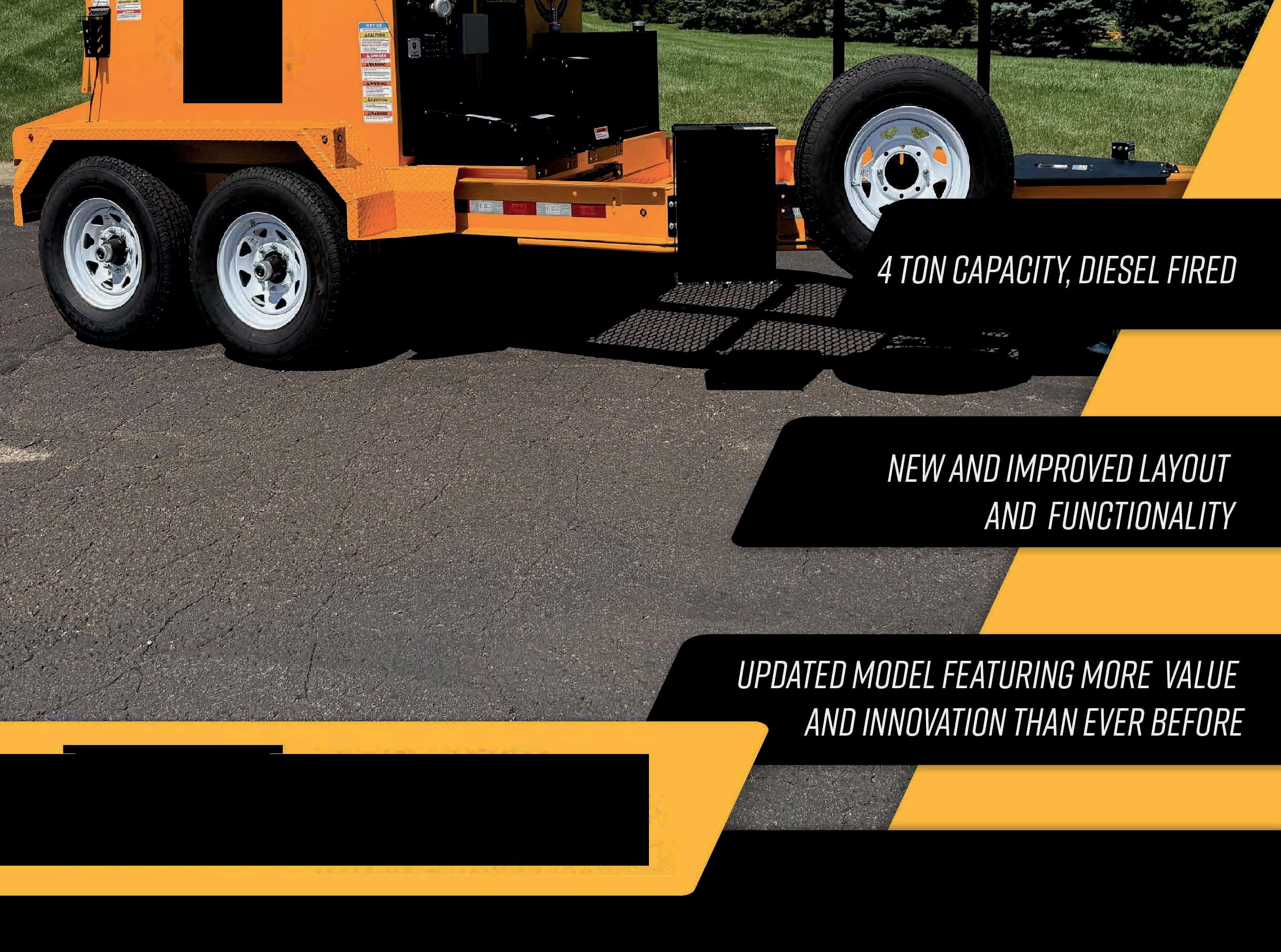
LeeBoy HB4T Hotbox
LeeBoy
Perfect for the all-inclusive paving contractor and municipalities, the HB4T Hot Box provides a perfectly sized hopper for patching potholes and utility cuts. Daily tasks can be completed with ease by relying on the trouble-free Beckett burner and the proven reliable user-friendly design. The Hot Box keeps plant material hot and warms cold mix to the optimal working temperature. Uniquely configurable, the customizable options give the contractor the ability to create a solution specific to their exact needs.
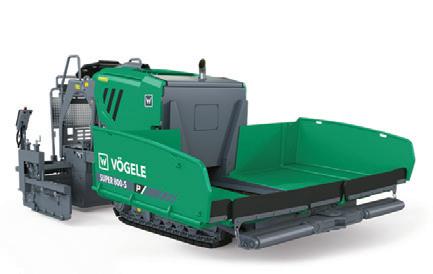
Vögele Super 800-5 P
Wirtgen Group, a John Deere Co.
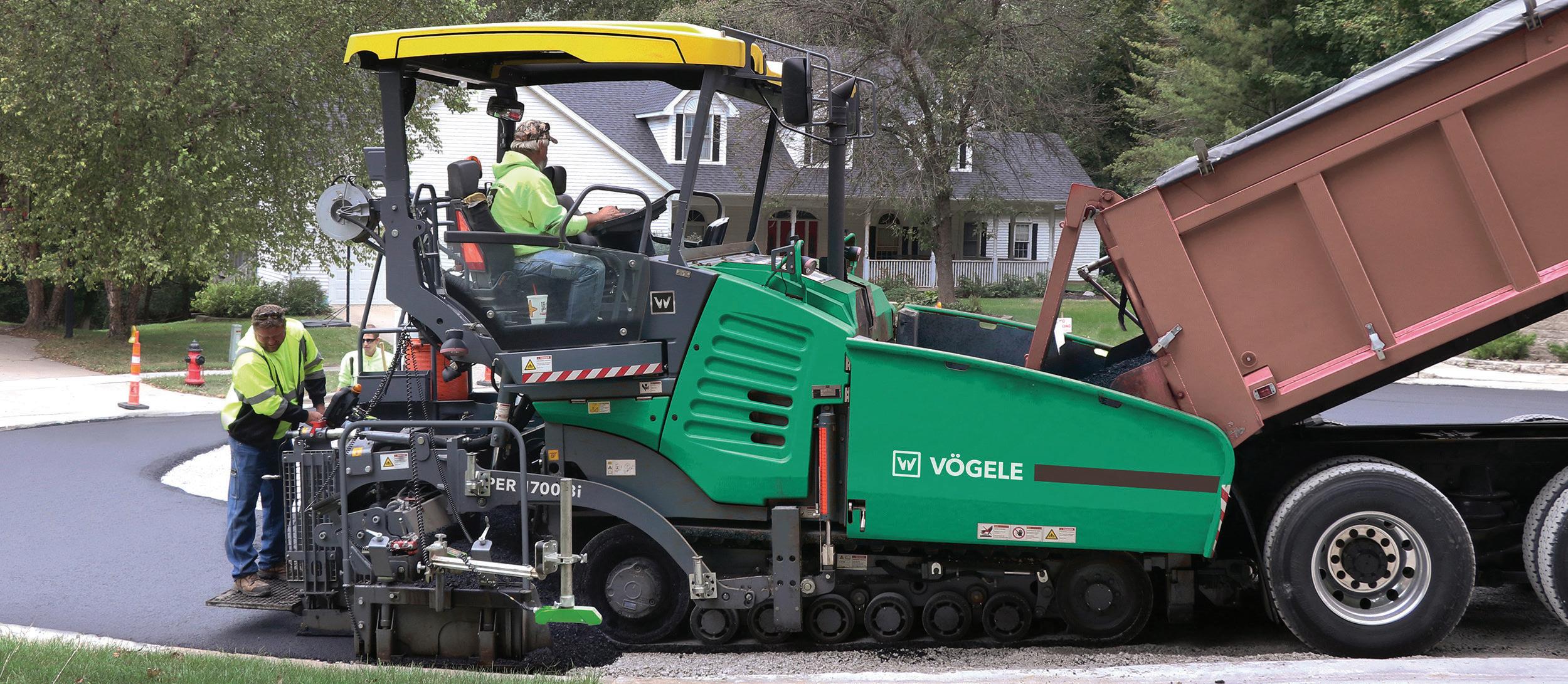
The SUPER 800-5 P-Tiers tracked paver is the first Mini Class representative of the Dash 5 generation. VÖGELE equipped the small paver with the user-friendly ErgoBasic 5 operating concept. Users have an unrestricted view to the front thanks to the new, double-folding material hopper. This makes maneuvering the machine even easier. With operating widths between 0.5 and 3.5 m (1 ft 7 in - 11 ft 5 in), the SUPER 800-5 P is ideal for narrow construction projects.
DIMENSIONS (TRAILER CONFIGURATION)
• Length: 17’ 10”
• Width: 6’ 9”
• Height: 7’ 8”
• Shipping Weight: 5,000 lbs
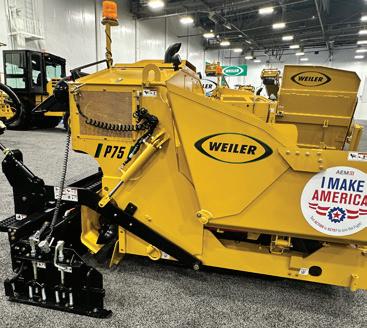
Gravity Fed P75 Pave
Weiler
The P75 is Weiler’s newest gravity-fed paver, designed for contractors who want to efficiently knock out multiple driveways and similar commercial jobs. It offers a rubber track option and a walking floor in the front, adapted from Weiler’s larger material transfer vehicles, which allows asphalt to be continuously moved to the rear without stopping to dump the hopper. This walking floor gives some of the benefits of a conveyor system—smoother, more continuous material flow— while improving on lessons learned from the earlier P65 model.
Specifications:
• Weight: 12,600 lb / 5715 kg
• Length: 9’ 9” / 2.97 m
• Width: 98” / 2.48 m
• Height: 70” / 1.78 m
• Truck Clearance: 20.75” / 557 mm
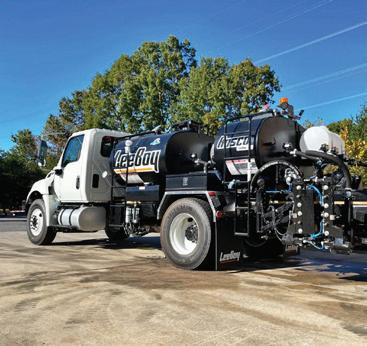
LeeBoy PR900 DualTank Distributor
Truck
LeeBoy
• Screed Weight 2,100 lb / 952 kg
• Main Plate Width 13”/ 330 mm
• Extension Plate Width 7” / 178 mm
• Paving Speed 180 fpm / 55 mpm
• Transport Speed 300 fpm / 91 mpm
The PR900 is a dual-tank maintenance distributor that offers versatility and precision with its independent front and rear tanks. Operators benefit from an advanced in-cab controller that gives them the ability to control material application rates and make adjustments to spray widths. Offering a range of optional accessories such as hand spray wands and convenient tool storage, the PR900 is designed for efficient and adaptable performance on various jobsites.
TANKS
Front Tank
• 600 Gallon
• Front spray bar
Rear Tank
• 300 Gallon
• Rear spray bar
Engine: Liquid-cooled 4-cylinder diesel engine
Type: TCD 2.9 L4 | Equivalent EU Stage 5, US EPA Tier 4f
ECO: 73 hp / 1,800 rpm
NOM: 74 hp / 2,200 rpm
Hopper: 6.4 tons
Width: 10’ 2”
Volvo CE SD70 Soil Compactor
Volvo CE
The SD70 is a soil compactor designed to deliver premium performance at a value price. A new 66” roller in the 7-ton class for Volvo, the SD70 delivers the same outstanding drum performance as a SD75, combined with a streamlined design optimized with cost efficiency in mind. With simplified features ideal for rental fleets, low fuel consumption and strong residual value, the SD70 keeps costs down and uptime high.
• Value-focused alternative to SD 75: Same general size class and performance intent, but stripped of some premium features (e.g., Compact Assist) to hit a lower price point for value-conscious buyers and rental fleets.
• Simple, intuitive operation: Operator interface and controls are laid out so a new operator can learn the basics in under a minute and “look like an expert” quickly, reducing training time.
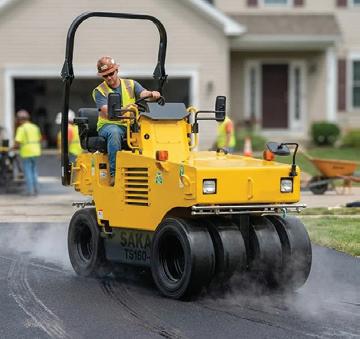
SAKAI TS160-4 Static Tire Roller
Sakai America, Inc.
A versatile 3-ton-class static pneumatic tire roller designed for high-quality finishing on parking lots, driveways, and municipal roads. Its seven-tire configuration features four “superflat” tires in the front and three in the rear to knead asphalt into a uniform, sealed surface with reduced permeability. The compact frame provides operators with excellent 360-degree visibility for precision work right up to the edge of the job. Engineered for productivity, the TS160-4 utilizes rear-wheel steering for superior maneuverability in tight urban spaces. The reliable Kubota engine requires no aftertreatment, which simplifies maintenance while ensuring consistent performance. Key features include a comfortable bench seat, intuitive analog controls, and a heavy-duty water system with triple-filtration and allmetal spray bars for reliable daily operation.
By Brandon Noel, Editor-in-Chief
FORCE: Building Leaders In The Pavement Industry
A new women-forward initiative focused on mentorship, connection, and leadership development in the asphalt and pavement industry.
Given the fact that I only came into this industry about four years ago, I can still clearly remember what it felt like when I was new and had zero clue about anything. I felt a little lost and awkward, and I felt very overwhelmed by everything I didn’t understand. The good news is that I had great mentors that were able to help me build a strong base, and because of that, I’ve been able to grow and build something solid on top of that foundation.
Amy Schwandt, Chief Revenue Officer, and Jessica Lombardo, Director of Events and Content Programming, were the people who shepherded me through my first introductions to the asphalt world. From there, I was kind of set-loose on the industry, and went on to make my own connections and relationships.
However, when I sat down to talk with them about their new female-forward initiative called FORCE, I quickly understood how different our entry points were, as well as, why building up and empowering women in the asphalt pavement space will make the whole pavement industry better.
EVERYONE’S JOURNEY IS DIFFERENT
“Literally, before the asphalt industry, I sold office supplies door-to-door. It was horrible,” said Schwandt, as she
recounted her first position as an insidesales rep. At that time, she recalled being met with some interesting challenges.
“I was twenty-one years old, and I didn’t have any female professional contemporaries. There wasn’t anyone in the space, and there definitely wasn’t anyone my age. So, I had to learn the ropes as a woman in a man’s world. That was ok. I did it, but things can be better.”
Unknowingly, the very seeds of what would give rise to FORCE were planted out of that experience, but they were
still missing their other half.
When Jessica came on board with the editorial team for the asphalt and pavement brands, she was just as green to the industry as Amy. However, in addition to the guidance she received from long-time editor Allan Heydorn, she also had something Amy didn’t: A female mentor in Amy herself.
“You can read about it, and you can watch videos, but until you have somebody who takes the time to show you, you can’t really understand,” said
Adam Rahn; IRONMARKETS
THIS NEW SMALL IS BIG NEWS.
When you need powerful pavement marking or rubber removal in a compact, maneuverable package, the StarJet® SRV-2 delivers. Designed for tough surface prep, it features a frontmounted, articulating SpinJet® arm for efficient coverage and clear cab visibility. Its NLB 225 Series pump delivers 40,000 psi at up to 10 gpm, powered by the HydraFlex™ closedloop hydrostatic drive to minimize heat, noise, and wear. Need versatility? Swap out SpinJet heads in minutes to tackle different cleaning tasks with ease.
Built to keep up with demanding jobs, the SRV-2 runs up to two hours nonstop with its 1,400-gallon water tank and 1,035-gallon debris tank. Available in truck-mounted or skidmounted configurations, it’s designed for flexibility and high performance—so you can get the job done right. Call us today to upgrade to a StarJet® SRV-2!
Lombardo. “Amy taught me how to know the industry in an entirely different way than Allan did, and she helped me see that I didn’t have to be afraid of being a woman whenever I found myself in rooms or spaces where I was the only one.”
This gets at the heart of what FORCE is, and what sets it apart as an idea and going forward as an organization. While the end goal may result in an increase for women working in the asphalt and pavement industry, Jessica believes its real and central effort is about providing that belonging and mentorship to women already in the industry.
REPRESENTATION IS NOT A BUZZWORD
On more than a few occasions I’ve come across people who seem to fundamentally misunderstand the purpose of representation, as well as how powerful it can be to the people who aren’t accustomed to the same level of access commonly and unconsciously enjoyed by those who already have it.
For example, the first time I went to a trade show as an editor, I had no idea what was normal and what wasn’t. On top of that, I was juggling a large amount of imposter syndrome, and I was afraid to voice a lot of the questions I had because I didn’t want anyone to know what I didn’t know. I didn’t want to think of how they might think of me differently. So, I just carried on, anxiously faking it.
I didn’t feel completely safe to ask for help, or if I was even doing things right. By contrast, when I went to my first
National Asphalt Pavement Association (NAPA) meeting, they had a meetup specifically designed for “newbies” to attend and meet other first-timers. When I attended that, it gave me the instant liberty to approach anyone and commiserate. Almost instantly, I didn’t feel like I was an “outsider” at an exclusive club, where I wasn’t “in” on anything.
That is a rather elementary way of explaining why representation in our industry is so vital for women, and why creating spaces for them to connect to others who instantly share in their experiences, perspective, and background is essential to longterm success.
WHAT IT IS AND WHAT IT ISN’T
“FORCE isn’t about separating women from the industry,” said Lombardo. “It’s about strengthening and elevating leaders in general. One thing I hear frequently from people, men and women, who come to PAVE/X is that they wish they had a mentor. For women, however, there are just a lot fewer female mentors.”
This was the inception point for FORCE, and how it came together as a facilitation for something that, in many cases for men, often happens naturally or with much less effort seeking it out.
“FORCE is a space where women can know, in advance, other female leaders will be, a space where they can easily find one another,” Lombardo added.
That’s critical for women to find, because, like it or not, many of the ways men handle situations on a jobsite or in the office, must be handled in a different manner for women. As any woman can
tell you, the dynamics of leadership are always different depending on your gender, and if that is a surprise to you, then just ask the women in your life.
“This was Jessica’s idea, she was really passionate about it,” said Schwandt. “She had the conversations on the contractor side, then started including me in those, and that was when I knew this was going to be really important. Because there are just different ways that women tend to communicate, absorb information, and understand things.”
Schwandt went on to relay an important, recent event that helped solidify what FORCE could eventually be for women in the asphalt pavement industry. A few weeks prior, she’d attended the Women In Supply Chain Forum.
“I’d never been to a women-centered, women-focused conference in more than twenty years,” said Schwandt. “Instantly, I felt a huge difference. By the time I left two days later, I knew. The discussions we had, the openness, the topics that were brought up. It was special, we learned so much from each other.”
FINAL FORCE
In any job setting, there are all sorts of unwritten, unspoken codes or ways of operating that no one talks about, but are still somehow maintained.
For example, when I worked at the steel mill, I still wasn’t fitting in the way I wanted to, even after about nine months on the job. Guys would still come around every day and give me grief and harass me, until I finally snapped and gave back to the guys equal to how they were needling me. Some choice words were exchanged. Suddenly, they all laughed, gave me a fist-bump, and from then on I was one of them.
If you took that same scenario, but placed a woman in my position, there are a lot of things I could say about the sensitivity of such a situation. However, as a man, I think it’s all the things I can’t really say about that hypothetical situation, all the nuance embedded in the dynamics at play in such a case, that are the greatest argument for why FORCE should exist. ■
Adam Rahn; IRONMARKETS
RAISING THE STANDARD
Since its introduction, the Weiler P385 has set the standard for commercial pavers. The P385C raises that standard.
Variable speed and reversible conveyors and augers and a 25% increase in tunnel height provide optimal material output.
Increase to 120 hp with the Cat® C3.6 Tier 4F/Stage V engine.
Modular conveyor drive and sealed chain case increase feeder system reliability and life.
Enhanced heat system performance with direct-drive hydraulic generator and elimination of GFCI breakers.
Vögele’s Dash 3 pavers include a mobile feeder and additional screed. When the Vögele paver operator receives real-time survey info, they can adjust feeder speed or screed level. Fleet managers partner with operators to review datasets and identify where they can make changes.
The 3 Phases of Technology
Adoption: Understand, Adjust and Integrate
From pothole patching to mega highway restoration projects, many contractors embrace the latest solutions to optimize machine performance.
We’re in a new era — not an entirely digital era where the type or size of iron doesn’t matter, but an era of adoption. Whether a contractor integrates machine control or optimizes their fleet by mining machine datasets, contractors are looking to gain an edge on efficiency by onboarding a total jobsite solution, including software and hardware advancements.
After meeting with several original equipment manufacturers (OEMs) and contractors, it’s clear that we have the skill, iron, and technology to revitalize the nearly 70-plus-year-old interstate highway system, despite any unforeseen challenges. As many crews start work on mega highway projects, we in the industry recognize we’re entering a transitional period as AI machine learning progresses. Many of us are watching
these developments, dreaming about the Jetsons-like capabilities — perhaps the ability to pave with the precise mix at the right time based on previous models? However, we’ll only be able to harness this information if we follow an adoption strategy to prepare today for tomorrow’s data and machine learning tools.
I’ve learned from contractors that the successful adoption of a total jobsite solution happens in phases: understand, adjust and integrate . By going through the phases, crews move from dreaming to doing when it comes to innovative equipment hardware and software solutions. Let’s review what each phase entails.
➊ UNDERSTAND DATA WITH A FLEET MANAGEMENT SYSTEM
Nearly a quarter of a century ago, OEMs like John Deere added JDLink
Connectivity to collect GPS data points and feed them into a fleet management system (FMS) like John Deere Operations Center.
“The first use case of telematics was monitoring the location and production hours,” said Larry Herman Jr., RDO Equipment Co.’s telematics support manager. “During the last 20 years, telematics data has expanded to include Expert Alerts, optimizing preventative maintenance scheduling and keeping machines working when needed.”
Since John Deere and the WIRTGEN GROUP joined forces, they’ve been transitioning WITOS FleetView into the Operations Center so fleet managers view data from all their machines — pavers, wheel loaders or skid steers — all in one FMS. Today, the Operations Center’s applications can complement surveying equipment from
RDO Equipment Co.
other OEMs, like Topcon Positioning Systems.
In reality, most projects include mixed fleets, so a total jobsite solution consists of many iron colors but one data collection system. Equipment fleet managers make data-informed decisions every day. When they view their equipment fleet’s data in a consolidated dashboard, they can pinpoint iron insights — like an opportunity to swap a larger wheel loader for a smaller one on a particular job to use less fuel while removing asphalt or concrete debris.
➋ REVIEW DATA, PERFORMANCE, THEN ADJUST IRON
Herman Jr. said every contractor wants to monitor their machines’ performance and plan preventative maintenance as much as possible.
“A user-friendly FMS like the Operations Center helps fleet managers to understand how many miles were paved and the total cost of inputs at the end of each week,” Herman Jr. said.
When data such as GPS, compaction, or fuel consumption is recorded in the contractor’s preferred FMS, the fleet manager can review the various datasets, including grading information.
“Surveying equipment like lidar (light detecting and ranging) captures real-time grading GPS data points each week,” said Cody Wagner, RDO’s roadbuilding technologies product manager.
Like dirt, precision in roadwork requires experience, datasets and familiarity with the necessary machinery. To do this, contractors create a finely tuned survey and data collection system through their FMS and add the right equipment model for their projects.
For example, Vögele’s Dash 3 pavers include a mobile feeder and additional screed. When the Vögele paver operator receives real-time survey info, they can adjust feeder speed or screed level. Fleet managers partner with operators to review datasets and identify where they can make changes.
A paver’s mix can cool for many reasons, including inconsistent speeds, screeds or stops. Wagner shared that one Minnesota contractor used a Pavermounted Thermal Profiling (PMTP) method to record the mat’s surface temperature behind their paver immediately. They fed this data into their online reporting system and partnered with Department of Transportation (DOT) officials to determine its realtime pavement segregation. With this information, this contractor was able to reduce rework and fuel costs.
➌ INTEGRATE SOFTWARE APPLICATIONS WITH AN EQUIPMENT PARTNER
Fleet managers, operators and technicians partner to develop machine monitoring technology solutions for the contractor’s equipment fleet.
“RDO developed its telematics team to partner with contractors and drive a collective understanding of WITOS and Operations Center solutions,” said Jake Livingston, RDO’s director of connected support. “With so much data flowing in from connected machines, we’re always working to shed light on the opportunities to turn data into action.”
Some dealers offer 3D modeling services or training. Data points can be fed into a CAD (computer-aided design) system to create a digital twin of the paving project. DOT quality inspectors often review the digital twin of the road’s progress to discuss optimal compaction.
After a paver’s initial pass, DOT officials and contractors determine if the mat requires another pass to increase compaction. Fleet managers may opt for vibrating oscillation, combination, or pneumatic-tire drums on a Hamm tandem roller, depending on the required impaction force. Rollers like these, plus integration with GPS and surveying data, allow operators to change compaction force periodically. Additionally, support teams train fleet managers and their operators to
A Brief Timeline of Machines and Telematics
• Early 2000s: Rise of Telematics Adoption
• 2010s: Fleet Management Software (FMS) Unlocks New Opportunities
• 2020s: Digital Twins FutureProof Paving
enable automated field service requests. Contractors discuss machine health monitoring solutions with their trusted dealer, so remote support professionals monitor Hamm roller’s hydraulic pumps or vibration motors’ calibration. This ability becomes even more valuable when contractors work on remote jobsites and field technicians require advanced notice to travel and perform preventative maintenance. Depending on the project, like a tollway road restoration, the DOT may require in the bid for the contractor to maintain the road up to 10 years after the initial project is completed. Also, many state or county-funded projects can have bonuses for accurate density. With the datasets, models and machine monitoring data, contractors have the information to illustrate that their highway restoration will last for years.
Adopting a total jobsite solution for your jobsite will require time, team members and trusted experts. However, when contractors understand their equipment fleet’s data, they can adjust machines based on its performance and then integrate machine monitoring and modeling software. Contractors who adopt a total jobsite solution prepare their team for futuristic machinelearning solutions that may be closer than we think. ■
by Dennis Howard, Vice President, RDO Equipment
By Brandon Noel, Editor-in-Chief
MILLING IN THE DARK: Lights, Cameras, Action?
Between
work
zone safety, speed cameras, and what the industry still needs from lawmakers -- night highway milling is some of the most dangerous work in construction.
It was after dark on Highway 11, about an hour outside of Knoxville, Tennessee. The mountains pressed in close on both sides of the road, and the air, which spent the late afternoon cooking us alive, finally shows us a little mercy as the sun drops away. Traffic still moves just a few feet off the shoulder, headlights cutting the dark, drivers who don’t really register that there are people out here.
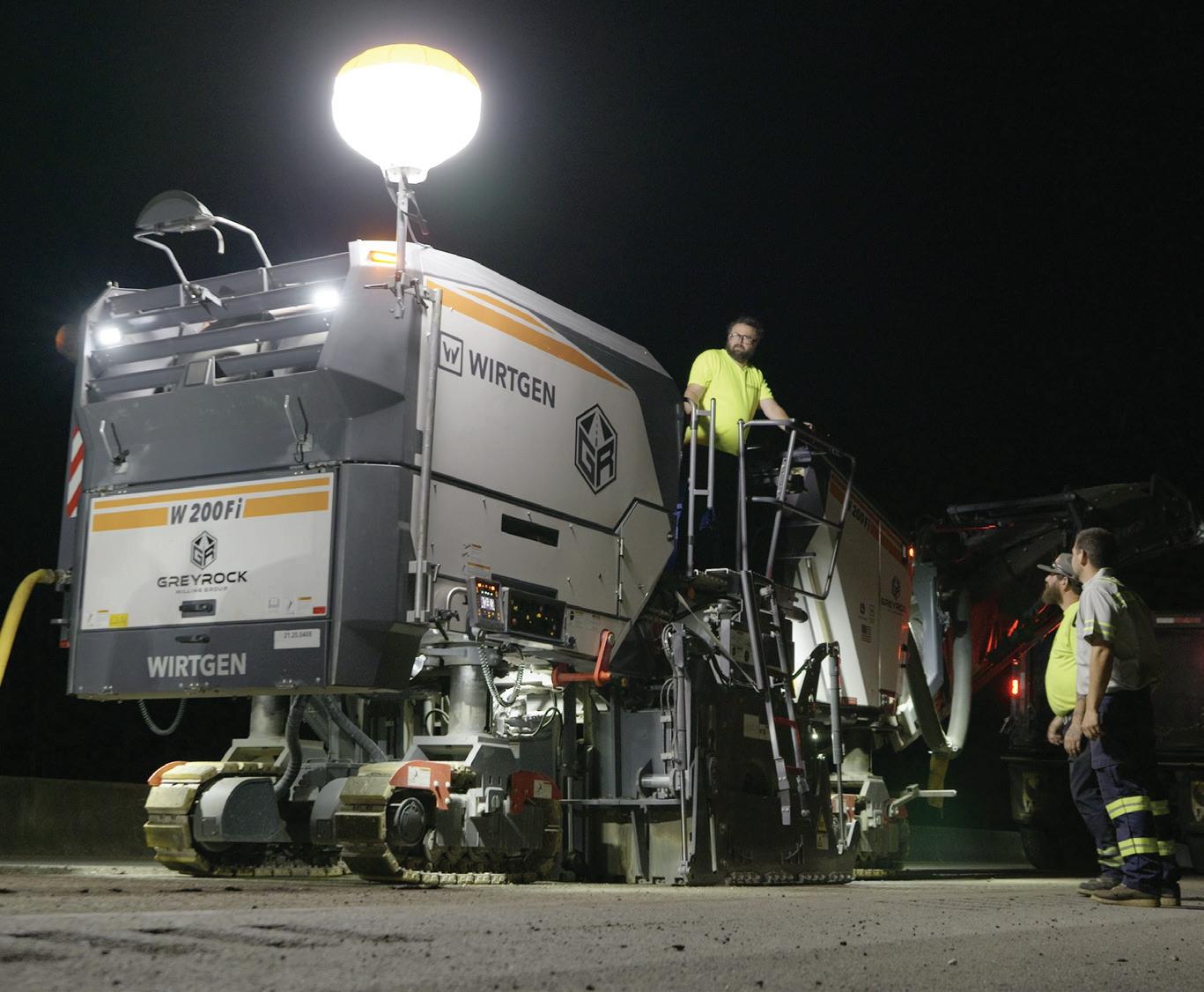
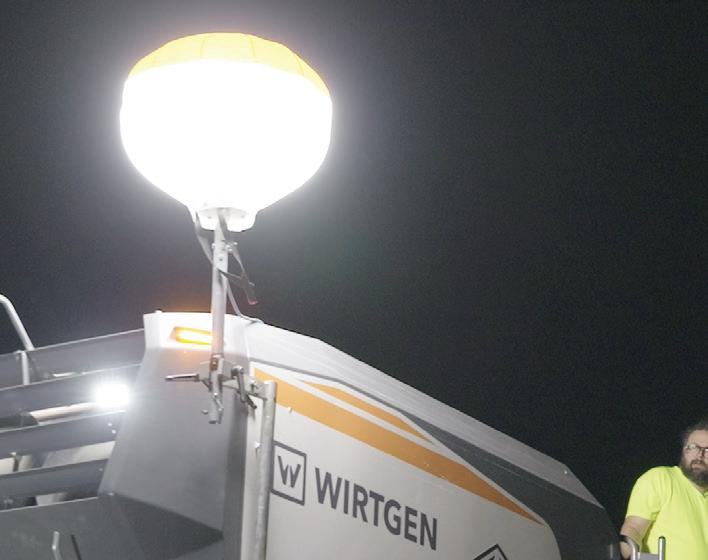
Then the lights come up, one big balloon light floats above the lane closure, throwing a broad circle of white across the asphalt, and the milling machine starts to move.
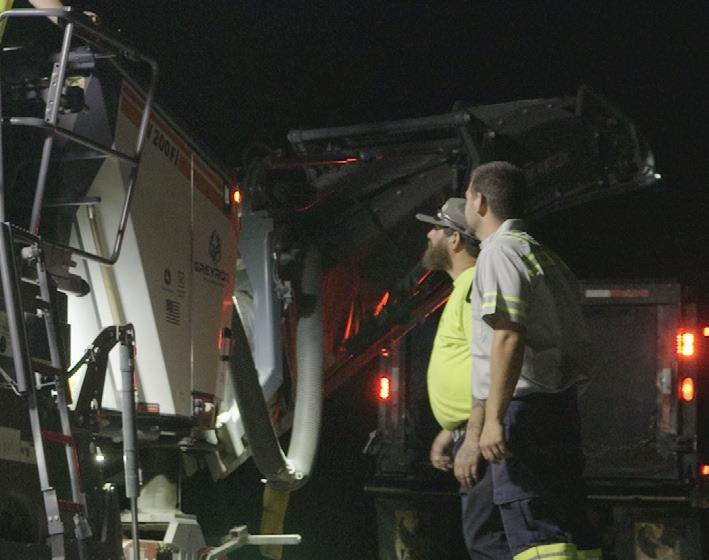
I will be honest with you. Standing next to the milling machine, watching
the drum bite into the highway surface while cars blew past at full speed, I felt something that most people reading this page already know: this job is not for everyone. The road workers accept a level of risk that most professions never have to face. But, as the saying goes, somebody’s got to do it.
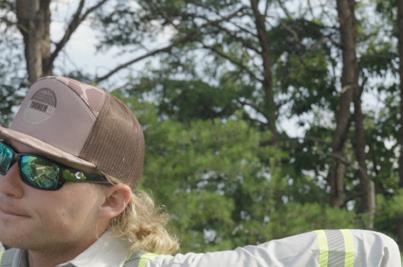
That day, the somebody was Griffen Hopkins, twenty-four years old and the owner/operator of Greyrock Milling. He’d invited me out to this job to get my first highway work experience. Something he does with the quiet confidence of a man who spent five years proving people wrong.
THE BACKSTORY
launching a dedicated milling company, his father’s first reaction was hesitation.
“He’s like, I just don’t know if it’s a great idea,” Hopkins told me. “Maybe it could, maybe not, because it’s a big investment to mill.”
Hopkins grew up in the paving business. His father operated a paving company for nearly thirty years, a successful operation that always kept a milling machine around for its own work -city streets, parking lots, the kind of jobs that don’t keep you up at night. When Hopkins started talking about
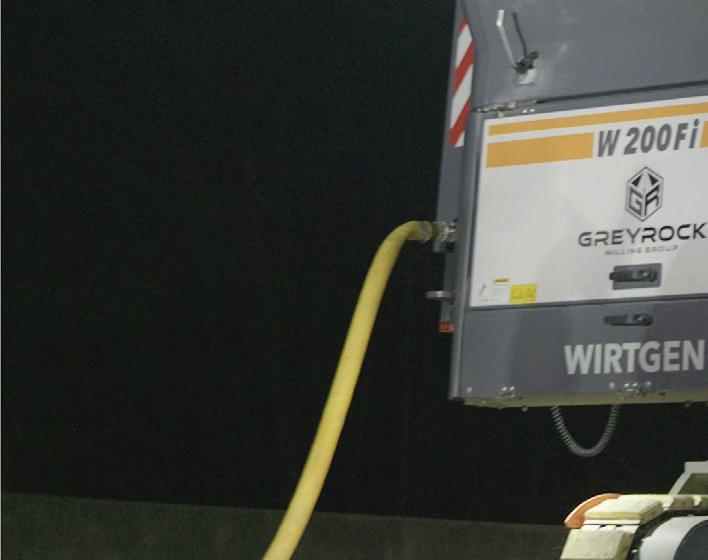
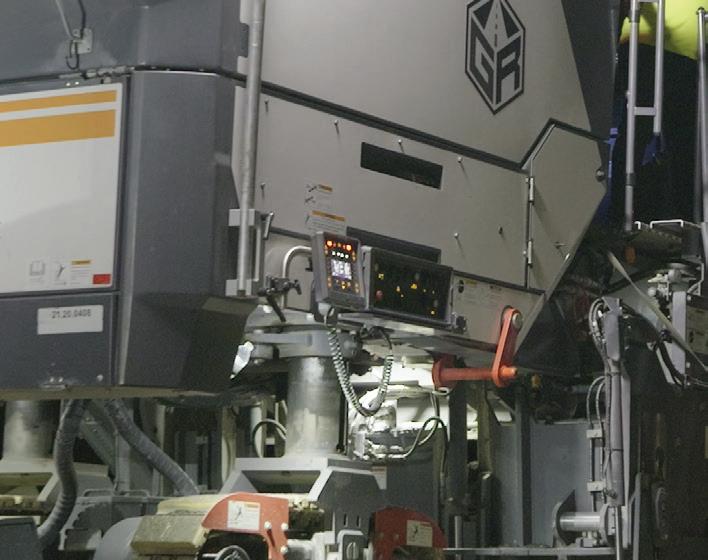
He wasn’t wrong to pump the brakes. Greyrock entered the market five years ago with a fleet that now represents more than $5 million in equipment investment. That includes a 2017 Wirtgen W 200Fi, a 2023 W 210i, and the newest addition: a W 220 XFi with a 12-foot drum. Hopkins selected the 220 over the larger 250 specifically because of transportation weight limits, since the behemoth comes in just over 100,000 pounds, while the dual-speed transmission and John Deere powertrain give it more than enough muscle for the hard mix common in East Tennessee.
“Every time Wirtgen comes out with a new machine, it’s always better,” Hopkins told me as we looked over the equipment he’d brought with him.
All photos by Adam Rahn;
“That machine cuts through it like it’s nothing.”
The success he’s seen over the last five years can be partially attributed to his business ethos: do quality work, deliver what you promise, and let the product speak for itself.
In a cutthroat subcontracting market where smaller operators struggle to get a foot in the door with major general contractors, Hopkins told me that he went door-to-door across Kentucky and Tennessee looking for who would talk to him. He was only nineteen when he started. Unsurprisingly, he got a lot of cold shoulders, but he kept going anyway.
“Being young, when I first started out, it was really bad,” he said. “People just kind of not respecting you, not really listening to you.”
Five years in, with a growing fleet, and a crew that has seen only three employees turn over in that span, the proof is self-evident.
WORK ZONE REALITIES
The project on Highway 11 was straightforward by milling standards: 600 tons of deep patching, cutting an inch and a quarter to shave off previous state patch work and deliver a clean, smooth surface for the paving crew to follow behind. The road itself was in decent shape. The thing consuming my thoughts ahead of getting out there wasn’t the scope of the project, it was watching the steady oncoming traffic pouring over the hillside, bearing right down on us. Car after car, semis and pickups, all just a few dozen inches away from us. Hopkins tried to assuage the obvious anxiety I was feeling.
“It’s not bad at all,” Hopkins said before we started. “It’s fun, man, when they start pulling the lane closures and getting everything going.”
Then, almost in the same breath, he added, “I mean, it is dangerous. You’re out here with cars going seventy miles an hour down beside you. You just gotta take it serious.”
He shared a story that, on a previous job, a drunk driver smashed through the construction zone on and came within
feet of his Wirtgen’s conveyor before slamming into the back of a dump truck. The car crumpled. Somehow, she walked away, and no one was injured, but that luck isn’t always the case.
“There are a lot of people that get hurt out here, and it’s not an uncommon thing to hear of a death,” Hopkins said. “You just gotta take it serious.”
He wasn’t overstating the risk. Data from the Bureau of Labor Statistics shows an average of fifty-four people are killed per year after being struck by vehicles in work zones. However, that figure only captures part of the picture.
In 2023, more than 898 fatalities and 40,170 injuries occurred in U.S. work zones, and the danger does not appear to be decreasing.
ccording to the 2025 Work Zone Awareness Survey conducted by the Associated General Contractors of America (AGC) and HCSS, sixty percent of highway contractors reported at least one work zone crash involving a moving vehicle in the past year -- and nearly one-third reported five or more.
That survey, which drew responses from more than 600 contractors nationally, also found that nearly half of respondents believe there is a greater risk now for work zone crashes compared to a before.
THE POLITICS OF PROTECTION
The industry has identified what it wants: better enforcement, stronger laws, and technology that backs both up. Respondents to the AGC/HCSS survey ranked greater police presence
(80%), stricter enforcement of existing laws (70%), and stricter laws against cell phone use and distracted driving as the top deterrents they believe would reduce crashes. Automated speed cameras and highway camera systems ranked close behind, supported by roughly half of respondents.
Additionally, the case for cameras has been building for years. Washington State launched a work zone speed camera program in early 2025, authorized by legislation that took effect in 2023, with the goal of reducing speeding -- a leading cause of serious injury or death in work zones. Other states have experimented with similar solutions to varying degrees and levels of success. Kentucky followed suit in August 2025, announcing automated speed enforcement cameras in highway work zones, with installation set for summer and fall of that year.
A bill proposing speed cameras in work zones failed to advance in the most recent session of the Texas Legislature, with concerns about privacy and use of speed camera data cited as
factors. Meanwhile, in 2024, nearly 28,000 traffic crashes occurred in work zones in Texas, resulting in 215 deaths and 825 serious injuries.
AGC is now pushing federal decision-makers to adopt three specific reforms: create a dedicated funding stream for work zone safety countermeasures, require every state’s driver education curriculum and licensing exam to cover work zone awareness, and authorize and encourage the use of automated speed enforcement cameras in active work zones.
The contractor community already knows what it needs. Is there the political will-power to make it happen?
ISLANDS OF LIGHT AND SAFETY
Back on Highway 11, Hopkins pointed up at their balloon lights, the Quasar 360 produced by Portable Lighting Solutions (PLS), and said something I’ve kept coming back to.
“The crew can see what they’re doing, doing work, yeah, but the safety factor of it -- it’s the guy on the ground, the cars can see him.”
That 360-degree illumination is the difference between a ground crew member being visible to a driver and nothing more than a shadow in the dark. Greyrock has run a lot of different lighting setups over the years. They tole me that the ones they use now have logged roughly 1,000+ hours of working time across two full summers and, to me, it still looked essentially new.
When I was on the machine that night, getting coached on how to zero out the drum, how to manage the truck loading, how to look thirty feet ahead instead of just at my guideline, I understood viscerally the responsibility of that chair. Suddenly, I was the one guiding many-ton machine.
My first thought was how the ground crew was not secondary support for me. They were the lifeline for me. A machine operator working without a trusted ground team is flying half-blind.
“The ground crew is almost more important than the guy up on the machine,” Hopkins said. “You’ve got to have a strong support team on the ground that knows what they’re doing and is communicating.”
WHAT THE ROAD ASKS
As the sun set completely and the balloon light did exactly what Hopkins promised it would do, flooding the work zone with near daylight brightness, I thought about what he said near the start of the shift.
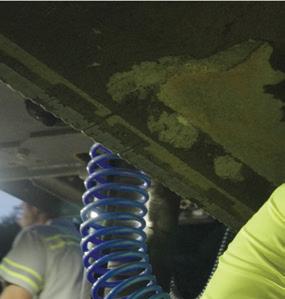
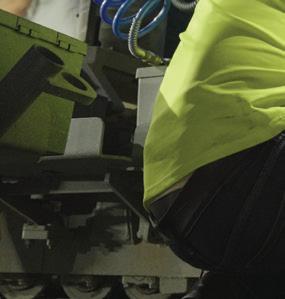
A few hours after sunset, while we were waiting for an empty truck, the Greyrock crew took the time to refill the Wirtgen and check the drum. Sure enough, there was a broken tooth. I crawled underneath to replace it, while Griffen showed me how. As traffic whizzed by, kicking up dust around us, I couldn’t help but think about worst case scenarios.
Statistically, this kind of work is one of the most deadly in the nation. Every clock-in is a calculated risk. Work zone accidents happen constantly, people speeding, distracted, sometimes impaired, sometimes all three at once.
The camera debate, the enforcement debate, the legislation debate all trace back to a simple fact. The workers of this industry do not have a say in who drives past their lane closures at seventy miles per hour. They control their equipment, their crew, their lighting, their lane setup, and their discipline. Everything beyond the edge of the closure is out of their hands.
That is the part of this job that does not show up in the equipment specs or the tonnage reports. The road workers fixing the infrastructure you drive on every day are doing it with the hope that drivers extend them the basic courtesy of slowing down and paying attention.
It is not too much to ask. ■
Watch the video of the cover story you just read https://pavemg.com/ NELS3E3
SOURCES
• Bureau of Labor Statistics (BLS) -- average of 54 worker-pedestrians killed annually in work zones. Source: National Safety Council analysis of BLS Census of Fatal Occupational Injuries (CFOI) data. URL to check: https://injuryfacts.nsc.org/motorvehicle/motor-vehicle-safety-issues/ work-zones/
• AGC/HCSS 2025 Work Zone Awareness Survey -- 898 fatalities and 40,170 injuries in 2023 work zones; 60% of contractors reported at least one crash in the past year; nearly half believe risk has increased. Direct URL: https:// www.agc.org/2025-agc-hcss-highwayworkzone-safety-survey
• Washington State work zone speed camera program -- launched early 2025, authorized 2023. Source: WSDOT press release / Fox 13 Seattle, Feb. 7, 2025. URL: https:// www.fox13seattle.com/news/ wsdot-work-zone-speed-cameras
• Kentucky automated speed enforcement launch -- August 2025. Source: Construction Dive, Aug. 21, 2025. URL: https://www.constructiondive.com/ news/kentucky-work-zone-camerasafety-road-construction/758248/
• Texas work zone speed camera bill failure; 28,000 crashes and 215 deaths in Texas work zones in 2024. Source: ENR (camera bill); TxDOT (Texas crash data). URLs: https://www.enr.com/ articles/60790-states-eye-technologyto-improve-highway-work-zone-safetyas-agc-releases-report and https:// www.txdot.gov/safety/traffic-safetycampaigns/work-zones.html
• AGC federal advocacy -- three-reform push (funding stream, driver ed, camera authorization). Source: AGC Action Alert, June 17, 2025. URL: http://news.agc. org/advocacy/action-alert-to-improvehighway-work-zone-safety/
5Preconstruction Tips To Improve Mat Quality
Mat quality starts long before the paver rolls.
If you’ve followed me for any amount of time, you already know one thing about me: I don’t pretend to be something I’m not. I ask a lot of questions about things I don’t know, which is likely why I make a decent Podcast Host.
I’ve spent over two decades in the asphalt world doing sealcoating, crack sealing, striping, paving, patching, business development, and helping contractors grow. But when it comes to paving large scale, I’ll be the first to admit: I don’t have the reps behind the screed that many of you do. Because of that, I wasn’t about to sit down and act like I’m the authority on expert mat quality. I do however, have many friends that are. So for this article, I brought in someone who is.
My friend Tyler Rugg, Operations Manager at Laurel Asphalt, lives and breathes paving every day. His crews are known for clean practices, intentional planning, and consistently strong mats… the kind of work that speaks for itself. When the editor of this magazine asked if I could come up with some insight on what can be done before the Asphalt goes down, to improve Mat Quality, Tyler was the first person I called.
What follows are his best insights. They are real, practical, and earned through experience. Advice on what crews can do before the first ton ever hits the hopper to ensure a smoother, more consistent mat.
1. COMMUNICATION
The paving industry as a whole, struggles with consistent communication between their customers and
crews. To eliminate this, disconnect, separate preconstruction meetings with the customer and crew are essential. Meeting with the customer eliminates any confusion prior to the job, lays out expectations for both parties, and keeps them involved throughout the process. Customer communication reduces the odds of unforeseen stoppages or delays. A preconstruction meeting with the entire crew can eliminate any questions or concerns such as the job layout, staging areas, expected quantities, foreseeable issues, drainage slopes, and the specific goal for the day. When everyone understands the plan and their role, the likelihood of producing a smooth, uniform mat increases dramatically.
2. PREPARATION IS KEY
Proper preparation is one of the strongest predictors of a successful mat. The paver will always follow what lies beneath it, meaning any imperfection below will be recreated above. A quality gravel base must be smooth, compacted, and set to the correct slope. For overlays, the surface must be cleaned and milled where needed to ensure smooth transitions. Applying tack well ahead of paving allows for steady, consistent paving. Skipping or rushing any part of this preparation process turns an otherwise simple project into a costly and timeconsuming challenge.
3. JOBSITE LAYOUT
Before a single ton of asphalt is placed, the crew should have a complete understanding of the entire layout of the jobsite, including but not limited to, the direction and sequence of paving. The perimeter must be laid out prior to marking each pass in the exact sequence that it will be paved. After everything is mapped out, walk the
Fernando_AdobeStock
site again to confirm that no pass leads into an obstacle or a dead-end. Proper layout prevents bottlenecks, unnecessary handwork, and last-minute changes that compromise mat consistency.
4. DESIGNATED CLEANOUT AND STAGING AREAS
Unorganized truck cleanout and staging areas are one of the most overlooked contributors to uneven mats. Establishing a designated cleanout area ensures trucks are not dropping cold material where the paver will run or where the next truck will be backing in. Proper staging areas also create order and flow amongst trucks. This minor planning will have a big impact on maintaining the smoothness and uniformity of the finished mat.
BONUS TIP: PULL FROM THE “RIGHT” PLANT WITH THE “RIGHT” MIX
The closest or cheapest plant is not always the best choice. The “right” plant is the one that can load trucks quickly, consistently, and with a mix that matches your needs for the day. If a plant is producing heavy volumes of base mix and you need a smaller amount of top mix, expect delays and potential mix inconsistencies. Also, mixes vary from plant to plant even under DOT Specifications. If your project requires more handwork, using a plant that has more fines in their mix will be helpful compared to those with a stonier mix. Selecting a plant aligned with your project’s material requirements helps maintain uniformity and reduces downtime, leading to a smoother, more quality finish.
5. REDUCE THE OPERATOR’S RESPONSIBILITIES
Paver operators should be solely focused on running the machine and maintaining mat consistency. When operators have added responsibilities for ordering material, calculating remaining tonnage, or handling logistics, these distractions inevitably affect the mat. Delegating these responsibilities to another crew
member allows for timely material deliveries which create a steady, predictable material flow. This would allow the operator to maintain consistent paving speed, stopping less frequently and overall, more efficient paving. Here’s to a safer, smoother, more productive paving season ahead. ■
by Marvin Joles III, owner, Wis-Coat Asphalt Maintenance
RUBBER TIRE POWER.
DRUM
8 Best Practices for Safer, Cleaner Pavement Projects
Construction sites generate dust, debris, and loose materials that can quickly create safety hazards and environmental concerns.
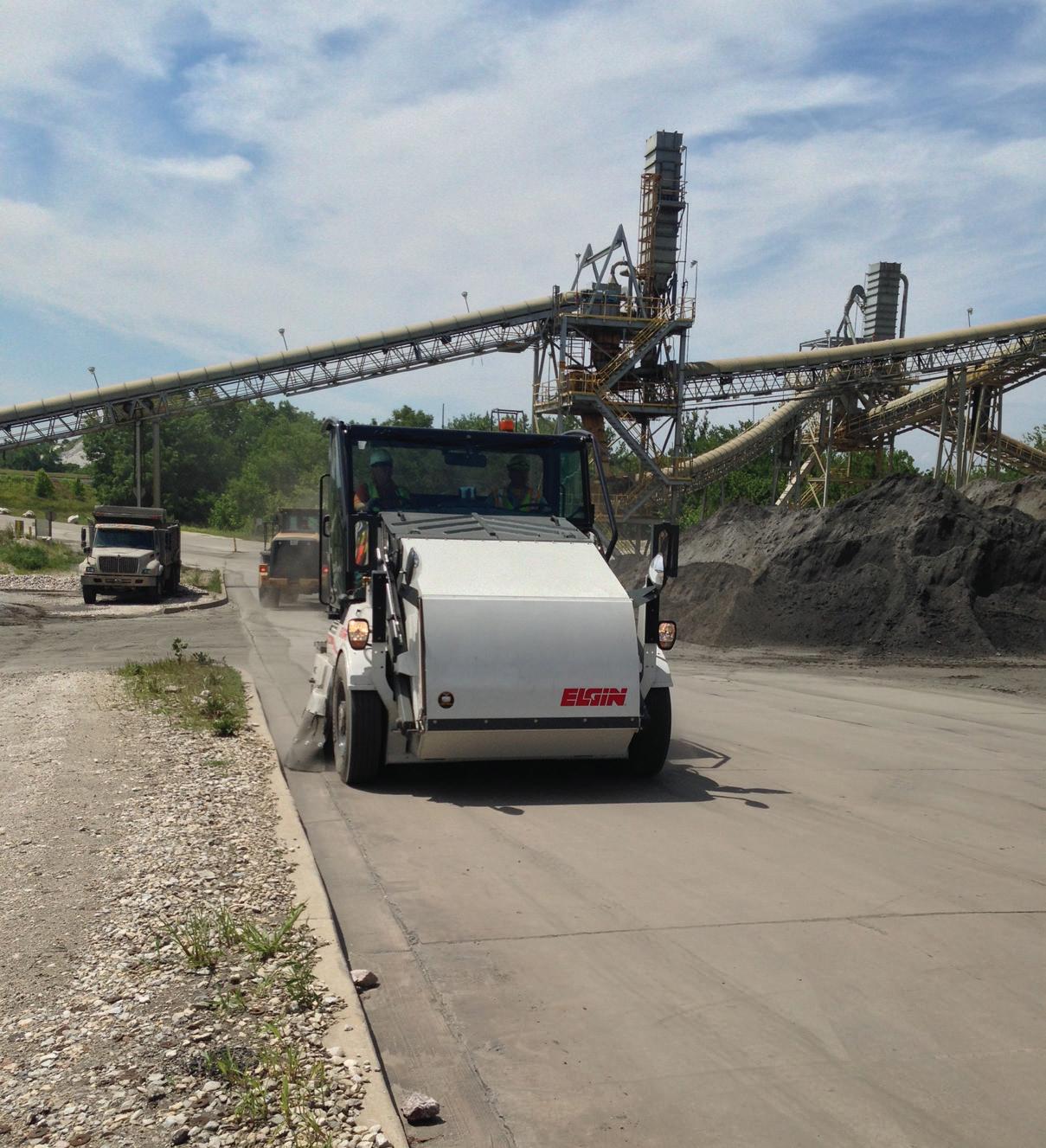
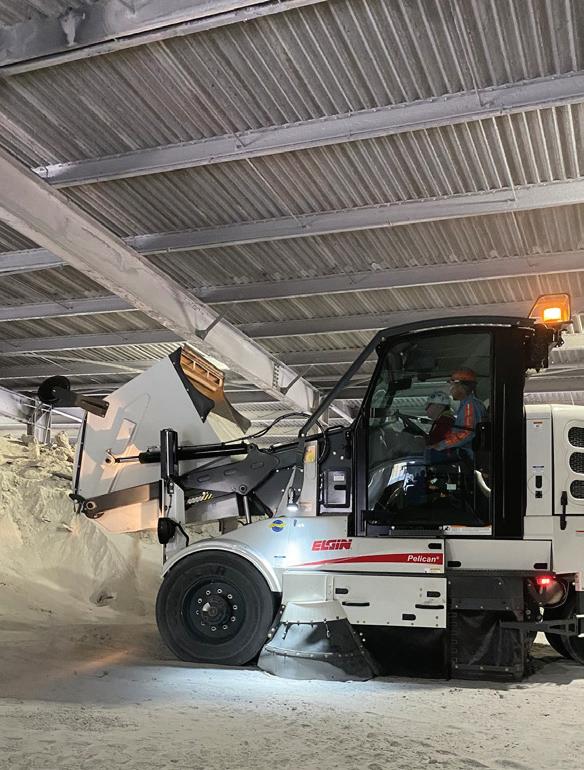
Pavement maintenance is integral to construction and road management. For contractors, it is crucial since salt, debris and dust are stirred up from construction work. That makes street sweeping critical for maintaining a safe job site, and it also helps prevent tracking any debris out from work zones.
This calls for street sweepers that can handle all manner of heavy materials including broken pavement, asphalt and concrete millings, mud, and construction debris to maintain roads and pavement.
MAKE A PLAN
Follow-through increases when a specific plan is in place. Set up a specific way of when, where, and how for sweeping at the worksite. A detailed plan helps set up for success by resolving any confusion of when or where street sweeping is needed.
When a specific plan is set in place, all operators are on the same page about what is expected, leading to a higher productivity rate and quicker maintenance times.
CONTROL DUST
Not only is dust from worksites a nuisance, but it also causes discoloration of streets and is unattractive. Street sweeping can help limit the risk of dust being spread by using water spraying mechanisms that help minimize the dust and limit the spread of debris.
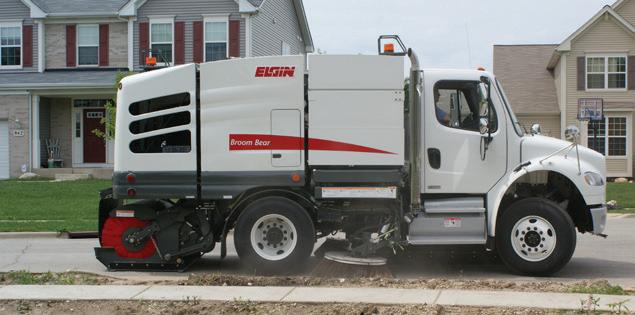
Waterless units are equipped with a shroud surrounding the underbelly of the sweeper, offering superior dust suppression. By reducing airborne dust, street sweeping helps to maintain a safe and healthy work environment.
CLEAR ACCUMULATED DEBRIS
Construction sites are often filled with debris like dirt, gravel, rocks, and other building materials. The materials are then tracked or spilled out onto surrounding roadways. This not only hinders daily operations but also poses safety hazards for workers, residents, and commuters.
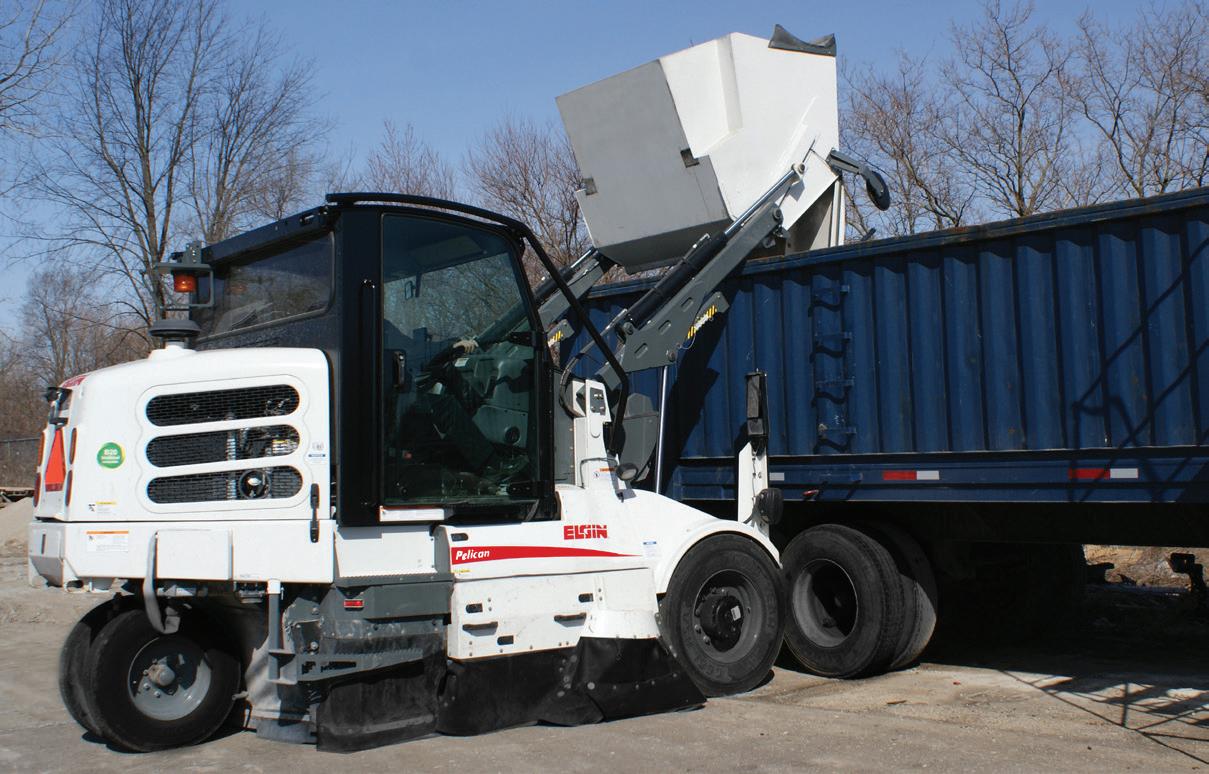
Regular maintenance like sweeping prevents the accumulation of debris, ensuring a clean and safe working environment. By sweeping streets, it helps remove any buildup. For increased efficiency, have the ability to dump into staged dump trucks, so operators don’t have to leave the road construction site in order to unload.
ENHANCE SITE AESTHETICS
Construction projects often involve significant investments, and maintaining a clean and presentable site is essential. Street sweepers not only remove dust, debris, and other unwanted materials but also enhance the overall appearance of the construction site and surrounding areas.
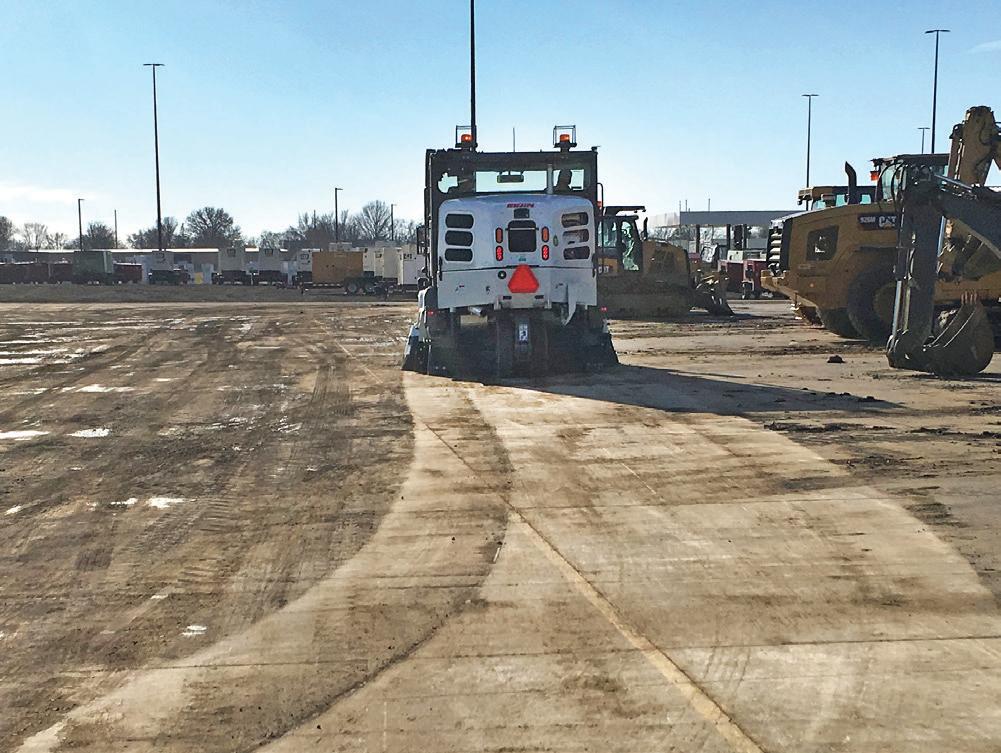
All Photos Elgin Sweepers
HIGH PERFORMANCE QUALITY RESULTS
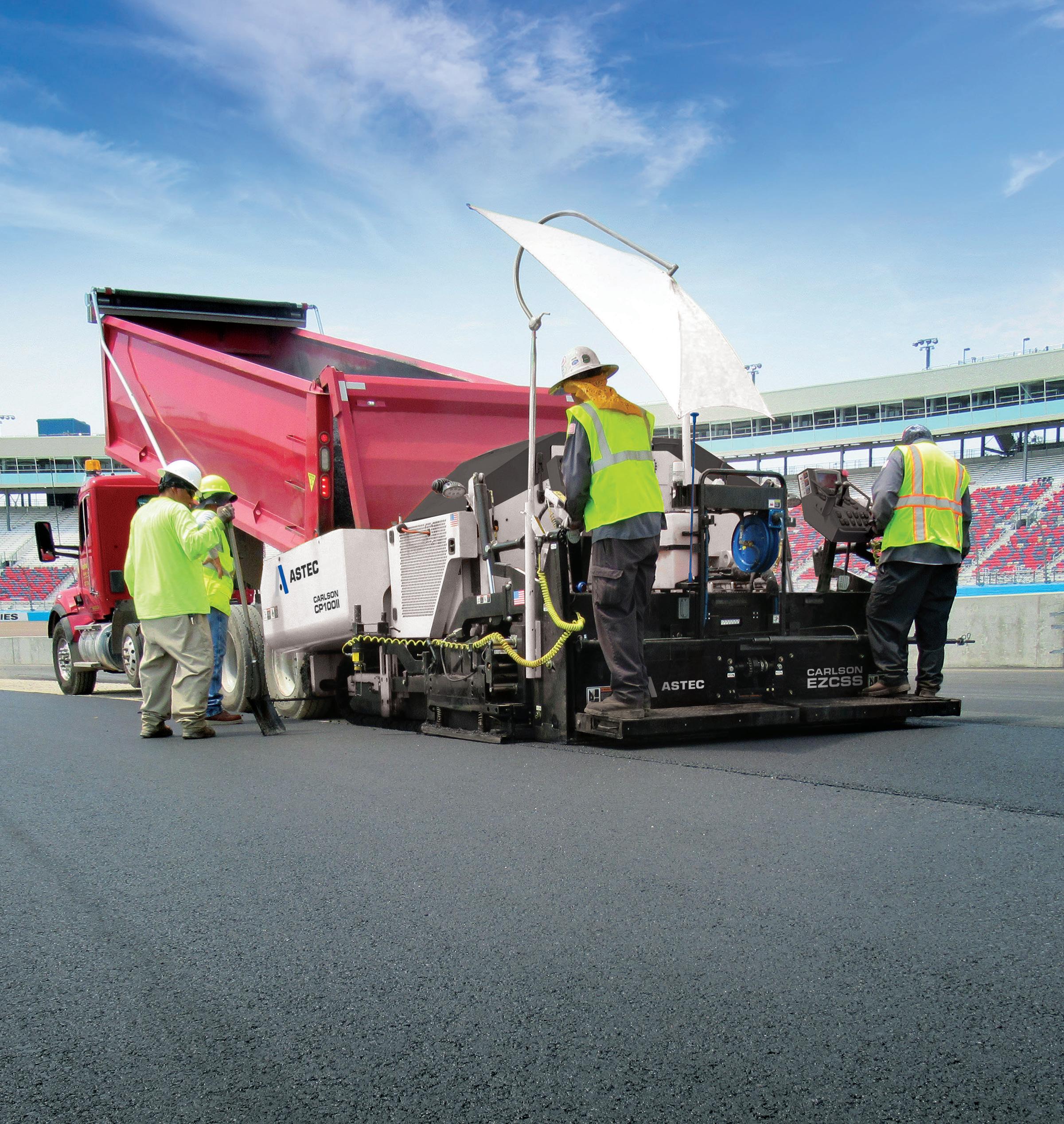
Carlson CP 100 II
The CP100 II sets the standard for versatility, component life cycle and mat quality. With a powerful 100 horsepower engine, an array of configurations and the class-leading Carlson EZCSS single slide screed, it’s easy to see why the CP100 II is the ideal choice for heavy-duty commercial paving.
BUILT TO CONNECT
A clean and well-maintained construction site projects a professional image to clients, visitors, and the public. Maintaining pavement throughout the areas shows the attention to detail and priority that it is to residents.
UNDERSTAND WHAT THE STREET SWEEPER CAN HANDLE
Since buildup is often extremely heavy and compacted, the powerful broom and conveyance of a mechanical sweeper is ideal and very helpful for increased efficiency.
Understanding what a specific sweeper can handle keeps machines from being unintentionally used incorrectly and possibly having to make constant repairs or replace machines. Plus, construction sites regularly have debris such as dirt, gravel, rocks and other building materials, so it’s important for
operators to understand how to conduct regular maintenance to upkeep the sweeper and maintain worksites.
HELP PREVENT FLOODING
Consider the weather’s impact. If a community receives more rain, sweeping and maintaining pavement is crucial. If streets aren’t swept during peak rain season, flooding is significantly more likely to occur as sewers and drains clog with debris. This is true especially in worksites or areas located at the bottom of inclines and hills where debris can accumulate without proper drainage.
While it’s important to plan, it is also necessary to be flexible. Knowing that the weather is unpredictable, pavement maintenance may be conducted depending on weather events. Using the correct fleet of street sweepers leads to higher productivity and better results.
COMPLY WITH REGULATIONS
Construction sites must comply with various environmental regulations set by local authorities and regulatory agencies. There are both environmental and safety regulations that street sweeping can help accommodate. Street sweeping plays a vital role in meeting requirements as it helps prevent debris and pollutants from entering storm drains and waterways.
Sweeping regularly can help prevent pollutants from exiting the construction site and therefore prevent fines from local authorities. By keeping
construction areas clean and free from contaminants, street sweeping aids in protecting the environment and complying with regulations.
CONSIDER LONG-TERM UPKEEP
Maintaining a clean construction site is not just important during the active construction phase but also for longterm maintenance of the pavement and the area as a whole. Regular pavement sweeping can help prevent the buildup of dirt, debris and sediment that can cause damage and deterioration over time. By incorporating street sweeping as part of the overall maintenance plan, construction sites can prolong the lifespan of their infrastructure and reduce the need for costly repairs to the road in the future.
SAVE COSTS
Investing in street sweeping may seem like an additional expense, but in the long-term, it helps save money. By regularly removing debris and dust from construction areas, street sweepers help prevent damage to equipment, machinery and property.
A regular street sweeping schedule prevents debris and dust buildup in construction sites, which might otherwise cause wear and tear on heavy equipment and machinery at the site leading to costly repairs and replacements. ■
by Chad Schiele, product manager, Elgin
IN PURSUIT OF BETTER: CLOSE THE GAP
Who is Danny_AdobeStock
Part two of a new series on leadership, personal growth, and being a better boss.
Building on last month’s four disciplines, let’s talk about something every leader wrestles with: the gap between where we are and where we know we should be.
Every leader in this industry knows it exists:
• The gap between the leader you are today and the leader you want to become.
• The gap between what you expect from your team and what you actually model.
• The gap between the standards you believe in and the standards you live out when no one is watching.
That gap doesn’t close with intention.
It closes with discipline.
Not complicated discipline.Simple disciplines repeated over time.
Here are three that consistently move the needle.
DISCIPLINE #5: SWEAT DRIPPING OFF YOUR CHIN
I firmly believe every leader needs sweat dripping off their chin a few days a week.
Not because it’s trendy.Not because it’s about fitness.
There’s something about pushing your body that clears your head and sharpens your thinking.
When you push yourself physically, you process stress better.You think more clearly.You build discipline.
Some of the best thinking I do doesn’t happen behind a desk. It happens when I’m training.
Movement sharpens the mind. You don’t need to become an Ironman athlete.
But leaders who never push themselves physically often find themselves drifting mentally.
Discipline in one area spills into others.
Action Step:Find something that pushes you physically three to five days a week. Run. Lift. Ride. Train. Do something that forces you to sweat and clears your head.
DISCIPLINE #6: ELIMINATE DRIFT
Leadership gaps rarely begin with dramatic failure.
They begin with drift.
A little less intentional.A little less prepared.A little more distracted.A little more reactive.
Drift compounds quietly.
No one wakes up and decides to lower their standards. It happens slowly when we stop paying attention.
If you don’t design your days, your days will design you.
Strong leaders build guardrails.
Guardrails against distraction. Guardrails against complacency.Guardrails against the small habits that quietly pull them off course.
Sometimes closing the leadership gap isn’t about adding something new. It’s about removing what doesn’t belong.
Action Step:Identify one area where you’ve drifted—health, focus, preparation, follow-through, or presence at home. Remove one distraction or friction point this week.
DISCIPLINE #7: RAISE YOUR FLOOR
Most leaders spend too much time chasing their ceiling.
They want their best days to be better. But great leaders focus on their worst days.
Closing the leadership gap isn’t about occasional greatness. It’s about eliminating inconsistent leadership.
No emotional blowups when you’re tired.No missed commitments.No checking out when the week gets hard.
You don’t need to be extraordinary every day.
You need to stop being inconsistent.
Raise your floor, and the gap starts closing.
Action Step:Identify one leadership behavior where you’re inconsistent. Define your new minimum standard for the next 30 days—and stick to it.
WHY THIS MATTERS
Leadership gaps don’t close because we care.
They close because we train.
Every standard you raise, every distraction you eliminate, and every discipline you repeat moves you closer to the leader you know you’re capable of becoming.
And when leaders get better, everyone around them feels it.
Your team feels it.Your culture reflects it.Your family benefits from it.
THIS MONTH’S CHALLENGE
Before the next issue hits your mailbox, focus on three things:
Sweat: Do something physically challenging three to five days a week.
Drift: Remove one distraction that’s quietly pulling you off course.
Floor: Define one leadership standard that becomes non-negotiable for the next 30 days.
Small, intentional disciplines compound over time.
Start closing the gap today.
LOOKING AHEAD
Next month, we’ll continue the conversation by looking at another leadership challenge many of us wrestle with: how we respond when pressure hits.
Because pressure doesn’t create character. It reveals it. ■
by Todd Eichholz, owner/CEO, A&A paving
FROM THE OWNER’S DESK
Managing Mindset Is Key To Pavement Preseason Stress
LThe season hasn’t started yet, but the stress already has.
et the stress begin!
Every year right around late January the same feeling starts creeping in. Nothing is actually wrong, nothing has actually happened yet, but your brain starts running worst-case scenarios about the upcoming season.
Crews, work, pricing, equipment, materials, training, customers wanting bids when there’s still snow on the ground — it all starts showing up.
As we approach a new season everybody’s stress level starts to increase. I really noticed it at the recent Pave/X show in New Orleans, talking with friends and other contractors. The excitement of a successful previous season fades quickly, and the reality of the challenge of a new year starts setting in.
A COMPANY RESET EVERY YEAR
The unfortunate thing about the asphalt industry is you can have your best year ever and on January 1st it completely resets and you start over. That “start over” creates stress. You’re thinking about hiring crews, repairing and buying equipment, pricing materials, or dealing with the demanding client that wants numbers immediately -- and giving them numbers that actually secure you the job! There’s a lot thrown at owners all at once.
Anybody that knows me knows I stress about everything, so I recognize this feeling pretty quickly. I think that’s just the entrepreneur mindset, always trying to cover every possible scenario in business before it happens. That comes with being an owner, and there are ways to deal with it.
I’ve mentioned before I work with a life coach, Kellie Madsen, and she’s helped me work through a lot of the challenges that come with owning a business. One thing I’ve learned is preseason stress is predictable. It happens every year around the same time, yet most of us still suffer through it like it’s a surprise.
But we don’t have to.
MANAGING YOUR MINDSET
I’ve learned mindset management is probably the biggest key to dealing with this preseason stress. (Anybody that remembers my “Sunday Scaries” column will understand preseason stress is handled the exact same way — managing your mindset.)
Our own minds usually create the stress or at least exaggerate it into something that feels impossible to tackle.
Truthfully, if you’ve gone through a few seasons, you’ve already encountered –and handled -- this before. In my case it’s been nearly 29 years, so logically I should know everything will work out — but that’s easier said than done.
The first step is realizing our brain is trying to keep us safe. It naturally looks for negatives. That’s an evolutionary thing going back forever. The problem is it takes manageable situations and amplifies them until they feel overwhelming. Once I understood what my brain was doing, I could step back and remind myself I’ve been here before and I can handle it.
For me, one of the best ways to reduce preseason stress is staying organized. I keep running to-do lists so things don’t slip through the cracks. There usually isn’t that much to do early in the spring, but when a few items get
Prathankarnpap_AdobeStock
missed and you have to fix them (while taking care of other to-do items in a timely manner), work gets complicated fast and suddenly you feel buried.
The list alone solved a lot of that stress for me.
Another issue I (and I know others) deal with is demanding clients. In my area we sit under snow through February and sometimes March, which isn’t ideal for site inspections. I like to be accurate when I look at parking lots, so I usually don’t start serious inspections until April. When clients call in January or February wanting numbers, I used to let my mind run away with it, trying to figure out how to satisfy them, protect myself -- and not lose the work.
Now I look at it differently — they’re trying to give me work, and work is what I want.
I explain we don’t have exact material pricing yet or that it isn’t
the right time to inspect pavement that’s covered with snow. But with that understanding, I tell them I can provide budget numbers they can work with. Problem solved, stress reduced, and customers are still happy.
Then there’s the fear you won’t have enough work for the season. For some people that’s real, but a lot of us worry about it every single year despite never actually experiencing a lack of work. Before I learned to manage my mindset, I would stress about not getting work even though over 29 years I’ve always had work.
CONTROL WHAT YOU CAN
I eventually realized something — I’m an entrepreneur. I’m capable of creating work. If I didn’t have that ability, I probably wouldn’t own a business in the first place. Once I trusted that, a lot of the anxiety went away. The same holds true for all you owner readers!
You are an entrepreneur! You can create work! Trust yourself!
The bottom line with seasonal stress is to not let your mind run away with things you can’t control. Focus on what you can control, rely on company history that shows your success, and trust yourself to handle problems when they show up.
I’m not saying ignore issues or stick your head in the sand. Work hard and put in the effort. But most preseason stress is far worse in your head than it is in reality.
Every year I go through it, and every year the same thing happens: The phone rings, the jobs show up, crews get moving, and somehow it all works out.
Maybe the lesson isn’t eliminating the stress — it’s remembering you’ve already survived it many times before. ■
Nick Howell, President, T&N Asphalt Services
More Power Sweeping Specific Online Classes Launched
Training programs create a great baseline of training for improved professionalism.
Nancy Terry, Executive Director
Years of blood sweat and tears for dozens of NAPSA members and beta testers have culminated in the release of multiple powerful training tools found at www.SweeperSchool.
com These courses included Certified Sweeping Operator (CSO) programs for Parking Lot and Construction sweeping but NAPSA is pleased to share that our CSO for Municipality has launched as well! These operator training programs create a great baseline of training for improved professionalism in your drivers. Upon completion of CSO, the owner will give the driver a verbal test and then certify that they have at least 1,000 hours of incident free sweeper
driving. NAPSA will then issue the driver a certificate, hat pin and uniform patch recognizing their effort.
The second training option available at www.SweeperSchool.com is our Certified Sweeping Manager series. This training track teaches about the Power Sweeping Standard. Managers gain valuable insight to the standard which translates to better management in your operation. In addition to our CSM 101 – The Power Sweeping Standard, we have launched CSM 102 – Emergency Preparedness. Knowing what to do and when to do it will abate a potentially litigious situation and this is the knowledge shared in our CSM 102 course! Graduates receive a certificate of completion for your insurance recordkeeping.
Lastly, we have a series called Fleet Basics – Key Fundamentals. The FB –Key Fundamentals course covers general topics for anyone who isn’t behind the wheel of a power sweeper but may need
to speak the lingo or other sweeping/ vehicle operation information, like portering!
The FB and CSO courses cover important topics such as health issues, safe driving, recordkeeping, customer trash can management, people skills, ethics and more. The CSO courses cover truck specific information such as pre and post trip inspections, parts of a sweeper, lot management, noise and dust, blowers, accident protocol and safe driving….and did we say safe driving?
NAPSA members receive discounts on the training at SweeperSchool. ■
HOT-APPLIED JOINT SEALANTS FROM W. R. MEADOWS
The North American Power Sweeping Association (NAPSA) is a nonprofit association made up of 200+ contract sweepers, service providers and sweeping equipment dealers, manufacturers and suppliers. NAPSA is dedicated to providing beneficial support to the membership and enhancing services to the sweeping industry. NAPSA is committed
by Brandon Noel, Editor-in-Chief
PAVING IN PARADISE: Coastal Asphalt Balances Growth With Family
Since 2008, Coastal Asphalt has grown from a seven-person startup to a 200-employee fullservice paving contractor serving the Carolinas and Georgia. Here is how they did it.
The Winburns knew they could do it better. So in 2008, Matt and Sherry Winburn did exactly that, launching Coastal Asphalt out of Conway, South Carolina, with a crew of seven or eight and a straightforward mission: build something superior.
Seventeen years later, that small crew has grown into a workforce of roughly 200 employees. Coastal
Asphalt now operates as a familyowned and operated, full-service construction and asphalt paving and maintenance company, specializing in residential gated communities, townhome communities, and commercial parking lots along the coastal regions of North Carolina, South Carolina, and Georgia. The company runs operations out of its Conway headquarters and an asphalt plant in Georgetown, South Carolina.
Chris Jones, salesman and estimator at Coastal Asphalt since 2015, said the early years demanded a willingness to grind through the learning curve.
“Lots of stumbling blocks,” Jones said. “Mostly just trying to figure out the best procedures to save time and money. Trial and error.”
That trial-and-error era shaped the operational instincts Coastal Asphalt
still runs on today. The company’s core service mix centers on asphalt milling and paving, with sealcoating and striping forming another significant pillar of the business. It is a lineup built for versatility across both the residential and commercial markets the Grand Strand continues to generate.
STILL FAMILY, STILL PROUD
In an industry where acquisition activity reshapes company names and cultures regularly, Coastal Asphalt wears its independence as a badge. Jones said that fact matters inside the organization just as much as it does in the market.
“We are still a local family-owned business,” he said. “We are really proud of that.”
Sherry Winburn, who serves as president and owner, manages the company’s overall administrative functions, professional organization memberships, marketing and communications, and continuing education opportunities. That division of responsibility reflects a leadership structure that has allowed the company to grow without losing the culture that built it.
A GOOD PROBLEM TO HAVE
Jones named growth management as the company’s defining challenge over the past year. Managing and changing with the scale of a 200-person operation requires a different playbook than the one written for seven or eight guys.
On the workforce front, Jones was candid about the revolving door dynamic familiar to contractors across the country.
“Finding good employees has been our biggest challenge,” he said. “We have a large employee base of around two hundred. It [feels like] a revolving door some weeks.”
His prescription for retention: make sure employees know they are family and that the company stands behind them. That culture-first approach, he argued, strengthens the bond between worker and employer in ways that competitive wages alone cannot.
When it comes to recruiting, Coastal Asphalt found a surprisingly effective channel. “Our website and Facebook have given us lots of new employee leads,” Jones said. It is a reminder that digital presence serves a dual purpose for contractors: it attracts customers and candidates simultaneously.
Coastal Asphalt
CLASSIFIEDS
ADVICE FROM THE FIELD
Jones offered advice for contractors just entering the business that reflects years of working both the sales and field side of the operation: protect yourself in writing.
“Cover yourself,” he said. “Whether it is making sure you have correct verbiage in contracts so you can get paid on time or explaining what your quotes do or do not include. So many times the public does not always understand our lingo, and we may need to explain better to make sure everyone knows what they are receiving.”
It is straightforward counsel, but it speaks to a contract clarity gap that costs contractors real money each season.
EYES ON THE HORIZON
Technology continues to change how Coastal Asphalt operates. Jones pointed to improvements in
sealcoating materials, more functional equipment, and cost-tracking software as meaningful upgrades over the last decade. Better materials dry faster and last longer. Better software surfaces where margins leak.
The next chapter, Jones said, is more crews and more capacity to service more projects simultaneously. The goal is simple: keep growing without losing what made the company worth growing in the first place.
“Building and making relationships with customers is a big deal to us and our company,” Jones said. “Without those relationships, we have nothing.”
The Grand Strand keeps developing and we will keep out eyes out for Coastal Asphalt, as it intends to pave every inch of it. ■
Photos by: Coastal Asphalt
Spray Tips
•
By Brad Humphrey
Risk Management: Safety First
The legality and science of risk management is quite well known among most contractors and is growing in need to be embraced, understood, and practiced .
Aprime aspect of “Risk Management” is the effort to limit, reduce, or eliminate any construction effort that would pose a safety risk. It’s more than a list of do’s and don’ts, it’s a culture, it’s part of the DNA fabric of your company about how they perform work and being commit to sending their workers home safe and in one piece…consistently.
The legality and science of risk management is quite well known among most contractors and is growing in need to be embraced, understood, and practiced by all specialty contractors. Our country is one of the most litigious in the world and, sadly, this certainly has found a home in the construction industry. So, it is wise to take safety seriously, having not only documents that are required but more, have a commitment to see that every worker is educated on, trained on how, and understanding the “Why?” behind doing things right the first time in the most safe manner possible.
Let’s first address safety in your organization. While this article will not fulfill the entire educational needs for a total safety program at your company, there are some key learning points that have been successfully implemented by many contractors that can bring value to your company.
SAFETY 1ST
Safety must be first everywhere possible in your company. I know of no contractor that will admit to NOT believe in the importance of safety but once again, it is in the actions and behavior of our most senior of leaders, including the owner, that sells safety 1 st Therefore, what can you do to demonstrate in action and behavior that safety is 1 st? Consider a few suggestions below:
• Personally invest in safety education.
• Lead safety training workshops personally.
• Make safety related questions part of your daily discussions with field leaders, office workers, field workers, etc.
• Personally investigate when there’s been a safety failure.
• Publicize “Safety 1 st via signage, posters, proposals, contracts, “grafitti” on company trucks, business cards, and all marketing pieces and internet outlets.
RESOURCE SAFETY 1ST
The resourcing of Safety 1 st is to consider all literature, tools, and equipment that should be reviewed, updated, and replaced as needed as it relates to safety. Again, some quick highlights:
• Commit a budget amount each year to inspect, replace, and maintain all equipment, vehicles, and power tools.
• Inventory your hand tools and consider what needs “sharpening,” fixed, and replaced.
• Are your educational materials clear in their intent to teach safe practices?
• Do you have clear and visible signage in your shop, yard, and especially on each job site?
• Do you have informative “5 S Maps” that indicate where everything is kept on trucks, trailers, your shop, and yard? The 5-S Map can contribute to faster inventory management and keep workers from pushing and pulling of tools, cords, shovels, etc. to find what they are looking for.
• Keep ample supply of barricades, flare tape, emergency kits, safety vests, tie-offs, and just about every other “safety tool” that can help prevent any issues.
EDUCATE SAFETY 1ST
Educate Safety 1 st most certainly includes actual training workshops and live demonstrations of safe working processes and techniques, but it also affects your company in a few other areas. Consider:
• The purchase of hats and shirts that have a clear reference to safety.
• Commit 5-7 minutes of stretching for all workers and leaders.
• Require part of your “pre-con” for the new project to address every safety “risk” potential on the new job.
• Take a brief “safety debrief” after each project from the hourly workers involved with job. If you perform more than one project in a short time span, review multiple projects once a week with your hourly workers.
• Incorporate one positive safety story a week in meetings or share a learning lesson from another company who may have had a safety problem.
RECOGNIZE & REWARD
Not much secret here and many contractors are practicing some degree of this suggestion:
• Recognize all new milestones of “incident free” goals and the people who are making it happen.
• Engage rewards to include company logo giveaways.
• For exceptional safety performance and results look at some “cash” rewards or tickets, coupons, dinner cards, etc. Be careful here due to the taxing of such items.
• Engage proven workers to conduct the safety training for newly hired employees.
• Consider appointing a “Safety Coordinator” for each work crew and your office. The “SC” isn’t the safety czar but instead, another outlet for employees to go to with questions, resource needs, etc. The SC can also assist foremen on scouting out potentially unsafe work areas, inspect equipment and tools needing repair, and assist in placing orders for new safety equipment.
ACCOUNTABLE SAFETY 1ST
All the previous suggestions and examples are for naught if we do not practice what we preach and hold people and processes accountable. Now for some tough love, consider:
• Hold leaders accountable to invoke safety discussions before every project and at the beginning of each new day.
• When leaders do not practice the previous, coach, counsel, and discipline as needed.
• Clearly educate your workers on safe practices and when they do not comply with such practice, coach, counsel, and discipline as needed.
• When “repeat offenders” continue to be non-compliant about following safety rules and practices…counsel, document, and
fire! Do not allow such people to stay with your company… it sends a very bad message that Safety 1 st is really “Safety Whenever it’s Convenient.”
• Make Safety 1 st mandatory for every employee.
Our industry has come a long way in the area of safety, but our insurance rates continue to be a bit high compared to other industries. Accidents happen but there is a tremendous amount of prevention that we really can do. ■
Brad Humphrey, The Contractor’s Best Friend
This Changes Everything! ULTRA PAVEMENT SEALERS
• Spend time on the jobsite “Applying Sealer” rather than “Mixing
• Avoid
•
Finally, a pavement sealer that is truly “READY TO APPLY.”
No need to add sand, water or additives.
Everything is factory blended for consistency and optimum performance.