PAVILIONS AND CHANGING ROOMS
Introduction
This guidance is intended as an aid for use in the design of changing and welfare accommodation, either for new build, refurbishment, or as an extension to your existing facility. It will provide information to assist club officials and building professionals to design suitable facilities to meet the requirements of football.
The FA and the Football Foundation have years of experience in the development and delivery of grassroots facilities. The following information will assist both you and your consultants when undertaking the feasibility and project development. Please give considerations to your football club’s long-term aspirations when developing your project, i.e. playing within the National League Pyramid.
It is advised that for more detail on this topic you should also refer to the latest Clubhouse Design Guidance Notes and Inclusive Facilities documents from Sport England which covers the areas of project management, design, refurbishment, and sustainability.
Sport England has a set of design panels which show example clubhouse designs, broken down into specific subject areas. These are provided to help club members and designers explore, discuss, and explain the specific needs of the club and the nature of the site.
As a supplement to the Sport England guidance, this document will provide those designing for football or wishing to submit a funding application to the Football Foundation, with accepted criteria and examples of good practice.
Details of the key considerations for changing rooms can be viewed on the Football Foundation Website.

4
8
10
DESIGNING A BRIEF MODULAR UNITS
32
PROFESSIONAL ADVICE REFURBISHMENTS
33
KEY CONSIDERATIONS SUSTAINABLE DESIGN
34
16 SITE DESIGN
31 MODULAR CONSTRUCTION
36 FINAL NOTES
Designing a Brief
The success or failure of a project often lies in the quality of the brief. A good project will clearly define the goals, areas of consideration, and restrictions of a project. The goals and parameters of a project are best identified using an evidence-based approach, reviewing and collecting information before making informed strategic decisions.
It is recommended that prior to the selection and appointment of your professional team; you should look to collate, consult, and consider the following information as you set your project brief.
COLLATE CONSULT CONSIDER
Collate
EXISTING SITE INFORMATION
Existing drawings and surveys of the site, including plans of any buildings, information on utilities, and previous ground investigation reports. If lost, these types of documents are often held on the Local Planning Authority’s (LPA’s) publicly accessed planning portal. You should complete a PitchPower report and collate details of existing site users.
SECURITY OF TENURE
Evidence of ownership in the form of freehold/leasehold title documents: these documents will inform you on legal boundaries, restrictive covenants, wayleaves and rights of way. Not to mention, they would be required if funding from the Football Foundation is being applied for.
PROJECT BUDGET
Your organisation’s budget, taking into consideration the money in the bank, as well as external sources of funding (both potential and secured).
Ensure you have signed up to PITCHPOWER to help you inspect and improve your grass pitches.
Consult
COMMUNITY
Engaging with your community is vital and will help inform your programme of use, which in turn determines what’s needed for your community. Programmes of use aren’t only for sports pitches; what could your facility offer if it included flexible space. It is also worth visiting local clubs and sites to understand how they operate as well as speaking to your County FA to gather thoughts on requirements.
EXTERNAL FUNDERS
Approaching external funders, such as the Football Foundation, at an early stage will ensure that any requirements that are a condition of funding are understood from the outset. Approaches could be made to local and national grant providers and the Local Authority.
SITE HISTORY
Many sites have a long and rich history to protect. Take some time to learn and understand this history, as a bit of local knowledge may serve you well in the long run. What does the existing facility do well? Where does it fall down?
LOCAL PLANNING AUTHORITY
Initial consultations with the Local Planning Authority are recommended to gauge the likelihood of gaining planning permission before expenses are incurred in obtaining detailed plans. Pre-planning advice could be sought from the Local Authority to understand any specific requirements or potential challenges that may arise. A fee may be payable for this service.
PROGRAMME OF USE (POU) A week-long schedule with all lettable spaces allocated.
Check out our COMMUNITY ENGAGEMENT TOOLKIT for more info!
Consider
POTENTIAL OFFER
As you engage with your community, consider what the proposed building can practically offer. What level of football is played at the site and by whom? What are the club’s aspirations for the future? What other sports can be easily catered for? What groups stand to benefit from a space? What options are there for secondary spend? What opportunity is there to embed other sports into the project?
OPERATIONAL MODEL
Who will be responsible for maintaining and operating the building, and what budget you will need to service it? What bookable spaces will you have, who will coordinate them and how much will you charge? How will the site be managed to ensure you can cater for users / teams of different gender and when facilities are at capacity?
PITCH AND BUILDING MAINTENANCE
Who will be responsible for the maintenance of your grass pitches? What will be the annual budget requirement in order to provide good quality pitches that will ensure your new pavilion will get the use that it is intended to? Who is responsible for ensuring the building is cleaned, maintained and all statutory checks are completed? Is there a sinking fund and maintenance budget built into your budgeting plans?
Professional Advice
The selection and appointment of your professional team is an important process. It is good practice to seek a minimum of three TENDERS from contractors for the building of your facility to ensure best value is achieved, so why not carry out your selection of an architect or consultant in a similar fashion?
When developing your project brief it would be advisable to contact your County FA facilities team to draw up a list of clubs or organisations who have already developed their facility. Sport England provide a Design and Cost Guidance section that many provide a useful source of information.
(https://www.sportengland.org/guidance-and-support/facilities-andplanning/design-and-cost-guidance)
Interview potential consultants to ensure you would be happy working with them, find out what services they provide and at what cost, and importantly, what their experience is.
The Sports and Play Construction Association (https://sapca.org.uk) may be able to provide information to support you in obtaining advice from industry professionals.
TENDER
To tender is to seek offers to carry out work at a fixed price under agreed terms.
A comprehensive business case should precede any design processes to ensure that your new facility sustainably meets the Organisation’s and Community’s needs.
Professional Advice
Further advice is provided in Sport England’s DESIGN GUIDANCE NOTES – PROJECT MANAGEMENT
Depending on the size of your project, you may find that all of these roles can be found in one or two people. Just make sure, however big or small your team, that the roles and responsibilities are defined and agreed from the outset.
PROJECT MANAGER (PM) oversees the project as a whole and is also the project lead. A PM will also manage the budget and programme.
COST ESTIMATOR OR QUANTITY
SURVEYOR (QS)
will estimate costs and manage the budget.
CIVIL ENGINEER
will advise on design decisions from an operational and commercial perspective.
ACCESS CONSULTANT
will work with you and the design team to ensure the building is accessible to disabled people and avoid having to make costly and embarrassing post project alterations.
PLANNING CONSULTANT
will have a good understanding of planning requirements and will guide you through the planning process.
ECOLOGIST
will advise relating to BNG requirement for planning process.
PRINCIPLE CONTRACTOR will build your facility and manage any subcontractors required.
ARCHITECT OR A DESIGN CONSULTANT will manage the design of the facility and produce drawings. May also complete Construction Design Management regulations and provide Health & Safety advice.
Key Design Considerations

With the project specific factors defined, there are three key design considerations that should be included within any pavilion project’s brief...
Key Design Considerations
1 PRACTICAL
2 INCLUSIVE 3 SUSTAINABLE
A practical pavilion is one that is fit for purpose, with the key word here being purpose. Who are the users and what are their needs? As you start to understand this, you can develop your project with the users at the centre.
• Do you know your community?
• What does the community need?
• How will your community use the facility?
An inclusive space is one that meets the needs of as many different types of people as possible.
• What communities can you serve better?
• How can you cater for people with different disabilities?
• How will your project meet the needs of women and girls?
• Consider whether your project caters for the needs of babies, infants and young children?
A sustainable building is one that will serve its intended purpose for years to come in an environmentally responsible way. You will find that as you start to look at one aspect, you’ll inevitably also be looking at the other! You should also consider how the building can become financially sustainable to protect its future.
• Do you have an income and expenditure forecast in place?
• How can you maximise use and therefore income generation through marketing and promotion?
• What commercial arrangements can you establish to support the facility?
Achieving a proposal that fully meets all key considerations is not necessarily possible, but putting these important factors at the forefront at an early stage will greatly increase your chances of reaching an appropriate balance.
• What do you need to run as a successful facility?
1 Practical
A practical design is one that is focused on the building’s function, which is why we suggest you start looking at your programme(s) of use. As you start to understand who the users are, and what their needs will be, you can start to look at how your design can meet those needs.
What are the needs of other sports, community users, and events that the facility may host?
This may require flexible use of space through choice of suitable materials or fittings.
YOUR USERS
PROGRAMME OF USE (POU)
DESIGN & NUMBER OF CHANGING ROOMS
INCOME GENERATION
MAINTENANCE & OPERATIONAL CAPACITY TYPES OF FINISHES, FIXTURES & FITTINGS
MAINTENANCE & OPERATIONAL REQUIREMENTS
YOUR STAFF/ VOLUNTEERS
The above illustrates why practical design decisions should ultimately be dictated by people; by the users you will serve and by the volume and expertise of staff or volunteers you can sustain.
2 Inclusive
Whilst practical design is based on meeting the current users’ needs, inclusive design extends its consideration beyond the present users. When designing a pavilion, it is important to ensure your facility is welcoming to all, irrespective of age, gender, ability, sexual orientation, race, faith, or disability.
Wherever possible, users should have a choice of provision to meet their needs and preferences, as the provision of choice helps minimise BARRIERS to participation. How can you actively reduce barriers to participation through the design of your building?
Under the Equality Act 2010, providers cannot discriminate against other characteristics.
Encouraging more people to get involved in sport will foster a more welcoming and enjoyable environment whilst also creating a more sustainable future for your club.
There are currently 16.1 million people in England with a long-standing limiting disability, illness, or condition – that’s almost one in four of us! There has never been a better time to start thinking about how to ensure everyone feels welcome, whatever barriers they may face.
Consider a changing places facility. Further guidance on layout and equipment is available from the Changing Places Consortium.
To find out more visit Inclusion by Design
To find out more visit The FA- Disability
To find out more visit Sport England ASIF Guidance
INCLUSIVE DESIGN CONSIDERATIONS...
- specific mobility, dexterity, sensory, and communication impairments
- learning disabilities
- continence needs
- people whose mental well-being should be supported by a thoughtfully crafted and managed environment
- specific requirements for women and girls
- cultural and faith requirements for ethnic diverse communities
- The needs of babies, infants and young children who may use the facility
BARRIERS
a preventer to participation, be it real or perceived, mental, physical, cultural, or socio-economic.
INCLUSIVE ENVIRONMENTS WILL...
- be responsive to people’s needs
- be flexible in use
- offer choice when a single design solution cannot meet all users’ needs
- be convenient so they can be used without undue effort or ‘separation’
- be welcoming to a wide variety of people
- accommodate without fuss those who have specific requirements
3 Sustainable
The word sustainability can mean many things depending on the context, but in all forms it is about thinking to the future. Within this guidance, we are referring to both financial sustainability and environmental sustainability.
FINANCIAL SUSTAINABILITY
relates to the affordability of your project, both in capital costs as well as long term operational and maintenance costs. A financially sustainable project is one that has considered its capital investment carefully, and has ensured that the income generated is greater than the forecasted expenditure.
Well-considered design can aid your club or community group in providing economic sustainability through flexible lettable spaces and secondary spend from bar and kitchen facilities.
ENVIRONMENTAL SUSTAINABILITY
goes beyond the immediate future. It’s about playing our part in protecting our natural environment for generations to come. Minimising resource consumption through design is not only the easiest way to reduce the impact your building will have on Climate Change, but it is also the most cost effective. Thought should be given to how your building uses energy, water, and waste. Consideration also needs to be given to the materials going into your project, accounting for all stages of your building’s life cycle. Using local suppliers can also be cost effective and good for community engagement, but can also help with reducing the carbon footprint to a site.
3 Sustainable
COST BENEFIT ANALYSIS
Design decisions should be made on the basis of the total cost over the building’s life cycle. The purchase, installation, running and maintenance costs should all be factored into the analysis.
To find out more visit Sport England’s Sustainability guidance.
BECOMING SUSTAINABLE
It is crucial that the environmental performance of any facility, new or existing, is considered and improved wherever possible. Although making changes to an existing building is not straightforward, the below four steps can be taken to become more sustainable:
ENGAGE A PROFESSIONAL: An independent assessment consultant will be able to clearly rate a building’s energy performance and provide appropriate measures to then improve it.
REDUCING ENERGY INTENSITY: Reducing Energy Consumption by; lowering heating and water temperatures, prioritising daytime usage and utilising motion sensor lights. Minimise Energy Loss through; installing insulation, fixing leaks and draught proofing.
CHOOSE CLEAN ENERGY SOURCES: This could be as simple as switching to a greener energy provider or even incorporating new renewable technologies such as PV solar panels or air source heat pumps.
MONITOR & EVALUATE PROGRESS: It is very important that changes and progress are continually monitored. Every facility should have an energy officer who is charged with keeping the club on track and accountable.
SUSTAINABLE DESIGN CONSIDERATIONS
Optimising the space of new buildings and/or the potential of existing structures
Adopting energy efficient technologies and optimising energy usage through initiatives such as passive solar design and natural ventilation systems
Protecting and conserving water
Using environmentally friendly and green materials
Optimising operational and maintenance practices
Minimising waste through recycling and efficient use of resources
Enhancing indoor environmental quality (air quality, lighting, thermal comfort, acoustics, ergonomics etc.)
Ensuring the space is designed, occupied, and operated with the objective of best practice environmental performance
SITE DESIGN
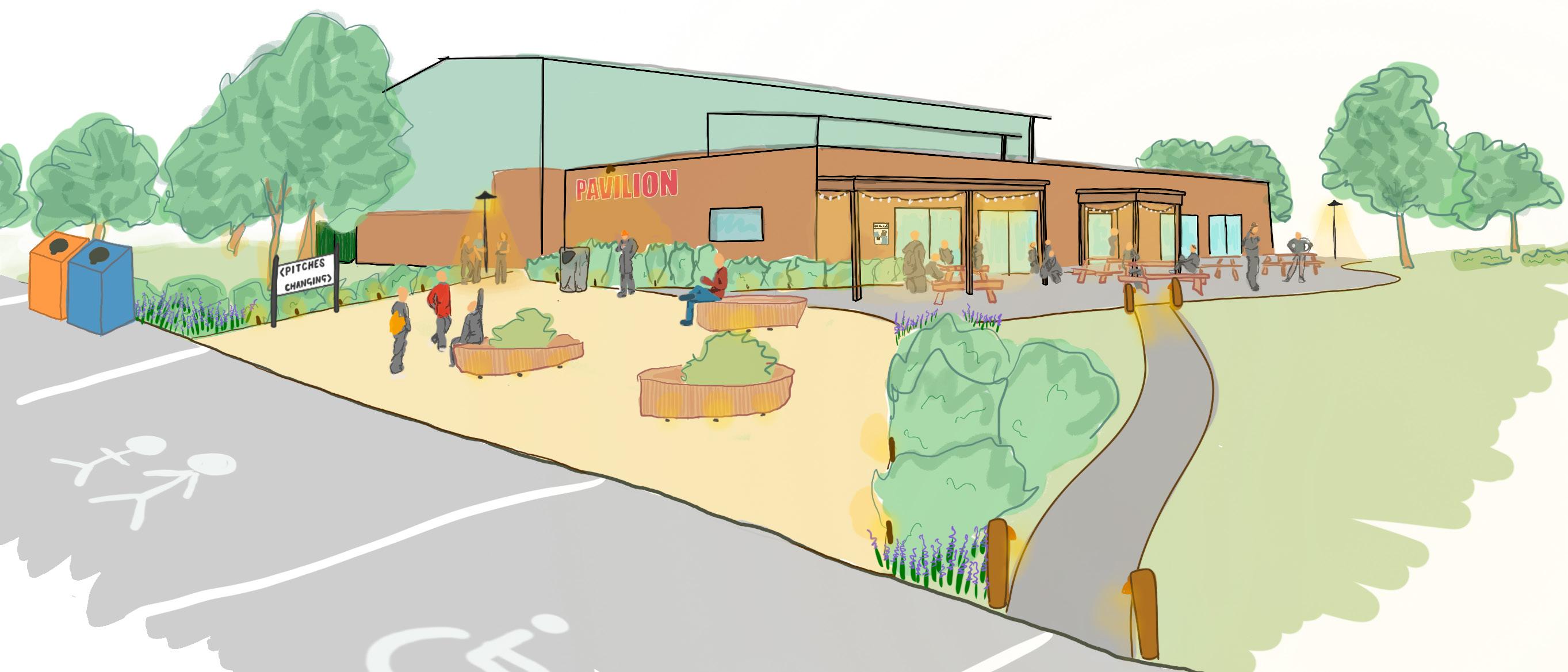
Location
1. RECYCLING FACILITIES
Will help users to build sustainable habits.
2.
SECURE STORAGE CONTAINERS
Can provide affordable storage, but try to place them in discreet locations.
3. WARM FINISHES
Can make a significant difference to how welcoming a building may feel.
4. FULL HEIGHT WINDOWS
Allows for quick understanding of what lies beyond but be mindful of security and the surroundings.
5. GREENERY
Is an effective way to create an inviting and attractive space as well as providing some biodiversity.
6. SEATING
Often the biggest hurdle is getting someone to walk through the front door, so when creating an inclusive space, first impressions matter. How can you make your facility feel safe and inviting as well as ensuring your buildings are in the right position?
At an entrance not only caters for those who may need to rest on their approach, but it also aids in creating a safe and inviting atmosphere by encouraging people to occupy the space.
7. LOCATION
The clubhouse close to an existing access road will reduce the cost and length of new access routes and services connections. Make sure the site is easily found using navigation apps or what3words.
8. POSITIONING
Where is the building located in relation to pitches? How can you ensure you maximise income through the location of the facility? How does the position of the building change depending upon your users?
9. LIGHTING
At the carpark and along a user’s entire journey towards the building provides a safe and inclusive feeling for users.
10. NOTICEBOARD & INFORMATION
Will easily guide newcomers on where to go.
Access and Parking
1. AMPLE SOFT LIGHTING
Creates a welcoming atmosphere whilst sufficiently lighting the area to a level that makes people feel safe.
2. DEDICATED PARKING
Should be provided near the building for those with limited mobility or families.
3. COVERED BIKE STORAGE
Should be provided to allow cyclists to safely store their bikes. Consider creating and providing cycle routes and have maps available to the facility.
4. EV CHARGE POINTS
Promotes sustainable practices, whilst potentially attracting new visitors.
Getting to the door of a building is not straightforward for everyone. Consider all of the groups discussed on page 13, and think about what each might need to make their journey into your facility as easy as possible.
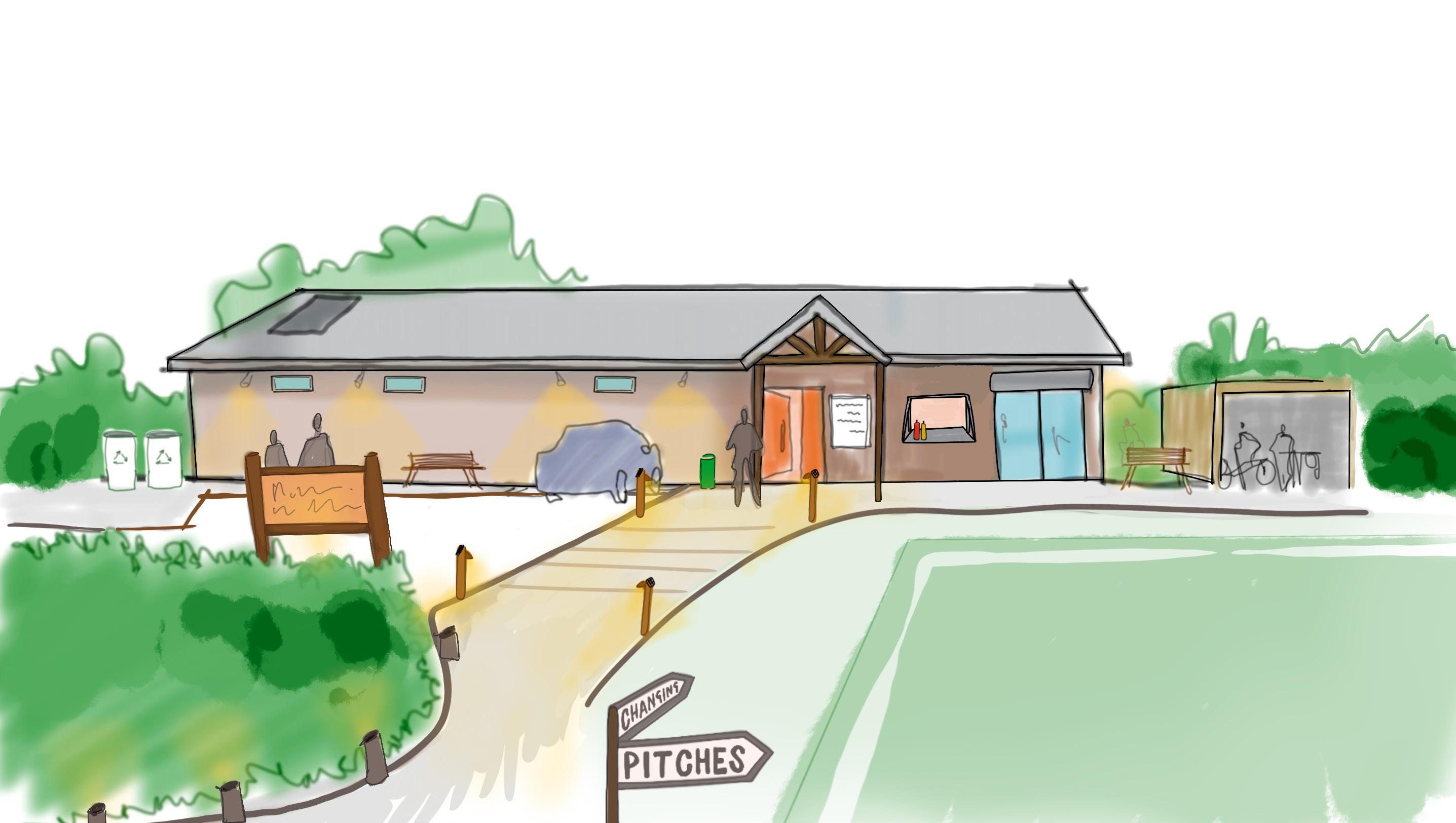
5. SUSTAINABLE DRAINING
Consider sustainable drainage solutions for car parking.
6. CLEAR SIGNAGE
To the pitches and buildings helps avoid unnecessary foot traffic through the building.
7. CAR PARKING
Make sure you have sufficient parking. Local Authorities may provide guidance in relation to parking requirements.
8. WELL DEFINED WALKWAYS
Helps newcomers know how to access the building whilst also reminding drivers that there may be pedestrians nearby. Use hardstanding, avoid gravel and shingle.
9. CLOSED-CIRCUIT TELEVISION (CCTV)
Offers a variety of benefits to community buildings, including enhanced safety and a deterrent against crime & anti social behaviour.
10. ONSITE DEFIBRILLATOR
We recommend a defibrillator is kept onsite and is in a clearly visible & accessible location.

Floorplan Example
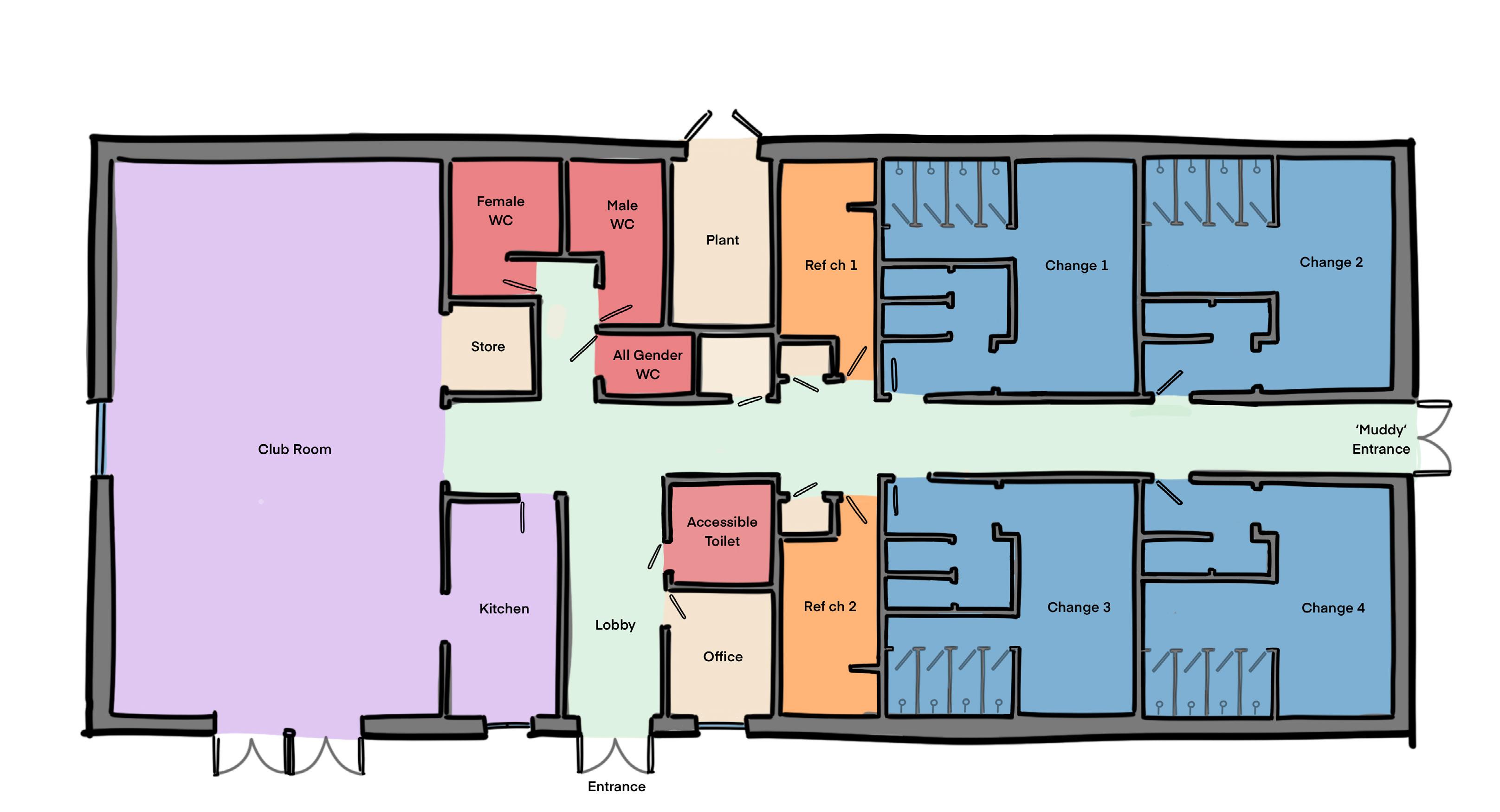
1.
Ability to store items away whilst not being used.
2. CUBICLED SHOWERS
Cubicle showers provide privacy to changing room users.
3. TOILETS
Isolated toilets that provide privacy for users.
4. SEPARATION
Ability to keep spectators and players separate to support safeguarding requirements.
The following indicative layout gives an overview of the type of facility which could be considered when looking at creating a football facility. Information and details of the key rooms shown are further explained later in the document.
5. SPECTATOR ACCESS
Entrance point for users who wish to access the club room and non changing facilities.
6. KITCHEN
Easily accessible for both internal and external visitors of the site.
INTERNAL STORAGE
Entrance
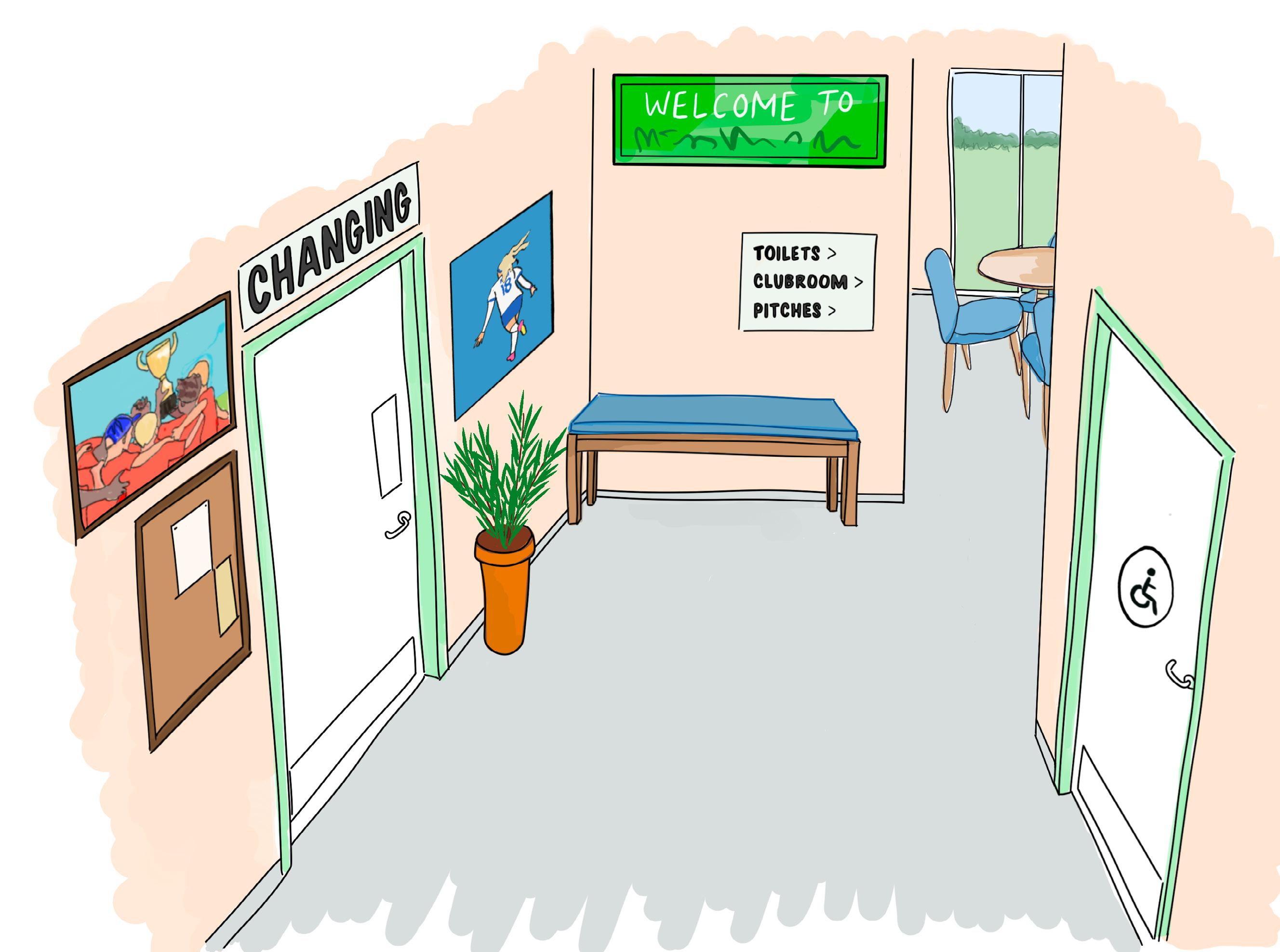
1. NOTICEBOARDS
Can provide key information for the site, including contact details of committee members, Medical Emergency Action Plan (MEAP), and promote ‘what’s on’.
2. CLUB HONOURS / PHOTOGRAPHS
Celebrates the club’s and community’s history and achievement.
3. ACCESS TO CHANGING ROOMS AND FACILITIES
Should be able to be controlled, thus separating spectators from players an assisting in safeguarding. Separate direct access to the pitches should be considered.
4. DIVERSE REPRESENTATION
Within a space fosters a sense of belonging and inclusivity. This is an easy win for facilities, as the impact of installing these photos or murals will certainly outweigh the cost and create a friendly approach.
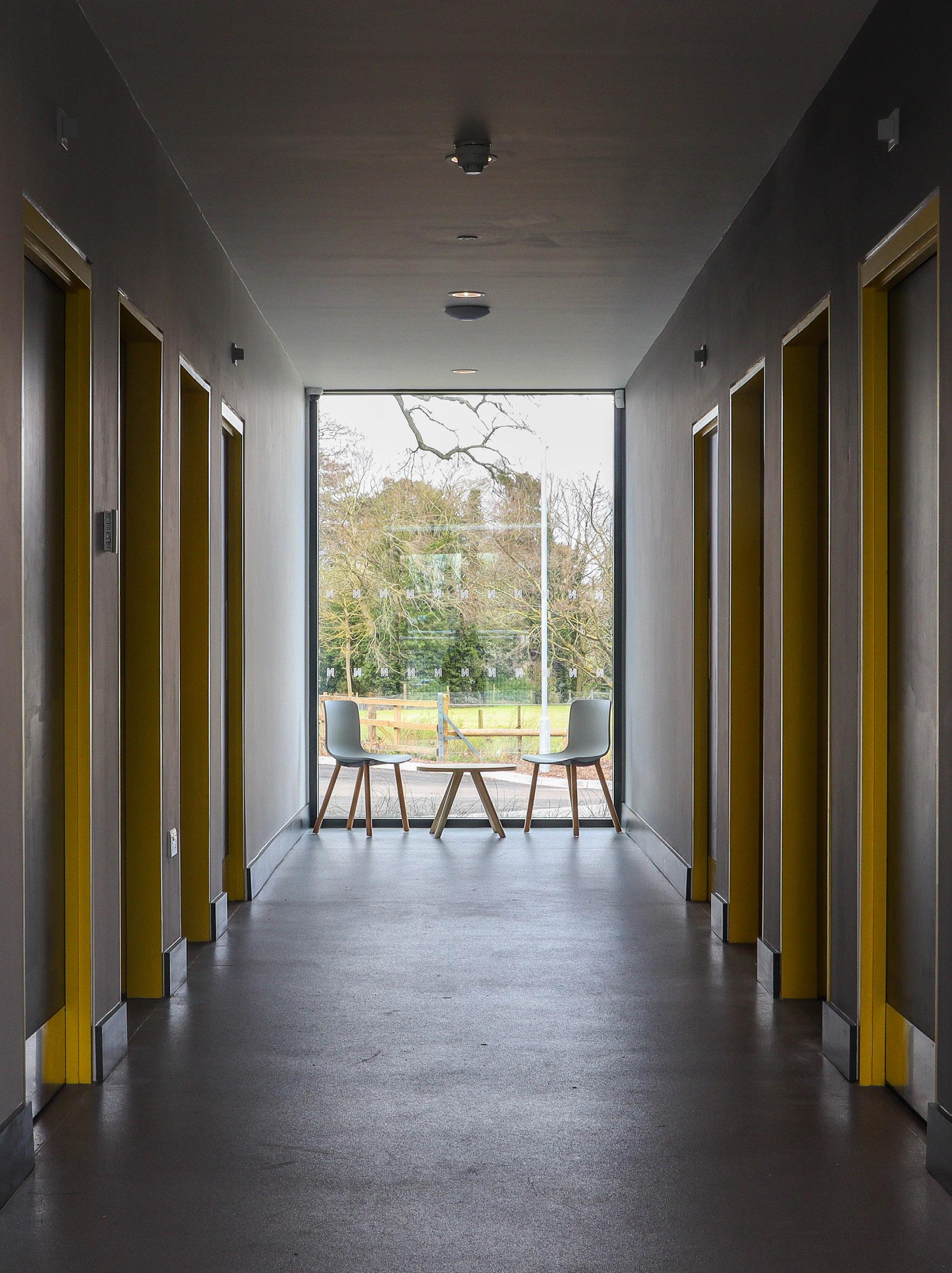
5. CORRIDORS
Should be sufficiently wide enough to allow for a wheelchair user. If less that 1.8m wide, there should be a passing place somewhere along its length to allow two wheelchairs or players with large bags to pass.
6. ACCESSIBLE TOILETS
Should have clear signage and be easily located and accessed near the entrance of the facility.
7. BUGGY PARK
Space should be considered for people to store wheelchairs, motorised scooters and pushchairs.
8. DOORS
Should have a width of 875mm. Whilst this is greater than current building regulations, it is more appropriate for a sporting environment with teams / people moving in groups with large bags, and enables greater access for wheelchair users.
Spectator Toilets
LOCATION
Of toilets should ideally be off the entrance foyer. This allows control over the rest of the building as the need for anyone other than players and coaching staff to enter the changing area is negated which is important in maintaining safeguarding principles.
BABY CHANGING
Should be provided, although consideration needs to be given as to where, as they should not be exclusively within the female toilet facilities or be awkwardly fit into a wheelchair-accessible WC. Providing baby changing facilities within an entirely separate gender-neutral family-sized WC is one of the best ways of providing baby changing facilities within a building.
SANITARY BINS
These must be provided in all women’s and gender neutral toilets and those within changing rooms when used by women. They should enable disposal of sanitary waste in a discreet and environmentally responsible way.
ACCESSIBLE WC
As a minimum, there should always be one gender-neutral wheelchair accessible WC available. Thus, if your facility only has one WC, it should be a gender-neutral wheelchair accessible WC.
TYPE
Whether a facility’s toilets are held within gendered lobbies or are accessed directly off the main circulation space, WCs with a wash hand basin, hand dryer, hooks and mirror within the lockable cubicle are preferred by most.
OPERATION AND MANAGEMENT
Depending upon the level of use you will need to consider how often toilets need cleaning and who is responsible for checking when and how they have been cleaned.
CHANGING PLACES TOILET FACILITIES
Larger facilities may require greater provision and will need to consider the inclusion of a Changing Places Toilet. This could open up your facility to wider community use.
Access and quality of toilet provision within a site is one of the most important factors for users, and thus it must also be for the designer and operator.
There should be separate male, female, gender-neutral, and wheelchair-accessible spectator toilets available. Multiple self-contained WCs allow for such provision to be made within a limited space. By employing several self-contained WCs within a design, rather than two gendered toilet areas, the operator is also able to adapt to the needs of the facility users with ease. If an operator finds that all of the WCs on offer being gender-neutral is not working, signs can easily be changed to try out a new mix of offerings.
Signage should be easy to understand and include internationally recognised symbols.
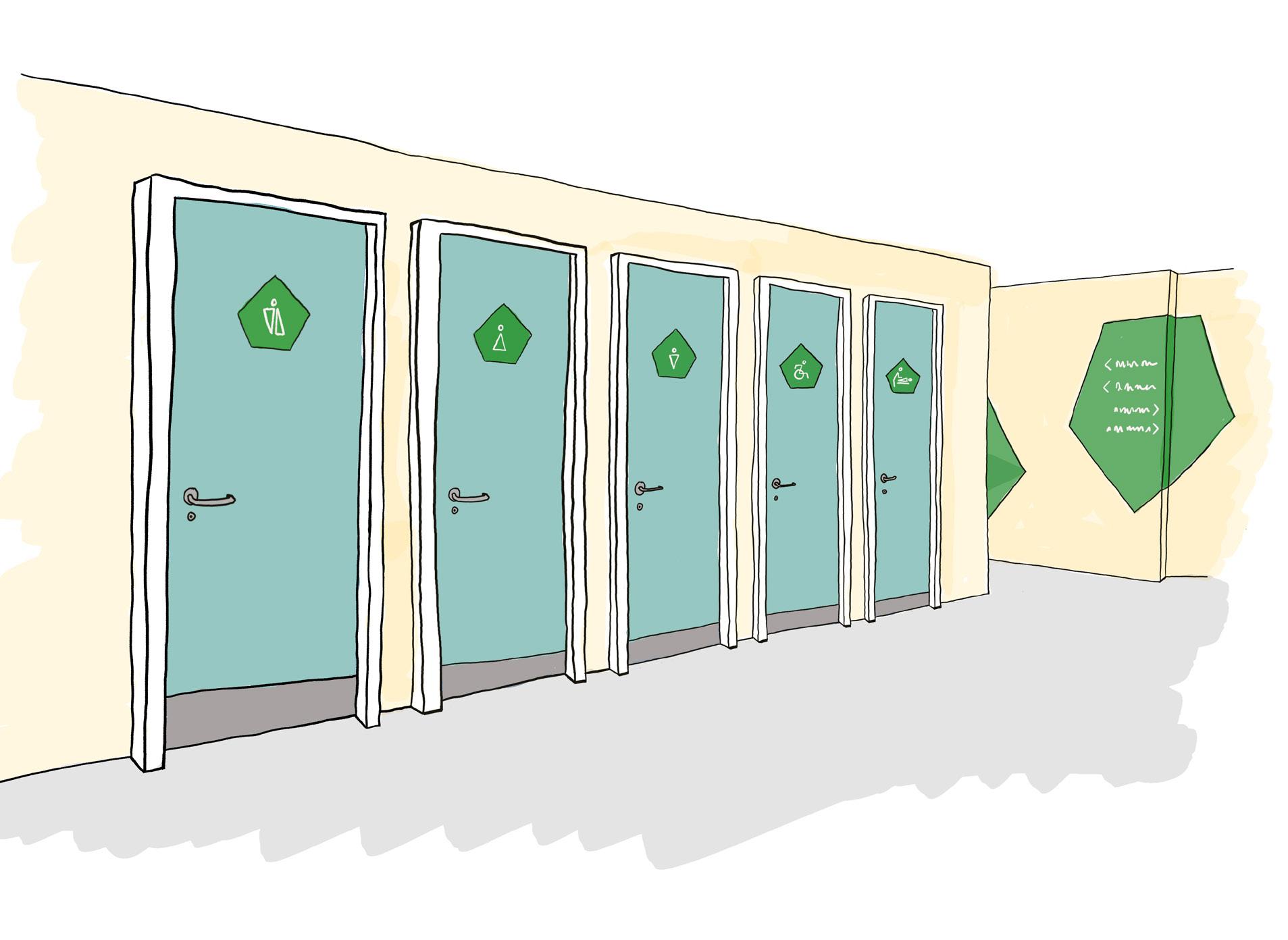
If the number of WCs is limited, most should be labelled as gender-neutral so that they are available to as many users as possible. However, it is important to note that people of certain religions or backgrounds may not be able to use a gender-neutral WC. Your community engagement should identify if these user groups are likely to frequent the facility, and if so, their needs should be appropriately met.
Clubroom
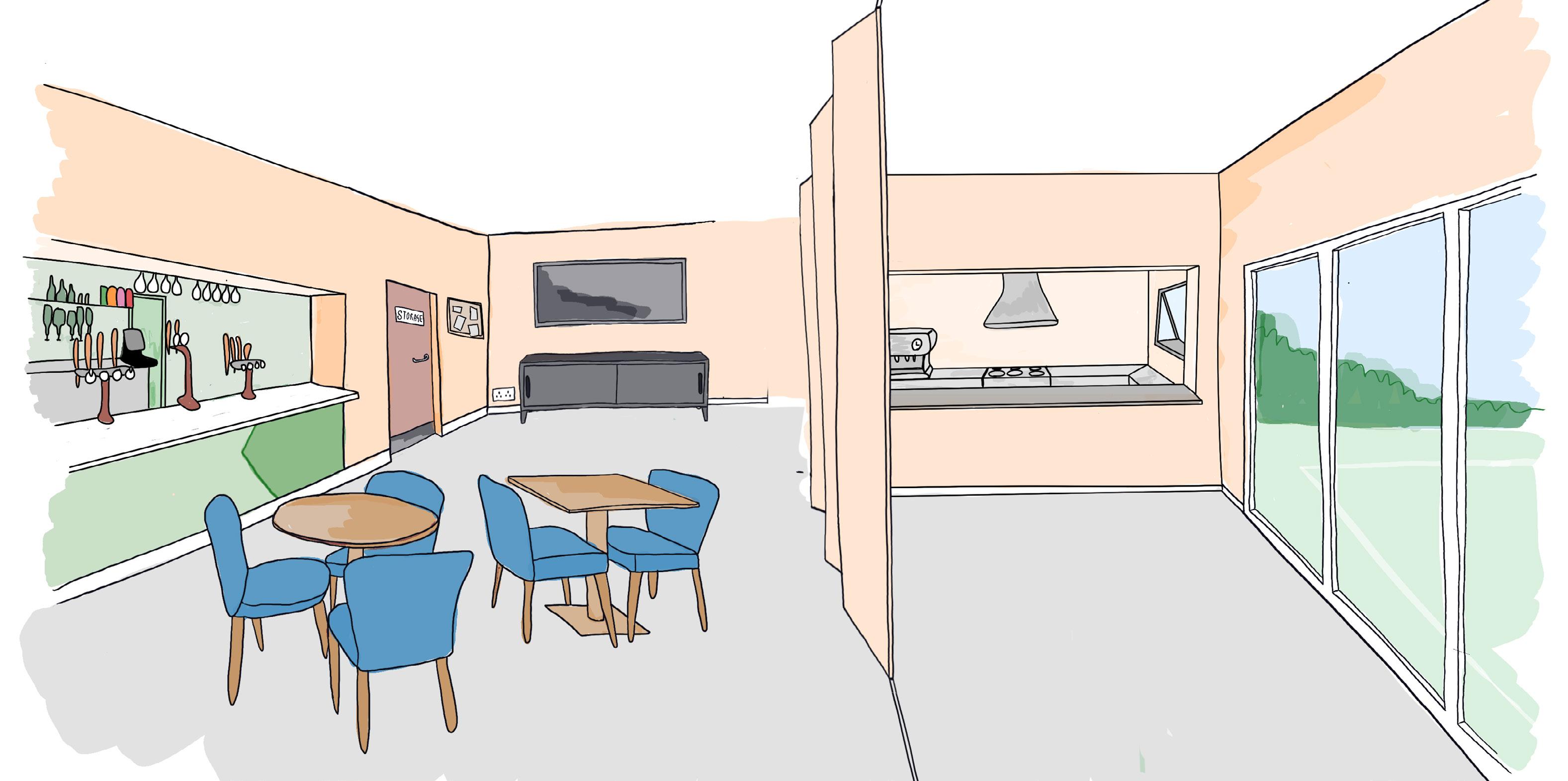
1. NOTICEBOARD
Allows the user to share important information and contact details as well as advertise events and opportunities.
2. POWER OUTLETS
Are an easy win in creating a user-friendly flexible space.
3. AV PROVISION
Should be specified to be versatile and easily connected to.
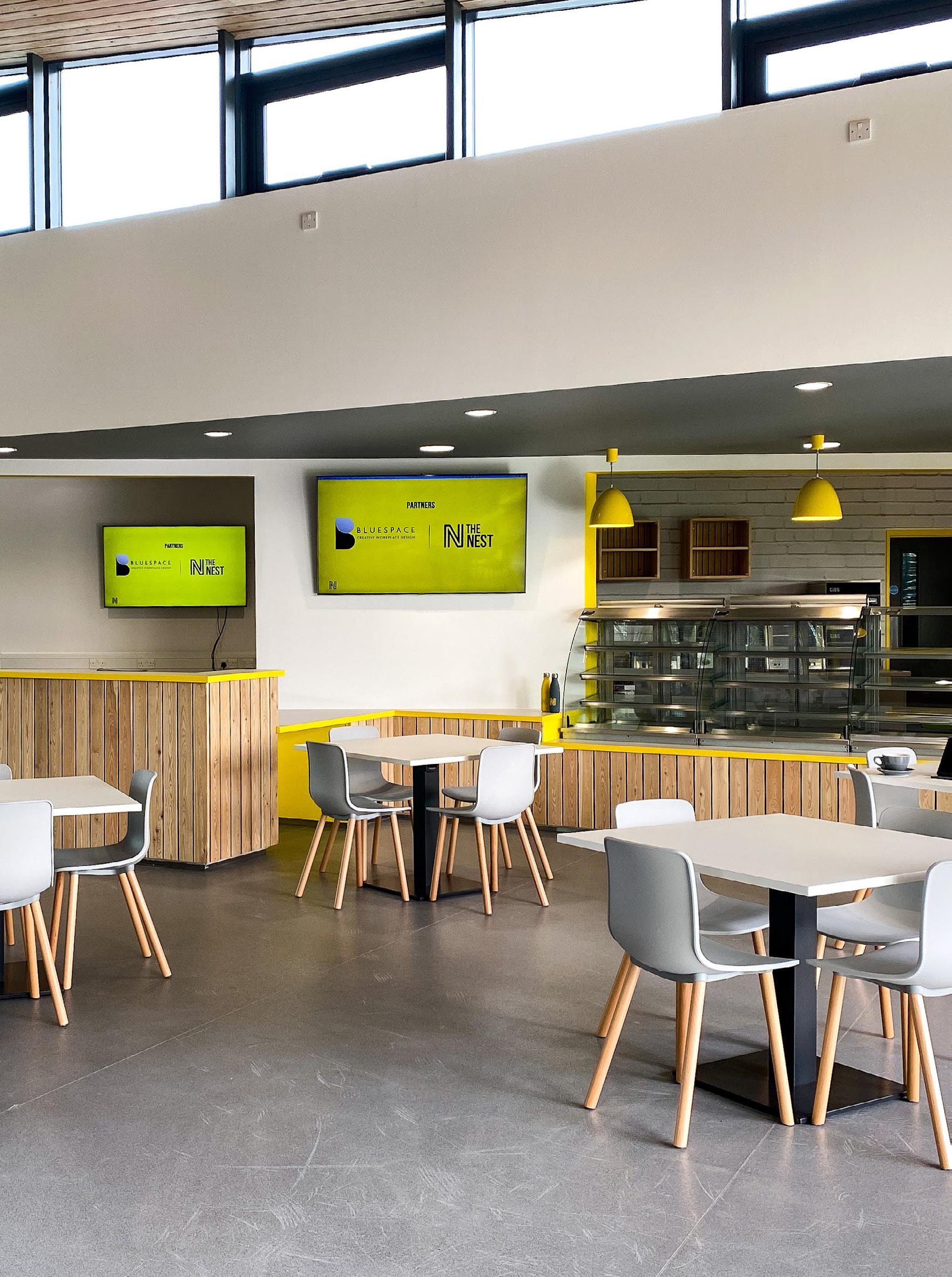
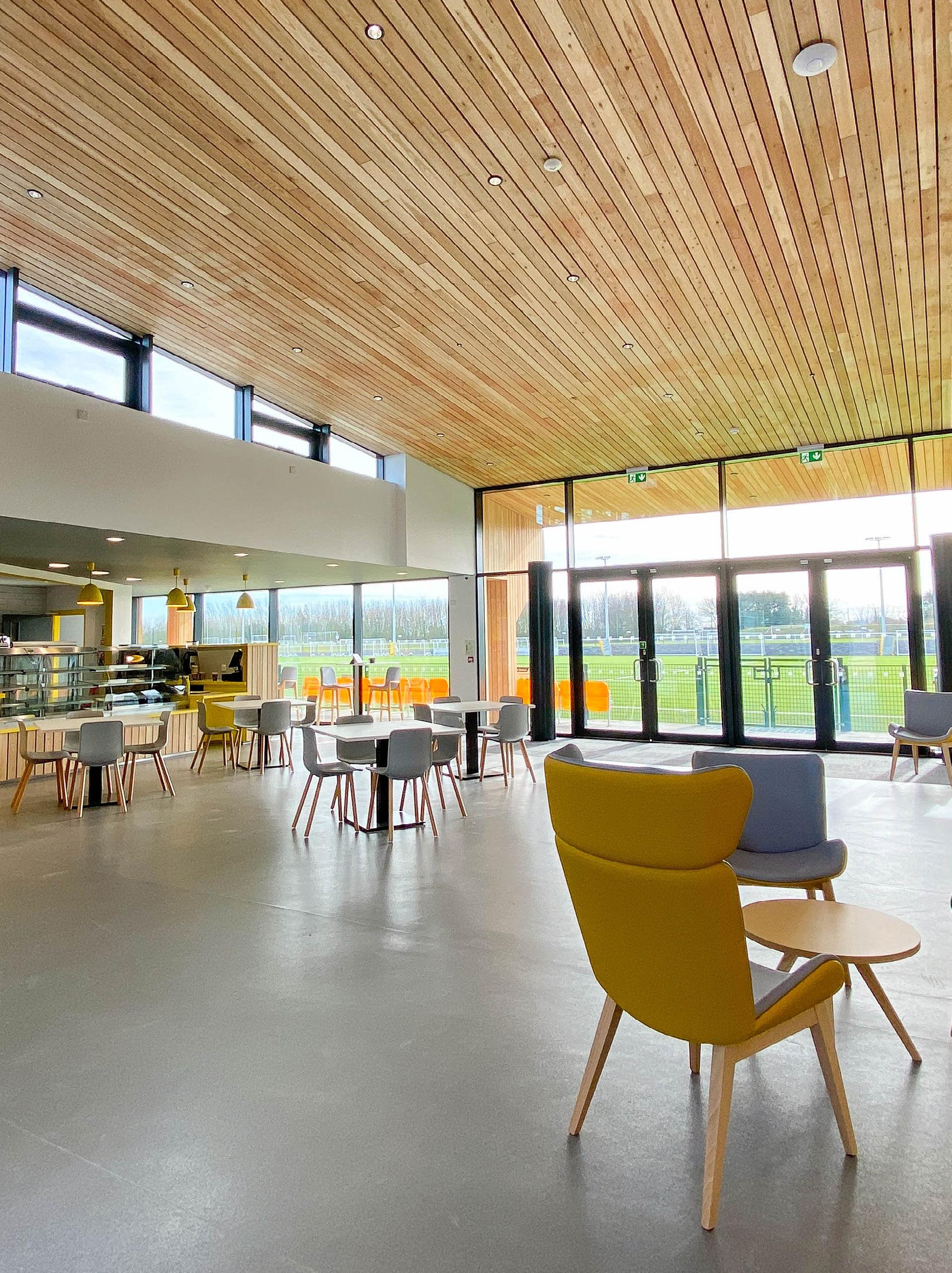
The Clubroom should be the heart of your sport’s facility, as it’s where players, spectators, coaches, and officials all come together and become a community. To foster this environment, think about how you can encourage people to spend time here. Offering different types of furniture in a variety of spaces can ensure that each user can find a space that suits their needs and feels comfortable for them. Ensure that the space is flexible, so that people can adapt it as needed, giving them a sense of ownership and in turn, making them feel at home.
4. CATERING
Within the Clubroom is just as important as what is offered pitchside. Consider both when locating and designing your kitchen. A serving hatch to the exterior with a lowered counter section for wheelchair user access is also useful to cater for spectators.
5. ROBUST FINISHES
Should be specified to cater for heavy use whilst being easily maintainable.
6. LOW WINDOWS
Allow for wheelchair users and children to enjoy the view but must ensure the site can be secured whilst maximising natural light and ventilation. Full height windows and glass screens should have appropriate manifestations.
7. VERSATILE FLOORING
Can allow for different uses of the space, such as fitness or dance classes and should be easy to clean.
8. DIVIDABLE
Spaces created through moveable wall systems, specialist doors, or even light-weight screens, can turn one lettable space into two.
9. MOVEABLE FURNITURE
With and without arm rests allows for set ups to be arranged and rearranged to suit. Consider furniture that is easy to clean after use.
10. LOCATION
Should ideally afford a good view over the pitches.
11. BAR
Areas with a lowered counter section for wheelchair user access can be a valuable source of revenue. Consider if you need a fully operational bar with cellar or a bottle / can bar. If you are developing a cellar, the location of the cellar in comparison to the bar needs to be agreed. Determine if a licensed bar is the way to go at an early stage.
12. STORAGE
Is crucial in creating a flexible multifunctional space.
Changing Rooms
NUMBER OF CHANGING ROOMS
Level of provision will be determined by your usage plans, the number of pitches on the site, and of course your available space and budget. It is often unnecessary to have a pair of changing rooms per pitch, so consider staggered kick-off times and separate bag storage areas to provide maximum flexibility on match days. This will ensure value for money for you and your funding partners.
TYPE/LAYOUT
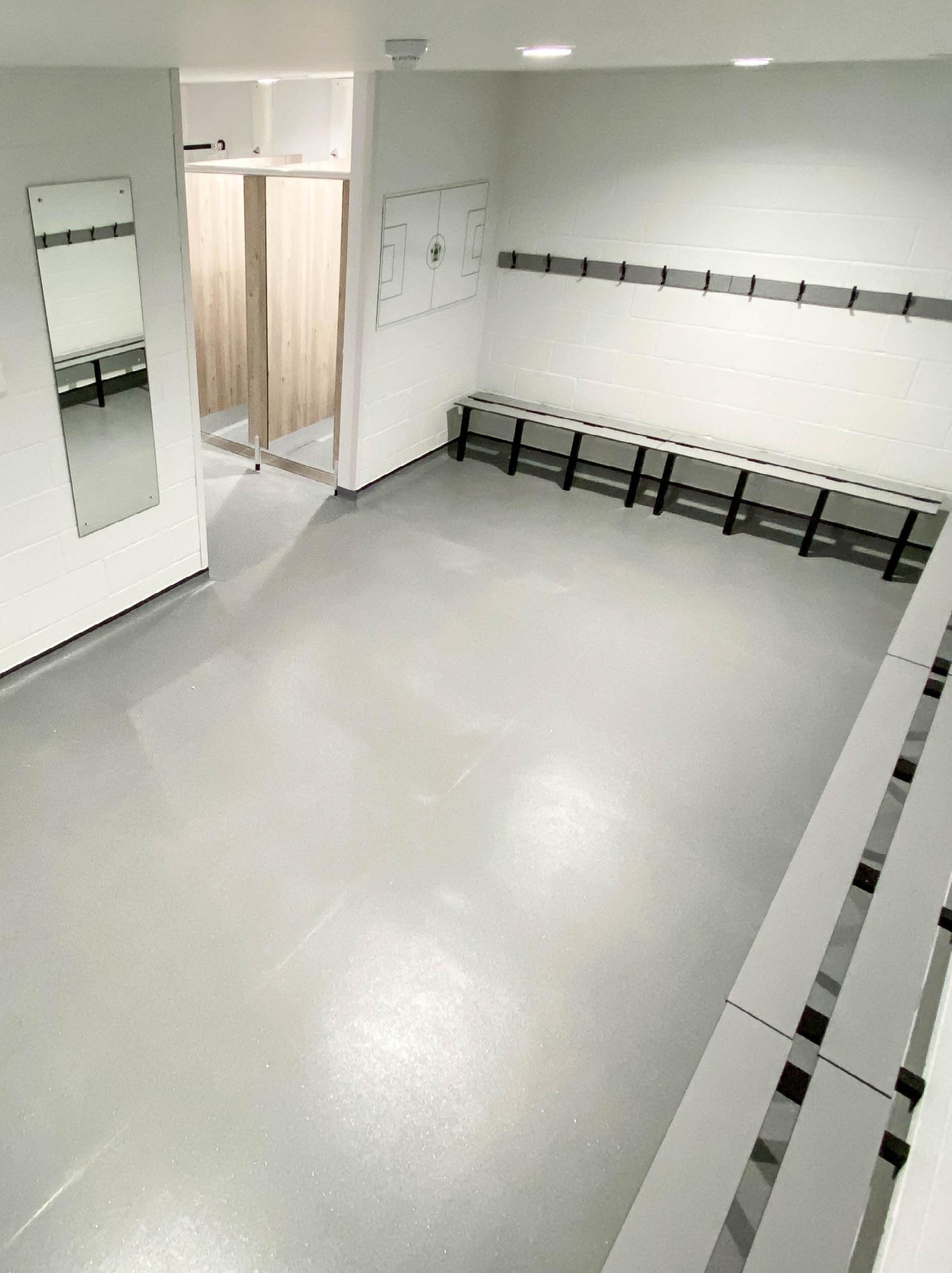
There are many different types and layouts for a changing room. However, within every changing room, you should consider how players and coaches will use the area. For example, a changing room with benching set out in a U shape means a coach can always maintain eye contact with all the players and at the same time the players can be focused on the coach and view the tactics board. If you are developing a multi sport site you may need to consider the size of changing rooms to ensure they meet the requirements of each Governing Body.
LOCATION
Changing rooms should always be at ground floor level and offer a direct route to the pitches.
SIGHTLINES
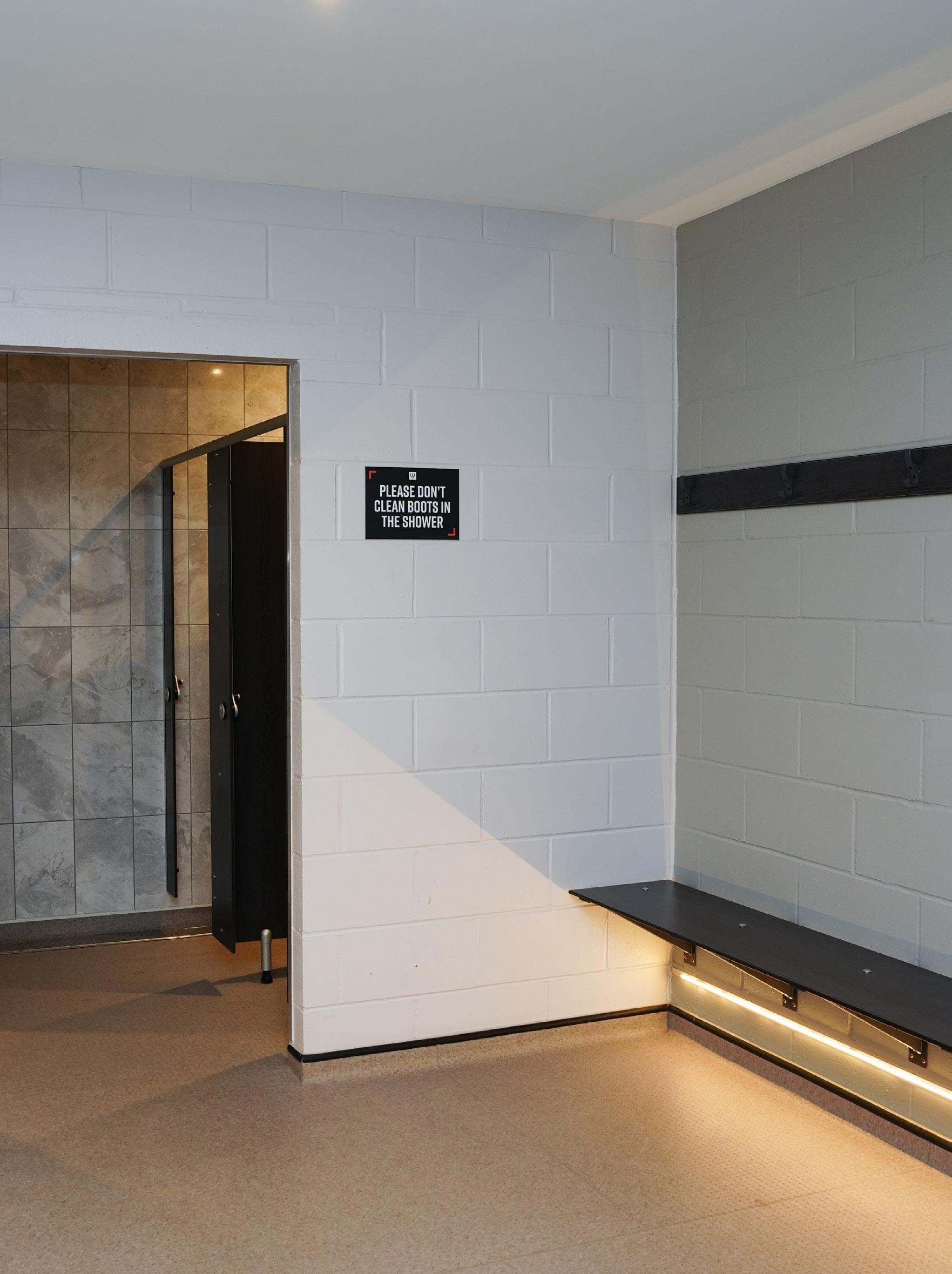
The safeguarding of all those using the building is imperative, thus the interior of any changing room should not be visible to anyone on the outside of it. To eliminate sightlines, one can use a lobby area or privacy screens at the spaces entrance.
FIXTURES AND FITTINGS
Fixtures and fittings should be high quality but easy to maintain. The materials used should be appropriate, for example, non-slip flooring.
TOILETS
Consider one or two lockable cubicles based on strategic need, space availability and budget.
MAKING A DIFFERENCE
Not every improvement needs a big budget. These simple ideas can help make your facility feel safer, cleaner and more inclusive — quickly and affordably.
Changing facilities can serve a wide range of sporting activity, not just football and the programme of use, for the site will determine what facilities are needed. When determining what accommodation to offer, careful thought and consideration needs to be had surrounding not only your current users, but your future ones too.
All changing and toilet provision should be accessible and inclusive. This does not necessitate expensive design features, but instead requires that inclusive design principles are kept at the forefront when considering the types of changing provision you will offer: providing choice and minimising barriers.
Types of Changing Provision
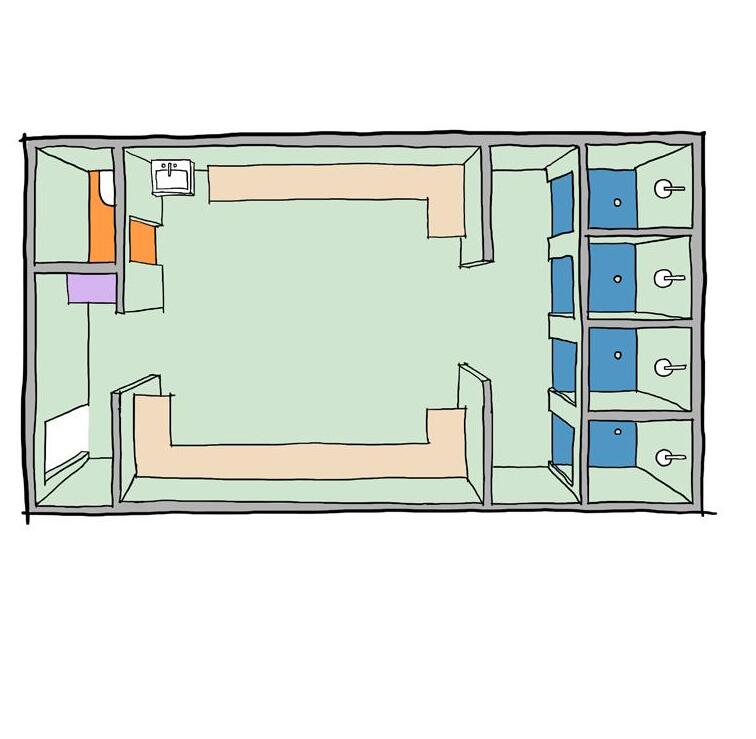
1. OPEN CHANGING
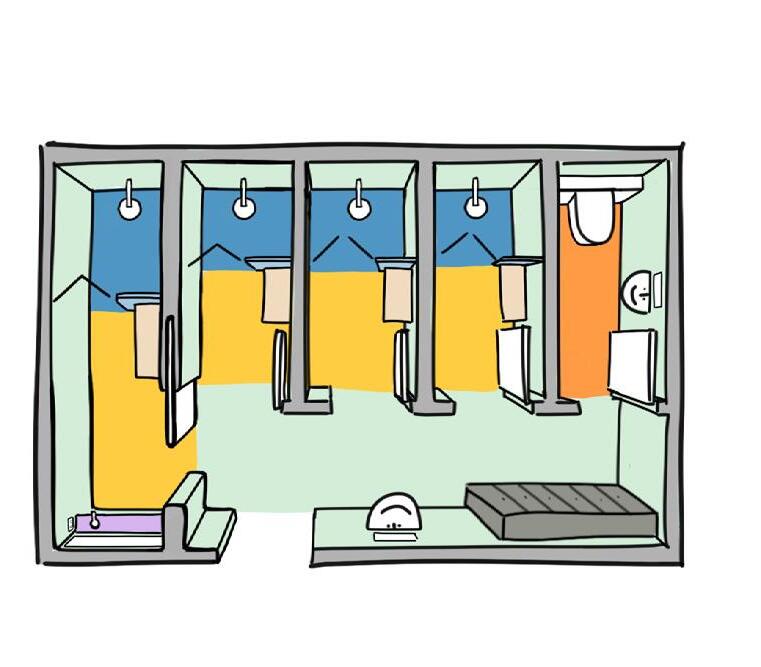
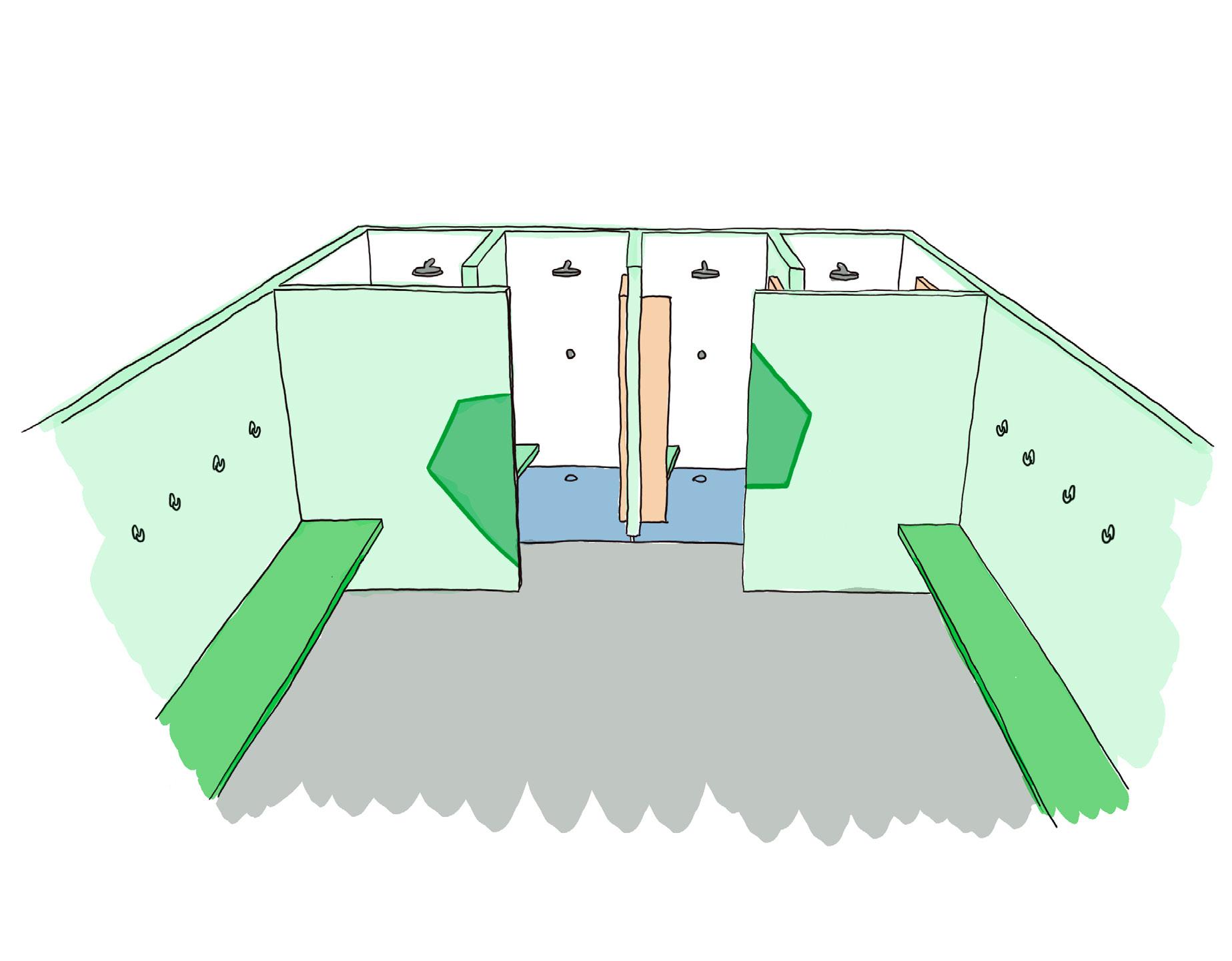
Multi-occupancy spaces suitable for team provision, this type features open changing benches and is equipped with adjacent toilets, and showers. Even in an open changing room, showers should be within individual cubicles to allow users privacy whilst showering. Toilets and cubicle showers require fullheight doors and floor-to-ceiling partitions to provide complete privacy.
2.
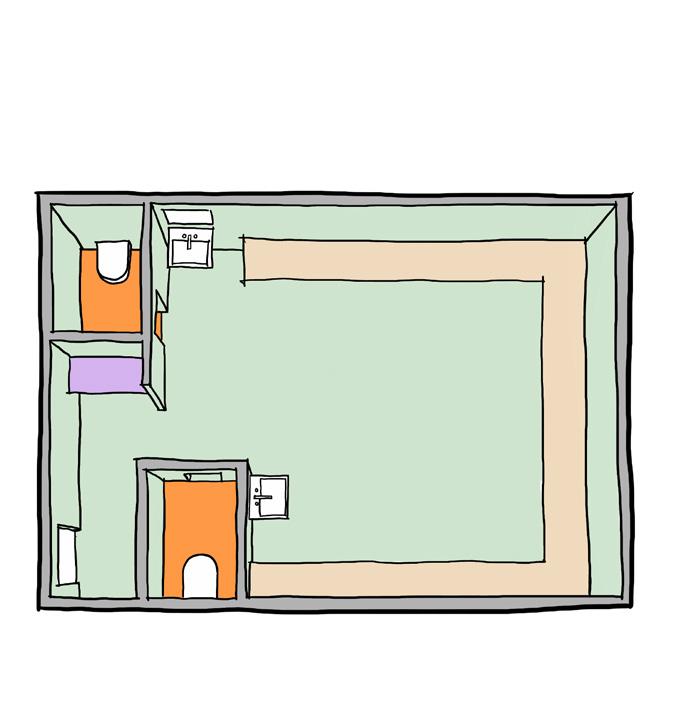
CHANGING WITHOUT SHOWERS
Similar to open age changing but without the provision of showers. This type of changing room may be best suited to junior or recreational users.
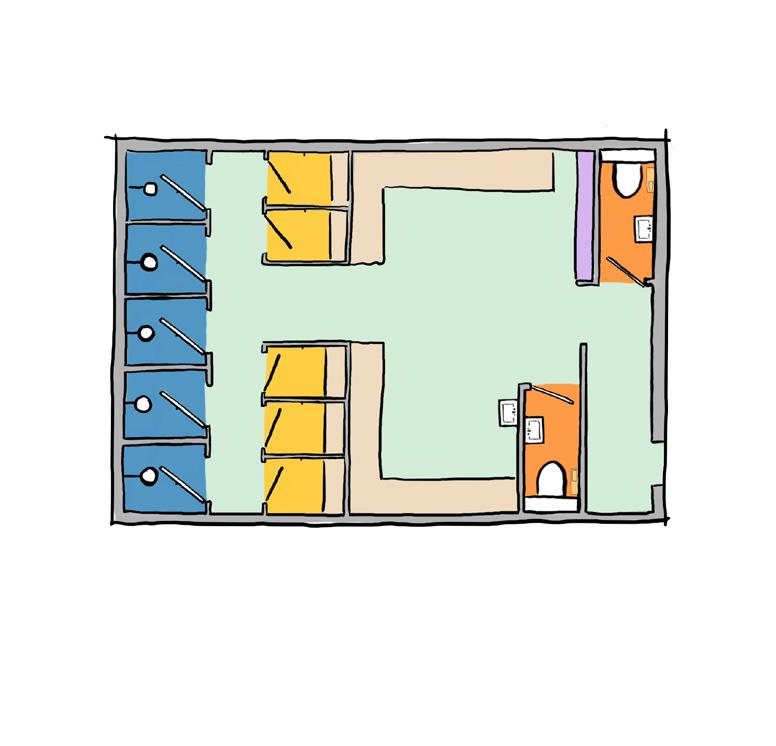
3. CUBICLE CHANGING
This type of changing provision can be provided within larger team changing rooms to allow users privacy whilst changing. Both showers and changing cubicles should be fitted with privacy locks to ensure users feel comfortable.
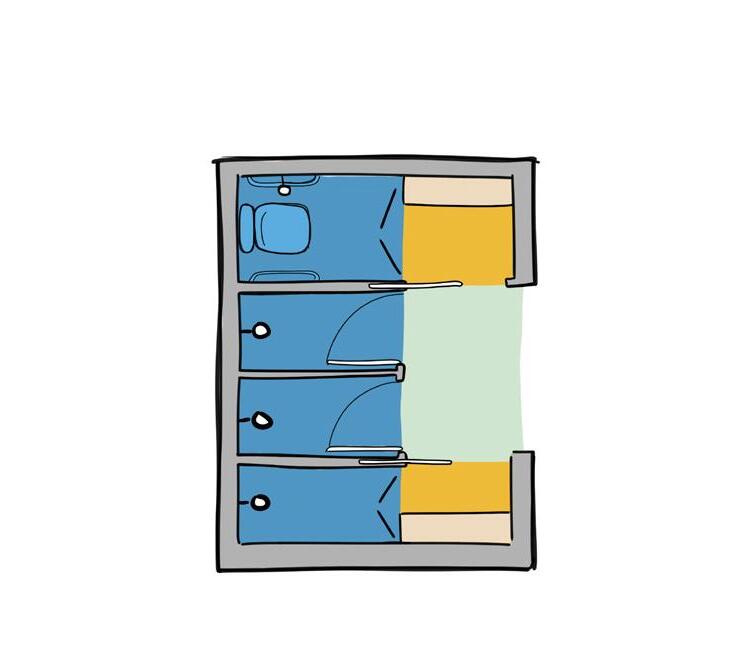
4. AMBULANT CHANGING
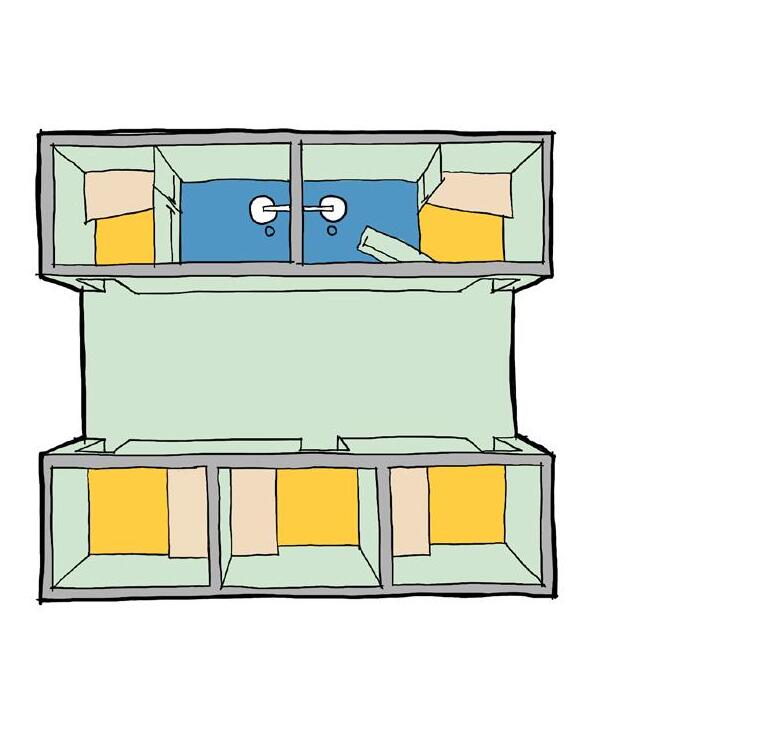
Where possible, AMBULANT facilities should be incorporated within a pavilion’s changing provision. As shown in the example, one of the shower cubicles can be enlarged to accommodate such a facility.
Changing area for open age football should be 18m² (excluding toilet, shower and lobby areas) and should include an en suite toilet and cubicle showers. Four showers should be provided and a minimum of one or two self-contained WCs.
Smaller changing rooms without showers can be considered for suitable sites that need multiple changing rooms and can be included alongside a set of larger open age changing rooms. 12m² with a self-contained WC may be acceptable following user consultation.
facilities are primarily for users with impairments who are not necessarily wheelchair bound.
Think carefully about what choices are offered, and how, as those wishing to exercise their right to privacy should not be made to feel “different” or stigmatised for doing so (for example having to use a different changing room or wait for the one shower cubicle to become available).
AMBULANT
Types of Changing Provision
INDIVIDUAL CHANGING
Accessed off the main circulation area, individual changing provision is required for certain groups of people such as:
- Coaches, teachers, and officials where good practice safeguarding principles require separation.
- Any individual with a preference for increased privacy.
1. SELF-CONTAINED CUBICLE
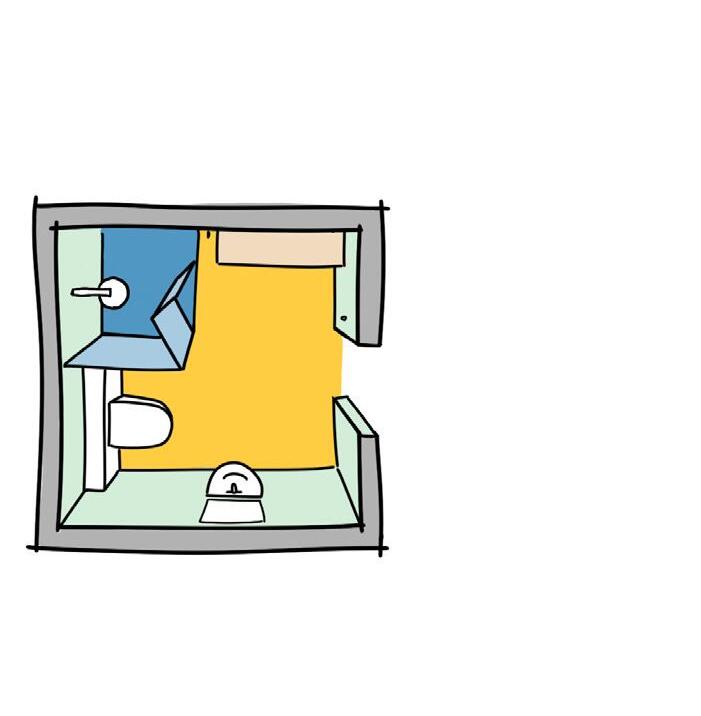
Small changing spaces, or combined shower and changing facilities that can be used by individuals. A large vanity area with outlets should be provided nearby when these types of units are employed to give people a space to use a mirror or dry their hair.
2. SELF-CONTAINED INDIVIDUAL WC WITH CHANGING PROVISION
Similar to the above, with the addition of a WC and handbasin.
3.
WHEELCHAIR USER ACCESSIBLE CHANGING
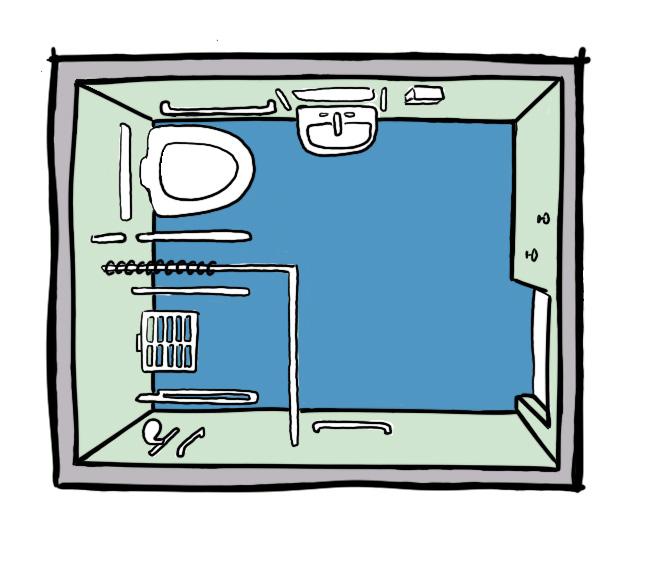
Where possible, changing pavilions should feature at least one wheelchair user accessible changing room. This room can sometimes also serve as a second officials changing room (with the provision of a removeable bench or chair), provided a wheelchair user accessible WC is provided elsewhere within the building.
An accessible changing room suitable for wheelchair users it’s not the same as a Changing Places toilet facility.
OFFICIALS’ CHANGING
Appropriate separate dedicated changing provision is required for match officials. Given that a typical match involves three officials, your facility must ensure ample changing provisions for at least three individuals. Considerations should account for mixed-gender officials’ teams and the preferences of officials who may not wish to change in an open setting. Please consider, where a match official is under 18 years of age, a separate changing space must be provided.
Changing area for a three person officials’ room should be 6m² (excluding toilet, shower and lobby areas). Smaller single person privacy changing rooms should also be provided to allow officials or players that wish to change and shower privately the ability to do so.
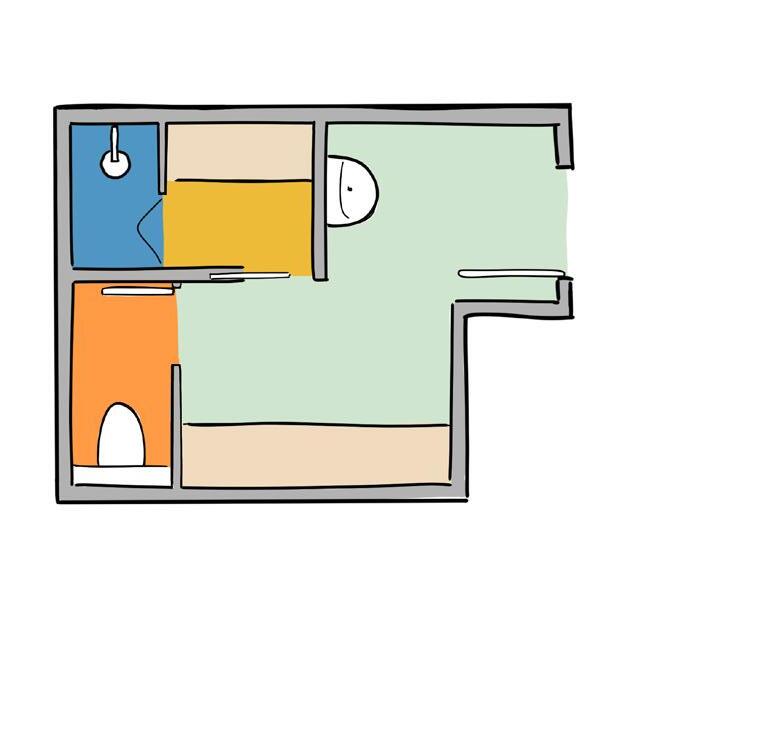
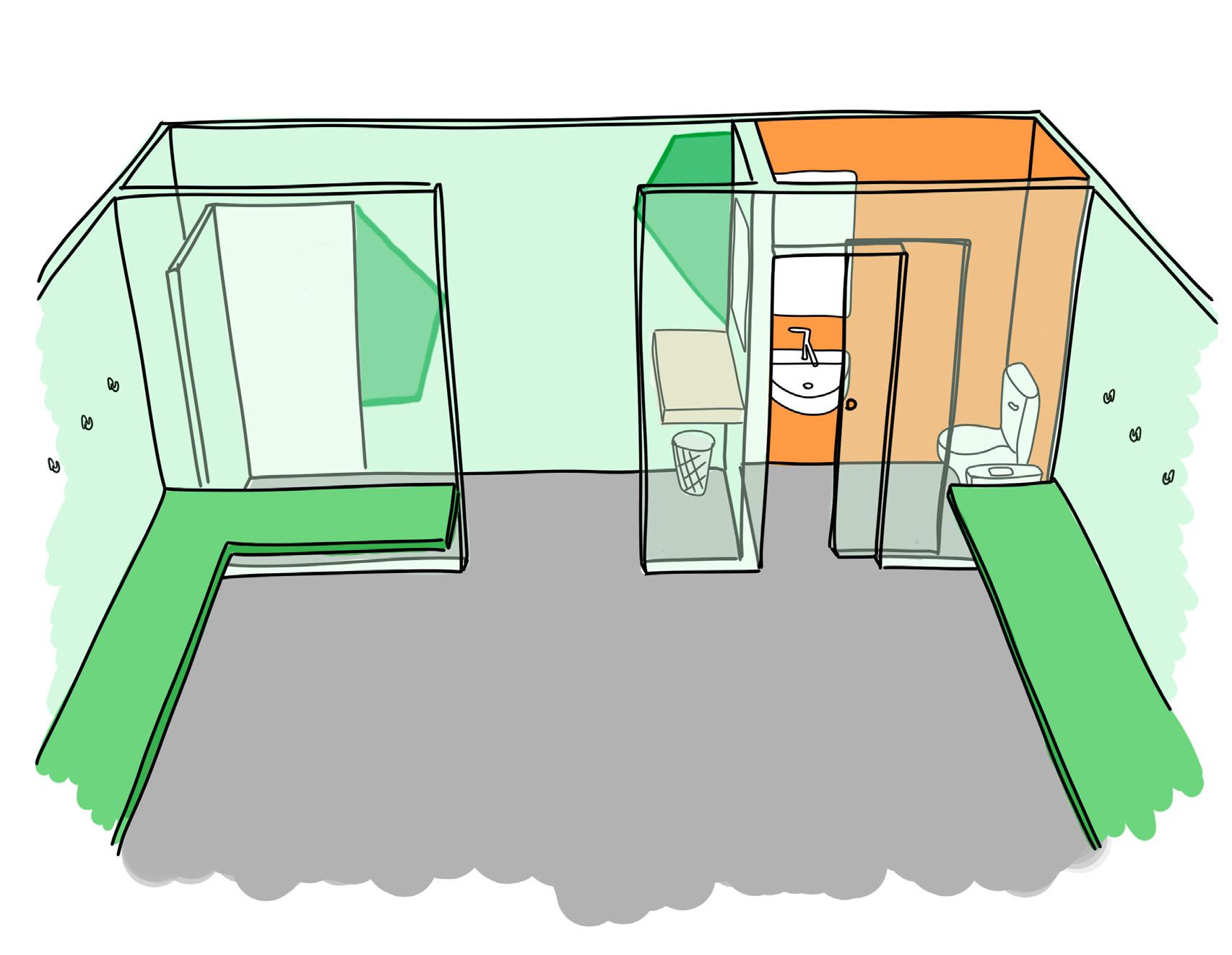
By using self-contained changing cubicles within an official’s changing area (see image 4) you can cater for all genders within a limited footprint. Lockers must be provided to allow for users to lock away belongings during the match.
A form of multi-occupancy open changing space is required for three officials (see image 5). The changing space must be 6sqm when employing this type of changing provision within your design, and it is important that users are still able to shower and change in private.
Design Considerations
NON-SLIP WASHABLE FINISHES
Are safer for players and easier to keep clean. Where the floor meets the walls, consider creating an upstand with the floor finish to protect the joint from water ingress. The colour of any grout should be considered to prevent discoloration over time.
GOOD VENTILATION
Is crucial in preventing damp and mould, as well as in creating a pleasant environment.
AUTO SHUT-OFF SHOWERS
Reduce water wastage, and in turn, the cost of bills.
SHOWER PANELS
Or appropriately sealed finishes or tiles should be used in the shower area for the full height of the wall.
TOWEL AND CLOTHING HOOKS
Should be provided.
MIRROR AND VANITY AREA
Think about how you can make your changing rooms pleasant to use. The easier they are to clean, the cleaner they will be kept. Also consider how you can reduce maintenance requirements, ensuring the rooms will last. Where possible changing rooms should be lockable enabling them to be locked when in use.
With power outlets nearby is important for some players.
LOCKERS
May be incorporated to allow for multiple teams to use the same changing room. Thought needs to be given as to if they are located within the changing room, or just outside.
WASH DOWN FLOOR GULLEY
Allows the changing room to be power-washed with ease.
BENCHING
Should allow 500mm per person and should be at least 450mm deep. Consider using cantilevered supports to make cleaning easier.
SHOWER AREA
Should be kept separate from the changing space to avoid dirt from players’ boots from mixing with water from the showers.
CLOTHES HOOKS
Should be at two heights; 1050mm and 1400mm to enable use by users with different reach requirements. Rounded type coat hooks are recommended to reduce risk of injury.
Catering
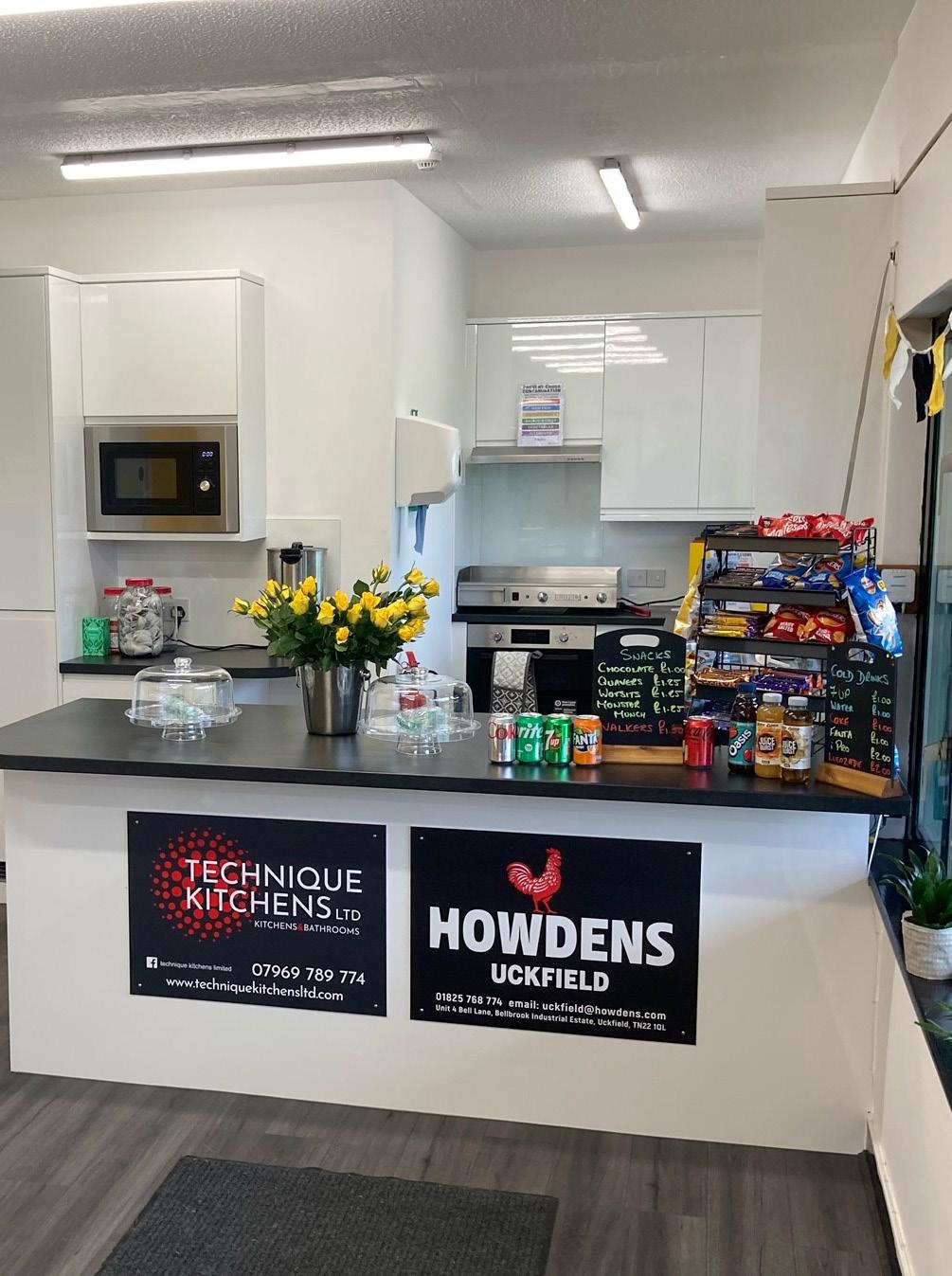
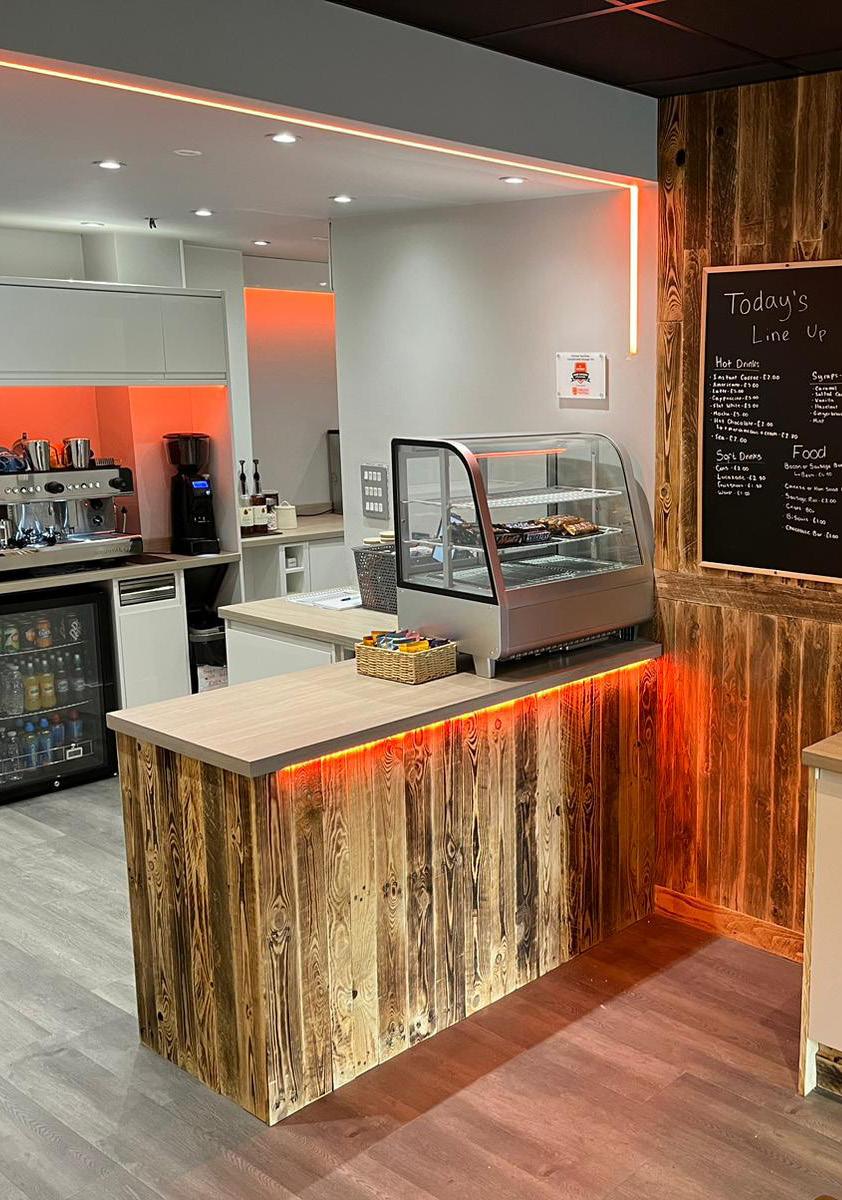
The inclusion of a kitchen ( and bar) can provide valuable income for a club. The space can be used for catering within a social space and/or can feature an external serving hatch facing the pitches to allow refreshments to be sold without the need for spectators having to come into the building whilst games are on.
Consider how you will use a kitchen and what you might serve from it, as this will dictate the equipment you need. Appropriate space and finishes should be specified to ensure it meets food hygiene and safety standards. Make sure to also consider what services (power, water, gas, drainage, and extraction) are required, suitable storage, and waste disposal.
CONSIDER...
• What will the kitchen serve?
• How many people will it cater for?
• Will it be takeaway only or will users have the option to sit in? If so, will there be table service?
• Who will be operating the kitchen?
• Would it be staffed in-house or by an outside catering company?
• How much space is available?
• What level and type of events do you hope to run from the site?
AS IT DICTATES YOUR KITCHEN LAYOUT...
• Size, location, and layout of the kitchen
• Kitchen equipment required
• Number and proficiency of staff
• Regulations to be met and certifications to be obtained
• Types and sizes of storage provided
• Utilities and services connections required
Kitchen Layouts
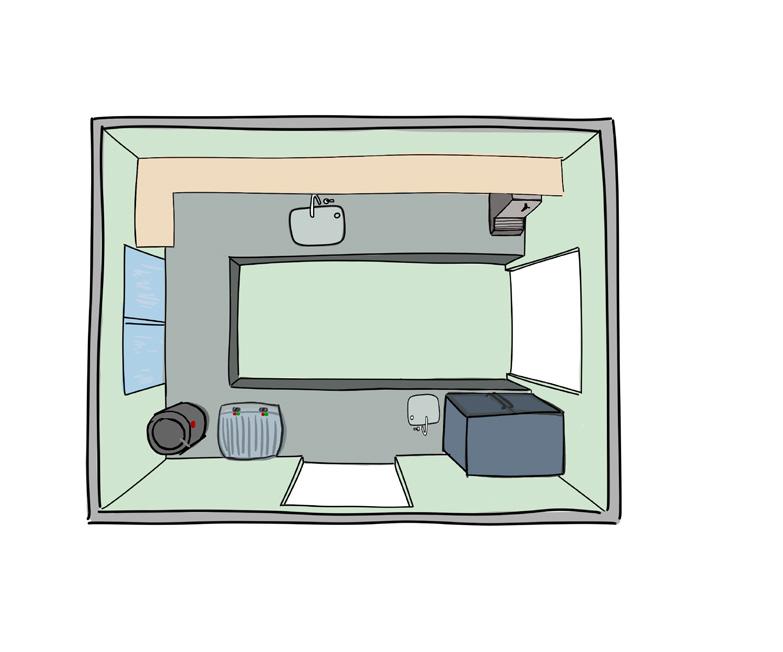
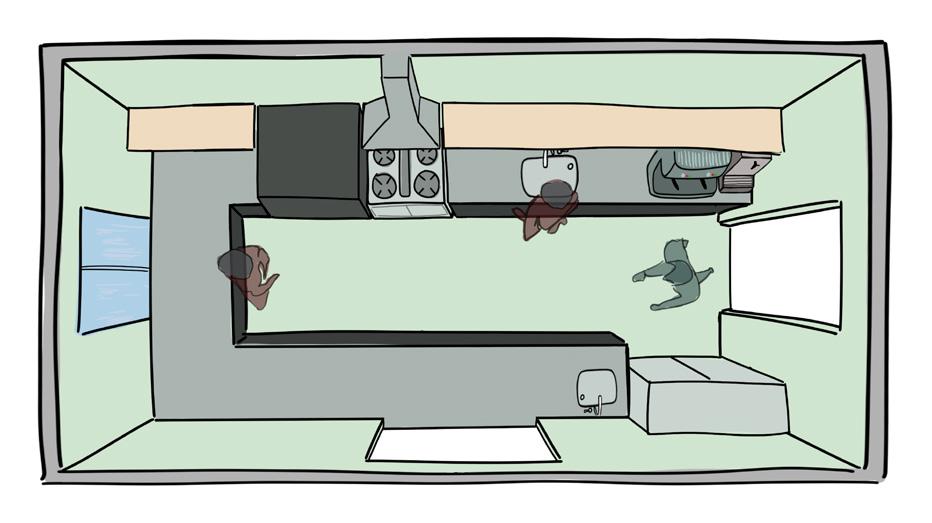
Check out the various kitchen layouts below, noting how their size and equipment within is adjusted as their menu does. Regardless of size, make sure to consult a specialist designer when thinking about your kitchen. Make sure you consider the right offer of kitchen and bar for your customer.
Depending upon your programme this will determine whether you need table top white goods and plug-in appliances, or more commercial equipment. What is going to enable you to generate the greatest level of income for the site. Serving quick, quality food and drink is often the way to success.
When designing a kitchen’s menu, one must try to meet the needs of as many people as possible. Think of the wide range of people that the facility may encounter and make sure that what is being offered works for most, if not all. Look at other similar facility types to learn what they offer in terms of a menu.
To read more on selling food, visit FOOD STANDARDS AGENCY .
MEDIUM KITCHEN
• May need electricity, water, gas, ventilation and drainage connections
• Use of medium-sized appliances such an oven and a hob
• Take 2 to 3 people to operate, with some being trained
• May need reusable tableware
SMALL KITCHEN
• May need electricity, water and drainage connections
• Use of plug-in appliances
• Take 1 to 2 people to operate
• Can be ‘takeaway’ only
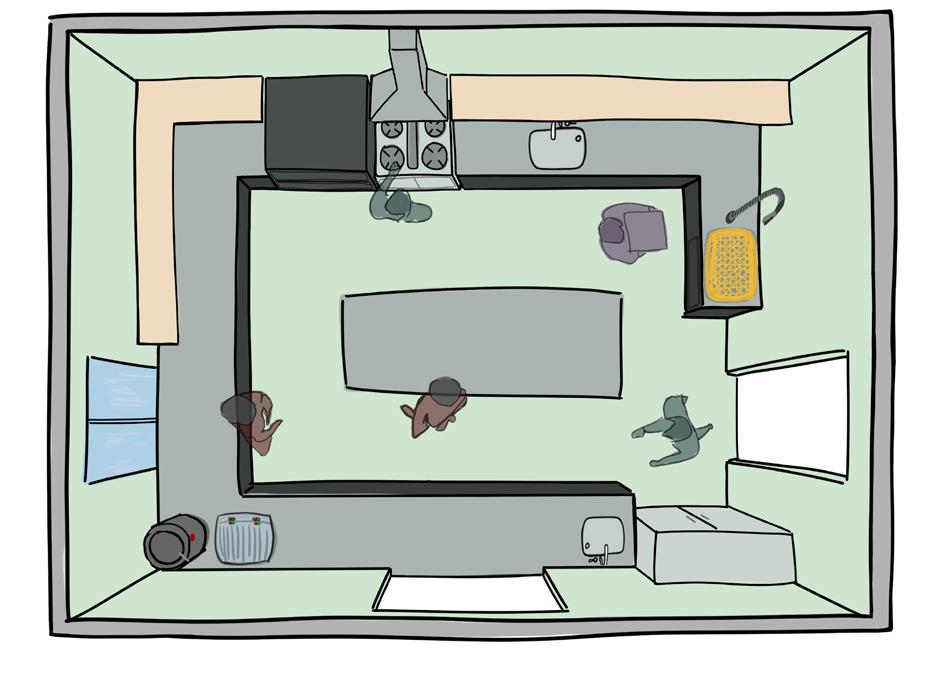
LARGE KITCHEN
• May need electricity, water, gas, ventilation and drainage connections
• Use of large industrial grade appliances such as specialist ovens and dishwashers
• Take at least 3 people to operate, with all needing some level of training
• Will need reusable tableware
• Will require certifications and fire safety equipment
• May need walk-in fridges/freezers/stores
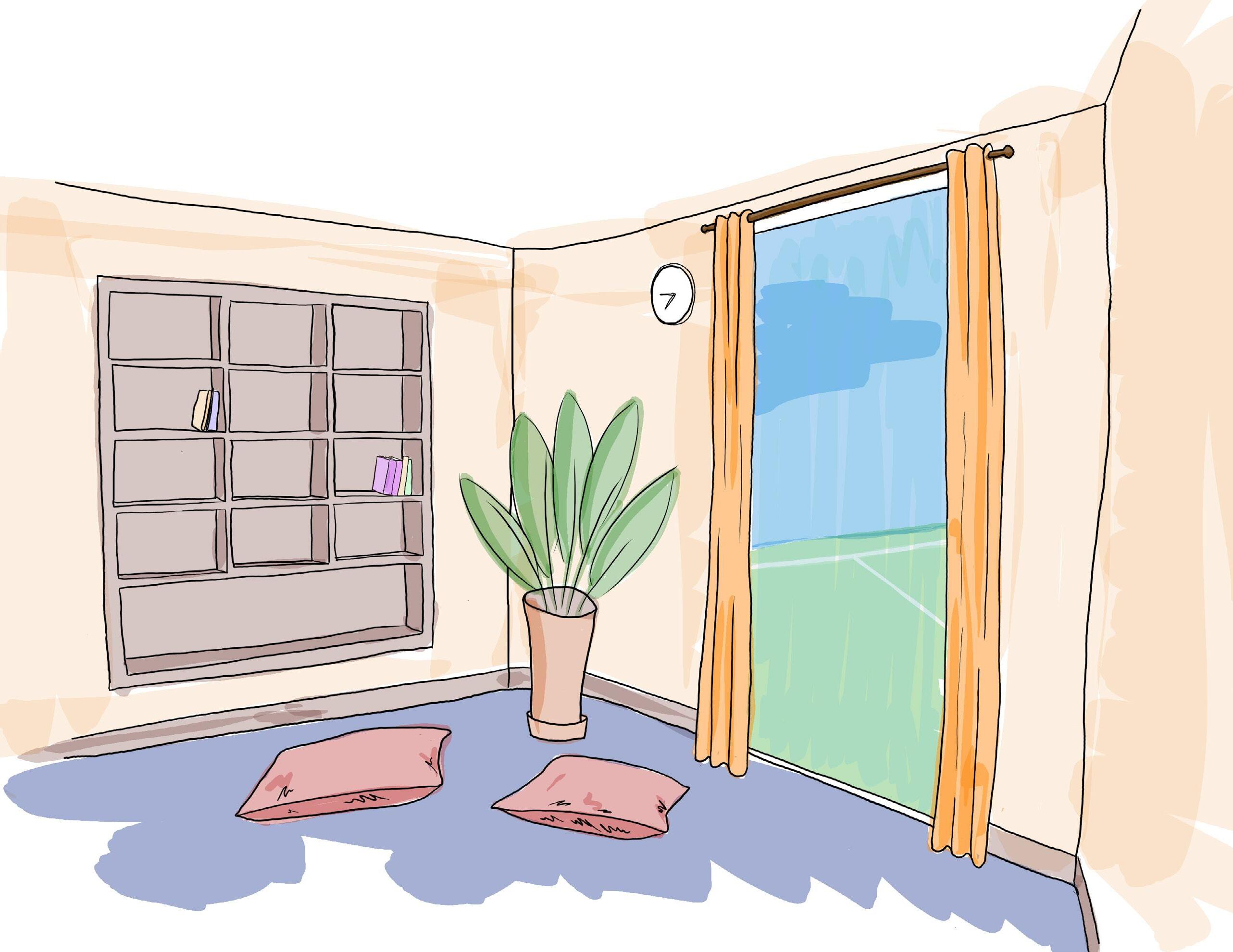
Multi-faith Quiet Space
FAITH CONSIDERATIONS
Around the design and/or gender specification of prayer, toilet, and wash facilities. Some faiths also require specific times of day for prayer.
SIZE
Of the space will vary depending upon likely demand and specific needs.
LOCATION
Of the space can be critical in terms of orientation and proximity to suitable amenities. It should also be easily located and near the entrance, especially if needed by those with sensory hypersensitivity.
HYGIENE
Facilities or additional features to standard wash facilities may be identified as being needed.
PRIVACY
Consider spaces where people may need some prviacy. For example, mothers who are breastfeeding.
SPACE
May need to be private or shared, depending on its users. It may also be able to serve as a contemplative space or quiet room for those with sensory hypersensitivity.
As part of the community consultation, it is important to identify if there are any specific facility requirements that need to be addressed to meet the needs of potential users or groups who are of a particular faith or disability. If the space is to be multifunctional, it is important that each user is consulted on this basis to ensure that each of their needs will still be fully met.
Storage Plant Room
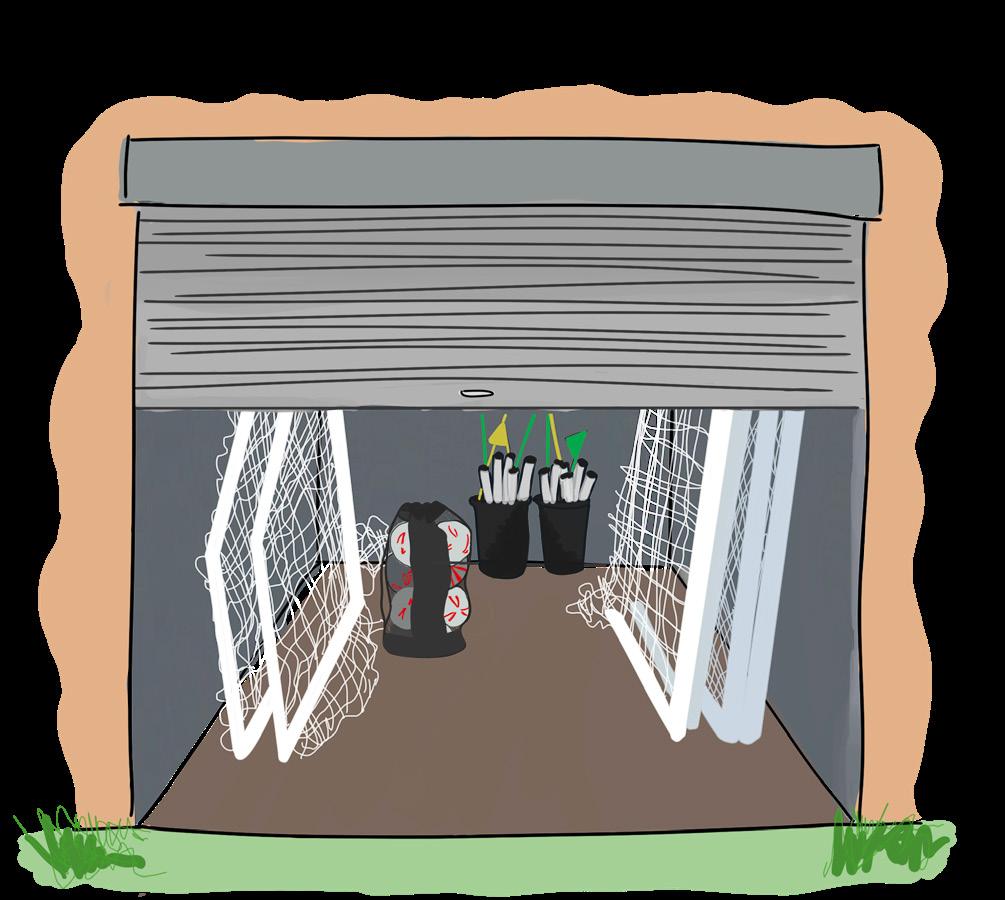
Such as cleaning equipment, chairs and tables, food and beverages, players’ bags, etc. and externally for ground maintenance and sports equipment including goal posts. External access to storage for grounds maintenance and sporting equipment is often beneficial. Lower cost options such as steel containers could be considered if space in the building is not available or not affordable.
Good storage can provide easier management of your facility. A well-positioned and stocked cleaner’s store helps to make sure changing rooms and toilets are clean and inviting for all. Equipment storage can provide more flexibility of use for the building and therefore increased revenue opportunities.
The inclusion of lockers for bag storage can be considered to allow players to safely lock away belongings and free up changing room facilities on multi pitch sites. Lockers should not be located within the changing room itself. The traditional arrangement of leaving clothes in changing rooms requires a level of supervision or doors to be locked during play which does not work well where the changing room is shared where matches have staggered starts.
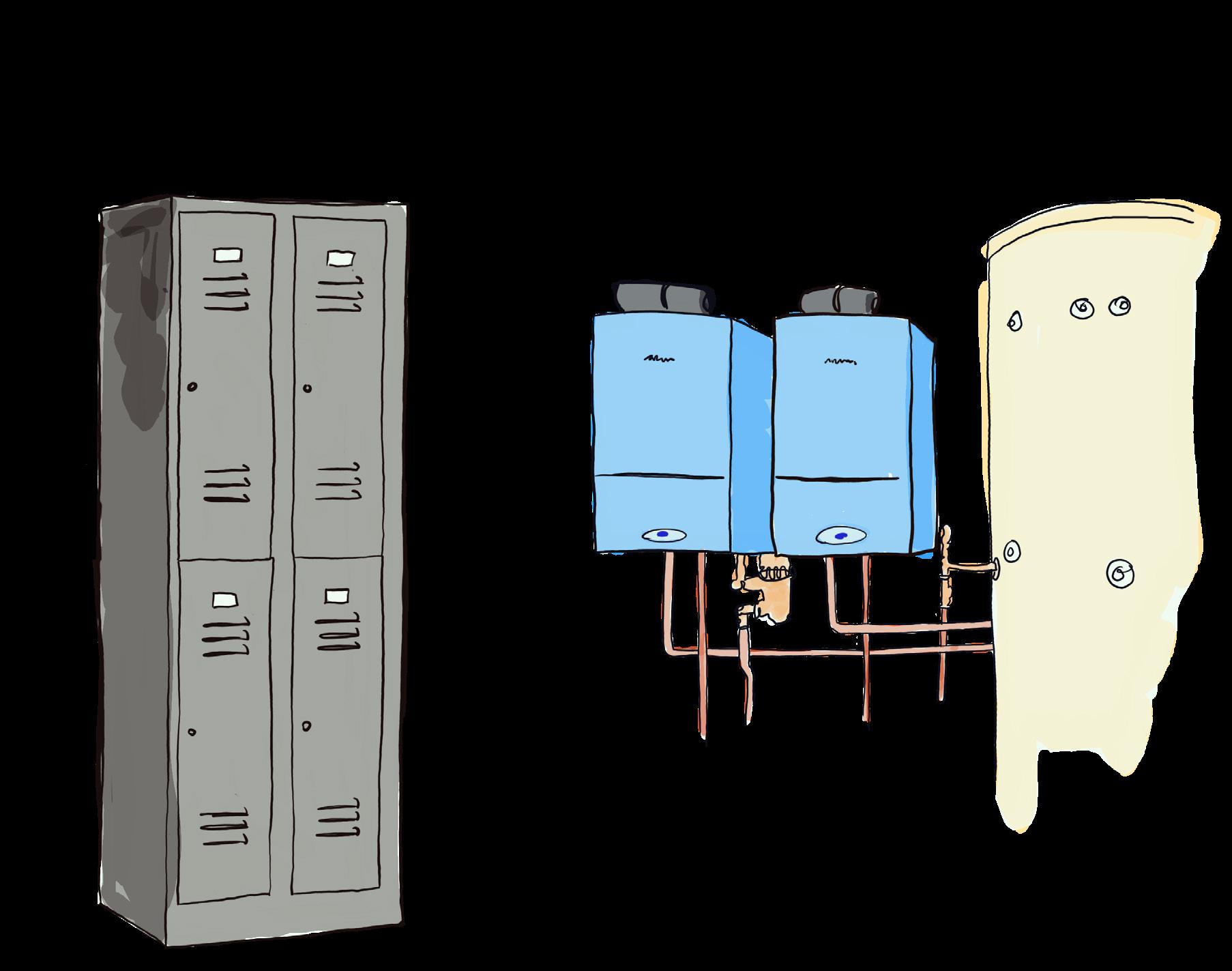
The plant room should be appropriately sized and located to accommodate incoming utilities, meters, plant equipment and boilers. The number of showers and overall size of the facility will be key drivers in the design requirements of the plant room. Advice from a Building Services Consultant is essential to determine the size required. Try to keep it simple and cost effective, volunteers don’t want to be faced with a multitude of confusing controls, that are expensive to repair when things go wrong.
It is recommended that the room be directly accessed via external double-doors with vehicular access to allow for servicing and installation needs.
Modular Construction
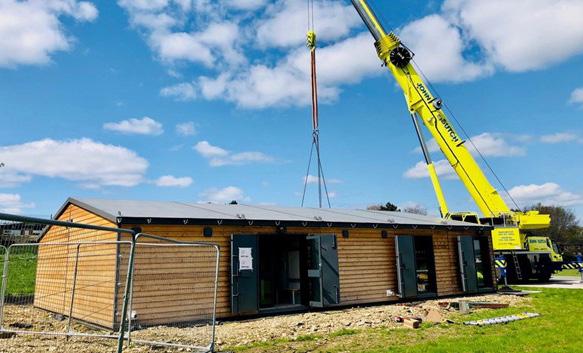
Modular construction is the method of construction that shifts some of the process to a factory environment, with prefabricated building sections or ‘modules’ then transported to the site to be connected into the on-site structure and/or to another module. This method is generally quicker whilst also reducing the length of on-site construction works, as the modules are built in a factory while the site is being prepared. Whilst factory-built buildings can be of a higher quality at a lower price point, connecting them into a base or an on-site structure can be complicated, with the tolerance for errors being much smaller than with traditionally built buildings.
Specialist modular contractors or manufacturers often offer turn-key solutions, with teams available to take the project through from concept to completion without the need for other contractors or consultants.
Refers to a building which can be used as soon as it is constructed
CONS
• Quicker overall construction timeline
• Factory quality
• Affordable
• Less on-site construction works
• Less materials stored on site
• Less wastage of materials
• Typically, cheaper than traditional construction
• Less disruptive to construct
• Limited design flexibility
• Design fixed at an early stage
• Risk concentrated on few suppliers
• Less tolerance for error
• Delivery and logistics of moving materials to site can be problematic, along with high transportation costs
• Not always suitable for tight sites with poor access
• Longevity of the building is a lot more uncertain
Whilst modular construction is a viable solution in some circumstances, it is important to note that converted containers are not the same as purpose-built modular buildings. Shipping containers are not designed to be habitable, and therefore, it is difficult to meet Building Regulations as well as the standards discussed within this document when using them.
Modular Units
It is recognised that a new pavilion can be a very expensive and complex project to undertake and there may be a pressing need to provide some basic welfare facilities at your site. This may include toilets, a kitchen to get a warm drink and help bring in some much-needed revenue, or an area for shelter. Your community consultation will determine the needs of your facility.
Subject to the requirements identified and the resources available, a modest scale pavilion can take many forms, even potentially exclude changing rooms. However, this is not a suitable approach in some circumstances and any pavilion development should ideally ensure the building is future-proofed to enable changing accommodation to be added at a later stage if omitted originally.
Specialist modular contractors or manufacturers often offer turn-key solutions, with teams available to take the project through from concept to completion without the need for other contractors or consultants.
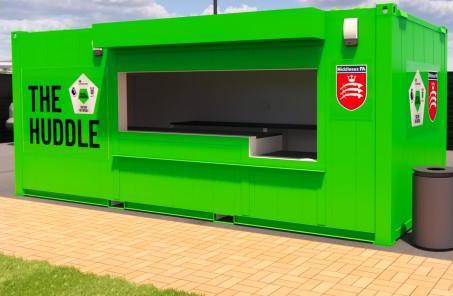
The smallest viable option may be a simple micro-unit able to provide basic refreshments whilst also crucially establishing a presence on site. Such a unit is most likely to be modular rather than a traditionally built permanent building and as such carries certain advantages, such as a non-requirement of planning permission and the fact that it can be relocated at a later stage if needed. With careful design and consideration, a micro-unit can be the first stepping stone on a longer journey to provide improved facilities on site. It can be added to over time and ultimately, potentially replaced by a larger traditional building.
The example shown on this page highlights a small cabin that includes a serving kitchen plus toilets – able to connect to services or be supplied ‘off-grid’.
For further information relating to Catering Units please visit Catering Unit Grants Funding.
CONSIDERATIONS
Refurbishments
Where possible, one should always consider the refurbishment of an existing building. Not only may this be a more economically viable option, but it would likely be more sustainable as well. When making these types of strategic decisions, hiring a professional to produce a CONDITION REPORT or a more in-depth BUILDING SURVEY on the existing building would be a good place to start.
Consider the below questions when thinking about refurbishing your existing facility:
Is your building in the best location in relation to access, car parking, and pitches? Consider an Access Audit of the existing site and a Design Appraisal of the plans at regular stages.
Is the main structure of the building sound? Is it suffering from movement through settlement or subsidence?
Is the condition of external cladding water tight? Is the building well insulated?
Does the existing plant meet the demands of the building’s users in an efficient manner? What’s their condition?
Are your energy running costs high and could they be reduced? Can the existing building be adapted to suit current Building Regulations, and will this be economically viable?
Do your facilities meet current Health and Safety standards?
What is the cost of maintaining the fabric internally and externally? What is the age of the building? What are the large ticket items that are needing attention soonest?
Can the building be extended? What are the costs, implications, planning considerations, and Building Regulations of doing so?
Do your existing changing rooms and clubhouse facilities appropriately serve your club’s activities? Do they meet the latest standards? Will upgrading enable a wider range of the community to play sport?
Sustainable Design
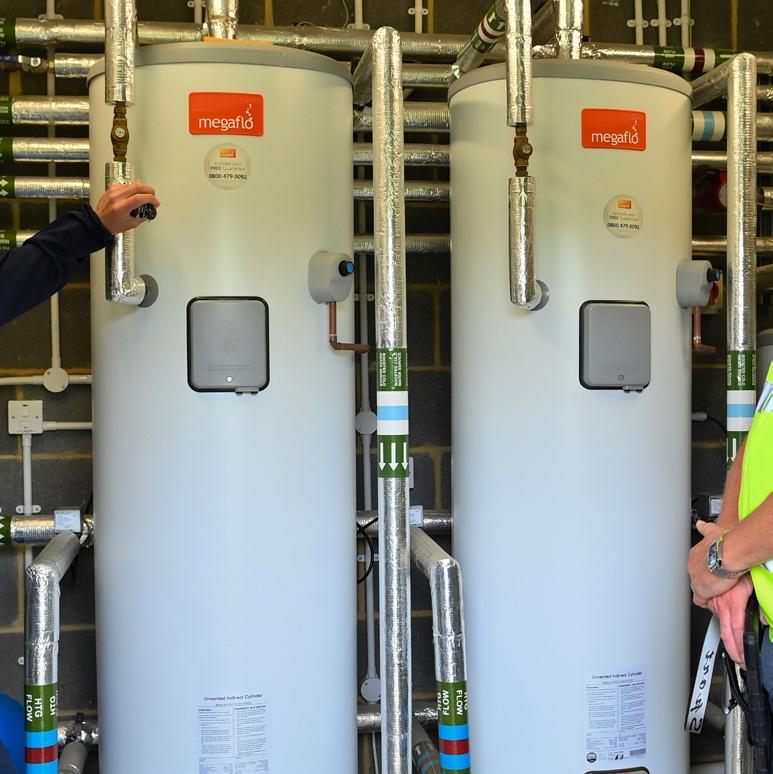


ENERGY EFFICIENCY
Utilise natural light and ventilation to reduce the need for artificial lighting and air conditioning. Orient the building to maximise daylighting and minimise solar heat gain, especially on the western and southern facades.
Proper insulation of walls, roofs, and floors ensures thermal comfort without excessive energy use.
Install solar panels on the roof to offset electricity usage and promote renewable energy production. Solar water heaters can also be used for hot water.
Wind turbines can provide a degree of energy independence, reduce energy costs and help with climate change.
Sustainable design for sport pavilions and clubhouses is essential for reducing environmental impact, enhancing energy efficiency, and promoting long-term sustainability.

LED LIGHTING
Use energy-efficient LED lighting systems both inside and outside the pavilion. Consider motion sensors to minimise energy use in less-frequented areas.
SOLAR PANELS
WIND TUBRINE
Sustainable Design
WATER EFFICIENCY
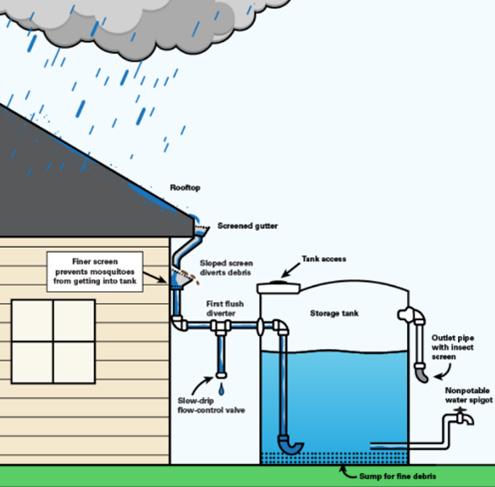
RAINWATER HARVESTING
Collect rainwater from roofs to irrigate landscaping or for use in toilets, reducing dependence on potable water.
LOW-FLOW FIXTURES
Install low-flow faucets, showers, and toilets to minimise water consumption.
WASTE MANAGEMENT
CONSTRUCTION
WASTE MINIMISATION
Implement strategies to reduce construction waste by reusing materials, recycling, and optimising material cuts to minimise scrap.
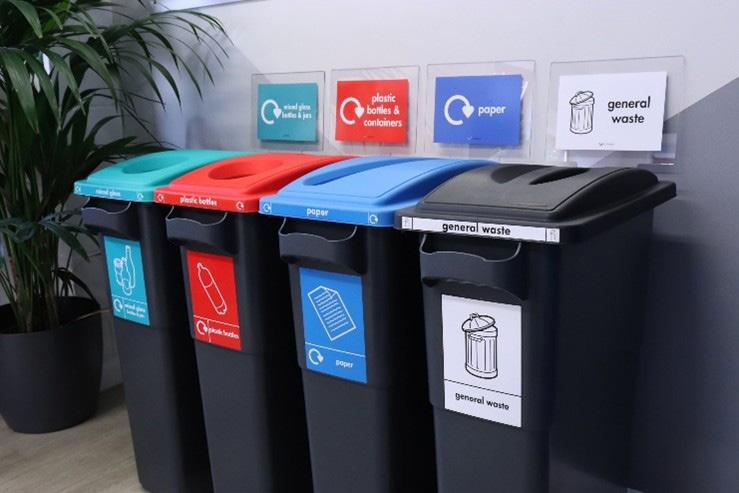
ON-SITE RECYCLING
Workplace recycling in England changed on 31 March 2025 which included a requirement for all workplaces in England to separate their waste before its collected, including any waste produced by employees, customers and visitors. Dry recyclable materials (plastic, metal, glass, paper and card), food waste and non-recyclable waste (residual waste) should all be separated.
MODULAR DESIGN
Design with modular, prefabricated components to reduce construction waste and allow for easy repairs and upgrades.
OTHER THINGS TO CONSIDER
Selecting SUSTAINABLE MATERIALS that are locally sources, renewable and have low environmental impact, recycled and upcycled products, and durable and low-maintenance finishes that require less maintenance and therefore lower lifecycle costs.
Considering the indoor environmental quality through NATURAL VENTILATION: Incorporate windows, louvers, and open spaces to allow for cross-ventilation, reducing the need for mechanical cooling systems and acoustic performance: Implement sound-dampening design features, like acoustic panels or baffles, to minimise noise pollution and enhance the comfort of users, especially in multi-purpose spaces.
GREEN ROOFS AND GREEN SPACES that can serve as insulation, reduce stormwater runoff, and provide a habitat for local wildlife.
Final Notes
If you are seeking funding from the Football Foundation for your project, do not apply for planning permission prior to consulting the Foundation as design compliance should be ensured first.
Community consultation is key in determining the needs of your facility. Design with the community rather than for it.
Speak to your County FA for advice and support – particularly in relation to how other sites operate and function.
Visit other sites and talk to clubs/organisations that have already been through the process.
Be realistic in-line with your budget. Buildings should be functional, economical, and simple to manage.
Make sure you consider environmentally sustainable design and operational practices.
AND TO REITERATE IT’S IMPORTANCE
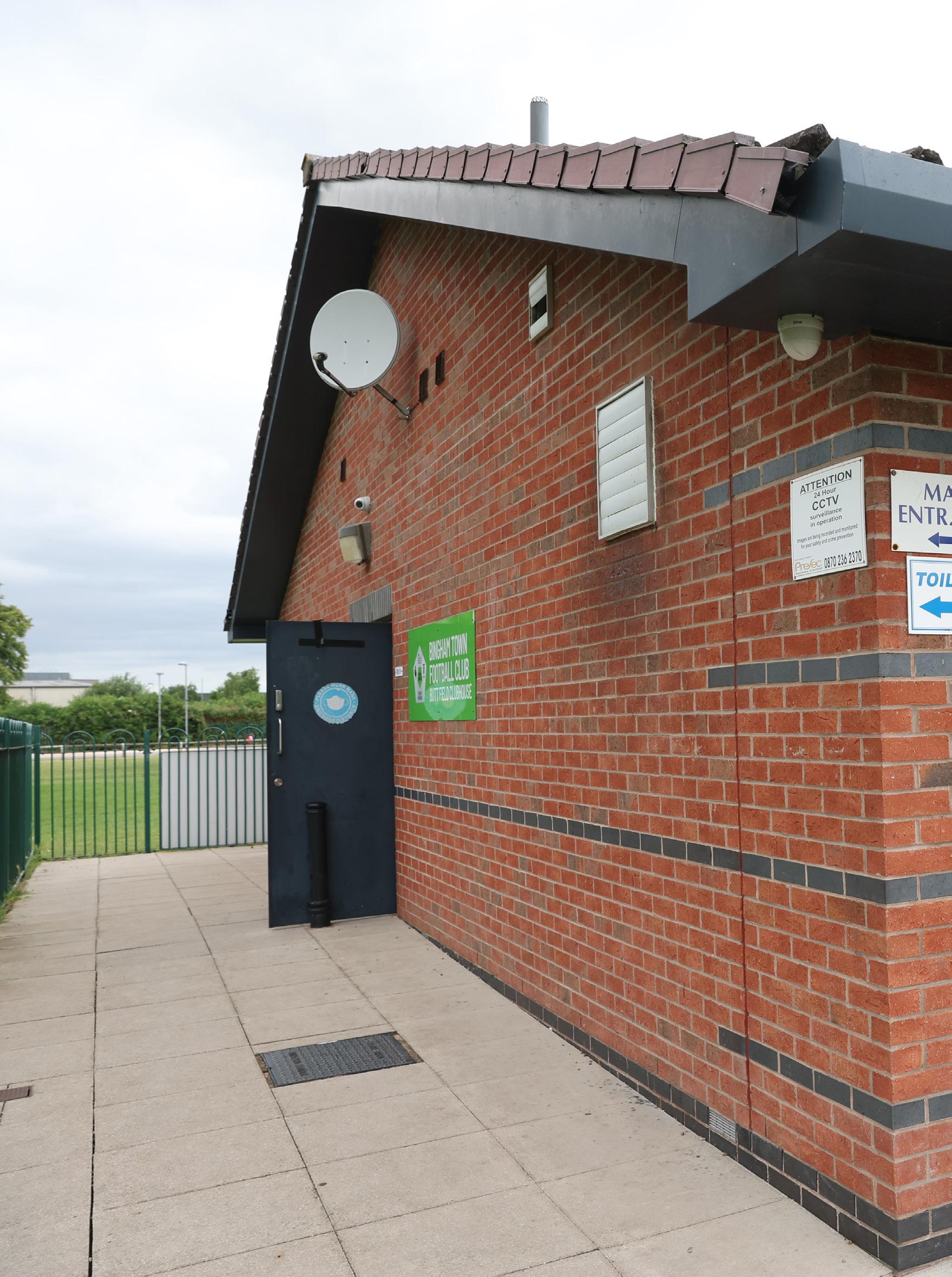
Your facility should be welcoming to all and provide users with a clean, safe and secure environment to watch or participate in sport or any other community activity. It is important that your facility is designed to be inclusive and comfortable for its users.