NO.1 PUBLICATION FOR HOME & PERSONAL CARE MANUFACTURING & PACKAGING INDUSTRY
HOME &
PERSONAL CARE
MIDDLE EAST & AFRICA WWW.HPCMAGMEA.COM
YEAR 2 | ISSUE NO.3 JULY/SEPT 2026
MARKET ANALYSIS
TECHNOLOGY FOCUS
SOUTH AFRICA'S HAIR CARE MARKET
RETAIL & E-COMMERCE PRIVATE LABEL AND CONTRACT MANUFACTURING
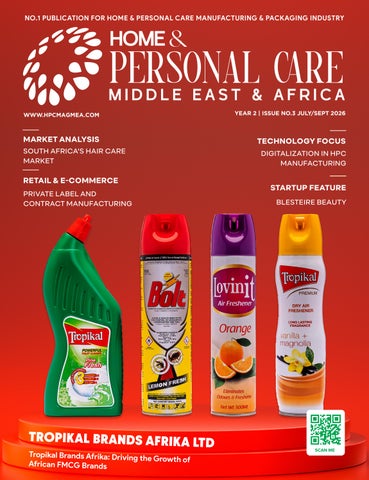
TROPIKAL BRANDS AFRIKA LTD
Tropikal Brands Afrika: Driving the Growth of African FMCG Brands
DIGITALIZATION IN HPC MANUFACTURING
STARTUP FEATURE BLESTEIRE BEAUTY
SCAN ME
We at Texchem Limited have a heritage of over 48 years of industry related experience and a dependable global support network, Texchem Limited strives to become a one-stop Shop for all your coatings industry requirements catering to Machinery, Raw Materials, Marketing Tools, Lab Equipment Machinery. Our priorities have always been to provide the highest quality products, the most innovative solutions and our unwavering commitment to all our customers across East Africa. Your business is important to us as we look forward to continue building on our mutually meaningful and successful partnership. We will be showcasing our latest equipment and trend in the Paint Manufacturing Machines Paint Tinting Systems In-Plant Paint Filling Systems Marketing Tools, Shade Cards and Colour Charts And much more to discuss.
Participating Partners
We Cordially invite you to visit us at East Africa Coating Show 2026 15th-17th July 2026 Sarit Centre Expo Centre (Nairobi Kenya) Booth-C21-C24
CONTENTS
YEAR 2 | ISSUE NO.3 | JULY - SEPT 2026
IN EVERY ISSUE
8 Editorial 10 News Updates 18 Appointments Update
20 New Products Update 22 AFRICHEM Event Review 56 Supplier News Updates
38
EXECUTIVE INTERVIEW: KONO FARM ENTERPRISE
46
TECHNOLOGY FOCUS: DIGITALIZATION IN HPC MANUFACTURING
54
RETAIL & E-COMMERCE: PRIVATE LABEL AND CONTRACT MANUFACTURING
Beyond the Shell: How Kono Farm KE is redefining sustainable beauty through snail-based skincare
42
EXECUTIVE INTERVIEW: FRANCIS KAMERO
Bridging the Lab and the Ledger: Francis Kamero on Driving R&D Excellence
Lather, Rinse, Digitize: Why Your Next Bar of Soap Was Dreamed Up by a Server
50
SUSTAINABILITY FOCUS: ESG IN BEAUTY & COSMETICS
Beauty with Accountability: ESG trends in the Middle East & Africa beauty industry
WWW.HPCMAGMEA.COM
Behind the Label: The Manufacturing Revolution Reshaping MEA's Beauty Aisles JULY/SEPT 2026 | HOME & PERSONAL CARE MIDDLE EAST & AFRICA
3
CONTENTS
26
YEAR 2 | ISSUE NO.3 | JULY - SEPT 2026
COMPANY FEATURE: TROPIKAL BRANDS AFRIKA LIMITED
Tropikal Brands Afrika: Building African FMCG brands for the everyday consumer
30
MARKET ANALYSIS: SOUTH AFRICA'S HAIR CARE MARKET
South Africa’s Hair Care Market: Innovation and Growth in Products for African Hair Textures
4
JULY/SEPT 2026 | HOME & PERSONAL CARE MIDDLE EAST & AFRICA
34
STARTUP FEATURE: BLESTEIRE BEAUTY
Blesteire Beauty Investment Limited: From Beeswax to Bold Ambitions, A Kenyan Clean Beauty Story
WWW.HPCMAGMEA.COM
APRIL 28-30, 2027
NAIROBI, KENYA
MAY 4-6, 2027
LAGOS, NIGERIA
The No. 1 International Trade Show & Conference for the Beauty, Home & Personal Care Industry in Africa Ingredients & Chemicals • Processing, Engineering & Automation Technologies • Packaging Technologies & Materials • Mobility, Logistics & Supply chain Solutions • Renewable Energy, HVAC & Utilities • Financial, Consultancy, Testing & Other Services • Private label & Contract Manufacturing • Packaged Beauty, Home & Personal care products
SIGN UP TO ATTEND , SPONSOR & EXHIBIT
+254725343932
info@fwbrandsmea.com www.hpcafricaexpo.com
SCAN ME
OUR MAGAZINES
HOME
PERSONAL CARE & MIDDLE EAST & AFRICA Year 2 | Issue No. 3 | July-Sept 2026
We publish some of the most influential magazines and websites in Africa & the Middle East regions. Please visit the websites below for more information about our publications
FOUNDER & PUBLISHER Francis Juma
MILLING
SENIOR EDITOR Alphonse Okoth
MIDDLE EAST & AFRICA
EDITORS Leah Wamuyu Vincent Moranga Victor Atsali
www.foodbusinessmea.com
BUSINESS DEVELOPMENT DIRECTOR Virginia Nyoro BUSINESS DEVELOPMENT ASSOCIATE Johna Sambai
HORECA MIDDLE EAST & AFRICA
www.millingmea.com
Dairy Business MIDDLE EAST & AFRICA
HEAD OF DESIGN Clare Ngode
www.horecamea.com
DESIGN Monica Wachio ACCOUNTS Anita Kinyua
HealthCare
PUBLISHED BY: FW BRANDS MEA P.O. Box 1874-00621, Nairobi Kenya Tel: +254 725 34 39 32 Email: info(@)fwbrandsmea.com Company Website: www.fwbrandsmea.com
MEA
www.dairybusinessmea.com
Brands
Home & Personal Care MEA (ISSN 23073535) is published 4 times a year by FW BRANDS MEA. Reproduction of the whole or any part of the contents without written permission from the editor is prohibited. All information is published in good faith. While care is taken to prevent inaccuracies, the publishers accept no liability for any errors or omissions or for the consequences of any action taken on the basis of information published.
HOME &
PERSONAL CARE
MIDDLE EAST & AFRICA
www.healthcaremea.com
MIDDLE EAST & AFRICA
www.hpcmagmea.com
Packag ng SUSTAINABLE
FEE BUSINESS
MIDDLE EAST & AFRICA
MIDDLE EAST & AFRICA
www.feedbusinessmea.com
www.sustainabilitymea.com
AGRITECH
MIDDLE EAST & AFRICA www.agritechmea.com
6
WWW.HPCMAGMEA.COM
SCAN ME
APRIL 28-30, 2027 NAIROBI, KENYA
MAY 4-6, 2027 LAGOS, NIGERIA
Contact Us: +254 725 343932
info@fwbrandsmea.com Africa Coatings Expo www.africacoatingsexpo.com
THE NO. 1 INTERNATIONAL TRADE SHOWS FOR COATING, PAINTS & SURFACE TREATMENT INDUSTRY
EDITORIAL
Shaping the Next Chapter of Home & Personal Care in Middle East & Africa
T
he home and personal care industry across the Middle East and Africa is entering an important phase of transformation. Changing consumer preferences, economic pressures, technological advancements and increasing investment are reshaping how products are developed, manufactured, marketed and consumed. In recent years, businesses across the region have navigated fluctuating input costs, supply-chain disruptions, regulatory requirements and varying consumer purchasing power. Today, these challenges are unfolding alongside significant opportunities. The Middle East and Africa beauty and personal care products market was estimated at USD 31.11 billion in 2025 and is projected to reach approximately USD 42.5 billion by 2031, highlighting the region’s growing attractiveness to global companies, investors and innovators. Consumers remain at the heart of this transformation. While affordability continues to matter, consumers are increasingly discerning about ingredients, performance, convenience, sustainability and value. Growing demand for skincare, haircare, fragrances and specialised personal care solutions is creating opportunities for brands that understand and respond to diverse local needs. The home care segment is evolving too, with hygiene, convenience and product efficacy remaining key priorities. At the same time, sustainability is moving beyond a talking point, with manufacturers and packaging suppliers exploring responsible sourcing, recyclable materials, efficient production processes and solutions that reduce waste without compromising performance. Innovation is further reshaping the competitive landscape. Advanced formulations, locally inspired ingredients, new packaging formats, digital commerce and smarter manufacturing technologies are opening new avenues for 8
JULY/SEPT 2026 | HOME & PERSONAL CARE MIDDLE EAST & AFRICA
growth. Local and regional brands are also gaining visibility by developing products that reflect the unique skin, hair, climate and cultural needs of consumers across the region. Industry platforms are helping to accelerate this momentum. Events such as the Africa Beauty Show Kenya and the Africa Health & Wellness Expo bring together brands, manufacturers, distributors, suppliers and industry professionals to discover new products, exchange knowledge, build partnerships and identify emerging market opportunities. Investment and strategic partnerships are also reinforcing confidence in the market. New manufacturing facilities, acquisitions, product launches, research initiatives, and regional expansions show that businesses are increasingly looking beyond short-term growth and toward long-term opportunities. In Issue 3 of Home & Personal Care Middle East & Africa, we explore the developments shaping this evolving industry, from investments and product innovations to packaging, sustainability, manufacturing, market trends and industry events. We highlight the companies, ideas and developments driving change across the region. As the industry evolves, the question is no longer whether the Middle East and Africa will play an important role in the future of home and personal care, but how the companies shaping that future will respond to the opportunities before them. Enjoy your read!
Leah Wamuyu Lead Editor HPC Middle East & Africa Magazine WWW.HPCMAGMEA.COM
EVENTS CALENDAR
◆ Dubai Derma September 8-10, 2026 Dubai World Trade Centre (DWTC), UAE www.dubaiderma.com ◆ The Skin Summit
September 12, 2026 Sarit Centre, Nairobi Kenya whatwomenwantafrica.com
◆ Perfora Expo Africa 2026
ADVERTISE IN THE NO.1 HOME & PERSONAL CARE INDUSTRY MAGAZINE & WEBSITE
November 12-15, 2026 Addis Ababa Exhibition Centre, Addis Ababa, Ethiopia www.perfora-expo.com
◆ Beauty Africa Expo 2026
November 13-15, 2026 Diamond Jubilee Hall, Dar es Salaam, Tanzania www.growexh.com/beautyafricaexpo
◆ Beauty West Africa
November 24-26 Landmark Centre, Lagos Nigeria Www.beauty West Africa.com
Scent Arabia 2026 ◆ November 24-28, 2026 Exhibition World Bahrain, Bahrain www.scent-arabia.com Africa Beauty Show ◆ December 3-5, 2026 Impala Club, Ngong' Road, Nairobi, Kenya www.theafricabeautyshow.com
◆ Kenya Clean Expo 2026
December 4-6, 2026 The Sarit Centre, Nairobi, Kenya www.growexh.com/kenyacleanexpo
◆ Cosmetica North Africa 2027
January 13-16, 2027 Palais des Expositions (SAFEX) in Algiers, Algeria www.cosmeticaafrica.com/en
◆ Egy Beauty & Clean Expo 2027
April 24-26, 2027 Egypt International Exhibition Center (EIEC) – New Cairo, Egypt www.egybeautyafrica.com
◆ Africa Home & Personal Care Manufacturing Expo April 28-30, 2027 Sarit Expo Centre, Nairobi, Kenya www.hpcafricaexpo.com/east
WWW.HPCMAGMEA.COM
AVAILABLE IN PRINT & FOR FREE ONLINE AT: WWW.HPCMAGMEA.COM JULY/SEPT 2026 | HOME & PERSONAL CARE MIDDLE EAST & AFRICA
9
NEWS UPDATES www.hpcmagmea.com INVESTMENT
Haleon invests USD 224M in new India oral health manufacturing facility INDIA – Haleon, the consumer health company formerly known as GSK Consumer Healthcare, has announced a major £175 million (USD 224.4 million) investment to expand its operations in Madhya Pradesh, India. This new site represents a milestone in Haleon’s “Win as One” strategy, which prioritizes unlocking growth, driving productivity, and transforming company culture. Brian McNamara, Haleon’s CEO, stated, “By increasing access to our trusted brands and building our capabilities on the ground, we are well-positioned to capture the significant opportunities ahead.” “We aim to expand access to better everyday health for more than 300 million additional consumers in India, which will be key to achieving our broader ambition to reach one billion more consumers globally by 2030.” Haleon will introduce high-quality, science-based oral health products through lower-cost, small-format toothpaste packs, including its 20-rupee (USD 0.209)Sensodyne pack,
across significantly more towns and villages. The company is also investing in “last-mile” capabilities by doubling its frontline teams on motorbikes, equipped with testing kits, samples, and diagnostic tools, and deploying them to rural areas beyond the reach of traditional retail and pharmacies. The new manufacturing facility was marked by a groundbreaking ceremony and a meeting between Haleon management and the Chief Minister of Madhya Pradesh this week. The facility is set to create up to 500 jobs, strengthen local capabilities, and support long-term economic development, reinforcing Haleon’s ambition to be an employer of choice in the country. India already ranks among Haleon’s largest oral health markets, and this investment will accelerate access to trusted, science-backed brands, including Sensodyne and Parodontax, across rural communities, with ambitions to reach over three million outlets by 2030.
Sephora expands to Israel via Glam42 resale agreement
ISRAEL – Sephora is set to enter Israel for the first time through a limited retail partnership with Glam42, an Israeli retail company specializing in cosmetics and perfumes. However, the launch will feature only Sephora’s privatelabel Sephora Collection, without the third-party brands that typically define the retailer’s global assortment. The pilot is scheduled to begin on August 20, 2026, and will roll out as six standalone Sephora Collection stores alongside five in-store “boutique” corners inside Glam42 locations. 10
JULY/SEPT 2026 | HOME & PERSONAL CARE MIDDLE EAST & AFRICA
Initial sites include Azrieli Mall in Tel Aviv, Ayalon Mall in Ramat Gan, and Azrieli Mall Malha in Jerusalem, with three additional mall locations expected to follow. However, Sephora has clarified that this is not a franchise rollout and that the global chain has no plans to open Sephorabranded stores in Israel. Instead, the arrangement is described as a temporary, one-off resale agreement for a limited selection of Sephora Collection products. The assortment will focus primarily on Sephora Collection, Sephora’s in-house makeup, skincare, haircare, and beauty tools line. Notably absent at launch are the high-profile third-party brands closely associated with Sephora internationally, including Huda Beauty, Rare Beauty, Charlotte Tilbury, and Fenty Beauty. The limited scope underscores the complexity of Sephora’s expansion into geopolitically sensitive markets. By restricting the assortment to its own brand and framing the deal as a temporary resale agreement, Sephora can test demand while minimizing exposure and avoiding the appearance of a full market entry. The Sephora Israel launch also arrives as the retailer continues an aggressive period of international expansion, with more than 3,000 stores globally. WWW.HPCMAGMEA.COM
SUSTAINABILITY
L’Oréal Middle East UAE climate pledge expands refillable beauty packaging with 44-67% material cuts
UAE – L’Oréal Middle East has signed the UAE Climate-Responsible Companies Pledge with the Ministry of Climate Change and Environment, expanding retail collaborations for sustainable packaging and refillable beauty solutions that reduce material use by up to 67% for plastic and 61% for cardboard. The announcement came at the third L’Oréal For the Future Summit hosted at the company’s newly renovated Dubai headquarters, bringing together government officials, sustainability experts, retail partners and industry stakeholders. The pledge aligns L’Oréal with the UAE’s Net Zero 2050 Strategy and national decarbonization efforts, with Eng. Aisha Mohamed Al Abdooli, Director of Green Development and Environmental Affairs at MOCCAE, present for the signing. L’Oréal Middle East Managing Director Laurent Duffier stated, “The climate pledge demonstrates the company’s commitment to supporting the UAE’s sustainability objectives, while expanding circular retail partnerships aims to make sustainable beauty more accessible to consumers nationwide.” L’Oréal’s refillable product range now spans makeup, skincare, haircare and fragrance brands including Kiehl’s, Prada, YSL Beauty, La Roche-Posay, CeraVe, Kérastase and L’Oréal Professionnel. The Prada Paradoxe refillable format delivers measurable material reductions: 44% less glass, 67% less plastic, 100% less metal, and 61% less cardboard compared to standard packaging. The group has received a triple-A rating from CDP for ten consecutive years for performance in climate change, forest protection and water security. Across South Asia, the Pacific, the Middle East and North Africa, all L’Oréal sites operate on renewable energy, while 65% of ingredients globally WWW.HPCMAGMEA.COM
Anti-Counterfeit Authority seizes KES 1.1M illicit beauty products in Nairobi raid KENYA – The Anti-Counterfeit Authority (ACA), a Kenyan state corporation under the Ministry of Investments, Trade and Industry, has intercepted suspected counterfeit personal-care products valued at approximately KSh1.1 million during an enforcement operation in Eastleigh, Nairobi. The operation led to the recovery of assorted products bearing the NIVEA, VASELINE and TRESEMMÉ brand names. The consignment has been detained as investigations continue, with further action expected under the Anti-Counterfeit Act. The operation targeted traders suspected of stocking and distributing personal-care items bearing imitation trademarks and other indications of possible counterfeiting. The seized products were taken for further examination as ACA investigators work to establish their authenticity, source and intended distribution channels. According to the ACA, counterfeit personalcare products pose significant risks to consumers because their ingredients, manufacturing conditions and safety standards may not be verified.
Masodi Beauty expands footprint across South Africa via Foschini partnership SOUTH AFRICA – Masodi Beauty, a South African hair care brand, has expanded its retail footprint through The Foschini Group (TFG), a leading South African diversified retail group. This move makes the company’s hair and scalp-care range available through the group’s beauty channels, Bash, Foschini and The Beauty Box. The range includes targeted products designed to address common hair and scalp concerns, including dryness, dandruff, irritation, breakage, thinning and hairline weakness. Products listed through Bash include the Masodi Tri-Active Bamboo Charcoal Shampoo, Scalp Detox Mask, Hairline Fortifying Serum, All-In-One Hair Oil and Root Stimulating Serum.
JULY/SEPT 2026 | HOME & PERSONAL CARE MIDDLE EAST & AFRICA
11
NEWS UPDATES
Wipro consumer care acquires dermatouch in USD 40.5M deal INDIA – Wipro Consumer Care and Lighting is entering India’s fast-growing premium skincare market through the acquisition of a 60% controlling stake in Ahmedabad-based Dermatouch at a valuation of ₹387.5 crore (USD 40.5 million). The deal represents Wipro Consumer Care’s first major move into digital-first, science-backed skincare and will be followed by the acquisition of Dermatouch’s remaining 40% stake over the next three years. During this period, the founders will continue managing the brand. Nagpal and Purswani, together with Dermatouch’s existing management team, will continue to lead the business throughout the three-year transition. Nagpal and Purswani, together with Dermatouch’s existing management team, will continue to lead the business throughout the three-year transition. The acquisition will be undertaken through Wipro Enterprises, the unlisted entity that houses Wipro’s consumer-care business, and is separate from the listed Wipro Limited informationtechnology company.
Pusterla 1880 opens USD 5M Tunisia factory to enhance global capacity for beauty packaging TUNISIA – Pusterla 1880 has opened a second plant in Sousse, Tunisia, following a £4 million (USD 5.0 million) investment that adds 10,000 square metres of automated and manual production capacity for rectangular and round boxes, as well as specialist luxury packs, for global beauty and fragrance brands. Tunisia’s emergence as a major industrial hub with strong European connections has driven Pusterla 1880’s decision to establish a second manufacturing facility in the country. The 10,000m2 Sousse plant combines automated production lines with manual assembly capabilities, producing rectangular and round boxes as well as specialist packs including advent calendars. 12
Absa, Unilever Kenya launch USD 30.8B SME financing programme
KENYA – Absa Bank Kenya and Unilever Kenya have launched a Sh4 billion (USD 30.8bn) financing programme to ease working-capital constraints for distributors, retailers, and stockists across Unilever’s supply chain. The initiative is designed to strengthen Kenya’s consumer goods value chain by improving access to stock finance, allowing small and medium-sized enterprises (SMEs) to restock faster, manage inventory more efficiently and maintain reliable product availability. More than 38 Unilever distributors across Kenya will benefit, alongside retailers and stockists within their networks. The partners plan to onboard more than 10 distributors during the first phase by the end of 2026. The programme will be delivered through Absa’s Wezesha Stock Loan, a digital financing solution that provides businesses with faster and more flexible access to working capital. Eligible businesses can access unsecured loans of up to KES10m (USD 77,243), with financing options including Local Purchase Order financing, invoice discounting and asset financing. Up to KES5m (USD 38,621) can be disbursed within 48 hours through a fully digitised process, enabling SMEs to respond quickly to stock requirements and immediate operating needs. Yusuf Omari, Interim Managing Director and CEO of Absa Bank Kenya, said the partnership would expand the bank’s impact across the distribution ecosystem by ensuring businesses have timely access to financing. Launched in 2023, Wezesha Stock is intended to remove barriers to capital for distributors and retailers while supporting more efficient movement of products through the supply chain. The partnership follows Unilever’s 2025 financing agreement with Equity Bank, which was aimed at strengthening distributor networks, improving inventory management and supporting last-mile delivery. That programme was expected to channel approximately KES2.4bn (USD 18.54m) annually into the ecosystem. The new Absa facility further expands financing opportunities for Kenya’s FMCG sector, where distributors and retailers play a crucial role in connecting manufacturers with consumers. The commitment will be reviewed annually based on uptake and performance.
JULY/SEPT 2026 | HOME & PERSONAL CARE MIDDLE EAST & AFRICA
WWW.HPCMAGMEA.COM
MARKET EXPANSION
Fragrance Delivery Technologies secures USD 2M to automate its Dubai facility UAE – The Mohammed Bin Rashid Innovation Fund (MBRIF), a federal initiative launched by the UAE Ministry of Finance, has announced the provision of an AED7.2 million (USD 1.96 million) credit guarantee to Fragrance Delivery Technologies (FDT), a Dubai-based company specializing in technological innovation. This credit guarantee will enable FDT to upgrade its Jebel Ali Free Zone (JAFZA) facility with state-of-the-art automation equipment, accelerating the company’s transition toward Industry 4.0 standards. The upgrade directly supports the advanced manufacturing sector in the UAE by modernizing production capabilities. The MBRIF guarantee will directly support FDT’s transition to Industry 4.0 standards by enabling the installation of highprecision automation equipment at its JAFZA facility. FDT expressed gratitude for the support, stating, “We are truly grateful to the Mohammed Bin Rashid Innovation Fund (MBRIF) for their support and partnership.” “This milestone marks an important step in our journey, enabling us to scale our manufacturing capabilities, embrace Industry 4.0, and accelerate the global adoption of more sustainable air care solutions”. The company emphasized that being supported by an
initiative “shaping the UAE’s innovation and manufacturing future” is especially meaningful. This guarantee supports the advanced manufacturing sector and aligns with the seven sectors of the National Innovation Strategy that the fund focuses on. The program provides financing solutions with flexible repayment periods at low cost, without requiring entrepreneurs to own a share in the business, maximizing their growth potential. The Mohammed Bin Rashid Innovation Fund was launched by His Highness Sheikh Mohammed bin Rashid Al Maktoum, Vice President and Prime Minister of the UAE and Ruler of Dubai. The AED 2 billion MBRIF initiative aims to support innovators from conception to realization and expansion, empowering them to drive the UAE’s transition to a knowledgebased economy while fostering prosperity and long-term sustainability. In 2016, the fund launched its Guarantee Scheme to promote and accelerate the growth of innovative companies by bridging the financing gap and enabling access to affordable financing through government-backed guarantees, without requiring equity.
TopGum enters functional beauty market with new natural gummy range
ISRAEL – TopGum Industries, a global leader in the development and manufacturing of gummy supplements, has introduced a new series of beauty-from-within gummies formulated with natural ingredients to enhance skin, hair, and nail health. The lineup features three main gummy concepts: an allaround HSN+ (hair, skin, nails) fibre gummy, a high-dose biotin WWW.HPCMAGMEA.COM
gummy, and a hyaluronic acid-collagen blend gummy. This gummy combines vitamins and minerals like biotin, vitamin B12, and zinc to fortify hair; vitamins C and E for skin radiance; and B-complex vitamins with minerals for nail strength. TopGum targets women ages 20 to 55, noting younger consumers’ growing interest in convenient, natural boosters for glow, strength, and growth, according to Global Marketing head Inbal Nahmias Horev. Capitalizing on biotin’s popularity for keratin production, which strengthens hair fullness, nail integrity, and skin elasticity, the standalone gummy delivers 5mg per piece via high-dose technology. TopGum’s solutions address this by enabling efficacious, naturally flavoured doses in an enjoyable format. TopGum Industries offers functional gummies for beauty, wellness, and sports nutrition, including biotin, collagen, and hyaluronic acid blends. They also produce immune, energy, and digestive health gummies, plus botanical antioxidants like astaxanthin, tart cherry, and green tea extract. JULY/SEPT 2026 | HOME & PERSONAL CARE MIDDLE EAST & AFRICA
13
NEWS UPDATES MERGERS
Thirteen Lune partners with Takealot for South Africa expansion SOUTH AFRICA – Thirteen Lune, the Los Angeles–based beauty discovery platform founded by Nyakio Grieco, has announced its first international expansion through a strategic partnership with Takealot, South Africa’s largest online retailer. The collaboration positions Takealot as Thirteen Lune’s exclusive South African e‑commerce partner, leveraging the retailer’s nationwide digital ecosystem to reach millions of active online shoppers. Through this channel, South African consumers will gain streamlined access to Thirteen Lune’s curated portfolio
spanning skin care, hair care, and cosmetics, with the full brand lineup to be revealed in the coming weeks. Ryan Ferreira, Head of Retail at Takealot, stated, “We are incredibly proud that Thirteen Lune selected Takealot as its exclusive South African partner, not simply because of our scale, but because of our shared belief that eCommerce can create opportunity, celebrate founder stories and make exceptional products accessible to more people.” The platform’s launch will include Grieco’s clean skin care line, Relevant Beauty, alongside a selection of cult‑favorite global brands, creating a direct pipeline for U.S. and international beauty labels into the South African market. The expansion is scheduled to go live on Takealot in the fourth quarter of 2026 and forms part of a broader, multi‑stage rollout plan. Beyond the e‑commerce launch, Thirteen Lune intends to activate localized marketing initiatives, interactive retail pop‑ups, and sustained brand‑building activities across the region to deepen engagement and awareness. For Grieco, a 25‑year beauty industry veteran, the South Africa entry represents both a critical business milestone and a personal homecoming, given her father’s long‑standing professional ties to the country. Founded in 2020, Thirteen Lune operates as a global beauty discovery platform dedicated to innovative, high‑performance skin care, makeup, hair care, fragrance, and wellness brands, with an emphasis on founder‑led stories and inclusive offerings for diverse skin tones and hair textures.
Garnier introduces Even & Bright Serum Cleanser to East African market KENYA – Garnier has officially launched its Even & Bright Serum Cleanser in Kenya, introducing a dual-action skincare product that combines deep cleansing with Vitamin C serum infusion for brightening benefits. This new cleanser features a gentle, pH-balanced formula that maintains the skin’s natural barrier while delivering visible brightening results after just one wash, with 90% of women agreeing it is effective. The product’s core concept is “one bottle of serum in a wash,” eliminating the traditional wash-then-serum routine by infusing active Vitamin C directly into the cleanser, making it suitable for all skin types and safe for daily use. The launch was accompanied by Garnier’s “Dust ni Constant. Glow ni Choice.” campaign, which addresses challenges posed by urban pollution, dust, and sun exposure while encouraging consumers to adopt skincare solutions tailored to modern lifestyles. 14
JULY/SEPT 2026 | HOME & PERSONAL CARE MIDDLE EAST & AFRICA
Marie Van Haesendonck, L’Oréal East Africa Managing Director, emphasized that this launch signifies two powerful moments: a historic Kenyan first and a product with worldclass science at a pocket-friendly price. She confirmed that the Garnier Even & Bright Serum Cleanser demonstrates L’Oréal’s commitment to delivering real innovation specifically for Kenyan skin. Coincidentally, Azziad Nasenya was selected for this role just two months after her April 2026 appointment as Digital Spokesperson for Maybelline New York across Sub-Saharan Africa, making her the first East African to hold that position and securing her second consecutive major beauty win within the L’Oréal family of brands. Azziad’s appointment makes her the first Kenyan ambassador to front a Garnier product in the region, reflecting the growing influence of Kenyan creators and personalities in international brand partnerships. WWW.HPCMAGMEA.COM
South Korea introduces cultural initiative to Tanzania as K-beauty demand surges
INNOVATION
Messe Frankfurt introduces Notes fragrance platform to Dubai
UAE – Messe Frankfurt Middle East, an event management company in Dubai, is set to introduce Notes Dubai, an innovative trade exhibition exclusively focused on niche and artistic fragrance. This event is designed as the sister event to Notes Shanghai, Asia’s premier niche perfumery platform. The event will take place from January 21–23, 2027, at the Dubai Mall Exhibition Centre in the United Arab Emirates. Debuted as a global platform for niche and artistic fragrance with the strategic positioning that “Shanghai opened the East, Dubai opens the world,” recognizing Dubai’s role as an international gateway connecting the fragrance industry to global markets. This launch represents Messe Frankfurt Middle East’s expansion into dedicated niche perfumery, following its successful partnership with Notes Shanghai in May 2025, Asia’s only event fully dedicated to high-end perfumery, marking its first dedicated fragrance trade fair in China. Alex Wu, Founder of Notes Shanghai, stated, “When we launched Notes Shanghai, our goal was to change how niche perfumery connects with the market by prioritizing artistic integrity over sheer volume.” “Expanding this vision to Dubai is a natural evolution. By linking these two dynamic markets, we are creating a global axis that helps independent creators cross borders seamlessly.” In addition, the launch responds to the meteoric rise of Middle Eastern perfumery and the global fragrance boom, with Beautyworld Middle East 2025 recently cementing Dubai’s position as the largest global trade platform for fragrance, spanning 22 halls and hosting over 2,500 exhibitors from more than 70 countries. Messe Frankfurt is branding Notes Dubai as the worldwide hub for niche fragrance while honouring the Middle East’s deep relationship with scent, and maintaining that Notes Shanghai will continue to serve as Asia’s dedicated niche and artistic fragrance trade show. Notes Dubai expects to accommodate 150 to 180 exhibitors, with organisers emphasising relevance and careful curation over traditional trade-show measures of size and quantity. WWW.HPCMAGMEA.COM
TANZANIA – Korean beauty trends have taken hold in Tanzania, where interest in K-beauty products and makeup techniques is rising quickly in both online marketplaces and physical stores. In response, South Korea’s diplomatic mission has introduced a major cultural programme to connect more deeply with Tanzanian consumers and students. To tap into this growing enthusiasm, the Embassy of the Republic of Korea in Tanzania held a three-day K-Beauty Makeup Class in late June as part of its annual Korean Culture Week. For an authentic learning experience, the embassy brought a professional makeup artist from South Korea to Dar es Salaam. The expert led daily two-hour sessions that introduced participants to the techniques behind Korean beauty looks, including layered skincare, foundation application, eye makeup, and the use of lip colour and blush to create the soft, youthful style associated with K-beauty.
NtryMed expands portfolio with new face serum SOUTH AFRICA – NTRYMED, a modern South African skincare range endorsed by Lamelle Research Laboratories, has expanded its portfolio with the launch of NTRYMED serum, joining the brand’s scientifically developed, professionalgrade skincare range tailored specifically for South African consumers. NtryMed operates with an ethos mirroring The Ordinary’s commitment to “high-quality skincare at accessible prices,” prioritizing efficacy, simplicity, and long-term results grounded in a “proof, not promises” philosophy that emphasizes clinically supported ingredients and measurable outcomes over exaggerated claims. The NTRYMED serum joins the brand’s barrier-supporting, non-irritating formulations suitable for all skin types, including sensitive, inflamed, dry, and oily skin, and is well-suited to South Africa’s varied climate, ranging from dry to humid conditions and high UV exposure.
JULY/SEPT 2026 | HOME & PERSONAL CARE MIDDLE EAST & AFRICA
15
NEWS UPDATES
Pz cussons partners with Shecan Nigeria for strategic women’s empowerment partnership NIGERIA – PZ Cussons Nigeria, via its flagship Joy and Morning Fresh brands, has entered into a partnership with SheCan Nigeria ahead of the SheCan Do More Conference 2026. This move underscores their joint focus on women’s empowerment, leadership development, and expanded avenues for personal and professional advancement. The alliance unites two organisations dedicated to improving lives and delivering tangible social impact, with a particular emphasis on women whose contributions are central to families, enterprises, communities, and the broader economy. SheCan Do More Conference is an annual forum created to inspire, empower, and equip women and young professionals to fully realise their potential and drive change in their sectors and communities.
Yves Rocher strengthens Egyptian presence with new retail hub in Cairo EGYPT – Yves Rocher, a French skin care, cosmetics and perfume company, has significantly expanded its presence in Egypt with the landmark opening of its second store at Mall of Egypt. The launch, celebrated by both Yves Rocher and its regional partner Chalhoub Group, underscores the brand’s commitment to making its botanical beauty products accessible to Egyptian consumers and strengthening its footprint in a rapidly evolving market. The Mall of Egypt store is the second location in the country, following an earlier launch at City Centre Almaza in Cairo, also operated in partnership with Chalhoub Group, a leading luxury retailer with a robust portfolio in the region. This partnership is critical for Yves Rocher’s market entry and expansion, leveraging Chalhoub’s expertise in luxury retail and customer service excellence to position Yves Rocher as a premium natural beauty destination in Egypt. 16
Saudi Arabia bans syringe-style cosmetic packaging from 2027 with new labelling rules for ampoules, vials
SAUDI ARABIA – Saudi Arabia’s Food and Drug Authority has banned cosmetic products for external use from being sold in syringe-style packaging from 1 January 2027, while requiring clear Arabic and English warnings on ampoules and vials stating the products are for external cosmetic use only. Under the new rules, cosmetics packaged in syringes will be prohibited from circulation, while cosmetics sold in ampoules and vials will still be permitted but must carry clear warnings in both Arabic and English stating that the product is for external cosmetic use only and must not be injected. Labels must also warn users to avoid contact with the eyes and exercise caution when opening the product. The SFDA also prohibited advertising, promotional or marketing materials that state or suggest that such products can be administered by injection or through any other device that penetrates the skin. The move aims to prevent cosmetics from being mistaken for injectable pharmaceutical products, addressing a growing concern about packaging similarity between cosmetic products and medical devices or injectable medicines. The authority said legal action would be taken against products and establishments that fail to comply after the deadline, with measures taking effect from January 1, 2027, after the grace period expires. The ban follows similar regulatory actions in other markets where syringe-style cosmetic packaging has raised safety concerns due to the potential for misuse or confusion with pharmaceutical injectable products. The requirements apply to all cosmetic products intended for external use, with the prohibition on syringe packaging being absolute and the labelling requirements for ampoules and vials being mandatory for both inner and outer packaging. The SFDA’s circular is part of broader efforts to strengthen regulatory oversight of cosmetic products and ensure consumer safety across the Kingdom. Manufacturers and importers are expected to begin compliance preparations immediately to meet the end-of-year withdrawal deadline.
JULY/SEPT 2026 | HOME & PERSONAL CARE MIDDLE EAST & AFRICA
WWW.HPCMAGMEA.COM
MARKET EXPANSION
The Ordinary partners with Essenza for official launch in Nigeria NIGERIA – The Ordinary has made its official debut in Nigeria through a retail partnership with Essenza, introducing Nigeria’s consumers to skincare that prioritizes specific ingredients and relies on scientific research. This launch represents more than just product availability for Nigeria, it signals a meaningful shift toward greater accessibility and education in the country’s skincare market. Three key ingredients lead the brand’s entrance into Nigeria: glycolic acid, hyaluronic acid, and niacinamide, all recognised for addressing common skin concerns. This product is supported by targeted exfoliants and hydration-focused formulations that demonstrate the brand’s commitment to effective, straightforward solutions. The brand, which was founded in 2016, began as an industry disruptor and has since become a global standard for ingredient-first skincare. Its philosophy centres on clarity and honesty, deliberately challenging the beauty industry’s tendency toward overcomplicated formulas and exaggerated claims. Co-founder Nicola Kilner has consistently highlighted the
brand’s mission to communicate openly with consumers while delivering well-researched, effective ingredients at reasonable prices. Science forms the foundation of The Ordinary’s approach. All formulations are created in-house at the brand’s Toronto laboratory by a team of over 100 biochemists who ensure that every product meets rigorous standards for efficacy, safety, and proper ingredient concentrations. The brand focuses exclusively on clinically proven ingredients used at functional dosages, prioritizing measurable and dependable results for users. The Ordinary also maintains strong ethical standards, operating as a fully vegan and cruelty-free brand that aligns with the values of conscious consumers who value transparency and responsible sourcing. The Ordinary offers a wide range of affordable, sciencedriven skincare, haircare, and makeup products, with bestsellers including Niacinamide 10% + Zinc 1%, Hyaluronic Acid 2% + B5, Glycolic Acid 7% Toner, and Multi-Peptide Serums.
SIGN UP FOR HPC MIDDLE EAST & AFRICA EMAIL NEWSLETTERS! Sign up today to receive our bi-weekly Home & Personal Care Industry email newsletters. Never miss breaking news from Africa and the World
HOME &
PERSONAL CARE MIDDLE EAST & AFRICA
HOME &
PERSONAL CARE MIDDLE EAST & AFRICA
www.hpcmagmea.com/signup WWW.HPCMAGMEA.COM
OCT/DEC 2025 | HOME & PERSONAL CARE MIDDLE EAST & AFRICA
17
APPOINTMENTS UPDATE Godrej Consumer Products appoints Aasif Malbari as MD and CEO
Mary-Ann Musangi appointed KAM Vice Chairperson KENYA – Mary-Ann Musangi, Managing Director of HACO Industries Kenya, has been appointed Vice Chairperson of the Kenya Association of Manufacturers (KAM) for a two-year term, strengthening the association’s leadership as manufacturers push for greater competitiveness and policy support. Musangi will work alongside newly elected KAM Chairperson Hitesh Mediratta to advance the association’s engagement on industrial policy, taxation, trade and manufacturing competitiveness. She is also expected to strengthen collaboration between manufacturers, government and development partners. Her appointment builds on her involvement in KAM, including her leadership of the Women in Manufacturing programme, which promotes greater participation, mentorship and leadership opportunities for women across Kenya’s manufacturing sector. Musangi has identified sustainability, innovation and improved market access as key priorities in her leadership roles, areas expected to feature in her agenda as Vice Chairperson. She succeeds outgoing Vice Chairperson Jane Karuku, who will remain on the KAM board as an ex-officio member. The new leadership assumes office as Kenyan manufacturers contend with rising operating costs and calls for policies that strengthen domestic production and expand market opportunities.
INDIA – Godrej Consumer Products Limited (GCPL) has appointed Aasif Malbari as Managing Director and Chief Executive Officer with immediate effect, marking a surprise leadership transition at the consumer goods company. Malbari, who previously served as Global Chief Financial Officer and President of Godrej Africa, will lead GCPL for a fiveyear term through August 2031, subject to shareholder approval. His appointment follows the resignation of outgoing CEO Sitapati on 11 August, just days after shareholders had approved his reappointment for another five years. The unexpected change places Malbari at the centre of GCPL’s next phase of
growth and strategic execution. Alongside the CEO transition, Vishal Kedia has been appointed interim Chief Financial Officer. Kedia will take on the additional finance responsibilities while continuing to oversee strategy and investor relations. Malbari’s appointment brings together financial, international and operational experience as GCPL navigates an evolving consumer market. His previous leadership across the company’s global finance and African operations is expected to support continuity while the business progresses its broader growth agenda.
JULY/SEPT 2026 | HOME & PERSONAL CARE MIDDLE EAST & AFRICA
P&G appoints Mohit Pradhan to lead Feminine Hygiene business INDIA – Procter & Gamble Hygiene and Health Care Ltd has appointed Mohit Pradhan as Vice President and Category Leader for Feminine Hygiene, effective 1 August 2026, strengthening its senior leadership as the company focuses on growth across the category. Pradhan succeeds Girish Kalyanaraman, whose responsibilities within P&G are changing as part of a broader leadership realignment. With nearly 20 years at Procter & Gamble, Pradhan brings extensive experience across Asia-Pacific, India, the Middle East and Africa. He most recently served as Vice President and General Manager for P&G Indonesia, where he led the business in a key regional market. Pradhan began his career at P&G as a summer intern and has since held leadership positions spanning general management, commercial strategy, sales, customer development and go-tomarket transformation. His appointment places an experienced P&G executive at the helm of the company’s Feminine Hygiene category, as the business seeks to strengthen consumer engagement, commercial execution and market growth. The leadership change reflects P&G’s continued emphasis on developing experienced internal talent to drive its category businesses across diverse and competitive markets.
Woolworths appoints Sam Ngumeni as new CEO
PZ Cussons Nigeria appoints Oghale Elueni as MD and CEO NIGERIA – PZ Cussons Nigeria Plc has appointed Oghale Joseph Elueni as Managing Director and Chief Executive Officer, effective 1 June 2026, marking a significant leadership transition for the consumer goods company. Elueni succeeds Dimitrios Kostianis, who resigned after three years as CEO to take up a new role within the wider PZ Cussons Group. The new CEO brings more than two decades of FMCG leadership experience across Africa and the United States. Before joining PZ Cussons, he held senior roles at SC Johnson, including General Manager for Sub-Saharan Africa and Managing Director for West Africa. He also spent several years in executive positions at Procter & Gamble. Elueni joined PZ Cussons in 2021 and was appointed Managing Director of its Africa Consumer Business in 2023, becoming the first Nigerian national to lead the Group’s African operations within its senior leadership team. He currently serves as an Executive Director and Board member, where he has been involved in the Group’s strategic transformation. His appointment places an experienced Nigerian executive at the helm of PZ Cussons Nigeria as the company builds on improved earnings and continues its transformation agenda.
SOUTH AFRICA – Woolworths Group has appointed Sam Ngumeni as its next Group CEO, succeeding Roy Bagattini as the retailer enters a new phase of growth and strategic execution. Ngumeni, currently CEO of Woolworths’ grocery division, took over the top role in June 2026 after nearly three decades with the company. His appointment follows strong performance in Woolworths Food, which he has led since July 2024, as well as his previous experience as Group COO overseeing operations across South Africa and other markets. Bagattini, who became Group CEO in February 2020, stepped down as
CEO and executive director at the end of May, before leaving the business in September to support a smooth leadership transition. The change comes after Woolworths reported interim headline earnings of 167.4 cents per share for the 26 weeks ended 28 December 2025, supported by stronger festive-season trading across its food and apparel businesses. Chairman Clive Thomson said Ngumeni’s institutional knowledge, commercial expertise and performance focus would strengthen the group as it navigates an evolving retail environment.
Eurofragance appoints Shekhar Srinivasan to lead India operations INDIA – Eurofragance has appointed Shekhar Srinivasan as Managing Director for India, effective 8 June 2026, strengthening its leadership as the fragrance company accelerates expansion in one of its fastest-growing markets. Srinivasan will oversee the company’s Indian operations, with responsibility for expanding the business, strengthening customer relationships and increasing its market presence. He will also support the development of Eurofragance’s planned new manufacturing facility in India, a key element of its growth strategy. Srinivasan brings more than 20 years of international leadership experience spanning specialty chemicals, fragrances and consumer goods. Before joining Eurofragance, he served as Global Business Head of the Chemicals division at Godrej Industries, where he managed an international portfolio and delivered growth in revenue and profitability. His earlier career includes leadership roles at DSM-Firmenich, Ingevity India, Aranca and PetroTel. Eurofragance established its Indian operations in 2018 and has since built a team of more than 50 employees serving the fine fragrance, home care and personal care markets. His appointment comes as the company strengthens its regional leadership and expands its commercial and manufacturing footprint in India.
NEW PRODUCTS UPDATE SHOOF UNVEILS SEA BREEZE DISHWASHING LIQUID VARIANT Shoof Sea Breeze Shoof has expanded its dish-care portfolio by launching a new Sea Breeze formula, adding a fresh variant to its range of household cleaning products The product is designed to support everyday dishwashing by helping remove grease and food residue from plates, cups, utensils and other kitchenware. www.shoofco.com
MOYO COMFORTS Moyo Comfort Sensitive Baby Wipes Moyo Comforts, a Kenyan Women’s Hygiene Brand, has expanded its product portfolio with the launch of Moyo Comfort Sensitive Baby Wipes. The product is formulated with aloe vera lotion and a 0% alcohol formula featuring the brand’s Herbal Shield technology. www.moyocomfort.com
KAPA OIL REFINERIES LIMITED Toss 6 in 1 detergent Kapa Oil Refineries Limited, a leading manufacturer of quality consumer goods in East Africa, has unveiled Toss 6 in 1, a new formulation that represents the latest evolution of its long-standing Toss detergent brand. The product is positioned as an all-in-one laundry solution designed to address six common consumer needs, including being tough on stains, delivering brighter whites, providing long-lasting fragrance, eliminating bad smells, and remaining gentle on fabrics and hands. www.kapa-oil.com
20
JULY/SEPT 2026 | HOME & PERSONAL CARE MIDDLE EAST & AFRICA
WWW.HPCMAGMEA.COM
BOUGIE SCENTS AND FRAGRANCES The Coffee Collection Kenyan candle brand Bougie Scents and Fragrances has introduced “The Coffee Collection,” a new range inspired by coffee culture and the everyday rituals associated with the beverage. The collection features the Vanilla Latte Candle and Iced Coffee Candle, alongside a bundle designed to bring the themed products together. www.bougiescentsandfragrances.com
SCENT OF AFRICA ProMax Smart-Capsule detergent Scent of Africa has expanded its award-winning Eternal Legends Collection with two new eaux de parfum inspired by Akan mythology. The collection includes two fragrances, Asaase Yaa and Anancy, each inspired by African folklore and celebrating the continent’s heritage, creativity and storytelling. www.scentofafrica.com
NIVEA SOUTH AFRICA NIVEA South Africa NIVEA South Africa has unveiled its Limited Edition Extra Bright Body Serum range, a skincare-inspired body care line that encourages consumers to treat their bodies with the same targeted, ingredient-led attention they already give their faces. The collection includes four NIVEA Extra Bright Vitamin Body Serum variants: C&AHA, C&E, C&A, and Extra Bright Super C+. www.nivea.co.za
WWW.HPCMAGMEA.COM
JULY/SEPT 2026 | HOME & PERSONAL CARE MIDDLE EAST & AFRICA
21
Africa Specialty Chemicals Expo (AFRICHEM Expo)
AFRICHEM EXPO: Creating new connections for Africa’s Specialty Chemicals Industry
A
frica’s manufacturing industries are evolving rapidly, and behind that transformation is a growing demand for the ingredients, technologies and expertise needed to make better products locally. From paints and coatings to cosmetics, home care products and pharmaceuticals, specialty chemicals play a critical role in determining how products perform, look, feel and last. It is in this space that the Africa Specialty Chemicals Expo (AFRICHEM Expo) is establishing itself as a dedicated business platform for Africa’s specialty chemicals and manufacturing industries. Its proposition is straightforward: bring suppliers and manufacturers together, create opportunities for practical business conversations and help African companies access the raw materials, technologies and partnerships required to compete in increasingly sophisticated markets. The platform took an important first step in East Africa with the inaugural AFRICHEM Expo Kenya & Eastern Africa Edition, held from 15–17 July 2026 at the Sarit Expo Centre in Nairobi. The launch brought together about 20 exhibitors, with a strong emphasis on coatings and home and personal care 22
JULY/SEPT 2026 | HOME & PERSONAL CARE MIDDLE EAST & AFRICA
(HPC) manufacturing. A PLATFORM BUILT AROUND THREE SECTORS AFRICHEM Expo is being developed around three complementary industry events, each addressing a major segment of Africa’s manufacturing economy: coatings, home and personal care, and pharmaceuticals. AFRICA COATINGS EXPO The Africa Coatings Expo focuses on the paints, coatings, inks, adhesives, sealants and surface-treatment industries. It provides a meeting point for international and African manufacturers, chemical and raw-material suppliers, formulators, technology providers, equipment manufacturers, distributors and industry experts. The exhibition covers the wider coatings value chain, from resins, binders, pigments, solvents, additives, fillers, polymers and specialty chemicals to formulation technologies, production and mixing equipment, laboratory and testing solutions, application technologies, packaging and environmental solutions. WWW.HPCMAGMEA.COM
July 15–17, 2026, at the Sarit Expo Centre in Nairobi, Kenya AFRICA HPC MANUFACTURING EXPO The Africa HPC Manufacturing Expo, meanwhile, is focused on the beauty, home and personal care industry. Since its inception in 2025, the regional events have sought to bring together manufacturers, innovators, suppliers and industry leaders to explore emerging technologies, changing consumer preferences and new market opportunities. Sustainability, innovation and market expansion are central to the HPC platform as African manufacturers look for ways to develop products that meet increasingly sophisticated consumer expectations while remaining commercially competitive.
interconnected ecosystem. A manufacturer may need the right ingredient, but it also needs processing and mixing equipment, laboratory and testing capabilities, quality-management systems, packaging solutions, logistics and regulatory expertise to turn that ingredient into a commercially successful product. AFRICHEM Expo therefore brings together a broader range of suppliers and service providers. Its portfolio includes specialty, performance and functional chemicals such as additives, surfactants, emulsifiers, solvents, pigments, dyes, resins, polymers, catalysts, stabilisers, preservatives and processing aids.
AFRICA PHARMATECH EXPO The third component is the Africa PharmaTech Expo, which responds to the growing opportunities in pharmaceutical manufacturing across the continent. Africa’s expanding population, evolving healthcare systems and increasing demand for locally produced medical equipment and supplies are creating significant opportunities for manufacturers. At the same time, the industry continues to face challenges around infrastructure, regulatory harmonisation and supplychain capabilities. The Africa PharmaTech Expo events in Nairobi and Lagos are therefore designed as platforms where stakeholders can collaborate, exchange knowledge and explore practical solutions to accelerate pharmaceutical manufacturing.
WHY AFRICA, AND WHY NOW? The timing of AFRICHEM Expo reflects a wider shift taking place across African manufacturing. Many markets are gradually moving beyond reliance on imported finished products, while local and regional manufacturers are investing in production capacity, new product categories and stronger supply chains. Industry estimates value Africa’s chemicals industry at around US$100 billion, with projections indicating that it could reach approximately US$300 billion by 2030 and potentially US$500 billion by 2050. Behind these figures are fundamental changes in the African economy. Population growth, urbanisation, expanding consumer markets and the emergence of stronger local brands are creating demand for a wider range of locally manufactured products. That growth requires reliable access to the ingredients, technologies and expertise needed to support production.
THE INGREDIENTS BEHIND EVERYDAY PRODUCTS For consumers, specialty chemicals are often invisible. Yet they are present in many of the products used every day. In paints and coatings, resins, pigments, additives, polymers, solvents and stabilisers influence properties ranging from colour and durability to application and overall performance. In home and personal care, surfactants, emulsifiers, preservatives and functional additives are essential to the development of shampoos, detergents, skincare products, household cleaners and many other formulations. As African consumers become more discerning, manufacturers are under increasing pressure to deliver products that perform better, offer greater value and respond to sustainability concerns. That means access to reliable raw materials, innovative ingredients and modern formulation technologies is becoming increasingly important. AFRICHEM Expo is designed to provide a marketplace where those requirements can meet the companies and technologies capable of addressing them. MORE THAN CHEMICALS The expo’s proposition goes beyond simply displaying chemical products. Modern manufacturing depends on an WWW.HPCMAGMEA.COM
BUILDING BRIDGES ACROSS AFRICAN MARKETS AFRICHEM Expo’s ambitions extend beyond Nairobi. The platform is being developed as a regional network, with the next Kenya & Eastern Africa Edition scheduled for 28–30 April 2027 at the Sarit Expo Centre in Nairobi, followed by the Nigeria & Western Africa Edition from 4–6 May 2027 at the Landmark Centre in Lagos. “AFRICHEM Expo is a growing platform designed to connect Africa’s chemical value chain, strengthen regional collaboration, and unlock new opportunities for manufacturers and suppliers across the continent,” the organisers say. That regional approach is important because Africa is not a single market. Manufacturers in East Africa can face different sourcing requirements, regulations and market priorities from their counterparts in West Africa. By creating regional meeting points, AFRICHEM Expo can help international suppliers understand local market needs while giving African manufacturers greater access to technologies, ingredients and partnerships suited to their individual markets. HPCMEA JULY/SEPT 2026 | HOME & PERSONAL CARE MIDDLE EAST & AFRICA
23
Africa Specialty Chemicals Expo (AFRICHEM Expo)
H
eld from July 15–17, 2026, at the Sarit Expo Centre in Nairobi, Kenya, Africa Specialty Chemicals Expo (AFRICHEM Expo) brought together around 25 exhibitors from the coatings, home and personal care, and pharmaceutical sectors. The event provided a platform for companies to showcase new products, technologies and innovations responding to the evolving needs of Africa’s specialty chemicals market. Beyond the exhibition floor, AFRICHEM featured presentations and panel discussions examining emerging industry trends, regulatory developments and policy changes shaping the sector both regionally and globally. The event also offered valuable opportunities for industry professionals to connect, exchange insights and explore potential partnerships. Overall, AFRICHEM Expo highlighted the growing importance of innovation, collaboration and regulatory awareness in advancing Africa’s specialty chemicals industry. HPCMEA
24
JULY/SEPT 2026 | HOME & PERSONAL CARE MIDDLE EAST & AFRICA
WWW.HPCMAGMEA.COM
July 15–17, 2026, at the Sarit Expo Centre in Nairobi, Kenya
WWW.HPCMAGMEA.COM
JULY/SEPT 2026 | HOME & PERSONAL CARE MIDDLE EAST & AFRICA
25
Tropikal Brands Afrika Limited: Building African FMCG brands for the everyday consumer BY ALPHONSE OKOTH
F
rom household essentials to personal care, Tropikal Brands Afrika is combining local manufacturing, consumer insight, and regional distribution to build a broader African FMCG platform. In many African households, some of the most important consumer products are also the least glamorous. They are the air freshener that makes a room feel welcoming, the lotion used after a shower, the mouthwash on the bathroom shelf, the dishwashing liquid in the kitchen or the juice packed into a child’s lunch. It is precisely in these everyday moments that Tropikal Brands Afrika has built its business. Based in Nairobi, the Kenyan manufacturer and distributor has developed a portfolio spanning home care, personal care, food and beverages and car care. The company’s journey reflects the evolution of Kenya’s consumer goods industry itself: from supplying everyday household products to developing a broader portfolio of locally made brands designed with African consumers in mind. Today, Tropikal is using that foundation to push further into personal care, strengthen its manufacturing capabilities and expand the reach of its brands beyond Kenya. A KENYAN BUSINESS WITH AN AFRICAN AMBITION Tropikal’s story is closely tied to Kenya’s manufacturing sector. Over
26
JULY/SEPT 2026 | HOME & PERSONAL CARE MIDDLE EAST & AFRICA
WWW.HPCMAGMEA.COM
ALO SIGNALS A NEW CHAPTER IN PERSONAL CARE Backed by a US$3 million investment, ALO represents one
of Tropikal’s clearest moves into a more specialised and competitive area of FMCG. The range includes body lotions, shower gels, body sprays and roll-ons, with formulations built around natural and locally sourced ingredients. For Managing Director Davis Mukuria, the launch represents more than an addition to the company’s product catalogue. He described ALO as a “significant milestone” in Tropikal Brands Afrika’s journey towards delivering nature-inspired personal care solutions for the modern African consumer. That positioning is important. African personal care consumers are becoming more interested in what goes into their products, alongside questions of efficacy, quality, sustainability and value. ALO gives Tropikal an opportunity to respond to those expectations while building a brand with a more distinct personal care identity. The range includes body lotions formulated with goat milk, as well as aluminium-free deodorants. The goat milk formulations are particularly notable because they connect the finished beauty product to Kenya’s agricultural economy. Tropikal says it has worked with Kenyan suppliers and more than 500 farmers in developing the goat milk-enriched lotions. Mukuria says the connection between manufacturing and agriculture is deliberate. “We are also working hard to elevate
WWW.HPCMAGMEA.COM
JULY/SEPT 2026 | HOME & PERSONAL CARE MIDDLE EAST & AFRICA
the years, the company has built capabilities that extend beyond simply putting products on shelves, developing manufacturing, warehousing, distribution and contract production operations that support both its own portfolio and other businesses. That manufacturing base has become an important part of its identity. Rather than relying solely on imported products, Tropikal has developed the ability to formulate and produce a wide range of everyday consumer goods locally. Its portfolio today reflects that breadth. In home care, the company offers products such as Tropikal Air Freshener, Lovin It Air Freshener, Bolt Insecticide, Tropikal Toilet Cleaner, Tropikal Woodsilk furniture polishes, dishwashing products, window and glass cleaners, handwash and sanitiser. Among these, Tropikal Air Freshener remains one of the company's most recognisable consumer propositions, with a range of fragrances designed to appeal to different preferences and occasions. The personal care portfolio has become increasingly important, however, particularly following the introduction of ALO.
27
COMPANY FEATURE: TROPIKAL BRANDS AFRIKA LIMITED
IN NUMBERS
US$3M INVESTMENT IN ALO PRODUCTION
28
the role of local manufacturing sector players in fostering agricultural value chain growth,” he elaborated, pointing to the use of goat milk extracts in some ALO products. It is an approach that gives the brand a distinctly local dimension. Instead of simply reproducing international personal care trends, Tropikal is looking at ingredients and supply chains that can be sourced within the region and incorporated into products for African consumers. Mukuria has also positioned this approach within a broader commitment to quality and sustainability, saying, “At Tropikal Brands Afrika, we are committed to providing high-quality, effective, and sustainable skincare and hygiene solutions that meet the needs of a discerning consumer.” For a company whose roots are in everyday household products, the move into personal care represents an opportunity to build greater value around formulation, ingredients and brand experience. INNOVATION AT THE CENTRE The development of ALO also points towards a broader change within Tropikal: a greater emphasis on innovation and product development. As consumer preferences evolve, manufacturers increasingly need to move quickly, whether
JULY/SEPT 2026 | HOME & PERSONAL CARE MIDDLE EAST & AFRICA
that means responding to demand for natural ingredients, developing new formats or adapting products to different price points and markets. Davies describes innovation as central to that process. “At Tropikal Brands Afrika, innovation is at the heart of what we do. We are dedicated to continuously enhancing our product offerings to meet the consumer’s evolving needs while also contributing to job creation and economic growth.” That philosophy could become increasingly important as Tropikal expands its personal care proposition. Developing successful products across lotions, body washes, deodorants and hygiene categories requires more than manufacturing capacity; it requires consumer insight, formulation expertise and the ability to translate market trends into products that people can afford and trust. BEYOND BEAUTY While ALO has brought renewed attention to Tropikal’s personal care ambitions, the company remains a diversified FMCG business. Its food and beverage portfolio includes Tunda Lite, Tunda fruit juice, Maya Water and Ovaltine, while its car care business includes products such as dashboard polish and fresheners. That diversity can be strategically useful. A manufacturer with experience across several WWW.HPCMAGMEA.COM
consumer categories can spread its distribution capabilities across a wider portfolio, while established retailer and distributor relationships create opportunities to introduce new products more efficiently. Tropikal also provides contract manufacturing and distribution services. Its manufacturing capabilities extend across aerosols, air fresheners, deodorants, insecticides, polishes, toilet cleaners, handwash, sanitisers, dishwashing products, window cleaners and selected food and beverage products. This gives the company another route to growth: not only building its own brands but also becoming a manufacturing partner for businesses seeking local production capabilities. SCALING BRANDS ACROSS AFRICA Tropikal’s future growth will depend not only on the products it makes, but also on how efficiently those products reach consumers. Its distributor network covers major regions of Kenya, creating a foundation for wider outlet penetration and more consistent availability. The next priority is to strengthen this network and expand across general trade, wholesale, modern retail and hospitality channels. This infrastructure can support growth across the company’s food and beverage, home care and personal care portfolios. In markets where availability often influences brand choice, strong retail execution can be as important as product innovation. Regional expansion is another important opportunity. Tropikal’s Nairobi manufacturing base provides a platform for serving neighbouring markets, while its diverse portfolio allows the company to approach retailers and distributors with products across several categories. The ALO launch itself points in this direction, with the personal care range planned for distribution through leading
WWW.HPCMAGMEA.COM
BY LINKING PERSONAL CARE MANUFACTURING WITH LOCAL AGRICULTURE, TROPIKAL BRANDS AFRIKA IS WORKING WITH MORE THAN 500 FARMERS TO BRING GOAT MILK-BASED FORMULATIONS TO CONSUMERS. retail outlets across East and Central Africa. As Tropikal enters new markets, however, the challenge will be to balance scale with localisation. Fragrances, formats, pack sizes and pricing may need to evolve according to consumer preferences in each market. BUILDING A BROADER AFRICAN PLATFORM The longer-term opportunity is to create an integrated FMCG platform combining product development, manufacturing, packaging, warehousing, distribution and brand building. For Tropikal, the advantage is that these capabilities already exist within the business to varying degrees. The challenge now is to connect them more effectively and use them to support the next stage of growth. For the Home and Personal Care industry, Tropikal’s trajectory reflects a wider shift taking place across Africa. Consumers want products that are effective and affordable, but they are also increasingly interested in ingredients, quality, convenience and the stories behind the brands they buy. Local manufacturers are well positioned to respond because they understand the realities of African markets, from climate and usage habits to retail structures and household budgets. Tropikal’s challenge will be to scale without losing that local understanding. Its future will ultimately be defined by how effectively it connects manufacturing expertise, consumer knowledge, innovation and distribution. Its strength lies not in any single product, but in the combination of capabilities it has built over time. If it can continue developing brands that feel relevant to African consumers while expanding production and distribution across the region, Tropikal will have an opportunity to move beyond its established Kenyan reputation and become a more influential African FMCG player. The opportunity ahead is therefore bigger than launching another lotion, air freshener or household product. It is about building an African consumer goods business that can manufacture locally, source locally, innovate for local consumers and compete regionally. And at the centre of that ambition is a familiar principle: understanding what people use every day and finding better ways to serve those everyday needs. HPCMEA JULY/SEPT 2026 | HOME & PERSONAL CARE MIDDLE EAST & AFRICA
29
MARKET ANALYSIS: SOUTH AFRICA'S HAIR CARE MARKET
South Africa’s Hair Care Market: Innovation and Growth in Products for African Hair Textures BY LEAH WAMUYU
O
ne of the most influential forces shaping South Africa’s hair care market over the past decade is the rise of the Natural Hair Movement. This cultural and social shift has encouraged consumers to move away from chemical relaxers and heat-based straightening treatments and instead embrace natural hair textures such as curls, coils, afros, and protective styles, including braids and twists. The movement is closely linked to a broader resurgence of cultural identity and pride among younger generations, particularly Millennials and Generation Z. For many consumers, wearing natural hair represents not only a personal style choice but also a rejection of historical beauty standards that favored Eurocentric hair textures. Approximately 66% of South African women now wear their hair in its natural state without chemical relaxers. While traditional salons still generate substantial revenue from chemical treatments, the demand for natural-hair-friendly products is growing much faster. In global markets such as the United States, the natural hair movement contributed to a 19% decline in relaxer sales over two years, and similar trends are 30
JULY/SEPT 2026 | HOME & PERSONAL CARE MIDDLE EAST & AFRICA
emerging in South Africa. This shift has also intensified consumer interest in ingredient transparency and wellness-focused formulations. Many consumers are avoiding harsh chemicals such as sodium hydroxide and instead seeking sulfate-free shampoos, moisture-rich creams, and deep-conditioning treatments designed to maintain the health of natural hair. A 2023 consumer survey conducted by Halo Heritage among 800 South African women found that 75% considered natural hair more authentic, and 65% reported improved self-confidence after transitioning to natural styles. Digital platforms have significantly accelerated the movement. Social media channels such as Instagram and YouTube have become key educational hubs where influencers and content creators share tutorials, product reviews, and styling techniques. South African influencers including Ntandokazi Mzamo and Mihlali Ndamase, along with educational channels like “Hair Science 101,” have helped millions of consumers learn about natural hair care routines while simultaneously shaping product trends across the market.
WWW.HPCMAGMEA.COM
MARKET ANALYSIS: SOUTH AFRICA'S HAIR CARE MARKET
SPECIALIZED PRODUCT DEVELOPMENT FOR AFRICAN HAIR TEXTURES South Africa’s population presents a distinctive hair profile, with approximately 59.4% of individuals having kinky or Type 4 hair. This hair type has a tightly coiled structure and elliptical cross-section, which prevents the scalp’s natural oils from moving easily along the hair shaft. These physiological characteristics have created a strong demand for specialized formulations that provide intensive hydration and structural repair. Many manufacturers are developing products incorporating technologies such as protein-bond strengthening systems and microbiome-friendly ingredients that support both hair fibre integrity and scalp health. Urban consumers, particularly professionals with demanding lifestyles, are also seeking multifunctional solutions that combine conditioning, UV protection, heat defence, and colour preservation in a single product. Another important area of focus in the market is the treatment and prevention of traction alopecia, a condition caused by prolonged tension from hairstyles such as braids, weaves, and tight ponytails. Studies suggest that approximately 31.6% of South African women experience traction alopecia, creating a significant market opportunity for scalp serums, edge control products, and hairline restoration treatments. Local brands such as AfroBotanics and Nilotiqa have successfully addressed this need by combining botanical ingredients with scientifically validated actives designed to stimulate hair growth and strengthen hair follicles. Meanwhile, the male grooming segment is also expanding rapidly. Around 33% of South African men are estimated to experience male-pattern baldness, which has driven increased demand for specialized anti-hair-loss shampoos, densifying lotions, and scalp treatments. INDIGENOUS INGREDIENTS DRIVING INNOVATION Product innovation in South Africa’s hair care industry is increasingly driven by indigenous botanical ingredients sourced from the country’s diverse ecosystems. Many of these ingredients have been used for centuries in traditional African beauty practices and are now being refined through modern cosmetic science to create high-performance formulations tailored to textured hair. Marula oil, long valued as a skin tissue oil, is now widely recognised for its ability to reduce dryness and breakage in hair, thanks to its blend of essential fatty acids and antioxidants. Baobab extracts, derived from sustainably harvested fruit, deliver prebiotics and antioxidants that support scalp health and help improve hair strength and elasticity. Mongongo (manketti) oil is prized for its high linoleic acid content, which offers UV protection, smoothness and frizz control, qualities particularly relevant in South Africa’s sunny, often arid climates. Mafura butter and ximenia oil, rich in fatty acids and vitamin E, are incorporated into balms and masks to deeply moisturise and condition dry, brittle hair and soothe the scalp. Rooibos extract, traditionally consumed as herbal tea, is also WWW.HPCMAGMEA.COM
APPROXIMATELY 66% OF SOUTH AFRICAN WOMEN NOW WEAR THEIR HAIR IN ITS NATURAL STATE WITHOUT CHEMICAL RELAXERS, DRIVEN BY THE RISE OF THE NATURAL HAIR MOVEMENT. gaining attention in cosmetic formulations for its mineral content and antioxidant properties. Companies such as Iwori and Nul Natural incorporate rooibos infusions into cleansing and strengthening products designed for sensitive scalps. RETAIL AND DISTRIBUTION CHANNELS SHAPING THE MARKET South Africa’s hair care market is supported by a sophisticated retail ecosystem that combines large-scale retail distribution with specialized beauty services. Supermarkets and hypermarkets remain the dominant sales channels, accounting for about 45% of total market sales, thanks to their convenience and nationwide reach. However, speciality beauty retailers and pharmacy chains are experiencing strong growth as consumers increasingly seek expert advice and access to specialized product ranges. Pharmacy retailers such as Dis-Chem and Clicks play a strategic role in the industry by bridging the gap between mass retail and professional beauty services. These stores offer a wide assortment of products ranging from everyday toiletries to dermocosmetic treatments designed to address scalp conditions and hair loss. Many locations also feature instore salons and beauty consultation areas, allowing consumers to receive professional guidance before purchasing products. South Africa’s extensive network of approximately 40,000 ethnic hair salons also plays a critical role in product distribution and education. Professional stylists often recommend products based on clients’ hair types and styling routines, making salons a key channel for professional brands such as Redken, Mizani, and Mycro Keratin. E-commerce is another rapidly expanding distribution channel. Online platforms and social commerce initiatives have made it easier for emerging brands to reach consumers directly without relying solely on traditional retail networks. Major retailers have adopted omnichannel strategies, such as click-and-collect services, which allow customers to order products online and pick them up from physical stores within a short time. COMPETITIVE LANDSCAPE: GLOBAL PLAYERS AND LOCAL BRANDS Competition in South Africa’s hair care market is intense, JULY/SEPT 2026 | HOME & PERSONAL CARE MIDDLE EAST & AFRICA
31
MARKET ANALYSIS: SOUTH AFRICA'S HAIR CARE MARKET
IN NUMBERS
59.4% SA POPULATION HAS KINKY OR TYPE 4 HAIR
32
with multinational corporations and emerging local brands competing for market share in a sector estimated to be worth billions annually. Global companies such as Unilever, L’Oréal, and Procter & Gamble maintain strong positions through established brands including Sunsilk, Dark and Lovely, and Head & Shoulders. These companies continue to invest heavily in regional research and development to tailor their products to African hair textures. At the same time, local brands are gaining increasing visibility by positioning themselves as authentic alternatives designed specifically for African consumers. Companies such as AfroBotanics, Nilotiqa, and Native Child have built strong followings by incorporating indigenous ingredients and emphasizing culturally relevant branding strategies. Retail private labels are also expanding rapidly. The Foschini Group (TFG), for example, is aggressively growing its house-branded beauty lines with the aim of reaching sales of ZAR 5 billion by 2030. Meanwhile, the entry of international celebrity brands such as Rihanna’s Fenty Beauty and the rapid expansion of e-commerce platforms like Shein and Temu are intensifying competition and expanding product variety within the market.
JULY/SEPT 2026 | HOME & PERSONAL CARE MIDDLE EAST & AFRICA
FUTURE OUTLOOK: TECHNOLOGY, PERSONALIZATION, AND GLOBAL EXPANSION The future of South Africa’s hair care industry will likely be shaped by technological innovation, ingredient science, and international market expansion. Artificial intelligence is beginning to influence the sector through digital hair diagnostics that analyze characteristics such as density, porosity, and elasticity, enabling personalized hair care recommendations for individual consumers. Another emerging trend is the development of biotech-natural formulations that enhance the performance of plant-based ingredients through fermentation and enzymatic processing. These technologies improve ingredient absorption and effectiveness while maintaining sustainability credentials. South African hair care brands are also increasingly targeting international markets, particularly in the Middle East, where demand for premium beauty products continues to grow. With strong narratives rooted in African heritage and high-quality botanical ingredients, these brands are positioning themselves as global leaders in textured hair care innovation. HPCMEA
WWW.HPCMAGMEA.COM
www.expo.healthcaremea.com
DECEMBER 4-6, 2026 IMPALA CLUB, NGONG’ ROAD, NAIROBI, KENYA.
DISCOVER. EXPERIENCE. LIVE BETTER. Kenya’s No.1 Health, Wellness, Nutrition, Fitness and Lifestyle Event
SIGN UP TO ATTEND , SPONSOR & EXHIBIT
CO-LOCATED WITH:
AFRICA
BEAUTY SHOW
info@fwbrandsmea.com
+254 725 343932
STARTUP FEATURE: BLESTEIRE BEAUTY
Blesteire Beauty Investment Limited: From beeswax to bold ambitions, a Kenyan clean beauty story BY LEAH WAMUYU
O
n a quiet morning in Nairobi, the story of Blesteire Beauty Investment Limited unfolds through the voice of its founder and creative director, Stephen Ndaire Njuguna, a young entrepreneur redefining what it means to build a clean beauty brand in Africa. What began as a simple online search has evolved into a purpose-driven enterprise rooted in nature, innovation, and a deep belief in local manufacturing. “I Googled how to make a lipstick,” Stephen recalls. “The result was how to make a lip balm, and that’s where it all started.” Blesteire Beauty is not just another skincare company. It is a brand rooted in the philosophy of merging traditional ingredients with modern needs. At its core lies a powerful yet simple ingredient: beeswax, a natural byproduct of honey production that has been used for centuries for its nourishing and protective properties. “We offer all-natural skin and lip care solutions for Kenyans and the world,” Stephen explains. His tone reflects both pride and clarity of vision. “What makes us unique is that we’re giving the modern customer something contemporary, but grounded in traditional quality.” This blend of heritage and innovation defines Blesteire Beauty’s identity and positions it squarely within the growing global movement toward clean, conscious beauty. HARNESSING THE POWER OF BEESWAX At the core of Blesteire’s product philosophy is beeswax, a natural byproduct of honey production known for its protective and moisturizing properties. This single ingredient anchors the brand’s identity and enables it to deliver effective, minimalistic skincare solutions. The company’s portfolio is intentionally focused, featuring three core products: a beeswax lip balm, a lip exfoliating scrub, and a multi-purpose moisturizing salve. Each product is designed to serve a practical, everyday need while remaining 34
JULY/SEPT 2026 | HOME & PERSONAL CARE MIDDLE EAST & AFRICA
Stephen Ndaire Njuguna, Blesteire Beauty Investment Ltd
accessible to a wide range of users, including both adults and children. As Stephen explains, “We have three core products that we manufacture through value addition to beeswax,” underscoring the brand’s commitment to simplicity and functionality. Among these, the lip balm has emerged as the flagship product, gaining popularity for both its performance and its strong brand positioning. TURNING EVERYDAY PRODUCTS INTO BRAND EXPERIENCES Blesteire Beauty has successfully elevated a basic lip balm into a storytelling platform. Through thoughtful branding and segmentation, the company has created variations that speak to different emotional and social contexts. From the self-affirming “I Love Me” lip balm, designed to promote self-care and mental wellness, to the “I Love You” version for gifting, the brand taps into meaningful everyday moments. It has even introduced the “Dude Stick,” a product specifically designed for male consumers. This creative positioning extends beyond individual consumers into the corporate world. Blesteire offers customized lip care products as branded merchandise, providing companies WWW.HPCMAGMEA.COM
AT THE CORE OF BLESTEIRE’S PRODUCT PHILOSOPHY IS BEESWAX, A NATURAL BYPRODUCT OF HONEY PRODUCTION KNOWN FOR ITS PROTECTIVE AND MOISTURIZING PROPERTIES.
with a more personal alternative to traditional promotional items, such as pens and calendars. BUILDING A SUSTAINABLE AND TRACEABLE SUPPLY CHAIN As Blesteire Beauty grows, its sourcing strategy is evolving to prioritize transparency, sustainability, and impact. Initially sourcing beeswax from the National Beekeeping Institute in Nairobi, the company is now building direct relationships with farmers in regions such as Baringo and Laikipia, as well as engaging suppliers in Uganda for shea butter. This transition reflects a broader commitment to understanding the origin and quality of raw materials. Environmental factors, particularly exposure to chemicals and pesticides, play a critical role in determining the integrity of beeswax. In addition to responsible sourcing, the company operates on a near-zero-waste production model. Every part of the beeswax is utilized, with leftover material from one product feeding into another. As Stephen notes, “When it comes to production, we do not waste any product—everything feeds into something else.” This approach aligns with global trends toward circular manufacturing and responsible resource use. WWW.HPCMAGMEA.COM
FROM INFORMAL BEGINNINGS TO STANDARDIZED PRODUCTION Blesteire Beauty’s evolution from home-based production to a structured manufacturing operation highlights its commitment to quality and compliance. Early challenges with consistency led to formal training and partnerships with Tengeneza na Somo for formulation training that enabled the company to refine its processes and achieve standardization. Today, production takes place in a shared facility that adheres to Good Manufacturing Practices (GMP), supported by detailed production logs, batch tracking systems, and quality control measures. Each batch undergoes testing to ensure stability, usability, and consistency before reaching the market. This structured approach has enabled the company to scale production while maintaining product integrity, with the capacity to complete a single production cycle that yields between 500 and 1,000 lip balms, with a turnaround time of approximately 48 hours. STRENGTHENING CREDIBILITY THROUGH STANDARDS AND RECOGNITION Regulatory compliance has been a cornerstone of Blesteire’s growth. Engagement with the Kenya Bureau of Standards (KEBS) has established a quality assurance framework, enabling the company to meet industry requirements and build consumer trust. The results have been tangible, with the brand earning recognition as First Runner-Up SME Company of the Year and First Runner-Up SME Product of the Year for its beeswax lip balm. These accolades have not only enhanced credibility but also reinforced the company’s commitment to continuous improvement. A DIGITAL-FIRST APPROACH TO MARKET ACCESS Blesteire Beauty’s growth has been largely driven by its digitalfirst model. Operating primarily online, the company leverages social media platforms and e-commerce channels to reach and engage its audience. This strategy has proven particularly effective among Gen Z and millennial consumers, who prioritize authenticity, JULY/SEPT 2026 | HOME & PERSONAL CARE MIDDLE EAST & AFRICA
35
STARTUP FEATURE: BLESTEIRE BEAUTY
transparency, and convenience. Digital platforms serve not only as sales channels but also as tools for education and engagement, allowing the brand to build trust through sharing educational content, reviews and testimonials, and usergenerated media, such as QR codes on packaging that link directly to product pages and feedback. As Stephen observes, “Consumers today are looking for a brand story, and they are becoming very health-conscious,” highlighting a shift in purchasing behaviour that aligns closely with Blesteire’s value proposition. EMPOWERING YOUTH THROUGH ENTERPRISE Beyond its commercial success, Blesteire Beauty is contributing to job creation and youth empowerment. The company supports both direct and indirect employment opportunities, from production assistants and designers to delivery personnel and digital marketers. The company’s flexible, digital work model allows team members to contribute without the constraints of traditional office environments, reflecting a modern approach to employment. BRIDGING THE ‘MADE IN KENYA’ GAP With more than 60% of beauty products in Kenya imported, Blesteire Beauty is also addressing a broader structural gap in Kenya’s beauty industry, where a significant proportion of products are imported or produced by foreignowned companies. By positioning itself as a locally owned manufacturer, the company aims to strengthen the domestic industry. The long-term vision extends beyond Kenya, with ambitions 36
JULY/SEPT 2026 | HOME & PERSONAL CARE MIDDLE EAST & AFRICA
to compete in regional and global markets. As Stephen emphasizes, “Kenya is capable of exporting beauty products on a large industrial scale,” reflecting confidence in the potential of African-made products to succeed internationally. In addition, Blesteire’s ambitions extend beyond national borders. Through support from organizations such as the Kenya Export Promotion and Branding Agency (Keproba), the company is exploring opportunities in international markets, including the UAE. With initiatives like the African Continental Free Trade Area (AfCFTA), the path to regional expansion is becoming more accessible. The long-term vision is to see Blesteire products on shelves in global retail chains. A VISION FOR THE FUTURE Looking ahead, Blesteire Beauty's strategy remains grounded in focus, innovation, and sustainability. Plans are underway to expand into new product categories, including hair care, sunscreens, and serums, while increasing production capacity and entering physical retail spaces. At the same time, the company remains committed to maintaining its core identity, natural formulations, intentional design, and a strong connection to its roots. Ultimately, Blesteire Beauty represents more than a growing skincare brand. It reflects a broader shift within Africa’s beauty industry toward authenticity, local production, and purpose-driven entrepreneurship. By combining creativity with discipline and tradition with innovation, the company is positioning itself as a brand not only in Kenya but also on the global stage. HPCMEA
WWW.HPCMAGMEA.COM
www.theafricabeautyshow.com
DECEMBER 4-6, 2026 IMPALA CLUB, NGONG’ ROAD, NAIROBI, KENYA.
DISCOVER. TRANSFORM. CREATE. CELEBRATE Africa's Exciting Beauty & Lifestyle Experience comes to Nairobi!
SIGN UP TO ATTEND , SPONSOR & EXHIBIT
CO-LOCATED WITH:
info@fwbrandsmea.com
+254 725 343932
EXECUTIVE INTERVIEW: KONO FARM ENTERPRISE
Beyond the Shell How Kono Farm KE is redefining sustainable beauty through snail-based skincare BY LEAH WAMUYU
W
hat began as a mission to address food insecurity and malnutrition in local communities has evolved into one of Kenya’s most innovative natural skincare stories. At the intersection of sustainability, science, and entrepreneurship, Kono Farm KE is transforming heliculture into a viable agribusiness while redefining natural skincare through snail mucin-based formulations. Founded by Ephraim Okeyo, the enterprise has grown beyond its community roots to become a forward-looking brand focused on ethical production, consumer education, and product innovation. By harnessing locally sourced natural resources, Kono Farm KE is building skincare solutions that are both environmentally conscious and commercially competitive. Home & Personal Care Middle East and Africa conducted an interview with Ephraim Okeyo about the company’s journey, its approach to sustainable innovation, and how Kono Farm Enterprise is positioning itself within the rapidly growing natural beauty and wellness industry in Africa and beyond. Could you share the story behind Kono Farm KE and what inspired the journey into snail-based skincare and heliculture? Kono Farm Enterprise was founded by Ephraim Okeyo five years ago with the vision of creating sustainable social and economic impact in local communities. The journey began through community-based kitchen gardening projects aimed at addressing food insecurity in urban areas, involving a few friends. During this work, it became clear that many communities also faced malnutrition due to limited access to affordable protein sources. This inspired the exploration of heliculture (snail farming), which was still uncommon in East Africa despite its success in other regions of Africa. Initially, the focus was on promoting snails as a nutritious and environmentally friendly delicacy. As the farm evolved, research into the skincare benefits of snail mucin led to the development of natural snail-based skincare products. Today, Kono Farm combines sustainable agriculture, 38
JULY/SEPT 2026 | HOME & PERSONAL CARE MIDDLE EAST & AFRICA
nutrition, innovation, and wellness into one impactful enterprise. How would you describe the company’s mission and its role in advancing Kenya’s natural skincare and wellness industry? The mission of Kono Farm Enterprise is to create sustainable social and economic impact through innovative heliculture, natural skincare production, nutrition, and community empowerment. The company promotes environmentally friendly snail farming while positioning Kenya as an emerging player in the natural skincare and wellness industry. Through snail mucin-based skincare products, Kono Farm provides natural skincare solutions while creating opportunities for youth, women, and local farmers. Could you walk us through your key skincare products and what makes them stand out in terms of benefits and formulation? Our skincare range is formulated using naturally sourced snail mucin, known for its hydrating, restorative, and skinrejuvenating properties. The product line includes face and WWW.HPCMAGMEA.COM
body creams, serums, lotions, shower gels, body scrubs, and beauty soaps. The creams and lotions deeply moisturize and improve skin texture, while the serum supports intense hydration, skin renewal, and elasticity. The shower gel gently cleanses without stripping moisture, and the body scrub exfoliates dead skin cells for smoother skin. Our beauty soap refreshes and supports an even complexion. What makes the products unique is the combination of natural formulation, sustainability, and innovation. How does Kono Farm Enterprise approach innovation in product development while ensuring consistency, quality, and relevance to consumer needs? Our innovation strategy combines research, customer feedback, and quality control. We continually study the skincare benefits of snail mucin to develop safe, effective formulations. Consumer feedback helps refine product texture, fragrance, absorption, and performance to ensure relevance to market needs. Consistency is maintained through standardized production processes, careful ingredient sourcing, and internal quality checks. Innovation for us is not only about creating WWW.HPCMAGMEA.COM
new products but also improving existing formulations while staying true to natural skincare principles. Please describe your production process for snailbased skincare products and how you ensure highquality, consistent products? The process begins with the ethical and hygienic extraction of snail mucin, which is purified and filtered to preserve its beneficial nutrients. The mucin is then blended with carefully selected natural ingredients depending on the product type. To ensure consistency, we follow standardized measurements and controlled mixing processes for every batch. Products undergo quality testing for texture, stability, safety, and performance before release. What measures does the company take to ensure compliance with relevant industry regulations, safety standards, and quality assurance frameworks? We prioritize hygienic handling of raw materials and use ingredients selected based on safety and cosmetic suitability. Standard operating procedures guide formulation, mixing, and packaging to ensure consistency and minimize contamination JULY/SEPT 2026 | HOME & PERSONAL CARE MIDDLE EAST & AFRICA
39
EXECUTIVE INTERVIEW: KONO FARM ENTERPRISE
risks. Each product undergoes internal quality assurance checks, including evaluations for stability and skin compatibility. We are also working toward aligning with cosmetic regulatory requirements in Kenya and international markets to ensure our products remain compliant and export-ready. How does Kono Farm KE ensure sustainable snail farming practices and ethical sourcing of raw materials? Sustainability is central to our operations. Snails are raised in controlled environments that mimic their natural habitat, ensuring healthy growth without environmental degradation. Feeding practices rely on organic and locally available feed sources. Snail mucin is harvested humanely, without harming the snails, enabling sustainable, long-term production. We also minimize waste and encourage resource-efficient production systems to support environmental responsibility. What sustainability practices have you implemented across your operations, particularly in packaging, production, or waste management? In production, we focus on efficient use of raw materials to minimize waste during production. In packaging, we prioritize glass containers where possible because they are reusable, durable, and environmentally friendly compared to single-use plastics. For waste management, we apply a controlled system where materials are properly segregated, and organic waste is managed responsibly to minimize environmental harm. How have digital platforms and social media contributed to building awareness, educating consumers, and growing your customer base? Digital platforms and social media have played a key role in building awareness and educating consumers about snailbased skincare. Through product demonstrations, testimonials, and behind-the-scenes content, we have built trust and transparency with our audience. These platforms have also enabled us to reach customers beyond Kenya, engage directly with consumers, and gather valuable feedback that supports product improvement and innovation.
Ephraim Okeyo Kono Farm Enterprise CEO
40
JULY/SEPT 2026 | HOME & PERSONAL CARE MIDDLE EAST & AFRICA
What economic and social impact has the company created within local communities? Kono Farm creates both direct and indirect employment opportunities through snail farming, production, and value chain activities. We also train youth and communities in snail farming techniques, nutrition awareness, and skincare value addition, empowering them with practical skills and incomegenerating opportunities. The enterprise has also helped shift perceptions around snails, transforming them into a valuable source of nutrition and economic opportunity.
WWW.HPCMAGMEA.COM
How is the business contributing to the growth and awareness of heliculture in Kenya? One of our key contributions is education and training. We engage with local communities, especially youth and women, to introduce practical snail farming techniques, including housing and feeding systems, breeding, and farm management. We also play a strong awareness role by consistently promoting the nutritional and economic value of snails. Through community engagement and digital platforms, we highlight snails as a high-protein, environmentally friendly food source, helping to shift long-standing cultural perceptions and encouraging acceptance in local diets. Integrating snail farming with skincare production has also expanded the perceived value of heliculture beyond food into the wellness and cosmetics sectors. What do these awards mean to you personally and to the journey of Kono Farm KE as a brand? Over the years, Kono Farm Enterprise has received several recognitions that reflect our growth, impact, and commitment to sustainability, innovation, and social transformation. In 2023, I was honoured to receive the Youth-Owned Business of the Year Award from Biashara Africa. In 2024, Kono Farm was also nominated for the Sustainable Business of the Year during the Youth Business International Bootcamp in London. In April 2025, we received two major honours at the Warriors for Good Awards, where Kono Farm was recognized as a Best Finalist in the Best Social Enterprise category. Most recently, in September 2025, we were awarded the
THE JOURNEY BEGAN THROUGH KITCHEN GARDENING PROJECTS AIMED AT ADDRESSING FOOD INSECURITY IN URBAN AREAS. LATER IT EVOLVED TO THE DEVELOPMENT OF NATURAL SNAILBASED SKINCARE PRODUCTS. Sustainable Beauty Brand Award 2025 at the Sustainability Brands Awards. The enterprise has also gained national and international exposure, including opportunities to present our work to His Excellency President William Samoei Ruto and to King Charles III during his visit to Kenya at City Shamba. These recognitions have strengthened our credibility, expanded partnerships, and increased trust in our products and business model. What are your key priorities for Kono Farm KE over the next 3–5 years in terms of growth and development? Over the next 3–5 years, Kono Farm aims to scale skincare production, expand its snail delicacy business, and strengthen quality and sustainability practices. The company is also focused on entering regional and international markets, supported by improved production systems, stronger distribution networks, strategic partnerships, and growing international demand for its skincare and snail-based products. What key lessons have shaped your journey as a founder in the skincare and social enterprise space? One of the biggest lessons has been the importance of purposedriven innovation and solving real community challenges. Education and awareness-building have also been essential in changing perceptions around snail-based products. The journey has taught the value of resilience, quality, consistency, and collaboration. Sustainable impact is created when innovation is combined with community engagement and long-term vision. What encouraging advice would you share with young African entrepreneurs looking to build impactful businesses in the personal care and wellness industry? My advice to young African entrepreneurs is to build with purpose, solve real local problems, and remain committed to quality and consistency. Africa has rich natural resources that can support authentic, research-driven products. Entrepreneurs should invest in consumer education, remain resilient, and maintain standards that enable global competitiveness. HPCMEA
WWW.HPCMAGMEA.COM
JULY/SEPT 2026 | HOME & PERSONAL CARE MIDDLE EAST & AFRICA
41
EXECUTIVE INTERVIEW: FRANCIS KAMERO
Bridging the lab and the ledger: Francis Kamero on driving R&D excellence BY LEAH WAMUYU
R
esearch and development in the home and personal care sector is increasingly becoming a strategic driver of business growth across the Middle East and Africa. Success requires not only scientific innovation but also operational precision, regulatory compliance, and consumer-centric solutions that perform consistently across diverse markets. Francis Kamero has spent his career bridging the gap between laboratory research and industrial execution, transforming ideas into commercially successful products while embedding sustainability and compliance at every stage. Drawing on his experience leading multi-category portfolios and high-investment launches, he has developed a unique approach to R&D that balances creativity, discipline, and measurable business impact. Home & Personal Care Middle East & Africa conducted an interview with Francis Kamero about his career journey, his strategies for fostering innovation and collaboration within R&D teams, and how he ensures products are technically robust, consumer-relevant, and commercially viable across the region. Could you share an overview of your career journey and the experiences that shaped your approach to R&D, innovation, and leadership? I began my R&D journey with a background in applied chemistry, learning early in Quality Assurance and Production Management that innovation succeeds when it scales efficiently and performs consistently. Transitioning from the laboratory to plant operations exposed me to shop-floor realities, underscoring the need for robust R&D to anticipate manufacturing and supply chain constraints. Leading multi-category portfolios and highinvestment flagship launches taught me to balance creativity with disciplined execution, prioritize impactful innovations, and refine existing offerings. Today, I focus on building structured systems and processes that turn ideas into reliable, commercially successful, consumer-focused solutions across the Middle East and Africa. How has your professional background shaped your approach to problem-solving, decision-making, and leadership in R&D? My experience has shaped me into a consumer-centric problem solver who evaluates product development through Scientific Validity, Operational Feasibility, and Commercial Viability. I define clear objectives at the start of every project and use well-defined guardrails to ensure innovation aligns with consumer needs, purpose, and price. Effective leadership in R&D, which I call “guided autonomy,” combines structured frameworks like the 42
JULY/SEPT 2026 | HOME & PERSONAL CARE MIDDLE EAST & AFRICA
Francis Kamero, Head of RD&I Tropikal Brands Afrika Ltd
WWW.HPCMAGMEA.COM
7-Gate innovation pipeline with freedom for researchers to experiment confidently. By embedding purpose, structure, and accountability and encouraging cross-functional exposure, I ensure R&D delivers commercially viable solutions while building trust and connecting teams to tangible business outcomes. What strategies do you use to foster curiosity, experimentation, and collaboration among your researchers, and how have you guided talent to achieve breakthroughs? I use a “delegative stewardship” approach, giving researchers ownership within clear technical guardrails to create a structured, purposeful environment where curiosity drives results. Every experiment is treated as an opportunity to explore product efficacy, cost, and consumer benefit, while early cross-functional collaboration with procurement, production, and marketing grounds objectives in real business realities. I recently coached two junior scientists through a complex stability challenge, guiding them from following instructions to investigating underlying rheological drivers, which led to a critical stability fix for a major relaunch. This approach not only delivered tangible results but also developed their confidence and capabilities, transforming them into articulate technical leads who manage their own portfolios and make decisions that ensure sustainable business resilience. How do you balance scientific excellence, consumer trends, and business objectives when developing new products, and can you share a development challenge and how your team overcame it? FRANCIS: Balancing technical depth with commercial timelines requires clarity from the start, using strategic vision boards, business cases, and feasibility assessments to align innovation with market objectives. Scientific innovation must address real consumer needs, identifying friction points and trade-offs to engineer solutions that are technically robust, commercially relevant, and sustainable. For example, a personal care range for a highly price-sensitive market prioritized sensorial appeal, consistency, and fragrance longevity, resulting in rapid adoption and meaningful revenue growth. When a flagship product required reformulation to meet updated regulatory standards, we identified key performance drivers, collaborated with suppliers to develop alternative materials, and leveraged accelerated stability testing to deliver a compliant, costefficient formulation without compromising efficacy. What are the key steps in turning a concept from the lab into a product that performs well across different markets in the Middle East and Africa? Success across the Middle East and Africa requires bridging laboratory excellence with industrial execution, aligning global technical standards to regional realities. We start with contextual benchmarking, testing formulations under local conditions like heat, humidity, and water hardness to ensure efficacy. Scalability, pilot validation, and regulatory WWW.HPCMAGMEA.COM
compliance, including KEBS, ESMA, and SFDA, protect formula integrity, supply stability, and adherence to regional frameworks. Controlled adaptation ensures products maintain standardized performance while allowing packaging, pricing, and positioning to remain commercially credible across diverse markets. You delivered 10+ new SKUs across foods and nonfoods with 100% first-time regulatory approval. What metrics or practices contributed to this success? I believe compliance must start at the concept stage, not at submission, which is why we embed the 'Compliance by Design' model into R&D. Gate Zero integration involves Regulatory and QA from ideation, identifying high-risk ingredients and claims early to prevent costly reformulations. Progressive documentation and First-Time Right (FTR) standards ensure dossiers are complete and internally validated throughout development. Proactive regulatory mapping across the Middle East and Africa anticipates evolving standards, making approvals predictable and reducing commercial risk. How do you navigate evolving regulations while encouraging innovation, and how do regulatory requirements impact project timelines in MEA markets? I view regulation as a structural part of innovation, providing clarity that allows scientists to work confidently within defined boundaries. During the implementation of GHS under KS 2606 in Kenya, my team proactively audited raw materials, identified high-hazard substances, and reformulated with safer alternatives, turning a potential disruption into a competitive advantage. Regulatory requirements across MEA markets directly affect launch sequencing and working capital, with reactive development often causing 3–6 month delays or late-stage reformulations. By mapping compliance from the prototype stage and progressively compiling technical dossiers, we make launch schedules predictable, reduce risk, and enable disciplined resource allocation. What systems or processes help maintain consistency, safety, and quality from prototype to mass production? Consistency is a promise to the consumer, upheld through predictable operational precision and bridging lab development with full-scale manufacturing via pilot validation and strict FTR scorecards. Quality is engineered into every stage through real-world simulation, testing prototypes under mechanical, thermal, and regional storage stresses to ensure lab results scale accurately. Structured gate reviews and strict change control safeguard performance, safety, and compliance during scale-up. Integrated knowledge transfer ensures production teams fully adopt lab intent, with progressive technical files and training guaranteeing reliable outcomes in every batch. How do you integrate sustainability into R&D, JULY/SEPT 2026 | HOME & PERSONAL CARE MIDDLE EAST & AFRICA
43
EXECUTIVE INTERVIEW: FRANCIS KAMERO
IN NUMBERS
10+
SKUS DELIVERED WITH 100% FIRST-TIME REGULATORY APPROVAL
44
from ingredients to packaging, without compromising performance, and which emerging trends will shape the next 3–5 years? I treat sustainability as a core R&D input, embedding biodegradable and naturally derived ingredients that match conventional performance while supporting supply resilience. We prioritize cold-processable systems, concentrated formulations, and higher active content to reduce energy use, manufacturing costs, and supply-chain impact, while preserving efficiency and affordability. Over the next 3–5 years, sustainability will be engineered first at the formula level, then expressed through packaging and compliance, requiring integrated solutions across ingredients, processing, and packaging. Applied circularity, lighter monomaterial packaging, and regulatory enforcement as a legal standard will make safer chemistry, concentration, and streamlined packaging essential to deliver both environmental and commercial value. How do you work with suppliers or crossfunctional teams to ensure sustainable practices are implemented throughout the product lifecycle? Sustainability only scales when embedded across the full value chain, not just within R&D. Structured supplier integration and crossfunctional alignment ensure raw materials meet biodegradability, hazard, traceability, and
JULY/SEPT 2026 | HOME & PERSONAL CARE MIDDLE EAST & AFRICA
supply resilience criteria, while procurement, manufacturing, and regulatory teams validate cost, efficiency, and compliance. When managed this way, sustainable practices become standard operations, strengthening margins and longterm competitiveness. How do you balance sustainability objectives with product affordability? Sustainability and affordability are balanced by optimizing core operations, ensuring products remain relevant to target consumers. We focus on formulation design, process efficiency, packaging, waste control, and supplier stewardship to reduce material intensity, energy use, and resin consumption. Close collaboration with raw material manufacturers secures safer, stable inputs while mitigating price volatility through long-term partnerships. Capturing efficiencies across these areas delivers products that are sustainable, commercially competitive, and affordable. What skills and strategies do you prioritize when developing, motivating, and retaining top R&D talent? When developing and retaining top R&D talent, I prioritize technical expertise, commercial awareness, and structured problem-solving skills. I look for researchers who are curious, datadriven, and understand how their formulation decisions impact supply chains and consumer value. I focus on retention by providing growth, WWW.HPCMAGMEA.COM
exposure, and ownership, including opportunities to collaborate across functions like procurement, marketing, and suppliers. When my scientists can see how their technical work directly influences revenue, cost, and regulatory success, they stay motivated, engaged, and empowered to deliver measurable business impact. How do you create a culture that fosters learning, experimentation, and innovation among your researchers, and can you share an example of a team-led innovation that demonstrates the impact of this approach? I’ve found that structured autonomy combined with high accountability drives the best growth. By setting clear technical guardrails through gated frameworks and standardized processes, I give my researchers the space to experiment and prototype rapidly, treating failure as valuable, documented, hypothesis-driven data. A great example is when my team led a shift from hot- to cold-processing for a highvolume liquid detergent. By optimising surfactants, they not only created a stable product but also reduced the factory’s energy consumption and shortened batch cycles by 25%, a success they owned from concept to production, showing how disciplined freedom can deliver meaningful operational and environmental impact. Which emerging ingredients, technologies, or consumer trends do you believe will define the next wave of innovation in the sector? Innovation is shifting toward multifunctional ingredients that deliver multiple benefits in a single system, enabling minimalistic formulations that maximize consumer value. Bio-synthetic alternatives are becoming essential, offering high performance with improved environmental profiles to meet sustainability goals without compromising efficacy. AIled digital integration allows predictive modelling of stability, compatibility, and performance, compressing development timelines and moving R&D from reactive trial-and-error to proactive "predict and produce" frameworks. Ultimately, the rise of informed consumers demanding transparency and responsible chemistry drives organisations to balance performance, responsibility, and speed to thrive in the future.
LEADING MULTI-CATEGORY PORTFOLIOS AND HIGHINVESTMENT FLAGSHIP LAUNCHES TAUGHT ME TO BALANCE CREATIVITY WITH DISCIPLINED EXECUTION, PRIORITIZE IMPACTFUL INNOVATIONS, AND REFINE EXISTING OFFERINGS. looking to stay ahead and maintain a competitive edge in this industry? To remain competitive in volatile markets, R&D leaders must ground every innovation in the consumer’s reality, ensuring products solve tangible problems at a sustainable price. They must bridge technical depth with commercial judgement, understanding margin structures, manufacturability, regulatory exposure, and supply chain constraints to protect both cost and brand equity. Every technical decision should be evaluated not only for performance but for its impact on consumer perception and market success. Finally, leaders must build talent with the same intent as products, giving researchers cross-functional exposure and outcome ownership to develop both technical expertise and business literacy. HPCMEA
How do you see R&D evolving over the next 5–10 years in home and personal care? Over the next decade, R&D will evolve from a siloed laboratory function into a core driver of business strategy. Organisations will integrate R&D at the earliest stages of commercial planning, aligning technical roadmaps with business objectives. This requires leaders who combine formulation expertise with strategic and cross-functional leadership, positioning technical innovation as the primary engine for sustainable revenue growth and market differentiation. What advice would you give to R&D teams or leaders WWW.HPCMAGMEA.COM
JULY/SEPT 2026 | HOME & PERSONAL CARE MIDDLE EAST & AFRICA
45
Lather, Rinse, Digitize
Why your next bar of soap was dreamed up by a server BY VICTOR ATSALI
D
igital systems today shape how many personal care products are developed and manufactured across the Middle East and Africa. A personal care factory that once relied mainly on chemistry, oils, and fragrances now relies on data. Servers now run beside mixing tanks, and software, helping teams design formulas, manage production lines, and track ingredients across the supply chain. Personal care manufacturers across the region are increasing their use of digital tools in product design and factory operations. According to Grand View Research, the MEA beauty and personal care product market is projected to hit US$107 million by 2030, growing at an 8.2 percent CAGR. Premium products are expanding even faster, driven largely by Gulf consumers. WHY MANUFACTURERS ARE INVESTING IN DIGITAL SYSTEMS Manufacturers cite three main reasons for adopting digital 46
JULY/SEPT 2026 | HOME & PERSONAL CARE MIDDLE EAST & AFRICA
production systems: Speed to market. Social media can turn a new ingredient into a global trend within weeks. Moroccan argan oil, Ethiopian frankincense, and Egyptian black seed oil, for example, have all gained rapid attention online. Brands that move quickly can capture premium shelf space. Furthermore, manufacturers now use digital twins. These are virtual models of production lines that allow engineers to test formulas and processes before running them in the factory. According to McKinsey, this approach can reduce development time by 20 to 50 percent and lower quality costs by about 15 to 25 percent. Killing downtime before it kills you. Unplanned downtime remains one of the largest cost risks in personal care manufacturing. In Gulf countries, summer heat can push warehouse temperatures above 50°C. In parts of West WWW.HPCMAGMEA.COM
FROM DIGITAL TWINS TO AIPOWERED SUPPLY CHAINS, TECHNOLOGY IS MOVING BEHIND THE SCENES OF MEA’S PERSONAL CARE FACTORIES, CHANGING HOW PRODUCTS ARE FORMULATED, MANUFACTURED AND DELIVERED TO CONSUMERS. Making waste feel unwelcome. Traditional filling systems often add a small extra volume to avoid underfilling products. Over millions of units, that margin increases raw material use significantly. Digital filling controls measure each unit precisely and adjust output in real time. McKinsey estimates that digital precision systems can reduce material waste by 15 to 20 percent.
Africa, humidity and dust can damage electronic components and machinery. Manufacturers now use sensor networks and predictive analytics to detect early signs of equipment failure. Deloitte reports that predictive maintenance can reduce maintenance costs by up to 30 percent and cut downtime by nearly half.
DIGITAL MANUFACTURING IN THE GULF In the UAE, Precision Group supplies packaging for the likes of Procter & Gamble and Johnson & Johnson from its Jebel Ali fortress. The company adopted Oracle Cloud to replace its older enterprise system. As IT head Jayakumar Mohanachandran put it with refreshing honesty, "Our customers wanted us to disrupt". So Precision became the first UAE manufacturer to trial Oracle Cloud, replacing a system old enough to vote. Now they have real-time visibility into every corner of their operation, from raw material receipt to finished goods
Source: Horizon grand view research WWW.HPCMAGMEA.COM
JULY/SEPT 2026 | HOME & PERSONAL CARE MIDDLE EAST & AFRICA
47
TECHNOLOGY FOCUS: DIGITALIZATION IN HPC MANUFACTURING
IN NUMBERS
8.2% MEA BEAUTY & PERSONA L CARE MARKET GROWTH BY 2030
48
dispatch. The Jebel Ali Free Zone, home to over 800 manufacturers, processes 15 million shipping containers annually through the world's largest man-made harbor. That's a lot of bottles heading to a lot of bathrooms across the region. Other manufacturers in the Gulf are making similar investments. In Saudi Arabia, Unilever's Jeddah factory is flexing with fully automated lines handling blending, cooling, filling, and packaging at peak efficiency. The kingdom, under Vision 2030, is pouring SAR60 million (US$16 million) into automated personal care production. Because if you're going to diversify beyond oil, soap is a surprisingly good place to start, everyone needs it, and nobody thinks about it until it's gone. Khimji Ramdas in Oman, the kind of conglomerate that sells both luxury watches and laundry detergent, implemented SAP to track inventory in real time across its sprawling consumer products division. They cut stockouts by 30 percent while reducing excess inventory holding costs. Not bad for a bit of software that mostly just sits there and counts things. Across the Gulf, the message is clear: if your factory isn't smart, it's going to look pretty dumb. DIGITAL SYSTEMS AND HALAL COMPLIANCE Halal certification isn't just about ingredients
JULY/SEPT 2026 | HOME & PERSONAL CARE MIDDLE EAST & AFRICA
anymore; it's about the whole digital shebang. Standards bodies like SMIIC now care about every step of production, from raw material sourcing to cleaning between batches to packaging materials. These requirements favor manufacturers with well documented production systems, but it also demands the kind of rigorous documentation that digital systems provide effortlessly. Companies like SGS and Cotecna provide verification services, with Cotecna officially blessed by the GCC Accreditation Center and notified by the UAE Ministry of Industry and Advanced Technology. Even West Africa is getting in on the act: eHalal.io has rolled out a digital supply chain management system for OIC countries, including Burkina Faso, Mali, and Niger. Because halal isn't just a label; it's a promise, and digital keeps promises better than humans ever could. THE CHINESE WAVE ACROSS AFRICA (AND WHY IT MATTERS) Chinese manufacturers are quietly dominating African shelves, and the numbers are staggering. According to CITIC Securities, the top five players in African baby diapers hold 61.2 percent market share; in sanitary pads, it's 39.8 percent. They've outmaneuvered global giants like Procter & Gamble through the (integrated industry and trade) model, build factories locally, hire Africans, WWW.HPCMAGMEA.COM
source where possible, and use digital tools to juggle fourteen different currencies and regulatory regimes. By manufacturing in-country, they slash delivery times from months-long ocean shipping to under 15 days. They reduce costs enough to offer prices below international brands while keeping gross margins around 30 percent. They adapt products for local conditions, smaller sachet sizes for daily purchasing, formulations that survive humid climates, packaging that travels on bumpy roads. And since 95 percent of African retail happens through tiny, informal shops that often lack addresses, they use mobile apps and GPS to track inventory in places that don't exist on Google Maps. These digital tools help companies track inventory and deliveries even in informal retail networks. Sunda Group, backed by a US$155 million IFC investment, is expanding production of baby diapers and sanitary pads across Kenya, Tanzania, Ghana, and Zambia. Unicharm, the Japanese giant, is targeting US$13 million in sales of its Sofy pads in West Africa by 2026. The market for baby diapers in Kenya alone is projected to hit US$255 million in 2025. That's a lot of bottoms staying dry, and a lot of opportunity for manufacturers who get digital right. UNILEVER'S TWIN-CONTINENT TANGO Global multinationals are also increasing digital investment across the region. Unilever provides perhaps the most comprehensive case study spanning both regions. In February
WWW.HPCMAGMEA.COM
2026, the company announced a landmark five-year partnership with Google Cloud to accelerate AI transformation across its operations. According to Willem Uijen, Unilever's chief supply chain officer, "Technology has moved to the core of value creation at Unilever". The company has trained over 23,000 factory colleagues in digital skills globally. Unilever's Head of Supply Chain in Africa, Christian Byron, affirmed that 70 percent of raw and packaging materials the company uses for production on the continent are made in Africa. In Nairobi, Unilever commissioned a new US$3.5 million automated warehouse facility with automated storage and retrieval systems. In Ghana, the government allocated GHS 292.4 million (US$27 million) in the 2026 Budget for the Free Sanitary Pad Initiative, with the Vice President specifically praising manufacturers investing in local production. THE BOTTOM LINE Digital production systems are now becoming standard in personal care manufacturing in the Middle East & Africa. Manufacturers use data systems to test formulations faster, monitor production equipment, manage inventory, and track supply chains. Governments and certification bodies also require detailed documentation that digital platforms provide easily. As the regional personal care market continues to grow, companies that invest in these systems will likely gain stronger control over cost, speed, and product consistency. HPCMEA
JULY/SEPT 2026 | HOME & PERSONAL CARE MIDDLE EAST & AFRICA
49
Beauty with Accountability: ESG Trends in the Middle East & Africa Beauty Industry BY ALPHONSE OKOTH
T
he beauty and cosmetics industry in the Middle East and Africa (MEA) is navigating a complex and rapidly evolving landscape of Environmental, Social and Governance (ESG) reporting. This transformation is being driven by a combination of global investor expectations, emerging regional regulations, and increasingly sustainability-conscious consumers. Although the region does not yet have a harmonized, mandatory ESG framework comparable to the European Union’s Corporate Sustainability Reporting Directive, momentum is steadily building. Progress is emerging through voluntary corporate initiatives, country-specific regulatory reforms, and growing market demand for transparency across the beauty value chain. A FRAGMENTED BUT EVOLVING LANDSCAPE At present, ESG reporting across the MEA beauty sector remains uneven. Multinational corporations operating in the region often set ambitious benchmarks, while many local and regional companies continue to grapple with limited resources, evolving regulations and inconsistent reporting frameworks. A key driver of ESG adoption is the need for global 50
JULY/SEPT 2026 | HOME & PERSONAL CARE MIDDLE EAST & AFRICA
competitiveness. International brands with strong regional footprints are increasingly extending their sustainability commitments across all markets. For example, L’Oréal’s global sustainability roadmap, “L’Oréal for the Future,” sets science-based climate targets and sustainability commitments that apply across its manufacturing and distribution networks, including operations in the Gulf and North Africa. Similarly, Unilever integrates sustainability reporting and environmental targets across its supply chains worldwide. This top-down pressure inevitably cascades through the value chain, encouraging local suppliers, distributors and partners to improve their environmental and governance practices in order to maintain long-term commercial relationships. RISING ESG AWARENESS AMONG COMPANIES AND INVESTORS Evidence suggests that ESG awareness and adoption across the Middle East and Africa are steadily increasing. According to PwC’s 2023 Middle East ESG survey, about 64% of companies in the region now have a formal ESG strategy, while 73% have WWW.HPCMAGMEA.COM
SUSTAINABILITY FOCUS: ESG IN BEAUTY & COSMETICS
committed to carbon-neutrality goals or are actively working toward them. In addition, around 70% of companies disclose ESG-related metrics, with roughly 25% producing standalone sustainability reports. Approximately 59% also undergo formal assurance processes, signaling a growing commitment to credible reporting practices. However, investor scrutiny is also intensifying. A recent regional survey indicates that 95% of investors believe many sustainability claims are insufficiently supported by evidence, highlighting the need for stronger data verification and more transparent disclosures.
WITH 64% OF MIDDLE EAST COMPANIES NOW HAVING A FORMAL ESG STRATEGY, BEAUTY BUSINESSES ARE FACING GROWING PRESSURE TO TURN SUSTAINABILITY COMMITMENTS INTO MEASURABLE, TRANSPARENT ACTION.
REGULATORY MOMENTUM ACROSS THE REGION The regulatory environment in MEA remains fragmented, but important developments are taking shape. In the Gulf region, Saudi Arabia has emerged as a regional leader through ESG disclosure guidelines issued by its Capital Market Authority, aligning sustainability reporting with the country’s broader Vision 2030 agenda. Research suggests that stronger ESG disclosure is increasingly linked to improved company performance and greater attractiveness to investors. Meanwhile, United Arab Emirates requires sustainability reporting for companies listed on major exchanges, including the Dubai Financial Market and the Abu Dhabi Securities Exchange. This regulatory push is supported by sustainable finance frameworks designed to promote responsible investment. Across Africa, the picture is more varied but still encouraging. South Africa has long been regarded as a regional pioneer, embedding ESG principles within its King IV
corporate governance code and sustainability requirements for companies listed on the Johannesburg Stock Exchange. Elsewhere, Morocco introduced mandatory ESG reporting for industrial firms listed on the Casablanca Stock Exchange in 2019, which has already contributed to improved environmental disclosure practices. In Kenya, Tanzania, and Uganda, ESG adoption remains largely voluntary. However, ongoing regulatory collaboration within the East African Community could eventually support more harmonized sustainability frameworks. For multinational beauty companies operating across multiple African jurisdictions, this patchwork of regulatory systems presents both operational challenges and opportunities for leadership in responsible business practices.
Region / Country
Regulatory Status
ESG Reporting Adoption Notes / Key Drivers
Saudi Arabia
ESG disclosure guidelines by CMA
60–70% of listed companies report ESG metrics
Vision 2030, investor expectations; non-Saudi directors improve disclosure quality.
UAE
Mandatory for listed companies; ADGM sustainable finance framework
~65% of listed firms disclose ESG data
Voluntary adoption by nonlisted companies; top-down influence from multinationals
South Africa
King IV code; JSE sustainability listing requirements
~75% of listed firms report ESG data
Long-standing leadership; GRIaligned reporting
Morocco
Mandatory ESG reporting for industrial firms
50–60% adoption post-2019
Environmental disclosure quality improved within two years.
East Africa (Kenya, Tanzania, Regulatory frameworks emerging; some voluntary Uganda)
20–30% of companies engage in ESG reporting
Capacity constraints, SME participation low; potential for regional harmonization.
GCC Overall
40–50% adoption across sectors
Multinational presence drives adoption; private companies lag.
SUSTAINABILITY CHALLENGES UNIQUE TO BEAUTY Like many consumer goods industries, the beauty and cosmetics sector faces a range of ESG challenges. Environmentally,
guidelines
Fragmented, emerging guidelines
Note: Adoption rates are approximations based on market reports, listed company disclosures, and surveys. WWW.HPCMAGMEA.COM
JULY/SEPT 2026 | HOME & PERSONAL CARE MIDDLE EAST & AFRICA
51
SUSTAINABILITY FOCUS: ESG IN BEAUTY & COSMETICS
IN NUMBERS
95%
OF INVESTORS QUESTION SUSTAINABILITY CLAIMS
packaging waste, carbon emissions and water consumption are attracting increasing scrutiny from regulators and consumers alike. The lifecycle impacts of cosmetic products, from raw material extraction to packaging disposal, are now key components of sustainability reporting. On the social front, ethical sourcing, fair labor practices and certification standards such as halal, vegan and cruelty-free products are becoming central to brand credibility and consumer trust. Governance issues are equally important. Strong board-level oversight, transparent reporting, and independent verification processes are essential to prevent greenwashing and maintain investor confidence. Encouragingly, many beauty brands are responding with tangible sustainability initiatives. These include biodegradable packaging, refillable containers, water-efficient product formulations, and improved digital communication around sustainability goals. TECHNOLOGY TRANSFORMING ESG REPORTING Technology is also playing an increasingly important role in advancing ESG transparency. Artificial intelligence can automate the collection and analysis of sustainability data across complex global operations, improving reporting accuracy and efficiency. Blockchain technology, meanwhile, enables immutable records across supply chains, helping verify ethical sourcing claims and track product carbon footprints. For small and medium-sized enterprises,
52
JULY/SEPT 2026 | HOME & PERSONAL CARE MIDDLE EAST & AFRICA
which form the backbone of local beauty markets across Africa and the Middle East, such technologies may significantly lower the cost and complexity of ESG reporting. BUILDING STRONGER ESG FRAMEWORKS For the beauty sector to fully realize the benefits of ESG integration, several strategic steps are essential. Regional bodies and industry associations could work toward harmonized, sector-specific ESG guidelines tailored to the realities of emerging markets and SMEs. Aligning reporting with global frameworks such as the Global Reporting Initiative (GRI), the Task Force on Climate-Related Financial Disclosures (TCFD) and the United Nations Sustainable Development Goals would further strengthen credibility and comparability. Companies must also prioritize governance structures that place sustainability at the executive and board level. Independent thirdparty verification will be critical to addressing investor concerns around greenwashing. Finally, greater supply chain transparency, including rigorous supplier audits and traceability systems, will help ensure that sustainability commitments translate into measurable outcomes. FROM TRANSPARENCY TO TRANSFORMATION Across the Middle East and Africa, ESG reporting in the beauty and cosmetics sector is moving from a largely aspirational concept to a strategic business imperative. While challenges remain, including fragmented regulations, reporting inconsistencies and the high cost of compliance for smaller companies, the overall trajectory is clear. Sustainability is increasingly shaping how beauty brands operate, innovate and communicate with stakeholders. By aligning regulatory development, technological innovation and market incentives, the region’s beauty industry has an opportunity to transform ESG reporting from a compliance exercise into a powerful driver of competitive advantage. For brands that embed sustainability into their operations and communicate their progress transparently, the rewards are significant: stronger investor confidence, deeper consumer trust and a more resilient future in an increasingly sustainability-driven global marketplace. HPCMEA WWW.HPCMAGMEA.COM
SCAN ME
APRIL 28-30, 2027 NAIROBI, KENYA
MAY 4-6, 2027 LAGOS, NIGERIA
No.1 International Trade Shows for the Pharmaceutical Manufacturing, Healthcare Technologies and Life Sciences Industry in Africa Pharma Manufacturing Technology • API & Raw Material Supply • Regulatory & Quality Assurance • Research & Development • Investments & Financing • Workforce Development
+254725343932 info@fwbrandsmea.com www.tech.healthcaremea.com
SIGN UP TO ATTEND
RETAIL & E-COMMERCE: PRIVATE LABEL AND CONTRACT MANUFACTURING
BEHIND THE LABEL The manufacturing revolution reshaping MEA'S beauty aisles BY VINCENT MORANGA
W
alk through any modern supermarket or retailer store in Riyadh, Nairobi, Johannesburg, or Cairo today, and you'll notice something striking: shelves once dominated by global brands are increasingly filled with retailer-owned labels and locally produced products. From new skincare serums bottled under brands that didn't exist six months ago to detergent formulas optimized for hard water and packaged under supermarket labels, these developments are transforming how goods reach consumers and who controls the supply chain. Across the Middle East and Africa (MEA), the home and personal care sector is undergoing a structural shift. With economic diversification, changing consumer demands, sustainability goals, cost-cutting measures, and strategic investments, brands are increasingly outsourcing production. However, what remains less clear is: what is driving the growth of private label and contract manufacturing within this outsourcing trend? THE CONTRACT MANUFACTURING EDGE As consumer demand for both new and established brands increases, contract manufacturing is becoming the preferred strategy for brand owners. This allows brands to focus on core activities such as marketing, distribution, and innovation while leveraging contract manufacturers' expertise, infrastructure, and regulatory compliance capabilities. Instead of starting their own manufacturing plant, brands can now benefit from research and development, regulatory filings, and packaging under one roof, freeing them to invest in marketing rather than fixed assets. They are also able to access specialized formulation expertise and scale production without infrastructure burden. In the MEA region, markets such as the UAE and Saudi Arabia are attracting more key contract manufacturers like Zahra Parfums (UAE), Kimberly-Clark, Intercos Group, Clarion Cosmetics, Unilever, L'Oreal, Albea Group, and Procter & Gamble, which are responding to the growing consumer demand for innovative, sustainable, and affordable personal and home care solutions. THE PRIVATE LABEL BOOM While contract manufacturing provides the infrastructure, growth in private labels reflects a shift in consumer demand. 54
JULY/SEPT 2026 | HOME & PERSONAL CARE MIDDLE EAST & AFRICA
Today, consumers are becoming more value-conscious and seek high-quality products at affordable prices. For this reason, Grand View Research says private label cosmetics are often priced lower than their branded equivalents, offering an attractive alternative without sacrificing quality. In the UAE, where private-label skincare manufacturers are expanding, this trend becomes more evident. Among these manufacturers are ODEUR Lab, which specialises in premium private-label perfume manufacturing for fashion designers, celebrities, and entrepreneurs; and Beauty Leaders L.L.C., which offers facial and body care products, aromatherapy items, professional equipment, and consumables. THE HALAL BEAUTY RENAISSANCE Long before modern cosmetics emerged, Middle Eastern societies used natural oils, botanical extracts, mineral-rich clays, and fragrant waters for beauty and wellness. Ingredients such as argan oil, olive oil, rose water, oud, musk, and kohl have been essential to beauty rituals for centuries, shaping contemporary trends. Halal certification now serves as a trusted indicator of product safety and ethical production, appealing to consumers who prioritize clean and transparent beauty. This rising demand creates significant opportunities for market growth beyond traditional Muslim audiences. FORECASTING THE BOOM Given the growth trajectory, Mordor Intelligence estimates that the MEA beauty and personal care products market size WWW.HPCMAGMEA.COM
ACROSS THE MEA, CONTRACT MANUFACTURING AND PRIVATE LABELS ARE GIVING BRANDS AND RETAILERS GREATER FLEXIBILITY TO LAUNCH, SCALE AND TAILOR PRODUCTS FOR INCREASINGLY VALUE-CONSCIOUS CONSUMERS. Moreover, the burgeoning youth demographic, coupled with rising disposable incomes and rapid urbanization, is expected to further boost demand for diverse and innovative offerings in these categories.
was USD 31.11 billion in 2025 and is projected to grow to USD 32.77 billion in 2026, eventually reaching USD 42.5 billion by 2031, representing a steady 5.34% CAGR over 2026-2031. Similarly, the Data Bridge Market Research report on the contract manufacturing sector indicates it was valued at USD 2.29 billion in 2024 and is forecast to reach USD 3.71 billion by 2032, growing at a 6.3% CAGR. Meanwhile, the private-label cosmetics segment is expanding even more swiftly, expected to grow from USD 694.53 million to USD 1.28 billion by 2033. Furthermore, another report from Intermarket Research indicates that the global halal cosmetics market was valued at USD 16.93 billion in 2024 and is projected to grow to USD 18.23 billion in 2025, ultimately reaching USD 28.08 billion by 2032, with a CAGR of 7.7% over the forecast period. CATALYSTS OF CHANGE These trends are not merely about reducing costs; rather, they have become vital for survival in a rapidly changing market. As consumer awareness of hygiene and grooming continues to increase, brands and retailers are increasingly turning to outsourcing to reduce the risk of overstocking in unpredictable economic conditions. The post-COVID-19 pandemic has altered consumer expectations, leading to a greater focus on hygiene and increased demand for personal and home care products. Additionally, many venture-funded cosmetic brands that emerged during the e-commerce boom are now discovering that outsourcing is more efficient than maintaining their own production lines. WWW.HPCMAGMEA.COM
NAVIGATING THE HURDLES Despite strong growth, regulatory fragmentation across MEA countries adds significant complexity, as registration timelines and costs vary widely across jurisdictions. These strict regulatory environments often require personal care products to comply with region- and product-category-specific quality and safety standards. Moreover, volatility in the prices of natural oils, botanical extracts, and other raw materials can significantly affect production costs and profit margins. Additionally, the rise of private-label brands has intensified competition, compelling contract manufacturers to innovate continuously and maintain cost efficiencies. THE OUTLOOK AHEAD The convergence of consumer demand, retail evolution, and manufacturing capabilities propels MEA into a transformative decade. In this landscape, contract manufacturing and privatelabel growth have become interconnected forces that are reshaping the competitive environment. Global beauty trends continue to influence the private-label cosmetics industry; brands can now tailor products for diverse markets based on regional preferences and cultural nuances. Unlike traditional giant brands, private labels are gaining popularity with contract manufacturers, now offering flexibility to tailor product formulations, packaging, and design to their unique brand identity and target audience preferences. Moreover, these strategic partnerships with established contract manufacturers provide brands with invaluable regulatory expertise, quality assurance, and scalability. Meanwhile, for retailers, private-label products both increase profit margins and provide an opportunity to stand out. By leveraging data analytics, retailers can also refine product selections to better match customer expectations and preferences. This approach not only appeals to budgetconscious shoppers but also fosters brand loyalty by offering personalized shopping experiences at competitive prices. HPCMEA
JULY/SEPT 2026 | HOME & PERSONAL CARE MIDDLE EAST & AFRICA
55
SUPPLIER NEWS
Brenntag partners with BASF to expand cleaning portfolio across Sub-Saharan Africa
AFRICA – Brenntag has announced a new distribution agreement with BASF, further expanding its portfolio of innovative cleaning solutions for Brenntag Specialities’ Home Care and Industrial & Institutional (I&I) sectors across South Africa, Nigeria, Ghana, Kenya, Uganda, Tanzania and Ethiopia. The company said the partnership builds on its strong expertise in the Home Care and I&I industry, supported by
broad market reach and a robust supply chain network. Through the collaboration with BASF, Brenntag is strengthening its offering with a wide range of ingredients designed to enhance cleaning performance across a variety of Home Care and Industrial & Institutional Cleaning applications. BASF’s solutions are engineered to support effective surface cleaning through advanced surfactant systems that help remove grease, dirt and other common soils, while also promoting formulation stability and sustainability goals. Marton Nick, Head of Regional Sales Home Care and I&I Cleaning – CEE – Africa – Middle East BASF, stated, “SubSaharan Africa is an important growth region for the Home Care and I&I industry.” “Through our partnership with Brenntag, we are expanding customer access to BASF’s innovative solutions while strengthening local support and technical expertise across key markets in the region.” In laundry care, the portfolio includes ingredients intended to support stain removal, fabric protection and colour protection, even at lower wash temperatures. BASF’s laundry cleaning portfolio centres on its Lavergy® enzyme range, which includes Lavergy® L Pace for oil stains, Lavergy® C Care for fabric care, Lavergy® A Star for starch stains, Lavergy® M Ace for food stains, Lavergy® C Bright for whiteness, and Lavergy® Pro proteases for protein stains.
IMCD Names João Esteves as Managing Director of IMCD Brazil BRAZIL – IMCD Group has nominated João Esteves as Managing Director for Brazil, effective 10 August 2026, in a move designed to strengthen its leadership team and accelerate growth across Latin America. The Rotterdam-based speciality chemicals and ingredients distributor framed the appointment as part of a broader effort to sharpen its commercial focus and scale its market presence in the Americas, where it has rolled out several senior leadership changes in 2026. Esteves will be expected to strengthen relationships with global principals and customers across key sectors such as personal care, food and nutrition, and pharmaceuticals. Nicolas Kaufmann, President Latin America, stated, “João Esteves knows IMCD inside out and, over the years, he has built broad international experience, leading through growth and complexity across regions.” “That perspective, combined with his strong understanding of our commercial mindset, our business focus, and the Brazilian market, makes him well placed to lead the team there.” Esteves brings nearly three decades of international commercial and management experience to the role, having 56
JULY/SEPT 2026 | HOME & PERSONAL CARE MIDDLE EAST & AFRICA
previously served as Finance Director for IMCD Brazil before stepping up to managing director. His background spans multiple industries and geographies, and he holds an MBA in International Business from Saint Louis University alongside advanced finance studies at the Wharton School.
WWW.HPCMAGMEA.COM
Unilever, Galaxy surfactants ink investment growth charter
INDIA – Unilever and Galaxy Surfactants, an Indian multinational specialty chemical company, have elevated their 45-year supplier relationship into a technology-led strategic alliance through a new Partnership Growth Charter. The partnership is to accelerate co-innovation in next-generation surfactant chemistries and strengthen supply chain resilience. The charter shifts the collaboration from a conventional buyer–supplier model to a joint platform focused on developing bio-based alternatives, advancing lower-carbon manufacturing processes, and aligning long-term capacity planning across the value chain. Its core objectives are to fast-track the creation of new surfactant technologies for personal and home care applications, prioritize sustainability through greener feedstocks and production routes, and build greater supply security via closer strategic coordination and joint roadmaps. No financial terms or fixed duration were disclosed, with the arrangement communicated through regulatory filings to India’s NSE and BSE. The partnership is strategically significant for the beauty and personal care sector, where surfactants are foundational ingredients in shampoos, body washes, facial cleansers, laundry detergents, and dishwashing products, directly supporting Unilever’s Beauty & Wellbeing and Home Care portfolios. Mr. K. Natarajan, Managing Director, Galaxy Surfactants Ltd., said, “At Galaxy, our philosophy of ‘Chemistry Creates Care’ has always guided our approach to innovation and collaboration.” “This Charter reinforces our commitment to combining scientific expertise to create long-term value for the home and personal care industries.” By embedding co-innovation at the raw-material stage, the two companies aim to shorten development cycles for milder, high-performance, and more sustainable surfactant systems, improve supply security and cost stability for critical ingredients amid global volatility, and align R&D roadmaps with rising consumer demand for premium, eco-friendly personal care formulations. This initiative complements Unilever’s broader 2026 innovation agenda, which includes major investments in AI-enabled manufacturing, new global innovation centres, and partnerships to deploy next-generation WWW.HPCMAGMEA.COM
BASF expands hygiene R&D with new superabsorbents lab in India INDIA – BASF has unveiled a new Global Performance Lab for diapers and superabsorbents in Mumbai, India, reinforcing its technical service capabilities for superabsorbent customers worldwide. It is part of BASF’s Innovation Campus Asia Pacific in Mumbai, the company’s second-largest research and development site in the Asia Pacific region. The facility covers approximately 200 square metres and is equipped to conduct more than 30 testing methods. Its capabilities include testing superabsorbent polymers, assessing diaper performance and carrying out product benchmarking. The laboratory will support the joint development of innovative superabsorbent solutions for baby diapers, adult incontinence products and feminine hygiene products.
Nanomox introduces cosmetic zinc oxide to boost sunscreen performance UK – Nanomox has unveiled a new cosmeticgrade zinc oxide engineered to reduce the visible white cast that has long limited consumer acceptance of mineral sunscreens, while delivering higher SPF performance through a lower-energy manufacturing process. The product is produced using its proprietary Oxidative Ionothermal Synthesis process, which enables precise control over particle size, shape, and crystallinity to improve UV protection and transparency in final formulations. Nanomox Zinc Oxide Cosmetic Grade (nano) is currently available as an uncoated dry powder for formulation development and performance evaluation, and the company supports brands, contract manufacturers, and R&D teams with technical assistance from material screening to testing. Nanomox’s production method runs on electricity at lower temperatures and reportedly uses up to 97% less energy than conventional furnace-based zinc oxide manufacturing, which typically heats metallic zinc above 900°C.
JULY/SEPT 2026 | HOME & PERSONAL CARE MIDDLE EAST & AFRICA
57
SUPPLIER NEWS
BSF enterprise partners with SCHAKAU for global rollout of ETSYL bioactive peptide UK – BSF Enterprise PLC, a leading innovator in tissue-engineered materials, has entered into heads of terms with SCHAKAU Managementberatung GmbH to exclusively commercialise its proprietary bioactive peptide ETSYL® across the global cosmetics, skincare, dermocosmetics and luxury beauty markets. Under the agreement, SCHAKAU receives exclusive worldwide rights for an initial 10-year term, conditional on meeting agreed annual volume targets following a 12-month ramp-up phase. SCHAKAU has committed approximately €300,000 (USD 327,000) to fund market development activities, including clinical claim substantiation, regulatory compliance work, brand creation and international distribution setup. The partner will also bear all downstream product compliance costs, such as finished product notifications (including CPNP/SCPN portal filings), Cosmetic Product Safety Reports (CPSR), Responsible Person (RP) representations and clinical efficacy testing.
Univar solutions and American distilling partners to supply natural witch hazel portfolio to EMEA MEA – Univar Solutions has expanded its distribution partnership with American Distilling, under its Ingredients + Specialties division, to strengthen its botanical ingredients portfolio in EMEA, with a particular focus on specialty witch hazel for beauty, personal care, and pharmaceutical applications. Under the new agreement, Univar Solutions will distribute American Distilling’s portfolio of natural specialty ingredients, positioning witch hazel as a core botanical for formulators seeking plant-derived solutions. The deal covers traditional witch hazel, including alcohol‑free formats and customizable grades, for use in personal care, cosmetic, and pharmaceutical formulations across selected markets in Europe, the Middle East, and Africa (EMEA). 58
Elementis expand into home care and cleaning sectors
UK – Elementis has officially entered the Household, Industrial, and Institutional (HI&I) cleaning sector with the launch of Rheoclean, a new portfolio of rheology modifiers designed to enhance formulation performance across a wide range of cleaning applications. This strategic move marks a significant diversification for the global speciality chemicals company, extending its established expertise in rheology and formulation science, previously concentrated in personal care, into the broader home and industrial care market. According to Elementis, the decision responds to growing consumer demand for cleaning products that balance high performance, stability, ease of use, and sustainability. Nirali Surati, Global Director of New Markets Development at Elementis, described the expansion into HI&I as a “natural extension” of the company’s core competencies. “With Rheoclean, we are bringing customers proven technologies that help solve complex formulation challenges, improve product performance, and accelerate innovation across a broad range of cleaning applications,” Surati stated. The Rheoclean portfolio is engineered to provide formulators with advanced control over critical product attributes, including viscosity, suspension stability, flow behaviour, and overall formulation consistency. Beyond core rheological functions, the portfolio offers multifunctional benefits such as limescale repellency, reducing mineral buildup in hard water conditions, and improved fabric softness, enhancing textile care in laundry applications. These capabilities make Rheoclean compatible with a broad spectrum of HI&I products, including multipurpose cleaners, hard surface cleaners, and fabric conditioners, enabling brands to develop differentiated offerings that meet both technical specifications and evolving consumer preferences.
JULY/SEPT 2026 | HOME & PERSONAL CARE MIDDLE EAST & AFRICA
WWW.HPCMAGMEA.COM
Subscribe
Get your own personal copies
Keep up to date with the Home & Personal Care Manufacturing & Packaging Industry
Subscription form KENYA
REST OF AFRICA
REST OF WORLD
1 year
KSh 5,900
USD 120.00
USD 200.00
2 years
KSh 11,500
USD 220.00
USD 380.00
* Home & Personal Care Middle East Africa is published 4 times a year. Prices inclusive of airmail where applicable
Telephone:
Website:
Email: What best describes your main business activity (e.g. horticulture, Fruits, Vegetables)
DETAILS OF SUBSCRIPTION
What best describes your job:
Name: Company: P.O. Box:
Please complete the following details
Post code:
Town:
Chairman, CEO, Director
General Management
Sales/Marketing
Purchasing/Supply chain
QA/R&D
Process Management
Others (specify)
Physical Location: Country: NOTE: An invoice will be generated once we receive this form
Applicant’s Signature & Stamp: Date:
Would you like us to have a feature on your company? Yes
FW BRANDS MEA PO BOX 1874 - 00621 Village Market, Nairobi, KENYA Cell: +254 725 343932 Email: info(@)fwbrandsmea.com Corporate Website: www.fwbrandsmea.com
SIGN UP TO SPONSOR, EXHIBIT & ATTEND
www.africaindustryweek.com
APRIL 28-30, 2027 NAIROBI, KENYA
MAY 4-6, 2027 LAGOS, NIGERIA
Africa’s No.1 Trade Expos for the Manufacturing, Construction & Chemicals Industries
CONSTITUENT EVENTS:
AFRICA
EXPO
SCAN ME