N O . 1 P U B L I C AT I O N F O R F O O D & B E V E R A G E M A N U FA C T U R I N G I N D U S T R Y
FoodBusiness Middle East & Africa
WWW.FOODBUSINESSMEA.COM
EAST AFRICA’S FOOD & BEV MANUFACTURING
ENHANCING TRACEABILITY
YEAR 12 | ISSUE NO.74 JULY/SEP 2026
INSIDE: FOOD INGREDIENTS MIDDLE EAST & AFRICA
CULTIVATED PROTEIN
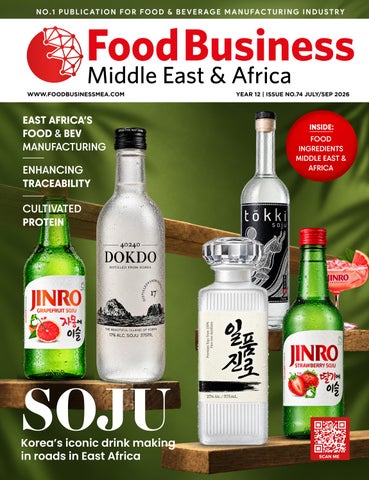
SOJU
Korea’s iconic drink making in roads in East Africa
SCAN ME
A CONSTITUENT EVENT OF:
MARCH 23-25, 2027 DAR ES SALAAM, TANZANIA
APRIL 27-30, 2027 NAIROBI, KENYA
MAY 3-6, 2027 LAGOS, NIGERIA
OCTOBER 6-8 2027 LUSAKA, ZAMBIA
SIGN UP TO ATTEND , SPONSOR & EXHIBIT
Discover the latest Food & Beverage Innovation, Processing & Packaging, LabTech & Supply Chain Technologies for your Business in Africa www.afmass.com/food-bev
CONTENTS
YEAR 12 | ISSUE NO. 74 JULY/SEP 2026
REGULARS 8 Editorial 9 Events Calendar 10 News Update 26 Appointments Update 28 New Product Innovations
FOOD SAFETY 40 Enhancing Traceability for Food Safety: Why Traceability is Now Non-Negotiable in MENA Food Safety
BEVERAGE FOCUS: SOJU 36 So Good Soju: Quietly Rewriting East Africa’s Drinking Habits
MEAT INDUSTRY 44 Meat Without the moo: Why Africa is Finally Taking Cultivated Protein Seriously
FOODBUSINESSMEA.COM
JULY/SEP 2026 | FOOD BUSINESS MEA
3
CONTENTS
YEAR 12 | ISSUE NO. 74 JULY/SEP 2026 FOOD INGREDIENTS MIDDLE EAST & AFRICA
48 News Update
INDUSTRY FOCUS - EAST AFRICA’S FOOD & BEV 30 East Africa’s Food & Beverage Manufacturing Market: The Next Big Opportunity for Solution Providers 4
JULY/SEP 2026 | FOOD BUSINESS MEA
52
Probiotic Unpacked: Market Dynamics, Scientific Advancements, and Diverse Application
56
Synthetic Foods: Bridging Global Food Security Gaps in the 21st Century FOODBUSINESSMEA.COM
Real, Raw Conversations
BROUGHT TO YOU BY:
Join us in
OUR SHOWS
REAL CONVERSATIONS With Business Leaders, Innovators & Changemakers in Africa & Middle East +254 725 343932
studios@fwbrandsmea.com
CEO Voices:Business Leadership Show Transforming Africa Show The Founders Show
www.fwbusinesstv.com
FoodBusiness
OUR MAGAZINES
Middle East & Africa
Year 12 | Issue No.74 | July - Sep 2026
We publish some of the most influential magazines and websites in Africa & the Middle East regions. Please visit the websites below for more information about our publications.
FOUNDER & PUBLISHER Francis Juma SENIOR EDITORS Alphonse Okoth Francis Watari EDITORS Mercy Mukiri Victor Atsali Caroline Makena CONTRIBUTOR Juma Abdallah BUSINESS DEVELOPMENT DIRECTOR Virginia Nyoro
FoodBusiness Middle East & Africa
www.foodbusinessmea.com
HORECA MIDDLE EAST & AFRICA www.horecamea.com
MILLING MIDDLE EAST & AFRICA
www.millingmea.com
Dairy Business MIDDLE EAST & AFRICA
www.dairybusinessmea.com
BUSINESS DEVELOPMENT EXECUTIVE Jonah Sambai HEAD OF DESIGN Clare Ngode ACCOUNTS Anita Kinyua
FEE BUSINESS
MIDDLE EAST & AFRICA
Packag ng SUSTAINABLE
MIDDLE EAST & AFRICA
www.feedbusinessmea.com
www.sustainabilitymea.com
www.healthcaremea.com
www.hpcmagmea.com
Published By: FW Brands MEA P.O. Box 1874-00621, Nairobi Kenya Tel: +254725 343932 Email: info@fwbrandsmea.com Website: www.fwbrandsmea.com
Brands MEA Food Business Middle East & Africa (ISSN 2307-3535) is published 4 times a year by FW Brands MEA. Reproduction of the whole or any part of the contents without written permission from the editor is prohibited. All information is published in good faith. While care is taken to prevent inaccuracies, the publishers accept no liability for any errors or omissions or for the consequences of any action taken on the basis of information published.
6
JULY/SEP 2026 | FOOD BUSINESS MEA
AGRITECH
MIDDLE EAST & AFRICA www.agritechmea.com
FOODBUSINESSMEA.COM
FOODBUSINESSMEA.COM
JULY/SEP 2026 | FOOD BUSINESS MEA
7
EDITORIAL
Ushering in a New Era: The Next Frontier of Information Consumption
W
e live in an ever-changing world driven by growth in technology. With changing consumer preferences, the current Gen Z population has brought with it a huge thirst for listening and watching as opposed to reading plaintext articles. According to data from Spotify, the country’s appetite for on-demand audio content has resulted in a thriving podcast scene, with Nairobi remaining the central hub of activity. In the media space, Africa is recording one of fastest growths in the number of podcasts in the recent years postpandemic. Some of the key statistics and trends indicate that Nairobi remains Kenya’s cultural and digital epicentre, accounting for over 93% of all podcast streams in the country. The largest consumer group is Gen Z (ages 18–29), who make up nearly 50% of the audience, followed by millennials. The result? A huge shift in how people consume media with many choosing to listen rather than read. This has not only been driven by technological factors. Economic factors especially in the African region have pushed people to having little or no time to sit and read an article. The solution? To feed the information hunger, most people are turning to podcasts, webinars, and eBooks that can be consumed from anywhere. A working individual finds it easier to tune in to a podcast and still be focused on work rather than having to entirely stop their daily activities to go through a
8
JULY/SEP 2026 | FOOD BUSINESS MEA
whole article. Results? Better and wider information relayed to the audience and a versatile source of knowledge for any reader. To address this shift, FW Brands MEA, our parent company is incorporating podcasts and webinars to help our readers access information and industry knowledge in a more versatile way. With a newly established studio, FW Brands MEA is bringing to you leaders and professionals from the different niches in the food sector to discuss pertinent issues in and around the industry. Be it founders, specialists, consultants, and even scholars, our podcast series will strive to ensure that every angle of the industry is covered. This will change how we feature companies; giving an opportunity to founders to tell their stories in a more digital format. Additionally, we will also feature professionals in the different fields in the food industry giving a more interactive format to spread knowledge. With this new frontier, our readers will get the convenience and flexibility to access information across the food industry from the click of a remote. We simply cannot wait to roll out the first episode of our podcast series. Enjoy your read! Francis Watari Lead Editor Food Business MEA Magazine FOODBUSINESSMEA.COM
EVENTS CALENDAR Agrofood West Africa 2026 Parc des Expositions, Abidjan, Ivory Coast October 8, 2026 - October 10, 2026 www.agrofood-westafrica.com Ivory Coast Food Expo 2026 Parc des Expositions, Abidjan, Ivory Coast October 22, 2026 - October 24, 2026 www.ivorycoastfoodexpo.com
ADVERTISE IN FOOD BUSINESS MEA NO.1 FOOD & BEVERAGE INDUSTRY MAGAZINE & WEBSITE
Saudi International Halal Expo & Summit 2026 October 4–6, 2026 Riyadh International Convention & Exhibition Center (RICEC), Riyadh, Saudi Arabia www.saudihalalexpo.com SIAL Paris October 17-21, 2026 Paris Norde Villepinte, Paris, France www.sialparis.com/en Cibus Tec October 27-30, 2026 Fiere di Parma, Italy www.cibustec.it Food Style Japan 2026 October 28, 2026 - October 29, 2026 Aichi International Exhibition Cente, Japan www.foodstyle.jp/chubu/ Agromachinery Expo 2026 October 13, 2026 - October 15, 2026 International Exhibition Center, Ukraine www.iec-expo.com Vietfood & Beverage - Propack 2026 November 4, 2026 - November 7, 2026 Hanoi International Exhibition Center, Vietnam hn.foodexvietnam.com Kenya Food & Drink Festival December 4-6, 2026 Impala Club, Ngong’ Road, Nairobi, Kenya www.festival.afmass.com AFMASS Expo Tanzania March 24-26, 2027 Dar es Salaam, Tanzania www.afmass.com/tz/
AVAILABLE IN PRINT & FOR FREE ONLINE AT:
WWW.FOODBUSINESSMEA.COM
FOODBUSINESSMEA.COM
JULY/SEP 2026 | FOOD BUSINESS MEA
9
NEWS UPDATES By www.foodbusinessmea.com
COMESA launches digital seed system to harmonize regional trade, boost food security ZAMBIA – The Common Market for Eastern and Southern Africa (COMESA) has introduced a digital platform and certification labels to standardize the regional seed industry, aiming to eliminate trade barriers and foster a more competitive seed sector across its 21 member nations. The COMESA Seed Information System (COMSIS) and the operationalization of the seed labelling and certification system is expected to increase accessibility to high-quality certified seed in the region and enhance regional agricultural productivity to ensure food and nutrition security. The chief executive of the Alliance for Commodity Trade in East and Southern Africa, Dr John Mukuka, said the system would strengthen regional agricultural markets and increase investment in the sector. “As member states, we believe that these efforts are critical in steering us towards our common goals: accessible quality seed for our farmers, improved agricultural productivity, and food security in all member countries of COMESA,” Dr Mukuka said. “Our small-scale farmers cannot achieve increased yields, improved household incomes, and resilience to climate change if our countries do not provide quality and affordable seed.”
INVESTMENTS
Ghana secures US$270M poultry investment to boost local production GHANA – Ghana has secured a proposed US$270 million investment agreement to revitalise its poultry industry, expand domestic chicken production and reduce the country’s dependence on imported poultry. The agreement, brokered by the 24-Hour Economy and Accelerated Export Development Secretariat, will support an integrated poultry value chain covering feed production, hatcheries, commercial farming, processing, cold-chain infrastructure and distribution. The signing represents the first formal step towards implementing the poultry investment programme and reflects the parties’ commitment to developing an integrated domestic poultry value chain. Ghana consumes about 340,000 tonnes of chicken annually but produces only a fraction of its domestic requirement. About 270,000 tonnes are imported each year, costing the country approximately US$400 million in foreign exchange. Tanoh said the proposed investment would cover major segments of the poultry ecosystem, including hatcheries, feed production, commercial farms, processing facilities, cold-chain infrastructure
and distribution networks. The project is aligned with the government’s broader 24-Hour Economy agenda, which seeks to increase productive activity, promote value addition and create sustainable employment. Agrium Capital Limited Chief Executive Officer Rod Bassett said the investment would be implemented through a proprietary development and design process expected to take 10 to 12 months. “The process would establish a fully integrated poultry production and operating system covering all major segments of the value chain,” Bassett said. He added that the initiative would create more than 1,000 direct jobs and over 2,500 indirect employment opportunities when fully operational.
Nestlé to sell vitamins and supplements business US$1B SWITZERLAND – Swiss food manufacturer Nestlé has agreed to sell its mainstream vitamins and supplements business to US private equity firm Yellow Wood Partners for US$1 billion as the company moves to streamline its portfolio. 10
JULY/SEP 2026 | FOOD BUSINESS MEA
The transaction includes brands such as Nature’s Bounty, Osteo BiFlex and Puritan’s Pride, as well as Nestlé’s US private-label supplements business and related manufacturing and logistics operations. The divestment is part of Nestlé’s efforts to focus on businesses it
identifies as priority growth areas, including coffee, petcare, food and snacks. The company sold half of its water business earlier in 2026 and is also divesting its ice cream interests. Navratil said the sale would allow teams to devote greater attention to the company’s priority businesses. FOODBUSINESSMEA.COM
What will tomorrow’s food look like ? Hard to picture ? Come and experience it at SIAL Paris 2026
Visit the world’s largest food innovation exhibition from 17 to 21 October at Paris Nord Villepinte FOODBUSINESSMEA.COM
JULY/SEP 2026 | FOOD BUSINESS MEA
More information : Wangari Kamau - Wangari.kamau@fwbrandsmea.com
11
Service, Speed Service,Speed Speed Service, and Innovation: and Innovation: and Innovation: The modern flavour partner for The modern flavour partner for manufacturers Thefood modern flavour partner for foodand and beverage beverage manufacturers
food and beverage manufacturers
In today’s competitive food and beverage market, manufacturers face constant pressure to innovate, respond quickly to changing consumer trends and In today’s competitive food andtobeverage market, bring successful products market faster than ever manufacturers face constant pressure innovate, before. Whether developing a new to beverage range, a bakery product or launching a new respondreformulating quickly to changing consumer trends and savoury snack, flavour plays a critical role in product bring successful products to market faster than ever success. developing a new beverage range, before. Whether Choosing the rightproduct flavour partner is therefore reformulating a bakery or launching a new about far more than simply sourcing ingredients. savoury snack, flavour plays a critical role in product success.Manufacturers increasingly require technical expertise, innovation, reliability and responsive
Choosing the right flavour partner is therefore service from suppliers that understand the challenges of modern development. about far more than simply product sourcing ingredients. Manufacturers increasingly require technical Established in Cambridge, United Kingdom, Taste expertise, innovation, andmanufacturer responsive Flavourings is anreliability independent specialising in sweet savoury flavour service from suppliers thatand understand the solutions and of emulsions the global food and beverage challenges modernforproduct development.
industry. Since 2012, the business has built a strong
Established in Cambridge, United Kingdom, Taste Flavourings is an independent manufacturer specialising in sweet and savoury flavour solutions and emulsions for the global food and beverage industry. Since 2012, the business has built a strong
reputation for helping customers transform product concepts into successful commercial products through innovative flavour development and reputation helping customers transform product exceptionalfor customer support.
concepts into successful commercial products Backed by a highly experienced team with through innovative flavour development and backgrounds across many of the world’s leading exceptional customer support. flavour houses, the business combines creativity
with technical excellence to help customers solve Backed by a highly experienced team with formulation challenges while delivering authentic backgrounds across many of the world’s leading and appealing flavour experiences. flavour houses, the business combines creativity Expertise spans a broad range of food and beverage with technical excellence to help customers solve categories including confectionery, bakery, dairy formulation challenges while delivering authentic and ice cream, beverages, sports nutrition, soups, and appealing flavour sauces, snacks and meatexperiences. applications. Alongside
its extensive flavour portfolio, TasteofFlavourings Expertise spans a broad range food and beverage also develops emulsions that support product categories including confectionery, bakery, dairy performance, visual appeal and application-specific and ice cream, beverages, sports nutrition, soups, requirements across multiple food and beverage sauces, sectors.snacks and meat applications. Alongside its extensive flavour portfolio, Taste Flavourings also develops emulsions that support product performance, visual appeal and application-specific requirements across multiple food and beverage sectors.
One of the key reasons manufacturers choose Taste Flavourings is flexibility
12
One of the key reasons manufacturers
JULY/SEP 2026 | FOOD BUSINESS MEA
FOODBUSINESSMEA.COM
One of the key reasons manufacturers choose Taste Flavourings is flexibility. Every project comes with unique technical requirements, commercial objectives and production challenges. Through close collaboration with customers, bespoke flavour solutions are developed to meet specific application and market needs. This customer-focused approach is supported by dedicated flavourists, technical specialists and account managers who work collaboratively throughout the development process. Maintaining close communication and responding quickly to customer requirements allows projects to move efficiently from concept through to commercial production. Speed to market has become increasingly important across the food and beverage sector. Consumer trends evolve rapidly, creating opportunities for manufacturers able to respond quickly to changing demands. An agile and responsive approach to flavour development helps customers accelerate innovation while maintaining product quality and consistency. Whether customers require small development batches or larger commercial volumes, scalable manufacturing capabilities and short lead times support efficient project delivery across multiple product categories. Innovation continues to sit at the centre of flavour development activity. Emerging consumer preferences, market trends and category developments constantly create opportunities for new flavour experiences. From indulgent confectionery flavours and premium beverages to sophisticated savoury profiles and sports nutrition applications, Taste Flavourings remains focused on developing flavour solutions that create excitement and differentiation in the marketplace. Alongside innovation, consistency and quality remain equally important. Manufacturers need confidence that flavour performance will remain reliable throughout production and across different markets. Extensive industry expertise and rigorous quality standards help ensure dependable flavour solutions that support long-term product success. Today, Taste Flavourings serves customers through a growing international network that includes South Africa, Morocco, Türkiye, Shanghai and the Benelux region. This expanding presence enables local support while maintaining the responsiveness, flexibility and technical expertise customers expect from a modern flavour partner. As the food and beverage industry continues to evolve, manufacturers increasingly require partners that offer more than ingredients alone. Technical knowledge, flexibility, innovation and responsive service all play an essential role in successful product development. Visitors attending AFMASS Kenya are invited to visit Stand A01 to meet the team, discuss current projects, explore new flavour and emulsion opportunities, and discover how bespoke solutions can support future product development and business growth. For food and beverage manufacturers seeking a trusted flavour partner, Taste Flavourings delivers the expertise, service and innovation needed to turn ideas into successful products. FOODBUSINESSMEA.COM
JULY/SEP 2026 | FOOD BUSINESS MEA
13
NEWS UPDATES
Namibia’s Meatco revenue falls to US$46.2M NAMIBIA – Namibia’s Meat Corporation of Namibia (Meatco) recorded a revenue decline of about US$46.2 million (N$757 million) during the 2025/26 financial year after a shortage of cattle reduced slaughter volumes across its operations. Revenue fell to US$67.6 million (N$1.108 billion) from US$113.9 million (N$1.865 billion) a year earlier as livestock availability tightened across the sector. The results follow a period of financial challenges for the state-owned meat processor, which posted an operating loss of US$15.8 million (N$258.1 million) two years ago. Interim chief executive Albertus Aochamub said the financial results reflected the effect of lower cattle numbers on revenue while also showing improvements in the company’s financial position. Despite the decline in throughput, Meatco reported a profit after tax of US$2.5 million (N$40.5 million) for the year under review.
Boxer posts US$2.62B revenue in FY 2026 SOUTH AFRICA – Boxer Retail Limited reported turnover of US$2.62 billion for the 52 weeks ended 1 March 2026, an increase of 12.3% compared with the previous financial year. This marks its first full year as a publicly listed company following its Johannesburg Stock Exchange debut in November 2024. The retailer said the higher revenue was achieved despite a difficult consumer environment characterised by cautious household spending and an internal selling price deflation of 1.2%, with continued gains in market share supporting overall growth during the year. Like-for-like sales increased by 4.5%, driven mainly by stronger sales volumes, while newly opened stores contributed 7.8% to total turnover growth as the company continued expanding its retail footprint across South Africa.
14
JULY/SEP 2026 | FOOD BUSINESS MEA
MARKET EXPANSSION
Varun Beverages enters alcoholic drinks market with dedicated subsidiary
INDIA – Varun Beverages is entering the alcoholic drinks market with a new business focused on ready-todrink products. The company’s board has approved the incorporation of KIVA Spirits and Company Ltd, subject to requisite regulatory approvals. The new company will manufacture and sell RTD alcoholic beverages and related products. Varun Beverages also appointed former Diageo executive Prathmesh Mishra as Kiva Spirits’ chief executive officer and managing director. The move takes Varun Beverages beyond its core soft-drinks business and into one of India’s faster-growing alcohol categories. The company already has an extensive beverage production and distribution network in India and several African markets. Kiva Spirits will have authorized capital of about 1 billion rupees ($12 million), including approximately 900 million rupees ($10.8 million) in equity capital. Its establishment remains subject to approval by India’s Ministry of Corporate Affairs. Varun Beverages has not disclosed which products or brands it plans to launch. Separately, Varun Beverages’ board approved plans for a joint venture in Tunisia. The proposed entity will manufacture and
distribute carbonated soft drinks, juices, water and dairy products, further expanding the company’s international operations. Varun Beverages reported consolidated net sales of 216.85 billion rupees ($2.59 billion) in 2025, up 8.4% from a year earlier. Sales volume rose 7.9% to 1.213 billion cases. Earnings before interest, taxes, depreciation and amortization increased 7.2% to 50.49 billion rupees ($600 million), while net profit climbed 16.2% to 30.62 billion rupees ($370 million). The company continued to grow in 2026. First-quarter revenue rose 18.1% to 65.74 billion rupees, while net profit increased 20.1% to 8.79 billion rupees. Varun Beverages has expanded its manufacturing and distribution operations in India and Africa in recent years and has used acquisitions to build its overseas business. A company subsidiary in Africa reached an agreement with Carlsberg Breweries A/S in 2025 to distribute its beer products. India’s RTD alcohol market remains relatively small but is growing quickly. Grand View Research estimated that sales of ready-to-drink cocktails reached $85.9 million in 2025 and would rise to $102.7 million in 2026.
FOODBUSINESSMEA.COM
INVESTMENTS
Orangeville Trading invests US$25M in juicing plant in Zimbabwe ZIMBABWE – Orangeville Trading has invested US$25 million in a juicing plant in Beitbridge, Zimbabwe, as it targets regional export markets and supplies Schweppes Zimbabwe with locally processed citrus products. The plant was established in 2024 following an initial US$20 million investment, with a further US$5 million added to the project. Orangeville is now considering increasing total investment to as much as US$40 million as it expands production capacity. The company has been certified to supply Schweppes Zimbabwe, which it described as a milestone for local value addition by processing raw citrus into finished products instead of exporting fruit without processing. In addition to juice, the Beitbridge facility extracts orange essential oil for the cosmetics industry and converts citrus residue into livestock feed pellets, creating additional revenue streams from citrus processing. The company expects employment to rise to at least 1,500 within five years as a planned 5,000-hectare citrus estate near Beitbridge comes into production.
FOODBUSINESSMEA.COM
The estate is expected to strengthen the plant’s access to raw materials as Orangeville expands its contract farming programme. The company said inconsistent supplies from surrounding growers, who can sell to higher-paying buyers, and high transport costs remain major constraints on production.
JULY/SEP 2026 | FOOD BUSINESS MEA
15
MARCH 23-25, 2027
APRIL 27-30, 2027
MAY 3-6, 2027
OCTOBER 6-8 2027
DAR ES SALAAM, TANZANIA
LAGOS, NIGERIA
NAIROBI, KENYA
LUSAKA, ZAMBIA
No.1 International Trade Shows & Conferences for: Food Ingredients & Formulation Solutions • Processing & Packaging • Logistics • Lab & Food Safety • Hospitality Solutions info@fwbrandsmea.com
www.afmass.com +254 725 343932
SCAN ME
SIGN UP TO ATTEND, SPONSOR & EXHIBIT
CONSTITUENT EVENTS
NEWS UPDATES
CERTIFICATION
KWAL becomes Kenya’s first manufacturer to earn EDGE advanced certification
KENYA – Kenya Wine Agencies Limited (KWAL) has become Kenya’s first manufacturer to receive the recognised EDGE Advanced certification, following an eight-year effort to develop an energy-efficient factory at Tatu City. The certification has achieved a 44% reduction in energy use, a 28% reduction in water consumption and a 53% reduction in the embodied energy of building materials. EDGE, developed by the International Finance Corporation (IFC), a member of the World Bank Group, is a green building standard adopted in more than 170 countries. Certification requires projects to demonstrate at least a 20% reduction in energy, water and materialsrelated carbon footprint. “Through practical solutions, KWAL has delivered a 44% reduction in energy use, a 28% reduction in water consumption, and a 53% reduction in embodied energy in materials — results that represent real resources conserved every single day,” said Gill Rogers, IFC head of country office, Kenya. KWAL’s Supply Chain Director, Mwenda Kagenu, said the certification followed a process that began in 2018, when the company finalised the designs for the Tatu 18
JULY/SEP 2026 | FOOD BUSINESS MEA
City plant. An initial audit in 2019 assessed the plant’s designs against EDGE requirements as construction began. The company completed a 700-kilowatt rooftop solar installation in 2025, prompting a second audit to verify its energy and water efficiency performance. The rooftop solar plant was completed in eight months and currently meets 20% of KWAL’s annual electricity needs. The installation has also reduced annual energy costs by an estimated 10%. KWAL plans to more than double its solar capacity to 1,500 kilowatts as it continues its resource-efficiency initiatives and renewable energy investments. The company has adopted Heineken’s Brew a Better World sustainability ambition, focusing on areas where it can create positive environmental impacts while generating business value. Under Heineken’s healthy watersheds and nature ambition, the company is focused on improving water efficiency and replenishing water used in water-stressed areas. It is also pursuing operational decarbonisation through energyefficiency measures and increased use of renewable energy across its manufacturing operations.
Cadbury Nigeria reports 20% decline in H1 2026 profit NIGERIA – Cadbury Nigeria Plc has reported a 20.3% decline in profit after tax for the first half of 2026 as rising operating expenses offset gains from higher sales and improved gross margins. The company recorded profit after tax of N8.1 billion (US$ for the six months ended June 30, 2026, compared with N10.2 billion (US$ during the corresponding period of 2025. Revenue increased by 8% to N83.3 billion (US$61.13M) from N77.3 billion (US$56.72M), supported by stronger performances across several business segments. Confectionery sales rose by 23.2% to N29.9 billion (US$21.94M), while sales of intermediate cocoa products more than doubled to N6.5 billion from N3.2 billion (US$2.35M), driven by stronger export demand.
World Bank approves US$60 million to expand Congo’s poultry, aquaculture sectors CONGO – The World Bank has approved US$60 million for a programme to expand poultry and aquaculture production in the Republic of Congo, with the financing targeting constraints that have limited investment and domestic output. The project will focus on improving farmers’ access to affordable feed, quality day-old chicks, technical support and infrastructure, areas that continue to affect the cost and efficiency of poultry production. The programme will support the supply of key poultry inputs while providing training and technical assistance to farmers, workers and businesses involved in the sector. World Bank Division Director for the Republic of Congo Cheick F. Kanté said investment in poultry and aquaculture could support employment, food and nutrition security and economic diversification, with the programme combining public funding, private-sector participation, skills development and climate-smart measures.
FOODBUSINESSMEA.COM
INVESTMENTS
Kakuzi expands blueberry production with 12-hectare greenhouse project
KENYA – Kakuzi Plc has begun developing a 12-hectare blueberry greenhouse project, adding blueberries as its third commercial superfood crop alongside macadamia and avocado as part of its revenue diversification strategy. Managing Director Chris Flowers said crop trials confirmed
commercial viability, with the blueberry division recording a half-year profit of Ksh 13 million (approx. US$100,000), compared with a Ksh 17 million (approx. US$131,000) loss in the same period last year. Blueberry output from pilot orchards reached 42,000 kg as of June 2026, compared with 8,400 kg during the same period in 2025. This fivefold increase reflects successful crop trials, improved cultivation practices, and rising market demand for Kenyan blueberries. The purpose-built greenhouses under development across the 12-hectare orchard are designed to maintain and increase output. Flowers said the company expects production to meet annual field and revenue projections, with demand coming from both domestic and international markets. On the other hand, Kakuzi is diversifying its portfolio beyond fresh produce by exploring value-added avocado products, including frozen pulp and avocado oil. These longlife products target export markets and reduce reliance on fresh fruit exports alone.
Food Safety Testing Solutions Verify Cleaning Effectiveness in Seconds with ATP Testing ATP testing detects the presence of living cells and organic material. Hygiena ATP monitoring solutions help quality assurance verify the cleanliness of surfaces, equipment, and rinse water. Early detection allows for immediate corrective action.
Request More Info
e-mail: info@afrosep.com www.afrosep.com FOODBUSINESSMEA.COM
JULY/SEP 2026 | FOOD BUSINESS MEA
19
NEWS UPDATES
Kenya bans sugar imports by local millers KENYA – Kenya has banned sugar imports by local sugar milling companies, with Agriculture Principal Secretary Kiprono Rono saying the country now produces enough sugar to meet domestic demand. The move is aimed at protecting local sugarcane farmers, boosting the local sugar industry and reducing reliance on imported sugar. According to the PS, production has risen from about 40,000 metric tonnes to more than 80,000 metric tonnes per month, reflecting the impact of government reforms and expanded sugarcane farming. “Our priority is to protect our farmers and ensure they benefit from their hard work. Kenya now has the capacity to produce enough sugar for its people, and there is no justification for continued importation by our sugar factories while local cane remains unharvested,” Rono said. He cautioned sugar millers against neglecting locally grown sugarcane in favour of imports, insisting they must prioritize harvesting cane produced by Kenyan farmers.
Robust secures US$20M debt facility to drive cashew processing in Côte d’Ivoire CÔTE D’IVOIRE – Robust International Pte Ltd (Robust) has secured a US$20 million debt facilityfrom GuarantCo, part of the Private Infrastructure Development Group (PIDG), in partnership with Symbiotics, to finance a new cashew processing and aggregation operation in Côte d’Ivoire. GuarantCo is providing a 100% payment default guarantee of up to US$23 million to support the loan facility, helping mobilise private institutional capital into Côte d’Ivoire’s agricultural processing sector. The financing will support the development of a greenfield cashew processing plant in Toumodi, with a processing capacity of 15,000 tonnes per year. It will also finance aggregation warehouse facilities capable of handling 25,000 tonnes annually in Bouaké and 19,000 tonnes in Toumodi. 20
JULY/SEP 2026 | FOOD BUSINESS MEA
FINANCIALS
Shoprite reports 12.2% earnings growth, acquires Vida e Caffè
SOUTH AFRICA – Shoprite Holdings has reported a 12.2% increase in annual headline earnings and announced acquisitions worth about R1 billion (US$62 million), including speciality coffee chain Vida e Caffè and a majority stake in R&A Cellular. Chief Executive Pieter Engelbrecht said the acquisition of Vida e Caffè, South Africa’s largest speciality coffee chain with more than 400 outlets, would strengthen Shoprite’s presence in the coffee and convenience segment. Founded in 2001, Vida e Caffè was inspired by the street cafés of Portugal and combines those influences with African energy. It now operates across Ghana, Mauritius, Zambia, Eswatini, Botswana, Namibia and Angola, alongside its South African network. Vida has also expanded through partnerships and acquisitions. In 2021, it acquired healthy restaurant chain Sweetbeet, which operates in the Western Cape and Gauteng. In the 2026 financial year, Shoprite group reported a 7.1% increase in revenue to R274.8 billion (US$17.09B) compared with R256.6 billion in 2025. Sales increased 7.2% year-on-year. Headline earnings per share rose 12.2% to R15.27. Shoprite’s Checkers Sixty60 operations recorded a 34.5% increase in sales during the year. Engelbrecht credited the result
to the efforts of the retailer’s more than 174 000 employees, saying the business had remained focused on delivering value to customers while driving growth across its operations. South African supermarket operations remained the group’s largest source of revenue, generating R228.7 billion (US$14.2B) in sales. Operations outside South Africa generated R22.8 billion. Shoprite and Usave, which focus on affordability, recorded more modest growth, with sales increasing approximately 4.3%. Excluding Shoprite Liquor, the two chains opened a combined 83 stores, taking their total footprint to 1,259 stores. The retailer also expanded its footprint, opening a net 232 stores across continuing operations and creating 5 491 new jobs during the year. Total store numbers reached 3 710 by the end of the year. Beyond its traditional supermarket operations, Shoprite strengthened its position in adjacent growth sectors. Petshop Science increased sales by 74.5% after expanding to 185 stores, while the group announced two strategic acquisitions. Operations outside South Africa also delivered a solid performance, with sales increasing 11% to R22.8billion. The division benefited from lower diesel costs, particularly in Zambia, helping improve profitability. FOODBUSINESSMEA.COM
www.afripolexpo.com
MARCH 23-25, 2027
DAR ES SALAAM, TANZANIA
APRIL 27-30, 2027 NAIROBI, KENYA
MAY 3-6, 2027 LAGOS, NIGERIA
OCTOBER 6-8 2027
Africa’s No.1 Trade Shows for the Poultry, Livestock, Dairy, Aquaculture and Animal Nutrition & Health Industries
LUSAKA, ZAMBIA
SIGN UP TO ATTEND, SPONSOR & EXHIBIT SCAN ME
+254 725 343932
info@fwbrandsmea.com
Cape Food Ingredients brings Cheese Coating production to Africa First African production marks a new milestone for local dairy ingredient manufacturing NAIROBI, KENYA – Cape Food Ingredients (CFI) has reached a significant milestone in the African dairy industry with the commencement of local production of its cheese coating range in Nairobi, Kenya and Cape Town, South Africa. Eastern and Southern Africa are particularly well-known for their vibrant dairy sectors. The development inaugurates the only known production units for cheese coatings in Africa, providing cheese manufacturers in the region with a locally manufactured alternative to imports.
22
JULY/SEP 2026 | FOOD BUSINESS MEA
The first locally produced stock is now available for all African markets from two of the CFI regional manufacturing hubs, production which can be extended to the Company’s other factories and operations in Ghana, Zambia and Angola should the need arise. The first deliveries started in July 2026 and are ramping up as more customer approvals are finalised. Cheese coatings play an important role in cheese manufacture, maturation and preservation. Applied to the exterior of the cheese, the coating provides a protective barrier that can help manage moisture loss, protect the cheese surface
FOODBUSINESSMEA.COM
during maturation, storage and handling, and contribute to the appearance and consistency of the finished product. For African cheese producers local availability has many advantages beyond product supply. By producing fresh stock closer to the customer, CFI provides short lead times, lower minimum order quantities, longer bestbefore dates and far greater flexibility for manufacturers requiring solutions suited to their individual production and marketing requirements. For example, the Coatings can be produced in any colour or shade for product differentiation. “The production of cheese coatings in Africa is another step in our ongoing drive to manufacture specialised food ingredients and flavours close to our customers. We reduce imports, lower costs and provide a far more diverse product range. It is part of our continued drive towards import substitution and economic development in Africa” says Brian Lanton, Managing Director at Cape Food Ingredients.
FOODBUSINESSMEA.COM
About Cape Food Ingredients Cape Food Ingredients is a specialist food ingredient and flavour manufacturer serving food manufacturers across Sub-Saharan Africa. The company
provides ingredient, formulation and processing solutions across dairy, beverage, confectionery, savoury, bakery and other food-processing applications, with a focus on developing and manufacturing solutions suited to African market conditions, tastes and requirements. The Company’s three regional R&D and Applications Labs, based in Accra, Nairobi and Cape Town, assist an-ever growing base of customers interested in producing better foods and beverages with lower costs. www.capefoodingredients.com
JULY/SEP 2026 | FOOD BUSINESS MEA
23
NEWS UPDATES
REGULATIONS
Rwanda shuts down 101 liquor production sites amid public health concerns
RWANDA - Rwanda has ordered the closure of 101 alcoholic beverage manufacturing facilities and revoked their production licences as part of a broader crackdown on illicit alcohol. On August 3, the Rwanda government’s Food and Drugs Authority (FDA) issued a announcement announcing the closure of 101 sites that produced alcoholic beverages The production facilities produce an array of alcoholic drinks including vodka, gin, flavoured wines and banana-based alcoholic beverages. The regulator also ordered the immediate removal of all advertising materials linked to the products and instructed manufacturers, distributors and retailers to withdraw them from the market and halt distribution. The FDA warned that businesses failing to comply would face punitive measures and urged the public to stop consuming alcohol produced by the blacklisted facilities. The announcement came a day after the regulator ordered the closure of eight liquor manufacturers “in the interest of public health”. Those companies included Ingufu Gin, NBG, Sky Drop Industries, Africana Buffalo, Nopa Company, Roots Investment Group, Rugal Agroprocessing Company and Zhonglu Industrial Liability Company. 24
JULY/SEP 2026 | FOOD BUSINESS MEA
The enforcement action follows growing concerns over the health impact of illicit alcohol in Rwanda. The Ministry of Health recently launched the “Tunywe Less” (translated to “Let’s Drink Less”) campaign after surveys pointed to rising alcohol consumption rates, particularly among young people. According to the Rwanda Biomedical Centre’s 2022 national survey on non-communicable disease risk factors, alcohol consumption rose from 41% of the population in 2013 to 48% in 2022. The latest Rwanda Demographic and Health Survey (RDHS-7), published by the National Institute of Statistics of Rwanda (NISR), found that 15% of men and 7% of women consume alcohol daily. Among adults aged 15 to 49, half of men and 36% of women reported drinking alcohol in the month before the survey. The Rwanda National Police has destroyed more than 470,000 litres of ethanol that had allegedly been used in the production of substandard and illicit alcoholic beverages as part of government’s ongoing campaign against illegal alcohol manufacturing. Rwanda Food and Drugs Authority (Rwanda FDA) DirectorGeneral Emile Bienvenu was among 18 people arrested as part of the nationwide crackdown.
Dangote Sugar raises US$358.6M in fully subscribed rights issue NIGERIA – Dangote Sugar Refinery Plc has raised N485.9 billion through a fully subscribed Rights Issue, marking one of the largest capital raises in Nigerian corporate history. The Lagos-based sugar refiner said the offer achieved a 100% allotment rate after demand exceeded the number of shares available. Dangote Sugar offered 8.10 billion ordinary shares of 50 kobo each at N60 per share to shareholders on its register as of April 20, 2026. The proceeds will strengthen Dangote Sugar’s balance sheet and support its expansion and backward integration programme, including investments to increase domestic sugar production and reduce reliance on imported sugar. The company’s backward integration strategy, known as the “Sugar for Nigeria” programme, targets annual production of 1.5 million metric tonnes of sugar.
Kenya opens new seed potato centre KENYA – Kenya has opened a new specialized seed potato production and training facility in Nakuru County to address a critical shortage of certified seed, as national demand far exceeds current supply. The facility, located in Marindas Seed Potato Centre in Kuresoi, covers about 243 hectares, with nearly half dedicated to seed multiplication each year. It will also serve as a training centre for farmers. KALRO said the facility will enable farmers to obtain seed nearer their farms and access training in improved agricultural practices. However, the centre’s production capacity has not yet been disclosed. According to KALRO Director General Patrick Ketiem, national demand is estimated at 150,000 tons, compared with a current supply of about 24,000 tons. This leaves a 126,000-ton gap, limiting productivity across the sector. FOODBUSINESSMEA.COM
SCAN ME
MARCH 23-25, 2027 DAR ES SALAAM, TANZANIA
APRIL 27-30, 2027 NAIROBI, KENYA
MAY 3-6, 2027 LAGOS, NIGERIA
OCTOBER 6-8 2027 LUSAKA, ZAMBIA
No.1 International Trade Shows for Packaging Materials, Processing & Packaging Technologies in Africa
SIGN UP TO ATTEND , SPONSOR & EXHIBIT
www.afripackexpo.com
info@fwbrandsmea.com +254 725 343932
APPOINTMENTS UPDATE
Kenya Airways appoints Habil Waswani acting CEO KENYA – Kenya Airways has appointed Company Secretary and Director of Legal Services Habil Waswani as acting CEO effective September 15, 2026, succeeding Capt. George Kamal, who has stepped down. Kamal, who had served as Chief Operating Officer for three years will remain at the airline before his formal exit on September 30, 2026. Habil Waswani brings more than 24 years of experience in corporate and commercial law to his new role. He joined Kenya Airways in March 2021 and has overseen aviation and airline-related legal matters, as well as commercial and corporate law. He previously held senior positions at National Bank of Kenya Limited, Kenya Reinsurance Corporation Limited, and Diamond Trust Bank Kenya Limited. The Board has initiated a recruitment process for a substantive Group Managing Director and CEO, which is expected to be completed in the near term.
SBC Tanzania appoints Himanshu Shekhar as new CEO TANZANIA – SBC Tanzania has appointed Himanshu Shekhar as its new Chief Executive Officer, promoting him from his previous role as Chief Operating Officer. During his tenure as COO, Shekhar was involved in production and operational activities at SBC Tanzania’s facilities in Mwanza, Arusha and Kilimanjaro. His appointment comes as the company marks 25 years since its founding and advances plans to expand its manufacturing footprint. SBC Tanzania said Shekhar’s promotion reflected “his leadership in operational activities, his ability to implement plans, and his commitment to the company.” Founded in 2001, SBC Tanzania manufactures and distributes PepsiCo brands, and it operates plants in Dar es Salaam, Mwanza, Arusha and Mbeya. Shekhar takes charge as SBC Tanzania works to expand production, strengthen manufacturing, improve product availability across Tanzania’s beverage market.
26
JULY/SEP 2026 | FOOD BUSINESS MEA
FOODBUSINESSMEA.COM
Zambia Airways appoints Aman Wole Gurmu as CEO ZAMBIA – Zambia Airways has appointed Aman Wole Gurmu as its new Chief Executive Officer, effective August 1, 2026. The airline said Gurmu’s appointment reflects the Board’s commitment to strong and visionary leadership as it enters its next phase of growth. Most recently, he served as Director of Addis Ababa Sales, leading the airline’s sales strategy in the Addis Ababa market with a focus on revenue growth and market share expansion. In that role, he managed the sales team and oversaw relationships with clients, travel agencies and key institutions, while coordinating with internal teams to align sales activities with Ethiopian Airlines’ commercial objectives. As a result, his experience across airline sales, market development and commercial strategy brings a strong commercial background to his new role at Zambia Airways. Gurmu’s background comes as the airline seeks to strengthen its network and commercial position.
AGL Ghana appoints Benny Atta Dolphyne as Managing Director GHANA – AGL Ghana has appointed Benny Atta Dolphyne as its new Managing Director, succeeding Claude Aman. With more than 20 years of experience in logistics and supply chain management across Africa, Dolphyne brings extensive expertise in freight forwarding, customs brokerage, warehousing, multimodal transport, and trade corridor management. He previously served as Head of Logistics at AGL Ghana and later led the logistics business at PIL Ghana. His leadership is expected to strengthen the company’s regional presence in freight forwarding and multimodal transport and to drive operational improvements across West African markets. The company’s focus on sustainable logistics solutions and operational excellence positions it as a key player in West African supply chains.
FOODBUSINESSMEA.COM
JULY/SEP 2026 | FOOD BUSINESS MEA
27
NEW FOOD PRODUCT INNOVATIONS
FANTA BERRY
Coca-Cola Tanzania Tanzania – Coca-Cola Tanzania has launched Fanta Berry, a new flavour aimed at expanding the brand’s appeal among young consumers across the country. Coca-Cola Tanzania Senior Marketing Manager Kabula Nshimo said the product was developed to offer a fruity alternative that responds to changing consumer tastes. Fanta Berry joins Fanta Orange as part of the brand’s beverage offering in Tanzania.
www.ccbagroup.com
CHROME BRANDY
Kenya Breweries Ltd Kenya - Kenya Breweries Ltd has expanded its Chrome brand portfolio with the launch of Chrome Brandy in Kenya The new offering is a smooth brandy with 40% alcohol, making it a great choice for celebrations, social gatherings, and everyday enjoyment. Chrome Brandy is carefully distilled from the finest ingredients and matured in choice oak barrels for at least two years. This deliberate aging process allows the spirit to mellow, absorbing the deep, woody undertones and warm characteristics from the oak cask, resulting in a perfectly balanced blend that punches far above its weight class.
www.eabl.com
PASSION FRUIT YOGHURT
Milkwood South Africa – Milkwood has expanded its commercial product portfolio with the launch of its latest limited-edition offering: Milkwood Passion Fruit Yoghurt. According to the company, the new offering is designed to respond to growing consumer demand for premium, health-conscious dairy options. The new yoghurt offering is formulated with real passion fruit pulp delivering an authentic, tropical profile backed by a low-fat nutrition matrix, making it ideal for health-focused consumer segments.
www.milkwoodfarm.co.za 28
JULY/SEP 2026 | FOOD BUSINESS MEA
FOODBUSINESSMEA.COM
PROBIOTIC YOGHURT
Demka Dairy Kenya – Demka Dairy has introduced two new probiotic varieties: Probiotic Yoghurt with Real Strawberries and Probiotic Yoghurt with Real Vanilla. According to the company, each 450ml cup contains over one billion probiotics, featuring two of the most trusted strains: Lactobacillus acidophilus LA-5 and Bifidobacterium BB-12. The company is best known for its Gracies Yogurt brand. Beyond yogurt, Demka also produces pasteurized milk, mala (fermented milk), butter, and a wide range of cheeses.
www.demkadairy.co.ke
ZESTA PASSION JAM
Trufoods Ltd Kenya – Trufoods Ltd has expanded its range of exotic jam product offering with the launch of Zesta Passion Jam. The new innovation brings a sweet and tangy premium fruit spread designed to highlight local passion fruit flavours. According to the company, the new jam contains a dietary makeup consisting primarily of carbohydrates, fruit fibre, and trace essential vitamins like Vitamin C.
www.trufoods.biz
DEL MONTE ENERGY DRINK
Del Monte Kenya Kenya – Del Monte Kenya has launched a new energy drink with green tea extract, a refreshing and modern alternative designed for those who want a boost of energy without sacrificing a more natural taste. The formula, with its high caffeine content, offers the ideal boost for studying, sports, or moments of creativity. The 250 ml format is practical and perfect to take anywhere. According to the company, its high-caffeine formula supports concentration, performance, and mental endurance, providing a constant and lasting boost.
www.freshdelmonte.com FOODBUSINESSMEA.COM
JULY/SEP 2026 | FOOD BUSINESS MEA
29
EAST AFRICA’S FOOD & BEVERAGE Manufacturing Market The Next Big Opportunity for Solution Providers By Juma Abdallah, Chair Bread and Baked goods - Kenya Association of Manufacturers Charter
T
he state of East Africa’s food and beverage market was one of the key discussions at the recently concluded AFMASS Food Expo Kenya & East African edition. Even a near one-hour session could not be adequate to fully unpack it. Still, it was a constructive conversation, and it pointed to something you’ve probably felt yourself: the need for deeper engagement between manufacturers and solution
providers. East Africa’s food and beverage manufacturing industry is changing faster than the relationships between manufacturers and the companies supplying them with solutions. For manufacturers, the question is no longer simply where to buy a machine, ingredient, packaging material or production technology. The bigger question is whether the solution will improve competitiveness, reduce total operating costs, increase capacity, improve consistency, support compliance and ultimately generate a measurable return on investment. For solution providers, therefore, the opportunity is much bigger than selling equipment or products. It is about understanding the economics, constraints and strategic priorities of the manufacturer. A MARKET BIGGER THAN THE MACHINES SOLD In East Africa, Kenya remains an important regional manufacturing and investment hub. According to the Kenya National Bureau of Statistics, the country’s real GDP grew by 4.6% in 2025, while manufacturing growth accelerated to 4.4% in the first quarter of 2026, compared with 2.8% in the corresponding quarter of 2025. The broader food-processing opportunity is equally significant. A commercial market assessment estimates Kenya’s food-processing market at approximately US$9 billion in 2024, with a projected 7.1% CAGR and an estimated value of about US$13 billion by 2030. Such market estimates should be treated as directional rather than official national statistics - they illustrate the scale of commercial opportunity being identified by market researchers. Tanzania presents another important market. Food processing accounted for about 24% of the country’s manufacturing sector in 2021, with activity spanning grain milling, edible oils, fish and fruit processing, dairy, sugar, confectionery and animal feeds. A 2025 East Africa Market Assessment estimated Tanzania’s food market at US$30.4 billion, with expected annual growth of 7.82%. These figures point to an important conclusion: East Africa is not simply a consumer market for finished food products. It is increasingly a market for production capacity, technology, value addition and industrial solutions
30
JULY/SEP 2026 | FOOD BUSINESS MEA
FOODBUSINESSMEA.COM
FOODBUSINESSMEA.COM
JULY/SEP 2026 | FOOD BUSINESS MEA
31
INDUSTRY FOCUS: EAST AFRICA’S FOOD & BEV
If you supply ingredients, machinery, packaging, automation, technology, maintenance or technical services, East Africa’s food and beverage manufacturing sector is one of the biggest opportunities currently due to the rapidly growing population. A working estimate puts the number of established manufacturers across the region at approximately 8,000–10,000, excluding restaurants, hotels, retailers and very small informal processors. But the real question isn’t how many manufacturers exist. It’s how well a manufacturer understands and serves their needs. A market that deserves closer attention in Food and beverage manufacturing sits at the centre of East Africa’s wider agro-industrial ecosystem. It connects agriculture with processing, packaging, logistics, retail and food service while creating demand for machinery, ingredients, automation, refrigeration, energy solutions, quality-control systems, software and technical expertise. IDENTIFYING THE GAP The opportunity is bigger than machinery. One of the mistakes solution providers can make is viewing the market through the lens of their own product portfolio. A machinery company sees ovens, mixers, fillers, conveyors, packaging lines or processing equipment. An ingredient supplier sees enzymes, improvers, flavours, colours, stabilisers or functional ingredients. A packaging company sees films, cartons, bottles, labels and printing. A technology
32
JULY/SEP 2026 | FOOD BUSINESS MEA
THE OPPORTUNITY IS BIGGER THAN MACHINERY. THE STRONGEST SOLUTION PROVIDERS WILL INCREASINGLY MOVE FROM PRODUCT SELLING TO PROBLEM SOLVING. company sees ERR automation, traceability, analytics and digital production systems. BUT THE MANUFACTURER SEES SOMETHING DIFFERENT. The manufacturer sees cost per unit, production downtime, energy consumption, wastage, labour productivity, product consistency, shelf life, working capital, distribution efficiency, regulatory compliance and ultimately profit margim That difference in perspective is where the next major opportunity lies. The strongest solution providers will increasingly move from product selling to problem solving. Manufacturers are under pressure from multiple directions. The operating environment has become increasingly complex. Food manufacturers are dealing with volatile input costs,
FOODBUSINESSMEA.COM
pressure on consumer purchasing power, competition from both established and emerging brands, expensive logistics, energy costs, financing constraints, regulatory requirements and the need to continuously innovate. THE HIDDEN OPPORTUNITY: PRODUCTIVITY The scale of opportunity extends beyond selling new machinery. Research compiled in the 2025 ReSAKSS Annual Trends and Outlook Report shows Eastern Africa accounted for approximately 21% of Africa’s agrifood-processing machinery imports in the referenced period. Bakery and confectionery machinery alone represented about 10% of Africa’s machinery imports in the dataset, while machinery for industrial food and beverage processing represented another 7%. The opportunity, however, is not limited to selling new machinery. There is a substantial productivity opportunity within existing factories. Many manufacturers operate equipment that is underutilised, poorly maintained, manually controlled or not properly integrated with other production processes. In other words, the next phase of industrial growth will not necessarily come only from building new factories. A significant portion will come from making existing factories more productive. FOOD SAFETY AND NUTRITION WILL SHAPE FUTURE INVESTMENT The market is also moving beyond volume and cost. Consumers, regulators and retailers are paying greater attention to nutrition, labelling, food safety, traceability and product formulation. FOODBUSINESSMEA.COM
The 2025 East Africa Market Assessments by the Access to Nutrition initiative evaluated packaged processed foods and found that, using the Health Star Rating model, only 33% of assessed packaged processed foods in Kenya and 25% in Tanzania qualified as healthy. The assessment covered 51 manufacturers and examined the broader packaged-food environment. This creates another opportunity for solution providers. Ingredient companies, processing-technology firms, laboratories, packaging companies and software providers can help manufacturers respond to changing expectations around nutrition, reformulation, traceability and transparency. The future solution provider therefore needs to understand not only how to make more, but also how to make better, safer and more efficiently. REGIONAL EXPANSION CHANGES THE EQUATION One of East Africa’s biggest advantages is the possibility of building regional production and distribution models. A manufacturer should not necessarily think about Kenya, Uganda, Tanzania, Rwanda, Burundi, Ethiopia and other markets as completely isolated opportunities. The East African market can provide a platform for regional brands and regional supply chains, although differences in regulation, taxation, standards, logistics, consumer preferences and market access must be carefully considered. This creates demand for solutions that can support scale and flexibility. Manufacturers need equipment capable of handling different product formats. Packaging systems must accommodate changing pack sizes. ERP systems must support multi-market operations. Quality systems must support traceability. Logistics solutions must help manage longer and JULY/SEP 2026 | FOOD BUSINESS MEA
33
more complex distribution networks. The solution provider who understands this regional ambition becomes more valuable than one simply offering a product. FINANCING REMAINS A MAJOR BARRIER There is, however, a significant constraint: not every manufacturer can finance the technology it needs. Food-processing SMEs frequently struggle with collateral requirements, limited financing products and inadequate investment readiness. Evidence from TechnoServe’s work with foodprocessing SMEs in East Africa highlights these constraints and shows that financing requirements vary significantly according to business size and maturity. This presents an opportunity for solution providers to rethink their commercial models. Instead of relying exclusively on outright equipment sales, the market can explore: equipment financing, leasing, pay-peruse models, vendor financing, partnerships with commercial banks, development-finance partnerships, performancebased contracts, or managedservice models. If a manufacturer cannot afford a machine today, that does not necessarily mean there is no market. It may mean the commercial model needs to change. 34
JULY/SEP 2026 | FOOD BUSINESS MEA
THE BIGGER OPPORTUNITY IS IN PARTNERSHIPS The relationship between manufacturers and solution providers should therefore become more strategic. Manufacturers should be willing to share more information about their operational challenges, production economics and growth plans. Solution providers, in return, should invest time in understanding the manufacturer’s business before proposing a solution. The conversation should move from: “Here is our machine.” to: “Here is the business problem we understand, here is the solution we recommend, here is the expected productivity improvement, and here is how we intend to measure the return.” That is a completely different value proposition. East Africa Needs a Stronger Manufacturing Ecosystem The opportunity goes beyond individual companies. East Africa needs a stronger ecosystem connecting farmers, processors, ingredient suppliers, equipment manufacturers, packaging companies, logistics providers, financial institutions, technology companies, regulators, research institutions and retailers. The World Bank increasingly frames food systems as an integrated value chain spanning production, processing, logistics, marketing and distribution, with the potential to generate jobs and support inclusive economic growth. Investment in processing and logistics remains particularly important because value addition cannot happen efficiently without the
FOODBUSINESSMEA.COM
INVESTMENT IN PROCESSING AND LOGISTICS REMAINS PARTICULARLY IMPORTANT BECAUSE VALUE ADDITION CANNOT HAPPEN EFFICIENTLY WITHOUT INFRASTRUCTURE AND TECHNOLOGY. infrastructure and technology required to move agricultural products from farms to consumers. The 2025 Africa Food Systems Report similarly notes that processing and logistics remain underfunded relative to their importance in reducing post-harvest losses and increasing value addition. This is where the bigger opportunity becomes visible.
THE OPPORTUNITY IS TO BUILD WITH EAST AFRICA The opportunity is not just in selling to East Africa. It is in building with East Africa. There will be more competition, greater consumer expectations, stronger regulatory scrutiny, more pressure on margins and increasing demand for efficiency. But there will also be opportunities for new products, regional brands, export markets, automation, digitalisation, sustainable packaging, cold-chain infrastructure, alternative ingredients, improved food safety and higher levels of value addition. For manufacturers, the priority should be to invest selectively in solutions that improve competitiveness rather than simply increasing capital expenditure. For solution providers, the opportunity is to become partners in productivity, innovation and growth. And for investors and policymakers, the bigger question is how to build an ecosystem in which manufacturers can access the technology, skills, infrastructure and financing required to compete regionally and globally. FBMEA
SIGN UP FOR FOOD BUSINESS MEA NEWSLETTERS!
Sign up today to receive our bi-weekly food, beverage and milling plus packaging industry email newsletters. Never miss breaking news from Africa and the World, twice a week
www.foodbusinessmea.com/signup FOODBUSINESSMEA.COM
JULY/SEP 2026 | FOOD BUSINESS MEA
35
BEVERAGE FOCUS: SOJU
So Good SOJU:
Quietly Rewriting East Africa’s Drinking Habits By Francis Watari
O
ver the past few years, a quiet buzz has been building in Africa’s beverage scene. More people are drinking it, more people are talking about it, and the shift is happening right before our eyes. Korean by origin and popularly known locally as Soju, the new drink is making its way steadily into the East African market. For a fact, Soju hasn’t arrived with the loud fanfare of a new beer launch, but through a slow, social-mediadriven wave that has made it a go-to drink in parties across Nairobi, Kampala, and beyond. Much of this momentum comes down to what people see online, and it has helped soju build a surprisingly large following among young drinkers, especially Gen Z, who are increasingly identifying with what they consume. Call it the “cool trend” In the online space, people describe soju as something of a hidden gem. When you ask around, Soju’s growing appeal comes down to a few interconnected things: the growing wave of Korean pop culture among teenagers and the younger population, its smooth and easy taste that feels gentler than vodka, and a lineup of sweet, fruity flavours that has made it an easy first spirit for people who haven’t drunk much before. The online appeal has translated into real foot traffic with people flooding liquor stores and delivery apps across East Africa that stock the drink. In Nairobi, it has become common to see small green-like bottles selling for a few hundred shillings right alongside local gin and vodka. Part of what sets soju apart is its clean, faintly sweet taste, which goes down more easily than harsher spirits. Flavoured versions such as green grape, peach, and yogurt have become especially popular with people trying it for the first time, and that ease of entry is a large part of why it keeps getting picked up again.
36
JULY/SEP 2026 | FOOD BUSINESS MEA
FOODBUSINESSMEA.COM
WHY SOJU, AND WHY NOW Your obvious question at this point is why soju, and why now. The answer sits somewhere between culture and how the drink feels during consumption. East Africa’s largest population comprises the younger generation whose demand shape trends. This group, propelled by Genz’s is constantly looking for something new to try and share. However, this is not the only reason for its increasing popularity. The fact that it is lighter than most spirits is increasing its appeal and driving the demand. Young drinkers are increasingly wanting something that can carry them through an entire night out rather than taking it over completely. Most bottles fall somewhere between 13 and 20 percent alcohol, which has put soju in a space that few familiar spirits occupy. Soju drinks have more weight than beer but nowhere near the intensity of a regular shot of whisky or gin, and that balance lets people stay present in the moment without paying for it the next morning. This occuring pattern is not unique to East Africa, and neither is it an accident. It is part of research observations in much larger, more established drink markets, where young people are not necessarily giving up alcohol altogether but are genuinely rethinking how much of it they consume.
one more thing to think about, in much the same way they think about screen time or what they eat. That is exactly the space soju has managed to fill. Nobody reaches for it because they are trying to be sober. It is still a drink, still a social choice, still something worth sharing on a Friday night. It simply asks less of the body in return. For an industry that has spent decades assuming each generation drinks roughly the way the one before it did, this deserves to be treated more like a warning sign. Even though local beverage companies such as EABL and African Originals are coming up with new innovations that resemble Soju, most of them have mostly built their businesses around standard-strength drinks. If the pattern in these developed markets shows up here as well, then soju’s rise is not simply a fun, passing trend. It looks more like an early signal of where an entire generation’s drinking habits are heading.
SOJU DRINKS HAVE MORE WEIGHT THAN BEER BUT NOWHERE NEAR THE INTENSITY OF A REGULAR SHOT OF WHISKY OR GIN
A LOCAL MARKET FINDING ITS OWN RHYTHM Another factor that makes Soju’s growth story worth watching closely is how naturally it has grown. As opposed to local brands that invest heavily in marketing campaigns, Soju’s story is different. Soju has spread through word of mouth, TikTok clips, and Instagram reels. The grassroots feel has likely made it more believable
GEN Z IS DRINKING DIFFERENTLY According to drinks research firm IWSR, the demand for lighter and alcohol-free drinks has been climbing steadily driven by growing demand from younger consumers. Across the eight of the world’s largest wine markets researched, 60 percent of the people buying lighter or alcoholfree wine are Gen Z or Millennials. In the United States the figure stands at 73 percent while in the United Kingdom it stands at 67 percent. Interestingly, Gen Z’s share of that market has grown every single year since 2022 in nearly every country, while older drinkers have steadily made up a smaller and smaller portion of it. IWSR sees this as a lasting change in how alcohol fits into people’s lives, not a passing phase that will fade with the next trend cycle. Rather than quitting drinking altogether, younger people are mixing things up. They might reach for a full-strength drink on one night and something much lighter the next, depending on the occasion and how they want to feel afterward. In effect, they are treating the strength of a drink as just
FOODBUSINESSMEA.COM
JULY/SEP 2026 | FOOD BUSINESS MEA
37
BEVERAGE FOCUS: SOJU
to the people buying it, since it comes across as something discovered rather than something sold to them. The rise has also stirred up its share of online debate, with some drinkers questioning where their soju is actually coming from, as demand has outpaced supply chains that were never really built for this kind of drink. Retailers are scrambling to keep shelves stocked, and importers are working out which flavours sell fastest. Price has played also played a big part of it as well. In major retail spaces, Soju is priced just a few hundred shillings sitting comfortably within reach of the students and young professionals driving the trend, undercutting imported vodka or whisky while still carrying that sense of being something foreign and fashionable. Delivery apps have also sped things along, turning soju from an obscure import into something that can arrive at a doorstep within the hour. For a generation that already shops, discovers, and socialises mostly through a screen, that convenience matters just as much as taste or strength does. Additionally, Soju’s small bottles and the ease with which it mixes, whether with soda, juice, or straight into beer
38
JULY/SEP 2026 | FOOD BUSINESS MEA
FLEXIBLE PACKAGING REMAINS THE REGION’S FAVORED WORKHORSE, LIGHTWEIGHT, ADAPTABLE, AND INCREASINGLY ECO-FRIENDLY, COMMANDING MORE THAN 40% OF TOTAL VOLUME the way it is often done in Korea, suits the kind of drinking younger people are drawn to. It fits rounds shared around a table far better than one strong drink nursed all night. That pattern fits naturally into East Africa’s own culture of drinking together, which gives an imported product a surprisingly local and familiar feel despite where it originally comes from. WHAT IT ALL POINTS TO When all these factors
are
put
together, the picture becomes clearer. A generation that researchers already describe as cutting back on alcohol in the world’s biggest and most established drinks markets is showing the very same appetite here in East Africa, just channelled through a different drink. Soju happens to be the vehicle of expression or escape this time; how you chose to view it is up to you. Soju is light enough to carry someone through a whole evening, and it is sweet enough to feel welcoming rather than intimidating. For East Africa’s beverage industry, the real story is not really about soju as a single brand or category. It is about what soju’s success is revealing more broadly. A generation raised on choice, wellness messaging, and an endless feed of trends is quietly rewriting what it means to have a drink at all. Whether established beer and spirit brands respond by developing their own lighter offerings or simply watch a growing share of the youth market keep drifting toward imports like soju, will likely say a great deal about who comes out ahead over the next decade of East Africa’s drinks trade. As for now, Soju’s appeal keeps growing. FBMEA
FOODBUSINESSMEA.COM
SCAN ME
MARCH 23-25, 2027
APRIL 27-30, 2027
MAY 3-6, 2027
OCTOBER 6-8 2027
DAR ES SALAAM, TANZANIA
NAIROBI, KENYA
LAGOS, NIGERIA
LUSAKA, ZAMBIA
No.1 International Ingredients, Additives & Formulation Technologies Trade Expos & Conferences for Africa SIGN UP TO EXHIBIT & ATTEND
FOOD SAFETY: ENHANCING TRACEABILITY
Enhancing Traceability for Food Safety: Why Traceability is Now NonNegotiable in MENA Food Safety By Caroline Makena
E
very meal consumed in the Middle East and Africa embarks on an extraordinary journey before it reaches the plate. A single carton of milk passes through a dairy farm, a processing plant, a cold storage facility, a shipping container, a distribution centre, and finally a retail shelf, often crossing several borders. For years, this journey remained largely invisible to consumers and regulators alike. Yet in an era of globalized supply chains, frequent food recalls, and increasingly discerning customers, that invisibility is no longer acceptable. As a result, enhancing traceability- the ability to track every ingredient from its origin to the point of sale- has emerged as the single most critical investment for food and beverage businesses in this region. This article explores why traceability is no longer a luxury but a necessity for F&B companies across Africa and the Middle East. We will examine the region’s unique reliance on food imports and the risks this creates, while showcasing practical examples of manufacturers using scannable codes and blockchain to protect their brands. We will also unpack the emerging trends reshaping traceability systems, from digital twins to connected shelves, and explain why regulatory pressure, consumer activism, and climate change are making this topic more urgent than ever. Finally, we will look at the transformative role of Artificial Intelligence in shifting traceability from a reactive recall tool to a proactive shield against foodborne illness. By the end of your reading, you will understand not only the “why” but also the “how” of building a transparent, resilient food system.
THE NEW BASELINE FOR TRUST In the sweltering heat of a Dubai summer, a consumer scans a QR code on a pack of Brazilian chicken. Within seconds, they see the farm of origin, the processing date, and the shipping temperature across the Atlantic. 40
JULY/SEP 2026 | FOOD BUSINESS MEA
This is no longer a futuristic vision. It is now the baseline for consumer trust in the Middle East and Africa (MEA). For decades, the F&B industry relied on paper-based audits and trust. Today, that model is obsolete. The MEA food market is projected to exceed US$1.5 trillion by 2027, according to Mordor Intelligence. This growth introduces complexity that traditional tracking cannot handle. Enhancing traceability is now a strategic imperative, not merely a compliance box to tick. THE IMPORT REALITY: A LOGISTICAL WEB Africa and the Middle East import more than 85% of the food they consume, according to reports from the United Nations Conference on Trade and Development (UNCTAD) and the Gulf Cooperation Council (GCC), respectively. Ingredients arrive from Russia, Europe, South Africa, and India, and converge on the shelves of Carrefour, Lulu, and Spinneys. This creates a multi-layered web of significant risk. When a food safety incident occurs, such as a recent recall of contaminated sesame seeds, swift action is vital. The old “one-up, one-down” tracking model is obsolete. It reveals only immediate suppliers and customers. Today, we need full value-chain visibility, from farm to fork and onto retail shelves. This end-to-end perspective enables a retailer in Nairobi to withdraw a contaminated product within minutes, not days. It prevents localized outbreaks from becoming continental crises. FOODBUSINESSMEA.COM
In the UAE, a major dairy processor tracks every milk batch from parlour to fridge. If the system detects a bacterial anomaly, it isolates the exact cartons affected. This precision saves millions in waste and protects brand reputation. For processors, traceability is also a sales tool. Proving provenance and safety to discerning retailers in Europe and the Gulf provides a significant competitive advantage.
SCANNABLE SOLUTIONS: THE MANUFACTURER’S NEW TOOL Practical technology is driving this transformation. We are moving beyond spreadsheets to dynamic digital ecosystems. Manufacturers and processors are leading this shift with
FOODBUSINESSMEA.COM
scannable codes. For instance, in Egypt, fruit exporters now use blockchain-enabled QR codes on produce boxes. These codes reveal pesticide application dates, harvest crews, and post-harvest water temperatures.
EMERGING TRENDS: INTEROPERABILITY AND DIGITAL TWINS The greatest barrier to traceability has been data “islands”. Each stakeholder uses different software, making data sharing nearly impossible. Now, interoperability and standardization are the priority. Open-architecture platforms and Global Trade Item Number (GTIN) standards enable seamless data exchange. We are also seeing the rise of “digital twin” technology. Each physical product pairs with a virtual replica that holds all its safety and logistics data. This is particularly valuable for meat and seafood, where temperature integrity is critical. The “connected shelf” is another trend gaining traction. Retail shelves now feature sensors that detect cold-
JULY/SEP 2026 | FOOD BUSINESS MEA
41
FOOD SAFETY: ENHANCING TRACEABILITY
hardest problems in retail, knowing exactly what we own and where it is at any given moment”. According to a GS1 survey, more than 60% of major F&B stakeholders in the GCC plan to invest in such solutions within 18 months. Thus, the market’s shift away from siloed systems is definitive.
chain breaches. Inventory and safety status update instantly in the cloud. According to Supply Chain Dive, Walmart has deployed millions of Wiliot IoT sensors, called “Pixels,” across its supply chain to improve inventory accuracy and cold chain compliance. The sensors track pallets in real time from distribution centers to stores, feeding data directly into Walmart’s AI systems. Greg Cathey, Walmart’s SVP of Transformation and Innovation, stated that this technology helps solve “one of the
42
JULY/SEP 2026 | FOOD BUSINESS MEA
WHY NOW? THREE PRESSING FORCES You may wonder: why is traceability more critical than ever? Well, three powerful forces are converging: regulatory pressure, consumer activism, and climate volatility. First, the GCC is tightening food safety regulations. For instance, the Abu Dhabi Agriculture and Food Safety Authority (ADAFSA) has pioneered mandates for high-risk foods, and other nations are following suit. At the same time, consumers are hyper-aware and digital-first. A Kearney study found that 73% of Middle Eastern consumers will switch brands for greater transparency. A shopper in Riyadh can now verify halal status and sustainability with a single tap, instantly strengthening trust. In addition, climate change introduces a “wild card” element. Extreme weather in supplier nations can introduce new mycotoxins or pathogens. Therefore, without robust traceability, a single contaminated shipment could infiltrate the entire supply chain before any anomaly is detected.
FOODBUSINESSMEA.COM
AI INTEGRATION TRANSFORMS TRACEABILITY DATA INTO ACTIONABLE INTELLIGENCE, ENABLING BUSINESSES TO SHIFT FROM RECALL MANAGEMENT TO RISK PREVENTION. THE AI REVOLUTION: FROM REACTIVE TO PROACTIVE Perhaps the most transformative force is Artificial Intelligence (AI). AI is transforming traceability from a reactive tool into a proactive shield. Traditionally, traceability identified problems after consumers fell ill. AI inverts this timeline. It ingests vast datasets, including supplier audits, weather patterns, shipping delays, and test results. Predictive algorithms now detect anomalies before they become outbreaks. For example, an AI system might detect that a supplier’s shipment has been delayed by 12 hours in soaring temperatures. It automatically flags the shipment for priority inspection.
FOODBUSINESSMEA.COM
Machine learning also analyses production line video feeds and sensor data in real time, identifying contamination risks instantly. At Gulfood Manufacturing in January this year, we saw demos of AI-powered “food safety chatbots.” They help quality managers navigate recall protocols, reducing recall initiation time by more than 40%. AI integration transforms traceability data into actionable intelligence, enabling businesses to shift from recall management to risk prevention. THE FUTURE IS TRACEABLE The F&B industry in the Middle East and Africa stands at a turning point. The days of handshakes and receipts are over. Investments in digital traceability today are not defensive measures. They are offensive strategies to build resilient, transparent, and trusted food systems. By adopting these technologies and embracing transparency, the industry can protect millions of people and elevate the region’s reputation as a global leader in food-safety innovation. In the end, the future is not distant; it is being built today, one QR code and one AI-powered alert at a time. As Kari Barnes, Head of Regulatory at TraceGains, puts it: “The boldest change we can make as an industry is to start using tech to enable transparency, transparency to earn trust, and trust to build resilience”. FBMEA JULY/SEP 2026 | FOOD BUSINESS MEA
43
MEAT INDUSTRY: CULTIVATED PROTEIN
MEAT
Without
THE MOO:
Why Africa is Finally Taking Cultivated Protein Seriously By Victor Atsali
I
magine biting into a burger that is, molecule for molecule, identical to beef, but no animal ever grazed or was slaughtered. That burger grew in a stainless-steel tank from a single cell. Singapore approved cultivated meat in 2020. The United States, Australia, New Zealand, and Israel followed. According to the Good Food Institute’s 2026 State of the Industry report, seven companies have now received regulatory clearance to sell cultivated meat globally. And now the conversation is reaching African shores. Cultivated meat, also called lab-grown or cell-based meat, is real meat grown from animal cells in a laboratory. For a continent with a population set to double to 2.5 billion by 2050, rising meat demand, and worsening food security, the potential is enormous. But here is the tension: Africa is not yet ready for cultivated meat. Not because the science is unproven. But because the barriers, regulatory, cultural, and infrastructural, are still towering.
THE SCIENCE MADE SIMPLE The process begins with cells taken from a living animal. Those cells are placed in a nutrient-rich medium inside a bioreactor, a tank that mimics conditions inside an animal’s body. Growth factors signal the cells to multiply. Within weeks, the cells grow into muscle and fat tissue that can be harvested and cooked like conventional meat. Life cycle assessments indicate that cultivated meat has the potential to reduce land use by over 90% and water use by up to 78% compared to conventional meat, according to research published in Wiley Online Library. A separate study from the University of Helsinki confirms these findings. This is a gamechanger for water-scarce African nations. 44
JULY/SEP 2026 | FOOD BUSINESS MEA
FOODBUSINESSMEA.COM
The challenge has always been cost. According to management consultancy Arthur D. Little, growth media has continued falling toward €0.2 per litre (US$0.21), down from roughly €1–€1.5 per litre a year ago. The firm puts current finished-product costs in the low €40s per kilogram (US$43), with a path to roughly €10 per kilogram (US$11) by the end of the decade. THE SOUTH AFRICAN BREAKTHROUGH Meet Immobazyme, a biotechnology start-up founded by three Stellenbosch University alumni. They had a simple idea: what if a South African company could produce growth factors at a fraction of the global cost? Working with the Council for Scientific and Industrial Research (CSIR), Immobazyme successfully scaled up production of fibroblast growth factor 2 (FGF-2), a key protein used to grow animal cells. The team used genetically modified bacteria in 50-litre bioreactors to produce the protein, then purified it into a commercially viable powder. “For the first time in South Africa, we were able to demonstrate a process for this growth factor at a 50-litre bioreactor scale,” said Dr Veshara Ramdas of the CSIR. Nick Enslin, Immobazyme’s Chief Commercial Officer, put it simply: At the end of the day, we got a commercially viable product.” This is not just science. It is a business case. By localising the most expensive input, Immobazyme is positioning South Africa as a potential hub for the global cultivated meat supply chain. WHY AFRICA SHOULD CARE The opportunity is undeniable. According to Market Data Forecast, the Africa cultured meat market is projected to grow significantly between 2025 and 2031, with Nigeria expected to be one of Africa’s fastest-growing markets, estimated at about US$17 million by 2033. But the challenges are equally significant. Regulatory uncertainty is the first barrier. In South Africa, “there is nothing
FOODBUSINESSMEA.COM
THE CULTURED MEAT MARKET IS PROJECTED TO GROW SIGNIFICANTLY BETWEEN 2025 AND 2031, WITH NIGERIA EXPECTED TO BE ONE OF AFRICA’S FASTEST-GROWING MARKETS, ESTIMATED AT ABOUT US$17 MILLION BY 2033. that specifically governs this product,” according to Tasneem Karodia, COO of Newform Foods. As one study noted, “a progressive and agile regulatory environment needs to be in place, which is not the case today.” Infrastructure is the second barrier. Bioreactors, sterile labs, and cold-chain logistics are not widely available. The funding squeeze has worsened matters. According to GFI analysis cited by Arthur D. Little, cultivated meat companies raised just US$73.9 million in 2025, down from US$139 million in 2024. Consumer acceptance is the third barrier. A study published in Appetite surveyed 701 Nigerian consumers. Perceived unnaturalness was a widely perceived barrier, with 70.4% of Nigerian participants agreeing that cultivated meat was unnatural. Interestingly, environmental benefits had the strongest positive effect on acceptance. The study, conducted by researchers from the University of Hohenheim, found that food disgust sensitivity and food technology neophobia negatively predicted acceptance. WHO IS ALREADY BETTING ON IT Despite the challenges, the business case is gaining momentum. Newform Foods has been a pioneer in South Africa. While the company moved its headquarters to the UK, it continues to operate locally and has established
JULY/SEP 2026 | FOOD BUSINESS MEA
45
MEAT INDUSTRY: CULTIVATED PROTEIN
CULTIVATED MEAT OFFERS AFRICAN FOOD BUSINESSES THE OPPORTUNITY TO PRODUCE HIGH-QUALITY PROTEIN LOCALLY AND REDUCE IMPORT DEPENDENCE
a demonstration facility. The company has engaged in “positive dialogues” with South African regulators. Immobazyme is proving the supply chain can be localised, positioning itself as a key ingredient supplier for global players. Mogale Meat Company is developing meat from wild antelope, poultry, and livestock using cellular agriculture. The company is Managing Partner of MeatOurFuture, an XPRIZE semifinalist. According to GreyB, Mogale has raised approximately US$250,000 in pre-seed funding. MeatOurFuture is a not-for-profit building the cell-culture meat ecosystem in southern Africa. The consortium includes the University of KwaZulu-Natal, Tshwane University of Technology, Cryowild, and Mogale Meat. Within eight months, the team produced a chicken prototype using stem cell and skeletal muscle culture technologies. Researchers have also raised the possibility of cultivated game meat, meat from species like springbok or kudu, which could reduce pressure on wild populations while preserving cultural value. THE ROAD AHEAD Regulatory clarity must come first. A comprehensive study on cultivated meat in
46
JULY/SEP 2026 | FOOD BUSINESS MEA
Southern Africa concluded that “the regulatory framework was the only production driver rated as a net inhibitor.” The study recommended “transparent, science-based regulatory frameworks for cultured meat, setting clear approval standards, licensing systems and risk assessment frameworks.” Culturally embedded science communication is the second priority. Socio-cultural dynamics presented “the most significant inhibition” among all drivers. The recommendation is “contextsensitive science communication grounded in local food narratives.” Investment in infrastructure is the third priority. Arthur D. Little argues that cultivated meat will not scale on private capital alone, drawing comparisons with solar and semiconductors. The potential rewards are enormous. Cultivated meat offers African food businesses the opportunity to produce high-quality protein locally, reduce import dependence, and build a new industry with significant export potential. For the food business professional reading this, the message is clear: Africa cannot afford to watch this revolution from the sidelines. The innovators are stepping forward. The question is not whether cultivated meat will arrive. It is whether African businesses and policymakers will be ready to welcome it. FBMEA
FOODBUSINESSMEA.COM
NEW TECHNOLOGIES & MARKET TRENDS IN FOOD & BEVERAGE INNOVATION
FOOD INGREDIENTS MIDDLE EAST & AFRICA
PROBIOTIC UNPACKED
IN THIS ISSUE
P.48 News Updates
P.52 Probiotic Unpacked: Market Dynamics, Scientific Advancements, and Diverse Application
P.56 Synthetic Foods: Bridging Global Food Security Gaps in the 21st Century
Market Dynamics, Scientific Advancements, and Diverse Application
P
By Mercy Mukiri
robiotic foods have transitioned from traditional fermented products to scientifically validated functional foods that provide health benefits extending far beyond basic nutrition. According to the Food and Agriculture Organization of the United Nations (FAO) and the World Health Organization (WHO), probiotics are live microorganisms which, when administered in adequate amounts, confer a health benefit on the
host. The global probiotics market size was estimated at US$113.97 billion in 2025 and is projected to reach US$301.17 billion by 2033, growing at a CAGR of 12.8% from 2026 to 2033, according to Grand View Research. Consumers are increasingly shifting toward condition-based segments and opting for nutritional products instead of excessive, self-medicated antibiotics to address gastrointestinal disorders and unhealthy lifestyle choices. CONTINUED ON PAGE 52
FOODBUSINESSMEA.COM
JULY/SEP 2026 | FOOD BUSINESS MEA
47
SUPPLIERS & INNOVATION NEWS
ALPLA, CCL Label develop stackable PET beverage can USA – ALPLA and CCL Label have developed a stackable 0.33-liter PET beverage can that combines the look of a metal can with transparent PET properties, positioning it as a scalable alternative to aluminum. The container integrates into existing PET filling lines and requires no internal BPAcontaining epoxy coating. It can be produced using recycled PET and enter existing bottle-to-bottle recycling streams. CCL Label provides full-body decoration with its detachable EcoFloat shrink sleeve, made from low-density polyolefin. The container features a tethered, resealable cap. The companies highlighted EU restrictions on certain bisphenol-containing food packaging, noting many such products may no longer be placed on the market from July 2026. Daniel Lehner, global sales director for food & beverage at ALPLA, said the PET can relies on proven transparent PET properties that strengthen the supply chain and can highlight special products as a novelty.
Dry4Good secures US$5.6M to expand clean-label ingredient production tenfold FRANCE – French food technology company Dry4Good has secured €5 million (US$5.6 million) to expand production of its naturally dried fruit, vegetable, and botanical ingredients, increasing annual capacity from 80 to 800 metric tons. The investment will fund two additional production lines at the company’s Cergy facility as food and beverage manufacturers intensify efforts to simplify ingredient lists and eliminate artificial additives. Applications include replacing artificial ginger flavoring with natural ginger powder in chocolate, using raspberry powder to add color and flavor to baked goods, and incorporating spinach powder into dough. Dry4Good plans to fully utilize its expanded pilot facility before developing a larger commercial-scale plant with three to four times the current capacity. 48
JULY/SEP 2026 | FOOD BUSINESS MEA
INVESTMENTS
Novonesis to invest US$705.2M in advanced enzyme production facility in India
INDIA – Novonesis will invest Rs 6,660 crore (US$705.2M) to expand its facility in Patalganga, Maharashtra, India, with an advanced enzyme production facility expected to be fully operational by 2030. The expansion will increase Novonesis’ production capacity and support rising demand for biosolutions across industries including biofuels, household care, food and beverages. President and CEO Ester Baiget said the investment would support the company’s growth strategy and global customer base. “This is an important step in executing our strategy and reflects our continued commitment to investing for sustainable growth. The expansion strengthens our ability to support customers around the world and enables us to continue creating long-term value for our shareholders,” Baiget said. The Patalganga facility will become part of Novonesis’ global production network and bring the company closer to customers in emerging markets, particularly the Middle East, Africa, India and wider South Asia. Krishna Mohan Puvvada, Regional President, Middle East, India & Africa, said, “This investment will not only support our long-term growth ambitions but also position us
strongly to advance India’s growing bioeconomy.” He added that India’s launch of the BioE3 policy had marked transformative steps to unlock the economic, social and environmental potential of biosolutions. Novonesis said the new facility would be designed to reduce water and energy consumption. Freshwater recycling will reduce the site’s freshwater requirements, while integrated heat pumps will lower the energy needed for operations. The company has also expanded facilities in Rayong, Thailand; Franklinton, North Carolina; Taicang, China; Araucaria, Brazil; and West Allis, Wisconsin. The company recently signed an agreement to acquire the remaining equity in Australian biotechnology company MicroBioGen, which specialises in high-performance yeast strains for industrial applications. The transaction will see Novonesis acquire the remaining 77% stake, building on its initial investment in MicroBioGen in 2013 and a decadelong partnership that produced yeast technologies. Finally, Novonesis said the Patalganga facility will strengthen its production capabilities while supporting customers across key emerging markets. FOODBUSINESSMEA.COM
Symrise reports stronger Q2 growth as food and beverage demand boosts performance GERMANY – Symrise has reported stronger second-quarter growth, driven by rising demand across its food and beverage portfolio. The company generated first-half sales of €2.54 billion (US$2.9 billion), and organic growth accelerated to 4.5% in Q2. Adjusted EBITDA reached €553 million, with a margin of 21.8%. Adjusted business free cash flow improved 450 basis points to €347 million. North America and Asia-Pacific performed strongly, supported by demand for savoury ingredients, natural products and beverage sweetening solutions. “We saw increasing momentum in the second quarter, driven by disciplined execution and strong demand in Food & Beverage, Consumer Fragrance and Aroma Molecules,” said CEO Dr Jean-Yves Parisot. Symrise reaffirmed its full-year outlook of 2% to 4% organic sales growth.
IFF divests natural ingredients business to SuanNutra USA – International Flavors & Fragrances (IFF) has agreed to sell its natural ingredients and functional ingredients business to nutraceutical company SuanNutra for an undisclosed amount. The transaction includes IFF’s portfolio of botanical extracts, vitamins, minerals, natural colors, antioxidants and food enhancement ingredients. According to IFF, the natural ingredients business generated approximately US$170 million in revenue during the previous financial year. The acquisition significantly expands its presence in the rapidly growing market for naturally derived food and nutraceutical ingredients. The deal also includes five manufacturing facilities located across the United States, Europe and Latin America. “The transaction places the company at the centre of the industry’s shift from synthetic dyes, preservatives and flavours to natural and clean-label ingredients,” the investment firm said.
ACQUISITIONS
Mane acquires Cvista to establish US citrus, beverage center of excellence
USA – Mane has acquired Florida-based citrus oil fractions and natural essences supplier Cvista, establishing a global Citrus and Beverage Center of Excellence in the United States. The new center, located in Riverview, Florida, will combine Cvista’s teams, facilities, and expertise with Mane’s capabilities to strengthen the company’s position in citrus and accelerate the development of natural ingredients for flavors and beverages. Cvista specializes in citrus oil processing and producing high-value natural ingredients for the flavor and fragrance industry. According to Mane, the acquisition will combine the companies’ technological capabilities and specialized knowhow while supporting the development of differentiated citrus ingredients and solutions. FOODBUSINESSMEA.COM
The US center will also position Mane closer to key citrus sourcing regions and provide a dedicated global citrus platform. The company also has experience sourcing natural raw materials from markets worldwide and transforming specialized ingredients into high-value solutions. Its Riverview campus includes research and development, pilot-scale, production, and warehousing facilities. The site also features an automated manufacturing platform designed to support continuous production of high-purity citrus ingredients. Mane said the site will provide a foundation for developing next-generation citrus ingredients and solutions. The company will leverage Cvista’s existing facilities and capabilities as part of its global citrus strategy, with the Center of Excellence focused on citrus innovation and beverage applications. In addition, in May, Mane acquired Fromatech Ingredients B.V., a Netherlands-based manufacturer of savory flavor systems, seasonings, and cheese-derived ingredients that serve the global food sector. MANE said the acquisition is expected to expand its market access in markets where Fromatech has established commercial operations and add technical expertise in savory ingredient development and application support. MANE said the transaction will integrate Fromatech’s activities into its broader flavor portfolio as the group continues to invest in product development and regional market expansion. JULY/SEP 2026 | FOOD BUSINESS MEA
49
SUPPLIERS & INNOVATION NEWS
Döhler inaugurates new natural ingredients plant in Mexico MEXICO – Döhler Group has opened a new production facility in the State of Mexico as part of its long-term strategy to strengthen its presence across Latin America and expand its natural ingredients portfolio. Located in the Arco 57 Industrial Park in San Francisco Soyaniquilpan de Juárez, the new facility will serve as a regional centre for ingredient production, technical development, and analytical research for the food, beverage, life science, and nutrition industries. Paul Graha, chief executive officer of Döhler Americas, said, “The project reflects our confidence in Mexico’s industrial potential.” Döhler also confirmed plans for a second phase of expansion, which will be dedicated to producing natural colours. Earlier this year, Döhler also expanded its flavour production and innovation capabilities at its facility in Cartersville, Georgia, as the company continues to broaden its global manufacturing network.
GEA expands Germany test centre as demand for separation technology grows GERMANY – GEA has announced plans to invest in expanding and modernizing its Process Test Center at its Oelde site in Germany, the company’s main hub for mechanical separation technology. The additional test room will accommodate more complex pilot trials, larger separation equipment, and advanced skidbased solutions. Once it is completed, the center will support pilot tests of raw materials or process media at flow rates up to 5,000 liters per hour. The facility is expected to be operational by the end of 2026. The PTC is equipped with more than 120 test machines, ranging from laboratory-scale units to skid solutions designed to replicate industrial operating conditions. In July, GEA announced it would relocate its ATC from Hildesheim to Sarstedt with a €4M ($4.6M) investment.
FINANCIALS
ADM raises 2026 earnings guidance as Q2 profit surges
USA – Archer-Daniels-Midland Company (ADM) has reported robust financial results for the second quarter ended June 30, 2026, driven by expanding crushing margins, favorable US biofuel policy dynamics, and operational recovery across its Nutrition segment. Net earnings reached US$908 million, or US$1.87 per diluted share, up sharply from US$0.45 per share in the prior-year period. Adjusted diluted earnings per share (EPS) jumped 98% year-over-year to US$1.84, while total segment operating profit rose 75% to US$1.45 billion. Performance was anchored by significant margin expansion in North American oilseed crushing and Ag Services, supported by lower US corn costs, strong global meal export demand, and 50
JULY/SEP 2026 | FOOD BUSINESS MEA
favorable energy prices. Refined Products and Other earnings remained relatively stable at US$151 million, though slightly moderated by mark-tomarket valuation timing impacts and localized margin pressures in South America. Strong North American ethanol margins provided a substantial tailwind, boosted by federal Renewable Volume Obligations (RVO) under the US Renewable Fuel Standard and elevated international energy prices that enhanced ethanol’s competitiveness against alternative blendstocks. Within the division, Vantage Corn Processors surged to US$85 million in operating profit from US$33 million in secondquarter 2025, while Starches and Sweeteners grew 7% to US$326 million. The Nutrition division continued its upward operational trajectory, posting a 51% gain in operating profit to US$172 million. Human Nutrition led the segment’s recovery, rising 51% to US$139 million on strong seasonal demand in Flavors and sustained efficiency improvements at the company’s Decatur East facility. Following the results, ADM raised its full-year 2026 adjusted EPS guidance to a range of US$5.15 to US$5.60, up from its previous outlook of US$4.15 to US$4.70. Chair and CEO Juan Luciano noted that disciplined operational focus and constructive biofuel fundamentals give management confidence into the back half of the year. FOODBUSINESSMEA.COM
INVESTMENTS
dsm-firmenich expands operations in Indonesia
INDONESIA – dsm-firmenich has opened a new office in Jakarta and expanded its Karawang manufacturing facility, adding new application capabilities and increasing production capacity. Jakarta office brings three business units together The Jakarta office brings together teams from the company’s three Business Units: Taste, Texture & Health; Perfumery & Beauty; and Health, Nutrition & Care. For Taste, Texture & Health, the office features a baked-goods application lab and a pilot plant for dairy ultra-high-temperature processing. “Indonesia has been an important part of our story for more than 35 years,” said Timothy Elisafan, Head of Taste, Texture & Health, Asia Pacific. “It’s one of Southeast Asia’s biggest markets, and our new facilities will help accelerate our growth.” Karawang expansion adds capacity, cuts emissions The company has also completed the expansion of its Karawang manufacturing facility, featuring new drying technology for reaction and top-note products, capable of processing both high-fat and highprotein products. The Karawang site operates on 100% green electricity, which is expected to reduce CO2 emissions by about 300 metric tons annually and FOODBUSINESSMEA.COM
lower energy consumption by about 16%. On the other hand, the investment coincides with increased flavor production activity in Indonesia. Givaudan opened a CHF50 million facility in Cikarang on July 3, 2026, with 24,000 square meters of production space for savory, sweet, and snack flavor powders. dsm-firmenich partners with Boltz PBC on AI discovery Meanwhile, dsm-firmenich has partnered with artificial intelligence company Boltz PBC to accelerate the discovery and development of flavour and fragrance molecules. The tools are designed to predict molecular structures, generate potential compounds and assess interactions with taste and odour receptors. Recent investments in the Americas and portfolio shift In recent months, dsm-firmenich has also completed a US$10 million modernization of its Schenectady premix facility in the United States, transforming the site into a flagship premix hub for the Americas with 35 blenders and optimized material flow. Lastly, the company agreed in February 2026 to sell its animal nutrition and health business to CVC Capital Partners for an enterprise value of approximately €2.2 billion (US$2.6 billion), retaining a 20% stake.
Ball Corporation to build new beverage can plant in India by 2029 INDIA – Ball Corporation, the US-based aluminium packaging manufacturer, plans to establish a new beverage can manufacturing facility in Uttar Pradesh, India, expanding its production footprint as demand for aluminium packaging grows. The new plant will feature two production lines and is expected to become operational by 2029, Ball Corporation said in a statement. The facility will be the company’s third production site in India. “Our vision is to build a plant network in India that supports our customers and reaches the majority of states across India,” said Mandy Glew, senior vice president and president for Europe, MEA and Asia at Ball Corporation. The facility will add capacity to Ball Corporation’s Indian manufacturing network as the country’s beverage sector expands. Aluminium beverage cans are positioned as a sustainable packaging option because aluminium is infinitely recyclable without losing its quality.
Givaudan opens new Indonesia production facility to boost food flavour innovation INDONESIA – Givaudan has opened a new production facility in Cikarang, Indonesia, strengthening its manufacturing capabilities to meet rising demand for food flavour solutions. The facility spans 24,000 square metres on a 50,000-square-metre site and will manufacture savoury, sweet and snack flavour powders for a wide range of food applications. Christian Stannkoetter, C.E.O of Givaudan, said, “We are delighted to open this new facility in Cikarang, the latest example of Givaudan’s long-term commitment to Indonesia. This significant investment is aligned with our 2030 strategy of increasing our presence in strategic high-growth markets, enabling us to extend our customer reach, capture new growth opportunities while strengthening our contribution to the local economy,” he said. The facility further reinforces Givaudan’s investment in regional manufacturing capacity, flavour innovation and sustainable production as demand for differentiated food experiences continues to grow across Southeast Asia. JULY/SEP 2026 | FOOD BUSINESS MEA
51
CONTINUED FROM PAGE 47
Some of the most commonly recognized genera of bacteria used as probiotics include Lactobacillus, Bifidobacterium, Enterococcus, and Streptococcus, as well as the yeast Saccharomyces cerevisiae. Examples of traditional fermented foods that can serve as a source of probiotics in Africa include pap (ogi or akamu) from maize, fura da nono (from fresh milk), kenkey, mahewu, togwa, millet, maziwa mala, and cassava (or fufu). In the Middle East and Africa, the probiotics market size was US$ 4.29 billion in 2025 and is anticipated to reach US$ 7.91 billion by 2034, growing at a CAGR of 7.04% during the forecast period, according to Market Data Forecast.
which can be mixed into water or smoothies or sprinkled onto food. Powders are versatile and often favoured for children or those who dislike swallowing pills. In addition, probiotics are incorporated into fermented foods. These foods naturally contain beneficial bacteria and are consumed as part of daily diets. Another form is liquid probiotics, often sold as drops or suspensions. These are especially useful for infants and young children. Finally, probiotics can be found in chewables and gummies, making them more appealing to children and adults who prefer a tasty, candy-like delivery system.
Prebiotics and Postbiotics Prebiotics are ingredients in certain foods that your intestines can’t fully digest. Examples of prebiotics include some starches, oligosaccharides, inulin, and pectin. They tend to be most plentiful in high-fiber foods. Probiotics are inactivated microbial cells or microbial metabolites which offer physiological benefits. They provide bioactive compounds directly without requiring live bacteria.
APPLICATIONS IN FOOD AND BEVERAGES
Forms of probiotics Probiotics are often available as capsules or tablets, providing a convenient, measured dose of live bacteria. These are popular because they protect the microorganisms until they reach the intestines. Another widely used form is powders, 52
JULY/SEP 2026 | FOOD BUSINESS MEA
Diary-Based Probiotic Foods Dairy products have been the primary vehicle for probiotic delivery, with yogurt and kefir remaining popular choices. The inherent properties of dairy products, including their pH levels, buffering capacity, and protein-lipid composition, create a protective environment that enhances probiotic survival and provides greater protection against the harsh conditions of the GIT compared to non-dairy alternatives. Among dairy options, cheese emerges as the optimal probiotic carrier due to its favorable characteristics: higher pH, lower acidity, greater fat content, superior buffering capacity, reduced oxygen exposure, and dense texture all of which
DAIRY PRODUCTS HAVE BEEN THE PRIMARY VEHICLE FOR PROBIOTIC DELIVERY, WITH YOGURT AND KEFIR REMAINING POPULAR CHOICES. FOODBUSINESSMEA.COM
INGREDIENT FOCUS: PROBIOTICS
help maintain probiotic viability through the GIT transit. While dairy products remain dominant as probiotic carriers in the global market, several drawbacks have spurred interest in non-dairy alternatives. Health concerns such as lactose intolerance (affecting ~75% of the global population), milk protein allergies, high cholesterol, and saturated fat content (65%–70% of dairy fats) pose significant limitations. Companies that manufacture probiotic products in the Middle East and Africa include Almarai and Al Safi Danone in Saudi Arabia, Juhayna and Domty in Egypt, and Clover Industries and Fair Cape Dairies in South Africa. Non-Dairy Probiotic Foods Non-dairy probiotics are produced via fermentation or non-fermentation methods. Research into nondairy fermentation substrates has demonstrated that grains, legumes, fruits, and vegetables can serve as highly efficient carriers for robust probiotic strains, primarily from the Lactobacillus and Bifidobacterium genera. Among the most prominent nondairy options are fermented soy products, which closely mimic the structural benefits of traditional dairy matrices. Foods like tempeh (whole fermented soybeans) and miso (a rich paste fermented with Aspergillus oryzae) provide a dense nutritional package alongside active microbial cultures. Similarly, natto, another traditional Japanese legume dish fermented with Bacillus subtilis, introduces distinct functional benefits and enzymes directly to the gut ecosystem. Vegetables also contribute significantly to non-dairy probiotics through wild, lactic-acid fermentation. Crucial examples include sauerkraut and kimchi, both of which are naturally populated by diverse lactic acid bacteria during their production. Across Turkey and the Levant, families utilize traditional salt-brine fermentation. Raw vegetables are packed away to become sour torshi FOODBUSINESSMEA.COM
(pickles), while black carrots and turnips undergo an extended wild fermentation to yield shalgam, a deeply savory, purple probiotic beverage. Concurrently, the beverage industry has adapted through the probiotication of fruit and vegetable juices—such as apple, orange, pomegranate, and carrot blends—which are capable of maintaining high live-cell counts exceeding the therapeutic threshold of $10^6$ to $10^7$ colony-forming units per milliliter ($CFU/mL$) over standard refrigeration periods. Cultured non-dairy drinks like kombucha and water kefir serve as alternative biological vectors for delivering beneficial yeasts, such as Saccharomyces, alongside active bacterial strains, providing a comprehensive, dairy-free approach to supporting daily metabolic and
immunological health. Lactobacillus, Streptococcus, Propionibacterium, Enterococcus, Pediococcus, and Saccharomyces can serve as sources of probiotic microorganisms for the development of non-dairy probiotic foods. One key company leading in this sector is Happy Culture, based in South Africa. They manufacture extensive commercial lines of zero-sugar Kombucha and live Water Kefir. Other key companies in the market include Arla Foods, BioGaia, DuPont De Nemours, Inc., Mother Dairy Fruit & Vegetable Pvt. Ltd., and Brew Kombucha. Additionally, ADM developed large-scale fermentation of clinically documented probiotic strains for dietary supplements, functional foods, infant nutrition, and medical nutrition
JULY/SEP 2026 | FOOD BUSINESS MEA
53
INGREDIENT FOCUS: PROBIOTICS
applications, with a focus on strain stability and regulatory compliance. EMERGING TECHNOLOGIES IN PROBIOTIC FOOD DEVELOPMENT Recent advancements in biotechnology, including CRISPRengineered strains, microencapsulation, omics technologies, and AI-driven optimization, are the potential of applications probiotic applications, enabling more precise strain selection and improved viability. Microencapsulation and Nano-Delivery Systems The health and nutritional effectiveness of probiotic strains are frequently compromised by low survival rates during food processing (due to heat, oxygen, and acidity), poor gastric resistance (to stomach acid and bile salts), and limited shelf life in commercial products. To overcome these challenges, advanced food-grade delivery systems, particularly microencapsulation and nano-delivery technologies, have emerged as transformative solutions. These innovations significantly enhance probiotic viability, stability, and targeted release, thereby improving their functional efficacy in food applications. Compared with microparticles, nanoparticles usually have higher surface area-to-volume ratios despite their smaller sizes, making them suitable for encapsulating quantities of nutritional components as a delivery system. Kerry Group’s MEA division leverages advanced delivery technologies such as microencapsulation and resilient coating systems. Their flagship probiotic strain, BC30™ (Bacillus coagulans GBI-30, 6086), is specifically designed with a protective coat that resists stomach acid and processing stress, functioning like a microencapsulation system.
54
JULY/SEP 2026 | FOOD BUSINESS MEA
Probiotic Foods as a Strategy to Reduce Food Wastage Nearly one-third of all food produced for human consumption is lost or wasted each year, with fruits and vegetables contributing to 30%–40% of these losses due to microbial spoilage, fungal contamination, and oxidative degradation. According to the Food and Agriculture Organization, Africa loses up to 30% to 50% of its total agricultural produce post-harvest. This translates to approximately US$4 billion worth of food annually. Traditional preservation techniques, such as chemical preservatives and refrigeration, face drawbacks like high costs, environmental impacts, and growing consumer preference for natural alternatives. Probiotic-based solutions, particularly those incorporating beneficial bacteria and yeasts, offer a sustainable approach to prolonging shelf life, suppressing pathogens, and reducing mycotoxin contamination . Future Outlook The future of probiotic foods lies at the intersection of biotechnology, artificial intelligence, and sustainability. CRISPR-engineered probiotics may enable the development of microbial strains designed to synthesize essential nutrients (e.g., vitamin B12, omega-3s) and degrade environmental toxins, addressing malnutrition and food safety challenges. Beyond health, probiotics will play a pivotal role in sustainable food systems by upcycling agricultural waste into nutrient-rich fermented products, reducing greenhouse gas emissions, and replacing synthetic preservatives with probiotic-derived antimicrobials. In developing regions like Ethiopia’s Tigray, indigenous fermented foods and beverages, including Corefe, Siwa, Mies, Hlbet, Senafich, and cereal-based products like Teff used to make injera could be used as probiotic carriers through omics-guided strain isolation, and bridging traditional knowledge with modern biotechnology. However, scaling these innovations requires global policy harmonization, investment in localized production, and public education to overcome challenges in regulatory approval, cost, and consumer acceptance. FBMEA
FOODBUSINESSMEA.COM
MARCH 23-25, 2027 DAR ES SALAAM, TANZANIA
APRIL 27-30, 2027 NAIROBI, KENYA
MAY 3-6, 2027 LAGOS, NIGERIA
OCTOBER 6-8 2027 LUSAKA, ZAMBIA
SCAN ME
SIGN UP TO ATTEND, EXHIBIT & SPONSOR
A CONSTITUENT EVENT OF:
No.1 International Trade Shows for Wheat, Maize, Rice, Bakery, Pasta, Feed, Pulses, Biscuits & Snacks Formulation, Processing & Packaging Technologies in Africa www.graintech.afmass.com
SYNTHETIC FOODS Bridging Global Food Security Gaps in the 21st Century By Mercy Mukiri
F
ood security has become one of the most critical challenges of the 21st century. The United Nations projects that the global population is expected to reach 9.7 billion by 2050 and potentially peak at 10.3 billion by the 2080s. Moreover, data from UNICEF indicate that over 735 million people are facing hunger in 2026 and nearly 2.3 billion lack regular access to safe, nutritious food. In order to meet the demands of a growing global population, agriculture needs to produce about 50% more food, feed and fibre by 2050 compared with the volumes it generated in 2012, according to estimates by the Food and Agriculture Organization of the United Nations (FAO). Synthetic foods have emerged as a solution to bridge the gap between rising demand and dwindling natural resources. They are manufactured using chemical or biotech processes, rather than directly derived from natural plant or animal sources. According to Fortune Business Insights, the global synthetic food market size was valued at US$20.41 billion in 2025 and is projected to grow from US$ 22.14 billion in 2026 to US$42.40 billion by 2034, exhibiting a CAGR of 8.46% during the forecast period. Some technologies used to produce synthetic foods include cell culture technology where animal stem cells or tissue samples are grown inside bioreactors using chemical growth media to produce lab-grown meat and seafood, and precision fermentation, where microorganisms are genetically programmed to produce specific animal-free proteins. COMMON TYPES OF SYNTHETIC FOODS Cultured Meat Cultured meat, also known as lab-grown or cell-based meat, is produced by harvesting muscle cells from a living animal and placing them in a bioreactor. These cells are fed a nutrient-rich “media” that allows them to multiply and form muscle tissue. Companies currently leading in cultured meat production are Eat Just/GOOD Meat, Upside Foods, Wildtype, Aleph Farms, and Mosa Meat.
56
JULY/SEP 2026 | FOOD BUSINESS MEA
FOODBUSINESSMEA.COM
Synthetic dairy products Precision-fermented dairy products stand as a breakthrough in synthetic food technology by utilizing generally recognized as safe (GRAS) microbes like Komagataella phaffii yeast and Aspergillus oryzae fungi that are genetically modified to produce authentic bovine proteins, such as caseins and whey components, at yields of 5–20 g/L in fed-batch fermenters running 72–120 h on glucose or glycerol feeds. Microalgae-based foods Microalgae, which are photosynthetic unicellular organisms, produce numerous beneficial metabolites and bioactive compounds that positively impact human health, including antiviral, anticancer, antioxidant, and anti-inflammatory activities. They are usually sold as nutraceuticals in the form of capsules, powders, and tablets or used as natural food colorants. Artificial Sugars These compounds are produced through precise chemical synthesis or biochemical engineering. For instance, sucralose is manufactured by the selective chlorination of regular sucrose, where three hydroxyl groups are replaced with chlorine atoms. Aspartame is created by coupling two amino acids—aspartic acid and phenylalanine, often produced through microbial fermentation. Companies
FOODBUSINESSMEA.COM
SYNTHETIC FOODS HAVE EMERGED AS A SOLUTION TO BRIDGE THE GAP BETWEEN RISING DEMAND AND DWINDLING NATURAL RESOURCES. producing artificial sugars (highintensity sweeteners) are Cargill, Tate & Lyle, Archer Daniels Midland (ADM), Ingredion, and Ajinomoto. Synthetic Foods Across the Globe According to Fortune Business Insights, North America holds nearly 34% of the synthetic food market share, making it the leading regional market in the synthetic food market analysis. The region is driven by high consumption of processed and packaged food products, supported by a well-established food manufacturing industry such as Williamson & Co. Inc, Young Living Essential Oils, Archer Daniels Midland Company, and FMC Corporation, among many others. Europe accounts for approximately 28% of the synthetic food market, supported by a developed food industry and strong regulatory environment. European manufacturers are focusing
on maintaining high product standards while optimizing production efficiency through synthetic ingredients. Italy banned the production and sale of cultivated meat in December 2023 to protect traditional agriculture and culinary heritage. Hungary also approved a cultivated-meat ban in 2025. Concurrently, Asia-Pacific holds nearly 25% of the synthetic food market share and is one of the fastest-growing regions in the synthetic food market Analysis. The region is driven by rapid urbanization, increasing disposable incomes, and rising consumption of processed food products. Key player companies include Magic Valley, based in Australia, which uses synthetic biology and food tech to create lab-grown proteins, Mosa Meat, UK-based, uses cellular agriculture to grow beef directly from animal cells, Perfect Day produces animal-free dairy products using precision fermentation, Impossible Foods uses synthetic biology to create realistic plant-based meat substitutes as well as Every Company, formerly Clara Foods, which specialises in animal-free egg proteins made via precision fermentation. Synthetic Foods in Africa According to a report by Indexbox, the African synthetic food market encompasses ingredients, food and feed inputs, formulation materials, and processing aids produced through precision fermentation, chemical catalysis and synthesis, cell culture and tissue engineering, and downstream separation and purification technologies. The African synthetic food market is valued at approximately USD 180–220 million in 2026, driven by early-stage precision fermentation outputs and chemically synthesized compounds for alternative protein and functional food applications. Precision fermentation constitutes the largest product category at 40–45% of market value, driven by demand for fermentation-derived proteins, enzymes, and bio-identical flavors. However, regulatory frameworks for synthetic food ingredients in Africa are fragmented and underdeveloped, JULY/SEP 2026 | FOOD BUSINESS MEA
57
INGREDIENT FOCUS: SYNTHETIC FOODS
creating significant barriers to market entry and expansion. No African country has a comprehensive novel food regulation equivalent to the European Food Safety Authority (EFSA) or U.S. Food and Drug Administration (FDA) frameworks. The competitive landscape in Africa is dominated by international integrated ingredient producers and chemical synthesis giants who supply through regional distributors and channel specialists. European and North American precision fermentation companies, including those specializing in fermentation-derived proteins and enzymes, are the primary suppliers of high-value synthetic ingredients, leveraging established bioreactor capacity in Europe and the United States. South Africa is the dominant market, accounting for 45–50%. African-based competition is limited but growing. Companies such as NewForm Foods are pioneering the research and development of cultivated beef products tailored to local culinary preferences. Mogale Meat is another leading South African enterprise focusing on cultivated meats derived from both domestic livestock and indigenous wildlife species. De Novo Dairy uses precision fermentation technology to produce nature-identical, animal-free dairy proteins that replicate dairy in function and nutrition. Likewise, Sea-Stematic, founded by entrepreneur Marica Quarsingh produces cell-cultivated seafood. Recognizing the dual threats of overfishing along coastal waters and rising global demand for marine protein, the company isolates cell lines from target fish species. In the Middle East, Remilk employs precision fermentation to produce bioidentical milk proteins via yeast. The technology involves inserting specific DNA into microbes to instruct them to produce desired molecules when fermented. Challenges facing synthetic food production One of the main challenges facing synthetic food production is cost. Producing cultured proteins requires specialized 58
JULY/SEP 2026 | FOOD BUSINESS MEA
bioreactors, growth media, and advanced fermentation systems, which are more expensive than traditional farming. Secondly, consumer acceptance of synthetic foods remains a significant barrier to widespread adoption. Perception issues related to taste, safety, authenticity, and cultural preferences hinder consumer willingness to embrace synthetic alternatives. Additionally, developing appropriate regulatory frameworks for synthetic foods presents a complex challenge. Regulators need to address issues related to safety, labeling, traceability, and oversight to ensure consumer confidence and protect public health. Furthermore, millions of smallholder farmers and pastoralists in the African region depend on traditional agriculture and livestock. A shift toward labbased food production risks widespread unemployment and economic collapse in rural communities. Likewise, the market faces restraints due to the growing consumer shift toward natural and clean-label food products. Health-conscious consumers are becoming more aware of ingredient sourcing and potential health impacts of synthetic additives. This shift is prompting manufacturers to reformulate products and reduce dependency on synthetic ingredients. Future Outlook Synthetic foods represent an opportunity to enhance food security, reduce environmental impacts, and deliver tailored nutrition to global populations. With growing interest in sustainable agriculture, synthetic foods are poised to play a crucial role in feeding a growing planet. The future of synthetic foods is likely to be shaped by the growing need to feed a rising global population while reducing pressure on land, water, animals, and the climate. Companies are investing heavily in precision fermentation, enzyme engineering, and synthetic biology to create nextgeneration food ingredients. These investments are enabling the development of scalable, cost-efficient, and highly functional additives that improve food quality and production efficiency. The growing demand for processed foods and functional ingredients is further encouraging capital inflow into manufacturing facilities and R&D centers. Additionally, emerging economies such as China and India are attracting investments due to increasing urbanization and expanding food processing sectors. FBMEA
FOODBUSINESSMEA.COM
MARCH 23-25, 2027 Dar es Salaam, Tanzania
APRIL 27-30, 2027 Nairobi, Kenya
MAY 3-6, 2027 Lagos, Nigeria
OCTOBER 6-8 2027 Lusaka, Zambia
No.1 International Logistics, Mobility & Supply Chain Industry Event in Africa
CONTACT US:
+254 725 343932 info@fwbrandsmea.com www.africalogisticsexpo.com
4-6,
DECEMBER 2026 IMPALA CLUB, NGONG’ ROAD, NAIROBI, KENYA
BIGGEST S ’ A Y N E K
& D D R I O N O K F AR , CULIN G N I P P SHO
Y & LIFES TYL E
A G V A A N R Z T A X E
PLAY
TASTE
SHOP
ENJOY MUSIC
SIGN UP TO ATTEND , SPONSOR & EXHIBIT
OKING WATCH CO IONS IT T E P M CO
LEARN AT THE MASTERCLASS
DIAL *826*326# TO GET YOUR TICKETS COLOCATED WITH:
PART OF:
SPONSORED BY:
AFMASS www.theafricabeautyshow.com
10,000+
www.expo.healthcaremea.com
Local, Regional & International Attendees
200
www.kttaexpo.com
Local, Regional & International Sponsors & Exhibitors
10+
www.festival.afmass.com
Exhibition Zones & Highlights
+254 725 343932 www.festival.afmass.com info@fwbrandsmea.com