N O . 1 APOULTRY NIMAL N U T R I T I O N •&AQUACULTURE H E A L T H I N D•USWINE S T R Y •MPET AGAZINE • LIVESTOCK
FEE BUSINESS
MIDDLE EAST & AFRICA
YEAR 3| ISSUE NO. 6 | JULY - SEPT 2026
WWW.FEEDBUSINESSMEA.COM
LIVESTOCK NUTRITION Poor fertility in dairy ruminants AQUACULTURE Water quality in Rainbow Trout Culture POULTRY Investments across MEA PET NUTRITION Digestive Sensitivity in Dogs
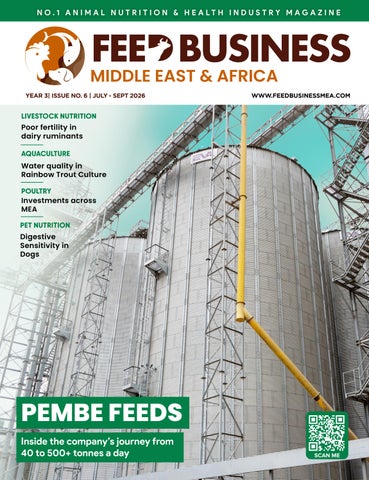
PEMBE FEEDS Inside the company’s journey from 40 to 500+ tonnes a day
SCAN ME
www.ceosummitmea.com
MAY 26-27, 2027 DIANI, SOUTH COAST, KENYA
Welcome to Africa and Middle East’s Premier Executive Leadership, Networking & Deal-Making Platform
KEY INDUSTRY SECTORS Financial Services Energy & Resources Agriculture & Food Systems Manufacturing & Industry
60+
500+
Senior Global Thought Leaders & Speakers Executives & CEO’s
Technology & Innovation Hospitality & Retail Healthcare & Pharmaceuticals
SCAN
ME
40+
Countries Represented
CONTENTS
24
COMPANY FEATURE - PEMBE FEEDS
If They Grow, We Grow: How Pembe Feeds Is Transforming Kenya's Livestock Economics
30
LIVESTOCK NUTRITION: POOR FERTILITY IN DAIRY RUMINANTS
The Nutritional Roots of Poor Fertility in Dairy Cattle and the Role of YCM
YEAR 3 | ISSUE NO. 6 | JULY - SEPT 2026
38
POULTRY : INVESTMENTS ACROSS MEA
42
SWINE HEALTH: AFRICAN SWINE FEVER MANAGEMENT
Poultry Investment Gathers Pace across Africa and the Middle East
The Role of Nutrition on African Swine Fever in Swine Management
IN EVERY ISSUE
34
AQUACULTURE: WATER QUALITY IN RAINBOW TROUT CULTURE
Water Quality as a Welfare Issue in Aquaculture: Rainbow Trout Culture
8 Editorial 9 Events Calendar 10 News Updates 20 IFF ADVERTOARIAL 22 Event Review 46 PET NUTRITION 48 Supplier News JULY/SEPT 2026 | FEED BUSINESS MIDDLE EAST & AFRICA
3
FEE BUSINESS MIDDLE EAST & AFRICA
Year 3 | Issue No. 6 | July-Sept 2026
OUR MAGAZINES We publish some of the most influential magazines and websites in Africa & the Middle East regions. Please visit the websites below for more information about our publications
FOUNDER & PUBLISHER Francis Juma SENIOR EDITOR Alphonse Okoth EDITORS Caroline Maina Stephen Kibe Fridah Chepkoech EXTERNAL CONTRIBUTORS Dr. Fatima Maira Lydia Wawira Fredrick Osewe BUSINESS DEVELOPMENT DIRECTOR Virginia Nyoro BUSINESS DEVELOPMENT EXECUTIVE Johna Sambai Wangari Kamau
MILLING MIDDLE EAST & AFRICA
www.foodbusinessmea.com
HORECA MIDDLE EAST & AFRICA
www.horecamea.com
www.millingmea.com
Dairy Business MIDDLE EAST & AFRICA
www.dairybusinessmea.com
HEAD OF DESIGN Clare Ngode DESIGNER Monica Wachio ACCOUNTS Anita Kinyua
PUBLISHED BY: FW Brands MEA P.O. Box 1874-00621, Nairobi Kenya Tel: +254 725 34 39 32 Email: info(@)fwbrandsmea.com Company Website: www.fwbrandsmea.com
Brands MEA Feed Business Middle East & Africa (ISSN 2307-3535) is published 4 times a year by FW Brands MEA. Reproduction of the whole or any part of the contents without written permission from the editor is prohibited. All information is published in good faith. While care is taken to prevent inaccuracies, the publishers accept no liability for any errors or omissions or for the consequences of any action taken on the basis of information published.
HealthCare
HOME &
PERSONAL CARE
MIDDLE EAST & AFRICA
www.healthcaremea.com
MIDDLE EAST & AFRICA
www.hpcmagmea.com
Packag ng SUSTAINABLE
FEE BUSINESS
MIDDLE EAST & AFRICA
MIDDLE EAST & AFRICA
www.feedbusinessmea.com
www.sustainabilitymea.com
AGRITECH
MIDDLE EAST & AFRICA www.agritechmea.com WWW.FEEDBUSINESSMEA.COM
5.600 TPD TOTAL MILLING CAPACITY FOR
5.600 TPD TOTAL MILLING CAPACITY FOR
Your Trusted Solution Partner for
MEGA MILL PROJECTS 2.400 TPD Operating since 2023 3.200 TPD Repeat order in 2024
www.imas.com.tr
EDITORIAL
Building a More Resilient and Efficient Feed Industry across MEA
T
he feed industry across the Middle East and Africa has spent much of 2026 navigating a familiar tension: demand is growing, while the cost and reliability of producing quality feed remain major constraints. Across poultry, dairy, livestock and aquaculture, producers are under increasing pressure to improve efficiency, manage input costs and maintain animal performance. One of the clearest trends we have observed this year is the growing focus on local production and regional supply security. Volatility in maize, soybean meal and other key ingredients has highlighted the vulnerability of markets that depend heavily on imports. This is encouraging investment in domestic feed manufacturing, raw-material sourcing and more resilient regional supply chains. At the same time, manufacturers are looking beyond simply producing more feed. Precision nutrition, alternative ingredients, automation, processing efficiency and feed quality are becoming increasingly important as producers seek greater value from every tonne of raw material. Alternative protein sources are also attracting attention as the industry looks to diversify ingredient supply and reduce exposure to commodity and logistics volatility. Another defining trend is the increasing professionalisation of animal production. More commercial poultry operations, expanding dairy systems, growing aquaculture activity and developing livestock value chains are raising demand for specialised nutrition and better production management. As a result, feed is increasingly being viewed not simply as an input, but as a strategic driver of productivity, profitability and animal health. Against this backdrop, we bring you Issue 6 of Feed Business Middle East & Africa examining the companies, investments and technical issues shaping the sector. 6
JULY/SEPT 2026 | FEED BUSINESS MIDDLE EAST & AFRICA
Our feature story focuses on Pembe Floor Mills Limited, an established East African milling and feed producer whose operations reflect the growing integration between grain processing and animal nutrition. We explore the company's feed business, capabilities and role within a changing regional market. In Pet Nutrition, we examine digestive sensitivity in dogs, looking at the nutritional considerations involved in supporting digestive health and developing diets for animals with specific sensitivities. Our Livestock Nutrition section addresses poor fertility in dairy ruminants, exploring the relationship between nutrition, reproductive performance and overall herd productivity. In Aquaculture, we focus on water quality in rainbow trout culture. As aquaculture develops across MEA, effective water management remains fundamental to fish health, growth and production efficiency. Our Poultry Nutrition section turns to investment across MEA, examining the expansion of poultry production and the resulting need for feed capacity, infrastructure, technology and more integrated value chains. Finally, our Swine Nutrition feature examines African Swine Fever management and the importance of prevention, biosecurity and coordinated approaches to protecting pig production. Together, these stories reflect the direction of the industry: more specialised, more technology-driven and increasingly central to the wider animal-protein value chain. Enjoy the read! Alphonse Okoth Senior Editor FW Brands MEA WWW.FEEDBUSINESSMEA.COM
EVENTS CALENDAR
◆ VIV Africa
October 6 - 8, 2026 Kigali Convention Centre (KCC), Kigali, Rwanda www.vivafrica.nl
◆ VIETSTOCK Expo & Forum 2026
ADVERTISE IN THE NO.1 ANIMAL NUTRITION & HEALTH INDUSTRY MAGAZINE & WEBSITE
October 21 - 23, 2026 Saigon Exhibition & Convention Center, Ho Chi Minh City, Vietnam www.vietstock.org/en
◆ Pet Fair South East Asia
October 28 - 30, 2026 Bangkok International Trade & Exhibitions Center (BITEC), Thailand www.petfair-sea.com
◆ IAOM MEA Conference & Expo 2026
November 23 - 26, 2026 Cape Town International Convention Centre (CTICC), South Africa www.iaom-mea.com/Cape-Town-2026
◆ Kenya Food & Drink Festival December 4 - 6, 2026 Impala Club, Nairobi www.festival.afmass.com
◆ Zoomark 2027
May 11 - 13, 2027 Bologna Exhibition Centre, Italy www.zoomark.it
◆ AFMASS Milling & Baketech Expo Tanzania 3rd Edition March 23 - 25, 2026 Diamond Jubilee Hall, Tanzania www.africamillingexpo.com/tz
◆ AFMASS Milling & Baketech Expo Kenya & Eastern Africa Edition April 27 - 30, 2026 Sarit Expo Centre, Kenya www.afmass.com/east
◆ AFMASS Milling & BakeTech Expo Nigeria & Western Africa Edition May 3 - 6, 2027 Lagos, Nigeria www.africamillingexpo.com/west/
◆ AFMASS Milling & BakeTech Expo Zambia & Southern Africa Edition October 6 - 8, 2027 Lusaka, Zambia www.africamillingexpo.com/south
AVAILABLE IN PRINT & FOR FREE ONLINE AT: WWW.FEEDBUSINESSMEA.COM
NEWS UPDATES www.feedbusinessmea.com INVESTMENT
Kenya unveils US$16.3M livestock plan ahead of El Niño
KENYA - Kenya has unveiled a KSh2.1 billion (US$16.3 million) livestock preparedness plan to protect farmers and pastoralists from projected El Niño impacts, with the largest allocation targeting vaccines, veterinary medicines and emergency animal health response. Agriculture and Livestock Development Cabinet Secretary Mutahi Kagwe launched the National Livestock Sector El Niño Preparedness and Anticipatory Action Plan in Isiolo, following Kenya Meteorological Department advisories warning of increased rainfall, flooding and localised inundation in several counties. The plan covers 24 flood-prone, high-livestockpopulation counties and prioritises early intervention over post-disaster recovery. The government will allocate KSh1.5 billion (US$11.6 million)
to procure and pre-position vaccines, veterinary medicines, laboratory reagents, PPE, mobile veterinary clinics and emergency response kits, supporting prevention and rapid response to climate-sensitive diseases including Rift Valley fever. "The 2023 El Niño and the 2024 long rains floods caused devastating losses to our livestock farmers... we are determined to ensure that our farmers and pastoralists are not caught unprepared," Kagwe said. The plan also includes KSh50 million (US$386,000) for feed and fodder reserves and water point rehabilitation; KSh250 million (US$1.93 million) to protect infrastructure including cattle dips, markets and slaughterhouses; KSh100 million (US$772,000) for livestock evacuation and logistics; KSh100 million (US$772,000) for early warning systems and coordination; and KSh100 million (US$772,000) for farmer awareness and biosecurity promotion. The plan will initially target 24 counties, including Garissa, Tana River, Isiolo, Wajir, Turkana, Narok, Kitui and Machakos, with additional counties possible based on further advisories. Implementation will follow a One Health approach linking human, animal and environmental health surveillance. Kagwe also launched the Animal Identification and Traceability System (ANITRAC) drive in Isiolo. Principal Secretary Jonathan Mueke said more than 20 million cattle, sheep and goats had already been vaccinated nationwide.
EHUA commissions US$50M soybean-feed complex in Benin BENIN - EHUA Industries has commissioned a US$50 million (CFA28 billion) integrated soybean processing and animal feed complex at the Glo-Djigbé Industrial Zone (GDIZ), adding 180,000 tonnes a year of feed production capacity as Benin expands domestic agricultural processing. The eight-hectare complex, officially inaugurated on September 4, combines a soybean crushing unit with an animal feed plant serving livestock and poultry producers. The soybean unit has a processing capacity of 300 tonnes a day (about 100,000 tonnes a year), while the feed plant can produce up to 180,000 tonnes of complete feed annually. The integrated model connects local soybean production with animal nutrition. EHUA plans to source up to 100,000 tonnes of soybeans annually from Beninese farmers, with crushing producing soybean oil and protein-rich soybean meal for feed production. The plant can also use maize, rice bran, maize bran, cottonseed meal and some cashew-processing coproducts. The investment comes as Benin seeks to strengthen 8
JULY/SEPT 2026 | FEED BUSINESS MIDDLE EAST & AFRICA
domestic livestock and poultry production while reducing reliance on imported feed. The country banned exports of raw soybean from April 1, 2024, to encourage local transformation, and has continued to address illegal cross-border soybean movement to protect domestic supplies for processors. Benin's soybean production has risen sharply, with government data putting output at 520,929 tonnes in the 2023-2024 campaign against a target of 770,000 tonnes for 2026-2027, about 48% higher. EHUA's 100,000-tonne processing capacity and 180,000-tonne feed plant provide substantial downstream capacity to absorb this growth domestically. EHUA's feed products will serve poultry, pigs, rabbits and cattle, creating demand for locally produced feed ingredients while supporting farmers further along the production chain. The investment was supported by the West African Development Bank (BOAD), NSIA Banque and Banque Nationale d'Investissement de Côte d'Ivoire (BNI Côte d'Ivoire).
WWW.FEEDBUSINESSMEA.COM
www.afrifeedexpo.com
MARCH 23-25, 2027 DAR ES SALAAM, TANZANIA
APRIL 27-30, 2027 NAIROBI, KENYA
MAY 3-6, 2027
The No.1 International Trade Exhibitions & Conferences for the Animal Nutrition, Feed Manufacturing & Animal Health Industries in Africa
LAGOS, NIGERIA
OCTOBER 6-8, 2027
LUSAKA, ZAMBIA
SIGN UP TO ATTEND, SPONSOR & EXHIBIT
info@fwbrandsmea.com +254 725 343 932
NEWS UPDATES MARKET EXPANSSION
Olam Agri launches first cattle feed range in Nigeria
NIGERIA - Olam Agri has launched Tru Value, its first cattle feed range in Nigeria, targeting beef fattening and dairy production as the company expands its animal nutrition business beyond poultry and aquaculture. The product was officially launched in Kaduna, with Nigeria's Minister of Livestock Development, Idi Mukhtar Maiha, describing the launch as a significant development for the country's livestock sector. Maiha said scientifically formulated feed was essential to improving animal growth, milk production, fertility, health and profitability, particularly
as the government works to modernise livestock production. "Feed availability all year round, whether fodder, crop residue or concentrate, is the cornerstone of any national framework for peace, prosperity and sustainable livestock management," Maiha said, adding that genetics alone could not deliver higher productivity without proper management and nutrition. Sharad Gupta, president and global head of Integrated Feed & Protein at Olam Agri, said the launch marked the company's expansion from poultry and aquaculture feed into cattle nutrition in Nigeria. The Tru Value range comprises three products: Beef Pellet, for efficient weight gain and shorter fattening cycles; Beef Plus Pellet, targeting accelerated growth; and Dairy Pellet, formulated to support higher milk yields. Gupta said the range addresses inconsistent feed quality and unreliable supply, with around 98-99% of raw materials sourced locally. Olam Agri will combine its existing distribution network with cattle feed dealers to reach farmers nationwide, and its access to wheat bran from milling operations provides an advantage in producing ruminant feed. Sameer Wadhera, vice president at Olam Agri, said Nigeria's estimated 24 million cattle represent a significant opportunity to improve food security, though low animal productivity remains a challenge because of poor feeding practices and inconsistent feed quality. The launch comes as Nigeria's National Livestock Growth Acceleration Strategy targets increasing the sector's output value from US$32 billion to US$74 billion by 2035.
UBM Feed completes 65% acquisition of Greece's EL.VI.Z GREECE - UBM Feed Zrt., the feed business of Hungarian agribusiness group UBM Holding Nyrt., has completed the acquisition of a 65% stake in Greek feed producer EL.VI.Z SA, strengthening its position in the Greek market and advancing its wider international expansion strategy. The transaction follows a share purchase agreement signed on May 22, 2026, giving UBM Feed a majority stake in Ellinikes Viomichanies Zootrofon (EL.VI.Z), the third-largest feed manufacturer in Greece, which operates two feed mills in Platy and Xanthi. UBM plans to acquire a further 35% stake within three years. The transaction was positioned as a way for UBM to strengthen its access to the Greek market and establish a platform for expansion into Western Balkan markets. The Greek acquisition is part of UBM's broader push to expand beyond its established Central European markets. In 10
JULY/SEPT 2026 | FEED BUSINESS MIDDLE EAST & AFRICA
Kazakhstan, the group has been developing a joint investment with KazFoodProducts to establish a premix plant in the Almaty region, expected to have annual production capacity of 48,000 tonnes, supported by a laboratory and R&D training centre. UBM has identified Kazakhstan's agricultural, livestock and feed sectors as key areas for long-term investment. The company has also been targeting growth in feed production and trading, with a long-term objective of reaching one million tonnes of combined feed manufacturing and trading. Its international expansion follows earlier consolidation in Hungary, where UBM completed the acquisition of Agrifirm Magyarország Zrt. in September 2025. UBM has said expanding exports and entering new international markets are priorities as growth opportunities in its domestic market become more limited, with the group targeting markets with potential for large-scale agricultural and feed-sector development. WWW.FEEDBUSINESSMEA.COM
INDUSTRY EVENTS
VIV Africa 2026 puts Rwanda’s feed sector in focus
RWANDA - Animal feed sector is changing, with the government and industry working to increase local feed production, reduce costs, improve quality, and find alternatives to conventional raw materials. Against this backdrop, Kigali will host VIV Africa 2026 on 7-8 October, bringing together companies, producers, investors and technical specialists from across the feed-to-food value chain. The developments point to a common challenge: making livestock production more productive and affordable. In response, the government is seeking to stimulate investment in local feed plants, reduce production costs and strengthen livestock infrastructure and quality control. The issue is particularly relevant as Rwanda's livestock base continues to expand. According to Rwanda's Ministry of Agriculture and Animal Resources, the country's cattle population reached about 1.73 million in 2025, while poultry increased to nearly 13 million birds, more than doubling from 6.29 million in 2024. Milk production reached 1.15 million tonnes during the 2024/25 financial year, highlighting the scale of demand for efficient livestock production systems. At the same time, interest in alternative feed resources is growing as Rwanda looks to reduce dependence on conventional ingredients and manage rising feed costs. Producers are exploring locally available and waste-derived ingredients to make feed production more affordable and resource-efficient. WWW.FEEDBUSINESSMEA.COM
Research supported by IITA-CGIAR, for example, has highlighted high-quality cassava peel (HQCP) as an alternative feed ingredient. In Rwanda, HQCP mash has been reported at about Rwf200-250 per kilogram, compared with around Rwf400-600 per kilogram for maize-based ingredients, illustrating the potential cost implications of locally sourced alternatives. Digital tools are also gaining ground. Earlier this year, IITA introduced its FeedCalculator application in Rwanda to help livestock producers formulate least-cost diets using locally available ingredients. The tool is designed to take animal nutritional requirements and the cost and availability of ingredients into account, reflecting a broader move towards more data-driven feed formulation at farm level. These developments help explain why Kigali provides an interesting setting for a feed-to-food trade show. VIV Africa's official rationale centres on Kigali's regional connectivity, infrastructure and ability to bring African and international industry players together. But the country's current feed and livestock priorities also align closely with the technologies and expertise showcased at the event. VIV Africa 2026 will cover feed ingredients and additives, feed and grain technology, animal health, farm production and processing, alongside poultry and dairy. Its technical program reflects many of the sector's challenges, with sessions covering gut health, phytase, nutrient efficiency, mycotoxins, waterbased nutrition and feed efficiency. A dedicated workshop will examine opportunities for Rwanda's poultry sector. The relevance extends beyond Rwanda. Feed manufacturers and livestock producers across East Africa face many of the same questions around ingredient availability, feed costs, nutrition, efficiency, animal health and investment. Bringing these stakeholders together in Kigali provides an opportunity to exchange technologies, experience and commercial solutions across markets. Evidence already shows growing international interest. VIV Africa 2024 attracted more than 1,732 visitors from 60 countries and over 150 exhibitors from 35 countries. The edition also featured 40 specialised sessions and workshops focused on agriculture, poultry, dairy and animal protein production. The show's geographic reach is also expanding. After the 2026 edition in Kigali, VIV Africa is scheduled to move to Abidjan, Côte d'Ivoire, in 2027, creating a West African hub alongside its East African presence. VIV Africa arrives at a time when its feed and livestock industries are looking for greater efficiency, investment, and innovation in Rwanda and beyond. This then offers a platform to discuss how those same pressures can be addressed as Africa's animal protein value chains continue to develop.
JULY/SEPT 2026 | FEED BUSINESS MIDDLE EAST & AFRICA
11
NEWS UPDATES
Loop launches Loop+, Leaner salmon breeding could save affordable insect-protein industry US$121M annually, Nofima pet food for East Africa reports KENYA - Kenyan pet food manufacturer Loop has expanded its insect protein-based product portfolio with the introduction of Loop+, a new range designed to make premium pet nutrition more affordable for pet owners across East Africa. The launch, accompanied by refreshed packaging across both lines, reflects the company's strategy to widen access to locally produced, sustainable pet food while maintaining its focus on circular economy ingredients. Loop, the flagship premium range, remains a grain-free recipe using Black Soldier Fly (BSF) larvae as the primary protein alongside locally sourced vegetables. Loop+ combines BSF protein with Kenyan tilapia and catfish recovered from agro-processing, fermented spent grain from local brewer 254 Brewing Co, and vegetables from the company's smallholder farmer network.
Rwandan entrepreneur turns cassava waste into animal feed ingredient RWANDA - Kabizu Business Group has turned cassava processing waste into High-Quality Cassava Peels (HQCP), creating a locally produced animal feed ingredient while reducing waste from cassava processing. The Rwanda-based agro-processor developed its HQCP facility with technical support from IITA Rwanda through the Rural-Urban Nexus (RUNRES) project, addressing both cassava peel disposal and the high cost of conventional feed ingredients. "Cassava peels are rich in fermentable carbohydrates, but in their raw form... carry antinutritional compounds and moisture levels that make them unsafe," said Emmanuel Rukundo of IITA Rwanda, noting that RUNRES protocols reduce cyanogenic compounds while stabilising the product for storage and transport. Kabizu founder Bizumuremyi Christian said convincing stakeholders that cassava peels held commercial value was an early challenge. The facility uses grating and drying systems to produce HQCP, now used in pig and poultry feed. 12
NORWAY - Salmon bred to deposit less fat and more muscle could improve feed efficiency and save Norway’s salmon industry around US$121 million (€105 million) annually, according to Nofima research. The study found that much of the variation in feed efficiency between salmon families is genetic, making the trait suitable for selective breeding. Led by Nofima nutrition researcher Bjarne Hatlen, the study examined how Atlantic salmon use energy and protein from feed. Feed is the largest cost in Norwegian salmon farming and accounts for most of its climate footprint, Hatlen said. The researchers found that salmon growing quickly while depositing less fat per kilogramme of growth use feed more efficiently. Selecting for lower body-fat levels without compromising growth could reduce feed intake and improve feed conversion ratio (FCR). The economic estimate suggests that reducing whole-salmon fat content from 21% to 18% could generate annual savings of US$121 million (€105 million). The calculation assumed feed at US$1.59/kg (€1.38/kg), annual feed use of 1.5 million tonnes, an initial FCR of 1.05, and 50% of reduced body energy translating into improved feed efficiency. The study involved 70 groups of fish from 35 families in Mowi Genetics’ breeding programme. Starting at around 50g, salmon were raised at Nofima’s Sunndalsøra research station and monitored for seven weeks. Researchers measured feed intake, growth, and energy and protein retention, combining results with genetic data. The findings could help breeding companies identify feed-efficient fish through simpler measurements, potentially avoiding costly individual feedintake assessments. However, reliable methods to measure body fat in live fish are still needed. Mowi Genetics genetics manager Matt Baranski said the results could support more practical selection for feed efficiency. Conducted through the EU Horizon 2020-funded NewTechAqua project, the research was published in Genetics Selection Evolution. Further studies involving larger salmon at sea are needed before commercial application.
JULY/SEPT 2026 | FEED BUSINESS MIDDLE EAST & AFRICA
WWW.FEEDBUSINESSMEA.COM
FUNDING
Modern Mills secures US$62.7M funding for Saudi feed mill SAUDI ARABIA - Modern Mills Co. has secured a US$62.7 million (SAR 235 million) Shariah-compliant credit facility from Saudi Awwal Bank (SAB) to finance its new animal feed mill in Al-Jumum, Makkah, and support working capital requirements. According to a statement to the Saudi Exchange (Tadawul), the financing comprises a US$32.0 million (SAR 120 million) capital expenditure facility with an eight-year tenure and a US$30.7 million (SAR 115 million) revolving credit facility with a one-year tenure. Modern Mills provided a promissory note as collateral. Modern Mills previously announced plans to establish the Al-Jumum feed mill with an investment of US$40 million (SAR 150 million). The facility is designed to produce approximately 422,000 tonnes of animal feed annually, serving both poultry and livestock producers, with commercial production previously targeted for the fourth quarter of 2026, subject to regulatory approvals. The project forms part of Modern Mills' strategy to expand its milling and nutrition operations while supporting Saudi Arabia's food security objectives under Vision 2030. The new financing increases the company's financial capacity as it moves towards commissioning the facility, with the capex facility supporting project expenditure and the revolving facility providing additional liquidity for working capital. Saudi Arabia's animal feed sector has been expanding alongside demand for poultry, meat and dairy products. The
country's compound animal feed consumption was estimated at 3.47 million tonnes in 2022 and is projected to reach approximately 5 million tonnes by 2030, according to market estimates cited by Modern Mills. The company has been expanding its position in the Saudi milling and nutrition market since its listing on the Saudi Exchange in March 2024. The Al-Jumum project is expected to add significant domestic feed production capacity once operational, enabling Modern Mills to supply both poultry and livestock markets from the Makkah region.
Thai Union Feedmill incorporates US$55M Ecuador aquafeed subsidiary ECUADOR - Thai Union Feedmill (TFM) has formally incorporated its planned aquafeed subsidiary in Ecuador, advancing a US$55 million project expected to increase the company’s total production capacity by around 80% by 2028. TFM, the feed business of Thai Union Group, incorporated Thai Union Feedmill Ecuador S.A.S. on September 4 with registered capital of US$27 million, according to a filing with the Stock Exchange of Thailand. The subsidiary will invest in an aquaculture feed production facility in Ecuador, formalising a project TFM first announced in February. India’s Avanti Feeds holds an 11.11% stake in the new company, following its agreement to participate in the project in April. TFM holds 85.19%, while Ecuadorian shrimp farming consultancy Pacific Aqua Solution Pacsol S.A.S. holds 3.70%. TFM plans to increase the subsidiary’s registered capital to US$30 million and restructure its shareholding. Under the WWW.FEEDBUSINESSMEA.COM
proposed structure, Ecuadorian seafood processor Fevalri S.A. will take a 10% stake, while TFM’s holding will fall to 76.67%, Avanti Feeds to 10% and Pacsol to 3.33%. The subsidiary will be governed by an eight-member board, including Eduardo Arosemena Merino, Avanti Feeds director Indra Kumar Alluri and Ecuador-based director Humberto Trujillo Illingworth, president of local shrimp producer Expalsa. The investment will strengthen TFM’s presence in Ecuador’s shrimp and aquaculture feed market while expanding its manufacturing footprint in a major shrimpproducing country. The new facility is expected to support local feed supply and give TFM additional production capacity as demand for aquaculture feed grows. The Ecuador project forms part of TFM’s broader i n t e r n a t i o n a l expansion strategy, with the company seeking to increase production capacity and strengthen its position in key aquaculture markets. JULY/SEPT 2026 | FEED BUSINESS MIDDLE EAST & AFRICA
13
NEWS UPDATES REGULATIONS
Malaysia grants sales tax relief on animal feed raw materials
MALAYSIA - Malaysia has expanded its sales tax exemption to cover approved raw materials used exclusively in the manufacture of animal feed, in a move that could reduce input costs for eligible feed manufacturers. The change took effect on September 1, 2026, under the Sales Tax (Persons Exempted from Payment of Tax) (Amendment) (No. 2) Order 2026, which expands Schedule B of the 2018 order. Under the amendment, manufacturers
approved by the Director General of Customs can receive an exemption from sales tax on goods approved by the Minister of Finance and used solely to manufacture animal feed products. Similar exemptions apply to raw materials used for fertiliser and pesticide production. The measure covers manufacturers that import or purchase approved goods for feed production. To qualify, manufacturers must hold a manufacturing licence under the Industrial Coordination Act 1975, or a confirmation of exemption from that requirement issued by the Malaysian Investment Development Authority (MIDA). Eligible manufacturers must also obtain a certificate from the Royal Malaysian Customs Department through the MySST portal before claiming the exemption. The exemption follows Sales Tax Policy 1/2026, introduced in February and amended in June, which provided a sales tax refund mechanism for certain raw materials used in animal feed, fertiliser and pesticide manufacturing. That refund mechanism is scheduled to expire on October 31, 2026, meaning the new exemption shifts the treatment from a refund mechanism to a direct exemption for qualifying purchases or imports. The change provides the feed industry a more direct route to sales tax relief on approved manufacturing inputs, as Malaysia seeks to support domestic production across its agricultural supply chains. The amendment was gazetted on August 28, 2026, and is now in force.
Nestlé Purina invests US$744M in Thailand and US pet food plants GLOBAL - Nestlé Purina is investing more than US$744 million across Thailand and the United States to expand pet food and treat production, strengthening its manufacturing footprint as demand grows for pet nutrition worldwide. In Thailand, Nestlé is investing more than US$194 million (CHF157 million) to expand its Purina site in Rayong for the Felix, Friskies, Pro Plan and Purina One brands. The Board of Investment of Thailand has approved US$140 million for pet food manufacturing and US$60 million for pet treat production, with more than 90% of output expected to be exported to markets including the US, Canada, Japan, Australia and New Zealand. The projects will use significant proportions of locally sourced inputs, around 56% for pet food and 88% for treats, including chicken, sardines, vegetables and tapioca starch. "Pet food is one of Nestlé's most dynamic segments globally, accounting for around 21% of Group sales," said Remy Ejel, CEO of Nestlé Zone AOA, citing confidence in long-term growth across Asia, Oceania and Africa. 14
JULY/SEPT 2026 | FEED BUSINESS MIDDLE EAST & AFRICA
In the US, Nestlé Purina has opened a US$550 million, 1.3 million-square-foot pet food facility in Batavia, Ohio, its first ground-up factory in more than 50 years. The plant already produces Purina Pro Plan, Purina ONE and Dog Chow, employing more than 430 people, with the workforce expected to exceed 500. The facility, designed to produce food for approximately eight million pets annually, incorporates robotics, automation and an automated storage and retrieval system. "The Batavia factory reflects our long-term commitment to American manufacturing, innovation and the communities where we operate," said Nina Leigh Krueger, president and CEO of Purina. The plant becomes Purina's 24th US manufacturing facility. Both investments follow Nestlé's CHF520 million (US$642 million) pet food plant and logistics investment in Italy, underscoring the company's sustained global push in pet nutrition manufacturing. WWW.FEEDBUSINESSMEA.COM
Hendrix Genetics takes full ownership of its swine business unit
RESEARCH
Airvet backs HABRI research on human-animal bond
USA - Airvet, a provider of pet care benefits for employers, has become an official supporter of the Human Animal Bond Research Institute (HABRI), backing research and education on the health and wellbeing benefits of the human-animal bond. The partnership will focus on translating scientific research into practical insights for veterinary teams, pet owners, employers, and the wider public, aiming to support both pet health and human wellbeing. Pet ownership in the US has reached record levels, while growing awareness of the health benefits associated with companion animals is increasing demand for accessible veterinary care and pet-friendly workplace support. Airvet connects pet families with licensed veterinarians around the clock and works with employers to develop pet care benefits. "At Airvet, we know stronger support in the workforce for pets, their families, and veterinary care leads to healthier outcomes for people," said Brandon Werber, CEO and founder of Airvet. Under the partnership, Airvet and HABRI will support research, public awareness, education, and outreach initiatives aimed at strengthening understanding of the human-animal bond. "Together, HABRI and Airvet will work on education and outreach efforts that translate the science behind the human-animal bond into practical insights for veterinary teams, pet owners, workforces, and the broader public," said Steven Feldman, president of HABRI. The partnership comes as HABRI continues to promote policies and research recognising the role pets play in human health. The institute recently issued its Pet-Inclusive Housing Report, developed following its Spring Policy Forum, identifying approaches including greater leasing transparency, assistance with pet deposits and reduced breed and weight restrictions. It also announced the formation of the Pets and Families Housing Coalition to support evidence-based pet-inclusive housing policies. The report received support from the American Pet Products Association, World Pet Association, American Veterinary Medical Association, Mars, PetSmart Charities and Zoetis. WWW.FEEDBUSINESSMEA.COM
NETHERLANDS - Hendrix Genetics has acquired full ownership of Hendrix Genetics Swine, bringing its global swine genetics activities under a fully integrated ownership structure nearly two years after the business was formed through the merger of Hypor and Danish Genetics. Hendrix Genetics Swine was established through a joint venture with Hendrix Genetics' Danish partners, combining the breeding, multiplication and distribution activities of Hypor and Danish Genetics. The move to full ownership marks the next stage in integration, which Hendrix Genetics says will provide greater clarity, speed and alignment across operations. A key milestone was last year's launch of Nexus 100, the first product developed after the merger. "Since bringing together the expertise of Hypor and Danish Genetics, we have made significant progress in building a unified swine genetics business," said CEO Richard Maatman.
VAFO Group backs PEZZ Life, expanding beyond pet nutrition AUSTRIA - VAFO Group has made a strategic investment in Austrian pet health diagnostics company PEZZ life as the European pet food group expands its focus beyond nutrition into prevention, diagnostics and broader pet wellbeing. The investment will establish scientific and commercial cooperation between PEZZ life and Biome9, the gut health testing company VAFO acquired via its Pooch & Mutt brand in 2025. The companies will explore synergies across their diagnostic portfolios while continuing to operate independently, developing a joint roadmap covering commercial, scientific and operational opportunities. "Our ambition is to move beyond nutrition and play a broader role in pet wellbeing," said Timo Pärssinen, Board Member and Head of Commercial at VAFO Group.
JULY/SEPT 2026 | FEED BUSINESS MIDDLE EAST & AFRICA
15
NEWS UPDATES
Enifer starts up first PEKILO® mycoprotein plant in Finland FINLAND - Biotechnology company Enifer has started commissioning its first industrialscale PEKILO® mycoprotein factory in Kantvik, Finland, moving the facility closer to commercial production with a planned capacity of 500 kg of dry mycoprotein per hour. Commissioning has begun with testing of the first equipment at the facility, built as a brownfield project within an existing industrial building. The protein is produced by cultivating a specific fungus through fermentation, a process Enifer compares to brewing beer and producing soy sauce. At full capacity, the plant is expected to produce protein equivalent to that provided by 30,000 cows, with at least 20 times lower carbon emissions, according to Enifer.
De Heus’s Alema Koudijs secures US$10M IFC grant in Ethiopia ETHIOPIA - The International Finance Corporation (IFC) has approved a US$10 million equivalent local-currency loan to the Alema Koudijs Feed PLC, Alema Farms PLC and De Heus Animal Nutrition B.V joint venture, to expand its animal feed mill in Bishoftu, strengthen rawmaterial sourcing, and increase access to locally produced compound feed. The financing will support expanded production equipment, additional storage, fire detection systems, and working capital for rawmaterial sourcing. Total project cost is estimated at US$12.3 million, with the loan denominated in Ethiopian birr through the IDA Private Sector Window Local Currency Facility. The board approved the investment on June 4, 2026. Alema Koudijs Feed is a joint venture between De Heus Animal Nutrition BV (51%) and Alema Farms PLC (49%), producing complete feeds for poultry, ruminants, aquaculture and swine in Bishoftu. IFC is also developing an advisory programme covering sustainable sourcing, environmental and social management, and digital traceability. 16
ADM opens 5,000-tonne aquafeed facility in China
CHINA - ADM has opened a new aquafeed facility in Tianjin with an annual design capacity of approximately 5,000 metric tonnes, strengthening its production of specialised feeds for fish and shrimp hatchery and nursery stages in China and across the Asia-Pacific (APAC) region. The Tianjin Early Nutrition Aqua Feed Facility is ADM's second production site dedicated to aquaculture hatchery and nursery feeds, following its facility in Belgium. The company said the new plant builds on 25 years of international expertise in early-stage aquaculture nutrition while expanding its local manufacturing capabilities in China. The facility can produce feed particles ranging from 50 microns to 3 millimetres, using cold micro-extrusion and marumerization technologies to produce water-stable micro-particles designed to maintain nutrient integrity and support uptake during early growth stages. "The Tianjin facility enables us to produce specialized hatchery and nursery feeds closer to customers in China and across APAC, while further improving regional supply efficiency," said Eric Carfi, general manager, Animal Nutrition, China, at ADM. The facility will supply customers across China and other APAC markets, supported by Tianjin's port infrastructure. ADM said the investment also strengthens coordination between its Chinese production facilities, APAC research resources and global aquaculture applications, including its APAC Aquaculture R&D Center in Vietnam. "With the Tianjin facility now operational, ADM has further strengthened coordination among its APAC R&D resources, local production in China and market applications," said Marc Campet, technical sales director, Animal Nutrition, APAC, at ADM. The plant will manufacture specialised hatchery feeds including the MeM and MeM Prime ranges, used primarily during late larval and nursery stages. China's aquaculture sector produced more than 63 million metric tonnes in 2025, a 4.38% year-on-year increase, according to the Ministry of Agriculture and Rural Affairs. In August, ADM also announced a US$55.5 million investment to expand precision fermentation capabilities in Iowa, adding to its recent nutrition and biotechnology investments.
JULY/SEPT 2026 | FEED BUSINESS MIDDLE EAST & AFRICA
WWW.FEEDBUSINESSMEA.COM
www.africamillingexpo.com
MARCH 23-25, 2027 DAR ES SALAAM, TANZANIA
APRIL 27-30, 2027 NAIROBI, KENYA
MAY 3-6, 2027 LAGOS, NIGERIA
OCTOBER 6-8, 2027 LUSAKA, ZAMBIA
SCAN ME
SIGN UP TO SPONSOR, EXHIBIT & ATTEND
CO-LOCATED WITH:
The No.1 International Trade Shows for Wheat, Maize, Rice, Bakery, Pasta, Feed, Pulses, Biscuits & Snacks Formulation, Processing & Packaging Technologies in Africa CONSTITUENT EVENTS: P ULTRY
AFRICA
FARMTECH EXPO
NEWS UPDATES
AFRIFEED Expo: Just What Africa’s Feed Industry Needs
A
frica’s feed market is moving into a new phase of investment. As poultry, livestock and aquaculture production expand, manufacturers face pressure to increase capacity, improve feed quality and control production costs. AFRIFEED Expo is building a platform to connect those requirements with the machinery, ingredients and technology needed to meet them. Africa’s feed industry is entering a more industrial phase. The drivers are familiar: population growth, urbanisation, rising demand for animal protein and the gradual commercialisation of livestock production. But for feed manufacturers, the implications are more specific. More poultry, dairy, pig and aquaculture production means more tonnes of formulated feed, and greater pressure on mills to produce consistently, efficiently and at competitive cost. The OECD-FAO Agricultural Outlook 2024–2033 projects feed use in Sub-Saharan Africa to increase by about 30% by 2033. Poultry is a particularly important driver, with more intensive production systems increasing dependence on manufactured feed. Across the broader Middle East and Africa market, BlueWeave estimates animal feed volumes at about 26.8 million tonnes in 2023, rising to approximately 30.9 million tonnes by 2030. The numbers vary between market studies because Africa's feed sector remains fragmented and difficult to measure comprehensively. But the underlying direction is consistent: feed manufacturing capacity needs to grow alongside animalprotein production. That is where AFRIFEED Expo enters the picture. FROM FEED DEMAND TO MANUFACTURING CAPACITY The next challenge for Africa is not simply producing more feed. It is producing more competitive, consistent and fit-forpurpose feed. That requires investment throughout the manufacturing process, from raw-material handling and grinding through batching, mixing, pelleting, extrusion, cooling, drying, storage and packaging. It also requires better process control. Feed manufacturers are under pressure to manage energy consumption, reduce formulation and processing losses, improve pellet quality, increase throughput and maintain tighter quality and safety standards. Automation, weighing and dosing systems, laboratory equipment and digital process controls are therefore becoming increasingly relevant to mill investment decisions. For equipment manufacturers and technology suppliers, 18
JULY/SEPT 2026 | FEED BUSINESS MIDDLE EAST & AFRICA
this represents a substantial addressable market. For feed producers, however, the investment decision is more complicated than buying a machine. A new pellet line or extrusion system has to fit local raw materials, production volumes, formulations, labour availability, energy costs, maintenance capabilities and the manufacturer's route to market. This is why industry platforms that bring buyers and suppliers together matter. BRIDGING THE TECHNOLOGY GAP AFRIFEED Expo is a constituent event of the wider AFMASS Milling and BakeTech Expo exhibition platform, creating a broader processing ecosystem around milling, feed, livestock, poultry, bakery and related industries. Its relevance to feed manufacturers lies in the breadth of technologies represented. The exhibition brings together suppliers of feed ingredients, additives and premixes alongside manufacturers of milling and feed equipment, pellet mills, extruders, mixers, batching and dosing systems, packaging machinery, laboratory equipment, automation and formulation technologies. That combination mirrors the investment cycle of a modern feed mill. A manufacturer evaluating capacity expansion may need to source several systems simultaneously. An existing mill looking to improve efficiency may instead be interested in upgrading one part of the process. A new entrant may require an end-to-end plant solution. Putting those suppliers in the same commercial environment reduces the distance between the investment requirement and the available technology. For international equipment manufacturers, it also provides something equally important: direct access to regional decisionmakers. THE BUYER IS CHANGING Africa's feed industry is no longer represented only by large integrated companies. The market includes major poultry and livestock groups, independent feed mills, emerging regional manufacturers, contract producers and agricultural businesses integrating feed production into broader operations. Their requirements differ. Large integrated producers may be focused on automation, throughput and operating costs. Independent mills may prioritise flexibility, reliability and capital efficiency. New entrants may need turnkey solutions, while established manufacturers may be looking for incremental upgrades. That makes direct engagement increasingly valuable. Trade exhibitions can shorten the sales cycle by allowing manufacturers to compare technologies, discuss technical WWW.FEEDBUSINESSMEA.COM
specifications and assess potential suppliers in one location. For equipment companies entering Africa, they can also provide an opportunity to understand how local manufacturers actually operate rather than relying solely on market reports. AFRIFEED's role, therefore, is not simply to showcase equipment. Its greater value is potentially in facilitating commercial conversations around investment. LOCAL RAW MATERIALS, REGIONAL SOLUTIONS One of the defining characteristics of African feed manufacturing is the importance of local and regional raw materials. Maize, wheat, sorghum, soybeans, oilseed products, cassava and other agricultural commodities form part of the feedmaterial base across different markets. Availability, quality and pricing vary considerably by geography and season. Processing technology has to accommodate that variability. This creates opportunities for equipment suppliers offering greater process flexibility, improved grinding and mixing performance, more accurate dosing and better control of moisture and pellet quality. It also creates opportunities for ingredient companies developing solutions around nutritional efficiency, enzymes, amino acids, probiotics, premixes and other feed additives. The commercial question is increasingly how to turn available raw materials into feed that delivers predictable animal performance at an economically viable cost. That is a technology and formulation challenge as much as a volume challenge. A REGIONAL MARKET NEEDS A REGIONAL PLATFORM AFRIFEED's regional strategy is another important component of its proposition. The next planned editions include AFRIFEED Tanzania, 23–25 March 2027 at Diamond Jubilee Hall, Dar es Salaam; AFRIFEED Kenya & Eastern Africa, 27–30 April 2027 at Sarit Expo Centre, Nairobi; AFRIFEED Nigeria & Western Africa, 3–6 May 2027 in Lagos; and AFRIFEED Zambia & Southern Africa, 7–9 October 2027 in Lusaka. For suppliers, the regional approach is commercially significant. Africa is not one feed market. Production systems, rawmaterial availability, regulations, purchasing power and levels of industrialisation vary sharply between regions. A technology solution gaining traction in Kenya may have a different value proposition in Nigeria or Zambia. Likewise, equipment suppliers need to understand local technical support requirements, financing conditions, spare-parts availability and the scale of individual mills. Regional trade platforms can help suppliers build those relationships market by market. MORE THAN AN EXHIBITION FLOOR The strongest value proposition for AFRIFEED will ultimately be determined by what happens around the exhibition floor.
WWW.FEEDBUSINESSMEA.COM
Feed manufacturers increasingly need access to technical knowledge as much as equipment. Questions around formulation, feed safety, energy efficiency, automation, raw-material substitution, production economics and plant optimisation are becoming central to investment decisions. That makes technical conferences, workshops, demonstrations and business matchmaking important components of the event. The wider AFMASS Milling and BakeTech platform also creates opportunities to connect feed processing with adjacent industries. Grain milling, feed manufacturing, poultry and livestock production are tightly linked, particularly where the same raw materials, logistics networks and processing technologies are involved. For suppliers, that widens the pool of potential customers. For manufacturers, it creates a broader view of the technologies available across the food and feed-processing chain. THE INVESTMENT WINDOW IS OPENING The feed industry's growth projections point to a clear requirement for additional manufacturing capacity. Alltech's 2026 Agri-Food Outlook estimated African animal-feed production at 64.2 million tonnes in 2025, representing an 11.5% increase from the previous year. While market estimates vary depending on methodology and coverage, the direction is clear: feed production is expanding, creating a stronger case for investment in new capacity, plant upgrades and production technologies. The opportunity therefore extends beyond simply supplying more feed to existing livestock producers. Africa needs more mills, larger mills and more efficient mills, supported by stronger raw-material supply chains, improved storage and handling infrastructure, better quality-control systems and increasingly automated production processes. This creates a market for equipment manufacturers, ingredient suppliers, automation companies, laboratory providers, engineering firms and technology developers. It also creates a need for stronger commercial links between these suppliers and the companies making investment decisions. This is the space AFRIFEED Expo is seeking to occupy: connecting the companies investing in feed capacity with the suppliers developing the technologies and solutions required to build it. Its significance will ultimately be measured not by the number of machines displayed or exhibitors on the floor, but by the deals, partnerships, plant investments and technology upgrades that emerge from those interactions. For a feed industry moving towards greater scale and industrialisation, that connection is becoming increasingly important. The next phase of Africa's feed growth will require capital, capacity and technology. AFRIFEED Expo is positioning itself at the point where all three meet. FBMEA
JULY/SEPT 2026 | FEED BUSINESS MIDDLE EAST & AFRICA
19
ADVERTORIAL: IFF ANIMAL NUTRITION & HEALTH
Nature’s osmolyte power to combat heat stress Heat stress can negatively impact the health, performance and wellbeing of poultry. Research shows that the dual action of natural betaine can help producers mitigate these risks and maintain profitability.
W
EFFECTIVE MANAGEMENT STRATEGY Given the birds’ complex behavioural and physiological response to heat stress, producers need to take targeted measures to mitigate the risks. Improving housing design with proper ventilation, air circulation and water management, for instance, can help to counter rising ambient temperatures. Good husbandry and genetic breeding to encourage good thermoregulating characteristics in the birds are also important considerations. At the same time, poultry producers need to scrutinise their feed and nutrition strategies to ensure they are optimized for heat stress events. Within this space, supplementation with natural betaine is now increasingly recognized as an important solution.
METABOLIC CHANGES On a metabolic level, heat stress increases plasma cortisol and reduces thyroid hormone levels. With the physiological homeostasis compromised in this way, important changes in protein and fat metabolism occur that negatively affect poultry growth, reproduction and health. Lower protein and fat production and storage are also an immediate consequence of reduced feed intake. In addition, fatty acids are mobilised from the adipose tissue and, if in excess, are re-esterified into triglycerides and stored in the liver, causing fatty liver
NATURAL BETAINE: DUAL MODE OF ACTION Natural betaine is a trimethyl derivative of the amino acid glycine ((CH3)3NCH2COO), with two main physiological roles; it acts as an osmolyte and as a methyl donor. As a naturally- occurring osmolyte, betaine helps cells stay hydrated by interacting with cellular water to maintain water and ion balance. At the same time, it protects cellular organelles, enzymes and proteins and so enables these components to maintain normal functions despite the stresses caused by high temperatures. By helping cells ‘cope’ with dehydration in this way, natural betaine helps to prevent valuable metabolic energy being diverted away from growth and lean gain. As a methyl donor, betaine contains and donates methyl groups via transmethylation for many essential biological functions, such as synthesis of creatine and carnitine associated with generation of metabolic energy, DNA/ RNA synthesis, muscle growth and immune cell function. It contains three methyl groups and can donate some or all of these more efficiently than other traditional methyl sources in animal feed, such as choline chloride and methionine. By mobilizing fat from liver tissue, it also helps to maintain liver
BY: CEINWEN EVANS, PHD, SENIOR GLOBAL TECHNICAL MARKETING MANAGER AT IFF ANIMAL NUTRITION & HEALTH
hen birds are exposed to hot and humid conditions over a prolonged period, they struggle to balance body heat loss and body heat production. This inability to regulate their internal temperature can lead to heat stress, which is a major cause for concern. Birds suffering from excessive heat load eat less, drink more and demonstrate unwanted behavioural changes such as increased panting, wing flapping and aggression. But heat stress is not only an animal welfare issue. The detrimental effects of heat stress can cause significant production losses due to a range of associated problems including reduced growth, lower feed efficiency, poor egg quality, decreased immunity and increased mortality rates. So why does this happen?
20
disease when energy supply is reduced. Importantly, heat stress can also disrupt the delicate balance of microbiota in the gut; decreasing the diversity of commensal gut bacteria and their compounds, as well as altering the pH. This means that digestion, absorption and nutrient supply are all compromised as a result.
JULY/SEPT 2026 | FEED BUSINESS MIDDLE EAST & AFRICA
WWW.FEEDBUSINESSMEA.COM
health. At the same time, natural betaine works to maintain gut integrity and health by promoting the growth of commensal microbes; a diverse and functionally active microbial community that prevents damaging digestive conditions such as leaky gut. In practice, this dual function means supplementation with natural betaine helps poultry producers mitigate the detrimental effects of heat stress in a number of important ways. From improving hydration and increasing nutrient absorption to reducing energy expenditure, this natural feed additive helps producers combat heat stress and maintain poultry performance. PROVEN BENEFITS A strong body of evidence demonstrates a range of positive responses to natural betaine during heat stress among poultry. For example, a series of trials shows that Betafin® natural betaine reduces the negative impact of heat stress on broiler performance and production economics. Reviewed together, all five studies demonstrate a strong improvement in feed conversion ratio (FCR), with percentage gains ranging from 4.2% to 6.6% compared to control. (Figure 1). Equally significant is the positive effect of natural betaine on key performance parameters for breeders. A recent trial, using a total of 22,847 birds supplemented with two different natural betaine treatments during weeks 30 to 37, showed clear improvements in fertility, hatchability and saleable chicks. (Figure 2). In addition, natural betaine has been shown to improve the performance of laying hens
FIGURE 3
WWW.FEEDBUSINESSMEA.COM
FIGURE 1
FIGURE 2 suffering from excessive heat load. In a 32-day trial among 3,000 laying hens, those supplemented with natural betaine recorded improvements in hen day production and egg mass – at just over 13% and 10% respectively. (Figure 3). Elsewhere, research also suggests a wider role for betaine supplementation during times of stress. This includes improving the water holding capacity of cells, respiration rate and rectal temperature, as well as supporting better meat quality and improving livability rates. BENEFICIAL FUNCTIONS OF NATURAL BETAINE The dual action of natural betaine makes it a highly effective means of reducing the negative impact of heat stress on broiler performance and production economies. As an osmolyte and methyl donor, it helps to protect cells against dehydration and reduces the energy expenditure of ion pumps, while improving feed efficiency, maintaining liver health, and supporting gut integrity. Overall, the multiple functions of natural betaine make it a valuable addition to nutrition strategies designed to optimize poultry performance under these challenging conditions. FBMEA JULY/SEPT 2026 | FEED BUSINESS MIDDLE EAST & AFRICA
21
AFMASS Milling & BakeTech Expo
T
rade exhibitions and conferences traditionally serve as meeting points where technology providers, equipment manufacturers, processors and other supply-chain players connect, explore new solutions and identify opportunities for collaboration. The AFMASS Milling & BakeTech Expo, held from July 15–17, 2026, at Sarit Expo Centre in Nairobi, Kenya, demonstrated how such platforms can bring global innovation closer to Africa’s growing food-processing industry. Organised under the AFMASS Expos portfolio, the event brought together around 30 exhibitors from across the globe, creating a focused platform for players in grains, milling, baking, animal feed and nutrition. Rather than simply showcasing equipment, the expo provided visitors with an opportunity to engage directly with technology providers and better understand how emerging solutions can address practical challenges across the region. 22
JULY/SEPT 2026 | FEED BUSINESS MIDDLE EAST & AFRICA
WWW.FEEDBUSINESSMEA.COM
July 15–17, 2026 - Sarit Expo Centre, Nairobi
From Andritz’s innovations supporting new feed formulations and more efficient processing to technologies designed to simplify operations, the exhibition highlighted the continued evolution of Africa’s food and feed processing industries. Equipment manufacturers and solution providers demonstrated technologies aimed at improving productivity, efficiency, quality and consistency, while also responding to changing market demands. What stood out was the event’s practical and industryfocused character. Visitors were able to move beyond product displays and engage in conversations around application, production challenges and the future of processing in Africa. For Kenya and the wider East African market, the expo provided an important bridge between international technology developers and local manufacturers, processors and investors. AFMASS Milling & BakeTech Expo ultimately reinforced the value of bringing global expertise and regional industry needs into the same space. FBMEA WWW.FEEDBUSINESSMEA.COM
JULY/SEPT 2026 | FEED BUSINESS MIDDLE EAST & AFRICA
23
Suad Abubaker Director, Pembe Flour Mills 24
IF THEY GROW, WE GROW How Pembe Feeds is Transforming Kenya's Livestock Economics BY FRIDAH CHEPKOECH
A
frica's animal feed industry crossed 175 million tonnes of consumption in 2024, a volume IndexBox projects will climb past 204 million tonnes and US$216 billion in value by 2035, with Nigeria, Ethiopia, and Egypt alone accounting for more than a quarter of that demand. Kenya sits well outside that top tier by volume, but its feed sector is compounding faster than most of the continent, with the country's poultry feed segment alone valued at roughly 211 million dollars in 2024 and is forecast to reach 352 million dollars by 2030, a 9.4 percent annual growth rate driven by urbanisation and an expanding middle class, according to industry research firm 6Wresearch. That growth sits on top of a cost problem the rest of the region shares too. Feed now accounts for roughly 70 percent of total production costs for Kenyan livestock and poultry farmers, and a 2025 Competition Authority of Kenya inquiry found that farmers here pay up to 40 percent more for feed than their counterparts in South Africa, Brazil and Malaysia. Pembe Feeds has built its recent growth by betting directly against that gap. FROM A FORTY-TON MILL TO A FEED POWERHOUSE Pembe Feeds, launched in 1997 as a new division of Pembe Flour Mills Limited, entered animal feed manufacturing alongside the company's existing flour milling business. The parent company was founded in 1989 with a maize mill on Homa Bay Road, before moving, within two to three years of that founding, to Lunga Lunga Road, where it remains today. “It's been a journey. It's been a learning experience with its ups and downs," Suad Abubaker, director at Pembe Flour Mills, tells Feed Business Middle East & Africa. Suad grew up inside the company and now sits on the board of Kenya's Cereal Millers Association, the first
WWW.FEEDBUSINESSMEA.COM
woman to hold that seat in the association's history. What started as a 40-tonne-a-day operation now runs at more than 500 tonnes a day, making Pembe Kenya's secondlargest feed miller. In some categories, the company leads outright, in poultry, dairy and the horse feed market. Suad is candid about what it took to get there. “Feed milling is an industry where you learn to expect the unexpected. A single missing raw material can throw your entire production run off on any given day,” she says. “You have to think fast, adapt and keep things moving.” The growth, in her telling, has less to do with marketing than with a narrower obsession of making sure the farmer turns a profit on every bag. "We wouldn't exist if somebody is not getting value and making profit," she says. PRECISION OVER GUESSWORK That precision shows up most clearly in the company's recent investment in their high end testing technology, which lets Pembe measure the energy content of a feed formulation in addition to the protein levels that Kenya's own bureau of standards requires. "We are not trying our luck in the dark," Suad says of the shift. "We analyse and actually know what we're putting in the feed." That data feeds directly into product development. Pembe has introduced a pre-layer formulation aimed at birds between 17 and 18 weeks old, timed to build calcium reserves before egg production begins, and a prime layer feed designed to extend productive laying beyond 51 weeks, both refined through internal farm trials rather than a single lab result. Quality control runs on the same logic, and the stakes behind it are national in scale. A 2024 multi-city surveillance study of Kenyan maize flour found detectable aflatoxin in 97 percent of the 1,255 samples tested across ten urban centres, with 16 percent exceeding the country's regulatory limit, a reminder of why testing at the mill gate carries more weight in Kenya than it might elsewhere. Every batch of raw material Pembe receives is tested
JULY/SEPT 2026 | FEED BUSINESS MIDDLE EAST & AFRICA
25
MAIN FEATURE: COMPANY FEATURE: DE HEUS PEMBE UGANDA FEEDS
IN NUMBERS
500+ T DAILY IN POULTRY, DAIRY AND HORSE FEED
26
for aflatoxin before it enters production, and the company traces batches back through its own records whenever a customer reports a problem in the field. "We spend millions in a month just to test," Suad says, pointing to the cost of reagents, equipment, and dedicated personnel as a line item most competitors would rather skip. The principle is straightforward: when animals absorb and utilise nutrients more efficiently, they can achieve better performance with less feed. This ties directly to the feed conversion ratios Suad encourages farmers to track, measure and understand for themselves. SOURCING UNDER PRESSURE None of this insulates Pembe from the volatility that defines feed manufacturing in East Africa. The company sources sunflower seed meal heavily from Tanzania and imports soya from different parts of the world, alongside non-GMO
JULY/SEPT 2026 | FEED BUSINESS MIDDLE EAST & AFRICA
yellow maize brought in to cover shortfalls in local supply, a picture consistent with reporting that Kenyan maize prices climbed roughly 45 percent through 2025 as shortages squeezed both human food and animal feed supply chains at once. Port delays exceeding three weeks force Pembe to lock in pricing and shipping months ahead of when a shipment is actually needed, and Tanzania's newly introduced export tax on sunflower products adds another layer of uncertainty to a supply chain that already runs on thin margins for error. The response has been to build capacity Pembe can control directly. The industry is shifting toward full-fat soya, which carries more energy than standard soya meal, and Pembe is investing in its own soya processing capacity. Local soya cultivation remains limited, Suad says, largely because farmers can earn more from WWW.FEEDBUSINESSMEA.COM
coffee on the same land, a structural gap she argues Kenya needs to close for the industry's long-term stability. On the policy side, she credits the government's Duty Remission Scheme for zero-rating duty on select raw materials, while pushing for closer coordination through bodies such as the Association of Kenya Feed Manufacturers (AKEFEMA). "This has to be private sector and public sector collaboration," she says. "The feed we sell is consumed by your animals, and then you're the one buying the egg or the milk you get." BETTING ON THE FARMER Pembe's support for farmers extends well past the product itself. The company runs the Bonga na Pembe Vet, a free WhatsApp line connecting farmers directly to Pembe's own field veterinarians, and hosts Pembe Poultry Farming 360 seminars that walk farmers through everything from housing construction to timing a sale for maximum margin. "If they grow, we grow. We're in this together," Suad says,
EVERY BATCH OF RAW MATERIAL PEMBE RECEIVES IS TESTED FOR AFLATOXIN BEFORE IT ENTERS PRODUCTION, AND THEY TRACE BATCHES BACK WHENEVER A CUSTOMER REPORTS A PROBLEM IN THE FIELD. framing it less as customer service than as a bet that a more informed farmer becomes a more loyal one. This core philosophy directly informs the brand's identity. Originating from the Swahili word for tusks, Pembe previously featured a tusk graphic in its logo alongside the company name. Over time, however, the graphic was updated, leaving simply "Pembe Feeds". The name
Feed storage station before dispatch at the Pembe Feeds facility
WWW.FEEDBUSINESSMEA.COM
JULY/SEPT 2026 | FEED BUSINESS MIDDLE EAST & AFRICA
27
MAIN FEATURE: COMPANY FEATURE: DE HEUS PEMBE UGANDA FEEDS
is enough nowadays, Suad notes. The company backs that confidence with international recognition, including a Quality Choice Prize Award in Belgium and quality honours in Dubai and Spain, alongside a domestic ranking as one of Kenya's top two mix meal producers on the Bill Gates Foundation-backed Kenya Millers Fortification Index. Those instincts trace to a short list of values Suad says she grew up watching her father insist on. "Quality is: don't change what you're producing for anything else," she says. "Make sure you're always consistent in what you're giving the customer. Make sure it's safe. Make sure it's affordable. Make sure it's available." Integrity sits next to it, and the reasoning is personal: "Tomorrow, I'm consuming it, my children consume it, my best friends. We are responsible for feeding a nation and feeding the animals that feed us in this nation." Teamwork shows up in how Pembe hires, favouring resilience and commitment over formal qualifications alone and matching people to roles they are genuinely passionate about. Leadership closes the list. “You’re supposed to grow your people, nurture them and be there for them,” she says. “When you bring different minds together and encourage people to contribute, they don’t just flourish as individuals; they help the entire business grow and become stronger.” Internally, Pembe employs more than 500 people, and a good number of the feed sales team is women, a fact Suad connects to her own path onto the CMA board. "This has been
a male-oriented industry for so long," she says, "but eventually what changes their perspective is how you perform with your brand." FUTURE OUTLOOK & EXPANSION While keeping specific details private, Suad is clear about the company's overall direction: broader agribusiness. She sees this shift playing out well beyond Kenya, across a continent she says is blessed with the land and climate to sustain both crops and livestock. "We're actually very blessed as a continent," she says, pointing to where Pembe's upcoming ventures are targeted. Environmental sustainability is integrated directly into this operational mindset. Pembe packages its flour in biodegradable paper rather than plastic, designs its feed bags for reuse on the farm, and runs its milling operations on automated Swiss machinery chosen partly for its lower energy draw. That same discipline functions as an ongoing strategy rather than a mere promise. As competition in Kenya's feed market intensifies, Suad acknowledges that staying comfortable is not an option. "We want to embrace change, and we want to embrace technology," she says of what comes next. In a market where farmers are already paying a premium for every bag, this commitment to continuous adaptation may matter more than any award on the wall. FBMEA
Pembe Feeds staff packaging poultry feed at the facility
28
JULY/SEPT 2026 | FEED BUSINESS MIDDLE EAST & AFRICA
WWW.FEEDBUSINESSMEA.COM
www.afripolexpo.com
MARCH 23-25, 2027 DAR ES SALAAM, TANZANIA
APRIL 27-30, 2027 NAIROBI, KENYA
MAY 3-6, 2027 LAGOS, NIGERIA
OCTOBER 6-8 2027
Africa’s No.1 Trade Shows for the Poultry, Livestock, Dairy, Aquaculture and Animal Nutrition & Health Industries
LUSAKA, ZAMBIA
SIGN UP TO ATTEND, SPONSOR & EXHIBIT SCAN ME
+254 725 343932
info@fwbrandsmea.com
LIVESTOCK NUTRITION: POOR FERTILITY IN DAIRY RUMINANTS
The Nutritional Roots of Poor Fertility in Dairy Cattle and the Role of YCM BY DR. FATIMA MAIRA
F
ertility remains a major challenge in modern dairy production. While genetic selection has increased milk production, reproductive performance can be affected by nutritional status, metabolic stress, disease, and environmental conditions. The USDA National Institute of Food and Agriculture identifies factors including reproductive disorders, environmental stress, and selection for production traits among issues affecting livestock reproduction. Although reproductive hormones often receive the most attention, the foundation of fertility lies deeper: the cow's nutritional status and metabolic health. A well-nourished cow is better equipped to maintain hormonal balance, support embryo development, and recover rapidly after calving. Conversely, nutritional imbalances can silently undermine reproductive performance long before clinical signs become visible. One nutritional approach receiving increasing attention is Yeast Culture Metabolites (YCM), a postbiotic feed additive produced through controlled yeast fermentation. Unlike live yeast products, YCM contains biologically active metabolites rather than living microorganisms. These metabolites are intended to support digestive function, nutrient utilisation, and metabolic resilience, particularly during periods when dairy cows face increased nutritional and environmental stress. Understanding the nutritional and metabolic foundations of fertility therefore provides important context for the potential role of YCM in supporting reproductive performance. NUTRITION, THE HIDDEN DRIVER OF FERTILITY The transition period, spanning the weeks before and after 30
JULY/SEPT 2026 | FEED BUSINESS MIDDLE EAST & AFRICA
calving, places substantial nutritional demands on the cow. As milk production begins, energy requirements rise while feed intake may not immediately meet those needs. Cows consequently mobilise body reserves, increasing the risk of excessive negative energy balance and metabolic disorders. Excessive fat mobilisation increases blood concentrations of non-esterified fatty acids (NEFA) and beta-hydroxybutyrate (BHBA). These metabolic compounds impair liver function, suppress immune activity, and disrupt ovarian function. Consequently, cows may experience delayed ovulation, reduced estrus expression, lower conception rates, and increased early embryonic loss. Energy is not the only consideration. Protein supply, mineral status, rumen function, oxidative stress, inflammation, and heat stress can also influence the cow's ability to maintain health and reproductive performance. This means fertility management needs to extend beyond reproductive hormones and breeding protocols to the nutritional and metabolic status of the animal. These interconnected challenges highlight that fertility is fundamentally linked to metabolic efficiency, not reproductive organs alone. THE GUT, RUMEN, AND REPRODUCTIVE CONNECTION Recent research has strengthened the understanding that the rumen and gastrointestinal tract play a central role in reproductive success. A stable rumen microbial ecosystem improves fibre digestion, enhances volatile fatty acid production, and maximises nutrient utilisation. WWW.FEEDBUSINESSMEA.COM
Healthy rumen fermentation provides more consistent energy to support ovarian activity while reducing the risk of subacute ruminal acidosis (SARA), which has been associated with systemic inflammation and impaired fertility. Moreover, approximately 70 per cent of the immune system is associated with the gastrointestinal tract. Improved gut integrity reduces endotoxin leakage into circulation, lowering inflammatory responses that can interfere with implantation and embryo development WHY METABOLIC SUPPORT MATTERS Rather than focusing solely on reproductive treatments, progressive dairy producers are increasingly adopting nutritional strategies that improve metabolic resilience throughout the production cycle. YCM is one such nutritional approach. Produced through controlled yeast fermentation, YCM contains a blend of biologically active metabolites rather than living microorganisms. Unlike live yeast products, YCM contains a rich blend of biologically active metabolites rather than living microorganisms, making it highly stable during feed processing and storage. These naturally occurring metabolites help optimise digestive function and support the cow's metabolism during periods of nutritional and environmental stress. HOW YCM SUPPORTS REPRODUCTIVE PERFORMANCE Although YCM is not a reproductive hormone or fertility drug, its benefits target many of the nutritional factors WWW.FEEDBUSINESSMEA.COM
that influence reproductive success. By supporting rumen efficiency, metabolic stability, immune function, and resilience to oxidative and environmental stress, YCM can help create the physiological conditions needed for reproductive recovery and performance. YCM promotes a more stable rumen environment by supporting beneficial microbial populations. Enhanced fibre digestion and nutrient availability provide cows with a more consistent energy supply, helping reduce the severity of negative energy balance after calving. This support for rumen function is particularly important during early lactation, when nutrient demands are high, and feed intake may not yet have recovered. By supporting efficient nutrient utilisation, YCM helps maintain metabolic balance during early lactation, allowing nutrients to be directed toward both milk production and reproductive recovery. This nutritional support can be particularly valuable during periods of increased metabolic pressure. Transition cows frequently experience immune suppression, increasing the risk of retained placenta, metritis, and uterine infections, all major causes of infertility. The bioactive compounds present in YCM help strengthen natural immune defences, supporting faster postpartum recovery. Oxidative damage negatively affects ovarian follicles, oocytes, and developing embryos. Antioxidant-related metabolites generated during yeast fermentation help reduce oxidative stress, creating a healthier internal environment for reproduction. Heat stress is among the leading causes of reproductive JULY/SEPT 2026 | FEED BUSINESS MIDDLE EAST & AFRICA
31
LIVESTOCK NUTRITION: POOR FERTILITY IN DAIRY RUMINANTS
failure worldwide. By supporting gut integrity, nutrient utilisation, and metabolic adaptation, YCM helps cows better withstand periods of environmental stress, maintaining productivity and reproductive performance. THE ECONOMIC VALUE OF BETTER FERTILITY Poor fertility affects far more than pregnancy rates. Every additional day open increases feed, labour, veterinary, and insemination costs while reducing lifetime milk production and replacement efficiency. Improving nutritional management and metabolic health can support earlier return to estrus, higher conception rates, fewer postpartum disorders, shorter calving intervals, improved lifetime productivity, and greater overall farm profitability. Even modest improvements in reproductive efficiency can generate substantial economic returns across large dairy operations. A MODERN NUTRITIONAL STRATEGY Today's dairy industry increasingly recognises that successful reproduction begins long before breeding. Healthy cows with balanced metabolism, efficient rumen function, and strong immunity consistently outperform animals managed with reproductive interventions alone. As dairy production systems continue to evolve, nutritional
32
JULY/SEPT 2026 | FEED BUSINESS MIDDLE EAST & AFRICA
YCM CONTAINS A RICH BLEND OF BIOLOGICALLY ACTIVE METABOLITES RATHER THAN LIVING MICROORGANISMS, MAKING IT HIGHLY STABLE DURING FEED PROCESSING AND STORAGE. technologies such as Yeast Culture Metabolites provide producers with an effective tool to support metabolic health, improve resilience during stressful periods, and create the physiological conditions necessary for optimal fertility. Fertility should not be viewed solely as a reproductive issue. It is a reflection of the cow's overall nutritional and metabolic status. By strengthening rumen function, enhancing nutrient utilisation, supporting immunity, and improving resilience against oxidative and environmental stress, Yeast Culture Metabolites offer a science-based nutritional approach to improving reproductive performance. In modern dairy farming, healthier metabolism leads to healthier reproduction, and ultimately, healthier profits. FBMEA
WWW.FEEDBUSINESSMEA.COM
Animal Nutrition & Health
Betafin®
NATUR AL B ETAINE AT ITS FINEST • Benefits at times of production stress • Reduces feed costs
• Contributes to optimal gut health
info.animalnutrition@iff.com | animalnutrition.iff.com ©2026 International Flavors & Fragrances Inc. (IFF). IFF, el logotipo de IFF y todas las marcas comerciales y marcas de servicio indicadas con ™, SM o ® son propiedad de IFF o afiliadas de IFF a menos que se indique lo contrario.
Water Quality as a Welfare Issue in Aquaculture: Rainbow Trout Culture BY LYDIA WAWIRA, NATIONAL TROUT HATCHERY
W
ater quality is one of the most important determinants of fish welfare in aquaculture because fish live continuously in direct contact with their surrounding environment. Unlike terrestrial animals, rainbow trout (Oncorhynchus mykiss) cannot escape poor water conditions; therefore, changes in water quality can directly affect their respiration, metabolism, growth, health, behaviour, and survival. WHY WATER QUALITY IS A WELFARE ISSUE Fish welfare refers to the physical and biological state of fish and their ability to cope with their environment. Poor water quality acts as a chronic or acute stressor. When water conditions exceed rainbow trout tolerance limits, fish may experience stress, reduced feeding, impaired immunity, disease outbreaks, poor growth, and mortality. Rainbow trout are particularly sensitive to water quality because they are a cold-water, oxygen-demanding species. 34
JULY/SEPT 2026 | FEED BUSINESS MIDDLE EAST & AFRICA
Consequently, maintaining suitable water conditions is essential not only for production but also for ensuring good welfare. DISSOLVED OXYGEN Dissolved oxygen (DO) is one of the most critical water-quality parameters for rainbow trout culture. Rainbow trout have high oxygen requirements and generally perform best under well-oxygenated conditions, with DO levels of approximately 8 mg/L or higher favourable for growth, feeding and overall welfare. Oxygen demand increases with stocking density, water temperature, feeding rate and fish biomass, making adequate oxygen particularly important in intensive production systems. Low oxygen concentrations can cause rapid opercular movement and gasping, reduced swimming activity, feeding and growth, increased susceptibility to disease and, under severe depletion, mortality. When DO falls, increase aeration or oxygenation, improve water flow and exchange, temporarily WWW.FEEDBUSINESSMEA.COM
AQUACULTURE: WATER QUALITY IN RAINBOW TROUT CULTURE
reduce biomass or feeding, and remove excess organic matter CARBON DIOXIDE Carbon dioxide (CO₂) accumulates through fish respiration and microbial decomposition. Excessive concentrations can interfere with respiration and disturb the acid-base balance of rainbow trout. High CO₂ levels may cause: Respiratory stress, reduced growth, reduced feed intake, abnormal swimming behaviour, and increased susceptibility to other environmental stressors. CO₂ management is particularly important in RAS, where water is continuously reused. Aeration, degassing, and adequate water exchange help maintain appropriate levels. TEMPERATURE Temperature strongly influences trout metabolism and oxygen demand. Recommended temperatures vary with production stage, with hatchery production generally maintained at 7–13°C and grow-out at 13–18°C. Rainbow trout can tolerate temperatures approaching 20°C, but prolonged exposure to high temperatures increases metabolic oxygen demand while reducing the amount of oxygen water can hold. Unsuitable temperatures can result in stress, reduced appetite, slower growth, increased disease susceptibility and mortality. Temperature should therefore be changed gradually where possible, while water exchange, cooling and feeding are adjusted according to conditions. AMMONIA Ammonia is produced mainly through fish excretion and
WHEN DISSOLVED OXYGEN FALLS, INCREASE AERATION OR OXYGENATION, IMPROVE WATER FLOW AND EXCHANGE, TEMPORARILY REDUCE BIOMASS OR FEEDING, AND REMOVE EXCESS ORGANIC MATTER the decomposition of uneaten feed, faeces and other organic matter. Accumulation is more likely when water exchange, biofiltration or waste removal is inadequate, particularly at high stocking densities and feeding rates. Total ammonia nitrogen (TAN) comprises unionised ammonia (NH₃) and ionised ammonium (NH₄⁺), with NH₃ being the more toxic form. High ammonia can impair gill function and ion regulation, causing respiratory stress, reduced feed intake and growth, physiological stress and, at high concentrations, mortality. The proportion of toxic NH₃ increases with rising pH and temperature, so ammonia should be assessed alongside both parameters rather than as a single value. Sensitivity also varies with production stage, with eggs and early life stages particularly vulnerable to sublethal effects. The recommended welfare-oriented levels therefore differ between hatchery, fry/fingerling and grow-out systems, as shown in the table.
Parameter
Hatchery/egg
Fry/fingerling Grow-out
Monitoring frequency
Dissolved oxygen
≥ 8 mg/L
≥ 8 mg/L
≥ 6 mg/L
Daily; ideally continuous in intensive systems
Temperature
7–13°C
7–13°C
13–18°C
Daily; continuous recording desirable
pH
6.7–8.0
6.5–8.5
6.5–8.5; 7–8 particularly favourable
Daily or several times/week
Ammonia
≤0.01 mg/L
≤0.01 mg/L
≤0.02–0.025 mg/L
At least weekly; more frequently in intensive/RAS systems or when pH/ temp changes
Nitrite
<0.06 mg/L
<0.06–0.1 mg/L
<0.1–0.2 mg/L
Weekly; more frequently when biofilter/system conditions change
CO₂
<6 mg/L
<15 mg/L
<20 mg/L
Daily/weekly depending on system; more frequently in RAS
Suspended solids
<3 mg/L
<25 mg/L
<25 mg/L
Daily visual check; quantitative measurement weekly and more frequently when solids increase
Recommended water-quality parameters and monitoring frequency for rainbow trout production WWW.FEEDBUSINESSMEA.COM
JULY/SEPT 2026 | FEED BUSINESS MIDDLE EAST & AFRICA
35
AQUACULTURE: WATER QUALITY IN RAINBOW TROUT CULTURE
Maintaining ammonia at low concentrations is therefore particularly important in intensive and recirculating systems, where high biomass and feeding rates can increase nitrogenous waste production. It requires effective biofiltration, adequate water exchange, appropriate stocking densities and regular removal of uneaten feed and faecal matter, particularly in intensive and recirculating systems. NITRITE Nitrite (NO₂⁻) is another important welfare concern. It can enter the bloodstream through the gills and interfere with oxygen transport by converting haemoglobin into forms that cannot carry oxygen effectively. This can cause lethargy, respiratory stress, reduced growth, and increased mortality. Thus, even when dissolved oxygen in the water appears adequate, elevated nitrite can create an internal oxygen shortage in the fish. When nitrite rises, increase water exchange, reduce feeding, check biofilter function, and maintain appropriate chloride levels where needed to reduce nitrite uptake. PH Rainbow trout require relatively stable water conditions. Extreme or rapidly fluctuating pH can damage the gills and skin, interfere with normal physiological processes, affect ammonia toxicity and ion regulation, and reduce growth and survival. Therefore, pH stability is often as important as maintaining it within a suitable range. When pH changes, identify the source, increase water exchange and carefully correct alkalinity or buffering, while avoiding sudden changes. SUSPENDED SOLIDS Suspended solids can originate from uneaten feed, faeces, algae, soil and sediment, particularly where waste removal is inadequate. High levels can irritate and damage trout gills, increase respiratory stress and reduce water clarity, potentially affecting feeding efficiency. They can also contribute to higher organic loads and pathogen risks. In hatcheries, management should focus on clean, protected source water, adequate flow and effective screening or filtration. Because eggs are not fed during incubation, feed management is less relevant at this stage. Instead, preventing sediment and particulate matter from entering the system is important, with regular checks of screens, pipes, and troughs. Suspended solids can also accumulate around eggs, affecting water flow and oxygen exchange. Daily visual checks of water clarity are useful, while turbidity or total suspended solids (TSS) should be measured periodically and more frequently when sediment or water clarity changes. In grow-out systems, filtration and effective solids removal are important for controlling faeces, uneaten feed and other organic waste. Stocking density should also match the system’s capacity to maintain adequate oxygen and remove waste. Excessive stocking can increase organic loads, deteriorate 36
JULY/SEPT 2026 | FEED BUSINESS MIDDLE EAST & AFRICA
IN GROW-OUT SYSTEMS, FILTRATION AND EFFECTIVE SOLIDS REMOVAL ARE IMPORTANT FOR CONTROLLING FAECES, UNEATEN FEED AND OTHER ORGANIC WASTE. water quality and contribute to stress and aggression. Where suspended solids increase, management may include improving filtration and solids removal, increasing water exchange, preventing sediment entry and reviewing feeding practices. Reducing feeding temporarily may also be necessary where excessive waste is contributing to poor water quality. WATER QUALITY, DISEASE AND OVERALL WELFARE Poor water quality weakens the immune system and increases physiological stress. Stressed rainbow trout may therefore become more susceptible to bacterial, fungal, parasitic, and viral diseases. For example, prolonged exposure to low oxygen, high ammonia, unsuitable temperature, or unstable pH can compromise normal physiological functions. Maintaining good water quality is consequently an important preventive health and disease-management strategy. An important aspect of rainbow trout welfare is that waterquality parameters interact with one another. For example: High temperature → lower dissolved oxygen + increased metabolic oxygen demand → increased physiological stress. Similarly: High temperature and pH → increased proportion of toxic unionised ammonia. This means welfare assessment should consider overall environmental conditions rather than individual parameters in isolation. CONCLUSION Water quality is fundamentally a fish welfare issue, rather than simply a production-management concern. For rainbow trout, which are highly dependent on cold, clean, and well-oxygenated water, maintaining suitable water conditions is essential for normal behaviour, health, growth, and survival. Regular monitoring and prompt correction of changes in dissolved oxygen, temperature, ammonia, nitrite, carbon dioxide, pH, and suspended solids are therefore necessary to prevent unnecessary stress and suffering and to promote good welfare in rainbow trout aquaculture. FBMEA WWW.FEEDBUSINESSMEA.COM
SCAN ME
MARCH 23-25, 2027
APRIL 27-30, 2027
MAY 3-6, 2027
OCTOBER 6-8 2027
DAR ES SALAAM, TANZANIA
NAIROBI, KENYA
LAGOS, NIGERIA
LUSAKA, ZAMBIA
No.1 International Ingredients, Additives & Formulation Technologies Trade Expos & Conferences for Africa SIGN UP TO EXHIBIT & ATTEND
POULTRY: INVESTMENTS ACROSS MEA
Poultry Investment Gathers Pace across Africa and the Middle East BY CAROLINE MAINA
P
oultry investment across Africa and the Middle East is increasingly extending beyond farms and processing into feed manufacturing, hatcheries, animal health, local ingredient supply, and technology. At the heart of this shift is a basic production challenge: feed, which accounts for 60-70% of poultry production costs, making reliable, affordable feed critical to the sector's growth. That challenge is driving investment across the value chain. This has been evident across the region in 2026: Tanzania unveiled a US$1.3 billion poultry development plan, Gabon signed poultry investment deals worth US$1.38 billion, Asset Green backed a US$270 million integrated poultry project in Ghana, while Cairo 3A Holding and IVI Holding are planning a US$160 million poultry investment in Iraq. Across these markets, the focus is shifting from producing more birds to strengthening the systems that make production viable, with feed emerging as a strategic investment. FEED AS THE BOTTLENECK Tanzania's National Poultry Development Strategy 20262036 places feed costs at the centre of its plans. The country’s Ministry of Livestock and Fisheries estimates that feed accounts for about 70% of poultry production costs and wants to reduce that share to 50%. The strategy aims to increase soybean production from approximately 25,000 tonnes to 300,000 tonnes by 2036 and double maize production for animal feed to 1.5 million tonnes. A 38
JULY/SEPT 2026 | FEED BUSINESS MIDDLE EAST & AFRICA
TZS33 billion (US$12.5million) de-risking fund will encourage lending to soybean producers and investment in inputs and storage. The scale of the supply gap explains the emphasis. Tanzania's annual soybean meal requirement is estimated at 130,000-150,000 tonnes, compared with domestic production of only 10,000-40,000 tonnes. Increasing local production could therefore reduce exposure to imported ingredients and price volatility while creating opportunities in agriculture, storage and feed manufacturing. Ghana is taking a similar approach. More than US$87 million in financing commitments under its 24-Hour Economy programme are targeting feed, day-old chicks, equipment, processing, storage and veterinary services. A separate US$270 million National Poultry Transformation Programme will connect feed production with breeding, hatcheries, broiler farming, processing, cold-chain infrastructure, logistics and markets. The supply gap is significant. Ghana consumed an estimated 324,047 tonnes of poultry meat in 2022 but produced only about 15,000 tonnes domestically, while annual spending on imported poultry products is estimated at nearly US$400 million. Agrium Capital, which is backing the larger programme, expects the project to create 12,000 direct jobs and increase annual domestic broiler production from about 20,000 tonnes in its first phase to 50,000 tonnes. The investment reflects an attempt to address the supply gap by developing several parts WWW.FEEDBUSINESSMEA.COM
THE STRATEGY AIMS TO INCREASE SOYBEAN PRODUCTION FROM APPROXIMATELY 25,000 TONNES TO 300,000 TONNES BY 2036 AND DOUBLE MAIZE PRODUCTION FOR ANIMAL FEED TO 1.5M TONNES. poultry production costs and has partnered with MazaoHub to connect maize farmers with buyers. Its storage facilities can hold 32,000 tonnes of grain, helping address post-harvest losses that can reach 20%. Animal health is built into the model. Silverlands says inadequate biosecurity and veterinary services have contributed to chick mortality of 20-30% in some production areas. Its chicks are vaccinated before leaving the hatchery, while a diagnostic laboratory and training centre support disease prevention and flock management. More than 5,500 rural farmers have received training through the centre.
of the poultry chain together. INTEGRATION IS BECOMING THE MODEL Gabon offers another example of this shift. The country is developing an integrated poultry industry covering feed manufacturing, farming, hatcheries, processing, logistics and distribution. One project under its Emergency Operational Plan for the Poultry Sector includes a feed facility expected to produce about 24,000 tonnes of animal feed annually. Other planned investments include a poultry complex by Hakan Kiran Holding with annual production capacity of 60,000 tonnes and a 45,000-tonne facility by Qingdao Intelligent Poultry Investment Development. Gabon is also working with Algeria's Graine International on poultry farms, hatcheries and slaughter facilities expected to produce around 72,000 tonnes of chicken meat annually by 2027. The policy backdrop is significant. The investments are being developed ahead of a planned 2027 broiler import ban, making domestic feed, breeding, production and processing capacity increasingly important to maintaining supply. Integration is also visible in established businesses, echoing Tanzania's national push from a private-sector angle. Silverlands Tanzania produces about 21 million day-old chicks annually and approximately 72,000 tonnes of poultry feed, combining breeding, feed manufacturing, hatchery vaccination, disease diagnostics, technical advice and farmer training. The company estimates maize accounts for about 41% of WWW.FEEDBUSINESSMEA.COM
FINANCE IS SCALING UP Capital is also reaching poultry through government-backed programmes and development finance. Botswana's revamped Poultry Financial Suite aims to finance 269 poultry farmers and support three hatcheries capable of producing more than 18 million day-old chicks annually. Close to P1 billion (US$72 million) is expected to flow into poultry-related investments, including feed production and processing infrastructure. The Republic of Congo has secured US$60 million from the World Bank to strengthen poultry and aquaculture value chains, supporting inputs such as animal feed and day-old chicks, infrastructure, skills development and private-sector participation. Cheick F Kanté, World Bank Group Division Director for the Republic of Congo, said the programme would combine “public investment, private sector engagement, skills development, and climate-smart solutions” to help local producers compete and grow. TECHNOLOGY AND HEALTH SHARPEN THE MODEL Alongside capital, technology and animal health are being directed at the same efficiency problem. Saudi Arabia's Balady Poultry commissioned a US$7 million feed mill with three production lines and a total capacity of 60 tonnes per hour, intended to improve efficiency and provide a more consistent internal feed supply. At farm level, Senegalese agritech company SedapTech has developed a digital platform combining connected cameras, mobile applications and data analysis to monitor poultry houses remotely. The system tracks mortality, feed consumption and flock performance. Founder Mengué Diouf developed JULY/SEPT 2026 | FEED BUSINESS MIDDLE EAST & AFRICA
39
POULTRY: INVESTMENTS ACROSS MEA
IN NUMBERS
US$1.3B TANZANIA'S POULTRY DEVELOPMENT FUND
40
the technology after experiencing nearly 70% mortality during an early production cycle. Animal health is receiving similar attention. South Africa has incorporated avian influenza vaccination into its national disease-control strategy following a 2023 outbreak that resulted in approximately 10.5 million birds being culled and economic losses estimated at more than US$529 million. The new approach combines vaccination with biosecurity, surveillance and laboratory testing. Agriculture Minister John Steenhuisen said the policy change would give producers “a legal mechanism to protect their livelihoods.” Nutrition and gut health are also becoming more data-driven. dsm-firmenich's SciTell Microbiome Analytics uses DNA sequencing to assess the gut microbiome of broiler chickens, while BiomEdit's acquisition of Folium Science technology expands its poultry feed technology pipeline. As Maria Iuspa, Global Senior Manager for Poultry Gut Health Solutions at dsm-firmenich, noted, “Gut health challenges often develop long
JULY/SEPT 2026 | FEED BUSINESS MIDDLE EAST & AFRICA
before they show up in flock performance.” Earlier insight can help producers address health problems before they affect feed efficiency and production. BUILDING THE LINKS The latest investment activity suggests that poultry growth is being treated as a value-chain challenge rather than a farm-level opportunity. Feed ingredients influence feed costs, feed quality affects bird performance, health affects productivity, while processing, logistics and markets determine how efficiently production reaches consumers. Tanzania's soybean and maize targets, Ghana's integrated production model, Gabon's localisation drive and Silverlands' combination of feed, chicks, health and grain sourcing all point in the same direction: strengthening the links between the different parts of poultry production. Poultry is ultimately an interconnected system, and the success of these investments will depend on how well the pieces come together. FBMEA
WWW.FEEDBUSINESSMEA.COM
SCAN ME
MARCH 23-25, 2027 DAR ES SALAAM, TANZANIA
APRIL 27-30, 2027
NAIROBI, KENYA
MAY 3-6, 2027 LAGOS, NIGERIA
OCTOBER 6-8 2027 LUSAKA, ZAMBIA
Africa’s Leading International Trade Fairs for the Pet Industry
SIGN UP TO ATTEND , SPONSOR & EXHIBIT
A CONSTITUENT EVENT OF:
CONTACT US:
www.africapetshow.com info@fwbrandsmea.com +254 725 343932
The Role of Nutrition on African Swine Fever in Swine Management BY STEPHEN KIBE
42
A
frican Swine Fever (ASF) is one of the most serious disease threats facing the global swine industry. Caused by the African Swine Fever Virus (ASFV), the highly contagious disease can result in mortality rates of up to 100%, according to the World Organisation for Animal Health (WOAH). First identified in Africa in the 1920s, ASF has since spread across Europe and Asia, causing major disruption to pig production, farmer livelihoods, trade and food security. There is currently no widely available effective treatment or commercial vaccine, making prevention and biosecurity the industry's first line of defence. The economic consequences are substantial. In Kenya, annual economic losses associated with ASF have been estimated at approximately US$7 million, with smallholder producers particularly exposed to production losses and control costs. At the global level, WOAH recorded more than two million animal losses from ASF between January 2022 and February 2025, underlining the continuing scale of the disease challenge. ASF can cause fever, weakness, loss of appetite, skin haemorrhages and sudden death. The virus can also spread through direct contact with infected animals and indirectly through contaminated feed, equipment, clothing and vehicles. This makes feed manufacturing, storage, handling and transportation important components of wider biosecurity programmes, particularly in
JULY/SEPT 2026 | FEED BUSINESS MIDDLE EAST & AFRICA
WWW.FEEDBUSINESSMEA.COM
SWINE HEALTH: AFRICAN SWINE FEVER MANAGEMENT
ASFV CAN SURVIVE FOR EXTENDED PERIODS IN CERTAIN MATERIALS, RAISING CONCERNS THAT CONTAMINATED FEED INGREDIENTS COULD TRANSPORT THE VIRUS BETWEEN REGIONS
regions where pig production is expanding and supply chains are becoming more interconnected. For nutritionists and feed manufacturers, the response to ASF therefore extends beyond formulation alone. Maintaining good nutritional status can support immune function, animal resilience and recovery during periods of disease pressure, while stringent feed-safety and biosecurity protocols can help minimise potential routes of virus introduction. Together with surveillance, movement controls, hygiene and early detection, these measures form part of a broader strategy to protect herd health and reduce the production and economic impact of ASF. FEED AS A VECTOR: HOW REAL IS THE RISK? For feed ingredients to serve as transboundary vectors for ASF, feeds or ingredients must first have a source of virus contamination. Contamination risks are present at several critical control points during feed manufacture and may be pervasive in countries with uncontrolled outbreaks where widespread environmental contamination has occurred. Specific examples of contamination risks include exposure of pre-harvest field crops to infected wild boar, exposure WWW.FEEDBUSINESSMEA.COM
of post-harvest grains drying on roadways to vehicles transporting infected pigs, exposure of feed-ingredientprocessing facilities to infectious fomites such as personnel shoes, exposure of ingredients post-processing to infectious fomites such as multi-use containers, and exposure of stored ingredients to infectious pests. ASFv can survive for extended periods in certain materials, raising concerns that contaminated feed ingredients could transport the virus between regions before being consumed by susceptible pigs. The risk becomes more significant where feed is exposed to contaminated pork products, food waste, transport equipment, storage facilities or other materials carrying the virus. Food waste has been identified as the major feedrelated risk factor and concern for ASFV introduction and transmission globally. Feeding uncooked food waste has been attributed as the primary cause of ASFv transmission in the traditional backyard and free-range pig production in ASFvendemic countries. The US Department of Agriculture's Animal and Plant Health Inspection Service identifies contaminated feed or water as an indirect transmission route for ASF. The durability of the virus makes sourcing decisions and supply chain hygiene critical priorities for feed manufacturers. According to Kansas Agricultural Experiment Station Research Reports feed mills have a role in potential distribution of ASFv. Therefore, feed mills must prioritize biosecurity: heat treatment, formaldehyde-based miticides, and short-chain fatty acids (1% medium/short-chain) reduce viral load, though they do not fully eliminate the risk. NUTRITIONAL STRATEGY AS A PREVENTIVE TOOL While nutrition cannot cure or prevent ASF infection directly, it plays a meaningful indirect role through two key pathways: reducing feed as a contamination vector and boosting immune resilience in pigs to withstand viral challenges better. Adequate, balanced nutrition meets the basic needs of animals, minimizes the risk of nutritional deficiencies, prevents poisoning, and increases resistance to and immunity from disease. A pig with a well-functioning immune system, supported by optimal protein, energy, vitamin, and mineral intake, is better positioned to mount a faster and more effective immune response if exposed to a pathogen. JULY/SEPT 2026 | FEED BUSINESS MIDDLE EAST & AFRICA
43
SWINE HEALTH: AFRICAN SWINE FEVER MANAGEMENT
with ASFV. The study aimed to evaluate whether feeding SDPP to infected pigs could reduce the virus load and delay the transmission of the virus. Non-vaccinated pigs in separate rooms were either fed a diet with 8% SDPP or a diet without SDPP throughout the study.
Research suggests that basic feed ingredients and nutrients, including amino acids, fatty acids, carbohydrates, vitamins, and mineral complexes, have beneficial effects on the proper development and function of pigs' immune systems. Nutritionists can implement seven key measures to curb ASF spread. First, source virus-free ingredients and apply miticides such as medium-chain fatty acids (MCFA), which mimic sow milk's antiviral properties. According to Jackman 2025 research confirmed that synergistic MCFAs, specifically, C8 (caprylic), C10 (capric), and C12 (lauric) acids, can reduce ASFV infectivity in a dose-dependent manner. Second, use pellet feeds over meal forms to limit environmental contamination. Thermal processing, such as pelleting at appropriate temperatures, has also been shown to reduce viral loads in processed feed, making heat treatment an important standard operating procedure for feed manufacturers in endemic areas. Third, avoiding ingredient purchases from ASF-infected regions to reduce the introduction of the disease into a noninfected country, region, or farm. Feed mills should develop robust supplier verification protocols, particularly for plantbased proteins and cereal grains imported from high-risk regions. Strict quarantine of feed and feed ingredients or storing them after importation from high-risk countries and regions is a strategy that allows the virus to degrade before these ingredients are introduced into swine diets. Emerging additives, including spray-dried blood plasma (SDPP), modulate gut health and immunity, potentially delaying transmission. Studies show pigs fed 8% SDPP exhibited lower tissue virus loads and delayed fever post-exposure. In a study published in Pathogens 2023, Dr Elena Blázquez and her team investigated the effect of feeding SDPP to pigs experimentally infected 44
JULY/SEPT 2026 | FEED BUSINESS MIDDLE EAST & AFRICA
THE PROMISE OF FEED ADDITIVES Perhaps the most exciting frontier in the nutrition-ASF management interface is the emerging science of functional feed additives. Phytogenic feed additives (PFAs) are a diverse group of plant-derived materials that exhibit a wide range of physiology-influencing properties, including growth enhancement, stimulation of feed intake, antiviral, antimicrobial, antioxidant, and immunomodulatory activities. Plant-derived additives are potential antiviral agents against viruses due to their environmental and user-friendly properties. Research evaluating the efficacy of plant-based additives, including phytogenic compounds and organic acid blends, against ASFV in cell culture and feed has shown that these additives exert a strong virucidal effect on ASFV in porcine alveolar macrophage cells. Specifically, an organic acid blend comprising formic acid, lactic acid, calcium formate, calcium lactate, and citric acid, combined with phytogenic extracts, has demonstrated efficacy in inactivating ASFV in contaminated feed substrates, a promising development for feed manufacturers seeking chemical mitigation strategies. Yeast-based additives, particularly those derived from Saccharomyces species, have been used as supplements with documented benefits, including stimulation of the innate immune system, support in fighting infections, and elimination of pathogenic bacteria, toxins, and viruses in the intestine. These properties make yeast-based products valuable inclusions in swine diets during periods of elevated disease risk. FUTURE DIRECTIONS IN THE FEED INDUSTRY The ASF crisis has permanently reshaped how the feed industry views its role in swine health management. Feed is no longer just a performance input; it is a biosecurity interface. Feed manufacturers are being called to invest in traceability systems, supplier audits, ingredient testing protocols, and the reformulation of diets to incorporate evidence-based immunesupporting additives. Nutritionists, feed mill operators, veterinarians, and biosecurity experts must work in close collaboration to build feed safety programs that treat contamination risk with the same rigor applied to pathogen control on the farm. With no effective vaccine or treatment, prevention is the only viable control strategy. Strengthening biosecurity, maintaining strict farm hygiene, limiting pig movement, and ensuring safe feed practices are essential measures to contain the disease. As ASF persists, nutrition evolves from supportive to strategic, aiding global control efforts. FBMEA WWW.FEEDBUSINESSMEA.COM
AFRICA
FARMTECH EXPO
MARCH 24-26, 2027 | DAR ES SALAAM, TANZANIA
APRIL 27-30, 2027 | NAIROBI, KENYA MAY 3-6, 2027 | LAGOS, NIGERIA
OCTOBER 6-8, 2027 | LUSAKA, ZAMBIA
Africa's No.1 Crop, Animal Production, Nutrition and Health Trade Shows
SIGN UP TO ATTEND , SPONSOR & EXHIBIT
Dairy & Livestock
Grains, animal feed & biofuel
SIGN UP TO ATTEND:
Aquaculture
+254 725 34 39 32
Crop & horticulture
Poultry
www.africafarmtechexpo.com
Managing Digestive Sensitivity Through Diet in Dogs BY FREDRICK OSEWE, VETERINARY DOCTOR
D
igestive sensitivity is a common concern among dog owners. Soft stools, diarrhoea, flatulence, vomiting, retching and changes in appetite can lead owners to conclude that their dog has a “sensitive stomach” and begin changing foods or eliminating ingredients. However, a “sensitive stomach” is not a diagnosis. Gastrointestinal signs can result from dietary indiscretion or sudden dietary changes, but they can also occur with parasites, food-responsive enteropathy, pancreatitis, intestinal disease, exocrine pancreatic insufficiency (EPI), and systemic disorders. Effective dietary management therefore starts with understanding the individual dog and, where necessary, identifying the underlying cause of the digestive problem. START WITH THE WHOLE DIET The first step is to establish exactly what the dog is eating. This includes the main food as well as treats, table scraps, dental chews, supplements, flavoured medications and foods obtained elsewhere. Frequent changes can make it difficult to determine what is helping or worsening the problem. When a new diet is appropriate, it should generally be introduced gradually to 46
JULY/SEPT 2026 | FEED BUSINESS MIDDLE EAST & AFRICA
reduce the risk of transition-related gastrointestinal upset. The nutritional characteristics of the diet also matter. Digestibility is particularly important in dogs with gastrointestinal problems because highly digestible diets allow more nutrients to be absorbed in the small intestine, leaving less undigested material to reach the colon. Depending on the condition, a veterinarian may recommend a highly digestible or low-residue diet. Digestibility depends on the formulation, processing and nutrient composition of the finished food, rather than simply on individual ingredients such as chicken, rice or beef. Properly cooked starches, for example, can be efficiently digested by dogs, while poorly digestible carbohydrates or excessive simple sugars may contribute to flatulence and osmotic diarrhoea. Marketing terms such as “natural”, “grain-free” and “limited ingredient” do not, on their own, establish that a food is appropriate for a particular gastrointestinal condition. FIBRE AND PROTEIN REQUIRE AN INDIVIDUAL APPROACH Fibre can be useful in dogs with large-intestinal diarrhoea or altered stool quality, but its effects depend on the type and amount used. Some fibres increase faecal bulk, while WWW.FEEDBUSINESSMEA.COM
PET NUTRITION: DIGESTIVE SENSITIVITY IN DOGS
others are fermented by intestinal bacteria. Fermentation produces short-chain fatty acids such as acetate, propionate and butyrate, which support normal colonic function. Highly fermentable fibre, however, can also increase gas production. More fibre is therefore not necessarily better. The type, amount and properties of the fibre should be considered in relation to the dog's condition, particularly where diarrhoea is chronic. Protein is similarly not a universal cause of digestive problems. Some dogs with chronic gastrointestinal disease may respond to a novel-protein or hydrolysed-protein diet. A novel protein is one the dog has not previously consumed, while hydrolysed proteins have been broken down into smaller components. Where a food-responsive disorder or adverse food reaction is suspected, a controlled elimination-diet trial can be diagnostically useful. The prescribed diet must be fed exclusively for the recommended period because treats, table food, supplements and flavoured medications can interfere with the results. An improvement on a novel-protein or hydrolysed diet does not, by itself, prove that a dog has a food allergy. Dogs with chronic enteropathy may respond because of other characteristics of the diet, including its digestibility, fat content or fibre profile. Veterinary therapeutic diets may also be preferable to some over-the-counter limited-ingredient foods during diagnostic trials because undeclared or contaminating proteins can affect the results.
DIGESTIBILITY DEPENDS ON THE FORMULATION, PROCESSING AND NUTRIENT COMPOSITION OF THE FINISHED FOOD, RATHER THAN SIMPLY ON INDIVIDUAL INGREDIENTS SUCH AS CHICKEN, RICE OR BEEF. from an internet recipe, as poorly formulated diets can result in nutritional deficiencies or excesses. Prolonged fasting should also not be used routinely for gastrointestinal signs. In acute vomiting, a veterinarian may temporarily modify feeding while the dog is assessed and stabilised. Once vomiting is controlled, nutrition can often be reintroduced according to the underlying condition and veterinary advice. In pancreatitis, withholding food is generally reserved for dogs with uncontrollable vomiting or another specific reason why feeding cannot be tolerated. Water should not be deliberately withheld from a vomiting dog without veterinary direction because dehydration can become a significant concern.
MATCH NUTRITION TO THE CONDITION Different gastrointestinal disorders require different nutritional approaches. A dog with uncomplicated diarrhoea may benefit from a highly digestible diet, while one with large-intestinal diarrhoea may benefit from an appropriate fibre profile. Dogs with exocrine pancreatic insufficiency require pancreatic enzyme replacement alongside nutritional management. Many can remain on a good-quality commercial diet once enzyme replacement is properly managed, although dietary modification may be considered when the response is inadequate. Fat should not automatically be severely restricted in every dog with EPI because excessive restriction can impair fat assimilation and contribute to nutrient deficiencies. In dogs with pancreatitis, fat content and digestibility require careful consideration. Low-fat feeding is commonly recommended, but the nutritional plan should be individualised according to disease severity and concurrent conditions. Feeding practices can also influence tolerance. Some dogs may tolerate several smaller meals better than one large meal, while appropriate portion control helps prevent overfeeding and unwanted weight gain. A complete and balanced diet appropriate for the dog's life stage should normally provide the required nutrients without additional calcium, vitamins, or other supplements unless advised by a veterinarian. For long-term feeding, homemade diets should ideally be formulated by a veterinary nutritionist rather than copied
KNOW WHEN DIET IS NOT ENOUGH Dietary management should not replace veterinary assessment when digestive signs are persistent, recurrent or severe. Repeated or persistent vomiting, blood in vomit or faeces, significant weight loss, loss of appetite, lethargy, colic or bloating, dehydration and persistent or large-volume diarrhoea all warrant veterinary attention. Repeated episodes despite dietary management should also be investigated, particularly in puppies, older dogs or dogs with other medical conditions. Vomiting and diarrhoea are clinical signs rather than diseases. They can occur with gastrointestinal infections as well as disorders affecting the pancreas, liver, kidneys or other organs. Depending on the presentation, a veterinarian may recommend faecal testing, blood tests, imaging or other investigations to determine the underlying cause. For an otherwise healthy dog with mild, occasional digestive upset, owners can start by reviewing everything the dog consumes, keeping feeding consistent and introducing any new diet gradually. Monitoring stool quality, vomiting, appetite, body weight, and body condition can also help identify changes that may need veterinary attention. The goal of dietary management is not simply to find a food labelled for a “sensitive stomach”. It is to match the diet to the individual dog, while addressing the underlying cause of digestive signs where one is present. A considered approach to digestibility, fibre, protein, fat, feeding practices, and overall nutritional adequacy can make diet an important part of managing gastrointestinal health. FBMEA
WWW.FEEDBUSINESSMEA.COM
JULY/SEPT 2026 | FEED BUSINESS MIDDLE EAST & AFRICA
47
SUPPLIER NEWS
Novonesis invests US$700M to expand enzyme plant in India
INDIA - Novonesis will invest €600 million (US$700 million) to expand its Patalganga site in India, building an advanced enzyme production facility that will strengthen supply to India, the Middle East and Africa, including the animal feed sector. The expansion, announced on September 2, is expected to be fully operational by 2030. While the facility will produce enzymes for several industries, including biofuels, household care, and food and beverages, the investment also strengthens Novonesis' animal nutrition business by bringing production
closer to emerging markets, which the company said are expected to grow faster than developed markets. The investment comes as feed manufacturers face growing pressure to improve feed efficiency while managing volatile raw-material costs. Novonesis said its feed enzymes, including phytases, proteases and carbohydrases for poultry, swine, cattle and aquaculture, can improve nutrient availability and energy utilisation, support feed-cost optimisation and reduce waste. India's feed-enzyme market was estimated at US$44.7 million in 2026 and is projected to reach US$56.4 million by 2031, a 4.75% compound annual growth rate, according to Mordor Intelligence, with poultry accounting for 65.6% of the market in 2025. Feed-cost efficiency is particularly relevant in India, where broiler diets typically contain about 55-65% maize and 25-30% soybean meal. For the Middle East and Africa, the expansion could strengthen access to enzyme technologies from a production base closer to these markets. Novonesis' 2025 results showed strong growth in emerging geographies alongside 7% organic sales growth globally, and the company recently strengthened its animal biosolutions business by acquiring dsm-firmenich's share in the Feed Enzyme Alliance. The Patalganga facility will incorporate freshwater recycling and integrated heat pumps to reduce water and energy consumption, supporting lower Scope 1 and 2 emissions. It forms part of a wider investment programme that has also expanded facilities in Thailand, the US, China and Brazil.
IFF launches dairy phytase across MEA and Asia-Pacific MIDDLE EAST AND AFRICA - IFF has launched OmniBos™ PHY, a phytase enzyme developed specifically for dairy cattle, with initial launches planned across the Middle East, Africa and Asia-Pacific to help producers improve nutrient utilisation and feed efficiency. The enzyme is designed to break down phytate and release nutrients already present in feed, enabling dairy cows to derive greater value from existing ingredients. IFF said this could help producers reduce reliance on supplemental phosphorus and protected amino acids while supporting lower feed costs and nutrient losses. Phytate, a compound in plant-based feed ingredients, can bind phosphorus, protein, amino acids and minerals, limiting their availability to animals. While phytase has been widely used in poultry and swine nutrition, IFF said its effectiveness in dairy cattle has historically been limited, as conventional enzymes were not designed for ruminant digestive conditions. Omni-Bos™ PHY was developed specifically for ruminants 48
JULY/SEPT 2026 | FEED BUSINESS MIDDLE EAST & AFRICA
and is designed to remain active in the abomasum, further breaking down phytate not fully degraded in the rumen. IFF said one study found the enzyme reduced undegraded phytate in the abomasum by approximately 70% compared with a control diet, while additional studies reported improvements in phosphorus, phytate, crude protein and calcium digestibility, plus reductions in nitrogen and phosphorus excretion. The enzyme can be incorporated into concentrates, premixes and total mixed rations. "Traditional phytase enzymes were not designed to withstand the unique digestive conditions of dairy cattle," said Ester Vinyeta, Innovation Director, Animal Nutrition & Health at IFF Health & Biosciences. IFF said global milk production is projected to grow 2% annually over the coming decade, increasing the focus on nutrient efficiency. Regina Cortada, Vice President, Animal Nutrition & Health at IFF Health & Biosciences, said the company's research challenged assumptions that dairy cows fully utilise phytate in feed. WWW.FEEDBUSINESSMEA.COM
Imas completes 10T/H feed plant for Agri-Milling in Zimbabwe
ForFarmers' Tasomix acquires STW, adding 270,000T feed capacity POLAND - ForFarmers, through its Polish subsidiary Tasomix, has agreed to acquire 100% of animal feed producer STW SA in a deal that strengthens its position in eastern Poland and expands its presence across the poultry, ruminant and swine sectors. STW, based in Sokołów Podlaski, operates a modern feed production facility and employs 76 people. Founded in 2016 and owned by the Leszczyński family, the company has boosted its capacity to around 270,000 tonnes through recent investments. The acquisition covers STW's feed business, production site, and product and customer portfolio, while its feed logistics and poultry farming operations are excluded. The deal awaits approval from Poland's competition authority and is expected to close in early 2027.
ZIMBABWE - Turkish feed milling technology company Imas has completed a 10-tonne-per-hour animal feed plant for Agri-Milling Stockfeeds, expanding the Zimbabwean processor's capacity to produce feed for poultry, pigs, rabbits and beef and dairy cattle. Imas served as the end-to-end project partner, handling the design, manufacturing and construction of the facility, including the mill's steel building. The plant is operated through a central automation system integrating processes from raw material intake through to finished-feed packaging, providing real-time production data on output volumes, yields and material consumption to support operational efficiency. Imas has also equipped the facility with remote technical support capabilities, allowing its after-sales teams to connect remotely for troubleshooting and operational checks. The project was officially opened on August 5, with Imas representatives attending alongside Zimbabwean President Emmerson Mnangagwa, who commended Agri-Milling's growing market presence, job creation and integrated value-chain model. "This feed mill project also demonstrates the manufacturing and engineering capabilities of Imas, as well as delivering turnkey solutions across different geographies," Imas said. The facility forms part of Agri-Milling's operations under Davipel Holdings, a Zimbabwean agricultural processing group whose broader portfolio includes maize meal, instant porridges and corn snacks alongside its stockfeed business. Agri-Milling produces feeds for road runners, broilers, layers, pigs, rabbits, beef cattle and dairy cattle. Imas, headquartered in Türkiye, manufactures grain and feed milling equipment and develops complete processing projects internationally, with projects supplied across more than 115 countries and five continents. The company has been recognised among Türkiye's top five food machinery exporters and listed among the country's R&D leaders since 2015. WWW.FEEDBUSINESSMEA.COM
dsm-firmenich launches Hy-D® Poultry tablets for rapid Vitamin D support SWITZERLAND - dsm-firmenich Animal Nutrition & Health has launched Hy-D Poultry Tablets, a drinking-water supplement designed to provide poultry with rapid 25-hydroxyvitamin D₃ support during critical periods such as heat stress, enteric challenges and reduced feed intake. The tablets dissolve evenly in drinking water within four to six minutes, delivering 25-OH-D₃, the main circulating form of vitamin D₃. Unlike conventional vitamin D₃, which requires liver conversion, 25-OH-D₃ bypasses this step for faster, more predictable uptake. dsm-firmenich said the tablets offer over 80% bioavailability, compared with roughly 65% for standard vitamin D₃. The formulation supports bone mineralisation, muscle development, immunity and meat yield during challenges such as heat stress, vaccination, transport, disease and pre-slaughter periods. A visible colour signal confirms proper dispersion in water.
JULY/SEPT 2026 | FEED BUSINESS MIDDLE EAST & AFRICA
49
SUPPLIER NEWS
Alapala commissions new feed mill, adding 40,000T annual capacity GEORGIA - Alapala International has commissioned a new 5 tonnes-per-hour turnkey feed mill for Agro Universal, adding commercial production capacity for mash and pelleted feeds serving poultry, swine, dairy cattle and small ruminants. Delivered by Alapala Feed Tech, the fully operational facility provides an integrated production system from raw material intake through to final packing, enabling Agro Universal to produce a wider range of feeds while meeting European quality and hygiene standards. The plant was delivered on a full turnkey basis, covering process and plant engineering, equipment supply, mechanical and electrical installation, automation integration, commissioning, performance optimisation and operator training. A PLC-based automation system supports traceability and consistent feed quality. At full capacity, the facility could produce up to 40,000 tonnes annually if operated continuously for 8,000 hours, though actual output will depend on operating schedules and product mix.
Haid Group breaks ground on 200,000T feed plant in Tanzania TANZANIA - Chinese feed producer Haid Group has broken ground on a new feed production facility in Mlandizi, Tanzania, as it expands its manufacturing footprint across Africa and strengthens its presence in the region's growing livestock and aquaculture markets. The facility will have an annual production capacity of 200,000 tonnes of compound feed, including products for tilapia, layers and broilers. Haid sees Tanzania as strategic for its East African expansion, citing the country's coastline, natural resources and potential for aquaculture, agriculture and livestock development. The investment forms part of Haid's wider international expansion, which includes feed factories in Egypt and operations in Nigeria and Uganda. 50
FAMSUN, Cairo 3A sign deal, expand Egyptian feed production
EGYPT - Chinese agricultural technology company FAMSUN is expanding its presence in Egypt through a cooperation agreement with Cairo 3A Group covering feed production, grain handling and food processing, as the company seeks to strengthen local manufacturing and use Egypt as a base for regional markets. The agreement provides a framework for cooperation across Egypt's agricultural and food industries, including grain storage and handling, animal feed production and food processing, while also supporting technology transfer, local manufacturing and talent development. FAMSUN has already invested more than US$75 million in Egypt and plans a further US$100 million in local manufacturing and technology transfer, bringing its total investment to about US$175 million. FAMSUN's activities in Egypt already include a grain storage project with capacity of up to 500,000 tonnes and a feed mill with production capacity of up to 50 tonnes per hour, incorporating raw-material intake, grinding, mixing, pelleting, cooling, storage and intelligent control systems. The company is now looking to increase the share of locally manufactured equipment used in agricultural and feed-industry projects, including for feed mills, silos and drying systems, supported by Egyptian engineering capabilities. FAMSUN said Egypt is one of its key strategic growth hubs in the region. Cairo 3A's position across grain trading, manufacturing and poultry gives the cooperation a direct connection to Egypt's agricultural and feed value chains, through its Pyramids Poultry operations and integrated agricommodity business. Alaa El Gamil, Vice President of the Industrial Sector at Cairo 3A Group, said the cooperation would create opportunities for local manufacturing and exports while strengthening Egyptian companies' competitiveness regionally. Zhu Jianjun, President of FAMSUN's Middle East and North Africa region, said Egypt represents a strategic growth hub reflecting the company's confidence in the Egyptian economy. Beyond feed production, the cooperation covers grain storage, drying, deep grain processing, starch and glucose production, oil extraction, livestock and aquaculture — positioning Egypt as a potential base for manufacturing and technology transfer across Africa and the Middle East.
JULY/SEPT 2026 | FEED BUSINESS MIDDLE EAST & AFRICA
WWW.FEEDBUSINESSMEA.COM
Real, Raw Conversations
BROUGHT TO YOU BY:
Join us in
OUR SHOWS
REAL CONVERSATIONS With Business Leaders, Innovators & Changemakers in Africa & Middle East +254 725 343932
studios@fwbrandsmea.com
CEO Voices: Business Leadership Show Transforming Africa Show The Founders Show
www.fwbusinesstv.com
FE E D & B IOFU E L
COMPLETE PL ANT COMPLETE COMPLETE PL ANT PL ANT SOLUTIONS FE E D & B FE IOFU E D &E LB IOFU E L
SOLUTIONS SOLUTIONS
FROM START TO FINISH, WE ENSURE YOUR PROJECTS DEVELOP SEWE AMLESSLY FROM START FROM TOSTART FINISH, TOWE FINISH, ENSURE YOUR ENSURE YOUR PROJECTS PROJECTS DEVELOPDEVELOP SE AMLESSLY SE AMLESSLY
UNDERSTANDING YOU. UNDERSTANDING STANDING BYYOU. YOU.STANDING NEVER STANDING BY YOU.STILL. NEVER STANDING STILL. We provide complete Weplant provide solutions complete plant solutions the power By harnessing By harnessing of the power of for the animal feed for industry the animal to feed industry to automation and digitalization, automation and digitalization, UNDERSTANDING YOU. STANDING BY YOU. NEVER STANDING STILL. your exact specifications your exact and with specifications withcontinuous weand ensure we innovation ensure continuous to innovation to We provide complete plant solutions Byyou harnessing theyou power industry-leading cost industry-leading efficiency by cost efficiency by keep at the forefront. keep AND atwith the of forefront. AND with for theleveraging animal feed industry toour extensivethe automation digitalization, our extensive leveraging processing processing industry’s most and trusted the industry’s services, most trusted services, expertise and experience. expertise experience. we are there we forare you. always there for you. your exact specifications andand with we always ensure continuous innovation to
industry-leading cost efficiency by leveraging our extensive processing expertise and experience.
keep you at the forefront. AND with the industry’s most trusted services, we are always there for you.
ANDRITZ FEED & BIOFUELANDRITZ andritz.com/feed-and-biofuel-en FEED & BIOFUEL andritz.com/feed-and-biofuel-en
For more information, For more information, visit our website. visit our website.
For more information, visit our website.