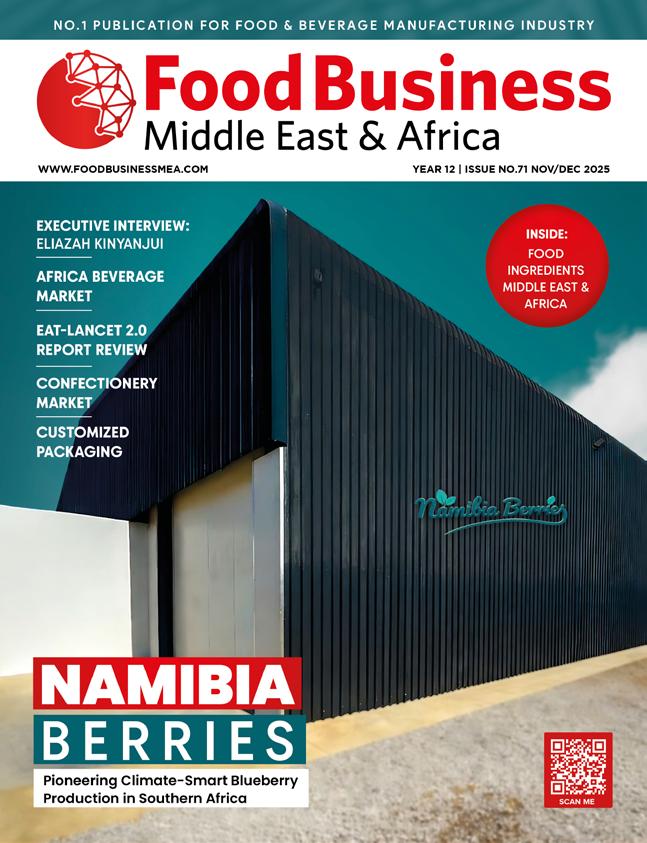
FOOD BUSINESS MIDDLE EAST &AFRICA MAGAZINE ISSUE 72
Middle East & Africa
Year 12 | Issue No.72 | Jan - Mar 2026
FOUNDER & PUBLISHER
Francis Juma
SENIOR EDITOR
Francis Watari
EDITORS
Fridah Chepkoech
Nicholas Ng'ang'a
Mercy Mukiri
Victor Atsali
BUSINESS DEVELOPMENT
DIRECTOR
Virginia Nyoro
BUSINESS DEVELOPMENT
EXECUTIVE
Jonah Sambai
HEAD OF DESIGN
Clare Ngode
ACCOUNTS
Anita Kinyua
We publish some of the most influential magazines and websites in Africa & the Middle East regions. Please visit the websites below for more information about our publications.
Published By: FW Brands MEA
P.O. Box 1874-00621, Nairobi Kenya Tel: +254725 343932
Email: info@fwbrandsmea.com
Website: www.fwbrandsmea.com
www.foodbusinessmea.com
www.millingmea.com
Food Business Middle East & Africa (ISSN 2307-3535) is published 4 times a year by FW Brands MEA. Reproduction of the whole or any part of the contents without written permission from the editor is prohibited. All information is published in good faith. While care is taken to prevent inaccuracies, the publishers accept no liability for any errors or omissions or for the consequences of any action taken on the basis of information published.
www.horecamea.com
www.dairybusinessmea.com
FEE BUSINESS
www.feedbusinessmea.com
www.sustainabilitymea.com
www.healthcaremea.com
www.hpcmagmea.com
?
Hard to picture ?
Come and experience it at SIAL Paris 2026
Visit the world’s largest food innovation exhibition from 17 to 21 October at Paris Nord Villepinte
Leveraging Growing Demand in East Africa’s Food Industry
East Africa’s food industry stands at an important inflexion point, driven by skyrocketing population growth, urbanisation, and demand for healthy products. Recent decades have been marked by a profound transformation in the consumer goods market in East Africa, with Kenya, Uganda, Tanzania, and Rwanda among the top 10 fast-growing consumer markets.
In particular, the Kenyan food and beverage industry has recorded an annual growth rate of approximately 5%, driven by rising incomes, urbanisation, and increased consumer spending. This growth reflects a broader trend in the East African region, where the population is expected to grow at a 2% CAGR, while food production lags at 0.9%. In Kenya alone, there are about 1,200 food and beverage manufacturers, underscoring the market’s diversity and competitiveness.
To capture a larger market share, manufacturers are increasing their reliance on research and innovation measures to develop products that are both nutritious and affordable. This has created a huge opportunity for suppliers with the knowledge and capabilities in research and product development. Suppliers are pitching base in East Africa to enable manufacturers innovate and manufacture products that meet rising customer preferences driven by growing wellness trends.
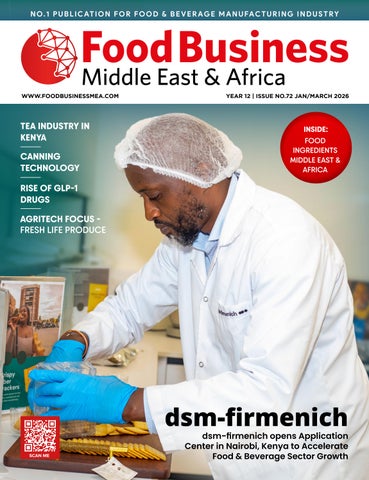
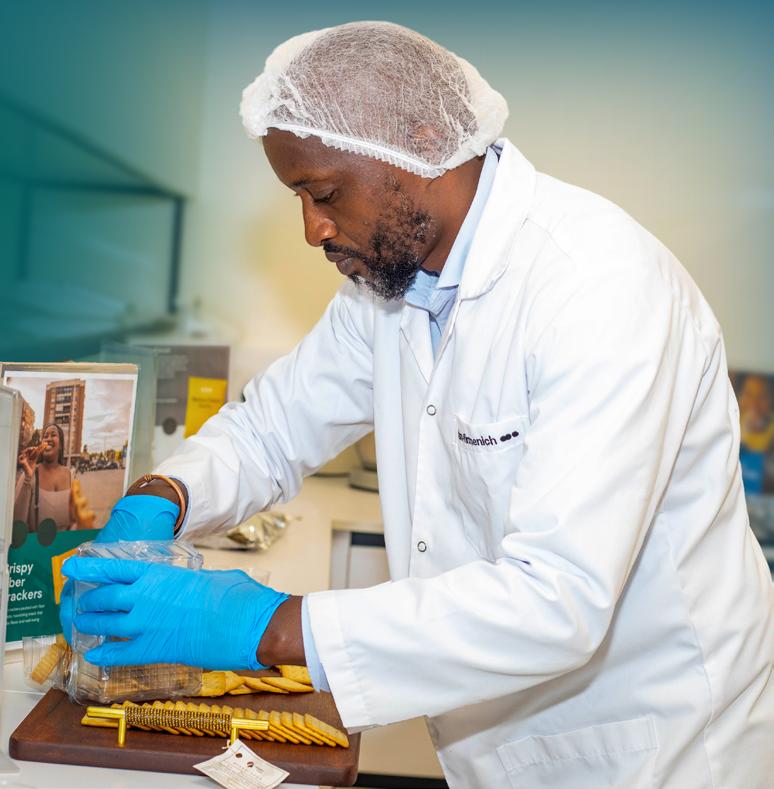
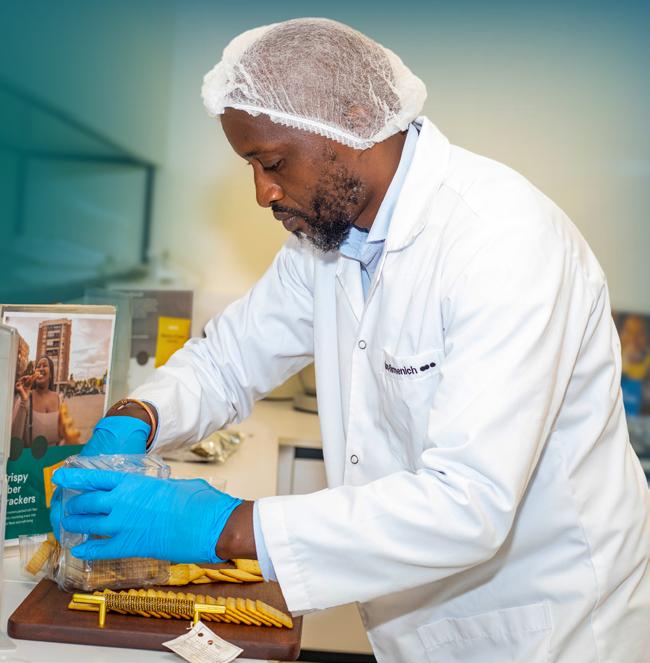
In Issue 72 of the Food Business MEA magazine, we detail how dsm-firmenich in a bid to improve service delivery and ease access to resources for manufacturers, has pitched base in Kenya’s capital with the opening of a new office and application centre. The new hub features advanced capabilities to aid manufacturers in the research and development of new products.
Beyond that, we take a deep dive into Kenya’s tea industry, the largest tea producer in the world, to unveil how government interventions are playing a part in awakening the sleeping giant in the sector. We identify the various reforms being implemented to enhance the lucrative nature of the sector while enhancing farmer incomes.
Additionally, we focus on a major topic in the wellness and health sector: the rise of GLP-1 drugs and their effects on the food & beverage industry. With rising cases of obesity in the world, people are turning to GLP-1 drugs to help regulate dietary intake levels, and for some, using the drugs for weightloss purposes. While some manufacturers and industry players term the effects as negligible, the ripple effects of the increasing usage of these drugs are being felt, driven by changes in people’s dietary needs.
Join us in this issue as we highlight industry developments, expert insights, executive moves in the Middle East and Africa food sector, and product innovations in the first quarter of the year.
Meanwhile, to enable us deliver better and more comprehensive magazines to our readers, we have reduced the number of yearly publications from six issues to quarterly magazines. This change will help us align better with food industry reporting basis and thus give a better angle to report and detail industry activities and trends on a quarterly basis.
Enjoy your read!!
Francis Watari Lead Editor Food Business MEA Magazine
EVENTS CALENDAR
IFE Manufacturing
March 30 - April 1, 2026
ExCeL London, London, UK www.ife.co.uk/ife-manufacturing
PACKON
Apr 15 – 17, 2026
Shenzhen World Exhibition & Convention Center, China
www.expolume.com/expo
Africa Dairy Innovation Summit
Argyle Grand Hotel Nairobi Airport | Nairobi, Kenya
Paris Nord Villpinte 17 - 21 October, 2026 www.sialcanada.com
Nestlé in talks to sell ice cream units to Froneri as CEO accelerates strategic restructuring
SWITZERLAND – Nestlé is in advanced negotiations to sell its remaining ice cream businesses in Asia, Canada, and parts of Latin America to Froneri.
According to the company, the potential sale aligns with its plan to prioritize higher-growth categories, including coffee, petcare, nutrition, and food and snacks.
The company, under its new leadership duo of CEO Philipp Navratil and Chairman Pablo Isla, has been focusing on streamlining the sprawling consumer giant, after years of operational and share-price underperformance.
Navratil has also revealed that the remaining ice cream business is a “strong, but small and a distraction” for the company.
The company is also reviewing its vitamin and supplement brands and engaging with potential buyers, while preparing to deconsolidate its waters business from 2027.
Nestlé has begun formal discussions with potential partners as part of its long-term portfolio transformation strategy.
NEWS UPDATES
By www.foodbusinessmea.com
INVESTMENTS
Kraft Heinz announces US$950M capital spending in 2026
USA – Kraft Heinz has revealed plans to spend around US$950 million on capital expenditures in 2026, up from US$801 million last year.
This follows the company’s decision to pause its efforts to split into two separate businesses, citing deteriorating conditions in the food industry.
CEO Steve Cahillane said his immediate focus is returning Kraft Heinz to profitable growth, particularly for iconic brands such as Heinz ketchup and Philadelphia cream cheese.
The decision reverses a September announcement that would have divided the company into a sauces-andspreads unit and a grocery-staples unit, including products such as Oscar Mayer meats, Kraft Singles, and Lunchables.
The split was intended to create two independent businesses, but doubts quickly arose about whether the separation would address Kraft Heinz’s underlying issues, including declining sales in processed foods.
He described the challenges facing Kraft Heinz as manageable and within the company’s control, leaving open the possibility of a later split.
Kraft Heinz faces headwinds from rising inflation and the growing popularity of GLP-1 weight-loss medications, which have reduced consumer spending on packaged foods.
The company said it will allocate US$600 million to marketing, sales, research and development, and product quality improvements to support recovery in its U.S. business, which has struggled with weak demand.
As part of cost-cutting efforts, the company expects to reduce approximately 60 positions by December 27, mostly outside the U.S. and Canada, following the elimination of roughly 600 jobs last year.
The company also indicated that it may consider price adjustments to drive sales as part of a broader effort to stabilize revenue and strengthen its U.S. business operations.
Golden Africa Kenya launches East Africa’s “first” inclusive sensory garden
KENYA – Golden Africa Kenya Ltd, a member of the global HSA Group, launched East Africa’s first inclusive sensory garden.
The garden, designed to be experienced through touch, sound, scent and interactive engagement, provides an accessible space for learning, wellbeing and recreation for
people of all abilities.
According to the company, the sensory garden reflects its commitment to inclusion, dignity and meaningful community impact in Kenya.
The facility is located on a dedicated green space adjacent to Golden Africa Kenya’s manufacturing plant and features guided sensory pathways,
aromatic plants, interactive educational signage, and water and sound elements.
The garden also includes an inclusive children’s play area, sculptures and seating crafted from recycled materials. The company said these features demonstrate how environmental responsibility can be transformed into creativity and shared community value.
26 MARCH 2026
3PM THURSDAY E.A.T
SUSTAINABLE MOLDING
How to build a more sustainable molding operation: From strategy to success
Tanmiah to build 100 poultry broiler farms in Saudi Arabia
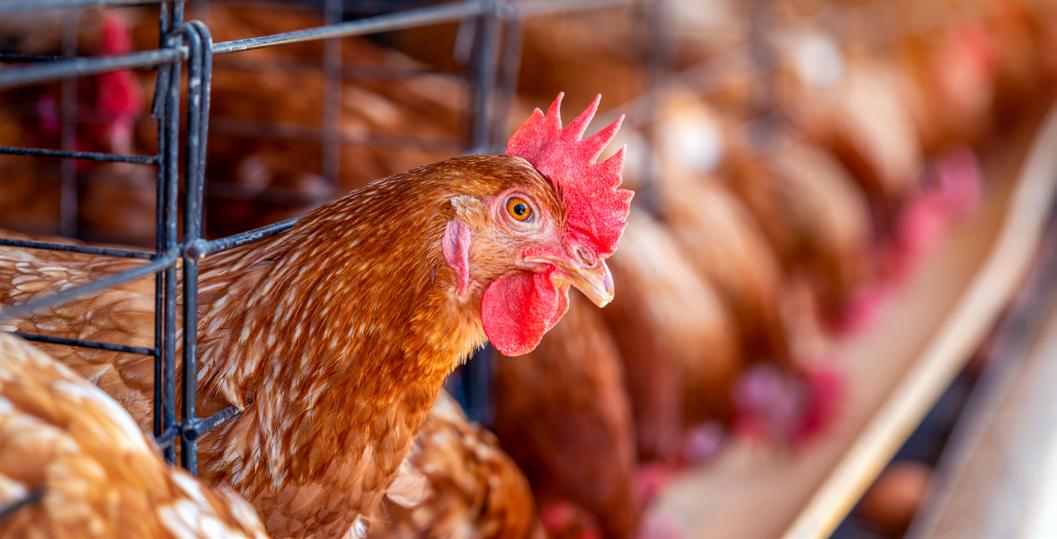
SAUDI ARABIA – The Agricultural Development Company, a subsidiary of Tanmiah Food company, has contracted China’s Chengdu Design and Research Institute to develop 100 poultry broiler farms in Saudi Arabia.
The agreement assigns ADC responsibility for executing construction works related to infrastructure preparation, farm buildings, and the installation of equipment required for the broiler operations.
Under the announced timeline, construction activities are expected to begin in January, with project execution running through December 2026, after which the facilities are scheduled to transition into commercial operation at the start of 2027.
The total value of the project stands at SAR 165 million, equivalent to US$44 million, and is intended to deliver technologically advanced poultry farms built on land already owned by ADC within Saudi Arabia.
Gabon launches poultry loan programme to cut chicken imports by 2027
GABON – Gabon has introduced a new financing programme aimed at expanding domestic poultry production as part of a strategy to reduce dependence on imported chicken meat by 2027.
The initiative is being implemented through the Bank for Commerce and Entrepreneurship of Gabon and focuses on providing structured loans to local poultry farmers to increase output and improve production capacity.
Authorities say the loan scheme is aligned with a wider agricultural reform plan that seeks to shift the economy away from heavy reliance on oil revenues and place greater emphasis on food production and agri-based industries.
Officials also expect the expansion of poultry farming to create jobs, especially in rural areas, and to increase incomes for farmers and related service providers.
INVESTMENTS
Sasini to sell Kiambu coffee estate for US$51M
KENYA – Agricultural firm Sasini has revealed plans to sell a coffee estate in Kiambu County for KES 7.9 billion (US$51 million), a transaction expected to generate substantial capital gains for the company.
The company disclosed announced that the property has a carrying value of KES 3.7 billion (US$23.9 million).
At KES 7.9 billion, the agreed sale value significantly exceeds Sasini’s market capitalisation of KES 4.6 billion (US$29.7 million).
“On 17 September 2025 the group agreed to sell the Gulmarg Division in Mweiga Estates Limited. For this reason, the results of the operations have been disclosed as discontinued operations and the assets classified as current assets held for sale,” Sasini said.
Sasini said it had not received payment for the property at the time the annual report was released. The company added that there are no liabilities attached to the disposal, meaning it expects to retain nearly the full proceeds once the transaction is completed.
The sale marks the latest in a series of asset disposals by Sasini, which has over the years divested divisions and non-core properties as part of a broader restructuring strategy.
In the year ended September 2025, the coffee estate a net profit of
KES 10.6 million (about US$68,000) supported by growth in the value of its plantations. This marked a turnaround from a net loss of KES 6.3 million (approximately US$41,000) reported in the previous year.
In 2015, Sasini sold its former office building on Nairobi’s Loita Street for KES 600 million (US$3.9 million) in 2015. In the same year, the company sold 513.7 acres of leasehold land in Nyeri for KES 1 billion (US$6.5 million), which housed two loss-making coffee estates.
In the year ended September 2025, Sasini reported a net profit of Kes 177.3 million (US$1.37 million) helped by higher sales and a sharp increase in the value of its plantations.
The company’s sales rose by Kes 1.5 billion (US$11.63 million) to Kes 8.4 billion (US$65.12 million), supported by a strong performance in coffee that offset weaker tea and avocado results.
Beyond higher sales, Sasini benefited from stronger margins and a higher valuation of its productive assets during the review period.
The company said tea sales were hurt by lower volumes and depressed global prices caused by excess supply, while avocado exports to Europe were constrained by logistical disruptions linked to Middle East conflicts.
APRIL 16-17, 2026
ARGYLE GRAND HOTEL NAIROBI
AIRPORT | NAIROBI, KENYA
MERCY NDORO
Group Chief Executive Officer, Dairibord Holdings Zimbabwe
BRIAN LANTON
Managing Director, Cape Food Ingredients
SCAN ME
SPEAKERS
REZA CHABOKRO
Marketing & Innovation Director –Brookside East Africa (Danone)
DENIS CHITOWE
Managing Director – Mzuzu Dairy, Malawi
WONDIRAD ABRAHAM
Owner & CEO – Amerti Dairy Farm, Ethiopia
ELIZABETH ANNIE COOK
Senior Scientist – International Livestock Research Institute, Kenya
Technical Commercial Director, Mediterranea/IGEA
of Quality Assurance
RODERICK KWABENA DADEY-ADJEI
Deputy Chief Executive of the Food Division – Food & Drugs Authority, Ghana
JOHN VAN ZUYLEN
Chief Executive Officer – La Fromagerie, Rwanda
MARCO LA FEMINA
Country Manager – Prognosis Biotech, Kenya
GEORGE OOKO ABONG (PHD)
Food Systems and Nutrition Specialist – University of Nairobi, Kenya
Dr TAWANDA MUSHUKU Frulact Agent – Sub Sahara, Africa
Operations Manager, Bakhresa Food Products Ice Cream Division, Tanzania
ENRICO BIRASCHI
MOLLY ABENDE
Head
–Glacier Products Limited, Kenya
HASSAN SHEIKH
MICHELINE THIENPONT Founder, La Fromagerie Rwanda Ltd -Rwanda
JACQUEILINE PETER NGASA Founder & Managing Director – Asili Dairy Company Limited, Tanzania
SCAN
CONSITUENT EVENTS
SIGN UP TO ATTEND, SPONSOR & EXHIBIT
AFRICA EXPO MEAT & P ULTRY
Soufflet Malt increases production in South Africa, India
SOUTH AFRICA – Global maltster Soufflet Malt is expanding its production capacity with new malting facilities in South Africa and India as it seeks to strengthen local supply chains and reduce reliance on imported malt.
In South Africa, the company broke ground on a R2 billion (US$117.92M) malting facility in Midvaal, Gauteng, marking one of the most significant recent investments in South Africa’s brewing and agricultural value chain.
The project, strategically located next to HEINEKEN Beverages’ Sedibeng Brewery near Johannesburg, will have an annual production capacity of approximately 100,000 tonnes of malt.
Soufflet Malt said co-locating malt production alongside the brewery is a key step in strengthening local integration and improving supply security.
Construction of the facility is expected to continue through 2026, with commissioning planned for mid2027. Once operational, the project is expected to create 55 permanent jobs, support hundreds of farmers, and generate between 200 and 300 indirect jobs across agriculture, logistics and related services.
Once fully operational, it is
expected to source 100% of its barley from South African farmers.
Meanwhile, the company recently announced plans to build a new malting facility in South Rajasthan, India, backed by an investment of Rs 1,200 crore (US$131.98M).
The new malthouse will initially produce 110,000 tonnes of malt annually, with a second phase expansion planned to further increase output. The first phase is scheduled for completion in early 2028 and will strengthen malt availability while reducing reliance on imports.
The new facility is expected to create 400 direct and indirect jobs, along with 700 additional roles across the supply chain.
At full capacity following expansion, the facility is expected to source up to 250,000 tonnes of barley annually, strengthening local supply chains and supporting the long-term growth of India’s malt industry.
The investments align with Soufflet Malt’s Maltiply 2030 strategy, which focuses on expanding malt applications. Digital innovation will play a central role in the projects through Maltimize, the company’s digital platform designed to optimize production efficiency and quality.
Carrefour sets 2030 target to lead Africa’s mass retail market
AFRICA – Carrefour has set a goal of becoming the largest mass-market retailer in Africa by 2030, outlining plans to expand its footprint across the continent as part of its newly unveiled “Carrefour 2030” strategy focused on growth and profitability.
The retailer said it aims to operate in 22 African countries out of 45 targeted under its broader international development roadmap within the next four years.
Rather than shifting its long-standing franchise-led model, Carrefour intends to continue working with local and regional partners, a strategy it has used in Africa for more than two decades to limit direct capital exposure while accelerating store rollouts.
In January, the group signed a franchise and supply agreement in Ethiopia with Queens Supermarket PLC, with plans to convert 13 existing supermarkets to the Carrefour brand in 2026 and open 17 additional outlets by 2028.
Saudi Arabia bans poultry, egg imports from 40 countries
SAUDI ARABIA – The Saudi Food and Drug Authority (SFDA) has enforced a complete ban on poultry and egg imports from 40 countries, alongside partial restrictions affecting specific provinces and cities in 16 other nations.
The measure is part of the SFDA’s ongoing efforts to protect public health and maintain food safety standards in the domestic market.
The authority cited outbreaks of highly pathogenic avian influenza as a key factor driving import restrictions.
The SFDA clarified that poultry meat and related products that have been heat-treated or processed to eliminate the Newcastle disease virus are exempt from the ban if they comply with established health standards and regulations.
Exempt products must include a health certificate issued by official authorities in the exporting country, confirming that the heat treatment or processing effectively removes the virus.
Nairobi Coffee Exchange launches 2026–2030 strategic plan to digitise trading, protect farmers
KENYA – The Nairobi Coffee Exchange (NCE) has unveiled a five-year strategic plan aimed at transforming Kenya’s coffee trading system through digitisation, transparency, and market expansion, with the government pledging stronger protection for farmers.
The Strategic Plan 2026–2030 outlines measures to modernise the exchange by introducing online bidding, improving price discovery, and rebuilding trust among farmers, buyers, and other market participants.
The plan will see the NCE introduce digitised trading systems offering real-time market data and full traceability.
NCE Chief Executive Officer Lisper Ndungu says the strategy is anchored on three priorities: digital transformation and operational excellence, market expansion and global positioning, and stakeholder value and sustainability.
MBRF
achieves full traceability across beef supply chain
BRAZIL – MBRF has completed 100% territorial traceability of its beef supply chain, including all direct and indirect suppliers across the Brazilian biomes where its cattle are raised.
The traceability system relies on a combination of satellite-based geomonitoring, mapping, and socio-environmental risk classification to continuously track supplier compliance.
MBRF’s verification criteria include checking environmental embargoes issued by Ibama, ICMBio, and Sema, ensuring suppliers are not operating on deforested or legally protected lands, and confirming no overlap with indigenous or quilombola territories.
Suppliers who fail to meet environmental or labour standards are automatically blocked from supplying animals until the issues are resolved, ensuring ongoing adherence to the criteria.
INVESTMENTS
JBS consolidates presence in the Middle East
MIDDLE EAST
- Global meat processor JBS is expanding its operations in the Middle East through new and existing production facilities, marking a significant step in its regional manufacturing strategy.
In Oman, the company has acquired an 80% stake in a newly established food holding company, with local partner Oman Food Capital retaining the remaining 20% interest in the joint venture.
According to JBS, the investment will be used to produce poultry, beef and lamb at two sites in Oman, one of which already exists but has remained inactive for roughly a year.
Chief Executive Gilberto Tomazoni said the move reflects the company’s intention to build a local supply chain in the Middle East rather than rely on imports alone.
Tomazoni added that JBS plans to raise chickens in Oman and source cattle and lamb from farmers in Oman and parts of North Africa.
Production timelines indicate that beef and lamb operations are expected to start within six months, while poultry processing is scheduled to begin within about a year.
Once fully operational, the two facilities are expected to reach a combined annual output of approximately 300,000 metric tonnes of meat products.
On a daily basis, the plants are
projected to process around 1,000 cattle, 5,000 lambs and 600,000 chickens, according to figures released by the company.
Earlier this year, JBS announced plans to double production at its chicken processing facility in Jeddah by the end of 2026.
JBS began operating the Jeddah plant last year after constructing the facility from scratch, and the site has already contributed to a fourfold increase in the company’s total production capacity within the kingdom.
Campos declined to disclose the company’s total production capacity in Saudi Arabia, where JBS also operates a plant in Dammam that produces beef burgers and other poultry items.
The meet processor also announced an US$85 million investment to expand its poultry operations in Saudi Arabia as part of a plan to develop the Kingdom into a regional and international center for halal food production and exports.
The company said the funding will be directed toward its facilities in Jeddah and Dammam and will support a partnership with the Arabian Company for Agricultural and Industrial Investment, also known as Entaj, to introduce new processing lines for whole chickens and a range of poultry cuts produced in line with halal and global quality requirements.
– Two of the world’s largest cocoa producers, Ghana and Ivory Coast, have announced a review on cocoa farmgate prices, as the producers respond to a sharp decline in global cocoa prices.
Ghana has already announced a downward review of its cocoa farmgate price to 41,392 cedis (US$3,580) per metric ton for the remainder of the 2025/2026 crop season.
According to Finance Minister Cassiel Ato Forson, the previous price of 58,000 cedis (US$5,300) per ton and had made Ghanaian cocoa less competitive on the global market.
“The current situation is largely driven by the unwillingness of buyers to purchase Ghana’s cocoa because it has become uncompetitive and very expensive,” Forson said.
Meanwhile, Ivory Coast is considering following Ghana’s move to lower the price it pays cocoa farmers. Officials said policymakers are reviewing “all options” following a major downturn in international cocoa markets.
In October, Ivory Coast set a record farmgate price of 2,800 CFA francs (US$5) per kilogram, up
from 2,200 CFA francs (US$3.93) announced during the mid-harvest in April 2025.
Ivory Coast and Ghana together account for about 60% of global cocoa supply and have been coordinating policies through the Ivory Coast–Ghana Cocoa Initiative to manage market volatility and support farmer incomes.
The price adjustment comes as global cocoa prices have fallen sharply to around US$4,000 per metric ton, nearly half the levels recorded a year earlier, weakening demand and leaving significant quantities of unsold beans.
To intervene, Ivory Coast’s Coffee and Cocoa Council (CCC) previously bought 100,000 metric tonnes of surplus cocoa to stabilise the market and protect farmers’ incomes.
Meanwhile, Ghana has introduced a new domestic financing model based on domestic cocoa bonds issued by COCOBOD. to revive demand, support farmers, and stabilize its struggling cocoa sector following a sharp drop in global prices.
The bonds will be repaid using proceeds from cocoa sales within the same crop year, reducing reliance on external borrowing.
In addition, the government plans to present legislation to Parliament linking farmgate prices directly to international market rates while guaranteeing farmers at least 70% of the gross Free on Board (FOB) price. This measure is intended to ensure fair and predictable earnings for farmers.
Cabinet has also approved plans for the conversion of approximately GH¢5 billion ($455 million) in cocoarelated debt owed to the Ministry of Finance and the Bank of Ghana into structured financial instruments, easing COCOBOD’s financial burden.
Del Monte Kenya invests US$4M in new IQF line, solar plant
KENYA – Del Monte Kenya has expanded its production capabilities with the inauguration of a new Individually Quick Frozen (IQF) processing line valued at Kes 515 million (US$4 million).
The IQF line has been installed within the company’s existing pineapple canning infrastructure and is designed to enhance flexibility in processing and exports.
According to the firm, the investment also includes an 807kW solar power plant aimed at lowering energy costs and reducing carbon emissions.
The new IQF plant forms part of Del Monte Kenya’s broader diversification strategy, enabling the company to process additional fruits and vegetables beyond pineapple.
The facility includes a mango processing line capable of handling both company-grown fruit and produce sourced from smallholder outgrowers, creating an expanded market opportunity for Kenyan farmers.
Brazil suspends cocoa imports from Ivory Coast over phytosanitary risks
BRAZIL – Brazil has temporarily suspended cocoa imports from Ivory Coast, citing phytosanitary concerns linked to the origin and traceability of shipments.
Brazil’s Agriculture Ministry said the measure was prompted by risks associated with “the high influx of beans from neighbouring countries into Ivory Coast,” the world’s largest cocoa producer.
The ministry warned that such inflows could allow cocoa from countries not authorized to export to Brazil to be mixed with Ivorian shipments before export.
The suspension will remain in effect until Ivory Coast formally addresses the concerns and provides assurances that its exports to Brazil do not contain cocoa produced in neighbouring countries.
Ivory Coast accounted for approximately 37 percent of cocoa and cocoa by-products imported by Brazil in 2025, underscoring the significance of the trade relationship between the two countries.
GHANA
Mondelēz
Appoints Ziad Abla as Managing Director for Mondelēz Arabia
SAUDI ARABIA - Mondelēz International, Inc. has named Ziad Abla as the new Managing Director of Mondelēz Arabia, assigning him to oversee the company’s operations in Saudi Arabia, a key market in its global portfolio. Abla brings over 25 years of experience within Mondelēz, having worked across the Middle East, Africa, Turkey, and other emerging regions. His career has included leading commercial growth initiatives, improving business performance, and managing organizational development.
Before taking up the role in Saudi Arabia, Abla served as Managing Director for the Gulf and Developing Markets. In that capacity, he led efforts that delivered double-digit revenue growth, improved market share, and expanded digital commerce initiatives. He also managed the integration of commercial and supply chain operations, aiming to raise service levels and execution across multiple markets. Abla’s appointment is part of Mondelēz’s ongoing focus on local talent development, corporate governance, and sustainability programs. His prior experience includes implementing operational improvements, renewable energy initiatives, and organizational culture-building, which are expected to support the company’s role in advancing Saudi Arabia’s economic and social objectives.
Lorraine De Graaff named Chief Marketing & Strategy Officer at Tiger Brands
SOUTH AFRICA – Tiger Brands has appointed Lorraine De Graaff as Chief Marketing & Strategy Officer, effective 1 March 2026. De Graaff has been with the company since 2019, serving as Marketing Director for the Bakeries Business Unit. During her tenure in the Bakeries division, De Graaff managed marketing, strategy, and commercial operations across multiple market segments. She was responsible for team development and the execution of key initiatives to improve operational performance.
De Graaff brings over 20 years of marketing experience spanning South Africa, Africa, Europe, and the Middle East. Before joining Tiger Brands, she held senior roles at global companies including Whirlpool EMEA, SC Johnson, Kimberly-Clark, Novartis, Beiersdorf SA, and Robertson’s Homecare. At Whirlpool Corporation, she served as Marketing Director for the Southern Africa Development Community region from March 2016 to June 2019, focusing on strategic planning and leadership. Prior to that, she worked at SC Johnson. In her new role, De Graaff will oversee Tiger Brands’ marketing and strategic functions across its operations, guiding commercial and brand initiatives.
Marten Sievers named CEO for NKG’s EMEA
operations
EMEA – Neumann Kaffee Gruppe (NKG) has appointed Marten Sievers as Chief Executive Officer for Europe, the Middle East, and Africa, effective 1 January 2026. The appointment is part of the company’s organisational restructuring aimed at decentralising decision-making and bringing leadership closer to its key markets. NKG said Sievers’ role is intended to strengthen regional leadership and improve responsiveness to customers across the EMEA coffee markets. The move aligns with the company’s broader strategy of empowering local teams and enhancing operational efficiency.
Sievers began his career with NKG in 2010 in a financial management position at NKG Tropical Farm Management in Switzerland. He later moved to Hamburg to join the group’s Financial Coaching team, where he focused on optimising financial structures and improving operational performance. In 2019, Sievers was appointed Regional Managing Director for NKG East Africa, overseeing operations in Uganda, Kenya, and Tanzania. During his tenure, he developed a cohesive regional team capable of managing complex supply chains and supporting customers across major coffee-producing areas.
Nicholas Kade Appointed Managing Director of International Breweries Nigeria
NIGERIA – International Breweries Plc (IBPLC) has named Nicholas Kade as its new Managing Director, effective 1 March 2026. He will replace Carlos Coutino, who is moving to a senior leadership role within the AB InBev group in Central America.
Coutino, who joined IBPLC in 2018 as National Sales and Trade Marketing Director and rose through the commercial ranks, will now serve as Managing Director for Honduras and El Salvador. Since taking the helm of IBPLC as Managing Director and Business Unit President in January 2023, Coutino has overseen a period of strong performance, including record sales volumes, increased market share, and a return to profitability after six years of restructuring.
Kade, formerly IBPLC’s Sales Director, brings over 15 years of commercial leadership experience across Africa. He has directed national sales strategies and managed commercial execution to drive business performance in Nigeria. Kade joined AB InBev through its graduate management trainee programme and has steadily progressed through key commercial roles. The company said Kade’s appointment is aimed at continuing its growth trajectory and strengthening commercial operations across Nigeria.
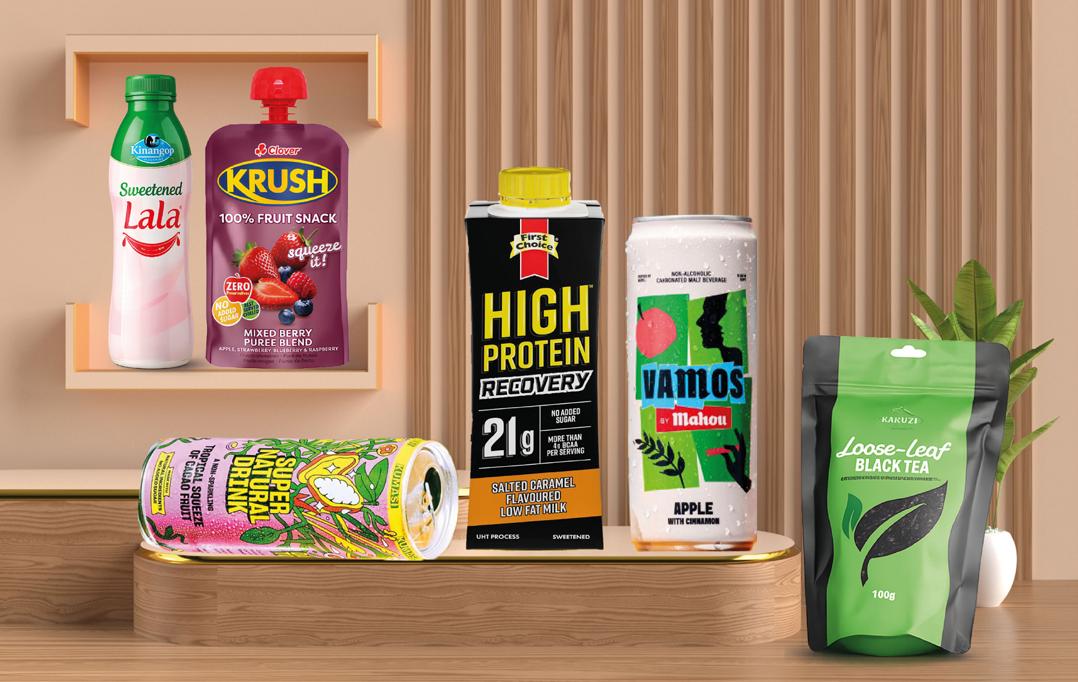
SWEETENED LALA
Kinangop Dairy
Kinangop Dairy Limited has expanded its product range with the introduction of Kinangop Sweetened Lala, aimed at offering consumers a convenient and fresh dairy option.
Kinangop Sweetened Lala combines the company’s established dairy quality with a stable shelf-life hydrogen-lactic formulation, designed to maintain freshness and consistency for consumers.
The drink comes in multiple pack sizes to suit different preferences, including a 500ml pouch and 250g, 500g, and 1-litre bottles. www.kinangopdairy.co.ke
NON-ALCOHOLIC MALT DRINK
Mahou San Miguel
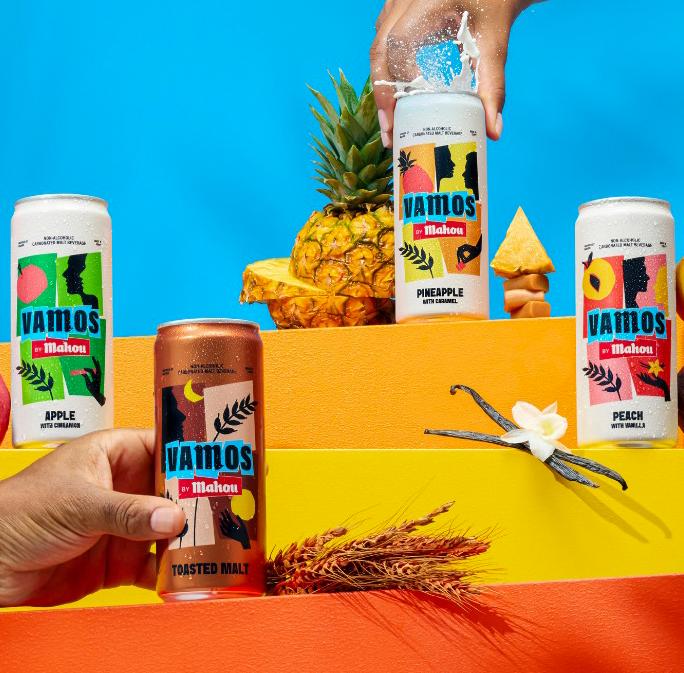
Spanish brewer Mahou San Miguel has introduced its first nonalcoholic malt beverage in the Middle East and Africa, starting with the Egyptian market. The product launch marks a step in the company’s international growth strategy.
The new drink, Vamos by Mahou, is a canned, carbonated malt beverage developed specifically for the region.
The product line includes four flavours intended to match local preferences: classic toasted malt, pineapple with caramel, apple with cinnamon, and peach with vanilla.
www.mahou-sanmiguel.com
Kakuzi PLC
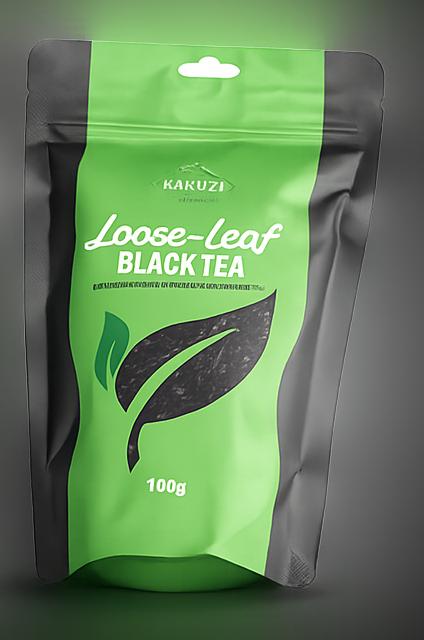
Kakuzi Plc has introduced a new loose-leaf tea brand for local consumers, marking the company’s first foray into packaged tea for domestic sales. The product, named Kakuzi Pure Black Tea, is available in 250-gram and 500-gram packs. The launch is part of the company’s broader strategy to diversify its product range and market presence, aiming to increase revenue and reduce dependence on exports.
Kakuzi Plc Managing Director Chris Flowers said the company is focused on developing high-quality, locally produced products to meet domestic demand.
www.kakuzi.co.ke
HIGH PROTEIN MAX
Woodlands Dairy
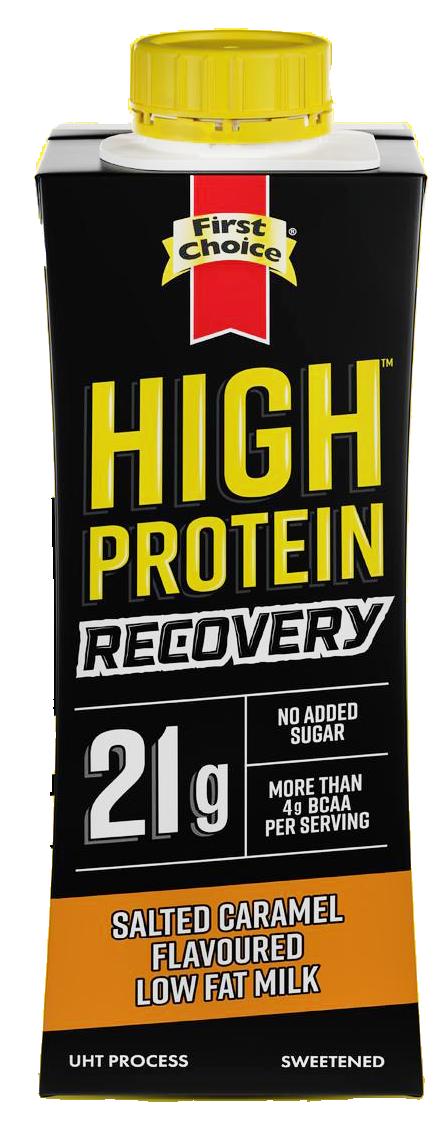
First Choice has expanded its High Protein range with the introduction of High Protein Max, a ready-to-drink beverage aimed at athletes, fitness enthusiasts, and individuals engaged in highintensity training.
The new product offers a higher protein concentration to support more demanding post-workout recovery and muscle maintenance. The formulation is fat-free, low in sugar, and designed to deliver a smooth texture and enjoyable taste without compromising nutritional value.
www.woodlandsdairy.co.za
Kumasi Drinks
Kumasi Drinks, in collaboration with juice producer Atou Ivorio, has launched a locally made cacao juice in Côte d’Ivoire. The partnership focuses on producing and marketing the beverage using cacao pulp sourced directly from local farms.
The new drink is made entirely from Ivorian cacao pulp, with no added sugar, flavourings, or preservatives, according to the company. Kumasi Drinks said the product highlights both local heritage and innovation while supporting farmers along the cacao supply chain. The launch represents the company’s entry into the domestic juice market.
www.kumasi-drinks
CLOVER KRUSH 100% FRUIT SNACK
Clover
Clover has introduced a new product under its Krush brand with the launch of the Clover Krush 100% Fruit Snack, marking the company’s entry into a new snack category. The product is made entirely from fruit, offering consumers a natural alternative for snacking. Clover said the range is designed to suit different lifestyles, appealing to families, working professionals, and others seeking a convenient, wholesome option.
The new fruit snack is available in five flavours and two formats. The 110ml on-the-go pouches provide a portable option for quick consumption, while the 4x100g cups are intended for home use or sharing.
www.clover.co.za
CACAO JUICE
GAP Bridging the INNOVATION
dsm-firmenich opens Application Center in Nairobi, Kenya
to Accelerate Food & Beverage Sector Growth
By Francis Watari
East Africa stands at an important crossroad, with a rising population and a growing appetite for healthy food, calling for better food. As a result, food and beverage manufacturers are seeking to bridge this gap through research and innovation to develop better foods to satisfy this demand.
With more than 60 per cent of its population under the age of 25 and rapid urbanisation reshaping lifestyles, consumers are seeking convenient, affordable, and culturally resonant products that also deliver better nutrition.
Kenya’s food processing sector is growing at 6–8 per cent annually, outpacing many global markets. Industry projections estimate Africa’s entire food and beverage sector could reach US$1 trillion by 2030, with the region leading as the fastestgrowing sub-region.
However, this growth exposes critical gaps: fragmented supply chains, limited local R&D capacity, post-harvest losses, inconsistent ingredient quality, and the dual challenge of persistent micronutrient deficiencies alongside rising obesity and diet-related non-communicable diseases.
For decades, many manufacturers have relied on imported ingredients and distant technical support, resulting in slow product development cycles, products that fail to resonate with local tastes, and formulations that have struggled to meet evolving regulatory standards.
Traditional processing methods dominate but scaling them while preserving nutrition and ensuring food safety remains difficult. The transition in nutritional needs is accelerating— urban consumers want ready-to-eat snacks, fortified beverages, and healthier bakery items—but local innovation hubs capable of rapid prototyping and co-creation have been scarce.
A NEW DAWN FOR FOOD INNOVATION
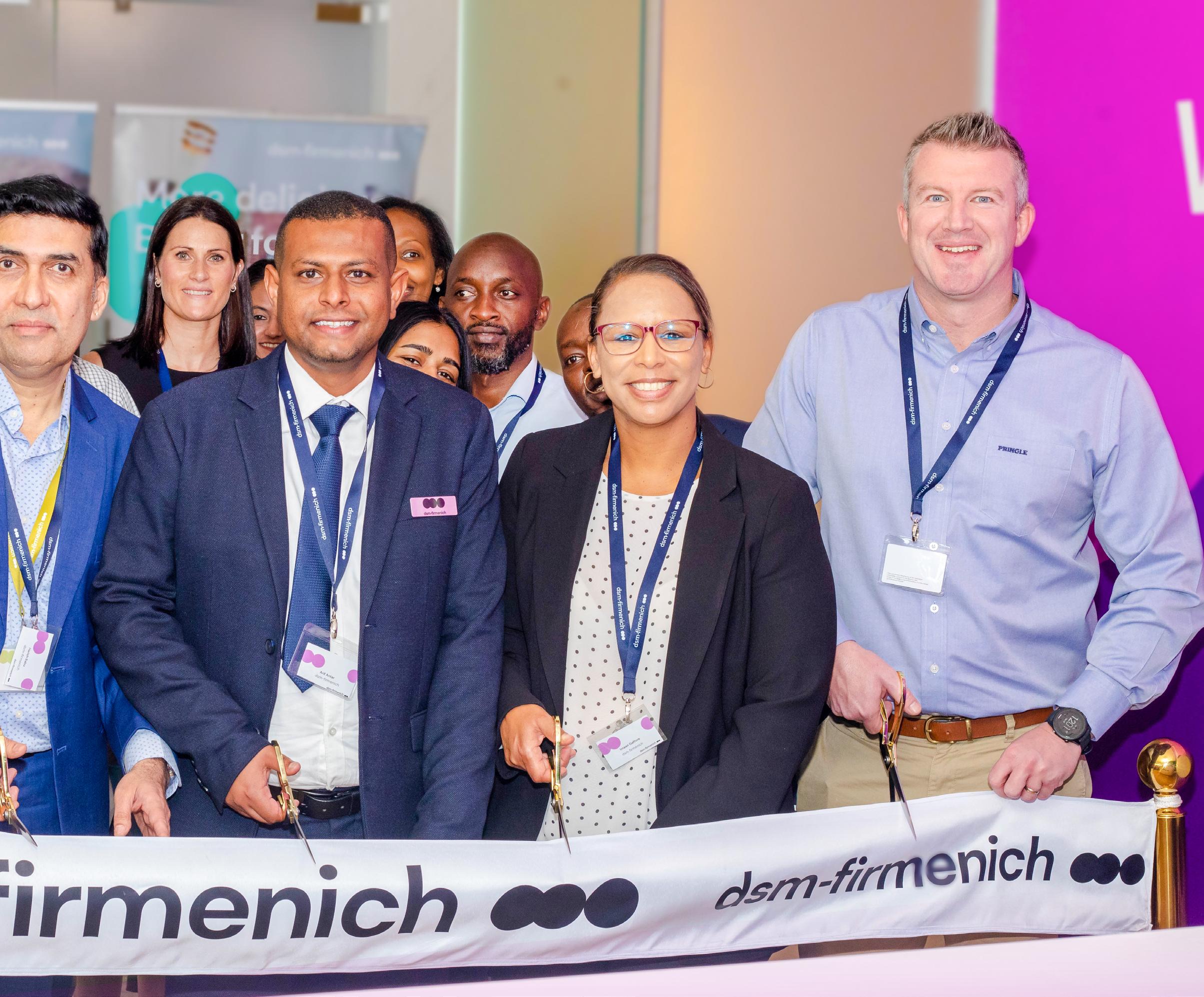
Amidst the challenges in food innovation and development, dsm-firmenich is changing the narrative by bringing innovation capabilities and technical support closer to the manufacturers. On 29 January 2026, Nairobi’s Riverside Drive
was filled with energy as dsm-firmenich officially opened its new center at The Cube.
The new facility combines global scientific leadership with on-the-ground presence across Kenya, Tanzania, Uganda, Ethiopia, Rwanda, and neighbouring markets.
Marco Monteiro Regional VP TTH India Middle East and Africa (IMA), stated: “East Africa today stands as one of the most exciting growth regions in the world driven by a young population, urbanisation, and rising consumer expectations for nutrition. Kenya is becoming a hub for regional manufacturing, agricultural transformation, and scientific talent making a home for our expanded innovation capabilities.”
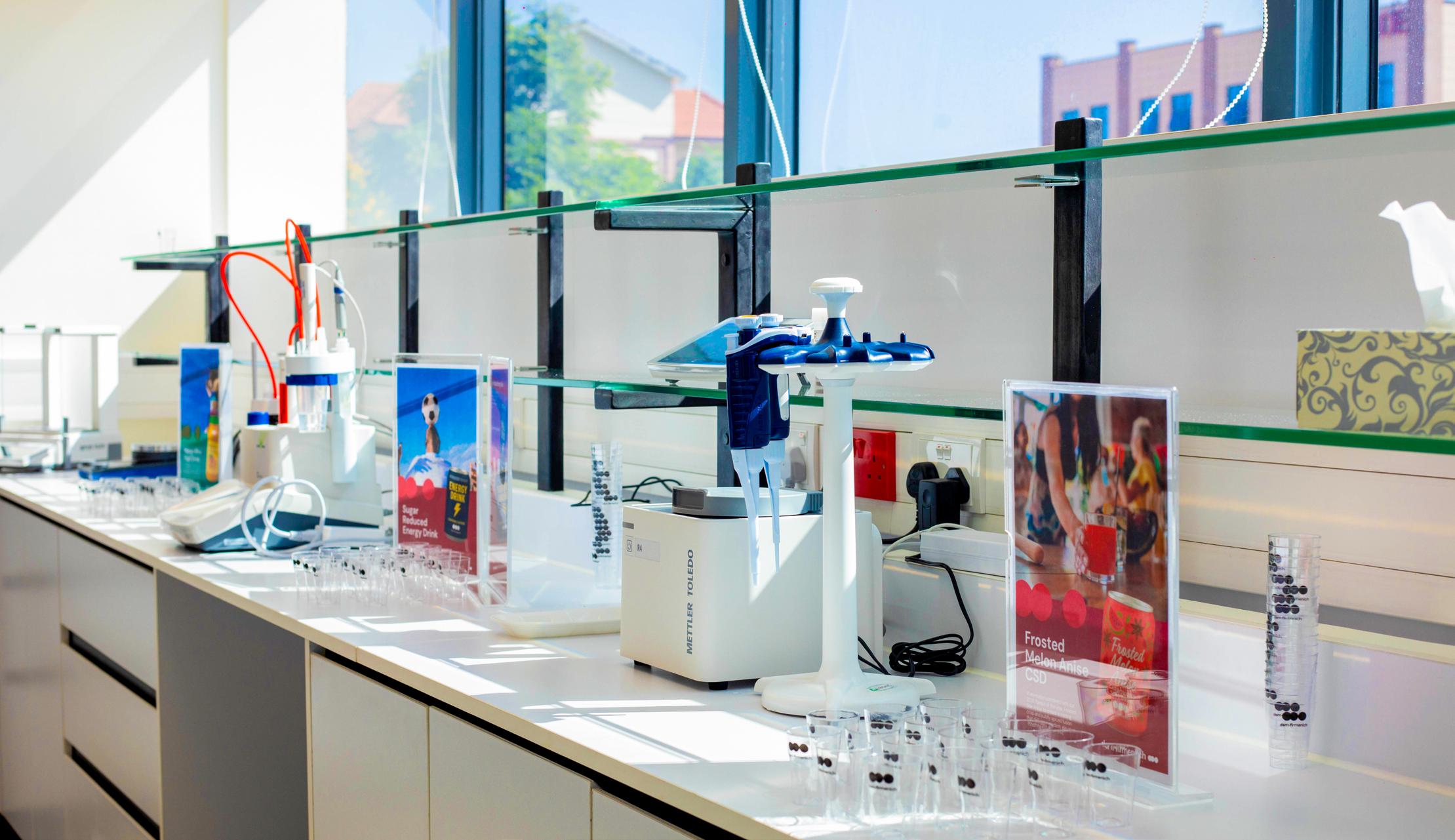
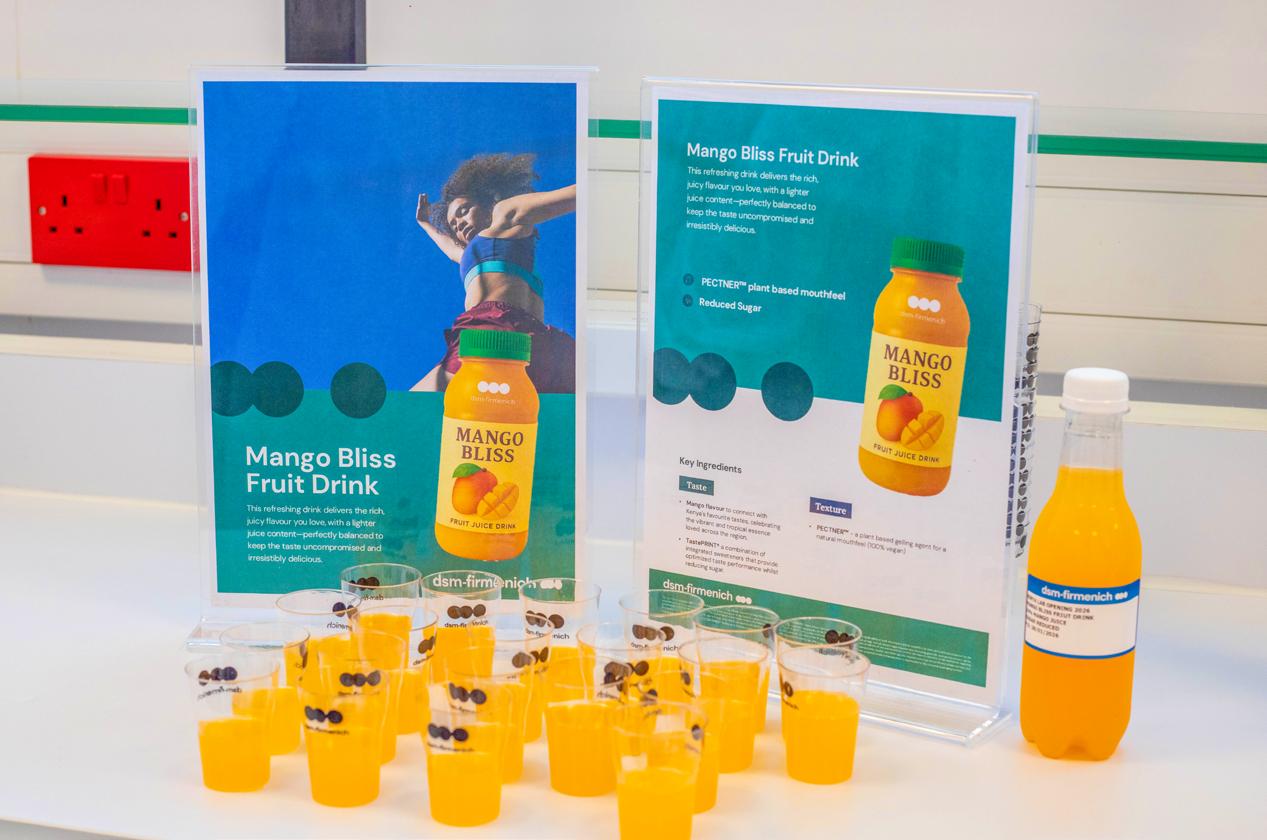
At its heart lies the modern Application Center—an innovation ground equipped for hands-on collaboration. The new hub holds capabilities across five key categories: beverages, bakery, confectionery, dairy, and savoury applications.
The facility boasts strong capabilities in rapid prototyping, enabling manufacturers to turn customer briefs into marketready concepts in a matter of time, rather than the traditional, slower approaches that takes longer to achieve desired results.
The facility focuses on formulations tailored to the regional consumers insights, aiming to bring a balance between familiar
local flavours and modern convenience, all while complying with local regulations.
“This office enables us to combine global expertise with local capability in a way that creates real and long-lasting value. This office is not an endpoint, but it is a platform for growth, for innovation and for long-term impact across the whole of East Africa,” highlights Imaan Gaffore, Vice President Sales Taste for Africa, Middle East and Turkey (AMET).
BRIDGING THE NUTRITION GAP
The center’s work extends beyond taste. With advanced facilities, the center’s Health, Nutrition & Care team provides fortified solutions designed to address micronutrient gaps that still affect millions.
By embedding vitamins, minerals, and functional ingredients into everyday staples, without compromising taste or texture, manufacturers can now produce affordable, healthier products at scale. This directly addresses two important elements of malnutrition: undernutrition and hidden hunger.
According to the Global Nutrition Report, Eastern Africa still experiences a malnutrition burden among children aged under 5 years. The prevalence of stunting is 32.6%, which is significantly higher than the global average of 22.0%
Peter Wathigo, Account Manager Nutrition Improvement, EMEA states: “Malnutrition is one of the key factors hindering development in terms of economy and health. At dsmfirmenich we try to tackle that by working with large-scale processors to fortify highly consumed foods with the essential micronutrients, mostly grains in the region. This is why we are inviting our customers to our application centre because they are the ones we shall work with to deliver the essential micronutrients to the community.”
FACILITATING RAPID TURN-AROUND
Speaking during the launch, Arif Antar, Sales Director Taste
for the East African region and Country Leader for Kenya, highlighted the practical advantages of the application center for manufacturers. He noted that the application center will allow faster turnaround times on customer briefs, more targeted innovation, and enhanced technical support for food and beverage manufacturers operating in the region’s fastevolving market.
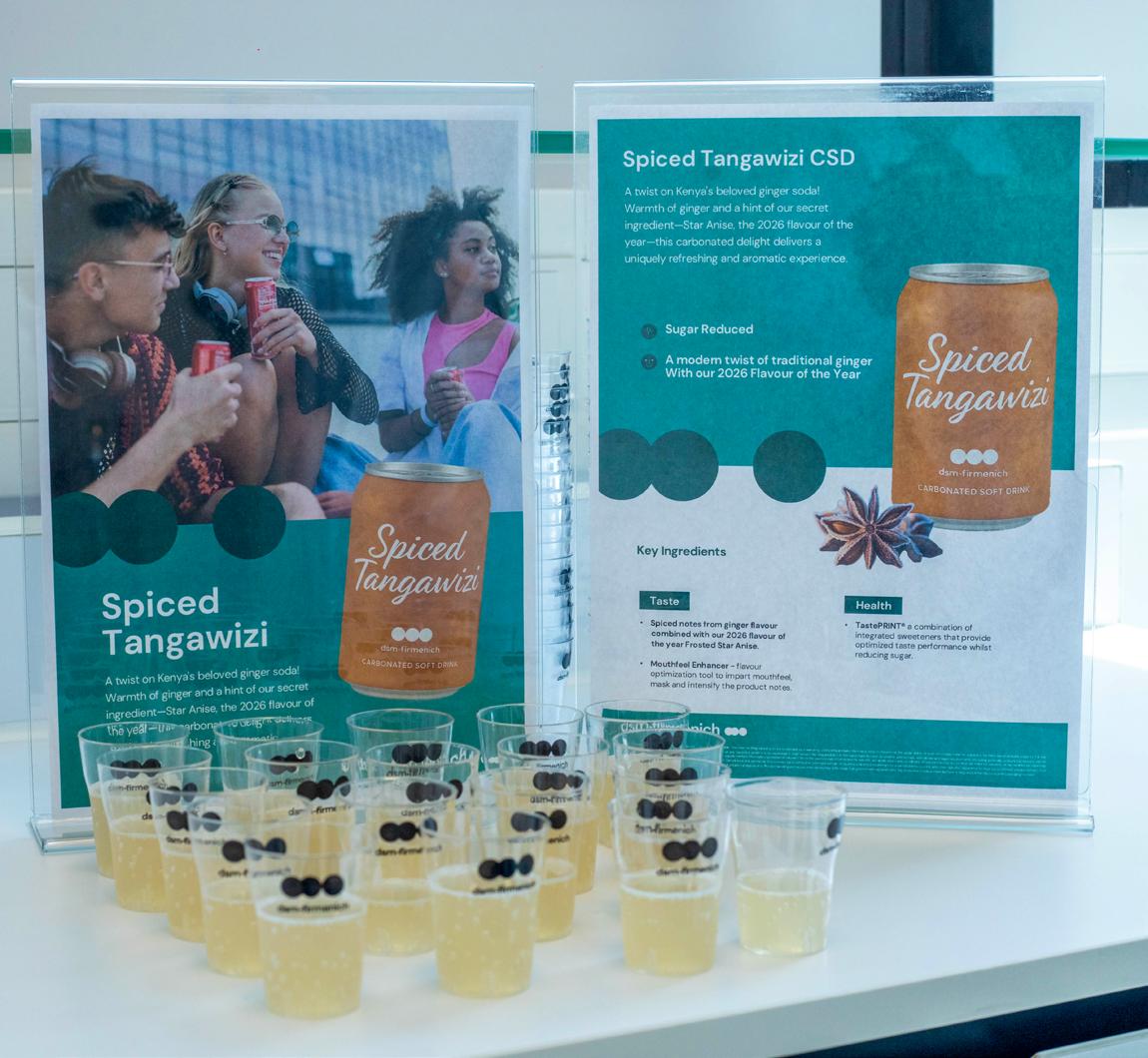
According to Arif, the localised support is transformative. Previously, a beverage producer developing a sugar-reduced carbonated soft drink had to rely on formulation support from South Africa or Dubai. However, with the facility, teams can now iterate prototypes on-site, test sensory profiles with local panels, and ensure stability under regional climate conditions.
Additionally, dairy manufacturers can now explore clean-label texture solutions that extend shelf life without refrigeration challenges common in rural distribution. Bakery
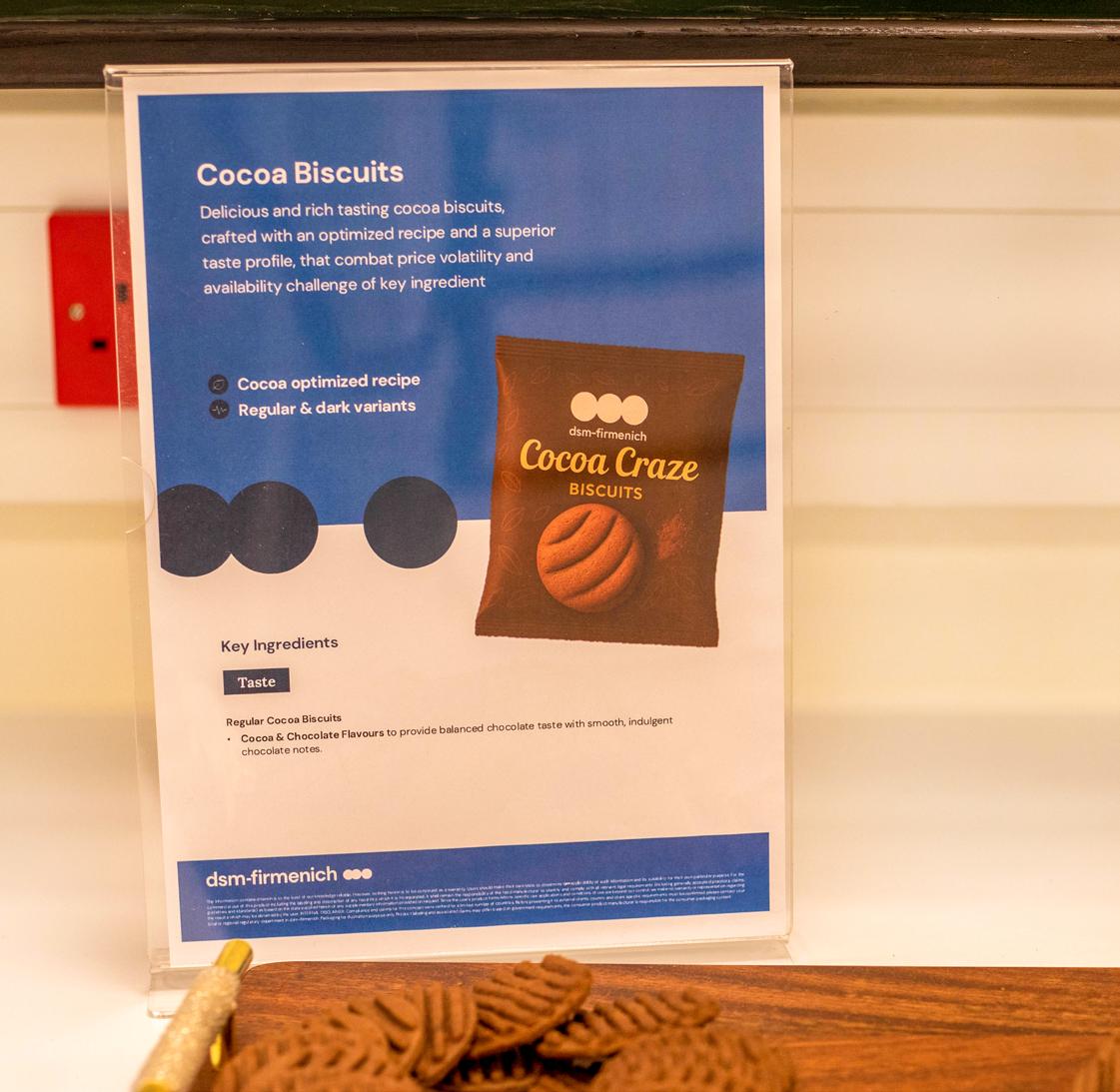
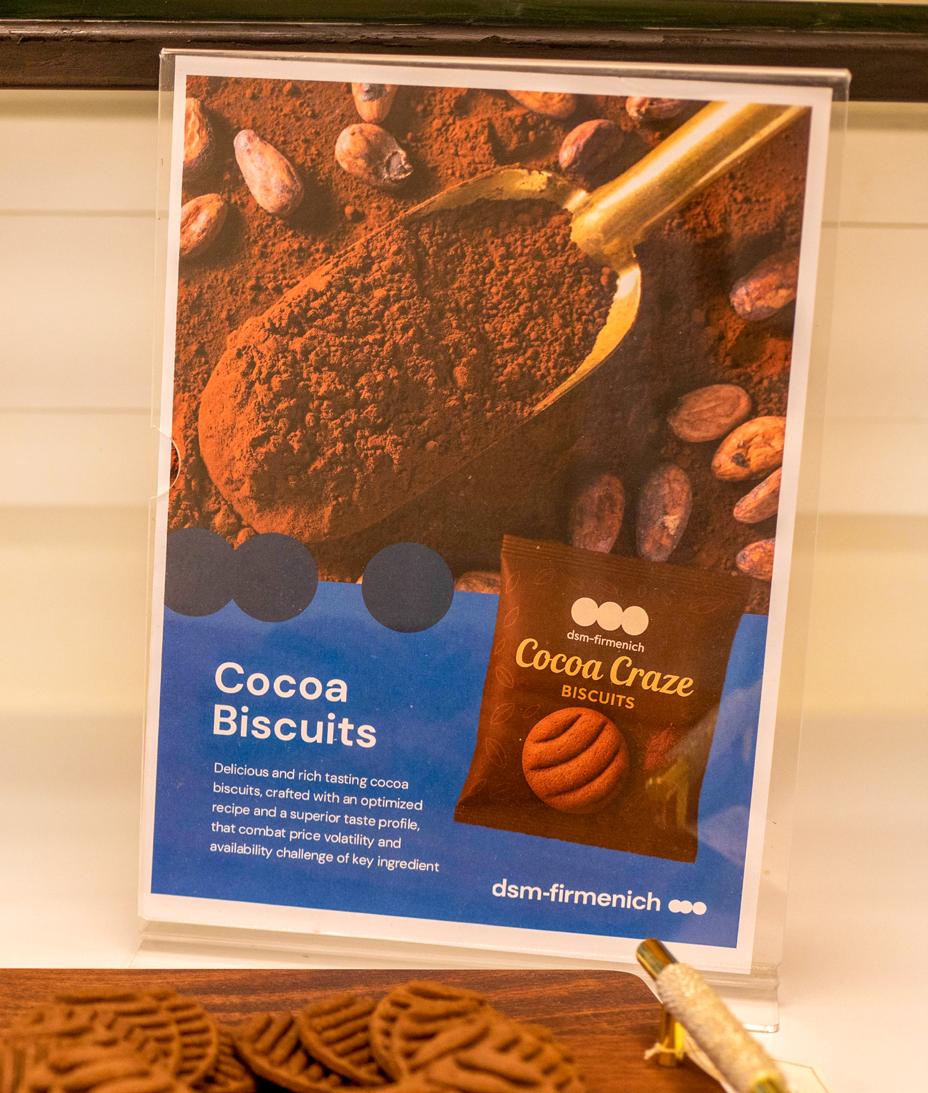
and confectionery players can enhance sustainability by reducing reliance on cocoa while still delivering indulgent products appealing to the consumers.
CONSOLIDATING PRESENCE
The opening of the new facility also builds on dsm-firmenich’s broader legacy. Having been born from a merger of DSM (pioneer in nutrition and bioscience since 1902) and Firmenich (fragrance and taste innovator since 1895), the company brings 150+ years of scientific heritage and more than €12 billion in combined revenue.
Its global network of R&D facilities now includes this East African facility, enabling true co-creation that respects cultural nuances, from preferred sweetness levels in beverages to herbal notes favoured in savoury snacks.
Beyond the immediate F&B sector, the Nairobi center showcased Perfumery & Beauty solutions, demonstrating how the company’s integrated approach spans personal care and home care products that align with East African consumer preferences.
OPPORTUNITY FOR REGIONAL MANUFACTURERS
With East Africa’s food economy being driven by a diverse network of businesses, the opening of the center creates significant opportunities for innovation and research.
The Application Center is designed to lower the barriers to product development , empowering companies of all sizes to innovate, compete more effectively, create jobs, and retain value within the region.
Additionally, dsm-firmenich’s operating model of partnering with local partners, aligning with regional manufacturing hubs, and investing in scientific capacitybuilding, offers a blueprint for meaningful progress. The new facility will complement efforts by the government in Kenya and beyond to strengthen food processing and nutrition policies.
LEVERAGING THE FUTURE
As the region’s young, urban consumers drive the next chapter of the continent’s food story, proximity to technical expertise will determine who captures the bigger share of the food industry. dsm-firmenich’s Nairobi application center positions the company and its partners as catalysts for leadership in innovation capitalizing on emerging trends.
The new office will not merely fill the geographic gap; it will close an innovation divide, turning regional potential into flavorful, healthier, and more sustainable growth.
By bringing faster, smarter, and more relevant solutions to manufacturers, dsm-firmenich is positioning to help East Africa’s food and beverage industry move from reactive adaptation to proactive leadership.
The opening on Riverside Drive marks the beginning of a new era where global science meets local ambition. Working alongside its partners, dsm-firmenich brings progress to life by creating solutions that are essentialfor life, desirable for consumers, and more sustainable for the planet. FBMEA
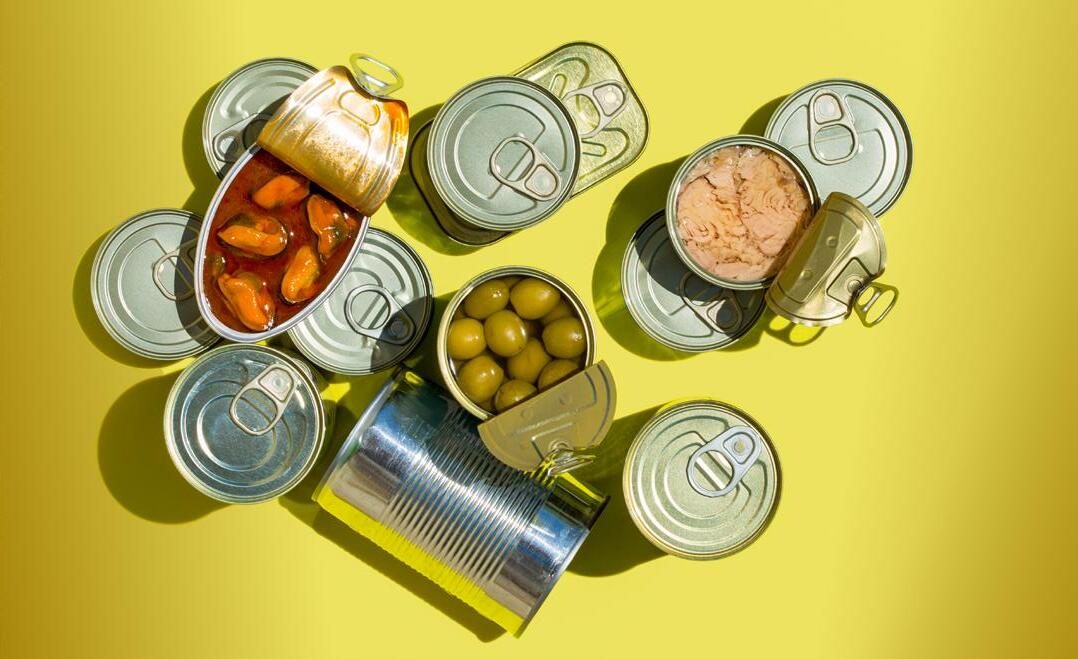
You probably remember as a young child playing with an empty soup can after your mother prepared a scrumptious meal. Ever wondered where the can had come from and how it came to existence? Canned food has been part of the food system for more than 200 years, and from this simple innovation, it has revolutionalised the preservation of food from farm to fork, reducing food loss and waste.
Canning is one of the food preservation techniques used worldwide and has become a cornerstone of global food supply systems. It plays a critical role in food safety, shelflife extension, and food security as thermal processing is key in preservation of vegetables, fruits, meat, poultry, sea food, ready-to-eat meals and pet food. In Africa and the world beyond, canned foods are essential in the food chain as they provide stable, affordable, and nutrition where the cold chain might not be guaranteed.
Canning food is still important in this day and age of urbanization and it has evolved into a highly sophisticated and technology driven sector. This has been showcased by the growing market of canned foods driven by demand for shelf stable goods and convenience as consumers seek ease in meal preparation.
Canning operations have since moved from archaic methods which were labour intensive and required manual methods to ensure the delicate time and temperature combination was achieved. Today, modernization of canning methods has become pivotal in ensuring the world has resilient systems that are key to food security.
LEVERAGING CANNING TO ENHANCE FOOD SECURITY
Food security in Africa has been hounded by a myriad of challenges which span limited infrastructure in cold chain systems, long transport distances, climate change, and postharvest losses. Canning comes as a panacea to these challenges as adoption of this technology ensures that safe and nutritious food is available all year round.
In areas where a cold chain is compromised due to lack of refrigeration systems or electricity, canned foods which are shelf stable are crucial in ensuring communities have a dependable source of nutrition. Canned vegetables, fruit, and
meat can be safely stored for long periods of time, enabling households to maintain food supply in case of disruption due to weather-induced challenges.
Canning is also key in curbing post-harvest losses which is a great challenge in African food systems. Canning fresh produce that could be potentially lost due to inadequate storage, transport and processing infrastructure is key in ensuring households are food secure. Value addition through canning supports farmers by creating markets for surplus produce and holding prices steady in volatile seasons. As a food preservation technology, canning is a solution that improves food availability, reduces waste and ensures that communities have resilient food systems across the African continent.
INNOVATION AND SUSTAINABILITY IN CANNING
Recent advancements have seen the enhancement of food products on the shelf. In the case of beverages, improvements have been made in flavour preservation and shelf life. Aseptic processing and advanced barrier coatings are key in enhancing beverage shelf stability. Aseptic processing is used to sterlilise both can and product before filling which reduces the need for heat processing post canning. Nitrogen flushing and Controlled Atmosphere Packaging (CAP) are techniques that are being used to optimize the can’s internal environment thereby maintaining flavour integrity.
Sustainability has been a topical issue in food manufacturing and as customer demand and sensitivity to climate change issues increases, the focus on reducing the environmental footprint of packaging materials has become increasingly important. As such, focus on circular economy initiatives such as light weighting packaging designs and use of recyclable and biodegradable materials has been crucial in minimizing the carbon footprint of the packaging sector.
Environmentally friendly packaging solutions which make use of recycled aluminum or steel content have reduced can weight close to 12%, cutting material usage and transportation emissions. In the vein of sustainability, digital printing technology enables cost effective shorter production runs and faster product launches.
Innovative packaging for canned products has seen the introduction of QR codes and NFC tags that are key in providing detailed information about product origin and nutritional content which makes the consumer experience exceptional.
In addition, intelligent packaging which has seen the use of Temperature Time indicators (TTI) and Radio Frequency Identification (RFID) technology is emerging as an innovative trend. TTIs change colour when a product is exposed to excessive heat or storage
which is key in ensuring food safety. RFID technology involves tracking of product movement in real time and monitoring of conditions within the can.
Can manufacturers have come to adopt Artificial Intelligence and Internet of Things (IoT), through predictive maintenance, process optimization and real time monitoring. Advances have also been made to monitor machine components such as seamers and fillers which also enable timely maintenance and assessment of machine health and performance. As smart technology advances, manufacturers can ensure packaging cans are compliant with legal and quality standards.
CANNING BEYOND CANS: RETORT POUCHES.
Canning industry has expanded to new forms of packaging that use the same method of processing, that is, thermal processing. The use of retort pouches has been adopted in recent years, which has seen the transition from cans to retort pouches. Retort pouches are flexible, heat-resistant laminated packages that can withstand high processing temperatures while maintaining product integrity. Retort pouches are used on ready to eat meals, pet food, sauces, baby food and pet food.
Studies have shown that use of retort pouches offer reduced cooking times yielding superior flavour and improved nutritional content since they are thinner and flatter, reducing processing times. Modified retorts that make use of agitation techniques are key in enhancing heat transfer within the package. This is key in reducing processing time and minimizing product quality challenges. With the introduction of retort pouches, the scope of thermal processing has expanded to catch up with modern food processing trends which aim to meet the ever-evolving consumer expectations.
CONCLUSION
Canning technology has significantly advanced since its inception some 200 years ago. Modern materials and processes have seen a transformation of the canning industry from the simple preservation method to a sophisticated technology-driven process. With the progression in technological advancements, consumers are in for a treat as product quality and convenience advance.
The evolution of canning from innovative packaging, digital printing, and addressing sustainability is of great importance. Canning offers a solution to deliver resilient, shelf stable foods that are key to ensuring food security in communities. The availability of safe and nutritious food regardless of distance or infrastructural limitations is pivotal in the development of households, strengthening local value chains, and strengthening local industries which empower communities.
SKILLS From SHELF To
How Fresh Life Produce Is Rewiring South Africa’s Food System
By Fridah Chepkoech
It is hard to envision a future where South Africa’s farms are thriving without confronting the very real gaps that slow that progress today. From a skills standpoint, the country faces a growing divide between training and employment outcomes for young people who want to work in agriculture. Many agricultural graduates leave schools or training centres without enough real-world, context-based experience or structured support that prepares them for careers on the land and in agri businesses. This makes it difficult for new entrants to find meaningful opportunities in the sector.
At the same time the South African agricultural landscape shows clear signs of market imbalance for small-scale and community growers. Despite the presence of around 250,000 smallholder farmers across the country, many struggle to move beyond informal channels and reach consistent, higher-value buyers such as retailers, processors and institutional clients. Limited transport, storage and access to formal markets leave these growers on the margins and dependent on lower-yield sales channels.
This feature explores how one South African company, Fresh Life Produce, is addressing these issues with a focus on training, structured support and market routes. Founded in 2016, Fresh Life Produce now operates across seven South African provinces, building a vertically integrated agri-incubator ecosystem. It looks at how strategic interventions can help bridge the gap between talent and opportunity and how technology and systems can shape stronger futures for growers and city consumers alike.
THE INTEGRATED ECOSYSTEM MODEL
South Africa’s agriculture challenges go beyond training and market access. They extend into the way production, distribution and market entry work. In response, Fresh Life Produce has built an ecosystem that connects skills development with practical business pathways for growers and agripreneurs.
The organisation runs structured programmes that combine classroom instruction with hands-on farming. Participants enter either a six-month NQF Level 5 Agri-Intern Programme or a two-month community internship delivered through school and community-based incubators. These programmes focus on crop planning, operational discipline, food safety standards and commercial awareness. Trainees do not only learn how to grow but also how to supply.
“South Africa does not lack talent,” Zubayr Sydow, Operations Manager at Fresh Life Produce tells Food Business Middle East & Africa Magazine. “What we
have seen is a disconnect between skills training and real market participation, and so, we built our model to close that gap from the beginning.”
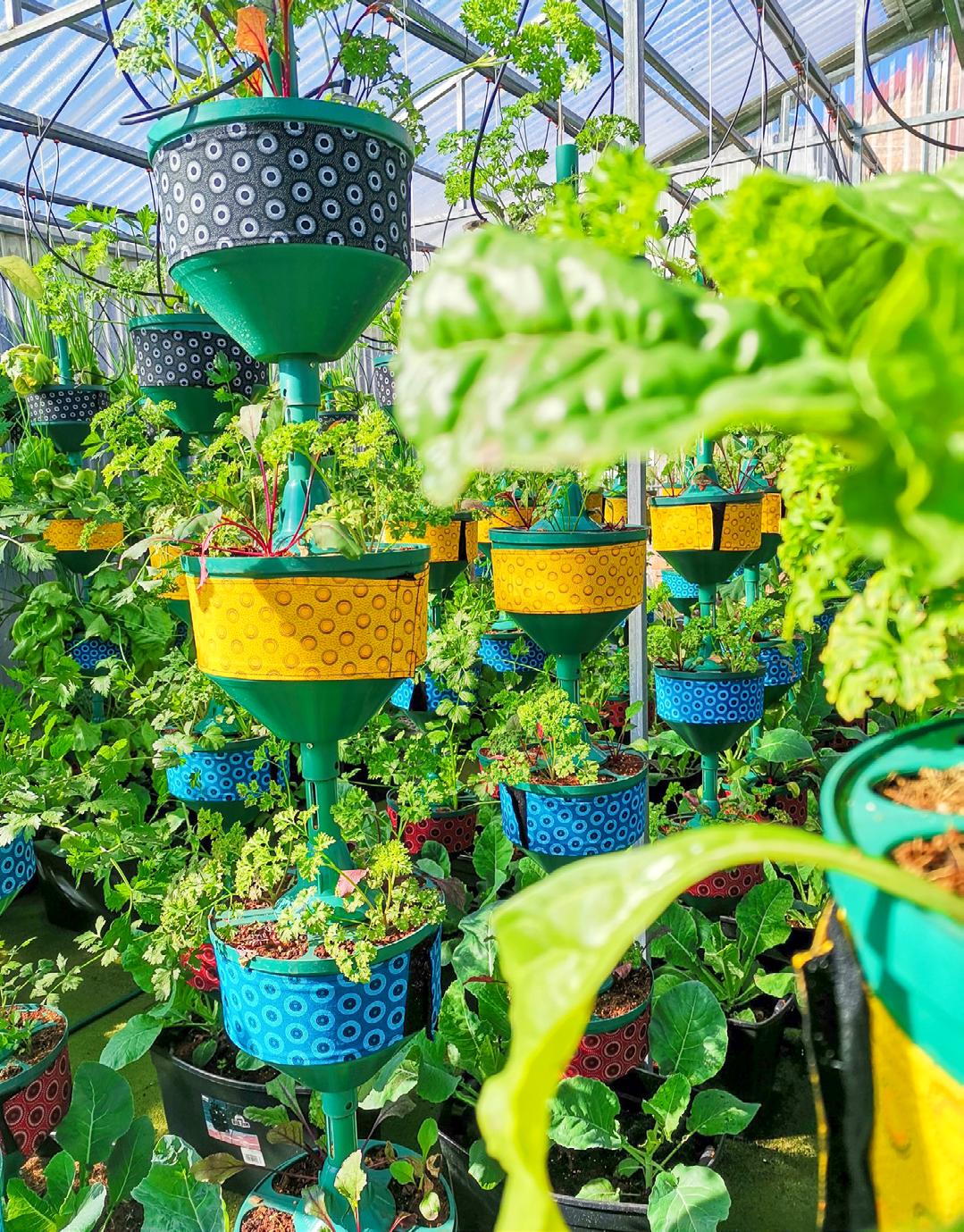
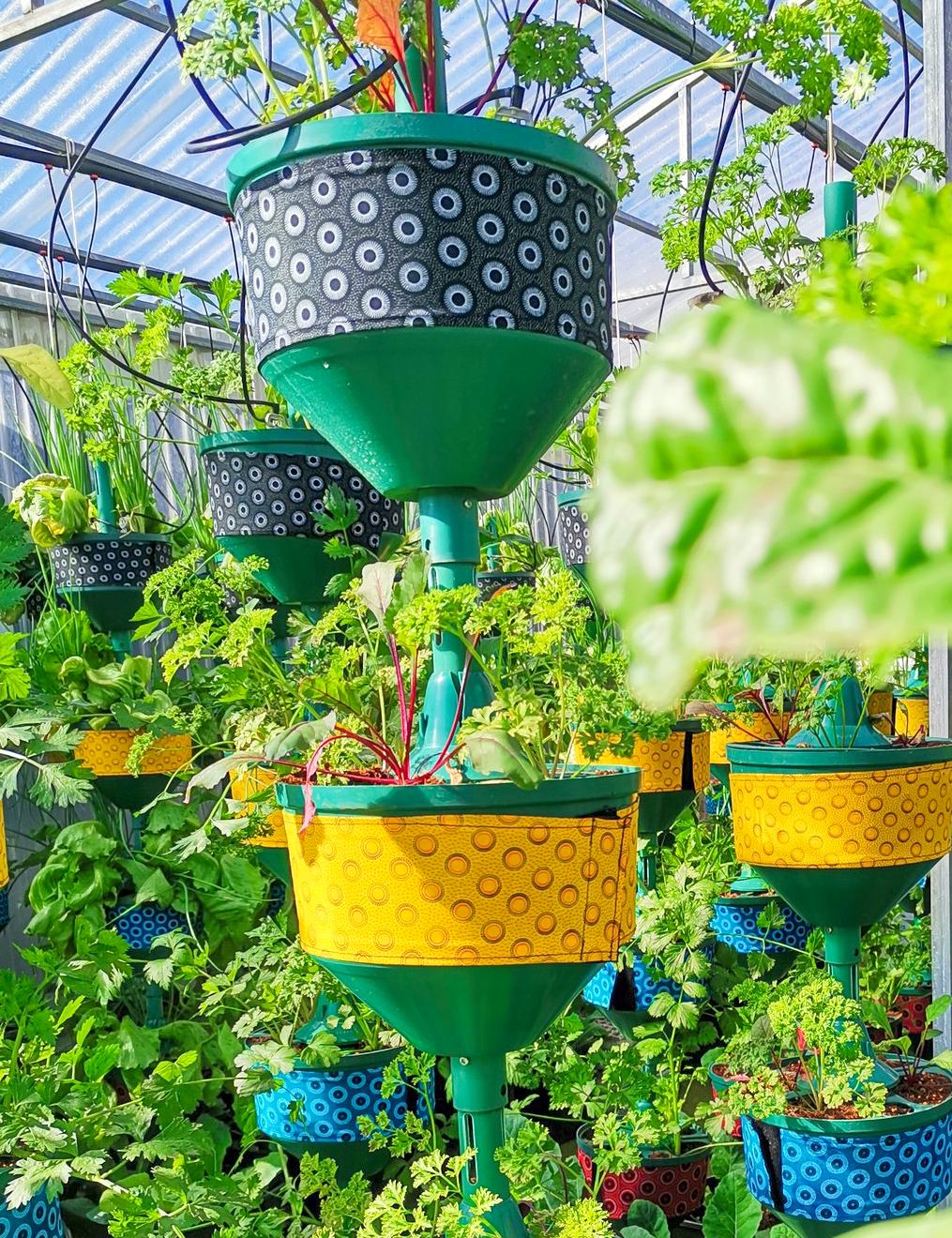
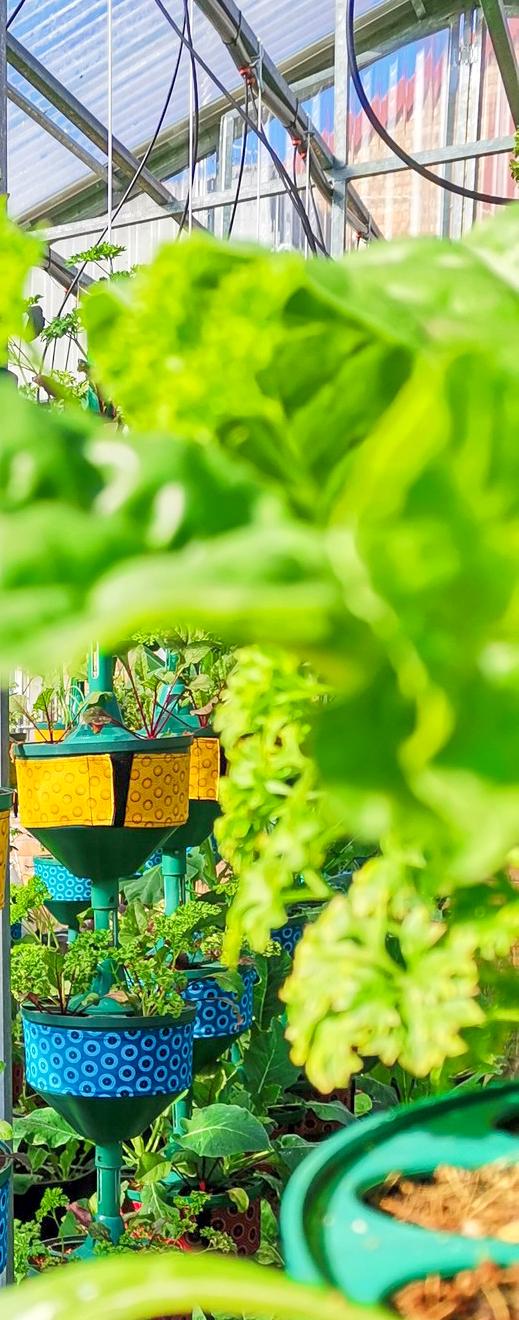
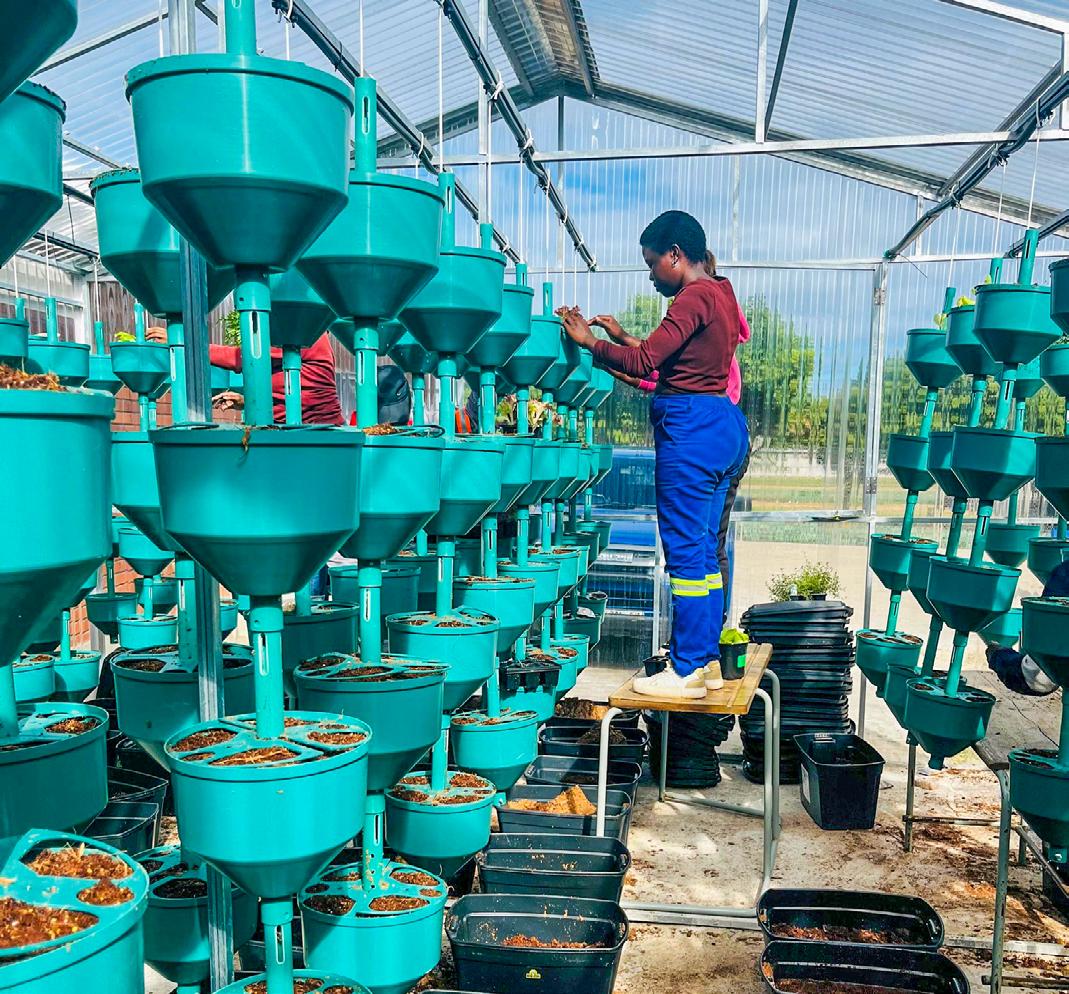
Once participants complete training, they move into structured production using the African Grower system – a hybrid hydroponic model that allows decentralised production in urban and peri urban areas. Fresh Life Produce then aggregates output from decentralised sites and channels it into value addition through African Grower Pty Ltd, the group’s value-add manufacturing arm. Central processing ensures quality control and consistent standards. From there, products move into retail, hospitality and corporate supply chains.
This closed loop approach connects training to production, production to processing, and processing to market. It gives growers structure, consistency and access to buyers that would otherwise remain out of reach.
THE AFRICAN GROWER SYSTEM AND PRODUCTION EFFICIENCY
Fresh Life Produce designed the African Grower system, as stated in the previous text, to support decentralised production in both urban and peri urban spaces where land and water remain limited. The system does not require running water or electricity, making it a low-energy production system suited to resource-constrained environments. It uses a closed irrigation design that reduces water consumption by up to 90 percent compared to conventional soil farming, according to the company. That efficiency carries weight in a country where water constraints continue to shape agricultural planning. According to the Department of Water and Sanitation, South Africa remains a water scarce country with average rainfall well below the global average. The World Bank also ranks South Africa among the 30 driest countries in the world and faces rising pressure on water resources. Production systems that reduce water demand therefore support long term agricultural stability.
Fresh Life Produce integrates the African Grower units into schools, community sites and incubation hubs. This allows trainees and small producers to grow leafy greens, herbs and other high value crops close to market. Shorter distances reduce transport time and limit exposure to heat and handling damage.
Post harvest handling also plays a critical role. The company dries herbs such as basil on site, which reduces spoilage and lowers reliance on cold chain infrastructure. Central oversight at the processing level ensures that crop planning aligns with buyer demand and quality standards remain consistent.
EFFICIENCY IS NOT ONLY ABOUT SAVING WATER. IT IS ABOUT CREATING SYSTEMS THAT SMALL GROWERS CAN MANAGE, REPLICATE AND SCALE WITHOUT HEAVY INFRASTRUCTURE COSTS.
“Efficiency is not only about saving water,” Sydow says. “It is about creating systems that small growers can manage, replicate and scale without heavy infrastructure costs.”
This focus on practical production efficiency strengthens margins for growers and improves reliability for buyers. It anchors the broader ecosystem in real operational performance rather than theory.
MARKET POSITIONING AND COMMERCIAL STRATEGY
Buyers across retail and hospitality now demand more than volume and price. Fresh Life Produce positions itself at the intersection of structured supply and responsible sourcing. The company focuses on reliability, traceability and consistent quality for partners who value long term relationships. This positioning is reinforced through value-add manufacturing delivered via a Black women-owned processing business, aligning commercial supply with inclusive ownership.
Its primary customers include specialty retail outlets, hospitality groups, food service operators and corporate procurement teams. These buyers require predictable supply, compliance with food safety standards and alignment with environmental and social commitments. According to PwC’s Global Consumer Insights Pulse Survey, consumers continue to show stronger preference for sustainably sourced products, which influences procurement strategies across retail and hospitality chains. Buyers increasingly ask where food comes from and how it was produced.
Fresh Life Produce responds by offering decentralised production backed by central quality control. The company aggregates output from multiple sites and channels it through structured processing systems. This model reduces supply risk and allows buyers to source from a network rather than a single farm.
“Retail and hospitality partners need consistency,” Sydow explains. “Our job is to organise small producers into a system that meets commercial expectations without excluding them from opportunity.”
The company also targets export markets in the European Union and the United Kingdom. These markets demand traceability, quality assurance and compliance with strict import standards. By combining incubation, production oversight and central processing, Fresh Life Produce positions itself to meet those requirements while creating income pathways for local growers.
URBAN AGRICULTURE AND SOCIAL IMPACT
Fresh Life Produce places strong emphasis on urban agriculture as a way to bring food production close to consumers, create jobs in towns and cities, and strengthen local food resilience. At the heart of this effort is HandPicked City Farm, a flagship site that serves as a demonstration, training, and production centre for the organization using the African Grower system.
Founded in November 2022 on the rooftop of Kenilworth Centre in Cape Town, HandPicked City Farm operates in Cape Town and shows how decentralised agriculture can work inside an urban context. The project is part of the HandPicked agriskills programme, developed in partnership with the Mr Price Foundation and implemented locally by Fresh Life Produce. The site brings trainees, small growers, community members and buyers together in one space. Since its launch, the programme has trained over 16 interns, established 45 homegrowers and supported 9 agri-incubators.
Urban agriculture matters because it reduces the distance between where food is grown and where it is eaten. That matters for freshness, retailer requirements, and for reducing transport costs and emissions. According to a study by the
United Nations Food and Agriculture Organization, cities that support urban farming can improve food access by up to 60 percent and broaden economic opportunities for low income households.
“HandPicked City Farm shows that urban sites can do more than grow food,” Sydow observes. “They can train new producers, test production systems, and link small growers directly into reliable buyers.”
The social impact shows up in employment pathways, business opportunities for trainees and expanded access to quality produce in communities that previously lacked stable supply. As urban populations grow, models like this make agriculture part of everyday city life rather than something distant.
GROWTH OUTLOOK AND AFRICAN SCALABILITY
Fresh Life Produce is preparing to expand its model across South Africa and beyond, aiming to show that decentralised, skills-linked agriculture can scale across the continent. Over the next two to three years, the company plans to grow its network of incubators, scale value-add manufacturing capacity through African Grower facilities, and develop export channels to meet rising demand in Europe and the United Kingdom.
Investment in working capital is also a priority. By supporting production runs and central processing, Fresh Life Produce ensures that small growers can maintain consistent supply and meet buyer expectations. Partnerships with organisations such as the Mr Price Foundation, Hope Cape Town, SA Harvest, Sun International and Akhona the Farmer Pty Ltd strengthen the ecosystem and provide pathways for replication in new locations.
“Scaling is not only about growing bigger,” Sydow says. “It is about creating systems that can be adopted in other regions, connecting local producers to buyers, and sustaining livelihoods without heavy infrastructure or high costs.”
The company sees potential across Africa where smallholder farmers face similar challenges of market access, training gaps and water scarcity. By adapting its hybrid hydroponic systems and incubation programmes to local contexts, Fresh Life Produce aims to create replicable models that deliver skills, production and market integration together.
As Fresh Life Produce continues to refine and replicate its approach, it offers a blueprint for sustainable growth, showing that investment in people and processes can drive both livelihoods and agricultural development.
Kenya’s Tea Industry:
Restoring Leadership through Reforms
By Francis Watari & Nicholas Ng’ang’a
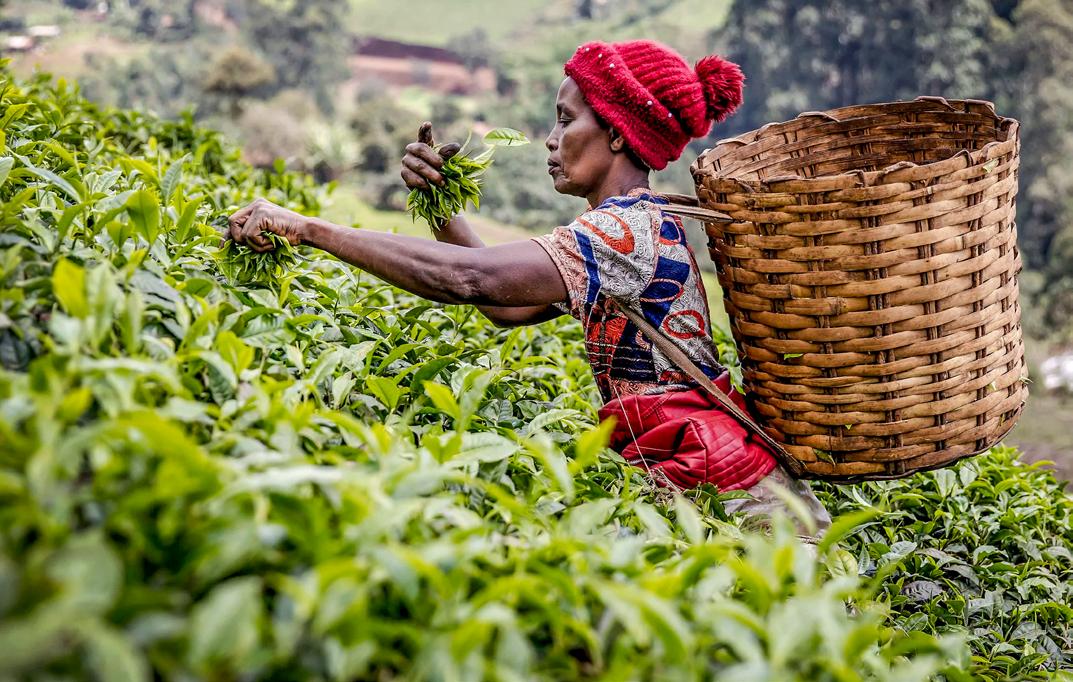
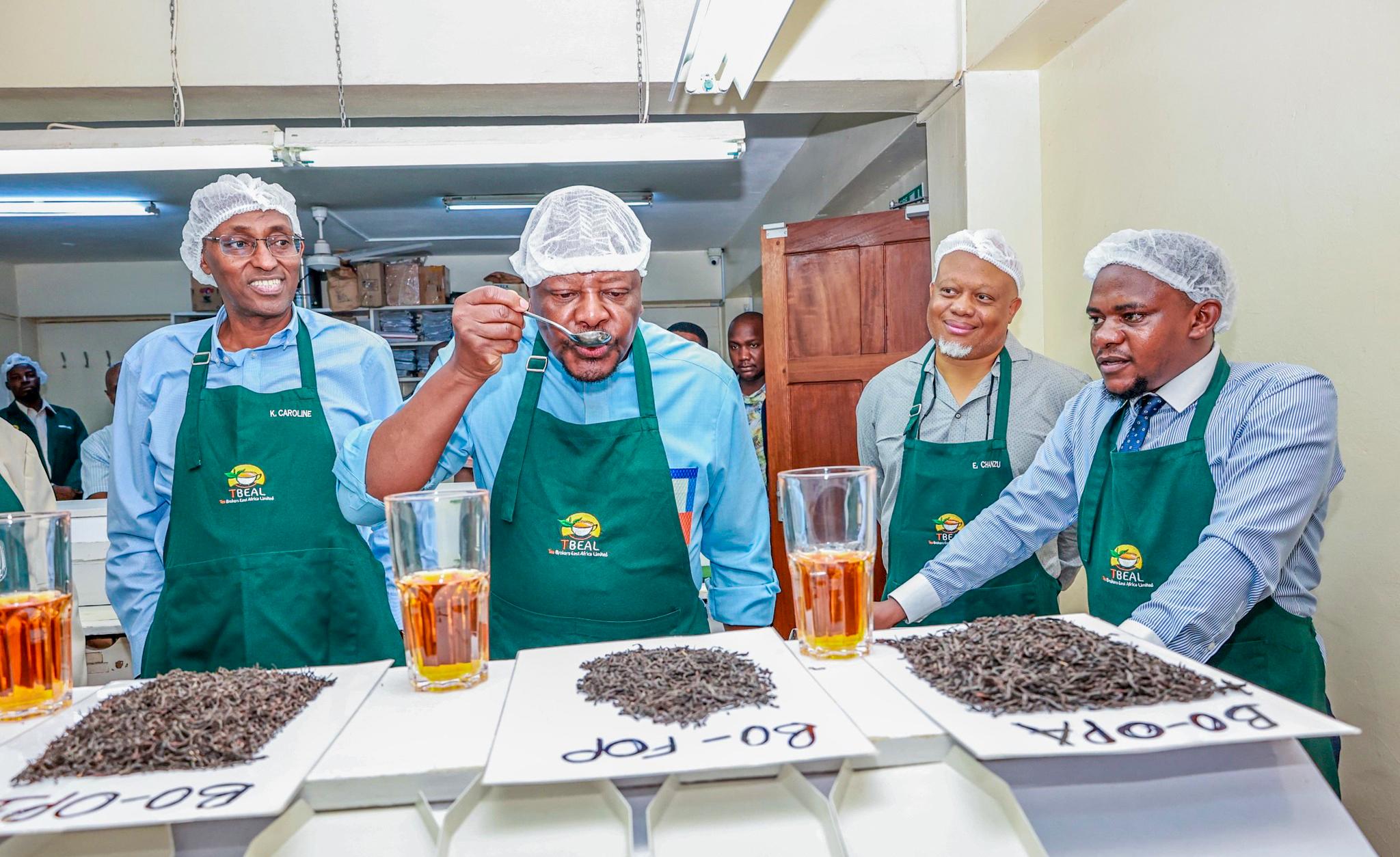
Kenya is not just known for its wildlife and scenic landscapes; it’s also the world’s leading exporter of black tea. Tea is the backbone of Kenya’s agriculture, contributing approximately 26% of export earnings, 4% of national GDP, and supporting over 600,000 smallholder farmers alongside largescale multinational estates.
The industry’s structure combines smallholder resilience with several large plantations organised under the Kenya Tea Growers’ Association (KTGA). Over 800,000 growers, many organised under tea factories, form its backbone. The industry is directly and indirectly responsible for employing approximately 6.5 million people, which is roughly 10% of the population.
The Kenya Tea Development Agency (KTDA), a farmerowned entity, represents more than 680,000 smallholders across 71 factories. It handles processing and marketing for the majority. Larger players, such as Kakuzi Plc and multinational estates such as Browns Plantations, focus on premium grades and exports.
Tea is predominantly grown in the fertile highland regions, where favourable climatic conditions allow for year-round cultivation. The sector is regulated by the Tea Board of Kenya (TBK), which develops, promotes, and regulates the tea industry.
TEA PRODUCTION
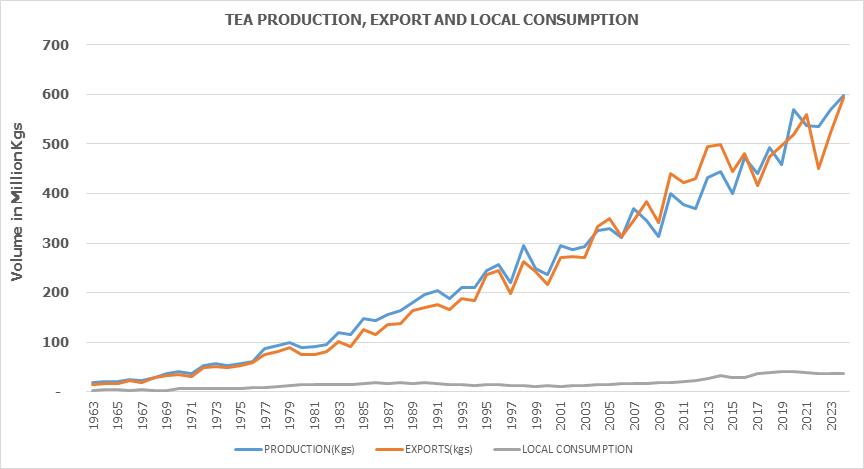
Globally renowned for its high-quality black tea, Kenya ranks as the third-largest tea exporter after China and Sri Lanka. Kenya produced an average of 2.49 million metric tons of green tea and 585,533 MT of processed tea annually over the past six years, ranking it the third-largest tea producer globally, after China and India.
Tea cultivation spans both the eastern and western regions of the Rift Valley, covering approximately 228,400 hectares. The eastern tea zone includes the highland areas around
Mount Kenya, the Aberdare Range, and the Nyambene Hills, which together account for roughly 32 per cent of national production. The western region, known for its expansive plains and rolling hills, produces the remaining 68 per cent.
In 2024, Kenya’s green tea leaf production rose by 25.6 per cent from 1.95 million MT in 2019 to 2.69 million MT, driven by favourable weather conditions and the government’s provision of subsidised fertiliser. The most significant growth occurred between 2020 and 2024, with output reaching 2.58 million MT in 2023. These gains were also supported by improved farm-level productivity and favourable input policies.
The country’s high altitude, ideal rainfall, and volcanic soil provide perfect conditions for tea cultivation. This natural advantage gives Kenyan tea its strong aroma and bright colour, making it a favourite in international markets.
THE CURRENT STATE OF KENYA’S TEA SECTOR
Despite being the world’s top exporter of black tea and a critical pillar of Kenya’s economy, the tea industry faces mounting structural, economic, and environmental challenges. One of the foremost threats is a change in the weather. Tea farming in Kenya relies on consistent rainfall and moderate temperatures, particularly in the highland areas. However, changing weather patterns—marked by erratic rainfall, prolonged droughts, and
occasional very low temperatures—are affecting both yield and quality.
In 2025, production declined 11.5% in the first seven months to 322.29 million kilograms, largely due to adverse weather across most of the country and cold conditions. The tea growing areas in the East of the Rift were the most affected by adverse weather conditions, which were characterised by minimal precipitation averaging less than 13 mm daily.
Rising production costs also pose a major concern. Key inputs like fertiliser, fuel and labour have become increasingly expensive, with fertilisers alone accounting for a significant portion of operational budgets. Many farmers have cut back on the usage of inputs, compromising both output and quality. Transport inefficiencies, especially in rural areas, and high energy costs further squeeze margins. These cost pressures are undermining Kenya’s
global competitiveness, particularly against more efficient producers like Sri Lanka and India.
Farmer dissatisfaction with tea returns is also growing, fueled by delayed payments and limited financial transparency. In 2025, many
smallholder farmers under the KTDA expressed widespread concerns about reduced bonus payments. While tea exports generate over a billion dollars annually, a relatively small share of that amount reaches growers. This discontent is prompting some farmers to abandon tea in favour of alternative crops or non-agricultural ventures, weakening the reliability of supply.
The industry is also overly reliant on a small number of export markets. In 2024, over 75 per cent of Kenyan tea was sold to just seven countries: Pakistan, Egypt, the United Kingdom, the United Arab Emirates, Russia, Saudi Arabia and Iran, making the sector highly exposed to geopolitical and economic disruptions.
Recent currency and import restrictions in Pakistan and Sudan have affected trade flows. According to data from the Tea Board of Kenya, exports to South Sudan fell by 12% in 2024, and tea exports to Pakistan fell by 2% due to changes in the sales tax policy. In addition, evolving global preferences for green, herbal, and sustainably sourced teas challenge Kenya’s traditional market dominance.
Lastly, domestic tea consumption remains underdeveloped. Despite Kenya’s production scale, per capita tea consumption is low, with most tea consumed in a traditional milksugar blend. Nationally, there is limited awareness or availability of speciality, herbal, or ready-to-drink options. Weak
branding, scarce retail innovation, and minimal promotion also constrained domestic growth. However, rising urbanisation and a growing middle class present an opportunity to expand local markets through value-added products and targeted consumer campaigns.
REVIVING THE TEA SECTOR
Despite the challenges facing the tea
sector, all hope is not lost. The government has announced reforms aimed at rejuvenating the once-glorious sector. To address market challenges, including declining global prices and overreliance on bulk exports, the government has introduced tax reforms and incentives to enhance value addition. The primary objective is to shift from raw exports to processed, premium products. Earlier
last year, the government waived taxes on tea packaging materials, which are a major contributor to the high costs of value addition.
Furthermore, the government has launched the country’s first-ever auction for orthodox teas, which fetch higher premiums to boost farmer earnings. This will help the country increase the proportion of value-added tea exports from the current 5 per cent to an estimated 50 per cent.
To increase the visibility of Kenyan tea in international markets, the government has allocated over Kes 1 billion to construct two value-addition and branding centres for Kenyan tea. The government is also working with the French Development Agency (AFD), the French Embassy in Kenya, and Equity Group to support an ongoing feasibility study on Geographical Indications (GI), a tool intended to enhance the global branding and market value of Kenyan tea.
The Agriculture Ministry has also ordered governance and financial audits of underperforming factories to boost
farmers’ incomes. This follows reports of mismanagement of funds by tea factory directors and the looting of farmers’ money. Under the reforms, the government has announced a ban on the use of farmers’ funds as collateral for bank loans in a move to protect growers from financial risk and curb the alleged profiteering by factory managers.
KTDA has been directed to close multiple factory bank accounts and operate a single general account to improve transparency and traceability of funds. The ministry is further reviewing the bonus payment model to allow farmers to receive bonuses quarterly instead of annually, aimed at easing liquidity pressures at the household level.
Furthermore, the government is pushing to secure new export frontiers for Kenyan tea beyond the traditional markets. In early 2026, during a meeting with the Kenya National Chamber of Commerce and Industry, Kazakhstan’s ambassador to Kenya, Barlybay Sadykov, proposed establishing a dedicated Kenyan tea and coffee hub in Kazakhstan to facilitate exports to Central Asia. He even outlined incentives to attract Kenyan exporters and traders to the Central Asian market. Kenya also secured duty-free access to export 98% of its agricultural
commodities, including tea, to the Chinese market.
Domestically, local manufacturers are brewing innovation to bring export-grade teas to the Kenyan market to increase consumption. Kakuzi Plc recently launched its Kakuzi Pure Black Tea brand for the Kenyan market, seeking to bring export-grade quality to everyday consumers. This forms part of the broader diversification strategy to mitigate risks from volatile international prices by building a robust domestic market.
PROSPECTS FOR KENYA’S TEA FUTURE
Looking ahead, the future of Kenya’s tea holds immense potential for growth and capitalisation. With global demand for tea projected to surpass 7.4 million tonnes by 2027, the Kenyan tea market stands at an advantage to capture the bigger market share owed to the huge attraction for Kenyan-grown tea.
With reforms already in place, the tea sector is poised for immense growth, with growers at the forefront to benefit from higher earnings. However, this calls for proper and strict implementation of the reforms and tea value addition to capitalise on export earnings.
The Rise of GLP-1 Drugs:
Glp-1 Reshaping the beverage industry
By Francis Watari
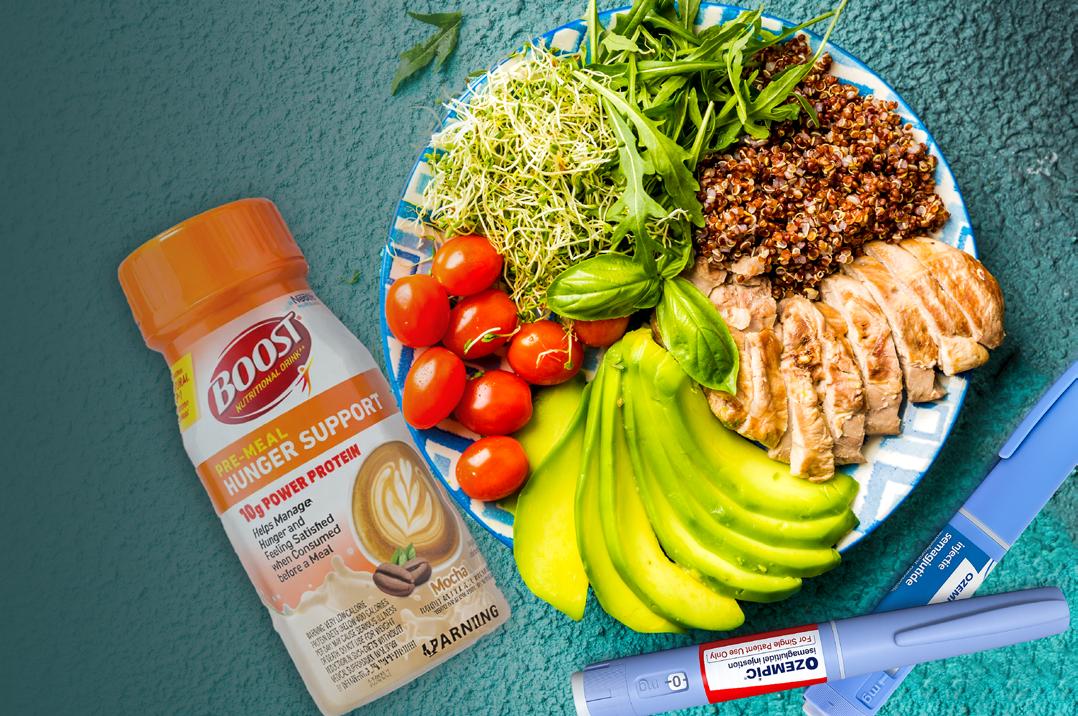
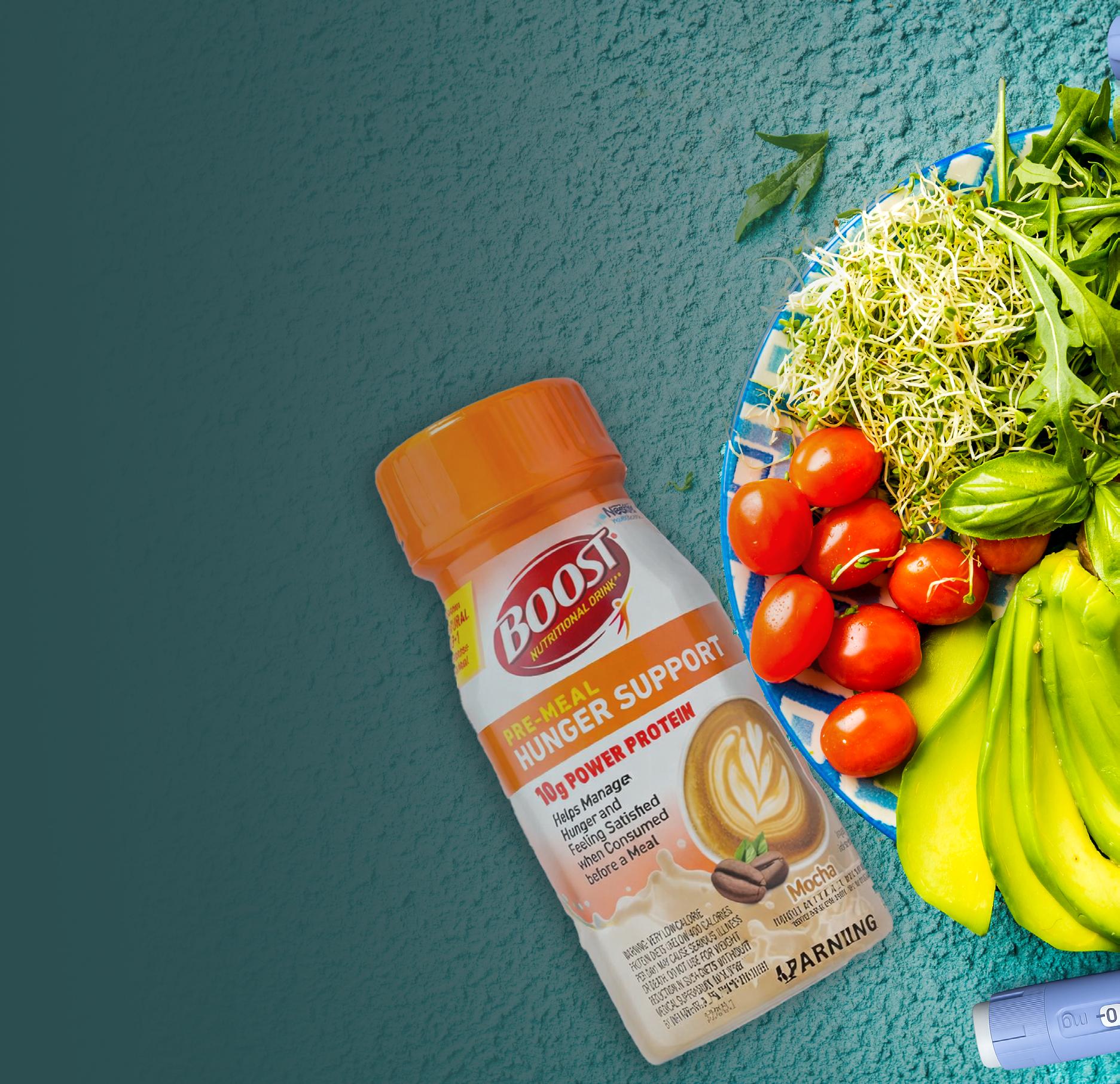
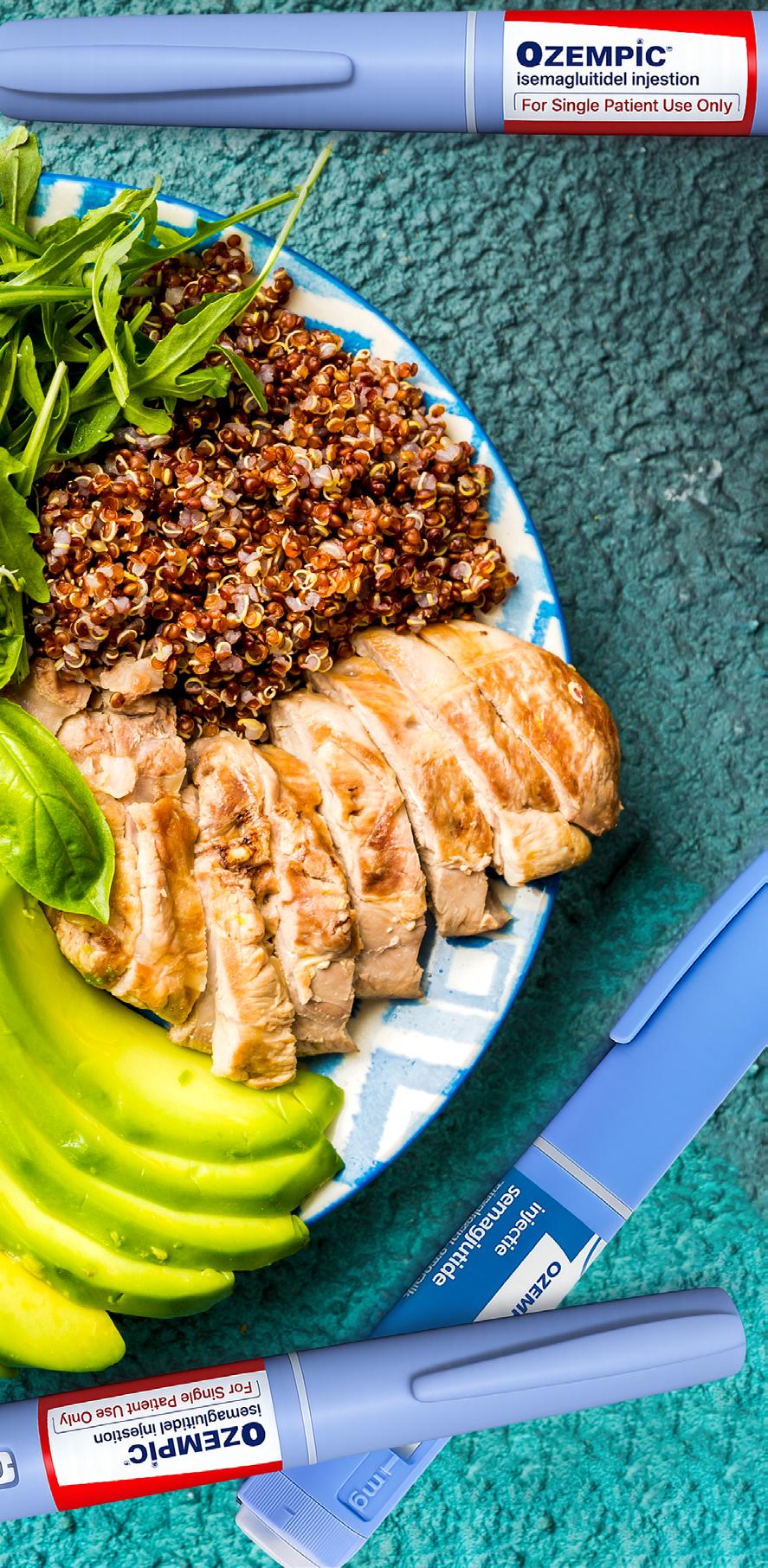
In recent years, a pharmacological revolution has swept through healthcare and consumer lifestyles, propelled by glucagon-like peptide-1 (GLP-1) drugs. These medications, originally developed to manage type 2 diabetes, have exploded in popularity for their potent weight-loss effects. Brands like Ozempic (semaglutide), Wegovy, and Zepbound (tirzepatide) have become household names, endorsed by celebrities and amplified through social media platforms.
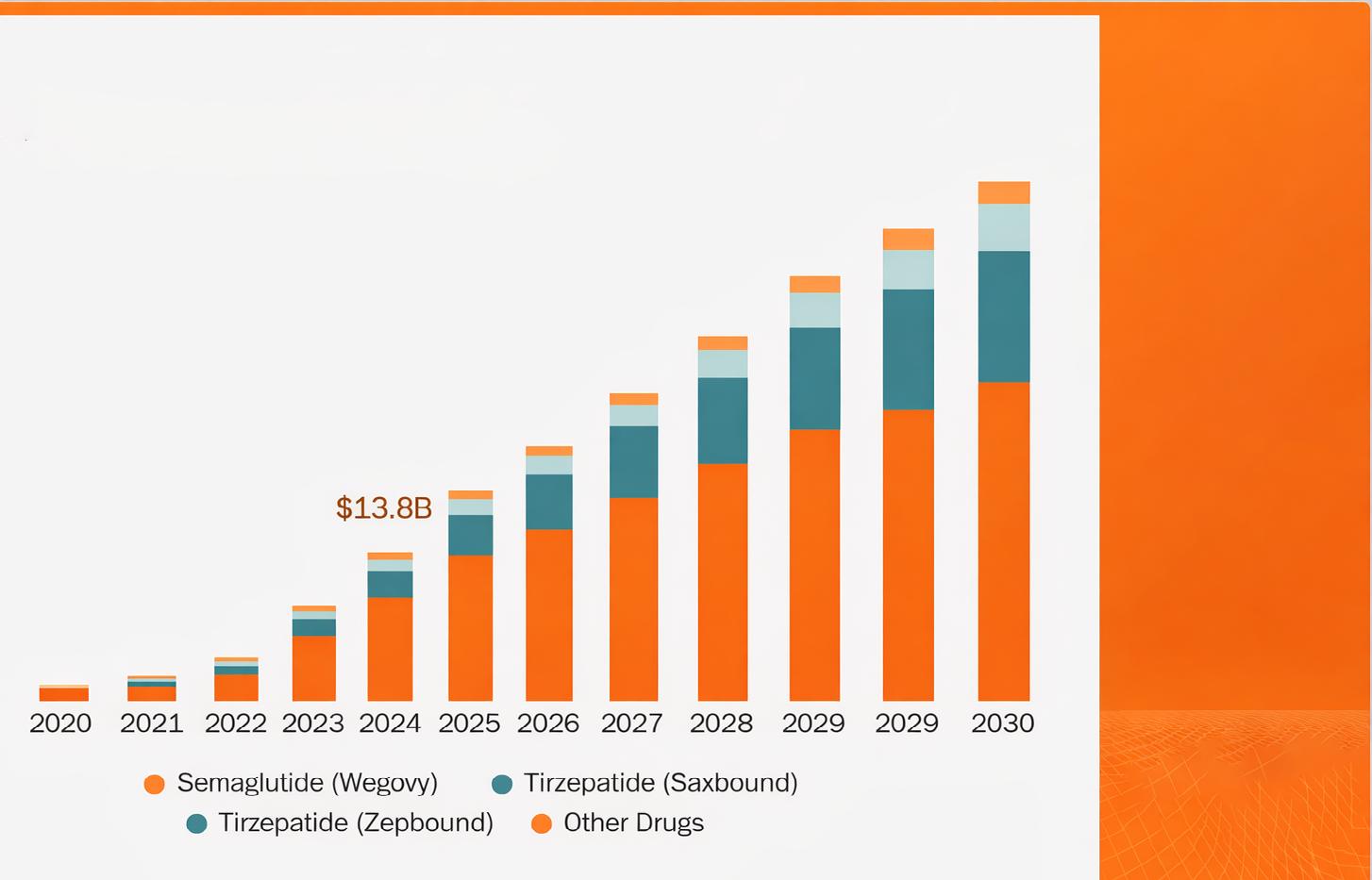
What began as a small segment has skyrocketed into a multi-billion-dollar market. According to Research and Markets, the global GLP-1 market is estimated to grow from US$62.2 billion in 2026 to US$157.5 billion by 2035, at a CAGR of 9.7% during the forecast period, till 2035. This surge has not just transformed the human body; it is altering how people eat and drink.
The implications are profound. As millions adopt these drugs, consumer appetites have shifted towards nutrientdense, low-calorie options, while cravings for indulgent snacks, sugary beverages, and alcohol continue to record a decline. Industry giants like Nestlé, Danone, and Coca-Cola are fighting to adapt, launching functional products and reformulating classics.
With increasing GLP-1 adoption, sales in calorie-heavy categories are dipping, and overall spending on groceries among users has dropped by about 5-6% within months of
starting treatment. This article explores the rise of GLP-1 drugs, their effects on consumer behavior, and the arising opportunities in food and beverage innovation.
FROM DIABETES AID TO WEIGHT-LOSS PHENOMENON
GLP-1 drugs tend to imitate the natural hormone glucagon-like peptide-1, which regulates blood sugar, slows gastric emptying, and signals fullness to the brain. First approved in 2005 for diabetes, their shift to obesity management accelerated with Saxenda in 2014 and Wegovy in 2021.
Off-label use of Ozempic for weight loss skyrocketed driven by viral testimonials and a global obesity crisis. It is estimated that over one in five U.S. adults is obese, and 90% of diabetes cases are type 2. The market’s exponential growth is a clear reflection of their demand. In the U.S., prescriptions doubled in 2023 to over 5 million users and is forecast to reach 31.5 million (9% of the population) by 2035. Globally, the weightloss supplement market hit US$33.14 billion in 2024, with a 14.17% CAGR projected through 2030.
Euromonitor forecasts that patent expirations on semaglutide in 2026 will flood the market with generics, slashing costs and expanding access, potentially adding tens of millions of users worldwide.
Erik Fyrwald, CEO of IFF, noted in a report on GLP-1 innovation: “We aim to bring back the joy of eating and drinking
by offering more healthy, great-tasting nutrition choices for all consumer segments, including GLP-1 users.”
Beyond weight loss, emerging research has revealed broader applications of GLP-1 drugs, including
curbing addictions to alcohol, nicotine, and drugs. This versatility, combined with approvals for cardiovascular and sleep apnea benefits, is positioning GLP-1s as a superdrug class. However, side effects like nausea, constipation, and dehydration have shown to affect up to 85% of users, influencing dietary needs and creating opportunities for supportive products.
REWIRING CONSUMER HABITS
With most users resulting to GLP-1 drug to aid in appetite suppression, users are showing dramatic behavioral changes. Users have reported reduction in caloric intake of up to 39%, with disinclinations to fatty foods, sweets, deli meats, coffee, alcohol, and sticky or dense textures. This has reulted to an increase in adoption rates, with U.S. users projected to reach 12-15 million by 2030, representing up to 35% of food and beverage sales.
A Cornell University study found that households with GLP-1 users cut grocery spending by 5.3% within six months, rising to 8.2% for high-income groups. Sugary drinks decline by 7%, savory snacks by 10%, and overall food consumption drops by around 30%. These shifts have extended to dining out with over 63% of users spending less on restaurants and takeout, and 33% opting for smaller portions or shared meals. Additionally, alcohol
GLP-1 Agonists Weight Loss Drugs Market Size, by Drug, 2020 - 2030 (USD Billion)
consumption is plummeting with nearly a quarter of users quitting drinking entirely, accelerating the sober curious movement.
Although proof of the impact of GLP-1 drugs on alcohol consumption is not definitive yet, investors are unwilling to wait much longer for more evidence. UK fund manager, Terry Smith, said in a recent annual shareholder letter that he had sold his stake in Diageo, maker of Guinness and Johnnie Walker whisky. He wrote: “[…] we suspect the entire drinks sector is in the early stages of being impacted negatively by weightloss drugs. Indeed, it seems likely that the drugs will eventually be used to treat alcoholism, such is their effect on consumption”.
Data from Doon Insights reveals taht GLP-1 users consume 55% more fruits and vegetables, 65% fewer sugary drinks, and 62% less alcohol. As a result, caloric intake has dropped 2139%, leading to a potential US$48 billion annual reduction in U.S. consumer spending by the end of the decade.
SEIZING OPPORTUNITIES IN THE GLP1 ERA
A user in a Morgan Stanley survey revealed that the drugs foster precision eating, prioritizing quality over quantity. This aligns with broader wellness trends. Users are increasing consumption of nutrient-dense options by 55% for fruits and vegetables, driving demand for avocados (up 198%), frozen fruit (145%), and non-alcoholic beverages (e.g., nonalcoholic wine up 1,158%).
18.5%
Source: www.grandviewresearch.com
The precision eating mindset is prioritizing protein, fiber, hydration, and gut health to combat side effects like muscle loss (up to 40% of weight shed), nausea, dehydration, and digestive issues.
For beverage manufacturers, these dynamics have unlocked significant opportunities in functional and companion products. The functional beverage segment is booming, with protein and meal replacement sales rising 11.1% to US$4.7 billion in 2024, and hydration-focused drinks surging to address dry mouth and increased
water needs (2-3 liters daily).
Brands can innovate around satiety, blood sugar balance, digestive support, and sensory appeal, reformulating for lower sugar, added prebiotics/probiotics, and high-protein profiles. Smaller formats cater to reduced appetites, while “GLP-1-friendly” labeling appeals to health-conscious consumers without alienating non-users.
As PwC notes, companies with diversified portfolios in wellness can mitigate risks, viewing GLP-1s as a catalyst for long-term consumer relationships.
Beverage giants are already adapting with practical innovations. Coca-Cola is emphasizing its zero-sugar and low-calorie lines like Coke Zero and Sprite Zero, which align with reduced sugar cravings. The company has also introduced 7.5oz mini cans for portion control and launched prebiotic sodas to support gut health, capitalizing on the sober-curious movement and digestive side effects.
CEO James Quincey stated during a 2025 earnings call: “So far, our take is [GLP-1 drugs] aren’t a big aggregate factor for the beverage industry, but the firm is monitoring trends and innovating in hydration and functional spaces.”
Similarly, PepsiCo has categorized
COMPANIES WITH DIVERSIFIED PORTFOLIOS IN WELLNESS CAN MITIGATE RISKS, VIEWING GLP-1S AS A CATALYST FOR LONGTERM CONSUMER RELATIONSHIPS.
the effects of GLP-1 drugs as negligible. However, to cushion itself, the beverage giant is shifting focus to fiber and hydration solutions, including smallportion multipacks for snacks and beverages. In 2025, the company acquired Poppi, a prebiotic soda brand, for nearly US$2 billion, and is launching prebiotic Pepsi variants to address gut health. CEO Ramon Laguarta highlighted in a 2025 interview: “We’re approaching it as an opportunity... with a sense of urgency to adapt the portfolio.”
On the other hand, Nestlé CEO Mark Schneider said it views the rise of GLP-1 drugs as an opportunity rather
than a threat. Nestlé has identified a particular opportunity in serving the protein, vitamin and gut health needs of GLP-1 patients and is investing heavily in brands such as Boost, Vital Protein and Orgain. At the end of last year, it launched its Boost Pre-Meal Hunger Support protein drink aimed at individuals taking GLP-1 drugs or other weight-loss medications.
LOOKING AHEAD
The rise of GLP-1 drugs marks a pivotal shift, challenging the food and beverage industry to evolve from volume-driven models to ones centered on nutrition. While sales in indulgent categories continue to lose momentum, the path forward lies in human-centered innovation seeking to restore joy in eating.
However, challenges like side effects, high costs, and potential demand slowdowns could moderate the growth of GLP-1 drugs. As a result, beverage manufacturers that accelerate wellness shifts through AI-driven concepts, pharma partnerships, and broad-appeal products, stand to thrive. Circana’s Sally Lyons Wyatt notes, users remain high value despite reduced spending, urging brands to align with evolving needs across weight-loss journeys. FBMEA
FOOD INGREDIENTS
MIDDLE EAST & AFRICA
LECITHIN IN MODERN FOOD SYSTEMS
The Taste Makeover: How Food Processors Are Turning Functional Foods from Foul to
Bridging Functionality, Nutrition, and Sustainability
By Mercy Mukiri
According to the International Food Additives Council (IFAC), Lecithin, used in human food since the 1800’s, is a naturally occurring substance derived from several sources, including egg yolks, soybeans, sunflower, canola, corn and others. It is a complex, natural mixture of phospholipids (PL), triglycerides, and other compounds, including glycolipids, free fatty acids, and carbohydrates. In today’s health-conscious market, lecithin has evolved from a technical emulsifier to a multifunctional ingredient in food
supplements, valued for its natural origin and physiological benefits.
Lecithin is affirmed as GRAS, or generally recognized as safe, in the United States. The Joint Food and Agriculture Organization (FAO)/Word Health Organization (WHO) Expert Committee on Food Additives (JECFA), Health Canada, the European Commission, the Food Standards Australia and New Zealand (FSANZ), and other regulatory agencies also recognize the use of lecithin as a multi-functional, safe food
CONTINUED
OFI launches deZaan singleorigin cocoa liquors
SINGAPORE – OFI (Olam Food Ingredients) has launched a new range of single-origin cocoa liquors under its deZaan brand, aiming to help premium chocolate manufacturers achieve artisan-level flavour precision at industrial scale.
The new range features cocoa liquors sourced from the Dominican Republic, Uganda and Papua New Guinea.
The products combine craft-inspired batch roasting, tailored fermentation techniques and advanced sensory mapping to deliver consistent, origin-specific flavour profiles across large-scale production.
OFI says the approach addresses a longstanding challenge in the chocolate industry: reproducing complex, craft-quality flavours while maintaining the consistency required for industrial manufacturing.
The new new deZaan liquors are designed to meet the rising demand for premium chocolate by combining industrial-scale reliability with the sensory characteristics typically associated with fine-flavour chocolate.
IMCD Group opens integrated headquarters and laboratory hub in Kuala Lumpur
MALAYSIA – IMCD Group has inaugurated a newly integrated headquarters and laboratory hub in Kuala Lumpur, Malaysia, consolidating its local operations into a single, purpose-built site.
The revamped facility brings together all IMCD Malaysia headquarters and laboratory functions under one roof.
The new location is designed to better support customers and suppliers across the company’s Beauty & Personal Care, Food & Nutrition, and Home Care Industrial & Institutional (I&I) business groups.
The hub combines advanced technical capability, application development resources and dedicated customer engagement spaces, enabling closer collaboration and faster, more effective solution development.
FINANCIALS
Lactalis, Nestle recall infant formula batches over cereulide contamination
FRANCE – Lactalis recently issued a voluntary recall of six batches of its Picot infant formula after the detection of cereulide, a toxin linked to an ingredient supplied by a thirdparty provider.
The French dairy group said the cereulide was found in arachidonic acid (ARA), an Omega-6 polyunsaturated fatty acid used in certain formulas.
“This recall follows an alert from the French professional association for infant nutrition regarding the potential presence of cereulide in an ingredient (Omega 6 ARA) supplied by an international provider and used in the formulation of certain infant formulas,” Lactalis said.
Lactalis explained that early testing of the ARA ingredient and finished formula “returned compliant results,” but further analysis later identified the toxin.
Following testing of “reconstituted” formula, results received on January 20 showed the presence of cereulide, which can cause vomiting, abdominal cramps and diarrhoea in babies.
Cereulide is a toxin produced by certain strains of the Bacillus cereus bacteria and can trigger symptoms such as nausea, vomiting and
stomach cramps.
Earlier this year, Nestlé also issued a recall of selected baby formula products after identifying potential contamination with cereulide.
The said specific batches of its SMA infant formula and SMA followon formula were affected and should not be fed to babies. However, the company said the recall was just a precautionary measure as there had been no confirmed reports of illness linked to the products so far.
The Food Standards Agency (FSA) warned that the toxin is heatstable and is unlikely to be destroyed by boiling water, cooking or normal preparation of infant formula.
Separately, Danone also blocked the sale of certain infant formulas in Singapore at the request of the local regulator as a precaution.
The company it was working with the Singapore Food Agency and stressed that all its products are “manufactured in line with strict food safety and quality standards and undergo rigorous testing before leaving our factories.”
The company added that “no irregularities or deviations in relation to Bacillus cereus and ‘Good Manufacturing Practices’ had been identified.”
Brenntag opens new innovation and application centre in Mumbai, India
INDIA – Brenntag has expanded its Asia Pacific nutrition capabilities with the opening of a new Nutrition Innovation & Application Centre in Andheri East, Mumbai.
The new centre strengthens Brenntag’s technical, analytical and flavour application support for food and beverage customers across the region.
“By expanding our technical and innovation capabilities in Mumbai, we are enhancing our ability to support local and regional food and beverage manufacturers with solutions that meet evolving market, regulatory and consumer demands,” said Kenneth Keh, Regional President, Nutrition APAC, Brenntag Specialties.
The centre is designed to accelerate product development for key categories including confectionery, dairy, beverages, snacks and convenience foods, while bringing application expertise closer to local manufacturers.
The facility features dedicated laboratories and application kitchens intended to shorten development cycles and enable faster scale-up from concept to commercialisation.
The centre will provide formulation support, sensory and flavour trials, and analytical testing aimed at reducing time-to-market for new product concepts while supporting
compliance with regulatory and quality requirements.
The investment comes in response to rising demand across Asia Pacific for tailored nutrition and nutraceutical solutions that combine functional ingredients with consumer-ready formats.
Designed as a comprehensive innovation hub, it brings together advanced processing, formulation, blending and analytical capabilities to support technical problem-solving across a wide range of applications.
Brenntag says the site will enable cross-functional collaboration among its technical teams, suppliers and customers, supporting the cocreation of beverage concepts, oral formats and delivery systems tailored to local taste profiles and nutritional needs.
The laboratory supports applications across confectionery, breads and cakes, noodles and pasta, sauces and dressings, as well as coated and ready-to-eat snacks.
The facility also supports the creation of bespoke ingredient blends using pilot-scale blending equipment, vibro-shifters and particle size analysers designed to mirror fullscale production conditions.
In October 2025, Brenntag opened an innovation Innovation & Application Center for Food & Nutrition in Leeds, UK.
Nairobi Coffee Exchange launches 2026–2030 strategic plan to digitise trading, protect farmers
KENYA – The Nairobi Coffee Exchange (NCE) has unveiled a five-year strategic plan aimed at transforming Kenya’s coffee trading system through digitisation, transparency, and market expansion, with the government pledging stronger protection for farmers.
The Strategic Plan 2026–2030 outlines measures to modernise the exchange by introducing online bidding, improving price discovery, and rebuilding trust among farmers, buyers, and other market participants.
The plan will see the NCE introduce digitised trading systems offering real-time market data and full traceability.
NCE Chief Executive Officer Lisper Ndungu says the strategy is anchored on three priorities: digital transformation and operational excellence, market expansion and global positioning, and stakeholder value and sustainability.
MBRF achieves full traceability across beef supply chain
KENYA – The Nairobi Coffee Exchange (NCE) has unveiled a five-year strategic plan aimed at transforming Kenya’s coffee trading system through digitisation, transparency, and market expansion, with the government pledging stronger protection for farmers.
The Strategic Plan 2026–2030 outlines measures to modernise the exchange by introducing online bidding, improving price discovery, and rebuilding trust among farmers, buyers, and other market participants.
The plan will see the NCE introduce digitised trading systems offering real-time market data and full traceability.
NCE Chief Executive Officer Lisper Ndungu says the strategy is anchored on three priorities: digital transformation and operational excellence, market expansion and global positioning, and stakeholder value and sustainability.
LECITHIN
IS MORE THAN A FUNCTIONAL ADDITIVE, IT IS A DRIVER OF INNOVATION IN THE FOOD INDUSTRY.
additive. The global lecithin market is expected to reach about USD 1.64 billion by 2035, rising from USD 0.69 billion in 2025, according to FactMR.
This reflects a projected compound annual growth rate of 9.0% across the assessment period. Growth is supported by increasing demand for natural emulsifiers in food and beverage processing, wider use of lecithin in animal feed formulations, and sustained interest in clean-label ingredients across global food and pharmaceutical sectors.
Formulation Flexibility
Lecithin comes in several forms suited to different applications. Liquid lecithin is the most common in food production, valued for easy handling and strong emulsifying properties. Powdered or granular lecithin is suitable for dry mixes and baking, providing convenient storage and use. De-oiled lecithin, with reduced fat content, is ideal for formulations that require lower oil levels.
Multifunctional Performance Beyond Emulsification
Lecithin offers multiple functionalities, making it valuable across food and beverage applications. It acts as an emulsifier, ensuring ingredients blend smoothly and uniformly. As release
agents, lecithins improve separation, reduce buildup and product loss, creates thin non-stick barrier between foods and cooking surface, and lowers overall input costs.
Lecithin also supports instantization, helping proteins, hydrocolloids, and other materials disperse effectively in aqueous systems. Beyond these technical roles, it is widely used as a nutritional supplement, enhancing the value of diverse formulations.
Applications in Food Manufacturing
Dairy & Dairy Alternatives
Consumers increasingly demand dairy and dairy-alternative products with a creamy, smooth mouthfeel. Achieving this consistency is often challenging, particularly in plant-based formulations where texture and blending can fall short. In dairy applications, lecithin ensures uniform dispersion of ingredients, improves ice cream mouthfeel, and acts as a release agent in sliced cheese.
In plant-based dairy products, it replaces synthetic emulsifiers in creamers, supports processing efficiency in ice cream, improves mouthfeel in protein drinks, and delivers the creamy texture expected in milks and yogurts. With recommended use rates of 0.5–
1% for fluid lecithin and 0.2–0.7% for deoiled, the solution helps manufacturers meet consumer expectations while streamlining production. By bridging functionality and sensory appeal, lecithin positions dairy and dairy alternatives to compete on equal footing in today’s market. Cargill offers a portfolio of dairy & dairy alternatives lecithin solutions under several established brand names. These include LECIPRIME®, TOPCITHIN®, METARIN®, EMULPUR®, and EMULTOP.
Bakery
Lecithin is a staple in bakery applications, where it delivers higher loaf volumes, improved ingredient mixing, increased moisture retention, and enhanced release agent performance. In breads, lecithin enhances dough release, increases loaf volume, extends shelf life, ensures uniform crumb texture, and improves high-speed slicing. In cakes and doughnuts, lecithin plays several important functional roles. It helps spare fat by enhancing emulsification, allowing reduced fat levels without compromising texture.
Lecithin also improves the mixing of ingredients, resulting in smoother and more stable batters and doughs. Additionally, it enhances dough handling
properties and promotes easier release from processing equipment and molds. It increases fat absorption and sugar adherence, contributing to better flavor and surface finish and further ensures uniform browning during baking or frying and improves water retention, helping maintain softness and freshness in the final product. Bunge offers its lecithin solution under the BungeMaxx brand.
Confectionery
Emulsifiers are widely used in confectionery for their ability to lower chocolate viscosity, enabling smooth production of products ranging from simple bars to pralines. By reducing viscosity, manufacturers achieve easier molding, coating, and enrobing, ensuring consistent quality across diverse chocolate formats. Beyond processing efficiency, lecithins help prevent fat bloom, a common defect that affects appearance and texture, thereby extending shelf life and maintaining consumer appeal. They also reduce the need for cocoa butter, offering cost savings without compromising sensory performance.
In chewing gum, lecithin plays a different but equally critical role. It improves flavor release, enhances chewability, and stabilizes the gum base, contributing to a more enjoyable consumer experience. ADM’s Stabrium Lecithin portfolio is versatile, available in fluid, powdered, and deoiled forms,
and derived from soy, sunflower, and rapeseed. This flexibility allows confectioners to tailor solutions to specific product requirements, whether targeting clean-label formulations, allergen-free claims, or improved processing efficiency.
Instant Foods & Beverages
In powdered foods and beverage mixes, lecithin plays a key role in reducing lumps while improving texture and mouthfeel. Its emulsifying properties allow both water-binding and fat-binding ingredients to disperse effectively in cold water, milk, and other liquids. The American Lecithin Company (ALC) provides specialty lecithins and phospholipids designed to meet precise functional needs in food production.
Among ALC’s brands are ALCOLEC® EM, LIPOID® E 80, E 25, E 80 O, and E 20 O which serve as effective oil-in-water emulsifiers for a wide range of oils, typically used at 3–5% of the fat level. Together, these lecithin solutions provide manufacturers with versatile tools to enhance product quality and processing efficiency.
Nutritional supplements
As a nutritional supplement, Lipoid’s phospholipids serve as essential building blocks of cell membranes and are well tolerated since they are endogenous substances. They improve bioavailability of nutrients, act as natural sources of essential fatty acids, and provide micronutrients such as choline.
Lipoid also develops advanced delivery systems like liposomes and PHOSAL® carriers, which solubilize hydrophilic and lipophilic actives, boosting absorption. Their PhytoSolve® formulations, enriched with nutrients like Omega D3 and Lutein D3, highlight the company’s innovation in immune health and functional nutrition. Lipoid GmbH is a leading supplier of purified lecithins and phospholipids, widely applied in food and nutritional supplements.
Other Applications
Additionally, Lecithins play an important role across a wide range of
food applications. In reduced-fat baked goods, they help maintain softness and moisture, compensating for the lower fat content. In snacks, lecithins improve texture and aid in even flavor distribution. For canned foods, they stabilize emulsions and ensure consistent quality during storage.
In meat and meat alternatives, lecithins enhance binding, improve juiciness, and support clean-label formulations. In spreads and margarines, they contribute to smooth texture and spreadability, while in dips and dressings, they act as effective emulsifiers, keeping oil and water phases blended for a stable, creamy product.
According to Fortune Business Insights, new product development in the Lecithin Market focuses on high-purity, application-specific, and clean-label solutions. Manufacturers are introducing customized lecithin blends tailored for pharmaceuticals, nutraceuticals, cosmetics, and specialty foods. Advancements in fractionation and purification improve phospholipid concentration and functional performance.
Sunflower-based and allergen-free lecithin products continue to gain traction across premium food and supplement categories. Innovations in powdered and instantized lecithin formats enhance ease of use in dry formulations.
Conclusion
Lecithin is more than a functional additive, it is a driver of innovation in the food industry. By enabling cleanlabel formulations, reducing reliance on synthetic emulsifiers, and supporting reduced-fat and allergen-free products, lecithin aligns with evolving consumer demands. Its versatility makes it a cornerstone for manufacturers seeking both efficiency and differentiation. As global brands and suppliers continue to refine lecithin solutions, the ingredient stands at the intersection of functionality, nutrition, and sustainability, ensuring its relevance in shaping the future of food.
THE TASTE MAKEOVER
How Food Processors Are Turning Functional Foods from Foul to Fantastic
By Victor Atsali
Once a niche concern for pharmaceutical labs, taste masking has become a mainstream manufacturing priority. As consumer awareness and nutritional needs evolve, formulating products with unique health-benefit ingredients often involves using flavours and aromas not typically found in traditional foods or beverages. These ingredients that make food good for us, plant proteins, vitamins, minerals, and fiber, often come with an unpleasant personality. They’re bitter, astringent, beany, or just plain weird.
First, a Little Background on Bad Taste
To understand taste masking, we need to understand why healthy ingredients taste bad in the first place. Plant proteins like pea, soy, and fava bean contain compounds that our taste buds interpret as bitter or unpleasant. When you add vitamins and minerals to beverages or snacks, they often bring metallic or sour notes to the party.
The human tongue is remarkably sensitive to these offnotes. Human have around 10,000 taste buds, which appear in fetus at about three months. A single taste bud contain 50-100 taste cells. These are transmembrane proteins which bind to the molecules and ions that give rise to the four primary taste sensations namely- salty, sour, sweet and Bitter. “Formulators are looking to reduce off notes in some manner to make products more palatable and to confuse the tastebuds,” said Maureen Draganchuk, vice president of business development with Brooklyn, N.Y.-based Virginia Dare. “Masking agents cover up unwanted flavors without altering the active materials. People are realizing that things that are good for you don’t have to taste bad.”The problem is that many perfectly healthy compounds trigger the same alarm bells. So when you formulate a high-protein yogurt or a vitamin-fortified juice, you’re essentially asking consumers to ignore what their taste buds are telling them.
Taste masking technologies intervene in this process. They act as mediators between problematic ingredients and the
taste buds. Some work by physically encapsulating bitter compounds so they don’t make contact with the tongue until they reach the stomach. Others work at the molecular level, blocking the receptors that detect bitterness before the signal even reaches the brain . And some simply provide competing flavors that distract from the bad ones.
The Technology Toolkit: From Simple to Sophisticated
Encapsulation and coating are two of the most established techniques. According to Future Market Insights, the flavor encapsulation ingredients market is expected to reach USD 3,560.0 million in 2026 and expand to USD 7,135.1 million by 2036, at a CAGR of 7.2%. Growth reflects increasing reliance on encapsulation to protect volatile and oxidation-sensitive flavor compounds across beverages, bakery, confectionery, dairy alternatives, and nutrition products.Food and beverage formulators prioritize encapsulation to manage volatility, oxidation, and interaction with other ingredients during storage and thermal treatment. Key players in the industry include Givaudan, IFF (International Flavors & Fragrances), Symrise, dsm Firmenich, Sensient Technologies, among others. The technology involves creating a microscopic barrier around unpleasanttasting ingredients. These barriers, often made from fats, polymers, or starches, keep the bad taste locked away until the product reaches the stomach, where it breaks down and releases the nutrients. Procurement of flavor encapsulation ingredients is supported by expanding portfolios of functional and fortified foods that integrate nutrients with sensory elements. Sports nutrition beverages, probiotic enriched dairy alternatives, and high fiber snacks deploy encapsulated flavor systems to balance taste while protecting sensitive actives.
Microencapsulation takes this concept further, using extremely fine coatings that are virtually undetectable in the final product. Microencapsulation is done for protecting the sensitive
compounds and, hence, ensuring their safe delivery. The compound or active material which is encapsulated is called the core and the material which is used for encapsulating is called the encapsulant. Encapsulants can be either polymeric or nonpolymeric materials like cellulose, ethylene glycol, and gelatin.
Biotransformation represents another frontier. Some manufacturers have developed platforms that use natural enzymatic reactions like heating to convert simple raw materials into complex flavor molecules. This
TASTE
MASKING TECHNOLOGIES
ACT AS
MEDIATORS BETWEEN PROBLEMATIC INGREDIENTS
AND THE TASTE BUDS; THEY COVER UP UNWANTED FLAVORS WITHOUT ALTERING THE ACTIVE MATERIALS.
approach doesn’t just mask bad tastes, it builds positive flavor complexity from the ground up .According to Mel Mann, director flavor innovation, Wixon Inc., any ingredient has the potential to present taste or flavor challenges. Certain proteins, for example, have the tendency to produce bitter, astringent and sour flavors in finished products. Vitamins and minerals are notorious for producing a metallic taste, while some botanical extracts produce an earthy, green or bitter taste. While there is not a magical ingredient to make all offnotes go away, there are flavors that complement off-notes or distract the taste buds to improve overall taste.
Biospringer, part of Lesaffre, primarily uses fermentation to develop its flavors. “Plant-based foods face a
dual challenge: delivering nutrition and indulgence,” says Sophie Laugier, global digital marketing officer. “Protein sources like soy, pea, or fava often bring bitterness, astringency or ‘green’ notes that turn consumers away. Our yeastbased solutions target those issues head-on.” For processors targeting sugar reduction, flavonoid-based solutions are worth noting. Some companies extract compounds from immature citrus fruits that would otherwise become agricultural waste. These naturallyderived compounds help round out flavor profiles in reduced-sugar formulations, maintaining mouthfeel while cutting calories. For instance,
Why This Matters for Your Business
First, masking off taste expands your formulation options. When you’re not limited by taste, you can use a wider range of ingredients. Want to formulate with sustainable plant proteins instead of more expensive options? Go ahead, but only if you have the masking technology to handle their flavor profiles. Bitterness suppressors are integral to masking undesirable tastes associated with ingredients such as caffeine, plant proteins, and nutraceuticals, thereby improving product palatability.
Second, it supports premium pricing. Products that deliver nutrition without compromising on taste can command higher price points. Consumers have demonstrated repeatedly that they’ll pay more for “healthy that doesn’t taste healthy.” These innovations are particularly vital in functional beverages, sports nutrition, and pharmaceutical applications, fostering widespread adoption across key industry verticals .
Third, it addresses patient compliance, a critical metric for pharmaceutical and nutraceutical manufacturers. Research published in April 2025 by Frontiers Media SA revealed that bitter taste leads to frequent medication refusal in children, with 28.9% of respondents in Sub-Saharan Africa and 57.9% in the United States indicating that their child always or regularly rejected medicines for this reason
Application in Food Manufacturing
In beverages, fortification with vitamins and minerals introduces metallic and bitter notes. Masking agents allow manufacturers to deliver enhanced nutrition without sacrificing the refreshing taste consumers expect. The region’s expanding food and beverage manufacturing base and heightened investments in R&D for flavor enhancement solutions are reinforcing market momentum .
In dairy and frozen desserts, high-
protein formulations risk astringency and chalkiness. Masking solutions address these challenges, and testing shows that masked versions score significantly higher for creaminess and overall acceptability. In meat substitutes and dairy alternatives, the off-notes from plant proteins are the primary barrier to repeat purchase. Multinational flavor houses are increasingly forming strategic partnerships with local producers to customize flavor solutions aligned with regional taste profiles .
The Bottom Line
The taste masking market is growing because it solves a fundamental problem: consumers want nutrition, but they won’t compromise on taste. For food processors in the Middle East and Africa, this creates both challenge and opportunity.
The challenge is that formulation is becoming more complex. You can’t simply rely on sugar and salt to cover bad tastes anymore. Consumers read labels, regulators set limits, and competitors are innovating.
The opportunity is that effective taste masking has become a competitive advantage. It lets you create products that deliver on health promises while matching the sensory experience consumers expect. It opens doors to new ingredients, new formulations, and new market segments. And it builds the kind of brand loyalty that comes from consistently delivering products people actually enjoy eating.
The technology exists. The market is ready. The question is whether your operation will lead the taste revolution or follow it.