A MESSAGE FROM THE PRESIDENT
Dear Friends,
This past year reminded us that our mission is not theoretical. It is tested in moments of crisis and proven through partnership.
When Hurricane Melissa struck Jamaica, entire communities were cut off overnight. Homes were destroyed, families displaced, and access to help was limited. Working with trusted partners, Food For The Poor coordinated life-saving deliveries by air and land across the island. Today, we have transitioned from emergency relief into long-term rebuilding to help families recover with dignity and resilience.
Together with our supporters, we remain committed to addressing the underlying causes of poverty through sustainable programs in housing, food security, clean water, healthcare, education, and livelihoods. By strengthening communities at the local level, we meet immediate needs and help families build safer, healthier, and more resilient futures.
Your support through CFC#10328 made this response possible. Thank you for extending a spirit of service beyond the workplace and helping shape a more resilient tomorrow.
United in God’s work,
Ed Raine President/CEO
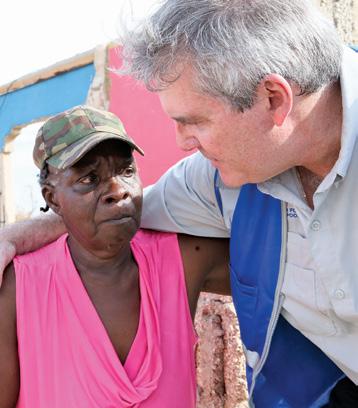
Following Hurricane Melissa, Ed Raine, president/CEO of Food For The Poor, comforts a hurricane survivor.
2,155
MULTI-COUNTRY PARTNERSHIPS
Food For The Poor believes that strong partnerships spark innovation and expand what is possible. By working together with global organizations, we combine strengths, share expertise, and open new pathways to address complex needs. Through these collaborative efforts, we create sustainable, long-lasting solutions that deliver meaningful change for vulnerable communities.
HEART TO HEART INTERNATIONAL
In 2025, our nearly 19-year partnership with Heart to Heart International continued to strengthen health access across Latin America and the Caribbean.
• Together, we completed 19 shipments valued at over $10.25 million, delivering medical supplies and pharmaceuticals to the Dominican Republic, Honduras, Guatemala, Jamaica, and Haiti.
• During Hurricane Melissa, Heart to Heart also provided close to 35,000 relief kits, including 27,000 for Jamaica and 7,800 for the Dominican Republic, greatly supporting emergency response.
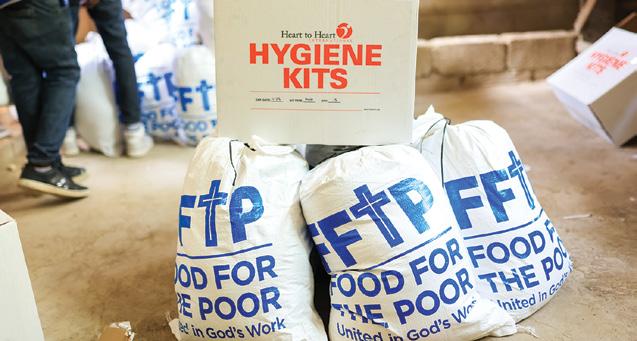
• Additional assistance provided in 2025 included 3,600 hygiene kits for Haiti via a humanitarian air bridge and 18,000 oral rehydration packets for Honduras, demonstrating their ongoing commitment to life-saving care.
WATER MISSION
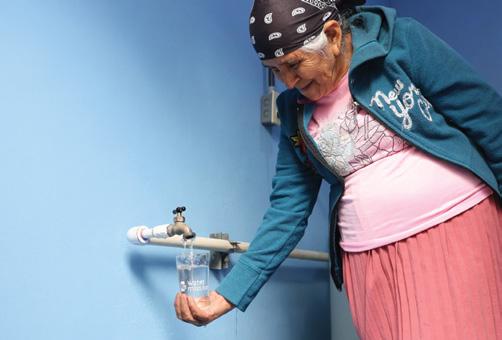
With Water Mission, we expanded long-term, safe water solutions in Honduras and Mexico. Working alongside local communities, we transitioned from emergency treatment systems to permanent infrastructure, training residents in hygiene and water management. These efforts reduced waterborne illnesses and strengthened community resilience in areas devastated by past hurricanes.
Monte Largo, Honduras.
FOCUSED ON MEANINGFUL PROGRESS
Support through our 10 focus areas brings urgent relief to families in need while empowering them toward self-sufficiency, partnering with diverse organizations to fight poverty and hunger with compassion, efficiency, and respect for human dignity.
1. HUNGER RELIEF & NUTRITION
Through a partnership with the Government of Taiwan, Food For The Poor distributed rice to families in Haiti facing severe hunger. In El Salvador, the FUSAL Early Childhood Nutrition Program provided medical care, vitamins, and food support to young children at risk of malnutrition and anemia.
2. WATER, SANITATION, & HYGIENE (WASH)
In Aricaporo, Colombia, the Safe Drinking Water for Aricaporo project is restoring access to clean water for local families. A deep well and solar-powered treatment system, along with hygiene training, will help protect health and prevent waterborne illness.
3. AGRICULTURE & FOOD SECURITY
In Cotopaxi, Ecuador, Food For The Poor partnered with CODESPA to support farming families through the Sustainable Agriculture and Livelihoods project. Farmers improved income, expanded production, and accessed new markets—helping families grow food, earn income, and plan for the future.
4. COMMUNITY DEVELOPMENT
In Villas La Concordia, Honduras, a community development project helped families work together to improve daily life. Leadership training, family gardens, education planning, and skills mapping supported residents as they strengthened their community and created shared solutions.
5. EDUCATION
Across Latin America and the Caribbean, access to education remains a proven method to help eradicate poverty. In Colombia, the Santa Cecilia Boarding School Remodeling and Expansion project improved classrooms, student housing, and learning spaces. New facilities, furniture, and supplies are helping students and teachers learn in a safer, more supportive environment.
6. ECONOMIC EMPOWERMENT
Through the Indigenous Women Artisans: Local Market Access project in Guatemala, Food For The Poor partnered with Mercado Global to help women artisans gain business training, tools, and access to local markets—allowing them to earn income and support their families.
7. HEALTH
In El Salvador, Food For The Poor supported the Pediatric Oncology Program led by the Ayúdame a Vivir Foundation. Funding helps provide nursing care, nutrition, and palliative support so children with cancer can receive life-saving treatment with dignity.
8. EMERGENCY PREPAREDNESS & RESPONSE
Following Hurricane Melissa, Food For The Poor led one of the largest emergency responses in its history. Shipments of food, water, medical supplies, and shelter materials reached families across Jamaica through strong logistics and partner coordination.
9. OUTREACH TO VULNERABLE GROUPS
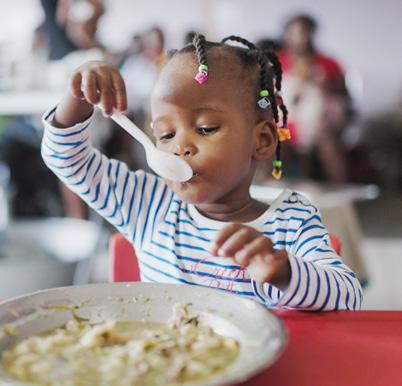
In Haiti, the Canteen Program and Community Recovery Nutrition (CRN) Program supported families facing severe hunger and health risks. Meals, food kits, and nutrition care helped children, mothers, and high-risk individuals stay healthier, regain strength, and feel seen, supported, and valued.
10. CHILD WELL-BEING
Through the Angels Of Hope program, Food For The Poor supported children living in group homes across Latin America and the Caribbean. Regular deliveries of food, hygiene items, and basic supplies help children live in safe, caring, and stable environments.