January is Goa’s reset button, not in the lazy sense of “back to normal,”butinthedeepersense of reorientation. After the velocity of December, the state returnstofundamentals:health, work, mobility, values, and the kind of growth that can be sustained without losing what makes Goa unique. The January 2026 issue of Incredible Goa is curated in that spirit of sharp, forward-looking, and rooted in what matters beyond the season.
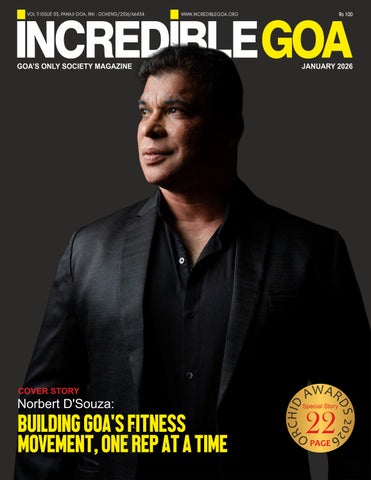
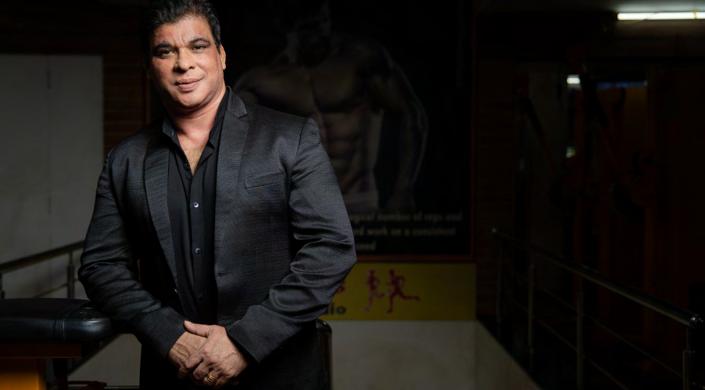
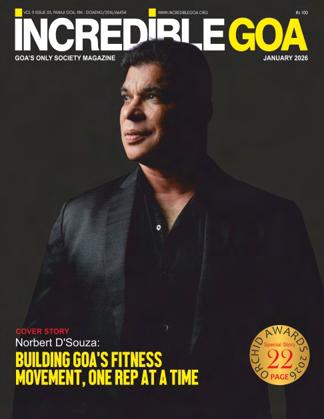
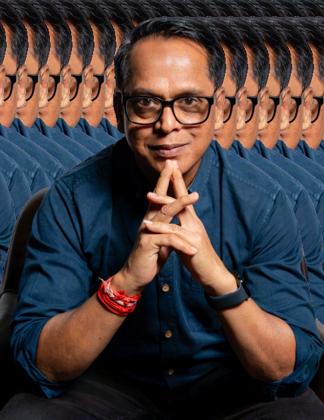
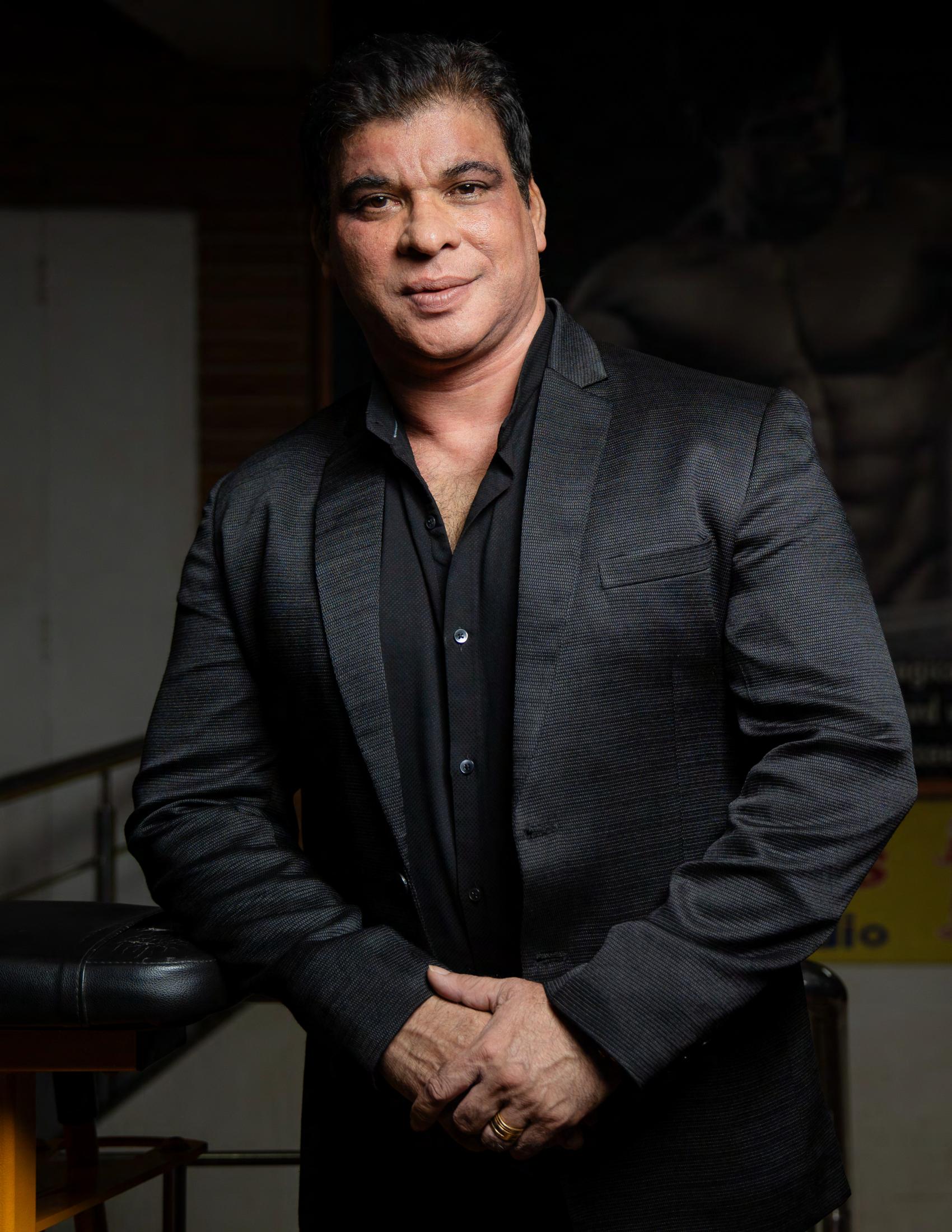
Our Cover Story, Norbert D’Souza: Building Goa’s Fitness Movement, One Rep at a Time, is more than an individual journey. It is a lens into a larger behavioural shift underway in Goawherefitnessisnolongera trend, but a discipline, and wellness is increasingly seen as a long-term investment rather than a short-term resolution. In a state known nationally for leisure, this story highlights the quietpowerofconsistency,how habits, training culture, and structured guidance are shaping stronger lifestyles and strongercommunities.
The Special Story turns the spotlight where it deserves to be: on empowered women across Goa. The Orchid Awards 2026 is not just an event, it is a platform that recognises women who lead, build, create impact, and inspire change across sectors and communities. In a world that often celebrates visibility over substance, the Orchid Awards stands for something more meaningful: recognising resilience, achievement, and
leadership that is lived every day, not performed occasionally.
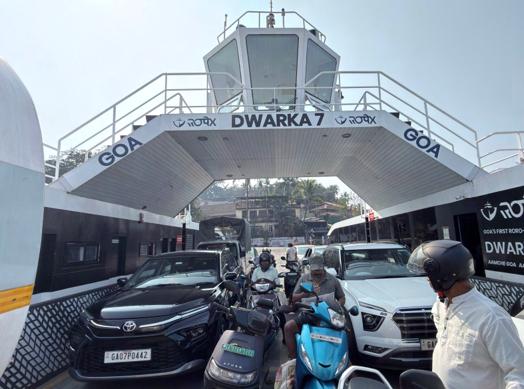
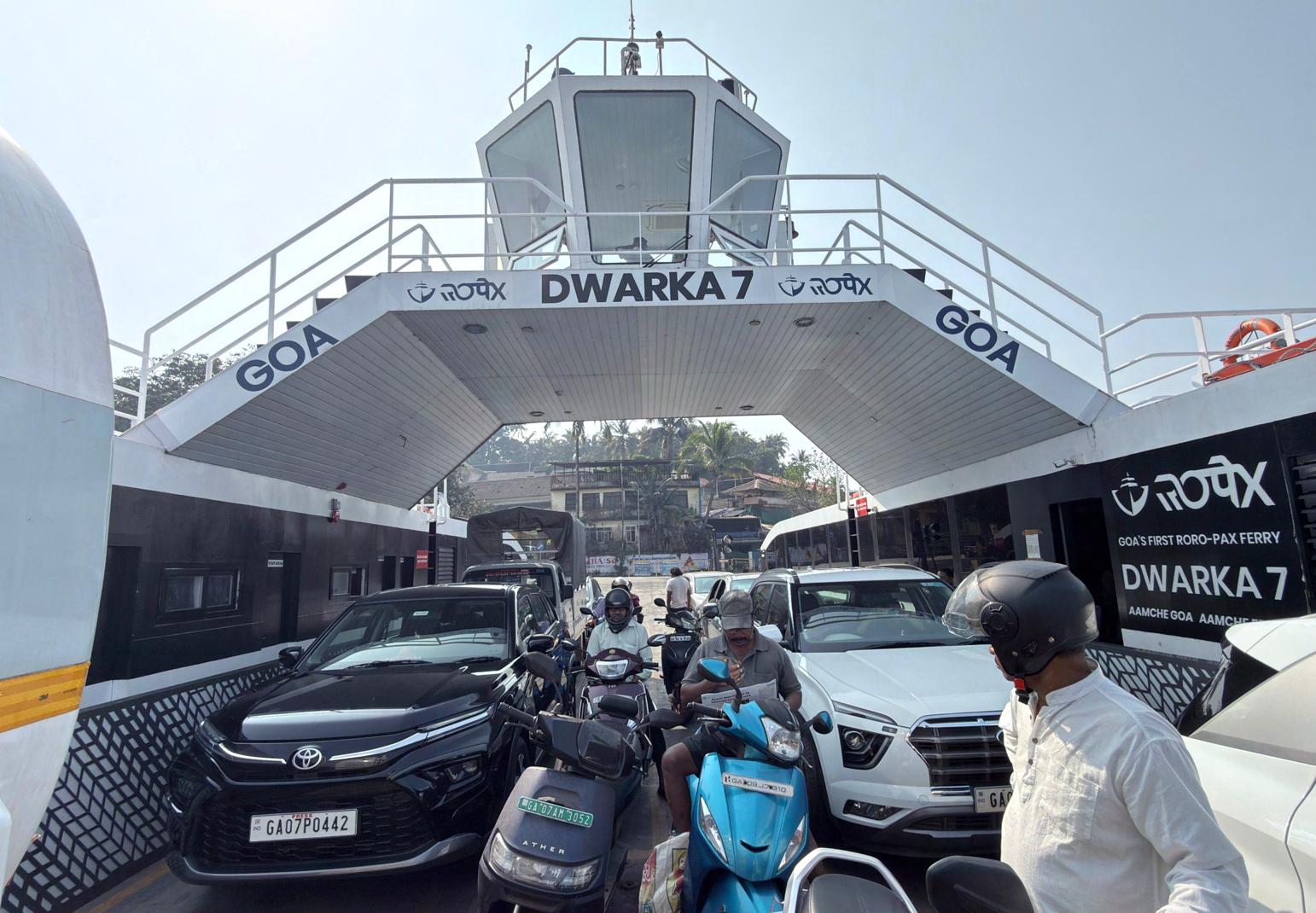
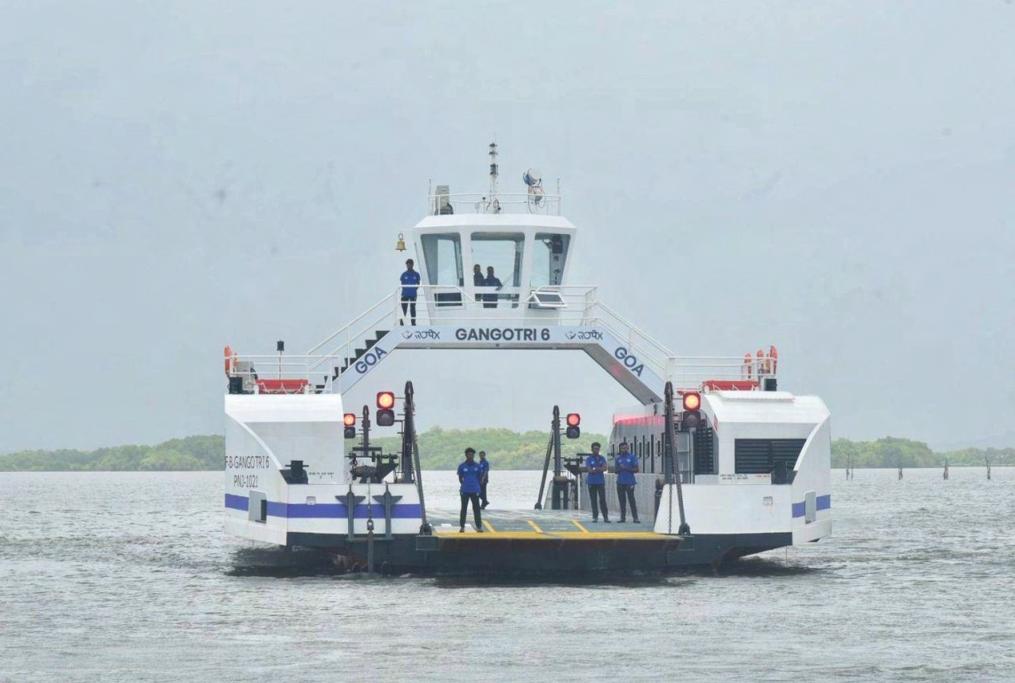
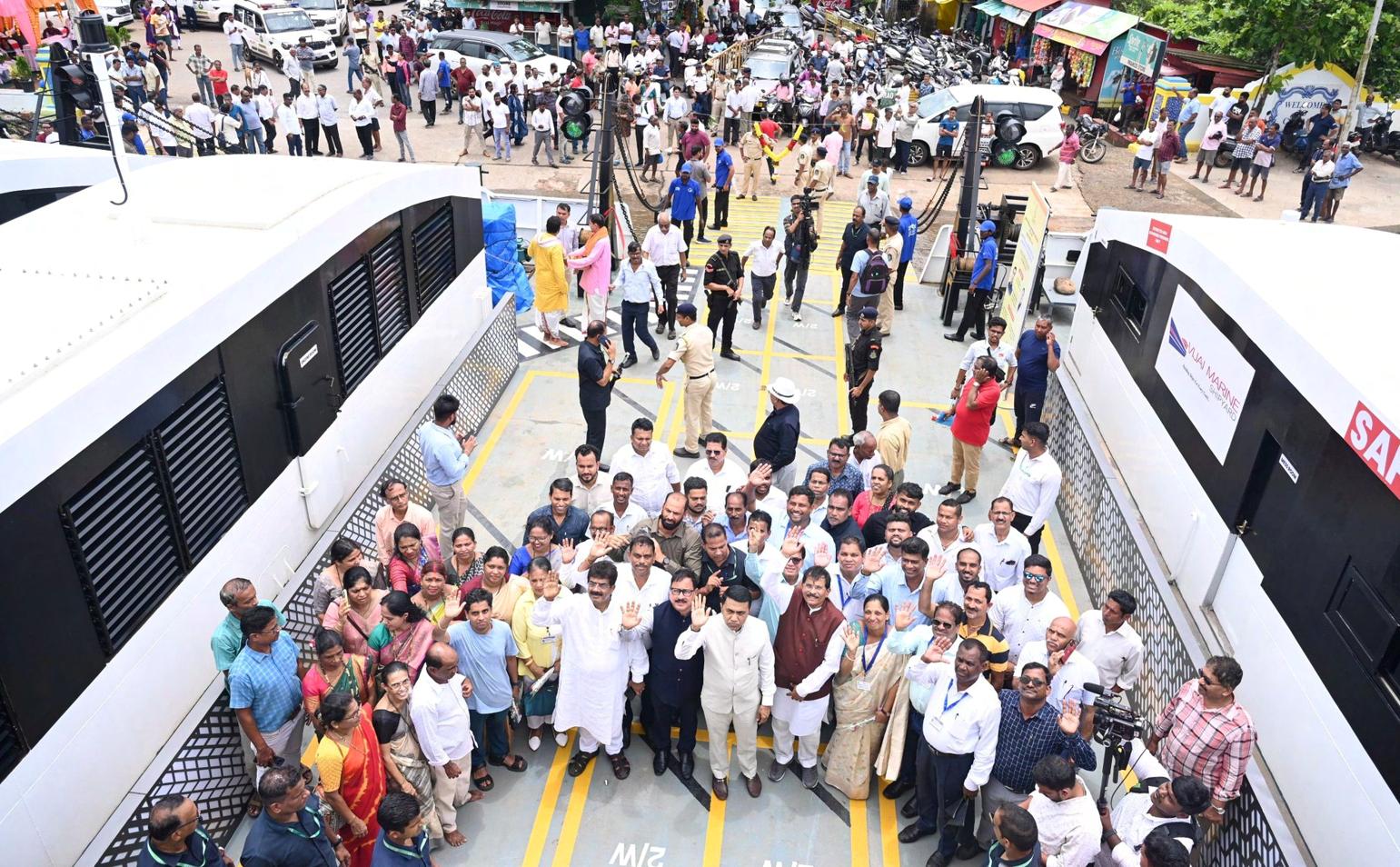
In In Focus, we look at practical transformationthroughHowthe Ro-Ro Ferry Is Changing Everyday Travel in Goa. With rising vehicle volumes and congestion spilling beyond tourist peaks, the Ribandar–ChoraoRo-Roservice emerges as a measured response rooted in Goa’s geography and its waterways showing how mobility can be improved without forcing the state into endless road expansion.
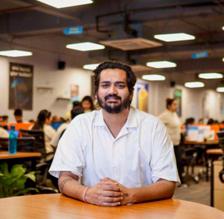
This issue also asks harder questions through its wider featuresonaffordability,onthe waytourismcanerodeheritage, and on how modern life is reshaping attention, truth, and decision-making. The Interview with the founders of Future Mercury adds another layer: Goa’s emerging creative economy, where brands are being built with strategy and purpose not just surface-level aesthetics. Meanwhile, our Hospitality and Business coverage tracks the city’s evolving taste, tourism’s policy needs, and the changing economicsofgrowth.
January is not only a beginning. It is a checkpoint. This issue invitesreaderstobegintheyear with clarity stronger bodies, smarter systems, and a more consciousGoa.
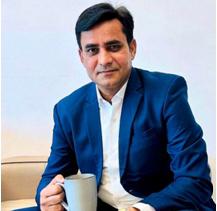
Rajesh Ghadge Editor
rajesh@rajeshghadge.com
Rajesh’s long journey began with an early realization of his writing skills and nearly a superhuman power of vivid imagination; which together led to the birth of a successful media portal. His never-ending spree of learning has made him efficient in varied fields like coding, designing and also marketing. He fuels himself with continuous reading being a history fanatic and bouts of music and movies. Acting as a one-man army he prizes work over almost everything.
rajeshghadgeofficial
rajeshghadgeofficial
rajeshghadge
www.rajeshghadge.com
rajesh@rajeshghadge
GOA BUZZ
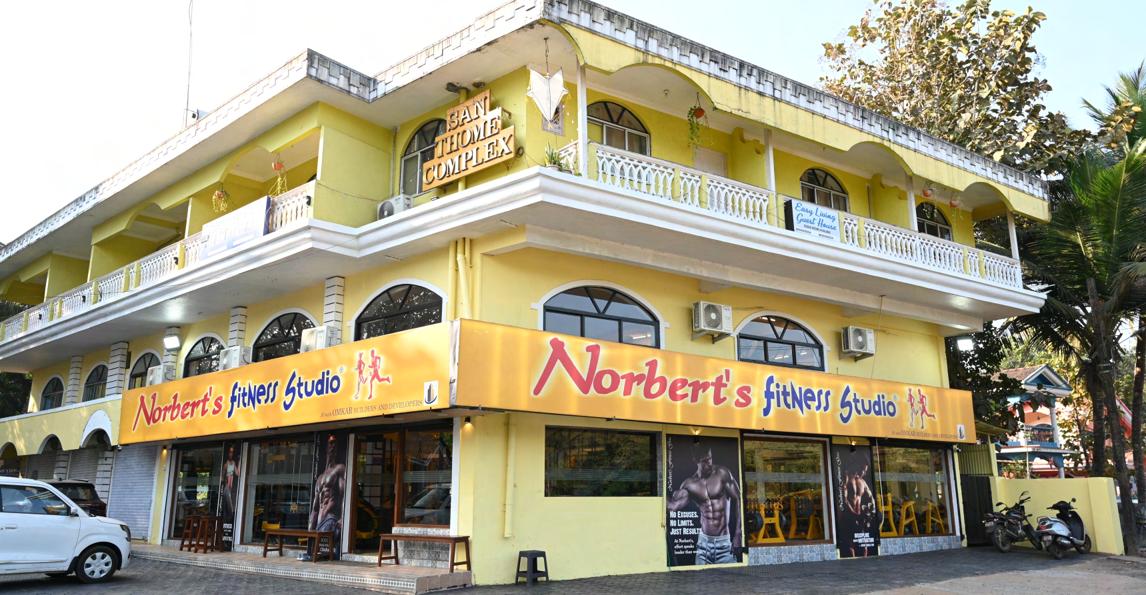
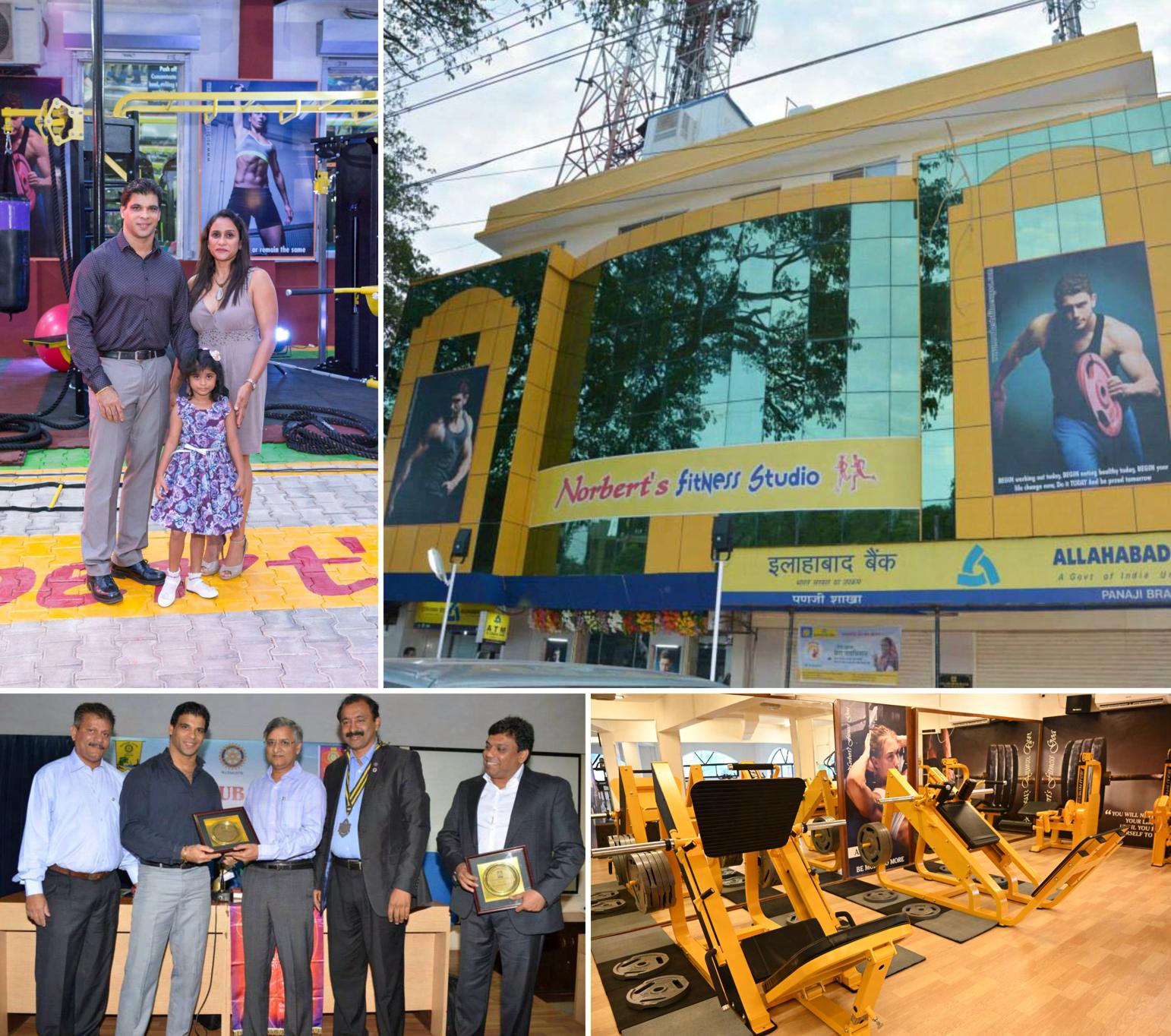
NORBERT'S FITNESS STUDIO EXPANDS WITH VARCA LAUNCH, MARKS 9TH OUTLET IN GOA
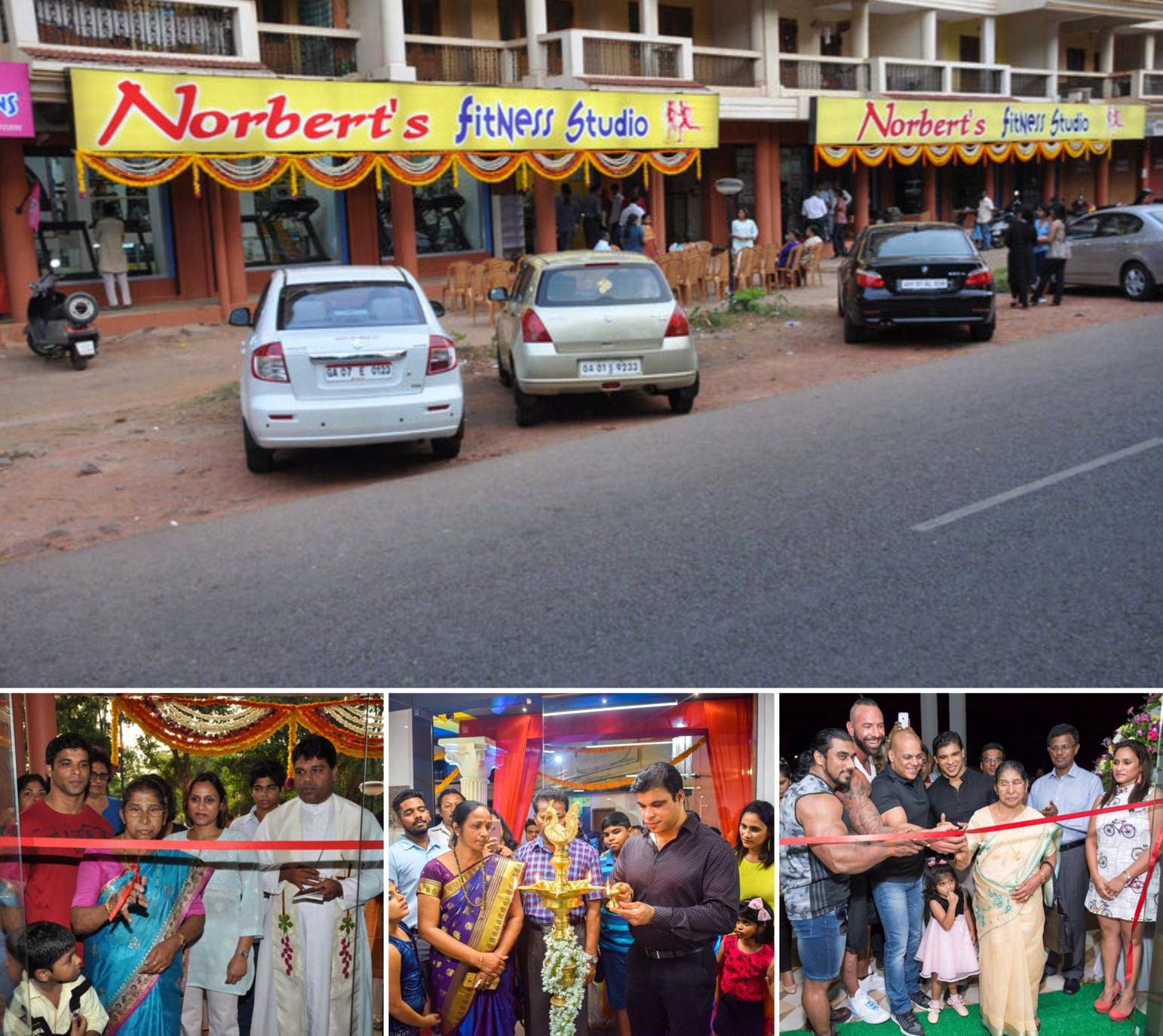
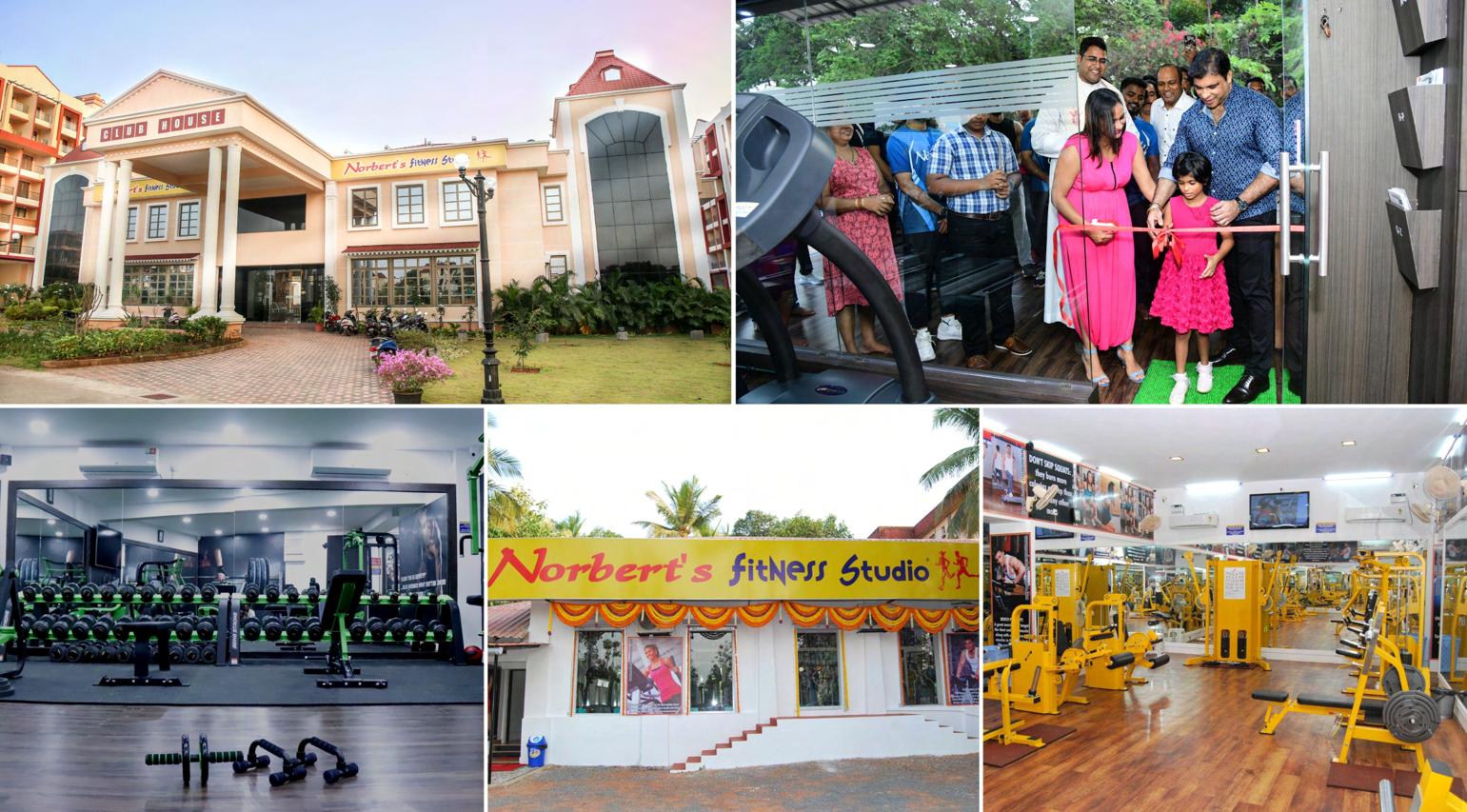
Norbert's Fitness Studio – Varca officially opened its doors on 9th January 2026, marking the brand's 9th successful fitness centre across Goa and strengthening its position as one of the state's most trusted fitness brands.
What continues to set Norbert's
Fitness Studio apart is its unwavering focus on personal training and complete handholding. Here, fitness is not about casual workouts or unsupervised routines. Every member is guided through structured training programs, constant trainer support, and sustained
motivation—ensuring consistency, discipline, and measurable results.
The Varca facility features a spacious, thoughtfully designed workout environment, equipped with top-quality machines, advancedfree-weightzones,and safe training layouts. The setup
caters to beginners, regular fitness enthusiasts, and serious trainers alike, offering comfort without compromising on performance.
AtNorbert's,fitnessistreatedasa journey—guided, goal-oriented, and results-driven. The Varca launchisanotherstrongmilestone in the brand's growing legacy, reinforcing its commitment to helping Goans build healthier, strongerlifestylesthroughexpertledtraining.
SEASON'S FIRST CHARTER FLIGHT FROM ALMATY TOUCHES DOWN AT MOPA, BOOSTING GOA'S INTERNATIONAL ARRIVALS
The international tourist season in Goa gathered further momentum with the arrival of the first seasonal charter flight from Almaty, Kazakhstan, at Manohar International Airport on Wednesday morning. Operated by FlyArystan, the flight landed at 10:25 am, bringing 174 international passengers and marking the commencement of charter operations from Almaty forthecurrentseason.
The Department of Tourism, Government of Goa, extended a warm traditional welcome to the visitors with rosebuds and a lively brass band performance outside the arrival terminal, offering guests a glimpse of Goa's renowned hospitality and cultural charmrightatthegateway.
Welcoming the development, Rohan Ashok Khaunte, Hon'ble Minister for Tourism, said that strengthening international air
connectivity continues to be a key pillar of Goa's tourism strategy. He noted that engaging newer source markets and supporting seasonal charter operations play a vital role in expanding Goa's global footprint in a planned, balanced, and sustainable manner. The start of charter services from Almaty, he added, reflects growing international confidence in Goa as a preferred destination.
Sharing insights on the operational significance, Kedar Naik, Director of Tourism, Government of Goa, stated that the arrival of the first Almaty charter flight adds meaningful strength to this season's international charter programme and helps maintain a steady flow of overseas visitors during peak months.
The seasonal charter service from Almaty is expected to further enhance Goa's connectivity with Central Asia and contribute
positively to international tourist arrivals during the ongoing tourism season, reinforcing the state's position as a globally connected destination beyond beaches.
MANOJ BAJPAYEE JOINS PORVORIM COMMUNITY AT NOMOZO 7.0 STREET FESTIVAL
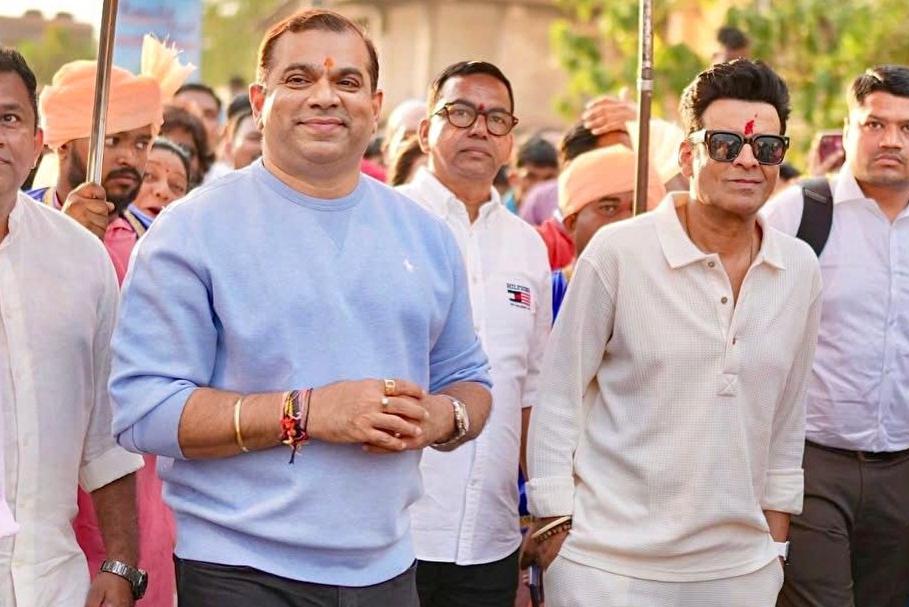
His presence added warmth and visibility to an event rooted not in glamour, but in togetherness and sharedcivicpride.
The seventh edition of NoMoZo (No Motor Zone) successfully broughtPorvorim'sstreetsaliveon January 11, 2026, as residents gathered for a vibrant, peoplecentric celebration of public spaces. Organised under the PorvorimRisinginitiative,NoMoZo 7.0 once again transformed everyday streets into zones of fitness, creativity, learning, and communitybonding.
Adding star power to the event, Manoj Bajpayee joined citizens at the festival, interacting with families, youth, and local groups.
NoMoZo 7.0 encouraged citizens of all ages to step outdoors, reclaim public spaces, and engage with their neighbourhood in meaningful ways. The day-long programme featured a diverse mix of activities spread across multiple interactive zones, including Kids, Art, Heritage, Astronomy, Fitness, Martial Arts, Boxing, Health, Youth, IT & Science, Performance & Dance, Influencer, and Karaoke zones. Free stalls were also provided to local vendors and artisans, ensuring inclusive participation and grassroots economic support.
Speaking earlier about the philosophy behind NoMoZo, Rohan A. Khaunte, Minister for Tourism, IT, E&C, and Printing &
Stationery, Government of Goa, had reflected on how the initiative was inspired by childhood memories of streets as places for play, interaction, and connection. That spirit was visibly recreated during NoMoZo 7.0, as families, children, youth, and senior citizens shared space, conversations,andexperiencesin arelaxed,openenvironment.
Expressing his appreciation after participating, Manoj Bajpayee shared that what drew him to NoMoZo was its simplicity and its ability to bring people together naturally,withoutbarriers. With growing participation each year, NoMoZo 7.0 reaffirmed Porvorim's commitment to people-first urban spaces—showcasing how streets, when freed from traffic, can become powerful platforms for wellbeing, creativity, and communitycelebration.
DITE&C HOLDS 10TH EMPOWERED COMMITTEE MEETING TO BOOST STARTUP INNOVATION IN GOA
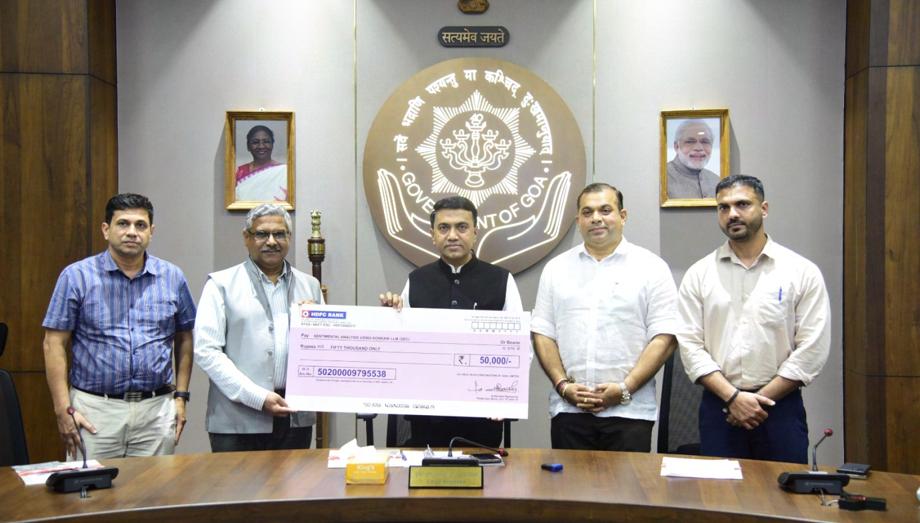
The Department of Information Technology, Electronics and Communication (DITE&C), Government of Goa, convened the 10th Empowered Committee Meeting at the Conference Hall, Mantralaya, Porvorim, marking another important step in strengthening Goa's startup ecosystem. The meeting reviewed and evaluated applications submitted under the Seed Capital Grant Scheme of the Goa Startup
Policy2025. ThemeetingwaschairedbyPramod Sawant, Hon'ble Chief Minister of Goa, and co-chaired by Rohan Khaunte, Hon'ble Minister for IT, Electronics & Communications. The committee included senior officials and industry representatives such as Department of Industries, Goa Chamber of Commerce and Industry, and Goa Technology Association,amongothers. Addressing the outcome of the
meeting, Minister Rohan Khaunte stated that the quality and diversity of innovations presented reflected Goa's growing stature as a serious startup destination. He reiterated the government's commitment to nurturing founders through early-stage support, enabling them to scale innovative ideas into sustainable businesses under the leadership of the ChiefMinister.
The Seed Capital Grant Scheme, a key pillar of the Goa Startup Policy 2025, offers one-time financial assistance of up to 10 lakh to startups that have developed a MinimumViableProduct(MVP).The Startup and IT Promotion Cell (SITPC)received27applications,of which 16 were shortlisted by the ExpertCommitteeandpresentedto theEmpoweredCommitteeforfinal
evaluation.
After detailed deliberations based oninnovation,feasibility,scalability, revenue potential, and long-term sustainability, eight startups were selected. These included HomeHealth Healer, Reverse Infinity Pvt. Ltd., Dumfries Vision, Vishkar Modernizing Construction, Incluseer, Sevaco, Buraa, and Vindaloo Entertainment Private Ltd. The selected ventures span sectors suchashealthtech,AI,tourismtech, construction tech, digital accessibility,andOTTmedia. The meeting reinforced the state government's vision of building a future-ready, innovation-driven startup ecosystem, positioning Goa as a preferred home for entrepreneurs and technology-led enterprises.
GOA ALL SET TO CELEBRATE A GRAND AND VIBRANT CARNAVAL 2026 ACROSS THE STATE
The Department of Tourism, Government of Goa, is all set to roll out Goa Carnaval 2026, one of the State's most iconic and eagerly awaited cultural celebrations. Synonymous with colour, music, dance, and joyous togetherness, Carnaval continues to reflect Goa's rich cultural heritage while bringing communities and visitors together inasharedfestivespirit.
The celebrations will begin with a Curtain Raiser on 13th February
2026 at Porvorim, with the parademovingfromIHMtoACDIL School. The festivities will then shift to Panjim on 14th February 2026(Saturday),wherethegrand parade will be flagged off along the route from the New Patto Bridge to Campal Ground. On 15th February 2026 (Sunday), Margao will come alive as the parade proceeds from Holy Spirit Church to the Margao Municipal CouncilSquare. On 16th February 2026 (Monday),
Vasco da Gama will host the celebrations, with the parade movingfromSt.Andrew'sJunction (Swatantra Path) to Joshi Chowk/Railway Station. The festivities will culminate on 17th February 2026 (Tuesday) at Mapusa and Morjim. In Mapusa, the parade will proceed from the Comunidade building behind Milagres Church to the Comunidade ground near Dev Bodgeshwar Temple, while Morjim will witness celebrations from Morjim Khind to Morjim Junction nearRajSuperMarket.
Speaking about the celebrations, Rohan A. Khaunte, Hon'ble Minister for Tourism, said that Carnaval is a celebration of joy, inclusivity, and cultural pride. By spreading the festivities across multiple locations, the State aims to encourage wider community participation while offering visitors an authentic Goan experience rooted in responsible andregenerativetourism.
Director of Tourism Kedar Naik added that Carnaval 2026 has
been carefully planned to ensure safety, cleanliness, and a highquality festive atmosphere across allvenues.
Withcolourfulfloatparades,lively performances, music, and dance, Goa Carnaval 2026 promises to showcase the vibrant soul of Goa—celebrating its traditions while reinforcing sustainable and community-led tourism. Goa Tourism invites residents and visitors alike to be part of this spectacularculturalcelebration.
https://www.exploregoa.org
HELMETS NOW MANDATORY FOR RIDERS AND PILLION RIDERS IN GOA: CM PRAMOD SAWANT
Goa Chief Minister Pramod Sawant has announced that wearing helmets is now compulsory for both two-wheeler riders and pillion riders across the state. The directive follows a circularalreadyissuedbytheGoa Transport Department, in line with recent road safety guidelines laid down by the Supreme Court of
India.
Addressing the Goa Legislative Assembly, the Chief Minister stated that the move aims to significantly reduce fatalities caused by road accidents. He confirmed that the state government has already initiated the implementation of the Supreme Court's October 7,
2025, road safety guidelines, which include mandatory helmet use for all two-wheeler occupants.
The matter was raised during Question Hour by Carlos Almeida, MLA from Aldona, who sought clarity on the timeline for implementing the apex court's directives. Responding to the query, Sawant said instructions have already been issued to ensure compliance by pillion ridersaswell.
The discussion also saw a sharp exchange on the issue of rising crime in the state. Leader of the Opposition Yuri Alemao expressed concern over crime statistics, claiming that murders, rapes, and dacoities have shown an upward trend in 2025, with conviction rates not increasing at the same pace. He warned that the situation could tarnish Goa's image if preventive policing is not strengthened.
Responding to the criticism, CM Sawant acknowledged that migration for work has contributed to certain crime patterns but clarified that migrants cannot be blamed alone. He asserted that Goa continues to maintain one of the highest crime detection rates in the country, exceeding 86 per cent. The Chief Minister also highlighted that police response time averages under eight minutes across the state, tenant verification drives have been intensified, and efforts are underway to link existing CCTV networksforbettersurveillance. Sawant assured the House that recent data indicates a downward trend in crime and reiterated the government's commitment to road safety and publicsecurityacrossGoa.
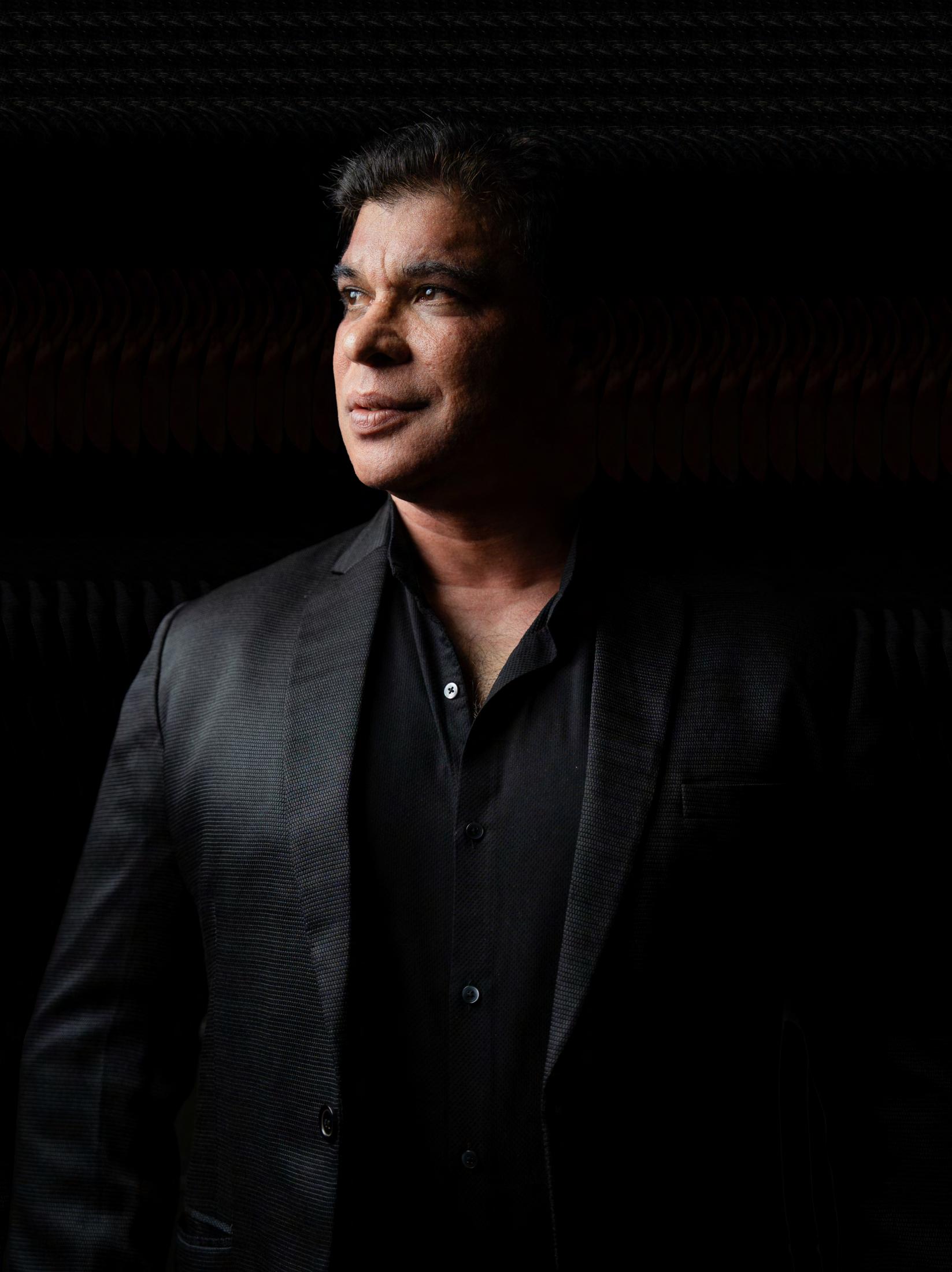
Norbert D'Souza:
BUILDING GOA'S FITNESS MOVEMENT, ONE REP AT A TIME
Over time, the brand expanded steadily across Goa, establishing multiple branches while retaining its core DNA. Each location reflected the same principles: spacious layouts, quality equipment, professional trainers, and disciplined management. Norbert ensured that every branch followed identical systems, regardless of size or location. Consistency, not convenience, remained the guiding principle.
People have always been central to Norbert's leadership philosophy.Trainers are regarded as the heart of the gym, entrusted with responsibility and accountability for members' progress.Admin staff are trained as leaders—responsible for discipline, revenue integrity, and member screening. Norbert believes that when expectations are clear, people perform with confidence and purpose.
By Rajesh Ghadge
In Goa's evolving fitness landscape, few names carry the weight of legacy, discipline, and quiet authority the way Norbert D'Souza does. Long before gyms became lifestyle statementsandwellnessamainstreampursuit, Norbert was laying the foundation of a culture—one built on consistency, systems, and an uncompromising belief that fitness is for everyone. His journey, spanning more than two decades, is not a story of overnight success, but of deliberate choices, personal sacrifice, andrelentlessworkethic.
FROM BANKING COUNTERS TO DUMBBELLS
Norbert's professional life did not begin in the
fitness industry. Trained as a banker, he spent nearly 15 years in the structured, secure environmentofbanking.Yet,evenduringthose years, fitness remained central to his identity. Weight training began as a personal pursuit—an effort to build discipline, strength, and balance in his own life. “I was always passionate about fitness. Though I was a banker by profession, weight training was my wayofbuildingmyself,”herecalls. That personal passion soon found an outlet whenhebeganworkingasatraininginstructor at a small gym operating out of the backyard of Neomi's Salon in Miramar. His routine was demanding: mornings at the bank, evenings training clients. Slowly, something shifted. The
feedback from trainees was encouraging, word-of-mouth grew, and Norbert realised that people were coming not just for equipment, but for his guidance. “I always helpedpeopleachievetheirfitnessgoals.That goodwill became my biggest strength,” he says.
THE LEAP OF FAITH: CHOOSING PASSION OVERSECURITY
The turning point came in 2008. Balancing a full-time banking career with an ever-growing fitness commitment became unsustainable. Norbert faced a decision many hesitate to make: continue on a safe, predictable path or stepintoanuncertainfuturedrivenbypassion.
The choice was not easy. Friends and colleagues questioned his sanity. Family members worried about stability, pension, andlong-termsecurity.“PeopletoldmeIwas foolish to leave a secure job. If I had stayed a few more years, I would have had a lifelong pension,”herememberscandidly.
Yet,thepullofpurposewasstronger.In2008, Norbert resigned from the bank and established Norbert's Fitness Studio in Caranzalem. It was a modest beginning, but it marked the start of a journey defined by self-belief. “I spoke to myself many times beforetakingthatdecision.EitherIwouldrise or fall, but I was clear that this was what I wantedtodo,”hesays.
Studying these patterns carefully, Norbert identified Porvorim as the next logical location. Opening the Porvorim outlet marked his first step outside Panaji and his comfort zone. “It was difficult managing two outlets, especially when fitness was still not seenasacareerinGoa,”headmits.
APIONEEROFGOA'SGYMCULTURE
At a time when gyms were largely associated with bodybuilders, Norbert championed inclusive fitness. He welcomed everyone—from young teenagers to senior citizens—redefining what gym culture could look like in Goa. “Gym is not just for bodybuilders. Fitness is for everyone,” he oftenreiterated.
new outlet followed identical operational principles, ensuring consistency across locations. Norbert's approach was methodical: expand only when standards couldbemaintained.
The defining milestone arrived with the creation of the Ocean Park facility at Dona Paula—a sprawling 36,000 sq. ft. fitness destination. More than a gym, it represented Norbert's vision of holistic wellness. “Gymming was becoming monotonous. Peoplewantedmore,”heexplains. Here, he brought together multiple fitness disciplines—weights, cardio, yoga, Zumba, kickboxing—under one roof, collaborating with specialists while allowing them to build
BUILDINGABRANDBEFOREITWASONE
The early years demanded total immersion. Norbert handled everything—training, member onboarding, administration, hygiene, equipment maintenance, and finances. Growth was never rushed. His priority was building a system that worked. “Fitness is not about opening shutters in the morning and closing them at night. It's about discipline, structure, and accountability,” he explains.
As memberships increased, the Caranzalem facility expanded, becoming one of Goa's largest gyms at the time. Members began travelling from across the state—Margao, Vasco, Ponda, Porvorim, and Mapusa.
His early adoption of treadmills and structured workout regimes set new benchmarks.Ascompetitionslowlyemerged, Norbert chose not to dilute standards. Instead, he strengthened systems—clear roles, disciplined attendance, transparent billing, and strict hygiene norms. “Businesses failnotbecauseoflackofeffort,butbecause oflackofstructure,”hesaysfirmly.
EXPANDING WITH CAUTION AND CLARITY
Opportunities to expand came steadily. Partnerships enabled new gyms in Vasco, Mapusa, and Margao, supported by strong relationships with equipment suppliers. Each
individual identities. “My idea was to bring all fitness experts under one umbrella, without restrictingtheirgrowth,”hesays.
LEADERSHIPROOTEDIN SYSTEMS, NOT SHORTCUTS
Today, Norbert's Fitness Studio operates multiplebranchesacrossGoa,withtheVarca outlet inaugurated in January 2026 marking the ninth studio and a tenth planned at Taleigao. Despite scale, Norbert remains deeply involved in daily operations. “Leadership means leading from the front,” hebelieves.
His banking background continues to influence his management style.
Administrative discipline, financial transparency, and rapid decision-making remain core strengths. Equipment maintenance is treated as a non-negotiable priority. “If there is even a small sound or crack, it is fixed the same day. That's why our machineslastoveradecade,”henotes.
DISCIPLINEASAWAYOFLIFE
Norbert's personal discipline mirrors his professionalphilosophy.Forover27years,he has followed a strict workout routine—two hours a day, six days a week. Breaks are rare. “Work is worship for me. I am addicted to my work and my workouts,” he says with conviction.
That consistency, he believes, is the real
secretbehindlong-termsuccess.“Youneeda roadmap and the discipline to follow it. Dreams without action remain dreams,” he reflects.
LOOKINGAHEAD,STAYINGGROUNDED
Despite recognition and scale, Norbert remains grounded. His immediate focus is strengtheningGoa'sfitnessecosystemrather than expanding beyond the state. Growth, for him, is a responsibility—not an ego-driven pursuit. “Success is not just numbers. It's trust earned, habits built, and lives transformed,” hesays.
FromabackyardgymtoIndia'slargestsinglelocation fitness facility in Goa, Norbert D'Souza's journey stands as a testament to
what disciplined vision can achieve. In an industry often chasing trends, his story reminds us that systems, sincerity, and consistencystillmatter—andalwayswill.
FOLLOW US ON
THE13THEDITIONOFTHE ORCHID AWARDS 2026
Celebrates the Excellence of Goan Women Achievers
By IG TEAM
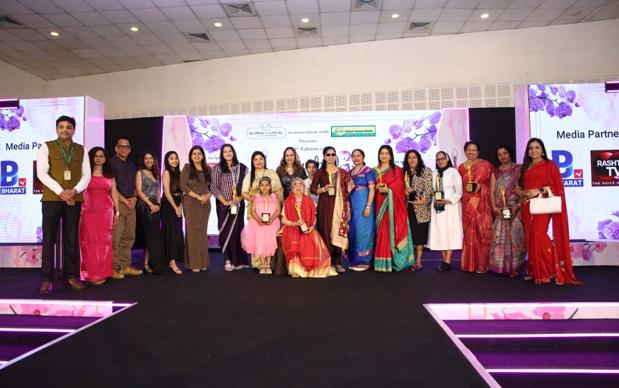
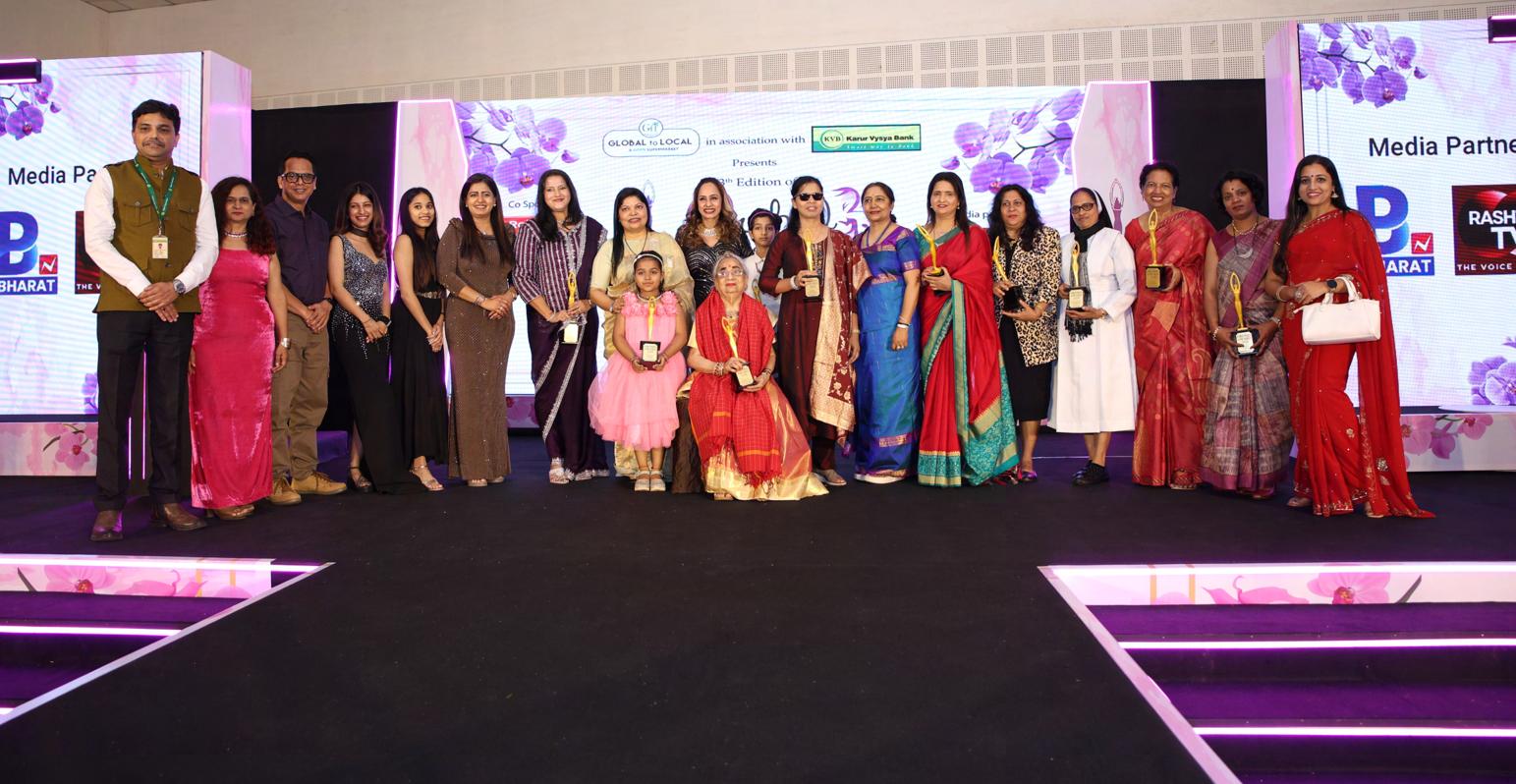
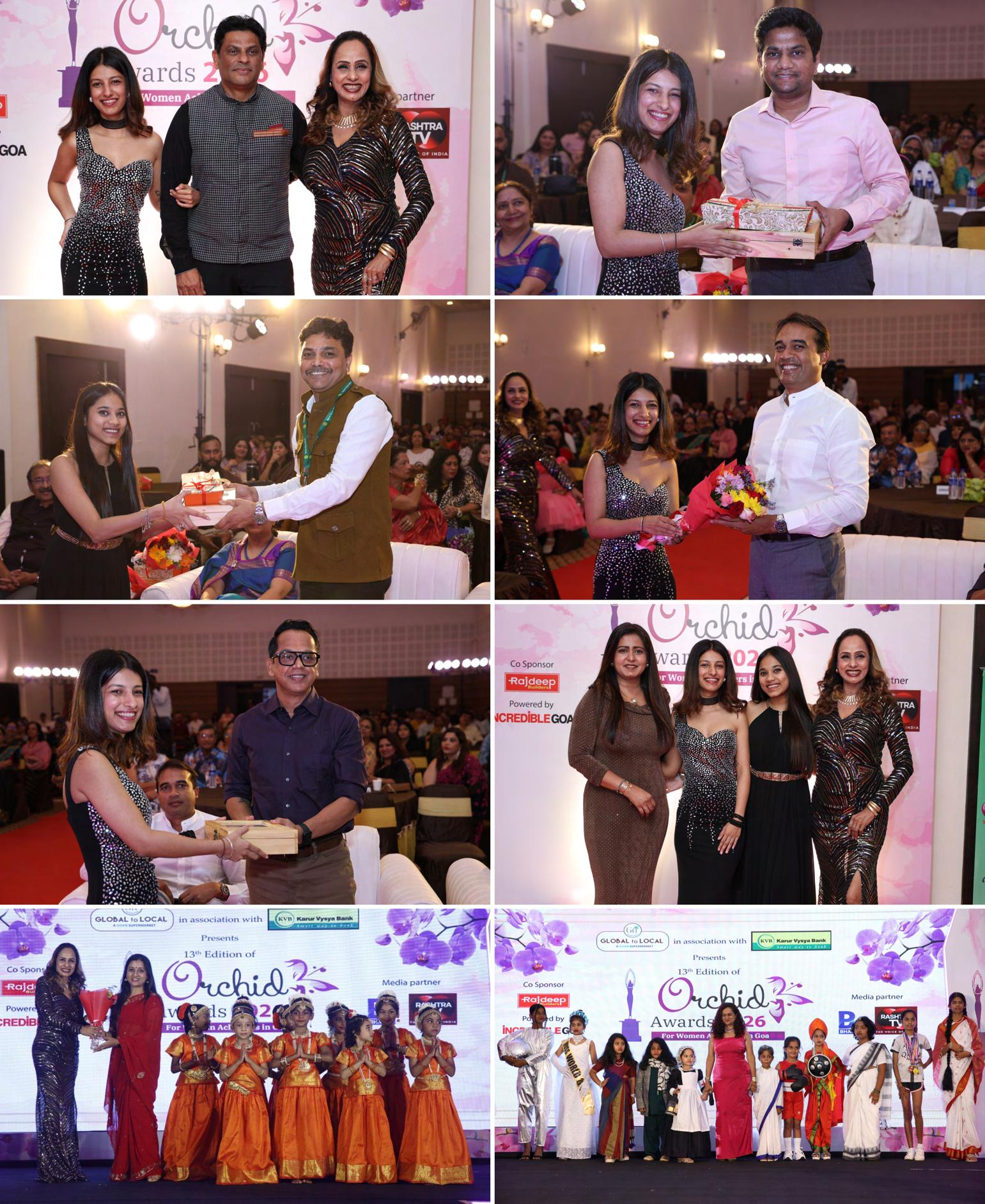
Goa witnessed an inspiring celebration of women achievers at the 13th edition of the Orchid Awards, an annual award function dedicated to honouring outstanding Goan women achievers from diverse fields. Founded and conceptualised by Asha Arondekar, the Orchid Awards have grown into a prestigious and iconic platform, completing 15 years,s recognising Goan women who inspire change andleadership.
A grand celebration of talent, dedication, and achievements marked the 13th edition of Orchid Awards for Women Achievers of Goa, an evening that shone through inspiration and commitment. The Orchid Awards this year
were presented by Global to Local in association with Karur Vysya Bank and poweredbyIncredibleGoa.
Held at the Panjim Convention Centre, the programmecelebratedthepowerofwomenin differentsectors,andthewinnerswere:
IRENECARDOZO-ART&CULTURE
Irene Cardozo has played a significant role in preserving and promoting the vibrant heritage and the TIATR culture of Goa. She has dedicated 57 years of her life to Goan Tiatr and still continues with the same passion. She has performed in all major cities, the Middle East, and on various TV channels. She sings, shewrites,andsheperforms.
SR.MONICACOELHO-EDUCATION
Shehasbeenteachingforover3decadesand istheHeadmistressandPrincipalatSt.Xavier's Academy, Old Goa. Her dedication to education has gone beyond classrooms, shaping minds and nurturing values. She has wonmanyStateAwardsinEducation.
MILENAGOMES-SOCIALWORK
Her work has touched lives beyond measure, bringing hope where there is despair, strength wherethereissilence,andachangewhereitis needed most. She has been a prosecutor for 3 decades and is the Deputy Director of Prosecution,n giving justice to hundreds of GoanWomenandGirlChildren.
AMAIRADHUMATKER-SPORTS
She started at the age of 6 and won the AllGoa District Badminton Championship. At 7, she was once again the All-Goa State Champion, and at 8, she won every major State Ranking Tournament. Today, she plays Nationals, a promising young sportswoman makingGoansproudattheageof9.
SIDDHI POROB - WOMEN EMPOWERMENT
She is the President of Aast, an NGO that works with women and girl children for injustice.Sheisaspiritualteacherandalsothe Executive Director of Ravindra Bhavan Sankhali. She is the current Chairperson of
SankhaliMunicipalCouncil.
SARIKASHIRODKAR-JOURNALISM
She is a renowned TV host, script writer, newsreader, and anchor for 20 years and has worked with most of the TV channels and print media in Goa. She is now an inspiration to manyyounggirls.
LAXMI KUNKOLIENKAR - BUSINESS
Sheisabusinesswomanwithafoodbusinessin GoanamedKamaxiFoods.Shehasacompany catering to Horeca, has launched various coffee corners, and owns multiple other foodrelatedventures.
ANAISHAPARAB-GIRLCHILDPRODIGY
She is 7 years of age and a national-level classical dancer a classical singer, an artist,
She is 100% visually impaired. She has a Diploma in Office Management, a trainer in Braille reading, and a VISHARAD in Indian Classical Music. She works and teaches computersandmusicatNAB.
DR. RATAN SRIKRISHNA NAIK - LIFETIME ACHIEVEMENT
She is a surgeon and a gynecologist, a teacher, mentor, and guide to hundreds of aspiring students. She has dedicated 70 years to her noble profession, with an MBBS and an
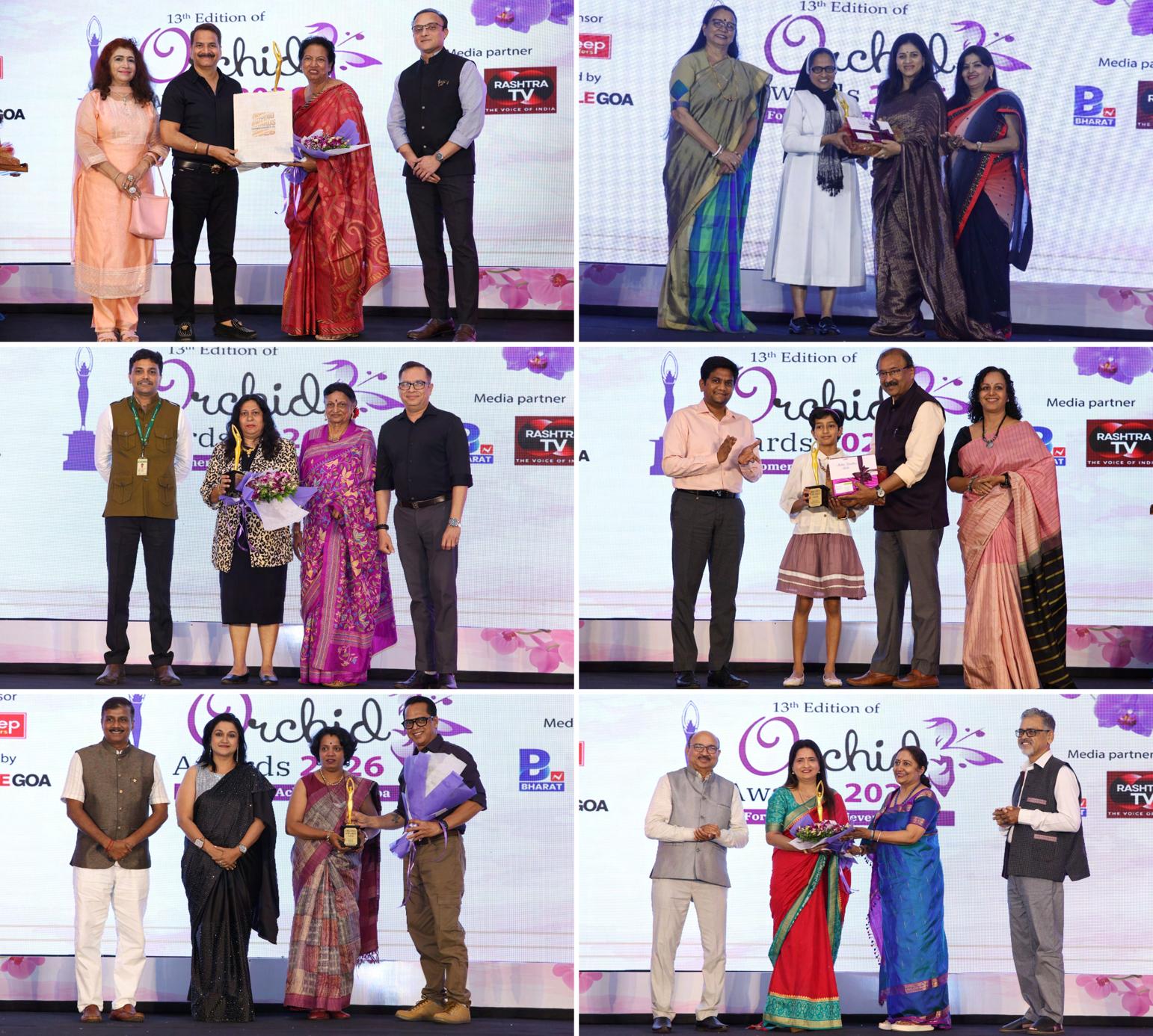
WINNER inArt & Culture - Irene Cardozo with Rajesh Dempo,Amita Salytry and Mahesh Pai
WINNER in Education - Sr. Monica Coelho with Dr. Radhika Naik, Nilima Morajkar and Khairoo Khavtay
WINNER in Social Work - Milena Gomes with PrabhatTrivedi, Dame Indira Patel and SheikhAbdul Majid
WINNER in Sports -Amaira Dhumatker with PravimalAbhishek, Laxmi Bharne and Manoj Patil
WINNER in Women Empowerment - Siddhi Porob with Rajesh Ghadge, Rajeshwar Naidu and Riya Patil
WINNER in Journalism - Sarika Shirodkar with Chayaa Nanjappa, SanjayAmonkar and Pravin Sabnis
MD from Bombay University. In the 1950's, she was also the first lady FRCS of Goa in the year 1964.Sheisnow93yearsold.
The youngest award winner was 7 years old, andtheoldestwinnerwasat93.Theeventwas graced by the Chief Guest, Smt. Sulakshana Sawant - President,t Padmini Foundation, Guest of Honour; Smt. Chayaa NanjappaCountryPresidentIndia,ABWCI,andShri.Rohit Monserrate, Hon. Mayor of the Corporation City of Panaji, and other eminent guests, dignitaries,andwell-wishers.
Speaking on the occasion, founder Asha Arondekar said, "Orchid Awards are not just trophies, they are a tribute to the strength, struggles and success stories of Goan women.
Throughthisplatform,wewanttoinspiremany more women to believe in themselves and rise."
Chief Guest Mrs. Sulakshana Sawant also encouraged the women to take up more leadership roles and look at starting entrepreneurship ventures and in turn empoweringmorewomen.
Guest of Honour Mrs. Chayaa Nanjappa emphasised on how the women of Goa should play a role in the growing state and Indian economy.
Abeautifulshowonthethemeof"BetiBachao, Beti Padhao" was the highlight presented by young girls in the age group 6-12. The programme was hosted by Rashmi Patil,
NiharikaandSachiMorajkar,andthegratitude was expressed by Vaishali Mane. An evening well attended by entrepreneurs, visionary leaders, influencers, and the eminent and empoweredGoans.
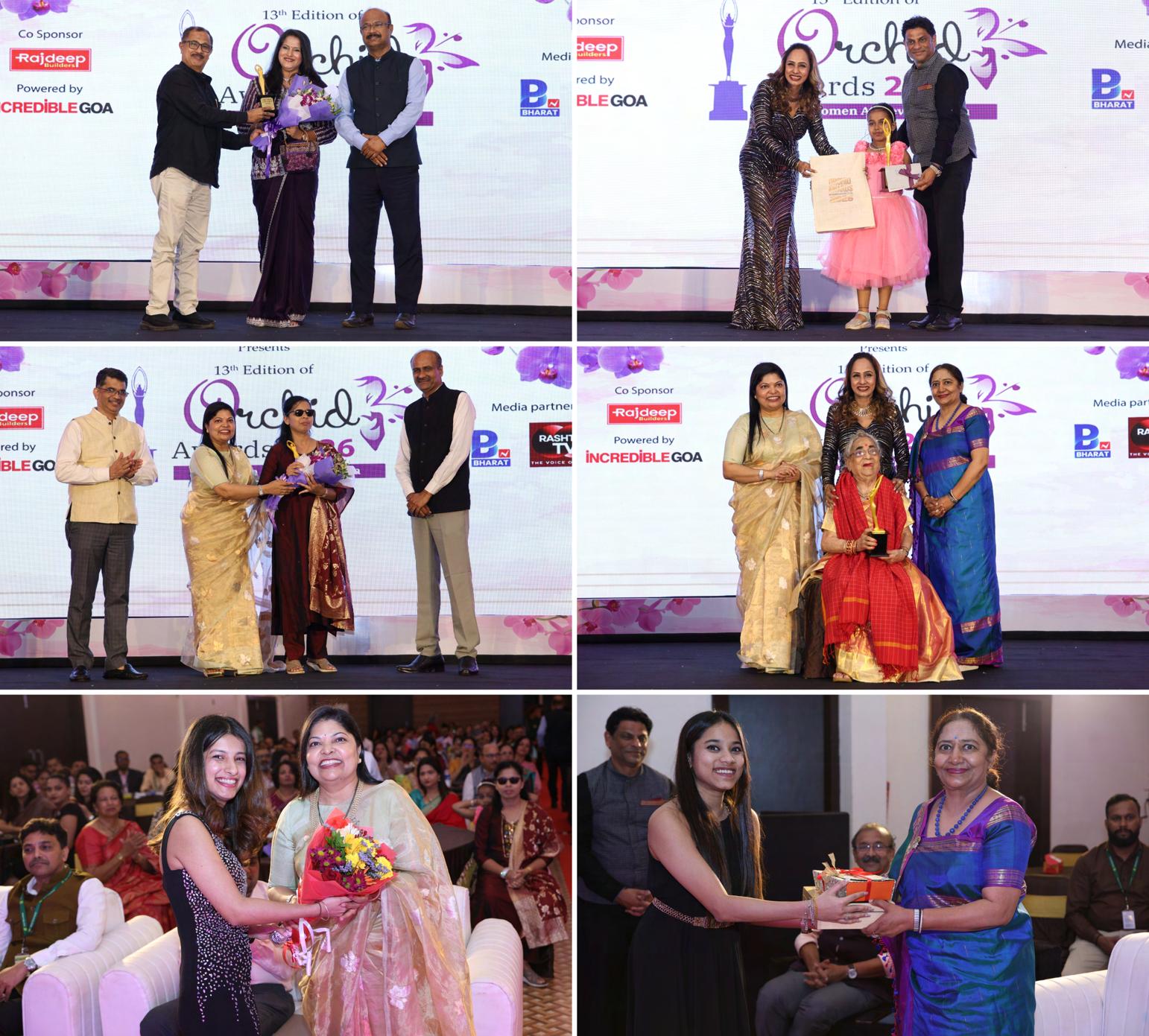
WINNER in Business - Laxmi Kunkolienkar with Rajkumar Kamat andAjay Gramopadhye WINNER in Girl Child Prodigy -Anaisha Parab withAshaArondekar andAmolArondekar
WINNER in WomanAchiever with Disability - Resha Vernekar with Sulakshana Sawant,Armaan Bankley and Gautam Kharangate WINNER in LifetimeAchievement - Dr. Ratan Srikrishna Naik with Sulakshana Sawant, Chayaa Nanjappa andAshaArondekar
Chief Guest - Sulaksha Sawant, President Padmini Foundation and Niharika Guest of Honour - Chayaa Nanjappa, Country President India,ABWCI and MD Nectar Fresh with Sachi Morajkar
FounderAshaArondekar with Niharika andAmolArondekar
Special Guest - PravimalAbhishek, MD GIDC and Director.Transport with Niharika
Special Guest - Rohit Monserrate, Mayor Corporation City of Panaji with Niharika
PrabhatTrivedi, Retail Liability Head, Maharashtra and Goa - Karur Vysya Bank with Sachi Morajkar
Rajesh Ghadge, Founder & Publisher of Incredible Goa with Niharika
Welcome Dance Performance by Nidhi Sanke and her School of Dance
Beti Bachao Beti Padhao Show by Rahila Khan
BRIDGINGTHERIVER,EASINGTHEROADS
How the Ro-Ro Ferry Is Changing Everyday Travel in Goa
By Gauri Ghadge
Rivers,Roads,andaStateUnderPressure
Goa's transport challenges are not created by distance,butbygeography.Riverscutthrough neighbourhoods, islands sit minutes away yet feel disconnected, and bridges funnel traffic into already-strained corridors. As vehicle volumes rise and congestion is increasingly experienced beyond the peak tourist season, the question facing the state is no longer whether mobility needs rethinking, but how. In this context, the Ro-Ro ferry on the
Ribandar–Chorao route is not a novelty. It is a response to pressure, measured, practical, and rooted in Goa's relationship with its waterways.
For generations, ferries have remained essential connectors where geography makes road-only mobility inefficient. What has changed is the scale of demand placed upon them. The Ro-Ro service marks a shift from ferrying as a necessity of last resort to ferrying asadeliberatetransportstrategy.
WhytheRo-RoFerryIsMoreThanaNewBoat
At a glance, a Ro-Ro ferry appears straightforward:vehiclesrollon,crosstheriver, and roll off. But its significance lies not in mechanics, but in intent. The introduction of Ro-Ro reflects a recognition that rivers can function as transport corridors rather than interruptions to road networks. Instead of forcing every vehicle onto bridges and arterial roads, the shift signals a push to use waterways more deliberately alongside roads,
especiallyonhigh-demandcrossings. This shift matters because it acknowledges a simple truth: Goa cannot endlessly widen roads or pour concrete without cost: financial, environmental, and social. Ferries offer flexibility. They can be scaled, adjusted by season, and deployed without permanently alteringthelandscape.Inastatewherelandis
limited and ecological sensitivity is high, that flexibilityisnotincidental;itisessential.
WHEN A CROSSING BECOMES PREDICTABLE,LIFECHANGES
For residents of Chorao, the most meaningful changebroughtbytheRo-Roferryisnotspeed alone, but predictability. Traditional ferry crossings often required building uncertainty
into every plan—leaving early “just in case,” accountingforqueues,orpreparingfordelays thatcouldripplethroughanentireday. With the Ro-Ro service, the crossing has become more structured. Reporting on the Ribandar–Chorao Ro-Ro service indicates a sharp reduction in crossing time, and, just as crucially, a more structured, predictable cycle for daily users. When people know roughly how long a crossing will take, they plan differently. School drop-offs become punctual rather than anxious. Office reporting times stabilise. Medical appointments are scheduled with confidenceinsteadofcontingency. These changes may appear modest, but in dailylifetheyaretransformative.Predictability restores rhythm, and rhythm is the foundation ofaliveablecity.
THE QUIET ECONOMIC IMPACT ON TRADEANDSERVICES
The benefits extend beyond commuters. Chorao's local economy depends on steady, reliable movement of goods and services—fresh produce, packaged supplies, construction materials, gas cylinders, technicians, and service vehicles. Delays at ferries are not abstract inconveniences; they translate into lost labour hours, missed deliveries,andhigheroperatingcosts. By moving more vehicles per trip and reducing turnaround time, the Ro-Ro ferry introduces a
degree of logistical reliability that peak-hour users often felt was harder to achieve with conventional ferry movement and loading patterns. For small businesses operating on tight margins, this reliability is economic insurance. It reduces waste, improves scheduling, and allows traders to commit to timelineswithgreaterconfidence. This is where infrastructure quietly shapes livelihoods, not by grand announcements, but byremovingfrictionfromeverydaycommerce.
TOURISM GAINS, WITH A NECESSARY LINEOFCAUTION
Improved connectivity inevitably benefits tourism. As Goa's visitor economy evolves beyond beaches toward villages, islands, and slower experiences, ease of access becomes a deciding factor. Uncertainty discourages exploration; predictability enables it. A smoother crossing makes destinations like Chorao easier to include in itineraries, particularlyforindependenttravellersandday visitors.
Yet this benefit carries responsibility. Better access must not translate into unchecked pressure on village life or fragile ecosystems. Transport efficiency cannot be allowed to overwhelm local capacity. The success of RoRo, therefore, depends on how carefully access is managed through traffic control,
visitor regulation, and a clear prioritisation of residentneeds.
LISTENING TO CONCERNS WITHOUT LETTINGTHEMDEFINETHESTORY
Any change in public transport invites scrutiny, and the Ro-Ro service has been no exception. Some residents have raised concerns about
capacity distribution, the scaling back of traditional ferry options, and the risk of creating single points of failure. These concerns are not ideological; they are rooted inlivedexperience.
Local feedback has focused on capacity at peak hours and the need for options for
FOCUS
different users, an important reminder that ferry policy must serve commuters, pedestrians, and students with equal clarity. That openness matters. Infrastructure earns legitimacy not through insistence, but through responsiveness.Mentioningconcernsdoesnot weaken the case for Ro-Ro; it strengthens it by framingtheserviceasaworkinprogressrather thanafinishedproclamation.
Reliability,Maintenance,andtheTrustFactor
High-capacity systems carry higher expectations. When a Ro-Ro ferry is disrupted, the impact is more visible than when a smaller vessel falters—not because the concept is flawed, but because the stakes are higher. Reliability, therefore, becomes the central test.
Maintenance discipline, clear operating protocols, and well-communicated contingency planning are not optional addons; they are the backbone of public trust. When disruptions are addressed swiftly and communicated transparently, confidence holds. When they are not, scepticism grows quickly. The long-term success of Ro-Ro will depend less on its design and more on the consistencyofitsoperation.
WHAT EXPANSION COULD MEAN FOR GOA'STRANSPORTFUTURE
The real question is not whether Ro-Ro works
on one route, but whether it can function as part of a broader transport network. Goa's congestion problem is no longer localised. Vehicledensityhasincreasedacrossthestate, stretching infrastructure that was never designedforsuchvolumes.
Expanding Ro-Ro services to other strategic crossings could ease road pressure, shorten travel times, and distribute traffic more intelligently.Butexpansionmustbethoughtful. Approach roads need space for orderly queuing. Pedestrian movement must be protected. Pricing must safeguard daily commuters. Coordination with buses and public transport is essential to prevent ferries fromservingonlyprivatevehicles. State-level planning has indicated Ro-Ro services are being considered for other key crossings as well, including the São Pedro–Divar route, with a stated timeline towardtheendof2026.Aferrythatsavestime on water but creates chaos on land solves little. Integration, not duplication, is the measureofsuccess.
A MEASURED STEP FORWARD, NOT A SILVERBULLET
The Ro-Ro ferry is not a cure-all for Goa's traffic woes. No single intervention can be. What it represents instead is a measured step—one that balances convenience with
capacity, innovation with caution. It modernises an old system rather than replacing it, aligning Goa's ferry legacy with present-daypressures.
In easing everyday travel, Ro-Ro restores something easily overlooked: time without tension. Less waiting, less guesswork, fewer wasted hours. For commuters, traders, and travellers alike, that restoration matters. As Goa continues to grow, solutions that respect geography while improving daily life may prove more valuable than any grand infrastructuregesture. Sometimes,progressisnotaboutbuildingover ariver,butlearningtomoveacrossitbetter.
FOLLOW US ON
WHENGOAWEARSACROWN
Carnival 2026 and the Art of Celebration
By Gauri Ghadge
There are few moments in the year when Goa feels entirely unguarded. Carnival is one of them. For five days, the state loosens its collar, steps into the street, and performs joy with an ease that feels almost instinctive. Music spills where traffic once ruled, colour interrupts routine, and laughter replaces restraint. Carnivalisnotsimplyaneventonthecalendar; it is a collective mood, a shared permission to beplayfulinpublic.
In 2026, Goa's Carnival returns with renewed scale and sharper intent, unfolding across Porvorim, Panaji, Margao, Vasco, Mapusa, and Morjim. But beyond dates and routes lies a deeperstory—onethatblendshistory,identity,
governance, tourism, and cultural memory into a festival that continues to define how Goa celebratesitself.
BEFORE THE PARADE: WHERE CARNIVAL CAMEFROM
The roots of Goa's Carnival stretch back centuries, long before floats, sponsorships, and televised coverage. Introduced during Portuguese rule, Carnival emerged as part of the Christian calendar — a final, exuberant release before the forty days of Lent. Food, music,satire,andexcesswerenotindulgences alone; they were ritualised joy, designed to be fleetingandthereforeprecious.
In its earliest Goan form, Carnival was
intimate.Neighbourhoodsdressedupforeach other. Masks were improvised, humour was mischievous, and celebration moved organically from house to house. Water balloons, playful pranks, and spontaneous dancing were as central as music itself. The festival belonged to people before it belongedtostreets.
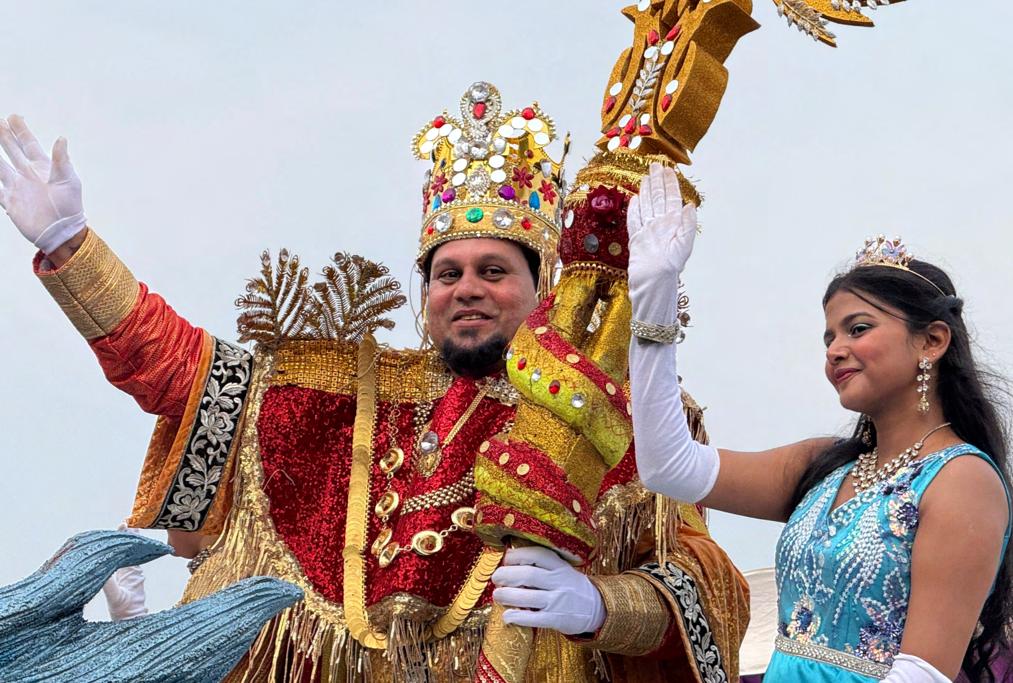
At the symbolic heart of it all stood King Momo — the jovial ruler who declared the days of eating,drinking,andmerrimentofficiallyopen. His proclamation was less about authority and moreabouttheatre:areminderthatforabrief time, everyday rules could be joyfully suspended.
FROM STREETS TO SPECTACLE: HOW CARNIVALCHANGED
As Goa changed, so did Carnival. The growth of tourism, urban expansion, and the need for crowd management slowly transformed the festival from an informal neighbourhood affair into a state-wide spectacle. By the late twentieth century, organised float parades became the backbone of Carnival celebrations, ensuring continuity while respondingtoscale.
This shift did more than change appearances; it created an ecosystem. Designers, artisans, tailors, musicians, dancers, carpenters, technicians, and choreographers found seasonal purpose in Carnival. What the audience sees as a few hours of splendour represents months of preparation behind the scenes.
Yet even as Carnival grew more structured, it retained its layered character. Alongside the grand parades, local traditions survived — none more striking than the Potekars of Divar, whose masked, eerie wanderings remind Goa that Carnival is also about folklore, imagination,andplayfulfear.
CARNIVAL 2026: BIGGER, SHARPER, MOREDELIBERATE
Carnival 2026 arrives in a Goa that is both confident and cautious. Public festivals today must balance freedom with responsibility, spectacle with safety, and tourism with cultural integrity. The planning framework for 2026reflectsthatreality.
Participationremainscentral.Floatcategories encourage large group involvement, reinforcing the idea that Carnival is not a performance by a few for many, but a collective act. At the same time, pre-approval
of themes and designs introduces a curatorial hand—nottodullcreativity,buttoalignitwith culturalsensitivityandpublicdecorum. Clear boundaries have been drawn. Obscene display,offensivesymbolism,andtheportrayal of religious figures are restricted, signalling an efforttokeepCarnivalcelebratoryratherthan provocative. Alcohol consumption on floats is prohibited, not to sanitise the festival, but to keepitsafe,inclusive,andfamily-friendly. Even technical details — from height restrictions to silent generators and camouflaged vehicles — reveal how carefully thespectacleisbeingengineered.Carnival,in 2026, is both spontaneous in spirit and meticulouslybuiltinpractice.
A FESTIVAL ON THE MOVE: THE CARNIVALTRAIL
One of Goa Carnival's most distinctive qualities is its movement. Unlike single-city festivals, Carnival travels — carrying its energy fromtowntotown,nightafternight.
Porvorim sets the tone, easing the state into celebration. Panaji follows with its wide avenues and riverfront air, where Carnival feels almost cinematic. Margao brings South Goa's rhythm into focus, while Vasco adds a maritime character shaped by docklands and breezes. Mapusa and Morjim close the circuit, where North Goa's exuberance meets open skiesandlate-eveningcrowds.
This journey is not accidental. It spreads economic activity, distributes crowds, and ensures that Carnival belongs to the entire state,notasingleurbancentre.
BEHIND THE GLITTER: THE CARNIVAL ECONOMY
For many, Carnival is joy. For others, it is livelihood. Hotels see occupancy spikes, taxis
and pilots work extended hours, restaurants hum, and street vendors thrive. But the economic ripple travels further — to tailors stitching costumes, carpenters building floats, sound engineers testing systems, and artists findingarare,high-visibilityplatform.
Carnival compresses months of economic activity into a short window, acting as a seasonal engine that benefits both formal and informal sectors. The 2026 framework, with its emphasis on discipline and planning, suggests an intent to keep this economic impact sustainableratherthanreckless.
TOURISM AND IDENTITY: WALKING A FINELINE
Carnivalisundeniablyatourismmagnet.Yetits powerliesinnotbecomingaperformanceonly for visitors. The challenge for 2026 is one Goa knows well: how to welcome outsiders without dilutingmeaning.
The answer appears to be balance. By foregrounding participation, cultural themes, and local groups, Carnival keeps its centre of gravity within the community. Tourists are invited to witness, join, and celebrate — not consumepassively.
WHYCARNIVALSTILLMATTERS
In a world crowded with festivals, Goa's Carnival endures because it does something rare: it transforms public space into shared emotional territory. For a few days, hierarchy softens.Age,profession,andbackgroundblur. Thestreetbecomescommonground.
Children see adults playful. Elders see tradition renewed. Visitors see Goa not as a destination, but as a living culture. That social alchemy is difficult to manufacture — and impossibletoreplace.
CARNIVAL AND THE FUTURE OF CELEBRATION
Carnival 2026 is not about nostalgia alone. It isabouthowtraditionadaptswithoutlosingits soul. It proves that celebration can be loud without being careless, grand without being hollow, and modern without forgetting its roots.
As the first float rolls out and King Momo's laughter echoes through the streets once again,Carnivalwilldowhatithasalwaysdone best: remind Goa that joy, when shared, becomesidentity.
For five days, Goa will wear its crown — not becauseitmust,butbecauseitknowshow.
THEGREATGOANPRICESHOCK
Why everything, from a cup of coffee to coastal property, suddenly feels unaffordable, and who is really benefiting?
By Gauri Ghadge
By the time the bill arrived at the beachside café, the sun had begun to sink behind the palms.Threecappuccinos,asliceofcake,and a mineral water — 2,250. One bill does not defineGoa,butitreflectsagrowingsentiment among residents: that the cost of everyday life intheirbelovedcoastalstateisrisingatapace thatfeelsdetachedfromwages,tradition,and livedexperience.
Across the length of Goa, whispers once confined to dinner tables and WhatsApp chats have become a collective murmur: everything feels expensive. A casual holiday in Goa now competes with destinations abroad; a local
family's monthly expenses inch ever upward; aspiring homeowners wonder if the dream of living here is still attainable. To understand this “price shock,” we must look beyond emotion to economics, demand, supply, and who, ultimately, gainsascostsescalate.
TOURISM AT RECORD LEVELS — BUT AT WHATCOST?
Goa's economy has always leaned heavily on tourism. In 2025, Goa recorded 1,08,02,410 tourist arrivals, the highest in its postpandemic recovery, according to official tourism department data. That surge reflects both confidence and demand; domestic
travellers form the bulk of this influx, and government efforts to boost connectivity. Recent policy incentives, including a 2 crore scheme to attract more airlines, further underline an official push to solidify Goa's tourismfootprint.
This success, however, has a paradox beneath it:Goahasbeendescribedasreceivingtourist footfalloversixtimesitsresidentpopulation,a scale that places immense pressure on infrastructure,services,andprices. When demand overwhelms supply, whether hotel rooms, local transport, or restaurant tables, prices tend to rise. That basic
economics is amplified in a concentrated geography like Goa, where capacity expansions are constrained by land scarcity, environmentalrules,andseasonality.
INFLATION THAT OUTPACES THE NATION
Goa's cost pressures are not just anecdotal; they are measurable. In mid-2025, the state recorded a 6.34% inflation rate, making it one of India's top inflation hotspots, second only to Kerala. This is notable because it stands well above the all-India consumer price inflation rate, which stood at 1.33% in December 2025, according to official CPI data. Part of the divergence arises from tourism-linked consumption and service pricing that disproportionately affects urban, coastal markets.
REAL ESTATE: ASSET BOOM MEETS LOCALBUDGETBUST
Real estate encapsulates the paradox most starkly.Goa'spropertymarketshavelongbeen a magnet for both investment and lifestyle migration.According to property listing data, the average listed price in Goa is around 13,400 per square foot, while the most expensive listings exceed 2.2 lakh per square foot, particularly in premium coastal micromarkets.
Yet the story is not one-directional inflation forever. Recent reports in 2025 pointed to a 15–20% correction in parts of Goa's hotel tariffs and real estate market, particularly in overheated North Goa segments, following the post-pandemic surge. Even so, the correction represents a relative plateau at high absolute levels, not a return to affordability. Furthermore, real estate corrections often lag
broader price rises, meaning locals feel the pinch long before markets stabilise. For a workingfamilyorafirst-timehomeowner,even adownwardadjustmentfromanextremepeak doesn'tchangetheirlivedpriceshock.
EVERYDAYEXPENSESAREPILINGUP
Let's return to the everyday: coffee, meals, transport,andutilities.
The inflation data shows that food and beverage pricing, a core part of daily spending, remains elevated in Goa relative to many benchmarks. Add transportation, housing, and service costs to the mix, and a pattern emerges: everyday inflation in Goa is notuniform,butconsistentlyabovemanyother partsofIndia.
In contrast, national statistics point to modest acceleration in consumer prices across the board, reflecting both urban and rural segments of the country. This gap, between nationwide data and what residents experience locally, is where the “price shock” feelsreal.
Social media and traveller reflections frequently surface complaints that Goa now rivals other destinations in cost, sometimes unfavourably. One comparative analysis suggested that, in certain year-end travel scenarios, the overall cost of a Goa holiday couldapproachthatofdestinationslikeBali.
WHOBENEFITS—ANDWHOISHURT?
A key question arises: who actually benefits fromthisrisingcostenvironment?
At the top of the beneficiary list are asset holders. Families with inherited land, property owners with prime beachfront or touristadjacent holdings, and developers who can monetise demand see capital gains that outpaceinflation.
Similarly, intermediary sectors — brokers, short-term rental managers, travel platformscollect fees that burgeon with volume, often detached from the cost structure faced by localsorsmallbusinesses.
Yet the broader picture is more mixed. Hospitality operators, for example, sometimes struggle with hidden costs, wage pressures, and uneven occupancy. Recent reporting notes that while room tariffs have adjusted, underlying expenses remain high for hotels andguesthousesalike.
The most acute pressure lands on three groups:
Ÿ Working residents and service sector employees, whose wages often don't keep pacewithlocalinflation.
Ÿ Small business owners, especially those withoutbuilt-inpricingpower.
Ÿ Young Goans aspiring to rent or buy local homes, confronting prices shaped by nonlocalwealthandinvestmentdemand.
The result is not just a cost increase but a cultural impact: locals adapting spending habits, families minimising discretionary outings,andlong-timeresidentsfeelingpriced outofoncefamiliarspaces.
AFUTUREATCROSSROADS
The dynamics fueling Goa's price shock are complex: heightened tourism, elevated inflation relative to national trends, asset market speculation, and concentrated demand in a limited geography. Yet the pressuresaretangible.
Balancing the prosperity that tourism brings with affordability for residents requires targeted policy action: diversified economic opportunities beyond tourism, creative housing and planning frameworks, and sustained investment in infrastructure that can diffusepeak-demandpressurepoints.
Goa's allure remains undiminished; its beaches, culture, and spirit are timeless. But for Goa to thrive not only as a destination but as a home for its residents, the state must navigate the fine line between economic successandsocialsustainability.
The price shock is real. The challenge now is to shape a system where the gains of this thriving economy are not just captured by a few, but shared in a way that allows everyday Goans to afford not just the café bill, but the life they love.
FOLLOW US ON
HOWTOURISMISQUIETLYERASINGGOA'SHISTORYANDHERITAGE
By Maitri Kashyap
Goa was never meant to be consumed at high speed. Its beauty unfolded slowly—through narrow streets, shaded courtyards, and silences broken only by church bells or the rustle of palm leaves. Yet today, Goa is being repackaged as a product: loud, fast, and endlessly marketable. Tourism, once a guest, hasbecomeanoccupier.
The most visible loss is architectural. Colonialera houses—once lived in, prayed in, argued in—arebeingflattenedorhollowedout,reborn as cafés with faux-Portuguese tiles and Instagram-friendly signage. What remains is not heritage but imitation. History is no longer preserved;itisthemed.
Party tourism has introduced a new visual language to Goa—neon lights, oversized hoardings, aggressive branding—that clashes violently with the region's understated
aesthetic. Traditional homes were designed to breathe with the climate; today's structures shout for attention. The result is visual noise overpoweringculturalmemory.
Urban planning has suffered too. Portugueseera street layouts, built for walking and communityinteraction,arebeingwidenedand reshaped for tourist traffic. Roads eat into old neighborhoods, parking lots swallow public squares, and UNESCO-listed zones are choked with cars, buses, and chaos. Heritage isnolongerexperienced—itisnavigated. Even sacred spaces are not spared. Churches in Old Goa, once centers of reflection, now function like crowded checkpoints. Temporary stalls, fencing, and tourist infrastructure dominate the surroundings, turning living heritage into a backdrop rather than a space ofreverence.
What's most unsettling is not change itself, but who the change serves. Goa's past is being curatedforoutsiders,whilelocalsareaskedto adapt, relocate, or perform versions of themselves. When heritage becomes entertainment, authenticity is the first casualty.
Goa is still beautiful—but beauty, when overused, fades. And history, when commercialized,forgetshowtospeak.
FOLLOW
FUTURE MERCURY
Where Strategy Meets Design, Building Brands with Purpose from Goa
By Rajesh Ghadge
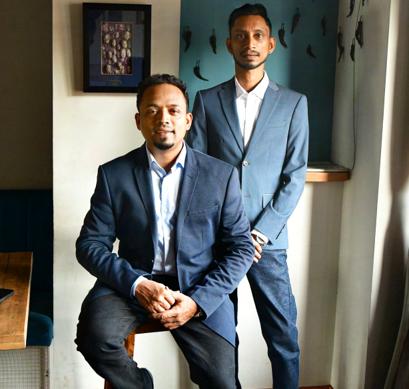
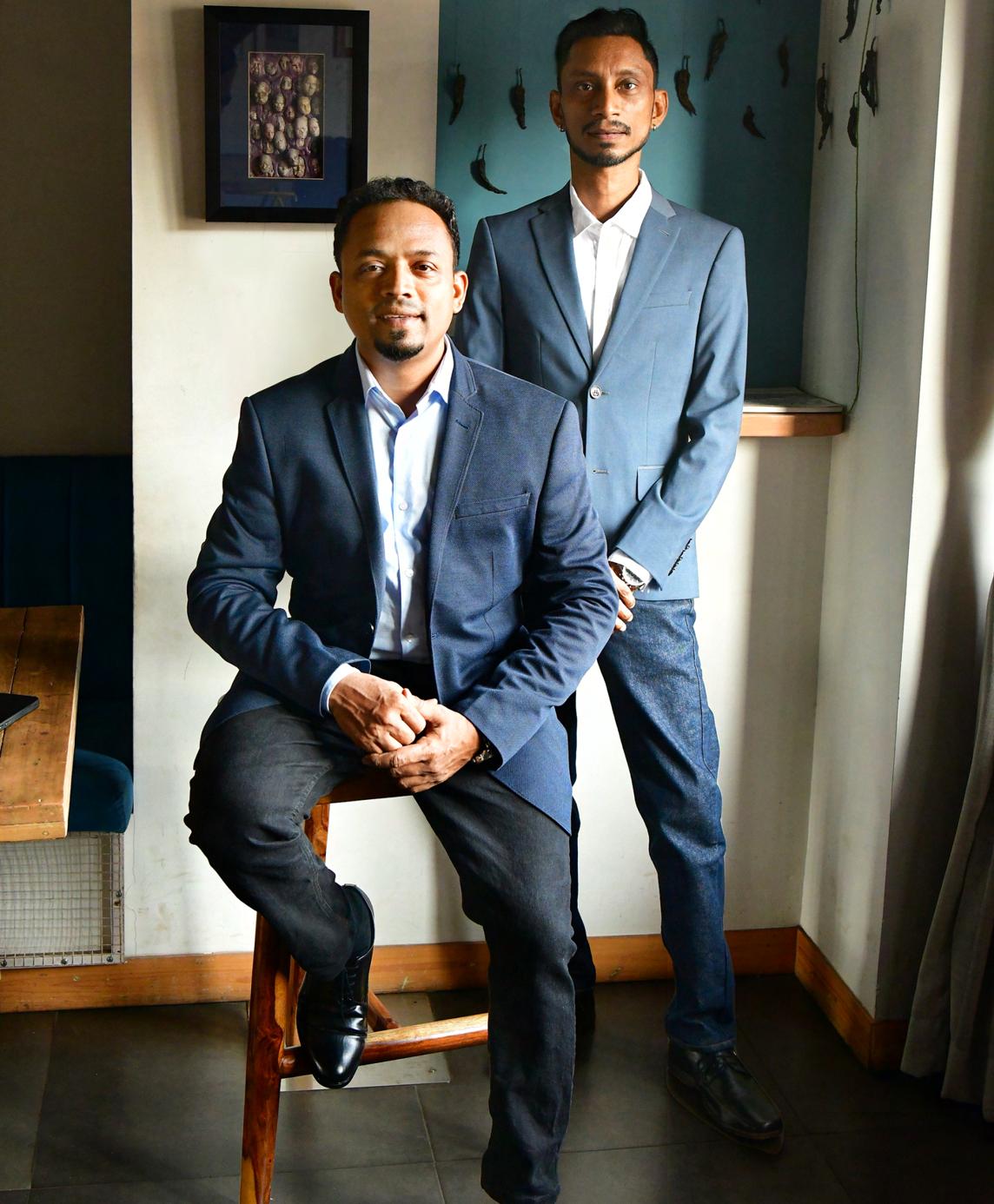
Goaisoftenseenthroughthelens of leisure. But beneath that postcard reputation, a sharper creative ecosystem is taking shape—one driven by founders who believe that brands don't grow on aesthetics alone. Future Mercury, founded by Jovi Duarte and Anup Volvoikar, represents that new wave: a studio built on a simple conviction—creativity must be anchored in strategy, and design must work like a system, notashortcut.
TWO STRENGTHS, ONE SHAREDBELIEF
Jovi Duarte (Co-Founder & Executive Director – Content, Strategy & New Business) brings nearlytwodecadesofexperience from Mumbai's advertising world, spanning mainline advertising, CRM, and integrated communications. Over the years, he worked across well-known brands such as Godrej Interio, MTV, Mahindra & Mahindra, Fiama Di Wills, Pantaloons, BookMyShow, and more—experiences that sharpened his understanding of consumer behaviour, brand psychology, and long-term communication. For Jovi, the real power of marketing appears when strategy, creativity, and executionalignseamlessly.
Anup Volvoikar (Co-Founder & Executive Director – Creative & Design)hasalwaysbeenrootedin visual language—how brands speakthroughdesign,storytelling, and identity. His approach is design-first, but not design-fordesign's-sake. He believes good design must solve problems,
communicate clearly, and remain consistent across platforms—because inconsistency is thefastestwaytobecomeforgettable. When their conversations about starting an agency began, the fit was immediate. Jovi's strategic clarity and Anup's creative discipline complemented each other naturally. Together, they weren't interested in building “just anotheragency.”Theywantedtobuildabrand partner—one that thinks deeply, creates responsibly, and delivers consistently across digitalandofflinetouchpoints.
THEGAPTHEYSAWINGOA
Before launching Future Mercury, both founders noticed a pattern: businesses were communicatingfrequently,butoftenwithouta definedpurpose.
Jovi felt what was missing was strategic thinking before execution. With digital growth, brand communication became “outputled”—more posts, more ads, more trends—yet fewerbrandswerestoppingtodefinewhythey were communicating in the first place. He also noticed that digital was often treated as a tactical add-on rather than a serious brandbuilding tool. Positioning, brand recall, consumer psychology, and long-term consistencywerebeingsidelined.
Anup saw a different—but connected—gap: the loss of design consistency and craft. Brands were relying on quick templates and short-termfixes.Thedeeperelementsofvisual communication—typography, hierarchy, storytelling, and emotional connection—were often overlooked. Many businesses lacked a strong identity system, resulting in brands that looked different everywhere and stood for nothingclearly.
Future Mercury was built to bridge that divide—bringing structured brand thinking and designintegrityintooneintegratedapproach.
A PARTNERSHIP THAT WORKS LIKE A SYSTEM
Ask them what makes their partnership successful, and the answer is balance—withoutego.
Jovi's role sits at the intersection of client understanding, direction, and decisionmaking. He focuses on the larger objective: wherethebrandistoday,whereitneedstogo, and how communication can support business outcomes. He trusts Anup completely on creative execution, while still questioning ideas when needed—only to refine them, not controlthem.
Anup brings a design-led mindset, focusing on quality, consistency, and execution excellence. He pays attention to how brand ideastranslateintovisualsystemsandwhether the final output truly reflects the brand's personality. With Jovi providing strategic clarity and direction, Anup is able to push
creativeboundarieswithoutlosingpurpose. Their shared formula is simple: challenge each other, align quickly, and always prioritise what isrightforthebrand.
BUILDING FROM GOA — THE ADVANTAGEANDTHEREALITY
Both founders intentionally chose Goa as their base while working on mandates beyond the state. For Jovi, Goa offers clarity of thought and a quality of life that supports better thinking. After years in a high-pressure metro environment, he believes creativity doesn't need chaos to thrive. Goa allows deeper planning and more meaningful relationshipbuilding.
Atthesametime,heacknowledgesthereality: Goa can be conservative and relationshipdriven in its marketing spends and risk appetite. Many clients need education before innovation. But once trust is established, loyalty is strong—and that trust becomes the foundationforlong-termwork.
ForAnup,Goaofferssomethingcrucial:focus. The space to build ideas thoughtfully, refine design systems, and maintain creative standards without distraction. The challenge, however, is talent availability and exposure. Their response has been to invest heavily in mentoring—hiring young talent, training interns, and building skills in-house. In their view, it's an advantage: they're not just hiring talent,they'reshapingit.
BRANDING THAT CREATES REAL BUSINESSIMPACT
Future Mercury's core belief is clear: branding mustdelivermorethan“good-lookingwork.” Jovi defines meaningful branding as clarity, consistency, and recall. Visuals are only powerful when aligned to a business objective—driving footfalls, building trust, improving conversions, or strengthening loyalty. Their process begins by understanding the business problem before touching design. Strategy leads, and every creative output is tied back to measurable goals—engagement, reach,performance,orrevenueimpact.
Anup adds another dimension: branding is where functionality and feeling must work together.Designmustguidebehaviour—where the eye goes, what action is taken, and how the brand is perceived over time. He views design as a system, not a one-off asset. Every layout, font, and visual element must support the brand's long-term identity. When design has intent, it stops being decoration and becomesabusinesstool.
CULTURE:CLARITYOVERCHAOS
In a fast-paced industry known for burnout, FutureMercuryisconsciouslybuildingaculture that respects both people and process. A key marker: they follow a five-day work week, because they believe creativity needs
breathingspace.
Jovi describes their culture as structured and purpose-driven—thinking before executing, and ownership over rushing. Anup emphasises trust and mentorship, where the team feels safe to experiment and grow without constant pressure. Their philosophy is practical: rested teams think better, and better thinking producesbetterwork.
CHALLENGESTHATSHAPEDTHEM Entrepreneurshiphastestedtheminrealways. Jovi highlights the challenge of finding the right talent in a growing market like Goa—something they've turned into a mentoring opportunity. He also notes the need to educate clients that quality work costs more, but also delivers long-term value. That learning has shaped how they operate: align expectationsearly,havehonestconversations, andworkwithbrandsthatrespecttheprocess. Anup points to slow technology adoption among clients and last-minute planning as recurring challenges. Brands often want digital results without embracing the systems andtoolsthatmakemarketingeffective.These realities have reinforced their commitment to being process-driven and positioning themselves as strategic partners—not just executionsupport.
QUICKFIRE:WHATTHEYSTANDFOR Jovi's inspiration: Apple, for clarity and consistency. His non-negotiable: honesty in communication. The quality young creatives must build: strategic thinking. Anup's inspiration: IKEA, for intelligent design and functionality. His non-negotiable: quality of craft. The quality young creatives must build:adaptability.
THEGOANARRATIVEISCHANGING Future Mercury's story is also a signal: Goa is evolving into a serious creative and entrepreneurial ecosystem. The lifestyle that once defined the state is now attracting creators, founders, and independent thinkers—people who can work on national mandateswithoutbeingtiedtometros. In a world of fast content and louder noise, Future Mercury is building something quieter, sharper, and more durable: brands that look intentional, think strategically, and grow with consistency.
FOLLOW
US ON
SWEET ARRIVAL
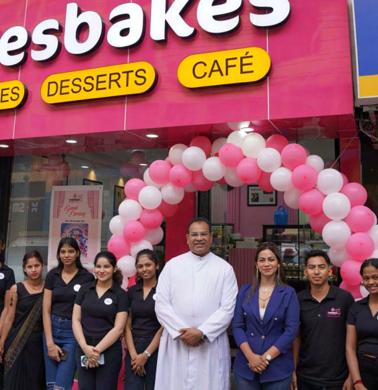
Nesbakes Brings Its Signature Bakes to Panjim
By IG TEAM
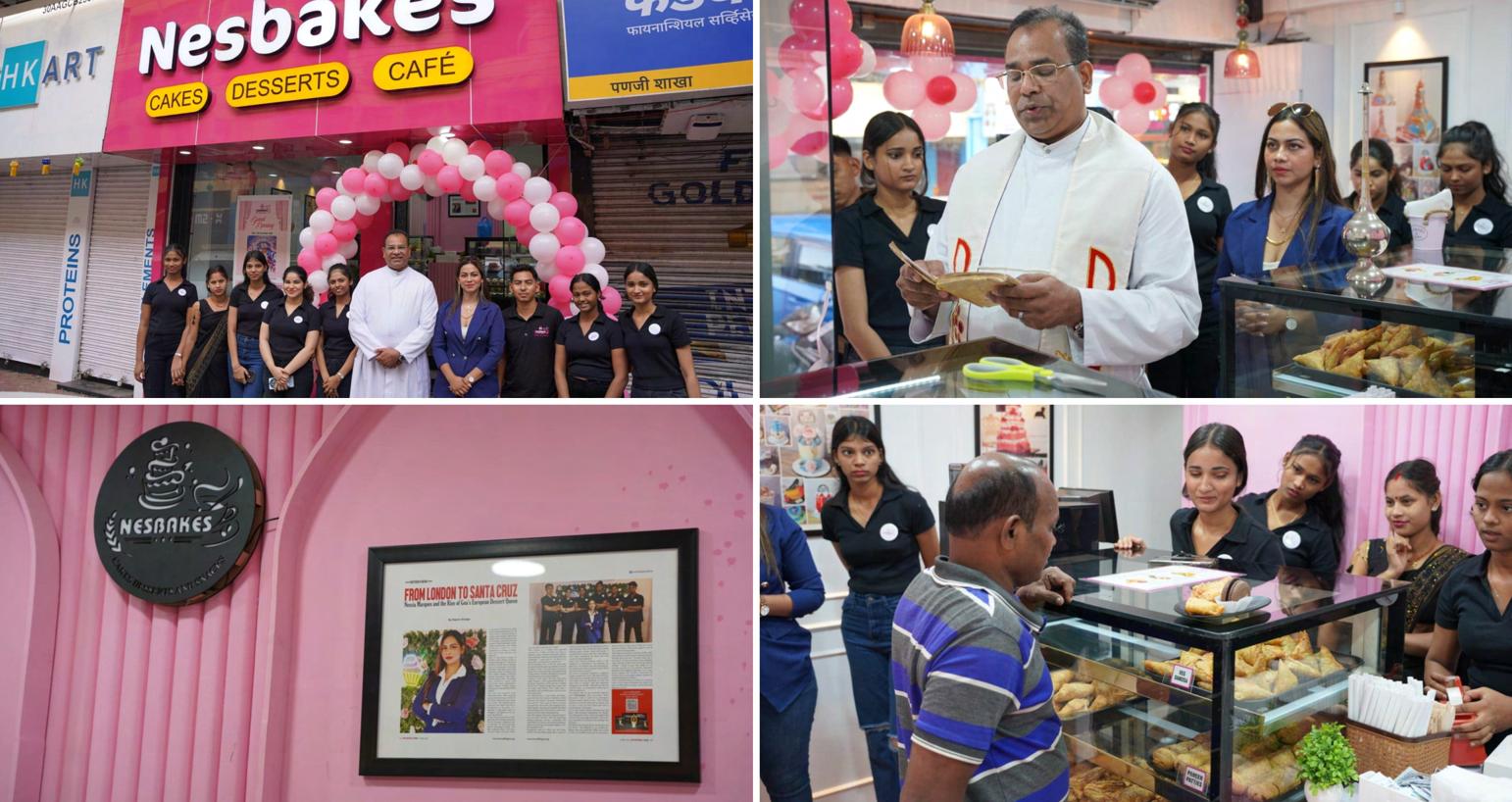
Panjim's food scene has a fresh new reason to celebrate — Nesbakes, the boutique bakery loved for its handcrafted desserts and artisanal bakes, has opened its newest outlet in the capital city. Located opposite St. Anthony's Chapel in Santa Cruz, the new space brings the brand's elegant, Europeaninspired pastry craft closer to Panjim's everyday coffee crowd, celebration shoppers, and visitors looking for something indulgent to takebackwiththem.
A BRAND BUILT ON HANDCRAFTED DETAIL
Founded by baker Nescia Marques, Nesbakes has quickly grown into a recognised name among Goa's dessert lovers — known for its premium finish, creative flavour combinations, and a style that balances classic techniques withadistinctlyGoanwarmth.Fromitsrootsin Santa Cruz, the bakery built a loyal following through its signature cakes, pastries, and seasonal specials that regularly light up social mediafeedsacrossthestate.
At the heart of the brand is a clear promise: desserts that feel thoughtfully made — not mass-produced — whether it's a celebration cake designed for a milestone event or a simplepastrypickeduponaweekday.
WHATPANJIMCANEXPECT
With this launch, Nesbakes expands its footprint and makes it easier for Panjim residents and tourists to enjoy its most-loved offerings. The new outlet aims to serve as a quick,comfortingstopforthoselookingtopair good coffee with something freshly baked, whilealsofunctioningasareliabledestination forcustomorders.
Expectatemptingspreadthatincludes:
Ÿ Fresh bakes like croissants, cookies, pastries,andmore
Ÿ Bespoke cakes on order for birthdays, weddings,andcelebrations
Ÿ Takeaway and delivery, including access viaplatformssuchasSwiggyandZomato THEBUZZAROUNDTHELAUNCH
The opening has already stirred excitement in
local foodie circles, with the brand inviting patrons to “step into Nesbakes” and discover their sweet lineup from morning through evening. Adding to the momentum, Nesbakes also received regional recognition in 2025, earning accolades as a rising newcomer in Goa'sculinaryspaceattheFoodConnoisseurs IndiaConvention(FCICWest)awards.
WHYTHISOPENINGMATTERS
Panjim's café-and-bakery culture is steadily evolving, with diners seeking artisanal experiencesalongsideheritagefavouritesand moderncafés.Nesbakesentersthislandscape as a polished, dessert-first destination — offering Panjim a new address for celebration cakes,butterypastries,andthatlittleluxurywe allcravebetweenbusycityhours.
Whether you're planning a special occasion, chasingtheperfectcroissant,orsimplylooking for a sweet stop in the capital — Nesbakes in Panjimisonelaunchworthtasting.
MEWA INDIA 2026
New Delhi Becomes the Global Hub for Nuts, Dry Fruits & Healthy Nutrition
By IG TEAM
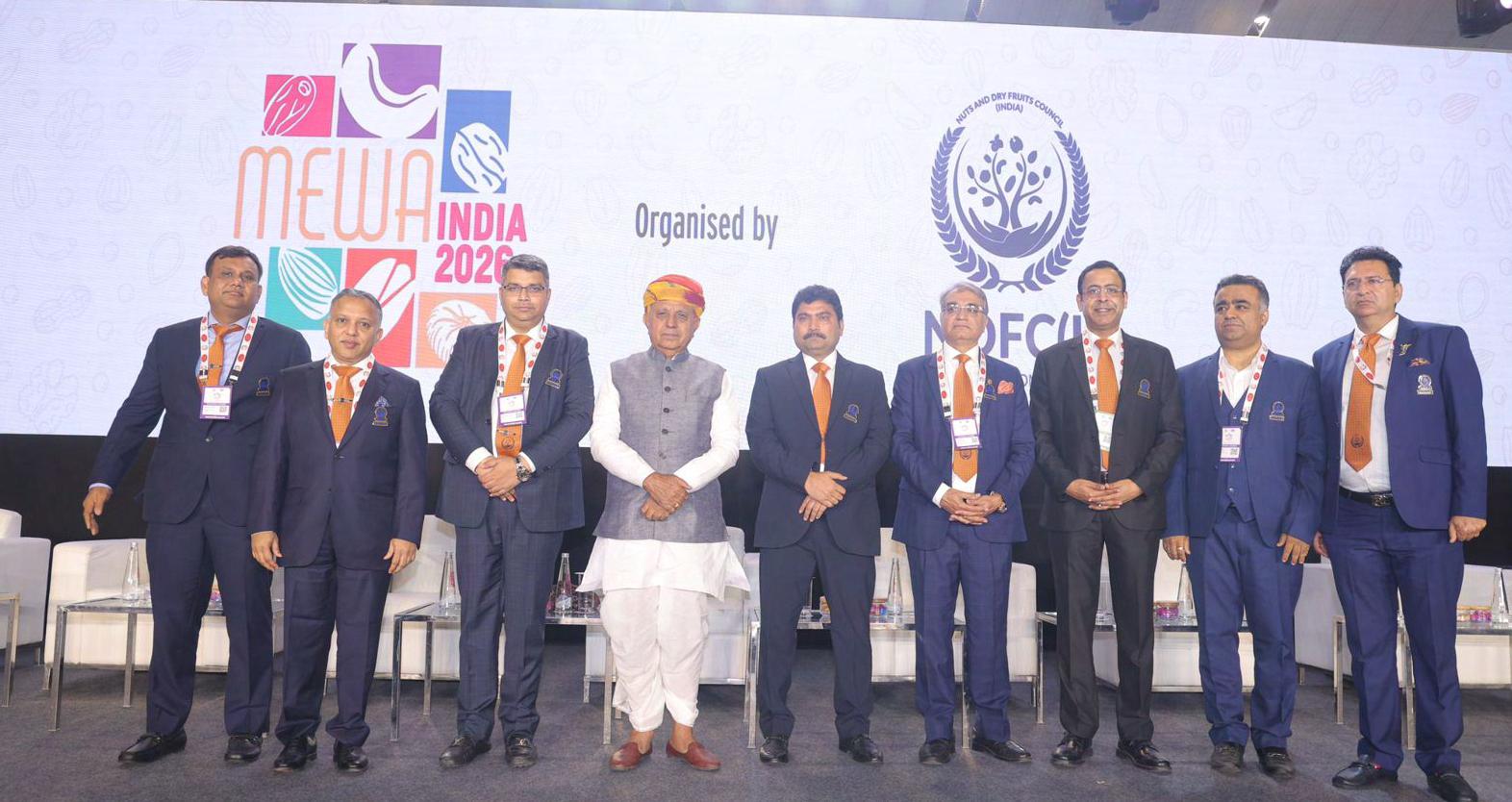
New Delhi turned into the epicentre of the global nuts and dry fruits trade on January 23, as the third edition of MEWA India 2026 opened its doors at Yashobhoomi, Dwarka. Running from January 23 to 25, the country's largest international trade show for nuts, dry fruits and value-added nutrition is bringing together the entire ecosystem — from origin and sourcing to processing, packaging, retail andlogistics—underoneroof.
Organised by the Nuts & Dry Fruits Council (India) [NDFC(I)], MEWA India 2026 is hosting over 10,000 business visitors, featuring 300+ exhibitors, and welcoming participation from more than 30 countries. The inauguration saw the presence of Shri Bhagirath Choudhary, Hon'ble Minister of State for Agriculture and Farmers Welfare of India, underlining the sector's growing importance in India's food andnutritioneconomy.
The buzz began even before the exhibition opened, with the MEWA Premier League on January 22 — a high-energy networking
initiative that connected industry leaders, tradeparticipantsandkeystakeholdersahead ofthemainevent.
From the United States, South America, the Middle East, Europe, Central Asia and Australia, exhibitors are showcasing a rich mix of offerings: premium nuts and dry fruits, berries, functional and value-added nutrition products,aswellasprocessingandpackaging machinery, logistics services, and technology solutions.TheparticipationoftheInternational Nut & Dried Fruit Council (INC) further amplifiesMEWA'sglobalreachandcredibility.
According to Gunjan Vijay Jain, President, NDFC(I),MEWAIndiahasevolvedintoacrucial bridge between India and the world's nuts and dry fruits ecosystem — strengthening trade linkages while spotlighting nutrition, health awareness and sustainable sector growth.
Col. Nitin Sehgal, VSM (Veteran), CEO, NDFC(I), highlighted the council's ongoing work with grower groups, FPOs, and state institutions to improve pre- and post-harvest
practices and market access — positioning MEWA as a true meeting ground for domestic stakeholdersandglobalqualityexperts.
A standout focus this year is women's participation — recognising the sector as one of India's most women-intensive food processing segments, especially in grading, sorting, packaging and value addition. Dedicated platforms for women-led enterprises, skill development, and leadership discussions are scheduled during the exhibition.
With curated buyer–seller meetings, retail connect programmes, industry dialogues and knowledge sessions on quality standards, logistics and trade readiness, MEWA India 2026 signals a bigger shift: India is not just a fast-growing consumer market — it is steadily becoming a serious hub for processing, packaging, value addition and global trade in thehealthysnackingeconomy.
HOSPITALITY BUZZ
PRE-BUDGET 2026
Tourism & Hospitality Seek Structural Reforms as Growth Pressure Builds
By IG TEAM
As India prepares for the Union Budget 2026, thetourismandhospitalitysectorispushingfor structural reforms that can sustain long-term growth—rather than short-term incentives. After emerging as a strong driver of recovery, employment and regional development, industry voices say the time has come to recognisetourismandhospitalitynotmerelyas a service segment, but as a serious infrastructure-ledgrowthengine.
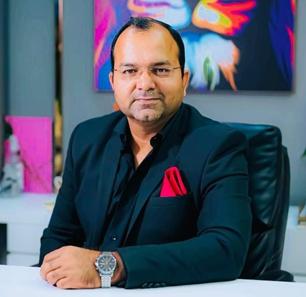
A key expectation is broader policy support that reflects the sector's capital-intensive nature. Dinesh Yadav, Founder and MD of Fine Acers, notes that hospitality is expanding rapidly, with growth fuelled by domestic tourism, the MICE segment, and the rise of experiential travel in Tier II and Tier III destinations.Butsustainingthismomentum,he argues, will require deeper changes. Among the most long-pending demands is to grant infrastructure status to the wider hospitality industry, not just select categories. Such recognition would help unlock long-term, lower-costfunding,vitalforhotelprojectsthat typically have long gestation periods and high upfrontinvestment.
Taxreformisanothermajortheme.Theindustry continues to seek GST rationalisation, particularly around room tariffs and bundled hospitalityservices,wherehighertaxslabscan affect price competitiveness and occupancyled growth. Stakeholders believe that a more
balanced GST structure could make travel more affordable and help destinations remain competitive, especially as tourists become increasinglyvalue-conscious.
Yadav also highlights the need for clearer policy recognition of newer financing models such as sale-leaseback, which can help developers recycle capital, strengthen balance sheets and attract institutional investment. Alongside this, he points to the urgency of single-window clearances, faster approvals, and standardised compliance processes across states—measures that could significantly reduce delays, cost overruns and frictioninprojectexecution.
become the backbone of India's tourism economyifBudget2026continuestoprioritise connectivity and infrastructure. He calls for stronger investment in airports, rail travel improvements, and broader infrastructural upgrades that make travel smoother and more accessible. He also echoes the industry's demand for industry status for travel and tourism,whichcouldeaseaccesstocreditand reduce financing costs—making travel more affordable for consumers while improving businesssustainability.
From the digital travel and destination discoveryspace,DrVikasKatoch,Founderand
CEO of Adotrip, underlines similar expectations: GST rationalisation, seamless compliance, and improved credit access. He adds that continued government support for sustainable tourism, heritage circuits, and domestic travel promotion will be critical for spreadingdemandbeyondafewhotspotsand enabling more balanced regional development.
In essence, the sector sees Budget 2026 as a strategic moment to reset the policy framework:infrastructurerecognition,rational taxation, easier financing, streamlined approvals, and sustainability-driven tourism planning. With domestic travel rising and India's global tourism appeal expanding, industry leaders believe these reforms can position tourism and hospitality as one of the country's most dependable engines of jobs, investment,andinclusivegrowth.
FOLLOW US ON
DineshYadav, Founder and MD of FineAcers
Govind Gaur, CEO, WanderOn
Dr Vikas Katoch, Founder and CEO,Adotrip
TRADITIONAL GOAN PRACTICES THAT WERE SUSTAINABLEBEFOREITWASFASHIONABLE
By Gauri Ghadge
In Goa, sustainability is not a new language imported with hashtags and conferences. It is an old grammar, quietly embedded in how homes were built to breathe through the monsoon, how kitchens stretched a catch into many meals, how water was stored and shared, and how village commons were governed as a living trust. Long before “eco” became a label, Goans practised everyday resilience: low-waste, climate-aware, and community-led—because the land demanded it.
ARCHITECTURE THAT WORKED WITH THECLIMATE,NOTAGAINSTIT
Traditional Goan homes were shaped by heat, humidity, and heavy rain. Deep porches and shaded transitional spaces, famously the balcão, created a social edge to the house while also acting as a buffer from sun and downpour. The balcão's steps and seating encouraged conversation, while the shaded, semi-outdoor space offered natural protection from heat and heavy rain in a coastalclimate.
Materialswerelocalandlogical.Inmanyparts of Goa, laterite was widely used; thick laterite walls, often finished with lime plaster, helped regulate indoor comfort and moisture in Goa's humidcoastalconditions.Lime-basedfinishes, used widely in historic building traditions, help walls cope with moisture by remaining more vapour-permeable than modern sealing paints. In a coastal climate, that is not decoration;itisdurability.
Across many older Goan homes, generous openings, shaded verandahs, and deep roof overhangs were common features, helping
reduce heat and monsoon impact without heavymechanicaldependence.
Sustainability here was also social design. The balcão and verandah functioned as informal public rooms: neighbours paused, news travelled, and small conflicts softened in conversation. When architecture creates everyday interaction by default, it strengthens the support networks that matter most during storms, sickness, and economic stress. A sustainable settlement is not only energyefficient;itissociallystitchedtogether.
Even daily habits echoed this thrift: cloth shopping bags, leaf plates at feasts, and repairing tools before replacing them kept consumption low, turning restraint into routine ratherthansacrificeforfamilies.
FOOD THAT HONOURED SEASONALITY ANDPRESERVATION
Goan food traditions evolved from a practical truth: what the sea and fields provide today may not be available tomorrow. The cuisine's backbone:rice,seafood,coconut,andsouring agents such as kokum, reflects a coastal ecology and a seasonal mind. In home kitchens, preservation was not a lifestyle choice; it was preparedness. Fish was salted
and dried, seasonal produce was pickled, and masalas were ground and stored so that flavour and nourishment could last through weeksofmonsoonhumidityandroughseas. This pantry culture had its own rhythm. Across coastal Konkan food traditions, preservation throughdrying,salting,andpicklingevolvedas a practical response to seasonality and monsoondisruption.Thelogicwascircular:eat what is abundant when it is abundant, preserve what you can, waste little, and cook with respect for labour. Modern sustainability language calls this seasonal eating and foodwastereduction.Traditionalpracticetreatedit ashouseholdwisdom.
It also carried an ethics of total use. Coconut was used in multiple forms, grated, pressed, and toasted; leftovers were repurposed; gravies were stretched rather than discarded. Eventhebalanceofsour,sweet,andheatwas more than taste. Souring agents such as kokum shaped flavour profiles suited to a humid, coastal kitchen, where careful storage and preservation mattered. What looks like romance on a plate is often a smart response toweather,storage,andscarcity.
WATER SYSTEMS SHAPED BY RAIN,
LATERITE,ANDCOMMONSENSE
Goa receives abundant rainfall, but water security has never been automatic. Traditional water systems treated monsoon rain as a harvest. Wells, springs, and community tanks were maintained as shared assets. Goa's groundwater occurs largely in laterite and weatheredrock,anddugwellshavelongbeen a practical household source, especially in rural villages. These systems were decentralised: instead of depending on a single distant pipeline, communities relied on many nearby sources, so a single breakdown didnotbecomeacrisis.
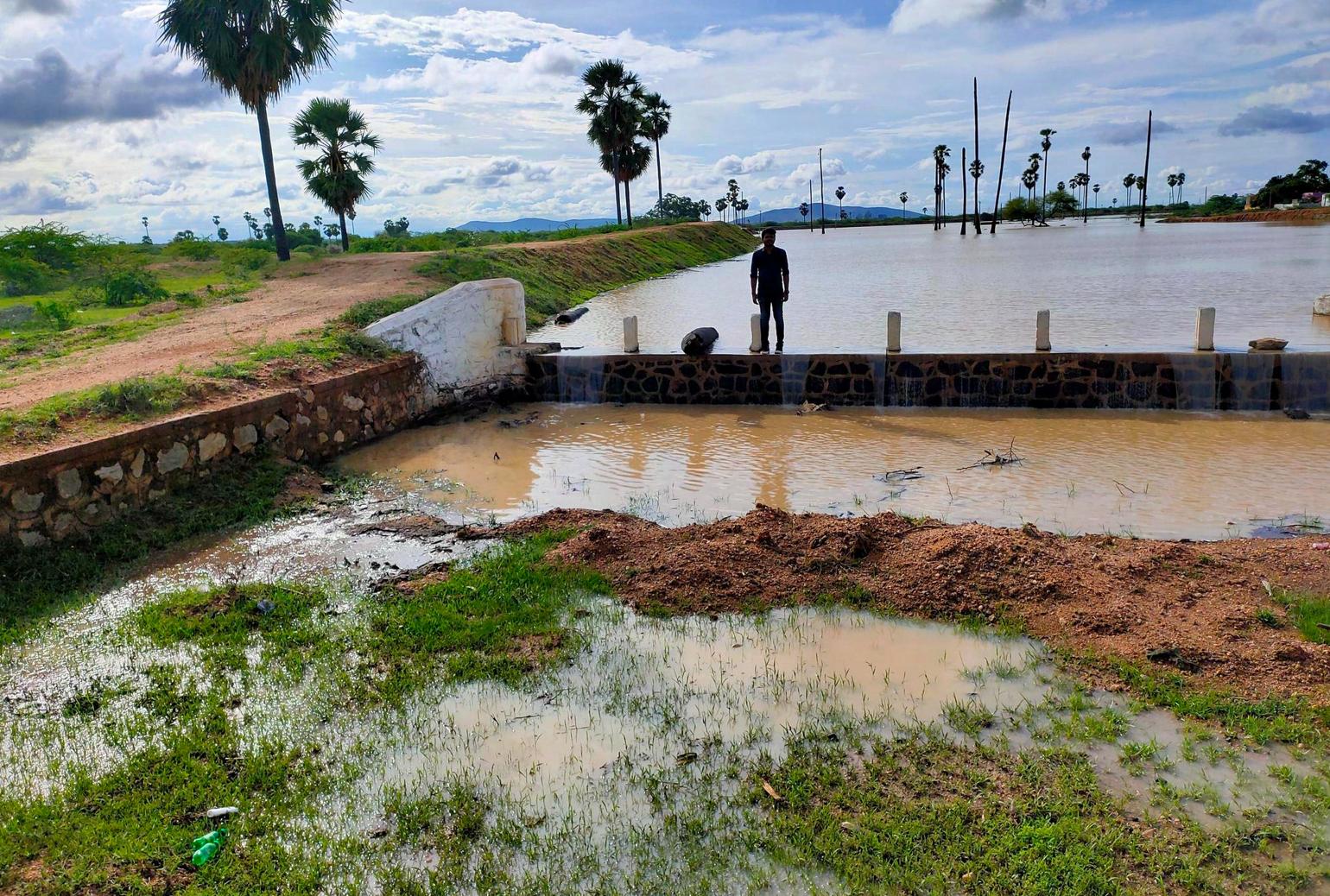
The most sophisticated example of Goan land-and-water engineering is the khazan system: reclaimed coastal wetlands managed through bunds, canals, and sluice gates that balance freshwater and tidal flows, supporting agriculture alongside allied fisheries and aquaculture in brackish coastal landscapes. Khazans were not merely farms; they were adaptive infrastructure. Embankments protected fields and settlements from saline intrusion and tidal surges, while sluice gates regulated salinity and reduced waterlogging, supporting
SUSTAINABLE GOA
agriculture and fisheries within the same brackishlandscape.
What makes Khazans feel astonishingly modern is their systems thinking. They treat nature as cycles to be managed, not conquered: the tide is not an enemy, it is a rhythm; the monsoon is not chaos, it is a resource. And because the whole system fails if one segment fails, Khazans created a discipline of shared maintenance: communal, scheduled,andnon-negotiable.
COMMUNITY WISDOM: THE VILLAGE ASASUSTAINABILITYINSTITUTION
Perhaps Goa's most overlooked sustainable practice is governance, how resources were collectivelymanaged.Thecomunidadesystem (rooted in the older gaunkari tradition) historically held village lands in collective ownership, with village assemblies making decisions and cultivable land leased out for fixed periods, commonly via auction. Over time, the system evolved in different ways, but its original principle was clear: land and water were community assets first, private benefits second.
Khazans, too, were maintained through village-level groups with defined roles, because a bund neglected by one household could flood everyone. The system depended onsharedlabourandacultureofstewardship, an ethic that modern sustainability often tries
to recreate through committees and campaigns. In Goa, it was woven into survival and, at its best, into pride: to repair the bund was to protect your neighbour, your harvest, andyourfuture.
RITUALS THAT CARRIED ECOLOGICAL MEMORY
Goa's rituals often doubled as ecological memory. Konsachem Fest in Raia, associated with Our Lady of Snows Church, includes the offering of paddy sheaves as thanksgiving for the harvest. Such traditions acted like community calendars: they signalled seasonal change, coordinated collective labour, and kept agrarian knowledge alive even as livelihoodsdiversified.
WHAT THESE TRADITIONS TEACH SUSTAINABLEGOATODAY
None of this is an argument to romanticise the past. Traditional systems had limits; they also relied on social cohesion that modern life has strained. But their lessons are practical, not sentimental.
First, decentralise resilience. Protect and revive wells, springs, and community tanks as functional back-up, not as heritage ornaments. Second, treat khazans as living infrastructure, not leftover land banks. Maintaining bunds and sluice systems is often cheaper than repairing flood damage and losing coastal livelihoods that have adapted
over centuries. Third, design buildings to reduce energy use by default, shade, ventilation, and thermal mass, before adding machines,glassboxes,orexpensivematerials. Goa does not need to invent sustainability. It needs to remember it, strengthen it with modern science, and protect it with modern policy. The most future-ready ideas in Goa are often the oldest: a porch that cools and connects, a pantry built for monsoon reality, a well that belongs to everyone, and a wetland farm that treats tide as a partner. In a time when climate solutions are sold as novelty, Goa's traditional wisdom offers something rarer: a way of living tested by weather, time, and community, ready to guide a hotter, wetter,moreuncertainfuture.
BORDER2A New War, a New Generation, and Bollywood's Big Republic Day Bet
When Border released in 1997, it redefined patriotic cinema in India. Rooted in the Battle of Longewala, the film combined large-scale war spectacle with emotional restraint, leaving behind characters and moments that continue to resonate decades later. Nearly 30 years on, Border 2, set for release on January 23, 2026, returns to that legacy — not as a remake, but as a carefully positioned continuation for a new era.
SUNNY DEOL RETURNS WITH PERSONAL HISTORY
At the centre of Border 2 is Sunny Deol, whose association with the original film remains one of the most iconic chapters of his career. His return immediately anchors the sequel in familiarity, lending it emotional continuity and credibility. What makes this return especially meaningful is Sunny Deol's own reflection on cinematic lineage. He has spoken about how his father Dharmendra's 1964 war classic Haqeeqat left a lasting impression on him and shaped his understanding of how patriotism should be
portrayed on screen — with dignity, restraint, and emotional depth rather than spectacle alone.
That influence, Sunny Deol has indicated, informed his connection with Border and continues to guide his involvement with Border 2. In many ways, the sequel becomes part of a generational continuum of Indian war cinema — passing values from Haqeeqat to Border, and now forward to a new audience.
A NEW GENERATION JOINS THE FRANCHISE
Border 2 expands its reach with a confirmed ensemble cast that blends legacy with contemporary star power:
Ÿ Sunny Deol, returning as the emotional anchor
Ÿ Varun Dhawan, taking on a serious, uniformed role that marks a shift from his commercial image
Ÿ Diljit Dosanjh, bringing restrained intensity and pan-India appeal
Ÿ Ahan Shetty, representing the next
generation of actors stepping into patriotic cinema
This deliberate mix signals a conscious transition — honouring the past while ensuring relevance for today's audience.
A BROADER MILITARY CANVAS
Unlike the original Border, which focused primarily on a single frontline episode, Border 2 is structured to showcase multiple branches of India's armed forces. The film expands its scope to include stories inspired by courage across the Army, Air Force and Navy, broadening both emotional and narrative scale while staying rooted in realism.
REPUBLIC DAY TIMING: A STRATEGIC CHOICE
Releasing on January 23, just ahead of Republic Day, positions Border 2 as one of the most significant theatrical events of the year. The timing reflects confidence — and respect for the subject — aligning the film with national reflection rather than festival spectacle.
MORE THAN NOSTALGIA
Border 2 carries responsibility as much as expectation. War cinema today exists in a more discerning cultural space, where audiences expect sincerity over slogans. The challenge lies in honouring sacrifice without exaggeration — a balance Haqeeqat achieved decades ago, Border upheld in the 1990s, and Border 2 now seeks to carry forward.
A LEGACY REINTRODUCED
Ultimately, Border 2 is not about recreating the past. It is about continuing a tradition of patriotic storytelling across generations — one that began with Haqeeqat, evolved with Border, and now speaks to a new India. When Border 2 arrives in theatres this January, it does so not as a sequel alone, but as a film carrying the weight — and responsibility — of history.
AWARENESS
How Reality Is Being Rewritten Online DEEPFAKES,AIVOICESANDEDITEDTRUTH
Not long ago, seeing was believing. A video clip, an audio recording, or a photograph carried an implicit promise of truth. Today, that promise is weaker than it once was. In the age of artificial intelligence, reality is increasingly editable — and the line between what is real and what is manufactured can look uncomfortably thin. Deepfakes, AI-generated voices, manipulated videos and digitally altered images are no longer niche experiments. They are increasingly accessible, and in many cases convincing enough to mislead viewers at first glance — reshaping how information spreads and how trust is formed online.
WHAT ARE DEEPFAKES — REALLY?
Deepfakes are media created or altered using artificial intelligence to imitate real people. This can include videos where faces are swapped, audio that mimics a person's voice, or images that place individuals in situations that never occurred. Unlike traditional editing, these tools use machinelearning systems trained on large amounts of data, allowing them to replicate expressions, tone and movement with striking realism. What makes modern deepfakes especially dangerous is not only their sophistication, but their speed and scale. Manipulated clips can be produced quickly and shared widely
before context catches up.
WHEN AUDIO BECOMES A WEAPON
AI voice cloning has added a new layer of concern. In some cases, even brief audio samples can be used to create a voice that sounds close enough to the original to fool people — and this has been exploited in impersonation fraud and misinformation. A voice that sounds familiar is no longer guaranteed proof of authenticity. The instinct to trust a known voice can be used against people, especially when the message creates urgency or fear.
THE ILLUSION OF AUTHENTICITY
Manipulated media thrives because it feels credible. A shaky video, a blurred image or an emotional clip can appear “more real” than polished content. Add urgency, outrage or panic, and critical judgment weakens. Social platforms may also amplify such content when it triggers strong engagement, even when accuracy is uncertain. Importantly, manipulated media does not need to convince everyone. Often, it only needs to create doubt, confusion or division. Even after a correction appears, the emotional impact can linger.
WHY THIS IS AN AWARENESS ISSUE, NOT ONLY A TECH PROBLEM
Technology enables manipulation, but human behaviour is the real pressure point. A lot of misinformation spreads not because people are malicious, but because they are rushed, emotionally triggered, or unaware of how easily content can be faked.
Awareness becomes the first line of defence. Once people accept that audio and video are not automatic proof, they start interpreting content with needed caution.
HOW TO NAVIGATE A DISTORTED DIGITAL REALITY
A few habits can significantly reduce risk:
Ÿ Be cautious with sensational or emotionally charged media
Ÿ Cross-check with multiple credible sources before believing or sharing
Ÿ Question clips that appear without clear context, date or attribution
Ÿ Be sceptical of content demanding urgent action or immediate forwarding
Ÿ Remember: high realism does not equal authenticity
These steps do not require technical expertise — only restraint and critical thinking.
THE FINAL WORD
Reality has not disappeared — but it now requires effort to recognise. In a landscape where images can lie, and voices can deceive, awareness is no longer optional. It is a modern survival skill.
In the age of deepfakes and edited truth, believing less — and verifying more — may be the most responsible thing we can do.
STARTUP FROMVALUATIONTOVIABILITY
The New Metrics That Matter in Today's Startup World
For years, the startup ecosystem was driven by a single obsession: valuation. Headlines celebrated big numbers, funding rounds were treated like finish lines, and growth was often pursued faster than foundations could be built. But the landscape has matured. In today's more disciplined environment, valuation alone is no longer seen as sufficient to define success. Viability is. Founders, investors, and operators are increasingly asking tougher questions — not only about how quickly a company can grow, but how reliably it can sustain itself. At the centre of this shift are three practical indicators that matter across industries: profitability, retention, and cash flow.
PROFIT IS NO LONGER A DIRTY WORD
Once viewed as something to worry about “later,” profitability has returned to the centre of serious startup thinking. This does not mean every early-stage company must be profitable immediately. But it does mean that a clear, believable path to profit is now expected far earlier than before.
Startups that understand unit economics — what it costs to acquire and serve a customer versus the value that customer
generates over time — are better prepared for uncertainty. Profitability reflects pricing discipline, operational control, and a business model that can stand on its own rather than depend indefinitely on external capital.
In a market where funding may not always be available on demand, a path to profitability is harder to ignore.
RETENTION REVEALS REAL VALUE
Growth numbers can look impressive, but retention shows what happens after the first transaction. A product that customers return to, renew, or recommend is demonstrating real value. Strong retention reduces dependency on constant marketing spend and supports steadier, healthier growth. Retention also reflects trust. In a world where customers have endless alternatives, staying loyal is a choice. That is why retention is one of the most useful signals of product-market fit — and one of the hardest outcomes to manufacture consistently over time.
CASH FLOW IS THE OXYGEN OF THE BUSINESS
Revenue may look strong on paper, but cash flow shapes day-to-day stability. A startup
can be “growing” and still struggle if payments come late, expenses rise faster than collections, or burn is misunderstood.
Healthy cash flow creates breathing room. It allows founders to make strategic decisions without panic, invest carefully, and handle slow periods without becoming instantly dependent on the next round. Poor cash flow, even in high-revenue businesses, increases vulnerability. In practical terms, this means tighter expense control, realistic forecasting, and a clear understanding of burn rate — not as a badge of ambition, but as a measure of sustainability.
WHY THE SHIFT MATTERS
This move from valuation to viability signals maturity. The ecosystem is placing more weight on execution, discipline, and durability — the traits that build companies capable of lasting. Many investors are paying closer attention to fundamentals, and founders are recognising that long-term credibility is built through performance, not hype.
THE FINAL THOUGHT
Valuations can rise and fall with sentiment. Viability is what remains when conditions change. Startups that prioritise profit, retention, and cash flow are not thinking smaller — they are thinking stronger. In today's startup world, success is no longer only about how big you look. It's about how solid you are underneath.
ALWAYSONLINE,ALWAYSEXHAUSTED
How Technology Is Rewriting Human Attention
There was a time when distraction arrived occasionally — a ringing phone, an unexpected knock, a breaking news alert. Today, for many people, distraction has become far more frequent. Screens wake us up, follow us to work, sit beside us at meals, and remain within reach until sleep. Being connected is now the default state, and with it comes a quiet fatigue that many struggle to explain.
This exhaustion is not only about technology “failing” us. It is also about how deeply technology has embedded itself into daily attention.
THE RISE OF SCREEN FATIGUE
Screen fatigue is not limited to sore eyes or stiff necks. It can be cognitive, too. Endless scrolling, rapid content switching, and prolonged screen exposure place sustained demands on attention. The brain is asked to process messages, visuals, updates, and media with fewer natural pauses than earlier forms of communication allowed. Over time, this pace can make mental recovery harder. Tasks may feel heavier. Focus can feel more fragile. Even leisure content may begin to feel tiring rather than restorative.
NOTIFICATIONS: SMALL INTERRUPTIONS, BIG IMPACT
Many apps and services are designed to pull attention back through pings, vibrations, banners, and previews — even when the message is not urgent. Individually, such interruptions can seem harmless. Collectively, they can fragment concentration. Research on attention and interruptions suggests that frequent disruptions can make it harder to return to deep focus. The cost is not only lost time, but a loss of mental continuity — the steady thread of thought that supports reflection, creativity, and careful decision-making.
THE ATTENTION ECONOMY AT WORK
Much of this design is not random. Digital platforms often operate in an attention economy, where engagement is valuable. Feeds refresh endlessly. Content is personalised to increase relevance and time spent. Algorithms learn what keeps users watching, scrolling, or tapping — which does not always align with what leaves people feeling calm or satisfied. This can create an imbalance: platforms optimise for engagement signals, while users experience more distraction and less
sustained focus.
WHY MULTITASKING FEELS NORMAL — AND OFTEN ISN'T
Switching between apps, messages, videos, and work tasks has become routine. While it can feel productive, rapid switching increases mental load. Rather than performing complex tasks at the same time, the brain often shifts quickly between them, which can make thinking feel scattered. Over time, this pattern can train attention to expect novelty and interruption, making sustained focus feel unusually difficult.
RELEARNING FOCUS IN A DIGITAL WORLD
The solution is not abandoning technology, but using it with greater intention. Practical habits can help restore balance: reducing non-essential notifications, creating screen-free windows, using devices for single tasks, and separating work screens from leisure time when possible.
These habits do not reject connectivity; they protect attention.
THE FINAL WORD
Technology has reshaped how we communicate, work, and relax. It has also reshaped how we pay attention. Being always online has made information abundant, and focus more precious.
In a world that constantly competes for attention, choosing when — and where — to give it may be one of the most important decisions we make each day.
SPORTS
INDIANRACINGFESTIVAL2026
Goa to Host The
Event
Mopa Street Circuit on February 14–15
Goa will step onto India's motorsport calendar in a big way as the Indian Racing Festival 2026 heads to the Goa Street Circuit near Manohar International Airport, Mopa, on February 14–15, 2026. The dates and venue were announced publicly by the state leadership, positioning the event as a high-visibility sporting weekend intended to strengthen Goa's profile beyond its traditional tourism identity.
For a state best known nationally for football culture, beaches, and hospitality, a professionally staged street race adds a new dimension to Goa's sporting narrative. The Mopa location is also notable for its connectivity — an important factor for any event that involves teams, technical operations, media movement, and crowd management at scale.
A STREET CIRCUIT IN GOA: WHY IT MATTERS
Unlike permanent racetracks, street circuits are temporary. They require a race-ready layout to be created within an existing environment using barriers, safety infrastructure, and controlled access. That complexity is exactly what makes them headline events: the format turns a public setting into a high-adrenaline sporting arena for a limited window — and demands tight
planning and coordination.
Reports around the Goa Street Circuit also underline that the venue plan changed after objections and protests linked to the earlier proposed location in the Mormugao/Vasco region, leading the organisers to shift the event to the Mopa area.
WHAT THE INDIAN RACING FESTIVAL BRINGS
The Indian Racing Festival weekend is being presented as a major motorsport attraction, and coverage indicates it will include championship racing at the Goa Street Circuit during the February 14–15 window. While full programme details, schedules, and final participant lists are typically released closer to race week, the confirmation of dates and venue alone is enough to signal the seriousness of the plan: street races require long lead times for safety, approvals, route control, and on-ground execution.
BEYOND SPORT: TOURISM, VISIBILITY, AND A
NEW AUDIENCE
Motorsport events do more than entertain. They attract a distinct audience segment — fans who travel for experiences, brands that associate with speed and technology, and media coverage that reaches well beyond the host city. In official messaging around the announcement, the event has been
positioned as a boost to sports tourism and broader economic opportunity, alongside inspiration for youth.
THE BIGGER SIGNAL
At its heart, the Indian Racing Festival 2026 in Goa is not just a two-day spectacle. It is a statement of intent: that Goa wants to be seen as a destination capable of hosting technically demanding, professionally managed sporting events — and that its sports identity is evolving.
When engines fire up at Mopa this February, Goa won't just be hosting a race. It will be testing — and showcasing — a new kind of ambition.
YUGEN INFRA SECURES MAHARERA REGISTRATION FOR 'GARDEN OF EDEN', PHASE 2 OF YUGEN
Yugen Infra has achieved a key regulatory milestone with the receiptoftheProjectRegistration Certificate from Maharashtra Real Estate Regulatory Authority (MahaRERA) for Garden of Eden, the Phase 2 residential plotted developmentofitsflagshipYugen Golf City project. The development represents a total investment of approximately 350
crore, underscoring the company's long-term commitment to structured townshipdevelopment.
Notably, the entire project is being funded solely by Yugen Infra, without any external institutionalorcorporatebacking. This self-funded model highlights the company's strong financial planning and confidence in its
township-ledgrowthstrategy.
Located at Village Banda in Taluka Sawantwadi, District Sindhudurg, Maharashtra, Garden of Eden spans a gross land area of around 1.8 lakh square metres and offers 278 premium residential plots. Designed to support independent villas and holiday homes, the project caters to buyers seeking second homes, senior living options, or long-term land banking opportunities. Its proximity to the Mopa influence corridor further strengthens its appeal as a strategic real estate investmentdestination.
In line with RERA norms, the project complies fully with statutory financial safeguards, including the mandatory escrow mechanism, wherein 70% of customer collections will be deposited into a designated RERA account and utilised strictly for land and construction-related expenses. All approvals, layouts, disclosures, and project details have been duly uploaded on the
GOLF CITY
MahaRERA portal, ensuring transparency and buyer confidence.
The development also features a comprehensive internal infrastructure plan, including internal roads, water supply, underground drainage, electricity provisioning, stormwater management, green buffers, and open spaces—creating a balanced, low-density township environment.
Commenting on the development, Sheeshram Yadav, Managing Director, Yugen Infra, stated that the MahaRERA registration reinforces the company's commitment to compliant, responsible, and future-ready real estate development.
With its golf-integrated township vision and infrastructure-first approach, Garden of Eden marks another significant step in Yugen Infra's expanding footprint along the North Goa–Sindhudurg growthcorridor.
GOA TARGETS 100% RENEWABLE ENERGY BY 2050 UNDER CLEAN ENERGY ROADMAP - GOA
Goa has set an ambitious and forward-looking goal of achieving 100 per cent renewable energy by the year 2050, with the state government formulating a comprehensive Clean Energy Roadmap to drive this transition.
Chief Minister Pramod Sawant
said the roadmap outlines a phased and practical strategy to significantly reduce Goa's dependence on fossil fuels while accelerating the adoption of cleanenergyalternatives.
The roadmap focuses on expanding renewable energy
sources such as solar power, bioenergy, and green hydrogen, with implementation planned across major sectors including power generation, transport, tourism, and industry. By integratingcleanenergysolutions into these sectors, the government aims to balance economic growth with environmentalresponsibility.
The Chief Minister highlighted that the initiative reflects Goa's strongcommitmenttosustainable development, climate action, and long-term energy security.
Beyond reducing carbon emissions, the roadmap is expected to enhance energy resilience and create new opportunities in green jobs, innovation,andcleantechnology.
With this long-term vision, Goa aims to position itself as a model state in India's renewable energy transition, demonstrating how
smaller states can lead with policy clarity and environmental foresight. The Clean Energy Roadmap is expected to play a crucial role in shaping Goa's future as a greener, more sustainable destination while contributing meaningfully to national and global climate goals.
EXPORT DUTY ON LOW-GRADE IRON ORE COULD DISRUPT GOA MINING SECTOR: GMOEA
The Goa Mineral Ore Exporters' Association (GMOEA) has raised strong concerns over reports suggesting the possible imposition of export duty on lowgrade iron ore, warning that such a move could severely impact mining operations in Goa. In a formal representation to the Centre, the association urged the government to refrain from introducing export duties on iron ore below 58 per cent Fe, which
constitutes the bulk of Goa's mineraloutput.
In a letter addressed to Piyush Goyal, GMOEA highlighted that Goan iron ore is predominantly low-grade with higher impurities and has historically been exportoriented due to limited domestic consumption options. The association noted that average ironoregradesinGoaarearound 54 per cent Fe, making them largely unsuitable for domestic
steelmaking, where higher-grade alternatives are readily available from otherregions.
GMOEA Joint Secretary Glenn Kalavampara stated that frequent and ad hoc fiscal interventions, such as export duties, create uncertaintyforminersand negatively affect revenues,especiallyinthe Konkan region where market access and price realisation are already constrained. He added that even pig iron and pellet plants in Goa depend on higher-grade ore sourced from outside the state or through imports, further limiting localdemandforGoanore.
The association pointed out that Goa's mining operations are already seasonal due to heavy monsoons and largely finesbased, making the sector particularlysensitivetoadditional levies. Kalavampara emphasised that efforts should instead focus
on the smooth operationalisation of auctioned iron ore blocks to boostproductionandrevenue. WhileacknowledgingtheCentre's recent 400 crore special assistance package to Goa for restarting auctioned mineral leases, GMOEA cautioned that introducing export duties at this stage could undermine project viability, discourage competitive bidding, and reduce state revenues. With only five out of 12 auctioned blocks currently operational and more expected to commence soon, stakeholders believe policy stability is crucial for sustaining Goa's mining revival.
FITNESS
By Norbert D’Souza
WHY PEOPLE QUIT THE GYM AFTER TWO
MONTHS OF NEW YEAR?
Social comparison is another silent killer. Seeing fitter people or unrealistic bodies on social media can trigger self-doubt. Instead of inspiration, it creates pressure and discouragement. People start feeling out of place, judged, or “not good enough,” which slowly pushes them away from the environment altogether.
Regular exercise strengthens yourheartandlungsanditcan strengthen bones, slowing down the process of osteoporosis. It can help you move easily by keeping your joints, tendons and ligaments more flexible. Can help you lose weight when combined with good eating habits or maintain ideal weight by burning excess calories and promotesenseofwellbeing.
Every year, the New Year brings a powerfulsurgeofmotivation.Gyms fill up with people driven by resolutions, fresh goals, and the desire for change. Yet, by February or March, attendance drops sharply. This pattern is not about laziness or lack of willpower—it is rooteddeeplyinhumanpsychology. Atthestartoftheyear,motivationis emotion-driven.Peopleareinspired byguiltfrompastindulgence,social pressure, or a sudden desire to “start fresh.” This emotional push is strong but temporary. Motivation based purely on feelings fades quickly once discomfort sets in. Sore muscles, time pressure, work stress,andslowvisibleresultsbegin tooverpowerinitialenthusiasm. Another key reason people quit is unrealistic expectations. Many expect rapid transformation—dramatic weight loss, visible muscles, or instant energy boosts within a few weeks. When the mirror doesn’t reflect these expectations fast enough, disappointmentcreepsin.Themind starts questioning: “Is this even working?” Without understanding thatfitnessisalong-termbiological process, people mentally disengage even before physically quitting.
There is also the issue of identity conflict. Most beginners treat gym workouts as a temporary project ratherthanapartofwhotheyare.In their mind, exercise is something theyare“doing,”notsomethingthey “are.” When life gets busy—meetings, family
commitments, travel—the gym becomes optional. Activities that are not tied to identity are the first tobedropped.
Lack of structure plays a major role aswell.Manypeoplejoinagymbut train without guidance, routine, or accountability. Random workouts, inconsistent timings, and no measurable plan lead to confusion and boredom. When there is no system, progress feels invisible, and thebrainnaturallyavoidseffortthat doesn’tfeelrewarding.
Social comparison is another silent killer. Seeing fitter people or unrealistic bodies on social media can trigger self-doubt. Instead of inspiration, it creates pressure and discouragement. People start feelingoutofplace,judged,or“not good enough,” which slowly pushes them away from the environment altogether.
SO WHAT SHOULD PEOPLE DO DIFFERENTLY TO STICK TO EXERCISEASALIFESTYLE?
First, shift from motivation to discipline. Motivation comes and goes, but discipline is built through routine. Fix workout timings like an appointment that cannot be skipped—just like work or meetings. When exercise becomes nonnegotiable,consistencyfollows. Second, focus on process-based goals, not just results. Instead of obsessing over weight or appearance, aim for controllable habits: showing up four times a week, completing the workout, improving form, or feeling more energetic. Progress in habits builds
confidence long before physical changesshow.
Third, get structured guidance. A clear training plan, proper instruction, and regular feedback remove confusion and increase safety. When people know what they are doing and why they are doingit,commitmentrisesnaturally. Fourth, reframe fitness as selfrespect,notpunishment.Exerciseis not about burning calories to fix guilt—itisaboutcaringforthebody that carries you through life. This mind-set reduces emotional burnout and builds long-term attachmenttomovement.
Finally, adopt the identity of a fit person. Tell yourself, “I am someone whotrains,”not“Iamtryingtotrain.” Identity-driven habits last because they align with who you believe you are.
Intheend,peopledon’tquitthegym because they fail. They quit becausetheyapproachfitnessasa short-term challenge instead of a lifelong system. When exercise is structured, guided, and woven into identity,itstopsbeingaphase—and becomesawayoflife.
By CAGaurav Kenkre
NEW RULES FOR GST FILING: ACCURACY WITH YOUR CREDIT REVERSAL
TheGoodsandServicesTax(GST) portal is continuously evolving to help taxpayers report their transactions accurately and correctly, especially concerning Input Tax Credit (ITC). Recently, the GST Network (GSTN) introduced two crucial electronic statements—theElectronicCredit Reversal and Re-claimed Statement (Reclaim Ledger) and the RCM Liability/ITC Statement (RCM Ledger)—to ensure better tracking and reporting. These statements are vital for filing your monthly GST return (Form GSTR3B) correctly, and taxpayers must understand the new strict validation mechanisms that are beingimplementedshortly.
Table 4(D)1 of GSTR-3B must be less than or equal to the combined value of the closing balance in the Reclaim Ledger and any ITC being reversed in the currentperiod'sTable4(B)2.
ADDRESSING A NEGATIVE RECLAIMLEDGERBALANCE
the same GSTR-3B and the closing balance of the RCM Ledger. If this validation fails, the taxpayer will not be allowed to fileGSTR-3B.
ADDRESSING A NEGATIVE RCMLEDGERBALANCE
In summary, these new ledgers mark a significant step toward enhanced compliance and accuracy in GST filing. By moving away from mere warning messages, the GST portal will soon prevent the filing of GSTR-3B if discrepancies or excess claims are found in these specialized ledgers, forcing taxpayers to correct their balances before submission.
THE ELECTRONIC CREDIT REVERSAL AND RE-CLAIMED STATEMENT (RECLAIM LEDGER)
CA Gaurav Kenkre is a CA in practice for the last 11 years. He is a regular speaker at various professional organizations, trade bodies, MNCs and Government bodies. He also writes regularly in local as well as national publications. Besides this he holds various positions in bodies such as ICAI, GCCI, Collegebodies,Rotaryetc.
The Reclaim Ledger was introduced on the GST portal starting with the August 2023 return period for monthly filers and the July–September 2023 quarter for quarterly filers. The primary goal of this statement is to ensure accurate reporting of ITC that has been temporarily reversed and subsequently reclaimed, thereby helping taxpayersavoidclericalerrors. This ledger specifically tracks two key actions taken in your GSTR3B: the temporary ITC reversal reported in Table 4(B)2, and its corresponding subsequent reclaim reported in Table 4(A)5 and 4(D)1. Taxpayers were provided multiple chances to report their opening balance—which represented previously reversed ITC that had not yet been reclaimed—into this newledger.
You can view your personal Reclaim Ledger by navigating the GST portal to Dashboard Services Ledger Electronic CreditReversalandRe-claimed. While taxpayers currently receive a warning message if they attempt to reclaim excessive ITC, this leniency is ending soon. Shortly, a strict validation rule will be enforced: the ITC reclaimed in
What happens if your Reclaim Ledger shows a negative closing balance? This negative amount signals that you have previously claimed excess ITC. To proceed withfilingyourGSTR-3B,youmust mandatorily reverse this excess claimed ITC by declaring the amount of the negative closing balance in Table 4(B)2 of your current GSTR-3B. If you do not have sufficient current ITC available to reverse, the reversal declared in Table 4(B)2 will be added to your overall tax liability for the current period when filing the GSTR-3B. For example, if the ledger is at -10,000, you must reverse 10,000 in Table 4(B)2 to fileyourreturn.
THE RCM LIABILITY/ITC STATEMENT(RCMLEDGER)
Toimprovetheaccuratereporting of transactions under the Reverse Charge Mechanism (RCM), the RCM Liability/ITC Statement was introduced from August 2024 for monthly filers and the July–September 2024 quarter for quarterly filers. This ledger tracks theRCMliabilitydeclaredinTable 3.1(d) of GSTR-3B and the corresponding ITC claimed in Tables 4A(2) and 4A(3) for each period.
Like the Reclaim Ledger, multiple opportunities were given to taxpayers to report or amend their RCM ITC opening balance related to transactions that occurred before the statement's implementation. This statement can be viewed under: Services >> Ledger >> RCM Liability/ITC Statement.
The forthcoming validation rule for RCM transactions is equally strict: the RCM ITC claimed in Tables 4A(2) and 4A(3) must be equal to or less than the combined value of the RCM liabilities paid in Table 3.1(d) of
A negative closing balance in the RCM Ledger means that excess RCM ITC was claimed in past periods. To file your GSTR-3B, you have two options to correct this discrepancy:
1. Pay additional RCM liability equivalenttothenegativeclosing balance in Table 3.1(d) of the currentGSTR-3B.
OR
2. Reduce the RCM ITC claimed in Table 4A(2) or 4A(3) by the amount of the negative closing balance during the current return period.
Once the discrepancy is resolved using either method, you will be able to proceed with filing your return.
In summary, these new ledgers mark a significant step toward enhanced compliance and accuracy in GST filing. By moving away from mere warning messages, the GST portal will soon prevent the filing of GSTR3B if discrepancies or excess claims are found in these specialized ledgers, forcing taxpayers to correct their balancesbeforesubmission.
By Prashant Kalra
ABU DHABI – THE NEW FRONTIER?
In summary, while Dubai remains a powerful global brand, Abu Dhabi offers Indian investors something arguably more valuable: stability, transparency, lifestyle quality and longterm confidence. For those looking beyond quick gains and toward enduring value in an international market, Abu Dhabi stands out as the smarter, calmer and more future-proof real estate destination.
For Indian investors looking at overseas real estate, the UAE is oftenthefirststop.Whilehaslong dominated conversations, is increasingly emerging as the more balanced, resilient and future-focused choice — especially for Indians seeking stability, long-term returns and qualityoflife.
Abu Dhabi’s real estate market is built on fundamentals rather than hype. As the capital of the , it benefits from governmentbacked economic planning, sovereign wealth investment and a strong emphasis on sustainability. Unlike Dubai’s faster boom-and-bust cycles, Abu Dhabi has shown measured growth, lower volatility and a clear long-term vision under initiatives like Vision 2030. For Indian investors accustomed to thinking in decades rather than quickflips,thisstabilitymatters.
Prashant is the founder of TPB, a boutique real estate consultancy in Goa, focussing on ultra luxury homes. He moved to Goa from Gurgaon in 2019 after his daughter developedbreathingissues.
One of Abu Dhabi’s strongest advantages is price discipline. Entry prices for premium waterfront properties on Saadiyat Island, Yas Island or Al Reem Island are often lower on a per-square-foot basis than comparablelocationsinDubai.At the same time, rental yields remain healthy due to consistent demand from professionals, diplomats, academics and
trading.
Dubai, by contrast, excels at short-term opportunities and global visibility. It is ideal for investors chasing rapid appreciation or high-turnover holiday rentals. However, increased supply, intense competition among developers and sharper price corrections during global slowdowns can increase risk. Abu Dhabi’s controlled supply and government-led development strategy help protect values during uncertain economic cycles.
families. This combination of relatively lower entry cost and steady rental income makes Abu Dhabi particularly attractive for Indians diversifying their portfoliosoutsideIndia. Lifestyle is another major differentiator. Abu Dhabi prioritises livability over spectacle. Wider roads, less congestion, quieter neighborhoods and more green spaces create a city that feels calmer and more family-friendly. For Indian families relocating or planning extended stays, this translates into better work-life balance, access to international schools and world-class healthcare without the intensity that often comes with Dubai’s pace. Cultural institutions like the Louvre Abu Dhabi and a strong focus on arts and education also adddepthtothecity’sappeal. From a regulatory perspective, Abu Dhabi offers clarity and investor protection. Freehold ownership for foreigners in designated investment zones, transparent escrow mechanisms and strong developer oversight reduce risk — a key concern for Indian buyers investing abroad. The legal framework is clear, and enforcement is consistent, which builds confidence for long-term ownershipratherthanspeculative
Another often-overlooked factor forIndianinvestorsisalignmentof values. Abu Dhabi’s emphasis on sustainability, cultural preservation and planned growth resonates with investors who want their capital to be parked in assets that will remain relevant 10–20 years from now. The city’s focus on renewable energy, educationandinnovationensures that real estate demand is supported by real economic activity, not just tourism or speculation.
Insummary,whileDubairemainsa powerfulglobalbrand,AbuDhabi offers Indian investors something arguably more valuable: stability, transparency, lifestyle quality and long-term confidence. For those looking beyond quick gains and toward enduring value in an international market, Abu Dhabi stands out as the smarter, calmer andmorefuture-proofrealestate destination.
HEALTH TIPS
GUT, SLEEP, STRESS: THE THREE HEALTH PILLARS MOST PEOPLE OVERLOOK
In the search for better health, people often chase the visible fixes—supplements,superfoods, fitness challenges, wearable devices. Yet beneath all of this lies a quieter truth: long-term well-being is built on foundations that are far less glamorous, but far more powerful. Among them, three pillars quietly influence everyday health — gut health, sleep quality,andstressregulation. Most people focus on these only when something feels off. By then, issues may have been buildingquietlyovertime.
THE GUT: MORE THAN JUST DIGESTION
The gut is often reduced to digestion alone, but its role extends beyond processing food. A well-functioning digestive system supports nutrient absorption, steady energy, and normal immune function. When gut function is disturbed — through irregular meals, excessive processed food, dehydration, or ongoing stress — the effects can show up
as fatigue, bloating, digestive discomfort,orlowmood.
Gut health does not begin with supplements. It begins with regular meals, adequate fibre from whole foods, sufficient hydration, and giving digestion time to settle between meals. Variety in everyday foods — vegetables, fruits, grains, and fermentedfoods—cansupporta healthier gut pattern more reliably than relying on isolated products.
SLEEP: THE MOST UNDERRATEDHEALTHTOOL
Sleep is not passive downtime. It is active recovery. During sleep, the body carries out essential repair and regulation, supporting physical recovery, mental clarity, and memory processes. Consistently poor sleep can affect appetite regulation, concentration, and emotionalsteadiness.
Modern lifestyles often treat sleep as negotiable — shortened by screens, stress, late meals, andinconsistentschedules.Over time, poor sleep patterns can
time away from screens, and moments of mental quiet. Even small pauses can help the nervoussystemreset.
WHY THESE PILLARS WORK TOGETHER
Gut health, sleep, and stress are closely linked. Poor sleep can increase stress sensitivity. Stress can disturb digestion. Digestive discomfort can interfere with sleep.Ignoringonecanmakethe othershardertostabilise.
Supportingthesepillarstogether creates a steadier baseline. When digestion improves, sleep often becomes easier. When sleep improves, stress is typically more manageable. And when stress is better regulated, the body tends to function more smoothlyoverall.
THEFINALWORD
accumulate, affecting performance and well-being withoutdramaticwarningsigns.
Quality sleep depends not only on duration, but on consistency and routine. Regular sleep timings, reduced screen exposure before bedtime, a calm sleeping environment, and wind-down habits are often more helpful long-term than relyingonlyonquickfixes.
STRESS: THE INVISIBLE HEALTHDRIVER
Stress itself is not the enemy. Short bursts of stress are part of normal human function. The problem arises when stress becomes constant and unmanaged. Chronic stress can affect digestion, sleep quality, and aspects of immune function, and it often shows up physically — headaches, muscle tension, digestive discomfort, or persistentfatigue. Managing stress does not require eliminating responsibilities. It requires boundaries — breaks between tasks, movement during the day,
Health does not begin with quick fixes. It begins with fundamentals practised consistently. By supporting gut balance, protecting sleep, and managing stress, the body is givenwhatitneedstofunctionat itsbest.
Before adding something new, it is worth strengthening what already matters most. In the long run, these overlooked pillars can do more for well-being than any trendevercould.